AB 553: Workers’ compensation: return-to-work program.
- Session Year: 2017-2018
- House: Assembly
- Latest Version Date: 2018-08-31
Existing law establishes a workers compensation system, administered by the Administrative Director of the Division of Workers Compensation, to compensate an employee for injuries sustained in the course of his or her employment. Under the workers compensation system, existing law establishes a return-to-work program for the purpose of making supplemental payments to workers whose permanent disability benefits are disproportionately low in comparison to their earnings loss. Existing law funds this program with $120,000,000 per year derived from the Workers Compensation Administration Revolving Fund. Existing law requires the director to determine eligibility for the payments and the amount of payments, as specified. Existing law also creates a supplemental job displacement benefit for injured employees.
This bill would require the director to have the program distribute, by April 1 of each year, commencing January 1, 2020, the $120,000,000 annually to eligible workers on the basis of equal shares for each eligible worker. The bill would codify the regulations governing eligibility for the payment which make a worker who is eligible to receive a supplemental job displacement benefit eligible to receive this payment. The bill would also require the employer to notify the director and the worker, in the manner adopted by the director, of the workers eligibility for this payment. The bill would prohibit a person, including an attorney, from collecting a fee or commission for providing assistance to a worker to apply for benefits provided by the program.
Existing law establishes a workers compensation system, administered by the Administrative Director of the Division of Workers Compensation, to compensate an employee for injuries sustained in the course of his or her employment. Under the workers compensation system, existing law establishes a return-to-work program for the purpose of making supplemental payments to workers whose permanent disability benefits are disproportionately low in comparison to their earnings loss. Existing law funds this program with $120,000,000 per year derived from the Workers Compensation Administration Revolving Fund. Existing law requires the director to determine eligibility for the payments and the amount of payments, as specified. Existing law also creates a supplemental job displacement benefit for injured employees.
This bill would require the director to have the program distribute, by April 1 of each year, commencing January 1, 2020, the $120,000,000 annually to eligible workers on the basis of equal shares for each eligible worker. The bill would codify the regulations governing eligibility for the payment which make a worker who is eligible to receive a supplemental job displacement benefit eligible to receive this payment. The bill would also require the employer to notify the director and the worker, in the manner adopted by the director, of the workers eligibility for this payment and would make the failure of an employer to provide that notice a violation that is subject to specified penalties. payment. The bill would prohibit a person, including an attorney, from collecting a fee or commission for providing assistance to a worker to apply for benefits provided by the program.
Existing law establishes a workers compensation system, administered by the Administrative Director of the Division of Workers Compensation, to compensate an employee for injuries sustained in the course of his or her employment. Under the workers compensation system, existing law establishes a return-to-work program for the purpose of making supplemental payments to workers whose permanent disability benefits are disproportionately low in comparison to their earnings loss. Existing law funds this program with $120,000,000 per year derived from the Workers Compensation Administration Revolving Fund. Existing law requires the director to determine eligibility for the payments and the amount of payments, as specified. Existing law also creates a supplemental job displacement benefit for injured employees.
This bill would require the director to have the program distribute distribute, by April 1 of each year, commencing January 1, 2020, the $120,000,000 annually to eligible workers, as specified, and would require, commencing with the end of the 2017 calendar year, that any remaining program funds available after the above-described supplemental payments are made be distributed pro rata to those eligible workers, subject to a $25,000 limit per calendar year. workers on the basis of equal shares for each eligible worker. The bill would codify the regulations governing eligibility for the payment which make a worker who is eligible to receive a supplemental job displacement benefit eligible to receive this payment. The bill would also require the employer to notify the director and the worker, in the manner adopted by the director, of the workers eligibility for this payment and would make the failure of an employer to provide that notice a violation that is subject to specified penalties. The bill would prohibit a person, including an attorney, from collecting a fee or commission for providing assistance to a worker to apply for benefits provided by the program.
Existing law establishes a workers compensation system, administered by the Administrative Director of the Division of Workers Compensation, to compensate an employee for injuries sustained in the course of his or her employment. Under the workers compensation system, existing law establishes a return-to-work program for the purpose of making supplemental payments to workers whose permanent disability benefits are disproportionately low in comparison to their earnings loss. Existing law funds this program with $120,000,000 per year derived from the Workers Compensation Administration Revolving Fund. Existing law requires the director to determine eligibility for payments and the amount of payments, as specified.
This bill would require the director to have the program distribute the $120,000,000 annually to eligible workers, as specified, and would require, commencing with the end of the 2017 calendar year, that any remaining program funds available after the above-described supplemental payments are made be distributed pro rata to those eligible workers, subject to a $25,000 limit per calendar year. The bill would also prohibit attorneys fees from being allowed out of any of the payments made to workers from, and would prohibit a person person, including an attorney, from collecting a fee or commission for providing assistance to a worker to apply for benefits provided by, by the program.
Existing law establishes a workers compensation system, administered by the Administrative Director of the Division of Workers Compensation, to compensate an employee for injuries sustained in the course of his or her employment. Under the workers compensation system, existing law establishes a return-to-work program for the purpose of making supplemental payments to workers whose permanent disability benefits are disproportionately low in comparison to their earnings loss. Existing law funds this program with $120,000,000 per year derived from the Workers Compensation Administration Revolving Fund. Existing law requires the director to determine eligibility for payments and the amount of payments, as specified.
This bill would require the director to have the program distribute the $120,000,000 annually to eligible workers, as specified, and would require, commencing with the end of the 2017 calendar year, that any remaining program funds available after the above-described supplemental payments are made be distributed pro rata to those eligible workers, subject to a $25,000 limit per calendar year. The bill would also prohibit attorneys fees from being allowed out of any of the payments made to workers from from, and would prohibit a person from collecting a fee or commission for providing assistance to a worker to apply for benefits provided by, the program.
Existing law establishes a workers compensation system, administered by the Administrative Director of the Division of Workers Compensation, to compensate an employee for injuries sustained in the course of his or her employment. Under the workers compensation system, existing law establishes a return-to-work program for the purpose of making supplemental payments to workers whose permanent disability benefits are disproportionately low in comparison to their earnings loss. Existing law funds this program with $120,000,000 per year derived from the Workers Compensation Administration Revolving Fund. Existing law requires the director to determine eligibility for payments and the amount of payments, as specified.
This bill would require the director to have the program distribute the $120,000,000 annually to eligible workers, as specified, and would require, commencing with the end of the 2017 calendar year, that any remaining program funds available after the above-described supplemental payments are made be distributed pro rata to those eligible workers, subject to a $25,000 limit per calendar year. The bill would also prohibit attorneys fees from being allowed out of any of the payments made to workers from the program.
(a)There is in the department a return-to-work program administered by the director, funded by one hundred twenty million dollars ($120,000,000) annually derived from non-General Funds of the Workers Compensation Administration Revolving Fund, for the purpose of making supplemental payments to workers whose permanent disability benefits are disproportionately low in comparison to their earnings loss. Moneys shall remain available for use by the return-to-work program without respect to the fiscal year.
(b)Eligibility for payments and the amount of payments shall be determined by regulations adopted by the director, based on findings from studies conducted by the director in consultation with the Commission on Health and Safety and Workers Compensation. Determinations of the director shall be subject to review at the trial level of the appeals board upon the same grounds as prescribed for petitions for reconsideration.
(c)A worker who is eligible to receive a supplemental job displacement benefit pursuant to Section 4658.7 is eligible to receive the payment established by this section. Notwithstanding this subdivision, the director may establish additional bases of eligibility pursuant to subdivision (b).
(d)(1)The director shall have the program distribute the one hundred twenty million dollars ($120,000,000) annually to eligible workers pursuant to subdivision (f).
(e)The employer shall notify the director and the worker, in the manner adopted by the director, of the workers eligibility for the payment established by this section. The notice required by this subdivision shall be sent when the supplemental job displacement benefit described in subdivision (c) is issued.
(f)Commencing January 1, 2020, the director shall distribute, by April 1 of each year, the one hundred twenty million dollars ($120,000,000) to eligible workers on the basis of equal shares for each eligible worker.
(g)A person, including an attorney, may not collect a fee or commission for providing assistance to a worker to apply for payments provided pursuant to this section.
(a)There is in the department a return-to-work program administered by the director, funded by one hundred twenty million dollars ($120,000,000) annually derived from non-General Funds of the Workers Compensation Administration Revolving Fund, for the purpose of making supplemental payments to workers whose permanent disability benefits are disproportionately low in comparison to their earnings loss. Moneys shall remain available for use by the return-to-work program without respect to the fiscal year.
(b)Eligibility for payments and the amount of payments shall be determined by regulations adopted by the director, based on findings from studies conducted by the director in consultation with the Commission on Health and Safety and Workers Compensation. Determinations of the director shall be subject to review at the trial level of the appeals board upon the same grounds as prescribed for petitions for reconsideration.
(c)A worker who is eligible to receive a supplemental job displacement benefit pursuant to Section 4658.7 is eligible to receive the payment established by this section. Notwithstanding this subdivision, the director may establish additional bases of eligibility pursuant to subdivision (b).
(d)(1)The director shall have the program distribute the one hundred twenty million dollars ($120,000,000) annually to eligible workers pursuant to subdivision (f).
(e)(1)The employer shall notify the director and the worker, in the manner adopted by the director, of the workers eligibility for the payment established by this section. The notice required by this subdivision shall be sent when the supplemental job displacement benefit described in subdivision (c) is issued.
(2)The failure of the employer to timely notify the director or the worker pursuant to this subdivision is a violation of Section 5814.(f)Commencing January 1, 2020, the director shall distribute, by April 1 of each year, the one hundred twenty million dollars ($120,000,000) to eligible workers on the basis of equal shares for each eligible worker.
(g)A person, including an attorney, may not collect a fee or commission for providing assistance to a worker to apply for benefits provided by payments provided pursuant to this section.
(a)There is in the department a return-to-work program administered by the director, funded by one hundred twenty million dollars ($120,000,000) annually derived from non-General Funds of the Workers Compensation Administration Revolving Fund, for the purpose of making supplemental payments to workers whose permanent disability benefits are disproportionately low in comparison to their earnings loss. Moneys shall remain available for use by the return-to-work program without respect to the fiscal year.
(b)Eligibility for payments and the amount of payments shall be determined by regulations adopted by the director, based on findings from studies conducted by the director in consultation with the Commission on Health and Safety and Workers Compensation. Determinations of the director shall be subject to review at the trial level of the appeals board upon the same grounds as prescribed for petitions for reconsideration.
(c)A worker who is eligible to receive a supplemental job displacement benefit pursuant to Section 4658.7 is eligible to receive the payment established by this section. Notwithstanding this subdivision, the director may establish additional bases of eligibility pursuant to subdivision (b).
(c)(d)(1)The director shall have the program distribute the one hundred twenty million dollars ($120,000,000) annually to eligible workers, unless distributing the maximum payments described in paragraph (2) results in a lesser amount. workers pursuant to subdivision (f).
(2)(A)Commencing with the end of the 2017 calendar year, any remaining program funds available after payments in the amounts authorized by subdivision (b) have been made shall be distributed pro rata to those workers who received payment from the program during that calendar year. However, in no event shall the total payment to any one worker pursuant to this section exceed twenty-five thousand dollars ($25,000) for a calendar year.(B)Commencing April 1, 2018, the director shall make payments pursuant to subparagraph (A) on or before April 1 for the prior calendar year.(e)(1)The employer shall notify the director and the worker, in the manner adopted by the director, of the workers eligibility for the payment established by this section. The notice required by this subdivision shall be sent when the supplemental job displacement benefit described in subdivision (c) is issued.
(2)The failure of the employer to timely notify the director or the worker pursuant to this subdivision is a violation of Section 5814.
(f)Commencing January 1, 2020, the director shall distribute, by April 1 of each year, the one hundred twenty million dollars ($120,000,000) to eligible workers on the basis of equal shares for each eligible worker.
(d)(g)A person, including an attorney, may not collect a fee or commission for providing assistance to a worker to apply for benefits provided by this section.
(e)This section shall apply only to injuries sustained on or after January 1, 2013.(a)There is in the department a return-to-work program administered by the director, funded by one hundred twenty million dollars ($120,000,000) annually derived from non-General Funds of the Workers Compensation Administration Revolving Fund, for the purpose of making supplemental payments to workers whose permanent disability benefits are disproportionately low in comparison to their earnings loss. Moneys shall remain available for use by the return-to-work program without respect to the fiscal year.
(b)Eligibility for payments and the amount of payments shall be determined by regulations adopted by the director, based on findings from studies conducted by the director in consultation with the Commission on Health and Safety and Workers Compensation. Determinations of the director shall be subject to review at the trial level of the appeals board upon the same grounds as prescribed for petitions for reconsideration.
(c)(1)The director shall have the program distribute the one hundred twenty million dollars ($120,000,000) annually to eligible workers, unless distributing the maximum payments described in paragraph (2) results in a lesser amount.
(2)(A)Commencing with the end of the 2017 calendar year, any remaining program funds available after payments in the amounts authorized by subdivision (b) have been made shall be distributed pro rata to those workers who received payment from the program during that calendar year. However, in no event shall the total payment to any one worker pursuant to this section exceed twenty-five thousand dollars ($25,000) for a calendar year.
(B)Commencing April 1, 2018, the director shall make payments pursuant to subparagraph (A) on or before April 1 for the prior calendar year.
(d)(1)Attorneys fees shall not be allowed out of any of the payments made to workers from the program.(2)(d)A person person, including an attorney, may not collect a fee or commission for providing assistance to a worker to apply for benefits provided by this section.
(e)This section shall apply only to injuries sustained on or after January 1, 2013.
(a)There is in the department a return-to-work program administered by the director, funded by one hundred twenty million dollars ($120,000,000) annually derived from non-General Funds of the Workers Compensation Administration Revolving Fund, for the purpose of making supplemental payments to workers whose permanent disability benefits are disproportionately low in comparison to their earnings loss. Moneys shall remain available for use by the return-to-work program without respect to the fiscal year.
(b)Eligibility for payments and the amount of payments shall be determined by regulations adopted by the director, based on findings from studies conducted by the director in consultation with the Commission on Health and Safety and Workers Compensation. Determinations of the director shall be subject to review at the trial level of the appeals board upon the same grounds as prescribed for petitions for reconsideration.
(c)(1)The director shall have the program distribute the one hundred twenty million dollars ($120,000,000) annually to eligible workers, unless distributing the maximum payments described in paragraph (2) results in a lesser amount.
(2)(A)Commencing with the end of the 2017 calendar year, any remaining program funds available after payments in the amounts authorized by subdivision (b) have been made shall be distributed pro rata to those workers who received payment from the program during that calendar year. However, in no event shall the total payment to any one worker pursuant to this section exceed twenty-five thousand dollars ($25,000) for a calendar year.
(B)Commencing April 1, 2018, the director shall make payments pursuant to subparagraph (A) on or before April 1 for the prior calendar year.
(d)(1)Attorneys fees shall not be allowed out of any of the payments made to workers from the program.
(2)A person may not collect a fee or commission for providing assistance to a worker to apply for benefits provided by this section.
(e)This section shall apply only to injuries sustained on or after January 1, 2013.
(a)There is in the department a return-to-work program administered by the director, funded by one hundred twenty million dollars ($120,000,000) annually derived from non-General Funds of the Workers Compensation Administration Revolving Fund, for the purpose of making supplemental payments to workers whose permanent disability benefits are disproportionately low in comparison to their earnings loss. Moneys shall remain available for use by the return-to-work program without respect to the fiscal year.
(b)Eligibility for payments and the amount of payments shall be determined by regulations adopted by the director, based on findings from studies conducted by the director in consultation with the Commission on Health and Safety and Workers Compensation. Determinations of the director shall be subject to review at the trial level of the appeals board upon the same grounds as prescribed for petitions for reconsideration.
(c)(1)The director shall have the program distribute the one hundred twenty million dollars ($120,000,000) annually to eligible workers, unless distributing the maximum payments described in paragraph (2) results in a lesser amount.
(2)(A)Commencing with the end of the 2017 calendar year, any remaining program funds available after payments in the amounts authorized by subdivision (b) have been made shall be distributed pro rata to those workers who received payment from the program during that calendar year. However, in no event shall the total payment to any one worker pursuant to this section exceed twenty-five thousand dollars ($25,000) for a calendar year.
(B)Commencing April 1, 2018, the director shall make payments pursuant to subparagraph (A) on or before April 1 for the prior calendar year.
(d)Attorneys fees shall not be allowed out of any of the payments made to workers from the program.
(c)(e)This section shall apply only to injuries sustained on or after January 1, 2013.
|
Date
|
Status
|
|---|---|
| Sep 23, 2018 | Vetoed by Governor. |
| Sep 6, 2018 | Enrolled and presented to the Governor at 3 p.m. |
| Aug 29, 2018 | Senate amendments concurred in. To Engrossing and Enrolling. |
| Aug 27, 2018 | In Assembly. Concurrence in Senate amendments pending. May be considered on or after August 29 pursuant to Assembly Rule 77. |
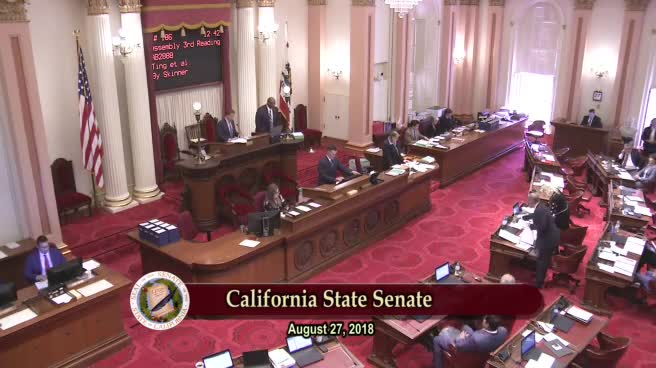
| Aug 27, 2018 | Read third time. Passed. Ordered to the Assembly. |
| Aug 20, 2018 | Read second time. Ordered to third reading. |
| Aug 17, 2018 | From committee: Amend, and do pass as amended. (Ayes 5. Noes 2.) (August 16). |
| Aug 13, 2018 | In committee: Referred to APPR. suspense file. |
| Aug 6, 2018 | From committee chair, with author's amendments: Amend, and re-refer to committee. Read second time, amended, and re-referred to Com. on APPR. |
| Aug 21, 2017 | In committee: Set, first hearing. Hearing canceled at the request of author. |
| Jul 12, 2017 | From committee: Do pass and re-refer to Com. on APPR. (Ayes 4. Noes 1.) (July 12). Re-referred to Com. on APPR. |
| Jun 14, 2017 | Referred to Com. on L. & I.R. |
| Jun 1, 2017 | In Senate. Read first time. To Com. on RLS. for assignment. |
| May 31, 2017 | Read third time. Passed. Ordered to the Senate. (Ayes 56. Noes 18. Page 1998.) |
| May 30, 2017 | Read second time. Ordered to third reading. |
| May 26, 2017 | From committee: Do pass. (Ayes 12. Noes 3.) (May 26). |
| May 3, 2017 | In committee: Set, first hearing. Referred to APPR. suspense file. |
| Apr 24, 2017 | In committee: Hearing postponed by committee. |
| Apr 19, 2017 | From committee: Do pass and re-refer to Com. on JUD. (Ayes 10. Noes 1.) (April 19). Re-referred to Com. on JUD. |
| Apr 3, 2017 | Re-referred to Com. on INS. |
| Mar 30, 2017 | From committee chair, with author's amendments: Amend, and re-refer to Com. on INS. Read second time and amended. |
| Feb 27, 2017 | Referred to Coms. on INS. and JUD. |
| Feb 15, 2017 | From printer. May be heard in committee March 17. |
| Feb 14, 2017 | Read first time. To print. |
|
Date
|
Description
|
Location
|
Votes
|
|
|---|---|---|---|---|
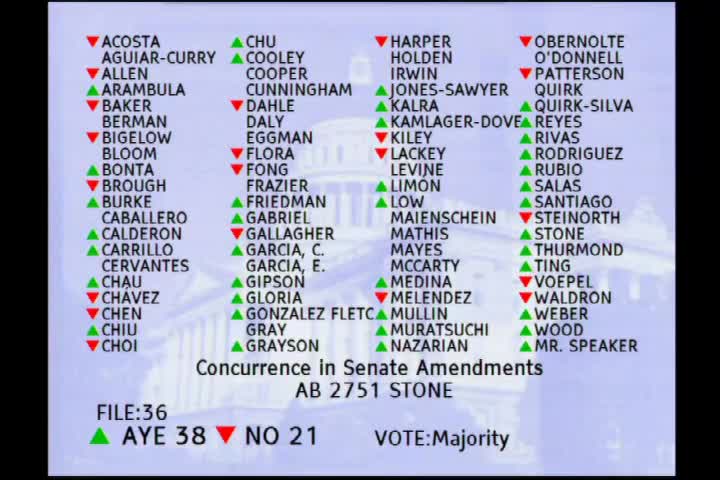
| Aug 29, 2018 | AB 553 DALY Concurrence in Senate Amendments | Assembly Floor |
Passed |
|
| Aug 27, 2018 | Assembly 3rd Reading AB553 Daly By Lara | Senate Floor |
Passed |
|
| Aug 16, 2018 | Do pass as amended | Senate Standing Committee on Appropriations |
Passed |
|
| Aug 13, 2018 | Placed on suspense file | Senate Standing Committee on Appropriations |
Passed |
|
| Jul 12, 2017 | Do pass, but first be re-referred to the Committee on [Appropriations] | Senate Standing Committee on Labor and Industrial Relations |
Passed |
|
| May 31, 2017 | AB 553 DALY Assembly Third Reading | Assembly Floor |
Passed |
|
| May 26, 2017 | Do pass. | Assembly Standing Committee on Appropriations |
Passed |
|
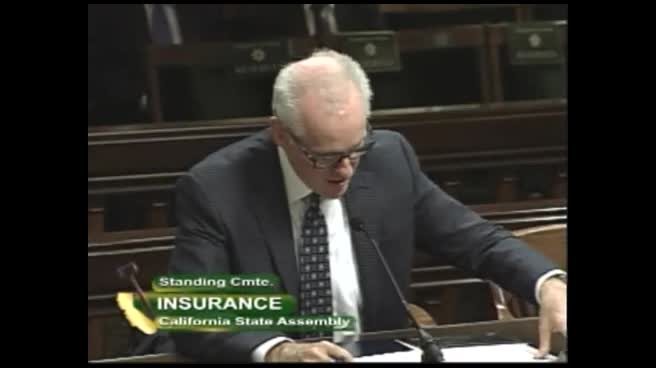
| Apr 19, 2017 | Do pass and be re-referred to the Committee on [Judiciary] | Assembly Standing Committee on Insurance |
Passed |
This list shows positions taken on this bill by organizations on the date displayed, which is linked to the original source.
Positions by individuals are not included.
|
Organization
|
Position
|
Date
|
|---|---|---|
| California Applicants Attorneys Association | ** Support | Apr 18, 2017 |
| California Conference Board Of The Amalgamated Transit Union | ** Support | Aug 20, 2018 |
| California Conference Of Machinists | ** Support | Aug 20, 2018 |
| California Labor Federation, Afl-Cio | ** Support | Aug 20, 2018 |
| California Society Of Industrial Medicine And Surgery | ** Support | Apr 18, 2017 |
| California Teamsters Public Affairs Council | ** Support | Aug 20, 2018 |
| Department Of Finance | ** Against | Aug 20, 2018 |
| International Longshore and Warehouse Union | ** Support | Aug 20, 2018 |
| Professional & Technical Engineers, IFPTE Local 21, AFL-CIO | ** Support | Aug 20, 2018 |
| UNITE-HERE, AFL-CIO | ** Support | Aug 20, 2018 |
| United Food And Commercial Workers (Ufcw) | * Support | Apr 19, 2017 |
| Utility Workers Union of America | ** Support | Aug 20, 2018 |
GOVERNOR'S VETO
GV Bill Id:AB 553
Author:(Daly)
As Enrolled Ver:September 6, 2018
2/3 vote
ASSEMBLY: | 56-18 | (May 31, 2017) | SENATE: | 26-12 | (August 27, 2018) |
ASSEMBLY: | 56-22 | (August 29, 2018) |
|
|
Original Committee Reference: INS.
SUMMARY: Ensures that the full, annual $120 million in the Return to Work (RTW) Fund is expended every year.
The Senate amendments:
- Eliminate the obligation of eligible injured workers to apply for RTW Fund payments, and instead require an employer to notify the Department of Industrial Relations (DIR) when the eligibility trigger – delivery of the supplemental job displacement benefit voucher – has occurred.
- Eliminate the initial payment of $5000 to eligible injured workers, and instead require DIR to annually distribute a pro rata share of the entire $120million to each of the qualified injured workers that have been identified by employers.
EXISTING LAW:
- Establishes a RTW Fund within the DIR to compensate qualified injured workers with funds in addition to permanent disability payments.
- Provides, by regulation, that any injured worker who receives a supplemental job displacement benefit voucher qualifies to receive $5000 from the RTW Fund.
- Provides that an injured worker who is not offered a job to return to by the employer where the injury occurred is eligible to receive a voucher to be used for specified job retraining purposes, referred to as the supplemental job displacement benefit.
FISCAL EFFECT: According to the Senate Appropriations Committee this bill would result in a significant increase in expenditures from the RTW Fund. Specifically, it would increase the amount being paid to workers in order to ensure the entire $120 million allocation to the RTW program is expended annually (Workers' Compensation Administration Revolving Fund). Thus far, the highest annual payout occurred in 2016-17, when $53 million was disbursed. Thus, the bill could roughly double the total payout from the Fund compared with current practice.
The DIR indicates that it would incur first-year costs of $440,000, and $420,000 annually thereafter, for additional staff to administer the bill.
COMMENTS:
- Purpose. AB 553 is intended to ensure that the full $120 million in RTW funds that were included in SB 863 (De Leon), Chapter 363, Statutes of 2012, – are expended each year for the benefit of injured workers whose injuries limit their ability to return to work.
- Background. One of the goals of SB 863 was to increase the level of permanent disability (PD) benefits paid to workers whose injuries have a permanently disabling effect. In the effort to ensure that all injured workers experienced an increase in PD benefits, SB 863 limited some of the so-called "add-ons" that a few injured workers had been historically able to use to increase PD ratings. These limits caused some degree of concern among some Members, who believed that the bill was too restrictive on the ability of individual injured workers to show that they were uniquely harmed by their injury, and therefore entitled to a higher PD rating. SB 863 was then amended to add the RTW Fund as a means to provide additional benefits to qualified injured workers, but without the need for additional litigation. The RTW Fund program as enacted by statute was bare-bones, and the DWC was delegated the responsibility to adopt regulations to make the Fund operational.
Unfortunately, it took the DWC several years to fully implement the Fund, and despite best efforts to get benefits to qualified injured workers, the Fund has never paid out even half of the annual allotment of awards.
- Current benefits. Currently, any injured worker who receives the supplemental job displacement benefit voucher automatically qualifies for the RTW Fund payment. The DWC has estimated that at $5000, there would be sufficient demand to use the full $120 million Fund. However, that estimate of participation levels has proven low. While there has been a trend of increasing applications, it is still clear that, at least in the short term, the Fund will not be fully subscribed.
This bill requires the Department of Industrial Relations to completely disburse $120 million annually from the Workers' Compensation Return to Work Fund to eligible injured workers.
The Return-to-Work Program began in 2015 and is relatively new. I am concerned this measure proposes sweeping revisions to the Return-to-Work program that are premature. The Program's funds will likely be spent in full in the coming fiscal year. Let's see the progress of that effort before making additional changes to the Program.
Analysis Prepared by: Mark Rakich / INS. / (916) 319-2086 FN: 0005268
CONCURRENCE IN SENATE AMENDMENTS
CSA1 Bill Id:AB 553
Author:(Daly)
As Amended Ver:August 17, 2018
Majority vote
ASSEMBLY: | 56-18 | (May 31, 2017) | SENATE: | 26-12 | (August 27, 2018) |
Original Committee Reference: INS.
SUMMARY: Ensures that the full, annual $120 million in the Return to Work (RTW) Fund is expended every year.
The Senate amendments:
- Eliminate the obligation of eligible injured workers to apply for RTW Fund payments, and instead require an employer to notify the Department of Industrial Relations (DIR) when the eligibility trigger – delivery of the supplemental job displacement benefit voucher – has occurred.
- Eliminate the initial payment of $5000 to eligible injured workers, and instead require DIR to annually distribute a pro rata share of the entire $120million to each of the qualified injured workers that have been identified by employers.
EXISTING LAW:
- Establishes a RTW Fund within the DIR to compensate qualified injured workers with funds in addition to permanent disability payments.
- Provides, by regulation, that any injured worker who receives a supplemental job displacement benefit voucher qualifies to receive $5000 from the RTW Fund.
- Provides that an injured worker who is not offered a job to return to by the employer where the injury occurred is eligible to receive a voucher to be used for specified job retraining purposes, referred to as the supplemental job displacement benefit.
FISCAL EFFECT:
- Significant increase in expenditures through the RTW Fund. This bill will increase the amount being paid to workers in order to ensure the entire $120 million allocated to the RTW program is expended each year (Workers' Compensation Administration Revolving Fund). After a $5,000 payment is made to each eligible worker pursuant to current regulations, remaining funds for each calendar year will be allocated to workers through this supplemental payment on a pro rata basis. The supplemental payment amount per worker will vary based on the total number of eligible workers in each year.
Supplemental payments through the RTW program commenced in the last quarter of fiscal year 2014-15. From that date through fiscal year 2016-17, $95 million total has been expended, with the highest annual total expenditure of $52.5 million occurring in fiscal year 2016-17. Thus, this bill may more than double payouts to injured workers through this fund as compared to the status quo, assuming the number of eligible workers does not significantly increase from the approximately 10,000 eligible workers awarded payments in 2016-17.
- Administrative costs, estimated in the low hundreds of thousands of dollars annually, to DIR to process additional claims (Workers' Compensation Administration Revolving Fund).
COMMENTS:
- Purpose. This bill is intended to ensure that the full $120 million in RTW funds that were included in SB 863 (De León), Statutes 2012, Chapter 363, are expended each year for the benefit of injured workers whose injuries limit their ability to return to work.
- Background. One of the goals of SB 863 was to increase the level of permanent disability (PD) benefits paid to workers whose injuries have a permanently disabling effect. In the effort to ensure that all injured workers experienced an increase in PD benefits, SB 863 limited some of the so-called "add-ons" that a few injured workers had been historically able to use to increase PD ratings. These limits caused some degree of concern among some Members, who believed that the bill was too restrictive on the ability of individual injured workers to show that they were uniquely harmed by their injury, and therefore entitled to a higher PD rating. SB 863 was then amended to add the RTW Fund as a means to provide additional benefits to qualified injured workers, but without the need for additional litigation. The RTW Fund program as enacted by statute was bare-bones, and the DWC was delegated the responsibility to adopt regulations to make the Fund operational.
Unfortunately, it took the DWC several years to fully implement the Fund, and despite best efforts to get benefits to qualified injured workers, the Fund has never paid out even half of the annual allotment of awards.
- Current benefits. Currently, any injured worker who receives the supplemental job displacement benefit voucher automatically qualifies for the RTW Fund payment. The DWC has estimated that at $5000, there would be sufficient demand to use the full $120 million Fund. However, that estimate of participation levels has proven low. While there has been a trend of increasing applications, it is still clear that, at least in the short term, the Fund will not be fully subscribed.
Analysis Prepared by: Mark Rakich / INS. / (916) 319-2086 FN: 0004496
Office of Senate Floor Analyses (916) 651-1520 Fax: (916) 327-4478 | AB |
THIRD READING
Bill No: AB 553
:
SENATE LABOR & IND. REL. COMMITTEE: 4-1, 7/12/17
AYES: Bradford, Atkins, Jackson, Mitchell
NOES: Stone
SENATE APPROPRIATIONS COMMITTEE: 5-2, 8/16/18
AYES: Portantino, Beall, Bradford, Hill, Wiener
NOES: Bates, Nielsen
ASSEMBLY FLOOR: 56-18, 5/31/17 - See last page for vote
DIGEST:
This bill requires that the Director of the Department of Industrial Relations (DIR) distribute the entire $120 million from the Return to Work (RTW) fund annually to all eligible workers.
Existing law:
- Establishes a workers’ compensation system that provides benefits to an employee who suffers from an injury or illness that arises out of and in the course of employment, irrespective of fault. This system requires all employers to secure payment of benefits by either securing the consent of DIR to self-insure or by securing insurance against liability from an insurance company duly authorized by the state.
- Requires that, if an employer does not make an offer of regular, modified, alternative work to a permanently injured worker, the employer must provide the injured worker with a supplemental job displacement benefit (SJDB) of $6,000 for job retraining. (Labor Code §4658.7)
- Creates a $120 million RTW program annually derived from the Workers’ Compensation Administration Revolving Fund for making supplemental payments to workers whose permanent disability benefits are disproportionately low in comparison to their earnings loss. (Labor Code §139.48)
- Requires that the eligibility for the RTW program must be determined through regulations by the Administrative Director, based on findings from studies conducted by the Commission on Health and Safety and Workers’ Compensation (CHSWC). The primary study was completed in 2014.
(Labor Code §139.48) - Requires the CHSWC conduct a study to compare average loss of earnings for employees who sustained work-related injuries with permanent disability ratings under the schedule. This study was completed in 2016. (Labor Code §4660.1)
This bill:
- Provides that injured workers who are eligible for the SJDB are eligible for the RTW program, but also provides that the Director of DIR may set addition bases of eligibility.
- Requires that the Director of the DIR annually distribute the entire $120 million from the RTW fund annually. Commencing January 1, 2020, the Director of DIR must distribute, by April 1 of each year, the $120 million to eligible workers on the basis of equal shares for each eligible worker.
- Requires that the employer notify the Director and the worker, in the manner adopted by the Director, of the worker’s eligibility for the RTW payment. A notice shall be sent when the SJDB is issued.
- Prohibits a person, including an attorney, from collecting a fee or commission for providing assistance to a worker to apply for RTW payments.
Comments
- A Brief History of the Return to Work Program
In 2012, the Legislature passed SB 863 (DeLeon, Chapter 363), one of the most audaciously successful reform measures passed in recent memory. SB 863 has succeeded in what formerly seemed impossible: reducing fraud, speeding up medical benefit delivery, increasing permanent disability benefits, AND reducing costs throughout the system. Nearly five years out, SB 863 stands as one of the seminal legislative efforts to further the cause of justice for injured workers and employers.
As a part of the 2012 reform, SB 863 breathed new life into the RTW program, creating a $120 million RTW fund to give injured workers who suffered disproportionate earnings loss additional benefits. Additionally, the program was completely administrative: no attorney needed to be hired by the injured worker for the additional benefits. Drawing from the 2013 RAND report on identifying workers with disproportionate earnings loss, DIR tied eligibility for the RTW benefit to the injured worker receiving SJDB, as the workers which were unable to return to work immediately after the accident suffered disproportionately high wage losses. Using the report to extrapolate to the universe of injured workers who fell into this category, the benefit was set at $5,000.
The fund, however, was not without some controversy. Specifically, it was initially unclear if Labor Code Section 139.48 required DIR to assess employers for $120 million each year, or if the assessment should be adjusted down if the fund is not fully expended. In 2015, a leaked Legislative Counsel opinion argued that a court would likely side with DIR, which argued that the assessment should be adjusted if the RTW fund has not been fully expended. While the leak was likely designed to push for further legislation in this area, no legislation was introduced on this topic.
The second area of controversy was that some injured workers who were eligible for the RTW benefit were not applying for the benefit, and therefore not receiving it. To understand the scale of the problem, Senator Mendoza, who at the time was the Chair of the Senate Labor Committee, sent a letter to CHSWC to request that they study the issue. In their response to Senator Bradford of March 22, 2017, CHSWC reported that the gap had fallen from a 50% gap at the beginning of the program to a 14% gap in the final quarter of 2015. The trend line suggests that the gap will continue to shrink, although the pool of data remains limited, as the RTW program is relatively new.
- Progressivity of Wage Replacement and the RTW Fund
According to the Senate Labor and Industrial Relations Committee, “In their 2016 report, RAND noted that the RTW Fund has a significantly positive impact on the progressivity in wage replacement rates, which in term RAND used to denote ‘the extent to which wage replacement rates for low-wage workers are higher than replacement rates for higher-wage workers.’ This is important because, generally speaking, the more one makes, the more an injured worker will receive in permanent disability benefits. However, for low wage workers with disproportionately high wage loss, the RTW benefit stands as a progressive benefit that ensures that they have resources for themselves and their family. The Committee may wish to consider the wisdom of any changes to the RTW Fund that would lower progressivity in the workers’ compensation system.
Fraud and the RTW Fund
The Committee also states, “As was discussed above, the ability to qualify for the RTW fund is dependent on a worker receiving a SJDB. Here, we have some anecdotal evidence of fraud. Specifically, the grand jury testimony by Sean O’Keefe, Esq. against Carlos Arguello noted he owned a copy service, and it was a major source of revenue for him. It’s likely that the revenue from that wasn’t solely in the form of copies – he may very well have been selling information to vendors who provide SJDB training. As such, it is possible that further arrests and indictments will reveal fraudulent claims against the RTW Fund, which will necessitate a review on the part of the Legislature and DIR.
“One important note is that AB 553 prohibits attorney’s fees (which were already prohibited) AND fees charges by anyone else. As the ‘anyone else’ could include SJDB vendors, this is a significant step towards preventing fraud.”
FISCAL EFFECT: Appropriation: Fiscal Com.: Local:
According to the Senate Appropriations Committee, DIR indicates that it would incur first-year costs of $440,000, and $420,000 annually thereafter, for additional staff to administer this bill (Workers' Compensation Administration Revolving Fund).
California Conference Board of the Amalgamated Transit Union
California Conference of Machinists
California Labor Federation, AFL-CIO
California Teamsters Public Affairs Council
Engineers & Scientists of California, IFPTE Local 20, AFL-CIO
International Longshore and Warehouse Union
Professional & Technical Engineers, IFPTE Local 21, AFL-CIO
UNITE-HERE, AFL-CIO
Utility Workers Union of America
OPPOSITION: (Verified 8/17/18)
Department of Finance
ARGUMENTS IN SUPPORT: Proponents argue that, at the beginning of the RTW program’s creation, there were several problems with disbursing the funds, as the proper forms were not widely available and not all workers were made aware of their rights. While most of these problems have been addressed, proponents note that the fund does not distribute the full $120 million every year. Noting that permanently injured workers face huge hurdles in making ends meet and being appropriately retrained, proponents argue that every effort needs to be made to ensure that every dollar reaches struggling workers.
ARGUMENTS IN OPPOSITION: The Department of Finance opposes AB 553, arguing the following, “Finance is opposed to this bill because it results in costs to the General Fund not consistent with the current budget. Finance also notes concerns with making changes to the Return to Work Supplemental Program which took effect in 2015 and may not be fully utilized. More time is needed to evaluate the program before making changes to its funding allocations. In addition, the allocation of additional benefits on a pro-rata basis would bear no relationship to a worker’s actual loss of earnings, which is inconsistent with the purpose of the program.”
ASSEMBLY FLOOR: 56-18, 5/31/17
AYES: Aguiar-Curry, Arambula, Berman, Bloom, Bocanegra, Bonta, Burke, Caballero, Calderon, Cervantes, Chau, Chiu, Chu, Cooley, Cooper, Dababneh, Daly, Frazier, Friedman, Cristina Garcia, Eduardo Garcia, Gipson, Gloria, Gomez, Gonzalez Fletcher, Gray, Grayson, Holden, Irwin, Jones-Sawyer, Kalra, Lackey, Levine, Limón, Low, Maienschein, McCarty, Medina, Mullin, Muratsuchi, Nazarian, O'Donnell, Quirk, Quirk-Silva, Reyes, Ridley-Thomas, Rodriguez, Rubio, Salas, Santiago, Steinorth, Mark Stone, Thurmond, Ting, Weber, Rendon
NOES: Acosta, Travis Allen, Baker, Bigelow, Brough, Chávez, Chen, Dahle, Flora, Fong, Gallagher, Harper, Kiley, Mathis, Obernolte, Patterson, Voepel, Waldron
NO VOTE RECORDED: Choi, Cunningham, Eggman, Mayes, Melendez, Wood
8/20/18 10:40:14
**** END ****
SENATE COMMITTEE ON
Senator Anthony Portantino, Chair
2017 - 2018 Regular Session
AB 553 (Daly) - Workers’ compensation: return-to-work program
Version: | Policy Vote: |
Urgency: | Mandate: |
Hearing Date: | Consultant: |
Bill Summary:
AB 553 would modify payments from the $120 million Return to Work (RTW) Fund to ensure that it has fully expended all of its funds to injured workers each year.
*********** ANALYSIS ADDENDUM – SUSPENSE FILE ***********
The following information is revised to reflect amendments
adopted by the committee on August 16, 2018
Fiscal Impact:
This bill would result in a significant increase in expenditures from the RTW Fund. Specifically, it would increase the amount being paid to workers in order to ensure the entire $120 million allocation to the RTW program is expended annually (Workers' Compensation Administration Revolving Fund). Thus far, the highest annual payout occurred in 2016-17, when $53 million was disbursed. Thus, the bill could roughly double the total payout from the Fund compared with current practice.
The Department of Industrial Relations (DIR) indicates that it would incur first-year costs of $440,000, and $420,000 annually thereafter, for additional staff to administer the bill (Workers' Compensation Administration Revolving Fund).
Author Amendments:
Eliminate the employer penalty for failing to notify DIR of a worker’s eligibility for increased payment from the RTW.
-- END --
SENATE COMMITTEE ON
Senator Anthony Portantino, Chair
2017 - 2018 Regular Session
AB 553 (Daly) - Workers’ compensation: return-to-work program
Version: | Policy Vote: |
Urgency: | Mandate: |
Hearing Date: | Consultant: |
This bill meets the criteria for referral to the Suspense File.
Bill Summary:
AB 553 would modify payments from the $120 million Return to Work (RTW) Fund to ensure that it has fully expended all of its funds to injured workers each year.
Fiscal Impact:
This bill would result in a significant increase in expenditures from the RTW Fund. Specifically, it would increase the amount being paid to workers in order to ensure the entire $120 million allocation to the RTW program is expended annually (Workers' Compensation Administration Revolving Fund). Thus far, the highest annual payout occurred in 2016-17, when $53 million was disbursed. Thus, the bill could roughly double the total payout from the Fund compared with current practice.
The Department of Industrial Relations (DIR) indicates that it would incur first-year costs of $440,000, and $420,000 annually thereafter, for additional staff to administer the bill (Workers' Compensation Administration Revolving Fund).
Background:
Current law establishes a workers’ compensation system that provides benefits to an employee who suffers from an injury or illness that occurs during the course of employment, irrespective of fault. This system requires all employers to secure payment of benefits by either (1) securing the consent of DIR to self-insure, or (2) securing insurance against liability from an insurance company authorized by the State.
The RTW Program was initiated as part of workers compensation reform in 2012 (SB 863, De Leon), which aimed to reduce employer costs while improving medical care and payments to injured workers; specifically, it simplified the process for providing additional benefits to workers who have a disproportionate loss of earnings. The simple benefits structure of $5,000 devised by DIR allowed for payments to workers without incurring significant "frictional" costs, such as that for administration and litigation. However, it was initially unclear if current law (Labor Code §139.48) required DIR to assess employers for $120 million each year, or if the assessment should be adjusted downward if the fund is not fully expended.
Proposed Law:
This bill would, among other things, do the following:
- Require, beginning in 2020, that DIR annually distribute the entire $120 million from the RTW Fund by April 1st of each year to eligible workers on the basis of equal shares.
- Codify regulations governing eligibility for the payment, as specified.
- Require employers to notify DIR and workers, as specified, of eligibility for this payment and make the failure of an employer to provide that notice a violation that is subject to specified penalties.
Related Legislation:
SB 863 (DeLeon), Chapter 363, Statutes of 2012, provided for a comprehensive reform of the workers compensation system.
Staff Comments:
As noted above, the RTW Program sought to simplify the process for providing additional benefits to workers who have a disproportionate loss of earnings. DIR’s benefits structure of $5,000 allowed for payments to workers without incurring significant "frictional" costs, including administration and litigation. However, the current structure has not allowed DIR to allocate the entire fund to payments to injured workers each year, as was envisioned in its enabling legislation.
-- END --
SENATE COMMITTEE ON LABOR AND INDUSTRIAL RELATIONS
Senator Steven Bradford, Chair
2017 - 2018 Regular
Bill No: AB 553 Hearing Date: July 12, 2017
Author: | Daly | ||
Version: | April 24, 2017 | ||
Urgency: | No | Fiscal: | Yes |
Consultant: | Gideon L. Baum | ||
Subject: Workers’ compensation: return-to-work program
KEY ISSUE
Should the Legislature require that, in the event that the Return to Work Fund has not fully expended all of its funds to injured workers, that all remaining funds be distributed to workers as a second benefit, not to exceed $25,000?
ANALYSIS
Existing law:
- Establishes a workers’ compensation system that provides benefits to an employee who suffers from an injury or illness that arises out of and in the course of employment, irrespective of fault. This system requires all employers to secure payment of benefits by either securing the consent of the Department of Industrial Relations to self-insure or by securing insurance against liability from an insurance company duly authorized by the state.
- Requires that, if an employer does not make an offer of regular, modified, alternative work to a permanently injured worker, the employer must provide the injured worker with a supplemental job displacement benefit (SJDB) of $6,000 for job retraining.
(Labor Code §4658.7) - Creates a $120 million return-to-work (RTW) program annually derived from the Workers’ Compensation Administration Revolving Fund for making supplemental payments to workers whose permanent disability benefits are disproportionately low in comparison to their earnings loss. (Labor Code §139.48)
- Requires that the eligibility for the RTW program must be determined through regulations by the Administrative Director, based on findings from studies conducted by the Commission on Health and Safety and Workers’ Compensation (CHSWC). The primary study was completed in 2014. (Labor Code §139.48)
- Requires the CHSWC conduct a study to compare average loss of earnings for employees who sustained work-related injuries with permanent disability ratings under the schedule. This study was completed in 2016. (Labor Code §4660.1)
This Bill would require that the Director of Industrial Relations annually distribute the entire $120 million from the RTW fund, unless distributing maximum payments would result in payments under $5,000 per eligible injured workers. This bill would also:
- Require that, commencing with the end of calendar year 2017, the director shall distribute any funds not yet paid out, on a pro rata basis, to claimants who have already qualified for the $5,000 payment.
- Caps at $25,000 the maximum amount any one claimant may receive.
- Provides that the director shall make this pro rata distribution by April 1 of each calendar year.
- Provides that a person, including an attorney, may not collect a fee or commission for providing assistance to a worker to apply for benefits from the RTW Fund.
COMMENTS
1. A Brief History of the Return to Work Program
In 2012, the Legislature passed SB 863 (DeLeon), one of the most audaciously successful reform measures passed in recent memory. SB 863 has succeeded in what formerly seemed impossible: reducing fraud, speeding up medical benefit delivery, increasing permanent disability benefits, AND reducing costs throughout the system. Nearly 5 years out, SB 863 stands as one of the seminal legislative efforts to further the cause of justice for injured workers and employers.
As a part of the 2012 reform, SB 863 breathed new life into the Return to Work Program, creating a $120 million Return to Work Fund to give injured workers who suffered disproportionate earnings loss additional benefits. Additionally, the Program was completely administrative: no attorney needed to be hired by the injured worker for the additional benefits. Drawing from the 2013 RAND report on identifying workers with disproportionate earnings loss, the Department of Industrial Relations (DIR) tied eligibility for the RTW benefit to the injured worker receiving the supplemental job displacement benefit (SJDB), as the workers which were unable to return to work immediately after the accident suffered disproportionately high wage losses. Using the report to extrapolate to the universe of injured workers who fell into this category, the benefit was set at $5,000.
The fund, however, was not without some controversy. Specifically, it was initially unclear if Labor Code §139.48 required DIR to assess employers for $120 million each year, or if the assessment should be adjusted down if the fund is not fully expended. In 2015, a leaked Legislative Counsel opinion argued that a court would likely side with DIR, which argued that the assessment should be adjusted if the RTW Fund has not been fully expended. While the leak was likely designed to push for further legislation in this area, no legislation was introduced on this topic.
The second area of controversy was that some injured workers who were eligible for the RTW benefit were not applying for the benefit, and therefore not receiving it. To understand the scale of the problem, Senator Mendoza, who at the time was the Chair of the Senate Labor Committee, sent a letter to CHSWC to request that they study the issue. In their response to Senator Bradford of March 22, 2017, the Commission reported that the gap had fallen from a 50% gap at the beginning of the program to a 14% gap in the final quarter of 2015. The trend line suggests that the gap will continue to shrink, although the pool of data remains limited, as the RTW Program is relatively new.
2. Staff Comments:
Progressivity of Wage Replacement and the RTW Fund
In their 2016 report, RAND noted that the RTW Fund has a significantly positive impact on the progressivity in wage replacement rates, which in term RAND used to denote “the extent to which wage replacement rates for low-wage workers are higher than replacement rates for higher-wage workers.” This is important because, generally speaking, the more one makes, the more an injured worker will receive in permanent disability benefits. However, for low wage workers with disproportionately high wage loss, the RTW benefit stands as a progressive benefit that ensures that they have resources for themselves and their family. The Committee may wish to consider the wisdom of any changes to the RTW Fund that would lower progressivity in the workers’ compensation system.
Fraud and the RTW Fund
As was discussed above, the ability to qualify for the RTW Fund is dependent on a worker receiving a SJDB. Here, we have some anecdotal evidence of fraud. Specifically, the grand jury testimony by Sean O’Keefe, Esq. against Carlos Arguello noted he owned a copy service, and it was a major source of revenue for him. It’s likely that the revenue from that wasn’t solely in the form of copies – he may very well have been selling information to vendors who provide SJDB training. As such, it is possible that further arrests and indictments will reveal fraudulent claims against the RTW Fund, which will necessitate a review on the part of the Legislature and DIR.
One important note is that AB 553 prohibits attorney’s fees (which were already prohibited) AND fees charges by anyone else. As the “anyone else” could include SJDB vendors, this is a significant step towards preventing fraud.
3. Proponent Arguments:
Proponents argue that, at the beginning of the Return to Work Program’s creation, there were several problems with disbursing the funds, as the proper forms were not widely available and not all workers were made aware of their rights. While most of these problems have been addressed, proponents note that the fund does not distribute the full $120 million every year. Noting that permanently injured workers face huge hurdles in making ends meet and being appropriately retrained, proponents argue that every effort needs to be made to ensure that every dollar reaches struggling workers.
4. Opponent Arguments:
None on file.
5. Prior Legislation:
SB 863 (DeLeon), Chapter 363, Statutes of 2012, was discussed above.
SUPPORT
California Conference Board of the Amalgamated Transit Union
California Conference of Machinists
California Labor Federation, AFL-CIO
California Teamsters Public Affairs Council
Engineers & Scientists of California, IFPTE Local 20, AFL-CIO
International Longshore and Warehouse Union
Professional & Technical Engineers, IFPTE Local 21, AFL-CIO
UNITE-HERE, AFL-CIO
Utility Workers Union of America
OPPOSITION
None on file.
-- END --
ASSEMBLY THIRD READING
ATR Bill Id:AB 553
Author:(Daly)
As Amended Ver:April 24, 2017
Majority vote
Committee | Votes | Ayes | Noes |
Insurance | 10-1 | Daly, Caballero, Calderon, Chu, Cooley, Cooper, Dababneh, Frazier, Gipson, Voepel | Dahle |
Appropriations | 12-3 | Gonzalez Fletcher, Bloom, Bocanegra, Bonta, Calderon, McCarty, Quirk, Friedman, Eduardo Garcia, Gray, Muratsuchi, Reyes | Fong, Gallagher, Obernolte |
SUMMARY: Ensures that the full, annual $120 million in the Return to Work (RTW) Fund is expended every year. Specifically, this bill:
- Directs the director of the Department of Industrial Relations (DIR) to distribute the full $120 million in the RTW Fund annually, subject to an exception based on the cap on the amount any particular claimant may receive.
- Provides that, commencing with the end of calendar year 2017, the director shall distribute any funds not yet paid out, on a pro rata basis, to claimants who have already qualified for the $5000 payment.
- Caps at $25,000 the maximum amount any one claimant may receive.
- Provides that the director shall make this pro rata distribution by April 1 of each calendar year.
- Provides that neither attorneys' fees, nor compensation of any sort to non-attorneys, may be paid for assistance to a qualified claimant in applying for RTW funds.
EXISTING LAW:
- Establishes a RTW Fund within the DIR to compensate qualified injured workers with funds in addition to permanent disability payments.
- Provides, by regulation, that any injured worker who receives a supplemental job displacement benefit voucher qualifies to receive $5000 from the RTW Fund.
- Provides that an injured worker who is not offered a job to return to by the employer where the injury occurred is eligible to receive a voucher to be used for specified job retraining purposes, referred to as the supplemental job displacement benefit.
FISCAL EFFECT:
- Significant increase in expenditures through the RTW Fund. This bill will increase the amount being paid to workers in order to ensure the entire $120 million allocated to the RTW program is expended each year (Workers' Compensation Administration Revolving Fund). After a $5,000 payment is made to each eligible worker pursuant to current regulations, remaining funds for each calendar year will be allocated to workers through this supplemental payment on a pro rata basis. The supplemental payment amount per worker will vary based on the total number of eligible workers in each year.
Supplemental payments through the RTW program commenced in the last quarter of fiscal year 2014-15. From that date through fiscal year 2016-17, $95 million total has been expended, with the highest annual total expenditure of $52.5 million occurring in fiscal year 2016-17. Thus, this bill may more than double payouts to injured workers through this fund as compared to the status quo, assuming the number of eligible workers does not significantly increase from the approximately 10,000 eligible workers awarded payments in 2016-17.
- Administrative costs, estimated in the low hundreds of thousands of dollars annually, to DIR to process additional claims (Workers' Compensation Administration Revolving Fund).
COMMENTS:
- Purpose. This bill is intended to ensure that the full $120 million in RTW funds that were included in SB 863 (De Leon) – Chapter 363, Statutes 2012 – are expended each year for the benefit of injured workers whose injuries limit their ability to return to work.
- Background. One of the goals of SB 863 was to increase the level of permanent disability (PD) benefits paid to workers whose injuries have a permanently disabling effect. In the effort to ensure that all injured workers experienced an increase in PD benefits, SB 863 limited some of the so-called "add-ons" that a few injured workers had been historically able to use to increase PD ratings. These limits caused some degree of concern among some Members, who believed that the bill was too restrictive on the ability of individual injured workers to show that they were uniquely harmed by their injury, and therefore entitled to a higher PD rating. SB 863 was then amended to add the RTW Fund as a means to provide additional benefits to qualified injured workers, but without the need for additional litigation. The RTW Fund program as enacted by statute was bare-bones, and the DWC was delegated the responsibility to adopt regulations to make the Fund operational.
Unfortunately, it took the DWC several years to fully implement the Fund, and despite best efforts to get benefits to qualified injured workers, the Fund has never paid out even half of the annual allotment of awards.
- Current benefits. Currently, any injured worker who receives the supplemental job displacement benefit voucher automatically qualifies for the RTW Fund payment. The DWC has estimated that at $5000, there would be sufficient demand to use the full $120 million Fund. However, that estimate of participation levels has proven low. While there has been a trend of increasing applications, it is still clear that, at least in the short term, the Fund will not be fully subscribed.
- Regulatory alternatives? The DWC has the authority to increase the current $5000 benefit by amending its regulations. However, an increase is the base benefit poses a risk that more than the annual $120 million authorized for the Fund could be expended. The bill, on the other hand, provides for an annual added benefit that is capped at the $120 million level.
Analysis Prepared by: Mark Rakich / INS. / (916) 319-2086 FN: 0000800
Date of Hearing: May 3, 2017
ASSEMBLY COMMITTEE ON APPROPRIATIONS
Lorena Gonzalez Fletcher, Chair
ABPCA Bill Id:AB 553
Author:(Daly) – As Amended Ver:April 24, 2017
Policy Committee: | Insurance | Vote: | 10 - 1 |
|
|
Urgency: No State Mandated Local Program: No Reimbursable: No
SUMMARY:
This bill modifies disbursements from the $120 million annual Return to Work (RTW) Fund to ensure the full amount is paid out each year to eligible workers. Specifically, this bill:
- Directs the Department of Industrial Relations (DIR) to distribute the full $120 million in the RTW Fund annually, subject to an exception based on the cap on the amount any particular claimant may receive.
- Provides that, commencing with the end of calendar year 2017, the director must distribute any funds not yet paid out, on a pro rata basis, to claimants who have already qualified for the $5,000 payment; and requires the director to make this pro rata distribution by April 1 of each calendar year.
- Caps at $25,000 the amount any one claimant may receive.
- Provides that neither attorneys’ fees nor other compensation may be paid for assistance to a qualified claimant in applying for RTW funds.
FISCAL EFFECT:
- Significant increase in expenditures through the RTW Fund. This bill will increase the amount being paid to workers in order to ensure the entire $120 million allocated to the RTW program is expended each year (Workers' Compensation Administration Revolving Fund). After a $5,000 payment is made to each eligible worker pursuant to current regulations, remaining funds for each calendar year will be allocated to workers through this supplemental payment on a pro rata basis. The supplemental payment amount per worker will vary based on the total number of eligible workers in each year.
Supplemental payments through the RTW program commenced in the last quarter of fiscal year 2014-15. From that date through fiscal year 2016-17, $95 million total has been expended, with the highest annual total expenditure of $52.5 million occurring in fiscal year 2016-17. Thus, this bill may more than double payouts to injured workers through this fund as compared to the status quo, assuming the number of eligible workers does not significantly increase from the approximately 10,000 eligible workers awarded payments in 2016-17.
- Administrative costs, estimated in the low hundreds of thousands of dollars annually, to DIR to process additional claims (Workers' Compensation Administration Revolving Fund).
COMMENTS:
- Purpose. This bill is intended to ensure that the full $120 million allocated to the RTW funds are expended each year for the benefit of injured workers whose injuries limit their ability to return to work. It is supported by labor organizations and has no opposition.
- Background. The RTW program was put into place as part of a large reform of the workers' compensation system via SB 863 (De Leon), Chapter 363, Statutes of 2012. The reform sought to reduce costs for employers while improving medical care and payments to workers who suffered injuries. The RTW program was a compromise that simplified the process for providing additional benefits to workers who have a disproportionate loss of earnings. The simple benefits structure of $5,000 devised by DIR allowed for payments to workers without incurring significant "frictional" costs, such as that for administration and litigation. However, the current structure has not allowed DIR to allocate the entire fund to payments to injured workers each year, as was envisioned in its enabling legislation.
Analysis Prepared by: Lisa Murawski / APPR. / (916) 319-2081
Date of Hearing: April 19, 2017
ASSEMBLY COMMITTEE ON INSURANCE
Tom Daly, Chair
ABPCA Bill Id:AB 553 (
Author:Daly) – As Amended Ver:March 30, 2017
SUBJECT: Workers’ compensation: return-to-work program
SUMMARY: Ensures that the full, annual $120 million in the Return to Work (RTW) Fund is expended every year. Specifically, this bill:
- Directs the director of the Department of Industrial Relations (DIR) to distribute the full $120 million in the RTW Fund annually, subject to an exception based on the cap on the amount any particular claimant may receive.
- Provides that, commencing with the end of calendar year 2017, the director shall distribute any funds not yet paid out, on a pro rata basis, to claimants who have already qualified for the $5000 payment.
- Caps at $25,000 the maximum amount any one claimant may receive.
- Provides that the director shall make this pro rata distribution by April 1 of each calendar year.
- Provides that neither attorneys’ fees, nor compensation of any sort to non-attorneys, may be paid for assistance to a qualified claimant in applying for RTW funds.
EXISTING LAW:
- Establishes a RTW Fund within the DIR to compensate qualified injured workers with funds in addition to permanent disability payments.
- Provides, by regulation, that any injured worker who receives a supplemental job displacement benefit voucher qualifies to receive $5000 from the RTW Fund.
- Provides that an injured worker who is not offered a job to return to by the employer where the injury occurred is eligible to receive a voucher to be used for specified job retraining purposes, referred to as the supplemental job displacement benefit.
FISCAL EFFECT: Undetermined.
COMMENTS:
- Purpose. AB 553 is intended to ensure that the full $120 million in RTW funds that were included in SB 863 (De Leon)– Statutes 2012, Chapter 363 – are expended each year for the benefit of injured workers whose injuries limit their ability to return to work.
- Background. One of the goals of SB 863 was to increase the level of permanent disability (PD) benefits paid to workers whose injuries have a permanently disabling effect. In the effort to ensure that all injured workers experienced an increase in PD benefits, SB 863 limited some of the so-called “add-ons” that a few injured workers had been historically able to use to increase PD ratings. These limits caused some degree of concern among some Members, who believed that the bill was too restrictive on the ability of individual injured workers to show that they were uniquely harmed by their injury, and therefore entitled to a higher PD rating. SB 863 was then amended to add the RTW Fund as a means to provide additional benefits to qualified injured workers, but without the need for additional litigation. The RTW Fund program as enacted by statute was bare-bones, and the DWC was delegated the responsibility to adopt regulations to make the Fund operational.
Unfortunately, it took the DWC several years to fully implement the Fund, and despite best efforts to get benefits to qualified injured workers, the Fund has never paid out even half of the annual allotment of awards. - Current benefits. Currently, any injured worker who receives the supplemental job displacement benefit voucher automatically qualifies for the RTW Fund payment. The DWC has estimated that at $5000, there would be sufficient demand to use the full $120 million Fund. However, that estimate of participation levels has proven low. While there has been a trend of increasing applications, it is still clear that, at least in the short term, the Fund will not be fully subscribed.
- Regulatory alternatives? The DWC has the authority to increase the current $5000 benefit by amending its regulations. However, an increase is the base benefit poses a risk that more than the annual $120 million authorized for the Fund could be expended. The bill, on the other hand, provides for an annual added benefit that is capped at the $120 million level.
REGISTERED SUPPORT / OPPOSITION:
Support
CA Conference Board of the Amalgamated Transit Union
CA Conference of Machinists
CA Teamsters Public Affairs Council
California Applicants Attorneys Association (CAAA)
California Society of Industrial Medicine and Surgery
Engineers & Scientists of CA, IFPTE Local 20, AFL-CIO
International Longshore & Warehouse Union
Professional & Technical Engineers, IFPTE Local 21, AFL-CIO
UNITE-HERE, AFL-CIO
Utility Workers Union of America, AFL-CIO
Opposition
None received
Analysis Prepared by: Mark Rakich / INS. /
Discussed in Hearing
 1MIN
Assembly Floor
 2MIN
Senate Floor
 1H
Senate Standing Committee on Appropriations
 2MIN
Assembly Floor
 1H
Assembly Standing Committee on Appropriations
 25MIN
Assembly Standing Committee on Insurance
Bill Author

Bill Co-Author(s):