AB 560: Safe Drinking Water State Revolving Fund: project financing: severely disadvantaged communities.
- Session Year: 2017-2018
- House: Assembly
- Latest Version Date: 2017-10-07
Existing law, the Safe Drinking Water State Revolving Fund Law of 1997, establishes the Safe Drinking Water State Revolving Fund to provide grants or revolving fund loans for the design and construction of projects for public water systems that will enable those systems to meet safe drinking water standards. Existing law requires the State Water Resources Control Board to establish eligibility criteria for project financing that is consistent with federal law.
This bill, to the extent permitted by federal law, would authorize the board to provide grant funding, and principal forgiveness and 0% financing on loans, from the Safe Drinking Water State Revolving Fund to a project for a water system with a service area that qualifies as a severely disadvantaged community if the water system demonstrates that repaying a Safe Drinking Water State Revolving Fund loan with interest would result in unaffordable water rates, as defined.
Existing law, the Safe Drinking Water State Revolving Fund Law of 1997, establishes the Safe Drinking Water State Revolving Fund to provide grants or revolving fund loans for the design and construction of projects for public water systems that will enable those systems to meet safe drinking water standards. Existing law requires the State Water Resources Control Board to establish eligibility criteria for project financing that is consistent with federal law.
This bill, to the extent permitted by federal law, would authorize the board to provide grant funding, and principal forgiveness and 0 percent 0% financing on loans, from the Safe Drinking Water State Revolving Fund to a project for a water system with a service area that qualifies as a severely disadvantaged community if the water system demonstrates that repaying a Safe Drinking Water State Revolving Fund loan with interest would result in unaffordable water rates, as defined.
Existing law, the Safe Drinking Water State Revolving Fund Law of 1997, establishes the Safe Drinking Water State Revolving Fund to provide grants or revolving fund loans for the design and construction of projects for public water systems that will enable those systems to meet safe drinking water standards. Existing law requires the State Water Resources Control Board to establish eligibility criteria for project financing that is consistent with federal law.
This bill, to the extent permitted by federal law, would authorize the board to provide principal forgiveness, grant funding, funding, and principal forgiveness and 0 percent financing on loans, from the Safe Drinking Water State Revolving Fund to a project for a water system with a service area that qualifies as a severely disadvantaged community if the water system demonstrates that repaying a Safe Drinking Water State Revolving Fund loan with interest would result in unaffordable water rates, as defined.
Existing law, the Safe Drinking Water State Revolving Fund Law of 1997, establishes the Safe Drinking Water State Revolving Fund to provide grants or revolving fund loans for the design and construction of projects for public water systems that will enable those systems to meet safe drinking water standards. Existing law requires the State Water Resources Control Board to establish eligibility criteria for project financing that is consistent with federal law.
This bill, to the extent permitted by federal law, would authorize the board to give priority to projects for water systems that serve severely disadvantaged communities, regardless of population size of the community, on a discretionary, case-by-base basis. provide principal forgiveness, grant funding, and 0 percent financing to a project for a water system with a service area that qualifies as a severely disadvantaged community if the water system demonstrates that repaying a Safe Drinking Water State Revolving Fund loan would result in unaffordable water rates, as defined.
Existing law, the Safe Drinking Water State Revolving Fund Law of 1997, establishes the Safe Drinking Water State Revolving Fund to provide grants or revolving fund loans for the design and construction of projects for public water systems that will enable those systems to meet safe drinking water standards. Existing law requires the State Water Resources Control Board to establish eligibility criteria for project financing that is consistent with federal law.
This bill, to the extent permitted by federal law, would authorize the board to give priority to projects for water systems that serve severely disadvantaged communities, regardless of population size of the community, on a discretionary, case-by-base basis.
Under existing law, various programs provide funds for water projects and facilities, including water storage.This bill would declare the intent of the Legislature to enact legislation relating to water storage.Under existing law, various programs provide funds for water projects and facilities, including water storage.
This bill would declare the intent of the Legislature to enact legislation relating to water storage.
(a)The board shall establish eligibility criteria for project financing pursuant to this chapter that shall be consistent with federal requirements.
(b)To the extent permitted by federal law, the board may provide grant funding, and principal forgiveness and 0 percent financing on loans, from the Safe Drinking Water State Revolving Fund to a project for a water system with a service area that qualifies as a severely disadvantaged community if the water system demonstrates that repaying a Safe Drinking Water State Revolving Fund loan with interest would result in unaffordable water rates.
(c)For purposes of this section, unaffordable water rates means an average water bill that is at least 1.5 percent of the median household income of the service area or other percentage that the board determines is appropriate to reflect funding priorities.
(a)The board shall establish eligibility criteria for project financing pursuant to this chapter that shall be consistent with federal requirements.
(b)To the extent permitted by federal law, the board may provide grant funding, and principal forgiveness and 0 percent financing on loans, from the Safe Drinking Water State Revolving Fund to a project for a water system with a service area that qualifies as a severely disadvantaged community if the water system demonstrates that repaying a Safe Drinking Water State Revolving Fund loan with interest would result in unaffordable water rates.
(c)For purposes of this section, unaffordable water rates means an average water bill that is greater than at least 1.5 percent of the median household income of the service area or other percentage that the board determines is appropriate to reflect funding priorities.
(a)The board shall establish eligibility criteria for project financing pursuant to this chapter that shall be consistent with federal requirements.
(b)To the extent permitted by federal law, the board may provide principal forgiveness, grant funding, and principal forgiveness and 0 percent financing on loans, from the Safe Drinking Water State Revolving Fund to a project for a water system with a service area that qualifies as a severely disadvantaged community if the water system demonstrates that repaying a Safe Drinking Water State Revolving Fund loan with interest would result in unaffordable water rates.
(c)For purposes of this section, unaffordable water rates means an average water bill that is greater than 1.5 percent of the median household income of the service area. area or other percentage that the board determines is appropriate to reflect funding priorities.
(a)The board shall establish eligibility criteria for project financing pursuant to this chapter that shall be consistent with federal requirements.
(b)To the extent permitted by federal law, the board may give priority to projects for water systems that serve severely disadvantaged communities, regardless of population size of the community, on a discretionary, case-by-case basis. provide principal forgiveness, grant funding, and 0 percent financing to a project for a water system with a service area that qualifies as a severely disadvantaged community if the water system demonstrates that repaying a Safe Drinking Water State Revolving Fund loan would result in unaffordable water rates.
(c)For purposes of this section, unaffordable water rates means an average water bill that is greater than 1.5 percent of the median household income of the service area.
(a)The board shall establish eligibility criteria for project financing pursuant to this chapter that shall be consistent with federal requirements.
(b)This section shall become operative on January 1 of the next calendar year occurring after the board provides notice to the Legislature and the Secretary of State and posts notice on its Internet Web site that the board has adopted a policy handbook pursuant to Section 116760.43.(b)To the extent permitted by federal law, the board may give priority to projects for water systems that serve severely disadvantaged communities, regardless of population size of the community, on a discretionary, case-by-case basis.
SECTION 1.It is the intent of the Legislature to enact legislation relating to water storage.It is the intent of the Legislature to enact legislation relating to water storage.
|
Date
|
Status
|
|---|---|
| Oct 7, 2017 | Chaptered by Secretary of State - Chapter 552, Statutes of 2017. |
| Oct 7, 2017 | Approved by the Governor. |
| Sep 26, 2017 | Enrolled and presented to the Governor at 3 p.m. |
| Sep 14, 2017 | Senate amendments concurred in. To Engrossing and Enrolling. |
| Sep 14, 2017 | In Assembly. Concurrence in Senate amendments pending. |
| Sep 14, 2017 | Read third time. Passed. Ordered to the Assembly. |
| Sep 12, 2017 | Ordered to special consent calendar. |
| Sep 5, 2017 | Read second time. Ordered to third reading. |
| Sep 1, 2017 | From committee: Do pass. (Ayes 7. Noes 0.) (September 1). |
| Aug 21, 2017 | In committee: Referred to APPR. suspense file. |
| Jul 12, 2017 | Read second time and amended. Re-referred to Com. on APPR. |
| Jul 11, 2017 | From committee: Amend, and do pass as amended and re-refer to Com. on APPR. (Ayes 7. Noes 0.) (July 5). |
| Jun 15, 2017 | In committee: Set, first hearing. Hearing canceled at the request of author. |
| Jun 8, 2017 | Referred to Com. on EQ. |
| May 30, 2017 | In Senate. Read first time. To Com. on RLS. for assignment. |
| May 30, 2017 | Read third time. Passed. Ordered to the Senate. (Ayes 77. Noes 0. Page 1857.) |
| May 25, 2017 | Read second time. Ordered to Consent Calendar. |
| May 24, 2017 | From committee: Do pass. To Consent Calendar. (Ayes 17. Noes 0.) (May 24). |
| May 1, 2017 | Re-referred to Com. on APPR. |
| Apr 27, 2017 | Read second time and amended. |
| Apr 26, 2017 | From committee: Amend, and do pass as amended and re-refer to Com. on APPR. with recommendation: To Consent Calendar. (Ayes 7. Noes 0.) (April 25). |
| Apr 18, 2017 | Re-referred to Com. on E.S. & T.M. |
| Apr 17, 2017 | From committee chair, with author's amendments: Amend, and re-refer to Com. on E.S. & T.M. Read second time and amended. |
| Apr 3, 2017 | Re-referred to Com. on E.S. & T.M. |
| Mar 30, 2017 | Referred to Com. on E.S. & T.M. |
| Feb 15, 2017 | From printer. May be heard in committee March 17. |
| Feb 14, 2017 | Read first time. To print. |
|
Date
|
Description
|
Location
|
Votes
|
|
|---|---|---|---|---|
| Sep 14, 2017 | AB 560 Salas Special Consent Calendar 1st Day Regular Session | Assembly Floor |
Passed |
|
| Sep 14, 2017 | Special Consent Calendar # AB560 | Senate Floor |
Passed |
|
| Sep 1, 2017 | Do pass | Senate Standing Committee on Appropriations |
Passed |
|
| Aug 21, 2017 | Placed on suspense file | Senate Standing Committee on Appropriations |
Passed |
|
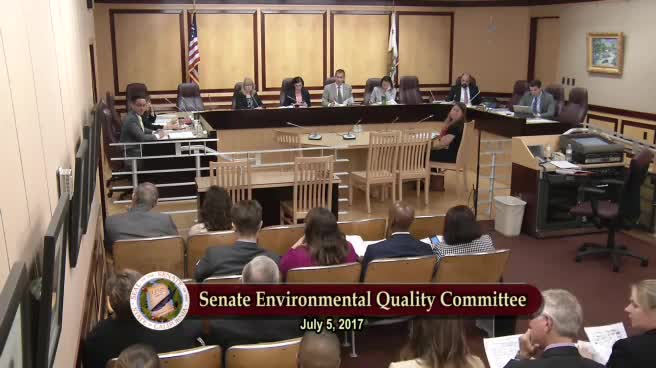
| Jul 5, 2017 | Do pass as amended, but first amend, and re-refer to the Committee on [Appropriations] | Senate Standing Committee on Environmental Quality |
Passed |
|
| May 30, 2017 | AB 560 SALAS Consent Calendar Second Day Regular Session | Assembly Floor |
Passed |
|
| May 24, 2017 | Do pass. To Consent Calendar. | Assembly Standing Committee on Appropriations |
Passed |
|
| Apr 25, 2017 | Do pass as amended, and be re-referred to the Committee on [Appropriations] with recommendation: To Consent Calendar | Assembly Standing Committee on Environmental Safety and Toxic Materials |
Passed |
This list shows positions taken on this bill by organizations on the date displayed, which is linked to the original source.
Positions by individuals are not included.
|
Organization
|
Position
|
Date
|
|---|---|---|
| Association Of California Water Agencies | ** Against | Sep 4, 2017 |
| Community Water Center | ** Support | Sep 4, 2017 |
| Rural County Representatives of California | ** Support | Sep 4, 2017 |
CONCURRENCE IN SENATE AMENDMENTS
CSA1 Bill Id:AB 560
Author:(Salas)
As Amended Ver:July 12, 2017
Majority vote
ASSEMBLY: | 77 - 0 | (May 30, 2017) | SENATE: | 40-0 | (September 14, 2017) |
Original Committee Reference: E.S. & T.M.
SUMMARY: Authorizes the State Water Resources Control Board (State Water Board) to provide grant funding, and principal forgiveness and zero percent financing on loans, from the Safe Drinking Water State Revolving Fund (DWSRF) to a water system serving a severely disadvantaged community if the water system demonstrates that repaying a loan with interest would result in unaffordable water rates. Specifically, this bill:
- Authorizes the State Water Board, to the extent permitted by federal law, to provide grant funding, and principal forgiveness and zero percent financing on loans, from the DWSRF to a project for a water system with a service area that qualifies as a severely disadvantaged community if the water system demonstrates that repaying a DWSRF loan with interest would result in unaffordable water rates.
- Defines "unaffordable water rates" as an average water bill that is at least 1.5% of the median household income of the service area, or other percentage that the State Water Board determines is appropriate to reflect funding priorities.
- Makes other technical and conforming changes.
The Senate amendments amend the definition of "unaffordable water rates" in AB 560 from a water bill that is, "greater than 1.5% of the median household income of the service area," to a water bill that is, "at least 1.5% of the median household income of the service area."
EXISTING LAW:
- Establishes, as the policy of the state, that every human being has the right to safe, clean, affordable, and accessible water adequate for human consumption, cooking, and sanitary purposes.
- Requires all relevant state agencies to consider the "human right to water" state policy when revising, adopting, or establishing policies, regulations, and grant criteria when those policies, regulations, and criteria are pertinent to the uses of water.
- Defines "severely disadvantaged community" as a community with a median household income of less than 60 percent of the statewide average.
- Authorizes the State Water Board to authorize a grant or principal forgiveness to a system that serves a disadvantaged community only to the extent that the State Water Board finds the water system is unable to repay the full costs of the financing.
FISCAL EFFECT: According to the Senate Appropriations Committee, the State Water Board, "already has the authority to provide the grants and loans outlined in the bill. While the bill restates an existing authority and does not require funding for these types of projects, it creates a cost pressure to fund projects in the bill, similar to the expansion of the eligible population.
The committee generally views bills that expand eligibility for funding as a cost pressure because the newly eligible projects often displace projects that otherwise would have been funded or requires the allocation of more funding for the program to accommodate newly-eligible projects without impacting currently eligible projects."
COMMENTS: Drinking water contamination in disadvantaged communities: Nearly 700 community public water systems, which serve nearly 21 million people, rely on contaminated groundwater as a primary source of drinking water. Recent studies suggest that drinking water contamination in California disproportionally affects small, rural, and low-income communities that depend mostly on groundwater as their drinking water source.
Safe Drinking Water State Revolving Fund (DWSRF): Congress established the DWSRF as part of the 1996 Safe Drinking Water Act Amendments to better enable public water systems to comply with national primary drinking water standards and to protect public health. The DWSRF provides financial assistance in the form of capitalization grants to states to provide low interest loans and other assistance to public water systems.
Intended Use Plan (IUP): The IUP serves as part of the State Water Board's application for the capitalization grant from the United States Environmental Protection Agency, and provides specific details on key aspects of the DWSRF program, including short and long-term goals, the priority setting process used to rank projects, and a list of projects considered eligible to receive available DWSRF funding. The 2016- 2017 IUP describes one of its short-term goals as, "Prioritize all available DWSRF funding for [public water systems] serving fewer than 10,000 people to the maximum extent practicable and in consideration of all other federal and state authorities governing the prioritization of DWSRF funding." It also states that if the State Water Board has insufficient funds to finance all eligible projects with complete application packages, it will first fund eligible projects based on project categories, giving priority to the small, disadvantaged community with the lowest median household income and to consolidation or extension of service projects. The 2016- 2017 IUP includes the prioritization of projects that serve small disadvantaged and small severely disadvantaged communities throughout the document.
This bill authorizes the State Water Board to provide grant funding, and principal forgiveness and zero percent financing on loans, from the DWSRF to a water system serving a severely disadvantaged community, regardless of size, if the water system demonstrates that repaying a loan would result in unaffordable water rates.
Analysis Prepared by: Shannon McKinney / E.S. & T.M. / (916) 319-3965 FN: 0001888
Office of Senate Floor Analyses (916) 651-1520 Fax: (916) 327-4478 | AB |
THIRD READING
Bill No: AB 560
:
SENATE ENVIRONMENTAL QUALITY COMMITTEE: 7-0, 7/5/17
AYES: Wieckowski, Stone, Gaines, Hill, Lara, Skinner, Stern
SENATE APPROPRIATIONS COMMITTEE: 7-0, 9/1/17
AYES: Lara, Bates, Beall, Bradford, Hill, Nielsen, Wiener
ASSEMBLY FLOOR: 77-0, 5/30/17 (Consent) - See last page for vote
SOURCE: Community Water Center
DIGEST:
This bill authorizes the State Water Resources Control Board (SWRCB) to provide principal forgiveness, grant funding, and zero percent financing to a water system serving a severely disadvantaged community if the water system demonstrates that repaying a Safe Drinking Water State Revolving Fund (DWSRF) loan would result in unaffordable water rates.
ANALYSIS:
Existing law:
- Establishes, under the Human Right to Water Act, as the policy of the state, that every human being has the right to safe, clean, affordable, and accessible water adequate for human consumption, cooking, and sanitary purposes.
- Requires all relevant state agencies, including the Department of Water Resources, SWRCB, and the State Department of Public Health, to consider the above state policy when revising, adopting, or establishing policies, regulations, and grant criteria when those policies, regulations, and criteria are pertinent to the uses of water, as defined.
- Provides that because the federal Safe Drinking Water Act (42 U.S.C. Sec. 300j et seq.) provides for the establishment of a perpetual drinking water revolving fund, which will be partially capitalized by federal contributions, it is in the interest of the people of the state, in order to ensure full participation by the state under the federal Safe Drinking Water Act, to enact the DWSRF law to authorize the state to establish and implement a state drinking water revolving fund that will meet federal conditions for receipt of federal funds. (Health and Safety Code (HSC) §116760.10 (a))
- Creates in the State Treasury the DWSRF, and provides that moneys in the fund are continuously appropriated, without regard to fiscal years, to SWRCB for expenditure in accordance with DWSRF law. (HSC §116760.30 (a))
- Defines “severely disadvantaged community” as a community with a median household income of less than 60 percent of the statewide average. (HSC §116760.20 (n))
- Requires, under the DWSRF law, SWRCB to determine what portion of the full costs the water system is capable of repaying and authorizes funding in the form of a loan or other repayable financing for that amount. Authorizes SWRCB to authorize a grant or principal forgiveness to a system, as defined, that serves a disadvantaged community only to the extent that the SWRCB finds the water system is unable to repay the full costs of the financing. (HSC § 116761.20 (b)(1))
This bill authorizes the SWRCB to provide principal forgiveness, grant funding, and zero percent financing to a water system serving a severely disadvantaged community if the water system demonstrates that repaying a DWSRF loan would result in unaffordable water rates. Specifically, this bill:
- Authorizes, SWRCB, to the extent permitted by federal law, to provide principal forgiveness, grant funding, and zero percent financing to a project for a water system with a service area that qualifies as a severely disadvantaged community if the water system demonstrates that repaying a DWSRF loan would result in unaffordable water rates.
- Defines “unaffordable water rates” as an average water bill that is at least 1.5% of the median household income of the service area or other percentage that the SWRCB determines is appropriate to reflect funding priorities.
Background
- Drinking water contamination in disadvantaged communities. According to the SWRCB report, "Communities that Rely on Contaminated Groundwater," released in January 2013, 682 community public water systems, which serve nearly 21 million people, rely on contaminated groundwater as a primary source of drinking water. The report points out that an additional two million Californians rely on groundwater from either a private domestic well or a smaller groundwater-reliant system that is not regulated by the state, the water quality of which is uncertain. The findings from SWRCB report, and a 2012 University of California at Davis study, “Addressing Nitrate in California's Drinking Water,” suggest that drinking water contamination in California disproportionally affects small, rural, and low-income communities that depend mostly on groundwater as their drinking water source.
- Safe Drinking Water State Revolving Fund (DWSRF). Congress established the DWSRF as part of the 1996 amendment of the Safe Drinking Water Act to better enable public water systems to comply with national primary drinking water standards and to protect public health. The DWSRF provides financial assistance in the form of capital grants to states to provide low interest loans and other assistance to public water systems. In order to receive these funds, states must provide a state match equal to 20% of the federal grants and must create a drinking water state revolving fund program for public water system infrastructure needs and other drinking water-related activities. In response, California established the DWSRF through SB 1307 (Costa and Thompson, Chapter 734, Statutes of 1997) to help fund the state’s drinking water needs. In California, the SWRCB’s Division of Financial Assistance administers the DWSRF Program.
Based on the United States Environmental Protection Agency (US EPA) 2011 Drinking Water Infrastructure Needs Survey, California drinking water needs are more than $2.2 billion per year for the next 20 years. The 2016-2017 Intended Use Plan (IUP) states that for the federal fiscal year 2016, California was eligible for an estimated $78.215 million grant from the current $855 million appropriated by Congress for the nation’s DWSRF programs.
- IUP. According to SWRCB, the IUP serves as part of the SWRCB’s application for the grant from US EPA. In establishing the terms of the IUP, SWRCB considered statewide policy that declares it is the established policy and law of the state that “every human being has the right to safe, clean, affordable, and accessible water adequate for human consumption, cooking, and sanitary purposes.” SWRCB is required to consider this state policy when “revising, adopting, or establishing policies, regulations, and grant criteria when those policies, regulations, and criteria are pertinent to the uses of water.”
- DWRSF funding prioritization: The IUP provides specific details on key aspects of the DWSRF program, including short and long-term goals, the priority setting process used to rank projects, and a list of projects considered eligible to receive available DWSRF funding. The 2016-2017 IUP outlines as one of its short-term goals, “Prioritize all available DWSRF funding for [public water systems] serving fewer than 10,000 people to the maximum extent practicable and in consideration of all other federal and state authorities governing the prioritization of DWSRF funding.” It also states that if SWRCB has insufficient funds to finance all eligible projects with complete application packages, it will first fund eligible projects based on project categories, giving priority within a category to the small, disadvantaged community with the lowest median household income and to consolidation or extension of service projects. The 2016-2017 IUP includes the prioritization of projects that serve small disadvantaged and small severely disadvantaged communities throughout the document.
This bill authorizes SWRCB to provide principal forgiveness, grant funding, and zero percent financing to a water system serving a severely disadvantaged community, regardless of size, if the water system demonstrates that repaying a DWSRF loan would result in unaffordable water rates.
Comments
- Purpose of Bill. According to the author, “Unfortunately, the DWRSF’s Intended Use Plans (IUP), to date, have excluded water systems that serve ‘disadvantaged communities’ (DACs) or ‘severely disadvantaged communities’ SDACs if they serve populations larger than 10,000 from certain types of assistance, including principal forgiveness/grant funding and zero percent financing for water infrastructure projects.
“The water systems that are not eligible for grant funding or other types of State assistance often have no other option but to resort to loan funding to pay for infrastructure projects, such as treatment to remove contamination to meet drinking water standards. In anticipation of having to pay back loans, water systems tend to raise customers’ water rates by going through a Proposition 218 process, which can push the existing water rates above the 1.5 percent of the medium household income (MHI) affordability threshold that the DWSRF already lists as an ‘affordability criteria.’
“AB 560 seeks to expand the eligibility for the Drinking Water State Revolving Fund (DWSRF) to allow larger, but still disadvantaged communities to access funds for water projects.”
The sponsor states, “Advocates have worked with SWRCB on the last few iterations of the DWSRF IUP to allow larger severely disadvantaged communities, like Arvin, CA, to qualify for grant funding. However, staff have continued to use the 10,000 population cap in the IUPs. AB 560 will provide the push to the Board to allow these larger, though still severely disadvantaged, systems to at least have their applications for grant funding considered for DWSRF grant funding. While there are many smaller systems also impacted by unsafe drinking water and are often in dire need of financial assistance, larger systems can also According to Community Water Center, Advocates have worked with the State Water Board on the last few iterations of the DWSRF IUP to allow larger severely disadvantaged communities, like Arvin, CA, to qualify for grant funding. However, staff have continued to use the 10,000 population cap in the IUPs. AB 560 will provide the push to the Board to allow these larger, though still severely disadvantaged, systems to at least have their applications for grant funding considered for DWSRF grant funding. While there are many smaller systems also impacted by unsafe drinking water and are often in dire need of financial assistance, larger systems can also be plagued by unsafe drinking water with no ratebase capable of funding the necessary solutions. AB 560 creates the opportunity to help a great number of people struggling to obtain safe, clean, and affordable drinking water.”
FISCAL EFFECT: Appropriation: Fiscal Com.: Local:
According to the Senate Appropriations Committee, SWRCB already has the authority to provide the grants and loans outlined in the bill. While the bill restates an existing authority and does not require funding for these types of projects, it creates a cost pressure to fund projects in the bill, similar to the expansion of the eligible population.
Community Water Center (source)
Rural County Representatives of California
Association of California Water Agencies
ASSEMBLY FLOOR: 77-0, 5/30/17
AYES: Acosta, Aguiar-Curry, Travis Allen, Arambula, Baker, Berman, Bigelow, Bloom, Bocanegra, Bonta, Brough, Burke, Caballero, Calderon, Cervantes, Chávez, Chen, Chiu, Chu, Cooley, Cooper, Cunningham, Dababneh, Dahle, Daly, Flora, Fong, Frazier, Friedman, Gallagher, Cristina Garcia, Eduardo Garcia, Gipson, Gloria, Gomez, Gonzalez Fletcher, Gray, Grayson, Harper, Holden, Irwin, Jones-Sawyer, Kalra, Kiley, Lackey, Levine, Limón, Low, Maienschein, Mathis, Mayes, McCarty, Medina, Melendez, Mullin, Muratsuchi, Nazarian, Obernolte, O'Donnell, Patterson, Quirk, Quirk-Silva, Reyes, Ridley-Thomas, Rodriguez, Rubio, Salas, Santiago, Steinorth, Mark Stone, Thurmond, Ting, Voepel, Waldron, Weber, Wood, Rendon
NO VOTE RECORDED: Chau, Choi, Eggman
9/4/17 12:19:16
**** END ****
SENATE COMMITTEE ON APPROPRIATIONS
Senator Ricardo Lara, Chair
2017 - 2018 Regular Session
AB 560 (Salas) - Safe Drinking Water State Revolving Fund: project financing: severely disadvantaged communities
Version: July 12, 2017 | Policy Vote: E.Q. 7 - 0 |
Urgency: No | Mandate: No |
Hearing Date: August 21, 2017 | Consultant: Narisha Bonakdar |
Congress established the DWSRF as part of the 1996 Safe Drinking Water Act Amendments to better enable public water systems to comply with national primary drinking water standards and to protect public health. The DWSRF provides financial assistance in the form of capitalization grants to states to provide low interest loans and other assistance to public water systems. In order to receive these funds, states must provide a state match equal to 20% of the federal capitalization grants and must create a drinking water state revolving fund program for public water system infrastructure needs and other drinking water-related activities. In response, California established the DWSRF through SB 1307, Chapter 734, Statutes of 1997 to help fund the state's drinking water needs. In California, SWRCB’s Division of Financial Assistance administers the DWSRF Program.
Based on the United States Environmental Protection Agency (US EPA) 2011 Drinking Water Infrastructure Needs Survey, California drinking water needs are more than $2.2 billion per year for the next 20 years. The 2016-2017 Intended Use Plan (IUP) states that for the federal fiscal year 2016, California was eligible for an estimated $78.215 million grant from the current $855 million appropriated by Congress for the nation’s DWSRF programs.
According to the SWRCB report, "Communities that Rely on Contaminated Groundwater," released in January 2013, 682 community public water systems, which serve nearly 21 million people, rely on contaminated groundwater as a primary source of drinking water. The report points out that an additional two million Californians rely on groundwater from a private domestic well or a smaller groundwater-reliant system that is not regulated by the state, the water quality of which is uncertain.
Intended Use Plan (IUP): According to SWRCB, the IUP serves as part of the SWRCB’s application for the grant from US EPA. In establishing the terms of the IUP, SWRCB considered statewide policy that declares it is the established policy and law of the state that “every human being has the right to safe, clean, affordable, and accessible water adequate for human consumption, cooking, and sanitary purposes.” SWRCB is required to consider this state policy when “revising, adopting, or establishing policies, regulations, and grant criteria when those policies, regulations, and criteria are pertinent to the uses of water.”
DWRSF funding prioritization: The IUP provides specific details short and long-term goals, the priority setting process used to rank projects, and a list of projects considered eligible to receive available DWSRF funding. The 2016-2017 IUP outlines as one of its short-term goals, “Prioritize all available DWSRF funding for [public water systems] serving fewer than 10,000 people to the maximum extent practicable and in consideration of all other federal and state authorities governing the prioritization of DWSRF funding.” It also states that if SWRCB has insufficient funds to finance all eligible projects with complete application packages, it will first fund eligible projects based on project categories, giving priority within a category to the small, disadvantaged community with the lowest median household income and to consolidation or extension of service projects. The 2016-2017 IUP includes the prioritization of projects that serve small disadvantaged and small severely disadvantaged communities throughout the document.
Proposed Law: This bill:
1. Authorizes the SWRCB, to the extent permitted by federal law, to provide grant funding, principal forgiveness, and 0 percent financing on loans, from the Fund to a project for a water system with a service area that qualifies as a severely disadvantaged community (a community with a median household income of less than 60 percent of the statewide average) if the water system demonstrates that repaying a Safe Drinking Water State Revolving Fund loan with interest would result in unaffordable water rates.
2. Defines “unaffordable water rates” as an average water bill that is at least 1.5 percent of the median household income of the service area or other percentage that the SWRCB determines is appropriate to reflect funding priorities.
Staff Comments:
Purpose of the bill. According to the author, “AB 560 seeks to expand the eligibility for the Drinking Water State Revolving Fund (DWSRF) to allow larger, but still disadvantaged communities to access funds for water projects."
Cost pressures created by bills declaratory of existing law. SWRCB already has the authority to provide the grants and loans outlined in the bill. While the bill restates an existing authority and does not require funding for these types of projects, it creates a cost pressure to fund projects in the bill, similar to the expansion of the eligible population.
The committee generally views bills that expand eligibility for funding as a cost pressure because the newly eligible projects often displace projects that otherwise would have been funded or requires the allocation of more funding for the program to accommodate newly-eligible projects without impacting currently eligible projects.
-- END --
SENATE COMMITTEE ON ENVIRONMENTAL QUALITY
Senator Wieckowski, Chair
2017 - 2018 Regular
Bill No: AB 560
Author: | Salas | ||
Version: | 4/27/2017 | Hearing Date: | 7/5/2017 |
Urgency: | No | Fiscal: | Yes |
Consultant: | Rachel Machi Wagoner | ||
SUBJECT: Safe Drinking Water State Revolving Fund: project financing: severely disadvantaged communities.
ANALYSIS:
EXISTING LAW:
- Under the Human Right to Water Act, establishes, as the policy of the state, that every human being has the right to safe, clean, affordable, and accessible water adequate for human consumption, cooking, and sanitary purposes.
- Requires all relevant state agencies, including the Department of Water Resources, The State Water Resources Control Board (SWRCB), and the State Department of Public Health, to consider the above state policy when revising, adopting, or establishing policies, regulations, and grant criteria when those policies, regulations, and criteria are pertinent to the uses of water, as defined.
- Provides that because the federal Safe Drinking Water Act (42 U.S.C. Sec. 300j et seq.) provides for the establishment of a perpetual drinking water revolving fund, which will be partially capitalized by federal contributions, it is in the interest of the people of the state, in order to ensure full participation by the state under the federal Safe Drinking Water Act, to enact the Safe Drinking Water State Revolving Fund (DWSRF) law to authorize the state to establish and implement a state drinking water revolving fund that will meet federal conditions for receipt of federal funds. (Health and Safety Code (HSC) §116760.10 (a))
- Creates in the State Treasury the DWSRF, and provides that moneys in the fund are continuously appropriated, without regard to fiscal years, to SWRCB for expenditure in accordance with DWSRF law. (HSC §116760.30 (a))
- Defines “severely disadvantaged community” as a community with a median household income of less than 60 percent of the statewide average. (HSC §116760.20 (n))
- Requires, under the DWSRF law, SWRCB to determine what portion of the full costs the water system is capable of repaying and authorizes funding in the form of a loan or other repayable financing for that amount. Authorizes SWRCB to authorize a grant or principal forgiveness to a system, as defined, that serves a disadvantaged community only to the extent that the SWRCB finds the water system is unable to repay the full costs of the financing. (HSC § 116761.20 (b)(1))
This bill: authorizes the State Water Resources Control Board (SWRCB) to provide principal forgiveness, grant funding, and zero percent financing to a water system serving a severely disadvantaged community if the water system demonstrates that repaying a Safe Drinking Water State Revolving Fund (DWSRF) loan would result in unaffordable water rates. Specifically, this bill:
- Authorizes, SWRCB, to the extent permitted by federal law, to provide principal forgiveness, grant funding, and zero percent financing to a project for a water system with a service area that qualifies as a severely disadvantaged community if the water system demonstrates that repaying a DWSRF loan would result in unaffordable water rates.
- Defines “unaffordable water rates” as an average water bill that is greater than 1.5% of the median household income of the service area or other percentage that the board determines is appropriate to reflect funding priorities.
Background
- Drinking water contamination in disadvantaged communities: According to the SWRCB report, "Communities that Rely on Contaminated Groundwater," released in January 2013, 682 community public water systems, which serve nearly 21 million people, rely on contaminated groundwater as a primary source of drinking water. The report points out that an additional two million Californians rely on groundwater from either a private domestic well or a smaller groundwater-reliant system that is not regulated by the state, the water quality of which is uncertain. The findings from SWRCB report, and a 2012 University of California at Davis study, “Addressing Nitrate in California's Drinking Water,” suggest that drinking water contamination in California disproportionally affects small, rural, and low-income communities that depend mostly on groundwater as their drinking water source.
- Safe Drinking Water State Revolving Fund (DWSRF): Congress established the DWSRF as part of the 1996 amendment of the Safe Drinking Water Act to better enable public water systems to comply with national primary drinking water standards and to protect public health. The DWSRF provides financial assistance in the form of capital grants to states to provide low interest loans and other assistance to public water systems. In order to receive these funds, states must provide a state match equal to 20% of the federal grants and must create a drinking water state revolving fund program for public water system infrastructure needs and other drinking water-related activities. In response, California established the DWSRF through SB 1307 (Costa, Thompson, Chapter 734, Statutes of 1997) to help fund the state’s drinking water needs. In California, the SWRCB’s Division of Financial Assistance administers the DWSRF Program.
Based on the United States Environmental Protection Agency (US EPA) 2011 Drinking Water Infrastructure Needs Survey, California drinking water needs are more than $2.2 billion per year for the next 20 years. The 2016-2017 Intended Use Plan (IUP) states that for the federal fiscal year 2016, California was eligible for an estimated $78.215 million grant from the current $855 million appropriated by Congress for the nation’s DWSRF programs.
- Intended Use Plan (IUP): According to SWRCB, the IUP serves as part of the SWRCB’s application for the grant from US EPA. In establishing the terms of the IUP, SWRCB considered statewide policy that declares it is the established policy and law of the state that “every human being has the right to safe, clean, affordable, and accessible water adequate for human consumption, cooking, and sanitary purposes.” SWRCB is required to consider this state policy when “revising, adopting, or establishing policies, regulations, and grant criteria when those policies, regulations, and criteria are pertinent to the uses of water.”
- DWRSF funding prioritization: The IUP provides specific details on key aspects of the DWSRF program, including short and long-term goals, the priority setting process used to rank projects, and a list of projects considered eligible to receive available DWSRF funding. The 2016-2017 IUP outlines as one of its short-term goals, “Prioritize all available DWSRF funding for [public water systems] serving fewer than 10,000 people to the maximum extent practicable and in consideration of all other federal and state authorities governing the prioritization of DWSRF funding.” It also states that if SWRCB has insufficient funds to finance all eligible projects with complete application packages, it will first fund eligible projects based on project categories, giving priority within a category to the small, disadvantaged community with the lowest median household income and to consolidation or extension of service projects. The 2016-2017 IUP includes the prioritization of projects that serve small disadvantaged and small severely disadvantaged communities throughout the document.
This bill authorizes SWRCB to provide principal forgiveness, grant funding, and zero percent financing to a water system serving a severely disadvantaged community, regardless of size, if the water system demonstrates that repaying a DWSRF loan would result in unaffordable water rates.
Comments
- Purpose of Bill. According to the author,
“Unfortunately, the DWRSF’s Intended Use Plans (IUP), to date, have excluded water systems that serve ‘disadvantaged communities’ (DACs) or ‘severely disadvantaged communities’ SDACs if they serve populations larger than 10,000 from certain types of assistance, including principal forgiveness/grant funding and zero percent financing for water infrastructure projects.
“The water systems that are not eligible for grant funding or other types of State assistance often have no other option but to resort to loan funding to pay for infrastructure projects, such as treatment to remove contamination to meet drinking water standards. In anticipation of having to pay back loans, water systems tend to raise customers’ water rates by going through a Proposition 218 process, which can push the existing water rates above the 1.5 percent of the medium household income (MHI) affordability threshold that the DWSRF already lists as an ‘affordability criteria.’
“AB 560 seeks to expand the eligibility for the Drinking Water State Revolving Fund (DWSRF) to allow larger, but still disadvantaged communities to access funds for water projects.”
The sponsor states, “Advocates have worked with SWRCB on the last few iterations of the DWSRF IUP to allow larger severely disadvantaged communities, like Arvin, CA, to qualify for grant funding. However, staff have continued to use the 10,000 population cap in the IUPs. AB 560 will provide the push to the Board to allow these larger, though still severely disadvantaged, systems to at least have their applications for grant funding considered for DWSRF grant funding. While there are many smaller systems also impacted by unsafe drinking water and are often in dire need of financial assistance, larger systems can also According to Community Water Center, Advocates have worked with the State Water Board on the last few iterations of the DWSRF IUP to allow larger severely disadvantaged communities, like Arvin, CA, to qualify for grant funding. However, staff have continued to use the 10,000 population cap in the IUPs. AB 560 will provide the push to the Board to allow these larger, though still severely disadvantaged, systems to at least have their applications for grant funding considered for DWSRF grant funding. While there are many smaller systems also impacted by unsafe drinking water and are often in dire need of financial assistance, larger systems can also be plagued by unsafe drinking water with no ratebase capable of funding the necessary solutions. AB 560 creates the opportunity to help a great number of people struggling to obtain safe, clean, and affordable drinking water.”
- Would increasing the community population size for eligibility for grants and principal forgiveness or zero percent financing on loans potentially mean less grants for small disadvantaged communities? Unlike loans that provide a return to the DWSRF in the form of interest repayment, grants and principal forgiveness and zero percent financing on loans from the DWSRF reduce the balance of the fund without contributing to it in the future. While expanding eligibility for grants and principal forgiveness and zero percent financing on loans through the DWSRF to larger communities will surely help those communities that receive the funding, expanding eligibility will reduce the overall balance of the fund and could prevent smaller communities, which may have additional challenges to affording infrastructure improvements, from receiving needed funding.
- State and Community Investment in Affordable, Clean Drinking Water for All. AB 560 defines “unaffordable water rates” as “an average water bill that is greater than 1.5 percent of the median household income of the service area.” Currently, SWRCB requires a water system to show that it has rates that are at least 1.5 percent of the median household income or the system is not eligible for discounted funding. The one slight difference between the bill and SWRCB current requirements is that currently, the “1.5 percent” is a floor. The bill’s phrasing is a bit different – it says that the rate is “unaffordable” if it exceeds 1.5 percent (so it’s more like a ceiling than a floor). SWRCB sees rates that are below 1.5 percent to mean that the system is not collecting sufficient revenue to properly and sustainably operate and maintain the system. The 1.5 percent represents the minimum level of funding that a water system should be collecting to properly operate their system.
The IUP recognizes the importance of acknowledging affordability as a critical criteria, which is why it is an average percentage of household median incomes for the system rather than reflective of the pure cost of operating the system. It is important, however, that whatever the rate is determined to be that it also reflects that the community also takes responsibility for their system in order to ensure that it is sustainably run into the future. That is why the current policy sets the 1.5 percent as the floor in determining affordability. This is how the state ensures that investments are properly maintained in a sustainable manner.
Additionally SWRCB revisits the criteria every year as part of the IUP that it submits to US EPA, and in that process it considers the arguments that are made by stakeholders as to what the criteria should be.
The bill goes on to state “unaffordable water rates” means an average water bill that is greater than 1.5 percent of the median household income of the service area or other percentage that the board determines is appropriate to reflect funding priorities. Therefore, the bill provides flexibility to adjust that ceiling.
Perhaps, however, it would be appropriate, in order to codify the importance of the community responsibility in this determination, to additionally amend the bill to state that:
“unaffordable water rates” means an average water bill that is greater than at least 1.5 percent of the median household income of the service area or other percentage that the board determines is appropriate to reflect funding priorities.
SOURCE:
Community Water Center
SUPPORT:
Rural County Representatives of California
OPPOSITION:
Association of California Water Agencies
-- END --
Date of Hearing: May 24, 2017
ASSEMBLY COMMITTEE ON APPROPRIATIONS
Lorena Gonzalez Fletcher, Chair
ABPCA Bill Id:AB 560
Author:(Salas) – As Amended Ver:April 27, 2017
Policy Committee: | Environmental Safety and Toxic Materials | Vote: | 7 - 0 |
Urgency: No State Mandated Local Program: No Reimbursable: No
SUMMARY:
This bill authorizes the State Water Resources Control Board (SWRCB) to provide principal forgiveness, grant funding, and zero percent financing to a water system serving a severely disadvantaged community if the water system demonstrates that repaying a Safe Drinking Water State Revolving Fund (DWSRF) loan would result in unaffordable water rates. Specifically, this bill:
- Authorizes, SWRCB, to the extent permitted by federal law, to provide principal forgiveness, grant funding, and zero percent financing to a project for a water system with a service area that qualifies as a severely disadvantaged community if the water system demonstrates that repaying a DWSRF loan would result in unaffordable water rates.
- Defines "unaffordable water rates" as an average water bill that is greater than 1.5% of the median household income of the service area or other percentage that the board determines is appropriate to reflect funding priorities.
FISCAL EFFECT:
Negligible fiscal impact. SWRCB already has the authority to provide the type of discounted funding that the bill allows for severely disadvantaged communities if a loan would be unaffordable. SWRCB’s current criteria require the water systems rates to be at least 1.5% of the median household income, consistent with the bill. The bill also allows SWRCB to modify their criteria as they determine appropriate, also consistent with existing law.
COMMENTS:
- Purpose. According to the author, “AB 560 seeks to expand the eligibility for the Drinking Water State Revolving Fund (DWSRF) to allow larger, but still disadvantaged communities to access funds for water projects."
- Background. Congress established the DWSRF as part of the 1996 Safe Drinking Water Act Amendments to better enable public water systems to comply with national primary drinking water standards and to protect public health. The DWSRF provides financial assistance in the form of capitalization grants to states to provide low interest loans and other assistance to public water systems. In order to receive these funds, states must provide a state match equal to 20% of the federal capitalization grants and must create a drinking water state revolving fund program for public water system infrastructure needs and other drinking water-related activities. In response, California established the DWSRF through SB 1307, Chapter 734, Statutes of 1997 to help fund the state's drinking water needs. In California, SWRCB’s Division of Financial Assistance administers the DWSRF Program.
According to the SWRCB report, "Communities that Rely on Contaminated Groundwater," released in January 2013, 682 community public water systems, which serve nearly 21 million people, rely on contaminated groundwater as a primary source of drinking water. The report points out that an additional two million Californians rely on groundwater from either a private domestic well or a smaller groundwater-reliant system that is not regulated by the state, the water quality of which is uncertain.
Analysis Prepared by: Jennifer Galehouse / APPR. / (916) 319-2081
Date of Hearing: April 25, 2017
ASSEMBLY COMMITTEE ON ENVIRONMENTAL SAFETY AND TOXIC MATERIALS
Bill Quirk, Chair
ABPCA Bill Id:AB 560 (
Author:Salas) – As Amended Ver:April 17, 2017
SUBJECT: Safe Drinking Water State Revolving Fund: project financing: severely disadvantaged communities
SUMMARY: Authorizes the State Water Resources Control Board (State Water Board) to provide principal forgiveness, grant funding, and zero percent financing to a water system serving a severely disadvantaged community if the water system demonstrates that repaying a Safe Drinking Water State Revolving Fund (DWSRF) loan would result in unaffordable water rates. Specifically, this bill:
- Authorizes, under the DWSRF Law of 1997, the State Water Board, to the extent permitted by federal law, to provide principal forgiveness, grant funding, and zero percent financing to a project for a water system with a service area that qualifies as a severely disadvantaged community if the water system demonstrates that repaying a DWSRF loan would result in unaffordable water rates.
- Defines "unaffordable water rates" as an average water bill that is greater than 1.5 percent of the median household income of the service area.
- Makes other technical and conforming changes.
EXISTING LAW:
- Establishes, as the policy of the state, that every human being has the right to safe, clean, affordable, and accessible water adequate for human consumption, cooking, and sanitary purposes. (Water Code (WC) § 106.3 (a))
- Requires all relevant state agencies, including the Department of Water Resources, the State Water Board, and the State Department of Public Health, to consider the above "human right to water" state policy when revising, adopting, or establishing policies, regulations, and grant criteria when those policies, regulations, and criteria are pertinent to the uses of water, as defined. (WC § 106.3 (b))
- Provides that because the federal Safe Drinking Water Act (42 U.S.C. Sec. 300j et seq.) provides for the establishment of a perpetual drinking water revolving fund, which will be partially capitalized by federal contributions, it is in the interest of the people of the state, in order to ensure full participation by the state under the federal Safe Drinking Water Act, to enact DWSRF law to authorize the state to establish and implement a state drinking water revolving fund that will meet federal conditions for receipt of federal funds. (Health and Safety Code (HSC) § 116760.10 (a))
- Creates in the State Treasury the DWSRF, and provides that moneys in the fund are continuously appropriated, without regard to fiscal years, to the State Water Board for expenditure in accordance with DWSRF law. (HSC § 116760.30 (a))
- Defines "severely disadvantaged community" as a community with a median household income of less than 60 percent of the statewide average. (HSC § 116760.20 (n))
- Requires, under the DWSRF law, the State Water Board to determine what portion of the full costs the water system is capable of repaying and authorizes funding in the form of a loan or other repayable financing for that amount. Authorizes the State Water Board to authorize a grant or principal forgiveness to a system, as defined, that serves a disadvantaged community only to the extent that the State Water Board finds the water system is unable to repay the full costs of the financing. (HSC § 116761.20 (b)(1))
FISCAL EFFECT: Unknown.
COMMENTS:
Need for the bill: According to the author,
"Unfortunately, the DWRSF’s Intended Use Plans (IUP), to date, have excluded water systems that serve "disadvantaged communities" (DACs) or "severely disadvantaged communities" SDACs if they serve populations larger than 10,000 from certain types of assistance, including principal forgiveness/grant funding and zero percent financing for water infrastructure projects.
The water systems that are not eligible for grant funding or other types of State assistance often have no other option but to resort to loan funding to pay for infrastructure projects, such as treatment to remove contamination to meet drinking water standards. In anticipation of having to pay back loans, water systems tend to raise customers’ water rates by going through a Proposition 218 process, which can push the existing water rates above the 1.5 percent of the medium household income (MHI) affordability threshold that the DWSRF already lists as an "affordability criteria."
AB 560 seeks to expand the eligibility for the Drinking Water State Revolving Fund (DWSRF) to allow larger, but still disadvantaged communities to access funds for water projects."
Drinking water contamination in disadvantaged communities: According to the State Water Board report, "Communities that Rely on Contaminated Groundwater," released in January 2013, 682 community public water systems, which serve nearly 21 million people, rely on contaminated groundwater as a primary source of drinking water. The report points out that an additional two million Californians rely on groundwater from either a private domestic well or a smaller groundwater-reliant system that is not regulated by the state, the water quality of which is uncertain. The findings from State Water Board report, and a 2012 University of California at Davis study, "Addressing Nitrate in California's Drinking Water," suggest that drinking water contamination in California disproportionally affects small, rural, and low-income communities that depend mostly on groundwater as their drinking water source.
Safe Drinking Water State Revolving Fund (DWSRF): Congress established the DWSRF as part of the 1996 Safe Drinking Water Act Amendments to better enable public water systems to comply with national primary drinking water standards and to protect public health. The DWSRF provides financial assistance in the form of capitalization grants to states to provide low interest loans and other assistance to public water systems. In order to receive these funds, states must provide a state match equal to 20 percent of the federal capitalization grants and must create a drinking water state revolving fund program for public water system infrastructure needs and other drinking water-related activities. In response, California established the DWSRF through SB 1307 (Chapter 734, Statutes of 1997) to help fund the state's drinking water needs. In California, the State Water Board’s Division of Financial Assistance administers the DWSRF Program.
Based on USEPA’s 2011 Drinking Water Infrastructure Needs Survey, California drinking water needs are more than $2.2 billion per year for the next 20 years. The 2016- 2017 Intended Use Plan (IUP) states that for the federal fiscal year 2016, California was eligible for an estimated $78.215 million grant from the current $855 million appropriated by Congress for the nation’s DWSRF programs.
Intended Use Plan (IUP): According to the State Water Board, the IUP serves as part of the State Water Board’s application for the capitalization grant from the United States Environmental Protection Agency. In establishing the terms of the IUP, the State Water Board considered statewide policy that declares it is the established policy of the state that "every human being has the right to safe, clean, affordable, and accessible water adequate for human consumption, cooking, and sanitary purposes." (Water Code § 106.3 (a)). Water Code Section 106.3 (b) requires the State Water Board to consider this state policy when "revising, adopting, or establishing policies, regulations, and grant criteria when those policies, regulations, and criteria are pertinent to the uses of water."
DWRSF funding prioritization: The IUP provides specific details on key aspects of the DWSRF program, including short and long-term goals, the priority setting process used to rank projects, and a list of projects considered eligible to receive available DWSRF funding. The 2016- 2017 IUP lays out as one of its short-term goals, "Prioritize all available DWSRF funding for [public water systems] serving fewer than 10,000 people to the maximum extent practicable and in consideration of all other federal and state authorities governing the prioritization of DWSRF funding." It also states that if the State Water Board has insufficient funds to finance all eligible projects with complete application packages, it will first fund eligible projects based on project categories, giving priority within a category to the small, disadvantaged community with the lowest median household income and to consolidation or extension of service projects. The 2016- 2017 IUP includes the prioritization of projects that serve small disadvantaged and small severely disadvantaged communities throughout the document.
This bill authorizes the State Water Board to provide principal forgiveness, grant funding, and zero percent financing to a water system serving a severely disadvantaged community, regardless of size, if the water system demonstrates that repaying a DWSRF loan would result in unaffordable water rates.
According to Community Water Center, "Advocates have worked with the State Water Board on the last few iterations of the DWSRF IUP to allow larger severely disadvantaged communities, like Arvin, CA, to qualify for grant funding. However, staff have continued to use the 10,000 population cap in the IUPs. AB 560 will provide the push to the Board to allow these larger, though still severely disadvantaged, systems to at least have their applications for grant funding considered for DWSRF grant funding. While there are many smaller systems also impacted by unsafe drinking water and are often in dire need of financial assistance, larger systems can also be plagued by unsafe drinking water with no ratebase capable of funding the necessary solutions. AB 560 creates the opportunity to help a great number of people struggling to obtain safe, clean, and affordable drinking water."
Would increasing the community population size for eligibility for grants and principal forgiveness or zero percent financing on loans affect the health of the DWSRF?: Unlike loans that provide a return to the DWSRF in the form of interest repayment, grants and principal forgiveness and zero percent financing on loans from the DWSRF reduce the balance of the fund without contributing to it in the future. While expanding eligibility for grants and principal forgiveness and zero percent financing on loans through the DWSRF to larger communities will surely help those communities that receive the funding, expanding eligibility will reduce the overall balance of the fund and could prevent smaller communities, which may have additional challenges to affording infrastructure improvements, from receiving needed funding.
Proposed amendments:
- To clarify that principal forgiveness and zero percent financing, as drafted in the bill, is referring to DWSRF loans, the Committee may wish to amend the bill as follows:
- HSC § 116760.50 (b) To the extent permitted by federal law, the board may provide
principal forgiveness,grant funding,and 0 percent financing and principal forgiveness on loans from the Safe Drinking Water State Revolving Fund to a project for a water system with a service area that qualifies as a severely disadvantaged community if the water system demonstrates that repaying a Safe Drinking Water State Revolving Fund loan with interest would result in unaffordable water rates.
- HSC § 116760.50 (b) To the extent permitted by federal law, the board may provide
- To provide the State Water Board with flexibility on determining an appropriate affordable water rate, the Committee may wish to amend the definition of "unaffordable water rates" as follows:
- HSC § 116760.50 (c) For purposes of this section, "unaffordable water rates" means an average water bill that is greater than 1.5 percent of the median household income of the service area, or other percentage that the State Water Board determines is appropriate to reflect funding priorities.
REGISTERED SUPPORT / OPPOSITION:
Support
Community Water Center
Opposition
None on file.
Analysis Prepared by: Shannon McKinney / E.S. & T.M. /
Discussed in Hearing
 1H
Senate Standing Committee on Appropriations
 8MIN
Senate Standing Committee on Environmental Quality
Bill Author

Bill Co-Author(s):