AB 581: Apprenticeships on public works projects.
- Session Year: 2017-2018
- House: Assembly
- Latest Version Date: 2017-10-07
Existing law provides for apprenticeship programs within the Division of Apprenticeship Standards, which is within the Department of Industrial Relations. Existing law requires an apprentice employed on a public works project to be paid the prevailing rate of per diem wages for apprentices in the trade to which he or she is registered. Existing law requires a contractor who employs apprentices on a public works project to contribute specific funds to the California Apprenticeship Council that are used by the council to fund grants to approved apprenticeship programs for the purpose of training apprentices and pay certain expenses of the Department of Industrial Relations.
This bill would require an apprenticeship program, to be eligible to receive grant funds from the council, to agree to keep adequate records that document the expenditure of those grant funds and make all records available to the department so that the department is able to verify that grant funds were used solely for training apprentices. The bill would also require the department to verify that grants made by the council are used solely for training apprentices. The bill would prohibit an apprenticeship program that is unable to demonstrate how grant funds are expended or an apprenticeship program that is found to be using grant funds for purposes other than training apprentices from being eligible to receive any future grant from the council under these provisions and would authorize the department to initiate the process to rescind the registration of the apprenticeship program.
Existing law provides for apprenticeship programs within the Division of Apprenticeship Standards, which is within the Department of Industrial Relations, sponsored by specific entities and employers, and requires the Chief of the Division of Apprenticeship Standards to perform various functions with respect to apprenticeship programs and the welfare of apprentices. Relations. Existing law requires an apprentice employed on a public works project to be paid the prevailing rate of per diem wages for apprentices in the trade to which he or she is registered. Existing law requires a contractor who employs apprentices on a public works project to contribute specific funds to the California Apprenticeship Council that are used by the council to fund grants to approved apprenticeship programs for the purpose of training apprentices and pay certain expenses of the Department of Industrial Relations.
This bill would require an apprenticeship program, to be eligible to receive grant funds from the council, to agree to keep adequate records that document the expenditure of those grant funds and make all records available to the department so that the department is able to verify that grant funds were used solely for training apprentices. The bill would also require the department to verify that grants made by the council are used solely for training apprentices. The bill would prohibit an apprenticeship program that is unable to demonstrate how grant funds are expended or an apprenticeship program that is found to be using grant funds for purposes other than training apprentices from being eligible to receive any future grant from the council under these provisions and would authorize the department to initiate the process to rescind the registration of the apprenticeship program.
This bill would state the intent of the Legislature to enact legislation that would amend the Labor Code relating to apprenticeship.Existing law provides for apprenticeship programs within the Division of Apprenticeship Standards, which is within the Department of Industrial Relations, sponsored by specific entities and employers, and requires the Chief of the Division of Apprenticeship Standards to perform various functions with respect to apprenticeship programs and the welfare of apprentices.
This bill would state the intent of the Legislature to enact legislation that would amend the Labor Code relating to apprenticeship.
(a)This chapter does not prevent the employment of properly registered apprentices upon public works.
(b)(1)Every apprentice employed upon public works shall be paid the prevailing rate of per diem wages for apprentices in the trade to which he or she is registered and shall be employed only at the work of the craft or trade to which he or she is registered.
(2)Unless otherwise provided by a collective bargaining agreement, when a contractor requests the dispatch of an apprentice pursuant to this section to perform work on a public works project and requires the apprentice to fill out an application or undergo testing, training, an examination, or other preemployment process as a condition of employment, the apprentice shall be paid for the time spent on the required preemployment activity, including travel time to and from the required activity, if any, at the prevailing rate of per diem wages for apprentices in the trade to which he or she is registered. Unless otherwise provided by a collective bargaining agreement, a contractor is not required to compensate an apprentice for the time spent on preemployment activities if the apprentice is required to take a preemployment drug or alcohol test and he or she fails to pass that test.
(c)Only apprentices, as defined in Section 3077, who are in training under apprenticeship standards that have been approved by the Chief of the Division of Apprenticeship Standards and who are parties to written apprentice agreements under Chapter 4 (commencing with Section 3070) of Division 3 are eligible to be employed at the apprentice wage rate on public works. The employment and training of each apprentice shall be in accordance with either of the following:
(1)The apprenticeship standards and apprentice agreements under which he or she is training.
(2)The rules and regulations of the California Apprenticeship Council.
(d)If the contractor to whom the contract is awarded by the state or any political subdivision, in performing any of the work under the contract, employs workers in any apprenticeable craft or trade, the contractor shall employ apprentices in at least the ratio set forth in this section and may apply to any apprenticeship program in the craft or trade that can provide apprentices to the site of the public work for a certificate approving the contractor under the apprenticeship standards for the employment and training of apprentices in the area or industry affected. However, the decision of the apprenticeship program to approve or deny a certificate shall be subject to review by the Administrator of Apprenticeship. The apprenticeship program or programs, upon approving the contractor, shall arrange for the dispatch of apprentices to the contractor. A contractor covered by an apprenticeship programs standards shall not be required to submit any additional application in order to include additional public works contracts under that program. Apprenticeable craft or trade, as used in this section, means a craft or trade determined as an apprenticeable occupation in accordance with rules and regulations prescribed by the California Apprenticeship Council. As used in this section, contractor includes any subcontractor under a contractor who performs any public works not excluded by subdivision (o).
(e)Before commencing work on a contract for public works, every contractor shall submit contract award information to an applicable apprenticeship program that can supply apprentices to the site of the public work. The information submitted shall include an estimate of journeyman hours to be performed under the contract, the number of apprentices proposed to be employed, and the approximate dates the apprentices would be employed. A copy of this information shall also be submitted to the awarding body, if requested by the awarding body. Within 60 days after concluding work on the contract, each contractor and subcontractor shall submit to the awarding body, if requested, and to the apprenticeship program a verified statement of the journeyman and apprentice hours performed on the contract. The information under this subdivision shall be public. The apprenticeship programs shall retain this information for 12 months.
(f)The apprenticeship program supplying apprentices to the area of the site of the public work shall ensure equal employment and affirmative action in apprenticeship for women and minorities.
(g)The ratio of work performed by apprentices to journeymen employed in a particular craft or trade on the public work may be no higher than the ratio stipulated in the apprenticeship standards under which the apprenticeship program operates if the contractor agrees to be bound by those standards. However, except as otherwise provided in this section, in no case shall the ratio be less than one hour of apprentice work for every five hours of journeyman work.
(h)This ratio of apprentice work to journeyman work shall apply during any day or portion of a day when any journeyman is employed at the jobsite and shall be computed on the basis of the hours worked during the day by journeymen so employed. Any work performed by a journeyman in excess of eight hours per day or 40 hours per week shall not be used to calculate the ratio. The contractor shall employ apprentices for the number of hours computed as above before the end of the contract or, in the case of a subcontractor, before the end of the subcontract. However, the contractor shall endeavor, to the greatest extent possible, to employ apprentices during the same time period that the journeymen in the same craft or trade are employed at the jobsite. When an hourly apprenticeship ratio is not feasible for a particular craft or trade, the Administrator of Apprenticeship, upon application of an apprenticeship program, may order a minimum ratio of not less than one apprentice for each five journeymen in a craft or trade classification.
(i)A contractor covered by this section who has agreed to be covered by an apprenticeship programs standards upon the issuance of the approval certificate, or who has been previously approved for an apprenticeship program in the craft or trade, shall employ the number of apprentices or the ratio of apprentices to journeymen stipulated in the applicable apprenticeship standards, but in no event less than the 1-to-5 ratio required by subdivision (g).
(j)Upon proper showing by a contractor that he or she employs apprentices in a particular craft or trade in the state on all of his or her contracts on an annual average of not less than one hour of apprentice work for every five hours of labor performed by journeymen, the Administrator of Apprenticeship may grant a certificate exempting the contractor from the 1-to-5 hourly ratio, as set forth in this section for that craft or trade.
(k)An apprenticeship program has the discretion to grant to a participating contractor or contractor association a certificate, which shall be subject to the approval of the Administrator of Apprenticeship, exempting the contractor from the 1-to-5 ratio set forth in this section when it finds that any one of the following conditions is met:
(1)Unemployment for the previous three-month period in the area exceeds an average of 15 percent.
(2)The number of apprentices in training in the area exceeds a ratio of 1 to 5.
(3)There is a showing that the apprenticeable craft or trade is replacing at least one-thirtieth of its journeymen annually through apprenticeship training, either on a statewide basis or on a local basis.
(4)Assignment of an apprentice to any work performed under a public works contract would create a condition that would jeopardize his or her life or the life, safety, or property of fellow employees or the public at large, or the specific task to which the apprentice is to be assigned is of a nature that training cannot be provided by a journeyman.
(l)If an exemption is granted pursuant to subdivision (k) to an organization that represents contractors in a specific trade from the 1-to-5 ratio on a local or statewide basis, the member contractors shall not be required to submit individual applications for approval to local joint apprenticeship committees, if they are already covered by the local apprenticeship standards.
(m)(1)A contractor to whom a contract is awarded, who, in performing any of the work under the contract, employs journeymen or apprentices in any apprenticeable craft or trade shall contribute to the California Apprenticeship Council the same amount that the director determines is the prevailing amount of apprenticeship training contributions in the area of the public works site. A contractor may take as a credit for payments to the council any amounts paid by the contractor to an approved apprenticeship program that can supply apprentices to the site of the public works project. The contractor may add the amount of the contributions in computing his or her bid for the contract.
(2)(A)At the conclusion of the 200203 fiscal year and each fiscal year thereafter, the California Apprenticeship Council shall distribute training contributions received by the council under this subdivision, less the expenses of the Department of Industrial Relations for administering this subdivision, by making grants to approved apprenticeship programs for the purpose of training apprentices. The grant funds shall be distributed as follows:
(i)If there is an approved multiemployer apprenticeship program serving the same craft or trade and geographic area for which the training contributions were made to the council, a grant to that program shall be made.
(ii)If there are two or more approved multiemployer apprenticeship programs serving the same craft or trade and county for which the training contributions were made to the council, the grant shall be divided among those programs based on the number of apprentices from that county registered in each program.
(iii)All training contributions not distributed under clauses (i) and (ii) shall be used to defray the future expenses of the Department of Industrial Relations for the administration and enforcement of apprenticeship standards and requirements under this code.
(B)An apprenticeship program shall only be eligible to receive grant funds pursuant to this subdivision if the apprenticeship program agrees, prior to the receipt of any grant funds, to keep adequate records that document the expenditure of grant funds and to make all records available to the Department of Industrial Relations so that the Department of Industrial Relations is able to verify that grant funds were used solely for training apprentices. For purposes of this subparagraph, adequate records include, but are not limited to, invoices, receipts, and canceled checks that account for the expenditure of grant funds. This subparagraph shall not be deemed to require an apprenticeship program to provide the Department of Industrial Relations with more documentation than is necessary to verify the appropriate expenditure of grant funds made pursuant to this subdivision.
(C)The Department of Industrial Relations shall verify that grants made pursuant to this subdivision are used solely to fund training apprentices. If an apprenticeship program is unable to demonstrate how grant funds are expended or if an apprenticeship program is found to be using grant funds for purposes other than training apprentices, then the apprenticeship program shall not be eligible to receive any future grant pursuant to this subdivision and the Department of Industrial Relations may initiate the process to rescind the registration of the apprenticeship program.
(3)All training contributions received pursuant to this subdivision shall be deposited in the Apprenticeship Training Contribution Fund, which is hereby created in the State Treasury. Upon appropriation by the Legislature, all moneys in the Apprenticeship Training Contribution Fund shall be used for the purpose of carrying out this subdivision and to pay the expenses of the Department of Industrial Relations.
(n)The body awarding the contract shall cause to be inserted in the contract stipulations to effectuate this section. The stipulations shall fix the responsibility of compliance with this section for all apprenticeable occupations with the prime contractor.
(o)This section does not apply to contracts of general contractors or to contracts of specialty contractors not bidding for work through a general or prime contractor when the contracts of general contractors or those specialty contractors involve less than thirty thousand dollars ($30,000).
(p)An awarding body that implements an approved labor compliance program in accordance with subdivision (b) of Section 1771.5 may, with the approval of the director, assist in the enforcement of this section under the terms and conditions prescribed by the director.
(a)This chapter does not prevent the employment of properly registered apprentices upon public works.
(b)(1)Every apprentice employed upon public works shall be paid the prevailing rate of per diem wages for apprentices in the trade to which he or she is registered and shall be employed only at the work of the craft or trade to which he or she is registered.
(2)Unless otherwise provided by a collective bargaining agreement, when a contractor requests the dispatch of an apprentice pursuant to this section to perform work on a public works project and requires the apprentice to fill out an application or undergo testing, training, an examination, or other preemployment process as a condition of employment, the apprentice shall be paid for the time spent on the required preemployment activity, including travel time to and from the required activity, if any, at the prevailing rate of per diem wages for apprentices in the trade to which he or she is registered. Unless otherwise provided by a collective bargaining agreement, a contractor is not required to compensate an apprentice for the time spent on preemployment activities if the apprentice is required to take a preemployment drug or alcohol test and he or she fails to pass that test.
(c)Only apprentices, as defined in Section 3077, who are in training under apprenticeship standards that have been approved by the Chief of the Division of Apprenticeship Standards and who are parties to written apprentice agreements under Chapter 4 (commencing with Section 3070) of Division 3 are eligible to be employed at the apprentice wage rate on public works. The employment and training of each apprentice shall be in accordance with either of the following:
(1)The apprenticeship standards and apprentice agreements under which he or she is training.
(2)The rules and regulations of the California Apprenticeship Council.
(d)If the contractor to whom the contract is awarded by the state or any political subdivision, in performing any of the work under the contract, employs workers in any apprenticeable craft or trade, the contractor shall employ apprentices in at least the ratio set forth in this section and may apply to any apprenticeship program in the craft or trade that can provide apprentices to the site of the public work for a certificate approving the contractor under the apprenticeship standards for the employment and training of apprentices in the area or industry affected. However, the decision of the apprenticeship program to approve or deny a certificate shall be subject to review by the Administrator of Apprenticeship. The apprenticeship program or programs, upon approving the contractor, shall arrange for the dispatch of apprentices to the contractor. A contractor covered by an apprenticeship programs standards shall not be required to submit any additional application in order to include additional public works contracts under that program. Apprenticeable craft or trade, as used in this section, means a craft or trade determined as an apprenticeable occupation in accordance with rules and regulations prescribed by the California Apprenticeship Council. As used in this section, contractor includes any subcontractor under a contractor who performs any public works not excluded by subdivision (o).
(e)Before commencing work on a contract for public works, every contractor shall submit contract award information to an applicable apprenticeship program that can supply apprentices to the site of the public work. The information submitted shall include an estimate of journeyman hours to be performed under the contract, the number of apprentices proposed to be employed, and the approximate dates the apprentices would be employed. A copy of this information shall also be submitted to the awarding body, if requested by the awarding body. Within 60 days after concluding work on the contract, each contractor and subcontractor shall submit to the awarding body, if requested, and to the apprenticeship program a verified statement of the journeyman and apprentice hours performed on the contract. The information under this subdivision shall be public. The apprenticeship programs shall retain this information for 12 months.
(f)The apprenticeship program supplying apprentices to the area of the site of the public work shall ensure equal employment and affirmative action in apprenticeship for women and minorities.
(g)The ratio of work performed by apprentices to journeymen employed in a particular craft or trade on the public work may be no higher than the ratio stipulated in the apprenticeship standards under which the apprenticeship program operates if the contractor agrees to be bound by those standards. However, except as otherwise provided in this section, in no case shall the ratio be less than one hour of apprentice work for every five hours of journeyman work.
(h)This ratio of apprentice work to journeyman work shall apply during any day or portion of a day when any journeyman is employed at the jobsite and shall be computed on the basis of the hours worked during the day by journeymen so employed. Any work performed by a journeyman in excess of eight hours per day or 40 hours per week shall not be used to calculate the ratio. The contractor shall employ apprentices for the number of hours computed as above before the end of the contract or, in the case of a subcontractor, before the end of the subcontract. However, the contractor shall endeavor, to the greatest extent possible, to employ apprentices during the same time period that the journeymen in the same craft or trade are employed at the jobsite. When an hourly apprenticeship ratio is not feasible for a particular craft or trade, the Administrator of Apprenticeship, upon application of an apprenticeship program, may order a minimum ratio of not less than one apprentice for each five journeymen in a craft or trade classification.
(i)A contractor covered by this section who has agreed to be covered by an apprenticeship programs standards upon the issuance of the approval certificate, or who has been previously approved for an apprenticeship program in the craft or trade, shall employ the number of apprentices or the ratio of apprentices to journeymen stipulated in the applicable apprenticeship standards, but in no event less than the 1-to-5 ratio required by subdivision (g).
(j)Upon proper showing by a contractor that he or she employs apprentices in a particular craft or trade in the state on all of his or her contracts on an annual average of not less than one hour of apprentice work for every five hours of labor performed by journeymen, the Administrator of Apprenticeship may grant a certificate exempting the contractor from the 1-to-5 hourly ratio, as set forth in this section for that craft or trade.
(k)An apprenticeship program has the discretion to grant to a participating contractor or contractor association a certificate, which shall be subject to the approval of the Administrator of Apprenticeship, exempting the contractor from the 1-to-5 ratio set forth in this section when it finds that any one of the following conditions is met:
(1)Unemployment for the previous three-month period in the area exceeds an average of 15 percent.
(2)The number of apprentices in training in the area exceeds a ratio of 1 to 5.
(3)There is a showing that the apprenticeable craft or trade is replacing at least one-thirtieth of its journeymen annually through apprenticeship training, either on a statewide basis or on a local basis.
(4)Assignment of an apprentice to any work performed under a public works contract would create a condition that would jeopardize his or her life or the life, safety, or property of fellow employees or the public at large, or the specific task to which the apprentice is to be assigned is of a nature that training cannot be provided by a journeyman.
(l)If an exemption is granted pursuant to subdivision (k) to an organization that represents contractors in a specific trade from the 1-to-5 ratio on a local or statewide basis, the member contractors shall not be required to submit individual applications for approval to local joint apprenticeship committees, if they are already covered by the local apprenticeship standards.
(m)(1)A contractor to whom a contract is awarded, who, in performing any of the work under the contract, employs journeymen or apprentices in any apprenticeable craft or trade shall contribute to the California Apprenticeship Council the same amount that the director determines is the prevailing amount of apprenticeship training contributions in the area of the public works site. A contractor may take as a credit for payments to the council any amounts paid by the contractor to an approved apprenticeship program that can supply apprentices to the site of the public works project. The contractor may add the amount of the contributions in computing his or her bid for the contract.
(2)(A)At the conclusion of the 200203 fiscal year and each fiscal year thereafter, the California Apprenticeship Council shall distribute training contributions received by the council under this subdivision, less the expenses of the Department of Industrial Relations for administering this subdivision, by making grants to approved apprenticeship programs for the purpose of training apprentices. The grant funds shall be distributed as follows:
(A)(i)If there is an approved multiemployer apprenticeship program serving the same craft or trade and geographic area for which the training contributions were made to the council, a grant to that program shall be made.
(B)(ii)If there are two or more approved multiemployer apprenticeship programs serving the same craft or trade and county for which the training contributions were made to the council, the grant shall be divided among those programs based on the number of apprentices from that county registered in each program.
(C)(iii)All training contributions not distributed under subparagraphs (A) and (B) clauses (i) and (ii) shall be used to defray the future expenses of the Department of Industrial Relations for the administration and enforcement of apprenticeship standards and requirements under this code.
(B)An apprenticeship program shall only be eligible to receive grant funds pursuant to this subdivision if the apprenticeship program agrees, prior to the receipt of any grant funds, to keep adequate records that document the expenditure of grant funds and to make all records available to the Department of Industrial Relations so that the Department of Industrial Relations is able to verify that grant funds were used solely for training apprentices. For purposes of this subparagraph, adequate records include, but are not limited to, invoices, receipts, and canceled checks that account for the expenditure of grant funds. This subparagraph shall not be deemed to require an apprenticeship program to provide the Department of Industrial Relations with more documentation than is necessary to verify the appropriate expenditure of grant funds made pursuant to this subdivision.
(C)The Department of Industrial Relations shall verify that grants made pursuant to this subdivision are used solely to fund training apprentices. If an apprenticeship program is unable to demonstrate how grant funds are expended or if an apprenticeship program is found to be using grant funds for purposes other than training apprentices, then the apprenticeship program shall not be eligible to receive any future grant pursuant to this subdivision and the Department of Industrial Relations may initiate the process to rescind the registration of the apprenticeship program.
(3)All training contributions received pursuant to this subdivision shall be deposited in the Apprenticeship Training Contribution Fund, which is hereby created in the State Treasury. Upon appropriation by the Legislature, all moneys in the Apprenticeship Training Contribution Fund shall be used for the purpose of carrying out this subdivision and to pay the expenses of the Department of Industrial Relations.
(n)The body awarding the contract shall cause to be inserted in the contract stipulations to effectuate this section. The stipulations shall fix the responsibility of compliance with this section for all apprenticeable occupations with the prime contractor.
(o)This section does not apply to contracts of general contractors or to contracts of specialty contractors not bidding for work through a general or prime contractor when the contracts of general contractors or those specialty contractors involve less than thirty thousand dollars ($30,000).
(p)An awarding body that implements an approved labor compliance program in accordance with subdivision (b) of Section 1771.5 may, with the approval of the director, assist in the enforcement of this section under the terms and conditions prescribed by the director.
SECTION 1.It is the intent of the Legislature to enact legislation that would amend the Labor Code relating to apprenticeship.It is the intent of the Legislature to enact legislation that would amend the Labor Code relating to apprenticeship.
|
Date
|
Status
|
|---|---|
| Oct 7, 2017 | Chaptered by Secretary of State - Chapter 553, Statutes of 2017. |
| Oct 7, 2017 | Approved by the Governor. |
| Sep 13, 2017 | Enrolled and presented to the Governor at 4 p.m. |
| Sep 7, 2017 | In Assembly. Ordered to Engrossing and Enrolling. |
| Sep 7, 2017 | Read third time. Passed. Ordered to the Assembly. |
| Sep 5, 2017 | Read second time. Ordered to third reading. |
| Sep 1, 2017 | From committee: Do pass. (Ayes 5. Noes 2.) (September 1). |
| Jul 10, 2017 | In committee: Referred to APPR. suspense file. |
| Jun 28, 2017 | From committee: Do pass and re-refer to Com. on APPR. (Ayes 3. Noes 1.) (June 28). Re-referred to Com. on APPR. |
| Jun 14, 2017 | Referred to Com. on L. & I.R. |
| Jun 1, 2017 | In Senate. Read first time. To Com. on RLS. for assignment. |
| May 31, 2017 | Read third time. Passed. Ordered to the Senate. (Ayes 59. Noes 15. Page 1880.) |
| May 30, 2017 | Read second time. Ordered to third reading. |
| May 26, 2017 | From committee: Do pass. (Ayes 12. Noes 5.) (May 26). |
| May 3, 2017 | In committee: Set, first hearing. Referred to APPR. suspense file. |
| Apr 20, 2017 | From committee: Do pass and re-refer to Com. on APPR. (Ayes 5. Noes 1.) (April 19). Re-referred to Com. on APPR. |
| Mar 23, 2017 | Re-referred to Com. on L. & E. |
| Mar 22, 2017 | From committee chair, with author's amendments: Amend, and re-refer to Com. on L. & E. Read second time and amended. |
| Mar 20, 2017 | Referred to Com. on L. & E. |
| Feb 15, 2017 | From printer. May be heard in committee March 17. |
| Feb 14, 2017 | Read first time. To print. |
|
Date
|
Description
|
Location
|
Votes
|
|
|---|---|---|---|---|
| Sep 7, 2017 | Assembly 3rd Reading AB581 McCarty By Leyva | Senate Floor |
Passed |
|
| Sep 1, 2017 | Do pass | Senate Standing Committee on Appropriations |
Passed |
|
| Jul 10, 2017 | Placed on suspense file | Senate Standing Committee on Appropriations |
Passed |
|
| Jun 28, 2017 | Do pass, but first be re-referred to the Committee on [Appropriations] | Senate Standing Committee on Labor and Industrial Relations |
Passed |
|
| May 31, 2017 | AB 581 MCCARTY Assembly Third Reading | Assembly Floor |
Passed |
|
| May 26, 2017 | Do pass. | Assembly Standing Committee on Appropriations |
Passed |
|
| Apr 19, 2017 | Do pass and be re-referred to the Committee on [Appropriations] | Assembly Standing Committee on Labor and Employment |
Passed |
This list shows positions taken on this bill by organizations on the date displayed, which is linked to the original source.
Positions by individuals are not included.
|
Organization
|
Position
|
Date
|
|---|---|---|
| American Fire Sprinkler Association | ** Against | Sep 4, 2017 |
| Associated Builders and Contractors | ** Against | Sep 4, 2017 |
| California Labor Federation | * Support | Apr 19, 2017 |
| California State Association Of Electrical Workers | ** Support | Sep 4, 2017 |
| California State Pipe Bridge Council | * Support | Apr 19, 2017 |
| California State Pipe Trades Council | ** Support | Sep 4, 2017 |
| California's Coalition for Adequate School Housing | ** Support | Sep 4, 2017 |
| Equal Rights Advocate | * Against | Apr 19, 2017 |
| Independent Roofing Contractors of California, Inc. | ** Against | Sep 4, 2017 |
| International Union of Elevator Constructors | ** Support | Sep 4, 2017 |
| Plumbing- Heating-Cooling Contractors Association of California | ** Against | Sep 4, 2017 |
| State Building and Construction Trades Council, AFL-CIO | ** Support | Sep 4, 2017 |
| Trades Human increase | * Support | Apr 19, 2017 |
| Western Electrical Contractors Association | ** Against | Sep 4, 2017 |
| Western States Council Of Sheet Metal Workers | ** Support | Sep 4, 2017 |
Office of Senate Floor Analyses (916) 651-1520 Fax: (916) 327-4478 | AB 581 |
THIRD READING
Bill No: AB 581
Amended: 3/22/17 in Assembly
SENATE LABOR AND IND. REL. COMMITTEE: 3-1, 6/28/17
AYES: Bradford, Atkins, Jackson
NOES: Stone
NO VOTE RECORDED: Mitchell
SENATE APPROPRIATIONS COMMITTEE: 5-2, 9/1/17
AYES: Lara, Beall, Bradford, Hill, Wiener
NOES: Bates, Nielsen
ASSEMBLY FLOOR: 59-15, 5/31/17 - See last page for vote
SUBJECT: Apprenticeships on public works projects
DIGEST:
This bill classifies any apprenticeship training program, that is unable to demonstrate properly how grant funds were used or any program found misusing grant funds, as ineligible to receive any future grants from the California Apprenticeship Council. This bill also requires that these apprenticeship programs keep adequate records for the Division of Apprenticeship Standards (DAS) to verify that grant funds were used solely for training purposes and gives DAS the power to rescind the registration of the violating apprenticeship program.
Existing law:
- Defines “public works” to include, construction, alteration, demolition, or repair work done under contract and paid for, in whole or in part, out of public funds, including among other things the following:
- The payment of money or the equivalent of money by the state or political subdivision directly to or on behalf of the public works contractor, subcontractor, or developer.
- The performance of construction work by the state or political subdivision in execution of the project.
- Fees, costs, rents, insurance or bond premiums, loans, interest rates, or other obligations that would normally be required in the execution of the contract, that are paid, reduced, charged at less than fair market value, waived, or forgiven by the state or political subdivision.
- Money loaned by the state or political subdivision that is to be repaid on a contingent basis.
(Labor Code §1720)
- Provides a framework for promoting and developing apprenticeship training through the California Apprenticeship Council (CAC) and the DAS, within the Department of Industrial Relations (DIR). DAS enforces apprenticeship standards for, among other things, working conditions, classroom instruction and the specific skills required for state certification as a journeyperson in an apprentice occupation. (Labor Code §3075)
- Requires that every apprentice employed on public works projects be paid the prevailing rate of per diem wages for the trade in which they are employed. (Labor Code § 1777.5 (b)(1))
- Allows the DAS to audit apprenticeship programs to ensure that the program audited is complying with its standards, that all on-the-job training is supervised, that all instruction required by the apprenticeship standards is being provided, and that graduates have completed the apprenticeship program’s requirements. (Labor Code §3073.1(a))
- Provides that unless otherwise provided by a collective bargaining agreement, when a contractor requests the dispatch of an apprentice, the apprentice shall be paid for the time spent, including travel time to and from, at the prevailing rate of per diem wages for apprentices in the trade to which he or she is registered. (Labor Code §1777.5.)
- Provides that a contractor to whom a contract is awarded, who, employs journeymen or apprentices in any apprenticeable craft or trade shall contribute to the CAC the same amount that the director determines is the prevailing amount of apprenticeship training contributions in the area of the public works site. (Labor Code §1777.5.(m)(1))
- Provides that at the conclusion of the year, the CAC shall distribute training contributions received, by making grants to approved apprenticeship programs for the purpose of training apprentices. The funds shall be distributed as follows:
- A grant shall be given to an approved apprenticeship program that serves a specific craft and location where training contributions were made to the council.
- If there are two or more approved multiemployer apprenticeship programs, the grant shall be divided among those programs.
- All training contributions not distributed under (A) and (B) shall be used to cover the future expenses of the DIR for the administration and enforcement of apprenticeship standards and requirements.
(Labor Code §1777.5 (m)(2))
- Provides that all training contributions received shall be deposited in the Apprenticeship Training Contribution Fund, in the State Treasury. All moneys in the Apprenticeship Training Contribution Fund shall be used for the purpose of carrying out this subdivision and to pay the expenses of the DIR. (Labor Code §1777.5 (m)(2\3))
This bill:
- Provides that an apprenticeship program shall only be eligible to receive grant funds if the apprenticeship program agrees, prior to receiving grant funds, to keep adequate records that document how grant money was spent.
- Requires that the apprenticeship programs make all records available for DIR to verify that grant funds were used only for training apprentices.
- Specifies, for purposes of these requirements, that the term “adequate records” includes, but is not limited to, invoices, receipts, and canceled checks that account for the expenditure of grant funds.
- Specifies that if an apprenticeship program is unable to demonstrate how grant funds are expended or if an apprenticeship program is found to be using grant funds for purposes other than training apprentices, then the apprenticeship program shall not be eligible to receive any future grants and the DIR may initiate the process to rescind the registration of the apprenticeship program.
- Provides that these provisions shall not be deemed to require an apprenticeship program to provide the DIR with more documentation than is necessary to verify the appropriate expenditure of grant funds for these provisions.
Comments
Apprenticeship programs. Under current public works requirements, all public works contracts valued at $30,000 or more are required to hire apprentices at the specified work hour ratio, unless that specific craft or trade does not require apprentices. The DAS, under DIR, aims to create opportunities for Californians to gain valuable skills for obtaining employment that strengthen our job force through apprenticeship programs. Some benefits of an apprenticeship program are the opportunity to learn while you earn, career advancement opportunities, excellent wages and benefits, and safe working conditions which, as a result, has allowed these programs to become an integral part of shaping California’s workforce.
The goals of DAS are to match the needs of workers in the acquisition of skills that allow them to obtain and keep a well-paying job with those of employers seeking motivated workers with the skills they need for open positions, and strengthening the alliance among industry, labor, education, and government to recruit workers and teach them the skills needed to support industry. Because it is funded and driven by the industry’s needs, the apprenticeship system provides an effective balance between learning-by-doing and theoretical instruction, thus developing workers with marketable skills. One of the most important factors of the apprenticeship program is that the wages they are paid are a portion of the skilled wage rate that increases during the training program, which helps ensure that the apprentices are being properly paid for their labor and efforts.
By working with employers locally to develop new apprenticeship training programs these programs are able to teach the specific skills needed to perform a job at all levels. After completion of the apprenticeship program, apprentices are issued a certificate of completion from the State of California.
California State Auditor Report on apprenticeship programs. In 2016, the California State Auditor conducted an audit, titled “Trade Apprenticeship Programs Report 2016-110” on apprenticeship programs and found that, among other things, the State needs to better oversee apprenticeship programs. Although DAS has primary responsibility for overseeing apprenticeship programs, the state auditor concluded that it has not been adequately performing its duties.
The State Auditor recommended that the apprenticeship division resume conducting program audits by December 2016. Finally, the apprenticeship division was recommended to periodically contact the U.S. Labor to inquire about recent investigations of apprenticeship programs and determine whether it should conduct its own audits to ensure apprenticeship programs are using state funds appropriately.
In response to the audit DIR explained how grant funds are spent saying, Current state law provides that CAC “shall” make grants to “approved” apprenticeship programs for the purpose of training apprentices. CAC must unconditionally distribute the money, as long as a program submits an application. Because of DAS’s limited audit authority under state law and concerns with the federal Employee Retirement Income Security Act’s (ERISA) broad preemption language, DAS concluded, through advice from legal counsel, that it did not have the necessary legal authority to verify grant funds are spent appropriately. The draft audit report recognizes this limitation on DAS.
In response to the State Auditor’s suggestions to better oversee state apprenticeship programs, DIR responded by accepting the recommendations, and by detailing their already scheduled audits. “The Division has scheduled audits to commence in November, beginning with the audit of ACTA’s Sheet Metal Worker program, which is scheduled to begin on November 7, 2016. Notice of the audit was sent to ACTA on October 17, 2016. Audits of three other programs will also commence in November. In total, over 30 audits have been scheduled between now and July 2017, and that the Division will begin requesting invoices, receipts, and other similar records, where appropriate, when conducting program audits.”
Need for this bill? As documented in the State Auditor report, DAS needs to improve on its oversight efforts. The audit findings state: the apprenticeship division is not overseeing apprenticeship programs adequately; insufficient oversight resulted in apprenticeship programs receiving unallowable reimbursements, and improper spending of the apprenticeship training funds.
FISCAL EFFECT: Appropriation: No Fiscal Com.: Yes Local: No
According to the Senate Appropriations Committee, the DIR would incur annual costs of about $150,000 (special funds) as a result of this bill.
California State Association of Electrical Workers
California State Pipe Trades Council
California’s Coalition for Adequate School Housing
International Union of Elevator Constructors
State Building and Construction Trades Council, AFL-CIO
Western States Council of Sheet Metal Workers
American Fire Sprinkler Association
Associated Builders and Contractors
Independent Roofing Contractors of California, Inc.
Plumbing- Heating-Cooling Contractors Association of California
Western Electrical Contractors Association
ARGUMENTS IN SUPPORT: Proponents of AB 581 state that building a skilled workforce requires training apprentices. They argue that money diverted from that training harms the ability of school districts to have the skilled workforce they need. Proponents also believe that this bill is critical to maintaining the quality of apprenticeship programs and to ensure that public funds are being expended appropriately.
ARGUMENTS IN OPPOSITION: Opponents of AB 581 argue that in 2015, DAS received a total of $11,034,372 in training fund contributions from contractors working on public works jobs. DAS distributed $2,736,127 in Training Fund grants to approved apprenticeship programs in the building and construction occupations. The remaining funds were used to fund DAS and DIR apprenticeship activities and enforcement in accordance with the Labor Code and state budget requirements. Less than 25% of “training contributions” were spent on “training.” Arguably, they believe, it would be better to audit the 76% than the 24%.
They argue that, unfortunately, the direct impact of this bill is to make even less money available for training. Since DAS and DIR deduct their costs before making grant allocations, once audits commence, these costs will be deducted from the funds available for allocation to apprenticeship programs. They argue that with this bill resources would soon be consumed by auditors looking at check stubs and invoices to verify that state grants were used for training apprentices.
They further state that, AB 581 makes no distinction between an unintentional mistake and a “knowing” diversion of grant funds for nontraining purposes. They believe that a more appropriate remedy would be to require the refund of the grant amount disallowed along with a period of ineligibility for future grants for the more egregious cases – and reverse the rescinding of programs for only those cases of repeat violations of substantial amounts. In conclusion, they argue that if the author and sponsors are truly interested in protecting the “training contributions” from public works contracts, they respectfully suggest to begin with scrutinizing how the 76% of the contributions are spent. Then if audits of grant recipients are warranted, clarify that audits will only occur if the program receives more than some threshold amount that would warrant an audit. They suggest that threshold should be not less than $250,000.
ASSEMBLY FLOOR: 59-15, 5/31/17
AYES: Aguiar-Curry, Arambula, Berman, Bloom, Bocanegra, Bonta, Burke, Caballero, Calderon, Cervantes, Chau, Chiu, Chu, Cooley, Cooper, Dababneh, Daly, Flora, Frazier, Friedman, Cristina Garcia, Eduardo Garcia, Gipson, Gloria, Gomez, Gonzalez Fletcher, Gray, Grayson, Holden, Irwin, Jones-Sawyer, Kalra, Levine, Limón, Low, Maienschein, Mathis, McCarty, Medina, Mullin, Muratsuchi, Nazarian, Obernolte, O'Donnell, Quirk, Quirk-Silva, Reyes, Ridley-Thomas, Rodriguez, Rubio, Salas, Santiago, Mark Stone, Thurmond, Ting, Waldron, Weber, Wood, Rendon
NOES: Acosta, Travis Allen, Baker, Bigelow, Brough, Chen, Cunningham, Dahle, Fong, Gallagher, Harper, Kiley, Lackey, Patterson, Voepel
NO VOTE RECORDED: Chávez, Choi, Eggman, Mayes, Melendez, Steinorth
Prepared by: Maya Van Peebles / L. & I.R. / (916) 651-1556
9/4/17 13:02:58
**** END ****
SENATE COMMITTEE ON APPROPRIATIONS
Senator Ricardo Lara, Chair
2017 - 2018 Regular Session
AB 581 (McCarty) - Apprenticeships on public works projects
Version: March 22, 2017 | Policy Vote: L. & I.R. 3 - 1 |
Urgency: No | Mandate: No |
Hearing Date: July 10, 2017 | Consultant: Robert Ingenito |
This bill meets the criteria for referral to the Suspense File.
Bill Summary:
AB 581 would impose requirements on apprenticeship programs that receive grants from the California Apprenticeship Council (Council) in order to continue receiving funds.
Fiscal Impact:
The Department of Industrial Relations (DIR) would incur annual costs of about $150,000 (special funds) as a result of the bill.
Background:
Under current public works requirements, all public works contracts valued at $30,000 or more are required to hire apprentices at the specified work hour ratio, unless the specific craft or trade does not require apprentices. DIR’s Department of Apprenticeship Standards (DAS) creates opportunities for Californians to gain employable lifetime skills and provides employers with a highly skilled and experienced workforce. DAS administers apprenticeship law and enforces standards for the hours, wages, working conditions, and the specific skills required for state certification as a journeyperson in an apprenticeable occupation. DAS also (1) distributes grants to apprenticeship programs, and (2) provides training and consultation to programs across the State.
By working with employers locally to develop new apprenticeship training programs, these programs are able to teach the specific skills needed to perform a job at all levels. After completion of the apprenticeship program, apprentices are issued a certificate of completion from the State of California.
Proposed Law:
This bill would, among other things, do the following:
- State that an apprenticeship program will only be eligible to receive grant funds if the program agrees, prior to the receipt of funds, to (1) keep adequate records that document the expenditure of funds, and (2) to make all records available to DIR.
- Require DIR to verify that grants made are used solely to fund training apprentices.
- Provide that an apprenticeship program will not be eligible for future grants if the apprenticeship program is found to be using grant funds for purposes other than training programs.
Staff Comments:
This bill responds to a State Auditor report that found that DAS has not been fulfilling adequate oversight of how state funding was being spent. In response to the audit, DIR explained how grant funds are spent stating, current state law provides that the California Apprenticeship Council “shall” make grants to “approved” apprenticeship programs for the purpose of training apprentices. The Council must unconditionally distribute the money, as long as a program submits an application. Because of DAS’s limited audit authority under state law and concerns with the federal Employee Retirement Income Security Act’s (ERISA) broad preemption language, DAS concluded, through advice from legal counsel, that it did not have the necessary legal authority to verify grant funds are spent appropriately.
DIR indicates that it would incur first year costs of $152,000 and $144,000 in the out years to verify grants and enforce the bill’s provisions.
-- END --
SENATE COMMITTEE ON LABOR AND INDUSTRIAL RELATIONS
Senator Steven Bradford, Chair
2017 - 2018 Regular
Bill No: AB 581 Hearing Date: June 28, 2017
Author: | McCarty | ||
Version: | March 22, 2017 | ||
Urgency: | No | Fiscal: | Yes |
Consultant: | Maya VanPeebles | ||
Subject: Apprenticeships on public works projects
KEY ISSUES
Should the Legislature make any apprenticeship training program unable to properly demonstrate how grant funds were used or any program found misusing grant funds, ineligible to receive any future grants from the California Apprenticeship Council?
Should the Legislature require that these apprenticeship programs keep adequate records for the Division of Apprenticeship Standards (DAS) to verify that grant funds were used solely for training purposes?
Should the Legislature give DAS the power to rescind the registration of the violating apprenticeship program?
ANALYSIS
Existing law:
- Defines “public works” to include, construction, alteration, demolition, or repair work done under contract and paid for, in whole or in part, out of public funds, including among other things the following:
- The payment of money or the equivalent of money by the state or political subdivision directly to or on behalf of the public works contractor, subcontractor, or developer.
- The performance of construction work by the state or political subdivision in execution of the project.
- Fees, costs, rents, insurance or bond premiums, loans, interest rates, or other obligations that would normally be required in the execution of the contract, that are paid, reduced, charged at less than fair market value, waived, or forgiven by the state or political subdivision.
- Money loaned by the state or political subdivision that is to be repaid on a contingent basis.
(Labor Code §1720)
- Provides a framework for promoting and developing apprenticeship training through the California Apprenticeship Council (CAC) and the Division of Apprenticeship Standards (DAS), within the Department of Industrial Relations (DIR). DAS enforces apprenticeship standards for, among other things, working conditions, classroom instruction and the specific skills required for state certification as a journeyperson in an apprentice occupation. (Labor Code §3075)
- Requires that every apprentice employed on public works projects be paid the prevailing rate of per diem wages for the trade in which they are employed.
[Labor Code § 1777.5 (b)(1)]
- Allows the DAS to audit apprenticeship programs to ensure that the program audited is complying with its standards, that all on-the-job training is supervised, that all instruction required by the apprenticeship standards is being provided, and that graduates have completed the apprenticeship program’s requirements. [Labor Code §3073.1(a)]
- Unless otherwise provided by a collective bargaining agreement, when a contractor requests the dispatch of an apprentice, the apprentice shall be paid for the time spent, including travel time to and from, at the prevailing rate of per diem wages for apprentices in the trade to which he or she is registered. (Labor Code §1777.5.)
- A contractor to whom a contract is awarded, who, employs journeymen or apprentices in any apprenticeable craft or trade shall contribute to the California Apprenticeship Council the same amount that the director determines is the prevailing amount of apprenticeship training contributions in the area of the public works site. [Labor Code §1777.5.(m)(1)]
- At the conclusion of the year, the California Apprenticeship Council shall distribute training contributions received, by making grants to approved apprenticeship programs for the purpose of training apprentices. The funds shall be distributed as follows:
- A grant shall be given to an approved apprenticeship program that serves a specific craft and location where training contributions were made to the council.
- If there are two or more approved multiemployer apprenticeship programs, the grant shall be divided among those programs.
- All training contributions not distributed under (A) and (B) shall be used to cover the future expenses of the DIR for the administration and enforcement of apprenticeship standards and requirements.
[Labor Code §1777.5 (m)(2)]
- All training contributions received shall be deposited in the Apprenticeship Training Contribution Fund, in the State Treasury. All moneys in the Apprenticeship Training Contribution Fund shall be used for the purpose of carrying out this subdivision and to pay the expenses of the DIR. [Labor Code §1777.5 (m)(2\3)]
This Bill:
- Provides that an apprenticeship program shall only be eligible to receive grant funds if the apprenticeship program agrees, prior to receiving grant funds, to keep adequate records that document how grant money was spent.
- Requires that the apprenticeship programs make all records available for DIR to verify that grant funds were used only for training apprentices.
- Specifies, for purposes of these requirements, that the term “adequate records” includes, but is not limited to, invoices, receipts, and canceled checks that account for the expenditure of grant funds.
- Specifies that if an apprenticeship program is unable to demonstrate how grant funds are expended or if an apprenticeship program is found to be using grant funds for purposes other than training apprentices, then the apprenticeship program shall not be eligible to receive any future grants and the Department of Industrial Relations may initiate the process to rescind the registration of the apprenticeship program.
- Provides that these provisions shall not be deemed to require an apprenticeship program to provide the DIR with more documentation than is necessary to verify the appropriate expenditure of grant funds for these provisions.
COMMENTS
- Background on Apprenticeship Programs
Under current public works requirements, all public works contracts valued at $30,000 or more are required to hire apprentices at the specified work hour ratio, unless that specific craft or trade does not require apprentices. The Department of Apprenticeship Standards (DAS), under the Department of Industrial Relations, aims to create opportunities for Californians to gain valuable skills for obtaining employment that strengthen our job force through apprenticeship programs. Some benefits of an apprenticeship program are the opportunity to learn while you earn, career advancement opportunities, excellent wages and benefits, and safe working conditions which, as a result, has allowed these programs to become an integral part of shaping California’s workforce.
The goals of DAS are to match the needs of workers in the acquisition of skills that allow them to obtain and keep a well-paying job with those of employers seeking motivated workers with the skills they need for open positions, and strengthening the alliance among industry, labor, education, and government to recruit workers and teach them the skills needed to support industry. Because it is funded and driven by the industry’s needs, the apprenticeship system provides an effective balance between learning-by-doing and theoretical instruction, thus developing workers with marketable skills. One of the most important factors of the apprenticeship program is that the wages they are paid are a portion of the skilled wage rate that increases during the training program, which helps ensure that the apprentices are being properly paid for their labor and efforts.
By working with employers locally to develop new apprenticeship training programs these programs are able to teach the specific skills needed to perform a job at all levels. After completion of the apprenticeship program, apprentices are issued a certificate of completion from the State of California.
- California State Auditor Report on Apprenticeship Programs
In 2016, the California State Auditor conducted an audit, titled “Trade Apprenticeship Programs Report 2016-110” on apprenticeship programs and found that, among other things, the State needs to better oversee apprenticeship programs. Although the Division of Apprenticeship Standards has primary responsibility for overseeing apprenticeship programs, the state auditor concluded that it has not been adequately performing its duties.
The State Auditor recommended that the apprenticeship division resume conducting program audits by December 2016. Finally, we recommend that the apprenticeship division periodically contact the U.S. Labor to inquire about recent investigations of apprenticeship programs and determine whether it should conduct its own audits to ensure apprenticeship programs are using state funds appropriately.
In response to the audit DIR explained how grant funds are spent saying, Current state law provides that the California Apprenticeship Council “shall” make grants to “approved” apprenticeship programs for the purpose of training apprentices. The Council must unconditionally distribute the money, as long as a program submits an application. Because of the Division’s limited audit authority under state law and concerns with the federal Employee Retirement Income Security Act’s (ERISA) broad preemption language, the Division concluded, through advice from legal counsel, that it did not have the necessary legal authority to verify grant funds are spent appropriately. The draft audit report recognizes this limitation on the Division.
In response to the State Auditor’s suggestions to better oversee state apprenticeship programs, DIR responded by accepting the recommendations, and by detailing their already scheduled audits. “The Division has scheduled audits to commence in November, beginning with the audit of ACTA’s Sheet Metal Worker program, which is scheduled to begin on November 7, 2016. Notice of the audit was sent to ACTA on October 17, 2016. Audits of three other programs will also commence in November. In total, over 30 audits have been scheduled between now and July 2017, and that the Division will begin requesting invoices, receipts, and other similar records, where appropriate, when conducting program audits.”
- Need for this bill?
As documented in the State Auditor report, The Division of Apprenticeship Standards needs to improve on its oversight efforts. The audit findings state: the apprenticeship division is not overseeing apprenticeship programs adequately; insufficient oversight resulted in apprenticeship programs receiving unallowable reimbursements, and improper spending of the apprenticeship training funds.
The State audit also recommended that state law be amended to provide the apprenticeship division with explicit authority to verify that state funds are being used solely for training apprentices as a condition of receiving future grant funds. In addition, if an apprenticeship program is unable to demonstrate how state funds are used or if it is found to be using funds for inappropriate purposes, the apprenticeship division should have the authority to decertify that particular program. DIR responded by saying they await further direction from the Legislature.
This measure takes these recommendations and is needed to ensure that future state grants for the apprenticeship programs are only used for training purposes. It will clarify with grant recipients prior to receiving these grants that they must keep adequate documentation of where the money is being spent to be eligible for future grants. The legislation will also give DIR the ability to initiate de-registration of the apprenticeship program that is not complying with law.
2. Proponent Arguments:
Proponents of AB 581 state that building a skilled workforce requires training apprentices. They argue that money diverted from that training harms the ability of school districts to have the skilled workforce they need. Proponents also believe that this legislation is critical to maintaining the quality of apprenticeship programs and to ensure that public funds are being expended appropriately.
3. Opponent Arguments:
Opponents of AB 581 argue that in 2015, the Division of Apprenticeship Standards received a total of $11,034,372 in training fund contributions from contractors working on public works jobs. DAS distributed $2,736,127 in Training Fund grants to approved apprenticeship programs in the building and construction occupations. The remaining funds were used to fund DAS and DIR apprenticeship activities and enforcement in accordance with the Labor Code and state budget requirements. Less than 25% of “training contributions” were spent on “training.” Arguably, they believe, it would be better to audit the 76% than the 24%.
They argue that, unfortunately, the direct impact of this bill is to make even less money available for training. Since DAS and DIR deduct their costs before making grant allocations, once audits commence, these costs will be deducted from the funds available for allocation to apprenticeship programs. They argue that with this bill resources would soon be consumed by auditors looking at check stubs and invoices to verify that state grants were used for training apprentices.
They further state that, AB 581 makes no distinction between an unintentional mistake and a “knowing” diversion of grant funds for nontraining purposes. They believe that a more appropriate remedy would be to require the refund of the grant amount disallowed along with a period of ineligibility for future grants for the more egregious cases – and reverse the rescinding of programs for only those cases of repeat violations of substantial amounts. In conclusion, they argue that if the author and sponsors are truly interested in protecting the “training contributions” from public works contracts, they respectfully suggest to begin with scrutinizing how the 76% of the contributions are spent. Then if audits of grant recipients are warranted, clarify that audits will only occur if the program receives more than some threshold amount that would warrant an audit. They suggest that threshold should be not less than $250,000.
SUPPORT
California State Association of Electrical Workers
California State Pipe Trades Council
California’s Coalition for Adequate School Housing
International Union of Elevator Constructors
Western States Council of Sheet Metal Workers
OPPOSITION
American Fire Sprinkler Association
Associated Builders and Contractors
Independent Roofing Contractors of California, Inc.
Plumbing- Heating-Cooling Contractors Association of California
Western Electrical Contractors Association
-- END --
ASSEMBLY THIRD READING
ATR Bill Id:AB 581
Author:(McCarty)
As Amended Ver:March 22, 2017
Majority vote
Committee | Votes | Ayes | Noes |
Labor | 5-1 | Thurmond, Chiu, Jones-Sawyer, Kalra, McCarty | Harper |
Appropriations | 12-5 | Gonzalez Fletcher, Bloom, Bocanegra, Bonta, Calderon, McCarty, Quirk, Friedman, Eduardo Garcia, Gray, Muratsuchi, Reyes | Bigelow, Brough, Fong, Gallagher, Obernolte |
SUMMARY: Imposes requirements on apprenticeship programs that receive grants from the California Apprenticeship Council (Council) in order to continue receiving funds. Specifically, this bill:
- States an apprenticeship program shall only be eligible to receive grant funds if the apprenticeship program agrees, prior to the receipt of any grant funds, to keep adequate records that document the expenditure of grant funds and to make all records available to the Department of Industrial Relations (DIR).
- Mandates DIR shall verify that grants made pursuant to this subdivision are used solely to fund training apprentices.
- Provides that if an apprenticeship program is unable to demonstrate how grant funds are expended or if an apprenticeship program is found to be using grant funds for purposes other than training apprentices, then the apprenticeship program shall not be eligible to receive any future grant and DIR may initiate the process to rescind the registration of the apprenticeship program.
- Defines the term "adequate records" for purposes of this section and provides technical clarifications.
EXISTING LAW:
- Requires a contractor who employs apprentices on a public works project to contribute specific funds to the council that are used by the council to fund grants to approved apprenticeship programs for the purpose of training apprentices and pay certain expenses of the DIR.
- Requires that the applicable general prevailing rate of per diem wages for apprentices in the trade to which he or she is registered be paid to apprentices employed on public works projects in California.
- Requires contractors on public works projects to comply with various requirements for employing apprentices, including, among others, requiring every contractor to submit contract award information to an applicable apprenticeship program that can supply apprentices to the site of the public work.
- Provides for penalties for a violation of requirements relating to apprentices.
FISCAL EFFECT: According to the Assembly Appropriations Committee, moderate ongoing costs of approximately $150,000 for DIR to verify grants and enforce the provisions of this bill, as required.
COMMENTS: The author writes in support that, "This legislation is needed to ensure that future state grants for the apprenticeship programs are only used for training purposes. It will clarify with grant recipients prior to receiving these grants that they must keep adequate documentation of where the money is being spent to be eligible for future grants. The legislation will also give DIR the ability to initiate de-registration of the apprenticeship program that is not complying with law."
See the policy committee analysis for background on apprenticeship programs, public works, prevailing wage and the state audit related to this bill.
Arguments in Support
The Western States Council of Sheet Metal Workers, the California State Association of Electrical Workers, the California State Pipe Trades Council and the International Union of Elevator Constructors write in support, "This legislation is the result of an audit of the Air Conditioning Trade Association (2016-110). AB 1425 provides explicit authority to DAS to verify the appropriate use of state funds. This legislation is critical to maintaining the quality of apprenticeship programs and to ensure that public funds are being expended appropriately."
Arguments in Opposition
The Western Electrical Contractors Association (WECA), Plumbing-Heating-Cooling Contractors Association of California (CAPHCC), American Fire Sprinkler Association (AFSA), Independent Roofing Contractors of California, Inc. and Associated Builders and Contractors write, "In 2015, the Division of Apprenticeship Standards (DAS) received a total of $11,034,372 in training fund contributions from contractors working on public works jobs. DAS distributed $2,736,127 in Training Fund grants to approved apprenticeship programs in the building and construction occupations. The remaining funds were used to fund DAS and DIR apprenticeship activities and enforcement in accordance with the Labor Code and state budget requirements. Moreover, while some grant recipients receive hundreds of thousands in grants, the vast majority receive very little – as little as $600 – Is it truly cost effective for DIR to audit an apprenticeship program that receives a few thousand dollars in grants? Unfortunately, the direct impact of your bill is to make even less money available for training. Since DAS and DIR deduct their costs before making grant allocations, once audits commence, these costs will be deducted from the funds available for allocation to apprenticeship programs. Using the PY costs of the California State Auditor of $152,000 a year, the $2.7 million in training grants distributed in 2015 would soon be consumed by auditors looking at check stubs and invoices to verify that a $600 State grant was used for training apprentices."
Analysis Prepared by: Taylor Jackson / L. & E. / 916-319-2091 FN: 0000705
Date of Hearing: May 3, 2017
ASSEMBLY COMMITTEE ON APPROPRIATIONS
Lorena Gonzalez Fletcher, Chair
ABPCA Bill Id:AB 581
Author:(McCarty) – As Amended Ver:March 22, 2017
Policy Committee: | Labor and Employment | Vote: | 5 - 1 |
|
| ||
|
|
Urgency: No State Mandated Local Program: No Reimbursable: No
SUMMARY:
This bill imposes requirements on apprenticeship programs that receive grants from the California Apprenticeship Council (Council) in order to continue receiving funds. Specifically, this bill:
- States that an apprenticeship program will only be eligible to receive grant funds if the program agrees, prior to the receipt of funds, to keep adequate records that document the expenditure of funds and to make all records available to the Department of Industrial Relations (DIR).
- Requires DIR to verify that grants made are used solely to fund training apprentices.
- Provides that an apprenticeship program will not be eligible for future grants if the apprenticeship program is found to be using grant funds for purposes other than training programs.
FISCAL EFFECT:
Moderate ongoing costs of approximately $150,000 for DIR to verify grants and enforce the provisions of this bill, as required.
COMMENTS:
- Purpose. According to the author, AB 581 will ensure that future state grants for the apprentice programs are used for training purposes. This bill comes after a State Auditor report that found that the Division of Apprenticeship Standards (DAS) of DIR had not been fulfilling adequate oversight of how state funding was being spent.
- State’s Role in Apprenticeship Programs. While apprenticeship programs are generally programs that operate according to standards agreed to by labor and managements in accordance with state and federal laws, California has a relatively robust involvement in developing standards and promoting apprenticeships. As of 2014, there were 53,000 apprentices working statewide, compared to 16,500 in New York. DAS administers apprenticeship law and enforces standards for the hours, wages, working conditions, and the specific skills required for state certification as a journeyperson in an apprenticeable occupation. DAS also distributes grants to apprenticeship programs and provides training and consultation to programs across the state.
- Support and Opposition. This bill is supported by the Western States Council of Sheet Metal Workers, the California State Association of Electrical Workers, and the California State Pipe Trades Council, and the International Elevator Constructors. They write that AB 581 is critical to maintaining the quality of apprenticeship programs and to ensure that public funds are being expended appropriately.
This bill is opposed by the Western Electrical Contractors Association, the Plumbing-Heating-Cooling Contractors Association, the American Fire Sprinkler Association, the Independent Roofing Contractors of California, Inc, and the Associated Builders and Contractors. Opponents argue that this bill is inefficient given the only a few programs get sizable grants from the Council. Opponents note that many get grants as little as $600, and requiring DIR to audit this grant is not cost effective.
Analysis Prepared by: Luke Reidenbach / APPR. / (916) 319-2081
Date of Hearing: April 19, 2017
ASSEMBLY COMMITTEE ON LABOR AND EMPLOYMENT
Tony Thurmond, Chair
ABPCA Bill Id:AB 581 (
Author:McCarty) – As Amended Ver:March 22, 2017
SUBJECT: Apprenticeships on public works projects
SUMMARY: Requires an apprenticeship program to be eligible to receive grant funds from the California Apprenticeship Council (council), to agree to keep adequate records that document the expenditure of those grant funds and make all records available to the Department of Industrial Relations (DIR) so that DIR is able to verify that grants made by the council were used solely for training apprentices, and prohibits violators from being eligible to receive any future grant from the council under these provisions and authorizes DIR to initiate the proves to rescind the registration of the apprenticeship program. Specifically, this bill:
- States an apprenticeship program shall only be eligible to receive grant funds if the apprenticeship program agrees, prior to the receipt of any grant funds, to keep adequate records that document the expenditure of grant funds and to make all records available to DIR so that DIR is able to verify that grants funds were used solely for training apprentices.
- Mandates that DIR shall verify that grants made pursuant to this subdivision are used solely to fund training apprentices.
- Provides that if an apprenticeship program is unable to demonstrate how grant funds are expended or if an apprenticeship program is found to be using grant funds for purposes other than training apprentices, then the apprenticeship program shall not be eligible to receive any future grant and DIR may initiate the process to rescind the registration of the apprenticeship program.
- Defines the term “adequate records” for purposes of this section, to include but not be limited to, invoices, receipts, and canceled checks that account for the expenditure of grant funds.
- Provides that these provisions shall not be deemed to require an apprenticeship program to provide the DIR with more documentation than is necessary to verify the appropriate expenditure of grant funds made pursuant to this subdivision.
EXISTING LAW:
- Requires that the applicable general prevailing rate of per diem wages for apprentices in the trade to which he or she is registered be paid to apprentices employed on public works projects in California.
- Requires a contractor who employs apprentices on a public works project to contribute specific funds to the council that are used by the council to fund grants to approved apprenticeship programs for the purpose of training apprentices and pay certain expenses of the DIR.
- Requires contractors on public works projects to comply with various requirements for employing apprentices, including, among others, requiring every contractor to submit contract award information to an applicable apprenticeship program that can supply apprentices to the site of the public work.
- Defines public works, to include among other things, construction, alteration, demolition, installation, or repair work done under contract and paid for in whole or in part out of public funds, except as specified.
- Provides that private residential projects built on private property are not subject to the requirements of public works provisions, unless the projects are built pursuant to an agreement with a state agency, redevelopment agency, or local public housing authority.
- Provides that the prevailing rate of per diem wages is determined by the Director of the DIR for each locality in which the public work is to be performed and for each craft, classification, or type of apprentice needed to execute the public works project.
- Provides for penalties for a violation of requirements relating to apprentices.
FISCAL EFFECT: Unknown
COMMENTS: The author writes in support that, “This legislation is a recommendation from the State Auditor’s office to better oversee and track state funding for apprenticeship programs. The Joint Legislative Audit Committee requested an audit of the apprenticeship division and the Chancellor’s Office oversight of ACTA and its Commercial Sheet Metal Apprentices program in light of potential misuse of state funding.
The Division of Apprenticeship Standards (apprenticeship division) of the Department of Industrial Relations (DIR) is responsible for overseeing apprenticeship programs but the audit demonstrated that it has not been fulfilling adequate oversight. The apprenticeship division was unable to demonstrate how state funding was being spent and were not conducting the mandatory audits.
This legislation is needed to ensure that future state grants for the apprenticeship programs are only used for training purposes. It will clarify with grant recipients prior to receiving these grants that they must keep adequate documentation of where the money is being spent to be eligible for future grants. The legislation will also give DIR the ability to initiate de-registration of the apprenticeship program that is not complying with law.”
Apprenticeship Programs
Apprenticeship is a system of learning while earning, and learning by doing. It combines training on the job with related and supplemental instruction at school. Today, it is utilized chiefly in the skilled crafts. Each program operates under apprenticeship training standards agreed to by labor and management in accordance with state and federal laws, under which a person works with a skilled worker and gains on the job skills and knowledge and in turn becomes an important part of the occupation and industry. In those crafts in which management and labor organizations exist, each selects an equal number of members to serve on the joint apprenticeship committee. The joint apprenticeship committee determines the standards for training of its occupation and supervises the training of apprentices. In many cases the local apprenticeship committees have guidelines in the form of national and/or statewide standards recommended by the advisory organizations. But these are minimums and the local groups usually have complete autonomy in developing and administering their own programs.
Training is spelled out in apprenticeship standards developed by the local apprenticeship committees, with the assistance of consultants of the Division of Apprenticeship Standards, and registered with the State. The processes of the trade and the number of hours to be spent learning each process are defined. The period of training is from 1 to 6 years, depending upon the trade; most programs are for 4 years.
Apprentices start at a percentage of the skilled worker's wage and receive increases at regular intervals. Starting rates are usually 35% to 50%, and increases are given every six months in most trades. Upon successful completion of training, they are issued a certificate of completion by the State of California. Industry coordinators and apprenticeship consultants of the Division of Apprenticeship Standards visit establishments to determine on-the-job progress of apprentices, seek new apprenticeship openings, and discuss problems with apprentices, supervisors and employers. The enforcement of apprenticeship requirements is the responsibility of the Division of Labor Standards Enforcement.
California State Auditor report on Trade Apprenticeship Programs[1]
Summary of Recommendations from the California State Auditor
This report concludes that the State needs to better oversee apprenticeship programs such as ACTA. Although the Division of Apprenticeship Standards (apprenticeship division) of the Department of Industrial Relations has primary responsibility for overseeing apprenticeship programs, it has not been adequately performing its duties. For example, the apprenticeship division is not consistently conducting audits, as required by state law, and it is not using its audit authority to ensure that apprenticeship programs are spending state funds appropriately. Furthermore, inadequate oversight by the California Community Colleges Chancellor’s Office (Chancellor’s Office) and the Central Unified School District (Central Unified)—the K–12 local educational agency that has the fiscal contract with ACTA—resulted in ACTA receiving an estimated $51,000 in unallowable reimbursements in fiscal years 2010–11 through 2014–15. Finally, the U.S. Department of Labor (U.S. Labor) completed a civil investigation of ACTA in December 2014 and determined that between 2005 and 2012 ACTA misused $800,000 in apprenticeship training funds. The apprenticeship division currently does not have a process in place to learn if the federal government has investigated certain apprenticeship programs.
We recommend that the apprenticeship division resume conducting program audits by December 2016. We also recommend that Central Unified work with the Chancellor’s Office to determine how to best recover the unallowable amounts it reimbursed to ACTA. Finally, we recommend that the apprenticeship division periodically contact the U.S. Labor to inquire about recent investigations of apprenticeship programs and determine whether it should conduct its own audits to ensure apprenticeship programs are using state funds appropriately.
Agency Comments
The Chancellor’s Office and Central Unified agreed with our conclusions and recommendations. Industrial Relations generally agreed with our conclusions and recommendations but had concerns about its authority to implement some of our recommendations.
Comments from the California State Auditor on the response from the Department of Industrial Relations
To provide clarity and perspective, we are commenting on the response from Industrial Relations to our audit. The numbers below correspond to the numbers we have placed in the margin of the response from Industrial Relations. To clarify, we agree that ERISA would preempt the apprenticeship division from being able to request certain records, such as financial statements, general ledgers, or other documents that pertain to the conduct of a financial audit (i.e. an independent assessment of whether an entity’s financial position as of a certain date is reported fairly and in accordance with accounting standards). However, we believe, and as noted on page 12 of our report, legal counsel for Industrial Relations acknowledged that the apprenticeship division can make requests to apprenticeship programs for specific records containing financial information needed to verify that state grant funds were spent appropriately, such as invoices, receipts, or cancelled checks.
We disagree with the assertion of Industrial Relations that it lacks the authority to compel an apprenticeship program to demonstrate the appropriate spending of state funds. State regulations give Industrial Relations the authority to review program records as part of a program audit. Further, legal counsel for Industrial Relations confirmed to us during the audit that if an apprenticeship program does not comply with a program audit, Industrial Relations could initiate the process of deregistering the apprenticeship program in accordance with state regulations.
Industrial Relations is significantly downplaying its involvement with the Apprenticeship Council. Specifically, because the director of Industrial Relations is a member of the Apprenticeship Council, the chief of the apprenticeship division serves as its secretary, and the apprenticeship division provides staff services to it, Industrial Relations is significantly involved in the activities of the Apprenticeship Council. However, to address the concern of Industrial Relations, we refined the recommendation on page 21 to state that the apprenticeship division should work with the Apprenticeship Council to formally approve the common administrative practices document by April 2017. Moreover, we did not directly contact the Apprenticeship Council because of Industrial Relations’ significant involvement described above and because this audit was primarily focused on the entities that provide state funding to ACTA.
Arguments in Support
The Western States Council of Sheet Metal Workers, the California State Association of Electrical Workers, the California State Pipe Trades Council and the International Union of Elevator Constructors write in support, “This legislation is the result of an audit of the Air Conditioning Trade Association (2016-110), the results of which were made public in November 2016. The audit found that while the Division of Apprenticeship (DAS) is responsible for auditing its apprenticeship programs, it has not been conducting audits regularly. In addition, DAS was not confirming the appropriate use of state funds. AB 1425 provides explicit authority to DAS to verify the appropriate use of state funds.
DIR shall verify that grant funds are used solely for training apprentices. If an apprenticeship program cannot demonstrate how the funds are expended or if the program is found to be using grant funds for purposes other than training, then the program shall not be eligible to receive future funds and DIR may initiate the process of rescinding the registration of the apprenticeship program. This legislation is critical to maintaining the quality of apprenticeship programs and to ensure that public funds are being expended appropriately.”
Arguments in Opposition
The Western Electrical Contractors Association (WECA), Plumbing-Heating-Cooling Contractors Association of California (CAPHCC), American Fire Sprinkler Association (AFSA), Independent Roofing Contractors of California, Inc. and Associated Builders and Contractors write that, “They oppose AB 581 that adds new audit provisions to the Labor Code. As you know, under prevailing wage law (CPWL) contractors are required to make “training contributions” to the State or an approved apprenticeship sponsor. The amount varies from as little as 17 cents to almost $4.00 an hour. In 2015, the Division of Apprenticeship Standards (DAS) received a total of $11,034,372 in training fund contributions from contractors working on public works jobs. DAS distributed $2,736,127 in Training Fund grants to approved apprenticeship programs in the building and construction occupations. The remaining funds were used to fund DAS and DIR apprenticeship activities and enforcement in accordance with the Labor Code and state budget requirements. Less than 25% of training contributions were spent on training. Arguably, it would be better to audit the 76% than the 24%. Moreover, while some grant recipients receive hundreds of thousands in grants, the vast majority receive very little – as little as $600 – yet your bill requires the Department of Industrial Relations to “verify that grants made pursuant to this subdivision are used solely to fund training apprentices.” Is it truly cost effective for DIR to audit an apprenticeship program that receives a few thousand dollars in grants?
Unfortunately, the direct impact of your bill is to make even less money available for training. Since DAS and DIR deduct their costs before making grant allocations, once audits commence, these costs will be deducted from the funds available for allocation to apprenticeship programs. Using the PY costs of the California State Auditor of $152,000 a year, the $2.7 million in training grants distributed in 2015 would soon be consumed by auditors looking at check stubs and invoices to verify that a $600 State grant was used for training apprentices.
If an apprenticeship program is found to have used grant funds “for purposes other than training apprentices, then the apprenticeship program shall not be eligible to receive any future grant pursuant to this subdivision and the Department of Industrial Relations may initiate the process to rescind the registration of the apprenticeship program.” AB 581 makes no distinction between an unintentional mistake and a “knowing” diversion of grant funds for nontraining purposes. Both are treated the same – a total loss of all future grants and potential rescission of program registration. Why would a program that receives a few thousand dollars a year in training grants risk the “death penalty?” It seems a more appropriate remedy would be to require the refund of the grant amount disallowed along with a period of ineligibility for future grants for the more egregious cases – and recession is reserved for only those cases of repeat violations of substantial amounts.
Finally, since most sponsors of apprenticeship programs are ERISA trusts, AB 581 potentially violates Section 514 of ERISA that provides that ERISA supersedes any and all state laws insofar as they relate to any employee benefit plan. [ERISA § 514(a)] Aside from the ERISA conflict, in the event you and your sponsors are truly interested in protecting the “training contributions” from public works contracts, we respectfully suggest you begin with scrutinizing how the 76% of the contributions are spent. Then if audits of grant recipients are warranted, clarify that audits will only occur if the program receives more than some threshold amount that would warrant an audit. We suggest that threshold should be not less than $250,000.”
REGISTERED SUPPORT / OPPOSITION:
Support
California State Association of Electrical Workers
California State Pipe Trades Council
International Union of Elevator Constructors
Western States Council of Sheet Metal Workers
Opposition
American Fire Sprinkler Association
Associated Builders and Contractors
Independent Roofing Contractors of California, Inc.
Plumbing- Heating-Cooling Contractors Association of California
Western Electrical Contractors Association
Analysis Prepared by: Taylor Jackson / L. & E. / 916-319-2091
California State Auditor Report 2016-110: Trade Apprenticeship Programs: The State Needs to Better Oversee Apprenticeship Programs, Such as the Air Conditioning Trade Association’s Sheet Metal Program ↑
Discussed in Hearing
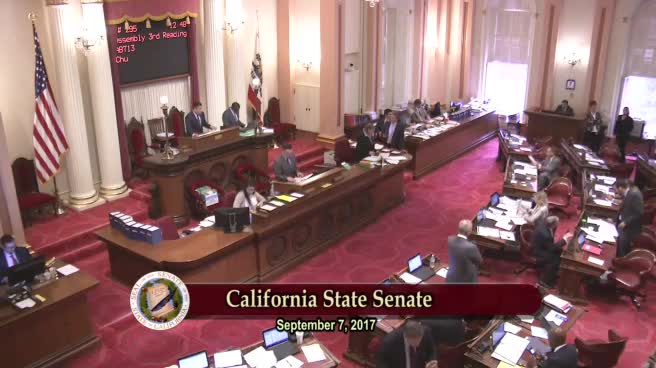 2MIN
Senate Floor
 1H
Senate Standing Committee on Appropriations
 13MIN
Senate Standing Committee on Labor and Industrial Relations
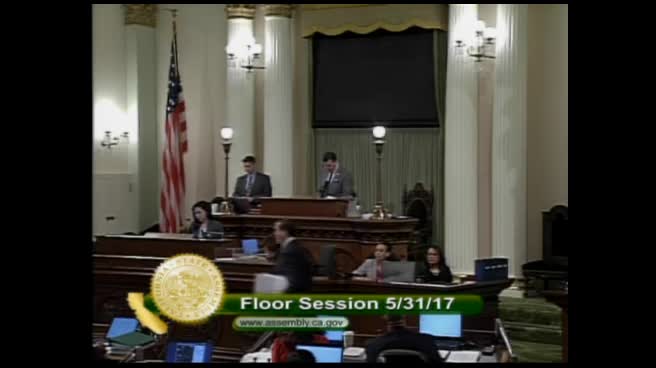 1MIN
Assembly Floor
 1H
Assembly Standing Committee on Appropriations
 8MIN
Assembly Standing Committee on Labor and Employment
Bill Author

Bill Co-Author(s):