AB 589: Water diversion: monitoring and reporting: University of California Cooperative Extension.
- Session Year: 2017-2018
- House: Assembly
- Latest Version Date: 2017-10-04
Existing law requires a person who diverts 10 acre-feet of water or more per year under a permit or license to install and maintain a device or employ a method capable of measuring the rate of direct diversion, rate of collection to storage, and rate of withdrawal or release from storage, as specified and with certain exceptions. Existing law requires the measurements to be made using the best available technologies and best professional practices using a device or methods satisfactory to the State Water Resources Control Board. Existing law requires a permittee or licensee to demonstrate to the board at 5-year intervals that a measuring device is functioning properly, as specified.
Existing law authorizes the board to adopt regulations requiring measurement and reporting of water diversion and use by persons including, but not limited to, those authorized to appropriate water under a permit, license, or registration for small irrigation use or livestock stockpond use, or a certification for livestock stockpond use.
This bill, until January 1, 2023, would require any diverter, as defined, who has completed an instructional course regarding the devices or measurement method administered by the University of California Cooperative Extension, including passage of a proficiency test before the completion of the course, to be considered a qualified individual when installing and maintaining devices or implementing methods of measurement that were taught in the course for the diverters diversion. The bill would require the University of California Cooperative Extension and the board to develop the curriculum of the course and the proficiency test.
Existing law requires a person who diverts 10 acre-feet of water or more per year under a permit or license to install and maintain a device or employ a method capable of measuring the rate of direct diversion, rate of collection to storage, and rate of withdrawal or release from storage, as specified and with certain exceptions. Existing law requires the measurements to be made using the best available technologies and best professional practices using a device or methods satisfactory to the State Water Resources Control Board. Existing law requires a permittee or licensee to demonstrate to the board at 5-year intervals that a measuring device is functioning properly, as specified.
Existing law authorizes the board to adopt regulations requiring measurement and reporting of water diversion and use by persons including, but not limited to, those authorized to appropriate water under a permit, license, or registration for small irrigation use or livestock stockpond use, or a certification for livestock stockpond use.
This bill, until January 1, 2023, would require any diverter, as defined, who has completed an instructional course regarding the devices or measurement method administered by the University of California Cooperative Extension, including passage of a proficiency test before the completion of the course, to be considered a qualified individual when installing and maintaining devices or implementing methods of measurement that were taught in the course for the diverters diversion. The bill would require the University of California Cooperative Extension to consult with and the board when developing to develop the curriculum of the course. course and the proficiency test.
Existing law requires a person who diverts 10 acre-feet of water or more per year under a permit or license to install and maintain a device or employ a method capable of measuring the rate of direct diversion, rate of collection to storage, and rate of withdrawal or release from storage, as specified and with certain exceptions. Existing law requires the measurements to be made using the best available technologies and best professional practices using a device or methods satisfactory to the State Water Resources Control Board. Existing law requires a permittee or licensee to demonstrate to the board at 5-year intervals that a measuring device is functioning properly, as specified.
Existing law authorizes the board to adopt regulations requiring measurement and reporting of water diversion and use by persons including, but not limited to, those authorized to appropriate water under a permit, license, or registration for small irrigation use or livestock stockpond use, or a certification for livestock stockpond use.
This bill bill, until January 1, 2023, would require any diverter diverter, as defined, who has completed an instructional course regarding the devices or measurement method administered by the University of California Cooperative Extension Extension, including passage of a proficiency test before the completion of the course, to be considered a qualified individual when installing and maintaining devices or methods of measurement for the diverters diversion and would require a diverter to recomplete the course every 6 years. diversion. The bill would require the University of California Cooperative Extension to consult with the board when developing the curriculum of the course.
Existing law requires a person who diverts 10 acre-feet of water or more per year under a permit or license to install and maintain a device or employ a method capable of measuring the rate of direct diversion, rate of collection to storage, and rate of withdrawal or release from storage, as specified and with certain exceptions. Existing law requires the measurements to be made using the best available technologies and best professional practices using a device or methods satisfactory to the State Water Resources Control Board. Existing law requires a permittee or licensee to demonstrate to the board at 5-year intervals that such a measuring device is operating functioning properly, as specified.
Existing law authorizes the board to adopt regulations requiring measurement and reporting of water diversion and use by persons including, but not limited to, those authorized to appropriate water under a permit, license, or registration for small irrigation use or livestock stockpond use, or a certification for livestock stockpond use.
This bill would require the board to presume for all these purposes that a measuring device or measurement method has been installed or implemented correctly, is functioning properly, and is certified to provide an accurate account of the rate and quantity of water diverted, and that measurements made by the device or measurement method are in full compliance with the measurement requirements, if the device was installed or the measurement method was implemented by an individual any diverter who has completed an instructional course regarding the devices or measurement method administered by the University of California Cooperative Extension, Extension to be considered a qualified individual when installing and maintaining devices or methods of measurement for the diverters diversion and would require an individual a diverter to recomplete the course every 6 years. The bill would require the University of California Cooperative Extension to consult with the board when developing the curriculum of the course. The bill would require an individual who has taken the course or a qualified individual, as defined, to submit in writing to the board every 3 years that the measuring device or measurement method is installed or implemented correctly and functioning properly.
Existing law requires a person who diverts 10 acre-feet of water or more per year under a permit or license to install and maintain a device or employ a method capable of measuring the rate of direct diversion, rate of collection to storage, and rate of withdrawal or release from storage, as specified and with certain exceptions. Existing law requires the measurements to be made using the best available technologies and best professional practices using a device or methods satisfactory to the State Water Resources Control Board. Existing law requires a permittee or licensee to demonstrate to the board at 5-year intervals that such a measuring device is operating properly, as specified.
Existing law authorizes the board to adopt regulations requiring measurement and reporting of water diversion and use by persons including, but not limited to, those authorized to appropriate water under a permit, license, or registration for small irrigation use or livestock stockpond use, or a certification for livestock stockpond use.
This bill would require the board to presume for all these purposes that a measuring device or measurement method has been installed or implemented correctly, is functioning properly, and is certified to provide an accurate account of the rate and quantity of water diverted, and that measurements made by the device or measurement method are in full compliance with the measurement requirements, if the device was installed or the measurement method was implemented by an individual who has completed an instructional course regarding the devices or measurement method administered by the University of California Cooperative Extension, and would require an individual to recomplete the course every 6 years. The bill would require the University of California Cooperative Extension to consult with the board when developing the curriculum of the course. The bill would require an individual who has taken the course or a qualified individual, as defined, to submit in writing to the board every 3 years that the measuring device or measurement method is installed or implemented correctly and functioning properly.
Existing law requires a person who diverts 10 acre-feet of water or more per year under a permit or license to install and maintain a device or employ a method capable of measuring the rate of direct diversion, rate of collection to storage, and rate of withdrawal or release from storage, as specified and with certain exceptions. Existing law requires the measurements to be made using the best available technologies and best professional practices using a device or methods satisfactory to the State Water Resources Control Board. Existing law requires a permittee or licensee to demonstrate to the board at 5-year intervals that such a measuring device is operating properly, as specified.
Existing law authorizes the board to adopt regulations requiring measurement and reporting of water diversion and use by persons including, but not limited to, those authorized to appropriate water under a permit, license, or registration for small irrigation use or livestock stockpond use, or a certification for livestock stockpond use.
This bill would require the board to presume for all these purposes that a measuring device has been installed correctly, is functioning properly, and is certified to provide an accurate account of the rate and quantity of water diverted, and that measurements made by the device are in full compliance with the measurement requirements, if the device was installed by an individual who has completed an instructional course regarding the devices administered by the University of California Cooperative Extension. Extension, and would require an individual to recomplete the course every 6 years. The bill would require the University of California Cooperative Extension to consult with the board when developing the curriculum of the course. The bill would require an individual who has taken the course or a qualified individual, as defined, to submit in writing to the board every 3 years that the measuring device is installed correctly and functioning properly.
Existing law requires a person who diverts 10 acre-feet of water or more per year under a permit or license to install and maintain a device or employ a method capable of measuring the rate of direct diversion, rate of collection to storage, and rate of withdrawal or release from storage, as specified and with certain exceptions. Existing law requires the measurements to be made using the best available technologies and best professional practices using a device or methods satisfactory to the State Water Resources Control Board. Existing law requires a permittee or licensee to demonstrate to the board at 5-year intervals that such a measuring device is operating properly, as specified.
Existing law authorizes the board to adopt regulations requiring measurement and reporting of water diversion and use by persons including, but not limited to, those authorized to appropriate water under a permit, license, or registration for small irrigation use or livestock stockpond use, or a certification for livestock stockpond use.
This bill would require the board to presume for all these purposes that a measuring device has been installed correctly, is functioning properly, and is certified to provide an accurate account of the rate and quantity of water diverted, and that measurements made by the device are in full compliance with the measurement requirements, if the device was installed by an individual who has completed an instructional course regarding the devices administered by the University of California Cooperative Extension. The bill would require the University of California Cooperative Extension to consult with the board when developing the curriculum of the course.
The Water Rights Permitting Reform Act of 1988 authorizes any person to obtain a right to appropriate water for a small domestic, small irrigation, or livestock stockpond use, as defined, upon registering the use with the State Water Resources Control Board, as prescribed, payment of a registration fee, and application of the water to reasonable and beneficial use with due diligence. Existing law sets forth various definitions for that purpose. This bill would make nonsubstantive changes to that provision.The Water Rights Permitting Reform Act of 1988 authorizes any person to obtain a right to appropriate water for a small domestic, small irrigation, or livestock stockpond use, as defined, upon registering the use with the State Water Resources Control Board, as prescribed, payment of a registration fee, and application of the water to reasonable and beneficial use with due diligence. Existing law sets forth various definitions for that purpose.
This bill would make nonsubstantive changes to that provision.
(a)For the purposes of a device installed pursuant to Section 1840 or 1841 or a method of measurement proposed and adopted pursuant to Section 934 or 935 of Title 23 of the California Code of Regulations, any diverter who has completed an instructional course regarding the devices or measurement method included in the course administered by the University of California Cooperative Extension, including passage of a proficiency test before the completion of the course, shall be considered a qualified individual when installing and maintaining devices or implementing methods of measurement that were taught in the course for the diverters diversion. The proficiency test shall seek to certify that the diverter has a satisfactory understanding of the principles of measurement and the use of a measurement method included in the course or the installation of a device. The University of California Cooperative Extension and the board shall develop the curriculum of the course and the proficiency test. The University of California Cooperative Extension and the board shall ensure the course curriculum and the proficiency test do not conflict with any state licensing acts.
(b)For purposes of this section, diverter means an individual authorized to divert water under a valid water right, a lessee of property that is subject to a water right who is acting as a representative of the water right holder, or a bona fide employee of the water right holder or lessee.
(c)This section shall remain in effect only until January 1, 2023, and as of that date is repealed, unless a later enacted statute that is enacted before January 1, 2023, deletes or extends that date.
(a)For the purposes of a device installed pursuant to Section 1840 or 1841 or a method of measurement proposed and adopted pursuant to Section 934 or 935 of Title 23 of the California Code of Regulations, any diverter who has completed an instructional course regarding the devices or measurement method included in the course administered by the University of California Cooperative Extension, including passage of a proficiency test before the completion of the course, shall be considered a qualified individual when installing and maintaining devices or implementing methods of measurement that were taught in the course for the diverters diversion. The proficiency test shall seek to certify that the diverter has a satisfactory understanding of the principles of measurement and the use of a measurement method included in the course or the installation of a device. The University of California Cooperative Extension shall consult with and the board when developing shall develop the curriculum of the course. course and the proficiency test. The University of California Cooperative Extension and the board shall ensure the course curriculum and the proficiency test do not conflict with any state licensing acts.
(b)For purposes of this section, diverter means an individual authorized to divert water under a valid water right, a lessee of property that is subject to a water right who is acting as a representative of the water right holder, or a bona fide employee of the water right holder or lessee.
(c)This section shall remain in effect only until January 1, 2023, and as of that date is repealed, unless a later enacted statute that is enacted before January 1, 2023, deletes or extends that date.
(a)The board may adopt regulations requiring measurement and reporting of water diversion and use pursuant to subdivision (a) of Section 1840 by either of the following:
(1)Persons authorized to appropriate water under a permit, license, registration for small domestic, small irrigation, or livestock stockpond use, or certification for livestock stockpond use.
(2)Persons required to comply with measurement and reporting regulations pursuant to subparagraph (B) of paragraph (1) of subdivision (e) of Section 5103.
(b)The initial regulations that the board adopts pursuant to this section shall be adopted as emergency regulations in accordance with Chapter 3.5 (commencing with Section 11340) of Part 1 of Division 3 of Title 2 of the Government Code. The adoption of the initial regulations is an emergency and shall be considered by the Office of Administrative Law as necessary for the immediate preservation of the public peace, health, safety, and general welfare. Notwithstanding Chapter 3.5 (commencing with Section 11340) of Part 1 of Division 3 of Title 2 of the Government Code, any emergency regulations adopted under this section shall remain in effect until revised by the board.
(c)The adoption of the initial regulations pursuant to this article is exempt from Division 13 (commencing with Section 21000) of the Public Resources Code.
SEC. 2.Section 1841.5 is added to the Water Code, to read:1841.5.(a)For the purposes of a device installed pursuant to Section 1840 or 1841 or a method of measurement proposed and adopted pursuant to Section 934 or 935 of Title 23 of the California Code of Regulations, any diverter who has completed an instructional course regarding the devices or measurement method administered by the University of California Cooperative Extension Extension, including passage of a proficiency test before the completion of the course, shall be considered a qualified individual when installing and maintaining devices or methods of measurement for the diverters diversion. The University of California Cooperative Extension shall consult with the board when developing the curriculum of the course. A diverter shall recomplete the course every six years.
(b)For purposes of this section, diverter means an individual authorized to divert water under a valid water right, a lessee of property that is subject to a water right who is acting as a representative of the water right holder, or a bona fide employee of the water right holder or lessee.
(c)This section shall remain in effect only until January 1, 2023, and as of that date is repealed, unless a later enacted statute that is enacted before January 1, 2023, deletes or extends that date.
(a)The board may adopt regulations requiring measurement and reporting of water diversion and use pursuant to subdivision (a) of Section 1840 by either of the following:
(1)Persons authorized to appropriate water under a permit, license, registration for small domestic, small irrigation, or livestock stockpond use, or certification for livestock stockpond use.
(2)Persons required to comply with measurement and reporting regulations pursuant to subparagraph (B) of paragraph (1) of subdivision (e) of Section 5103.
(b)The initial regulations that the board adopts pursuant to this section shall be adopted as emergency regulations in accordance with Chapter 3.5 (commencing with Section 11340) of Part 1 of Division 3 of Title 2 of the Government Code. The adoption of the initial regulations is an emergency and shall be considered by the Office of Administrative Law as necessary for the immediate preservation of the public peace, health, safety, and general welfare. Notwithstanding Chapter 3.5 (commencing with Section 11340) of Part 1 of Division 3 of Title 2 of the Government Code, any emergency regulations adopted under this section shall remain in effect until revised by the board.
(c)The adoption of the initial regulations pursuant to this article is exempt from Division 13 (commencing with Section 21000) of the Public Resources Code.
SEC. 2.Section 1841.5 is added to the Water Code, to read:1841.5.For the purposes of a device installed pursuant to Section 1840 or 1841 or a method of measurement proposed and adopted pursuant to Section 934 or 935 of Title 23 of the California Code of Regulations, the board shall presume that the device or measurement method has been installed or implemented correctly, is functioning properly, and is certified to provide an accurate account of the rate and quantity of water diverted, and that measurements made by the device or measurement method are in full compliance with the requirements of this article, if the device was installed or measurement method was implemented by an individual any diverter who has completed an instructional course regarding the devices or measurement method administered by the University of California Cooperative Extension. Extension shall be considered a qualified individual when installing and maintaining devices or methods of measurement for the diverters diversion. The University of California Cooperative Extension shall consult with the board when developing the curriculum of the course. An individual A diverter shall recomplete the course every six years. An individual who has completed the course developed pursuant to this section or a qualified individual, as defined in Section 931 of Title 23 of the California Code of Regulations, shall submit to the board in writing every three years that the measuring device or measurement method is installed or implemented correctly and functioning properly.
(a)The board may adopt regulations requiring measurement and reporting of water diversion and use pursuant to subdivision (a) of Section 1840 by either of the following:
(1)Persons authorized to appropriate water under a permit, license, registration for small domestic, small irrigation, or livestock stockpond use, or certification for livestock stockpond use.
(2)Persons required to comply with measurement and reporting regulations pursuant to subparagraph (B) of paragraph (1) of subdivision (e) of Section 5103.
(b)The initial regulations that the board adopts pursuant to this section shall be adopted as emergency regulations in accordance with Chapter 3.5 (commencing with Section 11340) of Part 1 of Division 3 of Title 2 of the Government Code. The adoption of the initial regulations is an emergency and shall be considered by the Office of Administrative Law as necessary for the immediate preservation of the public peace, health, safety, and general welfare. Notwithstanding Chapter 3.5 (commencing with Section 11340) of Part 1 of Division 3 of Title 2 of the Government Code, any emergency regulations adopted under this section shall remain in effect until revised by the board.
(c)The adoption of the initial regulations pursuant to this article is exempt from Division 13 (commencing with Section 21000) of the Public Resources Code.
SEC. 2.Section 1841.5 is added to the Water Code, to read:1841.5.For the purposes of a device installed pursuant to Section 1840 or 1841, 1841 or a method of measurement proposed and adopted pursuant to Section 934 or 935 of Title 23 of the California Code of Regulations, the board shall presume that the device or measurement method has been installed or implemented correctly, is functioning properly, and is certified to provide an accurate account of the rate and quantity of water diverted, and that measurements made by the device or measurement method are in full compliance with the requirements of this article, if the device was installed or measurement method was implemented by an individual who has completed an instructional course regarding the devices or measurement method administered by the University of California Cooperative Extension. The University of California Cooperative Extension shall consult with the board when developing the curriculum of the course. An individual shall recomplete the course every six years. An individual who has completed the course developed pursuant to this section or a qualified individual, as defined in Section 931 of Title 23 of the California Code of Regulations, shall submit to the board in writing every three years that the measuring device or measurement method is installed or implemented correctly and functioning properly.
(a)The board may adopt regulations requiring measurement and reporting of water diversion and use pursuant to subdivision (a) of Section 1840 by either of the following:
(1)Persons authorized to appropriate water under a permit, license, registration for small domestic, small irrigation, or livestock stockpond use, or certification for livestock stockpond use.
(2)Persons required to comply with measurement and reporting regulations pursuant to subparagraph (B) of paragraph (1) of subdivision (e) of Section 5103.
(b)The initial regulations that the board adopts pursuant to this section shall be adopted as emergency regulations in accordance with Chapter 3.5 (commencing with Section 11340) of Part 1 of Division 3 of Title 2 of the Government Code. The adoption of the initial regulations is an emergency and shall be considered by the Office of Administrative Law as necessary for the immediate preservation of the public peace, health, safety, and general welfare. Notwithstanding Chapter 3.5 (commencing with Section 11340) of Part 1 of Division 3 of Title 2 of the Government Code, any emergency regulations adopted under this section shall remain in effect until revised by the board.
(c)The adoption of the initial regulations pursuant to this article is exempt from Division 13 (commencing with Section 21000) of the Public Resources Code.
SEC. 2.Section 1841.5 is added to the Water Code, to read:1841.5.For the purposes of a device installed pursuant to Section 1840 or 1841, the board shall presume that the device has been installed correctly, is functioning properly, and is certified to provide an accurate account of the rate and quantity of water diverted, and that measurements made by the device are in full compliance with the requirements of this article, if the device was installed by an individual who has completed an instructional course regarding the devices administered by the University of California Cooperative Extension. The University of California Cooperative Extension shall consult with the board when developing the curriculum of the course. An individual shall recomplete the course every six years. An individual who has completed the course developed pursuant to this section or a qualified individual, as defined in Section 931 of Title 23 of the California Code of Regulations, shall submit to the board in writing every three years that the measuring device is installed correctly and functioning properly.
(a)The board may adopt regulations requiring measurement and reporting of water diversion and use pursuant to subdivision (a) of Section 1840 by either of the following:
(1)Persons authorized to appropriate water under a permit, license, registration for small domestic, small irrigation, or livestock stockpond use, or certification for livestock stockpond use.
(2)Persons required to comply with measurement and reporting regulations pursuant to subparagraph (B) of paragraph (1) of subdivision (e) of Section 5103.
(b)The initial regulations that the board adopts pursuant to this section shall be adopted as emergency regulations in accordance with Chapter 3.5 (commencing with Section 11340) of Part 1 of Division 3 of Title 2 of the Government Code. The adoption of the initial regulations is an emergency and shall be considered by the Office of Administrative Law as necessary for the immediate preservation of the public peace, health, safety, and general welfare. Notwithstanding Chapter 3.5 (commencing with Section 11340) of Part 1 of Division 3 of Title 2 of the Government Code, any emergency regulations adopted under this section shall remain in effect until revised by the board.
(c)The adoption of the initial regulations pursuant to this article is exempt from Division 13 (commencing with Section 21000) of the Public Resources Code.
SEC. 2.Section 1841.5 is added to the Water Code, to read:1841.5.For the purposes of a device installed pursuant to Section 1840 or 1841, the board shall presume that the device has been installed correctly, is functioning properly, and is certified to provide an accurate account of the rate and quantity of water diverted, and that measurements made by the device are in full compliance with the requirements of this article, if the device was installed by an individual who has completed an instructional course regarding the devices administered by the University of California Cooperative Extension. The University of California Cooperative Extension shall consult with the board when developing the curriculum of the course.
SECTION 1.Section 1228.1 of the Water Code is amended to read:1228.1.(a)The Legislature finds and declares that it is in the public interest to provide a timely, efficient, and economic procedure for the acquisition of rights to appropriate water for a small domestic use, including incidental stock watering and irrigation uses, a small irrigation use, and for a livestock stockpond subject to prior rights.(b)For purposes of this article, the following terms have the following meanings:(1)Small domestic use means a domestic use, as that use is defined by board rule, or a use for aesthetic, fire protection, recreational, or fish and wildlife purposes that is associated with a dwelling or other facility for human occupation, that does not exceed direct diversion of 4,500 gallons per day or diversion to storage of 10 acre-feet per year.(2)Small irrigation use means either of the following:(A)An irrigation use, heat control use, or frost protection use, not to exceed diversion to storage of 20 acre-feet per year, including impoundment for incidental aesthetic, fire protection, recreational, or fish and wildlife purposes.(B)An irrigation use not to exceed direct diversion of 42,000 gallons per day, up to a maximum of 20 acre-feet per year.(3)Livestock stockpond means a water impoundment structure constructed for livestock watering use not to exceed direct diversion of 4,500 gallons per day, or diversion to storage of 10 acre-feet per year, as that use is defined by the board, and including impoundment for incidental aesthetic, fire protection, recreational, or fish and wildlife purposes.(a)The Legislature finds and declares that it is in the public interest to provide a timely, efficient, and economic procedure for the acquisition of rights to appropriate water for a small domestic use, including incidental stock watering and irrigation uses, a small irrigation use, and for a livestock stockpond subject to prior rights.
(b)As used in For purposes of this article: article, the following terms have the following meanings:
(1)Small domestic use means a domestic use, as that use is defined by board rule, or a use for aesthetic, fire protection, recreational, or fish and wildlife purposes that is associated with a dwelling or other facility for human occupation, that does not exceed direct diversion of 4,500 gallons per day or diversion to storage of 10 acre-feet per year.
(2)Small irrigation use means either of the following:
(A)An irrigation use, heat control use, or frost protection use, not to exceed diversion to storage of 20 acre-feet per year, including impoundment for incidental aesthetic, fire protection, recreational, or fish and wildlife purposes.
(B)An irrigation use not to exceed direct diversion of 42,000 gallons per day, up to a maximum of 20 acre-feet per year.
(3)Livestock stockpond means a water impoundment structure constructed for livestock watering use not to exceed direct diversion of 4,500 gallons per day, or diversion to storage of 10 acre-feet per year, as that use is defined by the board, and including impoundment for incidental aesthetic, fire protection, recreational, or fish and wildlife purposes.
|
Date
|
Status
|
|---|---|
| Oct 4, 2017 | Chaptered by Secretary of State - Chapter 471, Statutes of 2017. |
| Oct 4, 2017 | Approved by the Governor. |
| Sep 25, 2017 | Enrolled and presented to the Governor at 12 p.m. |
| Sep 14, 2017 | In Assembly. Concurrence in Senate amendments pending. |
| Sep 13, 2017 | Read third time. Passed. Ordered to the Assembly. |
| Sep 12, 2017 | Read third time. Passed. Ordered to the Assembly. |
| Sep 11, 2017 | Read second time. Ordered to third reading. |
| Sep 8, 2017 | Read third time and amended. Ordered to second reading. |
| Sep 6, 2017 | Read second time and amended. Ordered to third reading. |
| Sep 5, 2017 | From committee: Amend, and do pass as amended. (Ayes 7. Noes 0.) (September 1). |
| Aug 21, 2017 | In committee: Referred to APPR. suspense file. |
| Jul 12, 2017 | Read second time and amended. Re-referred to Com. on APPR. |
| Jul 11, 2017 | From committee: Amend, and do pass as amended and re-refer to Com. on APPR. with recommendation: To Consent Calendar. (Ayes 9. Noes 0.) (July 11). |
| Jun 14, 2017 | Referred to Com. on N.R. & W. |
| Jun 1, 2017 | In Senate. Read first time. To Com. on RLS. for assignment. |
| May 31, 2017 | Read third time. Passed. Ordered to the Senate. (Ayes 76. Noes 0. Page 1934.) |
| May 30, 2017 | Read second time. Ordered to third reading. |
| May 26, 2017 | From committee: Amend, and do pass as amended. (Ayes 17. Noes 0.) (May 26). |
| May 17, 2017 | In committee: Set, first hearing. Referred to APPR. suspense file. |
| May 1, 2017 | Re-referred to Com. on APPR. |
| Apr 27, 2017 | Read second time and amended. |
| Apr 26, 2017 | From committee: Amend, and do pass as amended and re-refer to Com. on APPR. (Ayes 15. Noes 0.) (April 25). |
| Mar 27, 2017 | Re-referred to Com. on W.,P., & W. |
| Mar 23, 2017 | From committee chair, with author's amendments: Amend, and re-refer to Com. on W.,P., & W. Read second time and amended. |
| Mar 23, 2017 | Referred to Com. on W.,P., & W. |
| Feb 15, 2017 | From printer. May be heard in committee March 17. |
| Feb 14, 2017 | Read first time. To print. |
|
Date
|
Description
|
Location
|
Votes
|
|
|---|---|---|---|---|
| Sep 14, 2017 | AB 589 Bigelow Concurrence in Senate Amendments | Assembly Floor |
Passed |
|
| Sep 13, 2017 | Assembly 3rd Reading AB589 Bigelow By Hertzberg | Senate Floor |
Passed |
|
| Sep 12, 2017 | Assembly 3rd Reading AB589 Bigelow By Hertzberg Reconsider | Senate Floor |
Passed |
|
| Sep 12, 2017 | Assembly 3rd Reading AB589 Bigelow By Hertzberg | Senate Floor |
Passed |
|
| Sep 1, 2017 | Do pass as amended | Senate Standing Committee on Appropriations |
Passed |
|
| Aug 21, 2017 | Placed on suspense file | Senate Standing Committee on Appropriations |
Passed |
|
| Jul 11, 2017 | Do pass as amended, but first amend, and re-refer to the Committee on [Appropriations] with the recommendation: To Consent Calendar | Senate Standing Committee on Natural Resources and Water |
Passed |
|
| May 31, 2017 | AB 589 BIGELOW Assembly Third Reading | Assembly Floor |
Passed |
|
| May 26, 2017 | Do pass as amended. | Assembly Standing Committee on Appropriations |
Passed |
|
| Apr 25, 2017 | Do pass as amended and be re-referred to the Committee on [Appropriations] | Assembly Standing Committee on Water, Parks, and Wildlife |
Passed |
This list shows positions taken on this bill by organizations on the date displayed, which is linked to the original source.
Positions by individuals are not included.
|
Organization
|
Position
|
Date
|
|---|---|---|
| California Cattlemen'S Association | ** Support | Sep 11, 2017 |
| California Farm Bureau Federation | ** Support | Sep 11, 2017 |
| California Waterfowl Association | ** Support | Sep 11, 2017 |
| University of California | ** Support | Sep 11, 2017 |
CONCURRENCE IN SENATE AMENDMENTS
CSA1 Bill Id:AB 589
Author:(Bigelow)
As Amended Ver:September 8, 2017
Majority vote
ASSEMBLY: | 76-0 | (May 31, 2017) | SENATE: | 40-0 | (September 13, 2017) |
Original Committee Reference: W., P., & W.
SUMMARY: This bill, until January 1, 2023, would require any water diverter, as defined, who has completed an instructional course regarding the devices or measurement method administered by the University of California (UC) Cooperative Extension, including passing a proficiency test before the completion of the course, to be considered a qualified individual when installing and maintaining devices or implementing methods of measurement that were taught in the course for the diverter's diversion. The bill would require the University of California Cooperative Extension and the State Water Resources Control Board (SWRCB) to develop the curriculum of the course and the proficiency test.
The Senate amendments clarify the qualifications for diverters and sunset the provision as of January 1, 2023, unless subsequent legislation is adopted. Amendments include:
- Clarifying that the diverter must pass a proficiency test prior to the completion of the UC Extension course.
- Clarifying that only the water rights holder can act as the owner-builder.
- Clarifying that the course, to be developed with the SWRCB, and certification, applies to both installing and maintaining the device.
- Deleting the requirement to re-test every six years, given the sunset of the bill.
- Other technical and clarifying changes.
EXISTING LAW:
- Requires a person who diverts 10 acre-feet of water or more per year, under a permit or license, to install and maintain a device, or employ a method capable of measuring: a) the rate of direct diversion; b) rate of collection to storage; and, c) rate of withdrawal or release from storage, with certain exceptions.
- Requires the measurements to be made using the best available technologies and best professional practices using a device or method satisfactory to the SWRCB.
- Requires the SWRCB to adopt regulations requiring measurement and reporting of water diversion and use by persons, including but not limited to, those authorized to appropriate water under a permit, and license or registration for small irrigation use or livestock stock pond use.
FISCAL EFFECT: According to the Assembly Appropriations Committee:
- One-time SWRCB costs of $280,000 to update the Emergency Regulation for Measuring and Reporting the Diversion of Water (Water Rights Fund) to allow for the self-certification provided by this bill.
- Potential increased litigation costs regarding the SWRCB's regulatory and enforcement authority.
- Unknown costs for UC Extension to develop curriculum, offset by future course fees.
- Absorbable costs for the SWRCB to consult with UC Extension on curriculum development.
COMMENTS: Existing law requires the SWRCB to adopt emergency regulations to require anyone with a surface water diversion greater than 100 acre-feet to install a measuring device and more frequently monitor and report use depending on the size of the diversion. Regulations were adopted in 2016 that require the individual installing the measuring devices to have very specific qualifications related to professional engineering, contracting and water measurement. Devices must also be certified for type, accuracy, and a number of other qualifications and requirements. This bill would provide an alternative method of compliance in law by allowing individuals to complete an instructional course through the UC Extension in order to certify the installation of the measuring device or measuring method.
Analysis Prepared by: Catherine Freeman / W., P., & W. / (916) 319-2096 FN: 0002212
Office of Senate Floor Analyses (916) 651-1520 Fax: (916) 327-4478 | AB |
THIRD READING
Bill No: AB 589
:
SENATE NATURAL RES. & WATER COMMITTEE: 9-0, 7/11/17
AYES: Hertzberg, Stone, Allen, Atkins, Hueso, Jackson, Monning, Stern, Vidak
SENATE APPROPRIATIONS COMMITTEE: 7-0, 9/1/17
AYES: Lara, Bates, Beall, Bradford, Hill, Nielsen, Wiener
ASSEMBLY FLOOR: 76-0, 5/31/17 - See last page for vote
SOURCE: California Cattlemen’s Association
DIGEST:
This bill adds to the list of individuals qualified to install and maintain measuring devises for small domestic, small irrigation, or livestock stockpond uses, any diverter who has completed an instructional course regarding the devices or measurement method administered by the University of California (UC) Cooperative Extension.
Senate Floor Amendments of 9/8/17 clarify that the curriculum for the course is to be developed by the UC Cooperative Extension and State Water Resources Control Board (State Board) and that the test seek to certify that the diverter understands the principles taught in the class.
Existing law:
- Authorizes, pursuant to the FY 2015/16 Resources Trailer Bill (SB 88, Committee on Budget and Fiscal Review, Chapter 27, Statutes of 2015), among other things, the State Board to adopt regulations requiring measurement and reporting of water diversion and use by either of the following:
- Persons authorized to appropriate water under a permit, license, registration for small domestic, small irrigation, or livestock stockpond use, or certification for livestock stockpond use.
- Persons diverting 10 acre-feet of water or more per year.
- Specifies that the State Board adopted regulations in January 2016, among other things, which require that a “qualified individual” design, install, field test, and calibrate the measuring devices. The regulations define a qualified individual as follows:
- For diversions greater than or equal to 100 acre-feet per year:
- A California-registered Professional Engineer; or
- A California-licensed contractor authorized by the State License Board for C-57 well drilling or C-61 Limited Specialty/D-21 Machinery and Pumps; or
- A person under the supervision of a California-registered Professional Engineer and employed to install, operate, and maintain water measurement and reporting devices or methods; or
- In the case of a right or a claimed right to divert by an agency of the federal government, a hydrologist or professional engineer experienced and trained in water measurement who is employed by the federal agency in that capacity.
- For diversions less than 100 acre-feet per year, a person trained and experienced in water measurement and reporting. This may include the diverter or the diverter's agent.
- For diversions greater than or equal to 100 acre-feet per year:
This bill:
- Requires any diverter who has completed a course by the UC Cooperative Extension on measurement method and devices to be considered a qualified individual when installing and maintaining devices or methods of measurement for the diverter’s diversion.
- Defines a diverter as an individual authorized to divert water under a valid water right, a lessee of property that is subject to a water right who is action as a representative of the water right holder, or a bona fide employee of the water right holder or lessee.
- Requires the UC Cooperative Extension to consult with the State Board when developing the curriculum of the course.
- Sunsets on January 1, 2023.
Comments
Owner-builder. The intent of the sponsor and author appears to be to grant a water rights holder the same authorities as an owner-builder has for home construction and repair. An owner-builder is a person owns the property and acts as their own general contractor on the job, and either does the work themselves or has employees (or subcontractors) working on the project. Also, as an owner-builder they assume full responsibility for all phases of the project and its integrity. This bill takes that concept a step further and requires the person to also complete a course designed to ensure they are aware of and are capable of complying with the various requirements under the law.
FISCAL EFFECT: Appropriation: Fiscal Com.: Local:
According to the Senate Appropriations Committee:
- One-time State Board costs of $300,000 (Water Rights Fund) to update the Emergency Regulation for Measuring and Reporting the Diversion of Water to add diverters who have completed the UC course to the list of qualified individuals.
- Unknown, likely significant, costs (Water Rights Fund) resulting from increased litigation regarding State Board's regulatory and enforcement authority.
- Unknown, significant one-time costs for UC Extension to develop curriculum, potentially offset by future course fees.
- Minor costs (Water Rights Fund) for State Board to consult with UC Extension on curriculum development.
California Cattlemen’s Association (source)
California Farm Bureau Federation
California Waterfowl Association
University of California
OPPOSITION: (Verified 9/11/17)
None received
ARGUMENTS IN SUPPORT: According to the author, “The current costs of compliance have created a stifling burden for rural California, partly due to many diverters having to consult with an engineer or contractor to install and certify a measuring device. AB 589 will provide financial relief for family farmers and ranchers seeking to comply with emergency measuring, monitoring and reporting regulations for surface water diversions greater than 10 acre-feet.”
ASSEMBLY FLOOR: 76-0, 5/31/17
AYES: Acosta, Aguiar-Curry, Travis Allen, Arambula, Baker, Berman, Bigelow, Bloom, Bocanegra, Bonta, Brough, Burke, Caballero, Calderon, Cervantes, Chau, Chávez, Chen, Chiu, Chu, Cooley, Cooper, Cunningham, Dababneh, Dahle, Daly, Flora, Fong, Frazier, Friedman, Gallagher, Cristina Garcia, Eduardo Garcia, Gipson, Gloria, Gomez, Gonzalez Fletcher, Gray, Grayson, Harper, Holden, Irwin, Jones-Sawyer, Kalra, Kiley, Lackey, Levine, Limón, Low, Maienschein, Mathis, Mayes, McCarty, Medina, Mullin, Muratsuchi, Nazarian, Obernolte, O'Donnell, Quirk, Quirk-Silva, Reyes, Ridley-Thomas, Rodriguez, Rubio, Salas, Santiago, Steinorth, Mark Stone, Thurmond, Ting, Voepel, Waldron, Weber, Wood, Rendon
NO VOTE RECORDED: Choi, Eggman, Melendez, Patterson
9/11/17 20:05:46
**** END ****
Office of Senate Floor Analyses (916) 651-1520 Fax: (916) 327-4478 | AB |
THIRD READING
Bill No: AB 589
Amended: 9/6/17 in Senate
SENATE NATURAL RES. & WATER COMMITTEE: 9-0, 7/11/17
AYES: Hertzberg, Stone, Allen, Atkins, Hueso, Jackson, Monning, Stern, Vidak
SENATE APPROPRIATIONS COMMITTEE: 7-0, 9/1/17
AYES: Lara, Bates, Beall, Bradford, Hill, Nielsen, Wiener
ASSEMBLY FLOOR: 76-0, 5/31/17 - See last page for vote
SOURCE: California Cattlemen’s Association
DIGEST:
This bill adds to the list of individuals qualified to install and maintain measuring devises for small domestic, small irrigation, or livestock stockpond uses, any diverter who has completed an instructional course regarding the devices or measurement method administered by the University of California (UC) Cooperative Extension.
Existing law:
- Authorizes, pursuant to the FY 2015/16 Resources Trailer Bill (SB 88, Committee on Budget and Fiscal Review, Chapter 27, Statutes of 2015), among other things, the State Water Resources Control Board (State Board) to adopt regulations requiring measurement and reporting of water diversion and use by either of the following:
- Persons authorized to appropriate water under a permit, license, registration for small domestic, small irrigation, or livestock stockpond use, or certification for livestock stockpond use.
- Persons diverting 10 acre-feet of water or more per year.
- Specifies that the State Board adopted regulations in January 2016, among other things, which require that a “qualified individual” design, install, field test, and calibrate the measuring devices. The regulations define a qualified individual as follows:
- For diversions greater than or equal to 100 acre-feet per year:
- A California-registered Professional Engineer; or
- A California-licensed contractor authorized by the State License Board for C-57 well drilling or C-61 Limited Specialty/D-21 Machinery and Pumps; or
- A person under the supervision of a California-registered Professional Engineer and employed to install, operate, and maintain water measurement and reporting devices or methods; or
- In the case of a right or a claimed right to divert by an agency of the federal government, a hydrologist or professional engineer experienced and trained in water measurement who is employed by the federal agency in that capacity.
- For diversions less than 100 acre-feet per year, a person trained and experienced in water measurement and reporting. This may include the diverter or the diverter's agent.
- For diversions greater than or equal to 100 acre-feet per year:
This bill:
- Requires any diverter who has completed a course by the UC Cooperative Extension on measurement method and devices to be considered a qualified individual when installing and maintaining devices or methods of measurement for the diverter’s diversion.
- Defines a diverter as an individual authorized to divert water under a valid water right, a lessee of property that is subject to a water right who is action as a representative of the water right holder, or a bona fide employee of the water right holder or lessee.
- Requires the UC Cooperative Extension to consult with the State Board when developing the curriculum of the course.
- Sunsets on January 1, 2023.
Comments
Owner-builder. The intent of the sponsor and author appears to be to grant a water rights holder the same authorities as an owner-builder has for home construction and repair. An owner-builder is a person owns the property and acts as their own general contractor on the job, and either does the work themselves or has employees (or subcontractors) working on the project. Also, as an owner-builder they assume full responsibility for all phases of the project and its integrity. This bill takes that concept a step further and requires the person to also complete a course designed to ensure they are aware of and are capable of complying with the various requirements under the law.
FISCAL EFFECT: Appropriation: Fiscal Com.: Local:
According to the Senate Appropriations Committee:
- One-time State Board costs of $300,000 (Water Rights Fund) to update the Emergency Regulation for Measuring and Reporting the Diversion of Water to add diverters who have completed the UC course to the list of qualified individuals.
- Unknown, likely significant, costs (Water Rights Fund) resulting from increased litigation regarding State Board's regulatory and enforcement authority.
- Unknown, significant one-time costs for UC Extension to develop curriculum, potentially offset by future course fees.
- Minor costs (Water Rights Fund) for State Board to consult with UC Extension on curriculum development.
California Cattlemen’s Association (source)
California Farm Bureau Federation
California Waterfowl Association
University of California
None received
ARGUMENTS IN SUPPORT: According to the author, “The current costs of compliance have created a stifling burden for rural California, partly due to many diverters having to consult with an engineer or contractor to install and certify a measuring device. AB 589 will provide financial relief for family farmers and ranchers seeking to comply with emergency measuring, monitoring and reporting regulations for surface water diversions greater than 10 acre-feet.”
ASSEMBLY FLOOR: 76-0, 5/31/17
AYES: Acosta, Aguiar-Curry, Travis Allen, Arambula, Baker, Berman, Bigelow, Bloom, Bocanegra, Bonta, Brough, Burke, Caballero, Calderon, Cervantes, Chau, Chávez, Chen, Chiu, Chu, Cooley, Cooper, Cunningham, Dababneh, Dahle, Daly, Flora, Fong, Frazier, Friedman, Gallagher, Cristina Garcia, Eduardo Garcia, Gipson, Gloria, Gomez, Gonzalez Fletcher, Gray, Grayson, Harper, Holden, Irwin, Jones-Sawyer, Kalra, Kiley, Lackey, Levine, Limón, Low, Maienschein, Mathis, Mayes, McCarty, Medina, Mullin, Muratsuchi, Nazarian, Obernolte, O'Donnell, Quirk, Quirk-Silva, Reyes, Ridley-Thomas, Rodriguez, Rubio, Salas, Santiago, Steinorth, Mark Stone, Thurmond, Ting, Voepel, Waldron, Weber, Wood, Rendon
NO VOTE RECORDED: Choi, Eggman, Melendez, Patterson
9/6/17 16:18:42
**** END ****
SENATE COMMITTEE ON
Senator Ricardo Lara, Chair
2017 - 2018 Regular Session
AB 589 (Bigelow) - Water diversion: monitoring and reporting: University of California Cooperative Extension
Version: | Policy Vote: |
Urgency: | Mandate: |
Hearing Date: | Consultant: |
Bill Summary:
AB 589 adds to the list of individuals qualified to install and maintain measuring devices required under Section 934 or 935 of Title 23 of the California Code of Regulations, any diverter who has completed an instructional course regarding the devices or measurement method administered by the University of California (UC) Cooperative Extension.
*********** ANALYSIS ADDENDUM – SUSPENSE FILE ***********
The following information is revised to reflect amendments
adopted by the committee on September 1, 2017
Fiscal Impact:
- One-time SWRCB costs of $300,000 (Water Rights Fund) to update the Emergency Regulation for Measuring and Reporting the Diversion of Water to add diverters who have completed the UC course to the list of qualified individuals.
- Unknown, significant one-time costs for UC Extension to develop curriculum, potentially offset by future course fees.
- Minor costs (Water Rights Fund) for SWRCB to consult with UC Extension on curriculum development.
- Potential costs (Water Rights Fund) resulting from increased litigation regarding SWRCB's regulatory and enforcement authority.
Author Amendments:
- Require the UC course to include a proficiency exam prior to issuing certification.
- Sunset the bill’s provisions in five years.
-- END --
SENATE COMMITTEE ON APPROPRIATIONS
Senator Ricardo Lara, Chair
2017 - 2018 Regular Session
AB 589 (Bigelow) - Water diversion: monitoring and reporting: University of California Cooperative Extension
Version: July 12, 2017 | Policy Vote: N.R. & W. 9 - 0 |
Urgency: No | Mandate: No |
Hearing Date: August 21, 2017 | Consultant: Narisha Bonakdar |
This bill meets the criteria for referral to the Suspense File.
Bill Summary:
AB 589 adds to the list of individuals qualified to install and maintain measuring devises required under Section 934 or 935 of Title 23 of the California Code of Regulations, any diverter who has completed an instructional course regarding the devices or measurement method administered by the University of California (UC) Cooperative Extension.
Fiscal Impact:
- One-time SWRCB costs of $300,000 (Water Rights Fund) to update the Emergency Regulation for Measuring and Reporting the Diversion of Water to add diverters who have completed the UC course to the list of qualified individuals.
- Unknown, likely significant, costs (Water Rights Fund) resulting from increased litigation regarding SWRCB's regulatory and enforcement authority.
- Unknown, significant one-time costs for UC Extension to develop curriculum, potentially offset by future course fees.
- Minor costs (Water Rights Fund) for SWRCB to consult with UC Extension on curriculum development.
Background:
The FY 2015/16 Resources Trailer Bill (SB 88), among other things, required the State Water Resources Control Board (SWRCB) to adopt emergency regulations to require anyone with a surface water diversion greater than 100 acre-feet to install a measuring device and more frequently monitor and report use depending on the size of the diversion.
In January 2016, the State Board adopted such regulations that, among other things, require that a “qualified individual” design, install, field test, and calibrate the measuring devices. The regulations define a qualified individual as follows:
- For diversions greater than or equal to 100 acre-feet per year:
- A California-registered Professional Engineer; or
- A California-licensed contractor authorized by the State License Board for C-57 well drilling or C-61 Limited Specialty/D-21 Machinery and Pumps; or
- A person under the supervision of a California-registered Professional Engineer and employed to install, operate, and maintain water measurement and reporting devices or methods; or
- In the case of a right or a claimed right to divert by an agency of the federal government, a hydrologist or professional engineer experienced and trained in water measurement who is employed by the federal agency in that capacity.
- For diversions less than 100 acre-feet per year, a person trained and experienced in water measurement and reporting. This may include the diverter or the diverter's agent.
SWRCB has established an alternative compliance for a measuring device or measurement method requirement where strict compliance of the regulations is not feasible, would be unreasonably expensive, would unreasonably affect public trust uses, or would result in the waste or unreasonable use of water.
The regulations also authorize the SWRCB to conduct field inspections or request additional information from the diverter to determine if the measuring device has been properly installed and meet the requirements of this section.
Proposed Law:
This bill:
- Adds to the list of individuals qualified to install and maintain measuring devises required under Section 934 or 935 of Title 23 of the California Code of Regulations, any diverter who has completed an instructional course regarding the devices or measurement method administered by the University of California Cooperative Extension.
- Requires the University of California Cooperative Extension to consult with the SWRCB when developing the curriculum of the course.
- Requires a diverter to recomplete the course every six years.
Related Legislation:
AB 2357 (Dahle), of the 2015-16 Legislative Session, would have exempted stock ponds that are not filled by a year-round diversion covered under a registration from the requirements of SB 88. This bill was held in the Senate at the request of the author after SWRCB agreed to make the changes in the regulation to accomplish the objectives of the bill. A memo was issued by the SWRCB stating that although registrations would need to be reported annually, monthly diversions to storage could be estimated by the diverter.
SB 88 (Committee on Budget), Chapter 27, Statutes of 2015, required SWRCB to adopt emergency regulations to require anyone with a surface water diversion greater than 100 acre-feet to install a measuring device and more frequently monitor and report use depending on the size of the diversion.
Staff Comments:
Undermines drought preparedness and water rights administration legislation. This bill provides a statutory alternative to regulations developed by the SWRCB at the direction of trailer bill legislation enacted in 2015. The legislation and the resulting regulations are designed to improve drought preparedness and water rights administration by requiring people who divert more than 10 acre feet annually to have to measure and report the amount of their diversion. According to the SWRCB, this information is critical for the effective administration of the water rights program and to better forecast and manage water during droughts.
Under the newly-enacted regulations, diverters of more 100 acre-feet per year (equivalent to 89,000 gallons per day and sufficient to meet the daily health and safety water needs for over 1,700 people) must have their measurement equipment installed and certified by a qualified individual—an engineer or contractor specifically trained in water measurement. These professionals undergo several years of specialized training in addition to having experience working on similar projects throughout their careers. This bill adds to the list of qualified individuals, any diverter who has taken a UC extension course on the devices or measurement methods for water diversions. Notably, the bill neither requires SWRCB approval of the class, nor does it require the individual to demonstrate comprehension or competence after completing the class.
Individuals who have taken the class will not achieve a level of expertise comparable to the professionals, nor will they have the legal responsibility or financial assurances of work required of a credentialed engineer or contractor. As such, this bill may result in the improper installation or maintenance of installed devices used by the SWRCB to make water rights determination, which can in turn lead to litigation and/or additional workload resulting from water rights decisions based on inaccurate data from devices. The increased potential for improper installations and maintenance may also lead to increased workload resulting from the need for more oversight of these devices.
Should this bill move forward, staff recommends the following amendments:
- Require SWRCB approval of the course and authorize the SWRCB to require changes to the coursework to address any deficiencies identified after implementation.
- Sunset the provisions of the bill in five years.
- Require the course to include a measure of proficiency prior to completion.
- Require qualified diverters to maintain financial assurances of work
Sole-sourcing is inconsistent with state policy. This bill specifies the UC as the only entity that may provide the course necessary for a diverter to become qualified to install devises. There are potentially hundreds of higher educational institutions and technical training institutions that are qualified to provide this training and that may be better postured to do so. State policy generally requires procurement and contracting decisions to be made through a competitive bidding process or to be open to any entity meeting minimum eligibility requirements. Staff notes that amendments to resolve this issue would significantly increase costs.
-- END --
SENATE COMMITTEE ON NATURAL RESOURCES AND WATER
Senator Robert Hertzberg, Chair
2017 - 2018 Regular
Bill No: AB 589 Hearing Date: July 11, 2017
Author: | |||
Version: |
| ||
Urgency: | Fiscal: | ||
Consultant: | |||
Subject: Water diversion: monitoring and reporting: University of California Cooperative Extension
BACKGROUND AND EXISTING LAW
- The FY 2015/16 Resources Trailer Bill (SB 88), among other things, authorized the State Water Resources Control Board (State Board) to adopt regulations requiring measurement and reporting of water diversion and use by either of the following:
- Persons authorized to appropriate water under a permit, license, registration for small domestic, small irrigation, or livestock stockpond use, or certification for livestock stockpond use.
- Persons diverting 10 acre-feet of water or more per year.
- In January 2016, the State Board adopted such regulations. Among other things, the regulations require that a “qualified individual” design, install, field test, and calibrate the measuring devices. The regulations define a qualified individual as follows:
- For diversions greater than or equal to 100 acre-feet per year:
- A California-registered Professional Engineer; or
- A California-licensed contractor authorized by the State License Board for C-57 well drilling or C-61 Limited Specialty/D-21 Machinery and Pumps; or
- A person under the supervision of a California-registered Professional Engineer and employed to install, operate, and maintain water measurement and reporting devices or methods; or
- In the case of a right or a claimed right to divert by an agency of the federal government, a hydrologist or professional engineer experienced and trained in water measurement who is employed by the federal agency in that capacity.
- For diversions less than 100 acre-feet per year, a person trained and experienced in water measurement and reporting. This may include the diverter or the diverter's agent.
- For diversions greater than or equal to 100 acre-feet per year:
The regulations also authorize the board to conduct field inspections or request additional information from the diverter to determine if the measuring device has been properly installed and meet the requirements of this section.
PROPOSED LAW
This bill would:
- Require the State Board to presume that a measuring device or measurement method has been installed or implemented correctly, is functioning properly, and is certified to provide an accurate account of the rate and quantity of water diverted, and that measurements made by the device or measurement method are in full compliance with the measurement requirements, if the device was installed or the measurement method was implemented by an individual who has completed an instructional course regarding the devices or measurement method administered by the University of California Cooperative Extension, and would require an individual to recomplete the course every 6 years.
- Require the University of California Cooperative Extension to consult with the State Board when developing the curriculum of the course.
- Require an individual who has taken the course or a qualified individual, as defined, to submit in writing to the State Board every 3 years that the measuring device or measurement method is installed or implemented correctly and functioning properly.
- Make other technical amendments.
ARGUMENTS IN SUPPORT
According to the author, “The current costs of compliance have created a stifling burden for rural California, partly due to many diverters having to consult with an engineer or contractor to install and certify a measuring device. AB 589 will provide financial relief for family farmers and ranchers seeking to comply with emergency measuring, monitoring and reporting regulations for surface water diversions greater than 10 acre-feet.”
ARGUMENTS IN OPPOSITION: None received
COMMENTS
Owner-Builder. The intent of the sponsor and author appears to be to grant a water rights holder the same authorities as an owner-builder has for home construction and repair. An owner-builder is a person owns the property and acts as their own general contractor on the job, and either does the work themselves or has employees (or subcontractors) working on the project. Also, as an owner-builder they assume full responsibility for all phases of the project and its integrity. This bill takes that concept a step further and requires the person to also complete a course designed to ensure they are aware of and are capable of complying with the various requirements under the law.
Shall Presume. The bill would require the State Board to presume everything about the measuring devices is in compliance with the statute if the person completes the appropriate course. This would create a presumption of competency that professional engineers, licensed specialty contractors, or other highly educated and skilled professionals wouldn’t enjoy. It would also remove the Water Board’s ability to inspect and test the devices, as they can for those installed by qualified individuals. It seems unlikely that taking a course from the Cooperative Extension, or any other institution for that matter, would grant a person such a superlative level of competence as to justify that presumption.
SUGGESTED AMENDMENTS
The suggested amendments remove the presumption in the current bill, clarify that only the water rights holder can act as the owner-builder, and delete language that is now unnecessary with the removal of the presumption.
On page 3:
On line 13, delete “the board shall presume that the”
Delete lines 14 though19
On line 20, delete “an individual” and insert “any diverter”
On line 22, after “Extension” insert “shall be considered a qualified individual when installing and maintaining devices or methods of measurement for their diversion or diversions”
On line 24, delete “an individual” and insert “any diverter”
On line 25, delete “An individual who has”
Delete lines 26 through 30
SUPPORT
California Cattlemen’s Association (Sponsor)
California Farm Bureau Federation
California Waterfowl Association
OPPOSITION
None Received
-- END --
ASSEMBLY THIRD READING
ATR Bill Id:AB 589
Author:(Bigelow)
As Amended Ver:May 26, 2017
Majority vote
Committee | Votes | Ayes | Noes |
Water | 15-0 | Eduardo Garcia, Gallagher, Bigelow, Choi, Chu, Friedman, Gloria, Bocanegra, Harper, Levine, Mathis, Rubio, Salas, Thurmond, Wood | |
Appropriations | 17-0 | Gonzalez Fletcher, Bigelow, Bloom, Bocanegra, Bonta, Brough, Calderon, McCarty, Quirk, Fong, Friedman, Gallagher, Eduardo Garcia, Gray, Muratsuchi, Obernolte, Reyes |
|
SUMMARY: Creates a new program to certify specific water diversion equipment and measurement methods, including installation and monitoring. Specifically, this bill:
- Requires the University of California Cooperative Extension (UC Extension) to design and offer a curriculum regarding water diversion measuring devices and measuring methods, for the purposes of certifying that the devices are installed correctly.
- Requires the UC Extension to consult with the State Water Resources Control Board (State Water Board) when developing the curriculum of the course.
- Requires the State Water Board to presume that a required water diversion measuring device, or measuring method, after installation by a person who has completed the UC Extension course, is:
- functioning properly;
- provides an accurate account of the rate and quantity of water diverted; and,
- in full compliance with the law.
- Provides for a recertification of the course every six years, and a written recertification submitted to the State Water Board device or measuring method every three years.
EXISTING LAW:
- Requires a person who diverts 10 acre-feet of water or more per year, under a permit or license, to install and maintain a device, or employ a method capable of measuring: a) the rate of direct diversion; b) rate of collection to storage; and, c) rate of withdrawal or release from storage, with certain exceptions.
- Requires the measurements to be made using the best available technologies and best professional practices using a device or method satisfactory to the State Water Board.
- Requires the State Water Board to adopt regulations requiring measurement and reporting of water diversion and use by persons, including but not limited to, those authorized to appropriate water under a permit, and license or registration for small irrigation use or livestock stock pond use.
FISCAL EFFECT: According to the Assembly Appropriations Committee:
- One-time SWRCB costs of $280,000 to update the Emergency Regulation for Measuring and Reporting the Diversion of Water (Water Rights Fund) to allow for the self-certification provided by this bill.
- Potential increased litigation costs regarding the SWRCB's regulatory and enforcement authority.
- Unknown costs for the UC Extension to develop curriculum, offset by future course fees.
- Absorbable costs for the SWRCB to consult with UC Extension on curriculum development.
COMMENTS:
SB 88 (Budget and Fiscal Review Committee), Chapter 27, Statutes of 2015, required the State Water Board to adopt emergency regulations to require anyone with a surface water diversion greater than 10 acre-feet to install a measuring device and more frequently monitor and report use depending on the size of the diversion. Regulations were adopted in 2016 that require the individual installing the measuring devices to have very specific qualifications related to professional engineering, contracting and water measurement. Devices must also be certified for type, accuracy, and a number of other qualifications and requirements. SB 88 provides the flexibility necessary for the State Water Board to ease restrictions on diverters based on the cost of compliance. The requirement to hire a qualified individual is not a statutory requirement and is enumerated in the regulations. The board also set forth an alternative compliance for a measuring device or measurement method requirement. This would be allowed where strict compliance of the regulations is not feasible, would be unreasonably expensive, would unreasonably affect public trust uses, or would result in the waste or unreasonable use of water.
This bill would provide an alternative method of compliance in law. The bill allows individuals to complete an instructional course through the University of California Cooperative Extension (UC Extension) in order to certify the installation of the measuring device or measuring method. The UC Extension would be required to consult with State Water Board in developing the course, and has several specialists that work on water diversions, including low-cost methods for measuring diverted water. This bill would also require the board to presume that a measuring device installed under SB 88 is functioning properly and is certified to provide an accurate account of the rate and quantity of water diverted.
Supporting Arguments. According to the supporters of the measure, this bill seeks to provide financial relief for family farmers and ranchers seeking to comply with emergency measuring, monitoring and reporting regulations for surface water diversions greater than 10 acre-feet adopted by the State Water Board pursuant to SB 88. Current law requires any individual with a diversion greater than 100 acre-feet is required to contract with a professional engineer or approved contractor to install and certify a measuring device is operating properly. This requirement is in place for both strict compliance under the regulation and any alternative compliance plan submitted for review by a farmer or rancher. AB 589 would direct the University of California Cooperative Extension to consult with the State Water Board to develop and administer a course that if taken, would allow a farmer or rancher to self-certify their measuring device or method which will provide considerable cost savings. The bill does not exempt a diverter from complying with the regulations.
Supporters argue that economic estimates for compliance provided by the State Water Board are grossly underestimated because they do not include the cost of hiring an engineer or approved contractor to: design a plan; potentially reconstruct the diversion to accept a measuring device; oversee installation of the measuring device; and, certify the device is functioning properly. Although the regulation allows diverters of less than 100 acre-feet to self-certify the installation of their device, this provision is not afforded to farmers or ranchers with diversions greater than 100 acre-feet. Common irrigating practices for pastures that carry 200 to 300 cows are likely to exceed 1,000 acre-feet. Cost studies demonstrate that the return on investment for such an operation actually loses money, in this case by over $5,000. Rough estimates by engineers and contractors suggest that compliance can range between $15,000-$25,000 per diversion. These costs vary depending on the unique circumstances of each diversion.
Related Legislation. AB 2357 (Dahle) of 2016, would have exempted stock ponds that are not filled by a year-round diversion covered under a registration from the requirements of SB 88 requirements. The bill was held in the Senate at the request of the author after the State Water Board agreed to make the changes in the regulation to accomplish the objectives of the bill. A memo was issued by the State Water Board stating that although registrations would need to be reported annually, monthly diversions to storage could be estimated by the diverter.
Assembly Committee Amendments. Adopted committee amendments provide a recertification of the course every six years, and a written recertification submitted to the State Water Board device every three years.
Analysis Prepared by: Catherine Freeman / W., P., & W. / (916) 319-2096 FN: 0000713
Date of Hearing: April 25, 2017
ASSEMBLY COMMITTEE ON WATER, PARKS, AND WILDLIFE
Eduardo Garcia, Chair
ABPCA Bill Id:AB 589 (
Author:Bigelow) – As Amended Ver:March 23, 2017
SUBJECT: Water diversion: monitoring and reporting: University of California Cooperative Extension
SUMMARY: Creates a new program to certify specific water diversion equipment, including installation and monitoring. Specifically, this bill:
- Requires the University of California Cooperative Extension (UC Extension) to design and offer a curriculum regarding water diversion measuring devices, for the purposes of certifying that the devices are installed correctly.
- Requires the UC Extension to consult with the State Water Resources Control Board (State Water Board) when developing the curriculum of the course.
- Requires the State Water Board to presume that a required water diversion measuring device, after installation by a person who has completed the UC Extension course, is:
- functioning properly;
- provides an accurate account of the rate and quantity of water diverted; and,
- in full compliance with the law.
EXISTING LAW:
- Requires a person who diverts 10 acre-feet of water or more per year, under a permit or license, to install and maintain a device, or employ a method capable of measuring: (1) the rate of direct diversion; (2) rate of collection to storage; and, (3) rate of withdrawal or release from storage, with certain exceptions.
- Requires the measurements to be made using the best available technologies and best professional practices using a device or method satisfactory to the State Water Board.
- Requires the State Water Board to adopt regulations requiring measurement and reporting of water diversion and use by persons, including but not limited to, those authorized to appropriate water under a permit, and license or registration for small irrigation use or livestock stockpond use.
FISCAL EFFECT: Unknown
COMMENTS:
SB 88 (Committee on Budget), Chapter 27, Statutes of 2015, required the State Water Board to adopt emergency regulations to require anyone with a surface water diversion greater than 10 acre-feet to install a measuring device and more frequently monitor and report use depending on the size of the diversion. Regulations were adopted in 2016 that require the individual installing the measuring devices to have very specific qualifications related to professional engineering, contracting and water measurement. Devices must also be certified for type, accuracy, and a number of other qualifications and requirements. SB 88 provides the flexibility necessary for the State Water Board to ease restrictions on diverters based on the cost of compliance. The requirement to hire a qualified individual is not a statutory requirement and is enumerated in the regulations. The board also set forth an alternative compliance for a measuring device or measurement method requirement. This would be allowed where strict compliance of the regulations is not feasible, would be unreasonably expensive, would unreasonably affect public trust uses, or would result in the waste or unreasonable use of water.
This bill would provide an alternative method of compliance in law. The bill allows individuals to complete an instructional course through the University of California Cooperative Extension (UC Extension) in order to certify the installation of the measuring device. The UC Extension would be required to consult with State Water Board in developing the course, and has several specialists that work on water diversions, including low-cost methods for measuring diverted water. This bill would also require the board to presume that a measuring device installed under SB 88 is functioning properly and is certified to provide an accurate account of the rate and quantity of water diverted.
Supporting Arguments. According to the supporters of the measure, AB 589 seeks to provide financial relief for family farmers and ranchers seeking to comply with emergency measuring, monitoring and reporting regulations for surface water diversions greater than 10 acre-feet adopted by the State Water Board pursuant to SB 88. Current law requires any individual with a diversion greater than 100 acre-feet is required to contract with a professional engineer or approved contractor to install and certify a measuring device is operating properly. This requirement is in place for both strict compliance under the regulation and any alternative compliance plan submitted for review by a farmer or rancher. AB 589 would direct the University of California Cooperative Extension to consult with the State Water Board to develop and administer a course that if taken, would allow a farmer or rancher to self-certify their measuring device which will provide considerable cost savings. The bill does not exempt a diverter from complying with the regulations.
Supporters argue that economic estimates for compliance provided by the State Water Board are grossly underestimated because they do not include the cost of hiring an engineer or approved contractor to: design a plan; potentially reconstruct the diversion to accept a measuring device; oversee installation of the measuring device; and, certify the device is functioning properly. Although the regulation allows diverters of less than 100 acre-feet to self-certify the installation of their device, this provision is not afforded to farmers or ranchers with diversions greater than 100 acre-feet. Common irrigating practices for pastures that carry 200 to 300 cows are likely to exceed 1,000 acre-feet. Cost studies demonstrate that the return on investment for such an operation actually loses money, in this case by over $5,000. Rough estimates by engineers and contractors suggest that compliance can range between $15,000-$25,000 per diversion. These costs vary depending on the unique circumstances of each diversion.
Related Legislation. AB 2357 (Dahle), 2016, would have exempted stock ponds that are not filled by a year-round diversion covered under a registration from the requirements of SB 88 requirements. The bill was held in the Senate at the request of the author after the State Water Board agreed to make the changes in the regulation to accomplish the objectives of the bill. A memo was issued by the State Water Board stating that although registrations would need to be reported annually, monthly diversions to storage could be estimated by the diverter.
Committee Amendments. Suggested committee amendments would provide a recertification of the course every 6 years, and a written recertification submitted to the State Water Board of the device every 3 years.
REGISTERED SUPPORT / OPPOSITION:
Support
California Cattlemen’s Association
California Waterfowl Association
Opposition
None on file
Analysis Prepared by: Catherine Freeman / W., P., & W. /
Date of Hearing: May 17, 2017
ASSEMBLY COMMITTEE ON APPROPRIATIONS
Lorena Gonzalez Fletcher, Chair
ABPCA Bill Id:AB 589
Author:(Bigelow) – As Amended Ver:April 27, 2017
Policy Committee: | Water, Parks and Wildlife | Vote: | 15 - 0 |
|
| ||
|
|
Urgency: No State Mandated Local Program: No Reimbursable: No
SUMMARY:
This bill requires the State Water Resources Control Board (SWRCB) to presume a water diversion measuring device has been installed and is functioning correctly, provides an accurate account of the rate and quantity of the water diverted, and is in full compliance with the law if the device is installed by a person who has completed an instructional course administered by the University of California Cooperative Extension (UC Extension). Specifically, this bill:
- Requires the University of California Cooperative Extension (UC Extension) to design and offer a curriculum regarding water diversion measuring devices, for the purposes of certifying that the devices are installed correctly.
- Requires the UC Extension to consult with the SWRCB when developing the curriculum of the course.
- Requires an individual to recomplete the course every six years and submit to SWRCB every three years, in writing, that the measuring device is installed correctly and functioning properly.
FISCAL EFFECT:
- One-time SWRCB costs of $280,000 to update the Emergency Regulation for Measuring and Reporting the Diversion of Water (Water Rights Fund) to allow for the self-certification provided by this bill.
- Potential increased litigation costs regarding SWRCB's regulatory and enforcement authority.
- Unknown costs for UC Extension to develop curriculum, offset by future course fees.
- Absorbable costs for SWRCB to consult with UC Extension on curriculum development.
COMMENTS:
- Background and Purpose. SB 88 (Committee on Budget), Chapter 27, Statutes of 2015, required SWRCB to adopt emergency regulations to require anyone with a surface water diversion greater than 100 acre-feet to install a measuring device and more frequently monitor and report use depending on the size of the diversion.
Regulations were adopted in 2016 to require the individual installing the measuring devices to have very specific qualifications related to professional engineering, contracting and water measurement. Devices were also required to be certified for type, accuracy, and a number of other qualifications and requirements. SB 88 provided the flexibility necessary for SWRCB to ease restrictions on diverters based on the cost of compliance. The requirement to hire a qualified individual is not a statutory requirement but it is by the regulations.
SWRCB has set forth an alternative compliance for a measuring device or measurement method requirement where strict compliance of the regulations is not feasible, would be unreasonably expensive, would unreasonably affect public trust uses, or would result in the waste or unreasonable use of water.
This bill provides an alternative method for compliance in law. This bill allows individuals to complete an instructional course through the UC Extension.
- Arguments in Support. According to the supporters of the measure, AB 589 seeks to provide financial relief for family farmers and ranchers seeking to comply with emergency measuring, monitoring and reporting regulations for surface water diversions greater than 100 acre-feet. Supporters argue that economic estimates for compliance provided by the SWRCB grossly underestimate the cost of hiring an engineer or approved contractor to: design a plan; potentially reconstruct the diversion to accept a measuring device; oversee installation of the measuring device; and, certify the device is functioning properly.
Although the regulation allows diverters of less than 100 acre-feet to self-certify the installation of their device, this provision is not afforded to farmers or ranchers with diversions greater than 100 acre-feet. Common irrigating practices for pastures that carry 200 to 300 cows are likely to exceed 1,000 acre-feet. Cost studies demonstrate that the return on investment for such an operation actually loses money, in this case by over $5,000. Rough estimates by engineers and contractors suggest that compliance can range between $15,000-$25,000 per diversion. These costs vary depending on the unique circumstances of each diversion.
- Related Legislation. AB 2357 (Dahle), of the 2015-16 Legislative Session, would have exempted stock ponds that are not filled by a year-round diversion covered under a registration from the requirements of SB 88. This bill was held in the Senate at the request of the author after SWRCB agreed to make the changes in the regulation to accomplish the objectives of the bill. A memo was issued by the SWRCB stating that although registrations would need to be reported annually, monthly diversions to storage could be estimated by the diverter.
Analysis Prepared by: Jennifer Galehouse / APPR. / (916) 319-2081
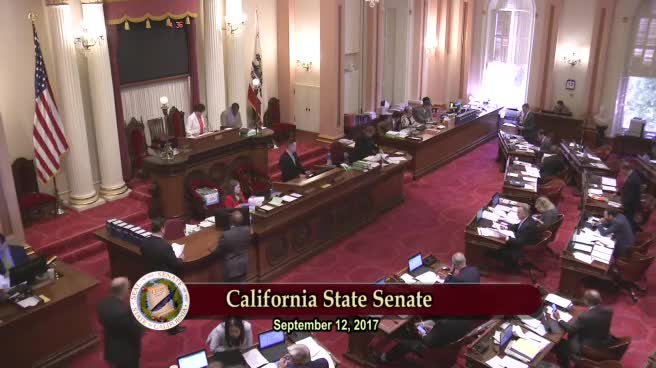


Bill Author

Bill Co-Author(s):