AB 605: Child day care facilities: infant to schoolage license.
- Session Year: 2017-2018
- House: Assembly
- Latest Version Date: 2018-09-20
Existing law, the California Child Day Care Facilities Act, provides for the licensure and regulation of day care centers by the State Department of Social Services. Existing regulations require a separate license to be issued for each component of a combination center, and establishes teacher-child ratio requirements.
This bill would require the department, in consultation with stakeholders, to adopt regulations on or before January 1, 2021, to create a child care center license to serve infant, toddler, preschool, and schoolage children and would require, before January 1, 2024, all day care centers to be licensed as child care centers. The bill would require the regulations to include components for infant, toddler, preschool, and schoolage children, health and safety standards for children in care, and enhanced ability to transition children from one age group to the next. The bill would authorize the department to charge an applicant for the child care center license a specified fee.
Existing law requires the department to develop guidelines and procedures to authorize licensed child day care centers serving infants or preschool age children to create a special optional toddler program component for children between 18 and 36 months of age, and requires the program to be considered an extension of the infant center or preschool license.
This bill would authorize the department to extend the period for participation in the toddler program for a maximum of three months for a child in extenuating circumstances, on the request of a day care center, if the center can establish that it is unable to find an alternative placement.
Existing law, the California Child Day Care Facilities Act, provides for the licensure and regulation of day care centers by the State Department of Social Services. Existing regulations require a separate license to be issued for each component of a combination center, and establishes teacher-child ratio requirements.
This bill would require the department, in consultation with stakeholders, to adopt regulations on or before January 1, 2021, to combine the infant, preschool, and schoolage licenses and to create an infant to schoolage license option for day care centers. create a child care center license to serve infant, toddler, preschool, and schoolage children and would require, before January 1, 2024, all day care centers to be licensed as child care centers. The bill would require the regulations to include age-appropriate program components, components for infant, toddler, preschool, and schoolage children, health and safety standards for children in care, and enhanced ability to transition children from one age group to the next. The bill would authorize the department to charge an applicant for the infant to schoolage child care center license a specified fee.
Existing law requires the department to develop guidelines and procedures to authorize licensed child day care centers serving infants or preschool age children to create a special optional toddler program component for children between 18 and 36 months of age, and requires the program to be considered an extension of the infant center or preschool license.
This bill would authorize the department to extend the period for participation in the toddler program for a maximum of three months for a child in extenuating circumstances, on the request of a day care center, if the center can establish that it is unable to find an alternative placement.
Existing law, the California Child Day Care Facilities Act, provides for the licensure and regulation of day care centers by the State Department of Social Services. Existing law requires the department to develop guidelines and procedures to permit licensed child day care centers serving infants and licensed child day care centers serving preschool age children to create a special program component for children between 18 months to 3 years of age. Existing regulations require a separate license to be issued for each component of a combination center, and establishes teacher-child ratio requirements.
This bill would require the department department, in consultation with stakeholders, to adopt regulations on or before January 1, 2019, 2021, to develop and implement a birth to entering first grade combine the infant, preschool, and schoolage licenses and to create an infant to schoolage license option for day care centers. The bill would require the regulations to include age-appropriate transition times, as specified, a requirement that a single integrated license option list the age groups of children being served at the day care center, and a requirement that all other licensing regulations that apply to a day care center shall also apply to a birth to entering first grade license option. The bill would require, until a day care center has the new integrated license, standards for inspection of a day care center to be based on the current license. program components, health and safety standards for children in care, and enhanced ability to transition children from one age group to the next. The bill would authorize the department to charge an applicant for the infant to schoolage license a specified fee.
Existing law requires the department to develop guidelines and procedures to authorize licensed child day care centers serving infants or preschool age children to create a special optional toddler program component for children between 18 and 36 months of age, and requires the program to be considered an extension of the infant center or preschool license.
This bill would authorize the department to extend the period for participation in the toddler program for a maximum of three months for a child in extenuating circumstances, on the request of a day care center, if the center can establish that it is unable to find an alternative placement.
Existing law, the California Child Day Care Facilities Act, provides for the licensure and regulation of day care centers by the State Department of Social Services. Existing law requires the department to develop guidelines and procedures to permit licensed child day care centers serving infants and licensed child day care centers serving preschool age children to create a special program component for children between 18 months to 3 years of age. Existing regulations require a separate license to be issued for each component of a combination center, and establishes teacher-child ratio requirements.
This bill would require the department to adopt regulations on or before January 1, 2019, to develop and implement a birth to entering first grade license option for day care centers. The bill would require the regulations to include age-appropriate transition times, as specified, a requirement that a single integrated license option list the age groups of children being served at the day care center, and a requirement that all other licensing regulations that apply to a day care center shall also apply to a birth to entering first grade license option. The bill would require, until a day care center has the new integrated license, standards for inspection of a day care center to be based on the current license.
Existing law, the California Child Day Care Facilities Act, provides for the licensure and regulation of day care centers by the State Department of Social Services. Existing law requires the department to develop guidelines and procedures to authorize licensed child day care centers serving infants to create a special program component for children between 18 months to three years of age.This bill would make technical, nonsubstantive changes to those provisions.Existing law, the California Child Day Care Facilities Act, provides for the licensure and regulation of day care centers by the State Department of Social Services. Existing law requires the department to develop guidelines and procedures to authorize licensed child day care centers serving infants to create a special program component for children between 18 months to three years of age.
This bill would make technical, nonsubstantive changes to those provisions.
Day care center means a child day care facility other than a family day care home, and includes infant centers, preschools, extended day care facilities, and schoolage child care centers, and includes child care centers licensed pursuant to Section 1596.951.
SEC. 2.Section 1596.951 is added to the Health and Safety Code, to read:1596.951.(a)It is the intent of the Legislature to create a child care license that has individual program components that serve infant, toddler, preschool, and schoolage children. It is the intent of the Legislature that the department consider flexibility for child care providers, maximizing administrative efficiency, while supporting a continuum of services in a manner consistent with all respective health and safety requirements.(b)The department, in consultation with stakeholders, shall adopt regulations on or before January 1, 2021, to create a child care center license to serve infant, toddler, preschool, and schoolage children with all respective health and safety requirements. Before January 1, 2024, all day care centers shall be licensed as child care centers pursuant to this section.
(c)The regulations adopted pursuant to this section shall include, but are not limited to, all of the following:
(1)Components for serving infant, toddler, preschool, and schoolage children.
(2)Health and safety standards for children in care.
(3)Enhanced ability to transition children from one age group to the next.
(d)During the development and adoption of the regulations required by subdivision (b), the department shall consider best practices for continuity of care of the children and parents being served.
(e)The department may charge an applicant for a child care center license a fee commensurate with license fee schedules established for day care centers in Section 1596.803.
(f)The department may adopt emergency regulations in accordance with Chapter 3.5 (commencing with Section 11340) of Part 1 of Division 3 of Title 2 of the Government Code, to implement this section.
SEC. 3.Section 1596.955 of the Health and Safety Code is amended to read:1596.955.(a)The department shall develop guidelines and procedures to permit licensed child day care centers serving preschool age children to create a special program component for children between 18 months to three years of age. This optional toddler program shall be subject to the following basic conditions:
(1)An amended application is submitted to and approved by the department.
(2)Parents give permission for the placement of their children in the toddler program.
(3)A ratio of six children to each teacher is maintained for all children in attendance at the toddler program. An aide who is participating in on-the-job training may be substituted for a teacher when directly supervised by a fully qualified teacher.
(4)The maximum group size, with two teachers, or one fully qualified teacher and one aide, does not exceed 12 toddlers.
(5)The toddler program is conducted in areas separate from those used by older or younger children. Plans to alternate use of outdoor play space may be approved to achieve separation.
(6)All other regulations pertaining to preschool age children are complied with.
(b)The toddler program shall be considered an extension of the center license, without the need for a separate license.
(c)The department may extend the period for participation in the toddler program for a maximum of three months for a child in extenuating circumstances, on the request of a day care center, if the center can establish that it is unable to find an alternative placement.
SEC. 4.Section 1596.956 of the Health and Safety Code is amended to read:1596.956.(a)The department shall develop guidelines and procedures to authorize licensed child day care centers serving infants to create a special program component for children between 18 months to three years of age. The optional toddler program shall be subject to the following basic conditions:
(1)An amended application shall be submitted to and approved by the department.
(2)A child younger than 18 months of age shall not be moved into the toddler program. A child who is older than 18 months of age shall not be required to be in the toddler program.
(3)Parents shall give permission for the placement of their children in the toddler program.
(4)A ratio of six children to each teacher shall be maintained for all children in attendance at the toddler program. An aide who is participating in on-the-job training may be substituted for a teacher when directly supervised by a fully qualified teacher.
(5)The maximum group size, with two teachers, or one fully qualified teacher and one aide, shall not exceed 12 toddlers.
(6)The toddler program shall be conducted in areas separate from those used by older or younger children. Plans to alternate use of outdoor play space may be approved to achieve separation.
(7)All other regulations pertaining to infants shall be complied with.
(b)The toddler program shall be considered an extension of the infant center license, without the need for a separate license.
(c)The department may extend the period for participation in the toddler program for a maximum of three months for a child in extenuating circumstances, on the request of the day care center, if the center can established that it is unable to find an alternative placement.
Day care center means any a child day care facility other than a family day care home, and includes infant centers, preschools, extended day care facilities, and schoolage child care centers. centers, and includes child care centers licensed pursuant to Section 1596.951.
SECTION 1.SEC. 2.Section 1596.951 is added to the Health and Safety Code, to read:1596.951.(a)It is the intent of the Legislature to create a child care license that has individual program components that serve infant, toddler, preschool, and schoolage children. It is the intent of the Legislature that the department consider flexibility for child care providers, maximizing administrative efficiency, while supporting a continuum of services in a manner consistent with all respective health and safety requirements.(b)The department, in consultation with stakeholders, shall adopt regulations on or before January 1, 2021, to combine the infant, preschool, and schoolage licenses and create an infant to schoolage license create a child care center license to serve infant, toddler, preschool, and schoolage children with all respective health and safety requirements for the age groups served. requirements. Before January 1, 2024, all day care centers shall be licensed as child care centers pursuant to this section.
(b)(c)The regulations adopted pursuant to this section shall include, but are not limited to, all of the following:
(1)Age-appropriate program components.(1)Components for serving infant, toddler, preschool, and schoolage children.
(2)Health and safety standards for children in care.
(3)Enhanced ability to transition children from one age group to the next.
(c)(d)During the development and adoption of the regulations required by subdivision (a), (b), the department shall consider best practices for continuity of care of the children and parents being served.
(d)(e)The department may charge an applicant for an infant to schoolage license a child care center license a fee commensurate with license fee schedules established for day care centers in Section 1596.803.
(f)The department may adopt emergency regulations in accordance with Chapter 3.5 (commencing with Section 11340) of Part 1 of Division 3 of Title 2 of the Government Code, to implement this section.
SEC. 2.SEC. 3.Section 1596.955 of the Health and Safety Code is amended to read:1596.955.(a)The department shall develop guidelines and procedures to permit licensed child day care centers serving preschool age children to create a special program component for children between 18 months to three years of age. This optional toddler program shall be subject to the following basic conditions:
(1)An amended application is submitted to and approved by the department.
(2)Parents give permission for the placement of their children in the toddler program.
(3)A ratio of six children to each teacher is maintained for all children in attendance at the toddler program. An aide who is participating in on-the-job training may be substituted for a teacher when directly supervised by a fully qualified teacher.
(4)The maximum group size, with two teachers, or one fully qualified teacher and one aide, does not exceed 12 toddlers.
(5)The toddler program is conducted in areas separate from those used by older or younger children. Plans to alternate use of outdoor play space may be approved to achieve separation.
(6)All other regulations pertaining to preschool age children are complied with.
(b)The toddler program shall be considered an extension of the center license, without the need for a separate license.
(c)The department may extend the period for participation in the toddler program for a maximum of three months for a child in extenuating circumstances, on the request of a day care center, if the center can establish that it is unable to find an alternative placement.
SEC. 3.SEC. 4.Section 1596.956 of the Health and Safety Code is amended to read:1596.956.(a)The department shall develop guidelines and procedures to authorize licensed child day care centers serving infants to create a special program component for children between 18 months to three years of age. The optional toddler program shall be subject to the following basic conditions:
(1)An amended application shall be submitted to and approved by the department.
(2)A child younger than 18 months of age shall not be moved into the toddler program. A child who is older than 18 months of age shall not be required to be in the toddler program.
(3)Parents shall give permission for the placement of their children in the toddler program.
(4)A ratio of six children to each teacher shall be maintained for all children in attendance at the toddler program. An aide who is participating in on-the-job training may be substituted for a teacher when directly supervised by a fully qualified teacher.
(5)The maximum group size, with two teachers, or one fully qualified teacher and one aide, shall not exceed 12 toddlers.
(6)The toddler program shall be conducted in areas separate from those used by older or younger children. Plans to alternate use of outdoor play space may be approved to achieve separation.
(7)All other regulations pertaining to infants shall be complied with.
(b)The toddler program shall be considered an extension of the infant center license, without the need for a separate license.
(c)The department may extend the period for participation in the toddler program for a maximum of three months for a child in extenuating circumstances, on the request of the day care center, if the center can established that it is unable to find an alternative placement.
(a)The department, in consultation with stakeholders, shall adopt regulations on or before January 1, 2021, to combine the infant, preschool, and schoolage licenses and create an infant to schoolage license with all respective health and safety requirements for the age groups served.
(b)The regulations adopted pursuant to this section shall include, but are not limited to, all of the following:
(1)Age-appropriate program components.
(2)Health and safety standards for children in care.
(3)Enhanced ability to transition children from one age group to the next.
(c)During the development and adoption of the regulations required by subdivision (a), the department shall consider best practices for continuity of care of the children and parents being served.
(d)The department may charge an applicant for an infant to schoolage license a fee commensurate with license fee schedules established in Section 1596.803.
SEC. 2.Section 1596.955 of the Health and Safety Code is amended to read:1596.955.(a)The department shall develop guidelines and procedures to permit licensed child day care centers serving preschool age children to create a special program component for children between 18 months to three years of age. This optional toddler program shall be subject to the following basic conditions:
(1)An amended application is submitted to and approved by the department.
(2)Parents give permission for the placement of their children in the toddler program.
(3)A ratio of six children to each teacher is maintained for all children in attendance at the toddler program. An aide who is participating in on-the-job training may be substituted for a teacher when directly supervised by a fully qualified teacher.
(4)The maximum group size, with two teachers, or one fully qualified teacher and one aide, does not exceed 12 toddlers.
(5)The toddler program is conducted in areas separate from those used by older or younger children. Plans to alternate use of outdoor play space may be approved to achieve separation.
(6)All other preschool regulations pertaining to preschool age children are complied with.
(b)The toddler program shall be considered an extension of the preschool center license, without the need for a separate license.
(c)The department shall immediately prepare proposed regulations for public hearing which would consider the foregoing basic conditions as well as any additional health and safety safeguards deemed necessary for this age group.(d)The guidelines in subdivision (a) shall remain in force and effect only until regulations implementing this section are adopted by the department.(e)Commencing January 1, 2016, a day care center with a toddler program described in this section shall extend the toddler program to serve children between 18 months and three years of age. It is the intent of the Legislature to provide continuity of care to Californias children and parents in the implementation of this subdivision.(c)The department may extend the period for participation in the toddler program for a maximum of three months for a child in extenuating circumstances, on the request of a day care center, if the center can establish that it is unable to find an alternative placement.
SEC. 3.Section 1596.956 of the Health and Safety Code is amended to read:1596.956.(a)The department shall develop guidelines and procedures to authorize licensed child day care centers serving infants to create a special program component for children between 18 months to three years of age. The optional toddler program shall be subject to the following basic conditions:
(1)An amended application shall be submitted to and approved by the department.
(2)A child younger than 18 months of age shall not be moved into the toddler program. A child who is older than 18 months of age shall not be required to be in the toddler program.
(3)Parents shall give permission for the placement of their children in the toddler program.
(4)A ratio of six children to each teacher shall be maintained for all children in attendance at the toddler program. An aide who is participating in on-the-job training may be substituted for a teacher when directly supervised by a fully qualified teacher.
(5)The maximum group size, with two teachers, or one fully qualified teacher and one aide, shall not exceed 12 toddlers.
(6)The toddler program shall be conducted in areas separate from those used by older or younger children. Plans to alternate use of outdoor play space may be approved to achieve separation.
(7)All other infant center regulations pertaining to infants shall be complied with.
(b)The toddler program shall be considered an extension of the infant center license, without the need for a separate license.
(c)The department shall immediately prepare proposed regulations for public hearing that would consider the foregoing basic conditions as well as any additional health and safety safeguards deemed necessary for this age group.(d)The guidelines in subdivision (a) shall remain in force and effect only until regulations implementing this section are adopted by the department.(e)Commencing January 1, 2016, a day care center with a toddler program described in this section shall extend the toddler program to serve children between 18 months and three years of age. It is the intent of the Legislature to provide continuity of care to Californias children and parents in the implementation of this subdivision.(c)The department may extend the period for participation in the toddler program for a maximum of three months for a child in extenuating circumstances, on the request of the day care center, if the center can established that it is unable to find an alternative placement.
SECTION 1.Section 1596.951 is added to the Health and Safety Code, to read:1596.951.(a)The department shall adopt regulations on or before January 1, 2019, to develop and implement a birth to entering first grade license option for day care centers. Regulations adopted pursuant to this section shall include all of the following:(1)Age-appropriate transition periods that do all of the following:(A)Allow children to transition from one age group to another age group up to three months before or three months after their birthday.(B)Take the needs of the whole age group into consideration in order to move children together.(C)Consider continuity of care of the children and parents being served.(D)Consider the needs of the day care center licensees to maximize spaces being used.(2)A requirement that when a birth to entering first grade license option is being issued to a new or current day care center licensee, the licensee shall list the age groups of children being served at the day care center for the purposes of license inspections, data collection management, and county needs assessments.(3)A requirement that all other licensing regulations that apply to a day care center shall also apply to a birth to entering first grade license option.(b)(1)A new applicant for a birth to entering first grade license option may be charged a regulatory fee commensurate with the other age specific facility license fee schedules.(2)Until an existing day care center license has been replaced with a birth to entering first grade license option, a day care center licensee shall maintain a day care center that meets regulatory standards for the age groups of children that are being cared for at the day care center, and standards for inspection of a day care center shall be based on the current license.(a)The department shall adopt regulations on or before January 1, 2019, to develop and implement a birth to entering first grade license option for day care centers. Regulations adopted pursuant to this section shall include all of the following:
(1)Age-appropriate transition periods that do all of the following:
(A)Allow children to transition from one age group to another age group up to three months before or three months after their birthday.
(B)Take the needs of the whole age group into consideration in order to move children together.
(C)Consider continuity of care of the children and parents being served.
(D)Consider the needs of the day care center licensees to maximize spaces being used.
(2)A requirement that when a birth to entering first grade license option is being issued to a new or current day care center licensee, the licensee shall list the age groups of children being served at the day care center for the purposes of license inspections, data collection management, and county needs assessments.
(3)A requirement that all other licensing regulations that apply to a day care center shall also apply to a birth to entering first grade license option.
(b)(1)A new applicant for a birth to entering first grade license option may be charged a regulatory fee commensurate with the other age specific facility license fee schedules.
(2)Until an existing day care center license has been replaced with a birth to entering first grade license option, a day care center licensee shall maintain a day care center that meets regulatory standards for the age groups of children that are being cared for at the day care center, and standards for inspection of a day care center shall be based on the current license.
SECTION 1.Section 1596.956 of the Health and Safety Code is amended to read:1596.956.(a)The department shall develop guidelines and procedures to authorize licensed child day care centers serving infants to create a special program component for children between 18 months to three years of age. The optional toddler program shall be subject to the following basic conditions:(1)An amended application shall be submitted to, and approved by, the department.(2)A child younger than 18 months of age shall not be moved into the toddler program. A child who is older than 18 months of age shall not be required to be in the toddler program.(3)Parents shall give permission for the placement of their children in the toddler program.(4)A ratio of six children to each teacher shall be maintained for all children in attendance at the toddler program. An aide who is participating in on-the-job training may be substituted for a teacher when directly supervised by a fully qualified teacher.(5)The maximum group size, with two teachers, or one fully qualified teacher and one aide, shall not exceed 12 toddlers.(6)The toddler program shall be conducted in areas separate from those used by older or younger children. Plans to alternate use of outdoor play space may be approved to achieve separation.(7)All other infant center regulations shall be complied with.(b)The toddler program shall be considered an extension of the infant center license, without the need for a separate license.(c)The department shall immediately prepare proposed regulations for public hearing that would consider the foregoing basic conditions as well as any additional health and safety safeguards deemed necessary for this age group.(d)The guidelines in subdivision (a) shall remain in force and effect only until regulations implementing this section are adopted by the department.(e)Commencing January 1, 2016, a day care center with a toddler program described in this section shall extend the toddler program to serve children between 18 months and three years of age. It is the intent of the Legislature to provide continuity of care to Californias children and parents in the implementation of this subdivision.(a)The department shall develop guidelines and procedures to authorize licensed child day care centers serving infants to create a special program component for children between 18 months to three years of age. The optional toddler program shall be subject to the following basic conditions:
(1)An amended application shall be submitted to to, and approved by by, the department.
(2)A child younger than 18 months of age shall not be moved into the toddler program. A child who is older than 18 months of age shall not be required to be in the toddler program.
(3)Parents shall give permission for the placement of their children in the toddler program.
(4)A ratio of six children to each teacher shall be maintained for all children in attendance at the toddler program. An aide who is participating in on-the-job training may be substituted for a teacher when directly supervised by a fully qualified teacher.
(5)The maximum group size, with two teachers, or one fully qualified teacher and one aide, shall not exceed 12 toddlers.
(6)The toddler program shall be conducted in areas separate from those used by older or younger children. Plans to alternate use of outdoor play space may be approved to achieve separation.
(7)All other infant center regulations shall be complied with.
(b)The toddler program shall be considered an extension of the infant center license, without the need for a separate license.
(c)The department shall immediately prepare proposed regulations for public hearing that would consider the foregoing basic conditions as well as any additional health and safety safeguards deemed necessary for this age group.
(d)The guidelines in subdivision (a) shall remain in force and effect only until regulations implementing this section are adopted by the department.
(e)Commencing January 1, 2016, a day care center with a toddler program described in this section shall extend the toddler program to serve children between 18 months and three years of age. It is the intent of the Legislature to provide continuity of care to Californias children and parents in the implementation of this subdivision.
|
Date
|
Status
|
|---|---|
| Sep 20, 2018 | Chaptered by Secretary of State - Chapter 574, Statutes of 2018. |
| Sep 20, 2018 | Approved by the Governor. |
| Sep 6, 2018 | Enrolled and presented to the Governor at 3 p.m. |
| Aug 29, 2018 | Senate amendments concurred in. To Engrossing and Enrolling. |
| Aug 24, 2018 | In Assembly. Concurrence in Senate amendments pending. May be considered on or after August 26 pursuant to Assembly Rule 77. |
| Aug 24, 2018 | Read third time. Passed. Ordered to the Assembly. |
| Aug 21, 2018 | Ordered to special consent calendar. |
| Aug 17, 2018 | Read second time. Ordered to third reading. |
| Jul 2, 2018 | In committee: Referred to APPR. suspense file. |
| Jun 14, 2018 | Read second time and amended. Re-referred to Com. on APPR. |
| Jun 13, 2018 | From committee: Amend, and do pass as amended and re-refer to Com. on APPR. (Ayes 6. Noes 0.) (June 12). |
| May 29, 2018 | From committee chair, with author's amendments: Amend, and re-refer to committee. Read second time, amended, and re-referred to Com. on HUMAN S. |
| Apr 19, 2018 | Referred to Com. on HUMAN S. |
| Jan 29, 2018 | In Senate. Read first time. To Com. on RLS. for assignment. |
| Jan 29, 2018 | Read third time. Passed. Ordered to the Senate. |
| Jan 22, 2018 | Read second time. Ordered to third reading. |
| Jan 18, 2018 | In committee: Set, first hearing. Referred to APPR. suspense file. |
| Jan 9, 2018 | From committee: Do pass and re-refer to Com. on APPR. with recommendation: To Consent Calendar. (Ayes 7. Noes 0.) (January 9). Re-referred to Com. on APPR. |
| Mar 27, 2017 | Re-referred to Com. on HUM. S. |
| Mar 23, 2017 | From committee chair, with author's amendments: Amend, and re-refer to Com. on HUM. S. Read second time and amended. |
| Mar 23, 2017 | Referred to Com. on HUM. S. |
| Feb 15, 2017 | From printer. May be heard in committee March 17. |
| Feb 14, 2017 | Read first time. To print. |
|
Date
|
Description
|
Location
|
Votes
|
|
|---|---|---|---|---|
| Aug 29, 2018 | AB 605 MULLIN Concurrence in Senate Amendments | Assembly Floor |
Passed |
|
| Aug 24, 2018 | Special Consent AB605 | Senate Floor |
Passed |
|
| Aug 16, 2018 | Do pass | Senate Standing Committee on Appropriations |
Passed |
|
| Jul 2, 2018 | Placed on suspense file | Senate Standing Committee on Appropriations |
Passed |
|
| Jun 12, 2018 | Do pass as amended, but first amend, and re-refer to the Committee on [Appropriations] | Senate Standing Committee on Human Services |
Passed |
|
| Jan 29, 2018 | AB 605 MULLIN Assembly Third Reading | Assembly Floor |
Passed |
|
| Jan 18, 2018 | Do pass. | Assembly Standing Committee on Appropriations |
Passed |
|
| Jan 9, 2018 | Do pass and be re-referred to the Committee on [Appropriations] with recommendation: To Consent Calendar | Assembly Standing Committee on Human Services |
Passed |
This list shows positions taken on this bill by organizations on the date displayed, which is linked to the original source.
Positions by individuals are not included.
|
Organization
|
Position
|
Date
|
|---|---|---|
| California Alliance of Caregivers | * Support | Jun 12, 2018 |
| California Alternative Payment Program Association | ** Support | Aug 18, 2018 |
| California Child Development Administrators Association | * Support | Jun 12, 2018 |
| California Department of Finance | ** Against | Aug 18, 2018 |
| California Head Start Association | * Support | Jun 12, 2018 |
| California State PTA | ** Support | Aug 18, 2018 |
| Child Care Alliance of Los Angeles | ** Support | Aug 18, 2018 |
| Child Care Law Center | * Support | Jun 12, 2018 |
| Child Care Resource Center | ** Support | Aug 18, 2018 |
| Child Resource Center | * Support | Jun 12, 2018 |
| Children Now | * Support | Jun 12, 2018 |
| Coco Kids | * Support | Jun 12, 2018 |
| Contra Costa County | * Support | Jun 12, 2018 |
| First 5 California | ** Support | Aug 18, 2018 |
| First5 Los Angeles | ** Support | Aug 18, 2018 |
| Los Angeles County Of Education | ** Support | Jan 5, 2018 |
| Los Angeles County Office Of Education | ** Support | Aug 18, 2018 |
| Para Los Ninos | * Support | Jun 12, 2018 |
| Plaza La Raza Child Development Services | * Support | Jun 12, 2018 |
| Riverside County Office Of Education | * Support | Jun 12, 2018 |
| San Bernardino County Preschool Service Department | * Support | Jun 12, 2018 |
CONCURRENCE IN SENATE AMENDMENTS
CSA1 Bill Id:AB 605
Author:(Mullin)
As Amended Ver:June 14, 2018
Majority vote
ASSEMBLY: | 77-0 | (January 29, 2018) | SENATE: | 39-0 | (August 24, 2018) |
Original Committee Reference: HUM. S.
SUMMARY: Requires the Department of Social Services (DSS) to implement, through the adoption of regulations, a child care center license to serve infant, toddler, preschool, and school-age children by January 1, 2021, and requires all day care centers to possess this license by January 1, 2024.
Specifically, this bill:
- States Legislative intent to create a child care license that has individual program components that serve infant, toddler, preschool, and school-age children and that DSS take provider flexibility and administrative efficiency into consideration while supporting a continuum of services consistent with all applicable health and safety requirements.
- Requires DSS to, in consultation with stakeholders, adopt regulations by January 1, 2021, to create a child care center license to serve infant, toddler, preschool, and school-age children with all respective health and safety requirements.
- Requires, by January 1, 2024, all day care centers to be licensed as child care centers pursuant to the provisions of this bill.
- Requires the regulations adopted pursuant to provisions of this bill to include, but not be limited to:
- Components for serving infant, toddler, preschool, and school-age children;
- Health and safety standards for children in care; and
- Enhanced ability to transition children from one age group to the next.
- Requires DSS to, during the development and adoption of the regulations required by provisions of this bill, consider best practices for continuity of care of the children and parents being served.
- Authorizes DSS to charge an applicant for a child care center license a fee commensurate with license fee schedules established for day care centers in current law, as specified.
- Authorizes DSS to adopt emergency regulations to implement provisions of this bill, as specified.
- Authorizes DSS to extend the period for participation in the toddler program for a maximum of three months for a child in extenuating circumstances, on the request of the day care center, if the center can establish that it is unable to find an alternative payment.
- Makes technical changes.
The Senate amendments maintain the intent, but significantly revise the language, of the Assembly version of the bill by deleting the bill’s language and instead recasting it to:
- State Legislative intent to create a child care license that has individual program components that serve infant, toddler, preschool, and school-age children and that DSS take provider flexibility and administrative efficiency into consideration while supporting a continuum of services consistent with all applicable health and safety requirements.
- Require DSS to, in consultation with stakeholders, adopt regulations by January 1, 2021, to create a child care center license to serve infant, toddler, preschool, and school-age children with all respective health and safety requirements.
- Require, by January 1, 2024, all day care centers to be licensed as child care centers pursuant to the provisions of this bill.
- Require the regulations adopted pursuant to provisions of this bill to include, but not be limited to:
- Components for serving infant, toddler, preschool, and school-age children;
- Health and safety standards for children in care; and
- Enhanced ability to transition children from one age group to the next.
- Require DSS to, during the development and adoption of the regulations required by provisions of this bill, consider best practices for continuity of care of the children and parents being served.
- Authorize DSS to charge an applicant for a child care center license a fee commensurate with license fee schedules established for day care centers in current law, as specified.
- Authorize DSS to adopt emergency regulations to implement provisions of this bill, as specified.
- Authorize DSS to extend the period for participation in the toddler program for a maximum of three months for a child in extenuating circumstances, on the request of the day care center, if the center can establish that it is unable to find an alternative payment.
- Makes technical changes.
EXISTING LAW:
- Establishes the California Child Day Care Facilities Act, creating a separate licensing category for child day care centers and family day care homes within DSS's existing licensing structure. (HSC 1596.70 et seq.)
- Defines "day care center" to include infant centers, preschools, extended day care facilities, and school-age child care centers. (HSC 1596.76)
- Defines "infant" to mean a child under two years of age and defines "infant care center" to mean any child care center, or part thereof, where nonmedical care and supervision are provided to infants in a group setting and on less than a 24-hour-per-day basis. (22 California Code of Regulations (CCR) Section 101152 (s)(1 and 2))
- Defines "school-age child" to mean any child who has either entered the first grade or higher or who is in a child care program that provides care and supervision exclusively to children enrolled in kindergarten and higher and defines a "school-age child care center" to mean any child care center, or part thereof, where nonmedical care and supervision are provided to school-age children in a group setting and on less than a 24-hour-per-day basis. (22 CCR Section 101152(i)(1) and (2))
- Defines "preschool age children" to mean children who are enrolled in a licensed child day care center and who are not enrolled in either an infant care center or school-age child day care center. (HSC 1597.059)
- Defines "combination center" to mean any combination of a child care center, infant care center, school-age child care center, and child care center for mildly ill children that is owned and operated by one licensee at a common address. (22 CCR Section 101152(c)(10))
- Requires any person or entity operating, as specified, a child day care facility in California to have a current valid license. (HSC 1596.80)
- Requires DSS to charge an original application fee for the issuance of a license to operate a child day care facility and, thereafter, an annual fee and that these fees be adjusted by facility and capacity. (HSC 1596.803)
- Directs DSS to develop guidelines and procedures for authorizing licensed child day care centers serving preschool-age children and licensed child day care centers serving infants to create a special optional toddler program for children between the ages of 18 months and 3 years of age and further requires this optional toddler program to meet certain requirements, as specified. (HSC 1596.955 and 1596.956)
- Directs DSS, and any local agency with which it contracts for purposes of licensing activities, to conduct an initial site visit and grant or deny an application for license within 30 days of receiving a complete licensing application for a day care center. (HSC 1597.13)
FISCAL EFFECT: According to the Senate Appropriations Committee on July 2, 2018, this bill may result in the following costs:
- Estimated first-year costs of $350,000 and second year costs of $250,000 for regulatory and policy development, training, and automation; and
- Unknown, likely cost savings resulting from administrative efficiencies to the extent that inspections can be consolidated under the child care center license.
COMMENTS:
Licensed child care: The licensure, maintenance, and operation of child day care centers and family day care homes in the state are governed by the California Child Day Care Facilities Act. This law and the attendant regulations found in Title 22 of the California Code of Regulations establish, among other things, general health and safety requirements, staff-to-child ratios, and provider training requirements.
DSS's Community Care Licensing Division (CCLD) has the responsibility of licensing and monitoring the state's 12,570 day care centers (including 2,065 infant centers), which, as of June 30, 2017, provided 644,280 child care slots (47,680 of which were for infants). There are an additional 2,192 licensed school-age day care facilities which provided 131,262 slots as of that same date. CCLD is required to conduct unannounced site visits of all licensed child day care facilities and homes. CCLD conducts random inspections of 30% of facilities annually, and each facility must be visited at least once every three years; some exceptions triggering more frequent inspections exist.
State law and regulations dictate that infant care centers serve children under two years old, preschool child care centers serve children between the ages of 2 and when they start school, and school-age child care centers serve children who have entered the first grade or are in a child care program exclusively for children in kindergarten and above. A "combination center" is any combination of an infant center, preschool child care center, school-age child care center and child care center for mildly ill children that is owned and operated by one licensee at a common address. In California, separate licenses are currently required for serving infants and for serving preschool-age children. Thus, owner/operators of combination centers serving both populations must get two licenses and undergo separate inspection and compliance processes for each license.
Continuity of care and child development: It has been found that when very young children are made to transition from one room to another in a care setting due to pre-determined developmental stages (often based on birthdate), they can experience high levels of distress. Fewer demonstrations of behavior problems while at child care have also been found in young children who experience lower turnover in care providers and longer periods spent with their primary caregiver. Moreover, research indicates that infants who form strong attachments with their child care providers exhibit a greater likelihood of playing, exploring, and interacting with adults in their child care settings. The continuity of care for young children in day care centers and similar settings can also benefit caregivers and parents, allowing for the ongoing development of trust between parents and care providers.
Need for this bill: According to the author, "[This bill] streamlines the child care licensing system by creating a single license that reduces administrative burden and aids centers in maintaining quality, developmentally appropriate practices and allows the system to serve more children."
PRIOR LEGISLATION:
AB 1897 (Mullin) of 2016, was similar to this bill and would have created an optional birth-to-entering-first-grade day care center license option. It was held in the Assembly Appropriations Committee.
AB 762 (Mullin), Chapter 373, Statutes of 2015, increased the upper age limit for optional toddler programs authorized by DSS from 30 months to three years of age.
Analysis Prepared by: Daphne Hunt / HUM. S. / (916) 319-2089 FN: 0004459
Office of Senate Floor Analyses (916) 651-1520 Fax: (916) 327-4478 | AB |
THIRD READING
Bill No: AB 605
:
SENATE HUMAN SERVICES COMMITTEE: 6-0, 6/12/18
AYES: Wiener, Glazer, Leyva, McGuire, Nguyen, Portantino
NO VOTE RECORDED: Berryhill
SENATE APPROPRIATIONS COMMITTEE: 7-0, 8/16/18
AYES: Portantino, Bates, Beall, Bradford, Hill, Nielsen, Wiener
ASSEMBLY FLOOR: 77-0, 1/29/18 - See last page for vote
SUBJECT: Child day care facilities: infant to schoolage license
DIGEST:
This bill requires the California Department of Social Services (CDSS) to adopt regulations on or before January 1, 2021, to create a child care center license to serve infant, toddler, preschool, and schoolage children and requires all day care centers to be licensed as child care centers before January 1, 2024. This bill requires the regulations to include components for infant, toddler, preschool, and schoolage children, health and safety standards for children in care, and enhanced ability to transition children from one age group to the next.
Existing law:
- Establishes the California Child Day Care Facilities Act (Act), provides for the licensure and regulation of child day care centers and family day care homes by CDSS. (HSC 1596.70 et seq.)
- Defines a “child day care facility” to mean a facility that provides nonmedical care to children under 18 years of age including day care centers, employer-sponsored child care centers, and family day care homes. (HSC 1596.750)
- Defines a “day care center” to include any child day care facility other than a family day care home, including infant centers, preschools, extended day care facilities, and school age child care centers. (HSC 1596.76)
- Defines “schoolage child care center” to mean a day care center or part of a day care center that provides nonmedical care and supervision, personal services, or assistance essential for sustaining the activities of daily living or for the protection of schoolage children or nonminor students, or both, in a group setting for less than 24 hours per day. (HSC 1596.7915)
- Requires that any person, firm, partnership, association, or corporation operating a child day care facility in California shall have a valid license. (HSC 1596.80)
- Requires CDSS to charge an original application fee for the issuance of a license to operate a child day care facility and, thereafter, an annual fee and that these fees will be assessed based on facility type and capacity. (HSC 1596.803)
- Requires CDSS to develop guidelines and procedures to permit licensed child day care centers serving preschool-age children and licensed child day care centers serving infants to create a special toddler program component for children between the ages of 18 months and three years and requires this optional toddler program to meet certain requirements, as specified. Further requires the toddler program to be considered an extension of the infant center or preschool license. (HSC 1596.955 and 1596.956)
- Defines “preschool age children” to mean children who are enrolled in a licensed child day care center and who are not enrolled in either an infant care center or school-age child day care center. (HSC 1597.059)
- Defines “combination center” to mean any combination of a child care center, infant care center, schoolage child care center, and child care center for mildly ill children that is owned and operated by one licensee at a common address. (22 CCR 101152 (c)(10))
- Defines “school-age child” to mean any child who has either entered the first grade or higher or who is in a child care program that provides care and supervision exclusively to children enrolled in kindergarten and above. (22 CCR 101152 (i)(1, 2))
- Defines “infant” to mean a child under two years of age and defines “infant care center” to mean any child care center, or part thereof, where less than 24-hour per day nonmedical care and supervision are provided to infants in a group setting. (22 CCR 101152 (i)(1, 2))
- Permits a child whose developmental needs require continuation in an infant care center to remain in an infant care center up to a maximum age of three years. (CCR Title 22, Section 101361)
This bill:
- Revises the definition of “day care center” to include licensed child care centers, as specified.
- States legislative intent to create a child care license that has individual program components that serve infant, toddler, preschool, and schoolage children. Further states legislative intent that CDSS consider flexibility for child care providers, maximizing administrative efficiency, while supporting a continuum of services in a manner consistent with all respective health and safety requirements.
- Requires CDSS, in consultation with stakeholders, to adopt regulations on or before January 1, 2021, to create a child care center license to serve infant, toddler, preschool, and schoolage children with all respective health and safety requirements.
- Requires that all day care centers shall be licensed as child care center, as specified, before January 1, 2024.
- Specifies minimum information that the required regulations must include as follows:
- Components for serving infant, toddler, preschool, and schoolage children.
- Health and safety standards for children in care.
- Enhanced ability to transition children from one age group to the next.
- Requires CDSS to consider best practices for continuity of care of the children and parents being served when developing the required regulations.
- Permits CDSS to charge an applicant for a child care center license a fee commensurate with license fee schedules established for day care centers.
- Permits CDSS to adopt emergency regulations, as specified.
- Authorizes CDSS to extend the period for participation in the toddler program for a maximum of three months for a child in extenuating circumstances, on the request of a day care center, if the center can establish that it is unable to fund an alternative placement.
Background
This bill is intended to streamline the licensing process for child care centers and remove the existing “administrative burden” of multiple licenses which has “impacted infant care to a point where providers do not bother to acquire an infant license,” states the author. The resulting shortage of available child care in California is “a hindrance to economic development,” the author states. AB 605 will require the department to develop a single child care center license through regulations that will also include flexibility in the movement of children between age groups. In doing so, this bill will reduce administrative burden on child care center operators and CDSS, which is intended to “encourage new providers, frequently, women and minorities, to open businesses and provide child care as well as additional jobs,” per the author.
Licensed Childcare Centers
The licensure, maintenance, and operation of child day care centers and family day care homes in the state are governed by the Act. This law and the corresponding regulations establish, among other things, general health and safety requirements, staff-to-child ratios, and provider training requirements for licensed child care. CDSS’s Child Care Licensing Program, within the Community Care Licensing Division (CCLD), is charged with ensuring licensed child care facilities meet health and safety standards through monitoring facilities, providing technical assistance, and establishing partnerships with providers, parents, and the child care community.
In California, separate licenses are required for serving infant, preschool, and school age children. Infant care centers serve children who are less than two years old. Preschool child care centers serve children from the age of two to when they start school, and school-age child care centers serve children who have entered the first grade or are in a child care program exclusively for children in kindergarten and above. Infant care centers and schoolage centers may also offer a toddler component, as an extension of their existing licenses. The toddler component permits care of children 18 months to three years old. The process for obtaining approval of a toddler component is slightly streamlined from the licensing process, but it does require a site inspection. CDSS does not track the number of toddler components operating in California.
Owner/operators of centers serving all three populations (infant, preschool and school age) must get three licenses and undergo separate licensure, inspection and compliance processes for each license they hold. Such centers may be designated a “combination center,” and they must be owned and operated by one licensee and operating at a common address. In addition, as previously mentioned, they may obtain a toddler component.
In addition to initial license approval, CCLD is required to conduct unannounced site visits of all licensed child day care facilities and homes. CCLD conducts random inspections of 30 percent of facilities annually, and each facility must be visited at least once every three years. However, some exceptions trigger more frequent inspections. Under the current program rules, combination centers are subject to multiple inspections because each license is treated independently for purposes of inspections. While not required, CDSS states that it makes a concerted effort to conduct inspections for each license type operating within a combination center at the same time. In other words, if a combination center has a license to operate infant and preschool centers, CDSS staff would conduct inspections of both centers during a single site visit.
This bill requires CDSS to promulgate regulations that will create a child care center license to serve infant, toddler, preschool, and schoolage children with all respective health and safety requirements. Those regulations are required to include components for serving infant, toddler, preschool, and schoolage children, health and safety standards for children in care, and enhanced ability to transition children from one age group to the next.
According to CDSS, the regulations will allow licensed providers to obtain one license and select which age group(s) they wish to serve and obtain corresponding components. This is similar to the current toddler component program, under which infant and shoolage providers may serve toddlers 18 months to three years of age, as an extension of their infant or school age licenses.
Continuity of Care
This bill requires CDSS to consider best practices for continuity of care of the children and parents being served in child care centers. Continuity of care means that children and caregivers remain together for more than one year, often for the first three years of children’s lives. This is not the current practice at licensed child care in California, in which children are moved to a new group or a new caregiver based on age or on the achievement of developmental milestones.
Transitioning from one room to another in a child care setting due to pre-determined developmental stages (often based on birthdate), can be stressful for parents and children. The continuity of care for young children in day care centers and similar settings can reduce that stress by allowing for the ongoing relationship between parents, children and their care providers.
Continuity of care supports strong attachments between children and their care givers. According to a report published by Harvard University’s Center on the Developing Child titled, Three Principles to Improve Outcomes for Children and Families, “Relationships also help build resilience across childhood and into adulthood. The single most common factor for children and teens who develop the capacity to overcome serious hardship is having at least one stable and committed relationship with a supportive parent, caregiver, or other adult.”[1]
Child Care Provider Capacity
According to the California Child Care Resource and Referral Network, licensed child care is available for just 23 percent of children from birth to 12 years of age with parents in the labor force. As of June 2017, there were 12,570 licensed day care centers, 2,065 of which were infant centers. These centers had a total capacity of 644,280 children, 47,680 were for infants. There was an additional 2,192 licensed school age day care facilities with 131,262 slots. For infants and toddlers in California, child care with licensed providers is largely unavailable and often prohibitively expensive. According to Children Now, a single parent earning minimum wage could spend as much as 70 percent of their income on child care. [2]
Related/Prior Legislation
AB 1897 (Mullin, 2016) was similar to this bill and would have created an optional birth-to-entering-first-grade day care center license option. It did not pass out of Assembly Appropriations Committee.
AB 762 (Mullin, Chapter 373, Statutes of 2015) increased the upper age limit for optional toddler programs authorized by CDSS from 30 months to three years of age.
FISCAL EFFECT: Appropriation: Fiscal Com.: Local:
According to the Senate Committee on Appropriations:
- Estimated first-year costs of $350,000 and second year costs of $250,000 for regulatory and policy development, training, and automation.
- Unknown, likely cost savings resulting from administrative efficiencies to the extent that inspections can be consolidated under the child care center license.
California Alternative Payment Program Association
California State PTA
Child Care Alliance of Los Angeles
Child Care Resource Center
First 5 California
First5 Los Angeles
Los Angeles County Office of Education
OPPOSITION: (Verified 8/16/18)
California Department of Finance
ARGUMENTS IN SUPPORT: The California Alternative Payment Program Association writes the following in support of this bill, “A single license option will reduce the administrative burden on severely underfunded child care centers and CDSS so that they can both focus on providing a safe and healthy environment for California’s children.”
ARGUMENTS IN OPPOSITION: The Department of Finance is opposed to the June 14, 2018 version of this bill because “the creation and implementation of new child care center license options results in additional General Fund costs not included in the 2018 Budget Act.”
ASSEMBLY FLOOR: 77-0, 1/29/18
AYES: Acosta, Aguiar-Curry, Travis Allen, Arambula, Baker, Berman, Bigelow, Bloom, Bonta, Brough, Burke, Caballero, Calderon, Carrillo, Cervantes, Chau, Chávez, Chen, Chiu, Choi, Chu, Cooley, Cooper, Cunningham, Dahle, Daly, Eggman, Flora, Fong, Frazier, Friedman, Gallagher, Cristina Garcia, Eduardo Garcia, Gipson, Gloria, Gonzalez Fletcher, Gray, Grayson, Harper, Holden, Irwin, Jones-Sawyer, Kalra, Kiley, Lackey, Levine, Limón, Low, Maienschein, Mathis, Mayes, McCarty, Medina, Melendez, Mullin, Muratsuchi, Nazarian, Obernolte, O'Donnell, Patterson, Quirk, Quirk-Silva, Reyes, Rodriguez, Rubio, Salas, Santiago, Steinorth, Mark Stone, Thurmond, Ting, Voepel, Waldron, Weber, Wood, Rendon
8/18/18 16:47:33
**** END ****
SENATE COMMITTEE ON APPROPRIATIONS
Senator Anthony Portantino, Chair
2017 - 2018 Regular Session
AB 605 (Mullin) - Child day care facilities: infant to schoolage license
Version: June 14, 2018 | Policy Vote: HUMAN S. 6 - 0 |
Urgency: No | Mandate: No |
Hearing Date: July 2, 2018 | Consultant: Debra Cooper |
This bill meets the criteria for referral to the Suspense File.
Bill Summary:
AB 605 would require the California Department of Social Services (CDSS) in consultation with stakeholders, to adopt regulations on or before January 1, 2021, to create a child care center license to serve infant, toddler, preschool, and schoolage children and would require, before January 1, 2024, all day care centers to be licensed as child care centers.
Fiscal Impact:
- Estimated first-year costs of $350,000 and second year costs of $250,000 for regulatory and policy development, training, and automation.
- Unknown, likely cost savings resulting from administrative efficiencies to the extent that inspections can be consolidated under the child care center license.
Background:
Child day care centers and family day care homes in California are governed by the California Child Day Care Facilities Act, which, among other things, establishes general health and safety requirements, staff-to-child ratios, and provider training requirements. CDSS’s Child Care Licensing Program, within the Community Care Licensing Division (CCLD) is charged with ensuring licensed child care facilities meet health and safety standards through monitoring facilities, providing technical assistance, and establishing partnerships with providers, parents, and the child care community.
In California, separate licenses are required for serving infant, preschool, and school age children. Infant care centers service children who are less than two years old, preschool child care centers service children from age two to when they start school, and school-age child care centers service children who have entered the first grade or are in a child care program exclusively for children in kindergarten and above. Infant care centers and schoolage centers may also offer a toddler component, which serves children 18 months to three years old, as an extension of their existing license. Owner/operators of centers serving all three populations must get three licenses and undergo separate licensure, inspection, and compliance processes for each license.
As of June 2017, there were 12,570 licensed day care centers, 2,065 of which were infant centers, and 2,192 were licensed school age day care facilities.
Proposed Law:
This bill would create a child care license to serve infant, toddler, preschool, and schoolage children. Specifically, this bill would:
- Require CDSS, in consultation with stakeholders, to adopt regulations on or before January 1, 2021, to create a child care center license to serve infant, toddler, preschool, and schoolage children with all respective health and safety requirements, and require, before January 1, 2024, all day care centers to be licensed as child care centers;
- Specify at a minimum the information that the regulations adopted must include;
- Require CDSS to consider best practices for continuity of care of the children and parents being served during the development and adoption of the regulations;
- Authorize CDSS to charge an applicant for a child care license a fee commensurate with license fee schedules established for day care centers
- Authorize CDSS to adopt emergency regulations;
- Authorize CDSS to extend the period for participation in the toddler program for a maximum of three months for a child in extenuating circumstances, on the request of a day care center, if the center can establish that it is unable to fund an alternative placement.
Related Legislation:
AB 1897 (Mullin, 2016) similar to this bill would have created an optional birth-to-entering-first-grade day care enter license option. This bill was held in the Assembly Appropriations Committee.
-- END --
SENATE COMMITTEE ON HUMAN SERVICES
Senator Wiener, Chair
2017 - 2018 Regular
Bill No: AB 605
Author: | Mullin | ||
Version: | May 29, 2018 | Hearing Date: | June 12, 2018 |
Urgency: | No | Fiscal: | Yes |
Consultant: | Taryn Smith | ||
Subject: Day care centers: birth to first grade license option
SUMMARY
This bill would require the California Department of Social Services (CDSS), in consultation with stakeholders, to adopt regulations on or before January 1, 2021, to combine the infant, preschool, and schoolage licenses and to create a new infant to schoolage license option for day care centers, as specified.
ABSTRACT
Existing law:
- Establishes the California Child Day Care Facilities Act (Act), provides for the licensure and regulation of child day care centers and family day care homes by CDSS. (HSC 1596.70 et seq.)
- Defines a “child day care facility” to mean a facility that provides nonmedical care to children under 18 years of age including day care centers, employer-sponsored child care centers, and family day care homes. (HSC 1596.750)
- Defines a “day care center” to include any child day care facility other than a family day care home, including infant centers, preschools, extended day care facilities, and school age child care centers. (HSC 1596.76)
- Defines “schoolage child care center” to mean a day care center or part of a day care center that provides nonmedical care and supervision, personal services, or assistance essential for sustaining the activities of daily living or for the protection of schoolage children or nonminor students, or both, in a group setting for less than 24 hours per day. (HSC 1596.7915)
- Requires that any person, firm, partnership, association, or corporation operating a child day care facility in California shall have a valid license. (HSC 1596.80)
- Requires CDSS to charge an original application fee for the issuance of a license to operate a child day care facility and, thereafter, an annual fee and that these fees will be assessed based on facility type and capacity. (HSC 1596.803)
- Requires CDSS to develop guidelines and procedures to permit licensed child day care centers serving preschool-age children and licensed child day care centers serving infants to create a special toddler program component for children between the ages of 18 months and three years and requires this optional toddler program to meet certain requirements, as specified. Further requires the toddler program to be considered an extension of the infant center or preschool license. (HSC 1596.955 and 1596.956)
- Defines “preschool age children” to mean children who are enrolled in a licensed child day care center and who are not enrolled in either an infant care center or school-age child day care center. (HSC 1597.059)
- Defines “combination center” to mean any combination of a child care center, infant care center, schoolage child care center, and child care center for mildly ill children that is owned and operated by one licensee at a common address. (22 CCR 101152 (c)(10))
- Defines “school-age child” to mean any child who has either entered the first grade or higher or who is in a child care program that provides care and supervision exclusively to children enrolled in kindergarten and above. (22 CCR 101152 (i)(1, 2))
- Defines “infant” to mean a child under two years of age and defines “infant care center” to mean any child care center, or part thereof, where less than 24-hour per day nonmedical care and supervision are provided to infants in a group setting. (22 CCR 101152 (i)(1, 2))
- Permits a child whose developmental needs require continuation in an infant care center to remain in an infant care center up to a maximum age of three years. (CCR Title 22, Section 101361)
This bill:
Requires CDSS, in consultation with stakeholders, to adopt regulations on or before January 1, 2021, to combine the infant, preschool, and schoolage licenses and create an infant to schoolage license with all respective health and safety requirements for the age groups served.
Requires the regulations adopted to include, but not be limited to, all of the following:
- Age-appropriate program components.
- Health and safety standards for children in care.
- Enhanced ability to transition children from one age group to the next.
- Requires CDSS to consider best practices for continuity of care of the children and parents being served during the development and adoption of the regulations.
- Permits CDSS to charge an applicant for an infant to schoolage license a fee, as specified.
- Permits CDSS to extend the period for participation in the toddler program for a maximum of three months for a child in extenuating circumstances, on the request of a day care center, if the center can establish that it is unable to find an alternative placement.
FISCAL IMPACT
According to the Assembly Appropriations Committee on January 18, 2018, this bill may result in the following costs:
- First-year costs to CDSS in the range of $1 million to $2 million (General Fund) for regulatory and policy development, one-time contracts for automation, and technical assistant visits. These costs will likely decrease in the second year to between $500,000 and $1 million, and to less than $500,000 in the third year and ongoing; and
- Unknown, likely cost savings resulting from administrative efficiencies are likely over time to the extent that inspections can be consolidated.
BACKGROUND AND DISCUSSION
Purpose of the bill:
This bill is intended to streamline the licensing process for child care centers and remove the existing “administrative burden” of multiple licenses which has “impacted infant care to a point where providers do not bother to acquire an infant license,” states the author. The resulting shortage of available child care in California is “a hindrance to economic development,” the author states. AB 605 will require the department to develop a single child care center license through regulations that will also include flexibility in the movement of children between age groups. In doing so, this bill will reduce administrative burden on child care center operators and CDSS, which is intended to “encourage new providers, frequently, women and minorities, to open businesses and provide child care as well as additional jobs,” per the author.
Licensed Childcare Centers
The licensure, maintenance, and operation of child day care centers and family day care homes in the state are governed by the California Child Day Care Facilities Act. This law and the corresponding regulations establish, among other things, general health and safety requirements, staff-to-child ratios, and provider training requirements for licensed child care. CDSS’s Child Care Licensing Program, within the Community Care Licensing Division (CCLD), is charged with ensuring licensed child care facilities meet health and safety standards through monitoring facilities, providing technical assistance, and establishing partnerships with providers, parents, and the child care community.
In California, separate licenses are required for serving infant, preschool, and school age children. Infant care centers serve children who are less than two years old. Preschool child care centers serve children from the age of two to when they start school, and school-age child care centers serve children who have entered the first grade or are in a child care program exclusively for children in kindergarten and above. Infant care centers and schoolage centers may also offer a toddler component, as an extension of their existing licenses. The toddler component permits care of children 18 months to three years old. The process for obtaining approval of a toddler component is slightly streamlined from the licensing process, but it does require a site inspection. CDSS does not track the number of toddler components operating in California.
Owner/operators of centers serving all three populations (infant, preschool and school age) must get three licenses and undergo separate licensure, inspection and compliance processes for each license they hold. Such centers may be designated a “combination center,” and they must be owned and operated by one licensee and operating at a common address. In addition, as previously mentioned, they may obtain a toddler component.
According to the California Child Care Resource and Referral Network, licensed child care is available for just 23 percent of children from birth to 12 years of age with parents in the labor force. As of June 2017, there were 12,570 licensed day care centers, 2,065 of which were infant centers. These centers had a total capacity of 644,280 children, 47,680 were for infants. There was an additional 2,192 licensed school age day care facilities with 131,262 slots. For infants and toddlers in California, child care with licensed providers is largely unavailable and often prohibitively expensive. According to Children Now, a single parent earning minimum wage could spend as much as 70 percent of their income on child care. [1]
In addition to initial license approval, CCLD is required to conduct unannounced site visits of all licensed child day care facilities and homes. CCLD conducts random inspections of 30 percent of facilities annually, and each facility must be visited at least once every three years. However, some exceptions trigger more frequent inspections. Under the current program rules, combination centers are subject to multiple inspections because each license is treated independently for purposes of inspections. While not required, CDSS states that it makes a concerted effort to perform inspections for each license type operating within a combination center at the same time. In other words, if a combination center has a license to operate infant and preschool centers, CDSS staff would conduct inspections of both centers during a single site visit.
This bill will require CDSS to promulgate regulations that will create a new infant to schoolage license with all respective health and safety requirements for the age groups served. Those regulations are required to include age-appropriate program components, health and safety standards for children in care, and enhanced ability to transition children from one age group to the next.
According to CDSS, the regulations will allow licensed providers to obtain one license and select which age group(s) they wish to serve and obtain corresponding components. This is similar to the current toddler component program, under which infant and shoolage providers may serve toddlers 18 months to three years of age, as an extension of their infant or school age licenses. CDSS advises that they will eventually phase out the current license categories and transition holders of those licenses into the new integrated license.
Continuity of Care
This bill will require CDSS to consider best practices for continuity of care of the children and parents being served in child care centers. Continuity of care means that children and caregivers remain together for more than one year, often for the first three years of children’s lives. This is not the current practice at licensed child care in California, in which children are moved to a new group or a new caregiver based on age or on the achievement of developmental milestones.
Transitioning from one room to another in a child care setting due to pre-determined developmental stages (often based on birthdate), can be stressful for parents and children. The continuity of care for young children in day care centers and similar settings can reduce that stress by allowing for the ongoing relationship between parents, children and their care providers.
Continuity of care supports strong attachments between children and their care givers. According to a report published by Harvard University’s Center on the Developing Child titled, Three Principles to Improve Outcomes for Children and Families, “Relationships also help build resilience across childhood and into adulthood. The single most common factor for children and teens who develop the capacity to overcome serious hardship is having at least one stable and committed relationship with a supportive parent, caregiver, or other adult.”[2]
Related legislation:
AB 1897 (Mullin, 2016) was similar to this bill and would have created an optional birth-to-entering-first-grade day care center license option. It did not pass out of Assembly Appropriations Committee.
AB 762 (Mullin, Chapter 373, Statutes of 2015) increased the upper age limit for optional toddler programs authorized by CDSS from 30 months to three years of age.
COMMENTS
This bill is the result of multi-year effort to streamline the licensing program for childcare centers. It provides CDSS general direction to promulgate regulations that will create a new integrated license for child care centers serving birth to schoolage children. Creating this new license category is intended to preserve the health and safety provisions of the three different license-types while improving administrative efficiencies for the state and for child care providers.
In order to provide structure and implementation timelines, the committee suggests the following amendments:
Add new section:
It is the intent of the Legislature to create a childcare center license with program components serving infant, toddler, preschool and schoolage children and that the department consider flexibility for child care providers, maximizing administrative efficiency, while supporting a continuum of services consistent with all respective health and safety requirements.
On page 2, line 3:
1596.951. (a) The department, in consultation with stakeholders, shall adopt regulations on or before January 1, 2021, to combine the infant, preschool, and schoolage licenses and create an infant to schoolage license to create a child care center license to serve infant, toddler, preschool and schoolage children with all respective health and safety requirements for the age groups served. The department shall convert all active licenses for day care centers, as defined in section 1596.76 of HSC to a child care center license beginning January 1, 2021 thru December 31, 2023.
(b) The regulations adopted pursuant to this section shall include, but are not limited to, all of the following:
(1) Age-appropriate program components for serving infant, toddler, preschool and schoolage children.
(2) Health and safety standards for children in care.
(3) Enhanced ability to transition children from one age group to the next.
(c) During the development and adoption of the regulations required by subdivision (a), the department shall consider best practices for continuity of care of the children and parents being served.
(d) The department may charge an applicant for an infant to schoolage license a fee commensurate with license fee schedules established in Section 1596.803.
(e) The department may use emergency rulemaking authority to adopt these regulations.
PRIOR VOTES
Assembly Floor: | 77 - 0 |
Assembly Appropriations Committee: | 17 - 0 |
Assembly Human Services Committee: | 7 - 0 |
POSITIONS
Support:
California Alternative Payment Program Association
California State PTA
Child Care Alliance of Los Angeles
Child Care Resource Center
First 5 California
First5 Los Angeles
The Los Angeles County Office of Education
Oppose:
-- END --
ASSEMBLY THIRD READING
ATR Bill Id:AB 605
Author:(Mullin)
As Amended Ver:
Majority vote
Committee | Votes | Ayes | Noes |
Human Services | 7-0 | Rubio, Choi, Arambula, Maienschein, Reyes, Mark Stone, Thurmond | |
Appropriations | 17-0 | Gonzalez Fletcher, Bigelow, Bloom, Bonta, Brough, Calderon, Carrillo, Chau, Eggman, Fong, Friedman, Gallagher, Eduardo Garcia, Jones-Sawyer, Obernolte, Quirk, Reyes |
SUMMARY: Requires the Department of Social Services (DSS) to implement a birth-to-entering-first-grade day care center license option through the adoption of regulations. Specifically, this bill:
- Requires DSS to adopt regulations implementing a birth-to-entering-first-grade license option for day care centers by January 1, 2019, that include all of the following, as specified:
- Age-appropriate transition periods that: permit a child to transition from one age group to another within three months before or after his or her birthday; consider the needs of the whole age group in order to move children together; take continuity of care into consideration; and consider the needs of day care center licensees to maximize utilization of spaces.
- A requirement that a birth-to-entering-first-grade licensee list the age groups of children being served at the center for license inspections, county needs assessments, and date collection; and
- A requirement that all other licensing regulations that apply to day care centers shall apply to the birth-to-entering-first-grade license option.
- Authorizes a regulatory fee commensurate with other age-specific facility license fee schedules to be charged to a new applicant for a birth-to-entering-first-grade license option.
- Requires a day care center licensee, until an existing day care center license has been replaced with a birth-to-entering-first-grade option, to meet the regulatory standards for the age groups of children being cared for at the center, and further, requires inspection standards to be based on the current license.
EXISTING LAW:
- Establishes the California Child Day Care Facilities Act, creating a separate licensing category for child day care centers and family day care homes within DSS's existing licensing structure. (Health and Safety Code (HSC) 1596.70 et seq.)
- Defines "day care center" to include infant centers, preschools, extended day care facilities, and school-age child care centers. (HSC 1596.76)
- Defines "infant" to mean a child under two years of age and defines "infant care center" to mean any child care center, or part thereof, where nonmedical care and supervision are provided to infants in a group setting and on less than a 24-hour-per-day basis. (22 California Code of Regulations (CCR) Section 101152 (s)(1 and 2))
- Defines "school-age child" to mean any child who has either entered the first grade or higher or who is in a child care program that provides care and supervision exclusively to children enrolled in kindergarten and higher and defines a "school-age child care center" to mean any child care center, or part thereof, where nonmedical care and supervision are provided to school-age children in a group setting and on less than a 24-hour-per-day basis. (22 CCR Section 101152 (i)(1, 2))
- Defines "preschool age children" to mean children who are enrolled in a licensed child day care center and who are not enrolled in either an infant care center or school-age child day care center. (HSC 1597.059)
- Defines "combination center" to mean any combination of a child care center, infant care center, school-age child care center, and child care center for mildly ill children that is owned and operated by one licensee at a common address. (22 CCR Section 101152 (c)(10))
- Requires any person or entity operating, as specified, a child day care facility in California to have a current valid license. (HSC 1596.80)
- Requires DSS to charge an original application fee for the issuance of a license to operate a child day care facility and, thereafter, an annual fee and that these fees be adjusted by facility and capacity. (HSC 1596.803)
- Directs DSS to develop guidelines and procedures for authorizing licensed child day care centers serving preschool-age children and licensed child day care centers serving infants to create a special optional toddler program for children between the ages of 18 months and 3 years of age and further requires this optional toddler program to meet certain requirements, as specified. (HSC 1596.955 and 1596.956)
- Directs DSS, and any local agency with which it contracts for purposes of licensing activities, to conduct an initial site visit and grant or deny an application for license within 30 days of receiving a complete licensing application for a day care center. (HSC 1597.13)
FISCAL EFFECT: According to the Assembly Appropriations Committee on January 18, 2018, this bill may result in the following costs:
- First-year costs to DSS in the range of $1 million to $2 million (General Fund) for regulatory and policy development, one-time contracts for automation, and technical assistant visits. These costs will likely decrease in the second year to between $500,000 and $1 million, and to less than $500,000 in the third year and ongoing; and
- Unknown, likely cost savings resulting from administrative efficiencies are likely over time to the extent that inspections can be consolidated.
COMMENTS:
Licensed child care: The licensure, maintenance, and operation of child day care centers and family day care homes in the state are governed by the California Child Day Care Facilities Act. This law and the attendant regulations found in Title 22 of the California Code of Regulations establish, among other things, general health and safety requirements, staff-to-child ratios, and provider training requirements.
DSS's Community Care Licensing Division (CCLD) has the responsibility of licensing and monitoring the state's 12,570 day care centers (including 2,065 infant centers), which, as of June 30, 2017, provided 644,280 child care slots (47,680 of which were for infants). There are an additional 2,192 licensed school-age day care facilities which provided 131,262 slots as of that same date. CCLD is required to conduct unannounced site visits of all licensed child day care facilities and homes. CCLD conducts random inspections of 30% of facilities annually, and each facility must be visited at least once every three years; some exceptions triggering more frequent inspections exist.
State law and regulations dictate that infant care centers serve children under two years old, preschool child care centers serve children between the ages of 2 and when they start school, and school-age child care centers serve children who have entered the first grade or are in a child care program exclusively for children in kindergarten and above. A "combination center" is any combination of an infant center, preschool child care center, school-age child care center and child care center for mildly ill children that is owned and operated by one licensee at a common address. In California, separate licenses are currently required for serving infants and for serving preschool-age children. Thus, owner/operators of combination centers serving both populations must get two licenses and undergo separate inspection and compliance processes for each license.
Continuity of care and child development: It has been found that when very young children are made to transition from one room to another in a care setting due to pre-determined developmental stages (often based on birthdate), they can experience high levels of distress. Fewer demonstrations of behavior problems while at child care have also been found in young children who experience lower turnover in care providers and longer periods spent with their primary caregiver. Moreover, research indicates that infants who form strong attachments with their child care providers exhibit a greater likelihood of playing, exploring, and interacting with adults in their child care settings. The continuity of care for young children in day care centers and similar settings can also benefit caregivers and parents, allowing for the ongoing development of trust between parents and care providers.
Need for this bill: According to the author:
[This bill] streamlines the bifurcated child care licensing system by creating a single license that reduces administrative burden and aids centers in maintaining quality, developmentally appropriate practices that increase the number of children being cared for.
Writing in support, Children Now states that:
California is one of only two states that require separate licenses for serving infants/toddlers and preschoolers in child care centers. While this is the legacy of having pioneered quality standards for children of distinct ages beginning in the 1970s, it is now outdated and cumbersome for child care centers trying to achieve more streamlined classroom transitions and continuity of care… The currently siloed license structure essentially forces early care providers to move children out of one classroom and into another based on birthdates rather than their developmental needs. Continuity of care is considered foundational to providing quality services and creating a single license will positively impact the practices of private fee, state, and federally funded center-based programs…
There is no opposition on file.
PRIOR LEGISLATION:
AB 1897 (Mullin) of 2016, was similar to this bill and would have created an optional birth-to-entering-first-grade day care center license option. It was held in the Assembly Appropriations Committee.
AB 762 (Mullin), Chapter 373, Statutes of 2015, increased the upper age limit for optional toddler programs authorized by DSS from 30 months to three years of age.
Analysis Prepared by: Daphne Hunt / HUM. S. / (916) 319-2089 FN: 0002555
Date of Hearing: January 18, 2018
ASSEMBLY COMMITTEE ON APPROPRIATIONS
Lorena Gonzalez Fletcher, Chair
ABPCA Bill Id:AB 605
Author:(Mullin) – As Amended Ver:March 23, 2017
Policy Committee: | Human Services | Vote: | 7 - 0 |
|
| ||
|
|
Urgency: No State Mandated Local Program: No Reimbursable: No
SUMMARY: This bill requires the Department of Social Services (DSS) to implement a birth to entering first grade day care center license option through the adoption of regulations. Specifically, this bill:
- Requires DSS, by January 1, 2019, to adopt regulations to develop and implement a “birth to entering first grade” license option for day care centers. The regulations must include age-appropriate transition periods, as specified, and requirements that a birth to entering first grade licensee list the age groups of children being served, as specified, and that all other licensing regulations that apply to a day care center will apply to a birth to entering first grade license option.
- States that a new applicant for a birth to entering first grade license may be charged a fee commensurate with other age-specific facility license fee schedules.
- Requires a day care center licensee to continue to meet regulatory requirements and inspection standards for the age groups of children receiving care in that center, until an existing day care center license has been replaced with a birth to entering first grade license.
FISCAL EFFECT:
- First-year costs to DSS in the range of $1 million to $2 million (GF) for regulatory and policy development, one-time contracts for automation, and technical assistant visits. These costs will likely decrease in the second year to between $500,000 and $1 million, and to less than $500,000 in the third year and ongoing.
- Unknown, likely cost savings resulting from administrative efficiencies are likely over time to the extent that inspections can be consolidated.
COMMENTS:
- Purpose. According to the author, this bill “streamlines the bifurcated child care licensing system by creating a single license that reduces administrative burden and aids centers in maintaining quality, developmentally appropriate practices that increase the number of children being cared for.”
- Background. The Community Care Licensing Division (CCLD) of DSS is responsible for licensing and monitoring the state’s 10,467 day care centers. CCLD is required to conduct unannounced site visits of all licensed child day care facilities and homes. CCLD conducts random inspections of 30% of facilities annually, and each facility must be visited at least once every five years.
Infant centers serve children under two years old, preschool child care centers serve children between the ages of 2 and when they start school, and school-age child care centers serve children who have entered the first grade or are in a child care program exclusively for children in kindergarten and above. A “combination center” is any combination of an infant center, preschool child care center, school-age child care center and child care center for mildly ill children that is owned and operated by one licensee at a common address. In California, separate licenses are currently required for serving infants and for serving preschool-age children. Thus, owner/operators of combination centers serving both populations must get two licenses and undergo separate inspection and compliance processes for each license.
- Prior Legislation.
AB 1897 (Mullin), of the 2015-2016 Legislative Session, was similar to this bill and would have created an optional birth-to-entering-first-grade day care center license option. It was held on the Suspense File in this Committee.
AB 762 (Mullin), Chapter 373, Statutes of 2015, increased the upper age limit for optional toddler programs authorized by DSS from 30 months to three years of age.
Analysis Prepared by: Jennifer Swenson / APPR. / (916) 319-2081
Date of Hearing: January 9, 2018
ASSEMBLY COMMITTEE ON HUMAN SERVICES
Blanca Rubio, Chair
ABPCA Bill Id:AB 605 (
Author:Mullin) – As Amended Ver:March 23, 2017
SUBJECT: Day care centers: birth to first grade license option
SUMMARY: Requires the Department of Social Services (DSS) to implement a birth-to-entering-first-grade day care center license option through the adoption of regulations.
Specifically, this bill:
- Requires DSS to adopt regulations implementing a birth-to-entering-first-grade license option for day care centers by January 1, 2019, that include all of the following, as specified:
- Age-appropriate transition periods that: permit a child to transition from one age group to another within three months before or after his or her birthday; consider the needs of the whole age group in order to move children together; take continuity of care into consideration; and consider the needs of day care center licensees to maximize utilization of spaces.
- A requirement that a birth-to-entering-first-grade licensee list the age groups of children being served at the center for license inspections, county needs assessments, and date collection; and
- A requirement that all other licensing regulations that apply to day care centers shall apply to the birth-to-entering-first-grade license option.
- Authorizes a regulatory fee commensurate with other age-specific facility license fee schedules to be charged to a new applicant for a birth-to-entering-first-grade license option.
- Requires a day care center licensee, until an existing day care center license has been replaced with a birth-to-entering-first-grade option, to meet the regulatory standards for the age groups of children being cared for at the center, and further, requires inspection standards to be based on the current license.
EXISTING LAW:
- Establishes the California Child Day Care Facilities Act, creating a separate licensing category for child day care centers and family day care homes within DSS’s existing licensing structure. (HSC 1596.70 et seq.)
- Defines “day care center” to include infant centers, preschools, extended day care facilities, and school-age child care centers. (HSC 1596.76)
- Defines “infant” to mean a child under two years of age and defines “infant care center” to mean any child care center, or part thereof, where nonmedical care and supervision are provided to infants in a group setting and on less than a 24-hour-per-day basis. (22 CCR § 101152 (s)(1, 2))
- Defines “school-age child” to mean any child who has either entered the first grade or higher or who is in a child care program that provides care and supervision exclusively to children enrolled in kindergarten and higher and defines a “school-age child care center” to mean any child care center, or part thereof, where nonmedical care and supervision are provided to school-age children in a group setting and on less than a 24-hour-per-day basis. (22 CCR § 101152 (i)(1, 2))
- Defines “preschool age children” to mean children who are enrolled in a licensed child day care center and who are not enrolled in either an infant care center or school-age child day care center. (HSC 1597.059)
- Defines “combination center” to mean any combination of a child care center, infant care center, school-age child care center, and child care center for mildly ill children that is owned and operated by one licensee at a common address. (22 CCR § 101152 (c)(10))
- Requires any person or entity operating, as specified, a child day care facility in California to have a current valid license. (HSC 1596.80)
- Requires DSS to charge an original application fee for the issuance of a license to operate a child day care facility and, thereafter, an annual fee and that these fees be adjusted by facility and capacity. (HSC 1596.803)
- Directs DSS to develop guidelines and procedures for authorizing licensed child day care centers serving preschool-age children and licensed child day care centers serving infants to create a special optional toddler program for children between the ages of 18 months and 3 years of age and further requires this optional toddler program to meet certain requirements, as specified. (HSC 1596.955 and 1596.956)
- Directs DSS, and any local agency with which it contracts for purposes of licensing activities, to conduct an initial site visit and grant or deny an application for license within 30 days of receiving a complete licensing application for a day care center. (HSC 1597.13)
FISCAL EFFECT: Unknown.
COMMENTS:
Licensed child care: The licensure, maintenance, and operation of child day care centers and family day care homes in the state are governed by the California Child Day Care Facilities Act. This law and the attendant regulations found in Title 22 of the California Code of Regulations establish, among other things, general health and safety requirements, staff-to-child ratios, and provider training requirements.
DSS’s Community Care Licensing Division (CCLD) has the responsibility of licensing and monitoring the state’s 12,570 day care centers (including 2,065 infant centers), which, as of June 30, 2017, provided 644,280 child care slots (47,680 of which were for infants). There are an additional 2,192 licensed school-age day care facilities which provided 131,262 slots as of that same date. CCLD is required to conduct unannounced site visits of all licensed child day care facilities and homes. CCLD conducts random inspections of 30% of facilities annually, and each facility must be visited at least once every three years; some exceptions triggering more frequent inspections exist.
State law and regulations dictate that infant care centers serve children under two years old, preschool child care centers serve children between the ages of 2 and when they start school, and school-age child care centers serve children who have entered the first grade or are in a child care program exclusively for children in kindergarten and above. A “combination center” is any combination of an infant center, preschool child care center, school-age child care center and child care center for mildly ill children that is owned and operated by one licensee at a common address. In California, separate licenses are currently required for serving infants and for serving preschool-age children. Thus, owner/operators of combination centers serving both populations must get two licenses and undergo separate inspection and compliance processes for each license.
Continuity of care and child development: It has been found that when very young children are made to transition from one room to another in a care setting due to pre-determined developmental stages (often based on birthdate), they can experience high levels of distress. Fewer demonstrations of behavior problems while at child care have also been found in young children who experience lower turnover in care providers and longer periods spent with their primary caregiver. Moreover, research indicates that infants who form strong attachments with their child care providers exhibit a greater likelihood of playing, exploring, and interacting with adults in their child care settings. The continuity of care for young children in day care centers and similar settings can also benefit caregivers and parents, allowing for the ongoing development of trust between parents and care providers.
Need for this bill: According to the author:
“[This bill] streamlines the bifurcated child care licensing system by creating a single license that reduces administrative burden and aids centers in maintaining quality, developmentally appropriate practices that increase the number of children being cared for.”
Writing in support, Children Now states that:
“California is one of only two states that require separate licenses for serving infants/toddlers and preschoolers in child care centers. While this is the legacy of having pioneered quality standards for children of distinct ages beginning in the 1970s, it is now outdated and cumbersome for child care centers trying to achieve more streamlined classroom transitions and continuity of care…The currently siloed license structure essentially forces early care providers to move children out of one classroom and into another based on birthdates rather than their developmental needs. Continuity of care is considered foundational to providing quality services and creating a single license will positively impact the practices of private fee, state, and federally funded center-based programs…”
PRIOR LEGISLATION:
AB 1897 (Mullin), 2016, was similar to this bill and would have created an optional birth-to-entering-first-grade day care center license option. It died in the Assembly Appropriations Committee.
AB 762 (Mullin), Chapter 373, Statutes of 2015, increased the upper age limit for optional toddler programs authorized by DSS from 30 months to three years of age.
REGISTERED SUPPORT / OPPOSITION:
Support
California Alternative Payment Program Association (CAPPA)
Children NOW
Los Angeles County of Education
Opposition
None on file.
Analysis Prepared by: Daphne Hunt / HUM. S. / (916) 319-2089
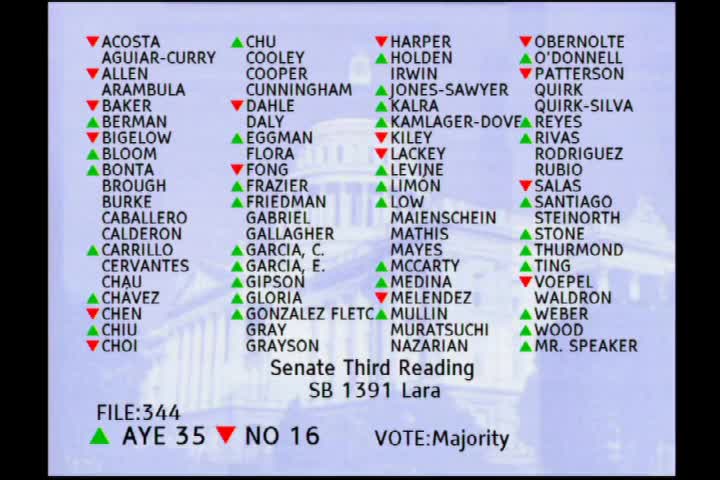

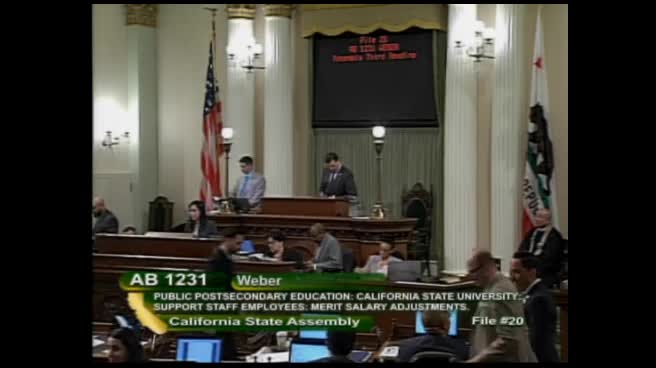
Bill Author


