AB 615: Air Quality Improvement Program: Clean Vehicle Rebate Project.
- Session Year: 2017-2018
- House: Assembly
- Latest Version Date: 2017-10-10
Existing law establishes the Air Quality Improvement Program that is administered by the State Air Resources Board for the purposes of funding projects related to, among other things, the reduction of criteria air pollutants and improvement of air quality. Pursuant to its existing statutory authority, the state board has established the Clean Vehicle Rebate Project, as a part of the Air Quality Improvement Program, to promote the production and use of zero-emission vehicles by providing rebates for the purchase of new zero-emission vehicles. Existing law, until July 1, 2017, requires the state board, for the purposes of the Clean Vehicle Rebate Project, to, among other things, offer rebates only to applicants who purchase an eligible vehicle and have a specified maximum gross annual income; increase rebate payments by $500 for low-income applicants, as defined; and prioritize rebate payments for low-income applicants.
This bill instead would extend the applicability of these provisions to January 1, 2019.
This bill would require the state board to work with, and contract with, either the University of California or the California State University to prepare and submit to the Legislature a report on the impact of the Clean Vehicle Rebate Project on the states zero-emission vehicle market no later than December 31, 2018. The bill would require the Department of Finance to submit to the Legislature a report evaluating the fiscal impacts of the Clean Vehicle Rebate Project no later than July 1, 2018.
This bill would declare that it is to take effect immediately as an urgency statute.
Existing law establishes the Air Quality Improvement Program that is administered by the State Air Resources Board for the purposes of funding projects related to, among other things, the reduction of criteria air pollutants and improvement of air quality. Pursuant to its existing statutory authority, the state board has established the Clean Vehicle Rebate Project, as a part of the Air Quality Improvement Program, to promote the production and use of zero-emission vehicles by providing rebates for the purchase of new zero-emission vehicles. Existing law, until July 1, 2017, requires the state board, for the purposes of the Clean Vehicle Rebate Project, to, among other things, offer rebates only to applicants who purchase an eligible vehicle and have a specified maximum gross annual income; increase rebate payments by $500 for low-income applicants, as defined; and prioritize rebate payments for low-income applicants.
This bill instead would extend the applicability of these provisions to until January 1, 2019.
This bill would require the state board and to work with, and contract with, either the University of California or the California State University to prepare and submit to the Legislature a report on the impact of the Clean Vehicle Rebate Project on the states zero-emission vehicle market no later than December 31, 2018. The bill would require the Department of Finance to submit specified reports regarding these provisions to the Legislature a report evaluating the fiscal impacts of the Clean Vehicle Rebate Project no later than July 1, 2018.
This bill would declare that it is to take effect immediately as an urgency statute.
Existing law establishes the Air Quality Improvement Program that is administered by the State Air Resources Board for the purposes of funding projects related to, among other things, the reduction of criteria air pollutants and improvement of air quality. Pursuant to its existing statutory authority, the state board has established the Clean Vehicle Rebate Project, as a part of the Air Quality Improvement Program, to promote the production and use of zero-emission vehicles by providing rebates for the purchase of new zero-emission vehicles. Existing law, until July 1, 2017, requires the state board, for the purposes of the Clean Vehicle Rebate Project, to, among other things, offer rebates only to applicants who purchase an eligible vehicle and have a specified maximum gross annual income; increase rebate payments by $500 for low-income applicants, as defined; and prioritize rebate payments for low-income applicants.
This bill would no longer limit the application of those provisions to until July 1, 2017. instead would extend the applicability of these provisions to until January 1, 2019.
This bill would require the state board and the Department of Finance to submit specified reports regarding these provisions to the Legislature no later than July 1, 2018.
This bill would declare that it is to take effect immediately as an urgency statute.
Existing law establishes the Air Quality Improvement Program that is administered by the State Air Resources Board for the purposes of funding projects related to, among other things, the reduction of criteria air pollutants and improvement of air quality. Pursuant to its existing statutory authority, the state board has established the Clean Vehicle Rebate Project, as a part of the Air Quality Improvement Program, to promote the production and use of zero-emission vehicles by providing rebates for the purchase of new zero-emission vehicles. Existing law, until July 1, 2017, requires the state board, for the purposes of the Clean Vehicle Rebate Project, to, among other things, offer rebates only to applicants who purchase an eligible vehicle and have a specified maximum gross annual income; increase rebate payments by $500 for low-income applicants, as defined; and prioritize rebate payments for low-income applicants.
This bill would no longer limit the application of those provisions to until July 1, 2017.
(a)For purposes of this section, low income means a resident of the state whose household income is less than or equal to 300 percent of the federal poverty level.
(b)Beginning November 1, 2016, under the Clean Vehicle Rebate Project established as a part of the Air Quality Improvement Program, the state board shall do the following:
(1)Only offer rebates to applicants who purchase an eligible vehicle and have a gross annual income, as reported on the Internal Revenue Service Form 1040, the Internal Revenue Service Form 1040A, or the Internal Revenue Service Form 1040EZ, that does not exceed the following:
(A)One hundred fifty thousand dollars ($150,000) for single filers.
(B)Two hundred four thousand dollars ($204,000) for head-of-household filers.
(C)Three hundred thousand dollars ($300,000) for joint filers.
(2)Increase the rebate payment by five hundred dollars ($500) for a low-income applicant for all eligible vehicle types.
(3)Only offer rebates for plug-in hybrids that have an electric range of at least 20 miles.
(4)Provide outreach to low-income households to increase consumer awareness of the rebate project.
(5)Prioritize rebate payments to low-income applicants.
(c)The income restrictions set forth in paragraph (1) of subdivision (b) shall not apply to fuel cell vehicles.
(d)(1)No later than December 31, 2018, the state board shall work with, and contract with, either the University of California or the California State University to prepare and submit to the Legislature a report on the impact of the Clean Vehicle Rebate Project on the states zero-emission vehicle market. The report shall include, but is not limited to, the impact of income caps, increased rebates for low-income consumers, and increased outreach on the electric vehicle market, as well as a quantification of emissions reductions attributable to the Clean Vehicle Rebate Project.
(2)No later than July 1, 2018, the Department of Finance shall submit to the Legislature a report evaluating the fiscal impact the rebates distributed pursuant to this section have had on both of the following:
(A)The revenue sources from which moneys have been appropriated to implement this section.
(B)The overall annual state budget.
(3)A report submitted pursuant to this subdivision shall be submitted in compliance with Section 9795 of the Government Code.
(e)This section shall remain in effect only until January 1, 2019, and as of that date is repealed.
SEC. 2.This act is an urgency statute necessary for the immediate preservation of the public peace, health, or safety within the meaning of Article IV of the California Constitution and shall go into immediate effect. The facts constituting the necessity are:
In order to ensure that important safeguards to the Clean Vehicle Rebate Project remain operative to protect air quality, it is necessary for this act to take immediate effect.
(a)For purposes of this section, low income means a resident of the state whose household income is less than or equal to 300 percent of the federal poverty level.
(b)Beginning November 1, 2016, under the Clean Vehicle Rebate Project established as a part of the Air Quality Improvement Program, the state board shall do the following:
(1)Only offer rebates to applicants who purchase an eligible vehicle and have a gross annual income, as reported on the Internal Revenue Service Form 1040, the Internal Revenue Service Form 1040A, or the Internal Revenue Service Form 1040EZ, that does not exceed the following:
(A)One hundred fifty thousand dollars ($150,000) for single filers.
(B)Two hundred four thousand dollars ($204,000) for head-of-household filers.
(C)Three hundred thousand dollars ($300,000) for joint filers.
(2)Increase the rebate payment by five hundred dollars ($500) for a low-income applicant for all eligible vehicle types.
(3)Only offer rebates for plug-in hybrids that have an electric range of at least 20 miles.
(4)Provide outreach to low-income households to increase consumer awareness of the rebate project.
(5)Prioritize rebate payments to low-income applicants.
(c)The income restrictions set forth in paragraph (1) of subdivision (b) shall not apply to fuel cell vehicles.
(d)(1)No later than July 1, 2018, the state board shall submit to the Legislature a report evaluating the emissions reduced from motor vehicles that received a rebate pursuant to this section in comparison to the overall amount of moneys expended to implement this section.(d)(1)No later than December 31, 2018, the state board shall work with, and contract with, either the University of California or the California State University to prepare and submit to the Legislature a report on the impact of the Clean Vehicle Rebate Project on the states zero-emission vehicle market. The report shall include, but is not limited to, the impact of income caps, increased rebates for low-income consumers, and increased outreach on the electric vehicle market, as well as a quantification of emissions reductions attributable to the Clean Vehicle Rebate Project.
(2)No later than July 1, 2018, the Department of Finance shall submit to the Legislature a report evaluating the fiscal impact the rebates distributed pursuant to this section have had on both of the following:
(A)The revenue sources from which moneys have been appropriated to implement this section.
(B)The overall annual state budget.
(3)A report submitted pursuant to this subdivision shall be submitted in compliance with Section 9795 of the Government Code.
(e)This section shall remain in effect only until January 1, 2019, and as of that date is repealed.
SEC. 2.This act is an urgency statute necessary for the immediate preservation of the public peace, health, or safety within the meaning of Article IV of the California Constitution and shall go into immediate effect. The facts constituting the necessity are:
In order to ensure that important safeguards to the Clean Vehicle Rebate Project remain operative to protect air quality, it is necessary for this act to take immediate effect.
(a)For purposes of this section, low income means a resident of the state whose household income is less than or equal to 300 percent of the federal poverty level.
(b)Beginning November 1, 2016, under the Clean Vehicle Rebate Project established as a part of the Air Quality Improvement Program, the state board shall do the following:
(1)Only offer rebates to applicants who purchase an eligible vehicle and have a gross annual income, as reported on the Internal Revenue Service Form 1040, the Internal Revenue Service Form 1040A, or the Internal Revenue Service Form 1040EZ, that does not exceed the following:
(A)One hundred fifty thousand dollars ($150,000) for single filers.
(B)Two hundred four thousand dollars ($204,000) for head-of-household filers.
(C)Three hundred thousand dollars ($300,000) for joint filers.
(2)Increase the rebate payment by five hundred dollars ($500) for a low-income applicant for all eligible vehicle types.
(3)Only offer rebates for plug-in hybrids that have an electric range of at least 20 miles.
(4)Provide outreach to low-income households to increase consumer awareness of the rebate project.
(5)Prioritize rebate payments to low-income applicants.
(c)The income restrictions set forth in paragraph (1) of subdivision (b) shall not apply to fuel cell vehicles.
(d)(1)No later than July 1, 2018, the state board shall submit to the Legislature a report evaluating the emissions reduced from motor vehicles that received a rebate pursuant to this section in comparison to the overall amount of moneys expended to implement this section.
(2)No later than July 1, 2018, the Department of Finance shall submit to the Legislature a report evaluating the fiscal impact the rebates distributed pursuant to this section have had on both of the following:
(A)The revenue sources from which moneys have been appropriated to implement this section.
(B)The overall annual state budget.
(3)A report submitted pursuant to this subdivision shall be submitted in compliance with Section 9795 of the Government Code.
(e)This section shall remain in effect only until January 1, 2019, and as of that date is repealed.
SEC. 2.This act is an urgency statute necessary for the immediate preservation of the public peace, health, or safety within the meaning of Article IV of the California Constitution and shall go into immediate effect. The facts constituting the necessity are:
In order to ensure that important safeguards to the Clean Vehicle Rebate Project remain operative to protect air quality, it is necessary for this act to take immediate effect.
(a)For purposes of this section, low income means a resident of the state whose household income is less than or equal to 300 percent of the federal poverty level.
(b)Beginning November 1, 2016, under the Clean Vehicle Rebate Project established as a part of the Air Quality Improvement Program, the state board shall do the following:
(1)Only offer rebates to applicants who purchase an eligible vehicle and have a gross annual income, as reported on the Internal Revenue Service Form 1040, the Internal Revenue Service Form 1040A, or the Internal Revenue Service Form 1040EZ, that does not exceed the following:
(A)One hundred fifty thousand dollars ($150,000) for single filers.
(B)Two hundred four thousand dollars ($204,000) for head-of-household filers.
(C)Three hundred thousand dollars ($300,000) for joint filers.
(2)Increase the rebate payment by five hundred dollars ($500) for a low-income applicant for all eligible vehicle types.
(3)Only offer rebates for plug-in hybrids that have an electric range of at least 20 miles.
(4)Provide outreach to low-income households to increase consumer awareness of the rebate project.
(5)Prioritize rebate payments to low-income applicants.
(c)The income restrictions set forth in paragraph (1) of subdivision (b) shall not apply to fuel cell vehicles.
(d) This section shall become inoperative on July 1, 2017, and, as of January 1, 2018, is repealed, unless a later enacted statute, that becomes operative on or before January 1, 2018, deletes or extends the dates on which it becomes inoperative and is repealed.|
Date
|
Status
|
|---|---|
| Oct 10, 2017 | Chaptered by Secretary of State - Chapter 631, Statutes of 2017. |
| Oct 10, 2017 | Approved by the Governor. |
| Sep 20, 2017 | Enrolled and presented to the Governor at 4:30 p.m. |
| Sep 13, 2017 | Assembly Rule 77(a) suspended. |
| Sep 12, 2017 | In Assembly. Concurrence in Senate amendments pending. May be considered on or after September 14 pursuant to Assembly Rule 77. |
| Sep 11, 2017 | Read third time. Urgency clause adopted. Passed. Ordered to the Assembly. |
| Sep 7, 2017 | Read second time. Ordered to third reading. |
| Sep 6, 2017 | Read third time and amended. Ordered to second reading. |
| Aug 22, 2017 | Read second time. Ordered to third reading. |
| Aug 21, 2017 | From committee: Be ordered to second reading pursuant to Senate Rule 28.8. |
| Jul 12, 2017 | From committee: Do pass and re-refer to Com. on APPR. (Ayes 12. Noes 0.) (July 11). Re-referred to Com. on APPR. |
| Jul 10, 2017 | Read second time and amended. Re-referred to Com. on T. & H. |
| Jul 6, 2017 | From committee: Amend, and do pass as amended and re-refer to Com. on T. & H. (Ayes 7. Noes 0.) (July 5). |
| May 18, 2017 | Referred to Coms. on EQ. and T. & H. |
| May 4, 2017 | In Senate. Read first time. To Com. on RLS. for assignment. |
| May 4, 2017 | Read third time. Urgency clause adopted. Passed. Ordered to the Senate. (Ayes 76. Noes 0. Page 1390.). |
| Apr 27, 2017 | Read second time. Ordered to Consent Calendar. |
| Apr 26, 2017 | From committee: Do pass. To Consent Calendar. (Ayes 16. Noes 0.) (April 26). |
| Mar 21, 2017 | From committee: Do pass and re-refer to Com. on APPR. (Ayes 13. Noes 0.) (March 20). Re-referred to Com. on APPR. |
| Mar 14, 2017 | Re-referred to Com. on TRANS. |
| Mar 13, 2017 | From committee chair, with author's amendments: Amend, and re-refer to Com. on TRANS. Read second time and amended. |
| Feb 27, 2017 | Referred to Com. on TRANS. |
| Feb 15, 2017 | From printer. May be heard in committee March 17. |
| Feb 14, 2017 | Read first time. To print. |
|
Date
|
Description
|
Location
|
Votes
|
|
|---|---|---|---|---|
| Sep 13, 2017 | AB 615 COOPER Concurrence in Senate Amendments | Assembly Floor |
Passed |
|
| Sep 11, 2017 | Assembly 3rd Reading AB615 Cooper By Galgiani Urgency Clause | Senate Floor |
Passed |
|
| Jul 11, 2017 | Do pass, but first be re-referred to the Committee on [Appropriations] | Senate Standing Committee on Transportation and Housing |
Passed |
|
| Jul 5, 2017 | Do pass as amended, but first amend, and re-refer to the Committee on [Transportation and Housing] | Senate Standing Committee on Environmental Quality |
Passed |
|
| May 4, 2017 | AB 615 COOPER Consent Calendar Second Day Regular Session | Assembly Floor |
Passed |
|
| Apr 26, 2017 | Do pass. To Consent Calendar. | Assembly Standing Committee on Appropriations |
Passed |
|
| Mar 20, 2017 | Do pass and be re-referred to the Committee on [Appropriations] | Assembly Standing Committee on Transportation |
Passed |
This list shows positions taken on this bill by organizations on the date displayed, which is linked to the original source.
Positions by individuals are not included.
|
Organization
|
Position
|
Date
|
|---|---|---|
| Charge Ahead California | ** Support | Jul 6, 2017 |
| Coalition For Clean Air | ** Support | Sep 8, 2017 |
| Communities for a Better Environment | ** Support | Sep 8, 2017 |
| Environment California | ** Support | Sep 8, 2017 |
| Natural Resources Defense Council | ** Support | Sep 8, 2017 |
| South Coast Air Quality Management District | ** Support | Sep 8, 2017 |
| The Greenlining Institute | ** Support | Sep 8, 2017 |
| Valley Clean Air Now | ** Support | Sep 8, 2017 |
CONCURRENCE IN SENATE AMENDMENTS
CSA1 Bill Id:AB 615
Author:(Cooper)
As Amended Ver:September 6, 2017
2/3 vote. Urgency
ASSEMBLY: | 76-0 | (May 4, 2017) | SENATE: | 37-0 | (September 11, 2017) |
Original Committee Reference: TRANS.
SUMMARY: Extends the sunset on income eligibility restrictions under the Clean Vehicle Rebate Project (CVRP) and includes an urgency clause.
The Senate amendments:
- Extend, until July 1, 2019, (rather than delete) the sunset on income eligibility restrictions for the California Air Resources Board's (ARB's) CVRP.
- Add the requirement that ARB contract with either the University of California or the California State University to prepare and submit to the Legislature a report on the impact of that CVRP has on the state's zero-emission vehicle market.
FISCAL EFFECT: According to the Senate Appropriations Committee, pursuant to Senate Rule 28.8, negligible state costs.
COMMENTS: The Alternative and Renewable Fuels and Vehicle Technology Program, the Enhanced Fleet Modernization Program, and Air Quality Improvement Program (AQIP) are programs overseen by ARB and the California Energy Commission to promote vehicle and fuel technology that reduces air pollution and greenhouse gas (GHG) emissions. These programs are funded through surcharges on vehicle and vessel registrations [AB 118 (Núñez), Chapter 750, Statutes of 2007] as well as with monies generated by cap-and-trade auctions.
Pursuant to their authority under AQIP, ARB developed CVRP. CVRP, which is administered by ARB’s contractor, the California Center for Sustainable Energy (CSE), is intended to encourage and accelerate the purchase and use of zero-emission vehicles (ZEVs) and near zero-emission vehicles (NZEVs) to help improve air quality, reduce GHG emissions, and achieve the Legislature's goal of placing 1.5 million ZEVs on California's roadways by 2023 (SB 1275(De León), Chapter 530, Statutes of 2014).
Since CVRP was launched in 2010, 163,000 rebates have been issued at a cost of $349 million. The program is oversubscribed with demand outpacing funding nearly every year. When the funding is exhausted, applicants are "waitlisted" and are issued rebates in the order they applied when monies are allocated in the next funding cycle.
While CVRP has been effective in creating a market for ZEVs, it has come under increasing criticism that the majority of individuals receiving rebates are wealthy, living in affluent communities that, comparatively, experience better air quality than other areas of the state. There has also been growing concern that many individuals receiving CVRP rebates may have purchased these vehicles regardless of the rebate and that oftentimes these vehicles represent second and third vehicles for these households.
To address these concerns, SB 1275, among other things, required ARB to increase access to ZEVs and NZEVs for lower-and moderate-income Californians and those residing in disadvantaged communities. To achieve this, SB 1275 called upon ARB to establish CVRP rebate eligibility based on income.
In response, ARB established an income cap of $250,000 for single filers, $340,000 for head-of-household filers, and $500,000 for joint filers. According to ARB, these income eligibility limits were consistent with Proposition 30, approved by California voters in 2012. Many, however, felt that ARB had set the cap much too high.
To address this, the author introduced AB 2564 (Cooper) of 2016 last session that would have required ARB to lower the CVRP income cap to $125,000 for single filers, $170,000 for head-of-household filers, and $250,000 for joint filers for all eligible vehicles. AB 2564 would have also prioritized CVRP payments to low-income consumers, increased rebate amounts by $500 per rebate for low-income households, and increased CVRP outreach to low-income households. AB 2564 failed passage in the Senate Environmental Quality Committee.
Later in 2016, the Legislature approved a budget bill [AB 859 (Budget Committee), Chapter 368, Statutes of 2016] that represented a compromise between the higher cap set by ARB and the lower "cap" proposed in AB 2465. In addition to lowering the income cap, AB 859 included addition provisions from AB 2564, including increased outreach to low income communities, additional payments for low-income applicants, prioritizing payments for low-income applicants, among others. While AB 859 established these parameters in CVRP, they are only applicable from November 1, 2016 to July 1, 2017.
This bill seeks to extend the income cap and other CVRP program requirements set forth in AB 859. Because the parameters set forth in AB 859 are set to expire in July of this year, the author has included an urgency clause in the bill.
The author believes that by eliminating the sunset, CVRP will provide greater air quality and GHG emissions reduction benefits, particularly because the majority of low-income individual reside in areas of the state that have some of the poorest air quality and reaching more of these households will very likely help the state realize its emissions reduction and air quality improvement goals faster and more effectively. This past year, with the increased outreach in place, there was an uptick in rebates issued in disadvantaged communities (DACs), with CSE reporting that a 4% increase in rebates in DACs from 6% to 10%. While this increase is encouraging, it remains somewhat concerning that out of a $349 million dollar program, only 10% of rebates go to DACs that are characteristically plagued by poor air quality.
Please see the policy committee analysis for full discussion of this bill.
Analysis Prepared by: Victoria Alvarez / TRANS. / (916) 319-2093 FN: 0002055
Office of Senate Floor Analyses (916) 651-1520 Fax: (916) 327-4478 | AB |
THIRD READING
Bill No: AB 615
Amended: 9/6/17 in Senate
SENATE ENVIRONMENTAL QUALITY COMMITTEE: 7-0, 7/5/17
AYES: Wieckowski, Stone, Gaines, Hill, Lara, Skinner, Stern
SENATE TRANS. & HOUSING COMMITTEE: 12-0, 7/11/17
AYES: Beall, Cannella, Allen, Atkins, Gaines, McGuire, Mendoza, Morrell, Roth, Skinner, Vidak, Wiener
NO VOTE RECORDED: Wieckowski
SENATE APPROPRIATIONS COMMITTEE: Senate Rule 28.8
ASSEMBLY FLOOR: 76-0, 5/4/17 (Consent) - See last page for vote
DIGEST:
This bill extends the July 1, 2017 sunset on the income cap eligibility requirements for the Clean Vehicle Rebate Project (CVRP) to January 1, 2019, and requires the Air Resources Board (ARB) and the Department of Finance to submit reports to the Legislature, as specified.
Senate Floor Amendments of 9/6/17 require ARB to contract with either the University of California or California State University to prepare the report.
Existing law:
- Requires, under the California Global Warming Solutions Act of 2006 (also known as AB 32), ARB to determine the 1990 statewide greenhouse gas (GHG) emissions level and approve a statewide GHG emissions limit that is equivalent to that level to be achieved by 2020. (Health and Safety Code (HSC) §38500 et seq.)
- Requires ARB to ensure that statewide GHG emissions are reduced to at least 40% below the 1990 level by December 31, 2030. (HSC §38566)
- Establishes the Greenhouse Gas Reduction Fund (GGRF) in the State Treasury, and requires all moneys, except for fines and penalties, under AB 32 to be deposited into GGRF. (Government Code (GOV) §16428.8)
- Establishes the Air Quality Improvement Program (AQIP), administered by ARB in consultation with local air districts, to fund programs that reduce criteria air pollutants, improve air quality, and provide research for alternative fuels and vehicles, vessels, and equipment technologies, and establishes the CVRP under the AQIP. (HSC §44274 et seq.)
- Requires ARB, as a part of its funding plan for AQIP, to develop income-based eligibility requirements for CVRP. (HSC §44258.4)
- Reduced the income caps proposed by ARB and sunset that income cap reduction on July 1, 2017. (HSC §44274.3)
This bill extends the July 1, 2017 sunset on the income cap eligibility requirements for CVRP to January 1, 2019, and requires ARB and the Department of Finance to submit reports to the Legislature, as specified.
Background
- Air quality standards. The Federal Clean Air Act (FCAA) passed in 1963 and has been revised many times thereafter. The FCAA and its implementing regulations are intended to protect public health and environmental quality by limiting and reducing pollution from various sources. Under the FCAA, the United States Environmental Protection Agency (US EPA) establishes National Ambient Air Quality Standards (NAAQS) that apply to outdoor air throughout the country.
In 1969 and 1971, ARB set the first air quality standards for ozone, Particulate Matter (PM), oxides of nitrogen (NOx), oxides of sulfur (SOx), and carbon monoxide due to their negative impacts on public health above specified concentrations.
The federal government followed suit and set NAAQS for six “criteria pollutants.” These included ground-level ozone, PM, NOx, SOx, and carbon monoxide, and added lead. Now, the US EPA reviews each NAAQS at five-year intervals to ensure that the standards are based on the most recent scientific information.
Regions that do not meet the national standards for any one of the standards are designated “nonattainment areas.” The FCAA sets deadlines for attainment based on the severity of nonattainment and requires states to develop comprehensive plans, known as the state implementation plan, to attain and maintain air-quality standards for each area designated nonattainment for an NAAQS.
The FCAA specifies which entities qualify as major sources of air pollutants, and requires those sources to be permitted and regulated under the requirements in Title V of the FCAA, which is implemented in California by local air districts. Certain sources of air emissions, including combustion facilities and incinerators, are subject to specific Title V requirements regardless of size. A Title V permit authorizes those sources to operate.
In July of 2011, sources not previously subject to Title V requirements became subject to Title V if they had GHG emissions at least 100,000 tons per year (tpy) of carbon dioxide equivalent. For air pollutants besides GHGs, the threshold for determining which sources qualify as Title V changes depending on whether the pollutants are hazardous and whether the source is located in a non-attainment area. The default standard for qualifying as a major source of air pollutants is 100 tpy, although nonattainment areas have lower threshold emission levels for the pollutants that are not in attainment.
Within severe non-attainment areas, sources that emit over 10 tpy of NOx or volatile organic compounds are Title V sources. Common Title V sources include large factories, refineries and power plants. Major source thresholds for hazardous air pollutants (in California these are called Toxic Air Contaminants or TACs) are 10 tpy for a single TAC or 25 tpy for any combination of TACs. Examples of TACs include benzene, found in gasoline; perchlorethlyene, emitted from some dry cleaning facilities; and methylene chloride, used as a solvent and paint stripper by a number of industries.
Due to the lower emission thresholds for air pollutants that are in nonattainment air basins, a larger fraction of facilities are required to be permitted under Title V in the South Coast Air Quality Management District and San Joaquin Valley Unified Air Pollution Control District, which are nonattainment areas for ozone and PM.
- Health impacts of air pollution. When not adequately controlled, air pollution has dire consequences on the health and safety of both people and the environment. Poor air quality causes the lungs to constrict, resulting in wheezing, shortness of breath and chest tightness, especially during exercise or physical activity.
It is well known that air pollution causes asthma. According to the Centers for Disease Control and Prevention, nationwide 7.4% of adults and 8.6% of children have been diagnosed with asthma. In California, the numbers are significantly higher: 13.1% of adults and 12.5% of children have been diagnosed with asthma. Lower income and minority groups are disproportionately affected by asthma due to their increased exposure to air pollution.
Depending on exposure, air pollution alone can cause an increased risk of cardiovascular and respiratory illness, lung disease, cancerous tumors, birth defects, premature births, developmental disorders, central nervous system damage, intellectual disability, persistent memory impairments, epilepsy, dementia, and premature death.
A June 2017 study published by Harvard researchers in the New England Journal of Medicine found that there is no safe level of long-term exposure to PM 2.5 (PM that is less than 2.5 micrometers in diameter) and ozone below which there is no risk of premature death. The study followed over 60 million Americans over 65 years old for seven years. Two key findings in the study are that reducing PM 2.5 concentrations by one microgram per cubic meter nationwide would save about 12,000 lives each year and that reducing ozone concentrations by one part per billion nationwide would save about 1,900 lives each year.
- Vehicles and air pollution. Vehicles are one of the primary sources of air pollution nationally. As such, the FCAA authorizes US EPA to establish and regulate emissions standards for mobile sources.
California, due to its preexisting vehicle-emission standards and severe motor vehicle air pollution problems, is authorized under the FCAA to implement separate mobile emission standards from the federal government. Other states may choose to follow either the national standard or the stricter California standards.
State law assigns the ARB with primary responsibility for control of mobile-source air pollution, including adoption of rules for reducing vehicle emissions, the specification of vehicular fuel composition, emissions control devices, and engine standards.
- Clean Vehicle Rebate Project. The CVRP is funded by ARB and administered by the Center for Sustainable Energy, in order to promote the production and use of zero-emission vehicles, including electric, plug-in hybrid electric and fuel cell vehicles. CVRP enables the purchaser or lessee of an eligible vehicle to receive a rebate. A consumer can apply for a rebate within 18 months of purchasing or leasing an eligible vehicle. The consumer must retain ownership of the vehicle in California for at least 30 consecutive months after the purchase or lease date or reimburse ARB for part of or the entire rebate amount. Rebates are distributed on a first-come, first-served basis and issued within 90 days of application approval.
CVRP provides a rebate of up to $5,000 for purchasing or leasing a new zero-emission vehicle or plug-in hybrid electric vehicle. Specifically, a consumer may obtain a $5,000 rebate for a hydrogen fuel-cell vehicle; a $2,500 rebate for a zero-emission, battery electric vehicle; a $1,500 voucher for a plug-in hybrid electric vehicle; or, a $900 rebate for a neighborhood electric vehicle or a zero-emission motorcycle. There is no cap on the number of rebates that may be issued, but rebates are subject to funding availability and the program has more than once been forced to stop issuing rebates and create a waiting list due to funds running out.
CVRP was initially designed to achieve 1.5 million ZEVs on the road by 2025 as directed under Governor Brown’s Executive Order B-16-2012.
On March 29, 2016, pursuant to SB 1275 (de León, Chapter 530, Statutes of 2014)—which established the Charge Ahead California Initiative to place in service at least 1,000,000 zero-emission and near-zero-emission vehicles by January 1, 2023—ARB was tasked with the goals of focusing on ZEV adoption in disadvantaged and low-and-moderate-income communities. In doing so, ARB implemented the following income cap eligibility requirements for participation in CVRP: $250K for applicants that file taxes as a single individual, $204K for those that file head of household, and $500K for those that file jointly.
Five months later, the Legislature and Governor modified those income cap requirements as follows: $150K for applicants that file taxes as a single individual, $240K for those that file head of household, and $300K for those that file jointly.
The newest set of income caps was implemented November 1, 2016 and there are only a few months of data available. Although it appears that more CVRP dollars are being funneled into disadvantaged communities and low- and moderate-income households, ARB cautions that attempting to draw any kind of conclusion about the impacts the income caps have had on CVRP would be premature for a couple of reasons.
First, without longer term data and without normalizing the data to new car sales, the trends may not be reliable. Second, the Legislature enacted the income caps simultaneously with other policy directives to the ARB regarding CVRP, most importantly was the direction to increase outreach to low-income households, so it is impossible to disentangle the effects each has had with such limited data.
- Enhanced Fleet Modernization Program (EFMP). The EFMP enables a vehicle owner to retire a high-polluting passenger vehicle or light- or medium-duty truck. A vehicle need not have failed a smog test to qualify for EFMP, but it must meet ARB’s definition of high polluting. Under the statewide component of EFMP, ARB administers a program, in consultation with the California Bureau of Automotive Repair, to scrap high-polluting vehicles. Under this program, EFMP offers a $1,500 voucher to low-income vehicle owners (household income at or below 225% of federal poverty level), or a $1,000 voucher to all other vehicle owners, to retire a high-polluting vehicle. EFMP does not place technology restrictions on the kind of vehicle that a consumer may purchase, only that the vehicle meets certain emission standards.
- EFMP Plus-Up. EFMP also has a vehicle replacement component, known as EFMP Plus-Up. Under EFMP Plus-Up, a low-income owner can get a $2,500 “replacement” voucher in addition to the $1,500 base EFMP “retirement” voucher. The owner may use the funds to either purchase a car that is less than eight years old or to obtain a public transit voucher. If a low-income owner lives in a disadvantaged community in one of these air districts, and wants to purchase a hybrid, plug-in hybrid, or battery electric vehicle, he or she can “stack” additional incentives on top of these two vouchers. Depending on the owner’s income and the type of replacement vehicle, the owner can receive up to $12,000 toward the purchase of a new car. The ARB is currently working with local air districts to expand EFMP Plus-Up to disadvantaged communities in Sacramento, San Diego, and the bay area.
Comments
- Purpose of bill. According to the author, “AB 615 will help make clean vehicles more accessible to California drivers living in communities with poor air quality by limiting eligibility by income, increasing rebates levels for low-income households and improving outreach to increase consumer awareness of the Clean Vehicle Rebate Project (CVRP).”
- Different programs accomplish different goals. As noted in the background, the purpose of CVRP is to promote the production and use of ZEVs given Governor Brown’s Executive Order B-16-2012 requiring 1.5 million ZEVs on the road by 2025. With limited funds, CVRP is designed to get as much “bang for the buck” as possible. For example, if CVRP could spend $40K to get one person into a ZEV, or split that $40K up into smaller $5K incentives and get eight people into ZEVs, the same amount of money could increase the number of ZEVs on the road from one to eight.
Although ZEVs are coming down in price, ZEVs are expensive and have been more readily adopted by higher-income earners. It is undeniable that wealthy people who do not need a rebate in order to afford a ZEV have received a rebate under CVRP. Regardless of that point, however, data collected by ARB demonstrating that over half of the ZEV purchases prior to income caps would not have been made without those rebates.
CVRP, as initially designed without income caps, more than doubled California’s progress toward the goals of getting 1.5 million ZEVs on the road by 2025 and 1.0 million ZEVs on the road by 2023.
Given the existence of programs that accomplish the author’s goal of providing lower-income households more access to cleaner vehicles, there is a question as to whether the approach in AB 615 will result in an added benefit to both the environment and the people it attempts to serve. This legislation may have the unintended consequence of jeopardizing the only program at ARB that is designed specifically to reach the goals of SB 1275 and the Governor’s Executive Order on increasing ZEVs in California.
- How are we spending GGRF? Proponents of this measure argue that since CVRP is funded with GGRF it should be restricted from higher income households. Currently, 35% of GGRF is mandated to be spent in disadvantaged communities identified as the bottom 25% on a variety of measures by the CalEnviroScreen tool developed pursuant to Health and Safety Code Section 39711. According to the last report by ARB, the state is exceeding that mandate and spending approximately 50% of GGRF in disadvantaged communities. This means the state is spending half of all GGRF moneys on a quarter of all Californians.
The argument that certain Californians shouldn’t receive a benefit under CVRP based on their income—despite the fact that a small incentive to those people doubled California’s progress to its ZEV goal—loses sight of the larger context of California’s climate goals.
FISCAL EFFECT: Appropriation: Fiscal Com.: Local:
Coalition for Clean Air
Communities for a Better Environment
Environment California
Natural Resources Defense Council
South Coast Air Quality Management District
The Greenlining Institute
Valley Clean Air Now
OPPOSITION: (Verified 8/21/17)
ASSEMBLY FLOOR: 76-0, 5/4/17
AYES: Acosta, Aguiar-Curry, Arambula, Baker, Berman, Bloom, Bocanegra, Bonta, Brough, Burke, Caballero, Calderon, Cervantes, Chau, Chávez, Chen, Chiu, Choi, Chu, Cooley, Cooper, Cunningham, Dababneh, Dahle, Daly, Eggman, Flora, Fong, Frazier, Friedman, Gallagher, Eduardo Garcia, Gipson, Gloria, Gomez, Gonzalez Fletcher, Gray, Grayson, Harper, Holden, Irwin, Jones-Sawyer, Kalra, Kiley, Lackey, Levine, Limón, Low, Maienschein, Mathis, Mayes, McCarty, Medina, Melendez, Mullin, Muratsuchi, Nazarian, Obernolte, O'Donnell, Quirk, Quirk-Silva, Reyes, Ridley-Thomas, Rodriguez, Rubio, Salas, Santiago, Steinorth, Mark Stone, Thurmond, Ting, Voepel, Waldron, Weber, Wood, Rendon
NO VOTE RECORDED: Travis Allen, Bigelow, Cristina Garcia, Patterson
9/8/17 10:48:56
Office of Senate Floor Analyses (916) 651-1520 Fax: (916) 327-4478 | AB |
THIRD READING
Bill No: AB 615
:
SENATE ENVIRONMENTAL QUALITY COMMITTEE: 7-0, 7/5/17
AYES: Wieckowski, Stone, Gaines, Hill, Lara, Skinner, Stern
SENATE TRANS. & HOUSING COMMITTEE: 12-0, 7/11/17
AYES: Beall, Cannella, Allen, Atkins, Gaines, McGuire, Mendoza, Morrell, Roth, Skinner, Vidak, Wiener
NO VOTE RECORDED: Wieckowski
SENATE APPROPRIATIONS COMMITTEE: Senate Rule 28.8
ASSEMBLY FLOOR: 76-0, 5/4/17 (Consent) - See last page for vote
DIGEST:
This bill extends the July 1, 2017 sunset on the income cap eligibility requirements for the Clean Vehicle Rebate Project (CVRP) January 1, 2019, and requires the Air Resources Board (ARB) and the Department of Finance to submit reports to the Legislature no later than July 1, 2018, as specified.
Existing law:
- Requires, under the California Global Warming Solutions Act of 2006 (also known as AB 32), ARB to determine the 1990 statewide greenhouse gas (GHG) emissions level and approve a statewide GHG emissions limit that is equivalent to that level to be achieved by 2020. (Health and Safety Code (HSC) §38500 et seq.)
- Requires ARB to ensure that statewide GHG emissions are reduced to at least 40% below the 1990 level by December 31, 2030. (HSC §38566)
- Establishes the Greenhouse Gas Reduction Fund (GGRF) in the State Treasury, and requires all moneys, except for fines and penalties, under AB 32 to be deposited into GGRF. (Government Code (GOV) §16428.8)
- Establishes the Air Quality Improvement Program (AQIP), administered by ARB in consultation with local air districts, to fund programs that reduce criteria air pollutants, improve air quality, and provide research for alternative fuels and vehicles, vessels, and equipment technologies, and establishes the CVRP under the AQIP. (HSC §44274 et seq.)
- Requires ARB, as a part of its funding plan for AQIP, to develop income-based eligibility requirements for CVRP. (HSC §44258.4)
- Reduced the income caps proposed by ARB and sunset that income cap reduction on July 1, 2017. (HSC §44274.3)
This bill extends the July 1, 2017 sunset on the income cap eligibility requirements for CVRP January 1, 2019, and requires ARB and the Department of Finance to submit reports to the Legislature no later than July 1, 2018, as specified.
Background
- Air quality standards. The Federal Clean Air Act (FCAA) passed in 1963 and has been revised many times thereafter. The FCAA and its implementing regulations are intended to protect public health and environmental quality by limiting and reducing pollution from various sources. Under the FCAA, the United States Environmental Protection Agency (US EPA) establishes National Ambient Air Quality Standards (NAAQS) that apply to outdoor air throughout the country.
In 1969 and 1971, ARB set the first air quality standards for ozone, Particulate Matter (PM), oxides of nitrogen (NOx), oxides of sulfur (SOx), and carbon monoxide due to their negative impacts on public health above specified concentrations.
The federal government followed suit and set NAAQS for six “criteria pollutants.” These included ground-level ozone, PM, NOx, SOx, and carbon monoxide, and added lead. Now, the US EPA reviews each NAAQS at five-year intervals to ensure that the standards are based on the most recent scientific information.
Regions that do not meet the national standards for any one of the standards are designated “nonattainment areas.” The FCAA sets deadlines for attainment based on the severity of nonattainment and requires states to develop comprehensive plans, known as the state implementation plan, to attain and maintain air-quality standards for each area designated nonattainment for an NAAQS.
The FCAA specifies which entities qualify as major sources of air pollutants, and requires those sources to be permitted and regulated under the requirements in Title V of the FCAA, which is implemented in California by local air districts. Certain sources of air emissions, including combustion facilities and incinerators, are subject to specific Title V requirements regardless of size. A Title V permit authorizes those sources to operate.
In July of 2011, sources not previously subject to Title V requirements became subject to Title V if they had GHG emissions at least 100,000 tons per year (tpy) of carbon dioxide equivalent. For air pollutants besides GHGs, the threshold for determining which sources qualify as Title V changes depending on whether the pollutants are hazardous and whether the source is located in a non-attainment area. The default standard for qualifying as a major source of air pollutants is 100 tpy, although nonattainment areas have lower threshold emission levels for the pollutants that are not in attainment.
Within severe non-attainment areas, sources that emit over 10 tpy of NOx or volatile organic compounds are Title V sources. Common Title V sources include large factories, refineries and power plants. Major source thresholds for hazardous air pollutants (in California these are called Toxic Air Contaminants or TACs) are 10 tpy for a single TAC or 25 tpy for any combination of TACs. Examples of TACs include benzene, found in gasoline; perchlorethlyene, emitted from some dry cleaning facilities; and methylene chloride, used as a solvent and paint stripper by a number of industries.
Due to the lower emission thresholds for air pollutants that are in nonattainment air basins, a larger fraction of facilities are required to be permitted under Title V in the South Coast Air Quality Management District and San Joaquin Valley Unified Air Pollution Control District, which are nonattainment areas for ozone and PM.
- Health impacts of air pollution. When not adequately controlled, air pollution has dire consequences on the health and safety of both people and the environment. Poor air quality causes the lungs to constrict, resulting in wheezing, shortness of breath and chest tightness, especially during exercise or physical activity.
It is well known that air pollution causes asthma. According to the Centers for Disease Control and Prevention, nationwide 7.4% of adults and 8.6% of children have been diagnosed with asthma. In California, the numbers are significantly higher: 13.1% of adults and 12.5% of children have been diagnosed with asthma. Lower income and minority groups are disproportionately affected by asthma due to their increased exposure to air pollution.
Depending on exposure, air pollution alone can cause an increased risk of cardiovascular and respiratory illness, lung disease, cancerous tumors, birth defects, premature births, developmental disorders, central nervous system damage, intellectual disability, persistent memory impairments, epilepsy, dementia, and premature death.
A June 2017 study published by Harvard researchers in the New England Journal of Medicine found that there is no safe level of long-term exposure to PM 2.5 (PM that is less than 2.5 micrometers in diameter) and ozone below which there is no risk of premature death. The study followed over 60 million Americans over 65 years old for seven years. Two key findings in the study are that reducing PM 2.5 concentrations by one microgram per cubic meter nationwide would save about 12,000 lives each year and that reducing ozone concentrations by one part per billion nationwide would save about 1,900 lives each year.
- Vehicles and air pollution. Vehicles are one of the primary sources of air pollution nationally. As such, the FCAA authorizes US EPA to establish and regulate emissions standards for mobile sources.
California, due to its preexisting vehicle-emission standards and severe motor vehicle air pollution problems, is authorized under the FCAA to implement separate mobile emission standards from the federal government. Other states may choose to follow either the national standard or the stricter California standards.
State law assigns the ARB with primary responsibility for control of mobile-source air pollution, including adoption of rules for reducing vehicle emissions, the specification of vehicular fuel composition, emissions control devices, and engine standards.
- Clean Vehicle Rebate Project. The CVRP is funded by ARB and administered by the Center for Sustainable Energy, in order to promote the production and use of zero-emission vehicles, including electric, plug-in hybrid electric and fuel cell vehicles. CVRP enables the purchaser or lessee of an eligible vehicle to receive a rebate. A consumer can apply for a rebate within 18 months of purchasing or leasing an eligible vehicle. The consumer must retain ownership of the vehicle in California for at least 30 consecutive months after the purchase or lease date or reimburse ARB for part of or the entire rebate amount. Rebates are distributed on a first-come, first-served basis and issued within 90 days of application approval.
CVRP provides a rebate of up to $5,000 for purchasing or leasing a new zero-emission vehicle or plug-in hybrid electric vehicle. Specifically, a consumer may obtain a $5,000 rebate for a hydrogen fuel-cell vehicle; a $2,500 rebate for a zero-emission, battery electric vehicle; a $1,500 voucher for a plug-in hybrid electric vehicle; or, a $900 rebate for a neighborhood electric vehicle or a zero-emission motorcycle. There is no cap on the number of rebates that may be issued, but rebates are subject to funding availability and the program has more than once been forced to stop issuing rebates and create a waiting list due to funds running out.
CVRP was initially designed to achieve 1.5 million ZEVs on the road by 2025 as directed under Governor Brown’s Executive Order B-16-2012.
On March 29, 2016, pursuant to SB 1275 (de León, Chapter 530, Statutes of 2014)—which established the Charge Ahead California Initiative to place in service at least 1,000,000 zero-emission and near-zero-emission vehicles by January 1, 2023—ARB was tasked with the goals of focusing on ZEV adoption in disadvantaged and low-and-moderate-income communities. In doing so, ARB implemented the following income cap eligibility requirements for participation in CVRP: $250K for applicants that file taxes as a single individual, $204K for those that file head of household, and $500K for those that file jointly.
Five months later, the Legislature and Governor modified those income cap requirements as follows: $150K for applicants that file taxes as a single individual, $240K for those that file head of household, and $300K for those that file jointly.
The newest set of income caps was implemented November 1, 2016 and there are only a few months of data available. Although it appears that more CVRP dollars are being funneled into disadvantaged communities and low- and moderate-income households, ARB cautions that attempting to draw any kind of conclusion about the impacts the income caps have had on CVRP would be premature for a couple of reasons.
First, without longer term data and without normalizing the data to new car sales, the trends may not be reliable. Second, the Legislature enacted the income caps simultaneously with other policy directives to the ARB regarding CVRP, most importantly was the direction to increase outreach to low-income households, so it is impossible to disentangle the effects each has had with such limited data.
- Enhanced Fleet Modernization Program (EFMP). The EFMP enables a vehicle owner to retire a high-polluting passenger vehicle or light- or medium-duty truck. A vehicle need not have failed a smog test to qualify for EFMP, but it must meet ARB’s definition of high polluting. Under the statewide component of EFMP, ARB administers a program, in consultation with the California Bureau of Automotive Repair, to scrap high-polluting vehicles. Under this program, EFMP offers a $1,500 voucher to low-income vehicle owners (household income at or below 225% of federal poverty level), or a $1,000 voucher to all other vehicle owners, to retire a high-polluting vehicle. EFMP does not place technology restrictions on the kind of vehicle that a consumer may purchase, only that the vehicle meets certain emission standards.
- EFMP Plus-Up. EFMP also has a vehicle replacement component, known as EFMP Plus-Up. Under EFMP Plus-Up, a low-income owner can get a $2,500 “replacement” voucher in addition to the $1,500 base EFMP “retirement” voucher. The owner may use the funds to either purchase a car that is less than eight years old or to obtain a public transit voucher. If a low-income owner lives in a disadvantaged community in one of these air districts, and wants to purchase a hybrid, plug-in hybrid, or battery electric vehicle, he or she can “stack” additional incentives on top of these two vouchers. Depending on the owner’s income and the type of replacement vehicle, the owner can receive up to $12,000 toward the purchase of a new car. The ARB is currently working with local air districts to expand EFMP Plus-Up to disadvantaged communities in Sacramento, San Diego, and the bay area.
Comments
- Purpose of bill. According to the author, “AB 615 will help make clean vehicles more accessible to California drivers living in communities with poor air quality by limiting eligibility by income, increasing rebates levels for low-income households and improving outreach to increase consumer awareness of the Clean Vehicle Rebate Project (CVRP).”
- Different programs accomplish different goals. As noted in the background, the purpose of CVRP is to promote the production and use of ZEVs given Governor Brown’s Executive Order B-16-2012 requiring 1.5 million ZEVs on the road by 2025. With limited funds, CVRP is designed to get as much “bang for the buck” as possible. For example, if CVRP could spend $40K to get one person into a ZEV, or split that $40K up into smaller $5K incentives and get eight people into ZEVs, the same amount of money could increase the number of ZEVs on the road from one to eight.
Although ZEVs are coming down in price, ZEVs are expensive and have been more readily adopted by higher-income earners. It is undeniable that wealthy people who do not need a rebate in order to afford a ZEV have received a rebate under CVRP. Regardless of that point, however, data collected by ARB demonstrating that over half of the ZEV purchases prior to income caps would not have been made without those rebates.
CVRP, as initially designed without income caps, more than doubled California’s progress toward the goals of getting 1.5 million ZEVs on the road by 2025 and 1.0 million ZEVs on the road by 2023.
Given the existence of programs that accomplish the author’s goal of providing lower-income households more access to cleaner vehicles, there is a question as to whether the approach in AB 615 will result in an added benefit to both the environment and the people it attempts to serve. This legislation may have the unintended consequence of jeopardizing the only program at ARB that is designed specifically to reach the goals of SB 1275 and the Governor’s Executive Order on increasing ZEVs in California.
- How are we spending GGRF? Proponents of this measure argue that since CVRP is funded with GGRF it should be restricted from higher income households. Currently, 35% of GGRF is mandated to be spent in disadvantaged communities identified as the bottom 25% on a variety of measures by the CalEnviroScreen tool developed pursuant to Health and Safety Code Section 39711. According to the last report by ARB, the state is exceeding that mandate and spending approximately 50% of GGRF in disadvantaged communities. This means the state is spending half of all GGRF moneys on a quarter of all Californians.
The argument that certain Californians shouldn’t receive a benefit under CVRP based on their income—despite the fact that a small incentive to those people doubled California’s progress to its ZEV goal—loses sight of the larger context of California’s climate goals.
FISCAL EFFECT: Appropriation: Fiscal Com.: Local:
Coalition for Clean Air
Communities for a Better Environment
Environment California
Natural Resources Defense Council
South Coast Air Quality Management District
The Greenlining Institute
Valley Clean Air Now
OPPOSITION: (Verified 8/21/17)
ASSEMBLY FLOOR: 76-0, 5/4/17
AYES: Acosta, Aguiar-Curry, Arambula, Baker, Berman, Bloom, Bocanegra, Bonta, Brough, Burke, Caballero, Calderon, Cervantes, Chau, Chávez, Chen, Chiu, Choi, Chu, Cooley, Cooper, Cunningham, Dababneh, Dahle, Daly, Eggman, Flora, Fong, Frazier, Friedman, Gallagher, Eduardo Garcia, Gipson, Gloria, Gomez, Gonzalez Fletcher, Gray, Grayson, Harper, Holden, Irwin, Jones-Sawyer, Kalra, Kiley, Lackey, Levine, Limón, Low, Maienschein, Mathis, Mayes, McCarty, Medina, Melendez, Mullin, Muratsuchi, Nazarian, Obernolte, O'Donnell, Quirk, Quirk-Silva, Reyes, Ridley-Thomas, Rodriguez, Rubio, Salas, Santiago, Steinorth, Mark Stone, Thurmond, Ting, Voepel, Waldron, Weber, Wood, Rendon
NO VOTE RECORDED: Travis Allen, Bigelow, Cristina Garcia, Patterson
8/22/17 16:31:53
SENATE COMMITTEE ON TRANSPORTATION AND HOUSING
Senator Jim Beall, Chair
2017 - 2018 Regular
Bill No: AB 615 Hearing Date: 7/11/2017
Author: | Cooper | ||
Version: | 7/6/17 Amended | ||
Urgency: | Yes | Fiscal: | Yes |
Consultant: | Erin Riches | ||
SUBJECT: Air Quality Improvement Program: Clean Vehicle Rebate Project
DIGEST: This bill extends the sunset on the income eligibility restrictions under the Clean Vehicle Rebate Project (CVRP).
ANALYSIS:
Air Quality Improvement Program (AQIP)
Existing law establishes AQIP, which is administered by the state Air Resources Board (ARB) in consultation with local air districts. AQIP is funded through, among other things, a surcharge on vehicle registration fees and a portion of the smog abatement fee (paid to register vehicles less than six model years old and therefore exempt from smog check). AQIP also receives a significant amount of Greenhouse Gas Reduction Fund (GGRF) monies. AQIP, which encompasses multiple programs, provides competitive grants to fund projects to improve the air quality impacts of alternative fuels and vehicles, vessels, and equipment technologies.
Clean Vehicle Rebate Project (CVRP)
CVRP, which is part of AQIP, is administered by ARB’s contractor, the California Center for Sustainable Energy. CVRP provides rebates to incentivize the purchase or lease of clean vehicles, as follows:
- Zero emission vehicle: hydrogen fuel cell $5,000
- Zero emission vehicle: battery electric $2,500
- Plug-in hybrid electric vehicle $1,500
- Zero emission motorcycle $900
An individual can apply for a rebate within 18 months of purchasing or leasing an eligible vehicle. The individual must retain ownership of the vehicle in California for at least 30 consecutive months after the purchase or lease date, or reimburse ARB at least partially for the rebate and must agree to not tamper with the vehicle’s emissions control system.
In order to be eligible for a CVRP rebate, (with the exception of fuel cell vehicles), an applicant’s household income must not exceed $150,000 for single filers, $204,000 for head of household filers, or $300,000 for joint filers. In addition, individuals with household incomes of less than 300% of the federal poverty level are eligible for an additional rebate of $2,000. These income restrictions sunset on June 30, 2017.
There is no cap on the number of rebates that may be issued, but rebates are subject to funding availability and the program has more than once been forced to stop issuing rebates and create a wait list due to lack of funds. The program is currently accepting applications. As of June 1, 2017, CVRP had issued 193,186 rebates ($420 million). The lion’s shares (about 80%) have been issued in two air districts: Bay Area and South Coast. Only about 3% of rebates have been issued in the San Joaquin air district.
Enhanced Fleet Modernization Program (EFMP)
Existing law also establishes EFMP under ARB. EFMP provides for the voluntary “retirement” (scrappage) of high-polluting passenger vehicles and light- and medium-duty trucks. The vehicle must be currently registered as operable and must have been continuously registered for two years prior to the application, unless the owner can demonstrate that the vehicle has been operated in California during that period. EFMP is funded by an additional $1 surcharge on the vehicle registration fee. EFMP has a statewide component and a local component.
Under the statewide component, ARB administers a program, authorized in the San Joaquin Valley and South Coast air districts, to replace high-polluting vehicles. In addition to the “retirement” vouchers described above, the local EFMP program offers a $2,500 “replacement” voucher to low-income vehicle owners to replace a high-polluting vehicle by either purchasing a vehicle eight years old or newer, or using the voucher toward public transit.
In addition, ARB administers the EFMP Plus-Up Program (Plus-Up) in the San Joaquin and South Coast air districts. Plus-Up provides additional incentives above and beyond EFMP base incentives for individuals in disadvantaged communities who retire high-polluting vehicles and replace them with used or new hybrid, plug-in hybrid, or zero emission vehicles. Eligible participants can receive additional incentives ranging from $1,500 to $5,000, depending on the vehicle type that is purchased. The EFMP, Plus-Up, and CVRP rebates can be “stacked” for a total of up to $12,000.
Charge Ahead Initiative
In March 2012, Governor Brown issued an Executive Order setting a goal of 1.5 million zero emission vehicles on California roads by 2025. SB 1275 (De Leon, Chapter 530, Statutes of 2014) builds on this goal by establishing the Charge Ahead Initiative at ARB, which outlines a vision of placing one million electric cars, trucks, and buses on California’s roads by 2023. SB 1275 directs ARB to provide incentives to increase the availability of ZEVs and near-ZEVs for disadvantaged, low-income, and moderate-income communities and consumers. It also directs ARB to establish income limits for CVRP eligibility.
This urgency bill:
- Extends the sunset on the income restrictions for CVRP from July 1, 2017 to January 1, 2019.
- Requires ARB, no later than July 1, 2018, to submit to the Legislature a report evaluating the emissions reductions related to vehicles that received a CVRP rebate.
- Requires the Department of Finance, no later than July 1, 2018, to submit to the Legislature a report evaluating the fiscal impact of CVRP rebates on the revenue sources from which monies have been appropriated and the overall annual state budget.
COMMENTS:
- Purpose. The author states that since 2010, CVRP has issued more than $377 million in rebates for more than 175,000 vehicles. The demand for CVRP has seen steady growth over time and demand has often exceeded available funding. As the program has grown, questions have been raised about the program’s equity and cost effectiveness. For example, over 50% of rebate recipients’ annual household incomes exceed $150,000 and over 20% exceed $250,000. Additionally, most (88%) of recipients are Caucasian, and approximately 22,000 rebates have gone to vehicles with values ranging from $70,000 to over $100,000. This bill aims to help make clean vehicles more accessible to California drivers living in communities with poor air quality by limiting CVRP eligibility by income.
- Background: CVRP income limits. Until last year, CVRP was available to applicants of all income levels. Amid concerns that CVRP was primarily benefitting wealthy car buyers who would have likely bought a clean vehicle regardless of the rebate, however, SB 1275 of 2014 directed ARB to establish income caps on the program. Pursuant to SB 1275, ARB established the following income caps effective March 29, 2016: $250,000 for single filers, $340,000 for head of household filers, and $500,000 for joint filers. ARB pointed to Proposition 30, a 2012 state ballot initiative, as the source of these income limits. Five months later, the Legislature and Governor established lower caps in the state budget agreement (SB 859 of 2016): $150,000 for single filers, $204,000 for head of household filers, and $300,000 for joint filers. The new caps, which ARB implemented effective November 1, 2016, were intended to further focus the program toward low-income consumers. SB 859 sunsetted the income caps on June 30, 2017. This bill, which includes an urgency measure, extends the caps until January 1, 2019.
- Have income limits hurt the program? When SB 1275 passed, auto manufacturers expressed strong concerns that income limits would hurt sales of clean vehicles. In the AQIP investment plan for FY 2016-17, ARB staff warned that lowering CVRP income limits beyond ARB’s recommendations could negatively impact ZEV market development in the state. According to program data, between March 29, 2016 (when the first income limits took effect) and March 31, 2017, CVRP issued nearly 47,000 rebates ($109 million). CVRP issued $68 million in rebates between January and June 2017; the program currently has $4.5 million remaining in available funds, which are anticipated to be exhausted in early July. It does not appear that, despite auto manufacturers’ and ARB’s concerns, that the program lacks for takers under the income limits.
- Double referral. This bill passed out of the Environmental Quality Committee on July 5, on a 7-0 vote.
Related Legislation:
AB 193 (Cervantes, 2017) — requires ARB to establish a Clean Reused Vehicle Rebate Program. This bill is scheduled to be heard in the Environmental Quality Committee on July 5th.
AB 630 (Cooper, 2017) — establishes EFMP Plus-Up in statute and renames it the Clean Cars 4 All Program. This bill is scheduled to be heard in the Environmental Quality Committee on July 5th and in this committee on July 11th.
AB 2564 (Cooper, 2016) — would have lowered CVRP income limits to specified levels; prioritized rebates for low-income consumers; increased rebate amounts as specified; and provided outreach to low-income households. This bill failed passage in the Senate Environmental Quality Committee.
SB 859 (Committee on Budget and Fiscal Review, Chapter 368, Statutes of 2016) — among other things, imposed specified income eligibility limits on CVRP.
Assembly Votes:
Floor: 76-0
Appr: 16-0
Trans: 13-0
FISCAL EFFECT: Appropriation: Fiscal Com.: Local:
POSITIONS: (Communicated to the committee before noon on Wednesday,
July 5, 2017.)
SUPPORT:
Charge Ahead California
Coalition for Clean Air
Communities for a Better Environment
Environment California
Greenlining Institute
Natural Resources Defense Council
South Coast Air Quality Management District
Valley Clean Air Now
OPPOSITION:
None received.
-- END --
SENATE COMMITTEE ON ENVIRONMENTAL QUALITY
Senator Wieckowski, Chair
2017 - 2018 Regular
Bill No: AB 615
Author: | Cooper | ||
Version: | 3/13/2017 | Hearing Date: | 7/5/2107 |
Urgency: | Yes | Fiscal: | Yes |
Consultant: | David Ernest García | ||
SUBJECT: Air Quality Improvement Program: Clean Vehicle Rebate Project.
ANALYSIS:
Existing federal law:
- The Federal Clean Air Act (FCAA) and its implementing regulations set National Ambient Air Quality Standards (NAAQS) for six criteria pollutants, designate air basins that do not achieve NAAQS as nonattainment, allow only California to set vehicular emissions standards stricter than the federal government, and allow other states to adopt either the federal or California vehicular emissions standards. (42 U.S.C. §7401 et seq.)
Existing state law:
- Establishes the Air Resources Board (ARB) as the air pollution control agency in California and requires the ARB, among other things, to control emissions from a wide array of mobile sources and implement the FCAA. (Health and Safety Code (HSC) §39500 et seq.)
- Establishes Sections 1962.1, 1962.2, and 1962.3 of Title 13 of the California Code of Regulations (Zero-Emission Vehicle (ZEV) Mandate) that requires large volume and intermediate volume vehicle manufacturers that sell cars in California to produce ZEVs, as specified.
- Requires, under the California Global Warming Solutions Act of 2006 (also known as AB 32), the Air Resources Board (ARB) to determine the 1990 statewide greenhouse gas (GHG) emissions level and approve a statewide GHG emissions limit that is equivalent to that level to be achieved by 2020. (Health and Safety Code (HSC) §38500 et seq.)
- Allows the ARB until December 31, 2020, under certain circumstances, to adopt regulations that utilize market-based compliance mechanisms. (HSC §38562)
- Requires ARB to ensure that statewide GHG emissions are reduced to at least 40% below the 1990 level by December 31, 2030. (HSC §38566)
- Establishes the Greenhouse Gas Reduction Fund (GGRF) in the State Treasury, requires all moneys, except for fines and penalties, collected pursuant to a market-based mechanism be deposited in the fund. (Government Code (GOV) §16428.8)
- Establishes the Air Quality Improvement Program (AQIP), administered by ARB in consultation with local air districts, to fund programs that reduce criteria air pollutants, improve air quality, and provide research for alternative fuels and vehicles, vessels, and equipment technologies. (HSC §44274 et seq.)
- Establishes the Clean Vehicle Rebate Project (CVRP) under the AQIP.
- Establishes the Clean Vehicle Rebate Project (CVRP) under the AQIP.
- Requires ARB, as a part of its funding plan for AQIP, to develop income-based eligibility requirements for CVRP. (HSC §44258.4)
- Reduced the income caps proposed by ARB and sunset that income cap reduction on July 1, 2017. (HSC §44274.3)
This bill:
- Eliminates the July 1, 2017 sunset on the income cap eligibility requirements for CVRP.
- Declares that it is an urgency measure to take effect immediately.
Background
- Health impacts of air pollution. When not adequately controlled, air pollution has dire consequences on the health and safety of both people and the environment. Poor air quality causes the lungs to constrict, resulting in wheezing, shortness of breath and chest tightness, especially during exercise or physical activity.
It is well known that air pollution causes asthma. According to the Centers for Disease Control and Prevention, nationwide 7.4% of adults and 8.6% of children have been diagnosed with asthma. In California, the numbers are significantly higher: 13.1% of adults and 12.5% of children have been diagnosed with asthma. Lower income and minority groups are disproportionately affected by asthma due to their increased exposure to air pollution.
Depending on exposure, air pollution alone can cause an increased risk of cardiovascular and respiratory illness, lung disease, cancerous tumors, birth defects, premature births, developmental disorders, central nervous system damage, intellectual disability, persistent memory impairments, epilepsy, dementia, and premature death. - Air quality standards. The Federal Clean Air Act (FCAA) passed in 1963 and has been revised many times thereafter. The FCAA and its implementing regulations are intended to protect public health and environmental quality by limiting and reducing pollution from various sources. Under the FCAA, the United States Environmental Protection Agency (US EPA) establishes National Ambient Air Quality Standards (NAAQS) that apply to outdoor air throughout the country.
In 1969 and 1971, ARB set the first air quality standards for ozone, Particulate Matter (PM), oxides of nitrogen (NOx), oxides of sulfur (SOx), and carbon monoxide due to their negative impacts on public health above specified concentrations.
The federal government followed suit and set NAAQS for six “criteria pollutants.” These included ground-level ozone, PM, NOx, SOx, and carbon monoxide, and added lead. Now, the US EPA reviews each NAAQS at five-year intervals to ensure that the standards are based on the most recent scientific information.
Regions that do not meet the national standards for any one of the standards are designated “nonattainment areas.” The FCAA sets deadlines for attainment based on the severity of nonattainment and requires states to develop comprehensive plans, known as the state implementation plan (SIP), to attain and maintain air-quality standards for each area designated nonattainment for an NAAQS. - Vehicles and air pollution. Vehicles are one of the primary sources of air pollution nationally. As such, the FCAA authorizes US EPA to establish and regulate emissions standards for mobile sources.
California, due to its preexisting vehicle-emission standards and severe motor vehicle air pollution problems, is authorized under the FCAA to implement separate mobile emission standards from the federal government. Other states may choose to follow either the national standard or the stricter California standards.
State law assigns the ARB with primary responsibility for control of mobile-source air pollution, including adoption of rules for reducing vehicle emissions, the specification of vehicular fuel composition, emissions control devices, and engine standards. - Zero Emission Vehicle (ZEV) regulation. The Zero Emission Vehicle (ZEV) Regulation requires large volume and intermediate volume vehicle manufacturers that sell cars in California to produce ZEVs (such as battery electric and fuel cell vehicles), clean plug-in hybrids, clean hybrids and clean gasoline vehicles with near-zero tail pipe emissions. In general, the ZEV regulation requires that 15% of new car sales be ZEVs by 2025. This target is intended to achieve 1.5 million ZEVs on the road by 2025 as directed under Governor Brown’s Executive Order B-16-2012.
Under the FCAA, other states may choose to adopt California’s air quality standards. Currently, 10 states (including California) follow California’s rules, which include the ZEV regulation. - California’s 2016 ZEV Action Plan Update. According to the 2016 update to California’s ZEV Action Plan, California is one of the world’s largest markets for light-duty ZEVs, with Plug-In Electric Vehicle (PEV) ownership in the state exceeding 230,000 vehicles. As of last year, Californians drive 47% of all ZEVs on the road in the United States; the United States as a whole accounts for approximately one-third of the world ZEV market. Battery Electric Vehicles (BEV) and Plug-in Hybrid Electric Vehicles (PHEV) comprise the majority of ZEVs on California’s roads today.
The metropolitan regions of Los Angeles, San Diego and the San Francisco Bay Area lead the state in PEV sales. ZEV adoption has been greatest in Los Angeles County and Santa Clara County, followed by Alameda, Orange, and San Diego Counties. Statewide, nearly 60% of issued rebates have been for BEVs, while 40% have been for PHEVs. - Clean Vehicle Rebate Project (CVRP). The CVRP is funded by ARB and administered by the Center for Sustainable Energy, in order to promote the production and use of zero-emission vehicles, including electric, plug-in hybrid electric and fuel cell vehicles. CVRP enables the purchaser or lessee of an eligible vehicle to receive a rebate. A consumer can apply for a rebate within 18 months of purchasing or leasing an eligible vehicle. The consumer must retain ownership of the vehicle in California for at least 30 consecutive months after the purchase or lease date or reimburse ARB for part of or the entire rebate amount. Rebates are distributed on a first-come, first-served basis and issued within 90 days of application approval.
CVRP provides a rebate of up to $5,000 for purchasing or leasing a new zero-emission vehicle or plug-in hybrid electric vehicle. Specifically, a consumer may obtain a $5,000 rebate for a hydrogen fuel-cell vehicle; a $2,500 rebate for a zero-emission, battery electric vehicle; a $1,500 voucher for a plug-in hybrid electric vehicle; or, a $900 rebate for a neighborhood electric vehicle or a zero-emission motorcycle. There is no cap on the number of rebates that may be issued, but rebates are subject to funding availability and the program has more than once been forced to stop issuing rebates and create a waiting list due to funds running out.
CVRP was initially designed to achieve 1.5 million ZEVs on the road by 2025 as directed under Governor Brown’s Executive Order B-16-2012.
On March 29, 2016, pursuant to SB 1275 (de León, Chapter 530, Statutes of 2014)—which established the Charge Ahead California Initiative to place in service at least 1,000,000 zero-emission and near-zero-emission vehicles by January 1, 2023—ARB was tasked with the goals of focusing on ZEV adoption in disadvantaged and low-and-moderate-income communities. In doing so, ARB implemented the following income cap eligibility requirements for participation in CVRP: $250K for applicants that file taxes as a single individual, $204K for those that file head of household, and $500K for those that file jointly.
Five months later, the Legislature and Governor modified those income cap requirements as follows: $150K for applicants that file taxes as a single individual, $240K for those that file head of household, and $300K for those that file jointly.
The newest set of income caps was implemented November 1, 2016 and there are only five months of data available. Although it appears that more CVRP dollars are being funneled into disadvantaged communities and low- and moderate-income households, ARB cautions that attempting to draw any kind of conclusion about the impacts the income caps have had on CVRP would be premature for a couple of reasons.
First, without longer term data and without normalizing the data to new car sales, the trends may not be reliable.
Second, the Legislature enacted the income caps simultaneously with other policy directives to the ARB regarding CVRP, most importantly was the direction to increase outreach to low-income households, so it is impossible to disentangle the effects each has had with such limited data. - Other ARB incentive programs.
- Enhanced Fleet Modernization Program (EFMP). The EFMP enables a vehicle owner to retire a high-polluting passenger vehicle or light- or medium-duty truck. A vehicle need not have failed a smog test to qualify for EFMP, but it must meet ARB’s definition of high polluting. Under the statewide component of EFMP, ARB administers a program, in consultation with the California Bureau of Automotive Repair, to scrap high-polluting vehicles. Under this program, EFMP offers a $1,500 voucher to low-income vehicle owners (household income at or below 225% of federal poverty level), or a $1,000 voucher to all other vehicle owners, to retire a high-polluting vehicle. EFMP does not place technology restrictions on the kind of vehicle that a consumer may purchase, only that the vehicle meets certain emission standards.
- EFMP Plus-Up. EFMP also has a vehicle replacement component, known as EFMP Plus-Up. Under EFMP Plus-Up, a low-income owner can get a $2,500 “replacement” voucher in addition to the $1,500 base EFMP “retirement” voucher. The owner may use the funds to either purchase a car that is less than eight years old or to obtain a public transit voucher. If a low-income owner lives in a disadvantaged community in one of these air districts, and wants to purchase a hybrid, plug-in hybrid, or battery electric vehicle, he or she can “stack” additional incentives on top of these two vouchers. Depending on the owner’s income and the type of replacement vehicle, the owner can receive up to $12,000 toward the purchase of a new car. The ARB is currently working with local air districts to expand EFMP Plus-Up to disadvantaged communities in Sacramento, San Diego, and the bay area.
- Enhanced Fleet Modernization Program (EFMP). The EFMP enables a vehicle owner to retire a high-polluting passenger vehicle or light- or medium-duty truck. A vehicle need not have failed a smog test to qualify for EFMP, but it must meet ARB’s definition of high polluting. Under the statewide component of EFMP, ARB administers a program, in consultation with the California Bureau of Automotive Repair, to scrap high-polluting vehicles. Under this program, EFMP offers a $1,500 voucher to low-income vehicle owners (household income at or below 225% of federal poverty level), or a $1,000 voucher to all other vehicle owners, to retire a high-polluting vehicle. EFMP does not place technology restrictions on the kind of vehicle that a consumer may purchase, only that the vehicle meets certain emission standards.
Comments
- Purpose of bill. According to the author, “AB 615 will help make clean vehicles more accessible to California drivers living in communities with poor air quality by limiting eligibility by income, increasing rebates levels for low-income households and improving outreach to increase consumer awareness of the Clean Vehicle Rebate Project (CVRP).”
- Slow down and take a deep breath. As noted in the background, there has been a flurry of activity regarding income caps and CVRP eligibility in the last year.
In March of 2016, pursuant to SB 1275 (de León, Chapter 530, Statutes of 2014), ARB adopted one set of income caps for CVRP eligibility.
In June of 2016, the Senate Environmental Quality Committee did not approve AB 2564 (Cooper), which would have lowered CVRP income limits, among other things.
In August of 2016, the Legislature implemented many aspects of AB 2564 through the budget process. These reduced income caps were implemented in November of 2016.
AB 615 now seeks to repeal the sunset on these income caps entirely with only five months of unreliable data about the impacts that income caps are having on the adoption of ZEVs in California. This would remove the natural oversight of the policy proposal the Legislature should have on untested proposals. - Different programs accomplish different goals. As noted in the background, the purpose of CVRP is to promote the production and use of ZEVs given Governor Brown’s Executive Order B-16-2012 requiring 1.5 million ZEVs on the road by 2025. With limited funds, CVRP is designed to get as much “bang for the buck” as possible. For example, if CVRP could spend $40K to get one person into a ZEV, or split that $40K up into smaller $5K incentives and get eight people into ZEVs, the same amount of money could increase the number of ZEVs on the road from one to eight.
Although ZEVs are coming down in price, ZEVs are expensive and have been more readily adopted by higher-income earners. It is undeniable that wealthy people who do not need a rebate in order to afford a ZEV have received a rebate under CVRP. Regardless of that point, however, data collected by ARB demonstrating that over half of the ZEV purchases prior to income caps would not have been made without those rebates.
CVRP, as initially designed without income caps, more than doubled California’s progress toward the goals of getting 1.5 million ZEVs on the road by 2025 and 1.0 million ZEVs on the road by 2023.
The goal of getting low- and moderate-income earners into cleaner vehicles is important and already state policy. EFMP and EFMP Plus-Up are specifically targeted at getting high-polluting vehicles off the road, with a focus on low-income individuals, respectively.
Given the existence of programs that accomplish the author’s goal of providing lower-income households more access to cleaner vehicles, there is a question as to whether the approach in AB 615 will result in an added benefit to both the environment and the people it attempts to serve. This legislation may have the unintended consequence of jeopardizing the only program at ARB that is designed specifically to reach the goals of SB 1275 and the Governor’s Executive Order on increasing ZEVs in California. It may be more appropriate to consider increasing funding for EFMP and EFMP Plus-Up. - How are we spending GGRF? Proponents of this measure argue that since CVRP is funded with GGRF it should be restricted from higher income households. Currently, 35% of GGRF is mandated to be spent in disadvantaged communities identified as the bottom 25% on a variety of measures by the CalEnviroScreen tool developed pursuant to Health and Safety Code §39711. According to the last report by ARB, the state is exceeding that mandate and spending approximately 50% of GGRF in disadvantaged communities. This means the state is spending half of all GGRF moneys on a quarter of all Californians (represented visually below).
The argument that certain Californians shouldn’t receive a benefit under CVRP based on their income—despite the fact that a small incentive to those people doubled California’s progress to its ZEV goal—loses sight of the larger context of California’s climate goals.
Given that AB 615 could potentially harm the state’s goals of increasing ZEV adoption the Committee may wish to hold this measure.
Should the Committee decide that it does not wish to hold this measure, amendments are needed to extend the sunset for one and a half years—until January 1, 2019—and require ARB and the Department of Finance to report to the Legislature on the impacts that income caps are having on CVRP in order for the Legislature to determine whether income caps are impeding the ability of CVRP to meet its mandate.
Related/Prior Legislation
AB 118 (Núñez, Chapter 750, Statutes of 2007) established the EFMP, ARFVTP, and the AQIP.
SB 859 (Committee on Budget and Fiscal Review, Chapter 368, Statutes of 2016), among other things, required outreach to low-income households for CVRP and set the following income caps for CVRP eligibility: $150K for applicants that file taxes as a single individual, $204K for those that file head of household, and $300K for those that file jointly.
SB 1275 (de León, Chapter 530, Statutes of 2014) established the Charge Ahead California Initiative to place in service at least 1.0 million zero-emission and near-zero-emission vehicles by January 1, 2023, with a focus on disadvantaged and low-and-moderate-income communities.
AB 1851 (Gray, 2016) would have created and expanded a broad array of incentive programs to increase the sale and use of certain clean air vehicles. AB 1851 died in the Assembly Appropriations Committee.
AB 1710 (Calderon, 2016) would have required ARB, in coordination with the California Energy Commission, on or before January 1, 2019, to develop and implement a comprehensive program to promote advanced-technology light-duty vehicle deployment in the state to increase the use of ZEVs to meet the state’s emissions reduction goals. AB 1710 died in the Assembly Appropriations Committee.
AB 2564 (Cooper, 2016) would have required ARB to adopt regulations for CVRP to lower CVRP income limits, prioritize rebate payments for low-income consumers, increase rebate payments for low-income applicants, and increase outreach to low-income households. AB 2564 died in the Senate Environmental Quality Committee.
DOUBLE REFERRAL:
If this measure is approved by the Senate Environmental Quality Committee, the do pass motion must include the action to re-refer the bill to the Senate Transportation and Housing Committee.
SOURCE:
Author
SUPPORT:
Coalition for Clean Air
Communities for a Better Environment
Environment California
Natural Resources Defense Council
South Coast Air Quality Management District
The Greenlining Institute
Valley Clean Air Now
OPPOSITION:
None received
-- END --
Date of Hearing: April 26, 2017
ASSEMBLY COMMITTEE ON APPROPRIATIONS
Lorena Gonzalez Fletcher, Chair
ABPCA Bill Id:AB 615
Author:(Cooper) – As Amended Ver:March 13, 2017
Policy Committee: | Transportation | Vote: | 13 - 0 |
|
| ||
|
|
Urgency: Yes State Mandated Local Program: No Reimbursable: No
SUMMARY:
This urgency bill deletes the July 1, 2017, sunset on provisions affecting Clean Air Vehicle Rebate Project (CVRP) rebates. Specifically, this bill indefinitely extends the following provisions of the CVRP program that require the Air Resources Board to:
- Offer rebates on battery electric and plug-in hybrid vehicles to applicants whose income does not exceed the following:
- $150,000 for single filers;
- $204,000 for head-of-household filers; or
- $300,000 for joint filers.
- Provide an additional $500 to low-income applicants for all eligible vehicle types.
- Offer rebates only for plug-in hybrid vehicles that have an electric range of at least 20 miles.
- Provide outreach to low-income households to increase consumer awareness of the CVRP.
FISCAL EFFECT:
Minor, absorbable costs.
COMMENTS:
- Purpose. According to the author, this bill aims to make clean vehicles more accessible to California drivers living in communities with poor air quality by limiting eligibility by income, increasing rebates for low-income households, and increasing consumer awareness of the availability of the rebates.
- Background. AB 118 (Núñez), Chapter 750, Statutes of 2007, established the Alternative and Renewable Fuels and Vehicle Technology (ARFVT) program, the Enhanced Fleet Modernization Program (EFMP), and the Air Quality Improvement Program (AQIP) to promote vehicle and fuel technology to reduce air pollution and GHG emissions. Pursuant to its authority under AQIP, the Air Resources Board (ARB) developed CVRP. CVRP, which is administered by ARB’s contractor, the California Center for Sustainable Energy (CSE), is intended to encourage and accelerate the purchase and use of zero emission vehicles (ZEVs) and near zero emission vehicles (NZEVs) to help improve air quality and reduce GHG emissions.
Since CVRP was launched in 2010, 163,000 rebates have been issued at a cost of $349 million. The program is oversubscribed with demand outpacing funding nearly every year. When the funding is exhausted, applicants are "waitlisted" and are issued rebates in the order they applied when monies are allocated in the next funding cycle.
In 2016, the Legislature approved AB 859 (Committee on Budget) to establish income limits and plug-in hybrid eligibility, increase rebates for lower-income individuals, and increase outreach to low income communities. The provisions of AB 859 are only applicable from November 1, 2016, to July 1, 2017. This bill extends those provisions indefinitely.
Analysis Prepared by: Jennifer Galehouse / APPR. / (916) 319-2081
Date of Hearing: March 20, 2017
ASSEMBLY COMMITTEE ON TRANSPORTATION
Jim Frazier, Chair
ABPCA Bill Id:AB 615 (
Author:Cooper) – As Amended Ver: March 13, 2017
SUBJECT: Air Quality Improvement Program: Clean Vehicle Rebate Project
SUMMARY: Deletes the sunset on provisions affecting Clean Air Vehicle Rebate Project (CVRP) rebates and includes an urgency clause.
EXISTING LAW:
- Requires the California Air Resources Board (ARB), pursuant to California Global Warming Solutions Act of 2006 [AB 32 (Núñez), Chapter 488, Statutes of 2006], to adopt a statewide greenhouse gas (GHG) emissions limit equivalent to 1990 levels by 2020 and authorized ARB to use market-based mechanisms (cap-and-trade) to achieve compliance with these regulations.
- Requires, pursuant to SB 32 (Pavley), Chapter 249, Statutes of 2016, that ARB ensure that statewide GHG emissions are reduced to at least 40% below 1990 levels by 2030.
- Establishes the Charge Ahead California Initiative pursuant to SB 1275 (de León), Chapter 530, Statutes of 2014, that, among other things, includes the goal of placing at least one million zero-emission vehicle (ZEV) and near-zero emission vehicles (NZEV) into service by January 1, 2023, and increasing access to these vehicles for disadvantaged, low-income, and moderate-income communities and consumers to ZEVs and NZEV vehicles.
- Establishes the Air Quality Improvement Program (AQIP), administered by ARB in consultation with local air districts, to fund programs that reduce criteria air pollutants, improve air quality, and provide research for alternative fuels and vehicles, vessels, and equipment technologies.
- Establishes the CVRP, as part of AQIP, to provide incentives, in the form of rebates toward the purchase of certain new, light-duty ZEVs. Rebates are provided on a first-come, first-served basis and include $2,500 toward the purchase of battery electric vehicles and $1,500 toward the purchase of plug-in hybrid vehicles.
- Requires ARB to modify the CVRP, beginning on November 1, 2016, and until July 1, 2017, to accomplish the following. (This bill would extend these provisions indefinitely.):
- Offer rebates on battery electric and plug-in hybrid vehicles to applicants whose income does not exceed the following:
- $150,000 for single filers;
- $204,000 for head-of-household filers; or,
- $300,000 for joint filers.
- Provide an additional $500 to low-income applicants for all eligible vehicle types.
- Offer rebates only for plug-in hybrid vehicles that have an electric range of at least 20 miles.
- Provide outreach to low-income households to increase consumer awareness of the CVRP.
FISCAL EFFECT: Unknown
COMMENTS: The Alternative and Renewable Fuels and Vehicle Technology (ARFVT) program, the Enhanced Fleet Modernization Program (EFMP), and AQIP are programs overseen by ARB and the California Energy Commission to promote vehicle and fuel technology that reduces air pollution and GHG emissions. These programs are funded through surcharges on vehicle and vessel registrations [AB 118 (Núñez), Chapter 750, Statutes of 2007] as well as with monies generated by cap-and-trade auctions.
Pursuant to their authority under AQIP, ARB developed CVRP. CVRP, which is administered by ARB’s contractor, the California Center for Sustainable Energy (CSE), is intended to encourage and accelerate the purchase and use of ZEVs and NZEVs to help improve air quality, reduce GHG emissions, and achieve the Legislature's goal of placing 1.5 million ZEVs on California's roadways by 2023 (SB 1275).
Since CVRP was launched in 2010, 163,000 rebates have been issued at a cost of $349 million. The program is oversubscribed with demand outpacing funding nearly every year. When the funding is exhausted, applicants are "waitlisted" and are issued rebates in the order they applied when monies are allocated in the next funding cycle.
While CVRP has been effective in creating a market for ZEVs, it has come under increasing criticism that the majority of individuals receiving rebates are wealthy, living in affluent communities that, comparatively, experience better air quality than other areas of the state. There has also been growing concern that many individuals receiving CVRP rebates may have purchased these vehicles regardless of the rebate and that oftentimes these vehicles represent second and third vehicles for these households.
To address these concerns, SB 1275, among other things, required ARB to increase access to ZEVs and NZEVs for lower-and moderate-income Californians and those residing in disadvantaged communities. To achieve this, SB 1275 called upon ARB to establish CVRP rebate eligibility based on income.
In response, ARB established an income cap of $250,000 for single filers, $340,000 for head-of-household filers, and $500,000 for joint filers. According to ARB, these income eligibility limits were consistent with Proposition 30, approved by California voters in 2012. Many, however, felt that ARB had set the cap much too high.
To address this, the author introduced AB 2564 (Cooper) last session that would have required ARB to lower the CVRP income cap to $125,000 for single filers, $170,000 for head-of-household filers, and $250,000 for joint filers for all eligible vehicles. AB 2564 would have also prioritized CVRP payments to low-income consumers, increased rebate amounts by $500 per rebate for low-income households, and increased CVRP outreach to low-income households. AB 2564 failed passage in the Senate Environmental Quality Committee.
Later in 2016, the Legislature approved a budget bill [AB 859 (Committee on Budget), Chapter 368, Statutes of 2016] that represented a compromise between the higher cap set by ARB and the lower "cap" proposed in AB 2465. In addition to lowering the income cap, AB 859 included addition provisions from AB 2564, including increased outreach to low income communities, additional payments for low-income applicants, prioritizing payments for low-income applicants, among others. While AB 859 established these parameters in CVRP, they are only applicable from November 1, 2016 to July 1, 2017.
This bill seeks to permanently establish the income cap and other CVRP program requirements set forth in AB 859 by deleting the sunset. Because the parameters set forth in AB 859 are set to expire in July of this year, the author has included an urgency clause in the bill.
The author believes that by eliminating the sunset, CVRP will provide greater air quality and GHG emissions reduction benefits, particularly because the majority of low-income individual reside in areas of the state that have some of the poorest air quality and reaching more of these households will very likely help the state realize its emissions reduction and air quality improvement goals faster and more effectively. This past year, with the increased outreach in place, there was an uptick in rebates issued in disadvantaged communities (DACs), with CSE reporting that a 4% increase in rebates in DACs from 6% to 10%. While this increase is encouraging, it remains somewhat concerning that out of a $349 million dollar program, only 10% of rebates go to DACs that are characteristically plagued by poor air quality.
Related legislation: AB 188 (Salas) would require ARB to update EFMP guidelines to make light-duty pickup trucks eligible for the program. AB 188 is awaiting a hearing by this committee.
AB 630 (Cooper) would establish ARB's EFMP Plus-Up program in statute and add specific requirements to improve the program. AB 630 is scheduled to be heard by this committee on March 20, 2017.
Previous legislation: AB 32 (Núñez), Chapter 488, Statutes of 2006, required ARB to develop and implement regulations necessary to reduce emissions to 1990 levels by the year 2020.
AB 118 (Núñez), Chapter 750, Statutes of 2007, established the EFMP, ARFVTP, and the AQIP.
AB 2564 (Cooper) of 2016 would have required ARB to adopt regulations for CVRP to lower CVRP income limits, prioritize rebate payments for low-income consumers, increase rebate payments for low-income applicants, and increase outreach to low-income households. AB 2564 failed passage in the Senate Environmental Quality Committee.
SB 32 (Pavley), Chapter 249, Statute of 2016, required the Air Resources Board (ARB) to ensure that statewide GHG emissions are reduced to at least 40% below the 1990 level by 2030.
SB 859 (Committee on Budget), Chapter 368, Statutes of 2016, provided statutory changes related to GHG reductions and public resources necessary to implement the 2016 Budget Agreement.
SB 1275 (de León), Chapter 530, Statutes of 2014, established the Charge Ahead California Initiative to provide incentives that increase the availability of ZEV and NZEV vehicles, particularly in disadvantaged and low-and-moderate-income communities.
REGISTERED SUPPORT / OPPOSITION:
Support
None on file
Opposition
None on file
Analysis Prepared by: Victoria Alvarez / TRANS. /
Discussed in Hearing
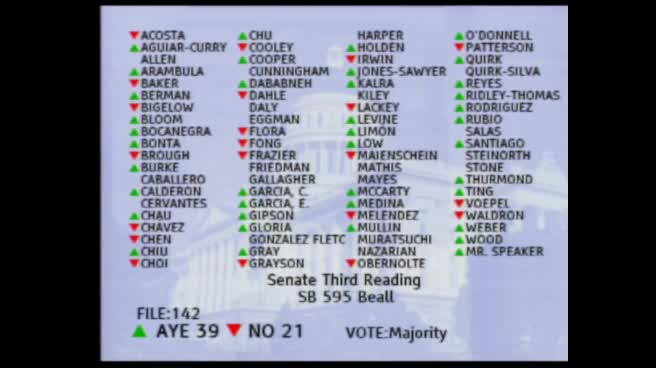 53SEC
Assembly Floor
 3MIN
Senate Floor
 1MIN
Senate Standing Committee on Transportation and Housing
 14MIN
Senate Standing Committee on Environmental Quality
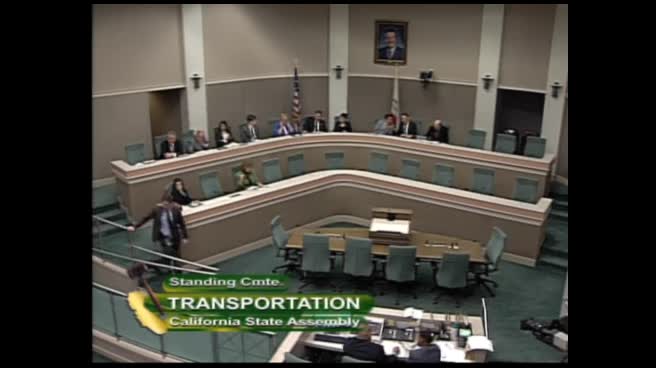 4MIN
Assembly Standing Committee on Transportation
Bill Author

Bill Co-Author(s):