AB 646: Rental property: disclosures: flood hazard areas: areas of potential flooding.
- Session Year: 2017-2018
- House: Assembly
- Latest Version Date: 2017-10-05
Existing law requires a person who is acting as an agent for a transferor of real property that is located within either a special flood hazard or an area of potential flooding, determined as provided, or the transferor if he or she is acting without an agent, to disclose to any prospective transferee the fact that the property located in a special flood hazard or an area of potential flooding if certain criteria are met.
This bill would require, for every lease or rental agreement for residential property entered into on or after July 1, 2018, the owner or person offering the property for rent to disclose to the tenant specified information pertaining to the risk of flooding. The bill would make findings and declarations in this regard.
Existing law requires a person who is acting as an agent for a transferor of real property that is located within either a special flood hazard or an area of potential flooding, determined as provided, or the transferor if he or she is acting without an agent, to disclose to any prospective transferee the fact that the property located in a special flood hazard or an area of potential flooding if certain criteria are met.
This bill would additionally require a person who offers for rental a residential dwelling unit that is located within either a special flood hazard or an area of potential flooding to provide written notice of that fact. The bill would make findings and declarations in this regard.This bill would require, for every lease or rental agreement for residential property entered into on or after July 1, 2018, the owner or person offering the property for rent to disclose to the tenant specified information pertaining to the risk of flooding. The bill would make findings and declarations in this regard.
Existing law requires a person who is acting as an agent for a transferor of real property that is located within either a special flood hazard or an area of potential flooding, determined as provided, or the transferor if he or she is acting without an agent, to disclose to any prospective transferee the fact that the property located in a special flood hazard or an area of potential flooding if certain criteria are met.
This bill would additionally require a person who offers for rental a residential dwelling unit that is located within either a special flood hazard or an area of potential flooding to provide written notice of that fact. The bill would make findings and declarations in this regard.
Existing law establishes various student financial aid programs to help cover the costs of postsecondary education.This bill would require the Chancellor of the California State University and the Chancellor of the California Community Colleges, and would request the President of the University of California and the President of the Association of Independent California Colleges and Universities, to collaboratively develop and provide recommendations to the Legislature, on or before June 1, 2018, on additional efforts the state can make to reduce the impact that rising higher education costs have on low-income students.Existing law establishes various student financial aid programs to help cover the costs of postsecondary education.
This bill would require the Chancellor of the California State University and the Chancellor of the California Community Colleges, and would request the President of the University of California and the President of the Association of Independent California Colleges and Universities, to collaboratively develop and provide recommendations to the Legislature, on or before June 1, 2018, on additional efforts the state can make to reduce the impact that rising higher education costs have on low-income students.
Existing law establishes various student financial aid programs that involve the making of loans to students to help cover the costs of postsecondary education.This bill would express the intent of the Legislature to enact legislation to help reduce the debt load that students face after graduating from Californias colleges and universities.Existing law establishes various student financial aid programs that involve the making of loans to students to help cover the costs of postsecondary education.
This bill would express the intent of the Legislature to enact legislation to help reduce the debt load that students face after graduating from Californias colleges and universities.
The Legislature finds and declares the following:
(a)In February 2017, several neighborhoods within the City of San Jose experienced severe flooding that forced the evacuation of 14,000 residents and caused significant damage to public and private property throughout the city. A number of communities and mobilehome parks along Coyote Creek were submerged when a series of storms brought heavy rain to the Coyote watershed that exceeded the capacities of both the Anderson Reservoir and Coyote Creek.
(b)The flood had significant impact on the communities along Coyote Creek in the City of San Jose, and tenants living within the neighborhoods that were impacted were not aware that the properties they rented are located within a special flood hazard area or an area of potential flooding.
(c)Sections 8589.3 and 8589.4 of the Government Code require a person acting as an agent for a transferor of real property, or the transferor if he or she is acting without an agent, who has actual knowledge that the property is located within a special flood hazard area or an area of potential flooding to disclose that fact to a prospective transferee.
(d)The disclosures required by this act are warranted solely by (1) the fact that residential rental properties located within an inundation area or an area of potential flooding is known by landlords and (2) the ability of a landlord to disclose this information for the safety of tenants.
SEC. 2.Section 8589.45 is added to the Government Code, immediately following Section 8589.4, to read:8589.45.(a)In every lease or rental agreement for residential property entered into on or after July 1, 2018, the owner or person offering the property for rent shall disclose to a tenant, in no smaller than eight-point type, the following:
(1)That the property is located in a special flood hazard area or an area of potential flooding, if the owner has actual knowledge of that fact. For purposes of this section, actual knowledge includes the following:
(A)The owner has received written notice from any public agency stating that the property is located in a special flood hazard area or an area of potential flooding.
(B)The property is located in an area in which the owners mortgage holder requires the owner to carry flood insurance.
(C)The owner currently carries flood insurance.
(2)That the tenant may obtain information about hazards, including flood hazards, that may affect the property from the Internet Web site of the Office of Emergency Services. The disclosure shall include the Internet Web site address for the MyHazards tool maintained by the office.
(3)That the owners insurance does not cover the loss of the tenants personal possessions and it is recommended that the tenant consider purchasing renters insurance and flood insurance to insure his or her possessions from loss due to fire, flood, or other risk of loss.
(4)That the owner is not required to provide additional information concerning the flood hazards to the property and that the information provided pursuant to this section is deemed adequate to inform the tenant.
(b)The disclosures required by this section are subject to the requirements of Section 1632 of the Civil Code.
(c)Section 1103.13 of the Civil Code shall apply to this section.The Legislature finds and declares the following:
(a)In February 2017, several neighborhoods within the City of San Jose experienced severe flooding that forced the evacuation of thousands of 14,000 residents and businesses and caused significant damage to public and private property throughout the city. A number of communities and mobilehome parks along Coyote Creek were submerged when Anderson Reservoir reached its capacity and began spilling into the creek. a series of storms brought heavy rain to the Coyote watershed that exceeded the capacities of both the Anderson Reservoir and Coyote Creek.
(b)The flood had significant impact on the communities along Coyote Creek in the City of San Jose, and people tenants living within the neighborhoods impacted were not notified aware that their property was the properties they rented are located within a special flood hazard area or an area of potential flooding.
(c)Sections 8589.3 and 8589.4 of the Government Code require a person acting as an agent for a transferor of real property, or the transferor if he or she is acting without an agent, who has actual knowledge that the property is located within a special flood hazard area or an area of potential flooding to disclose that fact to a prospective transferee.
(d)The disclosures required by this act are warranted solely by (1) the fact that residential rental properties located within an inundation area or an area of potential flooding is known by landlords and (2) the ability of a landlord to disclose this information for the safety of tenants.
SEC. 2.Section 8589.45 is added to the Government Code, immediately following Section 8589.4, to read:8589.45.(a)In every lease or rental agreement for residential property entered into on or after July 1, 2018, the owner or person offering the property for rent shall disclose to a tenant, in no smaller than eight-point type, the following:
(1)That the property is located in a special flood hazard area or an area of potential flooding, if the owner has actual knowledge of that fact. For purposes of this section, actual knowledge includes the following:
(A)The owner has received written notice from any public agency stating that the property is located in a special flood hazard area or an area of potential flooding.
(B)The property is located in an area in which the owners mortgage holder requires the owner to carry flood insurance.
(C)The owner currently carries flood insurance.
(2)That the tenant may obtain information about hazards, including flood hazards, that may affect the property from the Internet Web site of the Office of Emergency Services. The disclosure shall include the Internet Web site address for the MyHazards tool maintained by the office.
(3)That the owners insurance does not cover the loss of the tenants personal possessions and it is recommended that the tenant consider purchasing renters insurance and flood insurance to insure his or her possessions from loss due to fire, flood, or other risk of loss.
(4)That the owner is not required to provide additional information concerning the flood hazards to the property and that the information provided pursuant to this section is deemed adequate to inform the tenant.
(b)The disclosures required by this section are subject to the requirements of Section 1632 of the Civil Code.
(c)Section 1103.13 of the Civil Code shall apply to this section.
The Legislature finds and declares the following:
(a)In February 2017, several neighborhoods within the City of San Jose experienced severe flooding that forced the evacuation of thousands of residents and businesses and caused significant damage to public and private property throughout the city. A number of communities and mobilehome parks along Coyote Creek were submerged when Anderson Reservoir reached its capacity and began spilling into the creek.
(b)The flood had significant impact on the communities along Coyote Creek in the City of San Jose, and people living within the neighborhoods impacted were not notified that their property was located within a special flood hazard area or an area of potential flooding.
(c)Sections 8589.3 and 8589.4 of the Government Code require a person acting as an agent for a transferor of real property, or the transferor if he or she is acting without an agent, who has actual knowledge that the property is located within a special flood hazard area or an area of potential flooding to disclose that fact to a prospective transferee.
(d)The disclosures required by this act are warranted solely by (1) the fact that residential rental properties located within an inundation area or an area of potential flooding is known by landlords and (2) the ability of a landlord to disclose this information for the safety of tenants.
SEC. 2.Section 8589.3 of the Government Code is amended to read:8589.3.(a)(1)A person who is acting as an agent for a transferor of real property that is located within a special flood hazard area (any type Zone A or V) designated by the Federal Emergency Management Agency, or the transferor if he or she is acting without an agent, shall disclose to any prospective transferee the fact that the property is located within a special flood hazard area.(2)A person who offers for rental a residential dwelling unit that is located within a special flood hazard area (any type Zone A or V) designated by the Federal Emergency Management Agency shall provide written notice to a prospective tenant of the fact that the property is located within a special flood hazard area prior to execution of a rental agreement.(b)Disclosure is required pursuant to this section only when one of the following conditions is met:(1)The transferor, or the transferors agent, or the person offering for rental a residential dwelling unit, has actual knowledge that the property is within a special flood hazard area.(2)The local jurisdiction has compiled a list, by parcel, of properties that are within the special flood hazard area and a notice has been posted at the offices of the county recorder, county assessor, and county planning agency that identifies the location of the parcel list.(c)In all transactions that are subject to Section 1103 of the Civil Code, the disclosure required by subdivision (a) of this section shall be provided by either of the following means:(1)The Local Option Real Estate Disclosure Statement as provided in Section 1102.6a of the Civil Code.(2)The Natural Hazard Disclosure Statement as provided in Section 1103.2 of the Civil Code.(d)For purposes of the disclosure required by this section, the following persons shall not be deemed agents of the transferor:(1)Persons specified in Section 1103.11 of the Civil Code.(2)Persons acting under a power of sale regulated by Section 2924 of the Civil Code.(e)Section 1103.13 of the Civil Code shall apply to this section.(f)The specification of items for disclosure in this section does not limit or abridge any obligation for disclosure created by any other provision of law or that may exist in order to avoid fraud, misrepresentation, or deceit in the transfer transaction or the rental agreement.(g)A notice shall be posted at the offices of the county recorder, county assessor, and county planning agency that identifies the location of the special flood hazard area map, any relevant Letters of Map Revision from the Federal Emergency Management Agency, and any parcel list compiled by the local jurisdiction.SEC. 3.Section 8589.4 of the Government Code is amended to read:8589.4.(a)(1)A person who is acting as an agent for a transferor of real property that is located within an area of potential flooding shown on an inundation map designated pursuant to Section 8589.5, or the transferor if he or she is acting without an agent, shall disclose to any prospective transferee the fact that the property is located within an area of potential flooding.(2)A person who offers for rental a residential dwelling unit that is located within an area of potential flooding shown on an inundation map designated pursuant to Section 8589.5 shall provide written notice to a prospective tenant of the fact that the property is located within an area of potential flooding prior to execution of a rental agreement.(b)Disclosure is required pursuant to this section only when one of the following conditions is met:(1)The transferor, or the transferors agent, or the person offering for rental a residential dwelling unit, has actual knowledge that the property is within an inundation area.(2)The local jurisdiction has compiled a list, by parcel, of properties that are within the inundation area and a notice has been posted at the offices of the county recorder, county assessor, and county planning agency that identifies the location of the parcel list.(c)In all transactions that are subject to Section 1103 of the Civil Code, the disclosure required by subdivision (a) of this section shall be provided by either of the following means:(1)The Local Option Real Estate Disclosure Statement as provided in Section 1102.6a of the Civil Code.(2)The Natural Hazard Disclosure Statement as provided in Section 1103.2 of the Civil Code.(d)For purposes of the disclosure required by this section, the following persons shall not be deemed agents of the transferor:(1)Persons specified in Section 1103.11 of the Civil Code.(2)Persons acting under a power of sale regulated by Section 2924 of the Civil Code.(e)Section 1103.13 of the Civil Code shall apply to this section.(f)The specification of items for disclosure in this section does not limit or abridge any obligation for disclosure created by any other provision of law or that may exist in order to avoid fraud, misrepresentation, or deceit in the transfer transaction or rental agreement.SEC. 2.Section 8589.45 is added to the Government Code, immediately following Section 8589.4, to read:8589.45.(a)In every lease or rental agreement for residential property entered into on or after July 1, 2018, the owner or person offering the property for rent shall disclose to a tenant, in no smaller than eight-point type, the following:
(1)That the property is located in a special flood hazard area or an area of potential flooding, if the owner has actual knowledge of that fact. For purposes of this section, actual knowledge includes the following:
(A)The owner has received written notice from any public agency stating that the property is located in a special flood hazard area or an area of potential flooding.
(B)The property is located in an area in which the owners mortgage holder requires the owner to carry flood insurance.
(C)The owner currently carries flood insurance.
(2)That the tenant may obtain information about hazards, including flood hazards, that may affect the property from the Internet Web site of the Office of Emergency Services. The disclosure shall include the Internet Web site address for the MyHazards tool maintained by the office.
(3)That the owners insurance does not cover the loss of the tenants personal possessions and it is recommended that the tenant consider purchasing renters insurance and flood insurance to insure his or her possessions from loss due to fire, flood, or other risk of loss.
(4)That the owner is not required to provide additional information concerning the flood hazards to the property and that the information provided pursuant to this section is deemed adequate to inform the tenant.
(b)The disclosures required by this section are subject to the requirements of Section 1632 of the Civil Code.
(c)Section 1103.13 of the Civil Code shall apply to this section.
The Legislature finds and declares the following:
(a)In February 2017, several neighborhoods within the City of San Jose experienced severe flooding that forced the evacuation of thousands of residents and businesses and caused significant damage to public and private property throughout the city. A number of communities and mobilehome parks along Coyote Creek were submerged when Anderson Reservoir reached its capacity and began spilling into the creek.
(b)The flood had significant impact on the communities along Coyote Creek in the City of San Jose, and people living within the neighborhoods impacted were not notified that their property was located within a special flood hazard area or an area of potential flooding.
(c)Sections 8589.3 and 8589.4 of the Government Code require a person acting as an agent for a transferor of real property, or the transferor if he or she is acting without an agent, who has actual knowledge that the property is located within a special flood hazard area or an area of potential flooding to disclose that fact to a prospective transferee.
(d)The disclosures required by this act are warranted solely by (1) the fact that residential rental properties located within an inundation area or an area of potential flooding is known by landlords and (2) the ability of a landlord to disclose this information for the safety of tenants.
SEC. 2.Section 8589.3 of the Government Code is amended to read:8589.3.(a)(1)A person who is acting as an agent for a transferor of real property that is located within a special flood hazard area (any type Zone A or V) designated by the Federal Emergency Management Agency, or the transferor if he or she is acting without an agent, shall disclose to any prospective transferee the fact that the property is located within a special flood hazard area.
(2)A person who offers for rental a residential dwelling unit that is located within a special flood hazard area (any type Zone A or V) designated by the Federal Emergency Management Agency shall provide written notice to a prospective tenant of the fact that the property is located within a special flood hazard area prior to execution of a rental agreement.
(b)Disclosure is required pursuant to this section only when one of the following conditions is met:
(1)The transferor, or the transferors agent, or the person offering for rental a residential dwelling unit, has actual knowledge that the property is within a special flood hazard area.
(2)The local jurisdiction has compiled a list, by parcel, of properties that are within the special flood hazard area and a notice has been posted at the offices of the county recorder, county assessor, and county planning agency that identifies the location of the parcel list.
(c)In all transactions that are subject to Section 1103 of the Civil Code, the disclosure required by subdivision (a) of this section shall be provided by either of the following means:
(1)The Local Option Real Estate Disclosure Statement as provided in Section 1102.6a of the Civil Code.
(2)The Natural Hazard Disclosure Statement as provided in Section 1103.2 of the Civil Code.
(d)For purposes of the disclosure required by this section, the following persons shall not be deemed agents of the transferor:
(1)Persons specified in Section 1103.11 of the Civil Code.
(2)Persons acting under a power of sale regulated by Section 2924 of the Civil Code.
(e)Section 1103.13 of the Civil Code shall apply to this section.
(f)The specification of items for disclosure in this section does not limit or abridge any obligation for disclosure created by any other provision of law or that may exist in order to avoid fraud, misrepresentation, or deceit in the transfer transaction. transaction or the rental agreement.
(g)A notice shall be posted at the offices of the county recorder, county assessor, and county planning agency that identifies the location of the special flood hazard area map, any relevant Letters of Map Revision from the Federal Emergency Management Agency, and any parcel list compiled by the local jurisdiction.
SEC. 3.Section 8589.4 of the Government Code is amended to read:8589.4.(a)(1)A person who is acting as an agent for a transferor of real property that is located within an area of potential flooding shown on an inundation map designated pursuant to Section 8589.5, or the transferor if he or she is acting without an agent, shall disclose to any prospective transferee the fact that the property is located within an area of potential flooding.
(2)A person who offers for rental a residential dwelling unit that is located within an area of potential flooding shown on an inundation map designated pursuant to Section 8589.5 shall provide written notice to a prospective tenant of the fact that the property is located within an area of potential flooding prior to execution of a rental agreement.
(b)Disclosure is required pursuant to this section only when one of the following conditions is met:
(1)The transferor, or the transferors agent, or the person offering for rental a residential dwelling unit, has actual knowledge that the property is within an inundation area.
(2)The local jurisdiction has compiled a list, by parcel, of properties that are within the inundation area and a notice has been posted at the offices of the county recorder, county assessor, and county planning agency that identifies the location of the parcel list.
(c)In all transactions that are subject to Section 1103 of the Civil Code, the disclosure required by subdivision (a) of this section shall be provided by either of the following means:
(1)The Local Option Real Estate Disclosure Statement as provided in Section 1102.6a of the Civil Code.
(2)The Natural Hazard Disclosure Statement as provided in Section 1103.2 of the Civil Code.
(d)For purposes of the disclosure required by this section, the following persons shall not be deemed agents of the transferor:
(1)Persons specified in Section 1103.11 of the Civil Code.
(2)Persons acting under a power of sale regulated by Section 2924 of the Civil Code.
(e)Section 1103.13 of the Civil Code shall apply to this section.
(f)The specification of items for disclosure in this section does not limit or abridge any obligation for disclosure created by any other provision of law or that may exist in order to avoid fraud, misrepresentation, or deceit in the transfer transaction. transaction or rental agreement.
SECTION 1.The Legislature finds and declares all of the following:(a)The higher education debt load carried by college and university graduates is alarming and continues to grow.(b)College and university costs are becoming the single greatest factor of debt facing many low-income students.(c)For many low-income students at Californias colleges and universities, the struggle to pay for higher education costs exceed available student financial aid, including grants and loans, which requires many students to seek full-time work in addition to their full-time academic course schedules.(d)Exacerbating these challenges are recent statistics indicating that one out of every five college students face food insecurity and rely on community food banks to eat.(e)Further steps are needed to ensure that California is doing all that it can to provide necessary financial and services support for its students.SEC. 2.Section 69509.7 is added to the Education Code, to read:69509.7.The Chancellor of the California State University and the Chancellor of the California Community Colleges shall, and the President of the University of California and the President of the Association of Independent California Colleges and Universities are requested to, collaboratively develop and produce recommendations to the Legislature, on or before June 1, 2018, on additional efforts the state can make to reduce the impact that rising higher education costs have on low-income students.The Legislature finds and declares all of the following:
(a)The higher education debt load carried by college and university graduates is alarming and continues to grow.
(b)College and university costs are becoming the single greatest factor of debt facing many low-income students.
(c)For many low-income students at Californias colleges and universities, the struggle to pay for higher education costs exceed available student financial aid, including grants and loans, which requires many students to seek full-time work in addition to their full-time academic course schedules.
(d)Exacerbating these challenges are recent statistics indicating that one out of every five college students face food insecurity and rely on community food banks to eat.
(e)Further steps are needed to ensure that California is doing all that it can to provide necessary financial and services support for its students.
SEC. 2.Section 69509.7 is added to the Education Code, to read:69509.7.The Chancellor of the California State University and the Chancellor of the California Community Colleges shall, and the President of the University of California and the President of the Association of Independent California Colleges and Universities are requested to, collaboratively develop and produce recommendations to the Legislature, on or before June 1, 2018, on additional efforts the state can make to reduce the impact that rising higher education costs have on low-income students.
SECTION 1.It is the intent of the Legislature to enact legislation to help reduce the debt load that students face after graduating from Californias colleges and universities.It is the intent of the Legislature to enact legislation to help reduce the debt load that students face after graduating from Californias colleges and universities.
|
Date
|
Status
|
|---|---|
| Oct 5, 2017 | Chaptered by Secretary of State - Chapter 502, Statutes of 2017. |
| Oct 5, 2017 | Approved by the Governor. |
| Sep 19, 2017 | Enrolled and presented to the Governor at 3 p.m. |
| Sep 11, 2017 | Senate amendments concurred in. To Engrossing and Enrolling. |
| Sep 7, 2017 | In Assembly. Concurrence in Senate amendments pending. May be considered on or after September 9 pursuant to Assembly Rule 77. |
| Sep 7, 2017 | Read third time. Passed. Ordered to the Assembly. |
| Sep 5, 2017 | Read second time. Ordered to third reading. |
| Sep 1, 2017 | From committee: Amend, and do pass as amended. (Ayes 7. Noes 0.) (September 1). |
| Aug 21, 2017 | In committee: Referred to APPR. suspense file. |
| Jul 19, 2017 | From committee: Do pass and re-refer to Com. on APPR. (Ayes 7. Noes 0.) (July 18). Re-referred to Com. on APPR. |
| Jul 3, 2017 | From committee chair, with author's amendments: Amend, and re-refer to committee. Read second time, amended, and re-referred to Com. on JUD. |
| Jun 14, 2017 | Referred to Coms. on JUD. and APPR. |
| Jun 5, 2017 | In Senate. Read first time. To Com. on RLS. for assignment. |
| Jun 1, 2017 | Assembly Rule 69(d) suspended. (Ayes 50. Noes 24. Page 2080.) |
| May 31, 2017 | Read third time and amended. Ordered to third reading. (Page 1886.) |
| May 10, 2017 | Read second time. Ordered to third reading. |
| May 9, 2017 | From committee: Do pass. (Ayes 10. Noes 1.) (May 9). |
| May 1, 2017 | From committee: Be re-referred to Com. on JUD. Re-referred. (Ayes 10. Noes 0.) (May 1). Re-referred to Com. on JUD. |
| Apr 27, 2017 | Re-referred to Com. on RLS. pursuant to Assembly Rule 96. |
| Apr 26, 2017 | Re-referred to Com. on HIGHER ED. |
| Apr 25, 2017 | From committee chair, with author's amendments: Amend, and re-refer to Com. on HIGHER ED. Read second time and amended. |
| Mar 27, 2017 | Re-referred to Com. on HIGHER ED. |
| Mar 23, 2017 | From committee chair, with author's amendments: Amend, and re-refer to Com. on HIGHER ED. Read second time and amended. |
| Mar 23, 2017 | Referred to Com. on HIGHER ED. |
| Feb 15, 2017 | From printer. May be heard in committee March 17. |
| Feb 14, 2017 | Read first time. To print. |
|
Date
|
Description
|
Location
|
Votes
|
|
|---|---|---|---|---|
| Sep 11, 2017 | AB 646 KALRA Concurrence in Senate Amendments | Assembly Floor |
Passed |
|
| Sep 7, 2017 | Assembly 3rd Reading AB646 Kalra et al. By Beall | Senate Floor |
Passed |
|
| Sep 1, 2017 | Do pass as amended | Senate Standing Committee on Appropriations |
Passed |
|
| Aug 21, 2017 | Placed on suspense file | Senate Standing Committee on Appropriations |
Passed |
|
| Jul 18, 2017 | Do pass, but first be re-referred to the Committee on [Appropriations] | Senate Standing Committee on Judiciary |
Passed |
|
| Jun 1, 2017 | AB 646 KALRA Assembly Third Reading | Assembly Floor |
Passed |
|
| May 9, 2017 | Do pass. | Assembly Standing Committee on Judiciary |
Passed |
|
| May 1, 2017 | Be re-referred to the Committee on [Judiciary] | Assembly Standing Committee on Rules |
Passed |
This list shows positions taken on this bill by organizations on the date displayed, which is linked to the original source.
Positions by individuals are not included.
|
Organization
|
Position
|
Date
|
|---|---|---|
| 319-2334 | ** Against | May 7, 2017 |
| AIDS Legal Referral Panel | ** Support | Sep 5, 2017 |
| Apartment Association Of Orange County | ** Against | May 7, 2017 |
| Apartment Association, California Southern Cities | ** Against | May 7, 2017 |
| Association Of California Insurance Companies | ** Support | Sep 5, 2017 |
| Bay Area Legal Aid; City Of San Jose | ** Support | Sep 5, 2017 |
| California Apartment Association | ** Against | May 7, 2017 |
| California Association Of Realtors | ** Against | May 7, 2017 |
| City of San Jose | * Support | May 9, 2017 |
| East Bay Rental Housing Association | ** Against | May 7, 2017 |
| JUD. | ** Against | May 7, 2017 |
| Leadership Counsel for Justice and Accountability | ** Support | Sep 5, 2017 |
| Legal Aid Foundation of Los Angeles | ** Support | Sep 5, 2017 |
| National Housing Law Project | ** Support | Sep 5, 2017 |
| North Valley Property Owners Association | ** Against | May 7, 2017 |
| Pacific Association Of Domestic Insurers Companies | ** Support | Sep 5, 2017 |
| Personal Insurance Federation Of California; | ** Support | Sep 5, 2017 |
| Santa Clara Valley Water District | ** Support | Sep 5, 2017 |
| Tenants Together | ** Support | Sep 5, 2017 |
| Unless Amended | ** Against | May 7, 2017 |
CONCURRENCE IN SENATE AMENDMENTS
CSA1 Bill Id:AB 646
Author:(Kalra)
As Amended Ver:September 1, 2017
Majority vote
ASSEMBLY: | 65-7 | (June 1, 2017) | SENATE: | 40-0 | (September 7, 2017) |
Original Committee Reference: HIGHER ED.
SUMMARY: Requires landlords to make specified disclosures to tenants in every lease or rental agreement entered into on or after July 1, 2018, including that the rental property is located in a flood hazard area if actually known to the landlord. Specifically, this bill:
- Requires a landlord to disclose to a tenant in every lease or rental agreement entered into on or after July 1, 2018 that the property is located in a flood zone, if the landlord has actual knowledge of this fact. For purposes of this section, "actual knowledge" includes, but is not limited to, the following:
- The owner has received written notice from any public agency stating that the property is located in a special flood hazard area or an area of potential flooding.
- The property is located in an area in which the owner's mortgage holder requires the owner to carry flood insurance.
- The owner currently carries flood insurance.
- Require a landlord to additionally disclose to a tenant in every lease or rental agreement, on or after July 1, 2018, the following information:
- That the tenant may obtain information about hazards, including flood hazards, from a specified website maintained by the Office of Emergency Services.
- That the tenant should consider purchasing renter's insurance or flood insurance to insure his or her possessions from loss because the landlord's insurance does not cover such loss.
- That the landlord is not required to provide additional information concerning flood hazards to the property and that the information provided by this bill is deemed adequate to inform the tenant.
- Provide that the above disclosures are subject to the requirements of Civil Code Section 1632, which requires translation of the notice into Spanish, Chinese, Tagalog, Vietnamese, or Korean if the lease or rental agreement was negotiated primarily in one of those languages.
- Makes Legislative findings and declarations about the severe flooding experienced in San Jose in February 2017 that forced the evacuation of thousands of people.
The Senate amendments:
- Delete provisions that make the above disclosures subject to the liability provisions contained in Civil Code Section 1103.13, which would have limited liability for failure to disclose to actual damages if a tenant were to claim a willful or negligent violation of the statute, or breach of the duty to disclose.
- Revise Legislative findings and declarations, and add co-authors.
FISCAL EFFECT: According to the Senate Appropriations Committee, no state fiscal impact.
COMMENTS: In February 2017, several San Jose neighborhoods experienced severe flooding that forced the evacuation of 14,000 residents and caused significant damage to public and private property throughout the city. A number of communities and mobile home parks along Coyote Creek were submerged when a series of storms brought heavy rain to the Coyote watershed that exceeded the capacities of both the Anderson Reservoir and Coyote Creek. The worst flooding in the San Jose area in more than a century flooded hundreds of homes and forced the evacuation of more than 14,000 residents. (Veronica Rocha, et al. "Hit by worst floods in a century, San Jose got little warning of impending disaster." Los Angeles Times, Feb. 22, 2017. Available at: http://www.latimes.com/local/lanow/la-me-ln-san-jose-floods-20170222-story.html).
According to the author, whose Assembly district was heavily impacted by the flood:
AB 646 would require that a landlord of a residential dwelling unit who has knowledge of properties located in special flood hazard areas, as designated by the Federal Emergency Management Agency, or located within areas of potential flooding shall give written notice to a prospective tenant of that knowledge prior to the execution of a rental agreement . . . Prior to experiencing flooding, tenants are oftentimes not aware if a property was prone to flooding or had experienced flooding prior to their lease of the property. Providing for the disclosure of this information to prospective tenants will help to ensure that they are aware of the threat of potential flooding and can make informed decisions as to whether to acquire flood insurance.
Background on flood hazard areas. The Federal Emergency Management Agency (FEMA) creates and maintains Flood Insurance Rate Maps (FIRMs), which show the different flood hazard areas for a community, including high-hazard (Special Flood Hazard Areas), moderate to low-hazard, and undetermined areas. Updates to FIRMs are regulatory in nature, and generally go through a public review and appeal process before being adopted as a regulatory FIRM. (Ibid.) Depending on the type of update, it can be several months to over a year for any update to the FIRM to be adopted and become effective. (Ibid.)
Existing California law requires a person who is acting as an agent for a transferor of real property that is located within a special flood hazard area (any type Zone "A" or "V") designated by the Federal Emergency Management Agency, or the transferor if he or she is acting without an agent, to disclose to any prospective transferee the fact that the property is located within a special flood hazard area. Existing law also requires a person who is acting as an agent for a transferor of real property that is located within an area of potential flooding shown on an inundation map (designated pursuant to Government (Gov.) Code Section 8589.5), or the transferor if he or she is acting without an agent, to disclose to any prospective transferee the fact that the property is located within an area of potential flooding.
Disclosure requirements. According to the author, "Per Gov. Code Sections 8589.3 and 8589.4, a person who is acting as an agent for a transferor of real property has actual knowledge that his or her property is located in a special flood hazard area or located within an area of potential flooding. Therefore, landlords have the ability to disclose this information for the safety and well-being of tenants and protection of real and personal property." This bill requires a landlord to disclose to a tenant in every lease or rental agreement, on or after July 1, 2018, that the property is located in a flood zone, if the landlord has actual knowledge of this fact. Under this bill, "actual knowledge" may include, but is not limited to, situations where, for example: 1) the owner has received written notice from any public agency stating that the property is located in a special flood hazard area or an area of potential flooding; 2) the property is located in an area in which the owner's mortgage holder requires the owner to carry flood insurance; or 3) the owner currently carries flood insurance.
In addition, the bill requires a landlord to additionally disclose to tenants in every lease or rental agreement, on or after July 1, 2018, the following information: 1) that the tenant may obtain information about hazards, including flood hazards, from a specified website maintained by the Office of Emergency Services; 2) that the tenant should consider purchasing renter's insurance or flood insurance to insure his or her possessions from loss because the landlord's insurance does not cover such loss; and 3) that the landlord is not required to provide additional information concerning flood hazards to the property and that the information provided by this bill is deemed adequate to inform the tenant.
Liability for non-disclosure. With respect to liability for failure to disclose, Senate amendments to the bill strike language that would have made the disclosures required by this bill subject to the liability provisions contained in Civil Code Section 1103.13. Civil Code Section 1103.13 states "(A)ny person who willfully or negligently violates or fails to perform any duty prescribed by any provision of this article shall be liable in the amount of actual damages suffered by a transferee." Accordingly, as amended, the bill no longer specifically provides for recovery of actual damages if a tenant were to claim a willful or negligent violation of the statute or a breach of the duty to disclose.
Translation requirements. Finally, the disclosures required under this bill are subject to Civil Code Section 1632, thus requiring their translation into Spanish, Chinese, Tagalog, Vietnamese, or Korean if the lease or rental agreement was negotiated primarily in one of those languages.
Analysis Prepared by: Anthony Lew / JUD. / (916) 319-2334 FN: 0001804
Office of Senate Floor Analyses (916) 651-1520 Fax: (916) 327-4478 | AB |
THIRD READING
Bill No: AB 646
:
SENATE JUDICIARY COMMITTEE: 7-0, 7/18/17
AYES: Jackson, Moorlach, Anderson, Hertzberg, Monning, Stern, Wieckowski
SENATE APPROPRIATIONS COMMITTEE: 7-0, 9/1/17
AYES: Lara, Bates, Beall, Bradford, Hill, Nielsen, Wiener
ASSEMBLY FLOOR: 65-7, 6/1/17 - See last page for vote
DIGEST:
This bill requires all leases or rental agreements to contain a notice that the property is located in a special flood hazard area or an area of potential flooding, if the landlord has actual knowledge, as defined, that the rental property is so located. In addition this bill requires all leases and rental agreements to inform tenants about the availability of hazard information from the Department of Emergency Services and to advise tenants to consider obtaining flood and renters’ insurance, since the landlord’s insurance will not cover the tenant’s personal property in the event it is lost at the result of a natural hazard.
Existing law:
- Requires a person who is acting as an agent for a transferor of real property that is located within a special flood hazard area (any type Zone “A” or “V”) designated by the Federal Emergency Management Agency, or the transferor if he or she is acting without an agent, to disclose to any prospective transferee the fact that the property is located within a special flood hazard area. (Gov. Code Sec. 8589.3(a).)
- Requires person who is acting as an agent for a transferor of real property that is located within an area of potential flooding shown on a designated inundation map, or the transferor if he or she is acting without an agent, to disclose to any prospective transferee the fact that the property is located within an area of potential flooding. (Gov. Code Sec. 8589.4(a).)
- Provides that these flood hazard disclosures in the property sales context are only required when one of the following conditions is met: (a) the transferor, or the transferor’s agent, has actual knowledge that the property is within a special flood hazard area or inundation area, respectively; (b) the local jurisdiction has compiled a list, by parcel, of properties that are within the special flood hazard area or inundation area, respectively, and a notice has been posted at the offices of the county recorder, county assessor, and county planning agency that identifies the location of the parcel list. (Gov. Code Secs. 8589.3(b) and 8589.4(b).)
- Requires landlords to make various disclosures to tenants or prospective tenants about potential health and safety hazards associated with their rental property. (See, e.g. Civ. Code 2079.10a (potential presence of sex offenders nearby); Civ. Code Sec. 1940.79(b) (former federal or state ordnance locations nearby); Health & Saf. Code Sec. 26147 (toxic mold); Civ. Code Sec. 1940.8 (pest control services); and Civ. Code Sec. 1947.5 (no smoking policy).)
This bill:
- Requires a landlord to disclose to a tenant in every lease or rental agreement entered into on or after July 1, 2018, that the property is located in a flood zone, if the landlord has actual knowledge of this fact.
- Defines “actual knowledge” for purposes of the bill, to include: (a) the owner has received written notice from any public agency stating that the property is located in a special flood hazard area or an area of potential flooding; (b) the property is located in an area in which the owner’s mortgage holder requires the owner to carry flood insurance; (c) the owner currently carries flood insurance.
- Requires all landlords, on or after July 1, 2018, to notify tenants that: (a) the tenant may obtain information about hazards, including flood hazards, from a specified Web site maintained by the Office of Emergency Services; (b) the landlord’s insurance does not cover the tenant’s personal possessions from loss because the landlord’s insurance does not cover such loss; and (c) it is recommended that the tenant consider purchasing renter's insurance and flood insurance.
- Establishes that the landlord is not required to provide additional information concerning flood hazards to the property and that the information provided by this bill is deemed adequate to inform the tenant.
- Provides that the required notifications are subject to the requirements of Civil Code Section 1632, which mandates translation of the notice into Spanish, Chinese, Tagalog, Vietnamese, or Korean if the lease or rental agreement was negotiated primarily in one of those languages.
- Makes legislative findings and declarations about the severe flooding experienced in San Jose in February 2017 that forced the evacuation of thousands of people.
After years of drought, repeated storm systems dumped record-breaking quantities of water on California this past winter. Areas of the state that are naturally prone to flooding, but that had not experienced problems for years, suddenly found themselves underwater. The situation caught many residents by surprise; they were unprepared and unprotected by insurance. As a result, they lost significant personal property and had little means with which to replace it. In a textbook example of environmental injustice, the people living in the flood zones were often low-income, disproportionately immigrant, and frequently renters.
The City of San José’s experience is emblematic. In February 2017, Coyote Creek, overflowed, displacing some 14,000 residents and causing an estimated $73 million in damage. The impact was especially acute for particular populations. As San José City Manager Norberto Dueñas describes it:
The flood displaced an entire neighborhood of low-income residents living in rent-controlled apartments. The neighborhood of Rock Springs was home to over 800 lower-income renters. Many of the Rock Springs residents speak only Spanish or Vietnamese; many are first-generation immigrants who work hard to make Silicon Valley the economic engine that it is. Three mobilehome parks were completely evacuated, with homes in two of them sustaining water damages. A significant portion of the William Street, Olinder and Brookwood Terrace neighborhoods were evacuated and many homes remain uninhabited.
While the storm may have had natural causes, many of the challenges that came in the aftermath were distinctly manmade. As Dueñas continues:
Following the flood, it was apparent from our work in these neighborhoods that many tenants were not aware that they were living in a flood plain. They were not aware of the need for, or benefits of, renters’ insurance. Similarly, many property owners were not aware of the need for flood insurance and many others were underinsured.
San José’s experience suggests that at least some of the calamity could have been mitigated through greater awareness. Had these renters been informed that the location of their homes put them at higher risk of flooding, some might have chosen to live elsewhere. Others might have elected to obtain insurance coverage as a hedge against the risk they faced.
This bill seeks to assure greater risk awareness among tenants by requiring landlords to notify the tenants when the landlord knows the rental property is in a floodplain. This bill further requires notification of all tenants that a landlord’s insurance policy does not cover them against all hazards, that for that reason they may wish to consider obtaining flood and renters’ insurance, and that more information about specific hazards in their area is available to them online through the Department of Emergency Services.
Comments
Where the notification requirement applies
This bill is structured such that different notification requirements apply to different circumstances. Landlords would only have to provide notification that the property is located in a flood zone if the landlord has actual knowledge that that is the case. The remaining notifications appear to apply to all residential tenancies, whether the property is located in a flood zone or not.
Language access requirements
The notice envisioned by this bill, like all parts of a California rental agreement or lease, would be subject to the state’s consumer language access law (Civ. Code Sec. 1632(b)(3).) That law requires that if a lease or rental agreement is negotiated primarily in Spanish, Chinese, Tagalog, Vietnamese, or Korean, whether orally or in writing, the landlord must deliver a complete translation of the lease or rental agreement in the language in which the contract or agreement was negotiated, prior to executing it. If the landlord fails to comply with these requirements, the tenant is entitled to rescind the lease or rental agreement at any time. (Civ. Code Sec. 1632(k).)
FISCAL EFFECT: Appropriation: Fiscal Com.: Local:
According to the Senate Appropriations Committee, this bill has no state fiscal impact.
AIDS Legal Referral Panel
Association of California Insurance Companies
Bay Area Legal Aid; City of San José
Leadership Counsel for Justice and Accountability
Legal Aid Foundation of Los Angeles
National Housing Law Project
Pacific Association of Domestic Insurers Companies
Personal Insurance Federation of California;
Santa Clara Valley Water District
Tenants Together
None received
ARGUMENTS IN SUPPORT: According to the author:
The purpose of AB 646 is to provide full disclosure to unsuspecting tenants from the risk and fear of the damages and disruption of lives that result from the flooding of residential property. Prior to experiencing flooding, tenants are oftentimes not aware if a property was prone to flooding or had experienced flooding prior to their lease of the property.
Providing for the disclosure of this information to prospective tenants will help to ensure that they are aware of the threat of potential flooding and can make informed decisions as to whether to acquire flood insurance. It would also benefit the property owner by potentially protecting against liability for providing full disclosure.
In support, the City of San José writes:
AB 646 would require the disclosure about potential flood risk to prospective tenants. This information would help ensure that tenants, as well as homebuyers, are aware of the threat of potential flooding and allow them to decide whether to acquire flood or renters’ insurance. Such advance disclosures would help them to make informed decisions about the need for insurance, and it would also benefit property owners by potentially protecting them against liability claims.
In further support, the Legal Aid Foundation of Los Angeles (LAFLA) writes:
LAFLA has been witness to the deep disruption a disaster can wreak on the lives of our low-income client population After the 1992 Northridge earthquake, LAFLA assisted many low-income residents of Los Angeles who were displaced by that disaster […] LAFLA supports notification to tenants of unique risks which may be posed in connection with their housing. This is consistent with public policy and such notifications are already required in many instances with regard to other potential risks.
ASSEMBLY FLOOR: 65-7, 6/1/17
AYES: Acosta, Aguiar-Curry, Baker, Berman, Bloom, Bocanegra, Bonta, Brough, Burke, Caballero, Calderon, Cervantes, Chau, Chen, Chiu, Chu, Cooley, Cooper, Cunningham, Dababneh, Daly, Eggman, Frazier, Friedman, Cristina Garcia, Eduardo Garcia, Gipson, Gloria, Gomez, Gonzalez Fletcher, Gray, Grayson, Holden, Irwin, Jones-Sawyer, Kalra, Kiley, Lackey, Levine, Limón, Low, Maienschein, Mathis, McCarty, Medina, Melendez, Mullin, Muratsuchi, Nazarian, Quirk, Quirk-Silva, Reyes, Rodriguez, Rubio, Salas, Santiago, Steinorth, Mark Stone, Thurmond, Ting, Voepel, Waldron, Weber, Wood, Rendon
NOES: Travis Allen, Arambula, Bigelow, Chávez, Harper, Obernolte, Patterson
NO VOTE RECORDED: Choi, Dahle, Flora, Fong, Gallagher, Mayes, O'Donnell, Ridley-Thomas
9/5/17 9:41:29
**** END ****
SENATE COMMITTEE ON
Senator Ricardo Lara, Chair
2017 - 2018 Regular Session
AB 646 (Kalra) - Rental property: disclosures: flood hazard areas: areas of potential flooding
Version: | Policy Vote: |
Urgency: | Mandate: |
Hearing Date: | Consultant: |
Bill Summary:
AB 646 would require every residential property lease or rental agreements to contain a disclosure to the tenant of specified information related to the risk of flooding.
*********** ANALYSIS ADDENDUM – SUSPENSE FILE ***********
The following information is revised to reflect amendments
adopted by the committee on September 1, 2017
Fiscal Impact:
No state fiscal impact.
Author Amendments:
Add coauthors.
Committee Amendments:
Remove civil penalty provision.
-- END --
SENATE COMMITTEE ON
Senator Ricardo Lara, Chair
2017 - 2018 Regular Session
AB 646 (Kalra) - Rental property: disclosures: flood hazard areas: areas of potential flooding
Version: | Policy Vote: |
Urgency: | Mandate: |
Hearing Date: | Consultant: |
This bill meets the criteria for referral to the Suspense File.
Bill Summary:
AB 646 would require every residential property lease or rental agreements to contain a disclosure to the tenant of specified information related to the risk of flooding and would hold a landlord liable for the amount of actual damages suffered by the renter for willfully or negligently not providing the disclosure.
Fiscal Impact:
Unknown, potentially-significant cost pressures (General Fund*) to the court to adjudicate lawsuits filed for not providing the disclosure, as specified, that otherwise would not have been filed absent the ability to seek damages provided by this bill.
*Trial Court Trust Fund
Background:
Existing law requires a person who is acting as an agent for a transferor of real property that is located within either a special flood hazard or an area of potential flooding, determined as provided, or the transferor if he or she is acting without an agent, to disclose to any prospective transferee the fact that the property located in a special flood hazard or an area of potential flooding if certain criteria are met. Failure to disclosure this information, if it was done willfully or negligently, would subject the entity responsible for providing the disclosure to liability in the amount of the actual damages suffered by the transferee.
Proposed Law:
This bill would require, for every lease or rental agreement for residential property entered into on or after July 1, 2018, the owner or person offering the property for rent to disclose to the tenant specified information pertaining to the risk of flooding. The disclosure would be required only if the property is located in a special flood hazard area or an area of potential flooding and only if the owner has actual knowledge of that fact. It would provide that the owner has actual knowledge of the flood area designation or that the property is in an area of potential flooding if he or she received written notice that the property is located in such an area, the property is located in an area in which the owner’s mortgage holder requires the owner to carry flood insurance, or if the owner currently carries flood insurance.
This bill would specify that failure to provide the disclosure would not invalidate a lease or rental agreement but that the landlord who negligently or willfully does not make the disclosure would be liable for the amount of actual damages suffered by a renter.
Staff Comments:
The remedy created by this bill for a renter who has been harmed by his or her landlord’s willful or negligent failure to disclose the required information is the ability to seek the actual amount of damages suffered. With respect to flooding, the amount of damages that could result varies widely depending on multiple factors. According to the analysis of this bill by the Senate Committee on Judiciary, Coyote Creek overflowed in February 2017, resulting in the displacement of about 14,000 residents and causing an estimated $73 million in damage. It costs about $7,010 to operate a courtroom for one day. So if the remedy created by AB 646 leads to more than seven new cases, or one complex case that took longer than seven days (e.g., a class action lawsuit against a well-resourced defendant), that otherwise could not have been filed absent this measure, the cost pressures of this bill to the court would surpass the Suspense File threshold. The fiscal impact of this bill, however, cannot be known with certainty, as the actual impact will be dependent on numerous factors, including, but not limited to, the frequency with which the disclosure is not made, the complexity of alleged violations, if parties settle matters prior to litigation, and the factors unique to each case.
-- END --
Senator Hannah-Beth Jackson, Chair
2017-2018 Regular Session
Bill No: AB 646 (Author:Kalra)
Version: July 3, 2017
Hearing Date: July 18, 2017
Fiscal: No
Urgency: No
Consultant: TSG
SUBJECT
Rental property: disclosures: flood hazard areas: areas of potential flooding
DESCRIPTION
This bill would require all leases or rental agreements to contain a notice that the property is located in a special flood hazard area or an area of potential flooding, if the landlord has actual knowledge, as defined, that the rental property is so located. In addition the bill would require all leases and rental agreements to inform tenants about the availability of hazard information from the Department of Emergency Services and to advise tenants to consider obtaining flood and renters’ insurance, since the landlord’s insurance will not cover the tenant’s personal property in the event it is lost at the result of a natural hazard.
BACKGROUND
After years of drought, repeated storm systems dumped record-breaking quantities of water on California this past winter. Areas of the state that are naturally prone to flooding, but that had not experienced problems for years, suddenly found themselves underwater. The situation caught many residents by surprise; they were unprepared and unprotected by insurance. As a result, they lost significant personal property and had little means with which to replace it. In a textbook example of environmental injustice, the people living in the flood zones were often low-income, disproportionately immigrant, and frequently renters.
The City of San José’s experience is emblematic. In February 2017, Coyote Creek, overflowed, displacing some 14,000 residents and causing an estimated $73 million in damage. The impact was especially acute for particular populations. As San José City Manager Norberto Dueñas describes it:
The flood displaced an entire neighborhood of low-income residents living in rent-controlled apartments. The neighborhood of Rock Springs was home to over 800 lower-income renters. Many of the Rock Springs residents speak only Spanish or Vietnamese; many are first-generation immigrants who work hard to make Silicon Valley the economic engine that it is. Three mobilehome parks were completely evacuated, with homes in two of them sustaining water damages. A significant portion of the William Street, Olinder and Brookwood Terrace neighborhoods were evacuated and many homes remain uninhabited.
While the storm may have had natural causes, many of the challenges that came in the aftermath were distinctly manmade. As Dueñas continues:
Following the flood, it was apparent from our work in these neighborhoods that many tenants were not aware that they were living in a flood plain. They were not aware of the need for, or benefits of, renters’ insurance. Similarly, many property owners were not aware of the need for flood insurance and many others were underinsured.
San José’s experience suggests that at least some of the calamity could have been mitigated through greater awareness. Had these renters been informed that the location of their homes put them at higher risk of flooding, some might have chosen to live elsewhere. Others might have elected to obtain insurance coverage as a hedge against the risk they faced.
This bill seeks to assure greater risk awareness among tenants by requiring landlords to notify the tenants when the landlord knows the rental property is in a floodplain. The bill further requires notification of all tenants that a landlord’s insurance policy does not cover them against all hazards, that for that reason they may wish to consider obtaining flood and renters’ insurance, and that more information about specific hazards in their area is available to them online through the Department of Emergency Services.
CHANGES TO EXISTING LAW
Existing law requires a person who is acting as an agent for a transferor of real property that is located within a special flood hazard area (any type Zone “A” or “V”) designated by the Federal Emergency Management Agency, or the transferor if he or she is acting without an agent, to disclose to any prospective transferee the fact that the property is located within a special flood hazard area. (Gov. Code Sec. 8589.3(a).)
Existing law requires person who is acting as an agent for a transferor of real property that is located within an area of potential flooding shown on a designated inundation map, or the transferor if he or she is acting without an agent, to disclose to any prospective transferee the fact that the property is located within an area of potential flooding. (Gov. Code Sec. 8589.4(a).)
Existing law provides that these flood hazard disclosures in the property sales context are only required when one of the following conditions is met: (a) the transferor, or the transferor’s agent, has actual knowledge that the property is within a special flood hazard area or inundation area, respectively; (b) the local jurisdiction has compiled a list, by parcel, of properties that are within the special flood hazard area or inundation area, respectively, and a notice has been posted at the offices of the county recorder, county assessor, and county planning agency that identifies the location of the parcel list. (Gov. Code Secs. 8589.3(b) and 8589.4(b).)
Existing law requires landlords to make various disclosures to tenants or prospective tenants about potential health and safety hazards associated with their rental property. (See, e.g. Civ. Code 2079.10a (potential presence of sex offenders nearby); Civ. Code Sec. 1940.79(b) (former federal or state ordnance locations nearby); Health & Saf. Code Sec. 26147 (toxic mold); Civ. Code Sec. 1940.8 (pest control services); and Civ. Code Sec. 1947.5 (no smoking policy).)
This bill would require a landlord to disclose to a tenant in every lease or rental agreement entered into on or after July 1, 2018, that the property is located in a flood zone, if the landlord has actual knowledge of this fact.
This bill would define “actual knowledge”for purposes of the bill, to include: (a) the owner has received written notice from any public agency stating that the property is located in a special flood hazard area or an area of potential flooding; (b) the property is located in an area in which the owner’s mortgage holder requires the owner to carry flood insurance; (c) the owner currently carries flood insurance.
This bill would also require all landlords, on or after July 1, 2018, to notify tenants that: (a) the tenant may obtain information about hazards, including flood hazards, from a specified Web site maintained by the Office of Emergency Services; (b) the landlord’s insurance does not cover the tenant’s personal possessions from loss because the landlord’s insurance does not cover such loss; and (c) it is recommended that the tenant consider purchasing renter's insurance and flood insurance.
This bill would establish that the landlord is not required to provide additional information concerning flood hazards to the property and that the information provided by this bill is deemed adequate to inform the tenant.
This bill would provide that required notifications are subject to the requirements of Civil Code Section 1632, which requires translation of the notice into Spanish, Chinese, Tagalog, Vietnamese, or Korean if the lease or rental agreement was negotiated primarily in one of those languages.
This bill would provide that the required notifications are subject to the liability provisions contained in Civil Code Section 1103.13, which indicates that liability for failure to disclose is limited to actual damages if a tenant were to claim a willful or negligent violation of the statute, or breach of the duty to disclose.
This bill would make Legislative findings and declarations about the severe flooding experienced in San Jose in February 2017 that forced the evacuation of thousands of people.
COMMENT
1. Stated need for the bill
According to the author:
The purpose of AB 646 is to provide full disclosure to unsuspecting tenants from the risk and fear of the damages and disruption of lives that result from the flooding of residential property. Prior to experiencing flooding, tenants are oftentimes not aware if a property was prone to flooding or had experienced flooding prior to their lease of the property.
Providing for the disclosure of this information to prospective tenants will help to ensure that they are aware of the threat of potential flooding and can make informed decisions as to whether to acquire flood insurance. It would also benefit the property owner by potentially protecting against liability for providing full disclosure.
In support, the City of San José writes:
AB 646 would require the disclosure about potential flood risk to prospective tenants. This information would help ensure that tenants, as well as homebuyers, are aware of the threat of potential flooding and allow them to decide whether to acquire flood or renters’ insurance. Such advance disclosures would help them to make informed decisions about the need for insurance, and it would also benefit property owners by potentially protecting them against liability claims.
In further support, the Legal Aid Foundation of Los Angeles (LAFLA) writes:
LAFLA has been witness to the deep disruption a disaster can wreak on the lives of our low-income client population After the 1992 Northridge earthquake, LAFLA assisted many low-income residents of Los Angeles who were displaced by that disaster […] LAFLA supports notification to tenants of unique risks which may be posed in connection with their housing. This is consistent with public policy and such notifications are already required in many instances with regard to other potential risks.
2. Where the notification requirement applies
The bill is structured such that different notification requirements apply to different circumstances. Landlords would only have to provide notification that the property is located in a flood zone if the landlord has actual knowledge that that is the case. The remaining notifications appear to apply to all residential tenancies, whether the property is located in a flood zone or not.
3. Language access requirements
The notice envisioned by this bill, like all parts of a California rental agreement or lease, would be subject to the state’s consumer language access law (Civ. Code Sec. 1632(b)(3).) That law requires that if a lease or rental agreement is negotiated primarily in Spanish, Chinese, Tagalog, Vietnamese, or Korean, whether orally or in writing, the landlord must deliver a complete translation of the lease or rental agreement in the language in which the contract or agreement was negotiated, prior to executing it. If the landlord fails to comply with these requirements, the tenant is entitled to rescind the lease or rental agreement at any time. (Civ. Code Sec. 1632(k).)
4. Remedy limitation
The bill subjects itself to the terms of Civil Code Section 1103.12, which reads:
No transfer subject to this article shall be invalidated solely because of the failure of any person to comply with any provision of this article. However, any person who willfully or negligently violates or fails to perform any duty prescribed by any provision of this article shall be liable in the amount of actual damages suffered by a transferee.
Thus, a lease would still be valid in the event that a landlord failed to include the required notice, but if the landlord was found to have left the notice out negligently or willfully, and the tenant suffers property damage as a result of a fire, flood, or other hazard, the tenant could presumably recover the actual amount of those damages from the landlord.
Support: AIDS Legal Referral Panel; Association of California Insurance Companies; Bay Area Legal Aid; City of San José; Legal Aid Foundation of Los Angeles; Leadership Counsel for Justice and Accountability; National Housing Law Project; the Pacific Association of Domestic Insurers Companies; the Personal Insurance Federation of California Santa Clara Valley Water District; Tenants Together
Opposition: None known
HISTORY
Source: Author
Related Pending Legislation: None known
Prior Legislation: None known
Prior Vote:
Assembly Floor (Ayes 65, Noes 7)
Assembly Judiciary Committee (Ayes 10, Noes 1)
Assembly Rules Committee (Ayes 10, Noes 0)
**************
ASSEMBLY THIRD READING
ATR Bill Id:AB 646
Author:(Kalra)
As Amended Ver:May 31, 2017
Majority vote
Committee | Votes | Ayes | Noes |
Judiciary | 10-1 | Mark Stone, Chau, Chiu, Cristina Garcia, Holden, Kalra, Kiley, Maienschein, Reyes, Ting | Cunningham |
SUMMARY: Requires landlords to make specified disclosures to tenants in every lease or rental agreement entered into on or after July 1, 2018, including that the rental property is located in a flood hazard area if actually known to the landlord. Specifically, this bill:
- Requires a landlord to disclose to a tenant in every lease or rental agreement entered into on or after July 1, 2018 that the property is located in a flood zone, if the landlord has actual knowledge of this fact. For purposes of this section, "actual knowledge" includes, but is not limited to, the following:
- The owner has received written notice from any public agency stating that the property is located in a special flood hazard area or an area of potential flooding.
- The property is located in an area in which the owner's mortgage holder requires the owner to carry flood insurance.
- The owner currently carries flood insurance.
- Require a landlord to additionally disclose to a tenant in every lease or rental agreement, on or after July 1, 2018, the following information:
- That the tenant may obtain information about hazards, including flood hazards, from a specified website maintained by the Office of Emergency Services.
- That the tenant should consider purchasing renter's insurance or flood insurance to insure his or her possessions from loss because the landlord's insurance does not cover such loss.
- That the landlord is not required to provide additional information concerning flood hazards to the property and that the information provided by this bill is deemed adequate to inform the tenant.
- Provide that the above disclosures are subject to the requirements of Civil Code Section 1632, which requires translation of the notice into Spanish, Chinese, Tagalog, Vietnamese, or Korean if the lease or rental agreement was negotiated primarily in one of those languages.
- Provide that the above disclosures are subject to the liability provisions contained in Civil Code Section 1103.13, which indicates that liability for failure to disclose is limited to actual damages if a tenant were to claim a willful or negligent violation of the statute, or breach of the duty to disclose.
- Makes Legislative findings and declarations about the severe flooding experienced in San Jose in February 2017 that forced the evacuation of thousands of people.
FISCAL EFFECT: None.
COMMENTS: In February 2017, several San Jose neighborhoods experienced severe flooding that forced the evacuation of thousands of residents and businesses and caused significant damage to public and private property throughout the city. A number of communities and mobile home parks along Coyote Creek were submerged when Anderson Reservoir reached its capacity and began spilling into the creek. The worst flooding in the San Jose area in more than a century flooded hundreds of homes and forced the evacuation of more than 14,000 residents. (Veronica Rocha, et al. "Hit by worst floods in a century, San Jose got little warning of impending disaster." Los Angeles Times, Feb. 22, 2017. Available at: http://www.latimes.com/local/lanow/la-me-ln-san-jose-floods-20170222-story.html).
According to the author, whose Assembly district was heavily impacted by the flood:
AB 646 would require that a landlord of a residential dwelling unit who has knowledge of properties located in special flood hazard areas, as designated by the Federal Emergency Management Agency, or located within areas of potential flooding shall give written notice to a prospective tenant of that knowledge prior to the execution of a rental agreement . . . Prior to experiencing flooding, tenants are oftentimes not aware if a property was prone to flooding or had experienced flooding prior to their lease of the property. Providing for the disclosure of this information to prospective tenants will help to ensure that they are aware of the threat of potential flooding and can make informed decisions as to whether to acquire flood insurance.
Background on flood hazard areas. The Federal Emergency Management Agency (FEMA) creates and maintains Flood Insurance Rate Maps (FIRMs), which show the different flood hazard areas for a community, including high-hazard (Special Flood Hazard Areas), moderate to low-hazard, and undetermined areas. Updates to FIRMs are regulatory in nature, and generally go through a public review and appeal process before being adopted as a regulatory FIRM. (Ibid.) Depending on the type of update, it can be several months to over a year for any update to the FIRM to be adopted and become effective. (Ibid.)
Existing California law requires a person who is acting as an agent for a transferor of real property that is located within a special flood hazard area (any type Zone "A" or "V") designated by the Federal Emergency Management Agency, or the transferor if he or she is acting without an agent, to disclose to any prospective transferee the fact that the property is located within a special flood hazard area. Existing law also requires a person who is acting as an agent for a transferor of real property that is located within an area of potential flooding shown on an inundation map (designated pursuant to Government (Gov.) Code Section 8589.5), or the transferor if he or she is acting without an agent, to disclose to any prospective transferee the fact that the property is located within an area of potential flooding.
Disclosure requirements. According to the author, "Per Gov. Code Sections 8589.3 and 8589.4, a person who is acting as an agent for a transferor of real property has actual knowledge that his or her property is located in a special flood hazard area or located within an area of potential flooding. Therefore, landlords have the ability to disclose this information for the safety and well-being of tenants and protection of real and personal property." As recently amended, this bill requires a landlord to disclose to a tenant in every lease or rental agreement, on or after July 1, 2018, that the property is located in a flood zone, if the landlord has actual knowledge of this fact. Under this bill, "actual knowledge" may include, but is not limited to, situations where, for example: 1) the owner has received written notice from any public agency stating that the property is located in a special flood hazard area or an area of potential flooding; 2) the property is located in an area in which the owner's mortgage holder requires the owner to carry flood insurance; or 3) the owner currently carries flood insurance.
In addition, recent amendments to the bill require a landlord to additionally disclose to tenants in every lease or rental agreement, on or after July 1, 2018, the following information: 1) that the tenant may obtain information about hazards, including flood hazards, from a specified website maintained by the Office of Emergency Services; 2) that the tenant should consider purchasing renter's insurance or flood insurance to insure his or her possessions from loss because the landlord's insurance does not cover such loss; and 3) that the landlord is not required to provide additional information concerning flood hazards to the property and that the information provided by this bill is deemed adequate to inform the tenant. As recently amended, these disclosures replace the set of disclosures required by the previous version of the bill.
These amendments are the result of negotiations with various landlord and property owner associations who opposed the previous version of the bill, and reflect several of the suggestions made by those groups. It is believed that these amendments address many of the concerns raised by the opposition to the previous version of the bill.
Liability for non-disclosure. With respect to liability for failure to disclose, the bill continues to provide that Civil Code Section 1103.13 applies. Section 1103.13 states "(A)ny person who willfully or negligently violates or fails to perform any duty prescribed by any provision of this article shall be liable in the amount of actual damages suffered by a transferee." Thus, it appears that liability for failure to disclose is limited to actual damages if a tenant were to claim a willful or negligent violation of the statute, or a breach of the duty to disclose. This standard of liability is preserved from the previous version of the bill that amended Sections 8589.3 and 8589.4 of the Government Code—both sections which state that Civil Code Section 1103.13 applies.
Translation requirements. Finally, the recent amendments for the first time make all of the disclosures of this bill subject to the requirements of Civil Code Section 1632, thus requiring their translation into Spanish, Chinese, Tagalog, Vietnamese, or Korean if the lease or rental agreement was negotiated primarily in one of those languages.
Analysis Prepared by: Anthony Lew / JUD. / (916) 319-2334 FN: 0000928
ASSEMBLY THIRD READING
ATR Bill Id:AB 646
Author:(Kalra)
As Amended Ver:April 25, 2017
Majority vote
Committee | Votes | Ayes | Noes |
Rules | 10-0 | Cooley, Brough, Cervantes, Chen, Friedman, Grayson, Levine, Nazarian, Salas, Waldron | |
Judiciary | 10-1 | Mark Stone, Chau, Chiu, Cristina Garcia, Holden, Kalra, Kiley, Maienschein, Reyes, Ting | Cunningham |
SUMMARY: Requires landlords to provide written notice to prospective tenants of the fact that the rental premises is located in a special flood hazard area, or alternatively, in a dam inundation zone. Specifically, this bill:
- Requires a person who offers for rental a residential dwelling unit that is located within a special flood hazard area (any type Zone "A" or "V") designated by the Federal Emergency Management Agency to provide written notice to a prospective tenant of the fact that the property is located within a special flood hazard area prior to execution of a rental agreement.
- Requires a person who offers for rental a residential dwelling unit that is located within an area of potential flooding shown on an inundation map designated pursuant to Government Code Section 8589.5 shall provide written notice to a prospective tenant of the fact that the property is located within an area of potential flooding prior to execution of a rental agreement.
- Provides that disclosure is required pursuant to 1) or 2) above, only when one of the following conditions is met:
- The transferor, transferor's agent or the person offering for rental a residential dwelling unit, has actual knowledge that the property is within a special flood hazard area or inundation area, respectively
- The local jurisdiction has compiled a list, by parcel, of properties that are within the special flood hazard area or inundation area, respectively, and a notice has been posted at the offices of the county recorder, county assessor, and county planning agency that identifies the location of the parcel list.
- Makes Legislative findings and declarations about the severe flooding experienced in San Jose in February 2017 that forced the evacuation of thousands of people.
FISCAL EFFECT: None.
COMMENTS: In February 2017, several San Jose neighborhoods experienced severe flooding that forced the evacuation of thousands of residents and businesses and caused significant damage to public and private property throughout the city. A number of communities and mobile home parks along Coyote Creek were submerged when Anderson Reservoir reached its capacity and began spilling into the creek. The worst flooding in the San Jose area in more than a century flooded hundreds of homes and forced the evacuation of more than 14,000 residents. (Veronica Rocha, et al. "Hit by worst floods in a century, San Jose got little warning of impending disaster." Los Angeles Times, Feb. 22, 2017. Available at: http://www.latimes.com/local/lanow/ la-me-ln-san-jose-floods-20170222-story.html.)
According to the author, whose Assembly district was heavily impacted by the flood:
AB 646 would require that a landlord of a residential dwelling unit who has knowledge of properties located in special flood hazard areas, as designated by the Federal Emergency Management Agency, or located within areas of potential flooding shall give written notice to a prospective tenant of that knowledge prior to the execution of a rental agreement . . . Prior to experiencing flooding, tenants are oftentimes not aware if a property was prone to flooding or had experienced flooding prior to their lease of the property. Providing for the disclosure of this information to prospective tenants will help to ensure that they are aware of the threat of potential flooding and can make informed decisions as to whether to acquire flood insurance.
Background on FEMA flood hazard areas. The Federal Emergency Management Agency (FEMA) creates and maintains Flood Insurance Rate Maps (FIRMs), which show the different flood hazard areas for a community, including high-hazard (Special Flood Hazard Areas), moderate to low-hazard, and undetermined areas. Updates to FIRMs are regulatory in nature, and generally go through a public review and appeal process before being adopted as a regulatory FIRM. (Ibid.) Depending on the type of update, it can be several months to over a year for any update to the FIRM to be adopted and become effective. (Ibid.)
According to FEMA and the National Flood Insurance Program, any building located in an "A" or "V" zone is considered to be in a Special Flood Hazard Area, and is lower than the Base Flood Elevation. V-zones are the most hazardous of the Special Flood Hazard Areas, and generally include the first row of beachfront properties. The hazards in these areas are increased because of wave velocity - hence the "V" designation. Flood insurance is mandatory in V-zones. (Federal Alliance for Safe Homes, "Floods: Flood Zone - Which One Are You In?" Available at: http://flash.org/peril_inside.php?id=58.)
A-zones - the next most volatile of the Special Flood Hazard Areas - are subject to rising waters and are usually near a lake, river, stream or other body of water. Flood insurance is mandatory in all A-zones because of the high potential of flooding. A-zone maps also include AE, AH, AO, AR and A99 designations, all having the same rates. The different A-zones are named depending on the way in which they might be flooded. (Ibid.)
Existing California law, Government Code Section 8589.3, requires a person who is acting as an agent for a transferor of real property that is located within a special flood hazard area (any type Zone "A" or "V") designated by the Federal Emergency Management Agency, or the transferor if he or she is acting without an agent, to disclose to any prospective transferee the fact that the property is located within a special flood hazard area. This bill would extend this duty to disclose to any person who offers a residential dwelling unit for rent that is located in one of these special flood hazard areas.
Background on inundation maps under the Government Code. Government Code Section 8589.5 requires dam owners to prepare and submit an inundation map showing the areas of potential flooding in the event of sudden or total failure of the dam, the partial or total failure of which the Office of Emergency Services (OES) determines, after consultation with the Department of Water Resources, would result in death or personal injury. A technical study must be prepared to support each inundation map submitted for approval to OES, and OES may approve or reject the inundation map after evaluating it for compliance with technical requirements and state law. (See California Code of Regulations, Title 19, Sections 2577.1 to 2577.8.)
Existing California law, Government Code Section 8589.4, requires a person who is acting as an agent for a transferor of real property that is located within an area of potential flooding shown on an inundation map designated pursuant to Government Code Section 8589.5, or the transferor (if he or she is acting without an agent), to disclose to any prospective transferee the fact that the property is located within an area of potential flooding. This bill would extend this duty to disclose to any person who offers a residential dwelling unit for rent that is located in one of these areas of potential flooding shown on an inundation map.
This bill requires landlords to provide notice to prospective tenants that the rental property is in a flood risk area, as defined. As described above, this bill requires landlords to provide notice to prospective tenants, prior to execution of a rental agreement, that the rental property is in a type "V" or "A" flood hazard zone as designated by FEMA, or in an area of potential flooding shown an OES-approved dam inundation map. These categorical designations are not new, but the same that form the basis of existing disclosure requirements that apply to real estate agents in typical home sales transactions; what is newly proposed by this bill is the application of these disclosure requirements to persons renting residential property. According to the author, "Per Gov. Code Sections 8589.3 and 8589.4, a person who is acting as an agent for a transferor of real property has actual knowledge that his or her property is located in a special flood hazard area or located within an area of potential flooding. Therefore, landlords have the ability to disclose this information for the safety and well-being of tenants and protection of real and personal property."
The bill is opposed by the California Association of Realtors and several apartment associations who object to a new affirmative duty to disclose the fact of whether the rental property is inside or outside of one of the flood hazard areas designated by the bill. While the opponents state that they do not object to prospective tenants from having flood zone information about the property prior to entering into a rental agreement, they do not wish to be "the middleman" in this affair because of the potential liability ramifications that arise if the flood zone maps are updated or they otherwise fail to notify when they should have due to a change in the map. They are also concerned about the costs and burden of having to ascertain flood zone status for each rental property on each occasion when the property is being rented out to a new tenant.
Instead, the opponents have uniformly taken a "oppose unless amended" position, indicating that they would remove their opposition if the author were to amend the bill to require a generic notice providing prospective tenants with a reference to appropriate FEMA or OES Web sites so that the prospective tenant could access the information themselves. Among other reasons, this proposal would remove the need to ascertain flood zone status for every new rental transaction and address opponents' liability concerns. For example, the Apartment Association--California Southern Cities, states: "FEMA has a simple, easy to use and understand website which may change with a notice published in the appropriate newspaper of general circulation. The limited and restricted notice allows the public to determine whether they live in a flood hazard area. The website is https://msc.fema.gov/portal. You just plug in your address, and a readable map with a key shows you whether you are in a flood zone. Owners could simply give tenants this website information, and those who are concerned can go to the website on their own to determine whether they are in a flood zone."
Proponents of the bill maintain that ensuring that prospective tenants have this important flood zone information about the property is better accomplished by an affirmative disclosure made by the landlord. They contend that the requirement is not burdensome upon landlords if the process is indeed as easy as checking the website, with the added benefit that the landlord will also be aware of the current flood zone status of the property by having to do this check. The author also contends that the landlord is more likely to be able to disclose this information by virtue of existing law that effectively ensures the property owner knows about the flood zone status of the property at the time the property was last sold. Opponents note, however, that this information may change over time because of man-made conditions (e.g. levees degrade or perhaps are newly upgraded), or because maps are redrawn when new criteria are adopted through regulation. The California Apartment Association (CAA), who opposes the bill unless amended, states: "Because the information may change based on the conditions of local hazards – like it has in Sacramento when the levies needed improvement – we recommend that landlords include in their lease a reference to a website that includes maps of the flooding hazard that may exist for the property (e.g., http://myhazards.caloes.ca.gov)."
Even if the bill is not amended to adopt the more general disclosure referring to a public Web site, the author may wish to consider CAA's suggestion that the notice should recommend that tenants purchase renter's insurance to protect their personal belongings, since renter's insurance is a more feasible option for many tenants than passing up an available apartment, and the landlord's flood insurance will not cover loss of the tenants' possessions. The author may also wish to clarify that a flood hazard disclosure made within a lease agreement, presented to a prospective tenant before a tenancy is created, is sufficient to meet the bill's requirement that written notice is provided to a prospective tenant "prior to execution of a rental agreement."
Liability for non-disclosure. Some opponents contend that the bill would create major liability for landlords for failure to notify. The bill does not specify any new penalties or remedies for failure to disclose, but incorporates the duty to disclose into Sections 8589.3 and 8589.4 of the Government Code—both sections which state that Civil Code Section 1103.13 applies. Section 1103.13 states "(A)ny person who willfully or negligently violates or fails to perform any duty prescribed by any provision of this article shall be liable in the amount of actual damages suffered by a transferee." Thus, it appears that liability for failure to disclose is limited to actual damages if a tenant were to claim a willful or negligent violation of the statute, or a breach of the duty to disclose.
Analysis Prepared by: Anthony Lew / JUD. / (916) 319-2334 FN: 0000299
Date of Hearing:
ASSEMBLY COMMITTEE ON
, Chair
ABPCA Bill Id:
Author:() – As Ver:
SUBJECT:
KEY ISSUE: should LANDLORDS BE REQUIRED TO PROVIDE WRITTEN NOTICE TO PROSPECTIVE TENANTS of the fact that rental property lies within a special flood hazard area or a dam inundation zone, as designated by appropriate federal and state authorities?
SYNOPSIS
In February 2017, several San Jose neighborhoods experienced severe flooding that forced the evacuation of thousands of residents and businesses, and caused significant damage to public and private property throughout the city. According to the author, many of those in his district who lost the most in the flooding were renters who did not consider the need for flood insurance or assumed that they are covered under the property owner’s policy, yet lost all of their possessions, including their vehicles, and now do not have the aid of any insurance that would have helped them to recover from the devastating flood. Accordingly, this bill seeks to require landlords to provide written notice to prospective tenants of the fact, if true, that the rental premises is located in either a special flood hazard area or a dam inundation zone, as determined by the appropriate federal and state authorities. The bill is supported by tenant advocates and legal aid organizations, who contend that it is needed to ensure that prospective tenants can make fully informed decisions about where to live and whether to acquire appropriate renter's insurance that covers loss due to flooding.
Several apartment associations and the Realtors object to any new affirmative duty to disclose whether the rental property is inside or outside of one of the flood hazard areas designated by the bill. While these groups state that they do not object to prospective tenants from having flood zone information about the property prior to entering into a rental agreement, they do not wish to be "the middleman" in this affair because of the potential liability ramifications that they perceive if the flood zone maps are updated or they otherwise fail to notify when they should have, due to a change in the map. Instead, the opponents have taken an "oppose unless amended" position, indicating that they would remove their opposition if the bill were amended to require a generic notice providing prospective tenants with a reference to appropriate government-run websites so that they could access this information for themselves. Among other reasons, opponents contend this proposal would remove the need to ascertain flood zone status for every new rental transaction and address their liability concerns. The author maintains, however, that ensuring that prospective tenants have this important flood zone information about the property is better accomplished by an affirmative disclosure made by the landlord. At the time of this analysis, discussions had not produced a compromise set of amendments that could be reflected here.
SUMMARY: Requires landlords to provide written notice to prospective tenants of the fact that the rental premises is located in a special flood hazard area, or alternatively, in a dam inundation zone. Specifically, this bill:
- Requires a person who offers for rental a residential dwelling unit that is located within a special flood hazard area (any type Zone “A” or “V”) designated by the Federal Emergency Management Agency to provide written notice to a prospective tenant of the fact that the property is located within a special flood hazard area prior to execution of a rental agreement.
- Requires a person who offers for rental a residential dwelling unit that is located within an area of potential flooding shown on an inundation map designated pursuant to Government Code Section 8589.5 shall provide written notice to a prospective tenant of the fact that the property is located within an area of potential flooding prior to execution of a rental agreement.
- Provides that disclosure is required pursuant to 1) or 2) above, only when one of the following conditions is met:
- The transferor, transferor’s agent or the person offering for rental a residential dwelling unit, has actual knowledge that the property is within a special flood hazard area or inundation area, respectively
- The local jurisdiction has compiled a list, by parcel, of properties that are within the special flood hazard area or inundation area, respectively, and a notice has been posted at the offices of the county recorder, county assessor, and county planning agency that identifies the location of the parcel list.
- Makes Legislative findings and declarations about the severe flooding experienced in San Jose in February 2017 that forced the evacuation of thousands of people.
EXISTING LAW:
- Requires a person who is acting as an agent for a transferor of real property that is located within a special flood hazard area (any type Zone “A” or “V”) designated by the Federal Emergency Management Agency, or the transferor if he or she is acting without an agent, to disclose to any prospective transferee the fact that the property is located within a special flood hazard area. (Government Code Section 8589.3 (a).)
- Requires person who is acting as an agent for a transferor of real property that is located within an area of potential flooding shown on an inundation map designated pursuant to Government Code Section 8589.5, or the transferor if he or she is acting without an agent, to disclose to any prospective transferee the fact that the property is located within an area of potential flooding. (Government Code Section 8589.4 (a).)
- Provides that disclosure is required pursuant to 1) or 2) above, only when one of the following conditions is met:
- The transferor, or the transferor’s agent, has actual knowledge that the property is within a special flood hazard area or inundation area, respectively
- The local jurisdiction has compiled a list, by parcel, of properties that are within the special flood hazard area or inundation area, respectively, and a notice has been posted at the offices of the county recorder, county assessor, and county planning agency that identifies the location of the parcel list. (Government Code Sections 8589.3 (b) and 8589.4 (b).)
- Provides that no transfer subject to this article shall be invalidated solely because of the failure of any person to comply with any provision of this article. However, any person who willfully or negligently violates or fails to perform any duty prescribed by any provision of this article shall be liable in the amount of actual damages suffered by a transferee.
- Requires every lease or rental agreement for residential real property entered into on or after July 1, 1999, and every contract for the sale of residential real property comprised of one to four dwelling units entered into on or after that date, to contain a specified notice regarding the presence of registered sex offenders. For example, for contracts entered into on or after April 1, 2006, the required notice states: "Notice: Pursuant to Section 290.46 of the Penal Code, information about specified registered sex offenders is made available to the public via an Internet Web site maintained by the Department of Justice at www.meganslaw.ca.gov. Depending on an offender’s criminal history, this information will include either the address at which the offender resides or the community of residence and ZIP Code in which he or she resides." (Civil Code Section 2079.10a.)
- Requires the landlord of a residential dwelling unit who has actual knowledge of any former federal or state ordnance locations in the neighborhood area to give written notice to a prospective tenant of that knowledge prior to the execution of a rental agreement. (Civil Code Section 1940.7 (b).)
- Requires landlords to make various other disclosures to tenants or prospective tenants about health or environmental factors associated with the rental property. (See, e.g. Health & Safety Code Section 26147 (toxic mold); Civil Code Section 1940.8 (pest control services); Civil Code Section 1947.5 (no smoking policy).)
FISCAL EFFECT: As currently in print this bill is keyed non-fiscal.
COMMENTS: In February 2017, several San Jose neighborhoods experienced severe flooding that forced the evacuation of thousands of residents and businesses and caused significant damage to public and private property throughout the city. A number of communities and mobile home parks along Coyote Creek were submerged when Anderson Reservoir reached its capacity and began spilling into the creek. The worst flooding in the San Jose area in more than a century flooded hundreds of homes and forced the evacuation of more than 14,000 residents. (Veronica Rocha, et al. "Hit by worst floods in a century, San Jose got little warning of impending disaster." Los Angeles Times, Feb. 22, 2017. Available at: http://www.latimes.com/local/lanow/ la-me-ln-san-jose-floods-20170222-story.html.)
According to the author, whose Assembly district was heavily impacted by the flood:
The flood has had a significant impact on the communities along Coyote Creek in San Jose and people living in the neighborhood affected by the flooding were not notified that their property is located within a special flood hazard area or located within an area of potential flooding. The historic flooding caused $50 million in private property damage1 and many occupants of those properties did not own the premises. Instead, they leased the properties and as such, many did not consider the need for flood insurance or assumed that they are covered under the property owner’s policy. As a result, many tenants lost all of their possessions, including their vehicles, leaving them with little or no insurance coverage to recover from the devastating flood.
AB 646 would require that a landlord of a residential dwelling unit who has knowledge of properties located in special flood hazard areas, as designated by the Federal Emergency Management Agency, or located within areas of potential flooding shall give written notice to a prospective tenant of that knowledge prior to the execution of a rental agreement . . . Prior to experiencing flooding, tenants are oftentimes not aware if a property was prone to flooding or had experienced flooding prior to their lease of the property. Providing for the disclosure of this information to prospective tenants will help to ensure that they are aware of the threat of potential flooding and can make informed decisions as to whether to acquire flood insurance.
Background on FEMA flood hazard areas. According to the Federal Emergency Management Agency (FEMA) website: "FEMA partners with Tribal nations, States, and communities through the Risk Mapping, Assessment, and Planning (Risk MAP) program to identify flood hazards, assess flood risks, and provide accurate data to guide stakeholders in taking effective mitigation actions that result in safer and more resilient communities. This data is incorporated into flood maps, known as Flood Insurance Rate Maps (FIRMs), that support the National Flood Insurance Program (NFIP) and provide the basis for community floodplain management regulations and flood insurance requirements. Flood hazards are dynamic and can change frequently because of a variety of factors, including weather patterns, erosion, and new development. FEMA, through the Risk MAP program, works with communities to collect new or updated flood hazard data and periodically updates flood maps to reflect these changes." (FEMA, "Overview: Flood Hazard Mapping Updates", available at https://www. fema.gov/media-library-data/1468504201672- 3c52280b1b1d936e8d23e26f1281 6017/ Flood_Hazard_Mapping_Updates_Overview_Fact _Sheet.pdf)
Flood Insurance Rate Maps (FIRMs) show the different flood hazard areas for a community, including high-hazard (Special Flood Hazard Areas), moderate to low-hazard, and undetermined areas. Updates to FIRMs are regulatory in nature, and generally go through a public review and appeal process before being adopted as a regulatory FIRM. (Ibid.) Depending on the type of update, it can be several months to over a year for any update to the FIRM to be adopted and become effective. (Ibid.)
According to FEMA and the National Flood Insurance Program, any building located in an A or V zone is considered to be in a Special Flood Hazard Area, and is lower than the Base Flood Elevation. V zones are the most hazardous of the Special Flood Hazard Areas. V zones generally include the first row of beachfront properties. The hazards in these areas are increased because of wave velocity - hence the V designation. Flood insurance is mandatory in V zones. (Federal Alliance for Safe Homes, "Floods: Flood Zone - Which One Are You In?" Available at: http://flash.org/peril_inside.php?id=58.)
A zones - the next most volatile of the Special Flood Hazard Areas - are subject to rising waters and are usually near a lake, river, stream or other body of water. Flood insurance is mandatory in all A zones because of the high potential of flooding. A-zone maps also include AE, AH, AO, AR and A99 designations, all having the same rates. The different A zones are named depending on the way in which they might be flooded. (Ibid.)
Existing California law, Government Code Section 8589.3, requires a person who is acting as an agent for a transferor of real property that is located within a special flood hazard area (any type Zone “A” or “V”) designated by the Federal Emergency Management Agency, or the transferor if he or she is acting without an agent, to disclose to any prospective transferee the fact that the property is located within a special flood hazard area. This bill would extend this duty to disclose to any person who offers a residential dwelling unit for rent that is located in one of these special flood hazard areas.
Background on inundation maps under the Government Code. Government Code Section 8589.5 requires dam owners to prepare and submit an inundation map showing the areas of potential flooding in the event of sudden or total failure of the dam, the partial or total failure of which the Office of Emergency Services (OES) determines, after consultation with the Department of Water Resources, would result in death or personal injury. A technical study must be prepared to support each inundation map submitted for approval to OES, and OES may approve or reject the inundation map after evaluating it for compliance with technical requirements and state law. (See 19 C.C.R. § 2577.1 to 2577.8.)
Existing California law, Government Code Section 8589.3, requires a person who is acting as an agent for a transferor of real property that is located within an area of potential flooding shown on an inundation map designated pursuant to Government Code Section 8589.5, or the transferor (if he or she is acting without an agent), to disclose to any prospective transferee the fact that the property is located within an area of potential flooding. This bill would extend this duty to disclose to any person who offers a residential dwelling unit for rent that is located in one of these areas of potential flooding shown on an inundation map.
This bill requires landlords to provide notice to prospective tenants that the rental property is in a flood risk area, as defined. As described above, this bill requires landlords to provide notice to prospective tenants, prior to execution of a rental agreement, that the rental property is in a type "V" or "A" flood hazard as designated by FEMA, or in an area of potential flooding shown an OES-approved dam inundation map. These categorical designations are not new, but the same that form the basis of existing disclosure requirements that apply to real estate agents in typical home sales transactions; what is newly proposed by this bill is the application of these disclosure requirements to persons renting residential property. According to the author, "Per Gov. Code Sections 8589.3 and 8589.4, a person who is acting as an agent for a transferor of real property has actual knowledge that his or her property is located in a special flood hazard area or located within an area of potential flooding. Therefore, landlords have the ability to disclose this information for the safety and well-being of tenants and protection of real and personal property."
The bill is opposed by the California Association of Realtors and several apartment associations who object to a new affirmative duty to disclose the fact of whether the rental property is inside or outside of one of the flood hazard areas designated by the bill. While the opponents state that they do not object to prospective tenants from having flood zone information about the property prior to entering into a rental agreement, they do not wish to be "the middleman" in this affair because of the potential liability ramifications that arise if the flood zone maps are updated or they otherwise fail to notify when they should have due to a change in the map. They are also concerned about the costs and burden of having to ascertain flood zone status for each rental property on each occasion when the property is being rented out to a new tenant.
Instead, the opponents have uniformly taken a "oppose unless amended" position, indicating that they would remove their opposition if the author were to amend the bill to require a generic notice providing prospective tenants with a reference to appropriate FEMA or OES websites so that the prospective tenant could access the information themselves. Among other reasons, this proposal would remove the need to ascertain flood zone status for every new rental transaction and address opponents' liability concerns. For example, the Apartment Association--California Southern Cities, states:
Instead of creating major liability for rental property owners for the failure to notify prospective tenants of flood hazard designations, we respectively request the committee to consider requiring a notice similar to the one required under Civil Code § 2079.10, Megan’s Law Database. Under Section 2079.10, owners are required to give tenants the Megan’s Law web address, which allows tenants to research whether any sex offenders reside close by in order for the tenant to find out the most up to date information about the location of a sex offender. The law empowers tenants who may be concerned about sex offenders to seek out and gather information pertinent to them.
Similarly here, FEMA has a simple, easy to use and understand website which may change with a notice published in the appropriate newspaper of general circulation. The limited and restricted notice allows the public to determine whether they live in a flood hazard area. The website is https://msc.fema.gov/ portal. You just plug in your address, and a readable map with a key shows you whether you are in a flood zone. Owners could simply give tenants this website information, and those who are concerned can go to the website on their own to determine whether they are in a flood zone.
Proponents of the bill maintain that ensuring that prospective tenants have this important flood zone information about the property is better accomplished by an affirmative disclosure made by the landlord. They contend that the requirement is not burdensome upon landlords if the process is indeed as easy as checking the website, with the added benefit that the landlord will also be aware of the current flood zone status of the property by having to do this check. The author also contends that the landlord is more likely to be able to disclose this information by virtue of existing law that effectively ensures the property owner knows about the flood zone status of the property at the time the property was last sold. Opponents note, however, that this information may change over time because of man-made conditions (e.g. levees degrade or perhaps are newly upgraded), or because maps are redrawn when new criteria are adopted through regulation. The California Apartment Association (CAA), who opposes the bill unless amended, states:
Because the information may change based on the conditions of local hazards – like it has in Sacramento when the levies needed improvement – we recommend that landlords include in their lease a reference to a website that includes maps of the flooding hazard that may exist for the property (e.g., http://myhazards.caloes. ca.gov). We also recommend that the disclosure include a recommendation that the tenant purchase renter’s insurance that covers loss from flood. Most tenants do not understand that any loss of their personal belongings is not covered under the property owner’s insurance.
Even if the bill is not amended to adopt the more general disclosure referring to a public website, the author may wish to consider the sensible suggestion to recommend that tenants purchase renter's insurance to protect their personal belongings, since renter's insurance is a more feasible option for many tenants than passing up an available apartment and looking for another that is not in a designated flood zone area. The author may also wish to clarify that a flood hazard disclosure made within a lease agreement, presented to a prospective tenant before a tenancy is created, is sufficient to meet the bill's requirement that written notice is provided to a prospective tenant "prior to execution of a rental agreement."
Liability for non-disclosure. Some opponents contend that the bill would create major liability for landlords for failure to notify. The bill does not specify any new penalties or remedies for failure to disclose, but incorporates the duty to disclose into Sections 8589.3 and 8589.4 of the Government Code—both sections which state that Civil Code Section 1103.13 applies. Section 1103.13 states in whole: "No transfer subject to this article shall be invalidated solely because of the failure of any person to comply with any provision of this article. However, any person who willfully or negligently violates or fails to perform any duty prescribed by any provision of this article shall be liable in the amount of actual damages suffered by a transferee." Thus, it appears that liability for failure to disclose is limited to actual damages if a tenant were to claim a willful or negligent violation of the statute, or a breach of the duty to disclose.
It should also be noted that Sections 8589.3 and 8589.4 require disclosure under an "actual knowledge" standard, which affects landlords and property owners when they lack actual knowledge of a change in flood zone status. If, for example, a property owner obtained a Natural Hazard Disclosure (NHD) Statement for the property (a common occurrence for most sales and other transactions) that informed the owner the property was not in a flood risk zone, but then that status subsequently changed without actual knowledge by the owner, then disclosure would be required only if another condition was true, namely that articulated by Section 8589.3 (b)(2) and by Section 8589.4 (b)(2). This second condition is that the local jurisdiction has compiled a list, by parcel, of properties that are within the special flood hazard area or inundation area, respectively, and a notice has been posted at the offices of the county recorder, county assessor, and county planning agency that identifies the location of the parcel list. In other words, landlords would have to check with the local county for the official parcel list that identifies whether properties are within a special flood hazard area or inundation area, and the duty to disclose would depend on such a list. It is believed that such a list is likely available in many counties electronically or through a website, eliminating the need for a landlord to go to a county building to do due diligence on this.
ARGUMENTS IN SUPPORT: The bill is supported by a number of tenant advocates and legal aid organizations, including Bay Area Legal Aid, who writes in support:
Our clients would benefit from the protections of AB 646 since it would allow them to make informed decisions about their tenancy and prepare for the risks associated with living in a special flood hazard area. To date, roughly 400 household are still unable to return home, while others have no other choice but to live in their damaged homes even as repairs are ongoing. While staffing a table at the Local Assistance Center, set up to help victims of the San Jose flooding, we saw numerous tenants displaced by the floods. In most cases, they lived on the same property as their landlords and reported that only the landlord was able to receive flood assistance. . . In short, their belongings were destroyed, and their homes taken away with no warning and little recourse. Because they had not had reason to get flood insurance, they had no way to pay for replacement of their possessions or a place to stay while they got back on their feet. By requiring the disclosure of properties located within flood hazard zones, AB 646 will help to ensure that prospective tenants can make informed decisions as to whether acquire flood insurance.
ARGUMENTS IN OPPOSITION: The California Association of Realtors (CAR) also opposes the bill unless amended, arguing that it "will significantly increase rental housing operating costs" because "the bill requires a landlord to prepare and purchase a new Natural Hazard Disclosure each and every time he or she rents a property." (NHD Statements are not inexpensive and a cottage industry of companies exists around selling and marketing these to homebuyers and real estate professionals.) CAR's assertion appears to be based on a reading of subdivision (c) of Section 8589.3 (and Section 8589.4) which requires the disclosure to be provided by either the Local Option Real Estate Disclosure Statement or the Natural Hazard Disclosure Statement in all transactions that are subject to Civil Code Section 1103. However, upon closer examination, Section 1103 does not apply to lease transactions unless there is an option to purchase. Because most standard lease agreements would not be subject to Section 1103, the bill does not require the flood disclosure to be made either by a NHD Statement or the Local Option Real Estate Disclosure. CAR's point may be that the bill effectively requires the purchase of a new NHD Statement for every rental transaction because its members believe it to be necessary to be fully protected from potential liability, but in fact the bill does not necessarily drive up operating costs as asserted because the disclosure could instead be made by something as simple as a checkbox on a generic lease form presented to a prospective tenant-- which the author has stated is his intent to allow as a means of complying with the bill.
REGISTERED SUPPORT / OPPOSITION:
Support
AIDS Legal Referral Panel
Bay Area Legal Aid
Leadership Counsel for Justice and Accountability
National Housing Law Project
Tenants Together
Oppose Unless Amended
Apartment Association, California Southern Cities
Apartment Association of Orange County
California Apartment Association
California Association of Realtors
East Bay Rental Housing Association
North Valley Property Owners Association
Analysis Prepared by:
Discussed in Hearing
 59SEC
Assembly Floor
 1MIN
Senate Floor
 1H
Senate Standing Committee on Appropriations
 3MIN
Senate Standing Committee on Appropriations
 5MIN
Senate Standing Committee on Judiciary
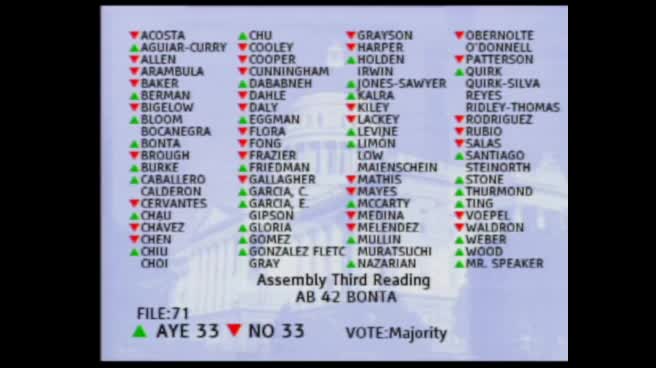 2MIN
Assembly Floor
 53SEC
Assembly Floor
 25MIN
Assembly Standing Committee on Judiciary
Bill Author



