AB 659: Medi-Cal: reimbursement rates.
- Session Year: 2017-2018
- House: Assembly
- Latest Version Date: 2017-09-28
Existing law provides for the Medi-Cal program, which is administered by the State Department of Health Care Services, under which qualified low-income individuals receive health care services. The Medi-Cal program is, in part, governed by, and funded pursuant to, federal Medicaid program provisions. Existing law restricts the Medi-Cal reimbursement rate for clinical laboratory or laboratory services, as specified. Existing law requires that laboratory service providers submit annual data reports to the department, as specified, for the purpose of establishing rates for clinical or laboratory services based on the lowest amounts other payers are paying providers for similar services.
This bill would change the frequency for submitting those reports to every 3 years beginning in 2019, and would require the data in those reports to be based on the previous calendar year. The bill would provide that the reimbursement rates developed pursuant to these provisions shall become effective on July 1, 2020, and July 1 of every 3rd year thereafter.
Existing law provides for the Medi-Cal program, which is administered by the State Department of Health Care Services, under which qualified low-income individuals receive health care services. The Medi-Cal program is, in part, governed by, and funded pursuant to, federal Medicaid program provisions. Existing law restricts the Medi-Cal reimbursement rate for clinical laboratory or laboratory services, as specified. Existing law requires that laboratory service providers submit annual data reports to the department, as specified, for the purpose of establishing rates for clinical or laboratory services based on the lowest amounts other payers are paying providers for similar services.
This bill would change the frequency for submitting those reports to every 3 years beginning in 2019, and would require the data in those reports to be based on the previous calendar year. The bill would provide that the reimbursement rates developed pursuant to these provisions shall become effective on July 1, 2020, and July 1 of every 3rd year thereafter.
Existing law provides for the Medi-Cal program, which is administered by the State Department of Health Care Services, under which qualified low-income individuals receive health care services. The Medi-Cal program is, in part, governed by, and funded pursuant to, federal Medicaid program provisions. Existing law restricts the Medi-Cal reimbursement rate for clinical laboratory or laboratory services, as specified. Existing law requires that laboratory service providers submit annual data reports to the department, as specified, for the purpose of establishing rates for clinical or laboratory services based on the lowest amounts other payers are paying providers for similar services.
This bill would change the frequency for submitting those reports to every 3 years beginning in 2019, and would require the data in those reports to be based on the previous calendar year. The bill would provide that the reimbursement rates developed pursuant to these provisions shall become effective on July 1, 2020, and July 1 of every 3rd year thereafter.
Existing law provides for the Medi-Cal program, which is administered by the State Department of Health Care Services, under which qualified low-income individuals receive health care services. The Medi-Cal program is, in part, governed by, and funded pursuant to, federal Medicaid Program program provisions. Existing law restricts the Medi-Cal reimbursement rate for clinical laboratory or laboratory services, as specified. Existing law requires that laboratory service providers submit annual data reports to the department, as specified, for the purpose of establishing rates for clinical or laboratory services based on the lowest amounts other payers are paying providers for similar services.
This bill would change the frequency for submitting those reports to every 3 years. years beginning in 2019, and would require the data in those reports to be based on the previous calendar year. The bill would provide that the reimbursement rates developed pursuant to these provisions shall become effective on July 1, 2020, and July 1 of every 3rd year thereafter.
Existing law provides for the Medi-Cal program, which is administered by the State Department of Health Care Services, under which qualified low-income individuals receive health care services. The Medi-Cal program is, in part, governed by, and funded pursuant to, federal Medicaid Program provisions. Existing law restricts the Medi-Cal reimbursement rate for clinical laboratory or laboratory services, as specified. Existing law requires that laboratory service providers submit annual data reports to the department, as specified, for the purpose of establishing rates for clinical or laboratory services based on the lowest amounts other payers are paying providers for similar services.
This bill would change the frequency for submitting those reports to every 3 years.
(a)(1)Reimbursement for clinical laboratory or laboratory services, as defined in Section 51137.2 of Title 22 of the California Code of Regulations, shall not exceed 80 percent of the lowest maximum allowance established by the federal Medicare Program for the same or similar services.
(2)This subdivision shall be implemented only until the new rate methodology under subdivision (b) is approved by the federal Centers for Medicare and Medicaid Services (CMS).
(b)(1)It is the intent of the Legislature that the department develop reimbursement rates for clinical laboratory or laboratory services that are comparable to the payment amounts received from other payers for clinical laboratory or laboratory services. Development of these rates will enable the department to reimburse clinical laboratory or laboratory service providers in compliance with state and federal law.
(2)(A)The provisions of Section 51501(a) of Title 22 of the California Code of Regulations shall not apply to laboratory providers reimbursed under the new rate methodology developed for clinical laboratories or laboratory services pursuant to this subdivision.
(B)In addition to subparagraph (A), laboratory providers reimbursed under any payment reductions implemented pursuant to this section shall not be subject to the provisions of Section 51501(a) of Title 22 of the California Code of Regulations until July 1, 2015.
(3)Reimbursement to providers for clinical laboratory or laboratory services shall not exceed the lowest of the following:
(A)The amount billed.
(B)The charge to the general public.
(C)Eighty percent of the lowest maximum allowance established by the federal Medicare Program for the same or similar services.
(D)A reimbursement rate based on an average of the lowest amount that other payers and other state Medicaid programs are paying for similar clinical laboratory or laboratory services.
(4)(A)In addition to the payment reductions implemented pursuant to Section 14105.192, payments shall be reduced by up to 10 percent for clinical laboratory or laboratory services, as defined in Section 51137.2 of Title 22 of the California Code of Regulations, for dates of service on and after July 1, 2012. The payment reductions pursuant to this paragraph shall continue until the new rate methodology under this subdivision has been approved by CMS.
(B)Notwithstanding subparagraph (A), the Family Planning, Access, Care, and Treatment (Family PACT) Program pursuant to subdivision (aa) of Section 14132 shall be exempt from the payment reduction specified in this section.
(5)(A)For purposes of establishing reimbursement rates for clinical laboratory or laboratory services pursuant to subparagraph (D) of paragraph (3), laboratory service providers shall submit data reports according to the following schedule:
(i)The data initially provided shall be for the 2018 calendar year. For each subsequent reporting year the data shall be based on the previous calendar year.
(ii)For purposes of clause (i), reporting year means 2019 and every third year thereafter.
(B)A data report submitted pursuant to subparagraph (A) shall specify the providers lowest amounts other payers are paying, including other state Medicaid programs and private insurance, minus discounts and rebates. The specific data required for submission under this subparagraph and the format for the data submission shall be determined and specified by the department after receiving stakeholder input pursuant to paragraph (7).
(C)The data submitted pursuant to subparagraph (A) may be used to determine reimbursement rates by procedure code based on an average of the lowest amount other payers are paying providers for similar clinical laboratory or laboratory services, excluding significant deviations of cost or volume factors and with consideration to geographical areas. The department shall have the discretion to determine the specific methodology and factors used in the development of the lowest average amount under this subparagraph to ensure compliance with federal Medicaid law and regulations as specified in paragraph (10).
(D)For purposes of subparagraph (C), the department may contract with a vendor for the purposes of collecting payment data reports from clinical laboratories, analyzing payment information, and calculating a proposed rate.
(E)The proposed rates calculated by the vendor described in subparagraph (D) may be used in determining the lowest reimbursement rate for clinical laboratories or laboratory services in accordance with paragraph (3).
(F)Data reports submitted to the department shall be certified by the providers certified financial officer or an authorized individual.
(G)Clinical laboratory providers that fail to submit data reports within 30 working days from the time requested by the department shall be subject to the suspension provisions of subdivisions (a) and (c) of Section 14123.
(6)Data reports provided to the department pursuant to this section shall be confidential and shall be exempt from disclosure under the California Public Records Act (Chapter 3.5 (commencing with Section 6250) of Division 7 of Title 1 of the Government Code).
(7)The department shall seek stakeholder input on the ratesetting methodology.
(8)(A)Notwithstanding Chapter 3.5 (commencing with Section 11340) of Part 1 of Division 3 of Title 2 of the Government Code, the department shall, without taking any further regulatory action, implement, interpret, or make specific this section by means of provider bulletins or similar instructions until regulations are adopted. It is the intent of the Legislature that the department have temporary authority as necessary to implement program changes until completion of the regulatory process.
(B)The department shall adopt emergency regulations no later than June 30, 2016. The department may readopt any emergency regulation authorized by this section that is the same as or substantially equivalent to an emergency regulation previously adopted pursuant to this section. The initial adoption of emergency regulations implementing the amendments to this section and the one readoption of emergency regulations authorized by this section shall be deemed an emergency and necessary for the immediate preservation of the public peace, health, safety, or general welfare. Initial emergency regulations and the one readoption of emergency regulations authorized by this section shall be exempt from review by the Office of Administrative Law.
(C)The initial emergency regulations and the one readoption of emergency regulations authorized by this section shall be submitted to the Office of Administrative Law for filing with the Secretary of State and each shall remain in effect for no more than 180 days, by which time final regulations may be adopted.
(9)To the extent that the director determines that the new methodology or payment reductions are not consistent with the requirements of Section 1396a(a)(30)(A) of Title 42 of the United States Code, the department may revert to the methodology under subdivision (a) to ensure access to care is not compromised.
(10)(A)The department shall implement this section in a manner that is consistent with federal Medicaid law and regulations. The director shall seek any necessary federal approvals for the implementation of this section. This section shall be implemented only to the extent that federal approval is obtained.
(B)In determining whether federal financial participation is available, the director shall determine whether the rates and payments comply with applicable federal Medicaid requirements, including those set forth in Section 1396a(a)(30)(A) of Title 42 of the United States Code.
(C)To the extent that the director determines that the rates and payments do not comply with applicable federal Medicaid requirements or that federal financial participation is not available with respect to any reimbursement rate, the director retains the discretion not to implement that rate or payment and may revise the rate or payment as necessary to comply with federal Medicaid requirements. The department shall notify the Joint Legislative Budget Committee 10 days prior to revising the rate or payment to comply with federal Medicaid requirements.
(c)Reimbursement rates developed pursuant to subparagraph (D) of paragraph (3) of subdivision (b) and the changes made by the act that added this subdivision shall be effective beginning on July 1, 2020, and on July 1 of every third year thereafter.
(a)(1)Reimbursement for clinical laboratory or laboratory services, as defined in Section 51137.2 of Title 22 of the California Code of Regulations, shall not exceed 80 percent of the lowest maximum allowance established by the federal Medicare Program for the same or similar services.
(2)This subdivision shall be implemented only until the new rate methodology under subdivision (b) is approved by the federal Centers for Medicare and Medicaid Services (CMS).
(b)(1)It is the intent of the Legislature that the department develop reimbursement rates for clinical laboratory or laboratory services that are comparable to the payment amounts received from other payers for clinical laboratory or laboratory services. Development of these rates will enable the department to reimburse clinical laboratory or laboratory service providers in compliance with state and federal law.
(2)(A)The provisions of Section 51501(a) of Title 22 of the California Code of Regulations shall not apply to laboratory providers reimbursed under the new rate methodology developed for clinical laboratories or laboratory services pursuant to this subdivision.
(B)In addition to subparagraph (A), laboratory providers reimbursed under any payment reductions implemented pursuant to this section shall not be subject to the provisions of Section 51501(a) of Title 22 of the California Code of Regulations until July 1, 2015.
(3)Reimbursement to providers for clinical laboratory or laboratory services shall not exceed the lowest of the following:
(A)The amount billed.
(B)The charge to the general public.
(C)Eighty percent of the lowest maximum allowance established by the federal Medicare Program for the same or similar services.
(D)A reimbursement rate based on an average of the lowest amount that other payers and other state Medicaid programs are paying for similar clinical laboratory or laboratory services.
(4)(A)In addition to the payment reductions implemented pursuant to Section 14105.192, payments shall be reduced by up to 10 percent for clinical laboratory or laboratory services, as defined in Section 51137.2 of Title 22 of the California Code of Regulations, for dates of service on and after July 1, 2012. The payment reductions pursuant to this paragraph shall continue until the new rate methodology under this subdivision has been approved by CMS.
(B)Notwithstanding subparagraph (A), the Family Planning, Access, Care, and Treatment (Family PACT) Program pursuant to subdivision (aa) of Section 14132 shall be exempt from the payment reduction specified in this section.
(5)(A)For purposes of establishing reimbursement rates for clinical laboratory or laboratory services pursuant to subparagraph (D) of paragraph (3), laboratory service providers shall submit data reports according to the following schedule:
(i)The data initially provided shall be for the 2018 calendar year. For each subsequent reporting year the data shall be based on the previous calendar year.
(ii)For purposes of clause (i), reporting year means 2019 and every third year thereafter.
(B)A data report submitted pursuant to subparagraph (A) shall specify the providers lowest amounts other payers are paying, including other state Medicaid programs and private insurance, minus discounts and rebates. The specific data required for submission under this subparagraph and the format for the data submission shall be determined and specified by the department after receiving stakeholder input pursuant to paragraph (7).
(C)The data submitted pursuant to subparagraph (A) may be used to determine reimbursement rates by procedure code based on an average of the lowest amount other payers are paying providers for similar clinical laboratory or laboratory services, excluding significant deviations of cost or volume factors and with consideration to geographical areas. The department shall have the discretion to determine the specific methodology and factors used in the development of the lowest average amount under this subparagraph to ensure compliance with federal Medicaid law and regulations as specified in paragraph (10).
(D)For purposes of subparagraph (C), the department may contract with a vendor for the purposes of collecting payment data reports from clinical laboratories, analyzing payment information, and calculating a proposed rate.
(E)The proposed rates calculated by the vendor described in subparagraph (D) may be used in determining the lowest reimbursement rate for clinical laboratories or laboratory services in accordance with paragraph (3).
(F)Data reports submitted to the department shall be certified by the providers certified financial officer or an authorized individual.
(G)Clinical laboratory providers that fail to submit data reports within 30 working days from the time requested by the department shall be subject to the suspension provisions of subdivisions (a) and (c) of Section 14123.
(6)Data reports provided to the department pursuant to this section shall be confidential and shall be exempt from disclosure under the California Public Records Act (Chapter 3.5 (commencing with Section 6250) of Division 7 of Title 1 of the Government Code).
(7)The department shall seek stakeholder input on the ratesetting methodology.
(8)(A)Notwithstanding Chapter 3.5 (commencing with Section 11340) of Part 1 of Division 3 of Title 2 of the Government Code, the department shall, without taking any further regulatory action, implement, interpret, or make specific this section by means of provider bulletins or similar instructions until regulations are adopted. It is the intent of the Legislature that the department have temporary authority as necessary to implement program changes until completion of the regulatory process.
(B)The department shall adopt emergency regulations no later than June 30, 2016. The department may readopt any emergency regulation authorized by this section that is the same as or substantially equivalent to an emergency regulation previously adopted pursuant to this section. The initial adoption of emergency regulations implementing the amendments to this section and the one readoption of emergency regulations authorized by this section shall be deemed an emergency and necessary for the immediate preservation of the public peace, health, safety, or general welfare. Initial emergency regulations and the one readoption of emergency regulations authorized by this section shall be exempt from review by the Office of Administrative Law.
(C)The initial emergency regulations and the one readoption of emergency regulations authorized by this section shall be submitted to the Office of Administrative Law for filing with the Secretary of State and each shall remain in effect for no more than 180 days, by which time final regulations may be adopted.
(9)To the extent that the director determines that the new methodology or payment reductions are not consistent with the requirements of Section 1396a(a)(30)(A) of Title 42 of the United States Code, the department may revert to the methodology under subdivision (a) to ensure access to care is not compromised.
(10)(A)The department shall implement this section in a manner that is consistent with federal Medicaid law and regulations. The director shall seek any necessary federal approvals for the implementation of this section. This section shall be implemented only to the extent that federal approval is obtained.
(B)In determining whether federal financial participation is available, the director shall determine whether the rates and payments comply with applicable federal Medicaid requirements, including those set forth in Section 1396a(a)(30)(A) of Title 42 of the United States Code.
(C)To the extent that the director determines that the rates and payments do not comply with applicable federal Medicaid requirements or that federal financial participation is not available with respect to any reimbursement rate, the director retains the discretion not to implement that rate or payment and may revise the rate or payment as necessary to comply with federal Medicaid requirements. The department shall notify the Joint Legislative Budget Committee 10 days prior to revising the rate or payment to comply with federal Medicaid requirements.
(c)Reimbursement rates developed pursuant to subparagraph (D) of paragraph (3) of subdivision (b) and the changes made by the act that added this subdivision shall be effective beginning on July 1, 2020, and on July 1 of every third year thereafter.
(a)(1)Reimbursement for clinical laboratory or laboratory services, as defined in Section 51137.2 of Title 22 of the California Code of Regulations, shall not exceed 80 percent of the lowest maximum allowance established by the federal Medicare Program for the same or similar services.
(2)This subdivision shall be implemented only until the new rate methodology under subdivision (b) is approved by the federal Centers for Medicare and Medicaid Services (CMS).
(b)(1)It is the intent of the Legislature that the department develop reimbursement rates for clinical laboratory or laboratory services that are comparable to the payment amounts received from other payers for clinical laboratory or laboratory services. Development of these rates will enable the department to reimburse clinical laboratory or laboratory service providers in compliance with state and federal law.
(2)(A)The provisions of Section 51501(a) of Title 22 of the California Code of Regulations shall not apply to laboratory providers reimbursed under the new rate methodology developed for clinical laboratories or laboratory services pursuant to this subdivision.
(B)In addition to subparagraph (A), laboratory providers reimbursed under any payment reductions implemented pursuant to this section shall not be subject to the provisions of Section 51501(a) of Title 22 of the California Code of Regulations until July 1, 2015.
(3)Reimbursement to providers for clinical laboratory or laboratory services shall not exceed the lowest of the following:
(A)The amount billed.
(B)The charge to the general public.
(C)Eighty percent of the lowest maximum allowance established by the federal Medicare Program for the same or similar services.
(D)A reimbursement rate based on an average of the lowest amount that other payers and other state Medicaid programs are paying for similar clinical laboratory or laboratory services.
(4)(A)In addition to the payment reductions implemented pursuant to Section 14105.192, payments shall be reduced by up to 10 percent for clinical laboratory or laboratory services, as defined in Section 51137.2 of Title 22 of the California Code of Regulations, for dates of service on and after July 1, 2012. The payment reductions pursuant to this paragraph shall continue until the new rate methodology under this subdivision has been approved by CMS.
(B)Notwithstanding subparagraph (A), the Family Planning, Access, Care, and Treatment (Family PACT) Program pursuant to subdivision (aa) of Section 14132 shall be exempt from the payment reduction specified in this section.
(5)(A)For purposes of establishing reimbursement rates for clinical laboratory or laboratory services based on the lowest amounts other payers are paying providers for similar clinical laboratory or laboratory services, pursuant to subparagraph (D) of paragraph (3), laboratory service providers shall submit data reports according to the following schedule:
(i)The data initially provided shall be for the 2018 calendar year. For each subsequent reporting year the data shall be based on the previous calendar year.
(ii)For purposes of clause (i), reporting year means 2019 and every third year thereafter.
(B)A data report submitted pursuant to subparagraph (A) shall specify the providers lowest amounts other payers are paying, including other state Medicaid programs and private insurance, minus discounts and rebates. The specific data required for submission under this subparagraph and the format for the data submission shall be determined and specified by the department after receiving stakeholder input pursuant to paragraph (7).
(C)The data submitted pursuant to subparagraph (A) may be used to determine reimbursement rates by procedure code based on an average of the lowest amount other payers are paying providers for similar clinical laboratory or laboratory services, excluding significant deviations of cost or volume factors and with consideration to geographical areas. The department shall have the discretion to determine the specific methodology and factors used in the development of the lowest average amount under this subparagraph to ensure compliance with federal Medicaid law and regulations as specified in paragraph (10).
(D)For purposes of subparagraph (C), the department may contract with a vendor for the purposes of collecting payment data reports from clinical laboratories, analyzing payment information, and calculating a proposed rate.
(E)The proposed rates calculated by the vendor described in subparagraph (D) may be used in determining the lowest reimbursement rate for clinical laboratories or laboratory services in accordance with paragraph (3).
(F)Data reports submitted to the department shall be certified by the providers certified financial officer or an authorized individual.
(G)Clinical laboratory providers that fail to submit data reports within 30 working days from the time requested by the department shall be subject to the suspension provisions of subdivisions (a) and (c) of Section 14123.
(6)Data reports provided to the department pursuant to this section shall be confidential and shall be exempt from disclosure under the California Public Records Act (Chapter 3.5 (commencing with Section 6250) of Division 7 of Title 1 of the Government Code).
(7)The department shall seek stakeholder input on the ratesetting methodology.
(8)(A)Notwithstanding Chapter 3.5 (commencing with Section 11340) of Part 1 of Division 3 of Title 2 of the Government Code, the department shall, without taking any further regulatory action, implement, interpret, or make specific this section by means of provider bulletins or similar instructions until regulations are adopted. It is the intent of the Legislature that the department have temporary authority as necessary to implement program changes until completion of the regulatory process.
(B)The department shall adopt emergency regulations no later than June 30, 2016. The department may readopt any emergency regulation authorized by this section that is the same as or substantially equivalent to an emergency regulation previously adopted pursuant to this section. The initial adoption of emergency regulations implementing the amendments to this section and the one readoption of emergency regulations authorized by this section shall be deemed an emergency and necessary for the immediate preservation of the public peace, health, safety, or general welfare. Initial emergency regulations and the one readoption of emergency regulations authorized by this section shall be exempt from review by the Office of Administrative Law.
(C)The initial emergency regulations and the one readoption of emergency regulations authorized by this section shall be submitted to the Office of Administrative Law for filing with the Secretary of State and each shall remain in effect for no more than 180 days, by which time final regulations may be adopted.
(9)To the extent that the director determines that the new methodology or payment reductions are not consistent with the requirements of Section 1396a(a)(30)(A) of Title 42 of the United States Code, the department may revert to the methodology under subdivision (a) to ensure access to care is not compromised.
(10)(A)The department shall implement this section in a manner that is consistent with federal Medicaid law and regulations. The director shall seek any necessary federal approvals for the implementation of this section. This section shall be implemented only to the extent that federal approval is obtained.
(B)In determining whether federal financial participation is available, the director shall determine whether the rates and payments comply with applicable federal Medicaid requirements, including those set forth in Section 1396a(a)(30)(A) of Title 42 of the United States Code.
(C)To the extent that the director determines that the rates and payments do not comply with applicable federal Medicaid requirements or that federal financial participation is not available with respect to any reimbursement rate, the director retains the discretion not to implement that rate or payment and may revise the rate or payment as necessary to comply with federal Medicaid requirements. The department shall notify the Joint Legislative Budget Committee 10 days prior to revising the rate or payment to comply with federal Medicaid requirements.
(c)Reimbursement rates developed pursuant to this section shall become effective on subparagraph (D) of paragraph (3) of subdivision (b) and the changes made by the act that added this subdivision shall be effective beginning on July 1, 2020, and on July 1 of every third year thereafter.
(a)(1)Reimbursement for clinical laboratory or laboratory services, as defined in Section 51137.2 of Title 22 of the California Code of Regulations, shall not exceed 80 percent of the lowest maximum allowance established by the federal Medicare Program for the same or similar services.
(2)This subdivision shall be implemented only until the new rate methodology under subdivision (b) is approved by the federal Centers for Medicare and Medicaid Services (CMS).
(b)(1)It is the intent of the Legislature that the department develop reimbursement rates for clinical laboratory or laboratory services that are comparable to the payment amounts received from other payers for clinical laboratory or laboratory services. Development of these rates will enable the department to reimburse clinical laboratory or laboratory service providers in compliance with state and federal law.
(2)(A)The provisions of Section 51501(a) of Title 22 of the California Code of Regulations shall not apply to laboratory providers reimbursed under the new rate methodology developed for clinical laboratories or laboratory services pursuant to this subdivision.
(B)In addition to subparagraph (A), laboratory providers reimbursed under any payment reductions implemented pursuant to this section shall not be subject to the provisions of Section 51501(a) of Title 22 of the California Code of Regulations until July 1, 2015.
(3)Reimbursement to providers for clinical laboratory or laboratory services shall not exceed the lowest of the following:
(A)The amount billed.
(B)The charge to the general public.
(C)Eighty percent of the lowest maximum allowance established by the federal Medicare Program for the same or similar services.
(D)A reimbursement rate based on an average of the lowest amount that other payers and other state Medicaid programs are paying for similar clinical laboratory or laboratory services.
(4)(A)In addition to the payment reductions implemented pursuant to Section 14105.192, payments shall be reduced by up to 10 percent for clinical laboratory or laboratory services, as defined in Section 51137.2 of Title 22 of the California Code of Regulations, for dates of service on and after July 1, 2012. The payment reductions pursuant to this paragraph shall continue until the new rate methodology under this subdivision has been approved by CMS.
(B)Notwithstanding subparagraph (A), the Family Planning, Access, Care, and Treatment (Family PACT) Program pursuant to subdivision (aa) of Section 14132 shall be exempt from the payment reduction specified in this section.
(5)(A)For purposes of establishing reimbursement rates for clinical laboratory or laboratory services based on the lowest amounts other payers are paying providers for similar clinical laboratory or laboratory services, laboratory service providers shall submit data reports within 11 months of the date the act that added this paragraph becomes effective and every three years thereafter. The data initially provided shall be for the 2011 calendar year. For each subsequent, reporting period after January 1, 2018, the data shall be based on the previous three years and shall according to the following schedule:
(i)The data initially provided shall be for the 2018 calendar year. For each subsequent reporting year the data shall be based on the previous calendar year.
(ii)For purposes of clause (i), reporting year means 2019 and every third year thereafter.
(B)A data report submitted pursuant to subparagraph (A) shall specify the providers lowest amounts other payers are paying, including other state Medicaid programs and private insurance, minus discounts and rebates. The specific data required for submission under this subparagraph and the format for the data submission shall be determined and specified by the department after receiving stakeholder input pursuant to paragraph (7).
(B)(C)The data submitted pursuant to subparagraph (A) may be used to determine reimbursement rates by procedure code based on an average of the lowest amount other payers are paying providers for similar clinical laboratory or laboratory services, excluding significant deviations of cost or volume factors and with consideration to geographical areas. The department shall have the discretion to determine the specific methodology and factors used in the development of the lowest average amount under this subparagraph to ensure compliance with federal Medicaid law and regulations as specified in paragraph (10).
(C)(D)For purposes of subparagraph (B), (C), the department may contract with a vendor for the purposes of collecting payment data reports from clinical laboratories, analyzing payment information, and calculating a proposed rate.
(D)(E)The proposed rates calculated by the vendor described in subparagraph (C) (D) may be used in determining the lowest reimbursement rate for clinical laboratories or laboratory services in accordance with paragraph (3).
(E)(F)Data reports submitted to the department shall be certified by the providers certified financial officer or an authorized individual.
(F)(G)Clinical laboratory providers that fail to submit data reports within 30 working days from the time requested by the department shall be subject to the suspension provisions of subdivisions (a) and (c) of Section 14123.
(6)Data reports provided to the department pursuant to this section shall be confidential and shall be exempt from disclosure under the California Public Records Act (Chapter 3.5 (commencing with Section 6250) of Division 7 of Title 1 of the Government Code).
(7)The department shall seek stakeholder input on the ratesetting methodology.
(8)(A)Notwithstanding Chapter 3.5 (commencing with Section 11340) of Part 1 of Division 3 of Title 2 of the Government Code, the department shall, without taking any further regulatory action, implement, interpret, or make specific this section by means of provider bulletins or similar instructions until regulations are adopted. It is the intent of the Legislature that the department have temporary authority as necessary to implement program changes until completion of the regulatory process.
(B)The department shall adopt emergency regulations no later than June 30, 2016. The department may readopt any emergency regulation authorized by this section that is the same as or substantially equivalent to an emergency regulation previously adopted pursuant to this section. The initial adoption of emergency regulations implementing the amendments to this section and the one readoption of emergency regulations authorized by this section shall be deemed an emergency and necessary for the immediate preservation of the public peace, health, safety, or general welfare. Initial emergency regulations and the one readoption of emergency regulations authorized by this section shall be exempt from review by the Office of Administrative Law.
(C)The initial emergency regulations and the one readoption of emergency regulations authorized by this section shall be submitted to the Office of Administrative Law for filing with the Secretary of State and each shall remain in effect for no more than 180 days, by which time final regulations may be adopted.
(9)To the extent that the director determines that the new methodology or payment reductions are not consistent with the requirements of Section 1396a(a)(30)(A) of Title 42 of the United States Code, the department may revert to the methodology under subdivision (a) to ensure access to care is not compromised.
(10)(A)The department shall implement this section in a manner that is consistent with federal Medicaid law and regulations. The director shall seek any necessary federal approvals for the implementation of this section. This section shall be implemented only to the extent that federal approval is obtained.
(B)In determining whether federal financial participation is available, the director shall determine whether the rates and payments comply with applicable federal Medicaid requirements, including those set forth in Section 1396a(a)(30)(A) of Title 42 of the United States Code.
(C)To the extent that the director determines that the rates and payments do not comply with applicable federal Medicaid requirements or that federal financial participation is not available with respect to any reimbursement rate, the director retains the discretion not to implement that rate or payment and may revise the rate or payment as necessary to comply with federal Medicaid requirements. The department shall notify the Joint Legislative Budget Committee 10 days prior to revising the rate or payment to comply with federal Medicaid requirements.
(c)Reimbursement rates developed pursuant to this section shall become effective on July 1, 2020, and on July 1 of every third year thereafter.
(a)(1)Reimbursement for clinical laboratory or laboratory services, as defined in Section 51137.2 of Title 22 of the California Code of Regulations, shall not exceed 80 percent of the lowest maximum allowance established by the federal Medicare Program for the same or similar services.
(2)This subdivision shall be implemented only until the new rate methodology under subdivision (b) is approved by the federal Centers for Medicare and Medicaid Services (CMS).
(b)(1)It is the intent of the Legislature that the department develop reimbursement rates for clinical laboratory or laboratory services that are comparable to the payment amounts received from other payers for clinical laboratory or laboratory services. Development of these rates will enable the department to reimburse clinical laboratory or laboratory service providers in compliance with state and federal law.
(2)(A)The provisions of Section 51501(a) of Title 22 of the California Code of Regulations shall not apply to laboratory providers reimbursed under the new rate methodology developed for clinical laboratories or laboratory services pursuant to this subdivision.
(B)In addition to subparagraph (A), laboratory providers reimbursed under any payment reductions implemented pursuant to this section shall not be subject to the provisions of Section 51501(a) of Title 22 of the California Code of Regulations until July 1, 2015.
(3)Reimbursement to providers for clinical laboratory or laboratory services shall not exceed the lowest of the following:
(A)The amount billed.
(B)The charge to the general public.
(C)Eighty percent of the lowest maximum allowance established by the federal Medicare Program for the same or similar services.
(D)A reimbursement rate based on an average of the lowest amount that other payers and other state Medicaid programs are paying for similar clinical laboratory or laboratory services.
(4)(A)In addition to the payment reductions implemented pursuant to Section 14105.192, payments shall be reduced by up to 10 percent for clinical laboratory or laboratory services, as defined in Section 51137.2 of Title 22 of the California Code of Regulations, for dates of service on and after July 1, 2012. The payment reductions pursuant to this paragraph shall continue until the new rate methodology under this subdivision has been approved by CMS.
(B)Notwithstanding subparagraph (A), the Family Planning, Access, Care, and Treatment (Family PACT) Program pursuant to subdivision (aa) of Section 14132 shall be exempt from the payment reduction specified in this section.
(5)(A)For purposes of establishing reimbursement rates for clinical laboratory or laboratory services based on the lowest amounts other payers are paying providers for similar clinical laboratory or laboratory services, laboratory service providers shall submit data reports within 11 months of the date the act that added this paragraph becomes effective and annually every three years thereafter. The data initially provided shall be for the 2011 calendar year, and for each year. For each subsequent year, reporting period after January 1, 2018, the data shall be based on the previous calendar year three years and shall specify the providers lowest amounts other payers are paying, including other state Medicaid programs and private insurance, minus discounts and rebates. The specific data required for submission under this subparagraph and the format for the data submission shall be determined and specified by the department after receiving stakeholder input pursuant to paragraph (7).
(B)The data submitted pursuant to subparagraph (A) may be used to determine reimbursement rates by procedure code based on an average of the lowest amount other payers are paying providers for similar clinical laboratory or laboratory services, excluding significant deviations of cost or volume factors and with consideration to geographical areas. The department shall have the discretion to determine the specific methodology and factors used in the development of the lowest average amount under this subparagraph to ensure compliance with federal Medicaid law and regulations as specified in paragraph (10).
(C)For purposes of subparagraph (B), the department may contract with a vendor for the purposes of collecting payment data reports from clinical laboratories, analyzing payment information, and calculating a proposed rate.
(D)The proposed rates calculated by the vendor described in subparagraph (C) may be used in determining the lowest reimbursement rate for clinical laboratories or laboratory services in accordance with paragraph (3).
(E)Data reports submitted to the department shall be certified by the providers certified financial officer or an authorized individual.
(F)Clinical laboratory providers that fail to submit data reports within 30 working days from the time requested by the department shall be subject to the suspension provisions of subdivisions (a) and (c) of Section 14123.
(6)Data reports provided to the department pursuant to this section shall be confidential and shall be exempt from disclosure under the California Public Records Act (Chapter 3.5 (commencing with Section 6250) of Division 7 of Title 1 of the Government Code).
(7)The department shall seek stakeholder input on the ratesetting methodology.
(8)(A)Notwithstanding Chapter 3.5 (commencing with Section 11340) of Part 1 of Division 3 of Title 2 of the Government Code, the department shall, without taking any further regulatory action, implement, interpret, or make specific this section by means of provider bulletins or similar instructions until regulations are adopted. It is the intent of the Legislature that the department have temporary authority as necessary to implement program changes until completion of the regulatory process.
(B)The department shall adopt emergency regulations no later than June 30, 2016. The department may readopt any emergency regulation authorized by this section that is the same as or substantially equivalent to an emergency regulation previously adopted pursuant to this section. The initial adoption of emergency regulations implementing the amendments to this section and the one readoption of emergency regulations authorized by this section shall be deemed an emergency and necessary for the immediate preservation of the public peace, health, safety, or general welfare. Initial emergency regulations and the one readoption of emergency regulations authorized by this section shall be exempt from review by the Office of Administrative Law.
(C)The initial emergency regulations and the one readoption of emergency regulations authorized by this section shall be submitted to the Office of Administrative Law for filing with the Secretary of State and each shall remain in effect for no more than 180 days, by which time final regulations may be adopted.
(9)To the extent that the director determines that the new methodology or payment reductions are not consistent with the requirements of Section 1396a(a)(30)(A) of Title 42 of the United States Code, the department may revert to the methodology under subdivision (a) to ensure access to care is not compromised.
(10)(A)The department shall implement this section in a manner that is consistent with federal Medicaid law and regulations. The director shall seek any necessary federal approvals for the implementation of this section. This section shall be implemented only to the extent that federal approval is obtained.
(B)In determining whether federal financial participation is available, the director shall determine whether the rates and payments comply with applicable federal Medicaid requirements, including those set forth in Section 1396a(a)(30)(A) of Title 42 of the United States Code.
(C)To the extent that the director determines that the rates and payments do not comply with applicable federal Medicaid requirements or that federal financial participation is not available with respect to any reimbursement rate, the director retains the discretion not to implement that rate or payment and may revise the rate or payment as necessary to comply with federal Medicaid requirements. The department shall notify the Joint Legislative Budget Committee 10 days prior to revising the rate or payment to comply with federal Medicaid requirements.
|
Date
|
Status
|
|---|---|
| Sep 28, 2017 | Chaptered by Secretary of State - Chapter 346, Statutes of 2017. |
| Sep 28, 2017 | Approved by the Governor. |
| Sep 20, 2017 | Enrolled and presented to the Governor at 4:30 p.m. |
| Sep 13, 2017 | Assembly Rule 77(a) suspended. |
| Sep 12, 2017 | In Assembly. Concurrence in Senate amendments pending. May be considered on or after September 14 pursuant to Assembly Rule 77. |
| Sep 11, 2017 | Read third time. Passed. Ordered to the Assembly. |
| Sep 5, 2017 | Read second time. Ordered to third reading. |
| Sep 1, 2017 | From committee: Do pass. (Ayes 7. Noes 0.) (September 1). |
| Aug 21, 2017 | In committee: Referred to APPR. suspense file. |
| Jul 11, 2017 | In committee: Set, first hearing. Hearing canceled at the request of author. |
| Jun 26, 2017 | Read second time and amended. Re-referred to Com. on APPR. |
| Jun 22, 2017 | From committee: Amend, and do pass as amended and re-refer to Com. on APPR. with recommendation: To Consent Calendar. (Ayes 9. Noes 0.) (June 21). |
| Jun 14, 2017 | Referred to Com. on HEALTH. |
| Jun 1, 2017 | In Senate. Read first time. To Com. on RLS. for assignment. |
| May 31, 2017 | Read third time. Passed. Ordered to the Senate. (Ayes 76. Noes 0. Page 1977.) |
| May 26, 2017 | From committee: Do pass. (Ayes 17. Noes 0.) (May 26). |
| May 10, 2017 | In committee: Set, first hearing. Referred to APPR. suspense file. |
| Apr 5, 2017 | From committee: Do pass and re-refer to Com. on APPR. with recommendation: To Consent Calendar. (Ayes 14. Noes 0.) (April 4). Re-referred to Com. on APPR. |
| Mar 22, 2017 | Re-referred to Com. on HEALTH. |
| Mar 21, 2017 | From committee chair, with author's amendments: Amend, and re-refer to Com. on HEALTH. Read second time and amended. |
| Mar 2, 2017 | Referred to Com. on HEALTH. |
| Feb 15, 2017 | From printer. May be heard in committee March 17. |
| Feb 14, 2017 | Read first time. To print. |
|
Date
|
Description
|
Location
|
Votes
|
|
|---|---|---|---|---|
| Sep 13, 2017 | AB 659 RIDLEY-THOMAS Concurrence in Senate Amendments | Assembly Floor |
Passed |
|
| Sep 11, 2017 | Assembly 3rd Reading AB659 Ridley-Thomas By Hernandez | Senate Floor |
Passed |
|
| Sep 1, 2017 | Do pass | Senate Standing Committee on Appropriations |
Passed |
|
| Aug 21, 2017 | Placed on suspense file | Senate Standing Committee on Appropriations |
Passed |
|
| Jun 21, 2017 | Do pass as amended, but first amend, and re-refer to the Committee on [Appropriations] with the recommendation: To Consent Calendar | Senate Standing Committee on Health |
Passed |
|
| May 31, 2017 | AB 659 RIDLEY-THOMAS Assembly Third Reading | Assembly Floor |
Passed |
|
| May 26, 2017 | Do pass. | Assembly Standing Committee on Appropriations |
Passed |
|
| Apr 4, 2017 | Do pass and be re-referred to the Committee on [Appropriations] with recommendation: To Consent Calendar | Assembly Standing Committee on Health |
Passed |
This list shows positions taken on this bill by organizations on the date displayed, which is linked to the original source.
Positions by individuals are not included.
|
Organization
|
Position
|
Date
|
|---|---|---|
| California Clinical Laboratory Association | ** Support | Sep 3, 2017 |
| California Society of Pathologies | ** Support | Mar 31, 2017 |
| California Society Of Pathologists | ** Support | Sep 3, 2017 |
| Planned Parenthood Action Fund of the Pacific Southwest | ** Support | Sep 3, 2017 |
| Planned Parenthood Advocacy Project Los Angeles County | ** Support | Sep 3, 2017 |
| Planned Parenthood Advocates Pasadena and San Gabriel Valley | ** Support | Sep 3, 2017 |
| Planned Parenthood Affiliates Of California | ** Support | Sep 3, 2017 |
| Planned Parenthood Mar Monte | ** Support | Sep 3, 2017 |
| Planned Parenthood Northern California Action Fund | ** Support | Sep 3, 2017 |
| Spectra Laboratories | ** Support | Sep 3, 2017 |
CONCURRENCE IN SENATE AMENDMENTS
CSA1 Bill Id:AB 659
Author:(Ridley-Thomas)
As Amended Ver:June 26, 2017
Majority vote
ASSEMBLY: | 76-0 | (May 31, 2017) | SENATE: | 40-0 | (September 11, 2017) |
Original Committee Reference: HEALTH
SUMMARY: Changes from annually to every three years, beginning in 2019, the frequency by which clinical laboratory or laboratory service providers (referred together as "Labs") are required to submit data reports to the Department of Health Care Services (DHCS) for purposes of developing reimbursement rates. Requires the reimbursement rates developed under this bill to become effective July 1, 2020, and July 1 of every third year thereafter.
The Senate amendments make technical and clarifying changes.
FISCAL EFFECT: According to Senate Appropriations Committee:
- Unknown ongoing administrative costs savings, likely in the hundreds of thousands per year, because DHCS will only need to analyze cost data submitted by Labs and set new reimbursement rates every third year, rather than every year (General Fund (GF) and federal funds).
- Uncertain impact on overall Medi-Cal spending on Lab services (GF and federal funds). Under current law, Medi-Cal fee-for-service (FFS) Lab rates are set by a methodology that includes actual payments by other payers for Lab services. Labs are required to submit payment data to DHCS annually and DHCS uses that data to set rates for the following year. Under this bill, the reimbursement rates paid by DHCS would be set based on the payment rates made by other payers every third year. By reducing the frequency of rate adjustments, the bill may impact overall spending on those services. For example, if the rates that other payers are trending upward, less frequently adjusting the rates may result in reduced payments by the state. On the other hand, if payment rates are trending downward, the state may end up paying more for services than if the rates were adjusted annually.
- Based on the implementation of the current rate setting methodology in recent years, it seems that the rates paid by the state are close to those that are being paid by other payers. This indicates that there are not likely to be substantial changes from year to year in Lab rates paid by other payers. Therefore, any potential costs or cost savings due to out-of-date reimbursement rates paid by Medi-Cal are not likely to be very large on a percentage basis.
COMMENTS: According to the author, current law requires DHCS to develop a new FFS rate methodology for Labs. In developing the Lab reimbursement rates, selected providers submit third-party rate and utilization data to DHCS annually. DHCS calculates these rates based on the prior year's data and new rates take effect July 1, on the same year the data are reported. During the first three years of the program, DHCS has not been able to analyze data and update computers in time to start reimbursing at the new rates. Each year there is a seven-month delay in payment implementation and claims submitted during the seven month delay periods have to be reprocessed. This bill changes the reporting timeframe from an annual report to a report every three years. The Lab reimbursement rates based on the report become effective the year after the report is submitted. This is similar to what is being done on the federal level and will give DHCS enough lead time to be able to start paying the reimbursement rate on the same date the rate becomes effective.
AB 1494 (Budget Committee), Chapter 28, Statutes of 2012, provides DHCS the authority to establish a reimbursement rate methodology for setting Medi-Cal rates for Lab services provided to Medi-Cal beneficiaries. The proposed methodology would develop rates that are based on the lowest amounts other payers are paying for similar Lab services. Beginning in 2012, DHCS conducted meetings with clinical Lab stakeholders to develop a data collection methodology that was operationally feasible and consistent with the intent of the legislation. On July 1, 2015, Centers for Medicare and Medicaid Services (CMS) approved California's AB 1494 rate-setting methodology. To ensure that the requirements of the new methodology are met, DHCS continues to collect third-party payer rate and utilization data annually from Lab providers. Rates are required to be calculated annually based on the prior year's data.
On June 23, 2016, CMS approved the final rule on the new rate-setting methodology for the Medicare program to implement the Protecting Access to Medicare Act. Under the final rule, Labs are required to report private payer rate and volume data and CMS calculates the new Medicare rates every three years. Effective January 1, 2018, these rates will be based on weighted median private payer rates.
Analysis Prepared by: Rosielyn Pulmano / HEALTH / (916) 319-2097 FN: 0001821
Office of Senate Floor Analyses (916) 651-1520 Fax: (916) 327-4478 | AB |
THIRD READING
Bill No: AB 659
:
SENATE HEALTH COMMITTEE: 9-0, 6/21/17
AYES: Hernandez, Nguyen, Atkins, Leyva, Mitchell, Monning, Newman, Nielsen, Roth
SENATE APPROPRIATIONS COMMITTEE: 7-0, 9/1/17
AYES: Lara, Bates, Beall, Bradford, Hill, Nielsen, Wiener
ASSEMBLY FLOOR: 76-0, 5/31/17 - See last page for vote
SOURCE: California Clinical Laboratory Association
DIGEST:
This bill reduces the frequency for clinical laboratories submitting reports for purposes of establishing Medi-Cal fee-for-service clinical laboratory rates under a specified methodology to every three years, instead of annually in existing law. In addition, this bill reduces the frequency of changes to Medi-Cal laboratory reimbursement rates, effective July 1, 2020, to every third year, instead of annually in existing law.
Existing law:
- Establishes the Medi-Cal program, administered by Department of Health Care Services (DHCS), under which health care services are provided to qualified low-income persons.
- Establishes a schedule of benefits in Medi-Cal, which includes outpatient laboratory services, subject to utilization controls. Defines, pursuant to Medi-Cal regulations, “clinical laboratory or laboratory services” to include the biological, microbiological, serological, chemical, immunohematological, hematological, biophysical, cytological, pathological, or other types of examination of materials derived from the human body, for purposes of diagnosis, prevention, or treatment of any disease or impairment of, or the assessment of the health of, human beings.
- Prohibits Medi-Cal reimbursement to providers for clinical laboratory or laboratory service from exceeding the lowest of the following:
- The amount billed;
- The charge to the general public;
- Eighty percent of the lowest maximum allowance established by the federal Medicare Program for the same or similar services; or,
- A reimbursement rate based on an average of the lowest amount that other payers and other state Medicaid programs are paying for similar clinical laboratory or laboratory services.
- Requires laboratory service providers to submit annual data reports based on the previous calendar year for purposes of establishing reimbursement rates for clinical laboratory or laboratory services based on the lowest amounts other payers are paying providers for similar clinical laboratory or laboratory services in d) above. Requires the data to specify the provider’s lowest amounts other payers are paying, including other state Medicaid programs and private insurance, minus discounts and rebates.
This bill:
- Reduces the frequency by which clinical laboratories to submit reports to DHCS for purposes of establishing Medi-Cal fee-for-service clinical laboratory rates based on lowest amount that other payers and other state Medicaid programs are paying for similar laboratory services, to three years, instead of annually in existing law.
- Reduces the frequency of changes to Medi-Cal laboratory reimbursement rates under the criteria above, effective July 1, 2020, to every third year, instead of annually in existing law.
Comments
- Author’s statement. According to the author, current law requires DHCS to develop a new fee-for- service rate methodology for clinical laboratories or laboratory services. As the first step in developing the new lab reimbursement rates, selected providers are required to submit third-party payer rate and utilization data to the DHCS. DHCS is required to develop a new rate setting methodology for clinical laboratory services based on the average of the lowest prices other third-party payers are paying for similar services. For the first three years of this program DHCS has not been able to analyze the data submitted and update the payment mechanism on an annual basis as required by current law.
- Medi-Cal Fee-for-Service Lab Reimbursement. AB 1494 (Committee on Budget, Chapter 28, Statutes of 2012), a health budget trailer bill, changed the Medi-Cal reimbursement methodology for lab services. Prior to the enactment of AB 1494, Medi-Cal reimbursement for laboratory services was capped at an amount that could not exceed 80% of the lowest maximum allowance established by the federal Medicare program for the same or similar services. AB 1494 stated legislative intent that DHCS develop reimbursement rates for laboratory services that are comparable to the payment amounts received from other payers for laboratory services, and capped Medi-Cal reimbursement for lab providers at an amount not to exceed the lowest of the following:
- The amount billed;
- The charge to the general public;
- 80% of the lowest maximum allowance established by the federal Medicare Program for the same or similar services; or,
- A reimbursement rate based on an average of the lowest amount that other payers and other state Medicaid programs are paying for similar clinical laboratory or laboratory services.
In addition to the new reimbursement methodology, AB 1494 imposed an additional Medi-Cal payment reduction of up to 10% in order to achieve General Fund savings (this reduction has not taken effect). In return, AB 1494 exempted labs from the Medi-Cal comparable price regulation for 12 months when the labs were subject to the additional 10% Medi-Cal rate reduction.
Effective July 1, 2015, the new reimbursement methodology became applicable for certain clinical laboratory or laboratory service codes. AB 1494 required DHCS to update the reimbursement rates to the applicable clinical and laboratory service codes annually. To develop the new Medi-Cal lab rates, DHCS has had to collect rate data from lab providers and develop a new methodology based on those rate submissions. To develop a Medi-Cal reimbursement rate based on an average of the lowest amount that other payers and other state Medicaid programs are paying for similar clinical laboratory or laboratory services, DHCS collects data from labs annually. However, Medi-Cal rates were not adjusted until several months into the following calendar year. This means that labs report annually but are subject to recoupment for months in which the new rates are lower than the prior year rates due to delayed implementation of the new rates.
In its November 2016 Medi-Cal Estimate, DHCS indicated the laboratory rate change resulted in savings of $18.5 million (GF) in 2015-16, $6.6 million in 2016-17, and $2.4 million in 2017-18. DHCS indicates the new methodology process resulted in the most significant rate reductions occurring with the initial 2015-16 rate year with 369 codes being reduced, 252 for 2016-17, and only four codes for the 2017-18 rate year. DHCS indicates that the FFS Medi-Cal rates are currently at, or close to “market rates" based on the most recent data reports submitted. In addition, DHCS conducts an annual review, separate of the new methodology process, of all clinical laboratory rates to ensure they are not above 80% of Medicare. Medi-Cal FFS expenditures on laboratory services for 2015-16 were $226.8 million total funds ($113.4 million GF).
FISCAL EFFECT: Appropriation: No Fiscal Com.: Yes Local: No
According to the Senate Appropriations Committee:
- Unknown ongoing administrative costs savings, likely in the hundreds of thousands per year, because DHCS will only need to analyze cost data submitted by clinical laboratories and set new reimbursement rates every third year, rather than every year (General Fund and federal funds).
- Uncertain impact on overall Medi-Cal spending on laboratory services (General Fund and federal funds). Under current law, Medi-Cal fee-for-service clinical laboratory rates are set by a methodology that includes actual payments by other payers for laboratory services. Laboratories are required to submit payment data to DHCS annually and DHCS uses that data to set rates for the following year. Under the bill, the reimbursement rates paid by DHCS would be set based on the payment rates made by other payers every third year. By reducing the frequency of rate adjustments, the bill may impact overall spending on those services. For example, if the rates that other payers are trending upward, less frequently adjusting the rates may result in reduced payments by the state. On the other hand, if payment rates are trending downward, the state may end up paying more for services than if the rates were adjusted annually.
- Based on the implementation of the current rate setting methodology in recent years, it seems that the rates paid by the state are close to those that are being paid by other payers. This indicates that there are not likely to be substantial changes from year to year in clinical laboratory rates paid by other payers. Therefore, any potential costs or cost savings due to out-of-date reimbursement rates paid by Medi-Cal are not likely to be very large on a percentage basis.
California Clinical Laboratory Association (source)
California Society of Pathologists
Community Action Fund of Planned Parenthood of Orange and San Bernardino
Counties
Planned Parenthood Action Fund of the Pacific Southwest
Planned Parenthood Advocacy Project Los Angeles County
Planned Parenthood Advocates Pasadena and San Gabriel Valley
Planned Parenthood Affiliates of California
Planned Parenthood Mar Monte
Planned Parenthood Northern California Action Fund
Spectra Laboratories
OPPOSITION: (Verified 8/30/17)
None received
ARGUMENTS IN SUPPORT: This bill is sponsored by the California Clinical Laboratory Association (CCLA), to change the frequency from annually to every three years by which clinical laboratories are required to submit data reports to DHCS for purposes of calculating a new Medi-Cal rate. CCLA argues the current annual requirement for the rate methodology calculations are time consuming and burdensome. In addition, CCLA states that DHCS has found it to be impossible to analyze the data and have the payment mechanism in place as required by July 1st of every year due to the immense amount of data required to be submitted by clinical laboratories and the antiquated computer system being utilized at DHCS. This has led to incorrect payments under the new rates and multiple retroactive recoupments from laboratories.
CCLA states this bill will revise the current law by requiring the submission of data and the calculation of new rates once every three years, not annually. CCLA states the change to every three years is consistent with the federal reporting requirements for Medicare proposed by the Center for Medicare and Medicaid Services (CMS), which requires labs to report private payor rate and volume data and CMS calculates new Medicare CLFS rates (based on the weighted median private payor rates) every three years.
ASSEMBLY FLOOR: 76-0, 5/31/17
AYES: Acosta, Aguiar-Curry, Travis Allen, Arambula, Baker, Berman, Bigelow, Bloom, Bocanegra, Bonta, Brough, Burke, Caballero, Calderon, Cervantes, Chau, Chávez, Chiu, Chu, Cooley, Cooper, Cunningham, Dababneh, Dahle, Daly, Flora, Fong, Frazier, Friedman, Gallagher, Cristina Garcia, Eduardo Garcia, Gipson, Gloria, Gomez, Gonzalez Fletcher, Gray, Grayson, Harper, Holden, Irwin, Jones-Sawyer, Kalra, Kiley, Lackey, Levine, Limón, Low, Maienschein, Mathis, Mayes, McCarty, Medina, Mullin, Muratsuchi, Nazarian, Obernolte, O'Donnell, Patterson, Quirk, Quirk-Silva, Reyes, Ridley-Thomas, Rodriguez, Rubio, Salas, Santiago, Steinorth, Mark Stone, Thurmond, Ting, Voepel, Waldron, Weber, Wood, Rendon
NO VOTE RECORDED: Chen, Choi, Eggman, Melendez
9/3/17 17:41:15
**** END ****
SENATE COMMITTEE ON APPROPRIATIONS
Senator Ricardo Lara, Chair
2017 - 2018 Regular Session
AB 659 (Ridley-Thomas) - Medi-Cal: reimbursement rates
Version: June 26, 2017 | Policy Vote: HEALTH 9 - 0 |
Urgency: No | Mandate: No |
Hearing Date: August 21, 2017 | Consultant: Brendan McCarthy |
This bill meets the criteria for referral to the Suspense File.
Bill Summary:
AB 659 would change the process for setting Medi-Cal payment rates for laboratory services provided through the fee-for-service system, by basing the rates on cost data for every third year, rather than every year.
Fiscal Impact:
- Unknown ongoing administrative costs savings, likely in the hundreds of thousands per year, because the Department of Health Care Services will only need to analyze cost data submitted by clinical laboratories and set new reimbursement rates every third year, rather than every year (General Fund and federal funds).
- Uncertain impact on overall Medi-Cal spending on laboratory services (General Fund and federal funds). Under current law, Medi-Cal fee-for-service clinical laboratory rates are set by a methodology that includes actual payments by other payers for laboratory services. Laboratories are required to submit payment data to the Department annually and the Department uses that data to set rates for the following year. Under the bill, the reimbursement rates paid by the Department would be set based on the payment rates made by other payers every third year. By reducing the frequency of rate adjustments, the bill may impact overall spending on those services. For example, if the rates that other payers are trending upward, less frequently adjusting the rates may result in reduced payments by the state. On the other hand, if payment rates are trending downward, the state may end up paying more for services than if the rates were adjusted annually.
Based on the implementation of the current rate setting methodology in recent years, it seems that the rates paid by the state are close to those that are being paid by other payers. This indicates that there are not likely to be substantial changes from year to year in clinical laboratory rates paid by other payers. Therefore, any potential costs or cost savings due to out-of-date reimbursement rates paid by Medi-Cal are not likely to be very large on a percentage basis.
Background:
Under state and federal law, the Department of Health Care Services operates the Medi-Cal program, which provides health care coverage to low income individuals, families, and children. Medi-Cal provides coverage to childless adults and parents with household incomes up to 138% of the federal poverty level and to children with household incomes up to 266% of the federal poverty level. The federal government provides matching funds that vary from 50% to 90% of expenditures depending on the category of beneficiary.
In the Medi-Cal fee-for-service system, the reimbursement rates paid to clinical laboratories are set based on a system that takes into account payments made by other payers, to ensure that the state is not paying more than any other payer for similar services.
Current law requires reimbursement rates for clinical laboratory services be the lowest of:
- The amount billed;
- The charge to the general public;
- 80% of the lowest allowed rate paid by Medicare; or
- A reimbursement rate based on the lowest amount that other payers and other state Medicaid payers are paying.
The last requirement for calculating the reimbursement rate was added in a budget trailer bill in 2012. That requirement became effective in July 2015. However, due to the very large amount of data that clinical laboratories must report to the Department to verify payments made by other payers, new reimbursement rates have never gone into effect at the beginning of the subsequent fiscal year. Rather, for each of the last three years, clinical laboratories began the fiscal year billing the state at the rate for the prior year until the new rates were established (typically six to nine months into the fiscal year). Over the last three years, the new rates have been below the previous rate, indicating that the new methodology is reducing state costs. Cost savings are estimated by the Department to be $19 million in 2015-16, $7 million in 2016-17, and $2 million in 2017-18. The decline in savings over the last three years indicates that the rates paid by the state are getting closer to those paid by other payers. The Department indicates that it does not anticipate any significant additional savings in future years due to the current methodology.
Proposed Law:
AB 659 would change the process for setting Medi-Cal payment rates for laboratory services provided through the fee-for-service system, by basing the rates on cost data for every third year, rather than every year.
Specific provisions of the bill would:
- Require clinical laboratories to provide payment data to the Department of Health Care Services for the 2018 calendar year, the 2019 calendar year, and every third year thereafter;
- Require the revised reimbursement rate established by the bill to be effective July 1, 2020 and every third year thereafter.
Staff Comments:
Based on the state’s current experience implementing the current reimbursement rate methodology, additional savings are unlikely to occur in future years. As noted above, transitioning to a three year cycle could result in cost savings or increases. The percentage change in state reimbursement rates is not likely to be substantial. However, given that the state spends about $225 million per year for clinical laboratory services in the fee-for-service system, any change in reimbursement rates could have a fiscal impact in the millions per year.
-- END --
SENATE COMMITTEE ON HEALTH
Senator Ed Hernandez, O.D., Chair
BILL NO: AB 659
AUTHOR: | Ridley-Thomas | ||
VERSION: | March 21, 2017 | ||
HEARING DATE: | June 21, 2017 | ||
CONSULTANT: | Scott Bain | ||
SUBJECT: Medi-Cal: reimbursement rates
SUMMARY:
Changes the frequency for clinical laboratories submitting reports for purposes of establishing Medi-Cal fee-for-service clinical laboratory rates to every three years, instead of annually in existing law. Reduces the frequency of changes to Medi-Cal laboratory reimbursement rates, effective July 1, 2020, to every third year, instead of annually in existing law.
Existing law:
- Establishes the Medi-Cal program, administered by Department of Health Care Services (DHCS), under which health care services are provided to qualified low-income persons.
- Establishes a schedule of benefits in Medi-Cal, which includes outpatient laboratory services, subject to utilization controls. Defines, pursuant to Medi-Cal regulations, “clinical laboratory or laboratory services” to include the biological, microbiological, serological, chemical, immunohematological, hematological, biophysical, cytological, pathological, or other types of examination of materials derived from the human body, for purposes of diagnosis, prevention, or treatment of any disease or impairment of, or the assessment of the health of, human beings.
- Prohibits Medi-Cal reimbursement to providers for clinical laboratory or laboratory service from exceeding the lowest of the following:
- The amount billed;
- The charge to the general public;
- Eighty percent of the lowest maximum allowance established by the federal Medicare Program for the same or similar services; or,
- A reimbursement rate based on an average of the lowest amount that other payers and other state Medicaid programs are paying for similar clinical laboratory or laboratory services.
- Requires laboratory service providers to submit annual data reports based on the previous calendar year for purposes of establishing reimbursement rates for clinical laboratory or laboratory services based on the lowest amounts other payers are paying providers for similar clinical laboratory or laboratory services in d) above. Requires the data to specify the provider’s lowest amounts other payers are paying, including other state Medicaid programs and private insurance, minus discounts and rebates.
This bill:
- Reduces the frequency by which clinical laboratories to submit reports to DHCS for purposes of establishing Medi-Cal fee-for-service clinical laboratory rates based on lowest amount other providers are paying for similar services to every three years, instead of annually in existing law.
- Reduces the frequency of changes to Medi-Cal laboratory reimbursement rates, effective July 1, 2020, to every third year, instead of annually in existing law.
FISCAL EFFECT:
According to the Assembly Appropriations Committee:
- This bill has an uncertain but potentially non-trivial cost impact. Under current law, annual data is submitted and rates are redetermined annually, which ensures the state is consistently benefiting from the lowest price offered to other payers in a timely manner. Since a new methodology has been implemented, each subsequent year of recalculation has resulted in state cost savings, albeit declining in magnitude each year ($18.5 million total funds savings in 2015-16; $6.64 million in 2016-17; $2.38 million in 2017-18). Under this bill, labs will submit data in 2019 based upon rates paid by other payers in 2018, and the Medi-Cal rate developed pursuant to this 2018 data will be in effect for the following three years.
Based on the declining number of codes requiring an adjustment and the smaller amounts they are reduced by each year, DHCS expects the annual readjustments going forward, beginning in 2018-19, not to result in significant cost savings. However, this projected plateauing of savings is uncertain until DHCS receives the data and calculates the rates. In essence, because the annual adjustments have thus far resulted in cost savings each year, it cannot be said with certainty that collecting data every three years instead of annually, as this bill requires, will be cost-neutral – though it may turn out to be. Even an overall savings of 1% that the state potentially "misses" through less frequent data collection would translate into a $2.3 million savings on a base of $227 million in fee-for-service Medi-Cal lab spending (General Fund (GF)/federal). Alternatively, if third-party rates increased in the intervening years between reporting years, the state could realize cost savings from not reflecting the higher rates until the next three-year cycle.
- Potential administrative cost savings from recalculating rates only every three years, instead of every year as required currently. However, DHCS does not anticipate budgetary savings as administrative costs are currently being absorbed by exiting resources (GF/federal).
PRIOR VOTES:
Assembly Floor: | 76 - 0 |
Assembly Appropriations Committee: | 17 - 0 |
Assembly Health Committee: | 14 - 0 |
COMMENTS:
- Author’s statement. According to the author, current law requires DHCS to develop a new fee-for- service rate methodology for clinical laboratories or laboratory services. As the first step in developing the new lab reimbursement rates, selected providers are required to submit third-party payer rate and utilization data to the DHCS. DHCS is required to develop a new rate setting methodology for clinical laboratory services based on the average of the lowest prices other third-party payers are paying for similar services. For the first three years of this program DHCS has not been able to analyze the data submitted and update the payment mechanism on an annual basis as required by current law.
- Medi-Cal Fee-for-Service Lab Reimbursement. AB 1494 (Committee on Budget, Chapter 28, Statutes of 2012), a health budget trailer bill, changed the Medi-Cal reimbursement methodology for lab services. Prior to the enactment of AB 1494, Medi-Cal reimbursement for laboratory services was capped at an amount that could not exceed 80% of the lowest maximum allowance established by the federal Medicare program for the same or similar services. AB 1494 stated legislative intent that DHCS develop reimbursement rates for laboratory services that are comparable to the payment amounts received from other payers for laboratory services, and capped Medi-Cal reimbursement for lab providers at an amount not to exceed the lowest of the following:
- The amount billed;
- The charge to the general public;
- 80% of the lowest maximum allowance established by the federal Medicare Program for the same or similar services; or,
- A reimbursement rate based on an average of the lowest amount that other payers and other state Medicaid programs are paying for similar clinical laboratory or laboratory services.
In addition to the new reimbursement methodology, AB 1494 imposed an additional Medi-Cal payment reduction of up to 10% in order to achieve General Fund savings (this reduction has not taken effect). In return, AB 1494 exempted labs from the Medi-Cal comparable price regulation for 12 months when the labs were subject to the additional 10% Medi-Cal rate reduction.
Effective July 1, 2015, the new reimbursement methodology became applicable for certain clinical laboratory or laboratory service codes. AB 1494 required DHCS to update the reimbursement rates to the applicable clinical and laboratory service codes annually. To develop the new Medi-Cal lab rates, DHCS has had to collect rate data from lab providers and develop a new methodology based on those rate submissions. To develop a Medi-Cal reimbursement rate based on an average of the lowest amount that other payers and other state Medicaid programs are paying for similar clinical laboratory or laboratory services, DHCS collects data from labs annually. However, Medi-Cal rates were not adjusted until several months into the following calendar year. This means that labs report annually but are subject to recoupment for months in which the new rates are lower than the prior year rates due to delayed implementation of the new rates.
In its November 2016 Medi-Cal Estimate, DHCS indicated the laboratory rate change resulted in savings of $18.5 million (GF) in 2015-16, $6.6 million in 2016-17, and $2.4 million in 2017-18. DHCS indicates the new methodology process resulted in the most significant rate reductions occurring with the initial 2015-16 rate year with 369 codes being reduced, 252 for 2016-17, and only four codes for the 2017-18 rate year. DHCS indicates that the FFS Medi-Cal rates are currently at, or close to “market rates" based on the most recent data reports submitted. In addition, DHCS conducts an annual review, separate of the new methodology process, of all clinical laboratory rates to ensure they are not above 80% of Medicare. Medi-Cal FFS expenditures on laboratory services for 2015-16 were $226.8 million total funds ($113.4 million GF).
- Prior legislation. AB 82 (Committee on Budget, Chapter 23, Statutes of 2013), a health budget trailer bill, delayed the re-imposition of the comparable price regulation an additional nine months (until April 2014) to allow for more time to develop the new rate methodology required by AB 1494, among other provisions.
AB 1124 (Muratsuchi, Chapter 8, Statutes of 2014) extended the duration of the exemption for laboratory providers from compliance with the Medi-Cal comparable price regulation until July 1, 2015. Delayed the requirement that DHCS adopt regulations regarding Medi-Cal laboratory service rates, until June 30, 2016. Urgency statute.
- Support. This bill is sponsored by the California Clinical Laboratory Association (CCLA), to change the frequency from annually to every three years by which clinical laboratories are required to submit data reports to DHCS for purposes of calculating a new Medi-Cal rate. CCLA argues the current annual requirement for the rate methodology calculations are time consuming and burdensome. In addition, CCLA states that DHCS has found it to be impossible to analyze the data and have the payment mechanism in place as required by July 1st of every year due to the immense amount of data required to be submitted by clinical laboratories and the antiquated computer system being utilized at DHCS. This has led to incorrect payments under the new rates and multiple retroactive recoupments from laboratories.
CCLA states this bill will revise the current law by requiring the submission of data and the calculation of new rates once every three years, not annually. CCLA states the change to every three years is consistent with the federal reporting requirements for Medicare proposed by the Center for Medicare and Medicaid Services (CMS), which requires labs to report private payor rate and volume data and CMS calculates new Medicare CLFS rates (based on the weighted median private payor rates) every three years. - Clarifying amendment. Staff recommends an amendment to clarify that the reporting and reimbursement changes made by this bill are prospective and to specifically refer to the specific payment methodology provision in existing law that this bill is changing.
SUPPORT AND OPPOSITION:
Support: California Clinical Laboratory Association (sponsor)
California Society of Pathologists
Community Action Fund of Planned Parenthood of Orange and San Bernardino
Counties
Planned Parenthood Action Fund of the Pacific Southwest
Planned Parenthood Advocacy Project Los Angeles County
Planned Parenthood Advocates Pasadena and San Gabriel Valley
Planned Parenthood Affiliates of California
Planned Parenthood Mar Monte
Planned Parenthood Northern California Action Fund
Spectra Laboratories
Oppose: None received
-- END --
ASSEMBLY THIRD READING
ATR Bill Id:AB 659
Author:(Ridley-Thomas)
As Amended Ver:March 21, 2017
Majority vote
Committee | Votes | Ayes | Noes |
Health | 14-0 | Wood, Maienschein, Bonta, Burke, Gallagher, Limón, McCarty, Nazarian, Patterson, Quirk-Silva, Rodriguez, Santiago, Thurmond, Waldron | |
Appropriations | 17-0 | Gonzalez Fletcher, Bigelow, Bloom, Bocanegra, Bonta, Brough, Calderon, McCarty, Quirk, Fong, Friedman, Gallagher, Eduardo Garcia, Gray, Muratsuchi, Obernolte, Reyes |
|
SUMMARY: Changes from annually to every three years, beginning in 2019, the frequency by which clinical laboratory or laboratory service providers (referred together as "Labs") are required to submit data reports to the Department of Health Care Services (DHCS) for purposes of developing reimbursement rates. Specifically, this bill:
- Requires Labs to submit data reports for the purposes of establishing reimbursement rates based on the lowest amounts other payers are paying providers for similar services, according to the following schedule:
- The data initially provided is to be for the 2018 calendar year and for each subsequent reporting year, the data will be based on the previous calendar year; and,
- Defines reporting year for purposes of a) above as 2019 and every third year thereafter.
- Requires the reimbursement rates developed under this bill to become effective July 1, 2020, and July 1 of every third year thereafter.
FISCAL EFFECT: According to the Assembly Appropriations Committee:
- This bill has an uncertain but potentially non-trivial cost impact. Under current law, annual data is submitted and rates are redetermined annually, which ensures the state is consistently benefiting from the lowest price offered to other payers in a timely manner. Since a new methodology has been implemented, each subsequent year of recalculation has resulted in state cost savings, albeit declining in magnitude each year ($18.5 million total funds savings in 2015-16; $6.64 million in 2016-17; $2.38 million in 2017-18). Under this bill, labs will submit data in 2019 based upon rates paid by other payers in 2018, and the Medi-Cal rate developed pursuant to this 2018 data will be in effect for the following three years.
Based on the declining number of codes requiring an adjustment and the smaller amounts they are reduced by each year, DHCS expects the annual readjustments going forward, beginning in 2018-19, not to result in significant cost savings. However, this projected plateauing of savings is uncertain until DHCS receives the data and calculates the rates. In essence, because the annual adjustments have thus far resulted in cost savings each year, it cannot be said with certainty that collecting data every three years instead of annually, as this bill requires, will be cost-neutral – though it may turn out to be. Even an overall savings of 1% that the state potentially "misses" through less frequent data collection would translate into a $2.3 million savings on a base of $227 million in fee-for-service Medi-Cal lab spending (General Fund (GF)/federal). Alternatively, if third-party rates increased in the intervening years between reporting years, the state could realize cost savings from not reflecting the higher rates until the next three-year cycle.
- Potential administrative cost savings from recalculating rates only every three years, instead of every year as required currently. However, DHCS does not anticipate budgetary savings as administrative costs are currently being absorbed by exiting resources (GF/federal).
COMMENTS: According to the author, current law requires DHCS to develop a new fee-for-service rate methodology for Labs. In developing the Lab reimbursement rates, selected providers submit third-party rate and utilization data to DHCS annually. DHCS calculates these rates based on the prior year's data and new rates take effect July 1, on the same year the data are reported. During the first three years of the program, DHCS has not been able to analyze data and update computers in time to start reimbursing at the new rates. Each year there is a seven-month delay in payment implementation and claims submitted during the seven month delay periods have to be reprocessed. This bill changes the reporting timeframe from an annual report to a report every three years. The Lab reimbursement rates based on the report become effective the year after the report is submitted. This is similar to what is being done on the federal level and will give DHCS enough lead time to be able to start paying the reimbursement rate on the same date the rate becomes effective.
AB 1494 (Committee on Budget), Chapter 28, Statutes of 2012, provides DHCS the authority to establish a reimbursement rate methodology for setting Medi-Cal rates for Lab services provided to Medi-Cal beneficiaries. The proposed methodology would develop rates that are based on the lowest amounts other payers are paying for similar Lab services. Beginning in 2012, DHCS conducted meetings with clinical Lab stakeholders to develop a data collection methodology that was operationally feasible and consistent with the intent of the legislation. On July 1, 2015, Centers for Medicare and Medicaid Services (CMS) approved California's AB 1494 rate-setting methodology. To ensure that the requirements of the new methodology are met, DHCS continues to collect third-party payer rate and utilization data annually from Lab providers. Rates are required to be calculated annually based on the prior year's data.
On June 23, 2016, CMS approved the final rule on the new rate-setting methodology for the Medicare program to implement the Protecting Access to Medicare Act (PAMA). Under the final rule, Labs are required to report private payer rate and volume data and CMS calculates the new Medicare rates every three years. Effective January 1, 2018, these rates will be based on weighted median private payer rates.
The California Clinical Laboratory Association, sponsor of this bill, writes that this bill will make California reporting consistent with federal PAMA reporting requirements. The California Society of Pathologists states that this bill would reduce the current burden on Labs to submit annual reports to DHCS with reimbursement payments for services from other health plans.
There is no opposition to this bill.
Analysis Prepared by: Rosielyn Pulmano / HEALTH / (916) 319-2097 FN: 0000786
Date of Hearing: May 10, 2017
ASSEMBLY COMMITTEE ON APPROPRIATIONS
Lorena Gonzalez Fletcher, Chair
ABPCA Bill Id:AB 659
Author:(Ridley-Thomas) – As Amended Ver:March 21, 2017
Policy Committee: | Health | Vote: | 14 - 0 |
|
|
Urgency: No State Mandated Local Program: No Reimbursable: No
SUMMARY:
This bill modifies the reporting period for which clinical laboratories (labs) have to report reimbursement received from public and private payers from annually to once every three years, and requires a calculation of Medi-Cal reimbursement rates on a three-year cycle rather than annually, beginning with reporting year 2019 (based on 2018 data), as defined.
FISCAL EFFECT:
- This bill has an uncertain but potentially non-trivial cost impact. Under current law, annual data is submitted and rates are redetermined annually, which ensures the state is consistently benefiting from the lowest price offered to other payers in a timely manner. Since a new methodology has been implemented, each subsequent year of recalculation has resulted in state cost savings, albeit declining in magnitude each year ($18.5 million total funds savings in 2015-16; $6.64 million in 2016-17; $2.38 million in 2017-18). Under this bill, labs will submit data in 2019 based upon rates paid by other payers in 2018, and the Medi-Cal rate developed pursuant to this 2018 data will be in effect for the following three years.
Based on the declining number of codes requiring an adjustment and the smaller amounts they are reduced by each year, DHCS expects the annual readjustments going forward, beginning in 2018-19, not to result in significant cost savings. However, this projected plateauing of savings is uncertain until DHCS receives the data and calculates the rates. In essence, because the annual adjustments have thus far resulted in cost savings each year, it cannot be said with certainty that collecting data every three years instead of annually, as this bill requires, will be cost-neutral—though it may turn out to be. Even an overall savings of 1% that the state potentially "misses" through less frequent data collection would translate into a $2.3 million savings on a base of $227 million in fee-for-service Medi-Cal lab spending (GF/federal). Alternatively, if third-party rates increased in the intervening years between reporting years, the state could realize cost savings from not reflecting the higher rates until the next three-year cycle.
- Potential administrative cost savings from recalculating rates only every three years, instead of every year as required currently. However, DHCS does not anticipate budgetary savings as administrative costs are currently being absorbed by exiting resources (GF/federal).
COMMENTS:
- Purpose. According to the author, current law requires DHCS to develop a new fee-for-service rate methodology for labs based on collecting third-party payment rate data from labs. During the first three years of the program, DHCS has not been able to analyze data and update computers in time to start reimbursing at the new rates. Each year there is a seven-month delay in payment implementation, and claims submitted during the delay periods must be reprocessed. This bill changes the reporting timeframe from an annual report to a report every three years. This bill is sponsored by the California Clinical Laboratory Association and has no opposition.
- Background: Low-Price Rule and Litigation. The low-price rule, Section 51501(a) of Title 22 of the California Code of Regulations, requires all providers to ensure they do not charge Medi-Cal any more than they charge other purchasers of comparable services under comparable circumstances. Disagreements over interpretation of the rule have engendered litigation. In 2011, the California Attorney General (AG) settled with Quest Diagnostics for $241 million and LabCorp for $49.5 million. The AG charged the lab providers with overbilling Medi-Cal based on pricing arrangements that offered other payers discounts below what Medi-Cal was billed, in alleged violation of the rule.
- Current Payment Methodology. In order to avoid further litigation related to the low-price rule, and to establish certainty and a fair reimbursement for lab services, the administration proposed and the Legislature adopted trailer bill language suspending the low-price rule and requiring DHCS instead to establish a new reimbursement methodology for lab services (AB 1494 (Budget Committee) Chapter 28, Statutes of 2012). This methodology, currently in use, added an additional constraint on Medi-Cal reimbursement rates, listed in (d) below. The methodology does not require Medi-Cal gets the lowest price, but requires that reimbursement does not exceed the lowest of:
- The amount billed.
- The charge to the general public.
- 80% of the Medicare rate for the same or similar services.
- A reimbursement rate based on an average of the lowest amount that other payers and other state Medicaid programs are paying for similar services.
Because (a) through (c) had generally not served as meaningful constraints on rates, the establishment of (d) was a significant addition to the methodology and the source of cost savings for Medi-Cal, as well as significant consternation for labs because of the delays in implementation and confusing retroactive recoupment of cost savings noted above.
- Recent Changes in Medicare Rate-Setting. Until recently, many Medicare laboratory rates were significantly higher than rates charged to commercial payers. The federal Protecting Access to Medicare Act authorized changes to the rate methodology, and the Centers for Medicare and Medicaid Services (CMS) issued a final rule in 2016 to implement a new methodology. Under the final rule, similar to California requirements, labs are required to report private-payer rate and volume data. Effective January 1, 2018, CMS will adjust Medicare rates based on weighted median private-payer rates, and rates will be recalculated every three years for the majority of lab tests. This new methodology was seen by the industry as a major overhaul of Medicare rate-setting that is likely to result in significant cuts in Medicare reimbursement. This is relevant to the consideration of this bill for two reasons: (1) because independently of the methodology impacted by this bill, lab rates cannot exceed 80% of Medicare rates for the same service, Medicare rates may begin to provide a meaningful backstop to ensure Medi-Cal gets a low price, and (2) this bill would make data reporting frequency to the state consistent with that to the federal government.
Analysis Prepared by: Lisa Murawski / APPR. / (916) 319-2081
Date of Hearing: April 4, 2017
ASSEMBLY COMMITTEE ON HEALTH
Jim Wood, Chair
ABPCA Bill Id:AB 659
Author:(Ridley-Thomas) – As Amended Ver:March 21, 2017
SUBJECT: Medi-Cal: reimbursement rates.
SUMMARY: Changes from annually to every three years, beginning in 2019, the frequency by which clinical laboratory or laboratory service providers (referred together as “Labs”) are required to submit data reports to the Department of Health Care Services (DHCS) for purposes of developing reimbursement rates. Specifically, this bill:
- Requires Labs to submit data reports for the purposes of establishing reimbursement rates based on the lowest amounts other payers are paying providers for similar services, according to the following schedule:
- The data initially provided is to be for the 2018 calendar year and for each subsequent reporting year, the data will be based on the previous calendar year; and,
- Defines reporting year for purposes of a) above as 2019 and every third year thereafter.
- Requires the reimbursement rates developed under this bill to become effective July 1, 2020, and July 1 of every third year thereafter.
EXISTING LAW:
- Establishes the Medi-Cal program, administered by DHCS, under which qualified low-income individuals receive health care services.
- Allows DHCS to establish a reimbursement rate methodology for Lab services provided to Medi-Cal beneficiaries.
- Establishes the federal Clinical Laboratory Improvement Amendments to regulate Lab testing and require Labs to be certificated by their state, as well as the Centers for Medicare and Medicaid Services (CMS) before they can accept human samples for diagnostic testing.
FISCAL EFFECT: This bill has not yet been analyzed by a fiscal committee.
COMMENTS:
- PURPOSE OF THIS BILL. According to the author, current law requires DHCS to develop a new fee-for-service rate methodology for Labs. In developing the Lab reimbursement rates, selected providers submit third-party rate and utilization data to DHCS annually. DHCS calculates these rates based on the prior year’s data and new rates take effect July 1, on the same year the data are reported. During the first three years of the program, DHCS has not been able to analyze data and update computers in time to start reimbursing at the new rates. Each year there is a seven-month delay in payment implementation and claims submitted during the seven month delay periods have to be reprocessed. This bill changes the reporting timeframe from an annual report to a report every three years. The Lab reimbursement rates based on the report become effective the year after the report is submitted. This is similar to what is being done on the federal level and will give DHCS enough lead time to be able to start paying the reimbursement rate on the same date the rate becomes effective.
- BACKGROUND
- New Rate Methodology. AB 1494 (Committee on Budget), Chapter 28, Statutes of 2012, provides DHCS the authority to establish a reimbursement rate methodology for setting Medi-Cal rates for Lab services provided to Medi-Cal beneficiaries. The proposed methodology would develop rates that are based on the lowest amounts other payers are paying for similar Lab services. Beginning in 2012, DHCS conducted meetings with clinical Lab stakeholders to develop a data collection methodology that was operationally feasible and consistent with the intent of the legislation. On July 1, 2015, CMS approved California’s AB 1494 rate-setting methodology. To ensure that the requirements of the new methodology are met, DHCS continues to collect third-party payer rate and utilization data annually from Lab providers. Rates are required to be calculated annually based on the prior year’s data.
- CMS Rate Setting. On June 23, 2016, CMS approved the final rule on the new rate-setting methodology for the Medicare program to implement the Protecting Access to Medicare Act (PAMA). Under the final rule, Labs are required to report private payer rate and volume data and CMS calculates the new Medicare rates every three years. Effective January 1, 2018, these rates will be based on weighted median private payer rates.
- SUPPORT. The California Clinical Laboratory Association, sponsor of this bill, writes that this bill will make California reporting consistent with federal PAMA reporting requirements. The California Society of Pathologists states that this bill would reduce the current burden on Labs to submit annual reports to DHCS with reimbursement payments for services from other health plans. Spectra Laboratories writes that under current law, DHCS has found it impossible to analyze the data and put new rates into their computer system by July 1, of each year.
REGISTERED SUPPORT / OPPOSITION:
Support
California Clinical Laboratory Association (sponsor)
California Society of Pathologies
Planned Parenthood Affiliates of California
Spectra Laboratories
Opposition
None on file
Analysis Prepared by: Rosielyn Pulmano / HEALTH / (916) 319-2097
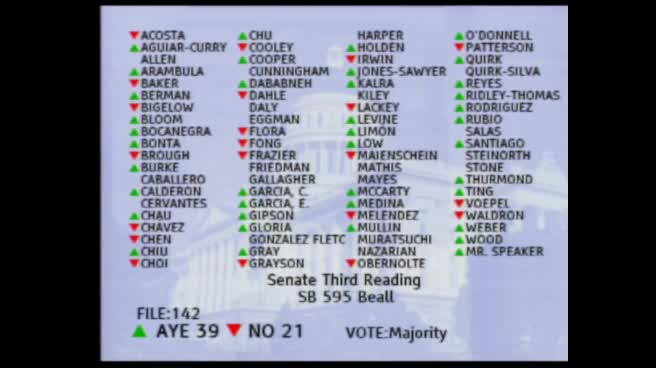
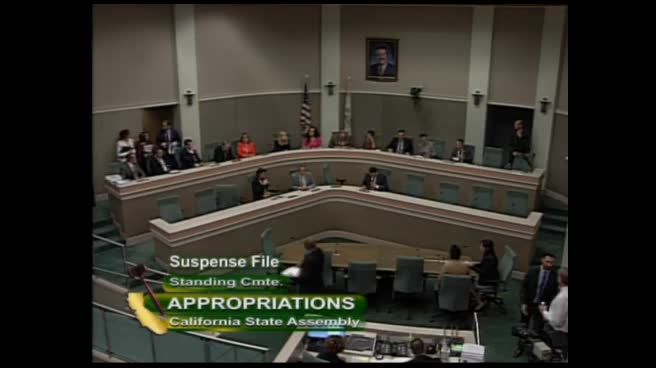
Bill Author

Bill Co-Author(s):