AB 664: Political Reform Act of 1974: campaign fund expenditures.
- Session Year: 2017-2018
- House: Assembly
- Latest Version Date: 2018-08-10
The Political Reform Act of 1974 prohibits a spouse or domestic partner of an elected officer or a candidate for elective office from receiving, in exchange for services rendered, compensation from campaign funds held by a controlled committee of the officer or candidate.
This bill would additionally prohibit a parent, grandparent, sibling, child, or grandchild of an elected officer or a candidate for elective office from receiving, in exchange for furnished or promised goods, services, facilities, or anything of value, compensation from campaign funds held by a controlled committee of that officer or candidate which exceeds the fair market value of that item. The bill would also prohibit the payment of financial or material compensation beyond fair market value from campaign funds held by a controlled committee of an elected officer or candidate for elective office, in exchange for services rendered, to a vendor if a parent, grandparent, sibling, child, or grandchild of that officer or candidate has an interest in, or is employed by, the vendor.
A violation of the act may be punished as a misdemeanor. By creating a new crime, this bill would impose a state-mandated local program.
The California Constitution requires the state to reimburse local agencies and school districts for certain costs mandated by the state. Statutory provisions establish procedures for making that reimbursement.
This bill would provide that no reimbursement is required by this act for a specified reason.
The Political Reform Act of 1974, an initiative measure, provides that the Legislature may amend the act to further the acts purposes upon a 2/3 vote of each house of the Legislature and compliance with specified procedural requirements.
This bill would declare that it furthers the purposes of the act.
The Political Reform Act of 1974 prohibits a spouse or domestic partner of an elected officer or a candidate for elective office from receiving, in exchange for services rendered, compensation from campaign funds held by a controlled committee of the officer or candidate.
This bill would prohibit a parent, grandparent, sibling, child, or grandchild of an elected officer or a candidate for elective office from receiving, in exchange for furnished or promised goods, services, facilities, or anything of value, compensation from campaign funds held by a controlled committee of that officer or candidate which exceeds the fair market value of that item. The bill would also prohibit the payment of financial or material compensation beyond fair market value from campaign funds held by a controlled committee of an elected officer or candidate for elective office, in exchange for services rendered, to any a vendor that is majority-owned or controlled by any spouse or domestic partner, if a parent, grandparent, sibling, child, or grandchild of that officer or candidate. candidate has an interest in, or is employed by, the vendor.
A violation of the act may be punished as a misdemeanor. By creating a new crime, this bill would impose a state-mandated local program.
The California Constitution requires the state to reimburse local agencies and school districts for certain costs mandated by the state. Statutory provisions establish procedures for making that reimbursement.
This bill would provide that no reimbursement is required by this act for a specified reason.
The Political Reform Act of 1974, an initiative measure, provides that the Legislature may amend the act to further the acts purposes upon a 2/3 vote of each house of the Legislature and compliance with specified procedural requirements.
This bill would declare that it furthers the purposes of the act.
The Political Reform Act of 1974 prohibits a spouse or domestic partner of an elected officer or a candidate for elective office from receiving, in exchange for services rendered, compensation from campaign funds held by a controlled committee of the officer or candidate.
This bill would prohibit a parent, grandparent, sibling, child, or grandchild of an elected officer or a candidate for elective office from receiving, in exchange for goods, services, facilities, or anything of value other than money rendered, value, compensation from campaign funds held by a controlled committee of that officer or candidate which exceeds the fair market value of that item. The bill would also prohibit the payment of financial or material compensation beyond fair market value from campaign funds held by a controlled committee of an elected officer or candidate for elective office, in exchange for services rendered, to any vendor that is majority-owned or controlled by any spouse or domestic partner, parent, grandparent, sibling, child, or grandchild of that officer or candidate.
A violation of the act may be punished as a misdemeanor. By creating a new crime, this bill would impose a state-mandated local program.
The California Constitution requires the state to reimburse local agencies and school districts for certain costs mandated by the state. Statutory provisions establish procedures for making that reimbursement.
This bill would provide that no reimbursement is required by this act for a specified reason.
The Political Reform Act of 1974, an initiative measure, provides that the Legislature may amend the act to further the acts purposes upon a 2/3 vote of each house of the Legislature and compliance with specified procedural requirements.
This bill would declare that it furthers the purposes of the act.
The Political Reform Act of 1974 prohibits a spouse or domestic partner of an elected officer or a candidate for elective office from receiving, in exchange for services rendered, compensation from campaign funds held by a controlled committee of the officer or candidate.
This bill would extend this prohibition to also include a prohibit a parent, grandparent, sibling, child, or grandchild of an elected officer or a candidate for elective office. office from receiving, in exchange for goods, services, facilities, or anything of value other than money rendered, compensation from campaign funds held by a controlled committee of that officer or candidate which exceeds the fair market value of that item. The bill would also prohibit the payment of financial or material compensation beyond fair market value from campaign funds held by a controlled committee of an elected officer or candidate for elective office, in exchange for services rendered, to any vendor that is majority-owned or controlled by any spouse or domestic partner, parent, grandparent, sibling, child, or grandchild of that officer or candidate.
A violation of the act may be punished as a misdemeanor. By creating a new crime, this bill would impose a state-mandated local program.
The California Constitution requires the state to reimburse local agencies and school districts for certain costs mandated by the state. Statutory provisions establish procedures for making that reimbursement.
This bill would provide that no reimbursement is required by this act for a specified reason.
The Political Reform Act of 1974, an initiative measure, provides that the Legislature may amend the act to further the acts purposes upon a 2/3 vote of each house of the Legislature and compliance with specified procedural requirements.
This bill would declare that it furthers the purposes of the act.
The Political Reform Act of 1974 requires that contributions deposited into a campaign account for a candidate for elective office be held in trust for expenses associated with the election of the candidate or for expenses associated with holding office. The act imposes limitations on certain expenditures as not being within the lawful execution of this trust depending on the relation between the expenditure and a political, legislative, or governmental purpose, as specified prohibits a spouse or domestic partner of an elected officer or a candidate for elective office from receiving, in exchange for services rendered, compensation from campaign funds held by a controlled committee of the officer or candidate.
This bill would extend this prohibition to also include a grandparent, sibling, child, or grandchild of an elected officer or a candidate for elective office. The bill would also prohibit the payment of financial or material compensation from campaign funds held by a controlled committee of an elected officer or candidate for elective office, in exchange for services rendered, to any parent, vendor that is majority-owned or controlled by any spouse or domestic partner, parent, grandparent, sibling, child, or grandchild of that officer or candidate. The bill would define the terms child and parent for these purposes.
A violation of the act may be punished as a misdemeanor. By creating a new crime, this bill would impose a state-mandated local program.
The California Constitution requires the state to reimburse local agencies and school districts for certain costs mandated by the state. Statutory provisions establish procedures for making that reimbursement.
This bill would provide that no reimbursement is required by this act for a specified reason.
The Political Reform Act of 1974, an initiative measure, provides that the Legislature may amend the act to further the acts purposes upon a 2/3 vote of each house of the Legislature and compliance with specified procedural requirements.
This bill would declare that it furthers the purposes of the act.
The Political Reform Act of 1974 requires that contributions deposited into a campaign account for a candidate for elective office be held in trust for expenses associated with the election of the candidate or for expenses associated with holding office. The act imposes limitations on certain expenditures as not being within the lawful execution of this trust depending on the relation between the expenditure and a political, legislative, or governmental purpose, as specified.
This bill would prohibit the payment of financial or material compensation from campaign funds held by a controlled committee of an elected officer or candidate for elective office, in exchange for services rendered, to any parent, spouse or domestic partner, grandparent, sibling, child, or grandchild of that officer or candidate. The bill would define the terms child and parent for these purposes.
A violation of the act may be punished as a misdemeanor. By creating a new crime, this bill would impose a state-mandated local program.
The California Constitution requires the state to reimburse local agencies and school districts for certain costs mandated by the state. Statutory provisions establish procedures for making that reimbursement.
This bill would provide that no reimbursement is required by this act for a specified reason.
The Political Reform Act of 1974, an initiative measure, provides that the Legislature may amend the act to further the acts purposes upon a 2/3 vote of each house of the Legislature and compliance with specified procedural requirements.
This bill would declare that it furthers the purposes of the act.
(a)A spouse or domestic partner of an elected officer or a candidate for elective office shall not receive, in exchange for services rendered, compensation from campaign funds held by a controlled committee of the elected officer or candidate for elective office.
(b)A parent, grandparent, sibling, child, or grandchild of an elected officer or a candidate for elective office shall not receive, in exchange for furnished or promised goods, services, facilities, or anything of value, compensation from campaign funds held by a controlled committee of the elected officer or candidate for elective office that exceeds the fair market value, as defined in Section 82025.5, of the exchanged item.
(c)Financial or material compensation from campaign funds held by a controlled committee of an elected officer or candidate for elective office shall not be paid beyond fair market value, as defined in Section 82025.5, in exchange for services rendered, to a vendor if a parent, grandparent, sibling, child, or grandchild of that officer or candidate has an interest in, or is employed by, the vendor.
(d)Subdivisions (b) and (c) shall not be construed to authorize a controlled committee to pay campaign funds in excess of fair market value, as defined in Section 82025.5, in exchange for goods, services, facilities, or anything of value, to any person or vendor.
SEC. 2.No reimbursement is required by this act pursuant to Section 6 of Article XIIIB of the California Constitution because the only costs that may be incurred by a local agency or school district will be incurred because this act creates a new crime or infraction, eliminates a crime or infraction, or changes the penalty for a crime or infraction, within the meaning of Section 17556 of the Government Code, or changes the definition of a crime within the meaning of Section 6 of Article XIIIB of the California Constitution.
SEC. 3.The Legislature finds and declares that this bill furthers the purposes of the Political Reform Act of 1974 within the meaning of subdivision (a) of Section 81012 of the Government Code.
(a)A spouse or domestic partner of an elected officer or a candidate for elective office shall not receive, in exchange for services rendered, compensation from campaign funds held by a controlled committee of the elected officer or candidate for elective office.
(b)A parent, grandparent, sibling, child, or grandchild of an elected officer or a candidate for elective office shall not receive, in exchange for furnished or promised goods, services, facilities, or anything of value, compensation from campaign funds held by a controlled committee of the elected officer or candidate for elective office that exceeds the fair market value, as defined in Section 82025.5, of the exchanged item.
(c)Financial or material compensation from campaign funds held by a controlled committee of an elected officer or candidate for elective office shall not be paid beyond fair market value, as defined in Section 82025.5, in exchange for services rendered, to any a vendor that is majority-owned or controlled by any spouse or domestic partner, if a parent, grandparent, sibling, child, or grandchild of that officer or candidate. candidate has an interest in, or is employed by, the vendor.
(d)Nothing in subdivision (b) or (c) shall Subdivisions (b) and (c) shall not be construed to authorize a controlled committee to pay campaign funds in excess of fair market value, as defined in Section 82025.5, in exchange for goods, services, facilities, or anything of value, to any person or vendor.
SEC. 2.No reimbursement is required by this act pursuant to Section 6 of Article XIIIB of the California Constitution because the only costs that may be incurred by a local agency or school district will be incurred because this act creates a new crime or infraction, eliminates a crime or infraction, or changes the penalty for a crime or infraction, within the meaning of Section 17556 of the Government Code, or changes the definition of a crime within the meaning of Section 6 of Article XIIIB of the California Constitution.
SEC. 3.The Legislature finds and declares that this bill furthers the purposes of the Political Reform Act of 1974 within the meaning of subdivision (a) of Section 81012 of the Government Code.
(a)A spouse or domestic partner of an elected officer or a candidate for elective office shall not receive, in exchange for services rendered, compensation from campaign funds held by a controlled committee of the elected officer or candidate for elective office.
(b)A parent, grandparent, sibling, child, or grandchild of an elected officer or a candidate for elective office shall not receive, in exchange for goods, services, facilities facilities, or anything of value other than money rendered, value, compensation from campaign funds held by a controlled committee of the elected officer or candidate for elective office that exceeds the fair market value, as defined in Section 82025.5, of the exchanged item.
(c)Financial or material compensation from campaign funds held by a controlled committee of an elected officer or candidate for elective office shall not be paid beyond fair market value, as defined in Section 82025.5, in exchange for services rendered, to any vendor that is majority-owned or controlled by any spouse or domestic partner, parent, grandparent, sibling, child, or grandchild of that officer or candidate.
(d)Nothing in subdivision (b) or (c) shall be construed to authorize a controlled committee to pay campaign funds in excess of fair market value, as defined in Section 82025.5, in exchange for goods, services, facilities, or anything of value, to any person or vendor.
SEC. 2.No reimbursement is required by this act pursuant to Section 6 of Article XIIIB of the California Constitution because the only costs that may be incurred by a local agency or school district will be incurred because this act creates a new crime or infraction, eliminates a crime or infraction, or changes the penalty for a crime or infraction, within the meaning of Section 17556 of the Government Code, or changes the definition of a crime within the meaning of Section 6 of Article XIIIB of the California Constitution.
SEC. 3.The Legislature finds and declares that this bill furthers the purposes of the Political Reform Act of 1974 within the meaning of subdivision (a) of Section 81012 of the Government Code.
(a)A spouse or domestic partner, parent, grandparent, sibling, child, or grandchild of an elected officer or a candidate for elective office shall not receive, in exchange for services rendered, compensation from campaign funds held by a controlled committee of the elected officer or candidate for elective office.
(b)A parent, grandparent, sibling, child, or grandchild of an elected officer or a candidate for elective office shall not receive, in exchange for goods, services, facilities or anything of value other than money rendered, compensation from campaign funds held by a controlled committee of the elected officer or candidate for elective office that exceeds the fair market value, as defined in Section 82025.5, of the exchanged item.
(b)(c)Financial or material compensation from campaign funds held by a controlled committee of an elected officer or candidate for elective office shall not be paid, paid beyond fair market value, as defined in Section 82025.5, in exchange for services rendered, to any vendor that is majority-owned or controlled by any spouse or domestic partner, parent, grandparent, sibling, child, or grandchild of that officer or candidate.
SEC. 2.No reimbursement is required by this act pursuant to Section 6 of Article XIIIB of the California Constitution because the only costs that may be incurred by a local agency or school district will be incurred because this act creates a new crime or infraction, eliminates a crime or infraction, or changes the penalty for a crime or infraction, within the meaning of Section 17556 of the Government Code, or changes the definition of a crime within the meaning of Section 6 of Article XIIIB of the California Constitution.
SEC. 3.The Legislature finds and declares that this bill furthers the purposes of the Political Reform Act of 1974 within the meaning of subdivision (a) of Section 81012 of the Government Code.
(a)A spouse or domestic partner, parent, grandparent, sibling, child, or grandchild of an elected officer or a candidate for elective office shall not receive, in exchange for services rendered, compensation from campaign funds held by a controlled committee of the elected officer or candidate for elective office.
(b)Financial or material compensation from campaign funds held by a controlled committee of an elected officer or candidate for elective office shall not be paid, in exchange for services rendered, to any vendor that is majority-owned or controlled by any spouse or domestic partner, parent, grandparent, sibling, child, or grandchild of that officer or candidate.
SECTION 1.Section 89512.3 is added to the Government Code, to read:89512.3.(a) Financial or material compensation from campaign funds held by a controlled committee of an elected officer or candidate for elective office shall not be paid, in exchange for services rendered, to any parent, spouse or domestic partner, grandparent, sibling, child, or grandchild of that officer or candidate.(b)For purposes of this section, the terms child and parent shall have the same meanings as those set forth in Section 12945.2.SEC. 2.No reimbursement is required by this act pursuant to Section 6 of Article XIIIB of the California Constitution because the only costs that may be incurred by a local agency or school district will be incurred because this act creates a new crime or infraction, eliminates a crime or infraction, or changes the penalty for a crime or infraction, within the meaning of Section 17556 of the Government Code, or changes the definition of a crime within the meaning of Section 6 of Article XIIIB of the California Constitution.
SEC. 3.The Legislature finds and declares that this bill furthers the purposes of the Political Reform Act of 1974 within the meaning of subdivision (a) of Section 81012 of the Government Code.
(a) Financial or material compensation from campaign funds held by a controlled committee of an elected officer or candidate for elective office shall not be paid, in exchange for services rendered, to any parent, spouse or domestic partner, grandparent, sibling, child, or grandchild of that officer or candidate.
(b)For purposes of this section, the terms child and parent shall have the same meanings as those set forth in Section 12945.2.
SEC. 2.No reimbursement is required by this act pursuant to Section 6 of Article XIIIB of the California Constitution because the only costs that may be incurred by a local agency or school district will be incurred because this act creates a new crime or infraction, eliminates a crime or infraction, or changes the penalty for a crime or infraction, within the meaning of Section 17556 of the Government Code, or changes the definition of a crime within the meaning of Section 6 of Article XIIIB of the California Constitution.
SEC. 3.The Legislature finds and declares that this bill furthers the purposes of the Political Reform Act of 1974 within the meaning of subdivision (a) of Section 81012 of the Government Code.
|
Date
|
Status
|
|---|---|
| Aug 28, 2018 | Consideration of Governor's veto pending. |
| Aug 27, 2018 | Vetoed by Governor. |
| Aug 14, 2018 | Enrolled and presented to the Governor at 4 p.m. |
| Aug 9, 2018 | Senate amendments concurred in. To Engrossing and Enrolling. |
| Aug 7, 2018 | In Assembly. Concurrence in Senate amendments pending. May be considered on or after August 9 pursuant to Assembly Rule 77. |
| Aug 6, 2018 | Read third time. Passed. Ordered to the Assembly. |
| Jul 3, 2018 | Read second time. Ordered to third reading. |
| Jul 2, 2018 | From committee: Be ordered to second reading pursuant to Senate Rule 28.8. |
| Jun 20, 2018 | From committee: Do pass and re-refer to Com. on APPR. (Ayes 5. Noes 0.) (June 19). Re-referred to Com. on APPR. |
| Jun 12, 2018 | From committee chair, with author's amendments: Amend, and re-refer to committee. Read second time, amended, and re-referred to Com. on E. & C.A. |
| May 2, 2018 | In committee: Set, first hearing. Hearing canceled at the request of author. |
| Apr 19, 2018 | Referred to Com. on E. & C.A. |
| Jan 29, 2018 | In Senate. Read first time. To Com. on RLS. for assignment. |
| Jan 29, 2018 | Read third time. Passed. Ordered to the Senate. |
| Jan 22, 2018 | Read second time. Ordered to Consent Calendar. |
| Jan 18, 2018 | From committee: Do pass. To Consent Calendar. (Ayes 17. Noes 0.) (January 18). |
| Jan 12, 2018 | Re-referred to Com. on APPR. |
| Jan 11, 2018 | Read second time and amended. |
| Jan 10, 2018 | From committee: Amend, and do pass as amended and re-refer to Com. on APPR. (Ayes 7. Noes 0.) (January 10). |
| Jan 4, 2018 | Re-referred to Com. on E. & R. |
| Jan 3, 2018 | From committee chair, with author's amendments: Amend, and re-refer to Com. on E. & R. Read second time and amended. |
| Apr 26, 2017 | In committee: Set, first hearing. Failed passage. Reconsideration granted. |
| Apr 19, 2017 | Re-referred to Com. on E. & R. |
| Apr 18, 2017 | From committee chair, with author's amendments: Amend, and re-refer to Com. on E. & R. Read second time and amended. |
| Mar 2, 2017 | Referred to Com. on E. & R. |
| Feb 15, 2017 | From printer. May be heard in committee March 17. |
| Feb 14, 2017 | Read first time. To print. |
|
Date
|
Description
|
Location
|
Votes
|
|
|---|---|---|---|---|
| Aug 9, 2018 | AB 664 STEINORTH Concurrence in Senate Amendments | Assembly Floor |
Passed |
|
| Aug 6, 2018 | Assembly 3rd Reading AB664 Steinorth By Stern | Senate Floor |
Passed |
|
| Jun 19, 2018 | Do pass, but first be re-referred to the Committee on [Appropriations] | Senate Standing Committee on Elections and Constitutional Amendments |
Passed |
|
| Jan 29, 2018 | AB 664 STEINORTH Consent Calendar Second Day Regular Session | Assembly Floor |
Passed |
|
| Jan 18, 2018 | Do pass. To Consent Calendar. | Assembly Standing Committee on Appropriations |
Passed |
|
| Jan 10, 2018 | Do pass as amended and be re-referred to the Committee on [Appropriations] | Assembly Standing Committee on Elections and Redistricting |
Passed |
|
| Apr 26, 2017 | Reconsideration. | Assembly Standing Committee on Elections and Redistricting |
Passed |
|
| Apr 26, 2017 | Do pass and be re-referred to the Committee on [Appropriations] | Assembly Standing Committee on Elections and Redistricting |
Failed |
This list shows positions taken on this bill by organizations on the date displayed, which is linked to the original source.
Positions by individuals are not included.
|
Organization
|
Position
|
Date
|
|---|---|---|
| California Common Cause | ** Support | Jul 3, 2018 |
| Fair Political Practices Commission | ** Against | Jun 18, 2018 |
GOVERNOR'S VETO
GV Bill Id:AB 664
Author:(Steinorth)
As Enrolled Ver:August 10, 2018
2/3 vote
ASSEMBLY: | 75-0 | (January 29, 2018) | SENATE: | 37-0 | (August 6, 2018) |
ASSEMBLY: | 77-0 | (August 9, 2018) |
Original Committee Reference: E. & R.
SUMMARY: Prohibits a candidate controlled committee from paying an amount greater than fair market value for goods, services, facilities, or anything else of value if the payment is made to specified family members of the candidate or elected officer who controls the committee. Specifically, this bill:
- Prohibits a parent, grandparent, sibling, child, or grandchild of an elected officer or a candidate for elective office from receiving compensation in exchange for furnished or promised goods, services, facilities, or anything else of value, from campaign funds held by a controlled committee of the elected officer or candidate, if that compensation exceeds the fair market value of the exchanged item.
- Prohibits financial or material compensation from being paid beyond fair market value from campaign funds held by a controlled committee of an elected officer or a candidate for elective office, in exchange for services rendered, to a vendor if a parent, grandparent, sibling, child, or grandchild of the elected officer or candidate has an interest in, or is employed by, the vendor.
- Specifies that nothing in this bill shall be construed to authorize a committee to pay campaign funds in excess of fair market value in exchange for goods, services, facilities, or anything of value, to any person or vendor.
The Senate amendments make technical and clarifying changes.
FISCAL EFFECT: According to the Senate Appropriations Committee, pursuant to Senate Rule 28.8, negligible state costs.
COMMENTS: According to the author, "AB 664 seeks to hold legislative candidates to a higher standard, while clarifying California Fair Political Practices Commission investigations. This bill would amend current Government Code 84307.5 to prevent immediate family members of candidates for public office, as well as vendors owned by immediate family members, from receiving compensation, beyond fair market value, from campaign contributions."
Existing state law generally requires that funds held by campaign committees be used only for political, legislative, and governmental purposes. In interpreting these laws, the Fair Political Practices Commission (FPPC) has advised that payments for services provided to a campaign committee generally must reflect the fair market value of the services provided (Harden Advice Letter, No. A-90-498). This requirement ensures that campaign funds – regardless of the recipient of those funds – are used for expenses associated with the candidate seeking or holding office. In applying that advice, the FPPC further advised that nothing in the Political Reform Act (PRA) prohibits a candidate's controlled committee from contracting with or hiring a non-dependent child of the candidate, as long as the non-dependent child was paid fair market value for the services provided to the committee (Tierney Advice Letter, No. A-04-094).
This bill effectively codifies the FPPC's advice that a candidate controlled committee is prohibited from paying an amount greater than fair market value for goods, services, facilities, or anything else of value if the payment is made to specified family members of the candidate or elected officer who controls the committee.
California voters passed an initiative, Proposition 9, in 1974 that created the FPPC and codified significant restrictions and prohibitions on candidates, officeholders and lobbyists. That initiative is commonly known as the PRA. Amendments to the PRA that are not submitted to the voters, such as those contained in this bill, must further the purposes of the initiative and require a two-thirds vote of both houses of the Legislature.
Please see the policy committee analysis for a full discussion of this bill.
This bill prohibits a candidate-controlled committee from paying an amount greater than fair market value for goods and services.
This proposed new authority for the Fair Political Practices Commission concerns me. Will the Commission now examine campaigns to determine whether they pay the rightamount to their staffers and consultants? Would this require salary surveys?
This strikes me as a personnel decision more properly left to the candidate and the campaign manager, and not fodder for accusations made in the heat of a campaign.
Many have said that I pay far below "fair market value." I say everyone else pays too much. Whoever is right, this decision is not one for the Fair Political Practices Commission.
For these reasons, I cannot sign this bill.
Analysis Prepared by: Ethan Jones / E. & R. / (916) 319-2094 FN: 0004992
CONCURRENCE IN SENATE AMENDMENTS
CSA1 Bill Id:AB 664
Author:(Steinorth)
As Amended Ver:June 12, 2018
2/3 vote
ASSEMBLY: | 75-0 | (January 29, 2018) | SENATE: | 37-0 | (August 6, 2018) |
Original Committee Reference: E. & R.
SUMMARY: Prohibits a candidate controlled committee from paying an amount greater than fair market value for goods, services, facilities, or anything else of value if the payment is made to specified family members of the candidate or elected officer who controls the committee. Specifically, this bill:
- Prohibits a parent, grandparent, sibling, child, or grandchild of an elected officer or a candidate for elective office from receiving compensation in exchange for furnished or promised goods, services, facilities, or anything else of value, from campaign funds held by a controlled committee of the elected officer or candidate, if that compensation exceeds the fair market value of the exchanged item.
- Prohibits financial or material compensation from being paid beyond fair market value from campaign funds held by a controlled committee of an elected officer or a candidate for elective office, in exchange for services rendered, to a vendor if a parent, grandparent, sibling, child, or grandchild of the elected officer or candidate has an interest in, or is employed by, the vendor.
- Specifies that nothing in this bill shall be construed to authorize a committee to pay campaign funds in excess of fair market value in exchange for goods, services, facilities, or anything of value, to any person or vendor.
The Senate amendments make technical and clarifying changes.
FISCAL EFFECT: According to the Senate Appropriations Committee, pursuant to Senate Rule 28.8, negligible state costs.
COMMENTS: According to the author, "AB 664 seeks to hold legislative candidates to a higher standard, while clarifying California Fair Political Practices Commission investigations. This bill would amend current Government Code 84307.5 to prevent immediate family members of candidates for public office, as well as vendors owned by immediate family members, from receiving compensation, beyond fair market value, from campaign contributions."
Existing state law generally requires that funds held by campaign committees be used only for political, legislative, and governmental purposes. In interpreting these laws, the Fair Political Practices Commission (FPPC) has advised that payments for services provided to a campaign committee generally must reflect the fair market value of the services provided (Harden Advice Letter, No. A-90-498). This requirement ensures that campaign funds – regardless of the recipient of those funds – are used for expenses associated with the candidate seeking or holding office. In applying that advice, the FPPC further advised that nothing in the Political Reform Act (PRA) prohibits a candidate's controlled committee from contracting with or hiring a non-dependent child of the candidate, as long as the non-dependent child was paid fair market value for the services provided to the committee (Tierney Advice Letter, No. A-04-094).
This bill effectively codifies the FPPC's advice that a candidate controlled committee is prohibited from paying an amount greater than fair market value for goods, services, facilities, or anything else of value if the payment is made to specified family members of the candidate or elected officer who controls the committee.
California voters passed an initiative, Proposition 9, in 1974 that created the FPPC and codified significant restrictions and prohibitions on candidates, officeholders and lobbyists. That initiative is commonly known as the PRA. Amendments to the PRA that are not submitted to the voters, such as those contained in this bill, must further the purposes of the initiative and require a two-thirds vote of both houses of the Legislature.
Please see the policy committee analysis for a full discussion of this bill.
Analysis Prepared by: Ethan Jones / E. & R. / (916) 319-2094 FN: 0003670
Office of Senate Floor Analyses (916) 651-1520 Fax: (916) 327-4478 | AB |
THIRD READING
Bill No: AB 664
:
SENATE ELECTIONS & C.A. COMMITTEE: 5-0, 6/19/18
AYES: Stern, Anderson, Allen, Hertzberg, Leyva
SENATE APPROPRIATIONS COMMITTEE: Senate Rule 28.8
ASSEMBLY FLOOR: 75-0, 1/29/18 (Consent) - See last page for vote
DIGEST:
This bill prohibits a candidate controlled committee from paying an amount greater than fair market value for goods, services, facilities, or anything else of value if the payment is made to specified family members of the candidate or elected officer who controls the committee.
Existing law:
- Creates the Fair Political Practices Commission (FPPC), and makes it responsible for the impartial, effective administration and implementation of the Political Reform Act (PRA).
- Provides that all contributions deposited into the campaign account of a candidate for elective state office are deemed to be held in trust for expenses associated with the election of the candidate or for expenses associated with holding office.
- Prohibits a campaign committee from making an expenditure unless it is reasonably related to a political, legislative, or governmental purpose, except as specified.
- Prohibits the use of campaign funds for an expenditure that confers a substantial personal benefit on any individual or individuals with authority to approve the expenditure unless the expenditure is directly related to a political, legislative, or governmental purpose.
- Prohibits the use of campaign funds to pay for or reimburse the cost of professional services unless the services are directly related to a political, legislative, or governmental purpose.
- Prohibits a spouse or domestic partner of an elected officer or a candidate for elective office from receiving compensation in exchange for services rendered from campaign funds held by a controlled committee of the elected officer or candidate.
- Prohibits the use of campaign funds to compensate a candidate or elected officer for the performance of political, legislative, or governmental activities, except for reimbursement of out-of-pocket expenses incurred for political, legislative, or governmental purposes.
- Defines "fair market value," for the purposes of the PRA, as the estimated fair market value of goods, services, facilities or anything of value other than money. Provides that whenever the amount of goods, services, facilities, or anything of value other than money is required to be reported under the PRA, the amount reported shall be the fair market value, and a description of the goods, services, facilities, or other thing of value shall be appended to the report or statement.
- Provides that any person who knowingly or willfully violates the PRA is guilty of a misdemeanor.
This bill:
- Prohibits a parent, grandparent, sibling, child, or grandchild of an elected officer or a candidate for elective office from receiving compensation in exchange for furnished or promised goods, services, facilities, or anything else of value, from campaign funds held by a controlled committee of the elected officer or candidate, if that compensation exceeds the fair market value of the exchanged item.
- Prohibits financial or material compensation from being paid beyond fair market value from campaign funds held by a controlled committee of an elected officer or a candidate for elective office, in exchange for services rendered, to a vendor if a parent, grandparent, sibling, child, or grandchild of the elected officer or candidate has an interest in, or is employed by, the vendor.
- Clarifies that these provisions shall not be construed to authorize a controlled committee to pay campaign funds in excess of fair market value in exchange for goods, services, facilities, or anything of value, to any person or vendor.
Background
Campaign Services and Fair Market Value. As detailed above, existing state law generally requires that funds held by campaign committees be used only for political, legislative, and governmental purposes. In interpreting these laws, the FPPC has advised that payments for services provided to a campaign committee generally must reflect the fair market value of the services provided (Harden Advice Letter, No. A-90-498). This requirement ensures that campaign funds -- regardless of the recipient of those funds -- are used for expenses associated with the candidate seeking or holding office. In applying that advice, the FPPC further advised that nothing in the PRA prohibits a candidate's controlled committee from contracting with or hiring a non-dependent child of the candidate, as long as the nondependent child was paid fair market value for the services provided to the committee (Tierney Advice Letter, No. A-04-094).
In light of the FPPC's advice, if a person was paid by a campaign committee for work that was not actually performed, or was paid an amount that exceeded the fair market value of the work performed, such a payment is prohibited under existing law.
This bill effectively codifies the FPPC's advice that a candidate controlled committee is prohibited from paying an amount greater than fair market value for goods, services, facilities, or anything else of value if the payment is made to specified family members of the candidate or elected officer who controls the committee.
Background & Previous Legislation. California law recognizes that ethical concerns may arise when a candidate receives a personal financial benefit from contributions received by his or her campaign, and accordingly limits a candidate's use of campaign funds on expenditures that provide a personal financial benefit to the candidate. In general, the PRA requires most campaign expenditures to be reasonably related to a political, legislative, or governmental purpose. Expenditures of a candidate's or officer's campaign funds that confer a substantial personal benefit on that candidate or officer, however, must meet a higher standard, and be directly related to a political, legislative, or governmental purpose.
In certain situations, the PRA further restricts the expenditure of campaign funds even when those expenditures are directly related to a political, legislative, or governmental purpose. For example, the PRA prohibits campaign funds from being used to compensate a candidate or elected officer for the performance of political, legislative, or governmental activities, except for reimbursement of out-of-pocket expenses incurred for political, legislative, or governmental purposes. Furthermore, the PRA limits the amount of money that a candidate may loan to his or her own campaign. Those limits were put into place due to concerns that money raised by a candidate subsequent to an election to repay that candidate's personal loan to his or her campaign committee would go into the candidate's own pocket, indirectly resulting in campaign contributions becoming a candidate's personal funds.
Similar concerns led to the recent enactment of laws that prohibit a candidate from paying his or her spouse or domestic partner for professional services rendered to the candidate's campaign committee. Under California's community property laws, any income earned by a married person while living with his or her spouse generally is considered to be community property, which is jointly held by both spouses. As a result, when a candidate pays his or her spouse from the candidate's campaign committee, the campaign committee's payment indirectly becomes the candidate's personal property.
To address those concerns, SB 739 (Strickland, Chapter 360, Statutes of 2009) prohibited a spouse or domestic partner of an elected officer or a candidate for elective office from receiving compensation from campaign funds held by a controlled committee of the elected officer or candidate for services rendered in connection with fundraising for the benefit of the officeholder or candidate. Five years later, that law was expanded through the passage of AB 2320 (Fong, Chapter 902, Statutes of 2014), which prohibits an official's or candidate's spouse or domestic partner from being paid by the candidate's or official's campaign for any services rendered to the campaign, instead of prohibiting such payments only when the services provided to the campaign were for fundraising purposes.
Comments
- According to the author, “AB 664 seeks to hold legislative candidates to a higher standard, while clarifying California Fair Political Practice Commission investigations. This bill would amend current Government Code 84307.5 to prevent immediate family members of candidates for public office, as well as vendors owned by immediate family members, from receiving compensation, beyond fair market value, from campaign contributions.
“The Political Reform Act of 1974 (PRA) currently prevents a spouse or domestic partner of a candidate for elective office from receiving compensation from campaign funds in return for services rendered. The PRA also indicates that payments for services rendered “shall be the fair market value” of the service provided. However, the PRA does not prevent candidates from employing other family members, nor does it set guidelines to prevent excessive compensation to these family members.
“This deficiency in the law has led to conflicts of a similar nature to be mediated by the California Fair Political Practices Commission so that payment ‘is reasonable compensation for the services rendered.’ There has been a lack of clarity in FPPC investigations because this interpretation is not explicitly stated in the PRA. This loophole leaves room for unethical gifts of financial benefit to family members or organizations controlled by family members. AB 664 would strengthen the Political Reform Act by closing this loophole.”
Related/Prior Legislation
SB 739 (Strickland, Chapter 360, Statutes of 2009) prohibited a spouse or domestic partner of an elected officer or a candidate for elective office from receiving compensation from campaign funds held by a controlled committee of the elected officer or candidate for services rendered in connection with fundraising for the benefit of the officeholder or candidate.
AB 2320 (Fong, Chapter 902, Statutes of 2014) prohibited an official's or candidate's spouse or domestic partner from being paid by the candidate's or official's campaign for any services rendered to the campaign, instead of prohibiting such payments only when the services provided to the campaign were for fundraising purposes.
FISCAL EFFECT: Appropriation: Fiscal Com.: Local:
California Common Cause
ASSEMBLY FLOOR: 75-0, 1/29/18
AYES: Acosta, Aguiar-Curry, Travis Allen, Arambula, Baker, Berman, Bigelow, Bloom, Bonta, Brough, Burke, Caballero, Calderon, Carrillo, Cervantes, Chau, Chávez, Chen, Chiu, Choi, Chu, Cooley, Cooper, Cunningham, Dahle, Daly, Eggman, Flora, Fong, Frazier, Friedman, Cristina Garcia, Eduardo Garcia, Gipson, Gloria, Gonzalez Fletcher, Gray, Grayson, Harper, Holden, Irwin, Jones-Sawyer, Kalra, Kiley, Lackey, Levine, Limón, Low, Maienschein, Mathis, Mayes, Medina, Melendez, Mullin, Muratsuchi, Nazarian, Obernolte, O'Donnell, Patterson, Quirk, Quirk-Silva, Reyes, Rodriguez, Rubio, Salas, Santiago, Steinorth, Mark Stone, Thurmond, Ting, Voepel, Waldron, Weber, Wood, Rendon
NO VOTE RECORDED: Gallagher, McCarty
7/3/18 15:40:26
**** END ****
SENATE COMMITTEE ON
ELECTIONS AND CONSTITUTIONAL AMENDMENTS
Senator Henry Stern, Chair
2017 - 2018 Regular
Bill No: 664 Hearing Date: 6/19/18
Author: | Steinorth | ||
Version: | 6/12/18 | ||
Urgency: | Fiscal: | ||
Consultant: | |||
Subject:
DIGEST
This bill prohibits a candidate controlled committee from paying an amount greater than fair market value for goods, services, facilities, or anything else of value if the payment is made to specified family members of the candidate or elected officer who controls the committee.
ANALYSIS
Existing law:
- Creates the Fair Political Practices Commission (FPPC), and makes it responsible for the impartial, effective administration and implementation of the Political Reform Act (PRA).
- Provides that all contributions deposited into the campaign account of a candidate for elective state office are deemed to be held in trust for expenses associated with the election of the candidate or for expenses associated with holding office.
- Prohibits a campaign committee from making an expenditure unless it is reasonably related to a political, legislative, or governmental purpose, except as specified.
- Prohibits the use of campaign funds for an expenditure that confers a substantial personal benefit on any individual or individuals with authority to approve the expenditure unless the expenditure is directly related to a political, legislative, or governmental purpose.
- Prohibits the use of campaign funds to pay for or reimburse the cost of professional services unless the services are directly related to a political, legislative, or governmental purpose.
- Prohibits a spouse or domestic partner of an elected officer or a candidate for elective office from receiving compensation in exchange for services rendered from campaign funds held by a controlled committee of the elected officer or candidate.
- Prohibits the use of campaign funds to compensate a candidate or elected officer for the performance of political, legislative, or governmental activities, except for reimbursement of out-of-pocket expenses incurred for political, legislative, or governmental purposes.
- Defines "fair market value," for the purposes of the PRA, as the estimated fair market value of goods, services, facilities or anything of value other than money. Provides that whenever the amount of goods, services, facilities, or anything of value other than money is required to be reported under the PRA, the amount reported shall be the fair market value, and a description of the goods, services, facilities, or other thing of value shall be appended to the report or statement.
- Provides that any person who knowingly or willfully violates the PRA is guilty of a misdemeanor.
This bill:
- Prohibits a parent, grandparent, sibling, child, or grandchild of an elected officer or a candidate for elective office from receiving compensation in exchange for furnished or promised goods, services, facilities, or anything else of value, from campaign funds held by a controlled committee of the elected officer or candidate, if that compensation exceeds the fair market value of the exchanged item.
- Prohibits financial or material compensation from being paid beyond fair market value from campaign funds held by a controlled committee of an elected officer or a candidate for elective office, in exchange for services rendered, to a vendor if a parent, grandparent, sibling, child, or grandchild of the elected officer or candidate has an interest in, or is employed by, the vendor.
- Clarifies that these provisions shall not be construed to authorize a controlled committee to pay campaign funds in excess of fair market value in exchange for goods, services, facilities, or anything of value, to any person or vendor.
BACKGROUND
Campaign Services and Fair Market Value. As detailed above, existing state law generally requires that funds held by campaign committees be used only for political, legislative, and governmental purposes. In interpreting these laws, the FPPC has advised that payments for services provided to a campaign committee generally must reflect the fair market value of the services provided (Harden Advice Letter, No. A-90-498). This requirement ensures that campaign funds -- regardless of the recipient of those funds -- are used for expenses associated with the candidate seeking or holding office. In applying that advice, the FPPC further advised that nothing in the PRA prohibits a candidate's controlled committee from contracting with or hiring a non-dependent child of the candidate, as long as the nondependent child was paid fair market value for the services provided to the committee (Tierney Advice Letter, No. A-04-094).
In light of the FPPC's advice, if a person was paid by a campaign committee for work that was not actually performed, or was paid an amount that exceeded the fair market value of the work performed, such a payment is prohibited under existing law.
This bill effectively codifies the FPPC's advice that a candidate controlled committee is prohibited from paying an amount greater than fair market value for goods, services, facilities, or anything else of value if the payment is made to specified family members of the candidate or elected officer who controls the committee.
Background & Previous Legislation. California law recognizes that ethical concerns may arise when a candidate receives a personal financial benefit from contributions received by his or her campaign, and accordingly limits a candidate's use of campaign funds on expenditures that provide a personal financial benefit to the candidate. In general, the PRA requires most campaign expenditures to be reasonably related to a political, legislative, or governmental purpose. Expenditures of a candidate's or officer's campaign funds that confer a substantial personal benefit on that candidate or officer, however, must meet a higher standard, and be directly related to a political, legislative, or governmental purpose.
In certain situations, the PRA further restricts the expenditure of campaign funds even when those expenditures are directly related to a political, legislative, or governmental purpose. For example, the PRA prohibits campaign funds from being used to compensate a candidate or elected officer for the performance of political, legislative, or governmental activities, except for reimbursement of out-of-pocket expenses incurred for political, legislative, or governmental purposes. Furthermore, the PRA limits the amount of money that a candidate may loan to his or her own campaign. Those limits were put into place due to concerns that money raised by a candidate subsequent to an election to repay that candidate's personal loan to his or her campaign committee would go into the candidate's own pocket, indirectly resulting in campaign contributions becoming a candidate's personal funds.
Similar concerns led to the recent enactment of laws that prohibit a candidate from paying his or her spouse or domestic partner for professional services rendered to the candidate's campaign committee. Under California's community property laws, any income earned by a married person while living with his or her spouse generally is considered to be community property, which is jointly held by both spouses. As a result, when a candidate pays his or her spouse from the candidate's campaign committee, the campaign committee's payment indirectly becomes the candidate's personal property.
To address those concerns, SB 739 (Strickland), Chapter 360, Statutes of 2009, prohibited a spouse or domestic partner of an elected officer or a candidate for elective office from receiving compensation from campaign funds held by a controlled committee of the elected officer or candidate for services rendered in connection with fundraising for the benefit of the officeholder or candidate. Five years later, that law was expanded through the passage of AB 2320 (Fong), Chapter 902, Statutes of 2014, which prohibits an official's or candidate's spouse or domestic partner from being paid by the candidate's or official's campaign for any services rendered to the campaign, instead of prohibiting such payments only when the services provided to the campaign were for fundraising purposes.
COMMENTS
- According to the author: AB 664 seeks to hold legislative candidates to a higher standard, while clarifying California Fair Political Practice Commission investigations. This bill would amend current Government Code 84307.5 to prevent immediate family members of candidates for public office, as well as vendors owned by immediate family members, from receiving compensation, beyond fair market value, from campaign contributions.
The Political Reform Act of 1974 (PRA) currently prevents a spouse or domestic partner of a candidate for elective office from receiving compensation from campaign funds in return for services rendered. The PRA also indicates that payments for services rendered “shall be the fair market value” of the service provided. However, the PRA does not prevent candidates from employing other family members, nor does it set guidelines to prevent excessive compensation to these family members.
This deficiency in the law has led to conflicts of a similar nature to be mediated by the California Fair Political Practices Commission so that payment “is reasonable compensation for the services rendered.” There has been a lack of clarity in FPPC investigations because this interpretation is not explicitly stated in the PRA. This loophole leaves room for unethical gifts of financial benefit to family members or organizations controlled by family members. AB 664 would strengthen the Political Reform Act by closing this loophole. - Argument in Opposition: In a letter expressing that they oppose AB 664 unless it is amended, the Fair Political Practices Commission stated the following:
“The Commission expressed opposition to a loophole implied in subsection (c). The bill appears to permit payments greater than fair market value in situations where a family member may be a minority-owner of a vendor or an employee of a vendor. Additionally, subsection (c) permits a spouse or domestic partner to receive payments from campaign funds controlled by a candidate spouse which is in direct conflict with subsection (a). Subsection (a) prohibits any compensation to spouse or domestic partner from a spouse’s controlled committee.”
It should be noted however, that the most recent amendments to this bill address the FPPC’s concerns.
RELATED/PRIOR LEGISLATION
SB 739 (Strickland), Chapter 360, Statutes of 2009, prohibited a spouse or domestic partner of an elected officer or a candidate for elective office from receiving compensation from campaign funds held by a controlled committee of the elected officer or candidate for services rendered in connection with fundraising for the benefit of the officeholder or candidate.
AB 2320 (Fong), Chapter 902, Statutes of 2014, prohibited an official's or candidate's spouse or domestic partner from being paid by the candidate's or official's campaign for any services rendered to the campaign, instead of prohibiting such payments only when the services provided to the campaign were for fundraising purposes.
PRIOR ACTION
Assembly Floor: | 75 - 0 |
Assembly Appropriations Committee: | 17 - 0 |
Assembly Committee: | 7 - 0 |
POSITIONS
Sponsor: Author
Support: California Common Cause
Oppose: Fair Political Practices Commission (unless amended)
-- END --
Date of Hearing: January 18, 2018
ASSEMBLY COMMITTEE ON APPROPRIATIONS
Lorena Gonzalez Fletcher, Chair
ABPCA Bill Id:AB 664
Author:(Steinorth) – As Amended Ver:January 11, 2018
Policy Committee: | Elections and Redistricting | Vote: | 3 - 4 |
Elections and Redistricting | 7 - 0 | ||
|
|
Urgency: No State Mandated Local Program: Yes Reimbursable: No
SUMMARY:
This bill prohibits a candidate controlled committee from paying an amount greater than fair market value for goods, services, facilities, or anything else of value if the payment is made to specified family members of the candidate or elected officer who controls the committee.
FISCAL EFFECT:
Negligible fiscal effect as this bill codifies existing Fair Political Practices Commission (FPPC) advice.
COMMENTS:
Background and Purpose. The Political Reform Act of 1974 (PRA) currently prevents a spouse or domestic partner of a candidate for elective office from receiving compensation from campaign funds in return for services rendered. The PRA also indicates that payments for services rendered “shall be the fair market value” of the service provided. However, the PRA does not prevent candidates from employing other family members, nor does it set guidelines to prevent excessive compensation to these family members. In response to questions about this issue, the FPPC has issued advice that payment “is reasonable compensation for the services rendered.” However, because this interpretation is not explicitly stated in the PRA there could be a lack of clarity on how to comply with these rules. This bill would codify the existing FPPC advice and provide such clarity.
Analysis Prepared by: Jessica Peters / APPR. / (916) 319-2081
Date of Hearing: January 10, 2018
ASSEMBLY COMMITTEE ON ELECTIONS AND REDISTRICTING
Marc Berman, Chair
ABPCA Bill Id:AB 664 (
Author:Steinorth) – As Amended Ver:January 3, 2018
SUBJECT: Political Reform Act of 1974: campaign fund expenditures.
SUMMARY: Prohibits a candidate controlled committee from paying an amount greater than fair market value for goods, services, facilities, or anything else of value if the payment is made to specified family members of the candidate or elected officer who controls the committee. Specifically, this bill:
- Prohibits a parent, grandparent, sibling, child, or grandchild of an elected officer or a candidate for elective office from receiving compensation in exchange for goods, services, facilities, or anything else of value other than money rendered, from campaign funds held by a controlled committee of the elected officer or candidate, if that compensation exceeds the fair market value of the exchanged item.
- Prohibits financial or material compensation from being paid beyond fair market value from campaign funds held by a controlled committee of an elected officer or a candidate for elective office, in exchange for services rendered, to a vendor that is majority-owned or controlled by a spouse, domestic partner, parent, grandparent, sibling, child, or grandchild of the elected officer or candidate.
EXISTING LAW:
- Creates the Fair Political Practices Commission (FPPC), and makes it responsible for the impartial, effective administration and implementation of the Political Reform Act (PRA).
- Provides that all contributions deposited into the campaign account of a candidate for elective state office are deemed to be held in trust for expenses associated with the election of the candidate or for expenses associated with holding office.
- Prohibits a campaign committee from making an expenditure unless it is reasonably related to a political, legislative, or governmental purpose, except as specified.
- Prohibits the use of campaign funds for an expenditure that confers a substantial personal benefit on any individual or individuals with authority to approve the expenditure unless the expenditure is directly related to a political, legislative, or governmental purpose.
- Prohibits the use of campaign funds to pay for or reimburse the cost of professional services unless the services are directly related to a political, legislative, or governmental purpose.
- Prohibits the use of campaign funds for an expenditure that confers a substantial personal benefit on any individual or individuals with authority to approve the expenditure unless the expenditure is directly related to a political, legislative, or governmental purpose.
- Prohibits a spouse or domestic partner of an elected officer or a candidate for elective office from receiving compensation in exchange for services rendered from campaign funds held by a controlled committee of the elected officer or candidate.
- Prohibits the use of campaign funds to compensate a candidate or elected officer for the performance of political, legislative, or governmental activities, except for reimbursement of out-of-pocket expenses incurred for political, legislative, or governmental purposes.
- Defines "fair market value," for the purposes of the PRA, as the estimated fair market value of goods, services, facilities or anything of value other than money. Provides that whenever the amount of goods, services, facilities, or anything of value other than money is required to be reported under the PRA, the amount reported shall be the fair market value, and a description of the goods, services, facilities, or other thing of value shall be appended to the report or statement.
- Provides that any person who knowingly or willfully violates the PRA is guilty of a misdemeanor.
FISCAL EFFECT: Unknown. State-mandated local program; contains a crimes and infractions disclaimer.
COMMENTS:
- Prior Committee Consideration: In April of last year, the committee considered a prior version of this bill that would have prohibited specified family members of an elected officer or a candidate from receiving compensation in exchange for services rendered from campaign funds held by a controlled committee of the elected officer or candidate. This prohibition would have applied even in situations where the compensation paid was at or below the fair market value for the services rendered. That version of the bill was rejected by the committee by a vote of 3-4, and reconsideration was granted. Since that time, the bill has been amended to delete the prior provisions of the bill, and instead to prohibit a candidate controlled committee from paying specified family members of the candidate or elected officer more than fair market value for goods, services, facilities, or anything else of value.
- Purpose of the Bill: According to the author:
AB 664 seeks to hold legislative candidates to a higher standard, while clarifying California Fair Political Practices Commission investigations. This bill would amend current Government Code 84307.5 to prevent immediate family members of candidates for public office, as well as vendors owned by immediate family members, from receiving compensation, beyond fair market value, from campaign contributions.
The Political Reform Act of 1974 (PRA) currently prevents a spouse or domestic partner of a candidate for elective office from receiving compensation from campaign funds in return for services rendered. The PRA also indicates that payments for services rendered “shall be the fair market value” of the service provided. However, the PRA does not prevent candidates from employing other family members, nor does it set guidelines to prevent excessive compensation to these family members. This deficiency in the law has led to conflicts of a similar nature to be mediated by the California Fair Political Practices Commission so that payment “is reasonable compensation for the services rendered.” There has been a lack of clarity in FPPC investigations because this interpretation is not explicitly stated in the PRA. This loophole leaves room for unethical gifts of financial benefit to family members or organizations controlled by family members. AB 664 would strengthen the Political Reform Act by closing this loophole.
- Campaign Services and Fair Market Value: As detailed above, existing state law generally requires that funds held by campaign committees be used only for political, legislative, and governmental purposes. In interpreting these laws, the FPPC has advised that payments for services provided to a campaign committee generally must reflect the fair market value of the services provided (Harden Advice Letter, No. A-90-498). This requirement ensures that campaign funds—regardless of the recipient of those funds—are used for expenses associated with the candidate seeking or holding office. In applying that advice, the FPPC further advised that nothing in the PRA prohibits a candidate's controlled committee from contracting with or hiring a non-dependent child of the candidate, as long as the non-dependent child was paid fair market value for the services provided to the committee (Tierney Advice Letter, No. A-04-094). In light of the FPPC's advice, if a person was paid by a campaign committee for work that was not actually performed, or was paid an amount that exceeded the fair market value of the work performed, such a payment is prohibited under existing law.
This bill effectively codifies the FPPC's advice that a candidate controlled committee is prohibited from paying an amount greater than fair market value for goods, services, facilities, or anything else of value if the payment is made to specified family members of the candidate or elected officer who controls the committee. - Background & Previous Legislation: California law recognizes that ethical concerns may arise when a candidate receives a personal financial benefit from contributions received by his or her campaign, and accordingly limits a candidate's use of campaign funds on expenditures that provide a personal financial benefit to the candidate. In general, the PRA requires most campaign expenditures to be reasonably related to a political, legislative, or governmental purpose. Expenditures of a candidate's or officer's campaign funds that confer a substantial personal benefit on that candidate or officer, however, must meet a higher standard, and be directly related to a political, legislative, or governmental purpose.
In certain situations, the PRA further restricts the expenditure of campaign funds even when those expenditures are directly related to a political, legislative, or governmental purpose. For example, the PRA prohibits campaign funds from being used to compensate a candidate or elected officer for the performance of political, legislative, or governmental activities, except for reimbursement of out-of-pocket expenses incurred for political, legislative, or governmental purposes. Furthermore, the PRA limits the amount of money that a candidate may loan to his or her own campaign. Those limits were put into place due to concerns that money raised by a candidate subsequent to an election to repay that candidate's personal loan to his or her campaign committee would go into the candidate's own pocket, indirectly resulting in campaign contributions becoming a candidate's personal funds.
Similar concerns led to the recent enactment of laws that prohibit a candidate from paying his or her spouse or domestic partner for professional services rendered to the candidate's campaign committee. Under California's community property laws, any income earned by a married person while living with his or her spouse generally is considered to be community property, which is jointly held by both spouses. As a result, when a candidate pays his or her spouse from the candidate's campaign committee, the campaign committee's payment indirectly becomes the candidate's personal property. To address those concerns, SB 739 (Strickland), Chapter 360, Statutes of 2009, prohibited a spouse or domestic partner of an elected officer or a candidate for elective office from receiving compensation from campaign funds held by a controlled committee of the elected officer or candidate for services rendered in connection with fundraising for the benefit of the officeholder or candidate. Five years later, that law was expanded through the passage of AB 2320 (Fong), Chapter 902, Statutes of 2014, which prohibits an official's or candidate's spouse or domestic partner from being paid by the candidate's or official's campaign for any services rendered to the campaign, instead of prohibiting such payments only when the services provided to the campaign were for fundraising purposes. - Payments Above Fair Market Value to Non-Family Members and Suggested Amendment: As detailed above, the FPPC has advised that any payments made by a campaign committee for services provided to the committee must reflect the fair market value of the services provided. This bill, however, deals only with payments made by candidate controlled committees to specified family members of the controlling candidate.
The fact that the provisions of this bill are limited to payments made by candidate controlled committees to specified family members of the controlling candidate could create an implication that payments for services in excess of fair market value are permitted when the recipient is not a family member of the candidate. This does not appear to be consistent with the author's intent. To clarify this point, the author and the committee may wish to consider an amendment to add language specifying that this bill is not intended to be construed to authorize campaign committees to make payments in excess of fair market value to entities not expressly covered by the bill.
- Technical Amendment: To clarify ambiguous language in this bill, committee staff recommends the following technical amendment:
On page 2, line 11, strike out "other than money rendered".
- Political Reform Act of 1974: California voters passed an initiative, Proposition 9, in 1974 that created the FPPC and codified significant restrictions and prohibitions on candidates, officeholders and lobbyists. That initiative is commonly known as the PRA. Amendments to the PRA that are not submitted to the voters, such as those contained in this bill, must further the purposes of the initiative and require a two-thirds vote of both houses of the Legislature.
REGISTERED SUPPORT / OPPOSITION:
Support
None on file.
Opposition
None on file.
Analysis Prepared by: Ethan Jones / E. & R. / (916) 319-2094
Date of Hearing: April 26, 2017
ASSEMBLY COMMITTEE ON ELECTIONS AND REDISTRICTING
Marc Berman, Chair
ABPCA Bill Id:AB 664 (
Author:Steinorth) – As Amended Ver:April 18, 2017
SUBJECT: Political Reform Act of 1974: campaign fund expenditures.
SUMMARY: Prohibits specified family members of an elected officer or a candidate for elective office from receiving compensation in exchange for services rendered from campaign funds held by a controlled committee of the elected officer or candidate for elective office. Specifically, this bill:
- Prohibits a parent, grandparent, sibling, child, or grandchild of an elected officer or a candidate for elective office from receiving compensation in exchange for services rendered from campaign funds held by a controlled committee of the elected officer or candidate.
- Prohibits financial or material compensation from being paid from campaign funds held by a controlled committee of an elected officer or a candidate for elective office, in exchange for services rendered, to a vendor that is majority-owned or controlled by a spouse, domestic partner, parent, grandparent, sibling, child, or grandchild of the elected officer or candidate.
EXISTING LAW:
- Creates the Fair Political Practices Commission (FPPC), and makes it responsible for the impartial, effective administration and implementation of the Political Reform Act (PRA).
- Prohibits a spouse or domestic partner of an elected officer or a candidate for elective office from receiving compensation in exchange for services rendered from campaign funds held by a controlled committee of the elected officer or candidate.
- Prohibits the use of campaign funds for an expenditure that confers a substantial personal benefit on any individual or individuals with authority to approve the expenditure unless the expenditure is directly related to a political, legislative, or governmental purpose.
- Prohibits the use of campaign funds to compensate a candidate or elected officer for the performance of political, legislative, or governmental activities, except for reimbursement of out-of-pocket expenses incurred for political, legislative, or governmental purposes.
- Prohibits the use of campaign funds to pay for or reimburse the cost of professional services unless the services are directly related to a political, legislative, or governmental purpose.
- Provides that any person who knowingly or willfully violates the PRA is guilty of a misdemeanor.
FISCAL EFFECT: Unknown. State-mandated local program; contains a crimes and infractions disclaimer.
COMMENTS:
- Purpose of the Bill: According to the author:
The Political Reform Act of 1974 currently prevents "a spouse or domestic partner" of "a candidate for elective office" from receiving compensation from campaign funds in return for services rendered. However, there is nothing in the Political Reform Act that prevents candidates for public office from providing compensation to other family members of the candidate. This deficiency in the law allows candidates to provide financial or material benefit to their children, siblings, and parents, in exchange for unregulated services. This leaves room for unethical gifts of financial benefit to family members.
With the growing concern of transparency among voters, AB 664 will address concerns of abuse of campaign funds for unethical use. AB 664 would strengthen the Political Reform Act by preventing the unethical use of campaign funds by candidates for elected office. By expanding existing law to include additional family members, California can provide further oversight on the use of campaign funds.
- Background & Previous Legislation: California law recognizes that ethical concerns may arise when a candidate receives a personal financial benefit from contributions received by his or her campaign, and accordingly limits a candidate's use of campaign funds on expenditures that provide a personal financial benefit to the candidate. In general, the PRA requires most campaign expenditures to be reasonably related to a political, legislative, or governmental purpose. Expenditures of a candidate's or officer's campaign funds that confer a substantial personal benefit on that candidate or officer, however, must meet a higher standard, and be directly related to a political, legislative, or governmental purpose.
In certain situations, the PRA further restricts the expenditure of campaign funds even when those expenditures are directly related to a political, legislative, or governmental purpose. For example, the PRA prohibits campaign funds from being used to compensate a candidate or elected officer for the performance of political, legislative, or governmental activities, except for reimbursement of out-of-pocket expenses incurred for political, legislative, or governmental purposes. Furthermore, the PRA limits the amount of money that a candidate may loan to his or her own campaign. Those limits were put into place due to concerns that money raised by a candidate subsequent to an election to repay that candidate's personal loan to his or her campaign committee would go into the candidate's own pocket, indirectly resulting in campaign contributions becoming a candidate's personal funds.
Similar concerns led to the recent enactment of laws that prohibit a candidate from paying his or her spouse or domestic partner for professional services rendered to the candidate's campaign committee. Under California's community property laws, any income earned by a married person while living with his or her spouse generally is considered to be community property, which is jointly held by both spouses. As a result, when a candidate pays his or her spouse from the candidate's campaign committee, the campaign committee's payment indirectly becomes the candidate's personal property. To address those concerns, SB 739 (Strickland), Chapter 360, Statutes of 2009, prohibited a spouse or domestic partner of an elected officer or a candidate for elective office from receiving compensation from campaign funds held by a controlled committee of the elected officer or candidate for services rendered in connection with fundraising for the benefit of the officeholder or candidate. Five years later, that law was expanded through the passage of AB 2320 (Fong), Chapter 902, Statutes of 2014, which prohibits an official's or candidate's spouse or domestic partner from being paid by the candidate's or official's campaign for any services rendered to the campaign, instead of prohibiting such payments only when the services provided to the campaign were for fundraising purposes. - Breaking New Ground: As detailed above, the existing restrictions in the PRA that prohibit candidates from paying family members for campaign work generally are designed to prevent those candidates from receiving a personal financial benefit from the expenditure of campaign funds. As a result, those laws regulate situations where a payment to a family member may have a direct financial impact on the candidate. Additionally, because actions that provide financial benefits to a person's spouse or dependent child may have a corresponding impact on the person, FPPC regulations generally provide that expenditures that provide a direct personal benefit to a candidate's spouse or dependent child are considered to provide a substantial personal benefit to the candidate.
This bill breaks new ground by prohibiting a candidate's campaign from hiring family members of the candidate even in situations where the payment to the family member has no corresponding financial benefit to the candidate. The author contends that existing law allows candidates to pay family members "in exchange for unregulated services," and expresses concern that this policy "leaves room for unethical gifts of financial benefit to family members."
It should be noted, however, that the expenditure of campaign funds is regulated under existing law, and the FPPC has advised that payments for services provided to a campaign committee generally must reflect the fair market value of the services provided (Harden Advice Letter, No. A-90-498). While nothing in the PRA expressly prohibits a candidate's campaign committee from hiring a family member of the candidate to perform campaign work (other than a spouse or domestic partner), to the extent that the family member was paid for work that was not actually performed, or was paid an amount that exceeded the fair market value of the work performed, the candidate could face fines and penalties under existing law.
In fact, it could be argued that the stated need for this bill—protecting against the "unethical use" of campaign funds—is more comprehensively addressed by existing law than by the approach proposed by this bill. The requirement that campaign payments must reflect the fair market value of services provided applies regardless of whether the person being paid is a family member of the candidate. This requirement ensures that all campaign funds—regardless of the recipient of those funds—are used for expenses associated with the candidate seeking or holding office. By contrast, a law that prohibits a campaign from paying certain individuals due to a concern that the candidate may be making such payments for reasons other than for fair compensation for work performed fails to address situations where a candidate may be inclined to provide a financial benefit to a person who is not a family member. For example, nothing in this bill prohibits a candidate from hiring a neighbor, longtime friend, or godparent to work on the candidate's campaign. - Arguments in Support: In support of this bill, California Common Cause writes:
Campaign funds are held in trust for campaign and officeholding purposes, not for the personal benefit of the candidate or their family members. Actual or perceived nepotism can undermine voters' belief that elected officials are working in the public interest. Additionally, there is an opportunity for undue influence where a campaign contributor's funds can be used to directly benefit the candidate's family.
While current law prohibits a candidate's controlled committee from paying the candidate's spouse or domestic partner for campaign services, AB 664 would ensure that campaign funds also cannot be used to benefit the candidate's parent, grandparent, sibling, child, or grandchild.
- Political Reform Act of 1974: California voters passed an initiative, Proposition 9, in 1974 that created the FPPC and codified significant restrictions and prohibitions on candidates, officeholders and lobbyists. That initiative is commonly known as the PRA. Amendments to the PRA that are not submitted to the voters, such as those contained in this bill, must further the purposes of the initiative and require a two-thirds vote of both houses of the Legislature.
REGISTERED SUPPORT / OPPOSITION:
Support
California Common Cause
Opposition
None on file.
Analysis Prepared by: Ethan Jones / E. & R. / (916) 319-2094
Discussed in Hearing
 1MIN
Assembly Floor
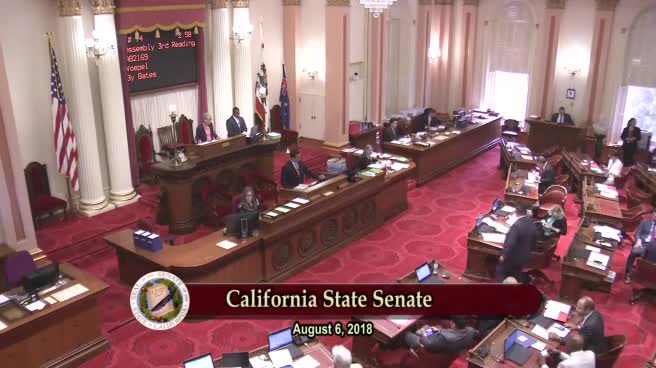 2MIN
Senate Floor
 21MIN
Assembly Standing Committee on Appropriations
Bill Author

Bill Co-Author(s):