AB 673: Public transit operators: bus procurement: safety considerations.
- Session Year: 2017-2018
- House: Assembly
- Latest Version Date: 2017-07-24
(1)Existing law imposes various requirements on transit operators and provides funding for transit services and capital improvements.
This bill would require a public transit operator, before the procurement of a new bus to be used in revenue operations, to take into consideration recommendations of, and best practices standards developed by, the exclusive representative of the recognized organization representing bus operators of the transit operator for specified purposes, including, among other purposes, reducing the risk of assault on bus operators. By creating new duties for public transit operators, this bill would impose a state-mandated local program.
(2)The California Constitution requires the state to reimburse local agencies and school districts for certain costs mandated by the state. Statutory provisions establish procedures for making that reimbursement.
This bill would provide that, if the Commission on State Mandates determines that the bill contains costs mandated by the state, reimbursement for those costs shall be made pursuant to the statutory provisions noted above.
(1)Existing law imposes various requirements on transit operators and provides funding for transit services and capital improvements.
This bill would require a public transit operator, before placing the procurement of a new bus into to be used in revenue operations, to take into consideration recommendations of, and best practices standards developed by, the exclusive representative of the recognized organization representing bus operators of the transit operator for the purpose of protecting bus operators from specified purposes, including, among other purposes, reducing the risk of assault from persons and by removing blind spots. on bus operators. By creating new duties for public transit operators, this bill would impose a state-mandated local program.
(2)The California Constitution requires the state to reimburse local agencies and school districts for certain costs mandated by the state. Statutory provisions establish procedures for making that reimbursement.
This bill would provide that, if the Commission on State Mandates determines that the bill contains costs mandated by the state, reimbursement for those costs shall be made pursuant to the statutory provisions noted above.
(2)Existing law sets forth specified requirements for the equipment of vehicles, including standards relating to brakes, lighting, windshields, and mirrors, among other equipment. A violation of the Vehicle Code is a crime.This bill would require a public transit operator, before placing a new bus into revenue operations, to ensure that the bus is equipped, at a minimum, with specified features, including, among others, transparent, glare-free, accessible partition enclosures around the bus operator seating area capable of withstanding gun fire, a door or window to the left of the bus operator seating area that allows for safe and rapid emergency egress from the vehicle, and mirrors and pillars that allow the bus operator to adequately view pedestrians crossing in front of the bus, as specified. The bill would require these standards to be implemented only to the extent that they comply with the Federal Motor Vehicle Safety Standards. By creating a new crime and imposing new duties or public transit operators, this bill would impose a state-mandated local program.(3)The California Constitution requires the state to reimburse local agencies and school districts for certain costs mandated by the state. Statutory provisions establish procedures for making that reimbursement.This bill would provide that with regard to certain mandates no reimbursement is required by this act for a specified reason.With regard to any other mandates, this bill would provide that, if the Commission on State Mandates determines that the bill contains costs so mandated by the state, reimbursement for those costs shall be made pursuant to the statutory provisions noted above.(1)Existing law imposes various requirements on transit operators and provides funding for transit services and capital improvements.
This bill would require a public transit operator, before placing a new bus into revenue operations, to take into consideration recommendations of, and best practices standards developed by, the exclusive representative of the recognized organization representing bus operators of the transit operator for the purpose of protecting bus operators from the risk of assault from persons and by removing blind spots. By creating new duties for public transit operators, this bill would impose a state-mandated local program.
(2)Existing law sets forth specified requirements for the equipment of vehicles, including standards relating to brakes, lighting, windshields, and mirrors, among other equipment. A violation of the Vehicle Code is a crime.
This bill would require a public transit operator, before placing a new bus into revenue operations, to ensure that the bus is equipped, at a minimum, with specified features, including, among others, transparent, glare-free, accessible partition enclosures around the bus operator seating area capable of withstanding gun fire, a door or window to the left of the bus operator seating area that allows for safe and rapid emergency egress from the vehicle, and mirrors and pillars that allow the bus operator to adequately view pedestrians crossing in front of the bus, as specified. The bill would require these standards to be implemented only to the extent that they comply with the Federal Motor Vehicle Safety Standards. By creating a new crime and imposing new duties or public transit operators, this bill would impose a state-mandated local program.
(3)The California Constitution requires the state to reimburse local agencies and school districts for certain costs mandated by the state. Statutory provisions establish procedures for making that reimbursement.
This bill would provide that with regard to certain mandates no reimbursement is required by this act for a specified reason.
With regard to any other mandates, this bill would provide that, if the Commission on State Mandates determines that the bill contains costs so mandated by the state, reimbursement for those costs shall be made pursuant to the statutory provisions noted above.
(a)Before the procurement of a new bus to be used in revenue operations, a public transit operator shall take into consideration recommendations of, and best practices standards developed by, the exclusive representative of the recognized organization representing bus operators of the transit operator for the following purposes:
(1)To reduce the risk of assault on bus operators.
(2)To prevent accidents caused by blind spots created by bus equipment or bus design.
(3)To enhance the safety of passengers, bus operators, or other vehicles or pedestrians that the bus may come into contact with while in service.
(b)Nothing in this section shall be construed to require a public transit operator to implement specific recommendations.
SEC. 2.If the Commission on State Mandates determines that this act contains costs mandated by the state, reimbursement to local agencies and school districts for those costs shall be made pursuant to Part 7 (commencing with Section 17500) of Division 4 of Title 2 of the Government Code.
Before (a)Before the procurement of a new bus to be used in revenue operations, a public transit operator shall take into consideration recommendations of, and best practices standards developed by, the exclusive representative of the recognized organization representing bus operators of the transit operator for the following purposes:
(a)(1)To reduce the risk of assault on bus operators.
(b)(2)To prevent accidents caused by blind spots created by bus equipment or bus design.
(c)(3)To enhance the safety of passengers, bus operators, or other vehicles or pedestrians that the bus may come into contact with while in service.
(b)Nothing in this section shall be construed to require a public transit operator to implement specific recommendations.
SEC. 2.If the Commission on State Mandates determines that this act contains costs mandated by the state, reimbursement to local agencies and school districts for those costs shall be made pursuant to Part 7 (commencing with Section 17500) of Division 4 of Title 2 of the Government Code.
In addition to the requirements described in Section 24019 of the Vehicle Code, before placing Before the procurement of a new bus into to be used in revenue operations, a public transit operator shall take into consideration recommendations of, and best practices standards developed by, the exclusive representative of the recognized organization representing bus operators of the transit operator for the purpose of protecting bus operators from the risk of assault from persons and by removing blind spots. following purposes:
(a)To reduce the risk of assault on bus operators.
(b)To prevent accidents caused by blind spots created by bus equipment or bus design.
(c)To enhance the safety of passengers, bus operators, or other vehicles or pedestrians that the bus may come into contact with while in service.
SEC. 2.If the Commission on State Mandates determines that this act contains costs mandated by the state, reimbursement to local agencies and school districts for those costs shall be made pursuant to Part 7 (commencing with Section 17500) of Division 4 of Title 2 of the Government Code.
SEC. 2.Section 24019 is added to the Vehicle Code, to read:24019.(a)In addition to the requirements described in Section 99173 of the Public Utilities Code, before placing a new bus into revenue operations, a public transit operator shall ensure that the bus is equipped, at a minimum, with all of the following:(1)Transparent, glare-free, accessible partition enclosures around the bus operator seating area capable of withstanding gun fire.(2)A door or window, at least the same size as a passenger emergency window, to the left of the bus operator seating area that allows for safe and rapid emergency egress from the vehicle.(3)A mechanism that allows for direct connection to local law enforcement, such as a panic button.(4)Low-mounted, reasonably sized left-side mirrors that allow the bus operator, regardless of size, to adequately view pedestrians crossing in front of the bus.(5)Reasonably sized A pillars that allow the bus operator, regardless of size, to adequately view pedestrians crossing in front of the bus.(6)An overall bus operator seating area that eliminates blind spots to the greatest extent feasible.(b)(1)The standards described in subdivision (a) are intended to impose higher performance standards than those required under the federal National Traffic and Motor Vehicle Safety Act and the regulations adopted under that act for buses obtained by public transit operators for their own use consistent with the authority provided under Section 30103 of Title 49 of the United States Code.(2)The standards described in subdivision (a) shall be implemented only to the extent that they comply with the Federal Motor Vehicle Safety Standards under Title 49 of the Code of Federal Regulations.SEC. 3.No reimbursement is required by this act pursuant to Section 6 of Article XIIIB of the California Constitution for certain costs that may be incurred by a local agency or school district because, in that regard, this act creates a new crime or infraction, eliminates a crime or infraction, or changes the penalty for a crime or infraction, within the meaning of Section 17556 of the Government Code, or changes the definition of a crime within the meaning of Section 6 of Article XIIIB of the California Constitution.However, if the Commission on State Mandates determines that this act contains other costs mandated by the state, reimbursement to local agencies and school districts for those costs shall be made pursuant to Part 7 (commencing with Section 17500) of Division 4 of Title 2 of the Government Code.In addition to the requirements described in Section 24019 of the Vehicle Code, before placing a new bus into revenue operations, a public transit operator shall take into consideration recommendations of, and best practices standards developed by, the exclusive representative of the recognized organization representing bus operators of the transit operator for the purpose of protecting bus operators from the risk of assault from persons and by removing blind spots.
SEC. 2.Section 24019 is added to the Vehicle Code, to read:24019.(a)In addition to the requirements described in Section 99173 of the Public Utilities Code, before placing a new bus into revenue operations, a public transit operator shall ensure that the bus is equipped, at a minimum, with all of the following:
(1)Transparent, glare-free, accessible partition enclosures around the bus operator seating area capable of withstanding gun fire.
(2)A door or window, at least the same size as a passenger emergency window, to the left of the bus operator seating area that allows for safe and rapid emergency egress from the vehicle.
(3)A mechanism that allows for direct connection to local law enforcement, such as a panic button.
(4)Low-mounted, reasonably sized left-side mirrors that allow the bus operator, regardless of size, to adequately view pedestrians crossing in front of the bus.
(5)Reasonably sized A pillars that allow the bus operator, regardless of size, to adequately view pedestrians crossing in front of the bus.
(6)An overall bus operator seating area that eliminates blind spots to the greatest extent feasible.
(b)(1)The standards described in subdivision (a) are intended to impose higher performance standards than those required under the federal National Traffic and Motor Vehicle Safety Act and the regulations adopted under that act for buses obtained by public transit operators for their own use consistent with the authority provided under Section 30103 of Title 49 of the United States Code.
(2)The standards described in subdivision (a) shall be implemented only to the extent that they comply with the Federal Motor Vehicle Safety Standards under Title 49 of the Code of Federal Regulations.
SEC. 3.No reimbursement is required by this act pursuant to Section 6 of Article XIIIB of the California Constitution for certain costs that may be incurred by a local agency or school district because, in that regard, this act creates a new crime or infraction, eliminates a crime or infraction, or changes the penalty for a crime or infraction, within the meaning of Section 17556 of the Government Code, or changes the definition of a crime within the meaning of Section 6 of Article XIIIB of the California Constitution.
However, if the Commission on State Mandates determines that this act contains other costs mandated by the state, reimbursement to local agencies and school districts for those costs shall be made pursuant to Part 7 (commencing with Section 17500) of Division 4 of Title 2 of the Government Code.
|
Date
|
Status
|
|---|---|
| Jul 24, 2017 | Chaptered by Secretary of State - Chapter 126, Statutes of 2017. |
| Jul 24, 2017 | Approved by the Governor. |
| Jul 14, 2017 | Enrolled and presented to the Governor at 3 p.m. |
| Jul 11, 2017 | In Assembly. Ordered to Engrossing and Enrolling. |
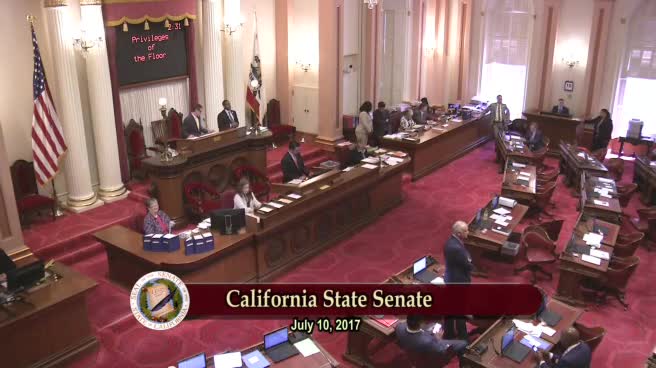
| Jul 10, 2017 | Read third time. Passed. Ordered to the Assembly. (Ayes 28. Noes 12. Page 1938.). |
| Jun 27, 2017 | Read second time. Ordered to third reading. |
| Jun 26, 2017 | From committee: Be ordered to second reading pursuant to Senate Rule 28.8. |
| Jun 13, 2017 | From committee: Do pass and re-refer to Com. on APPR. (Ayes 10. Noes 3.) (June 13). Re-referred to Com. on APPR. |
| Jun 1, 2017 | Referred to Com. on T. & H. |
| May 22, 2017 | In Senate. Read first time. To Com. on RLS. for assignment. |
| May 22, 2017 | Read third time. Passed. Ordered to the Senate. (Ayes 55. Noes 21. Page 1645.) |
| May 15, 2017 | Read third time and amended. Ordered to third reading. (Page 1540.) |
| May 11, 2017 | Read second time. Ordered to third reading. |
| May 10, 2017 | From committee: Do pass. (Ayes 12. Noes 5.) (May 10). |
| Apr 26, 2017 | From committee: Do pass and re-refer to Com. on APPR. (Ayes 10. Noes 4.) (April 24). Re-referred to Com. on APPR. |
| Apr 19, 2017 | Re-referred to Com. on TRANS. |
| Apr 18, 2017 | From committee chair, with author's amendments: Amend, and re-refer to Com. on TRANS. Read second time and amended. |
| Mar 29, 2017 | In committee: Set, first hearing. Hearing canceled at the request of author. |
| Mar 2, 2017 | Referred to Com. on TRANS. |
| Feb 16, 2017 | From printer. May be heard in committee March 18. |
| Feb 15, 2017 | Read first time. To print. |
|
Date
|
Description
|
Location
|
Votes
|
|
|---|---|---|---|---|
| Jul 10, 2017 | Assembly 3rd Reading AB673 Chu By Hill | Senate Floor |
Passed |
|
| Jun 13, 2017 | Do pass, but first be re-referred to the Committee on [Appropriations] | Senate Standing Committee on Transportation and Housing |
Passed |
|
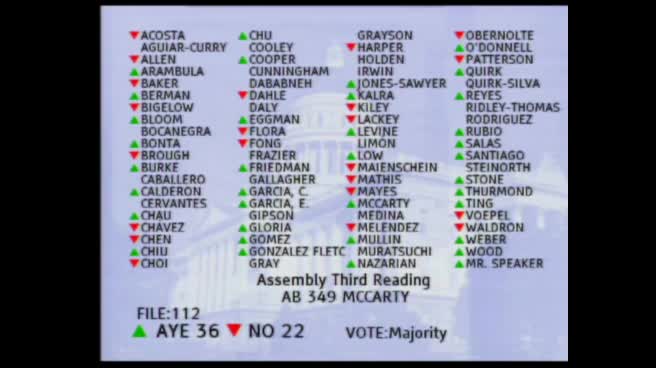
| May 22, 2017 | AB 673 CHU Assembly Third Reading | Assembly Floor |
Passed |
|
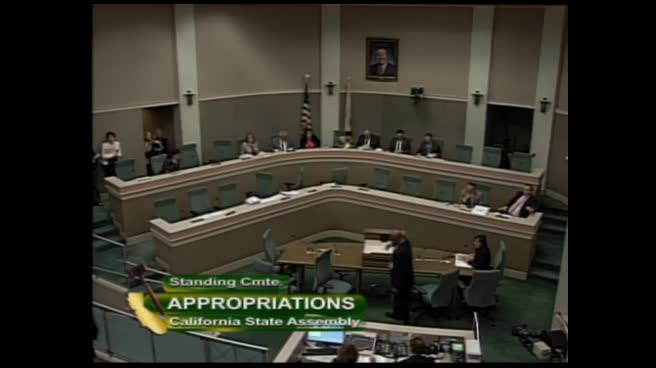
| May 10, 2017 | Do pass. | Assembly Standing Committee on Appropriations |
Passed |
|
| Apr 24, 2017 | Do pass and be re-referred to the Committee on [Appropriations] | Assembly Standing Committee on Transportation |
Passed |
This list shows positions taken on this bill by organizations on the date displayed, which is linked to the original source.
Positions by individuals are not included.
|
Organization
|
Position
|
Date
|
|---|---|---|
| Amalgamated Transit Union | ** Support | Apr 21, 2017 |
| American Federation of State, County and Municipal Employees | ** Support | Jun 27, 2017 |
| California Conference Board Of The Amalgamated Transit Union | ** Support | Jun 27, 2017 |
| California Labor Federation | ** Support | Jun 27, 2017 |
| California Professional Firefighters | ** Support | Apr 21, 2017 |
| California Teamsters Public Affairs Council | ** Support | Jun 27, 2017 |
| California Transit Association | ** Support | Jun 27, 2017 |
| State Building and Construction Trades Council | ** Support | Apr 21, 2017 |
Office of Senate Floor Analyses (916) 651-1520 Fax: (916) 327-4478 | AB 673 |
THIRD READING
Bill No: AB 673
Amended: 5/15/17
SENATE TRANS. & HOUSING COMMITTEE: 10-3, 6/13/17
AYES: Beall, Cannella, Allen, Atkins, McGuire, Mendoza, Roth, Skinner, Wieckowski, Wiener
NOES: Bates, Gaines, Morrell
SENATE APPROPRIATIONS COMMITTEE: Senate Rule 28.8
ASSEMBLY FLOOR: 55-21, 5/22/17 - See last page for vote
SUBJECT: Public transit operators: bus procurement: safety considerations
SOURCE: California Conference Board of the Amalgamated Transit Union
California Labor Federation
California Teamsters Public Affairs Council
DIGEST:
This bill adds an additional safety requirement to the bus procurement process for transit operators.
ANALYSIS: Existing law imposes various requirements on transit operators and provides funding for transit services and capital improvements.
This bill:
- Requires a public transit operator, prior to procuring a new bus, to consider specific recommendations and best practice standards provided by an organization that represents bus drivers related to reducing the risk of assault on bus operators, preventing accidents caused by blind spots created by bus equipment or bus design, and enhancing the safety of passengers, bus operators, or other vehicles or pedestrians.
- Provides that a transit operator is not required to implement the abovementioned recommendations.
Comments
- Purpose. According to the author, “Safety features in transit buses are important to keep drivers, riders, and other road users safe. Reports on injuries to bus drivers and pedestrians are on the rise. AB 673 takes a step forward to protect those at risk and ensure that recommendations on safety features are considered prior to procurement of new transit buses.”
- Additional safety review. Proponents of this bill assert that the existing procurement process for new buses does not provide drivers the opportunity to offer safety recommendations prior to buses being purchased for operations. While transit agencies factor in a number of variables such as cost, reliability, and efficiency, other safety features may not fully be considered. Meanwhile, transit agencies across the state note that driver assaults and pedestrian/bicyclist accidents remain an issue. In support of this bill, the California Transit Association writes that, as these issues have come to the attention of transit agencies, “transit agency members have begun to explore investments and legislative remedies to ensure that assaults on bus operators are prevented, and in instances where they do occur, appropriately handled.”
This bill provides clear direction to transit operators to work in collaboration with labor representatives during the procurement process for new buses, but still allow these operators to proceed with the procurement in a cost efficient manner.
FISCAL EFFECT: Appropriation: Fiscal Com.: Local:
California Conference Board of the Amalgamated Transit Union (co-source)
California Labor Federation (co-source)
California Teamsters Public Affairs Council (co-source)
American Federation of State, County and Municipal Employees
California Transit Association
OPPOSITION: (Verified 6/27/17)
None received
ASSEMBLY FLOOR: 55-21, 5/22/17
AYES: Aguiar-Curry, Arambula, Berman, Bloom, Bocanegra, Burke, Caballero, Calderon, Cervantes, Chau, Chiu, Chu, Cooley, Cooper, Dababneh, Daly, Eggman, Flora, Frazier, Friedman, Cristina Garcia, Eduardo Garcia, Gipson, Gloria, Gomez, Gonzalez Fletcher, Gray, Grayson, Holden, Irwin, Jones-Sawyer, Kalra, Levine, Limón, Low, Maienschein, McCarty, Medina, Mullin, Muratsuchi, O'Donnell, Quirk, Quirk-Silva, Reyes, Ridley-Thomas, Rodriguez, Rubio, Salas, Santiago, Mark Stone, Thurmond, Ting, Weber, Wood, Rendon
NOES: Acosta, Travis Allen, Baker, Bigelow, Brough, Chávez, Choi, Cunningham, Dahle, Fong, Gallagher, Harper, Kiley, Lackey, Mathis, Mayes, Melendez, Obernolte, Patterson, Voepel, Waldron
NO VOTE RECORDED: Bonta, Chen, Nazarian, Steinorth
Prepared by: Manny Leon / T. & H. / (916) 651-4121
6/27/17 16:46:31
**** END ****
SENATE COMMITTEE ON TRANSPORTATION AND HOUSING
Senator Jim Beall, Chair
2017 - 2018 Regular
Bill No: Hearing Date: 6/13/2017
Author: | Chu | ||
Version: | 5/15/2017 | ||
Urgency: | No | Fiscal: | Yes |
Consultant: | Manny Leon | ||
SUBJECT: .
DIGEST: This bill adds an additional safety requirement to the bus procurement process for transit operators.
ANALYSIS:
Existing law imposes various requirements on transit operators and provides funding for transit services and capital improvements.
This bill:
- Requires a public transit operator, prior to procuring a new bus, to consider specific recommendations and best practice standards provided by an organization that represents bus drivers related to reducing the risk of assault on bus operators, preventing accidents caused by blind spots created by bus equipment or bus design, and enhancing the safety of passengers, bus operators, or other vehicles or pedestrians.
- Provides that a transit operator is not required to implement the abovementioned recommendations.
COMMENTS:
- Purpose. According to the author, “Safety features in transit buses are important to keep drivers, riders, and other road users safe. Reports on injuries to bus drivers and pedestrians are on the rise. AB 673 takes a step forward to protect those at risk and ensure that recommendations on safety features are considered prior to procurement of new transit buses.”
- Additional Safety review. Proponents of this bill assert that the existing procurement process for new buses does not provide drivers the opportunity to offer safety recommendations prior to buses being purchased for operations. While transit agencies factor in a number of variables such as cost, reliability, and efficiency, other safety features may not fully be considered. Meanwhile, transit agencies across the state note that driver assaults and pedestrian/bicyclist accidents remain an issue. In support of this bill, the California Transit Association writes that, as these issues have come to the attention of transit agencies, “transit agency members have begun to explore investments and legislative remedies to ensure that assaults on bus operators are prevented, and in instances where they do occur, appropriately handled.”
This bill would provide clear direction to transit operators to work in collaboration with labor representatives during the procurement process for new buses, but still allow these operators to proceed with the procurement in a cost efficient manner.
FISCAL EFFECT: Appropriation: No Fiscal Com.: Yes Local: Yes
POSITIONS: (Communicated to the committee before noon on Wednesday,
June 7, 2017.)
SUPPORT:
California Conference Board of the Amalgamated Transit Union (Co-Sponsor)
California Labor Federation (Co-Sponsor)
California Teamsters Public Affairs Council (Co-Sponsor)
American Federation of State, County and Municipal Employees
California Transit Association
OPPOSITION:
None received.
-- END --
ASSEMBLY THIRD READING
ATR Bill Id:AB 673
Author:(Chu)
As Amended Ver:May 15, 2017
Majority vote
Committee | Votes | Ayes | Noes |
Transportation | 10-4 | Frazier, Aguiar-Curry, Berman, Bocanegra, Chu, Daly, Friedman, Medina, Nazarian, O'Donnell | Fong, Baker, Harper, Mathis |
Appropriations | 12-5 | Gonzalez Fletcher, Bloom, Bocanegra, Bonta, Calderon, Chau, Eggman, Friedman, Eduardo Garcia, Gray, Muratsuchi, Reyes | Bigelow, Brough, Fong, Gallagher, Obernolte |
SUMMARY: Requires a public transit operator, prior to procuring a new bus, to consider specific recommendations and best practice standards related to reducing the risk of assault on bus operators, preventing accidents caused by blind spots created by bus equipment or bus design, and enhancing the safety of passengers, bus operators, or other vehicles or pedestrians.
EXISTING LAW: Imposes various requirements on transit operators and provides funding for transit services and capital improvements.
FISCAL EFFECT: According to the Assembly Appropriations Committee, this bill is unlikely to create a state mandate because transit operators generally already consult with the organization that represents bus and transit operators on a much broader multitude of factors when procuring new buses. The requirement in this bill is unlikely to add enough time or workload to the process to meet the threshold for a state mandate.
COMMENTS: According to the Amalgamated Transit Union, one pedestrian is killed every 10 days in the United States due to blind spots on buses. Additionally, local transit operators, such as the Los Angeles County Metropolitan Transportation Authority, have reported increased numbers of violent attacks against bus drivers. Although no official statistics exist on these attacks, the labor groups representing bus drivers believe this constitutes a significant danger to bus driver safety.
This bill would address these safety concerns by requiring transit operators to consult with labor representatives of the operator's bus drivers when procuring new buses. Operators would be required to take into consideration recommendations from the labor representatives on topics such as reducing the risk of assault on bus drivers, preventing accidents caused by bus blind spots, and enhancing the safety of passengers, bus drivers, or other vehicles and pedestrians that might come into contact with the bus. Transit operators would not be required to implement the recommendations made by the labor representative, and would be free to tailor their individual vehicle safety requirements to their own local transit needs, to the extent allowable by federal motor vehicle safety standards. By requiring transit operators to consider these safety concerns, the author intends to protect bus drivers and all those sharing the roads from unintended and possibly fatal accidents. This bill would also provide that a public transit operator is not required to implement any specific recommendations offered to them.
Analysis Prepared by: Justin Behrens / TRANS. / (916) 319-2093 FN: 0000374
ASSEMBLY THIRD READING
ATR Bill Id:AB 673
Author:(Chu)
As Amended Ver:April 18, 2017
Majority vote
Committee | Votes | Ayes | Noes |
Transportation | 10-4 | Frazier, Aguiar-Curry, Berman, Bocanegra, Chu, Daly, Friedman, Medina, Nazarian, O'Donnell | Fong, Baker, Harper, Mathis |
Appropriations | 12-5 | Gonzalez Fletcher, Bloom, Bocanegra, Bonta, Calderon, Chau, Eggman, Friedman, Eduardo Garcia, Gray, Muratsuchi, Reyes | Bigelow, Brough, Fong, Gallagher, Obernolte |
SUMMARY: Requires a public transit operator, prior to procuring a new bus, to consider specific recommendations and best practice standards related to reducing the risk of assault on bus operators, preventing accidents caused by blind spots created by bus equipment or bus design, and enhancing the safety of passengers, bus operators, or other vehicles or pedestrians.
EXISTING LAW: Imposes various requirements on transit operators and provides funding for transit services and capital improvements.
FISCAL EFFECT: According to the Assembly Appropriations Committee, this bill is unlikely to create a state mandate because transit operators generally already consult with the organization that represents bus and transit operators on a much broader multitude of factors when procuring new buses. The requirement in this bill is unlikely to add enough time or workload to the process to meet the threshold for a state mandate.
COMMENTS: According to the Amalgamated Transit Union, one pedestrian is killed every 10 days in the United States due to blind spots on buses. Additionally, local transit operators, such as the Los Angeles County Metropolitan Transportation Authority, have reported increased numbers of violent attacks against bus drivers. Although no official statistics exist on these attacks, the labor groups representing bus drivers believe this constitutes a significant danger to bus driver safety.
This bill would address these safety concerns by requiring transit operators to consult with labor representatives of the operator's bus drivers when procuring new buses. Operators would be required to take into consideration recommendations from the labor representatives on topics such as reducing the risk of assault on bus drivers, preventing accidents caused by bus blind spots, and enhancing the safety of passengers, bus drivers, or other vehicles and pedestrians that might come into contact with the bus. Transit operators would not be required to implement the recommendations made by the labor representative, and would be free to tailor their individual vehicle safety requirements to their own local transit needs, to the extent allowable by federal motor vehicle safety standards. By requiring transit operators to consider these safety concerns, the author intends to protect bus drivers and all those sharing the roads from unintended and possibly fatal accidents.
Analysis Prepared by: Justin Behrens / TRANS. / (916) 319-2093 FN: 0000320
Date of Hearing: May 10, 2017
ASSEMBLY COMMITTEE ON APPROPRIATIONS
Lorena Gonzalez Fletcher, Chair
ABPCA Bill Id:AB 673
Author:(Chu) – As Amended Ver:April 18, 2017
Policy Committee: | Transportation | Vote: | 10 - 4 |
|
| ||
|
|
Urgency: No State Mandated Local Program: Yes Reimbursable: No
SUMMARY:
This bill requires a public transit operator, prior to procuring a new bus, to consider specific recommendations and best practice standards provided by the organization that represents the bus and transit operators. Specifically, this bill relates to recommendations and standards to reducing the risk of assault on bus operators, preventing accidents caused by blind spots created by bus equipment or bus design, and enhancing the safety of passengers, bus operators, or other vehicles or pedestrians.
FISCAL EFFECT:
This bill is unlikely to create a state mandate because transit operators generally already consult with the organization that represents bus and transit operators on a much broader multitude of factors when procuring new buses. The requirement in this bill is unlikely to add enough time or workload to the process to meet the threshold for a state mandate.
COMMENTS:
Background and Purpose. According to the author, “A large number of buses purchased by regional transit districts contain blind spots that could pose challenges for drivers and result in fatal accidents. In addition, bus drivers are being attacked at a higher rate during work hours.” The author further states, “AB 673 aims to resolve these issues to create a safer environment for drivers and others on the road.”
Analysis Prepared by: Jessica Peters / APPR. / (916) 319-2081
Date of Hearing: April 24, 2017
ASSEMBLY COMMITTEE ON TRANSPORTATION
Jim Frazier, Chair
ABPCA Bill Id:AB 673 (
Author:Chu) – As Amended Ver:April 18, 2017
SUBJECT: Public transit operators: bus procurement: safety considerations
SUMMARY: Requires a public transit operator, prior to procuring a new bus, to consider specific recommendations and best practice standards related to reducing the risk of assault on bus operators, preventing accidents caused by blind spots created by bus equipment or bus design, and enhancing the safety of passengers, bus operators, or other vehicles or pedestrians.
EXISTING LAW: Imposes various requirements on transit operators and provides funding for transit services and capital improvements.
FISCAL EFFECT: Unknown
COMMENTS: According to the Amalgamated Transit Union, one pedestrian is killed every 10 days in the United States due to blind spots on buses. Additionally, local transit operators, such as the Los Angeles County Metropolitan Transportation Authority, have reported increased numbers of violent attacks against bus drivers. Although no official statistics exist on these attacks, the labor groups representing bus drivers believe this constitutes a significant danger to bus driver safety.
This bill would address these safety concerns by requiring transit operators to consult with labor representatives of the operator’s bus drivers when procuring new buses. Operators would be required to take into consideration recommendations from the labor representatives on topics such as reducing the risk of assault on bus drivers, preventing accidents caused by bus blind spots, and enhancing the safety of passengers, bus drivers, or other vehicles and pedestrians that might come into contact with the bus. Transit operators would not be required to implement the recommendations made by the labor representative, and would be free to tailor their individual vehicle safety requirements to their own local transit needs, to the extent allowable by federal motor vehicle safety standards. By requiring transit operators to consider these safety concerns, the author intends to protect bus drivers and all those sharing the roads from unintended and possibly fatal accidents.
REGISTERED SUPPORT / OPPOSITION:
Support
AFSCME
Amalgamated Transit Union
California Labor Federation
California Professional Firefighters
California Teamsters Public Affairs Council
State Building and Construction Trades Council
Opposition
None on file
Analysis Prepared by: Justin Behrens / TRANS. /
Bill Author

Bill Co-Author(s):