AB 688: Enforcement of money judgments: exemptions.
- Session Year: 2017-2018
- House: Assembly
- Latest Version Date: 2017-10-06
Under existing law, certain property is exempted from enforcement of money judgments, including benefits from a disability or health insurance policy or program.
Existing federal law, the Stephen Beck, Jr., Achieving a Better Life Experience Act of 2014 (ABLE Act), encourages and assists individuals and families to save private funds in a tax-advantaged savings account for the purpose of supporting persons with disabilities to maintain their health, independence, and quality of life by excluding from gross income distributions used for qualified disability expenses by a beneficiary of a qualified ABLE program established and maintained by a state, as specified. Existing law establishes the Qualified ABLE Program, administered by the California ABLE Act Board, in this state for purposes of implementing the federal ABLE Act. Under the Qualified ABLE Program, moneys in, contributions to, and any distribution for qualified disability expenses from, an ABLE account, up to $100,000, do not count toward determining eligibility for a state or local means-tested program.
This bill would, commencing September 1, 2018, also exempt those moneys in an ABLE account from enforcement of a money judgment without making a claim, except as specified.
This bill would incorporate additional changes to Section 4880 of the Welfare and Institutions Code proposed by AB 384 to be operative only if this bill and AB 384 are enacted and this bill is enacted last.
Under existing law, certain property is exempted from enforcement of money judgments, including benefits from a disability or health insurance policy or program.
Existing federal law, the Stephen Beck, Jr., Achieving a Better Life Experience Act of 2014 (ABLE Act), encourages and assists individuals and families to save private funds in a tax-advantaged savings account for the purpose of supporting persons with disabilities to maintain their health, independence, and quality of life by excluding from gross income distributions used for qualified disability expenses by a beneficiary of a qualified ABLE program established and maintained by a state, as specified. Existing law establishes the Qualified ABLE Program, administered by the California ABLE Act Board, in this state for purposes of implementing the federal ABLE Act. Under the Qualified ABLE Program, moneys in, contributions to, and any distribution for qualified disability expenses from, an ABLE account, up to $100,000, do not count toward determining eligibility for a state or local means-tested program.
This bill would, commencing September 1, 2018, also exempt those moneys in an ABLE account from enforcement of a money judgment without making a claim, except as specified.
This bill would incorporate additional changes to Section 4880 of the Welfare and Institutions Code proposed by AB 384 to be operative only if this bill and AB 384 are enacted and this bill is enacted last.
Under existing law, certain property is exempted from enforcement of money judgments, including benefits from a disability or health insurance policy or program.
Existing federal law, the Stephen Beck, Jr., Achieving a Better Life Experience Act of 2014 (ABLE Act), encourages and assists individuals and families to save private funds in a tax-advantaged savings account for the purpose of supporting persons with disabilities to maintain their health, independence, and quality of life by excluding from gross income distributions used for qualified disability expenses by a beneficiary of a qualified ABLE program established and maintained by a state, as specified. Existing law establishes the Qualified ABLE Program, administered by the California ABLE Act Board, in this state for purposes of implementing the federal ABLE Act. Under the Qualified ABLE Program, moneys in, contributions to, and any distribution for qualified disability expenses from, an ABLE account, up to $100,000, do not count toward determining eligibility for a state or local means-tested program.
This bill would would, commencing September 1, 2018, also exempt those moneys in, contributions to, and distributions from, in an ABLE account from enforcement of a money judgments. judgment without making a claim, except as specified.
This bill would incorporate additional changes to Section 4880 of the Welfare and Institutions Code proposed by AB 384 to be operative only if this bill and AB 384 are enacted and this bill is enacted last.
Under existing law, certain property is exempted from enforcement of money judgments, including benefits from a disability or health insurance policy or program.
Existing federal law, the Stephen Beck, Jr., Achieving a Better Life Experience Act of 2014 (ABLE Act), encourages and assists individuals and families to save private funds in a tax-advantaged savings account for the purpose of supporting persons with disabilities to maintain their health, independence, and quality of life by excluding from gross income distributions used for qualified disability expenses by a beneficiary of a qualified ABLE program established and maintained by a state, as specified. Existing law establishes the Qualified ABLE Program, administered by the California ABLE Act Board, in this state for purposes of implementing the federal ABLE Act. Under the Qualified ABLE Program, moneys in, contributions to, and any distribution for qualified disability expenses from, an ABLE account, up to $100,000, do not count toward determining eligibility for a state or local means-tested program.
This bill would also exempt all amounts held in those moneys in, contributions to, and distributions from, an ABLE account from enforcement of money judgments.
Under existing law, certain property is exempted from enforcement of money judgments, including benefits from a disability or health insurance policy or program.
Existing federal law, the Stephen Beck, Jr., Achieving a Better Life Experience Act of 2014 (ABLE Act), encourages and assists individuals and families to save private funds in a tax-advantaged savings account for the purpose of supporting persons with disabilities to maintain their health, independence, and quality of life by excluding from gross income distributions used for qualified disability expenses by a beneficiary of a qualified ABLE program established and maintained by a state, as specified. Existing law establishes the Qualified ABLE Program, administered by the California ABLE Act Board, in this state for purposes of implementing the federal ABLE Act.
This bill would also exempt all amounts held in an ABLE account from enforcement of money judgments.
Existing state sales and use tax laws impose a tax on retailers measured by the gross receipts from the sale of tangible personal property sold at retail in this state of, or on the storage, use, or other consumption in this state of, tangible personal property purchased from a retailer for storage, use, or other consumption in this state. Existing law, for the purposes of sales and use taxes, provides that the place of the sale or purchase of tangible personal property is the place where the property is physically located at the time the act constituting the sale or purchase, as defined, takes place.This bill would make a nonsubstantive change to this provision.Existing state sales and use tax laws impose a tax on retailers measured by the gross receipts from the sale of tangible personal property sold at retail in this state of, or on the storage, use, or other consumption in this state of, tangible personal property purchased from a retailer for storage, use, or other consumption in this state. Existing law, for the purposes of sales and use taxes, provides that the place of the sale or purchase of tangible personal property is the place where the property is physically located at the time the act constituting the sale or purchase, as defined, takes place.
This bill would make a nonsubstantive change to this provision.
(a)Notwithstanding any other law, moneys in, contributions to, and any distribution for qualified disability expenses from, an ABLE account, not to exceed one hundred thousand dollars ($100,000), shall not count toward determining eligibility for a state or local means-tested program.
(b)This section shall become inoperative on September 1, 2018, and, as of January 1, 2019, is repealed.
SEC. 1.5.Section 4880 of the Welfare and Institutions Code is amended to read:4880.(a)Notwithstanding any other law, moneys in, contributions to, and any distribution for qualified disability expenses from, an ABLE account, not to exceed one hundred thousand dollars ($100,000), shall not count toward determining eligibility for a state or local means-tested program.
(b)Notwithstanding subdivision (a), Section 103 of Division B of Public Law 113-295 and Sections 17140.4 and 23711.4 of the Revenue and Taxation Code shall apply.
(c)This section shall become inoperative on September 1, 2018, and, as of January 1, 2019, is repealed.
SEC. 2.Section 4880 is added to the Welfare and Institutions Code, to read:4880.(a)Notwithstanding any other law, moneys in, contributions to, and any distribution for qualified disability expenses from, an ABLE account, not to exceed one hundred thousand dollars ($100,000), shall not count toward determining eligibility for a state or local means-tested program.
(b)(1)Notwithstanding any other law, moneys in an ABLE account, not to exceed one hundred thousand dollars ($100,000), shall be exempt from enforcement of a money judgment without making a claim.
(2)A money judgment in favor of the State Department of Health Care Services shall not be subject to the exemption provided in paragraph (1) during any period of time in which federal law or guidance issued by the federal Centers for Medicare and Medicaid Services requires the department to recover funds from ABLE accounts for reimbursement of qualifying Medi-Cal expenditures.
(c)This section shall become operative on September 1, 2018.
SEC. 2.5.Section 4880 is added to the Welfare and Institutions Code, to read:4880.(a)Notwithstanding any other law, moneys in, contributions to, and any distribution for qualified disability expenses from, an ABLE account, not to exceed one hundred thousand dollars ($100,000), shall not count toward determining eligibility for a state or local means-tested program.
(b)Notwithstanding subdivision (a), Section 103 of Division B of Public Law 113-295 and Sections 17140.4 and 23711.4 of the Revenue and Taxation Code shall apply.
(c)(1)Notwithstanding any other law, moneys in an ABLE account, not to exceed one hundred thousand dollars ($100,000), shall be exempt from enforcement of a money judgment without making a claim.
(2)A money judgment in favor of the State Department of Health Care Services shall not be subject to the exemption provided in paragraph (1) during any period of time in which federal law or guidance issued by the federal Centers for Medicare and Medicaid Services requires the department to recover funds from ABLE accounts for reimbursement of qualifying Medi-Cal expenditures.
(d)This section shall become operative on September 1, 2018.
SEC. 3.Sections 1.5 and 2.5 of this bill incorporate amendments to Section 4880 of the Welfare and Institutions Code proposed by both this bill and Assembly Bill 384. These sections shall only become operative if (1) both bills are enacted and become effective on or before January 1, 2018, (2) each bill amends Section 4880 of the Welfare and Institutions Code, and (3) this bill is enacted after Assembly Bill 384, in which case Sections 1 and 2 of this bill shall not become operative.
(a)Notwithstanding any other law, moneys in, contributions to, and any distribution for qualified disability expenses from, an ABLE account, not to exceed one hundred thousand dollars ($100,000), shall not count toward determining eligibility for a state or local means-tested program.
(b)This section shall become inoperative on September 1, 2018, and, as of January 1, 2019, is repealed.
SEC. 1.5.Section 4880 of the Welfare and Institutions Code is amended to read:4880.(a)Notwithstanding any other law, moneys in, contributions to, and any distribution for qualified disability expenses from, an ABLE account, not to exceed one hundred thousand dollars ($100,000), shall not count toward determining eligibility for a state or local means-tested program.
(b)Notwithstanding subdivision (a), Section 103 of Division B of Public Law 113-295 and Sections 17140.4 and 23711.4 of the Revenue and Taxation Code shall apply.
(c)This section shall become inoperative on September 1, 2018, and, as of January 1, 2019, is repealed.
SEC. 2.Section 4880 is added to the Welfare and Institutions Code, to read:4880.(a)Notwithstanding any other law, moneys in, contributions to, and any distribution for qualified disability expenses from, an ABLE account, not to exceed one hundred thousand dollars ($100,000), shall not count toward determining eligibility for a state or local means-tested program.
(b)(1)Notwithstanding any other law, moneys in an ABLE account, not to exceed one hundred thousand dollars ($100,000), shall be exempt from enforcement of a money judgment without making a claim.
(2)A money judgment in favor of the State Department of Health Care Services shall not be subject to the exemption provided in paragraph (1) during any period of time in which federal law or guidance issued by the federal Centers for Medicare and Medicaid Services requires the department to recover funds from ABLE accounts for reimbursement of qualifying Medi-Cal expenditures.
(c)This section shall become operative on September 1, 2018.
SEC. 2.5.Section 4880 is added to the Welfare and Institutions Code, to read:4880.(a)Notwithstanding any other law, moneys in, contributions to, and any distribution for qualified disability expenses from, an ABLE account, not to exceed one hundred thousand dollars ($100,000), shall not count toward determining eligibility for a state or local means-tested program.
(b)Notwithstanding subdivision (a), Section 103 of Division B of Public Law 113-295 and Sections 17140.4 and 23711.4 of the Revenue and Taxation Code shall apply.
(c)(1)Notwithstanding any other law, moneys in an ABLE account, not to exceed one hundred thousand dollars ($100,000), shall be exempt from enforcement of a money judgment without making a claim.
(2)A money judgment in favor of the State Department of Health Care Services shall not be subject to the exemption provided in paragraph (1) during any period of time in which federal law or guidance issued by the federal Centers for Medicare and Medicaid Services requires the department to recover funds from ABLE accounts for reimbursement of qualifying Medi-Cal expenditures.
(d)This section shall become operative on September 1, 2018.
SEC. 3.Sections 1.5 and 2.5 of this bill incorporate amendments to Section 4880 of the Welfare and Institutions Code proposed by both this bill and Assembly Bill 384. These sections shall only become operative if (1) both bills are enacted and become effective on or before January 1, 2018, (2) each bill amends Section 4880 of the Welfare and Institutions Code, and (3) this bill is enacted after Assembly Bill 384, in which case Sections 1 and 2 of this bill shall not become operative.
(a)Notwithstanding any other law, moneys in, contributions to, and any distribution for qualified disability expenses from, an ABLE account, not to exceed one hundred thousand dollars ($100,000), shall not count toward determining eligibility for a state or local means-tested program, and shall be exempt from a money judgment without making a claim. program.
(b)This section shall become inoperative on September 1, 2018, and, as of January 1, 2019, is repealed.
SEC. 1.5.Section 4880 of the Welfare and Institutions Code is amended to read:4880.(a)Notwithstanding any other law, moneys in, contributions to, and any distribution for qualified disability expenses from, an ABLE account, not to exceed one hundred thousand dollars ($100,000), shall not count toward determining eligibility for a state or local means-tested program.
(b)Notwithstanding subdivision (a), Section 103 of Division B of Public Law 113-295 and Sections 17140.4 and 23711.4 of the Revenue and Taxation Code shall apply.
(c)This section shall become inoperative on September 1, 2018, and, as of January 1, 2019, is repealed.
SEC. 2.Section 4880 is added to the Welfare and Institutions Code, to read:4880.(a)Notwithstanding any other law, moneys in, contributions to, and any distribution for qualified disability expenses from, an ABLE account, not to exceed one hundred thousand dollars ($100,000), shall not count toward determining eligibility for a state or local means-tested program.
(b)(1)Notwithstanding any other law, moneys in an ABLE account, not to exceed one hundred thousand dollars ($100,000), shall be exempt from enforcement of a money judgment without making a claim.
(2)A money judgment in favor of the State Department of Health Care Services shall not be subject to the exemption provided in paragraph (1) during any period of time in which federal law or guidance issued by the federal Centers for Medicare and Medicaid Services requires the department to recover funds from ABLE accounts for reimbursement of qualifying Medi-Cal expenditures.
(c)This section shall become operative on September 1, 2018.
SEC. 2.5.Section 4880 is added to the Welfare and Institutions Code, to read:4880.(a)Notwithstanding any other law, moneys in, contributions to, and any distribution for qualified disability expenses from, an ABLE account, not to exceed one hundred thousand dollars ($100,000), shall not count toward determining eligibility for a state or local means-tested program.
(b)Notwithstanding subdivision (a), Section 103 of Division B of Public Law 113-295 and Sections 17140.4 and 23711.4 of the Revenue and Taxation Code shall apply.
(c)(1)Notwithstanding any other law, moneys in an ABLE account, not to exceed one hundred thousand dollars ($100,000), shall be exempt from enforcement of a money judgment without making a claim.
(2)A money judgment in favor of the State Department of Health Care Services shall not be subject to the exemption provided in paragraph (1) during any period of time in which federal law or guidance issued by the federal Centers for Medicare and Medicaid Services requires the department to recover funds from ABLE accounts for reimbursement of qualifying Medi-Cal expenditures.
(d)This section shall become operative on September 1, 2018.
SEC. 3.Sections 1.5 and 2.5 of this bill incorporate amendments to Section 4880 of the Welfare and Institutions Code proposed by both this bill and Assembly Bill 384. These sections shall only become operative if (1) both bills are enacted and become effective on or before January 1, 2018, (2) each bill amends Section 4880 of the Welfare and Institutions Code, and (3) this bill is enacted after Assembly Bill 384, in which case Sections 1 and 2 of this bill shall not become operative.
Notwithstanding any other law, moneys in, contributions to, and any distribution for qualified disability expenses from, an ABLE account, not to exceed one hundred thousand dollars ($100,000), shall not count toward determining eligibility for a state or local means-tested program. program, and shall be exempt from a money judgment without making a claim.
SECTION 1.Section 704.205 is added to the Code of Civil Procedure, to read:704.205.All amounts held in an ABLE account, established pursuant to Chapter 15 (commencing with Section 4875) of Division 4.5 of the Welfare and Institutions Code, are exempt without making a claim.All amounts held in an ABLE account, established pursuant to Chapter 15 (commencing with Section 4875) of Division 4.5 of the Welfare and Institutions Code, are exempt without making a claim.
SECTION 1.Section 6010.5 of the Revenue and Taxation Code is amended to read:6010.5.For the purposes of this part, the place of the sale or purchase of tangible personal property is the place where the property is physically located when the act constituting the sale or purchase, as defined in this part, takes place.For the purposes of this part, the place of the sale or purchase of tangible personal property is the place where the property is physically located at the time when the act constituting the sale or purchase, as defined in this part, takes place.
|
Date
|
Status
|
|---|---|
| Oct 6, 2017 | Chaptered by Secretary of State - Chapter 529, Statutes of 2017. |
| Oct 6, 2017 | Approved by the Governor. |
| Sep 27, 2017 | Enrolled and presented to the Governor at 4 p.m. |
| Sep 16, 2017 | Assembly Rule 63 suspended. |
| Sep 15, 2017 | In Assembly. Concurrence in Senate amendments pending. |
| Sep 15, 2017 | Read third time. Passed. Ordered to the Assembly. |
| Sep 7, 2017 | Read second time. Ordered to third reading. |
| Sep 6, 2017 | Read third time and amended. Ordered to second reading. |
| Jul 3, 2017 | From Consent Calendar. |
| Jun 29, 2017 | Read second time. Ordered to Consent Calendar. |
| Jun 28, 2017 | From committee: Do pass. To Consent Calendar. (Ayes 6. Noes 0.) (June 27). |
| May 24, 2017 | Referred to Com. on JUD. |
| May 15, 2017 | In Senate. Read first time. To Com. on RLS. for assignment. |
| May 15, 2017 | Read third time. Passed. Ordered to the Senate. (Ayes 78. Noes 0. Page 1529.) |
| May 9, 2017 | Read second time. Ordered to third reading. |
| May 8, 2017 | Read second time and amended. Ordered returned to second reading. |
| May 4, 2017 | From committee: Amend, and do pass as amended. (Ayes 11. Noes 0.) (May 2). |
| Mar 27, 2017 | Re-referred to Com. on JUD. |
| Mar 23, 2017 | From committee chair, with author's amendments: Amend, and re-refer to Com. on JUD. Read second time and amended. |
| Mar 23, 2017 | Referred to Com. on JUD. |
| Feb 16, 2017 | From printer. May be heard in committee March 18. |
| Feb 15, 2017 | Read first time. To print. |
|
Date
|
Description
|
Location
|
Votes
|
|
|---|---|---|---|---|
| Sep 16, 2017 | AB 688 CALDERON Concurrence in Senate Amendments | Assembly Floor |
Passed |
|
| Sep 15, 2017 | Assembly 3rd Reading AB688 Calderon By Stern | Senate Floor |
Passed |
|
| Jun 27, 2017 | Do pass and be ordered to the Consent Calendar | Senate Standing Committee on Judiciary |
Passed |
|
| May 15, 2017 | AB 688 CALDERON Assembly Third Reading | Assembly Floor |
Passed |
|
| May 2, 2017 | Do pass as amended. | Assembly Standing Committee on Judiciary |
Passed |
This list shows positions taken on this bill by organizations on the date displayed, which is linked to the original source.
Positions by individuals are not included.
|
Organization
|
Position
|
Date
|
|---|---|---|
| CalABLE Board | * Support | May 2, 2017 |
| Disability Rights California | * Support | May 2, 2017 |
(Without Reference to File)
CONCURRENCE IN SENATE AMENDMENTS
CSA1 Bill Id:AB 688
Author:(Calderon)
As Amended Ver:September 6, 2017
Majority vote
ASSEMBLY: | 78-0 | (May 15, 2017) | SENATE: | 37-0 | (September 15, 2017) |
Original Committee Reference: JUD.
SUMMARY: Exempts funds in an Achieving a Better Life Experience (ABLE) account, not to exceed $100,000, from a money judgment without making a claim, as provided, operative on September 1, 2018. Specifically, this bill provides that moneys in, contributions to, and any distribution for qualified disability expenses from, an ABLE account, not to exceed $100,000, shall not count toward determining eligibility for a state or local means-tested program, and shall be exempt from a money judgment without making a claim.
The Senate amendments:
- Delay the operative date to September 1, 2018.
- Specify that a money judgment in favor of the State Department of Health Care Services is not subject to the exemption, as provided.
- Make technical and clarifying changes, including a provision to resolve a potential chaptering-out conflict.
EXISTING LAW:
- As established under federal law, provides that a qualified ABLE program shall be exempt from taxation federal qualified ABLE programs. (26 United States Code (U.S.C.) 529A.)
- Establishes the California ABLE Program. (Welfare and Institutions Code Section 4877)
- Provides that, except as otherwise provided by law, all property of the judgment debtor is subject to enforcement of a money judgment. (Code of Civil Procedure Sections 695.010 et seq.)
- Establishes the types of property, conditions, and the amounts to which a debtor may claim an exemption from enforcement of a money judgment. (Code of Civil Procedure Section 704.010 et seq.)
- Exempts amounts in a private retirement plan, as provided, from enforcement of a money judgment only to the extent necessary to provide for the support of the judgment debtor when the judgment debtor retires and for the support of the spouse and dependents of the judgment debtor, taking into account all resources that are likely to be available for the support of the judgment debtor when the judgment debtor retires. (Code of Civil Procedure Section 704.115)
- Exempts, before a payment, benefit from a disability or health insurance policy or program from enforcement of a money judgment without making a claim. After payment, the benefits are exempt. (Code of Civil Procedure Section 704.130)
FISCAL EFFECT: None
COMMENTS: On December 19, 2014, President Obama signed the Stephen Beck, Jr., Achieving a Better Life Experience Act of 2014 (ABLE), which allows individuals who are blind or disabled before reaching age 26 to create tax-free savings accounts. ABLE accounts generally follow the same rules as education savings accounts allowed by Section 529 of the Internal Revenue Code (529s): individuals can make nondeductible cash contributions to an ABLE account in the name of a specified beneficiary, and earnings can grow tax free. ABLE account distributions are also not included in the beneficiary's income so long as the funds are used for qualified services for the beneficiary, and distributions do not exceed the cost of the qualified services. The ABLE Act imposes a 10% excise tax on distributions that exceed those costs. Congress created ABLE accounts to offer an alternative to Special Needs and Supplement Needs Trusts. The ABLE Act directed states to establish one ABLE account for each beneficiary who is a resident of the state. The ABLE Act additionally directed the Internal Revenue Service (IRS) to issue regulations by June 19th, 2015, to implement the program to guide states as they enact legislation creating ABLE accounts.
In 2015, the Legislature enacted AB 449 (Irwin), Chapter 774, Statutes of 2015 which established the California ABLE program. Consistent with federal law, moneys in an ABLE account, not to exceed $100,000, are not counted toward determining a person's eligibility for a state or local means-tested program. In other words, by excluding up to $100,000 in an ABLE account from means-tested federal programs, disabled individuals who may not have qualified for Supplemental Security Income (SSI) or Medicaid in the past can now receive benefits.
Consistent with federal law, an ABLE account has a maximum total annual contribution limit of $14,000 and prohibits an individual from having more than one account. Additionally, ABLE accounts are intended to help qualified individuals pay for qualified services. To be qualified, the individual must be blind or disabled, with onset before the age of 26. Additionally, the individual must be entitled to Social Security Disability Insurance benefits, or have a disability certificate on file with the Internal Revenue Service. The account can pay for qualified services including education; housing, transportation; employment training and support; assistive technology and personal support services; health, prevention, and wellness; financial management and administrative services; legal fees; oversight and monitoring; and funeral and burial services.
Background on exemption statutes. As a general rule, a creditor is authorized to enforce judgment against "all property of the judgment debtor." However, California law exempts certain items of property from levy by creditors with money judgments (O'Brien v. AMBS Diagnostics (2016) 246 Cal.App.4th 942, 947) that are intended to save bankruptcy debtors and their families from extreme hardship. "The fundamental purpose behind exemptions ... is to ensure that the debtor is not left destitute and dependent upon the public purse after distribution of his assets to creditors. Along with the discharge of debts, exemptions ... [allow] the debtor to rehabilitate himself and his family financially. Thus, exemptions provide the debtor with a fresh start, and shift the burden of providing the debtor with minimal financial support from society to the debtor's creditors." (Exemptions Under the Bankruptcy Code: Using California's New Homestead Law as a Medium for Analysis (1984) 2 Calif. L. Review 922)
This bill exempts moneys in, contributions to, and any distribution for qualified disability expenses from, an ABLE account, not to exceed $100,000 from enforcement of a money judgment, without making a claim. To provide time for Judicial Council to implement this provision, this bill delays the operative date to September 1, 2018. Additionally, this bill provides that the exemption shall not apply to a money judgment in favor of the State Department of Health Care Services, as provided.
It is not unprecedented to exempt savings accounts from money judgments. Under existing law, for example, a private retirement plan is exempt from a money judgment "only to the extent necessary to provide for the support of the judgment debtor when the judgment debtor retires and for the support of the spouse and dependents of the judgment debtor, taking into account all resources that are likely to be available for the support of the judgment debtor when the judgment debtor retires."
Is it appropriate to insulate assets in an ABLE account from creditors or other judgments? Given the rules surrounding who is eligible to have an ABLE account, the annual contribution limit ($14,000/year), and the limits on qualified expenses, it seems unlikely that an individual with an ABLE account is opening an account with the intent to hide or shield assets. Indeed, under a federal ABLE account, an accountholder is subject to a significant excise tax if the funds are used for non-qualifying services. However, in order to balance the interests of severely disabled individuals who need funds for ongoing care and support against the interest of future creditors, this bill limits the exemption to $100,000 – the same threshold for SSI disqualification.
Of course, there may be instances where an unscrupulous donor makes contributions to an ABLE accountholder in order to shield assets. Again, while this scenario seems remote (given the contribution limits), the author may wish to continue working with the Franchise Tax Board (FTB) to determine whether additional language is needed to ensure that an accountholder has adequate assets for ongoing care but still ensure that an ABLE account is not being used to shield third party assets. For example, the author could require that the assets be exempt only after a debtor makes a claim.
Analysis Prepared by: Eric Dang / JUD. / (916) 319-2334 FN: 0002052
Office of Senate Floor Analyses (916) 651-1520 Fax: (916) 327-4478 | AB |
THIRD READING
Bill No: AB 688
: 9/6/17
SENATE JUDICIARY COMMITTEE: 6-0, 6/27/17
AYES: Jackson, Moorlach, Anderson, Hertzberg, Stern, Wieckowski
NO VOTE RECORDED: Monning
ASSEMBLY FLOOR: 78-0, 5/15/17 - See last page for vote
DIGEST:
This bill exempts those moneys in, contributions to, and distributions from, an Achieving a Better Life Experience (ABLE) Act account from enforcement of money judgments.
Senate Floor Amendments of 9/6/17 address Judicial Council’s concerns regarding their ability to meet implementation requirements, by delaying the enactment of these changes until September 1, 2018. Additionally, the amendments make clarifying changes and avoid chaptering out issues in the event that both this bill and AB 384 (Irwin), also amending Section 4880 of the Welfare and Institutions Code, are enacted.
Existing law:
- Provides that a qualified ABLE program shall be exempt from taxation, as provided. (26 U.S.C. 529A.)
- Establishes the California ABLE program overseen by the California ABLE Act Board, as provided. (Welf. & Inst. Code Sec. 4876 et seq.)
- Provides that moneys in, contributions to, and any distribution for qualified disability expenses from, an ABLE account, not to exceed $100,000, shall not count toward determining eligibility for a state or local means-tested program. (Welf. & Inst. Code Sec. 4880.)
- Provides that, except as otherwise provided by law, all property of the judgment debtor is subject to enforcement of a money judgment. (Code Civ. Proc. Sec. 695.010 et seq.)
- Establishes the types of property, conditions, and the amounts to which a debtor may claim an exemption from enforcement of a money judgment. (Code Civ. Proc. Sec. 704.010 et seq.)
- Provides that certain amounts in a private retirement plan, as provided, are exempt from enforcement of a money judgment only to the extent necessary to provide for the support of the judgment debtor when the judgment debtor retires and for the support of the spouse and dependents of the judgment debtor, taking into account all resources that are likely to be available for the support of the judgment debtor when the judgment debtor retires. (Code Civ. Proc. Sec. 704.115.)
- Provides that the benefits from a disability or health insurance policy or program are exempt without making a claim before payment and the benefits are also exempt after payment. This exemption does not apply to benefits that are paid or payable to cover the cost of health care if the judgment creditor is a provider of health care whose claim is the basis on which the benefits are paid or payable. (Code Civ. Proc. Sec. 704.130.)
This bill provides that moneys in an ABLE account, not to exceed $100,000, shall be exempt from a money judgment without making a claim. These changes would take effect on September 1, 2018.
Background
In 2014, the Stephen Beck, Jr., ABLE Act was signed into law by President Obama, allowing individuals and families to save private funds in a tax-free savings account for the purpose of supporting persons with disabilities. The goal of the ABLE Act was to enable families and individuals to have access to these tax-free saving accounts for use in covering qualified expenses, such as education, housing, and transportation. These accounts were intended to supplement benefits provided through private insurance, Medicaid, the Supplemental Security Income program, the beneficiary’s employment and other sources. (History of the ABLE Act -- http:// www.ablenrc.org/about/history-able-act -- (as of June 13, 2017).)
California law does not automatically conform to changes in federal tax law, with the exception of specified retirement provisions. Therefore, the Legislature had to take affirmative action to conform state law to the ABLE Act. AB 449 (Irwin, Chapter 774, Statutes of 2015) conformed state tax law, allowing ABLE Accounts in California beginning in the 2016 tax year and exempting the funds they contain from both federal and state taxes. AB 449 utilized the definitions provided by the Federal Act and authorized the State Treasurer to administer the program. Additionally, AB 449 provided that any moneys in an ABLE account, contributions to, and distributions for qualified disability services from an ABLE Account, that do not exceed $100,000, do not count toward determining eligibility for any state or local means-tested program. This bill provides that any moneys in an ABLE account, contributions to, and distributions for qualified disability services from an ABLE Account that do not exceed $100,000 shall be exempt from a money judgment without making a claim.
Comments
- Stated need for this bill. The author writes:
“AB 688 will protect the funds individuals and families contribute to their ABLE account. Individuals are using these accounts to ease their financial burdens and pay for health care services, assisted living services and technology, as well as employment training and support. AB 688 protects the hard earned money people with disabilities and their families contribute to their ABLE accounts by excluding those funds from being considered as reachable assets for creditors. AB 688 amends Section 4880 of the Welfare and Institutions Code and excludes ABLE savings accounts from judgments and solvency determinations. Doing so has the additional benefit of reducing the tax liability for students with disabilities if their student loans are forgiven.”
- Overview of ABLE accounts. Under federal law, an ABLE account allows individuals to make nondeductible cash contributions to an ABLE account that is created for a qualifying beneficiary. The earnings of this account are able to grow tax free, and account distributions are not included in the beneficiary’s income so long as the funds are used for qualified services for the beneficiary and distributions do not exceed the cost of those qualified services. Additionally, an individual must be qualified, which requires they be blind or disabled, with onset before the age of 26. (26 U.S.C. 529A.) These requirements were incorporated into California law when the Legislature enacted AB 449 (Irwin, Chapter 774, Statutes of 2015) in 2015. Under both federal and state law, ABLE accounts have a maximum annual contribution limit of $14,000 and an individual cannot have more than one account. Moneys in an ABLE account for up to $100,000 are not counted toward determining a person’s eligibility for a federal, state, or local means-tested program. (26 U.S.C. 529A; Welf. & Inst. Code Sec. 4879.) Federal law allows an individual to contribute up to a total of $475,000 tax free, but they lose their eligibility for supplemental security income (SSI) when the amount crosses over $100,000. (26 U.S.C. 529A.)
Under both California law and federal law, an ABLE account can pay for qualified services provided to the blind or disabled beneficiary. Qualified services include: education; housing; transportation; employment training and support; assistive technology and personal support service; health, prevention, and wellness costs; financial management and administrative services; legal fees; oversight and monitoring; and funeral and burial services. (26 U.S.C. 529A; Welf. & Inst. Code Sec. 4876 et seq.) Under federal law, if these funds are distributed in an amount that exceeds the costs of a qualified service, a 10 percent excise tax is imposed on the distribution. (26 U.S.C. 529A)
The goal of ABLE accounts is to provide blind or disabled individuals and their families with an additional tool for providing for their future and ensuring they have access to the services needed to maintain their quality of life. When AB 449 codified ABLE accounts in California, the author, Assemblymember Irwin, stated:
In California many people with disabilities and their families depend on a variety of public benefits for income, health care, food and housing assistance provided by the state and federal government. There are strict eligibility requirements for public benefits, such as Supplemental Security Income/State Supplementary Payment (SSI/SSP), CalFresh and Medi-Cal, which often don’t allow an individual to have more than $2,000 in savings. To remain eligible for these public benefits, an individual cannot save for the future. AB 449 will give eligible Californians with disabilities access to federally recognized 529A ABLE accounts. The California ABLE program will be administered by the State Treasurer, who also administers 529 college savings accounts. Eligible individuals and families will be allowed to establish ABLE savings accounts that will not affect their eligibility for SSI, Medicaid and other public benefits. However, pursuant to federal law once an ABLE account reaches $100,000 SSI benefits are suspended until the balance goes below that amount. The ABLE Act recognizes the extra and significant costs of living with a disability. These include costs related to raising a child with significant disabilities or a working age adult with disabilities, for accessible housing and transportation, personal assistance services, assistive technology and health care not covered by insurance, Medicaid or Medicare. AB 449 will provide people with disabilities and families raising a child with disabilities an opportunity to save money without being penalized with loss of public social services. (Senate Committee on Government and Finance, AB 449 Committee Analysis (May 5, 2015).)
- Protecting ABLE accounts from creditors and other judgments. Under existing law, moneys in, contributions to, and any distribution for qualified disability expenses from, an ABLE account, not to exceed $100,000 shall not count toward determining eligibility for a state or local means-tested program. (Welf. & Inst. Code Sec. 4880.) There is nothing within existing law protecting an ABLE account from claims of creditors or other money judgments. This bill seeks to protect the moneys in, contributions to, and distributions for qualified expenses from an ABLE account, in an amount not to exceed $100,000 from a money judgment without making a claim.
California law generally provides that a creditor is authorized to enforce a judgment against all property of the judgment debtor. (Code Civ. Proc. Sec. 695.010 et seq.) There are however some funds exempted, including private retirement accounts in an amount required “to the extent necessary to provide for the support of the judgment debtor when the judgment debtor retires and for the support of the spouse and dependents of the judgment debtor, taking into account all resources that are likely to be available for the support of the judgment debtor when the judgment debtor retires.” (Code Civ. Proc. Sec. 704.115(e).) Like a private savings account, an ABLE account is intended to provide for the support of the beneficiary. In order to be tax exempt, the account can only be utilized for qualified support services. Deductions are not to be for amounts greater than the cost of those support services. Additionally, the beneficiary must meet the narrow requirements of being blind or disabled by the time they turn 26. This, combined with the maximum annual contribution of $14,000, suggests an ABLE account would not be susceptible to use by an individual who is intending to hide or shield assets.
Additionally, amendments taken in the Assembly Judiciary Committee limit the amount of money shielded from a money judgment to $100,000. This is the same amount at which an individual is no longer eligible for SSI, or state or local means-tested programs. Both Congress and the Legislature set the amount at $100,000, apparently determining this is the amount needed to ensure a blind or disabled individual has the means to access necessary services and assistive technologies for their support. By limiting the funds shielded from money judgments to this same cap, this bill is in keeping with existing policy that provides protection for private retirement funds in the amount needed by the judgment debtor for support upon retirement.
- Consideration of ABLE Accounts by the Franchise Tax Board (FTB). One of the author’s goals for this bill is that it protect an individual’s ABLE account from consideration when the FTB is determining whether income tax is owed after the balance of an individual’s student loans are discharged. According to the FTB, they determine what are and are not reachable assets based on whether the assets and accounts are excluded from money judgments. Therefore, even though an ABLE account is not subject to state or federal taxes, as provided, it may be considered by the FTB when they are making a determination as to whether income tax is owed following the discharging of one’s student loans.
Currently, when a lender discharges a borrower’s debt, federal and state law generally treats the amount of debt cancelled as income taxable to the borrower. FTB currently considers the amount of debt cancelled when determining an individual’s income taxes. Despite the ABLE account not being taxable in its own right, the FTB may currently take from this account to cover income taxes owed due to this discharge of student loan process. The author’s office believes this is counter to the purpose of ABLE accounts and wishes to ensure their protection from this type of taxation.
In its current form, the FTB reports this bill will protect an individual’s ABLE account from being utilized to pay the income taxes associated with the discharge of an ABLE account beneficiary’s student debt. This is because under the changes proposed by this bill, ABLE accounts will be protected from money orders. Thus, under the FTB’s current practices, an ABLE account will not be considered reachable assets.
FISCAL EFFECT: Appropriation: Fiscal Com.: Local:
None received
None received
ASSEMBLY FLOOR: 78-0, 5/15/17
AYES: Acosta, Aguiar-Curry, Travis Allen, Arambula, Baker, Berman, Bigelow, Bloom, Bocanegra, Bonta, Brough, Burke, Caballero, Calderon, Cervantes, Chau, Chávez, Chen, Chiu, Choi, Chu, Cooley, Cooper, Cunningham, Dababneh, Dahle, Daly, Flora, Fong, Frazier, Friedman, Gallagher, Cristina Garcia, Eduardo Garcia, Gipson, Gloria, Gomez, Gonzalez Fletcher, Gray, Grayson, Harper, Irwin, Jones-Sawyer, Kalra, Kiley, Lackey, Levine, Limón, Low, Maienschein, Mathis, Mayes, McCarty, Medina, Melendez, Mullin, Muratsuchi, Nazarian, Obernolte, O'Donnell, Patterson, Quirk, Quirk-Silva, Reyes, Ridley-Thomas, Rodriguez, Rubio, Salas, Santiago, Steinorth, Mark Stone, Thurmond, Ting, Voepel, Waldron, Weber, Wood, Rendon
NO VOTE RECORDED: Eggman, Holden
Prepared by: Margie Estrada Caniglia / JUD. / (916) 651-4113
9/8/17 10:48:57
**** END ****
Office of Senate Floor Analyses (916) 651-1520 Fax: (916) 327-4478 | AB |
THIRD READING
Bill No: AB 688
:
SENATE JUDICIARY COMMITTEE: 6-0, 6/27/17
AYES: Jackson, Moorlach, Anderson, Hertzberg, Stern, Wieckowski
NO VOTE RECORDED: Monning
ASSEMBLY FLOOR: 78-0, 5/15/17 - See last page for vote
DIGEST:
This bill exempts those moneys in, contributions to, and distributions from, an Achieving a Better Life Experience (ABLE) Act account from enforcement of money judgments.
Existing law:
- Provides that a qualified ABLE program shall be exempt from taxation, as provided. (26 U.S.C. 529A.)
- Establishes the California ABLE program overseen by the California ABLE Act Board, as provided. (Welf. & Inst. Code Sec. 4876 et seq.)
- Provides that moneys in, contributions to, and any distribution for qualified disability expenses from, an ABLE account, not to exceed $100,000, shall not count toward determining eligibility for a state or local means-tested program. (Welf. & Inst. Code Sec. 4880.)
- Provides that, except as otherwise provided by law, all property of the judgment debtor is subject to enforcement of a money judgment. (Code Civ. Proc. Sec. 695.010 et seq.)
- Establishes the types of property, conditions, and the amounts to which a debtor may claim an exemption from enforcement of a money judgment. (Code Civ. Proc. Sec. 704.010 et seq.)
- Provides that certain amounts in a private retirement plan, as provided, are exempt from enforcement of a money judgment only to the extent necessary to provide for the support of the judgment debtor when the judgment debtor retires and for the support of the spouse and dependents of the judgment debtor, taking into account all resources that are likely to be available for the support of the judgment debtor when the judgment debtor retires. (Code Civ. Proc. Sec. 704.115.)
- Provides that the benefits from a disability or health insurance policy or program are exempt without making a claim before payment and the benefits are also exempt after payment. This exemption does not apply to benefits that are paid or payable to cover the cost of health care if the judgment creditor is a provider of health care whose claim is the basis on which the benefits are paid or payable. (Code Civ. Proc. Sec. 704.130.)
This bill provides that moneys in, contributions to, and any distribution for qualified disability expenses from an ABLE account, not to exceed $100,000, shall be exempt from a money judgment without making a claim.
Background
In 2014, the Stephen Beck, Jr., ABLE Act was signed into law by President Obama, allowing individuals and families to save private funds in a tax-free savings account for the purpose of supporting persons with disabilities. The goal of the ABLE Act was to enable families and individuals to have access to these tax-free saving accounts for use in covering qualified expenses, such as education, housing, and transportation. These accounts were intended to supplement benefits provided through private insurance, Medicaid, the Supplemental Security Income program, the beneficiary’s employment and other sources. (History of the ABLE Act -- http:// www.ablenrc.org/about/history-able-act -- (as of June 13, 2017).)
California law does not automatically conform to changes in federal tax law, with the exception of specified retirement provisions. Therefore, the Legislature had to take affirmative action to conform state law to the ABLE Act. AB 449 (Irwin, Chapter 774, Statutes of 2015) conformed state tax law, allowing ABLE Accounts in California beginning in the 2016 tax year and exempting the funds they contain from both federal and state taxes. AB 449 utilized the definitions provided by the Federal Act and authorized the State Treasurer to administer the program. Additionally, AB 449 provided that any moneys in an ABLE account, contributions to, and distributions for qualified disability services from an ABLE Account, that do not exceed $100,000, do not count toward determining eligibility for any state or local means-tested program. This bill provides that any moneys in an ABLE account, contributions to, and distributions for qualified disability services from an ABLE Account that do not exceed $100,000 shall be exempt from a money judgment without making a claim.
Comments
- Stated need for this bill. The author writes:
“AB 688 will protect the funds individuals and families contribute to their ABLE account. Individuals are using these accounts to ease their financial burdens and pay for health care services, assisted living services and technology, as well as employment training and support. AB 688 protects the hard earned money people with disabilities and their families contribute to their ABLE accounts by excluding those funds from being considered as reachable assets for creditors. AB 688 amends Section 4880 of the Welfare and Institutions Code and excludes ABLE savings accounts from judgments and solvency determinations. Doing so has the additional benefit of reducing the tax liability for students with disabilities if their student loans are forgiven.”
- Overview of ABLE accounts. Under federal law, an ABLE account allows individuals to make nondeductible cash contributions to an ABLE account that is created for a qualifying beneficiary. The earnings of this account are able to grow tax free, and account distributions are not included in the beneficiary’s income so long as the funds are used for qualified services for the beneficiary and distributions do not exceed the cost of those qualified services. Additionally, an individual must be qualified, which requires they be blind or disabled, with onset before the age of 26. (26 U.S.C. 529A.) These requirements were incorporated into California law when the Legislature enacted AB 449 (Irwin, Chapter 774, Statutes of 2015) in 2015. Under both federal and state law, ABLE accounts have a maximum annual contribution limit of $14,000 and an individual cannot have more than one account. Moneys in an ABLE account for up to $100,000 are not counted toward determining a person’s eligibility for a federal, state, or local means-tested program. (26 U.S.C. 529A; Welf. & Inst. Code Sec. 4879.) Federal law allows an individual to contribute up to a total of $475,000 tax free, but they lose their eligibility for supplemental security income (SSI) when the amount crosses over $100,000. (26 U.S.C. 529A.)
Under both California law and federal law, an ABLE account can pay for qualified services provided to the blind or disabled beneficiary. Qualified services include: education; housing; transportation; employment training and support; assistive technology and personal support service; health, prevention, and wellness costs; financial management and administrative services; legal fees; oversight and monitoring; and funeral and burial services. (26 U.S.C. 529A; Welf. & Inst. Code Sec. 4876 et seq.) Under federal law, if these funds are distributed in an amount that exceeds the costs of a qualified service, a 10 percent excise tax is imposed on the distribution. (26 U.S.C. 529A)
The goal of ABLE accounts is to provide blind or disabled individuals and their families with an additional tool for providing for their future and ensuring they have access to the services needed to maintain their quality of life. When AB 449 codified ABLE accounts in California, the author, Assemblymember Irwin, stated:
In California many people with disabilities and their families depend on a variety of public benefits for income, health care, food and housing assistance provided by the state and federal government. There are strict eligibility requirements for public benefits, such as Supplemental Security Income/State Supplementary Payment (SSI/SSP), CalFresh and Medi-Cal, which often don’t allow an individual to have more than $2,000 in savings. To remain eligible for these public benefits, an individual cannot save for the future. AB 449 will give eligible Californians with disabilities access to federally recognized 529A ABLE accounts. The California ABLE program will be administered by the State Treasurer, who also administers 529 college savings accounts. Eligible individuals and families will be allowed to establish ABLE savings accounts that will not affect their eligibility for SSI, Medicaid and other public benefits. However, pursuant to federal law once an ABLE account reaches $100,000 SSI benefits are suspended until the balance goes below that amount. The ABLE Act recognizes the extra and significant costs of living with a disability. These include costs related to raising a child with significant disabilities or a working age adult with disabilities, for accessible housing and transportation, personal assistance services, assistive technology and health care not covered by insurance, Medicaid or Medicare. AB 449 will provide people with disabilities and families raising a child with disabilities an opportunity to save money without being penalized with loss of public social services. (Senate Committee on Government and Finance, AB 449 Committee Analysis (May 5, 2015).)
- Protecting ABLE accounts from creditors and other judgments. Under existing law, moneys in, contributions to, and any distribution for qualified disability expenses from, an ABLE account, not to exceed $100,000 shall not count toward determining eligibility for a state or local means-tested program. (Welf. & Inst. Code Sec. 4880.) There is nothing within existing law protecting an ABLE account from claims of creditors or other money judgments. This bill seeks to protect the moneys in, contributions to, and distributions for qualified expenses from an ABLE account, in an amount not to exceed $100,000 from a money judgment without making a claim.
California law generally provides that a creditor is authorized to enforce a judgment against all property of the judgment debtor. (Code Civ. Proc. Sec. 695.010 et seq.) There are however some funds exempted, including private retirement accounts in an amount required “to the extent necessary to provide for the support of the judgment debtor when the judgment debtor retires and for the support of the spouse and dependents of the judgment debtor, taking into account all resources that are likely to be available for the support of the judgment debtor when the judgment debtor retires.” (Code Civ. Proc. Sec. 704.115(e).) Like a private savings account, an ABLE account is intended to provide for the support of the beneficiary. In order to be tax exempt, the account can only be utilized for qualified support services. Deductions are not to be for amounts greater than the cost of those support services. Additionally, the beneficiary must meet the narrow requirements of being blind or disabled by the time they turn 26. This, combined with the maximum annual contribution of $14,000, suggests an ABLE account would not be susceptible to use by an individual who is intending to hide or shield assets.
Additionally, amendments taken in the Assembly Judiciary Committee limit the amount of money shielded from a money judgment to $100,000. This is the same amount at which an individual is no longer eligible for SSI, or state or local means-tested programs. Both Congress and the Legislature set the amount at $100,000, apparently determining this is the amount needed to ensure a blind or disabled individual has the means to access necessary services and assistive technologies for their support. By limiting the funds shielded from money judgments to this same cap, this bill is in keeping with existing policy that provides protection for private retirement funds in the amount needed by the judgment debtor for support upon retirement.
- Consideration of ABLE Accounts by the Franchise Tax Board (FTB). One of the author’s goals for this bill is that it protect an individual’s ABLE account from consideration when the FTB is determining whether income tax is owed after the balance of an individual’s student loans are discharged. According to the FTB, they determine what are and are not reachable assets based on whether the assets and accounts are excluded from money judgments. Therefore, even though an ABLE account is not subject to state or federal taxes, as provided, it may be considered by the FTB when they are making a determination as to whether income tax is owed following the discharging of one’s student loans.
Currently, when a lender discharges a borrower’s debt, federal and state law generally treats the amount of debt cancelled as income taxable to the borrower. FTB currently considers the amount of debt cancelled when determining an individual’s income taxes. Despite the ABLE account not being taxable in its own right, the FTB may currently take from this account to cover income taxes owed due to this discharge of student loan process. The author’s office believes this is counter to the purpose of ABLE accounts and wishes to ensure their protection from this type of taxation.
In its current form, the FTB reports this bill will protect an individual’s ABLE account from being utilized to pay the income taxes associated with the discharge of an ABLE account beneficiary’s student debt. This is because under the changes proposed by this bill, ABLE accounts will be protected from money orders. Thus, under the FTB’s current practices, an ABLE account will not be considered reachable assets.
FISCAL EFFECT: Appropriation: Fiscal Com.: Local:
None received
OPPOSITION: (Verified 6/29/17)
None received
ASSEMBLY FLOOR: 78-0, 5/15/17
AYES: Acosta, Aguiar-Curry, Travis Allen, Arambula, Baker, Berman, Bigelow, Bloom, Bocanegra, Bonta, Brough, Burke, Caballero, Calderon, Cervantes, Chau, Chávez, Chen, Chiu, Choi, Chu, Cooley, Cooper, Cunningham, Dababneh, Dahle, Daly, Flora, Fong, Frazier, Friedman, Gallagher, Cristina Garcia, Eduardo Garcia, Gipson, Gloria, Gomez, Gonzalez Fletcher, Gray, Grayson, Harper, Irwin, Jones-Sawyer, Kalra, Kiley, Lackey, Levine, Limón, Low, Maienschein, Mathis, Mayes, McCarty, Medina, Melendez, Mullin, Muratsuchi, Nazarian, Obernolte, O'Donnell, Patterson, Quirk, Quirk-Silva, Reyes, Ridley-Thomas, Rodriguez, Rubio, Salas, Santiago, Steinorth, Mark Stone, Thurmond, Ting, Voepel, Waldron, Weber, Wood, Rendon
NO VOTE RECORDED: Eggman, Holden
7/3/17 13:39:42
**** END ****
Senator Hannah-Beth Jackson, Chair
2017-2018 Regular Session
Bill No: AB 688 (Author:Calderon)
Version: May 8, 2017
Hearing Date: June 27, 2017
Fiscal: No
Urgency: No
Consultant: MS
SUBJECT
Enforcement of money judgments: exemptions
DESCRIPTION
This bill would exempt those moneys in, contributions to, and distributions from, an ABLE account from enforcement of money judgments.
BACKGROUND
In 2014, the Stephen Beck, Jr., Achieving a Better Life Experience Act (ABLE Act) was signed into law by President Obama, allowing individuals and families to save private funds in a tax-free savings account for the purpose of supporting persons with disabilities. The goal of the ABLE Act was to enable families and individuals to have access to these tax-free saving accounts for use in covering qualified expenses, such as education, housing, and transportation. These accounts were intended to supplement benefits provided through private insurance, Medicaid, the Supplemental Security Income program, the beneficiary’s employment and other sources. (History of the ABLE Act <http:// www.ablenrc.org/about/history-able-act> (as of June 13, 2017).)
California law does not automatically conform to changes in federal tax law, with the exception of specified retirement provisions. Therefore, the Legislature had to take affirmative action to conform state law to the ABLE Act. AB 449 (Irwin, Ch. 774, Stats. 2015) conformed state tax law, allowing ABLE Accounts in California beginning in the 2016 tax year and exempting the funds they contain from both federal and state taxes. AB 449 utilized the definitions provided by the Federal Act and authorized the State Treasurer to administer the program. Additionally, AB 449 provided that any moneys in an ABLE account, contributions to, and distributions for qualified disability services from an ABLE Account, that do not exceed $100,000, do not count toward determining eligibility for any state or local means-tested program. This bill would add that any moneys in an ABLE account, contributions to, and distributions for qualified disability services from an ABLE Account that do not exceed $100,000 shall be exempt from a money judgment without making a claim.
CHANGES TO EXISTING LAW
Existing federal law provides that a qualified ABLE program shall be exempt from taxation, as provided. (26 U.S.C. 529A.)
Existing state law establishes the California ABLE program overseen by the California ABLE Act Board, as provided. (Welf. & Inst. Code Sec. 4876 et seq.)
Existing state law provides that moneys in, contributions to, and any distribution for qualified disability expenses from, an ABLE account, not to exceed $100,000, shall not count toward determining eligibility for a state or local means-tested program. (Welf. & Inst. Code Sec. 4880.)
Existing state law provides that, except as otherwise provided by law, all property of the judgment debtor is subject to enforcement of a money judgment. (Code Civ. Proc. Sec. 695.010 et seq.)
Existing state law establishes the types of property, conditions, and the amounts to which a debtor may claim an exemption from enforcement of a money judgment. (Code Civ. Proc. Sec. 704.010 et seq.)
Existing state law provides that certain amounts in a private retirement plan, as provided, are exempt from enforcement of a money judgment only to the extent necessary to provide for the support of the judgment debtor when the judgment debtor retires and for the support of the spouse and dependents of the judgment debtor, taking into account all resources that are likely to be available for the support of the judgment debtor when the judgment debtor retires. (Code Civ. Proc. Sec. 704.115.)
Existing state law provides that the benefits from a disability or health insurance policy or program are exempt without making a claim before payment and the benefits are also exempt after payment. This exemption does not apply to benefits that are paid or payable to cover the cost of health care if the judgment creditor is a provider of health care whose claim is the basis on which the benefits are paid or payable. (Code Civ. Proc. Sec. 704.130.)
This bill would provide that moneys in, contributions to, and any distribution for qualified disability expenses from an ABLE account, not to exceed $100,000, shall be exempt from a money judgment without making a claim.
COMMENT
- Stated need for this bill
According to the Author:
AB 688 will protect the funds individuals and families contribute to their ABLE account. Individuals are using these accounts to ease their financial burdens and pay for health care services, assisted living services and technology, as well as employment training and support. AB 688 protects the hard earned money people with disabilities and their families contribute to their ABLE accounts by excluding those funds from being considered as reachable assets for creditors. AB 688 amends Section 4880 of the Welfare and Institutions Code and excludes ABLE savings accounts from judgments and solvency determinations. Doing so has the additional benefit of reducing the tax liability for students with disabilities if their student loans are forgiven.
- Overview of ABLE accounts
Under federal law, an ABLE account allows individuals to make nondeductible cash contributions to an ABLE account that is created for a qualifying beneficiary. The earnings of this account are able to grow tax free, and account distributions are not included in the beneficiary’s income so long as the funds are used for qualified services for the beneficiary and distributions do not exceed the cost of those qualified services. Additionally, an individual must be qualified, which requires they be blind or disabled, with onset before the age of 26. (26 U.S.C. 529A.) These requirements were incorporated into California law when the legislature enacted AB 449 (Irwin, Ch. 774, Stats. 2015) in 2015. Under both federal and state law, ABLE accounts have a maximum annual contribution limit of $14,000 and an individual cannot have more than one account. Moneys in an ABLE account for up to $100,000 are not counted toward determining a person’s eligibility for a federal, state, or local means-tested program. (26 U.S.C. 529A; Welf. & Inst. Code Sec. 4879.) Federal law allows an individual to contribute up to a total of $475,000 tax free, but they lose their eligibility for supplemental security income (SSI) when the amount crosses over $100,000. (26 U.S.C. 529A.)
Under both California law and federal law, an ABLE account can pay for qualified services provided to the blind or disabled beneficiary. Qualified services include: education; housing; transportation; employment training and support; assistive technology and personal support service; health, prevention, and wellness costs; financial management and administrative services; legal fees; oversight and monitoring; and funeral and burial services. (26 U.S.C. 529A; Welf. & Inst. Code Sec. 4876 et seq.) Under federal law, if these funds are distributed in an amount that exceeds the costs of a qualified service, a 10 percent excise tax is imposed on the distribution. (26 U.S.C. 529A)
The goal of ABLE accounts is to provide blind or disabled individuals and their families with an additional tool for providing for their future and ensuring they have access to the services needed to maintain their quality of life. When AB 449 codified ABLE accounts in California, the author, Assemblymember Irwin, stated:
In California many people with disabilities and their families depend on a variety of public benefits for income, health care, food and housing assistance provided by the state and federal government. There are strict eligibility requirements for public benefits, such as Supplemental Security Income/State Supplementary Payment (SSI/SSP), CalFresh and Medi-Cal, which often don’t allow an individual to have more than $2,000 in savings. To remain eligible for these public benefits, an individual cannot save for the future. AB 449 will give eligible Californians with disabilities access to federally recognized 529A ABLE accounts. The California ABLE program will be administered by the State Treasurer, who also administers 529 college savings accounts. Eligible individuals and families will be allowed to establish ABLE savings accounts that will not affect their eligibility for SSI, Medicaid and other public benefits. However, pursuant to federal law once an ABLE account reaches $100,000 SSI benefits are suspended until the balance goes below that amount. The ABLE Act recognizes the extra and significant costs of living with a disability. These include costs related to raising a child with significant disabilities or a working age adult with disabilities, for accessible housing and transportation, personal assistance services, assistive technology and health care not covered by insurance, Medicaid or Medicare. AB 449 will provide people with disabilities and families raising a child with disabilities an opportunity to save money without being penalized with loss of public social services. (Senate Committee on Government and Finance, AB 449 Committee Analysis (May 5, 2015).)
- Protecting ABLE accounts from creditors and other judgments
Under existing law, moneys in, contributions to, and any distribution for qualified disability expenses from, an ABLE account, not to exceed $100,000 shall not count toward determining eligibility for a state or local means-tested program. (Welf. & Inst. Code Sec. 4880.) There is nothing within existing law protecting an ABLE account from claims of creditors or other money judgments. This bill seeks to protect the moneys in, contributions to, and distributions for qualified expenses from an ABLE account, in an amount not to exceed $100,000 from a money judgment without making a claim.
California law generally provides that a creditor is authorized to enforce a judgment against all property of the judgment debtor. (Code Civ. Proc. Sec. 695.010 et seq.) There are however some funds exempted, including private retirement accounts in an amount required “to the extent necessary to provide for the support of the judgment debtor when the judgment debtor retires and for the support of the spouse and dependents of the judgment debtor, taking into account all resources that are likely to be available for the support of the judgment debtor when the judgment debtor retires.” (Code Civ. Proc. Sec. 704.115(e).) Like a private savings account, an ABLE account is intended to provide for the support of the beneficiary. In order to be tax exempt, the account can only be utilized for qualified support services. Deductions are not to be for amounts greater than the cost of those support services. Additionally, the beneficiary must meet the narrow requirements of being blind or disabled by the time they turn 26. This, combined with the maximum annual contribution of $14,000, suggests an ABLE account would not be susceptible to use by an individual who is intending to hide or shield assets.
Additionally, amendments taken in the Assembly Judiciary Committee limit the amount of money shielded from a money judgment to $100,000. This is the same amount at which an individual is no longer eligible for SSI, or state or local means-tested programs. Both Congress and the Legislature set the amount at $100,000, apparently determining this is the amount needed to ensure a blind or disabled individual has the means to access necessary services and assistive technologies for their support. By limiting the funds shielded from money judgments to this same cap, this bill is in keeping with existing policy that provides protection for private retirement funds in the amount needed by the judgment debtor for support upon retirement.
- Consideration of ABLE Accounts by the Franchise Tax Board
One of the author’s goals for this bill is that it protect an individual’s ABLE account from consideration when the Franchise Tax Board (FTB) is determining whether income tax is owed after the balance of an individual’s student loans are discharged. According to the FTB, they determine what are and are not reachable assets based on whether the assets and accounts are excluded from money judgments. Therefore, even though an ABLE account is not subject to state or federal taxes, as provided, it may be considered by the FTB when they are making a determination as to whether income tax is owed following the discharging of one’s student loans.
Currently, when a lender discharges a borrower’s debt, federal and state law generally treats the amount of debt cancelled as income taxable to the borrower. FTB currently considers the amount of debt cancelled when determining an individual’s income taxes. Despite the ABLE account not being taxable in its own right, the FTB may currently take from this account to cover income taxes owed due to this discharge of student loan process. The author’s office believes this is counter to the purpose of ABLE accounts and wishes to ensure their protection from this type of taxation.
In its current form, the FTB reports this bill will protect an individual’s ABLE account from being utilized to pay the income taxes associated with the discharge of an ABLE account beneficiary’s student debt. This is because under the changes proposed by this bill, ABLE accounts will be protected from money orders. Thus, under the FTB’s current practices, an ABLE account will not be considered reachable assets.
Support: None Known
Opposition: None Known
HISTORY
Source: Author
Related Pending Legislation: None Known
Prior Legislation: AB 449 (Irwin, Ch. 774, Stats. 2015) See Background.
Prior Vote:
Assembly Floor (Ayes 78, Noes 0)
Assembly Judiciary Committee (Ayes 11, Noes 0)
**************
ASSEMBLY THIRD READING
ATR Bill Id:AB 688
Author:(Calderon)
As Amended Ver:May 8, 2017
Majority vote
Committee | Votes | Ayes | Noes |
Judiciary | 11-0 | Mark Stone, Cunningham, Chau, Chiu, Cristina Garcia, Holden, Kalra, Kiley, Maienschein, Reyes, Ting |
|
SUMMARY: Exempts funds in an Achieving a Better Life Experience (ABLE) account, not to exceed $100,000, from a money judgment without making a claim. Specifically, this bill provides that moneys in, contributions to, and any distribution for qualified disability expenses from, an ABLE account, not to exceed $100,000, shall not count toward determining eligibility for a state or local means-tested program, and shall be exempt from a money judgment without making a claim.
EXISTING LAW:
- As established under federal law, provides that a qualified ABLE program shall be exempt from taxation federal qualified ABLE programs. (26 United States Code (U.S.C.) 529A.)
- Establishes the California ABLE Program. (Welfare and Institutions Code Section 4877)
- Provides that, except as otherwise provided by law, all property of the judgment debtor is subject to enforcement of a money judgment. (Code of Civil Procedure Sections 695.010 et seq.)
- Establishes the types of property, conditions, and the amounts to which a debtor may claim an exemption from enforcement of a money judgment. (Code of Civil Procedure Section 704.010 et seq.)
- Exempts amounts in a private retirement plan, as provided, from enforcement of a money judgment only to the extent necessary to provide for the support of the judgment debtor when the judgment debtor retires and for the support of the spouse and dependents of the judgment debtor, taking into account all resources that are likely to be available for the support of the judgment debtor when the judgment debtor retires. (Code of Civil Procedure Section 704.115)
- Exempts, before a payment, benefit from a disability or health insurance policy or program from enforcement of a money judgment without making a claim. After payment, the benefits are exempt. (Code of Civil Procedure Section 704.130)
FISCAL EFFECT: None
COMMENTS: On December 19, 2014, President Obama signed the Stephen Beck, Jr., Achieving a Better Life Experience Act of 2014 (ABLE), which allows individuals who are blind or disabled before reaching age 26 to create tax-free savings accounts. ABLE accounts generally follow the same rules as education savings accounts allowed by Section 529 of the Internal Revenue Code (529s): individuals can make nondeductible cash contributions to an ABLE account in the name of a specified beneficiary, and earnings can grow tax free. ABLE account distributions are also not included in the beneficiary's income so long as the funds are used for qualified services for the beneficiary, and distributions do not exceed the cost of the qualified services. The ABLE Act imposes a 10% excise tax on distributions that exceed those costs. Congress created ABLE accounts to offer an alternative to Special Needs and Supplement Needs Trusts. The ABLE Act directed states to establish one ABLE account for each beneficiary who is a resident of the state. The ABLE Act additionally directed the Internal Revenue Service (IRS) to issue regulations by June 19th, 2015, to implement the program to guide states as they enact legislation creating ABLE accounts.
In 2015, the Legislature enacted AB 449 (Irwin), Chapter 774, Statutes of 2015 which established the California ABLE program. Consistent with federal law, moneys in an ABLE account, not to exceed $100,000, are not counted toward determining a person's eligibility for a state or local means-tested program. In other words, by excluding up to $100,000 in an ABLE account from means-tested federal programs, disabled individuals who may not have qualified for Supplemental Security Income (SSI) or Medicaid in the past can now receive benefits.
Consistent with federal law, an ABLE account has a maximum total annual contribution limit of $14,000 and prohibits an individual from having more than one account. Additionally, ABLE accounts are intended to help qualified individuals pay for qualified services. To be qualified, the individual must be blind or disabled, with onset before the age of 26. Additionally, the individual must be entitled to Social Security Disability Insurance benefits, or have a disability certificate on file with the Internal Revenue Service. The account can pay for qualified services including education; housing, transportation; employment training and support; assistive technology and personal support services; health, prevention, and wellness; financial management and administrative services; legal fees; oversight and monitoring; and funeral and burial services.
Background on exemption statutes. As a general rule, a creditor is authorized to enforce judgment against "all property of the judgment debtor." However, California law exempts certain items of property from levy by creditors with money judgments (O'Brien v. AMBS Diagnostics (2016) 246 Cal.App.4th 942, 947) that are intended to save bankruptcy debtors and their families from extreme hardship. "The fundamental purpose behind exemptions ... is to ensure that the debtor is not left destitute and dependent upon the public purse after distribution of his assets to creditors. Along with the discharge of debts, exemptions ... [allow] the debtor to rehabilitate himself and his family financially. Thus, exemptions provide the debtor with a fresh start, and shift the burden of providing the debtor with minimal financial support from society to the debtor's creditors." (Exemptions Under the Bankruptcy Code: Using California's New Homestead Law as a Medium for Analysis (1984) 2 Calif. L. Review 922)
This bill exempts moneys in, contributions to, and any distribution for qualified disability expenses from, an ABLE account, not to exceed $100,000 from enforcement of a money judgment, without making a claim.
It is not unprecedented to exempt savings accounts from money judgments. Under existing law, for example, a private retirement plan is exempt from a money judgment "only to the extent necessary to provide for the support of the judgment debtor when the judgment debtor retires and for the support of the spouse and dependents of the judgment debtor, taking into account all resources that are likely to be available for the support of the judgment debtor when the judgment debtor retires."
Is it appropriate to insulate assets in an ABLE account from creditors or other judgments? Given the rules surrounding who is eligible to have an ABLE account, the annual contribution limit ($14,000/year), and the limits on qualified expenses, it seems unlikely that an individual with an ABLE account is opening an account with the intent to hide or shield assets. Indeed, under a federal ABLE account, an accountholder is subject to a significant excise tax if the funds are used for non-qualifying services. However, in order to balance the interests of severely disabled individuals who need funds for ongoing care and support against the interest of future creditors, this bill limits the exemption to $100,000—the same threshold for SSI disqualification.
Of course, there may be instances where an unscrupulous donor makes contributions to an ABLE accountholder in order to shield assets. Again, while this scenario seems remote (given the contribution limits), the author may wish to continue working with the Franchise Tax Board (FTB) to determine whether additional language is needed to ensure that an accountholder has adequate assets for ongoing care but still ensure that an ABLE account is not being used to shield third party assets. For example, the author could require that the assets be exempt only after a debtor makes a claim.
Analysis Prepared by: Eric Dang / JUD. / (916) 319-2334 FN: 0000282
Date of Hearing: May 2, 2017
ASSEMBLY COMMITTEE ON JUDICIARY
Mark Stone, Chair
ABPCA Bill Id:AB 688
Author:(Calderon) – As Amended Ver:March 23, 2017
As Proposed to be Amended
SUBJECT: ENFORCEMENT OF MONEY JUDGMENTS: EXEMPTIONS
KEY ISSUE: IN ORDER TO ENSURE THAT INDIVIDUALS WITH DISABILITIES CAN MAXIMIZE FUNDS CONTRIBUTED TO THEIR ABLE ACCOUNTS—A FORM OF TAX-FREE SAVINGS ACCOUNT THAT HELPS TO PAY FOR ONGOING CARE AND QUALIFIED SERVICES—SHOULD CONTRIBUTED ASSETS OF UP TO $100,000 BE EXEMPT FROM MONEY JUDGMENTs?
SYNOPSIS
On December 19, 2014, President Obama signed the Stephen Beck, Jr., Achieving a Better Life Experience Act of 2014 (ABLE), which allows individuals who are blind or disabled before reaching age 26 to create tax-free savings accounts. In 2015, the Legislature enacted AB 449 (Irwin, Chap. 774, Stats. 2015) which established the California Achieving a Better Life Experience (ABLE) program, consistent with federal law.
According to the author, individuals who become permanently disabled may have their outstanding student loans discharged through a Total and Permanent Disability (TPD) discharge by the United States Department of Education. Under state tax law, the amount of discharged debt is considered taxable income, unless the taxpayer is insolvent. According to the Franchise Tax Board, an ABLE account is considered an asset in determining a taxpayer’s insolvency. Therefore, an individual with an ABLE account who receives SSI benefits and who receives a TPD discharge for their federal student loans may still owe income tax to the FTB for the balance of his or her discharged student loans.
As proposed to be amended, this bill exempts moneys in, contributions to, and any distribution for qualified disability expenses from, an ABLE account, not to exceed one hundred thousand dollars ($100,000) from a money judgment without making a claim. The author will take a number of clarifying amendments in this Committee. The bill summary and analysis reflect those amendments. This bill is author-sponsored, and supported by Disability Rights California. There is no opposition on file.
SUMMARY: Exempts funds in an ABLE account, not to exceed $100,000, from a money judgment without making a claim. Specifically, this bill provides that moneys in, contributions to, and any distribution for qualified disability expenses from, an ABLE account, not to exceed one hundred thousand dollars ($100,000), shall not count toward determining eligibility for a state or local means-tested program, and shall be exempt from a money judgment without making a claim.
EXISTING LAW:
- As established under federal law, provides that a qualified ABLE program shall be exempt from taxation federal qualified ABLE programs. (26 U.S.C. 529A.)
- Establishes the California ABLE Program. (Welfare and Institutions Code Section 4877.)
- Provides that, except as otherwise provided by law, all property of the judgment debtor is subject to enforcement of a money judgment. (Code of Civil Procedure Sections 695.010 et seq.)
- Establishes the types of property, conditions, and the amounts to which a debtor may claim an exemption from enforcement of a money judgment. (Code of Civil Procedure Section 704.010 et seq.)
- Exempts amounts in a private retirement plan, as provided, from enforcement of a money judgment only to the extent necessary to provide for the support of the judgment debtor when the judgment debtor retires and for the support of the spouse and dependents of the judgment debtor, taking into account all resources that are likely to be available for the support of the judgment debtor when the judgment debtor retires. (Code of Civil Procedure Section 704.115.)
- Exempts, before a payment, benefit from a disability or health insurance policy or program from enforcement of a money judgment without making a claim. After payment, the benefits are exempt. (Code of Civil Procedure Section 704.130.)
FISCAL EFFECT: As currently in print this bill is keyed non-fiscal.
COMMENTS: On December 19, 2014, President Obama signed the Stephen Beck, Jr., Achieving a Better Life Experience Act of 2014 (ABLE), which allows individuals who are blind or disabled before reaching age 26 to create tax-free savings accounts. ABLE accounts generally follow the same rules as education savings accounts allowed by Section 529 of the Internal Revenue Code (529s): individuals can make nondeductible cash contributions to an ABLE account in the name of a specified beneficiary, and earnings can grow tax free. ABLE account distributions are also not included in the beneficiary’s income so long as the funds are used for qualified services for the beneficiary, and distributions do not exceed the cost of the qualified services. The ABLE Act imposes a 10% excise tax on distributions that exceed those costs. Congress created ABLE accounts to offer an alternative to Special Needs and Supplement Needs Trusts. The ABLE Act directed states to establish one ABLE account for each beneficiary who is a resident of the state. The ABLE Act additionally directed the Internal Revenue Service (IRS) to issue regulations by June 19th, 2015, to implement the program to guide states as they enact legislation creating ABLE accounts.
In 2015, the Legislature enacted AB 449 (Irwin, Chap. 774, Stats. 2015) which established the California Achieving a Better Life Experience (ABLE) program. Consistent with federal law, moneys in an ABLE account, not to exceed one hundred thousand dollars ($100,000), are not counted toward determining a person’s eligibility for a state or local means-tested program. In other words, by excluding up to $100,000 in an ABLE account from means-tested federal programs, disabled individuals who may not have qualified for Supplemental Security Income (SSI) or Medicaid in the past can now receive benefits.
Consistent with federal law, an ABLE account has a maximum total annual contribution limit of $14,000 and prohibits an individual from having more than one account. Additionally, ABLE accounts are intended to help qualified individuals pay for qualified services. To be qualified, the individual must be blind or disabled, with onset before the age of 26. Additionally, the individual must be entitled to Social Security Disability Insurance benefits, or have a disability certificate on file with the Internal Revenue Service. The account can pay for qualified services including education; housing, transportation; employment training and support; assistive technology and personal support services; health, prevention, and wellness; financial management and administrative services; legal fees; oversight and monitoring; and funeral and burial services.
Background on exemption statutes. As a general rule, a creditor is authorized to enforce judgment against “all property of the judgment debtor.” (Section 695.010 / 699.710.) However, California law exempts certain items of property from levy by creditors with money judgments (O’Brien v. AMBS Diagnostics (2016) 246 Cal.App.4th 942, 947) that are intended to save bankruptcy debtors and their families from extreme hardship. “The fundamental purpose behind exemptions ... is to ensure that the debtor is not left destitute and dependent upon the public purse after distribution of his assets to creditors. Along with the discharge of debts, exemptions ... [allow] the debtor to rehabilitate himself and his family financially. Thus, exemptions provide the debtor with a fresh start, and shift the burden of providing the debtor with minimal financial support from society to the debtor’s creditors.” (Exemptions Under the Bankruptcy Code: Using California's New Homestead Law as a Medium for Analysis (1984) 2 Calif. L. Review 922.)
The problem author seeks to solve. According to the author:
Individuals who become permanently disabled may have their outstanding student loans discharged through a Total and Permanent Disability (TPD) discharge by the United States Department of Education. One way to receive a TPD discharge is to demonstrate that the individual qualifies for Social Security Income (SSI) benefits.
After receiving a TPD discharge, however, the balance of the discharged student loans is still subject to California income tax. In other words, the cancelled debts are considered income for tax purposes. However, the Franchise Tax Board (FTB) will not assess this liability if the individual is considered insolvent. To be insolvent, a taxpayer’s liabilities must exceed the value of all of the taxpayer’s assets.
Currently, the FTB considers ABLE accounts and other similar savings accounts are calculated as an asset in determining a taxpayer’s insolvency. Therefore, an individual with an ABLE account who receives SSI benefits and who receives a TPD discharge for their federal student loans would still owe income tax to the FTB for the balance of his or her discharged student loans. It is inherently unfair to consider money in an ABLE account as assets in assessing income tax.
This bill. As proposed to be amended, this bill exempts moneys in, contributions to, and any distribution for qualified disability expenses from, an ABLE account, not to exceed one hundred thousand dollars ($100,000) from enforcement of a money judgment.
Not unprecedented to exempt savings accounts from money judgments. Under existing law, for example, a private retirement plan is exempt from a money judgment “only to the extent necessary to provide for the support of the judgment debtor when the judgment debtor retires and for the support of the spouse and dependents of the judgment debtor, taking into account all resources that are likely to be available for the support of the judgment debtor when the judgment debtor retires.” (Code of Civil Procedure Section 704.115.)
Is it appropriate to insulate assets in an ABLE account from creditors or other judgments? Given the rules surrounding who is eligible to have an ABLE account, the annual contribution limit ($14,000/year), and the limits on qualified expenses, it seems unlikely that an individual with an ABLE account is opening an account with the intent to hide or shield assets. Indeed, under a federal ABLE account, an accountholder is subject to a significant excise tax if the funds are used for non-qualifying services. However, in order to balance the interests of severely disabled individuals who need funds for ongoing care and support against the interest of future creditors, this bill as proposed to be amended limits the exemption to $100,000—the same threshold for SSI disqualification.
Of course, there may be instances where an unscrupulous donor makes contributions to an ABLE accountholder in order to shield assets. Again, while this scenario seems remote (given the contribution limits), the author may wish to continue working with the FTB to determine whether additional language is needed to ensure that an accountholder has adequate assets for ongoing care but still ensure that an ABLE account is not being used to shield third party assets. For example, the author could require that the assets be exempt only after a debtor makes a claim.
Proposed author’s amendment. According to FTB staff, in addition to exempting ABLE assets from a money judgment, this bill as proposed to be amended would allow the FTB to exclude ABLE account from the definition of an asset for insolvency determination. To that end, the author proposes to adopt the following amendment in Committee:
SECTION 1. Section 704.205 is added to the Code of Civil Procedure, to read:
704.205. All amounts held in an ABLE account, established pursuant to Chapter 15 (commencing with Section 4875) of Division 4.5 of the Welfare and Institutions Code, are exempt without making a claim.
[NEW] SECTION. Section 4880 of the Welfare and Institutions Code is amended, to read:
Notwithstanding any other law, moneys in, contributions to, and any distribution for qualified disability expenses from, an ABLE account, not to exceed one hundred thousand dollars ($100,000), shall not count toward determining eligibility for a state or local means-tested program, and shall be exempt from a money judgment without making a claim.
ARGUMENTS IN SUPPORT: Disability Rights of California supports this bill because it believes the bill will promote the CalABLE program:
To encourage qualified individuals with disabilities to participate in the CalABLE program, AB 688 will exempt all amounts held in an ABLE account from enforcement of money judgements. By doing this, these fund can be used for its intended purpose to assist beneficiaries with disabilities to pay for “qualified disability expenses.” Protection against money judgments will also encourage program enrollment and increase contribution levels.
REGISTERED SUPPORT / OPPOSITION:
Support
Disability Rights California
Opposition
None on file
Analysis Prepared by: Eric Dang / JUD. / (916) 319-2334
Discussed in Hearing
 54SEC
Assembly Floor
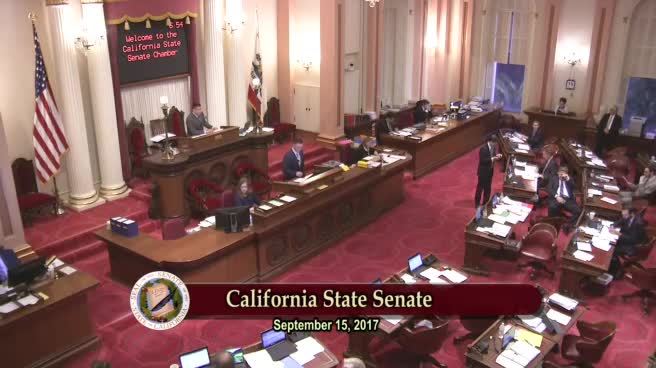 2MIN
Senate Floor
 1MIN
Assembly Floor
 5MIN
Assembly Standing Committee on Judiciary
Bill Author

Bill Co-Author(s):