AB 691: Pupil nutrition: almond milk.
- Session Year: 2017-2018
- House: Assembly
- Latest Version Date: 2017-09-30
Existing law prohibits the governing board of a school district from entering into a contract that grants exclusive or nonexclusive advertising or grants the right to the exclusive or nonexclusive sale of carbonated beverages, nonnutritious beverages, or nonnutritious food within the school district to a person, business, or corporation unless the governing board of the school district has adopted a policy after a public hearing to ensure that the school district has internal controls in place regarding the expenditure of the public funds. Existing law defines nonnutritious beverages, for purposes of that provision, to exclude, among other beverages, milk, including, but not limited to, chocolate milk, soy milk, rice milk, and other similar dairy or nondairy milk.
This bill would specify, for purposes of exclusion from the definition of nonnutritious beverages, that milk also includes almond milk.
Existing law permits the sale of only certain beverages to pupils at public schools. The beverages that may be sold include fruit-based and vegetable-based drinks, plain water, certain types of milk and nondairy milk and other similar nondairy milk, and, in high schools, electrolyte replacement beverages if those beverages meet certain nutritional requirements
This bill would specify that almond milk is a nondairy milk that is authorized to be sold to pupils at public schools.
Existing law prohibits the governing board of a school district from entering into a contract that grants exclusive or nonexclusive advertising or grants the right to the exclusive or nonexclusive sale of carbonated beverages, nonnutritious beverages, or nonnutritious food within the school district to a person, business, or corporation unless the governing board of the school district has adopted a policy after a public hearing to ensure that the school district has internal controls in place regarding the expenditure of the public funds. Existing law defines nonnutritious beverages, for purposes of that provision, to exclude, among other beverages, milk, including, but not limited to, chocolate milk, soy milk, rice milk, and other similar dairy or nondairy milk.
This bill would specify, for purposes of exclusion from the definition of nonnutritious beverages, that milk also includes almond milk.
(a)The Legislature finds and declares all of the following:
(1)State and federal laws require all schools participating in meal programs to provide nutritious food and beverages to pupils.
(2)State and federal laws restrict the sale of food and beverages in competition with meal programs to enhance the nutritional goals for pupils, and to protect the fiscal and nutritional integrity of the school food service programs.
(3)Parents, pupils, and community members should have the opportunity to ensure, through the review of food and beverage contracts, that food and beverages sold on school campuses provide nutritious sustenance to pupils, promote good health, help pupils learn, provide energy, and model fit living for life.
(b)For purposes of this section, the following terms have the following meanings:
(1)Nonnutritious beverages means any beverage that is not any of the following:
(A)Drinking water.
(B)Milk, including, but not limited to, chocolate milk, soy milk, rice milk, almond milk, and other similar dairy or nondairy milk.
(C)An electrolyte replacement beverage that contains 42 grams or less of added sweetener per 20 ounce serving.
(D)A 100 percent fruit juice, or fruit-based drink that is composed of 50 percent or more fruit juice and that has no added sweeteners.
(2)Added sweetener means an additive that enhances the sweetness of the beverage, including, but not limited to, added sugar, but does not include the natural sugar or sugars that are contained within any fruit juice that is a component of the beverage.
(3)Nonnutritious food means food that is not sold as part of the school breakfast or lunch program as a full meal, and that meets any of the following standards:
(A)More than 35 percent of its total calories are from fat.
(B)More than 10 percent of its total calories are from saturated fat.
(C)More than 35 percent of its total weight is composed of sugar. This subparagraph does not apply to the sale of fruits or vegetables.
(c)The governing board of a school district shall not do any of the following:
(1)Enter into or renew a contract, or permit a school within the school district to enter into or renew a contract, that grants exclusive or nonexclusive advertising or grants the right to the exclusive or nonexclusive sale of carbonated beverages, nonnutritious beverages, or nonnutritious food within the school district to a person, business, or corporation, unless the governing board of the school district does all of the following:
(A)Adopts a policy after a public hearing of the governing board of the school district to ensure that the school district has internal controls in place to protect the integrity of the public funds and to ensure that funds raised benefit public education, and that the contracts are entered into on a competitive basis pursuant to procedures contained in Section 20111 of the Public Contract Code or through the issuance of a request for proposal.
(B)Provides to parents, guardians, pupils, and members of the public the opportunity to comment on the contract by holding a public hearing on the contract during a regularly scheduled meeting of the governing board of the school district. The governing board of the school district shall clearly, and in a manner recognizable to the general public, identify in the agenda the contract to be discussed at the meeting.
(2)Enter into a contract that prohibits a school district employee from disparaging the goods or services of the party contracting with the governing board of the school district.
(3)Enter into a contract or permit a school within the school district to enter into a contract for electronic products or services that requires the dissemination of advertising to pupils, unless the governing board of the school district does all of the following:
(A)Enters into the contract at a noticed public hearing of the governing board of the school district.
(B)Makes a finding that the electronic product or service in question is or would be an integral component of the education of pupils.
(C)Makes a finding that the school district cannot afford to provide the electronic product or service unless it contracts to permit dissemination of advertising to pupils.
(D)Provides written notice to the parents or guardians of pupils that the advertising will be used in the classroom or other learning centers. This notice shall be part of the school districts normal ongoing communication to parents or guardians.
(E)Offers the parents the opportunity to request in writing that the pupil not be exposed to the program that contains the advertising. A request shall be honored for the school year in which it is submitted, or longer if specified, but may be withdrawn by the parent or guardian at any time.
(d)A governing board of the school district may meet the public hearing requirement set forth in subparagraph (B) of paragraph (1) of subdivision (c) for those contracts that grant the right to the exclusive or nonexclusive sale of carbonated beverages, nonnutritious beverages, or nonnutritious food within the school district, by an annual public hearing to review and discuss existing and potential contracts for the sale of food and beverages on campuses, including food and beverages sold as full meals, through competitive sales, as fundraisers, and through vending machines.
(1)The public hearing shall include, but not be limited to, a discussion of all of the following:
(A)The nutritional value of food and beverages sold within the school district.
(B)The availability of fresh fruit, vegetables, and grains in school meals and snacks, including, but not limited to, locally grown and organic produce.
(C)The amount of fat, sugar, and additives in the food and beverages discussed.
(D)Barriers to pupil participation in school breakfast and lunch programs.
(2)A school district that holds an annual public hearing consistent with this subdivision is not released from the public hearing requirements set forth in subparagraph (B) of paragraph (1) of subdivision (c) for those contracts not discussed at the annual public hearing.
(e)The governing board of the school district shall make accessible to the public a contract entered into pursuant to paragraph (1) of subdivision (c) and shall not include in that contract a confidentiality clause that would prevent a school or school district from making any part of the contract public.
(f)The governing board of a school district may sell advertising, products, or services on a nonexclusive basis.
(g)The governing board of a school district may post public signs indicating the school districts appreciation for the support of a person or business for the school districts education program.
(h)Contracts entered into before January 1, 2004, may remain in effect, but shall not be renewed if they are in conflict with this section.
SEC. 2.Section 49431.5 of the Education Code is amended to read:49431.5.(a)(1)From the midnight before to 30 minutes after the end of the official schoolday, at each elementary or middle school, the only competitive beverages that may be sold to a pupil are the following:
(A)Fruit-based drinks that are composed of no less than 50 percent fruit juice and have no added sweetener in a maximum serving size of 8 fluid ounces for elementary school or 12 fluid ounces for middle school.
(B)Vegetable-based drinks that are composed of no less than 50 percent vegetable juice and have no added sweetener in a maximum serving size of 8 fluid ounces for elementary school or 12 fluid ounces for middle school.
(C)Plain water or plain carbonated water.
(D)One-percent-fat unflavored milk, nonfat flavored or unflavored milk, soy milk, rice milk, almond milk, and other similar nondairy milk in a maximum serving size of 8 fluid ounces for elementary school or 12 fluid ounces for middle school.
(E)A beverage shall not contain caffeine with the exception of trace amounts of naturally occurring caffeine substances.
(2)An elementary school or middle school may permit the sale of beverages that do not comply with paragraph (1) as part of a school fundraising event in either of the following circumstances:
(A)The sale of those items takes place off and away from the premises of the school.
(B)The sale of those items takes place on school premises at least one-half hour after the end of the schoolday.
(3)From the midnight before to 30 minutes after the end of the official schoolday, at each high school, the only competitive beverages that may be sold to a pupil are the following:
(A)Fruit-based drinks that are composed of no less than 50 percent fruit juice and have no added sweetener in a maximum serving size of 12 fluid ounces.
(B)Vegetable-based drinks that are composed of no less than 50 percent vegetable juice and have no added sweetener in a maximum serving size of 12 fluid ounces.
(C)Plain water or plain carbonated water.
(D)One-percent-fat unflavored milk, nonfat flavored or unflavored milk, soy milk, rice milk, almond milk, and other similar nondairy milk in a maximum serving size of 12 fluid ounces.
(E)Flavored water or flavored carbonated water with no added sweetener that is labeled to contain less than 5 calories per 8 fluid ounces in a maximum serving size of 20 fluid ounces.
(F)Flavored water or flavored carbonated water with no added sweetener that is labeled to contain no more than 40 calories per 8 fluid ounces in a maximum serving size of 12 fluid ounces.
(G)Electrolyte replacement beverages that are labeled to contain less than 5 calories per 8 fluid ounces in a maximum serving size of 20 fluid ounces.
(H)Electrolyte replacement beverages that are labeled to contain no more than 40 calories per 8 fluid ounces in a maximum serving size of 12 fluid ounces.
(I)Beverages labeled or commonly referred to as sodas, colas, or soft drinks are not allowed.
(J)A beverage shall not contain caffeine with the exception of trace amounts of naturally occurring caffeine substances.
(4)A high school may permit the sale of beverages that do not comply with paragraph (3) as part of a school event if the sale of those items meets either of the following criteria:
(A)The sale of those items takes place off and away from the premises of the school.
(B)The sale of those items takes place on school premises at least one-half hour after the end of the schoolday.
(b)It is the intent of the Legislature that the governing board of a school district annually review its compliance with this section.
(c)Notwithstanding Article 3 (commencing with Section 33050) of Chapter 1 of Part 20 of Division 2, compliance with this section shall not be waived.
(a)The Legislature finds and declares all of the following:
(1)State and federal laws require all schools participating in meal programs to provide nutritious food and beverages to pupils.
(2)State and federal laws restrict the sale of food and beverages in competition with meal programs to enhance the nutritional goals for pupils, and to protect the fiscal and nutritional integrity of the school food service programs.
(3)Parents, pupils, and community members should have the opportunity to ensure, through the review of food and beverage contracts, that food and beverages sold on school campuses provide nutritious sustenance to pupils, promote good health, help pupils learn, provide energy, and model fit living for life.
(b)For purposes of this section, the following terms have the following meanings:
(1)Nonnutritious beverages means any beverage that is not any of the following:
(A)Drinking water.
(B)Milk, including, but not limited to, chocolate milk, soy milk, rice milk, almond milk, and other similar dairy or nondairy milk.
(C)An electrolyte replacement beverage that contains 42 grams or less of added sweetener per 20 ounce serving.
(D)A 100 percent fruit juice, or fruit-based drink that is composed of 50 percent or more fruit juice and that has no added sweeteners.
(2)Added sweetener means an additive that enhances the sweetness of the beverage, including, but not limited to, added sugar, but does not include the natural sugar or sugars that are contained within any fruit juice that is a component of the beverage.
(3)Nonnutritious food means food that is not sold as part of the school breakfast or lunch program as a full meal, and that meets any of the following standards:
(A)More than 35 percent of its total calories are from fat.
(B)More than 10 percent of its total calories are from saturated fat.
(C)More than 35 percent of its total weight is composed of sugar. This subparagraph does not apply to the sale of fruits or vegetables.
(c)The governing board of a school district shall not do any of the following:
(1)Enter into or renew a contract, or permit a school within the school district to enter into or renew a contract, that grants exclusive or nonexclusive advertising or grants the right to the exclusive or nonexclusive sale of carbonated beverages, nonnutritious beverages, or nonnutritious food within the school district to a person, business, or corporation, unless the governing board of the school district does all of the following:
(A)Adopts a policy after a public hearing of the governing board of the school district to ensure that the school district has internal controls in place to protect the integrity of the public funds and to ensure that funds raised benefit public education, and that the contracts are entered into on a competitive basis pursuant to procedures contained in Section 20111 of the Public Contract Code or through the issuance of a request for proposal.
(B)Provides to parents, guardians, pupils, and members of the public the opportunity to comment on the contract by holding a public hearing on the contract during a regularly scheduled meeting of the governing board of the school district. The governing board of the school district shall clearly, and in a manner recognizable to the general public, identify in the agenda the contract to be discussed at the meeting.
(2)Enter into a contract that prohibits a school district employee from disparaging the goods or services of the party contracting with the governing board of the school district.
(3)Enter into a contract or permit a school within the school district to enter into a contract for electronic products or services that requires the dissemination of advertising to pupils, unless the governing board of the school district does all of the following:
(A)Enters into the contract at a noticed public hearing of the governing board of the school district.
(B)Makes a finding that the electronic product or service in question is or would be an integral component of the education of pupils.
(C)Makes a finding that the school district cannot afford to provide the electronic product or service unless it contracts to permit dissemination of advertising to pupils.
(D)Provides written notice to the parents or guardians of pupils that the advertising will be used in the classroom or other learning centers. This notice shall be part of the school districts normal ongoing communication to parents or guardians.
(E)Offers the parents the opportunity to request in writing that the pupil not be exposed to the program that contains the advertising. A request shall be honored for the school year in which it is submitted, or longer if specified, but may be withdrawn by the parent or guardian at any time.
(d)A governing board of the school district may meet the public hearing requirement set forth in subparagraph (B) of paragraph (1) of subdivision (c) for those contracts that grant the right to the exclusive or nonexclusive sale of carbonated beverages, nonnutritious beverages, or nonnutritious food within the school district, by an annual public hearing to review and discuss existing and potential contracts for the sale of food and beverages on campuses, including food and beverages sold as full meals, through competitive sales, as fundraisers, and through vending machines.
(1)The public hearing shall include, but not be limited to, a discussion of all of the following:
(A)The nutritional value of food and beverages sold within the school district.
(B)The availability of fresh fruit, vegetables, and grains in school meals and snacks, including, but not limited to, locally grown and organic produce.
(C)The amount of fat, sugar, and additives in the food and beverages discussed.
(D)Barriers to pupil participation in school breakfast and lunch programs.
(2)A school district that holds an annual public hearing consistent with this subdivision is not released from the public hearing requirements set forth in subparagraph (B) of paragraph (1) of subdivision (c) for those contracts not discussed at the annual public hearing.
(e)The governing board of the school district shall make accessible to the public a contract entered into pursuant to paragraph (1) of subdivision (c) and shall not include in that contract a confidentiality clause that would prevent a school or school district from making any part of the contract public.
(f)The governing board of a school district may sell advertising, products, or services on a nonexclusive basis.
(g)The governing board of a school district may post public signs indicating the school districts appreciation for the support of a person or business for the school districts education program.
(h)Contracts entered into before January 1, 2004, may remain in effect, but shall not be renewed if they are in conflict with this section.
SEC. 2.Section 49431.5 of the Education Code is amended to read:49431.5.(a)(1)From the midnight before to 30 minutes after the end of the official schoolday, at each elementary or middle school, the only competitive beverages that may be sold to a pupil are the following:
(A)Fruit-based drinks that are composed of no less than 50 percent fruit juice and have no added sweetener in a maximum serving size of 8 fluid ounces for elementary school or 12 fluid ounces for middle school.
(B)Vegetable-based drinks that are composed of no less than 50 percent vegetable juice and have no added sweetener in a maximum serving size of 8 fluid ounces for elementary school or 12 fluid ounces for middle school.
(C)Plain water or plain carbonated water.
(D)One-percent-fat unflavored milk, nonfat flavored or unflavored milk, soy milk, rice milk, almond milk, and other similar nondairy milk in a maximum serving size of 8 fluid ounces for elementary school or 12 fluid ounces for middle school.
(E)A beverage shall not contain caffeine with the exception of trace amounts of naturally occurring caffeine substances.
(2)An elementary school or middle school may permit the sale of beverages that do not comply with paragraph (1) as part of a school fundraising event in either of the following circumstances:
(A)The sale of those items takes place off and away from the premises of the school.
(B)The sale of those items takes place on school premises at least one-half hour after the end of the schoolday.
(3)From the midnight before to 30 minutes after the end of the official schoolday, at each high school, the only competitive beverages that may be sold to a pupil are the following:
(A)Fruit-based drinks that are composed of no less than 50 percent fruit juice and have no added sweetener in a maximum serving size of 12 fluid ounces.
(B)Vegetable-based drinks that are composed of no less than 50 percent vegetable juice and have no added sweetener in a maximum serving size of 12 fluid ounces.
(C)Plain water or plain carbonated water.
(D)One-percent-fat unflavored milk, nonfat flavored or unflavored milk, soy milk, rice milk, almond milk, and other similar nondairy milk in a maximum serving size of 12 fluid ounces.
(E)Flavored water or flavored carbonated water with no added sweetener that is labeled to contain less than 5 calories per 8 fluid ounces in a maximum serving size of 20 fluid ounces.
(F)Flavored water or flavored carbonated water with no added sweetener that is labeled to contain no more than 40 calories per 8 fluid ounces in a maximum serving size of 12 fluid ounces.
(G)Electrolyte replacement beverages that are labeled to contain less than 5 calories per 8 fluid ounces in a maximum serving size of 20 fluid ounces.
(H)Electrolyte replacement beverages that are labeled to contain no more than 40 calories per 8 fluid ounces in a maximum serving size of 12 fluid ounces.
(I)Beverages labeled or commonly referred to as sodas, colas, or soft drinks are not allowed.
(J)A beverage shall not contain caffeine with the exception of trace amounts of naturally occurring caffeine substances.
(4)A high school may permit the sale of beverages that do not comply with paragraph (3) as part of a school event if the sale of those items meets either of the following criteria:
(A)The sale of those items takes place off and away from the premises of the school.
(B)The sale of those items takes place on school premises at least one-half hour after the end of the schoolday.
(b)It is the intent of the Legislature that the governing board of a school district annually review its compliance with this section.
(c)Notwithstanding Article 3 (commencing with Section 33050) of Chapter 1 of Part 20 of Division 2, compliance with this section may shall not be waived.
(a)The Legislature finds and declares all of the following:
(1)State and federal laws require all schools participating in meal programs to provide nutritious food and beverages to pupils.
(2)State and federal laws restrict the sale of food and beverages in competition with meal programs to enhance the nutritional goals for pupils, and to protect the fiscal and nutritional integrity of the school food service programs.
(3)Parents, pupils, and community members should have the opportunity to ensure, through the review of food and beverage contracts, that food and beverages sold on school campuses provide nutritious sustenance to pupils, promote good health, help pupils learn, provide energy, and model fit living for life.
(b)For purposes of this section, the following terms have the following meanings:
(1)Nonnutritious beverages means any beverage that is not any of the following:
(A)Drinking water.
(B)Milk, including, but not limited to, chocolate milk, soy milk, rice milk, almond milk, and other similar dairy or nondairy milk.
(C)An electrolyte replacement beverage that contains 42 grams or less of added sweetener per 20 ounce serving.
(D)A 100 percent fruit juice, or fruit-based drink that is composed of 50 percent or more fruit juice and that has no added sweeteners.
(2)Added sweetener means an additive that enhances the sweetness of the beverage, including, but not limited to, added sugar, but does not include the natural sugar or sugars that are contained within any fruit juice that is a component of the beverage.
(3)Nonnutritious food means food that is not sold as part of the school breakfast or lunch program as a full meal, and that meets any of the following standards:
(A)More than 35 percent of its total calories are from fat.
(B)More than 10 percent of its total calories are from saturated fat.
(C)More than 35 percent of its total weight is composed of sugar. This subparagraph does not apply to the sale of fruits or vegetables.
(c)The governing board of a school district shall not do any of the following:
(1)Enter into or renew a contract, or permit a school within the school district to enter into or renew a contract, that grants exclusive or nonexclusive advertising or grants the right to the exclusive or nonexclusive sale of carbonated beverages or beverages, nonnutritious beverages beverages, or nonnutritious food within the school district to a person, business, or corporation, unless the governing board of the school district does all of the following:
(A)Adopts a policy after a public hearing of the governing board of the school district to ensure that the school district has internal controls in place to protect the integrity of the public funds and to ensure that funds raised benefit public education, and that the contracts are entered into on a competitive basis pursuant to procedures contained in Section 20111 of the Public Contract Code or through the issuance of a Request request for Proposal. proposal.
(B)Provides to parents, guardians, pupils, and members of the public the opportunity to comment on the contract by holding a public hearing on the contract during a regularly scheduled board meeting. meeting of the governing board of the school district. The governing board of the school district shall clearly, and in a manner recognizable to the general public, identify in the agenda the contract to be discussed at the meeting.
(2)Enter into a contract that prohibits a school district employee from disparaging the goods or services of the party contracting with the governing board of the school district.
(3)Enter into a contract or permit a school within the school district to enter into a contract for electronic products or services that requires the dissemination of advertising to pupils, unless the governing board of the school district does all of the following:
(A)Enters into the contract at a noticed public hearing of the governing board of the school district.
(B)Makes a finding that the electronic product or service in question is or would be an integral component of the education of pupils.
(C)Makes a finding that the school district cannot afford to provide the electronic product or service unless it contracts to permit dissemination of advertising to pupils.
(D)Provides written notice to the parents or guardians of pupils that the advertising will be used in the classroom or other learning centers. This notice shall be part of the school districts normal ongoing communication to parents or guardians.
(E)Offers the parents the opportunity to request in writing that the pupil not be exposed to the program that contains the advertising. A request shall be honored for the school year in which it is submitted, or longer if specified, but may be withdrawn by the parents parent or guardians guardian at any time.
(d)A governing board of the school district may meet the public hearing requirement set forth in subparagraph (B) of paragraph (1) of subdivision (c) for those contracts that grant the right to the exclusive or nonexclusive sale of carbonated beverages or beverages, nonnutritious beverages beverages, or nonnutritious food within the school district, by an annual public hearing to review and discuss existing and potential contracts for the sale of food and beverages on campuses, including food and beverages sold as full meals, through competitive sales, as fundraisers, and through vending machines.
(1)The public hearing shall include, but not be limited to, a discussion of all of the following:
(A)The nutritional value of food and beverages sold within the school district.
(B)The availability of fresh fruit, vegetables, and grains in school meals and snacks, including, but not limited to, locally grown and organic produce.
(C)The amount of fat, sugar, and additives in the food and beverages discussed.
(D)Barriers to pupil participation in school breakfast and lunch programs.
(2)A school district that holds an annual public hearing consistent with this subdivision is not released from the public hearing requirements set forth in subparagraph (B) of paragraph (1) of subdivision (c) for those contracts not discussed at the annual public hearing.
(e)The governing board of the school district shall make accessible to the public a contract entered into pursuant to paragraph (1) of subdivision (c) and may shall not include in that contract a confidentiality clause that would prevent a school or school district from making any part of the contract public.
(f)The governing board of a school district may sell advertising, products, or services on a nonexclusive basis.
(g)The governing board of a school district may post public signs indicating the school districts appreciation for the support of a person or business for the school districts education program.
(h)Contracts entered into before January 1, 2004, may remain in effect, but shall not be renewed if they are in conflict with this section.
|
Date
|
Status
|
|---|---|
| Sep 30, 2017 | Chaptered by Secretary of State - Chapter 382, Statutes of 2017. |
| Sep 30, 2017 | Approved by the Governor. |
| Sep 12, 2017 | Enrolled and presented to the Governor at 2:30 p.m. |
| Sep 5, 2017 | Senate amendments concurred in. To Engrossing and Enrolling. (Ayes 77. Noes 0.). |
| Aug 31, 2017 | In Assembly. Concurrence in Senate amendments pending. May be considered on or after September 2 pursuant to Assembly Rule 77. |
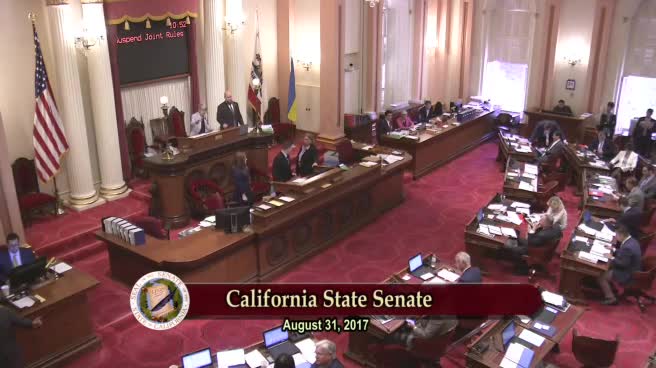
| Aug 31, 2017 | Read third time. Passed. Ordered to the Assembly. |
| Jun 26, 2017 | Ordered to third reading. |
| Jun 21, 2017 | Read second time and amended. Ordered to consent calendar. |
| Jun 20, 2017 | From committee: Amend, and do pass as amended. To Consent Calendar. (Ayes 7. Noes 0.) (June 14). |
| Jun 1, 2017 | Referred to Com. on ED. |
| May 18, 2017 | In Senate. Read first time. To Com. on RLS. for assignment. |
| May 18, 2017 | Read third time. Passed. Ordered to the Senate. (Ayes 69. Noes 0. Page 1621.) |
| May 15, 2017 | Read second time. Ordered to Consent Calendar. |
| May 11, 2017 | From committee: Do pass. To Consent Calendar. (Ayes 6. Noes 0.) (May 10). |
| Mar 2, 2017 | Referred to Com. on ED. |
| Feb 16, 2017 | From printer. May be heard in committee March 18. |
| Feb 15, 2017 | Read first time. To print. |
|
Date
|
Description
|
Location
|
Votes
|
|
|---|---|---|---|---|
| Sep 5, 2017 | AB 691 LEVINE Concurrence in Senate Amendments | Assembly Floor |
Passed |
|
| Aug 31, 2017 | Assembly 3rd Reading AB691 Levine By Pan | Senate Floor |
Passed |
|
| Jun 14, 2017 | Do pass as amended, and be ordered to the Consent Calendar | Senate Standing Committee on Education |
Passed |
|
| May 18, 2017 | AB 691 LEVINE Consent Calendar Second Day Regular Session | Assembly Floor |
Passed |
|
| May 10, 2017 | Do pass. To Consent Calendar. | Assembly Standing Committee on Education |
Passed |
This list shows positions taken on this bill by organizations on the date displayed, which is linked to the original source.
Positions by individuals are not included.
|
Organization
|
Position
|
Date
|
|---|---|---|
| Almond Alliance | ** Support | Jun 27, 2017 |
CONCURRENCE IN SENATE AMENDMENTS
CSA1 Bill Id:AB 691
Author:(Levine)
As Amended Ver:June 21, 2017
Majority vote
ASSEMBLY: | 69-0 | (May 18, 2017) | SENATE: | 40-0 | (August 31, 2017) |
Original Committee Reference: ED.
SUMMARY: Adds almond milk to the list of beverages that are excluded from the definition of nonnutritious beverages, thus allowing school districts to enter into a contract to grant advertising rights to, or permits the sale of, almond milk at schools without requiring a public hearing or adopting a policy; and, adds almond milk to the list of competitive beverages that may be sold to pupils during the school day provided the product meets federal nutrition standards for school meal programs.
The Senate amendments add language specifying that almond milk is a permissible competitive beverage that may be sold to pupils from the midnight before to 30 minutes after the end of the official school day at an elementary, middle, or high school, provided that the product meets federal nutrition standards.
EXISTING LAW:
- Defines "nonnutritious beverages" as any beverage that is not any of the following:
- Drinking water.
- Milk, including, but not limited to, chocolate milk, soy milk, rice milk, and other similar dairy or nondairy milk.
- An electrolyte replacement beverage that contains 42 grams or less of added sweetener per 20 once serving.
- A 100% fruit juice, or fruit-based drink that is comprised of 50% or more fruit juice and that has non added sweeteners. (Education Code (EDC) 35182.5)
- Provides that from the midnight before to 30 minutes after the end of the official school day, at each elementary and middle school, the only competitive beverages that may be sold to a pupil are:
- Fruit-based drinks that are composed of no less than 50% fruit juice and have no added sweetener in a maximum serving size of eight fluid ounces for elementary school or 12 fluid ounces for middle or high school.
- Vegetable-based drinks that are composed of no less than 50% vegetable juice and have no added sweetener in a maximum serving size of eight fluid ounces for elementary school or 12 fluid ounces for middle or high school.
- Plain water or plain carbonated water.
- One-percent-fat unflavored milk, nonfat flavored or unflavored milk, soy milk, rice milk, and other similar nondairy milk in a maximum serving size of eight fluid ounces for elementary school or 12 fluid ounces for middle or high school. (EDC 49431.5)
- Provides that from the midnight before to 30 minutes after the end of the official school day, at each high school, the only competitive beverages, in addition to those in (4) above, that may be sold to a pupil are:
- Flavored water or flavored carbonated water with no added sweetener that is labeled to contain less than five calories per eight fluid ounces in a maximum serving size of 20 fluid ounces.
- Flavored water or flavored carbonated water with no added sweetener that is labeled to contain no more than 40 calories per eight fluid ounces in a maximum serving size of 12 fluid ounces.
- Electrolyte replacement beverages that are labeled to contain less than five calories per eight fluid ounces in a maximum serving size of 20 fluid ounces.
- Electrolyte replacement beverages that are labeled to contain no more than 40 calories per eight fluid ounces in a maximum serving size of 12 fluid ounces. (EDC 49431.5)
FISCAL EFFECT: None.
COMMENTS:
According to the author, "Currently there is no definition of what a nondairy milk is. This bill clarifies that almond milk is considered nutritious so school districts can enter into a contract for the purchase of it. Almond milk is a wholesome alternative for those who suffer from lactose intolerance. Almonds are the number one agricultural export from California. The state produces over 80% of the world's supply of almonds and the crop contributes $5.33 billion to the state's economy annually."
According to the California Department of Education, they are not aware of any almond milk currently on the market that meets the nutrition requirements of the National School Lunch Program, therefore, almond milk would not qualify for reimbursement, other than in the case of a student with a dietary restriction.
The Senate amendments clarify that schools would be permitted to enter into contracts to advertise or to sell almond milk as a competitive food to pupils during the school day, provided that the product meets the federal nutrition standards for the school meal program.
Analysis Prepared by: Debbie Look / ED. / (916) 319-2087 FN: 0001614
Office of Senate Floor Analyses (916) 651-1520 Fax: (916) 327-4478 | AB |
THIRD READING
Bill No: AB 691
Amended: 6/21/17 in Senate
SENATE EDUCATION COMMITTEE: 7-0, 6/14/17
AYES: Allen, Wilk, Galgiani, Leyva, Mendoza, Pan, Vidak
ASSEMBLY FLOOR: 69-0, 5/18/17 (Consent) - See last page for vote
DIGEST:
This bill specifically excludes almond milk from the list of beverages that are “nonnutritious,” thereby authorizing the governing board of a school district to enter into or renew a contract that grants exclusive or non-exclusive advertising or sales rights for almond milk without first holding a public hearing or adopting a policy. This bill also specifically authorizes public schools to sell almond milk during the school day.
Existing federal law:
- Requires schools participating in the National School Lunch Program (NSLP) or the School Breakfast Program (SBP) to offer students at least two different options of milk, requires all milk to be fat-free or low-fat, and authorizes low fat or fat-free lactose-free and reduced-lactose fluid milk to be offered. (Code of Federal Regulations, Title 7, §210.10)
- Requires all fluid milk served in the NSLP and SBP to be pasteurized fluid milk that meets state and local standards, to have vitamins A and D at levels specified by the national Food and Drug Administration (FDA), and to be consistent with state and local standards for such milk. (CFR, Title 7, §210.10)
- Requires a school that chooses to offer one or more substitutes for fluid milk for non-disabled students with medical or special dietary needs to only offer nondairy beverages that are fortified in accordance with fortification guidelines issued by the FDA and that meet all of the following nutrient requirements per eight fluid ounces:
- 276 milligrams of Calcium.
- 8 grams of Protein.
- 500 International Units of Vitamin A.
- 100 International Units of Vitamin D.
- 24 milligrams of Magnesium.
- 222 milligrams of Phosphorus.
- 349 milligrams of Potassium.
- 0.44 milligrams of Riboflavin.
- 1.1 micrograms of Vitamin of B-12. (CFR, Title 7, §210.10)
Existing state law:
- Defines “nonnutritious beverages” as any beverage that is not any of the following:
- Drinking water.
- Milk, including, but not limited to, chocolate milk, soy milk, rice milk, and other similar dairy or nondairy milk.
- An electrolyte replacement beverage that contains 42 grams or less of added sweetener per 20 once serving.
- A 100 percent fruit juice, or fruit-based drink that is comprised of 50 percent or more fruit juice and that has non added sweeteners.
(Education Code § 35182.5)
- Defines “Non-dairy milk” alternative (e.g., rice milk, soy milk) as a beverage that:
- Contains Vitamin A, Vitamin D and at least 25 percent of the daily recommendation for calcium per eight ounces;
- Contains no added sweeteners exceeding 28 grams of total sugars per eight ounces;
- Contains no more than five grams of fat per eight ounces. (California Code of Regulations, Title 5, § 15576)
- Prohibits the governing board of a school district from entering into a contract, or permitting a school within the school district to enter into or renew a contract, that grants exclusive or nonexclusive advertising or grants the right to the exclusive or nonexclusive sale of carbonated beverages, nonnutritious beverages, or nonnutritious food within the school district to a person, business, or corporation, unless the governing board of the school district does all of the following:
- Adopts a policy after a public hearing of the governing board of the school district to ensure that the school district has internal controls in place to protect the integrity of the public funds and to ensure that funds raised benefit public education, and that the contracts are entered into on a competitive basis or through a request for proposal.
- Provides to parents, guardians, pupils, and members of the public the opportunity to comment on the contract by holding a public hearing on the contract during a regularly scheduled board meeting. (EC § 35182.5)
- Provides that from the midnight before to 30 minutes after the end of the official school day, at each elementary or middle school, the only competitive beverages that may be sold to a pupil are:
- Fruit-based drinks that are composed of no less than 50 percent fruit juice and have no added sweetener in a maximum serving size of eight fluid ounces for elementary school or 12 fluid ounces for middle school.
- Vegetable-based drinks that are composed of no less than 50 percent vegetable juice and have no added sweetener in a maximum serving size of eight fluid ounces for elementary school or 12 fluid ounces for middle school.
- Plain water or plain carbonated water.
- One-percent-fat unflavored milk, nonfat flavored or unflavored milk, soy milk, rice milk, and other similar nondairy milk in a maximum serving size of eight fluid ounces for elementary school or 12 fluid ounces for middle school. (EC § 49431.5)
- Provides that from the midnight before to 30 minutes after the end of the official school day, at each high school, the only competitive beverages that may be sold to a pupil are:
- Fruit-based drinks that are composed of no less than 50 percent fruit juice and have no added sweetener in a maximum serving size of 12 fluid ounces.
- Vegetable-based drinks that are composed of no less than 50 percent vegetable juice and have no added sweetener in a maximum serving size of 12 fluid ounces.
- Plain water or plain carbonated water.
- One-percent-fat unflavored milk, nonfat flavored or unflavored milk, soy milk, rice milk, and other similar nondairy milk in a maximum serving size of 12 fluid ounces.
- Flavored water or flavored carbonated water with no added sweetener that is labeled to contain less than five calories per eight fluid ounces in a maximum serving size of 20 fluid ounces.
- Flavored water or flavored carbonated water with no added sweetener that is labeled to contain no more than 40 calories per eight fluid ounces in a maximum serving size of 12 fluid ounces.
- Electrolyte replacement beverages that are labeled to contain less than five calories per eight fluid ounces in a maximum serving size of 20 fluid ounces.
- Electrolyte replacement beverages that are labeled to contain no more than 40 calories per eight fluid ounces in a maximum serving size of 12 fluid ounces. (EC § 49431.5)
- Defines “Competitive foods” as all food and beverages other than meals reimbursed under programs authorized by the federal Richard B. Russell National School Lunch Act (Public Law 113-79) and the federal Child Nutrition Act of 1966 (42 U.S.C. Sec. 1771 et seq.) available for sale to pupils on the school campus during the schoolday.
- Requires each district or county superintendent of schools maintaining any kindergarten or any of grades 1 to 12, inclusive, to provide for each needy pupil one nutritionally adequate free or reduced-price meal during each schoolday. (EC § 49550)
- Provides that a nutritionally adequate meal for this purpose is a breakfast or lunch meeting specified requirements that qualifies for reimbursement under the federal child nutrition program regulations. (EC § 49553)
This bill:
- Excludes, specifically, almond milk from the list of beverages that are “nonnutritious,” thereby authorizing the governing board of a school district to enter into or renew a contract that grants exclusive or nonexclusive advertising or sales rights for almond milk without first holding a public hearing and adopting a policy. Contracts for almond milk would be excluded from the following requirements:
- Adopting a policy after a public hearing of the governing board of the school district to ensure that the school district has internal controls in place to protect the integrity of the public funds and to ensure that funds raised benefit public education, and that the contracts are entered into on a competitive basis or through a request for proposal.
- Providing to parents, guardians, pupils, and members of the public the opportunity to comment on the contract by holding a public hearing on the contract during a regularly scheduled board meeting. (EC § 35182.5)
- Authorizes, specifically, elementary schools, middle schools, and high schools to sell almond milk as a competitive beverage from midnight before, to 30 minutes after, the end of the official school day.
Comments
- Need for the bill. According to the author, “Almond milk has been a substitute for cow’s milk for hundreds of years and has recently gained popularity among the lactose-intollerant and vegan communitites. Nearly 10% of the population is lactose-intolerant and about 5% of the U.S. population identifies as vegan.
Almond milk has proven to be a wholesome alternative for students who are lactose-intolerant or vegan. Almond milk is a healthier option compared to cow’s milk. With 10 fewer carbohydrates per serving, almond milk can help minimize blood sugar loss and is also cholesterol-free. Almond milk further contains heart-healthy monounsaturated fats that prevent high blood pressure and heath heart disease. Moreover, the low calorie content of almond milk helps drinkers lose or maintain weight.
In 2014, almond milk surpassed soy milk as the most popular plant-based milk product. Almonds are the number one agriculture export from California. Further, California produces over 80% of the world’s supply of almonds and they contribute $5.33 billion to our state economy.”
- Not currently reimbursable? In 2011, the United State Department of Agriculture issued a management bulletin regarding fluid milk substitutions in the Child and Adult Care Food Program (https://www.fns.usda.gov/sites/default/files/CACFP-21-2011.pdf). Regarding non-dairy beverages, the bulletin provides that “In the case of children who cannot consume fluid milk due to medical or other special dietary needs, other than a disability, non-dairy beverages may be served in lieu of fluid milk. Non-dairy beverages must be nutritionally equivalent to milk and meet the nutritional standards for fortification of calcium, protein, vitamin A, vitamin D, and other nutrients to levels found in cow’s milk, as outlined in the National School Lunch Program (NSLP) regulations at 7 CFR 210.10.” The California Department of Education (CDE) posted the bulletin on its Internet Web site, and included supplemental questions and answers that were published after the bulletin was issued. Question S4 asked, “What about almond milk? Is that an allowable substitute?” Answer: “Currently, there are no almond milks on the market that meet the requirements outlined in 7 CFR 210.10.”
Senate Education Committee staff is informed by CDE that to the best of its knowledge there is still no almond milk on the market that meets the nutrition requirements of the NSLP. Accordingly, almond milk may not be offered as part of a reimbursable meal. However, this does not mean that there will not be almond milk on market in the future that does meet those requirements.
Related/Prior Legislation
SB 1169 (McGuire, Chapter 280, Statutes of 2016) made numerous changes to school nutrition standards for competitive food and beverages to better align to the federal Smart Snacks in Schools regulations, including eliminating the option for certain food to be sold to students before the beginning of the schoolday by narrowing the period of time in which certain food may be sold to students, from “one-half hour before the start of the schoolday to one-half hour after the schoolday,” to “the midnight before to 30 minutes after the end of the official schoolday.”
FISCAL EFFECT: Appropriation: Fiscal Com.: Local:
Almond Alliance
OPPOSITION: (Verified 6/20/17)
None received
ASSEMBLY FLOOR: 69-0, 5/18/17
AYES: Acosta, Travis Allen, Arambula, Baker, Berman, Bigelow, Bloom, Bocanegra, Bonta, Brough, Burke, Caballero, Cervantes, Chávez, Chen, Chiu, Choi, Chu, Cooley, Cooper, Cunningham, Dababneh, Dahle, Daly, Eggman, Flora, Fong, Gallagher, Cristina Garcia, Eduardo Garcia, Gomez, Gonzalez Fletcher, Gray, Grayson, Harper, Irwin, Jones-Sawyer, Kalra, Kiley, Lackey, Levine, Limón, Low, Maienschein, Mathis, Mayes, McCarty, Medina, Melendez, Muratsuchi, Nazarian, Obernolte, O'Donnell, Patterson, Quirk, Quirk-Silva, Reyes, Ridley-Thomas, Rodriguez, Rubio, Salas, Steinorth, Mark Stone, Thurmond, Ting, Voepel, Waldron, Weber, Wood
NO VOTE RECORDED: Aguiar-Curry, Calderon, Chau, Frazier, Friedman, Gipson, Gloria, Holden, Mullin, Santiago, Rendon
6/27/17 9:26:45
**** END ****
Office of Senate Floor Analyses (916) 651-1520 Fax: (916) 327-4478 | AB |
CONSENT
Bill No: AB 691
Amended: 6/21/17 in Senate
SENATE EDUCATION COMMITTEE: 7-0, 6/14/17
AYES: Allen, Wilk, Galgiani, Leyva, Mendoza, Pan, Vidak
ASSEMBLY FLOOR: 69-0, 5/18/17 (Consent) - See last page for vote
DIGEST:
This bill specifically excludes almond milk from the list of beverages that are “nonnutritious,” thereby authorizing the governing board of a school district to enter into or renew a contract that grants exclusive or non-exclusive advertising or sales rights for almond milk without first holding a public hearing or adopting a policy. This bill also specifically authorizes public schools to sell almond milk during the school day.
Existing federal law:
- Requires schools participating in the National School Lunch Program (NSLP) or the School Breakfast Program (SBP) to offer students at least two different options of milk, requires all milk to be fat-free or low-fat, and authorizes low fat or fat-free lactose-free and reduced-lactose fluid milk to be offered. (Code of Federal Regulations, Title 7, §210.10)
- Requires all fluid milk served in the NSLP and SBP to be pasteurized fluid milk that meets state and local standards, to have vitamins A and D at levels specified by the national Food and Drug Administration (FDA), and to be consistent with state and local standards for such milk. (CFR, Title 7, §210.10)
- Requires a school that chooses to offer one or more substitutes for fluid milk for non-disabled students with medical or special dietary needs to only offer nondairy beverages that are fortified in accordance with fortification guidelines issued by the FDA and that meet all of the following nutrient requirements per eight fluid ounces:
- 276 milligrams of Calcium.
- 8 grams of Protein.
- 500 International Units of Vitamin A.
- 100 International Units of Vitamin D.
- 24 milligrams of Magnesium.
- 222 milligrams of Phosphorus.
- 349 milligrams of Potassium.
- 0.44 milligrams of Riboflavin.
- 1.1 micrograms of Vitamin of B-12. (CFR, Title 7, §210.10)
Existing state law:
- Defines “nonnutritious beverages” as any beverage that is not any of the following:
- Drinking water.
- Milk, including, but not limited to, chocolate milk, soy milk, rice milk, and other similar dairy or nondairy milk.
- An electrolyte replacement beverage that contains 42 grams or less of added sweetener per 20 once serving.
- A 100 percent fruit juice, or fruit-based drink that is comprised of 50 percent or more fruit juice and that has non added sweeteners.
(Education Code § 35182.5)
- Defines “Non-dairy milk” alternative (e.g., rice milk, soy milk) as a beverage that:
- Contains Vitamin A, Vitamin D and at least 25 percent of the daily recommendation for calcium per eight ounces;
- Contains no added sweeteners exceeding 28 grams of total sugars per eight ounces;
- Contains no more than five grams of fat per eight ounces. (California Code of Regulations, Title 5, § 15576)
- Prohibits the governing board of a school district from entering into a contract, or permitting a school within the school district to enter into or renew a contract, that grants exclusive or nonexclusive advertising or grants the right to the exclusive or nonexclusive sale of carbonated beverages, nonnutritious beverages, or nonnutritious food within the school district to a person, business, or corporation, unless the governing board of the school district does all of the following:
- Adopts a policy after a public hearing of the governing board of the school district to ensure that the school district has internal controls in place to protect the integrity of the public funds and to ensure that funds raised benefit public education, and that the contracts are entered into on a competitive basis or through a request for proposal.
- Provides to parents, guardians, pupils, and members of the public the opportunity to comment on the contract by holding a public hearing on the contract during a regularly scheduled board meeting. (EC § 35182.5)
- Provides that from the midnight before to 30 minutes after the end of the official school day, at each elementary or middle school, the only competitive beverages that may be sold to a pupil are:
- Fruit-based drinks that are composed of no less than 50 percent fruit juice and have no added sweetener in a maximum serving size of eight fluid ounces for elementary school or 12 fluid ounces for middle school.
- Vegetable-based drinks that are composed of no less than 50 percent vegetable juice and have no added sweetener in a maximum serving size of eight fluid ounces for elementary school or 12 fluid ounces for middle school.
- Plain water or plain carbonated water.
- One-percent-fat unflavored milk, nonfat flavored or unflavored milk, soy milk, rice milk, and other similar nondairy milk in a maximum serving size of eight fluid ounces for elementary school or 12 fluid ounces for middle school. (EC § 49431.5)
- Provides that from the midnight before to 30 minutes after the end of the official school day, at each high school, the only competitive beverages that may be sold to a pupil are:
- Fruit-based drinks that are composed of no less than 50 percent fruit juice and have no added sweetener in a maximum serving size of 12 fluid ounces.
- Vegetable-based drinks that are composed of no less than 50 percent vegetable juice and have no added sweetener in a maximum serving size of 12 fluid ounces.
- Plain water or plain carbonated water.
- One-percent-fat unflavored milk, nonfat flavored or unflavored milk, soy milk, rice milk, and other similar nondairy milk in a maximum serving size of 12 fluid ounces.
- Flavored water or flavored carbonated water with no added sweetener that is labeled to contain less than five calories per eight fluid ounces in a maximum serving size of 20 fluid ounces.
- Flavored water or flavored carbonated water with no added sweetener that is labeled to contain no more than 40 calories per eight fluid ounces in a maximum serving size of 12 fluid ounces.
- Electrolyte replacement beverages that are labeled to contain less than five calories per eight fluid ounces in a maximum serving size of 20 fluid ounces.
- Electrolyte replacement beverages that are labeled to contain no more than 40 calories per eight fluid ounces in a maximum serving size of 12 fluid ounces. (EC § 49431.5)
- Defines “Competitive foods” as all food and beverages other than meals reimbursed under programs authorized by the federal Richard B. Russell National School Lunch Act (Public Law 113-79) and the federal Child Nutrition Act of 1966 (42 U.S.C. Sec. 1771 et seq.) available for sale to pupils on the school campus during the schoolday.
- Requires each district or county superintendent of schools maintaining any kindergarten or any of grades 1 to 12, inclusive, to provide for each needy pupil one nutritionally adequate free or reduced-price meal during each schoolday. (EC § 49550)
- Provides that a nutritionally adequate meal for this purpose is a breakfast or lunch meeting specified requirements that qualifies for reimbursement under the federal child nutrition program regulations. (EC § 49553)
This bill:
- Excludes, specifically, almond milk from the list of beverages that are “nonnutritious,” thereby authorizing the governing board of a school district to enter into or renew a contract that grants exclusive or nonexclusive advertising or sales rights for almond milk without first holding a public hearing and adopting a policy. Contracts for almond milk would be excluded from the following requirements:
- Adopting a policy after a public hearing of the governing board of the school district to ensure that the school district has internal controls in place to protect the integrity of the public funds and to ensure that funds raised benefit public education, and that the contracts are entered into on a competitive basis or through a request for proposal.
- Providing to parents, guardians, pupils, and members of the public the opportunity to comment on the contract by holding a public hearing on the contract during a regularly scheduled board meeting. (EC § 35182.5)
- Authorizes, specifically, elementary schools, middle schools, and high schools to sell almond milk as a competitive beverage from midnight before, to 30 minutes after, the end of the official school day.
Comments
- Need for the bill. According to the author, “Almond milk has been a substitute for cow’s milk for hundreds of years and has recently gained popularity among the lactose-intollerant and vegan communitites. Nearly 10% of the population is lactose-intolerant and about 5% of the U.S. population identifies as vegan.
Almond milk has proven to be a wholesome alternative for students who are lactose-intolerant or vegan. Almond milk is a healthier option compared to cow’s milk. With 10 fewer carbohydrates per serving, almond milk can help minimize blood sugar loss and is also cholesterol-free. Almond milk further contains heart-healthy monounsaturated fats that prevent high blood pressure and heath heart disease. Moreover, the low calorie content of almond milk helps drinkers lose or maintain weight.
In 2014, almond milk surpassed soy milk as the most popular plant-based milk product. Almonds are the number one agriculture export from California. Further, California produces over 80% of the world’s supply of almonds and they contribute $5.33 billion to our state economy.”
- Not currently reimbursable? In 2011, the United State Department of Agriculture issued a management bulletin regarding fluid milk substitutions in the Child and Adult Care Food Program (https://www.fns.usda.gov/sites/default/files/CACFP-21-2011.pdf). Regarding non-dairy beverages, the bulletin provides that “In the case of children who cannot consume fluid milk due to medical or other special dietary needs, other than a disability, non-dairy beverages may be served in lieu of fluid milk. Non-dairy beverages must be nutritionally equivalent to milk and meet the nutritional standards for fortification of calcium, protein, vitamin A, vitamin D, and other nutrients to levels found in cow’s milk, as outlined in the National School Lunch Program (NSLP) regulations at 7 CFR 210.10.” The California Department of Education (CDE) posted the bulletin on its Internet Web site, and included supplemental questions and answers that were published after the bulletin was issued. Question S4 asked, “What about almond milk? Is that an allowable substitute?” Answer: “Currently, there are no almond milks on the market that meet the requirements outlined in 7 CFR 210.10.”
Senate Education Committee staff is informed by CDE that to the best of its knowledge there is still no almond milk on the market that meets the nutrition requirements of the NSLP. Accordingly, almond milk may not be offered as part of a reimbursable meal. However, this does not mean that there will not be almond milk on market in the future that does meet those requirements.
Related/Prior Legislation
SB 1169 (McGuire, Chapter 280, Statutes of 2016) made numerous changes to school nutrition standards for competitive food and beverages to better align to the federal Smart Snacks in Schools regulations, including eliminating the option for certain food to be sold to students before the beginning of the schoolday by narrowing the period of time in which certain food may be sold to students, from “one-half hour before the start of the schoolday to one-half hour after the schoolday,” to “the midnight before to 30 minutes after the end of the official schoolday.”
FISCAL EFFECT: Appropriation: Fiscal Com.: Local:
Almond Alliance
OPPOSITION: (Verified 6/20/17)
None received
ASSEMBLY FLOOR: 69-0, 5/18/17
AYES: Acosta, Travis Allen, Arambula, Baker, Berman, Bigelow, Bloom, Bocanegra, Bonta, Brough, Burke, Caballero, Cervantes, Chávez, Chen, Chiu, Choi, Chu, Cooley, Cooper, Cunningham, Dababneh, Dahle, Daly, Eggman, Flora, Fong, Gallagher, Cristina Garcia, Eduardo Garcia, Gomez, Gonzalez Fletcher, Gray, Grayson, Harper, Irwin, Jones-Sawyer, Kalra, Kiley, Lackey, Levine, Limón, Low, Maienschein, Mathis, Mayes, McCarty, Medina, Melendez, Muratsuchi, Nazarian, Obernolte, O'Donnell, Patterson, Quirk, Quirk-Silva, Reyes, Ridley-Thomas, Rodriguez, Rubio, Salas, Steinorth, Mark Stone, Thurmond, Ting, Voepel, Waldron, Weber, Wood
NO VOTE RECORDED: Aguiar-Curry, Calderon, Chau, Frazier, Friedman, Gipson, Gloria, Holden, Mullin, Santiago, Rendon
6/21/17 15:38:38
**** END ****
SENATE COMMITTEE ON EDUCATION
Senator Benjamin Allen, Chair
2017 - 2018 Regular
Bill No: Hearing Date: June 14, 2017
Author: | Levine | ||
Version: |
| ||
Urgency: | Fiscal: | ||
Consultant: | |||
Subject:
SUMMARY
This bill specifies excludes almond milk from the list of beverages that are “nonnutritious,” thereby specifically authorizing the governing board of a school district to enter into or renew a contract that grants exclusive or non-exclusive advertising or sales rights for almond milk without first holding a public hearing or adopting a policy.
BACKGROUND
Existing law:
1) Defines “nonnutritious beverages” as any beverage that is not any of the following:
a) Drinking water.
b) Milk, including, but not limited to, chocolate milk, soy milk, rice milk, and other similar dairy or nondairy milk.
c) An electrolyte replacement beverage that contains 42 grams or less of added sweetener per 20 once serving.
d) A 100 percent fruit juice, or fruit-based drink that is comprised of 50 percent or more fruit juice and that has non added sweeteners.
(Education Code § 35182.5)
2) Defines “Non-dairy milk” alternative (e.g., rice milk, soy milk) as a beverage that:
a) Contains Vitamin A, Vitamin D and at least 25 percent of the daily recommendation for calcium per 8 ounces;
b) Contains no added sweeteners exceeding 28 grams of total sugars per 8 ounces;
c) Contains no more than 5 grams of fat per 8 ounces. (California Code of Regulations, Title 5, § 15576)
3) Prohibits the governing board of a school district from entering into a contract, or permitting a school within the school district to enter into or renew a contract, that grants exclusive or nonexclusive advertising or grants the right to the exclusive or nonexclusive sale of carbonated beverages, nonnutritious beverages, or nonnutritious food within the school district to a person, business, or corporation, unless the governing board of the school district does all of the following:
a) Adopts a policy after a public hearing of the governing board of the school district to ensure that the school district has internal controls in place to protect the integrity of the public funds and to ensure that funds raised benefit public education, and that the contracts are entered into on a competitive basis or through a request for proposal
b) Provides to parents, guardians, pupils, and members of the public the opportunity to comment on the contract by holding a public hearing on the contract during a regularly scheduled board meeting. (EC § 35182.5)
4) Provides that from the midnight before to 30 minutes after the end of the official school day, at each elementary or middle school, the only competitive beverages that may be sold to a pupil are:
a) Fruit-based drinks that are composed of no less than 50 percent fruit juice and have no added sweetener in a maximum serving size of 8 fluid ounces for elementary school or 12 fluid ounces for middle school.
b) Vegetable-based drinks that are composed of no less than 50 percent vegetable juice and have no added sweetener in a maximum serving size of 8 fluid ounces for elementary school or 12 fluid ounces for middle school.
c) Plain water or plain carbonated water.
d) One-percent-fat unflavored milk, nonfat flavored or unflavored milk, soy milk, rice milk, and other similar nondairy milk in a maximum serving size of 8 fluid ounces for elementary school or 12 fluid ounces for middle school. (EC § 49431.5)
5) Provides that from the midnight before to 30 minutes after the end of the official school day, at each high school, the only competitive beverages that may be sold to a pupil are:
a) Fruit-based drinks that are composed of no less than 50 percent fruit juice and have no added sweetener in a maximum serving size of 12 fluid ounces.
b) Vegetable-based drinks that are composed of no less than 50 percent vegetable juice and have no added sweetener in a maximum serving size of 12 fluid ounces.
c) Plain water or plain carbonated water.
d) One-percent-fat unflavored milk, nonfat flavored or unflavored milk, soy milk, rice milk, and other similar nondairy milk in a maximum serving size of 12 fluid ounces.
e) Flavored water or flavored carbonated water with no added sweetener that is labeled to contain less than 5 calories per 8 fluid ounces in a maximum serving size of 20 fluid ounces.
f) Flavored water or flavored carbonated water with no added sweetener that is labeled to contain no more than 40 calories per 8 fluid ounces in a maximum serving size of 12 fluid ounces.
g) Electrolyte replacement beverages that are labeled to contain less than 5 calories per 8 fluid ounces in a maximum serving size of 20 fluid ounces.
h) Electrolyte replacement beverages that are labeled to contain no more than 40 calories per 8 fluid ounces in a maximum serving size of 12 fluid ounces. (EC § 49431.5)
5) Defines ““Competitive foods” as all food and beverages other than meals reimbursed under programs authorized by the federal Richard B. Russell National School Lunch Act (Public Law 113-79) and the federal Child Nutrition Act of 1966 (42 U.S.C. Sec. 1771 et seq.) available for sale to pupils on the school campus during the schoolday.
6) Requires each district or county superintendent of schools maintaining any kindergarten or any of grades 1 to 12, inclusive, to provide for each needy pupil one nutritionally adequate free or reduced-price meal during each schoolday. (EC § 49550)
7) Provides that a nutritionally adequate meal for this purpose is a breakfast or lunch meeting specified requirements that qualifies for reimbursement under the federal child nutrition program regulations. (EC § 49553)
Existing federal law:
1) Requires schools participating in the National School Lunch Program (NSLP) or the School Breakfast Program (SBP) to offer students at least two different options of milk, requires all milk to be fat-free or low-fat, and authorizes low fat or fat-free lactose-free and reduced-lactose fluid milk to be offered.
(Code of Federal Regulations, Title 7, §210.10)
2) Requires all fluid milk served in the NSLP and SBP to be pasteurized fluid milk that meets state and local standards, to have vitamins A and D at levels specified by the national Food and Drug Administration (FDA), and to be consistent with state and local standards for such milk. (CFR, Title 7, §210.10)
3) Requires a school that chooses to offer one or more substitutes for fluid milk for non-disabled students with medical or special dietary needs to only offer nondairy beverages that are fortified in accordance with fortification guidelines issued by the FDA and that meet all of the following nutrient requirements per 8 fluid ounces:
a) 276 milligrams of Calcium.
b) 8 grams of Protein.
c) 500 International Units of Vitamin A.
d) 100 International Units of Vitamin D.
e) 24 milligrams of Magnesium.
f) 222 milligrams of Phosphorus.
g) 349 milligrams of Potassium.
h) 0.44 milligrams of Riboflavin.
i) 1.1 micrograms of Vitamin of B-12. (CFR, Title 7, §210.10)
ANALYSIS
This bill specifies excludes almond milk from the list of beverages that are “nonnutritious,” thereby specifically authorizing the governing board of a school district to enter into or renew a contract that grants exclusive or nonexclusive advertising or sales rights for almond milk without first holding a public hearing and adopting a policy. Specifically, this bill excludes contracts for almond milk from the following requirements:
a) Adopting a policy after a public hearing of the governing board of the school district to ensure that the school district has internal controls in place to protect the integrity of the public funds and to ensure that funds raised benefit public education, and that the contracts are entered into on a competitive basis or through a request for proposal
b) Providing to parents, guardians, pupils, and members of the public the opportunity to comment on the contract by holding a public hearing on the contract during a regularly scheduled board meeting. (EC § 35182.5)
STAFF COMMENTS
1) Need for the bill. “Almond milk has been a substitute for cow’s milk for hundreds of years and has recently gained popularity among the lactose-intollerant and vegan communitites. Nearly 10% of the population is lactose-intolerant and about 5% of the U.S. population identifies as vegan.
Almond milk has proven to be a wholesome alternative for students who are lactose-intolerant or vegan. Almond milk is a healthier option compared to cow’s milk. With 10 fewer carbohydrates per serving, almond milk can help minimize blood sugar loss and is also cholesterol-free. Almond milk further contains heart-healthy monounsaturated fats that prevent high blood pressure and heath heart disease. Moreover, the low calorie content of almond milk helps drinkers lose or maintain weight.
In 2014, almond milk surpassed soy milk as the most popular plant-based milk product. Almonds are the number one agriculture export from California. Further, California produces over 80% of the world’s supply of almonds and they contribute $5.33 billion to our state economy.”
2) Not currently reimbursable? In 2011, the United State Department of Agriculture issued a management bulletin regarding fluid milk substitutions in the Child and Adult Care Food Program, https://www.fns.usda.gov/sites/default/files/
CACFP-21-2011.pdf. Regarding non-dairy beverages, the bulletin provides that “In the case of children who cannot consume fluid milk due to medical or other special dietary needs, other than a disability, non-dairy beverages may be served in lieu of fluid milk. Non-dairy beverages must be nutritionally equivalent to milk and meet the nutritional standards for fortification of calcium, protein, vitamin A, vitamin D, and other nutrients to levels found in cow’s milk, as outlined in the National School Lunch Program (NSLP) regulations at 7 CFR 210.10.” The California Department of Education (CDE) posted the bulletin on its internet website, and included supplemental questions and answers that were published after the bulletin was issued. Question S4 asked, “What about almond milk? Is that an allowable substitute?” Answer: “Currently, there are no almond milks on the market that meet the requirements outlined in 7 CFR 210.10.”
Staff is informed by CDE that to the best of its knowledge there is still no almond milk on the market that meets the nutrition requirements of the NSLP. Accordingly, almond milk may not be offered as part of a reimbursable meal. However, this does not mean that there will not be almond milk on market in the future that does meet those requirements.
3) Authority to sell? In light of almond milk not being reimbursable under the NSLP, this bill appears to only specifically authorize school districts to enter into or renew a contract relating granting rights to advertise or sell almond milk. However, because almond milk would currently be considered a “competitive food” because it is not reimbursable, additionally authority is needed to actually allow the sale of almond milk during the school day. Staff recommends that the bill be amended to include an analogous amendment to Section 49431.5 Education Code to add almond milk to the list of milks and nondairy milks specifically authorized to be sold during the school day.
4) Previous legislation. SB 1169 (McGuire, Chapter 280, Statutes of 2016, made numerous changes to school nutrition standards for competitive food and beverages to better align to the federal Smart Snacks in Schools regulations, including eliminating the option for certain food to be sold to students before the beginning of the schoolday by narrowing the period of time in which certain food may be sold to students, from “one-half hour before the start of the schoolday to one-half hour after the schoolday,” to “the midnight before to 30 minutes after the end of the official schoolday.”
SUPPORT
Almond Alliance
OPPOSITION
None received
-- END --
Date of Hearing: May 10, 2017
ASSEMBLY COMMITTEE ON EDUCATION
Patrick O'Donnell, Chair
ABPCA Bill Id:AB 691 (
Author:Levine) – As Introduced Ver:February 15, 2017
SUBJECT: Pupil nutrition: almond milk
SUMMARY: Authorizes almond milk as one of the types of milk that comply with state and federal laws on nutritional content of school meal programs and competitive foods sold in schools. Specifically, this bill:
- Adds almond milk to the definition of milk for the purposes of complying with state and federal law regarding nutritional content of school meals and competitive foods in schools.
EXISTING LAW:
- Defines milk as a nutritious beverage, including, but not limited to, chocolate milk, soy milk, rice milk, and other similar dairy or nondairy milk. (EC 35182.5)
- Defines “Non-dairy milk” alternative (e.g., rice milk, soy milk) means a beverage that: (CCR, Title 5, Section 15576)
- Contains Vitamin A, Vitamin D and at least 25 percent of the daily recommendation for calcium per 8 ounces;
- Contains no added sweeteners exceeding 28 grams of total sugars per 8 ounces;
- Contains no more than 5 grams of fat per 8 ounces.
FISCAL EFFECT: The Office of Legislative Counsel keyed this bill as non-fiscal.
COMMENTS:
Need for the bill. According to the author, “Currently there is no definition of what a nondairy milk is. This bill clarifies that almond milk is considered nutritious so school districts can enter into a contract for the purchase of it. Almond milk is a wholesome alternative for those who suffer from lactose intolerance. Almonds are the number one agricultural export from California. The state produces over 80% of the world’s supply of almonds and the crop contributes $5.33 billion to the state’s economy annually.”
REGISTERED SUPPORT / OPPOSITION:
Support
None on file
Opposition
None on file
Analysis Prepared by: Debbie Look / ED. / (916) 319-2087
Discussed in Hearing
View Older Hearings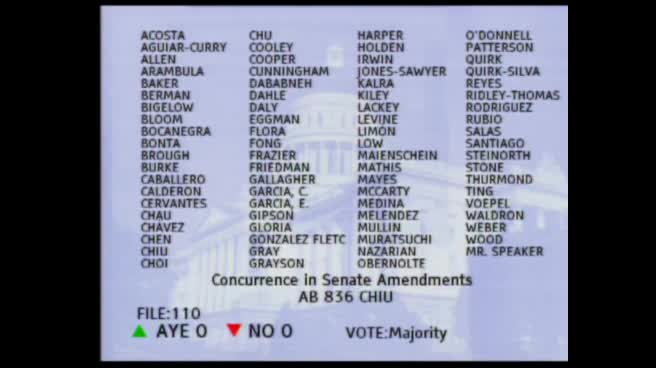
Bill Author

Bill Co-Author(s):