AB 695: Avoidance of on-track equipment.
- Session Year: 2017-2018
- House: Assembly
- Latest Version Date: 2017-07-24
(1)Existing law requires the driver of a vehicle or pedestrian to cross a railroad, a rail transit grade crossing, or a railroad grade crossing in a specified manner to safely avoid a train or car. A violation of these requirements is a crime.
This bill would make this requirement applicable to avoid on-track equipment, as defined. By expanding the scope of a crime, this bill would impose a state-mandated local program.
(2)The California Constitution requires the state to reimburse local agencies and school districts for certain costs mandated by the state. Statutory provisions establish procedures for making that reimbursement.
This bill would provide that no reimbursement is required by this act for a specified reason.
(a)The driver of any vehicle or pedestrian approaching a railroad or rail transit grade crossing shall stop not less than 15 feet from the nearest rail and shall not proceed until he or she can do so safely, whenever the following conditions exist:
(1)A clearly visible electric or mechanical signal device or a flagman gives warning of the approach or passage of a train, car, or on-track equipment.
(2)An approaching train, car, or on-track equipment is plainly visible or is emitting an audible signal and, by reason of its speed or nearness, is an immediate hazard.
(b)No driver or pedestrian shall proceed through, around, or under any railroad or rail transit crossing gate while the gate is closed.
(c)Whenever a railroad or rail transit crossing is equipped with an automated enforcement system, a notice of a violation of this section is subject to the procedures provided in Section 40518.
(d)For purposes of this section, on-track equipment means any locomotive or any other car, rolling stock, equipment, or other device that, alone or coupled to others, is operated on stationary rails.
SEC. 2.Section 22452 of the Vehicle Code is amended to read:22452.(a)Subdivisions (b) and (d) apply to the operation of the following vehicles:
(1)A bus or farm labor vehicle carrying passengers.
(2)A motortruck transporting employees in addition to those riding in the cab.
(3)A schoolbus and a school pupil activity bus transporting school pupils, except as otherwise provided in paragraph (4) of subdivision (d).
(4)A commercial motor vehicle transporting any quantity of a Division 2.3 chlorine, as classified by Title 49 of the Code of Federal Regulations.
(5)A commercial motor vehicle that is required to be marked or placarded in accordance with the regulations of Title 49 of the Code of Federal Regulations with one of the following federal classifications:
(A)Division 1.1.
(B)Division 1.2, or Division 1.3.
(C)Division 2.3 Poison gas.
(D)Division 4.3.
(E)Class 7.
(F)Class 3 Flammable.
(G)Division 5.1.
(H)Division 2.2.
(I)Division 2.3 Chlorine.
(J)Division 6.1 Poison.
(K)Division 2.2 Oxygen.
(L)Division 2.1.
(M)Class 3 Combustible liquid.
(N)Division 4.1.
(O)Division 5.1.
(P)Division 5.2.
(Q)Class 8.
(R)Class Division 1.4.
(S)A cargo tank motor vehicle, whether loaded or empty, used for the transportation of a hazardous material, as defined in Parts 107 to 180, inclusive, of Title 49 of the Code of Federal Regulations.
(6)A cargo tank motor vehicle transporting a commodity that at the time of loading has a temperature above its flashpoint, as determined under Section 173.120 of Title 49 of the Code of Federal Regulations.
(7)A cargo tank motor vehicle, whether loaded or empty, transporting a commodity under exemption in accordance with Subpart B of Part 107 of Title 49 of the Code of Federal Regulations.
(b)Before traversing a railroad grade crossing, the driver of a vehicle described in subdivision (a) shall stop that vehicle not less than 15 nor more than 50 feet from the nearest rail of the track and while so stopped shall listen, and look in both directions along the track, for an approaching train or on-track equipment and for signals indicating the approach of a train or on-track equipment, and shall not proceed until he or she can do so safely. Upon proceeding, the gears shall not be shifted manually while crossing the tracks.
(c)The driver of a commercial motor vehicle, other than those listed in subdivision (a), upon approaching a railroad grade crossing, shall be driven at a rate of speed that allows the commercial vehicle to stop before reaching the nearest rail of that crossing, and shall not be driven upon, or over, the crossing until due caution is taken to ascertain that the course is clear.
(d)A stop need not be made at a crossing in the following circumstances:
(1)Of railroad tracks running along and upon the roadway within a business or residence district.
(2)Where a traffic officer or an official traffic control signal directs traffic to proceed.
(3)Where an exempt sign was authorized by the Public Utilities Commission prior to January 1, 1978.
(4)Where an official railroad crossing stop exempt sign in compliance with Section 21400 has been placed by the Department of Transportation or a local authority pursuant to Section 22452.5. This paragraph does not apply with respect to a schoolbus or to a school pupil activity bus transporting school pupils.
(e)For purposes of this section, on-track equipment means any locomotive or any other car, rolling stock, equipment, or other device that, alone or coupled to others, is operated on stationary rails.
SEC. 3.No reimbursement is required by this act pursuant to Section 6 of Article XIIIB of the California Constitution because the only costs that may be incurred by a local agency or school district will be incurred because this act creates a new crime or infraction, eliminates a crime or infraction, or changes the penalty for a crime or infraction, within the meaning of Section 17556 of the Government Code, or changes the definition of a crime within the meaning of Section 6 of Article XIIIB of the California Constitution.
(a)The driver of any vehicle or pedestrian approaching a railroad or rail transit grade crossing shall stop not less than 15 feet from the nearest rail and shall not proceed until he or she can do so safely, whenever the following conditions exist:
(1)A clearly visible electric or mechanical signal device or a flagman gives warning of the approach or passage of a train or car. train, car, or on-track equipment.
(2)An approaching train or car train, car, or on-track equipment is plainly visible or is emitting an audible signal and, by reason of its speed or nearness, is an immediate hazard.
(b)No driver or pedestrian shall proceed through, around, or under any railroad or rail transit crossing gate while the gate is closed.
(c)Whenever a railroad or rail transit crossing is equipped with an automated enforcement system, a notice of a violation of this section is subject to the procedures provided in Section 40518.
(d)For purposes of this section, on-track equipment means any locomotive or any other car, rolling stock, equipment, or other device that, alone or coupled to others, is operated on stationary rails.
SEC. 2.Section 22452 of the Vehicle Code is amended to read:22452.(a)Subdivisions (b) and (d) apply to the operation of the following vehicles:
(1)A bus or farm labor vehicle carrying passengers.
(2)A motortruck transporting employees in addition to those riding in the cab.
(3)A schoolbus and a school pupil activity bus transporting school pupils, except as otherwise provided in paragraph (4) of subdivision (d).
(4)A commercial motor vehicle transporting any quantity of a Division 2.3 chlorine, as classified by Title 49 of the Code of Federal Regulations.
(5)A commercial motor vehicle that is required to be marked or placarded in accordance with the regulations of Title 49 of the Code of Federal Regulations with one of the following federal classifications:
(A)Division 1.1.
(B)Division 1.2, or Division 1.3.
(C)Division 2.3 Poison gas.
(D)Division 4.3.
(E)Class 7.
(F)Class 3 Flammable.
(G)Division 5.1.
(H)Division 2.2.
(I)Division 2.3 Chlorine.
(J)Division 6.1 Poison.
(K)Division 2.2 Oxygen.
(L)Division 2.1.
(M)Class 3 Combustible liquid.
(N)Division 4.1.
(O)Division 5.1.
(P)Division 5.2.
(Q)Class 8.
(R)Class Division 1.4.
(S)A cargo tank motor vehicle, whether loaded or empty, used for the transportation of a hazardous material, as defined in Parts 107 to 180, inclusive, of Title 49 of the Code of Federal Regulations.
(6)A cargo tank motor vehicle transporting a commodity that at the time of loading has a temperature above its flashpoint, as determined under Section 173.120 of Title 49 of the Code of Federal Regulations.
(7)A cargo tank motor vehicle, whether loaded or empty, transporting a commodity under exemption in accordance with Subpart B of Part 107 of Title 49 of the Code of Federal Regulations.
(b)Before traversing a railroad grade crossing, the driver of a vehicle described in subdivision (a) shall stop that vehicle not less than 15 nor more than 50 feet from the nearest rail of the track and while so stopped shall listen, and look in both directions along the track, for an approaching train or on-track equipment and for signals indicating the approach of a train, train or on-track equipment, and shall not proceed until he or she can do so safely. Upon proceeding, the gears shall not be shifted manually while crossing the tracks.
(c)The driver of a commercial motor vehicle, other than those listed in subdivision (a), upon approaching a railroad grade crossing, shall be driven at a rate of speed that allows the commercial vehicle to stop before reaching the nearest rail of that crossing, and shall not be driven upon, or over, the crossing until due caution is taken to ascertain that the course is clear.
(d)A stop need not be made at a crossing in the following circumstances:
(1)Of railroad tracks running along and upon the roadway within a business or residence district.
(2)Where a traffic officer or an official traffic control signal directs traffic to proceed.
(3)Where an exempt sign was authorized by the Public Utilities Commission prior to January 1, 1978.
(4)Where an official railroad crossing stop exempt sign in compliance with Section 21400 has been placed by the Department of Transportation or a local authority pursuant to Section 22452.5. This paragraph does not apply with respect to a schoolbus or to a school pupil activity bus transporting school pupils.
(e)For purposes of this section, on-track equipment means any locomotive or any other car, rolling stock, equipment, or other device that, alone or coupled to others, is operated on stationary rails.
SEC. 3.No reimbursement is required by this act pursuant to Section 6 of Article XIIIB of the California Constitution because the only costs that may be incurred by a local agency or school district will be incurred because this act creates a new crime or infraction, eliminates a crime or infraction, or changes the penalty for a crime or infraction, within the meaning of Section 17556 of the Government Code, or changes the definition of a crime within the meaning of Section 6 of Article XIIIB of the California Constitution.
|
Date
|
Status
|
|---|---|
| Jul 24, 2017 | Chaptered by Secretary of State - Chapter 110, Statutes of 2017. |
| Jul 24, 2017 | Approved by the Governor. |
| Jul 12, 2017 | Enrolled and presented to the Governor at 11:30 a.m. |
| Jul 3, 2017 | In Assembly. Ordered to Engrossing and Enrolling. |
| Jul 3, 2017 | Read third time. Passed. Ordered to the Assembly. |
| Jun 27, 2017 | Read second time. Ordered to Consent Calendar. |
| Jun 26, 2017 | From committee: Be placed on second reading file pursuant to Senate Rule 28.8 and ordered to consent calendar. |
| Jun 6, 2017 | From committee: Do pass and re-refer to Com. on APPR. with recommendation: To Consent Calendar. (Ayes 13. Noes 0.) (June 6). Re-referred to Com. on APPR. |
| May 10, 2017 | Referred to Com. on T. & H. |
| Apr 20, 2017 | In Senate. Read first time. To Com. on RLS. for assignment. |
| Apr 20, 2017 | Read third time. Passed. Ordered to the Senate. (Ayes 74. Noes 0. Page 1144.) |
| Apr 6, 2017 | Read second time. Ordered to Consent Calendar. |
| Apr 5, 2017 | From committee: Do pass. To Consent Calendar. (Ayes 17. Noes 0.) (April 5). |
| Mar 21, 2017 | From committee: Do pass and re-refer to Com. on APPR. with recommendation: To Consent Calendar. (Ayes 14. Noes 0.) (March 20). Re-referred to Com. on APPR. |
| Mar 2, 2017 | Referred to Com. on TRANS. |
| Feb 16, 2017 | From printer. May be heard in committee March 18. |
| Feb 15, 2017 | Read first time. To print. |
|
Date
|
Description
|
Location
|
Votes
|
|
|---|---|---|---|---|
| Jul 3, 2017 | Consent Calendar 2nd AB695 | Senate Floor |
Passed |
|
| Jun 6, 2017 | Do pass, but first be re-referred to the Committee on [Appropriations] with the recommendation: To Consent Calendar | Senate Standing Committee on Transportation and Housing |
Passed |
|
| Apr 20, 2017 | Favorable With Amendment(s) (Select Committee on Triumph Gulf Coast) | Assembly Floor |
Passed |
|
| Apr 5, 2017 | Do pass. To Consent Calendar. | Assembly Standing Committee on Appropriations |
Passed |
|
| Mar 20, 2017 | Do pass and be re-referred to the Committee on [Appropriations] with recommendation: To Consent Calendar | Assembly Standing Committee on Transportation |
Passed |
This list shows positions taken on this bill by organizations on the date displayed, which is linked to the original source.
Positions by individuals are not included.
|
Organization
|
Position
|
Date
|
|---|---|---|
| Bnsf Railway | ** Support | Jun 27, 2017 |
| California Labor Federation | ** Support | Jun 27, 2017 |
| California Short Line Railroad Association | ** Support | Jun 27, 2017 |
| California Teamsters Public Affairs Council | ** Support | Jun 27, 2017 |
| Genesee & Wyoming Railroad Services, Inc. | ** Support | Jun 27, 2017 |
| Los Angeles Metropolitan Transportation Authority | ** Support | Jun 27, 2017 |
| rail passenger association of california and nevada | ** Support | Jun 27, 2017 |
| Union Pacific Railroad | ** Support | Jun 27, 2017 |
Office of Senate Floor Analyses (916) 651-1520 Fax: (916) 327-4478 | AB |
CONSENT
Bill No: AB 695
:
SENATE TRANS. & HOUSING COMMITTEE: 13-0, 6/6/17
AYES: Beall, Cannella, Allen, Atkins, Bates, Gaines, McGuire, Mendoza, Morrell, Roth, Skinner, Wieckowski, Wiener
SENATE APPROPRIATIONS COMMITTEE: Senate Rule 28.8
ASSEMBLY FLOOR: 74-0, 4/20/17 (Consent) - See last page for vote
DIGEST:
This bill adds on-track equipment, as defined, to the requirements for vehicles or pedestrians to safely cross a railroad, rail transit grade crossing, or a railroad grade crossing in a specified manner.
Existing law:
- Requires a driver of a vehicle or pedestrian approaching a railroad or rail transit grade crossing to stop not less than 15 feet from the nearest rail and to not proceed until he or she can do so safely when a clearly visible electric or mechanical signal device or a flagman gives warning of the approach or passage of a train or car; or an approaching train or car is plainly visible or is emitting an audible signal and is an immediate harm.
- Requires the driver of specific types of vehicles, such as a school bus or certain commercial vehicles, to stop a vehicle not less than 15 nor more 50 feet from the nearest rail of the track, to listen and look in both directions along the track for an approaching train or for signals of an approaching train, and to not proceed until he or she can do so safely.
- Requires the driver of a commercial vehicle, other than those defined, upon approaching a railroad grade crossing, to drive at a rate of speed that allows the vehicle to stop before reaching the nearest rail of that crossing, and not cross until due caution is taken.
This bill:
- Defines on-track equipment as any locomotive or any other car, rolling stock, equipment, or other device, that alone or coupled to others, is operated on stationary rails.
- Requires a driver of a vehicle or a pedestrian approaching a railroad or rail transit grade crossing to stop not less than 15 feet from the nearest rail, and to not proceed until he or she can do so safely under specific conditions, for approaching on-track equipment.
- Requires specific vehicles, such as school buses and certain commercial vehicles, to stop not less than 15 nor more than 50 feet from the nearest rail of the track and listen and look both directions along the track before proceeding safely, for approaching on-track equipment.
Comments
- Purpose. According to the author, “In California law, motorists must only observe railroad crossing safety arms and warnings when a train is approaching or crossing the intersection. It is not clear that motorists must also come to a stop at a safe distance when on-track railroad equipment approaches and crosses the intersection. The lack of parity, between trains and train-like on-track equipment, had led to motorists driving around safety arms and ignoring lights when they see something other than a train. This bill makes it clear to motorists and road users that they must stop for on-track equipment and trains alike.”
- On-track equipment. According to federal regulations, rail on-track equipment is used for the inspection, construction, maintenance or repair of railroad track, bridges, roadway, signal and communication systems, and electric traction systems. Several types of on-track equipment include flat-bed powered carts, rail belt machines, and rail snow blowers. Similar to locomotives, these special types of vehicles travel along rail lines performing rail maintenance and/or construction.
- Other states. Over the past several years, a number of states have introduced and passed legislation related to prohibiting vehicles and pedestrians from passing rail crossings when on-track equipment is approaching or traveling through. For example, in 2013, Iowa passed House File 2353 which included provisions that are similarly included in this bill. Other states that have heard and/or passed similar legislation include: Illinois, Indiana, Massachusetts, Montana, Tennessee, Virginia, Wisconsin, and Wyoming.
- Necessary clarification. Current law requires motorists and pedestrians to stop at railroad and rail transit crossings when there are gates or warnings that a train is approaching or when an approaching train can be seen or a warning signal can be heard. Additionally, current law requires certain specialty vehicles, such as school buses and commercial carriers, to stop at all rail and rail transit grade crossings to look and listen for a train before proceeding through the crossing. However, current law is not clear that motorists and other vehicles must also stop at a safe distance when on-track rail equipment approaches and crosses an intersection. The provisions specified in this bill will provide the necessary clarification to ensure motorist and pedestrians take the proper safety precautions when encountering on-track equipment at rail crossings.
FISCAL EFFECT: Appropriation: Fiscal Com.: Local:
BNSF Railway
California Labor Federation
California Short Line Railroad Association
California Teamsters Public Affairs Council
Genesee & Wyoming Railroad Services, Inc.
Los Angeles Metropolitan Transportation Authority
Rail Passenger Association of California and Nevada
Union Pacific Railroad
OPPOSITION: (Verified 6/27/17)
None received
ASSEMBLY FLOOR: 74-0, 4/20/17
AYES: Acosta, Aguiar-Curry, Travis Allen, Arambula, Baker, Berman, Bigelow, Bloom, Bocanegra, Bonta, Burke, Caballero, Calderon, Cervantes, Chau, Chávez, Chen, Chiu, Chu, Cooley, Cooper, Cunningham, Dababneh, Dahle, Daly, Eggman, Flora, Fong, Frazier, Friedman, Cristina Garcia, Eduardo Garcia, Gipson, Gloria, Gomez, Gonzalez Fletcher, Gray, Grayson, Harper, Holden, Irwin, Jones-Sawyer, Kalra, Kiley, Lackey, Levine, Limón, Low, Maienschein, Mayes, McCarty, Medina, Melendez, Mullin, Muratsuchi, Nazarian, Obernolte, O'Donnell, Quirk, Quirk-Silva, Reyes, Rodriguez, Rubio, Salas, Santiago, Steinorth, Mark Stone, Thurmond, Ting, Voepel, Waldron, Weber, Wood, Rendon
NO VOTE RECORDED: Brough, Choi, Gallagher, Mathis, Patterson, Ridley-Thomas
6/27/17 16:28:41
**** END ****
SENATE COMMITTEE ON TRANSPORTATION AND HOUSING
Senator Jim Beall, Chair
2017 - 2018 Regular
Bill No: Hearing Date: 6/6/2017
Author: | Bocanegra | ||
Version: | 2/15/2017 | ||
Urgency: | No | Fiscal: | Yes |
Consultant: | Manny Leon | ||
SUBJECT:
DIGEST: This bill adds on-track equipment, as defined, to the requirements for vehicles or pedestrians to safely cross a railroad, rail transit grade crossing, or a railroad grade crossing in a specified manner.
ANALYSIS:
Existing law:
- Requires a driver of a vehicle or pedestrian approaching a railroad or rail transit grade crossing to stop not less than 15 feet from the nearest rail and to not proceed until he or she can do so safely when a clearly visible electric or mechanical signal device or a flagman gives warning of the approach or passage of a train or car; or an approaching train or car is plainly visible or is emitting an audible signal and is an immediate harm.
- Requires the driver of specific types of vehicles, such as a school bus or certain commercial vehicles, to stop a vehicle not less than 15 nor more 50 feet from the nearest rail of the track, to listen and look in both directions along the track for an approaching train or for signals of an approaching train, and to not proceed until he or she can do so safely.
- Requires the driver of a commercial vehicle, other than those defined, upon approaching a railroad grade crossing, to drive at a rate of speed that allows the vehicle to stop before reaching the nearest rail of that crossing, and not cross until due caution is taken.
This bill:
- Defines on-track equipment as any locomotive or any other car, rolling stock, equipment, or other device, that alone or coupled to others, is operated on stationary rails.
- Requires a driver of a vehicle or a pedestrian approaching a railroad or rail transit grade crossing to stop not less than 15 feet from the nearest rail, and to not proceed until he or she can do so safely under specific conditions, for approaching on-track equipment.
- Requires specific vehicles, such as school buses and certain commercial vehicles, to stop not less than 15 nor more than 50 feet from the nearest rail of the track and listen and look both directions along the track before proceeding safely, for approaching on-track equipment.
COMMENTS:
- Purpose. According to the author, “In California law, motorists must only observe railroad crossing safety arms and warnings when a train is approaching or crossing the intersection. It is not clear that motorists must also come to a stop at a safe distance when on-track railroad equipment approaches and crosses the intersection. The lack of parity, between trains and train-like on-track equipment, had led to motorists driving around safety arms and ignoring lights when they see something other than a train. This bill makes it clear to motorists and road users that they must stop for on-track equipment and trains alike.”
- On-track equipment. According to federal regulations, rail on-track equipment is used for the inspection, construction, maintenance or repair of railroad track, bridges, roadway, signal and communication systems, and electric traction systems. Several types of on-track equipment include flat-bed powered carts, rail belt machines, and rail snow blowers. Similar to locomotives, these special types of vehicles travel along rail lines performing rail maintenance and/or construction.
- Other states. Over the past several years, a number of states have introduced and passed legislation related to prohibiting vehicles and pedestrians from passing rail crossings when on-track equipment is approaching or traveling through. For example, in 2013, Iowa passed House File 2353 which included provisions that are similarly included in this bill. Other states that have heard and/or passed similar legislation include: Illinois, Indiana, Massachusetts, Montana, Tennessee, Virginia, Wisconsin, and Wyoming.
- Necessary clarification. Current law requires motorists and pedestrians to stop at railroad and rail transit crossings when there are gates or warnings that a train is approaching or when an approaching train can be seen or a warning signal can be heard. Additionally, current law requires certain specialty vehicles, such as school buses and commercial carriers, to stop at all rail and rail transit grade crossings to look and listen for a train before proceeding through the crossing. However, current law is not clear that motorists and other vehicles must also stop at a safe distance when on-track rail equipment approaches and crosses an intersection. The provisions specified in this bill will provide the necessary clarification to ensure motorist and pedestrians take the proper safety precautions when encountering on-track equipment at rail crossings.
FISCAL EFFECT: Appropriation: No Fiscal Com.: Yes Local: Yes
POSITIONS: (Communicated to the committee before noon on Wednesday,
May 31, 2016.)
SUPPORT:
BNSF Railway
California Labor Federation
California Short Line Railroad Association
California Teamsters Public Affairs Council
Genesee & Wyoming Railroad Services, Inc.
Los Angeles Metropolitan Transportation Authority
Rail Passenger Association of California and Nevada
Union Pacific Railroad
OPPOSITION:
None received.
-- END --
Date of Hearing: April 5, 2017
ASSEMBLY COMMITTEE ON APPROPRIATIONS
Lorena Gonzalez Fletcher, Chair
ABPCA Bill Id:AB 695
Author:(Bocanegra) – As Introduced Ver:February 15, 2017
Policy Committee: | Transportation | Vote: | 14 - 0 |
Urgency: No State Mandated Local Program: Yes Reimbursable: No
SUMMARY:
This bill adds on-track equipment, as defined, to the requirements for vehicles or pedestrians to safely cross a railroad, rail transit grade crossing, or a railroad grade crossing in a specified manner. Specifically, this bill:
- Requires that a driver of a vehicle, or a pedestrian, approaching a railroad or rail transit grade crossing to stop not less than 15 feet from the nearest rail when a signal gives warning of the approach or passage of on-track equipment or when on-track equipment is visible and poses an immediate hazard.
- Requires specific vehicles, such as school buses and certain commercial vehicles, to stop not less than 15 feet and not more than 50 feet from the nearest rail of the track and listen and look both directions along the track for on-track equipment.
- Defines on-track equipment as any locomotive or any other car, rolling stock, equipment, or other device, that alone or coupled to others, is operated on stationary rails.
FISCAL EFFECT:
Negligible fiscal effect.
COMMENTS:
- Background. Existing law requires a driver of a vehicle or pedestrian approaching a railroad or rail transit grade crossing to stop not less than 15 feet from the nearest rail and to not proceed until he or she can do so safely when a clearly visible electric or mechanical signal device or a flagman gives warning of the approach or passage of a train or car; or an approaching train or car is plainly visible or is emitting an audible signal and is an immediate harm. Existing law also requires the driver of specific types of vehicles, such as a school bus or certain commercial vehicles, to stop not less than 15 feet and not more than 50 feet from the nearest rail of the track to listen and look in both directions along the track for an approaching train or for signals of an approaching train and to not proceed until he or she can do so safely. However, existing law does not require the same safety measures for drivers and pedestrians to avoid on-track equipment, which is regularly used by railroads and transit operators in the maintenance and operations of rail tracks.
- Purpose. According to the author, it is not clear that motorists must come to a stop at a safe distance when on-track railroad equipment approaches and crosses the intersection. The lack of parity between trains and train-like on-track equipment has led to motorists driving around safety arms and ignoring lights when the see something other than a train. This bill makes it clear to motorists and road users that they must stop for on-track equipment and trains alike.
Analysis Prepared by: Jessica Peters / APPR. / (916) 319-2081
Date of Hearing: March 20, 2017
ASSEMBLY COMMITTEE ON TRANSPORTATION
Jim Frazier, Chair
ABPCA Bill Id:AB 695 (
Author:Bocanegra) – As Introduced Ver:February 15, 2017
SUBJECT: Avoidance of on-track equipment
SUMMARY: Adds on-track equipment, as defined, to the requirements for vehicles or pedestrians to safely cross a railroad, rail transit grade crossing, or a railroad grade crossing in a specified manner. Specifically, this bill:
- Adds on-track equipment to the requirements for a driver of a vehicle or a pedestrian approaching a railroad or rail transit grade crossing to stop not less than 15 feet from the nearest rail and to not proceed until he or she can do safety under specific conditions.
- Adds on-track equipment to the requirements for specific vehicles, such as school buses and certain commercial vehicles, to stop not less than 15 nor more than 50 feet from the nearest rail of the track and listen and look both directions along the track before proceeding safely.
- Defines on-track equipment as any locomotive or any other car, rolling stock, equipment, or other device, that alone or coupled to others, is operated on stationary rails.
EXISTING LAW:
- Requires a driver of a vehicle or pedestrian approaching a railroad or rail transit grade crossing to stop not less than 15 feet from the nearest rail and to not proceed until he or she can do so safely when a clearly visible electric or mechanical signal device or a flagman gives warning of the approach or passage of a train or car; or an approaching train or car is plainly visible or is emitting an audible signal and is an immediate harm.
- Requires the driver of specific types of vehicles, such as a school bus or certain commercial vehicles, to stop a vehicle not less than 15 nor more 50 feet from the nearest rail of the track to listen and look in both directions along the track for an approaching train or for signals of an approaching train and to not proceed until he or she can do so safely.
- Requires the driver of a commercial vehicle, other than those defined, that upon approaching a railroad grade crossing to drive at a rate of speed that allows the vehicle to stop before reaching the nearest rail of that crossing and should not cross until due caution is taken.
FISCAL EFFECT: Unknown
COMMENTS: Current law requires motorists and pedestrians to stop at railroad and rail transit crossings when there are gates or warnings that a train is approaching or when an approaching train can be seen or a warning signal can be heard. Additionally, current law requires certain specialty vehicles, such as school buses and commercial carriers, to stop at all rail and rail transit grade crossings to look and listen for a train before proceeding through the crossing. However, current law is not clear that motorists and other vehicles must also stop at a safe distance when on-track rail equipment, such as a road rail vehicle or ballast cleaner, approaches and crosses an intersection. The author asserts that this lack of parity between trains and train-like on-track equipment have led to motorists to drive around safety arms and ignore lights when they see something other than a train. This bill will make it clear that vehicles must also stop for on-track equipment and trains alike.
In writing in support of the bill, the California Labor Federation states that rail workers use heavy equipment to maintain and repair the tracks that travels on the rails just like a train. Often, drivers and pedestrians think it’s safe to cross tracks when maintenance equipment is present. Even when rail crossing warnings are activated, drivers will go around the gates creating a dangerous situation for them and rail workers maintaining the tracks.
Freight is essential to California’s economy. California's land, air, and sea ports of entry serve as key commercial gateways for the movement of more than $500 billion worth of products year. Much of these products are transported via rail throughout the state. Additionally, California continues to encourage and support the expansion of public transportation systems to meet the needs of the travelling public and the state’s air quality goals. Updating the state’s traffic laws to improve rail safety will help enhance their success and the safety of the public.
REGISTERED SUPPORT / OPPOSITION:
Support
BNSF Railway
California Labor Federation
California Short Line Railroad Association
California Teamsters Public Affairs Council
Genesee & Wyoming Railroad Services, Inc.
Union Pacific Railroad
Opposition
None on file
Analysis Prepared by: Melissa White / TRANS. /
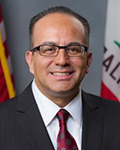
Bill Author
Bill Co-Author(s):