AB 755: Local agencies: capital investment incentive program.
- Session Year: 2017-2018
- House: Assembly
- Latest Version Date: 2017-10-12
Existing law, until January 1, 2018, authorizes a county, city and county, or city to establish a capital investment incentive program, pursuant to which the county, city and county, or city is authorized to pay a capital investment incentive amount to the proponent of a qualified manufacturing facility for up to 15 consecutive years.
This bill would extend that authorization to January 1, 2019.
Existing law, the California Cultural and Historical Endowment Act, establishes the California Cultural and Historical Endowment in the Natural Resources Agency. Among other things, the act authorizes the endowment to make grants and loans on a competitive basis to public agencies and nonprofit organizations, as defined, to encourage development of Californias historical and cultural resources. Existing law establishes the Museum and Cultural Resources Program, under the administration of the endowment, to assist and enhance the services of Californias museums and of other groups and institutions that undertake cultural projects that are deeply rooted in and reflective of previously underserved communities.This bill would establish the California Museums for All grant program, under the administration of the endowment, to provide grants, upon appropriation by the Legislature, to museums to support increased access to museums for low-income communities. The bill would require, as a condition of participating in the grant program, that a museum agree to offer free to $3 admission fees during the museums normal hours of operation for each person who presents an electronic benefits transfer card and a current and valid photo identification, and up to 3 guests who are accompanying that person. The bill would require a participating museum to use grant money to enhance its programs and exhibits to meet the needs of underserved communities, to provide its staff with adequate training, and to provide resources for collaborative outreach to low-income communities. The bill would require the endowment, to the extent funding is available, to establish a program to assist and enhance the services of Californias museums that undertake outreach to underserved communities. The bill would also require the endowment to submit a report to the Legislature that evaluates the program, as provided, within 2 years following an appropriation made by the Legislature to fund the program.Existing law, the California Cultural and Historical Endowment Act, establishes the California Cultural and Historical Endowment in the Natural Resources Agency. Among other things, the act authorizes the endowment to make grants and loans on a competitive basis to public agencies and nonprofit organizations, as defined, to encourage development of Californias historical and cultural resources. Existing law establishes the Museum and Cultural Resources Program, under the administration of the endowment, to assist and enhance the services of Californias museums and of other groups and institutions that undertake cultural projects that are deeply rooted in and reflective of previously underserved communities.
This bill would establish the California Museums for All grant program, under the administration of the endowment, to provide grants grants, upon appropriation by the Legislature, to participating museums for them to, among other things, museums to support increased access to museums for low-income communities. The bill would require, as a condition of participating in the grant program, that a museum agree to offer free to $3 admission fees during their the museums normal hours of operation for each person who presents an electronic benefits transfer card and a current and valid photo identification, and up to 3 guests who are accompanying that person. The bill would require a participating museum to use grant money to enhance its programs and exhibits to meet the needs of underserved communities, to provide its staff with adequate training, and to provide resources for collaborative outreach to low-income communities. The bill would require the endowment, to the extent funding is available, to establish a program to assist and enhance the services of Californias museums that undertake outreach to traditionally underserved communities. The bill would also require the endowment to submit a report to the Legislature that evaluates the program, as provided, within 2 years following an appropriation made by the Legislature to fund the program.
This bill would appropriate $4,500,000 from the General Fund to the endowment for allocation for the California Museums for All grant program, the Museum and Cultural Resources Program, and the administrative costs of these 2 programs, as specified.Existing law, the California Cultural and Historical Endowment Act, establishes the California Cultural and Historical Endowment in the Natural Resources Agency. Among other things, the act authorizes the endowment to make grants and loans on a competitive basis to public agencies and nonprofit organizations, as defined, to encourage development of Californias historical and cultural resources. Existing law establishes the Museum and Cultural Resources Program, under the administration of the endowment, to assist and enhance the services of Californias museums and of other groups and institutions that undertake cultural projects that are deeply rooted in and reflective of previously underserved communities.
This bill would establish the California Museums for All, All grant program, under the administration of the endowment, to provide grants to participating museums for them to, among other things, offer free to $3 admission fees during their normal hours of operation for each person who presents an electronic benefits transfer card and a current and valid photo identification, and up to 3 guests who are accompanying that person. The bill would require the endowment, to the extent funding is available, to establish a program to assist and enhance the services of Californias museums that undertake outreach to traditionally underserved communities.
This bill would appropriate $4,500,000 from the General Fund to the endowment for allocation for the California Museums for All, All grant program, the Museum and Cultural Resources Program, and the administrative costs of these 2 programs, as specified.
Existing law, the California Cultural and Historical Endowment Act, establishes the California Cultural and Historical Endowment in the Natural Resources Agency. Among other things, the act authorizes the endowment to make grants and loans on a competitive basis to public agencies and nonprofit organizations, as defined, to encourage development of Californias historical and cultural resources. Existing law establishes the Museum and Cultural Resources Program, under the administration of the endowment, to assist and enhance the services of Californias museums and of other groups and institutions that undertake cultural projects that are deeply rooted in and reflective of previously underserved communities.
This bill would establish the California Museums for All, under the administration of the endowment, to provide grants to participating museums for them to, among other things, offer free to $3 admission fees during their normal hours of operation for each person who presents an electronic benefits transfer card and a current and valid photo identification, and up to 3 guests who are accompanying that person.
This bill would appropriate $4,500,000 from the General Fund to the endowment for allocation for the California Museums for All, the Museum and Cultural Resources Program, and the administrative costs of these 2 programs, as specified.
Existing law requires, upon receiving a petition signed by 1/3 of the city electors, the legislative body of a city to establish a museum in the city.This bill would make a nonsubstantive change to this provision.Existing law requires, upon receiving a petition signed by 1/3 of the city electors, the legislative body of a city to establish a museum in the city.
This bill would make a nonsubstantive change to this provision.
(a)This chapter shall remain in effect only until January 1, 2019.
(b)A capital investment incentive program established pursuant to this chapter before January 1, 2019, may remain in effect for the full term of that program, regardless of the repeal of this chapter.
(a)This chapter shall remain in effect only until January 1, 2019.
(b)A capital investment incentive program established pursuant to this chapter before January 1, 2019, may remain in effect for the full term of that program, regardless of the repeal of this chapter.
(a)This chapter shall remain in effect only until January 1, 2018. 2019.
(b)A capital investment incentive program established pursuant to this chapter before January 1, 2018, 2019, may remain in effect for the full term of that program, regardless of the repeal of this chapter.
SECTION 1.Article 6 (commencing with Section 20093) is added to Chapter 13 of Part 11 of Division 1 of Title 1 of the Education Code, to read:6.California Museums for All Act20093.This article shall be known, and may be cited, as the California Museums for All Act.20094.The Legislature finds and declares all of the following:(a)Museums for All is a cooperative initiative of the Institute of Museum and Library Services and the Association of Childrens Museums. The purpose of the program is to increase access to museums for low-income communities by offering free to low-cost admission.(b)Museums for All broadens museums visitor base by reaching out to low-income communities, enabling families from these communities to attend museums regularly and experience the social and academic benefits gained through exposure to high-quality museum experiences.(c)Museums for All is a nationally branded program with 113 participating museums and over 150,000 individual participants.(d)This article builds on the success of the national program and increases the number of California museums that offer free to low-cost admission to low-income communities.20095.For purposes of this article, the term museum means a public or private nonprofit agency or institution organized on a permanent basis for essentially educational or aesthetic purposes, that utilizes a professional staff, owns or utilizes tangible objects, cares for the tangible objects, and exhibits the tangible objects to the public on a regular basis. This term includes museums that have tangible and digital collections and includes aquariums, arboretums, botanical gardens, art museums, childrens museums, general museums, historic houses and sites, history museums, nature centers, natural history and anthropology museums, planetariums, science and technology centers, specialized museums, and zoological parks.20096.The endowment shall create and administer a California Museums for All grant program to support increased access to museums for low-income communities. Participants in the program shall be museums that receive grants under the program. The endowment shall establish application criteria, grant guidelines, and other requirements for the program pursuant to subdivision (b) of Section 20057. Funding for the grant program shall be upon appropriation by the Legislature.20097.(a)As a condition of participating in the California Museums for All grant program, a museum shall agree to offer reduced admission fees ranging from free to three dollars ($3) for each person who presents an electronic benefits transfer card and a current and valid photo identification, and up to three guests who are accompanying that person, during the museums normal hours of operation. A museum shall not be eligible to participate if the museum already offers a reduced admission fee in that range during the museums normal hours of operation, based on determinations related to income.(b)A museum participating in the program shall use grant money to do both of the following:(1)Enhance its programs and exhibits to meet the needs of underserved communities.(2)Provide its staff with adequate training and provide resources for collaboration with the State Department of Social Services and local community service organizations to market California Museums for All to low-income communities.(c)To the extent that funding is available for these purposes, the endowment shall establish a program to assist and enhance the services of Californias museums that undertake outreach to underserved communities. This program shall give priority to all of the following:(1)Reduced-price or free admission of pupils in underserved communities to museums.(2)Collaborative projects and technical assistance to coordinate the work of eligible museums and cultural programs and to enhance the ability of museums and cultural programs to serve underserved communities. Priority under this paragraph shall be given to a project that does any of the following:(A)Assists an eligible museum or cultural program in serving an underserved population.(B)Aids a museum or cultural program in diversifying or expanding its audience.(C)Increases accessibility to museums and cultural programs collections and services.(d)The California Museums for All grant program shall be implemented and administered, to the greatest extent possible, consistent with the purposes of the national Museums for All cooperative initiative of the Institute of Museum and Library Services and the Association of Childrens Museums.(e)(1)Within two years following an appropriation by the Legislature pursuant to Section 20096 for the purposes of this article, the endowment shall submit to the Legislature a report evaluating the impact of the program, including the extent to which the program has improved accessibility to museums for underserved communities.(2)A report submitted pursuant to this subdivision shall be submitted in compliance with Section 9795 of the Government Code.This article shall be known, and may be cited, as the California Museums for All Act.
20094.The Legislature finds and declares all of the following:
(a)Museums for All is a cooperative initiative of the Institute of Museum and Library Services and the Association of Childrens Museums. The purpose of the program is to increase access to museums for low-income communities by offering free to low-cost admission.
(b)Museums for All broadens museums visitor base by reaching out to low-income communities, enabling families from these communities to attend museums regularly and experience the social and academic benefits gained through exposure to high-quality museum experiences.
(c)Museums for All is a nationally branded program with 113 participating museums and over 150,000 individual participants.
(d)This article builds on the success of the national program and increases the number of California museums that offer free to low-cost admission to low-income communities.
20095.For purposes of this article, the term museum means a public or private nonprofit agency or institution organized on a permanent basis for essentially educational or aesthetic purposes, that utilizes a professional staff, owns or utilizes tangible objects, cares for the tangible objects, and exhibits the tangible objects to the public on a regular basis. This term includes museums that have tangible and digital collections and includes aquariums, arboretums, botanical gardens, art museums, childrens museums, general museums, historic houses and sites, history museums, nature centers, natural history and anthropology museums, planetariums, science and technology centers, specialized museums, and zoological parks.
20096.The endowment shall create and administer a California Museums for All grant program to support increased access to museums for low-income communities. Participants in the program shall be museums that receive grants under the program. The endowment shall establish application criteria, grant guidelines, and other requirements for the program pursuant to subdivision (b) of Section 20057. The grant program shall give priority in grant distribution to museums that meet the objectives identified in Section 20097. Funding for the grant program shall be upon appropriation by the Legislature.
20097.(a)A museum As a condition of participating in the California Museums for All grant program may receive a grant from the endowment that shall be used to program, a museum shall agree to offer reduced admission fees ranging from free to three dollars ($3) for each person who presents an electronic benefits transfer card and a current and valid photo identification, and up to three guests who are accompanying that person, during the museums normal hours of operation. A museum shall not be eligible to participate if the museum already offers a reduced admission fee in that range during the museums normal hours of operation, based on determinations related to income.
(b)A museum participating in the program may also use the shall use grant money to do both of the following:
(1)Enhance its programs and exhibits to meet the needs of underserved communities.
(2)Provide its staff with adequate training and provide resources for collaboration with the State Department of Social Services and local community service organizations to market the California Museums for All to low-income communities.
(c)To the extent that funding is available for these purposes, the endowment shall establish a program to assist and enhance the services of Californias museums that undertake outreach to traditionally underserved communities. This program shall give priority to all of the following:
(1)Reduced-price or free admission of pupils in underserved communities to museums.
(2)Enhancing opportunities for superior museum and cultural program services.(3)(2)Collaborative projects and technical assistance to coordinate the work of eligible museums and cultural programs and to enhance the ability of museums and cultural programs to serve the public. underserved communities. Priority under this paragraph shall be given to a project that does any of the following:
(A)Assists an eligible museum or cultural program in serving a historically an underserved population.
(B)Aids a museum or cultural program in diversifying or expanding its audience.
(C)Aids a museum or cultural program in raising its professional standards in order to better serve the public.(D)(C)Increases accessibility to museums and cultural programs collections and services.
(d)The California Museums for All grant program shall be implemented and administered, to the greatest extent possible, consistent with the purposes of the national Museums for All cooperative initiative of the Institute of Museum and Library Services and the Association of Childrens Museums.
(e)(1)Within two years following an appropriation by the Legislature pursuant to Section 20096 for the purposes of this article, the endowment shall submit to the Legislature a report evaluating the impact of the program, including the extent to which the program has improved accessibility to museums for underserved communities.
(2)A report submitted pursuant to this subdivision shall be submitted in compliance with Section 9795 of the Government Code.
SEC. 2.Four million five hundred thousand dollars ($4,500,000) is hereby appropriated during the 201718 fiscal year from the General Fund to the California Cultural and Historical Endowment Fund to be allocated as follows:(a)Two million two hundred fifty thousand dollars ($2,250,000) for the California Museums for All grant program established in Article 6 (commencing with Section 20093) of Chapter 13 of Part 11 of Division 1 of Title 1 of the Education Code.(b)Two million twenty-five thousand dollars ($2,025,000) for the Museum and Cultural Resources Program established in Article 5 (commencing with Section 20090) of Chapter 13 of Part 11 of Division 1 of Title 1 of the Education Code.(c)Two hundred twenty-five thousand dollars ($225,000) for the administrative costs of the California Museums for All grant program and the Museum and Cultural Resources Program.This article shall be known, and may be cited, as the California Museums for All Act.
20094.The Legislature finds and declares all of the following:
(a)Museums for All is a cooperative initiative of the Institute of Museum and Library Services and the Association of Childrens Museums. The purpose of the program is to increase access to museums for low-income communities by offering free to low-cost admission.
(b)Museums for All broadens museums visitor base by reaching out to low-income communities, enabling families from these communities to attend museums regularly and experience the social and academic benefits gained through exposure to high-quality museum experiences.
(c)Museums for All is a nationally branded program with 113 participating museums and over 150,000 individual participants.
(d)This article builds on the success of the national program and increases the number of California museums that offer free to low-cost admission to low-income communities.
20095.For purposes of this article, the term museum means a public or private nonprofit agency or institution organized on a permanent basis for essentially educational or aesthetic purposes, that utilizes a professional staff, owns or utilizes tangible objects, cares for the tangible objects, and exhibits the tangible objects to the public on a regular basis. This term includes museums that have tangible and digital collections and includes aquariums, arboretums, botanical gardens, art museums, childrens museums, general museums, historic houses and sites, history museums, nature centers, natural history and anthropology museums, planetariums, science and technology centers, specialized museums, and zoological parks.
20096.The endowment shall create and administer a California Museums for All grant program to support increased access to museums for low-income communities. The endowment shall establish application criteria, grant guidelines, and other requirements for the program pursuant to subdivision (b) of Section 20057. The grant program shall give priority in grant distribution to museums that meet the objectives identified in Section 20097. Funding for the grant program shall be upon appropriation by the Legislature.
20097.(a)A museum participating in the California Museums for All grant program may receive a grant from the endowment that shall be used to offer reduced admission fees ranging from free to three dollars ($3) for each person who presents an electronic benefits transfer card and a current and valid photo identification, and up to three guests who are accompanying that person, during the museums normal hours of operation.
(b)A museum participating in the program may also use the grant money to do both of the following:
(1)Enhance its programs and exhibits to meet the needs of underserved communities.
(2)Provide its staff with adequate training and provide resources for collaboration with the State Department of Social Services and local community service organizations to market the California Museums for All to low-income communities.
(c)To the extent that funding is available for these purposes, the endowment shall establish a program to assist and enhance the services of Californias museums that undertake outreach to traditionally underserved communities. This program shall give priority to all of the following:
(1)Reduced-price or free admission of pupils to museums.
(2)Enhancing opportunities for superior museum and cultural program services.
(3)Collaborative projects and technical assistance to coordinate the work of eligible museums and cultural programs and to enhance the ability of museums and cultural programs to serve the public. Priority under this paragraph shall be given to a project that does any of the following:
(A)Assists an eligible museum or cultural program in serving a historically underserved population.
(B)Aids a museum or cultural program in diversifying or expanding its audience.
(C)Aids a museum or cultural program in raising its professional standards in order to better serve the public.
(D)Increases accessibility to museums and cultural programs collections and services.
(d)The California Museums for All grant program shall be implemented and administered, to the greatest extent possible, consistent with the purposes of the national Museums for All cooperative initiative of the Institute of Museum and Library Services and the Association of Childrens Museums.
SEC. 2.Four million five hundred thousand dollars ($4,500,000) is hereby appropriated during the 201718 fiscal year from the General Fund to the California Cultural and Historical Endowment Fund to be allocated as follows:
(a)Two million two hundred fifty thousand dollars ($2,250,000) for the California Museums for All grant program established in Article 6 (commencing with Section 20093) of Chapter 13 of Part 11 of Division 1 of Title 1 of the Education Code.
(b)Two million twenty-five thousand dollars ($2,025,000) for the Museum and Cultural Resources Program established in Article 5 (commencing with Section 20090) of Chapter 13 of Part 11 of Division 1 of Title 1 of the Education Code.
(c)Two hundred twenty-five thousand dollars ($225,000) for the administrative costs of the California Museums for All grant program and the Museum and Cultural Resources Program.
SECTION 1.Chapter 1.17 (commencing with Section 5079.80) is added to Division 5 of the Public Resources Code, to read:1.17.California Museums for All1.Findings5079.80.The Legislature finds and declares all of the following:(a)Museums for All is a cooperative initiative of the Institute of Museum and Library Services and the Association of Childrens Museums. The purpose of the program is to increase access to museums for low-income communities by offering free to low-cost admission.(b)Museums for All broadens museums visitor base by reaching out to low-income communities, enabling families from these communities to attend museums regularly, and removing social and academic barriers low-income children face when they are not exposed to high quality museum experiences.(c)Museums for All is a nationally branded program with 113 participating museums and over 150,000 individual participants.(d)This chapter builds on the success of the national program and increases the number of California museums that offer free to low-cost admission to low-income communities.2.Title5079.81.This chapter shall be known, and may be cited, as the California Museums for All Act.3.General Provisions5079.82.The California Museums for All is hereby established. The California Cultural and Historical Endowment shall administer the California Museums for All to increase access to museums for low-income communities.5079.83.(a)A museum participating in the California Museums for All may receive a grant from the California Cultural and Historical Endowment to do all of the following:(1)Offer admission fees ranging from free to three dollars ($3) for each person who presents an electronic benefits transfer card and a current and valid photo identification, and up to three guests who are accompanying that person, during the museums normal hours of operation.(2)Enhance its programs and exhibits to meet the needs of underserved communities.(3)Provide its staff with adequate training and provide resources for collaboration with the State Department of Social Services and local community service organizations to market the California Museums for All to low-income communities.(b)The California Cultural and Historical Endowment shall establish application criteria, administrative guidelines, and other requirements for the program.(c)The California Museums for All shall be implemented and administered, to the greatest extent possible, consistent with the purposes of the national Museums for All cooperative initiative of the Institute of Museum and Library Services and the Association of Childrens Museums.SEC. 2.Four million five hundred thousand dollars ($4,500,000) is hereby appropriated from the General Fund to the California Cultural and Historical Endowment to be allocated as follows:(a)Two million two hundred fifty thousand dollars ($2,250,000) for the California Museums for All established in Chapter 1.17 (commencing with Section 5079.80) of Division 5 of the Public Resources Code.(b)Two million twenty-five thousand dollars ($2,025,000) for the Museum and Cultural Resources Program established in Article 5 (commencing with Section 20090) of Chapter 13 of Part 11 of Division 1 of Title 1 of the Education Code.(c)Two hundred twenty-five thousand dollars ($225,000) for the administrative costs of the California Museums for All and the Museum and Cultural Resources Program.The Legislature finds and declares all of the following:
(a)Museums for All is a cooperative initiative of the Institute of Museum and Library Services and the Association of Childrens Museums. The purpose of the program is to increase access to museums for low-income communities by offering free to low-cost admission.
(b)Museums for All broadens museums visitor base by reaching out to low-income communities, enabling families from these communities to attend museums regularly, and removing social and academic barriers low-income children face when they are not exposed to high quality museum experiences.
(c)Museums for All is a nationally branded program with 113 participating museums and over 150,000 individual participants.
(d)This chapter builds on the success of the national program and increases the number of California museums that offer free to low-cost admission to low-income communities.
2.Title5079.81.This chapter shall be known, and may be cited, as the California Museums for All Act.
3.General Provisions5079.82.The California Museums for All is hereby established. The California Cultural and Historical Endowment shall administer the California Museums for All to increase access to museums for low-income communities.
5079.83.(a)A museum participating in the California Museums for All may receive a grant from the California Cultural and Historical Endowment to do all of the following:
(1)Offer admission fees ranging from free to three dollars ($3) for each person who presents an electronic benefits transfer card and a current and valid photo identification, and up to three guests who are accompanying that person, during the museums normal hours of operation.
(2)Enhance its programs and exhibits to meet the needs of underserved communities.
(3)Provide its staff with adequate training and provide resources for collaboration with the State Department of Social Services and local community service organizations to market the California Museums for All to low-income communities.
(b)The California Cultural and Historical Endowment shall establish application criteria, administrative guidelines, and other requirements for the program.
(c)The California Museums for All shall be implemented and administered, to the greatest extent possible, consistent with the purposes of the national Museums for All cooperative initiative of the Institute of Museum and Library Services and the Association of Childrens Museums.
SEC. 2.Four million five hundred thousand dollars ($4,500,000) is hereby appropriated from the General Fund to the California Cultural and Historical Endowment to be allocated as follows:
(a)Two million two hundred fifty thousand dollars ($2,250,000) for the California Museums for All established in Chapter 1.17 (commencing with Section 5079.80) of Division 5 of the Public Resources Code.
(b)Two million twenty-five thousand dollars ($2,025,000) for the Museum and Cultural Resources Program established in Article 5 (commencing with Section 20090) of Chapter 13 of Part 11 of Division 1 of Title 1 of the Education Code.
(c)Two hundred twenty-five thousand dollars ($225,000) for the administrative costs of the California Museums for All and the Museum and Cultural Resources Program.
SECTION 1.Section 37542 of the Government Code is amended to read:37542.Upon receiving a petition signed by one-third of the city electors, the legislative body shall establish a museum in that city. Where several petitions are submitted, they shall be in substantially the same form.Upon receiving a petition signed by one-third of the city electors, the legislative body shall establish a museum in such a that city. Where several petitions are submitted, they shall be in substantially the same form.
|
Date
|
Status
|
|---|---|
| Oct 12, 2017 | Chaptered by Secretary of State - Chapter 709, Statutes of 2017. |
| Oct 12, 2017 | Approved by the Governor. |
| Sep 27, 2017 | Enrolled and presented to the Governor at 4 p.m. |
| Sep 16, 2017 | Re-referred to Com. on L. GOV. pursuant to Assembly Rule 77.2. |
| Sep 15, 2017 | In Assembly. Concurrence in Senate amendments pending. |
| Sep 15, 2017 | Read third time. Passed. Ordered to the Assembly. |
| Sep 15, 2017 | Pursuant to Senate Rule 28.8 |
| Sep 14, 2017 | From committee: Do pass and re-refer to Com. on APPR. (Ayes 7. Noes 0.) (September 14). Re-referred to Com. on APPR. |
| Sep 13, 2017 | Joint Rules 61 and 62 suspended. |
| Sep 11, 2017 | Withdrawn from committee. |
| Sep 7, 2017 | From committee chair, with author's amendments: Amend, and re-refer to committee. Read second time, amended, and re-referred to Com. on N.R. & W. |
| Jul 3, 2017 | In committee: Set, first hearing. Hearing canceled at the request of author. |
| Jun 14, 2017 | Referred to Com. on N.R. & W. |
| Jun 1, 2017 | In Senate. Read first time. To Com. on RLS. for assignment. |
| May 31, 2017 | Read third time. Passed. Ordered to the Senate. (Ayes 70. Noes 5. Page 1962.) |
| May 30, 2017 | Read second time and amended. Ordered returned to second reading. |
| May 26, 2017 | From committee: Amend, and do pass as amended. (Ayes 13. Noes 4.) (May 26). |
| May 10, 2017 | In committee: Set, first hearing. Referred to APPR. suspense file. |
| Apr 26, 2017 | From committee: Do pass and re-refer to Com. on APPR. (Ayes 7. Noes 0.) (April 26). Re-referred to Com. on APPR. |
| Apr 25, 2017 | Re-referred to Com. on A.,E.,S.,T., & I.M. |
| Apr 24, 2017 | From committee chair, with author's amendments: Amend, and re-refer to Com. on A.,E.,S.,T., & I.M. Read second time and amended. |
| Mar 27, 2017 | Re-referred to Com. on A.,E.,S.,T., & I.M. |
| Mar 23, 2017 | Referred to Com. on A.,E.,S.,T., & I.M. |
| Feb 16, 2017 | From printer. May be heard in committee March 18. |
| Feb 15, 2017 | Read first time. To print. |
|
Date
|
Description
|
Location
|
Votes
|
|
|---|---|---|---|---|
| Sep 16, 2017 | AB 755 GARCIA, E. Concurrence in Senate Amendments | Assembly Floor |
Passed |
|
| Sep 16, 2017 | With recommendation: That Senate amendments be concurred in. | Assembly Standing Committee on Local Government |
Passed |
|
| Sep 15, 2017 | Assembly 3rd Reading AB755 Eduardo Garcia et al. By Hueso | Senate Floor |
Passed |
|
| Sep 14, 2017 | Do pass, but first be re-referred to the Committee on [Appropriations] | Senate Standing Committee on Governance and Finance |
Passed |
|
| May 31, 2017 | AB 755 GARCIA, E. Assembly Third Reading | Assembly Floor |
Passed |
|
| May 26, 2017 | Do pass as amended. | Assembly Standing Committee on Appropriations |
Passed |
|
| Apr 26, 2017 | Do pass and be re-referred to the Committee on [Appropriations] | Assembly Standing Committee on Arts, Entertainment, Sports, Tourism, and Internet Media |
Passed |
This list shows positions taken on this bill by organizations on the date displayed, which is linked to the original source.
Positions by individuals are not included.
|
Organization
|
Position
|
Date
|
|---|---|---|
| American Alliance of Museums | ** Support | Apr 25, 2017 |
| American Alliance of Museums | ** Support | Apr 25, 2017 |
| Aquarium Of The Pacific | ** Support | Apr 25, 2017 |
| Aquarium Of The Pacific | ** Support | Apr 25, 2017 |
| Cal Nonprofits | ** Support | Apr 25, 2017 |
| Cal Nonprofits | ** Support | Apr 25, 2017 |
| California Alliance For Arts Education | ** Support | Apr 25, 2017 |
| California Alliance For Arts Education | ** Support | Apr 25, 2017 |
| California Association Of Museums | * Support | May 10, 2017 |
| California Association Of Zoos & Aquariums | * Support | May 10, 2017 |
| California Historical Society | ** Support | Apr 25, 2017 |
| California Historical Society | ** Support | Apr 25, 2017 |
| California State Council Of Laborers | ** Support | Sep 15, 2017 |
| California State Parks Foundation | ** Support | Apr 25, 2017 |
| California State Parks Foundation | ** Support | Apr 25, 2017 |
| Calipatria Unified School District | ** Support | Sep 16, 2017 |
| children's discovery museum of the desert | ** Support | Apr 25, 2017 |
| children's discovery museum of the desert | ** Support | Apr 25, 2017 |
| Childrens Discovery Museum of the Desert | ** Support | Apr 25, 2017 |
| Count of Imperial | * Support | Sep 14, 2017 |
| Crocker Art Museum | ** Support | Apr 25, 2017 |
| Crocker Art Museum | ** Support | Apr 25, 2017 |
| El Centro Chamber of Commerce | ** Support | Sep 15, 2017 |
| Energysource Minerals, Llc | ** Support | Sep 15, 2017 |
| Energysource Minerals, Llc [Sponsor] | ** Support | Sep 16, 2017 |
| Habitot Children'S Museum | ** Support | Apr 25, 2017 |
| Habitot Children'S Museum | ** Support | Apr 25, 2017 |
| Habitot ChildrenS Museum | ** Support | Apr 25, 2017 |
| imagine u children's museum | ** Support | Apr 25, 2017 |
| imagine u children's museum | ** Support | Apr 25, 2017 |
| Imagine U Childrens Museum | ** Support | Apr 25, 2017 |
| Imperial County | ** Support | Sep 15, 2017 |
| Imperial County [Sponsor] | ** Support | Sep 16, 2017 |
| Imperial Valley Economic Development Corporation | ** Support | Sep 16, 2017 |
| Maturango Museum | ** Support | Apr 25, 2017 |
| Maturango Museum | ** Support | Apr 25, 2017 |
| Morris Graves Museum of Art | ** Support | Apr 25, 2017 |
| Morris Graves Museum of Art | ** Support | Apr 25, 2017 |
| Museum of Photographic Arts | ** Support | Apr 25, 2017 |
| Museum of Photographic Arts | ** Support | Apr 25, 2017 |
| Randall Museum Friends | ** Support | Apr 25, 2017 |
| Randall Museum Friends | ** Support | Apr 25, 2017 |
| Richmond Museum Association | ** Support | Apr 25, 2017 |
| Richmond Museum Association | ** Support | Apr 25, 2017 |
| Riverside Art Museum | ** Support | Apr 25, 2017 |
| Riverside Art Museum | ** Support | Apr 25, 2017 |
| San Diego Museum Council | ** Support | Apr 25, 2017 |
| San Diego Museum Council | ** Support | Apr 25, 2017 |
| Santa Barbara Museum Of Natural History | ** Support | Apr 25, 2017 |
| Santa Barbara Museum Of Natural History | ** Support | Apr 25, 2017 |
| The Museum of African American Art | ** Support | Apr 25, 2017 |
| The Museum of African American Art | ** Support | Apr 25, 2017 |
| Unknown. | ** Against | Sep 14, 2017 |
| Western Museums Association | ** Support | Apr 25, 2017 |
| Western Museums Association | ** Support | Apr 25, 2017 |
Date of Hearing: September 15, 2017
ASSEMBLY COMMITTEE ON LOCAL GOVERNMENT
Cecilia Aguiar-Curry, Chair
ABPCA Bill Id:AB 755 (
Author:Eduardo Garcia) – As Amended Ver:September 7, 2017
SUBJECT: Local agencies: capital investment incentive program.
SUMMARY: Extends the authorization for cities and counties to establish a capital investment incentive program (CIIP) from January 1, 2018, to January 1, 2019.
The Senate amendments delete the Assembly version of the bill, and instead, extend the sunset from January 1, 2018, until January 1, 2019, for cities and counties to establish a CIIP.
EXISTING LAW:
- Authorizes counties and cities to establish a CIIP and requires those that choose to do so to pay a capital investment incentive amount to the proponent of a qualified manufacturing facility for up to 15 consecutive years, as specified.
- Provides that the annual payment specified above shall be contingent upon the proponent's payment of a community services fee, as specified.
- Defines the criteria that a "qualified manufacturing facility" must meet, including (among other specifications) that the proponent's initial investment in the facility exceeds $150 million, the facility is to be located in the jurisdiction of the county or city that will pay the incentive amount, the facility will be operated by specified types of businesses, and the proponent will be engaged in specified activities.
- Requires a proponent whose request for payment of the incentive amount is approved to enter into a community services agreement with the county or city and requires the agreement to contain specified provisions, including a specified community services fee, a job creation plan, and protections for the local government if the proponent fails to meet its obligations under the agreement.
- Requires each county or city that elects to create a CIIP to notify the Governor's Office of Business and Economic Development (GO-Biz) each fiscal year, as specified.
- Requires GO-Biz to compile the information submitted by counties and cities and submit a report to the Legislature no later than October 1 every two years, as specified.
- Repeals the authority of counties and cities to create a CIIP on January 1, 2018, but specifies that a CIIP established before this date may remain in effect for the full term of that program.
FISCAL EFFECT: According to the Senate Appropriations Committee, pursuant to Senate Rule 28.8, negligible state costs.
COMMENTS:
- Background and Bill Summary. Government Code 51298, known as the Capital Investment Incentive Program (CIIP), was enacted in 1997 and expanded in 1999 to provide local governments with an opportunity to attract large manufacturing facilities to invest in their communities and to encourage industries, such as high technology, energy, environmental, and others to locate and invest in California. CIIP authorizes a local government to offer a partial property tax abatement for qualified manufacturing facilities for assessed property taxes in excess of $150M. The program allows a local government to rebate a ‘capital investment incentive amount’ to a manufacturer proponent that is equal to the taxes owed on the manufacturing property in excess of the first $150M assessment for up to 15 years.
The incentive may only be offered after the proponent and the local government agree to a “Community Services Agreement” that requires the proponent to meet certain criteria, such as job creation numbers, wages paid at least to the state average weekly wage, and local fees. If a proponent fails to meet these requirements, the local government is entitled to repayment of any amounts paid.
In 1999, Imperial County and CalEnergy Operating Corporation attempted to utilize the program for zinc extraction from the Salton Sea, but a collapse in the zinc market caused the project, and thus the program, to cease. The abated property taxes were returned to the County, as provided under the Community Service Agreement between CalEnergy and the County. Imperial County and EnergySource Minerals, LLC (ES Minerals) are currently attempting to utilize the program, but may not finalize it before the program sunsets this year.
This bill extends the authorization for cities and counties to establish a CIIP from January 1, 2018, to January 1, 2019, and is sponsored by Imperial County and EnergySource Minerals, LLC.
- Author’s Statement. According to the author, “Imperial County has a 24.2% unemployment rate as of July 2017, the highest in California, and would greatly benefit from the proposed project. That is why when they approached us to extend this expiring program, we wanted to help. We understand that two other additional counties benefit from this program.
“EnergySource Minerals proposes to design, develop, finance and construct a commercial minerals extraction facility to be located on the current site of the John L. Featherstone Geothermal Power Plant. The project will produce approximately 16,000 tons per year of lithium carbonate and potentially other minerals such as manganese and zinc. It is estimated to generate $200M to $250M in direct capital investment and will create 200 construction jobs. In addition, it would generate local economic payments of approximately $15,000,000 per year, including payroll, royalties, and property tax payments. Approximately 40-45 new, full-time operations jobs would be required to operate a commercial installation, not including jobs created by the local services industry.
“As lithium grows more and more important for battery production as the state pushes to electrify transportation and integrate renewables onto our grid, it is vital that we support our local’s efforts to source that manufacturing locally and in the most environmentally-friendly manner, both of which are achieved by this project. “
- Arguments in Support. Supporters argue that there are important benefits that can be achieved by extending the CIIP beyond its current expiration date.
- Arguments in Opposition. None on file.
- Gut and amend. As approved by the Assembly, AB 755 enacted the California Museums For All grant program. On September 7th, the author amended the bill to delete those provisions, and insert the extension to the capital investment incentive payment program.
REGISTERED SUPPORT / OPPOSITION:
Support
Imperial County [SPONSOR]
EnergySource Minerals, LLC [SPONSOR]
Calipatria Unified School District
Coalition of Labor, Agricultural and Business of Imperial County
Imperial Valley Economic Development Corporation
Opposition
None on file
Analysis Prepared by: Debbie Michel / L. GOV. / (916) 319-3958
(Without Reference to File)
CONCURRENCE IN SENATE AMENDMENTS
CSA2 Bill Id:AB 755
Author:(Eduardo Garcia)
As Amended Ver:September 7, 2017
Majority vote
ASSEMBLY: |
| (May 31, 2017) | SENATE: | 38-0 | (September 15, 2017) |
(vote not relevant)
COMMITTEE VOTE: | 9-0 | (September 16, 2017) | RECOMMENDATION: | concur |
(L. Gov)
Original Committee Reference: A.,E.,S.,T., & I.M.
SUMMARY: Extends the authorization for cities and counties to establish a capital investment incentive program (CIIP) from January 1, 2018, to January 1, 2019.
The Senate amendments delete the Assembly version of the bill, and instead, extend the sunset from January 1, 2018, until January 1, 2019, for cities and counties to establish a CIIP.
EXISTING LAW:
- Authorizes counties and cities to establish a CIIP and requires those that choose to do so to pay a capital investment incentive amount to the proponent of a qualified manufacturing facility for up to 15 consecutive years, as specified.
- Provides that the annual payment specified above shall be contingent upon the proponent's payment of a community services fee, as specified.
- Defines the criteria that a "qualified manufacturing facility" must meet, including (among other specifications) that the proponent's initial investment in the facility exceeds $150 million, the facility is to be located in the jurisdiction of the county or city that will pay the incentive amount, the facility will be operated by specified types of businesses, and the proponent will be engaged in specified activities.
- Requires a proponent whose request for payment of the incentive amount is approved to enter into a community services agreement with the county or city and requires the agreement to contain specified provisions, including a specified community services fee, a job creation plan, and protections for the local government if the proponent fails to meet its obligations under the agreement.
- Requires each county or city that elects to create a CIIP to notify the Governor's Office of Business and Economic Development (GO-Biz) each fiscal year, as specified.
- Requires GO-Biz to compile the information submitted by counties and cities and submit a report to the Legislature no later than October 1 every two years, as specified.
- Repeals the authority of counties and cities to create a CIIP on January 1, 2018, but specifies that a CIIP established before this date may remain in effect for the full term of that program.
FISCAL EFFECT: According to the Senate Appropriations Committee, pursuant to Senate Rule 28.8, negligible state costs.
COMMENTS:
- Background and Bill Summary. Government Code 51298, known as the Capital Investment Incentive Program (CIIP), was enacted in 1997 and expanded in 1999 to provide local governments with an opportunity to attract large manufacturing facilities to invest in their communities and to encourage industries, such as high technology, energy, environmental, and others to locate and invest in California. CIIP authorizes a local government to offer a partial property tax abatement for qualified manufacturing facilities for assessed property taxes in excess of $150M. The program allows a local government to rebate a "capital investment incentive amount" to a manufacturer proponent that is equal to the taxes owed on the manufacturing property in excess of the first $150M assessment for up to 15 years.
The incentive may only be offered after the proponent and the local government agree to a "Community Services Agreement" that requires the proponent to meet certain criteria, such as job creation numbers, wages paid at least to the state average weekly wage, and local fees. If a proponent fails to meet these requirements, the local government is entitled to repayment of any amounts paid.
In 1999, Imperial County and CalEnergy Operating Corporation attempted to utilize the program for zinc extraction from the Salton Sea, but a collapse in the zinc market caused the project, and thus the program, to cease. The abated property taxes were returned to the County, as provided under the Community Service Agreement between CalEnergy and the County. Imperial County and EnergySource Minerals, LLC (ES Minerals) are currently attempting to utilize the program, but may not finalize it before the program sunsets this year.
This bill extends the authorization for cities and counties to establish a CIIP from January 1, 2018, to January 1, 2019, and is sponsored by Imperial County and EnergySource Minerals, LLC.
- Author's Statement. According to the author, "Imperial County has a 24.2% unemployment rate as of July 2017, the highest in California, and would greatly benefit from the proposed project. That is why when they approached us to extend this expiring program, we wanted to help. We understand that two other additional counties benefit from this program.
"EnergySource Minerals proposes to design, develop, finance and construct a commercial minerals extraction facility to be located on the current site of the John L. Featherstone Geothermal Power Plant. The project will produce approximately 16,000 tons per year of lithium carbonate and potentially other minerals such as manganese and zinc. It is estimated to generate $200M to $250M in direct capital investment and will create 200 construction jobs. In addition, it would generate local economic payments of approximately $15,000,000 per year, including payroll, royalties, and property tax payments. Approximately 40-45 new, full-time operations jobs would be required to operate a commercial installation, not including jobs created by the local services industry.
"As lithium grows more and more important for battery production as the state pushes to electrify transportation and integrate renewables onto our grid, it is vital that we support our local's efforts to source that manufacturing locally and in the most environmentally-friendly manner, both of which are achieved by this project."
- Arguments in Support. Supporters argue that there are important benefits that can be achieved by extending the CIIP beyond its current expiration date.
- Arguments in Opposition. None on file.
Analysis Prepared by: Debbie Michel / L. GOV. / (916) 319-3958 FN: 0002422
Office of Senate Floor Analyses (916) 651-1520 Fax: (916) 327-4478 | AB |
THIRD READING
Bill No: AB 755
:
SENATE GOVERNANCE & FIN. COMMITTEE: 7-0, 9/14/17
AYES: McGuire, Nguyen, Beall, Hernandez, Hertzberg, Lara, Moorlach
SENATE APPROPRIATIONS COMMITTEE: Senate Rule 28.8
ASSEMBLY FLOOR: Not relevant
DIGEST:
This bill extends the chapter in law authorizing the capital investment incentive program from January 1, 2018, to January 1, 2019.
Existing law:
- Provides that all property is taxable at the same percentage of fair market value unless explicitly exempted by the Constitution or federal law (California Constitution, Article XIII)
- Establishes a formula for the allocation of property taxes, using the historical share as a base and apportioning revenues from the change in assessed valuation among each local agency serving a particular property. Each local agency's share of property tax reflects the tax rate of each jurisdiction relative to the rates of other taxing agencies in the jurisdiction.
- Enacts the Capital Investment Incentive Program, which allows cities and counties to pay a “capital investment incentive amount” for 15 years to a proponent of a qualified manufacturing facility making an initial investment that exceeds $150 million.
- Requires proponents to apply to the city or county by filing a request, which must be approved by majority vote of the city or county’s governing body for payments to commence.
- Provides that the payment a proponent receives a payment is equal to the amount of property taxes paid and received by that city or county that exceeds $150 million of the facility’s value.
- Requires the proponent must then pay a community service fee equal to 25% of the capital incentive amount, up to $2 million a year, sign a community services agreement that spells out the fee, payment conditions, a job creation plan, and provisions to recapture the incentive payments if the proponent fails to run the facility as agreed.
- Allows a city or special district may pay the county or city an amount equal to the amount of property tax revenue that the local government receives from the facility’s property taxes paid on the facility’s value over $150 million.
- Requires, to qualify for the program, the qualified manufacturing facility to:
- Have an initial investment in real and personal property over $150 million, certified by the Governor’s Office of Business and Economic Development (GO-Biz).
- Be within the county or city offering the capital incentive program.
- Be operated by a business within specified North American Industrial Classification System (NAICS), a firm that recovers minerals from geothermal resources, or manufacturer of components and parts used in specified forms of renewable energy generation.
- Sunsets the program on January 1, 2018
This bill extends the program to January 1, 2019, and makes a conforming change.
Background
The Legislature originally passed the tax rebate program to help Placer County officials attract an Intel plant, but they never used the law (SB 566, Thompson, Chapter 616, Statutes of 1997). Legislators expanded the definition of a qualified manufacturing facility to include CalEnergy Company’s plan to extract minerals from geothermal brine, which did not launch (SB 133, Kelley, Chapter 24, Statutes of 1999.) The Legislature expanded the program to include manufacturers that produce of electricity using solar, wind, biomass, hydropower, or geothermal resources, shifted the responsibility to certify the investment to the Business, Transportation and Housing Agency, and sunset the program (AB 904, V.M Perez, Chapter 486, Statutes of 2009).
In 2012, the Legislature expanded the program to (SB 1006, Committee on Budget and Fiscal Review, Chapter 32, Statutes of 2012):
- Include research and development facilities,
- Raise the threshold investment amount from $150 to $250 million,
- Lower from $150 million to $25 million the assessed valuation threshold that trigger capital investment incentive payments equivalent to property taxes paid,
- Revise eligibility criteria, and
- Shift the duty to certify investments to GO-Biz.
Combined with the GO-BIZ’s efforts, SB 1006 successfully enticed the Samsung Corporation to expand a facility in San Jose; however, the bill repealed all of its changes on June 30, 2013. In 2014, the Legislature again reauthorized the program, expanded the NAICS codes to include aerospace manufacturers, and lower the threshold to trigger incentive payments from $150 million in value to $25 million, as part of a package of incentives to attract production of the United States Air Force’s new long-range bomber to California (AB 2389, Fox, Chapter 116, and SB 718, Roth, Chapter 189, Statutes of 2014). The specific programmatic changes sunset on January 1, 2016, thereby defaulting to the threshold investment amounts and minimum value thresholds to those originally set by the Legislature in 1997; however, both bills sunset the program entirely on January 1, 2018. Imperial County and ES Minerals, a firm seeking to extract lithium from a location near the Salton Sea, want to extend the capital investment incentive program from January 1, 2018, to January 1, 2019
FISCAL EFFECT: Appropriation: Fiscal Com.: Local:
Imperial County (source)
California State Council of Laborers
Calipatria Unified School District
Coalition of Labor, Agricultural and Business of Imperial County
El Centro Chamber of Commerce
EnergySource Minerals, LLC
Imperial Valley Economic Development Corporation
OPPOSITION: (Verified 9/14/17)
None received
ARGUMENTS IN SUPPORT: According to the author, “AB 755 will extend the sunset for the Capital Investment Incentive Program (CIIP) by one year. The CIIP provides local governments with the option to provide important incentives to attract new manufacturing facilities to their jurisdictions, and has been adopted by several jurisdictions. We have recently learned that Imperial County is in the process of completing the necessary agreements to take advantage of the CIIP, but will not complete those agreements in time to take advantage of the CIIP before it expires at the end of this year. Imperial County has an unemployment rate of 24.2% and would greatly benefit from any agreement that results in new jobs and additional tax revenue. An extension of the CIIP will also allow other jurisdictions throughout the state that have adopted resolutions but have not officially reached agreements with businesses to do so.”
9/15/17 14:20:26
**** END ****
SENATE COMMITTEE ON GOVERNANCE AND FINANCE
Senator Mike McGuire, Chair
2017 - 2018 Regular
Bill No: | AB 755 | Hearing Date: | 9/14/17 |
Author: | Eduardo Garcia | Tax Levy: | No |
Version: | 9/7/17 | Fiscal: | Yes |
Consultant: | Grinnell | ||
Local agencies: capital investment incentive program
Extends the capital investment incentive program from January 1, 2018, to January 1, 2019.
Background
Article XIII of the California Constitution provides that all property is taxable at the same percentage of fair market value unless explicitly exempted by the Constitution or federal law. The Constitution limits the maximum amount of any ad valorem tax on real property at 1% of full cash value, and directs assessors to only reappraise property when newly constructed, or ownership changes (Proposition 13, 1978). Proposition 13 additionally limited any inflationary growth of the full cash value base to 2% per year.
Counties and cities can pay a “capital investment incentive amount” for 15 years to a proponent of a qualified manufacturing facility making an initial investment that exceeds $150 million. The proponent must apply to the city or county by filing a request, which must be approved by majority vote of the city or county’s governing body for payments to commence. If approved, a proponent receives a payment equal to the amount of property taxes paid and received by that city or county that exceeds $150 million of the facility’s value - other agencies’ share of tax revenues from that property are not affected. In return for this property tax rebate, the proponent must then pay a community service fee equal to 25% of the capital incentive amount, up to $2 million a year. The proponent must also sign a community services agreement that spells out the fee, payment conditions, a job creation plan, and provisions to recapture the incentive payments if the proponent fails to run the facility as agreed. Additionally, a city or special district may pay the county or city an amount equal to the amount of property tax revenue that the local government receives from the facility’s property taxes paid on the facility’s value over $150 million.
To qualify for this tax rebate program, a qualified manufacturing facility must:
- Have an initial investment in real and personal property over $150 million, certified by the Governor’s Office of Business and Economic Development (GO-Biz).
- Be within the county or city offering the capital incentive program.
- Be operated by a business within specified North American Industrial Classification System (NAICS), a firm that recovers minerals from geothermal resources, or manufacturer of components and parts used in specified forms of renewable energy generation.
The Legislature originally passed the tax rebate program to help Placer County officials attract an Intel plant, but they never used the law (SB 566, Thompson, 1997). Legislators expanded the definition of a qualified manufacturing facility to include CalEnergy Company’s plan to extract minerals from geothermal brine, which did not launch (SB 133, Kelley, 1999.) In 2009, the Legislature expanded the program to include manufacturers that produce of electricity using solar, wind, biomass, hydropower, or geothermal resources, shifted the responsibility to certify the investment to the Business, Transportation and Housing Agency, and sunset the program (AB 904, V.M Perez).
In 2012, the Legislature expanded the program to (SB 1006, Committee on Budget and Fiscal Review):
- Include research and development facilities,
- Raise the threshold investment amount from $150 to $250 million,
- Lowered from $150 million to $25 million the assessed valuation threshold that trigger capital investment incentive payments equivalent to property taxes paid,
- Revised eligibility criteria, and
- Shifted the duty to certify investments to GO-Biz.
Combined with the GO-BIZ’s efforts, SB 1006 successfully enticed the Samsung Corporation to expand a facility in San Jose; however, the bill repealed all of its changes on June 30, 2013. In 2014, the Legislature again reauthorized the program, expanded the NAICS codes to include aerospace manufacturers, and lower the threshold to trigger incentive payments from $150 million in value to $25 million, as part of a package of incentives to attract production of the United States Air Force’s new long-range bomber to California (AB 2389, Fox, and SB 718, Roth, 2014). The specific programmatic changes sunset on January 1, 2016, thereby defaulting to the threshold investment amounts and minimum value thresholds to those originally set by the Legislature in 1997; however, both bills sunset the program entirely on January 1, 2018. Imperial County and ES Minerals, a firm seeking to extract lithium from a location near the Salton Sea, want to extend the capital investment incentive program from January 1, 2018, to January 1, 2019.
Proposed Law
Assembly Bill 755 extends the capital investment incentive program from January 1, 2018, to January 1, 2019, and makes a conforming change.
State Revenue Impact
No estimate.
Comments
1. Purpose of the bill. According to the author, “AB 755 will extend the sunset for the Capital Investment Incentive Program (CIIP) by one year. The CIIP provides local governments with the option to provide important incentives to attract new manufacturing facilities to their jurisdictions, and has been adopted by several jurisdictions. We have recently learned that Imperial County is in the process of completing the necessary agreements to take advantage of the CIIP, but will not complete those agreements in time to take advantage of the CIIP before it expires at the end of this year. Imperial County has an unemployment rate of 24.2% and would greatly benefit from any agreement that results in new jobs and additional tax revenue. An extension of the CIIP will also allow other jurisdictions throughout the state that have adopted resolutions but have not officially reached agreements with businesses to do so.”
2. Right way? AB 755 extends the capital investment incentive program, which allows cities and counties to refund property taxes received solely by that jurisdiction to specified firms, under the assumption that the net economic benefits to that city or county exceed the amounts refunded. However, the program would sunset but for legislative action, thereby eliminating the authority for local agencies to use property tax rebates for economic development purposes. While the state foregoes almost $60 billion annually in tax expenditures, some for economic development purposes, is it good public policy for local agencies to do too? Additionally, why are incentives necessary for mining operations, which aren’t mobile? The Committee may wish to consider the general effectiveness of property tax rebates, as well as the rebate’s specific impact on this project, toward creating economic development.
3. How does this work? If a city council or county board of supervisors approves the proponent’s request, he or she pays their property tax as they would normally under current law. The local agency approving the request then sends a payment equal to the amount of the share of the property tax they received on the value of the facility that exceeds $150 million, less the community service fee. For example, a firm that constructs a facility valued at $200 million, pays $2 million in tax at a 1% rate. If the local agency approving the request receives a 15% share of the allocated property tax for that property, the payment is $750,000 ($200 million - $150 million = $50 million x 1% rate x the 15% share), less the $187,500 (25%) community service fee, for a total payment of $562,000.
4. Subsidies and schools. In addition to counties and cities, special districts can also make incentive payments to manufacturers. However, the underlying law is unclear regarding whether AB 755 allows school districts to do so. Should the measure allow school districts to do so, why should school districts shift funds from education purposes to pay for economic development incentives? While current law prohibits special districts from paying the actual allocation, likely nullifying any Proposition 98 backfill, the Committee may wish to consider amending the measure or enacting subsequent legislation to preclude school districts from making incentive payments.
5. Gut and amend. As approved by the Assembly, AB 755 enacted the California Museums For All grant program. On September 7th, the author amended the bill to delete those provisions, and insert the extension to the capital investment incentive payment program.
Assembly Actions
Not relevant to this version of the bill.
Support and Opposition
(9/13/17)
Support: Calipatira Unified School District; Coalition of Labor, Agricultural and Business of Imperial County (COLAB); Imperial County; El Centro Chamber of Commerce; EnergySource Minerals, LLC; Imperial Valley Economic Development Corporation.
Opposition: Unknown.
-- END --
ASSEMBLY THIRD READING
ATR Bill Id:AB 755
Author:(Eduardo Garcia)
As Amended Ver:May 30, 2017
Majority vote
Committee | Votes | Ayes | Noes |
Arts | 7-0 | Chu, Waldron, Acosta, Chiu, Friedman, Medina, Nazarian | |
Appropriations | 13-4 | Gonzalez Fletcher, Bloom, Bocanegra, Bonta, Calderon, McCarty, Quirk, Fong, Friedman, Eduardo Garcia, Gray, Muratsuchi, Reyes | Bigelow, Brough, Gallagher, Obernolte |
SUMMARY: Would establish the California Museums for All, under the administration of the California Cultural and Historical Endowment (CCHE), to provide grants to participating museums for them to, among other things, offer free to $3 admission fees for low income patrons, as provided, and would require the endowment, to the extent funding is available, to establish a program to assist and enhance the services of California's museums that undertake outreach to traditionally underserved communities. Specifically, this bill:
- Establishes a California Museums for All grant program to support increased access to museums for low income communities, as specified, to be administered by the CCHE.
- Further provides that a museum participating in California Museums for All shall receive a grant from the CCHE only if it offers reduced admission fees ranging from free to $3, to specified low income persons.
- Prohibits museums already offering similar reduced admission fees, as specified, from being eligible for the grant program.
- Requires a participating museum to use the grant money to do each of the following:
- Enhance its programs and exhibits to meet the needs of underserved communities.
- Provide its staff with adequate training and provide resources for collaboration with the State Department of Social Services and local community service organizations to market California Museums for All to low-income communities.
- States that, to the extent that funding is available for these purposes, the endowment shall establish a program to assist and enhance the services of California's museums that undertake outreach to traditionally underserved communities, as provided.
- Requires the endowment to report to the Legislature on the impact of the program, including the extent to which the program has improved accessibility to museums for underserved communities, within two years following appropriation of the grant program.
- Defines the term "museum" to mean, "a public or private nonprofit agency or institution organized on a permanent basis for essentially educational or aesthetic purposes that utilizes a professional staff, owns or utilizes tangible objects, cares for the tangible objects, and exhibits the tangible objects to the public on a regular basis. Such term includes museums that have tangible and digital collections and includes aquariums, arboretums, botanical gardens, art museums, children's museums, general museums, historic houses and sites, history museums, nature centers, natural history and anthropology museums, planetariums, science and technology centers, specialized museums, and zoological parks."
- Makes various Legislative findings and declarations.
FISCAL EFFECT:
According to the Assembly Appropriation Committee upon appropriation, costs likely in the range of low millions to fund the California Museums for All grant program. Approximately 5% of the appropriation would be used to fund administrative costs, and additional moneys, not likely to exceed 5%, may be needed to collect data and publish an outcomes report.
COMMENTS:
According to the author, "Museums are 'essential' places in our community: They are critical partners in education, economic engines, involved in conservation efforts, anchors of their communities, and provide invaluable insight about the world around us. At its heart, this bill is about access, and ensuring that all people, regardless of socioeconomic status, can access the diverse range of services museums have to offer. Given the uncertain future for museums at the federal level, the call to create a California-based Museums for All program and boost funding for the Museum Grant Program is vital for the continued access by many who are currently unable to afford entry fees."
This measure is modeled in large part upon a national program, Museums for All, which is a marketing and outreach program designed to encourage greater access to museums. According to their Web site, "Museums for All is a cooperative initiative between Association of Children's' Museums and Institute of Museum and Library Services, to offer a signature access program that encourages families of all backgrounds to visit museums regularly and build lifelong museum habits.
This bill would also require the endowment, to the extent funding is available, to establish a program to assist and enhance the services of California's museums that undertake outreach to traditionally underserved communities, and additionally requires the endowment to report back to the Legislature on the impact of the grant program in two years.
Please see the policy committee analysis for a full discussion of the measure.
Analysis Prepared by: Dana Mitchell / A.,E.,S.,T., & I.M. / (916) 319-3450 FN: 0000779
Date of Hearing: May 10, 2017
ASSEMBLY COMMITTEE ON APPROPRIATIONS
Lorena Gonzalez Fletcher, Chair
ABPCA Bill Id:AB 755
Author:(Eduardo Garcia) – As Amended Ver:April 24, 2017
Policy Committee: | Arts, Entertainment, Sports, Tourism, and Internet Media | Vote: | 7 - 0 |
|
|
Urgency: No State Mandated Local Program: No Reimbursable: No
SUMMARY:
This bill requires the California Cultural and Historical Endowment (endowment) to establish the California Museums for All grant program, to provide grants that will allow museums to allow them to offer free to $3 admission fees for low-income patrons, among other activities. It also makes the following $4.5 million appropriation from the General Fund to the California Cultural and Historical Endowment Fund, to be allocated as follows:
- $2.25 million for the California Museums for All established in this bill.
- $2.03 million for a currently authorized Museum and Cultural Resources Program.
- $225,000 for the endowment's administrative costs of the California Museums for All and the Museum and Cultural Resources Program.
FISCAL EFFECT:
- $4.5 million GF in 2017-18 to fund the two programs described above.
- By establishing a program in statute and making an appropriation for a currently authorized program, this bill creates an ongoing cost pressure of similar magnitude to fund the program in future years as well.
COMMENTS:
- Purpose. In recognition that museums are critical civic institutions, this bill aims to support museums in the state to expand accessibility for low-income people.
- Background. This measure is modeled in large part upon a national program, Museums for All, a marketing and outreach program designed to encourage greater access to museums. The criteria for participation in the federal program are similar to that in this bill.
This bill also allocates funding to endowment's Museum Grant Program. The Museum Grant Program is a competitive grant program that supports small capital projects in museums, with the intent to enhance school and public programs, help museums diversify and expand audiences and support the role of museums within their communities. This program is currently being funded via two sources: Unspent Proposition 40 funds remaining from the original Historical & Cultural Resource Preservation grant program ($2.4M awarded last year and $1.6M expected to be awarded next fiscal year), and revenues from Snoopy specialized license plates ($165,000 requested in 2017-18).
Analysis Prepared by: Lisa Murawski / APPR. / (916) 319-2081
Date of Hearing: April 26, 2017
ASSEMBLY COMMITTEE ON ARTS, ENTERTAINMENT, SPORTS, TOURISM, AND INTERNET MEDIA
Kansen Chu, Chair
ABPCA Bill Id:AB 755 (
Author:Eduardo Garcia) – As Amended Ver:April 24, 2017
SUBJECT: Museums: California Museums for All.
SUMMARY: Would establish the California Museums for All, under the administration of the California Cultural and Historical Endowment (CCHE), to provide grants to participating museums for them to, among other things, offer free to $3 admission fees for low income patrons, as provided, and would appropriate $4,500,000 from the General Fund to the CCHE for allocation for the California Museums for All, the Museum and Cultural Resources Program, and the administrative costs of these 2 programs, as specified. Specifically, this bill:
- Provides that the CCHE shall create and administer a California Museums for All grant program to support increased access to museums for low income communities, as specified.
- Further provides that a museum participating in the California Museums for All may receive a grant from the California Cultural and Historical Endowment if it offers reduced admission fees ranging from free to three dollars ($3), to specified low income persons.
- Allows a participating museum to also use the grant money to do any or all of the following:
- Enhance its programs and exhibits to meet the needs of underserved communities.
- Provide its staff with adequate training and provide resources for collaboration with the State Department of Social Services and local community service organizations to market the California Museums for All to low-income communities.
- Defines the term "museum" to mean, "a public or private nonprofit agency or institution organized on a permanent basis for essentially educational or aesthetic purposes, that utilizes a professional staff, owns or utilizes tangible objects, cares for the tangible objects, and exhibits the tangible objects to the public on a regular basis. Such term includes museums that have tangible and digital collections and includes aquariums, arboretums, botanical gardens, art museums, children's museums, general museums, historic houses and sites, history museums, nature centers, natural history and anthropology museums, planetariums, science and technology centers, specialized museums, and zoological parks."
- Appropriates four million five hundred thousand dollars ($4,500,000) from the General Fund to the California Cultural and Historical Endowment Fund to be allocated as follows:
- Two million two hundred fifty thousand dollars ($2,250,000) for the California Museums for All established in Article 5 (commencing with Section 20093) of Chapter 13 of Part 11 of Division 1 of Title 1 of the Education Code.
- Two million twenty-five thousand dollars ($2,025,000) for the Museum and Cultural Resources Program established in Article 5 (commencing with Section 20090) of Chapter 13 of Part 11 of Division 1 of Title 1 of the Education Code.
- Two hundred twenty-five thousand dollars ($225,000) for the administrative costs of the California Museums for All and the Museum and Cultural Resources Program.
- Makes various Legislative findings and declarations.
EXISTING LAW:
- Establishes the California Cultural and Historical Endowment (CCHE), consisting of 10 members as specified. Requires that those appointed be persons with distinguished achievements in specified fields, representative of diverse ethnic and other groups, and be geographically balanced. (Education Code Section 20053 and 20054.)
- Allows the endowment to award grants and loans on a competitive basis to public agencies and non-profit organizations, including museums. Requires that priority be given, among others, to projects to preserve, interpret, and enhance understanding and appreciation of the state's subsequent cultural, social, and economic evolution. Allows the endowment to create financial and other incentives to support specified projects. (Education Code Section 20070.)
- Allows funds to be granted or loaned to a non-profit organization if the non-profit organization enters into an agreement with the endowment on such terms and conditions as the endowment specifies. Specify requirements relating to non-profits and to grants for real property acquisition. (Education Code Section 20073.)
- Requires the endowment, to the extent that funding is available, to establish a program to assist and enhance the services of the state's museums and of other groups and institutions that undertake cultural projects that are rooted in and reflective of previously underserved communities. Specify priorities for the program. (Education Code Section 20091.)
- Creates the California Cultural and Historical Endowment Fund, and requires the endowment to report annually to the Legislature on the condition and status of the fund. (Education Code Section 20062.)
FISCAL EFFECT: Unknown. This bill is keyed fiscal by legislative counsel.
COMMENTS:
- Author and supporter's statement. According to the author, "Museums are 'essential' places in our community: They are critical partners in education, economic engines, involved in conservation efforts, anchors of their communities, and provide invaluable insight about the world around us. At its heart, this bill is about access, and ensuring that all people, regardless of socioeconomic status, can access the diverse range of services museums have to offer. Given the uncertain future for museums at the federal level, the call to create a California-based Museums for All program and boost funding for the Museum Grant Program is vital for the continued access by many who are currently unable to afford entry fees.”
The author further states that, "The purpose of the Museums for All program is to increase access to museums for low-income communities by offering free or low-cost admission during all normal hours of operation. AB 755 would specifically: (1) create a California-based program that will offer individuals and families with Electronic Benefits Transfer (EBT) cards free or very low cost ($0-$3.00 per person) admission to museums and (2) provide a modest grant to participating California museums. The purpose of the grant is to support each museum’s costs for voluntarily participating in the program and experiencing an influx of new visitors, such as producing marketing materials, translating text panels or brochures, training admissions and security personnel, maintaining the integrity of hands-on exhibit components, and/or staff time to partner with local social service agencies. Because the program is specifically offered to eligible EBT cardholders, Museums for All greatly reduces, or eliminates, the financial barriers that may prevent low-income communities from experiencing museums and benefitting from high-quality learning experiences. It also expands each participating museums’ visitor base and helps the museum field as a whole better serve some of our state’s most disadvantaged populations.
"AB 755 would also allocate additional funding to CCHE’s Museum Grant Program. The Museum Grant Program is a competitive grant program that supports small capital projects in museums, including the acquisition of real property, or construction projects at museum facilities or venues. It is designed to enhance school and public programs, help museums diversify and expand audiences and support the role of museums within their communities. Additional support to CCHE’s Museum Grant Program would enable more California museums to apply for and obtain funding."
The sponsor's add in support, "According to the Institute of Museum and Library Services (IMLS), California is home to approximately 3,000 museums that are located in every county and region throughout the state and serve millions of visitors annually. Museums are nonprofit and educational institutions that make a unique contribution to our communities by interpreting and preserving the things of this world. Museums include art and natural history museums, historical societies and museums, science and technology centers, botanical gardens, zoos, children’s museums, aquariums and cultural centers.
"Museum experiences have a positive impact on visitors, particularly children: Students who attend a field trip to an art museum experience an increase in critical thinking skills, historical empathy and tolerance. For students from rural or high-poverty regions, the increase was even more significant. (Source: Education Next ‘The Educational Value of Field Trips’, 2014). Children who visited a museum during kindergarten had higher achievement scores in reading, mathematics and science in third grade than children who did not. This benefit is also seen in the subgroup of children who are most at risk for deficits and delays in achievement. (Source: Swan, D.W. ‘The Effect of Informal Learning Environments on Academic Achievement during Elementary School’ paper presented to the American Educational Research Association, 2014). Seeing wildlife in zoos and aquariums has a measurable impact on the conservation attitudes and understanding of adult visitors. (Source: Falk, J.H.; Reinhard, E.M.; Vernon, C.L.; Bronnenkant, K.; Deans, N.L.; Heimlich, J.E., Why Zoos & Aquariums Matter: Assessing the Impact of a Visit, 2007)." Art education has a measurable impact on youth at risk in deterring delinquent behavior and truancy problems, while also increasing overall academic performance. (Americans for the Arts, Arts Facts . . . Arts Programs for At-Risk Youth, 2000).
2) The National Museums for All initiative. This measure is modeled in large part upon a national program, Museums for All, which is a marketing and outreach program designed to encourage greater access to museums. According to their website, "Museums for All is a cooperative initiative between Association of Children's' Museums and Institute of Museum and Library Services, to offer a signature access program that encourages families of all backgrounds to visit museums regularly and build lifelong museum habits. Any museum that adheres to the following guidelines can be a Museums for All museum:
- Offer individual admission fees ranging from free to $3.00 (USD) to individuals and families presenting an Electronic Benefits Transfer (EBT) card, and a valid form of photo ID. Museums for All admission rates must be offered for up to four individuals per EBT card. This admission rate must be available during all normal operating hours.
- Clearly publicize participation in Museums for All by posting information about access on their websites and other collateral.
- Use the approved Museums for All PR toolkit resources for branding of the program in all communications.
- Train sales and front line staff appropriately to ensure good customer service to individuals and families seeking to take advantage of the Museums for All program.
- Regularly report the number of visitors who utilize Museums for All admission.
3) This bill goes beyond the National Museums for All initiative model, and would give California museums approximately half of the money appropriated to museums for their own development. The funding stream for AB 755 anticipates two million twenty-five thousand dollars ($2,025,000) going to the Museum Grant Program. According to the author, "The Museum Grant Program is administered by the California Cultural and Historical Endowment (CCHE), a state entity tasked with preserving and protecting California cultural heritage. …The Museum Grant Program furthers the vision of Governor Edmund G. Brown Jr. and the California Legislature to 'enhance opportunities for superior museum and cultural programs.’ It is designed to address key concerns of museums, from encouraging school and public programs, to helping museums diversify and expand audiences, and in general, to become ‘essential places’ within California communities.
"The Legislature intended the CCHE to raise the profile and scope of California’s historic and cultural preservation program in an era of cultural homogeneity and dwindling historic structures. Over 180 CCHE grants have helped to preserve the many historic treasures that are California’s cultural legacy. Funding for CCHE projects has come from voter-approved bonds from the California Clean Water, Clean Air, Safe Neighborhood Parks, and Coastal Protection Act of 2002, more commonly known as Proposition 40. CCHE’s share ($122 million) was distributed competitively to government entities, non-profit organizations, and Federally Recognized Indian Tribes for the acquisition, restoration, preservation, and interpretation of historical and cultural resources. (Source: CCHE website.)"
4) Recent amendments explained. The bill was recently amended, and the changes were mostly structural and technical, designed to accomplish the following:
- Move its provisions from the Public Resources Code, which houses the California Heritage Fund, to the Education Code, which houses the California Cultural and Historical Endowment which will oversee the Museums for All program, and the California Cultural and Historical Endowment Fund, which will fund the grants.
- Consolidate the funding under the CCHE Fund, and provide earmarks for its distribution between the Museums for All program, development grants for museums and administrative overhead, rather than place the funds into both the Heritage Fund under the Public Resources Code and the CCHE in the Education Code.
- Provide a definition of "museum" (as discussed above).
- Establish the following priorities for issuance of Museum for All grants to museums:
- Reduced price or free admission to pupils to museums.
- Enhancing opportunities for superior museum and cultural program services.
- Collaborative projects and technical assistance to coordinate the work of eligible museums and cultural programs and to enhance the ability of museums and cultural programs to serve the public. Priority shall be given to any project that does any of the following:
- Assists an eligible museum or cultural program in serving an historically underserved population.
- Aids a museum or cultural program in diversifying or expanding its audience.
- Aids a museum or cultural program in raising its professional standards in order to better serve the public.
- Projects that increase accessibility to museums’ and cultural programs’ collections and services.
- Require that the California Cultural and Historical Endowment will establish application criteria, grant guidelines, and other requirements for the program pursuant to subdivision (b) of Section 20057. That subdivision provides, "The endowment may adopt regulations as necessary or convenient for carrying out the purposes of this chapter, including, but not limited to, establishing grant application criteria and procedures. Before adopting regulations for grant application criteria and procedures, the endowment shall conduct public hearings throughout the state and shall invite persons from diverse groups and ethnic backgrounds to share their input on the matter."
5) Background:
a) The CCHE was established in the State Library in 2003 (AB 716, Firebaugh, Chapter 1126, Statutes of 2002) to assist and enhance the services of California’s museums and other institutions that undertake cultural projects. It was later moved to the State Department of Resources by AB 482 (Atkins) Chapter 590, Statutes of 2013. The CCHE is led by a 10-member board which includes the State Library (as chair), the Agency, the Director of Finance, three members appointed by the Governor, two members appointed by the Senate Rules Committee, and two members appointed by the Assembly Speaker.
Voters approved the California Clean Water, Clean Air, Safe Neighborhood Parks, and Coastal Protection Act of 2002 (Proposition 40), which made available monies for the acquisition, restoration, preservation, and interpretation of California's historical and cultural resources. Over $120 million of Proposition 40 monies reserved for historical and cultural resources was appropriated to CCHE grants under its grant program.
b) CCHE Fund. Among its other provisions, AB 1126 also created the CCHE Fund in the Education Code at Section 20060, which receives monies from gifts, donations, and other financial support from public and private sources. The Fund is continuously appropriated to the CCHE. If it becomes law, this bill would contribute approximately half of its appropriated money to the Fund to be redistributed according to its provisions for the use of museums in developing outreach programs, as described above.
6) Prior related legislation.
a) AB 716 (Firebaugh), Chapter 1126, Statutes of 2002, established the CCHE in the State Library in 2003 to assist and enhance the services of California’s museums and other institutions that undertake cultural projects.
b) AB 482 (Atkins) Chapter 590, Statutes of 2013, in relevant part, authorized and established a mechanism for the endowment to create a competitive grant program for museums.
REGISTERED SUPPORT / OPPOSITION:
Support
American Alliance of Museums
Aquarium of the Pacific
California Alliance for Arts Education
California Association of Zoos and Aquariums (CAZA)
California Historical Society
California State Parks Foundation
Cal Nonprofits
Children’s Discovery Museum of the Desert
Crocker Art Museum
Habitot Children’s Museum
Imagine U Children’s Museum
Maturango Museum
Morris Graves Museum of Art
The Museum of African American Art
Museum of Photographic Arts
Randall Museum Friends
Richmond Museum Association
Riverside Art Museum
San Diego Museum Council
Santa Barbara Museum of Natural History
Western Museums Association
Opposition
There is no opposition on file.
Analysis Prepared by: Dana Mitchell / A.,E.,S.,T., & I.M. / (916) 319-3450
Discussed in Hearing
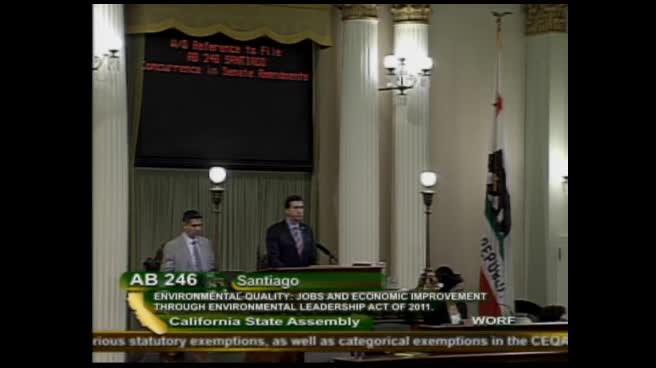 1MIN
Assembly Floor
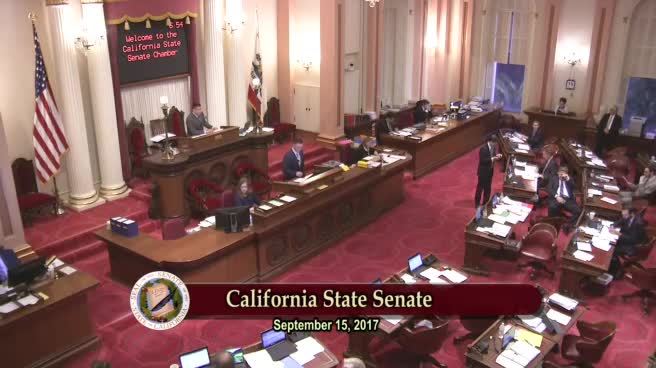 3MIN
Senate Floor
 8MIN
Senate Standing Committee on Governance and Finance
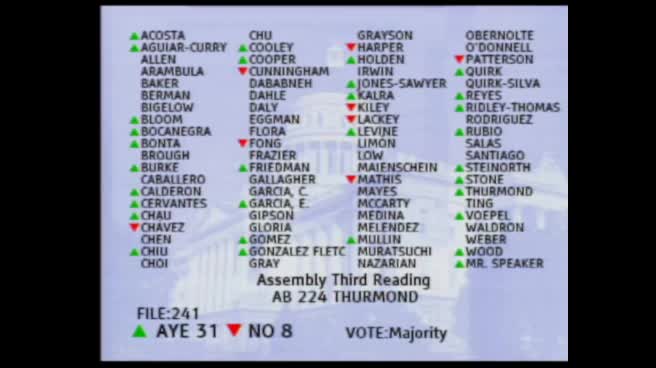 1MIN
Assembly Floor
 1H
Assembly Standing Committee on Appropriations
 5MIN
Assembly Standing Committee on Appropriations
 10MIN
Assembly Standing Committee on Arts, Entertainment, Sports, Tourism, and Internet Media
Bill Author

Bill Co-Author(s):