AB 767: GO-Biz Information Technology.
- Session Year: 2017-2018
- House: Assembly
- Latest Version Date: 2018-09-05
Existing law authorizes various state agencies to issue permits and licenses in accordance with specified requirements to conduct business within this state. Existing law establishes the Governors Office of Business and Economic Development (GO-Biz) to serve the Governor as the lead entity for economic strategy and the marketing of California on issues relating to business development, private sector investment, and economic growth.
Existing law requires GO-Biz to establish an electronic online permit assistance center, called the California Government Online to Desktops (CalGold), through the Internet for use by any business or entity subject to a law or regulation to assist that business or entity with complying with those laws or regulations. Existing law requires CalGold to be reviewed periodically, as specified.
This bill would, among other things, provide for a GO-Biz Information Technology Unit within GO-Biz, which would create an online Internet platform, called the California Business Development Portal, that is comprised of 3 elements, including economic and business development-related digital information, the systems and processes used to manage that information, and a public interface capability, as prescribed.
The bill would recast provisions related to CalGold by requiring the GO-Biz Information Technology Unit to establish an electronic online government permit and license assistance center and by renaming the center the California Business License Center. The bill would establish, beginning in the 201819 fiscal year, 2 state civil service positions for the purposes of supporting the ongoing enhancement of the functionality of the California Business Development Portal, including the California Business License Center, the California Business Navigator, the California Business Mapping Tool, digital resources, and other online products that improve the state governments digital ecosystem.
Existing law authorizes various state agencies to issue permits and licenses in accordance with specified requirements to conduct business within this state. Existing law establishes the Governors Office of Business and Economic Development (GO-Biz) to serve the Governor as the lead entity for economic strategy and the marketing of California on issues relating to business development, private sector investment, and economic growth.
Existing law requires GO-Biz to establish an electronic online permit assistance center, called the California Government Online to Desktops (CalGold), through the Internet for use by any business or entity subject to a law or regulation to assist that business or entity with complying with those laws or regulations. Existing law requires CalGold to be reviewed periodically, as specified.
This bill would, among other things, provide for a GO-Biz Information Technology Unit within GO-Biz, which would create an online Internet platform, called the California Business Development Portal, that is comprised of 3 elements, including economic and business development-related digital information, the systems and processes used to manage that information, and a public interface capability, as prescribed.
The bill would recast provisions related to CalGold, CalGold by requiring the GO-Biz Information Technology Unit to establish an electronic online government permit and license assistance center, and center and by renaming the center the Master California Business License Center. The bill would establish, beginning in the 201819 fiscal year, 2 state civil service positions for the purposes of supporting the ongoing enhancement of the functionality of the California Business Development Portal, including the Master California Business License Center, the California Business Navigator, the California Business Mapping Tool, digital resources, and other online products that improve the state governments digital ecosystem.
Existing law authorizes various state agencies to issue permits and licenses in accordance with specified requirements to conduct business within this state. Existing law establishes the Governors Office of Business and Economic Development (GO-Biz) to serve the Governor as the lead entity for economic strategy and the marketing of California on issues relating to business development, private sector investment, and economic growth.
Existing law requires GO-Biz to establish an electronic online permit assistance center, called the California Government Online to Desktops (CalGold), through the Internet for use by any business or entity subject to a law or regulation to assist that business or entity with complying with those laws or regulations. Existing law requires CalGold to be reviewed periodically, as specified.
This bill would, among other things, provide for a GO-Biz Information Technology Unit within GO-Biz, which would create an online Internet platform, called the California Business Development Portal, that is comprised of 3 elements, including economic and business development-related digital information, the systems and processes used to manage that information, and a public interface capability, as prescribed.
The bill would recast provisions related to CalGold, renaming the center the Master Business License Center, and CalGold requiring the GO-Biz Information Technology Unit to establish an electronic online permit assistance center. government permit and license assistance center, and renaming the center the Master Business License Center. The bill would establish, beginning in the 201819 fiscal year, 2 state civil service positions for the purposes of supporting the ongoing enhancement of the functionality of the California Business Development Portal, including the Master Business License Center, the California Business Navigator, the California Business Mapping Tool, digital resources, and other online products that improve the state governments digital ecosystem.
Existing law authorizes various state agencies to issue permits and licenses in accordance with specified requirements to conduct business within this state. Existing law establishes the Governors Office of Business and Economic Development (GO-Biz) to serve the Governor as the lead entity for economic strategy and the marketing of California on issues relating to business development, private sector investment, and economic growth. Existing law creates within the Governors Office of Business and Economic Development the Office of Small Business Advocate to advocate for the causes of small businesses and to provide small businesses with the information they need to survive in the marketplace.
This bill would create within the Governors Office of Business and Economic Development, or its successor, a business license center to develop and administer an online master business license system to simplify the process of engaging in business in this state. The bill would set forth the duties and responsibilities of the business license center. The bill would require each state regulatory agency to cooperate and provide reasonable assistance to the office to implement these provisions, except as specified.This bill would authorize a person that applies for 2 or more business licenses that have been incorporated into the master business license system to submit a master application to the office requesting the issuance of the licenses. The bill would require the office to develop and adopt an Internet-based platform that allows the businesses to electronically submit the master application to the office, as well as the payment of every fee required to obtain each requested license and a master application fee, which would be deposited into the Master License Fund, which would be created by the bill. The bill would authorize the office to borrow up to $140,000 from the General Fund, as specified. The bill would authorize a state agency that the office has determined to have a license and fee that is appropriate for inclusion in the master business license system to borrow money as needed from the General Fund to support the reasonable costs of integrating into the system, as specified. The bill would require these General Fund moneys to be deposited into the Master License Fund. The bill would authorize moneys in the fund, upon appropriation, to be expended only to administer this bill or be transferred to the appropriate licensing agencies. The bill would also require, upon issuance of the license or licenses, the office to transfer the fees, except for the master license fee, to the appropriate accounts under the applicable statutes for those regulatory agencies licenses.The bill would require the office, in consultation with other regulatory agencies, to establish a uniform business identification number for each business that would be recognized by all affected state agencies and used to facilitate the information sharing between state agencies and to improve customer service to businesses.The bill would also require the office, including the Director of Small Business Advocate, to work with small business owners and all regulatory agencies to ensure the states implementation of a consolidated business license and permit system.Existing law requires GO-Biz to establish an electronic online permit assistance center, called the California Government Online to Desktops (CalGold), through the Internet for use by any business or entity subject to a law or regulation to assist that business or entity with complying with those laws or regulations. Existing law requires CalGold to be reviewed periodically, as specified.
This bill would, among other things, provide for a GO-Biz Information Technology Unit within GO-Biz, which would create an online Internet platform, called the California Business Development Portal, that is comprised of 3 elements, including economic and business development-related digital information, the systems and processes used to manage that information, and a public interface capability, as prescribed.
The bill would recast provisions related to CalGold, renaming the center the Master Business License Center, and requiring GO-Biz Information Technology to establish an electronic online permit assistance center. The bill would establish, beginning in the 201819 fiscal year, 2 state civil service positions for the purposes of supporting the ongoing enhancement of the functionality of the California Business Development Portal, including the Master Business License Center, the California Business Navigator, the California Business Mapping Tool, digital resources, and other online products that improve the state governments digital ecosystem.
Existing law authorizes various state agencies to issue permits and licenses in accordance with specified requirements to conduct business within this state. Existing law establishes the Governors Office of Business and Economic Development to serve the Governor as the lead entity for economic strategy and the marketing of California on issues relating to business development, private sector investment, and economic growth. Existing law creates within the Governors Office of Business and Economic Development the Office of Small Business Advocate to advocate for the causes of small businesses and to provide small businesses with the information they need to survive in the marketplace.
This bill would create within the Governors Office of Business and Economic Development, or its successor, a business license center to develop and administer an online master business license system to simplify the process of engaging in business in this state. The bill would set forth the duties and responsibilities of the business license center. The bill would require each state regulatory agency to cooperate and provide reasonable assistance to the office to implement these provisions. provisions, except as specified.
This bill would authorize a person that applies for 2 or more business licenses that have been incorporated into the master business license system to submit a master application to the office requesting the issuance of the licenses. The bill would require the office to develop and adopt an Internet-based platform that allows the businesses to electronically submit the master application to the office, as well as the payment of every fee required to obtain each requested license and a master application fee, which would be deposited into the Master License Fund, which would be created by the bill. The bill would authorize the office to borrow up to $140,000 from the General Fund. Fund, as specified. The bill would authorize a state agency that the office has determined to have a license and fee that is appropriate for inclusion in the master business license system to borrow money as needed from the General Fund to support the reasonable costs of integrating into the system. system, as specified. The bill would require these General Fund moneys to be deposited into the Master License Fund. The bill would authorize moneys in the fund, upon appropriation, to be expended only to administer this bill or be transferred to the appropriate licensing agencies. The bill would also require, upon issuance of the license or licenses, the office to transfer the fees, except for the master license fee, to the appropriate accounts under the applicable statutes for those regulatory agencies licenses.
The bill would require the office to establish a reasonable fee for each master license application and to collect those fees for deposit into the Master License Fund established by this bill. Funds derived from the master license application fees would be expended to administer the master business license program upon appropriation by the Legislature. The bill would require the license fees of the regulatory agencies deposited into the fund to be transferred to the appropriate accounts of the regulatory agencies, as provided.The bill would require the office, in consultation with other regulatory agencies, to establish a uniform business identification number for each business that would be recognized by all affected state agencies and used to facilitate the information sharing between state agencies and to improve customer service to businesses.
The bill would also require the office, including the Director of Small Business Advocate, to work with small business owners and all regulatory agencies to ensure the states implementation of a consolidated business license and permit system.
Existing law authorizes various state agencies to issue permits and licenses in accordance with specified requirements to conduct business within this state. Existing law establishes the Governors Office of Business and Economic Development to serve the Governor as the lead entity for economic strategy and the marketing of California on issues relating to business development, private sector investment, and economic growth. Existing law creates within the Governors Office of Business and Economic Development the Office of Small Business Advocate to advocate for the causes of small business businesses and to provide small businesses with the information they need to survive in the marketplace.
This bill would create within the Governors Office of Business and Economic Development, or its successor, a business license center to develop and administer a computerized an online master business license system to simplify the process of engaging in business in this state. The bill would set forth the duties and responsibilities of the business license center. The bill would require each state regulatory agency to cooperate and provide reasonable assistance to the office to implement these provisions.
This bill would authorize a person that applies for 2 or more business licenses that have been incorporated into the master business license system to submit a master application to the office requesting the issuance of the licenses. The bill would require the office to develop and adopt an Internet-based platform that allows the business businesses to electronically submit the master application to the office, as well as the payment of every fee required to obtain each requested license and a master application fee, which would be deposited into the Master License Fund, which would be created by the bill. The bill would authorize the office to borrow up to $140,000 from the General Fund. The bill would authorize a state agency that the office has determined to have a license and fee that is appropriate for inclusion in the master business license system to borrow money as needed from the General Fund to support the reasonable costs of integrating into the system. The bill would require these General Fund moneys to be deposited into the Master License Fund. The bill would authorize moneys in the fund, upon appropriation, to be expended only to administer this bill or be transferred to the appropriate licensing agencies. The bill would also require, upon issuance of the license or licenses, the office to transfer the fees, except for the master license fee, to the appropriate accounts under the applicable statutes for those regulatory agencies licenses.
The bill would require the office to establish a reasonable fee for each master license application and to collect those fees for deposit into the Master License Fund established by this bill. Funds derived from the master license application fees would be expended to administer the master business license program upon appropriation by the Legislature. The bill would require the license fees of the regulatory agencies deposited into the fund to be transferred to the appropriate accounts of the regulatory agencies, as provided.
The bill would require the office, in consultation with other regulatory agencies, to establish a uniform business identification number for each business that would be recognized by all affected state agencies and used to facilitate the information sharing between state agencies and to improve customer service to businesses.
The bill would also require the office, including the Director of Small Business Advocate Advocate, to work with small business owners and all regulatory agencies to ensure the states implementation of a consolidated business license and permit system.
Existing law authorizes various state agencies to issue permits and licenses in accordance with specified requirements to conduct business within this state. Existing law establishes the Governors Office of Business and Economic Development to serve the Governor as the lead entity for economic strategy and the marketing of California on issues relating to business development, private sector investment, and economic growth. Existing law creates within the Governors Office of Business and Economic Development the Office of Small Business Advocate to advocate for the causes of small business and to provide small businesses with the information they need to survive in the marketplace.
This bill would create within the Governors Office of Business and Economic Development, or its successor, a business license center to develop and administer a computerized master business license system to simplify the process of engaging in business in this state. The bill would set forth the duties and responsibilities of the business license center. The bill would require each state agency to cooperate and provide reasonable assistance to the office to implement these provisions.
This bill would authorize a person that applies for 2 or more business licenses that have been incorporated into the master business license system to submit a master application to the office requesting the issuance of the licenses. The bill would require the office to develop and adopt an Internet-based platform that allows the business to electronically submit the master application to the office, as well as the payment of every fee required to obtain each requested license and a master application fee, which would be deposited into the Master License Fund, which would be created by the bill. The bill would authorize moneys in the fund, upon appropriation, to be expended only to administer this bill or be transferred to the appropriate licensing agencies. The bill would also require, upon issuance of the license or licenses, the office to transfer the fees, except for the master license fee, to the appropriate accounts under the applicable statutes for those regulatory agencies licenses.
The bill would require the office to establish a reasonable fee for each master license application and to collect those fees for deposit into the Master License Fund established by this bill. Funds derived from the master license application fees would be expended to administer the master business license program upon appropriation by the Legislature. The bill would require the license fees of the regulatory agencies deposited into the fund to be transferred to the appropriate accounts of the regulatory agencies, as provided.
The bill would require the office, in consultation with other regulatory agencies, to establish a uniform business identification number for each business that would be recognized by all affected state agencies and used to facilitate the information sharing between state agencies and to improve customer service to businesses.
The bill would also require the Director of Small Business Advocate to work with small business owners and all regulatory agencies to ensure the states implementation of a consolidated business license and permit system.
The Legislature finds and declares the following:
(a)The Information Technology unit of GO-Biz develops, maintains, and updates information technology solutions for GO-Biz programs aimed at furthering GO-Bizs goal of economic growth for California.
(b)Since September 2013, the GO-Biz Information Technology Application Portfolio has grown from one information technology staff member and four supported applications to six information technology staff members and sixteen supported applications.
(c)Each new GO-Biz application needs to be regularly updated and fourteen of the sixteen applications are public facing and play an important role in supporting business development in California including, but not limited to, all of the following:
(1)The GO-Biz Internet Web site.
(2)The California Business Portal.
(3)The California Competes Tax Credit application.
(4)The CalGold Permit Assistance Tool.
(5)The California Business Navigator.
(6)CA Made.
(7)The California Business Service Desk.
(8)The IBank Application Portal.
(9)The California Financing Coordinating Committee.
(10)The GO-Biz Salesforce.
(11)The California Business Mapping Tool.
(d)As the home of the worlds most creative information technology companies, California should also be a leader in digital government technologies. The California Business Portal brings the state into alignment with other nations and states that are embracing innovation and the Internet of Things to meet business development challenges at scale while still providing the individualized experience that meets a businesss unique needs.
SEC. 2.Section 12096.3 of the Government Code is amended to read:12096.3.The office shall serve the Governor as the lead entity for economic strategy and the marketing of California on issues relating to business development, private sector investment, and economic growth. In this capacity, the office may:
(a)Recommend to the Governor and the Legislature new state policies, programs, and actions, or amendments to existing programs, advance statewide economic goals and respond to emerging economic problems and opportunities, and ensure that all state policies and programs conform to the adopted state economic and business development goals.
(b)Coordinate the development of policies and criteria to ensure that federal grants administered or directly expended by state government advance statewide economic goals and objectives.
(c)Market the business and investment opportunities available in California by working in partnership with local, regional, federal, and other state public and private institutions to encourage business development and investment in the state.
(d)Provide, including, but not limited to, all of the following:
(1)Economic and demographic data.
(2)Financial information to help link businesses with state and local public and private programs.
(3)Workforce information, including, but not limited to, labor availability, training, and education programs.
(4)Transportation and infrastructure information.
(5)Assistance in obtaining state and local permits.
(6)Information on tax credits and other incentives.
(7)Permitting, siting, and other regulatory information pertinent to business operations in the state.
(e)Establish a well-advertised telephone number, an online interactive and high-performance Internet platform, and an administrative structure that effectively supports the facilitation of business development and investment in the state.
(f)Encourage collaboration among research institutions, startup companies, local governments, venture capitalists, and economic development agencies to promote innovation.
(g)In cooperation with other state, federal, and local governments, foster relationships with foreign and domestic entities to improve the states image as a destination for global business investment and expansion.
(h)Conduct research on the states business climate, including, but not limited to, research on how the state can remain on the leading edge of innovation and emerging sectors.
(i)Support small businesses by providing information about accessing capital, complying with regulations, and supporting state initiatives that support small business.
SEC. 3.Article 4.3 (commencing with Section 12096.7) is added to Chapter 1.6 of Part 2 of Division 3 of Title 2 of the Government Code, to read:4.3.GO-Biz Information Technology12096.7.(a)There shall be within the office, the GO-Biz Information Technology Unit, which shall create an online Internet platform, called the California Business Development Portal.
(b)The Business Development Portal shall be an online platform that is comprised of three distinct elements, including economic and business development-related digital information, the systems and processes used to manage that information, and a public interface capability, which includes, but is not limited to, all of the following:
(1)Storing, retrieving, and exchanging economic and business development-related digital information with due regard to privacy statutes.
(2)An information service detailing business incentives, financing, workforce training, geographic regions in the state, and requirements to establish or engage in business in this state.
(3)Identification and retrieval of economic and business development digital information appropriate for a variety of business types, including sole proprietorships, partnerships, associations, cooperatives, corporations, nonprofit organizations, and social enterprises.
(4)Identification and retrieval of economic and business development digital information useful for state, federal, and local government agencies and other entities that support economic and business development activities in California.
(5)Accessibility through a variety of electronic presentation formats, including Internet Web sites, mobile applications, and other modes of delivery.
(6)A service or application for an individual, business, or other interested party to establish an online account that enhances the ability to conduct business or economic development activities in California.
(c)The office, in developing new programs or services, shall consider the added value of having all or portions of a program and service accessed digitally, including, but not limited to, undertaking outreach, filing applications, and submitting progress and outcome reports to the office.
(d)The office shall adopt and periodically update a schedule for the buildout and upgrading of the California Business Development Portal. The office shall undertake activities on the schedule after the director determines that funding for this project is available and the project is in alignment with required elements of the state planning practices for the development of state information technology projects.
12096.8.Beginning in the 201819 fiscal year, there shall be two additional state civil service positions in the GO-Biz Information Technology Unit for the purposes of supporting the ongoing enhancement of the functionality of the California Business Development Portal, including the California Business License Center, the California Business Navigator, the California Business Mapping Tool, digital resources, and other online products that improve the state governments digital ecosystem.
SEC. 4.Section 12097.1 of the Government Code is amended and renumbered to read:12097.2.(a)The director shall ensure that the offices Internet Web site contains information on the licensing, permitting, and registration requirements of state agencies, and shall include, but not be limited to, information that does all of the following:
(1)Assists individuals with identifying the type of applications, forms, or other similar documents an applicant may need.
(2)Provides a direct link to a digital copy of all state licensing, permitting, and registration applications, forms, or other similar documents where made available for download.
(3)Instructs individuals on how and where to submit applications, forms, or other similar documents.
(b)The director shall ensure that the offices Internet Web site contains information on the fee requirements and fee schedules of state agencies, and shall include, but not be limited to, information that does all of the following:
(1)Assists individuals with identifying the types of fees and their due dates.
(2)Provides direct links to the fee requirements and fee schedules for all state agencies, where made available for download.
(3)Instructs individuals on how and where to submit payments.
(c)The office shall ensure that the Internet platform is user-friendly and provides accurate, updated information.
(d)(1)Each state agency that has licensing, permitting, or registration authority shall provide direct links to information about its licensing, permitting, and registration requirements and fee schedule to the office.
(2)A state agency shall not use the Internet platform established under this section as the exclusive source of information for the public to access licensing requirements and fees for that agency.
(e)The office may impose a reasonable fee, not to exceed the actual cost to provide the service, as a condition of accessing information on the Internet Web site established under subdivisions (a) and (b).
SEC. 5.Section 12097.1 is added to the Government Code, to read:12097.1.(a)The GO-Biz Information Technology Unit shall establish an electronic online government permit and license assistance center through the Internet, which shall be known as the California Business License Center. The California Business License Center shall be available for use by any business or other entity subject to a law or regulation implemented by a state agency, authority, bureau, board, commission, conservancy, council, department, or office, and shall provide a business or other entity with assistance in complying with those laws and regulations.
(b)The California Business License Center shall provide special software, hotlinks, and other online resources and tools that may be used by a business or other entity to streamline and expedite compliance with laws and regulations implemented by a state agency, authority, bureau, board, commission, conservancy, council, department, or office.
(c)The California Business License Center shall, to the extent feasible, incorporate permit assistance activities of local and federal entities and of other entities of the state into its operations.
(d)The GO-Biz Information Technology Unit shall periodically review and, when necessary, update the California Business License Center to assist businesses in the state that would benefit from information on permitting and regulatory compliance.
SEC. 6.Section 71040 of the Public Resources Code is repealed.SEC. 7.Section 71041 of the Public Resources Code is repealed.The Legislature finds and declares the following:
(a)The Information Technology unit of GO-Biz develops, maintains, and updates information technology solutions for GO-Biz programs aimed at furthering GO-Bizs goal of economic growth for California.
(b)Since September 2013, the GO-Biz Information Technology Application Portfolio has grown from one information technology staff member and four supported applications to six information technology staff members and sixteen supported applications.
(c)Each new GO-Biz application needs to be regularly updated and fourteen of the sixteen applications are public facing and play an important role in supporting business development in California including, but not limited to, all of the following:
(1)The GO-Biz Internet Web site.
(2)The California Business Portal.
(3)The California Competes Tax Credit application.
(4)The CalGold Permit Assistance Tool.
(5)The California Business Navigator.
(6)CA Made.
(7)The California Business Service Desk.
(8)The IBank Application Portal.
(9)The California Financing Coordinating Committee.
(10)The GO-Biz Salesforce.
(11)The California Business Mapping Tool.
(d)According to an Accenture survey, more than 65% of public service leaders have cited creating a personalized citizen experience as a priority.(e)(d)As the home of the worlds most creative information technology companies, California should also be a leader in digital government technologies. The California Business Portal brings the state into alignment with other nations and states that are embracing innovation and the Internet of Things to meet business development challenges at scale while still providing the individualized experience that meets a businesss unique needs.
SEC. 2.Section 12096.3 of the Government Code is amended to read:12096.3.The office shall serve the Governor as the lead entity for economic strategy and the marketing of California on issues relating to business development, private sector investment, and economic growth. In this capacity, the office may:
(a)Recommend to the Governor and the Legislature new state policies, programs, and actions, or amendments to existing programs, advance statewide economic goals and respond to emerging economic problems and opportunities, and ensure that all state policies and programs conform to the adopted state economic and business development goals.
(b)Coordinate the development of policies and criteria to ensure that federal grants administered or directly expended by state government advance statewide economic goals and objectives.
(c)Market the business and investment opportunities available in California by working in partnership with local, regional, federal, and other state public and private institutions to encourage business development and investment in the state.
(d)Provide, including, but not limited to, all of the following:
(1)Economic and demographic data.
(2)Financial information to help link businesses with state and local public and private programs.
(3)Workforce information, including, but not limited to, labor availability, training, and education programs.
(4)Transportation and infrastructure information.
(5)Assistance in obtaining state and local permits.
(6)Information on tax credits and other incentives.
(7)Permitting, siting, and other regulatory information pertinent to business operations in the state.
(e)Establish a well-advertised telephone number, an online interactive and high-performance Internet platform, and an administrative structure that effectively supports the facilitation of business development and investment in the state.
(f)Encourage collaboration among research institutions, startup companies, local governments, venture capitalists, and economic development agencies to promote innovation.
(g)In cooperation with other state, federal, and local governments, foster relationships with foreign and domestic entities to improve the states image as a destination for global business investment and expansion.
(h)Conduct research on the states business climate, including, but not limited to, research on how the state can remain on the leading edge of innovation and emerging sectors.
(i)Support small businesses by providing information about accessing capital, complying with regulations, and supporting state initiatives that support small business.
SEC. 3.Article 4.3 (commencing with Section 12096.7) is added to Chapter 1.6 of Part 2 of Division 3 of Title 2 of the Government Code, to read:4.3.GO-Biz Information Technology12096.7.(a)There shall be within the office, the GO-Biz Information Technology Unit, which shall create an online Internet platform, called the California Business Development Portal.
(b)The Business Development Portal shall be an online platform that is comprised of three distinct elements, including economic and business development-related digital information, the systems and processes used to manage that information, and a public interface capability, which includes, but is not limited to, all of the following:
(1)Storing, retrieving, and exchanging economic and business development-related digital information with due regard to privacy statutes.
(2)An information service detailing business incentives, financing, workforce training, geographic regions in the state, and requirements to establish or engage in business in this state.
(3)Identification and retrieval of economic and business development digital information appropriate for a variety of business types, including sole proprietorships, partnerships, associations, cooperatives, corporations, nonprofit organizations, and social enterprises.
(4)Identification and retrieval of economic and business development digital information useful for state, federal, and local government agencies and other entities that support economic and business development activities in California.
(5)Accessibility through a variety of electronic presentation formats, including Internet Web sites, mobile applications, and other modes of delivery.
(6)A service or application for an individual, business, or other interested party to establish an online account that enhances the ability to conduct business or economic development activities in California.
(c)The office, in developing new programs or services, shall consider the added value of having all or portions of a program and service accessed digitally, including, but not limited to, undertaking outreach, filing applications, and submitting progress and outcome reports to the office.
(d)The office shall adopt and periodically update a schedule for the buildout and upgrading of the California Business Development Portal. The office shall undertake activities on the schedule after the director determines that funding for this project is available and the project is in alignment with required elements of the state planning practices for the development of state information technology projects.
12096.8.Beginning in the 201819 fiscal year, there shall be two additional state civil service positions in the GO-Biz Information Technology Unit for the purposes of supporting the ongoing enhancement of the functionality of the California Business Development Portal, including the California Business License Center, the California Business Navigator, the California Business Mapping Tool, digital resources, and other online products that improve the state governments digital ecosystem.
SEC. 4.Section 12097.1 of the Government Code is amended and renumbered to read:12097.2.(a)The director shall ensure that the offices Internet Web site contains information on the licensing, permitting, and registration requirements of state agencies, and shall include, but not be limited to, information that does all of the following:
(1)Assists individuals with identifying the type of applications, forms, or other similar documents an applicant may need.
(2)Provides a direct link to a digital copy of all state licensing, permitting, and registration applications, forms, or other similar documents where made available for download.
(3)Instructs individuals on how and where to submit applications, forms, or other similar documents.
(b)The director shall ensure that the offices Internet Web site contains information on the fee requirements and fee schedules of state agencies, and shall include, but not be limited to, information that does all of the following:
(1)Assists individuals with identifying the types of fees and their due dates.
(2)Provides direct links to the fee requirements and fee schedules for all state agencies, where made available for download.
(3)Instructs individuals on how and where to submit payments.
(c)The office shall ensure that the Internet platform is user-friendly and provides accurate, updated information.
(d)(1)Each state agency that has licensing, permitting, or registration authority shall provide direct links to information about its licensing, permitting, and registration requirements and fee schedule to the office.
(2)A state agency shall not use the Internet platform established under this section as the exclusive source of information for the public to access licensing requirements and fees for that agency.
(e)The office may impose a reasonable fee, not to exceed the actual cost to provide the service, as a condition of accessing information on the Internet Web site established under subdivisions (a) and (b).
SEC. 5.Section 12097.1 is added to the Government Code, to read:12097.1.(a)The GO-Biz Information Technology Unit shall establish an electronic online government permit and license assistance center through the Internet, which shall be known as the California Business License Center. The California Business License Center shall be available for use by any business or other entity subject to a law or regulation implemented by a state agency, authority, bureau, board, commission, conservancy, council, department, or office, and shall provide a business or other entity with assistance in complying with those laws and regulations.
(b)The California Business License Center shall provide special software, hotlinks, and other online resources and tools that may be used by a business or other entity to streamline and expedite compliance with laws and regulations implemented by a state agency, authority, bureau, board, commission, conservancy, council, department, or office.
(c)The California Business License Center shall, to the extent feasible, incorporate permit assistance activities of local and federal entities and of other entities of the state into its operations.
(d)The GO-Biz Information Technology Unit shall periodically review and, when necessary, update the California Business License Center to assist businesses in the state that would benefit from information on permitting and regulatory compliance.
SEC. 6.Section 71040 of the Public Resources Code is repealed.SEC. 7.Section 71041 of the Public Resources Code is repealed.The Legislature finds and declares the following:
(a)The Information Technology unit of GO-Biz develops, maintains, and updates information technology solutions for GO-Biz programs aimed at furthering GO-Bizs goal of economic growth for California.
(b)Since September 2013, the GO-Biz Information Technology Application Portfolio has grown from one information technology staff member and four supported applications to six information technology staff members and sixteen supported applications.
(c)Each new GO-Biz application needs to be regularly updated and fourteen of the sixteen applications are public facing and play an important role in supporting business development in California including, but not limited to, all of the following:
(1)The GO-Biz Internet Web site.
(2)The California Business Portal.
(3)The California Competes Tax Credit application.
(4)The CalGold Permit Assistance Tool.
(5)The California Business Navigator.
(6)CA Made.
(7)The California Business Service Desk.
(8)The IBank Application Portal.
(9)The California Financing Coordinating Committee.
(10)The GO-Biz Salesforce.
(11)The California Business Mapping Tool.
(d)According to an Accenture survey, more than 65% of public service leaders have cited creating a personalized citizen experience as a priority.
(e)As the home of the worlds most creative information technology companies, California should also be a leader in digital government technologies. The California Business Portal brings the state into alignment with other nations and states that are embracing innovation and the Internet of Things to meet business development challenges at scale while still providing the individualized experience that meets a businesss unique needs.
SEC. 2.Section 12096.3 of the Government Code is amended to read:12096.3.The office shall serve the Governor as the lead entity for economic strategy and the marketing of California on issues relating to business development, private sector investment, and economic growth. In this capacity, the office may:
(a)Recommend to the Governor and the Legislature new state policies, programs, and actions, or amendments to existing programs, advance statewide economic goals and respond to emerging economic problems and opportunities, and ensure that all state policies and programs conform to the adopted state economic and business development goals.
(b)Coordinate the development of policies and criteria to ensure that federal grants administered or directly expended by state government advance statewide economic goals and objectives.
(c)Market the business and investment opportunities available in California by working in partnership with local, regional, federal, and other state public and private institutions to encourage business development and investment in the state.
(d)Provide, including, but not limited to, all of the following:
(1)Economic and demographic data.
(2)Financial information to help link businesses with state and local public and private programs.
(3)Workforce information, including, but not limited to, labor availability, training, and education programs.
(4)Transportation and infrastructure information.
(5)Assistance in obtaining state and local permits.
(6)Information on tax credits and other incentives.
(7)Permitting, siting, and other regulatory information pertinent to business operations in the state.
(e)Establish a well-advertised telephone number, an online interactive and high-performance Internet platform, and an administrative structure that effectively supports the facilitation of business development and investment in the state.
(f)Encourage collaboration among research institutions, startup companies, local governments, venture capitalists, and economic development agencies to promote innovation.
(g)In cooperation with other state, federal, and local governments, foster relationships with foreign and domestic entities to improve the states image as a destination for global business investment and expansion.
(h)Conduct research on the states business climate, including, but not limited to, research on how the state can remain on the leading edge of innovation and emerging sectors.
(i)Support small businesses by providing information about accessing capital, complying with regulations, and supporting state initiatives that support small business.
SEC. 3.Article 4.3 (commencing with Section 12096.7) is added to Chapter 1.6 of Part 2 of Division 3 of Title 2 of the Government Code, to read:4.3.GO-Biz Information Technology12096.7.(a)There shall be within the office, the GO-Biz Information Technology Unit, which shall create an online Internet platform, called the California Business Development Portal.
(b)The Business Development Portal shall be an online platform that is comprised of three distinct elements, including economic and business development-related digital information, the systems and processes used to manage that information, and a public interface capability, which includes, but is not limited to, all of the following:
(1)Storing, retrieving, and exchanging economic and business development-related digital information with due regard to privacy statutes.
(2)An information service detailing business incentives, financing, workforce training, geographic regions in the state, and requirements to establish or engage in business in this state.
(3)Identification and retrieval of economic and business development digital information appropriate for a variety of business types, including sole proprietorships, partnerships, associations, cooperatives, corporations, nonprofit organizations, and social enterprises.
(4)Identification and retrieval of economic and business development digital information useful for state, federal, and local government agencies and other entities that support economic and business development activities in California.
(5)Accessibility through a variety of electronic presentation formats, including Internet Web sites, mobile applications, and other modes of delivery.
(6)A service or application for an individual, business, or other interested party to establish an online account that enhances the ability to conduct business or economic development activities in California.
(c)The office, in developing new programs or services, shall consider the added value of having all or portions of a program and service accessed digitally, including, but not limited to, undertaking outreach, filing applications, and submitting progress and outcome reports to the office.
(d)The office shall adopt and periodically update a schedule for the buildout and upgrading of the California Business Development Portal. The office shall undertake activities on the schedule after the director determines that funding for this project is available and the project is in alignment with required elements of the state planning practices for the development of state information technology projects.
12096.8.Beginning in the 201819 fiscal year, there shall be two additional state civil service positions in the GO-Biz Information Technology Unit for the purposes of supporting the ongoing enhancement of the functionality of the California Business Development Portal, including the Master California Business License Center, the California Business Navigator, the California Business Mapping Tool, digital resources, and other online products that improve the state governments digital ecosystem.
SEC. 4.Section 12097.1 of the Government Code is amended and renumbered to read:12097.2.(a)The director shall ensure that the offices Internet Web site contains information on the licensing, permitting, and registration requirements of state agencies, and shall include, but not be limited to, information that does all of the following:
(1)Assists individuals with identifying the type of applications, forms, or other similar documents an applicant may need.
(2)Provides a direct link to a digital copy of all state licensing, permitting, and registration applications, forms, or other similar documents where made available for download.
(3)Instructs individuals on how and where to submit applications, forms, or other similar documents.
(b)The director shall ensure that the offices Internet Web site contains information on the fee requirements and fee schedules of state agencies, and shall include, but not be limited to, information that does all of the following:
(1)Assists individuals with identifying the types of fees and their due dates.
(2)Provides direct links to the fee requirements and fee schedules for all state agencies, where made available for download.
(3)Instructs individuals on how and where to submit payments.
(c)The office shall ensure that the Internet platform is user-friendly and provides accurate, updated information.
(d)(1)Each state agency that has licensing, permitting, or registration authority shall provide direct links to information about its licensing, permitting, and registration requirements and fee schedule to the office.
(2)A state agency shall not use the Internet platform established under this section as the exclusive source of information for the public to access licensing requirements and fees for that agency.
(e)The office may impose a reasonable fee, not to exceed the actual cost to provide the service, as a condition of accessing information on the Internet Web site established under subdivisions (a) and (b).
SEC. 5.Section 12097.1 is added to the Government Code, to read:12097.1.(a)The GO-Biz Information Technology Unit shall establish an electronic online government permit and license assistance center through the Internet, which shall be known as the Master California Business License Center. The Master California Business License Center shall be available for use by any business or other entity subject to a law or regulation implemented by an a state agency, authority, bureau, board, commission, conservancy, council, department, or office, and shall provide a business or other entity with assistance in complying with those laws and regulations.
(b)The Master California Business License Center shall provide special software, hotlinks, and other online resources and tools that may be used by a business or other entity to streamline and expedite compliance with laws and regulations implemented by an a state agency, authority, bureau, board, commission, conservancy, council, department, or office.
(c)The Master California Business License Center shall, to the extent feasible, incorporate permit assistance activities of local and federal entities and of other entities of the state into its operations.
(d)The GO-Biz Information Technology Unit shall periodically review and, when necessary, update the Master California Business License Center to assist businesses in the state that would benefit from information on permitting and regulatory compliance.
SEC. 6.Section 71040 of the Public Resources Code is repealed.SEC. 7.Section 71041 of the Public Resources Code is repealed.The Legislature finds and declares the following:
(a)The Information Technology unit of GO-Biz develops, maintains, and updates information technology solutions for GO-Biz programs aimed at furthering GO-Bizs goal of economic growth for California.
(b)Since September 2013, the GO-Biz Information Technology Application Portfolio has grown from one information technology staff member and four supported applications to six information technology staff members and sixteen supported applications.
(c)Each new GO-Biz application needs to be regularly updated and fourteen of the sixteen applications are public facing and play an important role in supporting business development in California including, but not limited to, all of the following:
(1)The GO-Biz Internet Web site.
(2)The California Business Portal.
(3)The California Competes Tax Credit application.
(4)The CalGold Permit Assistance Tool.
(5)The California Business Navigator.
(6)CA Made.
(7)The California Business Service Desk.
(8)The IBank Application Portal.
(9)The California Financing Coordinating Committee.
(10)The GO-Biz Salesforce.
(11)The California Business Mapping Tool.
(d)According to an Accenture survey, more than 65% of public service leaders have cited creating a personalized citizen experience as a priority.
(e)As the home of the worlds most creative information technology companies, California should also be a leader in digital government technologies. The California Business Portal brings the state into alignment with other nations and states that are embracing innovation and the Internet of Things to meet business development challenges at scale while still providing the individualized experience that meets a businesss unique needs.
SEC. 2.Section 12096.3 of the Government Code is amended to read:12096.3.The office shall serve the Governor as the lead entity for economic strategy and the marketing of California on issues relating to business development, private sector investment, and economic growth. In this capacity, the office may:
(a)Recommend to the Governor and the Legislature new state policies, programs, and actions, or amendments to existing programs, advance statewide economic goals and respond to emerging economic problems and opportunities, and ensure that all state policies and programs conform to the adopted state economic and business development goals.
(b)Coordinate the development of policies and criteria to ensure that federal grants administered or directly expended by state government advance statewide economic goals and objectives.
(c)Market the business and investment opportunities available in California by working in partnership with local, regional, federal, and other state public and private institutions to encourage business development and investment in the state.
(d)Provide, including, but not limited to, all of the following:
(1)Economic and demographic data.
(2)Financial information to help link businesses with state and local public and private programs.
(3)Workforce information, including, but not limited to, labor availability, training, and education programs.
(4)Transportation and infrastructure information.
(5)Assistance in obtaining state and local permits.
(6)Information on tax credits and other incentives.
(7)Permitting, siting, and other regulatory information pertinent to business operations in the state.
(e)Establish a well-advertised telephone number, an online interactive and high-performance Internet platform, and an administrative structure that effectively supports the facilitation of business development and investment in the state.
(f)Encourage collaboration among research institutions, startup companies, local governments, venture capitalists, and economic development agencies to promote innovation.
(g)In cooperation with other state, federal, and local governments, foster relationships with foreign and domestic entities to improve the states image as a destination for global business investment and expansion.
(h)Conduct research on the states business climate, including, but not limited to, research on how the state can remain on the leading edge of innovation and emerging sectors.
(i)Support small businesses by providing information about accessing capital, complying with regulations, and supporting state initiatives that support small business.
SEC. 3.Article 4.3 (commencing with Section 12096.7) is added to Chapter 1.6 of Part 2 of Division 3 of Title 2 of the Government Code, to read:4.3.GO-Biz Information Technology12096.7.(a)There shall be within the office, the GO-Biz Information Technology Unit, which shall create an online Internet platform, called the California Business Development Portal.
(b)The Business Development Portal shall be an online platform that is comprised of three distinct elements, including economic and business development-related digital information, the systems and processes used to manage that information, and a public interface capability, which includes, but is not limited to, all of the following:
(1)Storing, retrieving, and exchanging economic and business development-related digital information with due regard to privacy statutes.
(2)An information service detailing business incentives, financing, workforce training, geographic regions in the state, and requirements to establish or engage in business in this state.
(3)Identification and retrieval of economic and business development digital information appropriate for a variety of business types, including sole proprietorships, partnerships, associations, cooperatives, corporations, nonprofit organizations, and social enterprises.
(4)Identification and retrieval of economic and business development digital information useful for state, federal, and local government agencies and other entities that support economic and business development activities in California.
(5)Accessibility through a variety of electronic presentation formats, including Internet Web sites, mobile applications, and other modes of delivery.
(6)A service or application for an individual, business, or other interested party to establish an online account that enhances the ability to conduct business or economic development activities in California.
(c)The office, in developing new programs or services, shall consider the added value of having all or portions of a program and service accessed digitally, including, but not limited to, undertaking outreach, filing applications, and submitting progress and outcome reports to the office.
(d)The office shall adopt and periodically update a schedule for the buildout and upgrading of the California Business Development Portal. The office shall undertake activities on the schedule after the director determines that funding for this project is available and the project is in alignment with required elements of the state planning practices for the development of state information technology projects.
12096.8.Beginning in the 201819 fiscal year, there shall be two additional state civil service positions in the GO-Biz Information Technology Unit for the purposes of supporting the ongoing enhancement of the functionality of the California Business Development Portal, including the Master Business License Center, the California Business Navigator, the California Business Mapping Tool, digital resources, and other online products that improve the state governments digital ecosystem.
SEC. 4.Section 12097.1 of the Government Code is amended and renumbered to read:12097.2.(a)The director shall ensure that the offices Internet Web site contains information on the licensing, permitting, and registration requirements of state agencies, and shall include, but not be limited to, information that does all of the following:
(1)Assists individuals with identifying the type of applications, forms, or other similar documents an applicant may need.
(2)Provides a direct link to a digital copy of all state licensing, permitting, and registration applications, forms, or other similar documents where made available for download.
(3)Instructs individuals on how and where to submit applications, forms, or other similar documents.
(b)The director shall ensure that the offices Internet Web site contains information on the fee requirements and fee schedules of state agencies, and shall include, but not be limited to, information that does all of the following:
(1)Assists individuals with identifying the types of fees and their due dates.
(2)Provides direct links to the fee requirements and fee schedules for all state agencies, where made available for download.
(3)Instructs individuals on how and where to submit payments.
(c)The office shall ensure that the Internet platform is user-friendly and provides accurate, updated information.
(d)(1)Each state agency that has licensing, permitting, or registration authority shall provide direct links to information about its licensing, permitting, and registration requirements and fee schedule to the office.
(2)A state agency shall not use the Internet platform established under this section as the exclusive source of information for the public to access licensing requirements and fees for that agency.
(e)The office may impose a reasonable fee, not to exceed the actual cost to provide the service, as a condition of accessing information on the Internet Web site established under subdivisions (a) and (b).
SEC. 5.Section 12097.1 is added to the Government Code, to read:12097.1.(a)The GO-Biz Information Technology Unit shall establish an electronic online government permit and license assistance center through the Internet, which shall be known as the Master Business License Center. The Master Business License Center shall be available for use by any business or other entity subject to a law or regulation implemented by an agency, authority, bureau, board, commission, conservancy, council, department, or office, and shall provide a business or other entity with assistance in complying with those laws and regulations.
(b)The Master Business License Center shall provide special software, hotlinks, and other online resources and tools that may be used by a business or other entity to streamline and expedite compliance with laws and regulations implemented by an agency, authority, bureau, board, commission, conservancy, council, department, or office.
(c)The Master Business License Center shall, to the extent feasible, incorporate permit assistance activities of local and federal entities and of other entities of the state into its operations.
(d)The GO-Biz Information Technology Unit shall periodically review and, when necessary, update the Master Business License Center to assist businesses in the state that would benefit from information on permitting and regulatory compliance.
SEC. 6.Section 71040 of the Public Resources Code is repealed.SEC. 7.Section 71041 of the Public Resources Code is repealed.The Legislature finds and declares the following:
(a)The Information Technology unit of GO-Biz develops, maintains, and updates information technology solutions for GO-Biz programs aimed at furthering GO-Bizs goal of economic growth for California.
(b)Since September 2013, the GO-Biz Information Technology Application Portfolio has grown from one information technology staff member and four supported applications to six information technology staff members and sixteen supported applications.
(c)Each new GO-Biz application needs to be regularly updated and fourteen of the sixteen applications are public facing and play an important role in supporting business development in California including, but not limited to, all of the following:
(1)The GO-Biz Internet Web site.
(2)The California Business Portal.
(3)The California Competes Tax Credit application.
(4)The CalGold Permit Assistance Tool.
(5)The California Business Navigator.
(6)CA Made.
(7)The California Business Service Desk.
(8)The IBank Application Portal.
(9)The California Financing Coordinating Committee.
(10)The GO-Biz Salesforce.
(11)The California Business Mapping Tool.
(d)According to an Accenture survey, more than 65% of public service leaders have cited creating a personalized citizen experience as a priority.
(e)As the home of the worlds most creative information technology companies, California should also be a leader in digital government technologies. The California Business Portal brings the state into alignment with other nations and states that are embracing innovation and the Internet of Things to meet business development challenges at scale while still providing the individualized experience that meets a businesss unique needs.
SEC. 2.Section 12096.3 of the Government Code is amended to read:12096.3.The office shall serve the Governor as the lead entity for economic strategy and the marketing of California on issues relating to business development, private sector investment, and economic growth. In this capacity, the office may:
(a)Recommend to the Governor and the Legislature new state policies, programs, and actions, or amendments to existing programs, advance statewide economic goals and respond to emerging economic problems and opportunities, and ensure that all state policies and programs conform to the adopted state economic and business development goals.
(b)Coordinate the development of policies and criteria to ensure that federal grants administered or directly expended by state government advance statewide economic goals and objectives.
(c)Market the business and investment opportunities available in California by working in partnership with local, regional, federal, and other state public and private institutions to encourage business development and investment in the state.
(d)Provide, including, but not limited to, all of the following:
(1)Economic and demographic data.
(2)Financial information to help link businesses with state and local public and private programs.
(3)Workforce information, including, but not limited to, labor availability, training, and education programs.
(4)Transportation and infrastructure information.
(5)Assistance in obtaining state and local permits.
(6)Information on tax credits and other incentives.
(7)Permitting, siting, and other regulatory information pertinent to business operations in the state.
(e)Establish a well-advertised telephone number, an online interactive and high-performance Internet Web site, platform, and an administrative structure that effectively supports the facilitation of business development and investment in the state.
(f)Encourage collaboration among research institutions, startup companies, local governments, venture capitalists, and economic development agencies to promote innovation.
(g)In cooperation with the federal government, other state, federal, and local governments, foster relationships with overseas foreign and domestic entities to improve the states image as a destination for global business investment and expansion.
(h)Conduct research on the states business climate, including, but not limited to, research on how the state can remain on the leading edge of innovation and emerging sectors.
(i)Support small businesses by providing information about accessing capital, complying with regulations, and supporting state initiatives that support small business.
SEC. 3.Article 4.3 (commencing with Section 12096.7) is added to Chapter 1.6 of Part 2 of Division 3 of Title 2 of the Government Code, to read:4.3.GO-Biz Information Technology12096.7.(a)There shall be within the office, the GO-Biz Information Technology Unit, which shall create an online Internet platform, called the California Business Development Portal.
(b)The Business Development Portal shall be an online platform that is comprised of three distinct elements, including economic and business development-related digital information, the systems and processes used to manage that information, and a public interface capability, which includes, but is not limited to, all of the following:
(1)Storing, retrieving, and exchanging economic and business development-related digital information with due regard to privacy statutes.
(2)An information service detailing business incentives, financing, workforce training, geographic regions in the state, and requirements to establish or engage in business in this state.
(3)Identification and retrieval of economic and business development digital information appropriate for a variety of business types, including sole proprietorships, partnerships, associations, cooperatives, corporations, nonprofit organizations, and social enterprises.
(4)Identification and retrieval of economic and business development digital information useful for state, federal, and local government agencies and other entities that support economic and business development activities in California.
(5)Accessibility through a variety of electronic presentation formats, including Internet Web sites, mobile applications, and other modes of delivery.
(6)A service or application for an individual, business, or other interested party to establish an online account that enhances the ability to conduct business or economic development activities in California.
(c)The office, in developing new programs or services, shall consider the added value of having all or portions of a program and service accessed digitally, including, but not limited to, undertaking outreach, filing applications, and submitting progress and outcome reports to the office.
(d)The office shall adopt and periodically update a schedule for the buildout and upgrading of the California Business Development Portal. The office shall undertake activities on the schedule after the director determines that funding for this project is available and the project is in alignment with required elements of the state planning practices for the development of state information technology projects.
12096.8.Beginning in the 201819 fiscal year, there shall be two additional state civil service positions in the GO-Biz Information Technology Unit for the purposes of supporting the ongoing enhancement of the functionality of the California Business Development Portal, including the Master Business License Center, the California Business Navigator, the California Business Mapping Tool, digital resources, and other online products that improve the state governments digital ecosystem.
SEC. 4.Section 12097.1 of the Government Code is amended and renumbered to read:12097.1.12097.2.(a)The director shall ensure that the offices Internet Web site contains information on the licensing, permitting, and registration requirements of state agencies, and shall include, but not be limited to, information that does all of the following:
(1)Assists individuals with identifying the type of applications, forms, or other similar documents an applicant may need.
(2)Provides a direct link to a digital copy of all state licensing, permitting, and registration applications, forms, or other similar documents where made available for download.
(3)Instructs individuals on how and where to submit applications, forms, or other similar documents.
(b)The director shall ensure that the offices Internet Web site contains information on the fee requirements and fee schedules of state agencies, and shall include, but not be limited to, information that does all of the following:
(1)Assists individuals with identifying the types of fees and their due dates.
(2)Provides direct links to the fee requirements and fee schedules for all state agencies, where made available for download.
(3)Instructs individuals on how and where to submit payments.
(c)The office shall ensure that the Internet Web site platform is user-friendly and provides accurate, updated information.
(d)(1)Each state agency that has licensing, permitting, or registration authority shall provide direct links to information about its licensing, permitting, and registration requirements and fee schedule to the office.
(2)A state agency shall not use the Internet Web site platform established under this section as the exclusive source of information for the public to access licensing requirements and fees for that agency.
(e)The office may impose a reasonable fee, not to exceed the actual cost to provide the service, as a condition of accessing information on the Internet Web site established under subdivisions (a) and (b).
SEC. 5.Section 12097.1 is added to the Government Code, to read:12097.1.(a)The GO-Biz Information Technology Unit shall establish an electronic online government permit and license assistance center through the Internet, which shall be known as the Master Business License Center. The Master Business License Center shall be available for use by any business or other entity subject to a law or regulation implemented by an agency, authority, bureau, board, commission, conservancy, council, department, or office, and shall provide a business or other entity with assistance in complying with those laws and regulations.
(b)The Master Business License Center shall provide special software, hotlinks, and other online resources and tools that may be used by a business or other entity to streamline and expedite compliance with laws and regulations implemented by an agency, authority, bureau, board, commission, conservancy, council, department, or office.
(c)The Master Business License Center shall, to the extent feasible, incorporate permit assistance activities of local and federal entities and of other entities of the state into its operations.
SEC. 6.Section 71040 of the Public Resources Code is repealed.71040.The Governors Office of Business and Economic Development shall establish an electronic online permit assistance center through the Internet. The electronic online permit assistance center shall be available for use by any business or other entity subject to a law or regulation implemented by an agency, authority, bureau, board, commission, conservancy, council, department, state district, or office, and shall provide a business or other entity with assistance in complying with those laws and regulations. The center, which shall be called the California Government-On Line to Desktops or CALGOLD program, shall provide special software, hotlinks, and other online resources and tools that may be used by a business or other entity to streamline and expedite compliance with laws and regulations implemented by an agency, authority, bureau, board, commission, conservancy, council, department, state district, or office. The CALGOLD program shall, to the extent feasible, incorporate permit assistance activities of local and federal entities and of other entities of the state into its operations.SEC. 7.Section 71041 of the Public Resources Code is repealed.71041.The CALGOLD program shall be reviewed periodically and, when necessary, updated to assist businesses in the state that would benefit from information on permitting and regulatory compliance, including emerging industries and life sciences industries.SECTION 1.Part 12.5 (commencing with Section 15930) is added to Division 3 of Title 2 of the Government Code, to read:12.5.MASTER BUSINESS LICENSE ACT1.General Provisions15930.This part may be known, and may be cited as, the Master Business License Act.15931.As used in this part, the following words shall have the following meanings:(a)Business license center means the business registration and licensing center established by this part and located in and under the administrative control of the office.(b)Director means the Director of the Governors Office of Business and Economic Development.(c)License information packet means a collection of information about licensing requirements and application procedures custom assembled for each request.(d)License means the whole or part of any state agency permit, license, certificate, approval, registration, charter, or any form or permission required by law, including agency regulation, to engage in any activity.(e)Master application means a document incorporating pertinent data from existing applications for licenses covered under this part.(f)Master business license system or system means the mechanism by which licenses are issued, license and regulatory information is disseminated, and account data is exchanged by state agencies.(g)Office means the Governors Office of Business and Economic Development or its successor.(h)Person means any individual, sole proprietorship, partnership, association, cooperative, corporation, nonprofit organization, state or local government agency, and any other organization required to register with the state to do business in the state and to obtain one or more licenses from the state or any of its agencies.(i)Regulatory means all licensing and other governmental or statutory requirements pertaining to business activities.(j)Regulatory agency means any state agency, board, commission, or division that regulates one or more industries, businesses, or activities.2.Business License Center15932.(a)There is created within the office a business license center.(b)The duties of the center shall include, but not be limited to, all of the following:(1)Developing and administering an online master business license system capable of storing, retrieving, and exchanging license information with due regard to privacy statutes.(2)Providing a license information service detailing requirements to establish or engage in business in this state.(3)Identifying types of licenses appropriate for inclusion in the master business license system.(4)Incorporating licenses into the master business license system.15933.(a)The office shall adopt regulations as may be necessary to effectuate the purposes of this part.(b)The director shall encourage state regulatory agencies to participate in the online master business license system.(c)The office shall adopt and periodically update a schedule for the buildout and upgrading of the master business license system to allow for the integration of additional licenses into the Internet-based platform of the system. The office shall integrate additional licenses to the Internet-based platform after the director determines that funding for this project is available and the project is in alignment with required elements of the state planning practices for the development of state information technology projects.15934.Each state regulatory agency shall cooperate and provide reasonable assistance to the office in the implementation of this part, except that a state regulatory agency may deny or limit the ability of the office to establish an application to obtain multiple licenses from that state regulatory agency through the system.3.Master License15935.(a)Any person that applies for two or more business licenses that have been incorporated into the master business license system may submit a master application to the office requesting the issuance of the licenses. The office shall develop and adopt an Internet-based platform that allows the business to electronically submit the master application to the office, as well as the payment of every fee required to obtain each requested license and a master application fee established pursuant to Section 15936.(b)Irrespective of any authority delegated to the office to implement this part, the authority for approving the issuance and renewal of any requested license that requires a prelicensing or renewal investigation, inspection, testing, or other judgmental review by the regulatory agency otherwise legally authorized to issue the license shall remain with that agency.(c)Upon receipt of the application and proper fee payment for any license for which issuance is subject to regulatory agency action under subdivision (a), the office shall immediately notify the business of receipt of the application and fees.15936.(a)The office shall establish a fee for each master application that does not exceed the reasonable costs of administering this part and collect that fee.(b)Subject to subdivision (d), the office may borrow up to one hundred forty thousand dollars ($140,000) from the General Fund in the State Treasury.(c)Subject to subdivision (d), a state agency that the office has determined to have a license and fee that is appropriate for inclusion in the master business license system may borrow money from the General Fund in the State Treasury in an amount necessary to support the reasonable cost of integrating into the system.(d)Before the office or a state agency may request a loan pursuant to this section, the director shall make a determination that both the project to integrate a license into the system is ready to be moved forward and that with the addition of the loan funds there is sufficient funding to implement the project. The loans made pursuant to subdivisions (b) and (c) shall be repaid with interest, calculated at the rate earned by the Pooled Money Investment Account at the time of the transfer from the General Fund, from the fees collected pursuant to this section.15937.All fees collected under the master business license system, including the master license application fee and the fees of the regulatory agencies, and all moneys borrowed under Section 15936 shall be deposited into the Master License Fund, which is hereby created in the State Treasury. Moneys in the fund from master application fees may, upon appropriation by the Legislature, be expended only to administer this part or be transferred to the appropriate licensing agencies. Moneys in the fund from other fees shall be transferred to the appropriate accounts under the applicable statutes for those regulatory agencies licenses.4.Uniform Business Identification Number15940.(a)The office, in consultation with other regulatory agencies, shall establish a uniform business identification number for each business. The uniform business identification number shall be recognized by all affected state agencies and shall be used by state agencies to facilitate information sharing between state agencies and to improve customer service to businesses.(b)It is the intent of the Legislature that the uniform business number would permit the office to do both of the following:(1)Register a business with multiple state agencies electronically as licenses and permits are processed.(2)Input and update information regarding a business once, thereby reducing the number of duplicate or conflicting records from one state agency to another.5.Oversight15945.The office, including the Director of Small Business Advocate from the Governors Office of Business and Economic Development shall work with small business owners and all regulatory agencies to ensure the states implementation of a consolidated business license and permit system under this part.This part may be known, and may be cited as, the Master Business License Act.
15931.As used in this part, the following words shall have the following meanings:
(a)Business license center means the business registration and licensing center established by this part and located in and under the administrative control of the office.
(b)Director means the Director of the Governors Office of Business and Economic Development.
(c)License information packet means a collection of information about licensing requirements and application procedures custom assembled for each request.
(d)License means the whole or part of any state agency permit, license, certificate, approval, registration, charter, or any form or permission required by law, including agency regulation, to engage in any activity.
(e)Master application means a document incorporating pertinent data from existing applications for licenses covered under this part.
(f)Master business license system or system means the mechanism by which licenses are issued, license and regulatory information is disseminated, and account data is exchanged by state agencies.
(g)Office means the Governors Office of Business and Economic Development or its successor.
(h)Person means any individual, sole proprietorship, partnership, association, cooperative, corporation, nonprofit organization, state or local government agency, and any other organization required to register with the state to do business in the state and to obtain one or more licenses from the state or any of its agencies.
(i)Regulatory means all licensing and other governmental or statutory requirements pertaining to business activities.
(j)Regulatory agency means any state agency, board, commission, or division that regulates one or more industries, businesses, or activities.
2.Business License Center15932.(a)There is created within the office a business license center.
(b)The duties of the center shall include, but not be limited to, all of the following:
(1)Developing and administering an online master business license system capable of storing, retrieving, and exchanging license information with due regard to privacy statutes.
(2)Providing a license information service detailing requirements to establish or engage in business in this state.
(3)Identifying types of licenses appropriate for inclusion in the master business license system.
(4)Recommending in reports to the Governor and the Legislature the elimination, consolidation, or other modification of duplicative, ineffective, or inefficient licensing.(5)(4)Incorporating licenses into the master business license system.
15933.(a)The office shall adopt regulations as may be necessary to effectuate the purposes of this part.
(b)The director shall encourage state regulatory entities agencies to participate in the online master business license system.
(c)The office shall adopt and periodically update a schedule for the buildout and upgrading of the master business license system to allow for the integration of additional licenses into the Internet-based platform of the system. The office shall integrate additional licenses to the Internet-based platform after the director determines that funding for this project is available and the project is in alignment with required elements of the state planning practices for the development of state information technology projects.
15934.Each state regulatory agency shall cooperate and provide reasonable assistance to the office in the implementation of this part. part, except that a state regulatory agency may deny or limit the ability of the office to establish an application to obtain multiple licenses from that state regulatory agency through the system.
3.Master License15935.(a)Any person that applies for two or more business licenses that have been incorporated into the master business license system may submit a master application to the office requesting the issuance of the licenses. The office shall develop and adopt an Internet-based platform that allows the business to electronically submit the master application to the office, as well as the payment of every fee required to obtain each requested license and a master application fee established pursuant to Section 15936.
(b)Irrespective of any authority delegated to the office to implement this part, the authority for approving the issuance and renewal of any requested license that requires a prelicensing or renewal investigation, inspection, testing, or other judgmental review by the regulatory agency otherwise legally authorized to issue the license shall remain with that agency.
(c)Upon receipt of the application and proper fee payment for any license for which issuance is subject to regulatory agency action under subdivision (a), the office shall immediately notify the business of receipt of the application and fees.
15936.(a)The office shall establish a fee for each master application that does not exceed the reasonable costs of administering this part and collect that fee.
(b)The Subject to subdivision (d), the office may borrow up to one hundred forty thousand dollars ($140,000) from the General Fund in the State Treasury.
(c)A Subject to subdivision (d), a state agency that the office has determined to have a license and fee that is appropriate for inclusion in the master business license system may borrow money from the General Fund in the State Treasury in an amount necessary to support the reasonable cost of integrating into the system.
(d)Before the office or a state agency may request a loan pursuant to this section, the director shall make a determination that both the project to integrate a license into the system is ready to be moved forward and that with the addition of the loan funds there is sufficient funding to implement the project. The loans made pursuant to subdivisions (b) and (c) shall be repaid with interest, calculated at the rate earned by the Pooled Money Investment Account at the time of the transfer from the General Fund, from the fees collected pursuant to this section.
15937.All fees collected under the master business license system, including the master license application fee and the fees of the regulatory agencies, and all moneys borrowed under Section 15936 shall be deposited into the Master License Fund, which is hereby created in the State Treasury. Moneys in the fund from master application fees may, upon appropriation by the Legislature, be expended only to administer this part or be transferred to the appropriate licensing agencies. Moneys in the fund from other fees shall be transferred to the appropriate accounts under the applicable statutes for those regulatory agencies licenses.
4.Uniform Business Identification Number15940.(a)The office, in consultation with other regulatory agencies, shall establish a uniform business identification number for each business. The uniform business identification number shall be recognized by all affected state agencies and shall be used by state agencies to facilitate information sharing between state agencies and to improve customer service to businesses.
(b)It is the intent of the Legislature that the uniform business number would permit the office to do both of the following:
(1)Register a business with multiple state agencies electronically as licenses and permits are processed.
(2)Input and update information regarding a business once, thereby reducing the number of duplicate or conflicting records from one state agency to another.
5.Oversight15945.The office, including the Director of Small Business Advocate from the Governors Office of Business and Economic Development shall work with small business owners and all regulatory agencies to ensure the states implementation of a consolidated business license and permit system under this part.
This part may be known, and may be cited as, the Master Business Licence License Act.
15931.As used in this part, the following words shall have the following meanings:
(a)Business license center means the business registration and licensing center established by this part and located in and under the administrative control of the office.
(b)Director means the Director of the Governors Office of Business and Economic Development.
(c)License information packet means a collection of information about licensing requirements and application procedures custom assembled for each request.
(d)License means the whole or part of any state agency permit, license, certificate, approval, registration, charter, or any form or permission required by law, including agency regulation, to engage in any activity.
(e)Master application means a document incorporating pertinent data from existing applications for licenses covered under this part.
(f)Master business license system or system means the mechanism by which licenses are issued, license and regulatory information is disseminated, and account data is exchanged by state agencies.
(g)Office means the Governors Office of Business and Economic Development or its successor.
(h)Person means any individual, sole proprietorship, partnership, association, cooperative, corporation, nonprofit organization, state or local government agency, and any other organization required to register with the state to do business in the state and to obtain one or more licenses from the state or any of its agencies.
(i)Regulatory means all licensing and other governmental or statutory requirements pertaining to business activities.
(j)Regulatory agency means any state agency, board, commission, or division that regulates one or more industries, businesses, or activities.
2.Business License Center15932.(a)There is created within the office a business license center.
(b)The duties of the center shall include, but not be limited to, all of the following:
(1)Developing and administering a computerized onestop an online master business license system capable of storing, retrieving, and exchanging license information with due regard to privacy statutes.
(2)Providing a license information service detailing requirements to establish or engage in business in this state.
(3)Identifying types of licenses appropriate for inclusion in the master business license system.
(4)Recommending in reports to the Governor and the Legislature the elimination, consolidation, or other modification of duplicative, ineffective, or inefficient licensing or inspection requirements. licensing.
(5)Incorporating licenses into the master business license system.
15933.(a)The director may office shall adopt regulations as may be necessary to effectuate the purposes of this part.
(b)The director shall encourage state entities regulatory entities to participate in the online master business license system.
15934.Each state regulatory agency shall cooperate and provide reasonable assistance to the office in the implementation of this part.
3.Master License15935.(a)Any person that applies for two or more business licenses that have been incorporated into the master business license system may submit a master application to the office requesting the issuance of the licenses. The office shall develop and adopt an Internet-based platform that allows the business to electronically submit the master application to the office, as well as the payment of every fee required to obtain each requested license and a master application fee established pursuant to Section 15936.
(b)Irrespective of any authority delegated to the office to implement this part, the authority for approving the issuance and renewal of any requested license that requires a prelicensing or renewal investigation, inspection, testing, or other judgmental review by the regulatory agency otherwise legally authorized to issue the license shall remain with that agency.
(c)Upon receipt of the application and proper fee payment for any license for which issuance is subject to regulatory agency action under subdivision (a), the office shall immediately notify the business of receipt of the application and fees.
15936.(a)The office shall establish a fee for each master application that does not exceed the reasonable costs of administering this part and collect that fee.
(b)The office may borrow up to one hundred forty thousand dollars ($140,000) from the General Fund in the State Treasury.
(c)A state agency that the office has determined to have a license and fee that is appropriate for inclusion in the master business license system may borrow money from the General Fund in the State Treasury in an amount necessary to support the reasonable cost of integrating into the system.
(d)The loans made pursuant to subdivisions (b) and (c) shall be repaid with interest, calculated at the rate earned by the Pooled Money Investment Account at the time of the transfer from the General Fund, from the fees collected pursuant to this section.
15937.All fees collected under the master business license system, including the master license application fee and the fees of the regulatory agencies, and all moneys borrowed under Section 15936 shall be deposited into the Master License Fund, which is hereby created in the State Treasury. Moneys in the fund from master application fees may, upon appropriation by the Legislature, be expended only to administer this part or be transferred to the appropriate licensing agencies. Moneys in the fund from other fees shall be transferred to the appropriate accounts under the applicable statutes for those regulatory agencies licenses.
4.Uniform Business Identification Number15940.(a)The office, in consultation with other regulatory agencies, shall establish a uniform business identification number for each business. The uniform business identification number shall be recognized by all affected state agencies and shall be used by state agencies to facilitate information sharing between state agencies and to improve customer service to businesses.
(b)It is the intent of the Legislature that the uniform business number would permit the office to do both of the following:
(1)Register a business with multiple state agencies electronically as licenses and permits are processed.
(2)Input and update information regarding a business once, thereby reducing the number of duplicate or conflicting records from one state agency to another.
5.Oversight15945.The office, including the Director of Small Business Advocate from the Governors Office of Planning and Research Business and Economic Development shall work with small business owners and all regulatory agencies to ensure the states implementation of a consolidated business license and permit system under this part.
This part may be known, and may be cited as, the Master Business Licence Act.
15931.As used in this part, the following words shall have the following meanings:
(a)Business license center means the business registration and licensing center established by this part and located in and under the administrative control of the office.
(b)Director means the Director of the Governors Office of Business and Economic Development.
(c)License information packet means a collection of information about licensing requirements and application procedures custom assembled for each request.
(d)License means the whole or part of any state agency permit, license, certificate, approval, registration, charter, or any form or permission required by law, including agency regulation, to engage in any activity.
(e)Master application means a document incorporating pertinent data from existing applications for licenses covered under this part.
(f)Master business license system or system means the mechanism by which licenses are issued, license and regulatory information is disseminated, and account data is exchanged by state agencies.
(g)Office means the Governors Office of Business and Economic Development or its successor.
(h)Person means any individual, sole proprietorship, partnership, association, cooperative, corporation, nonprofit organization, state or local government agency, and any other organization required to register with the state to do business in the state and to obtain one or more licenses from the state or any of its agencies.
(i)Regulatory means all licensing and other governmental or statutory requirements pertaining to business activities.
(j)Regulatory agency means any state agency, board, commission, or division that regulates one or more industries, businesses, or activities.
2.Business License Center15932.(a)There is created within the office a business license center.
(b)The duties of the center shall include, but not be limited to, all of the following:
(1)Developing and administering a computerized onestop master business license system capable of storing, retrieving, and exchanging license information with due regard to privacy statutes.
(2)Providing a license information service detailing requirements to establish or engage in business in this state.
(3)Identifying types of licenses appropriate for inclusion in the master business license system.
(4)Recommending in reports to the Governor and the Legislature the elimination, consolidation, or other modification of duplicative, ineffective, or inefficient licensing or inspection requirements.
(5)Incorporating licenses into the master business license system.
15933.(a)The director may adopt regulations as may be necessary to effectuate the purposes of this part.
(b)The director shall encourage state entities to participate in the online master business license system.
15934.Each state agency shall cooperate and provide reasonable assistance to the office in the implementation of this part.
3.Master License15935.(a)Any person that applies for two or more business licenses that have been incorporated into the master business license system may submit a master application to the office requesting the issuance of the licenses. The office shall develop and adopt an Internet-based platform that allows the business to electronically submit the master application to the office, as well as the payment of every fee required to obtain each requested license and a master application fee established pursuant to Section 15936.
(b)Irrespective of any authority delegated to the office to implement this part, the authority for approving the issuance and renewal of any requested license that requires a prelicensing or renewal investigation, inspection, testing, or other judgmental review by the regulatory agency otherwise legally authorized to issue the license shall remain with that agency.
(c)Upon receipt of the application and proper fee payment for any license for which issuance is subject to regulatory agency action under subdivision (a), the office shall immediately notify the business of receipt of the application and fees.
15936.The office shall establish a fee for each master application that does exceed the reasonable costs of administering this part and collect that fee.
15937.All fees collected under the master business license system, including the master license application fee and the fees of the regulatory agencies, shall be deposited into the Master License Fund, which is hereby created in the State Treasury. Moneys in the fund from master application fees may, upon appropriation by the Legislature, be expended only to administer this part or be transferred to the appropriate licensing agencies. Moneys in the fund from other fees shall be transferred to the appropriate accounts under the applicable statutes for those regulatory agencies licenses.
4.Uniform Business Identification Number15940.(a)The office, in consultation with other regulatory agencies, shall establish a uniform business identification number for each business. The uniform business identification number shall be recognized by all affected state agencies and shall be used by state agencies to facilitate information sharing between state agencies and to improve customer service to businesses.
(b)It is the intent of the Legislature that the uniform business number would permit the office to do both of the following:
(1)Register a business with multiple state agencies electronically as licenses and permits are processed.
(2)Input and update information regarding a business once, thereby reducing the number of duplicate or conflicting records from one state agency to another.
5.Oversight15945.The Director of Small Business Advocate from the Governors Office of Planning and Research shall work with small business owners and all regulatory agencies to ensure the states implementation of a consolidated business license and permit system under this part.
|
Date
|
Status
|
|---|---|
| Sep 23, 2018 | Vetoed by Governor. |
| Sep 11, 2018 | Enrolled and presented to the Governor at 4:30 p.m. |
| Aug 31, 2018 | Senate amendments concurred in. To Engrossing and Enrolling. |
| Aug 30, 2018 | Joint Rule 62(a), file notice suspended. |
| Aug 29, 2018 | In Assembly. Concurrence in Senate amendments pending. |
| Aug 29, 2018 | Read third time. Passed. Ordered to the Assembly. |
| Aug 27, 2018 | Read second time. Ordered to third reading. |
| Aug 24, 2018 | Action rescinded whereby the bill was read third time, passed, and to Assembly. |
| Aug 24, 2018 | In Senate. Held at Desk. |
| Aug 24, 2018 | Ordered to the Senate. |
| Aug 23, 2018 | In Assembly. Concurrence in Senate amendments pending. May be considered on or after August 25 pursuant to Assembly Rule 77. |
| Aug 23, 2018 | Read third time. Passed. Ordered to the Assembly. |
| Aug 20, 2018 | Read second time. Ordered to third reading. |
| Aug 17, 2018 | From committee: Amend, and do pass as amended. (Ayes 7. Noes 0.) (August 16). |
| Aug 6, 2018 | In committee: Referred to APPR. suspense file. |
| Jul 2, 2018 | Read second time and amended. Re-referred to Com. on APPR. |
| Jun 28, 2018 | From committee: Amend, and do pass as amended and re-refer to Com. on APPR. (Ayes 9. Noes 0.) (June 25). |
| Jun 18, 2018 | From committee chair, with author's amendments: Amend, and re-refer to committee. Read second time, amended, and re-referred to Com. on B., P. & E.D. |
| Apr 5, 2018 | From committee chair, with author's amendments: Amend, and re-refer to committee. Read second time, amended, and re-referred to Com. on B., P. & E.D. |
| Mar 15, 2018 | Referred to Com. on B., P. & E.D. |
| Jan 29, 2018 | In Senate. Read first time. To Com. on RLS. for assignment. |
| Jan 29, 2018 | Read third time. Passed. Ordered to the Senate. |
| Jan 22, 2018 | Read second time. Ordered to third reading. |
| Jan 18, 2018 | In committee: Set, second hearing. Referred to APPR. suspense file. |
| May 17, 2017 | In committee: Set, first hearing. Hearing canceled at the request of author. |
| May 4, 2017 | Re-referred to Com. on APPR. |
| May 3, 2017 | Read second time and amended. |
| May 2, 2017 | From committee: Amend, and do pass as amended and re-refer to Com. on APPR. (Ayes 7. Noes 0.) (April 25). |
| Mar 2, 2017 | Referred to Com. on J., E.D., & E. |
| Feb 16, 2017 | From printer. May be heard in committee March 18. |
| Feb 15, 2017 | Read first time. To print. |
|
Date
|
Description
|
Location
|
Votes
|
|
|---|---|---|---|---|
| Aug 31, 2018 | AB 767 QUIRK-SILVA Concurrence in Senate Amendments | Assembly Floor |
Passed |
|
| Aug 30, 2018 | With recommendation: That Senate amendments be concurred in. | Assembly Standing Committee on Jobs, Economic Development, and the Economy |
Passed |
|
| Aug 29, 2018 | Assembly 3rd Reading AB767 Quirk-Silva By Nguyen | Senate Floor |
Passed |
|
| Aug 23, 2018 | Assembly 3rd Reading AB767 Quirk-Silva By Nguyen | Senate Floor |
Passed |
|
| Aug 16, 2018 | Do pass as amended | Senate Standing Committee on Appropriations |
Passed |
|
| Aug 6, 2018 | Placed on suspense file | Senate Standing Committee on Appropriations |
Passed |
|
| Jun 25, 2018 | Do pass as amended, but first amend, and re-refer to the Committee on [Appropriations] | Senate Standing Committee on Business, Professions and Economic Development |
Passed |
|
| Jan 29, 2018 | AB 767 QUIRK-SILVA Assembly Third Reading | Assembly Floor |
Passed |
|
| Jan 18, 2018 | Do pass. | Assembly Standing Committee on Appropriations |
Passed |
|
| Apr 25, 2017 | Do pass as amended and be re-referred to the Committee on [Appropriations] | Assembly Standing Committee on Jobs, Economic Development, and the Economy |
Passed |
This list shows positions taken on this bill by organizations on the date displayed, which is linked to the original source.
Positions by individuals are not included.
|
Organization
|
Position
|
Date
|
|---|---|---|
| California Association For Health Services At Home | ** Support | Apr 23, 2017 |
GOVERNOR'S VETO
GV Bill Id:AB 767
Author:(Quirk-Silva)
As Enrolled Ver:September 11, 2018
2/3 vote
ASSEMBLY: | 75-0 | (January 29, 2018) | SENATE: | 39-0 | (August 29, 2018) |
COMMITTEE VOTE: | 5-0 | (August 30, 2018) | RECOMMENDATION: | concur |
(J., E.D., & E.)
ASSEMBLY: | 79-0 | (August 31, 2018) |
Original Committee Reference: J., E.D., & E.
SUMMARY: Codifies the Information Technology Unit within the Governor's Office of Business and Economic Development (GO-Biz), which is responsible for the design and maintenance of an online Internet platform called the California Business Development Portal (Business Portal).
The bill also recasts provisions related to California Government Online to Desktops (CalGold), renaming the center the California Business License Center. Beginning in the 2018–19 fiscal year, two limited-term state civil service positions are authorized for the purposes of supporting the ongoing enhancement of the functionality of the Business Portal, including the California Business License Center, the California Business Navigator, the California Business Mapping Tool, digital resources, and other online products that improve the state government’s digital ecosystem.
As passed by the Assembly, this bill established a Master Small Business License Center for the purpose of developing and administering an Internet-based platform that would have allowed a business to electronically submit a master state business permit application, including the submittal of all required fees.
The Senate amendments delete the requirement to establish a new Master Business License Center and, instead, expand GO-Biz's current online programming capacity.
EXISTING LAW:
- Establishes GO-Biz to serve the Governor as the lead entity for economic strategy and the marketing of California on issues relating to business development, private sector investment, and economic growth.
- Requires GO-Biz to establish an electronic online permit assistance center, called CalGold, through the Internet for use by any business or entity subject to a state law or regulation to assist that business or entity with complying with those laws or regulations.
FISCAL EFFECT: According to the Senate Appropriations Committee, GO-Biz would incur annual costs of $320,000 to implement the provisions of the bill (General Fund).
COMMENTS: Starting and maintaining a business in California often requires an entrepreneur to apply for and annually renew a range of permits and licenses. Identifying which applications need to be completed, where to file, and what fees are necessary can be significant challenges.
The Internet offers a useful tool for assisting businesses in navigating required state permit requirements. This bill leverages an existing GO-Biz web-based platform to become a single access point for identifying existing permitting and licensing requirements.
The policy analysis includes background on the small business economy, GO-Biz and its existing permit assistance activities, and costs of regulatory compliance.
Existing Business Assistance: The Permit Assistance Unit within GO-Biz provides businesses with comprehensive permit, regulatory, and compliance assistance. Among other services, the unit schedules pre-application meetings between businesses and the appropriate regulatory agencies to help streamline the permitting process. In some instances, GO-Biz can assign a project manager to personally guide an applicant through the entire permit process. Services are confidential and provided without cost.
The Office of Permit Assistance works in partnership with the California Business Investment Service and with other GO-Biz units in serving employers, corporate executives, business owners, and site location consultants who are considering California for business investment and expansion. Among other duties, the Permit Assistance Unit is responsible for maintaining the California Government Online to Desktops (CalGold) web site. At www.calgold.ca.gov, businesses can obtain a list of the required federal, state, and local permits, webpage links, addresses, and other contact information.
In July 2015, GO-Biz launched the California Business Portal which expanded on the utility and availability of a searchable online application that could provide individualized information to businesses, including application forms and links to fee information. http://www.business.ca.gov/Programs/Permits.aspx This bill would build on these efforts by formalizing the role of information technology in delivering business development services.
Cost of Regulations on Business: There are two major sources of data on the cost of regulatory compliance on businesses: the federal Small Business Administration (SBA) and the Office of the Small Business Advocate (OSBA). The most recent SBA research shows that small businesses continue to bear a disproportionate share of the federal regulatory burden. On a per employee basis, it costs about $2,400, or 45% more, for small firms to comply with federal regulations than their larger counterparts.
The first study on the impact of California regulations on small businesses was released by the OSBA in 2009. This first-in-the-nation study found that the total cost of regulations to small businesses averaged about $134,000 per business in 2007. Of course, no one would advocate that there should be no regulations in the state. The report, however, importantly identifies that the cost of regulations can provide a significant cost to the everyday operations of California businesses and should therefore be a consideration among the state's economic development policies.
Regulatory costs are driven by a number of factors including the lack of e-commerce solutions to address outdated paperwork requirements. Implementation of this bill provides an opportunity for the state to use technology to reduce the real cost of regulatory compliance.
This bill codifies the Information Technology unit within the Governor's Office of Business and Economic Development and authorizes two positions in statute for this purpose.
This bill is unnecessary given the 2018 Budget Act included funding for staff positions to perform activities substantially similar to those prescribed in this measure. The annual budget process is the best venue to evaluate the resources and staff needed for various state programs such as the one contemplated by this proposal.
Analysis Prepared by: Toni Symonds / J., E.D., & E. / (916) 319-2090 FN: 0005266
CONCURRENCE IN SENATE AMENDMENTS
CSA1 Bill Id:AB 767
Author:(Quirk-Silva)
As Amended Ver:August 24, 2018
Majority vote
ASSEMBLY: | 75-0 | (January 29, 2018) | SENATE: | 39-0 | (August 29, 2018) |
Original Committee Reference: J., E.D., & E.
SUMMARY: Codifies the Information Technology Unit within the Governor's Office of Business and Economic Development (GO-Biz), which is responsible for the design and maintenance of an online Internet platform called the California Business Development Portal (Business Portal).
The bill also recasts provisions related to California Government Online to Desktops (CalGold), renaming the center the California Business License Center. Beginning in the 2018–19 fiscal year, two limited-term state civil service positions are authorized for the purposes of supporting the ongoing enhancement of the functionality of the Business Portal, including the California Business License Center, the California Business Navigator, the California Business Mapping Tool, digital resources, and other online products that improve the state government’s digital ecosystem.
As passed by the Assembly, this bill established a Master Small Business License Center for the purpose of developing and administering an Internet-based platform that would have allowed a business to electronically submit a master state business permit application, including the submittal of all required fees.
The Senate amendments delete the requirement to establish a new Master Business License Center and, instead, expand GO-Biz's current online programming capacity.
EXISTING LAW:
- Establishes GO-Biz to serve the Governor as the lead entity for economic strategy and the marketing of California on issues relating to business development, private sector investment, and economic growth.
- Requires GO-Biz to establish an electronic online permit assistance center, called CalGold, through the Internet for use by any business or entity subject to a state law or regulation to assist that business or entity with complying with those laws or regulations.
FISCAL EFFECT: According to the Senate Appropriations Committee, GO-Biz would incur annual costs of $320,000 to implement the provisions of the bill (General Fund).
COMMENTS: Starting and maintaining a business in California often requires an entrepreneur to apply for and annually renew a range of permits and licenses. Identifying which applications need to be completed, where to file, and what fees are necessary can be significant challenges.
The Internet offers a useful tool for assisting businesses in navigating required state permit requirements. This bill leverages an existing GO-Biz web-based platform to become a single access point for applying to and meeting existing permitting and licensing requirements.
The policy analysis includes background on the small business economy, GO-Biz and its existing permit assistance activities, and costs of regulatory compliance.
Existing Business Assistance: The Permit Assistance Unit within GO-Biz provides businesses with comprehensive permit, regulatory, and compliance assistance. Among other services, the unit schedules pre-application meetings between businesses and the appropriate regulatory agencies to help streamline the permitting process. In some instances, GO-Biz can assign a project manager to personally guide an applicant through the entire permit process. Services are confidential and provided without cost. The goal of the unit is to help businesses solve permitting and regulatory challenges.
The Office of Permit Assistance works in partnership with the California Business Investment Service and with other GO-Biz units in serving employers, corporate executives, business owners, and site location consultants who are considering California for business investment and expansion. Among other duties, the Permit Assistance Unit is responsible for maintaining the California Government Online to Desktops (CalGold) web site. At www.calgold.ca.gov, businesses can obtain a list of the required federal, state, and local permits, webpage links, addresses, and other contact information.
In July 2015, GO-Biz launched the California Business Portal which expanded on the utility and availability of a searchable online application that could provide individualized information to businesses, including application forms and links to fee information. http://www.business.ca.gov/Programs/Permits.aspx
This bill would build on these efforts by formalizing the role of information technology in delivering business development services.
Cost of Regulations on Business: There are two major sources of data on the cost of regulatory compliance on businesses: the federal Small Business Administration (SBA) and the Office of the Small Business Advocate (OSBA). The most recent SBA research shows that small businesses continue to bear a disproportionate share of the federal regulatory burden. On a per employee basis, it costs about $2,400, or 45% more, for small firms to comply with federal regulations than their larger counterparts.
The first study on the impact of California regulations on small businesses was released by the OSBA in 2009. This first-in-the-nation study found that the total cost of regulations to small businesses averaged about $134,000 per business in 2007. Of course, no one would advocate that there should be no regulations in the state. The report, however, importantly identifies that the cost of regulations can provide a significant cost to the everyday operations of California businesses and should therefore be a consideration among the state's economic development policies.
Regulatory costs are driven by a number of factors including the lack of e-commerce solutions to address outdated paperwork requirements. Implementation of this bill provides an opportunity for the state to use technology to reduce the real cost of regulatory compliance.
Analysis Prepared by: Toni Symonds / J., E.D., & E. / (916) 319-2090 FN: 0005092
CONCURRENCE IN SENATE AMENDMENTS
CSA2 Bill Id:AB 767
Author:(Quirk-Silva)
As Amended Ver:August 24, 2018
Majority vote
ASSEMBLY: | 75-0 | (January 29, 2018) | SENATE: | 39-0 | (August 29, 2018) |
COMMITTEE VOTE: | 5-0 | (August 30, 2018) | RECOMMENDATION: | concur |
(J., E.D., & E.)
Original Committee Reference: J., E.D., & E.
SUMMARY: Codifies the Information Technology Unit within the Governor's Office of Business and Economic Development (GO-Biz), which is responsible for the design and maintenance of an online Internet platform called the California Business Development Portal (Business Portal).
The bill also recasts provisions related to California Government Online to Desktops (CalGold), renaming the center the California Business License Center. Beginning in the 2018–19 fiscal year, two limited-term state civil service positions are authorized for the purposes of supporting the ongoing enhancement of the functionality of the Business Portal, including the California Business License Center, the California Business Navigator, the California Business Mapping Tool, digital resources, and other online products that improve the state government’s digital ecosystem.
As passed by the Assembly, this bill established a Master Small Business License Center for the purpose of developing and administering an Internet-based platform that would have allowed a business to electronically submit a master state business permit application, including the submittal of all required fees.
The Senate amendments delete the requirement to establish a new Master Business License Center and, instead, expand GO-Biz's current online programming capacity.
EXISTING LAW:
- Establishes GO-Biz to serve the Governor as the lead entity for economic strategy and the marketing of California on issues relating to business development, private sector investment, and economic growth.
- Requires GO-Biz to establish an electronic online permit assistance center, called CalGold, through the Internet for use by any business or entity subject to a state law or regulation to assist that business or entity with complying with those laws or regulations.
FISCAL EFFECT: According to the Senate Appropriations Committee, GO-Biz would incur annual costs of $320,000 to implement the provisions of the bill (General Fund).
COMMENTS: Starting and maintaining a business in California often requires an entrepreneur to apply for and annually renew a range of permits and licenses. Identifying which applications need to be completed, where to file, and what fees are necessary can be significant challenges.
The Internet offers a useful tool for assisting businesses in navigating required state permit requirements. This bill leverages an existing GO-Biz web-based platform to become a single access point for identifying existing permitting and licensing requirements.
The policy analysis includes background on the small business economy, GO-Biz and its existing permit assistance activities, and costs of regulatory compliance.
Existing Business Assistance: The Permit Assistance Unit within GO-Biz provides businesses with comprehensive permit, regulatory, and compliance assistance. Among other services, the unit schedules pre-application meetings between businesses and the appropriate regulatory agencies to help streamline the permitting process. In some instances, GO-Biz can assign a project manager to personally guide an applicant through the entire permit process. Services are confidential and provided without cost.
The Office of Permit Assistance works in partnership with the California Business Investment Service and with other GO-Biz units in serving employers, corporate executives, business owners, and site location consultants who are considering California for business investment and expansion. Among other duties, the Permit Assistance Unit is responsible for maintaining the California Government Online to Desktops (CalGold) web site. At www.calgold.ca.gov, businesses can obtain a list of the required federal, state, and local permits, webpage links, addresses, and other contact information.
In July 2015, GO-Biz launched the California Business Portal which expanded on the utility and availability of a searchable online application that could provide individualized information to businesses, including application forms and links to fee information. http://www.business.ca.gov/Programs/Permits.aspx This bill would build on these efforts by formalizing the role of information technology in delivering business development services.
Cost of Regulations on Business: There are two major sources of data on the cost of regulatory compliance on businesses: the federal Small Business Administration (SBA) and the Office of the Small Business Advocate (OSBA). The most recent SBA research shows that small businesses continue to bear a disproportionate share of the federal regulatory burden. On a per employee basis, it costs about $2,400, or 45% more, for small firms to comply with federal regulations than their larger counterparts.
The first study on the impact of California regulations on small businesses was released by the OSBA in 2009. This first-in-the-nation study found that the total cost of regulations to small businesses averaged about $134,000 per business in 2007. Of course, no one would advocate that there should be no regulations in the state. The report, however, importantly identifies that the cost of regulations can provide a significant cost to the everyday operations of California businesses and should therefore be a consideration among the state's economic development policies.
Regulatory costs are driven by a number of factors including the lack of e-commerce solutions to address outdated paperwork requirements. Implementation of this bill provides an opportunity for the state to use technology to reduce the real cost of regulatory compliance.
Analysis Prepared by: Toni Symonds / J., E.D., & E. / (916) 319-2090 FN: 0005196
Office of Senate Floor Analyses (916) 651-1520 Fax: (916) 327-4478 | AB |
THIRD READING
Bill No: AB 767
:
SENATE BUS., PROF. & ECON. DEV. COMMITTEE: 9-0, 6/25/18
AYES: Hill, Fuller, Allen, Dodd, Galgiani, Glazer, Hernandez, Pan, Wilk
SENATE APPROPRIATIONS COMMITTEE: 7-0, 8/16/18
AYES: Portantino, Bates, Beall, Bradford, Hill, Nielsen, Wiener
ASSEMBLY FLOOR: 75-0, 1/29/18 - See last page for vote
DIGEST:
This bill codifies the Information Technology (IT) unit within the Governor’s Office of Business and Economic Development (GO-Biz).
Senate Floor Amendments of 8/24/18 remove one of the provisions outlined in findings and declarations.
Existing law:
- Codifies the Permit Assistance program within Go-Biz to provide regulatory and compliance assistance to businesses, assist businesses in accessing information and resources related to permitting and regulatory compliance, provide mediation and third-party facilitation between applicants and permitting and regulatory entities, and work with federal, state, regional, and local permitting and regulatory agencies to exchange best practices and modernize the permit process. (GOV § 12097)
- Requires GO-Biz to establish an online electronic permit assistance center, otherwise known as the California Government-On Line to Desktops (CALGOLD) program that shall provide a business or other entity with assistance in complying with laws and regulations. (Public Resources Code (PRC) § 71040)
- Requires the CALGOLD program to be reviewed and updated periodically to assist business in the state that would benefit from information on permitting and regulatory compliance. (PRC § 71041)
This bill:
- Codifies the IT unit within GO-Biz. Requires the IT unit to develop a California Business Development Portal (Portal) that shall provide, among other information, resources on business incentives, financing, workforce training, geographic regions in the state, and requirements to establish or engage in business in California with due regard to privacy and accessibility through a variety of electronic presentation formats. GO-Biz shall adopt and periodically update a schedule for the buildout and upgrading of the Portal.
- Provides for two additional limited-term state civil service positions in the IT unit to support the ongoing enhancement and functionality of the Portal, including the California Business License Center, the California Business Navigator, the California Business Mapping Tool, digital resources, and other online products, beginning in the 2018-19 fiscal year
- Deletes sections related to the CALGOLD program from statute.
- Requires the IT unit to develop a California Business License Center, which shall provide special software, hotlinks, and other online resources and tools that may be used by a business or other entity for compliance with laws and regulations and shall incorporate, to the extent feasible, permit assistance activities of local and federal entities and of other entities of the state into its operations.
- Makes various technical changes.
Background
California Business Portal at GO-Biz. Among other programs, GO-Biz is responsible for specialized assistance to small businesses through the Office of the Small Business Advocate (OSBA). In 2015, GO-Biz launched a new California Business Portal under the OSBA. The California Business Portal includes a Business Navigator feature, which provides custom information regarding permits, licenses, and incentives that relate specifically to the user’s business; a Business Service Desk, which provides answers to commonly asked questions and allows businesses to submit questions; a financial assistance resources to help businesses research loan programs and other financing options; and a library of Quick Start Guides to provide businesses with information on how to start, grow, and expand specific types of businesses in California.
Permit Assistance Unit at GO-Biz. GO-Biz also administers the Permit Assistance Unit which was established based on the agency’s statutory authority to provide assistance to businesses in obtaining state and local permits and support small businesses in complying with regulatory requirements and was codified in statute by AB 2605 (Nazarian, Chapter 78, Statutes of 2016). The Permit Assistance Unit provides new business owners with assistance in identify the permits needed to start a new business and facilities meetings between businesses and regulatory agencies. The Permit Assistance Unit is also responsible for maintaining the CalGOLD program which provides assistance in finding local, state, and federal permit information based on business type and location in California as well as the contact information for relevant regulatory agencies.
FISCAL EFFECT: Appropriation: Fiscal Com.: Local:
According to the Senate Appropriations Committee, GO-Biz would incur annual costs of $320,000 to implement the provisions of the bill (General Fund).
None received
OPPOSITION: (Verified 8/24/18)
None received
ASSEMBLY FLOOR: 75-0, 1/29/18
AYES: Acosta, Aguiar-Curry, Travis Allen, Arambula, Baker, Berman, Bigelow, Bloom, Bonta, Burke, Caballero, Calderon, Carrillo, Cervantes, Chau, Chávez, Chen, Chiu, Choi, Chu, Cooley, Cooper, Cunningham, Dahle, Daly, Eggman, Flora, Fong, Frazier, Friedman, Gallagher, Cristina Garcia, Eduardo Garcia, Gipson, Gloria, Gonzalez Fletcher, Gray, Grayson, Holden, Irwin, Jones-Sawyer, Kalra, Kiley, Lackey, Levine, Limón, Low, Maienschein, Mathis, Mayes, McCarty, Medina, Melendez, Mullin, Muratsuchi, Nazarian, Obernolte, O'Donnell, Patterson, Quirk, Quirk-Silva, Reyes, Rodriguez, Rubio, Salas, Santiago, Steinorth, Mark Stone, Thurmond, Ting, Voepel, Waldron, Weber, Wood, Rendon
NO VOTE RECORDED: Brough, Harper
8/27/18 19:40:16
**** END ****
CONCURRENCE IN SENATE AMENDMENTS
CSA1 Bill Id:AB 767
Author:(Quirk-Silva)
As Amended Ver:August 17, 2018
Majority vote
ASSEMBLY: | 75-0 | (January 29, 2018) | SENATE: | 39-0 | (August 23, 2018) |
Original Committee Reference: J., E.D., & E.
SUMMARY: Codifies the Information Technology Unit within the Governor's Office of Business and Economic Development (GO-Biz), which is responsible for the design and maintenance of an online Internet platform called the California Business Development Portal (Business Portal).
The bill also recasts provisions related to California Government Online to Desktops (CalGold), renaming the center the California Business License Center. Beginning in the 2018–19 fiscal year, two limited-term state civil service positions are authorized for the purposes of supporting the ongoing enhancement of the functionality of the Business Portal, including the California Business License Center, the California Business Navigator, the California Business Mapping Tool, digital resources, and other online products that improve the state government’s digital ecosystem.
As passed by the Assembly, this bill established a Master Small Business License Center for the purpose of developing and administering an Internet-based platform that would have allowed a business to electronically submit a master state business permit application, including the submittal of all required fees.
The Senate amendments delete the requirement to establish a new Master Business License Center and, instead, expand GO-Biz's current online programming capacity.
EXISTING LAW:
- Establishes GO-Biz to serve the Governor as the lead entity for economic strategy and the marketing of California on issues relating to business development, private sector investment, and economic growth.
- Requires GO-Biz to establish an electronic online permit assistance center, called CalGold, through the Internet for use by any business or entity subject to a law or regulation to assist that business or entity with complying with those laws or regulations.
FISCAL EFFECT: According to the Senate Appropriations Committee, GO-Biz would incur annual costs of $320,000 to implement the provisions of the bill (General Fund).
COMMENTS: Starting and maintaining a business in California often requires an entrepreneur to apply for and annually renew a range of permits and licenses. Identifying which applications need to be completed, where to file, and what fees are necessary can be significant challenges.
The Internet offers a useful tool for assisting businesses in navigating the required federal, state, and local permit requirements. This bill leverages an existing GO-Biz web-based platform to become a single access point for applying to and meeting existing permitting and licensing requirements.
The policy analysis includes background on the small business economy, GO-Biz and its existing permit assistance activities, and costs of regulatory compliance.
Existing Business Assistance: The Permit Assistance Unit within GO-Biz provides businesses with comprehensive permit, regulatory, and compliance assistance. Among other services, the unit schedules pre-application meetings between businesses and the appropriate regulatory agencies to help streamline the permitting process. In some instances, GO-Biz can assign a project manager to personally guide an applicant through the entire permit process. Services are confidential and provided without cost. The goal of the unit is to help businesses solve permitting and regulatory challenges.
The Office of Permit Assistance works in partnership with the California Business Investment Service and with other GO-Biz units in serving employers, corporate executives, business owners, and site location consultants who are considering California for business investment and expansion. Among other duties, the Permit Assistance Unit is responsible for maintaining the California Government Online to Desktops (CalGold) web site. At www.calgold.ca.gov, businesses can obtain a list of the required federal, state, and local permits, webpage links, addresses, and other contact information.
In July 2015, GO-Biz launched the California Business Portal which expanded on the utility and availability of a searchable online application that could provide individualized information to businesses, including application forms and links to fee information. http://www.business.ca.gov/Programs/Permits.aspx
This bill would build on these efforts by formalizing the role of information technology in delivering business development services.
Cost of Regulations on Business: There are two major sources of data on the cost of regulatory compliance on businesses: the federal Small Business Administration (SBA) and the Office of the Small Business Advocate (OSBA). The most recent SBA research shows that small businesses continue to bear a disproportionate share of the federal regulatory burden. On a per employee basis, it costs about $2,400, or 45% more, for small firms to comply with federal regulations than their larger counterparts.
The first study on the impact of California regulations on small businesses was released by the OSBA in 2009. This first-in-the-nation study found that the total cost of regulations to small businesses averaged about $134,000 per business in 2007. Of course, no one would advocate that there should be no regulations in the state. The report, however, importantly identifies that the cost of regulations can provide a significant cost to the everyday operations of California businesses and should therefore be a consideration among the state's economic development policies.
Regulatory costs are driven by a number of factors including the lack of e-commerce solutions to address outdated paperwork requirements. Implementation of this bill provides an opportunity for the state to use technology to reduce the real cost of regulatory compliance.
Analysis Prepared by: Toni Symonds / J., E.D., & E. / (916) 319-2090 FN: 0004440
Office of Senate Floor Analyses (916) 651-1520 Fax: (916) 327-4478 | AB |
THIRD READING
Bill No: AB 767
:
SENATE BUS., PROF. & ECON. DEV. COMMITTEE: 9-0, 6/25/18
AYES: Hill, Fuller, Allen, Dodd, Galgiani, Glazer, Hernandez, Pan, Wilk
SENATE APPROPRIATIONS COMMITTEE: 7-0, 8/16/18
AYES: Portantino, Bates, Beall, Bradford, Hill, Nielsen, Wiener
ASSEMBLY FLOOR: 75-0, 1/29/18 - See last page for vote
DIGEST:
This bill codifies the Information Technology (IT) unit within the Governor’s Office of Business and Economic Development (GO-Biz).
Existing law:
- Codifies the Permit Assistance program within Go-Biz to provide regulatory and compliance assistance to businesses, assist businesses in accessing information and resources related to permitting and regulatory compliance, provide mediation and third-party facilitation between applicants and permitting and regulatory entities, and work with federal, state, regional, and local permitting and regulatory agencies to exchange best practices and modernize the permit process. (GOV § 12097)
- Requires GO-Biz to establish an online electronic permit assistance center, otherwise known as the California Government-On Line to Desktops (CALGOLD) program that shall provide a business or other entity with assistance in complying with laws and regulations. (Public Resources Code (PRC) § 71040)
- Requires the CALGOLD program to be reviewed and updated periodically to assist business in the state that would benefit from information on permitting and regulatory compliance. (PRC § 71041)
This bill:
- Codifies the IT unit within GO-Biz. Requires the IT unit to develop a California Business Development Portal (Portal) that shall provide, among other information, resources on business incentives, financing, workforce training, geographic regions in the state, and requirements to establish or engage in business in California with due regard to privacy and accessibility through a variety of electronic presentation formats. GO-Biz shall adopt and periodically update a schedule for the buildout and upgrading of the Portal.
- Provides for two additional limited-term state civil service positions in the IT unit to support the ongoing enhancement and functionality of the Portal, including the California Business License Center, the California Business Navigator, the California Business Mapping Tool, digital resources, and other online products, beginning in the 2018-19 fiscal year
- Deletes sections related to the CALGOLD program from statute.
- Requires the IT unit to develop a California Business License Center, which shall provide special software, hotlinks, and other online resources and tools that may be used by a business or other entity for compliance with laws and regulations and shall incorporate, to the extent feasible, permit assistance activities of local and federal entities and of other entities of the state into its operations.
- Makes various technical changes.
Background
California Business Portal at GO-Biz. Among other programs, GO-Biz is responsible for specialized assistance to small businesses through the Office of the Small Business Advocate (OSBA). In 2015, GO-Biz launched a new California Business Portal under the OSBA. The California Business Portal includes a Business Navigator feature, which provides custom information regarding permits, licenses, and incentives that relate specifically to the user’s business; a Business Service Desk, which provides answers to commonly asked questions and allows businesses to submit questions; a financial assistance resources to help businesses research loan programs and other financing options; and a library of Quick Start Guides to provide businesses with information on how to start, grow, and expand specific types of businesses in California.
Permit Assistance Unit at GO-Biz. GO-Biz also administers the Permit Assistance Unit which was established based on the agency’s statutory authority to provide assistance to businesses in obtaining state and local permits and support small businesses in complying with regulatory requirements and was codified in statute by AB 2605 (Nazarian, Chapter 78, Statutes of 2016). The Permit Assistance Unit provides new business owners with assistance in identify the permits needed to start a new business and facilities meetings between businesses and regulatory agencies. The Permit Assistance Unit is also responsible for maintaining the CalGOLD program which provides assistance in finding local, state, and federal permit information based on business type and location in California as well as the contact information for relevant regulatory agencies.
FISCAL EFFECT: Appropriation: Fiscal Com.: Local:
According to the Senate Appropriations Committee, GO-Biz would incur annual costs of $320,000 to implement the provisions of the bill (General Fund).
None received
OPPOSITION: (Verified 8/16/18)
None received
ASSEMBLY FLOOR: 75-0, 1/29/18
AYES: Acosta, Aguiar-Curry, Travis Allen, Arambula, Baker, Berman, Bigelow, Bloom, Bonta, Burke, Caballero, Calderon, Carrillo, Cervantes, Chau, Chávez, Chen, Chiu, Choi, Chu, Cooley, Cooper, Cunningham, Dahle, Daly, Eggman, Flora, Fong, Frazier, Friedman, Gallagher, Cristina Garcia, Eduardo Garcia, Gipson, Gloria, Gonzalez Fletcher, Gray, Grayson, Holden, Irwin, Jones-Sawyer, Kalra, Kiley, Lackey, Levine, Limón, Low, Maienschein, Mathis, Mayes, McCarty, Medina, Melendez, Mullin, Muratsuchi, Nazarian, Obernolte, O'Donnell, Patterson, Quirk, Quirk-Silva, Reyes, Rodriguez, Rubio, Salas, Santiago, Steinorth, Mark Stone, Thurmond, Ting, Voepel, Waldron, Weber, Wood, Rendon
NO VOTE RECORDED: Brough, Harper
8/20/18 9:55:46
**** END ****
SENATE COMMITTEE ON
Senator Anthony Portantino, Chair
2017 - 2018 Regular Session
AB 767 (Quirk-Silva) - GO-Biz Information Technology
Version: | Policy Vote: |
Urgency: | Mandate: |
Hearing Date: | Consultant: |
Bill Summary:
AB 767 would codify the Information Technology (IT) unit within the Governor’s Office of Business and Economic Development (GO-Biz).
*********** ANALYSIS ADDENDUM – SUSPENSE FILE ***********
The following information is revised to reflect amendments
adopted by the committee on August 16, 2018
Fiscal Impact:
GO-Biz would incur annual costs $320,000 to implement the provisions of the bill (General Fund).
Author Amendments:
As modified by the Committee, make technical, nonsubstantive changes.
-- END --
SENATE COMMITTEE ON APPROPRIATIONS
Senator Anthony Portantino, Chair
2017 - 2018 Regular Session
AB 767 (Quirk-Silva) - GO-Biz Information Technology
Version: July 2, 2018 | Policy Vote: B., P. & E.D. 9 - 0 |
Urgency: No | Mandate: No |
Hearing Date: August 6, 2018 | Consultant: Robert Ingenito |
This bill meets the criteria for referral to the Suspense File.
Bill Summary:
AB 767 would codify the Information Technology (IT) unit within the Governor’s Office of Business and Economic Development (GO-Biz).
Fiscal Impact:
GO-Biz would incur annual costs $320,000 to implement the provisions of the bill (General Fund).
Background:
In February 2010, the Little Hoover Commission undertook a review of the state's economic and workforce development programs. In its final report, it (1) analyzed the status and effectiveness of current programs since the 2003 demise of the Technology, Trade and Commerce Agency (TTCA), and (2) recommended the creation of a new governmental entity to fill the void left by the dismantled agency. Specifically, the report called for a single entity that would promote greater economic development, foster job creation, serve as a policy advisor, and deliver specific services directly to the California business community. In April 2010, Governor Schwarzenegger issued Executive Order S-05-10 as a means to operationalize the report recommendations, which included the creation of the Governor's Office of Economic Development (GOED). In October 2011, the Governor signed AB 29 (Pérez, Chapter 475, Statutes of 2011), which effectively codified GOED and changed its name to GO-Biz. Since its inception, the office has served thousands of businesses, 95 percent of which are small businesses. The most frequent types of assistance include help with permit streamlining, starting a business, relocation and expansion of businesses, and regulatory challenges.
Proposed Law:
This bill would, among other things, do the following:
- Codify the IT unit within GO-Biz.
- Require the IT unit to develop a California Business Development Portal (Portal) that shall provide, among other information, (1) resources on business incentives, financing, workforce training, geographic regions in the state, and (2) requirements to establish or engage in business in California with due regard to privacy and accessibility through a variety of electronic presentation formats. GO-Biz would be required to adopt and periodically update a schedule for the buildout and upgrading of the Portal.
- Provide for two additional state civil service positions in the IT unit to support the ongoing enhancement and functionality of the Portal, including the Master Business License Center, the California Business Navigator, the California Business Mapping Tool, digital resources, and other online products, beginning in 2018-19.
- Delete from statute sections related to the California Government-On Line to Desktops (CALGOLD) program.
- Require the IT unit to develop a Master Business License Center (Center), which shall provide special software, hotlinks, and other online resources and tools that may be used by a business or other entity for compliance with laws and regulations and shall incorporate, to the extent feasible, permit assistance activities of local and federal entities and of other entities of the state into its operations.
- Require the Center be reviewed and updated when necessary.
Staff Comments:
Through the Portal, businesses and other economic development stakeholders would be able to (1) create individual and secure accounts, (2) access economic and business development related information, including licensing and permitting requirements and forms, and (3) perform searches and have the ability to store retrieved information so the account holder can access and use the information later. This bill would support GO-Biz in maintaining and upgrading the Portal.
As noted above, the bill would require that two additional state civil service positions be added to the GO-Biz Information Technology Unit to support the ongoing enhancement of the functionality of the California Business Development Portal, including the Master Business License Center, the California Business Navigator, the California Business Mapping Tool, digital resources, and other online products that improve the state government’s digital ecosystem. GO-Biz estimates the annual cost, including benefits and operating expenses, to be $320,000.
-- END --
SENATE COMMITTEE ON
BUSINESS, PROFESSIONS AND ECONOMIC DEVELOPMENT
Senator Jerry Hill, Chair
2017 - 2018 Regular
Bill No: Hearing Date: June 25, 2018
Author: | |||
Version: | June 18, 2018 | ||
Urgency: | No | Fiscal: | Yes |
Consultant: | Anissa Badea | ||
Subject:
SUMMARY:
Codifies the Information Technology (IT) unit within the Governor’s Office of Business and Economic Development (GO-Biz).
Existing law:
- Establishes GO-Biz within the Governor’s Office for the purpose of serving as the lead state agency for economic strategy and marketing of California on issues relating to business development, private sector investment, and economic growth. (Government Code (GOV) §§ 12096-12098.5)
- Codifies the Permit Assistance program within Go-Biz to provide regulatory and compliance assistance to businesses, assist businesses in accessing information and resources related to permitting and regulatory compliance, provide mediation and third-party facilitation between applicants and permitting and regulatory entities, and work with federal, state, regional, and local permitting and regulatory agencies to exchange best practices and modernize the permit process. (GOV § 12097)
- Requires GO-Biz to establish an online electronic permit assistance center, otherwise known as the California Government-On Line to Desktops (CALGOLD) program, that shall provide a business or other entity with assistance in complying with laws and regulations. (Public Resources Code (PRC) § 71040)
- Requires the CALGOLD program to be reviewed and updated periodically to assist business in the state that would benefit from information on permitting and regulatory compliance. (PRC § 71041)
This bill:
- Makes findings and declarations, including:
- The IT unit of GO-Biz develops, maintains, and updates information technology solutions for programs aimed at furthering GO-Biz’s goal of economic growth.
- Since September 2013, the GO-Biz IT unit has grown from one staff member and four supported applications to six staff members and 16 supported applications.
- California should be a leader in digital government technologies.
- Codifies the IT unit within GO-Biz.
- Requires the IT unit to develop a California Business Development Portal (Portal) that shall provide, among other information, resources on business incentives, financing, workforce training, geographic regions in the state, and requirements to establish or engage in business in California with due regard to privacy and accessibility through a variety of electronic presentation formats. GO-Biz shall adopt and periodically update a schedule for the buildout and upgrading of the Portal.
- Provides for two additional state civil service positions in the IT unit to support the ongoing enhancement and functionality of the Portal, including the Master Business License Center, the California Business Navigator, the California Business Mapping Tool, digital resources, and other online products, beginning in the 2018-19 fiscal year
- Deletes sections related to the CALGOLD program from statute.
- Requires the IT unit to develop a Master Business License Center, which shall provide special software, hotlinks, and other online resources and tools that may be used by a business or other entity for compliance with laws and regulations and shall incorporate, to the extent feasible, permit assistance activities of local and federal entities and of other entities of the state into its operations.
- Makes various technical changes.
FISCAL EFFECT:
Unknown. This bill is keyed fiscal by Legislative Counsel. This bill was amended to create a new bill on June 18, 2018.
COMMENTS:
- Purpose. The Author is the sponsor of this bill. According to the Author, “the Internet offers a useful tool for assisting businesses in finding important business development resources, as well as navigating the required federal, state, and local permit requirements. AB 767 establishes the Information Technology Unit within the Governor's Office of Business and Economic Development (GO-Biz) for the purpose of using technology as an outreach and service delivery model. Through this new unit, GO-Biz will continue to maintain and expand the online Internet platform, called the California Business Development Portal (Portal).
Through the Portal, businesses and other economic development stakeholders are able to: create individual and secure accounts; access economic and business development-related information including licensing and permitting requirements and forms; and perform searches and have the ability to store retrieved information so the account holder can access and use the information later.
AB 767 also updates and rebrands the “California Government-On Line to Desktops” (CALGOLD) as the Master Business License Center. In order to support the continued buildout of the Portal and important online resource, like the Master Business License Center, the bill proposes two additional staff be added to GO-Biz.”
- Governor’s Office of Business and Economic Development. In February 2010, the Little Hoover Commission undertook a review of the state's economic and workforce development programs. In its final report, Making up for Lost Ground: Creating a Governor's Office of Economic Development, it analyzed the status and effectiveness of current programs since the 2003 demise of the Technology, Trade and Commerce Agency (TTCA) and recommended the creation of a new governmental entity to fill the void left by the dismantled agency.
The report called for a single entity that would promote greater economic development, foster job creation, serve as a policy advisor, and deliver specific services directly to the California business community. In April 2010, Governor Schwarzenegger issued Executive Order S-05-10 as a means to operationalize the report recommendations, which included the creation of the Governor's Office of Economic Development (GOED).
In October 2011, the Governor signed AB 29 (Pérez, Chapter 475, Statutes of 2011), which effectively codified GOED and changed its name to GO-Biz. Since its inception, the office has served thousands of businesses, 95 percent of which are small businesses. The most frequent types of assistance include help with permit streamlining, starting a business, relocation and expansion of businesses, and regulatory challenges.
- California Business Portal at GO-Biz. Among other programs, GO-Biz is responsible for specialized assistance to small businesses through the Office of the Small Business Advocate (OSBA). In 2015, GO-Biz launched a new California Business Portal under the OSBA. The California Business Portal includes a Business Navigator feature, which provides custom information regarding permits, licenses, and incentives that relate specifically to the user’s business; a Business Service Desk, which provides answers to commonly asked questions and allows businesses to submit questions; a financial assistance resources to help businesses research loan programs and other financing options; and a library of Quick Start Guides to provide businesses with information on how to start, grow, and expand specific types of businesses in California.
- Permit Assistance Unit at GO-Biz. GO-Biz also administers the Permit Assistance Unit which was established based on the agency’s statutory authority to provide assistance to businesses in obtaining state and local permits and support small businesses in complying with regulatory requirements and was codified in statute by AB 2605 (Nazarian, Chapter 78, Statutes of 2605). The Permit Assistance Unit provides new business owners with assistance in identify the permits needed to start a new business and facilities meetings between businesses and regulatory agencies. The Permit Assistance Unit is also responsible for maintaining the CalGOLD program which provides assistance in finding local, state, and federal permit information based on business type and location in California as well as the contact information for relevant regulatory agencies.
- Prior Related Legislation. AB 2605 (Nazarian, Chapter 78, Statutes of 2605) established the Permit Assistance Program within GO-Biz and removed reference to the non-existent Office of Permit Assistance (OPA), which previously existed within the Governor’s Office of Planning and Research and subsequently within the TTCA.
AB 2012 (Chapter 294, Statutes of 2012) moved the CALGOLD program from the jurisdiction of the Secretary for Environmental Protection to the jurisdiction of GO-Biz.
AB 29 (Pérez, Chapter 475, Statutes of 2011) established GO-Biz within the Governor's Office to serve as the lead entity for economic strategy and marketing of California on issues relating to business development, private sector investment, and economic growth.
AB 2582 (Mullin, Chapter 283, Statutes of 2006) required the CALGOLD program to be updated periodically to include emerging industries that would benefit from information on permitting and regulatory compliance.
- Proposed Author’s Amendments. The Author is proposing amendments to require the Center be reviewed and updated when necessary. According to the Author, it was the intent to move the CalGOLD provisions to the same statutory Article as other GO-Biz provisions, including this amendment, and then rename CalGOLD the Master Business License Center.
On page 8, line 27, insert:
(d) The Master Business License Center shall be reviewed periodically and, when necessary, updated to assist businesses in the state that would benefit from information on permitting and regulatory compliance.
SUPPORT AND OPPOSITION:
Support:
None on file as of June 20, 2018.
Opposition:
None on file as of June 20, 2018.
-- END --
ASSEMBLY THIRD READING
ATR Bill Id:AB 767
Author:(Quirk-Silva)
As Amended Ver:May 3, 2017
Majority vote
Committee | Votes | Ayes | Noes |
Jobs | 7-0 | Quirk-Silva, Travis Allen, Berman, Cervantes, Grayson, Rodriguez, Steinorth | |
Appropriations | 17-0 | Gonzalez Fletcher, Bigelow, Bloom, Bonta, Brough, Calderon, Carrillo, Chau, Eggman, Fong, Friedman, Gallagher, Eduardo Garcia, Jones-Sawyer, Obernolte, Quirk, Reyes |
|
SUMMARY: Establishes the Master Small Business License Center (Center), within the Governor's Office of Business and Economic Development (GO-Biz), for the purpose of developing and administering an Internet-based platform that allows a business to electronically submit a master application that includes two or more permits, including the submittal of all required fees.
FISCAL EFFECT: According to the Appropriations Committee, implementation of this bill would cost:
- Over $140,000 in General Fun cost pressures for loans to GO-Biz and other state agencies to integrate their licensing and permit processes to an online platform.
- Approximately $1.7 million annually in costs to GO-Biz to develop and administer an internet platform for agencies impacting small businesses, as specified.
- Approximately $18.7 million in administrative and system modifications for the Department of Consumer Affairs (DCA), and on-going cost of $240,000 annually to DCA, as specified.
COMMENTS: Starting and maintaining a business in California often requires an entrepreneur to apply for and annually renew a range of permits and licenses. Identifying which applications need to completed, where to file, and what fees are necessary can be a significant challenge.
The Internet offers a useful tool for assisting businesses in navigating the required federal, state, and local permit requirements. This bill leverages an existing GO-Biz web-based platform to become a single access point for applying to and meeting existing permitting and licensing requirements.
The policy analysis includes background on the small business economy, GO-Biz and its existing permit assistance activities, and costs of regulatory compliance.
Existing Business Assistance: The Permit Assistance Unit within GO-Biz provides businesses with comprehensive permit, regulatory, and compliance assistance. Among other services, the unit schedules pre-application meetings between businesses and the appropriate regulatory agencies to help streamline the permitting process. In some instances, GO-Biz can assign a project manager to personally guide an applicant through the entire permit process. Services are confidential and provided without cost. The goal of the unit is to help businesses solve permitting and regulatory challenges.
The Office of Permit Assistance works in partnership with the California Business Investment Service, and other GO-Biz units in serving employers, corporate executives, business owners, and site location consultants who are considering California for business investment and expansion.
Among other duties, the Permit Assistance Unit is responsible for maintaining the California Government Online to Desktops (CalGOLD) web site. At www.calgold.ca.gov, businesses can obtain a list of the required federal, state, and local permits, webpage links, addresses, and other contact information.
In July 2015, GO-Biz launched the California Business Portal which expanded on the utility and availability of a searchable online application that could provide individualized information to businesses, including application forms and links to fee information. http://www.business.ca.gov/Programs/Permits.aspx
This bill would build on these efforts by allowing a business to complete an initial list of core information, which would populate the various permit and licensing forms. Fees would be itemized, aggregated, and could be paid in a single transfer from the business. Unique information to a particular permit would then be completed by the business. From the state agency's perspective, it would receive completed forms and the payment of fees, while retaining full authority for the approval or disproval of the application.
Cost of Regulations on Business: There are two major sources of data on the cost of regulatory compliance on businesses, the federal Small Business Administration (SBA) and the Office of the Small Business Advocate (OSBA). For the last 10 years, the federal SBA has conducted a peer reviewed study that analyzes the cost of federal government regulations on different size businesses. This research shows that small businesses continue to bear a disproportionate share of the federal regulatory burden. On a per employee basis, it costs about $2,400, or 45% more, for small firms to comply with federal regulations than their larger counterparts.
The first study on the impact of California regulations on small businesses was released by the OSBA in 2009. This first in-the-nation study found that the total cost of regulations to small businesses averaged about $134,000 per business in 2007. Of course, no one would advocate that there should be no regulations in the state. The report, however, importantly identifies that the cost of regulations can provide a significant cost to the everyday operations of California businesses and should therefore be a consideration among the state's economic development policies.
Regulatory costs are driven by a number of factors including the lack of e-commerce solutions to address outdated paperwork requirements. Implementation of this bill provides an opportunity for the state to use technology to reduce the real cost of regulatory compliance.
Analysis Prepared by: Toni Symonds / J., E.D., & E. / (916) 319-2090 FN: 0002543
Date of Hearing: January 18, 2018
ASSEMBLY COMMITTEE ON APPROPRIATIONS
Lorena Gonzalez Fletcher, Chair
ABPCA Bill Id:AB 767
Author:(Quirk-Silva) – As Amended Ver:May 3, 2017
Policy Committee: | Jobs, Economic Development, and the Economy | Vote: | 7 - 0 |
|
| ||
|
|
Urgency: No State Mandated Local Program: No Reimbursable: No
SUMMARY:
This bill establishes the Master Small Business License Center (Center), within the Governor's Office of Business and Economic Development (GO-Biz), for the purpose of developing and administering an Internet-based platform that allows businesses to electronically submit a master application, including required fees. Specifically, this bill:
- Requires GO-Biz, in consultation with other regulatory agencies, to establish a uniform business identification number for each business. The uniform business identification number is to be used by all affected state agencies for the purpose of facilitating information sharing between state agencies and to improve customer service to businesses.
- Establishes the Master License Fund within the State Treasury for the purpose of receiving all moneys paid into the master business license system, including those fees that will be transferred to the regulatory agency and those that are to be used to pay for the operation of the system.
- Authorizes GO-Biz to borrow up to $140,000 from the General Fund (GF) to implement this bill and other state agencies, with the approval of GO-Biz, to also borrow GF funds to upgrade their application processes in order to connect to the Master License platform. It specifies that the funding will be repaid through the payment of user fees.
FISCAL EFFECT:
- Over $140,000 in General Fund cost pressures for loans to GO-Biz and other state agencies to integrate their licensing and permit processes to an online platform.
- Approximately $1.7 million GF annually in costs for GO-Biz to develop and administer an internet platform for agencies impacting small businesses. GO-Biz notes that they will have to undertake one the largest information technology upgrades they have managed. GO-Biz will have to develop, implement, maintain and add new licenses/permits/applications to the online platform. This estimate does not include significant costs for new program staff to provide technical assistance regarding the program and work with the business community on outreach and awareness.
- Approximately $18.7 million GF for administrative and system modification costs for the Department of Consumer Affairs (DCA), and on-going cost of $240,000 annually to DCA. As an example of costs to other agencies, this estimate includes $4 million for the Bureau of Real Estate to rewrite the licensing/exam portion of the information system and $1 million for the Real Estate Appraisers to integrate their registration. Additional unknown costs to other state agencies will be incurred. This bill is contingent on a state appropriation or reimbursements through licensing and permits fees.
COMMENTS:
Background and Purpose. In April 2010, the Governor's Office of Economic Development was established to provide a one-stop-shop for serving the needs of businesses and economic developers. Existing law establishes GO-Biz to serve the Governor as the lead entity for economic strategy and the marketing of California on issues relating to business development, private sector investment, and economic growth. Among other duties, GO-Biz is authorized to make recommendations to the Governor and the Legislature on new state policies, programs, and actions, or amendments to existing programs, in order to advance statewide economic goals, respond to emerging economic problems, and ensure that all state policies and programs conform to the state economic and business development goals.
The Permit Assistance Unit within GO-Biz provides businesses with comprehensive permit, regulatory, and compliance assistance. Among other services, the unit schedules pre-application meetings between businesses and the appropriate regulatory agencies to help streamline the permitting process. In some instances, GO-Biz can assign a project manager to personally guide an applicant through the entire permit process. Services are confidential and provided without cost. The goal of the unit is to help businesses solve permitting and regulatory challenges.
The Office of Permit Assistance works in partnership with the California Business Investment Service and other GO-Biz units in serving employers, corporate executives, business owners, and site location consultants who are considering California for business investment and expansion. In July 2015, GO-Biz launched the California Business Portal, which expands on the utility and availability of a searchable online application that could provide individualized information to businesses.
Analysis Prepared by: Daisy Gonzales / APPR. / (916) 319-2081
Date of Hearing: April 25, 2017
ASSEMBLY COMMITTEE ON JOBS, ECONOMIC DEVELOPMENT, AND THE ECONOMY
Sharon Quirk-Silva, Chair
ABPCA Bill Id:AB 767 (
Author:Quirk-Silva) – As Introduced Ver:February 15, 2017
SUBJECT: Master Business License Act
SUMMARY: Establishes the Master Small Business License Center (Center), within the Governor's Office of Business and Economic Development (GO-Biz), for the purpose of developing and administering an Internet-based platform that allows businesses to electronically submit a master application, including required fees. Specifically, this bill:
- Enacts the Master Small Business License Act, which establishes the Center for the purpose of developing and administering an Internet-based platform that allows businesses to electronically submit a master application, required permit and license fees, and a fee to cover the cost of the master application system, as specified.
- Requires GO-Biz, in consultation with other regulatory agencies, to establish a uniform business identification number for each business. The uniform business identification number is to be used by all affected state agencies for the purpose of facilitating information sharing between state agencies and to improve customer service to businesses.
- Specifies that the Center is to be administered through GO-Biz and authorizes GO-Biz to adopt regulations necessary to operate the Center pursuant to the rules and conditions specified in this bill.
- Requires each state agency to cooperate and provide reasonable assistance to GO-Biz to implement this bill.
- Authorizes any person that applies for two or more business licenses that have been incorporated into the master business license system to submit a master application requesting the issuance of the licenses.
- Specifies that the authority for approving the issuance and renewal of a license remains with the licensing agency.
- Requires the master business license system to be capable of immediately notifying the business that the application and fees have been submitted.
- Requires GO-Biz to establish a fee for each master application that does exceed the reasonable costs of administering the program and provides authority for its collection.
- Establishes the Master License Fund within the State Treasury for the purpose of receiving all moneys paid into the master business license system, including those fees that will be transferred to the regulatory agency and those that are to be used to pay for the operation of the system. Moneys in the fund are subject to appropriation by the Legislature.
- Defines the following terms:
- “Business license center” means the business registration and licensing center established by this part and located in and under the administrative control of the office.
- “License information packet” means a collection of information about licensing requirements and application procedures custom assembled for each request.
- “License” means the whole or part of any state agency permit, license, certificate, approval, registration, charter, or any form or permission required by law, including agency regulation, to engage in any activity.
- “Master application” means a document incorporating pertinent data from existing applications for licenses covered under this part.
- “Master business license system” or “system” means the mechanism by which licenses are issued, license and regulatory information is disseminated, and account data is exchanged by state agencies.
- “Person” means any individual, sole proprietorship, partnership, association, cooperative, corporation, nonprofit organization, state or local government agency, and any other organization required to register with the state to do business in the state and to obtain one or more licenses from the state or any of its agencies.
- “Regulatory” means all licensing and other governmental or statutory requirements pertaining to business activities.
- "Regulatory agency” means any state agency, board, commission, or division that regulates one or more industries, businesses, or activities.
EXISTING LAW:
- Establishes GO-Biz to serve the Governor as the lead entity for economic strategy and the marketing of California on issues relating to business development, private sector investment, and economic growth. Among other duties, GO-Biz is authorized to make recommendations to the Governor and the Legislature on new state policies, programs, and actions, or amendments to existing programs in order to advance statewide economic goals, respond to emerging economic problems, and to ensure that all state policies and programs conform to the state economic and business development goals.
- Finds and declares that there has been an unprecedented growth in the number of administrative regulations in recent years and that correcting the problems requires the direct involvement of the Legislature, as well as that of the executive branch of the state government. Further, the statute finds and declares that the complexity and lack of clarity in many regulations put small businesses, which do not have the resources to hire experts to assist them, at a distinct disadvantage.
- Authorizes GO-Biz to provide, including, but not limited to, all of the following:
- Economic and demographic data;
- Financial information to help link businesses with state and local public and private programs;
- Workforce information, including, but not limited to, labor availability, training, and education programs;
- Transportation and infrastructure information;
- Assistance in obtaining state and local permits;
- Information on tax credits and other incentives; and
- Permitting, siting, and other regulatory information pertinent to business operations in the state.
FISCAL EFFECT: Unknown
POLICY FRAMEWORK:
Starting and maintaining a business in California often requires an entrepreneur to apply for and annually renew a range of permits and licenses. Identifying which applications need to completed, where to file, and what fees are necessary can be a significant challenge.
The Internet offers a useful tool for assisting businesses in navigating the required federal, state, and local permit requirements. This bill leverages an existing GO-Biz web-based platform to become a single access point for applying to and meeting existing requirements. The analysis includes background on the small business economy, GO-Biz and its existing permit assistance activities, and costs of regulatory compliance. Amendments are summarized in Comment 6.
COMMENTS:
- The Role of Small Businesses within the California Economy: California's dominance in many economic areas is based, in part, on the significant role small businesses play in the state's $2.4 trillion economy. Two separate studies, one by the U.S. Census Bureau and another by the Kaufman Foundation, found that net job growth was strongest among businesses with less than 20 employees. Among other advantages, small businesses are crucial in the state's international competitiveness and are an important means for dispersing the positive economic impacts of trade within the California economy.
Sole proprietorships comprise the single largest component of businesses in California, 3.1 million out of an estimated 4 million firms in 2014, representing over $162 billion in revenues with the highest number of businesses (over 539,000) in the professional, scientific, and technical services industry sector.
Excluding sole proprietorships, businesses with less than 20 employees comprise over 87% of all businesses and employ approximately 18% of all workers. Businesses with less than 100 employees represent 97% of all businesses and employ 31% of the workforce. These non-employer and small employer firms create jobs, generate taxes, support important industry sectors, and revitalize communities. Since the recession, these businesses have become increasingly important because of their ability to be more flexible and adaptive to both foreign and domestic market needs.
Reflective of their important role within the economy, the JEDE Committee Members regularly hear about the challenges small businesses face meeting the implementation requirements of state, local, and federal regulations. While opponents of regulatory reform accuse small businesses of trying to avert their responsibilities, businesses that have testified before the Committee have repeatedly stated that their goal is to achieve a regulatory environment that encourages small business development, while still maintaining public health and safety standards.
AB 767 does not authorize the lowering of any regulatory standard. The bill provides an opportunity for the state to use technology to enhance customer serve to the state's job creators and revenue generators.
- The Governor's Office of Business and Economic Development: In April 2010, the Governor's Office of Economic Development was established to provide a one-stop-shop for serving the needs of businesses and economic developers. While initially established through Executive Order S-01-10, the office was later codified and renamed as GO-Biz. [AB 29 (John A. Pérez), Chapter 475, Statutes of 2010] GO-Biz carries out its mission through the activities of six GO-Biz service units: California Business Investment Services, Permit Assistance, the Office of the Small Business Advocate, International Affairs and Business Development, the California Competes Tax Credit Program, and the Innovation and Entrepreneurship Program.
Among other programs, GO-Biz provides permit and other business assistance for new and expanding businesses, as well as administering the California Innovation Hub Program and the state international trade investment program. GO-Biz also oversees the Office of the Small Business Advocate, who advocates for and provides key information to small businesses.
- Permit Assistance Unit at GO-Biz: The Permit Assistance Unit within GO-Biz provides businesses with comprehensive permit, regulatory, and compliance assistance. Among other services, the unit schedules pre-application meetings between businesses and the appropriate regulatory agencies to help streamline the permitting process. In some instances, GO-Biz can assign a project manager to personally guide an applicant through the entire permit process. Services are confidential and provided without cost. The goal of the unit is to help businesses solve permitting and regulatory challenges.
The Office of Permit Assistance works in partnership with the California Business Investment Service, and other GO-Biz units in serving employers, corporate executives, business owners, and site location consultants who are considering California for business investment and expansion.
The unit is also responsible for maintaining the California Government Online to Desktops (CalGOLD) website. At www.calgold.ca.gov businesses can obtain a list of the required federal, state, and local permits, webpage links, addresses, and other contact information.
In July 2015, GO-Biz launched the California Business Portal which expanded on the utility and availability of a searchable online application that could provide individualized information to businesses, including application forms and links to fee information. http://www.business.ca.gov/Programs/Permits.aspx
GO-Biz also partners with the Government Operations Agency to offer Lean 6-SIGMA Training to state agencies. The 6-SIGMA training is designed to address process-based issues within state departments that were causing delays in services to both internal and external stakeholders. Over a 6 month period, participants receive training on complex analytical and statistical tools that identify waste and inefficiencies in processes. From January 2016 to July 2016, GO-Biz worked with six departments on 23 individual projects, including projects to reduce issuance time for 401 Water Quality Certificates from 273 days to 90 days and reduction of State Water Resources Control Board contract completion times from an average of 145 days to 45 days.
AB 767 would build on these efforts by allowing a business to complete an initial list of core information, which would populate the various permit and licensing forms. Fees would be itemized, aggregated, and could be paid in a single transfer from the business. Unique information to a particular permit would then be completed by the business. From the state agency's perspective, it would receive completed forms and the payment of fees, while retaining full authority for the approval or disproval of the application.
- Cost of Regulations on Business: There are two major sources of data on the cost of regulatory compliance on businesses, the federal Small Business Administration (SBA) and the Office of the Small Business Advocate (OSBA). For the last 10 years, the federal SBA has conducted a peer reviewed study that analyzes the cost of federal government regulations on different size businesses. This research shows that small businesses continue to bear a disproportionate share of the federal regulatory burden. On a per employee basis, it costs about $2,400, or 45% more, for small firms to comply with federal regulations than their larger counterparts.
The first study on the impact of California regulations on small businesses was released by the OSBA in 2009. This first in-the-nation study found that the total cost of regulations to small businesses averaged about $134,000 per business in 2007. Of course, no one would advocate that there should be no regulations in the state. The report, however, importantly identifies that the cost of regulations can provide a significant cost to the everyday operations of California businesses and should therefore be a consideration among the state's economic development policies.
Regulatory costs are driven by a number of factors including multiple definitions of small business in state and federal law, the lack of e-commerce solutions to address outdated paperwork requirements, procurement requirements that favor larger size bidders, and the lack of technical assistance to alleviate such obstacles that inhibit small business success.
- Different Approaches to Regulatory Reform: In general, the Legislature's engagement on regulatory reforms has taken two basic approaches. One set of policies has addressed specific regulatory challenges on a case-by-case basis. The other approach makes systemic change to the way in which rules are adopted, often adding a supplemental more targeted review pre- or post-adoption. Recommendations for systemic change has included:
- Dynamic Fiscal Analysis in Appropriations Committee: These bills required an analysis of bills before the Legislature on their impact on business and the economy. Currently, the Legislature's fiscal committee reviews focus on the bill's direct impact on state funds, and most specifically on the General Fund. The fiscal committee's analysis is not intended to include legislations' potential economic impact on the state.
- Substantive Administrative Review: These bills shifted the review of the Office of Administrative Law from a procedural review of the regulation package to a substantive review of its impact on business and the economy, including the sufficiency of the assessment of alternatives. Alternatively, legislation has suggested that another state entity, such as the State Auditor or Legislative Analyst's Office, could be designated to undertake an expanded review of proposed regulations.
- Enhanced Analysis of Alternatives: These bills required a more meaningful consideration of alternative implementation models, which could lower costs or reduce the implementation burden on small businesses.
- Post Implementation Analysis: These bills required a review of a regulation's impact five-years after its implementation. Alternatively, legislation has been suggested that all regulations have a sunset date, which would allow for full review once the actual impacts could be identified.
Until now, the first approach has been the most successful, although by its nature addressing regulatory impacts on a case by case basis has had very limited overall impact on California's regulatory business climate. Due to their potential implementation costs, a majority of the bills advancing the systemic approach to regulatory reform have failed to move from the fiscal committees - as illustrated in the comment on related legislation.
The most significant systemic change in recent years was approved in SB 617 (Calderon), Chapter 496, Statutes of 2011, which required an enhanced economic impact analysis for regulations with an anticipated impact of $50 million or more. The SB 617 process follows the federal regulatory model, however, it should be noted that the state process is silent as to the assessment of costs based on size of business and requires no post impact review.
AB 767 supports the ongoing challenges faced by the Legislature in simplifying and adopting regulatory implementation processes which are more business-friendly, without lowering policy standards. By streamlining the process for applying for permits and licenses, the bill could reduce the actual time and complexity in applying for multiple approvals.
- Amendments: Staff understands that the author will offer the following amendments in committee.
- Authorize GO-Biz to borrow funding to implement this bill and provides that the funding will be repaid through the payment of user fees.
- Authorize other state agencies, with the approval of GO-Biz, to borrow funds to upgrade their application processes in order to connect to the Master License platform and provides that the funding will be repaid through the payment of user fees.
- Make other technical and conforming changes.
- Related Legislation: Below is a list of related legislation from the current and prior sessions:
- SB 992 (Garamendi) Office of Permit Assistance: This bill created the Office of Permit Assistance within the Office of Planning and Research and delegated certain responsibilities, including providing information to developers and mediating disputes. Status: Signed by the Governor, Chapter 1263, Statutes of 1983.
- AB 2351 (Assembly Ways and Means) Permit Assistance at the Commerce Agency: This bill, among other actions, eliminated the Office of Permit Assistance at the Governor's Office of Planning and Research and established the Department of Permit Assistance at the California Trade and Commerce Agency. The new department was vested with all of the duties and purposes of the Office of Permit Assistance. Status: Signed by the Governor, Chapter 56, Statutes of 1993
- AB 2582 (Mullin) Update of CALGOLD Program: This bill requires the CALGOLD website to be updated periodically to include permitting and regulatory compliance information relevant to emerging and evolving industries. The author was particularly interested in adding online resources for the life sciences industry. Status: Signed by the Governor, Chapter 283, Statutes of 2006.
- AB 978 (V. Manuel Pérez and Logue) Streamlined State Licensing: This bill requires the State Chief Information Officer (CIO) to collaborate with the Department of Consumer Affairs to acquire a new, integrated, enterprise-wide enforcement and licensing system, that will replace the current licensing and monitoring system being used by the Department of Consumer Affairs. Status: The content of the bill was included in the 2010-11 Budget.
- AB 2012 (John A. Pérez) Trade and Internet-Based Permit Assistance: Transfers the authority for undertaking international trade and foreign investment activities from the Business, Transportation and Housing Agency (BTH) to the Governor's Office of Business and Economic Development (GO-Biz). In addition, the bill transfers the responsibility for establishing an Internet-based permit assistance center from the Secretary of the California Environmental Protection Agency to GO-Biz. Status: Signed by the Governor, Chapter 294, Statutes of 2012.
REGISTERED SUPPORT / OPPOSITION:
Support
California Association for Health Services at Home
Opposition
None on File
Analysis Prepared by: Toni Symonds/ J., E.D., & E. /
Discussed in Hearing
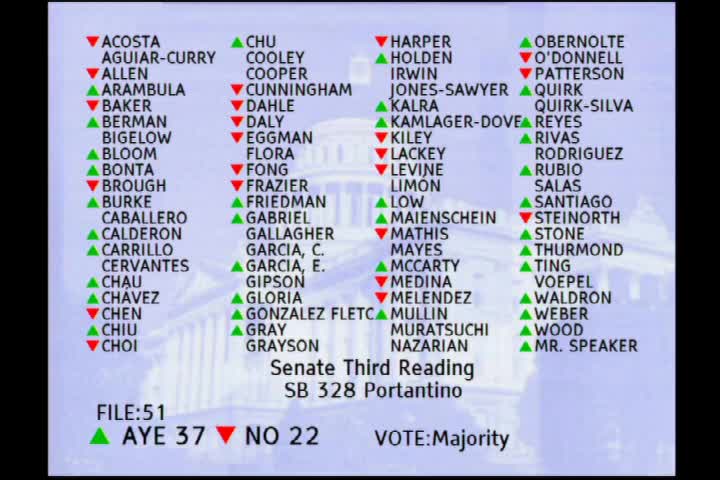 1MIN
Assembly Floor
 3MIN
Assembly Standing Committee on Jobs, Economic Development, and the Economy
 1MIN
Senate Floor
 1MIN
Senate Floor
 1H
Senate Standing Committee on Appropriations
 1MIN
Assembly Floor
 21MIN
Assembly Standing Committee on Appropriations
 3MIN
Assembly Standing Committee on Jobs, Economic Development, and the Economy
Bill Author

Bill Co-Author(s):