AB 794: County officers: recorder: record correction.
- Session Year: 2017-2018
- House: Assembly
- Latest Version Date: 2017-09-28
(1)Existing law establishes various county offices, including the office of recorder. Existing law requires the recorder to, among other things, accept for recordation any instrument, paper, or notice that is authorized or required to be recorded, as provided. Existing law requires the recorder to maintain various indices of specified documents and records.
This bill would authorize a person of or related to the record to request that the recorder correct the information contained in an index of a record. The bill would require the recorder to correct that index entry, as specified, if the person making the request provides sufficient evidence to the recorder to determine that there is an error in the index that needs to be corrected.
(2)Existing law provides for liability, including treble damages under specified circumstances, for a recorder to whom an instrument is proved or acknowledged or any paper or notice which may be recorded is delivered for record if the recorder commits specified acts, including neglecting or refusing to make the proper entries in the required indices and altering, changing, obliterating, or inserting any new matter in any records deposited in the recorders office.
This bill would eliminate the liability of a recorder for altering, changing, obliterating, or inserting any new matter in any records deposited in the recorders office when the recorder is correcting an indexing error. The bill would instead make the recorder liable for neglecting and refusing to make proper entries in the required indices. The bill would provide that liability for neglecting to make proper entries in the required indices does not prohibit a recorder from correcting an indexing error. The bill would also make the recorder liable for failing to correct an indexing error, as specified.
(3)By adding to the duties of a county recorder, this bill would impose a state-mandated local program.
The California Constitution requires the state to reimburse local agencies and school districts for certain costs mandated by the state. Statutory provisions establish procedures for making that reimbursement.
This bill would provide that, if the Commission on State Mandates determines that the bill contains costs mandated by the state, reimbursement for those costs shall be made pursuant to the statutory provisions noted above.
(1)Existing law establishes various county offices, including the office of recorder. Existing law requires the recorder to, among other things, accept for recordation any instrument, paper, or notice that is authorized or required to be recorded, as provided. Existing law requires the recorder to maintain various indices of specified documents and records.
This bill would authorize a person of or related to the record to request that the recorder correct the information contained in an index of a record. The bill would require the recorder to correct that index entry, as specified, if the person making the request provides sufficient evidence to the recorder to determine that there is an error in the index that needs to be corrected.
(2)Existing law provides for liability, including treble damages under specified circumstances, for a recorder to whom an instrument is proved or acknowledged or any paper or notice which may be recorded is delivered for record if the recorder commits specified acts, including neglecting or refusing to make the proper entries in the required indices and altering, changing, obliterating, or inserting any new matter in any records deposited in the recorders office.
This bill would eliminate the liability of a recorder for altering, changing, obliterating, or inserting any new matter in any records deposited in the recorders office when the recorder is correcting an indexing error, and would require the recorder to note the date of correction as part of the indexing process. The bill would instead make the recorder liable for neglecting and refusing to make proper entries in the required indices. The bill would provide that liability for neglecting to make proper entries in the required indices does not prohibit a recorder from correcting an indexing error and would require the recorder to note the correction in the indexing process. error. The bill would also make the recorder liable for failing to correct an indexing error, as specified.
(3)By adding to the duties of a county recorder, this bill would impose a state-mandated local program.
The California Constitution requires the state to reimburse local agencies and school districts for certain costs mandated by the state. Statutory provisions establish procedures for making that reimbursement.
This bill would provide that, if the Commission on State Mandates determines that the bill contains costs mandated by the state, reimbursement for those costs shall be made pursuant to the statutory provisions noted above.
(1)Existing law establishes various county offices, including the office of recorder. Existing law requires the recorder to, among other things, accept for recordation any instrument, paper, or notice that is authorized or required to be recorded, as provided. Existing law requires the recorder to maintain various indices of specified documents and records.
This bill would require the recorder, upon a request made within 30 days of the creation of an index entry to correct an error in the index of a record within specified time periods. The bill would provide that a recorder is deemed to have complied with the requirement to record any instrument, paper, or notice as described above, and is not liable for actions undertaken in accordance with that requirement, if he or she exercises due diligence in properly recording and indexing documents into the official records.By adding to the duties of a county recorder, this bill would impose a state-mandated local program.This bill would authorize a person of or related to the record to request that the recorder correct the information contained in an index of a record. The bill would require the recorder to correct that index entry, as specified, if the person making the request provides sufficient evidence to the recorder to determine that there is an error in the index that needs to be corrected.
(2)Existing law provides for liability, including treble damages under specified circumstances, for a recorder to whom an instrument is proved or acknowledged or any paper or notice which may be recorded is delivered for record if the recorder commits specified acts, including neglecting or refusing to keep in his or her office or to make the proper entries in the required indices. indices and altering, changing, obliterating, or inserting any new matter in any records deposited in the recorders office.
This bill would eliminate the liability of a recorder for neglecting or refusing to make proper entries in the required indices. The bill would make the recorder liable for an injury proximately caused by the failure to discharge a mandatory duty imposed by an enactment that is designed to protect against the risk of that particular kind of injury, unless the recorder establishes that he or she exercised reasonable diligence to discharge the duty, in the same manner as specified in a certain statute regarding claims against the government.(3)The California Constitution requires the state to reimburse local agencies and school districts for certain costs mandated by the state. Statutory provisions establish procedures for making that reimbursement.This bill would provide that, if the Commission on State Mandates determines that the bill contains costs mandated by the state, reimbursement for those costs shall be made pursuant to the statutory provisions noted above.This bill would eliminate the liability of a recorder for altering, changing, obliterating, or inserting any new matter in any records deposited in the recorders office when the recorder is correcting an indexing error, and would require the recorder to note the date of correction as part of the indexing process. The bill would instead make the recorder liable for neglecting and refusing to make proper entries in the required indices. The bill would provide that liability for neglecting to make proper entries in the required indices does not prohibit a recorder from correcting an indexing error and would require the recorder to note the correction in the indexing process. The bill would also make the recorder liable for failing to correct an indexing error, as specified.
(3)By adding to the duties of a county recorder, this bill would impose a state-mandated local program.
The California Constitution requires the state to reimburse local agencies and school districts for certain costs mandated by the state. Statutory provisions establish procedures for making that reimbursement.
This bill would provide that, if the Commission on State Mandates determines that the bill contains costs mandated by the state, reimbursement for those costs shall be made pursuant to the statutory provisions noted above.
(1)Existing law establishes various county offices, including the office of recorder. Existing law requires the recorder to, among other things, accept for recordation any instrument, paper, or notice that is authorized or required to be recorded, as provided. Existing law requires the recorder to maintain various indices of specified documents and records.
This bill would require the recorder, upon a request made within 30 days of the creation of an index entry to correct an error in the index of a record within specified time periods. The bill would provide that a recorder is deemed to have complied with the requirement to record any instrument, paper, or notice as described above, and is not liable for actions undertaken in accordance with that requirement, if he or she exercises due diligence in properly recording and indexing documents into the official records.
By adding to the duties of a county recorder, this bill would impose a state-mandated local program.
(2)Existing law provides for liability, including treble damages under specified circumstances, for a recorder to whom an instrument is proved or acknowledged or any paper or notice which may be recorded is delivered for record if the recorder commits specified acts, including neglecting or refusing to keep in his or her office or to make the proper entries in the required indices.
This bill would eliminate the liability of a recorder for neglecting or refusing to make proper entries in the required indices. The bill would make the recorder liable for an injury proximately caused by the failure to discharge a mandatory duty imposed by an enactment that is designed to protect against the risk of that particular kind of injury, unless the recorder establishes that he or she exercised reasonable diligence to discharge the duty, in the same manner as specified in a certain statute regarding claims against the government.
(3)The California Constitution requires the state to reimburse local agencies and school districts for certain costs mandated by the state. Statutory provisions establish procedures for making that reimbursement.
This bill would provide that, if the Commission on State Mandates determines that the bill contains costs mandated by the state, reimbursement for those costs shall be made pursuant to the statutory provisions noted above.
Existing law provides that any recorder to whom an instrument proved or acknowledged according to law or any paper or notice that may by law be recorded is delivered for record is liable to the party aggrieved for the amount of damages if he or she commits specified acts.This bill would make a nonsubstantive change to this provision.Existing law provides that any recorder to whom an instrument proved or acknowledged according to law or any paper or notice that may by law be recorded is delivered for record is liable to the party aggrieved for the amount of damages if he or she commits specified acts.
This bill would make a nonsubstantive change to this provision.
(a)(1)(A)The recorder shall, upon payment of proper fees and taxes, accept for recordation any instrument, paper, or notice that is authorized or required by statute, or court order to be recorded, or authorized or required to be recorded by a local ordinance that relates to the recordation of any instrument, paper, or notice that relates to real property, if the instrument, paper, or notice contains sufficient information to be indexed as provided by statute, meets recording requirements of state statutes and local ordinances, and is photographically reproducible. The county recorder shall not refuse to record any instrument, paper, or notice that is authorized or required by statute, court order, or local ordinance that relates to the recordation of any instrument, paper, or notice that relates to real property to be recorded on the basis of its lack of legal sufficiency.
(B)Photographically reproducible, for purposes of this division, means all instruments, papers, or notices that comply with standards as recommended by the American National Standards Institute or the Association for Information and Image Management for recording of records.
(2)(A)A person of or related to the record may request that the recorder correct the information contained in an index of a record. The request shall identify the exact location of an error within a specifically identified index entry.
(B)If the person making the request provides sufficient evidence to the recorder to determine that there is an error in the index that needs to be corrected, the recorder shall correct that index entry within 30 business days of receiving the request.
(C)The corrected index entry shall be entered into the public index to reflect both the error and the correction. The recorder shall note that an index entry has been corrected in accordance with local policy.
(b)(1)Each instrument, paper, or notice shall contain an original signature or signatures, except as otherwise provided by law, or be a certified copy of the original.
(2)A facsimile signature shall be accepted on a lien recorded by a governmental agency when that facsimile signature has been officially adopted by that agency. The lien shall have noted on its face a statement to that effect. The officially adopted facsimile signature shall be provided to the county recorder by a letter from the agency. A facsimile signature shall continue to be valid until the agency notifies the county recorder that the facsimile signature has been revoked.
(c)(1)Each instrument, paper, or notice that is rerecorded shall be executed and acknowledged or verified as a new document, in addition to any previous execution and acknowledgment or verification, unless any of the following apply:
(A)The instrument, paper, or notice is otherwise exempted by Section 27287 or any other law.
(B)The instrument, paper, or notice is presented solely to correct a recording sequence. The intent of the parties with regard to the priority of recorded documents shall be controlling regardless of the sequence of recording by a county recorder or the sequence of recording specified in instructions given by a submitter to a county recorder. This subparagraph is declaratory of existing law, and any rerecording of documents to change the sequential numbers assigned to a document by the recorder shall not require the document to be executed and acknowledged or verified as a new document.
(C)(i)The instrument, paper, or notice is presented solely to make a minor correction with a corrective affidavit. The corrective affidavit shall satisfy all of the following:
(I)Be attached to the original recorded instrument, paper, or notice.
(II)Set out the information corrected.
(III)Be certified by the party submitting the affidavit under penalty of perjury.
(IV)Be acknowledged pursuant to Section 27287.
(ii)For purposes of this subparagraph, minor correction includes any of the following:
(I)An incorrect or missing address of the party to which the instrument, paper, or notice is to be returned following recording pursuant to Section 27361.6.
(II)A clarification of illegible text pursuant to Section 27361.7.
(III)An incorrect or missing printed or typed name of an individual or entity near the signature pursuant to Section 27280.5.
(IV)An incorrect or missing documentary transfer tax amount due pursuant to Section 11932 of the Revenue and Taxation Code.
(2)Each rerecorded instrument, paper, or notice shall include a cover sheet that complies with Section 27361.6 and shall state the reason for rerecording on the cover sheet.
SEC. 2.Section 27203 of the Government Code is amended to read:27203.Any recorder to whom an instrument proved or acknowledged according to law or any paper or notice which may by law be recorded is delivered for record is liable to the party aggrieved for the amount of the damages occasioned thereby, if he or she commits any of the following acts:
(a)Neglects or refuses to record the instrument, paper, or notice within a reasonable time after receiving it.
(1)This subdivision shall not apply to an instrument, paper, or notice that the recorder has determined to be an unrecordable document pursuant to this chapter. Nothing in this subdivision shall preclude the application of Section 27201.
(2)The recorder may provide, to any person presenting a document the recorder determines to be an unrecordable document, a form stating that the person has the right to judicial review in a court of competent jurisdiction of the recorders refusal to record the document. The form shall include a section stating the recorders reason for refusing the document. The form shall provide notice that it is a public offense to further attempt to record the document without an order of the court as provided by Section 27204. The recorder shall keep a correct copy of the refused document. In the event the document is determined by the court to be a recordable document, the recorder shall pay the filing fees for the review, and shall record the document within a reasonable time.
(b)Records any instrument, paper, or notice, willfully or negligently, untruly, or in any manner other than that prescribed by this chapter.
(c)Neglects or refuses to keep in his or her office the indices required by this chapter.
(d)Alters, changes, obliterates, or inserts any new matter in any records deposited in the recorders office, unless the recorder is correcting an indexing error. The recorder may make marginal notations on records as part of the recording process.
(e)Refuses to make the proper entries in the indices required by this chapter.
(f)Neglects to make the proper entries in the indices required by this chapter. Nothing in this subdivision prohibits a recorder from correcting an indexing error.
(g)Fails to correct an indexing error pursuant to subparagraph (B) of paragraph (2) of subdivision (a) of Section 27201.
SEC. 3.If the Commission on State Mandates determines that this act contains costs mandated by the state, reimbursement to local agencies and school districts for those costs shall be made pursuant to Part 7 (commencing with Section 17500) of Division 4 of Title 2 of the Government Code.
(a)(1)(A)The recorder shall, upon payment of proper fees and taxes, accept for recordation any instrument, paper, or notice that is authorized or required by statute, or court order to be recorded, or authorized or required to be recorded by a local ordinance that relates to the recordation of any instrument, paper, or notice that relates to real property, if the instrument, paper, or notice contains sufficient information to be indexed as provided by statute, meets recording requirements of state statutes and local ordinances, and is photographically reproducible. The county recorder shall not refuse to record any instrument, paper, or notice that is authorized or required by statute, court order, or local ordinance that relates to the recordation of any instrument, paper, or notice that relates to real property to be recorded on the basis of its lack of legal sufficiency.
(B)Photographically reproducible, for purposes of this division, means all instruments, papers, or notices that comply with standards as recommended by the American National Standards Institute or the Association for Information and Image Management for recording of records.
(2)(A)A person of or related to the record may request that the recorder correct the information contained in an index of a record. The request shall identify the exact location of an error within a specifically identified index entry.
(B)If the person making the request provides sufficient evidence to the recorder to determine that there is an error in the index that needs to be corrected, the recorder shall correct that index entry within 10 30 business days of receiving the request.
(C)The corrected index entry shall replace the index entry containing the error. The recorder shall note the correction in the indexing process. be entered into the public index to reflect both the error and the correction. The recorder shall note that an index entry has been corrected in accordance with local policy.
(b)(1)Each instrument, paper, or notice shall contain an original signature or signatures, except as otherwise provided by law, or be a certified copy of the original.
(2)A facsimile signature shall be accepted on a lien recorded by a governmental agency when that facsimile signature has been officially adopted by that agency. The lien shall have noted on its face a statement to that effect. The officially adopted facsimile signature shall be provided to the county recorder by a letter from the agency. A facsimile signature shall continue to be valid until the agency notifies the county recorder that the facsimile signature has been revoked.
(c)(1)Each instrument, paper, or notice that is rerecorded shall be executed and acknowledged or verified as a new document, in addition to any previous execution and acknowledgment or verification, unless any of the following apply:
(A)The instrument, paper, or notice is otherwise exempted by Section 27287 or any other law.
(B)The instrument, paper, or notice is presented solely to correct a recording sequence. The intent of the parties with regard to the priority of recorded documents shall be controlling regardless of the sequence of recording by a county recorder or the sequence of recording specified in instructions given by a submitter to a county recorder. This subparagraph is declaratory of existing law, and any rerecording of documents to change the sequential numbers assigned to a document by the recorder shall not require the document to be executed and acknowledged or verified as a new document.
(C)(i)The instrument, paper, or notice is presented solely to make a minor correction with a corrective affidavit. The corrective affidavit shall satisfy all of the following:
(I)Be attached to the original recorded instrument, paper, or notice.
(II)Set out the information corrected.
(III)Be certified by the party submitting the affidavit under penalty of perjury.
(IV)Be acknowledged pursuant to Section 27287.
(ii)For purposes of this subparagraph, minor correction includes any of the following:
(I)An incorrect or missing address of the party to which the instrument, paper, or notice is to be returned following recording pursuant to Section 27361.6.
(II)A clarification of illegible text pursuant to Section 27361.7.
(III)An incorrect or missing printed or typed name of an individual or entity near the signature pursuant to Section 27280.5.
(IV)An incorrect or missing documentary transfer tax amount due pursuant to Section 11932 of the Revenue and Taxation Code.
(2)Each rerecorded instrument, paper, or notice shall include a cover sheet that complies with Section 27361.6 and shall state the reason for rerecording on the cover sheet.
SEC. 2.Section 27203 of the Government Code is amended to read:27203.Any recorder to whom an instrument proved or acknowledged according to law or any paper or notice which may by law be recorded is delivered for record is liable to the party aggrieved for the amount of the damages occasioned thereby, if he or she commits any of the following acts:
(a)Neglects or refuses to record the instrument, paper, or notice within a reasonable time after receiving it.
(1)This subdivision shall not apply to an instrument, paper, or notice that the recorder has determined to be an unrecordable document pursuant to this chapter. Nothing in this subdivision shall preclude the application of Section 27201.
(2)The recorder may provide, to any person presenting a document the recorder determines to be an unrecordable document, a form stating that the person has the right to judicial review in a court of competent jurisdiction of the recorders refusal to record the document. The form shall include a section stating the recorders reason for refusing the document. The form shall provide notice that it is a public offense to further attempt to record the document without an order of the court as provided by Section 27204. The recorder shall keep a correct copy of the refused document. In the event the document is determined by the court to be a recordable document, the recorder shall pay the filing fees for the review, and shall record the document within a reasonable time.
(b)Records any instrument, paper, or notice, willfully or negligently, untruly, or in any manner other than that prescribed by this chapter.
(c)Neglects or refuses to keep in his or her office the indices required by this chapter.
(d)Alters, changes, obliterates, or inserts any new matter in any records deposited in the recorders office, unless the recorder is correcting an indexing error. The recorder shall note the date of correction as part of the indexing process. The recorder may make marginal notations on records as part of the recording process.
(e)Refuses to make the proper entries in the indices required by this chapter.
(f)Neglects to make the proper entries in the indices required by this chapter. Nothing in this subdivision prohibits a recorder from correcting an indexing error. The recorder shall note the correction in the indexing process.
(g)Fails to correct an indexing error pursuant to subparagraph (B) of paragraph (2) of subdivision (a) of Section 27201.
SEC. 3.If the Commission on State Mandates determines that this act contains costs mandated by the state, reimbursement to local agencies and school districts for those costs shall be made pursuant to Part 7 (commencing with Section 17500) of Division 4 of Title 2 of the Government Code.
(a)(1)(A)The recorder shall, upon payment of proper fees and taxes, accept for recordation any instrument, paper, or notice that is authorized or required by statute, or court order to be recorded, or authorized or required to be recorded by a local ordinance that relates to the recordation of any instrument, paper, or notice that relates to real property, if the instrument, paper, or notice contains sufficient information to be indexed as provided by statute, meets recording requirements of state statutes and local ordinances, and is photographically reproducible. The county recorder shall not refuse to record any instrument, paper, or notice that is authorized or required by statute, court order, or local ordinance that relates to the recordation of any instrument, paper, or notice that relates to real property to be recorded on the basis of its lack of legal sufficiency.
(B)Photographically reproducible, for purposes of this division, means all instruments, papers, or notices that comply with standards as recommended by the American National Standards Institute or the Association for Information and Image Management for recording of records.
(2)(A)A person of or related to the record may request that the recorder correct the information contained in an index of a record within 30 days of the creation of the index entry. If the recorder receives a request that identifies record. The request shall identify the exact location of an error within a specifically identified index entry, entry.
(B)If the person making the request provides sufficient evidence to the recorder to determine that there is an error in the index that needs to be corrected, the recorder shall correct that index entry within 10 business days of receiving the request. The
(C)The corrected index entry shall replace the index entry containing the error. The recorder shall note the correction in the indexing process.
(3)A recorder shall be deemed to have complied with this section, and shall not be liable under Sections 27203 and 27203.5 for actions undertaken pursuant to this section, if he or she exercises due diligence in properly recording and indexing documents into the official records. A recorder who has incorporated the use of an automated program with a high rate of accuracy shall be deemed to have exercised due diligence.(b)(1)Each instrument, paper, or notice shall contain an original signature or signatures, except as otherwise provided by law, or be a certified copy of the original.
(2)A facsimile signature shall be accepted on a lien recorded by a governmental agency when that facsimile signature has been officially adopted by that agency. The lien shall have noted on its face a statement to that effect. The officially adopted facsimile signature shall be provided to the county recorder by a letter from the agency. A facsimile signature shall continue to be valid until the agency notifies the county recorder that the facsimile signature has been revoked.
(c)(1)Each instrument, paper, or notice that is rerecorded shall be executed and acknowledged or verified as a new document, in addition to any previous execution and acknowledgment or verification, unless any of the following apply:
(A)The instrument, paper, or notice is otherwise exempted by Section 27287 or any other law.
(B)The instrument, paper, or notice is presented solely to correct a recording sequence. The intent of the parties with regard to the priority of recorded documents shall be controlling regardless of the sequence of recording by a county recorder or the sequence of recording specified in instructions given by a submitter to a county recorder. This subparagraph is declaratory of existing law, and any rerecording of documents to change the sequential numbers assigned to a document by the recorder shall not require the document to be executed and acknowledged or verified as a new document.
(C)(i)The instrument, paper, or notice is presented solely to make a minor correction with a corrective affidavit. The corrective affidavit shall satisfy all of the following:
(I)Be attached to the original recorded instrument, paper, or notice.
(II)Set out the information corrected.
(III)Be certified by the party submitting the affidavit under penalty of perjury.
(IV)Be acknowledged pursuant to Section 27287.
(ii)For purposes of this subparagraph, minor correction includes any of the following:
(I)An incorrect or missing address of the party to which the instrument, paper, or notice is to be returned following recording pursuant to Section 27361.6.
(II)A clarification of illegible text pursuant to Section 27361.7.
(III)An incorrect or missing printed or typed name of an individual or entity near the signature pursuant to Section 27280.5.
(IV)An incorrect or missing documentary transfer tax amount due pursuant to Section 11932 of the Revenue and Taxation Code.
(2)Each rerecorded instrument, paper, or notice shall include a cover sheet that complies with Section 27361.6 and shall state the reason for rerecording on the cover sheet.
SEC. 2.Section 27203 of the Government Code is amended to read:27203.(a)(1)Any recorder to whom an instrument proved or acknowledged according to law or any paper or notice which may by law be recorded is delivered for record is liable to the party aggrieved for the amount of the damages occasioned thereby, if he or she commits any of the following acts:
(A)(a)Neglects or refuses to record the instrument, paper, or notice within a reasonable time after receiving it. This
(1)This subdivision shall not apply to an instrument, paper, or notice that the recorder has determined to be an unrecordable document pursuant to this chapter. Nothing in this subdivision shall preclude the application of Section 27201.
(B)(2)The recorder may provide, to any person presenting a document the recorder determines to be an unrecordable document, a form stating that the person has the right to judicial review in a court of competent jurisdiction of the recorders refusal to record the document. The form shall include a section stating the recorders reason for refusing the document. The form shall provide notice that it is a public offense to further attempt to record the document without an order of the court as provided by Section 27204. The recorder shall keep a correct copy of the refused document. In the event the document is determined by the court to be a recordable document, the recorder shall pay the filing fees for the review, and shall record the document within a reasonable time.
(2)(b)Records any instrument, paper, or notice, willfully or negligently, untruly, or in any manner other than that prescribed by this chapter.
(3)(c)Neglects or refuses to keep in his or her office the indices required by this chapter.
(4)(d)Alters, changes, obliterates, or inserts any new matter in any records deposited in the recorders office. office, unless the recorder is correcting an indexing error. The recorder shall note the date of correction as part of the indexing process. The recorder may make marginal notations on records as part of the recording process.
(b)The recorder shall be liable for an injury proximately caused by the failure to discharge a mandatory duty imposed by an enactment that is designed to protect against the risk of that particular kind of injury, unless the recorder establishes that he or she exercised reasonable diligence to discharge the duty, in the same manner as specified in Section 815.6.(e)Refuses to make the proper entries in the indices required by this chapter.
(f)Neglects to make the proper entries in the indices required by this chapter. Nothing in this subdivision prohibits a recorder from correcting an indexing error. The recorder shall note the correction in the indexing process.
(g)Fails to correct an indexing error pursuant to subparagraph (B) of paragraph (2) of subdivision (a) of Section 27201.
SEC. 3.If the Commission on State Mandates determines that this act contains costs mandated by the state, reimbursement to local agencies and school districts for those costs shall be made pursuant to Part 7 (commencing with Section 17500) of Division 4 of Title 2 of the Government Code.
(a)(1)(A)The recorder shall, upon payment of proper fees and taxes, accept for recordation any instrument, paper, or notice that is authorized or required by statute, or court order to be recorded, or authorized or required to be recorded by a local ordinance that relates to the recordation of any instrument, paper, or notice that relates to real property, if the instrument, paper, or notice contains sufficient information to be indexed as provided by statute, meets recording requirements of state statutes and local ordinances, and is photographically reproducible. The county recorder shall not refuse to record any instrument, paper, or notice that is authorized or required by statute, court order, or local ordinance that relates to the recordation of any instrument, paper, or notice that relates to real property to be recorded on the basis of its lack of legal sufficiency.
Photographically(B)Photographically reproducible, for purposes of this division, means all instruments, papers, or notices that comply with standards as recommended by the American National Standards Institute or the Association for Information and Image Management for recording of records.
(2)A person may request that the recorder correct the information contained in an index of a record within 30 days of the creation of the index entry. If the recorder receives a request that identifies the exact location of an error within a specifically identified index entry, the recorder shall correct that index entry within 10 business days of receiving the request. The corrected index entry shall replace the index entry containing the error.
(3)A recorder shall be deemed to have complied with this section, and shall not be liable under Sections 27203 and 27203.5 for actions undertaken pursuant to this section, if he or she exercises due diligence in properly recording and indexing documents into the official records. A recorder who has incorporated the use of an automated program with a high rate of accuracy shall be deemed to have exercised due diligence.
(b)(1)Each instrument, paper, or notice shall contain an original signature or signatures, except as otherwise provided by law, or be a certified copy of the original.
(2)A facsimile signature shall be accepted on a lien recorded by a governmental agency when that facsimile signature has been officially adopted by that agency. The lien shall have noted on its face a statement to that effect. The officially adopted facsimile signature shall be provided to the county recorder by a letter from the agency. A facsimile signature shall continue to be valid until the agency notifies the county recorder that the facsimile signature has been revoked.
(c)(1)Each instrument, paper, or notice that is rerecorded shall be executed and acknowledged or verified as a new document, in addition to any previous execution and acknowledgment or verification, unless any of the following apply:
(A)The instrument, paper, or notice is otherwise exempted by Section 27287 or any other law.
(B)The instrument, paper, or notice is presented solely to correct a recording sequence. The intent of the parties with regard to the priority of recorded documents shall be controlling regardless of the sequence of recording by a county recorder or the sequence of recording specified in instructions given by a submitter to a county recorder. This subparagraph is declaratory of existing law, and any rerecording of documents to change the sequential numbers assigned to a document by the recorder shall not require the document to be executed and acknowledged or verified as a new document.
(C)(i)The instrument, paper, or notice is presented solely to make a minor correction with a corrective affidavit. The corrective affidavit shall satisfy all of the following:
(I)Be attached to the original recorded instrument, paper, or notice.
(II)Set out the information corrected.
(III)Be certified by the party submitting the affidavit under penalty of perjury.
(IV)Be acknowledged pursuant to Section 27287.
(ii)For purposes of this subparagraph, minor correction includes any of the following:
(I)An incorrect or missing address of the party to which the instrument, paper, or notice is to be returned following recording pursuant to Section 27361.6.
(II)A clarification of illegible text pursuant to Section 27361.7.
(III)An incorrect or missing printed or typed name of an individual or entity near the signature pursuant to Section 27280.5.
(IV)An incorrect or missing documentary transfer tax amount due pursuant to Section 11932 of the Revenue and Taxation Code.
(2)Each rerecorded instrument, paper, or notice shall include a cover sheet that complies with Section 27361.6 and shall state the reason for rerecording on the cover sheet.
SEC. 2.Section 27203 of the Government Code is amended to read:27203.(a)(1)Any recorder to whom an instrument proved or acknowledged according to law or any paper or notice which may by law be recorded is delivered for record is liable to the party aggrieved for the amount of the damages occasioned thereby, if he or she commits any of the following acts:
(1)(A)Neglects or refuses to record the instrument, paper, or notice within a reasonable time after receiving it. This subdivision shall not apply to an instrument, paper, or notice that the recorder has determined to be an unrecordable document pursuant to this chapter. Nothing in this subdivision shall preclude the application of Section 27201.
(2)(B)The recorder may provide, to any person presenting a document the recorder determines to be an unrecordable document, a form stating that the person has the right to judicial review in a court of competent jurisdiction of the recorders refusal to record the document. The form shall include a section stating the recorders reason for refusing the document. The form shall provide notice that it is a public offense to further attempt to record the document without an order of the court as provided by Section 27204. The recorder shall keep a correct copy of the refused document. In the event the document is determined by the court to be a recordable document, the recorder shall pay the filing fees for the review, and shall record the document within a reasonable time.
(b)(2)Records any instrument, paper, or notice, willfully or negligently, untruly, or in any manner other than that prescribed by this chapter.
(c)(3)Neglects or refuses to keep in his or her office or to make the proper entries in the indices required by this chapter.
(d)(4)Alters, changes, obliterates, or inserts any new matter in any records deposited in the recorders office. The recorder may make marginal notations on records as part of the recording process.
(b)The recorder shall be liable for an injury proximately caused by the failure to discharge a mandatory duty imposed by an enactment that is designed to protect against the risk of that particular kind of injury, unless the recorder establishes that he or she exercised reasonable diligence to discharge the duty, in the same manner as specified in Section 815.6.
SEC. 3.If the Commission on State Mandates determines that this act contains costs mandated by the state, reimbursement to local agencies and school districts for those costs shall be made pursuant to Part 7 (commencing with Section 17500) of Division 4 of Title 2 of the Government Code.
SECTION 1.Section 27203 of the Government Code is amended to read:27203.(a)Any recorder to whom an instrument proved or acknowledged according to law or any paper or notice that may by law be recorded is delivered for record is liable to the party aggrieved for the amount of the damages occasioned thereby, if he or she commits any of the following acts:(1)Neglects or refuses to record the instrument, paper, or notice within a reasonable time after receiving it. This subdivision shall not apply to an instrument, paper, or notice that the recorder has determined to be an unrecordable document pursuant to this chapter. Nothing in this subdivision shall preclude the application of Section 27201.(2)The recorder may provide, to any person presenting a document the recorder determines to be an unrecordable document, a form stating that the person has the right to judicial review in a court of competent jurisdiction of the recorders refusal to record the document. The form shall include a section stating the recorders reason for refusing the document. The form shall provide notice that it is a public offense to further attempt to record the document without an order of the court as provided by Section 27204. The recorder shall keep a correct copy of the refused document. In the event the document is determined by the court to be a recordable document, the recorder shall pay the filing fees for the review, and shall record the document within a reasonable time.(b)Records any instrument, paper, or notice, willfully or negligently, untruly, or in any manner other than that prescribed by this chapter.(c)Neglects or refuses to keep in his or her office or to make the proper entries in the indices required by this chapter.(d)Alters, changes, obliterates, or inserts any new matter in any records deposited in the recorders office. The recorder may make marginal notations on records as part of the recording process.(a)Any recorder to whom an instrument proved or acknowledged according to law or any paper or notice which that may by law be recorded is delivered for record is liable to the party aggrieved for the amount of the damages occasioned thereby, if he or she commits any of the following acts:
(1)Neglects or refuses to record the instrument, paper, or notice within a reasonable time after receiving it. This subdivision shall not apply to an instrument, paper, or notice that the recorder has determined to be an unrecordable document pursuant to this chapter. Nothing in this subdivision shall preclude the application of Section 27201.
(2)The recorder may provide, to any person presenting a document the recorder determines to be an unrecordable document, a form stating that the person has the right to judicial review in a court of competent jurisdiction of the recorders refusal to record the document. The form shall include a section stating the recorders reason for refusing the document. The form shall provide notice that it is a public offense to further attempt to record the document without an order of the court as provided by Section 27204. The recorder shall keep a correct copy of the refused document. In the event the document is determined by the court to be a recordable document, the recorder shall pay the filing fees for the review, and shall record the document within a reasonable time.
(b)Records any instrument, paper, or notice, willfully or negligently, untruly, or in any manner other than that prescribed by this chapter.
(c)Neglects or refuses to keep in his or her office or to make the proper entries in the indices required by this chapter.
(d)Alters, changes, obliterates, or inserts any new matter in any records deposited in the recorders office. The recorder may make marginal notations on records as part of the recording process.
|
Date
|
Status
|
|---|---|
| Sep 28, 2017 | Chaptered by Secretary of State - Chapter 349, Statutes of 2017. |
| Sep 28, 2017 | Approved by the Governor. |
| Sep 12, 2017 | Enrolled and presented to the Governor at 2:30 p.m. |
| Sep 5, 2017 | Senate amendments concurred in. To Engrossing and Enrolling. (Ayes 77. Noes 0.). |
| Aug 31, 2017 | In Assembly. Concurrence in Senate amendments pending. May be considered on or after September 2 pursuant to Assembly Rule 77. |
| Aug 31, 2017 | Read third time. Passed. Ordered to the Assembly. |
| Aug 22, 2017 | Read second time. Ordered to third reading. |
| Aug 21, 2017 | From committee: Be ordered to second reading pursuant to Senate Rule 28.8. |
| Jul 12, 2017 | From committee: Do pass and re-refer to Com. on APPR. (Ayes 7. Noes 0.) (July 11). Re-referred to Com. on APPR. |
| Jul 3, 2017 | From committee chair, with author's amendments: Amend, and re-refer to committee. Read second time, amended, and re-referred to Com. on JUD. |
| Jun 27, 2017 | In committee: Set, first hearing. Hearing canceled at the request of author. |
| Jun 14, 2017 | From committee: Do pass and re-refer to Com. on JUD. with recommendation: To Consent Calendar. (Ayes 6. Noes 0.) (June 14). Re-referred to Com. on JUD. |
| May 24, 2017 | Referred to Coms. on GOV. & F. and JUD. |
| May 11, 2017 | In Senate. Read first time. To Com. on RLS. for assignment. |
| May 11, 2017 | Read third time. Passed. Ordered to the Senate. (Ayes 77. Noes 0. Page 1488.) |
| May 4, 2017 | Read second time. Ordered to Consent Calendar. |
| May 3, 2017 | From committee: Do pass. To Consent Calendar. (Ayes 16. Noes 0.) (May 3). |
| Apr 24, 2017 | Re-referred to Com. on APPR. |
| Apr 20, 2017 | Read second time and amended. |
| Apr 19, 2017 | From committee: Amend, and do pass as amended and re-refer to Com. on APPR. with recommendation: To Consent Calendar. (Ayes 11. Noes 0.) (April 18). |
| Mar 22, 2017 | Re-referred to Com. on JUD. |
| Mar 21, 2017 | From committee chair, with author's amendments: Amend, and re-refer to Com. on JUD. Read second time and amended. |
| Mar 20, 2017 | Referred to Com. on JUD. |
| Feb 16, 2017 | From printer. May be heard in committee March 18. |
| Feb 15, 2017 | Read first time. To print. |
|
Date
|
Description
|
Location
|
Votes
|
|
|---|---|---|---|---|
| Sep 5, 2017 | AB 794 GALLAGHER Concurrence in Senate Amendments | Assembly Floor |
Passed |
|
| Aug 31, 2017 | Assembly 3rd Reading AB794 Gallagher By Hertzberg | Senate Floor |
Passed |
|
| Jul 11, 2017 | Do pass, but first be re-referred to the Committee on [Appropriations] | Senate Standing Committee on Judiciary |
Passed |
|
| Jun 14, 2017 | Do pass, but first be re-referred to the Committee on [Judiciary] with the recommendation: To Consent Calendar | Senate Standing Committee on Governance and Finance |
Passed |
|
| May 11, 2017 | AB 794 GALLAGHER Consent Calendar Second Day Regular Session | Assembly Floor |
Passed |
|
| May 3, 2017 | Do pass. To Consent Calendar. | Assembly Standing Committee on Appropriations |
Passed |
|
| Apr 18, 2017 | Do pass as amended, and be re-referred to the Committee on [Appropriations] with recommendation: To Consent Calendar | Assembly Standing Committee on Judiciary |
Passed |
This list shows positions taken on this bill by organizations on the date displayed, which is linked to the original source.
Positions by individuals are not included.
|
Organization
|
Position
|
Date
|
|---|---|---|
| county recorders' association of california | ** Support | Aug 23, 2017 |
| Rural County Representatives of California | ** Support | Aug 23, 2017 |
CONCURRENCE IN SENATE AMENDMENTS
CSA1 Bill Id:AB 794
Author:(Gallagher)
As Amended Ver:July 3, 2017
Majority vote
ASSEMBLY: | 77-0 | (May 11, 2017) | SENATE: | 38-0 | (August 31, 2017) |
Original Committee Reference: JUD.
SUMMARY: Allows specified persons to request that information in the recorder's index of record be corrected upon providing sufficient evidence, and requires the recorder to correct those indexing errors upon a sufficient request, as provided. Also clarifies that a recorder may correct indexing errors. Specifically, this bill:
- Allows a person of or related to the record to request that the recorder correct the information contained in an index of a record. The request shall identify the exact location of an error within a specifically identified index entry.
- Provides that if a person making the request provides sufficient evidence to the recorder to determine that there is an error in the index that needs to be corrected, the recorder shall correct that index entry within 30 business days of receiving the request.
- Requires the corrected index to be entered into the public index to reflect both the error and the correction.
- Requires the recorder to note that an index entry has been corrected in accordance with local policy.
- Clarifies that any recorder, as described, is liable to the party aggrieved for the amount of the damages occasioned thereby, if he or she does any of the following:
- Alters, changes, obliterates, or inserts any new matter in any records deposited in the recorder's office unless the recorder is correcting an indexing error. The recorder may make marginal notations on records as part of the recording process.
- Refuses to make the proper entries in the indices required by this chapter.
- Neglects to make the proper entries in the indices required by this chapter. Provides that this requirement does not prohibit a recorder from correcting an indexing error.
- Fails to correct an indexing error as provided.
- Makes other technical and conforming changes.
The Senate amendments
- Extend the period the recorder is required to correct an index entry made in error to 30 business days.
- Require the corrected index entered into the public index to reflect both the error and the correction.
- Require the recorder to note that an index entry has been corrected in accordance with local policy.
EXISTING LAW:
- Requires a county recorder, upon payment of proper fees and taxes, to accept for recordation any instrument, paper, or notice, as provided, if the instrument, paper, or notice contains sufficient information to be indexed as provided by statute, meets recording requirements of state statutes and local ordinances, and is photographically reproducible. The county recorder shall not refuse to record any instrument, paper, or notice as provided on the basis of its lack of legal sufficiency. (Government Code Section 27201. Unless otherwise stated, all further statutory references are to the Government Code.)
- Provides that any recorder, as provided, is liable to the party aggrieved for the amount of the damages occasioned thereby, if the recorder commits any of the following acts:
- Neglects or refuses to record the instrument, paper, or notice within a reasonable time after receiving it, as provided.
- Records any instrument, paper, or notice, willfully or negligently, untruly, or in any manner, as provided.
- Neglects or refuses to keep in his or her office or to make the proper entries in the indices, as required.
- Alters, changes, obliterates, or inserts any new matter in any records deposited in the recorder's office. The recorder may make marginal notations on records as part of the recording process. (Section 27203.)
- Specifies that if the recorder willfully and maliciously commits any of the acts described in 2) or derives a personal financial benefit from committing any of those acts, the recorder is liable to the party aggrieved for three times the amount of damages occasioned thereby. (Section 27203.5.)
- Establishes the California Tort Claims Act, which governs claims filed against a government entity. (Section 810 et seq.)
- Provides that except as otherwise provided by statute, a public entity is not liable for an injury, whether such injury arises out of an act or omission of the public entity or a public employee or any other person. (Section 815(a).)
- Provides that where a public entity is under a mandatory duty imposed by an enactment that is designed to protect against the risk of a particular kind of injury, the public entity is liable for an injury of that kind proximately caused by its failure to discharge the duty unless the public entity establishes that it exercised reasonable diligence to discharge the duty. (Section 815.6.)
FISCAL EFFECT: According to the Senate Appropriations Committee, pursuant to Senate Rule 28.8, negligible state costs.
COMMENTS: County recorders are responsible for examining and recording all documents that deal with establishing ownership of real property. This includes the recording of title documents, notes, and home loan payoffs by homeowners, title companies, mortgage companies, and government agencies involved in real estate transactions. This recording process is meant to provide the public notice about ownership and the chain of title for real property. To allow the public to search through these documents, the recorder establishes an index that is searchable by the names of the real property transaction and by date.
According to the County Recorders' Association of California, a county recorder may record at least 85,000 documents a year. Since many of the documents involve multiple parties (like grantors and grantees), the sheer volume of records can result in over 300,000 names to be indexed annually. To streamline this process, county recorders have been using machines or optical scanners to assist with recording and indexing. Because the technology is not error-proof, county recorder staff review the scanned images and correct the records and index so that parties and the public can be properly informed. However, errors can still happen—costly ones. Last year, Bank of America sued the County of Los Angeles, alleging that the Los Angeles Recorder negligently indexed a wrong name that cost the Bank thousands of dollars. (Bank of America v. County of Los Angeles (Super. Ct. Los Angeles County, 2016, No. VC065289).) In its complaint, the Bank alleged that a judgment lien it had against a debtor was mistakenly indexed by the Recorder as "California Ramirez" rather than "Carolina Ramirez". (Ibid.) When the debtor sold her home, the third-party title company did not discover the Bank's judgment lien, and therefore, did not pay the Bank for the debt owed under the lien. (Ibid.) According to Los Angeles County staff, the recording party (here, the Bank) could have discovered the error if it would have just checked the index, or reported the error to the Recorder.
Summary of this bill. To ensure that errors that arise are properly corrected, this bill allows specified persons to request that information in the recorder's index of record be corrected upon providing sufficient evidence to the recorder, and requires the recorder to correct those indexing errors upon receiving a satisfactory request. Importantly, this bill specifically authorizes a recorder to correct indexing errors.
This bill creates a process that allows relevant persons to ask the recorder to correct errors contained in an index. To address one of the problems raised by Bank of America v. County of Los Angeles, this bill allows a person to request that the recorder correct errors found in the index. This bill requires the person to identify the exact location of the error, and to provide sufficient evidence to the recorder to determine that there is an error in the index that needs to be corrected. Clearly, this procedure is not intended to allow a person to replace the original recorded document, nor is it intended to allow a person to re-record a document that was correctly recorded in the first instance. Rather, this procedure is intended to correct technical or typographic errors caused by the first recording. Appropriately, this bill provides that the recorder shall correct the index within 30 days of receiving the request, and makes the recorder liable to persons damaged by the recorder's failure to correct.
This bill fixes current law to explicitly allow a recorder to correct indexing errors. Under existing law, a recorder is liable to a party damaged by certain acts by the recorder. As we might come to expect, a recorder is liable if he or she neglects or refuses to record the instrument, paper, or notice within a reasonable time after receiving it. A recorder is also liable if he or she alters, changes, obliterates, or inserts any new matter in any records deposited in the recorder's office. Additionally, a recorder is liable if he or she neglects to make the proper entries in the indices. If a recorder must make proper entries in the index, but can't alter change or insert new matter into any records, a plain interpretation of these rules in tandem might suggest that a recorder is prohibited from correcting typographical errors in the index because that would amount to an "alteration" of the records. Accordingly, this bill reasonably provides that a recorder is not prohibited from correcting an indexing error. Additionally, this bill makes various technical changes by recasting several subdivisions.
The Senate amendments clarify that when the recorder makes the correction, the public index must reflect both the newly corrected entry, and the entry that was made in error. Additionally, the amendments require the recorder to reflect the correction to its internal index, according to local policy.
The previous version of bill would have allowed recorders to escape liability. Originally, this bill proposed to eliminate the recorder's duty to make proper entries in the index. Additionally, this bill proposed to change the liability provisions so that the recorder would be subject only to liability under the Government Claims Act. Under this bill's original scheme, the recorder would not be liable if it exercised reasonable diligence in discharging his or her duties under law. Problematically, this bill provided that if the recorder used an automated program with a high rate of accuracy, it would have been deemed to exercised due diligence. In other words, the use of optical scanners meant that the recorder could escape liability wholesale. Given the concerns that were raised in policy committee, all of these provisions were removed from the bill.
Analysis Prepared by: Eric Dang / JUD. / (916) 319-2334 FN: 0001405
Office of Senate Floor Analyses (916) 651-1520 Fax: (916) 327-4478 | AB |
THIRD READING
Bill No: AB 794
:
SENATE GOVERNANCE & FIN. COMMITTEE: 6-0, 6/14/17
AYES: McGuire, Nguyen, Beall, Hertzberg, Lara, Moorlach
NO VOTE RECORDED: Hernandez
SENATE JUDICIARY COMMITTEE: 7-0, 7/11/17
AYES: Jackson, Moorlach, Anderson, Hertzberg, Monning, Stern, Wieckowski
SENATE APPROPRIATIONS COMMITTEE: Senate Rule 28.8
ASSEMBLY FLOOR: 77-0, 5/11/17 (Consent) - See last page for vote
SOURCE: County Recorders’ Association of California
DIGEST:
This bill allows county recorders to correct errors in indices of recorded documents.
Existing law:
- Establishes a recorder in each county that is responsible generally for examining and recording all documents that deal with establishing ownership of land in counties. This includes the recording of title documents, notes, and home loan payoffs by homeowners, title companies, mortgage companies, and government agencies involved in real estate transactions. Recording a document provides public notice of ownership and a verifiable chain of possession for property.
- Requires the recorder to create an index that is searchable by the names of the real property transaction and by date.
- Requires recorders to follow specific procedures for the recording of documents. In order to be recorded, a document is submitted to a county recorder along with the necessary recordation fees. If the document meets the requirements in statute or local ordinance that apply to that type of document, the recorder must record it. The recording statutes specify in detail the form and requirements that documents must meet.
- Requires recorders to record the document within a reasonable time after receiving and to make proper entries in the indices and keep them in his or her office.
- Prohibits a recorder from altering, changing, obliterating, or inserting any new matter in any records deposited in the recorder’s office.
- Prohibits a recorder from recording a document untruly or in any other way that is inconsistent with the procedures laid out in statute.
- Makes recorders who violate any of these provisions liable for damages to the aggrieved party.
This bill establishes a process by which recorders may correct errors in an index. Specifically, this bill:
- Allows a person of or related to a record to request that the recorder correct the information contained in an index of a record. The request must identify the exact location of the error within a specifically identified index entry. If the person making the request provides sufficient evidence to the recorder to determine that there is an error in the index that needs to be corrected, the recorder must correct the index entry within 30 business days of receiving the request, enter the correction and the error in the index, and note that it has been corrected in accordance with local policy.
- Provides that a recorder is liable for damages alterations or changes to records unless the recorder is correcting an indexing error, or if the recorder:
- Refuses to make the proper entries in the indices required by the recording statutes;
- Neglects to make the proper entries in the indices required by the recording statutes, or;
- Fails to correct an indexing error as allowed by the bill.
Background
According to the County Recorders’ Association of California, a county recorder may record at least 85,000 documents a year. Since many of the documents involve multiple parties (like grantors and grantees), the volume of records can result in over 300,000 names to be indexed annually. Because recorders may not alter any records, including indices, state law does not provide a process by which errors in indices can be fixed. The County Recorders’ Association wants to ensure that recorders can correct errors in indices at the request of related persons.
Comments
Purpose of the bill. Recorded documents—and the indices thereof—are used to inform determinations of property rights and other legal matters. As such, the accuracy of these indices and documents is of great importance. But errors in indices occasionally occur, and they can be costly. These errors can result in damages, for which the recorder is liable under state law. But state law also prohibits recorders from altering indices, leaving no means by which a recorder can correct an error in an index. AB 794 remedies this deficiency in state law by providing a process whereby a person related to a particular record may request correction of an error in an index by showing the recorder exactly where the error is, supported by sufficient evidence that the index is incorrect. This process will ensure that recording indices are accurate and avoid potential confusion or damages in the future.
FISCAL EFFECT: Appropriation: Fiscal Com.: Local:
County Recorders’ Association of California (source)
Rural County Representatives of California
OPPOSITION: (Verified 8/23/17)
None received
ASSEMBLY FLOOR: 77-0, 5/11/17
AYES: Acosta, Aguiar-Curry, Travis Allen, Arambula, Baker, Berman, Bigelow, Bloom, Bocanegra, Bonta, Brough, Burke, Caballero, Calderon, Cervantes, Chau, Chávez, Chen, Chiu, Choi, Chu, Cooley, Cooper, Cunningham, Dababneh, Daly, Eggman, Flora, Fong, Frazier, Friedman, Gallagher, Cristina Garcia, Eduardo Garcia, Gipson, Gloria, Gomez, Gonzalez Fletcher, Gray, Grayson, Harper, Holden, Irwin, Jones-Sawyer, Kalra, Kiley, Lackey, Levine, Limón, Low, Maienschein, Mathis, Mayes, McCarty, Medina, Melendez, Mullin, Muratsuchi, Nazarian, Obernolte, Quirk, Quirk-Silva, Reyes, Ridley-Thomas, Rodriguez, Rubio, Salas, Santiago, Steinorth, Mark Stone, Thurmond, Ting, Voepel, Waldron, Weber, Wood, Rendon
NO VOTE RECORDED: Dahle, O'Donnell, Patterson
8/23/17 14:57:29
**** END ****
Senator Hannah-Beth Jackson, Chair
2017-2018 Regular Session
Bill No: AB 794 (Author:Gallagher)
Version: July 3, 2017
Hearing Date: July 11, 2017
Fiscal: Yes
Urgency: No
Consultant: TSG
SUBJECT
County officers: recorder: record correction
DESCRIPTION
This bill would enact procedures allowing officials in a county recorder’s office to correct errors in the index of recorded documents.
BACKGROUND
The role of a county recorder is to provide an official, centralized location for the submission, safe-keeping, and inspection of documents. These records play a particularly important part in memorializing the ownership of, and any encumbrances placed upon, real property. They thus facilitate financing, taxation, real estate transactions, and legal notice among other critical functions.
To perform these functions effectively, the records must be easy to search and simple to retrieve. For that reason, recorders index all of the documents they receive. Given the volume of documents that county recorders receive, this is no easy task. According to the sponsor of this bill, some county recorders process more than 85,000 documents annually. Since each document may reference multiple individuals, the recorders could be indexing as many as 300,000 names each year, or more. To facilitate the handling of this volume, some recorders have turned to the use of optical scanners or other forms of technology. Recognizing that these technologies are not infallible, county recorders generally review the index and records to catch any errors.
Understandably, however, errors still slip through from time to time and, because of how much is riding on the accuracy of these records, even small errors can have major implications. (See Comment 2, below, for an example of an error of this variety and the problems that resulted.)
According to the sponsors of this bill, when someone points out an error to the county recorder, existing law presents the recorder with a conundrum. On the one hand, the recorder is under a duty to keep an accurate index of the documents that have been presented.(Gov. Code Sec. 27201.) On the other hand, existing law specifically prohibits recorders from altering, changing, obliterating, or inserting any new matter in the records given to them, aside from jotting a few notes in the margins (Gov. Code Sec. 27203.) To make matters worse, a recorder is potentially liable for any damages caused by errors made in the recording process but also potentially liable for altering documents.
The sponsors of this bill assert that it would resolve this conundrum by creating a process by which county recorders may correct errors in their records, provided they comply with certain procedural safeguards.
This bill passed out of the Senate Committee on Government and Finance by a 6-0 vote.
CHANGES TO EXISTING LAW
Existing law requires a county recorder, upon payment of proper fees and taxes, to accept for recordation any instrument, paper, or notice, as provided, if the instrument, paper, or notice contains sufficient information to be indexed as provided by statute, meets recording requirements of state statutes and local ordinances, and is photographically reproducible. The county recorder shall not refuse to record any instrument, paper, or notice as provided on the basis of its lack of legal sufficiency. (Gov. Code Sec. 27201.)
Existing law provides that any recorder is liable to a party aggrieved for the amount of the damages occasioned thereby, if the recorder commits any of the following acts:
- neglects or refuses to record the instrument, paper, or notice within a reasonable time after receiving it, as provided; (Gov. Code Sec. 27203(a)(1).)
- records any instrument, paper, or notice, willfully or negligently, untruly, or in any manner, as provided; (Gov. Code Sec. 27203(b).)
- neglects or refuses to keep in his or her office or to make the proper entries in the indices, as required; (Gov. Code Sec. 27203(c).)
- alters, changes, obliterates, or inserts any new matter in any records deposited in the recorder’s office aside from marginal notations made as part of the recording process. (Gov. Code Sec. 27203(d).)
Existing law specifies that if the recorder willfully and maliciously commits any of the acts described above, or derives a personal financial benefit from committing any of those acts, the recorder is liable to the party aggrieved for three times the amount of damages occasioned thereby. (Gov. Code Sec. 27203.5.)
Existing law establishes the California Tort Claims Act, which governs claims filed against a government entity. (Gov. Code Sec. 810 et seq.)
Existing law provides that except as otherwise provided by statute, a public entity is not liable for an injury, whether such injury arises out of an act or omission of the public entity or a public employee or any other person. (Gov. Code Sec. 815(a).)
Existing law provides that where a public entity is under a mandatory duty imposed by an enactment that is designed to protect against the risk of a particular kind of injury, the public entity is liable for an injury of that kind proximately caused by its failure to discharge the duty unless the public entity establishes that it exercised reasonable diligence to discharge the duty. (Gov. Code Sec. 815.6.)
This bill would allow a person of, or related to, the record to request that the recorder correct the information contained in an index of a record. The request would have to identify the exact location of an error within a specifically identified index entry.
This bill would establish that if the person making the request provides sufficient evidence to the recorder to determine that there is an error in the index that needs to be corrected, the recorder shall correct that index entry within 10 business days of receiving the request.
This bill would require the corrected index entry to replace the index entry containing the error and would require the recorder to note the correction in the indexing process.
This bill would clarify that existing law which makes a recorder liable to an aggrieved party for damages occasioned any alteration, changes, obliterations, or insertions that the recorder makes, does not prevent a recorder from correcting an indexing error.
This bill would make other technical and conforming changes.
COMMENT
1. Stated need for the bill
According to the author:
We need to have a procedure for fixing the index when someone finds an error. This bill will ensure that the index remains accurate and will help in keeping local government efficient.
In support, Rural County Representatives of California (RCRC) write:
Currently, there is no official guidance or procedure for the public to inform the office of the County Recorder of indexing errors. AB 794 would establish a procedure and parameters for the public to correct indexing errors. RCRC believes AB 794 would ensure transparency and allow the public the opportunity to correct errors in the indices of California County Recorders’ offices.
2. Example of the problem this bill purports to address
Several years ago, Bank of America sued Carolina Ramirez and won. Since Ms. Ramirez did not pay the resulting judgment voluntarily, the bank took a lien against Ms. Ramirez’ home, and went down to the Los Angeles County Recorder’s office to have it placed in the official documents pertaining to the property. The Los Angeles Recorder accepted the lien and placed it in its files but, by mistake, the Los Angeles Recorder listed the document under the name “California Ramirez” in its document index.
In 2015, Ms. Ramirez went to sell her home. When the title company checked for liens against Ms. Ramirez, it found no references to her name in the index, so the home was sold without satisfaction of the lien. When it discovered what had happened, Bank of America sued the County of Los Angeles pursuant to Government Code Section 27203, alleging that the Los Angeles Recorder was negligent in incorrectly indexing Ms. Ramirez’ name and complaining that the bank has lost thousands of dollars as a result. (Bank of America v. County of Los Angeles (Super. Ct. Los Angeles County, 2016, No. VC065289).)
While this bill would not have prevented the error that led to the problem in this case, it would provide clarity that county recorders may correct such errors and it would provide a mechanism for doing so.
3. Authority to make corrections is limited to indexes
Nothing in this bill empowers a county recorder to make any changes to documents that have been recorded themselves. The system for making corrections proposed by this bill relates only to the indexes that get produced as a byproduct of the recording and whose only purpose is to facilitate searching and retrieving recorded documents.
Anyone wishing to correct an error in the recorded document itself would need to follow the procedures set forth in Government Code Section 27201(c), which governs rerecording documents.
4. Proposed procedure for making the correction
This bill proposes a simple mechanism for correcting errors in the index. Any person “of, or related to” the record submits a request for the correction, pointing out the exact location of the error and providing evidence for the claim that it is, indeed, an error. If the evidence is sufficient to confirm the existence of the error, the recorder must make the correction within 10 business days of the receipt of the request. The recorder must note the correction in the indexing process. This would presumably leave a trace of the action taken, in the event of any future dispute.
Support: Rural County Representatives of California
Opposition: None known
HISTORY
Source: County Recorders’ Association of California
Related Pending Legislation: None known
Prior Legislation:
AB 1974 (Gallagher, Chapter 406, Statutes of 2016) required the inclusion of a corrective affidavit, signed under penalty of perjury, to be filed together with a re-recorded property instrument, paper or notice.
Prior Vote:
Senate Governance and Finance Committee (Ayes 6, Noes 0)
Assembly Floor (Ayes 77, Noes 0)
Assembly Appropriations Committee (Ayes 16, Noes 0)
Assembly Judiciary Committee (Ayes 11, Noes 0)
**************
SENATE COMMITTEE ON GOVERNANCE AND FINANCE
Senator Mike McGuire, Chair
2017 - 2018 Regular
Bill No: | AB 794 | Hearing Date: | 6/14/17 |
Author: | Gallagher | Tax Levy: | No |
Version: | 4/20/17 | Fiscal: | Yes |
Consultant: | Favorini-Csorba | ||
County officers: recorder: record correction
Allows county recorders to correct errors in indices of recorded documents.
Background
State law establishes a recorder in each county. County recorders are responsible generally for examining and recording all documents that deal with establishing ownership of land in counties. This includes the recording of title documents, notes, and home loan payoffs by homeowners, title companies, mortgage companies, and government agencies involved in real estate transactions. Recording a document provides public notice of ownership and a verifiable chain of possession for property. To allow the public to search through these documents, the recorder establishes an index that is searchable by the names of the real property transaction and by date. According to the County Recorders’ Association of California, a county recorder may record at least 85,000 documents a year. Since many of the documents involve multiple parties (like grantors and grantees), the volume of records can result in over 300,000 names to be indexed annually.
Recorders must follow specific procedures for the recording of documents. In order to be recorded, a document is submitted to a county recorder along with the necessary recordation fees. If the document meets the requirements in statute or local ordinance that apply to that type of document, the recorder must record it. The recording statutes specify in detail the form and requirements that documents must meet.
Recorders must record the document within a reasonable time after receiving and must make proper entries in the indices and keep them in his or her office. A recorder cannot alter, change, obliterate, or insert any new matter in any records deposited in the recorder’s office, and cannot record a document untruly or in any other way that is inconsistent with the procedures laid out in statute. Recorders who violate any of these provisions are liable for damages to the aggrieved party.
Because recorders may not alter any records, including indices, state law does not provide a process by which errors in indices can be fixed. The County Recorders’ Association wants to ensure that recorders can correct errors in indices at the request of related persons.
Proposed Law
Assembly Bill 794 establishes a process by which recorders may correct errors in an index. Specifically, AB 794 allows a person of or related to a record to request that the recorder correct the information contained in an index of a record. The request must identify the exact location of the error within a specifically identified index entry. If the person making the request provides sufficient evidence to the recorder to determine that there is an error in the index that needs to be corrected, the recorder must correct the index entry within 10 business days of receiving the request and note the correction and the date of the correction.
AB 794 provides that a recorder is liable for damages alterations or changes to records unless the recorder is correcting an indexing error, or if the recorder:
- Refuses to make the proper entries in the indices required by the recording statutes;
- Neglects to make the proper entries in the indices required by the recording statutes, or;
- Fails to correct an indexing error as allowed by the bill.
State Revenue Impact
No estimate.
Comments
1. Purpose of the bill. Recorded documents—and the indices thereof—are used to inform determinations of property rights and other legal matters. As such, the accuracy of these indices and documents is of great importance. But errors in indices occasionally occur, and they can be costly. These errors can result in damages, for which the recorder is liable under state law. But state law also prohibits recorders from altering indices, leaving no means by which a recorder can correct an error in an index. AB 974 remedies this deficiency in state law by providing a process whereby a person related to a particular record may request correction of an error in an index by showing the recorder exactly where the error is, supported by sufficient evidence that the index is incorrect. This process will ensure that recording indices are accurate and avoid potential confusion or damages in the future.
2. Mandate. The California Constitution generally requires the state to reimburse local agencies for their costs when the state imposes new programs or additional duties on them. According to the Legislative Counsel’s Office, AB 794 creates a new state-mandated local program because it increases the duties of county recorders. AB 794 says that if the Commission on State Mandates determines that it creates a state-mandated local program, the state must reimburse local agencies by following the existing statutory process for mandate claims.
3. Double-referred. The Senate Rules Committee has ordered a double-referral of AB 794—first to the Senate Governance & Finance Committee, which has jurisdiction over bills relating to the powers and duties of county recorders, and then to the Senate Judiciary Committee, which has jurisdiction over bills relating to liability and privacy.
Assembly Actions
Assembly Judiciary Committee: 11-0
Assembly Appropriations Committee: 16-0
Assembly Floor: 77-0
Support and Opposition
(6/8/17)
Support: County Recorders’ Association of California (sponsor); Rural County Representatives of California.
Opposition: None received.
-- END --
Date of Hearing: May 3, 2017
ASSEMBLY COMMITTEE ON APPROPRIATIONS
Lorena Gonzalez Fletcher, Chair
ABPCA Bill Id:AB 794
Author:(Gallagher) – As Amended Ver:April 20, 2017
Policy Committee: | Judiciary | Vote: | 11 - 0 |
|
| ||
|
|
Urgency: No State Mandated Local Program: Yes Reimbursable: No
SUMMARY:
This bill allows specified persons to request that information in a county Recorder’s index of record be corrected upon providing sufficient evidence, and requires the Recorder to correct those indexing errors upon such a request, as provided. Also clarifies that a Recorder may correct indexing errors.
FISCAL EFFECT:
Negligible fiscal effect.
COMMENTS:
- Background. County Recorders are responsible for examining and recording all documents that deal with establishing ownership of real property. This includes the recording of title documents, notes, and home loan payoffs by homeowners, title companies, mortgage companies and government agencies involved in real estate transactions. This recording process is meant to provide the public notice about ownership and the chain of title for real property. To allow the public to search through these documents, the Recorder establishes an index that is searchable by the names of the real property transaction and by date. Sometimes errors can occur in the index of records. However, current law prohibits a county Recorder from altering an index, which could be interpreted as preventing a county Recorder from correcting an identified error.
- Purpose. According to the author, “We need to have a procedure for fixing the index when someone finds an error. This bill will ensure the index remains accurate and will help in keeping local government efficient.”
Analysis Prepared by: Jessica Peters / APPR. / (916) 319-2081
Date of Hearing:
ASSEMBLY COMMITTEE ON
, Chair
ABPCA Bill Id:
Author:() – As Ver:
PROPOSED CONSENT (As Proposed to be Amended)
SUBJECT:
KEY ISSUE: TO PROTECT AGAINST POTENTIAL HARM CAUSED BY INADVERTENT ERRORS DURING THE COUNTY RECORDER’S INDEXING PROCESS, SHOULD A COUNTY RECORDER BE AUTHORIZED TO CORRECT TECHNICAL ERRORS IN THE INDEX?
SYNOPSIS
County recorders are responsible for examining and recording all documents that deal with establishing ownership of real property. This includes the recording of title documents, notes, and home loan payoffs by homeowners, title companies, mortgage companies and government agencies involved in real estate transactions. To allow the public to search through these documents, the recorder establishes an index that is searchable by the names of the real property transaction and by date. It is estimated that some counties index over 300,000 names annually. To streamline this process, county recorders have been using machines or optical scanners to assist with recording and indexing. But sometimes, because of this method of assisting with recording and indexing, there are errors. Existing law imposes several duties on recorders related to keeping proper entries. For example, a recorder must make proper entries in the index. However, a recorder also has a duty to not alter, change, or insert new matter into any records. When these two duties are read in tandem, it may suggest that a recorder is prohibited from correcting errors found in the index because that would amount to an “alteration” of the record.
This bill as proposed to be amended reasonably creates a process to allow certain persons affected by an error in the index to request that the recorder correct those errors. Additionally, as proposed to be amended, this bill provides that nothing prevents a recorder from correcting indexing errors. This bill makes other clarifying and technical changes. This bill is sponsored by the County Recorders’ Association of California, with support from the Rural County Representatives of California. There is no opposition on file.
SUMMARY: Allows specified persons to request that information in the recorder’s index of record be corrected upon providing sufficient evidence, and requires the recorder to correct those indexing errors upon a sufficient request, as provided. Also clarifies that a recorder may correct indexing errors. Specifically, this bill:
- Allows a person of or related to the record to request that the recorder correct the information contained in an index of a record. The request shall identify the exact location of an error within a specifically identified index entry.
- Provides that if a person making the request provides sufficient evidence to the recorder to determine that there is an error in the index that needs to be corrected, the recorder shall correct that index entry within 10 business days of receiving the request.
- Requires the corrected index entry to replace the index entry containing the error. Also requires the recorder to note the correction in the indexing process.
- Clarifies that any recorder, as described, is liable to the party aggrieved for the amount of the damages occasioned thereby, if he or she does any of the following:
- Alters, changes, obliterates, or inserts any new matter in any records deposited in the recorder’s office unless the recorder is correcting an indexing error. The recorder shall note the date of correction as part of the indexing process. The recorder may make marginal notations on records as part of the recording process.
- Refuses to make the proper entries in the indices required by this chapter.
- Neglects to make the proper entries in the indices required by this chapter. Provides that this requirement does not prohibit a recorder from correcting an indexing error. The recorder shall note the correction in the indexing process.
- Fails to correct an indexing error as required in 2), above.
- Makes other technical and conforming changes.
EXISTING LAW:
- Requires a county recorder, upon payment of proper fees and taxes, to accept for recordation any instrument, paper, or notice, as provided, if the instrument, paper, or notice contains sufficient information to be indexed as provided by statute, meets recording requirements of state statutes and local ordinances, and is photographically reproducible. The county recorder shall not refuse to record any instrument, paper, or notice as provided on the basis of its lack of legal sufficiency. (Section 27201 of the Government Code. Unless otherwise stated, all further statutory references are to the Government Code.)
- Provides that any recorder, as provided, is liable to the party aggrieved for the amount of the damages occasioned thereby, if the recorder commits any of the following acts:
- Neglects or refuses to record the instrument, paper, or notice within a reasonable time after receiving it, as provided.
- Records any instrument, paper, or notice, willfully or negligently, untruly, or in any manner, as provided.
- Neglects or refuses to keep in his or her office or to make the proper entries in the indices, as required.
- Alters, changes, obliterates, or inserts any new matter in any records deposited in the recorder’s office. The recorder may make marginal notations on records as part of the recording process. (Section 27203.)
- Specifies that if the recorder willfully and maliciously commits any of the acts described in 2) or derives a personal financial benefit from committing any of those acts, the recorder is liable to the party aggrieved for three times the amount of damages occasioned thereby. (Section 27203.5.)
- Establishes the California Tort Claims Act, which governs claims filed against a government entity. (Section 810 et seq.)
- Provides that except as otherwise provided by statute, a public entity is not liable for an injury, whether such injury arises out of an act or omission of the public entity or a public employee or any other person. (Section 815 (a).)
- Provides that where a public entity is under a mandatory duty imposed by an enactment that is designed to protect against the risk of a particular kind of injury, the public entity is liable for an injury of that kind proximately caused by its failure to discharge the duty unless the public entity establishes that it exercised reasonable diligence to discharge the duty. (Section 815.6.)
FISCAL EFFECT: As currently in print this bill is keyed fiscal.
COMMENTS: County recorders are responsible for examining and recording all documents that deal with establishing ownership of real property. This includes the recording of title documents, notes, and home loan payoffs by homeowners, title companies, mortgage companies and government agencies involved in real estate transactions. This recording process is meant to provide the public notice about ownership and the chain of title for real property. To allow the public to search through these documents, the recorder establishes an index that is searchable by the names of the real property transaction and by date.
According to the County Recorders’ Association of California, the sponsor of this bill, a county recorder may record at least 85,000 documents a year. Since many of the documents involve multiple parties (like grantors and grantees), the sheer volume of records can result in over 300,000 names to be indexed annually. To streamline this process, county recorders have been using machines or optical scanners to assist with recording and indexing. Because the technology is not error-proof, county recorder staff review the scanned images and correct the records and index so that parties can be correctly reflected in the index.
However, errors can still happen—costly ones. Last year, Bank of America (Bank) sued the County of Los Angeles, alleging that the Los Angeles Recorder negligently indexed a wrong name that cost the Bank thousands of dollars. (Bank of America v. County of Los Angeles (Super. Ct. Los Angeles County, 2016, No. VC065289).) In its complaint, the Bank alleged that a judgment lien it had against a debtor was mistakenly indexed by the Recorder as “California Ramirez” rather than “Carolina Ramirez”. (Ibid.) When the debtor sold her home, the third-party title company did not discover the Bank’s judgment lien, therefore, did not pay the Bank for the debt owed under the lien. (Ibid.) According to Los Angeles County staff, the recording party (here, the Bank) could have discovered the error if it would have just checked the index, or reported the error to the Recorder.
Summary of this bill as proposed to be amended. As proposed to be amended, this bill allows specified persons to request that information in the recorder’s index of record be corrected upon providing sufficient evidence to the recorder, and requires the recorder to correct those indexing errors upon receiving a satisfactory request. Importantly, this bill specifically allows a recorder to correct indexing errors. This bill also makes technical and clarifying changes including renumbering and recasting several provisions.
Author’s statement. In support of the bill, the author states the following:
We need to have a procedure for fixing the index when someone finds an error. This bill will ensure the index remains accurate and will help in keeping local government efficient.
This bill as proposed to be amended creates a process that allows relevant persons to ask the recorder to correct errors contained in an index. To address one of the problems raised by Bank of America v. County of Los Angeles, this bill allows a person to request that the recorder correct errors found in the index. This bill, as proposed to be amended, requires the person to identify the exact location of the error, and to provide sufficient evidence to the recorder to determine that there is an error in the index that needs to be corrected. Clearly, this procedure is not intended to allow a person to replace the original recorded document, nor is it intended to allow a person to re-record a document that was correctly recorded in the first instance. Rather, this procedure is intended to correct technical or typographic errors caused by the first recording. Appropriately, this bill provides that the recorder shall correct the index within 10 days of receiving the request, and makes the recorder liable to persons damaged by the recorder’s failure to correct.
This bill as proposed to be amended fixes current law to explicitly allow a recorder to correct indexing errors. Under existing law, a recorder is liable to a party damaged by certain acts by the recorder. As we might come to expect, a recorder is liable if he or she neglects or refuses to record the instrument, paper, or notice within a reasonable time after receiving it. A recorder is also liable if he or she alters, changes, obliterates, or inserts any new matter in any records deposited in the recorder’s office. Additionally, a recorder is liable if he or she neglects to make the proper entries in the indices. If a recorder must make proper entries in the index, but can’t alter change or insert new matter into any records, a plain interpretation of these rules in tandem might suggest that a recorder is prohibited from correcting typographical errors in the index because that would amount to an “alteration” of the records. Accordingly, as proposed to be amended, this bill reasonably states that a recorder is not prohibited from correcting an indexing error. Additionally, this bill makes various technical changes by recasting several subdivisions.
The previous version of bill would have allowed recorders to escape liability. Originally, this bill proposed to eliminate the recorder’s duty to make proper entries in the index. Additionally, this bill changed the liability provisions so that the recorder would be subject only to liability under the Government Claims Act. Under this bill’s original scheme, the recorder would not be liable if it exercised reasonable diligence in discharging his or her duties under law. Problematically, this bill provided that if the recorder used an automated program with a high rate of accuracy, it would have been deemed to exercised due diligence. In other words, the use of optical scanners meant that the recorder could escape liability wholesale. Given the concerns that were raised by this Committee, these provisions were removed.
ARGUMENTS IN SUPPORT: The Rural County Representatives of California (RCRC) supports AB 794 because this bill promotes transparency and public notice:
Currently, there is no official guidance or procedure for the public to inform the office of the County Recorder of indexing errors. AB 794 would establish a procedure and parameters for the public to correct indexing errors. RCRC believes AB 794 would ensure transparency and allow the public the opportunity to correct errors in the indices of California County Recorders offices.
REGISTERED SUPPORT / OPPOSITION:
Support
County Recorders’ Association of California (sponsor)
Rural County Representatives of California
Opposition
None on file
Analysis Prepared by:
Discussed in Hearing
View Older Hearings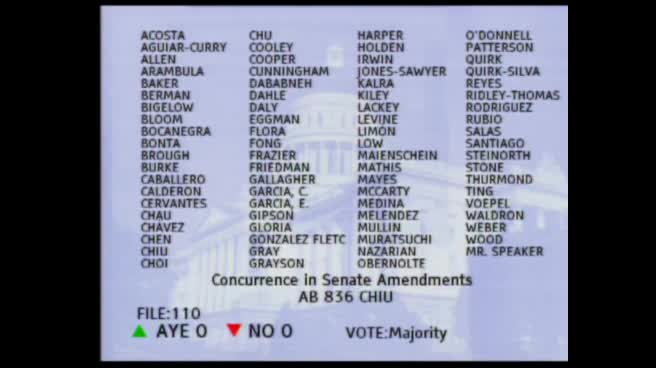
Bill Author

Bill Co-Author(s):