AB 798: Local government: counties: consolidation of offices.
- Session Year: 2017-2018
- House: Assembly
- Latest Version Date: 2017-09-30
Existing law authorizes the boards of supervisors of specified counties to provide, by ordinance, that the public administrator be appointed by the board. Existing law also authorizes the boards of supervisors of specified counties, by ordinance, to appoint the same person to the offices of public administrator and public guardian, as specified.
This bill would apply these provisions to Imperial County.
This bill would make legislative findings and declarations as to the necessity of a special statute for Imperial County.
This bill would declare that it is to take effect immediately as an urgency statute.
Existing law authorizes the boards of supervisors of specified counties to provide, by ordinance, that the public administrator be appointed by the board. Existing law also authorizes the boards of supervisors of specified counties, by ordinance, to, at any time, separate the consolidated offices of district attorney and public administrator, to appoint the same person to the offices of public administrator and public guardian, as specified.
This bill would apply these provisions to Imperial County.
This bill would make legislative findings and declarations as to the necessity of a special statute for Imperial County.
This bill would declare that it is to take effect immediately as an urgency statute.
Existing law authorizes the boards of supervisors of specified counties to provide, by ordinance, that the public administrator be appointed by the board. Existing law also authorizes the boards of supervisors of specified counties, by ordinance, to, at any time, separate the consolidated offices of district attorney and public administrator, as specified.
This bill would apply these provisions to Imperial County.
This bill would make legislative findings and declarations as to the necessity of a special statute for Imperial County.
This bill would declare that it is to take effect immediately as an urgency statute.
The Salton Sea Restoration Act requires the Secretary of the Natural Resources Agency, in consultation and coordination with the Salton Sea Authority, to lead Salton Sea restoration efforts. The act, to the extent that funding is appropriated to the Department of Fish and Wildlife for Salton Sea restoration activities, authorizes the Department of Water Resources, in coordination and under agreement with the Department of Fish and Wildlife, to undertake certain restoration efforts. The act authorizes the Salton Sea Authority to lead a feasibility study, in coordination and under contract with the Secretary of the Natural Resources Agency, as prescribed.This bill would require the Natural Resources Agency, on or before June 30, 2018, to undertake certain planning activities and to make an effort to secure adequate funding to accomplish a specified goal for the restoration of the Salton Sea.The Salton Sea Restoration Act requires the Secretary of the Natural Resources Agency, in consultation and coordination with the Salton Sea Authority, to lead Salton Sea restoration efforts. The act, to the extent that funding is appropriated to the Department of Fish and Wildlife for Salton Sea restoration activities, authorizes the Department of Water Resources, in coordination and under agreement with the Department of Fish and Wildlife, to undertake certain restoration efforts. The act authorizes the Salton Sea Authority to lead a feasibility study, in coordination and under contract with the Secretary of the Natural Resources Agency, as prescribed.
This bill would make nonsubstantive changes in these provisions. require the Natural Resources Agency, on or before June 30, 2018, to undertake certain planning activities and to make an effort to secure adequate funding to accomplish a specified goal for the restoration of the Salton Sea.
The Salton Sea Restoration Act requires the Secretary of the Natural Resources Agency, in consultation and coordination with the Salton Sea Authority, to lead Salton Sea restoration efforts. The act, to the extent that funding is appropriated to the Department of Fish and Wildlife for Salton Sea restoration activities, authorizes the Department of Water Resources, in coordination and under agreement with the Department of Fish and Wildlife, to undertake certain restoration efforts. The act authorizes the Salton Sea Authority to lead a feasibility study, in coordination and under contract with the Secretary of the Natural Resources Agency, as prescribed.
This bill would make nonsubstantive changes in these provisions.
Notwithstanding the provisions of Section 24009:
(a)The Boards of Supervisors of Amador County, Contra Costa County, Glenn County, Imperial County, Lake County, Lassen County, Madera County, Mendocino County, Monterey County, Napa County, Solano County, Sonoma County, Trinity County, Tuolumne County, and Ventura County may, by ordinance, provide that the public administrator shall be appointed by the board.
(b)The Boards of Supervisors of Lake County, Madera County, Mendocino County, Napa County, Trinity County, and Tuolumne County may appoint the same person to the offices of public administrator, veteran service officer, and public guardian. The Boards of Supervisors of Amador County, Contra Costa County, Glenn County, Imperial County, Kings County, Lassen County, Monterey County, Solano County, Sonoma County, and Ventura County, may, by ordinance, appoint the same person to the offices of public administrator and public guardian.
(c)The Boards of Supervisors of Amador County, Contra Costa County, Glenn County, Lake County, Lassen County, Madera County, Mendocino County, Napa County, Trinity County, and Tuolumne County may separate the consolidated offices of district attorney and public administrator at any time in order to make the appointments permitted by this section. Upon approval by the board of supervisors, the officer elected to these offices at any time may resign, or decline to qualify for, the office of public administrator without resigning from, or declining to qualify for, the office of district attorney.
(d)The Board of Supervisors of Ventura County may separate the consolidated office of public administrator from the office of treasurer, in order to make the appointment authorized by this section. Upon approval by the board of supervisors, the officer elected to these offices at any time may resign, or decline to qualify for, the office of public administrator without resigning from, or declining to qualify for, the office of treasurer.
SEC. 2.The Legislature finds and declares that a special statute is necessary and that a general statute cannot be made applicable within the meaning of Section 16 of Article IV of the California Constitution because of the unique circumstances faced by Imperial County with respect to the reorganization of its county offices.
SEC. 3.This act is an urgency statute necessary for the immediate preservation of the public peace, health, or safety within the meaning of Article IV of the California Constitution and shall go into immediate effect. The facts constituting the necessity are:
In order for Imperial County to appoint a public administrator as quickly as possible, so that it may provide critical services to some of the areas most vulnerable residents through programs including the public administrator, public conservator/guardian, representative payee program, and the area agency on aging, and indigent burial, it is necessary for this act to take immediate effect.
Notwithstanding the provisions of Section 24009:
(a)The Boards of Supervisors of Amador County, Contra Costa County, Glenn County, Imperial County, Lake County, Lassen County, Madera County, Mendocino County, Monterey County, Napa County, Solano County, Sonoma County, Trinity County, Tuolumne County, and Ventura County may, by ordinance, provide that the public administrator shall be appointed by the board.
(b)The Boards of Supervisors of Lake County, Madera County, Mendocino County, Napa County, Trinity County, and Tuolumne County may appoint the same person to the offices of public administrator, veteran service officer, and public guardian. The Boards of Supervisors of Amador County, Contra Costa County, Glenn County, Imperial County, Kings County, Lassen County, Monterey County, Solano County, Sonoma County, and Ventura County, may, by ordinance, appoint the same person to the offices of public administrator and public guardian.
(c)The Boards of Supervisors of Amador County, Contra Costa County, Glenn County, Imperial County, Lake County, Lassen County, Madera County, Mendocino County, Napa County, Trinity County, and Tuolumne County may separate the consolidated offices of district attorney and public administrator at any time in order to make the appointments permitted by this section. Upon approval by the board of supervisors, the officer elected to these offices at any time may resign, or decline to qualify for, the office of public administrator without resigning from, or declining to qualify for, the office of district attorney.
(d)The Board of Supervisors of Ventura County may separate the consolidated office of public administrator from the office of treasurer, in order to make the appointment authorized by this section. Upon approval by the board of supervisors, the officer elected to these offices at any time may resign, or decline to qualify for, the office of public administrator without resigning from, or declining to qualify for, the office of treasurer.
SEC. 2.The Legislature finds and declares that a special statute is necessary and that a general statute cannot be made applicable within the meaning of Section 16 of Article IV of the California Constitution because of the unique circumstances faced by Imperial County with respect to the reorganization of its county offices.
SEC. 3.This act is an urgency statute necessary for the immediate preservation of the public peace, health, or safety within the meaning of Article IV of the California Constitution and shall go into immediate effect. The facts constituting the necessity are:
In order for Imperial County to appoint a public administrator as quickly as possible, so that it may provide critical services to some of the areas most vulnerable residents through programs including the public administrator, public conservator/guardian, representative payee program, and the area agency on aging, and indigent burial, it is necessary for this act to take immediate effect.
Notwithstanding the provisions of Section 24009:
(a)The Boards of Supervisors of Amador County, Contra Costa County, Glenn County, Imperial County, Lake County, Lassen County, Madera County, Mendocino County, Monterey County, Napa County, Solano County, Sonoma County, Trinity County, Tuolumne County, and Ventura County may, by ordinance, provide that the public administrator shall be appointed by the board.
(b)The Boards of Supervisors of Lake County, Madera County, Mendocino County, Napa County, Trinity County, and Tuolumne County may appoint the same person to the offices of public administrator, veteran service officer, and public guardian. The Boards of Supervisors of Amador County, Contra Costa County, Glenn County, Kings County, Lassen County, Monterey County, Solano County, Sonoma County, and Ventura County, may, by ordinance, appoint the same person to the offices of public administrator and public guardian.
(c)The Boards of Supervisors of Amador County, Contra Costa County, Glenn County, Imperial County, Lake County, Lassen County, Madera County, Mendocino County, Napa County, Trinity County, and Tuolumne County may separate the consolidated offices of district attorney and public administrator at any time in order to make the appointments permitted by this section. Upon approval by the board of supervisors, the officer elected to these offices at any time may resign, or decline to qualify for, the office of public administrator without resigning from, or declining to qualify for, the office of district attorney.
(d)The Board of Supervisors of Ventura County may separate the consolidated office of public administrator from the office of treasurer, in order to make the appointment authorized by this section. Upon approval by the board of supervisors, the officer elected to these offices at any time may resign, or decline to qualify for, the office of public administrator without resigning from, or declining to qualify for, the office of treasurer.
SEC. 2.The Legislature finds and declares that a special statute is necessary and that a general statute cannot be made applicable within the meaning of Section 16 of Article IV of the California Constitution because of the unique circumstances faced by Imperial County with respect to the reorganization of its county offices.
SEC. 3.This act is an urgency statute necessary for the immediate preservation of the public peace, health, or safety within the meaning of Article IV of the California Constitution and shall go into immediate effect. The facts constituting the necessity are:
In order for Imperial County to appoint a public administrator as quickly as possible, so that it may provide critical services to some of the areas most vulnerable residents through programs including the public administrator, public conservator/guardian, representative payee program, and the area agency on aging, and indigent burial, it is necessary for this act to take immediate effect.
SECTION 1.Section 2940 of the Fish and Game Code is amended to read:2940.The Legislature finds and declares all of the following:(a)The Salton Sea is Californias largest inland water body with beneficial uses that include fisheries and wildlife habitat and preservation of endangered species, and is a repository for agricultural drainage.(b)The Salton Sea ecosystem is a critical link on the international Pacific Flyway and supports over 400 species of birds.(c)The Salton Sea is threatened by increasing salinity and reduced inflows. These changes increasingly threaten the unparalleled wildlife resources at the sea, as well as air quality in the region.(d)In cooperation with local governments, nonprofit organizations, private businesses, and the public, the Salton Sea Authority can help protect wildlife habitats and endangered species, improve water and air quality, and enhance recreational opportunities in the region.(e)In restoring the Salton Sea, it is the intent of the Legislature to do all of the following:(1)Protect and provide long-term conservation of fish and wildlife that are dependent on the Salton Sea ecosystem.(2)Restore the long-term stable aquatic and shoreline habitat for fish and wildlife that depend on the Salton Sea.(3)Mitigate air quality impacts from restoration projects using the best available technology or best available control measures, as determined by the South Coast Air Quality Management District and the Imperial County Air Pollution Control District.(4)Protect water quality.(5)Maintain the Salton Sea as a vital link along the Pacific Flyway.(6)Preserve local tribal heritage and cultural values associated with the Salton Sea.(7)Minimize noxious odors and other water and air quality problems.(8)Coordinate with local, state, and federal agencies that are responsible for air quality, endangered species, and other environmental mitigation implementation requirements of the Quantification Settlement Agreement.(9)Enhance economic development opportunities that will provide sustainable financial improvements benefiting the local environment and the economic quality of life for communities around the Salton Sea.(f)In furtherance of the states statutory and legal obligations for the Salton Sea for the duration of the Quantification Settlement Agreement, the Governor established the Salton Sea Task Force in May 2015. The Salton Sea Task Force issued findings in November 2015, which called for the immediate development of a Salton Sea Management Program that would provide for sustainable habitat and air quality management and mitigation at the Salton Sea to protect regional air quality and natural resources at the Salton Sea, and the management of the Colorado River water supply for California in response to the reduced inflows resulting from the implementation of the Quantification Settlement Agreement. The Salton Sea Task Force identified a specific goal of establishing 25,000 acres of wildlife habitat, air quality projects, and other projects as necessary to avoid and minimize human health and ecosystem impacts at the Salton Sea in the medium-term through 2025.(g)In addition to identifying the medium-term goal of establishing 25,000 acres of wildlife habitat, air quality projects, and other projects, and in furtherance of the states statutory and legal obligations, the Salton Sea Task Force will complete a plan to address the long-term restoration and management needs of the Salton Sea.SEC. 2.Section 2942.5 is added to the Fish and Game Code, to read:2942.5.On or before June 30, 2018, the agency shall do of all the following:(a)Establish a timeline for the completion of the medium-term goal of establishing 25,000 acres of wildlife habitat, air quality projects, and other projects necessary to avoid and minimize human health and ecosystem impacts at the Salton Sea.(b)Identify and make an effort to secure adequate funding to accomplish the medium-term goal of establishing 25,000 acres of wildlife habitat, air quality projects, and other projects necessary to avoid and minimize human health and ecosystem impacts at the Salton Sea, including funding for the operation and maintenance of these projects.(c)Complete a plan for the long-term restoration and management of the Salton Sea, including identifying adequate funding to carry out the activities in the plan.The Legislature finds and declares all of the following:
(a)The Salton Sea is Californias largest inland water body with beneficial uses that include fisheries and wildlife habitat and preservation of endangered species, and is a repository for agricultural drainage.
(b)The Salton Sea ecosystem is a critical link on the international Pacific Flyway and supports over 400 species of birds.
(c)The Salton Sea is threatened by increasing salinity and reduced inflows. These changes increasingly threaten the unparalleled wildlife resources at the sea, as well as air quality in the region.
(d)In cooperation with local governments, nonprofit organizations, private businesses, and the public, the Salton Sea Authority can help protect wildlife habitats and endangered species, improve water and air quality, and enhance recreational opportunities in the region.
(e)In restoring the Salton Sea, it is the intent of the Legislature to do all of the following:
(1)Protect and provide long-term conservation of fish and wildlife that are dependent on the Salton Sea ecosystem.
(2)Restore the long-term stable aquatic and shoreline habitat for fish and wildlife that depend on the Salton Sea.
(3)Mitigate air quality impacts from restoration projects using the best available technology or best available control measures, as determined by the South Coast Air Quality Management District and the Imperial County Air Pollution Control District.
(4)Protect water quality.
(5)Maintain the Salton Sea as a vital link along the Pacific Flyway.
(6)Preserve local tribal heritage and cultural values associated with the Salton Sea.
(7)Minimize noxious odors and other water and air quality problems.
(8)Coordinate with local, state, and federal agencies that are responsible for air quality, endangered species, and other environmental mitigation implementation requirements of the Quantification Settlement Agreement.
(9)Enhance economic development opportunities that will provide sustainable financial improvements benefiting the local environment and the economic quality of life for communities around the Salton Sea.
(f)In furtherance of the states statutory and legal obligations for the Salton Sea for the duration of the Quantification Settlement Agreement, the Governor established the Salton Sea Task Force in May 2015. The Salton Sea Task Force issued findings in November 2015, which called for the immediate development of a Salton Sea Management Program that would provide for sustainable habitat and air quality management and mitigation at the Salton Sea to protect regional air quality and natural resources at the Salton Sea, and the management of the Colorado River water supply for California in response to the reduced inflows resulting from the implementation of the Quantification Settlement Agreement. The Salton Sea Task Force identified a specific goal of establishing 25,000 acres of wildlife habitat, air quality projects, and other projects as necessary to avoid and minimize human health and ecosystem impacts at the Salton Sea in the medium-term through 2025.
(g)In addition to identifying the medium-term goal of establishing 25,000 acres of wildlife habitat, air quality projects, and other projects, and in furtherance of the states statutory and legal obligations, the Salton Sea Task Force will complete a plan to address the long-term restoration and management needs of the Salton Sea.
SEC. 2.Section 2942.5 is added to the Fish and Game Code, to read:2942.5.On or before June 30, 2018, the agency shall do of all the following:
(a)Establish a timeline for the completion of the medium-term goal of establishing 25,000 acres of wildlife habitat, air quality projects, and other projects necessary to avoid and minimize human health and ecosystem impacts at the Salton Sea.
(b)Identify and make an effort to secure adequate funding to accomplish the medium-term goal of establishing 25,000 acres of wildlife habitat, air quality projects, and other projects necessary to avoid and minimize human health and ecosystem impacts at the Salton Sea, including funding for the operation and maintenance of these projects.
(c)Complete a plan for the long-term restoration and management of the Salton Sea, including identifying adequate funding to carry out the activities in the plan.
SECTION 1.Section 2942 of the Fish and Game Code is amended to read:2942.(a)(1)The secretary, in consultation and coordination with the authority, shall lead the Salton Sea restoration efforts that shall include all of the following:(A)Early start habitat demonstration projects.(B)Biological investigations relating to the restoration of the Salton Sea.(C)Investigations of water quality, sedimentation, and inflows relating to the restoration of the Salton Sea.(D)Air quality investigations, in consultation and coordination with local and regional air quality agencies, relating to the restoration of the Salton Sea.(E)Geotechnical investigations relating to the restoration of the Salton Sea.(F)Financial assistance grant programs to support restoration activities of local stakeholders.(2)Nothing in this article shall alter any state responsibility under the Quantification Settlement Agreement or the states authority to carry out any responsibility under the Quantification Settlement Agreement.(3)(A)To the extent that funding is appropriated to the department for Salton Sea restoration activities, the Department of Water Resources, in coordination and under agreement with the department, may undertake restoration efforts identified in this subdivision.(B)For the Salton Sea Species Conservation Habitat Project, the department and the Department of Water Resources shall do all of the following:(i)Immediately make available relevant information relating to the factors that influence the cost and size of the alternatives discussed in the environmental impact report or environmental impact statement for the species habitat conservation program.(ii)Release all available detail on a final project design immediately, or upon final determination of a least environmentally damaging preferred alternative by the United States Army Corps of Engineers. Details of a final project design shall include location, configuration, size, and cost.(iii)Immediately make available project evaluation protocols that include the following principles of adaptive management:(I)Goals and objectives of the project.(II)The project design and an operations plan.(III)A monitoring plan that will include metrics that identify benefits to the species.(IV)A performance evaluation based on species population identified through monitoring.(V)A decisionmaking framework to evaluate project performance and guide operations and management changes.(b)(1)The authority may lead a feasibility study, in coordination and under contract with the secretary, to do the following:(A)Investigate access and utility agreements that may contribute to the future funding of restoration activities at the Salton Sea.(B)Analyze all feasible funding sources for restoration program components and activities.(C)Analyze economic development opportunities, including, but not limited to, renewable energy, biofuels, mineral development, and algae production for the purposes of identifying new revenue sources for the Salton Sea restoration efforts.(D)Identify state procurement and royalty sharing opportunities.(E)Review existing long-term plans for restoration of the Salton Sea and recommend to the secretary changes to existing restoration plans. In any review pursuant to this subparagraph, the authority shall consider the impacts of the restoration plan on air quality, fish and wildlife habitat, water quality, and the technical and financial feasibility of the restoration plan and shall consider the impacts on other agencies responsible for air quality, endangered species, and other environmental mitigation requirements for implementation of the Quantification Settlement Agreement.(2)No evaluation, study, review, or other activity pursuant to this article shall delay the planning and implementation of ongoing and planned restoration or mitigation projects, including, but not limited to, the Salton Sea Species Conservation Habitat Project or other measures pursuant to existing state and federal programs and agreements.(c)Notwithstanding any other law, the Department of Water Resources is authorized to use design-build procurement authority for projects constructed at the Salton Sea in accordance with Article 6 (commencing with Section 10187) of Chapter 1 of Part 2 of Division 2 of the Public Contract Code.(a)(1)The secretary, in consultation and coordination with the authority, shall lead the Salton Sea restoration efforts that shall include all of the following:
(A)Early start habitat demonstration projects.
(B)Biological investigations relating to the restoration of the Salton Sea.
(C)Investigations of water quality, sedimentation, and inflows relating to the restoration of the Salton Sea.
(D)Air quality investigations, in consultation and coordination with local and regional air quality agencies, relating to the restoration of the Salton Sea.
(E)Geotechnical investigations relating to the restoration of the Salton Sea.
(F)Financial assistance grant programs to support restoration activities of local stakeholders.
(2)Nothing in this article shall alter any state responsibility under the Quantification Settlement Agreement or the states authority to carry out any responsibility under the Quantification Settlement Agreement.
(3)(A)To the extent that funding is appropriated to the department for Salton Sea restoration activities, the Department of Water Resources, in coordination and under agreement with the department, may undertake restoration efforts identified in this subdivision.
(B)The For the Salton Sea Species Conservation Habitat Project, the department and the Department of Water Resources shall do all of the following for the Salton Sea Species Conservation Habitat Project: following:
(i)Immediately make available relevant information relating to the factors that influence the cost and size of the alternatives discussed in the environmental impact report or environmental impact statement for the species habitat conservation program.
(ii)Release all available detail on a final project design immediately, or upon final determination of a least environmentally damaging preferred alternative by the United States Army Corps of Engineers. Details of a final project design shall include location, configuration, size, and cost.
(iii)Immediately make available project evaluation protocols that include the following principles of adaptive management:
(I)Goals and objectives of the project.
(II)The project design and an operations plan.
(III)A monitoring plan that will include metrics that identify benefits to the species.
(IV)A performance evaluation based on species population identified through monitoring.
(V)A decisionmaking framework to evaluate project performance and guide operations and management changes.
(b)(1)The authority may lead a feasibility study, in coordination and under contract with the secretary, to do the following:
(A)Investigate access and utility agreements that may contribute to the future funding of restoration activities at the Salton Sea.
(B)Analyze all feasible funding sources for restoration program components and activities.
(C)Analyze economic development opportunities, including, but not limited to, renewable energy, biofuels, mineral development, and algae production for the purposes of identifying new revenue sources for the Salton Sea restoration efforts.
(D)Identify state procurement and royalty sharing opportunities.
(E)Review existing long-term plans for restoration of the Salton Sea and recommend to the secretary changes to existing restoration plans. In any review pursuant to this subparagraph, the authority shall consider the impacts of the restoration plan on air quality, fish and wildlife habitat, water quality, and the technical and financial feasibility of the restoration plan and shall consider the impacts on other agencies responsible for air quality, endangered species, and other environmental mitigation requirements for implementation of the Quantification Settlement Agreement.
(2)No evaluation, study, review, or other activity pursuant to this article shall delay the planning and implementation of ongoing and planned restoration or mitigation projects, including, but not limited to, the Salton Sea Species Conservation Habitat Project or other measures pursuant to existing state and federal programs and agreements.
(c)Notwithstanding any other law, the Department of Water Resources is authorized to use design-build procurement authority for projects constructed at the Salton Sea in accordance with Article 6 (commencing with Section 10187) of Chapter 1 of Part 2 of Division 2 of the Public Contract Code.
|
Date
|
Status
|
|---|---|
| Sep 30, 2017 | Chaptered by Secretary of State - Chapter 383, Statutes of 2017. |
| Sep 30, 2017 | Approved by the Governor. |
| Sep 25, 2017 | Enrolled and presented to the Governor at 12 p.m. |
| Sep 14, 2017 | Urgency clause adopted. Senate amendments concurred in. To Engrossing and Enrolling. |
| Sep 12, 2017 | From committee: That the Senate amendments be concurred in. (Ayes 9. Noes 0.) (September 12). |
| Sep 5, 2017 | Re-referred to Com. on L. GOV. pursuant to Assembly Rule 77.2. |
| Aug 31, 2017 | In Assembly. Concurrence in Senate amendments pending. May be considered on or after September 2 pursuant to Assembly Rule 77. |
| Aug 31, 2017 | Read third time. Urgency clause adopted. Passed. Ordered to the Assembly. |
| Aug 23, 2017 | Ordered to special consent calendar. |
| Aug 21, 2017 | Read second time. Ordered to third reading. |
| Jul 20, 2017 | From committee: Do pass. (Ayes 7. Noes 0.) (July 19). |
| Jul 10, 2017 | From committee chair, with author's amendments: Amend, and re-refer to committee. Read second time, amended, and re-referred to Com. on GOV. & F. |
| Jul 5, 2017 | In committee: Hearing postponed by committee. |
| Jun 14, 2017 | Re-referred to Com. on GOV. & F. |
| Jun 8, 2017 | Withdrawn from committee. |
| Jun 7, 2017 | From committee chair, with author's amendments: Amend, and re-refer to committee. Read second time, amended, and re-referred to Com. on N.R. & W. |
| Jun 5, 2017 | In committee: Hearing postponed by committee. |
| May 24, 2017 | Referred to Com. on N.R. & W. |
| May 11, 2017 | In Senate. Read first time. To Com. on RLS. for assignment. |
| May 11, 2017 | Read third time. Passed. Ordered to the Senate. (Ayes 77. Noes 0. Page 1488.) |
| May 4, 2017 | Read second time. Ordered to Consent Calendar. |
| May 3, 2017 | From committee: Do pass. To Consent Calendar. (Ayes 16. Noes 0.) (May 3). |
| Apr 26, 2017 | From committee: Do pass and re-refer to Com. on APPR. (Ayes 15. Noes 0.) (April 25). Re-referred to Com. on APPR. |
| Mar 27, 2017 | Re-referred to Com. on W.,P., & W. |
| Mar 23, 2017 | From committee chair, with author's amendments: Amend, and re-refer to Com. on W.,P., & W. Read second time and amended. |
| Mar 23, 2017 | Referred to Com. on W.,P., & W. |
| Feb 16, 2017 | From printer. May be heard in committee March 18. |
| Feb 15, 2017 | Read first time. To print. |
|
Date
|
Description
|
Location
|
Votes
|
|
|---|---|---|---|---|
| Sep 14, 2017 | AB 798 GARCIA, E. Concurrence - Urgency Added | Assembly Floor |
Passed |
|
| Sep 12, 2017 | With recommendation: That Senate amendments be concurred in. | Assembly Standing Committee on Local Government |
Passed |
|
| Aug 31, 2017 | Special Consent Calendar # AB798 Eduardo Garcia By Hueso Urgency Clause | Senate Floor |
Passed |
|
| Jul 19, 2017 | Do pass | Senate Standing Committee on Governance and Finance |
Passed |
|
| May 11, 2017 | AB 798 GARCIA, E. Consent Calendar Second Day Regular Session | Assembly Floor |
Passed |
|
| May 3, 2017 | Do pass. To Consent Calendar. | Assembly Standing Committee on Appropriations |
Passed |
|
| Apr 25, 2017 | Do pass and be re-referred to the Committee on [Appropriations] | Assembly Standing Committee on Water, Parks, and Wildlife |
Passed |
This list shows positions taken on this bill by organizations on the date displayed, which is linked to the original source.
Positions by individuals are not included.
|
Organization
|
Position
|
Date
|
|---|---|---|
| Imperial County | ** Support | Aug 23, 2017 |
| Imperial County [Sponsor] | ** Support | Sep 11, 2017 |
| Unknown. | ** Against | Jul 14, 2017 |
CONCURRENCE IN SENATE AMENDMENTS
CSA2 Bill Id:AB 798
Author:(Eduardo Garcia)
As Amended Ver:July 10, 2017
2/3 vote. Urgency
ASSEMBLY: |
| (May 11, 2017) | SENATE: | 37-0 | (August 31, 2017) |
(vote not relevant)
COMMITTEE VOTE: | 9-0 | (September 12, 2017) | RECOMMENDATION: | concur |
(L.Gov.)
Original Committee Reference: W.P. & W.
SUMMARY: Allows Imperial County to convert the public administrator's office from an elected position to an appointed position and to consolidate the offices of public administrator and public guardian.
The Senate amendments strike the Assembly version of this bill and instead:
- Allow the Imperial County Board of Supervisors, by ordinance, to convert the public administrator's office from an elected position to an appointed position.
- Allow the Imperial County Board of Supervisors, by ordinance, to appoint the same person to the offices of public administrator and public guardian.
- Contain an urgency clause and findings and declarations to support the bill's purpose.
EXISTING LAW:
- Requires voters in each county to elect specified county officers, including the public administrator.
- Allows county Boards of Supervisors to appoint several other officers, including the public guardian.
- Allows county Boards of Supervisors to convert elected offices into appointed offices with voter approval.
- Allows the Board of Supervisors of specified counties to provide, by ordinance, that the public administrator be appointed by the Board.
- Allows the Boards of Supervisors of specified counties, by ordinance, to appoint the same person to the offices of public administrator and public guardian.
FISCAL EFFECT: None
COMMENTS:
- Bill Summary. This bill allows Imperial County to convert the public administrator's office from an elected to an appointed position, and allows Imperial County to appoint the same person to the offices of public administrator and public guardian. This bill contains an urgency clause and findings and declarations supporting the bill's purpose, and is sponsored by Imperial County.
- Author's Statement. According to the author, "Imperial County is home to approximately 180,000 residents which live and work within its seven cities and eight unincorporated communities...The Imperial County Public Administrator administers an average of 65 estates per year. In the County of Imperial, the Public Administrator also serves as the Public Guardian/Public Conservator...These positions combined currently manage a workload of more than 800 open cases. The current Imperial County Public Administrator has announced her retirement and the Board of Supervisors would like to convert the office to an appointed, rather than elected, position. Through this conversion, the vulnerable County residents who rely on the office for assistance would benefit from a quicker and smoother transition to a new Public Administrator."
- Background. A public administrator manages the estate of persons who die without a will, with a contested will, or without an appropriate person to manage their estate according to the decedent's wishes. The duties of a public administrator include searching for next of kin, making arrangements for disposition of the decedent's body, and dealing with assets and debts of the decedent's estate.
A public guardian serves as the legally-appointed guardian or conservator for persons found by the courts to be unable to take care of themselves or their assets. These individuals are usually older, frail and vulnerable adults who are at risk or have been a victim of abuse or neglect. Duties of the public guardian can include creating a care plan, creating a financial plan, paying client expenses, dealing with assets and debts, and managing investments.
State law requires voters to elect 10 county officers, including the public administrator. Counties can appoint several other officers, including the public guardian. County supervisors can convert elected offices into appointed offices with voter approval, but a number of counties have sought legislation to accomplish this goal.
- Legislative Precedent. The Legislature has allowed 14 counties to convert the public administrator's office from an elected to an appointed position: Mendocino County (SB 1814( Keene), Chapter 1577, Statutes of 1982), Lake County (SB 650 (Nielsen), Chapter 151, Statutes of 1985), Madera County (AB 3524 (Costa), Chapter 153, Statutes of 1990), Trinity County (AB 3352 (Gotch), Chapter1152, Statutes of 1994), Solano County (AB 766 (Wiggins), Chapter 35, Statutes of 2000), Tuolumne County (AB 2717 (House), Chapter 227, Statutes of 2000), Glenn County (AB 209 (Dickerson), Chapter 13, Statutes of 2001), Napa County (SB 570 (Chesbro), Chapter 710, Statutes of 2003), Sonoma County (AB 1318 (Evans), Chapter 407, Statutes of 2005), Lassen County and Monterey County (SB 282 (Maldonado), Chapter 136, Statutes of 2005), Ventura County (AB 2343 (Caballero), Chapter 237, Statutes of 2008), Amador County (SB 113 (Local Government Committee), Chapter 332, Statutes of 2009), and Contra Costa County (SB 803 (DeSaulnier), Chapter 113, Statutes of 2014).
The Legislature also has allowed nine counties to consolidate the offices of public administrator and public guardian: Solano County (AB 766 (Wiggins), Chapter 35, Statutes of 2000), Glenn County (AB 209 (Dickerson), Chapter 13, Statutes of 2001), Sonoma County (AB 1318 (Evans), Chapter 407, Statutes of 2005), Lassen County and Monterey County (SB 282 (Maldonado), Chapter 136, Statutes of 2005), Ventura County and Kings County (AB 2343 (Caballero), Chapter 237, Statutes of 2008), Amador County (SB 113 (Local Government Committee), Chapter 332, Statutes of 2009), and Contra Costa County (SB 803 (DeSaulnier), Chapter 113, Statutes of 2014).
- Arguments in Support. Imperial County, sponsor of this bill, writes, "(The) Board of Supervisors believes that through this conversion, the vulnerable County residents who rely on the office for assistance would benefit from a smoother transition to a trained and skilled public administrator that also provides consistency for the agency's staff. The counties who currently have the authority to appoint a public administrator gives a board the flexibility to better manage the concerns of their residents and organize themselves in an effective manner to do so."
- Arguments in Opposition. None on file.
- Urgency Clause. This bill contains an urgency clause and requires a 2/3 vote of each house.
Analysis Prepared by: Angela Mapp / L. GOV. / (916) 319-3958 FN: 0002290
Date of Hearing: September 12, 2017
ASSEMBLY COMMITTEE ON LOCAL GOVERNMENT
Cecilia Aguiar-Curry, Chair
ABPCA Bill Id:AB 798 (
Author:Eduardo Garcia) – As Amended Ver:July 10, 2017
SUBJECT: Local government: counties: consolidation of offices.
SUMMARY: Allows Imperial County to convert the public administrator's office from an elected position to an appointed position and to consolidate the offices of public administrator and public guardian.
The Senate amendments strike the Assembly version of this bill and instead:
- Allow the Imperial County Board of Supervisors, by ordinance, to convert the public administrator's office from an elected position to an appointed position.
- Allow the Imperial County Board of Supervisors, by ordinance, to appoint the same person to the offices of public administrator and public guardian.
- Contain an urgency clause and findings and declarations to support the bill's purpose.
EXISTING LAW:
- Requires voters in each county to elect specified county officers, including the public administrator.
- Allows county Boards of Supervisors to appoint several other officers, including the public guardian.
- Allows county Boards of Supervisors to convert elected offices into appointed offices with voter approval.
- Allows the Board of Supervisors of specified counties to provide, by ordinance, that the public administrator be appointed by the Board.
- Allows the Boards of Supervisors of specified counties, by ordinance, to appoint the same person to the offices of public administrator and public guardian.
FISCAL EFFECT: None
COMMENTS:
- Bill Summary. This bill allows Imperial County to convert the public administrator's office from an elected to an appointed position, and allows Imperial County to appoint the same person to the offices of public administrator and public guardian. This bill contains an urgency clause and findings and declarations supporting the bill's purpose, and is sponsored by Imperial County.
- Author's Statement. According to the author, "Imperial County is home to approximately 180,000 residents which live and work within its seven cities and eight unincorporated communities...The Imperial County Public Administrator administers an average of 65 estates per year. In the County of Imperial, the Public Administrator also serves as the Public Guardian/Public Conservator...These positions combined currently manage a workload of more than 800 open cases. The current Imperial County Public Administrator has announced her retirement and the Board of Supervisors would like to convert the office to an appointed, rather than elected, position. Through this conversion, the vulnerable County residents who rely on the office for assistance would benefit from a quicker and smoother transition to a new Public Administrator."
- Background. A public administrator manages the estate of persons who die without a will, with a contested will, or without an appropriate person to manage their estate according to the decedent's wishes. The duties of a public administrator include searching for next of kin, making arrangements for disposition of the decedent's body, and dealing with assets and debts of the decedent's estate.
A public guardian serves as the legally-appointed guardian or conservator for persons found by the courts to be unable to take care of themselves or their assets. These individuals are usually older, frail and vulnerable adults who are at risk or have been a victim of abuse or neglect. Duties of the public guardian can include creating a care plan, creating a financial plan, paying client expenses, dealing with assets and debts, and managing investments.
State law requires voters to elect 10 county officers, including the public administrator. Counties can appoint several other officers, including the public guardian. County supervisors can convert elected offices into appointed offices with voter approval, but a number of counties have sought legislation to accomplish this goal.
- Legislative Precedent. The Legislature has allowed 14 counties to convert the public administrator's office from an elected to an appointed position: Mendocino County (SB 1814( Keene), Chapter 1577, Statutes of 1982), Lake County (SB 650 (Nielsen), Chapter 151, Statutes of 1985), Madera County (AB 3524 (Costa), Chapter 153, Statutes of 1990), Trinity County (AB 3352 (Gotch), Chapter1152, Statutes of 1994), Solano County (AB 766 (Wiggins), Chapter 35, Statutes of 2000), Tuolumne County (AB 2717 (House), Chapter 227, Statutes of 2000), Glenn County (AB 209 (Dickerson), Chapter 13, Statutes of 2001), Napa County (SB 570 (Chesbro), Chapter 710, Statutes of 2003), Sonoma County (AB 1318 (Evans), Chapter 407, Statutes of 2005), Lassen County and Monterey County (SB 282 (Maldonado), Chapter 136, Statutes of 2005), Ventura County (AB 2343 (Caballero), Chapter 237, Statutes of 2008), Amador County (SB 113 (Local Government Committee), Chapter 332, Statutes of 2009), and Contra Costa County (SB 803 (DeSaulnier), Chapter 113, Statutes of 2014).
The Legislature also has allowed nine counties to consolidate the offices of public administrator and public guardian: Solano County (AB 766 (Wiggins), Chapter 35, Statutes of 2000), Glenn County (AB 209 (Dickerson), Chapter 13, Statutes of 2001), Sonoma County (AB 1318 (Evans), Chapter 407, Statutes of 2005), Lassen County and Monterey County (SB 282 (Maldonado), Chapter 136, Statutes of 2005), Ventura County and Kings County (AB 2343 (Caballero), Chapter 237, Statutes of 2008), Amador County (SB 113 (Local Government Committee), Chapter 332, Statutes of 2009), and Contra Costa County (SB 803 (DeSaulnier), Chapter 113, Statutes of 2014).
- Arguments in Support. Imperial County, sponsor of this bill, writes, "(The) Board of Supervisors believes that through this conversion, the vulnerable County residents who rely on the office for assistance would benefit from a smoother transition to a trained and skilled public administrator that also provides consistency for the agency's staff. The counties who currently have the authority to appoint a public administrator gives a board the flexibility to better manage the concerns of their residents and organize themselves in an effective manner to do so."
- Arguments in Opposition. None on file.
- Urgency Clause. This bill contains an urgency clause and requires a 2/3 vote of each house.
REGISTERED SUPPORT / OPPOSITION:
Support
Imperial County [SPONSOR]
Opposition
None on file
Analysis Prepared by: Angela Mapp / L. GOV. / (916) 319-3958
CONCURRENCE IN SENATE AMENDMENTS
CSA1 Bill Id:AB 798
Author:(Eduardo Garcia)
As Amended Ver:July 10, 2017
2/3 vote. Urgency
ASSEMBLY: | 77-0 | (May 11, 2017) | SENATE: |
|
|
(Vote Not Relevant)
Original Committee Reference: W., P., & W.
SUMMARY: Allows Imperial County to convert the public administrator's office from an elected position to an appointed position and to consolidate the offices of public administrator and public guardian.
The Senate amendments delete the Assembly version of this bill, and instead:
- Allow the Imperial County Board of Supervisors, by ordinance, to convert the public administrator's office from an elected position to an appointed position.
- Allow the Imperial County Board of Supervisors, by ordinance, to appoint the same person to the offices of public administrator and public guardian.
- Add an urgency clause and findings and declarations to support the bill's purpose.
EXISTING LAW:
- Requires voters in each county to elect specified county officers, including the public administrator.
- Allows county Boards of Supervisors to appoint several other officers, including the public guardian.
- Allows county Boards of Supervisors to convert elected offices into appointed offices with voter approval.
- Allows the Board of Supervisors of specified counties to provide, by ordinance, that the public administrator be appointed by the Board.
- Allows the Boards of Supervisors of specified counties, by ordinance, to appoint the same person to the offices of public administrator and public guardian.
AS PASSED BY THE ASSEMBLY, this bill required the California Natural Resources Agency, on or before June 30, 2018, to establish a timeline for the completion of 25,000 acres of projects to avoid and minimize human health and ecosystem impacts at the Salton Sea.
FISCAL EFFECT: None
COMMENTS:
- Bill Summary. This bill allows Imperial County to convert the public administrator's office from an elected to an appointed position. This bill also allows Imperial County to appoint the same person to the offices of public administrator and public guardian. This bill contains an urgency clause and findings and declarations supporting the bill's purpose. This bill is sponsored by Imperial County.
- Author's Statement. According to the author, "Imperial County is home to approximately 180,000 residents which live and work within its seven cities and eight unincorporated communities...The Imperial County Public Administrator administers an average of 65 estates per year. In the County of Imperial, the Public Administrator also serves as the Public Guardian/Public Conservator...These positions combined currently manage a workload of more than 800 open cases. The current Imperial County Public Administrator has announced her retirement and the Board of Supervisors would like to convert the office to an appointed, rather than elected, position. Through this conversion, the vulnerable County residents who rely on the office for assistance would benefit from a quicker and smoother transition to a new Public Administrator."
- Background. A public administrator manages the estate of persons who die without a will, with a contested will, or without an appropriate person to manage their estate according to the decedent's wishes. The duties of a public administrator include searching for next of kin, making arrangements for disposition of the decedent's body, and dealing with assets and debts of the decedent's estate.
A public guardian serves as the legally-appointed guardian or conservator for persons found by the courts to be unable to take care of themselves or their assets. These individuals are usually older, frail and vulnerable adults who are at risk or have been a victim of abuse or neglect. Duties of the public guardian can include creating a care plan, creating a financial plan, paying client expenses, dealing with assets and debts, and managing investments.
State law requires voters to elect 10 county officers, including the public administrator. Counties can appoint several other officers, including the public guardian. County supervisors can convert elected offices into appointed offices with voter approval, but a number of counties have sought legislation to accomplish this goal.
- Legislative Precedent. The Legislature has allowed 14 counties to convert the public administrator's office from an elected to an appointed position: Mendocino County (SB 1814( Keene), Chapter 1577, Statutes of 1982), Lake County (SB 650 (Nielsen), Chapter 151, Statutes of 1985), Madera County (AB 3524 (Costa), Chapter 153, Statutes of 1990), Trinity County (AB 3352 (Gotch), Chapter1152, Statutes of 1994), Solano County (AB 766 (Wiggins), Chapter 35, Statutes of 2000), Tuolumne County (AB 2717 (House), Chapter 227, Statutes of 2000), Glenn County (AB 209 (Dickerson), Chapter 13, Statutes of 2001), Napa County (SB 570 (Chesbro), Chapter 710, Statutes of 2003), Sonoma County (AB 1318 (Evans), Chapter 407, Statutes of 2005), Lassen County and Monterey County (SB 282 (Maldonado), Chapter 136, Statutes of 2005), Ventura County (AB 2343 (Caballero), Chapter 237, Statutes of 2008), Amador County (SB 113 (Local Government Committee), Chapter 332, Statutes of 2009), and Contra Costa County (SB 803 (DeSaulnier), Chapter 113, Statutes of 2014).
The Legislature also has allowed nine counties to consolidate the offices of public administrator and public guardian: Solano County (AB 766 (Wiggins), Chapter 35, Statutes of 2000), Glenn County (AB 209 (Dickerson), Chapter 13, Statutes of 2001), Sonoma County (AB 1318 (Evans), Chapter 407, Statutes of 2005), Lassen County and Monterey County (SB 282 (Maldonado), Chapter 136, Statutes of 2005), Ventura County and Kings County (AB 2343 (Caballero), Chapter 237, Statutes of 2008), Amador County (SB 113 (Local Government Committee), Chapter 332, Statutes of 2009), and Contra Costa County (SB 803 (DeSaulnier), Chapter 113, Statutes of 2014).
- Arguments in Support. Imperial County, sponsor of this bill, writes, "(The) Board of Supervisors believes that through this conversion, the vulnerable County residents who rely on the office for assistance would benefit from a smoother transition to a trained and skilled public administrator that also provides consistency for the agency's staff. The counties who currently have the authority to appoint a public administrator gives a board the flexibility to better manage the concerns of their residents and organize themselves in an effective manner to do so."
- Arguments in Opposition. None on file.
- Urgency Clause. This bill contains an urgency clause and requires a 2/3 vote of each house.
- New Provisions. The provisions of this bill have not been heard in an Assembly policy committee this legislative session.
Analysis Prepared by: Angela Mapp / L. GOV. / (916) 319-3958 FN: 0001271
Office of Senate Floor Analyses (916) 651-1520 Fax: (916) 327-4478 | AB |
THIRD READING
Bill No: AB 798
:
SENATE GOVERNANCE & FIN. COMMITTEE: 7-0, 7/19/17
AYES: McGuire, Nguyen, Beall, Hernandez, Hertzberg, Lara, Moorlach
ASSEMBLY FLOOR: Not relevant
DIGEST:
This bill allows the Board of Supervisors of Imperial County to appoint the public administrator and appoint that individual to also serve as public guardian.
ANALYSIS: Existing law requires voters to elect 10 county officers, including the public administrator. Counties can appoint several other officers, including the public guardian. County supervisors can convert elected offices into appointed offices with voter approval, but a number of counties have sought legislation to accomplish this goal.
This bill:
- Allows the Imperial County Board of Supervisors to adopt an ordinance to convert the public administrator’s office from an elected to an appointed position. AB 798 also adds Imperial County to the list of counties that may appoint the same person to the offices of public administrator and public guardian.
- Contains an urgency clause.
3) Contains findings and declarations to support its purpose.
Background
A public administrator manages the estate of persons who die without a will, with a contested will, or without an appropriate person to manage their estate according to the decedent's wishes. The duties of a public administrator include searching for next of kin, making arrangements for disposition of the decedent’s body, and dealing with assets and debts of the decedent's estate. A public guardian serves as the legally appointed guardian or conservator for persons found by the Courts to be unable to take care of themselves or their assets. These individuals are usually older and vulnerable adults who are at risk or have been a victim of abuse or neglect. Duties of the public guardian can include creating a care plan, creating a financial plan, paying client expenses, dealing with assets and debts, and managing investments.
The Legislature has allowed 14 counties to convert the public administrator's office from an elected to an appointed position: Mendocino County (SB 1814, Keene, 1982), Lake County (SB 650, Nielsen, 1985), Madera County (AB 3524, Costa, 1990), Trinity County (AB 3352, Gotch, 1994), Solano County (AB 766, Wiggins, 2000), Tuolumne County (AB 2717, House, 2000), Glenn County (AB 209, Dickerson, 2001), Napa County (SB 570, Chesbro, 2003), Sonoma County (AB 1318, Evans, 2005), Lassen County and Monterey County (SB 282, Maldonado, 2005), Ventura County (AB 2343, Caballero, 2008), Amador County (SB 113, Committee on Local Government, 2009), and Contra Costa County (SB 803, DeSaulnier, 2014).
The Legislature also has allowed nine counties to consolidate the offices of public administrator and public guardian: Solano County (AB 766, Wiggins, 2000), Glenn County (AB 209, Dickerson, 2001), Sonoma County (AB 1318, Evans, 2005), Lassen County and Monterey County (SB 282, Maldonado, 2005), Ventura County and Kings County (AB 2343, Caballero, 2008), Amador County (SB 113, Committee on Local Government, 2009), and Contra Costa County (SB 803, DeSaulnier, 2014).
The public administrator and public guardian are currently managing a workload of more than 800 open cases combined in Imperial County. However, the current public administrator has announced her retirement and the Board of Supervisors would like to convert the office to an appointed, rather than elected, position and combine this office with the office of public guardian. Through this conversion, Imperial County will be able to appoint a new administrator without having to wait until the next election and ensure residents that who rely on the office for assistance benefit from a quicker and smoother transition.
Comments
Purpose of the bill. According to the author, “The Legislature has allowed 14 counties to convert the public administrator’s office from an elected to an appointed position, affording small counties the flexibility to appoint county officers. This authority gives a board the flexibility to better manage the concerns of their residents and organize themselves in a way to do so. Similar to authority granted by the Legislature to other counties, this bill authorizes the Imperial County Board of Supervisors, by ordinance, to appoint the county public administrator and appoint the same person to the offices of public administrator and public guardian. Additionally, the Legislature has allowed nine counties to appoint the same person to public administrator and public guardian. Many county boards believe they can improve public service by appointing a county officer that will lean more towards choosing the most appropriate action for the case of the client and focus on developing his/her expertise in the field.”
The right to vote. Current law requires majority voter approval before county supervisors can convert the public administrator from an elected position to an appointed position. AB 798 allows the Imperial County Board of Supervisors to make the public administrator an appointed office without voter approval, although residents could still force a referendum on the conversion. In some counties, having a separate, independently-elected official representing all county residents provides a degree of independence and authority.
Urgency. As an urgency statute, AB 798 must be approved by 2/3 vote of each house of the Legislature. Regular legislation takes effect on the January 1 following its passage, but urgency bills take effect as soon as they're passed, signed, and chaptered.
Gut and amend. As introduced, AB 798 contained language relating to the Salton Sea. The Committee never heard that version of the bill. The June 7th amendments deleted the bill's contents and inserted the language relating to county offices.
Special legislation. The California Constitution prohibits special legislation when a general law can apply (Article IV, Sec. 16). AB 798 contains findings and declarations explaining the need for legislation that applies only to Imperial County.
FISCAL EFFECT: Appropriation: Fiscal Com.: Local:
Imperial County (source)
OPPOSITION: (Verified 8/23/17)
None received
8/23/17 15:18:48
**** END ****
SENATE COMMITTEE ON GOVERNANCE AND FINANCE
Senator Mike McGuire, Chair
2017 - 2018 Regular
Bill No: | AB 798 | Hearing Date: | 7/19/17 |
Author: | Eduardo Garcia | Tax Levy: | No |
Version: | 7/10/17 | Fiscal: | No |
Consultant: | MacDonald | ||
Local government: counties: consolidation of offices
Allows the Board of Supervisors of Imperial County to appoint the Public Administrator and appoint that individual to also serve as Public Guardian.
Background
A Public Administrator manages the estate of persons who die without a will, with a contested will, or without an appropriate person to manage their estate according to the decedent's wishes. The duties of a Public Administrator include searching for next of kin, making arrangements for disposition of the decedent’s body, and dealing with assets and debts of the decedent's estate. A Public Guardian serves as the legally appointed guardian or conservator for persons found by the Courts to be unable to take care of themselves or their assets. These individuals are usually older and vulnerable adults who are at risk or have been a victim of abuse or neglect. Duties of the Public Guardian can include creating a care plan, creating a financial plan, paying client expenses, dealing with assets and debts, and managing investments.
State law requires voters to elect 10 county officers, including the public administrator. Counties can appoint several other officers, including the public guardian. County supervisors can convert elected offices into appointed offices with voter approval, but a number of counties have sought legislation to accomplish this goal.
The Legislature has allowed 14 counties to convert the public administrator's office from an elected to an appointed position: Mendocino County (SB 1814, Keene, 1982), Lake County (SB 650, Nielsen, 1985), Madera County (AB 3524, Costa, 1990), Trinity County (AB 3352, Gotch, 1994), Solano County (AB 766, Wiggins, 2000), Tuolumne County (AB 2717, House, 2000), Glenn County (AB 209, Dickerson, 2001), Napa County (SB 570, Chesbro, 2003), Sonoma County (AB 1318, Evans, 2005), Lassen County and Monterey County (SB 282, Maldonado, 2005), Ventura County (AB 2343, Caballero, 2008), Amador County (SB 113, Committee on Local Government, 2009), and Contra Costa County (SB 803, DeSaulnier, 2014).
The Legislature also has allowed 9 counties to consolidate the offices of public administrator and public guardian: Solano County (AB 766, Wiggins, 2000), Glenn County (AB 209, Dickerson, 2001), Sonoma County (AB 1318, Evans, 2005), Lassen County and Monterey County (SB 282, Maldonado, 2005), Ventura County and Kings County (AB 2343, Caballero, 2008), Amador County (SB 113, Committee on Local Government, 2009), and Contra Costa County (SB 803, DeSaulnier, 2014).
The Public Administrator and Public Guardian are currently managing a workload of more than 800 open cases combined in Imperial County. However, the current Public Administrator has announced her retirement and the Board of Supervisors would like to convert the office to an appointed, rather than elected, position and combine this office with the office of Public Guardian. Through this conversion, Imperial County will be able to appoint a new administrator without having to wait until the next election and ensure residents that who rely on the office for assistance benefit from a quicker and smoother transition.
Proposed Law
Assembly Bill 798 allows the Imperial County Board of Supervisors to adopt an ordinance to convert the public administrator’s office from an elected to an appointed position. AB 798 also adds Imperial County to the list of counties that may appoint the same person to the offices of public administrator and public guardian.
AB 798 contains an urgency clause.
AB 798 contains findings and declarations to support its purpose.
State Revenue Impact
No estimate.
Comments
- Purpose of the bill. According to the author, “The Legislature has allowed 14 counties to convert the public administrator’s office from an elected to an appointed position, affording small counties the flexibility to appoint county officers. This authority gives a board the flexibility to better manage the concerns of their residents and organize themselves in a way to do so. Similar to authority granted by the Legislature to other counties, this bill authorizes the Imperial County Board of Supervisors, by ordinance, to appoint the county public administrator and appoint the same person to the offices of public administrator and public guardian. Additionally, the Legislature has allowed nine counties to appoint the same person to public administrator and public guardian. Many county boards believe they can improve public service by appointing a county officer that will lean more towards choosing the most appropriate action for the case of the client and focus on developing his/her expertise in the field.”
- The right to vote. Current law requires majority voter approval before county supervisors can convert the public administrator from an elected position to an appointed position. AB 798 allows the Imperial County Board of Supervisors to make the public administrator an appointed office without voter approval, although residents could still force a referendum on the conversion. In some counties, having a separate, independently-elected official representing all county residents provides a degree of independence and authority. The Committee may wish to consider if allowing the conversion to an appointed position without voter approval protects the public’s interest in an independently-elected public administrator.
3. Urgency. As an urgency statute, AB 798 must be approved by 2/3 vote of each house of the Legislature. Regular legislation takes effect on the January 1 following its passage, but urgency bills take effect as soon as they're passed, signed, and chaptered.
4. Gut and amend. As introduced, AB 798 contained language relating to the Salton Sea. The Committee never heard that version of the bill. The June 7th amendments deleted the bill's contents and inserted the language relating to county offices.
5. Special legislation. The California Constitution prohibits special legislation when a general law can apply (Article IV, Sec. 16). AB 798 contains findings and declarations explaining the need for legislation that applies only to Imperial County.
Assembly Actions
Not relevant to the 7/10/17 version of the bill.
Support and Opposition
(7/14/17)
Support: Imperial County (Sponsor).
Opposition: Unknown.
-- END --
Date of Hearing: May 3, 2017
ASSEMBLY COMMITTEE ON APPROPRIATIONS
Lorena Gonzalez Fletcher, Chair
ABPCA Bill Id:AB 798
Author:(Eduardo Garcia) – As Amended Ver:March 23, 2017
Policy Committee: | Water, Parks and Wildlife | Vote: | 15 - 0 |
|
| ||
|
|
Urgency: No State Mandated Local Program: No Reimbursable: No
SUMMARY:
This bill requires the California Natural Resources Agency (NRA), on or before June 30, 2018, to establish a timeline for the completion of 25,000 acres of projects to avoid and minimize human health and ecosystem impacts at the Salton Sea. Specifically, this bill:
- Requires the NRA to identify funds to establish 25,000 acres including the operation and maintenance of these projects.
- Requires the NRA to complete a plan for the long-term restoration and management of the Salton Sea, including funding to carry out the plan.
FISCAL EFFECT:
No additional state costs.
COMMENTS:
- Purpose. According to the author, without mitigation and restoration windblown particles from the dry lakebed will worsen the already poor air quality in the Imperial and Coachella Valleys to the detriment of many who live there and already suffer air quality-related health problems. It is important that we keep planning accordingly and secure the necessary funding to accomplishing these mitigation and restoration plans.
- Background. The Salton Sea, California's largest lake, was formed in 1905 when the Colorado River flooded its banks at a faulty irrigation diversion site. Restoration is necessary to protect fish and wildlife habitat, preserve endangered species and remediate the salinity caused by agricultural runoff. Restoring the sea will help prevent future significant air quality problems resulting from the shrinking sea.
The Salton Sea is one of the most important wetland areas in the world for shorebirds migrating along the Pacific Flyway.
- The Quantification Settlement Agreement (QSA). The QSA was a negotiated settlement among the Imperial Irrigation District, the Metropolitan District of Southern California, the Coachella Water District, the San Diego Water Authority, and the state to settle claims to Colorado River water and provide a path for the state to reduce its consumption of Colorado River water to its 4.4 million acre foot entitlement. In 2003, the Legislature enacted a package of QSA implementing bills including a requirement to restore the Salton Sea. Under the QSA, the amount of water flowing into the Sea will be significantly reduced in 2017. Without restoration efforts, the environmental consequences of the reduced flows will be significant to fish, wildlife, habitat, and air quality.
- Restoration Proposals, 10 Year Plan, and Funding. There have been numerous restoration proposals for the Salton Sea over the years since the QSA. Those proposals have had limited success largely because they have not been funded. The question around Salton Sea restoration has not been one of, what is necessary; it has been one of, what is feasible restoration given the funds available. To some extent, this has prevented first attainable steps from being taken because it has not been clear that necessary subsequent steps would follow.
On March 16, 2017, NRA released a 10-year $383 million management plan designed to achieve a smaller but sustainable Salton Sea. The plan proposes, over the next 10 years, to cover approximately 60% of the would-be exposed playa with various habitat projects. Because exposed playa retains moisture for a period of time, it is both challenging to construct projects on newly exposed playa and it takes 1.5-2 years for the playa to become a public health concern.
There is $80 million available for funding the first four years of the plan, after that, the annual funding needs range from the low $30 millions to the mid $40 millions. In essence, the current plan provides clear habitat and public health benefits over the next four years and then defines the funding needs on an annual basis to continue to meet future needs. The plan identifies some funding options, but falls short of identifying the entire funding gap.
The new strategy focuses only on the next 10 years and does not include long-term fixes. It has been hailed as something from which to build momentum, and a means to set and achieve reachable targets. It is believed that the long-term cost for restoration of the Salton Sea following the path initiated under the 10-year plan will be in the $1.5 billion to $2.3 billion range.
This bill supports the efforts in the 10-year plan and requires the further development of a long-term plan with necessary funding identified for the immediate and future needs.
Analysis Prepared by: Jennifer Galehouse / APPR. / (916) 319-2081
Date of Hearing: April 25, 2017
ASSEMBLY COMMITTEE ON WATER, PARKS, AND WILDLIFE
Eduardo Garcia, Chair
ABPCA Bill Id:AB 798 (
Author:Eduardo Garcia) – As Amended Ver:March 23, 2017
SUBJECT: Salton Sea restoration
SUMMARY: Requires the California Natural Resources Agency (CNRA), on or before June 30, 2018, to establish a timeline for the completion of 25,000 acres of projects to avoid and minimize human health and ecosystem impacts at the Salton Sea. Specifically, this bill:
- Requires the CNRA identify funds to establish 25,000 acres including the operation and maintenance of these projects.
- Requires the CNRA to complete a plan for the long-term restoration and management of the Salton Sea, including funding to carry out the plan.
EXISTING LAW:
- Authorizes $7.545 billion in general obligation funding for water-related projects and programs in Proposition 1, the Safe Drinking Water, Quality, and Infrastructure Act of 2014 (Prop. 1). Under Prop. 1, authorizes $475 million in order to fulfill state obligations related to: the Klamath Agreements, Tahoe Compact, San Joaquin River Restoration Agreement, Salton Sea Restoration, and Central Valley Project Improvement Act refuge water supplies. $80.5 million of the $475 million were appropriated for the Salton Sea in the 2016 budget.
- Establishes the Salton Sea Restoration Act (SSRA) with the legislative intent of providing that the state undertakes restoration of the Salton Sea ecosystem and the permanent protection of the wildlife dependent on that ecosystem.
- Requires the SSRA to provide the maximum feasible attainment of specified environmental objectives, including restoration of long-term stable aquatic and shoreline habitat to historic levels and diversity of fish and wildlife dependent on the Salton Sea, elimination of air quality impacts from restoration projects, and protection of water quality.
- Provides that for purposes of the SSRA restoration plan, the Salton Sea ecosystem includes the Salton Sea, agricultural lands surrounding the sea, and the tributaries and drains within Imperial and Coachella Valleys that deliver water to the sea.
- Establishes the Salton Sea Restoration Fund (SSRF), which is administered by the DFW Director. Authorizes moneys deposited in the SSRF to be expended, upon appropriation by the Legislature.
FISCAL EFFECT: Unknown.
COMMENTS: Requires the establishment of a medium and long-term strategy, with identified funds, for the completion of projects to avoid and minimize human health and ecosystem impacts at the Salton Sea.
Author’s Statement.
This bill is needed because the Salton Sea is California's largest inland lake and very important to both the residents of Imperial and Riverside counties and to the wildlife that relies upon the Sea for habitat. The Salton Sea is nicknamed "California's Everglades" by some as it currently supports 400 species of birds, many of them year-round, and is a critical stopping point along the 5,000-mile Pacific Flyway. Without mitigation and restoration windblown particles from the dry lakebed will worsen the already poor air quality in the Imperial and Coachella Valleys to the detriment of many who live there and already suffer air quality-related health problems. It is important that we plan accordingly and secure the necessary funding to accomplishing these plans.
Background. Salton Sea. The Salton Sea, California's largest lake, is located in a desert sink in the Southern California counties of Imperial and Riverside. The Salton Sea is 35 miles long and 15 miles wide. The Salton Sea has been shrinking since 2004, and will be shrinking at a greater rate beginning in 2018. If unmitigated, the impacts of the Salton Sea shrinking are both an environmental and public health disaster that has been estimated to cost between $29 billion and $70 billion.
The current Salton Sea was formed in 1905 when the Colorado River flooded its banks at a faulty construction site during the building of the All-American Canal. Since that time the Salton Sea has largely been supported by Colorado River water agricultural runoff. The Salton Sea has no outlets and because of its location in an area of high evaporation, has been accumulating soluble salts and insoluble constituents in its bottom sediment for more than 100 years.
The Salton Sea is a shallow body of water which causes large areas of lake bed (playa) to quickly be exposed as the sea recedes. The current estimate is that there will be 50,000 acers of playa exposed in the next 10 years. The playa contains particulate matter that is easily air borne and once air borne the particulate matter is a serious public health threat. The more playa exposed, the greater the public health threat. As the Salton Sea shrinks it also becomes saltier, this causes a domino of negative ecological effects.
The QSA. The Salton Sea is shrinking because it is receiving less agricultural runoff than it historically had as a result of the largest agriculture to urban transfer in the United States. This transfer is part of a 75-year long water deal known as the Quantification Settlement Agreement (QSA).
The QSA is a complex deal between the Imperial Irrigation District, Coachella Valley Water District, Metropolitan Water District, and the San Diego County Water Authority embodied in legislation in 2003. The QSA was necessary to maintain California’s Colorado River water allotment. The state’s obligation to fund Salton Sea restoration is related to the QSA. As part of the QSA the parties agreed to pay $133 million in mitigation costs and the state assumed all responsibility beyond that for future actions to restore the Salton Sea.
Subsequent litigation over that responsibility has determined that the state is liable for the mitigation costs. For practical purposes this means that the state is not required to pay for mitigation, but would be responsible for damages, if it can be shown that those damages resulted from lack of mitigation.
Reasons for Salton Sea Restoration. The drying up of the sea will have human health impacts. The Pacific Institute, an independent research and policy analysis think tank writes in Hazard, the Future of the Salton Sea With No Restoration Project (May 2006), more than 100 miles of dusty lakebed could be exposed to the desert winds. That would cause fine particles to blow over the Coachella and Imperial Valleys with the latter already suffering from the highest childhood asthma hospitalization rate in the state, and both areas containing high numbers of seniors who are especially susceptible to poor air quality.
The Salton Sea is also one of the most important wetland areas in California for migratory waterfowl and shorebirds, since over 95% of California's historical wetlands have been converted to other land uses. The Salton Sea supports over 400 species of birds, and is an internationally significant stopover site for hundreds of thousands of birds migrating along the Pacific Flyway. Recently, fishery resources in the sea have declined significantly due to increasing salinity, evaporation and declining water quality. Once the QSA water transfers are fully implemented, it is generally recognized that without restoration efforts the ecosystem of the Salton Sea will collapse over the next decade or two.
Restoration Proposals, 10 Year Plan, and Funding. There have been numerous restoration proposals for the Salton Sea over the years since the QSA. Those proposals have had limited success largely because they have not been funded. The question around Salton Sea restoration has not been one of, what is necessary; it has been one of, what is feasible restoration given the funds available. To some extent, this has prevented first attainable steps from being taken because it has not been clear that necessary subsequent steps would follow.
On March 16, 2017, CNRA released a 10-year $383 million management plan designed to achieve a smaller but sustainable Salton Sea. The plan proposes to, over the next 10 years, cover approximately 60% of the would-be exposed playa with various habitat projects. Because exposed playa retains moisture for a period of time, it is both challenging to construct projects on newly exposed playa and it takes 1.5-2 years for the playa to become a public health concern.
There is $80 million available for funding the first four years of the plan, after that, the annual funding needs range from the low $30 millions to the mid $40 millions. In essence, the current plan provides clear habitat and public health benefits over the next four years and then defines the funding needs on an annual basis to continue to meet future needs. The plan identifies some funding options, but falls short of identifying the entire funding gap.
The new strategy focuses only on the next 10 years and does not include long-term fixes. It has been hailed as something to build momentum on, and a means to set and achieve reachable targets. It is believed that the long-term cost for restoration of the Salton Sea following the path initiated under the 10-year plan will be in the $1.5 billion to $2.3 billion range.
This bill would support the efforts in the 10-year plan, would require further development of a long-term plan, and require that funds be identified to support the immediate and long-term plans.
Prior and related legislation.
- In 2003 and 2004, the Legislature approved a package of bills facilitating the implementation of the QSA and calling for restoration of the Salton Sea: SB 277 (Ducheny), Chapter 611, Statutes of 2003; SB 317 (Kuehl), Chapter 612, Statutes of 2003; SB 654 (Machado), Chapter 613, Statutes of 2003; and SB 1214, Chapter 614, Statutes of 2004 (Kuehl)). Among other things, the legislative package directed the DWR in consultation with the newly-created Salton Sea Advisory Committee and SSA, to prepare an ecosystem restoration study and associated programmatic environmental documentation, and created the SSRF. The agencies released a Salton Sea Ecosystem Restoration Program plan and programmatic environmental impact report in 2009 with an estimated cost of $9 billion. That plan did not receive funding from the Legislature.
- AB 71 (V. Manuel Pérez), Chapter 402, Statutes of 2013, required the CNRA Secretary, in consultation with the SSA, to lead Salton Sea restoration efforts.
- AB 1095 (Eduardo Garcia), Chapter 722, Statutes of 2015 required CNRA to provide a list of Salton Sea restoration shovel ready projects by March 31, 2016.
- SB 615 (Hueso), 2017, requires the CNRA to develop a 10-year plan to implement the recent Memorandum of Understanding with the U.S. Department of the Interior that addresses expected lakebed exposure, habitat or air quality projects that will be implemented, and funding needs to implement the plan.
REGISTERED SUPPORT / OPPOSITION:
Support
None on file
Opposition
None on file
Analysis Prepared by: Ryan Ojakian / W., P., & W. /
Discussed in Hearing
 1MIN
Assembly Floor
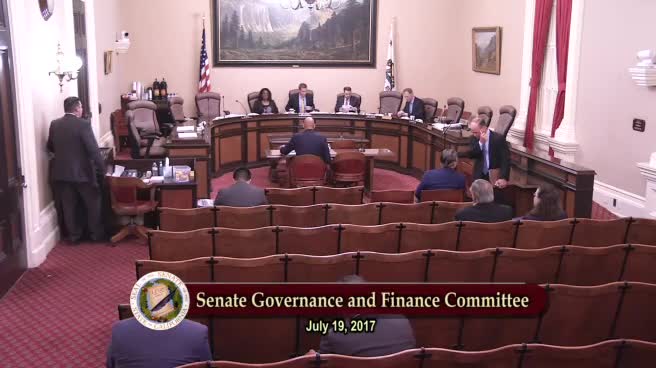 6MIN
Senate Standing Committee on Governance and Finance
Bill Author

Bill Co-Author(s):