AB 828: Civil actions: fee recovery.
- Session Year: 2017-2018
- House: Assembly
- Latest Version Date: 2017-10-08
Existing law enumerates the costs that a prevailing party may recover in a civil action. Existing law provides that costs for models and enlargements of exhibits and photocopies of exhibits may be recovered if the items were reasonably helpful to aid the trier of fact.
This bill would authorize a prevailing party to recover fees for the costs associated with the electronic presentation of exhibits, including costs of rental equipment and electronic formatting.
Existing law enumerates the costs that a prevailing party may recover in a civil action. Existing law provides that costs for models and enlargements of exhibits and photocopies of exhibits may be recovered if the items were reasonably helpful to aid the trier of fact.
This bill would authorize a prevailing party to recover fees for the costs associated with the electronic presentation of exhibits, including technical consultant fees and equipment rental costs. costs of rental equipment and electronic formatting.
Existing law enumerates the costs that a prevailing party may recover in a civil action. Existing law provides that costs for models and enlargements of exhibits and photocopies of exhibits may be recovered if the items were reasonably helpful to aid the trier of fact.
This bill would authorize a prevailing party to recover fees for the costs associated with the electronic presentation of exhibits, including technical consultant fees and equipment rental costs.
(a)The following items are allowable as costs under Section 1032:
(1)Filing, motion, and jury fees.
(2)Juror food and lodging while they are kept together during trial and after the jury retires for deliberation.
(3)(A)Taking, video recording, and transcribing necessary depositions, including an original and one copy of those taken by the claimant and one copy of depositions taken by the party against whom costs are allowed.
(B)Fees of a certified or registered interpreter for the deposition of a party or witness who does not proficiently speak or understand the English language.
(C)Travel expenses to attend depositions.
(4)Service of process by a public officer, registered process server, or other means, as follows:
(A)When service is by a public officer, the recoverable cost is the fee authorized by law at the time of service.
(B)If service is by a process server registered pursuant to Chapter 16 (commencing with Section 22350) of Division 8 of the Business and Professions Code, the recoverable cost is the amount actually incurred in effecting service, including, but not limited to, a stakeout or other means employed in locating the person to be served, unless those charges are successfully challenged by a party to the action.
(C)When service is by publication, the recoverable cost is the sum actually incurred in effecting service.
(D)When service is by a means other than that set forth in subparagraph (A), (B), or (C), the recoverable cost is the lesser of the sum actually incurred, or the amount allowed to a public officer in this state for that service, except that the court may allow the sum actually incurred in effecting service upon application pursuant to paragraph (4) of subdivision (c).
(5)Expenses of attachment including keepers fees.
(6)Premiums on necessary surety bonds.
(7)Ordinary witness fees pursuant to Section 68093 of the Government Code.
(8)Fees of expert witnesses ordered by the court.
(9)Transcripts of court proceedings ordered by the court.
(10)Attorneys fees, when authorized by any of the following:
(A)Contract.
(B)Statute.
(C)Law.
(11)Court reporter fees as established by statute.
(12)Court interpreter fees for a qualified court interpreter authorized by the court for an indigent person represented by a qualified legal services project, as defined in Section 6213 of the Business and Professions Code, or a pro bono attorney, as defined in Section 8030.4 of the Business and Professions Code.
(13)Models, the enlargements of exhibits and photocopies of exhibits, and the electronic presentation of exhibits, including costs of rental equipment and electronic formatting, may be allowed if they were reasonably helpful to aid the trier of fact.
(14)Fees for the electronic filing or service of documents through an electronic filing service provider if a court requires or orders electronic filing or service of documents.
(15)Fees for the hosting of electronic documents if a court requires or orders a party to have documents hosted by an electronic filing service provider. This paragraph shall become inoperative on January 1, 2022.
(16)Any other item that is required to be awarded to the prevailing party pursuant to statute as an incident to prevailing in the action at trial or on appeal.
(b)The following items are not allowable as costs, except when expressly authorized by law:
(1)Fees of experts not ordered by the court.
(2)Investigation expenses in preparing the case for trial.
(3)Postage, telephone, and photocopying charges, except for exhibits.
(4)Costs in investigation of jurors or in preparation for voir dire.
(5)Transcripts of court proceedings not ordered by the court.
(c)An award of costs shall be subject to the following:
(1)Costs are allowable if incurred, whether or not paid.
(2)Allowable costs shall be reasonably necessary to the conduct of the litigation rather than merely convenient or beneficial to its preparation.
(3)Allowable costs shall be reasonable in amount.
(4)Items not mentioned in this section and items assessed upon application may be allowed or denied in the courts discretion.
(5)(A)If a statute of this state refers to the award of costs and attorneys fees, attorneys fees are an item and component of the costs to be awarded and are allowable as costs pursuant to subparagraph (B) of paragraph (10) of subdivision (a). A claim not based upon the courts established schedule of attorneys fees for actions on a contract shall bear the burden of proof. Attorneys fees allowable as costs pursuant to subparagraph (B) of paragraph (10) of subdivision (a) may be fixed as follows: (i) upon a noticed motion, (ii) at the time a statement of decision is rendered, (iii) upon application supported by affidavit made concurrently with a claim for other costs, or (iv) upon entry of default judgment. Attorneys fees allowable as costs pursuant to subparagraph (A) or (C) of paragraph (10) of subdivision (a) shall be fixed either upon a noticed motion or upon entry of a default judgment, unless otherwise provided by stipulation of the parties.
(B)Attorneys fees awarded pursuant to Section 1717 of the Civil Code are allowable costs under Section 1032 as authorized by subparagraph (A) of paragraph (10) of subdivision (a).
(a)The following items are allowable as costs under Section 1032:
(1)Filing, motion, and jury fees.
(2)Juror food and lodging while they are kept together during trial and after the jury retires for deliberation.
(3)(A)Taking, video recording, and transcribing necessary depositions, including an original and one copy of those taken by the claimant and one copy of depositions taken by the party against whom costs are allowed.
(B)Fees of a certified or registered interpreter for the deposition of a party or witness who does not proficiently speak or understand the English language.
(C)Travel expenses to attend depositions.
(4)Service of process by a public officer, registered process server, or other means, as follows:
(A)When service is by a public officer, the recoverable cost is the fee authorized by law at the time of service.
(B)If service is by a process server registered pursuant to Chapter 16 (commencing with Section 22350) of Division 8 of the Business and Professions Code, the recoverable cost is the amount actually incurred in effecting service, including, but not limited to, a stakeout or other means employed in locating the person to be served, unless those charges are successfully challenged by a party to the action.
(C)When service is by publication, the recoverable cost is the sum actually incurred in effecting service.
(D)When service is by a means other than that set forth in subparagraph (A), (B), or (C), the recoverable cost is the lesser of the sum actually incurred, or the amount allowed to a public officer in this state for that service, except that the court may allow the sum actually incurred in effecting service upon application pursuant to paragraph (4) of subdivision (c).
(5)Expenses of attachment including keepers fees.
(6)Premiums on necessary surety bonds.
(7)Ordinary witness fees pursuant to Section 68093 of the Government Code.
(8)Fees of expert witnesses ordered by the court.
(9)Transcripts of court proceedings ordered by the court.
(10)Attorneys fees, when authorized by any of the following:
(A)Contract.
(B)Statute.
(C)Law.
(11)Court reporter fees as established by statute.
(12)Court interpreter fees for a qualified court interpreter authorized by the court for an indigent person represented by a qualified legal services project, as defined in Section 6213 of the Business and Professions Code, or a pro bono attorney, as defined in Section 8030.4 of the Business and Professions Code.
(13)Models, the enlargements of exhibits and photocopies of exhibits, and the electronic presentation of exhibits, including the rental costs of presentation equipment, preparation for exhibit rental equipment and electronic formatting and presentation, and a technical consultant fee for operation of equipment during trial, formatting, may be allowed if they were reasonably helpful to aid the trier of fact.
(14)Fees for the electronic filing or service of documents through an electronic filing service provider if a court requires or orders electronic filing or service of documents.
(15)Fees for the hosting of electronic documents if a court requires or orders a party to have documents hosted by an electronic filing service provider. This paragraph shall become inoperative on January 1, 2022.
(16)Any other item that is required to be awarded to the prevailing party pursuant to statute as an incident to prevailing in the action at trial or on appeal.
(b)The following items are not allowable as costs, except when expressly authorized by law:
(1)Fees of experts not ordered by the court.
(2)Investigation expenses in preparing the case for trial.
(3)Postage, telephone, and photocopying charges, except for exhibits.
(4)Costs in investigation of jurors or in preparation for voir dire.
(5)Transcripts of court proceedings not ordered by the court.
(c)An award of costs shall be subject to the following:
(1)Costs are allowable if incurred, whether or not paid.
(2)Allowable costs shall be reasonably necessary to the conduct of the litigation rather than merely convenient or beneficial to its preparation.
(3)Allowable costs shall be reasonable in amount.
(4)Items not mentioned in this section and items assessed upon application may be allowed or denied in the courts discretion.
(5)(A)If a statute of this state refers to the award of costs and attorneys fees, attorneys fees are an item and component of the costs to be awarded and are allowable as costs pursuant to subparagraph (B) of paragraph (10) of subdivision (a). A claim not based upon the courts established schedule of attorneys fees for actions on a contract shall bear the burden of proof. Attorneys fees allowable as costs pursuant to subparagraph (B) of paragraph (10) of subdivision (a) may be fixed as follows: (i) upon a noticed motion, (ii) at the time a statement of decision is rendered, (iii) upon application supported by affidavit made concurrently with a claim for other costs, or (iv) upon entry of default judgment. Attorneys fees allowable as costs pursuant to subparagraph (A) or (C) of paragraph (10) of subdivision (a) shall be fixed either upon a noticed motion or upon entry of a default judgment, unless otherwise provided by stipulation of the parties.
(B)Attorneys fees awarded pursuant to Section 1717 of the Civil Code are allowable costs under Section 1032 as authorized by subparagraph (A) of paragraph (10) of subdivision (a).
(a)The following items are allowable as costs under Section 1032:
(1)Filing, motion, and jury fees.
(2)Juror food and lodging while they are kept together during trial and after the jury retires for deliberation.
(3)(A)Taking, video recording, and transcribing necessary depositions, including an original and one copy of those taken by the claimant and one copy of depositions taken by the party against whom costs are allowed.
(B)Fees of a certified or registered interpreter for the deposition of a party or witness who does not proficiently speak or understand the English language.
(C)Travel expenses to attend depositions.
(4)Service of process by a public officer, registered process server, or other means, as follows:
(A)When service is by a public officer, the recoverable cost is the fee authorized by law at the time of service.
(B)If service is by a process server registered pursuant to Chapter 16 (commencing with Section 22350) of Division 8 of the Business and Professions Code, the recoverable cost is the amount actually incurred in effecting service, including, but not limited to, a stakeout or other means employed in locating the person to be served, unless those charges are successfully challenged by a party to the action.
(C)When service is by publication, the recoverable cost is the sum actually incurred in effecting service.
(D)When service is by a means other than that set forth in subparagraph (A), (B), or (C), the recoverable cost is the lesser of the sum actually incurred, or the amount allowed to a public officer in this state for that service, except that the court may allow the sum actually incurred in effecting service upon application pursuant to paragraph (4) of subdivision (c).
(5)Expenses of attachment including keepers fees.
(6)Premiums on necessary surety bonds.
(7)Ordinary witness fees pursuant to Section 68093 of the Government Code.
(8)Fees of expert witnesses ordered by the court.
(9)Transcripts of court proceedings ordered by the court.
(10)Attorneys fees, when authorized by any of the following:
(A)Contract.
(B)Statute.
(C)Law.
(11)Court reporter fees as established by statute.
(12)Court interpreter fees for a qualified court interpreter authorized by the court for an indigent person represented by a qualified legal services project, as defined in Section 6213 of the Business and Professions Code, or a pro bono attorney, as defined in Section 8030.4 of the Business and Professions Code.
(13)Models and Models, the enlargements of exhibits and photocopies of exhibits may be allowed exhibits, and the electronic presentation of exhibits, including the rental costs of presentation equipment, preparation for exhibit electronic formatting and presentation, and a technical consultant fee for operation of equipment during trial, if they were reasonably helpful to aid the trier of fact.
(14)Fees for the electronic filing or service of documents through an electronic filing service provider if a court requires or orders electronic filing or service of documents.
(15)Fees for the hosting of electronic documents if a court requires or orders a party to have documents hosted by an electronic filing service provider. This paragraph shall become inoperative on January 1, 2022.
(16)Any other item that is required to be awarded to the prevailing party pursuant to statute as an incident to prevailing in the action at trial or on appeal.
(b)The following items are not allowable as costs, except when expressly authorized by law:
(1)Fees of experts not ordered by the court.
(2)Investigation expenses in preparing the case for trial.
(3)Postage, telephone, and photocopying charges, except for exhibits.
(4)Costs in investigation of jurors or in preparation for voir dire.
(5)Transcripts of court proceedings not ordered by the court.
(c)An award of costs shall be subject to the following:
(1)Costs are allowable if incurred, whether or not paid.
(2)Allowable costs shall be reasonably necessary to the conduct of the litigation rather than merely convenient or beneficial to its preparation.
(3)Allowable costs shall be reasonable in amount.
(4)Items not mentioned in this section and items assessed upon application may be allowed or denied in the courts discretion.
(5)(A)If a statute of this state refers to the award of costs and attorneys fees, attorneys fees are an item and component of the costs to be awarded and are allowable as costs pursuant to subparagraph (B) of paragraph (10) of subdivision (a). A claim not based upon the courts established schedule of attorneys fees for actions on a contract shall bear the burden of proof. Attorneys fees allowable as costs pursuant to subparagraph (B) of paragraph (10) of subdivision (a) may be fixed as follows: (i) upon a noticed motion, (ii) at the time a statement of decision is rendered, (iii) upon application supported by affidavit made concurrently with a claim for other costs, or (iv) upon entry of default judgment. Attorneys fees allowable as costs pursuant to subparagraph (A) or (C) of paragraph (10) of subdivision (a) shall be fixed either upon a noticed motion or upon entry of a default judgment, unless otherwise provided by stipulation of the parties.
(B)Attorneys fees awarded pursuant to Section 1717 of the Civil Code are allowable costs under Section 1032 of this code as authorized by subparagraph (A) of paragraph (10) of subdivision (a).
|
Date
|
Status
|
|---|---|
| Oct 8, 2017 | Chaptered by Secretary of State - Chapter 583, Statutes of 2017. |
| Oct 8, 2017 | Approved by the Governor. |
| Sep 13, 2017 | Enrolled and presented to the Governor at 4 p.m. |
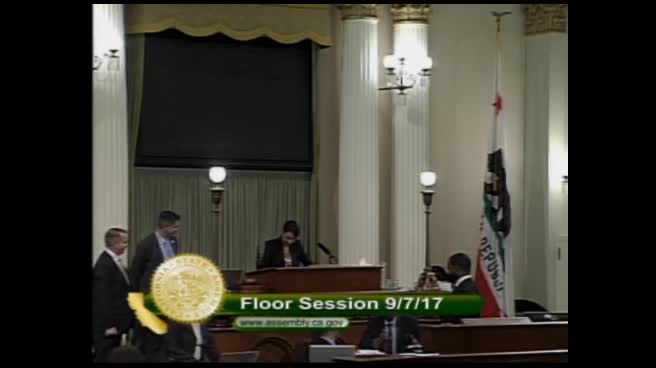
| Sep 7, 2017 | Bill in its final form passes. |
| Jun 20, 2017 | In Assembly. |
| Jun 19, 2017 | Read third time. Passed. Ordered to the Assembly. (Ayes 33. Noes 0. Page 1612.). |
| Jun 14, 2017 | Read second time. Ordered to Consent Calendar. |
| Jun 13, 2017 | From committee: Do pass. To Consent Calendar. (Ayes 7. Noes 0.) (June 13). |
| May 10, 2017 | Referred to Com. on JUD. |
| Mar 30, 2017 | In Senate. Read first time. To Com. on RLS. for assignment. |
| Mar 30, 2017 | Read third time. Passed. Ordered to the Senate. (Ayes 74. Noes 0. Page 845.) |
| Mar 28, 2017 | Read second time. Ordered to Consent Calendar. |
| Mar 27, 2017 | Read second time and amended. Ordered returned to second reading. |
| Mar 23, 2017 | From committee: Amend, and do pass as amended. To Consent Calendar. (Ayes 11. Noes 0.) (March 21). |
| Mar 2, 2017 | Referred to Com. on JUD. |
| Feb 17, 2017 | From printer. May be heard in committee March 19. |
| Feb 16, 2017 | Read first time. To print. |
|
Date
|
Description
|
Location
|
Votes
|
|
|---|---|---|---|---|
| Sep 7, 2017 | AB 828 OBERNOLTE Final Form | Assembly Floor |
Passed |
|
| Jun 19, 2017 | Consent Calendar 2nd AB828 | Senate Floor |
Passed |
|
| Jun 13, 2017 | Do pass and be ordered to the Consent Calendar | Senate Standing Committee on Judiciary |
Passed |
|
| Mar 30, 2017 | AB 828 OBERNOLTE Consent Calendar Second Day Regular Session | Assembly Floor |
Passed |
|
| Mar 21, 2017 | Do pass as amended. To Consent Calendar. | Assembly Standing Committee on Judiciary |
Passed |
This list shows positions taken on this bill by organizations on the date displayed, which is linked to the original source.
Positions by individuals are not included.
|
Organization
|
Position
|
Date
|
|---|---|---|
| Conference of California Bar Associations | ** Support | Jun 14, 2017 |
CONCURRENCE VOTE
CSA1 Bill Id:AB 828
Author:(Obernolte)
As Amended Ver:March 27, 2017
Vote on Concurrence in Final Form pending June 20, 2017
Majority vote
This analysis is drafted in accordance with Assembly Rule 77 and reflects the Senate version of the bill in its final form.
ASSEMBLY: | 74-0 | (March 30, 2017) | SENATE: | 33-0 | (June 19, 2017) |
Original Committee Reference: JUD.
SUMMARY: Expands the list of allowable costs that a prevailing party may recover upon entry of judgment to include certain electronic exhibits. Specifically, this bill provides that the electronic presentation of exhibits, including costs of presentation rental equipment and electronic formatting, may be allowable costs, provided that such exhibits are reasonably helpful to aid the trier of fact.
EXISTING LAW:
- Provides that a prevailing party is entitled as a matter of right to recover costs in any action or proceeding, as provided. (Code of Civil Procedure Section 1032. Unless provided otherwise, all other statutory references are to this code.)
- Provides a specified list of allowable costs that are recoverable, including:
- Filing, motion, and jury fees;
- Juror food and lodging, as specified;
- Taking, video recording, transcribing necessary depositions, as specified, and travel;
- Service of process, as specified;
- Expenses of attachment, including keeper's fees;
- Premiums on necessary surety bonds;
- Ordinary witness fees, as specified;
- Fees of expert witnesses, as specified;
- Transcript of court proceedings, as specified;
- Attorney's fees, as specified;
- Court reporter fees as established by statute;
- Court interpreter fees, as specified;
- Models and enlargements of exhibits and photocopies of exhibits may be allowed if they were reasonably helpful to aid the trier of fact;
- Court interpreter fees for a qualified court interpreter authorized by the court for an indigent person, as provided;
- Fees for the electronic filing of service of documents through an electronic filing service provider if the court requires or orders electronic filing or service of documents;
- Fees for the hosting of electronic documents if a court requires or orders a party to have documents hosted by an electronic filing service provider;
- Any other item that is required to be awarded to the prevailing party pursuant to statute as incident to prevailing in the action at trial or on appeal. (Section 1033.5.)
- Provides that the following items are not allowable as costs, except when expressly authorized by law:
- Fees of experts not ordered by the court;
- Investigation expenses in preparing the case for trial;
- Postage, telephone, and photocopying charges, except for exhibits;
- Costs in investigation of jurors or in preparation for voir dire;
- Transcripts of court proceedings not ordered by the court. (Ibid.)
- Requires that any award of costs be subject to the following:
- Costs are allowable if incurred, whether or not paid;
- Allowable costs shall be reasonably necessary to the conduct of the litigation rather than merely convenient or beneficial to its preparation;
- Allowable costs shall be reasonable in amount;
- Items not specifically mentioned and items assessed upon application may be allowed or denied in the court's discretion. (Ibid.)
FISCAL EFFECT: None
COMMENTS: Throughout litigation, parties pay for costs associated with a legal proceeding, such as filing fees, expert-witness fees, and attorney's fees. After a judgment is entered against a party, current law allows a prevailing party to recover certain litigation costs from the unsuccessful party (in addition to any judgment awarded to the prevailing party).
The statutory list of allowable recoverable costs is not meant to be exhaustive. For example, parties can recover filing fees, travel expenses for depositions, process server fees, certain expert witness fees, transcripts costs, court reporter fees, court interpreter fees, and exhibits. Furthermore, a prevailing party can recover a cost that is not statutory listed upon the court's discretion. (Section 1033.5.) However, there appears to be some limits. For instance, a party cannot recover items like investigation expenses in preparing the case for trial, or for postage, telephone, and photocopying charges. Furthermore, any award of costs "must be reasonably necessary to the conduct of the litigation rather than merely convenient or beneficial to its preparation" and "be reasonable in amount." (Ibid.)
Some try to argue that there is no policy principle for why some costs are awarded, and other costs are not. In fact, after looking only at the list of allowable costs, one might conclude that the Legislature has not expressed a policy preference. For example, transcripts of court proceedings ordered by the court are allowable, while costs for the investigation of jurors during voir dire are not allowable. However, this is not entirely accurate. In recent years, the Legislature has approved bills to expand the scope of allowable recoverable costs as long as those measures were consistent with existing law. Last year, the Legislature passed AB 2244 (Gatto), Chapter 461, Statutes of 2016 which adds electronic filing service provider fees to the list of allowable recoverable costs – which is consistent with a prevailing party's ability to recover filing fees. (Section 1033.5(a)(1).)
This bill seems to be consistent with existing allowable recoverable costs. As the court embraces the use of certain technologies during litigation, parties have been asking the courts to recover those associated litigation costs. Given that models and exhibits are currently recoverable costs, this bill appears to be a modest extension by allowing cost recovery of electronic models and exhibits.
This bill does not affect a court's discretion to deny or award certain fees. Under current law, a party seeking to recover costs for models and exhibits must show that the models and exhibits were reasonably helpful to aid the trier of fact. While this bill expands the list of allowable recoverable costs to include electronic exhibits, this bill importantly maintains the requirement that such exhibits must be reasonably helpful in aiding the trier of fact. Furthermore, this bill does not affect the rules that currently limit recoverable costs. For example, recoverable costs must continue to be reasonably necessary to the conduct of the litigation rather than merely convenient or beneficial to its preparation.
Analysis Prepared by: Eric Dang / JUD. / (916) 319-2334 FN: 0001024
Office of Senate Floor Analyses (916) 651-1520 Fax: (916) 327-4478 | AB |
CONSENT
Bill No: AB 828
:
SENATE JUDICIARY COMMITTEE: 7-0, 6/13/17
AYES: Jackson, Moorlach, Anderson, Hertzberg, Monning, Stern, Wieckowski
ASSEMBLY FLOOR: 74-0, 3/30/17 (Consent) - See last page for vote
SOURCE: Conference of California Bar Associations
DIGEST:
This bill provides that electronic presentations of exhibits, including costs of rental equipment and electronic formatting, may be allowed as allowable costs if they were reasonably helpful to aid the trier of fact.
Existing law:
- Provides that, except as otherwise expressly provided by statute, a prevailing party is entitled as a matter of right to recover costs in any action or proceeding. “Prevailing party” includes the party with a net monetary recovery, a defendant in whose favor a dismissal is entered, a defendant where neither plaintiff nor defendant obtains any relief, and a defendant as against those plaintiffs who do not recover any relief against that defendant. When any party recovers other than monetary relief and in situations other than as specified, the “prevailing party” shall be as determined by the court, and under those circumstances, the court, in its discretion, may allow costs or not and, if allowed may apportion costs between the parties on the same or adverse sides pursuant to rules adopted under Section 1034 of the Code of Civil Procedure. (Code Civ. Proc. Sec. 1032.)
- Provides the following items are allowable as costs:
- Filing, motion, and jury fees;
- Juror food and lodging while they are kept together during trial and after the jury retires for deliberation;
- Taking, video recording, and transcribing necessary depositions, as specified;
- Fees of a certified or registered interpreter for depositions, as specified;
- Travel expenses to attend depositions;
- Service of process by a public officer, registered process server, or other means, as specified;
- Expenses of attachment including keeper’s fees;
- Premiums on necessary surety bonds;
- Ordinary witness fees pursuant to Section 68093 of the Government Code;
- Fees of expert witnesses ordered by the court;
- Transcripts of court proceedings ordered by the court;
- Attorney’s fees, when authorized by contract, statute, or law;
- Court reporter fees as established by statute;
- Court interpreter fees, as specified;
- Models and enlargements of exhibits and photocopies of exhibits may be allowed if they were reasonably helpful to aid the trier of fact;
- Fees for the electronic filing or service of documents through an electronic filing service provider if a court requires or orders electronic filing or service of documents;
- Fees for the hosting of electronic documents if a court requires or orders a party to have documents hosted by an electronic filing service provider; and
- Any other item that is required to be awarded to the prevailing party pursuant to statute as an incident to prevailing in the action at trial or on appeal. (Code Civ. Proc. Sec. 1033.5(a).)
- Excludes the following items as costs, except when expressly authorized by law:
- Fees of experts not ordered by the court;
- Investigation expenses in preparing the case for trial;
- Postage, telephone, and photocopying charges, except for exhibits;
- Costs in investigation of jurors or in preparation for voir dire; and
- Transcripts of court proceedings not ordered by the court. (Code Civ. Proc. Sec. 1033.5(b).)
- Provides that allowable costs must be reasonable in amount and reasonably necessary to the conduct of the litigation rather than merely convenient or beneficial to its preparation. Costs are allowable if incurred, whether or not paid. Items not specifically identified as allowable or not allowable are left to the court’s discretion. (Code Civ. Proc. Sec. 1033.5(c).)
This bill provides that electronic presentations of exhibits, including costs of rental equipment and electronic formatting, may be allowed as allowable costs if they were reasonably helpful to aid the trier of fact.
Background
California law provides that a prevailing party to litigation is generally entitled as a matter of right to recover costs incurred in any action or proceeding. Section 1033.5 of the Code of Civil Procedure lays out a list of items that are allowable as costs for which a prevailing party is entitled. It also lays out items specifically not allowable as costs and leaves those items not enumerated to the court’s discretion.
Items have been gradually added to this list to reflect changes in litigation strategies and technological advances. For instance, last year, AB 2244 (Gatto, Chapter 461, Statutes 2016) was introduced and enacted into law. AB 2244 addressed the rising use of electronic filing, service, and hosting. It inserted into Section 1033.5 as allowable costs, fees for electronic filing, service, and hosting of documents if required or ordered by the court.
This bill addresses the rising use of electronic presentations in litigation by including as allowable costs the electronic presentation of exhibits, including costs of rental equipment and electronic formatting.
Comments
The author writes:
AB 828 clarifies that costs related to the electronic presentation of exhibits, including costs of rental equipment and electronic formatting, are recoverable in civil actions, if the presentation of those exhibits was “reasonably helpful to the trier of fact.” The bill updates the current statute and more closely conforms it to common practice and a growing body of case law, while still permitting the court to deny recovery if the information presented is not helpful.
A sensible addition to the list of allowable litigation costs
This bill presents a sensible addition to the costs specifically identified as recoverable by the prevailing party. Although the list of allowable costs in Section 1033.5 is not meant to be exhaustive, it does provide some clear guidelines for allowable costs and reduces inconsistencies from one court to the next. The use of technology at trial is a growing trend and has become a nearly indispensable litigation tool for parties. Including the costs of electronic presentation of exhibits as allowable costs for a prevailing party is reasonable and is consistent with the principles of existing law.
As a practical matter, it appears these costs are already being awarded where reasonable. In Green v. County of Riverside (2015) 238 Cal.App.4th 1363, 1373, the appellate court analyzed an award of costs incurred for “preparation and presentation of electronic evidence.” The court found that such costs were neither allowable nor prohibited under Section 1033.5, therefore leaving it to the court to decide whether the costs were “‘reasonably necessary to the conduct of the litigation rather than merely convenient or beneficial to its preparation.’” (Id. at 1374.) The court reasoned that “[u]se of such technology, including a technician to monitor the equipment and quickly resolve any glitches, has become commonplace, if not expected by jurors.” (Id.) The court concluded that the “trial court did not abuse its discretion in allowing these costs as reasonably helpful to aid the jury.” (Id.) In another example, the court in Bender v. County of Los Angeles (2013) 217 Cal.App.4th 968, 990-991, was faced with a similar cost award and upheld it, reasoning that “the use of technology in the courtroom has become commonplace (including a technician to monitor the equipment and quickly resolve any glitches), and technology costs have dramatically declined.”
The California Conference of Bar Associations, the sponsor of this bill, writes that this bill will “ensure that, in cases where the use of electronic presentation of evidence is beneficial to the administration of justice, statutory law conforms to common practice and case law.”
As a check on any excessive costs for overly extravagant presentations, this bill still provides the court discretion in awarding costs for electronic presentations. The costs would not be recoverable if they were not “reasonably helpful to the trier of fact.” In addition, as with all awards of costs, they must be “reasonable in amount” and “reasonably necessary to the conduct of the litigation rather than merely convenient or beneficial to its preparation.” (Code Civ. Proc. Sec. 1033.5(c).)
FISCAL EFFECT: Appropriation: Fiscal Com.: Local:
Conference of California Bar Associations (source)
OPPOSITION: (Verified 6/13/17)
None received
ASSEMBLY FLOOR: 74-0, 3/30/17
AYES: Acosta, Aguiar-Curry, Travis Allen, Arambula, Baker, Berman, Bigelow, Bloom, Bocanegra, Bonta, Brough, Burke, Caballero, Calderon, Cervantes, Chau, Chávez, Chen, Chiu, Choi, Chu, Cooley, Cooper, Cunningham, Dahle, Daly, Eggman, Flora, Fong, Friedman, Gallagher, Cristina Garcia, Eduardo Garcia, Gipson, Gloria, Gomez, Gonzalez Fletcher, Gray, Grayson, Harper, Holden, Irwin, Jones-Sawyer, Kalra, Kiley, Lackey, Levine, Limón, Low, Maienschein, Mathis, Mayes, McCarty, Melendez, Mullin, Muratsuchi, Nazarian, Obernolte, O'Donnell, Patterson, Quirk-Silva, Reyes, Rodriguez, Rubio, Salas, Santiago, Steinorth, Mark Stone, Thurmond, Ting, Voepel, Waldron, Weber, Wood
NO VOTE RECORDED: Dababneh, Frazier, Medina, Quirk, Ridley-Thomas, Rendon
Prepared by: Christian Kurpiewski / JUD. / (916) 651-4113
6/14/17 15:57:01
**** END ****
Senator Hannah-Beth Jackson, Chair
2017-2018 Regular Session
Bill No: AB 828 (Author:Obernolte)
Version: March 27, 2017
Hearing Date: June 13, 2017
Fiscal: No
Urgency: No
Consultant: CK
SUBJECT
Civil actions: fee recovery
DESCRIPTION
This bill would provide that electronic presentations of exhibits, including costs of rental equipment and electronic formatting, may be allowed as allowable costs if they were reasonably helpful to aid the trier of fact.
BACKGROUND
California law provides that a prevailing party to litigation is generally entitled as a matter of right to recover costs incurred in any action or proceeding. Section 1033.5 of the Code of Civil Procedure lays out a list of items that are allowable as costs for which a prevailing party is entitled. It also lays out items specifically not allowable as costs and leaves those items not enumerated to the court’s discretion.
Items have been gradually added to this list to reflect changes in litigation strategies and technological advances. For instance, last year, AB 2244 (Gatto, Chapter 461, Statutes 2016) was introduced and enacted into law. AB 2244 addressed the rising use of electronic filing, service, and hosting. It inserted into Section 1033.5 as allowable costs, fees for electronic filing, service, and hosting of documents if required or ordered by the court.
This bill addresses the rising use of electronic presentations in litigation by including as allowable costs the electronic presentation of exhibits, including costs of rental equipment and electronic formatting.
CHANGES TO EXISTING LAW
Existing law provides that, except as otherwise expressly provided by statute, a prevailing party is entitled as a matter of right to recover costs in any action or proceeding. “Prevailing party” includes the party with a net monetary recovery, a defendant in whose favor a dismissal is entered, a defendant where neither plaintiff nor defendant obtains any relief, and a defendant as against those plaintiffs who do not recover any relief against that defendant. When any party recovers other than monetary relief and in situations other than as specified, the “prevailing party” shall be as determined by the court, and under those circumstances, the court, in its discretion, may allow costs or not and, if allowed may apportion costs between the parties on the same or adverse sides pursuant to rules adopted under Section 1034 of the Code of Civil Procedure. (Code Civ. Proc. Sec. 1032.)
Existing law provides the following items are allowable as costs:
- filing, motion, and jury fees;
- juror food and lodging while they are kept together during trial and after the jury retires for deliberation;
- taking, video recording, and transcribing necessary depositions, as specified;
- fees of a certified or registered interpreter for depositions, as specified;
- travel expenses to attend depositions;
- service of process by a public officer, registered process server, or other means, as specified;
- expenses of attachment including keeper’s fees;
- premiums on necessary surety bonds;
- ordinary witness fees pursuant to Section 68093 of the Government Code;
- fees of expert witnesses ordered by the court;
- transcripts of court proceedings ordered by the court;
- attorney’s fees, when authorized by contract, statute, or law;
- court reporter fees as established by statute;
- court interpreter fees, as specified;
- models and enlargements of exhibits and photocopies of exhibits may be allowed if they were reasonably helpful to aid the trier of fact;
- fees for the electronic filing or service of documents through an electronic filing service provider if a court requires or orders electronic filing or service of documents;
- fees for the hosting of electronic documents if a court requires or orders a party to have documents hosted by an electronic filing service provider; and
- any other item that is required to be awarded to the prevailing party pursuant to statute as an incident to prevailing in the action at trial or on appeal. (Code Civ. Proc. Sec. 1033.5(a).)
Existing law explicitly excludes the following items as costs, except when expressly authorized by law:
- fees of experts not ordered by the court;
- investigation expenses in preparing the case for trial;
- postage, telephone, and photocopying charges, except for exhibits;
- costs in investigation of jurors or in preparation for voir dire; and
- transcripts of court proceedings not ordered by the court. (Code Civ. Proc. Sec. 1033.5(b).)
Existing law provides that allowable costs must be reasonable in amount and reasonably necessary to the conduct of the litigation rather than merely convenient or beneficial to its preparation. Costs are allowable if incurred, whether or not paid. Items not specifically identified as allowable or not allowable are left to the court’s discretion. (Code Civ. Proc. Sec. 1033.5(c).)
This bill would provide that electronic presentations of exhibits, including costs of rental equipment and electronic formatting, may be allowed as allowable costs if they were reasonably helpful to aid the trier of fact.
COMMENT
1. Stated need for the bill
According to the author:
AB 828 clarifies that costs related to the electronic presentation of exhibits, including costs of rental equipment and electronic formatting, are recoverable in civil actions, if the presentation of those exhibits was “reasonably helpful to the trier of fact.” The bill updates the current statute and more closely conforms it to common practice and a growing body of case law, while still permitting the court to deny recovery if the information presented is not helpful.
2. A sensible addition to the list of allowable litigation costs
This bill presents a sensible addition to the costs specifically identified as recoverable by the prevailing party. Although the list of allowable costs in Section 1033.5 is not meant to be exhaustive, it does provide some clear guidelines for allowable costs and reduces inconsistencies from one court to the next. The use of technology at trial is a growing trend and has become a nearly indispensable litigation tool for parties. Including the costs of electronic presentation of exhibits as allowable costs for a prevailing party is reasonable and is consistent with the principles of existing law.
As a practical matter, it appears that these costs are already being awarded where reasonable. In Green v. County of Riverside (2015) 238 Cal.App.4th 1363, 1373, the appellate court analyzed a lower court’s award of costs incurred for “preparation and presentation of electronic evidence.” The court found that such costs were neither allowable nor prohibited under Section 1033.5, therefore leaving it to the court to decide whether the costs were “‘reasonably necessary to the conduct of the litigation rather than merely convenient or beneficial to its preparation.’” (Id. at 1374.) The court reasoned that “[u]se of such technology, including a technician to monitor the equipment and quickly resolve any glitches, has become commonplace, if not expected by jurors.” (Id.) The court concluded that the “trial court did not abuse its discretion in allowing these costs as reasonably helpful to aid the jury.” (Id.) In another example, the court in Bender v. County of Los Angeles (2013) 217 Cal.App.4th 968, 990-991, was faced with a similar cost award and upheld it, reasoning that “the use of technology in the courtroom has become commonplace (including a technician to monitor the equipment and quickly resolve any glitches), and technology costs have dramatically declined.”
The California Conference of Bar Associations, the sponsor of this bill, writes that this bill will “ensure that, in cases where the use of electronic presentation of evidence is beneficial to the administration of justice, statutory law conforms to common practice and case law.”
As a check on any excessive costs for overly extravagant presentations, this bill would still provide the court discretion in awarding costs for electronic presentations. The costs would not be recoverable if they were not “reasonably helpful to the trier of fact.” In addition, as with all awards of costs, they must be “reasonable in amount” and “reasonably necessary to the conduct of the litigation rather than merely convenient or beneficial to its preparation.” (Code Civ. Proc. Sec. 1033.5(c).)
Support: None Known
Opposition: None Known
HISTORY
Source: Conference of California Bar Associations
Related Pending Legislation: None Known
Prior Legislation:
AB 2244 (Gatto, Ch. 461, Stats. 2016) See Background.
AB 1002 (Wilk, Ch. 90, Stats. 2015) This bill added the fees of a certified or registered interpreter for the deposition of a party or witness who does not proficiently speak or understand the English language to the list of fees recoverable by a prevailing party.
AB 1403 (Committee on Judiciary, Ch. 409, Stats. 2011) This bill added court interpreter fees for a qualified court interpreter authorized by the court for an indigent person represented by a qualified legal services project as allowable costs recoverable by a prevailing party.
Prior Vote:
Assembly Floor (Ayes 74, Noes 0)
Assembly Judiciary Committee (Ayes 11, Noes 0)
**************
Date of Hearing: March 21, 2017
ASSEMBLY COMMITTEE ON JUDICIARY
Mark Stone, Chair
ABPCA Bill Id:AB 828
Author:(Obernolte) – As Introduced Ver:February 16, 2017
PROPOSED CONSENT (As Proposed to be Amended)
SUBJECT: CIVIL ACTIONS: FEE RECOVERY
KEY ISSUE: SHOULD THE LIST OF RECOVERABLE COSTS BE MODESTLY EXPANDED TO INCLUDE ELECTRONIC MODELS AND EXHIBITS?
SYNOPSIS
This non-controversial bill, sponsored by the California Conference of Bar Associations, seeks to allow a prevailing party to recover costs for electronic presentation of exhibits, including costs for presentation rental equipment and electronic formatting. Given that existing law allows a prevailing party to recover costs for models and exhibits, this bill—which allows cost recovery of electronic models and exhibits—appears to be a modest extension of existing law. There is no opposition on file.
SUMMARY: Expands the list of allowable costs that a prevailing party may recover upon entry of judgment to include certain electronic exhibits. Specifically, this bill provides that the electronic presentation of exhibits, including costs of presentation rental equipment and electronic formatting, may be allowable costs, provided that such exhibits are reasonably helpful to aid the trier of fact.
EXISTING LAW:
- Provides that a prevailing party is entitled as a matter of right to recover costs in any action or proceeding, as provided. (Code of Civil Procedure Section 1032. Unless provided otherwise, all other statutory references are to this code.)
- Provides a specified list of allowable costs that are recoverable, including:
- Filing, motion, and jury fees;
- Juror food and lodging, as specified;
- Taking, video recording, transcribing necessary depositions, as specified, and travel;
- Service of process, as specified;
- Expenses of attachment, including keeper's fees;
- Premiums on necessary surety bonds;
- Ordinary witness fees, as specified;
- Fees of expert witnesses, as specified;
- Transcript of court proceedings, as specified;
- Attorney’s fees, as specified;
- Court reporter fees as established by statute;
- Court interpreter fees, as specified;
- Models and enlargements of exhibits and photocopies of exhibits may be allowed if they were reasonably helpful to aid the trier of fact;
- Court interpreter fees for a qualified court interpreter authorized by the court for an indigent person, as provided;
- Fees for the electronic filing of service of documents through an electronic filing service provider if the court requires or orders electronic filing or service of documents;
- Fees for the hosting of electronic documents if a court requires or orders a party to have documents hosted by an electronic filing service provider;
- Any other item that is required to be awarded to the prevailing party pursuant to statute as incident to prevailing in the action at trial or on appeal. (Section 1033.5.)
- Provides that the following items are not allowable as costs, except when expressly authorized by law:
- Fees of experts not ordered by the court;
- Investigation expenses in preparing the case for trial;
- Postage, telephone, and photocopying charges, except for exhibits;
- Costs in investigation of jurors or in preparation for voir dire;
- Transcripts of court proceedings not ordered by the court. (Ibid.)
- Requires that any award of costs be subject to the following:
- Costs are allowable if incurred, whether or not paid;
- Allowable costs shall be reasonably necessary to the conduct of the litigation rather than merely convenient or beneficial to its preparation;
- Allowable costs shall be reasonable in amount;
- Items not specifically mentioned and items assessed upon application may be allowed or denied in the court’s discretion. (Ibid.)
FISCAL EFFECT: As currently in print this bill is keyed non-fiscal.
COMMENTS: Throughout litigation, parties pay for costs associated with a legal proceeding, such as filing fees, expert-witness fees, and attorney’s fees. After a judgment is entered against a party, current law allows a prevailing party to recover certain litigation costs from the unsuccessful party (in addition to any judgment awarded to the prevailing party).
The statutory list of allowable recoverable costs is not meant to be exhaustive. For example, parties can recover filing fees, travel expenses for depositions, process server fees, certain expert witness fees, transcripts costs, court reporter fees, court interpreter fees, and exhibits. Furthermore, a prevailing party can recover a cost that is not statutory listed upon the court’s discretion. (Section 1033.5.) However, there appears to be some limits. For instance, a party cannot recover items like investigation expenses in preparing the case for trial, or for postage, telephone, and photocopying charges. Furthermore, any award of costs “must be reasonably necessary to the conduct of the litigation rather than merely convenient or beneficial to its preparation” and “be reasonable in amount.” (Ibid.)
Some try to argue that there is no policy principle for why some costs are awarded, and other costs are not. In fact, after looking only at the list of allowable costs, one might conclude that the Legislature has not expressed a policy preference. For example, transcripts of court proceedings ordered by the court are allowable, while costs for the investigation of jurors during voir dire are not allowable. However, this is not entirely accurate. In recent years, the Legislature has approved bills to expand the scope of allowable recoverable costs as long as those measures were consistent with existing law. Last year, this Committee passed AB 2244 (Gatto, Ch. 461, Stats. 2016) which adds electronic filing service provider fees to the list of allowable recoverable costs—which is consistent with a prevailing party’s ability to recover filing fees. (Section 1033.5 (a)(1).)
As proposed to be amended, this bill seems to be consistent with existing allowable recoverable costs. As the court embraces the use of certain technologies during litigation, parties have been asking the courts to recover those associated litigation costs. Given that models and exhibits are currently recoverable costs, this bill appears to be a modest extension by allowing cost recovery of electronic models and exhibits. To address the Committee’s concerns about whether it is appropriate to recover a technical consultant’s fees for the operation of equipment during trial, the author proposes the following amendments to remove this item as an allowable recoverable cost:
On page 3, line 6, delete “the rental”
On page 3, line 7, before “equipment”, insert “rental”
On page 3, line 7, delete “, preparation for exhibit” and insert “and”
On page 3, line 7, after “formatting”, delete “and”
On page 3, delete line 8
On page 3, line 9, delete “equipment during trial,” and insert “may be awarded”
While the proposed amendments remove the presumption of a party’s ability to recover technical consultant fees, it should be noted that a court may still award these fees upon its discretion.
This bill does not affect a court’s discretion to deny or award certain fees. Under current law, a party seeking to recover costs for models and exhibits must show that the models and exhibits were reasonably helpful to aid the trier of fact. While this bill expands the list of allowable recoverable costs to include electronic exhibits, this bill importantly maintains the requirement that such exhibits must be reasonably helpful in aiding the trier of fact. Furthermore, this bill does not affect the rules that currently limit recoverable costs. For example, recoverable costs must continue to be reasonably necessary to the conduct of the litigation rather than merely convenient or beneficial to its preparation.
REGISTERED SUPPORT / OPPOSITION:
Support
Conference of California Bar Associations
Opposition
None on file
Analysis Prepared by: Eric Dang / JUD. / (916) 319-2334
Bill Author

Bill Co-Author(s):