AB 836: Vending machines: bulk food.
- Session Year: 2017-2018
- House: Assembly
- Latest Version Date: 2017-09-23
The California Retail Food Code establishes uniform health and sanitation standards for, and provides for regulation by the State Department of Public Health of, retail food facilities and various types of food. The code establishes requirements for vending machines, including prohibiting those machines from dispensing bulk potentially hazardous food. Existing law authorizes the department to issue a variance to allow the use of an alternative practice or procedure for specified purposes, including for cooking and reheating temperatures for potentially hazardous food. A violation of these provisions is a crime.
This bill would authorize the department to issue a variance for dispensing bulk potentially hazardous food from vending machines, as specified.
The California Retail Food Code establishes uniform health and sanitation standards for, and provides for regulation by the State Department of Public Health of, retail food facilities and various types of food. The code establishes requirements for vending machines, including prohibiting those machines from dispensing bulk potentially hazardous food. Violation of these provisions is a crime.This bill would authorize juice stored in bulk containers that were filled at a commissary or at the manufacturers or food processors plant to be dispensed from a vending machine that is temperature controlled at 41 degrees Fahrenheit or less into single-serving containers provided internally from the machine. The bill would also require nonpasteurized juice dispensed from a vending machine to be replaced within 48 hours and to include labels on the juice container and the vending machine that state the juice is not pasteurized. The bill would also require that controls be placed on the machine to maintain the temperature and prevent juice from being dispensed if the temperature is not at the appropriate level or if nonpasteurized juice has not been replaced within 48 hours. By creating a new crime, this bill would impose a state-mandated local program.The California Constitution requires the state to reimburse local agencies and school districts for certain costs mandated by the state. Statutory provisions establish procedures for making that reimbursement.This bill would provide that no reimbursement is required by this act for a specified reason.The California Retail Food Code establishes uniform health and sanitation standards for, and provides for regulation by the State Department of Public Health of, retail food facilities and various types of food. The code establishes requirements for vending machines, including prohibiting those machines from dispensing bulk potentially hazardous food. Violation of these provisions is a crime.
This bill would authorize juice stored in bulk containers that were filled at a commissary or at the manufacturers or food processors plant to be dispensed from a vending machine that is temperature controlled at 41 degrees Fahrenheit or less into single-serving containers provided internally from the machine. The bill would also require nonpasteurized juice dispensed from a vending machine to be replaced within 48 hours and to include a label at the point of sale labels on the juice container and the vending machine that states state the juice is not pasteurized. The bill would also require that controls be placed on the machine to maintain the temperature and prevent juice from being dispensed if the temperature is not at the appropriate level or if nonpasteurized juice has not been replaced within 48 hours. By creating a new crime, this bill would impose a state-mandated local program.
The California Constitution requires the state to reimburse local agencies and school districts for certain costs mandated by the state. Statutory provisions establish procedures for making that reimbursement.
This bill would provide that no reimbursement is required by this act for a specified reason.
The California Retail Food Code establishes uniform health and sanitation standards for, and provides for regulation by the State Department of Public Health of, retail food facilities and various types of food. The code establishes requirements for vending machines, including prohibiting those machines from dispensing bulk potentially hazardous food. Violation of these provisions is a crime.
This bill would authorize juice stored in bulk containers that were filled at a commissary or at the manufacturers or food processors plant to be dispensed from a vending machine that is temperature controlled at 41 degrees Fahrenheit or less into single-serving containers provided internally from the machine. The bill would also require nonpasteurized juice dispensed from a vending machine to be replaced within 48 hours and to include a label at the point of sale that states the juice is not pasteurized. The bill would also require that controls be placed on the machine to maintain the temperature and prevent juice from being dispensed if the temperature is not at the appropriate level or if nonpasteurized juice has not been replaced within 48 hours. By creating a new crime, this bill would impose a state-mandated local program.
The California Constitution requires the state to reimburse local agencies and school districts for certain costs mandated by the state. Statutory provisions establish procedures for making that reimbursement.
This bill would provide that no reimbursement is required by this act for a specified reason.
The California Retail Food Code establishes uniform health and sanitation standards for, and provides for regulation by the State Department of Public Health of, retail food facilities and various types of food. The code establishes requirements for vending machines, including prohibiting those machines from dispensing bulk potentially hazardous food. Violation of these provisions is a crime.
This bill would state that food, even if the original source is bulk food, would not be classified as potentially hazardous if the food is dispensed mechanically to the consumer, without the consumer having direct contact with the food. authorize juice stored in bulk containers that were filled at a commissary or at the manufacturers or food processors plant to be dispensed from a vending machine that is temperature controlled at 41 degrees or less into single-serving containers provided internally from the machine. The bill would also require nonpasteurized juice dispensed from a vending machine to be replaced within 48 hours and to include a label at the point of sale that states the juice is not pasteurized. By creating a new crime, this bill would impose a state-mandated local program.
The California Constitution requires the state to reimburse local agencies and school districts for certain costs mandated by the state. Statutory provisions establish procedures for making that reimbursement.
This bill would provide that no reimbursement is required by this act for a specified reason.
The California Retail Food Code establishes uniform health and sanitation standards for, and provides for regulation by the State Department of Public Health of, retail food facilities and various types of food. The code establishes requirements for vending machines, including prohibiting those machines from dispensing bulk potentially hazardous food.
This bill would state that food, even if the original source is bulk food, would not be classified as potentially hazardous if the food is dispensed mechanically to the consumer, without the consumer having direct contact with the food.
The State Department of Public Health regulates various issues with respect to environmental health, including, but not limited to, the consumer product safety program. This bill would make a technical, nonsubstantive change to a provision relating to consumer product safety.The State Department of Public Health regulates various issues with respect to environmental health, including, but not limited to, the consumer product safety program.
This bill would make a technical, nonsubstantive change to a provision relating to consumer product safety.
Variance means a written document issued by the department that allows the use of an alternative practice or procedure based on a determination by the department that the alternate practice or procedure is equivalent to the existing requirements, and that a health hazard will not result from the alternative practice or procedure. A variance may be issued in the following circumstances:
(a)For employee hygiene, as described in subdivision (e) of Section 113953, and Sections 113953.3 and 113953.4.
(b)For protection of food from contamination, as described in Sections 113984, 113986, 113988, and 113992.
(c)For time as a public health control, as described in Section 114000.
(d)For cooling time and methods, as described in Sections 114002 and 114002.1.
(e)For cooking and reheating temperatures for potentially hazardous food, as described in Sections 114004, 114008, 114010, and 114016.
(f)For use of raw shell eggs in foods that are not thoroughly cooked, as described in Section 114012.
(g)For thawing of frozen food, as described in Section 114020.
(h)For receiving temperatures of potentially hazardous foods, as described in Section 114037.
(i)For reduced-oxygen packaging of potentially hazardous food, as described in Sections 114057 and 114057.1.
(j)For sanitization methods for food-contact and nonfood-contact surfaces, as described in Sections 114099.6, 114109, 114117, 114119, and 114121.
(k)For dispensing bulk potentially hazardous food from vending machines as described in subdivision (c) of Section 114145.
SECTION 1.Section 114145 of the Health and Safety Code is amended to read:114145.Vending machines shall meet all applicable requirements of this part and shall comply with the following:(a)Each vending machine or machine location shall have posted in a prominent place a sign indicating the owners name, address, and telephone number.(b)Wet storage of prepackaged products is prohibited.(c)Potentially hazardous food shall be dispensed to the consumer in the original package into which it was placed at the commissary or food processing plant. Bulk potentially hazardous food is prohibited.(d)Single-use articles that are used in machines dispensing products in bulk shall be obtained in sanitary packages. The single-use articles shall be stored in the original package until introduced into the container magazine or dispenser of the vending machine.(e)A record of cleaning and sanitizing shall be maintained by the operator in each machine and shall be current for at least the past 30 days.(f)All vending machines shall be constructed in accordance with applicable NSF International or National Automatic Merchandising Association standards, or the equivalent thereof.(g)If located outside, a vending machine shall be provided with overhead protection.(h)The dispensing compartment of a vending machine shall be equipped with a self-closing door or cover if the machine is located in an outside area that does not otherwise afford the protection of an enclosure against the rain, windblown debris, insects, rodents, and other contaminants that are present in the environment, or if the machine is available for self-service during hours when it is not under the full-time supervision of an employee.(i)(1)Juice stored in bulk containers that were filled at a commissary or at the manufacturers or food processors plant may be dispensed from a vending machine that is temperature controlled at 41 degrees Fahrenheit or less into single-serving containers provided internally from the machine.(2)Nonpasteurized juice dispensed from a vending machine shall be replaced within 48 hours and shall include labels on the juice container and the vending machine that state the juice is not pasteurized.(3)Vending machines from which juice is dispensed pursuant to this subdivision shall have all of the following:(A)Thermostatic controls with an accuracy of plus or minus 2 degrees Fahrenheit to ensure the maintenance of applicable temperatures at all times.(B)Controls that prevent the machine from dispensing juice until the machine is serviced and the juice is replaced by the operator in the following situations:(i)If power failure or other condition results in noncompliance with temperature requirements in the food storage compartment.(ii)If nonpasteurized juice has not been replaced within 48 hours as required pursuant to paragraph (2).SEC. 2.No reimbursement is required by this act pursuant to Section 6 of Article XIIIB of the California Constitution because the only costs that may be incurred by a local agency or school district will be incurred because this act creates a new crime or infraction, eliminates a crime or infraction, or changes the penalty for a crime or infraction, within the meaning of Section 17556 of the Government Code, or changes the definition of a crime within the meaning of Section 6 of Article XIIIB of the California Constitution.Vending machines shall meet all applicable requirements of this part and shall comply with the following:
(a)Each vending machine or machine location shall have posted in a prominent place a sign indicating the owners name, address, and telephone number.
(b)Wet storage of prepackaged products is prohibited.
(c)Potentially hazardous food shall be dispensed to the consumer in the original package into which it was placed at the commissary or food processing plant. Bulk potentially hazardous food is prohibited.
(d)Single-use articles that are used in machines dispensing products in bulk shall be obtained in sanitary packages. The single-use articles shall be stored in the original package until introduced into the container magazine or dispenser of the vending machine.
(e)A record of cleaning and sanitizing shall be maintained by the operator in each machine and shall be current for at least the past 30 days.
(f)All vending machines shall be constructed in accordance with applicable NSF International or National Automatic Merchandising Association standards, or the equivalent thereof.
(g)If located outside, a vending machine shall be provided with overhead protection.
(h)The dispensing compartment of a vending machine shall be equipped with a self-closing door or cover if the machine is located in an outside area that does not otherwise afford the protection of an enclosure against the rain, windblown debris, insects, rodents, and other contaminants that are present in the environment, or if the machine is available for self-service during hours when it is not under the full-time supervision of an employee.
(i)(1)Juice stored in bulk containers that were filled at a commissary or at the manufacturers or food processors plant may be dispensed from a vending machine that is temperature controlled at 41 degrees Fahrenheit or less into single-serving containers provided internally from the machine.
(2)Nonpasteurized juice dispensed from a vending machine shall be replaced within 48 hours and shall include a label at the point of sale labels on the juice container and the vending machine that states state the juice is not pasteurized.
(3)Vending machines from which juice is dispensed pursuant to this subdivision shall have all of the following:
(A)Thermostatic controls with an accuracy of plus or minus 2 degrees Fahrenheit to ensure the maintenance of applicable temperatures at all times.
(B)Controls that prevent the machine from dispensing juice until the machine is serviced and the juice is replaced by the operator in the following situations:
(i)If power failure or other condition results in noncompliance with temperature requirements in the food storage compartment.
(ii)If nonpasteurized juice has not been replaced within 48 hours as required pursuant to paragraph (2).
SEC. 2.No reimbursement is required by this act pursuant to Section 6 of Article XIIIB of the California Constitution because the only costs that may be incurred by a local agency or school district will be incurred because this act creates a new crime or infraction, eliminates a crime or infraction, or changes the penalty for a crime or infraction, within the meaning of Section 17556 of the Government Code, or changes the definition of a crime within the meaning of Section 6 of Article XIIIB of the California Constitution.
Vending machines shall meet all applicable requirements of this part and shall comply with the following:
(a)Each vending machine or machine location shall have posted in a prominent place a sign indicating the owners name, address, and telephone number.
(b)Wet storage of prepackaged products is prohibited.
(c)Potentially hazardous food shall be dispensed to the consumer in the original package into which it was placed at the commissary or food processing plant. Bulk potentially hazardous food is prohibited.
(d)Single-use articles that are used in machines dispensing products in bulk shall be obtained in sanitary packages. The single-use articles shall be stored in the original package until introduced into the container magazine or dispenser of the vending machine.
(e)A record of cleaning and sanitizing shall be maintained by the operator in each machine and shall be current for at least the past 30 days.
(f)All vending machines shall be constructed in accordance with applicable NSF International or National Automatic Merchandising Association standards, or the equivalent thereof.
(g)If located outside, a vending machine shall be provided with overhead protection.
(h)The dispensing compartment of a vending machine shall be equipped with a self-closing door or cover if the machine is located in an outside area that does not otherwise afford the protection of an enclosure against the rain, windblown debris, insects, rodents, and other contaminants that are present in the environment, or if the machine is available for self-service during hours when it is not under the full-time supervision of an employee.
(i)(1)Juice stored in bulk containers that were filled at a commissary or at the manufacturers or food processors plant may be dispensed from a vending machine that is temperature controlled at 41 degrees Fahrenheit or less into single-serving containers provided internally from the machine.
(2)Nonpasteurized juice dispensed from a vending machine shall be replaced within 48 hours and shall include a label at the point of sale that states the juice is not pasteurized.
(3)Vending machines from which juice is dispensed pursuant to this subdivision shall have all of the following:
(A)Thermostatic controls with an accuracy of plus or minus 2 degrees Fahrenheit to ensure the maintenance of applicable temperatures at all times.
(B)Controls that prevent the machine from dispensing juice until the machine is serviced and the juice is replaced by the operator in the following situations:
(i)If power failure or other condition results in noncompliance with temperature requirements in the food storage compartment.
(ii)If nonpasteurized juice has not been replaced within 48 hours as required pursuant to paragraph (2).
SEC. 2.No reimbursement is required by this act pursuant to Section 6 of Article XIIIB of the California Constitution because the only costs that may be incurred by a local agency or school district will be incurred because this act creates a new crime or infraction, eliminates a crime or infraction, or changes the penalty for a crime or infraction, within the meaning of Section 17556 of the Government Code, or changes the definition of a crime within the meaning of Section 6 of Article XIIIB of the California Constitution.
Vending machines shall meet all applicable requirements of this part and shall comply with the following:
(a)Each vending machine or machine location shall have posted in a prominent place a sign indicating the owners name, address, and telephone number.
(b)Wet storage of prepackaged products is prohibited.
(c)(1) Potentially hazardous food shall be dispensed to the consumer in the original package into which it was placed at the commissary or food processing plant. Bulk potentially hazardous food is prohibited.
(2)Bulk potentially hazardous food is prohibited.(3)Food, even if the original source is bulk food, is not potentially hazardous if dispensed mechanically into a package or container and dispensed to the consumer, without the consumer having direct contact with the food.(d)Single-use articles that are used in machines dispensing products in bulk shall be obtained in sanitary packages. The single-use articles shall be stored in the original package until introduced into the container magazine or dispenser of the vending machine.
(e)A record of cleaning and sanitizing shall be maintained by the operator in each machine and shall be current for at least the past 30 days.
(f)All vending machines shall be constructed in accordance with applicable NSF International or National Automatic Merchandizing Merchandising Association standards, or the equivalent thereof.
(g)If located outside, a vending machine shall be provided with overhead protection.
(h)The dispensing compartment of a vending machine shall be equipped with a self-closing door or cover if the machine is located in an outside area that does not otherwise afford the protection of an enclosure against the rain, windblown debris, insects, rodents, and other contaminants that are present in the environment, or if the machine is available for self-service during hours when it is not under the full-time supervision of an employee.
(i)(1)Juice stored in bulk containers that were filled at a commissary or at the manufacturers or food processors plant may be dispensed from a vending machine that is temperature controlled at 41 degrees or less into single-serving containers provided internally from the machine.
(2)Nonpasteurized juice dispensed from a vending machine shall be replaced within 48 hours and shall include a label at the point of sale that states the juice is not pasteurized.
SEC. 2.No reimbursement is required by this act pursuant to Section 6 of Article XIIIB of the California Constitution because the only costs that may be incurred by a local agency or school district will be incurred because this act creates a new crime or infraction, eliminates a crime or infraction, or changes the penalty for a crime or infraction, within the meaning of Section 17556 of the Government Code, or changes the definition of a crime within the meaning of Section 6 of Article XIIIB of the California Constitution.
Vending machines shall meet all applicable requirements of this part and shall comply with the following:
(a)Each vending machine or machine location shall have posted in a prominent place a sign indicating the owners name, address, and telephone number.
(b)Wet storage of prepackaged products is prohibited.
(c)(1) Potentially hazardous food shall be dispensed to the consumer in the original package into which it was placed at the commissary or food processing plant. Bulk potentially hazardous food is prohibited.
(2)Bulk potentially hazardous food is prohibited.
(3)Food, even if the original source is bulk food, is not potentially hazardous if dispensed mechanically into a package or container and dispensed to the consumer, without the consumer having direct contact with the food.
(d)Single-use articles that are used in machines dispensing products in bulk shall be obtained in sanitary packages. The single-use articles shall be stored in the original package until introduced into the container magazine or dispenser of the vending machine.
(e)A record of cleaning and sanitizing shall be maintained by the operator in each machine and shall be current for at least the past 30 days.
(f)All vending machines shall be constructed in accordance with applicable NSF International or National Automatic Merchandizing Association standards, or the equivalent thereof.
(g)If located outside, a vending machine shall be provided with overhead protection.
(h)The dispensing compartment of a vending machine shall be equipped with a self-closing door or cover if the machine is located in an outside area that does not otherwise afford the protection of an enclosure against the rain, windblown debris, insects, rodents, and other contaminants that are present in the environment, or if the machine is available for self-service during hours when it is not under the full-time supervision of an employee.
SECTION 1.Section 108115 of the Health and Safety Code is amended to read:108115.Department means the State Department of Public Health.Department means the State Department of Health Services. Public Health.
|
Date
|
Status
|
|---|---|
| Sep 23, 2017 | Chaptered by Secretary of State - Chapter 259, Statutes of 2017. |
| Sep 23, 2017 | Approved by the Governor. |
| Sep 12, 2017 | Enrolled and presented to the Governor at 2:30 p.m. |
| Sep 5, 2017 | Senate amendments concurred in. To Engrossing and Enrolling. (Ayes 76. Noes 0.). |
| Aug 24, 2017 | In Assembly. Concurrence in Senate amendments pending. May be considered on or after August 26 pursuant to Assembly Rule 77. |
| Aug 24, 2017 | Read third time. Passed. Ordered to the Assembly. |
| Aug 22, 2017 | Read second time. Ordered to Consent Calendar. |
| Aug 21, 2017 | From committee: Be placed on second reading file pursuant to Senate Rule 28.8 and ordered to consent calendar. |
| Jul 13, 2017 | From committee: Do pass and re-refer to Com. on APPR. with recommendation: To Consent Calendar. (Ayes 8. Noes 0.) (July 12). Re-referred to Com. on APPR. |
| Jul 3, 2017 | From committee chair, with author's amendments: Amend, and re-refer to committee. Read second time, amended, and re-referred to Com. on HEALTH. |
| Jun 28, 2017 | In committee: Set, first hearing. Hearing canceled at the request of author. |
| Jun 20, 2017 | From committee chair, with author's amendments: Amend, and re-refer to committee. Read second time, amended, and re-referred to Com. on HEALTH. |
| May 24, 2017 | Referred to Com. on HEALTH. |
| May 11, 2017 | In Senate. Read first time. To Com. on RLS. for assignment. |
| May 11, 2017 | Read third time. Passed. Ordered to the Senate. (Ayes 77. Noes 0. Page 1489.) |
| May 4, 2017 | Read second time. Ordered to Consent Calendar. |
| May 3, 2017 | From committee: Do pass. To Consent Calendar. (Ayes 16. Noes 0.) (May 3). |
| Apr 26, 2017 | Re-referred to Com. on APPR. |
| Apr 25, 2017 | Read second time and amended. |
| Apr 24, 2017 | From committee: Amend, and do pass as amended and re-refer to Com. on APPR. with recommendation: To Consent Calendar. (Ayes 15. Noes 0.) (April 18). |
| Apr 6, 2017 | Re-referred to Com. on HEALTH. |
| Apr 5, 2017 | From committee chair, with author's amendments: Amend, and re-refer to Com. on HEALTH. Read second time and amended. |
| Mar 27, 2017 | Re-referred to Com. on HEALTH. |
| Mar 23, 2017 | From committee chair, with author's amendments: Amend, and re-refer to Com. on HEALTH. Read second time and amended. |
| Mar 23, 2017 | Referred to Com. on HEALTH. |
| Feb 17, 2017 | From printer. May be heard in committee March 19. |
| Feb 16, 2017 | Read first time. To print. |
|
Date
|
Description
|
Location
|
Votes
|
|
|---|---|---|---|---|
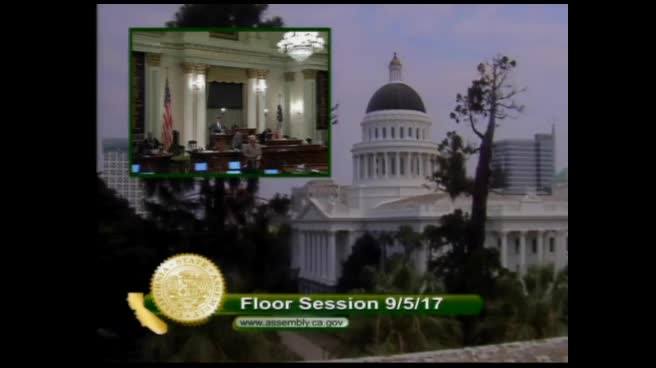
| Sep 5, 2017 | AB 836 CHIU Concurrence in Senate Amendments | Assembly Floor |
Passed |
|
| Aug 24, 2017 | Consent Calendar 2nd AB836 | Senate Floor |
Passed |
|
| Jul 12, 2017 | Do pass, but first be re-referred to the Committee on [Appropriations] with the recommendation: To Consent Calendar | Senate Standing Committee on Health |
Passed |
|
| May 11, 2017 | AB 836 CHIU Consent Calendar Second Day Regular Session | Assembly Floor |
Passed |
|
| May 3, 2017 | Do pass. To Consent Calendar. | Assembly Standing Committee on Appropriations |
Passed |
|
| Apr 18, 2017 | Do pass as amended, and be re-referred to the Committee on [Appropriations] with recommendation: To Consent Calendar | Assembly Standing Committee on Health |
Passed |
This list shows positions taken on this bill by organizations on the date displayed, which is linked to the original source.
Positions by individuals are not included.
|
Organization
|
Position
|
Date
|
|---|---|---|
| California Retailers Association | ** Support | Aug 22, 2017 |
| JuiceBot | ** Support | Aug 22, 2017 |
CONCURRENCE IN SENATE AMENDMENTS
CSA1 Bill Id:AB 836
Author:(Chiu)
As Amended Ver:July 3, 2017
Majority vote
ASSEMBLY: | 77-0 | (May 11, 2017) | SENATE: | 38-0 | (August 24, 2017) |
Original Committee Reference: HEALTH
SUMMARY: Permits the Department of Public Health (DPH) to issue a variance for dispensing bulk potentially hazardous food from vending machines.
The Senate amendments delete the Assembly version of this bill, and instead permit DPH to issue a variance for dispensing bulk potentially hazardous food from vending machines.
EXISTING LAW:
- Establishes the California Retail Food Code, within DPH, which provides health and sanitation standards for retail food facilities, various types of food, and food-related equipment, including vending machines.
- Requires potentially hazardous food to be dispensed from a vending machine to the consumer in the original package into which it was placed at the commissary or food processing plant. Prohibits vending machines from dispensing bulk potentially hazardous food.
- Requires a vending machine operator to maintain a record of cleaning and sanitizing in each machine.
- Defines "potentially hazardous food" as any food capable of supporting growth of infectious or toxigenic micro-organisms when held at temperatures above 45 degrees Fahrenheit.
AS PASSED BY THE ASSEMBLY, this bill permitted juice stored in bulk containers to be dispensed from a vending machine under certain conditions.
FISCAL EFFECT: According to the Senate Appropriations Committee, pursuant to Senate Rule 28.8, negligible state costs.
COMMENTS: According to the author, automated juice distribution systems make it easy and convenient to access freshly made vegetable and fruit juices. These specialty vending machines can offer healthy food options to customers who may not have fresh food options nearby. Unfortunately, health regulations adopted before the advent of automated juice machines were designed to prevent customers from having direct contact with bulk food. The author states that these outdated regulations do not take into account advances in technologies so that customers do not come into contact with the bulk food, and there is no ability for person to person transfer of contaminants through the food product.
Analysis Prepared by: John Gilman / HEALTH / (916) 319-2097 FN: 0001339
Office of Senate Floor Analyses (916) 651-1520 Fax: (916) 327-4478 | AB |
CONSENT
Bill No: AB 836
:
SENATE HEALTH COMMITTEE: 8-0, 7/12/17
AYES: Hernandez, Nguyen, Atkins, Leyva, Mitchell, Monning, Newman, Roth
NO VOTE RECORDED: Nielsen
SENATE APPROPRIATIONS COMMITTEE: Senate Rule 28.8
ASSEMBLY FLOOR: 77-0, 5/11/17 (Consent) - See last page for vote
DIGEST: This bill permits the Department of Public Health to grant a variance from provisions of law related to food safety in order to allow the dispensing of bulk potentially hazardous food from vending machines.
Existing law:
- Establishes the California Retail Food Code (CalCode) to regulate retail food facilities, which is under the administration of the Department of Public Health (DPH) and enforced by local environmental health officers.
- Defines “potentially hazardous food” as a food that requires time or temperature control to limit pathogenic micro-organism growth or toxin formation. Requires potentially hazardous food to be maintained at or above 135 degrees Fahrenheit, or at or below 41 degrees Fahrenheit. Exempts from this definition food that is in an unopened, hermetically sealed container that is commercially processed to achieve and maintain commercial sterility under conditions of non-refrigerated storage and distribution
- Requires vending machines, for purposes of the CalCode, to meet certain requirements, including that potentially hazardous food be dispensed to the consumer in the original package into which it was placed at the food processing plant, and prohibits vending machines from dispensing bulk potentially hazardous food.
- Defines “variance,” for purpose of the CalCode, as a written document issued by DPH that allows the use of an alternative practice or procedure based on a determination by DPH that the alternate practice or procedure is equivalent to the existing requirement, and that a health hazard will not result from the alternative practice or procedure.
- Permits a variance, as defined above, to be issued in specified circumstances, including for cooking and reheating temperatures for potentially hazardous food, for the use of raw shell eggs in foods that are not thoroughly cooked, for thawing of frozen food, and for the receiving temperatures of potentially hazardous foods, among others.
This bill adds, to the list of circumstances in which DPH is permitted to allow a “variance” of an existing food safety requirement, the dispensing of bulk potentially hazardous food from vending machines, as defined.
Comments
- Author’s statement. According to the author, specialty vending machines are part of a growing and popular trend to provide customers with conveniently prepared foods made-to-order. One example is juice distribution systems, which make it simple and convenient to access freshly made juice. These systems, approved by the federal Food and Drug Administration (FDA), provide customers with fresh locally sourced juice, as an alternative to sugary beverages. Unfortunately, health regulations adopted in the 1970’s before the advent of juice machines can be ambiguous and unnecessarily limit the ability to deploy this technology. Specifically, Health and Safety Code Section 114145(c) states, “Potentially hazardous food shall be dispensed to the consumer in the original package into which it was placed at the commissary or food processing plant. Bulk potentially hazardous food is prohibited.” These rules were designed to address packaging issues when customers have direct contact with bulk food. For example, most produce items in grocery stores are stored in these large containers, and then transferred by customers to smaller containers for purchase. This bill will ensure that an innovative and unique technology can be used and developed for customers around the state safely and consistently across California.
- What is JuiceBot? This bill is sponsored by JuiceBot, which uses a kiosk or vending machine to dispense raw, cold-pressed juice directly to consumers. JuiceBot describes itself as a distribution system that eliminates the need for pre-packaging in order to shield raw, cold-pressed juice from light and heat oxidation. According to JuiceBot, raw juice is very sensitive and starts to degrade in nutrient and enzyme content once packaged in clear plastic bottles. JuiceBot markets itself to producers of raw juice as an alternative to pre-packaging their juice for distribution. Instead, the juice goes from a commercial kitchen directly to one of the JuiceBot kiosks, where customers can select their own blend of juices. The juices in the kiosks are replaced every 48 hours.
- Federal juice safety requirements. Generally, federal law requires all juices, including juices used as an ingredient in beverages, to comply with the processing requirements specified in a hazard analysis and critical control points plan (HACCP) developed by the federal FDA. The juice HACCP includes a number of measure processors are required to take to reduce the threat of health hazards in the juice product, including, in certain cases, the pasteurization of juice for the elimination of microbial pathogens. However, retail facilities which produce and provide juice directly to consumers (including storing, preparing, packaging, serving, and vending) are exempted from the juice HACCP, whether or not the juice is pasteurized, as long as they do not sell or distribute juice to other business entities.
Federal law also establishes labeling requirements for foods, including for juices that have not been pasteurized. For juices that have not been pasteurized, the label is required to include the following warning statement:
WARNING: This product has not been pasteurized and, therefore, may contain harmful bacteria that can cause serious illness in children, the elderly, and persons with weakened immune systems.
However, the FDA does not require warning labels for juice that is sold by the glass, for example, at farmers’ markets, roadside stands, juice bars, and some restaurants.
- To pasteurize or not to pasteurize. Pasteurization is the process of heat processing a liquid or a food to kill pathogenic bacteria. Foods can also be pasteurized using gamma radiation, or high pressure processing. Heat processing pasteurization generally falls into one of two methods: high-temperature for a short period of time, or low-temperature for a longer time. Most of the juice sold in the United States is pasteurized, often using a high-temperature, short-time treatment known as flash pasteurization. According to the federal FDA, infants and young children, pregnant women, older adults, and people with weakened immune systems are at greatest risk for foodborne illnesses, and recommends that these groups should drink unpasteurized juice only if they bring it to a boil first to kill any harmful bacteria.
However, many advocates for “raw juice” argue that the pasteurization process not only kills harmful bacteria, it also kills beneficial bacteria and compromises nutrient quality, and much of the healthful attributes of vegetable and fruit juice is lost when juice is processed.
Related/Prior Legislation
SB 969 (Nguyen, Chapter 193, Statutes of 2016) permitted a food facility to sell Vietnamese rice cakes, as defined, that have been at room temperature for up to 24 hours, notwithstanding provisions of law that require potentially hazardous foods to either be refrigerated or kept hot.
SB 1067 (Huff, Chapter 195, Statutes of 2016) required the food safety certification examination, which must be completed by at least one person at every retail food facility, to include major food allergens and the symptoms that these allergens could cause in individuals who have allergic reactions. Additionally, revised and recast provisions of law governing the serving of raw and undercooked meat, and made various other updates and minor changes to the laws governing retail food facilities.
AB 2130 (Pan and Gatto, Chapter 75, Statutes of 2014) repealed provisions of law enacted last year that prohibits retail food employees from contacting exposed ready-to-eat foods with their bare hands, and replaced these provisions with the law that existed prior to the enactment of these provisions, which require food employees to minimize bare hand contact with ready-to-eat foods.
AB 1252 (Committee on Health, Chapter 556, Statutes of 2013) made numerous technical, clarifying, and non-controversial changes to the CalCode, and prohibited bare hand contact with ready-to-eat food without prior authorization from the local environmental health department.
SB 144 (Runner, Chapter 23, Statutes of 2006) established the CalCode in order to create uniformity between California's retail food safety laws and those of other states, as well as to enhance food safety laws based on the best available science.
FISCAL EFFECT: Appropriation: Fiscal Com.: Local:
JuiceBot (source)
California Retailers Association
OPPOSITION: (Verified 8/22/17)
None received
ARGUMENTS IN SUPPORT: This bill is sponsored by JuiceBot, which states that it has produced a robotic vending machine that dispenses health juice and works with local juice bars to bring a health alternative to the vending machine industry. JuiceBot states that its system, approved by the FDA, provides customers with fresh, raw juice from locally sourced produce. According to JuiceBot, its technology allows all of the vending machines to be automatically temperature controlled, and that if the vending machine goes above 41 degrees, or something else goes wrong, the machine will shut off and will not vend. JuiceBot asserts that their technology is more consistent and sanitary than a juice bar, and reduces the risk of human contamination from improper hygiene, sick employees, or improper handling of food while serving. JuiceBot states that this bill will update the law to allow it to operate in the state and make healthy drink options accessible on a larger scale. The California Retailers Association (CRA) states in support that the vending machine industry is constantly changing, bringing healthier food and beverages to customers. CRA states that these emerging technologies will allow fresh fruits and vegetables to be more accessible to the public on a larger scale than the popular new boutique raw juice bars, and that this bill allows clarifies the law to allow for this new technology.
ASSEMBLY FLOOR: 77-0, 5/11/17
AYES: Acosta, Aguiar-Curry, Travis Allen, Arambula, Baker, Berman, Bigelow, Bloom, Bocanegra, Bonta, Brough, Burke, Caballero, Calderon, Cervantes, Chau, Chávez, Chen, Chiu, Choi, Chu, Cooley, Cooper, Cunningham, Dababneh, Daly, Eggman, Flora, Fong, Frazier, Friedman, Gallagher, Cristina Garcia, Eduardo Garcia, Gipson, Gloria, Gomez, Gonzalez Fletcher, Gray, Grayson, Harper, Holden, Irwin, Jones-Sawyer, Kalra, Kiley, Lackey, Levine, Limón, Low, Maienschein, Mathis, Mayes, McCarty, Medina, Melendez, Mullin, Muratsuchi, Nazarian, Obernolte, Quirk, Quirk-Silva, Reyes, Ridley-Thomas, Rodriguez, Rubio, Salas, Santiago, Steinorth, Mark Stone, Thurmond, Ting, Voepel, Waldron, Weber, Wood, Rendon
NO VOTE RECORDED: Dahle, O'Donnell, Patterson
8/22/17 16:31:52
**** END ****
SENATE COMMITTEE ON HEALTH
Senator Ed Hernandez, O.D., Chair
BILL NO: AB 836
AUTHOR: | Chiu | ||
VERSION: | July 3, 2017 | ||
HEARING DATE: | July 12, 2017 | ||
CONSULTANT: | Vincent D. Marchand | ||
SUBJECT: Vending machines: bulk food
SUMMARY:
Permits the Department of Public Health to grant a variance from provisions of law related to food safety in order to allow the dispensing of bulk potentially hazardous food from vending machines.
Existing law:
- Establishes the California Retail Food Code (CalCode) to regulate retail food facilities, which is under the administration of the Department of Public Health (DPH) and enforced by local environmental health officers.
- Defines “potentially hazardous food” as a food that requires time or temperature control to limit pathogenic micro-organism growth or toxin formation. Requires potentially hazardous food to be maintained at or above 135 degrees Fahrenheit, or at or below 41 degrees Fahrenheit. Exempts from this definition food that is in an unopened, hermetically sealed container that is commercially processed to achieve and maintain commercial sterility under conditions of non-refrigerated storage and distribution
- Requires vending machines, for purposes of the CalCode, to meet certain requirements, including that potentially hazardous food be dispensed to the consumer in the original package into which it was placed at the food processing plant, and prohibits vending machines from dispensing bulk potentially hazardous food.
- Defines “variance,” for purpose of the CalCode, as a written document issued by DPH that allows the use of an alternative practice or procedure based on a determination by DPH that the alternate practice or procedure is equivalent to the existing requirement, and that a health hazard will not result from the alternative practice or procedure.
- Permits a variance, as defined above, to be issued in specified circumstances, including for cooking and reheating temperatures for potentially hazardous food, for the use of raw shell eggs in foods that are not thoroughly cooked, for thawing of frozen food, and for the receiving temperatures of potentially hazardous foods, among others.
This bill adds, to the list of circumstances in which DPH is permitted to allow a “variance” of an existing food safety requirement, the dispensing of bulk potentially hazardous food from vending machines, as defined.
FISCAL EFFECT:
This bill, in its current form, has not been analyzed by a fiscal committee.
PRIOR VOTES:
Assembly Floor: | 77 - 0 |
Assembly Appropriations Committee: | 16 - 0 |
Assembly Health Committee: | 15 - 0 |
COMMENTS:
- Author’s statement. According to the author, specialty vending machines are part of a growing and popular trend to provide customers with conveniently prepared foods made-to-order. One example is juice distribution systems, which make it simple and convenient to access freshly made juice. These systems, approved by the federal Food and Drug Administration (FDA), provide customers with fresh locally sourced juice, as an alternative to sugary beverages. Unfortunately, health regulations adopted in the 1970’s before the advent of juice machines can be ambiguous and unnecessarily limit the ability to deploy this technology. Specifically, Health and Safety code 114145(c) states, “Potentially hazardous food shall be dispensed to the consumer in the original package into which it was placed at the commissary or food processing plant. Bulk potentially hazardous food is prohibited.” These rules were designed to address packaging issues when customers have direct contact with bulk food. For example, most produce items in grocery stores are stored in these large containers, and then transferred by customers to smaller containers for purchase. This legislation will ensure that an innovative and unique technology can be used and developed for customers around the state safely and consistently across California.
- What is JuiceBot? This bill is sponsored by JuiceBot, which uses a kiosk or vending machine to dispense raw, cold-pressed juice directly to consumers. JuiceBot describes itself as a distribution system that eliminates the need for pre-packaging in order to shield raw, cold-pressed juice from light and heat oxidation. According to JuiceBot, raw juice is very sensitive and starts to degrade in nutrient and enzyme content once packaged in clear plastic bottles. JuiceBot markets itself to producers of raw juice as an alternative to pre-packaging their juice for distribution. Instead, the juice goes from a commercial kitchen directly to one of the JuiceBot kiosks, where customers can select their own blend of juices. The juices in the kiosks are replaced every 48 hours.
- Federal juice safety requirements. Generally, federal law requires all juices, including juices used as an ingredient in beverages, to comply with the processing requirements specified in a hazard analysis and critical control points plan (HACCP) developed by the federal FDA. The juice HACCP includes a number of measure processors are required to take to reduce the threat of health hazards in the juice product, including, in certain cases, the pasteurization of juice for the elimination of microbial pathogens. However, retail facilities which produce and provide juice directly to consumers (including storing, preparing, packaging, serving, and vending) are exempted from the juice HACCP, whether or not the juice is pasteurized, as long as they do not sell or distribute juice to other business entities.
Federal law also establishes labeling requirements for foods, including for juices that have not been pasteurized. For juices that have not been pasteurized, the label is required to include the following warning statement:
WARNING: This product has not been pasteurized and, therefore, may contain harmful bacteria that can cause serious illness in children, the elderly, and persons with weakened immune systems.
However, the FDA does not require warning labels for juice that is sold by the glass, for example, at farmers’ markets, roadside stands, juice bars, and some restaurants.
- To pasteurize or not to pasteurize. Pasteurization is the process of heat processing a liquid or a food to kill pathogenic bacteria. Foods can also be pasteurized using gamma radiation, or high pressure processing. Heat processing pasteurization generally falls into one of two methods: high-temperature for a short period of time, or low-temperature for a longer time. Most of the juice sold in the United States is pasteurized, often using a high-temperature, short-time treatment known as flash pasteurization. According to the federal FDA, infants and young children, pregnant women, older adults, and people with weakened immune systems are at greatest risk for foodborne illnesses, and recommends that these groups should drink unpasteurized juice only if they bring it to a boil first to kill any harmful bacteria.
However, many advocates for “raw juice” argue that the pasteurization process not only kills harmful bacteria, it also kills beneficial bacteria and compromises nutrient quality, and much of the healthful attributes of vegetable and fruit juice is lost when juice is processed. - Prior legislation. SB 969 (Nguyen, Chapter 193, Statutes of 2016) permits a food facility to sell Vietnamese rice cakes, as defined, that have been at room temperature for up to 24 hours, notwithstanding provisions of law that require potentially hazardous foods to either be refrigerated or kept hot.
SB 1067 (Huff, Chapter 195, Statutes of 2016) required the food safety certification examination, which must be completed by at least one person at every retail food facility, to include major food allergens and the symptoms that these allergens could cause in individuals who have allergic reactions. Additionally, revises and recasts provisions of law governing the serving of raw and undercooked meat, and makes various other updates and minor changes to the laws governing retail food facilities.
AB 2130 (Pan and Gatto, Chapter 75, Statutes of 2014) repealed provisions of law enacted last year that prohibits retail food employees from contacting exposed ready-to-eat foods with their bare hands, and replaces these provisions with the law that existed prior to the enactment of these provisions, which require food employees to minimize bare hand contact with ready-to-eat foods.
AB 1252 (Committee on Health, Chapter 556, Statutes of 2013) made numerous technical, clarifying, and non-controversial changes to the CalCode, and prohibited bare hand contact with ready-to-eat food without prior authorization from the local environmental health department.
SB 144 (Runner, Chapter 23, Statutes of 2006) established the CalCode in order to create uniformity between California's retail food safety laws and those of other states, as well as to enhance food safety laws based on the best available science.
- Support. This bill is sponsored by JuiceBot, which states that it has produced a robotic vending machine that dispenses health juice and works with local juice bars to bring a health alternative to the vending machine industry. JuiceBot states that its system, approved by the FDA, provides customers with fresh, raw juice from locally sourced produce. According to JuiceBot, its technology allows all of the vending machines to be automatically temperature controlled, and that if the vending machine goes above 41 degrees, or something else goes wrong, the machine will shut off and will not vend. JuiceBot asserts that their technology is more consistent and sanitary than a juice bar, and reduces the risk of human contamination from improper hygiene, sick employees, or improper handling of food while serving. JuiceBot states that this bill will update the law to allow it to operate in the state and make healthy drink options accessible on a larger scale. The California Retailers Association (CRA) states in support that the vending machine industry is constantly changing, bringing healthier food and beverages to customers. CRA states that these emerging technologies will allow fresh fruits and vegetables to be more accessible to the public on a larger scale than the popular new boutique raw juice bars, and that this bill allows clarifies the law to allow for this new technology.
- Recent amendments address DPH concerns. The prior version of this bill, rather than permitting DPH to issue a variance, instead amended the law to explicitly permit vending machines that meet certain requirements to dispense un-pasteurized juice. DPH opposed that bill unless amended to instead grant DPH greater authority to grant variances with regard to potentially hazardous food in bulk form. DPH stated that while it supports the author’s intention to provide healthy food options in vending machines, the bill in its prior form did not address the full range of food and health safety concerns that DPH has regarding distributing un-pasteurized juice in vending machines. DPH acknowledged that it is impractical to develop statutory language to address the detailed types of controls that would be necessary to safely hold juice in a vending machine, and therefore requested amendments, that are now reflected in the bill, to allow DPH to issue a variance on a case-by-case basis. The recent amendments remove the opposition of DPH.
SUPPORT AND OPPOSITION:
Support: California Retailers Association
JuiceBot
Oppose: None received
-- END --
Date of Hearing: May 3, 2017
ASSEMBLY COMMITTEE ON APPROPRIATIONS
Lorena Gonzalez Fletcher, Chair
ABPCA Bill Id:AB 836
Author:(Chiu) – As Amended Ver:April 25, 2017
Policy Committee: | Health | Vote: | 15 - 0 |
|
| ||
|
|
Urgency: No State Mandated Local Program: Yes Reimbursable: No
SUMMARY:
This bill allows juice stored in bulk containers to be dispensed from vending machines that meet certain specifications.
FISCAL EFFECT:
Since this requirement is locally enforced and enforcement costs, if any, can be recovered through local fees, negligible state costs.
COMMENTS:
- Purpose. According to the author, automated juice distribution systems make it easy and convenient to access freshly made vegetable and fruit juices. These specialty vending machines are not recognized under current health regulations. This bill would provide a regulatory framework to allow their legal operation. The bill is sponsored by a company called JuiceBot that manufactures these machines.
- Background. The California Retail Food Code (CRFC), which is enforced by 62 local environmental health agencies, contains regulatory requirements for California retail food facilities. Local agencies generally regulate dispensing machines under a food facility permit, and have separate permits for vending machines. The bulk juice dispensing authorized under this bill would be similarly regulated under local authority. Given juice is a potentially hazardous food item, this bill establishes specific controls that must be in place, including thermostatic controls to maintain accurate temperatures, replacement of juice that has not been dispensed within 48 hours, and controls that prevent the machine from dispensing juice in the case of a power outage.
Analysis Prepared by: Lisa Murawski / APPR. / (916) 319-2081
Date of Hearing: April 18, 2017
ASSEMBLY COMMITTEE ON HEALTH
Jim Wood, Chair
ABPCA Bill Id:AB 836
Author:(Chiu) – As Amended Ver:April 5, 2017
SUBJECT: Vending machines: bulk food.
SUMMARY: Permits juice stored in bulk containers to be dispensed from a vending machine. Requires nonpasteurized juice that is so dispensed to be replaced within 48 hours. Specifically, this bill:
- Permits juice stored in bulk containers that were filled at a commissary or at the manufacturer’s or food processor’s plant to be dispensed from a vending machine that is temperature controlled at 41 degrees or less into single-serving containers provided internally from the machine.
- Requires nonpasteurized juice dispensed from a vending machine to be replaced within 48 hours and to include a label at the point of sale that states the juice is not pasteurized.
EXISTING LAW:
- Establishes the California Retail Food Code (CRFC), within the Department of Public Health (DPH), which provides health and sanitation standards for retail food facilities, various types of food, and food-related equipment, including vending machines.
- Requires potentially hazardous food to be dispensed from a vending machine to the consumer in the original package into which it was placed at the commissary or food processing plant. Prohibits vending machines from dispensing bulk potentially hazardous food.
- Requires a vending machine operator to maintain a record of cleaning and sanitizing in each machine.
- Defines “potentially hazardous food” as any food capable of supporting growth of infectious or toxigenic micro-organisms when held at temperatures above 45 degrees Fahrenheit.
FISCAL EFFECT: This bill has not yet been analyzed by a fiscal committee.
COMMENTS:
- PURPOSE OF THIS BILL. According to the author, automated juice distribution systems make it easy and convenient to access freshly made vegetable and fruit juices. These specialty vending machines can offer healthy food options to customers who may not have fresh food options nearby. Unfortunately, health regulations adopted before the advent of automated juice machines were designed to prevent customers from having direct contact with bulk food. The author states that these outdated regulations do not take into account advances in technologies so that customers do not come into contact with the bulk food, and there is no ability for person to person transfer of contaminants through the food product.
- BACKGROUND. Currently organic juices are generally purchased from grocery stores or juice bars. This bill amends current law to allow fresh organic fruit and vegetable juices to be purchased from specially designed vending machines that control temperature and prevent contamination. According to a 2016 article in the Business Insider, vending machines manufactured by the sponsor of this bill dispense eight ounces of juice for $5.00.
- OTHER STATES. Illinois and Connecticut are among other states that regulate potentially hazardous food dispensed from vending machines. Both those states require: a) thermostatic controls with an accuracy of plus or minus two degrees Fahrenheit to insure the maintenance of applicable temperatures at all times; and, b) controls which prevent the machine from vending potentially hazardous food until serviced by the operator, in the event of power failure or other condition which results in noncompliance with temperature requirements in the food storage compartment.
- SUPPORT. JuiceBot, sponsor of this bill, states in support that passage will modernize current law to allow for vending machines to dispense fresh juice in a safe and technologically advanced manner and will benefit the health of Californians while supporting California-based businesses. JuiceBot states further, that provisions of the bill will ensure the health and safety of the public by requiring that the juice be replaced with 48 hours and requiring notice at point of sale whether it is non-pasteurized.
- RELATED LEGISLATION. SB 300 (Monning) requires, among other provisions, vending machines that dispense sugar sweetened drinks have a warning posted on the machine that drinking beverages with added sugar contributes to obesity, diabetes, and tooth decay.
- PREVIOUS LEGISLATION. SB 203 (Monning) of 2015, a bill similar to SB 300 failed passage in the Senate Health Committee.
- COMMENTS. The Committee should consider amending this bill to require:
- Thermostatic controls with an accuracy of plus or minus two degrees Fahrenheit to insure the maintenance of applicable temperatures at all times;
- Controls that prevent the machine from vending potentially hazardous food until serviced by the operator, in the event of power failure or other condition which results in noncompliance with temperature requirements in the food storage compartment; and,
- Controls that prevent the dispensing of nonpasteurized juice if the juice has not been replaced within 48 hours.
- TECHNICAL AMENDMENT. On page 3, line 15, after “41” insert “Fahrenheit”.
REGISTERED SUPPORT / OPPOSITION:
Support
JuiceBot (sponsor)
Opposition
None on file.
Analysis Prepared by: John Gilman / HEALTH / (916) 319-2097
Bill Author

Bill Co-Author(s):