AB 864: California Conservation Corps: applicant selection.
- Session Year: 2017-2018
- House: Assembly
- Latest Version Date: 2017-10-11
Existing law authorizes the Director of the California Conservation Corps, in implementing the California Conservation Corps program, to recruit and enroll corpsmembers and to adopt criteria for selecting applicants for enrollment, including individuals convicted of a crime described in the California Uniform Controlled Substances Act. Existing law requires the director, when adopting this criteria, to take into account the health, safety, and welfare of the public and the corps program participants and staff.
This bill would authorize the director to select an applicant for enrollment in the corps program who is on probation, postrelease community supervision, or mandatory supervision.
Existing law establishes community conservation corps, defined as a nonprofit public benefit corporation or an agency operated by a city, county, or city and county that is certified by the California Conservation Corps, as meeting specified criteria.
Existing law prohibits school districts from employing or retaining in employment persons who have been convicted of a controlled substance offense, as defined.
This bill would authorize, notwithstanding that prohibition, a school district or county office of education that operates a community conservation corps to select an applicant for enrollment in the community conservation corps program who is on probation, postrelease community supervision, or mandatory supervision.
Existing law authorizes the Director of the California Conservation Corps, in implementing the California Conservation Corps program, to recruit and enroll corpsmembers and to adopt criteria for selecting applicants for enrollment, including individuals convicted of a crime described in the California Uniform Controlled Substances Act. Existing law requires the director, when adopting this criteria, to take into account the health, safety, and welfare of the public and the corps program participants and staff.
This bill would authorize the director to select an applicant for enrollment in the corps program who is on probation, parole, post-release postrelease community supervision, or mandatory supervision.
Existing law authorizes the Director of the California Conservation Corps, in implementing the California Conservation Corps program, to recruit and enroll corpsmembers and to adopt criteria for selecting applicants for enrollment, including individuals convicted of a crime described in the California Uniform Controlled Substances Act. Existing law requires the director, when adopting this criteria, to take into account the health, safety, and welfare of the public and the corps program participants and staff.
This bill would authorize the director to select an applicant for enrollment in the corps program who is on probation, parole, post-release community supervision, or mandatory supervision.
In recruiting and enrolling corpsmembers and special corpsmembers, the director may select an applicant for enrollment in the corps program who is on probation, postrelease community supervision, or mandatory supervision.
SEC. 2.Section 17003 is added to the Public Resources Code, to read:17003.Notwithstanding the prohibition on hiring or retaining an employee with a controlled substance offense, as defined in Section 44011 of the Education Code, contained in Part 25 (commencing with Section 44000) of Division 3 of Title 2 of the Education Code, a school district or county office of education that operates a community conservation corps certified pursuant to Section 14507.5 may select an applicant for enrollment in the community conservation corps program who is on probation, postrelease community supervision, or mandatory supervision.
In recruiting and enrolling corpsmembers and special corpsmembers, the director may select an applicant for enrollment in the corps program who is on probation, parole, post-release postrelease community supervision, or mandatory supervision.
In recruiting and enrolling corpsmembers and special corpsmembers, the director may select an applicant for enrollment in the corps program who is on probation, parole, post-release community supervision, or mandatory supervision.
|
Date
|
Status
|
|---|---|
| Oct 11, 2017 | Chaptered by Secretary of State - Chapter 659, Statutes of 2017. |
| Oct 11, 2017 | Approved by the Governor. |
| Sep 19, 2017 | Enrolled and presented to the Governor at 3 p.m. |
| Sep 11, 2017 | Senate amendments concurred in. To Engrossing and Enrolling. |
| Sep 6, 2017 | In Assembly. Concurrence in Senate amendments pending. May be considered on or after September 8 pursuant to Assembly Rule 77. |
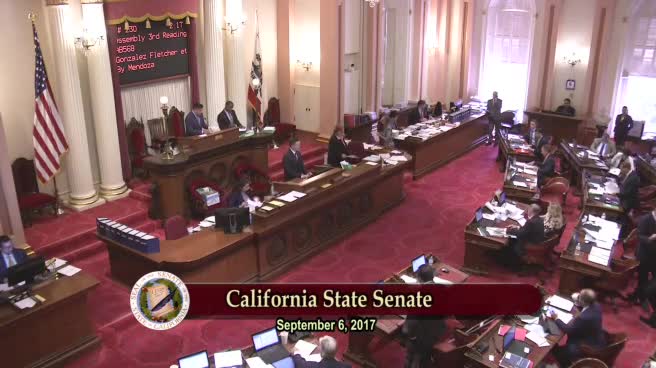
| Sep 6, 2017 | Read third time. Passed. Ordered to the Assembly. |
| Sep 5, 2017 | Read second time. Ordered to third reading. |
| Sep 1, 2017 | From committee: Do pass. (Ayes 6. Noes 1.) (September 1). |
| Aug 21, 2017 | In committee: Referred to APPR. suspense file. |
| Jul 11, 2017 | From committee: Do pass and re-refer to Com. on APPR. (Ayes 9. Noes 0.) (July 11). Re-referred to Com. on APPR. |
| Jul 3, 2017 | From committee chair, with author's amendments: Amend, and re-refer to committee. Read second time, amended, and re-referred to Com. on N.R. & W. |
| Jun 14, 2017 | Referred to Com. on N.R. & W. |
| Jun 1, 2017 | In Senate. Read first time. To Com. on RLS. for assignment. |
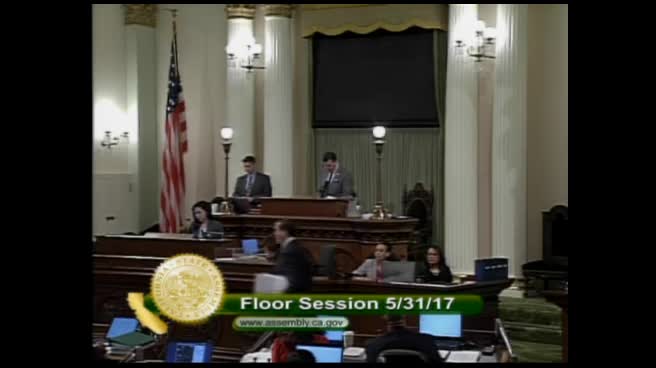
| May 31, 2017 | Read third time. Passed. Ordered to the Senate. (Ayes 74. Noes 0. Page 1881.) |
| May 30, 2017 | Read second time. Ordered to third reading. |
| May 26, 2017 | From committee: Do pass. (Ayes 14. Noes 0.) (May 26). |
| Apr 26, 2017 | In committee: Set, first hearing. Referred to APPR. suspense file. |
| Apr 4, 2017 | From committee: Do pass and re-refer to Com. on APPR. (Ayes 9. Noes 0.) (April 3). Re-referred to Com. on APPR. |
| Mar 28, 2017 | Re-referred to Com. on NAT. RES. |
| Mar 27, 2017 | From committee chair, with author's amendments: Amend, and re-refer to Com. on NAT. RES. Read second time and amended. |
| Mar 2, 2017 | Referred to Com. on NAT. RES. |
| Feb 17, 2017 | From printer. May be heard in committee March 19. |
| Feb 16, 2017 | Read first time. To print. |
|
Date
|
Description
|
Location
|
Votes
|
|
|---|---|---|---|---|
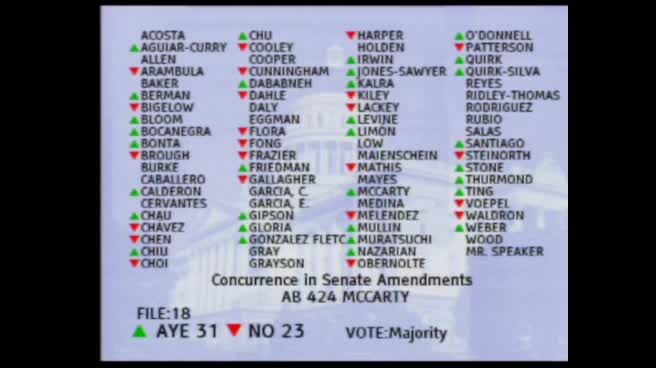
| Sep 11, 2017 | AB 864 MCCARTY Concurrence in Senate Amendments | Assembly Floor |
Passed |
|
| Sep 6, 2017 | Assembly 3rd Reading AB864 McCarty By Hertzberg | Senate Floor |
Passed |
|
| Sep 1, 2017 | Do pass | Senate Standing Committee on Appropriations |
Passed |
|
| Aug 21, 2017 | Placed on suspense file | Senate Standing Committee on Appropriations |
Passed |
|
| Jul 11, 2017 | Do pass, but first be re-referred to the Committee on [Appropriations] | Senate Standing Committee on Natural Resources and Water |
Passed |
|
| May 31, 2017 | AB 864 MCCARTY Assembly Third Reading | Assembly Floor |
Passed |
|
| May 26, 2017 | Do pass. | Assembly Standing Committee on Appropriations |
Passed |
|
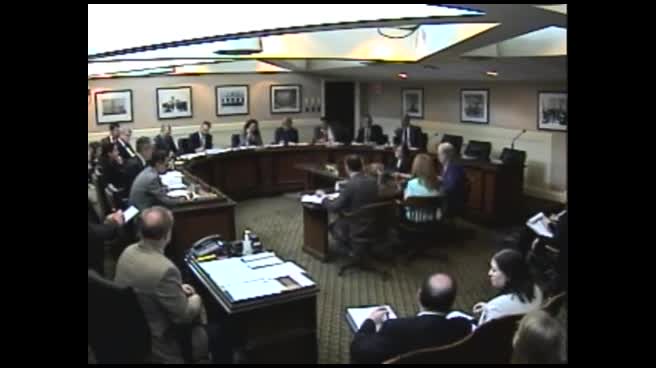
| Apr 3, 2017 | Do pass and be re-referred to the Committee on [Appropriations] | Assembly Standing Committee on Natural Resources |
Passed |
This list shows positions taken on this bill by organizations on the date displayed, which is linked to the original source.
Positions by individuals are not included.
|
Organization
|
Position
|
Date
|
|---|---|---|
| Anti-Recidivism Coalition | ** Support | Sep 6, 2017 |
| California Association Of Local Conservation Corps | ** Support | Sep 6, 2017 |
| Fathers and Families of San Joaquin | ** Support | Sep 6, 2017 |
| Fresno Economic Opportunities Commission | ** Support | Sep 6, 2017 |
| John Muir Charter Schools | ** Support | Sep 6, 2017 |
| League Of Women Voters Of California | ** Support | Sep 6, 2017 |
| national association of social workers--california chapter | ** Support | Sep 6, 2017 |
| REDF | ** Support | Sep 6, 2017 |
| San Joaquin County Office Of Education | ** Support | Sep 6, 2017 |
Office of Senate Floor Analyses (916) 651-1520 Fax: (916) 327-4478 | AB |
THIRD READING
Bill No: AB 864
:
SENATE NATURAL RES. & WATER COMMITTEE: 9-0, 7/11/17
AYES: Hertzberg, Stone, Allen, Atkins, Hueso, Jackson, Monning, Stern, Vidak
SENATE APPROPRIATIONS COMMITTEE: 6-1, 9/1/17
AYES: Lara, Bates, Beall, Bradford, Hill, Wiener
NOES: Nielsen
ASSEMBLY FLOOR: 74-0, 5/31/17 - See last page for vote
DIGEST:
This bill authorizes, but does not require, the California Conservation Corps (CCC) director to select an applicant for enrollment in the corps program who is on probation, postrelease community supervision, or mandatory supervision. This bill also authorizes, but does not require, a school district or county office of education that operates a community conservation corps to select applicants with controlled substance convictions.
Existing law:
- Establishes the CCC in the Natural Resources Agency and requires the CCC to implement and administer the conservation corps program.
- Requires the Governor to appoint a director, who shall act as the administrative officer of the CCC.
- Authorizes the director to recruit and enroll corps members and special corps members.
- Authorizes the director to adopt criteria for selecting applicants for enrollment in corps’ program, including criteria for individuals convicted of a crime described in the California Uniform Controlled Substance Act. Requires the director to take into account, when adopting this criteria, the health, safety, and welfare of the public and the corps; program participants and staff.
- Requires the CCC, in conjunction with the Employment Development Department, to place an emphasis on developing and executing plans to assist corps members in obtaining employment following their participation in the CCC.
- Establishes, according to the employment application form for the CCC, that there are three principal requirements for joining the CCC: men and women must be between the ages of 18 to 25, not on parole or formal/supervised probation, and a California resident. Further, corpsmembers are drug tested and must pass a physical and a background check prior to being enrolled.
- Provides, pursuant to the CCC Web site, that CCC applicants also may not have a record of a conviction of a violent crime including but not limited to armed robbery, arson, assault, battery, drug cultivation, manufacturing, distribution, trafficking, possession with intent to sell, or felony possession, kidnapping, lewd or lascivious acts against children, murder or attempted murder, rape or other sex crimes, voluntary manslaughter, crimes against person 60 years of age or older, blind persons, or paraplegics, or any other crime determined by the CCC to be inconsistent with the mission or policies of the CCC.
This bill authorizes, but does not require, the CCC director to select an applicant for enrollment in the corps program who is on probation, postrelease community supervision, or mandatory supervision. It also authorizes, but does not require, a school district or county office of education that operates a community conservation corps to select applicants with controlled substance convictions.
FISCAL EFFECT: Appropriation: Fiscal Com.: Local: No
According to the Senate Appropriations Committee:
No direct fiscal impact on the state. However, pressures for the CCC to change its policy and accept individuals on probation or formal supervision would result in reduced capacity for currently eligible individuals to participate or cost pressures to increase funding to accommodate both currently- and newly-eligible individual. The CCC may incur significant additional costs for increased supervision, treatment services, and to ensure the conditions of post-release supervision or probation are met.
Anti-Recidivism Coalition
California Association of Local Conservation Corps
Fathers and Families of San Joaquin
Fresno Economic Opportunities Commission
John Muir Charter Schools
League of Women Voters of California
National Association of Social Workers—California Chapter
REDF
San Joaquin County Office of Education
None received
ARGUMENTS IN SUPPORT: According to the author, the CCC offers a unique opportunity for young people to contribute to their community and learn valuable skills in the process. Many corps members are hired right after graduation in fields like firefighting and energy consulting. This is something that young people, especially those in need of a second chance, should be able to access
ASSEMBLY FLOOR: 74-0, 5/31/17
AYES: Acosta, Aguiar-Curry, Travis Allen, Arambula, Baker, Berman, Bigelow, Bloom, Bocanegra, Bonta, Brough, Burke, Caballero, Calderon, Cervantes, Chau, Chávez, Chiu, Chu, Cooley, Cooper, Cunningham, Dababneh, Dahle, Daly, Flora, Fong, Frazier, Friedman, Gallagher, Cristina Garcia, Eduardo Garcia, Gipson, Gloria, Gomez, Gonzalez Fletcher, Gray, Grayson, Holden, Irwin, Jones-Sawyer, Kalra, Kiley, Lackey, Levine, Limón, Low, Maienschein, Mathis, McCarty, Medina, Mullin, Muratsuchi, Nazarian, Obernolte, O'Donnell, Patterson, Quirk, Quirk-Silva, Reyes, Ridley-Thomas, Rodriguez, Rubio, Salas, Santiago, Steinorth, Mark Stone, Thurmond, Ting, Voepel, Waldron, Weber, Wood, Rendon
NO VOTE RECORDED: Chen, Choi, Eggman, Harper, Mayes, Melendez
9/6/17 9:29:54
CONCURRENCE IN SENATE AMENDMENTS
CSA1 Bill Id:AB 864
Author:(McCarty)
As Amended Ver:July 3, 2017
Majority vote
ASSEMBLY: | 74-0 | (May 31, 2017) | SENATE: | 38-0 | (September 6, 2017) |
Original Committee Reference: NAT. RES.
SUMMARY: Authorizes the director of the California Conservation Corps (CCC) to select an applicant for enrollment in the corps program who is on probation, postrelease community supervision, or mandatory supervision.
The Senate amendments authorize, in certain circumstances, a school district or county office of education that operates a community conservation corps to select an applicant for enrollment in the community conservation corps' program who is on probation, postrelease community supervision, or mandatory supervision.
EXISTING LAW:
- Establishes the CCC in the Natural Resources Agency and requires the CCC to implement and administer the conservation corps program.
- Requires the Governor to appoint a director, who shall act as the administrative officer of the CCC.
- Authorizes the director to recruit and enroll corps members and special corps members.
- Authorizes the director to adopt criteria for selecting applicants for enrollment in corps' program, including criteria for individuals convicted of a crime described in the California Uniform Controlled Substance Act. Requires the director to take into account, when adopting this criteria, the health, safety, and welfare of the public and the corps; program participants and staff.
- Requires the CCC, in conjunction with the Employment Development Department, to place an emphasis on developing and executing plans to assist corps members in obtaining employment following their participation in the CCC.
FISCAL EFFECT: According to the Senate Appropriations Committee, no direct fiscal impact on the state. However, pressures for the CCC to change its policy and accept individuals on probation or formal supervision would result in reduced capacity for currently eligible individuals to participate or cost pressures to increase funding to accommodate both currently- and newly-eligible individual. The CCC may incur significant additional costs for increased supervision, treatment services, and to ensure the conditions of post-release supervision or probation are met.
COMMENTS: The CCC, established by Governor Brown during his first term in 1976, is the oldest and largest state conservation corps program in the country. It's modeled after the 1930s Civilian Conservation Corps. The CCC's motto is "Hard work, low pay, miserable conditions ... and more!" Corps members must be between the ages of 18 and 25, California residents, and not on probation or parole. Although the CCC was originally conceived as a labor source for trail maintenance and restoration, it has since evolved to a workforce development program. Corps members now learn skills such as, forestry management, energy auditing and installation, emergency services management, and firefighting. Many corps members also receive their high school diplomas and industry certifications at the conclusion of their service. More than 120,000 young men and women have participated in the CCC, with approximately 3,000 hired each year.
Analysis Prepared by: Michael Jarred / NAT. RES. / (916) 319-2092 FN: 0001928
SENATE COMMITTEE ON APPROPRIATIONS
Senator Ricardo Lara, Chair
2017 - 2018 Regular Session
AB 864 (McCarty) - California Conservation Corps: applicant selection
Version: July 3, 2017 | Policy Vote: N.R. & W. 9 - 0 |
Urgency: No | Mandate: No |
Hearing Date: August 21, 2017 | Consultant: Narisha Bonakdar |
This bill meets the criteria for referral to the Suspense File.
Bill Summary:
AB 864 allows for the enrollment of individuals on probation, post-release community supervision, or mandatory supervision into the California Conservation Corps (CCC).
Fiscal Impact:
No direct fiscal impact on the state. However, pressures for the CCC to change its policy and accept individuals on probation or formal supervision would result in reduced capacity for currently eligible individuals to participate or cost pressures to increase funding to accommodate both currently- and newly-eligible individual. The CCC may incur significant additional costs for increased supervision, treatment services, and to ensure the conditions of post-release supervision or probation are met.
Background:
- The CCC, established by Governor Brown during his first term in 1976, is the oldest and largest state conservation corps program in the country. It's modeled after the 1930s Civilian Conservation Corps. The CCC’s motto is “Hard work, low pay, miserable conditions ... and more!”
Corps members must be California residents between the ages of 18 and 25. Currently, the CCC Director has authority in statute to “recruit and enroll Corpsmembers and special Corpsmembers” with no limitations. However, the CCC currently has a policy of not allowing young adults to enroll in the program if they are on parole or formal or supervised probation. This bill gives the Director specific authority in statute to select an applicant who is on probation, post-release community supervision, or mandatory supervision.
Although the CCC was originally conceived as a labor source for trail maintenance and restoration, it has since evolved to a workforce development program. Corps members now learn skills such as, forestry management, energy auditing and installation, emergency services management, and firefighting. Many corps members also receive their high school diplomas and industry certifications at the conclusion of their service. More than 120,000 young men and women have participated in the CCC, with approximately 3,000 hired each year.
Proposed Law:
This bill:
- Authorizes the director of the CCC to select an applicant for enrollment in the corps’ program who is on probation, post-release community supervision, or mandatory supervision.
- Authorizes, notwithstanding that prohibition, a school district or county office of education that operates a community conservation corps to select an applicant for enrollment in the community conservation corps’ program who is on probation, post-release community supervision, or mandatory supervision.
-- END --
SENATE COMMITTEE ON NATURAL RESOURCES AND WATER
Senator Robert Hertzberg, Chair
2017 - 2018 Regular
Bill No: AB 864 Hearing Date: July 11, 2017
Author: | |||
Version: | Amended | ||
Urgency: | Fiscal: | ||
Consultant: | |||
Subject: California Conservation Corps: applicant selection
BACKGROUND AND EXISTING LAW
- Establishes the California Conservation Corps (CCC) in the Natural Resources Agency and requires the CCC to implement and administer the conservation corps program.
- Requires the Governor to appoint a director, who shall act as the administrative officer of the CCC.
- Authorizes the director to recruit and enroll corps members and special corps members.
- Authorizes the director to adopt criteria for selecting applicants for enrollment in corps’ program, including criteria for individuals convicted of a crime described in the California Uniform Controlled Substance Act. Requires the director to take into account, when adopting this criteria, the health, safety, and welfare of the public and the corps; program participants and staff.
- Requires the CCC, in conjunction with the Employment Development Department, to place an emphasis on developing and executing plans to assist corps members in obtaining employment following their participation in the CCC.
- Establishes, according to the employment application form for the CCC, that there are three principal requirements for joining the CCC: men and women must be between the ages of 18 to 25, not on parole or formal/supervised probation, and a California resident. Further, corpsmembers are drug tested and must pass a physical and a background check prior to being enrolled.
- Provides, pursuant to the CCC website, that CCC applicants also may not have a record of a conviction of a violent crime including but not limited to armed robbery, arson, assault, battery, drug cultivation, manufacturing, distribution, trafficking, possession with intent to sell, or felony possession, kidnapping, lewd or lascivious acts against children, murder or attempted murder, rape or other sex crimes, voluntary manslaughter, crimes against person 60 years of age or older, blind persons, or paraplegics, or any other crime determined by the CCC to be inconsistent with the mission or policies of the CCC.
PROPOSED LAW
This bill authorizes, but does not require, the CCC director to select an applicant for enrollment in the corps program who is on probation, postrelease community supervision, or mandatory supervision. It also authorizes, but does not require, a school district or county office of education that operates a community conservation corps to select applicants with controlled substance convictions.
ARGUMENTS IN SUPPORT
According to the author, the CCC offers a unique opportunity for young people to contribute to their community and learn valuable skills in the process. Many corps members are hired right after graduation in fields like firefighting and energy consulting. This is something that young people, especially those in need of a second chance, should be able to access.
ARGUMENTS IN OPPOSITION
None received
COMMENTS
The CCC is the oldest and largest corps program in the United States. It was established by Governor Brown in 1976. He stated that the program would be a “combination Jesuit seminary, Israeli kibbutz, and a Marine Corps boot camp.”
The CCC’s motto is “Hard work, low pay, miserable conditions ... and more!” Although the CCC was originally conceived as a labor source for trail maintenance and restoration, it has since evolved to a workforce development program. Corps members now learn skills such as forestry management, energy auditing and installation, emergency services management, and firefighting. Many corps members also receive their high school diplomas and industry certifications at the conclusion of their service. More than 120,000 young men and women have participated in the CCC, with approximately 3,000 hired each year.
SUPPORT
Anti-Recidivism Coalition
California Association of Local Conservation Corps
Fathers and Families of San Joaquin
Fresno Economic Opportunities Commission
John Muir Charter Schools
League of Women Voters of California
National Association of Social Workers—California Chapter
REDF
San Joaquin County Office of Education
OPPOSITION
None Received
-- END --
ASSEMBLY THIRD READING
ATR Bill Id:AB 864
Author:(McCarty)
As Amended Ver:March 27, 2017
Majority vote
Committee | Votes | Ayes | Noes |
Natural Resources | 9-0 | Cristina Garcia, Acosta, Chau, Eggman, Flora, Limón, McCarty, Muratsuchi, Mark Stone | |
Appropriations | 14-0 | Gonzalez Fletcher, Bigelow, Bloom, Bocanegra, Bonta, Calderon, McCarty, Quirk, Friedman, Gallagher, Eduardo Garcia, Gray, Muratsuchi, Reyes |
|
SUMMARY: Authorizes the director of the California Conservation Corps (CCC) to select an applicant for enrollment in the corps program who is on probation, postrelease community supervision, or mandatory supervision.
EXISTING LAW:
- Establishes the CCC in the Natural Resources Agency and requires the CCC to implement and administer the conservation corps program.
- Requires the Governor to appoint a director, who shall act as the administrative officer of the CCC.
- Authorizes the director to recruit and enroll corps members and special corps members.
- Authorizes the director to adopt criteria for selecting applicants for enrollment in corps' program, including criteria for individuals convicted of a crime described in the California Uniform Controlled Substance Act. Requires the director to take into account, when adopting this criteria, the health, safety, and welfare of the public and the corps; program participants and staff.
- Requires the CCC, in conjunction with the Employment Development Department, to place an emphasis on developing and executing plans to assist corps members in obtaining employment following their participation in the CCC.
FISCAL EFFECT: According to the Assembly Appropriations Committee, no direct fiscal impact, however, to the extent this bill creates cost pressures for the CCC to change its policy and accept individuals on probation or formal supervision there would be unknown significant costs, potentially in low hundreds of thousands of dollars, for increased supervision, treatment services, and to ensure the conditions of postrelease supervision or probation are met.
COMMENTS: The CCC, established by Governor Brown during his first term in 1976, is the oldest and largest state conservation corps program in the country. It's modeled after the 1930s Civilian Conservation Corps. The CCC's motto is "Hard work, low pay, miserable conditions ... and more!" Corps members must be between the ages of 18 and 25, California residents, and not on probation or parole. Although the CCC was originally conceived as a labor source for trail maintenance and restoration, it has since evolved to a workforce development program. Corps members now learn skills such as, forestry management, energy auditing and installation, emergency services management, and firefighting. Many corps members also receive their high school diplomas and industry certifications at the conclusion of their service. More than 120,000 young men and women have participated in the CCC, with approximately 3,000 hired each year.
Analysis Prepared by: Michael Jarred / NAT. RES. / (916) 319-2092 FN: 0000674
Date of Hearing: April 26, 2017
ASSEMBLY COMMITTEE ON APPROPRIATIONS
Lorena Gonzalez Fletcher, Chair
ABPCA Bill Id:AB 864
Author:(McCarty) – As Amended Ver:March 27, 2017
Policy Committee: | Natural Resources | Vote: | 9 - 0 |
Urgency: No State Mandated Local Program: No Reimbursable: No
SUMMARY:
This bill authorizes the Director of the California Conservation Corps (CCC) to select an applicant for enrollment in the corps program who is on probation, postrelease community supervision, or mandatory supervision.
FISCAL EFFECT:
No direct fiscal impact, however, to the extent this bill creates cost pressures for the CCC to change its policy and accept individuals on probation or formal supervision there would be unknown significant costs, potentially in low hundreds of thousands of dollars, for increased supervision, treatment services, and to ensure the conditions of postrelease supervision or probation are met.
COMMENTS:
- Purpose. According to the author, the CCC offers a unique opportunity for young people to contribute to their community and learn valuable skills in the process. The author further contends that many corps members are hired right after graduation in fields like firefighting and energy consulting.
This bill expressly authorizes the CCC Director to enroll young people on probation, postrelease community supervision, or mandatory supervision.
- Background. The CCC, established by Governor Brown during his first term in 1976, is the oldest and largest state conservation corps program in the country. It's modeled after the 1930s Civilian Conservation Corps. The CCC’s motto is “Hard work, low pay, miserable conditions ... and more!”
Corps members must be California residents between the ages of 18 and 25. Currently, the CCC Director has authority in statute to “recruit and enroll Corpsmembers and special Corpsmembers” with no limitations. However, the CCC currently has a policy of not allowing young adults to enroll in the program if they are on parole or formal or supervised probation. This bill gives the Director specific authority in statute to select an applicant who is on probation, postrelease community supervision, or mandatory supervision.
Although the CCC was originally conceived as a labor source for trail maintenance and restoration, it has since evolved to a workforce development program. Corps members now learn skills such as, forestry management, energy auditing and installation, emergency services management, and firefighting. Many corps members also receive their high school diplomas and industry certifications at the conclusion of their service. More than 120,000 young men and women have participated in the CCC, with approximately 3,000 hired each year.
Analysis Prepared by: Jennifer Galehouse / APPR. / (916) 319-2081
Date of Hearing: April 3, 2017
ASSEMBLY COMMITTEE ON NATURAL RESOURCES
Cristina Garcia, Chair
ABPCA Bill Id:AB 864 (
Author:McCarty) – As Amended Ver:March 27, 2017
SUBJECT: California Conservation Corps: applicant selection
SUMMARY: Authorizes the director of the California Conservation Corps (CCC) to select an applicant for enrollment in the corps program who is on probation, postrelease community supervision, or mandatory supervision.
EXISTING LAW:
- Establishes the CCC in the Natural Resources Agency and requires the CCC to implement and administer the conservation corps program.
- Requires the Governor to appoint a director, who shall act as the administrative officer of the CCC.
- Authorizes the director to recruit and enroll corps members and special corps members.
- Authorizes the director to adopt criteria for selecting applicants for enrollment in corps’ program, including criteria for individuals convicted of a crime described in the California Uniform Controlled Substance Act. Requires the director to take into account, when adopting this criteria, the health, safety, and welfare of the public and the corps; program participants and staff.
- Requires the CCC, in conjunction with the Employment Development Department, to place an emphasis on developing and executing plans to assist corps members in obtaining employment following their participation in the CCC.
FISCAL EFFECT: Unknown
COMMENTS:
- Author’s statement:
This bill would allow, but not require, the Executive Director at the CCC to consider applications from individuals who are on parole or probation. It does not require that those applicants be accepted into the program, this would merely remove the restriction.
The CCC offers a unique opportunity for young people to contribute to their community and learn valuable skills in the process. Many corps members are hired right after graduation in fields like firefighting and energy consulting. This is something that young people, especially those who are in need of a second chance, should be able to access.
- Background. The CCC, established by Governor Brown during his first term in 1976, is the oldest and largest state conservation corps program in the country. It's modeled after the 1930s Civilian Conservation Corps. The CCC’s motto is “Hard work, low pay, miserable conditions ... and more!” Corps members must be between the ages of 18 and 25, California residents, and not on probation or parole. Although the CCC was originally conceived as a labor source for trail maintenance and restoration, it has since evolved to a workforce development program. Corps members now learn skills such as, forestry management, energy auditing and installation, emergency services management, and firefighting. Many corps members also receive their high school diplomas and industry certifications at the conclusion of their service. More than 120,000 young men and women have participated in the CCC, with approximately 3,000 hired each year.
REGISTERED SUPPORT / OPPOSITION:
Support
Anti-Recidivism Coalition
California Association of Local Conservation Corps
Fresno Economic Opportunities Commission
REDF
Opposition
None on file
Analysis Prepared by: Michael Jarred / NAT. RES. /
Discussed in Hearing
 49SEC
Assembly Floor
 2MIN
Senate Floor
 1H
Senate Standing Committee on Appropriations
 1MIN
Assembly Floor
 1H
Assembly Standing Committee on Appropriations
 4MIN
Assembly Standing Committee on Natural Resources
Bill Author

Bill Co-Author(s):