AB 867: Political Reform Act of 1974: contributions.
- Session Year: 2017-2018
- House: Assembly
- Latest Version Date: 2017-10-13
The Political Reform Act of 1974 provides for the comprehensive regulation of campaign financing and related matters, including campaign contributions. The act defines contribution as a payment, a forgiveness of a loan, a payment of a loan by a third party, or an enforceable promise to make a payment except to the extent that full and adequate consideration is received, unless it is clear from the surrounding circumstances that it is not made for political purposes. The act further describes types of payments that are expressly included or excluded from the definition, including specified payments made at the behest of a committee, elected officer, or member of the Public Utilities Commission. The act requires that certain behested payments that are made principally for legislative, governmental, or charitable purposes be reported, as specified.
This bill would recast the provisions that define the term contribution for purposes of the act, including provisions describing behested payments that are not contributions and the reporting requirements for behested payments, as defined. The bill would also make technical, nonsubstantive conforming changes.
The Political Reform Act of 1974, an initiative measure, provides that the Legislature may amend the act to further the acts purposes upon a 2/3 vote of each house of the Legislature and compliance with specified procedural requirements.
This bill would declare that it furthers the purposes of the act.
The Legislature finds and declares each of the following:
(a)In the years since the voters enacted the Political Reform Act of 1974 by initiative measure, the definition of contribution has been amended several times for the purpose of clarifying the types of payments that are appropriately subject to contribution limits and campaign reporting requirements.
(b)The incremental revisions to the definition of contribution in Section 82015 of the Government Code have rendered that section increasingly convoluted, unreadable, and difficult to navigate. Specifically, Section 82015 includes, within the definition of contribution, definitions of other terms as well as substantive reporting requirements, all of which should be relocated to independent code sections in appropriate areas of the act.
(c)Reorganizing these provisions of Section 82015 serves not only to conform them to the accepted drafting style for statutory codes, but also to improve their readability for the benefit of the public generally as well as the public officials who must comply with them, thereby furthering the purpose of the act.
(d)The organizational changes made by this act are intended to be technical and clarifying in nature.
SEC. 2.Section 82004.5 is added to the Government Code, to read:82004.5.Behested payment means a payment that is made at the behest of a committee, an elected officer, a member of the Public Utilities Commission, or an agent thereof, under any of the following circumstances:
(a)Full and adequate consideration is received from the committee or elected officer.
(b)The payment is made to a different candidate or to a committee not controlled by the behesting candidate.
(c)As to an elected officer, it is clear from the surrounding circumstances that the payment was made for purposes unrelated to the officers seeking or holding of elective office. For purposes of this subdivision, a payment is made for purposes related to an elected officers seeking or holding of elective office if all or a portion of the payment is used for election-related activities, as defined in Section 82022.5. The following types of payments are presumed to be for purposes unrelated to an elected officers seeking or holding of elective office:
(1)A payment made principally for personal purposes, in which case it may be considered a gift under the provisions of Section 82028. Payments that are otherwise subject to the limits of Section 86203 are presumed to be principally for personal purposes.
(2)A payment made by a state, local, or federal governmental agency.
(3)A payment made by a nonprofit organization that is exempt from taxation under Section 501(c)(3) of the Internal Revenue Code.
(4)A payment made principally for charitable purposes.
(5)A payment made principally for legislative or governmental purposes by a person other than a state, local, or federal governmental agency.
SEC. 3.Section 82015 of the Government Code is amended to read:82015.(a)Contribution means a payment, a forgiveness of a loan, a payment of a loan by a third party, or an enforceable promise to make a payment, except to the extent that full and adequate consideration is received or if it is clear from the surrounding circumstances that the payment is not made for political purposes.
(b)Contribution includes all of the following:
(1)The purchase of tickets for events such as dinners, luncheons, rallies, and similar fundraising events; the candidates own money or property used on behalf of his or her candidacy, other than personal funds of the candidate used to pay either a filing fee for a declaration of candidacy or a candidate statement prepared pursuant to Section 13307 of the Elections Code; the granting of discounts or rebates not extended to the public generally or the granting of discounts or rebates by television and radio stations and newspapers not extended on an equal basis to all candidates for the same office; the payment of compensation by any person for the personal services or expenses of any other person if the services are rendered or expenses incurred on behalf of a candidate or committee without payment of full and adequate consideration.
(2)The transfer of anything of value received by a committee from another committee, unless full and adequate consideration is received.
(3)The payment of public moneys by a state or local governmental agency for a communication to the public that satisfies both of the following:
(A)The communication expressly advocates the election or defeat of a clearly identified candidate or the qualification, passage, or defeat of a clearly identified measure, or, taken as a whole and in context, unambiguously urges a particular result in an election.
(B)The communication is made at the behest of the affected candidate or committee.
(4)A payment made by a person to a multipurpose organization as defined and described in Section 84222.
(5)(A) A payment made by a lobbyist or a cohabitant of a lobbyist for costs related to a fundraising event held at the home of the lobbyist, including the value of the use of the home as a fundraising event venue. A payment described in this paragraph is attributable to the lobbyist for purposes of Section 85702.
(B)A payment made by a lobbying firm for costs related to a fundraising event held at the office of the lobbying firm, including the value of the use of the office as a fundraising event venue.
(c)Contribution does not include any of the following:
(1)Amounts received pursuant to an enforceable promise to the extent those amounts have been previously reported as a contribution. However, the fact that those amounts have been received shall be indicated in the appropriate campaign statement.
(2)Except as provided in paragraph (5) of subdivision (b), a payment made by an occupant of a home or office for costs related to any meeting or fundraising event held in the occupants home or office if the costs for the meeting or fundraising event are five hundred dollars ($500) or less.
(3)Volunteer personal services or payments made by any individual for his or her own travel expenses if the payments are made voluntarily without any understanding or agreement that they will be, directly or indirectly, repaid to him or her.
(4)A behested payment, as defined in Section 82004.5, but only as to the behesting committee, elected officer, or member of the Public Utilities Commission.
SEC. 4.Section 82022.5 is added to the Government Code, to read:82022.5.Election-related activities include, but are not limited to, the following with respect to candidate-based elections:
(a)Communications that contain express advocacy of the nomination or election of a candidate or the defeat of his or her opponent.
(b)Communications that contain reference to a candidates candidacy for elective office, the candidates election campaign, or the candidates or his or her opponents qualifications for elective office.
(c)Solicitation of contributions to the candidate or to third persons for use in support of the candidate or in opposition to his or her opponent.
(d)Arranging, coordinating, developing, writing, distributing, preparing, or planning of any communication or activity described in subdivisions (a) to (c), inclusive.
(e)Recruiting or coordinating campaign activities of campaign volunteers on behalf of the candidate.
(f)Preparing campaign budgets.
(g)Preparing campaign finance disclosure statements.
(h)Communications directed to voters or potential voters as part of activities encouraging or assisting persons to vote if the communication contains express advocacy of the nomination or election of the candidate or the defeat of his or her opponent.
SEC. 5.Section 82041.3 is added to the Government Code, to read:82041.3.Made at the behest of means made under the control or at the direction of, in cooperation, consultation, coordination, or concert with, at the request or suggestion of, or with the express, prior consent of.
SEC. 6.Section 84224 is added to the Government Code, to read:84224.(a)A behested payment described in subdivision (b) shall be reported within 30 days following the date on which the payment or payments equal or exceed five thousand dollars ($5,000) in the aggregate from the same source in the same calendar year in which they are made. The report shall be filed by the behesting officer or member of the Public Utilities Commission with the officers or members agency and is a public record subject to inspection and copying pursuant to Section 81008. The report shall contain all of the following information: name of payor; address of payor; amount of the payment or payments; date or dates the payment or payments were made; the name and address of the payee; a brief description of the goods or services provided or purchased, if any; and a description of the specific purpose or event for which the payment or payments were made. Once the five-thousand-dollar ($5,000) aggregate threshold from a single source has been reached for a calendar year, all payments for the calendar year made by that source shall be disclosed within 30 days after the date the threshold was reached or the payment was made, whichever occurs later. Within 30 days after receipt of the report, state agencies, including the Public Utilities Commission, shall forward a copy of these reports to the Fair Political Practices Commission, and local agencies shall forward a copy of these reports to the officer with whom elected officers of that agency file their campaign statements.
(b)The reporting requirement imposed by this section applies to a behested payment that satisfies each of the following:
(1)The payment is made at the behest of an elected officer or member of the Public Utilities Commission.
(2)The behesting elected officer or member of the Public Utilities Commission does not provide full and adequate consideration in exchange for the payment.
(3)The payment is made principally for a legislative, governmental, or charitable purpose.
(4)If made principally for a legislative or governmental purpose, the payment is made by a person other than a state, local, or federal governmental agency.
SEC. 7.Section 85400 of the Government Code is amended to read:85400.(a)A candidate for elective state office, other than the Board of Administration of the Public Employees Retirement System, who voluntarily accepts expenditure limits shall not make campaign expenditures in excess of the following:
(1)For an Assembly candidate, four hundred thousand dollars ($400,000) in the primary or special primary election and seven hundred thousand dollars ($700,000) in the general or special general election.
(2)For a Senate candidate, six hundred thousand dollars ($600,000) in the primary or special primary election and nine hundred thousand dollars ($900,000) in the general or special general election.
(3)For a candidate for the State Board of Equalization, one million dollars ($1,000,000) in the primary election and one million five hundred thousand dollars ($1,500,000) in the general election.
(4)For a statewide candidate other than a candidate for Governor or the State Board of Equalization, four million dollars ($4,000,000) in the primary election and six million dollars ($6,000,000) in the general election.
(5)For a candidate for Governor, six million dollars ($6,000,000) in the primary election and ten million dollars ($10,000,000) in the general election.
(b)For purposes of this section, campaign expenditures has the same meaning as election-related activities as defined in Section 82022.5.
(c)A campaign expenditure made by a political party on behalf of a candidate shall not be attributed to the limitations on campaign expenditures set forth in this section.
SEC. 8.The Legislature finds and declares that this bill furthers the purposes of the Political Reform Act of 1974 within the meaning of subdivision (a) of Section 81012 of the Government Code.
The Legislature finds and declares each of the following:
(a)In the years since the voters enacted the Political Reform Act of 1974 by initiative measure, the definition of contribution has been amended several times for the purpose of clarifying the types of payments that are appropriately subject to contribution limits and campaign reporting requirements.
(b)The incremental revisions to the definition of contribution in Section 82015 of the Government Code have rendered that section increasingly convoluted, unreadable, and difficult to navigate. Specifically, Section 82015 includes, within the definition of contribution, definitions of other terms as well as substantive reporting requirements, all of which should be relocated to independent code sections in appropriate areas of the act.
(c)Reorganizing these provisions of Section 82015 serves not only to conform them to the accepted drafting style for statutory codes, but also to improve their readability for the benefit of the public generally as well as the public officials who must comply with them, thereby furthering the purpose of the act.
(d)The organizational changes made by this act are intended to be technical and clarifying in nature.
SEC. 2.Section 82004.5 is added to the Government Code, to read:82004.5.Behested payment means a payment that is made at the behest of a committee, an elected officer, a member of the Public Utilities Commission, or an agent thereof, under any of the following circumstances:
(a)Full and adequate consideration is received from the committee or elected officer.
(b)The payment is made to a different candidate or to a committee not controlled by the behesting candidate.
(c)As to an elected officer, it is clear from the surrounding circumstances that the payment was made for purposes unrelated to the officers seeking or holding of elective office. For purposes of this subdivision, a payment is made for purposes related to an elected officers seeking or holding of elective office if all or a portion of the payment is used for election-related activities, as defined in Section 82022.5. The following types of payments are presumed to be for purposes unrelated to an elected officers seeking or holding of elective office:
(1)A payment made principally for personal purposes, in which case it may be considered a gift under the provisions of Section 82028. Payments that are otherwise subject to the limits of Section 86203 are presumed to be principally for personal purposes.
(2)A payment made by a state, local, or federal governmental agency.
(3)A payment made by a nonprofit organization that is exempt from taxation under Section 501(c)(3) of the Internal Revenue Code.
(4)A payment made principally for charitable purposes.
(5)A payment made principally for legislative or governmental purposes by a person other than a state, local, or federal governmental agency.
SEC. 3.Section 82015 of the Government Code is amended to read:82015.(a)Contribution means a payment, a forgiveness of a loan, a payment of a loan by a third party, or an enforceable promise to make a payment, except to the extent that full and adequate consideration is received or if it is clear from the surrounding circumstances that the payment is not made for political purposes.
(b)Contribution includes all of the following:
(1)The purchase of tickets for events such as dinners, luncheons, rallies, and similar fundraising events; the candidates own money or property used on behalf of his or her candidacy, other than personal funds of the candidate used to pay either a filing fee for a declaration of candidacy or a candidate statement prepared pursuant to Section 13307 of the Elections Code; the granting of discounts or rebates not extended to the public generally or the granting of discounts or rebates by television and radio stations and newspapers not extended on an equal basis to all candidates for the same office; the payment of compensation by any person for the personal services or expenses of any other person if the services are rendered or expenses incurred on behalf of a candidate or committee without payment of full and adequate consideration.
(2)The transfer of anything of value received by a committee from another committee, unless full and adequate consideration is received.
(3)The payment of public moneys by a state or local governmental agency for a communication to the public that satisfies both of the following:
(A)The communication expressly advocates the election or defeat of a clearly identified candidate or the qualification, passage, or defeat of a clearly identified measure, or, taken as a whole and in context, unambiguously urges a particular result in an election.
(B)The communication is made at the behest of the affected candidate or committee.
(4)A payment made by a person to a multipurpose organization as defined and described in Section 84222.
(5)(A) A payment made by a lobbyist or a cohabitant of a lobbyist for costs related to a fundraising event held at the home of the lobbyist, including the value of the use of the home as a fundraising event venue. A payment described in this paragraph is attributable to the lobbyist for purposes of Section 85702.
(B)A payment made by a lobbying firm for costs related to a fundraising event held at the office of the lobbying firm, including the value of the use of the office as a fundraising event venue.
(c)Contribution does not include any of the following:
(1)Amounts received pursuant to an enforceable promise to the extent those amounts have been previously reported as a contribution. However, the fact that those amounts have been received shall be indicated in the appropriate campaign statement.
(2)Except as provided in paragraph (5) of subdivision (b), a payment made by an occupant of a home or office for costs related to any meeting or fundraising event held in the occupants home or office if the costs for the meeting or fundraising event are five hundred dollars ($500) or less.
(3)Volunteer personal services or payments made by any individual for his or her own travel expenses if the payments are made voluntarily without any understanding or agreement that they will be, directly or indirectly, repaid to him or her.
(4)A behested payment, as defined in Section 82004.5, but only as to the behesting committee, elected officer, or member of the Public Utilities Commission.
SEC. 4.Section 82022.5 is added to the Government Code, to read:82022.5.Election-related activities include, but are not limited to, the following with respect to candidate-based elections:
(a)Communications that contain express advocacy of the nomination or election of a candidate or the defeat of his or her opponent.
(b)Communications that contain reference to a candidates candidacy for elective office, the candidates election campaign, or the candidates or his or her opponents qualifications for elective office.
(c)Solicitation of contributions to the candidate or to third persons for use in support of the candidate or in opposition to his or her opponent.
(d)Arranging, coordinating, developing, writing, distributing, preparing, or planning of any communication or activity described in subdivisions (a) to (c), inclusive.
(e)Recruiting or coordinating campaign activities of campaign volunteers on behalf of the candidate.
(f)Preparing campaign budgets.
(g)Preparing campaign finance disclosure statements.
(h)Communications directed to voters or potential voters as part of activities encouraging or assisting persons to vote if the communication contains express advocacy of the nomination or election of the candidate or the defeat of his or her opponent.
SEC. 5.Section 82041.3 is added to the Government Code, to read:82041.3.Made at the behest of means made under the control or at the direction of, in cooperation, consultation, coordination, or concert with, at the request or suggestion of, or with the express, prior consent of.
SEC. 6.Section 84224 is added to the Government Code, to read:84224.(a)A behested payment described in subdivision (b) shall be reported within 30 days following the date on which the payment or payments equal or exceed five thousand dollars ($5,000) in the aggregate from the same source in the same calendar year in which they are made. The report shall be filed by the behesting officer or member of the Public Utilities Commission with the officers or members agency and is a public record subject to inspection and copying pursuant to Section 81008. The report shall contain all of the following information: name of payor; address of payor; amount of the payment or payments; date or dates the payment or payments were made; the name and address of the payee; a brief description of the goods or services provided or purchased, if any; and a description of the specific purpose or event for which the payment or payments were made. Once the five-thousand-dollar ($5,000) aggregate threshold from a single source has been reached for a calendar year, all payments for the calendar year made by that source shall be disclosed within 30 days after the date the threshold was reached or the payment was made, whichever occurs later. Within 30 days after receipt of the report, state agencies, including the Public Utilities Commission, shall forward a copy of these reports to the Fair Political Practices Commission, and local agencies shall forward a copy of these reports to the officer with whom elected officers of that agency file their campaign statements.
(b)The reporting requirement imposed by this section applies to a behested payment that satisfies each of the following:
(1)The payment is made at the behest of an elected officer or member of the Public Utilities Commission.
(2)The payment is made by a person other than a state, local, or federal governmental agency.(3)(2)The behesting elected officer or member of the Public Utilities Commission does not provide full and adequate consideration in exchange for the payment.
(4)
(3)The payment is made principally for a legislative, governmental, or charitable purpose.
(4)If made principally for a legislative or governmental purpose, the payment is made by a person other than a state, local, or federal governmental agency.
SEC. 7.Section 85400 of the Government Code is amended to read:85400.(a)A candidate for elective state office, other than the Board of Administration of the Public Employees Retirement System, who voluntarily accepts expenditure limits shall not make campaign expenditures in excess of the following:
(1)For an Assembly candidate, four hundred thousand dollars ($400,000) in the primary or special primary election and seven hundred thousand dollars ($700,000) in the general or special general election.
(2)For a Senate candidate, six hundred thousand dollars ($600,000) in the primary or special primary election and nine hundred thousand dollars ($900,000) in the general or special general election.
(3)For a candidate for the State Board of Equalization, one million dollars ($1,000,000) in the primary election and one million five hundred thousand dollars ($1,500,000) in the general election.
(4)For a statewide candidate other than a candidate for Governor or the State Board of Equalization, four million dollars ($4,000,000) in the primary election and six million dollars ($6,000,000) in the general election.
(5)For a candidate for Governor, six million dollars ($6,000,000) in the primary election and ten million dollars ($10,000,000) in the general election.
(b)For purposes of this section, campaign expenditures has the same meaning as election-related activities as defined in Section 82022.5.
(c)A campaign expenditure made by a political party on behalf of a candidate shall not be attributed to the limitations on campaign expenditures set forth in this section.
SEC. 8.The Legislature finds and declares that this bill furthers the purposes of the Political Reform Act of 1974 within the meaning of subdivision (a) of Section 81012 of the Government Code.
The Legislature finds and declares each of the following:
(a)In the years since the voters enacted the Political Reform Act of 1974 by initiative measure, the definition of contribution has been amended several times for the purpose of clarifying the types of payments that are appropriately subject to contribution limits and campaign reporting requirements.
(b)The incremental revisions to the definition of contribution in Section 82015 of the Government Code have rendered that section increasingly convoluted, unreadable, and difficult to navigate. Specifically, Section 82015 includes, within the definition of contribution, definitions of other terms as well as substantive reporting requirements, all of which should be relocated to independent code sections in appropriate areas of the act.
(c)Reorganizing these provisions of Section 82015 serves not only to conform them to the accepted drafting style for statutory codes, but also to improve their readability for the benefit of the public generally as well as the public officials who must comply with them, thereby furthering the purpose of the act.
(d)The organizational changes made by this act are intended to be technical and clarifying in nature.
SEC. 2.Section 82004.5 is added to the Government Code, to read:82004.5.Behested payment means a payment that is made at the behest of a committee, an elected officer, a member of the Public Utilities Commission, or an agent thereof, under any of the following circumstances:
(a)Full and adequate consideration is received from the committee or elected officer.
(b)The payment is made to a different candidate or to a committee not controlled by the behesting candidate.
(c)As to an elected officer, it is clear from the surrounding circumstances that the payment was made for purposes unrelated to the officers seeking or holding of elective office. For purposes of this subdivision, a payment is made for purposes related to an elected officers seeking or holding of elective office if all or a portion of the payment is used for election-related activities, as defined in Section 82022.5. The following types of payments are presumed to be for purposes unrelated to an elected officers seeking or holding of elective office:
(1)A payment made principally for personal purposes, in which case it may be considered a gift under the provisions of Section 82028. Payments that are otherwise subject to the limits of Section 86203 are presumed to be principally for personal purposes.
(2)A payment made by a state, local, or federal governmental agency.
(3)A payment made by a nonprofit organization that is exempt from taxation under Section 501(c)(3) of the Internal Revenue Code.
(4)A payment made principally for charitable purposes.
(5)A payment made principally for legislative or governmental purposes by a person other than a state, local, or federal governmental agency.
SEC. 3.Section 82015 of the Government Code is amended to read:82015.(a)Contribution means a payment, a forgiveness of a loan, a payment of a loan by a third party, or an enforceable promise to make a payment payment, except to the extent that full and adequate consideration is received, unless received or if it is clear from the surrounding circumstances that it the payment is not made for political purposes.
(b)Contribution includes all of the following:
(1)The purchase of tickets for events such as dinners, luncheons, rallies, and similar fundraising events; the candidates own money or property used on behalf of his or her candidacy, other than personal funds of the candidate used to pay either a filing fee for a declaration of candidacy or a candidate statement prepared pursuant to Section 13307 of the Elections Code; the granting of discounts or rebates not extended to the public generally or the granting of discounts or rebates by television and radio stations and newspapers not extended on an equal basis to all candidates for the same office; the payment of compensation by any person for the personal services or expenses of any other person if the services are rendered or expenses incurred on behalf of a candidate or committee without payment of full and adequate consideration.
(2)The transfer of anything of value received by a committee from another committee, unless full and adequate consideration is received.
(3)The payment of public moneys by a state or local governmental agency for a communication to the public that satisfies both of the following:
(A)The communication expressly advocates the election or defeat of a clearly identified candidate or the qualification, passage, or defeat of a clearly identified measure, or, taken as a whole and in context, unambiguously urges a particular result in an election.
(B)The communication is made at the behest of the affected candidate or committee.
(4)A payment made by a person to a multipurpose organization as defined and described in Section 84222.
(5)(A) A payment made by a lobbyist or a cohabitant of a lobbyist for costs related to a fundraising event held at the home of the lobbyist, including the value of the use of the home as a fundraising event venue. A payment described in this paragraph is attributable to the lobbyist for purposes of Section 85702.
(B)A payment made by a lobbying firm for costs related to a fundraising event held at the office of the lobbying firm, including the value of the use of the office as a fundraising event venue.
(c)Contribution does not include any of the following:
(1)Amounts received pursuant to an enforceable promise to the extent those amounts have been previously reported as a contribution. However, the fact that those amounts have been received shall be indicated in the appropriate campaign statement.
(2)Except as provided in paragraph (5) of subdivision (b), a payment made by an occupant of a home or office for costs related to any meeting or fundraising event held in the occupants home or office if the costs for the meeting or fundraising event are five hundred dollars ($500) or less.
(3)Volunteer personal services or payments made by any individual for his or her own travel expenses if the payments are made voluntarily without any understanding or agreement that they will be, directly or indirectly, repaid to him or her.
(4)A behested payment, as defined in Section 82004.5, but only as to the behesting committee, elected officer, or member of the Public Utilities Commission.
(b)(1)A payment made at the behest of a committee, as defined in subdivision (a) of Section 82013, is a contribution to the committee unless full and adequate consideration is received from the committee for making the payment.(2)A payment made at the behest of a candidate is a contribution to the candidate unless the criteria in either subparagraph (A) or (B) are satisfied:(A)Full and adequate consideration is received from the candidate.(B)It is clear from the surrounding circumstances that the payment was made for purposes unrelated to his or her candidacy for elective office. The following types of payments are presumed to be for purposes unrelated to a candidates candidacy for elective office:(i)A payment made principally for personal purposes, in which case it may be considered a gift under the provisions of Section 82028. Payments that are otherwise subject to the limits of Section 86203 are presumed to be principally for personal purposes.(ii)A payment made by a state, local, or federal governmental agency or by a nonprofit organization that is exempt from taxation under Section 501(c)(3) of the Internal Revenue Code. A payment by a state, local, or federal governmental agency that is made principally for legislative or governmental purposes is governed exclusively by this clause and, therefore, is not subject to the reporting requirement described in clause (iii).(iii)A payment not covered by clause (i), made principally for legislative, governmental, or charitable purposes, in which case it is neither a gift nor a contribution. However, payments of this type that are made at the behest of a candidate who is an elected officer shall be reported within 30 days following the date on which the payment or payments equal or exceed five thousand dollars ($5,000) in the aggregate from the same source in the same calendar year in which they are made. The report shall be filed by the elected officer with the elected officers agency and shall be a public record subject to inspection and copying pursuant to Section 81008. The report shall contain the following information: name of payor, address of payor, amount of the payment, date or dates the payment or payments were made, the name and address of the payee, a brief description of the goods or services provided or purchased, if any, and a description of the specific purpose or event for which the payment or payments were made. Once the five-thousand-dollar ($5,000) aggregate threshold from a single source has been reached for a calendar year, all payments for the calendar year made by that source shall be disclosed within 30 days after the date the threshold was reached or the payment was made, whichever occurs later. Within 30 days after receipt of the report, state agencies shall forward a copy of these reports to the Commission, and local agencies shall forward a copy of these reports to the officer with whom elected officers of that agency file their campaign statements.(C)For purposes of subparagraph (B), a payment is made for purposes related to a candidates candidacy for elective office if all or a portion of the payment is used for election-related activities. For purposes of this subparagraph, election-related activities shall include, but are not limited to, the following:(i)Communications that contain express advocacy of the nomination or election of the candidate or the defeat of his or her opponent.(ii)Communications that contain reference to the candidates candidacy for elective office, the candidates election campaign, or the candidates or his or her opponents qualifications for elective office.(iii)Solicitation of contributions to the candidate or to third persons for use in support of the candidate or in opposition to his or her opponent.(iv)Arranging, coordinating, developing, writing, distributing, preparing, or planning of any communication or activity described in clause (i), (ii), or (iii).(v)Recruiting or coordinating campaign activities of campaign volunteers on behalf of the candidate.(vi)Preparing campaign budgets.(vii)Preparing campaign finance disclosure statements.(viii)Communications directed to voters or potential voters as part of activities encouraging or assisting persons to vote if the communication contains express advocacy of the nomination or election of the candidate or the defeat of his or her opponent.(D)A contribution made at the behest of a candidate for a different candidate or to a committee not controlled by the behesting candidate is not a contribution to the behesting candidate.(3)A payment made at the behest of a member of the Public Utilities Commission, made principally for legislative, governmental, or charitable purposes, is not a contribution. However, payments of this type shall be reported within 30 days following the date on which the payment or payments equal or exceed five thousand dollars ($5,000) in the aggregate from the same source in the same calendar year in which they are made. The report shall be filed by the member with the Public Utilities Commission and shall be a public record subject to inspection and copying pursuant to Section 81008. The report shall contain the following information: name of payor, address of payor, amount of the payment, date or dates the payment or payments were made, the name and address of the payee, a brief description of the goods or services provided or purchased, if any, and a description of the specific purpose or event for which the payment or payments were made. Once the five-thousand-dollar ($5,000) aggregate threshold from a single source has been reached for a calendar year, all payments for the calendar year made by that source shall be disclosed within 30 days after the date the threshold was reached or the payment was made, whichever occurs later. Within 30 days after receipt of the report, the Public Utilities Commission shall forward a copy of these reports to the Fair Political Practices Commission.(c)Contribution includes the purchase of tickets for events such as dinners, luncheons, rallies, and similar fundraising events; the candidates own money or property used on behalf of his or her candidacy, other than personal funds of the candidate used to pay either a filing fee for a declaration of candidacy or a candidate statement prepared pursuant to Section 13307 of the Elections Code; the granting of discounts or rebates not extended to the public generally or the granting of discounts or rebates by television and radio stations and newspapers not extended on an equal basis to all candidates for the same office; the payment of compensation by any person for the personal services or expenses of any other person if the services are rendered or expenses incurred on behalf of a candidate or committee without payment of full and adequate consideration.(d)Contribution further includes any transfer of anything of value received by a committee from another committee, unless full and adequate consideration is received.(e)Contribution does not include amounts received pursuant to an enforceable promise to the extent those amounts have been previously reported as a contribution. However, the fact that those amounts have been received shall be indicated in the appropriate campaign statement.(f)(1)Except as provided in paragraph (2) or (3), contribution does not include a payment made by an occupant of a home or office for costs related to any meeting or fundraising event held in the occupants home or office if the costs for the meeting or fundraising event are five hundred dollars ($500) or less.(2)Contribution includes a payment made by a lobbyist or a cohabitant of a lobbyist for costs related to a fundraising event held at the home of the lobbyist, including the value of the use of the home as a fundraising event venue. A payment described in this paragraph shall be attributable to the lobbyist for purposes of Section 85702.(3)Contribution includes a payment made by a lobbying firm for costs related to a fundraising event held at the office of the lobbying firm, including the value of the use of the office as a fundraising event venue.(g)Notwithstanding the foregoing definition of contribution, the term does not include volunteer personal services or payments made by any individual for his or her own travel expenses if the payments are made voluntarily without any understanding or agreement that they shall be, directly or indirectly, repaid to him or her.(h)Contribution further includes the payment of public moneys by a state or local governmental agency for a communication to the public that satisfies both of the following:(1)The communication expressly advocates the election or defeat of a clearly identified candidate or the qualification, passage, or defeat of a clearly identified measure, or, taken as a whole and in context, unambiguously urges a particular result in an election.(2)The communication is made at the behest of the affected candidate or committee.(i)Contribution further includes a payment made by a person to a multipurpose organization as defined and described in Section 84222.SEC. 4.Section 82022.5 is added to the Government Code, to read:82022.5.Election-related activities include, but are not limited to, the following with respect to candidate-based elections:
(a)Communications that contain express advocacy of the nomination or election of a candidate or the defeat of his or her opponent.
(b)Communications that contain reference to a candidates candidacy for elective office, the candidates election campaign, or the candidates or his or her opponents qualifications for elective office.
(c)Solicitation of contributions to the candidate or to third persons for use in support of the candidate or in opposition to his or her opponent.
(d)Arranging, coordinating, developing, writing, distributing, preparing, or planning of any communication or activity described in subdivisions (a) to (c), inclusive.
(e)Recruiting or coordinating campaign activities of campaign volunteers on behalf of the candidate.
(f)Preparing campaign budgets.
(g)Preparing campaign finance disclosure statements.
(h)Communications directed to voters or potential voters as part of activities encouraging or assisting persons to vote if the communication contains express advocacy of the nomination or election of the candidate or the defeat of his or her opponent.
SEC. 5.Section 82041.3 is added to the Government Code, to read:82041.3.Made at the behest of means made under the control or at the direction of, in cooperation, consultation, coordination, or concert with, at the request or suggestion of, or with the express, prior consent of.
SEC. 6.Section 84224 is added to the Government Code, to read:84224.(a)A behested payment described in subdivision (b) shall be reported within 30 days following the date on which the payment or payments equal or exceed five thousand dollars ($5,000) in the aggregate from the same source in the same calendar year in which they are made. The report shall be filed by the behesting officer or member of the Public Utilities Commission with the officers or members agency and is a public record subject to inspection and copying pursuant to Section 81008. The report shall contain all of the following information: name of payor; address of payor; amount of the payment or payments; date or dates the payment or payments were made; the name and address of the payee; a brief description of the goods or services provided or purchased, if any; and a description of the specific purpose or event for which the payment or payments were made. Once the five-thousand-dollar ($5,000) aggregate threshold from a single source has been reached for a calendar year, all payments for the calendar year made by that source shall be disclosed within 30 days after the date the threshold was reached or the payment was made, whichever occurs later. Within 30 days after receipt of the report, state agencies, including the Public Utilities Commission, shall forward a copy of these reports to the Fair Political Practices Commission, and local agencies shall forward a copy of these reports to the officer with whom elected officers of that agency file their campaign statements.
(b)The reporting requirement imposed by this section applies to a behested payment that satisfies each of the following:
(1)The payment is made at the behest of an elected officer or member of the Public Utilities Commission.
(2)The payment is made by a person other than a state, local, or federal governmental agency.
(3)The behesting elected officer or member of the Public Utilities Commission does not provide full and adequate consideration in exchange for the payment.
(4)The payment is made principally for a legislative, governmental, or charitable purpose.
SEC. 7.Section 85400 of the Government Code is amended to read:85400.(a)A candidate for elective state office, other than the Board of Administration of the Public Employees Retirement System, who voluntarily accepts expenditure limits may shall not make campaign expenditures in excess of the following:
(1)For an Assembly candidate, four hundred thousand dollars ($400,000) in the primary or special primary election and seven hundred thousand dollars ($700,000) in the general or special general election.
(2)For a Senate candidate, six hundred thousand dollars ($600,000) in the primary or special primary election and nine hundred thousand dollars ($900,000) in the general or special general election.
(3)For a candidate for the State Board of Equalization, one million dollars ($1,000,000) in the primary election and one million five hundred thousand dollars ($1,500,000) in the general election.
(4)For a statewide candidate other than a candidate for Governor or the State Board of Equalization, four million dollars ($4,000,000) in the primary election and six million dollars ($6,000,000) in the general election.
(5)For a candidate for Governor, six million dollars ($6,000,000) in the primary election and ten million dollars ($10,000,000) in the general election.
(b)For purposes of this section, campaign expenditures has the same meaning as election-related activities as defined in clauses (i) to (vi), inclusive, and clause (viii) of subparagraph (C) of paragraph (2) of subdivision (b) of Section 82015. Section 82022.5.
(c)A campaign expenditure made by a political party on behalf of a candidate may shall not be attributed to the limitations on campaign expenditures set forth in this section.
SEC. 8.The Legislature finds and declares that this bill furthers the purposes of the Political Reform Act of 1974 within the meaning of subdivision (a) of Section 81012 of the Government Code.
|
Date
|
Status
|
|---|---|
| Oct 13, 2017 | Chaptered by Secretary of State - Chapter 749, Statutes of 2017. |
| Oct 13, 2017 | Approved by the Governor. |
| Sep 13, 2017 | Enrolled and presented to the Governor at 4 p.m. |
| Sep 5, 2017 | In Assembly. Ordered to Engrossing and Enrolling. |
| Sep 5, 2017 | Read third time. Passed. Ordered to the Assembly. |
| Jun 27, 2017 | Read second time. Ordered to third reading. |
| Jun 26, 2017 | From committee: Be ordered to second reading pursuant to Senate Rule 28.8. |
| Jun 6, 2017 | From committee: Do pass and re-refer to Com. on APPR. (Ayes 4. Noes 0.) (June 6). Re-referred to Com. on APPR. |
| May 18, 2017 | Referred to Com. on E. & C.A. |
| May 4, 2017 | In Senate. Read first time. To Com. on RLS. for assignment. |
| May 4, 2017 | Read third time. Passed. Ordered to the Senate. (Ayes 76. Noes 0. Page 1392.) |
| Apr 27, 2017 | Read second time. Ordered to Consent Calendar. |
| Apr 26, 2017 | From committee: Do pass. To Consent Calendar. (Ayes 16. Noes 0.) (April 26). |
| Apr 18, 2017 | Re-referred to Com. on APPR. |
| Apr 17, 2017 | Read second time and amended. |
| Apr 6, 2017 | From committee: Amend, and do pass as amended and re-refer to Com. on APPR. (Ayes 6. Noes 0.) (April 5). |
| Mar 2, 2017 | Referred to Com. on E. & R. |
| Feb 17, 2017 | From printer. May be heard in committee March 19. |
| Feb 16, 2017 | Read first time. To print. |
|
Date
|
Description
|
Location
|
Votes
|
|
|---|---|---|---|---|
| Sep 5, 2017 | Assembly 3rd Reading AB867 Cooley By Stern | Senate Floor |
Passed |
|
| Jun 6, 2017 | Do pass, but first be re-referred to the Committee on [Appropriations] | Senate Standing Committee on Elections and Constitutional Amendments |
Passed |
|
| May 4, 2017 | AB 867 COOLEY Consent Calendar Second Day Regular Session | Assembly Floor |
Passed |
|
| Apr 26, 2017 | Do pass. To Consent Calendar. | Assembly Standing Committee on Appropriations |
Passed |
|
| Apr 5, 2017 | Do pass as amended and be re-referred to the Committee on [Appropriations] | Assembly Standing Committee on Elections and Redistricting |
Passed |
This list shows positions taken on this bill by organizations on the date displayed, which is linked to the original source.
Positions by individuals are not included.
Office of Senate Floor Analyses (916) 651-1520 Fax: (916) 327-4478 | AB |
THIRD READING
Bill No: AB 867
:
SENATE ELECTIONS & C.A. COMMITTEE: 4-0, 6/6/17
AYES: Anderson, Allen, Hertzberg, Leyva
NO VOTE RECORDED: Stern
SENATE APPROPRIATIONS COMMITTEE: Senate Rule 28.8
ASSEMBLY FLOOR: 76-0, 5/4/17 (Consent) - See last page for vote
DIGEST:
This bill recasts various provisions of the Political Reform Act (PRA) that are located within the definition of the term "contribution" such that other terms and substantive reporting requirements are relocated to their own sections of the PRA.
Existing law:
- Provides that a payment made at the behest of a candidate is a contribution unless at least one of the following criteria are satisfied:
- Full and adequate consideration is received from the candidate; or
- It is clear from the surrounding circumstances that the payment was made for purposes unrelated to the candidate's candidacy for elective office.
- Provides that the following types of payments are presumed to be for purposes unrelated to a candidate's candidacy for elective office:
- A payment made principally for personal purposes, in which case it may be considered a gift under the PRA, as specified;
- A payment made by a state, local, or federal governmental agency or by a nonprofit organization that is exempt from taxation under Section 501(c)(3) of the Internal Revenue Code; or,
- A payment that is made principally for legislative, governmental, or charitable purposes, in which case it is neither a gift nor a contribution.
- Requires a candidate who is an elected officer, or a person who is a member of the Public Utilities Commission (PUC), to report a payment made at the behest of that officer or member, made principally for legislative, governmental, or charitable purposes, within 30 days following the date on which the payment or payments equal or exceed $5,000 in the aggregate from the same source in the same calendar year.
- Provides that such a report is not required to be filed with respect to payments made by state, local, or federal governmental agencies that are made principally for legislative or governmental purposes.
- Requires this report to be filed with the elected officer's or member's agency and to contain all of the following:
- The name and address of the payor;
- The amount of the payment;
- The date or dates that the payment or payments were made;
- The name and address of the payee;
- A brief description of the goods or services provided or purchased, if any; and,
- A description of the specific purpose or event for which the payment or payments were made.
This bill:
- Recasts various provisions of the PRA that are located within the definition of the term "contribution" such that other terms and substantive reporting requirements are relocated to their own sections of the PRA.
- Creates definitions for the terms "behested payment," "election-related activities," and "made at the behest of" that are generally consistent with concepts and requirements that are currently located within the definition of the term "contribution" that is found in the PRA.
- Moves the requirement that public reports be filed in connection with certain specified payments that are made at the behest of elected officials or members of the PUC from the definition of the term "contribution" that is found in the PRA to an area of the PRA that generally deals with campaign disclosure reporting requirements.
- Makes various findings and declarations, including the following:
- The definition of the term "contribution" in the PRA has been amended several times since voters enacted the PRA in 1974, and the incremental revisions to that definition have made the section increasingly convoluted, unreadable, and difficult to navigate.
- The definition of the term "contribution" in the PRA now includes definitions of other terms as well as substantive reporting requirements, all of which should be relocated to independent code sections in appropriate areas of the PRA.
- The organizational changes made by this bill are intended to be technical and clarifying in nature.
- Makes other corresponding and technical changes.
Background
Behested payment reports. In 1996, the Fair Political Practices Commission (FPPC) amended its regulatory definition of the term "contribution" to include any payment made "at the behest" of a candidate, regardless of whether that payment was for a political purpose. As a result, payments made by a third party at the request or direction of an elected officer were required to be reported as campaign contributions, even if those payments were made for governmental or charitable purposes.
The change in regulations by the FPPC, along with a number of advice letters issued by the FPPC interpreting the new definition of "contribution," limited the ability of elected officers to co-sponsor governmental and charitable events. In one advice letter, the FPPC concluded that a member of the Legislature would be deemed to have accepted a campaign contribution if, at his behest, a third party paid for the airfare and lodging for witnesses to testify at a legislative hearing.
In response to the FPPC's modified definition of "contribution," the Legislature enacted SB 124 (Karnette, Chapter 450, Statutes of 1997), which provided that a payment made at the behest of a candidate for purposes unrelated to the candidate's candidacy for elective office is not a contribution. SB 124 specifically provided that a payment made at the behest of a candidate principally for a legislative, governmental, or charitable purpose is not considered a contribution or a gift. However, SB 124 also required that such payments made at the behest of a candidate who is also an elected officer, when aggregating $5,000 or more in a calendar year from a single source, be reported to the elected officer's agency. The elected officer must report such a payment within 30 days. Examples of payments made at the behest of an elected officer that have to be reported under this provision of law include charitable donations made in response to a solicitation sent out by an elected officer or donations of supplies and refreshments made by a third party for a health fair that was sponsored by an elected officer.
Because SB 124 was enacted in response to the FPPC's modified regulatory definition of the term "contribution," the rules governing behested payments -- including the requirement that certain behested payments be publicly reported -- are found within the provision of state statute that defines the term "contribution." Other reporting requirements that are found in the PRA, however, generally are located in other areas of the PRA depending on the type of activity that is required to be reported.
This bill moves the behested payment reporting requirements out of the definition of the term contribution, and instead places those requirements in the part of the PRA that generally deals with campaign disclosure reporting requirements. Additionally, this bill provides specific definitions for terms related to behested payments and the reporting of such payments, in lieu of having the scope of behested payment reporting requirements more indirectly defined within the definition of the term "contribution."
Comments
According to the author, since its inception in 1974, the PRA has regulated campaign contributions made to state and local candidates and elected officers. Over that period, the PRA’s definition of “contribution” in Government Code Section 82015 has been amended numerous times, making that section and its provisions increasingly difficult to understand. Among these amendments was one in 1997, in which the Legislature amended Section 82015 to remove from the definition of “contribution” what have come be known as “behested payments,” which are essentially payments made “at the behest” of a state or local elected officer or member of the PUC for a legislative, governmental, or charitable purpose and unrelated to campaign activities. These amendments required these officers, if certain dollar thresholds were met, to file separate “behested payment reports.”
The purpose of this bill is to help clarify and streamline the PRA’s definition of “contribution” by moving the “behested payment” reporting requirement and related definitions out of the definition of “contribution” and into new, separate sections in the PRA. This bill adheres as closely as possible to the current language in the PRA and, as stated in the bill, the changes are “intended to be technical and clarifying” only and not to create new requirements or remove existing ones.
Related/Prior Legislation
AB 1544 (Cooley, Chapter 756, Statutes of 2015) provided that a payment made by a state, local, or federal governmental agency that is made principally for legislative or governmental purposes does not need to be reported as a behested payment.
SB 124 (Karnette, Chapter 450, Statutes of 1997) differentiated behested payments from contributions and established the process by which they are reported.
FISCAL EFFECT: Appropriation: Fiscal Com.: Local:
None received
OPPOSITION: (Verified 6/26/17)
None received
ASSEMBLY FLOOR: 76-0, 5/4/17
AYES: Acosta, Aguiar-Curry, Arambula, Baker, Berman, Bloom, Bocanegra, Bonta, Brough, Burke, Caballero, Calderon, Cervantes, Chau, Chávez, Chen, Chiu, Choi, Chu, Cooley, Cooper, Cunningham, Dababneh, Dahle, Daly, Eggman, Flora, Fong, Frazier, Friedman, Gallagher, Eduardo Garcia, Gipson, Gloria, Gomez, Gonzalez Fletcher, Gray, Grayson, Harper, Holden, Irwin, Jones-Sawyer, Kalra, Kiley, Lackey, Levine, Limón, Low, Maienschein, Mathis, Mayes, McCarty, Medina, Melendez, Mullin, Muratsuchi, Nazarian, Obernolte, O'Donnell, Quirk, Quirk-Silva, Reyes, Ridley-Thomas, Rodriguez, Rubio, Salas, Santiago, Steinorth, Mark Stone, Thurmond, Ting, Voepel, Waldron, Weber, Wood, Rendon
NO VOTE RECORDED: Travis Allen, Bigelow, Cristina Garcia, Patterson
6/27/17 16:37:18
**** END ****
SENATE COMMITTEE ON
ELECTIONS AND CONSTITUTIONAL AMENDMENTS
Senator Henry Stern, Chair
2017 - 2018 Regular
Bill No: AB Hearing Date: 6/6/17
Author: | |||
Version: | 4/17/17 | ||
Urgency: | No | Fiscal: | Yes |
Consultant: | Darren Chesin | ||
Subject: Political Reform Act of 1974: contributions
DIGEST
Recasts various provisions of the Political Reform Act (PRA) that are located within the definition of the term "contribution" such that other terms and substantive reporting requirements are relocated to their own sections of the PRA.
ANALYSIS
Existing law:
- Provides that a payment made at the behest of a candidate is a contribution unless at least one of the following criteria are satisfied:
- Full and adequate consideration is received from the candidate; or
- It is clear from the surrounding circumstances that the payment was made for purposes unrelated to the candidate's candidacy for elective office.
- Provides that the following types of payments are presumed to be for purposes unrelated to a candidate's candidacy for elective office:
- A payment made principally for personal purposes, in which case it may be considered a gift under the PRA, as specified;
- A payment made by a state, local, or federal governmental agency or by a nonprofit organization that is exempt from taxation under Section 501(c)(3) of the Internal Revenue Code; or,
- A payment that is made principally for legislative, governmental, or charitable purposes, in which case it is neither a gift nor a contribution.
- Requires a candidate who is an elected officer, or a person who is a member of the Public Utilities Commission (PUC), to report a payment made at the behest of that officer or member, made principally for legislative, governmental, or charitable purposes, within 30 days following the date on which the payment or payments equal or exceed $5,000 in the aggregate from the same source in the same calendar year.
- Provides that such a report is not required to be filed with respect to payments made by state, local, or federal governmental agencies that are made principally for legislative or governmental purposes.
- Requires this report to be filed with the elected officer's or member's agency and to contain all of the following:
- The name and address of the payor;
- The amount of the payment;
- The date or dates that the payment or payments were made;
- The name and address of the payee;
- A brief description of the goods or services provided or purchased, if any; and,
- A description of the specific purpose or event for which the payment or payments were made.
This bill:
- Recasts various provisions of the PRA that are located within the definition of the term "contribution" such that other terms and substantive reporting requirements are relocated to their own sections of the PRA.
- Creates definitions for the terms "behested payment," "election-related activities," and "made at the behest of" that are generally consistent with concepts and requirements that are currently located within the definition of the term "contribution" that is found in the PRA.
- Moves the requirement that public reports be filed in connection with certain specified payments that are made at the behest of elected officials or members of the PUC from the definition of the term "contribution" that is found in the PRA to an area of the PRA that generally deals with campaign disclosure reporting requirements.
- Makes various findings and declarations, including the following:
- The definition of the term "contribution" in the PRA has been amended several times since voters enacted the PRA in 1974, and the incremental revisions to that definition have made the section increasingly convoluted, unreadable, and difficult to navigate.
- The definition of the term "contribution" in the PRA now includes definitions of other terms as well as substantive reporting requirements, all of which should be relocated to independent code sections in appropriate areas of the PRA.
- The organizational changes made by this bill are intended to be technical and clarifying in nature.
- Makes other corresponding and technical changes.
BACKGROUND
Behested Payment Reports. In 1996, the Fair Political Practices Commission (FPPC) amended its regulatory definition of the term "contribution" to include any payment made "at the behest" of a candidate, regardless of whether that payment was for a political purpose. As a result, payments made by a third party at the request or direction of an elected officer were required to be reported as campaign contributions, even if those payments were made for governmental or charitable purposes.
The change in regulations by the FPPC, along with a number of advice letters issued by the FPPC interpreting the new definition of "contribution," limited the ability of elected officers to co-sponsor governmental and charitable events. In one advice letter, the FPPC concluded that a member of the Legislature would be deemed to have accepted a campaign contribution if, at his behest, a third party paid for the airfare and lodging for witnesses to testify at a legislative hearing.
In response to the FPPC's modified definition of "contribution," the Legislature enacted SB 124 (Karnette, Ch. 450, Statutes of 1997), which provided that a payment made at the behest of a candidate for purposes unrelated to the candidate's candidacy for elective office is not a contribution. SB 124 specifically provided that a payment made at the behest of a candidate principally for a legislative, governmental, or charitable purpose is not considered a contribution or a gift. However, SB 124 also required that such payments made at the behest of a candidate who is also an elected officer, when aggregating $5,000 or more in a calendar year from a single source, be reported to the elected officer's agency. The elected officer must report such a payment within 30 days. Examples of payments made at the behest of an elected officer that have to be reported under this provision of law include charitable donations made in response to a solicitation sent out by an elected officer or donations of supplies and refreshments made by a third party for a health fair that was sponsored by an elected officer.
Because SB 124 was enacted in response to the FPPC's modified regulatory definition of the term "contribution," the rules governing behested payments -- including the requirement that certain behested payments be publicly reported -- are found within the provision of state statute that defines the term "contribution." Other reporting requirements that are found in the PRA, however, generally are located in other areas of the PRA depending on the type of activity that is required to be reported.
This bill moves the behested payment reporting requirements out of the definition of the term contribution, and instead places those requirements in the part of the PRA that generally deals with campaign disclosure reporting requirements. Additionally, this bill provides specific definitions for terms related to behested payments and the reporting of such payments, in lieu of having the scope of behested payment reporting requirements more indirectly defined within the definition of the term "contribution."
COMMENTS
- According to the author: Since its inception in 1974, the PRA has regulated campaign contributions made to state and local candidates and elected officers. Over that period, the PRA’s definition of “contribution” in Government Code Section 82015 has been amended numerous times, making that section and its provisions increasingly difficult to understand. Among these amendments was one in 1997, in which the Legislature amended Section 82015 to remove from the definition of “contribution” what have come be known as “behested payments,” which are essentially payments made “at the behest” of a state or local elected officer or member of the Public Utilities Commission for a legislative, governmental, or charitable purpose and unrelated to campaign activities. These amendments required these officers, if certain dollar thresholds were met, to file separate “behested payment reports.”
The purpose of this bill is to help clarify and streamline the PRA’s definition of “contribution” by moving the “behested payment” reporting requirement and related definitions out of the definition of “contribution” and into new, separate sections in the PRA. The bill adheres as closely as possible to the current language in the PRA and, as stated in the bill, the changes are “intended to be technical and clarifying” only and not to create new requirements or remove existing ones.
RELATED/PRIOR LEGISLATION
AB 1544 (Cooley, Ch. 756, Statutes of 2015), provided that a payment made by a state, local, or federal governmental agency that is made principally for legislative or governmental purposes does not need to be reported as a behested payment.
SB 124 (Karnette, Ch. 450, Statutes of 1997), differentiated behested payments from contributions and established the process by which they are reported.
PRIOR ACTION
Assembly Floor: | |
Assembly Appropriations Committee: | |
Assembly Elections and Redistricting Committee: |
|
POSITIONS
Sponsor: Author
Support: None received
Oppose: None received
-- END --
Date of Hearing: April 26, 2107
ASSEMBLY COMMITTEE ON APPROPRIATIONS
Lorena Gonzalez Fletcher, Chair
ABPCA Bill Id:AB 867
Author:(Cooley) – As Amended Ver:April 17, 2017
Policy Committee: | Elections and Redistricting | Vote: | 6 - 0 |
Urgency: No State Mandated Local Program: No Reimbursable: No
SUMMARY:
This bill recasts various provisions of the Political Reform Act (PRA) that are located within the definition of the term "contribution" such that other terms and substantive reporting requirements are relocated to their own sections of the PRA. Specifically, this bill:
- Creates definitions for the terms "behested payment," "election-related activities," and "made at the behest of" that are generally consistent with concepts and requirements that are currently located within the definition of the term "contribution" that is found in the PRA.
- Moves the requirement that public reports be filed in connection with certain specified payments that are made at the behest of elected officials or members of the Public Utilities Commission (PUC) from the definition of the term "contribution" that is found in the PRA to an area of the PRA that generally deals with campaign disclosure reporting requirements.
FISCAL EFFECT:
Negligible fiscal effect.
COMMENTS:
- Background. Existing law provides that a payment made at the behest of a candidate is a contribution unless specific criteria are satisfied. Existing law also requires a candidate who is an elected officer, or a person who is a member of the PUC, to report a payment made at the behest of that officer or member, made principally for legislative, governmental, or charitable purposes, within 30 days following the date on which the payment or payments equal or exceed $5,000 in the aggregate from the same source in the same calendar year. In addition, existing law provides that such a report is not required to be filed with respect to payments made by state, local, or federal governmental agencies that are made principally for legislative or governmental purposes. Lastly, existing law requires this report to be filed with the elected officer's or member's agency and to contain specified information.
- Purpose. According to the author, “The purpose of this bill is to help clarify and streamline the Act's definition of ‘contribution’ by moving the ‘behested payment’ reporting requirement and related definitions out of the definition of ‘contribution’ and into new, separate sections in the Act. The bill adheres as closely as possible to the current language in
the Act and, as stated in subdivision (d) of Section 1 of the bill, the changes are ‘intended to be technical and clarifying’ only and not to create new requirements or remove existing ones.
Analysis Prepared by: Jessica Peters / APPR. / (916) 319-2081
Date of Hearing: April 5, 2017
ASSEMBLY COMMITTEE ON ELECTIONS AND REDISTRICTING
Evan Low, Chair
ABPCA Bill Id:AB 867 (
Author:Cooley) – As Introduced Ver:February 16, 2017
SUBJECT: Political Reform Act of 1974: contributions.
SUMMARY: Recasts various provisions of the Political Reform Act (PRA) that are located within the definition of the term "contribution" such that other terms and substantive reporting requirements are relocated to their own sections of the PRA. Specifically, this bill:
- Creates definitions for the terms "behested payment," "election-related activities," and "made at the behest of" that are generally consistent with concepts and requirements that are currently located within the definition of the term "contribution" that is found in the PRA.
- Moves the requirement that public reports be filed in connection with certain specified payments that are made at the behest of elected officials or members of the Public Utilities Commission (PUC) from the definition of the term "contribution" that is found in the PRA to an area of the PRA that generally deals with campaign disclosure reporting requirements.
- Makes various findings and declarations, including the following:
- The definition of the term "contribution" in the PRA has been amended several times since voters enacted the PRA in 1974, and the incremental revisions to that definition have made the section increasingly convoluted, unreadable, and difficult to navigate.
- The definition of the term "contribution" in the PRA now includes definitions of other terms as well as substantive reporting requirements, all of which should be relocated to independent code sections in appropriate areas of the PRA.
- The organizational changes made by this bill are intended to be technical and clarifying in nature.
- Makes corresponding and technical changes.
EXISTING LAW:
- Creates the Fair Political Practices Commission (FPPC), and makes it responsible for the impartial, effective administration and implementation of the PRA.
- Provides that a payment made at the behest of a candidate is a contribution unless at least one of the following criteria are satisfied:
- Full and adequate consideration is received from the candidate; or
- It is clear from the surrounding circumstances that the payment was made for purposes unrelated to the candidate's candidacy for elective office. Provides that the following types of payments are presumed to be for purposes unrelated to a candidate's candidacy for elective office:
- A payment made principally for personal purposes, in which case it may be considered a gift under the PRA, as specified;
- A payment made by a state, local, or federal governmental agency or by a nonprofit organization that is exempt from taxation under Section 501(c)(3) of the Internal Revenue Code; or,
- A payment that is made principally for legislative, governmental, or charitable purposes, in which case it is neither a gift nor a contribution.
- Requires a candidate who is an elected officer, or a person who is a member of the PUC, to report a payment made at the behest of that officer or member, made principally for legislative, governmental, or charitable purposes, within 30 days following the date on which the payment or payments equal or exceed $5,000 in the aggregate from the same source in the same calendar year. Provides that such a report is not required to be filed with respect to payments made by state, local, or federal governmental agencies that are made principally for legislative or governmental purposes. Requires this report to be filed with the elected officer's or member's agency and to contain all of the following:
- The name and address of the payor;
- The amount of the payment;
- The date or dates that the payment or payments were made;
- The name and address of the payee;
- A brief description of the goods or services provided or purchased, if any; and,
- A description of the specific purpose or event for which the payment or payments were made.
FISCAL EFFECT: Unknown. State-mandated local program; contains a crimes and infractions disclaimer.
COMMENTS:
- Purpose of the Bill: According to the author:
Since its inception in 1974, the Political Reform Act (the "Act") has regulated campaign contributions made to state and local candidates and elected officers. Over that period, the Act's definition of "contribution" in Government Code Section 82015 has been amended numerous times, making that section and its provisions increasingly difficult to understand. Among these amendments was one in 1997, in which the Legislature amended Section 82015 to remove from the definition of "contribution" what have come be known as "behested payments," which are essentially payments made "at the behest" of a state or local elected officer or member of the Public Utilities Commission for a legislative, governmental, or charitable purpose and unrelated to campaign activities. These amendments required these officers, if certain dollar thresholds were met, to file separate "behested payment reports."
The purpose of this bill is to help clarify and streamline the Act's definition of "contribution" by moving the "behested payment" reporting requirement and related definitions out of the definition of "contribution" and into new, separate sections in the Act. The bill adheres as closely as possible to the current language in the Act and, as stated in subdivision (d) of Section 1 of the bill, the changes are "intended to be technical and clarifying" only and not to create new requirements or remove existing ones.
- Behested Payments and Previous Legislation: In 1996, the FPPC amended its regulatory definition of the term "contribution" to include any payment made "at the behest" of a candidate, regardless of whether that payment was for a political purpose. As a result, payments made by a third party at the request or direction of an elected officer were required to be reported as campaign contributions, even if those payments were made for governmental or charitable purposes. The change in regulations by the FPPC, along with a number of advice letters issued by the FPPC interpreting the new definition of "contribution," limited the ability of elected officers to co-sponsor governmental and charitable events. In one advice letter, the FPPC concluded that a member of the Legislature would be deemed to have accepted a campaign contribution if, at his behest, a third party paid for the airfare and lodging for witnesses to testify at a legislative hearing. In response to the FPPC's modified definition of "contribution," the Legislature enacted SB 124 (Karnette), Chapter 450, Statutes of 1997, which provided that a payment made at the behest of a candidate for purposes unrelated to the candidate's candidacy for elective office is not a contribution. SB 124 specifically provided that a payment made at the behest of a candidate principally for a legislative, governmental, or charitable purpose is not considered a contribution or a gift. However, SB 124 also required that such payments made at the behest of a candidate who is also an elected officer, when aggregating $5,000 or more in a calendar year from a single source, be reported to the elected officer's agency. The elected officer must report such a payment within 30 days. Examples of payments made at the behest of an elected officer that have to be reported under this provision of law include charitable donations made in response to a solicitation sent out by an elected officer or donations of supplies and refreshments made by a third party for a health fair that was sponsored by an elected officer.
Because SB 124 was enacted in response to the FPPC's modified regulatory definition of the term "contribution," the rules governing behested payments—including the requirement that certain behested payments be publicly reported—are found within the provision of state statute that defines the term "contribution." Other reporting requirements that are found in the PRA, however, generally are located in other areas of the PRA depending on the type of activity that is required to be reported. This bill moves the behested payment reporting requirements out of the definition of the term contribution, and instead places those requirements in the part of the PRA that generally deals with campaign disclosure reporting requirements. Additionally, this bill provides specific definitions for terms related to behested payments and the reporting of such payments, in lieu of having the scope of behested payment reporting requirements more indirectly defined within the definition of the term "contribution." - Payments Made by Governmental Entities and Suggested Amendment: AB 1544 (Cooley), Chapter 756, Statutes of 2015, provided that a payment made by a state, local, or federal governmental agency that is made principally for legislative or governmental purposes does not need to be reported as a behested payment. Prior to the enactment of AB 1544, there was ambiguity within the behested payment reporting requirements about whether payments made by governmental agencies needed to be reported. In certain circumstances, the FPPC concluded that such payments did trigger the behested payment reporting requirements. In providing that these types of payments from governmental agencies did not need to be reported under the behested payments law, the text of AB 1544 noted that "government expenditures are subject to a myriad of laws designed to protect the public interest and promote transparency, including laws relating to open meetings, the appropriate use of public resources, conflicts of interests, and disbursement practices."
As detailed above, payments made for legislative, governmental, or charitable purposes potentially trigger the behested payment reporting requirements. While AB 1544 addressed payments made by governmental agencies of the first two types—that is, payments made for legislative or governmental purposes—it did not expressly address payments made for charitable purposes. Because of restrictions on the type of expenditures that governmental agencies can make, it is unclear whether a governmental agency could legally make a payment that is not principally for legislative or governmental purposes. Nonetheless, if a governmental agency made a payment at the behest of an elected official that was principally for charitable purposes, and that payment was not principally for legislative or governmental purposes, the payment could trigger behested payment reporting under existing law. The current version of this bill, however, provides that any payment made by a state, local, or federal governmental agency is not subject to the behested payment reporting requirements.
Information provided by the author's office, and included in the findings and declarations contained in this bill, provide that the changes made by this bill are intended to be technical and clarifying in nature. In order to ensure that this bill does not inadvertently eliminate the requirement that certain payments be reported as behested payments—however unlikely those payments may be—committee staff recommends the following amendment on page 10, lines 27-28 of this bill, which the author has agreed to accept:
(2)TheIn the case of a payment made principally for a legislative or governmental purpose, the payment is made by a person other than a state, local, or federal governmental agency. - Political Reform Act of 1974: California voters passed an initiative, Proposition 9, in 1974 that created the FPPC and codified significant restrictions and prohibitions on candidates, officeholders and lobbyists. That initiative is commonly known as the PRA. Amendments to the PRA that are not submitted to the voters, such as those contained in this bill, must further the purposes of the initiative and require a two-thirds vote of both houses of the Legislature.
REGISTERED SUPPORT / OPPOSITION:
Support
None on file.
Opposition
None on file.
Analysis Prepared by: Ethan Jones / E. & R. / (916) 319-2094
Discussed in Hearing
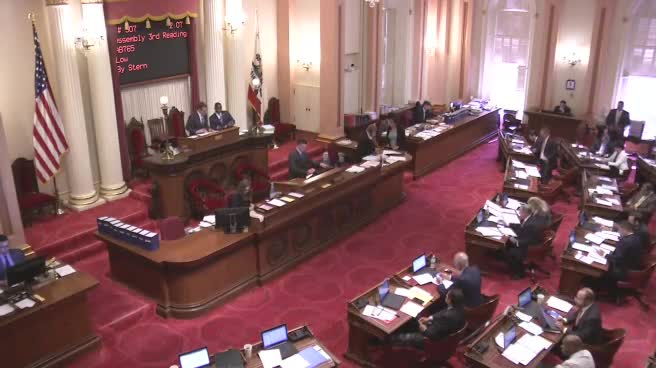 2MIN
Senate Floor
 4MIN
Assembly Standing Committee on Elections and Redistricting
Bill Author

Bill Co-Author(s):