AB 901: County of San Diego: local elections.
- Session Year: 2017-2018
- House: Assembly
- Latest Version Date: 2017-10-12
Existing law authorizes the amendment of a county charter by proposals submitted by the governing body or by a petition signed by 10% of the qualified electors of the county, as specified. Existing law also provides that a candidate for a nonpartisan office at a primary election who receives votes on a majority of all the ballots cast for candidates for that office shall be elected to that office.
This bill would, notwithstanding any other law, authorize the amendment of the charter of the County of San Diego by proposals submitted to the county electors by the board of supervisors or by a petition signed by 10% of the qualified electors in the county to require that candidates for specified county offices be elected at the general election. Only the candidates who receive the highest or second highest number of votes cast at the primary election would appear on the ballot as candidates for that office at the ensuing general election.
This bill would make legislative findings and declarations as to the necessity of a special statute for the County of San Diego.
Existing law authorizes the amendment of a county charter by proposals submitted by the governing body or by a petition signed by 10% of the qualified electors of the county, as specified. Existing law also provides that a candidate for a nonpartisan office at a primary election who receives votes on a majority of all the ballots cast for candidates for that office shall be elected to that office.
This bill would, notwithstanding any other law, authorize the amendment of the charter of the County of San Diego by proposals submitted to the county electors by the board of supervisors or by a petition signed by 10% of the qualified electors in the county to require that candidates for the office of county board of supervisor specified county offices be elected at the general election. Only the candidates who receive the highest or second highest number of votes cast at the primary election would be required to appear on the ballot as candidates for the office of supervisor that office at the ensuing general election.
This bill would make legislative findings and declarations as to the necessity of a special statute for the County of San Diego.
Existing law authorizes the amendment of a county charter by proposals submitted by the governing body or by a petition signed by 10% of the qualified electors of the county, as specified. Existing law also provides that a candidate for a nonpartisan office at a primary election who receives votes on a majority of all the ballots cast for candidates for that office shall be elected to that office.
This bill would, notwithstanding any other law, authorize the board of supervisors of the County of San Diego to amend the countys charter amendment of the charter of the County of San Diego by proposals submitted to the county electors by the board of supervisors or by a petition signed by 10% of the qualified electors in the county to require that candidates for the office of county board of supervisor be elected at the general election. Only the candidates who receive the highest or second highest number of votes cast at the primary election would be required to appear on the ballot as candidates for the office of supervisor at the ensuing general election.
This bill would make legislative findings and declarations as to the necessity of a special statute for the County of San Diego.
Existing law authorizes the amendment of a county charter by proposals submitted by the governing body or by a petition signed by 10% of the qualified electors of the county, as specified. Existing law also provides that a candidate for a nonpartisan office at a primary election who receives votes on a majority of all the ballots cast for candidates for that office shall be elected to that office.
This bill would, notwithstanding any other law, authorize the board of supervisors of the County of San Diego to amend the countys charter to require that candidates for the office of county board of supervisor be elected at the general election. Only the candidates who receive the highest or second highest number of votes cast at the primary election would be required to appear on the ballot as candidates for the office of supervisor at the ensuing general election.
This bill would make legislative findings and declarations as to the necessity of a special statute for the County of San Diego.
Existing law establishes an Independent Redistricting Commission in San Diego County and requires the commission to adjust the supervisorial district boundaries in that county after each decennial federal census, as specified, by adopting a redistricting plan making those adjustments. Existing law requires the commission to file the adopted redistricting plan with the clerk of the San Diego County Board of Supervisors before the first day in October of the year following the year in which each decennial federal census is taken.This bill would instead require the commission to file the adopted redistricting plan with the clerk of the San Diego County Board of Supervisors before the first day in September of the year following the year in which each decennial federal census is taken.Existing law establishes an Independent Redistricting Commission in San Diego County and requires the commission to adjust the supervisorial district boundaries in that county after each decennial federal census, as specified, by adopting a redistricting plan making those adjustments. Existing law requires the commission to file the adopted redistricting plan with the clerk of the San Diego County Board of Supervisors before the first day in October of the year following the year in which each decennial federal census is taken.
This bill would instead require the commission to file the adopted redistricting plan with the clerk of the San Diego County Board of Supervisors before the first day in September of the year following the year in which each decennial federal census is taken.
(a)Notwithstanding any other provision of law, the charter of the County of San Diego may be amended by proposals submitted to the county electors by the board of supervisors or by a petition signed by 10 percent of the qualified electors in the county to require that candidates for county office be elected at the general election. Only the candidates who receive the highest or second highest number of votes cast at the primary election shall appear on the ballot as candidates for county office at the ensuing general election. In the event there are two or less candidates for county office, the names of the candidates shall not appear on the primary election ballot and the candidate for county office with the highest number of votes cast shall be elected at the general election.
(b)For purposes of this section, county office means any of the following offices:
(1)County supervisor.
(2)District attorney.
(3)Sheriff.
(4)Assessor, recorder, and county clerk.
(5)Treasurer and tax collector.
(6)Member of the county board of education.
SEC. 2.The Legislature finds and declares that a special statute is necessary and that a general statute cannot be made applicable within the meaning of Section 16 of Article IV of the California Constitution because of the unique issues facing the County of San Diego due to its size and the complexity of its government.
(a)Notwithstanding any other provision of law, the charter of the County of San Diego may be amended by proposals submitted to the county electors by the board of supervisors or by a petition signed by 10 percent of the qualified electors in the county to require that candidates for the office of county board of supervisor county office be elected at the general election. Only the candidates who receive the highest or second highest number of votes cast at the primary election shall appear on the ballot as candidates for the county office of supervisor at the ensuing general election. In the event there are two or less candidates for county office, the names of the candidates shall not appear on the primary election ballot and the candidate for the office of county supervisor county office with the highest number of votes cast shall be elected at the general election.
(b)For purposes of this section, county office means any of the following offices:
(1)County supervisor.
(2)District attorney.
(3)Sheriff.
(4)Assessor, recorder, and county clerk.
(5)Treasurer and tax collector.
(6)Member of the county board of education.
SEC. 2.The Legislature finds and declares that a special statute is necessary and that a general statute cannot be made applicable within the meaning of Section 16 of Article IV of the California Constitution because of the unique issues facing the County of San Diego due to its size and the complexity of its government.
Notwithstanding any other provision of law, the board of supervisors of the County of San Diego may amend the countys charter charter of the County of San Diego may be amended by proposals submitted to the county electors by the board of supervisors or by a petition signed by 10 percent of the qualified electors in the county to require that candidates for the office of county board of supervisor be elected at the general election. Only the candidates who receive the highest or second highest number of votes cast at the primary election shall appear on the ballot as candidates for the office of supervisor at the ensuing general election. In the event there are two or less candidates for office, the names of the candidates shall not appear on the primary election ballot and the candidate for the office of county supervisor with the highest number of votes cast shall be elected at the general election.
SEC. 2.The Legislature finds and declares that a special statute is necessary and that a general statute cannot be made applicable within the meaning of Section 16 of Article IV of the California Constitution because of the unique issues facing the County of San Diego due to its size and the complexity of its government.
Notwithstanding any other provision of law, the board of supervisors of the County of San Diego may amend the countys charter to require that candidates for the office of county board of supervisor be elected at the general election. Only the candidates who receive the highest or second highest number of votes cast at the primary election shall appear on the ballot as candidates for the office of supervisor at the ensuing general election. In the event there are two or less candidates for office, the names of the candidates shall not appear on the primary election ballot and the candidate for the office of county supervisor with the highest number of votes cast shall be elected at the general election.
SEC. 2.The Legislature finds and declares that a special statute is necessary and that a general statute cannot be made applicable within the meaning of Section 16 of Article IV of the California Constitution because of the unique issues facing the County of San Diego due to its size and the complexity of its government.
SECTION 1.Section 21550 of the Elections Code is amended to read:21550.(a)As used in this section, the following terms have the following meanings:(1)Board means the Board of Supervisors of the County of San Diego.(2)Clerk means the clerk of the Board of Supervisors of the County of San Diego.(3)Commission means the Independent Redistricting Commission established by subdivision (b).(b)(1)There is, in the County of San Diego, an Independent Redistricting Commission.(2)The commission shall be comprised of five members and two alternates who shall each meet the following qualifications:(A)Be a resident of the County of San Diego.(B)Be a registered voter of the County of San Diego.(C)Be a former or retired state or federal judge.(D)Not be a current member of the board.(3)Any interested person meeting the qualifications specified in paragraph (2) may submit his or her name to the clerk to be included in a random drawing. The clerk shall conduct a random drawing at a regularly scheduled meeting of the board to select the members of the commission.(4)The presiding judge of the Superior Court of the County of San Diego may assist the clerk in identifying former or retired judges that may be qualified to be included in the drawing.(c)(1)The commission shall adjust the supervisorial district boundaries after each decennial federal census in accordance with this subdivision.(2)The commission shall adjust the boundaries of the supervisorial district of the county so that the districts are equal, or nearly equal in population. The commission may adjust some or all of the supervisorial district boundaries to accomplish this goal.(3)The resulting supervisorial districts shall comply with any applicable provisions of Section 10301 of Title 52 of the United States Code, as amended.(4)The commission may consider all of the following factors in establishing the boundaries of the supervisorial districts:(A)Topography.(B)Geography.(C)Cohesiveness, contiguity, integrity, and compactness of territory.(D)Community of interests in each district.(5)The commission shall use federal census tracts and blocks in establishing the boundaries of supervisorial districts.(d)The board shall provide for reasonable staffing and logistical support for the commission.(e)The commission shall be subject to the Ralph M. Brown Act (Chapter 9 (commencing with Section 54950) of Part 1 of Division 2 of Title 5 of the Government Code), and shall conduct at least seven public hearings with at least one public hearing held in each supervisorial district.(f)(1)The commission shall adopt a redistricting plan adjusting the boundaries of the supervisorial districts, as specified in subdivision (c), and shall file the plan with the clerk before the first day of September of the year following the year in which each decennial federal census is taken.(2)The plan shall be effective 30 days after it is filed with the clerk.(3)The plan shall be subject to referendum in the same manner as ordinances.(a)As used in this section, the following terms have the following meanings:
(1)Board means the Board of Supervisors of the County of San Diego.
(2)Clerk means the clerk of the Board of Supervisors of the County of San Diego.
(3)Commission means the Independent Redistricting Commission established by subdivision (b).
(b)(1)There is, in the County of San Diego, an Independent Redistricting Commission.
(2)The commission shall be comprised of five members and two alternates who shall each meet the following qualifications:
(A)Be a resident of the County of San Diego.
(B)Be a registered voter of the County of San Diego.
(C)Be a former or retired state or federal judge.
(D)Not be a current member of the board.
(3)Any interested person meeting the qualifications specified in paragraph (2) may submit his or her name to the clerk to be included in a random drawing. The clerk shall conduct a random drawing at a regularly scheduled meeting of the board to select the members of the commission.
(4)The presiding judge of the Superior Court of the County of San Diego may assist the clerk in identifying former or retired judges that may be qualified to be included in the drawing.
(c)(1)The commission shall adjust the supervisorial district boundaries after each decennial federal census in accordance with this subdivision.
(2)The commission shall adjust the boundaries of the supervisorial district of the county so that the districts are equal, or nearly equal in population. The commission may adjust some or all of the supervisorial district boundaries to accomplish this goal.
(3)The resulting supervisorial districts shall comply with any applicable provisions of Section 10301 of Title 52 of the United States Code, as amended.
(4)The commission may consider all of the following factors in establishing the boundaries of the supervisorial districts:
(A)Topography.
(B)Geography.
(C)Cohesiveness, contiguity, integrity, and compactness of territory.
(D)Community of interests in each district.
(5)The commission shall use federal census tracts and blocks in establishing the boundaries of supervisorial districts.
(d)The board shall provide for reasonable staffing and logistical support for the commission.
(e)The commission shall be subject to the Ralph M. Brown Act (Chapter 9 (commencing with Section 54950) of Part 1 of Division 2 of Title 5 of the Government Code), and shall conduct at least seven public hearings with at least one public hearing held in each supervisorial district.
(f)(1)The commission shall adopt a redistricting plan adjusting the boundaries of the supervisorial districts, as specified in subdivision (c), and shall file the plan with the clerk before the first day of October September of the year following the year in which each decennial federal census is taken.
(2)The plan shall be effective 30 days after it is filed with the clerk.
(3)The plan shall be subject to referendum in the same manner as ordinances.
|
Date
|
Status
|
|---|---|
| Oct 12, 2017 | Chaptered by Secretary of State - Chapter 713, Statutes of 2017. |
| Oct 12, 2017 | Approved by the Governor. |
| Sep 7, 2017 | Enrolled and presented to the Governor at 3 p.m. |
| Aug 31, 2017 | In Assembly. Ordered to Engrossing and Enrolling. |
| Aug 31, 2017 | Read third time. Passed. Ordered to the Assembly. |
| Jun 22, 2017 | Read second time. Ordered to third reading. |
| Jun 21, 2017 | From committee: Do pass. (Ayes 4. Noes 1.) (June 20). |
| May 24, 2017 | Referred to Com. on E. & C.A. |
| May 15, 2017 | In Senate. Read first time. To Com. on RLS. for assignment. |
| May 15, 2017 | Read third time. Passed. Ordered to the Senate. (Ayes 53. Noes 26. Page 1534.) |
| May 11, 2017 | Read second time. Ordered to third reading. |
| May 10, 2017 | From committee: Do pass. (Ayes 5. Noes 2.) (May 10). |
| May 2, 2017 | Re-referred to Com. on E. & R. |
| May 1, 2017 | From committee chair, with author's amendments: Amend, and re-refer to Com. on E. & R. Read second time and amended. |
| Mar 21, 2017 | Re-referred to Com. on E. & R. |
| Mar 20, 2017 | From committee chair, with author's amendments: Amend, and re-refer to Com. on E. & R. Read second time and amended. |
| Mar 16, 2017 | Re-referred to Com. on E. & R. |
| Mar 15, 2017 | From committee chair, with author's amendments: Amend, and re-refer to Com. on E. & R. Read second time and amended. |
| Mar 2, 2017 | Referred to Com. on E. & R. |
| Feb 17, 2017 | From printer. May be heard in committee March 19. |
| Feb 16, 2017 | Read first time. To print. |
|
Date
|
Description
|
Location
|
Votes
|
|
|---|---|---|---|---|
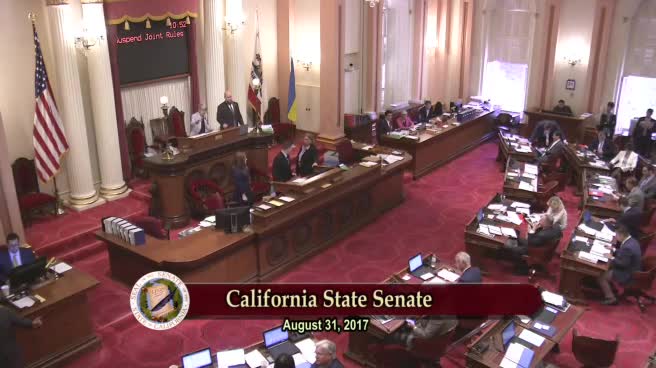
| Aug 31, 2017 | Assembly 3rd Reading AB901 Gloria et al. By Atkins | Senate Floor |
Passed |
|
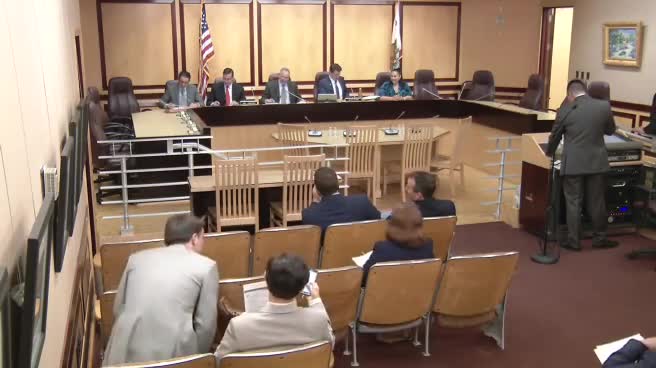
| Jun 20, 2017 | Do pass | Senate Standing Committee on Elections and Constitutional Amendments |
Passed |
|
| May 15, 2017 | AB 901 GLORIA Assembly Third Reading | Assembly Floor |
Passed |
|
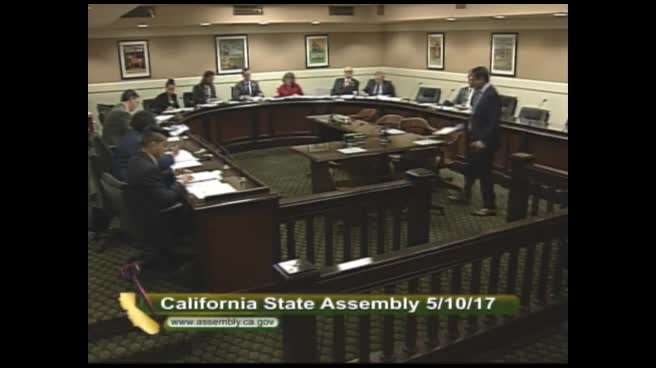
| May 10, 2017 | Do pass. | Assembly Standing Committee on Elections and Redistricting |
Passed |
This list shows positions taken on this bill by organizations on the date displayed, which is linked to the original source.
Positions by individuals are not included.
|
Organization
|
Position
|
Date
|
|---|---|---|
| Alliance Of Californians For Community Empowerment | ** Support | Jun 22, 2017 |
| Alliance San Diego | ** Support | May 8, 2017 |
| Asian Pacific Islander Communications Actions | ** Support | May 8, 2017 |
| Asian Pacific Islander Community Actions | ** Support | Jun 22, 2017 |
| Cal Fire Local 2881 | ** Support | Jun 22, 2017 |
| California Professional Firefighters | ** Support | Jun 22, 2017 |
| California State Association Of Counties | ** Against | Jun 22, 2017 |
| Californians for Electoral Reform | * Against Unless Amend | Jun 20, 2017 |
| Center on Policy Initiatives | ** Support | Jun 22, 2017 |
| Employee Rights Center | ** Support | Jun 22, 2017 |
| Environmental Health Coalition | ** Support | Jun 22, 2017 |
| Independent Voter Project | ** Support | Jun 22, 2017 |
| National Federation of Filipino American Associations Region 10 | ** Support | Jun 22, 2017 |
| San Diego County Board of Supervisors | ** Against | Jun 22, 2017 |
| San Diego Organizing Project | ** Support | Jun 22, 2017 |
| Service Employees International Union | ** Support | Jun 22, 2017 |
| UDW AFSCME Local 3920 | * Support | Jun 20, 2017 |
| Urban Counties of California | ** Against | Jun 22, 2017 |
Office of Senate Floor Analyses (916) 651-1520 Fax: (916) 327-4478 | AB |
THIRD READING
Bill No: AB 901
:
SENATE ELECTIONS & C.A. COMMITTEE: 4-1, 6/20/17
AYES: Stern, Allen, Hertzberg, Leyva
NOES: Anderson
ASSEMBLY FLOOR: 53-26, 5/15/17 - See last page for vote
DIGEST:
This bill authorizes a charter amendment to appear on the San Diego County ballot to require candidates for county office to be elected at the general election.
Existing law:
- Provides, in general, that any candidate for a nonpartisan office who receives votes on a majority of all the ballots cast for that office at a primary election is elected to that office and prohibits the office from appearing on the ballot at the ensuing general election.
- Requires certain local jurisdictions to determine the winning candidate in a single election by a plurality of votes cast.
- Permits a county or city to adopt a charter by majority vote of its electors voting on the question. Allows a charter to be amended, revised, or repealed in the same manner. Requires a charter, amendment, revision, or repeal thereof to be published in the official state statutes.
- Provides that a county charter may be amended by ballot measures submitted by the governing body or by a petition signed by 10 percent of the qualified electors of the county, computed upon the total number of votes cast in the county for all candidates for Governor at the last general election.
This bill:
- Permits the charter of the County of San Diego to be amended by measures submitted to the county electors by the board of supervisors or by a petition signed by 10 percent of the qualified electors in the county to require candidates for county office to be elected at the general election.
- Provides for only the candidates who receive the highest or second highest number of votes cast at the primary election to appear on the ballot as candidates for county office at the ensuing general election.
- Provides that in the event there are two or fewer candidates for office, the names of the candidates shall not appear on the primary election ballot and the candidate for county office with the highest number of votes cast shall be elected at the general election.
- Defines “county offices,” for the purposes of this bill, to mean the following offices:
- County supervisor;
- District attorney;
- Sheriff;
- Assessor, recorder, and county clerk;
- Treasurer and tax collector, and,
- Member of the county board of education.
- Makes findings and declarations that a special law is necessary because of the unique issues facing San Diego County due to its size and complexity of its government.
Background
Plurality Vote Method and Majority Vote Method. In plurality voting, also known as “winner-take-all” or “first-past-the-post,” each voter selects one candidate, and the candidate with the largest number of votes is the winner regardless of whether the winner receives a majority (more than 50%) of the vote. A plurality voting method may be used for a single candidate election or for electing a group of candidates, such as a council or board. In a majority vote method, a voter votes for one candidate and the candidate with the majority (more than 50%) of the votes wins. Commonly used majority vote methods include a traditional run-off.
Current law generally provides that any candidate for a nonpartisan office who receives a majority of votes from all the ballots cast for an office at a primary election is elected to that office and prohibits the office from appearing on the ballot at the ensuing general election.
Top Two Primary Election. In February 2009, the Legislature approved SCA 4 (Maldonado, Resolution Chapter 2, Statutes of 2009), also known as the “Top Two Candidates Open Primary Act,” which was enacted by the voters as Proposition 14 on the June 2010 statewide primary election ballot. Proposition 14 implemented a top two primary election system in California for most elective state and federal offices.
The Top Two Candidates Open Primary Act took effect January 1, 2011, and required that all candidates for a voter-nominated office be listed on the same ballot. Previously known as partisan offices, voter-nominated offices are state legislative offices, U.S. congressional offices, and state constitutional offices. Only the two candidates receiving the most votes -- regardless of party preference or whether one candidate receives a majority of all votes cast in the primary election -- move on to the general election. A write-in candidate for voter nominated offices can only run in the primary election. However, a write-in candidate can move on to the general election if the candidate is one of the top two vote-getters in the primary election. The Top Two Candidates Open Primary Act does not apply to candidates running for U.S. President, county central committee, or local office.
Only candidates running for State Superintendent of Public Instruction or candidates for voter-nominated offices in special elections can win outright by getting a majority of the vote (more than 50%) in the primary election.
San Diego County's Election Method. As mentioned above, current law generally provides that any candidate for a nonpartisan office who receives a majority of votes from all the ballots cast for an office at a primary election is elected to that office and prohibits the office from appearing on the ballot at the ensuing general election.
The method of electing county officials under San Diego County's charter is functionally the same as set forth in state law. Section 401.3 of San Diego County's charter states that “[a] candidate who receives a majority of all votes in the primary election is elected. When no candidate is so elected, the two candidates who receive the highest number of votes in the primary are the candidates in the general election, and the one who receives the higher number of votes in the general election is elected. In the event there are no more than two candidates for one office, the office shall be voted upon at the primary election.” Additionally, the charter permits write-in candidates to participate in the primary election in accordance with state general law, however, prohibits write-in candidates from participating in the general election.
This bill authorizes the San Diego County charter to be amended either by proposals submitted by the board of supervisors or by voter initiative that requires candidates for county office, as specified, to be elected at the general election, instead of at the primary election. Additionally, this bill requires only the candidates who receive the highest or second highest number of votes cast at the primary election to appear on the ballot as candidates for county office at the ensuing general election, as specified.
Charter Counties and the California Constitution. The California Constitution recognizes two types of counties: general law counties and charter counties. General law counties are governed by state law, while charter counties have autonomy to create and enforce local ordinances, provided the ordinances do not conflict with the general law of the state.
Sections 3 and 4 of Article XI of the California Constitution provide the powers of charter counties. Specifically, Section 3 provides that “County charters adopted pursuant to this section shall supersede any existing charter and all laws inconsistent therewith. The provisions of a charter are the law of the State and have the force and effect of legislative enactments.”
Section 4 of Article XI provides the structure and operation of county charters. Specifically, Section 4(a) requires county charters to provide for a governing body of five members, elected by district, or at large, with a requirement that they reside in the district and provides that charter counties are subject to state laws governing redistricting. Section 4(b) requires county charters to provide for the compensation, terms, and removal of members of the governing body. Additionally, Section 4(c) requires county charters to provide for “an elected sheriff, an elected district attorney, an elected assessor, other officers, their election or appointment, compensation, terms and removal.” Moreover, Section 4(d) requires county charters to provide for “the performance of functions required by statute,” and Section 4(h) requires charter counties to have all the powers that are provided by the Constitution or by statute for counties.
The state Constitution, however, gives charter cities a larger amount of autonomy over local affairs. Specifically, Section 5(a) of Article XI gives charter cities broad authority to “make and enforce all ordinances and regulations in respect to municipal affairs “ and provides that “City charters adopted pursuant to this Constitution shall supersede any existing charter, and with respect to municipal affairs shall supersede all laws inconsistent therewith.” Additionally, Section 5(b) of Article XI grants city charters broad authority to structure and organize their government, to conduct city elections, and grants plenary authority, subject to limited restrictions, to provide “the manner in which, the method by which, the times at which, and the terms for which several municipal officers and employees whose compensation if paid by the city shall be elected and appointed, and for their removal…” The Constitution further provides that properly adopted city charters “shall supersede all laws inconsistent” with the charter.
Unlike charter cities, charter counties are not granted the same level of authority over the conduct of county elections. Moreover, it is unclear whether charter counties are authorized, similar to charter cities, to regulate the methods, times or manner of elections of county officials that differs from state procedures. Consequently, charter counties generally elect county officials in accordance with state laws for nonpartisan elections. In light of these provisions it is unclear, absent statutory authority, whether charter counties have the authority to adopt election procedures that vary from state law. In light of these restrictions, this bill authorizes the San Diego County charter to be amended, as specified, to change its election procedures for county elective offices, as specified. Without this bill, it is unclear whether amendments to San Diego County's election procedures will pass constitutional scrutiny.
San Diego City Charter. Last year, voters in the City of San Diego overwhelmingly approved Measure K, a charter amendment that changed the way certain city officials are elected to office. Specifically, Measure K amended the City of San Diego's charter and eliminated the ability for a candidate to win a seat outright in the June primary election if the candidate received more than 50% of the vote. Instead, Measure K requires a run-off election during the November general election between the two candidates who received the most votes in the primary election. Additionally, Measure K provided that if only one candidate qualified for the June primary for a particular office, that the sole primary candidate receiving votes in the primary would be deemed elected, as specified.
The San Diego City Attorney states in the impartial analysis of Measure K that charter cities are not required to follow the California Elections Code, which states that nonpartisan candidates who receive a majority vote at a primary election shall be elected to that office, and that the office shall not appear at the ensuing general election.
Comments
- According to the author, “AB 901 would increase voter participation and eliminate voter confusion by allowing elections in San Diego County to be conducted in a similar manner as the San Diego Mayor, members of the Legislature, and Congress. Under existing law, if a candidate for county office (such as a candidate for the Board of Supervisors) receives over 50% of the vote in the June Primary Election, that candidate is deemed the winner, with no November election. This system allows candidates to win elections in the June primary with votes from a small fraction of the people they represent.
“As the committee knows, primary and special elections draw far fewer voters than general elections, meaning that such elections often do not accurately represent the needs, priorities, and desires of the population at large.
“This bill would make San Diego County elections more like the state’s top-two runoff process we use to elect the Governor, state legislators, and members of Congress, eliminating confusion caused by using a different process for city elections. This bill would authorize an amendment to the San Diego County charter (either by the Board of Supervisors or a voter initiative). If the County charter is amended, this bill would require elections for the San Diego County elected officials (Board of Supervisors, District Attorney, Sheriff, Assessor/Recorder/County Clerk, Treasurer/tax collector, and members of the Board of Education) to be decided by the November General election.
“Under this bill, in a contest of more than two candidates, the top two vote getters would advance to the November General election. In the event there were two or less candidates, there would be no June Primary election, with the race determined in November.”
FISCAL EFFECT: Appropriation: Fiscal Com.: Local:
Alliance of Californians for Community Empowerment
Asian Pacific Islander Community Actions
CAL FIRE Local 2881
California Professional Firefighters
Center on Policy Initiatives
Council of Philippine American Organizations of San Diego County
Employee Rights Center
Environmental Health Coalition
Independent Voter Project
National Federation of Filipino American Associations Region 10
San Diego Organizing Project
Service Employees International Union
United Domestic Workers of America – AFSCME Local 3930
OPPOSITION: (Verified 6/20/17)
California State Association of Counties
San Diego County Board of Supervisors
Urban Counties of California
ARGUMENTS IN SUPPORT: In support, the Independent Voter Project wrote:
AB 901 would allow the San Diego electorate at a future election to amend the county charter to allow San Diego county to require November elections for county supervisor races even when a candidate gets over 50% in the June primary election. This would mean that elections are decided in November, when a much larger percentage of the electorate participates. Past election statistics have demonstrated that twice as many voters often participate in the General Election versus the Primary.
ARGUMENTS IN OPPOSITION: In opposition, the San Diego County Board of Supervisors wrote:
AB 901 would authorize an amendment to the San Diego County Charter to require that candidates for specified county offices be elected at the general election only. This authorization raises a question as to the need for AB 901 since the authority to make this change already exists. Section 3 of Article 11 of the California Constitution establishes mechanisms to change the County’s charter, either via the governing board or the initiative process. Given the fact that existing law already addresses the provisions proposed by AB 901, the county does not understand the need for this the bill.
Putting aside the fact that the bill is superfluous, as a matter of principle, the County of San Diego believes a candidate for a county office should have the ability to win her/his election outright if she or he receives more than 50 % of the vote during the June primary, eliminating the need to include the election on the November General Election ballot. What is proposed in AB 901 could create a scenario in which a candidate may get 75 % of the vote in a primary election in which there are several candidates, and still be required to participate in a run off with another candidate who got a mere 10 % of the vote. This requirement would also lead to increased costs by forcing all elections to go to a November General Election.
Additionally, as raised with another bill (AB 801, Weber) that is pending in the legislative process, AB 901 does not clearly identify a justification for applying this change only to the County of San Diego’s Charter. A pending lawsuit by Los Angeles County related to a measure passed last year (SB 958, Lara) raises this issue and is currently being litigated.
The Board of Supervisors has not heard constituents raise this as an issue, but if it is the community’s desire to address the changes proposed by AB 901, the mechanisms already exist to allow changes to be made at the local level.
ASSEMBLY FLOOR: 53-26, 5/15/17
AYES: Aguiar-Curry, Arambula, Berman, Bloom, Bocanegra, Bonta, Burke, Caballero, Calderon, Cervantes, Chau, Chiu, Chu, Cooley, Cooper, Dababneh, Daly, Eggman, Frazier, Friedman, Cristina Garcia, Eduardo Garcia, Gipson, Gloria, Gomez, Gonzalez Fletcher, Gray, Grayson, Irwin, Jones-Sawyer, Kalra, Levine, Limón, Low, McCarty, Medina, Mullin, Muratsuchi, Nazarian, O’Donnell, Quirk, Quirk-Silva, Reyes, Rodriguez, Rubio, Salas, Santiago, Mark Stone, Thurmond, Ting, Weber, Wood, Rendon
NOES: Acosta, Travis Allen, Baker, Bigelow, Brough, Chávez, Chen, Choi, Cunningham, Dahle, Flora, Fong, Gallagher, Harper, Kiley, Lackey, Maienschein, Mathis, Mayes, Melendez, Obernolte, Patterson, Ridley-Thomas, Steinorth, Voepel, Waldron
NO VOTE RECORDED: Holden
6/22/17 16:34:50
**** END ****
SENATE COMMITTEE ON
ELECTIONS AND CONSTITUTIONAL AMENDMENTS
Senator Henry Stern, Chair
2017 - 2018 Regular
Bill No: 901 Hearing Date: 6/20/17
Author: | Gloria | ||
Version: |
| ||
Urgency: | Fiscal: | ||
Consultant: | |||
Subject:
DIGEST
Authorizes a charter amendment to appear on the San Diego County ballot to require candidates for county office to be elected at the general election.
ANALYSIS
Existing law:
- Provides, in general, that any candidate for a nonpartisan office who receives votes on a majority of all the ballots cast for that office at a primary election is elected to that office and prohibits the office from appearing on the ballot at the ensuing general election.
- Requires certain local jurisdictions to determine the winning candidate in a single election by a plurality of votes cast.
- Permits a county or city to adopt a charter by majority vote of its electors voting on the question. Allows a charter to be amended, revised, or repealed in the same manner. Requires a charter, amendment, revision, or repeal thereof to be published in the official state statutes.
- Provides that a county charter may be amended by ballot measures submitted by the governing body or by a petition signed by 10 percent of the qualified electors of the county, computed upon the total number of votes cast in the county for all candidates for Governor at the last general election.
This bill:
- Permits the charter of the County of San Diego to be amended by measures submitted to the county electors by the board of supervisors or by a petition signed by 10 percent of the qualified electors in the county to require candidates for county office to be elected at the general election.
- Provides for only the candidates who receive the highest or second highest number of votes cast at the primary election to appear on the ballot as candidates for county office at the ensuing general election.
- Provides that in the event there are two or fewer candidates for office, the names of the candidates shall not appear on the primary election ballot and the candidate for county office with the highest number of votes cast shall be elected at the general election.
- Defines "county offices," for the purposes of this bill, to mean the following offices:
- County supervisor;
- District attorney;
- Sheriff;
- Assessor, recorder, and county clerk;
- Treasurer and tax collector, and,
- Member of the county board of education.
- Makes findings and declarations that a special law is necessary because of the unique issues facing San Diego County due to its size and complexity of its government.
BACKGROUND
Plurality Vote Method and Majority Vote Method. In plurality voting, also known as "winner-take-all" or "first-past-the-post," each voter selects one candidate, and the candidate with the largest number of votes is the winner regardless of whether the winner receives a majority (more than 50%) of the vote. A plurality voting method may be used for a single candidate election or for electing a group of candidates, such as a council or board. In a majority vote method, a voter votes for one candidate and the candidate with the majority (more than 50%) of the votes wins. Commonly used majority vote methods include a traditional run-off.
Current law generally provides that any candidate for a nonpartisan office who receives a majority of votes from all the ballots cast for an office at a primary election is elected to that office and prohibits the office from appearing on the ballot at the ensuing general election.
Top Two Primary Election. In February 2009, the Legislature approved SCA 4 (Maldonado, Res. Ch. 2, Statutes of 2009), also known as the "Top Two Candidates Open Primary Act," which was enacted by the voters as Proposition 14 on the June 2010 statewide primary election ballot. Proposition 14 implemented a top two primary election system in California for most elective state and federal offices.
The Top Two Candidates Open Primary Act took effect January 1, 2011, and required that all candidates for a voter-nominated office be listed on the same ballot. Previously known as partisan offices, voter-nominated offices are state legislative offices, U.S. congressional offices, and state constitutional offices. Only the two candidates receiving the most votes -- regardless of party preference or whether one candidate receives a majority of all votes cast in the primary election -- move on to the general election. A write-in candidate for voter nominated offices can only run in the primary election. However, a write-in candidate can move on to the general election if the candidate is one of the top two vote-getters in the primary election. The Top Two Candidates Open Primary Act does not apply to candidates running for U.S. President, county central committee, or local office.
Only candidates running for State Superintendent of Public Instruction or candidates for voter-nominated offices in special elections can win outright by getting a majority of the vote (more than 50%) in the primary election.
San Diego County's Election Method. As mentioned above, current law generally provides that any candidate for a nonpartisan office who receives a majority of votes from all the ballots cast for an office at a primary election is elected to that office and prohibits the office from appearing on the ballot at the ensuing general election.
The method of electing county officials under the San Diego County's charter is functionally the same as set forth in state law. Section 401.3 of San Diego County's charter states that "[a] candidate who receives a majority of all votes in the primary election is elected. When no candidate is so elected, the two candidates who receive the highest number of votes in the primary are the candidates in the general election, and the one who receives the higher number of votes in the general election is elected. In the event there are no more than two candidates for one office, the office shall be voted upon at the primary election." Additionally, the charter permits write-in candidates to participate in the primary election in accordance with state general law, however, prohibits write-in candidates from participating in the general election.
This bill authorizes the San Diego County charter to be amended either by proposals submitted by the board of supervisors or by voter initiative that requires candidates for county office, as specified, to be elected at the general election, instead of at the primary election. Additionally, this bill requires only the candidates who receive the highest or second highest number of votes cast at the primary election to appear on the ballot as candidates for county office at the ensuing general election, as specified.
Charter Counties and the California Constitution. The California Constitution recognizes two types of counties: general law counties and charter counties. General law counties are governed by state law, while charter counties have autonomy to create and enforce local ordinances, provided the ordinances do not conflict with the general law of the state.
Sections 3 and 4 of Article XI of the California Constitution provide the powers of charter counties. Specifically, Section 3 provides that “County charters adopted pursuant to this section shall supersede any existing charter and all laws inconsistent therewith. The provisions of a charter are the law of the State and have the force and effect of legislative enactments.”
Section 4 of Article XI provides the structure and operation of county charters. Specifically, Section 4(a) requires county charters to provide for a governing body of 5 members, elected by district, or at large, with a requirement that they reside in the district and provides that charter counties are subject to state laws governing redistricting. Section 4(b) requires county charters to provide for the compensation, terms, and removal of members of the governing body. Additionally, Section 4(c) requires county charters to provide for "an elected sheriff, an elected district attorney, an elected assessor, other officers, their election or appointment, compensation, terms and removal." Moreover, Section 4(d) requires county charters to provide for "the performance of functions required by statute," and Section 4(h) requires charter counties to have all the powers that are provided by the Constitution or by statute for counties.
The state Constitution, however, gives charter cities a larger amount of autonomy over local affairs. Specifically, Section 5(a) of Article XI gives charter cities broad authority to "make and enforce all ordinances and regulations in respect to municipal affairs " and provides that "City charters adopted pursuant to this Constitution shall supersede any existing charter, and with respect to municipal affairs shall supersede all laws inconsistent therewith." Additionally, Section 5(b) of Article XI grants city charters broad authority to structure and organize their government, to conduct city elections, and grants plenary authority, subject to limited restrictions, to provide "the manner in which, the method by which, the times at which, and the terms for which several municipal officers and employees whose compensation if paid by the city shall be elected and appointed, and for their removal…" The Constitution further provides that properly adopted city charters "shall supersede all laws inconsistent" with the charter.
Unlike charter cities, charter counties are not granted the same level of authority over the conduct of county elections. Moreover, it is unclear whether charter counties are authorized, similar to charter cities, to regulate the methods, times or manner of elections of county officials that differs from state procedures. Consequently, charter counties generally elect county officials in accordance with state laws for nonpartisan elections. In light of these provisions it is unclear, absent statutory authority, whether charter counties have the authority to adopt election procedures that vary from state law. In light of these restrictions, this bill authorizes the San Diego County charter to be amended, as specified, to change its election procedures for county elective offices, as specified. Without this bill, it is unclear whether amendments to San Diego County's election procedures will pass constitutional scrutiny.
San Diego City Charter. Last year, voters in the City of San Diego overwhelming approved Measure K, a charter amendment that changed the way certain city officials are elected to office. Specifically, Measure K amended the City of San Diego's charter and eliminated the ability for a candidate to win a seat outright in the June primary election if the candidate received more than 50% of the vote. Instead, Measure K requires a run-off election during the November general election between the two candidates who received the most votes in the primary election. Additionally, Measure
K provided that if only one candidate qualified for the June primary for a particular office, that the sole primary candidate receiving votes in the primary would be deemed elected, as specified.
The San Diego City Attorney states in the impartial analysis of Measure K that charter cities are not required to follow the California Elections Code, which states that nonpartisan candidates who receive a majority vote at a primary election shall be elected to that office, and that the office shall not appear at the ensuing general election.
COMMENTS
- According to the author: AB 901 would increase voter participation and eliminate voter confusion by allowing elections in San Diego County to be conducted in a similar manner as the San Diego Mayor, members of the Legislature, and Congress. Under existing law, if a candidate for county office (such as a candidate for the Board of Supervisors) receives over 50% of the vote in the June Primary Election, that candidate is deemed the winner, with no November election. This system allows candidates to win elections in the June primary with votes from a small fraction of the people they represent.
As the committee knows, primary and special elections draw far fewer voters than general elections, meaning that such elections often do not accurately represent the needs, priorities, and desires of the population at large.
This bill would make San Diego County elections more like the state’s top-two runoff process we use to elect the Governor, state legislators, and members of Congress, eliminating confusion caused by using a different process for city elections. This bill would authorize an amendment to the San Diego County charter (either by the Board of Supervisors or a voter initiative). If the County charter is amended, this bill would require elections for the San Diego County elected officials (Board of Supervisors, District Attorney, Sheriff, Assessor/Recorder/County Clerk, Treasurer/tax collector, and members of the Board of Education) to be decided by the November General election.
Under this bill, in a contest of more than two candidates, the top two vote getters would advance to the November General election. In the event there were two or less candidates, there would be no June Primary election, with the race determined in November.
- Arguments in Support. In support, the Independent Voter Project wrote:
AB 901 would allow the San Diego electorate at a future election to amend the county charter to allow San Diego county to require November elections for county supervisor races even when a candidate gets over 50% in the June primary election. This would mean that elections are decided in November, when a much larger percentage of the electorate participates. Past election statistics have demonstrated that twice as many voters often participate in the General Election versus the Primary.
- Arguments in Opposition. In opposition, the San Diego County Board of Supervisors wrote:
AB 901 would authorize an amendment to the San Diego County Charter to require that candidates for specified county offices be elected at the general election only. This authorization raises a question as to the need for AB 901 since the authority to make this change already exists. Section 3 of Article 11 of the California Constitution establishes mechanisms to change the County’s charter, either via the governing board or the initiative process. Given the fact that existing law already addresses the provisions proposed by AB 901, the county does not understand the need for this the bill.
Putting aside the fact that the bill is superfluous, as a matter of principle, the County of San Diego believes a candidate for a county office should have the ability to win her/his election outright if she or he receives more than 50 % of the vote during the June primary, eliminating the need to include the election on the November General Election ballot. What is proposed in AB 901 could create a scenario in which a candidate may get 75 % of the vote in a primary election in which there are several candidates, and still be required to participate in a run off with another candidate who got a mere 10 % of the vote. This requirement would also lead to increased costs by forcing all elections to go to a November General Election.
Additionally, as raised with another bill (AB 801, Weber) that is pending in the legislative process, AB 901 does not clearly identify a justification for applying this change only to the County of San Diego’s Charter. A pending lawsuit by Los Angeles County related to a measure passed last year (SB 958, Lara) raises this issue and is currently being litigated.
The Board of Supervisors has not heard constituents raise this as an issue, but if it is the community’s desire to address the changes proposed by AB 901, the mechanisms already exist to allow changes to be made at the local level.
PRIOR ACTION
Assembly Floor: | 53 - 26 |
Assembly Committee: | 5 - 2 |
POSITIONS
Sponsor: Author
Support: Alliance of Californians for Community Empowerment
Asian Pacific Islander Community Actions
Cal Fire Local 2881
California Professional Firefighters
Center on Policy Initiatives
Council of Philippine American Organizations of San Diego County
Employee Rights Center
Environmental Health Coalition
Independent Voter Project
National Federation of Filipino American Associations Region 10
San Diego Organizing Project
Service Employees International Union
United Domestic Workers of America – AFSCME Local 3930
Oppose: California State Association of Counties
San Diego County Board of Supervisors
Urban Counties of California
-- END --
ASSEMBLY THIRD READING
ATR Bill Id:AB 901
Author:(Gloria and Weber)
As Amended Ver:May 1, 2017
Majority vote
Committee | Votes | Ayes | Noes |
Elections | 5-2 | Berman, Calderon, Low, Mullin, Weber | Harper, Cunningham |
SUMMARY: Authorizes San Diego County to require general elections to be conducted for county elective offices, as specified. Specifically, this bill:
- Permits the charter of the County of San Diego to be amended by proposals submitted to the county electors by the board of supervisors or by a petition signed by 10% of the qualified electors in the county to require candidates for county office to be elected at the general election.
- Provides for only the candidates who receive the highest or second highest number of votes cast at the primary election to appear on the ballot as candidates for county office at the ensuing general election.
- Provides that in the event there are two or fewer candidates for office, the names of the candidates shall not appear on the primary election ballot and the candidate for county office with the highest number of votes cast shall be elected at the general election.
- Defines "county offices," for the purposes of this bill, to mean the following offices:
- County supervisor;
- District attorney;
- Sheriff;
- Assessor, recorder, and county clerk;
- Treasurer and tax collector; and,
- Member of the county board of education.
- Makes findings and declarations that a special law is necessary because of the unique issues facing San Diego County due to its size and complexity of its government.
FISCAL EFFECT: None. This bill is keyed non-fiscal by the Legislative Counsel.
COMMENTS: According to the author, "AB 901 would increase voter participation and eliminate voter confusion by allowing elections in San Diego County to be conducted in a similar manner as the San Diego Mayor, members of the Legislature, and Congress. Under existing law, if a candidate for county office (such as a candidate for the Board of Supervisors) receives over 50% of the vote in the June Primary Election, that candidate is deemed the winner, with no November election. This system allows candidates to win elections in the June primary with votes from a small fraction of the people they represent.
"[P]rimary and special elections draw far fewer voters than general elections, meaning that such elections often do not accurately represent the needs, priorities, and desires of the population at large.
"This bill would make San Diego County elections more like the state's top-two runoff process we use to elect the Governor, state legislators, and members of Congress, eliminating confusion caused by using a different process for [county] elections. This bill would authorize an amendment to the San Diego County charter (either by the Board of Supervisors or a voter initiative). If the County charter is amended, this bill would require elections for the San Diego County Elected Officials (Board of Supervisors, District Attorney, Sheriff, Assessor/Recorder/County Clerk, Treasurer/tax collector, and members of the Board of Education) to be decided by the November General election
"Under this bill, in a contest of more than two candidates, the top two vote getters would advance to the November General election. In the event, there were two or less candidates, there would be no June Primary election, with the race determined in November."
Unlike charter cities, charter counties are not granted the same level of authority over the conduct of county elections. Moreover, it is unclear whether charter counties are authorized, similar to charter cities, to regulate the methods, times, or manner of elections of county officials that differs from state procedures. Consequently, charter counties generally elect county officials in accordance with state laws for nonpartisan elections. In light of these provisions it is unclear, absent statutory authority, whether charter counties have the authority to adopt election procedures that vary from state law.
In light of these restrictions, this bill authorizes the San Diego County charter to be amended, as specified, to change its election procedures for county elective offices, as specified. Without this bill, it is unclear whether amendments to San Diego County's election procedures will pass constitutional scrutiny.
Please see the policy committee analysis for a full discussion of this bill.
Analysis Prepared by: Nichole Becker / E. & R. / (916) 319-2094 FN: 0000351
Date of Hearing: May 10, 2017
ASSEMBLY COMMITTEE ON ELECTIONS AND REDISTRICTING
Marc Berman, Chair
ABPCA Bill Id:AB 901 (
Author:Gloria) – As Amended Ver:May 1, 2017
SUBJECT: County of San Diego: local elections.
SUMMARY: Authorizes San Diego County to require general elections to be conducted for county elective offices, as specified. Specifically, this bill:
- Permits the charter of the County of San Diego to be amended by proposals submitted to the county electors by the board of supervisors or by a petition signed by 10 percent of the qualified electors in the county to require candidates for county office to be elected at the general election.
- Provides for only the candidates who receive the highest or second highest number of votes cast at the primary election to appear on the ballot as candidates for county office at the ensuing general election.
- Provides that in the event there are two or fewer candidates for office, the names of the candidates shall not appear on the primary election ballot and the candidate for county office with the highest number of votes cast shall be elected at the general election.
- Defines "county offices," for the purposes of this bill, to mean the following offices:
- County supervisor;
- District attorney;
- Sheriff;
- Assessor, recorder, and county clerk;
- Treasurer and tax collector, and,
- Member of the county board of education.
- Makes findings and declarations that a special law is necessary because of the unique issues facing San Diego County due to its size and complexity of its government.
EXISTING LAW:
- Provides, in general, that any candidate for a nonpartisan office who receives votes on a majority of all the ballots cast for that office at a primary election is elected to that office and prohibits the office from appearing on the ballot at the ensuing general election. Provides that where two or more candidates are to be elected to a given office and a greater number of candidates receives a majority than the number to be elected, those candidates that receive the highest number of votes proceed to the general or run-off election, as specified.
- Requires certain local jurisdictions to determine the winning candidate in a single election by a plurality of votes cast.
- Permits a county or city to adopt a charter by majority vote of its electors voting on the question. Allows a charter to be amended, revised, or repealed in the same manner. Requires a charter, amendment, revision, or repeal thereof to be published in the official state statutes.
- Provides that counties are legal subdivisions of the state.
FISCAL EFFECT: None. This bill is keyed non-fiscal by the Legislative Counsel.
COMMENTS:
- Purpose of the Bill: According to the author:
AB 901 would increase voter participation and eliminate voter confusion by allowing elections in San Diego County to be conducted in a similar manner as the San Diego Mayor, members of the Legislature, and Congress. Under existing law, if a candidate for county office (such as a candidate for the Board of Supervisors) receives over 50% of the vote in the June Primary Election, that candidate is deemed the winner, with no November election. This system allows candidates to win elections in the June primary with votes from a small fraction of the people they represent.
As the committee knows, primary and special elections draw far fewer voters than general elections, meaning that such elections often do not accurately represent the needs, priorities, and desires of the population at large.
This bill would make San Diego County elections more like the state’s top-two runoff process we use to elect the Governor, state legislators, and members of Congress, eliminating confusion caused by using a different process for [county] elections. This bill would authorize an amendment to the San Diego County charter (either by the Board of Supervisors or a voter initiative). If the County charter is amended, this bill would require elections for the San Diego County Elected Officials (Board of Supervisors, District Attorney, Sheriff, Assessor/Recorder/County Clerk, Treasurer/tax collector, and members of the Board of Education) to be decided by the November General election
Under this bill, in a contest of more than two candidates, the top two vote getters would advance to the November General election. In the event, there were two or less candidates, there would be no June Primary election, with the race determined in November.
- Plurality Vote Method and Majority Vote Method: Plurality voting, also known as "winner-take-all" or "first-past-the-post," gives all representation to the candidate finishing first. In plurality voting, each voter selects one candidate, and the candidate with the largest number of votes is the winner regardless of whether the winner receives a majority (more than 50%) of the vote. A plurality voting method may be used for a single candidate election or for electing a group of candidates, such as a council or committee. In a majority vote method, a voter votes for one candidate and the candidate with the majority (more than 50%) of the votes wins. Commonly used majority vote methods include traditional run-off.
Current law generally provides that any candidate for a nonpartisan office who receives a majority of votes from all the ballots cast for an office at a primary election is elected to that office and prohibits the office from appearing on the ballot at the ensuing general election.
- Top Two Primary Election: In February 2009, the Legislature approved SCA 4 (Maldonado), Res. Chapter 2, Statutes of 2009, also known as the "Top Two Candidates Open Primary Act," which was enacted by the voters as Proposition 14 on the June 2010 statewide primary election ballot. Proposition 14 implemented a top two primary election system in California for most elective state and federal offices.
The Top Two Candidates Open Primary Act took effect January 1, 2011, and required that all candidates for a voter-nominated office be listed on the same ballot. Previously known as partisan offices, voter-nominated offices are state legislative offices, U.S. congressional offices, and state constitutional offices. Only the two candidates receiving the most votes—regardless of party preference or whether one candidate receives a majority of all votes cast in the primary election—move on to the general election. A write-in candidate for voter-nominated offices can only run in the primary election. However, a write-in candidate can move on to the general election if the candidate is one of the top two vote-getters in the primary election. The Top Two Candidates Open Primary Act does not apply to candidates running for U.S. President, county central committee, or local office.
Only candidates running for State Superintendent of Public Instruction or candidates for voter-nominated offices in special elections can win outright by getting a majority of the vote (more than 50 %) in the primary election.
- San Diego County's Election Method: As mentioned above, current law generally provides that any candidate for a nonpartisan office who receives a majority of votes from all the ballots cast for an office at a primary election is elected to that office and prohibits the office from appearing on the ballot at the ensuing general election.
The method of electing county officials under the San Diego County's charter is functionally the same as set forth in state law. Section 401.3 of San Diego County's charter states that "[a] candidate who receives a majority of all votes in the primary election is elected. When no candidate is so elected, the two candidates who receive the highest number of votes in the primary are the candidates in the general election, and the one who receives the higher number of votes in the general election is elected. In the event there are no more than two candidates for one office, the office shall be voted upon at the primary election." Additionally, the charter permits write-in candidates to participate in the primary election in accordance with state general law, however, prohibits write-in candidates from participating in the general election.
This bill authorizes the San Diego County charter to be amended either by proposals submitted by the board of supervisors or by voter initiative that requires candidates for county office, as specified, to be elected at the general election, instead of at the primary election. Additionally, this bill requires only the candidates who receive the highest or second highest number of votes cast at the primary election to appear on the ballot as candidates for county office at the ensuing general election, as specified.
- Charter Counties and the California Constitution: The California Constitution recognizes two types of counties: general law counties and charter counties. General law counties are governed by state law, while charter counties have autonomy to create and enforce local ordinances, provided the ordinances do not conflict with the general law of the state.
Sections 3 and 4 of Article XI of the California Constitution provide the powers of charter counties. Specifically, Section 3 provides that “County charters adopted pursuant to this section shall supersede any existing charter and all laws inconsistent therewith. The provisions of a charter are the law of the State and have the force and effect of legislative enactments.”
Section 4 of Article XI provides the structure and operation of county charters. Specifically, Section 4(a) requires county charters to provide for a governing body of 5 members, elected by district, or at large, with a requirement that they reside in the district and provides that charter counties are subject to state laws governing redistricting. Section 4(b) requires county charters to provide for the compensation, terms, and removal of members of the governing body. Additionally, Section 4(c) requires county charters to provide for "an elected sheriff, an elected district attorney, an elected assessor, other officers, their election or appointment, compensation, terms and removal." Moreover, Section 4(d) requires county charters to provide for "the performance of functions required by statute," and Section 4(h) requires charter counties to have all the powers that are provided by the Constitution or by statute for counties.
The state Constitution, however, gives charter cities a larger amount of autonomy over local affairs. Specifically, Section 5(a) of Article XI gives charter cities broad authority to "make and enforce all ordinances and regulations in respect to municipal affairs" and provides that "City charters adopted pursuant to this Constitution shall supersede any existing charter, and with respect to municipal affairs shall supersede all laws inconsistent therewith." Additionally, Section 5(b) of Article XI grants city charters broad authority to structure and organize their government, to conduct city elections, and grants plenary authority, subject to limited restrictions, to provide "the manner in which, the method by which, the times at which, and the terms for which several municipal officers and employees whose compensation if paid by the city shall be elected and appointed, and for their removal…" The Constitution further provides that properly adopted city charters "shall supersede all laws inconsistent" with the charter.
Unlike charter cities, charter counties are not granted the same level of authority over the conduct of county elections. Moreover, it is unclear whether charter counties are authorized, similar to charter cities, to regulate the methods, times or manner of elections of county officials that differs from state procedures. Consequently, charter counties generally elect county officials in accordance with state laws for nonpartisan elections. In light of these provisions it is unclear, absent statutory authority, whether charter counties have the authority to adopt election procedures that vary from state law.
In light of these restrictions, this bill authorizes the San Diego County charter to be amended, as specified, to change its election procedures for county elective offices, as specified. Without this bill, it is unclear whether amendments to San Diego County's election procedures will pass constitutional scrutiny. - San Diego City Charter: Last year, voters in the City of San Diego overwhelming approved Measure K, a charter amendment that changed the way certain city officials are elected to office. Specifically, Measure K amended the City of San Diego's charter and eliminated the ability for a candidate to win a seat outright in the June primary election if the candidate received more than 50% of the vote. Instead, Measure K requires a run-off election during the November general election between the two candidates who received the most votes in the primary election. Additionally, Measure K provided that if only one candidate qualified for the June primary for a particular office, that the sole primary candidate receiving votes in the primary would be deemed elected, as specified.
The San Diego City Attorney states in the impartial analysis of Measure K that charter cities are not required to follow the California Elections Code, which states that nonpartisan candidates who receive a majority vote at a primary election shall be elected to that office, and that the office shall not appear at the ensuing general election. - Arguments in Support: In support of a prior version of this bill, the Independent Voter Project wrote:
San Diego is one of the most geographically, ethnically, and politically diverse counties in California, and it is important that our electoral process maximizes the participation of all San Diegans. AB 901 would allow the San Diego electorate the ability to amend the county charter to allow San Diego county to require November elections for county supervisor races even when a candidate gets over 50% in the June primary election.
Past election statistics have demonstrated that as many as twice the number of registered voters in San Diego County participate in the general election versus the primary:
● 2012 voter turnout - 37.43% in the primary, 76.98% in the general election
● 2014 voter turnout - 27.23% in the primary, 44.76% in the general election
● 2016 voter turnout - 50.94% in the primary, 81.48% in the general election
We at the Independent Voter Project believe democracy functions best when the most voters participate, and as the above statistics illustrate, that is clearly at the general election in November.
- Arguments in Opposition: In opposition, the San Diego County Board of Supervisors writes:
AB 901 would authorize an amendment to the San Diego County Charter to require that candidates for specified county offices be elected at the general election only. This authorization raises a question as to the need for AB 901 since the authority to make this change already exists. Section 3 of Article 11 of the California Constitution establishes mechanisms to change the County’s charter, either via the governing board or the initiative process. Given the fact that existing law already addresses the provisions proposed by AB 901, the county does not understand the need for this the bill.
Putting aside the fact that the bill is superfluous, as a matter of principle, the County of San Diego believes a candidate for a county office should have the ability to win her/his election outright if she or he receives more than 50 percent of the vote during the June primary, eliminating the need to include the election on the November General Election ballot. What is proposed in AB 901 could create a scenario in which a candidate may get 75 percent of the vote in a primary election in which there are several candidates, and still be required to participate in a run off with another candidate who got a mere 10 percent of the vote. This requirement would also lead to increased costs by forcing all elections to go to a November General Election.
Additionally, as raised with another bill (AB 801- Weber) that is pending in the legislative process, AB 901 does not clearly identify a justification for applying this change only to the County of San Diego’s Charter. A pending lawsuit by Los Angeles County related to a measure passed last year (SB 958) raises this issue and is currently being litigated.
The Board of Supervisors has not heard constituents raise this as an issue, but if it is the community’s desire to address the changes proposed by AB 901, the mechanisms already exist to allow changes to be made at the local level.
REGISTERED SUPPORT / OPPOSITION:
Support
Alliance of Californians for Community Empowerment (prior version)
Alliance San Diego (prior version)
Asian Pacific Islander Communications Actions (prior version)
Center for Policy Initiatives (prior version)
Council of Philippine American Organizations of San Diego County (prior version)
Employee Rights Center (prior version)
Environmental Health Coalition (prior version)
Independent Voter Project (prior version)
National Federation of Filipino American Associations Region 10 (prior version)
San Diego Organizing Project (prior version)
SEIU California (prior version)
Opposition
California State Association of Counties
San Diego County Board of Supervisors
Urban Counties of California
Analysis Prepared by: Nichole Becker / E. & R. / (916) 319-2094
Discussed in Hearing
 3MIN
Senate Floor
 33MIN
Senate Standing Committee on Elections and Constitutional Amendments
 8MIN
Assembly Floor
 17MIN
Assembly Standing Committee on Elections and Redistricting


Bill Co-Author(s):