AB 906: Beverage containers: polyethylene terephthalate.
- Session Year: 2017-2018
- House: Assembly
- Latest Version Date: 2017-10-15
Existing law requires that all rigid plastic bottles and rigid plastic containers sold in California be labeled with a code indicating the resin used to produce those bottles or containers. Existing law, among other things, specifies that the number 1 is to be used for bottles or containers that are made of polyethylene terephthalate. Under existing law, it is a crime to manufacture rigid plastic bottles or rigid plastic containers for use in California that are not properly labeled.
This bill would, on and after October 1, 2018, define polyethylene terephthalate for the purposes of the labeling requirement as a plastic having certain characteristics, including, among other things, a melting peak temperature, as determined by a specified procedure, within a specified temperature range. Because the mislabeling of a bottle or container made of polyethylene terephthalate that does not meet those physical characteristics would be a crime, this bill would impose a state-mandated local program.
The California Constitution requires the state to reimburse local agencies and school districts for certain costs mandated by the state. Statutory provisions establish procedures for making that reimbursement.
This bill would provide that no reimbursement is required by this act for a specified reason.
Existing law requires that all rigid plastic bottles and rigid plastic containers sold in California be labeled with a code indicating the resin used to produce those bottles or containers. Existing law, among other things, specifies that the number 1 is to be used for bottles or containers that are made of polyethylene terephthalate. Under existing law, it is a crime to manufacture rigid plastic bottles or rigid plastic containers for use in California that are not properly labeled.
This bill would would, on and after October 1, 2018, define polyethylene terephthalate for the purposes of the labeling requirement as a plastic having certain characteristics, including, among other things, a melting peak temperature, as determined by a specified procedure, within a specified temperature range. Because the mislabeling of a bottle or container made of polyethylene terephthalate that does not meet those physical characteristics would be a crime, this bill would impose a state-mandated local program.
The California Constitution requires the state to reimburse local agencies and school districts for certain costs mandated by the state. Statutory provisions establish procedures for making that reimbursement.
This bill would provide that no reimbursement is required by this act for a specified reason.
Existing law requires that all rigid plastic bottles and rigid plastic containers sold in California be labeled with a code indicating the resin used to produce those bottles or containers. Existing law, among other things, specifies that the number 1 is to be used for bottles or containers that are made of polyethylene terephthalate. Under existing law, it is a crime to manufacture rigid plastic bottles or rigid plastic containers for use in California that are not properly labeled.
This bill would define polyethylene terephthalate for the purposes of the labeling requirement as a plastic having certain characteristics, including, among other things, a melting peak temperature, as determined by a specified procedure, within a specified temperature range. Because the mislabeling of a bottle or container made of polyethylene terephthalates terephthalate that does not meet those physical characteristics would be a crime, this bill would impose a state-mandated local program.
The California Constitution requires the state to reimburse local agencies and school districts for certain costs mandated by the state. Statutory provisions establish procedures for making that reimbursement.
This bill would provide that no reimbursement is required by this act for a specified reason.
Existing law requires that all rigid plastic bottles and rigid plastic containers sold in California be labeled with a code indicating the resin used to produce those bottles or containers. Existing law, among other things, specifies that the number 1 is to be used for bottles or containers that are made of polyethylene terephthalate. Under existing law, it is a crime to manufacture rigid plastic bottles or rigid plastic containers for use in California that are not properly labeled.
This bill would define polyethylene terephthalate for the purposes of the labeling requirement as a plastic having certain characteristics, including, among other things, a melting peak temperature, as determined by a specified procedure, within a specified temperature range. Because the mislabeling of a bottle or container made of polyethylene terephthalates that does not meet those physical characteristics would be a crime, this bill would impose a state-mandated local program.
The California Constitution requires the state to reimburse local agencies and school districts for certain costs mandated by the state. Statutory provisions establish procedures for making that reimbursement.
This bill would provide that no reimbursement is required by this act for a specified reason.
Existing legislative findings and declarations state that the California Conservation Corps offers California a unique opportunity to meet both the goal of increasing understanding and appreciation of the environment and the goal of helping youths become productive adults. Existing law provides that the Legislature reaffirms its intent that the corps mission includes increasing awareness of and improving our natural resources, and instilling basic skills and a healthy work ethic in California youth, building their character, self-esteem, and self-discipline, and establishing within them a strong sense of civic responsibility and understanding of the value of a days work for a days wages.This bill would make nonsubstantive changes to those provisions.Existing legislative findings and declarations state that the California Conservation Corps offers California a unique opportunity to meet both the goal of increasing understanding and appreciation of the environment and the goal of helping youths become productive adults. Existing law provides that the Legislature reaffirms its intent that the corps mission includes increasing awareness of and improving our natural resources, and instilling basic skills and a healthy work ethic in California youth, building their character, self-esteem, and self-discipline, and establishing within them a strong sense of civic responsibility and understanding of the value of a days work for a days wages.
This bill would make nonsubstantive changes to those provisions.
Polyethylene terephthalate means a plastic derived from a reaction between terephthalic acid or dimethyl terephthalate and monoethylene glycol as to which both of the following conditions are satisfied:
(a)The terephthalic acid or dimethyl terephthalate and monoethylene glycol reacted constitutes at least 90 percent of the mass of the monomer reacted to form the polymer.
(b)The plastic exhibits a melting peak temperature that is between 225 degrees Celsius and 255 degrees Celsius, as determined during the second thermal scan using procedure 10.1 as set forth in ASTM International (ASTM) D3418 with a heating rate of a sample at 10 degrees Celsius per minute.
(c)This section becomes operative on October 1, 2018.
SEC. 2.No reimbursement is required by this act pursuant to Section 6 of Article XIIIB of the California Constitution because the only costs that may be incurred by a local agency or school district will be incurred because this act creates a new crime or infraction, eliminates a crime or infraction, or changes the penalty for a crime or infraction, within the meaning of Section 17556 of the Government Code, or changes the definition of a crime within the meaning of Section 6 of Article XIIIB of the California Constitution.
Polyethylene terephthalate means a plastic derived from a reaction between terephthalic acid or dimethyl terephthalate and monoethylene glycol as to which both of the following conditions are satisfied:
(a)The terephthalic acid or dimethyl terephthalate and monoethylene glycol reacted constitutes at least 90 percent of the mass of the monomer reacted to form the polymer.
(b)The plastic exhibits a melting peak temperature that is between 225 degrees Celsius and 255 degrees Celsius, as determined by during the second thermal scan using procedure 10.1 as set forth in ASTM International (ASTM) D3418 with a heating rate of a sample at 10 degrees Celsius per minute.
SEC. 2.No reimbursement is required by this act pursuant to Section 6 of Article XIIIB of the California Constitution because the only costs that may be incurred by a local agency or school district will be incurred because this act creates a new crime or infraction, eliminates a crime or infraction, or changes the penalty for a crime or infraction, within the meaning of Section 17556 of the Government Code, or changes the definition of a crime within the meaning of Section 6 of Article XIIIB of the California Constitution.
Polyethylene terephthalate means a plastic derived from a reaction between terephthalic acid or dimethyl terephthalate and monoethylene glycol as to which both of the following conditions are satisfied:
(a)The terephthalic acid or dimethyl terephthalate and monoethylene glycol reacted constitutes at least 90 percent of the mass of the monomer reacted to form the polymer.
(b)The plastic exhibits a melting peak temperature that is between 225 degrees Celsius and 255 degrees Celsius, as determined by using procedure 10.1 as set forth in ASTM International (ASTM) D3418 with a heating rate of a sample at 10 degrees Celsius per minute.
SEC. 2.No reimbursement is required by this act pursuant to Section 6 of Article XIIIB of the California Constitution because the only costs that may be incurred by a local agency or school district will be incurred because this act creates a new crime or infraction, eliminates a crime or infraction, or changes the penalty for a crime or infraction, within the meaning of Section 17556 of the Government Code, or changes the definition of a crime within the meaning of Section 6 of Article XIIIB of the California Constitution.
SECTION 1.Section 14000 of the Public Resources Code is amended to read:14000.(a)The Legislature hereby finds and declares that every California youth should be encouraged to reach his or her full potential, but that many youths require guidance and support to reach their goals and make positive changes in their lives.(b)The Legislature finds and declares that conserving or developing natural resources and enhancing and maintaining environmentally important lands and waters through the use of Californias young women and men benefits not only the youth of the state by providing them with educational and work opportunities, but also the states economy and environment.(c)The Legislature further finds and declares that the California Conservation Corps continues to offer California a unique opportunity to meet both the goal of increasing understanding and appreciation of the environment and of helping youths become productive adults.(d)The Legislature therefore reaffirms its intent that the corps mission includes increasing awareness of and improving our natural resources, but more importantly, includes instilling basic skills and a healthy work ethic in California youth, building their character, self-esteem, and self-discipline, and establishing within them a strong sense of civic responsibility and an understanding of the value of a days work for a days wages.(e)It is the further intent of the Legislature that corpsmembers graduate from the corps with good work habits, positive attitudes, and broadened professional horizons. It is the intent of the Legislature that the corps blend academic and job skills training with personal growth opportunities in order to develop productive youths who can make substantial contributions as California workers and citizens.(f)It is the further intent of the Legislature, in memory of Brien Thomas B.T. Collins and John E. Jack Dugan, and on behalf of their passion, support, and commitment to the mission of the corps, to ensure that the corps is an entrepreneurial and incentive-based program with stable and predictable funding. In pursuit of that goal, it is the intent of the Legislature that all state agencies look to the corps first to perform those projects that meet the mission of the corps.(a)The Legislature hereby finds and declares that every California youth should be encouraged to reach his or her full potential, but that many youths require guidance and support to reach their goals and make positive changes in their lives.
(b)The Legislature finds and declares that conserving or developing natural resources, resources and enhancing and maintaining environmentally important lands and waters through the use of Californias young women and men, is beneficial men benefits not only to the youth of the state by providing them with educational and work opportunities, but also is beneficial for the states economy and its environment.
(c)The Legislature further finds and declares that the California Conservation Corps continues to offer California a unique opportunity to meet both the goal of increasing understanding and appreciation of the environment and the goal of helping youths become productive adults.
(d)The Legislature therefore reaffirms its intent that the corps mission includes increasing awareness of and improving our natural resources, but more importantly, includes instilling basic skills and a healthy work ethic in California youth, building their character, self-esteem, and self-discipline, and establishing within them a strong sense of civic responsibility and an understanding of the value of a days work for a days wages.
(e)It is the further intent of the Legislature that corpsmembers graduate from the corps with good work habits, positive attitudes, and broadened professional horizons. It is the intent of the Legislature that the corps blend academic and job skills training with personal growth opportunities in order to develop productive youths who can make substantial contributions as California workers and citizens.
(f)It is the further intent of the Legislature, in memory of Brien Thomas B.T. Collins and John E. Jack Dugan, and on behalf of their passion, support, and commitment to the mission of the corps, to ensure that the corps is an entrepreneurial and incentive-based program with stable and predictable funding. In pursuit of that goal, it is the intent of the Legislature that all state agencies look to the corps first to perform those projects that meet the mission of the corps.
|
Date
|
Status
|
|---|---|
| Oct 15, 2017 | Chaptered by Secretary of State - Chapter 823, Statutes of 2017. |
| Oct 15, 2017 | Approved by the Governor. |
| Sep 19, 2017 | Enrolled and presented to the Governor at 3 p.m. |
| Sep 11, 2017 | Senate amendments concurred in. To Engrossing and Enrolling. |
| Sep 6, 2017 | In Assembly. Concurrence in Senate amendments pending. May be considered on or after September 8 pursuant to Assembly Rule 77. |
| Sep 6, 2017 | Read third time. Passed. Ordered to the Assembly. |
| Sep 5, 2017 | Read second time. Ordered to third reading. |
| Sep 1, 2017 | From committee: Do pass. (Ayes 6. Noes 0.) (September 1). |
| Aug 28, 2017 | In committee: Referred to APPR. suspense file. |
| Jun 21, 2017 | From committee: Do pass and re-refer to Com. on APPR. (Ayes 5. Noes 1.) (June 21). Re-referred to Com. on APPR. |
| Jun 6, 2017 | From committee chair, with author's amendments: Amend, and re-refer to committee. Read second time, amended, and re-referred to Com. on EQ. |
| May 18, 2017 | Referred to Com. on EQ. |
| May 4, 2017 | In Senate. Read first time. To Com. on RLS. for assignment. |
| May 4, 2017 | Read third time. Passed. Ordered to the Senate. (Ayes 76. Noes 0. Page 1392.) |
| Apr 27, 2017 | Read second time. Ordered to Consent Calendar. |
| Apr 26, 2017 | From committee: Do pass. To Consent Calendar. (Ayes 16. Noes 0.) (April 26). |
| Apr 18, 2017 | Re-referred to Com. on APPR. |
| Apr 17, 2017 | Read second time and amended. |
| Apr 6, 2017 | From committee: Amend, and do pass as amended and re-refer to Com. on APPR. (Ayes 10. Noes 0.) (April 3). |
| Mar 22, 2017 | Re-referred to Com. on NAT. RES. |
| Mar 21, 2017 | From committee chair, with author's amendments: Amend, and re-refer to Com. on NAT. RES. Read second time and amended. |
| Mar 20, 2017 | Referred to Com. on NAT. RES. |
| Feb 17, 2017 | From printer. May be heard in committee March 19. |
| Feb 16, 2017 | Read first time. To print. |
|
Date
|
Description
|
Location
|
Votes
|
|
|---|---|---|---|---|
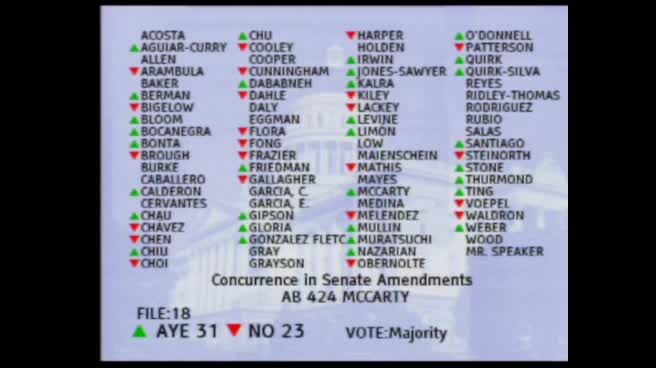
| Sep 11, 2017 | AB 906 BLOOM Concurrence in Senate Amendments | Assembly Floor |
Passed |
|
| Sep 6, 2017 | Assembly 3rd Reading AB906 Bloom By Skinner | Senate Floor |
Passed |
|
| Sep 1, 2017 | Do pass | Senate Standing Committee on Appropriations |
Passed |
|
| Aug 28, 2017 | Placed on suspense file | Senate Standing Committee on Appropriations |
Passed |
|
| Jun 21, 2017 | Do pass, but first be re-referred to the Committee on [Appropriations] | Senate Standing Committee on Environmental Quality |
Passed |
|
| May 4, 2017 | AB 906 BLOOM Consent Calendar Second Day Regular Session | Assembly Floor |
Passed |
|
| Apr 26, 2017 | Do pass. To Consent Calendar. | Assembly Standing Committee on Appropriations |
Passed |
|
| Apr 3, 2017 | Do pass as amended and be re-referred to the Committee on [Appropriations] | Assembly Standing Committee on Natural Resources |
Passed |
This list shows positions taken on this bill by organizations on the date displayed, which is linked to the original source.
Positions by individuals are not included.
|
Organization
|
Position
|
Date
|
|---|---|---|
| American Beverage Association | ** Support | Sep 6, 2017 |
| Arguments In Opposition: | ** Against | Jun 22, 2017 |
| Association of Plastic Recyclers | ** Support | Sep 6, 2017 |
| Californians Against Waste | ** Support | Sep 6, 2017 |
| Dart Container Corporation | ** Support | Sep 6, 2017 |
| Eastman | ** Against | Sep 6, 2017 |
| National Association for PET Container Resources | ** Support | Sep 6, 2017 |
| Plastic Recycling Corporation Of California | ** Support | Sep 6, 2017 |
| Plastics Industry Association | ** Against | Sep 6, 2017 |
| Talco Plastics, Inc. | ** Support | Sep 6, 2017 |
| the sustainable packaging coalition | ** Support | Sep 6, 2017 |
| verdeco recycling, inc. | ** Support | Sep 6, 2017 |
Office of Senate Floor Analyses (916) 651-1520 Fax: (916) 327-4478 | AB |
THIRD READING
Bill No: AB 906
:
SENATE ENVIRONMENTAL QUALITY COMMITTEE: 5-1, 6/21/17
AYES: Wieckowski, Hill, Lara, Skinner, Stern
NOES: Stone
NO VOTE RECORDED: Gaines
SENATE APPROPRIATIONS COMMITTEE: 6-0, 9/1/17
AYES: Lara, Beall, Bradford, Hill, Nielsen, Wiener
NO VOTE RECORDED: Bates
ASSEMBLY FLOOR: 76-0, 5/4/17 (Consent) - See last page for vote
SOURCE: Association of Plastic Recyclers
DIGEST:
This bill, beginning October 1, 2018, defines “polyethylene terephthalate” (PETE) as a plastic derived from a reaction between terephthalic acid or dimethyl terephthalate and monoethylene glycol when specified conditions are met.
ANALYSIS: Existing law requires that all rigid plastic bottles and containers sold in California have a molded label indicating the plastic resin used to produce the product. The resin codes are (Public Resources Code §18015):
- 1 = PETE (polyethylene terephthalate), commonly referred to as PET;
- 2 = HPDE (high density polyethylene);
- 3 = V (vinyl);
- 4 = LDPE (low density polyethylene);
- 5 = PP (polypropylene);
- 6 = PS (polystyrene); and,
- 7 = OTHER (includes containers made from more than one layer of resin).
This bill:
- Defines polyethylene terephthalate as a plastic derived from a reaction between terephthalic acid or dimethyl terephthalate and monoethylene glycol when both of the following conditions are met:
- The terephthalic acid or dimethyl terephthalate and monoethylene glycol reacted constitutes at least 90% of the mass of the monomer reacted to form the polymer.
- The plastic exhibits a melting peak temperature that is between 225 degrees Celsius and 255 degrees Celsius, using specified American Society for Testing and Materials procedures.
- Provides that this bill becomes operative on October 1, 2018.
Background
- Polyethylene terephtahalate: acronyms: PET and PETE: same thing. In 1988, AB 3299 (Killea, Chapter 838, Statutes of 1988) required all rigid plastic bottles and containers sold in California after January 1, 1992, to bear a label denoting the type of resin used in the manufacture of these containers. The purpose was to facilitate the efficient sorting of used plastic containers for recycling. There are seven categories, each identified by both a number (1 through 7) and a letter code.
One of the seven categories consists of containers made of the material polyethylene terephthalate. A commonly used term of trade for this substance is “PET.” When the coding system was first under consideration, a company named, “Pet Incorporated,” complained that the use of “PET” would infringe on their registered trademark. Accordingly, the code was to be “PETt” and this was the designation included in AB 3299 in 1988. However, Pet Incorporated objected that “PETt” also infringed on their trademark and the code was subsequently changed the following year from “PETt” to “PETE” via AB 952 (Killea, Chapter 37, Statutes of 1989).
- PETE vs. PETG. PETE is widely used in water and soft drink bottles and is used for a variety of other products. PETE is recyclable; PET flakes and pellets are commonly recycled into other types of packaging and fiber (e.g. carpet and microfiber).
Polyethylene terephthalate glycol-modified (PETG) refers to PETE plastic resin with the addition of glycol. PETG eliminates hazing that can occur when manufacturing PETE containers and is less brittle than PETE. PETG also produces a softer and more pliable exterior surface, which is viewed by some as more comfortable to hold for consumers.
Comments
- Purpose of bill. According to the author, “AB 906 creates a chemically-based definition for PET that reflects its chemical composition and melting point. This definition will help ensure that PET and PETG, which have incompatible processing conditions, are not processed together in the Beverage Container Recycling Program.”
- The melting point. Unlike PETE, PETG does not have a consistent melting point and becomes molten when heated.
Because both PETE and PETG are comprised of polyethylene terephthalate, they are both labeled with “1” resin code. However, PETE has a much higher processing temperature than PETG. This creates significant challenges for recycling. When processed together, PETG melts and becomes sticky while PETE remains solid. This results in PETG sticking to PETE chips, forming large clumps that cannot be processed.
This bill revises the definition of polyethylene terephthalate to exclude PETG. As a result, PETG containers would not be labeled “1,” which would assist in separating out the different materials more effectively prior to recycling.
FISCAL EFFECT: Appropriation: Fiscal Com.: Local:
According to the Senate Appropriations Committee, this bill contains no state costs.
Association of Plastic Recyclers (source)
American Beverage Association
Californians Against Waste
Dart Container Corporation
National Association for PET Container Resources
Plastic Recycling Corporation of California
Talco Plastics, Inc.
The Sustainable Packaging Coalition
Verdeco Recycling, Inc.
OPPOSITION: (Verified 8/31/17)
Eastman
Plastics Industry Association (formerly known as Society of the Plastics Industry)
ASSEMBLY FLOOR: 76-0, 5/4/17
AYES: Acosta, Aguiar-Curry, Arambula, Baker, Berman, Bloom, Bocanegra, Bonta, Brough, Burke, Caballero, Calderon, Cervantes, Chau, Chávez, Chen, Chiu, Choi, Chu, Cooley, Cooper, Cunningham, Dababneh, Dahle, Daly, Eggman, Flora, Fong, Frazier, Friedman, Gallagher, Eduardo Garcia, Gipson, Gloria, Gomez, Gonzalez Fletcher, Gray, Grayson, Harper, Holden, Irwin, Jones-Sawyer, Kalra, Kiley, Lackey, Levine, Limón, Low, Maienschein, Mathis, Mayes, McCarty, Medina, Melendez, Mullin, Muratsuchi, Nazarian, Obernolte, O'Donnell, Quirk, Quirk-Silva, Reyes, Ridley-Thomas, Rodriguez, Rubio, Salas, Santiago, Steinorth, Mark Stone, Thurmond, Ting, Voepel, Waldron, Weber, Wood, Rendon
NO VOTE RECORDED: Travis Allen, Bigelow, Cristina Garcia, Patterson
9/6/17 11:58:55
**** END ****
CONCURRENCE IN SENATE AMENDMENTS
CSA1 Bill Id:AB 906
Author:(Bloom)
As Amended Ver:June 6, 2017
Majority vote
ASSEMBLY: | 76-0 | (May 4, 2017) | SENATE: | 28-9 | (September 6, 2017) |
Original Committee Reference: NAT. RES.
SUMMARY: Defines polyethylene terephthalate (PET) for purposes of California's 1-7 plastic resin code labeling requirements.
The Senate amendments sunset the bill's provisions on October 1, 2018.
FISCAL EFFECT: According to the Senate Appropriations Committee, this bill has no fiscal impact.
COMMENTS: Polyethylene terephthalate is generally referred to as PET; it is also known as PETE, which is used in California statute. PET is widely used in water and soft drink bottles and is used for a variety of other products. PET is recyclable; PET flakes and pellets are commonly recycled into other types of packaging and fiber (e.g., carpet and microfiber).
Polyethylene terephthalate glycol-modified (PETG) refers to PET plastic resin with the addition of glycol. PETG eliminates hazing that can occur when manufacturing PET containers and is less brittle than PET. PETG also produces a softer and more pliable exterior surface, which is viewed by some as more comfortable to hold for consumers. Unlike PET, PETG does not have a consistent melting point and becomes molten when heated.
Because both PET and PETG are comprised of polyethylene terephthalate, they are both required to be labeled with the "1" resin code. However, PET has a much higher processing temperature than PETG. This creates significant challenges for recycling. When processed together, PETG melts and becomes sticky while PET remains solid. This results in PETG sticking to PET chips, forming large clumps that cannot be processed.
This bill revises the definition of polyethylene terephthalate to exclude PETG so that the materials can be effectively sorted prior to recycling.
Analysis Prepared by: Elizabeth MacMillan / NAT. RES. / (916) 319-2092 FN: 0001850
SENATE COMMITTEE ON
Senator Ricardo Lara, Chair
2017 - 2018 Regular Session
AB 906 (Bloom) - Beverage containers: polyethylene terephthalate
Version: | Policy Vote: |
Urgency: | Mandate: |
Hearing Date: | Consultant: |
This bill does not meet the criteria for referral to the Suspense File.
Bill Summary:
AB 906, beginning on October 1, 2018, defines “polyethylene terephthalate” (PETE or PET) as a plastic derived from a reaction between terephthalic acid or dimethyl terephthalate and monoethylene glycol when specified conditions are met.
Fiscal Impact:
No state fiscal impact.
Background:
Existing law requires that all rigid plastic bottles and containers sold in California are labeled with one of seven resin codes indicating the plastic resin used to produce the product. Resin code 1 indicates the container is made of PETE and resin code 7 indicates the container includes more than one layer of resin.
PETE is recyclable; PETE flakes and pellets are commonly recycled into other types of packaging and fiber (e.g., carpet and microfiber). Polyethylene terephthalate glycol-modified (PETG) refers to PETE plastic resin with the addition of glycol. PETG does not have a consistent melting point and becomes molten when heated.
Because both PETE and PETG are comprised of polyethylene terephthalate, they are both labeled with “1” resin code. However, when processed together, PETG melts and becomes sticky while PETE remains solid. This results in PETG sticking to PETE chips, forming large clumps that cannot be processed.
The revised definition of polyethylene terephthalate proposed in the bill would exclude PETG. As a result, PETG containers would not be labeled “1,” which would assist in separating different materials prior to recycling.
Proposed Law:
This bill:
- Defines polyethylene terephthalate as a plastic derived from a reaction between terephthalic acid or dimethyl terephthalate and monoethylene glycol when both of the following conditions are met:
- The terephthalic acid or dimethyl terephthalate and monoethylene glycol reacted constitutes at least 90% of the mass of the monomer reacted to form the polymer.
- The plastic exhibits a melting peak temperature that is between 225 degrees Celsius and 255 degrees Celsius, using specified American Society for Testing and Materials procedures.
- Provides that this bill becomes operative on October 1, 2018.
Staff Comments:
Purpose of Bill. According to the author, “AB 906 creates a chemically-based definition for PET that reflects its chemical composition and melting point. This definition will help ensure that PET and PETG, which have incompatible processing conditions, are not processed together in the Beverage Container Recycling Program.”
-- END --
SENATE COMMITTEE ON ENVIRONMENTAL QUALITY
Senator Wieckowski, Chair
2017 - 2018 Regular
Bill No: AB 906
Author: | Bloom | ||
Version: | 6/6/2017 | Hearing Date: | 6/21/2017 |
Urgency: | No | Fiscal: | Yes |
Consultant: | Joanne Roy | ||
SUBJECT: Beverage containers: polyethylene terephthalate.
ANALYSIS:
Existing law requires that all rigid plastic bottles and containers sold in California have a molded label indicating the plastic resin used to produce the product. The resin codes are (Public Resources Code §18015):
- 1 = PETE (polyethylene terephthalate), commonly referred to as PET;
- 2 = HPDE (high density polyethylene);
- 3 = V (vinyl);
- 4 = LDPE (low density polyethylene);
- 5 = PP (polypropylene);
- 6 = PS (polystyrene); and,
- 7 = OTHER (includes containers made from more than one layer of resin).
This bill:
- Defines polyethylene terephthalate as a plastic derived from a reaction between terephthalic acid or dimethyl terephthalate and monoethylene glycol when both of the following conditions are met:
- The terephthalic acid or dimethyl terephthalate and monoethylene glycol reacted constitutes at least 90% of the mass of the monomer reacted to form the polymer.
- The plastic exhibits a melting peak temperature that is between 225 degrees Celsius and 255 degrees Celsius, using specified American Society for Testing and Materials procedures.
- The terephthalic acid or dimethyl terephthalate and monoethylene glycol reacted constitutes at least 90% of the mass of the monomer reacted to form the polymer.
- Provides that this bill becomes operative on October 1, 2018.
Background
- Polyethylene terephtahalate: acronyms: PET and PETE: same thing. In 1988, AB 3299 (Killea, Chapter 838, Statutes of 1988) required all rigid plastic bottles and containers sold in California after January 1, 1992 to bear a label denoting the type of resin used in the manufacture of these containers. The purpose was to facilitate the efficient sorting of used plastic containers for recycling. There are seven categories, each identified by both a number (1 through 7) and a letter code.
One of the seven categories consists of containers made of the material polyethylene terephthalate. A commonly used term of trade for this substance is “PET.” When the coding system was first under consideration, a company named, “Pet Incorporated,” complained that the use of “PET” would infringe on their registered trademark. Accordingly, the code was to be “PETt” and this was the designation included in AB 3299 in 1988. However, Pet Incorporated objected that “PETt” also infringed on their trademark and the code was changed the following year from “PETt” to “PETE” via AB 952 (Killea, Chapter 37, Statutes of 1989). - PETE vs. PETG. PETE is widely used in water and soft drink bottles and is used for a variety of other products. PETE is recyclable; PET flakes and pellets are commonly recycled into other types of packaging and fiber (e.g. carpet and microfiber).
Polyethylene terephthalate glycol-modified (PETG) refers to PETE plastic resin with the addition of glycol. PETG eliminates hazing that can occur when manufacturing PETE containers and is less brittle than PETE. PETG also produces a softer and more pliable exterior surface, which is viewed by some as more comfortable to hold for consumers.
Comments
- Purpose of Bill. According to the author, “AB 906 creates a chemically-based definition for PET that reflects its chemical composition and melting point. This definition will help ensure that PET and PETG, which have incompatible processing conditions, are not processed together in the Beverage Container Recycling Program.”
- The melting point. Unlike PETE, PETG does not have a consistent melting point and becomes molten when heated.
Because both PETE and PETG are comprised of polyethylene terephthalate, they are both labeled with “1” resin code. However, PETE has a much higher processing temperature than PETG. This creates significant challenges for recycling. When processed together, PETG melts and becomes sticky while PETE remains solid. This results in PETG sticking to PETE chips, forming large clumps that cannot be processed.
This bill revises the definition of polyethylene terephthalate to exclude PETG. As a result, PETG containers would not be labeled “1,” which would assist in separating out the different materials more effectively prior to recycling.
SOURCE:
Association of Plastic Recyclers
SUPPORT:
Californians Against Waste
Dart Container Corporation
National Association for PET Container Resources (NAPCOR)
The Sustainable Packaging Coalition
Talco Plastics, Inc.
Verdeco Recycling, Inc.
OPPOSITION:
Plastics Industry Association (formerly known as Society of the Plastics Industry)
ARGUMENTS IN SUPPORT:
“AB 906 provides a definition that is commercially relevant, broad enough to include PET types that can be recycled together, and is scientifically rigorous. The ASTM standard D7611, and any references to that ASTM standard, directly or by cross reference, do NOT define PET (polyethylene terephthalate). They only refer to, or name, a plastic known as PET. This ASTM standard, and related references were adopted without regard for polyethylene terephthalate glycol (PETG), which while sharing a similar construct in naming, is a different material, and performs much differently than PET in a processing and recycling environment. The fact that a very minor amount of PETG in a standard PET recycling stream will cause contamination, ruin PET recycling yields, and damage or destroy equipment, has made it necessary to adopt the scientifically rigorous definition of PET.”
ARGUMENTS IN OPPOSITION:
“This exact same issue was addressed and ultimately rejected in November 2016 by the American Society for Testing and Materials (ASTM) International…The issue embodied in [this] legislation was fully vetted and considered by ASTM and all interested stakeholders, including the sponsor of [this] legislation. It was voted down by members of ASTM. The consensus reached was based on the fact this proposed change would:
- Be wholly inconsistent with the purpose of the Code – to identify a resin not claim recyclability
- Attempt to unnecessarily address an issue of sortation for which proven technology already exists
- Create new costs for manufacturers in the machining and re-tooling of their molds
- Provide a competitive advantage to one resin type versus another.”
-- END --
Date of Hearing: April 26, 2017
ASSEMBLY COMMITTEE ON APPROPRIATIONS
Lorena Gonzalez Fletcher, Chair
ABPCA Bill Id:AB 906
Author:(Bloom) – As Amended Ver:April 17, 2017
Policy Committee: | Natural Resources | Vote: | 10 - 0 |
|
| ||
|
|
Urgency: No State Mandated Local Program: Yes Reimbursable: No
SUMMARY:
This bill defines polyethylene terephthalate (PET) as a plastic derived from a reaction between terephthalic acid or dimethyl terephthalate and monoethylene glycol when both of the following conditions are satisfied:
- The terephthalic acid or dimethyl terephthalate and monoethylene glycol reacted constitutes at least 90% of the mass of the monomer reacted to form the polymer.
- The plastic exhibits a melting peak temperature that is between 225 degrees Celsius and 255 degrees Celsius, using specified American Society for Testing and Materials (ASTM) procedures.
FISCAL EFFECT:
No additional state costs.
COMMENTS:
- Purpose. According to the author, this bill provides a chemically based definition of PET to ensure that PET and Polyethylene terephthalate glycol-modified (PETG) are processed separately and in a manner that reflects their chemical compositions.
- Background. All rigid plastic bottles and containers sold in California after January 1, 1992, are required to have a molded label indicating the plastic resin used to produce the product. The resin codes are:
1 = PETE (polyethylene terephthalate), commonly referred to as PET;
2 = HDPE (high density polyethylene);
3 = V (vinyl);
4 = LDPE (low density polyethylene);
5 = PP (polypropylene);
6 = PS (polystyrene); and,
7 = OTHER (including containers made from more than one layer of resin).
PET is widely used in water and soft drink bottles and is used for a variety of other products. PET is recyclable; PET flakes and pellets are commonly recycled into other types of packaging and fiber (e.g., carpet and microfiber).
PETG refers to PET plastic resin with the addition of glycol. PETG eliminates hazing that can occur when manufacturing PET containers and is less brittle than PET. PETG also produces a softer and more pliable exterior surface, which is viewed by some as more comfortable to hold for consumers. Unlike PET, PETG does not have a consistent melting point and becomes molten when heated.
Because both PET and PETG are comprised of polyethylene terephthalate, they are both required to be labeled with the "1" resin code. However, PET has a much higher processing temperature than PETG. This creates significant challenges for recycling. When processed together, PETG melts and becomes sticky while PET remains solid. This results in PETG sticking to PET chips, forming large clumps that cannot be processed.
This bill revises the definition of polyethylene terephthalate to exclude PETG so that the materials can be effectively separated prior to recycling.
Analysis Prepared by: Jennifer Galehouse / APPR. / (916) 319-2081
Date of Hearing: April 3, 2017
ASSEMBLY COMMITTEE ON NATURAL RESOURCES
Cristina Garcia, Chair
ABPCA Bill Id:AB 906 (
Author:Bloom) – As Amended Ver:March 21, 2017
SUBJECT: Beverage containers: polyethylene terephthalate
SUMMARY: Defines polyethylene terephthalate (PET) for purposes of California's 1-7 plastic resin code labeling requirements.
EXISTING LAW requires that all rigid plastic bottles and containers sold in California on and after January 1, 1992 have a molded label indicating the plastic resin used to produce the product. The resin codes are:
- 1 = PETE (polyethylene terephthalate), commonly referred to as PET;
- 2 = HDPE (high density polyethylene);
- 3 = V (vinyl);
- 4 = LDPE (low density polyethylene);
- 5 = PP (polypropylene);
- 6 = PS (polystyrene); and,
- 7 = OTHER (including containers made from more than one layer of resin).
THIS BILL defines polyethylene terephthalate as a plastic derived from a reaction between terephthalic acid or dimethyl terephthalate and monoethylene glycol when both of the following conditions are satisfied:
- The terephthalic acid or dimethyl terephthalate and monoethylene glycol reacted constitutes at least 90% of the mass of the monomer reacted to form the polymer.
- The plastic exhibits a melting peak temperature that is between 225 degrees Celsius and 255 degrees Celsius, using specified American Society for Testing and Materials procedures.
FISCAL EFFECT: Unknown
COMMENTS:
- Author's statement:
AB 906 defines [PET] plastic by its chemical composition (terephthalic acid and monoethylene glycol with the sum of these two components constituting at least 90% of its mass) and its melting point (between 225 degrees Celsius and 255 degrees Celsius).
This chemically-based definition will ensure that PET and PETG are processed separately and in a manner that reflects their chemical compositions.
- Polyethylene terephthalate. Polyethylene terephthalate is generally referred to as PET; it is also known as PETE, which is used in California statute. PET is widely used in water and soft drink bottles and is used for a variety of other products. PET is recyclable; PET flakes and pellets are commonly recycled into other types of packaging and fiber (e.g., carpet and microfiber).
Polyethylene terephthalate glycol-modified (PETG) refers to PET plastic resin with the addition of glycol. PETG eliminates hazing that can occur when manufacturing PET containers and is less brittle than PET. PETG also produces a softer and more pliable exterior surface, which is viewed by some as more comfortable to hold for consumers. Unlike PET, PETG does not have a consistent melting point and becomes molten when heated.
Because both PET and PETG are comprised of polyethylene terephthalate, they are both required to be labeled with the "1" resin code. However, PET has a much higher processing temperature than PETG. This creates significant challenges for recycling. When processed together, PETG melts and becomes sticky while PET remains solid. This results in PETG sticking to PET chips, forming large clumps that cannot be processed.
This bill revises the definition of polyethylene terephthalate to exclude PETG so that the materials can be effectively separated prior to recycling.
- Suggested amendment. The committee may wish to make the following technical amendment to this bill on page 2, lines 10-14:
(b) The plastic exhibits a melting peak temperature that is between 225 degrees Celsius and 255 degrees Celsius, as determined during the second thermal scan by using procedure 10.1 as set forth in ASTM International (ASTM) D3418 with a heating rate of a sample at 10 degrees Celsius per minute.
REGISTERED SUPPORT / OPPOSITION:
Support
Californians Against Waste
Dart Container Corporation
Talco Plastics, Inc.
Opposition
None on file
Analysis Prepared by: Elizabeth MacMillan / NAT. RES. /
Discussed in Hearing
 1MIN
Assembly Floor
 4MIN
Senate Floor
 1H
Senate Standing Committee on Appropriations
 6MIN
Senate Standing Committee on Appropriations
 58MIN
Senate Standing Committee on Environmental Quality
 6MIN
Assembly Standing Committee on Natural Resources
Bill Author

Bill Co-Author(s):