AB 94: Corporation Tax Law: exemption: veteran’s organizations.
- Session Year: 2017-2018
- House: Assembly
- Latest Version Date: 2017-07-24
The Corporation Tax Law exempts the income of various types of nonprofit organizations from taxes imposed by that law, except as provided. Under existing law, there is a method by which a nonprofit organization that has obtained a ruling, determination, or specified letter from the Internal Revenue Service that it is exempt from federal income taxes as an organization described in Section 501(c)(3), (c)(4), (c)(5), (c)(6), or (c)(7) of the Internal Revenue Code is authorized to obtain exemption from state taxes, as provided.
This bill would additionally authorize an organization described in Section 501(c)(19), which is a veterans organization, to use that method to obtain such an exemption.
The Corporation Tax Law exempts the income of various types of nonprofit organizations from taxes imposed by that law, except as provided. Under existing law, there is a method by which a nonprofit organization that has obtained a ruling, determination, or specified letter from the Internal Revenue Service that it is exempt from federal income taxes as an organization described in Section 501(c)(3), (c)(4), (c)(5), (c)(6), or (c)(7) of the Internal Revenue Code is authorized to obtain exemption from state taxes, as provided.
This bill would additionally authorize an organization described in Section 501(c)(19), which is a veterans organization, to use that method to obtain such an exemption.
The Corporation Tax Law exempts the income of various types of nonprofit organizations from taxes imposed by that law, except as provided. Under existing law, there is a method by which a nonprofit organization that has obtained a ruling, determination, or specified letter from the Internal Revenue Service that it is exempt from federal income taxes as an organization described in Section 501(c)(3), (c)(4), (c)(5), (c)(6), or (c)(7) of the Internal Revenue Code is authorized to obtain exemption from state taxes, as provided.
This bill would additionally authorize an organization described in Section 501(c)(19), which is a veterans organization, to use that method to obtain such an exemption.
The Corporation Tax Law exempts the income of various types of nonprofit organizations from taxes imposed by that law, except as provided. Under existing law, there is a method by which a nonprofit organization that has obtained a ruling, determination, or specified letter from the Internal Revenue Service that it is exempt from federal income taxes as an organization described in Section 501(c)(3), (c)(4), (c)(5), (c)(6), or (c)(7) of the Internal Revenue Code is authorized to obtain exemption from state taxes, as provided.
This bill would additionally authorize an organization described in Section 501(c)(19), which is a veterans organization, to use that method to obtain such an exemption.
Organizations which are organized and operated for nonprofit purposes within the provisions of a specific section of this article, or are defined in Section 23701h (relating to certain title-holding companies) or Section 23701x (relating to certain title-holding companies), are exempt from taxes imposed under this part, except as provided in this article or in Article 2 (commencing with Section 23731) of this chapter, if:
(a)An application for exemption is submitted in the form prescribed by the Franchise Tax Board; and
(b)A filing fee of twenty-five dollars ($25) is paid with each application for exemption filed with the Franchise Tax Board after December 31, 1969; and
(c)The Franchise Tax Board issues a determination exempting the organization from tax.
(d)(1)Notwithstanding subdivisions (a), (b), and (c), an organization organized and operated for nonprofit purposes in accordance with Section 23701a, 23701d, 23701e, 23701f, 23701g, or 23701w shall be exempt from taxes imposed by this part, except as provided in this article or in Article 2 (commencing with Section 23731), upon its submission to the Franchise Tax Board of one of the following:
(A)A copy of the determination letter or ruling issued by the Internal Revenue Service recognizing the organizations exemption from federal income tax under Section 501(a) of the Internal Revenue Code, as an organization described in Section 501(c)(3), (c)(4), (c)(5), (c)(6), (c)(7), or (c)(19) of the Internal Revenue Code.
(B)A copy of the group exemption letter issued by the Internal Revenue Service that states that both the central organization and all of its subordinates are tax-exempt under Section 501(c)(3), (c)(4), (c)(5), (c)(6), (c)(7), or (c)(19) of the Internal Revenue Code and substantiation that the organization is included in the federal group exemption letter as a subordinate organization.
(2)(A)Upon receipt of the documents required in subparagraph (A) or (B) of paragraph (1), the Franchise Tax Board shall issue an acknowledgment that the organization is exempt from taxes imposed by this part, except as provided in this article or in Article 2 (commencing with Section 23731). The acknowledgment may refer to the organizations recognition by the Internal Revenue Service of exemption from federal income tax as an organization described in Section 501(c)(3), (c)(4), (c)(5), (c)(6), (c)(7), or (c)(19) of the Internal Revenue Code and, if applicable, the organizations subordinate organization status under a federal group exemption letter. The effective date of an organizations exemption from state income tax pursuant to this subdivision shall be no later than the effective date of the organizations recognition of exemption from federal income tax as an organization described in Section 501(c)(3), (c)(4), (c)(5), (c)(6), (c)(7), or (c)(19) of the Internal Revenue Code, or its status as a subordinate organization under a federal group exemption letter, as applicable.
(B)Notwithstanding any other provision of this subdivision, an organization formed as a California corporation or qualified to do business in California that, as of the date of receipt by the Franchise Tax Board of the documents required under paragraph (1), is listed by the Secretary of State or Franchise Tax Board as suspended or forfeited may not establish its exemption under paragraph (1) and shall not receive an acknowledgment referred to under subparagraph (A) from the Franchise Tax Board until that corporation is listed by the Secretary of State and the Franchise Tax Board as an active corporation.
(3)If, for federal income tax purposes, an organizations exemption from tax as an organization described in Section 501(c)(3), (c)(4), (c)(5), (c)(6), (c)(7), or (c)(19) of the Internal Revenue Code is suspended or revoked, the organization shall notify the Franchise Tax Board of the suspension or revocation, in the form and manner prescribed by the Franchise Tax Board. Upon notification, the board shall suspend or revoke, whichever is applicable, for state income tax purposes, the organizations exemption under paragraph (1).
(4)This subdivision shall not be construed to prevent the Franchise Tax Board from revoking the exemption of an organization that is not organized or operated in accordance with California law, this chapter, or Section 501(c)(3), (c)(4), (c)(5), (c)(6), (c)(7), or (c)(19) of the Internal Revenue Code.
(5)If the Franchise Tax Board suspends or revokes the exemption of an organization pursuant to paragraph (3) or (4), the exemption shall be reinstated only upon compliance with this section, regardless of whether the organization can establish exemption under paragraph (1).
(e)This section shall not prevent a determination from having retroactive effect and does not prevent the issuance of a determination with respect to a domestic organization which was in existence prior to January 1, 1970, and exempt under prior law without the submission of a formal application or payment of a filing fee. For the purpose of this section, the term domestic means created or organized under the laws of this state.
(f)The Franchise Tax Board may prescribe rules and regulations to implement the provisions of this article.
Organizations which are organized and operated for nonprofit purposes within the provisions of a specific section of this article, or are defined in Section 23701h (relating to certain title-holding companies) or Section 23701x (relating to certain title-holding companies), are exempt from taxes imposed under this part, except as provided in this article or in Article 2 (commencing with Section 23731) of this chapter, if:
(a)An application for exemption is submitted in the form prescribed by the Franchise Tax Board; and
(b)A filing fee of twenty-five dollars ($25) is paid with each application for exemption filed with the Franchise Tax Board after December 31, 1969; and
(c)The Franchise Tax Board issues a determination exempting the organization from tax.
(d)(1)Notwithstanding subdivisions (a), (b), and (c), an organization organized and operated for nonprofit purposes in accordance with Section 23701a, 23701d, 23701e, 23701f, 23701g, or 23701w shall be exempt from taxes imposed by this part, except as provided in this article or in Article 2 (commencing with Section 23731), upon its submission to the Franchise Tax Board of one of the following:
(A)A copy of the determination letter or ruling issued by the Internal Revenue Service recognizing the organizations exemption from federal income tax under Section 501(a) of the Internal Revenue Code, as an organization described in Section 501(c)(3), (c)(4), (c)(5), (c)(6), (c)(7), or (c)(19) of the Internal Revenue Code.
(B)A copy of the group exemption letter issued by the Internal Revenue Service that states that both the central organization and all of its subordinates are tax-exempt under Section 501(c)(3), (c)(4), (c)(5), (c)(6), (c)(7), or (c)(19) of the Internal Revenue Code and substantiation that the organization is included in the federal group exemption letter as a subordinate organization.
(2)(A)Upon receipt of the documents required in subparagraph (A) or (B) of paragraph (1), the Franchise Tax Board shall issue an acknowledgment that the organization is exempt from taxes imposed by this part, except as provided in this article or in Article 2 (commencing with Section 23731). The acknowledgment may refer to the organizations recognition by the Internal Revenue Service of exemption from federal income tax as an organization described in Section 501(c)(3), (c)(4), (c)(5), (c)(6), (c)(7), or (c)(19) of the Internal Revenue Code and, if applicable, the organizations subordinate organization status under a federal group exemption letter. The effective date of an organizations exemption from state income tax pursuant to this subdivision shall be no later than the effective date of the organizations recognition of exemption from federal income tax as an organization described in Section 501(c)(3), (c)(4), (c)(5), (c)(6), (c)(7), or (c)(19) of the Internal Revenue Code, or its status as a subordinate organization under a federal group exemption letter, as applicable.
(B)Notwithstanding any other provision of this subdivision, an organization formed as a California corporation or qualified to do business in California that, as of the date of receipt by the Franchise Tax Board of the documents required under paragraph (1), is listed by the Secretary of State or Franchise Tax Board as suspended or forfeited may not establish its exemption under paragraph (1) and shall not receive an acknowledgment referred to under subparagraph (A) from the Franchise Tax Board until that corporation is listed by the Secretary of State and the Franchise Tax Board as an active corporation.
(3)If, for federal income tax purposes, an organizations exemption from tax as an organization described in Section 501(c)(3), (c)(4), (c)(5), (c)(6), (c)(7), or (c)(19) of the Internal Revenue Code is suspended or revoked, the organization shall notify the Franchise Tax Board of the suspension or revocation, in the form and manner prescribed by the Franchise Tax Board. Upon notification, the board shall suspend or revoke, whichever is applicable, for state income tax purposes, the organizations exemption under paragraph (1).
(4)This subdivision shall not be construed to prevent the Franchise Tax Board from revoking the exemption of an organization that is not organized or operated in accordance with California law, this chapter, or Section 501(c)(3), (c)(4), (c)(5), (c)(6), (c)(7), or (c)(19) of the Internal Revenue Code.
(5)If the Franchise Tax Board suspends or revokes the exemption of an organization pursuant to paragraph (3) or (4), the exemption shall be reinstated only upon compliance with this section, regardless of whether the organization can establish exemption under paragraph (1).
(e)This section shall not prevent a determination from having retroactive effect and does not prevent the issuance of a determination with respect to a domestic organization which was in existence prior to January 1, 1970, and exempt under prior law without the submission of a formal application or payment of a filing fee. For the purpose of this section, the term domestic means created or organized under the laws of this state.
(f)The Franchise Tax Board may prescribe rules and regulations to implement the provisions of this article.
Organizations which are organized and operated for nonprofit purposes within the provisions of a specific section of this article, or are defined in Section 23701h (relating to certain title-holding companies) or Section 23701x (relating to certain title-holding companies), are exempt from taxes imposed under this part, except as provided in this article or in Article 2 (commencing with Section 23731) of this chapter, if:
(a)An application for exemption is submitted in the form prescribed by the Franchise Tax Board; and
(b)A filing fee of twenty-five dollars ($25) is paid with each application for exemption filed with the Franchise Tax Board after December 31, 1969; and
(c)The Franchise Tax Board issues a determination exempting the organization from tax.
(d)(1)Notwithstanding subdivisions (a), (b), and (c), an organization organized and operated for nonprofit purposes in accordance with Section 23701a, 23701d, 23701e, 23701f, or 23701g 23701g, or 23701w shall be exempt from taxes imposed by this part, except as provided in this article or in Article 2 (commencing with Section 23731), upon its submission to the Franchise Tax Board of one of the following:
(A)A copy of the determination letter or ruling issued by the Internal Revenue Service recognizing the organizations exemption from federal income tax under Section 501(a) of the Internal Revenue Code, as an organization described in Section 501(c)(3), (c)(4), (c)(5), (c)(6), (c)(7), or (c)(19) of the Internal Revenue Code.
(B)A copy of the group exemption letter issued by the Internal Revenue Service that states that both the central organization and all of its subordinates are tax-exempt under Section 501(c)(3), (c)(4), (c)(5), (c)(6), (c)(7), or (c)(19) of the Internal Revenue Code and substantiation that the organization is included in the federal group exemption letter as a subordinate organization.
(2)(A)Upon receipt of the documents required in subparagraph (A) or (B) of paragraph (1), the Franchise Tax Board shall issue an acknowledgment that the organization is exempt from taxes imposed by this part, except as provided in this article or in Article 2 (commencing with Section 23731). The acknowledgment may refer to the organizations recognition by the Internal Revenue Service of exemption from federal income tax as an organization described in Section 501(c)(3), (c)(4), (c)(5), (c)(6), (c)(7), or (c)(19) of the Internal Revenue Code and, if applicable, the organizations subordinate organization status under a federal group exemption letter. The effective date of an organizations exemption from state income tax pursuant to this subdivision shall be no later than the effective date of the organizations recognition of exemption from federal income tax as an organization described in Section 501(c)(3), (c)(4), (c)(5), (c)(6), (c)(7), or (c)(19) of the Internal Revenue Code, or its status as a subordinate organization under a federal group exemption letter, as applicable.
(B)Notwithstanding any other provision of this subdivision, an organization formed as a California corporation or qualified to do business in California that, as of the date of receipt by the Franchise Tax Board of the documents required under paragraph (1), is listed by the Secretary of the State or Franchise Tax Board as suspended or forfeited may not establish its exemption under paragraph (1) and shall not receive an acknowledgment referred to under subparagraph (A) from the Franchise Tax Board until that corporation is listed by the Secretary of State and the Franchise Tax Board as an active corporation.
(3)If, for federal income tax purposes, an organizations exemption from tax as an organization described in Section 501(c)(3), (c)(4), (c)(5), (c)(6), (c)(7), or (c)(19) of the Internal Revenue Code is suspended or revoked, the organization shall notify the Franchise Tax Board of the suspension or revocation, in the form and manner prescribed by the Franchise Tax Board. Upon notification, the board shall suspend or revoke, whichever is applicable, for state income tax purposes, the organizations exemption under paragraph (1).
(4)This subdivision shall not be construed to prevent the Franchise Tax Board from revoking the exemption of an organization that is not organized or operated in accordance with California law, this chapter, or Section 501(c)(3), (c)(4), (c)(5), (c)(6), (c)(7), or (c)(19) of the Internal Revenue Code.
(5)If the Franchise Tax Board suspends or revokes the exemption of an organization pursuant to paragraph (3) or (4), the exemption shall be reinstated only upon compliance with this section, regardless of whether the organization can establish exemption under paragraph (1).
(e)This section shall not prevent a determination from having retroactive effect and does not prevent the issuance of a determination with respect to a domestic organization which was in existence prior to January 1, 1970, and exempt under prior law without the submission of a formal application or payment of a filing fee. For the purpose of this section, the term domestic means created or organized under the laws of this state.
(f)The Franchise Tax Board may prescribe rules and regulations to implement the provisions of this article.
Organizations which are organized and operated for nonprofit purposes within the provisions of a specific section of this article, or are defined in Section 23701h (relating to certain title-holding companies) or Section 23701x (relating to certain title-holding companies), are exempt from taxes imposed under this part, except as provided in this article or in Article 2 (commencing with Section 23731) of this chapter, if:
(a)An application for exemption is submitted in the form prescribed by the Franchise Tax Board; and
(b)A filing fee of twenty-five dollars ($25) is paid with each application for exemption filed with the Franchise Tax Board after December 31, 1969; and
(c)The Franchise Tax Board issues a determination exempting the organization from tax.
(d)(1)Notwithstanding subdivisions (a), (b), and (c), an organization organized and operated for nonprofit purposes in accordance with Section 23701a, 23701d, 23701e, 23701f, or 23701g shall be exempt from taxes imposed by this part, except as provided in this article or in Article 2 (commencing with Section 23731), upon its submission to the Franchise Tax Board of one of the following:
(A)A copy of the determination letter or ruling issued by the Internal Revenue Service recognizing the organizations exemption from federal income tax under Section 501(a) of the Internal Revenue Code, as an organization described in Section 501(c)(3), (c)(4), (c)(5), (c)(6), or (c)(7) (c)(7), or (c)(19) of the Internal Revenue Code.
(B)A copy of the group exemption letter issued by the Internal Revenue Service that states that both the central organization and all of its subordinates are tax-exempt under Section 501(c)(3), (c)(4), (c)(5), (c)(6), or (c)(7) (c)(7), or (c)(19) of the Internal Revenue Code and substantiation that the organization is included in the federal group exemption letter as a subordinate organization.
(2)(A)Upon receipt of the documents required in subparagraph (A) or (B) of paragraph (1), the Franchise Tax Board shall issue an acknowledgment that the organization is exempt from taxes imposed by this part, except as provided in this article or in Article 2 (commencing with Section 23731). The acknowledgment may refer to the organizations recognition by the Internal Revenue Service of exemption from federal income tax as an organization described in Section 501(c)(3), (c)(4), (c)(5), (c)(6), or (c)(7) (c)(7), or (c)(19) of the Internal Revenue Code and, if applicable, the organizations subordinate organization status under a federal group exemption letter. The effective date of an organizations exemption from state income tax pursuant to this subdivision shall be no later than the effective date of the organizations recognition of exemption from federal income tax as an organization described in Section 501(c)(3), (c)(4), (c)(5), (c)(6), or (c)(7) (c)(7), or (c)(19) of the Internal Revenue Code, or its status as a subordinate organization under a federal group exemption letter, as applicable.
(B)Notwithstanding any other provision of this subdivision, an organization formed as a California corporation or qualified to do business in California that, as of the date of receipt by the Franchise Tax Board of the documents required under paragraph (1), is listed by the Secretary of the State or Franchise Tax Board as suspended or forfeited may not establish its exemption under paragraph (1) and shall not receive an acknowledgment referred to under subparagraph (A) from the Franchise Tax Board until that corporation is listed by the Secretary of State and the Franchise Tax Board as an active corporation.
(3)If, for federal income tax purposes, an organizations exemption from tax as an organization described in Section 501(c)(3), (c)(4), (c)(5), (c)(6), or (c)(7) (c)(7), or (c)(19) of the Internal Revenue Code is suspended or revoked, the organization shall notify the Franchise Tax Board of the suspension or revocation, in the form and manner prescribed by the Franchise Tax Board. Upon notification, the board shall suspend or revoke, whichever is applicable, for state income tax purposes, the organizations exemption under paragraph (1).
(4)This subdivision shall not be construed to prevent the Franchise Tax Board from revoking the exemption of an organization that is not organized or operated in accordance with California law, this chapter, or Section 501(c)(3), (c)(4), (c)(5), (c)(6), or (c)(7) (c)(7), or (c)(19) of the Internal Revenue Code.
(5)If the Franchise Tax Board suspends or revokes the exemption of an organization pursuant to paragraph (3) or (4), the exemption shall be reinstated only upon compliance with this section, regardless of whether the organization can establish exemption under paragraph (1).
(e)This section shall not prevent a determination from having retroactive effect and does not prevent the issuance of a determination with respect to a domestic organization which was in existence prior to January 1, 1970, and exempt under prior law without the submission of a formal application or payment of a filing fee. For the purpose of this section, the term domestic means created or organized under the laws of this state.
(f)The Franchise Tax Board may prescribe rules and regulations to implement the provisions of this article.
REVISIONS: HeadingLine 2.|
Date
|
Status
|
|---|---|
| Jul 24, 2017 | Chaptered by Secretary of State - Chapter 104, Statutes of 2017. |
| Jul 24, 2017 | Approved by the Governor. |
| Jul 12, 2017 | Enrolled and presented to the Governor at 11:30 a.m. |
| Jul 3, 2017 | In Assembly. Ordered to Engrossing and Enrolling. |
| Jul 3, 2017 | Read third time. Passed. Ordered to the Assembly. |
| Jun 27, 2017 | Read second time. Ordered to Consent Calendar. |
| Jun 26, 2017 | From committee: Be placed on second reading file pursuant to Senate Rule 28.8 and ordered to consent calendar. |
| Jun 7, 2017 | From committee: Do pass and re-refer to Com. on APPR. with recommendation: To Consent Calendar. (Ayes 7. Noes 0.) (June 7). Re-referred to Com. on APPR. |
| May 10, 2017 | Referred to Com. on GOV. & F. |
| Apr 20, 2017 | In Senate. Read first time. To Com. on RLS. for assignment. |
| Apr 20, 2017 | Read third time. Passed. Ordered to the Senate. (Ayes 74. Noes 0. Page 1142.) |
| Apr 6, 2017 | Read second time. Ordered to Consent Calendar. |
| Apr 5, 2017 | From committee: Do pass. To Consent Calendar. (Ayes 17. Noes 0.) (April 5). |
| Mar 22, 2017 | Re-referred to Com. on APPR. |
| Mar 21, 2017 | Read second time and amended. |
| Mar 20, 2017 | From committee: Amend, and do pass as amended and re-refer to Com. on APPR. (Ayes 10. Noes 0.) (March 13). |
| Mar 8, 2017 | Coauthors revised. |
| Jan 19, 2017 | Referred to Com. on REV. & TAX. |
| Jan 11, 2017 | From printer. May be heard in committee February 10. |
| Jan 10, 2017 | Read first time. To print. |
|
Date
|
Description
|
Location
|
Votes
|
|
|---|---|---|---|---|
| Jul 3, 2017 | Consent Calendar 2nd AB94 | Senate Floor |
Passed |
|
| Jun 7, 2017 | Do pass, but first be re-referred to the Committee on [Appropriations] with the recommendation: To Consent Calendar | Senate Standing Committee on Governance and Finance |
Passed |
|
| Apr 20, 2017 | Favorable With Committee Substitute (Criminal Justice Subcommittee) | Assembly Floor |
Passed |
|
| Apr 5, 2017 | Do pass. To Consent Calendar. | Assembly Standing Committee on Appropriations |
Passed |
|
| Mar 13, 2017 | Do pass as amended and be re-referred to the Committee on [Appropriations] | Assembly Standing Committee on Revenue and Taxation |
Passed |
This list shows positions taken on this bill by organizations on the date displayed, which is linked to the original source.
Positions by individuals are not included.
|
Organization
|
Position
|
Date
|
|---|---|---|
| Unknown. | ** Against | Jun 7, 2017 |
| Veterans of Foreign Wars | ** Support | Jun 28, 2017 |
Office of Senate Floor Analyses (916) 651-1520 Fax: (916) 327-4478 | AB |
CONSENT
Bill No: AB 94
:
SENATE GOVERNANCE & FIN. COMMITTEE: 7-0, 6/7/17
AYES: McGuire, Nguyen, Beall, Hernandez, Hertzberg, Lara, Moorlach
SENATE APPROPRIATIONS COMMITTEE: Senate Rule 28.8
ASSEMBLY FLOOR: 74-0, 4/20/17 (Consent) - See last page for vote
DIGEST:
This bill authorizes federally tax-exempt veteran’s organizations to use a streamlined method for establishing state tax-exempt status.
Existing law:
- Authorizes California nonprofit corporations organized for religious, charitable, social, educational, recreational or similar purposes.
- Allows a nonprofit organization to obtain California tax-exempt status by submitting a completed application form to the Franchise Tax Board (FTB), paying a $25 filing fee, and receiving approval in the form of a letter from the FTB indicating that the organization is exempt from tax.
- Provides a streamlined approval process for state tax-exempt status for organizations that received a federal determination of tax-exempt status under Internal Revenue Code (IRC) Sections 501(c)(3)(4)(5)(6) or (7). These organizations may establish their state tax-exempt status simply by submitting to the FTB a copy of the federal determination.
This bill:
- Extends the streamlined process for establishing state tax-exempt status to a veteran’s organization, as described in IRC Section 501(c)(19).
- Provides that as a result, these organizations would no longer be required to file an exemption application with the FTB or submit a $25 filing fee. Instead, they would establish their state tax-exempt status simply by submitting a copy of their IRS determination letter or ruling to the FTB.
Background
Streamlined process for establishing state tax-exempt status. Beginning in 2008, organizations that received a federal determination of tax-exempt status under IRC Section 501(c)(3) may establish their state tax-exempt status simply by submitting to the FTB a copy of the federal determination (AB 897, Houston, Chapter 238, Statutes of 2007). (IRC Section 501(c)(3), governs organizations operated exclusively for religious, charitable, scientific, or other specified purposes.) The Legislature in 2013 extended this streamlined state process to organizations that received a federal determination of tax-exempt status under the following IRC sections (AB 1173, Bocanegra, Chapter 536):
- IRC Section 501(c)(4): for civic leagues and local employee associations;
- IRC Section 501(c)(5): for labor, agricultural, or horticultural organizations;
- IRC Section 501(c)(6): for business leagues, chambers of commerce, real-estate boards, boards of trade, or professional football leagues; or,
- IRC Section 501(c)(7): for clubs organized for pleasure, recreation, and other nonprofitable purposes.
Veteran’s organizations under IRC Section 501(c)(19). Tax-exempt organizations recognized under IRC Section 501(c)(19) are generally organizations benefiting veterans of the United States Armed Forces. Specifically, IRC 501(c)(19) confers tax-exempt status to a post or organization of past or present members of the United States Armed Forces if:
- It is organized in the United States or any of its possessions;
- At least 75% of its members are past or present members of the United States Armed Forces;
- Substantially all of its other members are individuals who are cadets or are spouses, widows, widowers, ancestors, or lineal descendants of past or present members of the United States Armed Forces; and,
- Its earnings do not inure to the benefit of any private shareholder or individual.
Under current California law, nonprofit organizations that receive a federal determination of tax-exempt status under IRC Section 501(c)(19) are not eligible for the streamlined process for establishing their state tax-exempt status. FTB indicates that it receives about 50 applications for state tax-exempt status from veteran’s organization each year. The Veterans of Foreign Wars wants to extend the state streamlined process to these organizations.
Comments
Purpose of the bill. According to the author, “Perhaps now more than ever we must do everything we can to support veterans, but also alleviate unnecessary burdens on the nonprofits that aid them in countless ways. This legislation takes aim at one of those ways by shortening the paperwork needed when filing.”
Does piecemeal extension of state streamlined process make sense? State law does not prescribe objective criteria for determining which federally tax-exempt organizations qualify for the state streamlined process for establishing state tax-exempt status. Instead, the Legislature extended this privilege on a piecemeal basis by reference to specific IRC sections. Thus, numerous federally tax-exempt organizations do not qualify for the state streamlined process, such as domestic fraternal societies, orders, or associations operating under the lodge system organized under IRC Section 501(c)(10). The policy rationale for excluding many federally tax-exempt nonprofit organizations from the state streamlined application process is not clear. The difficulty in developing a comprehensive set of eligibility criteria for the state streamlined process is that state law is similar but not identical to federal law in terms of what constitutes a tax-exempt purpose for a nonprofit organization. Thus, the state could not simply extend the streamlined process to all federally tax-exempt organizations without inadvertently extending state tax-exempt status to some organizations that are not organized and operated for a tax-exempt purpose under California’s Corporation Tax Law.
It would be no small undertaking to comprehensively identify which of the thousands of federally tax-exempt nonprofit organizations do not satisfy the definition of a tax-exempt purpose under California law. For example, FTB indicates there were 650 exempt organizations filing as veterans organizations in 2016. Establishing whether an organization meets the tax-exempt purpose requirement in state law requires the very information that is included in the traditional FTB application for state tax-exempt status: the organization’s Articles of Incorporation, bylaws and financial statements showing assets, liabilities, receipts, and disbursements. The FTB application process therefore does serve a public purpose.
In the absence of statutory eligibility criteria for the state streamlined process for establishing state tax-exempt status, the Legislature may continue to extend this consideration to discrete categories of organizations under the IRC, as this bill does. The piecemeal extension of the state streamlined process is not ideal, but it allows the Legislature to assess the compliance of specified categories of nonprofit organizations with the exempt purposes.
FISCAL EFFECT: Appropriation: Fiscal Com.: Local:
Veterans of Foreign Wars
None received
ASSEMBLY FLOOR: 74-0, 4/20/17
AYES: Acosta, Aguiar-Curry, Travis Allen, Arambula, Baker, Berman, Bigelow, Bloom, Bocanegra, Bonta, Burke, Caballero, Calderon, Cervantes, Chau, Chávez, Chen, Chiu, Chu, Cooley, Cooper, Cunningham, Dababneh, Dahle, Daly, Eggman, Flora, Fong, Frazier, Friedman, Cristina Garcia, Eduardo Garcia, Gipson, Gloria, Gomez, Gonzalez Fletcher, Gray, Grayson, Harper, Holden, Irwin, Jones-Sawyer, Kalra, Kiley, Lackey, Levine, Limón, Low, Maienschein, Mayes, McCarty, Medina, Melendez, Mullin, Muratsuchi, Nazarian, Obernolte, O'Donnell, Quirk, Quirk-Silva, Reyes, Rodriguez, Rubio, Salas, Santiago, Steinorth, Mark Stone, Thurmond, Ting, Voepel, Waldron, Weber, Wood, Rendon
NO VOTE RECORDED: Brough, Choi, Gallagher, Mathis, Patterson, Ridley-Thomas
6/28/17 15:21:17
SENATE COMMITTEE ON GOVERNANCE AND FINANCE
Senator Mike McGuire, Chair
2017 - 2018 Regular
Bill No: | AB 94 | Hearing Date: | 6/7/17 |
Author: | Rodriguez | Tax Levy: | No |
Version: | 3/21/17 | Fiscal: | Yes |
Consultant: | Shea | ||
Corporation Tax Law: exemption: veteran’s organizations
Authorizes federally tax-exempt veteran’s organizations to use a streamlined method for establishing state tax-exempt status.
Background
California nonprofit corporations organized for religious, charitable, social, educational, recreational or similar purposes are formed pursuant to the Nonprofit Corporation Law. In California, a nonprofit corporation is not necessarily a tax-exempt one, regardless of its federal tax status. To obtain California tax-exempt status, a nonprofit organization generally must submit a completed application form to the Franchise Tax Board (FTB), pay a $25 filing fee, and receive a letter from the FTB indicating that the organization is exempt from tax. The exemption application must include the organization's Articles of Incorporation, bylaws, and financial statements showing assets, liabilities, receipts, and disbursements.
Beginning in 2008, organizations that received a federal determination of tax-exempt status under Internal Revenue Code (IRC) section 501(c)(3) may establish their state tax-exempt status simply by submitting to the FTB a copy of the federal determination (AB 897, Houston, 2007). (IRC Section 501(c)(3), governs organizations operated exclusively for religious, charitable, scientific, or other specified purposes.) The Legislature in 2013 extended this streamlined state process to organizations that received a federal determination of tax-exempt status under the following IRC sections (AB 1173, Bocanegra):
- IRC Section 501(c)(4), for civic leagues and local employee associations;
- IRC Section 501(c)(5), for labor, agricultural, or horticultural organizations;
- IRC Section 501(c)(6), for business leagues, chambers of commerce, real-estate boards, boards of trade, or professional football leagues; or,
- IRC Section 501(c)(7), for clubs organized for pleasure, recreation, and other nonprofitable purposes.
Veteran’s organizations under IRC Section 501(c)(19). Tax-exempt organizations recognized under IRC Section 501(c)(19) are generally organizations benefiting veterans of the United States Armed Forces. Specifically, IRC 501(c)(19) confers tax-exempt status to a post or organization of past or present members of the United States Armed Forces if:
- It is organized in the United States or any of its possessions;
- At least 75% of its members are past or present members of the United States Armed Forces;
- Substantially all of its other members are individuals who are cadets or are spouses, widows, widowers, ancestors, or lineal descendants of past or present members of the United States Armed Forces; and,
- Its earnings do not inure to the benefit of any private shareholder or individual.
Under California law, nonprofit organizations that receive a federal determination of tax-exempt status under IRC Section 501(c)(19) are not eligible for the streamlined process for establishing their state tax-exempt status. FTB indicates that it receives about 50 applications for state tax-exempt status from veteran’s organization each year. The Veterans of Foreign Wars wants to extend the state streamlined process to these organizations.
Proposed Law
AB 94 extends the streamlined process for establishing state tax-exempt status to a veteran’s organization, as described in IRC Section 501(c)(19). As a result, these organizations would no longer be required to file an exemption application with the FTB or submit a $25 filing fee. Instead, they would establish their state tax-exempt status simply by submitting a copy of their IRS determination letter or ruling to the FTB.
State Revenue Impact
The FTB estimates that this bill would result in an annual revenue loss of less than $5,000.
Comments
1. Purpose of the bill. According to the author, “Perhaps now more than ever we must do everything we can to support veterans, but also alleviate unnecessary burdens on the nonprofits that aid them in countless ways. This legislation takes aim at one of those ways by shortening the paperwork needed when filing.”
2. Does piecemeal extension of state streamlined process make sense? State law does not prescribe objective criteria for determining which federally tax-exempt organizations qualify for the state streamlined process for establishing state tax-exempt status. Instead, the Legislature extended this privilege on a piecemeal basis by reference to specific IRC sections. Thus, numerous federally tax-exempt organizations do not qualify for the state streamlined process, such as domestic fraternal societies, orders, or associations operating under the lodge system organized under IRC Section 501(c)(10). The policy rationale for excluding many federally tax-exempt nonprofit organizations from the state streamlined application process is not clear. The difficulty in developing a comprehensive set of eligibility criteria for the state streamlined process is that state law is similar but not identical to federal law in terms of what constitutes a tax-exempt purpose for a nonprofit organization. Thus, the state could not simply extend the streamlined process to all federally tax-exempt organizations without inadvertently extending state tax-exempt status to some organizations that are not organized and operated for a tax-exempt purpose under California’s Corporation Tax Law.
It would be no small undertaking to comprehensively identify which of the thousands of federally tax-exempt nonprofit organizations do not satisfy the definition of a tax-exempt purpose under California Law. For example, FTB indicates there were 650 exempt organizations filing as veterans organizations in 2016. Establishing whether an organization meets the tax-exempt purpose requirement in state law requires the very information that is included in the traditional FTB application for state tax-exempt status: the organization’s Articles of Incorporation, bylaws and financial statements showing assets, liabilities, receipts, and disbursements. The FTB application process therefore does serve a public purpose.
In the absence of statutory eligibility criteria for the state streamlined process for establishing state tax-exempt status, the Legislature may continue to extend this consideration to discrete categories of organizations under the IRC, as this bill does. The piecemeal extension of the state streamlined process is not ideal, but it allows the Legislature to assess the compliance of specified categories of nonprofit organizations with the exempt purposes.
Assembly Actions
Assembly Revenue and Taxation 10-0
Assembly Appropriations 17-0
Assembly Floor 74-0
Support and Opposition
Support: Veterans of Foreign Wars
Opposition: Unknown.
-- END --
Date of Hearing: April 5, 2017
ASSEMBLY COMMITTEE ON APPROPRIATIONS
Lorena Gonzalez Fletcher, Chair
ABPCA Bill Id:AB 94
Author:(Rodriguez) – As Amended Ver:March 21, 2017
Policy Committee: | Revenue and Taxation | Vote: | 10 - 0 |
|
|
Urgency: No State Mandated Local Program: No Reimbursable: No
SUMMARY:
This bill allows a veteran’s organization, as described in Internal Revenue Code (IRC) Section 501(c)(19), to obtain California tax-exempt status by providing the Franchise Tax Board (FTB) a copy of the determination letter or ruling issued by the Internal Revenue Service (IRS) recognizing the organization's federal exemption.
FISCAL EFFECT:
Annual fee revenue loss of less than $5,000.
COMMENTS:
Background and Purpose. Generally, nonprofits seeking to obtain state tax-exempt status under California law must pay a $25 fee and submit a detailed application to the FTB. However, certain nonprofit organizations can take part in a more streamlined process. Those organizations, which include organizations described by IRC Sections 501(c)(3) through 501(c)(7), may simply submit to FTB a copy of determination letter or ruling issued by the IRS recognizing the organization’s federal exemption.
This bill aims to lessen the paperwork and resources needed for veteran’s organizations to achieve tax-exempt status in California. According to supporters, allowing these organizations to participate in the more streamlined process will make it easier for these organizations to form.
Analysis Prepared by: Luke Reidenbach / APPR. / (916) 319-2081
Date of Hearing: March 13, 2017
ASSEMBLY COMMITTEE ON REVENUE AND TAXATION
Sebastian Ridley-Thomas, Chair
ABPCA Bill Id:AB 94 (
Author:Rodriguez) – As Introduced Ver:January 10, 2017
Majority vote. Fiscal committee.
SUBJECT: Corporation Tax Law: exemption: veteran's organizations
SUMMARY: Authorizes an organization described in Internal Revenue Code (IRC) Section 501(c)(19) (i.e., a veteran's organization) to use an existing streamlined method available to other Section 501(c) organizations for obtaining exemption from state taxation. Specifically, this bill allows a veteran's organization to obtain California tax-exempt status by providing the Franchise Tax Board (FTB) with a copy of the determination letter or ruling issued by the Internal Revenue Service (IRS) recognizing the organization's federal exemption under IRC Section 501(c)(19).
EXISTING LAW:
- Exempts the income of various types of nonprofit organizations from taxation under the Corporation Tax (CT) Law.
- Provides a streamlined method for specified nonprofit organizations that have obtained a ruling, determination, or specified letter from the IRS regarding the organization's federal tax-exempt status to obtain exemption from state taxes. This method is currently available only for organizations described in IRC Section 501(c)(3), (c)(4), (c)(5), (c)(6), or (c)(7).
FISCAL EFFECT: The FTB estimates that this bill would result in an annual revenue loss of less than $5,000.
COMMENTS:
- The author notes the following in support of this bill:
Perhaps now more than ever we must do everything we can to support veterans, but also alleviate unnecessary burdens on the nonprofits that aid them in countless ways. This legislation takes aim at one of those ways by shortening the paperwork needed when filing [for exempt status].
- Committee staff comments:
- How does an organization obtain tax-exempt status under California law? Specified organizations operated for nonprofit purposes are exempt from taxation under the CT Law. To obtain an exemption, the nonprofit organization must generally submit an application to the FTB, along with a filing fee. The FTB will then review the application and issue a determination exempting the organization from tax.
- A more streamlined process: Certain nonprofit organizations may also take advantage of a more streamlined method of obtaining exempt status under California law. Specifically, these organizations may obtain exempt status by submitting to the FTB a copy of the determination letter or ruling issued by the IRS recognizing the organization's federal exemption under:
- IRC Section 501(c)(3), governing organizations operated exclusively for religious, charitable, scientific, or other specified purposes;
- IRC Section 501(c)(4), governing specified civic leagues and local employee associations;
- IRC Section 501(c)(5), governing labor, agricultural, or horticultural organizations;
- IRC Section 501(c)(6), governing business leagues, chambers of commerce, real-estate boards, boards of trade, or professional football leagues; or,
- IRC Section 501(c)(7), governing clubs organized for pleasure, recreation, and other nonprofitable purposes.
- What would this bill do? To obtain California tax-exempt status, a veteran's organization must currently submit a completed exemption application form to the FTB, pay a $25 filing fee, and receive a letter from the FTB indicating that the organization is exempt from tax. Moreover, the exemption application must include the organization's Articles of Incorporation, bylaws, and financial statements showing assets, liabilities, receipts, and disbursements.
This bill, in turn, would allow a veteran's organization that is federally tax-exempt under IRC Section 501(c)(19) to take advantage of the streamlined process. Specifically, the veteran's organization would only need to submit a copy of its IRS tax-exempt determination letter to the FTB to establish its California tax-exempt status. As a result, the organization would no longer need to file an exemption application with the FTB or submit a $25 filing fee.
- What is a Section 501(c)(19) organization? Tax-exempt organizations recognized under this section are generally organizations benefiting veterans of the United States Armed Forces. Specifically, IRC Section 501(c)(19) confers tax-exempt status to a post or organization of past or present members of the United States Armed Forces if:
- It is organized in the United States or any of its possessions;
- At least 75% of its members are past or present members of the United States Armed Forces;
- Substantially all of its other members are individuals who are cadets or are spouses, widows, widowers, ancestors, or lineal descendants of past or present members of the United States Armed Forces; and,
- Its earnings do not inure to the benefit of any private shareholder or individual.
- Where do we draw the line? There are currently 28 different paragraphs under IRC Section 501(c) under which an organization can qualify for federal tax-exempt status. The most widely known tax-exempt organizations are those recognized by the IRS under IRC Section 501(c)(3) (i.e., charitable organizations). Such organizations currently qualify for the streamlined process of obtaining California tax-exempt status. There are, however, numerous other federally tax-exempt organizations that do not. For example, IRC Section 501(c)(10) confers federal tax-exempt status to specified domestic fraternal societies, orders, or associations operating under the lodge system. Is there a principled reason such organizations should be required to file a detailed exemption application with the FTB, while other similar organizations are not? It is not readily apparent to Committee staff what criteria are being used to determine those organizations most appropriate for a streamlined application process.
- Suggested technical amendment: A reference to Revenue and Taxation Code Section 23701w should be added to the listing in subdivision (d) (page 2, line 18,) for consistency and accuracy.
- What is a Section 501(c)(19) organization? Tax-exempt organizations recognized under this section are generally organizations benefiting veterans of the United States Armed Forces. Specifically, IRC Section 501(c)(19) confers tax-exempt status to a post or organization of past or present members of the United States Armed Forces if:
REGISTERED SUPPORT / OPPOSITION:
Support
Veterans of Foreign Wars
Opposition
None on file
Analysis Prepared by: M. David Ruff / REV. & TAX. / (916) 319-2098
Discussed in Hearing
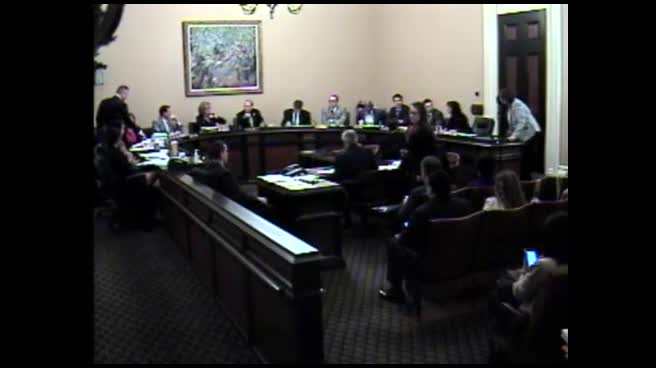 1MIN
Assembly Standing Committee on Revenue and Taxation
Bill Author

Bill Co-Author(s):