AB 953: Protective orders: personal information of minors.
- Session Year: 2017-2018
- House: Assembly
- Latest Version Date: 2017-09-30
Existing law provides the procedure by which a temporary restraining order and an injunction prohibiting harassment or abuse may be sought by, or on behalf of, specified persons.
The existing Domestic Violence Protection Act authorizes a judicial officer to issue a protective order after notice and a hearing for the purpose of preventing acts of domestic violence, abuse, and sexual abuse and ensuring a period of separation of the persons involved in the domestic violence.
This bill would authorize a minor or a minors guardian to petition the court to keep all information regarding the minor obtained when issuing a protective order under either of the above provisions, including, but not limited to, the minors name, address, and the circumstances surrounding the protective order with respect to that minor, in a confidential case file. The bill would authorize the court to order that the information be kept confidential if the court expressly finds that, among other things, the minors right to privacy overcomes the right of public access to the information and no less restrictive means exist to protect the minors privacy. If the request is granted, the bill would prohibit that information from becoming part of the public file in that proceeding or any other civil proceeding. The bill would make it civil contempt of court, punishable by a $1,000 fine, to disclose or misuse the confidential information and would require the notice served on the respondent to identify the specific information that is confidential and the penalty for disclosure or misuse of that information. The bill would authorize confidential information to be made available to law enforcement, as specified, to the extent necessary and only for the purpose of enforcing the order.
Existing constitutional provisions require that a statute that limits the right of access to the meetings of public bodies or the writings of public officials and agencies be adopted with findings demonstrating the interest protected by the limitation and the need for protecting that interest.
This bill would make legislative findings to that effect.
Existing law provides the procedure by which a temporary restraining order and an injunction prohibiting harassment or abuse may be sought by, or on behalf of, specified persons.
The existing Domestic Violence Protection Act authorizes a judicial officer to issue a protective order after notice and a hearing for the purpose of preventing acts of domestic violence, abuse, and sexual abuse and ensuring a period of separation of the persons involved in the domestic violence.
This bill would authorize a minor or a minors guardian to petition the court to keep all information regarding the minor obtained when issuing a protective order under either of the above provisions, including, but not limited to, the minors name, address, and the circumstances surrounding the protective order with respect to that minor, in a confidential case file. The bill would authorize the court to order that the information be kept confidential if the court expressly finds that, among other things, the minors right to privacy overcomes the right of public access to the information and no less restrictive means exist to protect the minors privacy. If the request is granted, the bill would prohibit that information from becoming part of the public file in that proceeding or any other civil proceeding. The bill would make it a civil contempt of court court, punishable by a $1,000 fine, to disclose or misuse the confidential information and would require the notice served on the respondent to identify the specific information that is confidential and the penalty for disclosure or misuse of that information. The bill would authorize confidential information to be made available to law enforcement, as specified, to the extent necessary and only for the purpose of enforcing the order. By expanding the crime of contempt of court, this bill would impose a state-mandated local program.
The California Constitution requires the state to reimburse local agencies and school districts for certain costs mandated by the state. Statutory provisions establish procedures for making that reimbursement.This bill would provide that no reimbursement is required by this act for a specified reason.Existing constitutional provisions require that a statute that limits the right of access to the meetings of public bodies or the writings of public officials and agencies be adopted with findings demonstrating the interest protected by the limitation and the need for protecting that interest.
This bill would make legislative findings to that effect.
Existing law provides the procedure by which a temporary restraining order and an injunction prohibiting harassment or abuse may be sought by, or on behalf of, specified persons.
The existing Domestic Violence Protection Act authorizes a judicial officer to issue a protective order after notice and a hearing for the purpose of preventing acts of domestic violence, abuse, and sexual abuse and ensuring a period of separation of the persons involved in the domestic violence.
This bill would authorize a minor or a minors guardian to petition the court to keep all information regarding the minor obtained when issuing a protective order under either of the above provisions, including, but not limited to, the minors name, address, and the circumstances surrounding the protective order with respect to that minor, in a confidential case file. The bill would authorize the court to order that the information be kept confidential if the court expressly finds that, among other things, the minors right to privacy overcomes the right of public access to the information and no less restrictive means exist to protect the minors privacy. If the request is granted, the bill would prohibit that information from becoming part of the public file in that proceeding or any other civil proceeding. The bill would make it a contempt of court to disclose or misuse the confidential information and would require the notice served on the respondent to identify the specific information that is confidential and the penalty for disclosure or misuse of that information. The bill would authorize confidential information to be made available to law enforcement, as specified, to the extent necessary and only for the purpose of enforcing the order. By expanding the crime of contempt of court, this bill would impose a state-mandated local program.
The California Constitution requires the state to reimburse local agencies and school districts for certain costs mandated by the state. Statutory provisions establish procedures for making that reimbursement.
This bill would provide that no reimbursement is required by this act for a specified reason.
Existing constitutional provisions require that a statute that limits the right of access to the meetings of public bodies or the writings of public officials and agencies be adopted with findings demonstrating the interest protected by the limitation and the need for protecting that interest.
This bill would make legislative findings to that effect.
Existing law provides the procedure by which a temporary restraining order and an injunction prohibiting harassment or abuse may be sought by, or on behalf of, specified persons.
The existing Domestic Violence Protection Act authorizes a judicial officer to issue a protective order after notice and a hearing for the purpose of preventing acts of domestic violence, abuse, and sexual abuse and ensuring a period of separation of the persons involved in the domestic violence.
This bill would authorize a minor or a minors guardian to request that petition the court to keep all information regarding the minor obtained when issuing a protective order under either of the above provisions, including, but not limited to, the minors name, address, and the circumstances surrounding the protective order with respect to that minor, in a confidential case file. The bill would authorize the court to order that information be kept confidential if the court expressly finds that, among other things, the minors right to privacy overcomes the right of public access to the information and no less restrictive means exist to protect the minors privacy. If the request is granted, the bill would prohibit that information from becoming part of the public file in that proceeding or any other civil proceeding. The bill would make it a contempt of court to disclose or misuse the confidential information and would require the notice served on the respondent to identify the specific information that is confidential and the penalty for disclosure or misuse of that information. The bill would authorize confidential information to be made available to law enforcement, as specified, to the extent necessary and only for the purpose of enforcing the order. By expanding the crime of contempt of court, this bill would impose a state-mandated local program.
The California Constitution requires the state to reimburse local agencies and school districts for certain costs mandated by the state. Statutory provisions establish procedures for making that reimbursement.
This bill would provide that no reimbursement is required by this act for a specified reason.
Existing constitutional provisions require that a statute that limits the right of access to the meetings of public bodies or the writings of public officials and agencies be adopted with findings demonstrating the interest protected by the limitation and the need for protecting that interest.
This bill would make legislative findings to that effect.
Existing law provides the procedure by which a temporary restraining order and an injunction prohibiting harassment or abuse may be sought by, or on behalf of, specified persons.
The existing Domestic Violence Protection Act authorizes a judicial officer to issue a protective order after notice and a hearing for the purpose of preventing acts of domestic violence, abuse, and sexual abuse and ensuring a period of separation of the persons involved in the domestic violence.
This bill would state the intent of the Legislature to enact legislation that would protect the personal information of children who have been abused when a domestic violence protective order is issued. would authorize a minor or a minors guardian to request that the court keep all information regarding the minor obtained when issuing a protective order under either of the above provisions, including, but not limited to, the minors name, address, and the circumstances surrounding the protective order with respect to that minor, in a confidential case file. If the request is granted, the bill would prohibit that information from becoming part of the public file in that proceeding or any other civil proceeding. The bill would make it a contempt of court to disclose or misuse the confidential information and would require the notice served on the respondent to identify the specific information that is confidential and the penalty for disclosure or misuse of that information. The bill would authorize confidential information to be made available to law enforcement, as specified, to the extent necessary and only for the purpose of enforcing the order. By expanding the crime of contempt of court, this bill would impose a state-mandated local program.
The California Constitution requires the state to reimburse local agencies and school districts for certain costs mandated by the state. Statutory provisions establish procedures for making that reimbursement.
This bill would provide that no reimbursement is required by this act for a specified reason.
Existing constitutional provisions require that a statute that limits the right of access to the meetings of public bodies or the writings of public officials and agencies be adopted with findings demonstrating the interest protected by the limitation and the need for protecting that interest.
This bill would make legislative findings to that effect.
The existing Domestic Violence Protection Act authorizes a judicial officer to issue a protective order after notice and a hearing for the purpose of preventing acts of domestic violence, abuse, and sexual abuse and ensuring a period of separation of the persons involved in the domestic violence.
This bill would state the intent of the Legislature to enact legislation that would protect the personal information of children who have been abused when a domestic violence protective order is issued.
(a)(1)A person who has suffered harassment as defined in subdivision (b) may seek a temporary restraining order and an order after hearing prohibiting harassment as provided in this section.
(2)A minor, under 12 years of age, accompanied by a duly appointed and acting guardian ad litem, shall be permitted to appear in court without counsel for the limited purpose of requesting or opposing a request for a temporary restraining order or order after hearing, or both, under this section as provided in Section 374.
(b)For purposes of this section:
(1)Course of conduct is a pattern of conduct composed of a series of acts over a period of time, however short, evidencing a continuity of purpose, including following or stalking an individual, making harassing telephone calls to an individual, or sending harassing correspondence to an individual by any means, including, but not limited to, the use of public or private mails, interoffice mail, facsimile, or email. Constitutionally protected activity is not included within the meaning of course of conduct.
(2)Credible threat of violence is a knowing and willful statement or course of conduct that would place a reasonable person in fear for his or her safety or the safety of his or her immediate family, and that serves no legitimate purpose.
(3)Harassment is unlawful violence, a credible threat of violence, or a knowing and willful course of conduct directed at a specific person that seriously alarms, annoys, or harasses the person, and that serves no legitimate purpose. The course of conduct must be that which would cause a reasonable person to suffer substantial emotional distress, and must actually cause substantial emotional distress to the petitioner.
(4)Petitioner means the person to be protected by the temporary restraining order and order after hearing and, if the court grants the petition, the protected person.
(5)Respondent means the person against whom the temporary restraining order and order after hearing are sought and, if the petition is granted, the restrained person.
(6)Temporary restraining order and order after hearing mean orders that include any of the following restraining orders, whether issued ex parte or after notice and hearing:
(A)An order enjoining a party from harassing, intimidating, molesting, attacking, striking, stalking, threatening, sexually assaulting, battering, abusing, telephoning, including, but not limited to, making annoying telephone calls, as described in Section 653m of the Penal Code, destroying personal property, contacting, either directly or indirectly, by mail or otherwise, or coming within a specified distance of, or disturbing the peace of, the petitioner. On a showing of good cause, in an order issued pursuant to this subparagraph in connection with an animal owned, possessed, leased, kept, or held by the petitioner, or residing in the residence or household of the petitioner, the court may do either or both of the following:
(i)Grant the petitioner exclusive care, possession, or control of the animal.
(ii)Order the respondent to stay away from the animal and refrain from taking, transferring, encumbering, concealing, molesting, attacking, striking, threatening, harming, or otherwise disposing of the animal.
(B)An order enjoining a party from specified behavior that the court determines is necessary to effectuate orders described in subparagraph (A).
(7)Unlawful violence is any assault or battery, or stalking as prohibited in Section 646.9 of the Penal Code, but does not include lawful acts of self-defense or defense of others.
(c)In the discretion of the court, on a showing of good cause, a temporary restraining order or order after hearing issued under this section may include other named family or household members.
(d)Upon filing a petition for orders under this section, the petitioner may obtain a temporary restraining order in accordance with Section 527, except to the extent this section provides an inconsistent rule. The temporary restraining order may include any of the restraining orders described in paragraph (6) of subdivision (b). A temporary restraining order may be issued with or without notice, based on a declaration that, to the satisfaction of the court, shows reasonable proof of harassment of the petitioner by the respondent, and that great or irreparable harm would result to the petitioner.
(e)A request for the issuance of a temporary restraining order without notice under this section shall be granted or denied on the same day that the petition is submitted to the court. If the petition is filed too late in the day to permit effective review, the order shall be granted or denied on the next day of judicial business in sufficient time for the order to be filed that day with the clerk of the court.
(f)A temporary restraining order issued under this section shall remain in effect, at the courts discretion, for a period not to exceed 21 days, or, if the court extends the time for hearing under subdivision (g), not to exceed 25 days, unless otherwise modified or terminated by the court.
(g)Within 21 days, or, if good cause appears to the court, 25 days from the date that a petition for a temporary order is granted or denied, a hearing shall be held on the petition. If a request for a temporary order is not made, the hearing shall be held within 21 days, or, if good cause appears to the court, 25 days, from the date that the petition is filed.
(h)The respondent may file a response that explains, excuses, justifies, or denies the alleged harassment, or may file a cross-petition under this section.
(i)At the hearing, the judge shall receive any testimony that is relevant, and may make an independent inquiry. If the judge finds by clear and convincing evidence that unlawful harassment exists, an order shall issue prohibiting the harassment.
(j)(1)In the discretion of the court, an order issued after notice and hearing under this section may have a duration of no more than five years, subject to termination or modification by further order of the court either on written stipulation filed with the court or on the motion of a party. The order may be renewed, upon the request of a party, for a duration of no more than five additional years, without a showing of any further harassment since the issuance of the original order, subject to termination or modification by further order of the court either on written stipulation filed with the court or on the motion of a party. A request for renewal may be brought any time within the three months before the order expires.
(2)The failure to state the expiration date on the face of the form creates an order with a duration of three years from the date of issuance.
(3)If an action is filed for the purpose of terminating or modifying a protective order before the expiration date specified in the order by a party other than the protected party, the party who is protected by the order shall be given notice, pursuant to subdivision (b) of Section 1005, of the proceeding by personal service or, if the protected party has satisfied the requirements of Chapter 3.1 (commencing with Section 6205) of Division 7 of Title 1 of the Government Code, by service on the Secretary of State. If the party who is protected by the order cannot be notified before the hearing for modification or termination of the protective order, the court shall deny the motion to modify or terminate the order without prejudice or continue the hearing until the party who is protected can be properly noticed and may, upon a showing of good cause, specify another method for service of process that is reasonably designed to afford actual notice to the protected party. The protected party may waive his or her right to notice if he or she is physically present in court and does not challenge the sufficiency of the notice.
(k)This section does not preclude either party from representation by private counsel or from appearing on the partys own behalf.
(l)In a proceeding under this section, if there are allegations of unlawful violence or credible threats of violence, a support person may accompany a party in court and, if the party is not represented by an attorney, may sit with the party at the table that is generally reserved for the party and the partys attorney. The support person is present to provide moral and emotional support for a person who alleges he or she is a victim of violence. The support person is not present as a legal adviser and may not provide legal advice. The support person may assist the person who alleges he or she is a victim of violence in feeling more confident that he or she will not be injured or threatened by the other party during the proceedings if the person who alleges he or she is a victim of violence and the other party are required to be present in close proximity. This subdivision does not preclude the court from exercising its discretion to remove the support person from the courtroom if the court believes the support person is prompting, swaying, or influencing the party assisted by the support person.
(m)Upon the filing of a petition under this section, the respondent shall be personally served with a copy of the petition, temporary restraining order, if any, and notice of hearing of the petition. Service shall be made at least five days before the hearing. The court may for good cause, on motion of the petitioner or on its own motion, shorten the time for service on the respondent.
(n)A notice of hearing under this section shall notify the respondent that if he or she does not attend the hearing, the court may make orders against him or her that could last up to five years.
(o)The respondent shall be entitled, as a matter of course, to one continuance, for a reasonable period, to respond to the petition.
(p)(1)Either party may request a continuance of the hearing, which the court shall grant on a showing of good cause. The request may be made in writing before or at the hearing, or orally at the hearing. The court may also grant a continuance on its own motion.
(2)If the court grants a continuance, any temporary restraining order that has been granted shall remain in effect until the end of the continued hearing, unless otherwise ordered by the court. In granting a continuance, the court may modify or terminate a temporary restraining order.
(q)(1)If a respondent named in a restraining order issued after a hearing has not been served personally with the order but has received actual notice of the existence and substance of the order through personal appearance in court to hear the terms of the order from the court, additional proof of service is not required for enforcement of the order.
(2)If the respondent named in a temporary restraining order is personally served with the order and notice of hearing with respect to a restraining order or protective order based on the temporary restraining order, but the respondent does not appear at the hearing, either personally or by an attorney, and the terms and conditions of the restraining order or protective order issued at the hearing are identical to the temporary restraining order, except for the duration of the order, the restraining order or protective order issued at the hearing may be served on the respondent by first-class mail sent to the respondent at the most current address for the respondent available to the court.
(3)The Judicial Council form for temporary orders issued pursuant to this subdivision shall contain a statement in substantially the following form:
If you have been personally served with this temporary restraining order and notice of hearing, but you do not appear at the hearing either in person or by a lawyer, and a restraining order that is the same as this temporary restraining order except for the expiration date is issued at the hearing, a copy of the restraining order will be served on you by mail at the following address: ____.
If that address is not correct or you wish to verify that the temporary restraining order was converted to a restraining order at the hearing without substantive change and to find out the duration of that order, contact the clerk of the court.
(4)If information about a minor has been made confidential pursuant to subdivision (v), the notice shall identify the information, specifically, that has been made confidential and shall include a statement that disclosure or misuse of that information is punishable as a contempt of court.
(r)(1)Information on a temporary restraining order or order after hearing relating to civil harassment issued by a court pursuant to this section shall be transmitted to the Department of Justice in accordance with either paragraph (2) or (3).
(2)The court shall order the petitioner or the attorney for the petitioner to deliver a copy of an order issued under this section, or reissuance, extension, modification, or termination of the order, and any subsequent proof of service, by the close of the business day on which the order, reissuance, extension, modification, or termination was made, to a law enforcement agency having jurisdiction over the residence of the petitioner and to any additional law enforcement agencies within the courts discretion as are requested by the petitioner.
(3)Alternatively, the court or its designee shall transmit, within one business day, to law enforcement personnel all information required under subdivision (b) of Section 6380 of the Family Code regarding any order issued under this section, or a reissuance, extension, modification, or termination of the order, and any subsequent proof of service, by either one of the following methods:
(A)Transmitting a physical copy of the order or proof of service to a local law enforcement agency authorized by the Department of Justice to enter orders into the California Law Enforcement Telecommunications System (CLETS).
(B)With the approval of the Department of Justice, entering the order or proof of service into CLETS directly.
(4)Each appropriate law enforcement agency shall make available information as to the existence and current status of orders issued under this section to law enforcement officers responding to the scene of reported harassment.
(5)An order issued under this section shall, on request of the petitioner, be served on the respondent, whether or not the respondent has been taken into custody, by any law enforcement officer who is present at the scene of reported harassment involving the parties to the proceeding. The petitioner shall provide the officer with an endorsed copy of the order and a proof of service that the officer shall complete and send to the issuing court.
(6)Upon receiving information at the scene of an incident of harassment that a protective order has been issued under this section, or that a person who has been taken into custody is the subject of an order, if the protected person cannot produce a certified copy of the order, a law enforcement officer shall immediately attempt to verify the existence of the order.
(7)If the law enforcement officer determines that a protective order has been issued but not served, the officer shall immediately notify the respondent of the terms of the order and shall at that time also enforce the order. Verbal notice of the terms of the order shall constitute service of the order and is sufficient notice for purposes of this section and for purposes of Section 29825 of the Penal Code. Verbal notice shall include the information required pursuant to paragraph (4) of subdivision (q).
(s)The prevailing party in an action brought pursuant to this section may be awarded court costs and attorneys fees, if any.
(t)Willful disobedience of a temporary restraining order or order after hearing granted pursuant to this section is punishable pursuant to Section 273.6 of the Penal Code.
(u)(1)A person subject to a protective order issued pursuant to this section shall not own, possess, purchase, receive, or attempt to purchase or receive a firearm or ammunition while the protective order is in effect.
(2)The court shall order a person subject to a protective order issued pursuant to this section to relinquish any firearms he or she owns or possesses pursuant to Section 527.9.
(3)A person who owns, possesses, purchases, or receives, or attempts to purchase or receive, a firearm or ammunition while the protective order is in effect is punishable pursuant to Section 29825 of the Penal Code.
(v)(1)A minor or the minors legal guardian may petition the court to have information regarding the minor obtained when issuing an order pursuant to this section, including, but not limited to, the minors name, address, and the circumstances surrounding the protective order with respect to that minor, be kept confidential.
(2)The court may order the information specified in paragraph (1) be kept confidential if the court expressly finds all of the following:
(A)The minors right to privacy overcomes the right of public access to the information.
(B)There is a substantial probability that the minors interest will be prejudiced if the information is not kept confidential.
(C)The order to keep the information confidential is narrowly tailored.
(D)No less restrictive means exist to protect the minors privacy.
(3)If the request is granted, except as provided in paragraph (4), information regarding the minor shall be maintained in a confidential case file and shall not become part of the public file in the proceeding or any other civil proceeding. Disclosure or misuse of that information is punishable as civil contempt of court with a fine of up to one thousand dollars ($1,000). An order of civil contempt under this paragraph shall not include imprisonment.
(4)(A)Confidential information about a minor who is protected by an order issued pursuant to this section shall be made available to law enforcement pursuant to subdivision (r), to the extent necessary and only for the purpose of enforcing the order.
(B)To the extent necessary for the enforcement of the order and to allow the respondent to comply with and respond to the order, confidential information shall be included in the notice sent to the respondent pursuant to this section.
(w)This section does not apply to any action or proceeding covered by Title 1.6C (commencing with Section 1788) of Part 4 of Division 3 of the Civil Code or by Division 10 (commencing with Section 6200) of the Family Code. This section does not preclude a petitioner from using other existing civil remedies.
(x)(1)The Judicial Council shall develop forms, instructions, and rules relating to matters governed by this section. The petition and response forms shall be simple and concise, and their use by parties in actions brought pursuant to this section is mandatory.
(2)A temporary restraining order or order after hearing relating to civil harassment issued by a court pursuant to this section shall be issued on forms adopted by the Judicial Council and that have been approved by the Department of Justice pursuant to subdivision (i) of Section 6380 of the Family Code. However, the fact that an order issued by a court pursuant to this section was not issued on forms adopted by the Judicial Council and approved by the Department of Justice shall not, in and of itself, make the order unenforceable.
(y)There is no filing fee for a petition that alleges that a person has inflicted or threatened violence against the petitioner, stalked the petitioner, or acted or spoken in any other manner that has placed the petitioner in reasonable fear of violence, and that seeks a protective or restraining order restraining stalking, future violence, or threats of violence, in an action brought pursuant to this section. A fee shall not be paid for a subpoena filed in connection with a petition alleging these acts. A fee shall not be paid for filing a response to a petition alleging these acts.
(z)(1)Subject to paragraph (4) of subdivision (b) of Section 6103.2 of the Government Code, there shall not be a fee for the service of process by a sheriff or marshal of a protective or restraining order to be issued, if either of the following conditions apply:
(A)The protective or restraining order issued pursuant to this section is based upon stalking, as prohibited by Section 646.9 of the Penal Code.
(B)The protective or restraining order issued pursuant to this section is based upon unlawful violence or a credible threat of violence.
(2)The Judicial Council shall prepare and develop forms for persons who wish to avail themselves of the services described in this subdivision.
SEC. 2.Section 6301.5 is added to the Family Code, to read:6301.5.(a)A minor or the minors legal guardian may petition the court to have information regarding a minor obtained when issuing a protective order pursuant to this division, including, but not limited to, the minors name, address, and the circumstances surrounding the protective order with respect to that minor, be kept confidential.
(b)The court may order the information specified in subdivision (a) be kept confidential if the court expressly finds all of the following:
(1)The minors right to privacy overcomes the right of public access to the information.
(2)There is a substantial probability that the minors interest will be prejudiced if the information is not kept confidential.
(3)The order to keep the information confidential is narrowly tailored.
(4)No less restrictive means exist to protect the minors privacy.
(c)If the request is granted, except as provided in subdivision (d), information regarding the minor shall be maintained in a confidential case file and shall not become part of the public file in the proceeding or any other civil proceeding. Disclosure or misuse of that information is punishable as civil contempt of court with a fine of up to one thousand dollars ($1,000). An order of civil contempt under this subdivision shall not include imprisonment.
(d)(1)Information about a minor who is protected by an order issued pursuant to this division shall be made available to law enforcement pursuant to Section 6380, to the extent necessary and only for the purpose of enforcing the order.
(2)To the extent necessary for the enforcement of the order and to allow the respondent to comply with and respond to the order, confidential information shall be included in the notice sent to the respondent pursuant to this part. The notice shall identify the specific information that has been made confidential and shall include a statement that disclosure or misuse of that information is punishable as a contempt of court.
SEC. 3.The Legislature finds and declares that Sections 1 and 2 of this act, which amend Section 527.6 of the Code of Civil Procedure and add Section 6301.5 to the Family Code, respectively, impose a limitation on the publics right of access to the meetings of public bodies or the writings of public officials and agencies within the meaning of Section 3 of Article I of the California Constitution. Pursuant to that constitutional provision, the Legislature makes the following findings to demonstrate the interest protected by this limitation and the need for protecting that interest:
This limitation is required to protect the private information of vulnerable minors who are the victims of domestic abuse and human trafficking.
(a)(1)A person who has suffered harassment as defined in subdivision (b) may seek a temporary restraining order and an order after hearing prohibiting harassment as provided in this section.
(2)A minor, under 12 years of age, accompanied by a duly appointed and acting guardian ad litem, shall be permitted to appear in court without counsel for the limited purpose of requesting or opposing a request for a temporary restraining order or order after hearing, or both, under this section as provided in Section 374.
(b)For purposes of this section:
(1)Course of conduct is a pattern of conduct composed of a series of acts over a period of time, however short, evidencing a continuity of purpose, including following or stalking an individual, making harassing telephone calls to an individual, or sending harassing correspondence to an individual by any means, including, but not limited to, the use of public or private mails, interoffice mail, facsimile, or email. Constitutionally protected activity is not included within the meaning of course of conduct.
(2)Credible threat of violence is a knowing and willful statement or course of conduct that would place a reasonable person in fear for his or her safety or the safety of his or her immediate family, and that serves no legitimate purpose.
(3)Harassment is unlawful violence, a credible threat of violence, or a knowing and willful course of conduct directed at a specific person that seriously alarms, annoys, or harasses the person, and that serves no legitimate purpose. The course of conduct must be that which would cause a reasonable person to suffer substantial emotional distress, and must actually cause substantial emotional distress to the petitioner.
(4)Petitioner means the person to be protected by the temporary restraining order and order after hearing and, if the court grants the petition, the protected person.
(5)Respondent means the person against whom the temporary restraining order and order after hearing are sought and, if the petition is granted, the restrained person.
(6)Temporary restraining order and order after hearing mean orders that include any of the following restraining orders, whether issued ex parte or after notice and hearing:
(A)An order enjoining a party from harassing, intimidating, molesting, attacking, striking, stalking, threatening, sexually assaulting, battering, abusing, telephoning, including, but not limited to, making annoying telephone calls, as described in Section 653m of the Penal Code, destroying personal property, contacting, either directly or indirectly, by mail or otherwise, or coming within a specified distance of, or disturbing the peace of, the petitioner. On a showing of good cause, in an order issued pursuant to this subparagraph in connection with an animal owned, possessed, leased, kept, or held by the petitioner, or residing in the residence or household of the petitioner, the court may do either or both of the following:
(i)Grant the petitioner exclusive care, possession, or control of the animal.
(ii)Order the respondent to stay away from the animal and refrain from taking, transferring, encumbering, concealing, molesting, attacking, striking, threatening, harming, or otherwise disposing of the animal.
(B)An order enjoining a party from specified behavior that the court determines is necessary to effectuate orders described in subparagraph (A).
(7)Unlawful violence is any assault or battery, or stalking as prohibited in Section 646.9 of the Penal Code, but does not include lawful acts of self-defense or defense of others.
(c)In the discretion of the court, on a showing of good cause, a temporary restraining order or order after hearing issued under this section may include other named family or household members.
(d)Upon filing a petition for orders under this section, the petitioner may obtain a temporary restraining order in accordance with Section 527, except to the extent this section provides an inconsistent rule. The temporary restraining order may include any of the restraining orders described in paragraph (6) of subdivision (b). A temporary restraining order may be issued with or without notice, based on a declaration that, to the satisfaction of the court, shows reasonable proof of harassment of the petitioner by the respondent, and that great or irreparable harm would result to the petitioner.
(e)A request for the issuance of a temporary restraining order without notice under this section shall be granted or denied on the same day that the petition is submitted to the court. If the petition is filed too late in the day to permit effective review, the order shall be granted or denied on the next day of judicial business in sufficient time for the order to be filed that day with the clerk of the court.
(f)A temporary restraining order issued under this section shall remain in effect, at the courts discretion, for a period not to exceed 21 days, or, if the court extends the time for hearing under subdivision (g), not to exceed 25 days, unless otherwise modified or terminated by the court.
(g)Within 21 days, or, if good cause appears to the court, 25 days from the date that a petition for a temporary order is granted or denied, a hearing shall be held on the petition. If a request for a temporary order is not made, the hearing shall be held within 21 days, or, if good cause appears to the court, 25 days, from the date that the petition is filed.
(h)The respondent may file a response that explains, excuses, justifies, or denies the alleged harassment, or may file a cross-petition under this section.
(i)At the hearing, the judge shall receive any testimony that is relevant, and may make an independent inquiry. If the judge finds by clear and convincing evidence that unlawful harassment exists, an order shall issue prohibiting the harassment.
(j)(1)In the discretion of the court, an order issued after notice and hearing under this section may have a duration of no more than five years, subject to termination or modification by further order of the court either on written stipulation filed with the court or on the motion of a party. The order may be renewed, upon the request of a party, for a duration of no more than five additional years, without a showing of any further harassment since the issuance of the original order, subject to termination or modification by further order of the court either on written stipulation filed with the court or on the motion of a party. A request for renewal may be brought any time within the three months before the order expires.
(2)The failure to state the expiration date on the face of the form creates an order with a duration of three years from the date of issuance.
(3)If an action is filed for the purpose of terminating or modifying a protective order before the expiration date specified in the order by a party other than the protected party, the party who is protected by the order shall be given notice, pursuant to subdivision (b) of Section 1005, of the proceeding by personal service or, if the protected party has satisfied the requirements of Chapter 3.1 (commencing with Section 6205) of Division 7 of Title 1 of the Government Code, by service on the Secretary of State. If the party who is protected by the order cannot be notified before the hearing for modification or termination of the protective order, the court shall deny the motion to modify or terminate the order without prejudice or continue the hearing until the party who is protected can be properly noticed and may, upon a showing of good cause, specify another method for service of process that is reasonably designed to afford actual notice to the protected party. The protected party may waive his or her right to notice if he or she is physically present in court and does not challenge the sufficiency of the notice.
(k)This section does not preclude either party from representation by private counsel or from appearing on the partys own behalf.
(l)In a proceeding under this section, if there are allegations of unlawful violence or credible threats of violence, a support person may accompany a party in court and, if the party is not represented by an attorney, may sit with the party at the table that is generally reserved for the party and the partys attorney. The support person is present to provide moral and emotional support for a person who alleges he or she is a victim of violence. The support person is not present as a legal adviser and may not provide legal advice. The support person may assist the person who alleges he or she is a victim of violence in feeling more confident that he or she will not be injured or threatened by the other party during the proceedings if the person who alleges he or she is a victim of violence and the other party are required to be present in close proximity. This subdivision does not preclude the court from exercising its discretion to remove the support person from the courtroom if the court believes the support person is prompting, swaying, or influencing the party assisted by the support person.
(m)Upon the filing of a petition under this section, the respondent shall be personally served with a copy of the petition, temporary restraining order, if any, and notice of hearing of the petition. Service shall be made at least five days before the hearing. The court may for good cause, on motion of the petitioner or on its own motion, shorten the time for service on the respondent.
(n)A notice of hearing under this section shall notify the respondent that if he or she does not attend the hearing, the court may make orders against him or her that could last up to five years.
(o)The respondent shall be entitled, as a matter of course, to one continuance, for a reasonable period, to respond to the petition.
(p)(1)Either party may request a continuance of the hearing, which the court shall grant on a showing of good cause. The request may be made in writing before or at the hearing, or orally at the hearing. The court may also grant a continuance on its own motion.
(2)If the court grants a continuance, any temporary restraining order that has been granted shall remain in effect until the end of the continued hearing, unless otherwise ordered by the court. In granting a continuance, the court may modify or terminate a temporary restraining order.
(q)(1)If a respondent named in a restraining order issued after a hearing has not been served personally with the order but has received actual notice of the existence and substance of the order through personal appearance in court to hear the terms of the order from the court, additional proof of service is not required for enforcement of the order.
(2)If the respondent named in a temporary restraining order is personally served with the order and notice of hearing with respect to a restraining order or protective order based on the temporary restraining order, but the respondent does not appear at the hearing, either personally or by an attorney, and the terms and conditions of the restraining order or protective order issued at the hearing are identical to the temporary restraining order, except for the duration of the order, the restraining order or protective order issued at the hearing may be served on the respondent by first-class mail sent to the respondent at the most current address for the respondent available to the court.
(3)The Judicial Council form for temporary orders issued pursuant to this subdivision shall contain a statement in substantially the following form:
If you have been personally served with this temporary restraining order and notice of hearing, but you do not appear at the hearing either in person or by a lawyer, and a restraining order that is the same as this temporary restraining order except for the expiration date is issued at the hearing, a copy of the restraining order will be served on you by mail at the following address: ____.
If that address is not correct or you wish to verify that the temporary restraining order was converted to a restraining order at the hearing without substantive change and to find out the duration of that order, contact the clerk of the court.
(4)If information about a minor has been made confidential pursuant to subdivision (v), the notice shall identify the information, specifically, that has been made confidential and shall include a statement that disclosure or misuse of that information is punishable as a contempt of court.
(r)(1)Information on a temporary restraining order or order after hearing relating to civil harassment issued by a court pursuant to this section shall be transmitted to the Department of Justice in accordance with either paragraph (2) or (3).
(2)The court shall order the petitioner or the attorney for the petitioner to deliver a copy of an order issued under this section, or reissuance, extension, modification, or termination of the order, and any subsequent proof of service, by the close of the business day on which the order, reissuance, extension, modification, or termination was made, to a law enforcement agency having jurisdiction over the residence of the petitioner and to any additional law enforcement agencies within the courts discretion as are requested by the petitioner.
(3)Alternatively, the court or its designee shall transmit, within one business day, to law enforcement personnel all information required under subdivision (b) of Section 6380 of the Family Code regarding any order issued under this section, or a reissuance, extension, modification, or termination of the order, and any subsequent proof of service, by either one of the following methods:
(A)Transmitting a physical copy of the order or proof of service to a local law enforcement agency authorized by the Department of Justice to enter orders into the California Law Enforcement Telecommunications System (CLETS).
(B)With the approval of the Department of Justice, entering the order or proof of service into CLETS directly.
(4)Each appropriate law enforcement agency shall make available information as to the existence and current status of orders issued under this section to law enforcement officers responding to the scene of reported harassment.
(5)An order issued under this section shall, on request of the petitioner, be served on the respondent, whether or not the respondent has been taken into custody, by any law enforcement officer who is present at the scene of reported harassment involving the parties to the proceeding. The petitioner shall provide the officer with an endorsed copy of the order and a proof of service that the officer shall complete and send to the issuing court.
(6)Upon receiving information at the scene of an incident of harassment that a protective order has been issued under this section, or that a person who has been taken into custody is the subject of an order, if the protected person cannot produce a certified copy of the order, a law enforcement officer shall immediately attempt to verify the existence of the order.
(7)If the law enforcement officer determines that a protective order has been issued but not served, the officer shall immediately notify the respondent of the terms of the order and shall at that time also enforce the order. Verbal notice of the terms of the order shall constitute service of the order and is sufficient notice for purposes of this section and for purposes of Section 29825 of the Penal Code. Verbal notice shall include the information required pursuant to paragraph (4) of subdivision (q).
(s)The prevailing party in an action brought pursuant to this section may be awarded court costs and attorneys fees, if any.
(t)Willful disobedience of a temporary restraining order or order after hearing granted pursuant to this section is punishable pursuant to Section 273.6 of the Penal Code.
(u)(1)A person subject to a protective order issued pursuant to this section shall not own, possess, purchase, receive, or attempt to purchase or receive a firearm or ammunition while the protective order is in effect.
(2)The court shall order a person subject to a protective order issued pursuant to this section to relinquish any firearms he or she owns or possesses pursuant to Section 527.9.
(3)A person who owns, possesses, purchases, or receives, or attempts to purchase or receive, a firearm or ammunition while the protective order is in effect is punishable pursuant to Section 29825 of the Penal Code.
(v)(1)A minor or the minors legal guardian may petition the court to have information regarding the minor obtained when issuing an order pursuant to this section, including, but not limited to, the minors name, address, and the circumstances surrounding the protective order with respect to that minor, be kept confidential.
(2)The court may order the information specified in paragraph (1) be kept confidential if the court expressly finds all of the following:
(A)The minors right to privacy overcomes the right of public access to the information.
(B)There is a substantial probability that the minors interest will be prejudiced if the information is not kept confidential.
(C)The order to keep the information confidential is narrowly tailored.
(D)No less restrictive means exist to protect the minors privacy.
(3)If the request is granted, except as provided in paragraph (4), information regarding the minor shall be maintained in a confidential case file and shall not become part of the public file in the proceeding or any other civil proceeding. Disclosure or misuse of that information is punishable as a civil contempt of court. court with a fine of up to one thousand dollars ($1,000). An order of civil contempt under this paragraph shall not include imprisonment.
(4)(A)Confidential information about a minor who is protected by an order issued pursuant to this section shall be made available to law enforcement pursuant to subdivision (r), to the extent necessary and only for the purpose of enforcing the order.
(B)To the extent necessary for the enforcement of the order and to allow the respondent to comply with and respond to the order, confidential information shall be included in the notice sent to the respondent pursuant to this section.
(w)This section does not apply to any action or proceeding covered by Title 1.6C (commencing with Section 1788) of Part 4 of Division 3 of the Civil Code or by Division 10 (commencing with Section 6200) of the Family Code. This section does not preclude a petitioner from using other existing civil remedies.
(x)(1)The Judicial Council shall develop forms, instructions, and rules relating to matters governed by this section. The petition and response forms shall be simple and concise, and their use by parties in actions brought pursuant to this section is mandatory.
(2)A temporary restraining order or order after hearing relating to civil harassment issued by a court pursuant to this section shall be issued on forms adopted by the Judicial Council and that have been approved by the Department of Justice pursuant to subdivision (i) of Section 6380 of the Family Code. However, the fact that an order issued by a court pursuant to this section was not issued on forms adopted by the Judicial Council and approved by the Department of Justice shall not, in and of itself, make the order unenforceable.
(y)There is no filing fee for a petition that alleges that a person has inflicted or threatened violence against the petitioner, stalked the petitioner, or acted or spoken in any other manner that has placed the petitioner in reasonable fear of violence, and that seeks a protective or restraining order restraining stalking, future violence, or threats of violence, in an action brought pursuant to this section. A fee shall not be paid for a subpoena filed in connection with a petition alleging these acts. A fee shall not be paid for filing a response to a petition alleging these acts.
(z)(1)Subject to paragraph (4) of subdivision (b) of Section 6103.2 of the Government Code, there shall not be a fee for the service of process by a sheriff or marshal of a protective or restraining order to be issued, if either of the following conditions apply:
(A)The protective or restraining order issued pursuant to this section is based upon stalking, as prohibited by Section 646.9 of the Penal Code.
(B)The protective or restraining order issued pursuant to this section is based upon unlawful violence or a credible threat of violence.
(2)The Judicial Council shall prepare and develop forms for persons who wish to avail themselves of the services described in this subdivision.
SEC. 2.Section 6301.5 is added to the Family Code, to read:6301.5.(a)A minor or the minors legal guardian may petition the court to have information regarding a minor obtained when issuing a protective order pursuant to this division, including, but not limited to, the minors name, address, and the circumstances surrounding the protective order with respect to that minor, be kept confidential.
(b)The court may order the information specified in subdivision (a) be kept confidential if the court expressly finds all of the following:
(1)The minors right to privacy overcomes the right of public access to the information.
(2)There is a substantial probability that the minors interest will be prejudiced if the information is not kept confidential.
(3)The order to keep the information confidential is narrowly tailored.
(4)No less restrictive means exist to protect the minors privacy.
(c)If the request is granted, except as provided in subdivision (d), information regarding the minor shall be maintained in a confidential case file and shall not become part of the public file in the proceeding or any other civil proceeding. Disclosure or misuse of that information is punishable as a civil contempt of court. court with a fine of up to one thousand dollars ($1,000). An order of civil contempt under this subdivision shall not include imprisonment.
(d)(1)Information about a minor who is protected by an order issued pursuant to this division shall be made available to law enforcement pursuant to Section 6380, to the extent necessary and only for the purpose of enforcing the order.
(2)To the extent necessary for the enforcement of the order and to allow the respondent to comply with and respond to the order, confidential information shall be included in the notice sent to the respondent pursuant to this part. The notice shall identify the specific information that has been made confidential and shall include a statement that disclosure or misuse of that information is punishable as a contempt of court.
SEC. 3.No reimbursement is required by this act pursuant to Section 6 of Article XIIIB of the California Constitution because the only costs that may be incurred by a local agency or school district will be incurred because this act creates a new crime or infraction, eliminates a crime or infraction, or changes the penalty for a crime or infraction, within the meaning of Section 17556 of the Government Code, or changes the definition of a crime within the meaning of Section 6 of Article XIIIB of the California Constitution.SEC. 4.SEC. 3.The Legislature finds and declares that Sections 1 and 2 of this act, which amend Section 527.6 of the Code of Civil Procedure and add Section 6301.5 to the Family Code, respectively, impose a limitation on the publics right of access to the meetings of public bodies or the writings of public officials and agencies within the meaning of Section 3 of Article I of the California Constitution. Pursuant to that constitutional provision, the Legislature makes the following findings to demonstrate the interest protected by this limitation and the need for protecting that interest:
This limitation is required to protect the private information of vulnerable minors who are the victims of domestic abuse and human trafficking.
(a)(1)A person who has suffered harassment as defined in subdivision (b) may seek a temporary restraining order and an order after hearing prohibiting harassment as provided in this section.
(2)A minor, under 12 years of age, accompanied by a duly appointed and acting guardian ad litem, shall be permitted to appear in court without counsel for the limited purpose of requesting or opposing a request for a temporary restraining order or order after hearing, or both, under this section as provided in Section 374.
(b)For purposes of this section:
(1)Course of conduct is a pattern of conduct composed of a series of acts over a period of time, however short, evidencing a continuity of purpose, including following or stalking an individual, making harassing telephone calls to an individual, or sending harassing correspondence to an individual by any means, including, but not limited to, the use of public or private mails, interoffice mail, facsimile, or email. Constitutionally protected activity is not included within the meaning of course of conduct.
(2)Credible threat of violence is a knowing and willful statement or course of conduct that would place a reasonable person in fear for his or her safety or the safety of his or her immediate family, and that serves no legitimate purpose.
(3)Harassment is unlawful violence, a credible threat of violence, or a knowing and willful course of conduct directed at a specific person that seriously alarms, annoys, or harasses the person, and that serves no legitimate purpose. The course of conduct must be that which would cause a reasonable person to suffer substantial emotional distress, and must actually cause substantial emotional distress to the petitioner.
(4)Petitioner means the person to be protected by the temporary restraining order and order after hearing and, if the court grants the petition, the protected person.
(5)Respondent means the person against whom the temporary restraining order and order after hearing are sought and, if the petition is granted, the restrained person.
(6)Temporary restraining order and order after hearing mean orders that include any of the following restraining orders, whether issued ex parte or after notice and hearing:
(A)An order enjoining a party from harassing, intimidating, molesting, attacking, striking, stalking, threatening, sexually assaulting, battering, abusing, telephoning, including, but not limited to, making annoying telephone calls, as described in Section 653m of the Penal Code, destroying personal property, contacting, either directly or indirectly, by mail or otherwise, or coming within a specified distance of, or disturbing the peace of, the petitioner. On a showing of good cause, in an order issued pursuant to this subparagraph in connection with an animal owned, possessed, leased, kept, or held by the petitioner, or residing in the residence or household of the petitioner, the court may do either or both of the following:
(i)Grant the petitioner exclusive care, possession, or control of the animal.
(ii)Order the respondent to stay away from the animal and refrain from taking, transferring, encumbering, concealing, molesting, attacking, striking, threatening, harming, or otherwise disposing of the animal.
(B)An order enjoining a party from specified behavior that the court determines is necessary to effectuate orders described in subparagraph (A).
(7)Unlawful violence is any assault or battery, or stalking as prohibited in Section 646.9 of the Penal Code, but does not include lawful acts of self-defense or defense of others.
(c)In the discretion of the court, on a showing of good cause, a temporary restraining order or order after hearing issued under this section may include other named family or household members.
(d)Upon filing a petition for orders under this section, the petitioner may obtain a temporary restraining order in accordance with Section 527, except to the extent this section provides an inconsistent rule. The temporary restraining order may include any of the restraining orders described in paragraph (6) of subdivision (b). A temporary restraining order may be issued with or without notice, based on a declaration that, to the satisfaction of the court, shows reasonable proof of harassment of the petitioner by the respondent, and that great or irreparable harm would result to the petitioner.
(e)A request for the issuance of a temporary restraining order without notice under this section shall be granted or denied on the same day that the petition is submitted to the court. If the petition is filed too late in the day to permit effective review, the order shall be granted or denied on the next day of judicial business in sufficient time for the order to be filed that day with the clerk of the court.
(f)A temporary restraining order issued under this section shall remain in effect, at the courts discretion, for a period not to exceed 21 days, or, if the court extends the time for hearing under subdivision (g), not to exceed 25 days, unless otherwise modified or terminated by the court.
(g)Within 21 days, or, if good cause appears to the court, 25 days from the date that a petition for a temporary order is granted or denied, a hearing shall be held on the petition. If a request for a temporary order is not made, the hearing shall be held within 21 days, or, if good cause appears to the court, 25 days, from the date that the petition is filed.
(h)The respondent may file a response that explains, excuses, justifies, or denies the alleged harassment, or may file a cross-petition under this section.
(i)At the hearing, the judge shall receive any testimony that is relevant, and may make an independent inquiry. If the judge finds by clear and convincing evidence that unlawful harassment exists, an order shall issue prohibiting the harassment.
(j)(1)In the discretion of the court, an order issued after notice and hearing under this section may have a duration of no more than five years, subject to termination or modification by further order of the court either on written stipulation filed with the court or on the motion of a party. The order may be renewed, upon the request of a party, for a duration of no more than five additional years, without a showing of any further harassment since the issuance of the original order, subject to termination or modification by further order of the court either on written stipulation filed with the court or on the motion of a party. A request for renewal may be brought any time within the three months before the order expires.
(2)The failure to state the expiration date on the face of the form creates an order with a duration of three years from the date of issuance.
(3)If an action is filed for the purpose of terminating or modifying a protective order before the expiration date specified in the order by a party other than the protected party, the party who is protected by the order shall be given notice, pursuant to subdivision (b) of Section 1005, of the proceeding by personal service or, if the protected party has satisfied the requirements of Chapter 3.1 (commencing with Section 6205) of Division 7 of Title 1 of the Government Code, by service on the Secretary of State. If the party who is protected by the order cannot be notified before the hearing for modification or termination of the protective order, the court shall deny the motion to modify or terminate the order without prejudice or continue the hearing until the party who is protected can be properly noticed and may, upon a showing of good cause, specify another method for service of process that is reasonably designed to afford actual notice to the protected party. The protected party may waive his or her right to notice if he or she is physically present in court and does not challenge the sufficiency of the notice.
(k)This section does not preclude either party from representation by private counsel or from appearing on the partys own behalf.
(l)In a proceeding under this section, if there are allegations of unlawful violence or credible threats of violence, a support person may accompany a party in court and, if the party is not represented by an attorney, may sit with the party at the table that is generally reserved for the party and the partys attorney. The support person is present to provide moral and emotional support for a person who alleges he or she is a victim of violence. The support person is not present as a legal adviser and may not provide legal advice. The support person may assist the person who alleges he or she is a victim of violence in feeling more confident that he or she will not be injured or threatened by the other party during the proceedings if the person who alleges he or she is a victim of violence and the other party are required to be present in close proximity. This subdivision does not preclude the court from exercising its discretion to remove the support person from the courtroom if the court believes the support person is prompting, swaying, or influencing the party assisted by the support person.
(m)Upon the filing of a petition under this section, the respondent shall be personally served with a copy of the petition, temporary restraining order, if any, and notice of hearing of the petition. Service shall be made at least five days before the hearing. The court may for good cause, on motion of the petitioner or on its own motion, shorten the time for service on the respondent.
(n)A notice of hearing under this section shall notify the respondent that if he or she does not attend the hearing, the court may make orders against him or her that could last up to five years.
(o)The respondent shall be entitled, as a matter of course, to one continuance, for a reasonable period, to respond to the petition.
(p)(1)Either party may request a continuance of the hearing, which the court shall grant on a showing of good cause. The request may be made in writing before or at the hearing, or orally at the hearing. The court may also grant a continuance on its own motion.
(2)If the court grants a continuance, any temporary restraining order that has been granted shall remain in effect until the end of the continued hearing, unless otherwise ordered by the court. In granting a continuance, the court may modify or terminate a temporary restraining order.
(q)(1)If a respondent named in a restraining order issued after a hearing has not been served personally with the order but has received actual notice of the existence and substance of the order through personal appearance in court to hear the terms of the order from the court, additional proof of service is not required for enforcement of the order.
(2)If the respondent named in a temporary restraining order is personally served with the order and notice of hearing with respect to a restraining order or protective order based on the temporary restraining order, but the respondent does not appear at the hearing, either personally or by an attorney, and the terms and conditions of the restraining order or protective order issued at the hearing are identical to the temporary restraining order, except for the duration of the order, the restraining order or protective order issued at the hearing may be served on the respondent by first-class mail sent to the respondent at the most current address for the respondent available to the court.
(3)The Judicial Council form for temporary orders issued pursuant to this subdivision shall contain a statement in substantially the following form:
If you have been personally served with this temporary restraining order and notice of hearing, but you do not appear at the hearing either in person or by a lawyer, and a restraining order that is the same as this temporary restraining order except for the expiration date is issued at the hearing, a copy of the restraining order will be served on you by mail at the following address: ____.
If that address is not correct or you wish to verify that the temporary restraining order was converted to a restraining order at the hearing without substantive change and to find out the duration of that order, contact the clerk of the court.
(4)If information about a minor has been made confidential pursuant to subdivision (v), the notice shall identify the information, specifically, that has been made confidential and shall include a statement that disclosure or misuse of that information is punishable as a contempt of court.
(r)(1)Information on a temporary restraining order or order after hearing relating to civil harassment issued by a court pursuant to this section shall be transmitted to the Department of Justice in accordance with either paragraph (2) or (3).
(2)The court shall order the petitioner or the attorney for the petitioner to deliver a copy of an order issued under this section, or reissuance, extension, modification, or termination of the order, and any subsequent proof of service, by the close of the business day on which the order, reissuance, extension, modification, or termination was made, to a law enforcement agency having jurisdiction over the residence of the petitioner and to any additional law enforcement agencies within the courts discretion as are requested by the petitioner.
(3)Alternatively, the court or its designee shall transmit, within one business day, to law enforcement personnel all information required under subdivision (b) of Section 6380 of the Family Code regarding any order issued under this section, or a reissuance, extension, modification, or termination of the order, and any subsequent proof of service, by either one of the following methods:
(A)Transmitting a physical copy of the order or proof of service to a local law enforcement agency authorized by the Department of Justice to enter orders into the California Law Enforcement Telecommunications System (CLETS).
(B)With the approval of the Department of Justice, entering the order or proof of service into CLETS directly.
(4)Each appropriate law enforcement agency shall make available information as to the existence and current status of orders issued under this section to law enforcement officers responding to the scene of reported harassment.
(5)An order issued under this section shall, on request of the petitioner, be served on the respondent, whether or not the respondent has been taken into custody, by any law enforcement officer who is present at the scene of reported harassment involving the parties to the proceeding. The petitioner shall provide the officer with an endorsed copy of the order and a proof of service that the officer shall complete and send to the issuing court.
(6)Upon receiving information at the scene of an incident of harassment that a protective order has been issued under this section, or that a person who has been taken into custody is the subject of an order, if the protected person cannot produce a certified copy of the order, a law enforcement officer shall immediately attempt to verify the existence of the order.
(7)If the law enforcement officer determines that a protective order has been issued but not served, the officer shall immediately notify the respondent of the terms of the order and shall at that time also enforce the order. Verbal notice of the terms of the order shall constitute service of the order and is sufficient notice for purposes of this section and for purposes of Section 29825 of the Penal Code. Verbal notice shall include the information required pursuant to paragraph (4) of subdivision (q).
(s)The prevailing party in an action brought under pursuant to this section may be awarded court costs and attorneys fees, if any.
(t)Willful disobedience of a temporary restraining order or order after hearing granted under pursuant to this section is punishable pursuant to Section 273.6 of the Penal Code.
(u)(1)A person subject to a protective order issued under pursuant to this section shall not own, possess, purchase, receive, or attempt to purchase or receive a firearm or ammunition while the protective order is in effect.
(2)The court shall order a person subject to a protective order issued under pursuant to this section to relinquish any firearms he or she owns or possesses pursuant to Section 527.9.
(3)A person who owns, possesses, purchases, or receives, or attempts to purchase or receive, a firearm or ammunition while the protective order is in effect is punishable pursuant to Section 29825 of the Penal Code.
(v)(1)A minor or the minors legal guardian may petition the court to have information regarding the minor obtained when issuing an order pursuant to this section, including, but not limited to, the minors name, address, and the circumstances surrounding the protective order with respect to that minor, be kept confidential.
(2)The court may order the information specified in paragraph (1) be kept confidential if the court expressly finds all of the following:
(A)The minors right to privacy overcomes the right of public access to the information.
(B)There is a substantial probability that the minors interest will be prejudiced if the information is not kept confidential.
(C)The order to keep the information confidential is narrowly tailored.
(D)No less restrictive means exist to protect the minors privacy.
(3)If the request is granted, except as provided in paragraph (4), information regarding the minor shall be maintained in a confidential case file and shall not become part of the public file in the proceeding or any other civil proceeding. Disclosure or misuse of that information is punishable as a contempt of court.
(4)(A)Confidential information about a minor who is protected by an order issued pursuant to this section shall be made available to law enforcement pursuant to subdivision (r), to the extent necessary and only for the purpose of enforcing the order.
(B)To the extent necessary for the enforcement of the order and to allow the respondent to comply with and respond to the order, confidential information shall be included in the notice sent to the respondent pursuant to this section.
(w)This section does not apply to any action or proceeding covered by Title 1.6C (commencing with Section 1788) of Part 4 of Division 3 of the Civil Code or by Division 10 (commencing with Section 6200) of the Family Code. This section does not preclude a petitioner from using other existing civil remedies.
(x)(1)The Judicial Council shall develop forms, instructions, and rules relating to matters governed by this section. The petition and response forms shall be simple and concise, and their use by parties in actions brought pursuant to this section is mandatory.
(2)A temporary restraining order or order after hearing relating to civil harassment issued by a court pursuant to this section shall be issued on forms adopted by the Judicial Council and that have been approved by the Department of Justice pursuant to subdivision (i) of Section 6380 of the Family Code. However, the fact that an order issued by a court pursuant to this section was not issued on forms adopted by the Judicial Council and approved by the Department of Justice shall not, in and of itself, make the order unenforceable.
(y)There is no filing fee for a petition that alleges that a person has inflicted or threatened violence against the petitioner, stalked the petitioner, or acted or spoken in any other manner that has placed the petitioner in reasonable fear of violence, and that seeks a protective or restraining order restraining stalking, future violence, or threats of violence, in an action brought pursuant to this section. A fee shall not be paid for a subpoena filed in connection with a petition alleging these acts. A fee shall not be paid for filing a response to a petition alleging these acts.
(z)(1)Subject to paragraph (4) of subdivision (b) of Section 6103.2 of the Government Code, there shall not be a fee for the service of process by a sheriff or marshal of a protective or restraining order to be issued, if either of the following conditions apply:
(A)The protective or restraining order issued pursuant to this section is based upon stalking, as prohibited by Section 646.9 of the Penal Code.
(B)The protective or restraining order issued pursuant to this section is based upon unlawful violence or a credible threat of violence.
(2)The Judicial Council shall prepare and develop forms for persons who wish to avail themselves of the services described in this subdivision.
SEC. 2.Section 6301.5 is added to the Family Code, to read:6301.5.(a)A minor or the minors legal guardian may petition the court to have information regarding a minor obtained when issuing a protective order pursuant to this division, including, but not limited to, the minors name, address, and the circumstances surrounding the protective order with respect to that minor, be kept confidential.
(b)The court may order the information specified in subdivision (a) be kept confidential if the court expressly finds all of the following:
(1)The minors right to privacy overcomes the right of public access to the information.
(2)There is a substantial probability that the minors interest will be prejudiced if the information is not kept confidential.
(3)The order to keep the information confidential is narrowly tailored.
(4)No less restrictive means exist to protect the minors privacy.
(c)If the request is granted, except as provided in subdivision (d), information regarding the minor shall be maintained in a confidential case file and shall not become part of the public file in the proceeding or any other civil proceeding. Disclosure or misuse of that information is punishable as a contempt of court.
(d)(1)Information about a minor who is protected by an order issued pursuant to this division shall be made available to law enforcement pursuant to Section 6380, to the extent necessary and only for the purpose of enforcing the order.
(2)To the extent necessary for the enforcement of the order and to allow the respondent to comply with and respond to the order, confidential information shall be included in the notice sent to the respondent pursuant to this part. The notice shall identify the specific information that has been made confidential and shall include a statement that disclosure or misuse of that information is punishable as a contempt of court.
SEC. 3.No reimbursement is required by this act pursuant to Section 6 of Article XIIIB of the California Constitution because the only costs that may be incurred by a local agency or school district will be incurred because this act creates a new crime or infraction, eliminates a crime or infraction, or changes the penalty for a crime or infraction, within the meaning of Section 17556 of the Government Code, or changes the definition of a crime within the meaning of Section 6 of Article XIIIB of the California Constitution.
SEC. 4.The Legislature finds and declares that Sections 1 and 2 of this act, which amend Section 527.6 of the Code of Civil Procedure and add Section 6301.5 to the Family Code, respectively, impose a limitation on the publics right of access to the meetings of public bodies or the writings of public officials and agencies within the meaning of Section 3 of Article I of the California Constitution. Pursuant to that constitutional provision, the Legislature makes the following findings to demonstrate the interest protected by this limitation and the need for protecting that interest:
This limitation is required to protect the private information of vulnerable minors who are the victims of domestic abuse and human trafficking.
(a)(1)A person who has suffered harassment as defined in subdivision (b) may seek a temporary restraining order and an order after hearing prohibiting harassment as provided in this section.
(2)A minor, under 12 years of age, accompanied by a duly appointed and acting guardian ad litem, shall be permitted to appear in court without counsel for the limited purpose of requesting or opposing a request for a temporary restraining order or order after hearing, or both, under this section as provided in Section 374.
(b)For purposes of this section:
(1)Course of conduct is a pattern of conduct composed of a series of acts over a period of time, however short, evidencing a continuity of purpose, including following or stalking an individual, making harassing telephone calls to an individual, or sending harassing correspondence to an individual by any means, including, but not limited to, the use of public or private mails, interoffice mail, facsimile, or email. Constitutionally protected activity is not included within the meaning of course of conduct.
(2)Credible threat of violence is a knowing and willful statement or course of conduct that would place a reasonable person in fear for his or her safety or the safety of his or her immediate family, and that serves no legitimate purpose.
(3)Harassment is unlawful violence, a credible threat of violence, or a knowing and willful course of conduct directed at a specific person that seriously alarms, annoys, or harasses the person, and that serves no legitimate purpose. The course of conduct must be that which would cause a reasonable person to suffer substantial emotional distress, and must actually cause substantial emotional distress to the petitioner.
(4)Petitioner means the person to be protected by the temporary restraining order and order after hearing and, if the court grants the petition, the protected person.
(5)Respondent means the person against whom the temporary restraining order and order after hearing are sought and, if the petition is granted, the restrained person.
(6)Temporary restraining order and order after hearing mean orders that include any of the following restraining orders, whether issued ex parte or after notice and hearing:
(A)An order enjoining a party from harassing, intimidating, molesting, attacking, striking, stalking, threatening, sexually assaulting, battering, abusing, telephoning, including, but not limited to, making annoying telephone calls, as described in Section 653m of the Penal Code, destroying personal property, contacting, either directly or indirectly, by mail or otherwise, or coming within a specified distance of, or disturbing the peace of, the petitioner. On a showing of good cause, in an order issued pursuant to this subparagraph in connection with an animal owned, possessed, leased, kept, or held by the petitioner, or residing in the residence or household of the petitioner, the court may do either or both of the following:
(i)Grant the petitioner exclusive care, possession, or control of the animal.
(ii)Order the respondent to stay away from the animal and refrain from taking, transferring, encumbering, concealing, molesting, attacking, striking, threatening, harming, or otherwise disposing of the animal.
(B)An order enjoining a party from specified behavior that the court determines is necessary to effectuate orders described in subparagraph (A).
(7)Unlawful violence is any assault or battery, or stalking as prohibited in Section 646.9 of the Penal Code, but does not include lawful acts of self-defense or defense of others.
(c)In the discretion of the court, on a showing of good cause, a temporary restraining order or order after hearing issued under this section may include other named family or household members.
(d)Upon filing a petition for orders under this section, the petitioner may obtain a temporary restraining order in accordance with Section 527, except to the extent this section provides an inconsistent rule. The temporary restraining order may include any of the restraining orders described in paragraph (6) of subdivision (b). A temporary restraining order may be issued with or without notice, based on a declaration that, to the satisfaction of the court, shows reasonable proof of harassment of the petitioner by the respondent, and that great or irreparable harm would result to the petitioner.
(e)A request for the issuance of a temporary restraining order without notice under this section shall be granted or denied on the same day that the petition is submitted to the court. If the petition is filed too late in the day to permit effective review, the order shall be granted or denied on the next day of judicial business in sufficient time for the order to be filed that day with the clerk of the court.
(f)A temporary restraining order issued under this section shall remain in effect, at the courts discretion, for a period not to exceed 21 days, or, if the court extends the time for hearing under subdivision (g), not to exceed 25 days, unless otherwise modified or terminated by the court.
(g)Within 21 days, or, if good cause appears to the court, 25 days from the date that a petition for a temporary order is granted or denied, a hearing shall be held on the petition. If a request for a temporary order is not made, the hearing shall be held within 21 days, or, if good cause appears to the court, 25 days, from the date that the petition is filed.
(h)The respondent may file a response that explains, excuses, justifies, or denies the alleged harassment, or may file a cross-petition under this section.
(i)At the hearing, the judge shall receive any testimony that is relevant, and may make an independent inquiry. If the judge finds by clear and convincing evidence that unlawful harassment exists, an order shall issue prohibiting the harassment.
(j)(1)In the discretion of the court, an order issued after notice and hearing under this section may have a duration of no more than five years, subject to termination or modification by further order of the court either on written stipulation filed with the court or on the motion of a party. The order may be renewed, upon the request of a party, for a duration of no more than five additional years, without a showing of any further harassment since the issuance of the original order, subject to termination or modification by further order of the court either on written stipulation filed with the court or on the motion of a party. A request for renewal may be brought any time within the three months before the order expires.
(2)The failure to state the expiration date on the face of the form creates an order with a duration of three years from the date of issuance.
(3)If an action is filed for the purpose of terminating or modifying a protective order before the expiration date specified in the order by a party other than the protected party, the party who is protected by the order shall be given notice, pursuant to subdivision (b) of Section 1005, of the proceeding by personal service or, if the protected party has satisfied the requirements of Chapter 3.1 (commencing with Section 6205) of Division 7 of Title 1 of the Government Code, by service on the Secretary of State. If the party who is protected by the order cannot be notified before the hearing for modification or termination of the protective order, the court shall deny the motion to modify or terminate the order without prejudice or continue the hearing until the party who is protected can be properly noticed and may, upon a showing of good cause, specify another method for service of process that is reasonably designed to afford actual notice to the protected party. The protected party may waive his or her right to notice if he or she is physically present in court and does not challenge the sufficiency of the notice.
(k)This section does not preclude either party from representation by private counsel or from appearing on the partys own behalf.
(l)In a proceeding under this section, if there are allegations of unlawful violence or credible threats of violence, a support person may accompany a party in court and, if the party is not represented by an attorney, may sit with the party at the table that is generally reserved for the party and the partys attorney. The support person is present to provide moral and emotional support for a person who alleges he or she is a victim of violence. The support person is not present as a legal adviser and may not provide legal advice. The support person may assist the person who alleges he or she is a victim of violence in feeling more confident that he or she will not be injured or threatened by the other party during the proceedings if the person who alleges he or she is a victim of violence and the other party are required to be present in close proximity. This subdivision does not preclude the court from exercising its discretion to remove the support person from the courtroom if the court believes the support person is prompting, swaying, or influencing the party assisted by the support person.
(m)Upon the filing of a petition under this section, the respondent shall be personally served with a copy of the petition, temporary restraining order, if any, and notice of hearing of the petition. Service shall be made at least five days before the hearing. The court may for good cause, on motion of the petitioner or on its own motion, shorten the time for service on the respondent.
(n)A notice of hearing under this section shall notify the respondent that if he or she does not attend the hearing, the court may make orders against him or her that could last up to five years.
(o)The respondent shall be entitled, as a matter of course, to one continuance, for a reasonable period, to respond to the petition.
(p)(1)Either party may request a continuance of the hearing, which the court shall grant on a showing of good cause. The request may be made in writing before or at the hearing, or orally at the hearing. The court may also grant a continuance on its own motion.
(2)If the court grants a continuance, any temporary restraining order that has been granted shall remain in effect until the end of the continued hearing, unless otherwise ordered by the court. In granting a continuance, the court may modify or terminate a temporary restraining order.
(q)(1)If a respondent named in a restraining order issued after a hearing has not been served personally with the order but has received actual notice of the existence and substance of the order through personal appearance in court to hear the terms of the order from the court, additional proof of service is not required for enforcement of the order.
(2)If the respondent named in a temporary restraining order is personally served with the order and notice of hearing with respect to a restraining order or protective order based on the temporary restraining order, but the respondent does not appear at the hearing, either personally or by an attorney, and the terms and conditions of the restraining order or protective order issued at the hearing are identical to the temporary restraining order, except for the duration of the order, the restraining order or protective order issued at the hearing may be served on the respondent by first-class mail sent to the respondent at the most current address for the respondent available to the court.
(3)The Judicial Council form for temporary orders issued pursuant to this subdivision shall contain a statement in substantially the following form:
If you have been personally served with this temporary restraining order and notice of hearing, but you do not appear at the hearing either in person or by a lawyer, and a restraining order that is the same as this temporary restraining order except for the expiration date is issued at the hearing, a copy of the restraining order will be served on you by mail at the following address: ____.
If that address is not correct or you wish to verify that the temporary restraining order was converted to a restraining order at the hearing without substantive change and to find out the duration of that order, contact the clerk of the court.
(4)If information about a minor has been made confidential pursuant to subdivision (v), the notice shall identify the information, specifically, that has been made confidential and shall include a statement that disclosure or misuse of that information is punishable as a contempt of court.
(r)(1)Information on a temporary restraining order or order after hearing relating to civil harassment issued by a court pursuant to this section shall be transmitted to the Department of Justice in accordance with either paragraph (2) or (3).
(2)The court shall order the petitioner or the attorney for the petitioner to deliver a copy of an order issued under this section, or reissuance, extension, modification, or termination of the order, and any subsequent proof of service, by the close of the business day on which the order, reissuance, extension, modification, or termination was made, to a law enforcement agency having jurisdiction over the residence of the petitioner and to any additional law enforcement agencies within the courts discretion as are requested by the petitioner.
(3)Alternatively, the court or its designee shall transmit, within one business day, to law enforcement personnel all information required under subdivision (b) of Section 6380 of the Family Code regarding any order issued under this section, or a reissuance, extension, modification, or termination of the order, and any subsequent proof of service, by either one of the following methods:
(A)Transmitting a physical copy of the order or proof of service to a local law enforcement agency authorized by the Department of Justice to enter orders into the California Law Enforcement Telecommunications System (CLETS).
(B)With the approval of the Department of Justice, entering the order or proof of service into CLETS directly.
(4)Each appropriate law enforcement agency shall make available information as to the existence and current status of orders issued under this section to law enforcement officers responding to the scene of reported harassment.
(5)An order issued under this section shall, on request of the petitioner, be served on the respondent, whether or not the respondent has been taken into custody, by any law enforcement officer who is present at the scene of reported harassment involving the parties to the proceeding. The petitioner shall provide the officer with an endorsed copy of the order and a proof of service that the officer shall complete and send to the issuing court.
(6)Upon receiving information at the scene of an incident of harassment that a protective order has been issued under this section, or that a person who has been taken into custody is the subject of an order, if the protected person cannot produce a certified copy of the order, a law enforcement officer shall immediately attempt to verify the existence of the order.
(7)If the law enforcement officer determines that a protective order has been issued but not served, the officer shall immediately notify the respondent of the terms of the order and shall at that time also enforce the order. Verbal notice of the terms of the order shall constitute service of the order and is sufficient notice for purposes of this section and for purposes of Section 29825 of the Penal Code. Verbal notice shall include the information required pursuant to paragraph (4) of subdivision (q).
(s)The prevailing party in an action brought under this section may be awarded court costs and attorneys fees, if any.
(t)Willful disobedience of a temporary restraining order or order after hearing granted under this section is punishable pursuant to Section 273.6 of the Penal Code.
(u)(1)A person subject to a protective order issued under this section shall not own, possess, purchase, receive, or attempt to purchase or receive a firearm or ammunition while the protective order is in effect.
(2)The court shall order a person subject to a protective order issued under this section to relinquish any firearms he or she owns or possesses pursuant to Section 527.9.
(3)A person who owns, possesses, purchases, or receives, or attempts to purchase or receive, a firearm or ammunition while the protective order is in effect is punishable pursuant to Section 29825 of the Penal Code.
(v)(1)A minor or the minors legal guardian may request that all petition the court to have information regarding the minor obtained when issuing an order pursuant to this section, including, but not limited to, the minors name, address, and the circumstances surrounding the protective order with respect to that minor, be kept confidential. A court may, on its own discretion, make confidential some or all of the minors information.
(2)The court may order the information specified in paragraph (1) be kept confidential if the court expressly finds all of the following:
(A)The minors right to privacy overcomes the right of public access to the information.
(B)There is a substantial probability that the minors interest will be prejudiced if the information is not kept confidential.
(C)The order to keep the information confidential is narrowly tailored.
(D)No less restrictive means exist to protect the minors privacy.
(2)(3)If the request is granted, except as provided in paragraph (3), (4), information regarding the minor shall be maintained in a confidential case file and shall not become part of the public file in the proceeding or any other civil proceeding. Disclosure or misuse of that information is punishable as a contempt of court.
(3)(4)(A)Confidential information about a minor who is protected by an order issued pursuant to this section shall be made available to law enforcement pursuant to subdivision (r), to the extent necessary and only for the purpose of enforcing the order.
(B)To the extent necessary for the enforcement of the order and to allow the respondent to comply with and respond to the order, confidential information shall be included in the notice sent to the respondent pursuant to this section.
(w)This section does not apply to any action or proceeding covered by Title 1.6C (commencing with Section 1788) of Part 4 of Division 3 of the Civil Code or by Division 10 (commencing with Section 6200) of the Family Code. This section does not preclude a petitioner from using other existing civil remedies.
(x)(1)The Judicial Council shall develop forms, instructions, and rules relating to matters governed by this section. The petition and response forms shall be simple and concise, and their use by parties in actions brought pursuant to this section is mandatory.
(2)A temporary restraining order or order after hearing relating to civil harassment issued by a court pursuant to this section shall be issued on forms adopted by the Judicial Council and that have been approved by the Department of Justice pursuant to subdivision (i) of Section 6380 of the Family Code. However, the fact that an order issued by a court pursuant to this section was not issued on forms adopted by the Judicial Council and approved by the Department of Justice shall not, in and of itself, make the order unenforceable.
(y)There is no filing fee for a petition that alleges that a person has inflicted or threatened violence against the petitioner, stalked the petitioner, or acted or spoken in any other manner that has placed the petitioner in reasonable fear of violence, and that seeks a protective or restraining order restraining stalking, future violence, or threats of violence, in an action brought pursuant to this section. A fee shall not be paid for a subpoena filed in connection with a petition alleging these acts. A fee shall not be paid for filing a response to a petition alleging these acts.
(z)(1)Subject to paragraph (4) of subdivision (b) of Section 6103.2 of the Government Code, there shall not be a fee for the service of process by a sheriff or marshal of a protective or restraining order to be issued, if either of the following conditions apply:
(A)The protective or restraining order issued pursuant to this section is based upon stalking, as prohibited by Section 646.9 of the Penal Code.
(B)The protective or restraining order issued pursuant to this section is based upon unlawful violence or a credible threat of violence.
(2)The Judicial Council shall prepare and develop forms for persons who wish to avail themselves of the services described in this subdivision.
SEC. 2.Section 6301.5 is added to the Family Code, to read:6301.5.(a)A minor or the minors legal guardian may request that all petition the court to have information regarding a minor obtained when issuing a protective order pursuant to this division, including, but not limited to, the minors name, address, and the circumstances surrounding the protective order with respect to that minor, be kept confidential. A court may, on its own discretion, make confidential some or all of the minors information.
(b)The court may order the information specified in subdivision (a) be kept confidential if the court expressly finds all of the following:
(1)The minors right to privacy overcomes the right of public access to the information.
(2)There is a substantial probability that the minors interest will be prejudiced if the information is not kept confidential.
(3)The order to keep the information confidential is narrowly tailored.
(4)No less restrictive means exist to protect the minors privacy.
(b)(c)If the request is granted, except as provided in subdivision (c), (d), information regarding the minor shall be maintained in a confidential case file and shall not become part of the public file in the proceeding or any other civil proceeding. Disclosure or misuse of that information is punishable as a contempt of court.
(c)(d)(1)Information about a minor who is protected by an order issued pursuant to this division shall be made available to law enforcement pursuant to Section 6380, to the extent necessary and only for the purpose of enforcing the order.
(2)To the extent necessary for the enforcement of the order and to allow the respondent to comply with and respond to the order, confidential information shall be included in the notice sent to the respondent pursuant to this part. The notice shall identify the specific information that has been made confidential and shall include a statement that disclosure or misuse of that information is punishable as a contempt of court.
SEC. 3.No reimbursement is required by this act pursuant to Section 6 of Article XIIIB of the California Constitution because the only costs that may be incurred by a local agency or school district will be incurred because this act creates a new crime or infraction, eliminates a crime or infraction, or changes the penalty for a crime or infraction, within the meaning of Section 17556 of the Government Code, or changes the definition of a crime within the meaning of Section 6 of Article XIIIB of the California Constitution.
SEC. 4.The Legislature finds and declares that Sections 1 and 2 of this act, which amend Section 527.6 of the Code of Civil Procedure and add Section 6301.5 to the Family Code, respectively, impose a limitation on the publics right of access to the meetings of public bodies or the writings of public officials and agencies within the meaning of Section 3 of Article I of the California Constitution. Pursuant to that constitutional provision, the Legislature makes the following findings to demonstrate the interest protected by this limitation and the need for protecting that interest:
This limitation is required to protect the private information of vulnerable minors who are the victims of domestic abuse and human trafficking.
(a)(1)A person who has suffered harassment as defined in subdivision (b) may seek a temporary restraining order and an order after hearing prohibiting harassment as provided in this section.
(2)A minor, under 12 years of age, accompanied by a duly appointed and acting guardian ad litem, shall be permitted to appear in court without counsel for the limited purpose of requesting or opposing a request for a temporary restraining order or order after hearing, or both, under this section as provided in Section 374.
(b)For purposes of this section:
(1)Course of conduct is a pattern of conduct composed of a series of acts over a period of time, however short, evidencing a continuity of purpose, including following or stalking an individual, making harassing telephone calls to an individual, or sending harassing correspondence to an individual by any means, including, but not limited to, the use of public or private mails, interoffice mail, facsimile, or email. Constitutionally protected activity is not included within the meaning of course of conduct.
(2)Credible threat of violence is a knowing and willful statement or course of conduct that would place a reasonable person in fear for his or her safety or the safety of his or her immediate family, and that serves no legitimate purpose.
(3)Harassment is unlawful violence, a credible threat of violence, or a knowing and willful course of conduct directed at a specific person that seriously alarms, annoys, or harasses the person, and that serves no legitimate purpose. The course of conduct must be that which would cause a reasonable person to suffer substantial emotional distress, and must actually cause substantial emotional distress to the petitioner.
(4)Petitioner means the person to be protected by the temporary restraining order and order after hearing and, if the court grants the petition, the protected person.
(5)Respondent means the person against whom the temporary restraining order and order after hearing are sought and, if the petition is granted, the restrained person.
(6)Temporary restraining order and order after hearing mean orders that include any of the following restraining orders, whether issued ex parte or after notice and hearing:
(A)An order enjoining a party from harassing, intimidating, molesting, attacking, striking, stalking, threatening, sexually assaulting, battering, abusing, telephoning, including, but not limited to, making annoying telephone calls, as described in Section 653m of the Penal Code, destroying personal property, contacting, either directly or indirectly, by mail or otherwise, or coming within a specified distance of, or disturbing the peace of, the petitioner. On a showing of good cause, in an order issued pursuant to this subparagraph in connection with an animal owned, possessed, leased, kept, or held by the petitioner, or residing in the residence or household of the petitioner, the court may do either or both of the following:
(i)Grant the petitioner exclusive care, possession, or control of the animal.
(ii)Order the respondent to stay away from the animal and refrain from taking, transferring, encumbering, concealing, molesting, attacking, striking, threatening, harming, or otherwise disposing of the animal.
(B)An order enjoining a party from specified behavior that the court determines is necessary to effectuate orders described in subparagraph (A).
(7)Unlawful violence is any assault or battery, or stalking as prohibited in Section 646.9 of the Penal Code, but does not include lawful acts of self-defense or defense of others.
(c)In the discretion of the court, on a showing of good cause, a temporary restraining order or order after hearing issued under this section may include other named family or household members.
(d)Upon filing a petition for orders under this section, the petitioner may obtain a temporary restraining order in accordance with Section 527, except to the extent this section provides an inconsistent rule. The temporary restraining order may include any of the restraining orders described in paragraph (6) of subdivision (b). A temporary restraining order may be issued with or without notice, based on a declaration that, to the satisfaction of the court, shows reasonable proof of harassment of the petitioner by the respondent, and that great or irreparable harm would result to the petitioner.
(e)A request for the issuance of a temporary restraining order without notice under this section shall be granted or denied on the same day that the petition is submitted to the court. If the petition is filed too late in the day to permit effective review, the order shall be granted or denied on the next day of judicial business in sufficient time for the order to be filed that day with the clerk of the court.
(f)A temporary restraining order issued under this section shall remain in effect, at the courts discretion, for a period not to exceed 21 days, or, if the court extends the time for hearing under subdivision (g), not to exceed 25 days, unless otherwise modified or terminated by the court.
(g)Within 21 days, or, if good cause appears to the court, 25 days from the date that a petition for a temporary order is granted or denied, a hearing shall be held on the petition. If a request for a temporary order is not made, the hearing shall be held within 21 days, or, if good cause appears to the court, 25 days, from the date that the petition is filed.
(h)The respondent may file a response that explains, excuses, justifies, or denies the alleged harassment, or may file a cross-petition under this section.
(i)At the hearing, the judge shall receive any testimony that is relevant, and may make an independent inquiry. If the judge finds by clear and convincing evidence that unlawful harassment exists, an order shall issue prohibiting the harassment.
(j)(1)In the discretion of the court, an order issued after notice and hearing under this section may have a duration of no more than five years, subject to termination or modification by further order of the court either on written stipulation filed with the court or on the motion of a party. The order may be renewed, upon the request of a party, for a duration of no more than five additional years, without a showing of any further harassment since the issuance of the original order, subject to termination or modification by further order of the court either on written stipulation filed with the court or on the motion of a party. A request for renewal may be brought any time within the three months before the order expires.
(2)The failure to state the expiration date on the face of the form creates an order with a duration of three years from the date of issuance.
(3)If an action is filed for the purpose of terminating or modifying a protective order before the expiration date specified in the order by a party other than the protected party, the party who is protected by the order shall be given notice, pursuant to subdivision (b) of Section 1005, of the proceeding by personal service or, if the protected party has satisfied the requirements of Chapter 3.1 (commencing with Section 6205) of Division 7 of Title 1 of the Government Code, by service on the Secretary of State. If the party who is protected by the order cannot be notified before the hearing for modification or termination of the protective order, the court shall deny the motion to modify or terminate the order without prejudice or continue the hearing until the party who is protected can be properly noticed and may, upon a showing of good cause, specify another method for service of process that is reasonably designed to afford actual notice to the protected party. The protected party may waive his or her right to notice if he or she is physically present in court and does not challenge the sufficiency of the notice.
(k)This section does not preclude either party from representation by private counsel or from appearing on the partys own behalf.
(l)In a proceeding under this section, if there are allegations of unlawful violence or credible threats of violence, a support person may accompany a party in court and, if the party is not represented by an attorney, may sit with the party at the table that is generally reserved for the party and the partys attorney. The support person is present to provide moral and emotional support for a person who alleges he or she is a victim of violence. The support person is not present as a legal adviser and may not provide legal advice. The support person may assist the person who alleges he or she is a victim of violence in feeling more confident that he or she will not be injured or threatened by the other party during the proceedings if the person who alleges he or she is a victim of violence and the other party are required to be present in close proximity. This subdivision does not preclude the court from exercising its discretion to remove the support person from the courtroom if the court believes the support person is prompting, swaying, or influencing the party assisted by the support person.
(m)Upon the filing of a petition under this section, the respondent shall be personally served with a copy of the petition, temporary restraining order, if any, and notice of hearing of the petition. Service shall be made at least five days before the hearing. The court may for good cause, on motion of the petitioner or on its own motion, shorten the time for service on the respondent.
(n)A notice of hearing under this section shall notify the respondent that if he or she does not attend the hearing, the court may make orders against him or her that could last up to five years.
(o)The respondent shall be entitled, as a matter of course, to one continuance, for a reasonable period, to respond to the petition.
(p)(1)Either party may request a continuance of the hearing, which the court shall grant on a showing of good cause. The request may be made in writing before or at the hearing, or orally at the hearing. The court may also grant a continuance on its own motion.
(2)If the court grants a continuance, any temporary restraining order that has been granted shall remain in effect until the end of the continued hearing, unless otherwise ordered by the court. In granting a continuance, the court may modify or terminate a temporary restraining order.
(q)(1)If a respondent named in a restraining order issued after a hearing has not been served personally with the order but has received actual notice of the existence and substance of the order through personal appearance in court to hear the terms of the order from the court, additional proof of service is not required for enforcement of the order.
(2)If the respondent named in a temporary restraining order is personally served with the order and notice of hearing with respect to a restraining order or protective order based on the temporary restraining order, but the respondent does not appear at the hearing, either personally or by an attorney, and the terms and conditions of the restraining order or protective order issued at the hearing are identical to the temporary restraining order, except for the duration of the order, the restraining order or protective order issued at the hearing may be served on the respondent by first-class mail sent to the respondent at the most current address for the respondent available to the court.
(3)The Judicial Council form for temporary orders issued pursuant to this subdivision shall contain a statement in substantially the following form:
If you have been personally served with this temporary restraining order and notice of hearing, but you do not appear at the hearing either in person or by a lawyer, and a restraining order that is the same as this temporary restraining order except for the expiration date is issued at the hearing, a copy of the restraining order will be served on you by mail at the following address: ____.
If that address is not correct or you wish to verify that the temporary restraining order was converted to a restraining order at the hearing without substantive change and to find out the duration of that order, contact the clerk of the court.
(4)If information about a minor has been made confidential pursuant to subdivision (v), the notice shall identify the information, specifically, that has been made confidential and shall include a statement that disclosure or misuse of that information is punishable as a contempt of court.
(r)(1)Information on a temporary restraining order or order after hearing relating to civil harassment issued by a court pursuant to this section shall be transmitted to the Department of Justice in accordance with either paragraph (2) or (3).
(2)The court shall order the petitioner or the attorney for the petitioner to deliver a copy of an order issued under this section, or reissuance, extension, modification, or termination of the order, and any subsequent proof of service, by the close of the business day on which the order, reissuance, extension, modification, or termination was made, to a law enforcement agency having jurisdiction over the residence of the petitioner and to any additional law enforcement agencies within the courts discretion as are requested by the petitioner.
(3)Alternatively, the court or its designee shall transmit, within one business day, to law enforcement personnel all information required under subdivision (b) of Section 6380 of the Family Code regarding any order issued under this section, or a reissuance, extension, modification, or termination of the order, and any subsequent proof of service, by either one of the following methods:
(A)Transmitting a physical copy of the order or proof of service to a local law enforcement agency authorized by the Department of Justice to enter orders into the California Law Enforcement Telecommunications System (CLETS).
(B)With the approval of the Department of Justice, entering the order or proof of service into CLETS directly.
(4)Each appropriate law enforcement agency shall make available information as to the existence and current status of orders issued under this section to law enforcement officers responding to the scene of reported harassment.
(5)An order issued under this section shall, on request of the petitioner, be served on the respondent, whether or not the respondent has been taken into custody, by any law enforcement officer who is present at the scene of reported harassment involving the parties to the proceeding. The petitioner shall provide the officer with an endorsed copy of the order and a proof of service that the officer shall complete and send to the issuing court.
(6)Upon receiving information at the scene of an incident of harassment that a protective order has been issued under this section, or that a person who has been taken into custody is the subject of an order, if the protected person cannot produce a certified copy of the order, a law enforcement officer shall immediately attempt to verify the existence of the order.
(7)If the law enforcement officer determines that a protective order has been issued but not served, the officer shall immediately notify the respondent of the terms of the order and shall at that time also enforce the order. Verbal notice of the terms of the order shall constitute service of the order and is sufficient notice for purposes of this section and for purposes of Section 29825 of the Penal Code. Verbal notice shall include the information required pursuant to paragraph (4) of subdivision (q).
(s)The prevailing party in an action brought under this section may be awarded court costs and attorneys fees, if any.
(t)Willful disobedience of a temporary restraining order or order after hearing granted under this section is punishable pursuant to Section 273.6 of the Penal Code.
(u)(1)A person subject to a protective order issued under this section shall not own, possess, purchase, receive, or attempt to purchase or receive a firearm or ammunition while the protective order is in effect.
(2)The court shall order a person subject to a protective order issued under this section to relinquish any firearms he or she owns or possesses pursuant to Section 527.9.
(3)A person who owns, possesses, purchases, or receives, or attempts to purchase or receive, a firearm or ammunition while the protective order is in effect is punishable pursuant to Section 29825 of the Penal Code.
(v)(1)A minor or the minors legal guardian may request that all information regarding the minor obtained when issuing an order pursuant to this section, including, but not limited to, the minors name, address, and the circumstances surrounding the protective order with respect to that minor, be kept confidential. A court may, on its own discretion, make confidential some or all of the minors information.
(2)If the request is granted, except as provided in paragraph (3), information regarding the minor shall be maintained in a confidential case file and shall not become part of the public file in the proceeding or any other civil proceeding. Disclosure or misuse of that information is punishable as a contempt of court.
(3)(A)Confidential information about a minor who is protected by an order issued pursuant to this section shall be made available to law enforcement pursuant to subdivision (r), to the extent necessary and only for the purpose of enforcing the order.
(B)To the extent necessary for the enforcement of the order and to allow the respondent to comply with and respond to the order, confidential information shall be included in the notice sent to the respondent pursuant to this section.
(v)(w)This section does not apply to any action or proceeding covered by Title 1.6C (commencing with Section 1788) of Part 4 of Division 3 of the Civil Code or by Division 10 (commencing with Section 6200) of the Family Code. This section does not preclude a petitioner from using other existing civil remedies.
(w)(x)(1)The Judicial Council shall develop forms, instructions, and rules relating to matters governed by this section. The petition and response forms shall be simple and concise, and their use by parties in actions brought pursuant to this section is mandatory.
(2)A temporary restraining order or order after hearing relating to civil harassment issued by a court pursuant to this section shall be issued on forms adopted by the Judicial Council and that have been approved by the Department of Justice pursuant to subdivision (i) of Section 6380 of the Family Code. However, the fact that an order issued by a court pursuant to this section was not issued on forms adopted by the Judicial Council and approved by the Department of Justice shall not, in and of itself, make the order unenforceable.
(x)(y)There is no filing fee for a petition that alleges that a person has inflicted or threatened violence against the petitioner, stalked the petitioner, or acted or spoken in any other manner that has placed the petitioner in reasonable fear of violence, and that seeks a protective or restraining order restraining stalking, future violence, or threats of violence, in an action brought pursuant to this section. A fee shall not be paid for a subpoena filed in connection with a petition alleging these acts. A fee shall not be paid for filing a response to a petition alleging these acts.
(y)(z)(1)Subject to paragraph (4) of subdivision (b) of Section 6103.2 of the Government Code, there shall not be a fee for the service of process by a sheriff or marshal of a protective or restraining order to be issued, if either of the following conditions apply:
(A)The protective or restraining order issued pursuant to this section is based upon stalking, as prohibited by Section 646.9 of the Penal Code.
(B)The protective or restraining order issued pursuant to this section is based upon unlawful violence or a credible threat of violence.
(2)The Judicial Council shall prepare and develop forms for persons who wish to avail themselves of the services described in this subdivision.
SEC. 2.Section 6301.5 is added to the Family Code, to read:6301.5.(a)A minor or the minors legal guardian may request that all information regarding a minor obtained when issuing a protective order pursuant to this division, including, but not limited to, the minors name, address, and the circumstances surrounding the protective order with respect to that minor, be kept confidential. A court may, on its own discretion, make confidential some or all of the minors information.
(b)If the request is granted, except as provided in subdivision (c), information regarding the minor shall be maintained in a confidential case file and shall not become part of the public file in the proceeding or any other civil proceeding. Disclosure or misuse of that information is punishable as a contempt of court.
(c)(1)Information about a minor who is protected by an order issued pursuant to this division shall be made available to law enforcement pursuant to Section 6380, to the extent necessary and only for the purpose of enforcing the order.
(2)To the extent necessary for the enforcement of the order and to allow the respondent to comply with and respond to the order, confidential information shall be included in the notice sent to the respondent pursuant to this part. The notice shall identify the specific information that has been made confidential and shall include a statement that disclosure or misuse of that information is punishable as a contempt of court.
SEC. 3.No reimbursement is required by this act pursuant to Section 6 of Article XIIIB of the California Constitution because the only costs that may be incurred by a local agency or school district will be incurred because this act creates a new crime or infraction, eliminates a crime or infraction, or changes the penalty for a crime or infraction, within the meaning of Section 17556 of the Government Code, or changes the definition of a crime within the meaning of Section 6 of Article XIIIB of the California Constitution.
SEC. 4.The Legislature finds and declares that Sections 1 and 2 of this act, which amend Section 527.6 of the Code of Civil Procedure and add Section 6301.5 to the Family Code, respectively, impose a limitation on the publics right of access to the meetings of public bodies or the writings of public officials and agencies within the meaning of Section 3 of Article I of the California Constitution. Pursuant to that constitutional provision, the Legislature makes the following findings to demonstrate the interest protected by this limitation and the need for protecting that interest:
This limitation is required to protect the private information of vulnerable minors who are the victims of domestic abuse and human trafficking.
SECTION 1.It is the intent of the Legislature to enact legislation that would protect the personal information of children who have been abused when a domestic violence protective order is issued.It is the intent of the Legislature to enact legislation that would protect the personal information of children who have been abused when a domestic violence protective order is issued.
|
Date
|
Status
|
|---|---|
| Sep 30, 2017 | Chaptered by Secretary of State - Chapter 384, Statutes of 2017. |
| Sep 30, 2017 | Approved by the Governor. |
| Sep 19, 2017 | Enrolled and presented to the Governor at 3 p.m. |
| Sep 11, 2017 | Senate amendments concurred in. To Engrossing and Enrolling. |
| Sep 7, 2017 | In Assembly. Concurrence in Senate amendments pending. May be considered on or after September 9 pursuant to Assembly Rule 77. |
| Sep 7, 2017 | Read third time. Passed. Ordered to the Assembly. |
| Sep 5, 2017 | Read second time. Ordered to third reading. |
| Sep 1, 2017 | From committee: Amend, and do pass as amended. (Ayes 7. Noes 0.) (September 1). |
| Jul 17, 2017 | In committee: Referred to APPR. suspense file. |
| Jul 3, 2017 | From committee chair, with author's amendments: Amend, and re-refer to committee. Read second time, amended, and re-referred to Com. on APPR. |
| Jun 28, 2017 | From committee: Do pass and re-refer to Com. on APPR. (Ayes 6. Noes 0.) (June 27). Re-referred to Com. on APPR. |
| Jun 1, 2017 | Referred to Com. on JUD. |
| May 18, 2017 | In Senate. Read first time. To Com. on RLS. for assignment. |
| May 18, 2017 | Read third time. Passed. Ordered to the Senate. (Ayes 69. Noes 0. Page 1618.) |
| May 11, 2017 | Read second time. Ordered to Consent Calendar. |
| May 10, 2017 | From committee: Do pass. To Consent Calendar. (Ayes 17. Noes 0.) (May 10). |
| Apr 25, 2017 | From committee: Do pass and re-refer to Com. on APPR. with recommendation: To Consent Calendar. (Ayes 11. Noes 0.) (April 25). Re-referred to Com. on APPR. |
| Apr 24, 2017 | Re-referred to Com. on JUD. |
| Apr 20, 2017 | From committee chair, with author's amendments: Amend, and re-refer to Com. on JUD. Read second time and amended. |
| Mar 29, 2017 | Re-referred to Com. on JUD. |
| Mar 28, 2017 | From committee chair, with author's amendments: Amend, and re-refer to Com. on JUD. Read second time and amended. |
| Mar 27, 2017 | Referred to Com. on JUD. |
| Feb 17, 2017 | From printer. May be heard in committee March 19. |
| Feb 16, 2017 | Read first time. To print. |
|
Date
|
Description
|
Location
|
Votes
|
|
|---|---|---|---|---|
| Sep 11, 2017 | AB 953 BAKER Concurrence in Senate Amendments | Assembly Floor |
Passed |
|
| Sep 7, 2017 | Assembly 3rd Reading AB953 Baker et al. By Leyva | Senate Floor |
Passed |
|
| Sep 1, 2017 | Do pass as amended | Senate Standing Committee on Appropriations |
Passed |
|
| Jul 17, 2017 | Placed on suspense file | Senate Standing Committee on Appropriations |
Passed |
|
| Jun 27, 2017 | Do pass, but first be re-referred to the Committee on [Appropriations] | Senate Standing Committee on Judiciary |
Passed |
|
| May 18, 2017 | AB 953 BAKER Consent Calendar Second Day Regular Session | Assembly Floor |
Passed |
|
| May 10, 2017 | Do pass. To Consent Calendar. | Assembly Standing Committee on Appropriations |
Passed |
|
| Apr 25, 2017 | Do pass and be re-referred to the Committee on [Appropriations] with recommendation: To Consent Calendar | Assembly Standing Committee on Judiciary |
Passed |
This list shows positions taken on this bill by organizations on the date displayed, which is linked to the original source.
Positions by individuals are not included.
|
Organization
|
Position
|
Date
|
|---|---|---|
| Contra Costa County District Attorney's Office | ** Support | Apr 21, 2017 |
| Contra Costa District Attorney | ** Support | Sep 3, 2017 |
| Contra Costa Family Justice Center | ** Support | Sep 3, 2017 |
| Crime Victims United Of California | ** Support | Sep 3, 2017 |
CONCURRENCE IN SENATE AMENDMENTS
CSA1 Bill Id:AB 953
Author:(Baker)
As Amended Ver:September 1, 2017
Majority vote
ASSEMBLY: | 69-0 | (May 18, 2017) | SENATE: |
|
|
Original Committee Reference: JUD.
SUMMARY: Allows a court to make information about a minor contained in a civil harassment or domestic violence protective order confidential, subject to a balancing test. Specifically, this bill:
- Allows a minor or the minor's legal guardian to petition the court to make confidential information regarding the minor obtained when issuing a civil harassment protective order or a domestic violence protective order, including, but not limited to, the minor's name, address, and the circumstances surrounding the protective order with respect to that minor.
- Permits a court to order the information in 1), above be kept confidential if the court expressly finds:
- The minor's right to privacy overcomes the right of public access to the record;
- There is a substantial probability that the minor's interest will be prejudiced if the information is not kept confidential;
- The proposal to keep the information confidential is narrowly tailored; and
- No less restrictive means exist to protect the minor's privacy
- If the court grants the request, requires that, except as provided, information regarding the minor must be maintained in a confidential case file and cannot become part of the public file in the proceeding or any other civil proceeding. Makes disclosure or misuse of that confidential information punishable as a contempt of court.
- Requires that information regarding a minor protected by a confidentiality order be made available to law enforcement for purposes of including the order in the Department of Justice's California Law Enforcement Telecommunications System (CLETS).
- To the extent necessary for the enforcement of the order and to allow the respondent to comply with and respond to the order, requires that information regarding a minor protected by a confidentiality order be included in the notice sent to the respondent. Requires the notice to identify the specific information that has been made confidential and to include a statement that disclosure or misuse of that information is punishable as a civil contempt of court with a fine of up to $1,000, but excludes imprisonment.
The Senate amendments clarify the contempt penalty provided in the legislation.
EXISTING LAW:
- Permits a family court to issue a protective order for domestic violence prevention, as specified. (Family Code Sections 6220, 6300, 6320 et seq.)
- Permits a court to issue a restraining order for civil harassment, as specified. (Code of Civil Procedure Section 527.6.)
- Requires state and local agencies to comply with the Public Records Act, but specifically exempts the judiciary from that Act. (Government Code Sections 6252, 6253.)
- Defines a judicial record as the record or official entry of the proceedings in a court of justice or the official act of a judicial officer in an action or special proceeding. (Code of Civil Procedure Section 1904.)
- Provides that judicial records are public documents. (See, e.g., Hibernia Savings and Loan Society v. Boyd (1909) 155 Cal. 193.)
- Provides that unless confidentiality is required by law, court records are presumed to be open. (California Rule of Court, Rule 2.550.)
- Allows a court to order a court record to be sealed only if the court expressly finds facts that establish:
- There exists an overriding interest that overcomes the right of public access to the record;
- The overriding interest supports sealing the record;
- A substantial probability exists that the overriding interest will be prejudiced if the record is not sealed;
- The proposed sealing is narrowly tailored; and
- No less restrictive means exist to achieve the overriding interest. (Id.)
- Provides that an order sealing the record must:
- Specifically state the facts that support the findings; and
- Direct the sealing of only those documents and pages, or, if reasonably practicable, portions of those documents and pages, that contain the material that needs to be placed under seal. All other portions of each document or page must be included in the public file. (Id.)
- Except as otherwise provided in the Family Code or by court rule, allows the court, when it considers it necessary in the interests of justice and the persons involved, to direct the trial of any issue of fact joined in a proceeding under the Family Code to be private, and may exclude all persons except the officers of the court, the parties, their witnesses, and counsel. (Family Code Section 214.)
FISCAL EFFECT: According to the Senate Appropriations Committee:
- Unknown, potentially-moderate cost pressures (General Fund*) to the court to adjudicate civil contempt charges brought against defendants who are alleged to have disclosed or misused information made confidential pursuant to this measure.
- Unknown, likely minor costs (General Fund*) to the court to consider whether to make information about a minor confidential.
*Trial Court Trust Fund
COMMENTS: This bill allows a court to make information about a child in a domestic violence or civil restraining order confidential through use of a balancing test that weighs the child's right to privacy against the public's access to court proceedings and records.
Statutory and Common Law Background on Public Access to Court Records: It is well-established policy in California to allow maximum public access to judicial proceedings and records in order to ensure the proper operation of the judicial system on behalf of all Californians. "If public court business is conducted in private, it becomes impossible to expose corruption, incompetence, inefficiency, prejudice, and favoritism. For this reason traditional Anglo-American jurisprudence distrusts secrecy in judicial proceedings and favors a policy of maximum public access to proceedings and records of judicial tribunals." (Estate of Hearst (1977) 67 Cal. App. 3d 777, 784.) Moreover, the California Supreme Court has held that "'it is a first principle that the people have the right to know what is done in their courts.' Absent strong countervailing reasons, the public has a legitimate interest and right of general access to court records." (Ibid., citations omitted, emphasis added.) Besides Hearst, other cases have held that "judicial records are historically and presumptively open to the public and there is an important right of access which should not be closed except for compelling countervailing reasons." (See Pantos v. City and County of San Francisco (1984) 151 Cal. App. 3d 258, 263; Champion v. Superior Court (1988) 201 Cal. App. 3d 777, 788.)
Trial courts do possess limited inherent power, exercisable only under "exceptional circumstances" and on a showing of good cause, to restrict public access to portions of court records on a temporary basis. However the showing must be compelling to justify a sealing order. (See Estate of Hearst, supra, 67 Cal. App. 3d at p. 785 and Marriage of Lechowick, (1998) 65 Cal. App. 4th 1406, 1416 [explaining the quite rigorous procedure by which motions to seal court records generally must be made and decided].)
Family law case records and civil case records are treated in the same manner. Thus, the same general principles and presumptions against protecting personal information in civil cases generally currently apply to family law cases, as stated in the California appellate court's decisions in Green v. Uccelli (1989) 207 Cal. App. 3d 1112, 1120, and Marriage of Lechowick (1998) 65 Cal. App. 4th 1406, 1413. These two cases affirm that Section 214 of the Family Code substantially limits the court's authority to close court hearings and records. (See Marriage of Lechowick, supra, at p. 1413, where the court stated "in general, court files in family law cases should be treated no differently than the court files in any other cases for purposes of considering the appropriateness of granting a motion to seal.")
The California Supreme Court, in NBC Subsidiary (KNBS-TV), Inc. v. Superior Court (1999) 20 Cal.4th 1178, 1217, laid out a four-part balancing test that must occur before court proceedings may be closed or transcripts sealed. That test is again set forth as to court records in the California Rules of Court, Rule 2.550. Under that Rule and the NBC Subsidiary case, a court may order a court record sealed only if it expressly finds facts that establish all of the following:
- There exists an overriding interest that overcomes the right of public access to the record;
- The overriding interest supports sealing the record (note: this is not a separate part of the NBC Subsidiary test);
- A substantial probability exists that the overriding interest will be prejudiced if the record is not sealed;
- The proposed sealing is narrowly tailored; and
- No less restrictive means exist to achieve the overriding interest.
This Bill Complies with Supreme Court Directive and Sets Forth A Balancing That a Court Must Follow Before Records Can be Sealed: This bill follows the balancing test outlined in NBC Subsidiary and Rule of Court 2.550 to protect children's privacy in certain protective orders. It allows a child or the child's guardian ad litem to petition the court, in an action seeking a civil harassment or domestic violence protective order, to keep information about the child confidential, including, but not limited to, the child's name, address, and the circumstances surrounding the protective order regarding that child. The court must then balance the child's right to privacy against the public's right of access to the courts test and may order that the minor's information be kept confidential if the court expressly finds:
- The child's right to privacy overcomes the right of public access to the record;
- There is a substantial probability that the child's interest will be prejudiced if the information is not kept confidential;
- The proposal to keep the information confidential is narrowly tailored; and
- No less restrictive means exist to protect the child's privacy.
If the court makes the required findings and makes information about the child confidential, the information must be kept in a confidential file and cannot be included in the public file, whether in this current case or another civil case. The bill also makes disclosure or misuse of the confidential information punishable as a civil contempt of court with a fine of up to $1,000, but excludes imprisonment. This should help ensure that, if a court orders that information about the child be kept confidential, the information will indeed be kept confidential.
Analysis Prepared by: Leora Gershenzon / JUD. / (916) 319-2334 FN: 0001813
Office of Senate Floor Analyses (916) 651-1520 Fax: (916) 327-4478 | AB |
THIRD READING
Bill No: AB 953
:
SENATE JUDICIARY COMMITTEE: 6-0, 6/27/17
AYES: Jackson, Moorlach, Anderson, Hertzberg, Stern, Wieckowski
NO VOTE RECORDED: Monning
SENATE APPROPRIATIONS COMMITTEE: 7-0, 9/1/17
AYES: Lara, Bates, Beall, Bradford, Hill, Nielsen, Wiener
ASSEMBLY FLOOR: 69-0, 5/18/17 (Consent) - See last page for vote
SOURCE: Contra Costa District Attorney
DIGEST:
This bill authorizes a minor or a minor’s guardian to petition the court to keep all of a minor’s information confidential when issuing a protective order under either the Code of Civil Procedure or the Family Code. The court may grant such a petition if the court expressly finds that, among other things, the minor’s right to privacy overcomes the right of public access to the information and no less restrictive means exist to protect the minor’s privacy. Under this bill, confidential information may be made available to law enforcement to the extent necessary and only for the purpose of enforcing the order.
Existing law:
- Provides that a family court may issue a protective order for domestic violence prevention, as specified. (Fam. Code Secs. 6220, 6300, 6320, et seq.)
- Provides that a court may issue a restraining order for civil harassment, as specified. (Code Civ. Proc. Sec. 527.6.)
- Defines a judicial record as the record or official entry of the proceedings in a court of justice or the official act of a judicial officer in an action or special proceeding. (Code Civ. Proc. Sec. 1904.)
- Provides that unless confidentiality is required by law, court records are presumed to be open. (Cal. Rules of Court, Rule 2.550(c).)
- Provides that a court may order that a record be filed under seal only if it expressly finds facts that establish:
- there exists an overriding interest that overcomes the right of public access to the record;
- the overriding interest supports sealing the record;
- a substantial probability exists that the overriding interest will be prejudiced if the record is not sealed;
- the proposed sealing is narrowly tailored; and
- no less restrictive means exist to achieve the overriding interest. (Cal. Rules of Court, Rule 2.550(d).)
- Provides that an order sealing the record must:
- specifically state the facts that support the findings; and
- direct the sealing of only those documents and pages, or, if reasonably practicable, portions of those documents and pages, that contain the material that needs to be placed under seal, while all other portions of each document or page must be included in the public file. (Cal. Rules of Court, Rule 2.550(e).)
- Provides that except as otherwise provided in the family code or by court rule, the court may, when it considers it necessary in the interests of justice and the persons involved, direct the trial of any issue of fact joined in a proceeding under the family code to be private, and may exclude all persons except the officers of the court, the parties, their witnesses, and counsel. (Fam. Code Sec. 214.)
- Provides that only specified individuals, as provided, may have access to a ward or dependent of the juvenile court’s case file. (Welf. & Inst. Code Sec. 827.)
- Provides that a law enforcement agency shall not disclose to a person, except the prosecutor, parole officers of the Department of Corrections and Rehabilitation, hearing officers of the parole authority, probation officers of county probation departments, and other persons or public agencies if authorized or required by law, the names, addresses, or images of a person who alleges to be the victim of human trafficking or of that alleged victim’s immediate family. (Pen. Code Sec. 293.)
- Provides that for cases in which the alleged victim is a victim of a sex offense, the court may, at the request of the alleged victim, order the identity of the alleged victim in all records and during all proceedings to be either Jane Doe or John Doe, if the court finds that such an order is reasonably necessary to protect the privacy of the person and will not unduly prejudice the prosecution or the defense. (Pen. Code Sec. 293.5.)
- Provides that to protect the anonymity of juveniles involved in juvenile court proceedings at the Court of Appeal or Supreme Court level, in all documents filed by the parties in the proceedings, a juvenile must be referred to by first name and last initial, unless the first name is unusual or other circumstances would defeat the objective of anonymity, in which case the initials of the juvenile may be used. (Cal. Rules of Court, Rule 8.401(a).)
This bill:
- Provides that a minor or the minor’s legal guardian may petition the court to have information regarding the minor obtained when issuing a protective order, including, but not limited to, the minor’s name, address, and the circumstances surrounding the protective order with respect to that minor, be kept confidential.
- Provides that the court may order the minor’s information be kept confidential if the court expressly finds all of the following:
- the minor’s right to privacy overcomes the right of public access to information;
- there is a substantial probability that the minor’s interest will be prejudiced if the information is not kept confidential;
- the order to keep the information confidential is narrowly tailored; and
- no less restrictive means exist to protect the minor’s privacy.
- Provides that if the request is granted, the information regarding the minor shall be maintained in a confidential case file and shall not become part of the public file in the proceeding or any other civil proceeding. Disclosure or misuse of that information is punishable by contempt of court.
- Provides that confidential information about a minor who is protected by such an order, shall be made available only to the following:
- to law enforcement to the extent necessary and only for the purpose of enforcing the order; and
- to the respondent only to the extent necessary for enforcement of the order and to allow the respondent to comply with and respond to the order.
- Provides that if information about a minor is made confidential pursuant to these provisions, the notice shall identify the information that has been made confidential and shall include a statement that disclosure or misuse of that information is punishable as a civil contempt of court with a fine of up to one thousand dollars ($1,000). An order of civil contempt under this paragraph shall not include imprisonment.
- Makes other technical and conforming changes.
Comments
Purpose of this bill. AB 953 extends the privacy provisions for victims in criminal courts to those in family courts and civil harassment protective orders. Victims and their guardians would be able to request that the minor’s name, address, and circumstances surrounding the case are confidential. This bill ensures that sensitive information would be kept in a confidential case file, and only available to law enforcement for the purpose of enforcing the order. When the respondent is notified of the restraining order against them, they are also made aware that specific information is confidential, and any misuse of that information is punishable as civil contempt of court with a fine of up to one thousand dollars ($1,000). An order of civil contempt for misuse of this protected information shall not include imprisonment.
Importance of public access to court records. The California Supreme Court has held that “’it is a first principle that the people have the right to know what is done in their courts.’ Absent strong countervailing reasons, the public has a legitimate interest and right of general access to court records.” (Estate of Hearst (1977) 67 Cal.App.3d 777, 784, citations omitted.) Moreover, other cases have held that “judicial records are historically and presumptively open to the public and there is an important right of access which should not be closed except for compelling countervailing reasons.” (See Pantos v. City and County of San Francisco (1984) 151 Cal.App.3d 258, 263; Champion v. Superior Court (1988) 201 Cal. App. 3d 777, 788.)
Under these decisions, trial courts do possess limited inherent power to restrict public access to portions of court records, typically on a temporary basis. Such restrictions may be exercised only under “exceptional circumstances” and on a showing of good cause. (Estate of Hearst (1977) 67 Cal.App.3d 777, 785; Marriage of Lechowick, (1998) 65 Cal. App. 4th 1406, 1416.) Family law case records and civil case records are typically treated in the same manner under California law. In Green v. Uccelli, the Court states that upon filing an action for the dissolution of a marriage, the parties should have known they were “entering a public forum which would result in the public disclosure of private facts.” Further stating that during the dissolution action, the party “virtually relinquished any right of privacy as to matters in the dissolution when he filed in the public record of this court a writ of mandate.” (Green v. Uccelli (1989) 207 Cal.App.3d 1112, 1120.) Thus, the private nature of the information material to a case is not alone enough to have public access to the records restricted.
Under existing law, a civil or family court record may only be closed or sealed when the matter is found to meet the test set out in NBC Subsidiary (KNBS-TV), Inc. v. Superior Court or California Rules of Court, and restated in Rule 2.550. Rule 2.550 further provides that an order sealing the record must specifically state the facts that support the finding, and direct the sealing of only those documents and pages, or, if reasonably practicable, portions of those documents and pages, that contain the material that needs to be placed under seal, while all other portions of each document or page must be included in the public file.
Inclusion of the balancing test in this proposed change to statute. Though existing law does provide for increased privacy protections when the matter is before the juvenile court, this bill specifically addresses information about a child contained in a court record for a civil harassment or domestic violence protective order. This information is currently treated like any other information before a civil court or family court. As such, the information regarding the child is a part of the public record unless the court finds California Rules of Court, Rule 2.550 to apply. This bill amends Section 527.6 of the Code of Civil Procedure and adds Section 6301.5 of the Family Code, to provide that a minor or minor’s legal guardian may petition the court to have information regarding a minor obtained when issuing a civil harassment or domestic violence protective order remain confidential. The court may order this confidentiality, if the court expressly finds all of the following:
- the minor’s right to privacy overcomes the right of public access to the information;
- there is a substantial probability that the minor’s interest will be prejudiced if the information is not kept confidential;
- the order to keep the information confidential is narrowly tailored; and
- no less restrictive means exist to protect the minor’s privacy.
This bill thus provides for a balancing of the minor’s privacy and the public’s interest in having access to the court’s business.
Exemptions to confidentiality for enforcement purposes. This bill allows for the sealed information to be shared with law enforcement and the respondent. These two exceptions to the confidentiality of the records are essential to ensure the enforcement of protection orders. The bill specifically provides for the confidential information to be shared with the respondent to the extent necessary for the enforcement of the order and to allow the respondent to comply with and respond to the order. Additionally, the respondent is to be provided with information regarding the confidentiality of this information and that disclosure or misuse of such information is punishable as civil contempt of court. This civil contempt of court is limited to a fine of up to one thousand dollars and shall not include imprisonment. This sharing is necessary for the enforcement of the protective order and also protects the respondent’s rights by ensuring they understand the order and the consequences of breaching the confidentiality provisions.
Additionally, the bill allows information about a minor who is protected by a civil harassment or domestic violence protective order to be made available to law enforcement where necessary and only for the purpose of enforcing the order. This provision ensures the bill will not prevent the protective order from being included in the Department of Justice’s California Law Enforcement Telecommunications System (CLETS). This is the criminal database which must be searched as a part of a background check, and is utilized by law enforcement for the enforcement of protective orders.
FISCAL EFFECT: Appropriation: Fiscal Com.: Local: No
According to the Senate Appropriations Committee, unknown, potentially-significant cost pressures (General Fund*) to the court to adjudicate criminal contempt charges brought against defendants who are alleged to have disclosed or misused information made confidential pursuant to this measure. Unknown, likely minor costs (General Fund*) to the court to consider whether to make information about a minor confidential.
*Trial Court Trust Fund
Contra Costa District Attorney (source)
Contra Costa Family Justice Center
Crime Victims United of California
OPPOSITION: (Verified 8/31/17)
None received
ASSEMBLY FLOOR: 69-0, 5/18/17
AYES: Acosta, Travis Allen, Arambula, Baker, Berman, Bigelow, Bloom, Bocanegra, Bonta, Brough, Burke, Caballero, Cervantes, Chávez, Chen, Chiu, Choi, Chu, Cooley, Cooper, Cunningham, Dababneh, Dahle, Daly, Eggman, Flora, Fong, Gallagher, Cristina Garcia, Eduardo Garcia, Gomez, Gonzalez Fletcher, Gray, Grayson, Harper, Irwin, Jones-Sawyer, Kalra, Kiley, Lackey, Levine, Limón, Low, Maienschein, Mathis, Mayes, McCarty, Medina, Melendez, Muratsuchi, Nazarian, Obernolte, O'Donnell, Patterson, Quirk, Quirk-Silva, Reyes, Ridley-Thomas, Rodriguez, Rubio, Salas, Steinorth, Mark Stone, Thurmond, Ting, Voepel, Waldron, Weber, Wood
NO VOTE RECORDED: Aguiar-Curry, Calderon, Chau, Frazier, Friedman, Gipson, Gloria, Holden, Mullin, Santiago, Rendon
9/3/17 17:53:51
**** END ****
SENATE COMMITTEE ON
Senator Ricardo Lara, Chair
2017 - 2018 Regular Session
AB 953 (Baker) - Protective orders: personal information of minors
Version: | Policy Vote: |
Urgency: | Mandate: No |
Hearing Date: | Consultant: |
Bill Summary:
AB 953 would allow information about a minor contained in a civil harassment or domestic violence protective order to be made confidential, as specified.
*********** ANALYSIS ADDENDUM – SUSPENSE FILE ***********
The following information is revised to reflect amendments
adopted by the committee on September 1, 2017
Fiscal Impact:
- Unknown, potentially-moderate cost pressures (General Fund*) to the court to adjudicate civil contempt charges brought against defendants who are alleged to have disclosed or misused information made confidential pursuant to this measure.
- Unknown, likely minor costs (General Fund*) to the court to consider whether to make information about a minor confidential.
*Trial Court Trust Fund
Committee Amendments:
Limit contempt of court for violating the confidentiality requirement of the protective order to civil contempt punishable by a fine of up to $1,000.
-- END --
SENATE COMMITTEE ON
Senator Ricardo Lara, Chair
2017 - 2018 Regular Session
AB 953 (Baker) - Protective orders: personal information of minors
Version: | Policy Vote: |
Urgency: | Mandate: |
Hearing Date: | Consultant: |
This bill meets the criteria for referral to the Suspense File.
Bill Summary:
AB 953 would allow information about a minor contained in a civil harassment or domestic violence protective order to be made confidential, as specified. Disclosure or misuse of the confidential information would be punishable as a contempt of court.
Fiscal Impact:
- Court: Unknown, potentially-significant cost pressures (General Fund*) to the court to adjudicate criminal contempt charges brought against defendants who are alleged to have disclosed or misused information made confidential pursuant to this measure.
Unknown, likely minor costs (General Fund*) to the court to consider whether to make information about a minor confidential.
- Prosecution & incarceration: Unknown potential increase in non-reimbursable local enforcement and incarceration costs (local funds) to prosecute and incarcerate those charged with and found guilty of criminal contempt for violating a protective order that was issued by the expansion made by this bill. Costs would be offset, to a degree, by fee and assessment revenue.
*Trial Court Trust Fund
Background:
Existing law provides the procedure by which a temporary civil restraining order and an injunction prohibiting harassment or abuse may be sought by, or on behalf of, specified persons. Additionally, the Domestic Violence Protection Act authorizes a judicial officer to issue a protective order after notice and a hearing for the purpose of preventing acts of domestic violence, abuse, and sexual abuse and ensuring a period of separation of the persons involved in the domestic violence.
Disobedience of a court order may be prosecuted as misdemeanor criminal contempt of court, punishable by imprisonment in the county jail for up to six months, a fine of up to $1,000, or both the imprisonment and fine. Consequently, criminal contempt proceedings are conducted like any other misdemeanor offense, meaning that any action to punish a violation is brought by the prosecution and the defendant is “entitled to the full panoply of substantive and due process rights” (People v. Kalnoki (1992) 7 Cal.App.4thSupp. 8, 11.), including the right to a jury trial.
Proposed Law:
This bill would:
- Authorize a minor or a minor’s guardian to petition the court to keep all information regarding the minor obtained when issuing a civil harassment or domestic violence protective order, including, but not limited to, the minor’s name, address, and the circumstances surrounding the protective order with respect to that minor, in a confidential case file.
- Authorize the court to order that the information be kept confidential if the court expressly finds that, among other things, the minor’s right to privacy overcomes the right of public access to the information and no less restrictive means exist to protect the minor’s privacy.
- Prohibit the specified information from becoming part of the public file in that proceeding or any other civil proceeding if the request is granted.
- Punish as a contempt of court the disclosure or misuse of the confidential information.
- Require the notice served on the respondent to identify the specific information that is confidential and the penalty for disclosure or misuse of that information.
Staff Comments:
The fiscal impact of this bill cannot be known with certainty, as the actual impact will be dependent on numerous factors, including, but not limited to, how many restraining orders the court issues that includes confidential information, how many of those orders are alleged to have been violated, prosecutorial discretion, and the factors unique to each case. As criminal contempt is punishable as a misdemeanor with the potential for incarceration, certain rights to the defendants are attached to the proceedings, including the right to a jury trial and the right to counsel (at public expense if the defendants are unable to afford the costs of representation). Consequently, to the extent that the court adjudicates, on average, a dozen or more criminal contempt charges that otherwise would not have been filed or resulted in a criminal action but for an alleged disclosure or misuse of confidential information about the minor, costs of this bill would surpass the Suspense File threshold.
-- END --
Senator Hannah-Beth Jackson, Chair
2017-2018 Regular Session
Bill No: AB 953 (Author:Baker)
Version: April 20, 2017
Hearing Date: June 27, 2017
Fiscal: Yes
Urgency: No
Consultant: MS
SUBJECT
Protective orders: personal information of minors
DESCRIPTION
This bill would authorize a minor or a minor’s guardian to petition the court to keep all information regarding the minor obtained when issuing a protective order under either the Code of Civil Procedure or the Family Code, including, but not limited to, the minor’s name, address, and the circumstances surrounding the protective order with respect to that minor, in a confidential case file. The bill would authorize the court to order that information be kept confidential if the court expressly finds that among other things, the minor’s right to privacy overcomes the right of public access to the information and no less restrictive means exist to protect the minor’s privacy. If such a request is granted, the bill would prohibit that information from becoming part of the public file in that proceeding or any other civil proceeding. The bill would make it a contempt of court to disclose or misuse the confidential information and would require the notice served on the respondant identify the specific information that is confidential and the penalty for disclosure or misuse of that information. The bill would authorize confidential information to be made available to law enforcement, as specified, to the extent necessary and only for the purpose of enforcing the order.
Additionally, the bill makes legislative findings necessary for the Legislature to limit the right of access to public records.
BACKGROUND
Existing law seeks to balance the need for public access to judicial proceedings and records with the privacy interests of individuals involved in court proceedings. In 1977, the California Court of Appeals for the Second Appellate District wrote:
If public court business is conducted in private, it becomes impossible to expose corruption, incompetence, inefficiency, prejudice, and favoritism. For this reason, traditional Anglo-American jurisprudence distrusts secrecy in judicial proceedings and favors a policy of maximum public access to proceedings and records of judicial tribunals. (Estate of Hearst (1977) 67 Cal.App.3d 777, 784.)
To allow for confidentiality when necessary, the California Supreme Court laid out a four-part balancing test in NBC Subsidiary (KNBS-TV), Inc. v. Superior Court ((1999) 20 Cal.4th 1178, 784). This test was then added to the California Rules of Court in rule 2.550, which allows a court to order that a record be filed under seal only if it expressly finds facts that establish:
- there exists an overriding interest that overcomes the right of public access to the record;
- the overriding interest supports sealing the record;
- a substantial probability exists that the overriding interest will be prejudiced if the record is not sealed;
- the proposed sealing is narrowly tailored; and
- no less restrictive means exist to achieve the overriding interest. (Cal. Rules of Court, Rule 2.550(d).)
Other aspects of California law recognize the sensitivity of the issue at hand and limit access to those records or to the identity of the parties. For example, in criminal proceedings involving sex offenses, the court may, at the request of the alleged victim, order the identity of the alleged victim in all records and during all proceedings to be designated as either Jane Doe or John Doe, if the court finds that such an order is reasonably necessary to protect the privacy of the person and will not unduly prejudice the prosecution or the defense. (Pen. Code Sec. 293.5.) Furthermore, in juvenile court proceedings, the juvenile court file may only be reviewed by those specified in statute. (Welf. & Inst. Code Sec. 827.) Furthermore, California Rules of Court allow for the use of a minor’s first name and last initial when a court opinion is published in order to protect the identity of the minor. (Cal. Rules of Court, Rule 8.401(a).)
This bill would allow a court to make information about a child in a domestic violence or civil restraining order confidential through use of a balancing test similar to that contained in the Rule 2.550 of the California Rules of Court. Specifically, this bill would provide that a court may seal information about a child contained in a court record for a civil harassment or domestic violence protective order if the court finds all of the following:
- the minor’s right to privacy overcomes the right of public access to information;
- there is a substantial probability that the minor’s interest will be prejudiced if the information is not kept confidential;
- the order to keep the information confidential is narrowly tailored; and
- no less restrictive means exist to protect the minor’s privacy.
Furthermore, if the court makes the required findings and deems information about the child confidential, the information would have to be kept in a confidential file and could not be included in the public file, whether in this current case or another civil case. Improper disclosure or misuse of this now confidential information would be punishable as a contempt of court. The bill would also authorize confidential information be made available to law enforcement, as specified, to the extent necessary and only for the purpose of enforcing the order. Additionally, the confidential information could be shared with the respondent, only to the extent necessary for enforcement of the order and to allow the respondent to comply with and respond to the order.
CHANGES TO EXISTING LAW
Existing law provides that a family court may issue a protective order for domestic violence prevention, as specified. (Fam. Code Secs. 6220, 6300, 6320, et seq.)
Existing law provides that a court may issue a restraining order for civil harassment, as specified. (Code Civ. Proc. Sec. 527.6.)
Existing law provides that state and local agencies must comply with the Public Records Act, and exempts the judiciary from this requirement. (Gov. Code Secs. 6252, 6253.)
Existing law defines a judicial record as the record or official entry of the proceedings in a court of justice or the official act of a judicial officer in an action or special proceeding. (Code Civ. Proc. Sec. 1904.)
Existing California Rules of Court provide that unless confidentiality is required by law, court records are presumed to be open. (Cal. Rules of Court, Rule 2.550(c).)
Existing California Rules of Court provides that a court may order that a record be filed under seal only if it expressly finds facts that establish:
- there exists an overriding interest that overcomes the right of public access to the record;
- the overriding interest supports sealing the record;
- a substantial probability exists that the overriding interest will be prejudiced if the record is not sealed;
- the proposed sealing is narrowly tailored; and
- no less restrictive means exist to achieve the overriding interest. (Cal. Rules of Court, Rule 2.550(d).)
Existing California Rules of Court provide that an order sealing the record must:
- specifically state the facts that support the findings; and
- direct the sealing of only those documents and pages, or, if reasonably practicable, portions of those documents and pages, that contain the material that needs to be placed under seal, while all other portions of each document or page must be included in the public file. (Cal. Rules of Court, Rule 2.550(e).)
Existing law provides that except as otherwise provided in the family code or by court rule, the court may, when it considers it necessary in the interests of justice and the persons involved, direct the trial of any issue of fact joined in a proceeding under the family code to be private, and may exclude all persons except the officers of the court, the parties, their witnesses, and counsel. (Fam. Code Sec. 214.)
Existing law provides that only specified individuals, as provided, may have access to a ward or dependent of the juvenile court’s case file. (Welf. & Inst. Code Sec. 827.)
Existing California Rules of Court provides that a juvenile case file includes:
- all documents filed in a juvenile court case;
- reports to the court by probation officers, social workers of child welfare services programs, and Court Appointed Special Advocate (CASA) volunteers;
- documents made available to probation officers, social workers of child welfare services programs, and CASA volunteers in preparation of reports to the court;
- documents relating to a child concerning whom a petition has been filed in juvenile court that are maintained in the office files of probation officers, social workers of child welfare service programs; and CASA volunteers;
- transcripts, records, or reports relating to matters prepared or released by the court, probation department, or child welfare services program; and
- documents, video or audio tapes, photographs, and exhibits admitted into evidence at juvenile court hearings. (Cal. Rules of Court, Rule 5.552(a).)
Existing law provides that a law enforcement agency shall not disclose to a person, except the prosecutor, parole officers of the Department of Corrections and Rehabilitation, hearing officers of the parole authority, probation officers of county probation departments, and other persons or public agencies if authorized or required by law, the names, addresses, or images of a person who alleges to be the victim of human trafficking or of that alleged victim’s immediate family. (Pen. Code Sec. 293.)
Existing law provides that for cases in which the alleged victim is a victim of a sex offense, the court may, at the request of the alleged victim, order the identity of the alleged victim in all records and during all proceedings to be either Jane Doe or John Doe, if the court finds that such an order is reasonably necessary to protect the privacy of the person and will not unduly prejudice the prosecution or the defense. (Pen. Code Sec. 293.5.)
Existing California Rules of Court provides that to protect the anonymity of juveniles involved in juvenile court proceedings at the Court of Appeal or Supreme Court level, in all documents filed by the parties in the proceedings, a juvenile must be referred to by first name and last initial, unless the first name is unusual or other circumstances would defeat the objective of anonymity, in which case the initials of the juvenile may be used. (Cal. Rules of Court, Rule 8.401(a).)
This bill would provide that a minor or the minor’s legal guardian may petition the court to have information regarding the minor obtained when issuing a protective order, including, but not limited to, the minor’s name, address, and the circumstances surrounding the protective order with respect to that minor, be kept confidential.
This bill would provide that the court may order the minor’s information be kept confidential if the court expressly finds all of the following:
- the minor’s right to privacy overcomes the right of public access to information;
- there is a substantial probability that the minor’s interest will be prejudiced if the information is not kept confidential;
- the order to keep the information confidential is narrowly tailored; and
- no less restrictive means exist to protect the minor’s privacy.
This bill would provide that if the request is granted, the information regarding the minor shall be maintained in a confidential case file and shall not become part of the public file in the proceeding or any other civil proceeding. Disclosure or misuse of that information is punishable by contempt of court.
This bill would provide that confidential information about a minor who is protected by such an order, shall be made available only to the following:
- to law enforcement to the extent necessary and only for the purpose of enforcing the order; and
- to the respondent only to the extent necessary for enforcement of the order and to allow the respondent to comply with and respond to the order.
This bill would provide that if information about a minor is made confidential pursuant to these provisions, the notice shall identify the information that has been made confidential and shall include a statement that disclosure or misuse of that information is punishable as a contempt of court.
This bill would make other technical and conforming changes.
COMMENT
- Stated need for this bill
According to the Author:
AB 953 extends the privacy provisions for victims in criminal courts to those in family courts and civil harassment protective orders. Victims and their guardians would be able to request that the minor’s name, address, and circumstances surrounding the case are confidential. This bill ensures that sensitive information would be kept in a confidential case file, and only available to law enforcement for the purpose of enforcing the order. When the respondent is notified of the restraining order against them, they are also made aware that specific information is confidential, and any misuse of that information is punishable as contempt of court.
- Importance of public access to court records
Beyond the court history discussed in the Background above, the California Supreme Court has held that “’it is a first principle that the people have the right to know what is done in their courts.’ Absent strong countervailing reasons, the public has a legitimate interest and right of general access to court records.” (Estate of Hearst (1977) 67 Cal.App.3d 777, 784, citations omitted.) Moreover, other cases have held that “judicial records are historically and presumptively open to the public and there is an important right of access which should not be closed except for compelling countervailing reasons.” (See Pantos v. City and County of San Francisco (1984) 151 Cal.App.3d 258, 263; Champion v. Superior Court (1988) 201 Cal. App. 3d 777, 788.)
Under these decisions, trial courts do possess limited inherent power to restrict public access to portions of court records, typically on a temporary basis. Such restrictions may be exercised only under “exceptional circumstances” and on a showing of good cause. (Estate of Hearst (1977) 67 Cal.App.3d 777, 785; Marriage of Lechowick, (1998) 65 Cal. App. 4th 1406, 1416.) Family law case records and civil case records are typically treated in the same manner under California law. In Green v. Uccelli, the Court states that upon filing an action for the dissolution of a marriage, the parties should have known they were “entering a public forum which would result in the public disclosure of private facts.” Further stating that during the dissolution action, the party “virtually relinquished any right of privacy as to matters in the dissolution when he filed in the public record of this court a writ of mandate.” (Green v. Uccelli (1989) 207 Cal.App.3d 1112, 1120.) Thus, the private nature of the information material to a case is not alone enough to have public access to the records restricted.
Under existing law, a civil or family court record may only be closed or sealed when the matter is found to meet the test set out in NBC Subsidiary (KNBS-TV), Inc. v. Superior Court or California Rules of Court, Rule 2.550. Rule 2.550 further provides that an order sealing the record must specifically state the facts that support the finding, and direct the sealing of only those documents and pages, or, if reasonably practicable, portions of those documents and pages, that contain the material that needs to be placed under seal, while all other portions of each document or page must be included in the public file.
- Inclusion of the balancing test in this proposed change to statute
Though existing law does provide for increased privacy protections when the matter is before the juvenile court, this bill would specifically address information about a child contained in a court record for a civil harassment or domestic violence protective order. This information is currently treated like any other information before a civil court or family court. As such, the information regarding the child is a part of the public record unless the court finds California Rules of Court, Rule 2.550 to apply. This bill would amend Section 527.6 of the Code of Civil Procedure and add Section 6301.5 of the Family Code, to provide that a minor or minor’s legal guardian may petition the court to have information regarding a minor obtained when issuing a civil harassment or domestic violence protective order remain confidential. The court may order this confidentiality, if the court expressly finds all of the following:
- the minor’s right to privacy overcomes the right of public access to the information;
- there is a substantial probability that the minor’s interest will be prejudiced if the information is not kept confidential;
- the order to keep the information confidential is narrowly tailored; and
- no less restrictive means exist to protect the minor’s privacy.
This bill thus provides for a balancing of the minor’s privacy and the public’s interest in having access to the court’s business. Writing in support, the Contra Costa District Attorney’s office writes the following:
A majority of domestic abuse and human trafficking cases do not enter the criminal justice system either because of evidence issues preventing the filing of a criminal case, or because a victim family chooses not to engage law enforcement. In these situations, many victims and their families will attempt to gain protection from an abuser through the civil restraining order system on their own, through a legal aid service, through private counsel or through a Family Justice Center.
These victims and their families soon learn that the protective order application process requires that the minor provide personal identifying information as well as a detailed description of the facts of the abuse in a document that will become part of a public court file. There is no means by which a minor victim’s identifying information can remain confidential. This has a significant chilling or deterring effect on what may be the only source of leave protection a victim of human trafficking or domestic abuse can access. Simply put – these particularly vulnerable victims are afraid to put their names on what happened to them so they do not go through with their applications. This is especially problematic in higher profile cases where there is media interest.
To ensure that minor victims of domestic abuse and human trafficking are truly able to access the protective orders that can be obtained under the Code of Civil Procedure and Family Code, judges must have the ability to grant them confidentially in appropriate circumstances and punish any breach of that confidentiality as contempt of court.
For these reasons, the Contra Costa County District Attorney’s Office is pleased to support AB 953 (Baker). It removes a significant roadblock to victims seeking protection from further or escalating abuse by protecting the private information of vulnerable minors who are the victims of domestic abuse and human trafficking.
- Exemptions to confidentiality for enforcement purposes
This bill allows for the sealed information to be shared with law enforcement and the respondent. These two exceptions to the confidentiality of the records are essential to ensure the enforcement of protection orders. The bill specifically provides for the confidential information to be shared with the respondent to the extent necessary for the enforcement of the order and to allow the respondent to comply with and respond to the order. Additionally, the respondent is to be provided with information regarding the confidentiality of this information and that disclosure or misuse of such information is punishable as contempt of court. This sharing is necessary for the enforcement of the protective order and also protects the respondent’s rights by ensuring they understand the order and the consequences of breaching the confidentiality provisions.
Additionally, the bill allows information about a minor who is protected by a civil harassment or domestic violence protective order to be made available to law enforcement where necessary and only for the purpose of enforcing the order. This provision ensures the bill will not prevent the protective order from being included in the Department of Justice’s California Law Enforcement Telecommunications System (CLETS). This is the criminal database which must be searched as a part of a background check, and is utilized by law enforcement for the enforcement of protective orders.
Support: Contra Costa Family Justice Center; Crime Victims United of California
Opposition: None Known
HISTORY
Source: Contra Costa District Attorney
Related Pending Legislation: AB 1692 (Committee on Judiciary, 2017) would, among other things, allow all types of civil restraining orders to include protection against credible impersonation and false personation. This bill is in the Senate Appropriations Committee.
Prior Legislation:
AB 176 (Campos, Ch. 263, Stats. 2013) provided that beginning July 1, 2014, if more than one restraining order has been issued and one of the orders is a no-contact order, a peace officer must enforce the no-contact order. This bill made other conforming changes.
AB 1596 (Hayashi, Ch. 572, Stats. 2010) implemented recommendations from the Judicial Council’s Protective Orders Working Group and made various changes to protective order statutes. The provisions in this bill did not take effect until January 1, 2012.
Prior Vote:
Assembly Floor (Ayes 69, Noes 0)
Assembly Appropriations Committee (Ayes 17, Noes 0)
Assembly Judiciary Committee (Ayes 11, Noes 0)
**************
Date of Hearing: May 10, 2017
ASSEMBLY COMMITTEE ON APPROPRIATIONS
Lorena Gonzalez Fletcher, Chair
ABPCA Bill Id:AB 953
Author:(Baker) – As Amended Ver:April 20, 2017
Policy Committee: | Judiciary | Vote: | 11 - 0 |
Urgency: No State Mandated Local Program: Yes Reimbursable: No
SUMMARY:
This bill allows a court to make information about a minor contained in a civil harassment or domestic violence protective order confidential, subject to a balancing test. Specifically, this bill:
- Allows a minor or the minor's legal guardian to petition the court to make confidential information regarding the minor obtained when issuing a civil harassment protective order or a domestic violence protective order, including, but not limited to, the minor’s name, address, and the circumstances surrounding the protective order with respect to that minor. This bill also permits a court to keep this information confidential if the court makes certain findings, such as the minor’s right to privacy being greater than the right of public access to the record.
- Requires that information regarding a minor protected by a confidentiality order be made available to law enforcement for purposes of including the order in the Department of Justice's California Law Enforcement Telecommunications System (CLETS).
- Requires that information regarding a minor protected by a confidentiality order be included in a notice sent to the respondent. This bill also requires the notice to identify the specific information that has been made confidential and to include a statement that disclosure or misuse of that information is punishable as a contempt of court.
FISCAL EFFECT:
Negligible fiscal effect.
COMMENTS:
Background and Purpose. According to the author, “Victims of sexual assault, domestic violence/stalking and human trafficking are reluctant to have their names associated with the facts of their victimization. Confidentiality is given to victims of sex crimes, human trafficking, child abuse, and domestic violence in criminal investigations and prosecution. Victims of crimes whose cases do not meet the filing requirements for a criminal prosecution, or who otherwise elect not to engage the criminal justice system, do not receive these same protections. Encouraging more access to and participation in these systems allows for early intervention and enhanced protections for victims whose cases still need protection from further escalating abuse.”
Analysis Prepared by: Jessica Peters / APPR. / (916) 319-2081
Date of Hearing: April 25, 2017
ASSEMBLY COMMITTEE ON JUDICIARY
Mark Stone, Chair
ABPCA Bill Id:AB 953
Author:(Baker) – As Amended Ver:April 20, 2017
PROPOSED CONSENT
SUBJECT: Protective orders: MINORS' personal information
KEY ISSUE: IN ORDER TO GUARD THE PRIVACY OF CHILDREN PROTECTED BY RESTRAINING ORDERS, SHOULD COURTS BE PERMITTED TO KEEP THEIR InforMATION CONFIDenTIAL, SUBJECT TO A BALANCING TEST weighing the children's right to privacy with the PUBLIC's right of access to court records, which are generally considered to be public documents?
SYNOPSIS
It is well-established policy in California to allow maximum public access to judicial proceedings and records in order to ensure the proper operation of the judicial system on behalf of all Californians. "If public court business is conducted in private, it becomes impossible to expose corruption, incompetence, inefficiency, prejudice, and favoritism. For this reason traditional Anglo-American jurisprudence distrusts secrecy in judicial proceedings and favors a policy of maximum public access to proceedings and records of judicial tribunals." (Estate of Hearst (1977) 67 Cal. App. 3d 777, 784.) However, court records and proceedings can be made confidential if there is an overriding need for confidentiality. The California Supreme Court laid out a four-part balancing test in NBC Subsidiary (KNBS-TV), Inc. v. Superior Court (1999) 20 Cal.4th 1178, 1217, which is also set out as to court records in the California Rules of Court, Rule 2.550. Under that Rule and the NBC Subsidiary case, a court may order a court record sealed only if it expressly finds facts that establish: (1) there exists an overriding interest that overcomes the right of public access to the record; (2) a substantial probability exists that the overriding interest will be prejudiced if the record is not sealed; (3) the proposed sealing is narrowly tailored; and (4) no less restrictive means exist to achieve the overriding interest.
This bill allows a court to make information about a child in a domestic violence or civil restraining order confidential through use of a similar balancing test that weighs the child's right to privacy against the public's interest in access to the court records. Under the bill, a court can seal information about a child contained in a court record for a civil harassment or domestic violence protective order if the court finds all of the following: (1) information about the child contained in a court record overcomes the right of public access to the record; (2) there is a substantial probability that the child's interest will be prejudiced if the information is not kept confidential; (3) the proposal to keep the information confidential is narrowly tailored; and (4) no less restrictive means exist to protect the child's privacy. If the court makes the required findings and makes information about the child confidential, the information must be kept in a confidential file and cannot be included in the public file, whether in this current case or another civil case. The bill also makes disclosure or misuse of the confidential information punishable as a contempt of court. This should help ensure that, if a court orders that information about the child be kept confidential, the information will indeed be kept confidential. The author believes that allowing this information to be kept confidential will encourage more people to seek needed protective orders and will better protect children from harm and from violation of their privacy.
SUMMARY: Allows a court to make information about a minor contained in a civil harassment or domestic violence protective order confidential, subject to a balancing test. Specifically, this bill:
- Allows a minor or the minor's legal guardian to petition the court to make confidential information regarding the minor obtained when issuing a civil harassment protective order or a domestic violence protective order, including, but not limited to, the minor’s name, address, and the circumstances surrounding the protective order with respect to that minor.
- Permits a court to order the information in 1), above be kept confidential if the court expressly finds:
- The minor's right to privacy overcomes the right of public access to the record;
- There is a substantial probability that the minor's interest will be prejudiced if the information is not kept confidential;
- The proposal to keep the information confidential is narrowly tailored; and
- No less restrictive means exist to protect the minor's privacy
- If the court grants the request, requires that, except as provided, information regarding the minor must be maintained in a confidential case file and cannot become part of the public file in the proceeding or any other civil proceeding. Makes disclosure or misuse of that confidential information punishable as a contempt of court.
- Requires that information regarding a minor protected by a confidentiality order be made available to law enforcement for purposes of including the order in the Department of Justice's California Law Enforcement Telecommunications System (CLETS).
- To the extent necessary for the enforcement of the order and to allow the respondent to comply with and respond to the order, requires that information regarding a minor protected by a confidentiality order be included in the notice sent to the respondent. Requires the notice to identify the specific information that has been made confidential and to include a statement that disclosure or misuse of that information is punishable as a contempt of court.
EXISTING LAW:
- Permits a family court to issue a protective order for domestic violence prevention, as specified. (Family Code Sections 6220, 6300, 6320 et seq.)
- Permits a court to issue a restraining order for civil harassment, as specified. (Code of Civil Procedure Section 527.6.)
- Requires state and local agencies to comply with the Public Records Act, but specifically exempts the judiciary from that Act. (Government Code Sections 6252, 6253.)
- Defines a judicial record as the record or official entry of the proceedings in a court of justice or the official act of a judicial officer in an action or special proceeding. (Code of Civil Procedure Section 1904.)
- Provides that judicial records are public documents. (See, e.g., Hibernia Savings and Loan Society v. Boyd (1909) 155 Cal. 193.)
- Provides that unless confidentiality is required by law, court records are presumed to be open. (California Rule of Court, Rule 2.550.)
- Allows a court to order a court record to be sealed only if the court expressly finds facts that establish:
- There exists an overriding interest that overcomes the right of public access to the record;
- The overriding interest supports sealing the record;
- A substantial probability exists that the overriding interest will be prejudiced if the record is not sealed;
- The proposed sealing is narrowly tailored; and
- No less restrictive means exist to achieve the overriding interest. (Id.)
- Provides that an order sealing the record must:
- Specifically state the facts that support the findings; and
- Direct the sealing of only those documents and pages, or, if reasonably practicable, portions of those documents and pages, that contain the material that needs to be placed under seal. All other portions of each document or page must be included in the public file. (Id.)
- Except as otherwise provided in the Family Code or by court rule, allows the court, when it considers it necessary in the interests of justice and the persons involved, to direct the trial of any issue of fact joined in a proceeding under the Family Code to be private, and may exclude all persons except the officers of the court, the parties, their witnesses, and counsel. (Family Code Section 214.)
FISCAL EFFECT: As currently in print this bill is keyed fiscal.
COMMENTS: This bill allows a court to make information about a child in a domestic violence or civil restraining order confidential through use of a balancing test that weighs the child's right to privacy against the public's access to court proceedings and records. In support of the bill, the author writes:
Victims of sexual assault, domestic violence/stalking and human trafficking are reluctant to have their names associated with the facts of their victimization. Confidentiality is given to victims of sex crimes, human trafficking, child abuse, and domestic violence in criminal investigations and prosecution. Victims of crimes whose cases do not meet the filing requirements for a criminal prosecution, or who otherwise elect not to engage the criminal justice system, do not receive these same protections. Encouraging more access to and participation in these systems allows for early intervention and enhanced protections for victims whose cases still need protection from further escalating abuse.
Statutory and Common Law Background on Public Access to Court Records: It is well-established policy in California to allow maximum public access to judicial proceedings and records in order to ensure the proper operation of the judicial system on behalf of all Californians. "If public court business is conducted in private, it becomes impossible to expose corruption, incompetence, inefficiency, prejudice, and favoritism. For this reason traditional Anglo-American jurisprudence distrusts secrecy in judicial proceedings and favors a policy of maximum public access to proceedings and records of judicial tribunals." (Estate of Hearst (1977) 67 Cal. App. 3d 777, 784.) Moreover, the California Supreme Court has held that "'it is a first principle that the people have the right to know what is done in their courts.' Absent strong countervailing reasons, the public has a legitimate interest and right of general access to court records." (Ibid., citations omitted, emphasis added.) Besides Hearst, other cases have held that "judicial records are historically and presumptively open to the public and there is an important right of access which should not be closed except for compelling countervailing reasons." (See Pantos v. City and County of San Francisco (1984) 151 Cal. App. 3d 258, 263; Champion v. Superior Court (1988) 201 Cal. App. 3d 777, 788.)
Trial courts do possess limited inherent power, exercisable only under "exceptional circumstances" and on a showing of good cause, to restrict public access to portions of court records on a temporary basis. However the showing must be compelling to justify a sealing order. (See Estate of Hearst, supra, 67 Cal. App. 3d at p. 785 and Marriage of Lechowick, (1998) 65 Cal. App. 4th 1406, 1416 [explaining the quite rigorous procedure by which motions to seal court records generally must be made and decided].)
Family law case records and civil case records are treated in the same manner. Thus, the same general principles and presumptions against protecting personal information in civil cases generally currently apply to family law cases, as stated in the California appellate court's decisions in Green v. Uccelli (1989) 207 Cal. App. 3d 1112, 1120, and Marriage of Lechowick (1998) 65 Cal. App. 4th 1406, 1413. These two cases affirm that Section 214 of the Family Code substantially limits the court's authority to close court hearings and records. (See Marriage of Lechowick, supra, at p. 1413, where the court stated "in general, court files in family law cases should be treated no differently than the court files in any other cases for purposes of considering the appropriateness of granting a motion to seal.")
The California Supreme Court, in NBC Subsidiary (KNBS-TV), Inc. v. Superior Court (1999) 20 Cal.4th 1178, 1217, laid out a four-part balancing test that must occur before court proceedings may be closed or transcripts sealed. That test is again set forth as to court records in the California Rules of Court, Rule 2.550. Under that Rule and the NBC Subsidiary case, a court may order a court record sealed only if it expressly finds facts that establish all of the following:
(1)There exists an overriding interest that overcomes the right of public access to the record;
(2)The overriding interest supports sealing the record (note: this is not a separate part of the NBC Subsidiary test);
(3)A substantial probability exists that the overriding interest will be prejudiced if the record is not sealed;
(4)The proposed sealing is narrowly tailored; and
(5)No less restrictive means exist to achieve the overriding interest.
The Rule provides additionally that an order sealing the record must specifically state the facts that support the findings, and the court may direct the sealing of only those documents and pages, or, if reasonably practicable, portions of those documents and pages, that contain the material that needs to be placed under seal. All other portions of the court records must be included in the public record. This ensures maximum public access to court records, while still keeping appropriate parts of the record confidential.
This Bill Complies with Supreme Court Directive and Sets Forth A Balancing That a Court Must Follow Before Records Can be Sealed: This bill, as recently amended, follows the balancing test outlined in NBC Subsidiary and Rule of Court 2.550 to protect children's privacy in certain protective orders. It allows a child or the child's guardian ad litem to petition the court, in an action seeking a civil harassment or domestic violence protective order, to keep information about the child confidential, including, but not limited to, the child's name, address, and the circumstances surrounding the protective order regarding that child. The court must then balance the child's right to privacy against the public’s right of access to the courts test and may order that the minor's information be kept confidential if the court expressly finds:
- The child's right to privacy overcomes the right of public access to the record;
- There is a substantial probability that the child's interest will be prejudiced if the information is not kept confidential;
- The proposal to keep the information confidential is narrowly tailored; and
- No less restrictive means exist to protect the child's privacy.
If the court makes the required findings and makes information about the child confidential, the information must be kept in a confidential file and cannot be included in the public file, whether in this current case or another civil case. The bill also makes disclosure or misuse of the confidential information punishable as a contempt of court. This should help ensure that, if a court orders that information about the child be kept confidential, the information will indeed be kept confidential.
Necessary Exceptions to Confidentiality are Provided in This Bill: Appropriately, the bill provides a number of exceptions to its requirement of confidentiality. First, restraining orders are required to be included in the Department of Justice's California Law Enforcement Telecommunications System (CLETS), a criminal database, which must be searched as part of backgrounds checks. This bill correctly allows information about the child to be included in the order forwarded to CLETS. Second, in order to protect the restrained person's rights, ensure he or she understands the terms of the order, and enable law enforcement to enforce the order, information about the child protected by a confidentiality order must be included in the notice sent to the respondent to the extent it is necessary for the enforcement of the order and for the respondent to comply with and respond to the order. The order must include a statement to ensure the restrained party knows that disclosure or misuse of the confidential information is punishable as a contempt of court. This exception ensures that the restrained party understands the order and that the underlying protective order can be properly enforced by law enforcement. The bill’s limited exceptions should help ensure that, even with confidential information, a protective order will be properly enforceable.
REGISTERED SUPPORT / OPPOSITION:
Support
Contra Costa County District Attorney's Office
Contra Costa Family Justice Center
Opposition
None on file
Analysis Prepared by: Leora Gershenzon / JUD. / (916) 319-2334
Discussed in Hearing
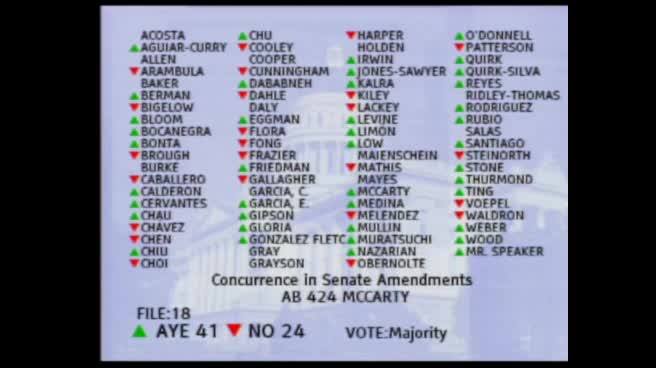 1MIN
Assembly Floor
 1MIN
Senate Floor
 1H
Senate Standing Committee on Appropriations
 14MIN
Senate Standing Committee on Judiciary
Bill Author

Bill Co-Author(s):
