AB 961: Disabled Veteran Business Enterprise Program.
- Session Year: 2017-2018
- House: Assembly
- Latest Version Date: 2017-09-15
Under existing law, the administering agency for the California Disabled Veteran Business Enterprise Program is the Department of General Services, except in the case of contracts for professional bond services. Existing law requires the Director of General Services to adopt written policies and guidelines establishing a uniform process for state contracting to provide a disabled veteran business enterprise (DVBE) participation incentive to bidders, which all state agencies are required to use when awarding contracts.
Existing law requires the Department of Veterans Affairs to perform designated activities in connection with the California Disabled Veteran Business Enterprise Program, including maintaining complete records of its promotional efforts, and tracking the effectiveness of its efforts to promote the program with periodic surveys of newly certified DVBEs to determine specified information about the DVBEs experience with the program.
This bill would require the records of the departments promotional efforts to include specified information about the business attending or participating in those promotional efforts. The bill would delete the periodic survey requirement and instead would require the department to compare a list of businesses that participate in promotional efforts with a list of those businesses that become newly certified DVBEs, and those that become prime contractors or subcontractors with the state.
Existing law requires an awarding department, upon completion of an awarded contract for which a commitment to achieve a DVBE goal was made, to require the prime contractor that entered into a subcontract with a DVBE to certify to the awarding department specified information relating to amounts paid under the contract, as specified.
This bill would require an awarding department to maintain all records of the information provided by the prime contractor pursuant to those provisions and to retain the records for a minimum of 6 years after collection. The bill would establish appropriate review procedures for those records to ensure the accuracy and completeness of the award amounts and paid amounts reported.
Under existing law, the administering agency for the California Disabled Veteran Business Enterprise Program is the Department of General Services, except in the case of contracts for professional bond services. Existing law requires the Director of General Services to adopt written policies and guidelines establishing a uniform process for state contracting to provide a disabled veteran business enterprise (DVBE) participation incentive to bidders, which all state agencies are required to use when awarding contracts.
Existing law requires the Department of Veterans Affairs to perform designated activities in connection with the California Disabled Veteran Business Enterprise Program, including maintaining complete records of its promotional efforts, and tracking the effectiveness of its efforts to promote the program with periodic surveys of newly certified DVBEs to determine specified information about the DVBEs experience with the program.
This bill would require the records of the departments promotional efforts to include specified information about the business attending or participating in those promotional efforts. The bill would delete the periodic survey requirement and instead would require the department to compare a list of businesses that participate in promotional efforts with a list of those businesses that become newly certified DVBEs, and those that become prime contractors or subcontractors with the state.
Existing law requires an awarding department, upon completion of an awarded contract for which a commitment to achieve a DVBE goal was made, to require the prime contractor that entered into a subcontract with a DVBE to certify to the awarding department specified information relating to amounts paid under the contract, as specified.
This bill would require an awarding department to maintain all records of the information provided by the prime contractor pursuant to those provisions and to retain the records for a minimum of 3 6 years after collection. The bill would establish appropriate review procedures for those records to ensure the accuracy and completeness of the award amounts and paid amounts reported.
Under existing law, the administering agency for the California Disabled Veteran Business Enterprise Program is the Department of General Services, except in the case of contracts for professional bond services. Existing law requires the Director of General Services to adopt written policies and guidelines establishing a uniform process for state contracting to provide a disabled veteran business enterprise (DVBE) participation incentive to bidders, which all state agencies are required to use when awarding contracts.
Existing law requires the Department of Veterans Affairs to perform designated activities in connection with the California Disabled Veteran Business Enterprise Program, including maintaining complete records of its promotional efforts, and tracking the effectiveness of its efforts to promote the program with periodic surveys of newly certified DVBEs to determine specified information about the DVBEs experience with the program.
This bill would require the records of the departments promotional efforts to include specified information about the business attending or participating in those promotional efforts. The bill would delete the periodic survey requirement and instead would require the department to compare a list of businesses that participate in promotional efforts with a list of those businesses that become newly certified DVBEs, and those that become prime contractors or subcontractors with the state.
Existing law requires an awarding department, upon completion of an awarded contract for which a commitment to achieve a DVBE goal was made, to require the prime contractor that entered into a subcontract with a DVBE to certify to the awarding department specified information relating to amounts paid under the contract, as specified.
This bill would require an awarding department to maintain all records of the information provided by the prime contractor pursuant to those provisions and to retain the records for a minimum of 3 years after collection. The bill would establish appropriate review procedures for those records to ensure the accuracy and completeness of the award amounts and paid amounts reported.
Under existing law, the administering agency for the California Disabled Veteran Business Enterprise Program is the Department of General Services, except in the case of contracts for professional bond services. Existing law requires the Director of General Services to adopt written policies and guidelines establishing a uniform process for state contracting to provide a disabled veteran business enterprise (DVBE) participation incentive to bidders, which all state agencies are required to use when awarding contracts.
This bill would require that process to provide for a higher incentive when the prime contractor is a DVBE than when the prime contractor is not a DVBE, but commits to using a DVBE subcontractor.Existing law requires the Department of Veterans Affairs to perform designated activities in connection with the California Disabled Veteran Business Enterprise Program, including maintaining complete records of its promotional efforts, and tracking the effectiveness of its efforts to promote the program with periodic surveys of newly certified DVBEs to determine specified information about the DVBEs experience with the program.
This bill would require the records of the departments promotional efforts to include specified information about the business attending or participating in those promotional efforts. The bill would delete the periodic survey requirement and instead would require the department to compare a list of businesses that participate in promotional efforts with a list of those businesses that become newly certified DVBEs, and those that become prime contractors or subcontractors with the state.
Existing law requires an awarding department, upon completion of an awarded contract for which a commitment to achieve a DVBE goal was made, to require the prime contractor that entered into a subcontract with a DVBE to certify to the awarding department specified information relating to amounts paid under the contract, as specified.
This bill would require an awarding department to maintain all records of the information provided by the prime contractor pursuant to those provisions and establish appropriate review procedures for those records to ensure the accuracy and completeness of the award amounts and paid amounts reported.
Under existing law, the administering agency for the California Disabled Veteran Business Enterprise Program is the Department of General Services, except in the case of contracts for professional bond services. Existing law requires the Director of General Services to adopt written policies and guidelines establishing a uniform process for state contracting to provide a disabled veteran business enterprise (DVBE) participation incentive to bidders, which all state agencies are required to use when awarding contracts.
This bill would require that process to provide for a higher incentive when the prime contractor is a DVBE than when the prime contractor is not a DVBE, but commits to using a DVBE subcontractor.
Existing law requires the Department of Veterans Affairs to perform designated activities in connection with the California Disabled Veteran Business Enterprise Program, including maintaining complete records of its promotional efforts, and tracking the effectiveness of its efforts to promote the program with periodic surveys of newly certified DVBEs to determine specified information about the DVBEs experience with the program.
This bill would require the records of the departments promotional efforts to include specified information about the business attending or participating in those promotional efforts. The bill would delete the periodic survey requirement and instead would require the department to compare a list of businesses that participate in promotional efforts with a list of those businesses that become newly certified DVBEs, and those that become prime contractors or subcontractors with the state.
Existing law requires an awarding department, upon completion of an awarded contract for which a commitment to achieve a DVBE goal was made, to require the prime contractor that entered into a subcontract with a DVBE to certify to the awarding department specified information relating to amounts paid under the contract, as specified.
This bill would require an awarding department to maintain all records of the information provided by the prime contractor pursuant to those provisions and establish appropriate review procedures for those records to ensure the accuracy and completeness of the award amounts and paid amounts reported.
(a)The administering agency for the California Disabled Veteran Business Enterprise Program is the Department of General Services, except in the case of contracts for professional bond services. The Department of General Services shall consult with the California Disabled Veteran Business Enterprise Program Advocate, appointed by the Secretary of the Department of Veterans Affairs pursuant to Section 999.11, on all matters relating to the California Disabled Veteran Business Enterprise Program. The Director of General Services shall adopt written policies and guidelines establishing a uniform process for state contracting that would provide a disabled veteran business enterprise participation incentive to bidders. The incentive program shall be used by all state agencies when awarding contracts.
(b)The Department of Veterans Affairs shall do all of the following:
(1)Establish a method of monitoring adherence to the goals specified in Sections 999.1 and 999.2.
(2)Promote the California Disabled Veteran Business Enterprise Program to the fullest extent possible.
(3)Maintain complete records of its promotional efforts, including a list that identifies the name, location, number, and type of business, by size and industry sector, attending or participating in a promotional effort.
(4)Establish a system to track the effectiveness of its efforts to promote the California Disabled Veteran Business Enterprise Program. At a minimum, the system shall include an annual comparison of the list of businesses participating in promotional efforts during the current and preceding two years with a list of those businesses that become newly certified disabled veteran business enterprises, and those that become a prime or subcontractor with the state. The result of the annual comparison pursuant to this paragraph shall be one performance measure of the success of the promotional efforts.
(c)An awarding department shall not credit toward the departments 3-percent goal state funds expended on a contract with a disabled veteran business enterprise that does not meet and maintain the certification requirements.
(d)Upon completion of an awarded contract for which a commitment to achieve a disabled veteran business enterprise goal was made, an awarding department shall require the prime contractor that entered into a subcontract with a disabled veteran business enterprise to certify to the awarding department all of the following:
(1)The total amount the prime contractor received under the contract.
(2)The name and address of the disabled veteran business enterprise that participated in the performance of the contract.
(3)The amount each disabled veteran business enterprise received from the prime contractor.
(4)That all payments under the contract have been made to the disabled veteran business enterprise. An awarding department shall keep that certification on file. A person or entity that knowingly provides false information shall be subject to a civil penalty for each violation in the minimum amount of two thousand five hundred dollars ($2,500) and the maximum amount of twenty-five thousand dollars ($25,000). An action for a civil penalty under this subdivision may be brought by any public prosecutor in the name of the people of the State of California and the penalty imposed shall be enforceable as a civil judgment.
(e)An awarding department shall maintain all records of the information provided by the prime contractor pursuant to subdivision (d) and shall establish appropriate review procedures for those records to ensure the accuracy and completeness of the award amounts and paid amounts reported. Records collected pursuant to this subdivision shall be retained for a minimum of six years after collection.
(f)A prime contractor may, subject to the approval of the Department of General Services, replace a disabled veteran business enterprise identified by the prime contractor in its bid or offer, pursuant to subdivision (a) of Section 999.10, with another disabled veteran business enterprise.
(g)The administering agency shall adopt rules and regulations, including standards for good faith efforts, for the purpose of implementing this section. Emergency regulations consistent with this section may be adopted.
(a)The administering agency for the California Disabled Veteran Business Enterprise Program is the Department of General Services, except in the case of contracts for professional bond services. The Department of General Services shall consult with the California Disabled Veteran Business Enterprise Program Advocate, appointed by the Secretary of the Department of Veterans Affairs pursuant to Section 999.11, on all matters relating to the California Disabled Veteran Business Enterprise Program. The Director of General Services shall adopt written policies and guidelines establishing a uniform process for state contracting that would provide a disabled veteran business enterprise participation incentive to bidders. The incentive program shall be used by all state agencies when awarding contracts.
(b)The Department of Veterans Affairs shall do all of the following:
(1)Establish a method of monitoring adherence to the goals specified in Sections 999.1 and 999.2.
(2)Promote the California Disabled Veteran Business Enterprise Program to the fullest extent possible.
(3)Maintain complete records of its promotional efforts, including a list that identifies the name, location, number, and type of business, by size and industry sector, attending or participating in a promotional effort.
(4)Establish a system to track the effectiveness of its efforts to promote the California Disabled Veteran Business Enterprise Program. At a minimum, the system shall include an annual comparison of the list of businesses participating in promotional efforts during the current and preceding two years with a list of those businesses that become newly certified disabled veteran business enterprises, and those that become a prime or subcontractor with the state. The result of the annual comparison pursuant to this paragraph shall be one performance measure of the success of the promotional efforts.
(c)An awarding department shall not credit toward the departments 3-percent goal state funds expended on a contract with a disabled veteran business enterprise that does not meet and maintain the certification requirements.
(d)Upon completion of an awarded contract for which a commitment to achieve a disabled veteran business enterprise goal was made, an awarding department shall require the prime contractor that entered into a subcontract with a disabled veteran business enterprise to certify to the awarding department all of the following:
(1)The total amount the prime contractor received under the contract.
(2)The name and address of the disabled veteran business enterprise that participated in the performance of the contract.
(3)The amount each disabled veteran business enterprise received from the prime contractor.
(4)That all payments under the contract have been made to the disabled veteran business enterprise. An awarding department shall keep that certification on file. A person or entity that knowingly provides false information shall be subject to a civil penalty for each violation in the minimum amount of two thousand five hundred dollars ($2,500) and the maximum amount of twenty-five thousand dollars ($25,000). An action for a civil penalty under this subdivision may be brought by any public prosecutor in the name of the people of the State of California and the penalty imposed shall be enforceable as a civil judgment.
(e)An awarding department shall maintain all records of the information provided by the prime contractor pursuant to subdivision (d) and shall establish appropriate review procedures for those records to ensure the accuracy and completeness of the award amounts and paid amounts reported. Records collected pursuant to this subdivision shall be retained for a minimum of three six years after collection.
(f)A prime contractor may, subject to the approval of the Department of General Services, replace a disabled veteran business enterprise identified by the prime contractor in its bid or offer, pursuant to subdivision (a) of Section 999.10, with another disabled veteran business enterprise.
(g)The administering agency shall adopt rules and regulations, including standards for good faith efforts, for the purpose of implementing this section. Emergency regulations consistent with this section may be adopted.
(a)The administering agency for the California Disabled Veteran Business Enterprise Program is the Department of General Services, except in the case of contracts for professional bond services. The Department of General Services shall consult with the California Disabled Veteran Business Enterprise Program Advocate, appointed by the Secretary of the Department of Veterans Affairs pursuant to Section 999.11, on all matters relating to the California Disabled Veteran Business Enterprise Program. The Director of General Services shall adopt written policies and guidelines establishing a uniform process for state contracting that would provide a disabled veteran business enterprise participation incentive to bidders. The incentive program shall be used by all state agencies when awarding contracts.
(b)The Department of Veterans Affairs shall do all of the following:
(1)Establish a method of monitoring adherence to the goals specified in Sections 999.1 and 999.2.
(2)Promote the California Disabled Veteran Business Enterprise Program to the fullest extent possible.
(3)Maintain complete records of its promotional efforts, including a list that identifies the name, location, number, and type of business, by size and industry sector, attending or participating in a promotional effort.
(4)Establish a system to track the effectiveness of its efforts to promote the California Disabled Veteran Business Enterprise Program. At a minimum, the system shall include an annual comparison of the list of businesses participating in promotional efforts during the current and preceding two years with a list of those businesses that become newly certified disabled veteran business enterprises, and those that become a prime or subcontractor with the state. The result of the annual comparison pursuant to this paragraph shall be one performance measure of the success of the promotional efforts.
(c)An awarding department shall not credit toward the departments 3-percent goal state funds expended on a contract with a disabled veteran business enterprise that does not meet and maintain the certification requirements.
(d)Upon completion of an awarded contract for which a commitment to achieve a disabled veteran business enterprise goal was made, an awarding department shall require the prime contractor that entered into a subcontract with a disabled veteran business enterprise to certify to the awarding department all of the following:
(1)The total amount the prime contractor received under the contract.
(2)The name and address of the disabled veteran business enterprise that participated in the performance of the contract.
(3)The amount each disabled veteran business enterprise received from the prime contractor.
(4)That all payments under the contract have been made to the disabled veteran business enterprise. An awarding department shall keep that certification on file. A person or entity that knowingly provides false information shall be subject to a civil penalty for each violation in the minimum amount of two thousand five hundred dollars ($2,500) and the maximum amount of twenty-five thousand dollars ($25,000). An action for a civil penalty under this subdivision may be brought by any public prosecutor in the name of the people of the State of California and the penalty imposed shall be enforceable as a civil judgment.
(e)An awarding department shall maintain all records of the information provided by the prime contractor pursuant to subdivision (d) and shall establish appropriate review procedures for those records to ensure the accuracy and completeness of the award amounts and paid amounts reported. Records collected pursuant to this subdivision shall be retained for a minimum of three years after collection.
(f)A prime contractor may, subject to the approval of the Department of General Services, replace a disabled veteran business enterprise identified by the prime contractor in its bid or offer, pursuant to subdivision (a) of Section 999.10, with another disabled veteran business enterprise.
(g)The administering agency shall adopt rules and regulations, including standards for good faith efforts, for the purpose of implementing this section. Emergency regulations consistent with this section may be adopted.
(a)The administering agency for the California Disabled Veteran Business Enterprise Program is the Department of General Services, except in the case of contracts for professional bond services. The Department of General Services shall consult with the California Disabled Veteran Business Enterprise Program Advocate, appointed by the Secretary of the Department of Veterans Affairs pursuant to Section 999.11, on all matters relating to the California Disabled Veteran Business Enterprise Program. The Director of General Services shall adopt written policies and guidelines establishing a uniform process for state contracting that would provide a disabled veteran business enterprise participation incentive to bidders. The incentive program shall be used by all state agencies when awarding contracts.
(b)The Director of General Services shall adopt written policies and guidelines establishing a uniform process for state contracting to provide a disabled veteran business enterprise participation incentive to bidders. The process shall provide for a higher incentive when the prime contractor is a disabled veteran business enterprise than when the prime contractor is not a disabled veteran business enterprise prime contractor, but commits to using a disabled veteran business enterprise subcontractor. The incentive program shall be used by all state agencies when awarding contracts.(c)(b)The Department of Veterans Affairs shall do all of the following:
(1)Establish a method of monitoring adherence to the goals specified in Sections 999.1 and 999.2.
(2)Promote the California Disabled Veteran Business Enterprise Program to the fullest extent possible.
(3)Maintain complete records of its promotional efforts, including a list that identifies the name, location, number, and type of business, by size and industry sector, attending or participating in a promotional effort.
(4)Establish a system to track the effectiveness of its efforts to promote the California Disabled Veteran Business Enterprise Program. At a minimum, the system shall include an annual comparison of the list of businesses participating in promotional efforts during the current and preceding two years with a list of those businesses that become newly certified disabled veteran business enterprises, and those that become a prime or subcontractor with the state. The result of the annual comparison pursuant to this paragraph shall be one performance measure of the success of the promotional efforts.
(d)(c)An awarding department shall not credit toward the departments 3-percent goal state funds expended on a contract with a disabled veteran business enterprise that does not meet and maintain the certification requirements.
(e)(d)Upon completion of an awarded contract for which a commitment to achieve a disabled veteran business enterprise goal was made, an awarding department shall require the prime contractor that entered into a subcontract with a disabled veteran business enterprise to certify to the awarding department all of the following:
(1)The total amount the prime contractor received under the contract.
(2)The name and address of the disabled veteran business enterprise that participated in the performance of the contract.
(3)The amount each disabled veteran business enterprise received from the prime contractor.
(4)That all payments under the contract have been made to the disabled veteran business enterprise. An awarding department shall keep that certification on file. A person or entity that knowingly provides false information shall be subject to a civil penalty for each violation in the minimum amount of two thousand five hundred dollars ($2,500) and the maximum amount of twenty-five thousand dollars ($25,000). An action for a civil penalty under this subdivision may be brought by any public prosecutor in the name of the people of the State of California and the penalty imposed shall be enforceable as a civil judgment.
(f)(e)An awarding department shall maintain all records of the information provided by the prime contractor pursuant to subdivision (e) (d) and shall establish appropriate review procedures for those records to ensure the accuracy and completeness of the award amounts and paid amounts reported.
(g)(f)A prime contractor may, subject to the approval of the Department of General Services, replace a disabled veteran business enterprise identified by the prime contractor in its bid or offer, pursuant to subdivision (a) of Section 999.10, with another disabled veteran business enterprise.
(h)(g)The administering agency shall adopt rules and regulations, including standards for good faith efforts, for the purpose of implementing this section. Emergency regulations consistent with this section may be adopted.
(a)The administering agency for the California Disabled Veteran Business Enterprise Program is the Department of General Services, except in the case of contracts for professional bond services. The Department of General Services shall consult with the California Disabled Veteran Business Enterprise Program Advocate, appointed by the Secretary of the Department of Veterans Affairs pursuant to Section 999.11, on all matters relating to the California Disabled Veteran Business Enterprise Program. The
(b)The Director of General Services shall adopt written policies and guidelines establishing a uniform process for state contracting that would to provide a disabled veteran business enterprise participation incentive to bidders. The process shall provide for a higher incentive when the prime contractor is a disabled veteran business enterprise than when the prime contractor is not a disabled veteran business enterprise prime contractor, but commits to using a disabled veteran business enterprise subcontractor. The incentive program shall be used by all state agencies when awarding contracts.
(b)(c)The Department of Veterans Affairs shall do all of the following:
(1)Establish a method of monitoring adherence to the goals specified in Sections 999.1 and 999.2.
(2)Promote the California Disabled Veteran Business Enterprise Program to the fullest extent possible.
(3)Maintain complete records of its promotional efforts. efforts, including a list that identifies the name, location, number, and type of business, by size and industry sector, attending or participating in a promotional effort.
(4)Establish a system to track the effectiveness of its efforts to promote the California Disabled Veteran Business Enterprise Program, which shall include regular, periodic surveys of newly certified disabled veteran business enterprises to determine how they learned of the program, why they became certified, and what their experience with awarding departments has been. Program. At a minimum, the system shall include an annual comparison of the list of businesses participating in promotional efforts during the current and preceding two years with a list of those businesses that become newly certified disabled veteran business enterprises, and those that become a prime or subcontractor with the state. The result of the annual comparison pursuant to this paragraph shall be one performance measure of the success of the promotional efforts.
(c)(d)An awarding department shall not credit toward the departments 3-percent goal state funds expended on a contract with a disabled veteran business enterprise that does not meet and maintain the certification requirements.
(d)(e)Upon completion of an awarded contract for which a commitment to achieve a disabled veteran business enterprise goal was made, an awarding department shall require the prime contractor that entered into a subcontract with a disabled veteran business enterprise to certify to the awarding department all of the following:
(1)The total amount the prime contractor received under the contract.
(2)The name and address of the disabled veteran business enterprise that participated in the performance of the contract.
(3)The amount each disabled veteran business enterprise received from the prime contractor.
(4)That all payments under the contract have been made to the disabled veteran business enterprise. An awarding department shall keep that certification on file. A person or entity that knowingly provides false information shall be subject to a civil penalty for each violation in the minimum amount of two thousand five hundred dollars ($2,500) and the maximum amount of twenty-five thousand dollars ($25,000). An action for a civil penalty under this subdivision may be brought by any public prosecutor in the name of the people of the State of California and the penalty imposed shall be enforceable as a civil judgment.
(f)An awarding department shall maintain all records of the information provided by the prime contractor pursuant to subdivision (e) and shall establish appropriate review procedures for those records to ensure the accuracy and completeness of the award amounts and paid amounts reported.
(e)(g)A prime contractor may, subject to the approval of the Department of General Services, replace a disabled veteran business enterprise identified by the prime contractor in its bid or offer, pursuant to subdivision (a) of Section 999.10, with another disabled veteran business enterprise.
(f)(h)The administering agency shall adopt rules and regulations, including standards for good faith efforts, for the purpose of implementing this section. Emergency regulations consistent with this section may be adopted.
|
Date
|
Status
|
|---|---|
| Jan 12, 2018 | Stricken from file. |
| Jan 3, 2018 | Consideration of Governor's veto pending. |
| Oct 13, 2017 | Vetoed by Governor. |
| Sep 21, 2017 | Enrolled and presented to the Governor at 3:30 p.m. |
| Sep 13, 2017 | Assembly Rule 77(a) suspended. |
| Sep 12, 2017 | In Assembly. Concurrence in Senate amendments pending. May be considered on or after September 14 pursuant to Assembly Rule 77. |
| Sep 11, 2017 | Read third time. Passed. Ordered to the Assembly. |
| Sep 5, 2017 | Read second time. Ordered to third reading. |
| Sep 1, 2017 | From committee: Do pass. (Ayes 7. Noes 0.) (September 1). |
| Jul 10, 2017 | In committee: Referred to APPR. suspense file. |
| Jun 28, 2017 | From committee: Do pass and re-refer to Com. on APPR. (Ayes 7. Noes 0.) (June 27). Re-referred to Com. on APPR. |
| Jun 19, 2017 | From committee chair, with author's amendments: Amend, and re-refer to committee. Read second time, amended, and re-referred to Com. on V.A. |
| Jun 8, 2017 | In committee: Hearing postponed by committee. |
| Jun 1, 2017 | Referred to Com. on V.A. |
| May 18, 2017 | In Senate. Read first time. To Com. on RLS. for assignment. |
| May 18, 2017 | Read third time. Passed. Ordered to the Senate. (Ayes 69. Noes 0. Page 1618.) |
| May 11, 2017 | Read second time. Ordered to Consent Calendar. |
| May 10, 2017 | From committee: Do pass. To Consent Calendar. (Ayes 17. Noes 0.) (May 10). |
| Apr 26, 2017 | From committee: Do pass and re-refer to Com. on APPR. with recommendation: To Consent Calendar. (Ayes 7. Noes 0.) (April 26). Re-referred to Com. on APPR. |
| Apr 19, 2017 | Re-referred to Com. on A. & A.R. |
| Apr 18, 2017 | From committee chair, with author's amendments: Amend, and re-refer to Com. on A. & A.R. Read second time and amended. |
| Apr 4, 2017 | From committee: Do pass and re-refer to Com. on A. & A.R. with recommendation: To Consent Calendar. (Ayes 7. Noes 0.) (March 28). Re-referred to Com. on A. & A.R. |
| Mar 22, 2017 | Re-referred to Com. on J., E.D., & E. |
| Mar 21, 2017 | From committee chair, with author's amendments: Amend, and re-refer to Com. on J., E.D., & E. Read second time and amended. |
| Mar 2, 2017 | Referred to Coms. on J., E.D., & E. and A. & A.R. |
| Feb 17, 2017 | From printer. May be heard in committee March 19. |
| Feb 16, 2017 | Read first time. To print. |
|
Date
|
Description
|
Location
|
Votes
|
|
|---|---|---|---|---|
| Sep 13, 2017 | AB 961 QUIRK-SILVA Concurrence in Senate Amendments | Assembly Floor |
Passed |
|
| Sep 11, 2017 | Assembly 3rd Reading AB961 Quirk-Silva et al. By Newman | Senate Floor |
Passed |
|
| Sep 1, 2017 | Do pass | Senate Standing Committee on Appropriations |
Passed |
|
| Jul 10, 2017 | Placed on suspense file | Senate Standing Committee on Appropriations |
Passed |
|
| Jun 27, 2017 | Do pass, but first be re-referred to the Committee on [Appropriations] | Senate Standing Committee on Veterans Affairs |
Passed |
|
| May 18, 2017 | AB 961 QUIRK-SILVA Consent Calendar Second Day Regular Session | Assembly Floor |
Passed |
|
| May 10, 2017 | Do pass. To Consent Calendar. | Assembly Standing Committee on Appropriations |
Passed |
|
| Apr 26, 2017 | Do pass and be re-referred to the Committee on [Appropriations] with recommendation: To Consent Calendar | Assembly Standing Committee on Accountability and Administrative Review |
Passed |
|
| Mar 28, 2017 | Do pass and be re-referred to the Committee on [Accountability and Administrative Review] with recommendation: To Consent Calendar | Assembly Standing Committee on Jobs, Economic Development, and the Economy |
Passed |
This list shows positions taken on this bill by organizations on the date displayed, which is linked to the original source.
Positions by individuals are not included.
GOVERNOR'S VETO
GV Bill Id:AB 961
Author:(Quirk-Silva)
As Enrolled Ver:September 15, 2017
2/3 vote
ASSEMBLY: | 69-0 | (May 18, 2017) | SENATE: | 40-0 | (September 11, 2017) |
ASSEMBLY: | 77-0 | (September 13, 2017) |
Original Committee Reference: J., E.D., & E.
SUMMARY: Tightens the existing monitoring and accountability requirements for state procurement activities related to the disabled veteran business enterprise (DVBE) targeted procurement program. Specifically, this bill:
- Adds specificity to the type of monitoring the Department of Veteran Affairs (CALVET) is required to maintain relative to its outreach and promotional activities, including creating a list that identifies the name, location, number, and type of business, by size and industry sector, attending or participating in a promotional effort.
- Deletes a requirement for a periodic survey of newly certified DVBEs to determine how they learned about the program and why they became certified and, instead, requires the CALVET to annually compare the list of attendees at promotional events from the current and prior two years with the list of newly certified DVBEs and the list and/or participates in a state contract, as specified.
- Provides that the annual comparison of attendees at promotional events to certified DVBEs and DVBE contract participation is to be one of the performance measures used to evaluate the success of the promotional efforts.
- Requires awarding departments to retain DVBE payment records for three-years. These records are already mandated to be submitted by prime contractors who have committed to using DVBE subcontractors. The awarding department is also required to establish a process to confirm that these records are submitted, accurate, and reflect the agreement set forth in the state contract.
EXISTING LAW:
- Applies the 3% DVBE participation goal on each awarding state agency, department, and officer that enters into a contract for materials, supplies, equipment, alteration, repair, or improvement. This requirement can be waived on a specific contract with the approval of the department director or another designated person. Contracts with a DVBE for equipment rentals do not count toward the goal.
- Defines the following terms:
- A DVBE contractor, subcontractor, or supplier is any person or entity that has been certified by the administering agency and that performs a commercially useful function, as defined.
- A disabled veteran is a veteran of the military, naval, or air service of the U.S. who has a service-connected disability of at least 10% and who is domiciled in the state.
- A DVBE is a business certified by the administering agency as meeting all of the following requirements:
- The legal structure of the business is a:
- Sole proprietorship with at least 51% owned by one or more disabled veterans;
- Publicly owned business with at least 51% of its stock unconditionally owned by one or more disabled veterans;
- Subsidiary that is wholly owned by a parent corporation, but only if at least 51% of the voting stock of the parent corporation is unconditionally owned by one or more disabled veterans; or
- Joint venture in which at least 51% of the joint venture's management, control, and earnings are held by one or more disabled veterans.
- The management and control of the daily business operations are by one or more disabled veterans. The disabled veterans who exercise management and control are not required to be the same disabled veterans as the owners of the business.
- It has a home office located in the United States, which is not a branch or subsidiary of a foreign corporation, foreign firm, or other foreign-based business.
- The legal structure of the business is a:
- Requires Department of General Services (DGS) to collect information from awarding departments on the level of DVBE procurement participation. The current report lists total contract values awarded and amount expected to be paid to DVBE contractors.
- Requires an awarding state department to require a prime contractor who has committed to using a DVBE subcontractor to certify upon completion of the contract:
- The total amount the prime contractor received under the contract.
- The name and address of the DVBE that participated in the performance of the contract.
- The amount each DVBE subcontractor received from the prime contractor.
- That all required payments under the state contract have been made to the DVBE subcontractor.
- Provides that a person or entity that knowingly provides false information on the DVBE subcontractor certification shall be subject to a civil penalty for each violation in the minimum amount of $2,500 and the maximum amount of $25,000.
FISCAL EFFECT: According to the Senate Appropriations Committee:
- Minor and absorbable costs to CALVET for promoting the DVBE program and maintaining records. (General Fund)
- Minor and absorbable costs to the DGS to update the State Contracting Manual and other policy documents. (Special fund)
- Ongoing costs, likely less than $150,000 annually for additional personnel to review records provided by prime contractors to ensure the accuracy and completeness of the information provided regarding award amounts and paid amounts reported. (General Fund)
COMMENTS: This bill implements changes to the DVBE Program in response to the 2014 State Auditor Report which found, among other things, that current tracking and reporting of promotional activities were insufficient and that departments failed to maintain appropriate record keeping protocols on contracts involving DVBEs.
This bill received no "no votes" throughout the process. Cost of implementation were described by the fiscal committees as "minor and absorbable" to CALVET and DGS.
The DVBE Program: The Small Business Procurement and Contract Act sets a 3% procurement participation goal and states that DVBE participation is strongly encouraged to address the special needs of disabled veterans seeking rehabilitation and training through entrepreneurship, and to recognize the sacrifices of California's disabled military veterans.
The 3% DVBE procurement participation goal is applied to the state agency or department's overall contracting activities in the given fiscal year and may be achieved by awarding state contracts to DVBEs as prime contractors or when DVBEs are used as a subcontractor.
Awarding departments have an option of including DVBE participation in every contract or making alternative arrangements, as long as the 3% objective is met at the end of the year. Departments also have the option of offering a 1% to 5% DVBE contracting preference to encourage bidders use DVBE subcontractors.
Each agency and department is required to designate a small business and DVBE contracting liaison to facilitate its meeting the 3% DVBE goal.
State departments that fail to meet the annual 3% goal can have their delegated contracting authority removed, although DGS has never removed program authority solely based on an agency or department's failure to meet its DVBE contracting goal.
DVBE Five-Year Contracting Activity – Mandated Agencies (in millions) | ||||
Fiscal Year | Total Contract Dollars | Total DVBE Dollars | Total DVBE Percent | Total DVBE Contracts |
2015-16 | $5,855 | $274 | 4.67% | 18,638 |
2014-15 | $8,105 | $314 | 3.8% | 16,192 |
DGS Consolidated Reports for the contracting periods | ||||
While the year-to-year percentages are useful to review, it is also important to note that consistency among which agencies report or even which agencies believe that they are mandated to report varies. As an example, in 2011-12 86% of the mandatory reporting entities reported their contracting activity to DGS. In 2012-13, 79% reported their contracting activity and in 2015-16, 80% reported.
The policy analysis includes background on the Small Business Procurement and Contract Act, current DVBE Program activity, previous legislative efforts to improve program accountability, and recommendations from the 2014 State Audit.
This bill would require the Department of Veteran Affairs to maintain specific records of promotional efforts related to the disabled veteran business enterprise program.
The department should continue to review its outreach strategies for this important program within its existing authority. This bill is unnecessary to fulfill such efforts and adds another layer of bureaucratic monitoring.
Analysis Prepared by: Toni Symonds / J., E.D., & E. / (916) 319-2090 FN: 0002482
CONCURRENCE IN SENATE AMENDMENTS
CSA1 Bill Id:AB 961
Author:(Quirk-Silva)
As Amended Ver:June 19, 2017
Majority vote
ASSEMBLY: | 69-0 | (May 18, 2017) | SENATE: | 40-0 | (September 11, 2017) |
Original Committee Reference: J., E.D., & E.
SUMMARY: Tightens the existing monitoring and accountability requirements for state procurement activities related to the disabled veteran business enterprise (DVBE) targeted procurement program. Specifically, this bill:
- Adds specificity to the type of monitoring the Department of Veteran Affairs (CALVET) is required to maintain relative to its outreach and promotional activities, including creating a list that identifies the name, location, number, and type of business, by size and industry sector, attending or participating in a promotional effort.
- Deletes a requirement for a periodic survey of newly certified DVBEs to determine how they learned about the program and why they became certified and, instead, requires the CALVET to annually compare the list of attendees at promotional events from the current and prior two years with the list of newly certified DVBEs and the list and/or participates in a state contract, as specified.
- Provides that the annual comparison of attendees at promotional events to certified DVBES and DVBE contract participation is to be one of the performance measures used to evaluate the success of the promotional efforts.
- Requires awarding departments to retain DVBE payment records for three-years. These records are already mandated to be submitted by prime contractors who have committed to using DVBE subcontractors. The awarding department is also required to establish a process to confirm that these records are submitted, accurate, and reflect the agreement set forth in the state contract.
The Senate amendments extend the term that state agencies need to retain documents from three to six-years.
EXISTING LAW:
- Applies the 3% DVBE participation goal on each awarding state agency, department, and officer that enters into a contract for materials, supplies, equipment, alteration, repair, or improvement. This requirement can be waived on a specific contract with the approval of the department director or another designated person. Contracts with a DVBE for equipment rentals do not count toward the goal.
- Defines the following terms:
- A DVBE contractor, subcontractor, or supplier is any person or entity that has been certified by the administering agency and that performs a commercially useful function, as defined.
- A disabled veteran is a veteran of the military, naval, or air service of the U.S. who has a service-connected disability of at least 10% and who is domiciled in the state.
- A DVBE is a business certified by the administering agency as meeting all of the following requirements:
- The legal structure of the business is a:
- Sole proprietorship with at least 51% owned by one or more disabled veterans;
- Publicly owned business with at least 51% of its stock unconditionally owned by one or more disabled veterans;
- Subsidiary that is wholly owned by a parent corporation, but only if at least 51% of the voting stock of the parent corporation is unconditionally owned by one or more disabled veterans; or
- Joint venture in which at least 51% of the joint venture's management, control, and earnings are held by one or more disabled veterans.
- The management and control of the daily business operations are by one or more disabled veterans. The disabled veterans who exercise management and control are not required to be the same disabled veterans as the owners of the business.
- It has a home office located in the United States, which is not a branch or subsidiary of a foreign corporation, foreign firm, or other foreign-based business.
- The legal structure of the business is a:
- Requires Department of General Services (DGS) to collect information from awarding departments on the level of DVBE procurement participation. The current report lists total contract values awarded and amount expected to be paid to DVBE contractors.
- Requires an awarding state department to require a prime contractor who has committed to using a DVBE subcontractor to certify upon completion of the contract:
- The total amount the prime contractor received under the contract.
- The name and address of the DVBE that participated in the performance of the contract.
- The amount each DVBE subcontractor received from the prime contractor.
- That all required payments under the state contract have been made to the DVBE subcontractor.
- Provides that a person or entity that knowingly provides false information on the DVBE subcontractor certification shall be subject to a civil penalty for each violation in the minimum amount of $2,500 and the maximum amount of $25,000.
FISCAL EFFECT:
- Minor and absorbable costs to CALVET for promoting the DVBE program and maintaining records. (GF)
- Minor and absorbable costs to the DGS to update the State Contracting Manual and other policy documents. (Special fund)
- Ongoing costs, likely less than $150,000 annually for additional personnel to review records provided by prime contractors to ensure the accuracy and completeness of the information provided regarding award amounts and paid amounts reported. (General Fund)
COMMENTS: This bill implements changes to the DVBE Program in response to the 2014 State Auditor Report which found, among other things, that current tracking and reporting of promotional activities were insufficient and that departments failed to maintain appropriate record keeping protocols on contracts involving DVBEs.
The DVBE Program: The Small Business Procurement and Contract Act sets a 3% procurement participation goal and states that DVBE participation is strongly encouraged to address the special needs of disabled veterans seeking rehabilitation and training through entrepreneurship, and to recognize the sacrifices of California's disabled military veterans.
The 3% DVBE procurement participation goal is applied to the state agency or department's overall contracting activities in the given fiscal year and may be achieved by awarding state contracts to DVBEs as prime contractors or when DVBEs are used as a subcontractor.
Awarding departments have an option of including DVBE participation in every contract or making alternative arrangements, as long as the 3% objective is met at the end of the year. Departments also have the option of offering a 1% to 5% DVBE contracting preference to encourage bidders use DVBE subcontractors.
Each agency and department is required to designate a small business and DVBE contracting liaison to facilitate it in meeting the 3% DVBE goal.
State departments that fail to meet the annual 3% goal can have their delegated contracting authority removed, although DGS has never removed program authority solely based on an agency or department's failure to meet its DVBE contracting goal.
DVBE Five-Year Contracting Activity – Mandated Agencies (in millions) | ||||
Fiscal Year | Total Contract Dollars | Total DVBE Dollars | Total DVBE Percent | Total DVBE Contracts |
2015-16 | $5,855 | $274 | 4.67% | 18,638 |
2014-15 | $8,105 | $314 | 3.8% | 16,192 |
DGS Consolidated Reports for the contracting periods | ||||
While the year-to-year percentages are useful to review, it is also important to note that consistency among which agencies report or even which agencies believe that they are mandated to report varies. As an example, in 2011-12 86% of the mandatory reporting entities reported their contracting activity to DGS. In 2012-13, 79% reported their contracting activity and in 2015-16, 80% reported.
The policy analysis includes background on the Small Business Procurement and Contract Act, current DVBE Program activity, previous legislative efforts to improve program accountability, and recommendations from the 2014 State Audit.
Analysis Prepared by: Toni Symonds / J., E.D., & E. / (916) 319-2090 FN: 0001703
Office of Senate Floor Analyses (916) 651-1520 Fax: (916) 327-4478 | AB |
THIRD READING
Bill No: AB 961
:
SENATE VETERANS AFFAIRS COMMITTEE: 7-0, 6/27/17
AYES: Newman, Nielsen, Dodd, Hueso, Nguyen, Roth, Wilk
SENATE APPROPRIATIONS COMMITTEE: 7-0, 9/1/17
AYES: Lara, Bates, Beall, Bradford, Hill, Nielsen, Wiener
ASSEMBLY FLOOR: 69-0, 5/18/17 (Consent) - See last page for vote
DIGEST:
This bill modifies statutory requirements for monitoring and promoting the California Disabled Veteran Business Enterprise (DVBE) state procurement/contracting program.
Existing law:
- Establishes the DVBE Program for the purposes of addressing the special needs of disabled veterans seeking rehabilitation and training through entrepreneurship, and recognizing the sacrifices California's disabled veterans made during their military service. Requires state departments to implement a program achievement goal of awarding at least 3% of their annual contract dollars to DVBEs. The goal applies to the overall dollar amount expended each year by the awarding department.
- Designates the Department of General Services (DGS) to serve as the administering agency for the DVBE, in consultation on all program matters with the California DVBE Advocate, who shall be appointed by the Secretary for Veterans Affairs.
- Requires the Department of Veterans Affairs (CalVet) to do the following:
- Establish a method of monitoring adherence to program achievement goals.
- Promote the DVBE program to the fullest extent possible.
- Maintain complete records of its promotional efforts.
- Establish a system to track the effectiveness of its efforts to promote the DVBE Program, which shall include regular, periodic surveys of newly certified disabled veteran business enterprises to determine how they learned of the program, why they became certified, and what their experience with awarding departments has been.
This bill:
- Directs CalVet, with regard to its existing responsibilities to monitor and promote the DVBE program, to maintain complete records of its promotional efforts, including a list that identifies the name, location, number, and type of business, by size and industry sector, attending or participating in a promotional effort.
- Requires the existing system that CalVet has established to track the effectiveness of its promotional efforts to include an annual comparison of the list of businesses participating in promotional efforts during the current and preceding two years with a list of those businesses that become newly certified DVBEs and those that become a prime or subcontractor with the state.
- Specifies that the annual comparison list required above must be one performance measure of the success of the promotional efforts.
- Requires awarding departments to maintain DVBE payment records for at least six years and establish appropriate review procedures for those records to ensure accuracy and completeness.
Background
DVBE Program. California is home to nearly two million of the nation’s 22 million veterans. Many are disabled and would qualify to participate as a DVBE entrepreneur. The demographics of the state’s veteran population is changing rapidly due to the passing away of older generations and new growth generated by the current, ongoing downsizing our nation’s active duty armed forces. Many of the newer, younger veterans will have disabilities from serving in the conflicts in Iraq and Afghanistan or other service-connected causes.
The program’s purpose and philosophical orientation are established in Military and Veterans Code (MVC) Section 999(a), which states:
The California Disabled Veteran Business Enterprise Program is established to address the special needs of disabled veterans seeking rehabilitation and training through entrepreneurship and to recognize the sacrifices of Californians disabled during military service. It is the intent of the Legislature that every state procurement authority honor California’s disabled veterans by taking all practical actions necessary to meet or exceed the disabled veteran business enterprise participation goal of a minimum of 3 percent of total contract value.
The MVC designates DGS as administering agency and assigns to CalVet various advisory, monitoring, and promotional responsibilities.
Recent program audit. In 2013 the chair and vice-chair of the Senate Veterans Affairs Committee successfully requested that the Joint Legislative Audit Committee direct the State Auditor to review specific aspects of the DVBE program. Among other things, Audit Report 2013-115 observed:
- That during fiscal year 2012–13, just 30 DVBE firms accounted for 83 percent of all DVBE contract amounts.
- That CalVet management confirmed that it has not taken an active role in coordinating with awarding departments to promote DVBE contracting opportunities.
Accordingly, the State Auditor recommended that the Legislature enact additional legislation that promotes the use of more DVBE firms in state contracting and offered several suggestions. However, the audit report also noted that the State does not do a good job ensuring that awarding departments maintain contractor data, especially for subcontractors, nor does it maintain good data on its promotional efforts. This bill appears to be a modest, but positive step forward toward addressing those concerns.
The following table is derived from the annual DGS consolidated reports on state contracting activity:
DVBE Five-Year Contracting Activity – Mandated Agencies (in millions of dollars) | ||||
Fiscal Year | Total Contract Dollars | Total DVBE Dollars | Total DVBE Percent | Total DVBE Contracts |
2015-16 | $5,855 | $274 | 4.67% | 18,638 |
2014-15 | $8,105 | $314 | 3.8% | 16,192 |
2013-14 | $6,566 | $241 | 3.67% | 12,777 |
2012-13 | $7,151 | $216 | 3.03% | 14,907 |
2011-12 | $7,173 | $340 | 4.74% | 16,246 |
Average | $6970 | $277 | 4.00% | 15,752 |
DGS Consolidated Reports for the contracting periods | ||||
DVBE Five-Year Contracting Activity – All Reporting Agencies (in millions) | ||||
Fiscal Year | Total Contract Dollars | Total DVBE Dollars | Total DVBE Percent | Total DVBE Contracts |
2015-16 | 8,090 | $349 | 4.41% | 21,739 |
2014-15 | $10,073 | $407 | 4.7% | 18,228 |
2013-14 | $8,233 | $299 | 3.64% | 14,305 |
2012-13 | $8,573 | $267 | 3.12% | 16,776 |
2011-12 | $8,508 | $373 | 4.39% | 17,835 |
Average | $8695 | $339 | 3.92% | 17,776 |
Related/Prior Legislation
AB 1218 (Weber, 2015) would have made various changes to the contracting performance goals and reporting requirements associated with the DVBE program. (Held in Senate Appropriations Committee.)
FISCAL EFFECT: Appropriation: No Fiscal Com.: Yes Local: No
According to the Senate Appropriations Committee:
- Minor and absorbable costs to CalVet for promoting the DVBE program and maintaining records. (GF)
- Minor and absorbable costs to DGS to update the State Contracting Manual and other policy documents. (Special fund)
- Ongoing costs, likely less than $150,000 annually for additional personnel to review records provided by prime contractors to ensure the accuracy and completeness of the information provided regarding award amounts and paid amounts reported. (GF)
None received
None received
ASSEMBLY FLOOR: 69-0, 5/18/17
AYES: Acosta, Travis Allen, Arambula, Baker, Berman, Bigelow, Bloom, Bocanegra, Bonta, Brough, Burke, Caballero, Cervantes, Chávez, Chen, Chiu, Choi, Chu, Cooley, Cooper, Cunningham, Dababneh, Dahle, Daly, Eggman, Flora, Fong, Gallagher, Cristina Garcia, Eduardo Garcia, Gomez, Gonzalez Fletcher, Gray, Grayson, Harper, Irwin, Jones-Sawyer, Kalra, Kiley, Lackey, Levine, Limón, Low, Maienschein, Mathis, Mayes, McCarty, Medina, Melendez, Muratsuchi, Nazarian, Obernolte, O'Donnell, Patterson, Quirk, Quirk-Silva, Reyes, Ridley-Thomas, Rodriguez, Rubio, Salas, Steinorth, Mark Stone, Thurmond, Ting, Voepel, Waldron, Weber, Wood
NO VOTE RECORDED: Aguiar-Curry, Calderon, Chau, Frazier, Friedman, Gipson, Gloria, Holden, Mullin, Santiago, Rendon
9/3/17 18:11:08
**** END ****
SENATE COMMITTEE ON
Senator Ricardo Lara, Chair
2017 - 2018 Regular Session
AB 961 (Quirk-Silva) - Disabled Veteran Business Enterprise Program
Version: | Policy Vote: |
Urgency: | Mandate: |
Hearing Date: | Consultant: |
This bill meets the criteria for referral to the Suspense File.
Bill Summary:
AB 961 would modify statutory requirements for monitoring and promoting the California Disabled Veteran Business Enterprise (DVBE) state procurement/contracting program.
Fiscal Impact:
- Minor and absorbable costs to the California Department of Veterans Affairs (CalVet) for promoting the DVBE program and maintaining records. (GF)
- Minor and absorbable costs to the Department of General Services (DGS) to update the State Contracting Manual and other policy documents. (Special fund)
- Ongoing costs, likely less than $150,000 annually for additional personnel to review records provided by prime contractors to ensure the accuracy and completeness of the information provided regarding award amounts and paid amounts reported. (GF)
Background:
The DVBE Program addresses the special needs of disabled veterans seeking rehabilitation and training through entrepreneurship. DGS is designated as the administering agency while CalVet is responsible for various advisory, monitoring, and promotional responsibilities.
The DVBE program requires that, individually and collectively, all State governmental entities that award contracts for goods and services expend at least 3% of the annual value of all their contracts on DVBEs certified by DGS. Departments that award contracts may meet this goal by either contracting directly with certified DVBE firms or requiring winning bidders to use them as subcontractors. To be eligible to become a certified DVBE, a business must be at least 51% owned by a disabled veteran, have its daily operations managed and controlled by a disabled veteran, and be located in the United States. A 2014 report from the California State Auditor found that when reporting on performance toward the 3% goal, departments were using the less accurate measure of the contract amount awarded to a DVBE rather than the actual amount paid.
Proposed Law:
This bill would:
- Direct CalVet to monitor and promote the DVBE program, to maintain complete records of its promotional efforts, including a list that identifies the name, location, number, and type of business, by size and industry sector, attending or participating in a promotional effort.
- Require the existing system established by CalVet to track the effectiveness of its promotional efforts to include an annual comparison of the list of businesses participating in promotional efforts during the current and preceding two years with a list of those businesses that become newly certified DVBEs, and those that become a prime or subcontractor with the state.
- Require awarding departments to maintain DVBE payment records for at least six years and establish appropriate review procedures for those records to ensure accuracy and completeness.
Related Legislation:
AB 1218 (Weber, 2015) would have made various changes to the contracting performance goals and reporting requirements associated with the DVBE program. This bill was held in the Senate Appropriations Committee.
-- END --
SENATE COMMITTEE ON VETERANS AFFAIRS
Senator Josh Newman, Chair
2017 - 2018 Regular
Bill No: AB 961 Hearing Date: 6/27/17
Author: | |||
Version: | 6/19/17 Amended | ||
Urgency: | No | Fiscal: | Yes |
Consultant: | Wade Cooper Teasdale | ||
Subject: Disabled Veteran Business Enterprise Program
DESCRIPTION
Summary:
This bill modifies statutory requirements for monitoring and promoting the California Disabled Veteran Business Enterprise (DVBE) state procurement/contracting program.
Existing law:
- Establishes the DVBE Program for the purposes of addressing the special needs of disabled veterans seeking rehabilitation and training through entrepreneurship, and recognizing the sacrifices California's disabled veterans made during their military service. Requires state departments to implement a program achievement goal of awarding at least 3% of their annual contract dollars to DVBEs. The goal applies to the overall dollar amount expended each year by the awarding department.
- Designates the Department of General Services (DGS) to serve as the administering agency for the DVBE, in consultation on all program matters with the California DVBE Advocate, who shall be appointed by the Secretary for Veterans Affairs.
- Requires the Department of Veterans Affairs (CalVet) to do the following:
- Establish a method of monitoring adherence to program achievement goals.
- Promote the DVBE program to the fullest extent possible.
- Maintain complete records of its promotional efforts.
- Establish a system to track the effectiveness of its efforts to promote the DVBE Program, which shall include regular, periodic surveys of newly certified disabled veteran business enterprises to determine how they learned of the program, why they became certified, and what their experience with awarding departments has been.
This bill:
- Directs CalVet, with regard to its existing responsibilities to monitor and promote the DVBE program, to maintain complete records of its promotional efforts, including a list that identifies the name, location, number, and type of business, by size and industry sector, attending or participating in a promotional effort.
- Requires the existing system that CalVet has established to track the effectiveness of its promotional efforts to include an annual comparison of the list of businesses participating in promotional efforts during the current and preceding two years with a list of those businesses that become newly certified DVBEs and those that become a prime or subcontractor with the state.
- Specifies that the annual comparison list required above must be one performance measure of the success of the promotional efforts.
- Requires awarding departments to maintain DVBE payment records for at least six years and establish appropriate review procedures for those records to ensure accuracy and completeness.
BACKGROUND
DVBE Program. California is home to nearly two million of the nation’s 22 million veterans. Many are disabled and would qualify to participate as a DVBE entrepreneur. The demographics of the state’s veteran population is changing rapidly due to the passing away of older generations and new growth generated by the current, ongoing downsizing our nation’s active duty armed forces. Many of the newer, younger veterans will have disabilities from serving in the conflicts in Iraq and Afghanistan or other service-connected causes.
The program’s purpose and philosophical orientation are established in Military and Veterans Code (MVC) Section 999(a):
The California Disabled Veteran Business Enterprise Program is established to address the special needs of disabled veterans seeking rehabilitation and training through entrepreneurship and to recognize the sacrifices of Californians disabled during military service. It is the intent of the Legislature that every state procurement authority honor California’s disabled veterans by taking all practical actions necessary to meet or exceed the disabled veteran business enterprise participation goal of a minimum of 3 percent of total contract value.
The MVC designates DGS as administering agency and assigns to CalVet various advisory, monitoring, and promotional responsibilities.
COMMENT
Committee Comments:
- “Promotional effort”: According to CalVet, most of the promotional efforts in which the department participates are events sponsored and managed by other entities around the state. CalVet cannot require these organizations to incur the work and cost of supporting CalVet’s informational requirements under this bill. Furthermore, for some organizations, that information may be proprietary. Should the bill be amended to clarify “promotional effort” for the analytical purposes to only apply to CalVet-managed events?
CalVet indicates that, due to evolving interpretation of this bill’s “promotional effort” requirement in this bill, it is still unclear what staffing and associated costs would be.
- In 2013 the chair and vice-chair of the Senate Veterans Affairs Committee successfully requested that the Joint Legislative Audit Committee direct the State Auditor to review specific aspects of the DVBE program. Among other things, Audit Report 2013-115 observed:
- That during fiscal year 2012–13, just 30 DVBE firms accounted for 83 percent of all DVBE contract amounts.
- That CalVet management confirmed that it has not taken an active role in coordinating with awarding departments to promote DVBE contracting opportunities.
Accordingly, the State Auditor recommended that the Legislature enact additional legislation that promotes the use of more DVBE firms in state contracting and offered several suggestions. However, the audit report also noted that the State does not do a good job ensuring that awarding departments maintain contractor data, especially for subcontractors, nor does it maintain good data on its promotional efforts. This bill appears to be a modest, but positive step forward toward addressing those concerns.
POSITIONS
Sponsor: Assembly Committee on Jobs, Economic Development, and the Economy.
Support: None received.
Oppose: None received.
-- END --
Date of Hearing: May 10, 2017
ASSEMBLY COMMITTEE ON APPROPRIATIONS
Lorena Gonzalez Fletcher, Chair
ABPCA Bill Id:AB 961
Author:(Quirk-Silva) – As Amended Ver:April 18, 2017
Policy Committee: | Jobs, Economic Development, and the Economy | Vote: | 7 - 0 |
Accountability and Administrative Review | 7 - 0 | ||
|
|
Urgency: No State Mandated Local Program: No Reimbursable: No
SUMMARY:
This bill makes various changes to the monitoring and promotional requirements of the statewide disabled veteran business enterprises (DVBE) targeted contracting program. Specifically, this bill:
- Directs the California Department of Veteran Affairs (CalVet) to monitor and promote the DVBE program, to maintain complete records of its promotional efforts, including a list that identifies the name, location, number, and type of business, by size and industry sector, attending or participating in a promotional effort.
- Requires the existing system established by CalVet to track the effectiveness of its promotional efforts to include an annual comparison of the list of businesses participating in promotional efforts during the current and preceding two years with a list of those businesses that become newly certified DVBEs, and those that become a prime or subcontractor with the state.
- Requires awarding departments to maintain DVBE payment records for at least three years and establish appropriate review procedures for those records to ensure accuracy and completeness.
FISCAL EFFECT:
- Minor and absorbable cost to the Department of General Services (DGS) to update the State Contracting Manual and policy documents to provide guidance to state agencies on new record retention requirements.
- Minor and absorbable cost to CalVet.
COMMENTS:
- Background and Purpose. Existing law establishes the DVBE program for the purposes of addressing the special needs of disabled veterans seeking rehabilitation and training through entrepreneurship. State law also requires state departments to implement a goal of awarding at least 3% of their annual contract dollars to DVBEs. The goal applies to the overall dollar amount expended each year by the awarding department.
According to the author, "this bill implements changes to the DVBE program in response to the 2014 California State Auditor (CSA) report which found, among other things, that current tracking and reporting of promotional activities were insufficient and that departments failed to maintain appropriate record keeping protocols on contracts involving DVBEs.” The CSA report found that departments were using the less accurate measure of the contract amount awarded to a DVBE, rather than actual amount paid, as a measure of performance toward the required 3% goal. Additionally, the report noted that only 30 DVBE firms received 83% of the total spent on DVBE contracts in fiscal year 2012-13, meaning that only a relatively small subset of DVBE firms enjoyed the major part of the state's business.
- Related Legislation. AB 1218 (Weber), of the 2015-16 Legislative Session, would have made various changes to the contracting performance goals and reporting requirements associated with the DVBE program. This measure was held on the Senate Appropriations Committee Suspense.
Analysis Prepared by: Daisy Gonzales / APPR. / (916) 319-2081
Date of Hearing: April 26, 2017
ASSEMBLY COMMITTEE ON ACCOUNTABILITY AND ADMINISTRATIVE REVIEW
Susan Talamantes Eggman, Chair
ABPCA Bill Id:AB 961 (
Author:Quirk-Silva) – As Amended Ver:April 18, 2017
SUBJECT: Disabled Veteran Business Enterprise Program
SUMMARY: Makes various changes to the monitoring and promotional requirements of the statewide disabled veteran business enterprises (DVBE) targeted contracting program. Specifically, this bill:
- Directs the California Department of Veteran Affairs (CalVet), with regard to its existing responsibilities to monitor and promote the DVBE program, to maintain complete records of its promotional efforts, including a list that identifies the name, location, number, and type of business, by size and industry sector, attending or participating in a promotional effort.
- Requires the existing system that CalVet has established to track the effectiveness of its promotional efforts to include an annual comparison of the list of businesses participating in promotional efforts during the current and preceding two years with a list of those businesses that become newly certified DVBEs, and those that become a prime or subcontractor with the state.
- Specifies that the annual comparison list required above must be one performance measure of the success of the promotional efforts.
- Requires awarding departments to maintain DVBE payment records for at least three years and establish appropriate review procedures for those records to ensure accuracy and completeness.
EXISTING LAW:
- Establishes the DVBE program for the purposes of addressing the special needs of disabled veterans seeking rehabilitation and training through entrepreneurship, and recognizing the sacrifices California's disabled veterans made during their military service.
- Requires state departments to implement a goal of awarding at least 3% of their annual contract dollars to DVBEs. The goal applies to the overall dollar amount expended each year by the awarding department.
- Requires the Department of General Services to collect information from awarding departments on the level of DVBE participation in state contracting.
FISCAL EFFECT: Unknown
COMMENTS: According to the author, "this bill implements changes to the DVBE program in response to the 2014 California State Auditor (CSA) report which found, among other things, that current tracking and reporting of promotional activities were insufficient and that departments failed to maintain appropriate record keeping protocols on contracts involving DVBEs.”
The CSA report found that departments were using the less accurate measure of the contract amount awarded to a DVBE, rather than actual amount paid, as a measure of performance toward the required 3% goal. Additionally, the report noted that only 30 DVBE firms received 83% of the total spent on DVBE contracts in fiscal year 2012-13, meaning that only a relatively small subset of DVBE firms enjoyed the major part of the state's business.
This bill aims to address the deficiencies identified in the CSA report by attempting to increase the overall number of different DVBEs that participate in state contracting; requiring more consistent reporting and documentation; and, increasing accountability for CalVet in its role promoting the DVBE program. These changes are intended to ensure better record keeping and outcome monitoring of promotional activities for the program.
PRIOR LEGISLATION: AB 1218 (Weber) of 2015 would have made various changes to the contracting performance goals and reporting requirements associated with the DVBE program. This measure was held on the Senate Appropriations Committee Suspense File.
DOUBLE REFERRAL: This measure was previously heard in the Assembly Jobs, Economic Development and the Economy Committee on March 28, 2017, with a vote of 7-0.
REGISTERED SUPPORT / OPPOSITION:
Support
None on file.
Opposition
None on file.
Analysis Prepared by: Cassie Royce / A. & A.R. /
Date of Hearing: March 28, 2017
ASSEMBLY COMMITTEE ON JOBS, ECONOMIC DEVELOPMENT, AND THE ECONOMY
Sharon Quirk-Silva, Chair
ABPCA Bill Id:AB 961 (
Author:Quirk-Silva) – As Amended Ver:March 21, 2017
SUBJECT: Disabled Veteran Business Enterprise Program
SUMMARY: Tightens the existing monitoring and accountability requirements for state procurement activities related to the disabled veteran business enterprise (DVBE) targeted procurement program. Specifically, this bill:
- Adds specificity to the type of monitoring the Department of Veteran Affairs (CALVET) is required to maintain relative to its outreach and promotional activities, including creating a list that identifies the name, location, number, and type of business, by size and industry sector, attending or participating in a promotional effort.
- Deletes a requirement for a periodic survey of newly certified DVBEs to determine how they learned about the program and why they became certified and, instead, requires the CALVET to annually compare the list of attendees at promotional events from the current and prior two years with the list of newly certified DVBEs and the list and/or participates in a state contract, as specified.
- Provides that the annual comparison of attendees at promotional events to certified DVBES and DVBE contract participation is to be one of the performance measures used to evaluate the success of the promotional efforts.
- Requires awarding departments to retain DVBE payment records for five-years. These records are already mandated to be submitted by prime contractors who have committed to using DVBE subcontractors. The awarding department is also required to establish a process to confirm that these records are submitted, accurate, and reflect the agreement set forth in the state contract.
EXISTING LAW:
- Establishes the California Disabled Veteran Business Enterprise Program, administered by Department of General Services (DGS), for the purpose of addressing the special needs of disabled veterans seeking rehabilitation and training through entrepreneurship, and to recognize the sacrifices California's disabled veterans made during their military service. Contracts for professional bond services are administered through the State Treasurer's Office.
- Applies the 3% DVBE participation goal on each awarding state agency, department, and officer that enters into a contract for materials, supplies, equipment, alteration, repair, or improvement. This requirement can be waived on a specific contract with the approval of the department director or another designated person. Contracts with a DVBE for equipment rentals do not count toward the goal.
- Defines the following terms:
- A DVBE contractor, subcontractor, or supplier is any person or entity that has been certified by the administering agency and that performs a commercially useful function, as defined.
- A disabled veteran is a veteran of the military, naval, or air service of the U.S. who has a service-connected disability of at least 10% and who is domiciled in the state.
- A DVBE is a business certified by the administering agency as meeting all of the following requirements:
- The legal structure of the business is a:
- Sole proprietorship with at least 51% owned by one or more disabled veterans;
- Publicly owned business with at least 51% of its stock unconditionally owned by one or more disabled veterans;
- Subsidiary that is wholly owned by a parent corporation, but only if at least 51% of the voting stock of the parent corporation is unconditionally owned by one or more disabled veterans; or
- Joint venture in which at least 51% of the joint venture’s management, control, and earnings are held by one or more disabled veterans.
- The management and control of the daily business operations are by one or more disabled veterans. The disabled veterans who exercise management and control are not required to be the same disabled veterans as the owners of the business.
- It has a home office located in the United States, which is not a branch or subsidiary of a foreign corporation, foreign firm, or other foreign-based business.
- The legal structure of the business is a:
- Requires DGS to collect information from awarding departments on the level of DVBE procurement participation. The current report lists total contract values awarded and amount expected to be paid to DVBE contractors.
- Requires an awarding state department to require a prime contractor who has committed to using a DVBE subcontractor to certify upon completion of the contract:
- The total amount the prime contractor received under the contract.
- The name and address of the DVBE that participated in the performance of the contract.
- The amount each DVBE subcontractor received from the prime contractor.
- That all required payments under the state contract have been made to the DVBE subcontractor.
- Provides that a person or entity that knowingly provides false information on the DVBE subcontractor certification shall be subject to a civil penalty for each violation in the minimum amount of $2,500 and the maximum amount of $25,000.
FISCAL EFFECT: Unknown
POLICY FRAMEWORK:
This bill implements changes to the DVBE Program in response to the 2014 State Auditor Report which found, among other things, that current tracking and reporting of promotional activities were insufficient and that departments failed to maintain appropriate record keeping protocols on contracts involving DVBEs.
The analysis includes background on the Small Business Procurement and Contract Act, current DVBE Program activity, previous legislative efforts to improve program accountability, and recommendations from the 2014 State Audit.
COMMENTS:
- Small Business Procurement and Contract Act: The Small Business Procurement and Contract Act (Small Business Procurement Act), administered through DGS, was implemented more than 30 years ago to establish a small business preference within the state's procurement process that would increase the number of contracts between the state and small businesses. A DBVE component was added in 1989.
The Small Business Procurement Act states that it is the policy of the State of California that the state aid the interests of small businesses in order to preserve free competitive enterprise and to ensure that a fair portion of the total purchases and contracts of the state be placed with these enterprises. The statute further states that DVBE participation is strongly encouraged to address the special needs of disabled veterans seeking rehabilitation and training through entrepreneurship, and to recognize the sacrifices of California's disabled military veterans. Statute sets an annual 3% DVBE participation goal, and a 25% goal is set through executive order for small businesses and microbusinesses.
A majority of DVBEs are smaller size firms with 75.4% having a dual certification as a DVBE and microbusiness and 9.6% having a dual DVBE and small business certification. The remaining 15% of DVBEs operate with only a single DVBE certification.
- The DVBE Program: The 3% DVBE procurement participation goal is applied to the state agency or department's overall contracting activities in the given fiscal year and may be achieved by awarding state contracts to DVBEs as prime contractors or when DVBEs are used as a subcontractor.
Awarding departments have an option of including DVBE participation in every contract or making alternative arrangements, as long as the 3% objective is met at the end of the year. Each agency and department is required to designate a small business and DVBE contracting liaison to facilitate it in meeting the 3% DVBE goal and the 25% small business goal.
Departments also have the option of offering a 1% to 5% DVBE contracting preference to encourage bidders use DVBE subcontractors. Although not currently being utilized, bidders that are unable or unwilling to include a DVBE in a contract also have the option of submitting a DGS approved utilization plan, that commits the businesses to using DVBEs in the future. DGS is authorized to audit businesses that submit utilization plans to ensure compliance.
State departments that fail to meet the annual 3% goal can have their delegated contracting authority removed, although DGS has never removed program authority solely based on an agency or department's failure to meet its DVBE contracting goal.
DGS' has a range of responsibilities relating to the implementation of the DVBE Program including:
- Certification of DVBEs (2,043 DVBEs certified in 2015-16);
- Certification of small businesses and microbusinesses (25,824 small businesses and microbusinesses certified in 2015-16);
- Outreach to the potential bidders and the veteran community (191 events in FY 2015-16);
- Marketing of the DVBE program to state agencies;
- Partnering with CalVet on meetings with departments that are not meeting participation goals.
- Consulting with the California Procurement Contracting Academy on the DVBE training of state contracting staff;
- Preparation of an annual consolidated report on DVBE, small business, and microbusinesses participation within state contracting activities; and
- Program oversight to identify abuses by bidders and failures to preform by state agencies.
Below are charts displaying five years of DVBE participation rates. The charts include information on mandatory reporting entities and all reporting entities. Under both reporting metrics, it appears that the state is consistently meeting its DVBE procurement participation goals.
DVBE Five-Year Contracting Activity – Mandated Agencies (in millions) | ||||
Fiscal Year | Total Contract Dollars | Total DVBE Dollars | Total DVBE Percent | Total DVBE Contracts |
2015-16 | $5,855 | $274 | 4.67% | 18,638 |
2014-15 | $8,105 | $314 | 3.8% | 16,192 |
2013-14 | $6,566 | $241 | 3.67% | 12,777 |
2012-13 | $7,151 | $216 | 3.03% | 14,907 |
2011-12 | $7,173 | $340 | 4.74% | 16,246 |
Average | $6970 | $277 | 4.00% | 15,752 |
DGS Consolidated Reports for the contracting periods | ||||
DVBE Five-Year Contracting Activity – All Reporting Agencies (in millions) | ||||
Fiscal Year | Total Contract Dollars | Total DVBE Dollars | Total DVBE Percent | Total DVBE Contracts |
2015-16 | 8,090 | $349 | 4.41% | 21,739 |
2014-15 | $10,073 | $407 | 4.7% | 18,228 |
2013-14 | $8,233 | $299 | 3.64% | 14,305 |
2012-13 | $8,573 | $267 | 3.12% | 16,776 |
2011-12 | $8,508 | $373 | 4.39% | 17,835 |
Average | $8695 | $339 | 3.92% | 17,776 |
DGS Consolidated Reports for the contracting periods | ||||
While the year-to-year percentages are useful to review, it is also important to note that consistency among which agencies report or even which agencies believe that they are mandated to report varies. As an example, in 2011-12 86% of the mandatory reporting entities reported their contracting activity to DGS. In 2012-13, 79% reported their contracting activity and in 2015-16, 80% reported.
- Concerns with DVBE Program: While DVBE participation rates have reported to have been met in each of the past seven years, programmatic challenges continue to plague the program. Among other things, significant issues have been raised relative to the accuracy of the reporting data and on fraudulent bidder practices. The Committee has repeatedly heard from veteran groups about bidders that fail to follow-through on the DVBE commitments made in bid proposals, bidders that include DVBEs that haven't renewed their certification, and of DVBEs being included within bid proposals, but never actually performing a commercially useful function.
Some of these program concerns have been addressed in legislation which increased penalties, defined commercially useful function, and strengthened bidder reporting requirements, including AB 177 (Ruskin and V. Manuel Pérez) Chapter 342, Statutes of 2010 and SB 1510 (Wright), Chapter 421, Statutes of 2012, respectively. A more comprehensive list of compliance enhancements is included under the related bills section of the analysis.
Concerns over inconsistent reporting by contracting agencies, lack of enforcement tools to keep poor performing DVBEs from obtaining new awards, and challenges to increasing the number of certified DVBEs that participate in state contracting activities have not been comprehensively addressed in more than a decade. Responding to these and other issues, Senator Hueso, then Chair of the Senate Committee on Veterans Affairs, and former Senator Ron Calderon, requested that the Joint Legislative Audit Committee approve a comprehensive review of the DVBE program by the California State Auditor.
As part of the State auditor's 2013-2014 review, five awarding departments were visited in order to evaluate the documentation used to support their reported DVBE participation data. According to the Auditor, "All five departments could not fully support the amounts reported, and four of the five had significant errors. In some cases, departments failed to maintain supporting records or manually counted their DVBE data incorrectly, such as double-counting DVBE contracts or taking credit for working with firms who were not DVBEs. The departments we visited also used different methodologies for reporting their DVBE data, thus limiting the public’s ability to compare the performance of different awarding departments."
Among other findings, the State Auditor found the following:
- The State’s current method of measuring the success of the DVBE program may distort an assessment of whether the program is meeting the legislative intent to increase DVBE participation in state procurement. By measuring and reporting the amount the state awards, rather than pays to DVBE likely means that a lesser amount of state funds actually go to DVBEs.
- The data in the State Contract and Procurement Registration System indicates that only a relatively small subset of DVBE firms enjoy the major part of the State’s business—during fiscal year 2012–13, 83% of the DVBE prime contract award amounts went to only 30 DVBE firms. No similar assessment was made regarding subprime contractors.
- There is inadequate documentation by state contracting agencies on DVBE participation.
- Reporting methodologies differ by state agencies on DVBE participation.
- DGS has not provided clear guidance as to what level of support and documentation is sufficient to support their reported DVBE performance data nor how to report DVBE participation on multiyear contracts. Since the audit, DGS has modified training documents to clarify many of the issues raised in the audit.
- CalVet's management confirmed that it has not taken an active role in coordinating with awarding departments to promote DVBE contracting opportunities.
Based on these findings, the Auditor's recommendations focused on taking actions to increase the overall number of different DVBEs that participate in state contracting, as well as more consistent reporting and documentation including a heightened role and accountability for CalVet.
The Senate and the Assembly policy committees worked together to address many of these issues, sponsoring legislation in 2014 [SB 839 (Correa) and AB 1735 (Jones-Sawyer)] and in 2015 [AB 1218 (Weber)]. All bills were held in Appropriations Committees due to costs. AB 1218, as an example, was reported to have $2 million in reprogramming costs associated with the ongoing development of FI$CAL.
Unsuccessful legislative proposals have not necessarily deterred DGS from moving forward on its own to address a number is issues in the 2014 audit, including modifications to training materials in order to clarify reporting issues raised in the audit and expanded outreach to state agencies that fail to meet targeted procurement participation goals. In 2015-16, DGS, in collaboration with the CALVET, met with 13 departments that did not achieve one or both of their goals, including:
- High spend state entities with over $20 million in annual contracting: California High Speed Rail Authority; California Public Utilities Commission, and the Office of Systems Integration.
- Small and medium-spend state entities with under $20 million in annual contracts: Agricultural Labor Relations Board; California Housing Finance Agency; California Arts Council; California Human Resources/State Personnel Board; California Science Center; Delta Stewardship Council; Department of Managed Health Care; Governor's Office of Business and Economic Development; Office of Environmental Health Hazard Assessment; and the California Coastal Conservancy.
To address the concern that state contracts were being awarded to only a small number of DVBEs, DGS has committed to more closely overseeing the recording of payments to DVBE subs and the buildout of a public database that will allows people to search and review DVBE contract participation.
The changes proposed in AB 961support and supplement that activities of DGS and CALVET, but are intended to not require reprogramming of FI$CAL or other costly new activities. AB 961 focuses on better record keeping and outcome monitoring of promotional activities.
- Related Legislation: Below is a list of related measures.
- AB 177 (Ruskin and V. Manuel Pérez) Enforcement of Small Business Act: This bill increases and conforms penalties for persons who falsely engage in activities relating to the Small Business Procurement and Contract Act, including small businesses, microbusinesses, and disabled veteran-owned business enterprises. Status: The bill was signed by the Governor, Chapter 342, Statutes of 2010.
- AB 1218 (Weber) Disabled Veteran Business Enterprise Public Contracts: This bill would have harmonized the statutory provisions of the currently mandated 3% goal for contracting with disabled veteran-owned business enterprises (DVBE) and the related reporting requirements. This bill would have also addressed other program deficiencies, as identified by a 2014 audit of the DVBE Program. Status: Held on the Suspense File of the Senate Committee on Appropriations, 2015.
- AB 2249 (Ruskin) DVBE Documentation: This bill requires applicants for small business or DVBE certification to submit a written declaration, under penalty of perjury, that the information submitted to DGS is true and correct. The bill also authorizes DGS, if it determines that just cause exists, to require the owner of a DVBE or small business to submit the Internal Revenue Service Form 4506-T which would allow DGS to obtain a copy of their tax return. Finally, the bill requires that at least 51% of the stock or voting stock of a disabled veteran business enterprise be unconditionally owned by disabled veterans. Status: Signed by the Governor, Chapter 383, Statutes of 2010.
- AB 2682 (Wagner) Responsible Small Business and DVBE Contractors: This bill would have required a state agency that solicits offers, awards a contract, or consents to subcontracts, under the Small Business Procurement and Contract Act, to do so only with responsible and reliable parties. Prohibits a state agency from allowing a party to participate in any procurement activity if the party has been suspended, debarred, or otherwise excluded from participation in a state contract. Status: Died in the Assembly Committee on Accountability and Administrative Review, 2014.
- SB 159 (Nielsen) Disabled Veteran Business Enterprise: This bill would have clarified the metrics used when calculating the 3% procurement participation goal for disabled veteran business enterprises. The bill includes legislative findings that these changes are declaratory of existing law. The bill also includes chaptering provisions in the case that this measure and SB 1219 are both enacted. Status: Moved to the Assembly Inactive File without further action, 2016.
- SB 839 (Correa) Contracting with Veterans: This bill would have would have modified reporting requirements for state departments with respect to DVBEs including contracts where the DVBE acted as the prime and as a subcontractor. Status: Held on the Suspense File in the Senate Committee on Appropriations, 2014.
- SB 941 (Florez) DVBE Advocates: This bill requires the Department of Veteran’s Affairs and awarding departments to appoint DVBE advocates to assist in meeting DVBE procurement participation goals. Status: Signed by the Governor, Chapter 666, Statutes of 2002.
- SB 1510 (Wright) Commercial Useful Purpose: This bill tightens the bidder requirements for demonstrating that a small business, microbusiness, or DVBE will serve a commercially useful function (CUF) in carrying out a state contract. The purpose of the CUF requirement is to prevent a bidder from using a business as a "pass through" or "front" for another business that would otherwise not qualify for the small business, microbusiness or DVBE bid preference. By meeting the CUF requirements, a bidder may claim a bid preference on competitive state contracts for goods, services, informational technology, and public works. Status: The bill was signed by the Governor, Chapter 421, Statutes of 2012.
- Double Referral: The Assembly Rules Committee has referred this to measure the Assembly Committee on Jobs, Economic Development and the Economy and to the Assembly Committee on Accountability and Administrative Review (AAR). Should this measure pass the committee, it will be referred to AAR for further policy consideration.
REGISTERED SUPPORT / OPPOSITION:
Support
None on File
Opposition
None on File
Analysis Prepared by: Toni Symonds / J., E.D., & E. /
Discussed in Hearing
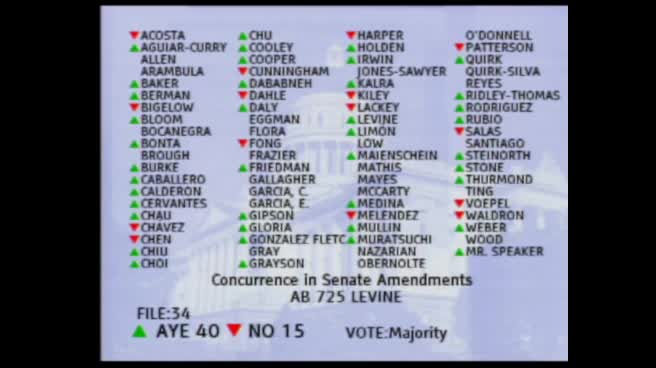 49SEC
Assembly Floor
 2MIN
Senate Floor
 1H
Senate Standing Committee on Appropriations
Bill Author

Bill Co-Author(s):
