AB 967: Human remains disposal: alkaline hydrolysis: licensure and regulation.
- Session Year: 2017-2018
- House: Assembly
- Latest Version Date: 2017-10-15
The Cemetery and Funeral Act provides for the licensure and regulation of cemeteries, crematoria, funeral establishments, and their personnel by the Cemetery and Funeral Bureau within the Department of Consumer Affairs. Existing law creates the Cemetery and Funeral Fund, which is continuously appropriated for the purpose of implementing the act. Under existing law, the violation of the act is a misdemeanor. Existing law requires a local registrar of births and deaths to issue permits for the disposition of cremated remains.
This bill, commencing July 1, 2020, would require the bureau to license and regulate hydrolysis facilities, as defined, and hydrolysis facility managers, and would enact requirements applicable to hydrolysis facilities substantially similar to those applicable to crematoria. By expanding the definition of crimes relating to the disposition of human remains and creating new crimes, this bill would impose a state-mandated local program. The bill would require an applicant for a hydrolysis facility license to present to the bureau any state or locally required permits for business operations, prove that it has the appropriate permits and contracts for the disposal of hydrolysate, and employ a hydrolysis chamber approved by the State Department of Public Health, as specified. The bill would require the application for a hydrolysis facility license to be made in writing on the form prescribed by the bureau and accompanied by a licensing fee, which would be deposited into the Cemetery and Funeral Fund. The bill also would authorize the bureau to impose an additional charge to be fixed at not more than $8.50 per hydrolysis made during the preceding quarter. By depositing moneys in a continuously appropriated fund, this bill would make an appropriation. The bill would require a local registrar of births or deaths to issue permits for the disposition of hydrolyzed human remains. By increasing the duties of local agencies, this bill would impose a state-mandated local program.
The California Constitution requires the state to reimburse local agencies and school districts for certain costs mandated by the state. Statutory provisions establish procedures for making that reimbursement.
This bill would provide that no reimbursement is required by this act for specified reasons.
The Cemetery and Funeral Act provides for the licensure and regulation of cemeteries, crematories, funeral establishments, and their personnel by the Cemetery and Funeral Bureau within the Department of Consumer Affairs. Existing law creates the Cemetery and Funeral Fund, which is continuously appropriated for the purpose of implementing the act. Under existing law, the violation of the act is a misdemeanor. Existing law requires a local registrar of births and deaths to issue permits for the disposition of cremated remains.
This bill, commencing July 1, 2020, would require the bureau to license and regulate hydrolysis facilities, as defined, and hydrolysis facility managers, and would enact requirements applicable to hydrolysis facilities substantially similar to those applicable to crematoria. By expanding the definition of crimes relating to the disposition of human remains and creating new crimes, this bill would impose a state-mandated local program. The bill would require an applicant for a hydrolysis facility license to present to the bureau any state or locally required permits for business operations, prove that it has the appropriate permits and contracts for the disposal of hydrolysate, and employ a hydrolysis chamber certified approved by the State Department of Public Health, as specified. The bill would require that department, or a local health agency, to perform annual inspections of certified hydrolysis chambers and facilities. By increasing the duties of local agencies, this bill would impose a state-mandated local program. The bill would require the application for a hydrolysis facility license to be made in writing on the form prescribed by the bureau and accompanied by a licensing fee, which would be deposited into the Cemetery and Funeral Fund. The bill also would authorize the bureau to impose an additional charge to be fixed at not more than $8.50 per hydrolysis made during the preceding quarter. By depositing moneys in a continuously appropriated fund, this bill would make an appropriation. The bill would require a local registrar of births or deaths to issue permits for the disposition of hydrolyzed human remains. By increasing the duties of local agencies, this bill would impose a state-mandated local program.
The California Constitution requires the state to reimburse local agencies and school districts for certain costs mandated by the state. Statutory provisions establish procedures for making that reimbursement.
This bill would provide that no reimbursement is required by this act for specified reasons.
The Cemetery and Funeral Act provides for the licensure and regulation of cemeteries, crematories, funeral establishments, and their personnel by the Cemetery and Funeral Bureau within the Department of Consumer Affairs. Existing law creates the Cemetery and Funeral Fund, which is continuously appropriated for the purpose of implementing the act. Under existing law, the violation of the act is a misdemeanor. Existing law requires a local registrar of births and deaths to issue permits for the disposition of cremated remains.
This bill, commencing July 1, 2020, would require the bureau to license and regulate hydrolysis facilities, as defined, and hydrolysis facility managers, and would enact requirements applicable to hydrolysis facilities substantially similar to those applicable to crematoria. By expanding the definition of crimes relating to the disposition of human remains and creating new crimes, this bill would impose a state-mandated local program. The bill would require an applicant for a hydrolysis facility license to present to the bureau any state or locally required permits for business operations, prove that it has the appropriate permits and contracts for the disposal of hydrolysate, and employ a hydrolysis chamber certified by the State Department of Public Health, as specified. The bill would require that department, or a local health agency, to perform annual inspections of certified hydrolysis chambers and facilities. By increasing the duties of local agencies, this bill would impose a state-mandated local program. The bill would require the application for a hydrolysis facility license to be made in writing on the form prescribed by the bureau and accompanied by a licensing fee, which would be deposited into the Cemetery and Funeral Fund. The bill also would authorize the bureau to impose an additional charge to be fixed at not more than $8.50 per hydrolysis made during the preceding quarter. By depositing moneys in a continuously appropriated fund, this bill would make an appropriation. The bill would require a local registrar of births or deaths to issue permits for the disposition of hydrolyzed human remains. By increasing the duties of local agencies, this bill would impose a state-mandated local program.
The California Constitution requires the state to reimburse local agencies and school districts for certain costs mandated by the state. Statutory provisions establish procedures for making that reimbursement.
This bill would provide that no reimbursement is required by this act for specified reasons.
The Cemetery and Funeral Act provides for the licensure and regulation of cemeteries, crematories, funeral establishments, and their personnel by the Cemetery and Funeral Bureau within the Department of Consumer Affairs. Existing law creates the Cemetery and Funeral Fund, which is continuously appropriated for the purpose of implementing the act. Under existing law, the violation of the act is a misdemeanor. Existing law requires a local registrar of births and deaths to issue permits for the disposition of cremated remains.
This bill, commencing January 1, 2019, July 1, 2020, would require the bureau to license and regulate hydrolysis facilities, as defined, and hydrolysis facility managers, and would enact requirements applicable to hydrolysis facilities substantially similar to those applicable to crematoria. By expanding the definition of crimes relating to the disposition of human remains and creating new crimes, this bill would impose a state-mandated local program. The bill would require the application for a hydrolysis facility license to be made in writing on the form prescribed by the bureau and accompanied by a licensing fee, which would be deposited into the Cemetery and Funeral Fund. The bill also would authorize the bureau to impose an additional charge to be fixed at not more than $8.50 per hydrolysis made during the preceding quarter. By depositing moneys in a continuously appropriated fund, this bill would make an appropriation. The bill would require a local registrar of births or deaths to issue permits for the disposition of hydrolyzed human remains. By increasing the duties of local agencies, this bill would impose a state-mandated local program.
The California Constitution requires the state to reimburse local agencies and school districts for certain costs mandated by the state. Statutory provisions establish procedures for making that reimbursement.
This bill would provide that no reimbursement is required by this act for specified reasons.
The Cemetery and Funeral Act provides for the licensure and regulation of cemeteries, crematories, funeral establishments, and their personnel by the Cemetery and Funeral Bureau within the Department of Consumer Affairs. Existing law creates the Cemetery and Funeral Fund, which is continuously appropriated for the purpose of implementing the act. Under existing law, the violation of the act is a misdemeanor. Existing law requires a local registrar of births and deaths to issue permits for the disposition of cremated remains.
This bill, commencing January 1, 2019, would require the bureau to license and regulate hydrolysis facilities, as defined, and hydrolysis facility managers, and would enact requirements applicable to hydrolysis facilities substantially similar to those applicable to crematoria. By expanding the definition of crimes relating to the disposition of human remains and creating new crimes, this bill would impose a state-mandated local program. The bill would require the application for a hydrolysis facility license to be made in writing on the form prescribed by the bureau and accompanied by a licensing fee, which would be deposited into the Cemetery and Funeral Fund. The bill also would authorize the bureau to impose an additional charge to be fixed at not more than $8.50 per hydrolysis made during the preceding quarter. By depositing moneys in a continuously appropriated fund, this bill would make an appropriation. The bill would require a local registrar of births or deaths to issue permits for the disposition of hydrolyzed human remains. By increasing the duties of local agencies, this bill would impose a state-mandated local program.
The California Constitution requires the state to reimburse local agencies and school districts for certain costs mandated by the state. Statutory provisions establish procedures for making that reimbursement.
This bill would provide that no reimbursement is required by this act for specified reasons.
The Cemetery and Funeral Act provides for the licensure and regulation of cemeteries, crematories, funeral establishments, and their personnel by the Cemetery and Funeral Bureau within the Department of Consumer Affairs. Existing law creates the Cemetery and Funeral Fund, which is continuously appropriated for the purpose of implementing the act. Under existing law, the violation of the act is a misdemeanor. Existing law requires a local registrar of births and deaths to issue permits for the disposition of cremated remains.
This bill, commencing January 1, 2019, would require the bureau to license and regulate hydrolysis facilities, as defined, and hydrolysis facility managers, and would enact requirements applicable to hydrolysis facilities substantially similar to those applicable to crematoria. By expanding the definition of crimes relating to the disposition of human remains and creating new crimes, this bill would impose a state-mandated local program. The bill would require the application for a hydrolysis facility license to be made in writing on the form prescribed by the bureau and accompanied by a licensing fee, which would be deposited into the Cemetery and Funeral Fund. By depositing moneys in a continuously appropriated fund, this bill would make an appropriation. The bill would require a local registrar of births or deaths to issue permits for the disposition of hydrolyzed human remains. By increasing the duties of local agencies, this bill would impose a state-mandated local program.
The California Constitution requires the state to reimburse local agencies and school districts for certain costs mandated by the state. Statutory provisions establish procedures for making that reimbursement.
This bill would provide that no reimbursement is required by this act for specified reasons.
The Cemetery and Funeral Act provides for the licensure and regulation of cemeteries, crematories, funeral establishments, and their personnel by the Cemetery and Funeral Bureau within the Department of Consumer Affairs. Existing law creates the Cemetery and Funeral Fund, which is continuously appropriated for the purpose of implementing the act. Under existing law, the violation of the act is a misdemeanor. Existing law requires a local registrar of births and deaths to issue permits for the disposition of cremated remains.
This bill bill, commencing January 1, 2019, would require the bureau to license and regulate hydrolysis facilities, as defined, and hydrolysis facility managers, and would enact requirements applicable to hydrolysis facilities substantially similar to those applicable to crematoria. By expanding the definition of crimes relating to the disposition of human remains and creating new crimes, this bill would impose a state-mandated local program. The bill would require the application for a hydrolysis facility license to be made in writing on the form prescribed by the bureau and accompanied by a licensing fee, which would be deposited into the Cemetery and Funeral Fund. By depositing moneys in a continuously appropriated fund, this bill would make an appropriation. The bill would require a local registrar of births or deaths to issue permits for the disposition of hydrolyzed human remains. By increasing the duties of local agencies, this bill would impose a state-mandated local program.
The California Constitution requires the state to reimburse local agencies and school districts for certain costs mandated by the state. Statutory provisions establish procedures for making that reimbursement.
This bill would provide that no reimbursement is required by this act for specified reasons.
The Cemetery and Funeral Act provides for the licensure and regulation of cemeteries, crematories, funeral establishments, and their personnel by the Cemetery and Funeral Bureau within the Department of Consumer Affairs. Existing law creates the Cemetery and Funeral Fund, which is continuously appropriated for the purpose of implementing the act. Under existing law, the violation of the act is a misdemeanor. Existing law requires a local registrar of births and deaths to issue permits for the disposition of cremated remains.
This bill would require the bureau to license and regulate hydrolysis facilities, as defined, and hydrolysis facility managers, and would enact requirements applicable to hydrolysis facilities substantially similar to those applicable to crematoria. By expanding the definition of crimes relating to the disposition of human remains and creating new crimes, this bill would impose a state-mandated local program. The bill would require the application for a hydrolysis facility license to be made in writing on the form prescribed by the bureau and accompanied by a licensing fee, which would be deposited into the Cemetery and Funeral Fund. By depositing moneys in a continuously appropriated fund, this bill would make an appropriation. The bill would require a local registrar of births or deaths to issue permits for the disposition of hydrolyzed human remains. By increasing the duties of local agencies, this bill would impose a state-mandated local program.
The California Constitution requires the state to reimburse local agencies and school districts for certain costs mandated by the state. Statutory provisions establish procedures for making that reimbursement.
This bill would provide that no reimbursement is required by this act for specified reasons.
The Cemetery and Funeral Act provides for the licensure and regulation of cemeteries, crematories, funeral establishments, and their personnel by the Cemetery and Funeral Bureau within the Department of Consumer Affairs. Existing law creates the Cemetery and Funeral Fund, which is continuously appropriated for the purpose of implementing the act. Under existing law, the violation of the act is a misdemeanor. Existing law requires a local registrar of births and deaths to issue permits for the disposition of cremated remains.
This bill would require the bureau to license and regulate hydrolysis facilities, as defined, and would enact requirements applicable to hydrolysis facilities substantially similar to those applicable to crematoria. By expanding the definition of crimes relating to the disposition of human remains and creating new crimes, this bill would impose a state-mandated local program. The bill would require the application for a hydrolysis facility license to be made in writing on the form prescribed by the bureau and accompanied by a licensing fee, which would be deposited into the Cemetery and Funeral Fund. By depositing moneys in a continuously appropriated fund, this bill would make an appropriation. The bill would require a local registrar of births or deaths to issue permits for the disposition of hydrolyzed remains. By increasing the duties of local agencies, this bill would impose a state-mandated local program.
The California Constitution requires the state to reimburse local agencies and school districts for certain costs mandated by the state. Statutory provisions establish procedures for making that reimbursement.
This bill would provide that no reimbursement is required by this act for specified reasons.
(a)A cremated remains disposer is a person who, for his or her own account or for another, disposes of, or offers to dispose of, cremated human remains by scattering over or on land or sea.
(b)This section shall remain in effect only until July 1, 2020, and as of that date is repealed.
SEC. 2.Section 7611.9 is added to the Business and Professions Code, to read:7611.9.(a)A cremated remains disposer is a person who, for his or her own account or for another, disposes of, or offers to dispose of, cremated human remains or hydrolyzed human remains by scattering over or on land or sea.
(b)This section shall become operative on July 1, 2020.
SEC. 3.Section 7611.12 is added to the Business and Professions Code, to read:7611.12.(a)Licensed hydrolysis facility means a corporation, partnership, or natural person licensed pursuant to Article 2.7 (commencing with Section 7639). A licensed hydrolysis facility shall be considered a cemetery licensee for purposes of disciplinary action pursuant to Article 6 (commencing with Section 7686).
(b)This section shall become operative on July 1, 2020.
SEC. 4.Article 2.7 (commencing with Section 7639) is added to Chapter 12 of Division 3 of the Business and Professions Code, to read:2.7.Hydrolysis Facilities7639.A corporation, partnership, or natural person may operate, establish, or maintain a hydrolysis facility with a valid hydrolysis facility license issued by the bureau.
7639.02.A change in the ownership of a hydrolysis facility shall be reported to the bureau. A transfer in a single transaction or related transactions of more than 50 percent of the equitable interest in a licensed hydrolysis facility shall constitute a change of ownership. When a change in ownership in a licensed hydrolysis facility occurs, the existing hydrolysis facility license shall lapse and the new owner shall obtain a license from the bureau as otherwise provided in this act. The bureau shall not require an applicant under this section to obtain any new permit or license from any other governmental agency when the existing permit or license is valid.
7639.04.The application for a hydrolysis facility license shall be made in writing on the form prescribed by the bureau and filed at the principal office of the bureau. The application shall be accompanied by the fees.
7639.06.(a)The bureau shall require an applicant for a hydrolysis facility license to prove compliance with all applicable laws, rules, regulations, ordinances, and orders, and shall not issue a hydrolysis facility license until the bureau is satisfied that the public interest, human health, and environmental quality will be served by the applicant.
(b)The applicant for a hydrolysis facility license shall present to the bureau any state or locally required permits for business operations, including, but not limited to, any permits required by the following, to the extent applicable:
(1)The local public health department.
(2)The city, county, special district, joint powers authority, or other public agency that provides wastewater treatment services where the licensed hydrolysis facility is to be located.
(3)The Department of Toxic Substances Control for the creation, collection, treatment, or transport of hazardous waste.
(4)Any other state or locally required permit.
(c)The applicant for a hydrolysis facility license shall prove to the bureau that it has the appropriate permits and contracts for the disposal of hydrolysate and which of the following models the facility will be using for the disposal:
(1)Discharge to the sewer collection system.
(2)Containment, collection, and transport to an appropriate treatment facility.
(d)When applying to renew a hydrolysis facility license, an applicant shall present to the bureau records of annual maintenance of the hydrolysis chamber.
7639.08.(a)The bureau shall adopt, and may from time to time amend, rules and regulations prescribing standards for applicants for hydrolysis facility licenses. In reviewing an application for a hydrolysis facility license, the bureau may consider acts of the applicant, including acts of the incorporators, officers, directors, and stockholders of the applicant, which shall constitute grounds for the denial of a hydrolysis facility license pursuant to Division 1.5 (commencing with Section 475).
(b)Hydrolysis chamber manufacturers may apply to the State Department of Public Health for approval of a hydrolysis chamber upon finding that the hydrolysis chamber causes the destruction of pathogenic micro-organisms pursuant to paragraph (3) of subdivision (a) of Section 118215 of the Health and Safety Code.
(c)In its approval, the State Department of Public Health shall specify the minimum parameters of pH, time, temperature, and pressure that must be used by each hydrolysis chamber to destroy all pathogenic micro-organisms. The department may use the guidance of the hydrolysis chamber operations and maintenance manual and biologic indicator spore testing to determine this, among other factors.
(d)The hydrolysis chamber manufacturer shall pay to the State Department of Public Health, the application and evaluation fee as outlined in Section 118245 of the Health and Safety Code.
(e)Every five years, licensed hydrolysis facilities that discharge hydrolysate to a sewer collection system shall submit to the Department of Public Health the results of biological indicator spore testing as well as the last 30 days of archived electronic hydrolysis chamber data which includes the pH, time, temperature, and pressure at which the chamber was operated. Based upon this information, the Department shall evaluate whether the chamber continues to destroy pathogens. The licensee shall include this evaluation in its application to renew its license. If the chamber is determined not to destroy pathogens, the Bureau shall not renew its license until this has been remedied. The Department may charge a fee sufficient to cover the actual hourly costs of staff conducting its five year review of the alternative technology.
(f)Once a hydrolysis chamber has been approved pursuant to subdivision (b), it may be employed by a licensed hydrolysis facility for the final disposition of human remains.
(g)The bureau shall grant hydrolysis facility licenses only to applicants that will employ a hydrolysis chamber approved by the State Department of Public Health pursuant to subdivision (b).
(h)A hydrolysis facility shall ensure or conduct annual maintenance of the hydrolysis chamber.
(i)The bureau shall not renew a hydrolysis facility license without proof of annual maintenance of the hydrolysis chamber.
7639.10.(a)A licensed hydrolysis facility shall not conduct hydrolysis unless all of the following requirements are met:
(1)The licensee has a written contract with the person or persons entitled to custody of the remains clearly stating the location, manner, and time of disposition of the remains, in which the person or persons entitled to custody of the remains agree to pay the licensees regular fee for hydrolysis, disposition, and other services rendered, and any other contractual provisions required by the bureau.
(2)Hydrolysis of remains occurs not more than 24 hours after delivery of the remains to the licensee unless the remains have been preserved in the interim by refrigeration or embalming.
(3)The licensee has a contractual relationship with a licensed cemetery authority for final disposition of hydrolyzed human remains by burial, entombment, or inurnment of any and all remains that are not lawfully disposed of or that are not called for or accepted by the person or persons entitled to the custody and control of the disposition of those remains within 90 days of date of death.
(4)The licensee contains and collects all hydrolysate. Hydrolysate shall not be disposed of using a sewer collection system, except as prescribed in paragraph (8).
(5)The licensee ensures that any hydrolysate is transported by a state-licensed biomaterials handler to a publicly owned wastewater treatment plant or licensed industrial anaerobic digestion facility or waste-to-energy or biomass facility for the beneficial use or disposal of that hydrolysate, unless disposing of hydrolysate using a sewer collection system as prescribed in paragraph (8).
(6)Acceptance of hydrolysate from a licensed hydrolysis facility and a state-licensed biomaterials handler shall be voluntary and at the discretion of each individual facility described in paragraph (5).
(7)Acceptance of hydrolysate by a licensed industrial anaerobic digestion, waste-to-energy, or biomass facility, if the facility has an industrial process sewer connection to a sewer collection system, shall only be allowed with the consent of the publicly owned treatment works to which the sewer collection system is tributary.
(8)A licensed hydrolysis facility may dispose of hydrolysate using a sewer collection system only if all of the following conditions are met:
(A)The city, county, special district, joint powers authority, or other public agency that provides wastewater treatment and disposal services to the licensed hydrolysis facility expressly authorizes the disposal of hydrolysate into the sewer collection system. If issuance of a permit is required by another city, county, special district, joint powers authority, or other public agency that provides sewer collection services where the licensee is located, authorization from both agencies must be obtained.
(B)If the licensee receives the appropriate permissions required by subparagraph (A), the licensee shall comply with all local ordinances, pretreatment requirements, permitting requirements, waste discharge requirements, and all other applicable federal, state, and local laws, ordinances, and regulations governing the protection of water quality and public health, promotion of water recycling, and discharge into the sewer system.
(C)The licensee shall demonstrate compliance as deemed appropriate by the public agency or agencies authorizing the disposal of hydrolysate into the sewer collection system. At a minimum this should include annual water quality testing as prescribed by the public agency or agencies authorizing the disposal of hydrolysate into the sewer collection system.
(D)Authorization for disposal of hydrolysate using a sewer collection system shall be voluntary and at the discretion of each public agency described in subparagraph (A). Each public agency described in subparagraph (A) has the discretion to authorize or to prohibit the discharge of hydrolysate into a sewer collection system for any reason, including for purposes of promoting advanced water recycling systems.
(b)Existing alkaline hydrolysis facilities utilized by medical schools for the purpose of anatomical gifting shall not be subject to paragraphs (1) to (3), inclusive, of subdivision (a), and shall continue to be regulated under the guidelines of the states anatomical gifting regulations.
7639.12.A licensed hydrolysis facility shall not prohibit relatives or the responsible party from viewing the hydrolysis process.
7639.16.It is a misdemeanor for any person, firm, or corporation to hydrolyze human remains, or to engage in the disposition of hydrolyzed human remains, without a valid, unexpired hydrolysis facility license. Each hydrolysis carried out in violation of this section is a separate violation.
7639.18.A licensed hydrolysis facility shall be subject to, and shall be disciplined by the bureau in accordance with, Article 6 (commencing with Section 7686).
7639.19.This article shall become operative on July 1, 2020.
SEC. 5.Section 7653.35 is added to the Business and Professions Code, to read:7653.35.(a)The bureau shall inspect the books, records, and premises of any hydrolysis facility licensed under this chapter. In making those inspections, the bureau shall have access to all books and records, the hydrolysis facility, the hydrolysis chamber, and the storage areas for human remains before and after hydrolysis, during regular office hours or the hours the hydrolysis facility is in operation. No prior notification of the inspection is required to be given to the hydrolysis facility licensee. If any hydrolysis facility licensee fails to allow that inspection or any part thereof, it shall be grounds for the suspension or revocation of a license or other disciplinary action against the licensee. All proceedings under this section shall be conducted in accordance with the provisions of this chapter relating to disciplinary proceedings.
(b)This section shall become operative on July 1, 2020.
SEC. 6.Section 7653.36 is added to the Business and Professions Code, to read:7653.36.(a)The bureau shall annually conduct a minimum of one unannounced inspection of each licensed hydrolysis facility.
(b)This section shall become operative on July 1, 2020.
SEC. 7.Section 7672 of the Business and Professions Code is amended to read:7672.(a)A person shall not dispose of or offer to dispose of any cremated human remains unless registered as a cremated remains disposer by the bureau. This article shall not apply to any person, partnership, or corporation holding a certificate of authority as a cemetery, crematory license, cemetery brokers license, cemetery salespersons license, or funeral directors license, nor shall this article apply to any person having the right to control the disposition of the cremated remains of any person or that persons designee if the person does not dispose of or offer to dispose of more than 10 cremated human remains within any calendar year.
(b)This section shall remain in effect only until July 1, 2020, and as of that date is repealed.
SEC. 8.Section 7672 is added to the Business and Professions Code, to read:7672.(a)A person shall not dispose of or offer to dispose of any cremated human remains or hydrolyzed human remains unless registered as a cremated remains disposer by the bureau. This article shall not apply to any person, partnership, or corporation holding a certificate of authority as a cemetery, crematory license, hydrolysis facility license, cemetery brokers license, cemetery salespersons license, or funeral directors license, nor shall this article apply to any person having the right to control the disposition of the cremated remains or hydrolyzed human remains of any person or that persons designee if the person does not dispose of or offer to dispose of more than 10 cremated human remains or hydrolyzed human remains within any calendar year.
(b)This section shall become operative on July 1, 2020.
SEC. 9.Section 7672.1 of the Business and Professions Code is amended to read:7672.1.(a)Registration shall be on the form prescribed by the bureau and shall include, but not be limited to, the full name of the registrant, business and residence addresses, description and identification of aircraft or boats which may be used in dispensing cremated human remains, and the area to be served. Each registration application shall be accompanied by the cremated remains disposer fee.
(b)Every registered cremated remains disposer who dispenses human remains by air shall post a copy of his or her current pilots license, and the address of the cremated remains storage area at his or her place of business. Every registered cremated remains disposer who dispenses human remains by boat shall post a copy of his or her current boating license and the address of the cremated remains storage area at his or her place of business.
(c)This section shall remain in effect only until July 1, 2020, and as of that date is repealed.
SEC. 10.Section 7672.1 is added to the Business and Professions Code, to read:7672.1.(a)Registration shall be on the form prescribed by the bureau and shall include, but not be limited to, the full name of the registrant, business and residence addresses, description and identification of aircraft or boats which may be used in dispensing cremated human remains or hydrolyzed human remains, and the area to be served. Each registration application shall be accompanied by the cremated remains disposer fee.
(b)Every registered cremated remains disposer who dispenses human remains by air shall post a copy of his or her current pilots license, and the address of the cremated remains or hydrolyzed human remains storage area at his or her place of business. Every registered cremated remains disposer who dispenses human remains by boat shall post a copy of his or her current boating license and the address of the cremated remains or hydrolyzed human remains storage area at his or her place of business.
(c)This section shall become operative on July 1, 2020.
SEC. 11.Section 7672.2 of the Business and Professions Code is amended to read:7672.2.(a)The bureau shall prepare and deliver to each registered cremated remains disposer a booklet that includes, but is not limited to, the following information: details about the registration and renewal requirements for cremated remains disposers; requirements for obtaining state permits to dispose of cremated human remains; state storage requirements, if any; statutory duties pursuant to this article, and other applicable state laws.
(b)This section shall remain in effect only until July 1, 2020, and as of that date is repealed.
SEC. 12.Section 7672.2 is added to the Business and Professions Code, to read:7672.2.(a)The bureau shall prepare and deliver to each registered cremated remains disposer a booklet that includes, but is not limited to, the following information: details about the registration and renewal requirements for cremated remains disposers; requirements for obtaining state permits to dispose of cremated human remains or hydrolyzed human remains; state storage requirements, if any; statutory duties pursuant to this article, and other applicable state laws.
(b)This section shall become operative on July 1, 2020.
SEC. 13.Section 7672.3 of the Business and Professions Code is amended to read:7672.3.(a)All aircraft used for the scattering of cremated human remains shall be validly certified by the Federal Aviation Administration. All boats or vessels used for the scattering of cremated human remains shall be registered with the Department of Motor Vehicles or documented by a federal agency, as appropriate. The certification or registration shall be available for inspection by the bureau.
(b)This section shall remain in effect only until July 1, 2020, and as of that date is repealed.
SEC. 14.Section 7672.3 is added to the Business and Professions Code, to read:7672.3.(a)All aircraft used for the scattering of cremated human remains or hydrolyzed human remains shall be validly certified by the Federal Aviation Administration. All boats or vessels used for the scattering of cremated human remains or hydrolyzed human remains shall be registered with the Department of Motor Vehicles or documented by a federal agency, as appropriate. The certification or registration shall be available for inspection by the bureau.
(b)This section shall become operative on July 1, 2020.
SEC. 15.Section 7672.4 of the Business and Professions Code is amended to read:7672.4.(a)A cremated remains disposer who scatters any cremated human remains without specific written instructions from the person having the right to control the disposition of the remains or who scatters any remains in a manner not in accordance with those instructions shall be subject to disciplinary action.
(b)This section shall remain in effect only until July 1, 2020, and as of that date is repealed.
SEC. 16.Section 7672.4 is added to the Business and Professions Code, to read:7672.4.(a)A cremated remains disposer who scatters any cremated human remains or hydrolyzed human remains without specific written instructions from the person having the right to control the disposition of the remains or who scatters any remains in a manner not in accordance with those instructions shall be subject to disciplinary action.
(b)This section shall become operative on July 1, 2020.
SEC. 17.Section 7672.6 of the Business and Professions Code is amended to read:7672.6.(a)Every cremated remains disposer shall do both of the following:
(1)Dispose of cremated remains within 60 days of the receipt of those remains, unless a written signed reason for a delay is presented to the person with the right to control the disposition of the remains under Section 7100 of the Health and Safety Code.
(2)Provide the bureau with the address and telephone number of any storage facility being used by the registrant to store cremated remains. Cremated remains shall be stored in a place free from exposure to the elements, and shall be responsibly maintained until disposal. The bureau and its representatives shall conduct, on an annual basis, random inspections of the operations of 5 to 10 percent of the registered cremated remains disposers, and is authorized to inspect any place used by a cremated remains disposer for the storage of cremated remains without notice to the cremated remains disposer.
(b)A violation of the requirements of this section is grounds for disciplinary action.
(c)This section shall remain in effect only until July 1, 2020, and as of that date is repealed.
SEC. 18.Section 7672.6 is added to the Business and Professions Code, to read:7672.6.(a)Every cremated remains disposer shall do both of the following:
(1)Dispose of cremated remains or hydrolyzed human remains within 60 days of the receipt of those remains, unless a written signed reason for a delay is presented to the person with the right to control the disposition of the remains under Section 7100 of the Health and Safety Code.
(2)Provide the bureau with the address and telephone number of any storage facility being used by the registrant to store cremated remains or hydrolyzed human remains. Cremated remains or hydrolyzed human remains shall be stored in a place free from exposure to the elements, and shall be responsibly maintained until disposal. The bureau and its representatives shall conduct, on an annual basis, random inspections of the operations of 5 to 10 percent of the registered cremated remains disposers, and is authorized to inspect any place used by a cremated remains disposer for the storage of cremated remains or hydrolyzed human remains without notice to the cremated remains disposer.
(b)A violation of the requirements of this section is grounds for disciplinary action.
(c)This section shall become operative on July 1, 2020.
SEC. 19.Section 7672.7 of the Business and Professions Code is amended to read:7672.7.(a)Each cremated remains disposer shall file, and thereafter maintain an updated copy of, an annual report on a form prescribed by the bureau. The report shall include, but not be limited to, the names of the deceased persons whose cremated remains were disposed of, the dates of receipt of the cremated remains, the names and addresses of the persons who authorized disposal of those remains, the dates and locations of disposal of those remains, and the means and manner of disposition. The report shall cover the fiscal year ending on June 30 and shall be filed with the bureau no later than September 30 of each year.
(b)Any cremated remains disposer that makes a willful and material false statement regarding the disposal of cremated remains in the annual report filed or updated pursuant to subdivision (a) shall be subject to disciplinary action.
(c)Any cremated remains disposer that makes a willful and material false statement in the annual report filed or updated pursuant to subdivision (a) shall be guilty of a misdemeanor.
(d)This section shall remain in effect only until July 1, 2020, and as of that date is repealed.
SEC. 20.Section 7672.7 is added to the Business and Professions Code, to read:7672.7.(a)Each cremated remains disposer shall file, and thereafter maintain an updated copy of, an annual report on a form prescribed by the bureau. The report shall include, but not be limited to, the names of the deceased persons whose cremated remains or hydrolyzed human remains were disposed of, the dates of receipt of the cremated remains or hydrolyzed human remains, the names and addresses of the persons who authorized disposal of those remains, the dates and locations of disposal of those remains, and the means and manner of disposition. The report shall cover the fiscal year ending on June 30 and shall be filed with the bureau no later than September 30 of each year.
(b)Any cremated remains disposer that makes a willful and material false statement regarding the disposal of cremated remains or hydrolyzed human remains in the annual report filed or updated pursuant to subdivision (a) shall be subject to disciplinary action.
(c)Any cremated remains disposer that makes a willful and material false statement in the annual report filed or updated pursuant to subdivision (a) shall be guilty of a misdemeanor.
(d)This section shall become operative on July 1, 2020.
SEC. 21.Section 7673.1 of the Business and Professions Code is amended to read:7673.1.(a)Any cremated remains disposer who stores cremated remains in a reckless manner that results in either of the following is guilty of a public offense punishable by imprisonment in a county jail not exceeding one year or by a fine not to exceed five thousand dollars ($5,000), or by both that fine and imprisonment:
(1)Loss of all or part of the cremated remains.
(2)Inability to individually identify the cremated remains.
(b)This section shall remain in effect only until July 1, 2020, and as of that date is repealed.
SEC. 22.Section 7673.1 is added to the Business and Professions Code, to read:7673.1.(a)Any cremated remains disposer who stores cremated remains or hydrolyzed human remains in a reckless manner that results in either of the following is guilty of a public offense punishable by imprisonment in a county jail not exceeding one year or by a fine not to exceed five thousand dollars ($5,000), or by both that fine and imprisonment:
(1)Loss of all or part of the cremated remains or hydrolyzed human remains.
(2)Inability to individually identify the cremated remains or hydrolyzed human remains.
(b)This section shall become operative on July 1, 2020.
SEC. 23.Section 7685.2 of the Business and Professions Code is amended to read:7685.2.(a)No funeral director shall enter into a contract for furnishing services or property in connection with the burial or other disposal of human remains until he or she has first submitted to the potential purchaser of those services or property a written or printed memorandum containing the following information, provided that information is available at the time of execution of the contract:
(1)The total charge for the funeral directors services and the use of his or her facilities, including the preparation of the body and other professional services, and the charge for the use of automotive and other necessary equipment.
(2)An itemization of charges for the following merchandise as selected: the casket, an outside receptacle, and clothing.
(3)An itemization of fees or charges and the total amount of cash advances made by the funeral director for transportation, flowers, cemetery or crematory charges, newspaper notices, clergy honorarium, transcripts, telegrams, long distance telephone calls, music, and any other advances as authorized by the purchaser.
(4)An itemization of any other fees or charges not included above.
(5)The total of the amount specified in paragraphs (1) to (4), inclusive.
If the charge for any of the above items is not known at the time the contract is entered into, the funeral director shall advise the purchaser of the charge therefor, within a reasonable period after the information becomes available. All prices charged for items covered under Sections 7685 and 7685.1 shall be the same as those given under such sections.
(b)A funeral establishment shall obtain from the person with the right to control the disposition pursuant to Section 7100 of the Health and Safety Code, or the person prearranging the cremation and disposition of his or her own remains, a signed declaration designating specific instructions with respect to the disposition of cremated remains. The bureau shall make available a form upon which the declaration shall be made. The form shall include, but not be limited to, the names of the persons with the right to control the disposition of the cremated remains and the person who is contracting for the cremation services; the name of the deceased; the name of the funeral establishment in possession of the remains; the name of the crematorium; and specific instructions regarding the manner, location, and other pertinent details regarding the disposition of cremated remains. The form shall be signed and dated by the person arranging for the cremation and the funeral director, employee, or agent of the funeral establishment in charge of arranging or prearranging the cremation service.
(c)A funeral director entering into a contract to furnish cremation services shall provide to the purchaser of cremation services, either on the first page of the contract for cremation services, or on a separate page attached to the contract, a written or printed notice containing the following information:
(1)A person having the right to control disposition of cremated remains may remove the remains in a durable container from the place of cremation or interment, pursuant to Section 7054.6 of the Health and Safety Code.
(2)If the cremated remains container cannot accommodate all cremated remains of the deceased, the crematory shall provide a larger cremated remains container at no additional cost, or place the excess in a second container that cannot easily come apart from the first, pursuant to Section 8345 of the Health and Safety Code.
(d)This section shall remain in effect only until July 1, 2020, and as of that date is repealed.
SEC. 24.Section 7685.2 is added to the Business and Professions Code, to read:7685.2.(a)No funeral director shall enter into a contract for furnishing services or property in connection with the burial or other disposal of human remains until he or she has first submitted to the potential purchaser of those services or property a written or printed memorandum containing the following information, provided that information is available at the time of execution of the contract:
(1)The total charge for the funeral directors services and the use of his or her facilities, including the preparation of the body and other professional services, and the charge for the use of automotive and other necessary equipment.
(2)An itemization of charges for the following merchandise as selected: the casket, an outside receptacle, and clothing.
(3)An itemization of fees or charges and the total amount of cash advances made by the funeral director for transportation, flowers, cemetery, crematory, or hydrolysis facility charges, newspaper notices, clergy honorarium, transcripts, telegrams, long distance telephone calls, music, and any other advances as authorized by the purchaser.
(4)An itemization of any other fees or charges not included above.
(5)The total of the amount specified in paragraphs (1) to (4), inclusive.
If the charge for any of the above items is not known at the time the contract is entered into, the funeral director shall advise the purchaser of the charge therefor, within a reasonable period after the information becomes available. All prices charged for items covered under Sections 7685 and 7685.1 shall be the same as those given under such sections.
(b)A funeral establishment shall obtain from the person with the right to control the disposition pursuant to Section 7100 of the Health and Safety Code, or the person prearranging the cremation or hydrolysis and disposition of his or her own remains, a signed declaration designating specific instructions with respect to the disposition of cremated remains or hydrolyzed human remains. The bureau shall make available a form upon which the declaration shall be made. The form shall include, but not be limited to, the names of the persons with the right to control the disposition of the cremated remains or hydrolyzed human remains and the person who is contracting for the cremation or hydrolysis services; the name of the deceased; the name of the funeral establishment in possession of the remains; the name of the crematorium or hydrolysis facility; and specific instructions regarding the manner, location, and other pertinent details regarding the disposition of cremated remains or hydrolyzed human remains. The form shall be signed and dated by the person arranging for the cremation or hydrolysis and the funeral director, employee, or agent of the funeral establishment in charge of arranging or prearranging the cremation or hydrolysis service.
(c)A funeral director entering into a contract to furnish cremation or hydrolysis services shall provide to the purchaser of cremation or hydrolysis services, either on the first page of the contract for cremation or hydrolysis services, or on a separate page attached to the contract, a written or printed notice containing the following information:
(1)A person having the right to control disposition of cremated remains or hydrolyzed human remains may remove the remains in a durable container from the place of cremation, hydrolysis, or interment, pursuant to Section 7054.6 of the Health and Safety Code.
(2)If the cremated remains container or hydrolyzed human remains container cannot accommodate all cremated remains or hydrolyzed human remains of the deceased, the crematory or hydrolysis facility shall provide a larger cremated remains container or hydrolyzed human remains container at no additional cost, or place the excess in a second container that cannot easily come apart from the first, pursuant to Section 8345 of the Health and Safety Code.
(3)This section shall become operative on July 1, 2020.
SEC. 25.Section 7712.11 is added to the Business and Professions Code, to read:7712.11.(a)Each hydrolysis facility for which a hydrolysis facility license is required shall be operated under the supervision of a manager qualified in accordance with rules adopted by the bureau. A licensed crematory manager may be designated as a hydrolysis facility manager with appropriate certification upon demonstrating an understanding of the applicable provisions of this code and of the Health and Safety Code, as determined by the bureau.
(b)A person shall not engage in the business of, act in the capacity of, or advertise or assume to act as, a hydrolysis facility manager without a valid crematory manager license and obtaining a certification from the bureau.
(c)This section shall become operative on July 1, 2020.
SEC. 26.Section 7730.11 is added to the Business and Professions Code, to read:7730.11.(a)The bureau shall establish the fee to obtain or renew a hydrolysis facility license, which shall not exceed the reasonable cost of license administration.
(b)Every licensee operating a hydrolysis facility pursuant to a license issued pursuant to this article shall pay an additional charge to be fixed by the bureau of not more than eight dollars and fifty cents ($8.50) per hydrolysis made during the preceding quarter, which charges shall be deposited into the Cemetery and Funeral Fund.
(c)This section shall become operative on July 1, 2020.
SEC. 27.Section 7002.5 is added to the Health and Safety Code, to read:7002.5.(a)Hydrolyzed human remains means bone fragments of a human body that are left after hydrolysis in a hydrolysis facility. Hydrolyzed human remains does not include foreign materials, pacemakers, or prostheses.
(b)This section shall become operative on July 1, 2020.
SEC. 28.Section 7003 of the Health and Safety Code is amended to read:7003.(a)Cemetery means either of the following:
(1)Any of the following that is used or intended to be used and dedicated for cemetery purposes:
(A)A burial park, for earth interments.
(B)A mausoleum, for crypt or vault interments.
(C)A crematory and columbarium, for cinerary interments.
(2)A place where six or more human bodies are buried.
(b)This section shall remain in effect only until July 1, 2020, and as of that date is repealed.
SEC. 29.Section 7003 is added to the Health and Safety Code, to read:7003.(a)Cemetery means either of the following:
(1)Any of the following that is used or intended to be used and dedicated for cemetery purposes:
(A)A burial park, for earth interments.
(B)A mausoleum, for crypt or vault interments.
(C)A crematory and columbarium, for interment of cremated remains or hydrolyzed human remains.
(2)A place where six or more human bodies are buried.
(b)This section shall become operative on July 1, 2020.
SEC. 30.Section 7006.1 is added to the Health and Safety Code, to read:7006.1.(a)Hydrolysis facility means a building or structure containing one or more chambers for the reduction of bodies of deceased persons by alkaline hydrolysis.
(b)This section shall become operative on July 1, 2020.
SEC. 31.Section 7006.4 is added to the Health and Safety Code, to read:7006.4.(a)Hydrolysis chamber means the enclosed space within which the hydrolysis of human remains is performed and any other attached, nonenclosed, mechanical components that are necessary for the safe and proper functioning of the equipment. Allowable hydrolysis chambers for the disposition of human remains shall meet or exceed State Department of Public Health and federal Centers for Disease Control and Prevention requirements applicable for destruction of human pathogens, specified in the hydrolysis chamber approval issued pursuant to Section 7639.08 of the Business and Professions Code.
(b)This section shall become operative on July 1, 2020.
SEC. 32.Section 7006.6 is added to the Health and Safety Code, to read:7006.6.(a)Hydrolysis container means a hydrolyzable body wrapping into which the body of a deceased person is placed prior to insertion into a hydrolysis chamber. The wrapping must consist of 100-percent protein-based material, such as silk, suede, leather, feather, fur, or wool.
(b)This section shall become operative on July 1, 2020.
SEC. 33.Section 7006.8 is added to the Health and Safety Code, to read:7006.8.(a)Hydrolyzed human remains container means a receptacle in which hydrolyzed human remains are placed after hydrolysis.
(b)This section shall become operative on July 1, 2020.
SEC. 34.Section 7010.1 is added to the Health and Safety Code, to read:7010.1.(a)Hydrolysis means the process by which the following two steps are taken:
(1)The reduction of the body of a deceased person to its essential organic components and bone fragments by alkaline hydrolysis. Alkaline hydrolysis is a process using heat or heat and applied pressure, water, and potassium hydroxide or sodium hydroxide in a hydrolysis chamber.
(2)The processing of the remains after removal from the hydrolysis chamber pursuant to Section 7010.3.
(b)This section shall become operative on July 1, 2020.
SEC. 35.Section 7010.3 of the Health and Safety Code is amended to read:7010.3.(a)Processing means the removal of foreign objects, pursuant to Section 7051, and the reduction of the particle size of cremated remains by mechanical means including, but not limited to, grinding, crushing, and pulverizing to a consistency appropriate for disposition.
(b)This section shall remain in effect only until July 1, 2020, and as of that date is repealed.
SEC. 36.Section 7010.3 is added to the Health and Safety Code, to read:7010.3.(a)Processing means the removal of foreign objects, pursuant to Section 7051, and the reduction of the particle size of cremated remains or hydrolyzed human remains by mechanical means including, but not limited to, grinding, crushing, and pulverizing to a consistency appropriate for disposition.
(b)This section shall become operative on July 1, 2020.
SEC. 37.Section 7010.7 of the Health and Safety Code is amended to read:7010.7.(a)Scattering means the authorized dispersal of cremated remains at sea, in other areas of the state, or commingling in a defined area within a dedicated cemetery, in accordance with this part.
(b)This section shall remain in effect only until July 1, 2020, and as of that date is repealed.
SEC. 38.Section 7010.7 is added to the Health and Safety Code, to read:7010.7.(a)Scattering means the authorized dispersal of cremated remains or hydrolyzed human remains at sea, in other areas of the state, or commingling in a defined area within a dedicated cemetery, in accordance with this part.
(b)This section shall become operative on July 1, 2020.
SEC. 39.Section 7011 of the Health and Safety Code is amended to read:7011.(a)Inurnment means placing cremated remains in a cremated remains container suitable for placement, burial, or shipment.
(b)This section shall remain in effect only until July 1, 2020, and as of that date is repealed.
SEC. 40.Section 7011 is added to the Health and Safety Code, to read:7011.(a)Inurnment means placing cremated remains or hydrolyzed human remains in a cremated remains container or hydrolyzed human remains container suitable for placement, burial, or shipment.
(b)This section shall become operative on July 1, 2020.
SEC. 41.Section 7011.2 of the Health and Safety Code is amended to read:7011.2.(a)Placement means the placing of a container holding cremated remains in a crypt, vault, or niche.
(b)This section shall remain in effect only until July 1, 2020, and as of that date is repealed.
SEC. 42.Section 7011.2 is added to the Health and Safety Code, to read:7011.2.(a)Placement means the placing of a container holding cremated remains or hydrolyzed human remains in a crypt, vault, or niche.
(b)This section shall become operative on July 1, 2020.
SEC. 43.Section 7015 of the Health and Safety Code is amended to read:7015.(a)Crypt or vault means a space in a mausoleum of sufficient size, used or intended to be used, to entomb uncremated human remains.
(b)This section shall remain in effect only until July 1, 2020, and as of that date is repealed.
SEC. 44.Section 7015 is added to the Health and Safety Code, to read:7015.(a)Crypt or vault means a space in a mausoleum of sufficient size, used or intended to be used, to entomb human remains that have been neither cremated nor hydrolyzed.
(b)This section shall become operative on July 1, 2020.
SEC. 45.Section 7016 of the Health and Safety Code is amended to read:7016.(a)Niche means a space in a columbarium used, or intended to be used, for the placement of cremated human remains.
(b)This section shall remain in effect only until July 1, 2020, and as of that date is repealed.
SEC. 46.Section 7016 is added to the Health and Safety Code, to read:7016.(a)Niche means a space in a columbarium used, or intended to be used, for the placement of cremated human remains or hydrolyzed human remains.
(b)This section shall become operative on July 1, 2020.
SEC. 47.Section 7017 is added to the Health and Safety Code, to read:7017.(a)Hydrolysate means the resultant liquid from the hydrolysis of human remains, which liquid is a sterile, benign, micronutrient-rich solution consisting of sugars, salts, peptides, and amino acids. Hydrolysate and calcium phosphate ashes are the two end results from the alkaline hydrolysis process.
(b)This section shall become operative on July 1, 2020.
SEC. 48.Section 7051 of the Health and Safety Code is amended to read:7051.(a)Every person who removes any part of any human remains from any place where it has been interred, or from any place where it is deposited while awaiting interment or cremation, with intent to sell it or to dissect it, without authority of law, or written permission of the person or persons having the right to control the remains under Section 7100, or with malice or wantonness, has committed a public offense that is punishable by imprisonment pursuant to subdivision (h) of Section 1170 of the Penal Code.
(b)This section shall not prohibit the removal of foreign materials, pacemakers, or prostheses from cremated remains by an employee of a licensed crematory prior to final processing of ashes. Dental gold or silver, jewelry, or mementos, to the extent that they can be identified, may be removed by the employee prior to final processing if the equipment is such that it will not process these materials. However, any dental gold and silver, jewelry, or mementos that are removed shall be returned to the urn or cremated remains container, unless otherwise directed by the person or persons having the right to control the disposition.
(c)This section shall remain in effect only until July 1, 2020, and as of that date is repealed.
SEC. 49.Section 7051 is added to the Health and Safety Code, to read:7051.(a)Every person who removes any part of any human remains from any place where it has been interred, or from any place where it is deposited while awaiting interment, cremation, or hydrolysis, with intent to sell it or to dissect it, without authority of law, or written permission of the person or persons having the right to control the remains under Section 7100, or with malice or wantonness, has committed a public offense that is punishable by imprisonment pursuant to subdivision (h) of Section 1170 of the Penal Code.
(b)This section shall not prohibit the removal of foreign materials, pacemakers, or prostheses from cremated remains or hydrolyzed human remains by an employee of a licensed crematory or licensed hydrolysis facility prior to final processing of remains. Dental gold or silver, jewelry, or mementos, to the extent that they can be identified, may be removed by the employee prior to final processing if the equipment is such that it will not process these materials. However, any dental gold and silver, jewelry, or mementos that are removed shall be returned to the urn, cremated remains container, or hydrolyzed human remains container, unless otherwise directed by the person or persons having the right to control the disposition.
(c)This section shall become operative on July 1, 2020.
SEC. 50.Section 7051.5 of the Health and Safety Code is amended to read:7051.5.(a)Every person who removes or possesses dental gold or silver, jewelry, or mementos from any human remains without specific written permission of the person or persons having the right to control those remains under Section 7100 is punishable by imprisonment pursuant to subdivision (h) of Section 1170 of the Penal Code. The fact that residue and any unavoidable dental gold or dental silver, or other precious metals remain in the cremation chamber or other equipment or any container used in a prior cremation is not a violation of this section.
(b)This section shall remain in effect only until July 1, 2020, and as of that date is repealed.
SEC. 51.Section 7051.5 is added to the Health and Safety Code, to read:7051.5.(a)Every person who removes or possesses dental gold or silver, jewelry, or mementos from any human remains without specific written permission of the person or persons having the right to control those remains under Section 7100 is punishable by imprisonment pursuant to subdivision (h) of Section 1170 of the Penal Code. The fact that residue and any unavoidable dental gold or dental silver, or other precious metals remain in the cremation chamber, hydrolysis chamber, or other equipment or any container used in a prior cremation or hydrolysis is not a violation of this section.
(b)This section shall become operative on July 1, 2020.
SEC. 52.Section 7052 of the Health and Safety Code is amended to read:7052.(a)Every person who willfully mutilates, disinters, removes from the place of interment, or commits an act of sexual penetration on, or has sexual contact with, any remains known to be human, without authority of law, is guilty of a felony. This section does not apply to any person who, under authority of law, removes the remains for reinterment, or performs a cremation.
(b)For purposes of this section, the following definitions apply:
(1)Sexual penetration means the unlawful penetration of the vagina or anus, however slight, by any part of a persons body or other object, or any act of sexual contact between the sex organs of a person and the mouth or anus of a dead body, or any oral copulation of a dead human body for the purpose of sexual arousal, gratification, or abuse.
(2)Sexual contact means any willful touching by a person of an intimate part of a dead human body for the purpose of sexual arousal, gratification, or abuse.
(c)This section shall remain in effect only until July 1, 2020, and as of that date is repealed.
SEC. 53.Section 7052 is added to the Health and Safety Code, to read:7052.(a)Every person who willfully mutilates, disinters, removes from the place of interment, or commits an act of sexual penetration on, or has sexual contact with, any remains known to be human, without authority of law, is guilty of a felony. This section does not apply to any person who, under authority of law, removes the remains for reinterment, or performs a cremation or hydrolysis.
(b)For purposes of this section, the following definitions apply:
(1)Sexual penetration means the unlawful penetration of the vagina or anus, however slight, by any part of a persons body or other object, or any act of sexual contact between the sex organs of a person and the mouth or anus of a dead body, or any oral copulation of a dead human body for the purpose of sexual arousal, gratification, or abuse.
(2)Sexual contact means any willful touching by a person of an intimate part of a dead human body for the purpose of sexual arousal, gratification, or abuse.
(c)This section shall become operative on July 1, 2020.
SEC. 54.Section 7052.5 of the Health and Safety Code is amended to read:7052.5.(a)Notwithstanding the provisions of Section 7052, cremated remains may be removed from the place of interment for disposition as provided in Section 7054.6 or for burial at sea as provided in Section 7117.
(b)This section shall remain in effect only until July 1, 2020, and as of that date is repealed.
SEC. 55.Section 7052.5 is added to the Health and Safety Code, to read:7052.5.(a)Notwithstanding the provisions of Section 7052, cremated remains or hydrolyzed human remains may be removed from the place of interment for disposition as provided in Section 7054.6 or for burial at sea as provided in Section 7117.
(b)This section shall become operative on July 1, 2020.
SEC. 56.Section 7054 of the Health and Safety Code is amended to read:7054.(a)(1)Except as authorized pursuant to the sections referred to in subdivision (b), every person who deposits or disposes of any human remains in any place, except in a cemetery, is guilty of a misdemeanor.
(2)Every licensee or registrant pursuant to Chapter 12 (commencing with Section 7600) of Division 3 of the Business and Professions Code and the agents and employees of the licensee or registrant, or any unlicensed person acting in a capacity in which a license from the Cemetery and Funeral Bureau is required, who, except as authorized pursuant to the sections referred to in subdivision (b), deposits or disposes of any human remains in any place, except in a cemetery, is guilty of a misdemeanor that shall be punishable by imprisonment in a county jail not exceeding one year, by a fine not exceeding ten thousand dollars ($10,000), or both that imprisonment and fine.
(b)Cremated remains may be disposed of pursuant to Sections 7054.6, 7116, 7117, and 103060.
(c)Subdivision (a) of this section shall not apply to the reburial of Native American remains under an agreement developed pursuant to subdivision (l) of Section 5097.94 of the Public Resources Code, or implementation of a recommendation or agreement made pursuant to Section 5097.98 of the Public Resources Code.
(d)This section shall remain in effect only until July 1, 2020, and as of that date is repealed.
SEC. 57.Section 7054 is added to the Health and Safety Code, to read:7054.(a)(1)Except as authorized pursuant to the sections referred to in subdivision (b), every person who deposits or disposes of any human remains in any place, except in a cemetery, is guilty of a misdemeanor.
(2)Every licensee or registrant pursuant to Chapter 12 (commencing with Section 7600) of Division 3 of the Business and Professions Code and the agents and employees of the licensee or registrant, or any unlicensed person acting in a capacity in which a license from the Cemetery and Funeral Bureau is required, who, except as authorized pursuant to the sections referred to in subdivision (b), deposits or disposes of any human remains in any place, except in a cemetery, is guilty of a misdemeanor that shall be punishable by imprisonment in a county jail not exceeding one year, by a fine not exceeding ten thousand dollars ($10,000), or both that imprisonment and fine.
(b)Cremated remains or hydrolyzed human remains may be disposed of pursuant to Sections 7054.6, 7116, 7117, and 103060.
(c)Subdivision (a) of this section shall not apply to the reburial of Native American remains under an agreement developed pursuant to subdivision (l) of Section 5097.94 of the Public Resources Code, or implementation of a recommendation or agreement made pursuant to Section 5097.98 of the Public Resources Code.
(d)This section shall become operative on July 1, 2020.
SEC. 58.Section 7054.1 of the Health and Safety Code is amended to read:7054.1.(a)No cremated remains shall be removed from the place of cremation, nor shall there be any charge for the cremation, unless the cremated remains have been processed so that they are suitable for inurnment within a cremated remains container or an urn. Every contract for cremation services shall include specific written notification of the processing to the person having the right to control the disposition of the remains under Section 7100.
(b)This section shall remain in effect only until July 1, 2020, and as of that date is repealed.
SEC. 59.Section 7054.1 is added to the Health and Safety Code, to read:7054.1.(a)No cremated remains or hydrolyzed human remains shall be removed from the place of cremation or hydrolysis, nor shall there be any charge for the cremation or hydrolysis, unless the cremated remains or hydrolyzed human remains have been processed so that they are suitable for inurnment within a cremated remains container, hydrolyzed human remains container, or an urn. Every contract for cremation or hydrolysis services shall include specific written notification of the processing to the person having the right to control the disposition of the remains under Section 7100.
(b)This section shall become operative on July 1, 2020.
SEC. 60.Section 7054.6 of the Health and Safety Code is amended to read:7054.6.(a)Except as provided in subdivision (b), cremated remains may be removed in a durable container from the place of cremation or interment and kept in or on the real property owned or occupied by a person described in Section 7100 or any other person, with the permission of the person with the right to disposition, or the durable container holding the cremated remains may be kept in a church or religious shrine, if written permission of the church or religious shrine is obtained and there is no conflict with local use permit requirements or zoning laws, if the removal is under the authority of a permit for disposition granted under Section 103060. The placement, in any place, of six or more cremated remains under this section does not constitute the place a cemetery, as defined in Section 7003.
(b)Notwithstanding any other provision of law, cremated remains may be placed in one or more keepsake urns. Keepsake urns shall be kept as authorized by the person or persons with the right to control disposition pursuant to Section 7100, provided that a permit for disposition of human remains pursuant to Section 103060 is issued by the local registrar for each keepsake urn designating the home address of each person receiving a keepsake urn and a permit fee pursuant to Section 103065 is paid. No keepsake urn shall be subject to Section 8345. For purposes of this section, a keepsake urn shall mean a closed durable container that will accommodate an amount of cremated remains not to exceed one cubic centimeter.
(c)Prior to disposition of cremated remains, every licensee or registrant pursuant to Chapter 12 (commencing with Section 7600) of Division 3 of the Business and Professions Code, and the agents and employees of the licensee or registrant shall do all of the following:
(1)Remove the cremated remains from the place of cremation in a durable container.
(2)Keep the cremated remains in a durable container.
(3)Store the cremated remains in a place free from exposure to the elements.
(4)Responsibly maintain the cremated remains.
(d)This section shall remain in effect only until July 1, 2020, and as of that date is repealed.
SEC. 61.Section 7054.6 is added to the Health and Safety Code, to read:7054.6.(a)Except as provided in subdivision (b), cremated remains or hydrolyzed human remains may be removed in a durable container from the place of cremation, hydrolysis, or interment and kept in or on the real property owned or occupied by a person described in Section 7100 or any other person, with the permission of the person with the right to disposition, or the durable container holding the cremated remains or hydrolyzed human remains may be kept in a church or religious shrine, if written permission of the church or religious shrine is obtained and there is no conflict with local use permit requirements or zoning laws, if the removal is under the authority of a permit for disposition granted under Section 103060. The placement, in any place, of six or more cremated remains or hydrolyzed human remains under this section does not constitute the place a cemetery, as defined in Section 7003.
(b)Notwithstanding any other provision of law, cremated remains or hydrolyzed human remains may be placed in one or more keepsake urns. Keepsake urns shall be kept as authorized by the person or persons with the right to control disposition pursuant to Section 7100, provided that a permit for disposition of human remains pursuant to Section 103060 is issued by the local registrar for each keepsake urn designating the home address of each person receiving a keepsake urn and a permit fee pursuant to Section 103065 is paid. No keepsake urn shall be subject to Section 8345. For purposes of this section, a keepsake urn shall mean a closed durable container that will accommodate an amount of cremated remains or hydrolyzed human remains not to exceed one cubic centimeter.
(c)Prior to disposition of cremated remains or hydrolyzed human remains, every licensee or registrant pursuant to Chapter 12 (commencing with Section 7600) of Division 3 of the Business and Professions Code, and the agents and employees of the licensee or registrant shall do all of the following:
(1)Remove the cremated remains or hydrolyzed human remains from the place of cremation or hydrolysis in a durable container.
(2)Keep the cremated remains or hydrolyzed human remains in a durable container.
(3)Store the cremated remains or hydrolyzed human remains in a place free from exposure to the elements.
(4)Responsibly maintain the cremated remains or hydrolyzed human remains.
(d)This section shall become operative on July 1, 2020.
SEC. 62.Section 7054.8 is added to the Health and Safety Code, to read:7054.8.(a)Except with the express written permission of the person entitled to control the disposition of the remains, no person shall do any of the following:
(1)Hydrolyze the remains of more than one person at the same time in the same hydrolysis chamber, or introduce the remains of a second person into a hydrolysis chamber until dissolution of any preceding remains has been terminated and reasonable efforts have been employed to remove all fragments of the preceding remains. The fact that there is residue in the hydrolysis chamber or other equipment or any container used in a prior hydrolysis is not a violation of this section.
(2)Dispose of or scatter hydrolyzed human remains in a manner or in such a location that the remains are commingled with those of another person. This paragraph shall not apply to the scattering of hydrolyzed human remains at sea from individual containers or to the disposal in a dedicated cemetery of accumulated residue removed from processing equipment.
(3)Place hydrolyzed human remains or other remains of more than one person in the same container or the same interment space. This paragraph shall not apply to the following:
(A)Interment of members of the same family in a common container designed for the hydrolyzed human remains of more than one person.
(B)Interment in a space or container that has been previously designated at the time of sale as being intended for the interment of remains of more than one person.
(C)Disposal in a dedicated cemetery of residue removed from processing equipment.
(b)Written acknowledgment from the person entitled to control the disposition of the hydrolyzed human remains shall be obtained by the person with whom arrangements are made for disposition of the remains on a form that includes, but is not limited to, the following information: The human body is hydrolyzed with organic protein-based material such as wool, silk, cotton, or other protein-based material in the hydrolysis chamber. Bone fragments are not hydrolyzable and, as a result, remain in the chamber. The hydrolyzed remains will be dried and crushed, pulverized, or ground to facilitate inurnment or scattering. The acknowledgment shall be filed and retained, for at least five years, by the person who disposes of or inters the remains.
(c)A person, including any corporation or partnership, that violates any provision of this section is guilty of a misdemeanor.
(d)This section shall become operative on July 1, 2020.
SEC. 63.Section 7055 of the Health and Safety Code is amended to read:7055.(a)Every person, who for himself or herself or for another person, inters or incinerates a body or permits the same to be done, or removes any remains, other than cremated remains, from the primary registration district in which the death or incineration occurred or the body was found, except a removal by a funeral director in a funeral directors conveyance or an officer of a duly accredited medical college engaged in official duties with respect to the body of a decedent who has willfully donated his or her body to the medical college from that registration district or county to another registration district or county, or within the same registration district or county, without the authority of a burial or removal permit issued by the local registrar of the district in which the death occurred or in which the body was found; or removes interred human remains from the cemetery in which the interment occurred, or removes cremated remains from the premises on which the cremation occurred without the authority of a removal permit is guilty of a misdemeanor and punishable as follows:
(1)For the first offense, by a fine of not less than ten dollars ($10) nor more than five hundred dollars ($500).
(2)For each subsequent offense, by a fine of not less than fifty dollars ($50) nor more than five hundred dollars ($500) or imprisonment in the county jail for not more than 60 days, or by both.
(b)Notwithstanding subdivision (a), a funeral director of a licensed out-of-state funeral establishment may transport human remains out of this state without a removal permit when he or she is acting within the requirements specified in subdivision (b) of Section 103050.
(c)This section shall remain in effect only until July 1, 2020, and as of that date is repealed.
SEC. 64.Section 7055 is added to the Health and Safety Code, to read:7055.(a)Every person, who for himself or herself or for another person, inters, cremates, or hydrolyzes a body or permits the same to be done, or removes any remains, other than cremated remains or hydrolyzed human remains, from the primary registration district in which the death, cremation, or hydrolysis occurred or the body was found, except a removal by a funeral director in a funeral directors conveyance or an officer of a duly accredited medical college engaged in official duties with respect to the body of a decedent who has willfully donated his or her body to the medical college from that registration district or county to another registration district or county, or within the same registration district or county, without the authority of a burial or removal permit issued by the local registrar of the district in which the death occurred or in which the body was found; or removes interred human remains from the cemetery in which the interment occurred, removes cremated remains from the premises on which the cremation occurred, or removes hydrolyzed human remains from the premises on which the hydrolysis occurred without the authority of a removal permit is guilty of a misdemeanor and punishable as follows:
(1)For the first offense, by a fine of not less than ten dollars ($10) nor more than five hundred dollars ($500).
(2)For each subsequent offense, by a fine of not less than fifty dollars ($50) nor more than five hundred dollars ($500) or imprisonment in the county jail for not more than 60 days, or by both.
(b)Notwithstanding subdivision (a), a funeral director of a licensed out-of-state funeral establishment may transport human remains out of this state without a removal permit when he or she is acting within the requirements specified in subdivision (b) of Section 103050.
(c)This section shall become operative on July 1, 2020.
SEC. 65.Section 7116 of the Health and Safety Code is amended to read:7116.(a)Cremated remains may be scattered in areas where no local prohibition exists, provided that the cremated remains are not distinguishable to the public, are not in a container, and that the person who has control over disposition of the cremated remains has obtained written permission of the property owner or governing agency to scatter on the property. A state or local agency may adopt an ordinance, regulation, or policy, as appropriate, authorizing, consistent with this section, or specifically prohibiting, the scattering of cremated human remains on lands under the agencys jurisdiction. The scattering of the cremated remains of more than one person in one location pursuant to this section shall not create a cemetery pursuant to Section 7003 or any other provision of law.
(b)This section shall remain in effect only until July 1, 2020, and as of that date is repealed.
SEC. 66.Section 7116 is added to the Health and Safety Code, to read:7116.(a)Cremated remains or hydrolyzed human remains may be scattered in areas where no local prohibition exists, provided that the cremated remains or hydrolyzed human remains are not distinguishable to the public, are not in a container, and that the person who has control over disposition of the cremated remains or hydrolyzed human remains has obtained written permission of the property owner or governing agency to scatter on the property. A state or local agency may adopt an ordinance, regulation, or policy, as appropriate, authorizing, consistent with this section, or specifically prohibiting, the scattering of cremated human remains or hydrolyzed human remains on lands under the agencys jurisdiction. The scattering of the cremated remains or hydrolyzed human remains of more than one person in one location pursuant to this section shall not create a cemetery pursuant to Section 7003 or any other provision of law.
(b)This section shall become operative on July 1, 2020.
SEC. 67.Section 7117 of the Health and Safety Code is amended to read:7117.(a)Cremated remains may be taken by boat from any harbor in this state, or by air, and scattered at sea. Cremated remains shall be removed from their container before the remains are scattered at sea.
(b)Any person who scatters at sea, either from a boat or from the air, any human cremated remains shall, file with the local registrar of births and deaths in the county nearest the point where the remains were scattered, a verified statement containing the name of the deceased person, the time and place of death, the place at which the cremated remains were scattered, and any other information that the local registrar of births and deaths may require. The first copy of the endorsed permit shall be filed with the local registrar of births and deaths within 10 days of disposition. The third copy shall be returned to the office of issuance.
(c)For purposes of this section, the phrase at sea includes the inland navigable waters of this state, exclusive of lakes and streams, provided that no such scattering may take place within 500 yards of the shoreline. Nothing in this section shall be construed to allow the scattering of cremated human remains from a bridge or pier.
(d)Notwithstanding any other provision of this code, the cremated remains of a deceased person may be scattered at sea as provided in this section and Section 103060.
(e)This section shall remain in effect only until July 1, 2020, and as of that date is repealed.
SEC. 68.Section 7117 is added to the Health and Safety Code, to read:7117.(a)Cremated remains or hydrolyzed human remains may be taken by boat from any harbor in this state, or by air, and scattered at sea. Cremated remains or hydrolyzed human remains shall be removed from their container before the remains are scattered at sea.
(b)Any person who scatters at sea, either from a boat or from the air, any human cremated remains or hydrolyzed human remains shall file with the local registrar of births and deaths in the county nearest the point where the remains were scattered, a verified statement containing the name of the deceased person, the time and place of death, the place at which the cremated remains or hydrolyzed human remains were scattered, and any other information that the local registrar of births and deaths may require. The first copy of the endorsed permit shall be filed with the local registrar of births and deaths within 10 days of disposition. The third copy shall be returned to the office of issuance.
(c)For purposes of this section, the phrase at sea includes the inland navigable waters of this state, exclusive of lakes and streams, provided that no such scattering may take place within 500 yards of the shoreline. Nothing in this section shall be construed to allow the scattering of cremated human remains or hydrolyzed human remains from a bridge or pier.
(d)Notwithstanding any other provision of this code, the cremated remains or hydrolyzed human remains of a deceased person may be scattered at sea as provided in this section and Section 103060.
(e)This section shall become operative on July 1, 2020.
SEC. 69.Article 8 (commencing with Section 8370) is added to Chapter 2 of Part 3 of Division 8 of the Health and Safety Code, to read:8.Hydrolysis Facilities8370.All hydrolyzed human remains not disposed of in accordance with this chapter, within one year, shall be interred.
8372.A hydrolysis facility shall not make or enforce any rules requiring that human remains be placed in a casket before hydrolysis or that human remains be hydrolyzed in a casket, nor shall a hydrolysis facility refuse to accept human remains for hydrolysis for the reason that they are not in a casket. Every director, officer, agent, or representative of a hydrolysis facility who violates this section is guilty of a misdemeanor. Nothing in this section shall be construed to prohibit the requiring of some type of container or disposal unit, as specified in Section 7006.6.
8374.(a)A hydrolysis facility shall maintain on its premises, or other business location within the state, an accurate record of all hydrolyses performed, including all of the following information:
(1)Name of the referring funeral director, if any.
(2)Name of the deceased.
(3)Date of the hydrolysis.
(4)Name of the hydrolysis chamber operator.
(5)Disposition of the hydrolyzed human remains.
(6)Time and date that the body was inserted into the hydrolysis chamber.
(7)Time and date that the body was removed from the hydrolysis chamber.
(8)Time and date that final processing of the hydrolyzed human remains was complete.
(9)Name and address of the authorizing agent.
(10)Identification number assigned to the deceased, pursuant to Section 8376.
(11)A photocopy of the disposition permit filed in connection with the disposition.
(12)Any documentation of compliance with appropriate environmental and safety laws.
(13)Body mass of the deceased, along with temperature, time duration, and pressure at which the hydrolysis was performed.
(b)A hydrolysis facility shall maintain on its premises, or other business location within the state, records of the maintenance performed on the hydrolysis chamber.
(c)Information described in this section shall be maintained for at least 10 years after the hydrolysis is performed and shall be subject to inspection by the Cemetery and Funeral Bureau.
8376.(a)A hydrolysis facility shall maintain an identification system allowing identification of each decedent beginning from the time the hydrolysis facility accepts delivery of human remains until the point at which it releases the hydrolyzed human remains to a third party. After hydrolysis, an identifying disk, tab, or other permanent label shall be placed with the urn or hydrolyzed human remains container before the hydrolyzed human remains are released from the hydrolysis facility. Each identification disk, tab, or label shall contain the license number of the hydrolysis facility and shall have a unique number that shall be recorded on all documents regarding the decedent and in the hydrolysis log. Each hydrolysis facility shall maintain a written procedure for identification of remains. The identification requirements pertaining to an identifying disk, tab, or other label to be placed within the urn or hydrolyzed human remains container shall not apply to hydrolyzed human remains placed in a keepsake urn pursuant to subdivision (b) of Section 7054.6 if space does not permit.
(b)A hydrolysis facility that fails, when requested by an official of the Cemetery and Funeral Bureau, to produce a written procedure for identification of remains shall have 15 working days from the time of the request to produce an identification procedure for review by the chief of the Cemetery and Funeral Bureau. The license of the hydrolysis facility shall be suspended pursuant to Chapter 5 (commencing with Section 11500) of Part 1 of Division 3 of Title 2 of the Government Code, if no identification procedure is produced for review after 15 working days have elapsed.
8378.Within two hours after a licensed hydrolysis facility takes custody of a body that has not been embalmed, it shall refrigerate the body at a temperature not greater than 50 degrees Fahrenheit, unless the hydrolysis process will begin within 24 hours of the time that the hydrolysis facility took custody.
8380.(a)The hydrolysis facility licensee, or its authorized representatives, shall provide instruction to all hydrolysis facility personnel involved in the hydrolysis process. This instruction shall lead to a demonstrated knowledge on the part of an employee regarding identification procedures used during hydrolysis, operation of the hydrolysis chamber and processing equipment, safe work practices and procedures for the handling of corrosive materials, and all laws relevant to the handling of a body and hydrolyzed human remains. This instruction shall be outlined in a written plan maintained by the hydrolysis facility licensee for inspection and comment by an inspector of the Cemetery and Funeral Bureau.
(b)No employee shall be allowed to operate any hydrolysis equipment until the employee has demonstrated to the certified manager of a licensed hydrolysis facility or authorized representative of the licensee that the employee understands the procedures required to ensure that health and safety conditions are maintained at the hydrolysis facility and that hydrolyzed human remains are not commingled other than for acceptable residue, as defined. The hydrolysis facility licensee shall maintain a record to document that an employee has received the training specified in this section.
(c)A hydrolysis facility that fails, when requested by an official of the bureau, to produce a written employee instruction plan or record of employee training for inspection shall have 15 working days from the time of the request to produce a plan or training record for review by the chief of the Cemetery and Funeral Bureau. The license of a hydrolysis facility shall be suspended, pursuant to Chapter 5 (commencing with Section 11500) of Part 1 of Division 3 of Title 2 of the Government Code, if no plan or training record is produced for review after 15 working days have elapsed.
8382.This article shall become operative on July 1, 2020.
SEC. 70.Section 103055 of the Health and Safety Code is amended to read:103055.(a)If the certificate of death is properly executed and complete, the local registrar of births and deaths shall issue a permit for disposition that, in all cases, shall specify any one of the following:
(1)The name of the cemetery where the remains shall be interred.
(2)Burial at sea as provided in Section 7117.
(3)The address or description of the place where remains shall be buried or scattered.
(4)The address of the location where the cremated remains will be kept, as provided in Section 7054.6, under the conditions the state registrar may approve, including, but not limited to, conditions in keeping with public sensibilities, applicable laws, and reasonable assurances that the disposition will be carried out in accordance with the prescribed conditions and will not constitute a private or public nuisance.
(b)Notwithstanding any other provisions of this part relative to issuance of a permit for disposition, whenever the death occurred from a disease declared by the state department to be infectious, contagious, or communicable and dangerous to the public health, no permit for the disposition of the body shall be issued by the local registrar, except under those conditions as may be prescribed by the state department and local health officers.
(c)This section shall remain in effect only until July 1, 2020, and as of that date is repealed.
SEC. 71.Section 103055 is added to the Health and Safety Code, to read:103055.(a)If the certificate of death is properly executed and complete, the local registrar of births and deaths shall issue a permit for disposition, that in all cases, shall specify any one of the following:
(1)The name of the cemetery where the remains shall be interred.
(2)Burial at sea as provided in Section 7117.
(3)The address or description of the place where remains shall be buried or scattered.
(4)The address of the location where the cremated remains or hydrolyzed human remains will be kept, as provided in Section 7054.6, under the conditions the state registrar may approve, including, but not limited to, conditions in keeping with public sensibilities, applicable laws, and reasonable assurances that the disposition will be carried out in accordance with the prescribed conditions and will not constitute a private or public nuisance.
(b)Notwithstanding any other provisions of this part relative to issuance of a permit for disposition, whenever the death occurred from a disease declared by the state department to be infectious, contagious, or communicable and dangerous to the public health, no permit for the disposition of the body shall be issued by the local registrar, except under those conditions as may be prescribed by the state department and local health officers.
(c)This section shall become operative on July 1, 2020.
SEC. 72.Section 103060 of the Health and Safety Code is amended to read:103060.(a)A permit for disposition for the purpose of removing cremated remains from the place of cremation or interment shall include a description of the final place of disposition sufficient to identify the place and shall be issued by the local registrar to the person having the right to control the disposition of the remains under Section 7100 upon the application of that person.
(b)A permit for disposition shall be issued under this section only upon the signed acknowledgment by the person making application that trespass and nuisance laws apply to the disposition and that the permit gives no right of unrestricted access to property not owned by the person for the purpose of disposing of the remains.
(c)The person to whom the permit for disposition was issued shall sign the permit, endorse upon it the date of final disposition and, within 10 days, return the first copy of the permit so endorsed to the local registrar of the district in which the disposition took place. The third copy of the permit shall be returned to the office of issuance. After one year, the local registrar may destroy any original or duplicate permit retained by him or her pursuant to this section.
(d)This section shall remain in effect only until July 1, 2020, and as of that date is repealed.
SEC. 73.Section 103060 is added to the Health and Safety Code, to read:103060.(a)A permit for disposition for the purpose of removing cremated remains or hydrolyzed human remains from the place of cremation, hydrolysis, or interment shall include a description of the final place of disposition sufficient to identify the place and shall be issued by the local registrar to the person having the right to control the disposition of the remains under Section 7100 upon the application of that person.
(b)A permit for disposition shall be issued under this section only upon the signed acknowledgment by the person making application that trespass and nuisance laws apply to the disposition and that the permit gives no right of unrestricted access to property not owned by the person for the purpose of disposing of the remains.
(c)The person to whom the permit for disposition was issued shall sign the permit, endorse upon it the date of final disposition and, within 10 days, return the first copy of the permit so endorsed to the local registrar of the district in which the disposition took place. The third copy of the permit shall be returned to the office of issuance. After one year, the local registrar may destroy any original or duplicate permit retained by him or her pursuant to this section.
(d)This section shall become operative on July 1, 2020.
SEC. 74.Section 103080 of the Health and Safety Code is amended to read:103080.(a)The person in charge of the place of interment, or the funeral director or person acting as funeral director if no person is in charge, shall sign the permit, endorse upon it the date of interment or cremation, and, within 10 days, return the first copy of the permit so endorsed to the local registrar of the district in which the interment took place. The third copy of the permit shall be returned to the office of issuance. After one year, the local registrar may destroy any original or duplicate permit retained by the local registrar pursuant to this section.
(b)This section shall remain in effect only until July 1, 2020, and as of that date is repealed.
SEC. 75.Section 103080 is added to the Health and Safety Code, to read:103080.(a)The person in charge of the place of interment, or the funeral director or person acting as funeral director if no person is in charge, shall sign the permit, endorse upon it the date of interment, hydrolysis, or cremation, and, within 10 days, return the first copy of the permit so endorsed to the local registrar of the district in which the interment took place. The third copy of the permit shall be returned to the office of issuance. After one year, the local registrar may destroy any original or duplicate permit retained by the local registrar pursuant to this section.
(b)This section shall become operative on July 1, 2020.
SEC. 76.No reimbursement is required by this act pursuant to Section 6 of Article XIIIB of the California Constitution because a local agency or school district has the authority to levy service charges, fees, or assessments sufficient to pay for the program or level of service mandated by this act or because costs that may be incurred by a local agency or school district will be incurred because this act creates a new crime or infraction, eliminates a crime or infraction, or changes the penalty for a crime or infraction, within the meaning of Section 17556 of the Government Code, or changes the definition of a crime within the meaning of Section 6 of Article XIIIB of the California Constitution.
(a)A cremated remains disposer is a person who, for his or her own account or for another, disposes of, or offers to dispose of, cremated human remains by scattering over or on land or sea.
(b)This section shall remain in effect only until July 1, 2020, and as of that date is repealed.
SEC. 2.Section 7611.9 is added to the Business and Professions Code, to read:7611.9.(a)A cremated remains disposer is a person who, for his or her own account or for another, disposes of, or offers to dispose of, cremated human remains or hydrolyzed human remains by scattering over or on land or sea.
(b)This section shall become operative on July 1, 2020.
SEC. 3.Section 7611.12 is added to the Business and Professions Code, to read:7611.12.(a)Licensed hydrolysis facility means a corporation, partnership, or natural person licensed pursuant to Article 2.7 (commencing with Section 7639). A licensed hydrolysis facility shall be considered a cemetery licensee for purposes of disciplinary action pursuant to Article 6 (commencing with Section 7686).
(b)This section shall become operative on July 1, 2020.
SEC. 4.Article 2.7 (commencing with Section 7639) is added to Chapter 12 of Division 3 of the Business and Professions Code, to read:2.7.Hydrolysis Facilities7639.A corporation, partnership, or natural person may operate, establish, or maintain a hydrolysis facility with a valid hydrolysis facility license issued by the bureau.
7639.02.A change in the ownership of a hydrolysis facility shall be reported to the bureau. A transfer in a single transaction or related transactions of more than 50 percent of the equitable interest in a licensed hydrolysis facility shall constitute a change of ownership. When a change in ownership in a licensed hydrolysis facility occurs, the existing hydrolysis facility license shall lapse and the new owner shall obtain a license from the bureau as otherwise provided in this act. The bureau shall not require an applicant under this section to obtain any new permit or license from any other governmental agency when the existing permit or license is valid.
7639.04.The application for a hydrolysis facility license shall be made in writing on the form prescribed by the bureau and filed at the principal office of the bureau. The application shall be accompanied by the fees.
7639.06.(a)The bureau shall require an applicant for a hydrolysis facility license to prove compliance with all applicable laws, rules, regulations, ordinances, and orders, and shall not issue a hydrolysis facility license until the bureau is satisfied that the public interest, human health, and environmental quality will be served by the applicant.
(b)The applicant for a hydrolysis facility license shall present to the bureau any state or locally required permits for business operations, including, but not limited to, any permits required by the following, to the extent applicable:
(1)The local public health department.
(2)The city, county, special district, joint powers authority, or other public agency that provides wastewater treatment services where the licensed hydrolysis facility is to be located.
(3)The Department of Toxic Substances Control for the creation, collection, treatment, or transport of hazardous waste.
(4)Any other state or locally required permit.
(c)The applicant for a hydrolysis facility license shall prove to the bureau that it has the appropriate permits and contracts for the disposal of hydrolysate and which of the following models the facility will be using for the disposal:
(1)Discharge to the sewer collection system.
(2)Containment, collection, and transport to an appropriate treatment facility.
(d)When applying to renew a hydrolysis facility license, an applicant shall present to the bureau records of annual maintenance of the hydrolysis chamber.
7639.08.(a)The bureau shall adopt, and may from time to time amend, rules and regulations prescribing standards for applicants for hydrolysis facility licenses. In reviewing an application for a hydrolysis facility license, the bureau may consider acts of the applicant, including acts of the incorporators, officers, directors, and stockholders of the applicant, which shall constitute grounds for the denial of a hydrolysis facility license pursuant to Division 1.5 (commencing with Section 475).
(b)Hydrolysis chamber manufacturers may apply to the State Department of Public Health for approval of a hydrolysis chamber upon finding that the hydrolysis chamber causes the destruction of pathogenic micro-organisms pursuant to paragraph (3) of subdivision (a) of Section 118215 of the Health and Safety Code.
(c)In its approval, the State Department of Public Health shall specify the minimum parameters of pH, time, temperature, and pressure that must be used by each hydrolysis chamber to destroy all pathogenic micro-organisms. The department may use the guidance of the hydrolysis chamber operations and maintenance manual and biologic indicator spore testing to determine this, among other factors.
(d)The hydrolysis chamber manufacturer shall pay to the State Department of Public Health, the application and evaluation fee as outlined in Section 118245 of the Health and Safety Code.
(e)Every five years, licensed hydrolysis facilities that discharge hydrolysate to a sewer collection system shall submit to the Department of Public Health the results of biological indicator spore testing as well as the last 30 days of archived electronic hydrolysis chamber data which includes the pH, time, temperature, and pressure at which the chamber was operated. Based upon this information, the Department shall evaluate whether the chamber continues to destroy pathogens. The licensee shall include this evaluation in its application to renew its license. If the chamber is determined not to destroy pathogens, the Bureau shall not renew its license until this has been remedied. The Department may charge a fee sufficient to cover the actual hourly costs of staff conducting its five year review of the alternative technology.
(f)Once a hydrolysis chamber has been approved pursuant to subdivision (b), it may be employed by a licensed hydrolysis facility for the final disposition of human remains.
(g)The bureau shall grant hydrolysis facility licenses only to applicants that will employ a hydrolysis chamber approved by the State Department of Public Health pursuant to subdivision (b).
(h)A hydrolysis facility shall ensure or conduct annual maintenance of the hydrolysis chamber.
(i)The bureau shall not renew a hydrolysis facility license without proof of annual maintenance of the hydrolysis chamber.
7639.10.(a)A licensed hydrolysis facility shall not conduct hydrolysis unless all of the following requirements are met:
(1)The licensee has a written contract with the person or persons entitled to custody of the remains clearly stating the location, manner, and time of disposition of the remains, in which the person or persons entitled to custody of the remains agree to pay the licensees regular fee for hydrolysis, disposition, and other services rendered, and any other contractual provisions required by the bureau.
(2)Hydrolysis of remains occurs not more than 24 hours after delivery of the remains to the licensee unless the remains have been preserved in the interim by refrigeration or embalming.
(3)The licensee has a contractual relationship with a licensed cemetery authority for final disposition of hydrolyzed human remains by burial, entombment, or inurnment of any and all remains that are not lawfully disposed of or that are not called for or accepted by the person or persons entitled to the custody and control of the disposition of those remains within 90 days of date of death.
(4)The licensee contains and collects all hydrolysate. Hydrolysate shall not be disposed of using a sewer collection system, except as prescribed in paragraph (8).
(5)The licensee ensures that any hydrolysate is transported by a state-licensed biomaterials handler to a publicly owned wastewater treatment plant or licensed industrial anaerobic digestion facility or waste-to-energy or biomass facility for the beneficial use or disposal of that hydrolysate, unless disposing of hydrolysate using a sewer collection system as prescribed in paragraph (8).
(6)Acceptance of hydrolysate from a licensed hydrolysis facility and a state-licensed biomaterials handler shall be voluntary and at the discretion of each individual facility described in paragraph (5).
(7)Acceptance of hydrolysate by a licensed industrial anaerobic digestion, waste-to-energy, or biomass facility, if the facility has an industrial process sewer connection to a sewer collection system, shall only be allowed with the consent of the publicly owned treatment works to which the sewer collection system is tributary.
(8)A licensed hydrolysis facility may dispose of hydrolysate using a sewer collection system only if all of the following conditions are met:
(A)The city, county, special district, joint powers authority, or other public agency that provides wastewater treatment and disposal services to the licensed hydrolysis facility expressly authorizes the disposal of hydrolysate into the sewer collection system. If issuance of a permit is required by another city, county, special district, joint powers authority, or other public agency that provides sewer collection services where the licensee is located, authorization from both agencies must be obtained.
(B)If the licensee receives the appropriate permissions required by subparagraph (A), the licensee shall comply with all local ordinances, pretreatment requirements, permitting requirements, waste discharge requirements, and all other applicable federal, state, and local laws, ordinances, and regulations governing the protection of water quality and public health, promotion of water recycling, and discharge into the sewer system.
(C)The licensee shall demonstrate compliance as deemed appropriate by the public agency or agencies authorizing the disposal of hydrolysate into the sewer collection system. At a minimum this should include annual water quality testing as prescribed by the public agency or agencies authorizing the disposal of hydrolysate into the sewer collection system.
(D)Authorization for disposal of hydrolysate using a sewer collection system shall be voluntary and at the discretion of each public agency described in subparagraph (A). Each public agency described in subparagraph (A) has the discretion to authorize or to prohibit the discharge of hydrolysate into a sewer collection system for any reason, including for purposes of promoting advanced water recycling systems.
(9)(A)Upon receipt of the first request by a licensee to dispose of hydrolysate into the sewer system and prior to the subsequent authorization of the request, the entity described in subparagraph (A) of paragraph (8) shall notify any entities with which it has a contract or agreement to provide advanced water purification services.(B)The entity providing wastewater treatment services shall honor any local government agreement with an entity that provides advanced water purification services regarding the prohibition or authorization of the disposal of hydrolysate using a sewer collection system.(C)Existing contracts between entities that provide wastewater treatment services and entities that provide advanced water purification services may be amended with provisions specifically relating to prohibiting discharge of hydrolysate into a sanitary sewer system.(b)Existing alkaline hydrolysis facilities utilized by medical schools for the purpose of anatomical gifting shall not be subject to paragraphs (1) to (3), inclusive, of subdivision (a), and shall continue to be regulated under the guidelines of the states anatomical gifting regulations.
7639.12.A licensed hydrolysis facility shall not prohibit relatives or the responsible party from viewing the hydrolysis process.
7639.16.It is a misdemeanor for any person, firm, or corporation to hydrolyze human remains, or to engage in the disposition of hydrolyzed human remains, without a valid, unexpired hydrolysis facility license. Each hydrolysis carried out in violation of this section is a separate violation.
7639.18.A licensed hydrolysis facility shall be subject to, and shall be disciplined by the bureau in accordance with, Article 6 (commencing with Section 7686).
7639.19.This article shall become operative on July 1, 2020.
SEC. 5.Section 7653.35 is added to the Business and Professions Code, to read:7653.35.(a)The bureau shall inspect the books, records, and premises of any hydrolysis facility licensed under this chapter. In making those inspections, the bureau shall have access to all books and records, the hydrolysis facility, the hydrolysis chamber, and the storage areas for human remains before and after hydrolysis, during regular office hours or the hours the hydrolysis facility is in operation. No prior notification of the inspection is required to be given to the hydrolysis facility licensee. If any hydrolysis facility licensee fails to allow that inspection or any part thereof, it shall be grounds for the suspension or revocation of a license or other disciplinary action against the licensee. All proceedings under this section shall be conducted in accordance with the provisions of this chapter relating to disciplinary proceedings.
(b)This section shall become operative on July 1, 2020.
SEC. 6.Section 7653.36 is added to the Business and Professions Code, to read:7653.36.(a)The bureau shall annually conduct a minimum of one unannounced inspection of each licensed hydrolysis facility.
(b)This section shall become operative on July 1, 2020.
SEC. 7.Section 7672 of the Business and Professions Code is amended to read:7672.(a)A person shall not dispose of or offer to dispose of any cremated human remains unless registered as a cremated remains disposer by the bureau. This article shall not apply to any person, partnership, or corporation holding a certificate of authority as a cemetery, crematory license, cemetery brokers license, cemetery salespersons license, or funeral directors license, nor shall this article apply to any person having the right to control the disposition of the cremated remains of any person or that persons designee if the person does not dispose of or offer to dispose of more than 10 cremated human remains within any calendar year.
(b)This section shall remain in effect only until July 1, 2020, and as of that date is repealed.
SEC. 8.Section 7672 is added to the Business and Professions Code, to read:7672.(a)A person shall not dispose of or offer to dispose of any cremated human remains or hydrolyzed human remains unless registered as a cremated remains disposer by the bureau. This article shall not apply to any person, partnership, or corporation holding a certificate of authority as a cemetery, crematory license, hydrolysis facility license, cemetery brokers license, cemetery salespersons license, or funeral directors license, nor shall this article apply to any person having the right to control the disposition of the cremated remains or hydrolyzed human remains of any person or that persons designee if the person does not dispose of or offer to dispose of more than 10 cremated human remains or hydrolyzed human remains within any calendar year.
(b)This section shall become operative on July 1, 2020.
SEC. 9.Section 7672.1 of the Business and Professions Code is amended to read:7672.1.(a)Registration shall be on the form prescribed by the bureau and shall include, but not be limited to, the full name of the registrant, business and residence addresses, description and identification of aircraft or boats which may be used in dispensing cremated human remains, and the area to be served. Each registration application shall be accompanied by the cremated remains disposer fee.
(b)Every registered cremated remains disposer who dispenses human remains by air shall post a copy of his or her current pilots license, and the address of the cremated remains storage area at his or her place of business. Every registered cremated remains disposer who dispenses human remains by boat shall post a copy of his or her current boating license and the address of the cremated remains storage area at his or her place of business.
(c)This section shall remain in effect only until July 1, 2020, and as of that date is repealed.
SEC. 10.Section 7672.1 is added to the Business and Professions Code, to read:7672.1.(a)Registration shall be on the form prescribed by the bureau and shall include, but not be limited to, the full name of the registrant, business and residence addresses, description and identification of aircraft or boats which may be used in dispensing cremated human remains or hydrolyzed human remains, and the area to be served. Each registration application shall be accompanied by the cremated remains disposer fee.
(b)Every registered cremated remains disposer who dispenses human remains by air shall post a copy of his or her current pilots license, and the address of the cremated remains or hydrolyzed human remains storage area at his or her place of business. Every registered cremated remains disposer who dispenses human remains by boat shall post a copy of his or her current boating license and the address of the cremated remains or hydrolyzed human remains storage area at his or her place of business.
(c)This section shall become operative on July 1, 2020.
SEC. 11.Section 7672.2 of the Business and Professions Code is amended to read:7672.2.(a)The bureau shall prepare and deliver to each registered cremated remains disposer a booklet that includes, but is not limited to, the following information: details about the registration and renewal requirements for cremated remains disposers; requirements for obtaining state permits to dispose of cremated human remains; state storage requirements, if any; statutory duties pursuant to this article, and other applicable state laws.
(b)This section shall remain in effect only until July 1, 2020, and as of that date is repealed.
SEC. 12.Section 7672.2 is added to the Business and Professions Code, to read:7672.2.(a)The bureau shall prepare and deliver to each registered cremated remains disposer a booklet that includes, but is not limited to, the following information: details about the registration and renewal requirements for cremated remains disposers; requirements for obtaining state permits to dispose of cremated human remains or hydrolyzed human remains; state storage requirements, if any; statutory duties pursuant to this article, and other applicable state laws.
(b)This section shall become operative on July 1, 2020.
SEC. 13.Section 7672.3 of the Business and Professions Code is amended to read:7672.3.(a)All aircraft used for the scattering of cremated human remains shall be validly certified by the Federal Aviation Administration. All boats or vessels used for the scattering of cremated human remains shall be registered with the Department of Motor Vehicles or documented by a federal agency, as appropriate. The certification or registration shall be available for inspection by the bureau.
(b)This section shall remain in effect only until July 1, 2020, and as of that date is repealed.
SEC. 14.Section 7672.3 is added to the Business and Professions Code, to read:7672.3.(a)All aircraft used for the scattering of cremated human remains or hydrolyzed human remains shall be validly certified by the Federal Aviation Administration. All boats or vessels used for the scattering of cremated human remains or hydrolyzed human remains shall be registered with the Department of Motor Vehicles or documented by a federal agency, as appropriate. The certification or registration shall be available for inspection by the bureau.
(b)This section shall become operative on July 1, 2020.
SEC. 15.Section 7672.4 of the Business and Professions Code is amended to read:7672.4.(a)A cremated remains disposer who scatters any cremated human remains without specific written instructions from the person having the right to control the disposition of the remains or who scatters any remains in a manner not in accordance with those instructions shall be subject to disciplinary action.
(b)This section shall remain in effect only until July 1, 2020, and as of that date is repealed.
SEC. 16.Section 7672.4 is added to the Business and Professions Code, to read:7672.4.(a)A cremated remains disposer who scatters any cremated human remains or hydrolyzed human remains without specific written instructions from the person having the right to control the disposition of the remains or who scatters any remains in a manner not in accordance with those instructions shall be subject to disciplinary action.
(b)This section shall become operative on July 1, 2020.
SEC. 17.Section 7672.6 of the Business and Professions Code is amended to read:7672.6.(a)Every cremated remains disposer shall do both of the following:
(1)Dispose of cremated remains within 60 days of the receipt of those remains, unless a written signed reason for a delay is presented to the person with the right to control the disposition of the remains under Section 7100 of the Health and Safety Code.
(2)Provide the bureau with the address and telephone number of any storage facility being used by the registrant to store cremated remains. Cremated remains shall be stored in a place free from exposure to the elements, and shall be responsibly maintained until disposal. The bureau and its representatives shall conduct, on an annual basis, random inspections of the operations of 5 to 10 percent of the registered cremated remains disposers, and is authorized to inspect any place used by a cremated remains disposer for the storage of cremated remains without notice to the cremated remains disposer.
(b)A violation of the requirements of this section is grounds for disciplinary action.
(c)This section shall remain in effect only until July 1, 2020, and as of that date is repealed.
SEC. 18.Section 7672.6 is added to the Business and Professions Code, to read:7672.6.(a)Every cremated remains disposer shall do both of the following:
(1)Dispose of cremated remains or hydrolyzed human remains within 60 days of the receipt of those remains, unless a written signed reason for a delay is presented to the person with the right to control the disposition of the remains under Section 7100 of the Health and Safety Code.
(2)Provide the bureau with the address and telephone number of any storage facility being used by the registrant to store cremated remains or hydrolyzed human remains. Cremated remains or hydrolyzed human remains shall be stored in a place free from exposure to the elements, and shall be responsibly maintained until disposal. The bureau and its representatives shall conduct, on an annual basis, random inspections of the operations of 5 to 10 percent of the registered cremated remains disposers, and is authorized to inspect any place used by a cremated remains disposer for the storage of cremated remains or hydrolyzed human remains without notice to the cremated remains disposer.
(b)A violation of the requirements of this section is grounds for disciplinary action.
(c)This section shall become operative on July 1, 2020.
SEC. 19.Section 7672.7 of the Business and Professions Code is amended to read:7672.7.(a)Each cremated remains disposer shall file, and thereafter maintain an updated copy of, an annual report on a form prescribed by the bureau. The report shall include, but not be limited to, the names of the deceased persons whose cremated remains were disposed of, the dates of receipt of the cremated remains, the names and addresses of the persons who authorized disposal of those remains, the dates and locations of disposal of those remains, and the means and manner of disposition. The report shall cover the fiscal year ending on June 30 and shall be filed with the bureau no later than September 30 of each year.
(b)Any cremated remains disposer that makes a willful and material false statement regarding the disposal of cremated remains in the annual report filed or updated pursuant to subdivision (a) shall be subject to disciplinary action.
(c)Any cremated remains disposer that makes a willful and material false statement in the annual report filed or updated pursuant to subdivision (a) shall be guilty of a misdemeanor.
(d)This section shall remain in effect only until July 1, 2020, and as of that date is repealed.
SEC. 20.Section 7672.7 is added to the Business and Professions Code, to read:7672.7.(a)Each cremated remains disposer shall file, and thereafter maintain an updated copy of, an annual report on a form prescribed by the bureau. The report shall include, but not be limited to, the names of the deceased persons whose cremated remains or hydrolyzed human remains were disposed of, the dates of receipt of the cremated remains or hydrolyzed human remains, the names and addresses of the persons who authorized disposal of those remains, the dates and locations of disposal of those remains, and the means and manner of disposition. The report shall cover the fiscal year ending on June 30 and shall be filed with the bureau no later than September 30 of each year.
(b)Any cremated remains disposer that makes a willful and material false statement regarding the disposal of cremated remains or hydrolyzed human remains in the annual report filed or updated pursuant to subdivision (a) shall be subject to disciplinary action.
(c)Any cremated remains disposer that makes a willful and material false statement in the annual report filed or updated pursuant to subdivision (a) shall be guilty of a misdemeanor.
(d)This section shall become operative on July 1, 2020.
SEC. 21.Section 7673.1 of the Business and Professions Code is amended to read:7673.1.(a)Any cremated remains disposer who stores cremated remains in a reckless manner that results in either of the following is guilty of a public offense punishable by imprisonment in a county jail not exceeding one year or by a fine not to exceed five thousand dollars ($5,000), or by both that fine and imprisonment:
(1)Loss of all or part of the cremated remains.
(2)Inability to individually identify the cremated remains.
(b)This section shall remain in effect only until July 1, 2020, and as of that date is repealed.
SEC. 22.Section 7673.1 is added to the Business and Professions Code, to read:7673.1.(a)Any cremated remains disposer who stores cremated remains or hydrolyzed human remains in a reckless manner that results in either of the following is guilty of a public offense punishable by imprisonment in a county jail not exceeding one year or by a fine not to exceed five thousand dollars ($5,000), or by both that fine and imprisonment:
(1)Loss of all or part of the cremated remains or hydrolyzed human remains.
(2)Inability to individually identify the cremated remains or hydrolyzed human remains.
(b)This section shall become operative on July 1, 2020.
SEC. 23.Section 7685.2 of the Business and Professions Code is amended to read:7685.2.(a)No funeral director shall enter into a contract for furnishing services or property in connection with the burial or other disposal of human remains until he or she has first submitted to the potential purchaser of those services or property a written or printed memorandum containing the following information, provided that information is available at the time of execution of the contract:
(1)The total charge for the funeral directors services and the use of his or her facilities, including the preparation of the body and other professional services, and the charge for the use of automotive and other necessary equipment.
(2)An itemization of charges for the following merchandise as selected: the casket, an outside receptacle, and clothing.
(3)An itemization of fees or charges and the total amount of cash advances made by the funeral director for transportation, flowers, cemetery or crematory charges, newspaper notices, clergy honorarium, transcripts, telegrams, long distance telephone calls, music, and any other advances as authorized by the purchaser.
(4)An itemization of any other fees or charges not included above.
(5)The total of the amount specified in paragraphs (1) to (4), inclusive.
If the charge for any of the above items is not known at the time the contract is entered into, the funeral director shall advise the purchaser of the charge therefor, within a reasonable period after the information becomes available. All prices charged for items covered under Sections 7685 and 7685.1 shall be the same as those given under such sections.
(b)A funeral establishment shall obtain from the person with the right to control the disposition pursuant to Section 7100 of the Health and Safety Code, or the person prearranging the cremation and disposition of his or her own remains, a signed declaration designating specific instructions with respect to the disposition of cremated remains. The bureau shall make available a form upon which the declaration shall be made. The form shall include, but not be limited to, the names of the persons with the right to control the disposition of the cremated remains and the person who is contracting for the cremation services; the name of the deceased; the name of the funeral establishment in possession of the remains; the name of the crematorium; and specific instructions regarding the manner, location, and other pertinent details regarding the disposition of cremated remains. The form shall be signed and dated by the person arranging for the cremation and the funeral director, employee, or agent of the funeral establishment in charge of arranging or prearranging the cremation service.
(c)A funeral director entering into a contract to furnish cremation services shall provide to the purchaser of cremation services, either on the first page of the contract for cremation services, or on a separate page attached to the contract, a written or printed notice containing the following information:
(1)A person having the right to control disposition of cremated remains may remove the remains in a durable container from the place of cremation or interment, pursuant to Section 7054.6 of the Health and Safety Code.
(2)If the cremated remains container cannot accommodate all cremated remains of the deceased, the crematory shall provide a larger cremated remains container at no additional cost, or place the excess in a second container that cannot easily come apart from the first, pursuant to Section 8345 of the Health and Safety Code.
(d)This section shall remain in effect only until July 1, 2020, and as of that date is repealed.
SEC. 24.Section 7685.2 is added to the Business and Professions Code, to read:7685.2.(a)No funeral director shall enter into a contract for furnishing services or property in connection with the burial or other disposal of human remains until he or she has first submitted to the potential purchaser of those services or property a written or printed memorandum containing the following information, provided that information is available at the time of execution of the contract:
(1)The total charge for the funeral directors services and the use of his or her facilities, including the preparation of the body and other professional services, and the charge for the use of automotive and other necessary equipment.
(2)An itemization of charges for the following merchandise as selected: the casket, an outside receptacle, and clothing.
(3)An itemization of fees or charges and the total amount of cash advances made by the funeral director for transportation, flowers, cemetery, crematory, or hydrolysis facility charges, newspaper notices, clergy honorarium, transcripts, telegrams, long distance telephone calls, music, and any other advances as authorized by the purchaser.
(4)An itemization of any other fees or charges not included above.
(5)The total of the amount specified in paragraphs (1) to (4), inclusive.
If the charge for any of the above items is not known at the time the contract is entered into, the funeral director shall advise the purchaser of the charge therefor, within a reasonable period after the information becomes available. All prices charged for items covered under Sections 7685 and 7685.1 shall be the same as those given under such sections.
(b)A funeral establishment shall obtain from the person with the right to control the disposition pursuant to Section 7100 of the Health and Safety Code, or the person prearranging the cremation or hydrolysis and disposition of his or her own remains, a signed declaration designating specific instructions with respect to the disposition of cremated remains or hydrolyzed human remains. The bureau shall make available a form upon which the declaration shall be made. The form shall include, but not be limited to, the names of the persons with the right to control the disposition of the cremated remains or hydrolyzed human remains and the person who is contracting for the cremation or hydrolysis services; the name of the deceased; the name of the funeral establishment in possession of the remains; the name of the crematorium or hydrolysis facility; and specific instructions regarding the manner, location, and other pertinent details regarding the disposition of cremated remains or hydrolyzed human remains. The form shall be signed and dated by the person arranging for the cremation or hydrolysis and the funeral director, employee, or agent of the funeral establishment in charge of arranging or prearranging the cremation or hydrolysis service.
(c)A funeral director entering into a contract to furnish cremation or hydrolysis services shall provide to the purchaser of cremation or hydrolysis services, either on the first page of the contract for cremation or hydrolysis services, or on a separate page attached to the contract, a written or printed notice containing the following information:
(1)A person having the right to control disposition of cremated remains or hydrolyzed human remains may remove the remains in a durable container from the place of cremation, hydrolysis, or interment, pursuant to Section 7054.6 of the Health and Safety Code.
(2)If the cremated remains container or hydrolyzed human remains container cannot accommodate all cremated remains or hydrolyzed human remains of the deceased, the crematory or hydrolysis facility shall provide a larger cremated remains container or hydrolyzed human remains container at no additional cost, or place the excess in a second container that cannot easily come apart from the first, pursuant to Section 8345 of the Health and Safety Code.
(3)This section shall become operative on July 1, 2020.
SEC. 25.Section 7712.11 is added to the Business and Professions Code, to read:7712.11.(a)Each hydrolysis facility for which a hydrolysis facility license is required shall be operated under the supervision of a manager qualified in accordance with rules adopted by the bureau. A licensed crematory manager may be designated as a hydrolysis facility manager with appropriate certification upon demonstrating an understanding of the applicable provisions of this code and of the Health and Safety Code, as determined by the bureau.
(b)A person shall not engage in the business of, act in the capacity of, or advertise or assume to act as, a hydrolysis facility manager without a valid crematory manager license and obtaining a certification from the bureau.
(c)This section shall become operative on July 1, 2020.
SEC. 26.Section 7730.11 is added to the Business and Professions Code, to read:7730.11.(a)The bureau shall establish the fee to obtain or renew a hydrolysis facility license, which shall not exceed the reasonable cost of license administration.
(b)Every licensee operating a hydrolysis facility pursuant to a license issued pursuant to this article shall pay an additional charge to be fixed by the bureau of not more than eight dollars and fifty cents ($8.50) per hydrolysis made during the preceding quarter, which charges shall be deposited into the Cemetery and Funeral Fund.
(c)This section shall become operative on July 1, 2020.
SEC. 27.Section 7002.5 is added to the Health and Safety Code, to read:7002.5.(a)Hydrolyzed human remains means bone fragments of a human body that are left after hydrolysis in a hydrolysis facility. Hydrolyzed human remains does not include foreign materials, pacemakers, or prostheses.
(b)This section shall become operative on July 1, 2020.
SEC. 28.Section 7003 of the Health and Safety Code is amended to read:7003.(a)Cemetery means either of the following:
(1)Any of the following that is used or intended to be used and dedicated for cemetery purposes:
(A)A burial park, for earth interments.
(B)A mausoleum, for crypt or vault interments.
(C)A crematory and columbarium, for cinerary interments.
(2)A place where six or more human bodies are buried.
(b)This section shall remain in effect only until July 1, 2020, and as of that date is repealed.
SEC. 29.Section 7003 is added to the Health and Safety Code, to read:7003.(a)Cemetery means either of the following:
(1)Any of the following that is used or intended to be used and dedicated for cemetery purposes:
(A)A burial park, for earth interments.
(B)A mausoleum, for crypt or vault interments.
(C)A crematory and columbarium, for interment of cremated remains or hydrolyzed human remains.
(2)A place where six or more human bodies are buried.
(b)This section shall become operative on July 1, 2020.
SEC. 30.Section 7006.1 is added to the Health and Safety Code, to read:7006.1.(a)Hydrolysis facility means a building or structure containing one or more chambers for the reduction of bodies of deceased persons by alkaline hydrolysis.
(b)This section shall become operative on July 1, 2020.
SEC. 31.Section 7006.4 is added to the Health and Safety Code, to read:7006.4.(a)Hydrolysis chamber means the enclosed space within which the hydrolysis of human remains is performed and any other attached, nonenclosed, mechanical components that are necessary for the safe and proper functioning of the equipment. Allowable hydrolysis chambers for the disposition of human remains shall meet or exceed State Department of Public Health and federal Centers for Disease Control and Prevention requirements applicable for destruction of human pathogens, specified in the hydrolysis chamber approval issued pursuant to Section 7639.08 of the Business and Professions Code.
(b)This section shall become operative on July 1, 2020.
SEC. 32.Section 7006.6 is added to the Health and Safety Code, to read:7006.6.(a)Hydrolysis container means a hydrolyzable body wrapping into which the body of a deceased person is placed prior to insertion into a hydrolysis chamber. The wrapping must consist of 100-percent protein-based material, such as silk, suede, leather, feather, fur, or wool.
(b)This section shall become operative on July 1, 2020.
SEC. 33.Section 7006.8 is added to the Health and Safety Code, to read:7006.8.(a)Hydrolyzed human remains container means a receptacle in which hydrolyzed human remains are placed after hydrolysis.
(b)This section shall become operative on July 1, 2020.
SEC. 34.Section 7010.1 is added to the Health and Safety Code, to read:7010.1.(a)Hydrolysis means the process by which the following two steps are taken:
(1)The reduction of the body of a deceased person to its essential organic components and bone fragments by alkaline hydrolysis. Alkaline hydrolysis is a process using heat or heat and applied pressure, water, and potassium hydroxide or sodium hydroxide in a hydrolysis chamber.
(2)The processing of the remains after removal from the hydrolysis chamber pursuant to Section 7010.3.
(b)This section shall become operative on July 1, 2020.
SEC. 35.Section 7010.3 of the Health and Safety Code is amended to read:7010.3.(a)Processing means the removal of foreign objects, pursuant to Section 7051, and the reduction of the particle size of cremated remains by mechanical means including, but not limited to, grinding, crushing, and pulverizing to a consistency appropriate for disposition.
(b)This section shall remain in effect only until July 1, 2020, and as of that date is repealed.
SEC. 36.Section 7010.3 is added to the Health and Safety Code, to read:7010.3.(a)Processing means the removal of foreign objects, pursuant to Section 7051, and the reduction of the particle size of cremated remains or hydrolyzed human remains by mechanical means including, but not limited to, grinding, crushing, and pulverizing to a consistency appropriate for disposition.
(b)This section shall become operative on July 1, 2020.
SEC. 37.Section 7010.7 of the Health and Safety Code is amended to read:7010.7.(a)Scattering means the authorized dispersal of cremated remains at sea, in other areas of the state, or commingling in a defined area within a dedicated cemetery, in accordance with this part.
(b)This section shall remain in effect only until July 1, 2020, and as of that date is repealed.
SEC. 38.Section 7010.7 is added to the Health and Safety Code, to read:7010.7.(a)Scattering means the authorized dispersal of cremated remains or hydrolyzed human remains at sea, in other areas of the state, or commingling in a defined area within a dedicated cemetery, in accordance with this part.
(b)This section shall become operative on July 1, 2020.
SEC. 39.Section 7011 of the Health and Safety Code is amended to read:7011.(a)Inurnment means placing cremated remains in a cremated remains container suitable for placement, burial, or shipment.
(b)This section shall remain in effect only until July 1, 2020, and as of that date is repealed.
SEC. 40.Section 7011 is added to the Health and Safety Code, to read:7011.(a)Inurnment means placing cremated remains or hydrolyzed human remains in a cremated remains container or hydrolyzed human remains container suitable for placement, burial, or shipment.
(b)This section shall become operative on July 1, 2020.
SEC. 41.Section 7011.2 of the Health and Safety Code is amended to read:7011.2.(a)Placement means the placing of a container holding cremated remains in a crypt, vault, or niche.
(b)This section shall remain in effect only until July 1, 2020, and as of that date is repealed.
SEC. 42.Section 7011.2 is added to the Health and Safety Code, to read:7011.2.(a)Placement means the placing of a container holding cremated remains or hydrolyzed human remains in a crypt, vault, or niche.
(b)This section shall become operative on July 1, 2020.
SEC. 43.Section 7015 of the Health and Safety Code is amended to read:7015.(a)Crypt or vault means a space in a mausoleum of sufficient size, used or intended to be used, to entomb uncremated human remains.
(b)This section shall remain in effect only until July 1, 2020, and as of that date is repealed.
SEC. 44.Section 7015 is added to the Health and Safety Code, to read:7015.(a)Crypt or vault means a space in a mausoleum of sufficient size, used or intended to be used, to entomb human remains that have been neither cremated nor hydrolyzed.
(b)This section shall become operative on July 1, 2020.
SEC. 45.Section 7016 of the Health and Safety Code is amended to read:7016.(a)Niche means a space in a columbarium used, or intended to be used, for the placement of cremated human remains.
(b)This section shall remain in effect only until July 1, 2020, and as of that date is repealed.
SEC. 46.Section 7016 is added to the Health and Safety Code, to read:7016.(a)Niche means a space in a columbarium used, or intended to be used, for the placement of cremated human remains or hydrolyzed human remains.
(b)This section shall become operative on July 1, 2020.
SEC. 47.Section 7017 is added to the Health and Safety Code, to read:7017.(a)Hydrolysate means the resultant liquid from the hydrolysis of human remains, which liquid is a sterile, benign, micronutrient-rich solution consisting of sugars, salts, peptides, and amino acids. Hydrolysate and calcium phosphate ashes are the two end results from the alkaline hydrolysis process.
(b)This section shall become operative on July 1, 2020.
SEC. 48.Section 7051 of the Health and Safety Code is amended to read:7051.(a)Every person who removes any part of any human remains from any place where it has been interred, or from any place where it is deposited while awaiting interment or cremation, with intent to sell it or to dissect it, without authority of law, or written permission of the person or persons having the right to control the remains under Section 7100, or with malice or wantonness, has committed a public offense that is punishable by imprisonment pursuant to subdivision (h) of Section 1170 of the Penal Code.
(b)This section shall not prohibit the removal of foreign materials, pacemakers, or prostheses from cremated remains by an employee of a licensed crematory prior to final processing of ashes. Dental gold or silver, jewelry, or mementos, to the extent that they can be identified, may be removed by the employee prior to final processing if the equipment is such that it will not process these materials. However, any dental gold and silver, jewelry, or mementos that are removed shall be returned to the urn or cremated remains container, unless otherwise directed by the person or persons having the right to control the disposition.
(c)This section shall remain in effect only until July 1, 2020, and as of that date is repealed.
SEC. 49.Section 7051 is added to the Health and Safety Code, to read:7051.(a)Every person who removes any part of any human remains from any place where it has been interred, or from any place where it is deposited while awaiting interment, cremation, or hydrolysis, with intent to sell it or to dissect it, without authority of law, or written permission of the person or persons having the right to control the remains under Section 7100, or with malice or wantonness, has committed a public offense that is punishable by imprisonment pursuant to subdivision (h) of Section 1170 of the Penal Code.
(b)This section shall not prohibit the removal of foreign materials, pacemakers, or prostheses from cremated remains or hydrolyzed human remains by an employee of a licensed crematory or licensed hydrolysis facility prior to final processing of remains. Dental gold or silver, jewelry, or mementos, to the extent that they can be identified, may be removed by the employee prior to final processing if the equipment is such that it will not process these materials. However, any dental gold and silver, jewelry, or mementos that are removed shall be returned to the urn, cremated remains container, or hydrolyzed human remains container, unless otherwise directed by the person or persons having the right to control the disposition.
(c)This section shall become operative on July 1, 2020.
SEC. 50.Section 7051.5 of the Health and Safety Code is amended to read:7051.5.(a)Every person who removes or possesses dental gold or silver, jewelry, or mementos from any human remains without specific written permission of the person or persons having the right to control those remains under Section 7100 is punishable by imprisonment pursuant to subdivision (h) of Section 1170 of the Penal Code. The fact that residue and any unavoidable dental gold or dental silver, or other precious metals remain in the cremation chamber or other equipment or any container used in a prior cremation is not a violation of this section.
(b)This section shall remain in effect only until July 1, 2020, and as of that date is repealed.
SEC. 51.Section 7051.5 is added to the Health and Safety Code, to read:7051.5.(a)Every person who removes or possesses dental gold or silver, jewelry, or mementos from any human remains without specific written permission of the person or persons having the right to control those remains under Section 7100 is punishable by imprisonment pursuant to subdivision (h) of Section 1170 of the Penal Code. The fact that residue and any unavoidable dental gold or dental silver, or other precious metals remain in the cremation chamber, hydrolysis chamber, or other equipment or any container used in a prior cremation or hydrolysis is not a violation of this section.
(b)This section shall become operative on July 1, 2020.
SEC. 52.Section 7052 of the Health and Safety Code is amended to read:7052.(a)Every person who willfully mutilates, disinters, removes from the place of interment, or commits an act of sexual penetration on, or has sexual contact with, any remains known to be human, without authority of law, is guilty of a felony. This section does not apply to any person who, under authority of law, removes the remains for reinterment, or performs a cremation.
(b)For purposes of this section, the following definitions apply:
(1)Sexual penetration means the unlawful penetration of the vagina or anus, however slight, by any part of a persons body or other object, or any act of sexual contact between the sex organs of a person and the mouth or anus of a dead body, or any oral copulation of a dead human body for the purpose of sexual arousal, gratification, or abuse.
(2)Sexual contact means any willful touching by a person of an intimate part of a dead human body for the purpose of sexual arousal, gratification, or abuse.
(c)This section shall remain in effect only until July 1, 2020, and as of that date is repealed.
SEC. 53.Section 7052 is added to the Health and Safety Code, to read:7052.(a)Every person who willfully mutilates, disinters, removes from the place of interment, or commits an act of sexual penetration on, or has sexual contact with, any remains known to be human, without authority of law, is guilty of a felony. This section does not apply to any person who, under authority of law, removes the remains for reinterment, or performs a cremation or hydrolysis.
(b)For purposes of this section, the following definitions apply:
(1)Sexual penetration means the unlawful penetration of the vagina or anus, however slight, by any part of a persons body or other object, or any act of sexual contact between the sex organs of a person and the mouth or anus of a dead body, or any oral copulation of a dead human body for the purpose of sexual arousal, gratification, or abuse.
(2)Sexual contact means any willful touching by a person of an intimate part of a dead human body for the purpose of sexual arousal, gratification, or abuse.
(c)This section shall become operative on July 1, 2020.
SEC. 54.Section 7052.5 of the Health and Safety Code is amended to read:7052.5.(a)Notwithstanding the provisions of Section 7052, cremated remains may be removed from the place of interment for disposition as provided in Section 7054.6 or for burial at sea as provided in Section 7117.
(b)This section shall remain in effect only until July 1, 2020, and as of that date is repealed.
SEC. 55.Section 7052.5 is added to the Health and Safety Code, to read:7052.5.(a)Notwithstanding the provisions of Section 7052, cremated remains or hydrolyzed human remains may be removed from the place of interment for disposition as provided in Section 7054.6 or for burial at sea as provided in Section 7117.
(b)This section shall become operative on July 1, 2020.
SEC. 56.Section 7054 of the Health and Safety Code is amended to read:7054.(a)(1)Except as authorized pursuant to the sections referred to in subdivision (b), every person who deposits or disposes of any human remains in any place, except in a cemetery, is guilty of a misdemeanor.
(2)Every licensee or registrant pursuant to Chapter 12 (commencing with Section 7600) of Division 3 of the Business and Professions Code and the agents and employees of the licensee or registrant, or any unlicensed person acting in a capacity in which a license from the Cemetery and Funeral Bureau is required, who, except as authorized pursuant to the sections referred to in subdivision (b), deposits or disposes of any human remains in any place, except in a cemetery, is guilty of a misdemeanor that shall be punishable by imprisonment in a county jail not exceeding one year, by a fine not exceeding ten thousand dollars ($10,000), or both that imprisonment and fine.
(b)Cremated remains may be disposed of pursuant to Sections 7054.6, 7116, 7117, and 103060.
(c)Subdivision (a) of this section shall not apply to the reburial of Native American remains under an agreement developed pursuant to subdivision (l) of Section 5097.94 of the Public Resources Code, or implementation of a recommendation or agreement made pursuant to Section 5097.98 of the Public Resources Code.
(d)This section shall remain in effect only until July 1, 2020, and as of that date is repealed.
SEC. 57.Section 7054 is added to the Health and Safety Code, to read:7054.(a)(1)Except as authorized pursuant to the sections referred to in subdivision (b), every person who deposits or disposes of any human remains in any place, except in a cemetery, is guilty of a misdemeanor.
(2)Every licensee or registrant pursuant to Chapter 12 (commencing with Section 7600) of Division 3 of the Business and Professions Code and the agents and employees of the licensee or registrant, or any unlicensed person acting in a capacity in which a license from the Cemetery and Funeral Bureau is required, who, except as authorized pursuant to the sections referred to in subdivision (b), deposits or disposes of any human remains in any place, except in a cemetery, is guilty of a misdemeanor that shall be punishable by imprisonment in a county jail not exceeding one year, by a fine not exceeding ten thousand dollars ($10,000), or both that imprisonment and fine.
(b)Cremated remains or hydrolyzed human remains may be disposed of pursuant to Sections 7054.6, 7116, 7117, and 103060.
(c)Subdivision (a) of this section shall not apply to the reburial of Native American remains under an agreement developed pursuant to subdivision (l) of Section 5097.94 of the Public Resources Code, or implementation of a recommendation or agreement made pursuant to Section 5097.98 of the Public Resources Code.
(d)This section shall become operative on July 1, 2020.
SEC. 58.Section 7054.1 of the Health and Safety Code is amended to read:7054.1.(a)No cremated remains shall be removed from the place of cremation, nor shall there be any charge for the cremation, unless the cremated remains have been processed so that they are suitable for inurnment within a cremated remains container or an urn. Every contract for cremation services shall include specific written notification of the processing to the person having the right to control the disposition of the remains under Section 7100.
(b)This section shall remain in effect only until July 1, 2020, and as of that date is repealed.
SEC. 59.Section 7054.1 is added to the Health and Safety Code, to read:7054.1.(a)No cremated remains or hydrolyzed human remains shall be removed from the place of cremation or hydrolysis, nor shall there be any charge for the cremation or hydrolysis, unless the cremated remains or hydrolyzed human remains have been processed so that they are suitable for inurnment within a cremated remains container, hydrolyzed human remains container, or an urn. Every contract for cremation or hydrolysis services shall include specific written notification of the processing to the person having the right to control the disposition of the remains under Section 7100.
(b)This section shall become operative on July 1, 2020.
SEC. 60.Section 7054.6 of the Health and Safety Code is amended to read:7054.6.(a)Except as provided in subdivision (b), cremated remains may be removed in a durable container from the place of cremation or interment and kept in or on the real property owned or occupied by a person described in Section 7100 or any other person, with the permission of the person with the right to disposition, or the durable container holding the cremated remains may be kept in a church or religious shrine, if written permission of the church or religious shrine is obtained and there is no conflict with local use permit requirements or zoning laws, if the removal is under the authority of a permit for disposition granted under Section 103060. The placement, in any place, of six or more cremated remains under this section does not constitute the place a cemetery, as defined in Section 7003.
(b)Notwithstanding any other provision of law, cremated remains may be placed in one or more keepsake urns. Keepsake urns shall be kept as authorized by the person or persons with the right to control disposition pursuant to Section 7100, provided that a permit for disposition of human remains pursuant to Section 103060 is issued by the local registrar for each keepsake urn designating the home address of each person receiving a keepsake urn and a permit fee pursuant to Section 103065 is paid. No keepsake urn shall be subject to Section 8345. For purposes of this section, a keepsake urn shall mean a closed durable container that will accommodate an amount of cremated remains not to exceed one cubic centimeter.
(c)Prior to disposition of cremated remains, every licensee or registrant pursuant to Chapter 12 (commencing with Section 7600) of Division 3 of the Business and Professions Code, and the agents and employees of the licensee or registrant shall do all of the following:
(1)Remove the cremated remains from the place of cremation in a durable container.
(2)Keep the cremated remains in a durable container.
(3)Store the cremated remains in a place free from exposure to the elements.
(4)Responsibly maintain the cremated remains.
(d)This section shall remain in effect only until July 1, 2020, and as of that date is repealed.
SEC. 61.Section 7054.6 is added to the Health and Safety Code, to read:7054.6.(a)Except as provided in subdivision (b), cremated remains or hydrolyzed human remains may be removed in a durable container from the place of cremation, hydrolysis, or interment and kept in or on the real property owned or occupied by a person described in Section 7100 or any other person, with the permission of the person with the right to disposition, or the durable container holding the cremated remains or hydrolyzed human remains may be kept in a church or religious shrine, if written permission of the church or religious shrine is obtained and there is no conflict with local use permit requirements or zoning laws, if the removal is under the authority of a permit for disposition granted under Section 103060. The placement, in any place, of six or more cremated remains or hydrolyzed human remains under this section does not constitute the place a cemetery, as defined in Section 7003.
(b)Notwithstanding any other provision of law, cremated remains or hydrolyzed human remains may be placed in one or more keepsake urns. Keepsake urns shall be kept as authorized by the person or persons with the right to control disposition pursuant to Section 7100, provided that a permit for disposition of human remains pursuant to Section 103060 is issued by the local registrar for each keepsake urn designating the home address of each person receiving a keepsake urn and a permit fee pursuant to Section 103065 is paid. No keepsake urn shall be subject to Section 8345. For purposes of this section, a keepsake urn shall mean a closed durable container that will accommodate an amount of cremated remains or hydrolyzed human remains not to exceed one cubic centimeter.
(c)Prior to disposition of cremated remains or hydrolyzed human remains, every licensee or registrant pursuant to Chapter 12 (commencing with Section 7600) of Division 3 of the Business and Professions Code, and the agents and employees of the licensee or registrant shall do all of the following:
(1)Remove the cremated remains or hydrolyzed human remains from the place of cremation or hydrolysis in a durable container.
(2)Keep the cremated remains or hydrolyzed human remains in a durable container.
(3)Store the cremated remains or hydrolyzed human remains in a place free from exposure to the elements.
(4)Responsibly maintain the cremated remains or hydrolyzed human remains.
(d)This section shall become operative on July 1, 2020.
SEC. 62.Section 7054.8 is added to the Health and Safety Code, to read:7054.8.(a)Except with the express written permission of the person entitled to control the disposition of the remains, no person shall do any of the following:
(1)Hydrolyze the remains of more than one person at the same time in the same hydrolysis chamber, or introduce the remains of a second person into a hydrolysis chamber until dissolution of any preceding remains has been terminated and reasonable efforts have been employed to remove all fragments of the preceding remains. The fact that there is residue in the hydrolysis chamber or other equipment or any container used in a prior hydrolysis is not a violation of this section.
(2)Dispose of or scatter hydrolyzed human remains in a manner or in such a location that the remains are commingled with those of another person. This paragraph shall not apply to the scattering of hydrolyzed human remains at sea from individual containers or to the disposal in a dedicated cemetery of accumulated residue removed from processing equipment.
(3)Place hydrolyzed human remains or other remains of more than one person in the same container or the same interment space. This paragraph shall not apply to the following:
(A)Interment of members of the same family in a common container designed for the hydrolyzed human remains of more than one person.
(B)Interment in a space or container that has been previously designated at the time of sale as being intended for the interment of remains of more than one person.
(C)Disposal in a dedicated cemetery of residue removed from processing equipment.
(b)Written acknowledgment from the person entitled to control the disposition of the hydrolyzed human remains shall be obtained by the person with whom arrangements are made for disposition of the remains on a form that includes, but is not limited to, the following information: The human body is hydrolyzed with organic protein-based material such as wool, silk, cotton, or other protein-based material in the hydrolysis chamber. Bone fragments are not hydrolyzable and, as a result, remain in the chamber. The hydrolyzed remains will be dried and crushed, pulverized, or ground to facilitate inurnment or scattering. The acknowledgment shall be filed and retained, for at least five years, by the person who disposes of or inters the remains.
(c)A person, including any corporation or partnership, that violates any provision of this section is guilty of a misdemeanor.
(d)This section shall become operative on July 1, 2020.
SEC. 63.Section 7055 of the Health and Safety Code is amended to read:7055.(a)Every person, who for himself or herself or for another person, inters or incinerates a body or permits the same to be done, or removes any remains, other than cremated remains, from the primary registration district in which the death or incineration occurred or the body was found, except a removal by a funeral director in a funeral directors conveyance or an officer of a duly accredited medical college engaged in official duties with respect to the body of a decedent who has willfully donated his or her body to the medical college from that registration district or county to another registration district or county, or within the same registration district or county, without the authority of a burial or removal permit issued by the local registrar of the district in which the death occurred or in which the body was found; or removes interred human remains from the cemetery in which the interment occurred, or removes cremated remains from the premises on which the cremation occurred without the authority of a removal permit is guilty of a misdemeanor and punishable as follows:
(1)For the first offense, by a fine of not less than ten dollars ($10) nor more than five hundred dollars ($500).
(2)For each subsequent offense, by a fine of not less than fifty dollars ($50) nor more than five hundred dollars ($500) or imprisonment in the county jail for not more than 60 days, or by both.
(b)Notwithstanding subdivision (a), a funeral director of a licensed out-of-state funeral establishment may transport human remains out of this state without a removal permit when he or she is acting within the requirements specified in subdivision (b) of Section 103050.
(c)This section shall remain in effect only until July 1, 2020, and as of that date is repealed.
SEC. 64.Section 7055 is added to the Health and Safety Code, to read:7055.(a)Every person, who for himself or herself or for another person, inters, cremates, or hydrolyzes a body or permits the same to be done, or removes any remains, other than cremated remains or hydrolyzed human remains, from the primary registration district in which the death, cremation, or hydrolysis occurred or the body was found, except a removal by a funeral director in a funeral directors conveyance or an officer of a duly accredited medical college engaged in official duties with respect to the body of a decedent who has willfully donated his or her body to the medical college from that registration district or county to another registration district or county, or within the same registration district or county, without the authority of a burial or removal permit issued by the local registrar of the district in which the death occurred or in which the body was found; or removes interred human remains from the cemetery in which the interment occurred, removes cremated remains from the premises on which the cremation occurred, or removes hydrolyzed human remains from the premises on which the hydrolysis occurred without the authority of a removal permit is guilty of a misdemeanor and punishable as follows:
(1)For the first offense, by a fine of not less than ten dollars ($10) nor more than five hundred dollars ($500).
(2)For each subsequent offense, by a fine of not less than fifty dollars ($50) nor more than five hundred dollars ($500) or imprisonment in the county jail for not more than 60 days, or by both.
(b)Notwithstanding subdivision (a), a funeral director of a licensed out-of-state funeral establishment may transport human remains out of this state without a removal permit when he or she is acting within the requirements specified in subdivision (b) of Section 103050.
(c)This section shall become operative on July 1, 2020.
SEC. 65.Section 7116 of the Health and Safety Code is amended to read:7116.(a)Cremated remains may be scattered in areas where no local prohibition exists, provided that the cremated remains are not distinguishable to the public, are not in a container, and that the person who has control over disposition of the cremated remains has obtained written permission of the property owner or governing agency to scatter on the property. A state or local agency may adopt an ordinance, regulation, or policy, as appropriate, authorizing, consistent with this section, or specifically prohibiting, the scattering of cremated human remains on lands under the agencys jurisdiction. The scattering of the cremated remains of more than one person in one location pursuant to this section shall not create a cemetery pursuant to Section 7003 or any other provision of law.
(b)This section shall remain in effect only until July 1, 2020, and as of that date is repealed.
SEC. 66.Section 7116 is added to the Health and Safety Code, to read:7116.(a)Cremated remains or hydrolyzed human remains may be scattered in areas where no local prohibition exists, provided that the cremated remains or hydrolyzed human remains are not distinguishable to the public, are not in a container, and that the person who has control over disposition of the cremated remains or hydrolyzed human remains has obtained written permission of the property owner or governing agency to scatter on the property. A state or local agency may adopt an ordinance, regulation, or policy, as appropriate, authorizing, consistent with this section, or specifically prohibiting, the scattering of cremated human remains or hydrolyzed human remains on lands under the agencys jurisdiction. The scattering of the cremated remains or hydrolyzed human remains of more than one person in one location pursuant to this section shall not create a cemetery pursuant to Section 7003 or any other provision of law.
(b)This section shall become operative on July 1, 2020.
SEC. 67.Section 7117 of the Health and Safety Code is amended to read:7117.(a)Cremated remains may be taken by boat from any harbor in this state, or by air, and scattered at sea. Cremated remains shall be removed from their container before the remains are scattered at sea.
(b)Any person who scatters at sea, either from a boat or from the air, any human cremated remains shall, file with the local registrar of births and deaths in the county nearest the point where the remains were scattered, a verified statement containing the name of the deceased person, the time and place of death, the place at which the cremated remains were scattered, and any other information that the local registrar of births and deaths may require. The first copy of the endorsed permit shall be filed with the local registrar of births and deaths within 10 days of disposition. The third copy shall be returned to the office of issuance.
(c)For purposes of this section, the phrase at sea includes the inland navigable waters of this state, exclusive of lakes and streams, provided that no such scattering may take place within 500 yards of the shoreline. Nothing in this section shall be construed to allow the scattering of cremated human remains from a bridge or pier.
(d)Notwithstanding any other provision of this code, the cremated remains of a deceased person may be scattered at sea as provided in this section and Section 103060.
(e)This section shall remain in effect only until July 1, 2020, and as of that date is repealed.
SEC. 68.Section 7117 is added to the Health and Safety Code, to read:7117.(a)Cremated remains or hydrolyzed human remains may be taken by boat from any harbor in this state, or by air, and scattered at sea. Cremated remains or hydrolyzed human remains shall be removed from their container before the remains are scattered at sea.
(b)Any person who scatters at sea, either from a boat or from the air, any human cremated remains or hydrolyzed human remains shall file with the local registrar of births and deaths in the county nearest the point where the remains were scattered, a verified statement containing the name of the deceased person, the time and place of death, the place at which the cremated remains or hydrolyzed human remains were scattered, and any other information that the local registrar of births and deaths may require. The first copy of the endorsed permit shall be filed with the local registrar of births and deaths within 10 days of disposition. The third copy shall be returned to the office of issuance.
(c)For purposes of this section, the phrase at sea includes the inland navigable waters of this state, exclusive of lakes and streams, provided that no such scattering may take place within 500 yards of the shoreline. Nothing in this section shall be construed to allow the scattering of cremated human remains or hydrolyzed human remains from a bridge or pier.
(d)Notwithstanding any other provision of this code, the cremated remains or hydrolyzed human remains of a deceased person may be scattered at sea as provided in this section and Section 103060.
(e)This section shall become operative on July 1, 2020.
SEC. 69.Article 8 (commencing with Section 8370) is added to Chapter 2 of Part 3 of Division 8 of the Health and Safety Code, to read:8.Hydrolysis Facilities8370.All hydrolyzed human remains not disposed of in accordance with this chapter, within one year, shall be interred.
8372.A hydrolysis facility shall not make or enforce any rules requiring that human remains be placed in a casket before hydrolysis or that human remains be hydrolyzed in a casket, nor shall a hydrolysis facility refuse to accept human remains for hydrolysis for the reason that they are not in a casket. Every director, officer, agent, or representative of a hydrolysis facility who violates this section is guilty of a misdemeanor. Nothing in this section shall be construed to prohibit the requiring of some type of container or disposal unit, as specified in Section 7006.6.
8374.(a)A hydrolysis facility shall maintain on its premises, or other business location within the state, an accurate record of all hydrolyses performed, including all of the following information:
(1)Name of the referring funeral director, if any.
(2)Name of the deceased.
(3)Date of the hydrolysis.
(4)Name of the hydrolysis chamber operator.
(5)Disposition of the hydrolyzed human remains.
(6)Time and date that the body was inserted into the hydrolysis chamber.
(7)Time and date that the body was removed from the hydrolysis chamber.
(8)Time and date that final processing of the hydrolyzed human remains was complete.
(9)Name and address of the authorizing agent.
(10)Identification number assigned to the deceased, pursuant to Section 8376.
(11)A photocopy of the disposition permit filed in connection with the disposition.
(12)Any documentation of compliance with appropriate environmental and safety laws.
(13)Body mass of the deceased, along with temperature, time duration, and pressure at which the hydrolysis was performed.
(b)A hydrolysis facility shall maintain on its premises, or other business location within the state, records of the maintenance performed on the hydrolysis chamber.
(c)Information described in this section shall be maintained for at least 10 years after the hydrolysis is performed and shall be subject to inspection by the Cemetery and Funeral Bureau.
8376.(a)A hydrolysis facility shall maintain an identification system allowing identification of each decedent beginning from the time the hydrolysis facility accepts delivery of human remains until the point at which it releases the hydrolyzed human remains to a third party. After hydrolysis, an identifying disk, tab, or other permanent label shall be placed with the urn or hydrolyzed human remains container before the hydrolyzed human remains are released from the hydrolysis facility. Each identification disk, tab, or label shall contain the license number of the hydrolysis facility and shall have a unique number that shall be recorded on all documents regarding the decedent and in the hydrolysis log. Each hydrolysis facility shall maintain a written procedure for identification of remains. The identification requirements pertaining to an identifying disk, tab, or other label to be placed within the urn or hydrolyzed human remains container shall not apply to hydrolyzed human remains placed in a keepsake urn pursuant to subdivision (b) of Section 7054.6 if space does not permit.
(b)A hydrolysis facility that fails, when requested by an official of the Cemetery and Funeral Bureau, to produce a written procedure for identification of remains shall have 15 working days from the time of the request to produce an identification procedure for review by the chief of the Cemetery and Funeral Bureau. The license of the hydrolysis facility shall be suspended pursuant to Chapter 5 (commencing with Section 11500) of Part 1 of Division 3 of Title 2 of the Government Code, if no identification procedure is produced for review after 15 working days have elapsed.
8378.Within two hours after a licensed hydrolysis facility takes custody of a body that has not been embalmed, it shall refrigerate the body at a temperature not greater than 50 degrees Fahrenheit, unless the hydrolysis process will begin within 24 hours of the time that the hydrolysis facility took custody.
8380.(a)The hydrolysis facility licensee, or its authorized representatives, shall provide instruction to all hydrolysis facility personnel involved in the hydrolysis process. This instruction shall lead to a demonstrated knowledge on the part of an employee regarding identification procedures used during hydrolysis, operation of the hydrolysis chamber and processing equipment, safe work practices and procedures for the handling of corrosive materials, and all laws relevant to the handling of a body and hydrolyzed human remains. This instruction shall be outlined in a written plan maintained by the hydrolysis facility licensee for inspection and comment by an inspector of the Cemetery and Funeral Bureau.
(b)No employee shall be allowed to operate any hydrolysis equipment until the employee has demonstrated to the certified manager of a licensed hydrolysis facility or authorized representative of the licensee that the employee understands the procedures required to ensure that health and safety conditions are maintained at the hydrolysis facility and that hydrolyzed human remains are not commingled other than for acceptable residue, as defined. The hydrolysis facility licensee shall maintain a record to document that an employee has received the training specified in this section.
(c)A hydrolysis facility that fails, when requested by an official of the bureau, to produce a written employee instruction plan or record of employee training for inspection shall have 15 working days from the time of the request to produce a plan or training record for review by the chief of the Cemetery and Funeral Bureau. The license of a hydrolysis facility shall be suspended, pursuant to Chapter 5 (commencing with Section 11500) of Part 1 of Division 3 of Title 2 of the Government Code, if no plan or training record is produced for review after 15 working days have elapsed.
8382.This article shall become operative on July 1, 2020.
SEC. 70.Section 103055 of the Health and Safety Code is amended to read:103055.(a)If the certificate of death is properly executed and complete, the local registrar of births and deaths shall issue a permit for disposition that, in all cases, shall specify any one of the following:
(1)The name of the cemetery where the remains shall be interred.
(2)Burial at sea as provided in Section 7117.
(3)The address or description of the place where remains shall be buried or scattered.
(4)The address of the location where the cremated remains will be kept, as provided in Section 7054.6, under the conditions the state registrar may approve, including, but not limited to, conditions in keeping with public sensibilities, applicable laws, and reasonable assurances that the disposition will be carried out in accordance with the prescribed conditions and will not constitute a private or public nuisance.
(b)Notwithstanding any other provisions of this part relative to issuance of a permit for disposition, whenever the death occurred from a disease declared by the state department to be infectious, contagious, or communicable and dangerous to the public health, no permit for the disposition of the body shall be issued by the local registrar, except under those conditions as may be prescribed by the state department and local health officers.
(c)This section shall remain in effect only until July 1, 2020, and as of that date is repealed.
SEC. 71.Section 103055 is added to the Health and Safety Code, to read:103055.(a)If the certificate of death is properly executed and complete, the local registrar of births and deaths shall issue a permit for disposition, that in all cases, shall specify any one of the following:
(1)The name of the cemetery where the remains shall be interred.
(2)Burial at sea as provided in Section 7117.
(3)The address or description of the place where remains shall be buried or scattered.
(4)The address of the location where the cremated remains or hydrolyzed human remains will be kept, as provided in Section 7054.6, under the conditions the state registrar may approve, including, but not limited to, conditions in keeping with public sensibilities, applicable laws, and reasonable assurances that the disposition will be carried out in accordance with the prescribed conditions and will not constitute a private or public nuisance.
(b)Notwithstanding any other provisions of this part relative to issuance of a permit for disposition, whenever the death occurred from a disease declared by the state department to be infectious, contagious, or communicable and dangerous to the public health, no permit for the disposition of the body shall be issued by the local registrar, except under those conditions as may be prescribed by the state department and local health officers.
(c)This section shall become operative on July 1, 2020.
SEC. 72.Section 103060 of the Health and Safety Code is amended to read:103060.(a)A permit for disposition for the purpose of removing cremated remains from the place of cremation or interment shall include a description of the final place of disposition sufficient to identify the place and shall be issued by the local registrar to the person having the right to control the disposition of the remains under Section 7100 upon the application of that person.
(b)A permit for disposition shall be issued under this section only upon the signed acknowledgment by the person making application that trespass and nuisance laws apply to the disposition and that the permit gives no right of unrestricted access to property not owned by the person for the purpose of disposing of the remains.
(c)The person to whom the permit for disposition was issued shall sign the permit, endorse upon it the date of final disposition and, within 10 days, return the first copy of the permit so endorsed to the local registrar of the district in which the disposition took place. The third copy of the permit shall be returned to the office of issuance. After one year, the local registrar may destroy any original or duplicate permit retained by him or her pursuant to this section.
(d)This section shall remain in effect only until July 1, 2020, and as of that date is repealed.
SEC. 73.Section 103060 is added to the Health and Safety Code, to read:103060.(a)A permit for disposition for the purpose of removing cremated remains or hydrolyzed human remains from the place of cremation, hydrolysis, or interment shall include a description of the final place of disposition sufficient to identify the place and shall be issued by the local registrar to the person having the right to control the disposition of the remains under Section 7100 upon the application of that person.
(b)A permit for disposition shall be issued under this section only upon the signed acknowledgment by the person making application that trespass and nuisance laws apply to the disposition and that the permit gives no right of unrestricted access to property not owned by the person for the purpose of disposing of the remains.
(c)The person to whom the permit for disposition was issued shall sign the permit, endorse upon it the date of final disposition and, within 10 days, return the first copy of the permit so endorsed to the local registrar of the district in which the disposition took place. The third copy of the permit shall be returned to the office of issuance. After one year, the local registrar may destroy any original or duplicate permit retained by him or her pursuant to this section.
(d)This section shall become operative on July 1, 2020.
SEC. 74.Section 103080 of the Health and Safety Code is amended to read:103080.(a)The person in charge of the place of interment, or the funeral director or person acting as funeral director if no person is in charge, shall sign the permit, endorse upon it the date of interment or cremation, and, within 10 days, return the first copy of the permit so endorsed to the local registrar of the district in which the interment took place. The third copy of the permit shall be returned to the office of issuance. After one year, the local registrar may destroy any original or duplicate permit retained by the local registrar pursuant to this section.
(b)This section shall remain in effect only until July 1, 2020, and as of that date is repealed.
SEC. 75.Section 103080 is added to the Health and Safety Code, to read:103080.(a)The person in charge of the place of interment, or the funeral director or person acting as funeral director if no person is in charge, shall sign the permit, endorse upon it the date of interment, hydrolysis, or cremation, and, within 10 days, return the first copy of the permit so endorsed to the local registrar of the district in which the interment took place. The third copy of the permit shall be returned to the office of issuance. After one year, the local registrar may destroy any original or duplicate permit retained by the local registrar pursuant to this section.
(b)This section shall become operative on July 1, 2020.
SEC. 76.No reimbursement is required by this act pursuant to Section 6 of Article XIIIB of the California Constitution because a local agency or school district has the authority to levy service charges, fees, or assessments sufficient to pay for the program or level of service mandated by this act or because costs that may be incurred by a local agency or school district will be incurred because this act creates a new crime or infraction, eliminates a crime or infraction, or changes the penalty for a crime or infraction, within the meaning of Section 17556 of the Government Code, or changes the definition of a crime within the meaning of Section 6 of Article XIIIB of the California Constitution.
(a)A cremated remains disposer is a person who, for his or her own account or for another, disposes of, or offers to dispose of, cremated human remains by scattering over or on land or sea.
(b)This section shall remain in effect only until July 1, 2020, and as of that date is repealed.
SEC. 2.Section 7611.9 is added to the Business and Professions Code, to read:7611.9.(a)A cremated remains disposer is a person who, for his or her own account or for another, disposes of, or offers to dispose of, cremated human remains or hydrolyzed human remains by scattering over or on land or sea.
(b)This section shall become operative on July 1, 2020.
SEC. 3.Section 7611.12 is added to the Business and Professions Code, to read:7611.12.(a)Licensed hydrolysis facility means a corporation, partnership, or natural person licensed pursuant to Article 2.7 (commencing with Section 7639). A licensed hydrolysis facility shall be considered a cemetery licensee for purposes of disciplinary action pursuant to Article 6 (commencing with Section 7686).
(b)This section shall become operative on July 1, 2020.
SEC. 4.Article 2.7 (commencing with Section 7639) is added to Chapter 12 of Division 3 of the Business and Professions Code, to read:2.7.Hydrolysis Facilities7639.A corporation, partnership, or natural person may operate, establish, or maintain a hydrolysis facility with a valid hydrolysis facility license issued by the bureau.
7639.02.A change in the ownership of a hydrolysis facility shall be reported to the bureau. A transfer in a single transaction or related transactions of more than 50 percent of the equitable interest in a licensed hydrolysis facility shall constitute a change of ownership. When a change in ownership in a licensed hydrolysis facility occurs, the existing hydrolysis facility license shall lapse and the new owner shall obtain a license from the bureau as otherwise provided in this act. The bureau shall not require an applicant under this section to obtain any new permit or license from any other governmental agency when the existing permit or license is valid.
7639.04.The application for a hydrolysis facility license shall be made in writing on the form prescribed by the bureau and filed at the principal office of the bureau. The application shall be accompanied by the fees.
7639.06.(a)The bureau shall require an applicant for a hydrolysis facility license to prove compliance with all applicable laws, rules, regulations, ordinances, and orders, and shall not issue a hydrolysis facility license until the bureau is satisfied that the public interest, human health, and environmental quality will be served by the applicant.
(b)The applicant for a hydrolysis facility license shall present to the bureau any state or locally required permits for business operations, including, but not limited to, any permits required by the following, to the extent applicable:
(1)The local public health department.
(2)The city, county, special district, joint powers authority, or other public agency that provides wastewater treatment services where the licensed hydrolysis facility is to be located.
(3)The Department of Toxic Substances Control for the creation, collection, treatment, or transport of hazardous waste.
(4)Any other state or locally required permit.
(c)The applicant for a hydrolysis facility license shall prove to the bureau that it has the appropriate permits and contracts for the disposal of hydrolysate and which of the following models the facility will be using for the disposal:
(1)Discharge to the sewer collection system.
(2)Containment, collection, and transport to an appropriate treatment facility.
(d)When applying to renew a hydrolysis facility license, an applicant shall present to the bureau records of annual maintenance of the hydrolysis chamber.
7639.08.(a)The bureau shall adopt, and may from time to time amend, rules and regulations prescribing standards for applicants for hydrolysis facility licenses. In reviewing an application for a hydrolysis facility license, the bureau may consider acts of the applicant, including acts of the incorporators, officers, directors, and stockholders of the applicant, which shall constitute grounds for the denial of a hydrolysis facility license pursuant to Division 1.5 (commencing with Section 475).
(b)Hydrolysis chamber manufacturers may apply to the State Department of Public Health for certification that approval of a hydrolysis chamber upon finding that the hydrolysis chamber causes the destruction of pathogenic micro-organisms pursuant to paragraph (3) of subdivision (a) of Section 118215 of the Health and Safety Code.
(c)In its certification, approval, the State Department of Public Health shall specify the minimum parameters of pH, time, temperature, and pressure that must be used by each hydrolysis chamber to destroy all pathogenic micro-organisms. The department may use the guidance of the hydrolysis chamber operations and maintenance manual and biologic challenge indicator spore testing to determine this, among other factors.
(d)To perform the evaluation for its certification, the State Department of Public Health may levy the application fee outlined in Section 118245 of the Health and Safety Code on the manufacturer.(e)The State Department of Public Health, or a local health agency, shall perform annual inspections of certified alkaline hydrolysis chambers and facilities.(d)The hydrolysis chamber manufacturer shall pay to the State Department of Public Health, the application and evaluation fee as outlined in Section 118245 of the Health and Safety Code.
(e)Every five years, licensed hydrolysis facilities that discharge hydrolysate to a sewer collection system shall submit to the Department of Public Health the results of biological indicator spore testing as well as the last 30 days of archived electronic hydrolysis chamber data which includes the pH, time, temperature, and pressure at which the chamber was operated. Based upon this information, the Department shall evaluate whether the chamber continues to destroy pathogens. The licensee shall include this evaluation in its application to renew its license. If the chamber is determined not to destroy pathogens, the Bureau shall not renew its license until this has been remedied. The Department may charge a fee sufficient to cover the actual hourly costs of staff conducting its five year review of the alternative technology.
(f)Once a hydrolysis chamber has been certified approved pursuant to subdivision (b), it may be employed by a licensed hydrolysis facility for the final disposition of human remains.
(g)The bureau shall grant hydrolysis facility licenses only to applicants that will employ a hydrolysis chamber certified approved by the State Department of Public Health pursuant to subdivision (b).
(h)A hydrolysis facility shall ensure or conduct annual maintenance of the hydrolysis chamber.
(i)The bureau shall not renew a hydrolysis facility license without proof of annual maintenance of the hydrolysis chamber.
7639.10.(a)A licensed hydrolysis facility shall not conduct hydrolysis unless all of the following requirements are met:
(1)The licensee has a written contract with the person or persons entitled to custody of the remains clearly stating the location, manner, and time of disposition of the remains, in which the person or persons entitled to custody of the remains agree to pay the licensees regular fee for hydrolysis, disposition, and other services rendered, and any other contractual provisions required by the bureau.
(2)Hydrolysis of remains occurs not more than 24 hours after delivery of the remains to the licensee unless the remains have been preserved in the interim by refrigeration or embalming.
(3)The licensee has a contractual relationship with a licensed cemetery authority for final disposition of hydrolyzed human remains by burial, entombment, or inurnment of any and all remains that are not lawfully disposed of or that are not called for or accepted by the person or persons entitled to the custody and control of the disposition of those remains within 90 days of date of death.
(4)The licensee contains and collects all hydrolysate. Hydrolysate shall not be disposed of using a sewer collection system, except as prescribed in paragraph (8).
(5)The licensee ensures that any hydrolysate is transported by a state-licensed biomaterials handler to a publicly owned wastewater treatment plant or licensed industrial anaerobic digestion facility or waste-to-energy or biomass facility for the beneficial use or disposal of that hydrolysate, unless disposing of hydrolysate using a sewer collection system as prescribed in paragraph (8).
(6)Acceptance of hydrolysate from a licensed hydrolysis facility and a state-licensed biomaterials handler shall be voluntary and at the discretion of each individual facility described in paragraph (5).
(7)Acceptance of hydrolysate by a licensed industrial anaerobic digestion, waste-to-energy, or biomass facility, if the facility has an industrial process sewer connection to a sewer collection system, shall only be allowed with the consent of the publicly owned treatment works to which the sewer collection system is tributary.
(8)A licensed hydrolysis facility may dispose of hydrolysate using a sewer collection system under the following conditions: only if all of the following conditions are met:
(A)The city, county, special district, joint powers authority, or other public agency that provides wastewater treatment and disposal services where to the licensed hydrolysis facility is located specifically expressly authorizes the disposal of hydrolysate into the sewer collection system. If issuance of a permit is required by another city, county, special district, joint powers authority, or other public agency that provides sewer collection services where the licensee is located, authorization from both agencies must be obtained.
(B)If the city, county, special district, joint powers authority, or other public agency that provides wastewater treatment services where the licensed hydrolysis facility is located authorizes the disposal of hydrolysate through the sewer collection system, licensee receives the appropriate permissions required by subparagraph (A), the licensee shall comply with all local ordinances, pretreatment requirements, permitting requirements, waste discharge requirements, and all other applicable federal, state, and local laws, ordinances, and regulations governing the protection of water quality and public health, promotion of water recycling, and discharge into the sewer system.
(C)The licensee shall demonstrate compliance as deemed appropriate by the public agency providing wastewater treatment services. or agencies authorizing the disposal of hydrolysate into the sewer collection system. At a minimum this should include annual water quality testing as prescribed by the wastewater treatment agency. public agency or agencies authorizing the disposal of hydrolysate into the sewer collection system.
(D)Authorization for disposal of hydrolysate using a sewer collection system shall be voluntary and at the discretion of each public agency described in subparagraph (A). Each public agency described in subparagraph (A) has the discretion to authorize or to prohibit the discharge of hydrolysate into a sewer collection system for any reason, including for purposes of promoting advanced water recycling systems.
(9)(A)Upon receipt of the first request by a licensee to dispose of hydrolysate into the sewer system and prior to the subsequent authorization of the request, the entity described in subparagraph (A) of paragraph (8) shall notify any entities with which it has a contract or agreement to provide advanced water purification services.
(B)The entity providing wastewater treatment services shall honor any local government agreement with an entity that provides advanced water purification services regarding the prohibition or authorization of the disposal of hydrolysate using a sewer collection system.
(C)Existing contracts between entities that provide wastewater treatment services and entities that provide advanced water purification services may be amended with provisions specifically relating to prohibiting discharge of hydrolysate into a sanitary sewer system.
(b)Existing alkaline hydrolysis facilities utilized by medical schools for the purpose of anatomical gifting shall not be subject to paragraphs (1) to (3), inclusive, of subdivision (a), and shall continue to be regulated under the guidelines of the states anatomical gifting regulations.
7639.12.A licensed hydrolysis facility shall not prohibit relatives or the responsible party from viewing the hydrolysis process.
7639.16.It is a misdemeanor for any person, firm, or corporation to hydrolyze human remains, or to engage in the disposition of hydrolyzed human remains, without a valid, unexpired hydrolysis facility license. Each hydrolysis carried out in violation of this section is a separate violation.
7639.18.A licensed hydrolysis facility shall be subject to, and shall be disciplined by the bureau in accordance with, Article 6 (commencing with Section 7686).
7639.19.This article shall become operative on July 1, 2020.
SEC. 5.Section 7653.35 is added to the Business and Professions Code, to read:7653.35.(a)The bureau shall inspect the books, records, and premises of any hydrolysis facility licensed under this chapter. In making those inspections, the bureau shall have access to all books and records, the hydrolysis facility, the hydrolysis chamber, and the storage areas for human remains before and after hydrolysis, during regular office hours or the hours the hydrolysis facility is in operation. No prior notification of the inspection is required to be given to the hydrolysis facility licensee. If any hydrolysis facility licensee fails to allow that inspection or any part thereof, it shall be grounds for the suspension or revocation of a license or other disciplinary action against the licensee. All proceedings under this section shall be conducted in accordance with the provisions of this chapter relating to disciplinary proceedings.
(b)This section shall become operative on July 1, 2020.
SEC. 6.Section 7653.36 is added to the Business and Professions Code, to read:7653.36.(a)The bureau shall annually conduct a minimum of one unannounced inspection of each licensed hydrolysis facility.
(b)This section shall become operative on July 1, 2020.
SEC. 7.Section 7672 of the Business and Professions Code is amended to read:7672.(a)A person shall not dispose of or offer to dispose of any cremated human remains unless registered as a cremated remains disposer by the bureau. This article shall not apply to any person, partnership, or corporation holding a certificate of authority as a cemetery, crematory license, cemetery brokers license, cemetery salespersons license, or funeral directors license, nor shall this article apply to any person having the right to control the disposition of the cremated remains of any person or that persons designee if the person does not dispose of or offer to dispose of more than 10 cremated human remains within any calendar year.
(b)This section shall remain in effect only until July 1, 2020, and as of that date is repealed.
SEC. 8.Section 7672 is added to the Business and Professions Code, to read:7672.(a)A person shall not dispose of or offer to dispose of any cremated human remains or hydrolyzed human remains unless registered as a cremated remains disposer by the bureau. This article shall not apply to any person, partnership, or corporation holding a certificate of authority as a cemetery, crematory license, hydrolysis facility license, cemetery brokers license, cemetery salespersons license, or funeral directors license, nor shall this article apply to any person having the right to control the disposition of the cremated remains or hydrolyzed human remains of any person or that persons designee if the person does not dispose of or offer to dispose of more than 10 cremated human remains or hydrolyzed human remains within any calendar year.
(b)This section shall become operative on July 1, 2020.
SEC. 9.Section 7672.1 of the Business and Professions Code is amended to read:7672.1.(a)Registration shall be on the form prescribed by the bureau and shall include, but not be limited to, the full name of the registrant, business and residence addresses, description and identification of aircraft or boats which may be used in dispensing cremated human remains, and the area to be served. Each registration application shall be accompanied by the cremated remains disposer fee.
(b)Every registered cremated remains disposer who dispenses human remains by air shall post a copy of his or her current pilots license, and the address of the cremated remains storage area at his or her place of business. Every registered cremated remains disposer who dispenses human remains by boat shall post a copy of his or her current boating license and the address of the cremated remains storage area at his or her place of business.
(c)This section shall remain in effect only until July 1, 2020, and as of that date is repealed.
SEC. 10.Section 7672.1 is added to the Business and Professions Code, to read:7672.1.(a)Registration shall be on the form prescribed by the bureau and shall include, but not be limited to, the full name of the registrant, business and residence addresses, description and identification of aircraft or boats which may be used in dispensing cremated human remains or hydrolyzed human remains, and the area to be served. Each registration application shall be accompanied by the cremated remains disposer fee.
(b)Every registered cremated remains disposer who dispenses human remains by air shall post a copy of his or her current pilots license, and the address of the cremated remains or hydrolyzed human remains storage area at his or her place of business. Every registered cremated remains disposer who dispenses human remains by boat shall post a copy of his or her current boating license and the address of the cremated remains or hydrolyzed human remains storage area at his or her place of business.
(c)This section shall become operative on July 1, 2020.
SEC. 11.Section 7672.2 of the Business and Professions Code is amended to read:7672.2.(a)The bureau shall prepare and deliver to each registered cremated remains disposer a booklet that includes, but is not limited to, the following information: details about the registration and renewal requirements for cremated remains disposers; requirements for obtaining state permits to dispose of cremated human remains; state storage requirements, if any; statutory duties pursuant to this article, and other applicable state laws.
(b)This section shall remain in effect only until July 1, 2020, and as of that date is repealed.
SEC. 12.Section 7672.2 is added to the Business and Professions Code, to read:7672.2.(a)The bureau shall prepare and deliver to each registered cremated remains disposer a booklet that includes, but is not limited to, the following information: details about the registration and renewal requirements for cremated remains disposers; requirements for obtaining state permits to dispose of cremated human remains or hydrolyzed human remains; state storage requirements, if any; statutory duties pursuant to this article, and other applicable state laws.
(b)This section shall become operative on July 1, 2020.
SEC. 13.Section 7672.3 of the Business and Professions Code is amended to read:7672.3.(a)All aircraft used for the scattering of cremated human remains shall be validly certified by the Federal Aviation Administration. All boats or vessels used for the scattering of cremated human remains shall be registered with the Department of Motor Vehicles or documented by a federal agency, as appropriate. The certification or registration shall be available for inspection by the bureau.
(b)This section shall remain in effect only until July 1, 2020, and as of that date is repealed.
SEC. 14.Section 7672.3 is added to the Business and Professions Code, to read:7672.3.(a)All aircraft used for the scattering of cremated human remains or hydrolyzed human remains shall be validly certified by the Federal Aviation Administration. All boats or vessels used for the scattering of cremated human remains or hydrolyzed human remains shall be registered with the Department of Motor Vehicles or documented by a federal agency, as appropriate. The certification or registration shall be available for inspection by the bureau.
(b)This section shall become operative on July 1, 2020.
SEC. 15.Section 7672.4 of the Business and Professions Code is amended to read:7672.4.(a)A cremated remains disposer who scatters any cremated human remains without specific written instructions from the person having the right to control the disposition of the remains or who scatters any remains in a manner not in accordance with those instructions shall be subject to disciplinary action.
(b)This section shall remain in effect only until July 1, 2020, and as of that date is repealed.
SEC. 16.Section 7672.4 is added to the Business and Professions Code, to read:7672.4.(a)A cremated remains disposer who scatters any cremated human remains or hydrolyzed human remains without specific written instructions from the person having the right to control the disposition of the remains or who scatters any remains in a manner not in accordance with those instructions shall be subject to disciplinary action.
(b)This section shall become operative on July 1, 2020.
SEC. 17.Section 7672.6 of the Business and Professions Code is amended to read:7672.6.(a)Every cremated remains disposer shall do both of the following:
(1)Dispose of cremated remains within 60 days of the receipt of those remains, unless a written signed reason for a delay is presented to the person with the right to control the disposition of the remains under Section 7100 of the Health and Safety Code.
(2)Provide the bureau with the address and telephone number of any storage facility being used by the registrant to store cremated remains. Cremated remains shall be stored in a place free from exposure to the elements, and shall be responsibly maintained until disposal. The bureau and its representatives shall conduct, on an annual basis, random inspections of the operations of 5 to 10 percent of the registered cremated remains disposers, and is authorized to inspect any place used by a cremated remains disposer for the storage of cremated remains without notice to the cremated remains disposer.
(b)A violation of the requirements of this section is grounds for disciplinary action.
(c)This section shall remain in effect only until July 1, 2020, and as of that date is repealed.
SEC. 18.Section 7672.6 is added to the Business and Professions Code, to read:7672.6.(a)Every cremated remains disposer shall do both of the following:
(1)Dispose of cremated remains or hydrolyzed human remains within 60 days of the receipt of those remains, unless a written signed reason for a delay is presented to the person with the right to control the disposition of the remains under Section 7100 of the Health and Safety Code.
(2)Provide the bureau with the address and telephone number of any storage facility being used by the registrant to store cremated remains or hydrolyzed human remains. Cremated remains or hydrolyzed human remains shall be stored in a place free from exposure to the elements, and shall be responsibly maintained until disposal. The bureau and its representatives shall conduct, on an annual basis, random inspections of the operations of 5 to 10 percent of the registered cremated remains disposers, and is authorized to inspect any place used by a cremated remains disposer for the storage of cremated remains or hydrolyzed human remains without notice to the cremated remains disposer.
(b)A violation of the requirements of this section is grounds for disciplinary action.
(c)This section shall become operative on July 1, 2020.
SEC. 19.Section 7672.7 of the Business and Professions Code is amended to read:7672.7.(a)Each cremated remains disposer shall file, and thereafter maintain an updated copy of, an annual report on a form prescribed by the bureau. The report shall include, but not be limited to, the names of the deceased persons whose cremated remains were disposed of, the dates of receipt of the cremated remains, the names and addresses of the persons who authorized disposal of those remains, the dates and locations of disposal of those remains, and the means and manner of disposition. The report shall cover the fiscal year ending on June 30 and shall be filed with the bureau no later than September 30 of each year.
(b)Any cremated remains disposer that makes a willful and material false statement regarding the disposal of cremated remains in the annual report filed or updated pursuant to subdivision (a) shall be subject to disciplinary action.
(c)Any cremated remains disposer that makes a willful and material false statement in the annual report filed or updated pursuant to subdivision (a) shall be guilty of a misdemeanor.
(d)This section shall remain in effect only until July 1, 2020, and as of that date is repealed.
SEC. 20.Section 7672.7 is added to the Business and Professions Code, to read:7672.7.(a)Each cremated remains disposer shall file, and thereafter maintain an updated copy of, an annual report on a form prescribed by the bureau. The report shall include, but not be limited to, the names of the deceased persons whose cremated remains or hydrolyzed human remains were disposed of, the dates of receipt of the cremated remains or hydrolyzed human remains, the names and addresses of the persons who authorized disposal of those remains, the dates and locations of disposal of those remains, and the means and manner of disposition. The report shall cover the fiscal year ending on June 30 and shall be filed with the bureau no later than September 30 of each year.
(b)Any cremated remains disposer that makes a willful and material false statement regarding the disposal of cremated remains or hydrolyzed human remains in the annual report filed or updated pursuant to subdivision (a) shall be subject to disciplinary action.
(c)Any cremated remains disposer that makes a willful and material false statement in the annual report filed or updated pursuant to subdivision (a) shall be guilty of a misdemeanor.
(d)This section shall become operative on July 1, 2020.
SEC. 21.Section 7673.1 of the Business and Professions Code is amended to read:7673.1.(a)Any cremated remains disposer who stores cremated remains in a reckless manner that results in either of the following is guilty of a public offense punishable by imprisonment in a county jail not exceeding one year or by a fine not to exceed five thousand dollars ($5,000), or by both that fine and imprisonment:
(1)Loss of all or part of the cremated remains.
(2)Inability to individually identify the cremated remains.
(b)This section shall remain in effect only until July 1, 2020, and as of that date is repealed.
SEC. 22.Section 7673.1 is added to the Business and Professions Code, to read:7673.1.(a)Any cremated remains disposer who stores cremated remains or hydrolyzed human remains in a reckless manner that results in either of the following is guilty of a public offense punishable by imprisonment in a county jail not exceeding one year or by a fine not to exceed five thousand dollars ($5,000), or by both that fine and imprisonment:
(1)Loss of all or part of the cremated remains or hydrolyzed human remains.
(2)Inability to individually identify the cremated remains or hydrolyzed human remains.
(b)This section shall become operative on July 1, 2020.
SEC. 23.Section 7685.2 of the Business and Professions Code is amended to read:7685.2.(a)No funeral director shall enter into a contract for furnishing services or property in connection with the burial or other disposal of human remains until he or she has first submitted to the potential purchaser of those services or property a written or printed memorandum containing the following information, provided that information is available at the time of execution of the contract:
(1)The total charge for the funeral directors services and the use of his or her facilities, including the preparation of the body and other professional services, and the charge for the use of automotive and other necessary equipment.
(2)An itemization of charges for the following merchandise as selected: the casket, an outside receptacle, and clothing.
(3)An itemization of fees or charges and the total amount of cash advances made by the funeral director for transportation, flowers, cemetery or crematory charges, newspaper notices, clergy honorarium, transcripts, telegrams, long distance telephone calls, music, and any other advances as authorized by the purchaser.
(4)An itemization of any other fees or charges not included above.
(5)The total of the amount specified in paragraphs (1) to (4), inclusive.
If the charge for any of the above items is not known at the time the contract is entered into, the funeral director shall advise the purchaser of the charge therefor, within a reasonable period after the information becomes available. All prices charged for items covered under Sections 7685 and 7685.1 shall be the same as those given under such sections.
(b)A funeral establishment shall obtain from the person with the right to control the disposition pursuant to Section 7100 of the Health and Safety Code, or the person prearranging the cremation and disposition of his or her own remains, a signed declaration designating specific instructions with respect to the disposition of cremated remains. The bureau shall make available a form upon which the declaration shall be made. The form shall include, but not be limited to, the names of the persons with the right to control the disposition of the cremated remains and the person who is contracting for the cremation services; the name of the deceased; the name of the funeral establishment in possession of the remains; the name of the crematorium; and specific instructions regarding the manner, location, and other pertinent details regarding the disposition of cremated remains. The form shall be signed and dated by the person arranging for the cremation and the funeral director, employee, or agent of the funeral establishment in charge of arranging or prearranging the cremation service.
(c)A funeral director entering into a contract to furnish cremation services shall provide to the purchaser of cremation services, either on the first page of the contract for cremation services, or on a separate page attached to the contract, a written or printed notice containing the following information:
(1)A person having the right to control disposition of cremated remains may remove the remains in a durable container from the place of cremation or interment, pursuant to Section 7054.6 of the Health and Safety Code.
(2)If the cremated remains container cannot accommodate all cremated remains of the deceased, the crematory shall provide a larger cremated remains container at no additional cost, or place the excess in a second container that cannot easily come apart from the first, pursuant to Section 8345 of the Health and Safety Code.
(d)This section shall remain in effect only until July 1, 2020, and as of that date is repealed.
SEC. 24.Section 7685.2 is added to the Business and Professions Code, to read:7685.2.(a)No funeral director shall enter into a contract for furnishing services or property in connection with the burial or other disposal of human remains until he or she has first submitted to the potential purchaser of those services or property a written or printed memorandum containing the following information, provided that information is available at the time of execution of the contract:
(1)The total charge for the funeral directors services and the use of his or her facilities, including the preparation of the body and other professional services, and the charge for the use of automotive and other necessary equipment.
(2)An itemization of charges for the following merchandise as selected: the casket, an outside receptacle, and clothing.
(3)An itemization of fees or charges and the total amount of cash advances made by the funeral director for transportation, flowers, cemetery, crematory, or hydrolysis facility charges, newspaper notices, clergy honorarium, transcripts, telegrams, long distance telephone calls, music, and any other advances as authorized by the purchaser.
(4)An itemization of any other fees or charges not included above.
(5)The total of the amount specified in paragraphs (1) to (4), inclusive.
If the charge for any of the above items is not known at the time the contract is entered into, the funeral director shall advise the purchaser of the charge therefor, within a reasonable period after the information becomes available. All prices charged for items covered under Sections 7685 and 7685.1 shall be the same as those given under such sections.
(b)A funeral establishment shall obtain from the person with the right to control the disposition pursuant to Section 7100 of the Health and Safety Code, or the person prearranging the cremation or hydrolysis and disposition of his or her own remains, a signed declaration designating specific instructions with respect to the disposition of cremated remains or hydrolyzed human remains. The bureau shall make available a form upon which the declaration shall be made. The form shall include, but not be limited to, the names of the persons with the right to control the disposition of the cremated remains or hydrolyzed human remains and the person who is contracting for the cremation or hydrolysis services; the name of the deceased; the name of the funeral establishment in possession of the remains; the name of the crematorium or hydrolysis facility; and specific instructions regarding the manner, location, and other pertinent details regarding the disposition of cremated remains or hydrolyzed human remains. The form shall be signed and dated by the person arranging for the cremation or hydrolysis and the funeral director, employee, or agent of the funeral establishment in charge of arranging or prearranging the cremation or hydrolysis service.
(c)A funeral director entering into a contract to furnish cremation or hydrolysis services shall provide to the purchaser of cremation or hydrolysis services, either on the first page of the contract for cremation or hydrolysis services, or on a separate page attached to the contract, a written or printed notice containing the following information:
(1)A person having the right to control disposition of cremated remains or hydrolyzed human remains may remove the remains in a durable container from the place of cremation, hydrolysis, or interment, pursuant to Section 7054.6 of the Health and Safety Code.
(2)If the cremated remains container or hydrolyzed human remains container cannot accommodate all cremated remains or hydrolyzed human remains of the deceased, the crematory or hydrolysis facility shall provide a larger cremated remains container or hydrolyzed human remains container at no additional cost, or place the excess in a second container that cannot easily come apart from the first, pursuant to Section 8345 of the Health and Safety Code.
(3)This section shall become operative on July 1, 2020.
SEC. 25.Section 7712.11 is added to the Business and Professions Code, to read:7712.11.(a)Each hydrolysis facility for which a hydrolysis facility license is required shall be operated under the supervision of a manager qualified in accordance with rules adopted by the bureau. A licensed crematory manager may be designated as a hydrolysis facility manager with appropriate certification upon demonstrating an understanding of the applicable provisions of this code and of the Health and Safety Code, as determined by the bureau.
(b)A person shall not engage in the business of, act in the capacity of, or advertise or assume to act as, a hydrolysis facility manager without a valid crematory manager license and obtaining a certification from the bureau.
(c)This section shall become operative on July 1, 2020.
SEC. 26.Section 7730.11 is added to the Business and Professions Code, to read:7730.11.(a)The bureau shall establish the fee to obtain or renew a hydrolysis facility license, which shall not exceed the reasonable cost of license administration.
(b)Every licensee operating a hydrolysis facility pursuant to a license issued pursuant to this article shall pay an additional charge to be fixed by the bureau of not more than eight dollars and fifty cents ($8.50) per hydrolysis made during the preceding quarter, which charges shall be deposited into the Cemetery and Funeral Fund.
(c)This section shall become operative on July 1, 2020.
SEC. 27.Section 7002.5 is added to the Health and Safety Code, to read:7002.5.(a)Hydrolyzed human remains means bone fragments of a human body that are left after hydrolysis in a hydrolysis facility. Hydrolyzed human remains does not include foreign materials, pacemakers, or prostheses.
(b)This section shall become operative on July 1, 2020.
SEC. 28.Section 7003 of the Health and Safety Code is amended to read:7003.(a)Cemetery means either of the following:
(1)Any of the following that is used or intended to be used and dedicated for cemetery purposes:
(A)A burial park, for earth interments.
(B)A mausoleum, for crypt or vault interments.
(C)A crematory and columbarium, for cinerary interments.
(2)A place where six or more human bodies are buried.
(b)This section shall remain in effect only until July 1, 2020, and as of that date is repealed.
SEC. 29.Section 7003 is added to the Health and Safety Code, to read:7003.(a)Cemetery means either of the following:
(1)Any of the following that is used or intended to be used and dedicated for cemetery purposes:
(A)A burial park, for earth interments.
(B)A mausoleum, for crypt or vault interments.
(C)A crematory and columbarium, for interment of cremated remains or hydrolyzed human remains.
(2)A place where six or more human bodies are buried.
(b)This section shall become operative on July 1, 2020.
SEC. 30.Section 7006.1 is added to the Health and Safety Code, to read:7006.1.(a)Hydrolysis facility means a building or structure containing one or more chambers for the reduction of bodies of deceased persons by alkaline hydrolysis.
(b)This section shall become operative on July 1, 2020.
SEC. 31.Section 7006.4 is added to the Health and Safety Code, to read:7006.4.(a)Hydrolysis chamber means the enclosed space within which the hydrolysis of human remains is performed and any other attached, nonenclosed, mechanical components that are necessary for the safe and proper functioning of the equipment. Allowable hydrolysis chambers for the disposition of human remains shall meet or exceed State Department of Public Health and federal Centers for Disease Control and Prevention requirements for complete applicable for destruction of human pathogens. pathogens, specified in the hydrolysis chamber approval issued pursuant to Section 7639.08 of the Business and Professions Code.
(b)This section shall become operative on July 1, 2020.
SEC. 32.Section 7006.6 is added to the Health and Safety Code, to read:7006.6.(a)Hydrolysis container means a hydrolyzable body wrapping into which the body of a deceased person is placed prior to insertion into a hydrolysis chamber. The wrapping must consist of 100-percent protein-based material, such as silk, suede, leather, feather, fur, or wool.
(b)This section shall become operative on July 1, 2020.
SEC. 33.Section 7006.8 is added to the Health and Safety Code, to read:7006.8.(a)Hydrolyzed human remains container means a receptacle in which hydrolyzed human remains are placed after hydrolysis.
(b)This section shall become operative on July 1, 2020.
SEC. 34.Section 7010.1 is added to the Health and Safety Code, to read:7010.1.(a)Hydrolysis means the process by which the following two steps are taken:
(1)The reduction of the body of a deceased person to its essential organic components and bone fragments by alkaline hydrolysis. Alkaline hydrolysis is a process using heat or heat and applied pressure, water, and potassium hydroxide or sodium hydroxide in a hydrolysis chamber.
(2)The processing of the remains after removal from the hydrolysis chamber pursuant to Section 7010.3.
(b)This section shall become operative on July 1, 2020.
SEC. 35.Section 7010.3 of the Health and Safety Code is amended to read:7010.3.(a)Processing means the removal of foreign objects, pursuant to Section 7051, and the reduction of the particle size of cremated remains by mechanical means including, but not limited to, grinding, crushing, and pulverizing to a consistency appropriate for disposition.
(b)This section shall remain in effect only until July 1, 2020, and as of that date is repealed.
SEC. 36.Section 7010.3 is added to the Health and Safety Code, to read:7010.3.(a)Processing means the removal of foreign objects, pursuant to Section 7051, and the reduction of the particle size of cremated remains or hydrolyzed human remains by mechanical means including, but not limited to, grinding, crushing, and pulverizing to a consistency appropriate for disposition.
(b)This section shall become operative on July 1, 2020.
SEC. 37.Section 7010.7 of the Health and Safety Code is amended to read:7010.7.(a)Scattering means the authorized dispersal of cremated remains at sea, in other areas of the state, or commingling in a defined area within a dedicated cemetery, in accordance with this part.
(b)This section shall remain in effect only until July 1, 2020, and as of that date is repealed.
SEC. 38.Section 7010.7 is added to the Health and Safety Code, to read:7010.7.(a)Scattering means the authorized dispersal of cremated remains or hydrolyzed human remains at sea, in other areas of the state, or commingling in a defined area within a dedicated cemetery, in accordance with this part.
(b)This section shall become operative on July 1, 2020.
SEC. 39.Section 7011 of the Health and Safety Code is amended to read:7011.(a)Inurnment means placing cremated remains in a cremated remains container suitable for placement, burial, or shipment.
(b)This section shall remain in effect only until July 1, 2020, and as of that date is repealed.
SEC. 40.Section 7011 is added to the Health and Safety Code, to read:7011.(a)Inurnment means placing cremated remains or hydrolyzed human remains in a cremated remains container or hydrolyzed human remains container suitable for placement, burial, or shipment.
(b)This section shall become operative on July 1, 2020.
SEC. 41.Section 7011.2 of the Health and Safety Code is amended to read:7011.2.(a)Placement means the placing of a container holding cremated remains in a crypt, vault, or niche.
(b)This section shall remain in effect only until July 1, 2020, and as of that date is repealed.
SEC. 42.Section 7011.2 is added to the Health and Safety Code, to read:7011.2.(a)Placement means the placing of a container holding cremated remains or hydrolyzed human remains in a crypt, vault, or niche.
(b)This section shall become operative on July 1, 2020.
SEC. 43.Section 7015 of the Health and Safety Code is amended to read:7015.(a)Crypt or vault means a space in a mausoleum of sufficient size, used or intended to be used, to entomb uncremated human remains.
(b)This section shall remain in effect only until July 1, 2020, and as of that date is repealed.
SEC. 44.Section 7015 is added to the Health and Safety Code, to read:7015.(a)Crypt or vault means a space in a mausoleum of sufficient size, used or intended to be used, to entomb human remains that have been neither cremated nor hydrolyzed.
(b)This section shall become operative on July 1, 2020.
SEC. 45.Section 7016 of the Health and Safety Code is amended to read:7016.(a)Niche means a space in a columbarium used, or intended to be used, for the placement of cremated human remains.
(b)This section shall remain in effect only until July 1, 2020, and as of that date is repealed.
SEC. 46.Section 7016 is added to the Health and Safety Code, to read:7016.(a)Niche means a space in a columbarium used, or intended to be used, for the placement of cremated human remains or hydrolyzed human remains.
(b)This section shall become operative on July 1, 2020.
SEC. 47.Section 7017 is added to the Health and Safety Code, to read:7017.(a)Hydrolysate means the resultant liquid from the hydrolysis of human remains, which liquid is a sterile, benign, micronutrient-rich solution consisting of sugars, salts, peptides, and amino acids. Hydrolysate and calcium phosphate ashes are the two end results from the alkaline hydrolysis process.
(b)This section shall become operative on July 1, 2020.
SEC. 48.Section 7051 of the Health and Safety Code is amended to read:7051.(a)Every person who removes any part of any human remains from any place where it has been interred, or from any place where it is deposited while awaiting interment or cremation, with intent to sell it or to dissect it, without authority of law, or written permission of the person or persons having the right to control the remains under Section 7100, or with malice or wantonness, has committed a public offense that is punishable by imprisonment pursuant to subdivision (h) of Section 1170 of the Penal Code.
(b)This section shall not prohibit the removal of foreign materials, pacemakers, or prostheses from cremated remains by an employee of a licensed crematory prior to final processing of ashes. Dental gold or silver, jewelry, or mementos, to the extent that they can be identified, may be removed by the employee prior to final processing if the equipment is such that it will not process these materials. However, any dental gold and silver, jewelry, or mementos that are removed shall be returned to the urn or cremated remains container, unless otherwise directed by the person or persons having the right to control the disposition.
(c)This section shall remain in effect only until July 1, 2020, and as of that date is repealed.
SEC. 49.Section 7051 is added to the Health and Safety Code, to read:7051.(a)Every person who removes any part of any human remains from any place where it has been interred, or from any place where it is deposited while awaiting interment, cremation, or hydrolysis, with intent to sell it or to dissect it, without authority of law, or written permission of the person or persons having the right to control the remains under Section 7100, or with malice or wantonness, has committed a public offense that is punishable by imprisonment pursuant to subdivision (h) of Section 1170 of the Penal Code.
(b)This section shall not prohibit the removal of foreign materials, pacemakers, or prostheses from cremated remains or hydrolyzed human remains by an employee of a licensed crematory or licensed hydrolysis facility prior to final processing of remains. Dental gold or silver, jewelry, or mementos, to the extent that they can be identified, may be removed by the employee prior to final processing if the equipment is such that it will not process these materials. However, any dental gold and silver, jewelry, or mementos that are removed shall be returned to the urn, cremated remains container, or hydrolyzed human remains container, unless otherwise directed by the person or persons having the right to control the disposition.
(c)This section shall become operative on July 1, 2020.
SEC. 50.Section 7051.5 of the Health and Safety Code is amended to read:7051.5.(a)Every person who removes or possesses dental gold or silver, jewelry, or mementos from any human remains without specific written permission of the person or persons having the right to control those remains under Section 7100 is punishable by imprisonment pursuant to subdivision (h) of Section 1170 of the Penal Code. The fact that residue and any unavoidable dental gold or dental silver, or other precious metals remain in the cremation chamber or other equipment or any container used in a prior cremation is not a violation of this section.
(b)This section shall remain in effect only until July 1, 2020, and as of that date is repealed.
SEC. 51.Section 7051.5 is added to the Health and Safety Code, to read:7051.5.(a)Every person who removes or possesses dental gold or silver, jewelry, or mementos from any human remains without specific written permission of the person or persons having the right to control those remains under Section 7100 is punishable by imprisonment pursuant to subdivision (h) of Section 1170 of the Penal Code. The fact that residue and any unavoidable dental gold or dental silver, or other precious metals remain in the cremation chamber, hydrolysis chamber, or other equipment or any container used in a prior cremation or hydrolysis is not a violation of this section.
(b)This section shall become operative on July 1, 2020.
SEC. 52.Section 7052 of the Health and Safety Code is amended to read:7052.(a)Every person who willfully mutilates, disinters, removes from the place of interment, or commits an act of sexual penetration on, or has sexual contact with, any remains known to be human, without authority of law, is guilty of a felony. This section does not apply to any person who, under authority of law, removes the remains for reinterment, or performs a cremation.
(b)For purposes of this section, the following definitions apply:
(1)Sexual penetration means the unlawful penetration of the vagina or anus, however slight, by any part of a persons body or other object, or any act of sexual contact between the sex organs of a person and the mouth or anus of a dead body, or any oral copulation of a dead human body for the purpose of sexual arousal, gratification, or abuse.
(2)Sexual contact means any willful touching by a person of an intimate part of a dead human body for the purpose of sexual arousal, gratification, or abuse.
(c)This section shall remain in effect only until July 1, 2020, and as of that date is repealed.
SEC. 53.Section 7052 is added to the Health and Safety Code, to read:7052.(a)Every person who willfully mutilates, disinters, removes from the place of interment, or commits an act of sexual penetration on, or has sexual contact with, any remains known to be human, without authority of law, is guilty of a felony. This section does not apply to any person who, under authority of law, removes the remains for reinterment, or performs a cremation or hydrolysis.
(b)For purposes of this section, the following definitions apply:
(1)Sexual penetration means the unlawful penetration of the vagina or anus, however slight, by any part of a persons body or other object, or any act of sexual contact between the sex organs of a person and the mouth or anus of a dead body, or any oral copulation of a dead human body for the purpose of sexual arousal, gratification, or abuse.
(2)Sexual contact means any willful touching by a person of an intimate part of a dead human body for the purpose of sexual arousal, gratification, or abuse.
(c)This section shall become operative on July 1, 2020.
SEC. 54.Section 7052.5 of the Health and Safety Code is amended to read:7052.5.(a)Notwithstanding the provisions of Section 7052, cremated remains may be removed from the place of interment for disposition as provided in Section 7054.6 or for burial at sea as provided in Section 7117.
(b)This section shall remain in effect only until July 1, 2020, and as of that date is repealed.
SEC. 55.Section 7052.5 is added to the Health and Safety Code, to read:7052.5.(a)Notwithstanding the provisions of Section 7052, cremated remains or hydrolyzed human remains may be removed from the place of interment for disposition as provided in Section 7054.6 or for burial at sea as provided in Section 7117.
(b)This section shall become operative on July 1, 2020.
SEC. 56.Section 7054 of the Health and Safety Code is amended to read:7054.(a)(1)Except as authorized pursuant to the sections referred to in subdivision (b), every person who deposits or disposes of any human remains in any place, except in a cemetery, is guilty of a misdemeanor.
(2)Every licensee or registrant pursuant to Chapter 12 (commencing with Section 7600) of Division 3 of the Business and Professions Code and the agents and employees of the licensee or registrant, or any unlicensed person acting in a capacity in which a license from the Cemetery and Funeral Bureau is required, who, except as authorized pursuant to the sections referred to in subdivision (b), deposits or disposes of any human remains in any place, except in a cemetery, is guilty of a misdemeanor that shall be punishable by imprisonment in a county jail not exceeding one year, by a fine not exceeding ten thousand dollars ($10,000), or both that imprisonment and fine.
(b)Cremated remains may be disposed of pursuant to Sections 7054.6, 7116, 7117, and 103060.
(c)Subdivision (a) of this section shall not apply to the reburial of Native American remains under an agreement developed pursuant to subdivision (l) of Section 5097.94 of the Public Resources Code, or implementation of a recommendation or agreement made pursuant to Section 5097.98 of the Public Resources Code.
(d)This section shall remain in effect only until July 1, 2020, and as of that date is repealed.
SEC. 57.Section 7054 is added to the Health and Safety Code, to read:7054.(a)(1)Except as authorized pursuant to the sections referred to in subdivision (b), every person who deposits or disposes of any human remains in any place, except in a cemetery, is guilty of a misdemeanor.
(2)Every licensee or registrant pursuant to Chapter 12 (commencing with Section 7600) of Division 3 of the Business and Professions Code and the agents and employees of the licensee or registrant, or any unlicensed person acting in a capacity in which a license from the Cemetery and Funeral Bureau is required, who, except as authorized pursuant to the sections referred to in subdivision (b), deposits or disposes of any human remains in any place, except in a cemetery, is guilty of a misdemeanor that shall be punishable by imprisonment in a county jail not exceeding one year, by a fine not exceeding ten thousand dollars ($10,000), or both that imprisonment and fine.
(b)Cremated remains or hydrolyzed human remains may be disposed of pursuant to Sections 7054.6, 7116, 7117, and 103060.
(c)Subdivision (a) of this section shall not apply to the reburial of Native American remains under an agreement developed pursuant to subdivision (l) of Section 5097.94 of the Public Resources Code, or implementation of a recommendation or agreement made pursuant to Section 5097.98 of the Public Resources Code.
(d)This section shall become operative on July 1, 2020.
SEC. 58.Section 7054.1 of the Health and Safety Code is amended to read:7054.1.(a)No cremated remains shall be removed from the place of cremation, nor shall there be any charge for the cremation, unless the cremated remains have been processed so that they are suitable for inurnment within a cremated remains container or an urn. Every contract for cremation services shall include specific written notification of the processing to the person having the right to control the disposition of the remains under Section 7100.
(b)This section shall remain in effect only until July 1, 2020, and as of that date is repealed.
SEC. 59.Section 7054.1 is added to the Health and Safety Code, to read:7054.1.(a)No cremated remains or hydrolyzed human remains shall be removed from the place of cremation or hydrolysis, nor shall there be any charge for the cremation or hydrolysis, unless the cremated remains or hydrolyzed human remains have been processed so that they are suitable for inurnment within a cremated remains container, hydrolyzed human remains container, or an urn. Every contract for cremation or hydrolysis services shall include specific written notification of the processing to the person having the right to control the disposition of the remains under Section 7100.
(b)This section shall become operative on July 1, 2020.
SEC. 60.Section 7054.6 of the Health and Safety Code is amended to read:7054.6.(a)Except as provided in subdivision (b), cremated remains may be removed in a durable container from the place of cremation or interment and kept in or on the real property owned or occupied by a person described in Section 7100 or any other person, with the permission of the person with the right to disposition, or the durable container holding the cremated remains may be kept in a church or religious shrine, if written permission of the church or religious shrine is obtained and there is no conflict with local use permit requirements or zoning laws, if the removal is under the authority of a permit for disposition granted under Section 103060. The placement, in any place, of six or more cremated remains under this section does not constitute the place a cemetery, as defined in Section 7003.
(b)Notwithstanding any other provision of law, cremated remains may be placed in one or more keepsake urns. Keepsake urns shall be kept as authorized by the person or persons with the right to control disposition pursuant to Section 7100, provided that a permit for disposition of human remains pursuant to Section 103060 is issued by the local registrar for each keepsake urn designating the home address of each person receiving a keepsake urn and a permit fee pursuant to Section 103065 is paid. No keepsake urn shall be subject to Section 8345. For purposes of this section, a keepsake urn shall mean a closed durable container that will accommodate an amount of cremated remains not to exceed one cubic centimeter.
(c)Prior to disposition of cremated remains, every licensee or registrant pursuant to Chapter 12 (commencing with Section 7600) of Division 3 of the Business and Professions Code, and the agents and employees of the licensee or registrant shall do all of the following:
(1)Remove the cremated remains from the place of cremation in a durable container.
(2)Keep the cremated remains in a durable container.
(3)Store the cremated remains in a place free from exposure to the elements.
(4)Responsibly maintain the cremated remains.
(d)This section shall remain in effect only until July 1, 2020, and as of that date is repealed.
SEC. 61.Section 7054.6 is added to the Health and Safety Code, to read:7054.6.(a)Except as provided in subdivision (b), cremated remains or hydrolyzed human remains may be removed in a durable container from the place of cremation, hydrolysis, or interment and kept in or on the real property owned or occupied by a person described in Section 7100 or any other person, with the permission of the person with the right to disposition, or the durable container holding the cremated remains or hydrolyzed human remains may be kept in a church or religious shrine, if written permission of the church or religious shrine is obtained and there is no conflict with local use permit requirements or zoning laws, if the removal is under the authority of a permit for disposition granted under Section 103060. The placement, in any place, of six or more cremated remains or hydrolyzed human remains under this section does not constitute the place a cemetery, as defined in Section 7003.
(b)Notwithstanding any other provision of law, cremated remains or hydrolyzed human remains may be placed in one or more keepsake urns. Keepsake urns shall be kept as authorized by the person or persons with the right to control disposition pursuant to Section 7100, provided that a permit for disposition of human remains pursuant to Section 103060 is issued by the local registrar for each keepsake urn designating the home address of each person receiving a keepsake urn and a permit fee pursuant to Section 103065 is paid. No keepsake urn shall be subject to Section 8345. For purposes of this section, a keepsake urn shall mean a closed durable container that will accommodate an amount of cremated remains or hydrolyzed human remains not to exceed one cubic centimeter.
(c)Prior to disposition of cremated remains or hydrolyzed human remains, every licensee or registrant pursuant to Chapter 12 (commencing with Section 7600) of Division 3 of the Business and Professions Code, and the agents and employees of the licensee or registrant shall do all of the following:
(1)Remove the cremated remains or hydrolyzed human remains from the place of cremation or hydrolysis in a durable container.
(2)Keep the cremated remains or hydrolyzed human remains in a durable container.
(3)Store the cremated remains or hydrolyzed human remains in a place free from exposure to the elements.
(4)Responsibly maintain the cremated remains or hydrolyzed human remains.
(d)This section shall become operative on July 1, 2020.
SEC. 62.Section 7054.8 is added to the Health and Safety Code, to read:7054.8.(a)Except with the express written permission of the person entitled to control the disposition of the remains, no person shall do any of the following:
(1)Hydrolyze the remains of more than one person at the same time in the same hydrolysis chamber, or introduce the remains of a second person into a hydrolysis chamber until dissolution of any preceding remains has been terminated and reasonable efforts have been employed to remove all fragments of the preceding remains. The fact that there is residue in the hydrolysis chamber or other equipment or any container used in a prior cremation hydrolysis is not a violation of this section.
(2)Dispose of or scatter hydrolyzed human remains in a manner or in such a location that the remains are commingled with those of another person. This paragraph shall not apply to the scattering of hydrolyzed human remains at sea from individual containers or to the disposal in a dedicated cemetery of accumulated residue removed from processing equipment.
(3)Place hydrolyzed human remains or other remains of more than one person in the same container or the same interment space. This paragraph shall not apply to the following:
(A)Interment of members of the same family in a common container designed for the hydrolyzed human remains of more than one person.
(B)Interment in a space or container that has been previously designated at the time of sale as being intended for the interment of remains of more than one person.
(C)Disposal in a dedicated cemetery of residue removed from processing equipment.
(b)Written acknowledgment from the person entitled to control the disposition of the hydrolyzed human remains shall be obtained by the person with whom arrangements are made for disposition of the remains on a form that includes, but is not limited to, the following information: The human body is hydrolyzed with organic protein-based material such as wool, silk, cotton, or other protein-based material in the hydrolysis chamber. Bone fragments are not hydrolyzable and, as a result, remain in the chamber. The hydrolyzed remains will be dried and crushed, pulverized, or ground to facilitate inurnment or scattering. The acknowledgment shall be filed and retained, for at least five years, by the person who disposes of or inters the remains.
(c)A person, including any corporation or partnership, that violates any provision of this section is guilty of a misdemeanor.
(d)This section shall become operative on July 1, 2020.
SEC. 63.Section 7055 of the Health and Safety Code is amended to read:7055.(a)Every person, who for himself or herself or for another person, inters or incinerates a body or permits the same to be done, or removes any remains, other than cremated remains, from the primary registration district in which the death or incineration occurred or the body was found, except a removal by a funeral director in a funeral directors conveyance or an officer of a duly accredited medical college engaged in official duties with respect to the body of a decedent who has willfully donated his or her body to the medical college from that registration district or county to another registration district or county, or within the same registration district or county, without the authority of a burial or removal permit issued by the local registrar of the district in which the death occurred or in which the body was found; or removes interred human remains from the cemetery in which the interment occurred, or removes cremated remains from the premises on which the cremation occurred without the authority of a removal permit is guilty of a misdemeanor and punishable as follows:
(1)For the first offense, by a fine of not less than ten dollars ($10) nor more than five hundred dollars ($500).
(2)For each subsequent offense, by a fine of not less than fifty dollars ($50) nor more than five hundred dollars ($500) or imprisonment in the county jail for not more than 60 days, or by both.
(b)Notwithstanding subdivision (a), a funeral director of a licensed out-of-state funeral establishment may transport human remains out of this state without a removal permit when he or she is acting within the requirements specified in subdivision (b) of Section 103050.
(c)This section shall remain in effect only until July 1, 2020, and as of that date is repealed.
SEC. 64.Section 7055 is added to the Health and Safety Code, to read:7055.(a)Every person, who for himself or herself or for another person, inters, cremates, or hydrolyzes a body or permits the same to be done, or removes any remains, other than cremated remains or hydrolyzed human remains, from the primary registration district in which the death, cremation, or hydrolysis occurred or the body was found, except a removal by a funeral director in a funeral directors conveyance or an officer of a duly accredited medical college engaged in official duties with respect to the body of a decedent who has willfully donated his or her body to the medical college from that registration district or county to another registration district or county, or within the same registration district or county, without the authority of a burial or removal permit issued by the local registrar of the district in which the death occurred or in which the body was found; or removes interred human remains from the cemetery in which the interment occurred, removes cremated remains from the premises on which the cremation occurred, or removes hydrolyzed human remains from the premises on which the hydrolysis occurred without the authority of a removal permit is guilty of a misdemeanor and punishable as follows:
(1)For the first offense, by a fine of not less than ten dollars ($10) nor more than five hundred dollars ($500).
(2)For each subsequent offense, by a fine of not less than fifty dollars ($50) nor more than five hundred dollars ($500) or imprisonment in the county jail for not more than 60 days, or by both.
(b)Notwithstanding subdivision (a), a funeral director of a licensed out-of-state funeral establishment may transport human remains out of this state without a removal permit when he or she is acting within the requirements specified in subdivision (b) of Section 103050.
(c)This section shall become operative on July 1, 2020.
SEC. 65.Section 7116 of the Health and Safety Code is amended to read:7116.(a)Cremated remains may be scattered in areas where no local prohibition exists, provided that the cremated remains are not distinguishable to the public, are not in a container, and that the person who has control over disposition of the cremated remains has obtained written permission of the property owner or governing agency to scatter on the property. A state or local agency may adopt an ordinance, regulation, or policy, as appropriate, authorizing, consistent with this section, or specifically prohibiting, the scattering of cremated human remains on lands under the agencys jurisdiction. The scattering of the cremated remains of more than one person in one location pursuant to this section shall not create a cemetery pursuant to Section 7003 or any other provision of law.
(b)This section shall remain in effect only until July 1, 2020, and as of that date is repealed.
SEC. 66.Section 7116 is added to the Health and Safety Code, to read:7116.(a)Cremated remains or hydrolyzed human remains may be scattered in areas where no local prohibition exists, provided that the cremated remains or hydrolyzed human remains are not distinguishable to the public, are not in a container, and that the person who has control over disposition of the cremated remains or hydrolyzed human remains has obtained written permission of the property owner or governing agency to scatter on the property. A state or local agency may adopt an ordinance, regulation, or policy, as appropriate, authorizing, consistent with this section, or specifically prohibiting, the scattering of cremated human remains or hydrolyzed human remains on lands under the agencys jurisdiction. The scattering of the cremated remains or hydrolyzed human remains of more than one person in one location pursuant to this section shall not create a cemetery pursuant to Section 7003 or any other provision of law.
(b)This section shall become operative on July 1, 2020.
SEC. 67.Section 7117 of the Health and Safety Code is amended to read:7117.(a)Cremated remains may be taken by boat from any harbor in this state, or by air, and scattered at sea. Cremated remains shall be removed from their container before the remains are scattered at sea.
(b)Any person who scatters at sea, either from a boat or from the air, any human cremated remains shall, file with the local registrar of births and deaths in the county nearest the point where the remains were scattered, a verified statement containing the name of the deceased person, the time and place of death, the place at which the cremated remains were scattered, and any other information that the local registrar of births and deaths may require. The first copy of the endorsed permit shall be filed with the local registrar of births and deaths within 10 days of disposition. The third copy shall be returned to the office of issuance.
(c)For purposes of this section, the phrase at sea includes the inland navigable waters of this state, exclusive of lakes and streams, provided that no such scattering may take place within 500 yards of the shoreline. Nothing in this section shall be construed to allow the scattering of cremated human remains from a bridge or pier.
(d)Notwithstanding any other provision of this code, the cremated remains of a deceased person may be scattered at sea as provided in this section and Section 103060.
(e)This section shall remain in effect only until July 1, 2020, and as of that date is repealed.
SEC. 68.Section 7117 is added to the Health and Safety Code, to read:7117.(a)Cremated remains or hydrolyzed human remains may be taken by boat from any harbor in this state, or by air, and scattered at sea. Cremated remains or hydrolyzed human remains shall be removed from their container before the remains are scattered at sea.
(b)Any person who scatters at sea, either from a boat or from the air, any human cremated remains or hydrolyzed human remains shall file with the local registrar of births and deaths in the county nearest the point where the remains were scattered, a verified statement containing the name of the deceased person, the time and place of death, the place at which the cremated remains or hydrolyzed human remains were scattered, and any other information that the local registrar of births and deaths may require. The first copy of the endorsed permit shall be filed with the local registrar of births and deaths within 10 days of disposition. The third copy shall be returned to the office of issuance.
(c)For purposes of this section, the phrase at sea includes the inland navigable waters of this state, exclusive of lakes and streams, provided that no such scattering may take place within 500 yards of the shoreline. Nothing in this section shall be construed to allow the scattering of cremated human remains or hydrolyzed human remains from a bridge or pier.
(d)Notwithstanding any other provision of this code, the cremated remains or hydrolyzed human remains of a deceased person may be scattered at sea as provided in this section and Section 103060.
(e)This section shall become operative on July 1, 2020.
SEC. 69.Article 8 (commencing with Section 8370) is added to Chapter 2 of Part 3 of Division 8 of the Health and Safety Code, to read:8.Hydrolysis Facilities8370.All hydrolyzed human remains not disposed of in accordance with this chapter, within one year, shall be interred.
8372.A hydrolysis facility shall not make or enforce any rules requiring that human remains be placed in a casket before hydrolysis or that human remains be hydrolyzed in a casket, nor shall a hydrolysis facility refuse to accept human remains for hydrolysis for the reason that they are not in a casket. Every director, officer, agent, or representative of a hydrolysis facility who violates this section is guilty of a misdemeanor. Nothing in this section shall be construed to prohibit the requiring of some type of container or disposal unit, as specified in Section 7006.6.
8374.(a)A hydrolysis facility shall maintain on its premises, or other business location within the state, an accurate record of all hydrolyses performed, including all of the following information:
(1)Name of the referring funeral director, if any.
(2)Name of the deceased.
(3)Date of the hydrolysis.
(4)Name of the hydrolysis chamber operator.
(5)Disposition of the hydrolyzed human remains.
(6)Time and date that the body was inserted into the hydrolysis chamber.
(7)Time and date that the body was removed from the hydrolysis chamber.
(8)Time and date that final processing of the hydrolyzed human remains was complete.
(9)Name and address of the authorizing agent.
(10)Identification number assigned to the deceased, pursuant to Section 8376.
(11)A photocopy of the disposition permit filed in connection with the disposition.
(12)Any documentation of compliance with appropriate environmental and safety laws.
(13)Body mass of the deceased, along with temperature, time duration, and pressure at which the hydrolysis was performed.
(b)A hydrolysis facility shall maintain on its premises, or other business location within the state, records of the maintenance performed on the hydrolysis chamber.
(c)Information described in this section shall be maintained for at least 10 years after the hydrolysis is performed and shall be subject to inspection by the Cemetery and Funeral Bureau.
8376.(a)A hydrolysis facility shall maintain an identification system allowing identification of each decedent beginning from the time the hydrolysis facility accepts delivery of human remains until the point at which it releases the hydrolyzed human remains to a third party. After hydrolysis, an identifying disk, tab, or other permanent label shall be placed with the urn or hydrolyzed human remains container before the hydrolyzed human remains are released from the hydrolysis facility. Each identification disk, tab, or label shall contain the license number of the hydrolysis facility and shall have a unique number that shall be recorded on all documents regarding the decedent and in the hydrolysis log. Each hydrolysis facility shall maintain a written procedure for identification of remains. The identification requirements pertaining to an identifying disk, tab, or other label to be placed within the urn or hydrolyzed human remains container shall not apply to hydrolyzed human remains placed in a keepsake urn pursuant to subdivision (b) of Section 7054.6 if space does not permit.
(b)A hydrolysis facility that fails, when requested by an official of the Cemetery and Funeral Bureau, to produce a written procedure for identification of remains shall have 15 working days from the time of the request to produce an identification procedure for review by the chief of the Cemetery and Funeral Bureau. The license of the hydrolysis facility shall be suspended pursuant to Chapter 5 (commencing with Section 11500) of Part 1 of Division 3 of Title 2 of the Government Code, if no identification procedure is produced for review after 15 working days have elapsed.
8378.Within two hours after a licensed hydrolysis facility takes custody of a body that has not been embalmed, it shall refrigerate the body at a temperature not greater than 50 degrees Fahrenheit, unless the hydrolysis process will begin within 24 hours of the time that the hydrolysis facility took custody.
8380.(a)The hydrolysis facility licensee, or its authorized representatives, shall provide instruction to all hydrolysis facility personnel involved in the hydrolysis process. This instruction shall lead to a demonstrated knowledge on the part of an employee regarding identification procedures used during hydrolysis, operation of the hydrolysis chamber and processing equipment, safe work practices and procedures for the handling of corrosive materials, and all laws relevant to the handling of a body and hydrolyzed human remains. This instruction shall be outlined in a written plan maintained by the hydrolysis facility licensee for inspection and comment by an inspector of the Cemetery and Funeral Bureau.
(b)No employee shall be allowed to operate any hydrolysis equipment until the employee has demonstrated to the certified manager of a licensed hydrolysis facility or authorized representative of the licensee that the employee understands the procedures required to ensure that health and safety conditions are maintained at the hydrolysis facility and that hydrolyzed human remains are not commingled other than for acceptable residue, as defined. The hydrolysis facility licensee shall maintain a record to document that an employee has received the training specified in this section.
(c)A hydrolysis facility that fails, when requested by an official of the bureau, to produce a written employee instruction plan or record of employee training for inspection shall have 15 working days from the time of the request to produce a plan or training record for review by the chief of the Cemetery and Funeral Bureau. The license of a hydrolysis facility shall be suspended, pursuant to Chapter 5 (commencing with Section 11500) of Part 1 of Division 3 of Title 2 of the Government Code, if no plan or training record is produced for review after 15 working days have elapsed.
8382.This article shall become operative on July 1, 2020.
SEC. 70.Section 103055 of the Health and Safety Code is amended to read:103055.(a)If the certificate of death is properly executed and complete, the local registrar of births and deaths shall issue a permit for disposition, that disposition that, in all cases, shall specify any one of the following:
(1)The name of the cemetery where the remains shall be interred.
(2)Burial at sea as provided in Section 7117.
(3)The address or description of the place where remains shall be buried or scattered.
(4)The address of the location where the cremated remains will be kept, as provided in Section 7054.6, under the conditions the state registrar may approve, including, but not limited to, conditions in keeping with public sensibilities, applicable laws, and reasonable assurances that the disposition will be carried out in accordance with the prescribed conditions and will not constitute a private or public nuisance.
(b)Notwithstanding any other provisions of this part relative to issuance of a permit for disposition, whenever the death occurred from a disease declared by the state department to be infectious, contagious, or communicable and dangerous to the public health, no permit for the disposition of the body shall be issued by the local registrar, except under those conditions as may be prescribed by the state department and local health officers.
(c)This section shall remain in effect only until July 1, 2020, and as of that date is repealed.
SEC. 71.Section 103055 is added to the Health and Safety Code, to read:103055.(a)If the certificate of death is properly executed and complete, the local registrar of births and deaths shall issue a permit for disposition, that in all cases, shall specify any one of the following:
(1)The name of the cemetery where the remains shall be interred.
(2)Burial at sea as provided in Section 7117.
(3)The address or description of the place where remains shall be buried or scattered.
(4)The address of the location where the cremated remains or hydrolyzed human remains will be kept, as provided in Section 7054.6, under the conditions the state registrar may approve, including, but not limited to, conditions in keeping with public sensibilities, applicable laws, and reasonable assurances that the disposition will be carried out in accordance with the prescribed conditions and will not constitute a private or public nuisance.
(b)Notwithstanding any other provisions of this part relative to issuance of a permit for disposition, whenever the death occurred from a disease declared by the state department to be infectious, contagious, or communicable and dangerous to the public health, no permit for the disposition of the body shall be issued by the local registrar, except under those conditions as may be prescribed by the state department and local health officers.
(c)This section shall become operative on July 1, 2020.
SEC. 72.Section 103060 of the Health and Safety Code is amended to read:103060.(a)A permit for disposition for the purpose of removing cremated remains from the place of cremation or interment shall include a description of the final place of disposition sufficient to identify the place and shall be issued by the local registrar to the person having the right to control the disposition of the remains under Section 7100 upon the application of that person.
(b)A permit for disposition shall be issued under this section only upon the signed acknowledgment by the person making application that trespass and nuisance laws apply to the disposition and that the permit gives no right of unrestricted access to property not owned by the person for the purpose of disposing of the remains.
(c)The person to whom the permit for disposition was issued shall sign the permit, endorse upon it the date of final disposition and, within 10 days, return the first copy of the permit so endorsed to the local registrar of the district in which the disposition took place. The third copy of the permit shall be returned to the office of issuance. After one year, the local registrar may destroy any original or duplicate permit retained by him or her pursuant to this section.
(d)This section shall remain in effect only until July 1, 2020, and as of that date is repealed.
SEC. 73.Section 103060 is added to the Health and Safety Code, to read:103060.(a)A permit for disposition for the purpose of removing cremated remains or hydrolyzed human remains from the place of cremation, hydrolysis, or interment shall include a description of the final place of disposition sufficient to identify the place and shall be issued by the local registrar to the person having the right to control the disposition of the remains under Section 7100 upon the application of that person.
(b)A permit for disposition shall be issued under this section only upon the signed acknowledgment by the person making application that trespass and nuisance laws apply to the disposition and that the permit gives no right of unrestricted access to property not owned by the person for the purpose of disposing of the remains.
(c)The person to whom the permit for disposition was issued shall sign the permit, endorse upon it the date of final disposition and, within 10 days, return the first copy of the permit so endorsed to the local registrar of the district in which the disposition took place. The third copy of the permit shall be returned to the office of issuance. After one year, the local registrar may destroy any original or duplicate permit retained by him or her pursuant to this section.
(d)This section shall become operative on July 1, 2020.
SEC. 74.Section 103080 of the Health and Safety Code is amended to read:103080.(a)The person in charge of the place of interment, or the funeral director or person acting as funeral director if no person is in charge, shall sign the permit, endorse upon it the date of interment or cremation, and, within 10 days, return the first copy of the permit so endorsed to the local registrar of the district in which the interment took place. The third copy of the permit shall be returned to the office of issuance. After one year, the local registrar may destroy any original or duplicate permit retained by the local registrar pursuant to this section.
(b)This section shall remain in effect only until July 1, 2020, and as of that date is repealed.
SEC. 75.Section 103080 is added to the Health and Safety Code, to read:103080.(a)The person in charge of the place of interment, or the funeral director or person acting as funeral director if no person is in charge, shall sign the permit, endorse upon it the date of interment, hydrolysis, or cremation, and, within 10 days, return the first copy of the permit so endorsed to the local registrar of the district in which the interment took place. The third copy of the permit shall be returned to the office of issuance. After one year, the local registrar may destroy any original or duplicate permit retained by the local registrar pursuant to this section.
(b)This section shall become operative on July 1, 2020.
SEC. 76.No reimbursement is required by this act pursuant to Section 6 of Article XIIIB of the California Constitution because a local agency or school district has the authority to levy service charges, fees, or assessments sufficient to pay for the program or level of service mandated by this act or because costs that may be incurred by a local agency or school district will be incurred because this act creates a new crime or infraction, eliminates a crime or infraction, or changes the penalty for a crime or infraction, within the meaning of Section 17556 of the Government Code, or changes the definition of a crime within the meaning of Section 6 of Article XIIIB of the California Constitution.
(a)A cremated remains disposer is a person who, for his or her own account or for another, disposes of, or offers to dispose of, cremated human remains by scattering over or on land or sea.
(b)This section shall remain in effect only until July 1, 2020, and as of that date is repealed.
SEC. 2.Section 7611.9 is added to the Business and Professions Code, to read:7611.9.(a)A cremated remains disposer is a person who, for his or her own account or for another, disposes of, or offers to dispose of, cremated human remains or hydrolyzed human remains by scattering over or on land or sea.
(b)This section shall become operative on July 1, 2020.
SEC. 3.Section 7611.12 is added to the Business and Professions Code, to read:7611.12.(a)Licensed hydrolysis facility means a corporation, partnership, or natural person licensed pursuant to Article 2.7 (commencing with Section 7639). A licensed hydrolysis facility shall be considered a cemetery licensee for purposes of disciplinary action pursuant to Article 6 (commencing with Section 7686).
(b)This section shall become operative on July 1, 2020.
SEC. 4.Article 2.7 (commencing with Section 7639) is added to Chapter 12 of Division 3 of the Business and Professions Code, to read:2.7.Hydrolysis Facilities7639.A corporation, partnership, or natural person may operate, establish, or maintain a hydrolysis facility with a valid hydrolysis facility license issued by the bureau.
7639.02.A change in the ownership of a hydrolysis facility shall be reported to the bureau. A transfer in a single transaction or related transactions of more than 50 percent of the equitable interest in a licensed hydrolysis facility shall constitute a change of ownership. When a change in ownership in a licensed hydrolysis facility occurs, the existing hydrolysis facility license shall lapse and the new owner shall obtain a license from the bureau as otherwise provided in this act. The bureau shall not require an applicant under this section to obtain any new permit or license from any other governmental agency when the existing permit or license is valid.
7639.04.The application for a hydrolysis facility license shall be made in writing on the form prescribed by the bureau and filed at the principal office of the bureau. The application shall be accompanied by the fees.
7639.06.(a)The bureau shall require an applicant for a hydrolysis facility license to prove compliance with all applicable laws, rules, regulations, ordinances, and orders, and shall not issue a hydrolysis facility license until the bureau is satisfied that the public interest, human health, and environmental quality will be served by the applicant.
(b)The applicant for a hydrolysis facility license shall present to the bureau any state or locally required permits for business operations. operations, including, but not limited to, any permits required by the following, to the extent applicable:
(c)The bureau, in consultation with the State Department of Public Health and the Department of Toxic Substances Control shall develop regulations specifying which permits from local and state agencies are necessary to demonstrate compliance with hazardous waste standards, pursuant to subdivision (b), as well as any other documentation necessary for an applicant for a hydrolysis facility license to prove compliance with all applicable environmental rules and regulations.(1)The local public health department.
(2)The city, county, special district, joint powers authority, or other public agency that provides wastewater treatment services where the licensed hydrolysis facility is to be located.
(3)The Department of Toxic Substances Control for the creation, collection, treatment, or transport of hazardous waste.
(4)Any other state or locally required permit.
(c)The applicant for a hydrolysis facility license shall prove to the bureau that it has the appropriate permits and contracts for the disposal of hydrolysate and which of the following models the facility will be using for the disposal:
(1)Discharge to the sewer collection system.
(2)Containment, collection, and transport to an appropriate treatment facility.
(d)When applying to renew a hydrolysis facility license, an applicant shall present to the bureau records of annual maintenance of the hydrolysis chamber.
7639.08.(a)The bureau shall adopt, and may from time to time amend, rules and regulations prescribing standards for applicants for hydrolysis facility licenses. In reviewing an application for a hydrolysis facility license, the bureau may consider acts of the applicant, including acts of the incorporators, officers, directors, and stockholders of the applicant, which shall constitute grounds for the denial of a hydrolysis facility license pursuant to Division 1.5 (commencing with Section 475).
(b)The bureau, in consultation with the appropriate state agency or agencies, shall adopt regulations regarding the system requirements for allowable hydrolysis chambers in order for a hydrolysis facility to be issued a license. The regulations shall include a requirement that the hydrolysis process result in the complete destruction of pathogens.(b)Hydrolysis chamber manufacturers may apply to the State Department of Public Health for certification that a hydrolysis chamber causes the destruction of pathogenic micro-organisms pursuant to paragraph (3) of subdivision (a) of Section 118215 of the Health and Safety Code.
(c)In its certification, the State Department of Public Health shall specify the minimum pH, time, temperature, and pressure that must be used by each hydrolysis chamber to destroy all pathogenic micro-organisms. The department may use the guidance of the hydrolysis chamber operations and maintenance manual and biologic challenge testing to determine this, among other factors.
(d)To perform the evaluation for its certification, the State Department of Public Health may levy the application fee outlined in Section 118245 of the Health and Safety Code on the manufacturer.
(e)The State Department of Public Health, or a local health agency, shall perform annual inspections of certified alkaline hydrolysis chambers and facilities.
(f)Once a hydrolysis chamber has been certified pursuant to subdivision (b), it may be employed by a licensed hydrolysis facility for the final disposition of human remains.
(g)The bureau shall grant hydrolysis facility licenses only to applicants that will employ a hydrolysis chamber certified by the State Department of Public Health pursuant to subdivision (b).
(h)A hydrolysis facility shall ensure or conduct annual maintenance of the hydrolysis chamber.
(i)The bureau shall not renew a hydrolysis facility license without proof of annual maintenance of the hydrolysis chamber.
7639.10.(a)A licensed hydrolysis facility shall not conduct hydrolysis unless all of the following requirements are met:
(1)The licensee has a written contract with the person or persons entitled to custody of the remains clearly stating the location, manner, and time of disposition of the remains, in which the person or persons entitled to custody of the remains agree to pay the licensees regular fee for hydrolysis, disposition, and other services rendered, and any other contractual provisions required by the bureau.
(2)Hydrolysis of remains occurs not more than 24 hours after delivery of the remains to the licensee unless the remains have been preserved in the interim by refrigeration or embalming.
(3)The licensee has a contractual relationship with a licensed cemetery authority for final disposition of hydrolyzed human remains by burial, entombment, or inurnment of any and all remains that are not lawfully disposed of or that are not called for or accepted by the person or persons entitled to the custody and control of the disposition of those remains within 90 days of date of death.
(4)The licensee contains and collects all hydrolysate. Hydrolysate shall not be disposed of using a sanitary sewer system or collection system. system, except as prescribed in paragraph (8).
(5)The licensee ensures that any hydrolysate is transported by a state-licensed biomaterials handler to a publicly owned wastewater treatment plant or licensed industrial anaerobic digestion facility or waste-to-energy or biomass facility for the beneficial use or disposal of that hydrolysate. hydrolysate, unless disposing of hydrolysate using a sewer collection system as prescribed in paragraph (8).
(6)Acceptance of hydrolysate from a licensed hydrolysis facility and a state-licensed biomaterials handler shall be voluntary and at the discretion of each individual facility described in paragraph (5).
(7)Acceptance of hydrolysate by a licensed industrial anaerobic digestion, waste-to-energy, or biomass facility, if the facility has an industrial process sewer connection to a sanitary sewer system or collection system, shall only be allowed with the consent of the publicly owned treatment works to which the sanitary sewer system or collection system is tributary.
(8)A licensed hydrolysis facility may dispose of hydrolysate using a sewer collection system under the following conditions:
(A)The city, county, special district, joint powers authority, or other public agency that provides wastewater treatment services where the licensed hydrolysis facility is located specifically authorizes the disposal of hydrolysate into the sewer collection system.
(B)If the city, county, special district, joint powers authority, or other public agency that provides wastewater treatment services where the licensed hydrolysis facility is located authorizes the disposal of hydrolysate through the sewer collection system, the licensee shall comply with all local ordinances, pretreatment requirements, permitting requirements, waste discharge requirements, and all other applicable federal, state, and local laws, ordinances, and regulations governing water quality and discharge into the sewer system.
(C)The licensee shall demonstrate compliance as deemed appropriate by the public agency providing wastewater treatment services. At a minimum this should include annual testing by the wastewater treatment agency.
(D)Authorization for disposal of hydrolysate using a sewer collection system shall be voluntary and at the discretion of each public agency described in subparagraph (A).
(b)Existing alkaline hydrolysis facilities utilized by medical schools for the purpose of anatomical gifting shall not be subject to paragraphs (1) to (3), inclusive, of subdivision (a), and shall continue to be regulated under the guidelines of the states anatomical gifting regulations.
7639.12.A licensed hydrolysis facility shall not prohibit relatives or the responsible party from viewing the hydrolysis process.
7639.16.It is a misdemeanor for any person, firm, or corporation to hydrolyze human remains, or to engage in the disposition of hydrolyzed human remains, without a valid, unexpired hydrolysis facility license. Each hydrolysis carried out in violation of this section is a separate violation.
7639.18.A licensed hydrolysis facility shall be subject to, and shall be disciplined by the bureau in accordance with, Article 6 (commencing with Section 7686).
7639.19.This article shall become operative on July 1, 2020.
SEC. 5.Section 7653.35 is added to the Business and Professions Code, to read:7653.35.(a)The bureau shall inspect the books, records, and premises of any hydrolysis facility licensed under this chapter. In making those inspections, the bureau shall have access to all books and records, the hydrolysis facility, the hydrolysis chamber, and the storage areas for human remains before and after hydrolysis, during regular office hours or the hours the hydrolysis facility is in operation. No prior notification of the inspection is required to be given to the hydrolysis facility licensee. If any hydrolysis facility licensee fails to allow that inspection or any part thereof, it shall be grounds for the suspension or revocation of a license or other disciplinary action against the licensee. All proceedings under this section shall be conducted in accordance with the provisions of this chapter relating to disciplinary proceedings.
(b)This section shall become operative on July 1, 2020.
SEC. 6.Section 7653.36 is added to the Business and Professions Code, to read:7653.36.(a)The bureau shall annually conduct a minimum of one unannounced inspection of each licensed hydrolysis facility.
(b)This section shall become operative on July 1, 2020.
SEC. 7.Section 7672 of the Business and Professions Code is amended to read:7672.(a)A person shall not dispose of or offer to dispose of any cremated human remains unless registered as a cremated remains disposer by the bureau. This article shall not apply to any person, partnership, or corporation holding a certificate of authority as a cemetery, crematory license, cemetery brokers license, cemetery salespersons license, or funeral directors license, nor shall this article apply to any person having the right to control the disposition of the cremated remains of any person or that persons designee if the person does not dispose of or offer to dispose of more than 10 cremated human remains within any calendar year.
(b)This section shall remain in effect only until July 1, 2020, and as of that date is repealed.
SEC. 8.Section 7672 is added to the Business and Professions Code, to read:7672.(a)A person shall not dispose of or offer to dispose of any cremated human remains or hydrolyzed human remains unless registered as a cremated remains disposer by the bureau. This article shall not apply to any person, partnership, or corporation holding a certificate of authority as a cemetery, crematory license, hydrolysis facility license, cemetery brokers license, cemetery salespersons license, or funeral directors license, nor shall this article apply to any person having the right to control the disposition of the cremated remains or hydrolyzed human remains of any person or that persons designee if the person does not dispose of or offer to dispose of more than 10 cremated human remains or hydrolyzed human remains within any calendar year.
(b)This section shall become operative on July 1, 2020.
SEC. 9.Section 7672.1 of the Business and Professions Code is amended to read:7672.1.(a)Registration shall be on the form prescribed by the bureau and shall include, but not be limited to, the full name of the registrant, business and residence addresses, description and identification of aircraft or boats which may be used in dispensing cremated human remains, and the area to be served. Each registration application shall be accompanied by the cremated remains disposer fee.
(b)Every registered cremated remains disposer who dispenses human remains by air shall post a copy of his or her current pilots license, and the address of the cremated remains storage area at his or her place of business. Every registered cremated remains disposer who dispenses human remains by boat shall post a copy of his or her current boating license and the address of the cremated remains storage area at his or her place of business.
(c)This section shall remain in effect only until July 1, 2020, and as of that date is repealed.
SEC. 10.Section 7672.1 is added to the Business and Professions Code, to read:7672.1.(a)Registration shall be on the form prescribed by the bureau and shall include, but not be limited to, the full name of the registrant, business and residence addresses, description and identification of aircraft or boats which may be used in dispensing cremated human remains or hydrolyzed human remains, and the area to be served. Each registration application shall be accompanied by the cremated remains disposer fee.
(b)Every registered cremated remains disposer who dispenses human remains by air shall post a copy of his or her current pilots license, and the address of the cremated remains or hydrolyzed human remains storage area at his or her place of business. Every registered cremated remains disposer who dispenses human remains by boat shall post a copy of his or her current boating license and the address of the cremated remains or hydrolyzed human remains storage area at his or her place of business.
(c)This section shall become operative on July 1, 2020.
SEC. 11.Section 7672.2 of the Business and Professions Code is amended to read:7672.2.(a)The bureau shall prepare and deliver to each registered cremated remains disposer a booklet that includes, but is not limited to, the following information: details about the registration and renewal requirements for cremated remains disposers; requirements for obtaining state permits to dispose of cremated human remains; state storage requirements, if any; statutory duties pursuant to this article, and other applicable state laws.
(b)This section shall remain in effect only until July 1, 2020, and as of that date is repealed.
SEC. 12.Section 7672.2 is added to the Business and Professions Code, to read:7672.2.(a)The bureau shall prepare and deliver to each registered cremated remains disposer a booklet that includes, but is not limited to, the following information: details about the registration and renewal requirements for cremated remains disposers; requirements for obtaining state permits to dispose of cremated human remains or hydrolyzed human remains; state storage requirements, if any; statutory duties pursuant to this article, and other applicable state laws.
(b)This section shall become operative on July 1, 2020.
SEC. 13.Section 7672.3 of the Business and Professions Code is amended to read:7672.3.(a)All aircraft used for the scattering of cremated human remains shall be validly certified by the Federal Aviation Administration. All boats or vessels used for the scattering of cremated human remains shall be registered with the Department of Motor Vehicles or documented by a federal agency, as appropriate. The certification or registration shall be available for inspection by the bureau.
(b)This section shall remain in effect only until July 1, 2020, and as of that date is repealed.
SEC. 14.Section 7672.3 is added to the Business and Professions Code, to read:7672.3.(a)All aircraft used for the scattering of cremated human remains or hydrolyzed human remains shall be validly certified by the Federal Aviation Administration. All boats or vessels used for the scattering of cremated human remains or hydrolyzed human remains shall be registered with the Department of Motor Vehicles or documented by a federal agency, as appropriate. The certification or registration shall be available for inspection by the bureau.
(b)This section shall become operative on July 1, 2020.
SEC. 15.Section 7672.4 of the Business and Professions Code is amended to read:7672.4.(a)A cremated remains disposer who scatters any cremated human remains without specific written instructions from the person having the right to control the disposition of the remains or who scatters any remains in a manner not in accordance with those instructions shall be subject to disciplinary action.
(b)This section shall remain in effect only until July 1, 2020, and as of that date is repealed.
SEC. 16.Section 7672.4 is added to the Business and Professions Code, to read:7672.4.(a)A cremated remains disposer who scatters any cremated human remains or hydrolyzed human remains without specific written instructions from the person having the right to control the disposition of the remains or who scatters any remains in a manner not in accordance with those instructions shall be subject to disciplinary action.
(b)This section shall become operative on July 1, 2020.
SEC. 17.Section 7672.6 of the Business and Professions Code is amended to read:7672.6.(a)Every cremated remains disposer shall do both of the following:
(1)Dispose of cremated remains within 60 days of the receipt of those remains, unless a written signed reason for a delay is presented to the person with the right to control the disposition of the remains under Section 7100 of the Health and Safety Code.
(2)Provide the bureau with the address and telephone number of any storage facility being used by the registrant to store cremated remains. Cremated remains shall be stored in a place free from exposure to the elements, and shall be responsibly maintained until disposal. The bureau and its representatives shall conduct, on an annual basis, random inspections of the operations of 5 to 10 percent of the registered cremated remains disposers, and is authorized to inspect any place used by a cremated remains disposer for the storage of cremated remains without notice to the cremated remains disposer.
(b)A violation of the requirements of this section is grounds for disciplinary action.
(c)This section shall remain in effect only until July 1, 2020, and as of that date is repealed.
SEC. 18.Section 7672.6 is added to the Business and Professions Code, to read:7672.6.(a)Every cremated remains disposer shall do both of the following:
(1)Dispose of cremated remains or hydrolyzed human remains within 60 days of the receipt of those remains, unless a written signed reason for a delay is presented to the person with the right to control the disposition of the remains under Section 7100 of the Health and Safety Code.
(2)Provide the bureau with the address and telephone number of any storage facility being used by the registrant to store cremated remains or hydrolyzed human remains. Cremated remains or hydrolyzed human remains shall be stored in a place free from exposure to the elements, and shall be responsibly maintained until disposal. The bureau and its representatives shall conduct, on an annual basis, random inspections of the operations of 5 to 10 percent of the registered cremated remains disposers, and is authorized to inspect any place used by a cremated remains disposer for the storage of cremated remains or hydrolyzed human remains without notice to the cremated remains disposer.
(b)A violation of the requirements of this section is grounds for disciplinary action.
(c)This section shall become operative on July 1, 2020.
SEC. 19.Section 7672.7 of the Business and Professions Code is amended to read:7672.7.(a)Each cremated remains disposer shall file, and thereafter maintain an updated copy of, an annual report on a form prescribed by the bureau. The report shall include, but not be limited to, the names of the deceased persons whose cremated remains were disposed of, the dates of receipt of the cremated remains, the names and addresses of the persons who authorized disposal of those remains, the dates and locations of disposal of those remains, and the means and manner of disposition. The report shall cover the fiscal year ending on June 30 and shall be filed with the bureau no later than September 30 of each year.
(b)Any cremated remains disposer that makes a willful and material false statement regarding the disposal of cremated remains in the annual report filed or updated pursuant to subdivision (a) shall be subject to disciplinary action.
(c)Any cremated remains disposer that makes a willful and material false statement in the annual report filed or updated pursuant to subdivision (a) shall be guilty of a misdemeanor.
(d)This section shall remain in effect only until July 1, 2020, and as of that date is repealed.
SEC. 20.Section 7672.7 is added to the Business and Professions Code, to read:7672.7.(a)Each cremated remains disposer shall file, and thereafter maintain an updated copy of, an annual report on a form prescribed by the bureau. The report shall include, but not be limited to, the names of the deceased persons whose cremated remains or hydrolyzed human remains were disposed of, the dates of receipt of the cremated remains or hydrolyzed human remains, the names and addresses of the persons who authorized disposal of those remains, the dates and locations of disposal of those remains, and the means and manner of disposition. The report shall cover the fiscal year ending on June 30 and shall be filed with the bureau no later than September 30 of each year.
(b)Any cremated remains disposer that makes a willful and material false statement regarding the disposal of cremated remains or hydrolyzed human remains in the annual report filed or updated pursuant to subdivision (a) shall be subject to disciplinary action.
(c)Any cremated remains disposer that makes a willful and material false statement in the annual report filed or updated pursuant to subdivision (a) shall be guilty of a misdemeanor.
(d)This section shall become operative on July 1, 2020.
SEC. 21.Section 7673.1 of the Business and Professions Code is amended to read:7673.1.(a)Any cremated remains disposer who stores cremated remains in a reckless manner that results in either of the following is guilty of a public offense punishable by imprisonment in a county jail not exceeding one year or by a fine not to exceed five thousand dollars ($5,000), or by both that fine and imprisonment:
(1)Loss of all or part of the cremated remains.
(2)Inability to individually identify the cremated remains.
(b)This section shall remain in effect only until July 1, 2020, and as of that date is repealed.
SEC. 22.Section 7673.1 is added to the Business and Professions Code, to read:7673.1.(a)Any cremated remains disposer who stores cremated remains or hydrolyzed human remains in a reckless manner that results in either of the following is guilty of a public offense punishable by imprisonment in a county jail not exceeding one year or by a fine not to exceed five thousand dollars ($5,000), or by both that fine and imprisonment:
(1)Loss of all or part of the cremated remains or hydrolyzed human remains.
(2)Inability to individually identify the cremated remains or hydrolyzed human remains.
(b)This section shall become operative on July 1, 2020.
SEC. 23.Section 7685.2 of the Business and Professions Code is amended to read:7685.2.(a)No funeral director shall enter into a contract for furnishing services or property in connection with the burial or other disposal of human remains until he or she has first submitted to the potential purchaser of those services or property a written or printed memorandum containing the following information, provided that information is available at the time of execution of the contract:
(1)The total charge for the funeral directors services and the use of his or her facilities, including the preparation of the body and other professional services, and the charge for the use of automotive and other necessary equipment.
(2)An itemization of charges for the following merchandise as selected: the casket, an outside receptacle, and clothing.
(3)An itemization of fees or charges and the total amount of cash advances made by the funeral director for transportation, flowers, cemetery or crematory charges, newspaper notices, clergy honorarium, transcripts, telegrams, long distance telephone calls, music, and any other advances as authorized by the purchaser.
(4)An itemization of any other fees or charges not included above.
(5)The total of the amount specified in paragraphs (1) to (4), inclusive.
If the charge for any of the above items is not known at the time the contract is entered into, the funeral director shall advise the purchaser of the charge therefor, within a reasonable period after the information becomes available. All prices charged for items covered under Sections 7685 and 7685.1 shall be the same as those given under such sections.
(b)A funeral establishment shall obtain from the person with the right to control the disposition pursuant to Section 7100 of the Health and Safety Code, or the person prearranging the cremation and disposition of his or her own remains, a signed declaration designating specific instructions with respect to the disposition of cremated remains. The bureau shall make available a form upon which the declaration shall be made. The form shall include, but not be limited to, the names of the persons with the right to control the disposition of the cremated remains and the person who is contracting for the cremation services; the name of the deceased; the name of the funeral establishment in possession of the remains; the name of the crematorium; and specific instructions regarding the manner, location, and other pertinent details regarding the disposition of cremated remains. The form shall be signed and dated by the person arranging for the cremation and the funeral director, employee, or agent of the funeral establishment in charge of arranging or prearranging the cremation service.
(c)A funeral director entering into a contract to furnish cremation services shall provide to the purchaser of cremation services, either on the first page of the contract for cremation services, or on a separate page attached to the contract, a written or printed notice containing the following information:
(1)A person having the right to control disposition of cremated remains may remove the remains in a durable container from the place of cremation or interment, pursuant to Section 7054.6 of the Health and Safety Code.
(2)If the cremated remains container cannot accommodate all cremated remains of the deceased, the crematory shall provide a larger cremated remains container at no additional cost, or place the excess in a second container that cannot easily come apart from the first, pursuant to Section 8345 of the Health and Safety Code.
(d)This section shall remain in effect only until July 1, 2020, and as of that date is repealed.
SEC. 24.Section 7685.2 is added to the Business and Professions Code, to read:7685.2.(a)No funeral director shall enter into a contract for furnishing services or property in connection with the burial or other disposal of human remains until he or she has first submitted to the potential purchaser of those services or property a written or printed memorandum containing the following information, provided that information is available at the time of execution of the contract:
(1)The total charge for the funeral directors services and the use of his or her facilities, including the preparation of the body and other professional services, and the charge for the use of automotive and other necessary equipment.
(2)An itemization of charges for the following merchandise as selected: the casket, an outside receptacle, and clothing.
(3)An itemization of fees or charges and the total amount of cash advances made by the funeral director for transportation, flowers, cemetery, crematory, or hydrolysis facility charges, newspaper notices, clergy honorarium, transcripts, telegrams, long distance telephone calls, music, and any other advances as authorized by the purchaser.
(4)An itemization of any other fees or charges not included above.
(5)The total of the amount specified in paragraphs (1) to (4), inclusive.
If the charge for any of the above items is not known at the time the contract is entered into, the funeral director shall advise the purchaser of the charge therefor, within a reasonable period after the information becomes available. All prices charged for items covered under Sections 7685 and 7685.1 shall be the same as those given under such sections.
(b)A funeral establishment shall obtain from the person with the right to control the disposition pursuant to Section 7100 of the Health and Safety Code, or the person prearranging the cremation or hydrolysis and disposition of his or her own remains, a signed declaration designating specific instructions with respect to the disposition of cremated remains or hydrolyzed remains. The bureau shall make available a form upon which the declaration shall be made. The form shall include, but not be limited to, the names of the persons with the right to control the disposition of the cremated remains or hydrolyzed remains and the person who is contracting for the cremation or hydrolysis services; the name of the deceased; the name of the funeral establishment in possession of the remains; the name of the crematorium or hydrolysis facility; and specific instructions regarding the manner, location, and other pertinent details regarding the disposition of cremated remains or hydrolyzed human remains. The form shall be signed and dated by the person arranging for the cremation or hydrolysis and the funeral director, employee, or agent of the funeral establishment in charge of arranging or prearranging the cremation or hydrolysis service.
(c)A funeral director entering into a contract to furnish cremation or hydrolysis services shall provide to the purchaser of cremation or hydrolysis services, either on the first page of the contract for cremation or hydrolysis services, or on a separate page attached to the contract, a written or printed notice containing the following information:
(1)A person having the right to control disposition of cremated remains or hydrolyzed human remains may remove the remains in a durable container from the place of cremation, hydrolysis, or interment, pursuant to Section 7054.6 of the Health and Safety Code.
(2)If the cremated remains container or hydrolyzed human remains container cannot accommodate all cremated remains or hydrolyzed human remains of the deceased, the crematory or hydrolysis facility shall provide a larger cremated remains container or hydrolyzed human remains container at no additional cost, or place the excess in a second container that cannot easily come apart from the first, pursuant to Section 8345 of the Health and Safety Code.
(3)This section shall become operative on July 1, 2020.
SEC. 25.Section 7712.11 is added to the Business and Professions Code, to read:7712.11.(a)Each hydrolysis facility for which a hydrolysis facility license is required shall be operated under the supervision of a manager qualified in accordance with rules adopted by the bureau. A licensed crematory manager may be designated as a hydrolysis facility manager with appropriate certification upon demonstrating an understanding of the applicable provisions of this code and of the Health and Safety Code, as determined by the bureau.
(b)A person shall not engage in the business of, act in the capacity of, or advertise or assume to act as, a hydrolysis facility manager without a valid crematory manager license and obtaining a certification from the bureau.
(c)This section shall become operative on July 1, 2020.
SEC. 26.Section 7730.11 is added to the Business and Professions Code, to read:7730.11.(a)The bureau shall establish the fee to obtain or renew a hydrolysis facility license, which shall not exceed the reasonable cost of license administration.
(b)Every licensee operating a hydrolysis facility pursuant to a license issued pursuant to this article shall pay an additional charge to be fixed by the bureau of not more than eight dollars and fifty cents ($8.50) per hydrolysis made during the preceding quarter, which charges shall be deposited into the Cemetery and Funeral Fund.
(c)This section shall become operative on July 1, 2020.
SEC. 27.Section 7002.5 is added to the Health and Safety Code, to read:7002.5.(a)Hydrolyzed human remains means bone fragments of a human body that are left after hydrolysis in a hydrolysis facility. Hydrolyzed human remains does not include foreign materials, pacemakers, or prostheses.
(b)This section shall become operative on July 1, 2020.
SEC. 28.Section 7003 of the Health and Safety Code is amended to read:7003.(a)Cemetery means either of the following:
(1)Any of the following that is used or intended to be used and dedicated for cemetery purposes:
(A)A burial park, for earth interments.
(B)A mausoleum, for crypt or vault interments.
(C)A crematory and columbarium, for cinerary interments.
(2)A place where six or more human bodies are buried.
(b)This section shall remain in effect only until July 1, 2020, and as of that date is repealed.
SEC. 29.Section 7003 is added to the Health and Safety Code, to read:7003.(a)Cemetery means either of the following:
(1) Any of the following that is used or intended to be used and dedicated for cemetery purposes:
(A) A burial park, for earth interments.
(B) A mausoleum, for crypt or vault interments.
(C) A crematory and columbarium, for interment of cremated remains or hydrolyzed human remains.
(2) A place where six or more human bodies are buried.
(b)This section shall become operative on July 1, 2020.
SEC. 30.Section 7006.1 is added to the Health and Safety Code, to read:7006.1.(a)Hydrolysis facility means a building or structure containing one or more chambers for the reduction of bodies of deceased persons by alkaline hydrolysis.
(b)This section shall become operative on July 1, 2020.
SEC. 31.Section 7006.4 is added to the Health and Safety Code, to read:7006.4.(a)Hydrolysis chamber means the enclosed space within which the hydrolysis of human remains is performed and any other attached, nonenclosed, mechanical components that are necessary for the safe and proper functioning of the equipment. Allowable hydrolysis chambers for the disposition of human remains shall meet or exceed State Department of Public Health and federal Centers for Disease Control and Prevention requirements for complete destruction of human pathogens.
(b)This section shall become operative on July 1, 2020.
SEC. 32.Section 7006.6 is added to the Health and Safety Code, to read:7006.6.(a)Hydrolysis container means a hydrolyzable body wrapping into which the body of a deceased person is placed prior to insertion into a hydrolysis chamber. The wrapping must consist of 100-percent protein-based material, such as silk, suede, leather, feather, fur, or wool.
(b)This section shall become operative on July 1, 2020.
SEC. 33.Section 7006.8 is added to the Health and Safety Code, to read:7006.8.(a)Hydrolyzed human remains container means a receptacle in which hydrolyzed human remains are placed after hydrolysis.
(b)This section shall become operative on July 1, 2020.
SEC. 34.Section 7010.1 is added to the Health and Safety Code, to read:7010.1.(a)Hydrolysis means the process by which the following two steps are taken:
(1)The reduction of the body of a deceased person to its essential organic components and bone fragments by alkaline hydrolysis. Alkaline hydrolysis is a process using heat or heat and applied pressure, water, and potassium hydroxide or sodium hydroxide in a hydrolysis chamber.
(2)The processing of the remains after removal from the hydrolysis chamber pursuant to Section 7010.3.
(b)This section shall become operative on July 1, 2020.
SEC. 35.Section 7010.3 of the Health and Safety Code is amended to read:7010.3.(a)Processing means the removal of foreign objects, pursuant to Section 7051, and the reduction of the particle size of cremated remains by mechanical means including, but not limited to, grinding, crushing, and pulverizing to a consistency appropriate for disposition.
(b)This section shall remain in effect only until July 1, 2020, and as of that date is repealed.
SEC. 36.Section 7010.3 is added to the Health and Safety Code, to read:7010.3.(a)Processing means the removal of foreign objects, pursuant to Section 7051, and the reduction of the particle size of cremated remains or hydrolyzed human remains by mechanical means including, but not limited to, grinding, crushing, and pulverizing to a consistency appropriate for disposition.
(b)This section shall become operative on July 1, 2020.
SEC. 37.Section 7010.7 of the Health and Safety Code is amended to read:7010.7.(a)Scattering means the authorized dispersal of cremated remains at sea, in other areas of the state, or commingling in a defined area within a dedicated cemetery, in accordance with this part.
(b)This section shall remain in effect only until July 1, 2020, and as of that date is repealed.
SEC. 38.Section 7010.7 is added to the Health and Safety Code, to read:7010.7.(a)Scattering means the authorized dispersal of cremated remains or hydrolyzed human remains at sea, in other areas of the state, or commingling in a defined area within a dedicated cemetery, in accordance with this part.
(b)This section shall become operative on July 1, 2020.
SEC. 39.Section 7011 of the Health and Safety Code is amended to read:7011.(a)Inurnment means placing cremated remains in a cremated remains container suitable for placement, burial, or shipment.
(b)This section shall remain in effect only until July 1, 2020, and as of that date is repealed.
SEC. 40.Section 7011 is added to the Health and Safety Code, to read:7011.(a)Inurnment means placing cremated remains or hydrolyzed human remains in a cremated remains container or hydrolyzed human remains container suitable for placement, burial, or shipment.
(b)This section shall become operative on July 1, 2020.
SEC. 41.Section 7011.2 of the Health and Safety Code is amended to read:7011.2.(a)Placement means the placing of a container holding cremated remains in a crypt, vault, or niche.
(b)This section shall remain in effect only until July 1, 2020, and as of that date is repealed.
SEC. 42.Section 7011.2 is added to the Health and Safety Code, to read:7011.2.(a)Placement means the placing of a container holding cremated remains or hydrolyzed human remains in a crypt, vault, or niche.
(b)This section shall become operative on July 1, 2020.
SEC. 43.Section 7015 of the Health and Safety Code is amended to read:7015.(a)Crypt or vault means a space in a mausoleum of sufficient size, used or intended to be used, to entomb uncremated human remains.
(b)This section shall remain in effect only until July 1, 2020, and as of that date is repealed.
SEC. 44.Section 7015 is added to the Health and Safety Code, to read:7015.(a)Crypt or vault means a space in a mausoleum of sufficient size, used or intended to be used, to entomb human remains that have been neither cremated nor hydrolyzed.
(b)This section shall become operative on July 1, 2020.
SEC. 45.Section 7016 of the Health and Safety Code is amended to read:7016.(a)Niche means a space in a columbarium used, or intended to be used, for the placement of cremated human remains.
(b)This section shall remain in effect only until July 1, 2020, and as of that date is repealed.
SEC. 46.Section 7016 is added to the Health and Safety Code, to read:7016.(a)Niche means a space in a columbarium used, or intended to be used, for the placement of cremated human remains or hydrolyzed human remains.
(b)This section shall become operative on July 1, 2020.
SEC. 47.Section 7017 is added to the Health and Safety Code, to read:7017.(a)Hydrolysate means the resultant liquid from the hydrolysis of human remains, which liquid is a sterile, benign, micronutrient-rich solution consisting of sugars, salts, peptides, and amino acids. Hydrolysate and calcium phosphate ashes are the two end results from the alkaline hydrolysis process.
(b)This section shall become operative on July 1, 2020.
SEC. 48.Section 7051 of the Health and Safety Code is amended to read:7051.(a)Every person who removes any part of any human remains from any place where it has been interred, or from any place where it is deposited while awaiting interment or cremation, with intent to sell it or to dissect it, without authority of law, or written permission of the person or persons having the right to control the remains under Section 7100, or with malice or wantonness, has committed a public offense that is punishable by imprisonment pursuant to subdivision (h) of Section 1170 of the Penal Code.
(b)This section shall not prohibit the removal of foreign materials, pacemakers, or prostheses from cremated remains by an employee of a licensed crematory prior to final processing of ashes. Dental gold or silver, jewelry, or mementos, to the extent that they can be identified, may be removed by the employee prior to final processing if the equipment is such that it will not process these materials. However, any dental gold and silver, jewelry, or mementos that are removed shall be returned to the urn or cremated remains container, unless otherwise directed by the person or persons having the right to control the disposition.
(c)This section shall remain in effect only until July 1, 2020, and as of that date is repealed.
SEC. 49.Section 7051 is added to the Health and Safety Code, to read:7051.(a)Every person who removes any part of any human remains from any place where it has been interred, or from any place where it is deposited while awaiting interment, cremation, or hydrolysis, with intent to sell it or to dissect it, without authority of law, or written permission of the person or persons having the right to control the remains under Section 7100, or with malice or wantonness, has committed a public offense that is punishable by imprisonment pursuant to subdivision (h) of Section 1170 of the Penal Code.
(b)This section shall not prohibit the removal of foreign materials, pacemakers, or prostheses from cremated remains or hydrolyzed human remains by an employee of a licensed crematory or licensed hydrolysis facility prior to final processing of remains. Dental gold or silver, jewelry, or mementos, to the extent that they can be identified, may be removed by the employee prior to final processing if the equipment is such that it will not process these materials. However, any dental gold and silver, jewelry, or mementos that are removed shall be returned to the urn, cremated remains container, or hydrolyzed human remains container, unless otherwise directed by the person or persons having the right to control the disposition.
(c)This section shall become operative on July 1, 2020.
SEC. 50.Section 7051.5 of the Health and Safety Code is amended to read:7051.5.(a)Every person who removes or possesses dental gold or silver, jewelry, or mementos from any human remains without specific written permission of the person or persons having the right to control those remains under Section 7100 is punishable by imprisonment pursuant to subdivision (h) of Section 1170 of the Penal Code. The fact that residue and any unavoidable dental gold or dental silver, or other precious metals remain in the cremation chamber or other equipment or any container used in a prior cremation is not a violation of this section.
(b)This section shall remain in effect only until July 1, 2020, and as of that date is repealed.
SEC. 51.Section 7051.5 is added to the Health and Safety Code, to read:7051.5.(a)Every person who removes or possesses dental gold or silver, jewelry, or mementos from any human remains without specific written permission of the person or persons having the right to control those remains under Section 7100 is punishable by imprisonment pursuant to subdivision (h) of Section 1170 of the Penal Code. The fact that residue and any unavoidable dental gold or dental silver, or other precious metals remain in the cremation chamber, hydrolysis chamber, or other equipment or any container used in a prior cremation or hydrolysis is not a violation of this section.
(b)This section shall become operative on July 1, 2020.
SEC. 52.Section 7052 of the Health and Safety Code is amended to read:7052.(a)Every person who willfully mutilates, disinters, removes from the place of interment, or commits an act of sexual penetration on, or has sexual contact with, any remains known to be human, without authority of law, is guilty of a felony. This section does not apply to any person who, under authority of law, removes the remains for reinterment, or performs a cremation.
(b)For purposes of this section, the following definitions apply:
(1)Sexual penetration means the unlawful penetration of the vagina or anus, however slight, by any part of a persons body or other object, or any act of sexual contact between the sex organs of a person and the mouth or anus of a dead body, or any oral copulation of a dead human body for the purpose of sexual arousal, gratification, or abuse.
(2)Sexual contact means any willful touching by a person of an intimate part of a dead human body for the purpose of sexual arousal, gratification, or abuse.
(c)This section shall remain in effect only until July 1, 2020, and as of that date is repealed.
SEC. 53.Section 7052 is added to the Health and Safety Code, to read:7052.(a)Every person who willfully mutilates, disinters, removes from the place of interment, or commits an act of sexual penetration on, or has sexual contact with, any remains known to be human, without authority of law, is guilty of a felony. This section does not apply to any person who, under authority of law, removes the remains for reinterment, or performs a cremation or hydrolysis.
(b)For purposes of this section, the following definitions apply:
(1)Sexual penetration means the unlawful penetration of the vagina or anus, however slight, by any part of a persons body or other object, or any act of sexual contact between the sex organs of a person and the mouth or anus of a dead body, or any oral copulation of a dead human body for the purpose of sexual arousal, gratification, or abuse.
(2)Sexual contact means any willful touching by a person of an intimate part of a dead human body for the purpose of sexual arousal, gratification, or abuse.
(c)This section shall become operative on July 1, 2020.
SEC. 54.Section 7052.5 of the Health and Safety Code is amended to read:7052.5.(a)Notwithstanding the provisions of Section 7052, cremated remains may be removed from the place of interment for disposition as provided in Section 7054.6 or for burial at sea as provided in Section 7117.
(b)This section shall remain in effect only until July 1, 2020, and as of that date is repealed.
SEC. 55.Section 7052.5 is added to the Health and Safety Code, to read:7052.5.(a)Notwithstanding the provisions of Section 7052, cremated remains or hydrolyzed human remains may be removed from the place of interment for disposition as provided in Section 7054.6 or for burial at sea as provided in Section 7117.
(b)This section shall become operative on July 1, 2020.
SEC. 56.Section 7054 of the Health and Safety Code is amended to read:7054.(a)(1)Except as authorized pursuant to the sections referred to in subdivision (b), every person who deposits or disposes of any human remains in any place, except in a cemetery, is guilty of a misdemeanor.
(2)Every licensee or registrant pursuant to Chapter 12 (commencing with Section 7600) of Division 3 of the Business and Professions Code and the agents and employees of the licensee or registrant, or any unlicensed person acting in a capacity in which a license from the Cemetery and Funeral Bureau is required, who, except as authorized pursuant to the sections referred to in subdivision (b), deposits or disposes of any human remains in any place, except in a cemetery, is guilty of a misdemeanor that shall be punishable by imprisonment in a county jail not exceeding one year, by a fine not exceeding ten thousand dollars ($10,000), or both that imprisonment and fine.
(b)Cremated remains may be disposed of pursuant to Sections 7054.6, 7116, 7117, and 103060.
(c)Subdivision (a) of this section shall not apply to the reburial of Native American remains under an agreement developed pursuant to subdivision (l) of Section 5097.94 of the Public Resources Code, or implementation of a recommendation or agreement made pursuant to Section 5097.98 of the Public Resources Code.
(d)This section shall remain in effect only until July 1, 2020, and as of that date is repealed.
SEC. 57.Section 7054 is added to the Health and Safety Code, to read:7054.(a) (1) Except as authorized pursuant to the sections referred to in subdivision (b), every person who deposits or disposes of any human remains in any place, except in a cemetery, is guilty of a misdemeanor.
(2) Every licensee or registrant pursuant to Chapter 12 (commencing with Section 7600) of Division 3 of the Business and Professions Code and the agents and employees of the licensee or registrant, or any unlicensed person acting in a capacity in which a license from the Cemetery and Funeral Bureau is required, who, except as authorized pursuant to the sections referred to in subdivision (b), deposits or disposes of any human remains in any place, except in a cemetery, is guilty of a misdemeanor that shall be punishable by imprisonment in a county jail not exceeding one year, by a fine not exceeding ten thousand dollars ($10,000), or both that imprisonment and fine.
(b) Cremated remains or hydrolyzed human remains may be disposed of pursuant to Sections 7054.6, 7116, 7117, and 103060.
(c) Subdivision (a) of this section shall not apply to the reburial of Native American remains under an agreement developed pursuant to subdivision (l) of Section 5097.94 of the Public Resources Code, or implementation of a recommendation or agreement made pursuant to Section 5097.98 of the Public Resources Code.
(d)This section shall become operative on July 1, 2020.
SEC. 58.Section 7054.1 of the Health and Safety Code is amended to read:7054.1.(a)No cremated remains shall be removed from the place of cremation, nor shall there be any charge for the cremation, unless the cremated remains have been processed so that they are suitable for inurnment within a cremated remains container or an urn. Every contract for cremation services shall include specific written notification of the processing to the person having the right to control the disposition of the remains under Section 7100.
(b)This section shall remain in effect only until July 1, 2020, and as of that date is repealed.
SEC. 59.Section 7054.1 is added to the Health and Safety Code, to read:7054.1.(a)No cremated remains or hydrolyzed human remains shall be removed from the place of cremation or hydrolysis, nor shall there be any charge for the cremation or hydrolysis, unless the cremated remains or hydrolyzed human remains have been processed so that they are suitable for inurnment within a cremated remains container, hydrolyzed human remains container, or an urn. Every contract for cremation or hydrolysis services shall include specific written notification of the processing to the person having the right to control the disposition of the remains under Section 7100.
(b)This section shall become operative on July 1, 2020.
SEC. 60.Section 7054.6 of the Health and Safety Code is amended to read:7054.6.(a)Except as provided in subdivision (b), cremated remains may be removed in a durable container from the place of cremation or interment and kept in or on the real property owned or occupied by a person described in Section 7100 or any other person, with the permission of the person with the right to disposition, or the durable container holding the cremated remains may be kept in a church or religious shrine, if written permission of the church or religious shrine is obtained and there is no conflict with local use permit requirements or zoning laws, if the removal is under the authority of a permit for disposition granted under Section 103060. The placement, in any place, of six or more cremated remains under this section does not constitute the place a cemetery, as defined in Section 7003.
(b)Notwithstanding any other provision of law, cremated remains may be placed in one or more keepsake urns. Keepsake urns shall be kept as authorized by the person or persons with the right to control disposition pursuant to Section 7100, provided that a permit for disposition of human remains pursuant to Section 103060 is issued by the local registrar for each keepsake urn designating the home address of each person receiving a keepsake urn and a permit fee pursuant to Section 103065 is paid. No keepsake urn shall be subject to Section 8345. For purposes of this section, a keepsake urn shall mean a closed durable container that will accommodate an amount of cremated remains not to exceed one cubic centimeter.
(c)Prior to disposition of cremated remains, every licensee or registrant pursuant to Chapter 12 (commencing with Section 7600) of Division 3 of the Business and Professions Code, and the agents and employees of the licensee or registrant shall do all of the following:
(1)Remove the cremated remains from the place of cremation in a durable container.
(2)Keep the cremated remains in a durable container.
(3)Store the cremated remains in a place free from exposure to the elements.
(4)Responsibly maintain the cremated remains.
(d)This section shall remain in effect only until July 1, 2020, and as of that date is repealed.
SEC. 61.Section 7054.6 is added to the Health and Safety Code, to read:7054.6.(a)Except as provided in subdivision (b), cremated remains or hydrolyzed human remains may be removed in a durable container from the place of cremation, hydrolysis, or interment and kept in or on the real property owned or occupied by a person described in Section 7100 or any other person, with the permission of the person with the right to disposition, or the durable container holding the cremated remains or hydrolyzed human remains may be kept in a church or religious shrine, if written permission of the church or religious shrine is obtained and there is no conflict with local use permit requirements or zoning laws, if the removal is under the authority of a permit for disposition granted under Section 103060. The placement, in any place, of six or more cremated remains or hydrolyzed human remains under this section does not constitute the place a cemetery, as defined in Section 7003.
(b)Notwithstanding any other provision of law, cremated remains or hydrolyzed human remains may be placed in one or more keepsake urns. Keepsake urns shall be kept as authorized by the person or persons with the right to control disposition pursuant to Section 7100, provided that a permit for disposition of human remains pursuant to Section 103060 is issued by the local registrar for each keepsake urn designating the home address of each person receiving a keepsake urn and a permit fee pursuant to Section 103065 is paid. No keepsake urn shall be subject to Section 8345. For purposes of this section, a keepsake urn shall mean a closed durable container that will accommodate an amount of cremated remains or hydrolyzed human remains not to exceed one cubic centimeter.
(c)Prior to disposition of cremated remains or hydrolyzed human remains, every licensee or registrant pursuant to Chapter 12 (commencing with Section 7600) of Division 3 of the Business and Professions Code, and the agents and employees of the licensee or registrant shall do all of the following:
(1)Remove the cremated remains or hydrolyzed human remains from the place of cremation or hydrolysis in a durable container.
(2)Keep the cremated remains or hydrolyzed human remains in a durable container.
(3)Store the cremated remains or hydrolyzed human remains in a place free from exposure to the elements.
(4)Responsibly maintain the cremated remains or hydrolyzed human remains.
(d)This section shall become operative on July 1, 2020.
SEC. 62.Section 7054.8 is added to the Health and Safety Code, to read:7054.8.(a)Except with the express written permission of the person entitled to control the disposition of the remains, no person shall do any of the following:
(1)Hydrolyze the remains of more than one person at the same time in the same hydrolysis chamber, or introduce the remains of a second person into a hydrolysis chamber until dissolution of any preceding remains has been terminated and reasonable efforts have been employed to remove all fragments of the preceding remains. The fact that there is residue in the hydrolysis chamber or other equipment or any container used in a prior cremation is not a violation of this section.
(2)Dispose of or scatter hydrolyzed human remains in a manner or in such a location that the remains are commingled with those of another person. This paragraph shall not apply to the scattering of hydrolyzed human remains at sea from individual containers or to the disposal in a dedicated cemetery of accumulated residue removed from processing equipment.
(3)Place hydrolyzed human remains or other remains of more than one person in the same container or the same interment space. This paragraph shall not apply to the following:
(A)Interment of members of the same family in a common container designed for the hydrolyzed human remains of more than one person.
(B)Interment in a space or container that has been previously designated at the time of sale as being intended for the interment of remains of more than one person.
(C)Disposal in a dedicated cemetery of residue removed from processing equipment.
(b)Written acknowledgment from the person entitled to control the disposition of the hydrolyzed human remains shall be obtained by the person with whom arrangements are made for disposition of the remains on a form that includes, but is not limited to, the following information: The human body is hydrolyzed with organic protein-based material such as wool, silk, cotton, or other protein-based material in the hydrolysis chamber. Bone fragments are not hydrolyzable and, as a result, remain in the chamber. The hydrolyzed remains will be dried and crushed, pulverized, or ground to facilitate inurnment or scattering. The acknowledgment shall be filed and retained, for at least five years, by the person who disposes of or inters the remains.
(c)A person, including any corporation or partnership, that violates any provision of this section is guilty of a misdemeanor.
(d)This section shall become operative on July 1, 2020.
SEC. 63.Section 7055 of the Health and Safety Code is amended to read:7055.(a)Every person, who for himself or herself or for another person, inters or incinerates a body or permits the same to be done, or removes any remains, other than cremated remains, from the primary registration district in which the death or incineration occurred or the body was found, except a removal by a funeral director in a funeral directors conveyance or an officer of a duly accredited medical college engaged in official duties with respect to the body of a decedent who has willfully donated his or her body to the medical college from that registration district or county to another registration district or county, or within the same registration district or county, without the authority of a burial or removal permit issued by the local registrar of the district in which the death occurred or in which the body was found; or removes interred human remains from the cemetery in which the interment occurred, or removes cremated remains from the premises on which the cremation occurred without the authority of a removal permit is guilty of a misdemeanor and punishable as follows:
(1)For the first offense, by a fine of not less than ten dollars ($10) nor more than five hundred dollars ($500).
(2)For each subsequent offense, by a fine of not less than fifty dollars ($50) nor more than five hundred dollars ($500) or imprisonment in the county jail for not more than 60 days, or by both.
(b)Notwithstanding subdivision (a), a funeral director of a licensed out-of-state funeral establishment may transport human remains out of this state without a removal permit when he or she is acting within the requirements specified in subdivision (b) of Section 103050.
(c)This section shall remain in effect only until July 1, 2020, and as of that date is repealed.
SEC. 64.Section 7055 is added to the Health and Safety Code, to read:7055.(a)Every person, who for himself or herself or for another person, inters, cremates, or hydrolyzes a body or permits the same to be done, or removes any remains, other than cremated remains or hydrolyzed human remains, from the primary registration district in which the death, cremation, or hydrolysis occurred or the body was found, except a removal by a funeral director in a funeral directors conveyance or an officer of a duly accredited medical college engaged in official duties with respect to the body of a decedent who has willfully donated his or her body to the medical college from that registration district or county to another registration district or county, or within the same registration district or county, without the authority of a burial or removal permit issued by the local registrar of the district in which the death occurred or in which the body was found; or removes interred human remains from the cemetery in which the interment occurred, removes cremated remains from the premises on which the cremation occurred, or removes hydrolyzed human remains from the premises on which the hydrolysis occurred without the authority of a removal permit is guilty of a misdemeanor and punishable as follows:
(1)For the first offense, by a fine of not less than ten dollars ($10) nor more than five hundred dollars ($500).
(2)For each subsequent offense, by a fine of not less than fifty dollars ($50) nor more than five hundred dollars ($500) or imprisonment in the county jail for not more than 60 days, or by both.
(b)Notwithstanding subdivision (a), a funeral director of a licensed out-of-state funeral establishment may transport human remains out of this state without a removal permit when he or she is acting within the requirements specified in subdivision (b) of Section 103050.
(c)This section shall become operative on July 1, 2020.
SEC. 65.Section 7116 of the Health and Safety Code is amended to read:7116.(a)Cremated remains may be scattered in areas where no local prohibition exists, provided that the cremated remains are not distinguishable to the public, are not in a container, and that the person who has control over disposition of the cremated remains has obtained written permission of the property owner or governing agency to scatter on the property. A state or local agency may adopt an ordinance, regulation, or policy, as appropriate, authorizing, consistent with this section, or specifically prohibiting, the scattering of cremated human remains on lands under the agencys jurisdiction. The scattering of the cremated remains of more than one person in one location pursuant to this section shall not create a cemetery pursuant to Section 7003 or any other provision of law.
(b)This section shall remain in effect only until July 1, 2020, and as of that date is repealed.
SEC. 66.Section 7116 is added to the Health and Safety Code, to read:7116.(a)Cremated remains or hydrolyzed human remains may be scattered in areas where no local prohibition exists, provided that the cremated remains or hydrolyzed human remains are not distinguishable to the public, are not in a container, and that the person who has control over disposition of the cremated remains or hydrolyzed human remains has obtained written permission of the property owner or governing agency to scatter on the property. A state or local agency may adopt an ordinance, regulation, or policy, as appropriate, authorizing, consistent with this section, or specifically prohibiting, the scattering of cremated human remains or hydrolyzed human remains on lands under the agencys jurisdiction. The scattering of the cremated remains or hydrolyzed human remains of more than one person in one location pursuant to this section shall not create a cemetery pursuant to Section 7003 or any other provision of law.
(b)This section shall become operative on July 1, 2020.
SEC. 67.Section 7117 of the Health and Safety Code is amended to read:7117.(a) Cremated remains may be taken by boat from any harbor in this state, or by air, and scattered at sea. Cremated remains shall be removed from their container before the remains are scattered at sea.
(b) Any person who scatters at sea, either from a boat or from the air, any human cremated remains shall, file with the local registrar of births and deaths in the county nearest the point where the remains were scattered, a verified statement containing the name of the deceased person, the time and place of death, the place at which the cremated remains were scattered, and any other information that the local registrar of births and deaths may require. The first copy of the endorsed permit shall be filed with the local registrar of births and deaths within 10 days of disposition. The third copy shall be returned to the office of issuance.
(c) For purposes of this section, the phrase at sea includes the inland navigable waters of this state, exclusive of lakes and streams, provided that no such scattering may take place within 500 yards of the shoreline. Nothing in this section shall be construed to allow the scattering of cremated human remains from a bridge or pier.
(d) Notwithstanding any other provision of this code, the cremated remains of a deceased person may be scattered at sea as provided in this section and Section 103060.
(e)This section shall remain in effect only until July 1, 2020, and as of that date is repealed.
SEC. 68.Section 7117 is added to the Health and Safety Code, to read:7117.(a) Cremated remains or hydrolyzed human remains may be taken by boat from any harbor in this state, or by air, and scattered at sea. Cremated remains or hydrolyzed human remains shall be removed from their container before the remains are scattered at sea.
(b) Any person who scatters at sea, either from a boat or from the air, any human cremated remains or hydrolyzed human remains shall file with the local registrar of births and deaths in the county nearest the point where the remains were scattered, a verified statement containing the name of the deceased person, the time and place of death, the place at which the cremated remains or hydrolyzed human remains were scattered, and any other information that the local registrar of births and deaths may require. The first copy of the endorsed permit shall be filed with the local registrar of births and deaths within 10 days of disposition. The third copy shall be returned to the office of issuance.
(c) For purposes of this section, the phrase at sea includes the inland navigable waters of this state, exclusive of lakes and streams, provided that no such scattering may take place within 500 yards of the shoreline. Nothing in this section shall be construed to allow the scattering of cremated human remains or hydrolyzed human remains from a bridge or pier.
(d) Notwithstanding any other provision of this code, the cremated remains or hydrolyzed human remains of a deceased person may be scattered at sea as provided in this section and Section 103060.
(e)This section shall become operative on July 1, 2020.
SEC. 69.Article 8 (commencing with Section 8370) is added to Chapter 2 of Part 3 of Division 8 of the Health and Safety Code, to read:8.Hydrolysis Facilities8370.All hydrolyzed human remains not disposed of in accordance with this chapter, within one year, shall be interred.
8372.A hydrolysis facility shall not make or enforce any rules requiring that human remains be placed in a casket before hydrolysis or that human remains be hydrolyzed in a casket, nor shall a hydrolysis facility refuse to accept human remains for hydrolysis for the reason that they are not in a casket. Every director, officer, agent, or representative of a hydrolysis facility who violates this section is guilty of a misdemeanor. Nothing in this section shall be construed to prohibit the requiring of some type of container or disposal unit, as specified in Section 7006.6.
8374.(a)A hydrolysis facility shall maintain on its premises, or other business location within the state, an accurate record of all hydrolyses performed, including all of the following information:
(1)Name of the referring funeral director, if any.
(2)Name of the deceased.
(3)Date of the hydrolysis.
(4)Name of the hydrolysis chamber operator.
(5)Disposition of the hydrolyzed human remains.
(6)Time and date that the body was inserted into the hydrolysis chamber.
(7)Time and date that the body was removed from the hydrolysis chamber.
(8)Time and date that final processing of the hydrolyzed remains was complete.
(9)Name and address of the authorizing agent.
(10)Identification number assigned to the deceased, pursuant to Section 8376.
(11)A photocopy of the disposition permit filed in connection with the disposition.
(12)Any documentation of compliance with appropriate environmental and safety laws.
(13)Body mass of the deceased, along with temperature, time duration, and pressure at which the hydrolysis was performed.
(b)A hydrolysis facility shall maintain on its premises, or other business location within the state, records of the maintenance performed on the hydrolysis chamber.
(b)This information(c)Information described in this section shall be maintained for at least 10 years after the hydrolysis is performed and shall be subject to inspection by the Cemetery and Funeral Bureau.
8376.(a)A hydrolysis facility shall maintain an identification system allowing identification of each decedent beginning from the time the hydrolysis facility accepts delivery of human remains until the point at which it releases the hydrolyzed human remains to a third party. After hydrolysis, an identifying disk, tab, or other permanent label shall be placed with the urn or hydrolyzed human remains container before the hydrolyzed human remains are released from the hydrolysis facility. Each identification disk, tab, or label shall contain the license number of the hydrolysis facility and shall have a unique number that shall be recorded on all documents regarding the decedent and in the hydrolysis log. Each hydrolysis facility shall maintain a written procedure for identification of remains. The identification requirements pertaining to an identifying disk, tab, or other label to be placed within the urn or hydrolyzed human remains container shall not apply to hydrolyzed human remains placed in a keepsake urn pursuant to subdivision (b) of Section 7054.6 if space does not permit.
(b)A hydrolysis facility that fails, when requested by an official of the Cemetery and Funeral Bureau, to produce a written procedure for identification of remains shall have 15 working days from the time of the request to produce an identification procedure for review by the chief of the Cemetery and Funeral Bureau. The license of the hydrolysis facility shall be suspended pursuant to Chapter 5 (commencing with Section 11500) of Part 1 of Division 3 of Title 2 of the Government Code, if no identification procedure is produced for review after 15 working days have elapsed.
8378.Within two hours after a licensed hydrolysis facility takes custody of a body that has not been embalmed, it shall refrigerate the body at a temperature not greater than 50 degrees Fahrenheit, unless the hydrolysis process will begin within 24 hours of the time that the hydrolysis facility took custody.
8380.(a)The hydrolysis facility licensee, or its authorized representatives, shall provide instruction to all hydrolysis facility personnel involved in the hydrolysis process. This instruction shall lead to a demonstrated knowledge on the part of an employee regarding identification procedures used during hydrolysis, operation of the hydrolysis chamber and processing equipment, safe work practices and procedures for the handling of corrosive materials, and all laws relevant to the handling of a body and hydrolyzed human remains. This instruction shall be outlined in a written plan maintained by the hydrolysis facility licensee for inspection and comment by an inspector of the Cemetery and Funeral Bureau.
(b)No employee shall be allowed to operate any hydrolysis equipment until the employee has demonstrated to the certified manager of a licensed hydrolysis facility or authorized representative of the licensee that the employee understands the procedures required to ensure that health and safety conditions are maintained at the hydrolysis facility and that hydrolyzed human remains are not commingled other than for acceptable residue, as defined. The hydrolysis facility licensee shall maintain a record to document that an employee has received the training specified in this section.
(c)A hydrolysis facility that fails, when requested by an official of the bureau, to produce a written employee instruction plan or record of employee training for inspection shall have 15 working days from the time of the request to produce a plan or training record for review by the chief of the Cemetery and Funeral Bureau. The license of a hydrolysis facility shall be suspended, pursuant to Chapter 5 (commencing with Section 11500) of Part 1 of Division 3 of Title 2 of the Government Code, if no plan or training record is produced for review after 15 working days have elapsed.
8382.This article shall become operative on July 1, 2020.
SEC. 70.Section 103055 of the Health and Safety Code is amended to read:103055.(a) If the certificate of death is properly executed and complete, the local registrar of births and deaths shall issue a permit for disposition, that in all cases, shall specify any one of the following:
(1) The name of the cemetery where the remains shall be interred.
(2) Burial at sea as provided in Section 7117.
(3) The address or description of the place where remains shall be buried or scattered.
(4) The address of the location where the cremated remains will be kept, as provided in Section 7054.6, under the conditions the state registrar may approve, including, but not limited to, conditions in keeping with public sensibilities, applicable laws, and reasonable assurances that the disposition will be carried out in accordance with the prescribed conditions and will not constitute a private or public nuisance.
(b) Notwithstanding any other provisions of this part relative to issuance of a permit for disposition, whenever the death occurred from a disease declared by the state department to be infectious, contagious, or communicable and dangerous to the public health, no permit for the disposition of the body shall be issued by the local registrar, except under those conditions as may be prescribed by the state department and local health officers.
(c)This section shall remain in effect only until July 1, 2020, and as of that date is repealed.
SEC. 71.Section 103055 is added to the Health and Safety Code, to read:103055.(a) If the certificate of death is properly executed and complete, the local registrar of births and deaths shall issue a permit for disposition, that in all cases, shall specify any one of the following:
(1) The name of the cemetery where the remains shall be interred.
(2) Burial at sea as provided in Section 7117.
(3) The address or description of the place where remains shall be buried or scattered.
(4) The address of the location where the cremated remains or hydrolyzed human remains will be kept, as provided in Section 7054.6, under the conditions the state registrar may approve, including, but not limited to, conditions in keeping with public sensibilities, applicable laws, and reasonable assurances that the disposition will be carried out in accordance with the prescribed conditions and will not constitute a private or public nuisance.
(b) Notwithstanding any other provisions of this part relative to issuance of a permit for disposition, whenever the death occurred from a disease declared by the state department to be infectious, contagious, or communicable and dangerous to the public health, no permit for the disposition of the body shall be issued by the local registrar, except under those conditions as may be prescribed by the state department and local health officers.
(c)This section shall become operative on July 1, 2020.
SEC. 72.Section 103060 of the Health and Safety Code is amended to read:103060.(a)A permit for disposition for the purpose of removing cremated remains from the place of cremation or interment shall include a description of the final place of disposition sufficient to identify the place and shall be issued by the local registrar to the person having the right to control the disposition of the remains under Section 7100 upon the application of that person.
(b)A permit for disposition shall be issued under this section only upon the signed acknowledgment by the person making application that trespass and nuisance laws apply to the disposition and that the permit gives no right of unrestricted access to property not owned by the person for the purpose of disposing of the remains.
(c)The person to whom the permit for disposition was issued shall sign the permit, endorse upon it the date of final disposition and, within 10 days, return the first copy of the permit so endorsed to the local registrar of the district in which the disposition took place. The third copy of the permit shall be returned to the office of issuance. After one year, the local registrar may destroy any original or duplicate permit retained by him or her pursuant to this section.
(d)This section shall remain in effect only until July 1, 2020, and as of that date is repealed.
SEC. 73.Section 103060 is added to the Health and Safety Code, to read:103060.(a)A permit for disposition for the purpose of removing cremated remains or hydrolyzed human remains from the place of cremation, hydrolysis, or interment shall include a description of the final place of disposition sufficient to identify the place and shall be issued by the local registrar to the person having the right to control the disposition of the remains under Section 7100 upon the application of that person.
(b)A permit for disposition shall be issued under this section only upon the signed acknowledgment by the person making application that trespass and nuisance laws apply to the disposition and that the permit gives no right of unrestricted access to property not owned by the person for the purpose of disposing of the remains.
(c)The person to whom the permit for disposition was issued shall sign the permit, endorse upon it the date of final disposition and, within 10 days, return the first copy of the permit so endorsed to the local registrar of the district in which the disposition took place. The third copy of the permit shall be returned to the office of issuance. After one year, the local registrar may destroy any original or duplicate permit retained by him or her pursuant to this section.
(d)This section shall become operative on July 1, 2020.
SEC. 74.Section 103080 of the Health and Safety Code is amended to read:103080.(a)The person in charge of the place of interment, or the funeral director or person acting as funeral director if no person is in charge, shall sign the permit, endorse upon it the date of interment or cremation, and, within 10 days, return the first copy of the permit so endorsed to the local registrar of the district in which the interment took place. The third copy of the permit shall be returned to the office of issuance. After one year, the local registrar may destroy any original or duplicate permit retained by the local registrar pursuant to this section.
(b)This section shall remain in effect only until July 1, 2020, and as of that date is repealed.
SEC. 75.Section 103080 is added to the Health and Safety Code, to read:103080.(a)The person in charge of the place of interment, or the funeral director or person acting as funeral director if no person is in charge, shall sign the permit, endorse upon it the date of interment, hydrolysis, or cremation, and, within 10 days, return the first copy of the permit so endorsed to the local registrar of the district in which the interment took place. The third copy of the permit shall be returned to the office of issuance. After one year, the local registrar may destroy any original or duplicate permit retained by the local registrar pursuant to this section.
(b)This section shall become operative on July 1, 2020.
SEC. 76.No reimbursement is required by this act pursuant to Section 6 of Article XIIIB of the California Constitution because a local agency or school district has the authority to levy service charges, fees, or assessments sufficient to pay for the program or level of service mandated by this act or because costs that may be incurred by a local agency or school district will be incurred because this act creates a new crime or infraction, eliminates a crime or infraction, or changes the penalty for a crime or infraction, within the meaning of Section 17556 of the Government Code, or changes the definition of a crime within the meaning of Section 6 of Article XIIIB of the California Constitution.
(a)A cremated remains disposer is a person who, for his or her own account or for another, disposes of, or offers to dispose of, cremated human remains by scattering over or on land or sea.
(b)This section shall remain in effect only until January 1, 2019, July 1, 2020, and as of that date is repealed.
SEC. 2.Section 7611.9 is added to the Business and Professions Code, to read:7611.9.(a)A cremated remains disposer is a person who, for his or her own account or for another, disposes of, or offers to dispose of, cremated human remains or hydrolyzed human remains by scattering over or on land or sea.
(b)This section shall become operative on January 1, 2019. July 1, 2020.
SEC. 3.Section 7611.12 is added to the Business and Professions Code, to read:7611.12.(a)Licensed hydrolysis facility means a corporation, partnership, or natural person licensed pursuant to Article 2.7 (commencing with Section 7639). A licensed hydrolysis facility shall be considered a cemetery licensee for purposes of disciplinary action pursuant to Article 6 (commencing with Section 7686).
(b)This section shall become operative on January 1, 2019. July 1, 2020.
SEC. 4.Article 2.7 (commencing with Section 7639) is added to Chapter 12 of Division 3 of the Business and Professions Code, to read:2.7.Hydrolysis Facilities7639.A corporation, partnership, or natural person may operate, establish, or maintain a hydrolysis facility with a valid hydrolysis facility license issued by the bureau.
7639.02.A change in the ownership of a hydrolysis facility shall be reported to the bureau. A transfer in a single transaction or related transactions of more than 50 percent of the equitable interest in a licensed hydrolysis facility shall constitute a change of ownership. When a change in ownership in a licensed hydrolysis facility occurs, the existing hydrolysis facility license shall lapse and the new owner shall obtain a license from the bureau as otherwise provided in this act. The bureau shall not require an applicant under this section to obtain any new permit or license from any other governmental agency when the existing permit or license is valid.
7639.04.The application for a hydrolysis facility license shall be made in writing on the form prescribed by the bureau and filed at the principal office of the bureau. The application shall be accompanied by the fees.
7639.06.(a)The bureau shall require an applicant for a hydrolysis facility license to prove compliance with all applicable laws, rules, regulations, ordinances, and orders, and shall not issue a hydrolysis facility license until the bureau is satisfied that the public interest, human health, and environmental quality will be served by the applicant.
(b)The applicant for a hydrolysis facility license shall present to the bureau any locally required permits for business operations.
(c)The bureau, in consultation with the State Department of Public Health and the Department of Toxic Substances Control shall develop regulations specifying which permits from local and state agencies are necessary to demonstrate compliance with hazardous waste standards, pursuant to subdivision (b), as well as any other documentation necessary for an applicant for a hydrolysis facility license to prove compliance with all applicable environmental rules and regulations.
7639.08.(a)The bureau shall adopt, and may from time to time amend, rules and regulations prescribing standards for applicants for hydrolysis facility licenses. In reviewing an application for a hydrolysis facility license, the bureau may consider acts of the applicant, including acts of the incorporators, officers, directors, and stockholders of the applicant, which shall constitute grounds for the denial of a hydrolysis facility license pursuant to Division 1.5 (commencing with Section 475).
(b)The bureau, in consultation with the appropriate state agency or agencies, shall adopt regulations regarding the system requirements for allowable hydrolysis chambers in order for a hydrolysis facility to be issued a license. The regulations shall include a requirement that the hydrolysis process result in the complete destruction of pathogens.
7639.10.(a)A licensed hydrolysis facility shall not conduct hydrolysis unless all of the following requirements are met:
(1)The licensee has a written contract with the person or persons entitled to custody of the remains clearly stating the location, manner, and time of disposition of the remains, in which the person or persons entitled to custody of the remains agree to pay the licensees regular fee for hydrolysis, disposition, and other services rendered, and any other contractual provisions required by the bureau.
(2)Hydrolysis of remains occurs not more than 24 hours after delivery of the remains to the licensee unless the remains have been preserved in the interim by refrigeration or embalming.
(3)The licensee has a contractual relationship with a licensed cemetery authority for final disposition of hydrolyzed human remains by burial, entombment, or inurnment of any and all remains that are not lawfully disposed of or that are not called for or accepted by the person or persons entitled to the custody and control of the disposition of those remains within 90 days of date of death.
(4)The licensee contains and collects all hydrolysate. Hydrolysate shall not be disposed of using a sanitary sewer system or collection system.
(5)The licensee ensures that any hydrolysate is transported by a state-licensed biomaterials handler to a publicly owned wastewater treatment plant or licensed industrial anaerobic digestion facility or waste-to-energy or biomass facility for the beneficial use or disposal of that hydrolysate.
(6)Acceptance of hydrolysate from a licensed hydrolysis facility and a state-licensed biomaterials handler shall be voluntary and at the discretion of each individual facility described in paragraph (5).
(7)Acceptance of hydrolysate by a licensed industrial anaerobic digestion, waste-to-energy, or biomass facility, if the facility has an industrial process sewer connection to a sanitary sewer system or collection system, shall only be allowed with the consent of the publicly owned treatment works to which the sanitary sewer system or collection system is tributary.
(b)Existing alkaline hydrolysis facilities utilized by medical schools for the purpose of anatomical gifting shall not be subject to subdivision (a), and shall continue to be regulated under the guidelines of the states anatomical gifting regulations.
7639.12.A licensed hydrolysis facility shall not prohibit relatives or the responsible party from viewing the hydrolysis process.
7639.14.A licensed hydrolysis facility shall keep records and relevant permits as required by the bureau to ensure compliance with all laws in relation to the disposition of hydrolyzed human remains and shall annually file with the bureau a report, in the form prescribed by the bureau, describing the operations of the licensee, including the number of hydrolyses performed, the disposition of remains from each hydrolysis performed, and other information as required to the bureau.7639.16.It is a misdemeanor for any person, firm, or corporation to hydrolyze human remains, or to engage in the disposition of hydrolyzed human remains, without a valid, unexpired hydrolysis facility license. Each hydrolysis carried out in violation of this section is a separate violation.
7639.18.A licensed hydrolysis facility shall be subject to, and shall be disciplined by the bureau in accordance with, Article 6 (commencing with Section 7686).
7639.19.This article shall become operative on January 1, 2019. July 1, 2020.
SEC. 5.Section 7653.35 is added to the Business and Professions Code, to read:7653.35.(a)The bureau shall inspect the books, records, and premises of any hydrolysis facility licensed under this chapter. In making those inspections, the bureau shall have access to all books and records, the hydrolysis facility, the hydrolysis chamber, and the storage areas for human remains before and after hydrolysis, during regular office hours or the hours the hydrolysis facility is in operation. No prior notification of the inspection is required to be given to the hydrolysis facility licensee. If any hydrolysis facility licensee fails to allow that inspection or any part thereof, it shall be grounds for the suspension or revocation of a license or other disciplinary action against the licensee. All proceedings under this section shall be conducted in accordance with the provisions of this chapter relating to disciplinary proceedings.
(b)This section shall become operative on January 1, 2019. July 1, 2020.
SEC. 6.Section 7653.36 is added to the Business and Professions Code, to read:7653.36.(a)The bureau shall annually conduct a minimum of one unannounced inspection of each licensed hydrolysis facility.
(b)This section shall become operative on January 1, 2019. July 1, 2020.
SEC. 7.Section 7672 of the Business and Professions Code is amended to read:7672.(a)A person shall not dispose of or offer to dispose of any cremated human remains unless registered as a cremated remains disposer by the bureau. This article shall not apply to any person, partnership, or corporation holding a certificate of authority as a cemetery, crematory license, cemetery brokers license, cemetery salespersons license, or funeral directors license, nor shall this article apply to any person having the right to control the disposition of the cremated remains of any person or that persons designee if the person does not dispose of or offer to dispose of more than 10 cremated human remains within any calendar year.
(b)This section shall remain in effect only until January 1, 2019, July 1, 2020, and as of that date is repealed.
SEC. 8.Section 7672 is added to the Business and Professions Code, to read:7672.(a)A person shall not dispose of or offer to dispose of any cremated human remains or hydrolyzed human remains unless registered as a cremated remains disposer by the bureau. This article shall not apply to any person, partnership, or corporation holding a certificate of authority as a cemetery, crematory license, hydrolysis facility license, cemetery brokers license, cemetery salespersons license, or funeral directors license, nor shall this article apply to any person having the right to control the disposition of the cremated remains or hydrolyzed human remains of any person or that persons designee if the person does not dispose of or offer to dispose of more than 10 cremated human remains or hydrolyzed human remains within any calendar year.
(b)This section shall become operative on January 1, 2019. July 1, 2020.
SEC. 9.Section 7672.1 of the Business and Professions Code is amended to read:7672.1.(a)Registration shall be on the form prescribed by the bureau and shall include, but not be limited to, the full name of the registrant, business and residence addresses, description and identification of aircraft or boats which may be used in dispensing cremated human remains, and the area to be served. Each registration application shall be accompanied by the cremated remains disposer fee.
(b)Every registered cremated remains disposer who dispenses human remains by air shall post a copy of his or her current pilots license, and the address of the cremated remains storage area at his or her place of business. Every registered cremated remains disposer who dispenses human remains by boat shall post a copy of his or her current boating license and the address of the cremated remains storage area at his or her place of business.
(c)This section shall remain in effect only until January 1, 2019, July 1, 2020, and as of that date is repealed.
SEC. 10.Section 7672.1 is added to the Business and Professions Code, to read:7672.1.(a)Registration shall be on the form prescribed by the bureau and shall include, but not be limited to, the full name of the registrant, business and residence addresses, description and identification of aircraft or boats which may be used in dispensing cremated human remains or hydrolyzed human remains, and the area to be served. Each registration application shall be accompanied by the cremated remains disposer fee.
(b)Every registered cremated remains disposer who dispenses human remains by air shall post a copy of his or her current pilots license, and the address of the cremated remains or hydrolyzed human remains storage area at his or her place of business. Every registered cremated remains disposer who dispenses human remains by boat shall post a copy of his or her current boating license and the address of the cremated remains or hydrolyzed human remains storage area at his or her place of business.
(c)This section shall become operative on January 1, 2019. July 1, 2020.
SEC. 11.Section 7672.2 of the Business and Professions Code is amended to read:7672.2.(a)The bureau shall prepare and deliver to each registered cremated remains disposer a booklet that includes, but is not limited to, the following information: details about the registration and renewal requirements for cremated remains disposers; requirements for obtaining state permits to dispose of cremated human remains; state storage requirements, if any; statutory duties pursuant to this article, and other applicable state laws.
(b)This section shall remain in effect only until January 1, 2019, July 1, 2020, and as of that date is repealed.
SEC. 12.Section 7672.2 is added to the Business and Professions Code, to read:7672.2.(a)The bureau shall prepare and deliver to each registered cremated remains disposer a booklet that includes, but is not limited to, the following information: details about the registration and renewal requirements for cremated remains disposers; requirements for obtaining state permits to dispose of cremated human remains or hydrolyzed human remains; state storage requirements, if any; statutory duties pursuant to this article, and other applicable state laws.
(b)This section shall become operative on January 1, 2019. July 1, 2020.
SEC. 13.Section 7672.3 of the Business and Professions Code is amended to read:7672.3.(a)All aircraft used for the scattering of cremated human remains shall be validly certified by the Federal Aviation Administration. All boats or vessels used for the scattering of cremated human remains shall be registered with the Department of Motor Vehicles or documented by a federal agency, as appropriate. The certification or registration shall be available for inspection by the bureau.
(b)This section shall remain in effect only until January 1, 2019, July 1, 2020, and as of that date is repealed.
SEC. 14.Section 7672.3 is added to the Business and Professions Code, to read:7672.3.(a)All aircraft used for the scattering of cremated human remains or hydrolyzed human remains shall be validly certified by the Federal Aviation Administration. All boats or vessels used for the scattering of cremated human remains or hydrolyzed human remains shall be registered with the Department of Motor Vehicles or documented by a federal agency, as appropriate. The certification or registration shall be available for inspection by the bureau.
(b)This section shall become operative on January 1, 2019. July 1, 2020.
SEC. 15.Section 7672.4 of the Business and Professions Code is amended to read:7672.4.(a)A cremated remains disposer who scatters any cremated human remains without specific written instructions from the person having the right to control the disposition of the remains or who scatters any remains in a manner not in accordance with those instructions shall be subject to disciplinary action.
(b)This section shall remain in effect only until January 1, 2019, July 1, 2020, and as of that date is repealed.
SEC. 16.Section 7672.4 is added to the Business and Professions Code, to read:7672.4.(a)A cremated remains disposer who scatters any cremated human remains or hydrolyzed human remains without specific written instructions from the person having the right to control the disposition of the remains or who scatters any remains in a manner not in accordance with those instructions shall be subject to disciplinary action.
(b)This section shall become operative on January 1, 2019. July 1, 2020.
SEC. 17.Section 7672.6 of the Business and Professions Code is amended to read:7672.6.(a)Every cremated remains disposer shall do both of the following:
(1)Dispose of cremated remains within 60 days of the receipt of those remains, unless a written signed reason for a delay is presented to the person with the right to control the disposition of the remains under Section 7100 of the Health and Safety Code.
(2)Provide the bureau with the address and telephone number of any storage facility being used by the registrant to store cremated remains. Cremated remains shall be stored in a place free from exposure to the elements, and shall be responsibly maintained until disposal. The bureau and its representatives shall conduct, on an annual basis, random inspections of the operations of 5 to 10 percent of the registered cremated remains disposers, and is authorized to inspect any place used by a cremated remains disposer for the storage of cremated remains without notice to the cremated remains disposer.
(b)A violation of the requirements of this section is grounds for disciplinary action.
(c)This section shall remain in effect only until January 1, 2019, July 1, 2020, and as of that date is repealed.
SEC. 18.Section 7672.6 is added to the Business and Professions Code, to read:7672.6.(a)Every cremated remains disposer shall do both of the following:
(1)Dispose of cremated remains or hydrolyzed human remains within 60 days of the receipt of those remains, unless a written signed reason for a delay is presented to the person with the right to control the disposition of the remains under Section 7100 of the Health and Safety Code.
(2)Provide the bureau with the address and telephone number of any storage facility being used by the registrant to store cremated remains or hydrolyzed human remains. Cremated remains or hydrolyzed human remains shall be stored in a place free from exposure to the elements, and shall be responsibly maintained until disposal. The bureau and its representatives shall conduct, on an annual basis, random inspections of the operations of 5 to 10 percent of the registered cremated remains disposers, and is authorized to inspect any place used by a cremated remains disposer for the storage of cremated remains or hydrolyzed human remains without notice to the cremated remains disposer.
(b)A violation of the requirements of this section is grounds for disciplinary action.
(c)This section shall become operative on January 1, 2019. July 1, 2020.
SEC. 19.Section 7672.7 of the Business and Professions Code is amended to read:7672.7.(a)Each cremated remains disposer shall file, and thereafter maintain an updated copy of, an annual report on a form prescribed by the bureau. The report shall include, but not be limited to, the names of the deceased persons whose cremated remains were disposed of, the dates of receipt of the cremated remains, the names and addresses of the persons who authorized disposal of those remains, the dates and locations of disposal of those remains, and the means and manner of disposition. The report shall cover the fiscal year ending on June 30 and shall be filed with the bureau no later than September 30 of each year.
(b)Any cremated remains disposer that makes a willful and material false statement regarding the disposal of cremated remains in the annual report filed or updated pursuant to subdivision (a) shall be subject to disciplinary action.
(c)Any cremated remains disposer that makes a willful and material false statement in the annual report filed or updated pursuant to subdivision (a) shall be guilty of a misdemeanor.
(d)This section shall remain in effect only until January 1, 2019, July 1, 2020, and as of that date is repealed.
SEC. 20.Section 7672.7 is added to the Business and Professions Code, to read:7672.7.(a)Each cremated remains disposer shall file, and thereafter maintain an updated copy of, an annual report on a form prescribed by the bureau. The report shall include, but not be limited to, the names of the deceased persons whose cremated remains or hydrolyzed human remains were disposed of, the dates of receipt of the cremated remains or hydrolyzed human remains, the names and addresses of the persons who authorized disposal of those remains, the dates and locations of disposal of those remains, and the means and manner of disposition. The report shall cover the fiscal year ending on June 30 and shall be filed with the bureau no later than September 30 of each year.
(b)Any cremated remains disposer that makes a willful and material false statement regarding the disposal of cremated remains or hydrolyzed human remains in the annual report filed or updated pursuant to subdivision (a) shall be subject to disciplinary action.
(c)Any cremated remains disposer that makes a willful and material false statement in the annual report filed or updated pursuant to subdivision (a) shall be guilty of a misdemeanor.
(d)This section shall become operative on January 1, 2019. July 1, 2020.
SEC. 21.Section 7673.1 of the Business and Professions Code is amended to read:7673.1.(a)Any cremated remains disposer who stores cremated remains in a reckless manner that results in either of the following is guilty of a public offense punishable by imprisonment in a county jail not exceeding one year or by a fine not to exceed five thousand dollars ($5,000), or by both that fine and imprisonment:
(1)Loss of all or part of the cremated remains.
(2)Inability to individually identify the cremated remains.
(b)This section shall remain in effect only until January 1, 2019, July 1, 2020, and as of that date is repealed.
SEC. 22.Section 7673.1 is added to the Business and Professions Code, to read:7673.1.(a)Any cremated remains disposer who stores cremated remains or hydrolyzed human remains in a reckless manner that results in either of the following is guilty of a public offense punishable by imprisonment in a county jail not exceeding one year or by a fine not to exceed five thousand dollars ($5,000), or by both that fine and imprisonment:
(1)Loss of all or part of the cremated remains or hydrolyzed human remains.
(2)Inability to individually identify the cremated remains or hydrolyzed human remains.
(b)This section shall become operative on January 1, 2019. July 1, 2020.
SEC. 23.Section 7685.2 of the Business and Professions Code is amended to read:7685.2.(a)No funeral director shall enter into a contract for furnishing services or property in connection with the burial or other disposal of human remains until he or she has first submitted to the potential purchaser of those services or property a written or printed memorandum containing the following information, provided that information is available at the time of execution of the contract:
(1)The total charge for the funeral directors services and the use of his or her facilities, including the preparation of the body and other professional services, and the charge for the use of automotive and other necessary equipment.
(2)An itemization of charges for the following merchandise as selected: the casket, an outside receptacle, and clothing.
(3)An itemization of fees or charges and the total amount of cash advances made by the funeral director for transportation, flowers, cemetery or crematory charges, newspaper notices, clergy honorarium, transcripts, telegrams, long distance telephone calls, music, and any other advances as authorized by the purchaser.
(4)An itemization of any other fees or charges not included above.
(5)The total of the amount specified in paragraphs (1) to (4), inclusive.
If the charge for any of the above items is not known at the time the contract is entered into, the funeral director shall advise the purchaser of the charge therefor, within a reasonable period after the information becomes available. All prices charged for items covered under Sections 7685 and 7685.1 shall be the same as those given under such sections.
(b)A funeral establishment shall obtain from the person with the right to control the disposition pursuant to Section 7100 of the Health and Safety Code, or the person prearranging the cremation and disposition of his or her own remains, a signed declaration designating specific instructions with respect to the disposition of cremated remains. The bureau shall make available a form upon which the declaration shall be made. The form shall include, but not be limited to, the names of the persons with the right to control the disposition of the cremated remains and the person who is contracting for the cremation services; the name of the deceased; the name of the funeral establishment in possession of the remains; the name of the crematorium; and specific instructions regarding the manner, location, and other pertinent details regarding the disposition of cremated remains. The form shall be signed and dated by the person arranging for the cremation and the funeral director, employee, or agent of the funeral establishment in charge of arranging or prearranging the cremation service.
(c)A funeral director entering into a contract to furnish cremation services shall provide to the purchaser of cremation services, either on the first page of the contract for cremation services, or on a separate page attached to the contract, a written or printed notice containing the following information:
(1)A person having the right to control disposition of cremated remains may remove the remains in a durable container from the place of cremation or interment, pursuant to Section 7054.6 of the Health and Safety Code.
(2)If the cremated remains container cannot accommodate all cremated remains of the deceased, the crematory shall provide a larger cremated remains container at no additional cost, or place the excess in a second container that cannot easily come apart from the first, pursuant to Section 8345 of the Health and Safety Code.
(d)This section shall remain in effect only until January 1, 2019, July 1, 2020, and as of that date is repealed.
SEC. 24.Section 7685.2 is added to the Business and Professions Code, to read:7685.2.(a)No funeral director shall enter into a contract for furnishing services or property in connection with the burial or other disposal of human remains until he or she has first submitted to the potential purchaser of those services or property a written or printed memorandum containing the following information, provided that information is available at the time of execution of the contract:
(1)The total charge for the funeral directors services and the use of his or her facilities, including the preparation of the body and other professional services, and the charge for the use of automotive and other necessary equipment.
(2)An itemization of charges for the following merchandise as selected: the casket, an outside receptacle, and clothing.
(3)An itemization of fees or charges and the total amount of cash advances made by the funeral director for transportation, flowers, cemetery, crematory, or hydrolysis facility charges, newspaper notices, clergy honorarium, transcripts, telegrams, long distance telephone calls, music, and any other advances as authorized by the purchaser.
(4)An itemization of any other fees or charges not included above.
(5)The total of the amount specified in paragraphs (1) to (4), inclusive.
If the charge for any of the above items is not known at the time the contract is entered into, the funeral director shall advise the purchaser of the charge therefor, within a reasonable period after the information becomes available. All prices charged for items covered under Sections 7685 and 7685.1 shall be the same as those given under such sections.
(b)A funeral establishment shall obtain from the person with the right to control the disposition pursuant to Section 7100 of the Health and Safety Code, or the person prearranging the cremation or hydrolysis and disposition of his or her own remains, a signed declaration designating specific instructions with respect to the disposition of cremated remains or hydrolyzed remains. The bureau shall make available a form upon which the declaration shall be made. The form shall include, but not be limited to, the names of the persons with the right to control the disposition of the cremated remains or hydrolyzed remains and the person who is contracting for the cremation or hydrolysis services; the name of the deceased; the name of the funeral establishment in possession of the remains; the name of the crematorium or hydrolysis facility; and specific instructions regarding the manner, location, and other pertinent details regarding the disposition of cremated remains or hydrolyzed human remains. The form shall be signed and dated by the person arranging for the cremation or hydrolysis and the funeral director, employee, or agent of the funeral establishment in charge of arranging or prearranging the cremation or hydrolysis service.
(c)A funeral director entering into a contract to furnish cremation or hydrolysis services shall provide to the purchaser of cremation or hydrolysis services, either on the first page of the contract for cremation or hydrolysis services, or on a separate page attached to the contract, a written or printed notice containing the following information:
(1)A person having the right to control disposition of cremated remains or hydrolyzed human remains may remove the remains in a durable container from the place of cremation, hydrolysis, or interment, pursuant to Section 7054.6 of the Health and Safety Code.
(2)If the cremated remains container or hydrolyzed human remains container cannot accommodate all cremated remains or hydrolyzed human remains of the deceased, the crematory or hydrolysis facility shall provide a larger cremated remains container or hydrolyzed human remains container at no additional cost, or place the excess in a second container that cannot easily come apart from the first, pursuant to Section 8345 of the Health and Safety Code.
(3)This section shall become operative on January 1, 2019. July 1, 2020.
SEC. 25.Section 7712.11 is added to the Business and Professions Code, to read:7712.11.(a)Each hydrolysis facility for which a hydrolysis facility license is required shall be operated under the supervision of a manager qualified in accordance with rules adopted by the bureau. A licensed crematory manager may be designated as an a hydrolysis facility manager with appropriate certification upon demonstrating an understanding of the applicable provisions of this code and of the Health and Safety Code, as determined by the bureau.
(b)A person shall not engage in the business of, act in the capacity of, or advertise or assume to act as, a hydrolysis facility manager without a valid crematory manager license and obtaining a certification from the bureau.
(c)This section shall become operative on January 1, 2019. July 1, 2020.
SEC. 26.Section 7730.11 is added to the Business and Professions Code, to read:7730.11.(a)The bureau shall establish the fee to obtain or renew a hydrolysis facility license, which shall not exceed the reasonable cost of license administration.
(b)Every licensee operating a hydrolysis facility pursuant to a license issued pursuant to this article shall pay an additional charge to be fixed by the bureau of not more than eight dollars and fifty cents ($8.50) per hydrolysis made during the preceding quarter, which charges shall be deposited into the Cemetery and Funeral Fund.
(c)This section shall become operative on January 1, 2019. July 1, 2020.
SEC. 27.Section 7002.5 is added to the Health and Safety Code, to read:7002.5.(a)Hydrolyzed human remains means bone fragments of a human body that are left after hydrolysis in a hydrolysis facility. Hydrolyzed human remains does not include foreign materials, pacemakers, or prostheses.
(b)This section shall become operative on January 1, 2019. July 1, 2020.
SEC. 28.Section 7003 of the Health and Safety Code is amended to read:7003.(a)Cemetery means either of the following:
(1)Any of the following that is used or intended to be used and dedicated for cemetery purposes:
(A)A burial park, for earth interments.
(B)A mausoleum, for crypt or vault interments.
(C)A crematory and columbarium, for cinerary interments.
(2)A place where six or more human bodies are buried.
(b)This section shall remain in effect only until January 1, 2019, July 1, 2020, and as of that date is repealed.
SEC. 29.Section 7003 is added to the Health and Safety Code, to read:7003.(a)Cemetery means either of the following:
(1) Any of the following that is used or intended to be used and dedicated for cemetery purposes:
(A) A burial park, for earth interments.
(B) A mausoleum, for crypt or vault interments.
(C) A crematory and columbarium, for interment of cremated remains or hydrolyzed human remains.
(2) A place where six or more human bodies are buried.
(b)This section shall become operative on January 1, 2019. July 1, 2020.
SEC. 30.Section 7006.1 is added to the Health and Safety Code, to read:7006.1.(a)Hydrolysis facility means a building or structure containing one or more chambers for the reduction of bodies of deceased persons by alkaline hydrolysis.
(b)This section shall become operative on January 1, 2019. July 1, 2020.
SEC. 31.Section 7006.4 is added to the Health and Safety Code, to read:7006.4.(a)Hydrolysis chamber means the enclosed space within which the hydrolysis of human remains is performed and any other attached, nonenclosed, mechanical components that are necessary for the safe and proper functioning of the equipment. Allowable hydrolysis chambers for the disposition of human remains shall meet or exceed State Department of Public Health and federal Centers for Disease Control and Prevention requirements for complete destruction of human pathogens.
(b)This section shall become operative on January 1, 2019. July 1, 2020.
SEC. 32.Section 7006.6 is added to the Health and Safety Code, to read:7006.6.(a)Hydrolysis container means a hydrolyzable body wrapping into which the body of a deceased person is placed prior to insertion into a hydrolysis chamber. The wrapping must consist of 100-percent protein-based material, such as silk, suede, leather, feather, fur, or wool.
(b)This section shall become operative on January 1, 2019. July 1, 2020.
SEC. 33.Section 7006.8 is added to the Health and Safety Code, to read:7006.8.(a)Hydrolyzed human remains container means a receptacle in which hydrolyzed human remains are placed after hydrolysis.
(b)This section shall become operative on January 1, 2019. July 1, 2020.
SEC. 34.Section 7010.1 is added to the Health and Safety Code, to read:7010.1.(a)Hydrolysis means the process by which the following two steps are taken:
(1)The reduction of the body of a deceased person to its essential organic components and bone fragments by alkaline hydrolysis. Alkaline hydrolysis is a process using heat or heat and applied pressure, water, and potassium hydroxide or sodium hydroxide in a hydrolysis chamber.
(2)The processing of the remains after removal from the hydrolysis chamber pursuant to Section 7010.3.
(b)This section shall become operative on January 1, 2019. July 1, 2020.
SEC. 35.Section 7010.3 of the Health and Safety Code is amended to read:7010.3.(a)Processing means the removal of foreign objects, pursuant to Section 7051, and the reduction of the particle size of cremated remains by mechanical means including, but not limited to, grinding, crushing, and pulverizing to a consistency appropriate for disposition.
(b)This section shall remain in effect only until January 1, 2019, July 1, 2020, and as of that date is repealed.
SEC. 36.Section 7010.3 is added to the Health and Safety Code, to read:7010.3.(a)Processing means the removal of foreign objects, pursuant to Section 7051, and the reduction of the particle size of cremated remains or hydrolyzed human remains by mechanical means including, but not limited to, grinding, crushing, and pulverizing to a consistency appropriate for disposition.
(b)This section shall become operative on January 1, 2019. July 1, 2020.
SEC. 37.Section 7010.7 of the Health and Safety Code is amended to read:7010.7.(a)Scattering means the authorized dispersal of cremated remains at sea, in other areas of the state, or commingling in a defined area within a dedicated cemetery, in accordance with this part.
(b)This section shall remain in effect only until January 1, 2019, July 1, 2020, and as of that date is repealed.
SEC. 38.Section 7010.7 is added to the Health and Safety Code, to read:7010.7.(a)Scattering means the authorized dispersal of cremated remains or hydrolyzed human remains at sea, in other areas of the state, or commingling in a defined area within a dedicated cemetery, in accordance with this part.
(b)This section shall become operative on January 1, 2019. July 1, 2020.
SEC. 39.Section 7011 of the Health and Safety Code is amended to read:7011.(a)Inurnment means placing cremated remains in a cremated remains container suitable for placement, burial, or shipment.
(b)This section shall remain in effect only until January 1, 2019, July 1, 2020, and as of that date is repealed.
SEC. 40.Section 7011 is added to the Health and Safety Code, to read:7011.(a)Inurnment means placing cremated remains or hydrolyzed human remains in a cremated remains container or hydrolyzed human remains container suitable for placement, burial, or shipment.
(b)This section shall become operative on January 1, 2019. July 1, 2020.
SEC. 41.Section 7011.2 of the Health and Safety Code is amended to read:7011.2.(a)Placement means the placing of a container holding cremated remains in a crypt, vault, or niche.
(b)This section shall remain in effect only until January 1, 2019, July 1, 2020, and as of that date is repealed.
SEC. 42.Section 7011.2 is added to the Health and Safety Code, to read:7011.2.(a)Placement means the placing of a container holding cremated remains or hydrolyzed human remains in a crypt, vault, or niche.
(b)This section shall become operative on January 1, 2019. July 1, 2020.
SEC. 43.Section 7015 of the Health and Safety Code is amended to read:7015.(a)Crypt or vault means a space in a mausoleum of sufficient size, used or intended to be used, to entomb uncremated human remains.
(b)This section shall remain in effect only until January 1, 2019, July 1, 2020, and as of that date is repealed.
SEC. 44.Section 7015 is added to the Health and Safety Code, to read:7015.(a)Crypt or vault means a space in a mausoleum of sufficient size, used or intended to be used, to entomb human remains that have been neither cremated nor hydrolyzed.
(b)This section shall become operative on January 1, 2019. July 1, 2020.
SEC. 45.Section 7016 of the Health and Safety Code is amended to read:7016.(a)Niche means a space in a columbarium used, or intended to be used, for the placement of cremated human remains.
(b)This section shall remain in effect only until January 1, 2019, July 1, 2020, and as of that date is repealed.
SEC. 46.Section 7016 is added to the Health and Safety Code, to read:7016.(a)Niche means a space in a columbarium used, or intended to be used, for the placement of cremated human remains or hydrolyzed human remains.
(b)This section shall become operative on January 1, 2019. July 1, 2020.
SEC. 47.Section 7017 is added to the Health and Safety Code, to read:7017.(a)Hydrolysate means the resultant liquid from the hydrolysis of human remains, which liquid is a sterile, benign, micronutrient-rich solution consisting of sugars, salts, peptides, and amino acids. Hydrolysate and calcium phosphate ashes are the two end results from the alkaline hydrolysis process.
(b)This section shall become operative on January 1, 2019. July 1, 2020.
SEC. 48.Section 7051 of the Health and Safety Code is amended to read:7051.(a)Every person who removes any part of any human remains from any place where it has been interred, or from any place where it is deposited while awaiting interment or cremation, with intent to sell it or to dissect it, without authority of law, or written permission of the person or persons having the right to control the remains under Section 7100, or with malice or wantonness, has committed a public offense that is punishable by imprisonment pursuant to subdivision (h) of Section 1170 of the Penal Code.
(b)This section shall not prohibit the removal of foreign materials, pacemakers, or prostheses from cremated remains by an employee of a licensed crematory prior to final processing of ashes. Dental gold or silver, jewelry, or mementos, to the extent that they can be identified, may be removed by the employee prior to final processing if the equipment is such that it will not process these materials. However, any dental gold and silver, jewelry, or mementos that are removed shall be returned to the urn or cremated remains container, unless otherwise directed by the person or persons having the right to control the disposition.
(c)This section shall remain in effect only until January 1, 2019, July 1, 2020, and as of that date is repealed.
SEC. 49.Section 7051 is added to the Health and Safety Code, to read:7051.(a)Every person who removes any part of any human remains from any place where it has been interred, or from any place where it is deposited while awaiting interment, cremation, or hydrolysis, with intent to sell it or to dissect it, without authority of law, or written permission of the person or persons having the right to control the remains under Section 7100, or with malice or wantonness, has committed a public offense that is punishable by imprisonment pursuant to subdivision (h) of Section 1170 of the Penal Code.
(b)This section shall not prohibit the removal of foreign materials, pacemakers, or prostheses from cremated remains or hydrolyzed human remains by an employee of a licensed crematory or licensed hydrolysis facility prior to final processing of remains. Dental gold or silver, jewelry, or mementos, to the extent that they can be identified, may be removed by the employee prior to final processing if the equipment is such that it will not process these materials. However, any dental gold and silver, jewelry, or mementos that are removed shall be returned to the urn, cremated remains container, or hydrolyzed human remains container, unless otherwise directed by the person or persons having the right to control the disposition.
(c)This section shall become operative on January 1, 2019. July 1, 2020.
SEC. 50.Section 7051.5 of the Health and Safety Code is amended to read:7051.5.(a)Every person who removes or possesses dental gold or silver, jewelry, or mementos from any human remains without specific written permission of the person or persons having the right to control those remains under Section 7100 is punishable by imprisonment pursuant to subdivision (h) of Section 1170 of the Penal Code. The fact that residue and any unavoidable dental gold or dental silver, or other precious metals remain in the cremation chamber or other equipment or any container used in a prior cremation is not a violation of this section.
(b)This section shall remain in effect only until January 1, 2019, July 1, 2020, and as of that date is repealed.
SEC. 51.Section 7051.5 is added to the Health and Safety Code, to read:7051.5.(a)Every person who removes or possesses dental gold or silver, jewelry, or mementos from any human remains without specific written permission of the person or persons having the right to control those remains under Section 7100 is punishable by imprisonment pursuant to subdivision (h) of Section 1170 of the Penal Code. The fact that residue and any unavoidable dental gold or dental silver, or other precious metals remain in the cremation chamber, hydrolysis chamber, or other equipment or any container used in a prior cremation or hydrolysis is not a violation of this section.
(b)This section shall become operative on January 1, 2019. July 1, 2020.
SEC. 52.Section 7052 of the Health and Safety Code is amended to read:7052.(a)Every person who willfully mutilates, disinters, removes from the place of interment, or commits an act of sexual penetration on, or has sexual contact with, any remains known to be human, without authority of law, is guilty of a felony. This section does not apply to any person who, under authority of law, removes the remains for reinterment, or performs a cremation.
(b)For purposes of this section, the following definitions apply:
(1)Sexual penetration means the unlawful penetration of the vagina or anus, however slight, by any part of a persons body or other object, or any act of sexual contact between the sex organs of a person and the mouth or anus of a dead body, or any oral copulation of a dead human body for the purpose of sexual arousal, gratification, or abuse.
(2)Sexual contact means any willful touching by a person of an intimate part of a dead human body for the purpose of sexual arousal, gratification, or abuse.
(c)This section shall remain in effect only until January 1, 2019, July 1, 2020, and as of that date is repealed.
SEC. 53.Section 7052 is added to the Health and Safety Code, to read:7052.(a)Every person who willfully mutilates, disinters, removes from the place of interment, or commits an act of sexual penetration on, or has sexual contact with, any remains known to be human, without authority of law, is guilty of a felony. This section does not apply to any person who, under authority of law, removes the remains for reinterment, or performs a cremation or hydrolysis.
(b)For purposes of this section, the following definitions apply:
(1)Sexual penetration means the unlawful penetration of the vagina or anus, however slight, by any part of a persons body or other object, or any act of sexual contact between the sex organs of a person and the mouth or anus of a dead body, or any oral copulation of a dead human body for the purpose of sexual arousal, gratification, or abuse.
(2)Sexual contact means any willful touching by a person of an intimate part of a dead human body for the purpose of sexual arousal, gratification, or abuse.
(3)(c)This section shall become operative on January 1, 2019. July 1, 2020.
SEC. 54.Section 7052.5 of the Health and Safety Code is amended to read:7052.5.(a)Notwithstanding the provisions of Section 7052, cremated remains may be removed from the place of interment for disposition as provided in Section 7054.6 or for burial at sea as provided in Section 7117.
(b)This section shall remain in effect only until January 1, 2019, July 1, 2020, and as of that date is repealed.
SEC. 55.Section 7052.5 is added to the Health and Safety Code, to read:7052.5.(a)Notwithstanding the provisions of Section 7052, cremated remains or hydrolyzed human remains may be removed from the place of interment for disposition as provided in Section 7054.6 or for burial at sea as provided in Section 7117.
(b)This section shall become operative on January 1, 2019. July 1, 2020.
SEC. 56.Section 7054 of the Health and Safety Code is amended to read:7054.(a)(1)Except as authorized pursuant to the sections referred to in subdivision (b), every person who deposits or disposes of any human remains in any place, except in a cemetery, is guilty of a misdemeanor.
(2)Every licensee or registrant pursuant to Chapter 12 (commencing with Section 7600) of Division 3 of the Business and Professions Code and the agents and employees of the licensee or registrant, or any unlicensed person acting in a capacity in which a license from the Cemetery and Funeral Bureau is required, who, except as authorized pursuant to the sections referred to in subdivision (b), deposits or disposes of any human remains in any place, except in a cemetery, is guilty of a misdemeanor that shall be punishable by imprisonment in a county jail not exceeding one year, by a fine not exceeding ten thousand dollars ($10,000), or both that imprisonment and fine.
(b)Cremated remains may be disposed of pursuant to Sections 7054.6, 7116, 7117, and 103060.
(c)Subdivision (a) of this section shall not apply to the reburial of Native American remains under an agreement developed pursuant to subdivision (l) of Section 5097.94 of the Public Resources Code, or implementation of a recommendation or agreement made pursuant to Section 5097.98 of the Public Resources Code.
(d)This section shall remain in effect only until January 1, 2019, July 1, 2020, and as of that date is repealed.
SEC. 57.Section 7054 is added to the Health and Safety Code, to read:7054.(a) (1) Except as authorized pursuant to the sections referred to in subdivision (b), every person who deposits or disposes of any human remains in any place, except in a cemetery, is guilty of a misdemeanor.
(2) Every licensee or registrant pursuant to Chapter 12 (commencing with Section 7600) of Division 3 of the Business and Professions Code and the agents and employees of the licensee or registrant, or any unlicensed person acting in a capacity in which a license from the Cemetery and Funeral Bureau is required, who, except as authorized pursuant to the sections referred to in subdivision (b), deposits or disposes of any human remains in any place, except in a cemetery, is guilty of a misdemeanor that shall be punishable by imprisonment in a county jail not exceeding one year, by a fine not exceeding ten thousand dollars ($10,000), or both that imprisonment and fine.
(b) Cremated remains or hydrolyzed human remains may be disposed of pursuant to Sections 7054.6, 7116, 7117, and 103060.
(c) Subdivision (a) of this section shall not apply to the reburial of Native American remains under an agreement developed pursuant to subdivision (l) of Section 5097.94 of the Public Resources Code, or implementation of a recommendation or agreement made pursuant to Section 5097.98 of the Public Resources Code.
(d)This section shall become operative on January 1, 2019. July 1, 2020.
SEC. 58.Section 7054.1 of the Health and Safety Code is amended to read:7054.1.(a)No cremated remains shall be removed from the place of cremation, nor shall there be any charge for the cremation, unless the cremated remains have been processed so that they are suitable for inurnment within a cremated remains container or an urn. Every contract for cremation services shall include specific written notification of the processing to the person having the right to control the disposition of the remains under Section 7100.
(b)This section shall remain in effect only until January 1, 2019, July 1, 2020, and as of that date is repealed.
SEC. 59.Section 7054.1 is added to the Health and Safety Code, to read:7054.1.(a)No cremated remains or hydrolyzed human remains shall be removed from the place of cremation or hydrolysis, nor shall there be any charge for the cremation or hydrolysis, unless the cremated remains or hydrolyzed human remains have been processed so that they are suitable for inurnment within a cremated remains container, hydrolyzed human remains container, or an urn. Every contract for cremation or hydrolysis services shall include specific written notification of the processing to the person having the right to control the disposition of the remains under Section 7100.
(b)This section shall become operative on January 1, 2019. July 1, 2020.
SEC. 60.Section 7054.6 of the Health and Safety Code is amended to read:7054.6.(a)Except as provided in subdivision (b), cremated remains may be removed in a durable container from the place of cremation or interment and kept in or on the real property owned or occupied by a person described in Section 7100 or any other person, with the permission of the person with the right to disposition, or the durable container holding the cremated remains may be kept in a church or religious shrine, if written permission of the church or religious shrine is obtained and there is no conflict with local use permit requirements or zoning laws, if the removal is under the authority of a permit for disposition granted under Section 103060. The placement, in any place, of six or more cremated remains under this section does not constitute the place a cemetery, as defined in Section 7003.
(b)Notwithstanding any other provision of law, cremated remains may be placed in one or more keepsake urns. Keepsake urns shall be kept as authorized by the person or persons with the right to control disposition pursuant to Section 7100, provided that a permit for disposition of human remains pursuant to Section 103060 is issued by the local registrar for each keepsake urn designating the home address of each person receiving a keepsake urn and a permit fee pursuant to Section 103065 is paid. No keepsake urn shall be subject to Section 8345. For purposes of this section, a keepsake urn shall mean a closed durable container that will accommodate an amount of cremated remains not to exceed one cubic centimeter.
(c)Prior to disposition of cremated remains, every licensee or registrant pursuant to Chapter 12 (commencing with Section 7600) of Division 3 of the Business and Professions Code, and the agents and employees of the licensee or registrant shall do all of the following:
(1)Remove the cremated remains from the place of cremation in a durable container.
(2)Keep the cremated remains in a durable container.
(3)Store the cremated remains in a place free from exposure to the elements.
(4)Responsibly maintain the cremated remains.
(d)This section shall remain in effect only until January 1, 2019, July 1, 2020, and as of that date is repealed.
SEC. 61.Section 7054.6 is added to the Health and Safety Code, to read:7054.6.(a)Except as provided in subdivision (b), cremated remains or hydrolyzed human remains may be removed in a durable container from the place of cremation, hydrolysis, or interment and kept in or on the real property owned or occupied by a person described in Section 7100 or any other person, with the permission of the person with the right to disposition, or the durable container holding the cremated remains or hydrolyzed human remains may be kept in a church or religious shrine, if written permission of the church or religious shrine is obtained and there is no conflict with local use permit requirements or zoning laws, if the removal is under the authority of a permit for disposition granted under Section 103060. The placement, in any place, of six or more cremated remains or hydrolyzed human remains under this section does not constitute the place a cemetery, as defined in Section 7003.
(b)Notwithstanding any other provision of law, cremated remains or hydrolyzed human remains may be placed in one or more keepsake urns. Keepsake urns shall be kept as authorized by the person or persons with the right to control disposition pursuant to Section 7100, provided that a permit for disposition of human remains pursuant to Section 103060 is issued by the local registrar for each keepsake urn designating the home address of each person receiving a keepsake urn and a permit fee pursuant to Section 103065 is paid. No keepsake urn shall be subject to Section 8345. For purposes of this section, a keepsake urn shall mean a closed durable container that will accommodate an amount of cremated remains or hydrolyzed human remains not to exceed one cubic centimeter.
(c)Prior to disposition of cremated remains or hydrolyzed human remains, every licensee or registrant pursuant to Chapter 12 (commencing with Section 7600) of Division 3 of the Business and Professions Code, and the agents and employees of the licensee or registrant shall do all of the following:
(1)Remove the cremated remains or hydrolyzed human remains from the place of cremation or hydrolysis in a durable container.
(2)Keep the cremated remains or hydrolyzed human remains in a durable container.
(3)Store the cremated remains or hydrolyzed human remains in a place free from exposure to the elements.
(4)Responsibly maintain the cremated remains or hydrolyzed human remains.
(d)This section shall become operative on January 1, 2019. July 1, 2020.
SEC. 62.Section 7054.8 is added to the Health and Safety Code, to read:7054.8.(a)Except with the express written permission of the person entitled to control the disposition of the remains, no person shall do any of the following:
(1)Hydrolyze the remains of more than one person at the same time in the same hydrolysis chamber, or introduce the remains of a second person into a hydrolysis chamber until dissolution of any preceding remains has been terminated and reasonable efforts have been employed to remove all fragments of the preceding remains. The fact that there is residue in the hydrolysis chamber or other equipment or any container used in a prior cremation is not a violation of this section.
(2)Dispose of or scatter hydrolyzed human remains in a manner or in such a location that the remains are commingled with those of another person. This paragraph shall not apply to the scattering of hydrolyzed human remains at sea from individual containers or to the disposal in a dedicated cemetery of accumulated residue removed from processing equipment.
(3)Place hydrolyzed human remains or other remains of more than one person in the same container or the same interment space. This paragraph shall not apply to the following:
(A)Interment of members of the same family in a common container designed for the hydrolyzed human remains of more than one person.
(B)Interment in a space or container that has been previously designated at the time of sale as being intended for the interment of remains of more than one person.
(C)Disposal in a dedicated cemetery of residue removed from processing equipment.
(b)Written acknowledgment from the person entitled to control the disposition of the hydrolyzed human remains shall be obtained by the person with whom arrangements are made for disposition of the remains on a form that includes, but is not limited to, the following information: The human body is hydrolyzed with organic protein-based material such as wool, silk, cotton, or other protein-based material in the hydrolysis chamber. Bone fragments are not hydrolyzable and, as a result, remain in the chamber. The hydrolyzed remains will be dried and crushed, pulverized, or ground to facilitate inurnment or scattering. The acknowledgment shall be filed and retained, for at least five years, by the person who disposes of or inters the remains.
(b)(c)A person, including any corporation or partnership, that violates any provision of this section is guilty of a misdemeanor.
(c)(d)This section shall become operative on January 1, 2019. July 1, 2020.
SEC. 63.Section 7055 of the Health and Safety Code is amended to read:7055.(a)Every person, who for himself or herself or for another person, inters or incinerates a body or permits the same to be done, or removes any remains, other than cremated remains, from the primary registration district in which the death or incineration occurred or the body was found, except a removal by a funeral director in a funeral directors conveyance or an officer of a duly accredited medical college engaged in official duties with respect to the body of a decedent who has willfully donated his or her body to the medical college from that registration district or county to another registration district or county, or within the same registration district or county, without the authority of a burial or removal permit issued by the local registrar of the district in which the death occurred or in which the body was found; or removes interred human remains from the cemetery in which the interment occurred, or removes cremated remains from the premises on which the cremation occurred without the authority of a removal permit is guilty of a misdemeanor and punishable as follows:
(1)For the first offense, by a fine of not less than ten dollars ($10) nor more than five hundred dollars ($500).
(2)For each subsequent offense, by a fine of not less than fifty dollars ($50) nor more than five hundred dollars ($500) or imprisonment in the county jail for not more than 60 days, or by both.
(b)Notwithstanding subdivision (a), a funeral director of a licensed out-of-state funeral establishment may transport human remains out of this state without a removal permit when he or she is acting within the requirements specified in subdivision (b) of Section 103050.
(c)This section shall remain in effect only until January 1, 2019, July 1, 2020, and as of that date is repealed.
SEC. 64.Section 7055 is added to the Health and Safety Code, to read:7055.(a)Every person, who for himself or herself or for another person, inters, cremates, or hydrolyzes a body or permits the same to be done, or removes any remains, other than cremated remains or hydrolyzed human remains, from the primary registration district in which the death, cremation, or hydrolysis occurred or the body was found, except a removal by a funeral director in a funeral directors conveyance or an officer of a duly accredited medical college engaged in official duties with respect to the body of a decedent who has willfully donated his or her body to the medical college from that registration district or county to another registration district or county, or within the same registration district or county, without the authority of a burial or removal permit issued by the local registrar of the district in which the death occurred or in which the body was found; or removes interred human remains from the cemetery in which the interment occurred, removes cremated remains from the premises on which the cremation occurred, or removes hydrolyzed human remains from the premises on which the hydrolysis occurred without the authority of a removal permit is guilty of a misdemeanor and punishable as follows:
(1)For the first offense, by a fine of not less than ten dollars ($10) nor more than five hundred dollars ($500).
(2)For each subsequent offense, by a fine of not less than fifty dollars ($50) nor more than five hundred dollars ($500) or imprisonment in the county jail for not more than 60 days, or by both.
(b)Notwithstanding subdivision (a), a funeral director of a licensed out-of-state funeral establishment may transport human remains out of this state without a removal permit when he or she is acting within the requirements specified in subdivision (b) of Section 103050.
(c)This section shall become operative on January 1, 2019. July 1, 2020.
SEC. 65.Section 7116 of the Health and Safety Code is amended to read:7116.(a)Cremated remains may be scattered in areas where no local prohibition exists, provided that the cremated remains are not distinguishable to the public, are not in a container, and that the person who has control over disposition of the cremated remains has obtained written permission of the property owner or governing agency to scatter on the property. A state or local agency may adopt an ordinance, regulation, or policy, as appropriate, authorizing, consistent with this section, or specifically prohibiting, the scattering of cremated human remains on lands under the agencys jurisdiction. The scattering of the cremated remains of more than one person in one location pursuant to this section shall not create a cemetery pursuant to Section 7003 or any other provision of law.
(b)This section shall remain in effect only until January 1, 2019, July 1, 2020, and as of that date is repealed.
SEC. 66.Section 7116 is added to the Health and Safety Code, to read:7116.(a)Cremated remains or hydrolyzed human remains may be scattered in areas where no local prohibition exists, provided that the cremated remains or hydrolyzed human remains are not distinguishable to the public, are not in a container, and that the person who has control over disposition of the cremated remains or hydrolyzed human remains has obtained written permission of the property owner or governing agency to scatter on the property. A state or local agency may adopt an ordinance, regulation, or policy, as appropriate, authorizing, consistent with this section, or specifically prohibiting, the scattering of cremated human remains or hydrolyzed human remains on lands under the agencys jurisdiction. The scattering of the cremated remains or hydrolyzed human remains of more than one person in one location pursuant to this section shall not create a cemetery pursuant to Section 7003 or any other provision of law.
(b)This section shall become operative on January 1, 2019. July 1, 2020.
SEC. 67.Section 7117 of the Health and Safety Code is amended to read:7117.(a) Cremated remains may be taken by boat from any harbor in this state, or by air, and scattered at sea. Cremated remains shall be removed from their container before the remains are scattered at sea.
(b) Any person who scatters at sea, either from a boat or from the air, any human cremated remains shall, file with the local registrar of births and deaths in the county nearest the point where the remains were scattered, a verified statement containing the name of the deceased person, the time and place of death, the place at which the cremated remains were scattered, and any other information that the local registrar of births and deaths may require. The first copy of the endorsed permit shall be filed with the local registrar of births and deaths within 10 days of disposition. The third copy shall be returned to the office of issuance.
(c) For purposes of this section, the phrase at sea includes the inland navigable waters of this state, exclusive of lakes and streams, provided that no such scattering may take place within 500 yards of the shoreline. Nothing in this section shall be construed to allow the scattering of cremated human remains from a bridge or pier.
(d) Notwithstanding any other provision of this code, the cremated remains of a deceased person may be scattered at sea as provided in this section and Section 103060.
(e)This section shall remain in effect only until January 1, 2019, July 1, 2020, and as of that date is repealed.
SEC. 68.Section 7117 is added to the Health and Safety Code, to read:7117.(a) Cremated remains or hydrolyzed human remains may be taken by boat from any harbor in this state, or by air, and scattered at sea. Cremated remains or hydrolyzed human remains shall be removed from their container before the remains are scattered at sea.
(b) Any person who scatters at sea, either from a boat or from the air, any human cremated remains or hydrolyzed human remains shall file with the local registrar of births and deaths in the county nearest the point where the remains were scattered, a verified statement containing the name of the deceased person, the time and place of death, the place at which the cremated remains or hydrolyzed human remains were scattered, and any other information that the local registrar of births and deaths may require. The first copy of the endorsed permit shall be filed with the local registrar of births and deaths within 10 days of disposition. The third copy shall be returned to the office of issuance.
(c) For purposes of this section, the phrase at sea includes the inland navigable waters of this state, exclusive of lakes and streams, provided that no such scattering may take place within 500 yards of the shoreline. Nothing in this section shall be construed to allow the scattering of cremated human remains or hydrolyzed human remains from a bridge or pier.
(d) Notwithstanding any other provision of this code, the cremated remains or hydrolyzed human remains of a deceased person may be scattered at sea as provided in this section and Section 103060.
(e)This section shall become operative on January 1, 2019. July 1, 2020.
SEC. 69.Article 8 (commencing with Section 8370) is added to Chapter 2 of Part 3 of Division 8 of the Health and Safety Code, to read:8.Hydrolysis Facilities8370.All hydrolyzed human remains not disposed of in accordance with this chapter, within one year, shall be interred.
8372.A hydrolysis facility shall not make or enforce any rules requiring that human remains be placed in a casket before hydrolysis or that human remains be hydrolyzed in a casket, nor shall a hydrolysis facility refuse to accept human remains for hydrolysis for the reason that they are not in a casket. Every director, officer, agent, or representative of a hydrolysis facility who violates this section is guilty of a misdemeanor. Nothing in this section shall be construed to prohibit the requiring of some type of container or disposal unit, as specified in Section 7006.6.
8374.(a)A hydrolysis facility shall maintain on its premises, or other business location within the state, an accurate record of all hydrolyses performed, including all of the following information:
(1)Name of the referring funeral director, if any.
(2)Name of the deceased.
(3)Date of the hydrolysis.
(4)Name of the hydrolysis chamber operator.
(5)Disposition of the hydrolyzed human remains.
(6)Time and date that the body was inserted into the hydrolysis chamber.
(7)Time and date that the body was removed from the hydrolysis chamber.
(8)Time and date that final processing of the hydrolyzed remains was complete.
(9)Name and address of the authorizing agent.
(10)Identification number assigned to the deceased, pursuant to Section 8376.
(11)A photocopy of the disposition permit filed in connection with the disposition.
(12)Any documentation of compliance with appropriate environmental and safety laws.
(b)This information shall be maintained for at least five 10 years after the hydrolysis is performed and shall be subject to inspection by the Cemetery and Funeral Bureau.
8376.(a)A hydrolysis facility shall maintain an identification system allowing identification of each decedent beginning from the time the hydrolysis facility accepts delivery of human remains until the point at which it releases the hydrolyzed human remains to a third party. After hydrolysis, an identifying disk, tab, or other permanent label shall be placed with the urn or hydrolyzed human remains container before the hydrolyzed human remains are released from the hydrolysis facility. Each identification disk, tab, or label shall contain the license number of the hydrolysis facility and shall have a unique number that shall be recorded on all documents regarding the decedent and in the hydrolysis log. Each hydrolysis facility shall maintain a written procedure for identification of remains. The identification requirements pertaining to an identifying disk, tab, or other label to be placed within the urn or hydrolyzed human remains container shall not apply to hydrolyzed human remains placed in a keepsake urn pursuant to subdivision (b) of Section 7054.6 if space does not permit.
(b)A hydrolysis facility that fails, when requested by an official of the Cemetery and Funeral Bureau, to produce a written procedure for identification of remains shall have 15 working days from the time of the request to produce an identification procedure for review by the chief of the Cemetery and Funeral Bureau. The license of the hydrolysis facility shall be suspended pursuant to Chapter 5 (commencing with Section 11500) of Part 1 of Division 3 of Title 2 of the Government Code, if no identification procedure is produced for review after 15 working days have elapsed.
8378.Within two hours after a licensed hydrolysis facility takes custody of a body that has not been embalmed, it shall refrigerate the body at a temperature not greater than 50 degrees Fahrenheit, unless the hydrolysis process will begin within 24 hours of the time that the hydrolysis facility took custody.
8380.(a)The hydrolysis facility licensee, or its authorized representatives, shall provide instruction to all hydrolysis facility personnel involved in the hydrolysis process. This instruction shall lead to a demonstrated knowledge on the part of an employee regarding identification procedures used during hydrolysis, operation of the hydrolysis chamber and processing equipment, safe work practices and procedures for the handling of corrosive materials, and all laws relevant to the handling of a body and hydrolyzed human remains. This instruction shall be outlined in a written plan maintained by the hydrolysis facility licensee for inspection and comment by an inspector of the Cemetery and Funeral Bureau.
(b)No employee shall be allowed to operate any hydrolysis equipment until the employee has demonstrated to the certified manager of a licensed hydrolysis facility or authorized representative of the licensee that the employee understands the procedures required to ensure that health and safety conditions are maintained at the hydrolysis facility and that hydrolyzed human remains are not commingled other than for acceptable residue, as defined. The hydrolysis facility licensee shall maintain a record to document that an employee has received the training specified in this section.
(c)A hydrolysis facility that fails, when requested by an official of the bureau, to produce a written employee instruction plan or record of employee training for inspection shall have 15 working days from the time of the request to produce a plan or training record for review by the chief of the Cemetery and Funeral Bureau. The license of a crematory hydrolysis facility shall be suspended, pursuant to Chapter 5 (commencing with Section 11500) of Part 1 of Division 3 of Title 2 of the Government Code, if no plan or training record is produced for review after 15 working days have elapsed.
8382.This article shall become operative on January 1, 2019. July 1, 2020.
SEC. 70.Section 103055 of the Health and Safety Code is amended to read:103055.(a) If the certificate of death is properly executed and complete, the local registrar of births and deaths shall issue a permit for disposition, that in all cases, shall specify any one of the following:
(1) The name of the cemetery where the remains shall be interred.
(2) Burial at sea as provided in Section 7117.
(3) The address or description of the place where remains shall be buried or scattered.
(4) The address of the location where the cremated remains will be kept, as provided in Section 7054.6, under the conditions the state registrar may approve, including, but not limited to, conditions in keeping with public sensibilities, applicable laws, and reasonable assurances that the disposition will be carried out in accordance with the prescribed conditions and will not constitute a private or public nuisance.
(b) Notwithstanding any other provisions of this part relative to issuance of a permit for disposition, whenever the death occurred from a disease declared by the state department to be infectious, contagious, or communicable and dangerous to the public health, no permit for the disposition of the body shall be issued by the local registrar, except under those conditions as may be prescribed by the state department and local health officers.
(c)This section shall remain in effect only until January 1, 2019, July 1, 2020, and as of that date is repealed.
SEC. 71.Section 103055 is added to the Health and Safety Code, to read:103055.(a) If the certificate of death is properly executed and complete, the local registrar of births and deaths shall issue a permit for disposition, that in all cases, shall specify any one of the following:
(1) The name of the cemetery where the remains shall be interred.
(2) Burial at sea as provided in Section 7117.
(3) The address or description of the place where remains shall be buried or scattered.
(4) The address of the location where the cremated remains or hydrolyzed human remains will be kept, as provided in Section 7054.6, under the conditions the state registrar may approve, including, but not limited to, conditions in keeping with public sensibilities, applicable laws, and reasonable assurances that the disposition will be carried out in accordance with the prescribed conditions and will not constitute a private or public nuisance.
(b) Notwithstanding any other provisions of this part relative to issuance of a permit for disposition, whenever the death occurred from a disease declared by the state department to be infectious, contagious, or communicable and dangerous to the public health, no permit for the disposition of the body shall be issued by the local registrar, except under those conditions as may be prescribed by the state department and local health officers.
(c)This section shall become operative on January 1, 2019. July 1, 2020.
SEC. 72.Section 103060 of the Health and Safety Code is amended to read:103060.(a)A permit for disposition for the purpose of removing cremated remains from the place of cremation or interment shall include a description of the final place of disposition sufficient to identify the place and shall be issued by the local registrar to the person having the right to control the disposition of the remains under Section 7100 upon the application of that person.
(b)A permit for disposition shall be issued under this section only upon the signed acknowledgment by the person making application that trespass and nuisance laws apply to the disposition and that the permit gives no right of unrestricted access to property not owned by the person for the purpose of disposing of the remains.
(c)The person to whom the permit for disposition was issued shall sign the permit, endorse upon it the date of final disposition and, within 10 days, return the first copy of the permit so endorsed to the local registrar of the district in which the disposition took place. The third copy of the permit shall be returned to the office of issuance. After one year, the local registrar may destroy any original or duplicate permit retained by him or her pursuant to this section.
(d)This section shall remain in effect only until January 1, 2019, July 1, 2020, and as of that date is repealed.
SEC. 73.Section 103060 is added to the Health and Safety Code, to read:103060.(a)A permit for disposition for the purpose of removing cremated remains or hydrolyzed human remains from the place of cremation, hydrolysis, or interment shall include a description of the final place of disposition sufficient to identify the place and shall be issued by the local registrar to the person having the right to control the disposition of the remains under Section 7100 upon the application of that person.
(b)A permit for disposition shall be issued under this section only upon the signed acknowledgment by the person making application that trespass and nuisance laws apply to the disposition and that the permit gives no right of unrestricted access to property not owned by the person for the purpose of disposing of the remains.
(c)The person to whom the permit for disposition was issued shall sign the permit, endorse upon it the date of final disposition and, within 10 days, return the first copy of the permit so endorsed to the local registrar of the district in which the disposition took place. The third copy of the permit shall be returned to the office of issuance. After one year, the local registrar may destroy any original or duplicate permit retained by him or her pursuant to this section.
(d)This section shall become operative on January 1, 2019. July 1, 2020.
SEC. 74.Section 103080 of the Health and Safety Code is amended to read:103080.(a)The person in charge of the place of interment, or the funeral director or person acting as funeral director if no person is in charge, shall sign the permit, endorse upon it the date of interment or cremation, and, within 10 days, return the first copy of the permit so endorsed to the local registrar of the district in which the interment took place. The third copy of the permit shall be returned to the office of issuance. After one year, the local registrar may destroy any original or duplicate permit retained by the local registrar pursuant to this section.
(b)This section shall remain in effect only until January 1, 2019, July 1, 2020, and as of that date is repealed.
SEC. 75.Section 103080 is added to the Health and Safety Code, to read:103080.(a)The person in charge of the place of interment, or the funeral director or person acting as funeral director if no person is in charge, shall sign the permit, endorse upon it the date of interment, hydrolysis, or cremation, and, within 10 days, return the first copy of the permit so endorsed to the local registrar of the district in which the interment took place. The third copy of the permit shall be returned to the office of issuance. After one year, the local registrar may destroy any original or duplicate permit retained by the local registrar pursuant to this section.
(b)This section shall become operative on January 1, 2019. July 1, 2020.
SEC. 76.No reimbursement is required by this act pursuant to Section 6 of Article XIIIB of the California Constitution because a local agency or school district has the authority to levy service charges, fees, or assessments sufficient to pay for the program or level of service mandated by this act or because costs that may be incurred by a local agency or school district will be incurred because this act creates a new crime or infraction, eliminates a crime or infraction, or changes the penalty for a crime or infraction, within the meaning of Section 17556 of the Government Code, or changes the definition of a crime within the meaning of Section 6 of Article XIIIB of the California Constitution.
(a)A cremated remains disposer is a person who, for his or her own account or for another, disposes of, or offers to dispose of, cremated human remains by scattering over or on land or sea.
(b)This section shall remain in effect only until January 1, 2019, and as of that date is repealed.
SEC. 2.Section 7611.9 is added to the Business and Professions Code, to read:7611.9.(a)A cremated remains disposer is a person who, for his or her own account or for another, disposes of, or offers to dispose of, cremated human remains or hydrolyzed human remains by scattering over or on land or sea.
(b)This section shall become operative on January 1, 2019.
SEC. 3.Section 7611.12 is added to the Business and Professions Code, to read:7611.12.(a)Licensed hydrolysis facility means a corporation, partnership, or natural person licensed pursuant to Article 2.7 (commencing with Section 7639). A licensed hydrolysis facility shall be considered a cemetery licensee for purposes of disciplinary action pursuant to Article 6 (commencing with Section 7686).
(b)This section shall become operative on January 1, 2019.
SEC. 4.Article 2.7 (commencing with Section 7639) is added to Chapter 12 of Division 3 of the Business and Professions Code, to read:2.7.Hydrolysis Facilities7639.A corporation, partnership, or natural person may operate, establish, or maintain a hydrolysis facility with a valid hydrolysis facility license issued by the bureau.
7639.02.A change in the ownership of a hydrolysis facility shall be reported to the bureau. A transfer in a single transaction or related transactions of more than 50 percent of the equitable interest in a licensed hydrolysis facility shall constitute a change of ownership. When a change in ownership in a licensed hydrolysis facility occurs, the existing hydrolysis facility license shall lapse and the new owner shall obtain a license from the bureau as otherwise provided in this act. The bureau shall not require an applicant under this section to obtain any new permit or license from any other governmental agency when the existing permit or license is valid.
7639.04.The application for a hydrolysis facility license shall be made in writing on the form prescribed by the bureau and filed at the principal office of the bureau. The application shall be accompanied by the fees.
7639.06.(a)The bureau shall require an applicant for a hydrolysis facility license to prove compliance with all applicable laws, rules, regulations, ordinances, and orders, and shall not issue a hydrolysis facility license until the bureau is satisfied that the public interest, human health, and environmental quality will be served by the applicant.
(b)The applicant for a hydrolysis facility license shall present to the bureau any locally required permits for business operations and appropriate state tax documentation. operations.
(c)The bureau, in consultation with the State Department of Public Health and the Department of Toxic Substances Control shall develop regulations specifying which permits from local and state agencies are necessary to demonstrate compliance with hazardous waste standards, pursuant to subdivision (b), as well as any other documentation necessary for an applicant for a hydrolysis facility license to prove compliance with all applicable environmental rules and regulations.
7639.08.(a)The bureau shall adopt, and may from time to time amend, rules and regulations prescribing standards for applicants for hydrolysis facility licenses. In reviewing an application for a hydrolysis facility license, the bureau may consider acts of the applicant, including acts of the incorporators, officers, directors, and stockholders of the applicant, which shall constitute grounds for the denial of a hydrolysis facility license pursuant to Division 1.5 (commencing with Section 475).
(b)The bureau, in consultation with the appropriate state agency or agencies, shall adopt regulations regarding the system requirements for allowable hydrolysis chambers in order for a hydrolysis facility to be issued a license. The regulations shall include a requirement that the hydrolysis process result in the complete destruction of pathogens.
7639.10.(a)A licensed hydrolysis facility shall not conduct hydrolysis unless all of the following requirements are met:
(1)The licensee has a written contract with the person or persons entitled to custody of the remains clearly stating the location, manner, and time of disposition of the remains, in which the person or persons entitled to custody of the remains agree to pay the licensees regular fee for hydrolysis, disposition, and other services rendered, and any other contractual provisions required by the bureau.
(2)Hydrolysis of remains occurs not more than 24 hours after delivery of the remains to the licensee unless the remains have been preserved in the interim by refrigeration or embalming.
(3)The licensee has a contractual relationship with a licensed cemetery authority for final disposition of hydrolyzed human remains by burial, entombment, or inurnment of any and all remains that are not lawfully disposed of or that are not called for or accepted by the person or persons entitled to the custody and control of the disposition of those remains within 90 days of date of death.
(4)The licensee contains and collects all hydrolysate. Hydrolysate shall not be disposed of using a sanitary sewer system or collection system.
(5)The licensee ensures that any hydrolysate is transported by a state-licensed biomaterials handler to a publicly owned wastewater treatment plant or licensed industrial anaerobic digestion facility or waste-to-energy or biomass facility for the beneficial use or disposal of that hydrolysate.
(6)Acceptance of hydrolysate from a licensed hydrolysis facility and a state-licensed biomaterials handler shall be voluntary and at the discretion of each individual facility described in paragraph (5).
(7)Acceptance of hydrolysate by a licensed industrial anaerobic digestion, waste-to-energy, or biomass facility, if the facility has an industrial process sewer connection to a sanitary sewer system or collection system, shall only be allowed with the consent of the publicly owned treatment works to which the sanitary sewer system or collection system is tributary.
(b)Existing alkaline hydrolysis facilities utilized by medical schools for the purpose of anatomical gifting shall not be subject to subdivision (a), and shall continue to be regulated under the guidelines of the states anatomical gifting regulations.
7639.12.A licensed hydrolysis facility shall not prohibit relatives or the responsible party from viewing the hydrolysis process.
7639.14.A licensed hydrolysis facility shall keep records and relevant permits as required by the bureau to ensure compliance with all laws in relation to the disposition of hydrolyzed human remains and shall annually file with the bureau a report, in the form prescribed by the bureau, describing the operations of the licensee, including the number of hydrolyses performed, the disposition of remains from each hydrolysis performed, and other information as required to the bureau.
7639.16.It is a misdemeanor for any person, firm, or corporation to hydrolyze human remains, or to engage in the disposition of hydrolyzed human remains, without a valid, unexpired hydrolysis facility license. Each hydrolysis carried out in violation of this section is a separate violation.
7639.18.A licensed hydrolysis facility shall be subject to, and shall be disciplined by the bureau in accordance with, Article 6 (commencing with Section 7686).
7639.19.This article shall become operative on January 1, 2019.
SEC. 5.Section 7653.35 is added to the Business and Professions Code, to read:7653.35.(a)The bureau shall inspect the books, records, and premises of any hydrolysis facility licensed under this chapter. In making those inspections, the bureau shall have access to all books and records, the hydrolysis facility, the hydrolysis chamber, and the storage areas for human remains before and after hydrolysis, during regular office hours or the hours the hydrolysis facility is in operation. No prior notification of the inspection is required to be given to the hydrolysis facility licensee. If any hydrolysis facility licensee fails to allow that inspection or any part thereof, it shall be grounds for the suspension or revocation of a license or other disciplinary action against the licensee. All proceedings under this section shall be conducted in accordance with the provisions of this chapter relating to disciplinary proceedings.
(b)This section shall become operative on January 1, 2019.
SEC. 6.Section 7653.36 is added to the Business and Professions Code, to read:7653.36.(a)The bureau shall annually conduct a minimum of one unannounced inspection of each licensed hydrolysis facility.
(b)This section shall become operative on January 1, 2019.
SEC. 7.Section 7672 of the Business and Professions Code is amended to read:7672.(a)A person shall not dispose of or offer to dispose of any cremated human remains unless registered as a cremated remains disposer by the bureau. This article shall not apply to any person, partnership, or corporation holding a certificate of authority as a cemetery, crematory license, cemetery brokers license, cemetery salespersons license, or funeral directors license, nor shall this article apply to any person having the right to control the disposition of the cremated remains of any person or that persons designee if the person does not dispose of or offer to dispose of more than 10 cremated human remains within any calendar year.
(b)This section shall remain in effect only until January 1, 2019, and as of that date is repealed.
SEC. 8.Section 7672 is added to the Business and Professions Code, to read:7672.(a)A person shall not dispose of or offer to dispose of any cremated human remains or hydrolyzed human remains unless registered as a cremated remains disposer by the bureau. This article shall not apply to any person, partnership, or corporation holding a certificate of authority as a cemetery, crematory license, hydrolysis facility license, cemetery brokers license, cemetery salespersons license, or funeral directors license, nor shall this article apply to any person having the right to control the disposition of the cremated remains or hydrolyzed human remains of any person or that persons designee if the person does not dispose of or offer to dispose of more than 10 cremated human remains or hydrolyzed human remains within any calendar year.
(b)This section shall become operative on January 1, 2019.
SEC. 9.Section 7672.1 of the Business and Professions Code is amended to read:7672.1.(a)Registration shall be on the form prescribed by the bureau and shall include, but not be limited to, the full name of the registrant, business and residence addresses, description and identification of aircraft or boats which may be used in dispensing cremated human remains, and the area to be served. Each registration application shall be accompanied by the cremated remains disposer fee.
(b)Every registered cremated remains disposer who dispenses human remains by air shall post a copy of his or her current pilots license, and the address of the cremated remains storage area at his or her place of business. Every registered cremated remains disposer who dispenses human remains by boat shall post a copy of his or her current boating license and the address of the cremated remains storage area at his or her place of business.
(c)This section shall remain in effect only until January 1, 2019, and as of that date is repealed.
SEC. 10.Section 7672.1 is added to the Business and Professions Code, to read:7672.1.(a)Registration shall be on the form prescribed by the bureau and shall include, but not be limited to, the full name of the registrant, business and residence addresses, description and identification of aircraft or boats which may be used in dispensing cremated human remains or hydrolyzed human remains, and the area to be served. Each registration application shall be accompanied by the cremated remains disposer fee.
(b)Every registered cremated remains disposer who dispenses human remains by air shall post a copy of his or her current pilots license, and the address of the cremated remains or hydrolyzed human remains storage area at his or her place of business. Every registered cremated remains disposer who dispenses human remains by boat shall post a copy of his or her current boating license and the address of the cremated remains or hydrolyzed human remains storage area at his or her place of business.
(c)This section shall become operative on January 1, 2019.
SEC. 11.Section 7672.2 of the Business and Professions Code is amended to read:7672.2.(a)The bureau shall prepare and deliver to each registered cremated remains disposer a booklet that includes, but is not limited to, the following information: details about the registration and renewal requirements for cremated remains disposers; requirements for obtaining state permits to dispose of cremated human remains; state storage requirements, if any; statutory duties pursuant to this article, and other applicable state laws.
(b)This section shall remain in effect only until January 1, 2019, and as of that date is repealed.
SEC. 12.Section 7672.2 is added to the Business and Professions Code, to read:7672.2.(a)The bureau shall prepare and deliver to each registered cremated remains disposer a booklet that includes, but is not limited to, the following information: details about the registration and renewal requirements for cremated remains disposers; requirements for obtaining state permits to dispose of cremated human remains or hydrolyzed human remains; state storage requirements, if any; statutory duties pursuant to this article, and other applicable state laws.
(b)This section shall become operative on January 1, 2019.
SEC. 13.Section 7672.3 of the Business and Professions Code is amended to read:7672.3.(a)All aircraft used for the scattering of cremated human remains shall be validly certified by the Federal Aviation Administration. All boats or vessels used for the scattering of cremated human remains shall be registered with the Department of Motor Vehicles or documented by a federal agency, as appropriate. The certification or registration shall be available for inspection by the bureau.
(b)This section shall remain in effect only until January 1, 2019, and as of that date is repealed.
SEC. 14.Section 7672.3 is added to the Business and Professions Code, to read:7672.3.(a)All aircraft used for the scattering of cremated human remains or hydrolyzed human remains shall be validly certified by the Federal Aviation Administration. All boats or vessels used for the scattering of cremated human remains or hydrolyzed human remains shall be registered with the Department of Motor Vehicles or documented by a federal agency, as appropriate. The certification or registration shall be available for inspection by the bureau.
(b)This section shall become operative on January 1, 2019.
SEC. 15.Section 7672.4 of the Business and Professions Code is amended to read:7672.4.(a)A cremated remains disposer who scatters any cremated human remains without specific written instructions from the person having the right to control the disposition of the remains or who scatters any remains in a manner not in accordance with those instructions shall be subject to disciplinary action.
(b)This section shall remain in effect only until January 1, 2019, and as of that date is repealed.
SEC. 16.Section 7672.4 is added to the Business and Professions Code, to read:7672.4.(a)A cremated remains disposer who scatters any cremated human remains or hydrolyzed human remains without specific written instructions from the person having the right to control the disposition of the remains or who scatters any remains in a manner not in accordance with those instructions shall be subject to disciplinary action.
(b)This section shall become operative on January 1, 2019.
SEC. 17.Section 7672.6 of the Business and Professions Code is amended to read:7672.6.(a)Every cremated remains disposer shall do both of the following:
(1)Dispose of cremated remains within 60 days of the receipt of those remains, unless a written signed reason for a delay is presented to the person with the right to control the disposition of the remains under Section 7100 of the Health and Safety Code.
(2)Provide the bureau with the address and telephone number of any storage facility being used by the registrant to store cremated remains. Cremated remains shall be stored in a place free from exposure to the elements, and shall be responsibly maintained until disposal. The bureau and its representatives shall conduct, on an annual basis, random inspections of the operations of 5 to 10 percent of the registered cremated remains disposers, and is authorized to inspect any place used by a cremated remains disposer for the storage of cremated remains without notice to the cremated remains disposer.
(b)A violation of the requirements of this section is grounds for disciplinary action.
(c)This section shall remain in effect only until January 1, 2019, and as of that date is repealed.
SEC. 18.Section 7672.6 is added to the Business and Professions Code, to read:7672.6.(a)Every cremated remains disposer shall do both of the following:
(1)Dispose of cremated remains or hydrolyzed human remains within 60 days of the receipt of those remains, unless a written signed reason for a delay is presented to the person with the right to control the disposition of the remains under Section 7100 of the Health and Safety Code.
(2)Provide the bureau with the address and telephone number of any storage facility being used by the registrant to store cremated remains or hydrolyzed human remains. Cremated remains or hydrolyzed human remains shall be stored in a place free from exposure to the elements, and shall be responsibly maintained until disposal. The bureau and its representatives shall conduct, on an annual basis, random inspections of the operations of 5 to 10 percent of the registered cremated remains disposers, and is authorized to inspect any place used by a cremated remains disposer for the storage of cremated remains or hydrolyzed human remains without notice to the cremated remains disposer.
(b)A violation of the requirements of this section is grounds for disciplinary action.
(c)This section shall become operative on January 1, 2019.
SEC. 19.Section 7672.7 of the Business and Professions Code is amended to read:7672.7.(a)Each cremated remains disposer shall file, and thereafter maintain an updated copy of, an annual report on a form prescribed by the bureau. The report shall include, but not be limited to, the names of the deceased persons whose cremated remains were disposed of, the dates of receipt of the cremated remains, the names and addresses of the persons who authorized disposal of those remains, the dates and locations of disposal of those remains, and the means and manner of disposition. The report shall cover the fiscal year ending on June 30 and shall be filed with the bureau no later than September 30 of each year.
(b)Any cremated remains disposer that makes a willful and material false statement regarding the disposal of cremated remains in the annual report filed or updated pursuant to subdivision (a) shall be subject to disciplinary action.
(c)Any cremated remains disposer that makes a willful and material false statement in the annual report filed or updated pursuant to subdivision (a) shall be guilty of a misdemeanor.
(d)This section shall remain in effect only until January 1, 2019, and as of that date is repealed.
SEC. 20.Section 7672.7 is added to the Business and Professions Code, to read:7672.7.(a)Each cremated remains disposer shall file, and thereafter maintain an updated copy of, an annual report on a form prescribed by the bureau. The report shall include, but not be limited to, the names of the deceased persons whose cremated remains or hydrolyzed human remains were disposed of, the dates of receipt of the cremated remains or hydrolyzed human remains, the names and addresses of the persons who authorized disposal of those remains, the dates and locations of disposal of those remains, and the means and manner of disposition. The report shall cover the fiscal year ending on June 30 and shall be filed with the bureau no later than September 30 of each year.
(b)Any cremated remains disposer that makes a willful and material false statement regarding the disposal of cremated remains or hydrolyzed human remains in the annual report filed or updated pursuant to subdivision (a) shall be subject to disciplinary action.
(c)Any cremated remains disposer that makes a willful and material false statement in the annual report filed or updated pursuant to subdivision (a) shall be guilty of a misdemeanor.
(d)This section shall become operative on January 1, 2019.
SEC. 21.Section 7673.1 of the Business and Professions Code is amended to read:7673.1.(a)Any cremated remains disposer who stores cremated remains in a reckless manner that results in either of the following is guilty of a public offense punishable by imprisonment in a county jail not exceeding one year or by a fine not to exceed five thousand dollars ($5,000), or by both that fine and imprisonment:
(1)Loss of all or part of the cremated remains.
(2)Inability to individually identify the cremated remains.
(b)This section shall remain in effect only until January 1, 2019, and as of that date is repealed.
SEC. 22.Section 7673.1 is added to the Business and Professions Code, to read:7673.1.(a)Any cremated remains disposer who stores cremated remains or hydrolyzed human remains in a reckless manner that results in either of the following is guilty of a public offense punishable by imprisonment in a county jail not exceeding one year or by a fine not to exceed five thousand dollars ($5,000), or by both that fine and imprisonment:
(1)Loss of all or part of the cremated remains or hydrolyzed human remains.
(2)Inability to individually identify the cremated remains or hydrolyzed human remains.
(b)This section shall become operative on January 1, 2019.
SEC. 23.Section 7685.2 of the Business and Professions Code is amended to read:7685.2.(a)No funeral director shall enter into a contract for furnishing services or property in connection with the burial or other disposal of human remains until he or she has first submitted to the potential purchaser of those services or property a written or printed memorandum containing the following information, provided that information is available at the time of execution of the contract:
(1)The total charge for the funeral directors services and the use of his or her facilities, including the preparation of the body and other professional services, and the charge for the use of automotive and other necessary equipment.
(2)An itemization of charges for the following merchandise as selected: the casket, an outside receptacle, and clothing.
(3)An itemization of fees or charges and the total amount of cash advances made by the funeral director for transportation, flowers, cemetery or crematory charges, newspaper notices, clergy honorarium, transcripts, telegrams, long distance telephone calls, music, and any other advances as authorized by the purchaser.
(4)An itemization of any other fees or charges not included above.
(5)The total of the amount specified in paragraphs (1) to (4), inclusive.
If the charge for any of the above items is not known at the time the contract is entered into, the funeral director shall advise the purchaser of the charge therefor, within a reasonable period after the information becomes available. All prices charged for items covered under Sections 7685 and 7685.1 shall be the same as those given under such sections.
(b)A funeral establishment shall obtain from the person with the right to control the disposition pursuant to Section 7100 of the Health and Safety Code, or the person prearranging the cremation and disposition of his or her own remains, a signed declaration designating specific instructions with respect to the disposition of cremated remains. The bureau shall make available a form upon which the declaration shall be made. The form shall include, but not be limited to, the names of the persons with the right to control the disposition of the cremated remains and the person who is contracting for the cremation services; the name of the deceased; the name of the funeral establishment in possession of the remains; the name of the crematorium; and specific instructions regarding the manner, location, and other pertinent details regarding the disposition of cremated remains. The form shall be signed and dated by the person arranging for the cremation and the funeral director, employee, or agent of the funeral establishment in charge of arranging or prearranging the cremation service.
(c)A funeral director entering into a contract to furnish cremation services shall provide to the purchaser of cremation services, either on the first page of the contract for cremation services, or on a separate page attached to the contract, a written or printed notice containing the following information:
(1)A person having the right to control disposition of cremated remains may remove the remains in a durable container from the place of cremation or interment, pursuant to Section 7054.6 of the Health and Safety Code.
(2)If the cremated remains container cannot accommodate all cremated remains of the deceased, the crematory shall provide a larger cremated remains container at no additional cost, or place the excess in a second container that cannot easily come apart from the first, pursuant to Section 8345 of the Health and Safety Code.
(d)This section shall remain in effect only until January 1, 2019, and as of that date is repealed.
SEC. 24.Section 7685.2 is added to the Business and Professions Code, to read:7685.2.(a)No funeral director shall enter into a contract for furnishing services or property in connection with the burial or other disposal of human remains until he or she has first submitted to the potential purchaser of those services or property a written or printed memorandum containing the following information, provided that information is available at the time of execution of the contract:
(1)The total charge for the funeral directors services and the use of his or her facilities, including the preparation of the body and other professional services, and the charge for the use of automotive and other necessary equipment.
(2)An itemization of charges for the following merchandise as selected: the casket, an outside receptacle, and clothing.
(3)An itemization of fees or charges and the total amount of cash advances made by the funeral director for transportation, flowers, cemetery, crematory, or hydrolysis facility charges, newspaper notices, clergy honorarium, transcripts, telegrams, long distance telephone calls, music, and any other advances as authorized by the purchaser.
(4)An itemization of any other fees or charges not included above.
(5)The total of the amount specified in paragraphs (1) to (4), inclusive.
If the charge for any of the above items is not known at the time the contract is entered into, the funeral director shall advise the purchaser of the charge therefor, within a reasonable period after the information becomes available. All prices charged for items covered under Sections 7685 and 7685.1 shall be the same as those given under such sections.
(b)A funeral establishment shall obtain from the person with the right to control the disposition pursuant to Section 7100 of the Health and Safety Code, or the person prearranging the cremation or hydrolysis and disposition of his or her own remains, a signed declaration designating specific instructions with respect to the disposition of cremated remains or hydrolyzed remains. The bureau shall make available a form upon which the declaration shall be made. The form shall include, but not be limited to, the names of the persons with the right to control the disposition of the cremated remains or hydrolyzed remains and the person who is contracting for the cremation or hydrolysis services; the name of the deceased; the name of the funeral establishment in possession of the remains; the name of the crematorium or hydrolysis facility; and specific instructions regarding the manner, location, and other pertinent details regarding the disposition of cremated remains or hydrolyzed human remains. The form shall be signed and dated by the person arranging for the cremation or hydrolysis and the funeral director, employee, or agent of the funeral establishment in charge of arranging or prearranging the cremation or hydrolysis service.
(c)A funeral director entering into a contract to furnish cremation or hydrolysis services shall provide to the purchaser of cremation or hydrolysis services, either on the first page of the contract for cremation or hydrolysis services, or on a separate page attached to the contract, a written or printed notice containing the following information:
(1)A person having the right to control disposition of cremated remains or hydrolyzed human remains may remove the remains in a durable container from the place of cremation, hydrolysis, or interment, pursuant to Section 7054.6 of the Health and Safety Code.
(2)If the cremated remains container or hydrolyzed human remains container cannot accommodate all cremated remains or hydrolyzed human remains of the deceased, the crematory or hydrolysis facility shall provide a larger cremated remains container or hydrolyzed human remains container at no additional cost, or place the excess in a second container that cannot easily come apart from the first, pursuant to Section 8345 of the Health and Safety Code.
(3)This section shall become operative on January 1, 2019.
SEC. 25.Section 7712.11 is added to the Business and Professions Code, to read:7712.11.(a)Each hydrolysis facility for which a hydrolysis facility license is required shall be operated under the supervision of a manager qualified in accordance with rules adopted by the bureau. Each manager shall be required to successfully pass a written examination evidencing an understanding of the applicable provisions of this code and of the Health and Safety Code. A licensed crematory manager may be designated as an hydrolysis facility manager with appropriate certification upon demonstrating an understanding of the applicable provisions of this code and of the Health and Safety Code, as determined by the bureau.
(b)A person shall not engage in the business of, act in the capacity of, or advertise or assume to act as, a hydrolysis facility manager without first a valid crematory manager license and obtaining a license certification from the bureau.
(c)This section shall become operative on January 1, 2019.
SEC. 26.Section 7730.11 is added to the Business and Professions Code, to read:7730.11.(a)The bureau shall establish the fee to obtain or renew a hydrolysis facility license, which shall not exceed the reasonable cost of license administration.
(b)Every licensee operating a hydrolysis facility pursuant to a license issued pursuant to this article shall pay an additional charge to be fixed by the bureau of not more than eight dollars and fifty cents ($8.50) per hydrolysis made during the preceding quarter, which charges shall be deposited into the Cemetery and Funeral Fund.
(b)(c)This section shall become operative on January 1, 2019.
SEC. 27.Section 7002.5 is added to the Health and Safety Code, to read:7002.5.(a)Hydrolyzed human remains means bone fragments of a human body that are left after hydrolysis in a hydrolysis facility. Hydrolyzed human remains does not include foreign materials, pacemakers, or prostheses.
(b)This section shall become operative on January 1, 2019.
SEC. 28.Section 7003 of the Health and Safety Code is amended to read:7003.(a)Cemetery means either of the following:
(1)Any of the following that is used or intended to be used and dedicated for cemetery purposes:
(A)A burial park, for earth interments.
(B)A mausoleum, for crypt or vault interments.
(C)A crematory and columbarium, for cinerary interments.
(2)A place where six or more human bodies are buried.
(b)This section shall remain in effect only until January 1, 2019, and as of that date is repealed.
SEC. 29.Section 7003 is added to the Health and Safety Code, to read:7003.(a)Cemetery means either of the following:
(1) Any of the following that is used or intended to be used and dedicated for cemetery purposes:
(A) A burial park, for earth interments.
(B) A mausoleum, for crypt or vault interments.
(C) A crematory and columbarium, for interment of cremated remains or hydrolyzed human remains.
(2) A place where six or more human bodies are buried.
(b)This section shall become operative on January 1, 2019.
SEC. 30.Section 7006.1 is added to the Health and Safety Code, to read:7006.1.(a)Hydrolysis facility means a building or structure containing one or more chambers for the reduction of bodies of deceased persons by alkaline hydrolysis.
(b)This section shall become operative on January 1, 2019.
SEC. 31.Section 7006.4 is added to the Health and Safety Code, to read:7006.4.(a)Hydrolysis chamber means the enclosed space within which the hydrolysis of human remains is performed and any other attached, nonenclosed, mechanical components that are necessary for the safe and proper functioning of the equipment. Allowable hydrolysis chambers for the disposition of human remains shall meet or exceed State Department of Public Health and federal Centers for Disease Control and Prevention requirements for complete destruction of human pathogens.
(b)This section shall become operative on January 1, 2019.
SEC. 32.Section 7006.6 is added to the Health and Safety Code, to read:7006.6.(a)Hydrolysis container means a hydrolyzable body wrapping into which the body of a deceased person is placed prior to insertion into a hydrolysis chamber. The wrapping must consist of 100-percent protein-based material, such as silk, suede, leather, feather, fur, or wool.
(b)This section shall become operative on January 1, 2019.
SEC. 33.Section 7006.8 is added to the Health and Safety Code, to read:7006.8.(a)Hydrolyzed human remains container means a receptacle in which hydrolyzed human remains are placed after hydrolysis.
(b)This section shall become operative on January 1, 2019.
SEC. 34.Section 7010.1 is added to the Health and Safety Code, to read:7010.1.(a)Hydrolysis means the process by which the following two steps are taken:
(1)The reduction of the body of a deceased person to its essential organic components and bone fragments by alkaline hydrolysis. Alkaline hydrolysis is a process using heat or heat and applied pressure, water, and potassium hydroxide or sodium hydroxide in a hydrolysis chamber.
(2)The processing of the remains after removal from the hydrolysis chamber pursuant to Section 7010.3.
(b)This section shall become operative on January 1, 2019.
SEC. 35.Section 7010.3 of the Health and Safety Code is amended to read:7010.3.(a)Processing means the removal of foreign objects, pursuant to Section 7051, and the reduction of the particle size of cremated remains by mechanical means including, but not limited to, grinding, crushing, and pulverizing to a consistency appropriate for disposition.
(b)This section shall remain in effect only until January 1, 2019, and as of that date is repealed.
SEC. 36.Section 7010.3 is added to the Health and Safety Code, to read:7010.3.(a)Processing means the removal of foreign objects, pursuant to Section 7051, and the reduction of the particle size of cremated remains or hydrolyzed human remains by mechanical means including, but not limited to, grinding, crushing, and pulverizing to a consistency appropriate for disposition.
(b)This section shall become operative on January 1, 2019.
SEC. 37.Section 7010.7 of the Health and Safety Code is amended to read:7010.7.(a)Scattering means the authorized dispersal of cremated remains at sea, in other areas of the state, or commingling in a defined area within a dedicated cemetery, in accordance with this part.
(b)This section shall remain in effect only until January 1, 2019, and as of that date is repealed.
SEC. 38.Section 7010.7 is added to the Health and Safety Code, to read:7010.7.(a)Scattering means the authorized dispersal of cremated remains or hydrolyzed human remains at sea, in other areas of the state, or commingling in a defined area within a dedicated cemetery, in accordance with this part.
(b)This section shall become operative on January 1, 2019.
SEC. 39.Section 7011 of the Health and Safety Code is amended to read:7011.(a)Inurnment means placing cremated remains in a cremated remains container suitable for placement, burial, or shipment.
(b)This section shall remain in effect only until January 1, 2019, and as of that date is repealed.
SEC. 40.Section 7011 is added to the Health and Safety Code, to read:7011.(a)Inurnment means placing cremated remains or hydrolyzed human remains in a cremated remains container or hydrolyzed human remains container suitable for placement, burial, or shipment.
(b)This section shall become operative on January 1, 2019.
SEC. 41.Section 7011.2 of the Health and Safety Code is amended to read:7011.2.(a)Placement means the placing of a container holding cremated remains in a crypt, vault, or niche.
(b)This section shall remain in effect only until January 1, 2019, and as of that date is repealed.
SEC. 42.Section 7011.2 is added to the Health and Safety Code, to read:7011.2.(a)Placement means the placing of a container holding cremated remains or hydrolyzed human remains in a crypt, vault, or niche.
(b)This section shall become operative on January 1, 2019.
SEC. 43.Section 7015 of the Health and Safety Code is amended to read:7015.(a)Crypt or vault means a space in a mausoleum of sufficient size, used or intended to be used, to entomb uncremated human remains.
(b)This section shall remain in effect only until January 1, 2019, and as of that date is repealed.
SEC. 44.Section 7015 is added to the Health and Safety Code, to read:7015.(a)Crypt or vault means a space in a mausoleum of sufficient size, used or intended to be used, to entomb human remains that have been neither cremated nor hydrolyzed.
(b)This section shall become operative on January 1, 2019.
SEC. 45.Section 7016 of the Health and Safety Code is amended to read:7016.(a)Niche means a space in a columbarium used, or intended to be used, for the placement of cremated human remains.
(b)This section shall remain in effect only until January 1, 2019, and as of that date is repealed.
SEC. 46.Section 7016 is added to the Health and Safety Code, to read:7016.(a)Niche means a space in a columbarium used, or intended to be used, for the placement of cremated human remains or hydrolyzed human remains.
(b)This section shall become operative on January 1, 2019.
SEC. 47.Section 7017 is added to the Health and Safety Code, to read:7017.(a)Hydrolysate means the resultant liquid from the hydrolysis of human remains, which liquid is a sterile, benign, micronutrient-rich solution consisting of sugars, salts, peptides, and amino acids. Hydrolysate and calcium phosphate ashes are the two end results from the alkaline hydrolysis process.
(b)This section shall become operative on January 1, 2019.
SEC. 48.Section 7051 of the Health and Safety Code is amended to read:7051.(a)Every person who removes any part of any human remains from any place where it has been interred, or from any place where it is deposited while awaiting interment or cremation, with intent to sell it or to dissect it, without authority of law, or written permission of the person or persons having the right to control the remains under Section 7100, or with malice or wantonness, has committed a public offense that is punishable by imprisonment pursuant to subdivision (h) of Section 1170 of the Penal Code.
(b)This section shall not prohibit the removal of foreign materials, pacemakers, or prostheses from cremated remains by an employee of a licensed crematory prior to final processing of ashes. Dental gold or silver, jewelry, or mementos, to the extent that they can be identified, may be removed by the employee prior to final processing if the equipment is such that it will not process these materials. However, any dental gold and silver, jewelry, or mementos that are removed shall be returned to the urn or cremated remains container, unless otherwise directed by the person or persons having the right to control the disposition.
(c)This section shall remain in effect only until January 1, 2019, and as of that date is repealed.
SEC. 49.Section 7051 is added to the Health and Safety Code, to read:7051.(a)Every person who removes any part of any human remains from any place where it has been interred, or from any place where it is deposited while awaiting interment, cremation, or hydrolysis, with intent to sell it or to dissect it, without authority of law, or written permission of the person or persons having the right to control the remains under Section 7100, or with malice or wantonness, has committed a public offense that is punishable by imprisonment pursuant to subdivision (h) of Section 1170 of the Penal Code.
(b)This section shall not prohibit the removal of foreign materials, pacemakers, or prostheses from cremated remains or hydrolyzed human remains by an employee of a licensed crematory or licensed hydrolysis facility prior to final processing of remains. Dental gold or silver, jewelry, or mementos, to the extent that they can be identified, may be removed by the employee prior to final processing if the equipment is such that it will not process these materials. However, any dental gold and silver, jewelry, or mementos that are removed shall be returned to the urn, cremated remains container, or hydrolyzed human remains container, unless otherwise directed by the person or persons having the right to control the disposition.
(c)This section shall become operative on January 1, 2019.
SEC. 50.Section 7051.5 of the Health and Safety Code is amended to read:7051.5.(a)Every person who removes or possesses dental gold or silver, jewelry, or mementos from any human remains without specific written permission of the person or persons having the right to control those remains under Section 7100 is punishable by imprisonment pursuant to subdivision (h) of Section 1170 of the Penal Code. The fact that residue and any unavoidable dental gold or dental silver, or other precious metals remain in the cremation chamber or other equipment or any container used in a prior cremation is not a violation of this section.
(b)This section shall remain in effect only until January 1, 2019, and as of that date is repealed.
SEC. 51.Section 7051.5 is added to the Health and Safety Code, to read:7051.5.(a)Every person who removes or possesses dental gold or silver, jewelry, or mementos from any human remains without specific written permission of the person or persons having the right to control those remains under Section 7100 is punishable by imprisonment pursuant to subdivision (h) of Section 1170 of the Penal Code. The fact that residue and any unavoidable dental gold or dental silver, or other precious metals remain in the cremation chamber, hydrolysis chamber, or other equipment or any container used in a prior cremation or hydrolysis is not a violation of this section.
(b)This section shall become operative on January 1, 2019.
SEC. 52.Section 7052 of the Health and Safety Code is amended to read:7052.(a)Every person who willfully mutilates, disinters, removes from the place of interment, or commits an act of sexual penetration on, or has sexual contact with, any remains known to be human, without authority of law, is guilty of a felony. This section does not apply to any person who, under authority of law, removes the remains for reinterment, or performs a cremation.
(b)For purposes of this section, the following definitions apply:
(1)Sexual penetration means the unlawful penetration of the vagina or anus, however slight, by any part of a persons body or other object, or any act of sexual contact between the sex organs of a person and the mouth or anus of a dead body, or any oral copulation of a dead human body for the purpose of sexual arousal, gratification, or abuse.
(2)Sexual contact means any willful touching by a person of an intimate part of a dead human body for the purpose of sexual arousal, gratification, or abuse.
(c)This section shall remain in effect only until January 1, 2019, and as of that date is repealed.
SEC. 53.Section 7052 is added to the Health and Safety Code, to read:7052.(a)Every person who willfully mutilates, disinters, removes from the place of interment, or commits an act of sexual penetration on, or has sexual contact with, any remains known to be human, without authority of law, is guilty of a felony. This section does not apply to any person who, under authority of law, removes the remains for reinterment, or performs a cremation or hydrolysis.
(b)For purposes of this section, the following definitions apply:
(1)Sexual penetration means the unlawful penetration of the vagina or anus, however slight, by any part of a persons body or other object, or any act of sexual contact between the sex organs of a person and the mouth or anus of a dead body, or any oral copulation of a dead human body for the purpose of sexual arousal, gratification, or abuse.
(2)Sexual contact means any willful touching by a person of an intimate part of a dead human body for the purpose of sexual arousal, gratification, or abuse.
(3)This section shall become operative on January 1, 2019.
SEC. 54.Section 7052.5 of the Health and Safety Code is amended to read:7052.5.(a)Notwithstanding the provisions of Section 7052, cremated remains may be removed from the place of interment for disposition as provided in Section 7054.6 or for burial at sea as provided in Section 7117.
(b)This section shall remain in effect only until January 1, 2019, and as of that date is repealed.
SEC. 55.Section 7052.5 is added to the Health and Safety Code, to read:7052.5.(a)Notwithstanding the provisions of Section 7052, cremated remains or hydrolyzed human remains may be removed from the place of interment for disposition as provided in Section 7054.6 or for burial at sea as provided in Section 7117.
(b)This section shall become operative on January 1, 2019.
SEC. 56.Section 7054 of the Health and Safety Code is amended to read:7054.(a)(1)Except as authorized pursuant to the sections referred to in subdivision (b), every person who deposits or disposes of any human remains in any place, except in a cemetery, is guilty of a misdemeanor.
(2)Every licensee or registrant pursuant to Chapter 12 (commencing with Section 7600) of Division 3 of the Business and Professions Code and the agents and employees of the licensee or registrant, or any unlicensed person acting in a capacity in which a license from the Cemetery and Funeral Bureau is required, who, except as authorized pursuant to the sections referred to in subdivision (b), deposits or disposes of any human remains in any place, except in a cemetery, is guilty of a misdemeanor that shall be punishable by imprisonment in a county jail not exceeding one year, by a fine not exceeding ten thousand dollars ($10,000), or both that imprisonment and fine.
(b)Cremated remains may be disposed of pursuant to Sections 7054.6, 7116, 7117, and 103060.
(c)Subdivision (a) of this section shall not apply to the reburial of Native American remains under an agreement developed pursuant to subdivision (l) of Section 5097.94 of the Public Resources Code, or implementation of a recommendation or agreement made pursuant to Section 5097.98 of the Public Resources Code.
(d)This section shall remain in effect only until January 1, 2019, and as of that date is repealed.
SEC. 57.Section 7054 is added to the Health and Safety Code, to read:7054.(a) (1) Except as authorized pursuant to the sections referred to in subdivision (b), every person who deposits or disposes of any human remains in any place, except in a cemetery, is guilty of a misdemeanor.
(2) Every licensee or registrant pursuant to Chapter 12 (commencing with Section 7600) of Division 3 of the Business and Professions Code and the agents and employees of the licensee or registrant, or any unlicensed person acting in a capacity in which a license from the Cemetery and Funeral Bureau is required, who, except as authorized pursuant to the sections referred to in subdivision (b), deposits or disposes of any human remains in any place, except in a cemetery, is guilty of a misdemeanor that shall be punishable by imprisonment in a county jail not exceeding one year, by a fine not exceeding ten thousand dollars ($10,000), or both that imprisonment and fine.
(b) Cremated remains or hydrolyzed human remains may be disposed of pursuant to Sections 7054.6, 7116, 7117, and 103060.
(c) Subdivision (a) of this section shall not apply to the reburial of Native American remains under an agreement developed pursuant to subdivision (l) of Section 5097.94 of the Public Resources Code, or implementation of a recommendation or agreement made pursuant to Section 5097.98 of the Public Resources Code.
(d)This section shall become operative on January 1, 2019.
SEC. 58.Section 7054.1 of the Health and Safety Code is amended to read:7054.1.(a)No cremated remains shall be removed from the place of cremation, nor shall there be any charge for the cremation, unless the cremated remains have been processed so that they are suitable for inurnment within a cremated remains container or an urn. Every contract for cremation services shall include specific written notification of the processing to the person having the right to control the disposition of the remains under Section 7100.
(b)This section shall remain in effect only until January 1, 2019, and as of that date is repealed.
SEC. 59.Section 7054.1 is added to the Health and Safety Code, to read:7054.1.(a)No cremated remains or hydrolyzed human remains shall be removed from the place of cremation or hydrolysis, nor shall there be any charge for the cremation or hydrolysis, unless the cremated remains or hydrolyzed human remains have been processed so that they are suitable for inurnment within a cremated remains container, hydrolyzed human remains container, or an urn. Every contract for cremation or hydrolysis services shall include specific written notification of the processing to the person having the right to control the disposition of the remains under Section 7100.
(b)This section shall become operative on January 1, 2019.
SEC. 60.Section 7054.6 of the Health and Safety Code is amended to read:7054.6.(a)Except as provided in subdivision (b), cremated remains may be removed in a durable container from the place of cremation or interment and kept in or on the real property owned or occupied by a person described in Section 7100 or any other person, with the permission of the person with the right to disposition, or the durable container holding the cremated remains may be kept in a church or religious shrine, if written permission of the church or religious shrine is obtained and there is no conflict with local use permit requirements or zoning laws, if the removal is under the authority of a permit for disposition granted under Section 103060. The placement, in any place, of six or more cremated remains under this section does not constitute the place a cemetery, as defined in Section 7003.
(b)Notwithstanding any other provision of law, cremated remains may be placed in one or more keepsake urns. Keepsake urns shall be kept as authorized by the person or persons with the right to control disposition pursuant to Section 7100, provided that a permit for disposition of human remains pursuant to Section 103060 is issued by the local registrar for each keepsake urn designating the home address of each person receiving a keepsake urn and a permit fee pursuant to Section 103065 is paid. No keepsake urn shall be subject to Section 8345. For purposes of this section, a keepsake urn shall mean a closed durable container that will accommodate an amount of cremated remains not to exceed one cubic centimeter.
(c)Prior to disposition of cremated remains, every licensee or registrant pursuant to Chapter 12 (commencing with Section 7600) of Division 3 of the Business and Professions Code, and the agents and employees of the licensee or registrant shall do all of the following:
(1)Remove the cremated remains from the place of cremation in a durable container.
(2)Keep the cremated remains in a durable container.
(3)Store the cremated remains in a place free from exposure to the elements.
(4)Responsibly maintain the cremated remains.
(d)This section shall remain in effect only until January 1, 2019, and as of that date is repealed.
SEC. 61.Section 7054.6 is added to the Health and Safety Code, to read:7054.6.(a)Except as provided in subdivision (b), cremated remains or hydrolyzed human remains may be removed in a durable container from the place of cremation, hydrolysis, or interment and kept in or on the real property owned or occupied by a person described in Section 7100 or any other person, with the permission of the person with the right to disposition, or the durable container holding the cremated remains or hydrolyzed human remains may be kept in a church or religious shrine, if written permission of the church or religious shrine is obtained and there is no conflict with local use permit requirements or zoning laws, if the removal is under the authority of a permit for disposition granted under Section 103060. The placement, in any place, of six or more cremated remains or hydrolyzed human remains under this section does not constitute the place a cemetery, as defined in Section 7003.
(b)Notwithstanding any other provision of law, cremated remains or hydrolyzed human remains may be placed in one or more keepsake urns. Keepsake urns shall be kept as authorized by the person or persons with the right to control disposition pursuant to Section 7100, provided that a permit for disposition of human remains pursuant to Section 103060 is issued by the local registrar for each keepsake urn designating the home address of each person receiving a keepsake urn and a permit fee pursuant to Section 103065 is paid. No keepsake urn shall be subject to Section 8345. For purposes of this section, a keepsake urn shall mean a closed durable container that will accommodate an amount of cremated remains or hydrolyzed human remains not to exceed one cubic centimeter.
(c)Prior to disposition of cremated remains or hydrolyzed human remains, every licensee or registrant pursuant to Chapter 12 (commencing with Section 7600) of Division 3 of the Business and Professions Code, and the agents and employees of the licensee or registrant shall do all of the following:
(1)Remove the cremated remains or hydrolyzed human remains from the place of cremation or hydrolysis in a durable container.
(2)Keep the cremated remains or hydrolyzed human remains in a durable container.
(3)Store the cremated remains or hydrolyzed human remains in a place free from exposure to the elements.
(4)Responsibly maintain the cremated remains or hydrolyzed human remains.
(d)This section shall become operative on January 1, 2019.
SEC. 62.Section 7054.8 is added to the Health and Safety Code, to read:7054.8.(a)Except with the express written permission of the person entitled to control the disposition of the remains, no person shall do any of the following:
(1)Hydrolyze the remains of more than one person at the same time in the same hydrolysis chamber, or introduce the remains of a second person into a hydrolysis chamber until dissolution of any preceding remains has been terminated and reasonable efforts have been employed to remove all fragments of the preceding remains. The fact that there is residue in the hydrolysis chamber or other equipment or any container used in a prior cremation is not a violation of this section.
(2)Dispose of or scatter hydrolyzed human remains in a manner or in such a location that the remains are commingled with those of another person. This paragraph shall not apply to the scattering of hydrolyzed human remains at sea from individual containers or to the disposal in a dedicated cemetery of accumulated residue removed from processing equipment.
(3)Place hydrolyzed human remains or other remains of more than one person in the same container or the same interment space. This paragraph shall not apply to the following:
(A)Interment of members of the same family in a common container designed for the hydrolyzed human remains of more than one person.
(B)Interment in a space or container that has been previously designated at the time of sale as being intended for the interment of remains of more than one person.
(C)Disposal in a dedicated cemetery of residue removed from processing equipment.
(b)A person, including any corporation or partnership, that violates any provision of this section is guilty of a misdemeanor.
(c)This section shall become operative on January 1, 2019.
SEC. 63.Section 7055 of the Health and Safety Code is amended to read:7055.(a)Every person, who for himself or herself or for another person, inters or incinerates a body or permits the same to be done, or removes any remains, other than cremated remains, from the primary registration district in which the death or incineration occurred or the body was found, except a removal by a funeral director in a funeral directors conveyance or an officer of a duly accredited medical college engaged in official duties with respect to the body of a decedent who has willfully donated his or her body to the medical college from that registration district or county to another registration district or county, or within the same registration district or county, without the authority of a burial or removal permit issued by the local registrar of the district in which the death occurred or in which the body was found; or removes interred human remains from the cemetery in which the interment occurred, or removes cremated remains from the premises on which the cremation occurred without the authority of a removal permit is guilty of a misdemeanor and punishable as follows:
(1)For the first offense, by a fine of not less than ten dollars ($10) nor more than five hundred dollars ($500).
(2)For each subsequent offense, by a fine of not less than fifty dollars ($50) nor more than five hundred dollars ($500) or imprisonment in the county jail for not more than 60 days, or by both.
(b)Notwithstanding subdivision (a), a funeral director of a licensed out-of-state funeral establishment may transport human remains out of this state without a removal permit when he or she is acting within the requirements specified in subdivision (b) of Section 103050.
(c)This section shall remain in effect only until January 1, 2019, and as of that date is repealed.
SEC. 64.Section 7055 is added to the Health and Safety Code, to read:7055.(a)Every person, who for himself or herself or for another person, inters, cremates, or hydrolyzes a body or permits the same to be done, or removes any remains, other than cremated remains or hydrolyzed human remains, from the primary registration district in which the death, cremation, or hydrolysis occurred or the body was found, except a removal by a funeral director in a funeral directors conveyance or an officer of a duly accredited medical college engaged in official duties with respect to the body of a decedent who has willfully donated his or her body to the medical college from that registration district or county to another registration district or county, or within the same registration district or county, without the authority of a burial or removal permit issued by the local registrar of the district in which the death occurred or in which the body was found; or removes interred human remains from the cemetery in which the interment occurred, removes cremated remains from the premises on which the cremation occurred, or removes hydrolyzed human remains from the premises on which the hydrolysis occurred without the authority of a removal permit is guilty of a misdemeanor and punishable as follows:
(1)For the first offense, by a fine of not less than ten dollars ($10) nor more than five hundred dollars ($500).
(2)For each subsequent offense, by a fine of not less than fifty dollars ($50) nor more than five hundred dollars ($500) or imprisonment in the county jail for not more than 60 days, or by both.
(b)Notwithstanding subdivision (a), a funeral director of a licensed out-of-state funeral establishment may transport human remains out of this state without a removal permit when he or she is acting within the requirements specified in subdivision (b) of Section 103050.
(c)This section shall become operative on January 1, 2019.
SEC. 65.Section 7116 of the Health and Safety Code is amended to read:7116.(a)Cremated remains may be scattered in areas where no local prohibition exists, provided that the cremated remains are not distinguishable to the public, are not in a container, and that the person who has control over disposition of the cremated remains has obtained written permission of the property owner or governing agency to scatter on the property. A state or local agency may adopt an ordinance, regulation, or policy, as appropriate, authorizing, consistent with this section, or specifically prohibiting, the scattering of cremated human remains on lands under the agencys jurisdiction. The scattering of the cremated remains of more than one person in one location pursuant to this section shall not create a cemetery pursuant to Section 7003 or any other provision of law.
(b)This section shall remain in effect only until January 1, 2019, and as of that date is repealed.
SEC. 66.Section 7116 is added to the Health and Safety Code, to read:7116.(a)Cremated remains or hydrolyzed human remains may be scattered in areas where no local prohibition exists, provided that the cremated remains or hydrolyzed human remains are not distinguishable to the public, are not in a container, and that the person who has control over disposition of the cremated remains or hydrolyzed human remains has obtained written permission of the property owner or governing agency to scatter on the property. A state or local agency may adopt an ordinance, regulation, or policy, as appropriate, authorizing, consistent with this section, or specifically prohibiting, the scattering of cremated human remains or hydrolyzed human remains on lands under the agencys jurisdiction. The scattering of the cremated remains or hydrolyzed human remains of more than one person in one location pursuant to this section shall not create a cemetery pursuant to Section 7003 or any other provision of law.
(b)This section shall become operative on January 1, 2019.
SEC. 67.Section 7117 of the Health and Safety Code is amended to read:7117.(a) Cremated remains may be taken by boat from any harbor in this state, or by air, and scattered at sea. Cremated remains shall be removed from their container before the remains are scattered at sea.
(b) Any person who scatters at sea, either from a boat or from the air, any human cremated remains shall, file with the local registrar of births and deaths in the county nearest the point where the remains were scattered, a verified statement containing the name of the deceased person, the time and place of death, the place at which the cremated remains were scattered, and any other information that the local registrar of births and deaths may require. The first copy of the endorsed permit shall be filed with the local registrar of births and deaths within 10 days of disposition. The third copy shall be returned to the office of issuance.
(c) For purposes of this section, the phrase at sea includes the inland navigable waters of this state, exclusive of lakes and streams, provided that no such scattering may take place within 500 yards of the shoreline. Nothing in this section shall be construed to allow the scattering of cremated human remains from a bridge or pier.
(d) Notwithstanding any other provision of this code, the cremated remains of a deceased person may be scattered at sea as provided in this section and Section 103060.
(e)This section shall remain in effect only until January 1, 2019, and as of that date is repealed.
SEC. 68.Section 7117 is added to the Health and Safety Code, to read:7117.(a) Cremated remains or hydrolyzed human remains may be taken by boat from any harbor in this state, or by air, and scattered at sea. Cremated remains or hydrolyzed human remains shall be removed from their container before the remains are scattered at sea.
(b) Any person who scatters at sea, either from a boat or from the air, any human cremated remains or hydrolyzed human remains shall file with the local registrar of births and deaths in the county nearest the point where the remains were scattered, a verified statement containing the name of the deceased person, the time and place of death, the place at which the cremated remains or hydrolyzed human remains were scattered, and any other information that the local registrar of births and deaths may require. The first copy of the endorsed permit shall be filed with the local registrar of births and deaths within 10 days of disposition. The third copy shall be returned to the office of issuance.
(c) For purposes of this section, the phrase at sea includes the inland navigable waters of this state, exclusive of lakes and streams, provided that no such scattering may take place within 500 yards of the shoreline. Nothing in this section shall be construed to allow the scattering of cremated human remains or hydrolyzed human remains from a bridge or pier.
(d) Notwithstanding any other provision of this code, the cremated remains or hydrolyzed human remains of a deceased person may be scattered at sea as provided in this section and Section 103060.
(e)This section shall become operative on January 1, 2019.
SEC. 69.Article 8 (commencing with Section 8370) is added to Chapter 2 of Part 3 of Division 8 of the Health and Safety Code, to read:8.Hydrolysis Facilities8370.All hydrolyzed human remains not disposed of in accordance with this chapter, within one year, shall be interred.
8372.A hydrolysis facility shall not make or enforce any rules requiring that human remains be placed in a casket before hydrolysis or that human remains be hydrolyzed in a casket, nor shall a hydrolysis facility refuse to accept human remains for hydrolysis for the reason that they are not in a casket. Every director, officer, agent, or representative of a hydrolysis facility who violates this section is guilty of a misdemeanor. Nothing in this section shall be construed to prohibit the requiring of some type of container or disposal unit, as specified in Section 7006.6.
8374.(a)A hydrolysis facility shall maintain on its premises, or other business location within the state, an accurate record of all hydrolyses performed, including all of the following information:
(1)Name of the referring funeral director, if any.
(2)Name of the deceased.
(3)Date of the hydrolysis.
(4)Name of the hydrolysis chamber operator.
(5)Disposition of the hydrolyzed human remains.
(6)Time and date that the body was inserted into the hydrolysis chamber.
(7)Time and date that the body was removed from the hydrolysis chamber.
(8)Time and date that final processing of the hydrolyzed remains was complete.
(6)(9)Name and address of the authorizing agent.
(7)(10)Identification number assigned to the deceased, pursuant to Section 8376.
(11)A photocopy of the disposition permit filed in connection with the disposition.
(8)(12)Any documentation of compliance with appropriate environmental and safety laws.
(b)This information shall be maintained for at least five years after the hydrolysis is performed and shall be subject to inspection by the Cemetery and Funeral Bureau.
8376.(a)A hydrolysis facility shall maintain an identification system allowing identification of each decedent beginning from the time the hydrolysis facility accepts delivery of human remains until the point at which it releases the hydrolyzed human remains to a third party. After hydrolysis, an identifying disk, tab, or other permanent label shall be placed with the urn or hydrolyzed human remains container before the hydrolyzed human remains are released from the hydrolysis facility. Each identification disk, tab, or label shall contain the license number of the hydrolysis facility and shall have a unique number that shall be recorded on all documents regarding the decedent and in the hydrolysis log. Each hydrolysis facility shall maintain a written procedure for identification of remains. The identification requirements pertaining to an identifying disk, tab, or other label to be placed within the urn or hydrolyzed human remains container shall not apply to hydrolyzed human remains placed in a keepsake urn pursuant to subdivision (b) of Section 7054.6 if space does not permit.
(b)A hydrolysis facility that fails, when requested by an official of the Cemetery and Funeral Bureau, to produce a written procedure for identification of remains shall have 15 working days from the time of the request to produce an identification procedure for review by the chief of the Cemetery and Funeral Bureau. The license of the hydrolysis facility shall be suspended pursuant to Chapter 5 (commencing with Section 11500) of Part 1 of Division 3 of Title 2 of the Government Code, if no identification procedure is produced for review after 15 working days have elapsed.
8378.Within two hours after a licensed hydrolysis facility takes custody of a body that has not been embalmed, it shall refrigerate the body at a temperature not greater than 50 degrees Fahrenheit, unless the hydrolysis process will begin within 24 hours of the time that the hydrolysis facility took custody.
8380.(a)The hydrolysis facility licensee, or its authorized representatives, shall provide instruction to all hydrolysis facility personnel involved in the hydrolysis process. This instruction shall lead to a demonstrated knowledge on the part of an employee regarding identification procedures used during hydrolysis, operation of the hydrolysis chamber and processing equipment, safe work practices and procedures for the handling of corrosive materials, and all laws relevant to the handling of a body and hydrolyzed human remains. This instruction shall be outlined in a written plan maintained by the hydrolysis facility licensee. licensee for inspection and comment by an inspector of the Cemetery and Funeral Bureau.
(b)No employee shall be allowed to operate any hydrolysis equipment until the employee has demonstrated to the certified manager of a licensed hydrolysis facility or authorized representative of the licensee that the employee understands the procedures required to ensure that health and safety conditions are maintained at the hydrolysis facility and that hydrolyzed human remains are not commingled other than for acceptable residue, as defined. The hydrolysis facility licensee shall maintain a record to document that an employee has received the training specified in this section.
(c)A hydrolysis facility that fails, when requested by an official of the bureau, to produce a written employee instruction plan or record of employee training for inspection shall have 15 working days from the time of the request to produce a plan or training record for review by the chief of the Cemetery and Funeral Bureau. The license of a crematory shall be suspended, pursuant to Chapter 5 (commencing with Section 11500) of Part 1 of Division 3 of Title 2 of the Government Code, if no plan or training record is produced for review after 15 working days have elapsed.
8382.This article shall become operative on January 1, 2019.
SEC. 70.Section 103055 of the Health and Safety Code is amended to read:103055.(a) If the certificate of death is properly executed and complete, the local registrar of births and deaths shall issue a permit for disposition, that in all cases, shall specify any one of the following:
(1) The name of the cemetery where the remains shall be interred.
(2) Burial at sea as provided in Section 7117.
(3) The address or description of the place where remains shall be buried or scattered.
(4) The address of the location where the cremated remains will be kept, as provided in Section 7054.6, under the conditions the state registrar may approve, including, but not limited to, conditions in keeping with public sensibilities, applicable laws, and reasonable assurances that the disposition will be carried out in accordance with the prescribed conditions and will not constitute a private or public nuisance.
(b) Notwithstanding any other provisions of this part relative to issuance of a permit for disposition, whenever the death occurred from a disease declared by the state department to be infectious, contagious, or communicable and dangerous to the public health, no permit for the disposition of the body shall be issued by the local registrar, except under those conditions as may be prescribed by the state department and local health officers.
(c)This section shall remain in effect only until January 1, 2019, and as of that date is repealed.
SEC. 71.Section 103055 is added to the Health and Safety Code, to read:103055.(a) If the certificate of death is properly executed and complete, the local registrar of births and deaths shall issue a permit for disposition, that in all cases, shall specify any one of the following:
(1) The name of the cemetery where the remains shall be interred.
(2) Burial at sea as provided in Section 7117.
(3) The address or description of the place where remains shall be buried or scattered.
(4) The address of the location where the cremated remains or hydrolyzed human remains will be kept, as provided in Section 7054.6, under the conditions the state registrar may approve, including, but not limited to, conditions in keeping with public sensibilities, applicable laws, and reasonable assurances that the disposition will be carried out in accordance with the prescribed conditions and will not constitute a private or public nuisance.
(b) Notwithstanding any other provisions of this part relative to issuance of a permit for disposition, whenever the death occurred from a disease declared by the state department to be infectious, contagious, or communicable and dangerous to the public health, no permit for the disposition of the body shall be issued by the local registrar, except under those conditions as may be prescribed by the state department and local health officers.
(c)This section shall become operative on January 1, 2019.
SEC. 72.Section 103060 of the Health and Safety Code is amended to read:103060.(a)A permit for disposition for the purpose of removing cremated remains from the place of cremation or interment shall include a description of the final place of disposition sufficient to identify the place and shall be issued by the local registrar to the person having the right to control the disposition of the remains under Section 7100 upon the application of that person.
(b)A permit for disposition shall be issued under this section only upon the signed acknowledgment by the person making application that trespass and nuisance laws apply to the disposition and that the permit gives no right of unrestricted access to property not owned by the person for the purpose of disposing of the remains.
(c)The person to whom the permit for disposition was issued shall sign the permit, endorse upon it the date of final disposition and, within 10 days, return the first copy of the permit so endorsed to the local registrar of the district in which the disposition took place. The third copy of the permit shall be returned to the office of issuance. After one year, the local registrar may destroy any original or duplicate permit retained by him or her pursuant to this section.
(d)This section shall remain in effect only until January 1, 2019, and as of that date is repealed.
SEC. 73.Section 103060 is added to the Health and Safety Code, to read:103060.(a)A permit for disposition for the purpose of removing cremated remains or hydrolyzed human remains from the place of cremation, hydrolysis, or interment shall include a description of the final place of disposition sufficient to identify the place and shall be issued by the local registrar to the person having the right to control the disposition of the remains under Section 7100 upon the application of that person.
(b)A permit for disposition shall be issued under this section only upon the signed acknowledgment by the person making application that trespass and nuisance laws apply to the disposition and that the permit gives no right of unrestricted access to property not owned by the person for the purpose of disposing of the remains.
(c)The person to whom the permit for disposition was issued shall sign the permit, endorse upon it the date of final disposition and, within 10 days, return the first copy of the permit so endorsed to the local registrar of the district in which the disposition took place. The third copy of the permit shall be returned to the office of issuance. After one year, the local registrar may destroy any original or duplicate permit retained by him or her pursuant to this section.
(d)This section shall become operative on January 1, 2019.
SEC. 74.Section 103080 of the Health and Safety Code is amended to read:103080.(a)The person in charge of the place of interment, or the funeral director or person acting as funeral director if no person is in charge, shall sign the permit, endorse upon it the date of interment or cremation, and, within 10 days, return the first copy of the permit so endorsed to the local registrar of the district in which the interment took place. The third copy of the permit shall be returned to the office of issuance. After one year, the local registrar may destroy any original or duplicate permit retained by the local registrar pursuant to this section.
(b)This section shall remain in effect only until January 1, 2019, and as of that date is repealed.
SEC. 75.Section 103080 is added to the Health and Safety Code, to read:103080.(a)The person in charge of the place of interment, or the funeral director or person acting as funeral director if no person is in charge, shall sign the permit, endorse upon it the date of interment, hydrolysis, or cremation, and, within 10 days, return the first copy of the permit so endorsed to the local registrar of the district in which the interment took place. The third copy of the permit shall be returned to the office of issuance. After one year, the local registrar may destroy any original or duplicate permit retained by the local registrar pursuant to this section.
(b)This section shall become operative on January 1, 2019.
SEC. 76.No reimbursement is required by this act pursuant to Section 6 of Article XIIIB of the California Constitution because a local agency or school district has the authority to levy service charges, fees, or assessments sufficient to pay for the program or level of service mandated by this act or because costs that may be incurred by a local agency or school district will be incurred because this act creates a new crime or infraction, eliminates a crime or infraction, or changes the penalty for a crime or infraction, within the meaning of Section 17556 of the Government Code, or changes the definition of a crime within the meaning of Section 6 of Article XIIIB of the California Constitution.
(a)A cremated remains disposer is a person who, for his or her own account or for another, disposes of, or offers to dispose of, cremated human remains by scattering over or on land or sea.
(b)This section shall remain in effect only until January 1, 2019, and as of that date is repealed.
SEC. 2.Section 7611.9 is added to the Business and Professions Code, to read:7611.9.(a)A cremated remains disposer is a person who, for his or her own account or for another, disposes of, or offers to dispose of, cremated human remains or hydrolyzed human remains by scattering over or on land or sea.
(b)This section shall become operative on January 1, 2019.
SEC. 3.Section 7611.12 is added to the Business and Professions Code, to read:7611.12.(a)Licensed hydrolysis facility means a corporation, partnership, or natural person licensed pursuant to Article 2.7 (commencing with Section 7639). A licensed hydrolysis facility shall be considered a cemetery licensee for purposes of disciplinary action pursuant to Article 6 (commencing with Section 7686).
(b)This section shall become operative on January 1, 2019.
SEC. 4.Article 2.7 (commencing with Section 7639) is added to Chapter 12 of Division 3 of the Business and Professions Code, to read:2.7.Hydrolysis Facilities7639.A corporation, partnership, or natural person may operate, establish, or maintain a hydrolysis facility with a valid hydrolysis facility license issued by the bureau.
7639.02.A change in the ownership of a hydrolysis facility shall be reported to the bureau. A transfer in a single transaction or related transactions of more than 50 percent of the equitable interest in a licensed hydrolysis facility shall constitute a change of ownership. When a change in ownership in a licensed hydrolysis facility occurs, the existing hydrolysis facility license shall lapse and the new owner shall obtain a license from the bureau as otherwise provided in this act. The bureau shall not require an applicant under this section to obtain any new permit or license from any other governmental agency when the existing permit or license is valid.
7639.04.The application for a hydrolysis facility license shall be made in writing on the form prescribed by the bureau and filed at the principal office of the bureau. The application shall be accompanied by the fees.
7639.06.(a)The bureau shall require an applicant for a hydrolysis facility license to prove compliance with all applicable laws, rules, regulations, ordinances, and orders, and shall not issue a hydrolysis facility license until the bureau is satisfied that the public interest, human health, and environmental quality will be served by the applicant.
(b)The applicant for a hydrolysis facility license shall present to the bureau any locally required permits for business operations and appropriate state tax documentation.
(c)The bureau, in consultation with the State Department of Public Health and the Department of Toxic Substances Control shall develop regulations specifying which permits from local and state agencies are necessary to demonstrate compliance with hazardous waste, water quality, and drinking water waste standards, pursuant to subdivision (b), as well as any other documentation necessary for an applicant for a hydrolysis facility license to prove compliance with all applicable environmental rules and regulations.
7639.08.(a)The bureau shall adopt, and may from time to time amend, rules and regulations prescribing standards for applicants for hydrolysis facility licenses. In reviewing an application for a hydrolysis facility license, the bureau may consider acts of the applicant, including acts of the incorporators, officers, directors, and stockholders of the applicant, which shall constitute grounds for the denial of a hydrolysis facility license pursuant to Division 1.5 (commencing with Section 475).
(b)The bureau, in consultation with the appropriate state agency or agencies, shall adopt regulations regarding the system requirements for allowable hydrolysis chambers in order for a hydrolysis facility to be issued a license. The regulations shall include a requirement that the hydrolysis process result in the complete destruction of pathogens.
7639.10.(a)A licensed hydrolysis facility shall not conduct hydrolysis unless all of the following requirements are met:
(1)The licensee has a written contract with the person or persons entitled to custody of the remains clearly stating the location, manner, and time of disposition of the remains, in which the person or persons entitled to custody of the remains agree to pay the licensees regular fee for hydrolysis, disposition, and other services rendered, and any other contractual provisions required by the bureau.
(2)Hydrolysis of remains occurs not more than 24 hours after delivery of the remains to the licensee unless the remains have been preserved in the interim by refrigeration or embalming.
(3)The licensee has a contractual relationship with a licensed cemetery authority for final disposition of hydrolyzed human remains by burial, entombment, or inurnment of any and all remains that are not lawfully disposed of or that are not called for or accepted by the person or persons entitled to the custody and control of the disposition of those remains within 90 days of date of death.
(4)The licensee contains and collects all hydrolysate. Hydrolysate shall not be disposed of using a sanitary sewer system or collection system.
(5)The licensee ensures that any hydrolysate is transported by a state-licensed biomaterials handler to a publicly owned wastewater treatment plant or licensed industrial anaerobic digestion facility or waste-to-energy or biomass facility for the beneficial use or disposal of that hydrolysate.
(6)Acceptance of hydrolysate from a licensed hydrolysis facility and a state-licensed biomaterials handler shall be voluntary and at the discretion of each individual facility described in paragraph (5).
(7)Acceptance of hydrolysate by a licensed industrial anaerobic digestion, waste-to-energy, or biomass facility, if the facility has an industrial process sewer connection to a sanitary sewer system or collection system, shall only be allowed with the consent of the publicly owned treatment works to which the sanitary sewer system or collection system is tributary.
(b)Existing alkaline hydrolysis facilities utilized by medical schools for the purpose of anatomical gifting shall not be subject to subdivision (a), and shall continue to be regulated under the guidelines of the states anatomical gifting regulations.
7639.12.A licensed hydrolysis facility shall not prohibit relatives or the responsible party from viewing the hydrolysis process.
7639.14.A licensed hydrolysis facility shall keep records and relevant permits as required by the bureau to ensure compliance with all laws in relation to the disposition of hydrolyzed human remains and shall annually file with the bureau a report, in the form prescribed by the bureau, describing the operations of the licensee, including the number of hydrolyses performed, the disposition of remains from each hydrolysis performed, and other information as required to the bureau.
7639.16.It is a misdemeanor for any person, firm, or corporation to hydrolyze human remains, or to engage in the disposition of hydrolyzed human remains, without a valid, unexpired hydrolysis facility license. Each hydrolysis carried out in violation of this section is a separate violation.
7639.18.A licensed hydrolysis facility shall be subject to, and shall be disciplined by the bureau in accordance with, Article 6 (commencing with Section 7686).
7639.19.This article shall become operative on January 1, 2019.
SEC. 5.Section 7653.35 is added to the Business and Professions Code, to read:7653.35.(a)The bureau shall inspect the books, records, and premises of any hydrolysis facility licensed under this chapter. In making those inspections, the bureau shall have access to all books and records, the hydrolysis facility, the hydrolysis chamber, and the storage areas for human remains before and after hydrolysis, during regular office hours or the hours the hydrolysis facility is in operation. No prior notification of the inspection is required to be given to the hydrolysis facility licensee. If any hydrolysis facility licensee fails to allow that inspection or any part thereof, it shall be grounds for the suspension or revocation of a license or other disciplinary action against the licensee. All proceedings under this section shall be conducted in accordance with the provisions of this chapter relating to disciplinary proceedings.
(b)This section shall become operative on January 1, 2019.
SEC. 6.Section 7653.36 is added to the Business and Professions Code, to read:7653.36.(a)The bureau shall annually conduct a minimum of one unannounced inspection of each licensed hydrolysis facility.
(b)This section shall become operative on January 1, 2019.
SEC. 7.Section 7672 of the Business and Professions Code is amended to read:7672.(a)A person shall not dispose of or offer to dispose of any cremated human remains unless registered as a cremated remains disposer by the bureau. This article shall not apply to any person, partnership, or corporation holding a certificate of authority as a cemetery, crematory license, cemetery brokers license, cemetery salespersons license, or funeral directors license, nor shall this article apply to any person having the right to control the disposition of the cremated remains of any person or that persons designee if the person does not dispose of or offer to dispose of more than 10 cremated human remains within any calendar year.
(b)This section shall remain in effect only until January 1, 2019, and as of that date is repealed.
SEC. 8.Section 7672 is added to the Business and Professions Code, to read:7672.(a)A person shall not dispose of or offer to dispose of any cremated human remains or hydrolyzed human remains unless registered as a cremated remains disposer by the bureau. This article shall not apply to any person, partnership, or corporation holding a certificate of authority as a cemetery, crematory license, hydrolysis facility license, cemetery brokers license, cemetery salespersons license, or funeral directors license, nor shall this article apply to any person having the right to control the disposition of the cremated remains or hydrolyzed human remains of any person or that persons designee if the person does not dispose of or offer to dispose of more than 10 cremated human remains or hydrolyzed human remains within any calendar year.
(b)This section shall become operative on January 1, 2019.
SEC. 9.Section 7672.1 of the Business and Professions Code is amended to read:7672.1.(a)Registration shall be on the form prescribed by the bureau and shall include, but not be limited to, the full name of the registrant, business and residence addresses, description and identification of aircraft or boats which may be used in dispensing cremated human remains, and the area to be served. Each registration application shall be accompanied by the cremated remains disposer fee.
(b)Every registered cremated remains disposer who dispenses human remains by air shall post a copy of his or her current pilots license, and the address of the cremated remains storage area at his or her place of business. Every registered cremated remains disposer who dispenses human remains by boat shall post a copy of his or her current boating license and the address of the cremated remains storage area at his or her place of business.
(c)This section shall remain in effect only until January 1, 2019, and as of that date is repealed.
SEC. 10.Section 7672.1 is added to the Business and Professions Code, to read:7672.1.(a)Registration shall be on the form prescribed by the bureau and shall include, but not be limited to, the full name of the registrant, business and residence addresses, description and identification of aircraft or boats which may be used in dispensing cremated human remains or hydrolyzed human remains, and the area to be served. Each registration application shall be accompanied by the cremated remains disposer fee.
(b)Every registered cremated remains disposer who dispenses human remains by air shall post a copy of his or her current pilots license, and the address of the cremated remains or hydrolyzed human remains storage area at his or her place of business. Every registered cremated remains disposer who dispenses human remains by boat shall post a copy of his or her current boating license and the address of the cremated remains or hydrolyzed human remains storage area at his or her place of business.
(c)This section shall become operative on January 1, 2019.
SEC. 11.Section 7672.2 of the Business and Professions Code is amended to read:7672.2.(a)The bureau shall prepare and deliver to each registered cremated remains disposer a booklet that includes, but is not limited to, the following information: details about the registration and renewal requirements for cremated remains disposers; requirements for obtaining state permits to dispose of cremated human remains; state storage requirements, if any; statutory duties pursuant to this article, and other applicable state laws.
(b)This section shall remain in effect only until January 1, 2019, and as of that date is repealed.
SEC. 12.Section 7672.2 is added to the Business and Professions Code, to read:7672.2.(a)The bureau shall prepare and deliver to each registered cremated remains disposer a booklet that includes, but is not limited to, the following information: details about the registration and renewal requirements for cremated remains disposers; requirements for obtaining state permits to dispose of cremated human remains or hydrolyzed human remains; state storage requirements, if any; statutory duties pursuant to this article, and other applicable state laws.
(b)This section shall become operative on January 1, 2019.
SEC. 13.Section 7672.3 of the Business and Professions Code is amended to read:7672.3.(a)All aircraft used for the scattering of cremated human remains shall be validly certified by the Federal Aviation Administration. All boats or vessels used for the scattering of cremated human remains shall be registered with the Department of Motor Vehicles or documented by a federal agency, as appropriate. The certification or registration shall be available for inspection by the bureau.
(b)This section shall remain in effect only until January 1, 2019, and as of that date is repealed.
SEC. 14.Section 7672.3 is added to the Business and Professions Code, to read:7672.3.(a)All aircraft used for the scattering of cremated human remains or hydrolyzed human remains shall be validly certified by the Federal Aviation Administration. All boats or vessels used for the scattering of cremated human remains or hydrolyzed human remains shall be registered with the Department of Motor Vehicles or documented by a federal agency, as appropriate. The certification or registration shall be available for inspection by the bureau.
(b)This section shall become operative on January 1, 2019.
SEC. 15.Section 7672.4 of the Business and Professions Code is amended to read:7672.4.(a)A cremated remains disposer who scatters any cremated human remains without specific written instructions from the person having the right to control the disposition of the remains or who scatters any remains in a manner not in accordance with those instructions shall be subject to disciplinary action.
(b)This section shall remain in effect only until January 1, 2019, and as of that date is repealed.
SEC. 16.Section 7672.4 is added to the Business and Professions Code, to read:7672.4.(a)A cremated remains disposer who scatters any cremated human remains or hydrolyzed human remains without specific written instructions from the person having the right to control the disposition of the remains or who scatters any remains in a manner not in accordance with those instructions shall be subject to disciplinary action.
(b)This section shall become operative on January 1, 2019.
SEC. 17.Section 7672.6 of the Business and Professions Code is amended to read:7672.6.(a)Every cremated remains disposer shall do both of the following:
(1)Dispose of cremated remains within 60 days of the receipt of those remains, unless a written signed reason for a delay is presented to the person with the right to control the disposition of the remains under Section 7100 of the Health and Safety Code.
(2)Provide the bureau with the address and telephone number of any storage facility being used by the registrant to store cremated remains. Cremated remains shall be stored in a place free from exposure to the elements, and shall be responsibly maintained until disposal. The bureau and its representatives shall conduct, on an annual basis, random inspections of the operations of 5 to 10 percent of the registered cremated remains disposers, and is authorized to inspect any place used by a cremated remains disposer for the storage of cremated remains without notice to the cremated remains disposer.
(b)A violation of the requirements of this section is grounds for disciplinary action.
(c)This section shall remain in effect only until January 1, 2019, and as of that date is repealed.
SEC. 18.Section 7672.6 is added to the Business and Professions Code, to read:7672.6.(a)Every cremated remains disposer shall do both of the following:
(1)Dispose of cremated remains or hydrolyzed human remains within 60 days of the receipt of those remains, unless a written signed reason for a delay is presented to the person with the right to control the disposition of the remains under Section 7100 of the Health and Safety Code.
(2)Provide the bureau with the address and telephone number of any storage facility being used by the registrant to store cremated remains or hydrolyzed human remains. Cremated remains or hydrolyzed human remains shall be stored in a place free from exposure to the elements, and shall be responsibly maintained until disposal. The bureau and its representatives shall conduct, on an annual basis, random inspections of the operations of 5 to 10 percent of the registered cremated remains disposers, and is authorized to inspect any place used by a cremated remains disposer for the storage of cremated remains or hydrolyzed human remains without notice to the cremated remains disposer.
(b)A violation of the requirements of this section is grounds for disciplinary action.
(c)This section shall become operative on January 1, 2019.
SEC. 19.Section 7672.7 of the Business and Professions Code is amended to read:7672.7.(a)Each cremated remains disposer shall file, and thereafter maintain an updated copy of, an annual report on a form prescribed by the bureau. The report shall include, but not be limited to, the names of the deceased persons whose cremated remains were disposed of, the dates of receipt of the cremated remains, the names and addresses of the persons who authorized disposal of those remains, the dates and locations of disposal of those remains, and the means and manner of disposition. The report shall cover the fiscal year ending on June 30 and shall be filed with the bureau no later than September 30 of each year.
(b)Any cremated remains disposer that makes a willful and material false statement regarding the disposal of cremated remains in the annual report filed or updated pursuant to subdivision (a) shall be subject to disciplinary action.
(c)Any cremated remains disposer that makes a willful and material false statement in the annual report filed or updated pursuant to subdivision (a) shall be guilty of a misdemeanor.
(d)This section shall remain in effect only until January 1, 2019, and as of that date is repealed.
SEC. 20.Section 7672.7 is added to the Business and Professions Code, to read:7672.7.(a)Each cremated remains disposer shall file, and thereafter maintain an updated copy of, an annual report on a form prescribed by the bureau. The report shall include, but not be limited to, the names of the deceased persons whose cremated remains or hydrolyzed human remains were disposed of, the dates of receipt of the cremated remains or hydrolyzed human remains, the names and addresses of the persons who authorized disposal of those remains, the dates and locations of disposal of those remains, and the means and manner of disposition. The report shall cover the fiscal year ending on June 30 and shall be filed with the bureau no later than September 30 of each year.
(b)Any cremated remains disposer that makes a willful and material false statement regarding the disposal of cremated remains or hydrolyzed human remains in the annual report filed or updated pursuant to subdivision (a) shall be subject to disciplinary action.
(c)Any cremated remains disposer that makes a willful and material false statement in the annual report filed or updated pursuant to subdivision (a) shall be guilty of a misdemeanor.
(d)This section shall become operative on January 1, 2019.
SEC. 21.Section 7673.1 of the Business and Professions Code is amended to read:7673.1.(a)Any cremated remains disposer who stores cremated remains in a reckless manner that results in either of the following is guilty of a public offense punishable by imprisonment in a county jail not exceeding one year or by a fine not to exceed five thousand dollars ($5,000), or by both that fine and imprisonment:
(1)Loss of all or part of the cremated remains.
(2)Inability to individually identify the cremated remains.
(b)This section shall remain in effect only until January 1, 2019, and as of that date is repealed.
SEC. 22.Section 7673.1 is added to the Business and Professions Code, to read:7673.1.(a)Any cremated remains disposer who stores cremated remains or hydrolyzed human remains in a reckless manner that results in either of the following is guilty of a public offense punishable by imprisonment in a county jail not exceeding one year or by a fine not to exceed five thousand dollars ($5,000), or by both that fine and imprisonment:
(1)Loss of all or part of the cremated remains or hydrolyzed human remains.
(2)Inability to individually identify the cremated remains or hydrolyzed human remains.
(b)This section shall become operative on January 1, 2019.
SEC. 23.Section 7685.2 of the Business and Professions Code is amended to read:7685.2.(a)No funeral director shall enter into a contract for furnishing services or property in connection with the burial or other disposal of human remains until he or she has first submitted to the potential purchaser of those services or property a written or printed memorandum containing the following information, provided that information is available at the time of execution of the contract:
(1)The total charge for the funeral directors services and the use of his or her facilities, including the preparation of the body and other professional services, and the charge for the use of automotive and other necessary equipment.
(2)An itemization of charges for the following merchandise as selected: the casket, an outside receptacle, and clothing.
(3)An itemization of fees or charges and the total amount of cash advances made by the funeral director for transportation, flowers, cemetery or crematory charges, newspaper notices, clergy honorarium, transcripts, telegrams, long distance telephone calls, music, and any other advances as authorized by the purchaser.
(4)An itemization of any other fees or charges not included above.
(5)The total of the amount specified in paragraphs (1) to (4), inclusive.
If the charge for any of the above items is not known at the time the contract is entered into, the funeral director shall advise the purchaser of the charge therefor, within a reasonable period after the information becomes available. All prices charged for items covered under Sections 7685 and 7685.1 shall be the same as those given under such sections.
(b)A funeral establishment shall obtain from the person with the right to control the disposition pursuant to Section 7100 of the Health and Safety Code, or the person prearranging the cremation and disposition of his or her own remains, a signed declaration designating specific instructions with respect to the disposition of cremated remains. The bureau shall make available a form upon which the declaration shall be made. The form shall include, but not be limited to, the names of the persons with the right to control the disposition of the cremated remains and the person who is contracting for the cremation services; the name of the deceased; the name of the funeral establishment in possession of the remains; the name of the crematorium; and specific instructions regarding the manner, location, and other pertinent details regarding the disposition of cremated remains. The form shall be signed and dated by the person arranging for the cremation and the funeral director, employee, or agent of the funeral establishment in charge of arranging or prearranging the cremation service.
(c)A funeral director entering into a contract to furnish cremation services shall provide to the purchaser of cremation services, either on the first page of the contract for cremation services, or on a separate page attached to the contract, a written or printed notice containing the following information:
(1)A person having the right to control disposition of cremated remains may remove the remains in a durable container from the place of cremation or interment, pursuant to Section 7054.6 of the Health and Safety Code.
(2)If the cremated remains container cannot accommodate all cremated remains of the deceased, the crematory shall provide a larger cremated remains container at no additional cost, or place the excess in a second container that cannot easily come apart from the first, pursuant to Section 8345 of the Health and Safety Code.
(d)This section shall remain in effect only until January 1, 2019, and as of that date is repealed.
SEC. 24.Section 7685.2 is added to the Business and Professions Code, to read:7685.2.(a)No funeral director shall enter into a contract for furnishing services or property in connection with the burial or other disposal of human remains until he or she has first submitted to the potential purchaser of those services or property a written or printed memorandum containing the following information, provided that information is available at the time of execution of the contract:
(1)The total charge for the funeral directors services and the use of his or her facilities, including the preparation of the body and other professional services, and the charge for the use of automotive and other necessary equipment.
(2)An itemization of charges for the following merchandise as selected: the casket, an outside receptacle, and clothing.
(3)An itemization of fees or charges and the total amount of cash advances made by the funeral director for transportation, flowers, cemetery, crematory, or hydrolysis facility charges, newspaper notices, clergy honorarium, transcripts, telegrams, long distance telephone calls, music, and any other advances as authorized by the purchaser.
(4)An itemization of any other fees or charges not included above.
(5)The total of the amount specified in paragraphs (1) to (4), inclusive.
If the charge for any of the above items is not known at the time the contract is entered into, the funeral director shall advise the purchaser of the charge therefor, within a reasonable period after the information becomes available. All prices charged for items covered under Sections 7685 and 7685.1 shall be the same as those given under such sections.
(b)A funeral establishment shall obtain from the person with the right to control the disposition pursuant to Section 7100 of the Health and Safety Code, or the person prearranging the cremation or hydrolysis and disposition of his or her own remains, a signed declaration designating specific instructions with respect to the disposition of cremated remains or hydrolyzed remains. The bureau shall make available a form upon which the declaration shall be made. The form shall include, but not be limited to, the names of the persons with the right to control the disposition of the cremated remains or hydrolyzed remains and the person who is contracting for the cremation or hydrolysis services; the name of the deceased; the name of the funeral establishment in possession of the remains; the name of the crematorium or hydrolysis facility; and specific instructions regarding the manner, location, and other pertinent details regarding the disposition of cremated remains or hydrolyzed human remains. The form shall be signed and dated by the person arranging for the cremation or hydrolysis and the funeral director, employee, or agent of the funeral establishment in charge of arranging or prearranging the cremation or hydrolysis service.
(c)A funeral director entering into a contract to furnish cremation or hydrolysis services shall provide to the purchaser of cremation or hydrolysis services, either on the first page of the contract for cremation or hydrolysis services, or on a separate page attached to the contract, a written or printed notice containing the following information:
(1)A person having the right to control disposition of cremated remains or hydrolyzed human remains may remove the remains in a durable container from the place of cremation, hydrolysis, or interment, pursuant to Section 7054.6 of the Health and Safety Code.
(2)If the cremated remains container or hydrolyzed human remains container cannot accommodate all cremated remains or hydrolyzed human remains of the deceased, the crematory or hydrolysis facility shall provide a larger cremated remains container or hydrolyzed human remains container at no additional cost, or place the excess in a second container that cannot easily come apart from the first, pursuant to Section 8345 of the Health and Safety Code.
(3)This section shall become operative on January 1, 2019.
SEC. 25.Section 7712.11 is added to the Business and Professions Code, to read:7712.11.(a)Each hydrolysis facility for which a hydrolysis facility license is required shall be operated under the supervision of a manager qualified in accordance with rules adopted by the bureau. Each manager shall be required to successfully pass a written examination evidencing an understanding of the applicable provisions of this code and of the Health and Safety Code.
(b)A person shall not engage in the business of, act in the capacity of, or advertise or assume to act as, a hydrolysis facility manager without first obtaining a license from the bureau.
(c)This section shall become operative on January 1, 2019.
SEC. 26.Section 7730.11 is added to the Business and Professions Code, to read:7730.11.(a)The bureau shall establish the fee to obtain or renew a hydrolysis facility license license, which shall not exceed the reasonable cost of license administration.
(b)This section shall become operative on January 1, 2019.
SEC. 27.Section 7002.5 is added to the Health and Safety Code, to read:7002.5.(a)Hydrolyzed human remains means bone fragments of a human body that are left after hydrolysis in a hydrolysis facility. Hydrolyzed human remains does not include foreign materials, pacemakers, or prostheses.
(b)This section shall become operative on January 1, 2019.
SEC. 28.Section 7003 of the Health and Safety Code is amended to read:7003.(a)Cemetery means either of the following:
(1)Any of the following that is used or intended to be used and dedicated for cemetery purposes:
(A)A burial park, for earth interments.
(B)A mausoleum, for crypt or vault interments.
(C)A crematory and columbarium, for cinerary interments.
(2)A place where six or more human bodies are buried.
(b)This section shall remain in effect only until January 1, 2019, and as of that date is repealed.
SEC. 29.Section 7003 is added to the Health and Safety Code, to read:7003.(a)Cemetery means either of the following:
(1) Any of the following that is used or intended to be used and dedicated for cemetery purposes:
(A) A burial park, for earth interments.
(B) A mausoleum, for crypt or vault interments.
(C) A crematory and columbarium, for interment of cremated remains or hydrolyzed human remains.
(2) A place where six or more human bodies are buried.
(b)This section shall become operative on January 1, 2019.
SEC. 30.Section 7006.1 is added to the Health and Safety Code, to read:7006.1.(a)Hydrolysis facility means a building or structure containing one or more chambers for the reduction of bodies of deceased persons by alkaline hydrolysis.
(b)This section shall become operative on January 1, 2019.
SEC. 31.Section 7006.4 is added to the Health and Safety Code, to read:7006.4.(a)Hydrolysis chamber means the enclosed space within which the hydrolysis of human remains is performed and any other attached, nonenclosed, mechanical components that are necessary for the safe and proper functioning of the equipment. Allowable hydrolysis chambers for the disposition of human remains shall meet or exceed State Department of Public Health and federal Centers for Disease Control and Prevention requirements for complete destruction of human pathogens.
(b)This section shall become operative on January 1, 2019.
SEC. 32.Section 7006.6 is added to the Health and Safety Code, to read:7006.6.(a)Hydrolysis container means a hydrolyzable body wrapping into which the body of a deceased person is placed prior to insertion into a hydrolysis chamber. The wrapping must consist of 100-percent protein-based material, such as silk, suede, leather, feather, fur, or wool.
(b)This section shall become operative on January 1, 2019.
SEC. 33.Section 7006.8 is added to the Health and Safety Code, to read:7006.8.(a)Hydrolyzed human remains container means a receptacle in which hydrolyzed human remains are placed after hydrolysis.
(b)This section shall become operative on January 1, 2019.
SEC. 34.Section 7010.1 is added to the Health and Safety Code, to read:7010.1.(a)Hydrolysis means the process by which the following two steps are taken:
(1)The reduction of the body of a deceased person to its essential organic components and bone fragments by alkaline hydrolysis. Alkaline hydrolysis is a process using heat or heat and applied pressure, water, and potassium hydroxide or sodium hydroxide in a hydrolysis chamber.
(2)The processing of the remains after removal from the hydrolysis chamber pursuant to Section 7010.3.
(b)This section shall become operative on January 1, 2019.
SEC. 35.Section 7010.3 of the Health and Safety Code is amended to read:7010.3.(a)Processing means the removal of foreign objects, pursuant to Section 7051, and the reduction of the particle size of cremated remains by mechanical means including, but not limited to, grinding, crushing, and pulverizing to a consistency appropriate for disposition.
(b)This section shall remain in effect only until January 1, 2019, and as of that date is repealed.
SEC. 36.Section 7010.3 is added to the Health and Safety Code, to read:7010.3.(a)Processing means the removal of foreign objects, pursuant to Section 7051, and the reduction of the particle size of cremated remains or hydrolyzed human remains by mechanical means including, but not limited to, grinding, crushing, and pulverizing to a consistency appropriate for disposition.
(b)This section shall become operative on January 1, 2019.
SEC. 37.Section 7010.7 of the Health and Safety Code is amended to read:7010.7.(a)Scattering means the authorized dispersal of cremated remains at sea, in other areas of the state, or commingling in a defined area within a dedicated cemetery, in accordance with this part.
(b)This section shall remain in effect only until January 1, 2019, and as of that date is repealed.
SEC. 38.Section 7010.7 is added to the Health and Safety Code, to read:7010.7.(a)Scattering means the authorized dispersal of cremated remains or hydrolyzed human remains at sea, in other areas of the state, or commingling in a defined area within a dedicated cemetery, in accordance with this part.
(b)This section shall become operative on January 1, 2019.
SEC. 39.Section 7011 of the Health and Safety Code is amended to read:7011.(a)Inurnment means placing cremated remains in a cremated remains container suitable for placement, burial, or shipment.
(b)This section shall remain in effect only until January 1, 2019, and as of that date is repealed.
SEC. 40.Section 7011 is added to the Health and Safety Code, to read:7011.(a)Inurnment means placing cremated remains or hydrolyzed human remains in a cremated remains container or hydrolyzed human remains container suitable for placement, burial, or shipment.
(b)This section shall become operative on January 1, 2019.
SEC. 41.Section 7011.2 of the Health and Safety Code is amended to read:7011.2.(a)Placement means the placing of a container holding cremated remains in a crypt, vault, or niche.
(b)This section shall remain in effect only until January 1, 2019, and as of that date is repealed.
SEC. 42.Section 7011.2 is added to the Health and Safety Code, to read:7011.2.(a)Placement means the placing of a container holding cremated remains or hydrolyzed human remains in a crypt, vault, or niche.
(b)This section shall become operative on January 1, 2019.
SEC. 43.Section 7015 of the Health and Safety Code is amended to read:7015.(a)Crypt or vault means a space in a mausoleum of sufficient size, used or intended to be used, to entomb uncremated human remains.
(b)This section shall remain in effect only until January 1, 2019, and as of that date is repealed.
SEC. 44.Section 7015 is added to the Health and Safety Code, to read:7015.(a)Crypt or vault means a space in a mausoleum of sufficient size, used or intended to be used, to entomb human remains that have been neither cremated nor hydrolyzed.
(b)This section shall become operative on January 1, 2019.
SEC. 45.Section 7016 of the Health and Safety Code is amended to read:7016.(a)Niche means a space in a columbarium used, or intended to be used, for the placement of cremated human remains.
(b)This section shall remain in effect only until January 1, 2019, and as of that date is repealed.
SEC. 46.Section 7016 is added to the Health and Safety Code, to read:7016.(a)Niche means a space in a columbarium used, or intended to be used, for the placement of cremated human remains or hydrolyzed human remains.
(b)This section shall become operative on January 1, 2019.
SEC. 47.Section 7017 is added to the Health and Safety Code, to read:7017.(a)Hydrolysate means the resultant liquid from the hydrolysis of human remains, which liquid is a sterile, benign, micronutrient-rich solution consisting of sugars, salts, peptides, and amino acids. Hydrolysate and calcium phosphate ashes are the two end results from the alkaline hydrolysis process.
(b)This section shall become operative on January 1, 2019.
SEC. 48.Section 7051 of the Health and Safety Code is amended to read:7051.(a)Every person who removes any part of any human remains from any place where it has been interred, or from any place where it is deposited while awaiting interment or cremation, with intent to sell it or to dissect it, without authority of law, or written permission of the person or persons having the right to control the remains under Section 7100, or with malice or wantonness, has committed a public offense that is punishable by imprisonment pursuant to subdivision (h) of Section 1170 of the Penal Code.
(b)This section shall not prohibit the removal of foreign materials, pacemakers, or prostheses from cremated remains by an employee of a licensed crematory prior to final processing of ashes. Dental gold or silver, jewelry, or mementos, to the extent that they can be identified, may be removed by the employee prior to final processing if the equipment is such that it will not process these materials. However, any dental gold and silver, jewelry, or mementos that are removed shall be returned to the urn or cremated remains container, unless otherwise directed by the person or persons having the right to control the disposition.
(c)This section shall remain in effect only until January 1, 2019, and as of that date is repealed.
SEC. 49.Section 7051 is added to the Health and Safety Code, to read:7051.(a)Every person who removes any part of any human remains from any place where it has been interred, or from any place where it is deposited while awaiting interment, cremation, or hydrolysis, with intent to sell it or to dissect it, without authority of law, or written permission of the person or persons having the right to control the remains under Section 7100, or with malice or wantonness, has committed a public offense that is punishable by imprisonment pursuant to subdivision (h) of Section 1170 of the Penal Code.
(b)This section shall not prohibit the removal of foreign materials, pacemakers, or prostheses from cremated remains or hydrolyzed human remains by an employee of a licensed crematory or licensed hydrolysis facility prior to final processing of remains. Dental gold or silver, jewelry, or mementos, to the extent that they can be identified, may be removed by the employee prior to final processing if the equipment is such that it will not process these materials. However, any dental gold and silver, jewelry, or mementos that are removed shall be returned to the urn, cremated remains container, or hydrolyzed human remains container, unless otherwise directed by the person or persons having the right to control the disposition.
(c)This section shall become operative on January 1, 2019.
SEC. 50.Section 7051.5 of the Health and Safety Code is amended to read:7051.5.(a)Every person who removes or possesses dental gold or silver, jewelry, or mementos from any human remains without specific written permission of the person or persons having the right to control those remains under Section 7100 is punishable by imprisonment pursuant to subdivision (h) of Section 1170 of the Penal Code. The fact that residue and any unavoidable dental gold or dental silver, or other precious metals remain in the cremation chamber or other equipment or any container used in a prior cremation is not a violation of this section.
(b)This section shall remain in effect only until January 1, 2019, and as of that date is repealed.
SEC. 51.Section 7051.5 is added to the Health and Safety Code, to read:7051.5.(a)Every person who removes or possesses dental gold or silver, jewelry, or mementos from any human remains without specific written permission of the person or persons having the right to control those remains under Section 7100 is punishable by imprisonment pursuant to subdivision (h) of Section 1170 of the Penal Code. The fact that residue and any unavoidable dental gold or dental silver, or other precious metals remain in the cremation chamber, hydrolysis chamber, or other equipment or any container used in a prior cremation or hydrolysis is not a violation of this section.
(b)This section shall become operative on January 1, 2019.
SEC. 52.Section 7052 of the Health and Safety Code is amended to read:7052.(a)Every person who willfully mutilates, disinters, removes from the place of interment, or commits an act of sexual penetration on, or has sexual contact with, any remains known to be human, without authority of law, is guilty of a felony. This section does not apply to any person who, under authority of law, removes the remains for reinterment, or performs a cremation.
(b)For purposes of this section, the following definitions apply:
(1)Sexual penetration means the unlawful penetration of the vagina or anus, however slight, by any part of a persons body or other object, or any act of sexual contact between the sex organs of a person and the mouth or anus of a dead body, or any oral copulation of a dead human body for the purpose of sexual arousal, gratification, or abuse.
(2)Sexual contact means any willful touching by a person of an intimate part of a dead human body for the purpose of sexual arousal, gratification, or abuse.
(c)This section shall remain in effect only until January 1, 2019, and as of that date is repealed.
SEC. 53.Section 7052 is added to the Health and Safety Code, to read:7052.(a)Every person who willfully mutilates, disinters, removes from the place of interment, or commits an act of sexual penetration on, or has sexual contact with, any remains known to be human, without authority of law, is guilty of a felony. This section does not apply to any person who, under authority of law, removes the remains for reinterment, or performs a cremation or hydrolysis.
(b)For purposes of this section, the following definitions apply:
(1)Sexual penetration means the unlawful penetration of the vagina or anus, however slight, by any part of a persons body or other object, or any act of sexual contact between the sex organs of a person and the mouth or anus of a dead body, or any oral copulation of a dead human body for the purpose of sexual arousal, gratification, or abuse.
(2)Sexual contact means any willful touching by a person of an intimate part of a dead human body for the purpose of sexual arousal, gratification, or abuse.
(3)This section shall become operative on January 1, 2019.
SEC. 54.Section 7052.5 of the Health and Safety Code is amended to read:7052.5.(a)Notwithstanding the provisions of Section 7052, cremated remains may be removed from the place of interment for disposition as provided in Section 7054.6 or for burial at sea as provided in Section 7117.
(b)This section shall remain in effect only until January 1, 2019, and as of that date is repealed.
SEC. 55.Section 7052.5 is added to the Health and Safety Code, to read:7052.5.(a)Notwithstanding the provisions of Section 7052, cremated remains or hydrolyzed human remains may be removed from the place of interment for disposition as provided in Section 7054.6 or for burial at sea as provided in Section 7117.
(b)This section shall become operative on January 1, 2019.
SEC. 56.Section 7054 of the Health and Safety Code is amended to read:7054.(a)(1)Except as authorized pursuant to the sections referred to in subdivision (b), every person who deposits or disposes of any human remains in any place, except in a cemetery, is guilty of a misdemeanor.
(2)Every licensee or registrant pursuant to Chapter 12 (commencing with Section 7600) of Division 3 of the Business and Professions Code and the agents and employees of the licensee or registrant, or any unlicensed person acting in a capacity in which a license from the Cemetery and Funeral Bureau is required, who, except as authorized pursuant to the sections referred to in subdivision (b), deposits or disposes of any human remains in any place, except in a cemetery, is guilty of a misdemeanor that shall be punishable by imprisonment in a county jail not exceeding one year, by a fine not exceeding ten thousand dollars ($10,000), or both that imprisonment and fine.
(b)Cremated remains may be disposed of pursuant to Sections 7054.6, 7116, 7117, and 103060.
(c)Subdivision (a) of this section shall not apply to the reburial of Native American remains under an agreement developed pursuant to subdivision (l) of Section 5097.94 of the Public Resources Code, or implementation of a recommendation or agreement made pursuant to Section 5097.98 of the Public Resources Code.
(d)This section shall remain in effect only until January 1, 2019, and as of that date is repealed.
SEC. 57.Section 7054 is added to the Health and Safety Code, to read:7054.(a) (1) Except as authorized pursuant to the sections referred to in subdivision (b), every person who deposits or disposes of any human remains in any place, except in a cemetery, is guilty of a misdemeanor.
(2) Every licensee or registrant pursuant to Chapter 12 (commencing with Section 7600) of Division 3 of the Business and Professions Code and the agents and employees of the licensee or registrant, or any unlicensed person acting in a capacity in which a license from the Cemetery and Funeral Bureau is required, who, except as authorized pursuant to the sections referred to in subdivision (b), deposits or disposes of any human remains in any place, except in a cemetery, is guilty of a misdemeanor that shall be punishable by imprisonment in a county jail not exceeding one year, by a fine not exceeding ten thousand dollars ($10,000), or both that imprisonment and fine.
(b) Cremated remains or hydrolyzed human remains may be disposed of pursuant to Sections 7054.6, 7116, 7117, and 103060.
(c) Subdivision (a) of this section shall not apply to the reburial of Native American remains under an agreement developed pursuant to subdivision (l) of Section 5097.94 of the Public Resources Code, or implementation of a recommendation or agreement made pursuant to Section 5097.98 of the Public Resources Code.
(d)This section shall become operative on January 1, 2019.
SEC. 58.Section 7054.1 of the Health and Safety Code is amended to read:7054.1.(a)No cremated remains shall be removed from the place of cremation, nor shall there be any charge for the cremation, unless the cremated remains have been processed so that they are suitable for inurnment within a cremated remains container or an urn. Every contract for cremation services shall include specific written notification of the processing to the person having the right to control the disposition of the remains under Section 7100.
(b)This section shall remain in effect only until January 1, 2019, and as of that date is repealed.
SEC. 59.Section 7054.1 is added to the Health and Safety Code, to read:7054.1.(a)No cremated remains or hydrolyzed human remains shall be removed from the place of cremation or hydrolysis, nor shall there be any charge for the cremation or hydrolysis, unless the cremated remains or hydrolyzed human remains have been processed so that they are suitable for inurnment within a cremated remains container, hydrolyzed human remains container, or an urn. Every contract for cremation or hydrolysis services shall include specific written notification of the processing to the person having the right to control the disposition of the remains under Section 7100.
(b)This section shall become operative on January 1, 2019.
SEC. 60.Section 7054.6 of the Health and Safety Code is amended to read:7054.6.(a)Except as provided in subdivision (b), cremated remains may be removed in a durable container from the place of cremation or interment and kept in or on the real property owned or occupied by a person described in Section 7100 or any other person, with the permission of the person with the right to disposition, or the durable container holding the cremated remains may be kept in a church or religious shrine, if written permission of the church or religious shrine is obtained and there is no conflict with local use permit requirements or zoning laws, if the removal is under the authority of a permit for disposition granted under Section 103060. The placement, in any place, of six or more cremated remains under this section does not constitute the place a cemetery, as defined in Section 7003.
(b)Notwithstanding any other provision of law, cremated remains may be placed in one or more keepsake urns. Keepsake urns shall be kept as authorized by the person or persons with the right to control disposition pursuant to Section 7100, provided that a permit for disposition of human remains pursuant to Section 103060 is issued by the local registrar for each keepsake urn designating the home address of each person receiving a keepsake urn and a permit fee pursuant to Section 103065 is paid. No keepsake urn shall be subject to Section 8345. For purposes of this section, a keepsake urn shall mean a closed durable container that will accommodate an amount of cremated remains not to exceed one cubic centimeter.
(c)Prior to disposition of cremated remains, every licensee or registrant pursuant to Chapter 12 (commencing with Section 7600) of Division 3 of the Business and Professions Code, and the agents and employees of the licensee or registrant shall do all of the following:
(1)Remove the cremated remains from the place of cremation in a durable container.
(2)Keep the cremated remains in a durable container.
(3)Store the cremated remains in a place free from exposure to the elements.
(4)Responsibly maintain the cremated remains.
(d)This section shall remain in effect only until January 1, 2019, and as of that date is repealed.
SEC. 61.Section 7054.6 is added to the Health and Safety Code, to read:7054.6.(a)Except as provided in subdivision (b), cremated remains or hydrolyzed human remains may be removed in a durable container from the place of cremation, hydrolysis, or interment and kept in or on the real property owned or occupied by a person described in Section 7100 or any other person, with the permission of the person with the right to disposition, or the durable container holding the cremated remains or hydrolyzed human remains may be kept in a church or religious shrine, if written permission of the church or religious shrine is obtained and there is no conflict with local use permit requirements or zoning laws, if the removal is under the authority of a permit for disposition granted under Section 103060. The placement, in any place, of six or more cremated remains or hydrolyzed human remains under this section does not constitute the place a cemetery, as defined in Section 7003.
(b)Notwithstanding any other provision of law, cremated remains or hydrolyzed human remains may be placed in one or more keepsake urns. Keepsake urns shall be kept as authorized by the person or persons with the right to control disposition pursuant to Section 7100, provided that a permit for disposition of human remains pursuant to Section 103060 is issued by the local registrar for each keepsake urn designating the home address of each person receiving a keepsake urn and a permit fee pursuant to Section 103065 is paid. No keepsake urn shall be subject to Section 8345. For purposes of this section, a keepsake urn shall mean a closed durable container that will accommodate an amount of cremated remains or hydrolyzed human remains not to exceed one cubic centimeter.
(c)Prior to disposition of cremated remains or hydrolyzed human remains, every licensee or registrant pursuant to Chapter 12 (commencing with Section 7600) of Division 3 of the Business and Professions Code, and the agents and employees of the licensee or registrant shall do all of the following:
(1)Remove the cremated remains or hydrolyzed human remains from the place of cremation or hydrolysis in a durable container.
(2)Keep the cremated remains or hydrolyzed human remains in a durable container.
(3)Store the cremated remains or hydrolyzed human remains in a place free from exposure to the elements.
(4)Responsibly maintain the cremated remains or hydrolyzed human remains.
(d)This section shall become operative on January 1, 2019.
SEC. 62.Section 7054.8 is added to the Health and Safety Code, to read:7054.8.(a)Except with the express written permission of the person entitled to control the disposition of the remains, no person shall do any of the following:
(1)Hydrolyze the remains of more than one person at the same time in the same hydrolysis chamber, or introduce the remains of a second person into a hydrolysis chamber until dissolution of any preceding remains has been terminated and reasonable efforts have been employed to remove all fragments of the preceding remains. The fact that there is residue in the hydrolysis chamber or other equipment or any container used in a prior cremation is not a violation of this section.
(2)Dispose of or scatter hydrolyzed human remains in a manner or in such a location that the remains are commingled with those of another person. This paragraph shall not apply to the scattering of hydrolyzed human remains at sea from individual containers or to the disposal in a dedicated cemetery of accumulated residue removed from processing equipment.
(3)Place hydrolyzed human remains or other remains of more than one person in the same container or the same interment space. This paragraph shall not apply to the following:
(A)Interment of members of the same family in a common container designed for the hydrolyzed human remains of more than one person.
(B)Interment in a space or container that has been previously designated at the time of sale as being intended for the interment of remains of more than one person.
(C)Disposal in a dedicated cemetery of residue removed from processing equipment.
(b)A person, including any corporation or partnership, that violates any provision of this section is guilty of a misdemeanor.
(c)This section shall become operative on January 1, 2019.
SEC. 63.Section 7055 of the Health and Safety Code is amended to read:7055.(a)Every person, who for himself or herself or for another person, inters or incinerates a body or permits the same to be done, or removes any remains, other than cremated remains, from the primary registration district in which the death or incineration occurred or the body was found, except a removal by a funeral director in a funeral directors conveyance or an officer of a duly accredited medical college engaged in official duties with respect to the body of a decedent who has willfully donated his or her body to the medical college from that registration district or county to another registration district or county, or within the same registration district or county, without the authority of a burial or removal permit issued by the local registrar of the district in which the death occurred or in which the body was found; or removes interred human remains from the cemetery in which the interment occurred, or removes cremated remains from the premises on which the cremation occurred without the authority of a removal permit is guilty of a misdemeanor and punishable as follows:
(1)For the first offense, by a fine of not less than ten dollars ($10) nor more than five hundred dollars ($500).
(2)For each subsequent offense, by a fine of not less than fifty dollars ($50) nor more than five hundred dollars ($500) or imprisonment in the county jail for not more than 60 days, or by both.
(b)Notwithstanding subdivision (a), a funeral director of a licensed out-of-state funeral establishment may transport human remains out of this state without a removal permit when he or she is acting within the requirements specified in subdivision (b) of Section 103050.
(c)This section shall remain in effect only until January 1, 2019, and as of that date is repealed.
SEC. 64.Section 7055 is added to the Health and Safety Code, to read:7055.(a)Every person, who for himself or herself or for another person, inters, cremates, or hydrolyzes a body or permits the same to be done, or removes any remains, other than cremated remains or hydrolyzed human remains, from the primary registration district in which the death, cremation, or hydrolysis occurred or the body was found, except a removal by a funeral director in a funeral directors conveyance or an officer of a duly accredited medical college engaged in official duties with respect to the body of a decedent who has willfully donated his or her body to the medical college from that registration district or county to another registration district or county, or within the same registration district or county, without the authority of a burial or removal permit issued by the local registrar of the district in which the death occurred or in which the body was found; or removes interred human remains from the cemetery in which the interment occurred, removes cremated remains from the premises on which the cremation occurred, or removes hydrolyzed human remains from the premises on which the hydrolysis occurred without the authority of a removal permit is guilty of a misdemeanor and punishable as follows:
(1)For the first offense, by a fine of not less than ten dollars ($10) nor more than five hundred dollars ($500).
(2)For each subsequent offense, by a fine of not less than fifty dollars ($50) nor more than five hundred dollars ($500) or imprisonment in the county jail for not more than 60 days, or by both.
(b)Notwithstanding subdivision (a), a funeral director of a licensed out-of-state funeral establishment may transport human remains out of this state without a removal permit when he or she is acting within the requirements specified in subdivision (b) of Section 103050.
(c)This section shall become operative on January 1, 2019.
SEC. 65.Section 7116 of the Health and Safety Code is amended to read:7116.(a)Cremated remains may be scattered in areas where no local prohibition exists, provided that the cremated remains are not distinguishable to the public, are not in a container, and that the person who has control over disposition of the cremated remains has obtained written permission of the property owner or governing agency to scatter on the property. A state or local agency may adopt an ordinance, regulation, or policy, as appropriate, authorizing, consistent with this section, or specifically prohibiting, the scattering of cremated human remains on lands under the agencys jurisdiction. The scattering of the cremated remains of more than one person in one location pursuant to this section shall not create a cemetery pursuant to Section 7003 or any other provision of law.
(b)This section shall remain in effect only until January 1, 2019, and as of that date is repealed.
SEC. 66.Section 7116 is added to the Health and Safety Code, to read:7116.(a)Cremated remains or hydrolyzed human remains may be scattered in areas where no local prohibition exists, provided that the cremated remains or hydrolyzed human remains are not distinguishable to the public, are not in a container, and that the person who has control over disposition of the cremated remains or hydrolyzed human remains has obtained written permission of the property owner or governing agency to scatter on the property. A state or local agency may adopt an ordinance, regulation, or policy, as appropriate, authorizing, consistent with this section, or specifically prohibiting, the scattering of cremated human remains or hydrolyzed human remains on lands under the agencys jurisdiction. The scattering of the cremated remains or hydrolyzed human remains of more than one person in one location pursuant to this section shall not create a cemetery pursuant to Section 7003 or any other provision of law.
(b)This section shall become operative on January 1, 2019.
SEC. 67.Section 7117 of the Health and Safety Code is amended to read:7117.(a) Cremated remains may be taken by boat from any harbor in this state, or by air, and scattered at sea. Cremated remains shall be removed from their container before the remains are scattered at sea.
(b) Any person who scatters at sea, either from a boat or from the air, any human cremated remains shall, file with the local registrar of births and deaths in the county nearest the point where the remains were scattered, a verified statement containing the name of the deceased person, the time and place of death, the place at which the cremated remains were scattered, and any other information that the local registrar of births and deaths may require. The first copy of the endorsed permit shall be filed with the local registrar of births and deaths within 10 days of disposition. The third copy shall be returned to the office of issuance.
(c) For purposes of this section, the phrase at sea includes the inland navigable waters of this state, exclusive of lakes and streams, provided that no such scattering may take place within 500 yards of the shoreline. Nothing in this section shall be construed to allow the scattering of cremated human remains from a bridge or pier.
(d) Notwithstanding any other provision of this code, the cremated remains of a deceased person may be scattered at sea as provided in this section and Section 103060.
(e)This section shall remain in effect only until January 1, 2019, and as of that date is repealed.
SEC. 68.Section 7117 is added to the Health and Safety Code, to read:7117.(a) Cremated remains or hydrolyzed human remains may be taken by boat from any harbor in this state, or by air, and scattered at sea. Cremated remains or hydrolyzed human remains shall be removed from their container before the remains are scattered at sea.
(b) Any person who scatters at sea, either from a boat or from the air, any human cremated remains or hydrolyzed human remains shall file with the local registrar of births and deaths in the county nearest the point where the remains were scattered, a verified statement containing the name of the deceased person, the time and place of death, the place at which the cremated remains or hydrolyzed human remains were scattered, and any other information that the local registrar of births and deaths may require. The first copy of the endorsed permit shall be filed with the local registrar of births and deaths within 10 days of disposition. The third copy shall be returned to the office of issuance.
(c) For purposes of this section, the phrase at sea includes the inland navigable waters of this state, exclusive of lakes and streams, provided that no such scattering may take place within 500 yards of the shoreline. Nothing in this section shall be construed to allow the scattering of cremated human remains or hydrolyzed human remains from a bridge or pier.
(d) Notwithstanding any other provision of this code, the cremated remains or hydrolyzed human remains of a deceased person may be scattered at sea as provided in this section and Section 103060.
(e)This section shall become operative on January 1, 2019.
SEC. 69.Article 8 (commencing with Section 8370) is added to Chapter 2 of Part 3 of Division 8 of the Health and Safety Code, to read:8.Hydrolysis Facilities8370.All hydrolyzed human remains not disposed of in accordance with this chapter, within one year, shall be interred.
8372.A hydrolysis facility shall not make or enforce any rules requiring that human remains be placed in a casket before hydrolysis or that human remains be hydrolyzed in a casket, nor shall a hydrolysis facility refuse to accept human remains for hydrolysis for the reason that they are not in a casket. Every director, officer, agent, or representative of a hydrolysis facility who violates this section is guilty of a misdemeanor. Nothing in this section shall be construed to prohibit the requiring of some type of container or disposal unit, as specified in Section 7006.6.
8374.(a)A hydrolysis facility shall maintain on its premises, or other business location within the state, an accurate record of all hydrolyses performed, including all of the following information:
(1)Name of the referring funeral director, if any.
(2)Name of the deceased.
(3)Date of the hydrolysis.
(4)Name of the hydrolysis chamber operator.
(5)Disposition of the hydrolyzed human remains.
(6)Name and address of the authorizing agent.
(7)Identification number assigned to the deceased, pursuant to Section 8376.
(8)Any documentation of compliance with appropriate environmental and safety laws.
(b)This information shall be maintained for at least five years after the hydrolysis is performed and shall be subject to inspection by the Cemetery and Funeral Bureau.
8376.(a)A hydrolysis facility shall maintain an identification system allowing identification of each decedent beginning from the time the hydrolysis facility accepts delivery of human remains until the point at which it releases the hydrolyzed human remains to a third party.
(b)A hydrolysis facility that fails, when requested by an official of the Cemetery and Funeral Bureau, to produce a written procedure for identification of remains shall have 15 working days from the time of the request to produce an identification procedure for review by the chief of the Cemetery and Funeral Bureau. The license of the hydrolysis facility shall be suspended pursuant to Chapter 5 (commencing with Section 11500) of Part 1 of Division 3 of Title 2 of the Government Code, if no identification procedure is produced for review after 15 working days have elapsed.
8378.Within two hours after a licensed hydrolysis facility takes custody of a body that has not been embalmed, it shall refrigerate the body at a temperature not greater than 50 degrees Fahrenheit, unless the hydrolysis process will begin within 24 hours of the time that the hydrolysis facility took custody.
8380.The hydrolysis facility licensee, or its authorized representatives, shall provide instruction to all hydrolysis facility personnel involved in the hydrolysis process. This instruction shall lead to a demonstrated knowledge on the part of an employee regarding identification procedures used during hydrolysis, operation of the hydrolysis chamber and processing equipment, safe work practices and procedures for the handling of corrosive materials, and all laws relevant to the handling of a body and hydrolyzed human remains. This instruction shall be outlined in a written plan maintained by the hydrolysis facility licensee.
8382.This article shall become operative on January 1, 2019.
SEC. 70.Section 103055 of the Health and Safety Code is amended to read:103055.(a) If the certificate of death is properly executed and complete, the local registrar of births and deaths shall issue a permit for disposition, that in all cases, shall specify any one of the following:
(1) The name of the cemetery where the remains shall be interred.
(2) Burial at sea as provided in Section 7117.
(3) The address or description of the place where remains shall be buried or scattered.
(4) The address of the location where the cremated remains will be kept, as provided in Section 7054.6, under the conditions the state registrar may approve, including, but not limited to, conditions in keeping with public sensibilities, applicable laws, and reasonable assurances that the disposition will be carried out in accordance with the prescribed conditions and will not constitute a private or public nuisance.
(b) Notwithstanding any other provisions of this part relative to issuance of a permit for disposition, whenever the death occurred from a disease declared by the state department to be infectious, contagious, or communicable and dangerous to the public health, no permit for the disposition of the body shall be issued by the local registrar, except under those conditions as may be prescribed by the state department and local health officers.
(c)This section shall remain in effect only until January 1, 2019, and as of that date is repealed.
SEC. 71.Section 103055 is added to the Health and Safety Code, to read:103055.(a) If the certificate of death is properly executed and complete, the local registrar of births and deaths shall issue a permit for disposition, that in all cases, shall specify any one of the following:
(1) The name of the cemetery where the remains shall be interred.
(2) Burial at sea as provided in Section 7117.
(3) The address or description of the place where remains shall be buried or scattered.
(4) The address of the location where the cremated remains or hydrolyzed human remains will be kept, as provided in Section 7054.6, under the conditions the state registrar may approve, including, but not limited to, conditions in keeping with public sensibilities, applicable laws, and reasonable assurances that the disposition will be carried out in accordance with the prescribed conditions and will not constitute a private or public nuisance.
(b) Notwithstanding any other provisions of this part relative to issuance of a permit for disposition, whenever the death occurred from a disease declared by the state department to be infectious, contagious, or communicable and dangerous to the public health, no permit for the disposition of the body shall be issued by the local registrar, except under those conditions as may be prescribed by the state department and local health officers.
(c)This section shall become operative on January 1, 2019.
SEC. 72.Section 103060 of the Health and Safety Code is amended to read:103060.(a)A permit for disposition for the purpose of removing cremated remains from the place of cremation or interment shall include a description of the final place of disposition sufficient to identify the place and shall be issued by the local registrar to the person having the right to control the disposition of the remains under Section 7100 upon the application of that person.
(b)A permit for disposition shall be issued under this section only upon the signed acknowledgment by the person making application that trespass and nuisance laws apply to the disposition and that the permit gives no right of unrestricted access to property not owned by the person for the purpose of disposing of the remains.
(c)The person to whom the permit for disposition was issued shall sign the permit, endorse upon it the date of final disposition and, within 10 days, return the first copy of the permit so endorsed to the local registrar of the district in which the disposition took place. The third copy of the permit shall be returned to the office of issuance. After one year, the local registrar may destroy any original or duplicate permit retained by him or her pursuant to this section.
(d)This section shall remain in effect only until January 1, 2019, and as of that date is repealed.
SEC. 73.Section 103060 is added to the Health and Safety Code, to read:103060.(a)A permit for disposition for the purpose of removing cremated remains or hydrolyzed human remains from the place of cremation, hydrolysis, or interment shall include a description of the final place of disposition sufficient to identify the place and shall be issued by the local registrar to the person having the right to control the disposition of the remains under Section 7100 upon the application of that person.
(b)A permit for disposition shall be issued under this section only upon the signed acknowledgment by the person making application that trespass and nuisance laws apply to the disposition and that the permit gives no right of unrestricted access to property not owned by the person for the purpose of disposing of the remains.
(c)The person to whom the permit for disposition was issued shall sign the permit, endorse upon it the date of final disposition and, within 10 days, return the first copy of the permit so endorsed to the local registrar of the district in which the disposition took place. The third copy of the permit shall be returned to the office of issuance. After one year, the local registrar may destroy any original or duplicate permit retained by him or her pursuant to this section.
(d)This section shall become operative on January 1, 2019.
SEC. 74.Section 103080 of the Health and Safety Code is amended to read:103080.(a)The person in charge of the place of interment, or the funeral director or person acting as funeral director if no person is in charge, shall sign the permit, endorse upon it the date of interment or cremation, and, within 10 days, return the first copy of the permit so endorsed to the local registrar of the district in which the interment took place. The third copy of the permit shall be returned to the office of issuance. After one year, the local registrar may destroy any original or duplicate permit retained by the local registrar pursuant to this section.
(b)This section shall remain in effect only until January 1, 2019, and as of that date is repealed.
SEC. 75.Section 103080 is added to the Health and Safety Code, to read:103080.(a)The person in charge of the place of interment, or the funeral director or person acting as funeral director if no person is in charge, shall sign the permit, endorse upon it the date of interment, hydrolysis, or cremation, and, within 10 days, return the first copy of the permit so endorsed to the local registrar of the district in which the interment took place. The third copy of the permit shall be returned to the office of issuance. After one year, the local registrar may destroy any original or duplicate permit retained by the local registrar pursuant to this section.
(b)This section shall become operative on January 1, 2019.
SEC. 76.No reimbursement is required by this act pursuant to Section 6 of Article XIIIB of the California Constitution because a local agency or school district has the authority to levy service charges, fees, or assessments sufficient to pay for the program or level of service mandated by this act or because costs that may be incurred by a local agency or school district will be incurred because this act creates a new crime or infraction, eliminates a crime or infraction, or changes the penalty for a crime or infraction, within the meaning of Section 17556 of the Government Code, or changes the definition of a crime within the meaning of Section 6 of Article XIIIB of the California Constitution.
(a)A cremated remains disposer is a person who, for his or her own account or for another, disposes of, or offers to dispose of, cremated human remains or hydrolyzed human remains by scattering over or on land or sea.
(b)This section shall remain in effect only until January 1, 2019, and as of that date is repealed.
SEC. 2.Section 7611.9 is added to the Business and Professions Code, to read:7611.9.(a)A cremated remains disposer is a person who, for his or her own account or for another, disposes of, or offers to dispose of, cremated human remains or hydrolyzed human remains by scattering over or on land or sea.
(b)This section shall become operative on January 1, 2019.
SEC. 2.SEC. 3.Section 7611.12 is added to the Business and Professions Code, to read:7611.12.(a)Licensed hydrolysis facility means a corporation, partnership, or natural person licensed pursuant to Article 2.7 (commencing with Section 7639). A licensed hydrolysis facility shall be considered a cemetery licensee for purposes of disciplinary action pursuant to Article 6 (commencing with Section 7686).
(b)This section shall become operative on January 1, 2019.
SEC. 3.SEC. 4.Article 2.7 (commencing with Section 7639) is added to Chapter 12 of Division 3 of the Business and Professions Code, to read:2.7.Hydrolysis Facilities7639.A corporation, partnership, or natural person may operate, establish, or maintain a hydrolysis facility with a valid hydrolysis facility license issued by the bureau.
7639.02.A change in the ownership of a hydrolysis facility shall be reported to the bureau. A transfer in a single transaction or related transactions of more than 50 percent of the equitable interest in a licensed hydrolysis facility shall constitute a change of ownership. When a change in ownership in a licensed hydrolysis facility occurs, the existing hydrolysis facility license shall lapse and the new owner shall obtain a license from the bureau as otherwise provided in this act. The bureau shall not require an applicant under this section to obtain any new permit or license from any other governmental agency when the existing permit or license is valid.
7639.04.The application for a hydrolysis facility license shall be made in writing on the form prescribed by the bureau and filed at the principal office of the bureau. The application shall be accompanied by the fees required by this chapter and shall show that the applicant owns or is actively operating a hydrolysis facility in this state or that the applicant is in a position to commence operating the hydrolysis facility. fees.
7639.06.(a)The bureau shall require an applicant for a hydrolysis facility license to prove compliance with all applicable laws, rules, regulations, ordinances, and orders, and shall not issue a hydrolysis facility license until the bureau is satisfied that the public interest, human health, and environmental quality will be served by the applicant.
(b)The applicant for a hydrolysis facility license shall present to the bureau any locally required permits for business operations and appropriate state tax documentation.
(c)The bureau, in consultation with the State Department of Public Health and the Department of Toxic Substances Control shall develop regulations specifying which permits from local and state agencies are necessary to demonstrate compliance with hazardous waste, water quality, and drinking water standards, pursuant to subdivision (b), as well as any other documentation necessary for an applicant for a hydrolysis facility license to prove compliance with all applicable environmental rules and regulations.
7639.08.(a)The bureau shall adopt, and may from time to time amend, rules and regulations prescribing standards for applicants for hydrolysis facility licenses. In reviewing an application for a hydrolysis facility license, the bureau may consider acts of the applicant, including acts of the incorporators, officers, directors, and stockholders of the applicant, which shall constitute grounds for the denial of a hydrolysis facility license pursuant to Division 1.5 (commencing with Section 475).
(b)The bureau, in consultation with the appropriate state agency or agencies, shall adopt regulations regarding the system requirements for allowable hydrolysis chambers in order for a hydrolysis facility to be issued a license. The regulations shall include a requirement that the hydrolysis process result in the complete destruction of pathogens.
7639.10.(a)A licensed hydrolysis facility shall not conduct hydrolysis unless all of the following requirements are met:
(1)The licensee has a written contract with the person or persons entitled to custody of the remains clearly stating the location, manner, and time of disposition of the remains, in which the person or persons entitled to custody of the remains agree to pay the licensees regular fee for hydrolysis, disposition, and other services rendered, and any other contractual provisions required by the bureau.
(2)Hydrolysis of remains occurs not more than 24 hours after delivery of the remains to the licensee unless the remains have been preserved in the interim by refrigeration or embalming.
(3)The licensee has a contractual relationship with a licensed cemetery authority for final disposition of hydrolyzed human remains by burial, entombment, or inurnment of any and all remains that are not lawfully disposed of or that are not called for or accepted by the person or persons entitled to the custody and control of the disposition of those remains within 90 days of date of death.
(4)The licensee contains and collects all hydrolysate. Hydrolysate shall not be disposed of using a sanitary sewer system or collection system.
(5)The licensee ensures that any hydrolysate is transported by a state-licensed biomaterials handler to a publicly owned wastewater treatment plant or licensed industrial anaerobic digestion facility or waste-to-energy or biomass facility for the beneficial use or disposal of that hydrolysate.
(6)Acceptance of hydrolysate from a licensed hydrolysis facility and a state-licensed biomaterials handler shall be voluntary and at the discretion of each individual facility described in paragraph (5).
(7)Acceptance of hydrolysate by a licensed industrial anaerobic digestion, waste-to-energy, or biomass facility, if the facility has an industrial process sewer connection to a sanitary sewer system or collection system, shall only be allowed with the consent of the publicly owned treatment works to which the sanitary sewer system or collection system is tributary.
(b)Existing alkaline hydrolysis facilities utilized by medical schools for the purpose of anatomical gifting shall not be subject to subdivision (a), and shall continue to be regulated under the guidelines of the states anatomical gifting regulations.
7639.12.A licensed hydrolysis facility shall not prohibit relatives or the responsible party from viewing the hydrolysis process.
7639.14.A licensed hydrolysis facility shall keep records and relevant permits as required by the bureau to ensure compliance with all laws in relation to the disposition of hydrolyzed human remains and shall annually file with the bureau a report, in the form prescribed by the bureau, describing the operations of the licensee, including the number of hydrolyses performed, the disposition of remains from each hydrolysis performed, and other information as required to the bureau.
7639.16.It is a misdemeanor for any person, firm, or corporation to hydrolyze human remains, or to engage in the disposition of hydrolyzed human remains, without a valid, unexpired hydrolysis facility license. Each hydrolysis carried out in violation of this section is a separate violation.
7639.18.A licensed hydrolysis facility shall be subject to, and shall be disciplined by the bureau in accordance with, Article 6 (commencing with Section 7686).
7639.19.This article shall become operative on January 1, 2019.
SEC. 4.SEC. 5.Section 7653.35 is added to the Business and Professions Code, to read:7653.35.(a)The bureau shall inspect the books, records, and premises of any hydrolysis facility licensed under this chapter. In making those inspections, the bureau shall have access to all books and records, the hydrolysis facility, the hydrolysis chamber, and the storage areas for human remains before and after hydrolysis, during regular office hours or the hours the hydrolysis facility is in operation. No prior notification of the inspection is required to be given to the hydrolysis facility licensee. If any hydrolysis facility licensee fails to allow that inspection or any part thereof, it shall be grounds for the suspension or revocation of a license or other disciplinary action against the licensee. All proceedings under this section shall be conducted in accordance with the provisions of this chapter relating to disciplinary proceedings.
(b)This section shall become operative on January 1, 2019.
SEC. 5.SEC. 6.Section 7653.36 is added to the Business and Professions Code, to read:7653.36.(a)The bureau shall annually conduct a minimum of one unannounced inspection of each licensed hydrolysis facility.
(b)This section shall become operative on January 1, 2019.
SEC. 6.SEC. 7.Section 7672 of the Business and Professions Code is amended to read:7672.(a)A person shall not dispose of or offer to dispose of any cremated human remains or hydrolyzed human remains unless registered as a cremated remains disposer by the bureau. This article shall not apply to any person, partnership, or corporation holding a certificate of authority as a cemetery, crematory license, hydrolysis facility license, cemetery brokers license, cemetery salespersons license, or funeral directors license, nor shall this article apply to any person having the right to control the disposition of the cremated remains or hydrolyzed human remains of any person or that persons designee if the person does not dispose of or offer to dispose of more than 10 cremated human remains or hydrolyzed human remains within any calendar year.
(b)This section shall remain in effect only until January 1, 2019, and as of that date is repealed.
SEC. 8.Section 7672 is added to the Business and Professions Code, to read:7672.(a)A person shall not dispose of or offer to dispose of any cremated human remains or hydrolyzed human remains unless registered as a cremated remains disposer by the bureau. This article shall not apply to any person, partnership, or corporation holding a certificate of authority as a cemetery, crematory license, hydrolysis facility license, cemetery brokers license, cemetery salespersons license, or funeral directors license, nor shall this article apply to any person having the right to control the disposition of the cremated remains or hydrolyzed human remains of any person or that persons designee if the person does not dispose of or offer to dispose of more than 10 cremated human remains or hydrolyzed human remains within any calendar year.
(b)This section shall become operative on January 1, 2019.
SEC. 7.SEC. 9.Section 7672.1 of the Business and Professions Code is amended to read:7672.1.(a)Registration shall be on the form prescribed by the bureau and shall include, but not be limited to, the full name of the registrant, business and residence addresses, description and identification of aircraft or boats which may be used in dispensing cremated human remains or hydrolyzed human remains, and the area to be served. Each registration application shall be accompanied by the cremated remains disposer fee.
(b)Every registered cremated remains disposer who dispenses human remains by air shall post a copy of his or her current pilots license, and the address of the cremated remains or hydrolyzed human remains storage area at his or her place of business. Every registered cremated remains disposer who dispenses human remains by boat shall post a copy of his or her current boating license and the address of the cremated remains or hydrolyzed human remains storage area at his or her place of business.
(c)This section shall remain in effect only until January 1, 2019, and as of that date is repealed.
SEC. 10.Section 7672.1 is added to the Business and Professions Code, to read:7672.1.(a)Registration shall be on the form prescribed by the bureau and shall include, but not be limited to, the full name of the registrant, business and residence addresses, description and identification of aircraft or boats which may be used in dispensing cremated human remains or hydrolyzed human remains, and the area to be served. Each registration application shall be accompanied by the cremated remains disposer fee.
(b)Every registered cremated remains disposer who dispenses human remains by air shall post a copy of his or her current pilots license, and the address of the cremated remains or hydrolyzed human remains storage area at his or her place of business. Every registered cremated remains disposer who dispenses human remains by boat shall post a copy of his or her current boating license and the address of the cremated remains or hydrolyzed human remains storage area at his or her place of business.
(c)This section shall become operative on January 1, 2019.
SEC. 8.SEC. 11.Section 7672.2 of the Business and Professions Code is amended to read:7672.2.(a)The bureau shall prepare and deliver to each registered cremated remains disposer a booklet that includes, but is not limited to, the following information: details about the registration and renewal requirements for cremated remains disposers; requirements for obtaining state permits to dispose of cremated human remains or hydrolyzed human remains; state storage requirements, if any; statutory duties pursuant to this article, and other applicable state laws.
(b)This section shall remain in effect only until January 1, 2019, and as of that date is repealed.
SEC. 12.Section 7672.2 is added to the Business and Professions Code, to read:7672.2.(a)The bureau shall prepare and deliver to each registered cremated remains disposer a booklet that includes, but is not limited to, the following information: details about the registration and renewal requirements for cremated remains disposers; requirements for obtaining state permits to dispose of cremated human remains or hydrolyzed human remains; state storage requirements, if any; statutory duties pursuant to this article, and other applicable state laws.
(b)This section shall become operative on January 1, 2019.
SEC. 9.SEC. 13.Section 7672.3 of the Business and Professions Code is amended to read:7672.3.(a)All aircraft used for the scattering of cremated human remains or hydrolyzed human remains shall be validly certified by the Federal Aviation Administration. All boats or vessels used for the scattering of cremated human remains or hydrolyzed human remains shall be registered with the Department of Motor Vehicles or documented by a federal agency, as appropriate. The certification or registration shall be available for inspection by the bureau.
(b)This section shall remain in effect only until January 1, 2019, and as of that date is repealed.
SEC. 14.Section 7672.3 is added to the Business and Professions Code, to read:7672.3.(a)All aircraft used for the scattering of cremated human remains or hydrolyzed human remains shall be validly certified by the Federal Aviation Administration. All boats or vessels used for the scattering of cremated human remains or hydrolyzed human remains shall be registered with the Department of Motor Vehicles or documented by a federal agency, as appropriate. The certification or registration shall be available for inspection by the bureau.
(b)This section shall become operative on January 1, 2019.
SEC. 10.SEC. 15.Section 7672.4 of the Business and Professions Code is amended to read:7672.4.(a)A cremated remains disposer who scatters any cremated human remains or hydrolyzed human remains without specific written instructions from the person having the right to control the disposition of the remains or who scatters any remains in a manner not in accordance with those instructions shall be subject to disciplinary action.
(b)This section shall remain in effect only until January 1, 2019, and as of that date is repealed.
SEC. 16.Section 7672.4 is added to the Business and Professions Code, to read:7672.4.(a)A cremated remains disposer who scatters any cremated human remains or hydrolyzed human remains without specific written instructions from the person having the right to control the disposition of the remains or who scatters any remains in a manner not in accordance with those instructions shall be subject to disciplinary action.
(b)This section shall become operative on January 1, 2019.
SEC. 11.SEC. 17.Section 7672.6 of the Business and Professions Code is amended to read:7672.6.(a)Every cremated remains disposer shall do both of the following:
(1)Dispose of cremated remains or hydrolyzed human remains within 60 days of the receipt of those remains, unless a written signed reason for a delay is presented to the person with the right to control the disposition of the remains under Section 7100 of the Health and Safety Code.
(2)Provide the bureau with the address and telephone number of any storage facility being used by the registrant to store cremated remains or hydrolyzed human remains. Cremated remains or hydrolyzed human remains shall be stored in a place free from exposure to the elements, and shall be responsibly maintained until disposal. The bureau and its representatives shall conduct, on an annual basis, random inspections of the operations of 5 to 10 percent of the registered cremated remains disposers, and is authorized to inspect any place used by a cremated remains disposer for the storage of cremated remains or hydrolyzed human remains without notice to the cremated remains disposer.
(b)A violation of the requirements of this section is grounds for disciplinary action.
(c)This section shall remain in effect only until January 1, 2019, and as of that date is repealed.
SEC. 18.Section 7672.6 is added to the Business and Professions Code, to read:7672.6.(a)Every cremated remains disposer shall do both of the following:
(1)Dispose of cremated remains or hydrolyzed human remains within 60 days of the receipt of those remains, unless a written signed reason for a delay is presented to the person with the right to control the disposition of the remains under Section 7100 of the Health and Safety Code.
(2)Provide the bureau with the address and telephone number of any storage facility being used by the registrant to store cremated remains or hydrolyzed human remains. Cremated remains or hydrolyzed human remains shall be stored in a place free from exposure to the elements, and shall be responsibly maintained until disposal. The bureau and its representatives shall conduct, on an annual basis, random inspections of the operations of 5 to 10 percent of the registered cremated remains disposers, and is authorized to inspect any place used by a cremated remains disposer for the storage of cremated remains or hydrolyzed human remains without notice to the cremated remains disposer.
(b)A violation of the requirements of this section is grounds for disciplinary action.
(c)This section shall become operative on January 1, 2019.
SEC. 12.SEC. 19.Section 7672.7 of the Business and Professions Code is amended to read:7672.7.(a)Each cremated remains disposer shall file, and thereafter maintain an updated copy of, an annual report on a form prescribed by the bureau. The report shall include, but not be limited to, the names of the deceased persons whose cremated remains or hydrolyzed human remains were disposed of, the dates of receipt of the cremated remains or hydrolyzed human remains, the names and addresses of the persons who authorized disposal of those remains, the dates and locations of disposal of those remains, and the means and manner of disposition. The report shall cover the fiscal year ending on June 30 and shall be filed with the bureau no later than September 30 of each year.
(b)Any cremated remains disposer that makes a willful and material false statement regarding the disposal of cremated remains or hydrolyzed human remains in the annual report filed or updated pursuant to subdivision (a) shall be subject to disciplinary action.
(c)Any cremated remains disposer that makes a willful and material false statement in the annual report filed or updated pursuant to subdivision (a) shall be guilty of a misdemeanor.
(d)This section shall remain in effect only until January 1, 2019, and as of that date is repealed.
SEC. 20.Section 7672.7 is added to the Business and Professions Code, to read:7672.7.(a)Each cremated remains disposer shall file, and thereafter maintain an updated copy of, an annual report on a form prescribed by the bureau. The report shall include, but not be limited to, the names of the deceased persons whose cremated remains or hydrolyzed human remains were disposed of, the dates of receipt of the cremated remains or hydrolyzed human remains, the names and addresses of the persons who authorized disposal of those remains, the dates and locations of disposal of those remains, and the means and manner of disposition. The report shall cover the fiscal year ending on June 30 and shall be filed with the bureau no later than September 30 of each year.
(b)Any cremated remains disposer that makes a willful and material false statement regarding the disposal of cremated remains or hydrolyzed human remains in the annual report filed or updated pursuant to subdivision (a) shall be subject to disciplinary action.
(c)Any cremated remains disposer that makes a willful and material false statement in the annual report filed or updated pursuant to subdivision (a) shall be guilty of a misdemeanor.
(d)This section shall become operative on January 1, 2019.
SEC. 13.SEC. 21.Section 7673.1 of the Business and Professions Code is amended to read:7673.1.(a)Any cremated remains disposer who stores cremated remains or hydrolyzed human remains in a reckless manner that results in either of the following is guilty of a public offense punishable by imprisonment in a county jail not exceeding one year or by a fine not to exceed five thousand dollars ($5,000), or by both that fine and imprisonment:
(a)(1)Loss of all or part of the cremated remains or hydrolyzed human remains.
(b)(2)Inability to individually identify the cremated remains or hydrolyzed human remains.
(b)This section shall remain in effect only until January 1, 2019, and as of that date is repealed.
SEC. 22.Section 7673.1 is added to the Business and Professions Code, to read:7673.1.(a)Any cremated remains disposer who stores cremated remains or hydrolyzed human remains in a reckless manner that results in either of the following is guilty of a public offense punishable by imprisonment in a county jail not exceeding one year or by a fine not to exceed five thousand dollars ($5,000), or by both that fine and imprisonment:
(1)Loss of all or part of the cremated remains or hydrolyzed human remains.
(2)Inability to individually identify the cremated remains or hydrolyzed human remains.
(b)This section shall become operative on January 1, 2019.
SEC. 14.SEC. 23.Section 7685.2 of the Business and Professions Code is amended to read:7685.2.(a)No funeral director shall enter into a contract for furnishing services or property in connection with the burial or other disposal of human remains until he or she has first submitted to the potential purchaser of those services or property a written or printed memorandum containing the following information, provided that information is available at the time of execution of the contract:
(1)The total charge for the funeral directors services and the use of his or her facilities, including the preparation of the body and other professional services, and the charge for the use of automotive and other necessary equipment.
(2)An itemization of charges for the following merchandise as selected: the casket, an outside receptacle, and clothing.
(3)An itemization of fees or charges and the total amount of cash advances made by the funeral director for transportation, flowers, cemetery, crematory, or hydrolysis facility cemetery or crematory charges, newspaper notices, clergy honorarium, transcripts, telegrams, long distance telephone calls, music, and any other advances as authorized by the purchaser.
(4)An itemization of any other fees or charges not included above.
(5)The total of the amount specified in paragraphs (1) to (4), inclusive.
If the charge for any of the above items is not known at the time the contract is entered into, the funeral director shall advise the purchaser of the charge therefor, within a reasonable period after the information becomes available. All prices charged for items covered under Sections 7685 and 7685.1 shall be the same as those given under such sections.
(b)A funeral establishment shall obtain from the person with the right to control the disposition pursuant to Section 7100 of the Health and Safety Code, or the person prearranging the cremation or hydrolysis and disposition of his or her own remains, a signed declaration designating specific instructions with respect to the disposition of cremated remains or hydrolyzed human remains. The bureau shall make available a form upon which the declaration shall be made. The form shall include, but not be limited to, the names of the persons with the right to control the disposition of the cremated remains or hydrolyzed human remains and the person who is contracting for the cremation or hydrolysis services; the name of the deceased; the name of the funeral establishment in possession of the remains; the name of the crematorium or hydrolysis facility; crematorium; and specific instructions regarding the manner, location, and other pertinent details regarding the disposition of cremated remains or hydrolyzed human remains. The form shall be signed and dated by the person arranging for the cremation or hydrolysis and the funeral director, employee, or agent of the funeral establishment in charge of arranging or prearranging the cremation service or hydrolysis service.
(c)A funeral director entering into a contract to furnish cremation or hydrolysis services shall provide to the purchaser of cremation or hydrolysis services, either on the first page of the contract for cremation or hydrolysis services, or on a separate page attached to the contract, a written or printed notice containing the following information:
(1)A person having the right to control disposition of cremated remains or hydrolyzed human remains may remove the remains in a durable container from the place of cremation, hydrolysis, cremation or interment, pursuant to Section 7054.6 of the Health and Safety Code.
(2)If the cremated remains container or hydrolyzed human remains container cannot accommodate all cremated remains or hydrolyzed human remains of the deceased, the crematory or hydrolysis facility shall provide a larger cremated remains container or hydrolyzed human remains container at no additional cost, or place the excess in a second container that cannot easily come apart from the first, pursuant to Section 8345 of the Health and Safety Code.
(d)This section shall remain in effect only until January 1, 2019, and as of that date is repealed.
SEC. 24.Section 7685.2 is added to the Business and Professions Code, to read:7685.2.(a)No funeral director shall enter into a contract for furnishing services or property in connection with the burial or other disposal of human remains until he or she has first submitted to the potential purchaser of those services or property a written or printed memorandum containing the following information, provided that information is available at the time of execution of the contract:
(1)The total charge for the funeral directors services and the use of his or her facilities, including the preparation of the body and other professional services, and the charge for the use of automotive and other necessary equipment.
(2)An itemization of charges for the following merchandise as selected: the casket, an outside receptacle, and clothing.
(3)An itemization of fees or charges and the total amount of cash advances made by the funeral director for transportation, flowers, cemetery, crematory, or hydrolysis facility charges, newspaper notices, clergy honorarium, transcripts, telegrams, long distance telephone calls, music, and any other advances as authorized by the purchaser.
(4)An itemization of any other fees or charges not included above.
(5)The total of the amount specified in paragraphs (1) to (4), inclusive.
If the charge for any of the above items is not known at the time the contract is entered into, the funeral director shall advise the purchaser of the charge therefor, within a reasonable period after the information becomes available. All prices charged for items covered under Sections 7685 and 7685.1 shall be the same as those given under such sections.
(b)A funeral establishment shall obtain from the person with the right to control the disposition pursuant to Section 7100 of the Health and Safety Code, or the person prearranging the cremation or hydrolysis and disposition of his or her own remains, a signed declaration designating specific instructions with respect to the disposition of cremated remains or hydrolyzed remains. The bureau shall make available a form upon which the declaration shall be made. The form shall include, but not be limited to, the names of the persons with the right to control the disposition of the cremated remains or hydrolyzed remains and the person who is contracting for the cremation or hydrolysis services; the name of the deceased; the name of the funeral establishment in possession of the remains; the name of the crematorium or hydrolysis facility; and specific instructions regarding the manner, location, and other pertinent details regarding the disposition of cremated remains or hydrolyzed human remains. The form shall be signed and dated by the person arranging for the cremation or hydrolysis and the funeral director, employee, or agent of the funeral establishment in charge of arranging or prearranging the cremation or hydrolysis service.
(c)A funeral director entering into a contract to furnish cremation or hydrolysis services shall provide to the purchaser of cremation or hydrolysis services, either on the first page of the contract for cremation or hydrolysis services, or on a separate page attached to the contract, a written or printed notice containing the following information:
(1)A person having the right to control disposition of cremated remains or hydrolyzed human remains may remove the remains in a durable container from the place of cremation, hydrolysis, or interment, pursuant to Section 7054.6 of the Health and Safety Code.
(2)If the cremated remains container or hydrolyzed human remains container cannot accommodate all cremated remains or hydrolyzed human remains of the deceased, the crematory or hydrolysis facility shall provide a larger cremated remains container or hydrolyzed human remains container at no additional cost, or place the excess in a second container that cannot easily come apart from the first, pursuant to Section 8345 of the Health and Safety Code.
(3)This section shall become operative on January 1, 2019.
SEC. 15.SEC. 25.Section 7712.11 is added to the Business and Professions Code, to read:7712.11.(a)Each hydrolysis facility for which a hydrolysis facility license is required shall be operated under the supervision of a manager qualified in accordance with rules adopted by the bureau. Each manager shall be required to successfully pass a written examination evidencing an understanding of the applicable provisions of this code and of the Health and Safety Code.
(b)A person shall not engage in the business of, act in the capacity of, or advertise or assume to act as, a hydrolysis facility manager without first obtaining a license from the bureau.
(c)This section shall become operative on January 1, 2019.
SEC. 16.SEC. 26.Section 7730.11 is added to the Business and Professions Code, to read:7730.11.(a)The fee to obtain or renew a hydrolysis facility license shall not exceed the reasonable cost of license administration.
(b)This section shall become operative on January 1, 2019.
SEC. 17.SEC. 27.Section 7002.5 is added to the Health and Safety Code, to read:7002.5.(a)Hydrolyzed human remains means bone fragments of a human body that are left after hydrolysis in a hydrolysis facility. Hydrolyzed human remains does not include foreign materials, pacemakers, or prostheses.
(b)This section shall become operative on January 1, 2019.
SEC. 18.SEC. 28.Section 7003 of the Health and Safety Code is amended to read:7003.(a)Cemetery means either of the following:
(a)(1)Any of the following that is used or intended to be used and dedicated for cemetery purposes:
(1)(A)A burial park, for earth interments.
(2)(B)A mausoleum, for crypt or vault interments.
(3)(C)A crematory and columbarium, for interment of cremated remains or hydrolyzed human remains. cinerary interments.
(b)(2)A place where six or more human bodies are buried.
(b)This section shall remain in effect only until January 1, 2019, and as of that date is repealed.
SEC. 29.Section 7003 is added to the Health and Safety Code, to read:7003.(a)Cemetery means either of the following:
(1) Any of the following that is used or intended to be used and dedicated for cemetery purposes:
(A) A burial park, for earth interments.
(B) A mausoleum, for crypt or vault interments.
(C) A crematory and columbarium, for interment of cremated remains or hydrolyzed human remains.
(2) A place where six or more human bodies are buried.
(b)This section shall become operative on January 1, 2019.
SEC. 19.SEC. 30.Section 7006.1 is added to the Health and Safety Code, to read:7006.1.(a)Hydrolysis facility means a building or structure containing one or more chambers for the reduction of bodies of deceased persons by alkaline hydrolysis.
(b)This section shall become operative on January 1, 2019.
SEC. 20.SEC. 31.Section 7006.4 is added to the Health and Safety Code, to read:7006.4.(a)Hydrolysis chamber means the enclosed space within which the hydrolysis of human remains is performed and any other attached, nonenclosed, mechanical components that are necessary for the safe and proper functioning of the equipment. Allowable hydrolysis chambers for the disposition of human remains shall meet or exceed State Department of Public Health and federal Centers for Disease Control and Prevention requirements for complete destruction of human pathogens.
(b)This section shall become operative on January 1, 2019.
SEC. 21.SEC. 32.Section 7006.6 is added to the Health and Safety Code, to read:7006.6.(a)Hydrolysis container means a hydrolyzable body wrapping into which the body of a deceased person is placed prior to insertion into a hydrolysis chamber. The wrapping must consist of 100-percent protein-based material, such as silk, suede, leather, feather, fur, or wool.
(b)This section shall become operative on January 1, 2019.
SEC. 22.SEC. 33.Section 7006.8 is added to the Health and Safety Code, to read:7006.8.(a)Hydrolyzed human remains container means a receptacle in which hydrolyzed human remains are placed after hydrolysis.
(b)This section shall become operative on January 1, 2019.
SEC. 23.SEC. 34.Section 7010.1 is added to the Health and Safety Code, to read:7010.1.(a)Hydrolysis means the process by which the following two steps are taken:
(a)(1)The reduction of the body of a deceased person to its essential organic components and bone fragments by alkaline hydrolysis. Alkaline hydrolysis is a process using heat or heat and applied pressure, water, and potassium hydroxide or sodium hydroxide in a hydrolysis chamber.
(b)(2)The processing of the remains after removal from the hydrolysis chamber pursuant to Section 7010.3.
(b)This section shall become operative on January 1, 2019.
SEC. 24.SEC. 35.Section 7010.3 of the Health and Safety Code is amended to read:7010.3.(a)Processing means the removal of foreign objects, pursuant to Section 7051, and the reduction of the particle size of cremated remains or hydrolyzed human remains by mechanical means including, but not limited to, grinding, crushing, and pulverizing to a consistency appropriate for disposition.
(b)This section shall remain in effect only until January 1, 2019, and as of that date is repealed.
SEC. 36.Section 7010.3 is added to the Health and Safety Code, to read:7010.3.(a)Processing means the removal of foreign objects, pursuant to Section 7051, and the reduction of the particle size of cremated remains or hydrolyzed human remains by mechanical means including, but not limited to, grinding, crushing, and pulverizing to a consistency appropriate for disposition.
(b)This section shall become operative on January 1, 2019.
SEC. 25.SEC. 37.Section 7010.7 of the Health and Safety Code is amended to read:7010.7.(a)Scattering means the authorized dispersal of cremated remains or hydrolyzed human remains at sea, in other areas of the state, or commingling in a defined area within a dedicated cemetery, in accordance with this part.
(b)This section shall remain in effect only until January 1, 2019, and as of that date is repealed.
SEC. 38.Section 7010.7 is added to the Health and Safety Code, to read:7010.7.(a)Scattering means the authorized dispersal of cremated remains or hydrolyzed human remains at sea, in other areas of the state, or commingling in a defined area within a dedicated cemetery, in accordance with this part.
(b)This section shall become operative on January 1, 2019.
SEC. 26.SEC. 39.Section 7011 of the Health and Safety Code is amended to read:7011.(a)Inurnment means placing cremated remains or hydrolyzed human remains in a cremated remains container or hydrolyzed human remains container suitable for placement, burial, or shipment.
(b)This section shall remain in effect only until January 1, 2019, and as of that date is repealed.
SEC. 40.Section 7011 is added to the Health and Safety Code, to read:7011.(a)Inurnment means placing cremated remains or hydrolyzed human remains in a cremated remains container or hydrolyzed human remains container suitable for placement, burial, or shipment.
(b)This section shall become operative on January 1, 2019.
SEC. 27.SEC. 41.Section 7011.2 of the Health and Safety Code is amended to read:7011.2.(a)Placement means the placing of a container holding cremated remains or hydrolyzed human remains in a crypt, vault, or niche.
(b)This section shall remain in effect only until January 1, 2019, and as of that date is repealed.
SEC. 42.Section 7011.2 is added to the Health and Safety Code, to read:7011.2.(a)Placement means the placing of a container holding cremated remains or hydrolyzed human remains in a crypt, vault, or niche.
(b)This section shall become operative on January 1, 2019.
SEC. 28.SEC. 43.Section 7015 of the Health and Safety Code is amended to read:7015.(a)Crypt or vault means a space in a mausoleum of sufficient size, used or intended to be used, to entomb human remains that have been neither cremated nor hydrolyzed. uncremated human remains.
(b)This section shall remain in effect only until January 1, 2019, and as of that date is repealed.
SEC. 44.Section 7015 is added to the Health and Safety Code, to read:7015.(a)Crypt or vault means a space in a mausoleum of sufficient size, used or intended to be used, to entomb human remains that have been neither cremated nor hydrolyzed.
(b)This section shall become operative on January 1, 2019.
SEC. 29.SEC. 45.Section 7016 of the Health and Safety Code is amended to read:7016.(a)Niche means a space in a columbarium used, or intended to be used, for the placement of cremated human remains or hydrolyzed human remains.
(b)This section shall remain in effect only until January 1, 2019, and as of that date is repealed.
SEC. 46.Section 7016 is added to the Health and Safety Code, to read:7016.(a)Niche means a space in a columbarium used, or intended to be used, for the placement of cremated human remains or hydrolyzed human remains.
(b)This section shall become operative on January 1, 2019.
SEC. 30.SEC. 47.Section 7017 is added to the Health and Safety Code, to read:7017.(a)Hydrolysate means the resultant liquid from the hydrolysis of human remains, which liquid is a sterile, benign, micronutrient-rich solution consisting of sugars, salts, peptides, and amino acids. Hydrolysate and calcium phosphate ashes are the two end results from the alkaline hydrolysis process.
(b)This section shall become operative on January 1, 2019.
SEC. 31.SEC. 48.Section 7051 of the Health and Safety Code is amended to read:7051.(a)Every person who removes any part of any human remains from any place where it has been interred, or from any place where it is deposited while awaiting interment, interment or cremation, or hydrolysis, with intent to sell it or to dissect it, without authority of law, or written permission of the person or persons having the right to control the remains under Section 7100, or with malice or wantonness, has committed a public offense that is punishable by imprisonment pursuant to subdivision (h) of Section 1170 of the Penal Code.
This(b)This section shall not prohibit the removal of foreign materials, pacemakers, or prostheses from cremated remains or hydrolyzed human remains by an employee of a licensed crematory or licensed hydrolysis facility prior to final processing of remains. ashes. Dental gold or silver, jewelry, or mementos, to the extent that they can be identified, may be removed by the employee prior to final processing if the equipment is such that it will not process these materials. However, any dental gold and silver, jewelry, or mementos that are removed shall be returned to the urn, urn or cremated remains container, or hydrolyzed human remains container, unless otherwise directed by the person or persons having the right to control the disposition.
(c)This section shall remain in effect only until January 1, 2019, and as of that date is repealed.
SEC. 49.Section 7051 is added to the Health and Safety Code, to read:7051.(a)Every person who removes any part of any human remains from any place where it has been interred, or from any place where it is deposited while awaiting interment, cremation, or hydrolysis, with intent to sell it or to dissect it, without authority of law, or written permission of the person or persons having the right to control the remains under Section 7100, or with malice or wantonness, has committed a public offense that is punishable by imprisonment pursuant to subdivision (h) of Section 1170 of the Penal Code.
(b)This section shall not prohibit the removal of foreign materials, pacemakers, or prostheses from cremated remains or hydrolyzed human remains by an employee of a licensed crematory or licensed hydrolysis facility prior to final processing of remains. Dental gold or silver, jewelry, or mementos, to the extent that they can be identified, may be removed by the employee prior to final processing if the equipment is such that it will not process these materials. However, any dental gold and silver, jewelry, or mementos that are removed shall be returned to the urn, cremated remains container, or hydrolyzed human remains container, unless otherwise directed by the person or persons having the right to control the disposition.
(c)This section shall become operative on January 1, 2019.
SEC. 32.SEC. 50.Section 7051.5 of the Health and Safety Code is amended to read:7051.5.(a)Every person who removes or possesses dental gold or silver, jewelry, or mementos from any human remains without specific written permission of the person or persons having the right to control those remains under Section 7100 is punishable by imprisonment pursuant to subdivision (h) of Section 1170 of the Penal Code. The fact that residue and any unavoidable dental gold or dental silver, or other precious metals remain in the cremation chamber, hydrolysis chamber, chamber or other equipment or any container used in a prior cremation or hydrolysis is not a violation of this section.
(b)This section shall remain in effect only until January 1, 2019, and as of that date is repealed.
SEC. 51.Section 7051.5 is added to the Health and Safety Code, to read:7051.5.(a)Every person who removes or possesses dental gold or silver, jewelry, or mementos from any human remains without specific written permission of the person or persons having the right to control those remains under Section 7100 is punishable by imprisonment pursuant to subdivision (h) of Section 1170 of the Penal Code. The fact that residue and any unavoidable dental gold or dental silver, or other precious metals remain in the cremation chamber, hydrolysis chamber, or other equipment or any container used in a prior cremation or hydrolysis is not a violation of this section.
(b)This section shall become operative on January 1, 2019.
SEC. 33.SEC. 52.Section 7052 of the Health and Safety Code is amended to read:7052.(a)Every person who willfully mutilates, disinters, removes from the place of interment, or commits an act of sexual penetration on, or has sexual contact with, any remains known to be human, without authority of law, is guilty of a felony. This section does not apply to any person who, under authority of law, removes the remains for reinterment, or performs a cremation or hydrolysis. cremation.
(b)For purposes of this section, the following definitions apply:
(1)Sexual penetration means the unlawful penetration of the vagina or anus, however slight, by any part of a persons body or other object, or any act of sexual contact between the sex organs of a person and the mouth or anus of a dead body, or any oral copulation of a dead human body for the purpose of sexual arousal, gratification, or abuse.
(2)Sexual contact means any willful touching by a person of an intimate part of a dead human body for the purpose of sexual arousal, gratification, or abuse.
(c)This section shall remain in effect only until January 1, 2019, and as of that date is repealed.
SEC. 53.Section 7052 is added to the Health and Safety Code, to read:7052.(a)Every person who willfully mutilates, disinters, removes from the place of interment, or commits an act of sexual penetration on, or has sexual contact with, any remains known to be human, without authority of law, is guilty of a felony. This section does not apply to any person who, under authority of law, removes the remains for reinterment, or performs a cremation or hydrolysis.
(b)For purposes of this section, the following definitions apply:
(1)Sexual penetration means the unlawful penetration of the vagina or anus, however slight, by any part of a persons body or other object, or any act of sexual contact between the sex organs of a person and the mouth or anus of a dead body, or any oral copulation of a dead human body for the purpose of sexual arousal, gratification, or abuse.
(2)Sexual contact means any willful touching by a person of an intimate part of a dead human body for the purpose of sexual arousal, gratification, or abuse.
(3)This section shall become operative on January 1, 2019.
SEC. 34.SEC. 54.Section 7052.5 of the Health and Safety Code is amended to read:7052.5.(a)Notwithstanding the provisions of Section 7052, cremated remains or hydrolyzed human remains may be removed from the place of interment for disposition as provided in Section 7054.6 or for burial at sea as provided in Section 7117.
(b)This section shall remain in effect only until January 1, 2019, and as of that date is repealed.
SEC. 55.Section 7052.5 is added to the Health and Safety Code, to read:7052.5.(a)Notwithstanding the provisions of Section 7052, cremated remains or hydrolyzed human remains may be removed from the place of interment for disposition as provided in Section 7054.6 or for burial at sea as provided in Section 7117.
(b)This section shall become operative on January 1, 2019.
SEC. 35.SEC. 56.Section 7054 of the Health and Safety Code is amended to read:7054.(a)(1)Except as authorized pursuant to the sections referred to in subdivision (b), every person who deposits or disposes of any human remains in any place, except in a cemetery, is guilty of a misdemeanor.
(2)Every licensee or registrant pursuant to Chapter 12 (commencing with Section 7600) of Division 3 of the Business and Professions Code and the agents and employees of the licensee or registrant, or any unlicensed person acting in a capacity in which a license from the Cemetery and Funeral Bureau is required, who, except as authorized pursuant to the sections referred to in subdivision (b), deposits or disposes of any human remains in any place, except in a cemetery, is guilty of a misdemeanor that shall be punishable by imprisonment in a county jail not exceeding one year, by a fine not exceeding ten thousand dollars ($10,000), or both that imprisonment and fine.
(b)Cremated remains or hydrolyzed human remains may be disposed of pursuant to Sections 7054.6, 7116, 7117, and 103060.
(c)Subdivision (a) of this section shall not apply to the reburial of Native American remains under an agreement developed pursuant to subdivision (l) of Section 5097.94 of the Public Resources Code, or implementation of a recommendation or agreement made pursuant to Section 5097.98 of the Public Resources Code.
(d)This section shall remain in effect only until January 1, 2019, and as of that date is repealed.
SEC. 57.Section 7054 is added to the Health and Safety Code, to read:7054.(a) (1) Except as authorized pursuant to the sections referred to in subdivision (b), every person who deposits or disposes of any human remains in any place, except in a cemetery, is guilty of a misdemeanor.
(2) Every licensee or registrant pursuant to Chapter 12 (commencing with Section 7600) of Division 3 of the Business and Professions Code and the agents and employees of the licensee or registrant, or any unlicensed person acting in a capacity in which a license from the Cemetery and Funeral Bureau is required, who, except as authorized pursuant to the sections referred to in subdivision (b), deposits or disposes of any human remains in any place, except in a cemetery, is guilty of a misdemeanor that shall be punishable by imprisonment in a county jail not exceeding one year, by a fine not exceeding ten thousand dollars ($10,000), or both that imprisonment and fine.
(b) Cremated remains or hydrolyzed human remains may be disposed of pursuant to Sections 7054.6, 7116, 7117, and 103060.
(c) Subdivision (a) of this section shall not apply to the reburial of Native American remains under an agreement developed pursuant to subdivision (l) of Section 5097.94 of the Public Resources Code, or implementation of a recommendation or agreement made pursuant to Section 5097.98 of the Public Resources Code.
(d)This section shall become operative on January 1, 2019.
SEC. 36.SEC. 58.Section 7054.1 of the Health and Safety Code is amended to read:7054.1.(a)No cremated remains or hydrolyzed human remains shall be removed from the place of cremation or hydrolysis, cremation, nor shall there be any charge for the cremation or hydrolysis, cremation, unless the cremated remains or hydrolyzed human remains have been processed so that they are suitable for inurnment within a cremated remains container or hydrolyzed human remains container, or an urn. Every contract for cremation services or hydrolysis services shall include specific written notification of the processing to the person having the right to control the disposition of the remains under Section 7100.
(b)This section shall remain in effect only until January 1, 2019, and as of that date is repealed.
SEC. 59.Section 7054.1 is added to the Health and Safety Code, to read:7054.1.(a)No cremated remains or hydrolyzed human remains shall be removed from the place of cremation or hydrolysis, nor shall there be any charge for the cremation or hydrolysis, unless the cremated remains or hydrolyzed human remains have been processed so that they are suitable for inurnment within a cremated remains container, hydrolyzed human remains container, or an urn. Every contract for cremation or hydrolysis services shall include specific written notification of the processing to the person having the right to control the disposition of the remains under Section 7100.
(b)This section shall become operative on January 1, 2019.
SEC. 37.SEC. 60.Section 7054.6 of the Health and Safety Code is amended to read:7054.6.(a)Except as provided in subdivision (b), cremated remains or hydrolyzed human remains may be removed in a durable container from the place of cremation, hydrolysis, cremation or interment and kept in or on the real property owned or occupied by a person described in Section 7100 or any other person, with the permission of the person with the right to disposition, or the durable container holding the cremated remains or hydrolyzed human remains may be kept in a church or religious shrine, if written permission of the church or religious shrine is obtained and there is no conflict with local use permit requirements or zoning laws, if the removal is under the authority of a permit for disposition granted under Section 103060. The placement, in any place, of six or more cremated remains or hydrolyzed human remains under this section does not constitute the place a cemetery, as defined in Section 7003.
(b)Notwithstanding any other provision of law, cremated remains or hydrolyzed human remains may be placed in one or more keepsake urns. Keepsake urns shall be kept as authorized by the person or persons with the right to control disposition pursuant to Section 7100, provided that a permit for disposition of human remains pursuant to Section 103060 is issued by the local registrar for each keepsake urn designating the home address of each person receiving a keepsake urn and a permit fee pursuant to Section 103065 is paid. No keepsake urn shall be subject to Section 8345. For purposes of this section, a keepsake urn shall mean a closed durable container that will accommodate an amount of cremated remains or hydrolyzed human remains not to exceed one cubic centimeter.
(c)Prior to disposition of cremated remains or hydrolyzed human remains, every licensee or registrant pursuant to Chapter 12 (commencing with Section 7600) of Division 3 of the Business and Professions Code, and the agents and employees of the licensee or registrant shall do all of the following:
(1)Remove the cremated remains or hydrolyzed human remains from the place of cremation in a durable container.
(2)Keep the cremated remains or hydrolyzed human remains in a durable container.
(3)Store the cremated remains or hydrolyzed human remains in a place free from exposure to the elements.
(4)Responsibly maintain the cremated remains or hydrolyzed human remains.
(d)This section shall remain in effect only until January 1, 2019, and as of that date is repealed.
SEC. 61.Section 7054.6 is added to the Health and Safety Code, to read:7054.6.(a)Except as provided in subdivision (b), cremated remains or hydrolyzed human remains may be removed in a durable container from the place of cremation, hydrolysis, or interment and kept in or on the real property owned or occupied by a person described in Section 7100 or any other person, with the permission of the person with the right to disposition, or the durable container holding the cremated remains or hydrolyzed human remains may be kept in a church or religious shrine, if written permission of the church or religious shrine is obtained and there is no conflict with local use permit requirements or zoning laws, if the removal is under the authority of a permit for disposition granted under Section 103060. The placement, in any place, of six or more cremated remains or hydrolyzed human remains under this section does not constitute the place a cemetery, as defined in Section 7003.
(b)Notwithstanding any other provision of law, cremated remains or hydrolyzed human remains may be placed in one or more keepsake urns. Keepsake urns shall be kept as authorized by the person or persons with the right to control disposition pursuant to Section 7100, provided that a permit for disposition of human remains pursuant to Section 103060 is issued by the local registrar for each keepsake urn designating the home address of each person receiving a keepsake urn and a permit fee pursuant to Section 103065 is paid. No keepsake urn shall be subject to Section 8345. For purposes of this section, a keepsake urn shall mean a closed durable container that will accommodate an amount of cremated remains or hydrolyzed human remains not to exceed one cubic centimeter.
(c)Prior to disposition of cremated remains or hydrolyzed human remains, every licensee or registrant pursuant to Chapter 12 (commencing with Section 7600) of Division 3 of the Business and Professions Code, and the agents and employees of the licensee or registrant shall do all of the following:
(1)Remove the cremated remains or hydrolyzed human remains from the place of cremation or hydrolysis in a durable container.
(2)Keep the cremated remains or hydrolyzed human remains in a durable container.
(3)Store the cremated remains or hydrolyzed human remains in a place free from exposure to the elements.
(4)Responsibly maintain the cremated remains or hydrolyzed human remains.
(d)This section shall become operative on January 1, 2019.
SEC. 38.SEC. 62.Section 7054.8 is added to the Health and Safety Code, to read:7054.8.(a)Except with the express written permission of the person entitled to control the disposition of the remains, no person shall do any of the following:
(1)Hydrolyze the remains of more than one person at the same time in the same hydrolysis chamber, or introduce the remains of a second person into a hydrolysis chamber until dissolution of any preceding remains has been terminated and reasonable efforts have been employed to remove all fragments of the preceding remains. The fact that there is residue in the hydrolysis chamber or other equipment or any container used in a prior cremation is not a violation of this section.
(2)Dispose of or scatter hydrolyzed human remains in a manner or in such a location that the remains are commingled with those of another person. This paragraph shall not apply to the scattering of hydrolyzed human remains at sea from individual containers or to the disposal in a dedicated cemetery of accumulated residue removed from processing equipment.
(3)Place hydrolyzed human remains or other remains of more than one person in the same container or the same interment space. This paragraph shall not apply to the following:
(A)Interment of members of the same family in a common container designed for the hydrolyzed human remains of more than one person.
(B)Interment in a space or container that has been previously designated at the time of sale as being intended for the interment of remains of more than one person.
(C)Disposal in a dedicated cemetery of residue removed from processing equipment.
(b)A person, including any corporation or partnership, that violates any provision of this section is guilty of a misdemeanor.
(c)This section shall become operative on January 1, 2019.
SEC. 39.SEC. 63.Section 7055 of the Health and Safety Code is amended to read:7055.(a)Every person, who for himself or herself or for another person, inters, cremates, or hydrolyzes inters or incinerates a body or permits the same to be done, or removes any remains, other than cremated remains or hydrolyzed human remains, from the primary registration district in which the death, cremation, or hydrolysis death or incineration occurred or the body was found, except a removal by a funeral director in a funeral directors conveyance or an officer of a duly accredited medical college engaged in official duties with respect to the body of a decedent who has willfully donated his or her body to the medical college from that registration district or county to another registration district or county, or within the same registration district or county, without the authority of a burial or removal permit issued by the local registrar of the district in which the death occurred or in which the body was found; or removes interred human remains from the cemetery in which the interment occurred, or removes cremated remains from the premises on which the cremation occurred, or removes hydrolyzed human remains from the premises on which the hydrolysis occurred without the authority of a removal permit is guilty of a misdemeanor and punishable as follows:
(1)For the first offense, by a fine of not less than ten dollars ($10) nor more than five hundred dollars ($500).
(2)For each subsequent offense, by a fine of not less than fifty dollars ($50) nor more than five hundred dollars ($500) or imprisonment in the county jail for not more than 60 days, or by both.
(b)Notwithstanding subdivision (a), a funeral director of a licensed out-of-state funeral establishment may transport human remains out of this state without a removal permit when he or she is acting within the requirements specified in subdivision (b) of Section 103050.
(c)This section shall remain in effect only until January 1, 2019, and as of that date is repealed.
SEC. 64.Section 7055 is added to the Health and Safety Code, to read:7055.(a)Every person, who for himself or herself or for another person, inters, cremates, or hydrolyzes a body or permits the same to be done, or removes any remains, other than cremated remains or hydrolyzed human remains, from the primary registration district in which the death, cremation, or hydrolysis occurred or the body was found, except a removal by a funeral director in a funeral directors conveyance or an officer of a duly accredited medical college engaged in official duties with respect to the body of a decedent who has willfully donated his or her body to the medical college from that registration district or county to another registration district or county, or within the same registration district or county, without the authority of a burial or removal permit issued by the local registrar of the district in which the death occurred or in which the body was found; or removes interred human remains from the cemetery in which the interment occurred, removes cremated remains from the premises on which the cremation occurred, or removes hydrolyzed human remains from the premises on which the hydrolysis occurred without the authority of a removal permit is guilty of a misdemeanor and punishable as follows:
(1)For the first offense, by a fine of not less than ten dollars ($10) nor more than five hundred dollars ($500).
(2)For each subsequent offense, by a fine of not less than fifty dollars ($50) nor more than five hundred dollars ($500) or imprisonment in the county jail for not more than 60 days, or by both.
(b)Notwithstanding subdivision (a), a funeral director of a licensed out-of-state funeral establishment may transport human remains out of this state without a removal permit when he or she is acting within the requirements specified in subdivision (b) of Section 103050.
(c)This section shall become operative on January 1, 2019.
SEC. 40.SEC. 65.Section 7116 of the Health and Safety Code is amended to read:7116.(a)Cremated remains or hydrolyzed human remains may be scattered in areas where no local prohibition exists, provided that the cremated remains or hydrolyzed human remains are not distinguishable to the public, are not in a container, and that the person who has control over disposition of the cremated remains or hydrolyzed human remains has obtained written permission of the property owner or governing agency to scatter on the property. A state or local agency may adopt an ordinance, regulation, or policy, as appropriate, authorizing, consistent with this section, or specifically prohibiting, the scattering of cremated human remains or hydrolyzed human remains on lands under the agencys jurisdiction. The scattering of the cremated remains or hydrolyzed human remains of more than one person in one location pursuant to this section shall not create a cemetery pursuant to Section 7003 or any other provision of law.
(b)This section shall remain in effect only until January 1, 2019, and as of that date is repealed.
SEC. 66.Section 7116 is added to the Health and Safety Code, to read:7116.(a)Cremated remains or hydrolyzed human remains may be scattered in areas where no local prohibition exists, provided that the cremated remains or hydrolyzed human remains are not distinguishable to the public, are not in a container, and that the person who has control over disposition of the cremated remains or hydrolyzed human remains has obtained written permission of the property owner or governing agency to scatter on the property. A state or local agency may adopt an ordinance, regulation, or policy, as appropriate, authorizing, consistent with this section, or specifically prohibiting, the scattering of cremated human remains or hydrolyzed human remains on lands under the agencys jurisdiction. The scattering of the cremated remains or hydrolyzed human remains of more than one person in one location pursuant to this section shall not create a cemetery pursuant to Section 7003 or any other provision of law.
(b)This section shall become operative on January 1, 2019.
SEC. 41.SEC. 67.Section 7117 of the Health and Safety Code is amended to read:7117.(a) Cremated remains or hydrolyzed human remains may be taken by boat from any harbor in this state, or by air, and scattered at sea. Cremated remains or hydrolyzed human remains shall be removed from their container before the remains are scattered at sea.
(b) Any person who scatters at sea, either from a boat or from the air, any human cremated remains or hydrolyzed human remains shall shall, file with the local registrar of births and deaths in the county nearest the point where the remains were scattered, a verified statement containing the name of the deceased person, the time and place of death, the place at which the cremated remains or hydrolyzed human remains were scattered, and any other information that the local registrar of births and deaths may require. The first copy of the endorsed permit shall be filed with the local registrar of births and deaths within 10 days of disposition. The third copy shall be returned to the office of issuance.
(c) For purposes of this section, the phrase at sea includes the inland navigable waters of this state, exclusive of lakes and streams, provided that no such scattering may take place within 500 yards of the shoreline. Nothing in this section shall be construed to allow the scattering of cremated human remains or hydrolyzed human remains from a bridge or pier.
(d) Notwithstanding any other provision of this code, the cremated remains or hydrolyzed human remains of a deceased person may be scattered at sea as provided in this section and Section 103060.
(e)This section shall remain in effect only until January 1, 2019, and as of that date is repealed.
SEC. 68.Section 7117 is added to the Health and Safety Code, to read:7117.(a) Cremated remains or hydrolyzed human remains may be taken by boat from any harbor in this state, or by air, and scattered at sea. Cremated remains or hydrolyzed human remains shall be removed from their container before the remains are scattered at sea.
(b) Any person who scatters at sea, either from a boat or from the air, any human cremated remains or hydrolyzed human remains shall file with the local registrar of births and deaths in the county nearest the point where the remains were scattered, a verified statement containing the name of the deceased person, the time and place of death, the place at which the cremated remains or hydrolyzed human remains were scattered, and any other information that the local registrar of births and deaths may require. The first copy of the endorsed permit shall be filed with the local registrar of births and deaths within 10 days of disposition. The third copy shall be returned to the office of issuance.
(c) For purposes of this section, the phrase at sea includes the inland navigable waters of this state, exclusive of lakes and streams, provided that no such scattering may take place within 500 yards of the shoreline. Nothing in this section shall be construed to allow the scattering of cremated human remains or hydrolyzed human remains from a bridge or pier.
(d) Notwithstanding any other provision of this code, the cremated remains or hydrolyzed human remains of a deceased person may be scattered at sea as provided in this section and Section 103060.
(e)This section shall become operative on January 1, 2019.
SEC. 42.SEC. 69.Article 8 (commencing with Section 8370) is added to Chapter 2 of Part 3 of Division 8 of the Health and Safety Code, to read:8.Hydrolysis Facilities8370.All hydrolyzed human remains not disposed of in accordance with this chapter, within one year, shall be interred.
8372.A hydrolysis facility shall not make or enforce any rules requiring that human remains be placed in a casket before hydrolysis or that human remains be hydrolyzed in a casket, nor shall a hydrolysis facility refuse to accept human remains for hydrolysis for the reason that they are not in a casket. Every director, officer, agent, or representative of a hydrolysis facility who violates this section is guilty of a misdemeanor. Nothing in this section shall be construed to prohibit the requiring of some type of container or disposal unit. unit, as specified in Section 7006.6.
8374.(a)A hydrolysis facility shall maintain on its premises, or other business location within the state, an accurate record of all hydrolyses performed, including all of the following information:
(1)Name of the referring funeral director, if any.
(2)Name of the deceased.
(3)Date of the hydrolysis.
(4)Name of the hydrolysis chamber operator.
(5)Disposition of the hydrolyzed human remains.
(6)Name and address of the authorizing agent.
(7)Identification number assigned to the deceased, pursuant to Section 8376.
(8)Any documentation of compliance with appropriate environmental and safety laws.
(b)This information shall be maintained for at least five years after the hydrolysis is performed and shall be subject to inspection by the Cemetery and Funeral Bureau.
8376.(a)A hydrolysis facility shall maintain an identification system allowing identification of each decedent beginning from the time the hydrolysis facility accepts delivery of human remains until the point at which it releases the hydrolyzed human remains to a third party.
(b)A hydrolysis facility that fails, when requested by an official of the Cemetery and Funeral Bureau, to produce a written procedure for identification of remains shall have 15 working days from the time of the request to produce an identification procedure for review by the chief of the Cemetery and Funeral Bureau. The license of the hydrolysis facility shall be suspended pursuant to Chapter 5 (commencing with Section 11500) of Part 1 of Division 3 of Title 2 of the Government Code, if no identification procedure is produced for review after 15 working days have elapsed.
8378.Within two hours after a licensed hydrolysis facility takes custody of a body that has not been embalmed, it shall refrigerate the body at a temperature not greater than 50 degrees Fahrenheit, unless the hydrolysis process will begin within 24 hours of the time that the hydrolysis facility took custody.
8380.The hydrolysis facility licensee, or its authorized representatives, shall provide instruction to all hydrolysis facility personnel involved in the hydrolysis process. This instruction shall lead to a demonstrated knowledge on the part of an employee regarding identification procedures used during hydrolysis, operation of the hydrolysis chamber and processing equipment, safe work practices and procedures for the handling of corrosive materials, and all laws relevant to the handling of a body and hydrolyzed human remains. This instruction shall be outlined in a written plan maintained by the hydrolysis facility licensee.
8382.This article shall become operative on January 1, 2019.
SEC. 43.SEC. 70.Section 103055 of the Health and Safety Code is amended to read:103055.(a) If the certificate of death is properly executed and complete, the local registrar of births and deaths shall issue a permit for disposition, that in all cases, shall specify any one of the following:
(1) The name of the cemetery where the remains shall be interred.
(2) Burial at sea as provided in Section 7117.
(3) The address or description of the place where remains shall be buried or scattered.
(4) The address of the location where the cremated remains or hydrolyzed human remains will be kept, as provided in Section 7054.6, under the conditions the state registrar may approve, including, but not limited to, conditions in keeping with public sensibilities, applicable laws, and reasonable assurances that the disposition will be carried out in accordance with the prescribed conditions and will not constitute a private or public nuisance.
(b) Notwithstanding any other provisions of this part relative to issuance of a permit for disposition, whenever the death occurred from a disease declared by the state department to be infectious, contagious, or communicable and dangerous to the public health, no permit for the disposition of the body shall be issued by the local registrar, except under those conditions as may be prescribed by the state department and local health officers.
(c)This section shall remain in effect only until January 1, 2019, and as of that date is repealed.
SEC. 71.Section 103055 is added to the Health and Safety Code, to read:103055.(a) If the certificate of death is properly executed and complete, the local registrar of births and deaths shall issue a permit for disposition, that in all cases, shall specify any one of the following:
(1) The name of the cemetery where the remains shall be interred.
(2) Burial at sea as provided in Section 7117.
(3) The address or description of the place where remains shall be buried or scattered.
(4) The address of the location where the cremated remains or hydrolyzed human remains will be kept, as provided in Section 7054.6, under the conditions the state registrar may approve, including, but not limited to, conditions in keeping with public sensibilities, applicable laws, and reasonable assurances that the disposition will be carried out in accordance with the prescribed conditions and will not constitute a private or public nuisance.
(b) Notwithstanding any other provisions of this part relative to issuance of a permit for disposition, whenever the death occurred from a disease declared by the state department to be infectious, contagious, or communicable and dangerous to the public health, no permit for the disposition of the body shall be issued by the local registrar, except under those conditions as may be prescribed by the state department and local health officers.
(c)This section shall become operative on January 1, 2019.
SEC. 44.SEC. 72.Section 103060 of the Health and Safety Code is amended to read:103060.(a)A permit for disposition for the purpose of removing cremated remains or hydrolyzed human remains from the place of cremation or interment shall include a description of the final place of disposition sufficient to identify the place and shall be issued by the local registrar to the person having the right to control the disposition of the remains under Section 7100 upon the application of that person.
A(b)A permit for disposition shall be issued under this section only upon the signed acknowledgment by the person making application that trespass and nuisance laws apply to the disposition and that the permit gives no right of unrestricted access to property not owned by the person for the purpose of disposing of the remains.
The(c)The person to whom the permit for disposition was issued shall sign the permit, endorse upon it the date of final disposition and, within 10 days, return the first copy of the permit so endorsed to the local registrar of the district in which the disposition took place. The third copy of the permit shall be returned to the office of issuance. After one year year, the local registrar may destroy any original or duplicate permit retained by him or her pursuant to this section.
(d)This section shall remain in effect only until January 1, 2019, and as of that date is repealed.
SEC. 73.Section 103060 is added to the Health and Safety Code, to read:103060.(a)A permit for disposition for the purpose of removing cremated remains or hydrolyzed human remains from the place of cremation, hydrolysis, or interment shall include a description of the final place of disposition sufficient to identify the place and shall be issued by the local registrar to the person having the right to control the disposition of the remains under Section 7100 upon the application of that person.
(b)A permit for disposition shall be issued under this section only upon the signed acknowledgment by the person making application that trespass and nuisance laws apply to the disposition and that the permit gives no right of unrestricted access to property not owned by the person for the purpose of disposing of the remains.
(c)The person to whom the permit for disposition was issued shall sign the permit, endorse upon it the date of final disposition and, within 10 days, return the first copy of the permit so endorsed to the local registrar of the district in which the disposition took place. The third copy of the permit shall be returned to the office of issuance. After one year, the local registrar may destroy any original or duplicate permit retained by him or her pursuant to this section.
(d)This section shall become operative on January 1, 2019.
SEC. 45.SEC. 74.Section 103080 of the Health and Safety Code is amended to read:103080.(a)The person in charge of the place of interment, or the funeral director or person acting as funeral director if no person is in charge, shall sign the permit, endorse upon it the date of interment, hydrolysis, interment or cremation, and, within 10 days, return the first copy of the permit so endorsed to the local registrar of the district in which the interment took place. The third copy of the permit shall be returned to the office of issuance. After one year year, the local registrar may destroy any original or duplicate permit retained by the local registrar pursuant to this section.
(b)This section shall remain in effect only until January 1, 2019, and as of that date is repealed.
SEC. 75.Section 103080 is added to the Health and Safety Code, to read:103080.(a)The person in charge of the place of interment, or the funeral director or person acting as funeral director if no person is in charge, shall sign the permit, endorse upon it the date of interment, hydrolysis, or cremation, and, within 10 days, return the first copy of the permit so endorsed to the local registrar of the district in which the interment took place. The third copy of the permit shall be returned to the office of issuance. After one year, the local registrar may destroy any original or duplicate permit retained by the local registrar pursuant to this section.
(b)This section shall become operative on January 1, 2019.
SEC. 46.SEC. 76.No reimbursement is required by this act pursuant to Section 6 of Article XIIIB of the California Constitution because a local agency or school district has the authority to levy service charges, fees, or assessments sufficient to pay for the program or level of service mandated by this act or because costs that may be incurred by a local agency or school district will be incurred because this act creates a new crime or infraction, eliminates a crime or infraction, or changes the penalty for a crime or infraction, within the meaning of Section 17556 of the Government Code, or changes the definition of a crime within the meaning of Section 6 of Article XIIIB of the California Constitution.
A cremated remains disposer is a person who, for his or her own account or for another, disposes of, or offers to dispose of, cremated human remains or hydrolyzed human remains by scattering over or on land or sea.
SEC. 2.Section 7611.12 is added to the Business and Professions Code, to read:7611.12.Licensed hydrolysis facility means a corporation, partnership, or natural person licensed pursuant to Article 2.7 (commencing with Section 7639). A licensed hydrolysis facility shall be considered a cemetery licensee for purposes of disciplinary action pursuant to Article 6 (commencing with Section 7686).
SEC. 3.Article 2.7 (commencing with Section 7639) is added to Chapter 12 of Division 3 of the Business and Professions Code, to read:2.7.Hydrolysis Facilities7639.A corporation, partnership, or natural person may operate, establish, or maintain a hydrolysis facility with a valid hydrolysis facility license issued by the bureau.
7639.02.A change in the ownership of a hydrolysis facility shall be reported to the bureau. A transfer in a single transaction or related transactions of more than 50 percent of the equitable interest in a licensed hydrolysis facility shall constitute a change of ownership. When a change in ownership in a licensed hydrolysis facility occurs, the existing hydrolysis facility license shall lapse and the new owner shall obtain a license from the bureau as otherwise provided in this act. The bureau shall not require an applicant under this section to obtain any new permit or license from any other governmental agency when the existing permit or license is valid.
7639.04.The application for a hydrolysis facility license shall be made in writing on the form prescribed by the bureau and filed at the principal office of the bureau. The application shall be accompanied by the fees required by this chapter and shall show that the applicant owns or is actively operating a hydrolysis facility in this state or that the applicant is in a position to commence operating the hydrolysis facility.
7639.06.(a)The bureau shall require an applicant for a hydrolysis facility license to prove compliance with all applicable laws, rules, regulations, ordinances, and orders, and shall not issue a hydrolysis facility license until the bureau is satisfied that the public interest, human health, and environmental quality will be served by the applicant.
(b)An applicant for a hydrolysis facility license must obtain all relevant permits from local and state agencies to demonstrate compliance with hazardous waste, water quality, and drinking water standards, including, but not limited to, Chapter 6.5 (commencing with Section 25200) of Division 20 of the Health and Safety Code, Title 22 of the California Code of Regulations, and the Porter-Cologne Water Quality Control Act (Division 7 (commencing with Section 13000) of the Water Code).(b)The applicant for a hydrolysis facility license shall present to the bureau any locally required permits for business operations and appropriate state tax documentation.
(c)The bureau, in consultation with the appropriate state agency or agencies, the State Department of Public Health and the Department of Toxic Substances Control shall develop regulations specifying which permits from local and state agencies are necessary to demonstrate compliance with hazardous waste, water quality, and drinking water standards, pursuant to subdivision (b), as well as any other documentation necessary for an applicant for a hydrolysis facility license to prove compliance with all applicable environmental rules and regulations.
7639.08.(a)The bureau shall adopt, and may from time to time amend, rules and regulations prescribing standards for applicants for hydrolysis facility licenses. In reviewing an application for a hydrolysis facility license, the bureau may consider acts of the applicant, including acts of the incorporators, officers, directors, and stockholders of the applicant, which shall constitute grounds for the denial of a hydrolysis facility license pursuant to Division 1.5 (commencing with Section 475).
(b)The bureau, in consultation with the appropriate state agency or agencies, shall adopt regulations regarding the system requirements for allowable hydrolysis chambers in order for a hydrolysis facility to be issued a license. The regulations shall include a requirement that the hydrolysis process result in the complete destruction of pathogens.
7639.10.(a)A licensed hydrolysis facility shall not conduct hydrolysis unless all of the following requirements are met:
(1)The licensee has a written contract with the person or persons entitled to custody of the remains clearly stating the location, manner, and time of disposition of the remains, in which the person or persons entitled to custody of the remains agree to pay the licensees regular fee for hydrolysis, disposition, and other services rendered, and any other contractual provisions required by the bureau.
(2)Hydrolysis of remains occurs not more than 24 hours after delivery of the remains to the licensee unless the remains have been preserved in the interim by refrigeration or embalming.
(3)The licensee has a contractual relationship with a licensed cemetery authority for final disposition of hydrolyzed human remains by burial, entombment, or inurnment of any and all remains that are not lawfully disposed of or that are not called for or accepted by the person or persons entitled to the custody and control of the disposition of those remains within 90 days of date of death.
(4)The licensee contains and collects all hydrolysate. A hydrolysis facility Hydrolysate shall not dispose of hydrolysate using the standard municipal sewage be disposed of using a sanitary sewer system or collection system.
(5)The licensee ensures that any hydrolysate is transported by a state-licensed biomaterials handler to an anaerobic water treatment facility where the hydrolysate will be utilized for the cogeneration of bioenergy. a publicly owned wastewater treatment plant or licensed industrial anaerobic digestion facility or waste-to-energy or biomass facility for the beneficial use or disposal of that hydrolysate.
(6)Acceptance of hydrolysate from a licensed hydrolysis facility and a state-licensed biomaterials handler shall be voluntary and at the discretion of each individual facility described in paragraph (5).
(7)Acceptance of hydrolysate by a licensed industrial anaerobic digestion, waste-to-energy, or biomass facility, if the facility has an industrial process sewer connection to a sanitary sewer system or collection system, shall only be allowed with the consent of the publicly owned treatment works to which the sanitary sewer system or collection system is tributary.
(b)Existing alkaline hydrolysis facilities utilized by medical schools for the purpose of anatomical gifting shall not be subject to subdivision (a), and shall continue to be regulated under the guidelines of the states anatomical gifting regulations.
7639.12.A licensed hydrolysis facility shall not prohibit relatives or the responsible party from viewing the hydrolysis process.
7639.14.A licensed hydrolysis facility shall keep records and relevant permits as required by the bureau to ensure compliance with all laws in relation to the disposition of hydrolyzed human remains and shall annually file with the bureau a report, in the form prescribed by the bureau, describing the operations of the licensee, including the number of hydrolyses performed, the disposition of remains from each hydrolysis performed, and other information as required to the bureau.
7639.16.It is a misdemeanor for any person, firm, or corporation to hydrolyze human remains, or to engage in the disposition of hydrolyzed human remains, without a valid, unexpired hydrolysis facility license. Each hydrolysis carried out in violation of this section is a separate violation.
7639.18.A licensed hydrolysis facility shall be subject to, and shall be disciplined by the bureau in accordance with, Article 6 (commencing with Section 7686).
SEC. 4.Section 7653.35 is added to the Business and Professions Code, to read:7653.35.The bureau shall inspect the books, records, and premises of any hydrolysis facility licensed under this chapter. In making those inspections, the bureau shall have access to all books and records, the hydrolysis facility, the hydrolysis chamber, and the storage areas for human remains before and after hydrolysis, during regular office hours or the hours the hydrolysis facility is in operation. No prior notification of the inspection is required to be given to the hydrolysis facility licensee. If any hydrolysis facility licensee fails to allow that inspection or any part thereof, it shall be grounds for the suspension or revocation of a license or other disciplinary action against the licensee. All proceedings under this section shall be conducted in accordance with the provisions of this chapter relating to disciplinary proceedings.
SEC. 5.Section 7653.36 is added to the Business and Professions Code, to read:7653.36.The bureau shall annually conduct a minimum of one unannounced inspection of each licensed hydrolysis facility.
SEC. 4.SEC. 6.Section 7672 of the Business and Professions Code is amended to read:7672.A person shall not dispose of or offer to dispose of any cremated human remains or hydrolyzed human remains unless registered as a cremated remains disposer by the bureau. This article shall not apply to any person, partnership, or corporation holding a certificate of authority as a cemetery, crematory license, hydrolysis facility license, cemetery brokers license, cemetery salespersons license, or funeral directors license, nor shall this article apply to any person having the right to control the disposition of the cremated remains or hydrolyzed human remains of any person or that persons designee if the person does not dispose of or offer to dispose of more than 10 cremated human remains or hydrolyzed human remains within any calendar year.
SEC. 5.SEC. 7.Section 7672.1 of the Business and Professions Code is amended to read:7672.1.(a)Registration shall be on the form prescribed by the bureau and shall include, but not be limited to, the full name of the registrant, business and residence addresses, description and identification of aircraft or boats which may be used in dispensing cremated human remains or hydrolyzed human remains, and the area to be served. Each registration application shall be accompanied by the cremated remains disposer fee.
(b)Every registered cremated remains disposer who dispenses human remains by air shall post a copy of his or her current pilots license, and the address of the cremated remains or hydrolyzed human remains storage area at his or her place of business. Every registered cremated remains disposer who dispenses human remains by boat shall post a copy of his or her current boating license and the address of the cremated remains or hydrolyzed human remains storage area at his or her place of business.
SEC. 6.SEC. 8.Section 7672.2 of the Business and Professions Code is amended to read:7672.2.The bureau shall prepare and deliver to each registered cremated remains disposer a booklet that includes, but is not limited to, the following information: details about the registration and renewal requirements for cremated remains disposers; requirements for obtaining state permits to dispose of cremated human remains or hydrolyzed human remains; state storage requirements, if any; statutory duties pursuant to this article, and other applicable state laws.
SEC. 7.SEC. 9.Section 7672.3 of the Business and Professions Code is amended to read:7672.3.All aircraft used for the scattering of cremated human remains or hydrolyzed human remains shall be validly certified by the Federal Aviation Administration. All boats or vessels used for the scattering of cremated human remains or hydrolyzed human remains shall be registered with the Department of Motor Vehicles or documented by a federal agency, as appropriate. The certification or registration shall be available for inspection by the bureau.
SEC. 8.SEC. 10.Section 7672.4 of the Business and Professions Code is amended to read:7672.4.A cremated remains disposer who scatters any cremated human remains or hydrolyzed human remains without specific written instructions from the person having the right to control the disposition of the remains or who scatters any remains in a manner not in accordance with those instructions shall be subject to disciplinary action.
SEC. 9.SEC. 11.Section 7672.6 of the Business and Professions Code is amended to read:7672.6.(a)Every cremated remains disposer shall do both of the following:
(1)Dispose of cremated remains or hydrolyzed human remains within 60 days of the receipt of those remains, unless a written signed reason for a delay is presented to the person with the right to control the disposition of the remains under Section 7100 of the Health and Safety Code.
(2)Provide the bureau with the address and telephone number of any storage facility being used by the registrant to store cremated remains or hydrolyzed human remains. Cremated remains or hydrolyzed human remains shall be stored in a place free from exposure to the elements, and shall be responsibly maintained until disposal. The bureau and its representatives shall conduct, on an annual basis, random inspections of the operations of 5 to 10 percent of the registered cremated remains disposers, and is authorized to inspect any place used by a cremated remains disposer for the storage of cremated remains or hydrolyzed human remains without notice to the cremated remains disposer.
(b)A violation of the requirements of this section is grounds for disciplinary action.
SEC. 10.SEC. 12.Section 7672.7 of the Business and Professions Code is amended to read:7672.7.(a)Each cremated remains disposer shall file, and thereafter maintain an updated copy of, an annual report on a form prescribed by the bureau. The report shall include, but not be limited to, the names of the deceased persons whose cremated remains or hydrolyzed human remains were disposed of, the dates of receipt of the cremated remains or hydrolyzed human remains, the names and addresses of the persons who authorized disposal of those remains, the dates and locations of disposal of those remains, and the means and manner of disposition. The report shall cover the fiscal year ending on June 30 and shall be filed with the bureau no later than September 30 of each year.
(b)Any cremated remains disposer that makes a willful and material false statement regarding the disposal of cremated remains or hydrolyzed human remains in the annual report filed or updated pursuant to subdivision (a) shall be subject to disciplinary action.
(c)Any cremated remains disposer that makes a willful and material false statement in the annual report filed or updated pursuant to subdivision (a) shall be guilty of a misdemeanor.
SEC. 11.SEC. 13.Section 7673.1 of the Business and Professions Code is amended to read:7673.1.Any cremated remains disposer who stores cremated remains or hydrolyzed human remains in a reckless manner that results in either of the following is guilty of a public offense punishable by imprisonment in a county jail not exceeding one year or by a fine not to exceed five thousand dollars ($5,000), or by both that fine and imprisonment:
(a)Loss of all or part of the cremated remains or hydrolyzed human remains.
(b)Inability to individually identify the cremated remains or hydrolyzed human remains.
SEC. 12.SEC. 14.Section 7685.2 of the Business and Professions Code is amended to read:7685.2.(a)No funeral director shall enter into a contract for furnishing services or property in connection with the burial or other disposal of human remains until he or she has first submitted to the potential purchaser of those services or property a written or printed memorandum containing the following information, provided that information is available at the time of execution of the contract:
(1)The total charge for the funeral directors services and the use of his or her facilities, including the preparation of the body and other professional services, and the charge for the use of automotive and other necessary equipment.
(2)An itemization of charges for the following merchandise as selected: the casket, an outside receptacle, and clothing.
(3)An itemization of fees or charges and the total amount of cash advances made by the funeral director for transportation, flowers, cemetery, crematory, or hydrolysis facility charges, newspaper notices, clergy honorarium, transcripts, telegrams, long distance telephone calls, music, and any other advances as authorized by the purchaser.
(4)An itemization of any other fees or charges not included above.
(5)The total of the amount specified in paragraphs (1) to (4), inclusive.
If the charge for any of the above items is not known at the time the contract is entered into, the funeral director shall advise the purchaser of the charge therefor, within a reasonable period after the information becomes available. All prices charged for items covered under Sections 7685 and 7685.1 shall be the same as those given under such sections.
(b)A funeral establishment shall obtain from the person with the right to control the disposition pursuant to Section 7100 of the Health and Safety Code, or the person prearranging the cremation or hydrolysis and disposition of his or her own remains, a signed declaration designating specific instructions with respect to the disposition of cremated remains or hydrolyzed human remains. The bureau shall make available a form upon which the declaration shall be made. The form shall include, but not be limited to, the names of the persons with the right to control the disposition of the cremated remains or hydrolyzed human remains and the person who is contracting for the cremation or hydrolysis services; the name of the deceased; the name of the funeral establishment in possession of the remains; the name of the crematorium or hydrolysis facility; and specific instructions regarding the manner, location, and other pertinent details regarding the disposition of cremated remains or hydrolyzed human remains. The form shall be signed and dated by the person arranging for the cremation or hydrolysis and the funeral director, employee, or agent of the funeral establishment in charge of arranging or prearranging the cremation service or hydrolysis service.
(c)A funeral director entering into a contract to furnish cremation or hydrolysis services shall provide to the purchaser of cremation or hydrolysis services, either on the first page of the contract for cremation or hydrolysis services, or on a separate page attached to the contract, a written or printed notice containing the following information:
(1)A person having the right to control disposition of cremated remains or hydrolyzed human remains may remove the remains in a durable container from the place of cremation, hydrolysis, or interment, pursuant to Section 7054.6 of the Health and Safety Code.
(2)If the cremated remains container or hydrolyzed human remains container cannot accommodate all cremated remains or hydrolyzed human remains of the deceased, the crematory or hydrolysis facility shall provide a larger cremated remains container or hydrolyzed human remains container at no additional cost, or place the excess in a second container that cannot easily come apart from the first, pursuant to Section 8345 of the Health and Safety Code.
SEC. 15.Section 7712.11 is added to the Business and Professions Code, to read:7712.11.(a)Each hydrolysis facility for which a hydrolysis facility license is required shall be operated under the supervision of a manager qualified in accordance with rules adopted by the bureau. Each manager shall be required to successfully pass a written examination evidencing an understanding of the applicable provisions of this code and of the Health and Safety Code.
(b)A person shall not engage in the business of, act in the capacity of, or advertise or assume to act as, a hydrolysis facility manager without first obtaining a license from the bureau.
SEC. 13.SEC. 16.Section 7730.11 is added to the Business and Professions Code, to read:7730.11.The fee to obtain or renew a hydrolysis facility license shall not exceed the reasonable cost of license administration.
SEC. 14.SEC. 17.Section 7002.5 is added to the Health and Safety Code, to read:7002.5.Hydrolyzed human remains means bone fragments of a human body that are left after hydrolysis in a hydrolysis facility. Hydrolyzed human remains does not include foreign materials, pacemakers, or prostheses.
SEC. 15.SEC. 18.Section 7003 of the Health and Safety Code is amended to read:7003.Cemetery means either of the following:
(a)Any of the following that is used or intended to be used and dedicated for cemetery purposes:
(1)A burial park, for earth interments.
(2)A mausoleum, for crypt or vault interments.
(3)A crematory and columbarium, for internment interment of cremated remains or hydrolyzed human remains.
(b)A place where six or more human bodies are buried.
SEC. 16.SEC. 19.Section 7006.1 is added to the Health and Safety Code, to read:7006.1.Hydrolysis facility means a building or structure containing one or more chambers for the reduction of bodies of deceased persons by alkaline hydrolysis.
SEC. 17.SEC. 20.Section 7006.4 is added to the Health and Safety Code, to read:7006.4.Hydrolysis chamber means the enclosed space within which the hydrolysis of human remains is performed and any other attached, nonenclosed, mechanical components that are necessary for the safe and proper functioning of the equipment. Allowable hydrolysis chambers for the disposition of human remains shall meet or exceed State Department of Public Health and federal Centers for Disease Control and Prevention requirements for complete destruction of human pathogens.
SEC. 18.SEC. 21.Section 7006.6 is added to the Health and Safety Code, to read:7006.6.Hydrolysis container means a hydrolyzable body wrapping into which the body of a deceased person is placed prior to insertion into a hydrolysis chamber. The wrapping must consist of 100 percent 100-percent protein-based material, such as silk, suede, leather, feather, fur, or wool.
SEC. 19.SEC. 22.Section 7006.8 is added to the Health and Safety Code, to read:7006.8.Hydrolyzed human remains container means a receptacle in which hydrolyzed human remains are placed after hydrolysis.
SEC. 20.SEC. 23.Section 7010.1 is added to the Health and Safety Code, to read:7010.1.Hydrolysis means the process by which the following two steps are taken:
(a)The reduction of the body of a deceased person to its essential organic components and bone fragments by alkaline hydrolysis. Alkaline hydrolysis is a process using heat or heat and applied pressure, water, and potassium hydroxide or sodium hydroxide in a hydrolysis chamber.
(b)The processing of the remains after removal from the hydrolysis chamber pursuant to Section 7010.3.
SEC. 21.SEC. 24.Section 7010.3 of the Health and Safety Code is amended to read:7010.3.Processing means the removal of foreign objects, pursuant to Section 7051, and the reduction of the particle size of cremated remains or hydrolyzed human remains by mechanical means including, but not limited to, grinding, crushing, and pulverizing to a consistency appropriate for disposition.
SEC. 22.SEC. 25.Section 7010.7 of the Health and Safety Code is amended to read:7010.7.Scattering means the authorized dispersal of cremated remains or hydrolyzed human remains at sea, in other areas of the state, or commingling in a defined area within a dedicated cemetery, in accordance with this part.
SEC. 23.SEC. 26.Section 7011 of the Health and Safety Code is amended to read:7011.Inurnment means placing cremated remains or hydrolyzed human remains in a cremated remains container or hydrolyzed human remains container suitable for placement, burial, or shipment.
SEC. 24.SEC. 27.Section 7011.2 of the Health and Safety Code is amended to read:7011.2.Placement means the placing of a container holding cremated remains or hydrolyzed human remains in a crypt, vault, or niche.
SEC. 25.SEC. 28.Section 7015 of the Health and Safety Code is amended to read:7015.Crypt or vault means a space in a mausoleum of sufficient size, used or intended to be used, to entomb human remains that have been neither cremated nor hydrolyzed.
SEC. 26.SEC. 29.Section 7016 of the Health and Safety Code is amended to read:7016.Niche means a space in a columbarium used, or intended to be used, for the placement of cremated human remains or hydrolyzed human remains.
SEC. 27.SEC. 30.Section 7017 is added to the Health and Safety Code, to read:7017.Hydrolysate means the resultant liquid from hydrolysis, the hydrolysis of human remains, which liquid is a sterile, benign, micronutrient-rich solution consisting of sugars, salts, peptides, and amino acids. Hydrolysate and calcium phosphate ashes are the two end results from the alkaline hydrolysis process.
SEC. 28.SEC. 31.Section 7051 of the Health and Safety Code is amended to read:7051.Every person who removes any part of any human remains from any place where it has been interred, or from any place where it is deposited while awaiting interment, cremation, or hydrolysis, with intent to sell it or to dissect it, without authority of law, or written permission of the person or persons having the right to control the remains under Section 7100, or with malice or wantonness, has committed a public offense that is punishable by imprisonment pursuant to subdivision (h) of Section 1170 of the Penal Code.
This section shall not prohibit the removal of foreign materials, pacemakers, or prostheses from cremated remains or hydrolyzed human remains by an employee of a licensed crematory or licensed hydrolysis facility prior to final processing of remains. Dental gold or silver, jewelry, or mementos, to the extent that they can be identified, may be removed by the employee prior to final processing if the equipment is such that it will not process these materials. However, any dental gold and silver, jewelry, or mementos that are removed shall be returned to the urn, cremated remains container, or hydrolyzed human remains container, unless otherwise directed by the person or persons having the right to control the disposition.
SEC. 29.SEC. 32.Section 7051.5 of the Health and Safety Code is amended to read:7051.5.Every person who removes or possesses dental gold or silver, jewelry, or mementos from any human remains without specific written permission of the person or persons having the right to control those remains under Section 7100 is punishable by imprisonment pursuant to subdivision (h) of Section 1170 of the Penal Code. The fact that residue and any unavoidable dental gold or dental silver, or other precious metals remain in the cremation chamber, hydrolysis chamber, or other equipment or any container used in a prior cremation or hydrolysis is not a violation of this section.
SEC. 30.SEC. 33.Section 7052 of the Health and Safety Code is amended to read:7052.(a)Every person who willfully mutilates, disinters, removes from the place of interment, or commits an act of sexual penetration on, or has sexual contact with, any remains known to be human, without authority of law, is guilty of a felony. This section does not apply to any person who, under authority of law, removes the remains for reinterment, or performs a cremation or hydrolysis.
(b)For purposes of this section, the following definitions apply:
(1)Sexual penetration means the unlawful penetration of the vagina or anus, however slight, by any part of a persons body or other object, or any act of sexual contact between the sex organs of a person and the mouth or anus of a dead body, or any oral copulation of a dead human body for the purpose of sexual arousal, gratification, or abuse.
(2)Sexual contact means any willful touching by a person of an intimate part of a dead human body for the purpose of sexual arousal, gratification, or abuse.
SEC. 31.SEC. 34.Section 7052.5 of the Health and Safety Code is amended to read:7052.5.Notwithstanding the provisions of Section 7052, cremated remains or hydrolyzed human remains may be removed from the place of interment for disposition as provided in Section 7054.6 or for burial at sea as provided in Section 7117.
SEC. 32.SEC. 35.Section 7054 of the Health and Safety Code is amended to read:7054.(a)(1)Except as authorized pursuant to the sections referred to in subdivision (b), every person who deposits or disposes of any human remains in any place, except in a cemetery, is guilty of a misdemeanor.
(2)Every licensee or registrant pursuant to Chapter 12 (commencing with Section 7600) of Division 3 of the Business and Professions Code and the agents and employees of the licensee or registrant, or any unlicensed person acting in a capacity in which a license from the Cemetery and Funeral Bureau is required, who, except as authorized pursuant to the sections referred to in subdivision (b), deposits or disposes of any human remains in any place, except in a cemetery, is guilty of a misdemeanor that shall be punishable by imprisonment in a county jail not exceeding one year, by a fine not exceeding ten thousand dollars ($10,000), or both that imprisonment and fine.
(b)Cremated remains or hydrolyzed human remains may be disposed of pursuant to Sections 7054.6, 7116, 7117, and 103060.
(c)Subdivision (a) of this section shall not apply to the reburial of Native American remains under an agreement developed pursuant to subdivision (l) of Section 5097.94 of the Public Resources Code, or implementation of a recommendation or agreement made pursuant to Section 5097.98 of the Public Resources Code.
SEC. 33.SEC. 36.Section 7054.1 of the Health and Safety Code is amended to read:7054.1.No cremated remains or hydrolyzed human remains shall be removed from the place of cremation or hydrolysis, nor shall there be any charge for the cremation or hydrolysis, unless the cremated remains or hydrolyzed human remains have been processed so that they are suitable for inurnment within a cremated remains container or hydrolyzed human remains container, or an urn. Every contract for cremation services or hydrolysis services shall include specific written notification of the processing to the person having the right to control the disposition of the remains under Section 7100.
SEC. 34.SEC. 37.Section 7054.6 of the Health and Safety Code is amended to read:7054.6.(a)Except as provided in subdivision (b), cremated remains or hydrolyzed human remains may be removed in a durable container from the place of cremation, hydrolysis, or interment and kept in or on the real property owned or occupied by a person described in Section 7100 or any other person, with the permission of the person with the right to disposition, or the durable container holding the cremated remains or hydrolyzed human remains may be kept in a church or religious shrine, if written permission of the church or religious shrine is obtained and there is no conflict with local use permit requirements or zoning laws, if the removal is under the authority of a permit for disposition granted under Section 103060. The placement, in any place, of six or more cremated remains or hydrolyzed human remains under this section does not constitute the place a cemetery, as defined in Section 7003.
(b)Notwithstanding any other provision of law, cremated remains or hydrolyzed human remains may be placed in one or more keepsake urns. Keepsake urns shall be kept as authorized by the person or persons with the right to control disposition pursuant to Section 7100, provided that a permit for disposition of human remains pursuant to Section 103060 is issued by the local registrar for each keepsake urn designating the home address of each person receiving a keepsake urn and a permit fee pursuant to Section 103065 is paid. No keepsake urn shall be subject to Section 8345. For purposes of this section, a keepsake urn shall mean a closed durable container that will accommodate an amount of cremated remains or hydrolyzed human remains not to exceed one cubic centimeter.
(c)Prior to disposition of cremated remains or hydrolyzed human remains, every licensee or registrant pursuant to Chapter 12 (commencing with Section 7600) of Division 3 of the Business and Professions Code, and the agents and employees of the licensee or registrant shall do all of the following:
(1)Remove the cremated remains or hydrolyzed human remains from the place of cremation in a durable container.
(2)Keep the cremated remains or hydrolyzed human remains in a durable container.
(3)Store the cremated remains or hydrolyzed human remains in a place free from exposure to the elements.
(4)Responsibly maintain the cremated remains or hydrolyzed human remains.
SEC. 35.SEC. 38.Section 7054.8 is added to the Health and Safety Code, to read:7054.8.(a)Except with the express written permission of the person entitled to control the disposition of the remains, no person shall do any of the following:
(1)Hydrolyze the remains of more than one person at the same time in the same hydrolysis chamber, or introduce the remains of a second person into a hydrolysis chamber until dissolution of any preceding remains has been terminated and reasonable efforts have been employed to remove all fragments of the preceding remains. The fact that there is residue in the hydrolysis chamber or other equipment or any container used in a prior cremation is not a violation of this section.
(2)Dispose of or scatter hydrolyzed human remains in a manner or in such a location that the remains are commingled with those of another person. This paragraph shall not apply to the scattering of hydrolyzed human remains at sea from individual containers or to the disposal in a dedicated cemetery of accumulated residue removed from processing equipment.
(3)Place hydrolyzed human remains or other remains of more than one person in the same container or the same interment space. This paragraph shall not apply to the following:
(A)Interment of members of the same family in a common container designed for the hydrolyzed human remains of more than one person.
(B)Interment in a space or container that has been previously designated at the time of sale as being intended for the interment of remains of more than one person.
(C)Disposal in a dedicated cemetery of residue removed from processing equipment.
(b)A person, including any corporation or partnership, that violates any provision of this section is guilty of a misdemeanor.
SEC. 36.SEC. 39.Section 7055 of the Health and Safety Code is amended to read:7055.(a)Every person, who for himself or herself or for another person, inters, cremates, or hydrolyzes a body or permits the same to be done, or removes any remains, other than cremated remains or hydrolyzed human remains, from the primary registration district in which the death, cremation, or hydrolysis occurred or the body was found, except a removal by a funeral director in a funeral directors conveyance or an officer of a duly accredited medical college engaged in official duties with respect to the body of a decedent who has willfully donated his or her body to the medical college from that registration district or county to another registration district or county, or within the same registration district or county, without the authority of a burial or removal permit issued by the local registrar of the district in which the death occurred or in which the body was found; or removes interred human remains from the cemetery in which the interment occurred, removes cremated remains from the premises on which the cremation occurred, or removes hydrolyzed human remains from the premises on which the hydrolysis occurred without the authority of a removal permit is guilty of a misdemeanor and punishable as follows:
(1)For the first offense, by a fine of not less than ten dollars ($10) nor more than five hundred dollars ($500).
(2)For each subsequent offense, by a fine of not less than fifty dollars ($50) nor more than five hundred dollars ($500) or imprisonment in the county jail for not more than 60 days, or by both.
(b)Notwithstanding subdivision (a), a funeral director of a licensed out-of-state funeral establishment may transport human remains out of this state without a removal permit when he or she is acting within the requirements specified in subdivision (b) of Section 103050.
SEC. 37.SEC. 40.Section 7116 of the Health and Safety Code is amended to read:7116.Cremated remains or hydrolyzed human remains may be scattered in areas where no local prohibition exists, provided that the cremated remains or hydrolyzed human remains are not distinguishable to the public, are not in a container, and that the person who has control over disposition of the cremated remains or hydrolyzed human remains has obtained written permission of the property owner or governing agency to scatter on the property. A state or local agency may adopt an ordinance, regulation, or policy, as appropriate, authorizing, consistent with this section, or specifically prohibiting, the scattering of cremated human remains or hydrolyzed human remains on lands under the agencys jurisdiction. The scattering of the cremated remains or hydrolyzed human remains of more than one person in one location pursuant to this section shall not create a cemetery pursuant to Section 7003 or any other provision of law.
SEC. 38.SEC. 41.Section 7117 of the Health and Safety Code is amended to read:7117.(a) Cremated remains or hydrolyzed human remains may be taken by boat from any harbor in this state, or by air, and scattered at sea. Cremated remains or hydrolyzed human remains shall be removed from their container before the remains are scattered at sea.
(b) Any person who scatters at sea, either from a boat or from the air, any human cremated remains or hydrolyzed human remains shall file with the local registrar of births and deaths in the county nearest the point where the remains were scattered, a verified statement containing the name of the deceased person, the time and place of death, the place at which the cremated remains or hydrolyzed human remains were scattered, and any other information that the local registrar of births and deaths may require. The first copy of the endorsed permit shall be filed with the local registrar of births and deaths within 10 days of disposition. The third copy shall be returned to the office of issuance.
(c) For purposes of this section, the phrase at sea includes the inland navigable waters of this state, exclusive of lakes and streams, provided that no such scattering may take place within 500 yards of the shoreline. Nothing in this section shall be construed to allow the scattering of cremated human remains or hydrolyzed human remains from a bridge or pier.
(d) Notwithstanding any other provision of this code, the cremated remains or hydrolyzed human remains of a deceased person may be scattered at sea as provided in this section and Section 103060.
SEC. 39.SEC. 42.Article 8 (commencing with Section 8370) is added to Chapter 2 of Part 3 of Division 8 of the Health and Safety Code, to read:8.Hydrolysis Facilities8370.All hydrolyzed human remains not disposed of in accordance with this chapter, within one year, shall be interred.
8372.A hydrolysis facility shall not make or enforce any rules requiring that human remains be placed in a casket before hydrolysis or that human remains be hydrolyzed in a casket, nor shall a hydrolysis facility refuse to accept human remains for hydrolysis for the reason that they are not in a casket. Every director, officer, agent, or representative of a hydrolysis facility who violates this section is guilty of a misdemeanor. Nothing in this section shall be construed to prohibit the requiring of some type of container or disposal unit.
8374.(a)A hydrolysis facility shall maintain on its premises, or other business location within the state, an accurate record of all hydrolyses performed, including all of the following information:
(1)Name of the referring funeral director, if any.
(2)Name of the deceased.
(3)Date of the hydrolysis.
(4)Name of the hydrolysis chamber operator.
(5)Disposition of the hydrolyzed human remains.
(6)Name and address of the authorizing agent.
(7)The identification Identification number assigned to the deceased, pursuant to Section 8376.
(8)Any documentation of compliance with appropriate environmental and safety laws.
(b)This information shall be maintained for at least five years after the hydrolysis is performed and shall be subject to inspection by the Cemetery and Funeral Bureau.
8376.(a)A hydrolysis facility shall maintain an identification system allowing identification of each decedent beginning from the time the hydrolysis facility accepts delivery of human remains until the point at which it releases the hydrolyzed human remains to a third party.
(b)A hydrolysis facility that fails, when requested by an official of the Cemetery and Funeral Bureau, to produce a written procedure for identification of remains shall have 15 working days from the time of the request to produce an identification procedure for review by the chief of the Cemetery and Funeral Bureau. The license of the hydrolysis facility shall be suspended pursuant to Chapter 5 (commencing with Section 11500) of Part 1 of Division 3 of Title 2 of the Government Code, if no identification procedure is produced for review after 15 working days have elapsed.
8378.Within two hours after a licensed hydrolysis facility takes custody of a body that has not been embalmed, it shall refrigerate the body at a temperature not greater than 50 degrees Fahrenheit, unless the hydrolysis process will begin within 24 hours of the time that the hydrolysis facility took custody.
8380.The hydrolysis facility licensee, or its authorized representatives, shall provide instruction to all hydrolysis facility personnel involved in the hydrolysis process. This instruction shall lead to a demonstrated knowledge on the part of an employee regarding identification procedures used during hydrolysis, operation of the hydrolysis chamber and processing equipment, safe work practices and procedures for the handling of corrosive materials, and all laws relevant to the handling of a body and hydrolyzed human remains. This instruction shall be outlined in a written plan maintained by the hydrolysis facility licensee.
SEC. 40.SEC. 43.Section 103055 of the Health and Safety Code is amended to read:103055.(a) If the certificate of death is properly executed and complete, the local registrar of births and deaths shall issue a permit for disposition, that in all cases, shall specify any one of the following:
(1) The name of the cemetery where the remains shall be interred.
(2) Burial at sea as provided in Section 7117.
(3) The address or description of the place where remains shall be buried or scattered.
(4) The address of the location where the cremated remains or hydrolyzed human remains will be kept, as provided in Section 7054.6, under the conditions the state registrar may approve, including, but not limited to, conditions in keeping with public sensibilities, applicable laws, and reasonable assurances that the disposition will be carried out in accordance with the prescribed conditions and will not constitute a private or public nuisance.
(b) Notwithstanding any other provisions of this part relative to issuance of a permit for disposition, whenever the death occurred from a disease declared by the state department to be infectious, contagious, or communicable and dangerous to the public health, no permit for the disposition of the body shall be issued by the local registrar, except under those conditions as may be prescribed by the state department and local health officers.
SEC. 41.SEC. 44.Section 103060 of the Health and Safety Code is amended to read:103060.A permit for disposition for the purpose of removing cremated remains or hydrolyzed human remains from the place of cremation or interment shall include a description of the final place of disposition sufficient to identify the place and shall be issued by the local registrar to the person having the right to control the disposition of the remains under Section 7100 upon the application of that person.
A permit for disposition shall be issued under this section only upon the signed acknowledgment by the person making application that trespass and nuisance laws apply to the disposition and that the permit gives no right of unrestricted access to property not owned by the person for the purpose of disposing of the remains.
The person to whom the permit for disposition was issued shall sign the permit, endorse upon it the date of final disposition and, within 10 days, return the first copy of the permit so endorsed to the local registrar of the district in which the disposition took place. The third copy of the permit shall be returned to the office of issuance. After one year the local registrar may destroy any original or duplicate permit retained by him or her pursuant to this section.
SEC. 42.SEC. 45.Section 103080 of the Health and Safety Code is amended to read:103080.The person in charge of the place of interment, or the funeral director or person acting as funeral director if no person is in charge, shall sign the permit, endorse upon it the date of interment, hydrolysis, or cremation, and, within 10 days, return the first copy of the permit so endorsed to the local registrar of the district in which the interment took place. The third copy of the permit shall be returned to the office of issuance. After one year the local registrar may destroy any original or duplicate permit retained by the local registrar pursuant to this section.
SEC. 43.SEC. 46.No reimbursement is required by this act pursuant to Section 6 of Article XIIIB of the California Constitution because a local agency or school district has the authority to levy service charges, fees, or assessments sufficient to pay for the program or level of service mandated by this act or because costs that may be incurred by a local agency or school district will be incurred because this act creates a new crime or infraction, eliminates a crime or infraction, or changes the penalty for a crime or infraction, within the meaning of Section 17556 of the Government Code, or changes the definition of a crime within the meaning of Section 6 of Article XIIIB of the California Constitution.
A cremated remains disposer is a person who, for his or her own account or for another, disposes of, or offers to dispose of, cremated human remains or hydrolyzed remains by scattering over or on land or sea.
SEC. 2.Section 7611.12 is added to the Business and Professions Code, to read:7611.12.Licensed hydrolysis facility means a corporation, partnership, or natural person licensed pursuant to Article 2.7 (commencing with Section 7639). A licensed hydrolysis facility shall be considered a cemetery licensee for purposes of disciplinary action pursuant to Article 6 (commencing with Section 7686).
SEC. 3.Article 2.7 (commencing with Section 7639) is added to Chapter 12 of Division 3 of the Business and Professions Code, to read:2.7.Hydrolysis Facilities7639.A corporation, partnership, or natural person may operate, establish, or maintain a hydrolysis facility with a valid hydrolysis facility license issued by the bureau.
7639.02.A change in the ownership of a hydrolysis facility shall be reported to the bureau. A transfer in a single transaction or related transactions of more than 50 percent of the equitable interest in a licensed hydrolysis facility shall constitute a change of ownership. When a change in ownership in a licensed hydrolysis facility occurs, the existing hydrolysis facility license shall lapse and the new owner shall obtain a license from the bureau as otherwise provided in this act. The bureau shall not require an applicant under this section to obtain any new permit or license from any other governmental agency when the existing permit or license is valid.
7639.04.The application for a hydrolysis facility license shall be made in writing on the form prescribed by the bureau and filed at the principal office of the bureau. The application shall be accompanied by the fees required by this chapter and shall show that the applicant owns or is actively operating a hydrolysis facility in this state or that the applicant is in a position to commence operating the hydrolysis facility.
7639.06.(a)The bureau shall require an applicant for a hydrolysis facility license to prove compliance with all applicable laws, rules, regulations, ordinances, and orders, and shall not issue a hydrolysis facility license until the bureau is satisfied that the public interest, human health, and environmental quality will be served by the applicant.
(b)An applicant for a hydrolysis facility license must obtain all relevant permits from local and state agencies to demonstrate compliance with hazardous waste, water quality, and drinking water standards, including, but not limited to, Chapter 6.5 (commencing with Section 25200) of Division 20 of the Health and Safety Code, Title 22 of the California Code of Regulations, and the Porter-Cologne Water Quality Control Act (Division 7 (commencing with Section 13000) of the Water Code).
(c)The bureau, in consultation with the appropriate state agency or agencies, shall develop regulations specifying which permits from local and state agencies are necessary to demonstrate compliance with hazardous waste, water quality, and drinking water standards, pursuant to subdivision (b), as well as any other documentation necessary for an applicant for a hydrolysis facility license to prove compliance with all applicable environmental rules and regulations.
7639.08.(a)The bureau shall adopt, and may from time to time amend, rules and regulations prescribing standards for applicants for hydrolysis facility licenses. In reviewing an application for a hydrolysis facility license, the bureau may consider acts of the applicant, including acts of the incorporators, officers, directors, and stockholders of the applicant, which shall constitute grounds for the denial of a hydrolysis facility license pursuant to Division 1.5 (commencing with Section 475).
(b)The bureau, in consultation with the appropriate state agency or agencies, shall adopt regulations regarding the system requirements for allowable hydrolysis chambers in order for a hydrolysis facility to be issued a license. The regulations shall include a requirement that the hydrolysis process result in the complete destruction of pathogens.
7639.10.(a)A licensed hydrolysis facility shall not conduct hydrolysis unless all of the following requirements are met:
(1)The licensee has a written contract with the person or persons entitled to custody of the remains clearly stating the location, manner, and time of disposition of the remains, in which the person or persons entitled to custody of the remains agree to pay the licensees regular fee for hydrolysis, disposition, and other services rendered, and any other contractual provisions required by the bureau.
(2)Hydrolysis of remains occurs not more than 24 hours after delivery of the remains to the licensee unless the remains have been preserved in the interim by refrigeration or embalming.
(3)The licensee has a contractual relationship with a licensed cemetery authority for final disposition of hydrolyzed remains by burial, entombment, or inurnment of any and all remains that are not lawfully disposed of or that are not called for or accepted by the person or persons entitled to the custody and control of the disposition of those remains within 90 days of date of death.
(4)The licensee contains and collects all hydrolysate. A hydrolysis facility shall not dispose of hydrolysate using the standard municipal sewage system.
(5)The licensee ensures that any hydrolysate is transported by a state-licensed biomaterials handler to an anaerobic water treatment facility where the hydrolysate will be utilized for the cogeneration of bioenergy.
(b)Existing alkaline hydrolysis facilities utilized by medical schools for the purpose of anatomical gifting shall not be subject to subdivision (a), and shall continue to be regulated under the guidelines of the states anatomical gifting regulations.
7639.12.A licensed hydrolysis facility shall not prohibit relatives or the responsible party from viewing the hydrolysis process.
7639.14.A licensed hydrolysis facility shall keep records and relevant permits as required by the bureau to ensure compliance with all laws relation to the disposition of hydrolyzed remains and shall annually file with the bureau a report, in the form prescribed by the bureau, describing the operations of the licensee, including the number of hydrolyses performed, the disposition of remains from each hydrolysis performed, and other information as required to the bureau.
7639.16.It is a misdemeanor for any person, firm, or corporation to hydrolyze human remains, or to engage in the disposition of hydrolyzed human remains, without a valid, unexpired hydrolysis facility license. Each hydrolysis carried out in violation of this section is a separate violation.
7639.18.A licensed hydrolysis facility shall be subject to, and shall be disciplined by the bureau in accordance with, Article 6 (commencing with Section 7686).
SEC. 4.Section 7672 of the Business and Professions Code is amended to read:7672.A person shall not dispose of or offer to dispose of any cremated human remains or hydrolyzed remains unless registered as a cremated remains disposer by the bureau. This article shall not apply to any person, partnership, or corporation holding a certificate of authority as a cemetery, crematory license, hydrolysis facility license, cemetery brokers license, cemetery salespersons license, or funeral directors license, nor shall this article apply to any person having the right to control the disposition of the cremated remains or hydrolyzed remains of any person or that persons designee if the person does not dispose of or offer to dispose of more than 10 cremated human remains or hydrolyzed remains within any calendar year.
SEC. 5.Section 7672.1 of the Business and Professions Code is amended to read:7672.1.(a)Registration shall be on the form prescribed by the bureau and shall include, but not be limited to, the full name of the registrant, business and residence addresses, description and identification of aircraft or boats which may be used in dispensing cremated human remains or hydrolyzed remains, and the area to be served. Each registration application shall be accompanied by the cremated remains disposer fee.
(b)Every registered cremated remains disposer who dispenses human remains by air shall post a copy of his or her current pilots license, and the address of the cremated remains or hydrolyzed remains storage area at his or her place of business. Every registered cremated remains disposer who dispenses human remains by boat shall post a copy of his or her current boating license and the address of the cremated remains or hydrolyzed remains storage area at his or her place of business.
SEC. 6.Section 7672.2 of the Business and Professions Code is amended to read:7672.2.The bureau shall prepare and deliver to each registered cremated remains disposer a booklet that includes, but is not limited to, the following information: details about the registration and renewal requirements for cremated remains disposers; requirements for obtaining state permits to dispose of cremated human remains or hydrolyzed remains; state storage requirements, if any; statutory duties pursuant to this article, and other applicable state laws.
SEC. 7.Section 7672.3 of the Business and Professions Code is amended to read:7672.3.All aircraft used for the scattering of cremated human remains or hydrolyzed remains shall be validly certified by the Federal Aviation Administration. All boats or vessels used for the scattering of cremated human remains or hydrolyzed remains shall be registered with the Department of Motor Vehicles or documented by a federal agency, as appropriate. The certification or registration shall be available for inspection by the bureau.
SEC. 8.Section 7672.4 of the Business and Professions Code is amended to read:7672.4.A cremated remains disposer who scatters any cremated human remains or hydrolyzed human remains without specific written instructions from the person having the right to control the disposition of the remains or who scatters any remains in a manner not in accordance with those instructions shall be subject to disciplinary action.
SEC. 9.Section 7672.6 of the Business and Professions Code is amended to read:7672.6.(a)Every cremated remains disposer shall do both of the following:
(1)Dispose of cremated remains or hydrolyzed remains within 60 days of the receipt of those remains, unless a written signed reason for a delay is presented to the person with the right to control the disposition of the remains under Section 7100 of the Health and Safety Code.
(2)Provide the bureau with the address and telephone number of any storage facility being used by the registrant to store cremated remains or hydrolyzed remains. Cremated remains or hydrolyzed remains shall be stored in a place free from exposure to the elements, and shall be responsibly maintained until disposal. The bureau and its representatives shall conduct, on an annual basis, random inspections of the operations of 5 to 10 percent of the registered cremated remains disposers, and is authorized to inspect any place used by a cremated remains disposer for the storage of cremated remains or hydrolyzed remains without notice to the cremated remains disposer.
(b)A violation of the requirements of this section is grounds for disciplinary action.
SEC. 10.Section 7672.7 of the Business and Professions Code is amended to read:7672.7.(a)Each cremated remains disposer shall file, and thereafter maintain an updated copy of, an annual report on a form prescribed by the bureau. The report shall include, but not be limited to, the names of the deceased persons whose cremated remains or hydrolyzed remains were disposed of, the dates of receipt of the cremated remains or hydrolyzed remains, the names and addresses of the persons who authorized disposal of those remains, the dates and locations of disposal of those remains, and the means and manner of disposition. The report shall cover the fiscal year ending on June 30 and shall be filed with the bureau no later than September 30 of each year.
(b)Any cremated remains disposer that makes a willful and material false statement regarding the disposal of cremated remains or hydrolyzed remains in the annual report filed or updated pursuant to subdivision (a) shall be subject to disciplinary action.
(c)Any cremated remains disposer that makes a willful and material false statement in the annual report filed or updated pursuant to subdivision (a) shall be guilty of a misdemeanor.
SEC. 11.Section 7673.1 of the Business and Professions Code is amended to read:7673.1.Any cremated remains disposer who stores cremated remains or hydrolyzed remains in a reckless manner that results in either of the following is guilty of a public offense punishable by imprisonment in a county jail not exceeding one year or by a fine not to exceed five thousand dollars ($5,000), or by both that fine and imprisonment:
(a)Loss of all or part of the cremated remains or hydrolyzed remains.
(b)Inability to individually identify the cremated remains or hydrolyzed remains.
SEC. 12.Section 7685.2 of the Business and Professions Code is amended to read:7685.2.(a)No funeral director shall enter into a contract for furnishing services or property in connection with the burial or other disposal of human remains until he or she has first submitted to the potential purchaser of those services or property a written or printed memorandum containing the following information, provided that information is available at the time of execution of the contract:
(1)The total charge for the funeral directors services and the use of his or her facilities, including the preparation of the body and other professional services, and the charge for the use of automotive and other necessary equipment.
(2)An itemization of charges for the following merchandise as selected: the casket, an outside receptacle, and clothing.
(3)An itemization of fees or charges and the total amount of cash advances made by the funeral director for transportation, flowers, cemetery or crematory cemetery, crematory, or hydrolysis facility charges, newspaper notices, clergy honorarium, transcripts, telegrams, long distance telephone calls, music, and any other advances as authorized by the purchaser.
(4)An itemization of any other fees or charges not included above.
(5)The total of the amount specified in paragraphs (1) to (4), inclusive.
If the charge for any of the above items is not known at the time the contract is entered into, the funeral director shall advise the purchaser of the charge therefor, within a reasonable period after the information becomes available. All prices charged for items covered under Sections 7685 and 7685.1 shall be the same as those given under such sections.
(b)A funeral establishment shall obtain from the person with the right to control the disposition pursuant to Section 7100 of the Health and Safety Code, or the person prearranging the cremation or hydrolysis and disposition of his or her own remains, a signed declaration designating specific instructions with respect to the disposition of cremated remains or hydrolyzed remains. The bureau shall make available a form upon which the declaration shall be made. The form shall include, but not be limited to, the names of the persons with the right to control the disposition of the cremated remains or hydrolyzed remains and the person who is contracting for the cremation or hydrolysis services; the name of the deceased; the name of the funeral establishment in possession of the remains; the name of the crematorium; crematorium or hydrolysis facility; and specific instructions regarding the manner, location, and other pertinent details regarding the disposition of cremated remains or hydrolyzed remains. The form shall be signed and dated by the person arranging for the cremation or hydrolysis and the funeral director, employee, or agent of the funeral establishment in charge of arranging or prearranging the cremation service or hydrolysis service.
(c)A funeral director entering into a contract to furnish cremation or hydrolysis services shall provide to the purchaser of cremation or hydrolysis services, either on the first page of the contract for cremation or hydrolysis services, or on a separate page attached to the contract, a written or printed notice containing the following information:
(1)A person having the right to control disposition of cremated remains or hydrolyzed remains may remove the remains in a durable container from the place of cremation cremation, hydrolysis, or interment, pursuant to Section 7054.6 of the Health and Safety Code.
(2)If the cremated remains container or hydrolyzed remains container cannot accommodate all cremated remains or hydrolyzed remains of the deceased, the crematory or hydrolysis facility shall provide a larger cremated remains container or hydrolyzed remains container at no additional cost, or place the excess in a second container that cannot easily come apart from the first, pursuant to Section 8345 of the Health and Safety Code.
SEC. 13.Section 7730.11 is added to the Business and Professions Code, to read:7730.11.The fee to obtain or renew a hydrolysis facility license shall not exceed the reasonable cost of license administration.
SEC. 14.Section 7002.5 is added to the Health and Safety Code, to read:7002.5.Hydrolyzed remains means bone fragments of a human body that are left after hydrolysis in a hydrolysis facility. Hydrolyzed remains does not include foreign materials, pacemakers, or prostheses.
SEC. 15.Section 7003 of the Health and Safety Code is amended to read:7003.Cemetery means either of the following:
(a)Any of the following that is used or intended to be used and dedicated for cemetery purposes:
(1)A burial park, for earth interments.
(2)A mausoleum, for crypt or vault interments.
(3)A crematory and columbarium, for cinerary interments. internment of cremated remains or hydrolyzed remains.
(b)A place where six or more human bodies are buried.
SEC. 16.Section 7006.1 is added to the Health and Safety Code, to read:7006.1.Hydrolysis facility means a building or structure containing one or more chambers for the reduction of bodies of deceased persons by alkaline hydrolysis.
SEC. 17.Section 7006.4 is added to the Health and Safety Code, to read:7006.4.Hydrolysis chamber means the enclosed space within which the hydrolysis of human remains is performed and any other attached, nonenclosed, mechanical components that are necessary for the safe and proper functioning of the equipment. Allowable hydrolysis chambers for the disposition of human remains shall meet or exceed State Department of Public Health and federal Centers for Disease Control and Prevention requirements for complete destruction of human pathogens.
SEC. 18.Section 7006.6 is added to the Health and Safety Code, to read:7006.6.Hydrolysis container means a hydrolyzable body wrapping into which the body of a deceased person is placed prior to insertion into a hydrolysis chamber. The wrapping must consist of 100 percent protein-based material, such as silk, suede, leather, feather, fur, or wool.
SEC. 19.Section 7006.8 is added to the Health and Safety Code, to read:7006.8.Hydrolyzed remains container means a receptacle in which hydrolyzed remains are placed after hydrolysis.
SEC. 20.Section 7010.1 is added to the Health and Safety Code, to read:7010.1.Hydrolysis means the process by which the following two steps are taken:
(a)The reduction of the body of a deceased person to its essential organic components and bone fragments by alkaline hydrolysis. Alkaline hydrolysis is a process using heat or heat and applied pressure, water, and potassium hydroxide or sodium hydroxide in a hydrolysis chamber.
(b)The processing of the remains after removal from the hydrolysis chamber pursuant to Section 7010.3.
SEC. 21.Section 7010.3 of the Health and Safety Code is amended to read:7010.3.Processing means the removal of foreign objects, pursuant to Section 7051, and the reduction of the particle size of cremated remains or hydrolyzed remains by mechanical means including, but not limited to, grinding, crushing, and pulverizing to a consistency appropriate for disposition.
SEC. 22.Section 7010.7 of the Health and Safety Code is amended to read:7010.7.Scattering means the authorized dispersal of cremated remains or hydrolyzed remains at sea, in other areas of the state, or commingling in a defined area within a dedicated cemetery, in accordance with this part.
SEC. 23.Section 7011 of the Health and Safety Code is amended to read:7011.Inurnment means placing cremated remains or hydrolyzed remains in a cremated remains container or hydrolyzed remains container suitable for placement, burial, or shipment.
SEC. 24.Section 7011.2 of the Health and Safety Code is amended to read:7011.2.Placement means the placing of a container holding cremated remains or hydrolyzed remains in a crypt, vault, or niche.
SEC. 25.Section 7015 of the Health and Safety Code is amended to read:7015.Crypt or vault means a space in a mausoleum of sufficient size, used or intended to be used, to entomb uncremated human remains. human remains that have been neither cremated nor hydrolyzed.
SEC. 26.Section 7016 of the Health and Safety Code is amended to read:7016.Niche means a space in a columbarium used, or intended to be used, for the placement of cremated human remains or hydrolyzed remains.
SEC. 27.Section 7017 is added to the Health and Safety Code, to read:7017.Hydrolysate means the resultant liquid from hydrolysis, which liquid is a sterile, benign, micronutrient-rich solution consisting of sugars, salts, peptides, and amino acids. Hydrolysate and calcium phosphate ashes are the two end results from the alkaline hydrolysis process.
SEC. 28.Section 7051 of the Health and Safety Code is amended to read:7051.Every person who removes any part of any human remains from any place where it has been interred, or from any place where it is deposited while awaiting interment or interment, cremation, or hydrolysis, with intent to sell it or to dissect it, without authority of law, or written permission of the person or persons having the right to control the remains under Section 7100, or with malice or wantonness, has committed a public offense that is punishable by imprisonment pursuant to subdivision (h) of Section 1170 of the Penal Code.
This section shall not prohibit the removal of foreign materials, pacemakers, or prostheses from cremated remains or hydrolyzed remains by an employee of a licensed crematory or licensed hydrolysis facility prior to final processing of ashes. remains. Dental gold or silver, jewelry, or mementos, to the extent that they can be identified, may be removed by the employee prior to final processing if the equipment is such that it will not process these materials. However, any dental gold and silver, jewelry, or mementos that are removed shall be returned to the urn or urn, cremated remains container, or hydrolyzed remains container, unless otherwise directed by the person or persons having the right to control the disposition.
SEC. 29.Section 7051.5 of the Health and Safety Code is amended to read:7051.5.Every person who removes or possesses dental gold or silver, jewelry, or mementos from any human remains without specific written permission of the person or persons having the right to control those remains under Section 7100 is punishable by imprisonment pursuant to subdivision (h) of Section 1170 of the Penal Code. The fact that residue and any unavoidable dental gold or dental silver, or other precious metals remain in the cremation chamber chamber, hydrolysis chamber, or other equipment or any container used in a prior cremation or hydrolysis is not a violation of this section.
SEC. 30.Section 7052 of the Health and Safety Code is amended to read:7052.(a)Every person who willfully mutilates, disinters, removes from the place of interment, or commits an act of sexual penetration on, or has sexual contact with, any remains known to be human, without authority of law, is guilty of a felony. This section does not apply to any person who, under authority of law, removes the remains for reinterment, or performs a cremation. cremation or hydrolysis.
(b)For purposes of this section, the following definitions apply:
(1)Sexual penetration means the unlawful penetration of the vagina or anus, however slight, by any part of a persons body or other object, or any act of sexual contact between the sex organs of a person and the mouth or anus of a dead body, or any oral copulation of a dead human body for the purpose of sexual arousal, gratification, or abuse.
(2)Sexual contact means any willful touching by a person of an intimate part of a dead human body for the purpose of sexual arousal, gratification, or abuse.
SEC. 31.Section 7052.5 of the Health and Safety Code is amended to read:7052.5.Notwithstanding the provisions of Section 7052, cremated remains or hydrolyzed remains may be removed from the place of interment for disposition as provided in Section 7054.6 or for burial at sea as provided in Section 7117.
SEC. 32.Section 7054 of the Health and Safety Code is amended to read:7054.(a)(1)Except as authorized pursuant to the sections referred to in subdivision (b), every person who deposits or disposes of any human remains in any place, except in a cemetery, is guilty of a misdemeanor.
(2)Every licensee or registrant pursuant to Chapter 12 (commencing with Section 7600) or Chapter 19 (commencing with Section 9600) of Division 3 of the Business and Professions Code and the agents and employees of the licensee or registrant, or any unlicensed person acting in a capacity in which a license from the Cemetery and Funeral Bureau is required, who, except as authorized pursuant to the sections referred to in subdivision (b), deposits or disposes of any human remains in any place, except in a cemetery, is guilty of a misdemeanor that shall be punishable by imprisonment in a county jail not exceeding one year, by a fine not exceeding ten thousand dollars ($10,000), or both that imprisonment and fine.
(b)Cremated remains or hydrolyzed remains may be disposed of pursuant to Sections 7054.6, 7116, 7117, and 103060.
(c)Subdivision (a) of this section shall not apply to the reburial of Native American remains under an agreement developed pursuant to subdivision ( l) (l) of Section 5097.94 of the Public Resources Code, or implementation of a recommendation or agreement made pursuant to Section 5097.98 of the Public Resources Code.
SEC. 33.Section 7054.1 of the Health and Safety Code is amended to read:7054.1.No cremated remains or hydrolyzed remains shall be removed from the place of cremation, cremation or hydrolysis, nor shall there be any charge for the cremation, cremation or hydrolysis, unless the cremated remains or hydrolyzed remains have been processed so that they are suitable for inurnment within a cremated remains container or hydrolyzed remains container, or an urn. Every contract for cremation services or hydrolysis services shall include specific written notification of the processing to the person having the right to control the disposition of the remains under Section 7100.
SEC. 34.Section 7054.6 of the Health and Safety Code is amended to read:7054.6.(a)Except as provided in subdivision (b), cremated remains or hydrolyzed remains may be removed in a durable container from the place of cremation cremation, hydrolysis, or interment and kept in or on the real property owned or occupied by a person described in Section 7100 or any other person, with the permission of the person with the right to disposition, or the durable container holding the cremated remains or hydrolyzed remains may be kept in a church or religious shrine, if written permission of the church or religious shrine is obtained and there is no conflict with local use permit requirements or zoning laws, if the removal is under the authority of a permit for disposition granted under Section 103060. The placement, in any place, of six or more cremated remains or hydrolyzed remains under this section does not constitute the place a cemetery, as defined in Section 7003.
(b)Notwithstanding any other provision of law, cremated remains or hydrolyzed remains may be placed in one or more keepsake urns. Keepsake urns shall be kept as authorized by the person or persons with the right to control disposition pursuant to Section 7100, provided that a permit for disposition of human remains pursuant to Section 103060 is issued by the local registrar for each keepsake urn designating the home address of each person receiving a keepsake urn and a permit fee pursuant to Section 103065 is paid. No keepsake urn shall be subject to Section 8345. For purposes of this section, a keepsake urn shall mean a closed durable container that will accommodate an amount of cremated remains or hydrolyzed remains not to exceed one cubic centimeter.
(c)Prior to disposition of cremated remains or hydrolyzed remains, every licensee or registrant pursuant to Chapter 12 (commencing with Section 7600) or Chapter 19 (commencing with Section 9600) of Division 3 of the Business and Professions Code, and the agents and employees of the licensee or registrant shall do all of the following:
(1)Remove the cremated remains or hydrolyzed remains from the place of cremation in a durable container.
(2)Keep the cremated remains or hydrolyzed remains in a durable container.
(3)Store the cremated remains or hydrolyzed remains in a place free from exposure to the elements.
(4)Responsibly maintain the cremated remains or hydrolyzed remains.
SEC. 35.Section 7054.8 is added to the Health and Safety Code, to read:7054.8.(a)Except with the express written permission of the person entitled to control the disposition of the remains, no person shall do any of the following:
(1)Hydrolyze the remains of more than one person at the same time in the same hydrolysis chamber, or introduce the remains of a second person into a hydrolysis chamber until dissolution of any preceding remains has been terminated and reasonable efforts have been employed to remove all fragments of the preceding remains. The fact that there is residue in the hydrolysis chamber or other equipment or any container used in a prior cremation is not a violation of this section.
(2)Dispose of or scatter hydrolyzed remains in a manner or in such a location that the remains are commingled with those of another person. This paragraph shall not apply to the scattering of hydrolyzed remains at sea from individual containers or to the disposal in a dedicated cemetery of accumulated residue removed from processing equipment.
(3)Place hydrolyzed remains or other remains of more than one person in the same container or the same interment space. This paragraph shall not apply to the following:
(A)Interment of members of the same family in a common container designed for the hydrolyzed remains of more than one person.
(B)Interment in a space or container that has been previously designated at the time of sale as being intended for the interment of remains of more than one person.
(C)Disposal in a dedicated cemetery of residue removed from processing equipment.
(b)A person, including any corporation or partnership, that violates any provision of this section is guilty of a misdemeanor.
SEC. 36.Section 7055 of the Health and Safety Code is amended to read:7055.(a)Every person, who for himself or herself or for another person, inters or incinerates inters, cremates, or hydrolyzes a body or permits the same to be done, or removes any remains, other than cremated remains or hydrolyzed remains, from the primary registration district in which the death or incineration death, cremation, or hydrolysis occurred or the body was found, except a removal by a funeral director in a funeral directors conveyance or an officer of a duly accredited medical college engaged in official duties with respect to the body of a decedent who has willfully donated his or her body to the medical college from that registration district or county to another registration district or county, or within the same registration district or county, without the authority of a burial or removal permit issued by the local registrar of the district in which the death occurred or in which the body was found; or removes interred human remains from the cemetery in which the interment occurred, or removes cremated remains from the premises on which the cremation occurred occurred, or removes hydrolyzed remains from the premises on which the hydrolysis occurred without the authority of a removal permit is guilty of a misdemeanor and punishable as follows:
(1)For the first offense, by a fine of not less than ten dollars ($10) nor more than five hundred dollars ($500).
(2)For each subsequent offense, by a fine of not less than fifty dollars ($50) nor more than five hundred dollars ($500) or imprisonment in the county jail for not more than 60 days, or by both.
(b)Notwithstanding subdivision (a), a funeral director of a licensed out-of-state funeral establishment may transport human remains out of this state without a removal permit when he or she is acting within the requirements specified in subdivision (b) of Section 103050.
SEC. 37.Section 7116 of the Health and Safety Code is amended to read:7116.Cremated remains or hydrolyzed remains may be scattered in areas where no local prohibition exists, provided that the cremated remains or hydrolyzed remains are not distinguishable to the public, are not in a container, and that the person who has control over disposition of the cremated remains or hydrolyzed remains has obtained written permission of the property owner or governing agency to scatter on the property. A state or local agency may adopt an ordinance, regulation, or policy, as appropriate, authorizing, consistent with this section, or specifically prohibiting, the scattering of cremated human remains or hydrolyzed remains on lands under the agencys jurisdiction. The scattering of the cremated remains or hydrolyzed remains of more than one person in one location pursuant to this section shall not create a cemetery pursuant to Section 7003 or any other provision of law.
SEC. 38.Section 7117 of the Health and Safety Code is amended to read:7117.(a) Cremated remains or hydrolyzed remains may be taken by boat from any harbor in this state, or by air, and scattered at sea. Cremated remains or hydrolyzed remains shall be removed from their container before the remains are scattered at sea.
(b) Any person who scatters at sea, either from a boat or from the air, any human cremated remains shall, or hydrolyzed remains shall file with the local registrar of births and deaths in the county nearest the point where the remains were scattered, a verified statement containing the name of the deceased person, the time and place of death, the place at which the cremated remains or hydrolyzed remains were scattered, and any other information that the local registrar of births and deaths may require. The first copy of the endorsed permit shall be filed with the local registrar of births and deaths within 10 days of disposition. The third copy shall be returned to the office of issuance.
(c) For purposes of this section, the phrase at sea includes the inland navigable waters of this state, exclusive of lakes and streams, provided that no such scattering may take place within 500 yards of the shoreline. Nothing in this section shall be construed to allow the scattering of cremated human remains or hydrolyzed remains from a bridge or pier.
(d) Notwithstanding any other provision of this code, the cremated remains or hydrolyzed remains of a deceased person may be scattered at sea as provided in this section and Section 103060.
SEC. 39.Article 8 (commencing with Section 8370) is added to Chapter 2 of Part 3 of Division 8 of the Health and Safety Code, to read:8.Hydrolysis Facilities8370.All hydrolyzed remains not disposed of in accordance with this chapter, within one year, shall be interred.
8372.A hydrolysis facility shall not make or enforce any rules requiring that human remains be placed in a casket before hydrolysis or that human remains be hydrolyzed in a casket, nor shall a hydrolysis facility refuse to accept human remains for hydrolysis for the reason that they are not in a casket. Every director, officer, agent, or representative of a hydrolysis facility who violates this section is guilty of a misdemeanor. Nothing in this section shall be construed to prohibit the requiring of some type of container or disposal unit.
8374.(a)A hydrolysis facility shall maintain on its premises, or other business location within the state, an accurate record of all hydrolyses performed, including all of the following information:
(1)Name of referring funeral director, if any.
(2)Name of deceased.
(3)Date of hydrolysis.
(4)Name of hydrolysis chamber operator.
(5)Disposition of hydrolyzed remains.
(6)Name and address of authorizing agent.
(7)The identification number assigned to the deceased, pursuant to Section 8376.
(8)Any documentation of compliance with appropriate environmental and safety laws.
(b)This information shall be maintained for at least five years after the hydrolysis is performed and shall be subject to inspection by the Cemetery and Funeral Bureau.
8376.(a)A hydrolysis facility shall maintain an identification system allowing identification of each decedent beginning from the time the hydrolysis facility accepts delivery of human remains until the point at which it releases the hydrolyzed remains to a third party.
(b)A hydrolysis facility that fails, when requested by an official of the Cemetery and Funeral Bureau, to produce a written procedure for identification of remains shall have 15 working days from the time of the request to produce an identification procedure for review by the chief of the Cemetery and Funeral Bureau. The license of the hydrolysis facility shall be suspended pursuant to Chapter 5 (commencing with Section 11500) of Part 1 of Division 3 of Title 2 of the Government Code, if no identification procedure is produced for review after 15 working days have elapsed.
8378.Within two hours after a licensed hydrolysis facility takes custody of a body that has not been embalmed, it shall refrigerate the body at a temperature not greater than 50 degrees Fahrenheit, unless the hydrolysis process will begin within 24 hours of the time that the hydrolysis facility took custody.
8380.The hydrolysis facility licensee, or its authorized representatives, shall provide instruction to all hydrolysis facility personnel involved in the hydrolysis process. This instruction shall lead to a demonstrated knowledge on the part of an employee regarding identification procedures used during hydrolysis, operation of the hydrolysis chamber and processing equipment, safe work practices and procedures for the handling of corrosive materials, and all laws relevant to the handling of a body and hydrolyzed remains. This instruction shall be outlined in a written plan maintained by the hydrolysis facility licensee.
SEC. 40.Section 103055 of the Health and Safety Code is amended to read:103055.(a) If the certificate of death is properly executed and complete, the local registrar of births and deaths shall issue a permit for disposition, that in all cases, shall specify any one of the following:
(1) The name of the cemetery where the remains shall be interred.
(2) Burial at sea as provided in Section 7117.
(3) The address or description of the place where remains shall be buried or scattered.
(4) The address of the location where the cremated remains or hydrolyzed remains will be kept, as provided in Section 7054.6, under the conditions the state registrar may approve, including, but not limited to, conditions in keeping with public sensibilities, applicable laws, and reasonable assurances that the disposition will be carried out in accordance with the prescribed conditions and will not constitute a private or public nuisance.
(b) Notwithstanding any other provisions of this part relative to issuance of a permit for disposition, whenever the death occurred from a disease declared by the state department to be infectious, contagious, or communicable and dangerous to the public health, no permit for the disposition of the body shall be issued by the local registrar, except under those conditions as may be prescribed by the state department and local health officers.
SEC. 41.Section 103060 of the Health and Safety Code is amended to read:103060.A permit for disposition for the purpose of removing cremated remains or hydrolyzed remains from the place of cremation or interment shall include a description of the final place of disposition sufficient to identify the place and shall be issued by the local registrar to the person having the right to control the disposition of the remains under Section 7100 upon the application of that person.
A permit for disposition shall be issued under this section only upon the signed acknowledgement acknowledgment by the person making application that trespass and nuisance laws apply to the disposition and that the permit gives no right of unrestricted access to property not owned by the person for the purpose of disposing of the remains.
The person to whom the permit for disposition was issued shall sign the permit, endorse upon it the date of final disposition and, within 10 days, return the first copy of the permit so endorsed to the local registrar of the district in which the disposition took place. The third copy of the permit shall be returned to the office of issuance. After one year the local registrar may destroy any original or duplicate permit retained by him or her pursuant to this section.
SEC. 42.Section 103080 of the Health and Safety Code is amended to read:103080.The person in charge of the place of interment, or the funeral director or person acting as funeral director if no person is in charge, shall sign the permit, endorse upon it the date of interment interment, hydrolysis, or cremation, and, within 10 days, return the first copy of the permit so endorsed to the local registrar of the district in which the interment took place. The third copy of the permit shall be returned to the office of issuance. After one year the local registrar may destroy any original or duplicate permit retained by the local registrar pursuant to this section.
SEC. 43.No reimbursement is required by this act pursuant to Section 6 of Article XIIIB of the California Constitution because a local agency or school district has the authority to levy service charges, fees, or assessments sufficient to pay for the program or level of service mandated by this act or because costs that may be incurred by a local agency or school district will be incurred because this act creates a new crime or infraction, eliminates a crime or infraction, or changes the penalty for a crime or infraction, within the meaning of Section 17556 of the Government Code, or changes the definition of a crime within the meaning of Section 6 of Article XIIIB of the California Constitution.
|
Date
|
Status
|
|---|---|
| Oct 15, 2017 | Chaptered by Secretary of State - Chapter 846, Statutes of 2017. |
| Oct 15, 2017 | Approved by the Governor. |
| Sep 27, 2017 | Enrolled and presented to the Governor at 4 p.m. |
| Sep 16, 2017 | In Assembly. Concurrence in Senate amendments pending. |
| Sep 15, 2017 | Read third time. Passed. Ordered to the Assembly. |
| Sep 13, 2017 | Read second time. Ordered to third reading. |
| Sep 12, 2017 | Read third time and amended. Ordered to second reading. |
| Sep 12, 2017 | Joint Rule 61(a)(14) suspended. (Ayes 27. Noes 12.) |
| Sep 11, 2017 | Read second time. Ordered to third reading. |
| Sep 8, 2017 | Read third time and amended. Ordered to second reading. |
| Aug 22, 2017 | Read second time. Ordered to third reading. |
| Aug 21, 2017 | From committee: Do pass. (Ayes 5. Noes 1.) (August 21). |
| Jul 13, 2017 | Read second time and amended. Re-referred to Com. on APPR. |
| Jul 12, 2017 | From committee: Amend, and do pass as amended and re-refer to Com. on APPR. (Ayes 7. Noes 0.) (July 5). |
| Jun 28, 2017 | Read second time and amended. Re-referred to Com. on EQ. |
| Jun 27, 2017 | From committee: Amend, and do pass as amended and re-refer to Com. on EQ. (Ayes 9. Noes 0.) (June 26). |
| Jun 14, 2017 | Referred to Coms. on B., P. & E.D. and EQ. |
| Jun 1, 2017 | In Senate. Read first time. To Com. on RLS. for assignment. |
| May 31, 2017 | Read third time. Passed. Ordered to the Senate. (Ayes 71. Noes 3. Page 1965.) |
| May 30, 2017 | Read second time and amended. Ordered returned to second reading. |
| May 26, 2017 | From committee: Amend, and do pass as amended. (Ayes 14. Noes 1.) (May 26). |
| May 17, 2017 | In committee: Set, first hearing. Referred to APPR. suspense file. |
| May 11, 2017 | Re-referred to Com. on APPR. |
| May 10, 2017 | From committee chair, with author's amendments: Amend, and re-refer to Com. on APPR. Read second time and amended. |
| May 3, 2017 | Re-referred to Com. on APPR. |
| May 2, 2017 | Read second time and amended. |
| May 1, 2017 | From committee: Amend, and do pass as amended and re-refer to Com. on APPR. (Ayes 14. Noes 1.) (April 25). |
| Apr 19, 2017 | Re-referred to Com. on B. & P. |
| Apr 18, 2017 | From committee chair, with author's amendments: Amend, and re-refer to Com. on B. & P. Read second time and amended. |
| Mar 2, 2017 | Referred to Com. on B. & P. |
| Feb 17, 2017 | From printer. May be heard in committee March 19. |
| Feb 16, 2017 | Read first time. To print. |
|
Date
|
Description
|
Location
|
Votes
|
|
|---|---|---|---|---|
| Sep 16, 2017 | AB 967 GLORIA Concurrence in Senate Amendments | Assembly Floor |
Passed |
|
| Sep 15, 2017 | Assembly 3rd Reading AB967 Gloria By Hill | Senate Floor |
Passed |
|
| Aug 21, 2017 | Do pass | Senate Standing Committee on Appropriations |
Passed |
|
| Jul 5, 2017 | Do pass as amended, but first amend, and re-refer to the Committee on [Appropriations] | Senate Standing Committee on Environmental Quality |
Passed |
|
| Jun 26, 2017 | Do pass as amended, but first amend, and re-refer to the Committee on [Environmental Quality] | Senate Standing Committee on Business, Professions and Economic Development |
Passed |
|
| May 31, 2017 | AB 967 GLORIA Assembly Third Reading | Assembly Floor |
Passed |
|
| May 26, 2017 | Do pass as amended. | Assembly Standing Committee on Appropriations |
Passed |
|
| Apr 25, 2017 | Do pass as amended and be re-referred to the Committee on [Appropriations] | Assembly Standing Committee on Business and Professions |
Passed |
This list shows positions taken on this bill by organizations on the date displayed, which is linked to the original source.
Positions by individuals are not included.
|
Organization
|
Position
|
Date
|
|---|---|---|
| bay area funeral consumers association | ** Support | Sep 13, 2017 |
| California Association Of Sanitation Agencies | * Support | Jun 26, 2017 |
| California Catholic Conference, Inc. | ** Against | Sep 13, 2017 |
| California Funeral Directors Association | ** Support | Sep 13, 2017 |
| donated body program at ucla medical center | ** Support | Jun 22, 2017 |
| Double-Referral To The Environmental Quality Committee, Second. | ** Support | Jun 22, 2017 |
| KICO | * Support | Jun 26, 2017 |
| Note: | ** Support | Jun 22, 2017 |
| Orange County Water District | ** Against | Sep 13, 2017 |
| qico | ** Support | Sep 13, 2017 |
| Support And Opposition: | ** Support | Jun 22, 2017 |
| WateReuse California | ** Against | Sep 13, 2017 |
(Without Reference to File)
CONCURRENCE IN SENATE AMENDMENTS
CSA1 Bill Id:AB 967
Author:(Gloria)
As Amended Ver:September 12, 2017
Majority vote
ASSEMBLY: | 71-3 | (May 31, 2017) | SENATE: | 31-5 | (September 15, 2017) |
Original Committee Reference: B. & P.
SUMMARY: Establishes the regulation process for hydrolysis facilities under the Cemetery and Funeral Bureau (Bureau) beginning January 1, 2020; imposes the same requirements on hydrolyzed remains as for cremated remains; specifies training standards for hydrolysis facility employees; and, specifies the requirements for disposal of hydrolysate. Specifically, this bill:
- Adds "hydrolyzed human remains" to the definition of "cremated remains disposer."
- Defines "licensed hydrolysis facility" to mean a licensed corporation, partnership, or natural person and provides that a licensed hydrolysis facility must be considered a cemetery licensee for purposes of disciplinary action.
- Authorizes a corporation, partnership, or natural person to operate, establish, or maintain a hydrolysis facility with a valid hydrolysis facility license issued by the Bureau.
- Requires an applicant for a hydrolysis facility license to do the following:
- Submit an application to the Bureau, on a form prescribed by the Bureau and filed at the principal office along with the fees required;
- Prove compliance to the Bureau of all applicable laws, rules, regulations, ordinances, and orders, and prohibits the Bureau from issuing a hydrolysis facility license until the Bureau is satisfied that the public interest, human health, and environmental quality will be served by the applicant;
- Prove to the bureau that it has the appropriate permits and contracts for the disposal of hydrolysate and which model the facility will be using for the disposal: and
- Present to the Bureau any locally required permits for business operations.
- Requires the Bureau to do the following:
- Adopt, and from time to time amend, rules and regulations prescribing standards for applicants for hydrolysis facility licenses. In reviewing an application for a hydrolysis facility license, the Bureau may consider acts of the applicant, including acts of the incorporators, officers, directors, and stockholders of the applicant, which shall constitute grounds for the denial of a hydrolysis facility license;
- Grant hydrolysis facility licenses only to applicants that will employ a hydrolysis chamber approved by the State Department of Public Health.
- Inspect the books, records and premises of any licensed hydrolysis facility (LHF)and in making those inspection, the Bureau is required to have access to all books and records, the hydrolysis facility, the hydrolysis chamber, and the storage areas for human remains before and after hydrolysis, during regular office hours or the hours the hydrolysis facility is in operation and the Bureau is not required to give to the LHF prior notification of the inspection; if any LHF fails to allow an inspection, it is grounds for disciplinary action, as specified; and,
- Requires the Bureau to annually conduct a minimum of one unannounced inspection of each LHF.
- Requires a LHF to do all of the following:
- Report a change in ownership of a hydrolysis facility to the Bureau, as specified, and specifies that the Bureau cannot require an applicant to obtain any new permit or license from any other governmental agency when the existing permit or license is valid;
- Not prohibit relatives or the responsible party from viewing the hydrolysis process; and
- Prohibits a LHF from conducting hydrolysis unless all of the following requirements are met:
- The licensee has a written contract with the person or persons entitled to custody of the remains clearly stating the location, manner, and time of disposition of the remains, in which the person or persons entitled to custody of the remains agree to pay the licensee's regular fee for hydrolysis, disposition, and other services rendered, and any other contractual provisions required by the Bureau;
- Hydrolysis of remains occurs not more than 24 hours after delivery of the remains to the licensee unless the remains have been preserved in the interim by refrigeration or embalming;
- The licensee has a contractual relationship with a licensed cemetery authority for final disposition of hydrolyzed human remains by burial, entombment, or inurnment of any and all remains that are not lawfully disposed of or that are not called for or accepted by the person or persons entitled to the custody and control of the disposition of those remains within 90 days of date of death;
- The licensee contains and collects all hydrolysate and the LHF cannot dispose of hydrolysate using a sanitary sewer system or collection system; ;
- The licensee ensures that any hydrolysate is transported by a state-licensed biomaterials handler to a publicly owned wastewater treatment plant or licensed industrial anaerobic digestion facility or waste-to-energy or biomass facility for the beneficial use or disposal of that hydrolysate;
- Acceptance of hydrolysate from a LHF and a state licensed biomaterials handler is voluntary and at the discretion of each publicly owned wastewater treatment plant or licensed industrial anaerobic digestion facility or waste-to-energy or biomass facility;
- Acceptance of hydrolysate by a licensed industrial anaerobic digestion, waste-to-energy, or biomass facility, if the facility has an industrial process sewer connection to a sanitary sewer system or collection system, may only be allowed with the consent of the of the publicly owned treatment works to which the sanity sewer system or collection system is tributary; and,
- Existing alkaline hydrolysis facilities utilized by medical schools for the purpose of anatomical gifting shall not be subject to the aforementioned requirements and shall continue to be regulated under the guidelines of the state's anatomical gifting regulations.
- States that it is a misdemeanor for any person, firm, or corporation to hydrolyze human remains, or to engage in the disposition of hydrolyzed human remains, without a valid, unexpired hydrolysis facility license, and each hydrolysis carried out in violation of this section is a separate violation.
- Imposes the same requirements for hydrolyzed human remains as cremated human remains, for registered cremated remains disposers, scattering of hydrolyzed remains; funeral directors, and funeral establishments as specified.
- Requires each LHF to be operated under the supervision of a manager qualified in accordance with rules adopted by the Bureau.
- Authorizes a licensed crematory manager to be designated as a hydrolysis facility manager under specified condition.
- Prohibits a person from engaging in the business of, act in the capacity of, or advertise or assume to act as a hydrolysis facility manager without first obtaining a valid crematory manager license and obtaining a certification from the Bureau.
- Prohibits the fee to obtain or renew a LHF from exceeding the reasonable cost of license administration.
- Requires every licensee operating a hydrolysis facility, as specified, to pay an additional charge to be fixed by the Bureau at no more than $8.50 per hydrolysis made during the preceding quarter.
- Defines "Hydrolyzed human remains" to mean bone fragments of a human body that are left after hydrolysis in a hydrolysis facility and "Hydrolyzed human remains" does not include foreign materials, pacemakers, or prostheses.
- Defines "Hydrolysis facility" to mean a building or structure containing one or more chambers for the reduction of bodies of deceased persons by alkaline hydrolysis.
- Defines "Hydrolysis chamber" to mean the enclosed space within which the hydrolysis of human remains is performed and any other attached, non-enclosed, mechanical components that are necessary for the safe and proper functioning of the equipment; allowable hydrolysis chambers for the disposition of human remains shall meet or exceed State Department of Public Health and federal Centers for Disease Control and Prevention requirements for complete destruction of human pathogens.
- Defines "Hydrolysis container" to mean a hydrolysable body wrapping into which the body of a deceased person is placed prior to insertion into a hydrolysis chamber. The wrapping must consist of 100% protein-based material, such as silk, suede, leather, feather, fur, or wool.
- Defines a "Hydrolyzed remains container" to mean a receptacle in which hydrolyzed remains are placed after hydrolysis.
- Defines "Hydrolysis" to mean the process by which a) the body of a deceased person is reduced to its essential organic components and bone fragments by alkaline hydrolysis. "Alkaline hydrolysis" is a process using heat or heat and applied pressure, water, and potassium hydroxide or sodium hydroxide in a hydrolysis chamber; and b) the processing of remains after removal from the hydrolysis chamber.
- Prohibits a person, except with the express written permission of the person entitled to control the disposition of the remains, to do any of the following:
- Hydrolyze the remains of more than one person at the same time in the same hydrolysis chamber, or introduce the remains of a second person into a hydrolysis chamber until dissolution of any preceding remains has been terminated and reasonable efforts have been employed to remove all fragments of the preceding remains. The fact that there is residue in the hydrolysis chamber or other equipment or any container used in a prior cremation is not a violation of this section;
- Dispose of or scatter hydrolyzed remains in a manner or in such a location that the remains are commingled with those of another person. This paragraph shall not apply to the scattering of hydrolyzed human remains at sea from individual containers or to the disposal in a dedicated cemetery of accumulated residue removed from processing equipment; and
- Place hydrolyzed human remains or other remains of more than one person in the same container or the same interment space, but does not apply to the following:
- Interment of members of the same family in a common container designed for the hydrolyzed human remains of more than one person;
- Interment in a space or container that has been previously designated at the time of sale as being intended for the interment of remains of more than one person; or
- Disposal in a dedicated cemetery of residue removed from processing equipment.
- States that a person, including any corporation or partnership, that violates any provision of this section is guilty of a misdemeanor.
- Specifies that all hydrolyzed remains not disposed of in accordance with specified requirements, within one year, shall be interred.
- Prohibits a hydrolysis facility from making or enforcing any rules requiring that human remains be placed in a casket before hydrolysis or that human remains be hydrolyzed in a casket, nor shall a hydrolysis facility refuse to accept human remains for hydrolysis for the reason that they are not in a casket. Every director, officer, agent, or representative of a hydrolysis facility who violates this section is guilty of a misdemeanor, but is not prohibited from requiring some type of container or disposal unit.
- Requires a LHF to maintain on its premises, or other business location within the state, an accurate record of all hydrolyses performed, including all of the following information: a) Name of referring funeral director, if any; b) Name of deceased; c) Date of hydrolysis; d) Name of hydrolysis chamber operator; e) Disposition of hydrolyzed remains; f) Name and address of authorizing agent; g) The identification number assigned to the deceased; h) Time and date that the body was inserted into the hydrolysis chamber; i) Time and date that the body was removed from the hydrolysis chamber; j) Time and date that final processing of the hydrolyzed remains was complete k) a photocopy of the disposition permit filed in connection with the disposition; and, l) Any documentation of compliance with appropriate environmental and safety laws; and, requires this information to be maintained for at least 10 years after the hydrolysis is performed and shall be subject to inspection by the Bureau.
- Requires a LHF to maintain an identification system allowing identification of each decedent beginning from the time the hydrolysis facility accepts delivery of human remains until the point at which it releases the hydrolyzed remains to a third party.
- Requires, after hydrolysis, an identifying disk, tab, or other permanent label be placed with the urn or hydrolyzed human remains container before the hydrolyzed human remains are released from the hydrolysis facility, as specified.
- Allows a LHF that fails when requested by the Bureau, to produce a written procedure for identification of remains, 15 working days from the time of the request to produce an identification procedure for review by the Chief of the Bureau, and suspends the license of a LHF if no identification procedure is produced for review after 15 working days have elapsed.
- Specifies that within two hours after a licensed hydrolysis facility takes custody of a body that has not been embalmed, it shall refrigerate the body at a temperature not greater than 50 degrees Fahrenheit, unless the hydrolysis process will begin within 24 hours of the time that the hydrolysis facility took custody.
- Requires the hydrolysis facility licensee, or its authorized representatives, to provide instruction to all hydrolysis facility personnel involved in the hydrolysis process. This instruction must lead to a demonstrated knowledge on the part of an employee regarding identification procedures used during hydrolysis, operation of the hydrolysis chamber and processing equipment, safe work practices and procedures for the handling of corrosive materials, and all laws relevant to the handling of a body and hydrolyzed human remains. This instruction shall be outlined in a written plan maintained by the LHF for inspection and comment by an inspector of the Bureau.
- Prohibits an employee of an LHF from operating any hydrolysis equipment until the employee has demonstrated to the certified manager of an LHF or authorized representative of the licensee that the employee understands the procedures required to ensure that health and safety conditions are maintained and that hydrolyzed remains are not comingled other than for acceptable residue, and requires the LHF to maintain a record to document that an employee has received the training.
- Establishes a corrective action plan for an LHF that fails to produce a written employee instruction plan or record of employee training.
- Delays implementation until January 1, 2020.
The Senate amendments:
- Remove requirements that the Bureau consult with the Department of Public Health and the Department of Toxic Substances Control to develop regulations specifying which permits from local and state agencies are necessary to demonstrate compliance with hazardous waste standards.
- Permit hydrolysis chamber manufacturers to apply to the Department of Public Health for approval of a hydrolysis chamber upon finding that the hydrolysis chamber causes the destruction of pathogenic micro-organisms.
- Require the Department of Public Health to specify the minimum parameters of pH, time, temperature, and pressure that must be used by each hydrolysis chamber to destroy all pathogenic micro-organisms, which may incorporate guidance from the hydrolysis chamber operations and maintenance manual and biologic indicator spore testing to determine this, among other factors.
- Every five years, requires a LHF that discharges hydrolysate to a sewer collection system to submit to the Department of Public Health the results of biological indicator spore testing as well as the last 30 days of archived electronic hydrolysis chamber data which includes the pH, time, temperature, and pressure at which the chamber was operated.
- Lays out conditions under which a LHF may dispose of hydrolysate using a sewer collection system.
- Remove LHF recordkeeping requirements.
- Require that written acknowledgment from the person entitled to control the disposition of hydrolyzed human remains shall be obtained by the person with whom arrangements are made for disposition of the remains on a form.
- Add recordkeeping requirements for hydrolysis facilities relating to body mass of the deceased along with temperature, time duration, and pressure at which the hydrolysis was performed; and records of any maintenance performed on the hydrolysis chamber.
- Further delay implementation from 2019 to 2020.
FISCAL EFFECT: According to the Senate Committee on Appropriations, one-time costs of about $50,000 for the information technology costs to create a new license type in the licensing system used by the Bureau; ongoing costs of less than $50,000 per year for the Bureau to adopt regulations, issue licenses, and take any necessary enforcement actions against licensed hydrolysis facilities; and ongoing costs of about $120,000 per year for the Department of Public Health to perform annual evaluations of hydrolysis facilities and to review and certify hydrolysis chambers for manufacturers.
COMMENTS: This bill is sponsored by Qico, Inc. According to the author, "[This bill] allows for a new, environmentally friendly technology to be used in California for the final disposition of human remains. Water cremation, akin to its cousin, fire cremation, can be used for a loved-one's remains. During the process, heated water and earth metal salts create a reaction that reduces the body to its essential organic components and bone fragments – or 'ashes' – which are inurned and returned to the family. Because there is no fire, less greenhouse gases are emitted; mercury is not vaporized either. The process is currently used in medical research facilities, such as UCLA."
Analysis Prepared by: Robert Sumner / B. & P. / (916) 319-3301 FN: 0002361
Office of Senate Floor Analyses (916) 651-1520 Fax: (916) 327-4478 | AB |
THIRD READING
Bill No: AB 967
:
SENATE BUS., PROF. & ECON. DEV. COMMITTEE: 9-0, 6/26/17
AYES: Hill, Fuller, Dodd, Galgiani, Glazer, Hernandez, Newman, Pan, Wilk
SENATE ENVIRONMENTAL QUALITY COMMITTEE: 7-0, 7/5/17
AYES: Wieckowski, Stone, Gaines, Hill, Lara, Skinner, Stern
SENATE APPROPRIATIONS COMMITTEE: 5-1, 8/21/17
AYES: Lara, Beall, Bradford, Hill, Wiener
NOES: Nielsen
NO VOTE RECORDED: Bates
ASSEMBLY FLOOR: 71-3, 5/31/17 - See last page for vote
DIGEST:
This bill establishes the regulatory process for hydrolysis facilities under the Cemetery and Funeral Bureau (Bureau) beginning July 1, 2020; imposes the same requirements on hydrolyzed remains as for cremated remains; specifies training standards for hydrolysis facility employees; and, specifies the requirements for disposal of hydrolysate.
Senate Floor Amendments of 9/12/17 delete the recent amendments which specify the authority for wastewater treatment providers be notified of a request to dispose of hydrolysate and the allowance of existing contracts between specified water systems to be amended if related to the disposal of hydrolysate.
Senate Floor Amendments of 9/8/17 revise the requirements for the Department of Public Health to evaluate hydrolysis facilities; revise the requirements for a hydrolysis facility to dispose of hydrolysate through a sewer collection system; specify the authority for wastewater treatment providers to be notified of a request to dispose of hydrolysate; allow existing contracts between specified water systems to be amended related to disposal of hydrolysate; and, make other technical and clarifying changes.
ANALYSIS:
Existing law:
- Establishes the Bureau to license and regulate cemeteries, funeral establishments, crematories, cemetery salespersons, brokers, managers, cremated remains disposers, and endowment care, as specified. (Business and Professions Code (BPC) § 7600 et seq.)
- Prohibits a person from disposing or offering to dispose of any cremated human remains unless registered as a cremated remains disposer by the Bureau, as specified. (BPC § 7672)
- States that upon receipt of an application for a crematory license, the Bureau may investigate the physical status, plans, specifications, and financing of the proposed crematory and the character of the applicant, as specified.
(BPC § 7712.5(b))
This bill:
- Adds "hydrolyzed human remains" to the definition of "cremated remains disposer."
- Authorizes specified entities to maintain a hydrolysis facility with a valid license issued by the Bureau.
- Requires an applicant for a hydrolysis facility license to do the following:
- Submit an application to the Bureau along with the fees required;
- Prove compliance to the Bureau of all applicable laws, rules, regulations, ordinances, and orders as specified;
- Present to the Bureau any locally required permits for business operations, as specified; and,
- Prove to the Bureau that it has the appropriate permits and contracts for the disposal of hydrolysate, as specified.
- Requires an applicant for licensed hydrolysis facility (LHF) renewal to present records of annual maintenance of the hydrolysis chamber to the Bureau.
- Requires hydrolysis chamber manufacturers to apply to the State Department of Public Health (DPH) for approval, as specified.
- Requires the hydrolysis chamber manufacturers to pay to the DPH, the application an evaluation fee, as specified.
- Requires, every five years, LHFs that discharge hydrolysate to a sewer collection system to submit to the DPH the results of specified tests and the LHF is required to include the evaluation in its application for renewal, as specified, and the DPH may charge a fee for review.
- Specifies that once a hydrolysis chamber has been approved by the DPH, it may be employed by an LHF for the final disposition of human remains.
- Requires an LHF to ensure or conduct annual maintenance of the hydrolysis chamber.
- Requires the Bureau to do the following:
- Not renew an LHF without proof of annual maintenance;
- Adopt, and from time to time amend, rules and regulations prescribing standards for applicants for hydrolysis facility licenses, as specified;
- Inspect the books, records and premises of any LHF, as specified;
- Grant a hydrolysis facility license only to applicants that will employ a DPH certified hydrolysis chamber, and,
- Requires the Bureau to annually conduct a minimum of one unannounced inspection of each LHF.
- Requires an LHF to report a change in ownership to the Bureau, as specified.
- Prohibits an LHF from conducting hydrolysis unless:
- The licensee has a written contract with the person or persons entitled to custody of the remains, and the hydrolysis of remains occurs not more than 24 hours after delivery of the remains, as specified;
- The licensee has a contractual relationship with a licensed cemetery authority for final disposition of hydrolyzed human remains, as specified;
- The licensee contains and collects all hydrolysate and the LHF cannot dispose of hydrolysate using a sewer collection system, unless specified conditions are met and the licensee ensures that any hydrolysate is transported by a state-licensed biomaterials handler, as specified;
- Acceptance of hydrolysate from an LHF and a state licensed biomaterials handler is voluntary;
- Acceptance of hydrolysate by a licensed industrial anaerobic digestion, waste-to-energy, or biomass facility, if the facility has an industrial process sewer connection to a sewer or collection system, may only be allowed with the consent of the of the publicly owned treatment works to which the sanitary sewer system or collection system is tributary; and,
- Existing alkaline hydrolysis facilities utilized by medical schools shall not be subject to the aforementioned requirements, as specified.
- Authorizes an LHF to dispose of hydrolysate using a sewer collection system under specified conditions.
- States that each city, county, special district, joint powers authority, or other public agency that has the discretion to authorize or prohibit the discharge of hydrolysate into a sewer collection system for any reason, as specified.
- States that it is a misdemeanor for any person, firm, or corporation to hydrolyze human remains, without a valid, unexpired license.
- Imposes the same requirements for hydrolyzed human remains as cremated human remains, as specified.
- Requires each LHF to be operated under the supervision of a manager.
- Authorizes a licensed crematory manager to be designated as a hydrolysis facility manager under specified conditions.
- Prohibits a person from engaging in the business of an LHF manager without obtaining a valid crematory manager license and certification from the Bureau.
- Prohibits the fee to obtain or renew an LHF from exceeding the reasonable cost of license administration.
- Requires every LHF, as specified, to pay an additional $8.50 charge to the Bureau per hydrolysis made during the preceding quarter.
- Defines "Hydrolyzed human remains", "Hydrolysis facility", "Hydrolysis chamber", "Hydrolysis container", "Hydrolyzed human remains container", "Hydrolysis", “Licensed Hydrolysis Facility” as specified.
- Prohibits a person, except with the express written permission of the person entitled to control the disposition of the remains, to do any of the following:
- Hydrolyze the remains of more than one person at the same time in the same hydrolysis chamber, as specified;
- Dispose of or scatter hydrolyzed remains in a manner or in such a location that the remains are commingled with those of another person; and
- Place hydrolyzed human remains or other remains of more than one person in the same container or the same interment space, unless specified conditions are met.
- States that a violation of these provisions is guilty of a misdemeanor.
- Specifies that all hydrolyzed remains not disposed of in accordance with specified requirements, within one year, shall be interred.
- Prohibits LHFs from making a rule requiring human remains be placed in a casket nor refuse to accept human remains if they are not in a casket.
- Requires an LHF to maintain on its premises, or other business location, an accurate record of all hydrolyses performed, as specified.
- Requires an LHF to maintain an identification system allowing identification of each decedent, as specified, and requires an identifying disk or permanent label be placed with the hydrolyzed remains container before they are released from the LHF.
- Allows an LHF that fails when requested by the Bureau, to produce a written procedure for identification of remains, 15 working days from the time of the request to produce an identification procedure for review by the Chief of the Bureau, and suspends the license of an LHF if no identification procedure is produced for review after 15 working days have elapsed.
- Specifies an LHF requirements for receiving a body that has not been embalmed, as specified
- Requires the LHF or its authorized representatives, to provide instruction to all hydrolysis facility personnel involved in the hydrolysis process, as specified.
- Prohibits an LHF employee from operating hydrolysis equipment unless specified conditions are met.
- Establishes a corrective action plan for an LHF that fails to produce a written employee instruction plan or record of employee training.
- Makes other technical and clarifying changes.
- Delays implementation of the above provisions until July 1, 2020.
Background
Regulatory Function of the Bureau. The Bureau has oversight responsibility of both fiduciary and operational activities of its licensing population and has the statutory authority to enforce the licensing and practice acts in the BPC along with jurisdiction over specified provisions of the HSC dealing specifically with human remains, cemetery, and crematory provisions.
Alkaline Hydrolysis. Alkaline hydrolysis is a process by which human remains are reduced to bone fragments with the utilization of water and a blended alkaline solution, combined with heat and pressure. During a typical cycle, similar to cremation, the body is reduced to bone fragments after the remaining by-product which is referred to in this bill as hydrolysate is removed from the hydrolysis chamber. This bill adds hydrolyzed human remains to the numerous statutes covering cremated remains, as specified.
Other Uses of Hydrolysis. The hydrolysis process has been used for a number of years to dispose of animal carcasses at veterinary, biotech, and pharmaceutical settings. In addition, the University of Florida at Gainesville, the Mayo Clinic, and UCLA medical school utilize the technology for the disposal of human bodies. Fourteen other states currently allow hydrolysis: Florida, Colorado, Georgia, Illinois, Kansas, Maine, Minnesota, Maryland, Vermont, Wyoming, Michigan, Idaho, Oregon, Minnesota being the first in 2003, and Nevada, being the most recent with the recent passage of AB 205 (Araujo, Chapter 406, Statutes of 2017).
California Crematory Licensing Laws and Legislation. This bill aims to model the new licensure process of LHFs to be similar to that of crematory licenses, although the licensure program will be separate, except for the provisions related to the disposition of the hydrolyzed human remains, as those are consistent with the current statutory requirements for cremated remains. This bill requires DPH to approve a hydrolysis chamber prior to licensure by the Bureau. This bill provides two options for disposal of hydrolysate, 1) store and collect, or 2) through a sewer collection system as specified. This bill requires an LHF facility that disposes of hydrolysate through the sewer collection system to conduct biological spore testing, every five years, as specified, and submit those results to the DPH for review.
FISCAL EFFECT: Appropriation: Fiscal Com.: Local:
According to the Senate Appropriations Committee:
- One-time costs of about $50,000 for the information technology costs to create a new license type in the licensing system used by the Cemetery and Funeral Bureau (Cemetery and Funeral Fund).
- Ongoing costs of less than $50,000 per year for the Cemetery and Funeral Bureau to adopt regulations, issue licenses, and take any necessary enforcement actions against LHFs (Cemetery and Funeral fund).
- Ongoing costs of about $120,000 per year for the DPH to perform annual evaluations of hydrolysis facilities and to review and certify hydrolysis chambers for manufacturers (Medical Waste Management Fund).
SUPPORT: (Verified 9/12/17)
Qico (source)
Bay Area Funeral Consumers Association
California Funeral Directors Association
OPPOSITION: (Verified 9/12/17)
California Catholic Conference, Inc.
Orange County Water District
WateReuse California
ARGUMENTS IN SUPPORT: Supporters claim that this bill provides individuals with a choice for the final disposition of a body.
ARGUMENTS IN OPPOSITION: The California Catholic Conference writes in opposition, “Our primary concern is that the process of alkaline hydrolysis described and regulated in the bill does not appear to respectfully treat human remains.
The Orange County Water District and WateReuse California contend that this bill does not provide sufficient protections for potable reuse facilities.
ASSEMBLY FLOOR: 71-3, 5/31/17
AYES: Acosta, Aguiar-Curry, Arambula, Baker, Berman, Bigelow, Bloom, Bocanegra, Bonta, Burke, Caballero, Calderon, Cervantes, Chau, Chávez, Chiu, Chu, Cooley, Cooper, Cunningham, Dababneh, Dahle, Daly, Flora, Fong, Frazier, Friedman, Gallagher, Cristina Garcia, Eduardo Garcia, Gipson, Gloria, Gomez, Gonzalez Fletcher, Gray, Grayson, Holden, Irwin, Jones-Sawyer, Kalra, Kiley, Lackey, Levine, Limón, Low, Mathis, Mayes, McCarty, Medina, Mullin, Muratsuchi, Nazarian, Obernolte, O'Donnell, Quirk, Quirk-Silva, Reyes, Ridley-Thomas, Rodriguez, Rubio, Salas, Santiago, Steinorth, Mark Stone, Thurmond, Ting, Voepel, Waldron, Weber, Wood, Rendon
NOES: Travis Allen, Brough, Harper
NO VOTE RECORDED: Chen, Choi, Eggman, Maienschein, Melendez, Patterson
9/13/17 18:41:58
**** END ****
Office of Senate Floor Analyses (916) 651-1520 Fax: (916) 327-4478 | AB |
THIRD READING
Bill No: AB 967
:
SENATE BUS., PROF. & ECON. DEV. COMMITTEE: 9-0, 6/26/17
AYES: Hill, Fuller, Dodd, Galgiani, Glazer, Hernandez, Newman, Pan, Wilk
SENATE ENVIRONMENTAL QUALITY COMMITTEE: 7-0, 7/5/17
AYES: Wieckowski, Stone, Gaines, Hill, Lara, Skinner, Stern
SENATE APPROPRIATIONS COMMITTEE: 5-1, 8/21/17
AYES: Lara, Beall, Bradford, Hill, Wiener
NOES: Nielsen
NO VOTE RECORDED: Bates
ASSEMBLY FLOOR: 71-3, 5/31/17 - See last page for vote
DIGEST:
This bill establishes the regulatory process for hydrolysis facilities under the Cemetery and Funeral Bureau (Bureau) beginning July 1, 2020; imposes the same requirements on hydrolyzed remains as for cremated remains; specifies training standards for hydrolysis facility employees; and, specifies the requirements for disposal of hydrolysate.
Senate Floor Amendments of 9/8/17 revise the requirements for the Department of Public Health to evaluate hydrolysis facilities; revise the requirements for a hydrolysis facility to dispose of hydrolysate through a sewer collection system; specify the authority for wastewater treatment providers to be notified of a request to dispose of hydrolysate; allow existing contracts between specified water systems to be amended related to disposal of hydrolysate; and, make other technical and clarifying changes.
ANALYSIS:
Existing law:
- Establishes the Bureau to license and regulate cemeteries, funeral establishments, crematories, cemetery salespersons, brokers, managers, cremated remains disposers, and endowment care, as specified. (Business and Professions Code (BPC) § 7600 et seq.)
- Prohibits a person from disposing or offering to dispose of any cremated human remains unless registered as a cremated remains disposer by the Bureau, as specified. (BPC § 7672)
- States that upon receipt of an application for a crematory license, the Bureau may investigate the physical status, plans, specifications, and financing of the proposed crematory and the character of the applicant, as specified.
(BPC § 7712.5(b))
This bill:
- Adds "hydrolyzed human remains" to the definition of "cremated remains disposer."
- Authorizes specified entities to maintain a hydrolysis facility with a valid license issued by the Bureau.
- Requires an applicant for a hydrolysis facility license to do the following:
- Submit an application to the Bureau along with the fees required;
- Prove compliance to the Bureau of all applicable laws, rules, regulations, ordinances, and orders as specified;
- Present to the Bureau any locally required permits for business operations, as specified; and,
- Prove to the Bureau that it has the appropriate permits and contracts for the disposal of hydrolysate, as specified.
- Requires an applicant for licensed hydrolysis facility (LHF) renewal to present records of annual maintenance of the hydrolysis chamber to the Bureau.
- Requires hydrolysis chamber manufacturers to apply to the State Department of Public Health (DPH) for approval, as specified.
- Requires the hydrolysis chamber manufacturers to pay to the DPH, the application an evaluation fee, as specified.
- Requires, every five years, LHFs that discharge hydrolysate to a sewer collection system to submit to the DPH the results of specified tests and the LHF is required to include the evaluation in its application for renewal, as specified, and the DPH may charge a fee for review.
- Specifies that once a hydrolysis chamber has been approved by the DPH, it may be employed by an LHF for the final disposition of human remains.
- Requires an LHF to ensure or conduct annual maintenance of the hydrolysis chamber.
- Requires the Bureau to do the following:
- Not renew an LHF without proof of annual maintenance;
- Adopt, and from time to time amend, rules and regulations prescribing standards for applicants for hydrolysis facility licenses, as specified;
- Inspect the books, records and premises of any LHF, as specified;
- Grant a hydrolysis facility license only to applicants that will employ a DPH certified hydrolysis chamber, and,
- Requires the Bureau to annually conduct a minimum of one unannounced inspection of each LHF.
- Requires an LHF to report a change in ownership to the Bureau, as specified.
- Prohibits an LHF from conducting hydrolysis unless:
- The licensee has a written contract with the person or persons entitled to custody of the remains, and the hydrolysis of remains occurs not more than 24 hours after delivery of the remains, as specified;
- The licensee has a contractual relationship with a licensed cemetery authority for final disposition of hydrolyzed human remains, as specified;
- The licensee contains and collects all hydrolysate and the LHF cannot dispose of hydrolysate using a sewer collection system, unless specified conditions are met and the licensee ensures that any hydrolysate is transported by a state-licensed biomaterials handler, as specified;
- Acceptance of hydrolysate from an LHF and a state licensed biomaterials handler is voluntary;
- Acceptance of hydrolysate by a licensed industrial anaerobic digestion, waste-to-energy, or biomass facility, if the facility has an industrial process sewer connection to a sewer or collection system, may only be allowed with the consent of the of the publicly owned treatment works to which the sanitary sewer system or collection system is tributary; and,
- Existing alkaline hydrolysis facilities utilized by medical schools shall not be subject to the aforementioned requirements, as specified.
- Authorizes an LHF to dispose of hydrolysate using a sewer collection system under specified conditions.
- States that each city, county, special district, joint powers authority, or other public agency that has the discretion to authorize or prohibit the discharge of hydrolysate into a sewer collection system for any reason, as specified.
- Requires the entities in Item #14) above, to notify any entities which it has a contract or agreement to provide advanced water purification systems prior to the approval for a LHF to dispose of hydrolysate into the sewer system, as specified.
- Requires an entity providing wastewater treatment services to honor any local government agreement with any entity that provides advanced water purification services regarding the prohibition or authorization of the disposal of hydrolysate into a sanitary sewer system.
- States that existing contracts between entities that provide wastewater treatment services and entities that provide advanced water purification services may be amended with provisions specifically relating to prohibiting discharge of hydrolysate into a sewer system.
- States that it is a misdemeanor for any person, firm, or corporation to hydrolyze human remains, without a valid, unexpired license.
- Imposes the same requirements for hydrolyzed human remains as cremated human remains, as specified.
- Requires each LHF to be operated under the supervision of a manager.
- Authorizes a licensed crematory manager to be designated as a hydrolysis facility manager under specified conditions.
- Prohibits a person from engaging in the business of an LHF manager without obtaining a valid crematory manager license and certification from the Bureau.
- Prohibits the fee to obtain or renew an LHF from exceeding the reasonable cost of license administration.
- Requires every LHF, as specified, to pay an additional $8.50 charge to the Bureau per hydrolysis made during the preceding quarter.
- Defines "Hydrolyzed human remains", "Hydrolysis facility", "Hydrolysis chamber", "Hydrolysis container", "Hydrolyzed human remains container", "Hydrolysis", “Licensed Hydrolysis Facility” as specified.
- Prohibits a person, except with the express written permission of the person entitled to control the disposition of the remains, to do any of the following:
- Hydrolyze the remains of more than one person at the same time in the same hydrolysis chamber, as specified;
- Dispose of or scatter hydrolyzed remains in a manner or in such a location that the remains are commingled with those of another person; and
- Place hydrolyzed human remains or other remains of more than one person in the same container or the same interment space, unless specified conditions are met.
- States that a violation of these provisions is guilty of a misdemeanor.
- Specifies that all hydrolyzed remains not disposed of in accordance with specified requirements, within one year, shall be interred.
- Prohibits LHFs from making a rule requiring human remains be placed in a casket nor refuse to accept human remains if they are not in a casket.
- Requires an LHF to maintain on its premises, or other business location, an accurate record of all hydrolyses performed, as specified.
- Requires an LHF to maintain an identification system allowing identification of each decedent, as specified, and requires an identifying disk or permanent label be placed with the hydrolyzed remains container before they are released from the LHF.
- Allows an LHF that fails when requested by the Bureau, to produce a written procedure for identification of remains, 15 working days from the time of the request to produce an identification procedure for review by the Chief of the Bureau, and suspends the license of an LHF if no identification procedure is produced for review after 15 working days have elapsed.
- Specifies an LHF requirements for receiving a body that has not been embalmed, as specified
- Requires the LHF or its authorized representatives, to provide instruction to all hydrolysis facility personnel involved in the hydrolysis process, as specified.
- Prohibits an LHF employee from operating hydrolysis equipment unless specified conditions are met.
- Establishes a corrective action plan for an LHF that fails to produce a written employee instruction plan or record of employee training.
- Makes other technical and clarifying changes.
- Delays implementation of the above provisions until July 1, 2020.
Background
Regulatory Function of the Bureau. The Bureau has oversight responsibility of both fiduciary and operational activities of its licensing population and has the statutory authority to enforce the licensing and practice acts in the BPC along with jurisdiction over specified provisions of the HSC dealing specifically with human remains, cemetery, and crematory provisions.
Alkaline Hydrolysis. Alkaline hydrolysis is a process by which human remains are reduced to bone fragments with the utilization of water and a blended alkaline solution, combined with heat and pressure. During a typical cycle, similar to cremation, the body is reduced to bone fragments after the remaining by-product which is referred to in this bill as hydrolysate is removed from the hydrolysis chamber. This bill adds hydrolyzed human remains to the numerous statutes covering cremated remains, as specified.
Other Uses of Hydrolysis. The hydrolysis process has been used for a number of years to dispose of animal carcasses at veterinary, biotech, and pharmaceutical settings. In addition, the University of Florida at Gainesville, the Mayo Clinic, and UCLA medical school utilize the technology for the disposal of human bodies. Fourteen other states currently allow hydrolysis: Florida, Colorado, Georgia, Illinois, Kansas, Maine, Minnesota, Maryland, Vermont, Wyoming, Michigan, Idaho, Oregon, Minnesota being the first in 2003, and Nevada, being the most recent with the recent passage of AB 205 (Araujo, Chapter 406, Statutes of 2017).
California Crematory Licensing Laws and Legislation. This bill aims to model the new licensure process of LHFs to be similar to that of crematory licenses, although the licensure program will be separate, except for the provisions related to the disposition of the hydrolyzed human remains, as those are consistent with the current statutory requirements for cremated remains. This bill requires DPH to approve a hydrolysis chamber prior to licensure by the Bureau. This bill provides two options for disposal of hydrolysate, 1) store and collect, or 2) through a sewer collection system as specified. This bill requires an LHF facility that disposes of hydrolysate through the sewer collection system to conduct biological spore testing, every five years, as specified, and submit those results to the DPH for review. In addition, this bill requires authorization between specified local government entities before providing approval to an LHF for disposal of hydrolysate in a sewer collection system.
FISCAL EFFECT: Appropriation: Fiscal Com.: Local:
According to the Senate Appropriations Committee:
- One-time costs of about $50,000 for the information technology costs to create a new license type in the licensing system used by the Cemetery and Funeral Bureau (Cemetery and Funeral Fund).
- Ongoing costs of less than $50,000 per year for the Cemetery and Funeral Bureau to adopt regulations, issue licenses, and take any necessary enforcement actions against LHFs (Cemetery and Funeral fund).
- Ongoing costs of about $120,000 per year for the DPH to perform annual evaluations of hydrolysis facilities and to review and certify hydrolysis chambers for manufacturers (Medical Waste Management Fund).
SUPPORT: (Verified 9/8/17)
Qico (source)
Bay Area Funeral Consumers Association
California Funeral Directors Association
OPPOSITION: (Verified 9/8/17)
California Catholic Conference, Inc.
Orange County Water District
WateReuse California
ARGUMENTS IN SUPPORT: Supporters claim that this bill provides individuals with a choice for the final disposition of a body.
ARGUMENTS IN OPPOSITION: The California Catholic Conference writes in opposition, “Our primary concern is that the process of alkaline hydrolysis described and regulated in the bill does not appear to respectfully treat human remains.
The Orange County Water District and WateReuse California contend that this bill does not provide sufficient protections for potable reuse facilities.
ASSEMBLY FLOOR: 71-3, 5/31/17
AYES: Acosta, Aguiar-Curry, Arambula, Baker, Berman, Bigelow, Bloom, Bocanegra, Bonta, Burke, Caballero, Calderon, Cervantes, Chau, Chávez, Chiu, Chu, Cooley, Cooper, Cunningham, Dababneh, Dahle, Daly, Flora, Fong, Frazier, Friedman, Gallagher, Cristina Garcia, Eduardo Garcia, Gipson, Gloria, Gomez, Gonzalez Fletcher, Gray, Grayson, Holden, Irwin, Jones-Sawyer, Kalra, Kiley, Lackey, Levine, Limón, Low, Mathis, Mayes, McCarty, Medina, Mullin, Muratsuchi, Nazarian, Obernolte, O'Donnell, Quirk, Quirk-Silva, Reyes, Ridley-Thomas, Rodriguez, Rubio, Salas, Santiago, Steinorth, Mark Stone, Thurmond, Ting, Voepel, Waldron, Weber, Wood, Rendon
NOES: Travis Allen, Brough, Harper
NO VOTE RECORDED: Chen, Choi, Eggman, Maienschein, Melendez, Patterson
9/12/17 9:18:45
**** END ****
Office of Senate Floor Analyses (916) 651-1520 Fax: (916) 327-4478 | AB |
THIRD READING
Bill No: AB 967
:
SENATE BUS., PROF. & ECON. DEV. COMMITTEE: 9-0, 6/26/17
AYES: Hill, Fuller, Dodd, Galgiani, Glazer, Hernandez, Newman, Pan, Wilk
SENATE ENVIRONMENTAL QUALITY COMMITTEE: 7-0, 7/5/17
AYES: Wieckowski, Stone, Gaines, Hill, Lara, Skinner, Stern
SENATE APPROPRIATIONS COMMITTEE: 5-1, 8/21/17
AYES: Lara, Beall, Bradford, Hill, Wiener
NOES: Nielsen
NO VOTE RECORDED: Bates
ASSEMBLY FLOOR: 71-3, 5/31/17 - See last page for vote
DIGEST:
This bill establishes the regulatory process for hydrolysis facilities under the Cemetery and Funeral Bureau (Bureau) beginning July 1, 2020; imposes the same requirements on hydrolyzed remains as for cremated remains; specifies training standards for hydrolysis facility employees; and, specifies the requirements for disposal of hydrolysate.
Existing law:
- Establishes the Bureau under the jurisdiction of the Department of Consumer Affairs (DCA) to license and regulate cemeteries, funeral establishments, crematories, cemetery salespersons, brokers, managers, cremated remains disposers, and endowment care, as specified. (Business and Professions Code (BPC) § 7600 et seq.)
- Prohibits a person from disposing or offering to dispose of any cremated human remains unless registered as a cremated remains disposer by the Bureau, as specified. (BPC § 7672)
- States that upon receipt of an application for a crematory license, the Bureau may investigate the physical status, plans, specifications, and financing of the proposed crematory and the character of the applicant, as specified. (BPC § 7712.5(b))
This bill:
- Adds "hydrolyzed human remains" to the definition of "cremated remains disposer."
- Authorizes specified entities to maintain a hydrolysis facility with a valid license issued by the Bureau.
- Requires an applicant for a hydrolysis facility license to do the following:
- Submit an application to the Bureau along with the fees required;
- Prove compliance to the Bureau of all applicable laws, rules, regulations, ordinances, and orders as specified;
- Present to the Bureau any locally required permits for business operations, as specified; and,
- Prove to the Bureau that it has the appropriate permits and contracts for the disposal of hydrolysate, as specified.
- Requires an applicant for licensed hydrolysis facility (LHF) renewal to present records of annual maintenance of the hydrolysis chamber to the Bureau.
- Requires hydrolysis chamber manufacturers to apply to the State Department of Public Health (DPH) certification, as specified.
- Requires the DPH or local health agency to perform annual inspections of certified chambers and facilities.
- Specifies that once a hydrolysis chamber has been certified by the DPH, it may be employed by an LHF for the final disposition of human remains.
- Requires an LHF to ensure or conduct annual maintenance of the hydrolysis chamber.
- Requires the Bureau to do the following:
- Not renew an LHF without proof of annual maintenance;
- Adopt, and from time to time amend, rules and regulations prescribing standards for applicants for hydrolysis facility licenses, as specified;
- Inspect the books, records and premises of any LHF, as specified;
- Grant a hydrolysis facility license only to applicants that will employ a DPH certified hydrolysis chamber, and,
- Requires the Bureau to annually conduct a minimum of one unannounced inspection of each LHF.
- Requires an LHF to report a change in ownership to the Bureau, as specified.
- Prohibits an LHF from conducting hydrolysis unless:
- The licensee has a written contract with the person or persons entitled to custody of the remains, and the hydrolysis of remains occurs not more than 24 hours after delivery of the remains, as specified;
- The licensee has a contractual relationship with a licensed cemetery authority for final disposition of hydrolyzed human remains, as specified;
- The licensee contains and collects all hydrolysate and the LHF cannot dispose of hydrolysate using a sewer collection system, unless specified conditions are met and the licensee ensures that any hydrolysate is transported by a state-licensed biomaterials handler, as specified;
- Acceptance of hydrolysate from an LHF and a state licensed biomaterials handler is voluntary;
- Acceptance of hydrolysate by a licensed industrial anaerobic digestion, waste-to-energy, or biomass facility, if the facility has an industrial process sewer connection to a sewer or collection system, may only be allowed with the consent of the of the publicly owned treatment works to which the sanitary sewer system or collection system is tributary; and,
- Existing alkaline hydrolysis facilities utilized by medical schools shall not be subject to the aforementioned requirements, as specified.
- Authorizes an LHF to dispose of hydrolysate using a sewer collection system under specified conditions.
- States that it is a misdemeanor for any person, firm, or corporation to hydrolyze human remains, or to engage in the disposition of hydrolyzed human remains, without a valid, unexpired hydrolysis facility license.
- Imposes the same requirements for hydrolyzed human remains as cremated human remains, as specified.
- Requires each LHF to be operated under the supervision of a manager.
- Authorizes a licensed crematory manager to be designated as a hydrolysis facility manager under specified conditions.
- Prohibits a person from engaging in the business of an LHF manager without obtaining a valid crematory manager license and certification from the Bureau.
- Prohibits the fee to obtain or renew an LHF from exceeding the reasonable cost of license administration.
- Requires every LHF, as specified, to pay an additional $8.50 charge to the Bureau per hydrolysis made during the preceding quarter.
- Defines "Hydrolyzed human remains", "Hydrolysis facility", "Hydrolysis chamber", "Hydrolysis container", "Hydrolyzed human remains container", "Hydrolysis", “Licensed Hydrolysis Facility” as specified.
- Prohibits a person, except with the express written permission of the person entitled to control the disposition of the remains, to do any of the following:
- Hydrolyze the remains of more than one person at the same time in the same hydrolysis chamber, as specified;
- Dispose of or scatter hydrolyzed remains in a manner or in such a location that the remains are commingled with those of another person; and
- Place hydrolyzed human remains or other remains of more than one person in the same container or the same interment space, but does not apply to: (1) interment of members of the same family in a common container; (2) interment in a space or container that has been previously designated at the time of sale as being intended for the interment of remains of more than one person; or (3) disposal in a dedicated cemetery of residue removed from processing equipment.
- States that a violation of these provisions is guilty of a misdemeanor.
- Specifies that all hydrolyzed remains not disposed of in accordance with specified requirements, within one year, shall be interred.
- Prohibits LHFs from making a rule requiring human remains be placed in a casket nor refuse to accept human remains if they are not in a casket.
- Requires an LHF to maintain on its premises, or other business location, an accurate record of all hydrolyses performed, including: (a) Name of referring funeral director, if any; (b) Name of deceased; (c) Date of hydrolysis; (d) Name of hydrolysis chamber operator; (e) Disposition of hydrolyzed remains; (f) Name and address of authorizing agent; (g) Identification number assigned to the deceased; (h) Time and date that the body was inserted into the hydrolysis chamber; (i) Time and date that the body was removed from the hydrolysis chamber; (j) Time and date that final processing of the hydrolyzed remains was complete (k) Photocopy of the disposition permit; (l) any documentation of compliance with appropriate environmental and safety laws; (m) Body mass of the deceased, along with temperature, time duration, and pressure at which the hydrolysis was performed; and, (n) maintain on its premises, or other business location, records of the maintenance performed on the hydrolysis chamber, and is be subject to inspection by the Bureau.
- Requires an LHF to maintain an identification system allowing identification of each decedent, as specified, and requires an identifying disk or permanent label be placed with the hydrolyzed remains container before they are released from the LHF.
- Allows an LHF that fails when requested by the Bureau, to produce a written procedure for identification of remains, 15 working days from the time of the request to produce an identification procedure for review by the Chief of the Bureau, and suspends the license of an LHF if no identification procedure is produced for review after 15 working days have elapsed.
- Specifies an LHF requirements for receiving a body that has t not been embalmed, as specified
- Requires the LHF or its authorized representatives, to provide instruction to all hydrolysis facility personnel involved in the hydrolysis process, as specified.
- Prohibits an LHF employee from operating hydrolysis equipment until the employee has demonstrated to the certified manager of an LHF or authorized representative that the employee understands the procedures required to ensure that health and safety conditions are maintained.
- Establishes a corrective action plan for an LHF that fails to produce a written employee instruction plan or record of employee training.
- Delays implementation of the above provisions until July 1, 2020.
Background
Regulatory Function of the Bureau. The Bureau licenses and regulates more than 11,000 licensees in 13 different licensing categories. The Bureau has oversight responsibility of both fiduciary and operational activities of its licensing population and has the statutory authority to enforce the licensing and practice acts in the BPC along with jurisdiction over specified provisions of the HSC dealing specifically with human remains, cemetery, and crematory provisions.
Alkaline Hydrolysis. Alkaline hydrolysis is a process by which human remains are reduced to bone fragments with the utilization of water and a blended alkaline solution, combined with heat and pressure. The process typically involves placing a human body into a pressurized steel cremation chamber where water and alkali are automatically added and the temperature is raised to approximately 350 degrees Fahrenheit. During a typical cycle, similar to cremation, the body is reduced to bone fragments after the remaining by-product which is referred to in this bill as hydrolysate is removed from the hydrolysis chamber.
Upon completion of the hydrolysis cycle, bones are dried and processed into a powdery substance which can be placed into a container or urn and returned to a family, similar to that of cremation. This bill adds hydrolyzed human remains to the numerous statutes covering cremated remains by adding the disposition of hydrolyzed human remains to the definition of a cremated remains disposer; adding hydrolyzed human remains to the statutory requirements of a cremated remains disposer and the funeral establishment's requirements for securing the appropriate information related to the disposition of the remains; the definition of cemetery under the HSC; along with other requirements specified in the HSC for cremated human remains.
Other Uses of Hydrolysis. The hydrolysis process has been used for a number of years to dispose of animal carcasses at veterinary, biotech, and pharmaceutical settings. In addition, the University of Florida at Gainesville, the Mayo Clinic, and UCLA medical school utilize the technology for the disposal of human bodies. Fourteen other states currently allow hydrolysis: Florida, Colorado, Georgia, Illinois, Kansas, Maine, Minnesota, Maryland, Vermont, Wyoming, Michigan, Idaho, Oregon, Minnesota being the first in 2003, and Nevada, being the most recent with the recent passage of AB 205 (Araujo, Chapter 406, Statutes of 2017).
California Crematory Licensing Laws and Legislation. This bill aims to model the new licensure process of LHFs to be similar to that of crematory licenses, although the licensure program will be separate, except for the provisions related to the disposition of the hydrolyzed human remains, as those are consistent with the current statutory requirements for cremated remains. This bill provides the Bureau with the authority to establish the specified requirements for licensure for hydrolysis facilities and makes many of those requirements consistent with existing requirements for crematory facilities. However, as currently drafted, this bill requires DPH to certify a hydrolysis chamber prior to licensure by the Bureau. In addition, this bill provides two options for disposal of hydrolysate, 1) store and collect, or 2) through a sewer collection system as specified.
FISCAL EFFECT: Appropriation: Fiscal Com.: Local:
According to the Senate Appropriations Committee:
- One-time costs of about $50,000 for the information technology costs to create a new license type in the licensing system used by the Cemetery and Funeral Bureau (Cemetery and Funeral Fund).
- Ongoing costs of less than $50,000 per year for the Cemetery and Funeral Bureau to adopt regulations, issue licenses, and take any necessary enforcement actions against LHFs (Cemetery and Funeral fund).
- Ongoing costs of about $120,000 per year for the DPH to perform annual evaluations of hydrolysis facilities and to review and certify hydrolysis chambers for manufacturers (Medical Waste Management Fund).
Qico (source)
Bay Area Funeral Consumers Association
California Funeral Directors Association
OPPOSITION: (Verified 8/22/17)
California Catholic Conference, Inc.
Orange County Water District
WateReuse California
ARGUMENTS IN SUPPORT: Supporters claim that this bill provides individuals with a choice for the final disposition of a body.
ARGUMENTS IN OPPOSITION: The California Catholic Conference writes in opposition, “Our primary concern is that the process of alkaline hydrolysis described and regulated in the bill does not appear to respectfully treat human remains.
The Orange County Water District and WateReuse California contend that this bill does not provide sufficient protections for potable reuse facilities.
ASSEMBLY FLOOR: 71-3, 5/31/17
AYES: Acosta, Aguiar-Curry, Arambula, Baker, Berman, Bigelow, Bloom, Bocanegra, Bonta, Burke, Caballero, Calderon, Cervantes, Chau, Chávez, Chiu, Chu, Cooley, Cooper, Cunningham, Dababneh, Dahle, Daly, Flora, Fong, Frazier, Friedman, Gallagher, Cristina Garcia, Eduardo Garcia, Gipson, Gloria, Gomez, Gonzalez Fletcher, Gray, Grayson, Holden, Irwin, Jones-Sawyer, Kalra, Kiley, Lackey, Levine, Limón, Low, Mathis, Mayes, McCarty, Medina, Mullin, Muratsuchi, Nazarian, Obernolte, O'Donnell, Quirk, Quirk-Silva, Reyes, Ridley-Thomas, Rodriguez, Rubio, Salas, Santiago, Steinorth, Mark Stone, Thurmond, Ting, Voepel, Waldron, Weber, Wood, Rendon
NOES: Travis Allen, Brough, Harper
NO VOTE RECORDED: Chen, Choi, Eggman, Maienschein, Melendez, Patterson
8/23/17 16:14:21
**** END ****
SENATE COMMITTEE ON APPROPRIATIONS
Senator Ricardo Lara, Chair
2017 - 2018 Regular Session
AB 967 (Gloria) - Human remains disposal: alkaline hydrolysis: licensure and regulation
Version: July 13, 2017 | Policy Vote: B., P. & E.D. 9 - 0, E.Q. 7 - 0 |
Urgency: No | Mandate: Yes |
Hearing Date: August 21, 2017 | Consultant: Brendan McCarthy |
This bill does not meet the criteria for referral to the Suspense File.
Bill Summary:
AB 967 would establish the regulatory and licensing requirements for the use of alkaline hydrolysis for the disposition of human remains.
Fiscal Impact:
- One-time costs of about $50,000 for the information technology costs to create a new license type in the licensing system used by the Cemetery and Funeral Bureau (Cemetery and Funeral Fund).
- Ongoing costs of less than $50,000 per year for the Cemetery and Funeral Bureau to adopt regulations, issue licenses, and take any necessary enforcement actions against licensed hydrolysis facilities (Cemetery and Funeral fund).
- Ongoing costs of about $120,000 per year for the Department of Public Health to perform annual evaluations of hydrolysis facilities and to review and certify hydrolysis chambers for manufacturers (Medical Waste Management Fund).
Background:
The Cemetery and Funeral Bureau licenses and regulates more than 11,000 licensees in 13 different licensing categories. The Bureau's licensing population includes cemetery brokers, cemetery managers, cemeteries, funeral directors, funeral establishments, embalmers and apprentice embalmers, crematory managers, crematories, and cremated remains disposers.
Alkaline hydrolysis is a process by which human remains are reduced to bone fragments with the utilization of water and a blended alkaline solution, combined with heat and pressure. The process typically involves placing a human body into a pressurized steel cremation chamber where water and alkali are automatically added and the temperature is raised to approximately 350 degrees Fahrenheit. Water, alkali, heat and pressure circulate over the body causing a reaction that completes the cremation process over the course of two to three hours. During a typical cycle, similar to cremation, the body is reduced to bone fragments after the remaining by-product is removed from the hydrolysis chamber.
Proposed Law:
AB 967 would establish the regulatory and licensing requirements for the use of alkaline hydrolysis for the disposition of human remains.
Specific provisions of the bill would:
- Authorize a corporation, partnership, or person to operate a hydrolysis facility (as defined) with a valid hydrolysis facility license issued by the Cemetery and Funeral Bureau;
- Require an applicant for licensure to meet specified licensing requirements, including requirements to demonstrate compliance with all other necessary licenses or permits;
- Authorize hydrolysis chamber manufacturers to apply to the Department of Public Health for a certification that the hydrolysis chamber causes the appropriate destruction of human pathogens;
- Authorize the Department of Public Health to impose a fee to recover its costs for certifying hydrolysis chambers;
- Require the Department of Public Health or a local health agency to perform annual inspections of certified hydrolysis facilities;
- Require the Bureau to only grant hydrolysis facility licenses to applicants who employ a Department-certified chamber;
- Impose specified regulatory requirements on licensed hydrolysis facilities and related requirements on cremated remains disposers and funeral directors;
- Require the Bureau to establish a license fee, not to exceed the reasonable cost of license administration and also require each licensed hydrolysis facility to pay an additional fee of $8.50 per hydrolysis;
- Make a number of technical and conforming changes to related statutes;
- Delay implementation of the bill’s provisions until July 1, 2020.
Related Legislation:
AB 764 (Linder, 2013) would have established a pilot program to offer licensure to no more than five alkaline hydrolysis facilities. That bill was held in the Senate Environmental Quality Committee.
Staff Comments:
According to the Bureau, there are likely to be 10 – 15 facilities that would apply for licensure under the bill, at least in the near term. The bill authorizes the Bureau to establish a licensing fee and also imposes an additional fee per hydrolysis performed. Given the small number of facilities that are projected to apply for licensure under the bill, the revenue generated by license fees may not fully cover the costs incurred by the Funeral Bureau. To the extent that occurs, costs may be subsidized by other licensees.
The bill requires the Department of Public Health or a local health agency to perform annual inspections of certified alkaline hydrolysis facilities. The Department indicates that it intends to perform those inspections and the cost to do so is included in the fiscal estimates above. To the extent that a local health department performed those inspections, the costs of doing so would not be a reimbursable state mandate, because local health departments have the authority to impose fees on regulated entities.
The only costs that may be incurred by a local agency relate to crimes and infractions. Under the California Constitution, such costs are not reimbursable by the state.
-- END --
SENATE COMMITTEE ON ENVIRONMENTAL QUALITY
Senator Wieckowski, Chair
2017 - 2018 Regular
Bill No: AB 967
Author: | Gloria | ||
Version: | 6/28/2017 | Hearing Date: | 7/5/2017 |
Urgency: | No | Fiscal: | Yes |
Consultant: | Anna Reade | ||
SUBJECT: Human remains disposal: alkaline hydrolysis: licensure and regulation.
ANALYSIS:
Existing law:
- Under the Cemetery Act, specifies requirements for the licensure and administration of crematories by the Cemetery and Funeral Bureau (Bureau). (Business and Professions Code §9780 et seq.)
- Defines terms related to cremated remains and specifies requirements for crematories, including their operation, the identification of remains, record keeping, and requirements for accepting human remains, instruction and personnel training, among other provisions. (Health and Safety Code (HSC) §8341 et seq.)
- Specifies requirements regarding the transportation, disposition, appropriate conduct with, disclosure statements and storage of cremated and human remains, among other provisions. (HSC §7000 et seq.)
- Under the Porter-Cologne Water Quality Control Program, grants the State Water Resources Control Board (SWRCB) authority over water quality policy and also establishes nine Regional Water Quality Control Boards (regional boards) to oversee water quality at the local/regional level. (Water Code §13000 et seq.)
- Requires the Department of Toxic Substances Control (DTSC) to issue hazardous waste permits and impose conditions on those permits specifying requirements for the storage, treatment, or disposal of hazardous waste. (HSC §25200)
- Under the auspices of the United States Environmental Protection Agency (US EPA), pursuant to the federal Clean Water Act, the SWRCB and the nine regional boards are responsible for the review and approval of Publicly Owned Treatment Works (POTWs) pretreatment (the process of removing pollutants from industrial wastewaters before they are discharged into municipal sewage treatment systems) programs, and for granting National Pollution Discharge Elimination System (NPDES) permits, which outline the pretreatment program monitoring and reporting requirements for POTWs and other dischargers of pollutants into navigable waters.
- Under the Sanitary District Act of 1923, authorizes the formation of sanitation districts, which may make and enforce all necessary and proper regulations for sanitary purposes not in conflict with any state laws. (HSC §6400)
This bill:
- Defines “Licensed hydrolysis facility” to mean a licensed corporation, partnership, or natural person and provides that a licensed hydrolysis facility must be considered a cemetery licensee for purposes of disciplinary action.
- Defines “Hydrolyzed human remains” to mean bone fragments of a human body that are left after hydrolysis in a hydrolysis facility and "Hydrolyzed human remains" does not include foreign materials, pacemakers, or prostheses.
- Defines “Hydrolysis facility” to mean a building or structure containing one or more chambers for the reduction of bodies of deceased persons by alkaline hydrolysis.
- Defines “Hydrolysis chamber” to mean the enclosed space within which the hydrolysis of human remains is performed and any other attached, non-enclosed, mechanical components that are necessary for the safe and proper functioning of the equipment; allowable hydrolysis chambers for the disposition of human remains shall meet or exceed State Department of Public Health and federal Centers for Disease Control and Prevention requirements for complete destruction of human pathogens.
- Defines “Hydrolysis container” to mean a hydrolysable body wrapping into which the body of a deceased person is placed prior to insertion into a hydrolysis chamber. The wrapping must consist of 100% protein-based material, such as silk, suede, leather, feather, fur, or wool.
- Defines a “Hydrolyzed human remains container” to mean a receptacle in which hydrolyzed human remains are placed after hydrolysis.
- Defines “Hydrolysis” to mean the process by which (1) the body of a deceased person is reduced to its essential organic components and bone fragments by alkaline hydrolysis. “Alkaline hydrolysis” is a process using heat or heat and applied pressure, water, and potassium hydroxide or sodium hydroxide in a hydrolysis chamber; and (2) the processing of remains after removal from the hydrolysis chamber.
- Defines “Hydrolysate” to mean the resultant liquid from the hydrolysis of human remains; a sterile, benign, micronutrient-rich solution consisting of sugars, salts, peptides, and amino acids.
- Authorizes a corporation, partnership, or natural person to operate, establish, or maintain a hydrolysis facility with a valid hydrolysis facility license issued by the Bureau.
- Requires an applicant for a hydrolysis facility license to do the following:
- Submit an application to the Bureau, on a form prescribed by the Bureau and filed at the principal office along with the fees required;
- Prove compliance to the Bureau of all applicable laws, rules, regulations, ordinances, and orders, and prohibits the Bureau from issuing a hydrolysis facility license until the Bureau is satisfied that the public interest, human health, and environmental quality will be served by the applicant; and
- Present to the Bureau any locally required permits for business operations.
- Requires the Bureau to do the following:
- In consultation with the State Department of Public Health and DTSC develop regulations specifying which permits from local and state agencies are necessary to demonstrate compliance with hazardous waste standards, as well as any other documentation necessary for an applicant for a hydrolysis facility license to prove compliance with all applicable environmental rules and regulations;
- Adopt, and from time to time amend, rules and regulations prescribing standards for applicants for hydrolysis facility licenses. In reviewing an application for a hydrolysis facility license, the Bureau may consider acts of the applicant, including acts of the incorporators, officers, directors, and stockholders of the applicant, which shall constitute grounds for the denial of a hydrolysis facility license;
- In consultation with the appropriate state agency or agencies, adopt regulations regarding the system requirements for allowable hydrolysis chambers in order for a hydrolysis facility to be issued a license. The regulations shall include a requirement that the hydrolysis process result in the complete destruction of pathogens;
- Inspect the books, records and premises of any licensed hydrolysis facility (LHF) and in making those inspections, the Bureau is required to have access to all books and records, the hydrolysis facility, the hydrolysis chamber, and the storage areas for human remains before and after hydrolysis, during regular office hours or the hours the hydrolysis facility is in operation and the Bureau is not required to give to the LHF prior notification of the inspection; if any LHF fails to allow an inspection, it is grounds for disciplinary action, as specified; and,
- Requires the Bureau to annually conduct a minimum of one unannounced inspection of each LHF.
- Requires an LHF to do all of the following:
- Report a change in ownership of a hydrolysis facility to the Bureau, as specified, and specifies that the Bureau cannot require an applicant to obtain any new permit or license from any other governmental agency when the existing permit or license is valid;
- Not prohibit relatives or the responsible party from viewing the hydrolysis process; and
- Prohibits an LHF from conducting hydrolysis unless all of the following requirements are met:
- The licensee has a written contract with the person or persons entitled to custody of the remains clearly stating the location, manner, and time of disposition of the remains, in which the person or persons entitled to custody of the remains agree to pay the licensee’s regular fee for hydrolysis, disposition, and other services rendered, and any other contractual provisions required by the Bureau;
- Hydrolysis of remains occurs not more than 24 hours after delivery of the remains to the licensee unless the remains have been preserved in the interim by refrigeration or embalming;
- The licensee has a contractual relationship with a licensed cemetery authority for final disposition of hydrolyzed human remains by burial, entombment, or inurnment of any and all remains that are not lawfully disposed of or that are not called for or accepted by the person or persons entitled to the custody and control of the disposition of those remains within 90 days of date of death;
- The licensee contains and collects all hydrolysate and the LHF cannot dispose of hydrolysate using a sanitary sewer system or collection system;
- The licensee ensures that any hydrolysate is transported by a state-licensed biomaterials handler to a publicly owned wastewater treatment plant or licensed industrial anaerobic digestion facility or waste-to-energy or biomass facility for the beneficial use or disposal of that hydrolysate;
- Acceptance of hydrolysate from an LHF and a state licensed biomaterials handler is voluntary and at the discretion of each publicly owned wastewater treatment plant or licensed industrial anaerobic digestion facility or waste-to-energy or biomass facility;
- Acceptance of hydrolysate by a licensed industrial anaerobic digestion, waste-to-energy, or biomass facility, if the facility has an industrial process sewer connection to a sanitary sewer system or collection system, may only be allowed with the consent of the publicly owned treatment works to which the sanity sewer system or collection system is tributary; and,
- Existing alkaline hydrolysis facilities utilized by medical schools for the purpose of anatomical gifting shall not be subject to the aforementioned requirements and shall continue to be regulated under the guidelines of the state's anatomical gifting regulations.
- States that it is a misdemeanor for any person, firm, or corporation to hydrolyze human remains, or to engage in the disposition of hydrolyzed human remains, without a valid, unexpired hydrolysis facility license, and each hydrolysis carried out in violation of this section is a separate violation.
- Imposes the same requirements for hydrolyzed human remains as cremated human remains, for registered cremated remains disposers, scattering of hydrolyzed remains; funeral directors, and funeral establishments as specified.
- Requires each LHF to be operated under the supervision of a manager qualified in accordance with rules adopted by the Bureau.
- Authorizes a licensed crematory manager to be designated as a hydrolysis facility manager under specified condition.
- Prohibits a person from engaging in the business of, act in the capacity of, or advertise or assume to act as a hydrolysis facility manager without first obtaining a valid crematory manager license and obtaining a certification from the Bureau.
- Prohibits the fee to obtain or renew an LHF from exceeding the reasonable cost of license administration.
- Requires every licensee operating a hydrolysis facility, as specified, to pay an additional charge to be fixed by the Bureau at no more than $8.50 per hydrolysis made during the preceding quarter.
- Prohibits a person, except with the express written permission of the person entitled to control the disposition of the remains, to do any of the following:
- Hydrolyze the remains of more than one person at the same time in the same hydrolysis chamber, or introduce the remains of a second person into a hydrolysis chamber until dissolution of any preceding remains has been terminated and reasonable efforts have been employed to remove all fragments of the preceding remains. The fact that there is residue in the hydrolysis chamber or other equipment or any container used in a prior cremation is not a violation of this section;
- Dispose of or scatter hydrolyzed remains in a manner or in such a location that the remains are commingled with those of another person. This paragraph shall not apply to the scattering of hydrolyzed human remains at sea from individual containers or to the disposal in a dedicated cemetery of accumulated residue removed from processing equipment; and
- Place hydrolyzed human remains or other remains of more than one person in the same container or the same interment space, but does not apply to the following:
- Interment of members of the same family in a common container designed for the hydrolyzed human remains of more than one person;
- Interment in a space or container that has been previously designated at the time of sale as being intended for the interment of remains of more than one person; or
- Disposal in a dedicated cemetery of residue removed from processing equipment.
- Requires that written acknowledgement from the person entitled to control the disposition of the hydrolyzed human remains shall be obtained by the person with whom arrangements are made for disposition of the remains on a form that includes, but is not limited to, the following information: “The human body is hydrolyzed with organic protein-based material such as wool, silk, cotton, or other protein-based material in the hydrolysis chamber. Bone fragments are not hydrolysable and, as a result, remain in the chamber. The hydrolyzed remains will be dried and crushed, pulverized, or ground to facilitate inurnment or scattering.” The acknowledgment shall be filed and retained, for at least five years, by the person who disposes of or inters the remains.
- States that a person, including any corporation or partnership, that violates any provision of this section is guilty of a misdemeanor.
- Specifies that all hydrolyzed remains not disposed of in accordance with specified requirements, within one year, shall be interred.
- Prohibits a hydrolysis facility from making or enforcing any rules requiring that human remains be placed in a casket before hydrolysis or that human remains be hydrolyzed in a casket, nor shall a hydrolysis facility refuse to accept human remains for hydrolysis for the reason that they are not in a casket. Every director, officer, agent, or representative of a hydrolysis facility who violates this section is guilty of a misdemeanor, but is not prohibited from requiring some type of container or disposal unit.
- Requires an LHF to maintain on its premises, or other business location within the state, an accurate record of all hydrolyses performed, including all of the following information: (1) Name of referring funeral director, if any; (2) Name of deceased; (3) Date of hydrolysis; (4) Name of hydrolysis chamber operator; (5) Disposition of hydrolyzed remains; (6) Name and address of authorizing agent; (7) The identification number assigned to the deceased; (8) Time and date that the body was inserted into the hydrolysis chamber; (9) Time and date that the body was removed from the hydrolysis chamber; (10) Time and date that final processing of the hydrolyzed remains was complete (11) a photocopy of the disposition permit filed in connection with the disposition; and, (12) Any documentation of compliance with appropriate environmental and safety laws; and, requires this information to be maintained for at least ten years after the hydrolysis is performed and shall be subject to inspection by the Bureau.
- Requires an LHF to maintain an identification system allowing identification of each decedent beginning from the time the hydrolysis facility accepts delivery of human remains until the point at which it releases the hydrolyzed remains to a third party.
- Requires, after hydrolysis, an identifying disk, tab, or other permanent label be placed with the urn or hydrolyzed human remains container before the hydrolyzed human remains are released from the hydrolysis facility, as specified.
- Allows an LHF that fails when requested by the Bureau, to produce a written procedure for identification of remains, 15 working days from the time of the request to produce an identification procedure for review by the Chief of the Bureau, and suspends the license of an LHF if no identification procedure is produced for review after 15 working days have elapsed.
- Specifies that within two hours after a licensed hydrolysis facility takes custody of a body that has not been embalmed, it shall refrigerate the body at a temperature not greater than 50 degrees Fahrenheit, unless the hydrolysis process will begin within 24 hours of the time that the hydrolysis facility took custody.
- Requires the hydrolysis facility licensee, or its authorized representatives, to provide instruction to all hydrolysis facility personnel involved in the hydrolysis process. This instruction must lead to a demonstrated knowledge on the part of an employee regarding identification procedures used during hydrolysis, operation of the hydrolysis chamber and processing equipment, safe work practices and procedures for the handling of corrosive materials, and all laws relevant to the handling of a body and hydrolyzed human remains. This instruction shall be outlined in a written plan maintained by the LHF for inspection and comment by an inspector of the Bureau.
- Prohibits an employee of an LHF from operating any hydrolysis equipment until the employee has demonstrated to the certified manager of an LHF or authorized representative of the licensee that the employee understands the procedures required to ensure that health and safety conditions are maintained and that hydrolyzed remains are not comingled other than for acceptable residue, and requires the LHF to maintain a record to document that an employee has received the training.
- Establishes a corrective action plan for an LHF that fails to produce a written employee instruction plan or record of employee training.
- Delays implementation until January 1, 2020.
Background
- Alkaline hydrolysis. Alkaline hydrolysis (also known as “liquid cremation,” “flameless cremation,” “aquamation,” “BIO Cremation®,” and “Resomation®”) is a process by which human or animal tissue can be dissolved into their chemical components. The process involves subjecting the body to a basic, or alkaline, solution and is typically accomplished by immersing the body in a solution with a high concentration of potassium hydroxide, sodium hydroxide, or a combination of both (pH 14). Hydroxide is able to react with and break down (or hydrolyze) the organic material, including fats, carbohydrates, proteins, and nucleic acids, that make up our body into their simpler components, namely amino acids and peptides, sugars, fatty acids and nucleotides. Although alkaline conditions will break down organic material without applied heat, increasing the temperature significantly increases the rate of decomposition. Some hydrolysis vessels use applied pressure to increase the temperature to nearly double that of the normal boiling point of water and can therefore accomplish complete dissolution of tissue within two to three hours. After the effluent from the hydrolysis procedure is drained from the chamber, nonhydrolyzable bone fragments are recovered, rinsed and subsequently pulverized into a powder that can be disposed of in a manner analogous to cremated remains. Plastics and biocompatible metals used in the body as stents, prosthetics and pacemakers, should not readily react with hydroxide and could also be recovered at the completion of hydrolysis.
The process has been used for years to dispose of animal carcasses in veterinary, biotech and pharmaceutical settings. The University of Florida, Gainesville, the Mayo Clinic and UCLA were among the first medical schools to use the technology for the disposal of medical school cadavers. The use of alkaline hydrolysis as a commercial alternative to cremation or burial is currently legal in Oregon, Colorado, Kansas, Minnesota, Maine, Maryland, Illinois, Georgia, Idaho, Michigan, Vermont, Wyoming, Florida, and just recently Nevada. New Hampshire has banned the practice of alkaline hydrolysis as a cremation alternative.
- An environmentally friendly alternative? In the US, burial has traditionally been viewed as the most common method for disposing of the dead. However, cremation has grown considerably in acceptance and use in the last half century. Both burial and cremation come with significant environmental impacts. The main issues with burial are land use and contamination, and the materials used (e.g. metal-lined caskets and burial vaults made of cement). The main issue with cremation comes from the process of combustion.
During cremation, the organic components are oxidized to CO2 in temperatures approaching 1000 ºC and can take two to four hours depending on the size of the body. In comparison, because the alkaline water is heated to upwards of 300 ºF for two to three hours (if the vessel is pressurized), alkaline hydrolysis has the potential to use much less energy during the procedure than cremation, ultimately translating to fewer CO2 emissions, in addition to avoiding additional CO2 release from burning the body. Less energy usage during hydrolysis as compared to cremation may indirectly lead to fewer air pollutants released into the environment as well. However, the energy savings during the hydrolysis procedure may be somewhat attenuated by the fact that alkaline hydrolysis requires large amounts of sodium or potassium hydroxide, both of which are commonly produced on the industrial scale through electrolysis (the passing of an electric current through a liquid or solution containing ions).
Temperatures reached during cremation are capable of vaporizing mercury and releasing it into the atmosphere. Pollutants, such as NOx, particulate matter, and dibenzo-p-dioxins and dibenzofurans, can also be released during cremation. The amount of heavy metals and pollutants released into the environment depends, in part, on the particulate control devices used. Because of the lower temperature and lack of reactivity between potassium hydroxide and amalgam, there is less risk of mercury in fillings contaminating the water. However, there is the possibility that trace amounts of mercury and other heavy metals accumulated in fatty tissues in individuals over a lifetime, as well as other environmental toxins/chemicals, may be released in to the hydrolysis effluent. Concentrations of these contaminants are likely to be low, and after the hydrolysis process, reduced even further.
Finally, considering the significant water conservation efforts that the State is making, it is important to note that alkaline hydrolysis does require more water than traditional cremation. According to the Cremation Association of North America, 157,012 people were cremated in California in 2015. If all of these people had chosen alkaline hydrolysis instead of cremation, that would have resulted in over 42 million gallons of water used for their disposition. In comparison, the Sanitation Districts of Los Angeles County process 165 million gallons of wastewater per day.
- What to do with hydrolysate? Bones and hydrolysis effluent (from 100 to 300 gallons depending on the engineering of the hydrolysis vessel) are left over at the completion of the hydrolysis process. The effluent, or hydrolysate, is described as a viscous alkaline, coffee-colored liquid. One way for a facility to potentially dispose of the hydrolysate is to have it processed in a local wastewater treatment plant and ultimately discharged to surface water. Another option is to convert the hydrolysate into bio-energy through an anaerobic treatment process. However, before determining what are acceptable options for disposing of hydrolysate, there are several considerations that need to be made:
- Destruction of Pathogens. It is critical to public health and the environment that any hydrolysate, regardless of disposal method, contains no active pathogens. Because all biological pathogens are made of the same organic materials as humans, proteins, nucleic acids, fats, and carbohydrates, alkaline hydrolysis, given enough heat and time, should inactivate all pathogens by breaking them down into their simple small-molecule components.
Medical schools are already required to prove, through testing, that their alkaline hydrolysis facilities and process result in total destruction of pathogenic microorganisms in order to be permitted for use. Below is an excerpt from a letter of approval from the Los Angeles Department of Public Health for the University of California, Los Angeles (UCLA) medical school to use alkaline hydrolysis as an alternative treatment technology for medical waste.
“After reviewing the standards used by the California Department of Public Health (CDPH) for its review of this disposal process, results from UCLA’s tests confirmed that it passed the efficacy testing beyond the guideline of a log4 pathogen destruction rate established by the Centers for Disease Control and Prevention (CDC). After discussions with staff in the Environmental Health Program’s Solid Waste Disposal Section and the Public Health Laboratory, I am confident in declaring on behalf of the Los Angeles County Department of Public Health that all infectious microorganisms will be destroyed with this treatment process of extreme alkaline pH, temperature, pressure, and time.”
In fact, the World Health Organization recommends combinations of extreme alkali and heat treatment as the only method known to be completely effective for destroying prions, the protein-based agents responsible for transmissible spongiform encephalopathies, such as mad cow disease.
- Other contaminants. Human bodies accumulate various chemicals from their environment over a lifetime; for example, mercury from fish, flame retardant chemicals from couches and electronics, and pesticides from food or water. If hydrolysate is to be released into the environment, it is important that these chemicals are either not present in sufficient levels to cause harm to human health or the environment, or are being broken down and that their breakdown products are not toxic.
The best method for understanding the breakdown products of alkaline hydrolysis is to perform chemical testing and analysis of the hydrolysate. Again, UCLA’s medical school alkaline hydrolysis program provides a source of data on hydrolysate composition.
In order to receive an industrial waste water permit to discharge hydrolysate into the Los Angeles city’s sanitation system, UCLA performed monthly to quarterly tests of its hydrolysate for three years, from 2011-2014. The testing was set up in coordination with the Los Angeles Bureau of Sanitation (LA Sanitation). Hydrolysate was tested for infectious agents and 190 chemical contaminants, including metals, volatile and semi-volatile chemicals, as specified by the LA Sanitation. Out of the 20 total samples taken, approximately one quarter were taken from embalmed bodies.
Every hydrolysis cycle was run at constant temperature and pressure with potassium hydroxide as the base; the cycle time depended on the weight and volume of each body, which is automatically calculated by the alkaline hydrolysis chamber. After the hydrolysis cycle is done, the hydrolysate is transferred to a holding tank and the bones and chamber are washed twice with hot, clean water. These washes are also transferred to the system’s holding tank. At this point the total volume of hydrolysate and wash is 270 gallons at approximately pH 13. Samples were taken from the holding tank after the pH was lowered with sulfuric acid to under pH 11, a condition required for discharge.
Fifteen separate test results have been provided to the committee, two of which were from embalmed bodies. The results showed trace amounts of metals, all at concentrations under LA Sanitation’s local discharge limitations; except for one sample that exceed the discharge limit on nickel. No lead or silver was detected in any of the samples. Approximate highest detected concentrations of each of the metals detected are listed below, along with LA Sanitation’s discharge limits.
Metal | Discharge limit (mg/L) | Highest detected (mg/L) |
Nickel | 12 | 18 |
Zinc | 25 | 2.7 |
Cadmium | 15 | 0.05 |
Chromium | 10 | 0.15 |
Copper | 15 | 0.26 |
Mercury | 25 | 0.004 |
Arsenic | 3 | 0.01 |
Several other chemicals of concern were found in various samples. Several samples contained acetone, which UCLA was able to trace back to the bioplastic that the donated bodies were wrapped in, which was replaced.
Some samples had dissolved sulfides at a concentration over LA Sanitation’s discharge limit of 0.1 mg/L, the maximum of which was at 1 mg/L. One sample contained a trace amount of cyanide (0.028 mg/L), far under LA Sanitation’s discharge limit of 10 mg/L. A different sample contained phenol at 12 mg/L, and another contained benzene at 0.2 mg/L. Finally several samples contained formaldehyde, most under 1 mg/L; with one exception at 10 mg/L, which UCLA traced back to the addition of medical training tissue to that hydrolysis cycle.
It is unclear what the impacts of these various contaminants are on sewer systems and wastewater treatment facilities, as this depends greatly on the volume and quality of all other discharges into a system. Considering that LA Sanitation was aware of these periodic contaminations from UCLA’s hydrolysis facility, but still permitted them for industrial discharge after their initial pilot period, the level of these contaminants from this process must not have been deemed an issue by LA Sanitation.
Agencies that provide wastewater treatment services issue industrial discharge permits that follow the general safety conditions set by the US EPA and state and regional Water Boards. Additional conditions are then set by each individual agency in order to meet the specific needs of their system. Therefore, not all discharge limits will be the same as LA Sanitation’s limits.
- pH. The alkaline hydrolysis process starts out at pH 14. As mentioned above, at the end of the process the hydrolysate is at approximately pH 13. According to DTSC, an aqueous solution equal to or less than pH 2 or equal to or greater than 12.5 is considered corrosive waste. Corrosive waste can corrode, or dissolve most materials they come into contact with, including pipes in a sewage system. Corrosiveness of waste is a feature controlled by local sanitation agencies. The UCLA program, as mentioned above, is currently permitted through LA Sanitation for industrial discharge. LA Sanitation’s discharge range is from pH 5.5 to 11. Therefore, UCLA facilities use sulfuric acid to bring the pH of their hydrolysate down below pH 11.
Comments
- Purpose of Bill. Author states: “AB 967 allows for a new, environmentally friendly technology to be used in California for the final disposition of human remains. Water cremation, akin to its cousin- fire cremation, can be used for a loved-one’s remains. During the process, heated water and earth metal salts create a reaction that reduces the body to its essential organic components and bone fragments - or “ashes” - which are inurned and returned to the family. Because there is no fire, less greenhouse gases are emitted; mercury is not vaporized either. The process is currently used in medical research facilities, such as UCLA.”
- Oversight and enforcement. From a public health and environmental safety point of view, there are several points in the alkaline hydrolysis process that need to be regulated and monitored.
- Alkaline hydrolysis process. It is critical that all pathogens are completely destroyed during this process. If done correctly, the combination of extreme pH, heat, pressure and sufficient time will achieve the destruction of all pathogens. However, if not done correctly, for example not meeting a certain temperature threshold, some pathogens could survive.
The author wishes to amend the bill to (amendment 1):
1) Allow alkaline hydrolysis chamber manufacturers to apply to the CDPH for approval of a hydrolysis chamber.
2) If CDPH approves an alkaline hydrolysis chamber, it shall specify the pH, time, temperature, and pressure that are required for each hydrolysis chamber to destroy all pathogens.
3) To perform such evaluation, CDPH may levy an application fee to cover the cost of the evaluation.
4) CDPH, or a local health agency, will perform annual inspections of approved alkaline hydrolysis chambers and facilities.
5) The Bureau shall only grant hydrolysis facility licenses to applicants that will employ an alkaline hydrolysis chamber approved by CDPH.
6) Require the temperature, time duration, pressure and body mass of each hydrolysis cycle be recorded by a hydrolysis facility.
7) Require alkaline hydrolysis chambers to receive maintenance annually and for alkaline hydrolysis facilities to record and maintain maintenance logs.
8) The Bureau shall not re-license an alkaline hydrolysis facility if sufficient maintenance records are not available.
- Hydrolysate storage and reduction of pH to a non-corrosive level. After the hydrolysis process, the resulting hydrolysate qualifies as a hazardous waste due to its corrosive pH level. Hazardous waste, its creation, collection, treatment, and transport, falls under DTSC’s jurisdiction. Therefore, the transfer, storage and treatment of the hydrolysate with sulfuric acid to lower its pH, would all need to be regulated by DTSC.
- Disposal of hydrolysate. As mentioned in the background, there are several options for disposing of the hydrolysate, including disposing of it to be processed in a wastewater treatment plant, or converting it into bio-energy through an anaerobic treatment process. If an alkaline hydrolysis facility wishes to dispose of the hydrolysate as wastewater, the question becomes whether to allow discharge directly into the regional sewer system, or to require it be captured and carried to a local wastewater treatment plant to be processed.
A facility intending to discharge their effluent to the regional sewer system would be subject to the rules and regulations of their local sanitation district. Sanitation districts have various requirements for commercial and industrial wastewater discharge including pH level, concentration of organic material, total dissolved material, fats, oils and grease, temperature, heavy metals, dissolved chemicals, and effluent viscosity. These requirements are necessary for the sanitation district to meet their NPDES discharge permits, which are regulated and enforced by the US EPA and Water Boards.
If a local sanitation district is willing to accept hydrolysate in its sewer system, it is then responsible for permitting and monitoring the alkaline hydrolysis facility’s discharge. In order to meet NPDES discharge requirements, sanitation agencies are constantly monitoring pollution levels in their systems. If a hydrolysis facility was violating its discharge permit, the local sanitation agency would trace its pollution spikes back to the facility and corrective action would be taken.
“Granny to goo” and “Toilet to tap,” safety and perception. California is moving toward recycling greater and greater amounts of wastewater and as technology advances putting recycled water to higher uses including recharging drinking water sources. As we move toward this progress it becomes more important to ensure that allowed discharges into wastewater streams are properly treated and do not introduce new risks to California’s drinking water sources. In addition to safety, the success of these endeavors will rely, in part, on the public’s perception of them.
If the committee believes this level of oversight is sufficient, the author wishes to amend the bill to allow a sanitation agency to “opt-in” to allowing discharge of hydrolysate directly into a sewer system (amendment 2). Specifically,
1) Allow a licensed hydrolysis facility to dispose of hydrolysate using a sewer collection system under the following conditions:
a) The entity that provides wastewater treatment services where the licensed hydrolysis facility is located specifically authorizes the disposal of hydrolysate into the sewer collection system;
b) If this authorization is granted, the licensee shall comply with all local ordinances, pretreatment requirements, permitting requirements, waste discharge requirements, and all other applicable federal, state, and local laws and regulations governing water quality and discharge into the sewer system;
c) The licensee must demonstrate compliance as deemed appropriate by the public agency providing wastewater treatment services, at minimum this should include annual testing by the wastewater treatment agency;
d) Authorization for disposal of hydrolysate using a sewer collection system shall be voluntary and at the discretion of each entity that provides wastewater treatment services.
2) Require an applicant for a hydrolysis facility license to prove to the Bureau that it has the appropriate permits and contracts for the method of disposal of hydrolysate the facility will be using (either discharge to the sanitary sewer or collection system or contain, collect, and transport to an appropriate treatment facility).
Considering points (a-c) above, the author wishes to amend the bill to (amendment 3):
1) Strike the section which requires the Bureau, in consultation with DTSC and CDPH, to develop regulations specifying which permits are necessary to demonstrate compliance with hazardous waste standards and applicable environmental rules and regulations.
2) Require an applicant for a hydrolysis facility license to present to the Bureau, any state or locally required permits for business operations, including, but not limited to, any permits required by the following, to the extent applicable:
(a) the local public health department;
(b) the city, county, special district, joint powers authority, or other public agency that provides wastewater treatment services where the licensed hydrolysis facility is located;
(c) the Department of Toxic Substances Control for the creation, collection, treatment, or transport of hazardous waste;
(d) any other locally required permit.
Related/Prior Legislation
- AB 764 (Linder, 2013) would have established a pilot program that authorized the Bureau to offer a limited crematory license to no more than five alkaline hydrolysis facilities as specified. Held in Senate Environmental Quality.
- AB 1615 (Miller, 2012) would require the Bureau to license and regulate hydrolysis facilities and hydrolysis facility managers and would enact requirements substantially similar to crematoria. Held in Senate Appropriations.
- AB 4 (Miller, 2011) would have authorized the Bureau to license and regulate hydrolysis facilities. Held in Assembly Appropriations.
- AB 2283 (Miller, 2010) would have required the Bureau to adopt regulations for the safe operation of alkaline hydrolysis chambers, by July 1, 2011. Held in Senate Environmental Quality.
DOUBLE REFERRAL:
This measure was heard in Senate Business, Professions and Economic Development Committee on June 26, 2017, and passed out of committee with a vote of 9-0.
SOURCE:
Qico, Inc
SUPPORT:
Bay Area Funeral Consumers Association
OPPOSITION:
California Funeral Directors Association (CFDA)
ARGUMENTS IN SUPPORT:
“We believe that consumers will appreciate this choice of body disposition, which is better for the environment and uses less energy.”
-- END –
SENATE COMMITTEE ON
BUSINESS, PROFESSIONS AND ECONOMIC DEVELOPMENT
Senator Jerry Hill, Chair
2017 - 2018 Regular
Bill No: AB 967 Hearing Date: June 26, 2017
Author: | Gloria | ||
Version: |
| ||
Urgency: | Fiscal: | ||
Consultant: | |||
Subject: Human remains disposal: alkaline hydrolysis: licensure and regulation
SUMMARY:
Establishes the regulatory process for hydrolysis facilities under the Cemetery and Funeral Bureau (Bureau) beginning January 1, 2019; imposes the same requirements on hydrolyzed remains as for cremated remains; specifies training standards for hydrolysis facility employees; and, specifies the requirements for disposal of hydrolysate.
Existing law:
- Establishes the Bureau under the jurisdiction of the Department of Consumer Affairs (DCA) to license and regulate cemeteries, funeral establishments, crematories, cemetery salespersons, brokers, managers, cremated remains disposers, and endowment care, as specified. (Business and Professions Code (BPC) § 7600 et seq.)
- States that protection of the public is the highest priority of the Bureau in exercising its licensing, regulatory, and disciplinary functions and whenever the protection of the public is inconsistent with other interests sought to be promoted, protection of the public is paramount. (BPC § 7601.1)
- Defines a "cremated remains disposer" to mean a person who, for his or her own account or for another, disposes of, or offers to dispose of, cremated human remains by scattering over or on land or sea. (BPC § 7611.9)
- Prohibits a person from disposing or offering to dispose of any cremated human remains unless registered as a cremated remains disposer by the Bureau, as specified. (BPC § 7672)
- Requires every registered cremated remains disposer who disposes human remains by air or boat to post a copy of his or her current pilot's license or boating license and the address of the cremated remains storage area at his or her place of business. (BPC § 7672.1(b))
- Requires every cremated remains disposer to: 1) dispose of cremated remains within 60 days of the receipt of those remains, unless a written signed reason for the delay is presented to the person with the right to control the disposition of the remains, and 2) provide the Bureau with the address and telephone number of any storage facility being used by the registrant to store cremated remains; also permits the Bureau to inspect random inspections of the operations of 5 to 10 percent of the registered cremated remains disposers, and is authorized to inspect any place used by the cremated remains disposer for the storage of cremated remains without notice. (BPC § 7672.6(a))
- Subjects a cremated remains disposer to discipline by the Bureau. (BPC § 7673.2)
- Defines a "crematory licensee" to mean a licensed “corporation, partnership, or natural person,” as specified. (BPC § 7611.8)
- Requires any change in the ownership of a crematory to be reported to the Bureau and specifies that any transfer in a single transaction or a related series of transactions of more than 50 percent of the equitable interest in a licensed crematory constitutes a change of ownership, and when a change of ownership occurs, the existing crematory license lapses and the new owner must obtain a new license from the Bureau. (BPC § 7712.1)
- Requires the Bureau to adopt, and from time to time may amend rules and regulations prescribing standards of knowledge and experience and financial responsibility for applicants for a crematory license, as specified. (BPC § 7712.5(a))
- States that upon receipt of an application for a crematory license, the Bureau may investigate the physical status, plans, specifications, and financing of the proposed crematory and the character of the applicant, as specified. (BPC § 7712.5(b))
- Requires each licensed crematory to be operated under the supervision of a manager qualified in accordance with rules adopted by the Bureau, and further requires each manager to successfully pass a written examination evidencing an understanding of the applicable provisions of BPC and of the Health and Safety Code (HSC). (BPC § 7712.10(a))
This bill:
- Adds "hydrolyzed human remains" to the definition of "cremated remains disposer."
- Defines "Licensed hydrolysis facility" to mean a licensed corporation, partnership, or natural person and provides that a licensed hydrolysis facility must be considered a cemetery licensee for purposes of disciplinary action.
- Authorizes a corporation, partnership, or natural person to operate, establish, or maintain a hydrolysis facility with a valid hydrolysis facility license issued by the Bureau.
- Requires an applicant for a hydrolysis facility license to do the following:
- Submit an application to the Bureau, on a form prescribed by the Bureau and filed at the principal office along with the fees required;
- Prove compliance to the Bureau of all applicable laws, rules, regulations, ordinances, and orders, and prohibits the Bureau from issuing a hydrolysis facility license until the Bureau is satisfied that the public interest, human health, and environmental quality will be served by the applicant; and
- Present to the Bureau any locally required permits for business operations.
- Requires the Bureau to do the following:
- In consultation with the State Department of Public Health and the Department of Toxic Substances Control develop regulations specifying which permits from local and state agencies are necessary to demonstrate compliance with hazardous waste
- Adopt, and from time to time amend, rules and regulations prescribing standards for applicants for hydrolysis facility licenses. In reviewing an application for a hydrolysis facility license, the Bureau may consider acts of the applicant, including acts of the incorporators, officers, directors, and stockholders of the applicant, which shall constitute grounds for the denial of a hydrolysis facility license;
- In consultation with the appropriate state agency or agencies, adopt regulations regarding the system requirements for allowable hydrolysis chambers in order for a hydrolysis facility to be issued a license. The regulations shall include a requirement that the hydrolysis process result in the complete destruction of pathogens;
- Inspect the books, records and premises of any licensed hydrolysis facility (LHF) and in making those inspection, the Bureau is required to have access to all books and records, the hydrolysis facility, the hydrolysis chamber, and the storage areas for human remains before and after hydrolysis, during regular office hours or the hours the hydrolysis facility is in operation and the Bureau is not required to give to the LHF prior notification of the inspection; if any LHF fails to allow an inspection, it is grounds for disciplinary action, as specified; and,
- Requires the Bureau to annually conduct a minimum of one unannounced inspection of each LHF.
- In consultation with the State Department of Public Health and the Department of Toxic Substances Control develop regulations specifying which permits from local and state agencies are necessary to demonstrate compliance with hazardous waste
- Requires a LHF to do all of the following:
- Report a change in ownership of a hydrolysis facility to the Bureau, as specified, and specifies that the Bureau cannot require an applicant to obtain any new permit or license from any other governmental agency when the existing permit or license is valid;
- Not prohibit relatives or the responsible party from viewing the hydrolysis process; and
- Keep records and relevant permits as required by the Bureau to ensure compliance with all laws in relation to the disposition of hydrolyzed remains and shall annually file with the Bureau a report, in the form prescribed by the Bureau, describing the operations of the licensee, including the number of hydrolyses performed, the disposition of remains from each hydrolysis performed, and other information as required to the Bureau.
- Prohibits a LHF from conducting hydrolysis unless all of the following requirements are met:
- The licensee has a written contract with the person or persons entitled to custody of the remains clearly stating the location, manner, and time of disposition of the remains, in which the person or persons entitled to custody of the remains agree to pay the licensee's regular fee for hydrolysis, disposition, and other services rendered, and any other contractual provisions required by the Bureau;
- Hydrolysis of remains occurs not more than 24 hours after delivery of the remains to the licensee unless the remains have been preserved in the interim by refrigeration or embalming;
- The licensee has a contractual relationship with a licensed cemetery authority for final disposition of hydrolyzed human remains by burial, entombment, or inurnment of any and all remains that are not lawfully disposed of or that are not called for or accepted by the person or persons entitled to the custody and control of the disposition of those remains within 90 days of date of death;
- The licensee contains and collects all hydrolysate and the LHF cannot dispose of hydrolysate using a sanitary sewer system or collection system;
- The licensee ensures that any hydrolysate is transported by a state-licensed biomaterials handler to a publicly owned wastewater treatment plant or licensed industrial anaerobic digestion facility or waste-to-energy or biomass facility for the beneficial use or disposal of that hydrolysate;
- Acceptance of hydrolysate from a LHF and a state licensed biomaterials handler is voluntary and at the discretion of each publicly owned wastewater treatment plant or licensed industrial anaerobic digestion facility or waste-to-energy or biomass facility;
- Acceptance of hydrolysate by a licensed industrial anaerobic digestion, waste-to-energy, or biomass facility, if the facility has an industrial process sewer connection to a sanitary sewer system or collection system, may only be allowed with the consent of the of the publicly owned treatment works to which the sanity sewer system or collection system is tributary; and,
- Existing alkaline hydrolysis facilities utilized by medical schools for the purpose of anatomical gifting shall not be subject to the aforementioned requirements and shall continue to be regulated under the guidelines of the state's anatomical gifting regulations.
- States that it is a misdemeanor for any person, firm, or corporation to hydrolyze human remains, or to engage in the disposition of hydrolyzed human remains, without a valid, unexpired hydrolysis facility license, and each hydrolysis carried out in violation of this section is a separate violation.
- Imposes the same requirements for hydrolyzed human remains as cremated human remains, for registered cremated remains disposers, scattering of hydrolyzed remains; funeral directors, and funeral establishments as specified.
- Requires each LHF to be operated under the supervision of a manager qualified in accordance with rules adopted by the Bureau.
- Authorizes a licensed crematory manager to be designated as a hydrolysis facility manager under specified condition.
- Prohibits a person from engaging in the business of, act in the capacity of, or advertise or assume to act as a hydrolysis facility manager without first obtaining a valid crematory manager license and obtaining a certification from the Bureau.
- Prohibits the fee to obtain or renew a LHF from exceeding the reasonable cost of license administration.
- Requires every licensee operating a hydrolysis facility, as specified, to pay an additional charge to be fixed by the Bureau at no more than $8.50 per hydrolysis made during the preceding quarter.
- Defines "Hydrolyzed human remains" to mean bone fragments of a human body that are left after hydrolysis in a hydrolysis facility and "Hydrolyzed human remains" does not include foreign materials, pacemakers, or prostheses.
- Defines "Hydrolysis facility" to mean a building or structure containing one or more chambers for the reduction of bodies of deceased persons by alkaline hydrolysis.
- Defines "Hydrolysis chamber" to mean the enclosed space within which the hydrolysis of human remains is performed and any other attached, non-enclosed, mechanical components that are necessary for the safe and proper functioning of the equipment; allowable hydrolysis chambers for the disposition of human remains shall meet or exceed State Department of Public Health and federal Centers for Disease Control and Prevention requirements for complete destruction of human pathogens.
- Defines "Hydrolysis container" to mean a hydrolysable body wrapping into which the body of a deceased person is placed prior to insertion into a hydrolysis chamber. The wrapping must consist of 100 percent protein-based material, such as silk, suede, leather, feather, fur, or wool.
- Defines a "Hydrolyzed human remains container" to mean a receptacle in which hydrolyzed remains are placed after hydrolysis.
- Defines "Hydrolysis" to mean the process by which (1) the body of a deceased person is reduced to its essential organic components and bone fragments by alkaline hydrolysis. "Alkaline hydrolysis" is a process using heat or heat and applied pressure, water, and potassium hydroxide or sodium hydroxide in a hydrolysis chamber; and (2) the processing of remains after removal from the hydrolysis chamber.
- Prohibits a person, except with the express written permission of the person entitled to control the disposition of the remains, to do any of the following:
- Hydrolyze the remains of more than one person at the same time in the same hydrolysis chamber, or introduce the remains of a second person into a hydrolysis chamber until dissolution of any preceding remains has been terminated and reasonable efforts have been employed to remove all fragments of the preceding remains. The fact that there is residue in the hydrolysis chamber or other equipment or any container used in a prior cremation is not a violation of this section;
- Dispose of or scatter hydrolyzed remains in a manner or in such a location that the remains are commingled with those of another person. This paragraph shall not apply to the scattering of hydrolyzed human remains at sea from individual containers or to the disposal in a dedicated cemetery of accumulated residue removed from processing equipment; and
- Place hydrolyzed human remains or other remains of more than one person in the same container or the same interment space, but does not apply to the following:
- Interment of members of the same family in a common container designed for the hydrolyzed human remains of more than one person;
- Interment in a space or container that has been previously designated at the time of sale as being intended for the interment of remains of more than one person; or
- Disposal in a dedicated cemetery of residue removed from processing equipment.
- States that a person, including any corporation or partnership, that violates any provision of this section is guilty of a misdemeanor.
- Specifies that all hydrolyzed remains not disposed of in accordance with specified requirements, within one year, shall be interred.
- Prohibits a hydrolysis facility from making or enforcing any rules requiring that human remains be placed in a casket before hydrolysis or that human remains be hydrolyzed in a casket, nor shall a hydrolysis facility refuse to accept human remains for hydrolysis for the reason that they are not in a casket. Every director, officer, agent, or representative of a hydrolysis facility who violates this section is guilty of a misdemeanor, but is not prohibited from requiring some type of container or disposal unit.
- Requires a LHF to maintain on its premises, or other business location within the state, an accurate record of all hydrolyses performed, including all of the following information: (1) Name of referring funeral director, if any; (2) Name of deceased;
(3) Date of hydrolysis; (4) Name of hydrolysis chamber operator; (5) Disposition of hydrolyzed remains; (6) Name and address of authorizing agent; (7) The identification number assigned to the deceased; (8) Time and date that the body was inserted into the hydrolysis chamber; (9) Time and date that the body was removed from the hydrolysis chamber; (10) Time and date that final processing of the hydrolyzed remains was complete (11) a photocopy of the disposition permit filed in connection with the disposition; and, (12) Any documentation of compliance with appropriate environmental and safety laws; and, requires this information to be maintained for at least five years after the hydrolysis is performed and shall be subject to inspection by the Bureau. - Requires a LHF to maintain an identification system allowing identification of each decedent beginning from the time the hydrolysis facility accepts delivery of human remains until the point at which it releases the hydrolyzed remains to a third party.
- Requires, after hydrolysis, an identifying disk, tab, or other permanent label be placed with the urn or hydrolyzed human remains container before the hydrolyzed human remains are released from the hydrolysis facility, as specified.
- Allows a LHF that fails when requested by the Bureau, to produce a written procedure for identification of remains, 15 working days from the time of the request to produce an identification procedure for review by the Chief of the Bureau, and suspends the license of a LHF if no identification procedure is produced for review after 15 working days have elapsed.
- Specifies that within two hours after a licensed hydrolysis facility takes custody of a body that has not been embalmed, it shall refrigerate the body at a temperature not greater than 50 degrees Fahrenheit, unless the hydrolysis process will begin within 24 hours of the time that the hydrolysis facility took custody.
- Requires the hydrolysis facility licensee, or its authorized representatives, to provide instruction to all hydrolysis facility personnel involved in the hydrolysis process. This instruction must lead to a demonstrated knowledge on the part of an employee regarding identification procedures used during hydrolysis, operation of the hydrolysis chamber and processing equipment, safe work practices and procedures for the handling of corrosive materials, and all laws relevant to the handling of a body and hydrolyzed human remains. This instruction shall be outlined in a written plan maintained by the LHF for inspection and comment by an inspector of the Bureau.
- Prohibits an employee of an LHF from operating any hydrolysis equipment until the employee has demonstrated to the certified manager of an LHF or authorized representative of the licensee that the employee understands the procedures required to ensure that health and safety conditions are maintained and that hydrolyzed remains are not comingled other than for acceptable residue, and requires the LHF to maintain a record to document that an employee has received the training.
- Establishes a corrective action plan for an LHF that fails to produce a written employee instruction plan or record of employee training.
- Delays implementation of the above provisions until January 1, 2019.
FISCAL EFFECT:
According to the Assembly Committee on Appropriations Analysis dated May 17, 2017,
“1) Costs to the Bureau of $100,000 in 2018-19, and $350,000 in 2019-20 for program
development, and approximately $50,000 ongoing (Cemetery and Funeral Fund).
- Revenues projected in the range of $80,000 in 2020-21 and $50,000 ongoing (Cemetery and Funeral Fund).”
COMMENTS:
- Purpose. This bill is sponsored by Qico. According to the Author, “Current law does not authorize the use of alkaline hydrolysis for the final disposition of human remains unless at a medical school for purposes of anatomical gifting. AB 967 incorporates alkaline hydrolysis into the regulator structure for cremation, creates a new license for alkaline hydrolysis under the Funeral Bureau, and mirrors consumer protections currently in place for fire cremation.
Water cremation, otherwise known as alkaline hydrolysis, is a biomimicrial process that replicates what occurs naturally in the soil. However, rather than requiring years of time, it does so in an accelerated manner, in a controlled environment over the course of hours.
A benefit of water cremation is that it is a non-combustive process. This means that, unlike in fire cremation, mercury is not vaporized. Following the process, all medical metals are retrievable and recyclable.”
- Regulatory Function of the Bureau. The Bureau licenses and regulates more than 11,000 licensees in 13 different licensing categories. The Bureau does not license or regulate cemeteries operated by religious organizations, cities, counties, cemetery districts, the military, Native American tribal organizations, or other groups. The Bureau has the oversight responsibility for both fiduciary and operational activities of its licensing population and has the statutory authority to enforce the licensing and practice acts in the BPC along with jurisdiction over specified provisions of the HSC dealing specifically with human remains, cemetery, and crematory provisions. The Bureau's licensing population includes cemetery brokers, cemetery managers, cemeteries, funeral directors, funeral establishments, embalmers and apprentice embalmers, crematory managers, crematories, and cremated remains disposers. This bill aims to model the licensure and regulation of LHF's based on the current requirements for crematories and authorizes cremated remains disposers to also dispose of hydrolyzed human remains.
- Alkaline Hydrolysis. Alkaline hydrolysis is a process by which human remains are reduced to bone fragments with the utilization of water and a blended alkaline solution, combined with heat and pressure. The process typically involves placing a human body into a pressurized steel cremation chamber where water and alkali are automatically added and the temperature is raised to approximately 350 degrees Fahrenheit. Water, alkali, heat and pressure circulate over the body causing a reaction that completes the cremation process over the course of two to three hours or longer depending on the body type and size. During a typical cycle, similar to cremation, the body is reduced to bone fragments after the remaining by-product which is referred to in this bill as hydrolysate is removed from the hydrolysis chamber. According to information provided by the Sponsor, the hydrolysis process is considered to be more environmentally friendly than traditional flame cremation in which, "CO² greenhouse gases, carcinogenic toxins, dioxins, and furans are among the 219 known emissions released. In addition, during each instance, 6000 cubic feet of natural gas is consumed." According to a funeral service provider in Florida, the hydrolysis process "is an environmental alternative that uses 30% less energy and releases 75% less carbon dioxide into the atmosphere." In addition, the Sponsor notes that trace amounts of mercury are released into the air as result of the cremation process.
Unlike a previous legislative attempt to authorize hydrolysis in California, AB 764 (Linder) of 2014, which would have permitted the effluent or hydrolysate to be sent though a drain where it would flow to a water treatment facility capable of handling the material to be filtered, purified and recycled back through aquifers, streams, lakes and non-potable water systems, this bill requires LHFs to dispose of the hydrolysate through a state-licensed biomaterials handler who would transport the hydrolysate to a publicly owned wastewater treatment plant or licensed industrial anaerobic digestion facility or waste-to-energy, or biomass facility for the beneficial use or disposal of the hydrolysate. This bill specifically prohibits the hydrolysate from being disposed of using a sanitary sewer system or collection system and instead requires that the hydrolysate be transported via a biomaterials handler to an appropriate treatment facility.
Upon completion of the hydrolysis cycle, bones are dried and processed into a powdery substance which can be placed into a container or urn and returned to a family, similar to that of cremation. Pacemakers, prosthetic devices, and implants can be recovered intact and may be recycled or disposed of accordingly as determined by the family. This bill adds hydrolyzed human remains to the numerous statutes covering cremated remains by adding the disposition of hydrolyzed human remains to the definition of a cremated remains disposer; adding hydrolyzed human remains to the statutory requirements of a cremated remains disposer and the funeral establishment's requirements for securing the appropriate information related to the disposition of the remains; the definition of cemetery under the HSC; along with other requirements specified in the HSC for cremated human remains.
- Other Uses of Hydrolysis. The hydrolysis process has been used for a number of years to dispose of animal carcasses at veterinary, biotech, and pharmaceutical settings. In addition, the University of Florida at Gainesville, the Mayo Clinic, and UCLA medical school utilize the technology for the disposal of human bodies. Fourteen other states currently allow hydrolysis: Florida, Colorado, Georgia, Illinois, Kansas, Maine, Minnesota, Maryland, Vermont, Wyoming, Michigan, Idaho, Oregon, Minnesota being the first in 2003, and Nevada, being the most recent with the recent passage of AB 205 (Araujo, Chapter 406, and Statutes of 2017). According to the Author, at least two other states have introduced legislation or are in the process this year to address this topic.
- Process of Flame Cremation. When a body is cremated by flame, it is heated to between 1500 and 1800 Degrees Fahrenheit in a cremator until the body is reduced to ash and bone fragments. The entire process takes two to four hours, depending on the size of the body and temperature. The “remains” can then be placed in an urn or other container to be buried, stored, or scattered over land or water. Energy utilization is considered higher in the traditional flame cremation process as the cremator chamber needs to be preheated. An issue that has been raised surrounding traditional flame cremation is the release of CO² and other emissions into the atmosphere as a result the burning process. The emissions from the hydrolysis process are considered to be lower, as the chamber does not need to be preheated and operates at a lower temperature.
- California Crematory Licensing Laws and Legislation. This bill aims to model the new licensure process of LHFs to be similar to that of crematory licenses, although the licensure program will be separate, except for the provisions related to the disposition of the hydrolyzed human remains, as those are consistent with the current statutory requirements for cremated remains. California currently regulates crematory managers and crematory businesses through the Bureau. There are currently 493 licensed crematory managers, 226 licensed crematory businesses, and 152 licensed cremated remains disposers. As a result, this bill provides the Bureau with inspection authority to inspect the books, records, and premises of any LHF.
An applicant for a crematory manager license must be at least 18 years of age, possess a high school diploma or its equivalent, have no disqualifying criminal record, be a resident of the state and demonstrate compliance with any training or experience requirements established by the Bureau. A crematory manager is involved in the maintenance or operation of a licensed crematory, and the cremation of human remains.
Under existing law, an applicant for a crematory license must complete an application and pay a $400 filing fee; provide a corporate resolution as specified and articles of incorporation, if the applicant is a corporation; provide a partnership agreement, if the applicant is a partnership; provide a permit to operate a crematory issued by the local air pollution control district; provide a land use or zoning permit; provide a certified copy of a deed or lease; provide a signed statement by the individual or majority of directors of a corporation regarding a complete and detailed financial statement showing assets and liabilities, plan of operation, and standard agreement for the funding of prearranged cremations; provide the plans and specifications of the crematory building; provide a copy of a recent fire inspection report or certificate of occupancy; provide evidence of a written contract with a licensed cemetery for the final dispositions of human remain; and provide certification affidavits for all offices, owners and partners. This bill provides the Bureau with the authority to establish the specified requirements for licensure for hydrolysis facilities and makes many of those requirements consistent with existing requirements for crematory facilities. However, as currently drafted, this bill requires the Bureau to consult with other state agencies, including the Department of Public Health, and the Department of Toxics and Substance Control to establish regulations specifying the necessary permits from local and state agencies necessary for licensure as well as system requirements for hydrolysis chambers.
- Arguments in Support. Qico writes in support to the February 16, 2017 version of this bill, “The gentler, water based cremation process contributes to the peace of mind of families, who know they are avoiding harmful effects resulting from the 6,000 cubic feet of natural gas used in each flame cremation. Cremation using water also provides families ashes that are ecological. Water cremation ashes do not require the scattering restrictions associated with current flame based ashes.
AB 967 allows the state to address the often overlooked, but serious environmental consequences flame cremation poses to California’s environment. CO², greenhouse gases, carcinogenic toxins, dioxins, and furans are among the 219 known emissions released during each fire cremation process. Flame cremation is responsible for more than 800,000,000 cubic feet of natural gas burned and over 900 pounds of mercury incinerated in California each year.”
- Arguments in Opposition. The California Funeral Directors Association is opposed unless amended and writes, “we support the concept of alkaline hydrolysis, however, our concern is that AB 967 is written for a single business – and while we don’t object to the business plan – we don’t want other, possibly better, options made void.”
- Concerns from Interest Parties. The Donated Body Program at UCLA Medical Center is support if amended and writes “ UCLA is encouraged by the legislation that your office has authored and is being considered by the State of California as a consumer choice for final disposition…In order for use to support the bill we need for you to consider addressing the following changes: the process of removing the sterile effluent, vetting the units to make sure they destroy pathogens, and not exempting donation programs.”
- Prior Related Legislation. AB 764 (Linder of 2014) would have established a pilot program that authorized the Bureau to offer a limited crematory license to no more than five alkaline hydrolysis facilities as specified, and repealed that authority on January 1, 2020. (Status: This bill was held in the Senate Committee on Environmental Quality.)
AB 1615 (Miller of 2012) would have authorized the Bureau to license and regulate hydrolysis facilities and hydrolysis facility managers. (Status: This bill was held in the Senate Committee on Appropriations.)
AB 1777 (Ma, Chapter 79, Statutes of 2012), authorized cremated remains to be transferred from a durable container into a scattering urn, as defined, no more than seven days before scattering the cremated remains at sea from a boat.
SB 1197 (Calderon of 2012), would have provided that a crematory regulated by the Cemetery and Funeral Bureau, in addition to the cremation of human remains, may also cremate an American flag or flags, in accordance with federal law, as specified, and specified that the burning of the flag or flags occurs within one week before or after Memorial Day, Flag Day, or Independence Day. (Status: This bill was subsequently amended to address a different subject.)
AB 4 (Miller of 2011), would have authorized the Bureau to license and regulate hydrolysis facilities and hydrolysis facility managers, as specified. (Status: This bill was held in the Assembly Committee on Appropriations.)
AB 2283 (Miller of 2010) would have required the Bureau to adopt regulations for the safe operation of alkaline hydrolysis chambers by July 1, 2011. (Status: This bill was held in the Senate Committee on Environmental Quality.)
- Author’s Proposed Amendments. In order to address implementation concerns, the Author has requested the technical amendments to remove a record retention requirement that is not consistent with the existing crematory law; delay the implementation until no later than July 1, 2020; require the record retention for hydrolysis be consistent with that of the cremation, strike an incorrect reference and make one other minor technical amendment:
- On page 5, strike lines 36-40, inclusive and on Page 6, strike lines 1-3 inclusive
- Delay the operate date to be no later than July 1, 2020.
- On page 34, in line 15, after least, strike
fiveand insert ten - On page 16, line 18, strike “an” and insert “a”
- On page 35, line 37, strike “crematory” and insert “hydrolysis facility”
- On page 29, in between lines 8 and 9, insert (b) Written acknowledgement from the person entitled to control the disposition of the hydrolyzed human remains shall be obtained by the person with whom arrangements are made for disposition of the remains on a form that includes, but is not limited to, the following information: “The human body is hydrolyzed with organic protein-based material such as wool, silk, cotton, or other protein-based material in the hydrolysis chamber. Bone fragments are not hydrolysable and, as a result, remain in the chamber. The hydrolyzed remains will be dried and crushed, pulverized, or ground to facilitate inurnment or scattering.” The acknowledgment shall be filed and retained, for at least five years, by the person who disposes of or inters the remains.
- On page 5, strike lines 36-40, inclusive and on Page 6, strike lines 1-3 inclusive
- Policy Concerns: Appropriate Waste Disposal. This bill requires the hydrolysate to be transported by a state-licensed biomaterials handler to a designated treatment facility. However, because the hydrolysis process is touted as an eco-friendly alternative to the cremation process, should this bill limit those jurisdictions that would prefer for the hydrolysate to be disposed of through the sewer process, as is common practice in other states and current use in facilities in California? The author may wish to consider allowing the disposal of hydrolysate to be determined at the local level.
In addition, the author may wish to consider ensuring local regulatory entities determine the applicable environmental rules and regulations for a permit to operate a LHF, instead of requiring the Bureau to determine in consultation with other state agencies.
NOTE:
Double-referral to the Environmental Quality Committee, second.
SUPPORT AND OPPOSITION:
Support:
Qico (Sponsor)
Donated Body Program at UCLA Medical Center (support if amended)
Opposition:
California Funeral Directors Association (Oppose unless amended)
-- END --
ASSEMBLY THIRD READING
ATR Bill Id:
Author:(Gloria)
As Amended Ver:May 30, 2017
Majority vote
Committee | Votes | Ayes | Noes |
Business & Professions | 14-1 | Low, Baker, Bloom, Chiu, Cunningham, Dahle, Eggman, Gipson, Grayson, Holden, Irwin, Mullin, Steinorth, Ting | Brough |
Appropriations | 14-1 | Gonzalez Fletcher, Bloom, Bocanegra, Bonta, Calderon, McCarty, Quirk, Fong, Friedman, Gallagher, Eduardo Garcia, Gray, Muratsuchi, Reyes | Brough |
SUMMARY: Establishes the regulation process for hydrolysis facilities under the Cemetery and Funeral Bureau (Bureau) beginning January 1, 2019; imposes the same requirements on hydrolyzed remains as for cremated remains; specifies training standards for hydrolysis facility employees; and, specifies the requirements for disposal of hydrolysate. Specifically, this bill:
- Adds "hydrolyzed human remains" to the definition of "cremated remains disposer."
- Defines "Licensed hydrolysis facility" to mean a licensed corporation, partnership, or natural person and provides that a licensed hydrolysis facility must be considered a cemetery licensee for purposes of disciplinary action.
- Authorizes a corporation, partnership, or natural person to operate, establish, or maintain a hydrolysis facility with a valid hydrolysis facility license issued by the Bureau.
- Requires an applicant for a hydrolysis facility license to do the following:
- Submit an application to the Bureau, on a form prescribed by the Bureau and filed at the principal office along with the fees required;
- Prove compliance to the Bureau of all applicable laws, rules, regulations, ordinances, and orders, and prohibits the Bureau from issuing a hydrolysis facility license until the Bureau is satisfied that the public interest, human health, and environmental quality will be served by the applicant; and
- Present to the Bureau any locally required permits for business operations.
- Requires the Bureau to do the following:
- In consultation with the State Department of Public Health and the Department of Toxic Substances Control develop regulations specifying which permits from local and state agencies are necessary to demonstrate compliance with hazardous waste
- Adopt, and from time to time amend, rules and regulations prescribing standards for applicants for hydrolysis facility licenses. In reviewing an application for a hydrolysis facility license, the Bureau may consider acts of the applicant, including acts of the incorporators, officers, directors, and stockholders of the applicant, which shall constitute grounds for the denial of a hydrolysis facility license;
- In consultation with the appropriate state agency or agencies, adopt regulations regarding the system requirements for allowable hydrolysis chambers in order for a hydrolysis facility to be issued a license. The regulations shall include a requirement that the hydrolysis process result in the complete destruction of pathogens;
- Inspect the books, records and premises of any licensed hydrolysis facility (LHF)and in making those inspection, the Bureau is required to have access to all books and records, the hydrolysis facility, the hydrolysis chamber, and the storage areas for human remains before and after hydrolysis, during regular office hours or the hours the hydrolysis facility is in operation and the Bureau is not required to give to the LHF prior notification of the inspection; if any LHF fails to allow an inspection, it is grounds for disciplinary action, as specified; and,
- Requires the Bureau to annually conduct a minimum of one unannounced inspection of each LHF.
- In consultation with the State Department of Public Health and the Department of Toxic Substances Control develop regulations specifying which permits from local and state agencies are necessary to demonstrate compliance with hazardous waste
- Requires a LHF to do all of the following:
- Report a change in ownership of a hydrolysis facility to the Bureau, as specified, and specifies that the Bureau cannot require an applicant to obtain any new permit or license from any other governmental agency when the existing permit or license is valid;
- Not prohibit relatives or the responsible party from viewing the hydrolysis process; and
- Keep records and relevant permits as required by the Bureau to ensure compliance with all laws in relation to the disposition of hydrolyzed remains and shall annually file with the Bureau a report, in the form prescribed by the Bureau, describing the operations of the licensee, including the number of hydrolyses performed, the disposition of remains from each hydrolysis performed, and other information as required to the Bureau.
- Prohibits a LHF from conducting hydrolysis unless all of the following requirements are met:
- The licensee has a written contract with the person or persons entitled to custody of the remains clearly stating the location, manner, and time of disposition of the remains, in which the person or persons entitled to custody of the remains agree to pay the licensee's regular fee for hydrolysis, disposition, and other services rendered, and any other contractual provisions required by the Bureau;
- Hydrolysis of remains occurs not more than 24 hours after delivery of the remains to the licensee unless the remains have been preserved in the interim by refrigeration or embalming;
- The licensee has a contractual relationship with a licensed cemetery authority for final disposition of hydrolyzed human remains by burial, entombment, or inurnment of any and all remains that are not lawfully disposed of or that are not called for or accepted by the person or persons entitled to the custody and control of the disposition of those remains within 90 days of date of death;
- The licensee contains and collects all hydrolysate and the LHF cannot dispose of hydrolysate using a sanitary sewer system or collection system; ;
- The licensee ensures that any hydrolysate is transported by a state-licensed biomaterials handler to a publicly owned wastewater treatment plant or licensed industrial anaerobic digestion facility or waste-to-energy or biomass facility for the beneficial use or disposal of that hydrolysate;
- Acceptance of hydrolysate from a LHF and a state licensed biomaterials handler is voluntary and at the discretion of each publicly owned wastewater treatment plant or licensed industrial anaerobic digestion facility or waste-to-energy or biomass facility;
- Acceptance of hydrolysate by a licensed industrial anaerobic digestion, waste-to-energy, or biomass facility, if the facility has an industrial process sewer connection to a sanitary sewer system or collection system, may only be allowed with the consent of the of the publicly owned treatment works to which the sanity sewer system or collection system is tributary; and,
- Existing alkaline hydrolysis facilities utilized by medical schools for the purpose of anatomical gifting shall not be subject to the aforementioned requirements and shall continue to be regulated under the guidelines of the state's anatomical gifting regulations.
- States that it is a misdemeanor for any person, firm, or corporation to hydrolyze human remains, or to engage in the disposition of hydrolyzed human remains, without a valid, unexpired hydrolysis facility license, and each hydrolysis carried out in violation of this section is a separate violation.
- Imposes the same requirements for hydrolyzed human remains as cremated human remains, for registered cremated remains disposers, scattering of hydrolyzed remains; funeral directors, and funeral establishments as specified.
- Requires each LHF to be operated under the supervision of a manager qualified in accordance with rules adopted by the Bureau.
- Authorizes a licensed crematory manager to be designated as a hydrolysis facility manager under specified condition.
- Prohibits a person from engaging in the business of, act in the capacity of, or advertise or assume to act as a hydrolysis facility manager without first obtaining a valid crematory manager license and obtaining a certification from the Bureau.
- Prohibits the fee to obtain or renew a LHF from exceeding the reasonable cost of license administration.
- Requires every licensee operating a hydrolysis facility, as specified, to pay an additional charge to be fixed by the Bureau at no more than $8.50 per hydrolysis made during the preceding quarter.
- Defines "Hydrolyzed human remains" to mean bone fragments of a human body that are left after hydrolysis in a hydrolysis facility and "Hydrolyzed human remains" does not include foreign materials, pacemakers, or prostheses.
- Defines "Hydrolysis facility" to mean a building or structure containing one or more chambers for the reduction of bodies of deceased persons by alkaline hydrolysis.
- Defines "Hydrolysis chamber" to mean the enclosed space within which the hydrolysis of human remains is performed and any other attached, non-enclosed, mechanical components that are necessary for the safe and proper functioning of the equipment; allowable hydrolysis chambers for the disposition of human remains shall meet or exceed State Department of Public Health and federal Centers for Disease Control and Prevention requirements for complete destruction of human pathogens.
- Defines "Hydrolysis container" to mean a hydrolysable body wrapping into which the body of a deceased person is placed prior to insertion into a hydrolysis chamber. The wrapping must consist of 100 percent protein-based material, such as silk, suede, leather, feather, fur, or wool.
- Defines a "Hydrolyzed remains container" to mean a receptacle in which hydrolyzed remains are placed after hydrolysis.
- Defines "Hydrolysis" to mean the process by which (1) the body of a deceased person is reduced to its essential organic components and bone fragments by alkaline hydrolysis. "Alkaline hydrolysis" is a process using heat or heat and applied pressure, water, and potassium hydroxide or sodium hydroxide in a hydrolysis chamber; and (2) the processing of remains after removal from the hydrolysis chamber.
- Prohibits a person, except with the express written permission of the person entitled to control the disposition of the remains, to do any of the following:
- Hydrolyze the remains of more than one person at the same time in the same hydrolysis chamber, or introduce the remains of a second person into a hydrolysis chamber until dissolution of any preceding remains has been terminated and reasonable efforts have been employed to remove all fragments of the preceding remains. The fact that there is residue in the hydrolysis chamber or other equipment or any container used in a prior cremation is not a violation of this section;
- Dispose of or scatter hydrolyzed remains in a manner or in such a location that the remains are commingled with those of another person. This paragraph shall not apply to the scattering of hydrolyzed human remains at sea from individual containers or to the disposal in a dedicated cemetery of accumulated residue removed from processing equipment; and
- Place hydrolyzed human remains or other remains of more than one person in the same container or the same interment space, but does not apply to the following:
- Interment of members of the same family in a common container designed for the hydrolyzed human remains of more than one person;
- Interment in a space or container that has been previously designated at the time of sale as being intended for the interment of remains of more than one person; or
- Disposal in a dedicated cemetery of residue removed from processing equipment.
- States that a person, including any corporation or partnership, that violates any provision of this section is guilty of a misdemeanor.
- Specifies that all hydrolyzed remains not disposed of in accordance with specified requirements, within one year, shall be interred.
- Prohibits a hydrolysis facility from making or enforcing any rules requiring that human remains be placed in a casket before hydrolysis or that human remains be hydrolyzed in a casket, nor shall a hydrolysis facility refuse to accept human remains for hydrolysis for the reason that they are not in a casket. Every director, officer, agent, or representative of a hydrolysis facility who violates this section is guilty of a misdemeanor, but is not prohibited from requiring some type of container or disposal unit.
- Requires a LHF to maintain on its premises, or other business location within the state, an accurate record of all hydrolyses performed, including all of the following information: (1) Name of referring funeral director, if any; (2) Name of deceased; (3) Date of hydrolysis; (4) Name of hydrolysis chamber operator; (5) Disposition of hydrolyzed remains; (6) Name and address of authorizing agent; (7) The identification number assigned to the deceased; (8) Time and date that the body was inserted into the hydrolysis chamber; (9) Time and date that the body was removed from the hydrolysis chamber; (10) Time and date that final processing of the hydrolyzed remains was complete (11) a photocopy of the disposition permit filed in connection with the disposition; and, (12) Any documentation of compliance with appropriate environmental and safety laws; and, requires this information to be maintained for at least five years after the hydrolysis is performed and shall be subject to inspection by the Bureau.
- Requires a LHF to maintain an identification system allowing identification of each decedent beginning from the time the hydrolysis facility accepts delivery of human remains until the point at which it releases the hydrolyzed remains to a third party.
- Requires, after hydrolysis, an identifying disk, tab, or other permanent label be placed with the urn or hydrolyzed human remains container before the hydrolyzed human remains are released from the hydrolysis facility, as specified.
- Allows a LHF that fails when requested by the Bureau, to produce a written procedure for identification of remains, 15 working days from the time of the request to produce an identification procedure for review by the Chief of the Bureau, and suspends the license of a LHF if no identification procedure is produced for review after 15 working days have elapsed.
- Specifies that within two hours after a licensed hydrolysis facility takes custody of a body that has not been embalmed, it shall refrigerate the body at a temperature not greater than 50 degrees Fahrenheit, unless the hydrolysis process will begin within 24 hours of the time that the hydrolysis facility took custody.
- Requires the hydrolysis facility licensee, or its authorized representatives, to provide instruction to all hydrolysis facility personnel involved in the hydrolysis process. This instruction must lead to a demonstrated knowledge on the part of an employee regarding identification procedures used during hydrolysis, operation of the hydrolysis chamber and processing equipment, safe work practices and procedures for the handling of corrosive materials, and all laws relevant to the handling of a body and hydrolyzed human remains. This instruction shall be outlined in a written plan maintained by the LHF for inspection and comment by an inspector of the Bureau.
- Prohibits an employee of an LHF from operating any hydrolysis equipment until the employee has demonstrated to the certified manager of an LHF or authorized representative of the licensee that the employee understands the procedures required to ensure that health and safety conditions are maintained and that hydrolyzed remains are not comingled other than for acceptable residue, and requires the LHF to maintain a record to document that an employee has received the training.
- Establishes a corrective action plan for an LHF that fails to produce a written employee instruction plan or record of employee training.
- Delays implementation until January 1, 2019.
FISCAL EFFECT: According to the Assembly Appropriations Committee,
- Costs to the Bureau in the range of $100,000 in 2018-19 and $150,000 in 2019-20 for program development, and approximately $50,000 ongoing (Cemetery and Funeral Fund).
- Revenues projected in the range of $80,000 in 2020-21 and $50,000 or more ongoing (Cemetery and Funeral Fund).
COMMENTS:
Purpose. This bill is sponsored by Qico, Inc. According to the author, '[This bill] allows for a new, environmentally friendly technology to be used in California for the final disposition of human remains. Water cremation, akin to its cousin- fire cremation, can be used for a loved-one's remains. During the process, heated water and earth metal salts create a reaction that reduces the body to its essential organic components and bone fragments - or "ashes" - which are inurned and returned to the family. Because there is no fire, less greenhouse gases are emitted; mercury is not vaporized either. The process is currently used in medical research facilities, such as UCLA."
Background. Regulatory Function of the Bureau. The Bureau licenses and regulates more than 11,000 licensees in 13 different licensing categories. The Bureau does not license or regulate cemeteries operated by religious organizations, cities, counties, cemetery districts, the military, Native American tribal organizations, or other groups. The Bureau has the oversight responsibility for both fiduciary and operational activities of its licensing population and has the statutory authority to enforce the licensing and practice acts in the BPC along with jurisdiction over specified provisions of the HSC dealing specifically with human remains, cemetery, and crematory provisions. The Bureau's licensing population includes cemetery brokers, cemetery managers, cemeteries, funeral directors, funeral establishments, embalmers and apprentice embalmers, crematory managers, crematories, and cremated remains disposers. This bill aims to model the licensure and regulation of LHF's based on the current requirements for crematories and authorizes cremated remains disposers to also dispose of hydrolyzed human remains.
Alkaline Hydrolysis. Alkaline hydrolysis is a process by which human remains are reduced to bone fragments with the utilization of water and a blended alkaline solution, combined with heat and pressure. The process typically involves placing a human body into a pressurized steel cremation chamber where water and alkali are automatically added and the temperature is raised to approximately 350 degrees Fahrenheit. Water, alkali, heat and pressure circulate over the body causing a reaction that completes the cremation process over the course of two to three hours or longer depending on the body type and size. During a typical cycle, similar to cremation, the body is reduced to bone fragments after the remaining by-product which is a sterile effluent or hydrolysate is removed from the hydrolysis chamber. According to information provided by the sponsor, the hydrolysis process is considered to be more environmentally friendly than traditional flame cremation in which, "CO² greenhouse gases, carcinogenic toxins, dioxins, and furans are among the 219 known emissions released. In addition, during each instance, 6000 cubic feet of natural gas is consumed." According to a funeral service provider in Florida, the hydrolysis process "is an environmental alternative that uses 30% less energy and releases 75% less carbon dioxide into the atmosphere." In addition, the sponsor notes that trace amounts of mercury are released into the air as result of the cremation process.
Unlike a previous legislative attempt to authorize hydrolysis in California, AB 764 (Linder) of 2014, which would have permitted the effluent or hydrolysate to be sent though a drain where it would flow to a water treatment facility capable of handling the material to be filtered, purified and recycled back through aquifers, streams, lakes and non-potable water systems, this bill requires LHFs to dispose of the hydrolysate through a state-licensed biomaterials handler who would transport the hydrolysate to a publicly owned wastewater treatment plant or licensed industrial anaerobic digestion facility or waste-to-energy, or biomass facility for the beneficial use or disposal of the hydrolysate. This bill specifically prohibits the hydrolysate from being disposed of using a sanitary sewer system or collection system and instead requires that the hydrolysate be transported via a biomaterials handler to the appropriate treatment facility.
Upon completion of the hydrolysis cycle, bones are dried and processed into a powdery substance which can be placed into a container or urn and returned to a family. Pacemakers, prosthetic devices, and implants can be recovered intact and may be recycled or disposed of accordingly as determined by the family. This bill adds hydrolyzed human remains to the numerous statutes covering cremated remains by adding the disposition of hydrolyzed human remains to the definition of a cremated remains disposer; adding hydrolyzed human remains to the statutory requirements of a cremated remains disposer and the funeral establishment's requirements for securing the appropriate information related to the disposition of the remains; the definition of cemetery under the HSC; along with other requirements specified in the HSC for cremated human remains.
Other Uses of Hydrolysis. The hydrolysis process has been used for a number of years to dispose of animal carcasses at veterinary, biotech, and pharmaceutical settings. In addition, the University of Florida at Gainesville, the Mayo Clinic, and UCLA medical school utilize the technology for the disposal of human bodies. Thirteen states also currently allow hydrolysis: Florida, Colorado, Georgia, Illinois, Kansas, Maine, Minnesota, Maryland, Vermont, Wyoming, Michigan, Idaho, and Oregon, with Minnesota being the first in 2003. According to the author, at least three other states have introduced legislation this year to address this topic.
Process of Flame Cremation. When a body is cremated by flame, it is heated to between 1500 and 1800 Degrees Fahrenheit in a cremator until the body is reduced to ash and bone fragments. The entire process takes two to four hours, depending on the size of the body and temperature. The "remains" can then be placed in an urn or other container to be buried, stored, or scattered over land or water. Energy utilization is higher in the traditional flame cremation process as the cremator chamber needs to be preheated. An issue that has been raised surrounding traditional flame cremation is the release of CO² and other emissions into the atmosphere as a result the burning process. The emissions from the hydrolysis process are considered to be lower, as the cremation chamber does not need to be preheated and operates at a lower temperature.
California Crematory Licensing Laws and Legislation. This bill authorizes a licensed crematory manager to be designated as a hydrolysis facility manager and places training and certification requirements on crematory managers and employees operating a LHF. The provisions related to the disposition of the hydrolyzed human remains will be consistent with the current statutory requirements for cremated remains. California currently regulates crematory managers and crematory businesses through the Bureau. There are currently 493 licensed crematory managers, 226 licensed crematory businesses, and 152 licensed cremated remains disposers. As a result, this bill provides the Bureau with inspection authority to inspect the books, records, and premises of any LHF.
An applicant for a crematory manager license must be at least 18 years of age, possess a high school diploma or its equivalent, have no disqualifying criminal record, be a resident of the state and demonstrate compliance with any training or experience requirements established by the Bureau. A crematory manager is involved in the maintenance or operation of a licensed crematory, and the cremation of human remains. This bill requires a LHF to be operated under the supervision of a qualified manager and further requires that employees receive training which must be documented.
Under existing law, an applicant for a crematory license must complete an application and pay a $400 filing fee; provide a corporate resolution as specified and articles of incorporation, if the applicant is a corporation; provide a partnership agreement, if the applicant is a partnership; provide a permit to operate a crematory issued by the local air pollution control district; provide a land use or zoning permit; provide a certified copy of a deed or lease; provide a signed statement by the individual or majority of directors of a corporation regarding a complete and detailed financial statement showing assets and liabilities, plan of operation, and standard agreement for the funding of prearranged cremations; provide the plans and specifications of the crematory building; provide a copy of a recent fire inspection report or certificate of occupancy; provide evidence of a written contract with a licensed cemetery for the final dispositions of human remain; and provide certification affidavits for all offices, owners and partners. This bill will require every licensee operating a LHF to pay an additional charge to the Bureau of not more than $8.50, as specified.
Analysis Prepared by: Elissa Silva / B. & P. / (916) 319-3301 FN: 0000876
Date of Hearing: May 17, 2017
ASSEMBLY COMMITTEE ON APPROPRIATIONS
Lorena Gonzalez Fletcher, Chair
ABPCA Bill Id:AB 967
Author:(Gloria) – As Amended Ver:May 2, 2017
Policy Committee: | Business and Professions | Vote: | 14 - 1 |
Urgency: No State Mandated Local Program: Yes Reimbursable: No
SUMMARY:
This bill, as of January 1, 2019, establishes a license category for hydrolysis facilities under the Cemetery and Funeral Bureau (Bureau), including a license fee; imposes the same requirements on hydrolyzed remains as for cremated remains; and specifies requirements for disposal of hydrolysate (the solution used in the hydrolysis process).
FISCAL EFFECT:
- Costs to the Bureau of $100,000 in 2018-19, and $350,000 in 2019-20 for program development, and approximately $50,000 ongoing (Cemetery and Funeral Fund).
- Revenues projected in the range of $80,000 in 2020-21 and $50,000 ongoing (Cemetery and Funeral Fund).
COMMENTS:
- Purpose. According to the author, alkaline hydrolysis is an environmentally friendly alternative for the final disposition of human remains, and it makes sense to regulate these facilities similarly to crematories. This bill is sponsored by Qico, Inc., a San Diego-based company that manufactures and leases units that perform alkaline hydrolysis.
- Background. The Bureau currently oversees a number of activities related to the management of human bodies after death, including burial, funeral services, embalming, and cremation. The Bureau licenses and establishes standards for businesses entities and personnel involved in these activities.
Alkaline hydrolysis, also called water cremation, is a process in which a body is placed into a pressurized steel container where water and alkali are added, and the temperature is raised to about 350 degrees Fahrenheit. The environment created dissolves the body, leaving behind bone fragments and a sterile liquid called hydrolysate. The bill establishes specific disposal requirements for the hydrolysate, whereby a state-licensed biomaterials handler may only transport it to specified locations. This bill is generally modeled upon current regulatory requirements for crematories, and authorizes cremated remains disposers to also dispose of hydrolyzed human remains.
Hydrolysis has been used for a number of years to dispose of animal carcasses. According to the sponsor, the UCLA medical school also uses the technology for the disposal of human bodies in specific circumstances.
- Prior Legislation.
AB 764 (Linder), of the 2013-14 Legislative Session, was similar to this bill, except it would have permitted the hydrolysate (solution leftover after the process) to be sent though a drain where it would flow to a water treatment facility capable of handling the material to be filtered. AB 764 was referred to the Senate Committee on Environmental Quality and never heard.
AB 1615 (Miller), of the 2011-12 was similar to this bill, and was held on the Senate Appropriations Committee's Suspense File.
Analysis Prepared by: Lisa Murawski / APPR. / (916) 319-2081
Date of Hearing:
ASSEMBLY COMMITTEE ON BUSINESS AND PROFESSIONS
Evan Low, Chair
ABPCA Bill Id:AB 967
Author:(Gloria) – As Amended Ver:April 18, 2017
SUBJECT: Human remains disposal: alkaline hydrolysis: licensure and regulation.
SUMMARY: Establishes a licensure and regulation process for hydrolysis facilities under the Cemetery and Funeral Bureau (Bureau); imposes the same requirements on hydrolyzed remains as for cremated remains; and, specifies the requirements for disposal of hydrolysate.
EXISTING LAW:
- Establishes the Bureau under the jurisdiction of the Department of Consumer Affairs (DCA) to license and regulate cemeteries, funeral establishments, crematories, cemetery salespersons, brokers, managers, cremated remains disposers, and endowment care, as specified. (Business and Professions Code (BPC) Section7600 et seq.)
- States that protection of the public is the highest priority of the Bureau in exercising its licensing, regulatory, and disciplinary functions and whenever the protection of the public is inconsistent with other interests sought to be promoted, protection of the public is paramount. (BPC Section 7601.1)
- Defines a "cremated remains disposer" to mean a person who, for his or her own account or for another, disposes of, or offers to dispose of, cremated human remains by scattering over or on land or sea. (BPC Section 7611.9)
- Prohibits a person from disposing or offering to dispose of any cremated human remains unless registered as a cremated remains disposer by the Bureau, as specified. (BPC Section 7672)
- Requires every registered cremated remains disposer who disposes human remains by air or boat to post a copy of his or her current pilot's license or boating license and the address of the cremated remains storage area at his or her place of business. (BPC Section 7672.1(b))
- Requires every cremated remains disposer to 1) dispose of cremated remains within 60 days of the receipt of those remains, unless a written signed reason for the delay is presented to the person with the right to control the disposition of the remains, and 2) provide the Bureau with the address and telephone number of any storage facility being used by the registrant to store cremated remains; also permits the Bureau to inspect random inspections of the operations of 5 to 10 percent of the registered cremated remains disposers, and is authorized to inspect any place used by the cremated remains disposer for the storage of cremated remains without notice. (BPC Section 7672.6(a))
- Subjects a cremated remains disposer to discipline by the Bureau. (BPC Section 7673.2)
- Defines a "crematory licensee" to mean a licensed “corporation, partnership, or natural person,” as specified. (BPC Section 7611.8)
- Requires any change in the ownership of a crematory to be reported to the Bureau and specifies that any transfer in a single transaction or a related series of transactions of more than 50 percent of the equitable interest in a licensed crematory constitutes a change of ownership, and when a change of ownership occurs, the existing crematory license lapses and the new owner must obtain a new license from the Bureau. (BPC Section 7712.1)
- Requires the Bureau to adopt, and from time to time may amend rules and regulations prescribing standards of knowledge and experience and financial responsibility for applicants for a crematory license, as specified. (BPC Section 7712.5(a))
- States that upon receipt of an application for a crematory license, the Bureau may investigate the physical status, plans, specifications, and financing of the proposed crematory and the character of the applicant, as specified. (BPC Section 7712.5(b))
- Requires each licensed crematory to be operated under the supervision of a manager qualified in accordance with rules adopted by the Bureau, and further requires each manager to successfully pass a written examination evidencing an understanding of the applicable provisions of BPC and of the Health and Safety Code (HSC). (BPC Section 7712.10(a))
THIS BILL:
- Adds "hydrolyzed human remains" to the definition of "cremated remains disposer."
- Defines “Licensed hydrolysis facility” to mean a licensed corporation, partnership, or natural person and provides that a licensed hydrolysis facility must be considered a cemetery licensee for purposes of disciplinary action.
- Authorizes a corporation, partnership, or natural person to operate, establish, or maintain a hydrolysis facility with a valid hydrolysis facility license issued by the Bureau.
- Requires an applicant for a hydrolysis facility license to do the following:
- Submit an application to the Bureau, on a form prescribed by the Bureau and filed at the principal office along with the fees required, and requires the applicant to demonstrate that the applicant owns or is actively operating a hydrolysis facility in this state or that the applicant is in a position to commence operating the hydrolysis facility;
- Prove compliance to the Bureau of all applicable laws, rules, regulations, ordinances, and orders, and prohibits the Bureau from issuing a hydrolysis facility license until the Bureau is satisfied that the public interest, human health, and environmental quality will be served by the applicant; and
- Present to the Bureau any locally required permits for business operations and appropriate state tax documentation.
- Requires the Bureau to do the following:
- In consultation with the State Department of Public Health and the Department of Toxic Substances Control develop regulations specifying which permits from local and state agencies are necessary to demonstrate compliance with hazardous waste, water quality, and drinking water standards, as well as any other documentation necessary for an applicant for a hydrolysis facility license to prove compliance with all applicable environmental rules and regulations;
- Adopt, and from time to time amend, rules and regulations prescribing standards for applicants for hydrolysis facility licenses. In reviewing an application for a hydrolysis facility license, the Bureau may consider acts of the applicant, including acts of the incorporators, officers, directors, and stockholders of the applicant, which shall constitute grounds for the denial of a hydrolysis facility license;
- In consultation with the appropriate state agency or agencies, adopt regulations regarding the system requirements for allowable hydrolysis chambers in order for a hydrolysis facility to be issued a license. The regulations shall include a requirement that the hydrolysis process result in the complete destruction of pathogens;
- Inspect the books, records and premises of any licensed hydrolysis facility (LHF)and in making those inspection, the Bureau is required to have access to all books and records, the hydrolysis facility, the hydrolysis chamber, and the storage areas for human remains before and after hydrolysis, during regular office hours or the hours the hydrolysis facility is in operation and the Bureau is not required to give to the LHF prior notification of the inspection; if any LHF fails to allow an inspection, it is grounds for disciplinary action, as specified; and,
- Requires the Bureau to annually conduct a minimum of one unannounced inspection of each LHF.
- Requires a LHF to do all of the following:
- Report a change in ownership of a hydrolysis facility to the Bureau, as specified, and specifies that the Bureau cannot require an applicant to obtain any new permit or license from any other governmental agency when the existing permit or license is valid;
- Not prohibit relatives or the responsible party from viewing the hydrolysis process; and
- Keep records and relevant permits as required by the Bureau to ensure compliance with all laws in relation to the disposition of hydrolyzed remains and shall annually file with the Bureau a report, in the form prescribed by the Bureau, describing the operations of the licensee, including the number of hydrolyses performed, the disposition of remains from each hydrolysis performed, and other information as required to the Bureau.
- Prohibits a LHF from conducting hydrolysis unless all of the following requirements are met:
- The licensee has a written contract with the person or persons entitled to custody of the remains clearly stating the location, manner, and time of disposition of the remains, in which the person or persons entitled to custody of the remains agree to pay the licensee’s regular fee for hydrolysis, disposition, and other services rendered, and any other contractual provisions required by the Bureau;
- Hydrolysis of remains occurs not more than 24 hours after delivery of the remains to the licensee unless the remains have been preserved in the interim by refrigeration or embalming;
- The licensee has a contractual relationship with a licensed cemetery authority for final disposition of hydrolyzed human remains by burial, entombment, or inurnment of any and all remains that are not lawfully disposed of or that are not called for or accepted by the person or persons entitled to the custody and control of the disposition of those remains within 90 days of date of death;
- The licensee contains and collects all hydrolysate and the LHF cannot dispose of hydrolysate using a sanitary sewer system or collection system; ;
- The licensee ensures that any hydrolysate is transported by a state-licensed biomaterials handler to a publicly owned wastewater treatment plant or licensed industrial anaerobic digestion facility or waste-to-energy or biomass facility for the beneficial use or disposal of that hydrolysate;
- Acceptance of hydrolysate from a LHF and a state licensed biomaterials handler is voluntary and at the discretion of each publicly owned wastewater treatment plant or licensed industrial anaerobic digestion facility or waste-to-energy or biomass facility;
- Acceptance of hydrolysate by a licensed industrial anaerobic digestion, waste-to-energy, or biomass facility, if the facility has an industrial process sewer connection to a sanitary sewer system or collection system, may only be allowed with the consent of the of the publicly owned treatment works to which the sanity sewer system or collection system is tributary; and,
- Existing alkaline hydrolysis facilities utilized by medical schools for the purpose of anatomical gifting shall not be subject to the aforementioned requirements and shall continue to be regulated under the guidelines of the state’s anatomical gifting regulations.
- States that it is a misdemeanor for any person, firm, or corporation to hydrolyze human remains, or to engage in the disposition of hydrolyzed human remains, without a valid, unexpired hydrolysis facility license, and each hydrolysis carried out in violation of this section is a separate violation.
- Imposes the same requirements for hydrolyzed human remains as cremated human remains, for registered cremated remains disposers, scattering of hydrolyzed remains; funeral directors, and funeral establishments as specified.
- Requires each LHF to be operated under the supervision of a manager qualified in accordance with rules adopted by the Bureau, and requires each manager to successfully pass a written examination evidencing an understanding of the applicable provisions of the BPC and the HSC.
- Prohibits a person from engaging in the business of, act in the capacity of, or advertise or assume to act as a hydrolysis facility manager without first obtaining a license from the Bureau.
- Prohibits the fee to obtain or renew a LHF from exceeding the reasonable cost of license administration.
- Defines "Hydrolyzed human remains” to mean bone fragments of a human body that are left after hydrolysis in a hydrolysis facility and “Hydrolyzed human remains” does not include foreign materials, pacemakers, or prostheses.
- Defines “Hydrolysis facility” to mean a building or structure containing one or more chambers for the reduction of bodies of deceased persons by alkaline hydrolysis.
- Defines “Hydrolysis chamber” to mean the enclosed space within which the hydrolysis of human remains is performed and any other attached, non-enclosed, mechanical components that are necessary for the safe and proper functioning of the equipment; allowable hydrolysis chambers for the disposition of human remains shall meet or exceed State Department of Public Health and federal Centers for Disease Control and Prevention requirements for complete destruction of human pathogens.
- Defines “Hydrolysis container” to mean a hydrolysable body wrapping into which the body of a deceased person is placed prior to insertion into a hydrolysis chamber. The wrapping must consist of 100 percent protein-based material, such as silk, suede, leather, feather, fur, or wool.
- Defines a “Hydrolyzed remains container” to mean a receptacle in which hydrolyzed remains are placed after hydrolysis.
- Defines "Hydrolysis” to mean the process by which (1) the body of a deceased person is reduced to its essential organic components and bone fragments by alkaline hydrolysis. “Alkaline hydrolysis” is a process using heat or heat and applied pressure, water, and potassium hydroxide or sodium hydroxide in a hydrolysis chamber; and (2) the processing of remains after removal from the hydrolysis chamber.
- Prohibits a person, except with the express written permission of the person entitled to control the disposition of the remains, to do any of the following:
- Hydrolyze the remains of more than one person at the same time in the same hydrolysis chamber, or introduce the remains of a second person into a hydrolysis chamber until dissolution of any preceding remains has been terminated and reasonable efforts have been employed to remove all fragments of the preceding remains. The fact that there is residue in the hydrolysis chamber or other equipment or any container used in a prior cremation is not a violation of this section;
- Dispose of or scatter hydrolyzed remains in a manner or in such a location that the remains are commingled with those of another person. This paragraph shall not apply to the scattering of hydrolyzed human remains at sea from individual containers or to the disposal in a dedicated cemetery of accumulated residue removed from processing equipment; and
- Place hydrolyzed human remains or other remains of more than one person in the same container or the same interment space, but does not apply to the following:
- Interment of members of the same family in a common container designed for the hydrolyzed human remains of more than one person;
- Interment in a space or container that has been previously designated at the time of sale as being intended for the interment of remains of more than one person; or
- Disposal in a dedicated cemetery of residue removed from processing equipment.
- States that a person, including any corporation or partnership, that violates any provision of this section is guilty of a misdemeanor.
- Specifies that all hydrolyzed remains not disposed of in accordance with specified requirements, within one year, shall be interred.
- Prohibits a hydrolysis facility from making or enforcing any rules requiring that human remains be placed in a casket before hydrolysis or that human remains be hydrolyzed in a casket, nor shall a hydrolysis facility refuse to accept human remains for hydrolysis for the reason that they are not in a casket. Every director, officer, agent, or representative of a hydrolysis facility who violates this section is guilty of a misdemeanor, but is not prohibited from requiring some type of container or disposal unit.
- Requires a LHF to maintain on its premises, or other business location within the state, an accurate record of all hydrolyses performed, including all of the following information: (1) Name of referring funeral director, if any; (2) Name of deceased; (3) Date of hydrolysis; (4) Name of hydrolysis chamber operator; (5) Disposition of hydrolyzed remains; (6) Name and address of authorizing agent; (7) The identification number assigned to the deceased; (8) Any documentation of compliance with appropriate environmental and safety laws; and, requires this information to be maintained for at least five years after the hydrolysis is performed and shall be subject to inspection by the Bureau.
- Requires a LHF to maintain an identification system allowing identification of each decedent beginning from the time the hydrolysis facility accepts delivery of human remains until the point at which it releases the hydrolyzed remains to a third party.
- Allows a LHF that fails when requested by the Bureau, to produce a written procedure for identification of remains, 15 working days from the time of the request to produce an identification procedure for review by the Chief of the Bureau, and suspends the license of a LHF if no identification procedure is produced for review after 15 working days have elapsed.
- Specifies that within two hours after a licensed hydrolysis facility takes custody of a body that has not been embalmed, it shall refrigerate the body at a temperature not greater than 50 degrees Fahrenheit, unless the hydrolysis process will begin within 24 hours of the time that the hydrolysis facility took custody.
- Requires the hydrolysis facility licensee, or its authorized representatives, to provide instruction to all hydrolysis facility personnel involved in the hydrolysis process. This instruction must lead to a demonstrated knowledge on the part of an employee regarding identification procedures used during hydrolysis, operation of the hydrolysis chamber and processing equipment, safe work practices and procedures for the handling of corrosive materials, and all laws relevant to the handling of a body and hydrolyzed human remains. This instruction shall be outlined in a written plan maintained by the LHF.
FISCAL EFFECT: Unknown. This bill is keyed fiscal by the Legislative Counsel.
COMMENTS:
Purpose. This bill is sponsored by Qico, Inc. According to the author, '[This bill] allows for a new, environmentally friendly technology to be used in California for the final disposition of human remains. Water cremation, akin to its cousin- fire cremation, can be used for a loved-one’s remains. During the process, heated water and earth metal salts create a reaction that reduces the body to its essential organic components and bone fragments - or “ashes” - which are inurned and returned to the family. Because there is no fire, less greenhouse gases are emitted; mercury is not vaporized either. The process is currently used in medical research facilities, such as UCLA."
Background. Regulatory Function of the Bureau. The Bureau licenses and regulates more than 11,000 licensees in 13 different licensing categories. The Bureau does not license or regulate cemeteries operated by religious organizations, cities, counties, cemetery districts, the military, Native American tribal organizations, or other groups. The Bureau has the oversight responsibility for both fiduciary and operational activities of its licensing population and has the statutory authority to enforce the licensing and practice acts in the BPC along with jurisdiction over specified provisions of the HSC dealing specifically with human remains, cemetery, and crematory provisions. The Bureau's licensing population includes cemetery brokers, cemetery managers, cemeteries, funeral directors, funeral establishments, embalmers and apprentice embalmers, crematory managers, crematories, and cremated remains disposers. This bill aims to model the licensure and regulation of LHF's based on the current requirements for crematories and authorizes cremated remains disposers to also dispose of hydrolyzed human remains.
Alkaline Hydrolysis. Alkaline hydrolysis is a process by which human remains are reduced to bone fragments with the utilization of water and a blended alkaline solution, combined with heat and pressure. The process typically involves placing a human body into a pressurized steel cremation chamber where water and alkali are automatically added and the temperature is raised to approximately 350 degrees Fahrenheit. Water, alkali, heat and pressure circulate over the body causing a reaction that completes the cremation process over the course of two to three hours or longer depending on the body type and size. During a typical cycle, similar to cremation, the body is reduced to bone fragments after the remaining by-product which is a sterile effluent or hydrolysate is removed from the hydrolysis chamber. According to information provided by the sponsor, the hydrolysis process is considered to be more environmentally friendly than traditional flame cremation in which, "CO² greenhouse gases, carcinogenic toxins, dioxins, and furans are among the 219 known emissions released. In addition, during each instance, 6000 cubic feet of natural gas is consumed." According to a funeral service provider in Florida, the hydrolysis process "is an environmental alternative that uses 30% less energy and releases 75% less carbon dioxide into the atmosphere." In addition, the sponsor notes that trace amounts of mercury are released into the air as result of the cremation process.
Unlike a previous legislative attempt to authorize hydrolysis in California, AB 764 (Linder) of 2014, which would have permitted the effluent or hydrolysate to be sent though a drain where it would flow to a water treatment facility capable of handling the material to be filtered, purified and recycled back through aquifers, streams, lakes and non-potable water systems, this bill requires LHFs to dispose of the hydrolysate through a state-licensed biomaterials handler who would transport the hydrolysate to a publicly owned wastewater treatment plant or licensed industrial anaerobic digestion facility or waste-to-energy, or biomass facility for the beneficial use or disposal of the hydrolysate. This bill specifically prohibits the hydrolysate from being disposed of using a sanitary sewer system or collection system and instead requires that the hydrolysate be transported via a biomaterials handler to the appropriate treatment facility.
Upon completion of the hydrolysis cycle, bones are dried and processed into a powdery substance which can be placed into a container or urn and returned to a family. Pacemakers, prosthetic devices, and implants can be recovered intact and may be recycled or disposed of accordingly as determined by the family. This bill adds hydrolyzed human remains to the numerous statutes covering cremated remains by adding the disposition of hydrolyzed human remains to the definition of a cremated remains disposer; adding hydrolyzed human remains to the statutory requirements of a cremated remains disposer and the funeral establishment's requirements for securing the appropriate information related to the disposition of the remains; the definition of cemetery under the HSC; along with other requirements specified in the HSC for cremated human remains.
Other Uses of Hydrolysis. The hydrolysis process has been used for a number of years to dispose of animal carcasses at veterinary, biotech, and pharmaceutical settings. In addition, the University of Florida at Gainesville, the Mayo Clinic, and UCLA medical school utilize the technology for the disposal of human bodies. Thirteen states also currently allow hydrolysis: Florida, Colorado, Georgia, Illinois, Kansas, Maine, Minnesota, Maryland, Vermont, Wyoming, Michigan, Idaho, and Oregon, with Minnesota being the first in 2003. According to the author, at least three other states have introduced legislation this year to address this topic.
Process of Flame Cremation. When a body is cremated by flame, it is heated to between 1500 and 1800 Degrees Fahrenheit in a cremator until the body is reduced to ash and bone fragments. The entire process takes two to four hours, depending on the size of the body and temperature. The “remains” can then be placed in an urn or other container to be buried, stored, or scattered over land or water. Energy utilization is higher in the traditional flame cremation process as the cremator chamber needs to be preheated. An issue that has been raised surrounding traditional flame cremation is the release of CO² and other emissions into the atmosphere as a result the burning process. The emissions from the hydrolysis process are considered to be lower, as the cremation chamber does not need to be preheated and operates at a lower temperature.
California Crematory Licensing Laws and Legislation. This bill aims to model the new licensure process of LHFs to be similar to that of crematory licenses, although the licensure program will be separate, except for the provisions related to the disposition of the hydrolyzed human remains, as those are consistent with the current statutory requirements for cremated remains. California currently regulates crematory managers and crematory businesses through the Bureau. There are currently 493 licensed crematory managers, 226 licensed crematory businesses, and 152 licensed cremated remains disposers. As a result, this bill provides the Bureau with inspection authority to inspect the books, records, and premises of any LHF.
An applicant for a crematory manager license must be at least 18 years of age, possess a high school diploma or its equivalent, have no disqualifying criminal record, be a resident of the state and demonstrate compliance with any training or experience requirements established by the Bureau. A crematory manager is involved in the maintenance or operation of a licensed crematory, and the cremation of human remains. While this bill requires a LHF to be operated under the supervision of a qualified manager, those specified qualifications are not addressed in the current version of this bill.
Under existing law, an applicant for a crematory license must complete an application and pay a $400 filing fee; provide a corporate resolution as specified and articles of incorporation, if the applicant is a corporation; provide a partnership agreement, if the applicant is a partnership; provide a permit to operate a crematory issued by the local air pollution control district; provide a land use or zoning permit; provide a certified copy of a deed or lease; provide a signed statement by the individual or majority of directors of a corporation regarding a complete and detailed financial statement showing assets and liabilities, plan of operation, and standard agreement for the funding of prearranged cremations; provide the plans and specifications of the crematory building; provide a copy of a recent fire inspection report or certificate of occupancy; provide evidence of a written contract with a licensed cemetery for the final dispositions of human remain; and provide certification affidavits for all offices, owners and partners. This bill provides the Bureau with the authority to establish the specified requirements for licensure for hydrolysis facilities however; as currently drafted; it is unclear what those requirements will be.
Current Related Legislation. SB 247 (Moorlach) of the current legislative session would repeal the requirement for a cremated remains disposer to register with the Bureau, among other numerous changes to healing arts and non-healing arts boards under the jurisdiction of the DCA. STATUS: This bill is pending in the Senate Committee on Business, Professions and Economic Development.
Prior Related Legislation. AB 764 (Linder) of 2014 would have established a pilot program that authorized the Bureau to offer a limited crematory license to no more than five alkaline hydrolysis facilities as specified, and repealed that authority on January 1, 2020. NOTE: This bill was held in the Senate Committee on Environmental Quality.
AB 1615 (Miller) of 2012 would have authorized the Bureau to license and regulate hydrolysis facilities and hydrolysis facility managers. NOTE: This bill was held in the Senate Committee on Appropriations.
AB 1777 (Ma), Chapter 79, Statutes of 2012, authorizes cremated remains to be transferred from a durable container into a scattering urn, as defined, no more than seven days before scattering the cremated remains at sea from a boat.
SB 1197 (Calderon) of 2012, would have provided that a crematory regulated by the Cemetery and Funeral Bureau, in addition to the cremation of human remains, may also cremate an American flag or flags, in accordance with federal law, as specified, and specifies that the burning of the flag or flags occurs within one week before or after Memorial Day, Flag Day, or Independence Day. NOTE: This bill was subsequently amended to address a different subject.
AB 374 (Hill), Chapter 364, Statutes of 2012, allows a bond to be posted in lieu of an unqualified audit report if there are timeliness issues on a transfer of ownership of a funeral establishment due to the death of an owner, estate issues or other legal problems.
AB 1225 (Veterans Affairs Committee), Chapter 774, Statutes of 2012, prohibits the sale, trade or transfer of veterans’ commemorative property out of cemeteries except under certain conditions.
AB 4 (Miller) of 2011 would have authorized the Bureau to license and regulate hydrolysis facilities and hydrolysis facility managers, as specified. NOTE: This bill was held in the Assembly Committee on Appropriations.
AB 2283 (Miller) of 2010 would have required the Bureau to adopt regulations for the safe operation of alkaline hydrolysis chambers by July 1, 2011. NOTE: This bill was held in the Senate Committee on Environmental Quality.
ARGUMENTS IN SUPPORT:
Qico, Inc. writes in support, "[This bill] allows the state to address the often overlooked, but serious environmental consequences flame cremation poses to California’s environment. CO², greenhouse gases, carcinogenic toxins, dioxins, and furans are among the 219 known emissions released during each fire cremation process. Flame cremation is responsible for more than 800,000,000 cubic feet of natural gas burned and over 900 pounds of mercury incinerated in California each year. Furthermore, when presented with the facts behind water cremation and flame cremation, multiple studies show that water has an acceptance rate of greater than 4 in 5 people. Passage of [this bill] gives families a truly environmental friendly option and allows California’s ecosystem to see significant improvements."
ARGUMENTS IN OPPOSITION:
None on file.
POLICY ISSUE(S) FOR CONSIDERATION:
Appropriate Waste Disposal. This bill requires the hydrolysate to be transported by a state-licensed biomaterials handler to a designated treatment facility; however, as currently drafted, it is unclear what the appropriate authority would be to oversee the transportation process. The author may wish to determine if this would fall under medical waste or hazardous waste to ensure appropriate compliance with existing waste disposal programs in this state.
In addition, this bill prohibits the hydrolysate from being disposed of using a sanitary sewer system and instead requires the hydrolysate to be transported from the LHF to a designated treatment facility. However, it is unclear what, if any, storage requirements the LHF would need to follow regarding the storage of the hydrolysate, and if the Bureau or another entity would be required to determine storage requirements for containing the waste.
Because the hydrolysis process is touted as an eco-friendly alternative to the cremation process, should this bill limit those jurisdictions that would prefer for the hydrolysate to be disposed of through the sewer process, as is common practice in other states and current use in facilities in California? The author may wish to consider allowing for the disposal of hydrolysate to be determined at the local level.
IMPLEMENTATION ISSUES:
Training. As currently drafted, this bill would require a LHF to have a manager who has passed an examination as established by the Bureau. However, this bill does not require the staff at a LHF to be trained. The author may wish to request the Bureau to establish, through regulation, a training program for LHF staff.
Fees. While it is presumed that there would be a fee associated with the licensure process, as currently drafted, it is unclear if this bill gives the Bureau the appropriate fee authority. This bill should also provide a statutory cap, consistent with other entities under the control of the DCA.
This bill requires the Bureau to establish a new licensing process for LHF and further requires the Bureau to establish through regulations numerous regulatory provision including, but not limited to: 1) determining the qualifications for a LHF manager; 2) determining the fees for licensure; 3) adopting regulations for system requirements for allowable hydrolysis chambers; and, 4) specifying the local permits necessary for operation of a LHF in consultation with the Department of Public Health and the Department of Toxic and Substance Control. However, as currently drafted this bill would take effect on January 1, 2018 which does not provide the Bureau with sufficient time to establish a regulatory and licensure framework for LHF facilities. As such, the author may wish to consider delaying the implementation by a minimum of a year, to allow the appropriate licensing process.
As currently drafted, this bill requires an applicant for a hydrolysis facility license to provide proof to the Bureau that it currently owns or is actively operating a hydrolysis facility in this state or that the applicant is in a position to commence operating the hydrolysis facility. At the same time, this bill prohibits the hydrolyzing of human remains without a valid, unexpired license. The author may wish to strike the requirement that a licensee provide proof of operation of an existing facility.
AMENDMENTS:
In response to the issues raised above the author should make the following technical amendments to this measure:
- Specify that the provisions of this bill take effect on January 1, 2019.
- On page 3, line 21, after fees, strike
required by this chapter and shall showand lines 21-23. - On page 21, line 25 after “[n]othing in this section shall be construed to prohibit the requiring of some type of container or disposal unit,” include “as specified in section 7006.6 of the HSC.”
REGISTERED SUPPORT:
Qico, Inc. (sponsor)
REGISTERED OPPOSITION:
None on file.
Analysis Prepared by: Elissa Silva and Genna Promnick / B. & P. / 916-319-3301 /
Discussed in Hearing
 51SEC
Assembly Floor
 6MIN
Senate Floor
 2MIN
Senate Standing Committee on Appropriations
 12MIN
Senate Standing Committee on Environmental Quality
 49MIN
Senate Standing Committee on Business, Professions and Economic Development
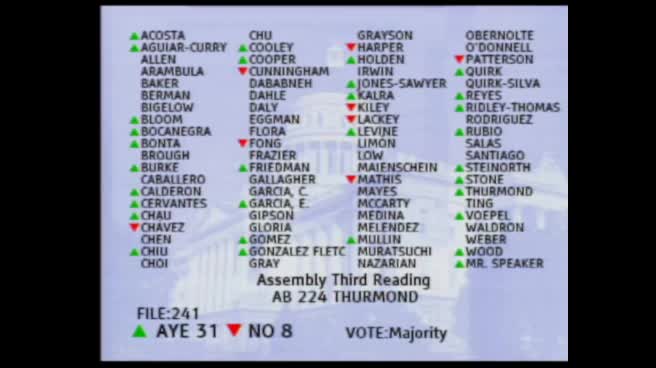 1MIN
Assembly Floor
 1H
Assembly Standing Committee on Appropriations
 4MIN
Assembly Standing Committee on Business and Professions
Bill Author

Bill Co-Author(s):