AB 974: Mental Health Services Act: reporting veterans spending.
- Session Year: 2017-2018
- House: Assembly
- Latest Version Date: 2017-10-02
Existing law, the Mental Health Services Act (MHSA), an initiative measure enacted by the voters as Proposition 63 at the November 2, 2004, statewide general election, establishes the Mental Health Services Oversight and Accountability Commission. Existing law requires the State Department of Health Care Services, in consultation with the Mental Health Services Oversight and Accountability Commission and the County Behavioral Health Directors Association of California, to develop and administer instructions for the Annual Mental Health Services Act Revenue and Expenditure Report, which gathers specified information on mental health spending as a result of the MHSA, including the expenditures of funds distributed to each county. Existing law requires the counties to submit the required data and to certify the accuracy of the report.
This bill would require counties to report spending on mental health services for veterans from MHSA funds. By requiring a county to report additional information regarding the use of MHSA funds, this bill would impose a state-mandated local program.
The California Constitution requires the state to reimburse local agencies and school districts for certain costs mandated by the state. Statutory provisions establish procedures for making that reimbursement.
This bill would provide that, if the Commission on State Mandates determines that the bill contains costs mandated by the state, reimbursement for those costs shall be made pursuant to the statutory provisions noted above.
Existing law requires the State Department of State Hospitals and the State Department of Health Care Services to contract with a single nonprofit entity to provide for the protection of, and advocacy services to, persons with mental disabilities, as specified. Existing law requires each local mental health director to appoint, or contract for the services of, one or more county patients rights advocates. Existing law requires these advocates to, among other things, monitor mental health facilities, services, and programs, as defined, for compliance with statutory and regulatory patients rights provisions, and receive and investigate certain complaints from or concerning recipients of mental health services residing in licensed health or community care facilities. Existing law authorizes a mental health client, as defined, to enter into an agreement with a county patients rights advocate for the provision of advocacy services.This bill would make technical, nonsubstantive changes to these provisions.Existing law requires the State Department of State Hospitals and the State Department of Health Care Services to contract with a single nonprofit entity to provide for the protection of, and advocacy services to, persons with mental disabilities, as specified. Existing law requires each local mental health director to appoint, or contract for the services of, one or more county patients rights advocates. Existing law requires these advocates to, among other things, monitor mental health facilities, services, and programs, as defined, for compliance with statutory and regulatory patients rights provisions, and receive and investigate certain complaints from or concerning recipients of mental health services residing in licensed health or community care facilities. Existing law authorizes a mental health client, as defined, to enter into an agreement with a county patients rights advocate for the provision of advocacy services.
This bill would make technical, nonsubstantive changes to these provisions.
(a)The State Department of Health Care Services, in consultation with the Mental Health Services Oversight and Accountability Commission and the County Behavioral Health Directors Association of California, shall develop and administer instructions for the Annual Mental Health Services Act Revenue and Expenditure Report. The instructions shall include a requirement that the county certify the accuracy of this report. This report shall be submitted electronically to the department and to the Mental Health Services Oversight and Accountability Commission. The department and the commission shall annually post each countys report on its Internet Web site in a timely manner.
(b)The department, in consultation with the commission and the County Behavioral Health Directors Association of California, shall revise the instructions described in subdivision (a) by July 1, 2017, and as needed thereafter, to improve the timely and accurate submission of county revenue and expenditure data.
(c)The purpose of the Annual Mental Health Services Act Revenue and Expenditure Report is as follows:
(1)Identify the expenditures of Mental Health Services Act (MHSA) funds that were distributed to each county.
(2)Quantify the amount of additional funds generated for the mental health system as a result of the MHSA.
(3)Identify unexpended funds, and interest earned on MHSA funds.
(4)Determine reversion amounts, if applicable, from prior fiscal year distributions.
(d)This report is intended to provide information that allows for the evaluation of all of the following:
(1)Childrens systems of care.
(2)Prevention and early intervention strategies.
(3)Innovative projects.
(4)Workforce education and training.
(5)Adults and older adults systems of care.
(6)Capital facilities and technology needs.
(e)If a county does not submit the annual revenue and expenditure report described in subdivision (a) by the required deadline, the department may withhold MHSA funds until the reports are submitted.
(f)A county shall also report the amount of MHSA funds that were spent on mental health services for veterans.
(g)By October 1, 2018, and by October 1 of each subsequent year, the department shall, in consultation with counties, publish on its Internet Web site a report detailing funds subject to reversion by county and by originally allocated purpose. The report also shall include the date on which the funds will revert to the Mental Health Services Fund.
SEC. 2.If the Commission on State Mandates determines that this act contains costs mandated by the state, reimbursement to local agencies and school districts for those costs shall be made pursuant to Part 7 (commencing with Section 17500) of Division 4 of Title 2 of the Government Code.
(a)The State Department of Health Care Services, in consultation with the Mental Health Services Oversight and Accountability Commission and the County Behavioral Health Directors Association of California, shall develop and administer instructions for the Annual Mental Health Services Act Revenue and Expenditure Report. The instructions shall include a requirement that the county certify the accuracy of this report. This report shall be submitted electronically to the department and to the Mental Health Services Oversight and Accountability Commission. The department and the commission shall annually post each countys report on its website Internet Web site in a timely manner.
(b)The department, in consultation with the commission and the County Behavioral Health Directors Association of California, shall revise the instructions described in subdivision (a) by July 1, 2017, and as needed thereafter, to improve the timely and accurate submission of county revenue and expenditure data.
(c)The purpose of the Annual Mental Health Services Act Revenue and Expenditure Report is as follows:
(1)Identify the expenditures of Mental Health Services Act (MHSA) funds that were distributed to each county.
(2)Quantify the amount of additional funds generated for the mental health system as a result of the MHSA.
(3)Identify unexpended funds, and interest earned on MHSA funds.
(4)Determine reversion amounts, if applicable, from prior fiscal year distributions.
(d)This report is intended to provide information that allows for the evaluation of all of the following:
(1)Childrens systems of care.
(2)Prevention and early intervention strategies.
(3)Innovative projects.
(4)Workforce education and training.
(5)Adults and older adults systems of care.
(6)Capital facilities and technology needs.
(e)If a county does not submit the annual revenue and expenditure report described in subdivision (a) by the required deadline, the department may withhold MHSA funds until the reports are submitted.
(f)A county shall also report the amount of MHSA funds that were spent on mental health services for veterans.
(f)(g)By October 1, 2018, and by October 1 of each subsequent year, the department shall, in consultation with counties, publish on its Internet Web site a report detailing funds subject to reversion by county and by originally allocated purpose. The report also shall include the date on which the funds will revert to the Mental Health Services Fund.
SEC. 2.If the Commission on State Mandates determines that this act contains costs mandated by the state, reimbursement to local agencies and school districts for those costs shall be made pursuant to Part 7 (commencing with Section 17500) of Division 4 of Title 2 of the Government Code.
(a)The State Department of Health Care Services, in consultation with the Mental Health Services Oversight and Accountability Commission and the County Behavioral Health Directors Association of California, shall develop and administer instructions for the Annual Mental Health Services Act Revenue and Expenditure Report. The instructions shall include a requirement that the county certify the accuracy of this report. This report shall be submitted electronically to the department and to the Mental Health Services Oversight and Accountability Commission. The department and the commission shall annually post each countys report on its website an Internet Web site in a timely manner.
(b)The department, in consultation with the commission and the County Behavioral Health Directors Association of California, shall revise the instructions described in subdivision (a) by July 1, 2017, and as needed thereafter, to improve the timely and accurate submission of county revenue and expenditure data.
(c)The purpose of the Annual Mental Health Services Act Revenue and Expenditure Report is as follows:
(1)Identify the expenditures of Mental Health Services Act (MHSA) funds that were distributed to each county.
(2)Quantify the amount of additional funds generated for the mental health system as a result of the MHSA.
(3)Identify unexpended funds, and interest earned on MHSA funds.
(4)Determine reversion amounts, if applicable, from prior fiscal year distributions.
(d)This report is intended to provide information that allows for the evaluation of all of the following:
(1)Childrens systems of care.
(2)Prevention and early intervention strategies.
(3)Innovative projects.
(4)Workforce education and training.
(5)Adults and older adults systems of care.
(6)Capital facilities and technology needs.
(e)If a county does not submit the annual revenue and expenditure report described in subdivision (a) by the required deadline, the department may withhold MHSA funds until the reports are submitted.
(f)A county shall also report the amount of MHSA funds that were spent on mental health services for veterans.
SEC. 2.If the Commission on State Mandates determines that this act contains costs mandated by the state, reimbursement to local agencies and school districts for those costs shall be made pursuant to Part 7 (commencing with Section 17500) of Division 4 of Title 2 of the Government Code.
SECTION 1.Section 5500 of the Welfare and Institutions Code is amended to read:5500.As used in this chapter:(a)Advocacy means those activities undertaken on behalf of persons who are receiving or have received mental health services to protect their rights or to secure or upgrade treatment or other services to which they are entitled.(b)Mental health client or client means a person who is receiving or has received services from a mental health facility, service, or program and who has, personally or through a guardian ad litem, entered into an agreement with a county patients rights advocate for the provision of advocacy services.(c)Mental health facilities, services, or programs means a publicly operated or supported mental health facility or program, a private facility or program licensed or operated for health purposes providing services to persons with mental health disorders, and publicly supported agencies providing other than mental health services to clients with mental health disorders.(d)Independent of providers of service means that the advocate has no direct or indirect clinical or administrative responsibility for a recipient of mental health services in a mental health facility, program, or service for which he or she performs advocacy activities.(e)County patients rights advocate means an advocate appointed, or whose services are contracted for, by a local mental health director.As used in this chapter:
(a)Advocacy means those activities undertaken on behalf of persons who are receiving or have received mental health services to protect their rights or to secure or upgrade treatment or other services to which they are entitled.
(b)Mental health client or client means a person who is receiving or has received services from a mental health facility, service, or program and who has has, personally or through a guardian ad litem, entered into an agreement with a county patients rights advocate for the provision of advocacy services.
(c)Mental health facilities, services, or programs means a publicly operated or supported mental health facility or program; program, a private facility or program licensed or operated for health purposes providing services to persons with mental health disorders; disorders, and publicly supported agencies providing other than mental health services to clients with mental health disorders.
(d)Independent of providers of service means that the advocate has no direct or indirect clinical or administrative responsibility for any a recipient of mental health services in any a mental health facility, program, or service for which he or she performs advocacy activities.
(e)County patients rights advocate means an advocate appointed, or whose services are contracted for, by a local mental health director.
|
Date
|
Status
|
|---|---|
| Oct 2, 2017 | Chaptered by Secretary of State - Chapter 411, Statutes of 2017. |
| Oct 2, 2017 | Approved by the Governor. |
| Sep 19, 2017 | Enrolled and presented to the Governor at 3 p.m. |
| Sep 11, 2017 | Senate amendments concurred in. To Engrossing and Enrolling. |
| Sep 7, 2017 | In Assembly. Concurrence in Senate amendments pending. May be considered on or after September 9 pursuant to Assembly Rule 77. |
| Sep 7, 2017 | Read third time. Passed. Ordered to the Assembly. |
| Sep 5, 2017 | Read second time. Ordered to third reading. |
| Sep 1, 2017 | From committee: Amend, and do pass as amended. (Ayes 7. Noes 0.) (September 1). |
| Aug 21, 2017 | In committee: Referred to APPR. suspense file. |
| Jul 13, 2017 | From committee: Do pass and re-refer to Com. on APPR. (Ayes 8. Noes 0.) (July 12). Re-referred to Com. on APPR. |
| Jun 8, 2017 | Referred to Com. on HEALTH. |
| May 30, 2017 | In Senate. Read first time. To Com. on RLS. for assignment. |
| May 30, 2017 | Read third time. Passed. Ordered to the Senate. (Ayes 77. Noes 0. Page 1832.) |
| May 26, 2017 | From committee: Do pass. (Ayes 17. Noes 0.) (May 26). |
| May 3, 2017 | In committee: Set, first hearing. Referred to APPR. suspense file. |
| Apr 19, 2017 | From committee: Do pass and re-refer to Com. on APPR. with recommendation: To Consent Calendar. (Ayes 15. Noes 0.) (April 18). Re-referred to Com. on APPR. |
| Mar 29, 2017 | Re-referred to Com. on HEALTH. |
| Mar 28, 2017 | From committee chair, with author's amendments: Amend, and re-refer to Com. on HEALTH. Read second time and amended. |
| Mar 27, 2017 | Referred to Com. on HEALTH. |
| Feb 17, 2017 | From printer. May be heard in committee March 19. |
| Feb 16, 2017 | Read first time. To print. |
|
Date
|
Description
|
Location
|
Votes
|
|
|---|---|---|---|---|
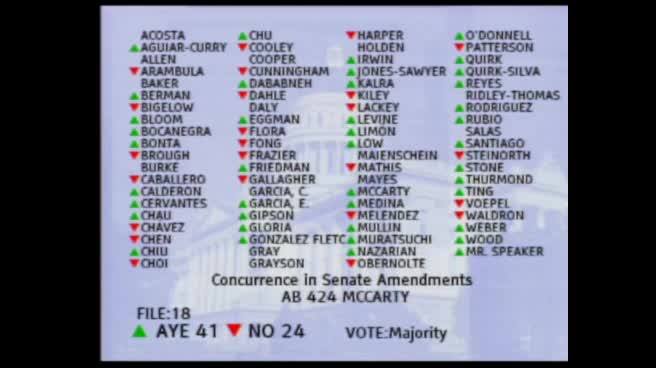
| Sep 11, 2017 | AB 974 QUIRK-SILVA Concurrence in Senate Amendments | Assembly Floor |
Passed |
|
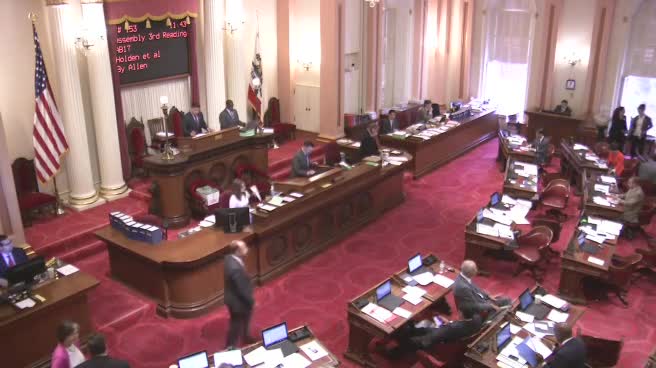
| Sep 7, 2017 | Assembly 3rd Reading AB974 Quirk-Silva By Hueso | Senate Floor |
Passed |
|
| Sep 1, 2017 | Do pass as amended | Senate Standing Committee on Appropriations |
Passed |
|
| Aug 21, 2017 | Placed on suspense file | Senate Standing Committee on Appropriations |
Passed |
|
| Jul 12, 2017 | Do pass, but first be re-referred to the Committee on [Appropriations] | Senate Standing Committee on Health |
Passed |
|
| May 30, 2017 | AB 974 QUIRK-SILVA Assembly Third Reading | Assembly Floor |
Passed |
|
| May 26, 2017 | Do pass. | Assembly Standing Committee on Appropriations |
Passed |
|
| Apr 18, 2017 | Do pass and be re-referred to the Committee on [Appropriations] with recommendation: To Consent Calendar | Assembly Standing Committee on Health |
Passed |
This list shows positions taken on this bill by organizations on the date displayed, which is linked to the original source.
Positions by individuals are not included.
CONCURRENCE IN SENATE AMENDMENTS
CSA1 Bill Id:AB 974
Author:(Quirk-Silva)
As Amended Ver:September 1, 2017
Majority vote
ASSEMBLY: | 77-0 | (May 30, 2017) | SENATE: | 40-0 | (September 7, 2017) |
Original Committee Reference: HEALTH
SUMMARY: Requires counties to report their Mental Health Services Act (MHSA) expenditures spent on mental health services for veterans to the Department of Health Care Services (DHCS) and the Mental Health Services Oversight and Accountability Commission (the Commission).
The Senate amendments are technical and clarify chaptering out provisions.
FISCAL EFFECT: According to the Senate Appropriations Committee, likely one-time county administrative costs in the hundreds of thousands (General Fund or MHSA Fund). Assuming that counties spend $5,000 to $10,000 to make the system changes necessary to track spending on mental health services for veterans, statewide reimbursable mandate costs would be $300,000 to $600,000.
COMMENTS: According to the author, state level reporting does not allow for review of where the funding is going besides the full services partnership programs (FSP), and also does not provide meaningful comparison of the relative costs and results of each FSP program.
- MHSA. Proposition 63 was passed by voters in November 2004. The MHSA imposes a 1% income tax on personal income in excess of $1 million and creates the 16 member Commission charged with overseeing the implementation of MHSA. The fiscal year (FY) 2016-17 Governor's Budget projected that $1.9 billion in revenue would be deposited into the MHSF in fiscal year 2017-18. The MHSA addresses a broad continuum of prevention, early intervention, and service needs, as well as provided funding for infrastructure, technology, and training needs for the community mental health system.
The MHSA requires each county mental health department to prepare and submit a three-year plan to DHCS that must be updated each year and approved by DHCS after review and comment by the Commission. In their three-year plans, counties are required to include a list of all programs for which MHSA funding is being requested and that identifies how the funds will be spent and which populations will be served. Counties must submit their plans for approval to the Commission before the counties may spend certain categories of funding.
The most recently available MHSA Report discusses expenditures for FY 2015-16 and is available on the DHCS website, but not on the Commission website. The MHSA Report includes an explanation of estimated revenues, general MHSA Fund expenditures to counties in the aggregate and to the Office of Statewide Health Planning and Development, and a detailed summary of how the funds set aside for program administration were allocated to 14 different state agencies and departments.
- Veteran population. A report by the Legislative Analyst's Office (LAO) published January 17, 2017 titled, "Understanding the Veterans Services Landscape in California" noted significant data constraints in determining what types and quantities of services are necessary to adequately provide housing and health care for our veteran population. The LAO report indicates that of the estimated 21 million veterans in the United States, about 1.8 million veterans live in California, more than in any other state. The federal government provides health care to eligible veterans through the Veterans Health Administration (VHA) which runs medical centers with inpatient care capacity, community based outpatient clinics, and service centers that help veterans and their families' transition to civilian life. Of California's 1.8 million veterans, about 750,000 are enrolled in VHA. Approximately 470,000 received care from a VHA facility in 2015. Veterans not served by the VHA may access health care through other systems and insurers, such as an employer sponsored health plan, health insurance purchased through Covered California, or Medi-Cal.
- Veterans and mental health. The prevalence of post-traumatic stress syndrome (PTSD) among veterans has been studied by several research groups. A 2008 survey by the RAND Corporation estimates that about 14% of post–September 11, 2001 veterans who had returned from Iraq or Afghanistan had PTSD at the time of the survey. The National Vietnam Veterans Readjustment Study estimates the lifetime prevalence of PTSD of Vietnam–era veterans to be 31% for men and 27% for women. These estimated rates of PTSD among veterans are substantially higher than the estimate of the lifetime prevalence of PTSD among the total national population, which is roughly 7%.
The prevalence of mental and behavioral health conditions among veterans is also demonstrated by the comparatively high veteran suicide rate. National data shows that veterans make up about 7% of the U.S. population but about 18% of suicides nationwide. The U.S. Department of Veteran Affairs estimated that in 2014, veterans were 21% more likely to die from suicide than their civilian adult peer groups.
Analysis Prepared by: Paula Villescaz / HEALTH / (916) 319-2097 FN: 0001750
Office of Senate Floor Analyses (916) 651-1520 Fax: (916) 327-4478 | AB 974 |
THIRD READING
Bill No: AB 974
Amended: 9/1/17 in Senate
SENATE HEALTH COMMITTEE: 8-0, 7/12/17
AYES: Hernandez, Nguyen, Atkins, Leyva, Mitchell, Monning, Newman, Roth
NO VOTE RECORDED: Nielsen
SENATE APPROPRIATIONS COMMITTEE: 7-0, 9/1/17
AYES: Lara, Bates, Beall, Bradford, Hill, Nielsen, Wiener
ASSEMBLY FLOOR: 77-0, 5/30/17 - See last page for vote
SUBJECT: Mental Health Services Act: reporting veterans spending
DIGEST:
This bill requires counties to report the amount of Mental Health Services Act funds that were spent on mental health services for veterans.
Existing law:
- Establishes the Mental Health Services Act (MHSA), enacted by voters in 2004 as Proposition 63, which provides funds to counties to expand services and develop innovative programs and integrated service plans for mentally ill children, adults, and seniors through a 1% income tax on personal income above $1 million to be deposited to the Mental Health Services Fund (MHSF), administered by the Department of Health Care Services (DHCS). Requires MHSA funds to supplement, and not supplant, existing state or county funds utilized to provide mental health services.
- Establishes the Mental Health Services Oversight and Accountability Commission (MHSOAC) to oversee the implementation of the MHSA.
- Requires each county mental health program to prepare and submit a three-year program and expenditure plan, with annual updates, adopted by the county board of supervisors, to the MHSOAC within 30 days after adoption. Requires the plan to include, among other things, programs for services to adults and seniors.
- Requires DHCS, in consultation with the MHSOAC and the County Behavioral Health Directors Association of California, to develop and administer instructions for the Annual MHSA Revenue and Expenditure Report, including identifying the expenditure of funds, quantifying the amount of additional funds generated for the mental health system, identifying unexpended funds and interest earned on funds, and determining reversion amounts from prior fiscal year distributions.
This bill requires counties to report the amount of MHSA funds that were spent on mental health services for veterans.
Comments
- Author’s statement. According to the author, state-level reporting of MHSA services provided to California veterans does not allow for review of where the MHSA funding is being spent besides Full Services Partnerships (FSP). Further, the report does not provide meaningful comparison of the relative costs and results of each FSP program. We don’t know which programs are producing the best results.
- MHSA. The Governor’s Budget for Fiscal Year (FY) 2016-17 projected that $1.9 billion in revenue would be deposited into the MHSF in FY 2017-18. The MHSA addresses a broad continuum of prevention, early intervention, and service needs, as well as provides funding for infrastructure, technology, and training needs for the community mental health system. The MHSA requires each county mental health department to prepare and submit a three-year plan to DHCS, which must be updated each year and approved by DHCS after review and comment by the MHSOAC. In their three-year plans, counties are required to include a list of all programs for which MHSA funding is being requested and that identifies how the funds will be spent and which populations will be served.
According to its 2016-17 MHSA annual update, San Diego County has one of the largest military and veteran populations in the U.S., and it was the number one destination of veterans returning from Iraq and Afghanistan. The veteran population has been estimated at approximately 236,000 with an additional 109,000 uniformed military personnel, plus their families and dependents. The update highlights programs targeted towards veterans, including countywide services for those with a mental health crisis who have come in contact with local law enforcement agencies and/or who need immediate mental health crisis intervention and/or assessment; services that provide a street outreach and site-based program to engage the homeless who are seriously mentally ill and who may also have a substance use disorder; and a veteran peer‐to‐peer support program staffed by veteran peers that provides countywide outreach and education to address the mental health conditions that impact veterans, active duty military, reservists, National Guard, and their families, including navigator assistance in Veterans’ Court for those involved with the justice system.
- Barriers to service and efforts to support veterans. According to the MHSOAC, there are anecdotes of veterans trying to access care through county programs who are told they first need to establish whether they are eligible for care through the Veterans Health Administration (VHA). This could be attributable to the requirement that MHSA funds only be used to supplement, and not supplant, other available funding options. The MHSA requires three-year program and expenditure plans and updates to be developed with local stakeholders, including veterans and representatives from veterans’ organizations. It also requires counties to demonstrate a partnership with constituents and stakeholders throughout the planning process, including meaningful stakeholder involvement on mental health policy, program planning and implementation, monitoring, quality improvement, evaluation, and budget allocations. However, the MHSOAC recognizes that it can be difficult to get robust participation in those processes in each county. The MHSOAC states that in order to ensure that these voices and concerns are recognized in the planning process, it recently awarded a $2 million contract with a nonprofit organization for mental health advocacy on behalf of veterans. According to the MHSOAC, this investment is new, therefore the impact is unclear. However, the investment highlights that more is needed to be done to better engage veterans in decisions about how mental health care services funded by the MHSA are designed and delivered to meet the unique or specialized needs of veterans.
- Veterans and mental health. According to the federal Substance Abuse and Mental Health Services Administration’s (SAMHSA) Web site, there are an estimated 23.4 million veterans in the United States, and about 2.2 million military service members and 3.1 million immediate family members. A 2017 Legislative Analyst’s Office report estimates about 1.8 million veterans live in California, more than in any other state. The demanding environments of military life and experiences of combat, during which many veterans experience psychological distress, can be further complicated by substance use and related disorders. Many service members face such critical issues as trauma, suicide, homelessness, and/or involvement with the criminal justice system. SAMHSA states that although active duty troops and their families are eligible for care from the U.S. Department of Defense, a significant number choose not to access those services due to fear of discrimination or the harm receiving treatment for behavioral health issues may have on their military career or that of their spouse.
FISCAL EFFECT: Appropriation: No Fiscal Com.: Yes Local: Yes
According to the Senate Committee on Appropriations likely one-time county administrative costs in the hundreds of thousands (General Fund or Mental Health Services Act Fund). Assuming that counties spend $5,000 to $10,000 to make the system changes necessary to track spending on mental health services for veterans, statewide reimbursable mandate costs would be $300,000 to $600,000.
None received
None received
ASSEMBLY FLOOR: 77-0, 5/30/17
AYES: Acosta, Aguiar-Curry, Travis Allen, Arambula, Baker, Berman, Bigelow, Bloom, Bocanegra, Bonta, Brough, Burke, Caballero, Calderon, Cervantes, Chávez, Chen, Chiu, Chu, Cooley, Cooper, Cunningham, Dababneh, Dahle, Daly, Flora, Fong, Frazier, Friedman, Gallagher, Cristina Garcia, Eduardo Garcia, Gipson, Gloria, Gomez, Gonzalez Fletcher, Gray, Grayson, Harper, Holden, Irwin, Jones-Sawyer, Kalra, Kiley, Lackey, Levine, Limón, Low, Maienschein, Mathis, Mayes, McCarty, Medina, Melendez, Mullin, Muratsuchi, Nazarian, Obernolte, O'Donnell, Patterson, Quirk, Quirk-Silva, Reyes, Ridley-Thomas, Rodriguez, Rubio, Salas, Santiago, Steinorth, Mark Stone, Thurmond, Ting, Voepel, Waldron, Weber, Wood, Rendon
NO VOTE RECORDED: Chau, Choi, Eggman
9/2/17 15:43:59
**** END ****
SENATE COMMITTEE ON
Senator Ricardo Lara, Chair
2017 - 2018 Regular Session
AB 974 (Quirk-Silva) - Mental Health Services Act: reporting veterans spending
Version: | Policy Vote: |
Urgency: | Mandate: |
Hearing Date: | Consultant: |
Bill Summary:
AB 974 would require counties to report to the state on the amount of Mental Health Services Act funding that is spent on mental health services for veterans.
*********** ANALYSIS ADDENDUM – SUSPENSE FILE ***********
The following information is revised to reflect amendments
adopted by the committee on September 1, 2017
Fiscal Impact:
Likely one-time county administrative costs in the hundreds of thousands (General Fund or Mental Health Services Act Fund). Assuming that counties spend $5,000 to $10,000 to make the system changes necessary to track spending on mental health services for veterans, statewide reimbursable mandate costs would be $300,000 to $600,000.
Committee Amendments:
amend the bill to avoid chaptering conflicts.
-- END --
SENATE COMMITTEE ON APPROPRIATIONS
Senator Ricardo Lara, Chair
2017 - 2018 Regular Session
AB 974 (Quirk-Silva) - Mental Health Services Act: reporting veterans spending
Version: March 28, 2017 | Policy Vote: HEALTH 8 - 0 |
Urgency: No | Mandate: Yes |
Hearing Date: August 21, 2017 | Consultant: Brendan McCarthy |
This bill meets the criteria for referral to the Suspense File.
Bill Summary:
AB 974 would require counties to report to the state on the amount of Mental Health Services Act funding that is spent on mental health services for veterans.
Fiscal Impact:
Likely one-time county administrative costs in the hundreds of thousands (General Fund or Mental Health Services Act Fund). Assuming that counties spend $5,000 to $10,000 to make the system changes necessary to track spending on mental health services for veterans, statewide reimbursable mandate costs would be $300,000 to $600,000.
Background:
The Mental Health Services Act (Proposition 63 of 2004) imposes an additional 1% personal income tax on incomes over $1 million. Most of the funding from the Mental Health Services Act is transferred to counties to provide support for mental health services. The Mental Health Services Act limits state administrative spending to 5% of revenues. In 2015-16, projected Mental Health Services Act revenues were $1.8 billion.
Counties are required to prepare three-year program and expenditure plans (with annual updates) and to submit those plans to the state. Under direction from the Department of Health Care Services, counties are required to develop annual revenue and expenditure reports.
In addition, regulations adopted by Mental Health Services Oversight and Accountability Commission require counties to report on the number of veterans served by county-run Prevention and Early Innovation programs. Finally, the Department of Health Care Services is required to adopt regulations governing Community Services and Supports programs that conform with the regulations adopted by the Commission. In combination, those two programs represent about 90% of Mental Health Services Act annual funding.
Proposed Law:
AB 974 would require counties to report to the state on the amount of Mental Health Services Act funding that is spent on mental health services for veterans.
The bill would also delete a requirement in law that the Department of Health Care Services report annually on Mental Health Services Act funds that are subject to reversion to the state.
Related Legislation:
AB 2279 (Cooley, 2016) would have required the Department of Health Care Services to develop and administer instructions for counties in their reporting of expenditures of Mental Health Services Act funding. That bill was vetoed by Governor Brown
Staff Comments:
Under current law, recipients of county-run services funded from the Mental Health Services Act are not required to disclose whether they are a veteran. In practice, many recipients do report their veteran status. However, there are indications that some program participants do not report their veteran status. In part, this may be due to the fact that Mental Health Service Act funds are supposed to be used to supplant existing mental health service funding. Some counties have interpreted this requirement of current law to require veterans to apply for services from the Veteran’s Administration before county services will be provided. To the extent that veterans do not wish to seek services from the VA, they may not disclose their status to counties.
There are requirements in regulation that counties report on the number of veterans served by Mental Health Service Act programs. In addition, the Commission has compiled a list of county programs that are targeted at veterans. However, there are many other programs that are or could be serving veterans.
In order for counties to report on the actual expenditures made on behalf of veterans, they may need to make changes to their systems for collecting information on beneficiaries and expenditures. The overall cost for counties to do so is not known. However, it is reasonable to think that the statewide costs for the state to reimburse counties for those costs could be substantial.
Recommended Amendments:
The bill inadvertently deletes a reporting requirement that was added to current law by AB 114 (Committee on Budget, Statutes of 2017), a budget trailer bill. The bill should be amended to avoid chaptering out the change made by the trailer bill.
-- END --
SENATE COMMITTEE ON HEALTH
Senator Ed Hernandez, O.D., Chair
BILL NO: AB 974
AUTHOR: | Quirk-Silva | ||
VERSION: | March 28, 2017 | ||
HEARING DATE: | July 12, 2017 | ||
CONSULTANT: | Reyes Diaz | ||
SUBJECT: Mental Health Services Act: reporting veterans spending
SUMMARY:
Requires counties to report the amount of Mental Health Services Act funds that were spent on mental health services for veterans.
Existing law:
- Establishes the Mental Health Services Act (MHSA), enacted by voters in 2004 as Proposition 63, which provides funds to counties to expand services and develop innovative programs and integrated service plans for mentally ill children, adults, and seniors through a 1% income tax on personal income above $1 million to be deposited to the Mental Health Services Fund (MHSF), administered by the Department of Health Care Services (DHCS). Requires MHSA funds to supplement, and not supplant, existing state or county funds utilized to provide mental health services.
- Establishes the Mental Health Services Oversight and Accountability Commission (MHSOAC) to oversee the implementation of the MHSA.
- Requires each county mental health program to prepare and submit a three-year program and expenditure plan, with annual updates, adopted by the county board of supervisors, to the MHSOAC within 30 days after adoption. Requires the plan to include, among other things, programs for services to adults and seniors.
- Requires DHCS, in consultation with the MHSOAC and the County Behavioral Health Directors Association of California, to develop and administer instructions for the Annual MHSA Revenue and Expenditure Report, including identifying the expenditure of funds, quantifying the amount of additional funds generated for the mental health system, identifying unexpended funds and interest earned on funds, and determining reversion amounts from prior fiscal year distributions.
This bill: Requires counties to report the amount of MHSA funds that were spent on mental health services for veterans.
FISCAL EFFECT:
According to the Assembly Appropriations Committee, uncertain, potentially significant state-reimbursable mandate costs. If each county incurs an average of $5,000 in compliance and reporting costs, total reimbursable mandate costs of $290,000 General Fund. If more extensive systems changes are needed, costs could be significantly higher for staff, new forms and data collection procedures, and information technology changes.
PRIOR VOTES:
Assembly Floor: | 77 - 0 |
Assembly Appropriations Committee: | 17 - 0 |
Assembly Health Committee: | 15 - 0 |
COMMENTS:
- Author’s statement. According to the author, state-level reporting of MHSA services provided to California veterans does not allow for review of where the MHSA funding is being spent besides Full Services Partnerships (FSP). Further, the report does not provide meaningful comparison of the relative costs and results of each FSP program. We don’t know which programs are producing the best results.
- MHSA. The Governor’s Budget for Fiscal Year (FY) 2016-17 projected that $1.9 billion in revenue would be deposited into the MHSF in FY 2017-18. The MHSA addresses a broad continuum of prevention, early intervention, and service needs, as well as provides funding for infrastructure, technology, and training needs for the community mental health system. The MHSA requires each county mental health department to prepare and submit a three-year plan to DHCS, which must be updated each year and approved by DHCS after review and comment by the MHSOAC. In their three-year plans, counties are required to include a list of all programs for which MHSA funding is being requested and that identifies how the funds will be spent and which populations will be served.
According to its 2016-17 MHSA annual update, San Diego County has one of the largest military and veteran populations in the U.S., and it was the number one destination of veterans returning from Iraq and Afghanistan. The veteran population has been estimated at approximately 236,000 with an additional 109,000 uniformed military personnel, plus their families and dependents. The update highlights programs targeted towards veterans, including countywide services for those with a mental health crisis who have come in contact with local law enforcement agencies and/or who need immediate mental health crisis intervention and/or assessment; services that provide a street outreach and site-based program to engage the homeless who are seriously mentally ill and who may also have a substance use disorder; and a veteran peer‐to‐peer support program staffed by veteran peers that provides countywide outreach and education to address the mental health conditions that impact veterans, active duty military, reservists, National Guard, and their families, including navigator assistance in Veterans’ Court for those involved with the justice system.
- Barriers to service and efforts to support veterans. According to the MHSOAC, there are anecdotes of veterans trying to access care through county programs who are told they first need to establish whether they are eligible for care through the Veterans Health Administration (VHA). This could be attributable to the requirement that MHSA funds only be used to supplement, and not supplant, other available funding options. The MHSA requires three-year program and expenditure plans and updates to be developed with local stakeholders, including veterans and representatives from veterans’ organizations. It also requires counties to demonstrate a partnership with constituents and stakeholders throughout the planning process, including meaningful stakeholder involvement on mental health policy, program planning and implementation, monitoring, quality improvement, evaluation, and budget allocations. However, the MHSOAC recognizes that it can be difficult to get robust participation in those processes in each county. The MHSOAC states that in order to ensure that these voices and concerns are recognized in the planning process, it recently awarded a $2 million contract with a nonprofit organization for mental health advocacy on behalf of veterans. According to the MHSOAC, this investment is new, therefore the impact is unclear. However, the investment highlights that more is needed to be done to better engage veterans in decisions about how mental health care services funded by the MHSA are designed and delivered to meet the unique or specialized needs of veterans.
- Veterans and mental health. According to the federal Substance Abuse and Mental Health Services Administration’s (SAMHSA) Web site, there are an estimated 23.4 million veterans in the United States, and about 2.2 million military service members and 3.1 million immediate family members. A 2017 Legislative Analyst’s Office report estimates about 1.8 million veterans live in California, more than in any other state. The demanding environments of military life and experiences of combat, during which many veterans experience psychological distress, can be further complicated by substance use and related disorders. Many service members face such critical issues as trauma, suicide, homelessness, and/or involvement with the criminal justice system. SAMHSA states that although active duty troops and their families are eligible for care from the U.S. Department of Defense, a significant number choose not to access those services due to fear of discrimination or the harm receiving treatment for behavioral health issues may have on their military career or that of their spouse.
- Related legislation. SB 409 (Nguyen) would require the Department of Veterans Affairs to develop a plan to accommodate more veterans suffering from complex behavioral health needs as resident members of the state veterans’ homes, which operate within the Veterans’ Home of California System. SB 409 is set for hearing in the Assembly Veterans Affairs Committee on July 11, 2017.
AB 727 (Nazarian) would clarify that counties may spend MHSA monies on housing assistance, as defined, for people in the target population identified in the MHSA (which includes veterans). AB 727 was passed out of this Committee by a vote of 9-0 on June 7, 2017.
- Prior legislation. AB 2279 (Cooley of 2016) would have required DHCS to develop and administer instructions for the compilation of revenue and expenditure information related to the MHSA by counties, including information about spending on programs for specified populations that included veterans. AB 2279 was vetoed by the Governor who stated that DHCS was already in the process of collecting and posting county revenue and expenditure reports, as well as updated three year program expenditure plans, which would provide much of the information outlined in AB 2279. The Governor encouraged the Legislature and interested stakeholders to continue to work with DHCS to identify useful information that could be integrated into the existing reports to improve transparency and accountability in the use of MHSA funds.
AB 253 (Roger Hernández of 2015) would have, among other things, made changes to the MHSA, including adding two additional members to the MHSOAC, one of whom would have been required to be a veteran with knowledge about veterans’ mental health issues. AB 253 was not heard in the Senate Transportation and Housing Committee.
- Does this bill offer the right solution? As noted by the MHSOAC, barriers exist for veterans when trying to access services funded by the MHSA, mostly because MHSA funds are required to be a supplement to other funds, and veterans have access to services through the VHA. Likewise, while the MHSA requires a local planning process with stakeholder input, each county has its own process for engaging stakeholders and the public; and as the MHSOAC notes, it may be difficult to get robust veteran participation in that process in each county. To that end, the MHSOAC has made grants available to help increase input by veterans’ representatives. The author may wish to consider if developing ways to better engage veterans by helping to remove existing barriers would be more meaningful than reporting the amount of funds spent on veterans.
SUPPORT AND OPPOSITION:
Support: None received
Oppose: None received
-- END --
ASSEMBLY THIRD READING
ATR Bill Id:AB 974
Author:(Quirk-Silva)
As Amended Ver:March 28, 2017
Majority vote
Committee | Votes | Ayes | Noes |
Health | 15-0 | Wood, Maienschein, Bonta, Burke, Gallagher, Limón, McCarty, Nazarian, Patterson, Quirk-Silva, Ridley-Thomas, Rodriguez, Santiago, Thurmond, Waldron | |
Appropriations | 17-0 | Gonzalez Fletcher, Bigelow, Bloom, Bocanegra, Bonta, Brough, Calderon, McCarty, Quirk, Fong, Friedman, Gallagher, Eduardo Garcia, Gray, Muratsuchi, Obernolte, Reyes |
|
SUMMARY: Requires counties to report their Mental Health Services Act (MHSA) expenditures spent on mental health services for veterans to the Department of Health Care Services (DHCS) and the Mental Health Services Oversight and Accountability Commission (the Commission).
FISCAL EFFECT: According to the Assembly Appropriations Committee, uncertain, potentially significant state-reimbursable mandate costs. If each county incurs an average of $5,000 in compliance and reporting costs, total reimbursable mandate costs of $290,000 General Fund. If more extensive systems changes are needed, costs could be significantly higher for staff, new forms and data collection procedures, and information technology changes.
COMMENTS: According to the author, state level reporting does not allow for review of where the funding is going besides the full services partnership programs (FSP), and also does not provide meaningful comparison of the relative costs and results of each FSP program.
- MHSA. Proposition 63 was passed by voters in November 2004. The MHSA imposes a 1% income tax on personal income in excess of $1 million and creates the 16 member Commission charged with overseeing the implementation of MHSA. The fiscal year (FY) 2016-17 Governor's Budget projected that $1.9 billion in revenue would be deposited into the MHSF in fiscal year 2017-18. The MHSA addresses a broad continuum of prevention, early intervention, and service needs, as well as provided funding for infrastructure, technology, and training needs for the community mental health system.
The MHSA requires each county mental health department to prepare and submit a three-year plan to DHCS that must be updated each year and approved by DHCS after review and comment by the Commission. In their three-year plans, counties are required to include a list of all programs for which MHSA funding is being requested and that identifies how the funds will be spent and which populations will be served. Counties must submit their plans for approval to the Commission before the counties may spend certain categories of funding.
The most recently available MHSA Report discusses expenditures for FY 2015-16 and is available on the DHCS website, but not on the Commission Website. The MHSA Report includes an explanation of estimated revenues, general MHSA Fund expenditures to counties in the aggregate and to OSHPD, and a detailed summary of how the funds set aside for program administration were allocated to 14 different state agencies and departments.
- Veteran population. A report by the Legislative Analyst's Office (LAO) published January 17, 2017 titled, "Understanding the Veterans Services Landscape in California" noted significant data constraints in determining what types and quantities of services are necessary to adequately provide housing and health care for our veteran population. The LAO report indicates that of the estimated 21 million veterans in the United States, about 1.8 million veterans live in California, more than in any other state. The federal government provides health care to eligible veterans through the Veterans Health Administration (VHA) which runs medical centers with inpatient care capacity, community based outpatient clinics, and service centers that help veterans and their families' transition to civilian life. Of California’s 1.8 million veterans, about 750,000 are enrolled in VHA. Approximately 470,000 received care from a VHA facility in 2015. Veterans not served by the VHA may access health care through other systems and insurers, such as an employer sponsored health plan, health insurance purchased through Covered California, or Medi-Cal.
- Veterans and mental health. The prevalence of post-traumatic stress syndrome (PTSD) among veterans has been studied by several research groups. A 2008 survey by the RAND Corporation estimates that about 14% of post–September 11, 2001 veterans who had returned from Iraq or Afghanistan had PTSD at the time of the survey. The National Vietnam Veterans Readjustment Study estimates the lifetime prevalence of PTSD of Vietnam–era veterans to be 31% for men and 27% for women. These estimated rates of PTSD among veterans are substantially higher than the estimate of the lifetime prevalence of PTSD among the total national population, which is roughly 7%.
The prevalence of mental and behavioral health conditions among veterans is also demonstrated by the comparatively high veteran suicide rate. National data shows that veterans make up about 7% of the United States (U.S.) population but about 18% of suicides nationwide. The U.S. Department of Veteran Affairs estimated that in 2014, veterans were 21% more likely to die from suicide than their civilian adult peer groups.
Analysis Prepared by: Paula Villescaz / HEALTH / (916) 319-2097 FN: 0000688
Date of Hearing: May 3, 2017
ASSEMBLY COMMITTEE ON APPROPRIATIONS
Lorena Gonzalez Fletcher, Chair
ABPCA Bill Id:AB 974
Author:(Quirk-Silva) – As Amended Ver:March 28, 2017
Policy Committee: | Health | Vote: | 15 - 0 |
|
| ||
|
|
Urgency: No State Mandated Local Program: Yes Reimbursable: Yes
SUMMARY:
This bill requires counties to report their Mental Health Services Act (MHSA) expenditures on mental health services to veterans.
FISCAL EFFECT:
Uncertain, potentially significant state-reimbursable mandate costs. If each county incurs an average of $5,000 in compliance and reporting costs, total reimbursable mandate costs of $290,000 GF. If more extensive systems changes are needed, costs could be significantly higher for staff, new forms and data collection procedures, and information technology changes.
COMMENTS:
- Purpose. This bill is intended to provide information on MHSA expenditures related to veterans.
- Background. Proposition 63, also called the MHSA, was approved by voters in 2004 and enacted into law on January 1, 2005. The MHSA places a 1% tax on personal income above $1 million to fund community mental health services. Prior to making allocations to counties, up to 5% of total of annual revenues is set aside for administrative costs. Counties use MHSA dollars to expand mental health services, provide prevention and early intervention services, offer innovative programs, and educate, train and retain mental health professionals. Current law requires an annual MHSA Revenue and Expenditure Report from each county. This bill adds a mandatory reporting category: money spent on mental health services for veterans.
- Related Legislation. SB 409 (Nguyen) requires the Department of Veterans Affairs (CalVet) to develop a plan to accommodate more veterans suffering from complex mental and behavioral health needs as resident members of the state veterans' homes which operate within the Veterans’ Home of California System. SB 409 is pending on the Senate Appropriations Committee's Suspense File.
Analysis Prepared by: Lisa Murawski / APPR. / (916) 319-2081
Date of Hearing: April 18, 2017
ASSEMBLY COMMITTEE ON HEALTH
Jim Wood, Chair
ABPCA Bill Id:AB 974
Author:(Quirk-Silva) – As Amended Ver:March 28, 2017
SUBJECT: Mental Health Services Act: reporting veterans spending
SUMMARY: Requires counties to report the amount of Mental Health Services Act (MHSA) funds spent on mental health services for veterans to the Department of Health Care Services (DHCS) and the Mental Health Services Oversight and Accountability Commission (the Commission) for purposes of the Annual Mental Health Services Act Revenue and Expenditure Report (MHSA Report).
EXISTING LAW:
- Establishes the MHSA, enacted by voters in 2004 as Proposition 63, to provide funds to counties to expand services, develop innovative programs, and integrated service plans for mentally ill children, adults, and seniors through a 1% income tax on personal income above $1 million.
- Establishes the Commission to oversee the implementation of MHSA, made up of 16 individuals appointed by the Governor, and the Legislature, as specified.
- Specifies that the MHSA can only be amended by a two-thirds vote of both houses of the Legislature and only as long as the amendment is consistent with and furthers the intent of the MHSA. Permits provisions clarifying the procedures and terms of the MHSA to be added by majority vote.
- Requires DHCS, in consultation with the Commission and the County Behavioral Health Directors Association of California (CBHDA), to develop and administer instructions for the MHSA Report.
- Requires the MHSA Report to be submitted electronically to DHCS and the Commission.
- Establishes the purpose of the MHSA Report as follows:
- Identify the expenditures of MHSA funds that were distributed to each county;
- Quantify the amount of additional funds generated for the mental health system as a result of the MHSA;
- Identify unexpended funds, and interest earned on MHSA funds; and,
- Determine what unspent MHSA funds, if any, are available from prior fiscal year distributions.
- Establishes that the MHSA Report is intended to provide information for the evaluation of the following:
- Children's systems of care;
- Prevention and early intervention strategies;
- Innovative projects;
- Adults and older adults systems of care; and,
- Capital facilities and technology needs.
FISCAL EFFECT: This bill has not yet been analyzed by a fiscal committee.
COMMENTS:
- PURPOSE OF THIS BILL. According to the author, state level reporting does not allow for review of where the funding is going besides the full services partnership programs (FSP), and also does not provide meaningful comparison of the relative costs and results of each FSP program. The result is, it is unclear who or what produces the best results.
- BACKGROUND.
- MHSA. Proposition 63 was passed by voters in November 2004. The MHSA imposes a 1% income tax on personal income in excess of $1 million and creates the 16 member Commission charged with overseeing the implementation of MHSA. The fiscal year (FY) 2016-17 Governor’s Budget projected that $1.9 billion in revenue would be deposited into the MHSF in fiscal year 2017-18. The MHSA addresses a broad continuum of prevention, early intervention, and service needs, as well as provided funding for infrastructure, technology, and training needs for the community mental health system. In addition to local programs, the MHSA authorizes up to 5% of revenues for state administrative functions performed by a variety of state entities such as the DHCS and the Office of Statewide Health Planning and Development (OSHPD). It also funds evaluation of the MHSA by the Commission.
The MHSA requires each county mental health department to prepare and submit a three-year plan to DHCS that must be updated each year and approved by DHCS after review and comment by the Commission. In their three-year plans, counties are required to include a list of all programs for which MHSA funding is being requested and that identifies how the funds will be spent and which populations will be served. Counties must submit their plans for approval to the Commission before the counties may spend certain categories of funding.
The most recently available MHSA Report discusses expenditures for FY 2015-16 and is available on the DHCS website, but not on the Commission Website. The MHSA Report includes an explanation of estimated revenues, general MHSA Fund expenditures to counties in the aggregate and to OSHPD, and a detailed summary of how the funds set aside for program administration were allocated to 14 different state agencies and departments.
b) Veteran population. A report by the Legislative Analyst's Office (LAO) published January 17, 2017 titled, "Understanding the Veterans Services Landscape in California" noted significant data constraints in determining what types and quantities of services are necessary to adequately provide housing and health care for our veteran population. The LAO report indicates that of the estimated 21 million veterans in the United States, about 1.8 million veterans live in California, more than in any other state. As of 2016, it is estimated that over 90% of California’s veterans are male, more than half are over age 60, and veterans who served in the Vietnam war make up the largest share of the veteran population. Younger veterans, those who began service after September 11, 2001, make up 15% of California’s veteran population. The federal government provides health care to eligible veterans through the Veterans Health Administration (VHA) which runs medical centers with inpatient care capacity, community based outpatient clinics (CBOCs), and service centers that help veterans and their families' transition to civilian life. Of California’s 1.8 million veterans, about 750,000 are enrolled in VHA. Approximately 470,000 received care from a VHA facility in 2015. Veterans not served by the VHA may access health care through other systems and insurers, such as an employer sponsored health plan, health insurance purchased through Covered California, or MediCal.
c) Veterans and mental health. Research shows that veterans are relatively more likely to have a mental or behavioral health diagnosis than the general population. Mental and behavioral health conditions among veterans are often, but not exclusively, linked to post traumatic stress syndrome (PTSD). Some veterans may have a hard time maintaining relationships, housing, and/or employment due to mental and behavioral health conditions. The prevalence of PTSD among veterans has been studied by several research groups. A 2008 survey by the RAND Corporation estimates that about 14 percent of post–September 11, 2001 veterans who had returned from Iraq or Afghanistan had PTSD at the time of the survey. The National Vietnam Veterans Readjustment Study estimates the lifetime prevalence of PTSD of Vietnam–era veterans to be 31% for men and 27% for women. These estimated rates of PTSD among veterans are substantially higher than the estimate of the lifetime prevalence of PTSD among the total national population, which is roughly 7%.
The prevalence of mental and behavioral health conditions among veterans is also demonstrated by the comparatively high veteran suicide rate. National data shows that veterans make up about 7% of the U.S. population but about 18% of suicides nationwide. The U.S. Department of Veteran Affairs estimated that in 2014, veterans were 21% more likely to die from suicide than their civilian adult peer groups.
- RELATED LEGISLATION.
- AB 727 (Nazarian) clarifies that counties may spend MHSA monies on housing assistance, as defined, for people in the target population identified in the MHSA. AB 727 is pending on the Assembly Floor.
- SB 409 (Nguyen) would require the Department of Veterans Affairs (CalVet) to develop a plan to accommodate more veterans suffering from complex mental and behavioral health needs as resident members of the state veterans' homes which operate within the Veterans’ Home of California System. SB 409 is pending in the Senate Appropriations Committee.
- SB 485 (Nielsen) would require CalVet to: i) adopt statewide policies and procedures, by regulation, for operation of the state veterans home system; ii) implement a statewide electronic health records system; and iii) correct and update outdated terminology and references within the portion of the Military and Veterans Code that governs state veterans’ homes. This bill is pending in the Senate Judiciary Committee.
- PREVIOUS LEGISLATION.
- AB 745 (Chau) of 2015 would have required the Governor to appoint an additional member to the Commission who has experience providing supportive housing to persons with a severe mental illness. AB 745 was vetoed, by the Governor, who stated:
“I am returning Assembly Bill 745 without my signature. This bill would add an additional member to the Mental Health Services Oversight and Accountability Commission with experience in supportive housing. While supportive housing can help improve the lives of those with serious mental illness, I believe that the current commission -- with sixteen members -- is adequate to the task.” - AB 2279 (Cooley) of 2015 would have required DHCS to develop and administer instructions for the compilation of revenue and expenditure information related to the MHSA by counties, in consultation with the Commission and CBHDA, as specified. AB 2279 was vetoed, by the Governor, who stated:
- AB 745 (Chau) of 2015 would have required the Governor to appoint an additional member to the Commission who has experience providing supportive housing to persons with a severe mental illness. AB 745 was vetoed, by the Governor, who stated:
“I am returning Assembly Bill 2279 without my signature. This bill requires the DHCS to annually compile and publicly report financial data and program information from counties on their MHSA expenditures. DHCS is already in the process of collecting and posting county revenue and expenditure reports as well as updated three year program expenditure plans, which will provide much of the information outlined in this bill. I encourage the Legislature and interested stakeholders to continue to work with the department to identify useful information that can be integrated into the existing reports to improve transparency and accountability in the use of these funds.”
REGISTERED SUPPORT / OPPOSITION:
Support
None on file.
Opposition
None on file.
Analysis Prepared by: Paula Villescaz / HEALTH / (916) 319-2097
Discussed in Hearing
 1MIN
Assembly Floor
 3MIN
Senate Floor
 1H
Senate Standing Committee on Appropriations
 2MIN
Senate Standing Committee on Health
 1MIN
Assembly Floor
 1H
Assembly Standing Committee on Appropriations
Bill Author

Bill Co-Author(s):