ACR 10: Fred Korematsu Day of Civil Liberties and the Constitution.
- Session Year: 2017-2018
- House: Assembly
- Latest Version Date: 2017-02-24
This measure would designate that January 30, 2017, be observed as Fred Korematsu Day of Civil Liberties and the Constitution.
This measure would designate that January 30, 2017, be observed as Fred Korematsu Day of Civil Liberties and the Constitution.
This measure would designate that January 30, 2017, be observed as Fred Korematsu Day of Civil Liberties and the Constitution.
WHEREAS, Fred Korematsu was born in Oakland, California, on January 30, 1919, to Japanese immigrant parents. Upon graduation from Castlemont High School in 1937, Mr. Korematsu was unable to serve in the United States military because his selective service classification had been changed to Enemy Alien, even though he was a United States citizen. Mr. Korematsu attended the Master School of Welding and worked at the docks in Oakland as a shipyard welder, quickly rising through the ranks to foreman until his union barred all people of Japanese ancestry and his employment was terminated; and
WHEREAS, In 1942, Fred Korematsu refused to comply with Civilian Exclusion Order No. 34 which was authorized by President Franklin D. Roosevelts Executive Order No. 9066. It imposed strict curfew regulations and required over 100,000 United States citizens and permanent residents of Japanese ancestry to leave their homes on the West Coast and submit to imprisonment based solely on their ancestry; and
WHEREAS, Fred Korematsu was arrested on May 30, 1942, and charged with violating the militarys exclusion order. While he spent two and one-half months in the Presidio stockade prison in San Francisco, the Executive Director of the American Civil Liberties Union of Northern California, Ernest Besig, offered to defend him. Fred Korematsu was tried and convicted by a federal court and taken by military authorities to the Tanforan Assembly Center in San Bruno, California. After spending several months at Tanforan, a former horse racing track, Korematsu and his family were sent to the Topaz concentration camp in Utah. Believing the discriminatory conviction violated freedoms guaranteed by the Constitution, Fred Korematsu appealed his case. Though the appeal went up to the United States Supreme Court in 1944, justice was denied to Fred Korematsu when the Supreme Court upheld the conviction by a six to three vote, leaving him devastated and wondering what effect this would have on other Americans; and
WHEREAS, Following World War II and the release of Japanese Americans from the concentration camps, Fred Korematsu attempted to resume life as an American citizen, marrying his wife Kathryn and raising two children, Karen and Ken. He maintained his innocence through the years, but the conviction had a lasting impact on Fred Korematsus basic rights, affecting his ability to obtain employment; and
WHEREAS, In 1982, with newly discovered evidence found by Peter Irons, a legal historian and attorney, and Aiko Herzig-Yoshinaga, a researcher, Fred Korematsu made the decision to reopen his 1944 conviction by petitioning for a writ of error coram nobis to have the wrongful conviction vacated. The task of retrying a legal case based on events 40 years past was complicated and novel, but a pro bono legal team composed mostly of Sansei (third generation Japanese Americans) was determined to undo the injustice perpetrated on Fred Korematsu and their own family members who were imprisoned along with Korematsu; and
WHEREAS, The writ of error coram nobis has been extremely limited in application, but has been used by courts once an individual has been convicted and released in order to correct a courts fundamental error or to reverse a manifest injustice. For Fred Korematsu, the fundamental errors at the Supreme Court level were the suppression, alteration, and destruction by United States government officials of evidence indicating that Japanese Americans were neither disloyal nor predisposed to espionage and sabotage and that no facts warranted the issuance of the military orders and Executive Order No. 9066. Thus, Fred Korematsus lawyers argued that a fraud on the Supreme Court had been committed, resulting in Fred Korematsus conviction; and
WHEREAS, After litigating for nearly a year in the United States District Court for the Northern District of California, Fred Korematsu and his legal team emerged triumphant on November 10, 1983, when Judge Marilyn Hall Patel announced from the bench her decision granting the petition for the writ of error coram nobis to overturn Fred Korematsus conviction. The written decision was published on April 19, 1984. The coram nobis decision in this case impaired the precedent of the original Supreme Court cases which validated the curfew and exclusion orders. In addition, the decisions influenced Congress passage of the Civil Liberties Act of 1988; and
WHEREAS, The Civil Liberties Act of 1988 was signed into law by President Ronald Reagan and recognized the grave injustice that was done to United States residents and citizens of Japanese ancestry by the forced relocation and incarceration of civilians during World War II. Congress acknowledged that the incarceration of these Japanese Americans occurred because of racial prejudice, wartime hysteria, and a failure of political leadership. The apology extended on behalf of the United States was also intended to make more credible and to be consistent with any expressions of concern by the United States over violations of human rights committed by other nations; and
WHEREAS, on January 15, 1998, Fred Korematsu was awarded the Presidential Medal of Freedom. The Presidential Medal of Freedom is the highest honor bestowed upon a civilian who has made a particularly meritorious contribution to the nations interests; and
WHEREAS, Fred Korematsu continued his efforts to ensure that Americans do not forget the lessons learned from our own history as he traveled across the country, speaking at various colleges, law schools, and other organizations. On March 30, 2005, a true civil liberties hero was lost when Fred Korematsu passed away at 86 years of age due to respiratory illness in San Rafael, California, leaving behind a lasting influence on the importance of maintaining the constitutionally mandated guarantee of liberty for all Americans; and
WHEREAS, Section 6722 of the Government Code requires the Governor annually to proclaim January 30 as Fred Korematsu Day of Civil Liberties and the Constitution, and Section 37222.15 of the Education Code designates that date of each year as having special significance in public schools and educational institutions and encourages those entities to observe that date by conducting exercises remembering the life of Fred Korematsu and recognizing the importance of preserving civil liberties; now, therefore, be it
Resolved by the Assembly of the State of California, the Senate thereof concurring, That Monday, January 30, 2017, be observed as Fred Korematsu Day of Civil Liberties and the Constitution; and be it further
Resolved, That Fred Korematsus life and his willingness to assert that our civil liberties are the hallmark of our great country have left an indelible mark on the history of our nation and hold a special meaning for the people of California; and be it further
Resolved, That on Fred Korematsu Day of Civil Liberties and the Constitution, the Legislature encourages all public schools and educational institutions to conduct exercises remembering the life of Fred Korematsu and recognizing the importance of preserving civil liberties, even in times of real or perceived crisis; and be it further
Resolved, That the Chief Clerk of the Assembly transmit copies of this resolution to the author for appropriate distribution.
|
Date
|
Status
|
|---|---|
| Feb 24, 2017 | Chaptered by Secretary of State - Res. Chapter 9, Statutes of 2017. |
| Feb 24, 2017 | Enrolled and filed with the Secretary of State at 10:30 a.m. |
| Feb 17, 2017 | In Assembly. Ordered to Engrossing and Enrolling. |
| Feb 17, 2017 | Adopted and to Assembly. (Ayes 30. Noes 0. Page 221.) |
| Feb 14, 2017 | Ordered to special consent calendar. |
| Feb 9, 2017 | From committee: Ordered to third reading. |
| Jan 31, 2017 | In Senate. To Com. on RLS. |
| Jan 30, 2017 | Coauthors revised. |
| Jan 26, 2017 | From committee: Be adopted. Ordered to Third Reading. (Ayes 11. Noes 0.) (January 26). |
| Jan 20, 2017 | Introduced measure version corrected. |
| Jan 19, 2017 | Referred to Com. on RLS. |
| Jan 17, 2017 | From printer. |
| Jan 13, 2017 | Introduced. To print. |
|
Date
|
Description
|
Location
|
Votes
|
|
|---|---|---|---|---|
| Feb 17, 2017 | Special Consent Calendar # ACR10 | Senate Floor |
Passed |
|
| Jan 26, 2017 | Be adopted. To third reading. | Assembly Standing Committee on Rules |
Passed |
This list shows positions taken on this bill by organizations on the date displayed, which is linked to the original source.
Positions by individuals are not included.
|
Organization
|
Position
|
Date
|
|---|---|---|
| AFSCME, AFL-CIO | ** Support | Feb 10, 2017 |
Office of Senate Floor Analyses (916) 651-1520 Fax: (916) 327-4478 | ACR 10 |
THIRD READING
Bill No: ACR 10
Author: Muratsuchi (D), et al.
Introduced: 1/13/17
ASSEMBLY FLOOR: Read and adopted, 1/30/17
SUBJECT: Fred Korematsu Day of Civil Liberties and the Constitution
DIGEST:
This resolution designates that January 30, 2017, be observed as Fred Korematsu Day of Civil Liberties and the Constitution.
ANALYSIS: This resolution makes the following legislative findings:
- Fred Korematsu was born in California, on January 30, 1919, to Japanese immigrant parents. He was unable to serve in the U.S. military because his selective service classification had been changed to “Enemy Alien,” even though he was a U.S. citizen.
- In 1942, he was arrested and charged with violating Civilian Exclusion Order No. 34. The order, authorized by President Franklin Roosevelt’s Executive Order No. 9066, imposed strict curfew regulations and required over 100,000 U.S. citizens and permanent residents of Japanese ancestry to leave their homes on the West Coast and submit to imprisonment based solely on their ancestry.
- Fred Korematsu appealed his case, believing the discriminatory conviction violated freedoms guaranteed by the Constitution. Though the appeal went up to the U.S. Supreme Court in 1944, the Supreme Court upheld the conviction.
- Following World War II and the release of Japanese Americans from the concentration camps, Fred Korematsu attempted to resume life as an American citizen. He maintained his innocence through the years, but the conviction had a lasting impact on his basic rights, affecting his ability to obtain employment.
- In 1982, Fred Korematsu made the decision to reopen his 1944 conviction by petitioning for a writ of error coram nobis. After litigating for nearly a year, Fred Korematsu and his legal team emerged triumphant. The coram nobis decision in this case impaired the precedent of the original Supreme Court cases which validated the curfew and exclusion orders. The decisions influenced Congress’ passage of the Civil Liberties Act of 1988.
- The Civil Liberties Act of 1988, signed into law by President Reagan, recognized the injustice that was done to U.S. residents and citizens of Japanese ancestry by their forced relocation and incarceration during World War II.
- On January 15, 1998, Fred Korematsu was awarded the Presidential Medal of Freedom - the highest honor bestowed upon a civilian who has made a particularly meritorious contribution to the nation’s interests.
This resolution resolves that:
- Monday, January 30, 2017, be observed as Fred Korematsu Day of Civil Liberties and the Constitution.
- Fred Korematsu’s life and his willingness to assert that our civil liberties are the hallmark of our great country have left an indelible mark on the history of our nation and hold a special meaning for the people of California.
- On Fred Korematsu Day of Civil Liberties and the Constitution, public schools and educational institutions are encouraged to conduct exercises remembering the life of Fred Korematsu and recognizing the importance of preserving civil liberties, even in times of real or perceived crisis.
FISCAL EFFECT: Appropriation: No Fiscal Com.: No Local: No
AFSCME, AFL-CIO
None received
Prepared by: Melissa Ward / SFA / (916) 651-1520
2/10/17 10:47:41
ASSEMBLY THIRD READING
ATR Bill Id:ACR 10
Author:()
As Introduced Ver:
Majority vote
Committee | Votes | Ayes | Noes |
Rules | 11-0 | Cooley, Cunningham, Berman, Brough, Cervantes, Chen, Friedman, Grayson, Levine, Nazarian, Fong |
SUMMARY: Designates January 30, 2017 as Fred Korematsu Day of Civil Liberties and the Constitution. Specifically, this resolution makes the following legislative findings:
- Fred Korematsu was born in Oakland, California, on January 30, 1919, to Japanese immigrant parents. He was unable to serve in the United States military because his selective service classification had been changed to "Enemy Alien," even though he was a United States citizen.
- In 1942, Fred Korematsu refused to comply with Civilian Exclusion Order No. 34 which was authorized by President Franklin D. Roosevelt's Executive Order No. 9066 which imposed strict curfew regulations and required over 100,000 United States citizens and permanent residents of Japanese ancestry to leave their homes on the West Coast and submit to imprisonment based solely on their ancestry. Fred Korematsu was tried and convicted by a federal court and taken by military authorities to the Tanforan Assembly Center in San Bruno, California.
- Believing the discriminatory conviction violated freedoms guaranteed by the Constitution, Fred Korematsu appealed his case. Though the appeal went up to the United States Supreme Court in 1944, justice was denied to Fred Korematsu when the Supreme Court upheld the conviction by a six to three vote, leaving him devastated and wondering what effect this would have on other Americans.
- Following World War II and the release of Japanese Americans from the concentration camps, Fred Korematsu attempted to resume life as an American citizen, marrying his wife Kathryn and raising two children, Karen and Ken. He maintained his innocence through the years, but the conviction had a lasting impact on Fred Korematsu's basic rights, affecting his ability to obtain employment.
- In 1982, with newly discovered evidence found by Peter Irons, a legal historian and attorney, and Aiko Herzig-Yoshinaga, a researcher, Fred Korematsu made the decision to reopen his 1944 conviction by petitioning for a writ of error coram nobis to have the wrongful conviction vacated. After litigating for nearly a year in the United States District Court for the Northern District of California, Fred Korematsu and his legal team emerged triumphant on November 10, 1983. The coram nobis decision in this case impaired the precedent of the original Supreme Court cases which validated the curfew and exclusion orders. In addition, the decisions influenced Congress' passage of the Civil Liberties Act of 1988.
- The Civil Liberties Act of 1988 was signed into law by President Ronald Reagan and recognized the grave injustice that was done to United States residents and citizens of Japanese ancestry by the forced relocation and incarceration of civilians during World War II.
- January 15, 1998, Fred Korematsu was awarded the Presidential Medal of Freedom. The Presidential Medal of Freedom is the highest honor bestowed upon a civilian who has made a particularly meritorious contribution to the nation's interests.
- Fred Korematsu continued his efforts to ensure that Americans do not forget the lessons learned from our own history as he traveled across the country, speaking at various colleges, law schools, and other organizations. On March 30, 2005, a true civil liberties hero was lost when Fred Korematsu passed away at 86 years of age due to respiratory illness in San Rafael, California, leaving behind a lasting influence on the importance of maintaining the constitutionally mandated guarantee of liberty for all Americans.
- Section 6722 of the Government Code requires the Governor to annually proclaim January 30 as Fred Korematsu Day of Civil Liberties and the Constitution, and Education Code Section 37222.15 designates that date of each year as having special significance in public schools and educational institutions and encourages those entities to observe that date by conducting exercises remembering the life of Fred Korematsu and recognizing the importance of preserving civil liberties.
FISCAL EFFECT: None
Analysis Prepared by: Nicole Willis / RLS. / (916) 319-2806 FN: 0000007
Date of Hearing: January 26, 2017
ASSEMBLY COMMITTEE ON RULES
Ken Cooley, Chair
ABPCA Bill Id:ACR 10
Author:() – As Introduced Ver:January 13, 2017
SUBJECT: Fred Korematsu Day of Civil Liberties and the Constitution
SUMMARY: Designates January 30, 2017 as Fred Korematsu Day of Civil Liberties and the Constitution. Specifically, this resolution makes the following legislative findings:
- Fred Korematsu was born in Oakland, California, on January 30, 1919, to Japanese immigrant parents. He was unable to serve in the United States military because his selective service classification had been changed to “Enemy Alien,” even though he was a United States citizen.
- In 1942, Fred Korematsu refused to comply with Civilian Exclusion Order No. 34 which was authorized by President Franklin D. Roosevelt’s Executive Order No. 9066 which imposed strict curfew regulations and required over 100,000 United States citizens and permanent residents of Japanese ancestry to leave their homes on the West Coast and submit to imprisonment based solely on their ancestry. Fred Korematsu was tried and convicted by a federal court and taken by military authorities to the Tanforan Assembly Center in San Bruno, California.
- Believing the discriminatory conviction violated freedoms guaranteed by the Constitution, Fred Korematsu appealed his case. Though the appeal went up to the United States Supreme Court in 1944, justice was denied to Fred Korematsu when the Supreme Court upheld the conviction by a six to three vote, leaving him devastated and wondering what effect this would have on other Americans.
- Following World War II and the release of Japanese Americans from the concentration camps, Fred Korematsu attempted to resume life as an American citizen, marrying his wife Kathryn and raising two children, Karen and Ken. He maintained his innocence through the years, but the conviction had a lasting impact on Fred Korematsu’s basic rights, affecting his ability to obtain employment.
- In 1982, with newly discovered evidence found by Peter Irons, a legal historian and attorney, and Aiko Herzig-Yoshinaga, a researcher, Fred Korematsu made the decision to reopen his 1944 conviction by petitioning for a writ of error coram nobis to have the wrongful conviction vacated. After litigating for nearly a year in the United States District Court for the Northern District of California, Fred Korematsu and his legal team emerged triumphant on November 10, 1983. The coram nobis decision in this case impaired the precedent of the original Supreme Court cases which validated the curfew and exclusion orders. In addition, the decisions influenced Congress’ passage of the Civil Liberties Act of 1988.
- The Civil Liberties Act of 1988 was signed into law by President Ronald Reagan and recognized the grave injustice that was done to United States residents and citizens of Japanese ancestry by the forced relocation and incarceration of civilians during World War II.
- January 15, 1998, Fred Korematsu was awarded the Presidential Medal of Freedom. The Presidential Medal of Freedom is the highest honor bestowed upon a civilian who has made a particularly meritorious contribution to the nation’s interests.
- Fred Korematsu continued his efforts to ensure that Americans do not forget the lessons learned from our own history as he traveled across the country, speaking at various colleges, law schools, and other organizations. On March 30, 2005, a true civil liberties hero was lost when Fred Korematsu passed away at 86 years of age due to respiratory illness in San Rafael, California, leaving behind a lasting influence on the importance of maintaining the constitutionally mandated guarantee of liberty for all Americans.
- Section 6722 of the Government Code requires the Governor to annually proclaim January 30 as Fred Korematsu Day of Civil Liberties and the Constitution, and Section 37222.15 of the Education Code designates that date of each year as having special significance in public schools and educational institutions and encourages those entities to observe that date by conducting exercises remembering the life of Fred Korematsu and recognizing the importance of preserving civil liberties.
FISCAL EFFECT: None
REGISTERED SUPPORT / OPPOSITION:
Support
None on file
Opposition
None on file
Analysis Prepared by: Nicole Willis / RLS. / (916) 319-2806
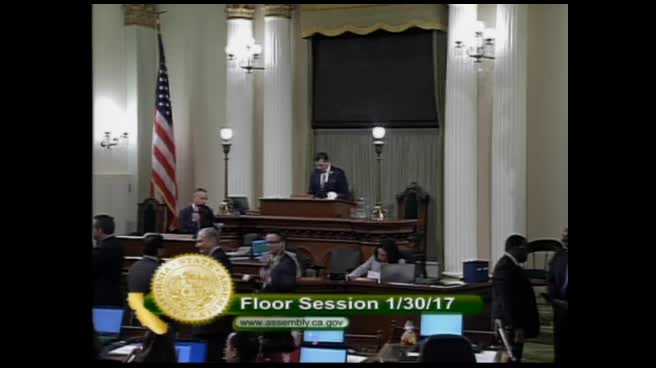
Bill Author

Bill Co-Author(s):