ACR 172: Historical state anti-LGBT laws.
- Session Year: 2017-2018
- House: Assembly
- Latest Version Date: 2018-06-26
This measure would apologize for the enactment of past discriminatory laws and constitutional provisions that resulted in the persecution and oppression of lesbian, gay, bisexual, and transgender individuals and their communities. The measure would also express the Legislatures commitment to taking the steps needed to be a fully inclusive state and preserving the rights of all people.
This measure would apologize for the enactment of past discriminatory laws and constitutional provisions that resulted in the persecution and oppression of lesbian, gay, bisexual, and transgender individuals and their communities. The measure would also express the Legislatures commitment to taking the steps needed to be a fully inclusive state and preserving the rights of all people.
This measure would apologize for the enactment of past discriminatory laws and constitutional provisions that resulted in the persecution and oppression of lesbian, gay, bisexual, and transgender individuals and their communities. The measure would also express the Legislatures commitment to taking the steps needed to be a fully inclusive state and preserving the rights of all people.
This measure would apologize for the enactment of past discriminatory laws and constitutional provisions that resulted in the persecution and oppression of lesbian, gay, bisexual, and transgender individuals and their communities. The measure would also express the Legislatures commitment to taking the steps needed to be a fully inclusive state and preserving the rights of all people.
WHEREAS, Historically, California, like other states of this nation, charged people with crimes due to their sexuality and gender identity; and
WHEREAS, Although laws criminalizing sexual conduct were established in statute and judicial interpretation, these laws were rarely enforced against consenting adults in private and within a heterosexual marital relationship, but rather served as a basis for criminalizing homosexuality and legitimizing discrimination against lesbian, gay, bisexual, and transgender (LGBT) people; and
WHEREAS, As early as 1850, in the territory of California, a common law statute with historical roots in English law was established providing for the illegalization of sodomy and setting the penalty at five years to life; and
WHEREAS, The 1872 California Criminal Code contained a similar prohibition; and
WHEREAS, From the late 1800s onward, California jurisdictions also widely employed vagrancy, disorderly conduct, and indecent exposure laws to prosecute same-sex intimacy and behavior outside of gender norms; and
WHEREAS, Public indecency statutes and unlawful masquerade laws were applied to permit police to harass and sometimes arrest people who were considered deviant or gender-bending; and
WHEREAS, In 1909, state law allowed for the sterilization of convicted and imprisoned sex offenders if they showed recidivism in prison towards being a moral or sexual pervert, including those offenders committed for sodomy and oral sex acts; and
WHEREAS, In 1915, Section 288a of the Penal Code was enacted, making specific oral sex acts felonies and punishable by a maximum of 15 years in prison; and
WHEREAS, In 1921, a statute banned any act ... which openly outrages public decency; and
WHEREAS, In 1939, California enacted a sexual psychopath law, which was used to commit numerous LGBT people for involuntary psychiatric incarceration and gruesome medical treatments; and
WHEREAS, In 1947, California enacted a statewide registration for sex offenders. Before laws criminalizing specified acts between same-sex couples were repealed and enforcement of laws often used against LGBT people evolved, LGBT individuals convicted of these offenses were forced to register as sex offenders; and
WHEREAS, Eventually reform efforts began to extend some protections to LGBT people by expanding privacy rights and decriminalizing private consensual activity between adults; and
WHEREAS, However, state law enacted in 1977 defined marriage as between one man and one woman. Proposition 22 was enacted by California voters in March 2000 to prevent marriage between same-sex couples; and
WHEREAS, In May 2008, the California Supreme Court struck down Proposition 22 but the ruling was superseded when Proposition 8 passed that same year, reinstating a bar on same-sex marriages; and
WHEREAS, The granting of same-sex marriages ultimately began again in California in 2013 following the United States Supreme Court decision in Hollingsworth v. Perry, which restored the effect of a federal district court ruling that overturned Proposition 8 as unconstitutional; and
WHEREAS, It is only right that this state formally apologize for the enactment and enforcement of laws used to persecute and oppress LGBT individuals and their communities; now, therefore, be it
Resolved by the Assembly of the State of California, the Senate thereof concurring, That the Legislature apologizes for the enactment of past discriminatory laws and constitutional provisions that resulted in the persecution and oppression of LGBT individuals and their communities, and which forced them to live in fear of unjust prosecutions and public shaming. The Legislature apologizes for these acts and reaffirms its commitment to preserving the rights of all people; and be it further
Resolved, That even though the Legislature is apologizing for the previous laws enacted in California, the Legislature is committed to taking the steps needed to be a fully inclusive state and preserving the rights of all people. No apology can make up for the years of discrimination; and be it further
Resolved, That the Chief Clerk of the Assembly transmit copies of this resolution to the author for appropriate distribution.
WHEREAS, Historically, California, like other states of this nation, charged people with crimes due to their sexuality and gender identity; and
WHEREAS, Although law laws criminalizing sexual conduct were established in statute and judicial interpretation, these laws were rarely enforced against consenting adults in private and within a heterosexual marital relationship relationship, but rather served as a basis for criminalizing homosexuality and legitimizing discrimination against lesbian, gay, bisexual, and transgender (LGBT) people; and
WHEREAS, As early as 1850, in the territory of California, a common law statute with historical roots in English law was established providing for the illegalization of sodomy and setting the penalty at five years to life; and
WHEREAS, The 1872 California Criminal Code contained a similar prohibition; and
WHEREAS, From the late 1800s onward, California jurisdictions also widely employed vagrancy, disorderly conduct, and indecent exposure laws to prosecute same-sex intimacy and behavior outside of gender norms; and
WHEREAS, Public indecency statutes and unlawful masquerade laws were applied to permit police to harass and sometimes arrest people who were considered deviant or gender-bending; and
WHEREAS, In 1909, state law allowed for the sterilization of convicted and imprisoned sex offenders if they showed recidivism in prison towards being a moral or sexual pervert, including those offenders committed for sodomy and oral sex acts; and
WHEREAS, In 1915, Section 288a of the Penal Code was enacted, making specific oral sex acts felonies and punishable by a maximum of 15 years in prison; and
WHEREAS, In 1921, a statute banned any act ... which openly outrages public decency; and
WHEREAS, In 1939, California enacted a sexual psychopath law, which was used to commit numerous LGBT people for involuntary psychiatric incarceration and gruesome medical treatments; and
WHEREAS, In 1947, California enacted a statewide registration for sex offenders, exposing LGBT individuals convicted of sex offenses to public notoriety and the supervision of police; and offenders. Before laws criminalizing specified acts between same-sex couples were repealed and enforcement of laws often used against LGBT people evolved, LGBT individuals convicted of these offenses were forced to register as sex offenders; and
WHEREAS, Eventually reform efforts began to extend some protections to LGBT people by expanding privacy rights and decriminalizing private consensual activity between adults; and
WHEREAS, However, state law enacted in 1977 defined marriage as between one man and one woman. Proposition 22 was enacted by California voters in March 2000 to prevent marriage between same-sex couples; and
WHEREAS, In May 2008, the California Supreme Court struck down Proposition 22 but the ruling was superseded when Proposition 8 passed that same year, reinstating a bar on same-sex marriages; and
WHEREAS, The granting of same-sex marriages ultimately began again in California in 2013 following the United States Supreme Court decision in Hollingsworth v. Perry, which restored the effect of a federal district court ruling that overturned Proposition 8 as unconstitutional; and
WHEREAS, It is only right that this state formally apologize for the enactment and enforcement of laws used to persecute and oppress LGBT individuals and their communities; now, therefore, be it
Resolved by the Assembly of the State of California, the Senate thereof concurring, That the Legislature apologizes for the enactment of past discriminatory laws and constitutional provisions that resulted in the persecution and oppression of LGBT individuals and their communities, and which forced them to live in fear of unjust prosecutions and public shaming. The Legislature apologizes for these acts and reaffirms its commitment to preserving the rights of all people; and be it further
Resolved, That even though the Legislature is apologizing for the previous laws enacted in California, the Legislature is committed to taking the steps needed to be a fully inclusive state and preserving the rights of all people. No apology can make up for the years of discrimination; and be it further
Resolved, That the Chief Clerk of the Assembly transmit copies of this resolution to the author for appropriate distribution.
WHEREAS, Historically, California, like other states of this nation, charged people with crimes due to their sexuality and gender identity; and
WHEREAS, Although law criminalizing sexual conduct were established in statute and judicial interpretation, these laws were rarely enforced against consenting adults in private and within a heterosexual marital relationship but rather served as a basis for criminalizing homosexuality and legitimizing discrimination against lesbian, gay, bisexual, and transgender (LGBT) people; and
WHEREAS, As early as 1850, in the territory of California, a common law statute with historical roots in English law was established providing for the illegalization of sodomy and setting the penalty at five years to life; and
WHEREAS, The 1872 California Criminal Code contained a similar prohibition; and
WHEREAS, From the late 1800s onward, California jurisdictions also widely employed vagrancy, disorderly conduct, and indecent exposure laws to prosecute same-sex intimacy and behavior outside of gender norms; and
WHEREAS, Public indecency statutes and unlawful masquerade laws were applied to permit police to harass and sometimes arrest people who were considered deviant or gender-bending; and
WHEREAS, In 1909, state law allowed for the sterilization of convicted and imprisoned sex offenders if they showed recidivism in prison towards being a moral or sexual pervert, including those offenders committed for sodomy and oral sex acts; and
WHEREAS, In 1915, Section 288a of the Penal Code was enacted, making specific oral sex acts felonies and punishable by a maximum of 15 years in prison; and
WHEREAS, In 1921, a statute banned any act ... which openly outrages public decency; and
WHEREAS, In 1939, California enacted a sexual psychopath law, which was used to commit numerous LGBT people for involuntary psychiatric incarceration and gruesome medical treatments; and
WHEREAS, In 1947, California enacted a statewide registration for sex offenders, exposing LGBT individuals convicted of sex offenses to public notoriety and the supervision of police; and
WHEREAS, Eventually reform efforts began to extend some protections to LGBT people by expanding privacy rights and decriminalizing private consensual activity between adults; and
WHEREAS, However, state law enacted in 1977 defined marriage as between one man and one woman. Proposition 22 was enacted by California voters in March 2000 to prevent marriage between same-sex couples; and
WHEREAS, In May 2008, the California Supreme Court struck down Proposition 22 but the ruling was superseded when Proposition 8 passed that same year, reinstating a bar on same-sex marriages; and
WHEREAS, The granting of same-sex marriages ultimately began again in California in 2013 following the United States Supreme Court decision in Hollingsworth v. Perry, which restored the effect of a federal district court ruling that overturned Proposition 8 as unconstitutional; and
WHEREAS, It is only right that this state formally apologize for the enactment and enforcement of laws used to persecute and oppress LGBT individuals and their communities; now, therefore, be it
Resolved by the Assembly of the State of California, the Senate thereof concurring, That the Legislature apologizes for the enactment of past discriminatory laws and constitutional provisions that resulted in the persecution and oppression of LGBT individuals and their communities, and which forced them to live in fear of unjust prosecutions and public shaming. The Legislature apologizes for these acts and reaffirms its commitment to preserving the rights of all people; and be it further
Resolved, That even though the Legislature is apologizing for the previous laws enacted in California, the Legislature is committed to taking the steps needed to be a fully inclusive state and preserving the rights of all people. No apology can make up for the years of discrimination; and be it further
Resolved, That the Chief Clerk of the Assembly transmit copies of this resolution to the author for appropriate distribution.
|
Date
|
Status
|
|---|---|
| Jun 26, 2018 | Chaptered by Secretary of State - Res. Chapter 104, Statutes of 2018. |
| Jun 26, 2018 | Enrolled and filed with the Secretary of State at 11:30 a.m. |
| Jun 21, 2018 | Senate amendments concurred in. To Engrossing and Enrolling. |
| Jun 14, 2018 | In Assembly. Concurrence in Senate amendments pending. |
| Jun 14, 2018 | Adopted and to Assembly. |
| May 15, 2018 | Read second time. Ordered to third reading. |
| May 14, 2018 | Read third time and amended. Ordered to second reading. |
| Apr 18, 2018 | From committee: Ordered to third reading. |
| Apr 9, 2018 | In Senate. To Com. on RLS. |
| Apr 5, 2018 | Coauthors revised. |
| Mar 20, 2018 | From committee: Be adopted. Ordered to Third Reading. (Ayes 8. Noes 0.) (March 20). |
| Mar 14, 2018 | Coauthors revised. |
| Feb 26, 2018 | Referred to Com. on JUD. |
| Feb 8, 2018 | From printer. |
| Feb 7, 2018 | Introduced. To print. |
|
Date
|
Description
|
Location
|
Votes
|
|
|---|---|---|---|---|
| Jun 21, 2018 | ACR 172 LOW Concurrence in Senate Amendments | Assembly Floor |
Passed |
|
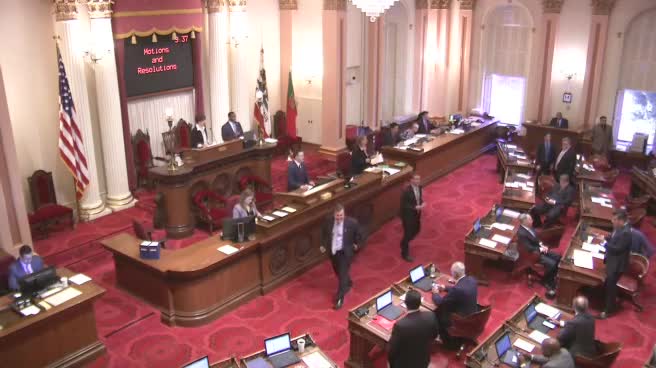
| Jun 14, 2018 | Assembly 3rd Reading ACR172 Low et al. By Wiener | Senate Floor |
Passed |
|
| Mar 20, 2018 | Be adopted. To third reading. | Assembly Standing Committee on Judiciary |
Passed |
This list shows positions taken on this bill by organizations on the date displayed, which is linked to the original source.
Positions by individuals are not included.
|
Organization
|
Position
|
Date
|
|---|---|---|
| ACLU of California | * Support | Mar 20, 2018 |
| California Public Defenders Association | ** Support | Jun 7, 2018 |
| Disability Rights California | ** Support | Jun 7, 2018 |
| Equality California | ** Support | Jun 7, 2018 |
| Human Rights Campaign | ** Support | Jun 7, 2018 |
| Los Angeles LGBT Center | ** Support | Jun 7, 2018 |
CONCURRENCE IN SENATE AMENDMENTS
CSA1 Bill Id:ACR 172
Author:(Low)
As Amended Ver:May 14, 2018
Majority vote
ASSEMBLY: |
| (April 5, 2018) | SENATE: |
| (June 14, 2018) |
(voice vote) (voice vote)
Original Committee Reference: JUD.
SUMMARY: Acknowledges and apologizes for past discriminatory laws impacting lesbian, gay, bisexual, and transgender (LGBT) individuals, apologizes for the historical actions of the state, and commits to make California a fully inclusive state and protect the rights of all people. Specifically, this resolution:
- Makes the following findings:
- California, like other states, historically charged people with crimes due to their sexuality and gender identity;
- Although laws criminalizing sexual conduct were established, these laws were rarely enforced against consenting adults in private and within a heterosexual marital relationship but rather served as a basis for criminalizing homosexuality and legitimizing discrimination against LGBT people;
- As early as 1850, in the territory of California, a common law statute with historical roots in English law was established providing for the illegalization of sodomy and setting the penalty at five years to life and the 1872 California Criminal Code contained a similar prohibition;
- From the late 1800s onward, California jurisdictions also widely employed vagrancy, disorderly conduct, and indecent exposure laws to prosecute same-sex intimacy and behavior outside of gender norms;
- Public indecency statutes and "unlawful masquerade" laws were applied to permit police to harass and sometimes arrest people who were considered deviant or gender-bending;
- In 1909, state law allowed for the sterilization of convicted and imprisoned sex offenders if they showed recidivism in prison towards being a "moral or sexual pervert," including those offenders committed for sodomy and oral sex acts;
- In 1915, Penal Code Section 288(a) was enacted, making specific oral sex acts felonies and punishable by a maximum of 15 years in prison;
- In 1921, a statute banned "any act ... which openly outrages public decency";
- In 1939, California enacted a "sexual psychopath" law, which was used to commit numerous LGBT people for involuntary psychiatric incarceration and gruesome medical treatments;
- In 1947, California enacted a statewide registration for sex offenders, so before laws criminalizing specified acts between same-sex couples were repealed, LGBT individuals convicted of these offenses were forced to register as sex offenders;
- Eventually reform efforts began to extend some protections to LGBT people by expanding privacy rights and decriminalizing private consensual activity between adults;
- However, state law enacted in 1977 defined marriage as "between one man and one woman." Proposition 22 was enacted by California voters in March 2000 to prevent marriage between same-sex couples;
- In May 2008, the California Supreme Court struck down Proposition 22, but the ruling was superseded when Proposition 8 passed that same year, reinstating a bar on same-sex marriages;
- The granting of same-sex marriages ultimately began again in California in 2013 following the United States Supreme Court decision in Hollingsworth v. Perry, which restored the effect of a federal district court ruling that overturned Proposition 8 as unconstitutional.
- Makes the following resolutions:
- Apologizes for the enactment of past discriminatory laws and constitutional provisions that resulted in the persecution and oppression of LGBT individuals and their communities, and which forced them to live in fear of unjust prosecutions and public shaming and reaffirms its commitment to preserving the rights of all people;
- Affirms the commitment of the Legislature to protect the rights of all people and to take necessary steps to be a fully inclusive state; and
- While no apology can make up for the years of discrimination, commits the Legislature to take the steps needed to be a fully inclusive state and preserving the rights of all people.
The Senate amendments clarify that LGBT individuals convicted of sex offenses were, before those laws were repealed, required to register as sex offenders.
EXISTING LAW:
- Provides that all persons are by nature free and independent and have inalienable rights, including enjoying and defending life and liberty, acquiring, possessing, and protecting property, and pursuing and obtaining safety, happiness, and privacy. (California Constitution Article I, Section 1.)
- Provides that all persons are free and equal, and no matter what their sex, marital status, or sexual orientation, among other things, are entitled to the full and equal accommodations, advantages, facilities, privileges, and services in all business establishments of every kind whatsoever. (Civil Code Section 51(b).)
- Overturned Proposition 8, which established a constitutional amendment banning same-sex marriage, stating that "California has no interest in discriminating against gay men and lesbians, and because Proposition 8 prevents California from fulfilling its constitutional obligation to provide marriages on an equal basis." (Perry v. Schwarzenegger (N.D. Cal. 2010) 704 F. Supp. 2d 921, 1003.)
- Holds under the U.S. Constitution that a state may not bar same-sex couples from marriage on the same terms as accorded to couples of the opposite sex. (Obergefell v. Hodges (2015) 135 S. Ct 2584, 2607.)
FISCAL EFFECT: None
COMMENTS: This resolution sets forth California's unfortunate history of discrimination and prosecution of LGBT individuals, apologizes for these actions, and reaffirms the Legislature's commitment to preserving the rights of all individuals. In support of the resolution, the author writes:
To say the LGBT community has been faced with acts of injustice would be an understatement. Throughout California's history, the LGBT community faced persecution and oppression, which forced them to live in fear. It's only right that we recognize the painful hardship suffered by the LGBT community throughout our state's history. No one should live in fear of persecution or discrimination for being themselves. With this resolution, the [L]egislature reaffirms its promise to preserving the rights of all people and commits to being a fully inclusive state and preserving the rights of all people. No apology can make up for the years of discrimination. We must also commit to ensuring all Californians are free to be their true selves.
The bill is supported by the American Civil Liberties Union of California Center for Advocacy & Policy, Equality California, and Human Rights Campaign, who state that while an apology cannot undo decades of persecution and oppression to lesbian, gay, bisexual, transgender, queer, and questioning individuals and communities, "it is important to recognize past mistakes made by previous governing bodies and to commit to moving toward being a more inclusive state that respects and preserves the rights of all individuals."
Analysis Prepared by: Leora Gershenzon / JUD. / (916) 319-2334 FN: 0002935 FN:
Office of Senate Floor Analyses (916) 651-1520 Fax: (916) 327-4478 | ACR 172 |
THIRD READING
Bill No: ACR 172
Amended: 5/14/18 in Senate
ASSEMBLY FLOOR: Read and adopted, 4/5/18
SUBJECT: Historical state anti-LGBT laws
DIGEST:
This resolution apologizes for the enactment of past discriminatory laws and constitutional provisions that resulted in the persecution and oppression of lesbian, gay, bisexual, and transgender (LGBT) individuals and their communities; and expresses the Legislature’s commitment to taking the steps needed to be a fully inclusive state and preserving the rights of all people.
Senate Floor Amendments of 5/14/18 add additional language to one of the resolution’s findings, and make technical and clarifying changes.
ANALYSIS: This resolution makes the following legislative findings:
- Historically, California, like other states of this nation, charged people with crimes due to their sexuality and gender identity.
- Although laws criminalizing sexual conduct were established in statute and judicial interpretation, these laws were rarely enforced against consenting adults in private and within a heterosexual marital relationship, but rather served as a basis for criminalizing homosexuality and legitimizing discrimination against LGBT people.
- Eventually reform efforts began to extend some protections to LGBT people by expanding privacy rights and decriminalizing private consensual activity between adults.
- However, state law enacted in 1977 defined marriage as “between one man and one woman.” Proposition 22 was enacted by California voters in March 2000 to prevent marriage between same-sex couples.
- In May 2008, the California Supreme Court struck down Proposition 22 but the ruling was superseded when Proposition 8 passed that same year, reinstating a bar on same-sex marriages.
- The granting of same-sex marriages ultimately began again in California in 2013 following the United States Supreme Court decision in Hollingsworth v. Perry, which restored the effect of a federal district court ruling that overturned Proposition 8 as unconstitutional.
- It is only right that this state formally apologize for the enactment and enforcement of laws used to persecute and oppress LGBT individuals and their communities.
This resolution apologizes for the enactment of past discriminatory laws and constitutional provisions that resulted in the persecution and oppression of LGBT individuals and their communities, and which forced them to live in fear of unjust prosecutions and public shaming, and apologizes for these acts and reaffirms its commitment to preserving the rights of all people; and states that even though the Legislature is apologizing for the previous laws enacted in California, the Legislature is committed to taking the steps needed to be a fully inclusive state and preserving the rights of all people. No apology can make up for the years of discrimination.
FISCAL EFFECT: Appropriation: No Fiscal Com.: No Local: No
American Civil Liberties Union of California Center for Advocacy & Policy
California Public Defenders Association
Disability Rights California
Equality California
Human Rights Campaign
Los Angeles LGBT Center
OPPOSITION: (Verified 5/14/18)
None received
ARGUMENTS IN SUPPORT: According to the author, “To say the LGBT community has been faced with acts of injustice would be an understatement. Throughout California’s history, the LGBT community faced persecution and oppression, which forced them to live in fear. It’s only right that we recognize the painful hardship suffered by the LGBT community throughout our state’s history. No one should live in fear of persecution or discrimination for being themselves. With this resolution, the legislature reaffirms its promise to preserving the rights of all people and commits to being a fully inclusive state and preserving the rights of all people. No apology can make up for the years of discrimination. We must also commit to ensuring all Californians are free to be their true selves.”
Prepared by: Melissa Ward / SFA / (916) 651-1520
6/7/18 15:27:47
**** END ****
Office of Senate Floor Analyses (916) 651-1520 Fax: (916) 327-4478 | ACR 172 |
THIRD READING
Bill No: ACR 172
Introduced: 2/7/18
ASSEMBLY FLOOR: Read and adopted, 4/5/18
SUBJECT: Historical state anti-LGBT laws
DIGEST:
This resolution apologizes for the enactment of past discriminatory laws and constitutional provisions that resulted in the persecution and oppression of lesbian, gay, bisexual, and transgender (LGBT) individuals and their communities; and expresses the Legislature’s commitment to taking the steps needed to be a fully inclusive state and preserving the rights of all people.
ANALYSIS: This resolution makes the following legislative findings:
- Historically, California, like other states of this nation, charged people with crimes due to their sexuality and gender identity.
- Although law criminalizing sexual conduct were established in statute and judicial interpretation, these laws were rarely enforced against consenting adults in private and within a heterosexual marital relationship but rather served as a basis for criminalizing homosexuality and legitimizing discrimination against LGBT people.
- Eventually reform efforts began to extend some protections to LGBT people by expanding privacy rights and decriminalizing private consensual activity between adults.
- However, state law enacted in 1977 defined marriage as “between one man and one woman.” Proposition 22 was enacted by California voters in March 2000 to prevent marriage between same-sex couples.
- In May 2008, the California Supreme Court struck down Proposition 22 but the ruling was superseded when Proposition 8 passed that same year, reinstating a bar on same-sex marriages.
- The granting of same-sex marriages ultimately began again in California in 2013 following the United States Supreme Court decision in Hollingsworth v. Perry, which restored the effect of a federal district court ruling that overturned Proposition 8 as unconstitutional.
- It is only right that this state formally apologize for the enactment and enforcement of laws used to persecute and oppress LGBT individuals and their communities.
This resolution apologizes for the enactment of past discriminatory laws and constitutional provisions that resulted in the persecution and oppression of LGBT individuals and their communities, and which forced them to live in fear of unjust prosecutions and public shaming, and apologizes for these acts and reaffirms its commitment to preserving the rights of all people; and states that even though the Legislature is apologizing for the previous laws enacted in California, the Legislature is committed to taking the steps needed to be a fully inclusive state and preserving the rights of all people. No apology can make up for the years of discrimination.
FISCAL EFFECT: Appropriation: No Fiscal Com.: No Local: No
American Civil Liberties Union of California Center for Advocacy & Policy
California Public Defenders Association
Equality California
Human Rights Campaign
Los Angeles LGBT Center
OPPOSITION: (Verified 4/16/18)
None received
ARGUMENTS IN SUPPORT: According to the author, “To say the LGBT community has been faced with acts of injustice would be an understatement. Throughout California’s history, the LGBT community faced persecution and oppression, which forced them to live in fear. It’s only right that we recognize the painful hardship suffered by the LGBT community throughout our state’s history. No one should live in fear of persecution or discrimination for being themselves. With this resolution, the legislature reaffirms its promise to preserving the rights of all people and commits to being a fully inclusive state and preserving the rights of all people. No apology can make up for the years of discrimination. We must also commit to ensuring all Californians are free to be their true selves.”
Prepared by: Melissa Ward / SFA / (916) 651-1520
4/18/18 15:23:04
**** END ****
ASSEMBLY THIRD READING
ATR Bill Id:
Author:(Low)
As Introduced Ver:February 7, 2018
Majority vote
Committee | Votes | Ayes | Noes |
Judiciary | 8-0 | Mark Stone, Calderon, Berman, Gonzalez Fletcher, Holden, Kalra, Maienschein, Reyes |
|
SUMMARY: Acknowledges and apologizes for past discriminatory laws impacting lesbian, gay, bisexual, and transgender (LGBT) individuals, apologizes for the historical actions of the state, and commits to make California a fully inclusive state and protect the rights of all people. Specifically, this measure:
- Makes the following findings:
- California, like other states, historically charged people with crimes due to their sexuality and gender identity;
- Although laws criminalizing sexual conduct were established, these laws were rarely enforced against consenting adults in private and within a heterosexual marital relationship but rather served as a basis for criminalizing homosexuality and legitimizing discrimination against LGBT people;
- As early as 1850, in the territory of California, a common law statute with historical roots in English law was established providing for the illegalization of sodomy and setting the penalty at five years to life and the 1872 California Criminal Code contained a similar prohibition;
- From the late 1800s onward, California jurisdictions also widely employed vagrancy, disorderly conduct, and indecent exposure laws to prosecute same-sex intimacy and behavior outside of gender norms;
- Public indecency statutes and "unlawful masquerade" laws were applied to permit police to harass and sometimes arrest people who were considered deviant or gender-bending;
- In 1909, state law allowed for the sterilization of convicted and imprisoned sex offenders if they showed recidivism in prison towards being a "moral or sexual pervert," including those offenders committed for sodomy and oral sex acts;
- In 1915, Penal Code Section 288a was enacted, making specific oral sex acts felonies and punishable by a maximum of 15 years in prison;
- In 1921, a statute banned "any act ... which openly outrages public decency";
- In 1939, California enacted a "sexual psychopath" law, which was used to commit numerous LGBT people for involuntary psychiatric incarceration and gruesome medical treatments;
- In 1947, California enacted a statewide registration for sex offenders, exposing LGBT individuals convicted of sex offenses to public notoriety and the supervision of police;
- Eventually reform efforts began to extend some protections to LGBT people by expanding privacy rights and decriminalizing private consensual activity between adults;
- However, state law enacted in 1977 defined marriage as "between one man and one woman." Proposition 22 was enacted by California voters in March 2000 to prevent marriage between same-sex couples;
- In May 2008, the California Supreme Court struck down Proposition 22, but the ruling was superseded when Proposition 8 passed that same year, reinstating a bar on same-sex marriages;
- The granting of same-sex marriages ultimately began again in California in 2013 following the United States Supreme Court decision in Hollingsworth v. Perry, which restored the effect of a federal district court ruling that overturned Proposition 8 as unconstitutional.
- Makes the following resolutions:
- Apologizes for the enactment of past discriminatory laws and constitutional provisions that resulted in the persecution and oppression of LGBT individuals and their communities, and which forced them to live in fear of unjust prosecutions and public shaming and reaffirms its commitment to preserving the rights of all people;
- Affirms the commitment of the Legislature to protect the rights of all people and to take necessary steps to be a fully inclusive state; and
- While no apology can make up for the years of discrimination, commits the Legislature to take the steps needed to be a fully inclusive state and preserving the rights of all people.
EXISTING LAW:
- Provides that all persons are by nature free and independent and have inalienable rights, including enjoying and defending life and liberty, acquiring, possessing, and protecting property, and pursuing and obtaining safety, happiness, and privacy. (California Constitution Article I, Section 1.)
- Provides that all persons are free and equal, and no matter what their sex, marital status, or sexual orientation, among other things, are entitled to the full and equal accommodations, advantages, facilities, privileges, and services in all business establishments of every kind whatsoever. (Civil Code Section 51 (b).)
- Overturned Proposition 8, which established a constitutional amendment banning same-sex marriage, stating that "California has no interest in discriminating against gay men and lesbians, and because Proposition 8 prevents California from fulfilling its constitutional obligation to provide marriages on an equal basis." (Perry v. Schwarzenegger (N.D. Cal. 2010) 704 F. Supp. 2d 921, 1003.)
- Holds under the U.S. Constitution that a state may not bar same-sex couples from marriage on the same terms as accorded to couples of the opposite sex. (Obergefell v. Hodges (2015) 135 S. Ct 2584, 2607.)
FISCAL EFFECT: None
COMMENTS: This resolution sets forth California's unfortunate history of discrimination and prosecution of LGBT individuals, apologizes for these actions, and reaffirms the Legislature's commitment to preserving the rights of all individuals. In support of the resolution, the author writes:
To say the LGBT community has been faced with acts of injustice would be an understatement. Throughout California's history, the LGBT community faced persecution and oppression, which forced them to live in fear. It's only right that we recognize the painful hardship suffered by the LGBT community throughout our state's history. No one should live in fear of persecution or discrimination for being themselves. With this resolution, the [L]egislature reaffirms its promise to preserving the rights of all people and commits to being a fully inclusive state and preserving the rights of all people. No apology can make up for the years of discrimination. We must also commit to ensuring all Californians are free to be their true selves.
The bill is supported by the American Civil Liberties Union of California Center for Advocacy & Policy, Equality California, and Human Rights Campaign, who state that while an apology cannot undo decades of persecution and oppression to lesbian, gay, bisexual, transgender, queer, and questioning individuals and communities, "it is important to recognize past mistakes made by previous governing bodies and to commit to moving toward being a more inclusive state that respects and preserves the rights of all individuals."
Analysis Prepared by: Allison Adey and Leora Gershenzon / JUD. / (916) 319-2334 FN: 0002622
Date of Hearing: March 20, 2018
ASSEMBLY COMMITTEE ON JUDICIARY
Mark Stone, Chair
ABPCA Bill Id:ACR 172
Author:(Low) – As Introduced Ver:February 7, 2018
SUBJECT: Historical state anti-LGBT laws
KEY ISSUE: SHOULD THE LEGISLATURE ACKNOWLEDGE AND APOLOGIZE FOR THE DISCRIMINATORY AND PERSECUTORY TREAMENT OF lesbian, gay, bisexual, and traNsgender individuals UNDER prior CALIFORNIA LAW and reaffirm its commitment to PRESERVING the rights of all individuals?
SYNOPSIS
Since California’s inception as a state, it has subjected members of the lesbian, gay, bisexual, and transgender (LGBT) community to laws that disproportionality targeted them for their relationships and criminalized certain types of intimate contact. In 1872, California criminalized sodomy and in 1915 it added oral sex between same-sex couples, punishable by up to 15 years in state prison. Additional laws that were used to target LGBT individuals included the sterilization law passed in 1909, which allowed authorized medical superintendents in state hospitals to order the sterilization of men and women when they deemed them to be sexual or moral “degenerates,” and the 1903 catch-all criminal law for any behavior considered undesirable, criminalizing “endangering public peace and outraging public decency.” In 1939 California enacted the “Sexual Psychopath Act,” which allowed for the involuntary and indeterminate commitment of those with criminal propensities to the commission of sexual offences, which included homosexuality. More recently, California limited marriage to opposite-sex couples, by statute in 1977, by initiative in 2000 (Proposition 22) adding an additional statute, and then by constitutional amendment through Proposition 8 in 2008. This resolution sets forth California's long and unfortunate history of discrimination and prosecution of LGBT individuals, apologizes for these actions, and reaffirms the Legislature's commitment to preserving the rights of all individuals. This resolution is supported by the American Civil Liberties Union of California Center for Advocacy & Policy, Equality California, and Human Rights Campaign. There is no opposition to this measure.
SUMMARY: Acknowledges and apologizes for past discriminatory laws impacting lesbian, gay, bisexual, and transgender (LGBT) individuals, apologizes for the historical actions of the state, and commits to make California a fully inclusive state and protect the rights of all people. Specifically, this measure:
- Makes the following findings:
- California, like other states, historically charged people with crimes due to their sexuality and gender identity;
- Although laws criminalizing sexual conduct were established, these laws were rarely enforced against consenting adults in private and within a heterosexual marital relationship but rather served as a basis for criminalizing homosexuality and legitimizing discrimination against LGBT people;
- As early as 1850, in the territory of California, a common law statute with historical roots in English law was established providing for the illegalization of sodomy and setting the penalty at five years to life and the 1872 California Criminal Code contained a similar prohibition;
- From the late 1800s onward, California jurisdictions also widely employed vagrancy, disorderly conduct, and indecent exposure laws to prosecute same-sex intimacy and behavior outside of gender norms;
- Public indecency statutes and “unlawful masquerade” laws were applied to permit police to harass and sometimes arrest people who were considered deviant or gender-bending;
- In 1909, state law allowed for the sterilization of convicted and imprisoned sex offenders if they showed recidivism in prison towards being a “moral or sexual pervert,” including those offenders committed for sodomy and oral sex acts;
- In 1915, Penal Code Section 288a was enacted, making specific oral sex acts felonies and punishable by a maximum of 15 years in prison;
- In 1921, a statute banned “any act ... which openly outrages public decency”;
- In 1939, California enacted a “sexual psychopath” law, which was used to commit numerous LGBT people for involuntary psychiatric incarceration and gruesome medical treatments;
- In 1947, California enacted a statewide registration for sex offenders, exposing LGBT individuals convicted of sex offenses to public notoriety and the supervision of police;
- Eventually reform efforts began to extend some protections to LGBT people by expanding privacy rights and decriminalizing private consensual activity between adults;
- However, state law enacted in 1977 defined marriage as “between one man and one woman.” Proposition 22 was enacted by California voters in March 2000 to prevent marriage between same-sex couples;
- In May 2008, the California Supreme Court struck down Proposition 22, but the ruling was superseded when Proposition 8 passed that same year, reinstating a bar on same-sex marriages;
- The granting of same-sex marriages ultimately began again in California in 2013 following the United States Supreme Court decision in Hollingsworth v. Perry, which restored the effect of a federal district court ruling that overturned Proposition 8 as unconstitutional.
- Makes the following resolutions:
- Apologizes for the enactment of past discriminatory laws and constitutional provisions that resulted in the persecution and oppression of LGBT individuals and their communities, and which forced them to live in fear of unjust prosecutions and public shaming and reaffirms its commitment to preserving the rights of all people;
- Affirms the commitment of the Legislature to protect the rights of all people and to take necessary steps to be a fully inclusive state; and
- While no apology can make up for the years of discrimination, commits the Legislature to take the steps needed to be a fully inclusive state and preserving the rights of all people.
EXISTING LAW:
- Provides that all persons are by nature free and independent and have inalienable rights, including enjoying and defending life and liberty, acquiring, possessing, and protecting property, and pursuing and obtaining safety, happiness, and privacy. (Cal Const. Article I, Section 1.)
- Provides that all persons are free and equal, and no matter what their sex, marital status, or sexual orientation, among other things, are entitled to the full and equal accommodations, advantages, facilities, privileges, and services in all business establishments of every kind whatsoever. (Civil Code Section 51 (b).)
- Overturned Proposition 8, which established a constitutional amendment banning same-sex marriage, stating that "California has no interest in discriminating against gay men and lesbians, and because Proposition 8 prevents California from fulfilling its constitutional obligation to provide marriages on an equal basis.” (Perry v. Schwarzenegger (N.D. Cal. 2010) 704 F. Supp. 2d 921, 1003.)
- Holds under the U.S. Constitution that a state may not bar same-sex couples from marriage on the same terms as accorded to couples of the opposite sex. (Obergefell v. Hodges (2015) 135 S. Ct 2584, 2607.)
FISCAL EFFECT: As currently in print this measure is keyed non-fiscal.
COMMENTS: This resolution sets forth California's unfortunate history of discrimination and prosecution of LGBT individuals, apologizes for these actions, and reaffirms the Legislature's commitment to preserving the rights of all individuals. In support of the resolution, the author writes:
To say the LGBT community has been faced with acts of injustice would be an understatement. Throughout California’s history, the LGBT community faced persecution and oppression, which forced them to live in fear. It’s only right that we recognize the painful hardship suffered by the LGBT community throughout our state’s history. No one should live in fear of persecution or discrimination for being themselves. With this resolution, the [L]egislature reaffirms its promise to preserving the rights of all people and commits to being a fully inclusive state and preserving the rights of all people. No apology can make up for the years of discrimination. We must also commit to ensuring all Californians are free to be their true selves.
Criminalization of Certain Acts: Since California’s inception as a state, it has subjected members of the LGBT community to laws that disproportionality target them for their relationships and criminalize certain types of intimate contact. The first statutory enactment was Penal Code Section 286, enacted in 1872, which criminalized sodomy as “the infamous crime against nature.” Despite that section not actually naming sodomy, case law made clear that “every person of ordinary intelligence understands what the crime against nature with a human being is.” (In re Application of Rankin (1919) 42 Cal. App. 230, 231; People v. Williams (1881) 59 Cal. 397, 398.) In 1921 the prohibition against sodomy was specifically added to Penal Code Section 286.
Adopted in 1915, Penal Code Section 288 (a) made oral sex between same-sex couples punishable by up to 15 years in state prison. This statute increased the social stigma towards same-sex intimacy and relationships by making identical actions punishable when engaged in by two individuals of the same-sex, but not punishable for opposite-sex couples. The section was ameliorated to some extent in 1950 when it was amended to allow for one year in county jail as an alternative punishment. The section remained on the books and was not amended to remove the criminal penalties for same-sex intimacy until 1975. While California changed that discriminatory statute in 1975, it was not until 2003, nearly 30 years later, when the Supreme Court ruled that facially discriminatory codes violated the U.S. Constitution in Lawrence v. Texas (2003) 539 U.S. 558.
State Sponsored Sterilization: California passed a sterilization law in 1909 allowing authorized medical superintendents in state hospitals to order the sterilization of men and women. (Lutz Kaelber, Eugenics: Compulsory Sterilization in 50 American States, University of Vermont (2012), http://www.uvm.edu/~lkaelber/eugenics/CA/ CA.html.) The groups specifically targeted by the laws were those considered to be sexual or moral "degenerates" or "perverts" or those considered to be mentally ill so that they would not produce similarly disabled offspring. (Ibid.) Between 1909 and 1964 California sterilized 20,108 individuals. (Ibid.) Governor Gray Davis and the Legislature both apologized for the sterilizations in 2003. (See SR 20 (Alpert, Kuehl, Ortiz, Scott), 2003.)
California’s “Sexual Psychopath” Law: In 1939 California enacted the “Sexual Psychopath Act” in former Welfare & Institutions Code Sections 5500 – 5521. Despite this act being placed outside the Penal Code, it allowed for the involuntary and indeterminate commitment of those with criminal propensities to the commission of sexual offenses. California courts upheld this act, finding that “defining sexual psychopaths as persons affected, in form predisposing to commission of sexual offenses, and in degree constituting menace to health and safety of others, with mental disease, psychopathic personality, or marked departures from normal mentality, was sufficiently definite and was not violative of the constitutional guarantees of equal protection of laws or due process of laws.” (People v. Levy (1957) 151 Cal. App. 2d 460, 463-64.)
Under this law any person who either 1) suffered from a mental disease or disorder, 2) had a psychopathic tendency, or 3) had marked departures from normal mentality in a way that predisposed them to the commission of sexual offenses was subject to incarceration. (Id. at 465.) One of the “sexual deviations” included under the third category was homosexuality. (Id. at 462.) This law remained on the books until 1967.
Other Crimes Used Against the LGBT Community: In 1903, California enacted a catch-all criminal law for any behavior considered undesirable, making punishable “endangering public peace and outraging public decency.” (Penal Code Section 650 ½.) A 1966 study found that this catch-all statute was used to target the LGBT community, evidenced by a substantial number of arrests for sodomy and many more for misdemeanor “gay-related solicitation offenses.” (Robert L. Jacobson, "Megan's Laws" Reinforcing Old Patterns of Anti-Gay Police Harassment, (1999) 87 Geo. L.J. 2431, 2442–44.) A criminal conviction for these offenses also required the convicted individual to register as a sex offender when California instituted that registry in 1947. (California Department of Justice, Megan’s Law History, p. 5 (July 2001).)
Marriage Discrimination: Proposition 22, the California Supreme Court’s In re Marriages Decision, and Proposition 8: California passed its first definition of marriage in 1977 under AB 607. This was the first time in California that marriage was defined as being between “one man, and one woman.” (Stats. 1977, Ch. 339, §1.) Later, in response to a number of states considering recognizing same-sex marriages, the federal Defense of Marriage Act (DOMA) was enacted in 1996. (18 U.S.C. Section 115, repealed in part by United States v. Windsor (2013) 133 S. Ct. 2675 and in part by Obergefell v. Hodges (2015) 135 S. Ct 2584.) That law defined marriage as between a man and a woman and allowed states to not recognize same-sex marriages from other states. By the late 1990’s, legislation passed throughout the country defining marriage, in statute, as being between “one man and one woman.” California voters, already having the definition of marriage in statute, passed their own proposition, Proposition 22, which included the language and added the provision allowing them not to recognize marriage conducted in other states. Prop. 22 passed in 2000 with 61.2 percent of the vote.
Eight years later, the California Supreme Court, in a 4-3 decision, struck down as unconstitutional those statutes limiting marriage to a man and a woman. The majority opinion concluded that “the California Constitution properly must be interpreted to guarantee this basic civil right to all Californians, whether gay or heterosexual, and to same-sex couples as well as to opposite-sex couples.” (In re Marriage Cases (2008) 43 Cal.4th 757, 782 (footnote omitted).)
In late 2007, opponents of same-sex marriage, apparently contemplating that the California Supreme Court might (as it did indeed do) find the state's discriminatory marriage provisions unconstitutional, began the legal process of proposing an initiative (Proposition 8) to add to the California Constitution a provision limiting marriage to one man and one woman. As noted above, six months later the Court issued its decision in the In re Marriage Cases, holding that statutes limiting marriage to a union between a man and a woman were unconstitutional. The Proposition 22 Legal Defense & Education Fund and others requested a stay of the effective date of the In re Marriage Cases decision until after the vote on Proposition 8. The Court denied the request, and on June 16, 2008 the In re Marriage Cases decision took effect. Approximately 18,000 same-sex couples married in California after the effective date of the In re Marriage Cases decision. On November 4, 2008, Proposition 8 narrowly passed on a vote of 52-48 and same-sex marriages were once again prohibited in California.
Prop 8 in Federal Court and the U.S. Supreme Court Finally Recognizes Same-Sex Couples’ Constitutional Right to Marry: In 2009, opponents of Proposition 8 filed an action in federal court in the Northern District of California challenging Proposition 8 as violating both the due process clause and equal protection clause of the 14th Amendment to the federal constitution and seeking injunctive relief enjoining application of the proposition. After a lengthy trial, the district court concluded that Proposition 8 was unconstitutional, violating both the federal due process and the equal protection clauses. (Perry v. Schwarzenegger (N.D. Cal. 2010) 704 F. Supp. 2d 921, 1003.)
In a 2-1 decision, the Ninth Circuit ruled that Proposition 8 violated the equal protection clause by targeting a minority group and withdrawing a right that the group already possessed (the right to marriage under the In re Marriage Cases), without a legitimate reason for doing so. (Perry v. Brown (9th Cir. 2012) 671 F.3d 1052.) The proponents of Proposition 8 appealed that decision, but on June 26, 2013, the United States Supreme Court, on a 5-4 decision, dismissed the appeal for lack of standing. (Hollingsworth v. Perry (2013) 133 S. Ct. 2652.) On June 28, 2013, the Ninth Circuit lifted the stay on the district court order and on that same date Governor Brown ordered all county clerks to begin issuing marriage licenses to same-sex couples.
In 2015 in Obergefell v. Hodges 2015, 135 S. Ct. 2584, the U.S. Supreme Court, in a 5-4 decision determined that withholding marriage licenses from same-sex couples violated the equal protection and due process clauses of the 14th Amendment. Same-sex couple could now marry anywhere in the United States.
ARGUMENTS IN SUPPORT: The bill is supported by the American Civil Liberties Union of California Center for Advocacy & Policy, Equality California, and Human Rights Campaign, who state that while an apology cannot undo decades of persecution and oppression to lesbian, gay, bisexual, transgender, queer, and questioning individuals and communities, "it is important to recognize past mistakes made by previous governing bodies and to commit to moving toward being a more inclusive state that respects and preserves the rights of all individuals."
REGISTERED SUPPORT / OPPOSITION:
Support
American Civil Liberties Union of California Center for Advocacy & Policy
Equality California
Human Rights Campaign
Opposition
None on file
Analysis Prepared by: Allison Adey and Leora Gershenzon / JUD. / (916) 319-2334
Discussed in Hearing
 4MIN
Senate Floor
 10MIN
Assembly Floor
 6MIN
Assembly Standing Committee on Judiciary
Bill Author

Bill Co-Author(s):