ACR 25: Sunshine Week.
- Session Year: 2017-2018
- House: Assembly
- Latest Version Date: 2017-04-17
This measure would designate March 12, 2017, through March 18, 2017, as Sunshine Week.
This measure would designate March 12, 2017, through March 18, 2017, as Sunshine Week.
This measure would designate March 12, 2017, through March 18, 2017, as Sunshine Week.
This measure would designate March 12, 2017, through March 18, 2017, as Sunshine Week, and would require the Legislature to make available to the public all legislative information at its disposal. Week.
This measure would designate March 12, 2017, through March 18, 2017, as Sunshine Week, and would require the Legislature to make available to the public all legislative information at its disposal.
WHEREAS, California has a long tradition in support of open government and access to government records; and
WHEREAS, In 1968, California enacted the California Public Records Act that expressly declared that access to information concerning the conduct of the peoples business is a fundamental and necessary right of every person in this state; and
WHEREAS, In 1953, California enacted the Ralph M. Brown Act guaranteeing the publics right to attend and participate in local governing bodies; and
WHEREAS, In 1967, the Bagley-Keene Open Meeting Act was adopted by the state to mandate open meetings of state agencies, boards, and commissions; and
WHEREAS, California voters approved Proposition 59, a state constitutional amendment, also known as the Sunshine Amendment, in 2004 that furthers open government protections and the rights of voters; and
WHEREAS, Open government reforms continue to spread across the country, including the adoption of open data policies to urge innovation and economic development through the use of high-value government data; and
WHEREAS, California entrepreneurs created the information technology revolution and are creating opportunities for government to use technology to improve performance, transparency, and trust; and
WHEREAS, Many local governments have been leaders in open records and public meetings, and the Cities of San Francisco, Oakland, West Sacramento, Sacramento, San Diego, and Los Angeles and the County of San Mateo have adopted open data policies; and
WHEREAS, California voters reaffirmed the peoples mandate for open government through the approval of Proposition 42 in 2014; and
WHEREAS, With an inaugural grant from the Knight Foundation, the American Society of News Editors launched Sunshine Week in March 2005, and it continues to be celebrated each year in mid-March to coincide with National Freedom of Information Day and President James Madisons birthday on March 16; and
WHEREAS, Although originally created by journalists, Sunshine Week is about the publics right to know what its government is doing and why; and
WHEREAS, Sunshine Week is now a national initiative to promote a dialogue about the importance of open government and freedom of information. Participants include news media, civic groups, libraries, nonprofit entities, schools, and others interested in the publics right to know; and
WHEREAS, Sunshine Week seeks to enlighten and empower people to play an active role in all levels of government, and to give people access to information that makes their lives better and their communities stronger; and
WHEREAS, The coverage, commentaries, and activities promoting open government during Sunshine Week have led to tangible, meaningful changes to peoples lives, and the laws that govern them; and
WHEREAS, The California Newspaper Publishers Association, California Forward, the League of Women Voters of California, Californians Aware, the First Amendment Coalition, and other nongovernmental organizations continue to work alongside media and government allies to enhance public access to their government; and
WHEREAS, Sunshine Week is increasing public awareness and people are playing more of a role in the actions that affect their communities. People are learning what kinds of information they have a right to see, how and where to obtain that information, and what to do if someone tries to prevent them from accessing it; now, therefore, be it
Resolved by the Assembly of the State of California, the Senate thereof concurring, That Sunshine Week is a celebration of the publics commitment to openness and an exploration of what open government means in a technology-enhanced future; and be it further
Resolved, That the Legislature hereby designates March 12, 2017, through March 18, 2017, as Sunshine Week and encourages all Californians to participate in appropriate activities relating to open government and access to public information; and be it further
Resolved, That the Chief Clerk of the Assembly transmit copies of this resolution to the author for appropriate distribution.
WHEREAS, California has a long tradition in support of open government and access to government records; and
WHEREAS, In 1968, California enacted the California Public Records Act that expressly declared that access to information concerning the conduct of the peoples business is a fundamental and necessary right of every person in this state; and
WHEREAS, In 1953, California enacted the Ralph M. Brown Act guaranteeing the publics right to attend and participate in local governing bodies; and
WHEREAS, In 1967, the Bagley-Keene Open Meeting Act was adopted by the state to mandate open meetings of state agencies, boards, and commissions; and
WHEREAS, California voters approved Proposition 59, a state constitutional amendment, also known as the Sunshine Amendment, in 2004 that furthers open government protections and the rights of voters; and
WHEREAS, Open government reforms continue to spread across the country, including the adoption of open data policies to urge innovation and economic development through the use of high-value government data; and
WHEREAS, California entrepreneurs created the information technology revolution and are creating opportunities for government to use technology to improve performance, transparency, and trust; and
WHEREAS, Many local governments have been leaders in open records and public meetings meetings, and the cities Cities of San Francisco, Oakland, West Sacramento, Sacramento, San Diego, and Los Angeles and the County of San Mateo have adopted open data policies; and
WHEREAS, California voters reaffirmed the peoples mandate for open government through the approval of Proposition 42 in 2014; and
WHEREAS, With an inaugural grant from the Knight Foundation, the American Society of News Editors launched Sunshine Week in March 2005, and it continues to be celebrated each year in mid-March to coincide with National Freedom of Information Day and President James Madisons birthday on March 16; and
WHEREAS, Although originally created by journalists, Sunshine Week is about the publics right to know what its government is doing and why; and
WHEREAS, Sunshine Week is now a national initiative to promote a dialogue about the importance of open government and freedom of information. Participants include news media, civic groups, libraries, nonprofit entities, schools, and others interested in the publics right to know; and
WHEREAS, Sunshine Week seeks to enlighten and empower people to play an active role in all levels of government, and to give people access to information that makes their lives better and their communities stronger; and
WHEREAS, The coverage, commentaries, and activities promoting open government during Sunshine Week have led to tangible, meaningful changes to peoples lives, and the laws that govern them; and
WHEREAS, The California Newspaper Publishers Publishers Association, California Forward, the League of Women Voters of California, Californians Aware, the First Amendment Coalition, and other nongovernmental organizations continue to work alongside media and government allies to enhance public access to their government; and
WHEREAS, Sunshine Week is increasing public awareness and people are playing more of a role in the actions that affect their communities. People are learning what kinds of information they have a right to see, how and where to obtain that information, and what to do if someone tries to prevent them from accessing it; now, therefore, be it
Resolved by the Assembly of the State of California, the Senate thereof concurring, That Sunshine Week is a celebration of the publics commitment to openness and an exploration of what open government means in a technology-enhanced future; and be it further
Resolved, That the Legislature hereby designates March 12, 2017, through March 18, 2018, 2017, as Sunshine Week and encourages all Californians to participate in appropriate activities relating to open government and access to public information; and be it further
Resolved, That the Secretary of the Senate provide Chief Clerk of the Assembly transmit copies of this resolution to the author for appropriate distribution.
WHEREAS, California has a long tradition in support of open government and access to government records; and
WHEREAS, In 1968, California enacted the California Public Records Act that expressly declared that access to information concerning the conduct of the peoples business is a fundamental and necessary right of every person in this state; and
WHEREAS, In 1953, California enacted the Ralph M. Brown Open Meetings Act guaranteeing the publics right to attend and participate in local governing bodies; and
WHEREAS, In 1968, 1967, the Bagley-Keene Open Meetings Meeting Act was adopted by the state to mandate open meetings of state agencies, boards, and commissions; and
WHEREAS, California voters approved Proposition 59, a state constitutional amendment, also known as the Sunshine Amendment, in 2004 that furthers open government protections and the rights of voters; and
WHEREAS, Open government reforms continue to spread across the country, including the adoption of open data policies to urge innovation and economic development through the use of high-value government data; and
WHEREAS, California entrepreneurs created the information technology revolution and are creating opportunities for government to use technology to improve performance, transparency, and trust; and
WHEREAS, Many local governments have been leaders in open records and public meetings and the cities of San Francisco, Oakland, West Sacramento, Sacramento, San Diego, and Los Angeles and the County of San Mateo have adopted open data policies; and
WHEREAS, California voters reaffirmed the peoples mandate for open government through the approval of Proposition 42 in 2014; and
WHEREAS, With an inaugural grant from the Knight Foundation, American Society of News Editors launched Sunshine Week in March 2005, and it continues to be celebrated each year in mid-March to coincide with National Freedom of Information Day and President James Madisons birthday on March 16; and
WHEREAS, Although originally created by journalists, Sunshine Week is about the publics right to know what its government is doing and why; and
WHEREAS, Sunshine Week is now a national initiative to promote a dialogue about the importance of open government and freedom of information. Participants include news media, civic groups, libraries, nonprofit entities, schools, and others interested in the publics right to know; and
WHEREAS, Sunshine Week seeks to enlighten and empower people to play an active role in all levels of government, and to give people access to information that makes their lives better and their communities stronger; and
WHEREAS, The coverage, commentaries, and activities promoting open government during Sunshine Week have led to tangible, meaningful changes to peoples lives, and the laws that govern them; and
WHEREAS, The California Newspaper Publishers Association, California Forward, the League of Women Voters of California, Californians Aware, First Amendment Coalition, and other nongovernmental organizations continue to work alongside media and government allies to enhance public access to their government; and
WHEREAS, Sunshine Week is increasing public awareness and people are playing more of a role in the actions that affect their communities. People are learning what kinds of information they have a right to see, how and where to obtain that information, and what to do if someone tries to prevent them from accessing it; now, therefore, be it
Resolved by the Assembly of the State of California, the Senate thereof concurring, That Sunshine Week is a celebration of the publics commitment to openness and an exploration of what open government means in a technology-enhanced future; and be it further
Resolved, That the Legislature hereby designates March 12, 2017, through March 18, 2018, as Sunshine Week and encourages all Californians to participate in appropriate activities relating to open government and access to public information; and be it further
Resolved, That the California Legislature shall make available to the public all legislative information tools at its disposal; and be it furtherResolved, That the Secretary of the Senate provide copies of this resolution to the author for appropriate distribution.
WHEREAS, California has a long tradition in support of open government and access to government records; and
WHEREAS, In 1968, California enacted the California Public Records Act that expressly declared that access to information concerning the conduct of the peoples business is a fundamental and necessary right of every person in this state; and
WHEREAS, In 1953, California enacted the Ralph M. Brown Open Meetings Act guaranteeing the publics right to attend and participate in local governing bodies; and
WHEREAS, In 1968, the Bagley-Keene Open Meetings Act was adopted by the state to mandate open meetings of state agencies, boards, and commissions; and
WHEREAS, California voters approved Proposition 59, a state constitutional amendment, also known as the Sunshine Amendment, in 2004 that furthers open government protections and the rights of voters; and
WHEREAS, Open government reforms continue to spread across the country, including the adoption of open data policies to urge innovation and economic development through the use of high-value government data; and
WHEREAS, California entrepreneurs created the information technology revolution and are creating opportunities for government to use technology to improve performance, transparency, and trust; and
WHEREAS, Many local governments have been leaders in open records and public meetings and the cities of San Francisco, Oakland, West Sacramento, Sacramento, San Diego, and Los Angeles and the County of San Mateo have adopted open data policies; and
WHEREAS, California voters reaffirmed the peoples mandate for open government through the approval of Proposition 42 in 2014; and
WHEREAS, With an inaugural grant from the Knight Foundation, American Society of News Editors launched Sunshine Week in March 2005, and it continues to be celebrated each year in mid-March to coincide with National Freedom of Information Day and President James Madisons birthday on March 16; and
WHEREAS, Although originally created by journalists, Sunshine Week is about the publics right to know what its government is doing and why; and
WHEREAS, Sunshine Week is now a national initiative to promote a dialogue about the importance of open government and freedom of information. Participants include news media, civic groups, libraries, nonprofit entities, schools, and others interested in the publics right to know; and
WHEREAS, Sunshine Week seeks to enlighten and empower people to play an active role in all levels of government, and to give people access to information that makes their lives better and their communities stronger; and
WHEREAS, The coverage, commentaries, and activities promoting open government during Sunshine Week have led to tangible, meaningful changes to peoples lives, and the laws that govern them; and
WHEREAS, The California Newspaper Publishers Association, California Forward, the League of Women Voters of California, Californians Aware, First Amendment Coalition, and other nongovernmental organizations continue to work alongside media and government allies to enhance public access to their government; and
WHEREAS, Sunshine Week is increasing public awareness and people are playing more of a role in the actions that affect their communities. People are learning what kinds of information they have a right to see, how and where to obtain that information, and what to do if someone tries to prevent them from accessing it; now, therefore, be it
Resolved by the Assembly of the State of California, the Senate thereof concurring, That Sunshine Week is a celebration of the publics commitment to openness and an exploration of what open government means in a technology-enhanced future; and be it further
Resolved, That the Legislature hereby designates March 12, 2017, through March 18, 2018, as Sunshine Week and encourages all Californians to participate in appropriate activities relating to open government and access to public information; and be it further
Resolved, That the California Legislature shall make available to the public all legislative information tools at its disposal; and be it further
Resolved, That the Secretary of the Senate provide copies of this resolution to the author for appropriate distribution.
|
Date
|
Status
|
|---|---|
| Apr 17, 2017 | Chaptered by Secretary of State - Res. Chapter 31, Statutes of 2017. |
| Apr 17, 2017 | Enrolled and filed with the Secretary of State at 1 p.m. |
| Apr 6, 2017 | Senate amendments concurred in. To Engrossing and Enrolling. (Ayes 79. Noes 0. Page 959.). |
| Mar 30, 2017 | In Assembly. Concurrence in Senate amendments pending. |
| Mar 30, 2017 | Adopted and to Assembly. |
| Mar 28, 2017 | Ordered to special consent calendar. |
| Mar 22, 2017 | From committee: Ordered to third reading. |
| Mar 20, 2017 | In Senate. To Com. on RLS. |
| Mar 16, 2017 | Coauthors revised. |
| Mar 9, 2017 | From committee: Be adopted. Ordered to Third Reading. (Ayes 11. Noes 0.) (March 9). |
| Mar 7, 2017 | Re-referred to Com. on RLS. |
| Mar 6, 2017 | From committee chair, with author's amendments: Amend, and re-refer to Com. on RLS. Amended. |
| Feb 23, 2017 | Referred to Com. on RLS. |
| Feb 19, 2017 | From printer. |
| Feb 17, 2017 | Introduced. To print. |
|
Date
|
Description
|
Location
|
Votes
|
|
|---|---|---|---|---|
| Apr 6, 2017 | ACR 25 MAIENSCHEIN Concurrence in Senate Amendments | Assembly Floor |
Passed |
|
| Mar 30, 2017 | Special Consent Calendar # ACR25 | Senate Floor |
Passed |
|
| Mar 9, 2017 | Be adopted. To third reading. | Assembly Standing Committee on Rules |
Passed |
This list shows positions taken on this bill by organizations on the date displayed, which is linked to the original source.
Positions by individuals are not included.
|
Organization
|
Position
|
Date
|
|---|---|---|
| California Newspaper Publishers Association | ** Support | Mar 22, 2017 |
CONCURRENCE IN SENATE AMENDMENTS
CSA1 Bill Id:ACR 25
Author:(Maienschein)
As Amended Ver:March 20, 2017
Majority vote
ASSEMBLY: |
| (March 16, 2017) | SENATE: | 37-0 | (March 30, 2017) |
(adopted by unanimous vote)
Original Committee Reference: RLS.
SUMMARY: Designates March 12, 2017, through March 18, 2017, as Sunshine Week. Specifically, this resolution makes the following legislative findings:
- California has a long tradition in support of open government and access to government records.
- In 1953, the Ralph M. Brown Act guaranteeing the public's right to attend and participate in local governing bodies; in 1967, the Bagley-Keene Open Meeting Act was adopted by the state to mandate open meetings of state agencies, boards, and commissions; and in 1968, California enacted the California Public Records Act that expressly declared that "access to information concerning the conduct of the people's business is a fundamental and necessary right of every person in this state."
- California voters approved Proposition 59, a state constitutional amendment, also known as the "Sunshine Amendment" in 2004 that furthers open government protections and the rights of voters.
- Open government reforms continue to spread across the country, including the adoption of open data policies to urge innovation and economic development through the use of high-value government data.
- Sunshine Week is now a national initiative to promote a dialogue about the importance of open government and freedom of information. Participants include news media, civic groups, libraries, nonprofit entities, schools, and others interested in the public's right to know.
- Sunshine Week seeks to enlighten and empower people to play an active role in all levels of government, and to give people access to information that makes their lives better and their communities stronger.
- Sunshine Week is increasing public awareness and people are playing more of a role in the actions that affect their communities. People are learning what kinds of information they have a right to see, how and where to obtain that information, and what to do if someone tries to prevent them from accessing it.
The Senate amendments add coauthors and make technical changes to the resolution.
FISCAL EFFECT: None
Analysis Prepared by: Nicole Willis / RLS. / (916) 319-2800 FN: 0000068
Office of Senate Floor Analyses (916) 651-1520 Fax: (916) 327-4478 | ACR 25 |
THIRD READING
Bill No: ACR 25
Author: Maienschein (R), et al.
Amended: 3/20/17 in Senate
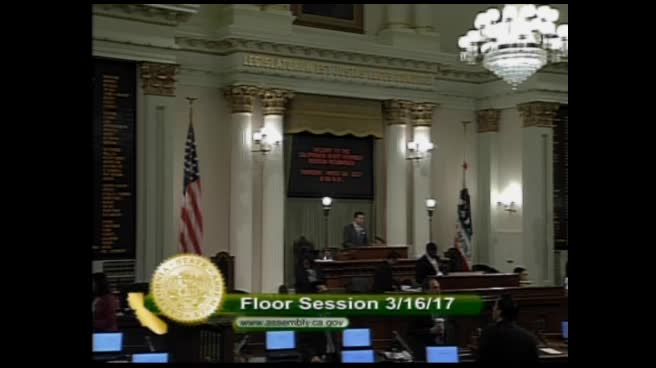
ASSEMBLY FLOOR: Read and adopted, 3/16/17
DIGEST:
This resolution designates March 12, 2017, through March 18, 2017, as Sunshine Week.
ANALYSIS: This resolution makes the following legislative findings:
- California has a long tradition in support of open government and access to government records.
- California voters approved Proposition 59, a state constitutional amendment, also known as the “Sunshine Amendment,” in 2004 that furthers open government protections and the rights of voters.
- Sunshine Week, launched in March 2005, continues to be celebrated each year in mid-March to coincide with National Freedom of Information Day and President James Madison’s birthday on March 16.
- Sunshine Week is about the public’s right to know what its government is doing and why. It seeks to enlighten and empower people to play an active role in all levels of government, and to give people access to information that makes their lives better and their communities stronger.
- Sunshine Week is now a national initiative to promote a dialogue about the importance of open government and freedom of information.
This resolution designates March 12, 2017, through March 18, 2017, as Sunshine Week and encourages all Californians to participate in appropriate activities relating to open government and access to public information.
Related/Prior Legislation
ACR 41 (Ting, Resolution Chapter 17, Statutes of 2015) designated March 15, 2015, through March 21, 2015, as Sunshine Week.
FISCAL EFFECT: Appropriation: No Fiscal Com.: No Local: No
California Newspaper Publishers Association
OPPOSITION: (Verified 3/21/17)
None received
ARGUMENTS IN SUPPORT: The California Newspaper Publishers Association writes, “Each year, media organizations and legislatures across the country participate in Sunshine Week, in an effort to illuminate the benefits of a free press and encourage open government policies. By recognizing Sunshine Week, the California Legislature affirms its commitment to the public’s constitutional right to know what its government is up to.”
Prepared by: Melissa Ward / SFA / (916) 651-1520
3/22/17 14:29:00
**** END ****
ASSEMBLY THIRD READING
ATR Bill Id:ACR 25
Author:()
As Amended Ver:
Majority vote
Committee | Votes | Ayes | Noes |
Rules | 11-0 | Cooley, Cunningham, Berman, Brough, Cervantes, Chen, Friedman, Grayson, Levine, Nazarian, Fong |
SUMMARY: Designates March 12, 2017, through March 18, 2017, as Sunshine Week. Specifically, this resolution makes the following legislative findings:
- California has a long tradition in support of open government and access to government records.
- In 1953, the Ralph M. Brown Act guaranteeing the public's right to attend and participate in local governing bodies; in 1967, the Bagley-Keene Open Meeting Act was adopted by the state to mandate open meetings of state agencies, boards, and commissions; and in 1968, California enacted the California Public Records Act that expressly declared that "access to information concerning the conduct of the people's business is a fundamental and necessary right of every person in this state."
- California voters approved Proposition 59, a state constitutional amendment, also known as the "Sunshine Amendment" in 2004 that furthers open government protections and the rights of voters.
- Open government reforms continue to spread across the country, including the adoption of open data policies to urge innovation and economic development through the use of high-value government data.
- Sunshine Week is now a national initiative to promote a dialogue about the importance of open government and freedom of information. Participants include news media, civic groups, libraries, nonprofit entities, schools, and others interested in the public's right to know.
- Sunshine Week seeks to enlighten and empower people to play an active role in all levels of government, and to give people access to information that makes their lives better and their communities stronger.
- Sunshine Week is increasing public awareness and people are playing more of a role in the actions that affect their communities. People are learning what kinds of information they have a right to see, how and where to obtain that information, and what to do if someone tries to prevent them from accessing it.
FISCAL EFFECT: None
Analysis Prepared by: Nicole Willis / RLS. / (916) 319-2800 FN: 0000026
Date of Hearing: March 9, 2017
ASSEMBLY COMMITTEE ON
, Chair
ABPCA Bill Id:
Author:() – As Amended Ver:
SUBJECT:
SUMMARY: Designates March 12, 2017, through March 18, 2017, as Sunshine Week. Specifically, this resolution makes the following legislative findings:
- California has a long tradition in support of open government and access to government records.
- In 1953, the Ralph M. Brown Act guaranteeing the public’s right to attend and participate in local governing bodies; in 1967, the Bagley-Keene Open Meeting Act was adopted by the state to mandate open meetings of state agencies, boards, and commissions; and in 1968, California enacted the California Public Records Act that expressly declared that “access to information concerning the conduct of the people’s business is a fundamental and necessary right of every person in this state.”
- California voters approved Proposition 59, a state constitutional amendment, also known as the “Sunshine Amendment” in 2004 that furthers open government protections and the rights of voters.
- Open government reforms continue to spread across the country, including the adoption of open data policies to urge innovation and economic development through the use of high-value government data.
- Sunshine Week is now a national initiative to promote a dialogue about the importance of open government and freedom of information. Participants include news media, civic groups, libraries, nonprofit entities, schools, and others interested in the public’s right to know.
- Sunshine Week seeks to enlighten and empower people to play an active role in all levels of government, and to give people access to information that makes their lives better and their communities stronger.
- Sunshine Week is increasing public awareness and people are playing more of a role in the actions that affect their communities. People are learning what kinds of information they have a right to see, how and where to obtain that information, and what to do if someone tries to prevent them from accessing it.
FISCAL EFFECT: None
REGISTERED SUPPORT / OPPOSITION:
Support
None on file
Opposition
None on file
Analysis Prepared by:
Bill Author

Bill Co-Author(s):