ACR 32: Community colleges: faculty.
- Session Year: 2017-2018
- House: Assembly
- Latest Version Date: 2017-09-19
This measure would encourage the Chancellor of the California Community Colleges, in consultation with specified affected stakeholders, to develop proposals for legislative consideration to address the longstanding challenges to achieving a specified goal of credit classroom instruction taught by full-time faculty and compensation equity for part-time faculty.
This measure would encourage the Chancellor of the California Community Colleges, in consultation with specified affected stakeholders, to develop proposals for legislative consideration to address the longstanding challenges to achieving a specified goal of credit classroom instruction taught by full-time faculty and compensation equity for part-time faculty.
This measure would encourage the Chancellor of the California Community Colleges, in consultation with specified affected stakeholders, to develop proposals for legislative consideration to address the longstanding challenges to achieving a specified goal of credit classroom instruction taught by full-time faculty and compensation equity for part-time faculty.
WHEREAS, In 1978, the Board of Governors of the California Community Colleges approved the principle of limiting the amount of credit instruction taught by part-time faculty to no more than 25 percent; and
WHEREAS, In 1988, the Legislature approved Assembly Bill 1725 (Chapter 973 of the Statutes of 1988), which amended Section 87482.6 of the Education Code to state ... the Legislature wishes to recognize and make efforts to address longstanding policy of the board of governors that at least 75 percent of the hours of credit instruction in the California Community Colleges, as a system, should be taught by full-time instructors; and
WHEREAS, In 1977, the Board of Governors of the California Community Colleges supported the principle of equal pay for equal work for part-time faculty, and affirmed that in 2001 with a statement of support for the policy that part-time faculty should be paid comparably to full-time faculty for those in-class and out-of-class responsibilities that are the same; and
WHEREAS, In the annual Budget Act for 200102 fiscal year, the state funded an equity compensation line for part-time faculty with the goal of achieving equal pay for equal work; and
WHEREAS, In 2012, the Legislature approved Senate Bill 1456 (Chapter 624 of the Statutes of 2012), affirming the link between student success with full-time faculty hiring and part-time faculty support, noting the Legislature acknowledges the commitment of the board of governors, through its regular budget process, to evaluate resource needs and seek funding for essential educational priorities that contribute to student success, which include, but are not necessarily limited to ... hiring more full-time faculty; and increasing support for part-time faculty; and
WHEREAS, The need for full-time faculty and support for part-time faculty are included in the accrediting standards for community colleges; and
WHEREAS, Successive legislative sessions have not resulted in achieving the goal of 75 percent of credit classroom instruction taught by full-time faculty, with the latest published ratio at 56.4 percent, or compensation equity for part-time faculty; now, therefore, be it
Resolved by the Assembly of the State of California, the Senate thereof concurring, The Legislature encourages the Chancellor of the California Community Colleges, in consultation with affected stakeholders, including, but not limited to, representatives of faculty and students, to develop proposals for legislative consideration to address the longstanding challenges to achieving the goal of 75 percent of credit classroom instruction taught by full-time faculty and compensation equity for part-time faculty; and be it further
Resolved, The proposals developed by the Chancellor of the California Community Colleges through a stakeholder process include suggested updates to the statutory references to program-based funding and program improvement; and be it further
Resolved, The proposals developed by the Chancellor of the California Community Colleges through a stakeholder process include ideas for the expansion of office hours and health benefits for part-time faculty; and be it further
Resolved, The proposals developed by the Chancellor of the California Community Colleges through a stakeholder process include suggestions on establishing goals for full-time faculty and compensation parity for faculty teaching noncredit education; and be it further
Resolved, That the Chief Clerk of the Assembly transmit copies of this resolution to the author for appropriate distribution.
|
Date
|
Status
|
|---|---|
| Sep 19, 2017 | Chaptered by Secretary of State - Res. Chapter 161, Statutes of 2017. |
| Sep 19, 2017 | Enrolled and filed with the Secretary of State at 11:30 a.m. |
| Sep 11, 2017 | In Assembly. Ordered to Engrossing and Enrolling. |
| Sep 11, 2017 | Adopted and to Assembly. |
| Sep 1, 2017 | From committee: Be adopted. Ordered to Third Reading. (Ayes 6. Noes 1.) (September 1). |
| Jul 10, 2017 | In committee: Referred to APPR. suspense file. |
| Jun 28, 2017 | From committee: Be adopted, and re-refer to Com. on APPR. Re-referred. (Ayes 6. Noes 0.) (June 28). Re-referred to Com. on APPR. |
| Jun 8, 2017 | Re-referred to Com. on ED. |
| May 31, 2017 | In Senate. To Com. on RLS. |
| May 30, 2017 | Coauthors revised. |
| May 26, 2017 | From committee: Be adopted. Ordered to Third Reading. (Ayes 12. Noes 1.) (May 26). |
| May 10, 2017 | In committee: Referred to APPR. suspense file. |
| Apr 26, 2017 | From committee: Be adopted, and re-refer to Com. on APPR. Re-referred. (Ayes 10. Noes 2.) (April 25). Re-referred to Com. on APPR. |
| Mar 16, 2017 | Referred to Com. on HIGHER ED. |
| Mar 14, 2017 | From printer. |
| Mar 13, 2017 | Introduced. To print. |
|
Date
|
Description
|
Location
|
Votes
|
|
|---|---|---|---|---|
| Sep 11, 2017 | Assembly 3rd Reading ACR32 Medina et al. By Leyva | Senate Floor |
Passed |
|
| Sep 1, 2017 | Be adopted. Ordered to third reading | Senate Standing Committee on Appropriations |
Passed |
|
| Jul 10, 2017 | Placed on suspense file | Senate Standing Committee on Appropriations |
Passed |
|
| Jun 28, 2017 | Be adopted, but first be re-referred to the Committee on [Appropriations] | Senate Standing Committee on Education |
Passed |
|
| May 30, 2017 | ACR 32 MEDINA Assembly Third Reading | Assembly Floor |
Passed |
|
| May 26, 2017 | Be adopted. To third reading. | Assembly Standing Committee on Appropriations |
Passed |
|
| Apr 25, 2017 | Be adopted and re-referred to the Committee on [Appropriations] | Assembly Standing Committee on Higher Education |
Passed |
This list shows positions taken on this bill by organizations on the date displayed, which is linked to the original source.
Positions by individuals are not included.
|
Organization
|
Position
|
Date
|
|---|---|---|
| An individual | ** Support | Jun 27, 2017 |
| Faculty Association Of California Community Colleges | ** Support | Sep 2, 2017 |
Office of Senate Floor Analyses (916) 651-1520 Fax: (916) 327-4478 | ACR |
THIRD READING
Bill No: ACR 32
:
SENATE EDUCATION COMMITTEE: 6-0, 6/28/17
AYES: Allen, Wilk, Galgiani, Leyva, Mendoza, Pan
NO VOTE RECORDED: Vidak
SENATE APPROPRIATIONS COMMITTEE: 6-1, 9/1/17
AYES: Lara, Bates, Beall, Bradford, Hill, Wiener
NOES: Nielsen
ASSEMBLY FLOOR: 63-7, 5/30/17 - See last page for vote
SOURCE: Faculty Association of California Community Colleges
DIGEST:
This resolution encourages the Chancellor of the California Community Colleges (CCC), in consultation with affected stakeholders, to develop proposals for legislative consideration to address the longstanding challenges to achieving the goal of 75 percent of credit classroom instruction taught by full-time faculty and compensation equity for part-time faculty.
Existing law:
- Defines "faculty" as those employees of a community college district who are employed in academic positions that are not designated as supervisory or management. Faculty includes, but are not limited to, instructors, librarians, counselors, community college health services professionals, handicapped student programs and services professionals, and extended opportunity programs and services professionals (Education Code §87003).
- Defines any person who is employed to teach for not more than 67 percent of the hours per week on a full-time assignment to be a temporary (part-time) employee. (EC § 87482.5 and § 87882)
- Requires, if a community college district's full-time faculty percentage is less than 75 percent, the following to apply:
- Districts must increase their base full-time faculty obligation, if the CCC Board of Governors (BOG) determines there is adequate funding.
- Districts must apply specified percentages of their program improvement funding (these funds are no longer provided to the CCCs) to reach the 75 percent standard.
- Provides for the reduction in the number of the full-time obligation for districts that exceed the 75 percent standard.
- Requires the district's base full-time faculty obligation to be unchanged if the BOG determines that adequate funds have not been provided. Existing law authorizes a district to choose, in lieu of maintaining its base obligation, to maintain, at a minimum, the full-time faculty percentage attained in the prior fall term. (California Code of Regulations, Title 5, § 51025)
- Districts must increase their base full-time faculty obligation, if the CCC Board of Governors (BOG) determines there is adequate funding.
This resolution:
- Encourages the Chancellor of the CCC, in consultation with affected stakeholders, to develop proposals for legislative consideration to address the longstanding challenges to achieving the goal of 75 percent of credit classroom instruction taught by full-time faculty and compensation equity for part-time faculty.
- Provides that the stakeholders are to include, but not be limited to, representatives of faculty and students.
- Provides that the proposals are to include:
- Suggested updates to the statutory references to program-based funding and program improvement.
- Ideas for the expansion of office hours and health benefits for part-time faculty.
- Suggestions on establishing goals for full-time faculty and compensation parity for faculty teaching non-credit education.
- Suggested updates to the statutory references to program-based funding and program improvement.
Comments
- Existing policy. The CCC BOG has had a longstanding policy that at least 75 percent of the hours of credit instruction in the CCC, as a system, should be taught by full-time instructors. Existing regulations require specified steps to be taken by community college districts to achieve the 75 percent standard, many are contingent upon adequate funding. According to the last published ratio, approximately 56.4 percent of credit bearing courses across the CCC system are taught by full-time faculty. [http://extranet.cccco.edu/Divisions/ FinanceFacilities/FiscalStandardsandAccountibilityUnit/FiscalStandards/FullTimeFacultyObligation.aspx#Fall_2016_and_Fall_2017]
- Budget appropriation. The 2015-16 Budget Act included $62 million for community college districts to hire additional full-time faculty. The 2016-17 and 2017-18 Budgets did not include additional funding for this purpose. The CCC Chancellor’s Office unsuccessfully requested an additional $100 million in 2017-18 to hire full-time faculty. However, the 2017-18 Budget Act includes $183.6 million in unallocated base increase, which could be used to increase full-time faculty.
FISCAL EFFECT: Appropriation: No Fiscal Com.: Local: No
According to the Senate Appropriations Committee, this bill could result in significant cost pressures to implement any proposal that is developed by the Chancellor’s Office to increase the percentage of full-time faculty. As an example, the 2015 Budget Act included $62 million for community college districts to hire additional full-time faculty. Currently, approximately 56 percent of credit bearing courses across the system are taught by full-time faculty.
Faculty Association of California Community Colleges (source)
One individual
OPPOSITION: (Verified 8/31/17)
None received
ASSEMBLY FLOOR: 63-7, 5/30/17
AYES: Aguiar-Curry, Arambula, Baker, Berman, Bigelow, Bloom, Bocanegra, Bonta, Burke, Caballero, Calderon, Cervantes, Chávez, Chiu, Chu, Cooley, Cooper, Cunningham, Dababneh, Daly, Frazier, Friedman, Cristina Garcia, Eduardo Garcia, Gipson, Gloria, Gomez, Gonzalez Fletcher, Gray, Grayson, Holden, Irwin, Jones-Sawyer, Kalra, Lackey, Levine, Limón, Low, Maienschein, Mathis, McCarty, Medina, Mullin, Muratsuchi, Nazarian, O'Donnell, Quirk, Quirk-Silva, Reyes, Ridley-Thomas, Rodriguez, Rubio, Salas, Santiago, Steinorth, Mark Stone, Thurmond, Ting, Voepel, Waldron, Weber, Wood, Rendon
NOES: Travis Allen, Brough, Gallagher, Harper, Kiley, Melendez, Obernolte
NO VOTE RECORDED: Acosta, Chau, Chen, Choi, Dahle, Eggman, Flora, Fong, Mayes, Patterson
9/2/17 9:45:20
**** END ****
SENATE COMMITTEE ON APPROPRIATIONS
Senator Ricardo Lara, Chair
2017 - 2018 Regular Session
ACR 32 (Medina) - Community colleges: faculty
Version: March 13, 2017 | Policy Vote: ED. 6 - 0 |
Urgency: | Mandate: |
Hearing Date: July 10, 2017 | Consultant: Lenin Del Castillo |
This bill meets the criteria for referral to the Suspense File.
Bill Summary:
This resolution encourages the Chancellor of the California Community Colleges (CCC), in consultation with affected stakeholders, to develop proposals for legislative consideration to address the longstanding challenges to achieving the goal of 75 percent of credit classroom instruction taught by full-time faculty and compensation equity for part-time faculty.
Fiscal Impact:
While this measure encourages, and does not require, the community colleges to implement this resolution, it could result in significant cost pressures to implement any proposal that is developed by the Chancellor’s Office to increase the percentage of full-time faculty. As an example, the 2015 Budget Act included $62 million for community college districts to hire additional full-time faculty. Currently, approximately 56 percent of credit bearing courses across the system are taught by full-time faculty.
Background:
Existing law defines "faculty" as those employees of a community college district who are employed in academic positions that are not designated as supervisory or management. Faculty includes, but are not limited to, instructors, librarians, counselors, community college health services professionals, handicapped student programs and services professionals, and extended opportunity programs and services professionals. It also defines any person who is employed to teach for not more than 67 percent of the hours per week on a full-time assignment to be a temporary (part-time) employee.
Existing law requires, if a community college district's full-time faculty percentage is less than 75 percent, the following to apply:
- Districts must increase their base full-time faculty obligation, if the CCC Board of Governors (BOG) determines there is adequate funding.
- Districts must apply specified percentages of their program improvement funding (these funds are no longer provided to the CCCs) to reach the 75 percent standard.
- Provides for the reduction in the number of the full-time obligation for districts that exceed the 75 percent standard.
- Requires the district's base full-time faculty obligation to be unchanged if the BOG determines that adequate funds have not been provided. Existing law authorizes a district to choose, in lieu of maintaining its base obligation, to maintain, at a minimum, the full-time faculty percentage attained in the prior fall term.
Proposed Law:
This resolution encourages the Chancellor of the California Community Colleges (CCC), in consultation with affected stakeholders, to develop proposals for legislative consideration to address the longstanding challenges to achieving the goal of 75 percent of credit classroom instruction taught by full-time faculty and compensation equity for part-time faculty. Further, it provides that the stakeholders are to include but not be limited to representatives of faculty and students. This resolution also provides that the proposals are to include suggested updates to the statutory references to program-based funding and program improvement; ideas for the expansion of office hours and health benefits for part-time faculty; and suggestions on establishing goals for full-time faculty and compensation parity for faculty teaching non-credit education.
Related Legislation:
SB 373 (Pan, 2015) established the Community College Excellence in Education Act and sets a cap on the number of part-time faculty for each community college district based on the 2014-15 fiscal year, thereby limiting new hires to only full-time faculty until the district reaches a 75 percent threshold of full-time faculty. This bill also prohibited new tenure-track faculty from performing overload assignments during their probationary period. SB 373 was held in the Senate Appropriations Committee.
AB 950 (Chau, 2013) prohibited a full-time faculty member for a community college district from being assigned a workload that includes overload or extra assignments if the overload or extra assignments exceed 50 percent of a full-time workload in a semester or quarter that commences on or after January 1, 2014, with several exceptions. AB 950 was held in the Senate Appropriations Committee.
Staff Comments:
The CCC Board of Governors has had a longstanding policy that at least 75 percent of the hours of credit instruction in the CCC, as a system, should be taught by full-time instructors. Existing regulations require specified steps to be taken by community college districts to achieve the 75 percent standard. However, many are contingent upon adequate funding.
-- END --
SENATE COMMITTEE ON EDUCATION
Senator Benjamin Allen, Chair
2017 - 2018 Regular
Bill No: Hearing Date: June 28, 2017
Author: | Medina | ||
Version: |
| ||
Urgency: | Fiscal: | ||
Consultant: | Lynn Lorber | ||
Subject:
SUMMARY
This resolution encourages the Chancellor of the California Community Colleges (CCC), in consultation with affected stakeholders, to develop proposals for legislative consideration to address the longstanding challenges to achieving the goal of 75 percent of credit classroom instruction taught by full-time faculty and compensation equity for part-time faculty.
BACKGROUND
Existing law:
- Defines "faculty" as those employees of a community college district who are employed in academic positions that are not designated as supervisory or management. Faculty includes, but are not limited to, instructors, librarians, counselors, community college health services professionals, handicapped student programs and services professionals, and extended opportunity programs and services professionals (Education Code §87003).
- Defines any person who is employed to teach for not more than 67 percent of the hours per week on a full-time assignment to be a temporary (part-time) employee. (EC § 87482.5 and § 87882)
- Requires, if a community college district's full-time faculty percentage is less than 75 percent, the following to apply:
- Districts must increase their base full-time faculty obligation, if the CCC Board of Governors (BOG) determines there is adequate funding.
- Districts must apply specified percentages of their program improvement funding (these funds are no longer provided to the CCCs) to reach the 75 percent standard.
- Provides for the reduction in the number of the full-time obligation for districts that exceed the 75 percent standard.
- Requires the district's base full-time faculty obligation to be unchanged if the BOG determines that adequate funds have not been provided. Existing law authorizes a district to choose, in lieu of maintaining its base obligation, to maintain, at a minimum, the full-time faculty percentage attained in the prior fall term. (California Code of Regulations, Title 5, § 51025)
- Districts must increase their base full-time faculty obligation, if the CCC Board of Governors (BOG) determines there is adequate funding.
ANALYSIS
This resolution:
- Encourages the Chancellor of the California Community Colleges (CCC), in consultation with affected stakeholders, to develop proposals for legislative consideration to address the longstanding challenges to achieving the goal of 75 percent of credit classroom instruction taught by full-time faculty and compensation equity for part-time faculty.
- Provides that the stakeholders are to include but not be limited to representatives of faculty and students.
- Provides that the proposals are to include:
- Suggested updates to the statutory references to program-based funding and program improvement.
- Ideas for the expansion of office hours and health benefits for part-time faculty.
- Suggestions on establishing goals for full-time faculty and compensation parity for faculty teaching non-credit education.
- Suggested updates to the statutory references to program-based funding and program improvement.
STAFF COMMENTS
- Need for the resolution. According to the author, “One trend in community colleges is the increasing reliance on part-time faculty; almost two-thirds of community college faculty teaches part-time, in contrast to less than one-third in four-year colleges. In California, a 1988 goal to increase full-time faculty taught classes to 75% remains unmet. Part-time faculty command a smaller salary than their full-time counterparts, despite the fact that many assume a full course load by teaching at multiple districts. Of particular concern to part-time faculty is the growing difficulty in keeping up with student needs; many do not have office space and must balance the rigors of a heavy teaching load at multiple campuses. Without space, time, and funding, most are unable to hold office hours.”
- Existing policy. The CCC Board of Governors has had a longstanding policy that at least 75 percent of the hours of credit instruction in the CCC, as a system, should be taught by full-time instructors. Existing regulations require specified steps to be taken by community college districts to achieve the 75 percent standard, many are contingent upon adequate funding. According to the last published ratio, approximately 56.4 percent of credit bearing courses across the CCC system are taught by full-time faculty.
http://extranet.cccco.edu/Divisions/FinanceFacilities/FiscalStandardsandAccountibilityUnit/FiscalStandards/FullTimeFacultyObligation.aspx#Fall_2016_and_Fall_2017 - Budget appropriation. The 2015-16 Budget Act included $62 million for community college districts to hire additional full-time faculty. The 2016-17 and 2017-18 budgets did not include additional funding for this purpose. The CCC Chancellor’s Office unsuccessfully requested an additional $100 million in 2017-18 to hire full-time faculty. However, the 2017-18 Budget Act includes $183.6 million in unallocated base increase, which could be used to increase full-time faculty.
- Fiscal impact. According to the Assembly Appropriations Committee, this resolution would impose no fiscal cost, as this measure encourages, not requires, the California Community Colleges (CCC) to implement this resolution. However, the CCC would experience significant cost pressures to implement any proposal to increase the percentage of full-time faculty. These costs count toward meeting the Proposition 98 minimum funding guarantee.
- Prior legislation. SB 373 (Pan, 2015) established the Community College Excellence in Education Act and sets a cap on the number of part-time faculty for each community college district based on the 2014-15 fiscal year, thereby limiting new hires to only full-time faculty until the district reaches a 75 percent threshold of full-time faculty. This bill also prohibited new tenure-track faculty from performing overload assignments during their probationary period. Finally, this bill sets forth a series of provisions governing how the threshold is maintained and repercussions in cases when it is not maintained. SB 373 was held in the Senate Appropriations Committee.
AB 950 (Chau, 2013) prohibited a full-time faculty member for a community college district from being assigned a workload that includes overload or extra assignments if the overload or extra assignments exceed 50 percent of a full-time workload in a semester or quarter that commences on or after January 1, 2014, with several exceptions. AB 950 was held in the Senate Appropriations Committee.
AB 1826 (Hernandez, 2012) prohibited a full-time faculty member from being assigned a workload with an overload or extra assignments exceeding 50 percent of the full-time semester or quarter workload. AB 1826 was held in the Senate Appropriations Committee.
ACR 138 (Nava, Resolution Chapter 142, 2010) stated legislative intent that part-time and temporary faculty receive pay and benefits that are equal to those of specified tenure-track faculty, to the extent funding is provided, and that the CCC increase the percentage of full-time tenured and tenure-track faculty.
AB 1343 (Mendoza, 2007) required the CCC and the California State University to achieve 75 percent full-time equivalent faculty by 2014-15, to achieve certain standards in pro-rata salary and benefits, and provided preferential treatment for
part-time faculty in the hiring process for new full-time faculty positions. AB 1343 was held in the Senate Appropriations Committee.
SUPPORT
Faculty Association of California Community Colleges (sponsor)
An individual
OPPOSITION
None received
-- END --
ASSEMBLY THIRD READING
ATR Bill Id:
Author:(Medina)
As Introduced Ver:March 13, 2017
Majority vote
Committee | Votes | Ayes | Noes |
Higher Education | 10-2 | Medina, Baker, Arambula, Bloom, Irwin, Levine, Low, Quirk-Silva, Santiago, Weber | Choi, Kiley |
Appropriations | 12-1 | Gonzalez Fletcher, Bloom, Bocanegra, Bonta, Calderon, McCarty, Quirk, Friedman, Eduardo Garcia, Gray, Muratsuchi, Reyes | Gallagher |
SUMMARY: Encourages the California Community Colleges (CCC) Chancellor, in consultation with specified stakeholders, to develop proposals for legislative consideration to address the longstanding challenges to achieving the goal of 75% credit classroom instruction taught by full-time (F/T) faculty and compensation equity for part-time (P/T) faculty.
EXISTING LAW:
- Defines "faculty" as those employees of a community college district (CCD) who are employed in academic positions that are not designated as supervisory or management, as specified. Faculty include, but are not limited to, instructors, librarians, counselors, community college health services professionals, handicapped student programs and services professionals, and extended opportunity programs and services professionals (Education Code (EDC) Section 87003).
- Defines any person who is employed to teach for not more than 67% of the hours per week, considered a F/T assignment, to be a temporary (P/T) employee (EDC Sections 87482.5 and 87882).
- Requires the CCC Board of Governors (BOG) to adopt regulations regarding the percent of credit instruction taught by F/T faculty and authorizes CCDs with less than 75% F/T instructors to apply a portion of their "program improvement" funds toward reaching the 75% goal (commonly referred as "75/25") (EDC Section 87482.6).
To note, the state has stopped providing program improvement funds and the BOG has since required CCDs to provide a portion of their enrollment growth funds to hiring more F/T faculty.
- Requires that contract employees shall be evaluated at least once in each academic year, that regular employees shall be evaluated at least once in every three academic years, and that temporary employees shall be evaluated within the first year of employment. Specifies that thereafter, evaluation shall be at least once every six regular semesters, or once every nine regular quarters, as applicable. Stipulates that whenever an evaluation is required of a faculty member by a CCD, the evaluation shall be conducted in accordance with the standards and procedures established by the rules and regulations of the governing board of the employing CCD (EDC Section 87663).
A complete summary of existing law regarding the employment of CCC faculty is beyond the scope of this analysis; however, it is important to note there are extensive, complex statutes, many of which apply to "full-time", "part-time", "temporary", "contract" and other academic employees, in a wide array of situations related to multiple aspects of district employment.
FISCAL EFFECT: According to the Assembly Appropriations Committee, no fiscal cost, as this measure encourages, not requires, the CCC to implement this resolution. However, the CCC would experience significant cost pressures to implement any proposal. These costs count toward meeting the Proposition 98 minimum funding guarantee. The 2015-16 Budget Act included $62 million for districts to hire additional F/T faculty; however, the Budget language specified that districts must use any funds not needed to meet their "faculty obligation number" for enhancing student success through faculty. Additionally, the 2016-17 Budget Act provided $3.7 million for P/T faculty office hours. As part of the 2017-18 budget, CCC has requested $100 million in state funding to increase P/T faculty.
COMMENTS: Part-time faculty. According to the Center for Community College Student Engagement's (CCCSE) April 2014 report, entitled, "Contingent Commitments: Bringing Part-Time Faculty Into Focus," 70% of the 400,000 faculty members of public, two-year colleges hired in 2009 were part-time instructors. The CCCSE report found that the P/T faculty teach 58% of community college classes; and, 53% of community college students. Additionally, the report found that for many P/T faculty, contingent employment goes "hand-in-hand" with being marginalized within the faculty. The CCCSE report also found that differences in the actions of part-time and full-time faculty cannot necessarily be attributed to differences in the will or abilities of P/T faculty. The report contends that, "Most likely, they [the differences] exist at least in part because colleges too often are not fully supporting part-time faculty or engaging them in critical elements of the faculty experience."
Purpose of this resolution. According to the author, CCC's are a vital and unique component of the states' education system; they play a multifaceted role, where a diverse student body can advance from basic skills to job readiness, specific employment, and/or advanced degrees.
The author states, "One trend in community colleges is the increasing reliance on part-time faculty; almost two-thirds of community college faculty teaches part-time, in contrast to less than one-third in four-year colleges." The author points out that, "Of particular concern to part-time faculty is the growing difficulty in keeping up with student needs; many do not have office space and must balance the rigors of a heavy teaching load at multiple campuses. Without space, time, and funding, most are unable to hold office hours."
This resolution recognizes that together, F/T and P/T faculty are important to the CCC mission to provide accessible and affordable higher education for Californians.
Budget augmentation. The 2015-16 Budget Act included $62 million for districts to hire additional full-time faculty; however, the Budget language specified that districts must use any funds not needed to meet their "faculty obligation number" for enhancing student success through the support of faculty, including (but not limited to) support of part-time faculty office hours.
Additionally, the 2016-17 Budget Act provided $3.7 million for P/T faculty office hours, bringing total funding to $7.2 million.
Prior legislation. ACR 138 (Nava), Resolution Chapter 142, Statutes of 2010, in part, expressed the Legislature's intent that CCDs increase their portion of F/T faculty, consistent with the policy of the CCC BOG, and provide comparable pay and benefits to P/T faculty.
ACR 91 (Mendoza) of 2008, which was held on the Suspense File in the Assembly Appropriations Committee.
AB 1343 (Mendoza) of 2007, which was held on the Suspense File in the Assembly Appropriations Committee, mandated the policies expressed in ACR 91.
Analysis Prepared by: Jeanice Warden / HIGHER ED. / (916) 319-3960 FN: 0000641
Date of Hearing: May 10, 2017
ASSEMBLY COMMITTEE ON APPROPRIATIONS
Lorena Gonzalez Fletcher, Chair
ABPCA Bill Id:ACR 32
Author:(Medina) – As Introduced Ver:March 13, 2017
Policy Committee: | Higher Education | Vote: | 10 - 2 |
Urgency: State Mandated Local Program: Reimbursable: No
SUMMARY:
This bill encourages the California Community Colleges (CCC) Chancellor, in consultation with affected stakeholders, to develop proposals for legislative consideration to address the longstanding challenges to achieving the goal of 75 percent of credit classroom instruction taught by full-time faculty and compensation equity for part-time faculty.
FISCAL EFFECT:
No fiscal cost, as this bill encourages not requires CCC to implement this ACR. However, the CCC would experience significant cost pressures to implement any proposal. These costs count toward meeting the Proposition 98 minimum funding guarantee. The 2015-16 Budget Act included $62 million for districts to hire additional full-time faculty; however, the Budget language specified that districts must use any funds not needed to meet their “faculty obligation number” for enhancing student success through the support of faculty. Additionally, the 2016-17 Budget Act provided $3.7 million for temporary (PT) faculty office hours. As a part of the 2017-18 budget, CCC has requested $100 million in state funding to increase full-time faculty.
COMMENTS:
- Background and Purpose. Existing law defines any person who is employed to teach for not more than 67 percent of the hours per week to be a temporary (P/T) employee. State law requires the CCC Board of Governors (BOG) to adopt regulations regarding the percent of credit instruction taught by full-time (F/T) faculty and authorizes Community College Districts (CCDs) with less than 75 percent F/T instructors to apply a portion of their "program improvement" funds toward reaching the 75 percent goal. The state has stopped providing program improvement funds and the BOG has since required CCDs to provide a portion of their enrollment growth funds to hiring more F/T faculty.
According to the author, CCCs are a vital and unique component of the state’s education system; they play a multifaceted role, where a diverse student body can advance from basic skills to job readiness, specific employment, and/or advanced degrees. The author states, "One trend in community colleges is the increasing reliance on part-time faculty; almost two-thirds of community college faculty teaches part-time, in contrast to less than one-third in four-year colleges." The author points out that, "Of particular concern to part-time faculty is the growing difficulty in keeping up with student needs; many do not have office space and must balance the rigors of a heavy teaching load at multiple campuses. Without space, time, and funding, most are unable to hold office hours." This resolution recognizes that together, full-time and part-time faculty are important to the CCC mission to provide accessible and affordable higher education for Californians.
- Prior legislation. ACR 138 (Nava), Res. Chapter 142, Statutes of 2010, expressed the Legislature's intent that CCC’s increase their portion of F/T faculty.
ACR 31 (Ruskin) of 2009, which was held on the Suspense File in the Assembly Appropriations Committee, was similar to ACR 138.
Analysis Prepared by: Daisy Gonzales / APPR. / (916) 319-2081
Date of Hearing: April 25, 2017
ASSEMBLY COMMITTEE ON HIGHER EDUCATION
Jose Medina, Chair
ABPCA Bill Id:ACR 32 (
Author:Medina) – As Introduced Ver:March 13, 2017
SUBJECT: Community colleges: faculty.
SUMMARY: Encourages the California Community Colleges (CCC) Chancellor, in consultation with specified stakeholders, to develop proposals for legislative consideration to address the longstanding challenges to achieving a specified goal of credit classroom instruction taught by full-time faculty and compensation equity for part-time faculty. Specifically, this resolution:
- Makes numerous declarations and findings, including, but not limited to:
- In 1978, the CCC Board of Governors (BOG) approved the principle of limiting the amount of credit instruction taught by part-time faculty to no more than 25 percent;
- In 1988, the Legislature approved Assembly Bill 1725 (Chapter 973 of the Statutes of 1988), which amended Section 87482.6 of the Education Code to state “... the Legislature wishes to recognize and make efforts to address longstanding policy of the board of governors that at least 75 percent of the hours of credit instruction in the California Community Colleges, as a system, should be taught by full-time instructors”;
- In 2012, the Legislature approved Senate Bill 1456 (Chapter 624 of the Statutes of 2012), affirming the link between student success with full-time faculty hiring and part-time faculty support, noting “the Legislature acknowledges the commitment of the board of governors, through its regular budget process, to evaluate resource needs and seek funding for essential educational priorities that contribute to student success, which include, but are not necessarily limited to ... hiring more full-time faculty; and increasing support for part-time faculty”; and,
- Successive legislative sessions have not resulted in achieving the goal of 75 percent of credit classroom instruction taught by full-time faculty, with the latest published ratio at 56.4 percent, or compensation equity for part-time faculty.
- Encourages the CCC Chancellor in consultation with affected stakeholders, including, but not limited to, representatives of faculty and students, to develop proposals for legislative consideration to address the longstanding challenges to achieving the goal of 75 percent of credit classroom instruction taught by full-time faculty and compensation equity for part-time faculty.
- Requests proposals developed by the CCC Chancellor through a stakeholder process to include the following:
- Suggested updates to the statutory references to program-based funding and program improvement;
- Ideas for the expansion of office hours and health benefits for part-time faculty; and,
- Suggestions on establishing goals for full-time faculty and compensation parity for faculty teaching noncredit education.
EXISTING LAW:
- Defines "faculty" as those employees of a CCD who are employed in academic positions that are not designated as supervisory or management, as specified. Faculty include, but are not limited to, instructors, librarians, counselors, community college health services professionals, handicapped student programs and services professionals, and extended opportunity programs and services professionals (Education Code (EC) Section 87003).
- Defines any person who is employed to teach for not more than 67 percent of the hours per week, considered a full-time assignment, to be a temporary (P/T) employee (EC Sections 87482.5 and 87882).
- Requires the CCC BOG to adopt regulations regarding the percent of credit instruction taught by full-time (F/T) faculty and authorizes CCDs with less than 75 percent F/T instructors to apply a portion of their "program improvement" funds toward reaching the 75 percent goal (commonly referred as "75/25") (EC Section 87482.6).
To note, the state has stopped providing program improvement funds and the BOG has since required CCDs to provide a portion of their enrollment growth funds to hiring more F/T faculty.
- Requires that contract employees shall be evaluated at least once in each academic year, that regular employees shall be evaluated at least once in every three academic years, and that temporary employees shall be evaluated within the first year of employment. Specifies that thereafter, evaluation shall be at least once every six regular semesters, or once every nine regular quarters, as applicable. Stipulates that whenever an evaluation is required of a faculty member by a CCD, the evaluation shall be conducted in accordance with the standards and procedures established by the rules and regulations of the governing board of the employing CCD (EC Section 87663).
A complete summary of existing law regarding the employment of CCC faculty is beyond the scope of this analysis; however, it is important to note there are extensive, complex statutes, many of which apply to "full-time", "part-time", "temporary", "contract" and other academic employees, in a wide array of situations related to multiple aspects of district employment.
FISCAL EFFECT: Unknown
COMMENTS: Part-time faculty. According to the Center for Community College Student Engagement's (CCCSE) April 2014 report, entitled, "Contingent Commitments: Bringing Part-Time Faculty Into Focus," 70 percent of the 400,000 faculty members of public, two-year colleges hired in 2009 were part-time instructors. The CCCSE report found that the P/T faculty teach 58 percent of community college classes; and, 53 percent of community college students. Additionally, the report found that for many P/T faculty, contingent employment goes "hand-in-hand" with being marginalized within the faculty. The CCCSE report also found that differences in the actions of part-time and full-time faculty cannot necessarily be attributed to differences in the will or abilities of P/T faculty. The report contends that, "Most likely, they [the differences] exist at least in part because colleges too often are not fully supporting part-time faculty or engaging them in critical elements of the faculty experience."
Purpose of this resolution. According to the author, CCC's are a vital and unique component of the states' education system; they play a multifaceted role, where a diverse student body can advance from basic skills to job readiness, specific employment, and/or advanced degrees.
The author states, "One trend in community colleges is the increasing reliance on part-time faculty; almost two-thirds of community college faculty teaches part-time, in contrast to less than one-third in four-year colleges." The author points out that, "Of particular concern to part-time faculty is the growing difficulty in keeping up with student needs; many do not have office space and must balance the rigors of a heavy teaching load at multiple campuses. Without space, time, and funding, most are unable to hold office hours."
This resolution recognizes that together, full-time and part-time faculty are important to the CCC mission to provide accessible and affordable higher education for Californians.
Budget augmentation. The 2015-16 Budget Act included $62 million for districts to hire additional full-time faculty; however, the Budget language specified that districts must use any funds not needed to meet their “faculty obligation number” for enhancing student success through the support of faculty, including (but not limited to) support of part-time faculty office hours.
Additionally, the 2016-17 Budget Act provided $3.7 million for P/T faculty office hours, bringing total funding to $7.2 million.
Prior legislation. ACR 138 (Nava), Res. Chapter 142, Statutes of 2010, in part, expressed the Legislature's intent that CCDs increase their portion of F/T faculty, consistent with the policy of the CCC BOG, and provide comparable pay and benefits to P/T faculty.
ACR 31 (Ruskin) of 2009, which was held on the Suspense File in the Assembly Appropriations Committee, was similar to ACR 138.
ACR 91 (Mendoza) of 2008, which was held on the Suspense File in the Assembly Appropriations Committee, was almost identical to ACR 31.
AB 1343 (Mendoza) of 2007, which was held on the Suspense File in the Assembly Appropriations Committee, mandated the policies expressed in ACR 91.
REGISTERED SUPPORT / OPPOSITION:
Support
Faculty Association of California Community Colleges (sponsor)
Opposition
None on file.
Analysis Prepared by: Jeanice Warden / HIGHER ED. / (916) 319-3960
Discussed in Hearing
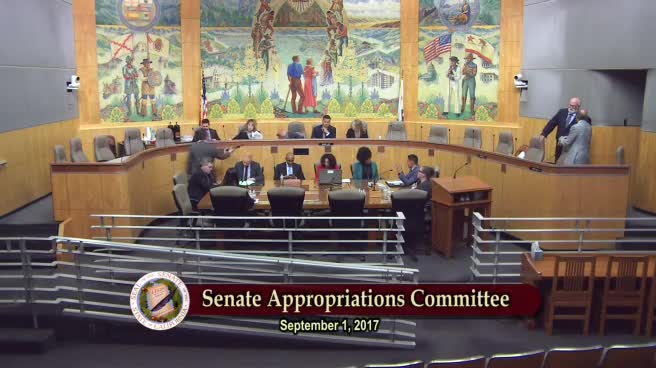 1H
Senate Standing Committee on Appropriations
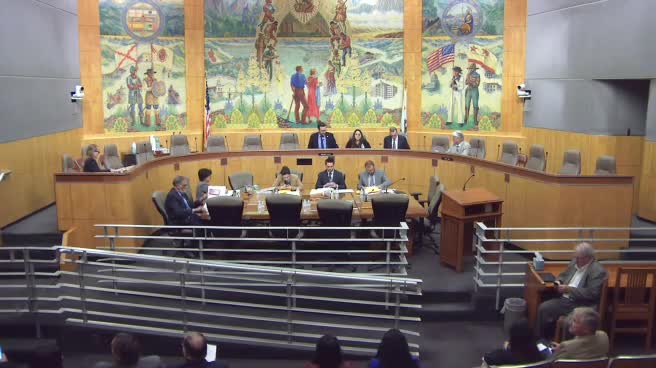 6MIN
Senate Standing Committee on Education
 2MIN
Assembly Floor
 1H
Assembly Standing Committee on Appropriations
 17MIN
Assembly Standing Committee on Higher Education
Bill Author

Bill Co-Author(s):