AJR 1: Presidential elections: electoral college.
- Session Year: 2017-2018
- House: Assembly
- Latest Version Date: 2017-08-28
This measure would urge the United States Congress to propose and send to the states for ratification a constitutional amendment to abolish the electoral college and provide for the direct election of the President and Vice President of the United States by the popular vote of all eligible citizens of the United States.
This measure would urge the United States Congress to propose and send to the states for ratification a constitutional amendment to abolish the electoral college and provide for the direct election of the President and Vice President of the United States by the popular vote of all eligible citizens of the United States.
This measure would urge the United States Congress to propose and send to the states for ratification a constitutional amendment to abolish the electoral college and provide for the direct election of the President and Vice President of the United States by the popular vote of all eligible citizens of the United States.
This measure would urge the United States Congress to propose and send to the states for ratification a constitutional amendment to abolish the electoral college and provide for the direct election of the President and Vice President of the United States by the popular vote of all eligible citizens of the United States.
WHEREAS, The electoral college is provided for in Section 1 of Article II of, and Amendment 12 to, the United States Constitution, whereby states are directed to appoint electors who then meet and cast votes for President and Vice President of the United States; and
WHEREAS, Voters cast ballots in the presidential election to select 538 electors, rather than voting directly for their preferred candidate; and
WHEREAS, In the 2016 presidential general election, presidential campaigns dedicated 99 percent of their advertisement spending and 95 percent of their campaign visits to just 14 battleground states, with more than half going to only four statesFlorida, North Carolina, Pennsylvania, and Ohio; and
WHEREAS, A total of 24 states had zero campaign events for the 2016 presidential general election; and
WHEREAS, If the objective of the presidential election is to accumulate the most popular votes, as opposed to winning or losing a particular state and its electors, then there will be incentive for presidential candidates to compete for every vote in every state; and
WHEREAS, Presidential candidate Hillary Clinton won the popular vote by almost 2,900,000 votes in the 2016 general election, but still lost the presidency to President Donald Trump who had a majority of the electors in the electoral college pledged to him; and
WHEREAS, Since the establishment of the electoral college, 167 electors have declined to vote for the presidential candidate to whom they were pledged, thereby becoming so-called faithless electors; and
WHEREAS, Twice in the past 16 years the candidates for President and Vice President of the United States who won the popular vote still lost the election because they did not win a majority of the votes in the electoral college; and
WHEREAS, The electoral college contradicts the principle of one person, one vote, and yet the electoral college is used to elect the one leader who is supposed to answer to all of the people of this country; and
WHEREAS, Ten states, including California, and the District of Columbia have already enacted the National Popular Vote bill, which ratifies an interstate compact that would guarantee the presidency to the candidate who receives the most popular votes in all 50 states and the District of Columbia; and
WHEREAS, The interstate compact will only become effective if states cumulatively possessing a majority of the total electoral college votes ratify the compact; and
WHEREAS, The electoral college is an outdated, undemocratic system that does not reflect our modern society and needs to be changed immediately; and
WHEREAS, Every voter should have his or her vote count; and
WHEREAS, Abolishing the electoral college requires an amendment to the United States Constitution; and
WHEREAS, Article V of the United States Constitution authorizes the United States Congress, by two-thirds vote, to propose amendments to the United States Constitution, which shall become effective when ratified by the legislatures of three-fourths of the states; now, therefore, be it
Resolved by the Assembly and the Senate of the State of California, jointly, That the Legislature of the State of California urges the United States Congress to propose and send to the states for ratification a constitutional amendment to abolish the electoral college and provide for the direct election of the President and Vice President of the United States by the popular vote of all eligible citizens of the United States; and be it further
Resolved, That the Chief Clerk of the Assembly transmit copies of this resolution to the President and Vice President of the United States, the Speaker of the House of Representatives, the Minority Leader of the House of Representatives, the Majority Leader of the United States Senate, the Minority Leader of the United States Senate, and to each Senator and Representative from California in the Congress of the United States.
WHEREAS, The electoral college is provided for in Section 1 of Article II of, and Amendment 12 to, the United States Constitution, whereby states are directed to appoint electors who then meet and cast votes for President and Vice President of the United States; and
WHEREAS, Voters cast ballots in the presidential election to select 538 electors, rather than voting directly for their preferred candidate; and
WHEREAS, Two-thirds of the campaign events for the 2016 presidential general election occurred in only six states: Florida, North Carolina, Pennsylvania, Ohio, Virginia, and Michigan; andWHEREAS, According to National Popular Vote, 94 percent of the campaign events for the 2016 presidential general election occurred in only 12 states; andWHEREAS, In the 2016 presidential general election, presidential campaigns dedicated 99 percent of their advertisement spending and 95 percent of their campaign visits to just 14 battleground states, with more than half going to only four statesFlorida, North Carolina, Pennsylvania, and Ohio; and
WHEREAS, A total of 24 states had zero campaign events for the 2016 presidential general election; and
WHEREAS, If the objective of the presidential election is to accumulate the most popular votes, as opposed to winning or losing a particular state and its electors, then there will be incentive for presidential candidates to compete for every vote in every state; and
WHEREAS, Presidential candidate Hillary Clinton is leading the popular vote by over 2,000,000 votes in the 2016 general election, but still is expected to lose the presidency to presumed President-elect Donald Trump who has a majority of the electors in the electoral college pledged to him; andWHEREAS, Opponents of presumed President-elect Donald Trump are attempting to persuade electors who are pledged to him to vote against him when the electors cast their votes on December 19, 2016; andWHEREAS, Presidential candidate Hillary Clinton won the popular vote by almost 2,900,000 votes in the 2016 general election, but still lost the presidency to President Donald Trump who had a majority of the electors in the electoral college pledged to him; and
WHEREAS, Since the establishment of the electoral college, 157 167 electors have declined to vote for the presidential candidate to whom they were pledged, thereby becoming so-called faithless electors; and
WHEREAS, If presumed President-elect Donald Trump wins the electoral college, then that would mean that twice in the past 16 years the candidates for President and Vice President of the United States who won the popular vote still lost the election because they did not win a majority of the votes in the electoral college; andWHEREAS, Twice in the past 16 years the candidates for President and Vice President of the United States who won the popular vote still lost the election because they did not win a majority of the votes in the electoral college; and
WHEREAS, The electoral college contradicts the principle of one person, one vote, and yet the electoral college is used to elect the one leader who is supposed to answer to all of the people of this country; and
WHEREAS, Ten states, including California, and the District of Columbia have already enacted the National Popular Vote bill, which ratifies an interstate compact that would guarantee the presidency to the candidate who receives the most popular votes in all 50 states and the District of Columbia; and
WHEREAS, The interstate compact will only become effective if states cumulatively possessing a majority of the total electoral college votes ratify the compact; and
WHEREAS, The electoral college is an outdated, undemocratic system that does not reflect our modern society and needs to be changed immediately; and
WHEREAS, Every voter should have his or her vote count; and
WHEREAS, Abolishing the electoral college requires an amendment to the United States Constitution; and
WHEREAS, Article V of the United States Constitution authorizes the United States Congress, by two-thirds vote, to propose amendments to the United States Constitution, which shall become effective when ratified by the legislatures of three-fourths of the states; now, therefore, be it
Resolved by the Assembly and the Senate of the State of California, jointly, That the Legislature of the State of California urges the United States Congress to propose and send to the states for ratification a constitutional amendment to abolish the electoral college and provide for the direct election of the President and Vice President of the United States by the popular vote of all eligible citizens of the United States; and be it further
Resolved, That the Chief Clerk of the Assembly transmit copies of this resolution to the President and Vice President of the United States, the Speaker of the House of Representatives, the Minority Leader of the House of Representatives, the Majority Leader of the United States Senate, the Minority Leader of the United States Senate, and to each Senator and Representative from California in the Congress of the United States.
WHEREAS, The electoral college is provided for in Section 1 of Article II of, and Amendment 12 to, the United States Constitution, whereby states are directed to appoint electors who then meet and cast votes for President and Vice President of the United States; and
WHEREAS, Voters cast ballots in the presidential election to select 538 electors, rather than voting directly for their preferred candidate; and
WHEREAS, Two-thirds of the campaign events for the 2016 presidential general election occurred in only six states: Florida, North Carolina, Pennsylvania, Ohio, Virginia, and Michigan; and
WHEREAS, According to National Popular Vote, 94 percent of the campaign events for the 2016 presidential general election occurred in only 12 states; and
WHEREAS, A total of 24 states had zero campaign events for the 2016 presidential general election; and
WHEREAS, If the objective of the presidential election is to accumulate the most popular votes, as opposed to winning or losing a particular state and its electors, then there will be incentive for presidential candidates to compete for every vote in every state; and
WHEREAS, Presidential candidate Hillary Clinton is leading the popular vote by over 2,000,000 votes in the 2016 general election, but still is expected to lose the presidency to presumed President-elect Donald Trump who has a majority of the electors in the electoral college pledged to him; and
WHEREAS, Opponents of presumed President-elect Donald Trump are attempting to persuade electors who are pledged to him to vote against him when the electors cast their votes on December 19, 2016; and
WHEREAS, Since the establishment of the electoral college, 157 electors have declined to vote for the presidential candidate to whom they were pledged, thereby becoming so-called faithless electors; and
WHEREAS, If presumed President-elect Donald Trump wins the electoral college, then that would mean that twice in the past 16 years the candidates for President and Vice President of the United States who won the popular vote still lost the election because they did not win a majority of the votes in the electoral college; and
WHEREAS, The electoral college contradicts the principle of one person, one vote, and yet the electoral college is used to elect the one leader who is supposed to answer to all of the people of this country; and
WHEREAS, Ten states, including California, and the District of Columbia have already enacted the National Popular Vote bill, which ratifies an interstate compact that would guarantee the presidency to the candidate who receives the most popular votes in all 50 states and the District of Columbia; and
WHEREAS, The interstate compact will only become effective if states cumulatively possessing a majority of the total electoral college votes ratify the compact; and
WHEREAS, The electoral college is an outdated, undemocratic system that does not reflect our modern society and needs to be changed immediately; and
WHEREAS, Every voter should have his or her vote count; and
WHEREAS, Abolishing the electoral college requires an amendment to the United States Constitution; and
WHEREAS, Article V of the United States Constitution authorizes the United States Congress, by two-thirds vote, to propose amendments to the United States Constitution, which shall become effective when ratified by the legislatures of three-fourths of the states; now, therefore, be it
Resolved by the Assembly and the Senate of the State of California, jointly, That the Legislature of the State of California urges the United States Congress to propose and send to the states for ratification a constitutional amendment to abolish the electoral college and provide for the direct election of the President and Vice President of the United States by the popular vote of all eligible citizens of the United States; and be it further
Resolved, That the Chief Clerk of the Assembly transmit copies of this resolution to the President and Vice President of the United States, the Speaker of the House of Representatives, the Minority Leader of the House of Representatives, the Majority Leader of the United States Senate, the Minority Leader of the United States Senate, and to each Senator and Representative from California in the Congress of the United States.
|
Date
|
Status
|
|---|---|
| Aug 28, 2017 | Chaptered by Secretary of State - Res. Chapter 122, Statutes of 2017. |
| Aug 28, 2017 | Enrolled and filed with the Secretary of State at 3 p.m. |
| Aug 22, 2017 | In Assembly. Ordered to Engrossing and Enrolling. |
| Aug 21, 2017 | Adopted and to Assembly. |
| Jun 6, 2017 | From committee: Be adopted. Ordered to Third Reading. (Ayes 3. Noes 1.) (June 6). |
| May 24, 2017 | Re-referred to Com. on E. & C.A. |
| May 16, 2017 | In Senate. To Com. on RLS. |
| May 15, 2017 | Adopted and to Senate. (Ayes 46. Noes 26. Page 1531.) |
| May 10, 2017 | From committee: Be adopted. Ordered to Third Reading. (Ayes 5. Noes 2.) (May 10). |
| May 3, 2017 | Re-referred to Com. on E. & R. |
| May 2, 2017 | From committee chair, with author's amendments: Amend, and re-refer to Com. on E. & R. Amended. |
| Jan 30, 2017 | Referred to Com. on E. & R. |
| Dec 6, 2016 | From printer. |
| Dec 5, 2016 | Introduced. To print. |
|
Date
|
Description
|
Location
|
Votes
|
|
|---|---|---|---|---|
| Aug 21, 2017 | Assembly 3rd Reading AJR1 Low et al. By Hill | Senate Floor |
Passed |
|
| Jun 6, 2017 | Be adopted. Ordered to third reading | Senate Standing Committee on Elections and Constitutional Amendments |
Passed |
|
| May 15, 2017 | AJR 1 LOW Assembly Third Reading | Assembly Floor |
Passed |
|
| May 10, 2017 | Be adopted. To third reading. | Assembly Standing Committee on Elections and Redistricting |
Passed |
This list shows positions taken on this bill by organizations on the date displayed, which is linked to the original source.
Positions by individuals are not included.
Office of Senate Floor Analyses (916) 651-1520 Fax: (916) 327-4478 | AJR |
THIRD READING
Bill No: AJR 1
:
SENATE ELECTIONS & C.A. COMMITTEE: 3-1, 6/6/17
AYES: Allen, Hertzberg, Leyva
NOES: Anderson
NO VOTE RECORDED: Stern
ASSEMBLY FLOOR: 46-26, 5/15/17 - See last page for vote
DIGEST:
This resolution urges the United States Congress to propose and send to the states for ratification a constitutional amendment to abolish the Electoral College, and provide for the direct election of the President and Vice President of the United States by the popular vote of all eligible citizens of the United States.
Existing law:
- Requires all of the following regarding the Electoral College per federal law:
- Each state shall appoint, in a manner that the Legislature of the state directs, a number of electors of President and Vice President equal to the number of Senators and Representatives to which the state is entitled in Congress.
- The electors of President and Vice President shall be appointed in each state on the first Tuesday after the first Monday in November in every fourth year succeeding every election of a President and Vice President.
- The electors of President and Vice President of each state shall meet and give their votes on the first Monday after the second Wednesday in December following the presidential election.
- Provides, pursuant to state law, that the Presidential ticket that receives the greatest number of votes in the state will receive all of California’s electoral votes and requires each political party to select its slate of electors in accordance with established party procedures. The Secretary of State must certify the electors receiving the highest number of votes statewide in a general presidential election.
- Provides that California is a participant in the Agreement Among the States to Elect the President by National Popular Vote, an interstate compact that contains the following provisions:
- Allows any state of the United States and the District of Columbia to become a member of the compact.
- Requires each member of the compact to conduct a statewide popular election for President and Vice President.
- Requires the chief election official of each member state to determine the number of votes cast for each presidential slate in each state of the United States and in the District of Columbia in which votes have been cast in a statewide popular election and to add such votes together to produce a “national popular vote total” for each presidential slate.
- Requires the presidential elector certifying official of each member state to certify the appointment of the elector slate nominated in that state in association with the presidential slate that had the largest national popular vote total.
- Requires, at least six days before the day fixed by law for the meeting and voting by presidential electors, each member state to make a final determination of the number of popular votes cast in the state for each presidential slate and to communicate an official statement of such results to the chief election officer of every other state. Requires the chief election official of each member state to treat any such statement received from another state as conclusive.
- Provides that, in the event of a tie for the national popular vote winner, the presidential elector certifying official of each member state shall certify the appointment in that official’s own state of the elector slate nominated in association with the presidential slate receiving the largest number of popular votes within that official’s state.
- Provides that if the number of presidential electors nominated in a member state in association with the national popular vote winner is less than or greater than that state’s number of electoral votes, the presidential candidate on the presidential slate that had the largest national popular vote total shall have the power to nominate the presidential electors for that state and that state’s presidential elector certifying official shall certify the appointment of such nominees.
- Provides that this compact will govern the appointment of presidential electors in each member state in any year in which the agreement is in effect in states cumulatively possesses a majority of electoral votes as of July 20 of that year (six months prior to the beginning of the next presidential term).
- Provides that the compact shall take effect when states cumulatively possessing a majority of the electoral votes have enacted the compact in substantially the same form and the enactments in such states have taken effect in each state.
- Permits any member state to withdraw from the agreement, except that a withdrawal occurring six months or less before the end of a President’s term shall not become effective until a President and Vice President have been qualified to serve the next term.
- Requires the Governor (or the Mayor in the case of the District of Columbia) of each member state to notify the Governor (Mayor) of all other states when the compact has been enacted and has taken effect in that official’s state, when the state has withdrawn from the compact, and when the compact takes effect generally.
- Provides that the compact shall terminate if the Electoral College is abolished.
- Defines various terms for the purposes of the compact.
- Provides that if any provision of the compact is held invalid, the remaining provisions shall not be affected.
This resolution:
- Urges the United States Congress to propose and send to the states for ratification a constitutional amendment to abolish the Electoral College and provide for the direct election of the President and Vice President of the United States by the popular vote of all eligible citizens of the United States.
- Makes specified legislative findings.
Background
Electoral College System. The Electoral College is a unique method for indirectly electing the President and Vice President of the United States. The Electoral College consists of a total of 538 members, one for each U.S. Senator and Representative, and three additional electors representing the District of Columbia. Each state has a number of electoral votes equal to the combined total of its congressional delegation, and each state legislature is free to determine the method it will use to select its own electors.
Origins of the Electoral College. The indirect election of the U.S. President through a “college of electors” was devised in 1787 by the framers of the Constitution. It was established by Article II, Section 1, Clause 2 of the U.S. Constitution, and has only been modified twice since, through the adoption of the 12th and 23rd Amendments.
The framers of the Constitution debated many options for choosing the nation’s highest office during the Constitutional Convention of 1787. Some wanted popular elections, while others wanted Congress to make the choice without public input. The Electoral College was a compromise made to fall between these two options. During the time of this debate, the country had only 13 states, which until 1776 had been separate colonies, and communications and travel across the country of four million people was difficult. Delegates feared that if the people were allowed to vote directly for president there would be too many candidates and that citizens of one state would not know much about the candidates from other states. There was concern that the public would vote for the “regional” candidate from their state, and the President would then likely be chosen from a state with a large population.
Another idea put in front of the delegates was to allow Congress to choose the President. This was criticized since such a system would lead away from checks and balances, and there was a chance that political deals would be struck between congressmen and the future President. Delegates were left with the option to create a separate institution composed of a distinct group of individuals to elect the President– an Electoral College. It was decided that the group of electors would meet only once in each respective state to vote for President, and the states would decide how to select their electors. The delegates reasoned that keeping the electors decentralized and temporary would make them less likely to be influenced by each other in their votes. Furthermore, since the electors were not a permanent sitting political body, it would be difficult for a presidential candidate to promise them something beyond the election.
The 12th amendment clarified the procedure for the election of the President and Vice President, and required that each elector have two distinct votes, one for each office. The 23rd amendment granted three electoral votes to the District of Columbia.
Constitutional Amendment Procedure. The Electoral College has been the subject of more proposed amendments than any other provision of the U.S. Constitution (National Archives and Records Administration, 2012). Abolishing the Electoral College requires an amendment to the U.S. Constitution. Article V of the Constitution provides that an amendment may be proposed either by the Congress with a two-thirds majority vote in both the House of Representatives and the Senate, or by a constitutional convention called for by two-thirds of the state legislatures. Thirty-three amendments to the U.S. Constitution have been proposed by the U.S. Congress and sent to the states for ratification since the Constitution was put into operation on March 4, 1789. Twenty-seven of these, having been ratified by the requisite number of states, are part of the Constitution. None of the 27 amendments to the Constitution were proposed by constitutional convention.
Candidate Spending & Battleground States. According to the author, having a national election decided by a handful of battleground states rather than all voting-eligible citizens is problematic and in opposition to democracy’s accepted principle of one person, one vote. Due to the winner-take-all rule, modern presidential campaigns ignore any state where one candidate is comfortably ahead and instead focus only on a small number of closely contested battleground states. “Campaign events,” defined as public events in which a candidate is soliciting the state’s voters, are concentrated in a handful of states. According to America Goes to the Polls, a report by Nonprofit VOTE and US Elections Project, in 2016, the presidential campaigns dedicated 99% of their ad spending and 95% of campaign visits to the 14 battleground states, with well over half going to just four states – Florida, North Carolina, Ohio, and Pennsylvania. According to information compiled by the advocacy organization FairVote, between July and November 2016, California had no Democratic campaign events and only one Republican campaign event. This is in stark contrast to states like Florida with 71, North Carolina with 55, Pennsylvania with 54, and Ohio with 48 campaign events each. Effectively, 65% of the electorate – 147 million voters living in the 36 non-battlegrounds states – were left on the sidelines of the presidential election.
Popular opinion. A national Gallup poll in December 2016 found that 49% of Americans say they want to amend the Constitution to allow for a popular vote for President. In California, a report published by the Public Policy Institute of California in 2008 found that 70% of residents and likely voters support electing the President by direct popular vote.
Faithless Electors. There is no federal law or constitutional provision requiring electors to vote for the party that nominated them, and over the years a number of electors have voted against the instructions of the voters. These members of the Electoral College who do not vote for their party's designated candidate have been called "faithless electors." Since the founding of the Electoral College, there have been 167 faithless electors. These are rare since generally, the parties select members known for their loyalty and service to the party, such as party leaders, state and local elected officials, and party activists. The 2016 election had the largest number of individual defections by electors in a U.S. presidential election — but not enough to change the outcome.
National Popular Vote Interstate Compact. The National Popular Vote is an interstate compact in which each member state agrees to award its electoral votes to the Presidential ticket that receives the most votes nationwide. It would effectively allow the President to be selected by the popular vote without amending the U.S. Constitution. According to their Web site:
The National Popular Vote interstate compact would guarantee the Presidency to the candidate who receives the most popular votes in all 50 states and the District of Columbia. Under the compact, the national popular vote winner would be the candidate who received the most popular votes from all 50 states (and DC) on Election Day. When the Electoral College meets in mid-December, the national popular vote winner would receive all of the electoral votes of the enacting states. The National Popular Vote bill has been enacted by 11 jurisdictions possessing 165 electoral votes—61% of the 270 electoral votes necessary to activate it, including four small jurisdictions (RI, VT, HI, DC), three medium- size states (MD, MA, WA), and four big states (NJ, IL, NY, CA). The National Popular Vote interstate compact would not take effect until enacted by states possessing a majority of the electoral votes—that is, enough to elect a President (270 of 538).
Comments
- According to the author, on November 8, more than 136 million Americans—and more than 14 million Californians—cast a ballot to elect the next President of the United States. Despite the fact that Hillary Clinton received 2.8 million more votes, Donald Trump is our country's 45th President. The candidate who received the largest number of votes failed to win the election because they did not gather enough Electoral College votes.
Unfortunately, the Electoral College is an unjust and undemocratic institution that distorts presidential elections. It allows candidates to ignore the concerns of voters in all but a small number of "battleground" states, while contradicting the fundamental principle of one person, one vote. The presidential election battleground has consistently marginalized two-thirds of Americans in the last three presidential elections.
AJR 1 calls on Congress to abolish the Electoral College and provide for the direct election of the President and Vice President. Abolishing the Electoral College system will remove an inherently flawed process and promote a participatory democracy that reflects the will of the American people.
Related/Prior Legislation
SJR 3 (Hill, 2017) urges other states to participate in the National Popular Vote interstate compact. The resolution is pending in the Assembly Elections and Redistricting committee.
AB 459 (Hill, Chapter 188, Statutes of 2011) ratified an interstate compact whereby the state agrees to award its electoral votes to the Presidential ticket that received the most popular votes nationwide.
SB 37 (Migden, 2007) and AB 2948 (Umberg, 2006) would have ratified an interstate compact whereby the state agrees to award its electoral votes to the Presidential ticket that received the most popular votes nationwide if certain conditions are met. Both bills were vetoed by the Governor.
AB 45 (Maze, 2005) would have provided for California's electoral votes to be divided proportionately among Presidential tickets based on each ticket's share of the popular vote in the state. AB 45 failed passage in the Assembly Elections and Redistricting Committee.
AB 2003 (Longville, 2004) would have provided that voters shall vote directly for Presidential electors, rather than voting for candidates for President and Vice President at the general election. AB 2003 was held on the Assembly Appropriations Committee's suspense file.
AB 45 (Strickland, 2001) would have allocated presidential electors based on the winner of each congressional district, instead of the winner of the statewide vote. AB 45 failed passage in Assembly Elections and Redistricting Committee.
FISCAL EFFECT: Appropriation: No Fiscal Com.: No Local: No
None received
None received
ASSEMBLY FLOOR: 46-26, 5/15/17
AYES: Aguiar-Curry, Arambula, Berman, Bloom, Bocanegra, Bonta, Burke, Caballero, Calderon, Chau, Chiu, Chu, Cooper, Dababneh, Eggman, Friedman, Cristina Garcia, Eduardo Garcia, Gipson, Gloria, Gomez, Gonzalez Fletcher, Gray, Irwin, Jones-Sawyer, Kalra, Levine, Low, McCarty, Medina, Mullin, Muratsuchi, Nazarian, Quirk, Quirk-Silva, Reyes, Ridley-Thomas, Rodriguez, Rubio, Santiago, Mark Stone, Thurmond, Ting, Weber, Wood, Rendon
NOES: Acosta, Travis Allen, Baker, Bigelow, Brough, Chávez, Chen, Choi, Cunningham, Dahle, Flora, Fong, Gallagher, Harper, Kiley, Lackey, Maienschein, Mathis, Mayes, Melendez, Obernolte, Patterson, Salas, Steinorth, Voepel, Waldron
NO VOTE RECORDED: Cervantes, Cooley, Daly, Frazier, Grayson, Holden, Limón, O'Donnell
6/7/17 13:37:08
**** END ****
SENATE COMMITTEE ON
ELECTIONS AND CONSTITUTIONAL AMENDMENTS
Senator Henry Stern, Chair
2017 - 2018 Regular
Bill No: AJR Hearing Date: 6/6/17
Author: | |||
Version: | 5/2/17 | ||
Urgency: |
| Fiscal: | No |
Consultant: | Darren Chesin | ||
Subject: Presidential elections: electoral college
DIGEST
Urges the United States Congress to propose and send to the states for ratification a constitutional amendment to abolish the Electoral College, and provide for the direct election of the President and Vice President of the United States by the popular vote of all eligible citizens of the United States.
ANALYSIS
Existing law:
- Requires all of the following regarding the Electoral College per federal law:
- Each state shall appoint, in a manner that the Legislature of the state directs, a number of electors of President and Vice President equal to the number of Senators and Representatives to which the state is entitled in Congress.
- The electors of President and Vice President shall be appointed in each state on the first Tuesday after the first Monday in November in every fourth year succeeding every election of a President and Vice President.
- The electors of President and Vice President of each state shall meet and give their votes on the first Monday after the second Wednesday in December following the presidential election.
- Provides, pursuant to state law, that the Presidential ticket that receives the greatest number of votes in the state will receive all of California’s electoral votes and requires each political party to select its slate of electors in accordance with established party procedures. The Secretary of State must certify the electors receiving the highest number of votes statewide in a general presidential election.
- Provides that California is a participant in the Agreement Among the States to Elect the President by National Popular Vote, an interstate compact that contains the following provisions:
- Allows any state of the United States and the District of Columbia to become a member of the compact.
- Requires each member of the compact to conduct a statewide popular election for President and Vice President.
- Requires the chief election official of each member state to determine the number of votes cast for each presidential slate in each state of the United States and in the District of Columbia in which votes have been cast in a statewide popular election and to add such votes together to produce a “national popular vote total” for each presidential slate.
- Requires the presidential elector certifying official of each member state to certify the appointment of the elector slate nominated in that state in association with the presidential slate that had the largest national popular vote total.
- Requires, at least six days before the day fixed by law for the meeting and voting by presidential electors, each member state to make a final determination of the number of popular votes cast in the state for each presidential slate and to communicate an official statement of such results to the chief election officer of every other state. Requires the chief election official of each member state to treat any such statement received from another state as conclusive.
- Provides that, in the event of a tie for the national popular vote winner, the presidential elector certifying official of each member state shall certify the appointment in that official’s own state of the elector slate nominated in association with the presidential slate receiving the largest number of popular votes within that official’s state.
- Provides that if the number of presidential electors nominated in a member state in association with the national popular vote winner is less than or greater than that state’s number of electoral votes, the presidential candidate on the presidential slate that had the largest national popular vote total shall have the power to nominate the presidential electors for that state and that state’s presidential elector certifying official shall certify the appointment of such nominees.
- Provides that this compact will govern the appointment of presidential electors in each member state in any year in which the agreement is in effect in states cumulatively possesses a majority of electoral votes as of July 20 of that year (six months prior to the beginning of the next presidential term).
- Provides that the compact shall take effect when states cumulatively possessing a majority of the electoral votes have enacted the compact in substantially the same form and the enactments in such states have taken effect in each state.
- Permits any member state to withdraw from the agreement, except that a withdrawal occurring six months or less before the end of a President’s term shall not become effective until a President and Vice President have been qualified to serve the next term.
- Requires the Governor (or the Mayor in the case of the District of Columbia) of each member state to notify the Governor (Mayor) of all other states when the compact has been enacted and has taken effect in that official’s state, when the state has withdrawn from the compact, and when the compact takes effect generally.
- Provides that the compact shall terminate if the Electoral College is abolished.
- Defines various terms for the purposes of the compact.
- Provides that if any provision of the compact is held invalid, the remaining provisions shall not be affected.
This measure:
- Urges the United States Congress to propose and send to the states for ratification a constitutional amendment to abolish the Electoral College and provide for the direct election of the President and Vice President of the United States by the popular vote of all eligible citizens of the United States.
- Makes specified legislative findings.
BACKGROUND
Electoral College System. The Electoral College is a unique method for indirectly electing the President and Vice President of the United States. The Electoral College consists of a total of 538 members, one for each U.S. Senator and Representative, and three additional electors representing the District of Columbia. Each state has a number of electoral votes equal to the combined total of its congressional delegation, and each state legislature is free to determine the method it will use to select its own electors.
Origins of the Electoral College. The indirect election of the U.S. president through a “college of electors” was devised in 1787 by the framers of the Constitution. It was established by Article II, Section 1, Clause 2 of the U.S. Constitution, and has only been modified twice since, through the adoption of the 12th and 23rd Amendments.
The framers of the Constitution debated many options for choosing the nation’s highest office during the Constitutional Convention of 1787. Some wanted popular elections, while others wanted Congress to make the choice without public input. The Electoral College was a compromise made to fall between these two options. During the time of this debate, the country had only 13 states, which until 1776 had been separate colonies, and communications and travel across the country of 4 million people was difficult. Delegates feared that if the people were allowed to vote directly for president there would be too many candidates and that citizens of one state would not know much about the candidates from other states. There was concern that the public would vote for the “regional” candidate from their state, and the president would then likely be chosen from a state with a large population.
Another idea put in front of the delegates was to allow Congress to choose the president. This was criticized since such a system would lead away from checks and balances, and there was a chance that political deals would be struck between congressmen and the future president. Delegates were left with the option to create a separate institution composed of a distinct group of individuals to elect the president– an Electoral College. It was decided that the group of electors would meet only once in each respective state to vote for president, and the states would decide how to select their electors. The delegates reasoned that keeping the electors decentralized and temporary would make them less likely to be influenced by each other in their votes. Furthermore, since the electors were not a permanent sitting political body, it would be difficult for a presidential candidate to promise them something beyond the election.
The 12th amendment clarified the procedure for the election of the President and Vice President, and required that each elector have two distinct votes, one for each office. The 23rd amendment granted three electoral votes to the District of Columbia.
Constitutional Amendment Procedure. The Electoral College has been the subject of more proposed amendments than any other provision of the U.S. Constitution (National Archives and Records Administration, 2012). Abolishing the Electoral College requires an amendment to the United States Constitution. Article V of the Constitution provides that an amendment may be proposed either by the Congress with a two-thirds majority vote in both the House of Representatives and the Senate, or by a constitutional convention called for by two-thirds of the state legislatures. Thirty-three amendments to the United States Constitution have been proposed by the United States Congress and sent to the states for ratification since the Constitution was put into operation on March 4, 1789. Twenty-seven of these, having been ratified by the requisite number of states, are part of the Constitution. None of the 27 amendments to the Constitution were proposed by constitutional convention.
Candidate Spending & Battleground States. According to the author, having a national election decided by a handful of battleground states rather than all voting-eligible citizens is problematic and in opposition to democracy’s accepted principle of one person, one vote. Due to the winner-take-all rule, modern presidential campaigns ignore any state where one candidate is comfortably ahead and instead focus only on a small number of closely contested battleground states. “Campaign events,” defined as public events in which a candidate is soliciting the state’s voters, are concentrated in a handful of states. According to America Goes to the Polls, a report by Nonprofit VOTE and US Elections Project, in 2016, the presidential campaigns dedicated 99% of their ad spending and 95% of campaign visits to the 14 battleground states, with well over half going to just four states – Florida, North Carolina, Ohio, and Pennsylvania. According to information compiled by the advocacy organization FairVote, between July and November 2016, California had no Democratic campaign events and only one Republican campaign event. This is in stark contrast to states like Florida with 71, North Carolina with 55, Pennsylvania with 54, and Ohio with 48 campaign events each. Effectively, 65% of the electorate – 147 million voters living in the 36 non-battlegrounds states – were left on the sidelines of the presidential election.
Popular opinion. A national Gallup poll in December 2016 found that 49% of Americans say they want to amend the Constitution to allow for a popular vote for president. In California, a report published by the Public Policy Institute of California in 2008 found that 70% of residents and likely voters support electing the president by direct popular vote.
Faithless Electors. There is no federal law or constitutional provision requiring electors to vote for the party that nominated them, and over the years a number of electors have voted against the instructions of the voters. These members of the Electoral College who do not vote for their party's designated candidate have been called "faithless electors." Since the founding of the Electoral College, there have been 167 faithless electors. These are rare since generally, the parties select members known for their loyalty and service to the party, such as party leaders, state and local elected officials, and party activists. The 2016 election had the largest number of individual defections by electors in a U.S. presidential election — but not enough to change the outcome.
National Popular Vote Interstate Compact. The National Popular Vote is an interstate compact in which each member state agrees to award its electoral votes to the Presidential ticket that receives the most votes nationwide. It would effectively allow the President to be selected by the popular vote without amending the U.S. Constitution. According to their website:
The National Popular Vote interstate compact would guarantee the Presidency to the candidate who receives the most popular votes in all 50 states and the District of Columbia. Under the compact, the national popular vote winner would be the candidate who received the most popular votes from all 50 states (and DC) on Election Day. When the Electoral College meets in mid-December, the national popular vote winner would receive all of the electoral votes of the enacting states. The National Popular Vote bill has been enacted by 11 jurisdictions possessing 165 electoral votes—61% of the 270 electoral votes necessary to activate it, including four small jurisdictions (RI, VT, HI, DC), three medium- size states (MD, MA, WA), and four big states (NJ, IL, NY, CA). The National Popular Vote interstate compact would not take effect until enacted by states possessing a majority of the electoral votes—that is, enough to elect a President (270 of 538).
COMMENTS
- According to the author: On November 8, more than 136 million Americans—and more than 14 million Californians—cast a ballot to elect the next President of the United States. Despite the fact that Hillary Clinton received 2.8 million more votes, Donald Trump is our country's 45th President. The candidate who received the largest number of votes failed to win the election because they did not gather enough electoral college votes.
Unfortunately, the Electoral College is an unjust and undemocratic institution that distorts presidential elections. It allows candidates to ignore the concerns of voters in all but a small number of "battleground" states, while contradicting the fundamental principle of one person, one vote. The presidential election battleground has consistently marginalized two-thirds of Americans in the last three presidential elections.
Assembly Joint Resolution 1, calls on Congress to abolish the Electoral College and provide for the direct election of the President and Vice President. Abolishing the Electoral College system will remove an inherently flawed process and promote a participatory democracy that reflects the will of the American people.
RELATED/PRIOR LEGISLATION
SJR 3 (Hill) urges other states to participate in the National Popular Vote interstate compact. That measure is pending in the Assembly Elections and Redistricting committee.
AB 459 (Hill, Ch. 188, Statutes of 2011), ratified an interstate compact whereby the state agrees to award its electoral votes to the Presidential ticket that received the most popular votes nationwide.
SB 37 (Migden of 2007), and AB 2948 (Umberg of 2006), would have ratified an interstate compact whereby the state agrees to award its electoral votes to the Presidential ticket that received the most popular votes nationwide if certain conditions are met. Both bills were vetoed by the Governor.
AB 45 (Maze of 2005), provided for California's electoral votes to be divided proportionately among presidential tickets based on each ticket's share of the popular vote in the state. AB 45 failed passage in the Assembly Elections and Redistricting Committee.
AB 2003 (Longville of 2004), would have provided that voters shall vote directly for Presidential electors, rather than voting for candidates for President and Vice President at the general election. AB 2003 was held on the Assembly Appropriations Committee's suspense file.
AB 45 (Strickland of 2001), would have allocated presidential electors based on the winner of each congressional district, instead of the winner of the statewide vote. AB 45 failed passage in Assembly Elections and Redistricting Committee.
PRIOR ACTION
Assembly Floor: | |
Assembly Elections and Redistricting Committee: |
|
POSITIONS
Sponsor: Author
Support: None received
Oppose: None received
-- END --
ASSEMBLY THIRD READING
ATR Bill Id:AJR 1
Author:(Low)
As Amended Ver:May 2, 2017
Majority vote
Committee | Votes | Ayes | Noes |
Elections | 5-2 | Berman, Calderon, Low, Mullin, Weber | Harper, Cunningham |
SUMMARY: Urges the United States Congress to propose and send to the states for ratification a constitutional amendment to abolish the Electoral College, and provide for the direct election of the President and Vice President of the United States by the popular vote of all eligible citizens of the United States.
EXISTING LAW provides that the Presidential ticket that receives the greatest number of votes in the state will receive all of California's electoral votes.
FISCAL EFFECT: None. This resolution is keyed non-fiscal by the Legislative Counsel.
COMMENTS: According to the author, "the Electoral College is an unjust and undemocratic institution that distorts presidential elections. It allows candidates to ignore the concerns of voters in all but a small number of 'battleground' states, while contradicting the fundamental principle of one person, one vote. The presidential election battleground has consistently marginalized two-thirds of Americans in the last three presidential elections.
"Assembly Joint Resolution 1, calls on Congress to abolish the Electoral College and provide for the direct election of the President and Vice President. Abolishing the Electoral College system will remove an inherently flawed process and promote a participatory democracy that reflects the will of the American people."
The Electoral College is a unique method for indirectly electing the president and vice-president of the United States. The Electoral College consists of a total of 538 members, one for each U.S. senator and representative, and three additional electors representing the District of Columbia. Each state has a number of electoral votes equal to the combined total of its congressional delegation, and each state legislature is free to determine the method it will use to select its own electors.
Abolishing the Electoral College requires an amendment to the United States Constitution. Article V of the Constitution provides that an amendment may be proposed either by the Congress with a two-thirds majority vote in both the House of Representatives and the Senate, or by a constitutional convention called for by two-thirds of the state legislatures. Thirty-three amendments to the United States Constitution have been proposed by the United States Congress and sent to the states for ratification since the Constitution was put into operation on March 4, 1789. Twenty-seven of these, having been ratified by the requisite number of states, are part of the Constitution. According to the National Archives and Records Administration, the Electoral College has been the subject of more proposed amendments than any other provision of the United States Constitution.
The National Popular Vote is an interstate compact in which each member state agrees to award its electoral votes to the Presidential ticket that receives the most votes nationwide. It would effectively allow the President to be selected by the popular vote without amending the United States Constitution. According to National Popular Vote—an organization that advocates for the adoption of the interstate compact—the compact has been enacted by 11 jurisdictions possessing 165 electoral votes. The interstate compact would not take effect until enacted by states possessing a majority of the electoral votes—that is, enough to elect a President (270 of 538). California joined the National Popular Vote interstate compact through the passage of AB 459 (Hill), Chapter 188, Statutes of 2011.
SJR 3 (Hill) of the current legislative session urges other states to participate in the National Popular Vote interstate compact. That measure is pending in the Assembly Elections & Redistricting Committee.
This measure urges the United States Congress to eliminate the Electoral College and instead have the President and Vice President of the United States be elected directly by the popular vote of all eligible United States citizens.
Please see the policy committee analysis for a full discussion of this resolution.
Analysis Prepared by: Bish Paul / E. & R. / (916) 319-2094 FN: 0000330
Date of Hearing: May 10, 2017
ASSEMBLY COMMITTEE ON ELECTIONS AND REDISTRICTING
Marc Berman, Chair
ABPCA Bill Id:AJR 1 (
Author:Low) – As Amended Ver:May 2, 2017
SUBJECT: Presidential elections: electoral college.
SUMMARY: Urges the United States Congress to propose and send to the states for ratification a constitutional amendment to abolish the Electoral College, and provide for the direct election of the President and Vice President of the United States by the popular vote of all eligible citizens of the United States.
EXISTING LAW: provides that the Presidential ticket that receives the greatest number of votes in the state will receive all of California's electoral votes.
FISCAL EFFECT: None. This bill is keyed non-fiscal by the Legislative Counsel.
- COMMENTS:
Purpose of the Bill: According to the author:
On November 8, more than 136 million Americans—and more than 14 million Californians—cast a ballot to elect the next President of the United States. Despite the fact that Hillary Clinton received 2.8 million more votes, Donald Trump is our country's 45th President. The candidate who received the largest number of votes failed to win the election because they did not gather enough electoral college votes.
Unfortunately, the Electoral College is an unjust and undemocratic institution that distorts presidential elections. It allows candidates to ignore the concerns of voters in all but a small number of "battleground" states, while contradicting the fundamental principle of one person, one vote. The presidential election battleground has consistently marginalized two-thirds of Americans in the last three presidential elections.
Assembly Joint Resolution 1, calls on Congress to abolish the Electoral College and provide for the direct election of the President and Vice President. Abolishing the Electoral College system will remove an inherently flawed process and promote a participatory democracy that reflects the will of the American people.
- Electoral College System: The Electoral College is a unique method for indirectly electing the president and vice-president of the United States. The Electoral College consists of a total of 538 members, one for each U.S. senator and representative, and three additional electors representing the District of Columbia. Each state has a number of electoral votes equal to the combined total of its congressional delegation, and each state legislature is free to determine the method it will use to select its own electors.
- Origins of the Electoral College: The indirect election of the US president through a “college of electors” was devised in 1787 by the framers of the Constitution. It was established by Article II, Section 1, Clause 2 of the U.S. Constitution, and has only been modified twice since, through the adoption of the 12th and 23rd Amendments.
The framers of the Constitution debated many options for choosing the nation’s highest office during the Constitutional Convention of 1787. Some wanted popular elections, while others wanted Congress to make the choice without public input. The Electoral College was a compromise made to fall between these two options. During the time of this debate, the country had only 13 states, which until 1776 had been separate colonies, and communications and travel across the country of 4 million people was difficult. Delegates feared that if the people were allowed to vote directly for president there would be too many candidates and that citizens of one state would not know much about the candidates from other states. There was concern that the public would vote for the “regional” candidate from their state, and the president would then likely be chosen from a state with a large population.
Another idea put in front of the delegates was to allow Congress to choose the president. This was criticized since such a system would lead away from checks and balances, and there was a chance that political deals would be struck between congressmen and the future president. Delegates were left with the option to create a separate institution composed of a distinct group of individuals to elect the president– an Electoral College. It was decided that the group of electors would meet only once in each respective state to vote for president, and the states would decide how to select their electors. The delegates reasoned that keeping the electors decentralized and temporary would make them less likely to be influenced by each other in their votes. Furthermore, since the electors were not a permanent sitting political body, it would be difficult for a presidential candidate to promise them something beyond the election.
The 12th amendment clarified the procedure for the election of the president and vice-president, and required that each elector have two distinct votes, one for each office. The 23rd amendment granted three electoral votes to the District of Columbia.
- Constitutional Amendment Procedure: The Electoral College has been the subject of more proposed amendments than any other provision of the U.S. Constitution (National Archives and Records Administration, 2012). Abolishing the Electoral College requires an amendment to the United States Constitution. Article V of the Constitution provides that an amendment may be proposed either by the Congress with a two-thirds majority vote in both the House of Representatives and the Senate, or by a constitutional convention called for by two-thirds of the state legislatures. Thirty-three amendments to the United States Constitution have been proposed by the United States Congress and sent to the states for ratification since the Constitution was put into operation on March 4, 1789. Twenty-seven of these, having been ratified by the requisite number of states, are part of the Constitution. None of the 27 amendments to the Constitution were proposed by constitutional convention.
- Candidate Spending & Battleground States: According to the author, having a national election decided by a handful of battleground states rather than all voting-eligible citizens is problematic and in opposition to democracy’s accepted principle of one person, one vote. Due to the winner-take-all rule, modern presidential campaigns ignore any state where one candidate is comfortably ahead and instead focus only on a small number of closely contested battleground states. “Campaign events,” defined as public events in which a candidate is soliciting the state’s voters, are concentrated in a handful of states. According to America Goes to the Polls, a report by Nonprofit VOTE and US Elections Project, in 2016, the presidential campaigns dedicated 99% of their ad spending and 95% of campaign visits to the 14 battleground states, with well over half going to just four states – Florida, North Carolina, Ohio, and Pennsylvania. According to information compiled by the advocacy organization FairVote, between July and November 2016, California had no Democratic campaign events and only one Republican campaign event. This is in stark contrast to states like Florida with 71, North Carolina with 55, Pennsylvania with 54, and Ohio with 48 campaign events each. Effectively, 65% of the electorate – 147 million voters living in the 36 non-battlegrounds states – were left on the sidelines of the presidential election.
- Popular opinion: A national Gallup poll in December 2016 found that 49% of Americans say they want to amend the Constitution to allow for a popular vote for president. In California, a report published by the Public Policy Institute of California in 2008 found that 70 percent of residents and likely voters support electing the president by direct popular vote.
- Faithless Electors: There is no federal law or constitutional provision requiring electors to vote for the party that nominated them, and over the years a number of electors have voted against the instructions of the voters. These members of the Electoral College who do not vote for their party's designated candidate have been called "faithless electors." Since the founding of the Electoral College, there have been 167 faithless electors. These are rare since generally, the parties select members known for their loyalty and service to the party, such as party leaders, state and local elected officials, and party activists. The 2016 election had the largest number of individual defections by electors in a U.S. presidential election — but not enough to change the outcome.
- National Popular Vote Interstate Compact: The National Popular Vote is an interstate compact in which each member state agrees to award its electoral votes to the Presidential ticket that receives the most votes nationwide. It would effectively allow the President to be selected by the popular vote without amending the U.S. Constitution. According to their website:
The National Popular Vote interstate compact would guarantee the Presidency to the candidate who receives the most popular votes in all 50 states and the District of Columbia. Under the compact, the national popular vote winner would be the candidate who received the most popular votes from all 50 states (and DC) on Election Day. When the Electoral College meets in mid-December, the national popular vote winner would receive all of the electoral votes of the enacting states.
The National Popular Vote bill has been enacted by 11 jurisdictions possessing 165 electoral votes—61% of the 270 electoral votes necessary to activate it, including four small jurisdictions (RI, VT, HI, DC), three medium- size states (MD, MA, WA), and four big states (NJ, IL, NY, CA). The National Popular Vote interstate compact would not take effect until enacted by states possessing a majority of the electoral votes—that is, enough to elect a President (270 of 538).
- Previous Legislation: AB 459 (Hill) Chapter 188, Statutes of 2011, ratified an interstate compact whereby the state agrees to award its electoral votes to the Presidential ticket that received the most popular votes nationwide.
SB 37 (Migden) of 2007, and AB 2948 (Umberg) of 2006, would have ratified an interstate compact whereby the state agrees to award its electoral votes to the Presidential ticket that received the most popular votes nationwide if certain conditions are met. Both bills were vetoed by the Governor.
AB 45 (Maze) of 2005, provided for California's electoral votes to be divided proportionately among presidential tickets based on each ticket's share of the popular vote in the state. AB 45 failed passage in this committee by a vote of 3-2.
AB 2003 (Longville) of 2004, would have provided that voters shall vote directly for Presidential electors, rather than voting for candidates for President and Vice President at the general election. AB 2003 was held on the Assembly Appropriations Committee's suspense file.
AB 45 (Strickland) of 2001, would have allocated presidential electors based on the winner of each congressional district, instead of the winner of the statewide vote. AB 45 failed passage in this committee.
- Related Legislation: SJR 3 (Hill) urges other states to participate in the National Popular Vote interstate compact. That measure is pending in this committee.
REGISTERED SUPPORT / OPPOSITION:
Support
None on file.
Opposition
None on file.
Analysis Prepared by: Bish Paul / E. & R. / (916) 319-2094
Discussed in Hearing
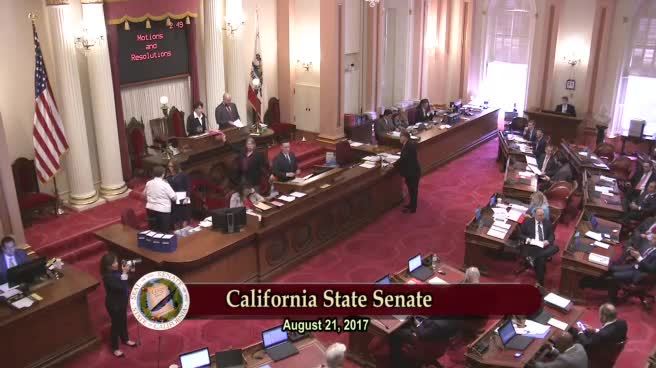 6MIN
Senate Floor
 8MIN
Assembly Floor
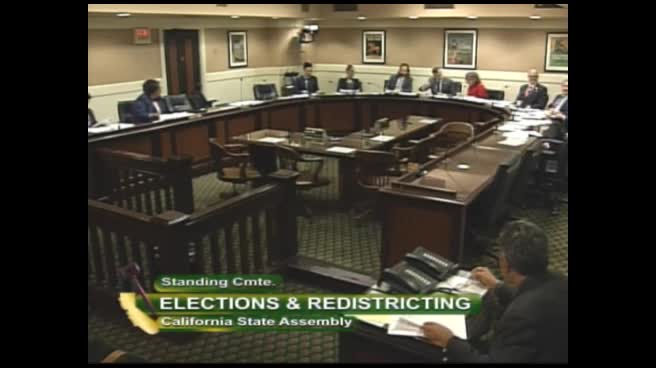 7MIN
Assembly Standing Committee on Elections and Redistricting
Bill Author

Bill Co-Author(s):






































