AJR 10: Access to Counsel Act.
- Session Year: 2017-2018
- House: Assembly
- Latest Version Date: 2017-09-07
This measure would urge the Congress of the United States to support S. 349, the Access to Counsel Act, which would ensure that those persons held or detained while attempting to enter the United States, whether at a border crossing or a port of entry, would be guaranteed access to legal counsel.
This measure would urge the Congress of the United States to support S. 349, the Access to Counsel Act, which would ensure that those persons held or detained while attempting to enter the United States, whether at a border crossing or a port of entry, would be guaranteed access to legal counsel.
This measure would urge the Congress of the United States to support S. 349, the Access to Counsel Act, which would ensure that those persons held or detained while attempting to enter the United States, whether at a border crossing or a port of entry, would be guaranteed access to legal counsel.
This measure would urge the Congress of the United States to support S. 349, the Access to Counsel Act, which would ensure that those persons held or detained while attempting to enter the United States, whether at a border crossing or a port of entry, would be guaranteed access to legal counsel.
WHEREAS, On January 27, 2017, President Donald J. Trump issued Executive Order 13769, entitled Protecting the Nation from Foreign Terrorist Entry into the United States, designed to block all refugee entry for a period of 120 days, indefinitely blocking Syrian refugees seeking asylum, and suspending for 90 days entry into the United States of aliens, both immigrant and nonimmigrant, from seven Muslim-majority countries: Iraq, Syria, Sudan, Iran, Somalia, Libya, and Yemen; and
WHEREAS, The Presidents abrupt ban created chaos and uncertainty in airports across the globe, stranding, and in many cases, detaining travelers from all walks of life who were expecting to return to the United States, including not only refugees, but students, those traveling on business, scientists, tourists, and even the bereaved who were traveling for funerals; canceling an estimated 60,000 visas; prompting fervent debate on American values and igniting strong legal pushback; and
WHEREAS, At more than a dozen airports, including airports in Los Angeles, Newark, Boston, Dallas, Chicago, and Atlanta, immigration attorneys appeared in droves to offer free services to those detained, many of whom were young children or elderly United States citizens and green cardholders being held for long periods of time and denied access to volunteer lawyersand who, in some instances, were pressured to sign forms to give up their legal permanent resident status; and
WHEREAS, Much of the American judiciary has ruled with one voice on the executive order: the United States District Court for the Eastern District of Virginia issued a temporary restraining order that mandated that legal permanent residents returning from abroad should have access to lawyers while being detained at Dulles International Airport; the United States District Court for the Eastern District of New York issued a temporary restraining order barring the deportation of as many as 200 people, citing the irreparable injury they would face; the United States District Court for the Western District of Washington at Seattle issued a temporary halt to the order; and a three-judge panel of the United States Court of Appeals for the Ninth Circuit ruled that the Washington federal judges restraining order on the policy should remain in effect while the legality is further examined; and
WHEREAS, Even after these rulings, the mixed signals continue as both travelers and advocates lack consistent guidance for helping refugees already in the pipeline, leaving families scared to let their loved ones board planes for fear that they will be held for long periods of time without access to a telephone or an attorney; and
WHEREAS, On February 9, 2017, United States Senator Kamala D. Harris introduced S. 349, commonly referred to as the Access to Counsel Act, which would ensure that those persons held or detained while attempting to enter the United States, whether at a border crossing or a port of entry, would be guaranteed access to legal counsel, by: affirming that the right to counsel attaches at the time of holding or detention; providing a redress option, if counsel cannot personally meet with those detained at the border or ports of entry, for the provision of legal advice remotely (for example, via telephone or video teleconference); invalidating any effort by immigration enforcement officials to persuade a person to relinquish his or her legal status if that person has been denied access to counsel; and directing immigration enforcement officials to limit detention to the briefest term possible and least restrictive conditions practicable, and include access to food, water, and restroom facilities; and
WHEREAS, Meaningful access to legal representation is required, by the due process and equal protection Clauses of the Fourteenth Amendment to the United States Constitution as established by decades of case lawin fact, legal representation is fundamental to safeguarding fair and equal access to the legal system, in which some of our most vulnerable residents face potential crises, including termination of tenancy, loss of child custody, and immigration removal; and
WHEREAS, The State of California is, and will continue to be, a place of refuge for people from all walks of liferegardless of ones background, income, sexual orientation, religious affiliation, or immigration status; and
WHEREAS, This resolution is not intended to create, and does not create, any rights or benefits, whether substantive or procedural, or enforceable at law or in equity, against the State of California or its agencies, departments, entities, officers, employees, or any other person; now, therefore, be it
Resolved by the Assembly and the Senate of the State of California, jointly, That the Legislature urges the 115th Congress of the United States to support S. 349, the Access to Counsel Act, which would ensure that those persons held or detained while attempting to enter the United States, whether at a border crossing or a port of entry, would be guaranteed access to legal counsel; and be it further
Resolved, That the Chief Clerk of the Assembly transmit copies of this resolution to the President, the Vice President, and the Attorney General of the United States, to the Speaker of the House of Representatives, to the Majority Leader of the Senate, to each Senator and Representative from California in the Congress of the United States, and to the author for appropriate distribution.
WHEREAS, On January 27, 2017, President Donald J. Trump issued Executive Order 13769, entitled Protecting the Nation from Foreign Terrorist Entry into the United States, designed to block all refugee entry for a period of 120 days, indefinitely blocking Syrian refugees seeking asylum, and suspending for 90 days entry into the United States of refugees aliens, both immigrant and nonimmigrant, from seven Muslim-majority countries: Iraq, Syria, Sudan, Iran, Somalia, Libya, and Yemen; and
WHEREAS, The Presidents abrupt ban created chaos and uncertainty in airports across the globe, stranding, and in many cases, detaining travelers from all walks of life who were expecting to return to the United States, including not only refugees, but students, those traveling on business, scientists, tourists, and even the bereaved who were traveling for funerals; canceling an estimated 60,000 visas; prompting fervent debate on American values and igniting strong legal pushback; and
WHEREAS, At more than a dozen airports, including airports in Los Angeles, Newark, Boston, Dallas, Chicago, and Atlanta, immigration attorneys appeared in droves to offer free services to those detained, many of whom were young children or elderly United States citizens and green cardholders being held for long periods of time and denied access to volunteer lawyersand who, in some instances, were pressured to sign forms to give up their legal permanent resident status; and
WHEREAS, Much of the American judiciary has ruled with one voice on the executive order: the United States District Court for the Eastern District of Virginia issued a temporary restraining order that mandated that legal permanent residents returning from abroad should have access to lawyers while being detained at Dulles International Airport; the United States District Court for the Eastern District of New York issued a temporary restraining order barring the deportation of as many as 200 people, citing the irreparable injury they would face; the United States District Court for the Western District of Washington at Seattle issued a temporary halt to the order; and a three-judge panel of the United States Court of Appeals for the Ninth Circuit ruled that the Washington federal judges restraining order on the policy should remain in effect while the legality is further examined; and
WHEREAS, Even after these rulings, the mixed signals continue as both travelers and advocates lack consistent guidance for helping refugees already in the pipeline, leaving families scared to let their loved ones board planes for fear that they will be held for long periods of time without access to a telephone or an attorney; and
WHEREAS, On February 9, 2017, United States Senator Kamala D. Harris introduced S. 349, commonly referred to as the Access to Counsel Act, which would ensure that those persons held or detained while attempting to enter the United States, whether at a border crossing or a port of entry, would be guaranteed access to legal counsel, by: affirming that the right to counsel attaches at the time of holding or detention; providing a redress option, if counsel cannot personally meet with those detained at the border or ports of entry, for the provision of legal advice remotely (for example, via telephone or video teleconference); invalidating any effort by immigration enforcement officials to persuade a person to relinquish his or her legal status if that person has been denied access to counsel; and directing immigration enforcement officials to limit detention to the briefest term possible and least restrictive conditions practicable, and include access to food, water, and restroom facilities; and
WHEREAS, Meaningful access to legal representation is required, by the due process and equal protection Clauses of the Fourteenth Amendment to the United States Constitution as established by decades of case lawin fact, legal representation is fundamental to safeguarding fair and equal access to the legal system, in which some of our most vulnerable residents face potential crises, including termination of tenancy, loss of child custody, and immigration removal; and
WHEREAS, The State of California is, and will continue to be, a place of refuge for people from all walks of liferegardless of ones background, income, sexual orientation, religious affiliation, or immigration status; and
WHEREAS, This resolution is not intended to create, and does not create, any rights or benefits, whether substantive or procedural, or enforceable at law or in equity, against the State of California or its agencies, departments, entities, officers, employees, or any other person; now, therefore, be it
Resolved by the Assembly and the Senate of the State of California, jointly, That the Legislature urges the 115th Congress of the United States to support S. 349, the Access to Counsel Act, which would ensure that those persons held or detained while attempting to enter the United States, whether at a border crossing or a port of entry, would be guaranteed access to legal counsel; and be it further
Resolved, That the Chief Clerk of the Assembly transmit copies of this resolution to the President, the Vice President, and the Attorney General of the United States, to the Speaker of the House of Representatives, to the Majority Leader of the Senate, to each Senator and Representative from California in the Congress of the United States, and to the author for appropriate distribution.
WHEREAS, On January 27, 2017, President Donald J. Trump issued Executive Order 13769, entitled Protecting the Nation from Foreign Terrorist Entry into the United States, designed to block all refugee entry for a period of 120 days, indefinitely blocking Syrian refugees seeking asylum, and suspending for 90 days entry into the United States of refugees from seven Muslim-majority countries: Iraq, Syria, Sudan, Iran, Somalia, Libya, and Yemen; and
WHEREAS, The Presidents abrupt ban created chaos and uncertainty in airports across the globe, stranding, and in many cases, detaining travelers from all walks of life who were expecting to return to the United States, including not only refugees, but students, those traveling on business, scientists, tourists, and even the bereaved who were traveling for funerals; canceling an estimated 60,000 visas; prompting fervent debate on American values and igniting strong legal pushback; and
WHEREAS, At more than a dozen airports, including airports in Los Angeles, Newark, Boston, Dallas, Chicago, and Atlanta, immigration attorneys appeared in droves to offer free services to those detained, many of whom were young children or elderly United States citizens and green cardholders being held for long periods of time and denied access to volunteer lawyersand who, in some instances, were pressured to sign forms to give up their legal permanent resident status; and
WHEREAS, Much of the American judiciary has ruled with one voice on the executive order: the United States District Court for the Eastern District of Virginia issued a temporary restraining order that mandated that legal permanent residents returning from abroad should have access to lawyers while being detained at Dulles International Airport; the United States District Court for the Eastern District of New York issued a temporary restraining order barring the deportation of as many as 200 people, citing the irreparable injury they would face; the United States District Court for the Western District of Washington at Seattle issued a temporary halt to the order; and a three-judge panel of the United States Court of Appeals for the Ninth Circuit ruled that the Washington federal judges restraining order on the policy should remain in effect while the legality is further examined; and
WHEREAS, Even after these rulings, the mixed signals continue as both travelers and advocates lack consistent guidance for helping refugees already in the pipeline, leaving families scared to let their loved ones board planes for fear that they will be held for long periods of time without access to a telephone or an attorney; and
WHEREAS, On February 9, 2017, United States Senator Kamala D. Harris introduced S. 349, commonly referred to as the Access to Counsel Act, which would ensure that those persons held or detained while attempting to enter the United States, whether at a border crossing or a port of entry, would be guaranteed access to legal counsel, by: affirming that the right to counsel attaches at the time of holding or detention; providing a redress option, if counsel cannot personally meet with those detained at the border or ports of entry, for the provision of legal advice remotely (for example, via telephone or video teleconference); invalidating any effort by immigration enforcement officials to persuade a person to relinquish his or her legal status if that person has been denied access to counsel; and directing immigration enforcement officials to limit detention to the briefest term possible and least restrictive conditions practicable, and include access to food, water, and restroom facilities; and
WHEREAS, Meaningful access to legal representation is required, by the due process and equal protection Clauses of the Fourteenth Amendment to the United States Constitution as established by decades of case lawin fact, legal representation is fundamental to safeguarding fair and equal access to the legal system, in which some of our most vulnerable residents face potential crises, including termination of tenancy, loss of child custody, and immigration removal; and
WHEREAS, The State of California is, and will continue to be, a place of refuge for people from all walks of liferegardless of ones background, income, sexual orientation, religious affiliation, or immigration status; and
WHEREAS, This resolution is not intended to create, and does not create, any rights or benefits, whether substantive or procedural, or enforceable at law or in equity, against the State of California or its agencies, departments, entities, officers, employees, or any other person; now, therefore, be it
Resolved by the Assembly and the Senate of the State of California, jointly, That the Legislature urges the 115th Congress of the United States to support S. 349, the Access to Counsel Act, which would ensure that those persons held or detained while attempting to enter the United States, whether at a border crossing or a port of entry, would be guaranteed access to legal counsel; and be it further
Resolved, That the Chief Clerk of the Assembly transmit copies of this resolution to the President, the Vice President, and the Attorney General of the United States, to the Speaker of the House of Representatives, to the Majority Leader of the Senate, to each Senator and Representative from California in the Congress of the United States, and to the author for appropriate distribution.
|
Date
|
Status
|
|---|---|
| Sep 7, 2017 | Chaptered by Secretary of State - Res. Chapter 143, Statutes of 2017. |
| Sep 7, 2017 | Enrolled and filed with the Secretary of State at 10 a.m. |
| Aug 31, 2017 | In Assembly. Ordered to Engrossing and Enrolling. |
| Aug 31, 2017 | Adopted and to Assembly. |
| Jun 21, 2017 | From committee: Be adopted. Ordered to Third Reading. (Ayes 5. Noes 1.) (June 20). |
| Jun 8, 2017 | Re-referred to Com. on JUD. |
| May 30, 2017 | In Senate. To Com. on RLS. |
| May 26, 2017 | Coauthors revised. |
| May 18, 2017 | Amended. Ordered to third reading. |
| May 17, 2017 | From committee: Amend, and be adopted as amended. (Ayes 9. Noes 0.) (May 16). |
| May 1, 2017 | Referred to Com. on JUD. |
| Apr 7, 2017 | From printer. |
| Apr 6, 2017 | Introduced. To print. |
|
Date
|
Description
|
Location
|
Votes
|
|
|---|---|---|---|---|
| Aug 31, 2017 | Assembly 3rd Reading AJR10 Santiago et al. By Hueso | Senate Floor |
Passed |
|
| Jun 20, 2017 | Be adopted. Ordered to third reading | Senate Standing Committee on Judiciary |
Passed |
|
| May 26, 2017 | AJR 10 SANTIAGO Assembly Third Reading | Assembly Floor |
Passed |
|
| May 16, 2017 | Be adopted as amended. | Assembly Standing Committee on Judiciary |
Passed |
This list shows positions taken on this bill by organizations on the date displayed, which is linked to the original source.
Positions by individuals are not included.
|
Organization
|
Position
|
Date
|
|---|---|---|
| California Immigrant Policy Center | ** Support | Jun 21, 2017 |
Office of Senate Floor Analyses (916) 651-1520 Fax: (916) 327-4478 | AJR |
THIRD READING
Bill No: AJR 10
:
SENATE JUDICIARY COMMITTEE: 5-1, 6/20/17
AYES: Jackson, Hertzberg, Monning, Stern, Wieckowski
NOES: Anderson
NO VOTE RECORDED: Moorlach
ASSEMBLY FLOOR: 62-2, 5/26/17 - See last page for vote
DIGEST:
This resolution urges the Congress of the United States to support S. 349, the Access to Counsel Act, to ensure that those persons held or detained while attempting to enter the United States, whether at a border crossing or a port of entry, would be guaranteed access to legal counsel.
Existing law:
- Provides, under the Fifth Amendment to the U.S. Constitution, that a person shall not be deprived of life, liberty, or property without due process of law. (U.S. Const., 5th Amend.)
- Holds that once an alien enters the country, the legal circumstance changes, for the Due Process Clause applies to all persons within the United States, including aliens, whether their presence here is lawful, unlawful, temporary, or permanent. (Zadvydas v. Davis, 533 U.S. 678 (2001).)
- Prohibits the federal government from returning to their home countries people whose life or freedom would be threatened because of the alien’s race, religion, nationality, membership in a particular social group, or political opinion. (8 U.S.C. Sec. 1231(b)(3).)
- Provides for the protection of people who have fled persecution on account of race, religion, nationality, political opinion, or membership in a particular social group. (UN General Assembly, Universal Declaration of Human Rights, Dec. 10, 1948, 217A(III), Art. 14.)
- Protects all asylum seekers by prohibiting the federal government from returning to their home countries people who have fled persecution on account of race, religion, nationality, political opinion, or membership in a particular social group. (8 U.S.C. Sec. 1101(a)(42)(A).)
- Provides that youth may have temporary protection from deportation and work authorization for two-year periods, as specified. (See Janet Napolitano, June 15, 2012 policy memorandum announcing the DACA [Deferred Action for Childhood Arrivals] program, -- https://www.dhs.gov/xlibrary/assets/s1-exercising-prosecutorial-discretion-individuals-who-came-to-us-as-children.pdf -- [as of June 20, 2017].)
- Provides that victims of certain crimes may obtain immigration relief through a Victim of Crime Visa (U-Visa) and victims of human trafficking may obtain immigration relief through a Victim of Trafficking Visa (T-Visa). (8 U.S.C. Sec. 1101(a)(15)(U); 8 U.S.C. Sec. 1101(a)(15)(T).)
- Provides immigration relief that relies on a state’s interest in the welfare of children by providing for Special Immigrant Juvenile Status where a state determines that reunification with one or both of the immigrant’s parents is not viable due to abuse, neglect, abandonment, or similar basis found under state law and that it would not be in the child’s best interest to return to their home country. (8 U.S.C. Sec. 1101 (a)(27)(J).)
- Provides that persons in any removal proceedings before an immigration judge and in any appeal proceedings before the Attorney General from any such removal proceedings, the person concerned shall have the privilege of being represented (at no expense to the Government) by such counsel, authorized to practice in such proceedings, as she or he shall choose. (8 U.S.C. Sec. 1362.)
- Holds that immigrant detainees with mental disabilities who are facing deportation and who are unable to adequately represent themselves are entitled to qualified legal representatives provided by the federal government for representation during all phases of their immigration proceedings, including appeals and custody hearings. (Franco-Gonzalez v. Holder, 2015 U.S. Dist. Lexis 179622.)
- Provides that the Department of Social Services (DSS), subject to the availability of funding from the annual Budget Act, shall contract with qualified nonprofit legal services organizations to provide legal services to unaccompanied undocumented minors who are transferred to the care and custody of the federal Office of Refugee Resettlement and who are present in this state. (Welf. & Inst. Code Sec. 13300(a).)
- Provides that the DSS, subject to the availability of funding from the annual Budget Act, shall contract with qualified nonprofit legal services organizations to provide legal services to Californians applying for Deferred Action for Parents of Americans (DAPA), DACA, naturalization, and other immigration relief. (Welf. & Inst. Code Sec. 13303 et seq.)
This resolution:
- Makes the following findings:
- On January 27, 2017, President Donald J. Trump issued Executive Order 13769, entitled “Protecting the Nation from Foreign Terrorist Entry into the United States,” designed to block all refugee entry for a period of 120 days, indefinitely blocking Syrian refugees seeking asylum, and suspending for 90 days entry into the United States of aliens, both immigrant and nonimmigrant, from seven Muslim-majority countries: Iraq, Syria, Sudan, Iran, Somalia, Libya, and Yemen;
- The President’s abrupt ban created chaos and uncertainty in airports across the globe, stranding, and in many cases, detaining travelers from all walks of life who were expecting to return to the United States, including not only refugees, but students, those traveling on business, scientists, tourists, and even the bereaved who were traveling for funerals; canceling an estimated 60,000 visas; prompting fervent debate on American values and igniting strong legal pushback;
- At more than a dozen airports, including airports in Los Angeles, Newark, Boston, Dallas, Chicago, and Atlanta, immigration attorneys appeared in droves to offer free services to those detained, many of whom were young children or elderly United States citizens and green cardholders being held for long periods of time and denied access to volunteer lawyers—and who, in some instances, were pressured to sign forms to give up their legal permanent resident status;
- Much of the American judiciary has ruled with one voice on the executive order: the United States District Court for the Eastern District of Virginia issued a temporary restraining order that mandated that legal permanent residents returning from abroad should have access to lawyers while being detained at Dulles International Airport; the United States District Court for the Eastern District of New York issued a temporary restraining order barring the deportation of as many as 200 people, citing the “irreparable injury” they would face; the United States District Court for the Western District of Washington at Seattle issued a temporary halt to the order; and a three-judge panel of the United States Court of Appeals for the Ninth Circuit ruled that the Washington federal judge’s restraining order on the policy should remain in effect while the legality is further examined; and
- Even after these rulings, the mixed signals continue as both travelers and advocates lack consistent guidance for helping refugees already in the pipeline, leaving families scared to let their loved ones board planes for fear that they will be held for long periods of time without access to a telephone or an attorney.
- Makes the following additional findings:
- On February 9, 2017, United States Senator Kamala D. Harris introduced S. 349, commonly referred to as the Access to Counsel Act, which would ensure that those persons held or detained while attempting to enter the United States, whether at a border crossing or a port of entry, would be guaranteed access to legal counsel, by: affirming that the right to counsel attaches at the time of holding or detention; providing a redress option, if counsel cannot personally meet with those detained at the border or ports of entry, for the provision of legal advice remotely (for example, via telephone or video teleconference); invalidating any effort by immigration enforcement officials to persuade a person to relinquish his or her legal status if that person has been denied access to counsel; and directing immigration enforcement officials to limit detention to the briefest term possible and least restrictive conditions practicable, and include access to food, water, and restroom facilities;
- Meaningful access to legal representation is required, by the due process and equal protection Clauses of the Fourteenth Amendment to the United States Constitution as established by decades of case law—in fact, legal representation is fundamental to safeguarding fair and equal access to the legal system, in which some of our most vulnerable residents face potential crises, including termination of tenancy, loss of child custody, and immigration removal; and
- The State of California is, and will continue to be, a place of refuge for people from all walks of life—regardless of one’s background, income, sexual orientation, religious affiliation, or immigration status; and
- The resolution is not intended to create, and does not create, any rights or benefits, whether substantive or procedural, or enforceable at law or in equity, against the State of California or its agencies, departments, entities, officers, employees, or any other person.
- Resolves, in light of the above findings, that the Assembly and the Senate of the State of California, jointly, urge the 115th Congress of the United States to support S. 349, the Access to Counsel Act, which would ensure that those persons held or detained while attempting to enter the United States, whether at a border crossing or a port of entry, would be guaranteed access to legal counsel.
- Directs the Chief Clerk of the Assembly transmit copies of this resolution to the President, the Vice President, and others, as specified.
Background
During his campaign for President, and ahead of his inauguration, Donald Trump promised to deport millions of immigrants. California’s legislative leaders reacted swiftly to his threats of mass deportations by introducing legislation, on December 5, 2016, to protect California’s immigrants from Trump’s threats. SB 6 (Hueso), the Due Process for All Act, is part of California’s legislative effort to protect immigrants and would do so by creating a state program within the DSS to provide legal services to California immigrants facing deportation. Two months later, U.S. Senator Kamala D. Harris introduced S. 349, commonly referred to as the Access to Counsel Act, in an effort to ensure that those persons held or detained while attempting to enter the United States would be guaranteed access to legal counsel.
California’s recent history is one of supporting and empowering immigrants. California lawmakers have created programs within the DSS to provide legal aid to Californians seeking immigration relief. Specifically, the state has provided funding for legal organizations to provide legal services to unaccompanied undocumented minors who are transferred to the care and custody of the federal Office of Refugee Resettlement and who are present in this state. The State of California has also funded organizations to aid immigrants in applying for DAPA, DACA, naturalization, and other immigration relief.
In his first week in office, the new President attempted to move forward with his threats of massive deportation. On January 25, 2017, President Donald Trump issued an Executive Order that aims to greatly increase the number of immigration officials and expand the population of Californians that will be subject to deportation. On January 27, 2017, President Trump issued an Executive Order designed to block all refugee entry into the United States for a period of 120 days, indefinitely block Syrian refugees seeking asylum, and suspend for 90 days entry into the United States aliens, both immigrant and nonimmigrant, from seven Muslim-majority countries: Iraq, Syria, Sudan, Iran, Somalia, Libya, and Yemen.
Immigrants facing deportation are generally not afforded counsel by the federal government. Even indigent small children are expected to defend themselves without the assistance of government funded counsel against government attorneys in immigration court. Immigrants who have lawyers are more successful at making their cases in complex immigration removal proceedings. In fact, studies show that detained immigrants who have lawyers succeed more than five times as often in challenging their deportation than those not represented by legal counsel.
This resolution reflects California’s recent tradition of providing legal service funding to help immigrants obtain immigration relief. This resolution makes various findings, including findings regarding the importance of legal services for immigrants in the United States, and urges the 115th Congress of the United States to support the Access to Counsel Act to ensure that those persons held or detained while attempting to enter the United States, whether at a border crossing or a port of entry, would be guaranteed access to legal counsel.
Comments
The author writes:
Due process in our legal system is an American value enshrined in our Constitution. For that reason, it is important that a person in a removal, exclusion, or deportation proceeding have access to a lawyer to help them understand their rights and guide their first steps through the immigration system, just as any other person interacting with law-enforcement would have access to legal counsel. S.349 provides a sense of security by affirming that all persons held or detained by immigration enforcement have access to a lawyer, as well as basic necessities such as food, water, and bathroom facilities. AJR 10, written in support of S.349, sends a strong message to Congress: California is, and will continue to be, a place where immigrants are supported and protected.
AJR 10, reflects California’s commitment to providing legal services to immigrants to California for purposes of defending their deportation and urges Congress to support S. 349, Senator Kamala Harris’ “Access to Counsel Act.” Senator Harris’ legislation: affirms that the right to counsel attaches at the time of holding or detention; provides a redress option, if counsel cannot personally meet with those detained at the border or ports of entry, for the provision of legal advice remotely; invalidates any effort by immigration enforcement officials to persuade a person to relinquish his or her legal status if that person has been denied access to counsel; and directs immigration enforcement officials to limit detention to the briefest term possible and least restrictive conditions practicable, and include access to food, water, and restroom facilities.
California Immigrant Policy Center writes the following in support:
AJR 10 sends a strong signal that California is, and will continue to be, a place where immigrants are supported and protected. In the immediate aftermath of President Trump signing his initial executive order banning travel from seven Middle Eastern countries and halting refugee resettlement, refugees, Green Card holders, and even U.S. citizens were held for long periods of time at airports upon arrival to the U.S., while denied access to pro-bono lawyers. Elderly people with medical conditions, children, and students were pressured to sign forms to give up their legal permanent resident status. In response, a federal court in Washington State issued a temporary halt to the Muslim Ban, and a federal court in Virginia issued a temporary restraining order that mandated Legal Permanent Residents returning from abroad should have access to lawyers while being detained at an airport. Despite the Departments of State and Homeland Security halting their enforcement of the Ban, prolonged holdings at ports of entry still occurred. Even now, families are terrified to let their loved ones board planes for fear that they will be detained and deported.
These types of abuses demand that people have access to counsel, especially where detention endangers their health, rights, and safety. Access to legal representation is required by due process clause and equal protection clause under the fourteenth amendment of the U.S. Constitution.
FISCAL EFFECT: Appropriation: No Fiscal Com.: No Local: No
California Immigrant Policy Center
OPPOSITION: (Verified 6/20/17)
None received
ASSEMBLY FLOOR: 62-2, 5/26/17
AYES: Aguiar-Curry, Arambula, Baker, Berman, Bigelow, Bloom, Bocanegra, Bonta, Burke, Caballero, Calderon, Cervantes, Chen, Chiu, Chu, Cooley, Cooper, Cunningham, Dababneh, Daly, Flora, Frazier, Friedman, Cristina Garcia, Eduardo Garcia, Gipson, Gloria, Gomez, Gonzalez Fletcher, Gray, Grayson, Holden, Irwin, Jones-Sawyer, Kalra, Lackey, Levine, Limón, Low, Maienschein, Mathis, Mayes, McCarty, Medina, Mullin, Muratsuchi, Nazarian, O'Donnell, Quirk, Quirk-Silva, Reyes, Ridley-Thomas, Rodriguez, Rubio, Salas, Santiago, Mark Stone, Thurmond, Ting, Weber, Wood, Rendon
NOES: Travis Allen, Gallagher
NO VOTE RECORDED: Acosta, Brough, Chau, Chávez, Choi, Dahle, Eggman, Fong, Harper, Kiley, Melendez, Obernolte, Patterson, Steinorth, Voepel, Waldron
6/21/17 13:38:24
**** END ****
Senator Hannah-Beth Jackson, Chair
2017-2018 Regular Session
Bill No: AJR 10 (Author:Santiago)
Version: May 18, 2017
Hearing Date: June 20, 2017
Fiscal: No
Urgency: No
Consultant: MEC
SUBJECT
Access to Counsel Act
DESCRIPTION
This resolution would urge the Congress of the United States to support S. 349, the Access to Counsel Act, to ensure that those persons held or detained while attempting to enter the United States, whether at a border crossing or a port of entry, would be guaranteed access to legal counsel.
BACKGROUND
During his campaign for President, and ahead of his inauguration, Donald Trump promised to deport millions of immigrants. California’s legislative leaders reacted swiftly to his threats of mass deportations by introducing legislation, on December 5, 2016, to protect California’s immigrants from Trump’s threats. SB 6 (Hueso), the Due Process for All Act (DPAA), is part of California’s legislative effort to protect immigrants and would do so by creating a state program within the Department of Social Services (DSS) to provide legal services to California immigrants facing deportation. Two months later, U.S. Senator Kamala D. Harris introduced S. 349, commonly referred to as the Access to Counsel Act, in an effort to ensure that those persons held or detained while attempting to enter the United States would be guaranteed access to legal counsel.
California’s recent history is one of supporting and empowering immigrants. California lawmakers have created programs within the DSS to provide legal aid to Californians seeking immigration relief. Specifically, the state has provided funding for legal organizations to provide legal services to unaccompanied undocumented minors who are transferred to the care and custody of the federal Office of Refugee Resettlement and who are present in this state. The State of California has also funded organizations to aid immigrants in applying for Deferred Action for Parents of Americans (DAPA), Deferred Action for Childhood Arrivals (DACA), naturalization, and other immigration relief.
In his first week in office, the new President attempted to move forward with his threats of massive deportation. On January 25, 2017, President Donald Trump issued an Executive Order that aims to greatly increase the number of immigration officials and expand the population of Californians that will be subject to deportation. On January 27, 2017, President Trump issued an Executive Order designed to block all refugee entry into the United States for a period of 120 days, indefinitely block Syrian refugees seeking asylum, and suspend for 90 days entry into the United States aliens, both immigrant and nonimmigrant, from seven Muslim-majority countries: Iraq, Syria, Sudan, Iran, Somalia, Libya, and Yemen.
Immigrants facing deportation are generally not afforded counsel by the federal government. Even indigent small children are expected to defend themselves without the assistance of government funded counsel against government attorneys in immigration court. Immigrants who have lawyers are more successful at making their cases in complex immigration removal proceedings. In fact, studies show that detained immigrants who have lawyers succeed more than five times as often in challenging their deportation than those not represented by legal counsel.
This resolution reflects California’s recent tradition of providing legal service funding to help immigrants obtain immigration relief. This resolution would make various findings, including findings regarding the importance of legal services for immigrants in the United States, and would urge the 115th Congress of the United States to support the Access to Counsel Act to ensure that those persons held or detained while attempting to enter the United States, whether at a border crossing or a port of entry, would be guaranteed access to legal counsel.
CHANGES TO EXISTING LAW
Existing law provides, under the Fifth Amendment to the U.S. Constitution, that a person shall not be deprived of life, liberty, or property without due process of law. (U.S. Const., 5th Amend.)
Existing law holds that once an alien enters the country, the legal circumstance changes, for the Due Process Clause applies to all persons within the United States, including aliens, whether their presence here is lawful, unlawful, temporary, or permanent. (Zadvydas v. Davis, 533 U.S. 678 (2001).)
Existing law prohibits the federal government from returning to their home countries people whose life or freedom would be threatened because of the alien’s race, religion, nationality, membership in a particular social group, or political opinion. (8 U.S.C. Sec. 1231(b)(3).)
Existing law provides for the protection of people who have fled persecution on account of race, religion, nationality, political opinion, or membership in a particular social group. (UN General Assembly, Universal Declaration of Human Rights, Dec. 10, 1948, 217A(III), Art. 14.)
Existing law protects all asylum seekers by prohibiting the federal government from returning to their home countries people who have fled persecution on account of race, religion, nationality, political opinion, or membership in a particular social group. (8 U.S.C. Sec. 1101(a)(42)(A).)
Existing law provides that youth may have temporary protection from deportation and work authorization for two-year periods, as specified. (See Janet Napolitano, June 15, 2012 policy memorandum announcing the DACA program, <https://www.dhs.gov/xlibrary/assets/s1-exercising-prosecutorial-discretion-individuals-who-came-to-us-as-children.pdf> [as of Dec. 1, 2016].)
Existing law provides that victims of certain crimes may obtain immigration relief through a Victim of Crime Visa (U-Visa) and victims of human trafficking may obtain immigration relief through a Victim of Trafficking Visa (T-Visa). (8 U.S.C. Sec. 1101(a)(15)(U); 8 U.S.C. Sec. 1101(a)(15)(T).)
Existing law provides immigration relief that relies on a state’s interest in the welfare of children by providing for Special Immigrant Juvenile Status where a state determines that reunification with one or both of the immigrant’s parents is not viable due to abuse, neglect, abandonment, or similar basis found under state law and that it would not be in the child’s best interest to return to their home country. (8 U.S.C. Sec. 1101 (a)(27)(J).)
Existing law provides that persons in any removal proceedings before an immigration judge and in any appeal proceedings before the Attorney General from any such removal proceedings, the person concerned shall have the privilege of being represented (at no expense to the Government) by such counsel, authorized to practice in such proceedings, as she or he shall choose. (8 U.S.C. Sec. 1362.)
Existing case law holds that immigrant detainees with mental disabilities who are facing deportation and who are unable to adequately represent themselves are entitled to qualified legal representatives provided by the federal government for representation during all phases of their immigration proceedings, including appeals and custody hearings. (Franco-Gonzalez v. Holder, 2015 U.S. Dist. Lexis 179622.)
Existing law provides that the Department of Social Services, subject to the availability of funding from the annual Budget Act, shall contract with qualified nonprofit legal services organizations to provide legal services to unaccompanied undocumented minors who are transferred to the care and custody of the federal Office of Refugee Resettlement and who are present in this state. (Welf. & Inst. Code Sec. 13300(a).)
Existing law provides that the Department of Social Services, subject to the availability of funding from the annual Budget Act, shall contract with qualified nonprofit legal services organizations to provide legal services to Californians applying for Deferred Action for Parents of Americans (DAPA), Deferred Action for Childhood Arrivals (DACA), naturalization, and other immigration relief. (Welf. & Inst. Code Sec. 13303 et seq.)
This resolution would make the following findings:
- on January 27, 2017, President Donald J. Trump issued Executive Order 13769, entitled “Protecting the Nation from Foreign Terrorist Entry into the United States,” designed to block all refugee entry for a period of 120 days, indefinitely blocking Syrian refugees seeking asylum, and suspending for 90 days entry into the United States of aliens, both immigrant and nonimmigrant, from seven Muslim-majority countries: Iraq, Syria, Sudan, Iran, Somalia, Libya, and Yemen;
- the President’s abrupt ban created chaos and uncertainty in airports across the globe, stranding, and in many cases, detaining travelers from all walks of life who were expecting to return to the United States, including not only refugees, but students, those traveling on business, scientists, tourists, and even the bereaved who were traveling for funerals; canceling an estimated 60,000 visas; prompting fervent debate on American values and igniting strong legal pushback;
- at more than a dozen airports, including airports in Los Angeles, Newark, Boston, Dallas, Chicago, and Atlanta, immigration attorneys appeared in droves to offer free services to those detained, many of whom were young children or elderly United States citizens and green cardholders being held for long periods of time and denied access to volunteer lawyers—and who, in some instances, were pressured to sign forms to give up their legal permanent resident status;
- much of the American judiciary has ruled with one voice on the executive order: the United States District Court for the Eastern District of Virginia issued a temporary restraining order that mandated that legal permanent residents returning from abroad should have access to lawyers while being detained at Dulles International Airport; the United States District Court for the Eastern District of New York issued a temporary restraining order barring the deportation of as many as 200 people, citing the “irreparable injury” they would face; the United States District Court for the Western District of Washington at Seattle issued a temporary halt to the order; and a three-judge panel of the United States Court of Appeals for the Ninth Circuit ruled that the Washington federal judge’s restraining order on the policy should remain in effect while the legality is further examined; and
- even after these rulings, the mixed signals continue as both travelers and advocates lack consistent guidance for helping refugees already in the pipeline, leaving families scared to let their loved ones board planes for fear that they will be held for long periods of time without access to a telephone or an attorney.
This resolution would make the following findings:
- on February 9, 2017, United States Senator Kamala D. Harris introduced S. 349, commonly referred to as the Access to Counsel Act, which would ensure that those persons held or detained while attempting to enter the United States, whether at a border crossing or a port of entry, would be guaranteed access to legal counsel, by: affirming that the right to counsel attaches at the time of holding or detention; providing a redress option, if counsel cannot personally meet with those detained at the border or ports of entry, for the provision of legal advice remotely (for example, via telephone or video teleconference); invalidating any effort by immigration enforcement officials to persuade a person to relinquish his or her legal status if that person has been denied access to counsel; and directing immigration enforcement officials to limit detention to the briefest term possible and least restrictive conditions practicable, and include access to food, water, and restroom facilities;
- meaningful access to legal representation is required, by the due process and equal protection Clauses of the Fourteenth Amendment to the United States Constitution as established by decades of case law—in fact, legal representation is fundamental to safeguarding fair and equal access to the legal system, in which some of our most vulnerable residents face potential crises, including termination of tenancy, loss of child custody, and immigration removal; and
- the State of California is, and will continue to be, a place of refuge for people from all walks of life—regardless of one’s background, income, sexual orientation, religious affiliation, or immigration status; and
- the resolution is not intended to create, and does not create, any rights or benefits, whether substantive or procedural, or enforceable at law or in equity, against the State of California or its agencies, departments, entities, officers, employees, or any other person.
This resolution would resolve, in light of the above findings, that the Assembly and the Senate of the State of California, jointly, urge the 115th Congress of the United States to support S. 349, the Access to Counsel Act, which would ensure that those persons held or detained while attempting to enter the United States, whether at a border crossing or a port of entry, would be guaranteed access to legal counsel.
This resolution would direct the Chief Clerk of the Assembly transmit copies of this resolution to the President, the Vice President, and others, as specified.
COMMENT
1. Stated need for the bill
According to the author:
Due process in our legal system is an American value enshrined in our Constitution. For that reason, it is important that a person in a removal, exclusion, or deportation proceeding have access to a lawyer to help them understand their rights and guide their first steps through the immigration system, just as any other person interacting with law-enforcement would have access to legal counsel. S.349 provides a sense of security by affirming that all persons held or detained by immigration enforcement have access to a lawyer, as well as basic necessities such as food, water, and bathroom facilities. AJR 10, written in support of S.349, sends a strong message to Congress: California is, and will continue to be, a place where immigrants are supported and protected.
In unveiling their legislative package to protect immigrants from then President-elect Donald Trump’s threats of mass deportation, California’s legislative leaders introduced legislation to provide legal counsel to California’s immigrants and asserted the following on December 5, 2016, the first day of the 2017-2018 legislative session:
California is the most immigrant-rich state in the nation. One out of every four state residents is foreign-born, and one out of every two children in California lives in a household headed by a foreign-born person. Accordingly, immigrants are vital to the state’s industries such as technology, healthcare, agriculture, construction, hospitality, and domestic services. Immigrants also represent a large percentage of California’s new small business owners and create economic prosperity and needed jobs for everyone. Approximately one-tenth of California’s work force is undocumented and contributes $130 billion annually to its gross domestic product.
[. . . ]
The Trump Administration has proposed an expansion of the categories of immigrants that will be targeted for deportation. Many of those immigrants will be placed in detention centers for unspecified periods of time, with limited access to legal representation. As the most immigrant-rich state in the nation, California will be particularly hard hit by large-scale deportation efforts. In 2015, there were approximately 7,400 detained and underrepresented immigrants who had their cases heard in the California immigration courts.
It has long been the case that immigrants have a right to counsel in immigration court, but not at the expense of the government. As a result low-income immigrants are forced to face deportation without an attorney to help navigate them through the complexities of immigration law.
The Due Process for All Act reinforces California’s commitment to the idea that everyone deserves fair treatment in our justice system.
AJR 10, reflects California’s commitment to providing legal services to immigrants to California for purposes of defending their deportation and would urge Congress to support S. 349, Senator Kamala Harris’ “Access to Counsel Act.” Senator Harris’ legislation would: affirm that the right to counsel attaches at the time of holding or detention; provide a redress option, if counsel cannot personally meet with those detained at the border or ports of entry, for the provision of legal advice remotely; invalidate any effort by immigration enforcement officials to persuade a person to relinquish his or her legal status if that person has been denied access to counsel; and direct immigration enforcement officials to limit detention to the briefest term possible and least restrictive conditions practicable, and include access to food, water, and restroom facilities.
California Immigrant Policy Center writes the following in support:
AJR 10 sends a strong signal that California is, and will continue to be, a place where immigrants are supported and protected. In the immediate aftermath of President Trump signing his initial executive order banning travel from seven Middle Eastern countries and halting refugee resettlement, refugees, Green Card holders, and even U.S. citizens were held for long periods of time at airports upon arrival to the U.S., while denied access to pro-bono lawyers. Elderly people with medical conditions, children, and students were pressured to sign forms to give up their legal permanent resident status. In response, a federal court in Washington State issued a temporary halt to the Muslim Ban, and a federal court in Virginia issued a temporary restraining order that mandated Legal Permanent Residents returning from abroad should have access to lawyers while being detained at an airport. Despite the Departments of State and Homeland Security halting their enforcement of the Ban, prolonged holdings at ports of entry still occurred. Even now, families are terrified to let their loved ones board planes for fear that they will be detained and deported.
These types of abuses demand that people have access to counsel, especially where detention endangers their health, rights, and safety. Access to legal representation is required by due process clause and equal protection clause under the fourteenth amendment of the U.S. Constitution.
2. California’s strong public policy in support of immigrants
California leads the nation in ensuring that immigrants are treated with dignity and respect. While the federal government has failed to pass comprehensive immigration reform, California has routinely exercised its state power to protect immigrants. For example, some recently enacted state laws do the following:
- Expand health care for immigrant children regardless of immigration status (SB 4, Lara, Ch. 709, Stats. 2015);
- Create the position of Statewide Director of Immigrant Integration within the Governor’s office to ensure that California has a comprehensive approach to immigrant integration, including facilitating immigration relief options, naturalization services, and civic engagement efforts (SB 84, Senate Budget and Fiscal Review Committee, Ch. 25, Stats. 2015);
- Protect immigrant workers from unscrupulous employers by stopping employers from misusing the E-Verify system to intimidate workers (AB 622, Roger Hernandez, Ch. 696, Stats 2015);
- Protect immigrants from discrimination by making it unlawful for business establishments to discriminate against a person on the basis of their immigration status, citizenship, or language (SB 600, Pan, Ch. 282, Stats. 2015);
- Protect immigrants from immigration fraud as they seek help in applying for immigration relief (AB 60, Gonzalez, Ch. 6, Stats. 2015);
- Require law enforcement to complete certifications for a victim of crime who was helpful to the criminal investigation so that victims can apply for Victims of Crime immigration visas (SB 674, De León, Ch. 721, Stats. 2015);
- Protect immigrant children by safeguarding their records from unauthorized disclosure to federal immigration officials that may result in a child’s deportation (AB 899, Levine, Ch. 267, Stats. 2015);
- Require defense counsel in criminal proceedings to provide accurate and affirmative advice and defense to immigrants to avoid unintended immigration consequences, such as detention, deportation, and loss of citizenship eligibility. (AB 1343, Thurmond, Ch. 705, Stats. 2015);
- Allow youth 18-21 years of age, who have escaped violence or terror in their country of origin to come under the protection of a guardianship that can also help the youth obtain Special Immigrant Juvenile Status immigration relief (AB 900, Levine, Chapter 694, Statutes 2015);
- Prevent unintended immigration consequences for rehabilitated immigrants who successfully complete diversion programs (AB 1352, Eggman, Ch. 646, Stats. 2015);
- Empower immigrants to obtain driver’s licenses (AB 60, Alejo, Ch. 524, Stats. 2013);
- Allow all Californians to apply for professional licenses regardless of the immigration status of the applicant (SB 1159, Lara, Ch. 752, Stats. 2014);
- Empower undocumented students by allowing them to pay in-state tuition at public higher education institutions (AB 540, Firebaugh, Ch. 814, Stats. 2001), receive financial aid (AB 131, Cedillo, Ch. 604, Stats. 2011) and scholarships (AB 130, Cedillo, Ch. 93, Stats. 2011);
- Prohibit law enforcement officials from detaining individuals on the basis of an immigration hold after the individual becomes eligible for release, except in specified circumstances (AB 4, Ammiano, Ch. 570, Stats. 2013); and
- Require overtime compensation for agricultural employees. (AB 1066, Gonzalez, Ch. 313, Stats. 2016).
The State of California further supports immigrants by funding legal services for unaccompanied minors and youth and legal services for immigrants seeking naturalization, U-Visas, T-Visas, DACA, and other immigration remedies. This resolution reflects California’s strong public policy in support of immigrants and recent efforts of providing legal service funding to help immigrants obtain immigration relief.
3. President Trump issued Executive Orders that create a great need for attorneys
President Trump issued three Executive Orders relating to immigration policy. Several elements of these Executive Orders have already been challenged successfully in court on constitutional grounds. As a result, the federal courts have instructed the government not to enforce those parts of the orders. In one instance, President Trump issued a revised order, only to have it blocked by the courts as well. President Trump has ordered the U.S. Department of Justice to appeal one of those rulings, regarding a ban on travel from a series of predominately Muslim countries, to the U.S. Supreme Court, where the matter is now pending.
More specifically, the content and status of each order can be summarized as follows:
- Executive Order (EO) 13767, “Border Security and Immigration Enforcement Improvements.” Issued by President Trump on January 25, 2017, this order made it U.S. policy to construct a physical wall along the southern border. It directed the Secretary of the Department of Homeland Security (DHS) to take steps “immediately” to plan, design, and construct the wall, as well as to construct and operate detention facilities to detain aliens at or near the border with Mexico. Among other things, EO 13767 also directs the Secretary to: (1) allocate asylum officers and judges to detention facilities in order to conduct authorized removal proceedings; (2) ensure detention of aliens apprehended for violations of immigration law pending outcome of removal proceedings; and (3) hire 5,000 additional border patrol agents.
- Executive Order 13768, “Enhancing Public Safety in the Interior of the United States.” Issued by President Trump on January 25, 2017, this order directs the Secretary of Homeland Security to: (1) hire 10,000 additional immigration officers and to empower state and local law enforcement to perform functions of immigration officers; and (2) prioritize certain persons for removal, especially any person charged with or convicted of a criminal offense, any person who has committed acts that constitute a criminal offense, or any person who has “abused” a public benefit program. Staff notes that the Executive Order’s enforcement priorities are so expansive that immigration authorities would arguably target every undocumented person in California, and every person arriving at our borders, including asylum seekers. EO 13768 also seeks to designate as a “sanctuary” any jurisdiction that refuses to exchange information, as required by 8 U.S.C. § 1373, and would make such jurisdictions ineligible for federal grants, except as deemed necessary for law enforcement purposes. The County of Santa Clara and the City of San Francisco together challenged this Executive Order’s provisions regarding sanctuary cities in court. On April 25, 2017, a federal judge ruled that the sanctuary cities provisions were likely unconstitutional and blocked the federal government from enforcing this aspect of the order pending a final determination. (Cnty. of Santa Clara v. Trump (N.D. Cal. Apr. 25, 2017) 2017 U.S. Dist. LEXIS 62871.)
- Executive Order 13769, “Protecting the Nation from Foreign Terrorist Entry into the United States.” Issued by President Trump on January 27, 2017, this is the order frequently referred to as the “Muslim travel ban.” Among other things, EO 13769 suspended all travel to the U.S. from nationals of Iraq, Iran, Libya, Somalia, Sudan, Syria, and Yemen. In the following days, hundreds of travelers from those countries were detained at U.S. airports upon arrival and protests erupted. Multiple U.S. District Courts ruled the travel ban unconstitutional and enjoined the government from enforcing it. (Washington v. Trump, (W.D. Wash. Feb. 3, 2017) 2017 U.S. Dist. LEXIS 16012; State v. Trump (D. Haw. Feb. 9, 2017) 2017 U.S. Dist. LEXIS 19248; Aziz v. Trump (E.D. Va. Feb. 13, 2017) 2017 U.S. Dist. LEXIS 20889.) On February 9, 2017, the United States Court of Appeals for the Ninth Circuit denied the government’s emergency motion for a stay of the lower court’s temporary injunction against EO 13769, effectively affirming the injunction against the travel ban. (Washington v. Trump (9th Cir. Wash. Feb. 9, 2017) 847 F.3d 1151.) Rather than appeal the Ninth Circuit decision to the U.S. Supreme Court, the administration instead revoked EO 13769 and issued a revised version of the order, Executive Order 13780, on March 6, 2017. Among other things, EO 13780 announced that the U.S. government would suspend entry into the U.S. of nationals of Iran, Libya, Somalia, Sudan, Syria, and Yemen (Iraq was excluded) for 90 days beginning May 16, 2017, subject to exceptions for (1) a person holding a valid visa or other document that permits travel in the U.S.; (2) a legal permanent resident (i.e. “Green Card” holder); (3) a foreign national granted asylum or a refugee already admitted into the U.S.; or (4) a person inside the U.S. at the time of this order. EO 13780 also ordered suspension of the entry of all refugees under the U.S. Refugee Assistance Program for 120 days, and seeks to limit the total number of refugees accepted into the U.S. to just 50,000—half the number of refugees previously accepted under the Obama administration. Just hours before this revised executive order was scheduled to go into effect, however, a U.S. District Court in Hawaii enjoined it as well. (Hawai’i v. Trump (D. Haw. Mar. 15, 2017) 2017 U.S. Dist. LEXIS 36935.) A federal district court in Maryland soon followed. (Int’l Refugee Assistance Project v. Trump (D. Md. Mar. 15, 2017) 2017 U.S. Dist. LEXIS 37645). The Fourth Circuit Court of Appeal subsequently affirmed the Maryland injunction. (Int’l Refugee Assistance Project v. Trump (4th Cir. Md. May 25, 2017) 2017 U.S. App. LEXIS 9109.) The Ninth Circuit ruling on the revised executive order remains pending. Meanwhile, President Trump instructed the U.S. Justice Department to appeal the Fourth Circuit decision to the U.S. Supreme Court. The U.S. Supreme Court has ordered the parties to file their respective briefs by June 12, 2017. (Trump v. Int’l Refugee Assistance Project (U.S. June 2, 2017) 2017 U.S. LEXIS 3552.) Meanwhile, on June 13, 2017, a three judge panel of the Ninth Circuit unanimously affirmed the Hawaii District Court ruling, though it scaled back the scope of the District Court’s injunction to allow the federal government to study implementation methods while actual implementation is on hold. (Hawai’i v. Trump (9th Cir. June 12, 2017, No. 17-15589, available at <http://cdn.ca9.uscourts.gov/datastore/uploads/general/cases_of_ interest/17-15589%20per%20curiam%20opinion.pdf> [as of June 14, 2017].)
The Executive Orders created an urgent need for California’s immigrants to be represented by competent counsel to navigate the already complex immigration system so that they may make the best case available as to their entitlement to immigration relief under federal and international law. Indeed, studies show that immigrants who have counsel in removal proceedings are far more likely to succeed than those who are not represented by counsel. (See Jayashri Srikantiah, David Hausman, and Lisa Weissman-Ward, Access to Justice for Immigrant Families and Communities: A Study of Legal Representation of Detained Immigrants in Northern California, 11 Stan. J.C.R.&C.L. (2015); Ingrid v. Eagly and Steven Shafer, A National Study of Access to Counsel in Immigration Court, 164 U. Penn. L. Rev. 1, 49 (2015).) However, immigrants in civil detention are generally not provided with the same protections as individuals in the criminal justice system, such as appointed legal counsel. Even California immigrants with mental disabilities were deprived of counsel until a federal district judge in the Central District of California ordered that detained immigrants with mental disabilities are entitled to qualified legal representatives provided by the federal government for representation during all phases of their immigration proceedings, including appeals and custody hearings. (Franco-Gonzalez v. Holder, No. CV 10-02211 DMG (DTBx), 2013 WL 3674492, *8 (C.D. Cal Apr. 23, 2013).) And, the federal government still fails to provide indigent children with lawyers even though they face the threat of deportation to countries where they may face persecution, violence, or even death. Just last year, in a case where the federal government fought to deprive children of government paid for counsel, a senior Justice Department official stated in a deposition that toddlers can be trained in immigration law and afforded a fair hearing without the toddlers being represented by counsel. (Can a 3-Year Old Represent Herself in Immigration Court? This Judge Thinks So, The Washington Post, Jerry Markon, <https://www.washingtonpost.
com/world/national-security/can-a-3-year-old-represent-herself-in-immigration-court-this-judge-thinks-so/2016/03/03/5be59a32-db25-11e5-925f-1d10062cc82d_
story.html?utm_term=.a8e155c6901d> [as of Jan.27, 2017].) This assertion defies logic and flies in the face of the U.S. Constitution which states that “[n]o person shall be…deprived of life, liberty, or property without due process of law.” (U.S. Const., 5th Amend.).
In order to express California’s commitment to immigrants, this Resolution would make various findings regarding the importance of legal services for immigrants in the United States and would urge the 115th Congress of the United States to support the Access to Counsel Act to ensure that those persons held or detained while attempting to enter the United States, whether at a border crossing or a port of entry, would be guaranteed access to legal counsel.
Support: California Immigrant Policy Center
Opposition: None Known
HISTORY
Source: Author
Related Pending Legislation:
SB 6 (Hueso, 2017) would create the Due Process for All Act to provide attorneys to immigrants facing deportation. This bill is currently in the Assembly Committee on Judiciary.
SB 29 (Lara, 2017) would prohibit local law enforcement agencies and local governments from contracting with for-profit entities to detain immigrants on behalf of federal immigration authorities, and would require that immigrant detention facilities adhere to national immigration standards for the detention of immigrants. This bill is currently in the Assembly Committee on Judiciary.
SB 31 (Lara, 2017) would create the California Religious Freedom Act and direct California state and local governments to refrain from initiating, participating in, or assisting with any program to create a religious list, registry, or database, or using information about people’s national origin or ethnicity to achieve the same basic purpose. This bill is currently in the Assembly Appropriations Committee.
SB 54 (De León, 2017) would create the California Values Act that would bar state or local resources from being used for immigration enforcement and prohibit state or local law enforcement agencies from detaining or transferring anyone for deportation without a judicial warrant. This bill is currently in the Assembly Committee on Judiciary.
AB 3 (Bonta, 2017) would create and fund Regional Centers and Statewide Resource Centers to provide immigration law training and advice to public defenders’ offices on issues relating to the immigration consequences of criminal convictions. This bill is currently in the Senate Human Services Committee.
Prior Legislation:
See Comment 2.
Prior Vote:
Assembly Floor (Ayes 62, Noes 2)
Assembly Judiciary Committee (Ayes 9, Noes 0)
**************
ASSEMBLY THIRD READING
ATR Bill Id:
Author:(Santiago)
As Amended Ver:May 18, 2017
Majority vote
Committee | Votes | Ayes | Noes |
Judiciary | 9-0 | Mark Stone, Cunningham, Chiu, Cristina Garcia, Jones-Sawyer, Kalra, Maienschein, Reyes, Ting |
|
SUMMARY: Requires the Legislature to urge the 115th Congress of the United States (U.S.) to support S.349, the Access to Counsel Act, which would ensure that those persons held or detained while attempting to enter the United States, whether at a border crossing or a port of entry, would be guaranteed access to legal counsel. Specifically, this measure:
- Makes findings and declarations that WHEREAS:
- President Donald J. Trump issued Executive Order 13769, designed to block all refugee entry for a period of 120 days, indefinitely block entry of Syrian refugees, and suspend for 90 days entry into the United States of aliens, both immigrant and nonimmigrant, from seven Majority-Muslim countries: Iraq, Syria, Sudan, Iran, Somalia, Libya, and Yemen.
- The President's abrupt ban created chaos and uncertainty in airports across the globe, stranding, and in many cases detaining, travelers from all walks of life expecting to return to the United States, including, not only refugees, but students, those traveling on business, scientists, tourists, and even the bereaved who were traveling for funerals; cancelling an estimated 60,000 visas; prompting fervent debate on American values and igniting strong legal pushback.
- At more than a dozen airports immigration attorneys offered free services to those detained, many of whom were children or elderly U.S. citizens and green cardholders, who were denied access to volunteer lawyers and, in some instances, pressured to sign forms giving up legal permanent status.
- Many courts have issued temporary restraining orders putting a temporary halt to the Executive Order, and the U.S. Court of Appeals for the Ninth Circuit has upheld these restraining orders until legality of the order can be further examined.
- Even after the rulings noted above, the mixed signals continue as both travelers and advocates lack adequate guidance on refugees already in the pipeline.
- U.S. Senator Kamala Harris introduced S.349, commonly referred to as the Access to Counsel Act, to ensure that persons attempting to enter the United States, whether at border crossings or ports of entry, would be guaranteed access to legal counsel, by affirming that the right of counsel attaches at the time of holding or detention; provide a redress option if counsel cannot personally meet with detainees; invalidate any effort by immigration enforcement officials to persuade someone to waive their legal status or withdrawal and application for admission; and require immigration enforcement officials to limit the time and conditions of detainment.
- Meaningful access to legal representation is required by the due process and equal protection clauses of the 14th Amendment and decades of case law.
- California is, and will continue to be, a place of refuge for people from all walks of life, regardless of background, income, sexual orientation, religious affiliation, or immigration status.
- This resolution is not intended to create, and does not create, any rights or benefits against the State of California or it agencies, departments, entities, officers, employees, or any other person.
- Resolves, in light of the above:
- That the Legislature urges the 115th Congress of the U.S. to support S. 349 the Access to Counsel Act, which would ensure that those persons held or detained while attempting to enter the United States, whether at a border crossing or a port of entry, would be guaranteed access to legal counsel.
- That the Clerk of the Assembly shall transmit copies of this resolution, as specified.
EXISTING LAW: None applicable.
FISCAL EFFECT: None
COMMENTS: On February 9, 2017, U.S. Senator Kamala Harris introduced the "Access to Counsel Act" (S.349), to ensure that persons held or detained while attempting to enter the United States, whether at a border crossing or a port of entry, will have access to legal counsel. Senator Harris introduced this measure in response to the chaos that resulted after the current occupant of the White House issued an executive order suspending entry of immigrants and refugees from certain countries into the United States. Among other things, the initial implementation of the order – before it was subsequently enjoined by the courts – resulted in many persons being held for long periods of time at airports, and without access to counsel. According to news reports, many attorneys had gone to the airports volunteering to provide services to those detained. Many of those detained were legal permanent residents holding green cards or were students, visiting scholars, business persons, or others who had a legal right to enter the country. Reports also surfaced suggesting that immigration officials were urging some detainees to sign documents that effectively waived their legal status, without the aid of counsel.
Although the order was subsequently enjoined – as was a second, somewhat less egregious, order – Senator Harris and others believe that there is still much confusion, fear, and uncertainty among persons hoping to enter the United States. Senator Harris, and her many co-authors, believe that S. 349 will ensure that those attempting to enter the U.S. have access to legal counsel. Specifically, the Access to Counsel Act (S. 349) would affirm that the right of counsel attaches at the time of holding or detention; provide a redress option if counsel cannot personally meet with detainees; invalidate any effort by immigration enforcement officials to persuade someone to waive their legal status or withdrawal and application for admission; and require immigration enforcement officials to limit the time and conditions of detainment. This Assembly Joint Resolution calls upon the Legislature to urge Congress to support S.349 and makes findings and declarations in support of this position.
The measure requires the California Legislature to urge the U.S. Congress to support S. 349. The measure also makes several findings and declarations relating the President's executive order and the resulting chaos and hardships that resulted from it. The resolution declares that meaningful access to legal representation is required by the due process and equal protection clauses of the 14th Amendment, and that right to counsel is fundamental to safeguarding fair and equal access to the legal system. The author believes that this measure will send a strong message to Congress that "California is, and will continue to be, a place where immigrants are supported and protected."
In sum, this resolution is consistent with values and policy choices expressed in several pieces of legislation that have been introduced in this session that are designed, within the limits of federal law, to counter the executive orders and stated policy objectives of the federal administration on matters of immigration and admission of refugees. Given the high stakes for immigrants, permanent residents, visa holders, and refugees seeking to enter the country, the right to counsel is especially important. The measure is nearly identical to a resolution passed by the Los Angeles City Council on February 15, 2017, similarly urging Congress to support S. 349.
According to the author: "Due process in our legal system is an American value enshrined in our Constitution. For that reason, it is important that a person in a removal, exclusion, or deportation proceeding have access to a lawyer to help them understand their rights and guide their first steps through the immigration system, just as any other person interacting with law-enforcement would have access to legal counsel. S.349 provides a sense of security by affirming that all persons held or detained by immigration enforcement have access to a lawyer, as well as basic necessities such as food, water, and bathroom facilities."
Analysis Prepared by: Thomas Clark / JUD. / (916) 319-2334 FN: 0000456
Date of Hearing: May 16, 2017
ASSEMBLY COMMITTEE ON JUDICIARY
Mark Stone, Chair
ABPCA Bill Id:AJR 10
Author:(Santiago) – As Introduced Ver:April 6, 2017
As Proposed to be Amended
SUBJECT: Access to Counsel Act
KEY ISSUE: should the legislature urge the U.S. Congress to support s.349, a measure to ensure that immigrants and refugees attempting to enter the U.S., but held or detained at border crossings or ports of entry, will have access to legal counsel?
SYNOPSIS
On February 9, 2017, U.S. Senator Kamala Harris (California) introduced the "Access to Counsel Act" (S.349), to ensure that persons held or detained while attempting to enter the United States, whether at a border crossing or a port of entry, will have access to legal counsel. Senator Harris introduced this measure in response to the chaos that resulted after the current occupant of the White House issued an executive order suspending entry of immigrants and refugees from certain countries into the U.S. Among other things, the initial implementation of the order – before it was subsequently enjoined by the courts – resulted in many persons being held for long periods of time at airports, without access to counsel, even though many of those persons were legal permanent residents or otherwise were legally permitted to enter the country. Reportedly, some persons were urged by immigration officers to waive their legal status. The Access to Counsel Act (S. 349) would affirm that the right of counsel attaches at the time of holding or detention; provide a redress option if counsel cannot personally meet with detainees; invalidate any effort by immigration enforcement officials to persuade someone to waive their legal status or withdrawal and application for admission; and require immigration enforcement officials to limit the time and conditions of detainment. This Assembly Joint Resolution calls upon the Legislature to urge Congress to support S.349 and makes findings and declarations in support of this position. The author will take a technical amendment in Committee that is reflected in the summary below.
SUMMARY: Requires the Legislature to urge the 115th Congress of the United States to support S.349, the Access to Counsel Act, which would ensure that those persons held or detained while attempting to enter the United States, whether at a border crossing or a port of entry, would be guaranteed access to legal counsel. Specifically, this measure:
- Makes findings and declarations that WHEREAS:
- President Donald J. Trump issued Executive Order 13769, designed to block all refugee entry for a period of 120 days, indefinitely block entry of Syrian refugees, and suspend for 90 days entry into the United States of aliens, both immigrant and nonimmigrant, from seven Majority-Muslim countries: Iraq, Syria, Sudan, Iran, Somalia, Libya, and Yemen.
- The President's abrupt ban created chaos and uncertainty in airports across the globe, stranding, and in many cases detaining, travelers from all walks of life expecting to return to the United States, including, not only refugees, but students, those traveling on business, scientists, tourists, and even the bereaved who were traveling for funerals; cancelling an estimated 60,000 visas; prompting fervent debate on American values and igniting strong legal pushback.
- At more than a dozen airports immigration attorneys offered free services to those detained, many of whom were children or elderly U.S. citizens and green cardholders, who were denied access to volunteer lawyers and, in some instances, pressured to sign forms giving up legal permanent status.
- Many courts have issued temporary restraining orders putting a temporary halt to the Executive Order, and the U.S. Court of Appeals for the Ninth Circuit has upheld these restraining orders until legality of the order can be further examined.
- Even after the rulings noted above, the mixed signals continue as both travelers and advocates lack adequate guidance on refugees already in the pipeline.
- U.S. Senator Kamala Harris introduced S.349, commonly referred to as the Access to Counsel Act, to ensure that persons attempting to enter the United States, whether at border crossings or ports of entry, would be guaranteed access to legal counsel, by affirming that the right of counsel attaches at the time of holding or detention; provide a redress option if counsel cannot personally meet with detainees; invalidate any effort by immigration enforcement officials to persuade someone to waive their legal status or withdrawal and application for admission; and require immigration enforcement officials to limit the time and conditions of detainment.
- Meaningful access to legal representation is required by the due process and equal protection clauses of the 14th Amendment and decades of case law.
- California is, and will continue to be, a place of refuge for people from all walks of life, regardless of background, income, sexual orientation, religious affiliation, or immigration status.
- This resolution is not intended to create, and does not create, any rights or benefits against the State of California or it agencies, departments, entities, officers, employees, or any other person.
- RESOLVES, in the light of the above.
- That the Legislature urges the 115th Congress of the U.S. to support S. 349 the Access to Counsel Act, which would ensure that those persons held or detained while attempting to enter the United States, whether at a border crossing or a port of entry, would be guaranteed access to legal counsel.
- That the Clerk of the Assembly shall transmit copies of this resolution, as specified.
EXISTING LAW: None applicable.
FISCAL EFFECT: As currently in print this resolution is keyed non-fiscal.
COMMENTS: On February 9, 2017, U.S. Senator Kamala Harris introduced the "Access to Counsel Act" (S.349), to ensure that persons held or detained while attempting to enter the United States, whether at a border crossing or a port of entry, will have access to legal counsel. Senator Harris introduced this measure in response to the chaos that resulted after the current occupant of the White House issued an executive order suspending entry of immigrants and refugees from certain countries into the United States. Among other things, the initial implementation of the order – before it was subsequently enjoined by the courts – resulted in many persons being held for long periods of time at airports, and without access to counsel. According to news reports, many attorneys had gone to the airports volunteering to provide services to those detained. Many of those detained were legal permanent residents holding green cards or were students, visiting scholars, business persons, or others who had a legal right to enter the country. Reports also surfaced suggesting that immigration officials were urging some detainees to sign documents that effectively waived their legal status, without the aid of counsel.
Although the order was subsequently enjoined – as was a second, somewhat less egregious, order – Senator Harris and others believe that there is still much confusion, fear, and uncertainty among persons hoping to enter the United States. Senator Harris, and her many co-authors, believe that S. 349 will ensure that those attempting to enter the U.S. have access to legal counsel. Specifically, the Access to Counsel Act (S. 349) would affirm that the right of counsel attaches at the time of holding or detention; provide a redress option if counsel cannot personally meet with detainees; invalidate any effort by immigration enforcement officials to persuade someone to waive their legal status or withdrawal and application for admission; and require immigration enforcement officials to limit the time and conditions of detainment. This Assembly Joint Resolution calls upon the Legislature to urge Congress to support S.349 and makes findings and declarations in support of this position.
The measure before this Committee would require the California Legislature to urge the U.S. Congress to support S. 349. The measure also makes several findings and declarations relating the President's executive order and the resulting chaos and hardships that resulted from it. The resolution declares that meaningful access to legal representation is required by the due process and equal protection clauses of the 14th Amendment, and that right to counsel is fundamental to safeguarding fair and equal access to the legal system. The author believes that this measure will send a strong message to Congress that "California is, and will continue to be, a place where immigrants are supported and protected."
In sum, this resolution is consistent with values and policy choices expressed in several pieces of legislation that have been introduced in this session that are designed, within the limits of federal law, to counter the executive orders and stated policy objectives of the federal administration on matters of immigration and admission of refugees. Given the high stakes for immigrants, permanent residents, visa holders, and refugees seeking to enter the country, the right to counsel is especially important. The measure is nearly identical to a resolution passed by the Los Angeles City Council on February 15, 2017, similarly urging Congress to support S. 349.
ARGUMENTS IN SUPPORT: According to the author: "Due process in our legal system is an American value enshrined in our Constitution. For that reason, it is important that a person in a removal, exclusion, or deportation proceeding have access to a lawyer to help them understand their rights and guide their first steps through the immigration system, just as any other person interacting with law-enforcement would have access to legal counsel. S.349 provides a sense of security by affirming that all persons held or detained by immigration enforcement have access to a lawyer, as well as basic necessities such as food, water, and bathroom facilities.”
Technical Amendment:
- On page 1, line 6, delete "refugees" and insert: aliens, both immigrant and non-immigrant,
REGISTERED SUPPORT / OPPOSITION:
Support
None on file
Opposition
None on file
Analysis Prepared by: Thomas Clark / JUD. / (916) 319-2334
Discussed in Hearing
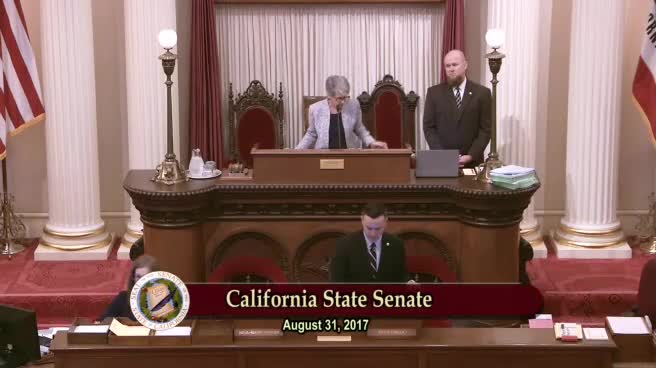 3MIN
Senate Floor
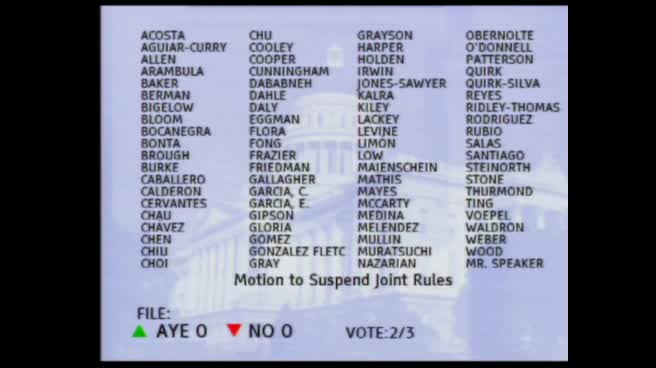 1MIN
Assembly Floor
 3MIN
Assembly Standing Committee on Judiciary
Bill Author

Bill Co-Author(s):

















































