AJR 24: Concealed carry reciprocity.
- Session Year: 2017-2018
- House: Assembly
- Latest Version Date: 2017-09-28
This measure would urge the Congress of the United States to not enact S. 446, H.R. 38, or any other similar concealed carry reciprocity legislation that would require the State of California to recognize the concealed carry standards of every other state.
This measure would urge the Congress of the United States to not enact S. 446, H.R. 38, or any other similar concealed carry reciprocity legislation that would require the State of California to recognize the concealed carry standards of every other state.
This measure would urge the Congress of the United States to not enact S. 446, H.R. 38, or any other similar concealed carry reciprocity legislation that would require the State of California to recognize the concealed carry standards of every other state.
This measure would urge the Congress of the United States to not enact S. 446, H.R. 38, or any other similar concealed carry reciprocity legislation that would require the State of California to recognize the concealed carry standards of every other state.
WHEREAS, The concealed carry of a loaded handgun with a permit is legal in the State of California and in all 50 states, and each state has set its own standards for who may carry a firearm in public, making independent decisions tailored to its own public safety needs; and
WHEREAS, Since 1917, the State of California has allowed the concealed carry of firearms and in that hundred years has always applied its own standards for who is too dangerous or irresponsible to carry, including by authorizing issuers to deny permits to people who lack the good moral character or good cause to carry concealed handguns on California streets; and
WHEREAS, While the State of California requires safety training for every concealed carry permit applicant, 19 states allow concealed carry by people who have never had any safety training whatsoever; and
WHEREAS, Unlike the State of California, 25 states do not allow issuers to block concealed carry by people with dangerous red flagsfor example, a history of domestic disturbances or mental health crises; and
WHEREAS, While the State of California bars concealed carry by a wide variety of people with recent violent misdemeanor convictions, including assault and battery, threatening crimes, and a variety of weapons crimes, 23 states allow concealed carry by people with these violent criminal records; and
WHEREAS, While the State of California blocks anyone with a stalking conviction from getting a concealed carry permit, 22 states allow concealed carry by some convicted stalkers; and
WHEREAS, While the State of California blocks concealed carry by abusive domestic partners subject to restraining orders or with domestic violence convictions, 34 states allow concealed carry by some of these abusers; and
WHEREAS, While the State of California requires renewal of a concealed carry permit and a new criminal background check every two years, many states renew permits less frequently and routinely fail to revoke permits after holders become disqualified; and
WHEREAS, Concealed carry reciprocity would force the State of California to allow any of these individualspeople with no firearm safety training, people with dangerous histories, people with violent misdemeanor records, convicted stalkers, and abusive domestic partnersto carry concealed handguns on the streets of its towns and cities; and
WHEREAS, Twelve states do not require any permit, training, or criminal history check to carry a concealed firearm in public, including eight states that have repealed their permit requirement in the past three years, and concealed carry reciprocity would force the State of California to allow people with no permit whatsoever to carry concealed guns throughout the state; and
WHEREAS, The United States has a tradition of making public safety decisions on the local level and each state has always retained its own authority to determine which individuals are too dangerous or reckless to carry concealed firearms; and
WHEREAS, Concealed carry standards are not like drivers licenses because states set largely identical requirements for driving and uniformly require an eyesight test, a road test, and a written test, while concealed carry standards vary drastically by state and several states do not require permits at all; and
WHEREAS, Unlike with drivers licenses, there is often no way to confirm that an out-of-state concealed carry permit is valid, and in contrast with concealed carry reciprocity, states have voluntarily recognized each others drivers licenses through compact; now, therefore, be it
Resolved by the Assembly and the Senate of the State of California, jointly, That the Legislature opposes federal concealed carry reciprocity legislation filed to date (S. 446 and H.R. 38) and any other similar legislation because it would require the State of California to recognize the concealed carry standards of every other state, even those with low standards or no permit requirement whatsoever, and urges the 115th Congress of the United States to not enact that legislation; and be it further
Resolved, That the Legislature opposes concealed carry reciprocity legislation (S. 446 and H.R. 38) and any other legislation that would remove state and local police power to set public safety standards for who may carry a concealed firearm in public; and be it further
Resolved, That the Legislature opposes concealed carry reciprocity legislation (S. 446 and H.R. 38) and any other legislation that would put local law enforcement at risk when encountering an armed out-of-state visitor who may be carrying with no permit whatsoeveroften leaving police and sheriffs with no means to verify whether the person is carrying lawfully; and be it further
Resolved, That the Legislature again reiterates its support for common-sense gun legislation to keep guns out of dangerous hands, including strong standards that ensure people cannot legally carry guns concealed in California communities without proper safety training or if they pose a danger to the public; and be it further
Resolved, That the Chief Clerk of the Assembly transmit copies of this resolution to the President and the Vice President of the United States, to the Speaker of the House of Representatives, to the Majority Leader of the United States Senate, and to each Senator and Representative from California in the Congress of the United States.
WHEREAS, The concealed carry of a loaded handgun with a permit is legal in the State of California and in all 50 states, and each state has set its own standards for who may carry a firearm in public, making independent decisions tailored to its own public safety needs; and
WHEREAS, Since 1917, the State of California has allowed the concealed carry of firearms and in that hundred years has always applied its own standards for who is too dangerous or irresponsible to carry, including by authorizing issuers to deny permits to people who lack the good moral character or good cause to carry concealed handguns on California streets; and
WHEREAS, While the State of California requires safety training for every concealed carry permit applicant, 19 states allow concealed carry by people who have never had any safety training whatsoever; and
WHEREAS, Unlike the State of California, 25 states do not allow issuers to block concealed carry by people with dangerous red flagsfor example, a history of domestic disturbances or mental health crises; and
WHEREAS, While the State of California bars concealed carry by a wide variety of people with recent violent misdemeanor convictions, including assault and battery, threatening crimes, and a variety of weapons crimes, 23 states allow concealed carry by people with these violent criminal records; and
WHEREAS, While the State of California blocks anyone with a stalking conviction from getting a concealed carry permit, 22 states allow concealed carry by some convicted stalkers; and
WHEREAS, While the State of California blocks concealed carry by abusive domestic partners subject to restraining orders or with domestic violence convictions, 34 states allow concealed carry by some of these abusers; and
WHEREAS, While the State of California requires renewal of a concealed carry permit and a new criminal background check every two years, many states renew permits less frequently and routinely fail to revoke permits after holders become disqualified; and
WHEREAS, Concealed carry reciprocity would force the State of California to allow any of these individualspeople with no firearm safety training, people with dangerous histories, people with violent misdemeanor records, convicted stalkers, and abusive domestic partnersto carry concealed handguns on the streets of its towns and cities; and
WHEREAS, Twelve states do not require any permit, training, or criminal history check to carry a concealed firearm in public, including eight states that have repealed their permit requirement in the past three years, and concealed carry reciprocity would force the State of California to allow people with no permit whatsoever to carry concealed guns throughout the state; and
WHEREAS, If reciprocity becomes law, the City of Los Angeles could add over 1.5 million potential out-of-state gun carriers per year, the City of San Diego could see over 1 million additional armed out-of-state visitors in a year, and the City and County of San Francisco could have over 300,000 new out-of-state carriers annually; andWHEREAS, The United States has a tradition of making public safety decisions on the local level and each state has always retained its own authority to determine which individuals are too dangerous or reckless to carry concealed firearms; and
WHEREAS, Concealed carry standards are not like drivers licenses because states set largely identical requirements for driving and uniformly require an eyesight test, a road test, and a written test, while concealed carry standards vary drastically by state and several states do not require permits at all; and
WHEREAS, Unlike with drivers licenses, there is often no way to confirm that an out-of-state concealed carry permit is valid, and in contrast with concealed carry reciprocity, states have voluntarily recognized each others drivers licenses through compact; now, therefore, be it
Resolved by the Assembly and the Senate of the State of California, jointly, That the Legislature opposes federal concealed carry reciprocity legislation filed to date (S. 446 and H.R. 38) and any other similar legislation because it would require the State of California to recognize the concealed carry standards of every other state, even those with low standards or no permit requirement whatsoever, and urges the 115th Congress of the United States to not enact that legislation; and be it further
Resolved, That the Legislature opposes concealed carry reciprocity legislation (S. 446 and H.R. 38) and any other legislation that would remove state and local police power to set public safety standards for who may carry a concealed firearm in public; and be it further
Resolved, That the Legislature opposes concealed carry reciprocity legislation (S. 446 and H.R. 38) and any other legislation that would put local law enforcement at risk when encountering an armed out-of-state visitor who may be carrying with no permit whatsoeveroften leaving police and sheriffs with no means to verify whether the person is carrying lawfully; and be it further
Resolved, That the Legislature again reiterates its support for common-sense gun legislation to keep guns out of dangerous hands, including strong standards that ensure people cannot legally carry guns concealed in California communities without proper safety training or if they pose a danger to the public; and be it further
Resolved, That the Chief Clerk of the Assembly transmit copies of this resolution to the President and the Vice President of the United States, to the Speaker of the House of Representatives, to the Majority Leader of the United States Senate, and to each Senator and Representative from California in the Congress of the United States.
WHEREAS, The concealed carry of a loaded handgun with a permit is legal in the State of California and in all 50 states, and each state has set its own standards for who may carry a firearm in public, making independent decisions tailored to its own public safety needs; and
WHEREAS, Since 1917, the State of California has allowed the concealed carry of firearms and in that hundred years has always applied its own standards for who is too dangerous or irresponsible to carry, including by authorizing issuers to deny permits to people who lack the good moral character or good cause to carry concealed handguns on California streets; and
WHEREAS, While the State of California requires safety training for every concealed carry permit applicant, 19 states allow concealed carry by people who have never had any safety training whatsoever; and
WHEREAS, Unlike the State of California, 25 states do not allow issuers to block concealed carry by people with dangerous red flagsfor example, a history of domestic disturbances or mental health crises; and
WHEREAS, While the State of California bars concealed carry by a wide variety of people with recent violent misdemeanor convictions, including assault and battery, threatening crimes, and a variety of weapons crimes, 23 states allow concealed carry by people with these violent criminal records; and
WHEREAS, While the State of California blocks anyone with a stalking conviction from getting a concealed carry permit, 22 states allow concealed carry by some convicted stalkers; and
WHEREAS, While the State of California blocks concealed carry by abusive domestic partners subject to restraining orders or with domestic violence convictions, 34 states allow concealed carry by some of these abusers; and
WHEREAS, While the State of California requires renewal of a concealed carry permit and a new criminal background check every two years, many states renew permits less frequently and routinely fail to revoke permits after holders become disqualified; and
WHEREAS, Concealed carry reciprocity would force the State of California to allow any of these individualspeople with no firearm safety training, people with dangerous histories, people with violent misdemeanor records, convicted stalkers, and abusive domestic partnersto carry concealed handguns on the streets of its towns and cities; and
WHEREAS, Twelve states do not require any permit, training, or criminal history check to carry a concealed firearm in public, including eight states that have repealed their permit requirement in the past three years, and concealed carry reciprocity would force the State of California to allow people with no permit whatsoever to carry concealed guns throughout the state; and
WHEREAS, If reciprocity becomes law, the City of Los Angeles could add over 1.5 million potential out-of-state gun carriers per year, the City of San Diego could see over 1 million additional armed out-of-state visitors in a year, and the City and County of San Francisco could have over 300,000 new out-of-state carriers annually; and
WHEREAS, The United States has a tradition of making public safety decisions on the local level and each state has always retained its own authority to determine which individuals are too dangerous or reckless to carry concealed firearms; and
WHEREAS, Concealed carry standards are not like drivers licenses because states set largely identical requirements for driving and uniformly require an eyesight test, a road test, and a written test, while concealed carry standards vary drastically by state and several states do not require permits at all; and
WHEREAS, Unlike with drivers licenses, there is often no way to confirm that an out-of-state concealed carry permit is valid, and in contrast with concealed carry reciprocity, states have voluntarily recognized each others drivers licenses through compact; now, therefore, be it
Resolved by the Assembly and the Senate of the State of California, jointly, That the Legislature opposes federal concealed carry reciprocity legislation filed to date (S. 446 and H.R. 38) and any other similar legislation because it would require the State of California to recognize the concealed carry standards of every other state, even those with low standards or no permit requirement whatsoever, and urges the 115th Congress of the United States to not enact that legislation; and be it further
Resolved,That the Legislature opposes concealed carry reciprocity legislation (S. 446 and H.R. 38) and any other legislation that would remove state and local police power to set public safety standards for who may carry a concealed firearm in public; and be it further
Resolved,That the Legislature opposes concealed carry reciprocity legislation (S. 446 and H.R. 38) and any other legislation that would put local law enforcement at risk when encountering an armed out-of-state visitor who may be carrying with no permit whatsoeveroften leaving police and sheriffs with no means to verify whether the person is carrying lawfully; and be it further
Resolved, That the Legislature again reiterates its support for common-sense gun legislation to keep guns out of dangerous hands, including strong standards that ensure people cannot legally carry guns concealed in California communities without proper safety training or if they pose a danger to the public; and be it further
Resolved,That the Chief Clerk of the Assembly transmit copies of this resolution to the President and the Vice President of the United States, to the Speaker of the House of Representatives, to the Majority Leader of the United States Senate, and to each Senator and Representative from California in the Congress of the United States.
|
Date
|
Status
|
|---|---|
| Sep 28, 2017 | Chaptered by Secretary of State - Res. Chapter 214, Statutes of 2017. |
| Sep 28, 2017 | Enrolled and filed with the Secretary of State at 3 p.m. |
| Sep 15, 2017 | In Assembly. Ordered to Engrossing and Enrolling. |
| Sep 15, 2017 | From committee: Ordered to third reading. |
| Sep 13, 2017 | In Senate. To Com. on RLS. |
| Sep 12, 2017 | Coauthors revised. |
| Sep 1, 2017 | Amended. Ordered to third reading. |
| Aug 31, 2017 | From committee: Amend, and be adopted as amended. (Ayes 5. Noes 2.) (August 31). |
| Aug 28, 2017 | Referred to Com. on PUB. S. |
| Aug 25, 2017 | From printer. |
| Aug 24, 2017 | Introduced. To print. |
|
Date
|
Description
|
Location
|
Votes
|
|
|---|---|---|---|---|
| Sep 15, 2017 | W/O REF. TO FILE AJR24 Santiago By Skinner | Senate Floor |
Passed |
|
| Sep 12, 2017 | AJR 24 SANTIAGO Assembly Third Reading | Assembly Floor |
Passed |
|
| Aug 31, 2017 | Be adopted as amended. | Assembly Standing Committee on Public Safety |
Passed |
This list shows positions taken on this bill by organizations on the date displayed, which is linked to the original source.
Positions by individuals are not included.
|
Organization
|
Position
|
Date
|
|---|---|---|
| 25th California Chapter to the Brady Campaign to Prevent Gun Violence | * Support | Sep 19, 2017 |
| California Rifle and Pistol Association | * Against | Sep 19, 2017 |
| Everytown for Gun Safety | ** Support | Sep 15, 2017 |
| Firearms Policy Coalition | * Against | Sep 19, 2017 |
| Gun Owners in California | * Against | Sep 19, 2017 |
| Law Center to Prevent Gun Violence | ** Support | Sep 15, 2017 |
| Moms Demand Action | ** Support | Sep 15, 2017 |
| National Rifle Assocation | * Against | Sep 19, 2017 |
Office of Senate Floor Analyses (916) 651-1520 Fax: (916) 327-4478 | AJR |
THIRD READING
Bill No: AJR 24
:
ASSEMBLY FLOOR: 47-28, 9/12/17 - See last page for vote
DIGEST:
This resolution resolves that the Legislature of the State of California opposes federal "concealed carry reciprocity" legislation introduced in United States (U.S.) Congress (Senate bill (S.) 446 and House Resolution (H.R.) 38) and any other similar legislation because it would require the State of California to recognize the concealed carry standards of every other state, and urges Congress not to enact that legislation.
ANALYSIS: This resolution makes the following legislative findings and resolutions:
- Finds that concealed carry of a loaded handgun with a permit is legal in the State of California and in all 50 states, and each state has set its own standards for who may carry a firearm in public, making independent decisions tailored to its own public safety needs.
- Finds that since 1917, the State of California has allowed the concealed carry of firearms and in that 100 years has always applied its own standards for who is too dangerous or irresponsible to carry, including by authorizing issuers to deny permits to people who lack the good moral character or good cause to carry concealed handguns on California streets.
- Finds that 19 states allow concealed carry by people who have never had any safety training whatsoever.
- Finds that unlike the State of California, 25 other states do not allow issuers to block concealed carry by people with dangerous red flags (e.g., a history of domestic disturbances or mental health crises).
- Finds that the State of California bars concealed carry by a wide variety of people with recent violent misdemeanor convictions, but that 23 other states allow concealed carry by people with these violent criminal records.
- Finds that the State of California blocks anyone with a stalking conviction from getting a concealed carry permit, but that 22 other states allow concealed carry by some convicted stalkers.
- Finds that the State of California blocks concealed carry by abusive domestic partners subject to restraining orders or with domestic violence convictions, but that 34 other states allow concealed carry by some of these abusers.
- Finds that the State of California requires renewal of a concealed carry permit and a new criminal background check every two years, but that many other states renew permits less frequently and routinely fail to revoke permits after holders become disqualified.
- Finds that "concealed carry reciprocity" would force the State of California to allow individuals—people with no firearm safety training, people with dangerous histories, people with violent misdemeanor records, convicted stalkers, and abusive domestic partners—to carry concealed handguns on the streets of its towns and cities.
- Finds that 12 states do not require any permit, training, or criminal history check to carry a concealed firearm in public, including eight states that have repealed their permit requirement in the past three years, and "concealed carry reciprocity" would force the State of California to allow people with no permit whatsoever to carry concealed guns throughout the state.
- Finds that the United States has a tradition of making public safety decisions on the local level and each state has always retained its own authority to determine which individuals are too dangerous or reckless to carry concealed firearms.
- Finds that concealed carry standards are not like driver's licenses because states set largely identical requirements for driving and uniformly require an eyesight test, a road test, and a written test, while concealed carry standards vary drastically by state and several states do not require permits at all.
- Finds that unlike out of state driver's licenses, there is often no way to confirm that an out-of-state concealed carry permit is valid, and in contrast with "concealed carry reciprocity," states have voluntarily recognized each other's driver's licenses through compact.
- Resolves by the Assembly and the Senate of the State of California, jointly, that the Legislature opposes federal "concealed carry reciprocity" legislation filed to date (S. 446 and H.R. 38) and any other similar legislation because it would require the State of California to recognize the concealed carry standards of every other state, even those with low standards or no permit requirement whatsoever, and urges the 115th Congress of the United States to not enact that legislation.
- Resolves that the Legislature opposes "concealed carry reciprocity" legislation (S. 446 and H.R. 38) and any other legislation that would remove state and local police power to set public safety standards for who may carry a concealed firearm in public.
- Resolves that the Legislature opposes "concealed carry reciprocity" legislation (S. 446 and H.R. 38) and any other legislation that would put local law enforcement at risk when encountering an armed out-of-state visitor who may be carrying with no permit whatsoever—often leaving police and sheriffs with no means to verify whether the person is carrying lawfully.
- Resolves that the Legislature again reiterates its support for common-sense gun legislation to keep guns out of dangerous hands, including strong standards that ensure people cannot legally carry guns concealed in California communities without proper safety training or if they pose a danger to the public.
- Resolves that the Chief Clerk of the Assembly transmit copies of this resolution to the President and the Vice President of the United States, to the Speaker of the House of Representatives, to the Majority Leader of the United States Senate, and to each Senator and Representative from California in the Congress of the United States.
This resolution:
- States that a county sheriff or municipal police chief may issue a license to carry a handgun capable of being concealed upon the person upon proof of all of the following:
- The person applying is of good moral character (Pen. Code, §§ 26150 and 26155(a)(1));
- Good cause exists for the issuance (Pen. Code, §§ 26150 and 26155(a)(2));
- The person applying meets the appropriate residency requirements (Pen. Code, §§ 26150 and 26155(a)(3)); and,
- The person has completed the appropriate training course, as specified. (Pen. Code, §§ 26150 and 26155(a)(4))
- The person applying is of good moral character (Pen. Code, §§ 26150 and 26155(a)(1));
- States that a county sheriff or a chief of a municipal police department may issue a license to carry a concealed handgun in either of the following formats:
- A license to carry a concealed handgun upon his or her person (Pen. Code, §§ 26150 and 26155(b)(1)); or,
- A license to carry a loaded and exposed handgun if the population of the county, or the county in which the city is located, is less than 200,000 persons according to the most recent federal decennial census. (Pen. Code, §§ 26150 and 26155, subd. (b)(2).)
- A license to carry a concealed handgun upon his or her person (Pen. Code, §§ 26150 and 26155(b)(1)); or,
- Provides that a license may include any reasonable restrictions or conditions that the issuing authority deems warranted. (Pen. Code, § 26200.)
- Specifies that applications for concealed carry weapon (CCW) licenses, applications for amendments to CCW licenses, amendments to CCW licenses, and CCW licenses under this article shall be uniform throughout the state, upon forms to be prescribed by the Attorney General. (Pen. Code, § 26175, subd. (a)(1).)
- Provides that the Attorney General shall convene a committee composed of one representative of the California State Sheriffs' Association, one representative of the California Police Chiefs Association, and one representative of the Department of Justice to review and, as deemed appropriate, revise the standard application form for CCW licenses. The committee shall meet for this purpose if two of the committee's members deem that necessary. (Pen. Code, § 26175, subd. (a)(2).)
- States that the application shall include a section summarizing the statutory provisions of state law that result in the automatic denial of a license. (Pen. Code, § 26175, subd. (b).)
- Provides that the standard application form for CCW licenses shall require information from the applicant, including, but not limited to, the name, occupation, residence, and business address of the applicant, the applicant's age, height, weight, color of eyes and hair, and reason for desiring a license to carry the weapon. (Pen. Code, § 26175, subd. (c).)
- Specifies that applications for licenses shall be filed in writing and signed by the applicant. (Pen. Code, § 26175, subd. (d).)
- Provides that applications for amendments to CCW licenses shall be filed in writing and signed by the applicant, and shall state what type of amendment is sought and the reason for desiring the amendment. (Pen. Code § 26175, subd. (e).)
- States that the forms shall contain a provision whereby the applicant attests to the truth of statements contained in the application. (Pen. Code, § 26175, subd. (f).)
- Provides that an applicant shall not be required to complete any additional application or form for a license, or to provide any information other than that necessary to complete the standard application form, except to clarify or interpret information provided by the applicant on the standard application form. (Pen. Code, § 26175, subd. (g).)
- States that the standard application form is deemed to be a local form expressly exempt from the requirements of the Administrative Procedures Act. (Pen. Code, § 26175, subd. (h).)
- Provides that any CCW license issued upon the application shall set forth the licensee's name, occupation, residence and business address, the licensee's age, height, weight, color of eyes and hair, and the reason for desiring a license to carry the weapon, and shall, in addition, contain a description of the weapon or weapons authorized to be carried, giving the name of the manufacturer, the serial number, and the caliber. The license issued to the licensee may be laminated. (Pen. Code § 26175, subd. (i).)
Background
There are currently two bills pending in the U.S. Congress which would require concealed carry reciprocity between States: H.R. 38 - 115th Congress: Concealed Carry Reciprocity Act of 2017 and S. 446 - 115th Congress: Constitutional Concealed Carry Reciprocity Act of 2017. These bills would force each state to recognize concealed carry permits from every other state. H.R. 338 was introduced on January 3, 2017, and is awaiting hearing in the House Committee on the Judiciary. S. 446 was introduced on February 27, 2017, and has been referred to the Senate Judiciary Committee.
The provisions of the bills are similar. S. 446 would allow any person that is not prohibited under federal law from possessing a firearm and is entitled to carry a concealed firearm in the state in which the person resides, to possess or carry a concealed handgun in any other state that allows permits for, or does not prohibit, the carrying of concealed firearms by residents of the state. S. 446 would require a person to carry photo ID and a concealed carry permit in order for their permit to be honored in a state that did not issue the permit.
H.R. 38 contains some additional provisions beyond S. 446 and is broader in scope. H.R. 38 would allow a person to carry a concealed weapon in their home state (if it allows for concealed carry) if they possess a concealed carry permit from any other state. H.R. 38 further specifies that a person who carries a concealed handgun shall not be arrested under state law related to the possession, transportation, or carrying of firearms unless there is probable cause to believe the person is doing so in violation of the terms of H.R. 38. H.R. 38 would also provide a legal cause of action to recover damages if a person is deprived of the rights and immunity described by H.R. 38. H.R. 38 states that a person possessing a concealed carry permit as specified in the bill is not subject to the federal prohibition regarding possession of a firearm on school grounds.
A CCW can be obtained by California residents at the discretion of their county sheriffs or local police chiefs. For an individual to obtain a CCW license they must show that they are of good moral character, that they have a good cause for needing a concealed weapon, and that they have completed the necessary training. Existing law does not provide a legal avenue for residents of other states that have obtained CCWs in their respective states to carry a CCW while they are in California. California’s requirements to obtain a CCW are more rigorous than many other states. If H.R. 38 or H. 446 was to become law, California would be required to honor concealed carry permits for out-of-stat/e residents traveling in California. Many of those out-of-state CCWs would be issued based on criteria that that is inconsistent with California law regarding CCWs. If H.R. 38 becomes law, California would be required to honor a CCW permit obtained by a California resident in another state.
FISCAL EFFECT: Appropriation: No Fiscal Com.: Local: No
Californian Chapters of the Brady Campaign to Prevent Gun Violence
Everytown for Gun Safety
Law Center to Prevent Gun Violence
Moms Demand Action
OPPOSITION: (Verified 9/13/17)
Gun Owners of California
National Rifle Association
ASSEMBLY FLOOR: 47-28, 9/12/17
AYES: Aguiar-Curry, Baker, Berman, Bloom, Bocanegra, Bonta, Calderon, Chau, Chiu, Chu, Dababneh, Daly, Eggman, Friedman, Cristina Garcia, Eduardo Garcia, Gipson, Gloria, Gonzalez Fletcher, Grayson, Holden, Irwin, Jones-Sawyer, Kalra, Levine, Limón, Low, McCarty, Medina, Mullin, Muratsuchi, Nazarian, O'Donnell, Quirk, Quirk-Silva, Reyes, Ridley-Thomas, Rodriguez, Rubio, Salas, Santiago, Mark Stone, Thurmond, Ting, Weber, Wood, Rendon
NOES: Acosta, Travis Allen, Arambula, Bigelow, Brough, Cervantes, Chávez, Chen, Choi, Cooley, Cunningham, Dahle, Flora, Fong, Gallagher, Gray, Harper, Kiley, Lackey, Maienschein, Mathis, Mayes, Melendez, Obernolte, Patterson, Steinorth, Voepel, Waldron
NO VOTE RECORDED: Burke, Caballero, Cooper, Frazier
9/15/17 18:52:48
**** END ****
ASSEMBLY THIRD READING
ATR Bill Id:AJR 24
Author:(Santiago)
As Amended Ver:September 1, 2017
Majority vote
Committee | Votes | Ayes | Noes |
Public Safety | 5-2 | Jones-Sawyer, Gonzalez Fletcher, Quirk, Rubio, Santiago | Lackey, Kiley |
SUMMARY: Resolves that the Legislature of the State of California opposes federal "concealed carry reciprocity" legislation introduced in United States (U.S.) Congress (Senate bill (S.) 446 and House Resolution (H.R.) 38) and any other similar legislation because it would require the State of California to recognize the concealed carry standards of every other state, and urges Congress not to enact that legislation. Specifically, this bill:
- Finds that concealed carry of a loaded handgun with a permit is legal in the State of California and in all 50 states, and each state has set its own standards for who may carry a firearm in public, making independent decisions tailored to its own public safety needs.
- Finds that since 1917, the State of California has allowed the concealed carry of firearms and in that hundred years has always applied its own standards for who is too dangerous or irresponsible to carry, including by authorizing issuers to deny permits to people who lack the good moral character or good cause to carry concealed handguns on California streets.
- Finds that 19 states allow concealed carry by people who have never had any safety training whatsoever.
- Finds that unlike the State of California, 25 other states do not allow issuers to block concealed carry by people with dangerous red flags (e.g., a history of domestic disturbances or mental health crises.)
- Finds that the State of California bars concealed carry by a wide variety of people with recent violent misdemeanor convictions, but that 23 other states allow concealed carry by people with these violent criminal records.
- Finds that the State of California blocks anyone with a stalking conviction from getting a concealed carry permit, but that 22 other states allow concealed carry by some convicted stalkers.
- Finds that the State of California blocks concealed carry by abusive domestic partners subject to restraining orders or with domestic violence convictions, but that 34 other states allow concealed carry by some of these abusers; and
- Finds that the State of California requires renewal of a concealed carry permit and a new criminal background check every two years, but that many other states renew permits less frequently and routinely fail to revoke permits after holders become disqualified.
- Finds that "concealed carry reciprocity" would force the State of California to allow individuals—people with no firearm safety training, people with dangerous histories, people with violent misdemeanor records, convicted stalkers, and abusive domestic partners—to carry concealed handguns on the streets of its towns and cities.
- Finds that twelve states do not require any permit, training, or criminal history check to carry a concealed firearm in public, including eight states that have repealed their permit requirement in the past three years, and "concealed carry reciprocity" would force the State of California to allow people with no permit whatsoever to carry concealed guns throughout the state.
- Finds that the United States has a tradition of making public safety decisions on the local level and each state has always retained its own authority to determine which individuals are too dangerous or reckless to carry concealed firearms.
- Finds that concealed carry standards are not like driver's licenses because states set largely identical requirements for driving and uniformly require an eyesight test, a road test, and a written test, while concealed carry standards vary drastically by state and several states do not require permits at all.
- Finds that unlike out of state driver's licenses, there is often no way to confirm that an out-of-state concealed carry permit is valid, and in contrast with "concealed carry reciprocity," states have voluntarily recognized each other's driver's licenses through compact.
- Resolves by the Assembly and the Senate of the State of California, jointly, That the Legislature opposes federal "concealed carry reciprocity" legislation filed to date (S. 446 and H.R. 38) and any other similar legislation because it would require the State of California to recognize the concealed carry standards of every other state, even those with low standards or no permit requirement whatsoever, and urges the 115th Congress of the United States to not enact that legislation.
- Resolves that the Legislature opposes "concealed carry reciprocity" legislation (S. 446 and H.R. 38) and any other legislation that would remove state and local police power to set public safety standards for who may carry a concealed firearm in public.
- Resolves that the Legislature opposes "concealed carry reciprocity" legislation (S. 446 and H.R. 38) and any other legislation that would put local law enforcement at risk when encountering an armed out-of-state visitor who may be carrying with no permit whatsoever—often leaving police and sheriffs with no means to verify whether the person is carrying lawfully.
- Resolves that the Legislature again reiterates its support for common-sense gun legislation to keep guns out of dangerous hands, including strong standards that ensure people cannot legally carry guns concealed in California communities without proper safety training or if they pose a danger to the public.
- Resolves that the Chief Clerk of the Assembly transmit copies of this resolution to the President and the Vice President of the United States, to the Speaker of the House of Representatives, to the Majority Leader of the United States Senate, and to each Senator and Representative from California in the Congress of the United States.
EXISTING LAW:
- States that a county sheriff or municipal police chief may issue a license to carry a handgun capable of being concealed upon the person (CCW) upon proof of all of the following:
- The person applying is of good moral character;
- Good cause exists for the issuance;
- The person applying meets the appropriate residency requirements; and,
- The person has completed the appropriate training course, as specified.
- States that a county sheriff or a chief of a municipal police department may issue a license to carry a concealed handgun in either of the following formats:
- A license to carry a concealed handgun upon his or her person; or,
- A license to carry a loaded and exposed handgun if the population of the county, or the county in which the city is located, is less than 200,000 persons according to the most recent federal decennial census.
- Provides that a license may include any reasonable restrictions or conditions that the issuing authority deems warranted.
- Specifies that applications for CCW licenses, applications for amendments to CCW licenses, amendments to CCW licenses, and CCW licenses under this article shall be uniform throughout the state, upon forms to be prescribed by the Attorney General.
- Provides that the Attorney General shall convene a committee composed of one representative of the California State Sheriffs' Association, one representative of the California Police Chiefs Association, and one representative of the Department of Justice to review, and as deemed appropriate, revise the standard application form for CCW licenses. The committee shall meet for this purpose if two of the committee's members deem that necessary.
- States that the application shall include a section summarizing the statutory provisions of state law that result in the automatic denial of a license.
- Provides that the standard application form for CCW licenses shall require information from the applicant, including, but not limited to, the name, occupation, residence, and business address of the applicant, the applicant's age, height, weight, color of eyes and hair, and reason for desiring a license to carry the weapon.
- Specifies that applications for licenses shall be filed in writing and signed by the applicant.
- Provides that applications for amendments to CCW licenses shall be filed in writing and signed by the applicant, and shall state what type of amendment is sought and the reason for desiring the amendment.
- States that the forms shall contain a provision whereby the applicant attests to the truth of statements contained in the application.
- Provides that an applicant shall not be required to complete any additional application or form for a license, or to provide any information other than that necessary to complete the standard application form, except to clarify or interpret information provided by the applicant on the standard application form.
- States that the standard application form is deemed to be a local form expressly exempt from the requirements of the Administrative Procedures Act.
- Provides that any CCW license issued upon the application shall set forth the licensee's name, occupation, residence and business address, the licensee's age, height, weight, color of eyes and hair, and the reason for desiring a license to carry the weapon, and shall, in addition, contain a description of the weapon or weapons authorized to be carried, giving the name of the manufacturer, the serial number, and the caliber. The license issued to the licensee may be laminated.
FISCAL EFFECT: Unknown. This bill is keyed non-fiscal by the Legislative Counsel.
COMMENTS: According to the author, "The California legislature cannot standby as Congress attempts to throw away the progress we have made on gun-safety with S. 446 and H.R. 38. These bills would undermine our state's gun-control regulations and leave our borders open to a flood of firearms. California has a right to create our own laws, within the confines of the U.S. Constitution, and our voters expect that the gun control laws that they have supported and instituted in the name of public health and safety will hold – regardless of who is carrying that gun or where he or she is from. AJR 24 sends a strong message to D.C. that S. 446 and H.R 38 must be stopped."
Analysis Prepared by: David Billingsley / PUB. S. / (916) 319-3744 FN: 0001568
Date of Hearing: August 31, 2017
Counsel: David Billingsley
ASSEMBLY COMMITTEE ON
Reginald Byron Jones-Sawyer, Sr., Chair
ABPCA Bill Id:
Author:() – As Ver:
SUMMARY:
Resolves that the Legislature of the State of California opposes federal “concealed carry reciprocity” legislation introduced in U.S. Congress (S. 446 and H.R. 38) and any other similar legislation because it would require the State of California to recognize the concealed carry standards of every other state, and urges Congress not to enact that legislation. Specifically, this bill:
- Finds that concealed carry of a loaded handgun with a permit is legal in the State of California and in all 50 states, and each state has set its own standards for who may carry a firearm in public, making independent decisions tailored to its own public safety needs.
- Finds that since 1917, the State of California has allowed the concealed carry of firearms and in that hundred years has always applied its own standards for who is too dangerous or irresponsible to carry, including by authorizing issuers to deny permits to people who lack the good moral character or good cause to carry concealed handguns on California streets.
- Finds that 19 states allow concealed carry by people who have never had any safety training whatsoever.
- Finds that unlike the State of California, 25 other states do not allow issuers to block concealed carry by people with dangerous red flags (e.g., a history of domestic disturbances or mental health crises.)
- Finds that the State of California bars concealed carry by a wide variety of people with recent violent misdemeanor convictions, but that 23 other states allow concealed carry by people with these violent criminal records.
- Finds that the State of California blocks anyone with a stalking conviction from getting a concealed carry permit, but that 22 other states allow concealed carry by some convicted stalkers.
- Finds that the State of California blocks concealed carry by abusive domestic partners subject to restraining orders or with domestic violence convictions, but that 34 other states allow concealed carry by some of these abusers; and
- Finds that the State of California requires renewal of a concealed carry permit and a new criminal background check every two years, but that many other states renew permits less frequently and routinely fail to revoke permits after holders become disqualified.
- Finds that “concealed carry reciprocity” would force the State of California to allow individuals—people with no firearm safety training, people with dangerous histories, people with violent misdemeanor records, convicted stalkers, and abusive domestic partners—to carry concealed handguns on the streets of its towns and cities.
- Finds that twelve states do not require any permit, training, or criminal history check to carry a concealed firearm in public, including eight states that have repealed their permit requirement in the past three years, and “concealed carry reciprocity” would force the State of California to allow people with no permit whatsoever to carry concealed guns throughout the state.
- Finds that if “reciprocity” becomes law, the City of Los Angeles could add over 1.5 million potential out-of-state gun carriers per year, the City of San Diego could see over 1 million additional armed out-of-state visitors in a year, and the City and County of San Francisco could have over 300,000 new out-of-state carriers annually.
- Finds that the United States has a tradition of making public safety decisions on the local level and each state has always retained its own authority to determine which individuals are too dangerous or reckless to carry concealed firearms.
- Finds that concealed carry standards are not like driver’s licenses because states set largely identical requirements for driving and uniformly require an eyesight test, a road test, and a written test, while concealed carry standards vary drastically by state and several states do not require permits at all.
- Finds that unlike out of state driver’s licenses, there is often no way to confirm that an out-of-state concealed carry permit is valid, and in contrast with “concealed carry reciprocity,” states have voluntarily recognized each other’s driver’s licenses through compact.
- Resolves by the Assembly and the Senate of the State of California, jointly, That the Legislature opposes federal “concealed carry reciprocity” legislation filed to date (S. 446 and H.R. 38) and any other similar legislation because it would require the State of California to recognize the concealed carry standards of every other state, even those with low standards or no permit requirement whatsoever, and urges the 115th Congress of the United States to not enact that legislation.
- Resolves that the Legislature opposes “concealed carry reciprocity” legislation (S. 446 and H.R. 38) and any other legislation that would remove state and local police power to set public safety standards for who may carry a concealed firearm in public.
- Resolves that the Legislature opposes “concealed carry reciprocity” legislation (S. 446 and H.R. 38) and any other legislation that would put local law enforcement at risk when encountering an armed out-of-state visitor who may be carrying with no permit whatsoever—often leaving police and sheriffs with no means to verify whether the person is carrying lawfully.
- Resolves that the Legislature again reiterates its support for common-sense gun legislation to keep guns out of dangerous hands, including strong standards that ensure people cannot legally carry guns concealed in California communities without proper safety training or if they pose a danger to the public.
- Resolves that the Chief Clerk of the Assembly transmit copies of this resolution to the President and the Vice President of the United States, to the Speaker of the House of Representatives, to the Majority Leader of the United States Senate, and to each Senator and Representative from California in the Congress of the United States.
EXISTING LAW:
- States that a county sheriff or municipal police chief may issue a license to carry a handgun capable of being concealed upon the person (CCW) upon proof of all of the following:
- The person applying is of good moral character (Pen. Code, §§ 26150 and 26155(a)(1));
- Good cause exists for the issuance (Pen. Code, §§ 26150 and 26155(a)(2));
- The person applying meets the appropriate residency requirements (Pen. Code, §§ 26150 and 26155(a)(3)); and,
- The person has completed the appropriate training course, as specified. (Pen. Code, §§ 26150 and 26155(a)(4))
- The person applying is of good moral character (Pen. Code, §§ 26150 and 26155(a)(1));
- States that a county sheriff or a chief of a municipal police department may issue a license to carry a concealed handgun in either of the following formats:
- A license to carry a concealed handgun upon his or her person (Pen. Code, §§ 26150 and 26155(b)(1)); or,
- A license to carry a loaded and exposed handgun if the population of the county, or the county in which the city is located, is less than 200,000 persons according to the most recent federal decennial census. (Pen. Code, §§ 26150 and 26155, subd. (b)(2).)
- A license to carry a concealed handgun upon his or her person (Pen. Code, §§ 26150 and 26155(b)(1)); or,
- Provides that a license may include any reasonable restrictions or conditions that the issuing authority deems warranted. (Pen. Code, § 26200.)
- Specifies that applications for CCW licenses, applications for amendments to CCW licenses, amendments to CCW licenses, and CCW licenses under this article shall be uniform throughout the state, upon forms to be prescribed by the Attorney General. (Pen. Code, § 26175, subd. (a)(1).)
- Provides that the Attorney General shall convene a committee composed of one representative of the California State Sheriffs' Association, one representative of the California Police Chiefs Association, and one representative of the Department of Justice to review, and as deemed appropriate, revise the standard application form for CCW licenses. The committee shall meet for this purpose if two of the committee's members deem that necessary. (Pen. Code, § 26175, subd. (a)(2).)
- States that the application shall include a section summarizing the statutory provisions of state law that result in the automatic denial of a license. (Pen. Code, § 26175, subd. (b).)
- Provides that the standard application form for CCW licenses shall require information from the applicant, including, but not limited to, the name, occupation, residence, and business address of the applicant, the applicant's age, height, weight, color of eyes and hair, and reason for desiring a license to carry the weapon. (Pen. Code, § 26175, subd. (c).)
- Specifies that applications for licenses shall be filed in writing and signed by the applicant. (Pen. Code, § 26175, subd. (d).)
- Provides that applications for amendments to CCW licenses shall be filed in writing and signed by the applicant, and shall state what type of amendment is sought and the reason for desiring the amendment. (Pen. Code § 26175, subd. (e).)
- States that the forms shall contain a provision whereby the applicant attests to the truth of statements contained in the application. (Pen. Code, § 26175, subd. (f).)
- Provides that an applicant shall not be required to complete any additional application or form for a license, or to provide any information other than that necessary to complete the standard application form, except to clarify or interpret information provided by the applicant on the standard application form. (Pen. Code, § 26175, subd. (g).)
- States that the standard application form is deemed to be a local form expressly exempt from the requirements of the Administrative Procedures Act. (Pen. Code, § 26175, subd. (h).)
- Provides that any CCW license issued upon the application shall set forth the licensee's name, occupation, residence and business address, the licensee's age, height, weight, color of eyes and hair, and the reason for desiring a license to carry the weapon, and shall, in addition, contain a description of the weapon or weapons authorized to be carried, giving the name of the manufacturer, the serial number, and the caliber. The license issued to the licensee may be laminated. (Pen. Code § 26175, subd. (i).)
FISCAL EFFECT:
Unknown
COMMENTS:
- Author's Statement: According to the author, “The California legislature cannot standby as Congress attempts to throw away the progress we have made on gun-safety with S. 446 and H.R. 38. These bills would undermine our state’s gun-control regulations and leave our borders open to a flood of firearms. California has a right to create our own laws, within the confines of the U.S. Constitution, and our voters expect that the gun control laws that they have supported and instituted in the name of public health and safety will hold – regardless of who is carrying that gun or where he or she is from. AJR 24 sends a strong message to D.C. that S. 446 and H.R 38 must be stopped.”
- House of Representatives Bill 38 (Hudson) and Senate Bill 446 (Cornyn), Concealed Carry Reciprocity: There are currently two bills pending in the United States Congress which would require concealed carry reciprocity between States: H.R. 38 - 115th Congress: Concealed Carry Reciprocity Act of 2017 and S. 446 - 115th Congress: Constitutional Concealed Carry Reciprocity Act of 2017. These bills would force each state to recognize concealed carry permits from every other state. H.R. 338 was introduced on January 3, 2017 and is awaiting hearing in the House Committee on the Judiciary. S. 446 was introduced on February 27, 2017 and has been referred to the Senate Judiciary Committee.
The provisions of the bills are similar. S. 446 would allow any person that is not prohibited under federal law from possessing a firearm and is entitled to carry a concealed firearm in the state in which the person resides, to possess or carry a concealed handgun in any other state that allows permits for, or does not prohibit, the carrying of concealed firearms by residents of the state. S. 446 would require a person to carry photo ID and a concealed carry permit in order for their permit to be honored in a state that did not issue the permit.
H.R. 38 contains some additional provisions beyond S. 446 and is broader in scope. H.R. 38 would allow a person to carry a concealed weapon in their home state (if it allows for concealed carry) if they possess a concealed carry permit from any other state. H.R. 38 further specifies that a person who carries a concealed handgun shall not be arrested under state law related to the possession, transportation, or carrying of firearms unless there is probable cause to believe the person is doing so in violation of the terms of H.R. 38. H.R. 38 would also provide a legal cause of action to recover damages if a person is deprived of the rights and immunity described by H.R. 38. H.R. 38 states that a person possessing a concealed carry permit as specified in the bill is not subject to the federal prohibition regarding possession of a firearm on school grounds. - Concealed Handgun Carry Permits in California: A concealed carry weapon license (CCW) can be obtained by California residents at the discretion of their county sheriffs or local police chiefs. For an individual to obtain a concealed carry weapon license (CCW) they must show that they are of good moral character, that they have a good cause for needing a concealed weapon, and that they have completed the necessary training. Existing law does not provide a legal avenue for residents of other states that have obtained CCWs in their respective states to carry a CCW while they are in California. California’s requirements to obtain a CCW are more rigorous than many other states. If H.R. 38 or H. 446 was to become law, California would be required to honor concealed carry permits for out-of-state residents traveling in California. Many of those out-of-state CCWs would be issued based on criteria that that is inconsistent with California law regarding CCWs. If H.R. 38 becomes law, California would be required to honor a CCW permit obtained by a California resident in another state.
- Argument in Support: According to Everytown For Gun Safety, “This resolution opposes federal ‘Concealed Carry Reciprocity’ legislation filed in Congress (H.R. 38 and S. 446) as it would undermine California’s laws about who can carry a concealed handgun within our borders, impede local law enforcement from protecting California residents, and force California to allow concealed carry by people with dangerous histories and no permits or training whatsoever.
“Each state has different standards for who can carry a hidden, loaded handgun in public. ‘Concealed Carry Reciprocity’ does not create a national standard for who can carry guns in public across our country. To the contrary, it would gut each state’s gun laws and make Californians less safe by forcing California to accept the concealed carry permitting standards of every other state, even if that state has much weaker or no standards at all. It would effectively turn the weakest state’s laws into nationwide laws, making the weakest link the law of the land.
“‘Concealed Carry Reciprocity’ has been rejected by top law enforcement associations and officials for being dangerous and chaotic. We urge the Assembly to support AJR 24, and make it clear that any federal official who supports ‘Concealed Carry Reciprocity’ is supporting a policy that undermines California law and makes Californians less safe.” - Argument in Opposition: According to Firearms Policy Coalition, “Unfortunately, passage of AJR 24 would not be the first time the California Legislature has expressed complete and utter disregard for civil rights. In fact, California has a long and tortured history with using gun laws to pick winners and losers instead of supporting equality and civil rights for all.
“The first gun control law passed in California was enacted in 1854. It was, ‘An Act to prevent the sale of firearms and ammunition to the Indians in this State.’ In 1924 the Hawes Act was enacted to prevent Hispanics and Chinese from obtaining firearms. It also modified California’s concealed carry permit program to allow local law enforcement to subjectively discriminate in the issuance of permits under the guise of ‘discretion,’ a practice that continues to this day.
“Under California law, even if a law abiding resident passes thorough federal, state and local background checks, successfully completes specified training, which includes the law relating to use of force, and demonstrates competency with their firearm, they can still be turned down by the local sheriff or police chief for absolutely no objective reason at all.
“Then there was the Mulford Act of 1967, which banned the right to openly carry a loaded firearm. This measure was meant to disarm civil rights activist groups like the Black Panthers.
“Gun control in California has always seemed to be about keeping unfavored groups of people from owning, possessing or bearing firearms. In AJR 24, the unfavored group of people are those who visit here from states that actually respect the second amendment rights of their residents.”
- Related Legislation:
- AB 757 (Melendez), would have defined "good cause" for the issuance of a license to carry a concealed handgun to include, but not limited to, self-defense, as specified. AB 757 failed passage in the Assembly Public Safety Committee.
- AB 1394 (Allen), would have required the issuance of a concealed carry license without requiring the applicant to demonstrate good cause for issuance of the license. AB 1394 was never heard in the Assembly Public Safety Committee.
- AB 757 (Melendez), would have defined "good cause" for the issuance of a license to carry a concealed handgun to include, but not limited to, self-defense, as specified. AB 757 failed passage in the Assembly Public Safety Committee.
- Prior Legislation:
- AB 2510 (Linder), Chapter 645, Statutes of 2016, requires the Attorney General to develop a license to carry a concealed firearm with uniform information and criteria that may be used throughout the state.
- AB 1134 (Stone), Chapter 785, Statutes of 2015, authorized the sheriff of the county to enter into an agreement with the chief or other head of a municipal police department of a city to process all applications for licenses to carry a concealed handgun upon the person, renewal of those licenses, and amendments to those licenses for applicants who reside within the city.
- AB 2413 (Norby), of the 2009-2010 Legislative Session, would have allowed any person holding a valid permit or license to carry a concealed handgun from Arizona, Nevada, or Oregon, or a political subdivision of any of those states, shall be deemed to have a valid concealed weapons license under the State of California. AB 2413 failed passage in the Assembly Public Safety Committee.
- AB 2510 (Linder), Chapter 645, Statutes of 2016, requires the Attorney General to develop a license to carry a concealed firearm with uniform information and criteria that may be used throughout the state.
REGISTERED SUPPORT / OPPOSITION:
Support
Everytown for Gun Safety
Moms Demand Action for Gun Sense in America
Opposition
Gun Owners of California
Firearms Policy Coalition
Analysis Prepared by:
Date of Hearing:
Counsel: David Billingsley
ASSEMBLY COMMITTEE ON PUBLIC SAFETY
Reginald Byron Jones-Sawyer, Sr., Chair
ABPCA Bill Id:AJR 24
Author:(Santiago) – As Introduced Ver:August 24, 2017
SUMMARY:
Resolves that the Legislature of the State of California opposes federal “concealed carry reciprocity” legislation introduced in U.S. Congress (S. 446 and H.R. 38) and any other similar legislation because it would require the State of California to recognize the concealed carry standards of every other state, and urges Congress not to enact that legislation. Specifically, this bill:
- Finds that concealed carry of a loaded handgun with a permit is legal in the State of California and in all 50 states, and each state has set its own standards for who may carry a firearm in public, making independent decisions tailored to its own public safety needs.
- Finds that since 1917, the State of California has allowed the concealed carry of firearms and in that hundred years has always applied its own standards for who is too dangerous or irresponsible to carry, including by authorizing issuers to deny permits to people who lack the good moral character or good cause to carry concealed handguns on California streets.
- Finds that 19 states allow concealed carry by people who have never had any safety training whatsoever.
- Finds that unlike the State of California, 25 other states do not allow issuers to block concealed carry by people with dangerous red flags (e.g., a history of domestic disturbances or mental health crises.)
- Finds that the State of California bars concealed carry by a wide variety of people with recent violent misdemeanor convictions, but that 23 other states allow concealed carry by people with these violent criminal records.
- Finds that the State of California blocks anyone with a stalking conviction from getting a concealed carry permit, but that 22 other states allow concealed carry by some convicted stalkers.
- Finds that the State of California blocks concealed carry by abusive domestic partners subject to restraining orders or with domestic violence convictions, but that 34 other states allow concealed carry by some of these abusers; and
- Finds that the State of California requires renewal of a concealed carry permit and a new criminal background check every two years, but that many other states renew permits less frequently and routinely fail to revoke permits after holders become disqualified.
- Finds that “concealed carry reciprocity” would force the State of California to allow individuals—people with no firearm safety training, people with dangerous histories, people with violent misdemeanor records, convicted stalkers, and abusive domestic partners—to carry concealed handguns on the streets of its towns and cities.
- Finds that twelve states do not require any permit, training, or criminal history check to carry a concealed firearm in public, including eight states that have repealed their permit requirement in the past three years, and “concealed carry reciprocity” would force the State of California to allow people with no permit whatsoever to carry concealed guns throughout the state.
- Finds that if “reciprocity” becomes law, the City of Los Angeles could add over 1.5 million potential out-of-state gun carriers per year, the City of San Diego could see over 1 million additional armed out-of-state visitors in a year, and the City and County of San Francisco could have over 300,000 new out-of-state carriers annually.
- Finds that the United States has a tradition of making public safety decisions on the local level and each state has always retained its own authority to determine which individuals are too dangerous or reckless to carry concealed firearms.
- Finds that concealed carry standards are not like driver’s licenses because states set largely identical requirements for driving and uniformly require an eyesight test, a road test, and a written test, while concealed carry standards vary drastically by state and several states do not require permits at all.
- Finds that unlike out of state driver’s licenses, there is often no way to confirm that an out-of-state concealed carry permit is valid, and in contrast with “concealed carry reciprocity,” states have voluntarily recognized each other’s driver’s licenses through compact.
- Resolves by the Assembly and the Senate of the State of California, jointly, That the Legislature opposes federal “concealed carry reciprocity” legislation filed to date (S. 446 and H.R. 38) and any other similar legislation because it would require the State of California to recognize the concealed carry standards of every other state, even those with low standards or no permit requirement whatsoever, and urges the 115th Congress of the United States to not enact that legislation.
- Resolves that the Legislature opposes “concealed carry reciprocity” legislation (S. 446 and H.R. 38) and any other legislation that would remove state and local police power to set public safety standards for who may carry a concealed firearm in public.
- Resolves that the Legislature opposes “concealed carry reciprocity” legislation (S. 446 and H.R. 38) and any other legislation that would put local law enforcement at risk when encountering an armed out-of-state visitor who may be carrying with no permit whatsoever—often leaving police and sheriffs with no means to verify whether the person is carrying lawfully.
- Resolves that the Legislature again reiterates its support for common-sense gun legislation to keep guns out of dangerous hands, including strong standards that ensure people cannot legally carry guns concealed in California communities without proper safety training or if they pose a danger to the public.
- Resolves that the Chief Clerk of the Assembly transmit copies of this resolution to the President and the Vice President of the United States, to the Speaker of the House of Representatives, to the Majority Leader of the United States Senate, and to each Senator and Representative from California in the Congress of the United States.
EXISTING LAW:
- States that a county sheriff or municipal police chief may issue a license to carry a handgun capable of being concealed upon the person (CCW) upon proof of all of the following:
- The person applying is of good moral character (Pen. Code, §§ 26150 and 26155(a)(1));
- Good cause exists for the issuance (Pen. Code, §§ 26150 and 26155(a)(2));
- The person applying meets the appropriate residency requirements (Pen. Code, §§ 26150 and 26155(a)(3)); and,
- The person has completed the appropriate training course, as specified. (Pen. Code, §§ 26150 and 26155(a)(4))
- The person applying is of good moral character (Pen. Code, §§ 26150 and 26155(a)(1));
- States that a county sheriff or a chief of a municipal police department may issue a license to carry a concealed handgun in either of the following formats:
- A license to carry a concealed handgun upon his or her person (Pen. Code, §§ 26150 and 26155(b)(1)); or,
- A license to carry a loaded and exposed handgun if the population of the county, or the county in which the city is located, is less than 200,000 persons according to the most recent federal decennial census. (Pen. Code, §§ 26150 and 26155, subd. (b)(2).)
- A license to carry a concealed handgun upon his or her person (Pen. Code, §§ 26150 and 26155(b)(1)); or,
- Provides that a license may include any reasonable restrictions or conditions that the issuing authority deems warranted. (Pen. Code, § 26200.)
- Specifies that applications for CCW licenses, applications for amendments to CCW licenses, amendments to CCW licenses, and CCW licenses under this article shall be uniform throughout the state, upon forms to be prescribed by the Attorney General. (Pen. Code, § 26175, subd. (a)(1).)
- Provides that the Attorney General shall convene a committee composed of one representative of the California State Sheriffs' Association, one representative of the California Police Chiefs Association, and one representative of the Department of Justice to review, and as deemed appropriate, revise the standard application form for CCW licenses. The committee shall meet for this purpose if two of the committee's members deem that necessary. (Pen. Code, § 26175, subd. (a)(2).)
- States that the application shall include a section summarizing the statutory provisions of state law that result in the automatic denial of a license. (Pen. Code, § 26175, subd. (b).)
- Provides that the standard application form for CCW licenses shall require information from the applicant, including, but not limited to, the name, occupation, residence, and business address of the applicant, the applicant's age, height, weight, color of eyes and hair, and reason for desiring a license to carry the weapon. (Pen. Code, § 26175, subd. (c).)
- Specifies that applications for licenses shall be filed in writing and signed by the applicant. (Pen. Code, § 26175, subd. (d).)
- Provides that applications for amendments to CCW licenses shall be filed in writing and signed by the applicant, and shall state what type of amendment is sought and the reason for desiring the amendment. (Pen. Code § 26175, subd. (e).)
- States that the forms shall contain a provision whereby the applicant attests to the truth of statements contained in the application. (Pen. Code, § 26175, subd. (f).)
- Provides that an applicant shall not be required to complete any additional application or form for a license, or to provide any information other than that necessary to complete the standard application form, except to clarify or interpret information provided by the applicant on the standard application form. (Pen. Code, § 26175, subd. (g).)
- States that the standard application form is deemed to be a local form expressly exempt from the requirements of the Administrative Procedures Act. (Pen. Code, § 26175, subd. (h).)
- Provides that any CCW license issued upon the application shall set forth the licensee's name, occupation, residence and business address, the licensee's age, height, weight, color of eyes and hair, and the reason for desiring a license to carry the weapon, and shall, in addition, contain a description of the weapon or weapons authorized to be carried, giving the name of the manufacturer, the serial number, and the caliber. The license issued to the licensee may be laminated. (Pen. Code § 26175, subd. (i).)
FISCAL EFFECT:
Unknown
COMMENTS:
- Author's Statement: According to the author, “The California legislature cannot standby as Congress attempts to throw away the progress we have made on gun-safety with S. 446 and H.R. 38. These bills would undermine our state’s gun-control regulations and leave our borders open to a flood of firearms. California has a right to create our own laws, within the confines of the U.S. Constitution, and our voters expect that the gun control laws that they have supported and instituted in the name of public health and safety will hold – regardless of who is carrying that gun or where he or she is from. AJR 24 sends a strong message to D.C. that S. 446 and H.R 38 must be stopped.”
- House of Representatives Bill 38 (Hudson) and Senate Bill 446 (Cornyn), Concealed Carry Reciprocity: There are currently two bills pending in the United States Congress which would require concealed carry reciprocity between States: H.R. 38 - 115th Congress: Concealed Carry Reciprocity Act of 2017 and S. 446 - 115th Congress: Constitutional Concealed Carry Reciprocity Act of 2017. These bills would force each state to recognize concealed carry permits from every other state. H.R. 338 was introduced on January 3, 2017 and is awaiting hearing in the House Committee on the Judiciary. S. 446 was introduced on February 27, 2017 and has been referred to the Senate Judiciary Committee.
The provisions of the bills are similar. S. 446 would allow any person that is not prohibited under federal law from possessing a firearm and is entitled to carry a concealed firearm in the state in which the person resides, to possess or carry a concealed handgun in any other state that allows permits for, or does not prohibit, the carrying of concealed firearms by residents of the state. S. 446 would require a person to carry photo ID and a concealed carry permit in order for their permit to be honored in a state that did not issue the permit.
H.R. 38 contains some additional provisions beyond S. 446 and is broader in scope. H.R. 38 would allow a person to carry a concealed weapon in their home state (if it allows for concealed carry) if they possess a concealed carry permit from any other state. H.R. 38 further specifies that a person who carries a concealed handgun shall not be arrested under state law related to the possession, transportation, or carrying of firearms unless there is probable cause to believe the person is doing so in violation of the terms of H.R. 38. H.R. 38 would also provide a legal cause of action to recover damages if a person is deprived of the rights and immunity described by H.R. 38. H.R. 38 states that a person possessing a concealed carry permit as specified in the bill is not subject to the federal prohibition regarding possession of a firearm on school grounds. - Concealed Handgun Carry Permits in California: A concealed carry weapon license (CCW) can be obtained by California residents at the discretion of their county sheriffs or local police chiefs. For an individual to obtain a concealed carry weapon license (CCW) they must show that they are of good moral character, that they have a good cause for needing a concealed weapon, and that they have completed the necessary training. Existing law does not provide a legal avenue for residents of other states that have obtained CCWs in their respective states to carry a CCW while they are in California. California’s requirements to obtain a CCW are more rigorous than many other states. If H.R. 38 or H. 446 was to become law, California would be required to honor concealed carry permits for out-of-state residents traveling in California. Many of those out-of-state CCWs would be issued based on criteria that that is inconsistent with California law regarding CCWs. If H.R. 38 becomes law, California would be required to honor a CCW permit obtained by a California resident in another state.
- Argument in Support: According to Everytown For Gun Safety, “This resolution opposes federal ‘Concealed Carry Reciprocity’ legislation filed in Congress (H.R. 38 and S. 446) as it would undermine California’s laws about who can carry a concealed handgun within our borders, impede local law enforcement from protecting California residents, and force California to allow concealed carry by people with dangerous histories and no permits or training whatsoever.
“Each state has different standards for who can carry a hidden, loaded handgun in public. ‘Concealed Carry Reciprocity’ does not create a national standard for who can carry guns in public across our country. To the contrary, it would gut each state’s gun laws and make Californians less safe by forcing California to accept the concealed carry permitting standards of every other state, even if that state has much weaker or no standards at all. It would effectively turn the weakest state’s laws into nationwide laws, making the weakest link the law of the land.
“‘Concealed Carry Reciprocity’ has been rejected by top law enforcement associations and officials for being dangerous and chaotic. We urge the Assembly to support AJR 24, and make it clear that any federal official who supports ‘Concealed Carry Reciprocity’ is supporting a policy that undermines California law and makes Californians less safe.” - Argument in Opposition: According to Firearms Policy Coalition, “Unfortunately, passage of AJR 24 would not be the first time the California Legislature has expressed complete and utter disregard for civil rights. In fact, California has a long and tortured history with using gun laws to pick winners and losers instead of supporting equality and civil rights for all.
“The first gun control law passed in California was enacted in 1854. It was, ‘An Act to prevent the sale of firearms and ammunition to the Indians in this State.’ In 1924 the Hawes Act was enacted to prevent Hispanics and Chinese from obtaining firearms. It also modified California’s concealed carry permit program to allow local law enforcement to subjectively discriminate in the issuance of permits under the guise of ‘discretion,’ a practice that continues to this day.
“Under California law, even if a law abiding resident passes thorough federal, state and local background checks, successfully completes specified training, which includes the law relating to use of force, and demonstrates competency with their firearm, they can still be turned down by the local sheriff or police chief for absolutely no objective reason at all.
“Then there was the Mulford Act of 1967, which banned the right to openly carry a loaded firearm. This measure was meant to disarm civil rights activist groups like the Black Panthers.
“Gun control in California has always seemed to be about keeping unfavored groups of people from owning, possessing or bearing firearms. In AJR 24, the unfavored group of people are those who visit here from states that actually respect the second amendment rights of their residents.”
- Related Legislation:
- AB 757 (Melendez), would have defined "good cause" for the issuance of a license to carry a concealed handgun to include, but not limited to, self-defense, as specified. AB 757 failed passage in the Assembly Public Safety Committee.
- AB 1394 (Allen), would have required the issuance of a concealed carry license without requiring the applicant to demonstrate good cause for issuance of the license. AB 1394 was never heard in the Assembly Public Safety Committee.
- AB 757 (Melendez), would have defined "good cause" for the issuance of a license to carry a concealed handgun to include, but not limited to, self-defense, as specified. AB 757 failed passage in the Assembly Public Safety Committee.
- Prior Legislation:
- AB 2510 (Linder), Chapter 645, Statutes of 2016, requires the Attorney General to develop a license to carry a concealed firearm with uniform information and criteria that may be used throughout the state.
- AB 1134 (Stone), Chapter 785, Statutes of 2015, authorized the sheriff of the county to enter into an agreement with the chief or other head of a municipal police department of a city to process all applications for licenses to carry a concealed handgun upon the person, renewal of those licenses, and amendments to those licenses for applicants who reside within the city.
- AB 2413 (Norby), of the 2009-2010 Legislative Session, would have allowed any person holding a valid permit or license to carry a concealed handgun from Arizona, Nevada, or Oregon, or a political subdivision of any of those states, shall be deemed to have a valid concealed weapons license under the State of California. AB 2413 failed passage in the Assembly Public Safety Committee.
- AB 2510 (Linder), Chapter 645, Statutes of 2016, requires the Attorney General to develop a license to carry a concealed firearm with uniform information and criteria that may be used throughout the state.
Analysis Prepared by:
David Billingsley / PUB. S. / (916) 319-3744
Discussed in Hearing
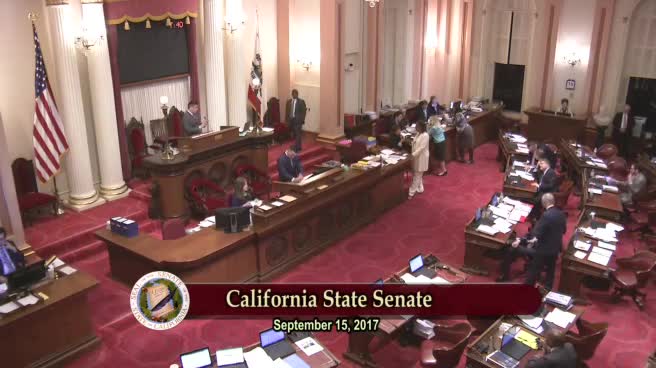 2MIN
Senate Floor
 14MIN
Assembly Floor
 20MIN
Assembly Standing Committee on Public Safety
Bill Author

Bill Co-Author(s):



































