AJR 27: Cannabis.
- Session Year: 2017-2018
- House: Assembly
- Latest Version Date: 2018-08-27
This measure would urge the United States Department of Justice not to direct its enforcement priorities towards Californias lawfully and closely regulated cannabis industry, among other things.
This measure would urge the United States Department of Justice not to direct its enforcement priorities towards Californias lawfully and closely regulated cannabis industry, among other things.
This measure would urge United States Department of Justice not to direct its enforcement priorities towards Californias lawfully and closely regulated cannabis industry, among other things.
WHEREAS, The voters of the State of California passed Proposition 215 to legalize marijuana, also known as cannabis, for medical purposes in 1996 with 55.8 percent of the vote; and
WHEREAS, In 2003, the California Legislature passed Senate Bill 420 into law to further regulate and clarify state medical cannabis laws; and
WHEREAS, In 2010, California further decriminalized cannabis with the passage of Senate Bill 1449, making possession of up to an ounce of marijuana an infraction rather than a misdemeanor; and
WHEREAS, In 2015, the California State Legislature passed into law a trio of bills, known together as the Medical Cannabis Regulation and Safety Act (MCRSA) to create a statewide system for the regulation and taxation of medical cannabis; and
WHEREAS, In 2016, the voters of California passed Proposition 64, the Adult Use of Marijuana Act (AUMA), to legalize, regulate, and tax cannabis for adult use with 57.1 percent of voters supporting the initiative; and
WHEREAS, Californians have engaged directly in lawmaking through the initiative process and have demonstrated on multiple occasions the will of the people to legalize cannabis for both medical and adult use purposes in the state; and
WHEREAS, The State of California has established a strict and comprehensive system of oversight for both medical and adult use cannabis, including prohibitions on sale to minors, tracking of cannabis and cannabis products through the entire supply chain, regulation and testing of cannabis products, limits on the types of cannabis products that can be sold, and the ongoing supervision and licensing of cannabis businesses and manufacturers; and
WHEREAS, The Legislature has exercised significant oversight over the establishment of the states structure for regulating the cannabis industry to ensure consumer protection; and
WHEREAS, A significant portion of revenue generated through the taxation of cannabis sales in California will be provided to local law enforcement agencies tasked with protecting the public from legitimate harm; and
WHEREAS, In 2009, United States Deputy Attorney General David W. Ogden issued a memorandum directing United States Attorneys to not focus federal resources in your States on individuals whose actions are in clear and unambiguous compliance with existing state laws providing for the medical use of marijuana; and
WHEREAS, In 2013, United States Deputy Attorney General James M. Cole issued a memorandum to United States Attorneys recognizing that states with a robust system may affirmatively address priorities by, for example, implementing effective measures to prevent diversion of marijuana outside the regulated system and to other states, prohibiting access to marijuana by minors, and replacing an illicit marijuana trade that funds criminal enterprises with a tightly regulated market in which revenues are tracked and accounted for; and
WHEREAS, The growing opioid crisis continues to represent a far greater threat to the health and safety of our communities, claiming 91 American lives every day; now, therefore, be it
Resolved by the Assembly and the Senate of the State of California, jointly, that the enforcement priorities of the United States Department of Justice should not be undeservedly placed on Californias lawful and closely regulated cannabis industry; and be it further
Resolved, That the United States Attorneys representing the people of California should make clear to the communities they serve whether they intend to divert scarce resources away from legitimate public safety concerns; and be it further
Resolved, That the federal government should instead focus on investigating and prosecuting those who have created and exacerbated the epidemic of prescription drug abuse across our country; and be it further
Resolved, That the Chief Clerk of the Assembly transmit copies of this resolution to the President of the United States and to each Senator and Representative from California in the Congress of the United States.
|
Date
|
Status
|
|---|---|
| Aug 27, 2018 | Chaptered by Secretary of State - Res. Chapter 168, Statutes of 2018. |
| Aug 27, 2018 | Enrolled and filed with the Secretary of State at 1:30 p.m. |
| Aug 20, 2018 | In Assembly. Ordered to Engrossing and Enrolling. |
| Aug 20, 2018 | Adopted and to Assembly. |
| Jun 26, 2018 | From committee: Be adopted. Ordered to Third Reading. (Ayes 8. Noes 0.) (June 25). |
| May 30, 2018 | Re-referred to Com. on B., P. & E.D. |
| May 21, 2018 | In Senate. To Com. on RLS. |
| May 17, 2018 | Coauthors revised. |
| May 8, 2018 | From committee: Be adopted. Ordered to Third Reading. (Ayes 5. Noes 0.) (May 8). |
| Apr 24, 2018 | In committee: Hearing postponed by committee. |
| Mar 22, 2018 | Re-referred to Com. on PUB. S. |
| Mar 20, 2018 | From committee: Be adopted. Ordered to Third Reading. (Ayes 12. Noes 0.) (March 20). |
| Mar 15, 2018 | Referred to Coms. on B. & P. and PUB. S. |
| Jan 10, 2018 | From printer. |
| Jan 9, 2018 | Introduced. To print. |
|
Date
|
Description
|
Location
|
Votes
|
|
|---|---|---|---|---|
| Aug 20, 2018 | Assembly 3rd Reading AJR27 Low et al. By McGuire | Senate Floor |
Passed |
|
| Jun 25, 2018 | Be adopted. Ordered to third reading | Senate Standing Committee on Business, Professions and Economic Development |
Passed |
|
| May 17, 2018 | AJR 27 LOW Assembly Third Reading | Assembly Floor |
Passed |
|
| May 8, 2018 | Be adopted. To third reading. | Assembly Standing Committee on Public Safety |
Passed |
|
| Mar 20, 2018 | Be adopted. To third reading. | Assembly Standing Committee on Business and Professions |
Passed |
This list shows positions taken on this bill by organizations on the date displayed, which is linked to the original source.
Positions by individuals are not included.
|
Organization
|
Position
|
Date
|
|---|---|---|
| Americans for Safe Access | ** Support | May 7, 2018 |
| California Asian Pacific Chamber Of Commerce | ** Support | May 7, 2018 |
| California Cannabis Industry Association | ** Support | Jun 27, 2018 |
| California Cannabis Manufacturers Association | * Support | Mar 20, 2018 |
| California Growers Assocation | * Support | Mar 20, 2018 |
| California Public Defenders Association | ** Support | May 7, 2018 |
| California State Association Of Counties | ** Support | Jun 27, 2018 |
| Cannabis Distribution Association | ** Support | Jun 27, 2018 |
| Fiona Ma, Member, State Board Of Equalization | ** Support | May 7, 2018 |
| We Drop | ** Support | Jun 22, 2018 |
| Wedrop | ** Support | Jun 27, 2018 |
Office of Senate Floor Analyses (916) 651-1520 Fax: (916) 327-4478 | AJR |
THIRD READING
Bill No: AJR 27
:
SENATE BUS., PROF. & ECON. DEV. COMMITTEE: 8-0, 6/25/18
AYES: Hill, Allen, Dodd, Galgiani, Glazer, Hernandez, Pan, Wilk
NO VOTE RECORDED: Fuller
ASSEMBLY FLOOR: 56-2, 5/17/18 - See last page for vote
DIGEST:
This resolution urges the United States Department of Justice (U.S. DOJ) not to direct its resources on California’s legal cannabis industry and instead focus investigative and prosecutorial resources on the prescription drug epidemic.
Existing law:
- Permits persons 21 years of age or older to possess, process, transport, purchase, obtain, or give away to persons 21 years of age or older cannabis in specified quantities; possess, plant, cultivate, harvest, dry, or process a maximum of six living plants; and smoke or ingest cannabis or cannabis products. (Health and Safety Code (HSC) § 11362.1)
- Establishes the Bureau of Cannabis Control (Bureau) under the Department of Consumer Affairs to regulate California’s medical and recreational cannabis industry. (Business and Professions Code (BPC) § 26010)
This resolution:
- Makes a number of findings, including:
- Californians have demonstrated on multiple occasions through the initiative process the will of the people to legalize cannabis for both medical and adult use purposes in the state.
- California has established a strict and comprehensive system of oversight for both medical and adult use cannabis, as specified.
- The Legislature has exercised significant oversight over establishing a cannabis regulatory structure to ensure consumer protection.
- A significant portion of the revenue generated through the taxation of cannabis sales in California will be provided to local law enforcement agencies tasked with protecting the public from legitimate harm.
- The growing opioid crisis continues to represent a far greater threat to the health and safety of Americans and claims 91 lives in this country each day.
- Resolves that:
- The enforcement priorities of the U.S. DOJ should not be placed on California’s lawful and closely regulated cannabis industry.
- U.S. Attorneys in California should make it clear to the communities they serve whether they intend to divert resources away from legitimate public safety concerns.
- The federal government should focus on investigating and prosecuting those who have created and exacerbated the prescription drug epidemic.
- That the Chief Clerk of the Assembly shall transmit copies of this resolution to the President of the United States and to each California Senator and in the United State Congress.
Background
In 1996, California became the first state to legalize medical cannabis when voters approved Proposition 215, the Compassionate Use Act, which exempted patients and their primary caregivers from criminal liability under state law for the possession and cultivation of cannabis. Twenty years later, California voters passed Proposition 64, the Control, Regulate and Tax Adult Use of Marijuana Act (AUMA), legalizing the distribution, sale, and possession of cannabis for adult use. In June 2017, the Medical Cannabis Regulation and Safety Act and AUMA were combined to form one system for the regulation of Cannabis, the Medicinal and Adult-Use Cannabis Regulation and Safety Act.
The federal government, however, continues to classify cannabis as a “Schedule 1” drug, the category for narcotics considered to have no accepted medical use and a high potential for abuse, and it is currently illegal under federal law to possess or cultivate cannabis (21 U.S.C., §§ 841 and 844). The U.S. DOJ has adopted policies to refrain from pursuing cases against businesses in state that have established a regulatory structure for cannabis. On August 29, 2013, the U.S. DOJ issued the Cole Memo, which directed U.S. Attorneys to “not focus federal resources in your States on individuals whose actions are in clear and unambiguous compliance with existing state laws providing for the medical use of marijuana.” The Cole Memo also instructed U.S. Attorneys and law enforcement officials to focus on specified priorities, including preventing the distribution of cannabis to minors; preventing the revenue from cannabis sales from going to criminal enterprises, gangs, and cartels; and preventing the diversion of cannabis from states where it is legal to other states where it is illegal.
However, on January 4, 2018 the U.S. Attorney General Jeff Sessions rescinded the provisions of the Cole Memo, permitting U.S Attorneys to resume enforcing all federal cannabis laws in states with legalized recreational cannabis use and creating uncertainty in California’s now legal cannabis industry.
FISCAL EFFECT: Appropriation: No Fiscal Com.: No Local: No
California Cannabis Industry Association
California State Association of Counties
Cannabis Distribution Association
WeDrop
OPPOSITION: (Verified 6/26/18)
None received
ARGUMENTS IN SUPPORT: The California Cannabis Industry Association writes that “AJR 27 expresses the importance of responsible allocation of federal resources” and “urges the federal government not to undermine state autonomy and preserve the will of the overs.”
The California State Association of Counties (CSAC) states that “AB 27 sends a firm message to federal authorities that California’s highly regulation cannabis market must be given the opportunity to operate in compliance with state and local laws, and law enforcement resources that are already strained should instead be prioritized for real public safety concerns.” CSAC further states that “counties stand with the Legislature in urging local US Attorneys to use their precious enforcement resources to prosecute nefarious and illegal criminal activity and not the legitimate businesses across the state that are diligently complying with comprehensive state and local regulations…We support this legislation and urge the federal government to respect California voters in their decision to legalize and regulate cannabis.”
WeDrop, a cannabis delivery business based in Oakland, also writes that “if the U.S. Department of Justice does not redirect its enforcement priorities, it is probable that Californians will continue to suffer due to the injustice of cannabis criminalization.”
ASSEMBLY FLOOR: 56-2, 5/17/18
AYES: Aguiar-Curry, Arambula, Baker, Berman, Bloom, Bonta, Burke, Caballero, Calderon, Carrillo, Cervantes, Chau, Chávez, Chen, Chiu, Chu, Cooley, Cooper, Cunningham, Daly, Eggman, Frazier, Friedman, Eduardo Garcia, Gipson, Gloria, Gonzalez Fletcher, Gray, Grayson, Holden, Irwin, Jones-Sawyer, Kalra, Kamlager-Dove, Lackey, Levine, Limón, Low, Maienschein, McCarty, Medina, Mullin, Nazarian, O'Donnell, Quirk, Quirk-Silva, Reyes, Rodriguez, Rubio, Salas, Mark Stone, Thurmond, Ting, Weber, Wood, Rendon
NOES: Travis Allen, Harper
NO VOTE RECORDED: Acosta, Bigelow, Brough, Choi, Dahle, Flora, Fong, Gallagher, Cristina Garcia, Kiley, Mathis, Mayes, Melendez, Muratsuchi, Obernolte, Patterson, Santiago, Steinorth, Voepel, Waldron
6/27/18 14:54:39
SENATE COMMITTEE ON
BUSINESS, PROFESSIONS AND ECONOMIC DEVELOPMENT
Senator Jerry Hill, Chair
2017 - 2018 Regular
Bill No: Hearing Date: June 25, 2018
Author: | |||
Version: | January 9, 2018 | ||
Urgency: |
| Fiscal: | No |
Consultant: | Anissa Badea | ||
Subject:
SUMMARY:
Urges the United States Department of Justice (U.S. DOJ) not to direct its resources on California’s legal cannabis industry and instead focus investigative and prosecutorial resources on the prescription drug epidemic.
Existing law:
- Permits persons 21 years of age or older to possess, process, transport, purchase, obtain, or give away to persons 21 years of age or older cannabis in specified quantities; possess, plant, cultivate, harvest, dry, or process a maximum of six living plants; and smoke or ingest cannabis or cannabis products. (Health and Safety Code (HSC) § 11362.1)
- Establishes the Bureau of Cannabis Control (Bureau) under the Department of Consumer Affairs (DCA) to regulate California’s medical and recreational cannabis industry. (Business and Professions Code (BPC) § 26010)
This bill:
- Makes a number of findings, including:
- Californians have demonstrated on multiple occasions through the initiative process the will of the people to legalize cannabis for both medical and adult use purposes in the state.
- California has established a strict and comprehensive system of oversight for both medical and adult use cannabis, as specified.
- The Legislature has exercised significant oversight over establishing a cannabis regulatory structure to ensure consumer protection.
- A significant portion of the revenue generated through the taxation of cannabis sales in California will be provided to local law enforcement agencies tasked with protecting the public from legitimate harm.
- The growing opioid crisis continues to represent a far greater threat to the health and safety of Americans and claims 91 lives in this country each day.
- Resolves that:
- The enforcement priorities of the U.S. DOJ should not be placed on California’s lawful and closely regulated cannabis industry.
- U.S. Attorneys in California should make it clear to the communities they serve whether they intend to divert resources away from legitimate public safety concerns.
- The federal government should focus on investigating and prosecuting those who have created and exacerbated the prescription drug epidemic.
- That the Chief Clerk of the Assembly shall transmit copies of this resolution to the President of the United States and to each California Senator and in the United State Congress.
FISCAL EFFECT:
This resolution is not keyed fiscal by Legislative Counsel.
COMMENTS:
- Purpose. The Author is the sponsor of this resolution. According to the Author, “over 60% of Americans support legalizing cannabis but U.S. Attorney General Jeff Sessions is still stuck in the Reefer Madness era. California has established strict regulations and oversight of both medical and recreational cannabis in our state. This unwarranted federal crackdown not only undermines state autonomy, it is a misguided waste of public safety resources that would be better spent addressing the opioid epidemic. This resolution demonstrates that our legislators stand against the unwanted meddling of the federal government in our lawful and regulated cannabis market.”
- Regulation of Cannabis in California and the United States. In 1996, California became the first state to legalize medical cannabis when voters approved Proposition 215, the Compassionate Use Act, which exempted patients and their primary caregivers from criminal liability under state law for the possession and cultivation of cannabis. Twenty years later, California voters passed Proposition 64, the Control, Regulate and Tax Adult Use of Marijuana Act (AUMA), legalizing the distribution, sale, and possession of cannabis for adult use. In June 2017, MCRSA and AUMA were combined to form one system for the regulation of Cannabis, the Medicinal and Adult-Use Cannabis Regulation and Safety Act (MAUCRSA).
The federal government, however, continues to classify cannabis as a “Schedule 1” drug, the category for narcotics considered to have no accepted medical use and a high potential for abuse, and it is currently illegal under federal law to possess or cultivate cannabis (21 U.S.C., §§ 841 and 844). The U.S. DOJ has adopted policies to refrain from pursuing cases against businesses in state that have established a regulatory structure for cannabis. On August 29, 2013, the U.S. DOJ issued the Cole Memo, which directed U.S. Attorneys to “not focus federal resources in your States on individuals whose actions are in clear and unambiguous compliance with existing state laws providing for the medical use of marijuana.” The Cole Memo also instructed U.S. Attorneys and law enforcement officials to focus on specified priorities, including preventing the distribution of cannabis to minors; preventing the revenue from cannabis sales from going to criminal enterprises, gangs, and cartels; and preventing the diversion of cannabis from states where it is legal to other states where it is illegal.
However, on January 4, 2018 the U.S. Attorney General Jeff Sessions rescinded the provisions of the Cole Memo, permitting U.S Attorneys to resume enforcing all federal cannabis laws in states with legalized recreational cannabis use and creating uncertainty in California’s now legal cannabis industry.
- Related Legislation This Year. AJR 28 (Jones-Sawyer) would urge the President and Congress to pass legislation that would allow financial institutions to provide services to the cannabis industry. (Status: This bill has been ordered to engrossing and enrolling.)
- Previous Related Legislation. SB 94 (Committee on Budget and Fiscal Review, Chapter 27, Statutes of 2017) combined the AUMA and MCRSA into one system for the regulation of cannabis, resulting in MAUCRSA, and explicitly allowed a licensee to perform testing on the licensee’s premises of cannabis or cannabis products obtained from another licensee.
- Arguments in Support. The California Cannabis Industry Association writes that “AJR 27 expresses the importance of responsible allocation of federal resources” and “urges the federal government not to undermine state autonomy and preserve the will of the overs.”
The California State Association of Counties (CSAC) states that “AB 27 sends a firm message to federal authorities that California’s highly regulation cannabis market must be given the opportunity to operate in compliance with state and local laws, and law enforcement resources that are already strained should instead be prioritized for real public safety concerns.”
CSAC further states that “counties stand with the Legislature in urging local US Attorneys to use their precious enforcement resources to prosecute nefarious and illegal criminal activity and not the legitimate businesses across the state that are diligently complying with comprehensive state and local regulations…We support this legislation and urge the federal government to respect California voters in their decision to legalize and regulate cannabis.”
WeDrop, a cannabis delivery business based in Oakland, also writes that “if the U.S. Department of Justice does not redirect its enforcement priorities, it is probable that Californians will continue to suffer due to the injustice of cannabis criminalization.”
SUPPORT AND OPPOSITION:
Support:
California Cannabis Industry Association
California State Association of Counties
Cannabis Distribution Association
We Drop
Opposition:
None on file as of June 20, 2018.
-- END --
ASSEMBLY THIRD READING
ATR Bill Id:AJR 27
Author:(Low)
As Introduced Ver:January 9, 2018
Majority vote
Committee | Votes | Ayes | Noes |
Business & Professions | 12-0 | Low, Arambula, Baker, Bloom, Eggman, Gipson, Grayson, Holden, Irwin, Mayes, Gloria, Ting | |
Public Safety | 5-0 | Jones-Sawyer, Carrillo, Kamlager-Dove, Quirk, Santiago |
SUMMARY: Urges the United States (U.S.) Department of Justice and the United States Attorney General to allow the state of California to regulate and enforce the cannabis market within the state without federal intervention. Specifically, this bill:
- Makes a number of findings, including:
- That Californians have been directly involved in lawmaking and have repeatedly supported the legalization of cannabis through the initiative process, in 1996 and in 2016.
- That the California Legislature has passed cannabis related legislation on numerous occasions after rigorous evaluation by members, stakeholders, and regulatory officials.
- That the State of California has established a strict and comprehensive system of oversight for both medical and adult use cannabis.
- That the Legislature has exercised significant oversight over the establishment of the state's structure for regulating cannabis, including prohibitions on sale to minors, tracking of cannabis and cannabis products through the entire supply chain, regulation and testing of cannabis products, limits on the types of cannabis products that can be sold, and the ongoing supervision and licensing of cannabis businesses and manufacturers.
- That in 2009 and 2013 U.S. Deputy Attorneys General (AG) issued memorandums to U.S. Attorneys not to focus federal resources on the prosecution of cannabis related crimes in states that have implemented a robust system for the regulation of cannabis.
- That the growing opioid crisis continues to represent a far greater threat to the health and safety of Americans
- Resolves that:
- The enforcement priorities of the U.S. Department of Justice should not be placed on California's lawful and closely regulated cannabis industry.
- That the U.S. Attorneys should make it clear to the people of California whether they intend to divert scarce resources away from legitimate public safety concerns.
- That the federal government should instead focus on investigating and prosecuting those who have created and exacerbated the epidemic of prescription drug abuse across our country.
FISCAL EFFECT: None. This resolution is keyed non-fiscal by the Legislative Counsel.
COMMENTS:
Purpose. This resolution is sponsored by the author. According to the author, "Over 60% of Americans support legalizing cannabis but U.S. Attorney General Jeff Sessions is still stuck in the Reefer Madness era. California has established strict regulations and oversight of both medical and recreational cannabis in our state. This unwarranted federal crackdown not only undermines state autonomy, it is a misguided waste of public safety resources that would be better spent addressing the opioid epidemic. This resolution demonstrates that our legislators stand against the unwanted meddling of the federal government in our lawful and regulated cannabis market"
Background. Since 1996, the State of California has had a legally operating cannabis market, beginning with the passage of Proposition 215 to allow medical cannabis in the state. This was followed by further adjustments to the law in 2003, 2010, and 2015, before the passage of Proposition 64 in 2016 to legalize cannabis for adults 21 and over.
Though federal law classifies cannabis as a "Schedule 1" drug, the United States Department Of Justice (USDOJ) has on a number of occasions issued memos to United States Attorneys (USA's) directing them not to pursue cases against businesses in states that have legalized adult-use cannabis. The most commonly known of these is the so-called "Cole Memo" issued by Deputy Attorney General James M. Cole in 2011. This and other memos have generally served to prevent intervention by the federal government in legalized cannabis markets.
On January 4, 2018, United States Attorney General Jeff Sessions issued a memorandum rescinding all previous guidance that had given the U.S.' discretion in whether to pursue cases related to possession and distribution in states that had legalized adult-use cannabis.
Though federal law preempts state law, in recent history USDOJ has refrained from pursuing cases in states that have established a regulatory structure for cannabis. The recent action by AG Sessions is in direct conflict with this precedent and the laws of California. It has caused confusion within the cannabis industry and other stakeholders and may cause problems for regulators as they work to limit the role of the black market in the state.
Analysis Prepared by: Jimmy Fremgen / B. & P. / (916) 319-3301 FN: 0002947
Date of Hearing:
Counsel: David Billingsley
ASSEMBLY COMMITTEE ON PUBLIC SAFETY
Reginald Byron Jones-Sawyer, Sr., Chair
ABPCA Bill Id:AJR 27
Author:(Low) – As Introduced Ver:January 9, 2018
SUMMARY:
Resolves that the enforcement priorities of the United States Department of Justice should not focus on California’s lawful and regulated marijuana industry; rather the federal government should instead focus on investigating and prosecuting those who have created and exacerbated the epidemic of prescription drug abuse. Specifically, this resolution:
- Finds that the voters of the State of California passed Proposition 215 to legalize marijuana, also known as cannabis, for medical purposes in 1996 with 55.8 percent of the vote.
- Finds that in 2003, the California Legislature passed Senate Bill 420 into law to further regulate and clarify state medical cannabis laws.
- Finds that in 2010, California further decriminalized cannabis with the passage of Senate Bill 1449, making possession of up to an ounce of marijuana an infraction rather than a misdemeanor.
- Finds that in 2015, the California State Legislature passed into law a trio of bills, known together as the Medical Cannabis Regulation and Safety Act (MCRSA) to create a statewide system for the regulation and taxation of medical cannabis.
- Finds that in 2016, the voters of California passed Proposition 64, the Adult Use of Marijuana Act (AUMA), to legalize, regulate, and tax cannabis for adult use with 57.1 percent of voters supporting the initiative.
- Finds that Californians have engaged directly in lawmaking through the initiative process and have demonstrated on multiple occasions the will of the people to legalize cannabis for both medical and adult use purposes in this state.
- Finds that the State of California has established a strict and comprehensive system of oversight for both medical and adult use cannabis, including prohibitions on sale to minors, tracking of cannabis and cannabis products through the entire supply chain, regulation and testing of cannabis products, limits on the types of cannabis products that can be sold, and the ongoing supervision and licensing of cannabis businesses and manufacturers.
- Finds that the Legislature has exercised significant oversight over the establishment of the state’s structure for regulating the cannabis industry to ensure consumer protection.
- Finds that a significant portion of revenue generated through the taxation of cannabis sales in California will be provided to local law enforcement agencies tasked with protecting the public from legitimate harm.
- Finds that 2009, United States Deputy Attorney General David W. Ogden issued a memorandum directing United States Attorneys to “not focus federal resources in your States on individuals whose actions are in clear and unambiguous compliance with existing state laws providing for the medical use of marijuana.”
- Finds that in 2013, United States Deputy Attorney General James M. Cole issued a memorandum to United States Attorneys recognizing that states with “a robust system may affirmatively address priorities by, for example, implementing effective measures to prevent diversion of marijuana outside the regulated system and to other states, prohibiting access to marijuana by minors, and replacing an illicit marijuana trade that funds criminal enterprises with a tightly regulated market in which revenues are tracked and accounted for.”
- Finds that the growing opioid crisis continues to represent a far greater threat to the health and safety of our communities, claiming 91 American lives every day.
- Resolves that the Assembly and the Senate of the State of California, jointly, that the enforcement priorities of the United States Department of Justice should not be undeservedly placed on California’s lawful and closely regulated cannabis industry.
- Resolves that the United States Attorneys representing the people of California should make clear to the communities they serve whether they intend to divert scarce resources away from legitimate public safety concerns.
- Resolves that the federal government should instead focus on investigating and prosecuting those who have created and exacerbated the epidemic of prescription drug abuse across our country.
- Resolves that the Chief Clerk of the Assembly transmit copies of this resolution to the President of the United States and to each Senator and Representative from California in the Congress of the United States.
EXISTING LAW:
- States that it shall not be a violation of state or local law, for persons 21 years of age or older to: (Health and Saf. Code, § 11362.1, subd. (a)(1)-(5).)
- Possess, process, transport, purchase, obtain, or give away to persons 21 years of age or older without any compensation whatsoever, not more than 28.5 grams of marijuana not in the form of concentrated cannabis;
- Possess, process, transport, purchase, obtain, or give away to persons 21 years of age or older without any compensation whatsoever, not more than eight grams of marijuana in the form of concentrated cannabis, including as contained in marijuana products;
- Possess, plant, cultivate, harvest, dry, or process not more than six living marijuana plants and possess the marijuana produced by the plants;
- Smoke or ingest marijuana or marijuana products; and,
- Possess, transport, purchase, obtain, use, manufacture, or give away marijuana accessories to persons 21 years of age or older without any compensation whatsoever.
- Possess, process, transport, purchase, obtain, or give away to persons 21 years of age or older without any compensation whatsoever, not more than 28.5 grams of marijuana not in the form of concentrated cannabis;
- Specifies that no physician shall be punished, or denied any right or privilege, for having recommended marijuana to a patient for medical purposes. (Health and Saf. Code, § 11362.5, subd. (c).)
- States that laws prohibiting possession or cultivation of marijuana shall not apply to a patient, or to a patient's primary caregiver, who possesses or cultivates marijuana for the personal medical purposes of the patient upon the written or oral recommendation or approval of a physician. (Health and Saf. Code, § 11362.5, subd. (d).)
- Defines "primary caregiver," for purposes of medical marijuana, as the individual designated by the person exempted under this section who has consistently assumed responsibility for the housing, health, or safety of that person. (Health and Saf. Code, § 11362.5, subd. (e).)
- Established a joint state-local agency licensing and regulatory framework for medical cannabis under the Medical Cannabis Regulation and Control Act, and establishes the Office of Medical Cannabis Regulation within the Office of the Governor, the Division of Medical Cannabis Regulation within the State Board of Equalization, the Division of Medical Cannabis Manufacturing and Testing within the Department of Public Health, and the Division of Medical Cannabis Cultivation within the Department of Food and Agriculture, and sets forth the duties of the respective regulatory authorities. (Business and Prof. Code, §§ 19300-19355.)
- Specifies that a prescription for a controlled substance shall only be issued for a legitimate medical purpose and establishes responsibility for proper prescribing on the prescribing practitioner. States that a violation shall result in imprisonment for up to one year or a fine of up to $20,000, or both. (Health & Saf. Code, § 11153.)
- Establishes the Controlled Substance Utilization Review and Evaluation System (CURES) for electronic monitoring of Schedule II, III and IV controlled substance prescriptions. The CURES provides for the electronic transmission of Schedule II, III and IV controlled substance prescription information to the DOJ at the time prescriptions are dispensed. (Health & Saf. Code, § 11165.)
- States that the purpose of CURES is to assist law enforcement and regulatory agencies in controlling diversion and abuse of Schedule II, III and IV controlled substances and for statistical analysis, education and research. (Health & Saf. Code, § 11165, subd. (a).)
FISCAL EFFECT:
Unknown
COMMENTS:
- Author's Statement: According to the author, “Over 60% of Americans support legalizing cannabis but U.S. Attorney General Jeff Sessions is still stuck in the Reefer Madness era. California has established strict regulations and oversight of both medical and recreational cannabis in our state. This unwarranted federal crackdown not only undermines state autonomy, it is a misguided waste of public safety resources that would be better spent addressing the opioid epidemic. This resolution demonstrates that our legislators stand against the unwanted meddling of the federal government in our lawful and regulated cannabis market”
- Proposition 64 (Adult Use of Marijuana Act) was passed by the voters on November 8, 2016: As a result of the passage of Proposition 64, adults, aged 21 years or older, are allowed to possess and use marijuana for recreational purposes. The measure created two new taxes, one levied on cultivation and the other on retail price. Revenue from the taxes will be spent on drug research, treatment, and enforcement, health and safety grants addressing marijuana, youth programs, and preventing environmental damage resulting from illegal marijuana production.
Proposition 64 allows adults to possess up to an ounce of marijuana. Adults are also allowed to cultivate up to six marijuana plants inside their homes. Marijuana packaging is now required to provide the net weight, origin, age, and type of the product, as well as the milligram amount per serving of tetrahydrocannabinol and other cannabinoids. - Proposition 215, Medical Marijuana: Proposition 215, the California Compassionate Use Act, was enacted by the voters and took effect on Nov. 6, 1996 as California Health & Safety Code 11362.5. The law makes it legal for patients and their designated primary caregivers to possess and cultivate marijuana for their personal medical use if they have the recommendation or approval of a California-licensed physician.
SB 420, a legislative statute, went into effect on January 1, 2004 as California H&SC 11362.7-.83. This law broadens Prop. 215 to transportation and other offenses in certain circumstances; allows patients to form medical cultivation “collectives” or “cooperatives”; and establishes a voluntary state ID card system run through county health departments.
In 2015, the California Legislature passed the Medical Marijuana Regulation and Safety Act (MMRSA or MCRSA), establishing permitting for marijuana cultivation and dispensaries, etc. at the state level (with local approval). The law went into effect on January 1, 2016; however, the state has said it will need until January 2018 to set up the necessary agencies, information systems, and regulations to actually begin issuing licenses. In the interim, local governments may choose to adopt new ordinances to permit or license local businesses in preparation for state licensing. Facilities currently operating in accordance with state and local laws may continue to do so until such time as their license applications are approved or denied. In the meantime, prospective applicants are strongly advised to apply to the state Board of Equalization for a Resale Permit, and to prepare for seeking approval from their local governments. (http://www.canorml.org/medical-marijuana/patients-guide-to-california-law)
- Federal Law Criminalizes the Possession, Use, and Cultivation of Marijuana: The fact that California law allows possession and use of marijuana under specified circumstances does not change the fact that marijuana continues to be illegal under federal law. Federal law criminalizes the possession and cultivation of marijuana. (21 U.S.C., §§ 841 and 844.) State authorization does not provide immunity from federal criminal proceedings, if federal law enforcement was inclined to pursue them.
Under Federal Law Marijuana is a Schedule I controlled substance. The fact the marijuana is on Schedule I means that the federal government views cannabis as highly addictive and having no medical value.
Although Marijuana is criminalized on the federal level, federal Department of Justice is currently prohibited from spending funds from specific appropriations acts for prosecutions of those individuals who complied with their state’s marijuana law. In 2014 and 2015, Congress approved a budget amendment that prohibits Justice Department funds from being used to prevent states from implementing medical cannabis laws. These restrictions on federal enforcement are part of the 2016 funding bill for the Commerce-Justice-Science (CJS) budgets and expired at the end of the fiscal year, September 30, 2016.
Known as the Rohrabacher-Farr or CJS amendment, it first signed into law on December 16, 2014 and then again on December 18, 2015. The Rohrabacher-Farr amendment doesn’t just prevent direct interference with state implementation; it should also end federal medical cannabis raids, arrests, criminal prosecutions, and civil asset forfeiture lawsuits, as well as providing current medical cannabis prisoners with a way to petition for their release. (http://www.safeaccessnow.org/federal_marijuana_law)
The most important case involving the Rohrabacher-Farr amendment took place in the federal 9th Circuit Court. In the August 2016 decision of U.S. vs. McIntosh, the court held that the Rohrabacher-Farr Amendment prohibits the federal prosecution of conduct that is allowed by the state's medical cannabis law. In the opinion, Judge Diarmuid O’Scannlain wrote, “We therefore conclude that, at a minimum, § 542 prohibits DOJ from spending funds from relevant appropriations acts for the prosecution of individuals who engaged in conduct permitted by the State Medical Marijuana Laws and who fully complied with such laws.” U.S. v. McIntosh (2016), 833 F.3d 1163, 1177.
On March 23, the amendment was renewed as part of an omnibus spending bill, in effect through September 30, 2018. But that provision must be re-approved annually, and if it’s allowed to expire, the federal authorities could pursue criminal sanctions of marijuana related actions which continue to be illegal under federal law. - Possibility of Increased Federal Enforcement of Marijuana Laws: The current Attorney General, Jeff Session has made statements indicating his concern with states that have liberalized laws surrounding marijuana use. On February 27, 2017, Attorney General Jeff Sessions restated his opposition to marijuana use and offered a warning about state-level marijuana legalization efforts, suggesting that such policies would open states to “violence,” as well as potential repercussions from the federal government. (http://www.huffingtonpost.com/entry/jeff-sessions-marijuana-comments_us_58b4b189e4b0780bac2c9fd8) Such statements have raised concerns that the Attorney General could use the FBI to crack down on marijuana operations nationwide.
On January 4, 2018, United States Attorney General Jeff Sessions issued a memorandum rescinding all previous guidance that had given United States Attorney’s discretion in whether to pursue cases related to possession and distribution in states that had legalized adult-use cannabis. Further, he emphasized that this action was a “return to the rule of law” but failed to provide clarity on how this action would impact federal enforcement efforts.
Senator Cory Gardner, a Republican from Colorado, recently announced that Trump had committed to support legislation codifying state rights to legalize and regulate the cannabis industry. That position is in line with what Trump said on the campaign trail, but he’s been silent on the issue as president. (https://www.dailynews.com/2018/04/17/businesses-optimistic-wary-in-wake-of-trumps-pledge-to-back-off-cannabis/) However, there hasn’t been any official announcement of Trump’s position on the issue or policy direction from his administration and is unclear how the administration will ultimately move forward on state legalization of marijuana. - Argument in Support: According to the California Growers Association, “With recent action by the U.S Department of Justice to rescind the ‘Cole Memorandum, which outlined a set of priorities and compliance standards for states with medical and adult-use cannabis laws, California’s now legal cannabis industry faces significant threat from enforcement efforts that would reduce regulatory compliance, reduce tax payments and disrupt the regulatory structure California has established.
“Many of CGA’s members are small and medium sized businesses who employ less than 10 individuals, yet collectively represent the economic foundation of dozens of local economies throughout California. Federal law enforcement initiatives that do not reflect the state and local regulatory models will result in fewer compliant businesses and generate fear at a time when our membership seeks certainty. There is a very real possibility that Californians will continue to suffer the injustice of cannabis criminalization even as California continues to lead on cannabis policy. AJR 27 sends a strong message to federal authorities that California’s highly regulated cannabis marketplace must be given the opportunity to operate in full compliance with state and local laws, and scarce law enforcement resources should instead be prioritized for legitimate public safety concerns.”
- Related Legislation: AB 1578 (Jones-Sawyer), would prohibit a state or local agency, as defined, from using agency resources to assist a federal agency to investigate, detain, detect, report, or arrest a person for marijuana activity that is authorized by law in the State of California and transferring an individual to federal law enforcement authorities for purposes of marijuana enforcement, unless directed to do so by a court order. AB 1578 is on the Senate inactive file.
- Prior Legislation:
- SB 54 (De León), Chapter 495, Statutes of 2017, prohibits state and local law enforcement agencies and school police and security departments from using resources to investigate, interrogate, detain, detect, or arrest persons for immigration enforcement purposes.
- SB 31 (Lara), Chapter 826, Statutes of 2017, prohibits a state or local agency or a public employee from providing or disclosing to the federal government personally identifiable information regarding a person’s religious beliefs, practices, or affiliation, as specified, when the information is sought for compiling a database of individuals based on religious belief, practice or affiliation, national origin, or ethnicity for law enforcement or immigration purposes.
- AB 4 (Ammiano), Chapter 570, Statutes of 2013, prohibits a law enforcement official, as defined, from detaining an individual on the basis of a United States Immigration and Customs Enforcement hold after that individual becomes eligible for release from custody, unless, at the time that the individual becomes eligible for release from custody, certain conditions are met, including, among other things, that the individual has been convicted of specified crimes.
- SB 54 (De León), Chapter 495, Statutes of 2017, prohibits state and local law enforcement agencies and school police and security departments from using resources to investigate, interrogate, detain, detect, or arrest persons for immigration enforcement purposes.
REGISTERED SUPPORT / OPPOSITION:
Support
Americans for Safe Access
California Asian Pacific Chamber of Commerce
California Cannabis Industry Association
Cannabis Distributors Association
California Growers Association
California Public Defenders Association
California State Association of Counties
Fiona Ma, Member, State Board of Equalization
WeDrop
Opposition
None
Analysis Prepared by:
David Billingsley / PUB. S. / (916) 319-3744
Date of Hearing:
ASSEMBLY COMMITTEE ON BUSINESS AND PROFESSIONS
Evan Low, Chair
ABPCA Bill Id:AJR 27
Author:(Low) – As Introduced Ver:January 9, 2018
SUBJECT: Cannabis.
SUMMARY: Urges the United States Department of Justice and the United States Attorney General to allow the state of California to regulate and enforce the cannabis market within the state without federal intervention.
EXISTING LAW:
- Establishes the Bureau for Cannabis Control (BCC) as the regulatory agency for the sale, distribution, and testing of cannabis in the state of California, including the authority to promulgate regulations on this matter. (Business and Professions Code Section 26000 et al.)
THIS BILL:
- Makes a number of findings, including:
- That Californians have been directly involved in lawmaking and have repeatedly supported the legalization of cannabis through the initiative process, in 1996 and in 2016.
- That the California Legislature has passed cannabis related legislation on numerous occasions after rigorous evaluation by members, stakeholders, and regulatory officials.
- That the State of California has established a strict and comprehensive system of oversight for both medical and adult use cannabis.
- That the Legislature has exercised significant oversight over the establishment of the state’s structure for regulating cannabis, including prohibitions on sale to minors, tracking of cannabis and cannabis products through the entire supply chain, regulation and testing of cannabis products, limits on the types of cannabis products that can be sold, and the ongoing supervision and licensing of cannabis businesses and manufacturers.
- That in 2009 and 2013 U.S. Deputy Attorneys General issued memorandums to U.S. Attorneys not to focus federal resources on the prosecution of cannabis related crimes in states that have implemented a robust system for the regulation of cannabis.
- That the growing opioid crisis continues to represent a far greater threat to the health and safety of Americans
- Resolves that:
- The enforcement priorities of the US Department of Justice should not be placed on California’s lawful and closely regulated cannabis industry.
- That the U.S. Attorneys should make it clear to the people of California whether they intend to divert scarce resources away from legitimate public safety concerns.
- That the federal government should instead focus on investigating and prosecuting those who have created and exacerbated the epidemic of prescription drug abuse across our country.
FISCAL EFFECT: None. This resolution is not keyed fiscal
COMMENTS:
Purpose. This resolution is sponsored by the author. According to the author, “Over 60% of Americans support legalizing cannabis but U.S. Attorney General Jeff Sessions is still stuck in the Reefer Madness era. California has established strict regulations and oversight of both medical and recreational cannabis in our state. This unwarranted federal crackdown not only undermines state autonomy, it is a misguided waste of public safety resources that would be better spent addressing the opioid epidemic. This resolution demonstrates that our legislators stand against the unwanted meddling of the federal government in our lawful and regulated cannabis market”
Background. Since 1996 the State of California has had a legally operating cannabis market, beginning with the passage of Proposition 215 to allow medical cannabis in the state. This was followed by further adjustments to the law in 2003, 2010, and 2015, before the passage of Proposition 64 in 2016 to legalize cannabis for adults 21 and over.
Though federal law classifies cannabis as a “Schedule 1” drug, the United States Department Of Justice (USDOJ) has on a number of occasions issued memos to United States Attorneys (USA’s) directing them not to pursue cases against businesses in states that have legalized adult-use cannabis. The most commonly known of these is the so-called “Cole Memo” issued by Deputy Attorney General James M. Cole in 2011. This and other memos have generally served to prevent intervention by the federal government in legalized cannabis markets.
On January 4, 2018, United States Attorney General Jeff Sessions issued a memorandum rescinding all previous guidance that had given USA’s discretion in whether to pursue cases related to possession and distribution in states that had legalized adult-use cannabis.
Though federal law preempts state law, in recent history USDOJ has refrained from pursuing cases in states that have established a regulatory structure for cannabis. The recent action by AG Sessions is in direct conflict with this precedent and the laws of California. It has caused confusion within the cannabis industry and other stakeholders and may cause problems for regulators as they work to limit the role of the black market in the state.
Current Related Legislation. AJR 28 (Jones-Sawyer) of the current legislative session, would urge the President and the Congress to pass legislation that would allow financial institutions to provide services to the Cannabis industry.
ARGUMENTS IN SUPPORT:
Fiona Ma, Member, State Board of Equalization, writes: “AJR 27 highlights this unwarranted federal crackdown not only undermines state autonomy; it is a misguided waste of public safety resources. For these reasons I am proud to support AJR 27.”
Americans for Safe Access writes: “We are writing today to express our support for AJR 27, which urges the United States Department of Justice to refrain from creating enforcement priorities which target California’s closely regulated cannabis markets.”
The California Asian Pacific Chamber of Commerce writes: “As the largest ethnic chamber in California, CalAsian is concerned with the federal administration’s sentiments when it comes to cannabis… For the above mentioned reasons, the California Asian Pacific Chamber of Commerce fully supports AJR 27.”
The California Cannabis Industry Association writes: “AJR 27 expresses the importance of responsible allocation of federal resources. The federal government should focus on ensuring timely public safety concerns and redirect its attention and resources to address the fatal opioid epidemic.”
The California Growers Association writes: “On behalf of the California Growers Association (CGA) representing over 1000 members in 46 counties throughout California, we write to indicate our “support” for AJR 27 which would urge the United States Department of Justice to not implement its enforcement priorities onto California’s legal and fully licensed cannabis industry.”
WeDrop writes: “WeDrop is grateful for your continued leadership on cannabis policy reform. For these reasons, we strongly support AJR 27.”
ARGUMENTS IN OPPOSITION:
None on File
REGISTERED SUPPORT:
Americans for Safe Access
California Asian Pacific Chamber of Commerce
California Cannabis Industry Association
California Growers Association
Fiona Ma, Member, State Board of Equalization
WeDrop
REGISTERED OPPOSITION:
None on File
Analysis Prepared by: Jimmy Fremgen / B. & P. / (916) 319-3301
Discussed in Hearing
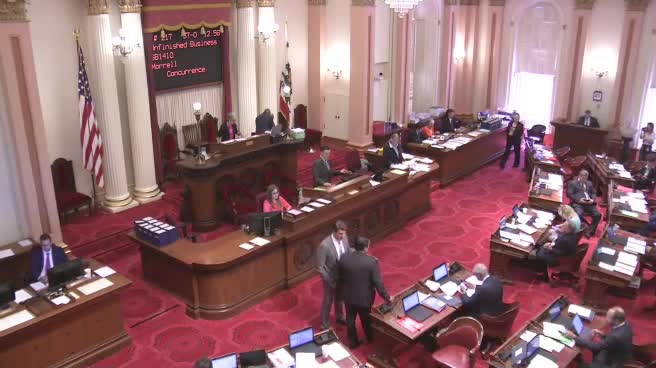 2MIN
Senate Floor
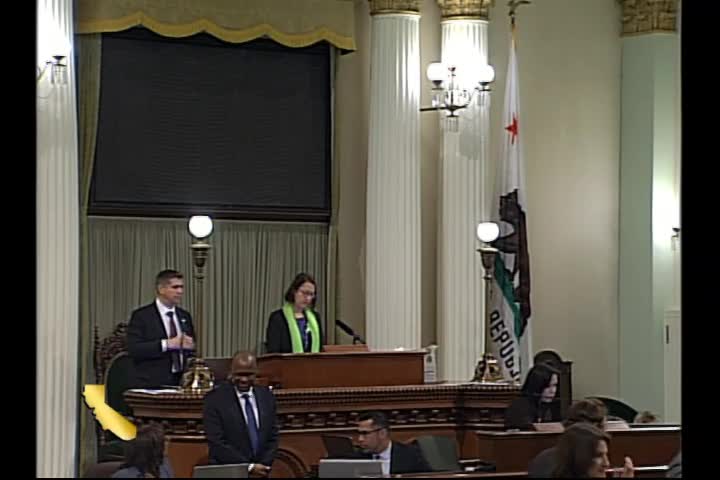 4MIN
Assembly Floor
 5MIN
Assembly Standing Committee on Business and Professions
Bill Author

Bill Co-Author(s):