AJR 30: Restricting First Use of Nuclear Weapons Act of 2017.
- Session Year: 2017-2018
- House: Assembly
- Latest Version Date: 2018-09-05
This measure would urge the United States Congress to speedily take up and pass the Restricting First Use of Nuclear Weapons Act of 2017, and send it to the President for his signature.
This measure would urge the United States Congress to speedily take up and pass the Restricting First Use of Nuclear Weapons Act of 2017, and send it to the President for his signature.
This measure would urge the United States Congress to speedily take up and pass the Restricting First Use of Nuclear Weapons Act of 2017, and send it to the President for his signature.
This measure would urge the United States Congress to speedily take up and pass the Restricting First Use of Nuclear Weapons Act of 2017, and send it to the President for his signature.
WHEREAS, Nuclear weapons are uniquely powerful instruments with the capability to instantly kill millions of people, including noncombatants and children, and to create long-term health and environmental damage throughout the world, including the lands and people of the nation using them. These weapons have the capability to directly undermine global peace and place the United States at existential risk from retaliatory nuclear strikes; and
WHEREAS, Global spiritual leaders have noted that nuclear weapons exist in the service of a mentality of fear that affects not only parties in conflict but the entire human race, so that the real priorities facing our human family, such as the fight against poverty, the promotion of peace, and the undertaking of educational, ecological, and health care projects are relegated to second place; and
WHEREAS, The United States possesses the worlds paramount nuclear weapons capability, as well as its paramount conventional warfare capability; and
WHEREAS, The framers of the United States Constitution understood that the monumental decision to go to war, which can result in massive death and the destruction of civilized society, must be made by the representatives of the people in Congress and not by a single person; and
WHEREAS, The United States Constitution gives Congress the sole power to declare war; and
WHEREAS, By any definition of war, a first-use nuclear strike from the United States would constitute a major act of war; and
WHEREAS, Several California cities, including Berkeley, Davis, Hayward, Oakland, and Santa Cruz, have recognized this threat, and expressed their concern by declaring themselves Nuclear-Free Zones; and
WHEREAS, Californias coastal location and business hub of cities, including Los Angeles, San Diego, and San Francisco, make it particularly vulnerable to attack; and
WHEREAS, The Restricting First Use of Nuclear Weapons Act of 2017, sponsored by 73 members of the House of Representatives and 13 Senators as House Resolution 669 and Senate Resolution 200, respectively, embodies a policy of no first use of nuclear weapons without a Congressional Declaration of War and a requirement of a specific authorization by Congress for first use of nuclear weapons without limiting retaliation for another partys first use, all consistent with the United States Constitution; now, therefore, be it
Resolved by the Assembly and the Senate of the State of California, jointly, That the Legislature urges the United States Congress to speedily take up and pass the Restricting First Use of Nuclear Weapons Act of 2017, and send it to the President for his signature; and be it further
Resolved, That the Chief Clerk of the Assembly transmit copies of this resolution to the President and Vice President of the United States, to the Speaker of the House of Representatives, to the Majority Leader of the Senate, and to each Senator and Representative from California in the Congress of the United States.
WHEREAS, Nuclear weapons are uniquely powerful instruments with the capability to instantly kill millions of people, including noncombatants and children, and to create long-term health and environmental damage throughout the world, including the lands and people of the nation using them. These weapons have the capability to directly undermine global peace and place the United States at existential risk from retaliatory nuclear strikes; and
WHEREAS, Global spiritual leaders have noted that nuclear weapons exist in the service of a mentality of fear that affects not only parties in conflict but the entire human race, so that the real priorities facing our human family, such as the fight against poverty, the promotion of peace, the undertaking of educational, ecological, and health care projects are relegated to second place; and
WHEREAS, The United States possesses the worlds paramount nuclear weapons capability, as well as its paramount conventional warfare capability; and
WHEREAS, The framers of the United States Constitution understood that the monumental decision to go to war, which can result in massive death and the destruction of civilized society, must be made by the representatives of the people in Congress and not by a single person; and
WHEREAS, The United States Constitution gives Congress the sole power to declare war; and
WHEREAS, By any definition of war, a first-use nuclear strike from the United States would constitute a major act of war; and
WHEREAS, The Restricting First Use of Nuclear Weapons Act of 2017, sponsored by 73 members of the House of Representatives and 13 Senators as House Resolution 669 and Senate Resolution 200, respectively, embodies a policy of no first use of nuclear weapons without a Congressional Declaration of War and a requirement of a specific authorization by Congress for first use of nuclear weapons without limiting retaliation for another partys first use, all consistent with the United States Constitution; now, therefore, be it
Resolved by the Assembly and the Senate of the State of California, jointly, That the Legislature urges the United States Congress to speedily take up and pass the Restricting First Use of Nuclear Weapons Act of 2017, and send it to the President for his signature; and be it further
Resolved, That the Chief Clerk of the Assembly transmit copies of this resolution to the President and Vice President of the United States, to the Speaker of the House of Representatives, to the Majority Leader of the Senate, and to each Senator and Representative from California in the Congress of the United States.
|
Date
|
Status
|
|---|---|
| Sep 5, 2018 | Chaptered by Secretary of State - Res. Chapter 195, Statutes of 2018. |
| Sep 5, 2018 | Enrolled and filed with the Secretary of State at 11:30 a.m. |
| Aug 28, 2018 | In Assembly. Ordered to Engrossing and Enrolling. |
| Aug 28, 2018 | Adopted and to Assembly. |
| Aug 24, 2018 | From committee: Ordered to third reading. |
| Aug 21, 2018 | In Senate. To Com. on RLS. |
| Aug 20, 2018 | Coauthors revised. |
| Aug 14, 2018 | Coauthors revised. |
| Jun 14, 2018 | From committee chair, with author's amendments: Amend, and re-refer to Com. on PUB. S. Amended. |
| Jun 18, 2018 | Re-referred to Com. on PUB. S. |
| Jun 14, 2018 | Referred to Com. on PUB. S. |
| Jan 31, 2018 | From printer. |
| Jan 30, 2018 | Introduced. To print. |
|
Date
|
Description
|
Location
|
Votes
|
|
|---|---|---|---|---|
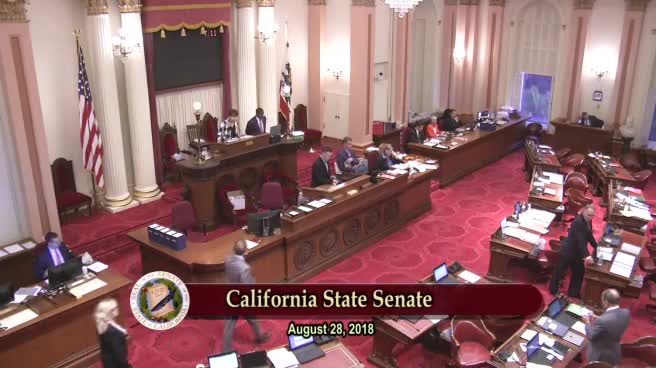
| Aug 28, 2018 | Assembly 3rd Reading AJR30 Aguiar-Curry et al. By Wiener | Senate Floor |
Passed |
|
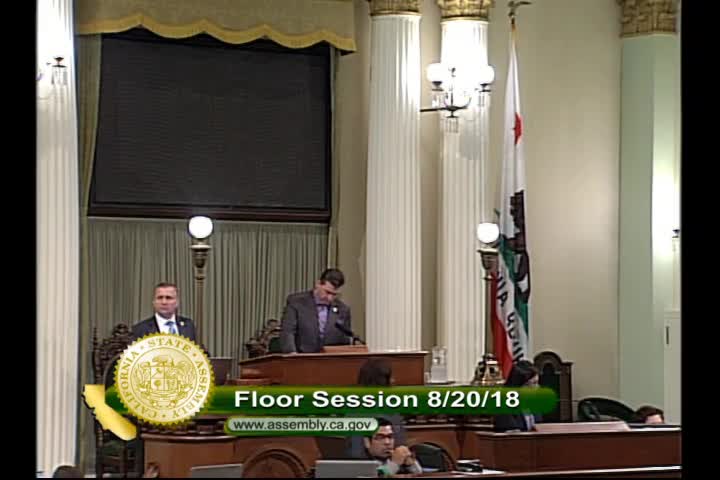
| Aug 20, 2018 | AJR 30 AGUIAR-CURRY Assembly Third Reading | Assembly Floor |
Passed |
|
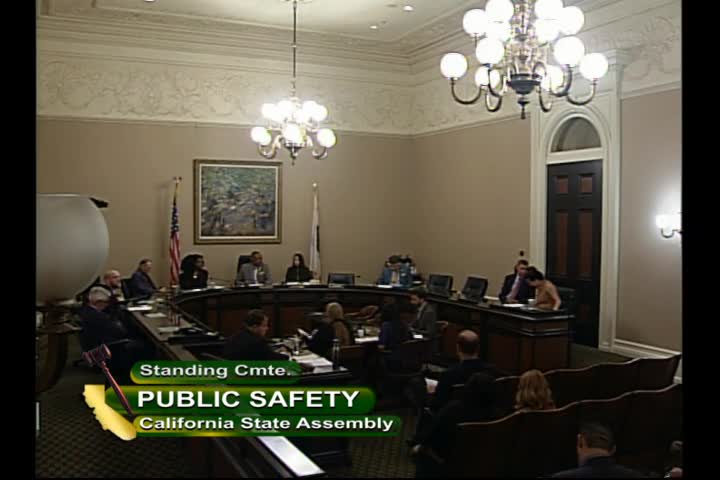
| Aug 14, 2018 | Be adopted. To third reading. | Assembly Standing Committee on Public Safety |
Passed |
This list shows positions taken on this bill by organizations on the date displayed, which is linked to the original source.
Positions by individuals are not included.
|
Organization
|
Position
|
Date
|
|---|---|---|
| Arms Control Association | ** Support | Aug 13, 2018 |
| Beyond the Bomb | ** Support | Aug 24, 2018 |
| Council For A Livable World | ** Support | Aug 24, 2018 |
| Courage Campaign | ** Support | Aug 24, 2018 |
| Global Zero | ** Support | Aug 24, 2018 |
| Nuclear Age Peace Foundation | ** Support | Aug 24, 2018 |
| Nuclear Age Peace Foundation | * Support | Aug 14, 2018 |
| Physicians for Social Responsibility | ** Support | Aug 24, 2018 |
| Physicians for Social Responsibility Los Angeles | ** Support | Aug 24, 2018 |
| Ploughshares Fund | ** Support | Aug 24, 2018 |
| The Arms Control Association | ** Support | Aug 24, 2018 |
| Tri-Valley CARES | ** Support | Aug 24, 2018 |
| Union Of Concerned Scientists | ** Support | Aug 24, 2018 |
| Win Without War | ** Support | Aug 24, 2018 |
| Women'S Action For New Directions | ** Support | Aug 24, 2018 |
Office of Senate Floor Analyses (916) 651-1520 Fax: (916) 327-4478 | AJR 30 |
THIRD READING
Bill No: AJR 30
Author: Aguiar-Curry (D), et al.
Amended: 6/14/18 in Assembly
ASSEMBLY FLOOR: 56-3, 8/20/18 - See last page for vote
SUBJECT: Restricting First Use of Nuclear Weapons Act of 2017
DIGEST:
This resolution urges the United States Congress to speedily take up federal legislation that prohibits the President from initiating a nuclear strike without Congressional approval, and send it to the President for his signature.
- Finds that nuclear weapons are uniquely powerful instruments with the capability to instantly kill millions of people, including noncombatants and children, and to create long-term health and environmental damage throughout the world, including the lands and people of the nation using them; and that these weapons have the capability to directly undermine global peace and place the United States at existential risk from retaliatory nuclear strikes.
- Finds that global spiritual leaders have noted that nuclear weapons exist in the service of a mentality of fear that affects not only parties in conflict but the entire human race, so that the real priorities facing our human family, such as the fight against poverty, the promotion of peace, and the undertaking of educational, ecological, and health care projects are relegated to second place.
- Finds that the United States possesses the world's paramount nuclear weapons capability, as well as its paramount conventional warfare capability.
- Finds that the framers of the United States Constitution understood that the monumental decision to go to war, which can result in massive death and the destruction of civilized society, must be made by the representatives of the people in Congress and not by a single person.
- Finds that United States Constitution gives Congress the sole power to declare war.
- Finds that by any definition of war, a first-use nuclear strike from the United States would constitute a major act of war.
- Finds that several California cities, including Berkeley, Davis, Hayward, Oakland, and Santa Cruz, have recognized this threat, and expressed their concern by declaring themselves "Nuclear-Free Zones."
- Finds that California's coastal location and business hub of cities, including Los Angeles, San Diego, and San Francisco, make it particularly vulnerable to attack.
- Finds that the Restricting First Use of Nuclear Weapons Act of 2017, sponsored by 73 members of the House of Representatives and 13 Senators as House Resolution 669 and Senate Resolution 200, respectively, embodies a policy of no first use of nuclear weapons without a Congressional Declaration of War and a requirement of a specific authorization by Congress for first use of nuclear weapons without limiting retaliation for another party's first use, all consistent with the United States Constitution.
This resolution urges the United States Congress to speedily take up and pass the Restricting First Use of Nuclear Weapons Act of 2017, and send it to the President for his signature.
Comments
According to the author, "Nuclear weapons have the capability to obliterate nations, kill millions of people, and create long-term negative health and environmental consequences throughout the world. They directly undermine global peace and put the United States at existential risk from retaliatory nuclear strikes. To begin to address this dangerous state of affairs, it is critical to understand one core reality – President Trump currently has the sole authority to order the use of nuclear weapons. He can order a first strike with no outside review required. He may consult with Congress, but he is not required to do so. If he gives the order and the order is refused, he has the power to relieve from duty and immediately replace any officer.
"If a president ordered a nuclear attack on any other nuclear power, the result would be an immediate counter-attack resulting in unspeakable American casualties. H.R. 669 would fix this by prohibiting the President from unilaterally authorizing the deployment of nuclear weapons in an offensive attack absent congressional declaration of war. The legislation does not impede a President's ability to respond in-kind to a nuclear attack. Passing AJR 30 demonstrates California's commitment to protecting the American people from the terror of a nuclear war."
FISCAL EFFECT: Appropriation: No Fiscal Com.: No Local: No
Beyond the Bomb
Council for a Livable World
Courage Campaign
Global Zero
Nuclear Age Peace Foundation
Physicians for Social Responsibility
Physicians for Social Responsibility Los Angeles
Physicians for Social Responsibility San Francisco Bay Area Chapter
Ploughshares Fund
The Arms Control Association
Tri-Valley Cares
Union of Concerned Scientists
Win Without War
Women’s Action for New Directions
OPPOSITION: (Verified 8/24/18)
None received
ASSEMBLY FLOOR: 56-3, 8/20/18
AYES: Aguiar-Curry, Arambula, Baker, Berman, Bloom, Bonta, Burke, Caballero, Calderon, Carrillo, Cervantes, Chau, Chiu, Chu, Cooley, Cooper, Daly, Eggman, Frazier, Friedman, Cristina Garcia, Eduardo Garcia, Gipson, Gloria, Gonzalez Fletcher, Gray, Grayson, Holden, Irwin, Jones-Sawyer, Kalra, Kamlager-Dove, Levine, Limón, Low, Maienschein, McCarty, Medina, Mullin, Muratsuchi, Nazarian, O'Donnell, Quirk, Quirk-Silva, Reyes, Rivas, Rodriguez, Rubio, Salas, Santiago, Mark Stone, Thurmond, Ting, Weber, Wood, Rendon
NOES: Flora, Mathis, Waldron
NO VOTE RECORDED: Acosta, Travis Allen, Bigelow, Brough, Chávez, Chen, Choi, Cunningham, Dahle, Fong, Gabriel, Gallagher, Harper, Kiley, Lackey, Mayes, Melendez, Obernolte, Patterson, Steinorth, Voepel
Prepared by: Jonas Austin / SFA / (916) 651-1520
8/24/18 15:51:02
**** END ****
ASSEMBLY THIRD READING
ATR Bill Id:AJR 30
Author:(Aguiar-Curry)
As Amended Ver:June 14, 2018
Majority vote
Committee | Votes | Ayes | Noes |
Public Safety | 5-0 | Jones-Sawyer, Carrillo, Kamlager-Dove, Quirk, Santiago |
|
SUMMARY: Urges the United States Congress to speedily take up federal legislation that would prohibit the President from initiating a nuclear strike without Congressional approval, and send it to the President for his signature. Specifically, this resolution:
- Finds that nuclear weapons are uniquely powerful instruments with the capability to instantly kill millions of people, including noncombatants and children, and to create long-term health and environmental damage throughout the world, including the lands and people of the nation using them; and that these weapons have the capability to directly undermine global peace and place the United States at existential risk from retaliatory nuclear strikes.
- Finds that global spiritual leaders have noted that nuclear weapons exist in the service of a mentality of fear that affects not only parties in conflict but the entire human race, so that the real priorities facing our human family, such as the fight against poverty, the promotion of peace, and the undertaking of educational, ecological, and health care projects are relegated to second place.
- Finds that the United States possesses the world's paramount nuclear weapons capability, as well as its paramount conventional warfare capability.
- Finds that the framers of the United States Constitution understood that the monumental decision to go to war, which can result in massive death and the destruction of civilized society, must be made by the representatives of the people in Congress and not by a single person.
- Finds that United States Constitution gives Congress the sole power to declare war.
- Finds that by any definition of war, a first-use nuclear strike from the United States would constitute a major act of war.
- Finds that several California cities, including Berkeley, Davis, Hayward, Oakland, and Santa Cruz, have recognized this threat, and expressed their concern by declaring themselves "Nuclear-Free Zones."
- Finds that California's coastal location and business hub of cities, including Los Angeles, San Diego, and San Francisco, make it particularly vulnerable to attack.
- Finds that the Restricting First Use of Nuclear Weapons Act of 2017, sponsored by 73 members of the House of Representatives and 13 Senators as House Resolution 669 and Senate Resolution 200, respectively, embodies a policy of no first use of nuclear weapons without a Congressional Declaration of War and a requirement of a specific authorization by Congress for first use of nuclear weapons without limiting retaliation for another party's first use, all consistent with the United States Constitution.
- Resolves that the Legislature urges the United States Congress to speedily take up and pass the Restricting First Use of Nuclear Weapons Act of 2017, and send it to the President for his signature.
- Resolves that the Chief Clerk of the Assembly transmit copies of this resolution to the President and Vice President of the United States, to the Speaker of the House of Representatives, to the Majority Leader of the Senate, and to each Senator and Representative from California in the Congress of the United States.
FISCAL EFFECT: Unknown. This resolution is keyed non-fiscal by the Legislative Counsel.
EXISTING FEDERAL LAW:
- Grants Congress the power to declare war.
- Makes the President the Commander in Chief of the armed forces of the United States.
COMMENTS: According to the author, "Nuclear weapons have the capability to obliterate nations, kill millions of people, and create long-term negative health and environmental consequences throughout the world. They directly undermine global peace and put the United States at existential risk from retaliatory nuclear strikes. To begin to address this dangerous state of affairs, it is critical to understand one core reality – President Trump currently has the sole authority to order the use of nuclear weapons. He can order a first strike with no outside review required. He may consult with Congress, but he is not required to do so. If he gives the order and the order is refused, he has the power to relieve from duty and immediately replace any officer.
"If a president ordered a nuclear attack on any other nuclear power, the result would be an immediate counter-attack resulting in unspeakable American casualties. H.R. 669 would fix this by prohibiting the President from unilaterally authorizing the deployment of nuclear weapons in an offensive attack absent congressional declaration of war. The legislation does not impede a President's ability to respond in-kind to a nuclear attack. Passing AJR 30 demonstrates California's commitment to protecting the American people from the terror of a nuclear war."
Please see the policy committee analysis for a full discussion of this resolution.
Analysis Prepared by: Matthew Fleming / PUB. S. / (916) 319-3744 FN: 0003978
Date of Hearing: August 14, 2018
Counsel: Matthew Fleming
ASSEMBLY COMMITTEE ON
Reginald Byron Jones-Sawyer, Sr., Chair
ABPCA Bill Id:
Author:() – As Ver:
SUMMARY:
Urges the United States Congress to speedily take up federal legislation that would prohibit the President from initiating a nuclear strike without Congressional approval, and send it to the President for his signature. Specifically, this resolution:
- Finds that nuclear weapons are uniquely powerful instruments with the capability to instantly kill millions of people, including noncombatants and children, and to create long-term health and environmental damage throughout the world, including the lands and people of the nation using them; and that these weapons have the capability to directly undermine global peace and place the United States at existential risk from retaliatory nuclear strikes.
- Finds that global spiritual leaders have noted that nuclear weapons exist in the service of a mentality of fear that affects not only parties in conflict but the entire human race, so that the real priorities facing our human family, such as the fight against poverty, the promotion of peace, and the undertaking of educational, ecological, and health care projects are relegated to second place.
- Finds that the United States possesses the world’s paramount nuclear weapons capability, as well as its paramount conventional warfare capability.
- Finds that the framers of the United States Constitution understood that the monumental decision to go to war, which can result in massive death and the destruction of civilized society, must be made by the representatives of the people in Congress and not by a single person.
- Finds that United States Constitution gives Congress the sole power to declare war.
- Finds that by any definition of war, a first-use nuclear strike from the United States would constitute a major act of war.
- Finds that that several California cities, including Berkeley, Davis, Hayward, Oakland, and Santa Cruz, have recognized this threat, and expressed their concern by declaring themselves “Nuclear-Free Zones.”
- Finds that California’s coastal location and business hub of cities, including Los Angeles, San Diego, and San Francisco, make it particularly vulnerable to attack.
- Finds that the Restricting First Use of Nuclear Weapons Act of 2017, sponsored by 73 members of the House of Representatives and 13 Senators as House Resolution 669 and Senate Resolution 200, respectively, embodies a policy of no first use of nuclear weapons without a Congressional Declaration of War and a requirement of a specific authorization by Congress for first use of nuclear weapons without limiting retaliation for another party’s first use, all consistent with the United States Constitution.
- Resolves that the Legislature urges the United States Congress to speedily take up and pass the Restricting First Use of Nuclear Weapons Act of 2017, and send it to the President for his signature.
- Resolves that the Chief Clerk of the Assembly transmit copies of this resolution to the President and Vice President of the United States, to the Speaker of the House of Representatives, to the Majority Leader of the Senate, and to each Senator and Representative from California in the Congress of the United States.
FISCAL EFFECT:
Unknown
EXISTING FEDERAL LAW:
- Grants Congress the power to declare war (U.S. Const., Art. I, § 8, cl. 11).
- Makes the President the Commander in Chief of the armed forces of the United States (U.S. Cont., Art. II, § 2, cl. 1).
COMMENTS:
- Author's Statement: According to the author, “Nuclear weapons have the capability to obliterate nations, kill millions of people, and create long-term negative health and environmental consequences throughout the world. They directly undermine global peace and put the United States at existential risk from retaliatory nuclear strikes. To begin to address this dangerous state of affairs, it is critical to understand one core reality – President Trump currently has the sole authority to order the use of nuclear weapons. He can order a first strike with no outside review required. He may consult with Congress, but he is not required to do so. If he gives the order and the order is refused, he has the power to relieve from duty and immediately replace any officer. If a president ordered a nuclear attack on any other nuclear power, the result would be an immediate counter-attack resulting in unspeakable American casualties. H.R. 669 would fix this by prohibiting the President from unilaterally authorizing the deployment of nuclear weapons in an offensive attack absent congressional declaration of war. The legislation does not impede a President’s ability to respond in-kind to a nuclear attack. Passing AJR 30 demonstrates California’s commitment to protecting the American people from the terror of a nuclear war.”
- Background: Under the United States Constitution, Congress is granted the power to declare war (U.S. Const., Art. I, § 8, cl. 11). At the same time, the President is constitutionally appointed as the Commander in Chief of the military (U.S. Cont., Art. II, § 2, cl. 1). The bifurcation of these “war powers” has often created questions about where exactly Congressional military authority ends and that of the President begins.
Regardless of the fact that the U.S. war powers are shared between Congress and the President, when it comes to mechanics of launching a nuclear strike against a foreign power, even in the absence of an attack against the United States, it appears to be clear that the President has the sole authority to undertake such an action. (See Woodruff, PBS NewsHour interview with James Clapper, Former Direct of National Intelligence and Peter Fever, National Security Staff to George W. Bush, Aug. 24, 2017, transcript available at: https://www.pbs.org/newshour/show/heres-goes-presidents-decision-launch-nuclear-weapons [as of Aug. 8, 2018]). In an interview with Fox News in 2008, former Vice President Cheney explained the procedures for initiating a nuclear strike:
“The president of the United States now for 50 years is followed at all times, 24 hours a day, by a military aide carrying a football that contains the nuclear codes that he would use and be authorized to use in the event of a nuclear attack on the United States.
“He could launch a kind of devastating attack the world's never seen. He doesn't have to check with anybody. He doesn't have to call the Congress. He doesn't have to check with the courts. He has that authority because of the nature of the world we live in.”
(Transcript available at: http://www.foxnews.com/story/2008/12/22/transcript-vice-president-cheney-on-fox-news-sunday.html [as of August 8, 2018]).
According to the proponents of this resolution, the President’s sole authority to initiate a nuclear strike – as opposed to conducting a retaliatory strike – is excessive and undesirable. The resolution finds that initiating a nuclear strike would necessarily constitute a declaration of war and further finds that the Congress alone has the constitutional authority to make such a declaration.
This resolution therefore resolves to encourage Congress to take up proposed federal legislation known as the “Restricting First Use of Nuclear Weapons Act” that has been pending in the House Foreign Affairs Committee since January of 2017. The federal legislation would prohibit the president from initiating a nuclear attack against a foreign power without receiving Congressional approval. The federal legislation would leave the President’s ability to launch a retaliatory nuclear attack in place.
The “Restricting First Use of Nuclear Weapons Act” has received criticism from some who view the President’s authority to initiate a strike as an important tool to “deter aggression by leaving adversaries in doubt about whether and when [nuclear] weapons might be used.” (Los Angeles Times Editorial Board, Yes, Trump with the nuclear codes is terrifying. But the threat of a first strike is a vital deterrent, Nov. 18, 2017, available at: http://www.latimes.com/opinion/editorials/la-ed-congress-nukes-20171118-story.html [as of August 7, 2018]). These critics consider the proposed federal legislation to be a drastic change in how the current and future President are able to defend the nation. (Id.)
- Argument in Support: According to Win Without War, “H.R. 669, authored by California Representative Ted Lieu, would prohibit the President from unilaterally authorizing the deployment of nuclear weapons in an offensive attack absent congressional declaration of war. The legislation does not impede a President’s ability to respond in-kind to a nuclear attack.
“Any strike initiated by the United States against another nuclear power would be followed by immediate retaliation. Hundreds of thousands, if not millions, of Americans would be killed, our economy would be devastated, and our environment destroyed. The decision to launch a first-strike attack with these catastrophic consequences should not rest in the hands of the President alone. If the United States takes its finger off the nuclear trigger, we can reduce the perceived existential threat the United States poses to other countries, thus reducing their incentive to proliferate.”
- Related Legislation
:
- A
- JR 33 (Limón), of the 2017-18 Legislative Session, would urge federal leaders and our nation to embrace the Treaty on the Prohibition of Nuclear Weapons, make nuclear disarmament the centerpiece of our national security policy, and spearhead a global effort to prevent nuclear war. AJR 33 is pending in the Assembly Committee on Public Safety.
b)
- SJR 20 (Hertzberg), of the 2017-18 Legislative Session, would urge Congress and the President of the United States to work together to implement grid hardening measures and to help ensure our nation’s electrical infrastructure is protected from threats from electromagnetic pulses and physical attacks. SJR 20 is pending on the Assembly Floor.
- Related Federal Legislation: H.R. 669 (Lieu) 115th Congress 2017 – 2018 and S. 200 (Edward) 115th Congress 2017 – 2018 would prohibit the President from using the Armed Forces to conduct a first-use nuclear strike unless such strike is conducted pursuant to a congressional declaration of war expressly authorizing such strike. H.R. 669 is pending in the House Foreign Affairs Committee and S. 200 is pending in the Senate Committee on Foreign Relations.
REGISTERED SUPPORT / OPPOSITION:
Support
Arms Control Association
Beyond the Bomb
Courage Campaign
Council for a Livable World
Global Zero
Nuclear Age Peace Foundation
Physicians for Social Responsibility
Physicians for Social Responsibility Los Angeles
Physicians for Social Responsibility San Francisco Bay Area Chapter
Ploughshares Fund
Tri-Valley Cares
Union of Concerned Scientists
Win Without War
Women’s Action for New Directions
Opposition
None
Analysis Prepared by:
Discussed in Hearing
 2MIN
Senate Floor
 2MIN
Assembly Floor
 8MIN
Assembly Standing Committee on Public Safety
Bill Author

Bill Co-Author(s):