AJR 33: Treaty on the Prohibition of Nuclear Weapons.
- Session Year: 2017-2018
- House: Assembly
- Latest Version Date: 2018-09-05
This measure would urge our federal leaders and our nation to embrace the Treaty on the Prohibition of Nuclear Weapons, make nuclear disarmament the centerpiece of our national security policy, and spearhead a global effort to prevent nuclear war.
This measure would urge our federal leaders and our nation to embrace the Treaty on the Prohibition of Nuclear Weapons, make nuclear disarmament the centerpiece of our national security policy, and spearhead a global effort to prevent nuclear war.
This measure would urge our federal leaders and our nation to embrace the Treaty on the Prohibition of Nuclear Weapons, make nuclear disarmament the centerpiece of our national security policy, and spearhead a global effort to prevent nuclear war.
This measure would urge our federal leaders and our nation to embrace the Treaty on the Prohibition of Nuclear Weapons, make nuclear disarmament the centerpiece of our national security policy, and spearhead a global effort to prevent nuclear war.
WHEREAS, Since the height of the Cold War, the United States and Russia have dismantled more than 50,000 nuclear warheads, but 15,000 of these weapons still exist and pose an intolerable risk to human survival; and
WHEREAS, Ninety-five percent of these weapons are in the hands of the United States and Russia and the rest are held by seven other countries: China, France, Israel, India, North Korea, Pakistan, and the United Kingdom; and
WHEREAS, The use of even a tiny fraction of these weapons could cause worldwide climate disruption and global famine; for example, as few as 100 Hiroshima-sized bombs, small by modern standards, would put at least five million tons of soot into the upper atmosphere and cause climate disruption across the planet, cutting food production and putting two billion people at risk of starvation; and
WHEREAS, A large-scale nuclear war would kill hundreds of millions of people directly and cause unimaginable environmental damage and catastrophic climate disruption by dropping temperatures across the planet to levels not seen since the last ice age; under these conditions the vast majority of the human race would starve and it is possible we would become extinct as a species; and
WHEREAS, Despite assurances that these arsenals exist solely to guarantee that they are never used, there have been many occasions when nuclear armed states have prepared to use these weapons, and war has been averted only at the last minute; and
WHEREAS, Nuclear weapons do not possess some magical quality that prevents their use; and
WHEREAS, Former Defense Secretary Robert McNamara said, speaking about the Cuban Missile Crisis, It was luck that prevented nuclear war, yet our nuclear policy cannot be the hope that luck will continue; and
WHEREAS, As the effects of climate change place increased stress on communities around the world and intensify the likelihood of conflict, the danger of nuclear war will grow; and
WHEREAS, The planned expenditure of more than $1 trillion to enhance our nuclear arsenal will not only increase the risk of nuclear disaster but fuel a global arms race and divert crucial resources needed to assure the well-being of the American people and people all over the world; and
WHEREAS, There is an alternative to this march toward nuclear war: in July 2017, 122 nations called for the elimination of all nuclear weapons by adopting the Treaty on the Prohibition of Nuclear Weapons; now, therefore, be it
Resolved by the Assembly and the Senate of the State of California, jointly, That the Legislature urges our federal leaders and our nation to embrace the Treaty on the Prohibition of Nuclear Weapons and make nuclear disarmament the centerpiece of our national security policy; and be it further
Resolved, That the Legislature calls upon our federal leaders and our nation to spearhead a global effort to prevent nuclear war by renouncing the option of using nuclear weapons first, ending the Presidents sole, unchecked authority to launch a nuclear attack, taking U.S. nuclear weapons off hair-trigger alert, canceling the plan to replace its entire arsenal with enhanced weapons, and actively pursuing a verifiable agreement among nuclear-armed states to eliminate their nuclear arsenals; and be it further
Resolved, That the Chief Clerk of the Assembly transmit copies of this resolution to the President and Vice President of the United States, to the Speaker of the House of Representatives, to the Minority Leader of the House of Representatives, to the Majority Leader of the Senate, to the Minority Leader of the Senate, to each Senator and Representative from California in the Congress of the United States, and to the Governor.
WHEREAS, Since the height of the Cold War, the United States and Russia have dismantled more than 50,000 nuclear warheads, but 15,000 of these weapons still exist and pose an intolerable risk to human survival; and
WHEREAS, Ninety-five percent of these weapons are in the hands of the United States and Russia and the rest are held by seven other countries: China, France, Israel, India, North Korea, Pakistan, and the United Kingdom; and
WHEREAS, The use of even a tiny fraction of these weapons would could cause worldwide climate disruption and global famine; for example, as few as 100 Hiroshima-sized bombs, small by modern standards, would put at least five million tons of soot into the upper atmosphere and cause climate disruption across the planet, cutting food production and putting two billion people at risk of starvation; and
WHEREAS, A large-scale nuclear war would kill hundreds of millions of people directly and cause unimaginable environmental damage and catastrophic climate disruption by dropping temperatures across the planet to levels not seen since the last ice age; under these conditions the vast majority of the human race would starve and it is possible we would become extinct as a species; and
WHEREAS, Despite assurances that these arsenals exist solely to guarantee that they are never used, there have been many occasions when nuclear armed states have prepared to use these weapons, and war has been averted only at the last minute; and
WHEREAS, Nuclear weapons do not possess some magical quality that prevents their use; and
WHEREAS, Former Defense Secretary Robert McNamara said, speaking about the Cuban Missile Crisis, It was luck that prevented nuclear war, yet our nuclear policy cannot be the hope that luck will continue; and
WHEREAS, As the effects of climate change place increased stress on communities around the world and intensify the likelihood of conflict, the danger of nuclear war will grow; and
WHEREAS, The planned expenditure of more than $1 trillion to enhance our nuclear arsenal will not only increase the risk of nuclear disaster but fuel a global arms race and divert crucial resources needed to assure the well-being of the American people and people all over the world; and
WHEREAS, There is an alternative to this march toward nuclear war: in July 2017, 122 nations called for the elimination of all nuclear weapons by adopting the Treaty on the Prohibition of Nuclear Weapons; now, therefore, be it
Resolved by the Assembly and the Senate of the State of California, jointly, That the Legislature urges our federal leaders and our nation to embrace the Treaty on the Prohibition of Nuclear Weapons and make nuclear disarmament the centerpiece of our national security policy; and be it further
Resolved, That the Legislature calls upon our federal leaders and our nation to spearhead a global effort to prevent nuclear war by renouncing the option of using nuclear weapons first, ending the Presidents sole, unchecked authority to launch a nuclear attack, taking U.S. nuclear weapons off hair-trigger alert, canceling the plan to replace its entire arsenal with enhanced weapons, and actively pursuing a verifiable agreement among nuclear-armed states to eliminate their nuclear arsenals; and be it further
Resolved, That the Chief Clerk of the Assembly transmit copies of this resolution to the President and Vice President of the United States, to the Speaker of the House of Representatives, to the Minority Leader of the House of Representatives, to the Majority Leader of the Senate, to the Minority Leader of the Senate, to each Senator and Representative from California in the Congress of the United States, and to the Governor.
WHEREAS, Since the height of the Cold War, the United States and Russia have dismantled more than 50,000 nuclear warheads, but 15,000 of these weapons still exist and pose an intolerable risk to human survival; and
WHEREAS, Ninety-five percent of these weapons are in the hands of the United States and Russia and the rest are held by seven other countries: China, France, Israel, India, North Korea, Pakistan, and the United Kingdom; and
WHEREAS, The use of even a tiny fraction of these weapons would cause worldwide climate disruption and global famine; for example, as few as 100 Hiroshima-sized bombs, small by modern standards, would put at least five million tons of soot into the upper atmosphere and cause climate disruption across the planet, cutting food production and putting two billion people at risk of starvation; and
WHEREAS, A large-scale nuclear war would kill hundreds of millions of people directly and cause unimaginable environmental damage and catastrophic climate disruption by dropping temperatures across the planet to levels not seen since the last ice age; under these conditions the vast majority of the human race would starve and it is possible we would become extinct as a species; and
WHEREAS, Despite assurances that these arsenals exist solely to guarantee that they are never used, there have been many occasions when nuclear armed states have prepared to use these weapons, and war has been averted only at the last minute; and
WHEREAS, Nuclear weapons do not possess some magical quality that prevents their use; and
WHEREAS, Former Defense Secretary Robert McNamara said, speaking about the Cuban Missile Crisis, It was luck that prevented nuclear war, yet our nuclear policy cannot be the hope that luck will continue; and
WHEREAS, As the effects of climate change place increased stress on communities around the world and intensify the likelihood of conflict, the danger of nuclear war will grow; and
WHEREAS, The planned expenditure of more than $1 trillion to enhance our nuclear arsenal will not only increase the risk of nuclear disaster but fuel a global arms race and divert crucial resources needed to assure the well-being of the American people and people all over the world; and
WHEREAS, There is an alternative to this march toward nuclear war: in July 2017, 122 nations called for the elimination of all nuclear weapons by adopting the Treaty on the Prohibition of Nuclear Weapons; now, therefore, be it
Resolved by the Assembly and the Senate of the State of California, jointly, That the Legislature urges our federal leaders and our nation to embrace the Treaty on the Prohibition of Nuclear Weapons and make nuclear disarmament the centerpiece of our national security policy; and be it further
Resolved,That the Legislature calls upon our federal leaders and our nation to spearhead a global effort to prevent nuclear war by renouncing the option of using nuclear weapons first, ending the Presidents sole, unchecked authority to launch a nuclear attack, taking U.S. nuclear weapons off hair-trigger alert, canceling the plan to replace its entire arsenal with enhanced weapons, and actively pursuing a verifiable agreement among nuclear-armed states to eliminate their nuclear arsenals; and be it further
.
Resolved, That the Chief Clerk of the Assembly transmit copies of this resolution to the President and Vice President of the United States, to the Speaker of the House of Representatives, to the Minority Leader of the House of Representatives, to the Majority Leader of the Senate, to the Minority Leader of the Senate, to each Senator and Representative from California in the Congress of the United States, and to the Governor.
|
Date
|
Status
|
|---|---|
| Sep 5, 2018 | Chaptered by Secretary of State - Res. Chapter 196, Statutes of 2018. |
| Sep 5, 2018 | Enrolled and filed with the Secretary of State at 11:30 a.m. |
| Aug 28, 2018 | In Assembly. Ordered to Engrossing and Enrolling. |
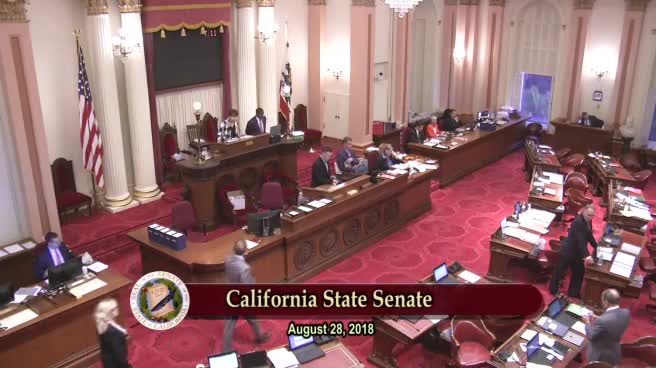
| Aug 28, 2018 | Adopted and to Assembly. |
| Aug 24, 2018 | From committee: Ordered to third reading. |
| Aug 21, 2018 | In Senate. To Com. on RLS. |
| Aug 20, 2018 | Coauthors revised. |
| Aug 14, 2018 | From committee: Be adopted. Ordered to Third Reading. (Ayes 5. Noes 0.) (August 14). |
| Jun 19, 2018 | Re-referred to Com. on PUB. S. |
| Jun 18, 2018 | From committee chair, with author's amendments: Amend, and re-refer to Com. on PUB. S. Amended. |
| Jun 14, 2018 | Referred to Com. on PUB. S. |
| Feb 21, 2018 | From printer. |
| Feb 20, 2018 | Introduced. To print. |
|
Date
|
Description
|
Location
|
Votes
|
|
|---|---|---|---|---|
| Aug 28, 2018 | Assembly 3rd Reading AJR33 Limón et al. By Monning | Senate Floor |
Passed |
|
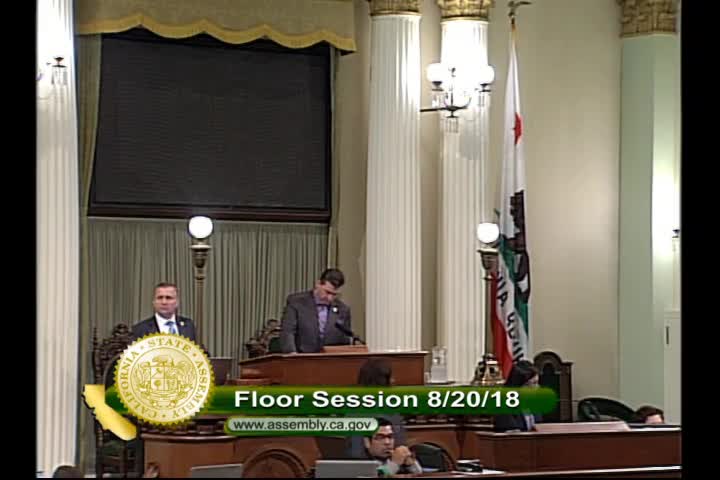
| Aug 20, 2018 | AJR 33 LIMÓN Assembly Third Reading | Assembly Floor |
Passed |
|
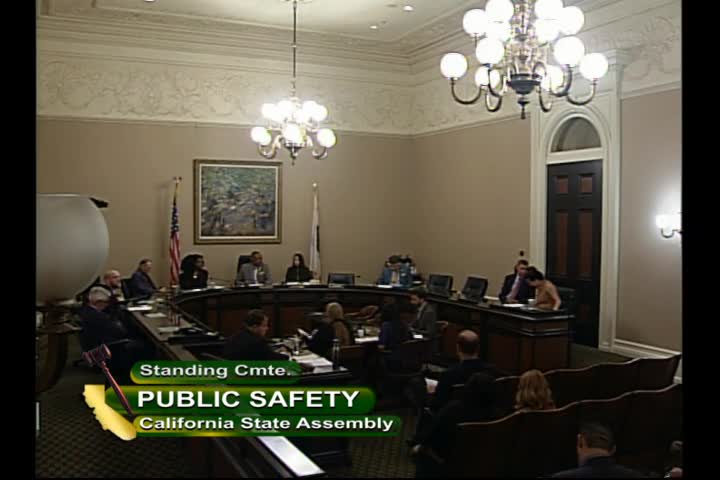
| Aug 14, 2018 | Be adopted. To third reading. | Assembly Standing Committee on Public Safety |
Passed |
This list shows positions taken on this bill by organizations on the date displayed, which is linked to the original source.
Positions by individuals are not included.
|
Organization
|
Position
|
Date
|
|---|---|---|
| Fukushima Support Committee | ** Support | Aug 24, 2018 |
| International Physicians For The Prevention Of Nuclear War | ** Support | Aug 24, 2018 |
| Nuclear Age Peace Foundation | ** Support | Aug 13, 2018 |
| Nuclear Age Peace Foundation | * Support | Aug 14, 2018 |
| Nuclear Free Schools | ** Support | Aug 24, 2018 |
| Peace Action | ** Support | Aug 24, 2018 |
| Physicians for Social Responsibility | ** Support | Aug 24, 2018 |
| Physicians for Social Responsibility - Los Angeles | ** Support | Aug 24, 2018 |
| San Francisco Bay Area Physicians for Social Responsibility | * Support | Aug 14, 2018 |
| Tri-valley CARE | * Support | Aug 14, 2018 |
| Tri-Valley Communities Against a Radioactive Environment | ** Support | Aug 24, 2018 |
| Union Of Concerned Scientists | ** Support | Aug 24, 2018 |
| Veterans for Peace | ** Support | Aug 24, 2018 |
Office of Senate Floor Analyses (916) 651-1520 Fax: (916) 327-4478 | AJR 33 |
THIRD READING
Bill No: AJR 33
Amended: 6/18/18 in Assembly
ASSEMBLY FLOOR: 53-16, 8/20/18 - See last page for vote
SUBJECT: Treaty on the Prohibition of Nuclear Weapons
DIGEST:
This resolution urges our federal leaders and our nation to embrace the Treaty on the Prohibition of Nuclear Weapons, make nuclear disarmament the centerpiece of our national security policy, and spearhead a global effort to prevent nuclear war.
ANALYSIS: This resolution makes the following legislative findings:
- Since the height of the Cold War, the U.S. and Russia have dismantled more than 50,000 nuclear warheads, but 15,000 of these weapons still exist and pose an intolerable risk to human survival. Ninety-five percent of these weapons are in the hands of the U.S. and Russia and the rest are held by seven other countries: China, France, Israel, India, North Korea, Pakistan, and the United Kingdom.
- Despite assurances that these arsenals exist solely to guarantee that they are never used, there have been many occasions when nuclear armed states have prepared to use these weapons, and war has been averted only at the last minute.
- Former Defense Secretary Robert McNamara said, speaking about the Cuban Missile Crisis, “It was luck that prevented nuclear war,” yet our nuclear policy cannot be the hope that luck will continue.
- As the effects of climate change place increased stress on communities around the world and intensify the likelihood of conflict, the danger of nuclear war will grow.
- The planned expenditure of more than $1 trillion to enhance our nuclear arsenal will not only increase the risk of nuclear disaster but fuel a global arms race and divert crucial resources needed to assure the well-being of the American people and people all over the world.
- There is an alternative to this march toward nuclear war: in July 2017, 122 nations called for the elimination of all nuclear weapons by adopting the Treaty on the Prohibition of Nuclear Weapons.
This resolution urges our federal leaders and our nation to embrace the Treaty on the Prohibition of Nuclear Weapons and make nuclear disarmament the centerpiece of our national security policy; and calls upon our federal leaders and our nation to spearhead a global effort to prevent nuclear war by renouncing the option of using nuclear weapons first, ending the President’s sole, unchecked authority to launch a nuclear attack, taking U.S. nuclear weapons off hair-trigger alert, canceling the plan to replace its entire arsenal with enhanced weapons, and actively pursuing a verifiable agreement among nuclear-armed states to eliminate their nuclear arsenals.
Related/Prior Legislation
AJR 30 (Aguiar Curry, 2018) urges the U.S. Congress to speedily take up and pass the Restricting First Use of Nuclear Weapons Act of 2017, and send it to the President for his signature. The resolution is pending action in the Senate.
FISCAL EFFECT: Appropriation: No Fiscal Com.: No Local: No
Fukushima Support Committee
International Physicians for the Prevention of Nuclear War
Nuclear Free Schools
Physicians for Social Responsibility - Los Angeles
Physicians for Social Responsibility (National)
Physicians for Social Responsibility, San Francisco Bay Area Chapter
Peace Action
Tri-Valley Communities Against a Radioactive Environment
Union of Concerned Scientists
Veterans for Peace
OPPOSITION: (Verified 8/23/18)
None received
ASSEMBLY FLOOR: 53-16, 8/20/18
AYES: Aguiar-Curry, Arambula, Berman, Bloom, Bonta, Burke, Caballero, Calderon, Carrillo, Chau, Chiu, Chu, Cooley, Cooper, Daly, Eggman, Frazier, Friedman, Cristina Garcia, Eduardo Garcia, Gipson, Gloria, Gonzalez Fletcher, Gray, Grayson, Holden, Irwin, Jones-Sawyer, Kalra, Kamlager-Dove, Levine, Limón, Low, McCarty, Medina, Mullin, Muratsuchi, Nazarian, O'Donnell, Quirk, Quirk-Silva, Reyes, Rivas, Rodriguez, Rubio, Salas, Santiago, Mark Stone, Thurmond, Ting, Weber, Wood, Rendon
NOES: Travis Allen, Bigelow, Brough, Chávez, Choi, Cunningham, Dahle, Flora, Gallagher, Harper, Mathis, Melendez, Obernolte, Patterson, Voepel, Waldron
NO VOTE RECORDED: Acosta, Baker, Cervantes, Chen, Fong, Gabriel, Kiley, Lackey, Maienschein, Mayes, Steinorth
Prepared by: Melissa Ward / SFA / (916) 651-1520
8/24/18 15:25:25
**** END ****
ASSEMBLY THIRD READING
ATR Bill Id:AJR 33
Author:(Limón)
As Amended Ver:June 18, 2018
Majority vote
Committee | Votes | Ayes | Noes |
Public Safety | 5-0 | Jones-Sawyer, Carrillo, Kamlager-Dove, Quirk, Santiago |
|
SUMMARY: Urges federal leaders and our nation to embrace the United Nations Treaty on the Prohibition of Nuclear Weapons, make nuclear disarmament the centerpiece of our national security policy, and spearhead a global effort to prevent nuclear war. Specifically, this resolution:
- States that since the height of the Cold War, the United States and Russia have dismantled more than 50,000 nuclear warheads, but 15,000 of these weapons still exist and pose an intolerable risk to human survival.
- States that 95% of these nuclear weapons are in the United States and Russia and the rest are held by China, France, Israel, India, North Korea, Pakistan, and the United Kingdom.
- States that a tiny fraction of these weapons could cause worldwide climate disruption and global famine.
- States that a large-scale nuclear war would kill hundreds of millions of people directly and cause environmental damage and climate disruption.
- States that there have been many occasions when nuclear armed states have prepared to use nuclear weapons, and war has been averted only at the last minute.
- States nuclear weapons do not possess "some magical quality that prevents their use."
- States that the effects of climate change place increased stress on communities around the world and intensify the likelihood of conflict and the danger of nuclear war will grow.
- States that the planned expenditure of more than $1 trillion to enhance our nation’s nuclear arsenal will increase the risk of nuclear disaster, fuel a global arms race, and divert crucial resources needed to assure the well-being of the American people and people all over the world.
- States that in July 2017, 122 nations called for the elimination of all nuclear weapons by adopting the Treaty on the Prohibition of Nuclear Weapons.
- Resolves that the Legislature urge our federal leaders and our nation to embrace the Treaty on the Prohibition of Nuclear Weapons and make nuclear disarmament the centerpiece of our national security policy.
- Resolves that the Legislature call upon our federal leaders and our nation to spearhead a global effort to prevent nuclear war by renouncing the option of using nuclear weapons first, ending the President’s sole, unchecked authority to launch a nuclear attack, taking U.S. nuclear weapons off hair-trigger alert, canceling the plan to replace its entire arsenal with enhanced weapons, and actively pursuing a verifiable agreement among nuclear-armed states to eliminate their nuclear arsenals.
- Resolves that the Chief Clerk of the Assembly transmit copies of this resolution to the President and Vice President of the United States, to the Speaker of the House of Representatives, to the Minority Leader of the House of Representatives, to the Majority Leader of the Senate, to the Minority Leader of the Senate, to each Senator and Representative from California in the Congress of the United States, and to the Governor.
EXISTING FEDERAL LAW:
- Grants Congress the power to declare war.
- Makes the President the Commander in Chief of the armed forces of the United States.
FISCAL EFFECT: Unknown. This resolution is keyed non-fiscal by the Legislative Counsel.
COMMENTS: According to the author, "The overabundance of nuclear weapons represents a threat to California and the world. This resolution calls upon our federal leaders to move toward denuclearization and renounce the option of using nuclear weapons first."
Please see the policy committee analysis for a full discussion of this resolution.
Analysis Prepared by: Liah Burnley / PUB. S. / (916) 319-3744 FN: 0003976
Date of Hearing: August 14, 2018
Counsel: Liah Burnley
ASSEMBLY COMMITTEE ON PUBLIC SAFETY
Reginald Byron Jones-Sawyer, Sr., Chair
ABPCA Bill Id:AJR 33
Author:(Limón) – As Amended Ver:June 18, 2018
SUMMARY: Urges federal leaders and our nation to embrace the United Nations Treaty on the Prohibition of Nuclear Weapons, make nuclear disarmament the centerpiece of our national security policy, and spearhead a global effort to prevent nuclear war.
Specifically, this resolution:
- States that since the height of the Cold War, the United States and Russia have dismantled more than 50,000 nuclear warheads, but 15,000 of these weapons still exist and pose an intolerable risk to human survival.
- States that 95 percent of these nuclear weapons are in the United States and Russia and the rest are held by China, France, Israel, India, North Korea, Pakistan, and the United Kingdom.
- States that a tiny fraction of these weapons could cause worldwide climate disruption and global famine.
- States that a large-scale nuclear war would kill hundreds of millions of people directly and cause environmental damage and climate disruption.
- States that there have been many occasions when nuclear armed states have prepared to use nuclear weapons, and war has been averted only at the last minute.
- States nuclear weapons do not possess “some magical quality that prevents their use.”
- States that the effects of climate change place increased stress on communities around the world and intensify the likelihood of conflict and the danger of nuclear war will grow.
- States that the planned expenditure of more than $1,000,000,000,000 to enhance our nation’s nuclear arsenal will increase the risk of nuclear disaster, fuel a global arms race, and divert crucial resources needed to assure the well-being of the American people and people all over the world.
- States that in July 2017, 122 nations called for the elimination of all nuclear weapons by adopting the Treaty on the Prohibition of Nuclear Weapons.
- Resolves that the Legislature urge our federal leaders and our nation to embrace the Treaty on the Prohibition of Nuclear Weapons and make nuclear disarmament the centerpiece of our national security policy.
- Resolves that the Legislature call upon our federal leaders and our nation to spearhead a global effort to prevent nuclear war by renouncing the option of using nuclear weapons first, ending the President’s sole, unchecked authority to launch a nuclear attack, taking U.S. nuclear weapons off hair-trigger alert, canceling the plan to replace its entire arsenal with enhanced weapons, and actively pursuing a verifiable agreement among nuclear-armed states to eliminate their nuclear arsenals.
- Resolves that the Chief Clerk of the Assembly transmit copies of this resolution to the President and Vice President of the United States, to the Speaker of the House of Representatives, to the Minority Leader of the House of Representatives, to the Majority Leader of the Senate, to the Minority Leader of the Senate, to each Senator and Representative from California in the Congress of the United States, and to the Governor.
EXISTING FEDERAL LAW:
- Grants Congress the power to declare war. (U.S. Const., Art. I, § 8, cl. 11).
- Makes the President the Commander in Chief of the armed forces of the United States. (U.S. Cont., Art. II, § 2, cl. 1).
FISCAL EFFECT:
Unknown.
COMMENTS:
- Author’s Statement: According to the author, “The overabundance of nuclear weapons represents a threat to California and the world. This resolution calls upon our federal leaders to move toward denuclearization and renounce the option of using nuclear weapons first.”
- Background: In July 2017, 122 nations adopted the United Nations Treaty on the Prohibition of Nuclear Weapons. The Treaty’s pertinent articles state that each state-party must never, under any circumstance, undertake to develop, test, produce, manufacture, otherwise acquire, possess or stockpile nuclear weapons or other nuclear explosive devices; use or threaten to use nuclear weapons or other nuclear explosive devices; submit to the Secretary-General of the United Nations, a declaration including whether it owned, possessed or controlled nuclear weapons or nuclear explosive devices and eliminated its nuclear-weapon program, whether it owns, possesses or controls any nuclear weapons or other nuclear explosive devices, whether there are any nuclear weapons or other nuclear explosive devices in its territory or in any place under its control; immediately remove nuclear weapons from operational status, and destroy them as soon as possible; with respect to individuals under its jurisdiction who are affected by the use or testing of nuclear weapons, adequately provide age- and gender-sensitive assistance, without discrimination, including medical care, rehabilitation and psychological support, as well as provide for social and economic inclusion to victims of nuclear weapons testing; and take necessary and appropriate measures towards the environmental remediation of areas contaminated from nuclear testing. (Treaty on the Prohibition of
Nuclear Weapons, available at https://treaties.un.org/doc/Treaties/2017/07/20170707%2003-42%20PM/Ch_XXVI_9.pdf.)
The Treaty opened for signature on September 2017 at the United Nations headquarters. (Id.) Though signing the treaty would make the United States a party to the treaty—the country would not be legally bound or required to implement the terms of the treaty. Rather, signature would merely signal the intent of the United States to become party to the Treaty in the future, and obligate the United States to not take action to undermine the Treaty’s objective and purpose. Further action, including ratification at the national level pursuant to the Constitution, would be required for the United States to be bound by the terms of the Treaty.
The United States did not participate in the treaty negations and has not signaled intent to sign the Treaty. As stated in a joint statement to the United Nations from representatives of the United States, France, and the United Kingdom:
“We do not intend to sign, ratify or ever become party to it. Therefore, there will be no change in the legal obligations on our countries with respect to nuclear weapons. [...] Importantly, other states possessing nuclear weapons and almost all other states relying on nuclear deterrence have also not taken part in the negotiations. […]This treaty offers no solution to the grave threat posed by North Korea’s nuclear program, nor does it address other security challenges that make nuclear deterrence necessary. (Joint Press Statement from the Permanent Representatives to the United Nations of the United States, United Kingdom and France Following the Adoption of a Treaty Banning Nuclear Weapons, July 7, 2017, available at https://www.scribd.com/document/353174842/Joint-Press-Statement-by-UK-France-US-on-nuclear-ban-treaty.)
Notably, none of the seven countries that own nuclear weapons have signed the Treaty. The world’s nuclear weapons are owned by the United States, Russia, China, France, Israel, India, North Korea, Pakistan, and the United Kingdom. Ninety five percent of these weapons are in the United States and Russia. (Arms Control Association, Nuclear Weapons: Who has What at a Glance, June 2018, available at https://www.armscontrol.org/factsheets/Nuclearweaponswhohaswhat.) According to data from the Federation of American Scientists, the United States possesses 45% of the world’s nuclear weapons and Russia possesses 46%. (https://fas.org/wp-content/uploads/2014/05/Inventories2017-2.png)
The United States is party to the United Nations Treaty on the Non-Proliferation of Nuclear Weapons (NPT). With 190 states parties, the NPT has near-universal membership. Only South Sudan, India, Israel, North Korea, and Pakistan remain outside the treaty. The United States, Russia, China, France, and the United Kingdom—all nuclear weapon owning countries—are parties to the NPT. Each party to the to the NPT has agreed to not to receive or any transfer nuclear weapons or control over such weapons or explosive devices directly, or indirectly; not to manufacture or otherwise acquire nuclear weapons or other nuclear explosive devices; and not to seek or receive any assistance in the manufacture of nuclear weapons or other nuclear explosive devices. (U.S. Department of State, https://www.state.gov/t/isn/trty/16281.htm.) The NPT does not seek to eliminate any nuclear weapons; according to the U.S. Department of State, “the basic bargain at the core of the NPT is sound: Countries with nuclear weapons will move towards disarmament; countries without nuclear weapons will not acquire them; and all countries can access peaceful nuclear technology.” (Id.)
This Resolution calls for the United States to make nuclear disarmament the centerpiece of our national security policy and to “embrace” the above-described Treaty. This Resolution also calls upon our federal leaders and our nation to spearhead a global effort to prevent nuclear war by renouncing the option of using nuclear weapons first, ending the President’s sole, unchecked authority to launch a nuclear attack, cancel the plan to replace our entire arsenal with enhanced weapons, and actively pursue an agreement with nuclear-armed states to eliminate their nuclear arsenals.
In stark contrast, the United States’ current nuclear-weapons policy is to “maintain, and enhance as necessary, the capability to forward deploy nuclear bombers … around the world.” (Department of Defense, Nuclear Posture Review, Feb. 2018, available at https://media.defense.gov/2018/Feb/02/2001872877/-1/-1/1/EXECUTIVE-SUMMARY.PDF.) According to the Department of Defense, the “highest U.S. nuclear policy and strategy priority is to deter potential adversaries from nuclear attack of any scale” and “nuclear forces play … critical roles in U.S. national security strategy” including “achievement of U.S. objectives if deterrence fails.” (Id.) The current policy, according to the White House, is “aimed at making use of nuclear weapons less likely” through “modernization of our nuclear command, control, and communications, all three legs of our triad, our dual capable aircraft, and our nuclear infrastructure.” (Statement by President Donald J. Trump on the Nuclear Posture Review, Feb. 2, 2018, available at https://www.whitehouse.gov/briefings-statements/statement-president-donald-j-trump-nuclear-posture-review/.) Accordingly, the United States intends to “maintain the range of flexible nuclear capabilities needed to ensure that nuclear or non-nuclear aggression against the United States, allies, and partners will fail to achieve its objectives and carry with it the credible risk of intolerable consequences for potential adversaries now and in the future,” and the Department of Defense plans to “sustain and replace its nuclear capabilities, modernize NC3, and strengthen the integration of nuclear and non-nuclear military planning.” (Department of Defense, Nuclear Posture Review, Feb. 2018, available at https://media.defense.gov/2018/Feb/02/2001872877/-1/-1/1/EXECUTIVE-SUMMARY.PDF.)
Assembly Joint Resolution 30 (Aguiar-Curry) is a similar resolution pending hearing in this Committee. Both resolutions aim to limit the President’s unfettered control of nuclear weapons. Unlike this Resolution, AJR 30 does not call for nuclear disarmament; rather, it affirms that the United States possesses the world’s paramount nuclear weapons capability, and urges Congress to speedily take up and pass the Restricting First Use of Nuclear Weapons Act of 2017, which would prohibit the use of nuclear weapons without a Congressional declaration of war and require specific authorization by Congress for the first use of nuclear weapons. This Resolution also denounces the first use of nuclear weapons, but aims to prevent nuclear war through the elimination of nuclear weapons and calls upon our federal leaders to actively pursue an agreement among nuclear-armed states to eliminate their nuclear arsenals.
- Argument in Support: Writing in support, Physicians for Social Responsibility-Los Angeles state that this resolution “urges our federal leaders to embrace the recently adopted U.N. Treaty on the Prohibition of Nuclear Weapons and take other critical measures to prevent nuclear war including ending the President’s sole, unchecked authority to launch a nuclear attack, taking U.S. nuclear weapons off hair-trigger alert, and canceling U.S. plans to replace its entire arsenal with enhanced weapons.
“AJR 33 is an important and timely call to action to prevent nuclear war. Nuclear weapons are capable of causing death, injury, and illness on a scale modern medicine cannot address. A single detonation could kill hundreds of thousands, contaminate the environment, and deliver a devastating economic blow. A nuclear war would threaten humanity itself. In January, the Bulletin of Atomic Scientists moved the hand on its allegorical ‘Doomsday Clock’ to 2 minutes before midnight. The Bulletin, founded by Manhattan Project scientists, annually analyzes both climate change and nuclear weapons to assess dangers to humanity and the planet. This year, it concluded that the greatest risks were in the nuclear realm, and that ‘To call the world nuclear situation dire is to understate the danger—and its immediacy.’
“Adding to this sense of urgency is the Trump administration’s proposal to spend over 1.7 trillion dollars to rebuild our entire nuclear arsenal, diverting resources from pressing human needs and launching a new arms race. Building new nuclear weapons increases the likelihood of their use, especially with so-called ‘low-yield’ weapons. New nuclear weapons production also poses significant threats to human health and the environment, such as the resumption of nuclear testing and the creation of tons of deadly long-lived radioactive waste for which there is no credible safe long-term storage. Nuclear waste and contamination from Cold War weapons production continues to threaten communities and vital ecosystems throughout the country, and we must not add to this toxic burden.
“The concrete policy solutions recommended in AJR 33 provide a pathway out of danger and into a healthier, safer world. California has long led the nation on important environmental and social policies and we must do so again, this time on the critical issue of nuclear weapons.”
- Related Legislation:
- AJR 30 (Aguiar-Curry), of the 2017-2018 Legislative Session, urges Congress to speedily take up and pass the Restricting First Use of Nuclear Weapons Act of 2017, and send it to the President for his signature. AJR 30 is pending in Assembly Public Safety.
- SJR 20 (Hertzberg), of the 2017-18 Legislative Session, urges Congress and the President of the United States to work together to implement grid hardening measures and to help ensure our nation’s electrical infrastructure is protected from threats from electromagnetic pulses and physical attacks. SJR 20 is pending on the Assembly Floor.
- AJR 30 (Aguiar-Curry), of the 2017-2018 Legislative Session, urges Congress to speedily take up and pass the Restricting First Use of Nuclear Weapons Act of 2017, and send it to the President for his signature. AJR 30 is pending in Assembly Public Safety.
- Prior Legislation:
- SJR 6 (Stone), of the 2015-16 Legislative Session, declared that the Legislature supports finding the best long-term solution for peace and security in the Middle East and a nuclear-free Iran and that the intent of negotiations with Iran was is to require that Iran dismantle its nuclear program. SJR 6 died without hearing in the Assembly.
- AB 2101 (Pacheco), of the 2001-02 Legislative Session, created a new felony crime of engaging in terrorist activity, including the use of any nuclear weapon or device, punishable by 10, 15, or 25 years in state prison. AB 2101 failed passage in Assembly Public Safety Committee.
- SJR 6 (Stone), of the 2015-16 Legislative Session, declared that the Legislature supports finding the best long-term solution for peace and security in the Middle East and a nuclear-free Iran and that the intent of negotiations with Iran was is to require that Iran dismantle its nuclear program. SJR 6 died without hearing in the Assembly.
REGISTERED SUPPORT / OPPOSITION:
Support
Physicians for Social Responsibility San Francisco Bay Area Chapter
Physicians for Social Responsibility, National
Physicians for Social Responsibility-Los Angeles
Peace Action
Union of Concerned Scientists
Veterans for Peace
Fukushima Support Committee
Nuclear Age Peace Foundation
Nuclear Free Schools
International Physicians for the Prevention of Nuclear War (IPPNW)
Tri-Valley Communities Against a Radioactive Environment
Opposition
None
Analysis Prepared by:
Liah Burnley / PUB. S. / (916) 319-3744
Discussed in Hearing
 3MIN
Senate Floor
 1MIN
Assembly Floor
 11MIN
Assembly Standing Committee on Public Safety
Bill Author

Bill Co-Author(s):