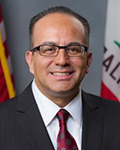
AJR 4: Home Ownership.
- Session Year: 2017-2018
- House: Assembly
- Latest Version Date: 2017-09-21
This measure would call upon the President of the United States to reinstate the mortgage fee reduction promulgated by the Department of Housing and Urban Development under the previous administration.
This measure would call upon the President of the United States to reinstate the mortgage fee reduction promulgated by the Department of Housing and Urban Development under the previous administration.
This measure would call upon the President of the United States to reinstate the mortgage fee reduction promulgated by the Department of Housing and Urban Development under the previous administration.
WHEREAS, Home ownership is fundamental to the financial prosperity and economic security of Americas middle class; and
WHEREAS, A home is often a familys primary source of growing wealth, as homeowners have, on average a net worth 36 times greater than renters; and
WHEREAS, Home ownership has additional social benefits, as the children of homeowners tend to do better in school, have lower rates of committing crime, and lower rates of drug use; and
WHEREAS, It should be the policy of both the federal government and the State of California to enable more and more Californians to buy and keep their own homes; and
WHEREAS, American home ownership rates are at a 50-year low, down to 63.1 percent of all households being homeowners; and
WHEREAS, As his first act upon taking office, the President of the United States canceled a rule promulgated by the United States Department of Housing and Urban Development under the previous administration that would have cut mortgage fees for certain low-income homeowners; and
WHEREAS, Implementation of the rule would have saved eligible California homeowners an average of $860 per year; and
WHEREAS, The mortgage fee reduction program was popular with new homeowners, and was used by about 40 percent of millennial buyers; and
WHEREAS, The cancellation of the rule has made it more expensive, and even possibly cost prohibitive, for many Californians to purchase their first homes and to make an investment in their financial future than if the rule has been preserved; now, therefore, be it
Resolved by the Assembly and the Senate of the State of California, jointly, That the Legislature calls upon the President of the United States to reinstate the mortgage fee reduction promulgated by the Department of Housing and Urban Development under the previous administration; and be it further
Resolved, That the Chief Clerk of the Assembly transmit copies of this resolution to the President and Vice President of the United States, to the Secretary of Housing and Urban Development, to the Speaker of the House of Representatives, to the Majority Leader of the Senate, and to each Senator and Representative from California in the Congress of the United States.
|
Date
|
Status
|
|---|---|
| Sep 21, 2017 | Chaptered by Secretary of State - Res. Chapter 172, Statutes of 2017. |
| Sep 21, 2017 | Enrolled and filed with the Secretary of State at 11 a.m. |
| Sep 13, 2017 | In Assembly. Ordered to Engrossing and Enrolling. |
| Sep 12, 2017 | Adopted and to Assembly. |
| Jun 21, 2017 | From committee: Be adopted. Ordered to Third Reading. (Ayes 11. Noes 0.) (June 20). |
| May 18, 2017 | Re-referred to Com. on T. & H. |
| May 8, 2017 | In Senate. To Com. on RLS. |
| May 4, 2017 | Coauthors revised. |
| Mar 8, 2017 | From committee: Be adopted. Ordered to Third Reading. (Ayes 6. Noes 1.) (March 8). |
| Feb 21, 2017 | Referred to Com. on H. & C.D. |
| Feb 14, 2017 | From printer. |
| Feb 13, 2017 | Introduced. To print. |
|
Date
|
Description
|
Location
|
Votes
|
|
|---|---|---|---|---|
| Sep 12, 2017 | Assembly 3rd Reading AJR4 Cervantes et al. By Newman | Senate Floor |
Passed |
|
| Jun 20, 2017 | Be adopted. Ordered to third reading | Senate Standing Committee on Transportation and Housing |
Passed |
|
| May 4, 2017 | AJR 4 CERVANTES Assembly Third Reading | Assembly Floor |
Passed |
|
| Mar 8, 2017 | Be adopted. To third reading. | Assembly Standing Committee on Housing and Community Development |
Passed |
This list shows positions taken on this bill by organizations on the date displayed, which is linked to the original source.
Positions by individuals are not included.
|
Organization
|
Position
|
Date
|
|---|---|---|
| California Association Of Realtors | ** Support | Jun 21, 2017 |
Office of Senate Floor Analyses (916) 651-1520 Fax: (916) 327-4478 | AJR |
THIRD READING
Bill No: AJR 4
:
SENATE TRANS. & HOUSING COMMITTEE: 11-0, 6/20/17
AYES: Beall, Cannella, Allen, Atkins, McGuire, Mendoza, Morrell, Roth, Skinner, Wieckowski, Wiener
NO VOTE RECORDED: Bates, Gaines
ASSEMBLY FLOOR: 67-0, 5/4/17 - See last page for vote
DIGEST:
This resolution calls upon the President of the United States to reinstate the mortgage fee reduction promulgated by the United States Department of Housing and Urban Development (U.S. HUD) under the Obama Administration.
ANALYSIS: This resolution calls upon the President of the United States to reinstate the mortgage fee reduction promulgated by U.S. HUD under the Obama Administration and makes the following findings:
- Home ownership is fundamental to the financial prosperity and economic security of America’s middle class.
- A home is often a family’s primary source of growing wealth, as homeowners have, on average a net worth 36 times greater than renters; home ownership has additional social benefits, as the children of homeowners tend to do better in school, have lower rates of committing crime, and lower rates of drug use.
- It should be the policy of both the federal government and the State of California to enable more and more Californians to buy and keep their own homes.
- American home ownership rates are at a 50-year low, down to 63.1% of all households being homeowners.
- As his first act upon taking office, the President of the United States canceled a rule promulgated by U.S. HUD under the previous administration that would have cut mortgage fees for certain low-income homeowners.
- Implementation of the rule would have saved eligible California homeowners an average of $860 per year.
- The mortgage fee reduction program was popular with new homeowners, and was used by about 40% of millennial buyers.
- The cancellation of the rule has made it more expensive, and even possibly cost prohibitive, for many Californians to purchase their first homes and to make an investment in their financial future than if the rule has been preserved.
Background
On January 9, 2017, U.S. HUD announced a reduction of the Federal Housing Administration (FHA) Annual Mortgage Insurance Premium (MIP) rates. This was in response to the improving health of the FHA’s Mutual Mortgage Insurance (MMI) Fund, which had a capital ratio of 2.32%, above the 2% level mandated by the National Affordable Housing Act for the second year in a row. Depending on factors such as the length of the mortgage term or the base loan amount, the reductions varied from 0.25% to 0.45%. For example, for a mortgage term longer than 15 years with a base loan less than or equal to $625,000, the reduction amounted to 0.25%, or as much as $868 per year. On average, U.S. HUD estimated a savings of $500 per year. The reductions were set to go into effect on January 27, 2017. However, on January 20, 2017 after President Trump’s inauguration, U.S. HUD announced that the reductions would not go into effect. U.S. HUD cited a need for further research and analysis in order to ensure the long-term viability and effectiveness of the mortgage insurance programs, combined with a consideration of market conditions to guide future changes.
Comments
- Purpose. According to the author, “Homeownership is fundamental to the prosperity of our middle class. We should do everything we can to support Californians who want to buy their own homes, but unfortunately, the President has made it harder to achieve that part of the Californian Dream. AJR 4 urges the President to reinstate the mortgage fee cut made by his predecessor and save Californian homeowners hundreds of dollars a year.”
- Mortgage insurance. According to the Consumer Financial Protection Bureau (CFPB), borrowers who pay less than 20% on a home down payment usually need to buy mortgage insurance. All FHA loans require FHA mortgage insurance. Compared to conventional loans, FHA loans allow for lower down payments (as low as 3.5%), lower credit scores, and have a maximum loan amount dependent on county. For example, the maximum FHA loan amount for a single-family home in Sacramento County is $488,750 compared to $636,150 in San Francisco and Los Angeles Counties, $612,950 in San Diego County, and $275,665 in Shasta County. FHA loans are typically ideal for first-time, low- and moderate-income homebuyers with lower credit scores.
- Lending a hand. The FHA programs have a long history of benefitting veterans, seniors, handicapped, and low-income families. The FHA helped finance military housing and homes for returning veterans in the 1940’s. In the 1950’s through the 1970’s, the FHA helped with the production of millions of units for elderly, handicapped, and lower-income Americans. The FHA has also helped to stabilize homes and apartment buildings during times of recession or soaring inflation.
FISCAL EFFECT: Appropriation: No Fiscal Com.: Local: No
California Association of Realtors
OPPOSITION: (Verified 6/21/17)
None received
ARGUMENTS IN SUPPORT: Writing in support, the California Association of Realtors state that the proposed reductions would have saved Californians approximately $861 per year and that increased housing costs have significant effects on where California families choose to work and live, how far they need to commute, and when/if they buy a home.
ASSEMBLY FLOOR: 67-0, 5/4/17
AYES: Aguiar-Curry, Arambula, Baker, Berman, Bloom, Bocanegra, Bonta, Burke, Caballero, Calderon, Cervantes, Chau, Chávez, Chiu, Chu, Cooley, Cooper, Cunningham, Dababneh, Dahle, Daly, Eggman, Flora, Fong, Frazier, Friedman, Gallagher, Eduardo Garcia, Gipson, Gloria, Gomez, Gonzalez Fletcher, Gray, Grayson, Holden, Irwin, Jones-Sawyer, Kalra, Lackey, Levine, Limón, Low, Maienschein, Mathis, Mayes, McCarty, Medina, Mullin, Muratsuchi, Nazarian, O'Donnell, Quirk, Quirk-Silva, Reyes, Rodriguez, Rubio, Salas, Santiago, Steinorth, Mark Stone, Thurmond, Ting, Voepel, Waldron, Weber, Wood, Rendon
NO VOTE RECORDED: Acosta, Travis Allen, Bigelow, Brough, Chen, Choi, Cristina Garcia, Harper, Kiley, Melendez, Obernolte, Patterson, Ridley-Thomas
6/21/17 13:38:23
**** END ****
SENATE COMMITTEE ON TRANSPORTATION AND HOUSING
Senator Jim Beall, Chair
2017 - 2018 Regular
Bill No: AJR 4 Hearing Date: 6/20/2017
Author: | Cervantes | ||
Version: | 2/13/2017 Introduced | ||
Urgency: | No | Fiscal: | No |
Consultant: | Mikel Shybut | ||
SUBJECT: Home Ownership.
DIGEST: This resolution calls upon the President of the United States to reinstate the mortgage fee reduction promulgated by the United States Department of Housing and Urban Development (U.S. HUD) under the Obama Administration.
ANALYSIS:
This resolution calls upon the President of the United States to reinstate the mortgage fee reduction promulgated by U.S. HUD under the Obama Administration and makes the following findings:
- Home ownership is fundamental to the financial prosperity and economic security of America’s middle class.
- A home is often a family’s primary source of growing wealth, as homeowners have, on average a net worth 36 times greater than renters; home ownership has additional social benefits, as the children of homeowners tend to do better in school, have lower rates of committing crime, and lower rates of drug use.
- It should be the policy of both the federal government and the State of California to enable more and more Californians to buy and keep their own homes.
- American home ownership rates are at a 50-year low, down to 63.1% of all households being homeowners.
- As his first act upon taking office, the President of the United States canceled a rule promulgated by U.S. HUD under the previous administration that would have cut mortgage fees for certain low-income homeowners.
- Implementation of the rule would have saved eligible California homeowners an average of $860 per year.
- The mortgage fee reduction program was popular with new homeowners, and was used by about 40% of millennial buyers.
- The cancellation of the rule has made it more expensive, and even possibly cost prohibitive, for many Californians to purchase their first homes and to make an investment in their financial future than if the rule has been preserved.
COMMENTS:
- Purpose. According to the author, “Homeownership is fundamental to the prosperity of our middle class. We should do everything we can to support Californians who want to buy their own homes, but unfortunately, the President has made it harder to achieve that part of the Californian Dream. AJR 4 urges the President to reinstate the mortgage fee cut made by his predecessor and save Californian homeowners hundreds of dollars a year.”
- Background. On January 9, 2017, U.S. HUD announced a reduction of the Federal Housing Administration (FHA) Annual Mortgage Insurance Premium (MIP) rates. This was in response to the improving health of the FHA’s Mutual Mortgage Insurance (MMI) Fund, which had a capital ratio of 2.32%, above the 2% level mandated by the National Affordable Housing Act for the second year in a row. Depending on factors such as the length of the mortgage term or the base loan amount, the reductions varied from 0.25% to 0.45%. For example, for a mortgage term longer than 15 years with a base loan less than or equal to $625,000, the reduction amounted to 0.25%, or as much as $868 per year. On average, U.S. HUD estimated a savings of $500 per year. The reductions were set to go into effect on January 27, 2017. However, on January 20, 2017 after President Trump’s inauguration, U.S. HUD announced that the reductions would not go into effect. U.S. HUD cited a need for further research and analysis in order to ensure the long-term viability and effectiveness of the mortgage insurance programs, combined with a consideration of market conditions to guide future changes.
- Mortgage insurance. According to the Consumer Financial Protection Bureau (CFPB), borrowers who pay less than 20% on a home down payment usually need to buy mortgage insurance. All FHA loans require FHA mortgage insurance. Compared to conventional loans, FHA loans allow for lower down payments (as low as 3.5%), lower credit scores, and have a maximum loan amount dependent on county. For example, the maximum FHA loan amount for a single-family home in Sacramento County is $488,750 compared to $636,150 in San Francisco and Los Angeles Counties, $612,950 in San Diego County, and $275,665 in Shasta County. FHA loans are typically ideal for first-time, low- and moderate-income homebuyers with lower credit scores.
- Lending a hand. The FHA programs have a long history of benefitting veterans, seniors, handicapped, and low-income families. The FHA helped finance military housing and homes for returning veterans in the 1940’s. In the 1950’s through the 1970’s, the FHA helped with the production of millions of units for elderly, handicapped, and lower-income Americans. The FHA has also helped to stabilize homes and apartment buildings during times of recession or soaring inflation.
- Consequences. Writing in support, the National Association of Realtors state that the proposed reductions would have saved Californians approximately $861 per year and that increased housing costs have significant effects on where California families choose to work and live, how far they need to commute, and when/if they buy a home.
Assembly Votes:
Floor: 67-0
Housing & Community Development: 6-1
FISCAL EFFECT: Appropriation: No Fiscal Com.: Local: No
POSITIONS: (Communicated to the committee before noon on Wednesday,
June 14, 2017.)
SUPPORT:
California Association of Realtors
OPPOSITION:
None received.
-- END --
ASSEMBLY THIRD READING
ATR Bill Id:AJR 4
Author:(Cervantes and Quirk-Silva)
As Introduced Ver:February 13, 2017
Majority vote
Committee | Votes | Ayes | Noes |
Housing | 5-1 | Chiu, Steinorth, Bocanegra, Chau, Kalra | Choi |
SUMMARY: Calls upon the President of the United States to reinstate the mortgage fee reduction promulgated by the Department of Housing and Urban Development (HUD) under the Obama Administration. Specifically, this resolution, makes the following legislative findings:
- Home ownership is fundamental to the financial prosperity and economic security of America's middle class.
- A home is often a family's primary source of growing wealth, as homeowners have, on average a net worth 36 times greater than renters; home ownership has additional social benefits, as the children of homeowners tend to do better in school, have lower rates of committing crime, and lower rates of drug use.
- It should be the policy of both the federal government and the State of California to enable more and more Californians to buy and keep their own homes.
- American home ownership rates are at a 50-year low, down to 63.1% of all households being homeowners.
- As his first act upon taking office, the President of the United States canceled a rule promulgated by the United States Department of Housing and Urban Development under the previous administration that would have cut mortgage fees for certain low-income homeowners.
- Implementation of the rule would have saved eligible California homeowners an average of $860 per year.
- The mortgage fee reduction program was popular with new homeowners, and was used by about 40% of millennial buyers; and
- The cancellation of the rule has made it more expensive, and even possibly cost prohibitive, for many Californians to purchase their first homes and to make an investment in their financial future than if the rule has been preserved.
FISCAL EFFECT: None.
COMMENTS:
The Federal Housing Administration (FHA) provides mortgage insurance to loans made to first time low- and moderate-income homebuyers with lower credit scores. Since its inception in 1934 the FHA has insured over 34 million properties, making it the largest insurer of mortgages in the world. FHA is also one of the few government agencies that operates entirely from self-generated income.
FHA programs have a long history of benefitting veterans, seniors, handicapped, and low income families. FHA helped finance military housing and homes for returning veterans in the 1940's. In the 1950's through the 1970's the FHA helped with the production of millions of units for elderly, handicapped, and lower income Americans. FHA has also helped to stabilize homes and apartment buildings during times of recession or soaring inflation. FHA is under HUD's jurisdiction and therefore under the affirmatively furthering fair housing mandate of the Fair Housing Act.
Under the Obama Administration, HUD ordered a drop in the mortgage premium from 0.85% to 0.6% in response to the improving health of the FHA's Mutual Mortgage Insurance Fund, which has gained $44 billion in value since 2012. Last year, an independent actuarial analysis found the fund's capital ratio grew by $3.8 billion and now stands at 2.32% of all insurance in force — the second consecutive year since 2008 that FHA's reserve ratio exceeded the statutorily required 2% threshold.
Among his first act as president, Trump reversed the impending rate cut to mortgage insurance on mortgages insured by the FHA. According to the National Association of Realtors as a result of this action, 30,000 to 40,000 Americans will not be able to afford to buy a home now and 750,000 to 850,000 Americans will face higher housing costs. The drop in premium rates were projected to save homeowners nationwide an average $500 dollars a year, And Californians with FHA insured mortgages would have saved an average of $860 a year. AJR 4 calls upon the President to reinstate the reduction in FHA mortgage premiums.
Analysis Prepared by: Lisa Engel / H. & C.D. / 916-319-2085 FN: 0000025
Date of Hearing: March 8, 2017
ASSEMBLY COMMITTEE ON HOUSING AND COMMUNITY DEVELOPMENT
David Chiu, Chair
ABPCA Bill Id:AJR 4 (
Author:Cervantes) – As Introduced Ver:February 13, 2017
SUBJECT: Home Ownership
SUMMARY: Calls upon the President of the United States to reinstate the mortgage fee reduction promulgated by the Department of Housing and Urban Development under the Obama Administration. Specifically, this Resolution, makes the following legislative findings:
- Home ownership is fundamental to the financial prosperity and economic security of America’s middle class.
- A home is often a family’s primary source of growing wealth, as homeowners have, on average a net worth 36 times greater than renters; Home ownership has additional social benefits, as the children of homeowners tend to do better in school, have lower rates of committing crime, and lower rates of drug use.
- It should be the policy of both the federal government and the State of California to enable more and more Californians to buy and keep their own homes.
- American home ownership rates are at a 50-year low, down to 63.1% of all households being homeowners.
- As his first act upon taking office, the President of the United States canceled a rule promulgated by the United States Department of Housing and Urban Development under the previous administration that would have cut mortgage fees for certain low-income homeowners.
- Implementation of the rule would have saved eligible California homeowners an average of $860 per year.
- The mortgage fee reduction program was popular with new homeowners, and was used by about 40% of millennial buyers; and
- The cancellation of the rule has made it more expensive, and even possibly cost prohibitive, for many Californians to purchase their first homes and to make an investment in their financial future than if the rule has been preserved.
FISCAL EFFECT: None.
COMMENTS:
The Federal Housing Administration (FHA) provides mortgage insurance to loans made to first time low and moderate income homebuyers with lower credit scores. Since its inception in 1934 the FHA has insured over 34 million properties, making it the largest insurer of mortgages in the world. The FHA is also one of the few government agencies that operates entirely from self-generated income.
The FHA programs have a long history of benefitting veterans, seniors, handicapped, and low income families. The FHA helped finance military housing and homes for returning veterans in the 1940’s. In the 1950’s through the 1970’s the FHA helped with the production of millions of units for elderly, handicapped, and lower income Americans. The FHA has also helped to stabilize homes and apartment buildings during times of recession or soaring inflation. The FHA is under HUD’s jurisdiction and therefore under the affirmatively furthering fair housing mandate of the Fair Housing Act.
The Department of Housing and Urban Development ordered a drop in the mortgage premium from 0.85% to 0.6% in response to the improving health of the FHA’s Mutual Mortgage Insurance Fund, which has gained $44 billion in value since 2012. Last year, an independent actuarial analysis found the fund’s capital ratio grew by $3.8 billion and now stands at 2.32 percent of all insurance in force — the second consecutive year since 2008 that FHA’s reserve ratio exceeded the statutorily required 2 percent threshold.
Among his first act as president, Trump reversed the impending rate cut to mortgage insurance on mortgages insured by the FHA. According to the National Association of Realtors as a result of this action, 30,000 to 40,000 Americans will not be able to afford to buy a home now and 750,000 to 850,000 Americans will face higher housing costs. The drop in premium rates were projected to save homeowners nationwide an average $500 dollars a year, And Californians with FHA insured mortgages would have saved an average of $860 a year. AJR 4 calls upon the President to reinstate the reduction in FHA mortgage premiums.
REGISTERED SUPPORT / OPPOSITION:
Support
None on file.
Opposition
None on file.
Analysis Prepared by: Lisa Engel/ H. & C.D. /916-319-2085
Discussed in Hearing
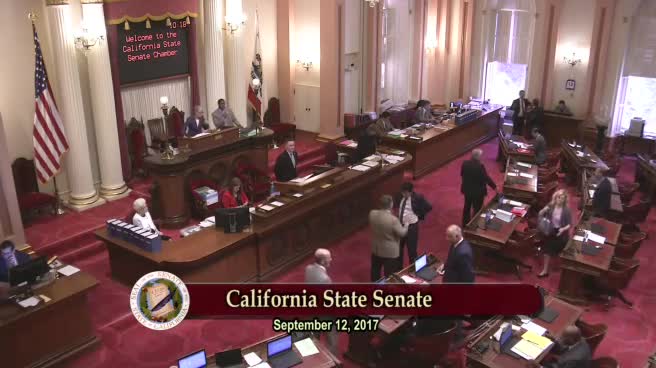 6MIN
Senate Floor
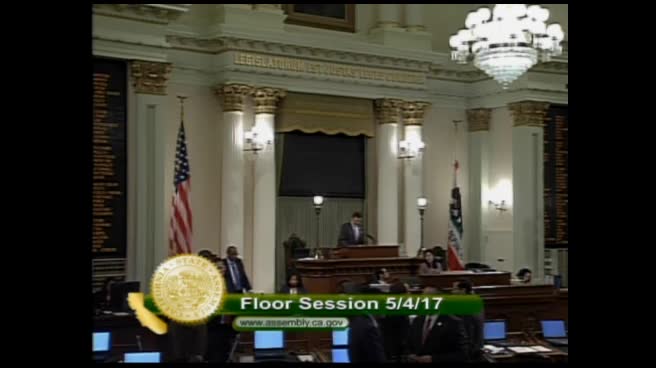 3MIN
Assembly Floor
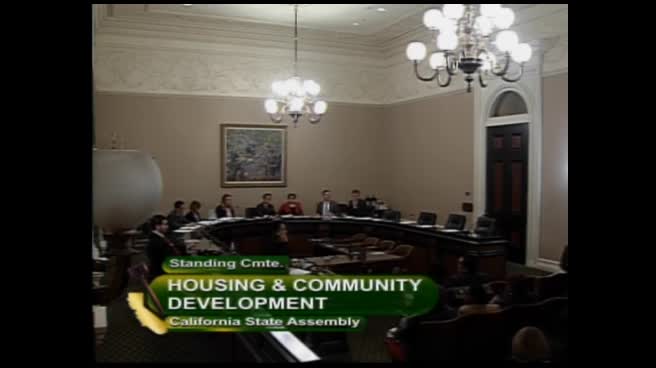 3MIN
Assembly Standing Committee on Housing and Community Development


Bill Co-Author(s):