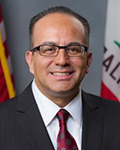
AJR 6: United States Postal Service.
- Session Year: 2017-2018
- House: Assembly
- Latest Version Date: 2017-09-12
This measure would urge the United States Congress to require the United States Postal Service to restore past service standards in effect as of July 1, 2012, oppose certain postal reform legislation, require the United States Postal Service to continue the mandate for 6-day delivery service, require the continued operation of all mail sorting centers in California, and support specific federal legislation. The measure would also urge the Secretary of State to continue working with the United States Postal Service to implement additional programs that would increase absentee ballot voting participation.
This measure would urge the United States Congress to require the United States Postal Service to restore past service standards in effect as of July 1, 2012, oppose certain postal reform legislation, require the United States Postal Service to continue the mandate for 6-day delivery service, require the continued operation of all mail sorting centers in California, and support specific federal legislation. The measure would also urge the Secretary of State to continue working with the United States Postal Service to implement additional programs that would increase absentee ballot voting participation.
This measure would urge the United States Congress to require the United States Postal Service to restore past service standards in effect as of July 1, 2012, oppose certain postal reform legislation, require the United States Postal Service to continue the mandate for 6-day delivery service, require the continued operation of all mail sorting centers in California, and support specific federal legislation. The measure would also urge the Secretary of State to continue working with the United States Postal Service to implement additional programs that would increase absentee ballot voting participation.
This measure would urge the United States Congress to require the United States Postal Service to restore past service standards in effect as of July 1, 2012, oppose certain postal reform legislation, require the United States Postal Service to continue the mandate for 6-day delivery service, require the continued operation of all mail sorting centers in California, and support specific federal legislation. The measure would also urge the Secretary of State to continue working with the United States Postal Service to implement additional programs that would increase absentee ballot voting participation.
WHEREAS, Delayed mail negatively impacts businesses, hurts residents, communities, and the economy, and drives customers away, resulting in lower revenue and damaging the financial situation of the United States Postal Service; and
WHEREAS, Robust service standards implemented by the United States Postal Service are essential to providing prompt and timely delivery of all mail, including online purchases, local newspapers, newsletters, bill payments, and letters; and
WHEREAS, The United States Postal Service, which requires no taxpayer appropriations, remains a vital component of this countrys economic and communications infrastructure and delivered more than 150 billion pieces of mail in 2016; and
WHEREAS, Nearly 40 million residential and business customers throughout the country receive packages, letters, medications, supplies, and more through door delivery service, where a letter carrier delivers the item straight to a customers door. This is part of a unique universal delivery network that is attractive to businesses; and
WHEREAS, Any movement to discontinue mail sorting centers, reduce door delivery service, and discontinue the mandate for six-day mail delivery service would seriously affect the 700,000 workers employed by the United States Postal Service, over 22 percent of whom are United States military veterans, many with disabilities; now, therefore, be it
Resolved by the Assembly and the Senate of the State of California, jointly, That the Legislature urges the United States Congress to require the United States Postal Service to restore past service standards in effect as of July 1, 2012, and oppose any postal reform legislation that does not continue the door delivery service as it currently exists for both business and residential customers, and further urges the United States Congress to require the United States Postal Service to continue the mandate for six-day delivery service and require the continued operation of all mail sorting centers in California; and be it further
Resolved, That the Legislature urges the 115th United States Congress to support House Resolution 15, House Resolution 28, and House Resolution 31, which address the above issues now being discussed in Congress; and be it further
Resolved, That the Legislature urges the Secretary of State to continue working with the United States Postal Service to implement additional programs that would increase absentee ballot voting participation; and be it further
Resolved, That the Chief Clerk of the Assembly transmit copies of this resolution to each Senator and Representative from California in the Congress of the United States, to the Secretary of State, to the United States Postmaster General, and to the author for appropriate distribution.
WHEREAS, Delayed mail negatively impacts businesses, hurts residents, communities, and the economy, and drives customers away, resulting in lower revenue and damaging the financial situation of the United States Postal Service; and
WHEREAS, Robust service standards implemented by the United States Postal Service are essential to providing prompt and timely delivery of all mail, including online purchases, local newspapers, newsletters, bill payments, and letters; and
WHEREAS, Planned shutdowns of mail sorting centers would seriously affect hundreds of employees, over 22 percent of whom are United States military veterans, many with disabilities; andWHEREAS, The United States Postal Service, which requires no taxpayer appropriations, remains a vital component of this countrys economic and communications infrastructure and delivered more than 150 billion pieces of mail in 2016; and
WHEREAS, Nearly 40 million residential and business customers throughout the country receive packages, letters, medications, supplies, and more through door delivery service, where a letter carrier delivers the item straight to a customers door. This is part of a unique universal delivery network that is attractive to businesses; and
WHEREAS, Any movement to discontinue mail sorting centers, reduce door-to-door door delivery service, and discontinue the mandate for six-day mail delivery service would seriously affect hundreds of employees, the 700,000 workers employed by the United States Postal Service, over 24 22 percent of whom are United States military veterans, many with disabilities; now, therefore, be it
Resolved by the Assembly and the Senate of the State of California, jointly, That the Legislature urges the United States Congress to require the United States Postal Service to restore past service standards in effect as of July 1, 2012, and oppose any postal reform legislation that does not continue the door-to-door door delivery service as it currently exists for both business and residential customers, and further urges the United States Congress to require the United States Postal Service to continue the mandate for six-day delivery service, service and require the continued operation of all mail sorting centers in California; and be it further
Resolved, That the Legislature urges the 115th United States Congress to support House Resolution 15, House Resolution 28, and House Resolution 31, which directly deal with all of address the above issues now being discussed in Congress; and be it further
Resolved, That the Legislature urges the Secretary of State to continue working with the United States Postal Service to implement additional programs that would increase absentee ballot voting participation; and be it further
Resolved, That the Chief Clerk of the Assembly transmit copies of this resolution to each Senator and Representative from California in the Congress of the United States, to the Secretary of State, to the United States Postmaster General, and to the author for appropriate distribution.
WHEREAS, Delayed mail negatively impacts businesses, hurts residents, communities, and the economy, and drives customers away, resulting in lower revenue and damaging the financial situation of the United States Postal Service; and
WHEREAS, Robust service standards implemented by the United States Postal Service are essential to providing prompt and timely delivery of all mail, including online purchases, local newspapers, newsletters, bill payments, and letters; and
WHEREAS, Planned shutdowns of mail sorting centers would seriously affect hundreds of employees, over 22 percent of whom are United States military veterans, many with disabilities; and
WHEREAS, Nearly 40 million residential and business customers throughout the country receive packages, letters, medications, supplies, and more through door delivery service, where a letter carrier delivers the item straight to a customers door. This is part of a unique universal delivery network that is attractive to businesses; and
WHEREAS, Any movement to discontinue mail sorting centers, reduce door-to-door delivery service, and discontinue the mandate for six-day mail delivery service would seriously affect hundreds of employees, over 24 percent of whom are United States military veterans, many with disabilities; now, therefore, be it
Resolved by the Assembly and the Senate of the State of California, jointly, That the Legislature urges the United States Congress to require the United States Postal Service to restore past service standards in effect as of July 1, 2012, oppose any postal reform legislation that does not continue the door-to-door delivery as it currently exists for both business and residential customers, require the United States Postal Service to continue the mandate for six-day delivery service, and require the continued operation of all mail sorting centers in California; and be it further
Resolved, That the Legislature urges the United States Congress to support House Resolution 15, House Resolution 28, and House Resolution 31, which directly deal with all of the above issues now being discussed in Congress; and be it further
Resolved, That the Legislature urges the Secretary of State to continue working with the United States Postal Service to implement additional programs that would increase absentee ballot voting participation; and be it further
Resolved, That the Chief Clerk of the Assembly transmit copies of this resolution to each Senator and Representative from California in the Congress of the United States, to the Secretary of State, to the United States Postmaster General, and to the author for appropriate distribution.
|
Date
|
Status
|
|---|---|
| Sep 12, 2017 | Chaptered by Secretary of State - Res. Chapter 150, Statutes of 2017. |
| Sep 12, 2017 | Enrolled and filed with the Secretary of State at 10 a.m. |
| Sep 5, 2017 | In Assembly. Ordered to Engrossing and Enrolling. |
| Sep 5, 2017 | Adopted and to Assembly. |
| Sep 1, 2017 | From committee: Be adopted. Ordered to Third Reading. (Ayes 5. Noes 2.) (September 1). |
| Aug 21, 2017 | In committee: Referred to APPR. suspense file. |
| Jul 11, 2017 | From committee: Be adopted, and re-refer to Com. on APPR. Re-referred. (Ayes 9. Noes 3.) (July 11). Re-referred to Com. on APPR. |
| Jun 8, 2017 | Re-referred to Com. on G.O. |
| May 31, 2017 | In Senate. To Com. on RLS. |
| May 30, 2017 | Coauthors revised. |
| May 26, 2017 | Coauthors revised. |
| Apr 26, 2017 | In committee: Referred to APPR. suspense file. |
| Apr 4, 2017 | Re-referred to Com. on APPR. |
| Apr 3, 2017 | Amended. |
| Mar 30, 2017 | From committee: Amend, and be adopted as amended, and re-refer to Com. on APPR. (Ayes 9. Noes 1.) (March 28). |
| Mar 9, 2017 | Referred to Com. on JUD. |
| Mar 3, 2017 | From printer. |
| Mar 2, 2017 | Introduced. To print. |
|
Date
|
Description
|
Location
|
Votes
|
|
|---|---|---|---|---|
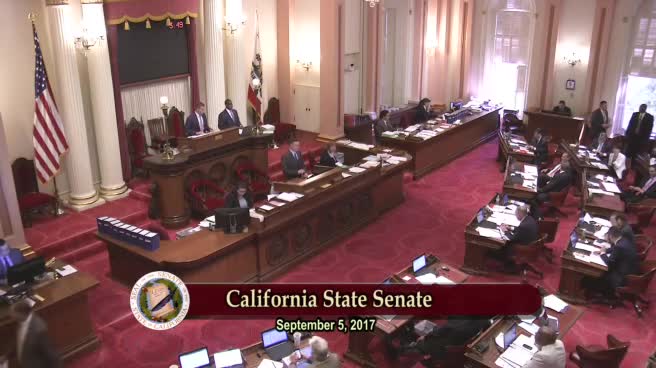
| Sep 5, 2017 | Assembly 3rd Reading AJR6 Gloria et al. By Leyva | Senate Floor |
Passed |
|
| Sep 1, 2017 | Be adopted. Ordered to third reading | Senate Standing Committee on Appropriations |
Passed |
|
| Aug 21, 2017 | Placed on suspense file | Senate Standing Committee on Appropriations |
Passed |
|
| Jul 11, 2017 | Be adopted, but first be re-referred to the Committee on [Appropriations] | Senate Standing Committee on Governmental Organization |
Passed |
|
| May 30, 2017 | AJR 6 GLORIA Assembly Third Reading | Assembly Floor |
Passed |
|
| May 26, 2017 | Be adopted. To third reading. | Assembly Standing Committee on Appropriations |
Passed |
|
| Mar 28, 2017 | Be adopted as amended, and re-refer to the Committee on [Appropriations] | Assembly Standing Committee on Judiciary |
Passed |
This list shows positions taken on this bill by organizations on the date displayed, which is linked to the original source.
Positions by individuals are not included.
|
Organization
|
Position
|
Date
|
|---|---|---|
| california american postal workers union, afl-cio | ** Support | Sep 2, 2017 |
| California Labor Federation | ** Support | Sep 2, 2017 |
| California State Association of Letter Carriers | ** Support | Sep 2, 2017 |
| national association of postal supervisors, california state branch | ** Support | Sep 2, 2017 |
Office of Senate Floor Analyses (916) 651-1520 Fax: (916) 327-4478 | AJR |
THIRD READING
Bill No: AJR 6
:
SENATE GOVERNMENTAL ORG. COMMITTEE: 9-3, 7/11/17
AYES: Dodd, Bradford, Galgiani, Glazer, Hill, Hueso, Lara, Mendoza, Portantino
NOES: Berryhill, Gaines, Vidak
NO VOTE RECORDED: Cannella
SENATE APPROPRIATIONS COMMITTEE: 5-2, 9/1/17
AYES: Lara, Beall, Bradford, Hill, Wiener
NOES: Bates, Nielsen
ASSEMBLY FLOOR: 56-8, 5/30/17 - See last page for vote
SOURCE: California State Association of Letter Carriers
DIGEST: This resolution urges the United States Congress to require the United States Postal Service (USPS) to restore past service standards that were in effect as of July 1, 2012, and to oppose additional service reduction. This resolution also urges the Secretary of State (SOS) to continue working with the USPS to implement additional programs that would increase absentee ballot voting participation.
ANALYSIS:
Existing law:
- Provides, under the U.S. Constitution, that Congress has the power to establish post offices and post roads.
- Establishes the USPS as an independent establishment of the executive branch of the U.S. government. (U.S. Constitution, Art. 1, Sec. 8; 39 U.S.C. Sec. 201)
- Provides that the USPS shall be operated as a basic and fundamental service provided to the people by the U.S. government and shall have as its basic function the obligation to provide postal services to bind the nation together through the personal, educational, literary and business correspondence of the people and to provide prompt, reliable and efficient services to patrons in all areas and shall render postal services to all communities.
- Requires the USPS to provide a maximum degree of effective and regular postal services to rural areas, communities and small towns where post offices are not self-sustaining. Provides that no small post office shall be closed solely for operating at a deficit, as it is the specific intent of Congress that effective postal services be insured to residents of both urban and rural communities.
- Requires, in determining all policies for postal services, the USPS to give the highest consideration to the requirement for the most expeditious collection, transportation, and delivery of important letter mail.
This resolution:
- Urges Congress to require the USPS to restore past service standards in effect as of July 1, 2012, and oppose any postal reform legislation that does not continue the door delivery service as it currently exists for both business and residential customers.
- Urges Congress to require the USPS to continue the mandate for six-day delivery service, and require the continued operation of all mail sorting centers in California.
- Urges Congress to support House Resolution 15, House Resolution 28, and House Resolution 31, all of which address the above issues now being discussed in Congress.
- Urges the SOS to continue working with the USPS to implement additional programs that would increase absentee ballot voting participation.
Background
Purpose of the resolution. According to the author’s office, “the USPS is a vital component of our country’s economic and communication infrastructure and requires robust service standards to guarantee prompt and reliable mail delivery. Since 2012, service standard reductions have required the Postal Service to close distribution centers and lay off employees. Continued reductions will hurt these customers, result in lower revenues, and imperil the financial health of the USPS. To increase revenues, compete with private mail delivery providers, and improve its financial situation, AJR 6 urges the USPS to reinstate 2012 service standards.”
About the USPS. The USPS delivers more mail to more addresses in a larger geographical area than any other post in the world. The USPS delivers to more than 156 million addresses in every state, city, and town in the country. Everyone living in the United States and its territories has access to postal products and services and pays the same for a First-Class postage stamp regardless of their location.
According to information on the USPS Web site, on a typical day, the USPS processes and delivers 506.4 million pieces of mail to residences and businesses throughout the U.S. including rural, urban, and suburban communities. As of September 30, 2016, there were 639,789 USPS employees helping to deliver this mail, a majority of whom are career employees. In some rural places, it is the physical presence of the post office that defines the community. In other more urbanized settings, the post office provides important special services such as facilitating passport renewals and providing post office boxes and reliable shipping options for young entrepreneurs.
Despite promising signs of stabilizing mail volume and continued growth in its shipping and package business, the USPS continues to face fiscal challenges. For the fiscal year 2016, the USPS reported a $5.6 billion loss but attributes the loss to the $5.8 billion it is required by Congress to pay to prefund future retirees’ health care. In the first quarter of the 2016 fiscal year, USPS posted a net income of $307 million, which marked the first time it has turned a profit in a financial quarter since the fourth quarter of the 2011 fiscal year.
USPS Initiatives. The USPS has instituted several initiatives aimed at reducing expenses in its mail delivery and processing systems as part of a broader effort to address its fiscal challenges and move towards financial viability. In 2006, under the Postal Accountability and Enhancement Act, Congress enacted a mandate for the USPS to pre-fund 75 years’ worth of future retiree health benefits over a 10-year period. To fulfill this mandate, the USPS reduced its service standards in order to reduce operational costs and allocate revenue to fund retiree health benefits. This reduction in service standards required the USPS to extend the number of days it takes to deliver priority mail.
According to the author, in order to realign its operations with service standard reductions, the USPS implemented the “network consolidation plan”. The plan was split into two phases. Under Phase I, 48 mail processing facilities across the country were closed in 2012 and another 92 were closed in 2013, a downsizing made possible by a deep cut in service standards, which reduced the percentage of mail requiring overnight delivery. USPS kicked off implementation of Phase II in 2015 by first announcing the elimination of all overnight delivery of First-Class Mail and slowed delivery of most periodicals, which now require an extra day to reach their destination. Starting in April 2015, because of service standard cuts, USPS was set to begin closing or consolidating an additional 82 mail processing plants. However, a 2014 Postal Regulatory Commission report concluded that USPS had not completed studies on the fiscal benefits of Phase I closure and consolidations before launching Phase II. According to the author, this report is concerning as these closures were designed to reduce operational costs and increase savings.
Additionally, there have been efforts in Congress to eliminate door-to-door mail delivery. The USPS has begun strongly encouraging new developments to use cluster boxes as it seeks to reduce door delivery service. For several consecutive years, postal reform legislation has been proposed in Congress that endorsed the idea of cluster box delivery of mail to residential addresses. Although none of those bills succeeded in Congress, recent reports indicate bipartisan support for this year's attempt to enact postal reform, the Postal Service Reform Act of 2017 (H.R. 756). Among other things, H.R. 756 seeks to: (1) require the voluntary conversion to centralized or cluster box delivery of residential addresses identified by the USPS where 40 percent of the residents consent to conversion; and (2) maintain door delivery of mail for residents who do not consent to voluntary conversion, except that any future or new residents of an area that has been converted will receive the converted delivery type.
This resolution urges Congress to require the USPS to restore past service standards that were in effect in 2012 and to oppose additional service reductions.
Federal Resolutions. This year, three resolutions have been introduced in the 115th Congress seeking to ensure the continuation of certain services and to restore previous service standards pertaining to the USPS.
First, House Resolution 15 urges the USPS to take all appropriate measures to ensure the continuation of its six-day mail delivery service. This resolution has 224 bipartisan co-sponsors, including 42 members from California. Second, House Resolution 28 expresses the sense of the House of Representatives that the USPS should take all appropriate measures to ensure the continuation of door delivery for all business and residential customers. That resolution has 237 bipartisan co-sponsors, including 41 from California. Finally, House Resolution 31 expresses the sense of the House of Representatives that the USPS should take all appropriate measures to restore mail delivery service standards in effect as of July 1, 2012. That resolution has 190 bipartisan cosponsors, including 40 from California. In all three cases, the resolutions have been referred to the House Committee on Oversight and Government Reform, but, at the time of this analysis, are waiting to receive a hearing.
This resolution urges Congress to support each of these resolutions.
Prior/Related Legislation
SJR 11 (Leyva, Resolution Chapter 183, Statutes of 2015) urged the United States Congress to require the USPS to take all appropriate measures to restore service standards in effect as of July 1, 2012, and to oppose additional service reductions.
SJR 15 (Hancock, Resolution Chapter 122, Statutes of 2013) urged the United States Congress to pass legislation that reflects the value and intent set forth in the Postal Service Protection Act of 2013 in order to ensure the modernization and preservation of the USPS.
SJR 12 (Hancock, Resolution Chapter 37, Statutes of 2013) urged the USPS to rescind its decision to sell the Berkeley, California, Main Post Office.
AJR 28 (Cook, Resolution Chapter 114, Statutes of 2012) urged the USPS to end its plan to reduce the frequency of mail delivery from six days to five days a week and to take all appropriate measures to ensure the continuation of this six-day mail delivery service.
FISCAL EFFECT: Appropriation: No Fiscal Com.: Yes Local: No
According to Senate Appropriations Committee, unknown cost pressures, likely in the low millions of dollars, if postage costs increase to accommodate for increased USPS services that are funded through postal revenues. No increased cost pressure for SOS, as SOS is already working with the USPS to implement programs to increase absentee ballot voting participation.
California State Association of Letter Carriers (source)
California American Postal Workers Union, AFL-CIO
California Labor Federation
National Association of Postal Supervisors, California State Branch
Private Individuals
None received
ARGUMENTS IN SUPPORT: The California Labor Federation states that, “for years, the USPS has continually slowed mail delivery service while moving forward on plans to eliminate mail processing and distribution centers. Before July 1, 2012, the Postal Service’s standard for First-Class Mail was overnight delivery in most metropolitan areas and rural communities. Since then, USPS has repeatedly degraded its service standards and implemented devastating cuts, increasing the expected number of days to deliver various types of mail. Continued reductions will negatively impact the Postal Service’s business and residential customers, not to mention the larger mailing industry. It also means major job losses for postal service workers, 22% of whom are veterans of the United States Armed Forces. This resolution addresses these problems by asking for First-Class mail delivery to return to overnight standards.”
Further, the California State Association of Letter Carriers, states that, “this resolution also addresses current discussions in Congress to eliminate door to door delivery for the millions of residential and business patrons they are responsible for providing service for. Six days a week (and sometimes seven), nearly 40 million residential and business customers throughout the country receive packages, letters, bills, medications, supplies and more through door delivery service, where a letter carrier delivers the item straight to a customer’s door. This is part of a unique universal delivery network that’s attractive to businesses, evidenced by the fact that the USPS is actually operationally profitable. Millions of households across the country would be negatively affected by losing door-delivery service to cluster boxes. Customers would be required to walk inconvenient distances to get to these centralized neighborhood delivery locations to retrieve their mail and packages. The elderly and sick would have to walk these distances in sometimes harsh weather to collect their mail and retrieve crucial deliveries of medicine and other packages. Creating a burden such as this would be a disservice to all Americans.”
ASSEMBLY FLOOR: 56-8, 5/30/17
AYES: Aguiar-Curry, Arambula, Berman, Bloom, Bocanegra, Bonta, Burke, Caballero, Calderon, Cervantes, Chiu, Chu, Cooley, Cooper, Dababneh, Daly, Frazier, Friedman, Cristina Garcia, Eduardo Garcia, Gipson, Gloria, Gomez, Gonzalez Fletcher, Gray, Grayson, Holden, Irwin, Jones-Sawyer, Kalra, Levine, Limón, Low, Maienschein, McCarty, Medina, Mullin, Muratsuchi, Nazarian, O'Donnell, Quirk, Quirk-Silva, Reyes, Ridley-Thomas, Rodriguez, Rubio, Salas, Santiago, Steinorth, Mark Stone, Thurmond, Ting, Waldron, Weber, Wood, Rendon
NOES: Baker, Brough, Chávez, Harper, Lackey, Mathis, Melendez, Voepel
NO VOTE RECORDED: Acosta, Travis Allen, Bigelow, Chau, Chen, Choi, Cunningham, Dahle, Eggman, Flora, Fong, Gallagher, Kiley, Mayes, Obernolte, Patterson
9/2/17 9:41:52
**** END ****
SENATE COMMITTEE ON
Senator Ricardo Lara, Chair
2017 - 2018 Regular Session
AJR 6 (Gloria) - United States Postal Service
Version: | Policy Vote: |
Urgency: | Mandate: |
Hearing Date: | Consultant: |
This bill meets the criteria for referral to the Suspense File.
Bill Summary:
AJR 6 would urge the United States Congress to require the United States Postal Service (USPS) to restore past service standards that were in effect as of July 1, 2012, and to oppose additional service reductions. This measure would also urge the Secretary of State (SOS) to continue working with the USPS to implement additional programs that would increase absentee ballot voting participation.
Fiscal Impact:
- Unknown cost pressures, likely in the low millions of dollars, if postage costs increase to accommodate for increased USPS services that are funded through postal revenues.
- No increased cost pressure for SOS, as SOS is already working with the USPS to implement programs to increase absentee ballot voting participation.
Background:
As of September 2016, there were 639,789 USPS employees helping to deliver mail. Despite promising signs of stabilizing mail volume and continued growth in its shipping and package business, USPS continues to face fiscal challenges. In FY 2016, USPS reported a $5.6 billion loss but attributes the loss to the $5.8 billion it is required by Congress to pay to prefund future retirees’ health care. In the first quarter of FY 2016, USPS posted a net income of $307 million – which marked the first time it has turned a profit in a financial quarter since the fourth quarter FY 2011.
The USPS has instituted several initiatives aimed at reducing expenses in its mail delivery and processing systems as part of a broader effort to address its fiscal challenges and move towards financial viability. Part of this reduction in service standards required USPS to extend the number of days it takes to deliver priority mail.
Starting 2012, under Phase I of a “network consolidation plan,” 140 mail processing facilities across the country were closed over a two year span, which reduced the percentage of mail requiring overnight delivery. In Phase II, USPS eliminated all overnight delivery of First-Class Mail and slowed delivery of most periodicals. Starting in April 2015, because of service standards cuts, USPS was set to begin closing or consolidating an additional 82 mail processing plants. However, a 2014 Postal Regulatory Commission report concluded that USPS had not completed studies on the fiscal benefits of Phase I closure and consolidations before launching Phase II. A 2014 Postal Regulatory Commission report concluded that USPS had not completed studies on the fiscal benefits of Phase I before launching Phase II.
There have been additional efforts in Congress to eliminate door mail delivery and encourage the use of cluster boxes instead for residential addresses.
This year, there have been three Congressional resolutions seeking to ensure the continuation of certain services and to restore previous service standards pertaining to USPS including ensuring continuation of six-day mail delivery service (H.Res. 15), ensuring continuation of door delivery for all business and residential customers (H.Res. 28), and restoring mail delivery to service standards in effect July 1, 2012 (H.Res. 31). This resolution would urge Congress to support these Congressional resolutions.
Proposed Law:
This measure would:
- Urge Congress to require the USPS to restore past service standards in effect as of July 1, 2012, and oppose any postal reform legislation that does not continue the door delivery service as it currently exists for both business and residential customers;
- Urge Congress to require the USPS to continue the mandate for six-day delivery service, and require the continued operation of all mail sorting centers in California;
- Urge Congress to support House Resolution 15, House Resolution 28, and House Resolution 31, all of which address the above issues now being discussed in Congress
- Urge the SOS to continue working with the USPS to implement additional programs that would increase absentee ballot voting participation.
Related Legislation:
SJR 11(Leyva, Res. Chapter 183, Statutes of 2015) urged the United States Congress to require the USPS to take all appropriate measures to restore service standards in effect as of July 1, 2012, and to oppose additional service reductions.
AJR 28 (Cook, Res. Chapter 114, Statutes of 2012) urged the USPS to end its plan to reduce the frequency of mail delivery from six days to five days a week and to take all appropriate measures to ensure the continuation of six-day mail delivery service.
Staff Comments:
From 2005 to 2015, total mail volume for USPS has declined by more than 56 billion pieces (or 26%). According to a March 2015 post by USPS, “the Postal Service is continually working to improve efficiencies by making better use of space, staffing, equipment and transportation to process the nation’s mail. Improving efficiencies has become increasingly important, given the significant reduction in the amount of First-Class Mail that enters the postal system.” The service reductions that the USPS has taken since July 2012 were implemented to reduce costs and to avoid increasing postage rates and other fees. Reversing these changes would likely result in the need to increase postage rates which would in turn result in increased costs for any state mailings. For example, a $0.01 increase in postage rates for one hundred million mailings would increase costs by $1 million.
-- END --
SENATE COMMITTEE ON GOVERNMENTAL ORGANIZATION
Senator Bill Dodd
Chair
2017 - 2018 Regular
Bill No: 6 Hearing Date: 7/11/2017
Author: | , et. al | ||
Version: | 4/3/2017 Amended | ||
Urgency: |
| Fiscal: | Yes |
Consultant: | Naomi Padron | ||
SUBJECT: United States Postal Service
DIGEST: This resolution urges the United States Congress to require the United States Postal Service (USPS) to restore past service standards that were in effect as of July 1, 2012, and to oppose additional service reductions. This measure also urges the Secretary of State (SOS) to continue working with the USPS to implement additional programs that would increase absentee ballot voting participation.
ANALYSIS:
Existing law:
- Provides, under the U.S. Constitution, that Congress has the power to establish post offices and post roads.
- Establishes the USPS as an independent establishment of the executive branch of the U.S. government. (U.S. Constitution, Art. 1, Sec. 8; 39 U.S.C. Sec. 201)
- Provides that the USPS shall be operated as a basic and fundamental service provided to the people by the U.S. government and shall have as its basic function the obligation to provide postal services to bind the nation together through the personal, educational, literary and business correspondence of the people and to provide prompt, reliable and efficient services to patrons in all areas and shall render postal services to all communities.
- Requires the USPS to provide a maximum degree of effective and regular postal services to rural areas, communities and small towns where post offices are not self-sustaining. Provides that no small post office shall be closed solely for operating at a deficit, as it is the specific intent of Congress that effective postal services be insured to residents of both urban and rural communities.
- Requires, in determining all policies for postal services, the USPS to give the highest consideration to the requirement for the most expeditious collection, transportation, and delivery of important letter mail.
This resolution:
- Urges Congress to require the USPS to restore past service standards in effect as of July 1, 2012, and oppose any postal reform legislation that does not continue the door delivery service as it currently exists for both business and residential customers.
- Urges Congress to require the USPS to continue the mandate for six-day delivery service, and require the continued operation of all mail sorting centers in California.
- Urges Congress to support House Resolution 15, House Resolution 28, and House Resolution 31, all of which address the above issues now being discussed in Congress.
- Urges the SOS to continue working with the USPS to implement additional programs that would increase absentee ballot voting participation.
Background
Purpose of the resolution. According to the author’s office, “the USPS is a vital component of our country’s economic and communication infrastructure and requires robust service standards to guarantee prompt and reliable mail delivery. Since 2012, service standard reductions have required the Postal Service to close distribution centers and lay off employees. Continued reductions will hurt these customers, result in lower revenues, and imperil the financial health of the USPS. To increase revenues, compete with private mail delivery providers, and improve its financial situation, AJR 6 urges the USPS to reinstate 2012 service standards.”
About the United States Postal Service. The United States Postal Service delivers more mail to more addresses in a larger geographical area than any other post in the world. The USPS delivers to more than 156 million addresses in every state, city, and town in the country. Everyone living in the United States and its territories has access to postal products and services and pays the same for a First-Class postage stamp regardless of their location.
According to information on the USPS website, on a typical day, the USPS processes and delivers 506.4 million pieces of mail to residences and businesses throughout the U.S. including rural, urban, and suburban communities. As of September 30, 2016, there were 639,789 USPS employees helping to deliver this mail, a majority of whom are career employees. In some rural places, it is the physical presence of the post office that defines the community. In other more urbanized settings, the post office provides important special services such as facilitating passport renewals and providing post office boxes and reliable shipping options for young entrepreneurs.
Despite promising signs of stabilizing mail volume and continued growth in its shipping and package business, the USPS continues to face fiscal challenges. For the fiscal year 2016, the USPS reported a $5.6 billion loss but attributes the loss to the $5.8 billion it is required by Congress to pay to prefund future retirees’ health care. In the first quarter of the 2016 fiscal year, USPS posted a net income of $307 million, which marked the first time it has turned a profit in a financial quarter since the fourth quarter of the 2011 fiscal year.
USPS Initiatives. The USPS has instituted several initiatives aimed at reducing expenses in its mail delivery and processing systems as part of a broader effort to address its fiscal challenges and move towards financial viability. In 2006, under the Postal Accountability and Enhancement Act, Congress enacted a mandate for the USPS to pre-fund 75 years’ worth of future retiree health benefits over a 10-year period. To fulfill this mandate, the USPS reduced its service standards in order to reduce operational costs and allocate revenue to fund retiree health benefits. This reduction in service standards required the USPS to extend the number of days it takes to deliver priority mail.
According to the author, in order to realign its operations with service standard reductions, the USPS implemented the “network consolidation plan”. The plan was split into two phases. Under Phase I, 48 mail processing facilities across the country were closed in 2012 and another 92 were closed in 2013, a downsizing made possible by a deep cut in service standards, which reduced the percentage of mail requiring overnight delivery. USPS kicked off implementation of Phase II in 2015 by first announcing the elimination of all overnight delivery of First-Class Mail and slowed delivery of most periodicals, which now require an extra day to reach their destination. Starting in April 2015, because of service standard cuts, USPS was set to begin closing or consolidating an additional 82 mail processing plants. However, a 2014 Postal Regulatory Commission report concluded that USPS had not completed studies on the fiscal benefits of Phase I closure and consolidations before launching Phase II. According to the author, this report is concerning as these closures were designed to reduce operational costs and increase savings.
Additionally, there have been efforts in Congress to eliminate door-to-door mail delivery. The USPS has begun strongly encouraging new developments to use cluster boxes as it seeks to reduce door delivery service. For several consecutive years, postal reform legislation has been proposed in Congress that endorsed the idea of cluster box delivery of mail to residential addresses. Although none of those bills succeeded in Congress, recent reports indicate bipartisan support for this year's attempt to enact postal reform, the Postal Service Reform Act of 2017 (H.R. 756). Among other things, H.R. 756 seeks to: (1) require the voluntary conversion to centralized or cluster box delivery of residential addresses identified by the USPS where 40 percent of the residents consent to conversion; and (2) maintain door delivery of mail for residents who do not consent to voluntary conversion, except that any future or new residents of an area that has been converted will receive the converted delivery type.
This resolution urges Congress to require the USPS to restore past service standards that were in effect in 2012 and to oppose additional service reductions.
Federal Resolutions. This year, three resolutions have been introduced in the 115th Congress seeking to ensure the continuation of certain services and to restore previous service standards pertaining to the USPS.
First, House Resolution 15 urges the USPS to take all appropriate measures to ensure the continuation of its six-day mail delivery service. This resolution has 224 bipartisan co-sponsors, including 42 members from California. Second, House Resolution 28 expresses the sense of the House of Representatives that the USPS should take all appropriate measures to ensure the continuation of door delivery for all business and residential customers. That resolution has 237 bipartisan co-sponsors, including 41 from California. Finally, House Resolution 31 expresses the sense of the House of Representatives that the USPS should take all appropriate measures to restore mail delivery service standards in effect as of July 1, 2012. That resolution has 190 bipartisan cosponsors, including 40 from California. In all three cases, the resolutions have been referred to the House Committee on Oversight and Government Reform, but, at the time of this analysis, are waiting to receive a hearing.
This resolution urges Congress to support each of these resolutions.
Prior/Related Legislation
SJR 11(Leyva, Res. Chapter 183, Statutes of 2015) urged the United States Congress to require the USPS to take all appropriate measures to restore service standards in effect as of July 1, 2012, and to oppose additional service reductions.
SJR 15 (Hancock, Res. Chapter 122, Statutes of 2013) urged the United States Congress to pass legislation that reflects the value and intent set forth in the Postal Service Protection Act of 2013 in order to ensure the modernization and preservation of the USPS.
SJR 12 (Hancock, Res. Chapter 37, Statutes of 2013) urged the USPS to rescind its decision to sell the Berkeley, California, Main Post Office.
AJR 28 (Cook, Res. Chapter 114, Statutes of 2012) urged the USPS to end its plan to reduce the frequency of mail delivery from six days to five days a week and to take all appropriate measures to ensure the continuation of this six-day mail delivery service.
FISCAL EFFECT: Appropriation: Fiscal Com.: Local:
SUPPORT:
California State Association of Letter Carriers (Source)
California American Postal Workers Union, AFL-CIO
California Labor Federation
National Association of Postal Supervisors, California State Branch
Private Individuals
OPPOSITION:
None received
ARGUMENTS IN SUPPORT: The California Labor Federation states that, “for years, the USPS has continually slowed mail delivery service while moving forward on plans to eliminate mail processing and distribution centers. Before July 1, 2012, the Postal Service’s standard for First-Class Mail was overnight delivery in most metropolitan areas and rural communities. Since then, USPS has repeatedly degraded its service standards and implemented devastating cuts, increasing the expected number of days to deliver various types of mail. Continued reductions will negatively impact the Postal Service’s business and residential customers, not to mention the larger mailing industry. It also means major job losses for postal service workers, 22% of whom are veterans of the United States Armed Forces. This resolution addresses these problems by asking for First-Class mail delivery to return to overnight standards.”
Further, the California State Association of Letter Carriers, states that, “this resolution also addresses current discussions in Congress to eliminate door to door delivery for the millions of residential and business patrons they are responsible for providing service for. Six days a week (and sometimes seven), nearly 40 million residential and business customers throughout the country receive packages, letters, bills, medications, supplies and more through door delivery service, where a letter carrier delivers the item straight to a customer’s door. This is part of a unique universal delivery network that’s attractive to businesses, evidenced by the fact that the USPS is actually operationally profitable. Millions of households across the country would be negatively affected by losing door-delivery service to cluster boxes. Customers would be required to walk inconvenient distances to get to these centralized neighborhood delivery locations to retrieve their mail and packages. The elderly and sick would have to walk these distances in sometimes harsh weather to collect their mail and retrieve crucial deliveries of medicine and other packages. Creating a burden such as this would be a disservice to all Americans.”
ASSEMBLY THIRD READING
ATR Bill Id:AJR 6
Author:(Gloria)
As Amended Ver:April 3, 2017
Majority vote
Committee | Votes | Ayes | Noes |
Judiciary | 9-1 | Mark Stone, Chau, Chiu, Cristina Garcia, Holden, Kalra, Maienschein, Reyes, Ting | Cunningham |
Appropriations | 12-0 | Gonzalez Fletcher, Bloom, Bocanegra, Bonta, Calderon, McCarty, Quirk, Friedman, Eduardo Garcia, Gray, Muratsuchi, Reyes |
|
SUMMARY: Urges Congress to require the United States Postal Service (USPS) to restore past service standards that were in effect in 2012, and to oppose additional service reductions. Specifically, this resolution:
- Declares that delayed mail negatively impacts businesses, hurts residents, communities, and the economy, and drives customers away, resulting in lower revenue and damaging the financial situation of the USPS.
- Declares that robust service standards implemented by the USPS are essential to providing prompt and timely delivery of all mail, including online purchases, local newspapers, newsletters, bill payments, and letters.
- Declares that the USPS, which requires no taxpayer appropriations, remains a vital component of this country's economic and communications infrastructure and delivered more than 150 billion pieces of mail in 2016.
- Declares that nearly 40 million residential and business customers throughout the country receive packages, letters, medications, supplies, and more through door delivery service, where a letter carrier delivers the item straight to a customer's door.
- Declares that any movement to discontinue mail sorting centers, reduce door delivery service, and discontinue the mandate for six-day mail delivery service would seriously affect the 700,000 workers employed by the USPS, over 22% of whom are United States military veterans, many with disabilities.
- Urges Congress to require the USPS to restore past service standards in effect as of July 1, 2012, and oppose any postal reform legislation that does not continue the door delivery service as it currently exists for both business and residential customers.
- Urges Congress to require the USPS to continue the mandate for six-day delivery service, and require the continued operation of all mail sorting centers in California.
- Urges Congress to support House Resolution (H.R.) 15, House Resolution 28, and House Resolution 31, all of which address the above issues now being discussed in Congress.
- Urges the Secretary of State to continue working with the USPS to implement additional programs that would increase absentee ballot voting participation.
FISCAL EFFECT: According to the Assembly Appropriations Committee:
- Unknown cost pressures likely in the low millions of dollars for increased postage costs, to the extent Congress required the U.S. Postal Service to increase services that are funded through postage revenues. This is because service reductions taken since 2012 were implemented in order to reduce costs and avoid increasing postage rates and other fees. Therefore, reversing these changes would likely result in the need to increase postage rates.
For example, a one-cent increase in postage rates for one hundred million mailings would increase costs by $1 million.
- No cost pressures for SOS, as the SOS is already working with the U.S. Postal service regarding absentee ballot voting and plans to continue to do so even in the absence of this resolution.
COMMENTS: This measure asks the Legislature to urge Congress to restore postal standards that existed before July 1, 2012 (the beginning of the 2012 Fiscal Year) that have since declined, according to the author, because of the closure of mail distribution centers, mass layoffs of Postal Service employees, and other actions taken by the USPS to respond to severe financial challenges. According to the California State Association of Letter Carriers (CSALC), the sponsor of the bill:
We believe this resolution properly addresses the Postal Service's ongoing move to slow down delivery service while moving forward on their plans to shut down mail processing and distribution centers. Before July 1, 2012, the Postal Service's standard for First-Class Mail was overnight delivery in most metropolitan areas and rural communities. Since then, USPS has repeatedly degraded its service standards and embraced a doomed strategy of cutting its way to prosperity, which is why it is increasing the expected number of days it takes to deliver all of the various types of mail. Continued reductions in service will negatively impact the Postal Service's business and residential customers, not to mention the larger mailing industry. This resolution addresses this problem by asking for the return of First-Class Mail delivery to return to its previous overnight standards.
Background on the USPS. As the USPS works to redefine its role within the shipping and mail delivery sector, it faces very real fiscal challenges. In federal fiscal year 2014, the USPS registered a loss of $5.5 billion, down from a loss of $15.9 billion in fiscal 2012. (Josh Wikes, Postal Service lost $5.5 billion in 2014 despite more gains in operating revenue, Washington Post, Nov. 14, 2014.) For the fiscal year 2016, the USPS reported a $5.6 billion loss, but attributes the loss to the $5.8 billion it is required by Congress to pay to prefund future retirees' health care, despite promising signs of stabilizing mail volume and continued growth in its shipping and package business. (Government Executive, Despite $5.6B Loss in 2016, Postal Service Financial Outlook Improves (Nov. 15, 2016); Available at: http://www.govexec.com/ management/2016/11/despite-56b-loss-2016-postal-service-financial-outlook-improves/133204/.) In the first quarter of the 2016 fiscal year, USPS posted a net income of $307 million, which marked the first time it has turned a profit in a financial quarter since the fourth quarter of the 2011 fiscal year. (Government Executive, USPS Records First Profit in Five Years as Obama Calls for Shedding 12K Postal Jobs. (Feb. 9, 2016); Available at http://www.govexec.com/ management/2016/02/usps-records-first-profit-five-years-obama-calls-shedding-12k-postal-jobs/125825/.)
There are a variety of contributing factors that affect both the revenues and expenditures of the USPS. On the expenditure side, costs continue to rise and the USPS has a limited ability to impact its fixed costs. On the revenue side, the volume of first class mail continues to decline as more individuals and businesses turn to the Internet and other electronic forms of communication and commerce. Much of the mail delivered to homes and businesses are flyers and other low cost advertising. In fiscal year 2016, first-class mail volume – which represents USPS' most profitable offering – dropped off by 5.3%. Standard (what is often referred to as "junk") mail volume increased by 1%, while shipping and package volume jumped nearly 14%. Total volume dropped by just 100 million pieces, after falling by 1.3 billion pieces between fiscal years 2014 and 2015. (Government Executive, Despite $5.6B Loss in 2016, Postal Service Financial Outlook Improves (Nov. 15, 2016).)
USPS Cost Cutting Initiatives. Since 2012, the USPS has instituted several initiatives aimed at reducing expenses in its mail delivery and processing systems as part of a broader effort to address its fiscal challenges and move towards financial viability. According to the author, the USPS network consolidation plan has decreased USPS service standards to increase the number of days it takes to deliver mail, as well as closing or consolidating mail processing facilities and realigning its operations. The plan was split into two phases. Under Phase I, 48 mail processing facilities across the country were shuttered in 2012 and another 92 in 2013, a downsizing made possible by a deep cut in service standards, which reduced the percentage of mail requiring overnight delivery. USPS kicked off implementation of Phase II in 2015 by first announcing elimination of all overnight delivery of First-Class Mail and slowed delivery of most periodicals, which now require an extra day to reach their destination. Starting in April 2015, because of service standard cuts, USPS was set to begin closing or consolidating an additional 82 mail processing plants. However, a 2014 Postal Regulatory Commission report concluded that USPS had not completed studies on the fiscal benefits of Phase I closure and consolidations before launching Phase II. According to the author, this report is concerning as these closures were designed to reduce operational costs and increase savings.
Additionally, there have been efforts in Congress to eliminate door-to-door mail delivery. The USPS has begun strongly encouraging new developments to use cluster boxes as it seeks to reduce door-to-door delivery. (Lisa J. Huriash, Postal Service ending door-to-door delivery to new developments, South Florida Sun Sentinel, January 31, 2014.) For several consecutive years, postal reform legislation has been proposed in Congress that endorsed the idea of cluster box delivery of mail to residential addresses. Although none of those bills succeeded in Congress, recent reports indicate bipartisan support for this year's attempt to enact postal reform, the Postal Service Reform Act of 2017 (H.R. 756). (Washington Post, House panel displays bipartisan unity over bill to save Postal Service from financial ruin. (February 7, 2017).) Among other things, H.R. 756 seeks to: 1) require the voluntary conversion to centralized or cluster box delivery of residential addresses identified by the Postal Service where 40% of the residents consent to conversion; and 2) maintain door delivery of mail for residents who do not consent to voluntary conversion, except that any future or new residents of an area that has been converted will receive the converted delivery type. (Postal Service Reform Act of 2017—Summary. Available at: https://oversight.house.gov/wp-content/uploads/2017 /01/Summary-of-PSRA-1.27.17-1.pdf.)
Legislation Introduced in Congress to Address Reductions Has Yet to be Given a Hearing. Three resolutions have been introduced in the 115th Congress this year seeking to ensure the continuation of certain services and to restore previous service standards-- issues that are addressed by this measure. First, House Resolution 15 (H. Res. 15) expresses the sense of the House that the USPS should take all appropriate measures to continue mail service six days a week. That resolution has 151 bipartisan co-sponsors, including 35 members from California. Second, House Resolution 28 (H. Res. 28) expresses the sense of the House that the USPS should take all appropriate measures to continue door delivery for all business and residential customers. That resolution has 198 bipartisan co-sponsors, including 41 from California. Finally, House Resolution 31 (H. Res. 31) expresses the sense of the House that the USPS should restore service standards in effect on July 1, 2012. That resolution has 146 bipartisan co-sponsors, including 31 from California. In all three cases, the resolutions have been referred to the House Committee on Oversight and Government Reform, but, at the time of this analysis, are waiting to receive a hearing.
Accordingly, this resolution calls upon Congress to support House Resolution 15, House Resolution 28, and House Resolution 31, and urges Congress to require the USPS to restore past service standards in effect as of July 1, 2012. In addition, the resolution urges Congress to oppose any postal reform legislation that does not continue the door delivery service as it currently exists for both business and residential customers, and to require the USPS to continue the mandate for six-day delivery service as well as the continued operation of all mail sorting centers in California.
Analysis Prepared by: Anthony Lew / JUD. / (916) 319-2334 FN: 0000631
Date of Hearing: April 26, 2017
ASSEMBLY COMMITTEE ON APPROPRIATIONS
Lorena Gonzalez Fletcher, Chair
ABPCA Bill Id:AJR 6
Author:(Gloria) – As Amended Ver:April 3, 2017
Policy Committee: | Judiciary | Vote: | 9 - 1 |
|
|
Urgency: No State Mandated Local Program: No Reimbursable: No
SUMMARY:
This resolution urges Congress to restore postal service standards from 2012 and oppose any legislation that does not continue existing service levels provided by the U.S. Postal Service, such as six day each week delivery. This resolution also urges the Secretary of State (SOS) to continue working with the U.S. Postal Service to implement additional programs that would increase absentee ballot voting participation.
FISCAL EFFECT:
- Unknown cost pressures likely in the low millions of dollars for increased postage costs, to the extent Congress required the U.S. Postal Service to increase services that are funded through postage revenues. This is because service reductions taken since 2012 were implemented in order to reduce costs and avoid increasing postage rates and other fees. Therefore, reversing these changes would likely result in the need to increase postage rates.
For example, a one-cent increase in postage rates for one hundred million mailings would increase costs by $1 million.
- No cost pressures for SOS, as the SOS is already working with the U.S. Postal service regarding absentee ballot voting and plans to continue to do so even in the absence of this resolution.
COMMENTS:
- Background and Purpose. Since 2012, according to the author, the U.S. Postal Service has reduced its level of service by closing mail distribution centers, laying off Postal Service employees, and other actions taken to respond to severe financial challenges. In addition, the author states, “continued reductions in service will negatively impact the Postal Service’s business and residential customers, not to mention the larger mailing industry. This resolution addresses this problem by asking for the return of First-Class Mail delivery to return to its previous overnight standards.”
- Prior Legislation. SJR 11 (Leyva), Resolution Chapter 183, Statutes of 2015, urged Congress to restore postal service standards and oppose additional service reductions. In addition, SJR 11 urged the SOS to oppose changes in postal service that negatively impact the rights of California voters who vote by an absentee ballot.
Analysis Prepared by: Jessica Peters / APPR. / (916) 319-2081
Date of Hearing: March 28, 2017
ASSEMBLY COMMITTEE ON JUDICIARY
Mark Stone, Chair
ABPCA Bill Id:AJR 6
Author:(Gloria) – As Introduced Ver:March 2, 2017
As Proposed to be Amended
SUBJECT: UNITED STATES POSTAL SERVICE
KEY ISSUE: SHOULD THE LEGISLATURE urge congress to restore postal service standards from 2012, and oppose any legislation that does not continue door-to-door delivery service, the mandate for six-day delivery service, and operation of mail sorting centers in california?
SYNOPSIS
In 2012, after years of losses, the United States Postal Service (USPS) began reductions in postal services and closing mail processing facilities across the country. These closures represent the loss of thousands of jobs across the nation and here in California. The USPS is now considering further service reductions, including closing more mail processing facilities, eliminating six-day a week delivery services, and reducing door-to-door deliveries by delivering mail to consolidated cluster-boxes. Three resolutions have been introduced in Congress this year seeking to reverse USPS service cuts, but none of them has been scheduled for a hearing. (H. Res 15; H. Res 28; H. Res. 31.) This resolution urges Congress to require the USPS to restore past service standards that were in effect in 2012 and to oppose additional service reductions covered by the three Congressional resolutions, above. This bill is sponsored by the California State Association of Letter Carriers and has no known opposition.
SUMMARY: Urges Congress to require the United States Postal Service (USPS) to restore past service standards that were in effect in 2012, and to oppose additional service reductions. Specifically, this measure:
- Declares that delayed mail negatively impacts businesses, hurts residents, communities, and the economy, and drives customers away, resulting in lower revenue and damaging the financial situation of the USPS.
- Declares that robust service standards implemented by the USPS are essential to providing prompt and timely delivery of all mail, including online purchases, local newspapers, newsletters, bill payments, and letters.
- Declares that the USPS, which requires no taxpayer appropriations, remains a vital component of this country’s economic and communications infrastructure and delivered more than 150 billion pieces of mail in 2016.
- Declares that nearly 40 million residential and business customers throughout the country receive packages, letters, medications, supplies, and more through door delivery service, where a letter carrier delivers the item straight to a customer’s door.
- Declares that any movement to discontinue mail sorting centers, reduce door-to-door delivery service, and discontinue the mandate for six-day mail delivery service would seriously affect the 700,000 workers employed by the USPS, over 24 percent of whom are United States military veterans, many with disabilities.
- Urges Congress to require the USPS to restore past service standards in effect as of July 1, 2012, and oppose any postal reform legislation that does not continue the door-to-door delivery as it currently exists for both business and residential customers.
- Urges Congress to require the USPS to continue the mandate for six-day delivery service, and require the continued operation of all mail sorting centers in California.
- Urges Congress to support House Resolution 15, House Resolution 28, and House Resolution 31, all of which address the above issues now being discussed in Congress.
- Urges the Secretary of State to continue working with the USPS to implement additional programs that would increase absentee ballot voting participation.
EXISTING LAW:
- Provides, under the U.S. Constitution, that Congress has the power to establish post offices and post roads. Establishes the USPS as an independent establishment of the executive branch of the U.S. government. (U.S. Constitution, Art. 1, Sec. 8; 39 U.S.C. Sec. 201.)
- Provides that the USPS shall be operated as a basic and fundamental service provided to the people by the U.S. government and shall have as its basic function the obligation to provide postal services to bind the nation together through the personal, educational, literary and business correspondence of the people and to provide prompt, reliable and efficient services to patrons in all areas and shall render postal services to all communities. (39 U.S.C. Sec. 101.)
- Requires the USPS to provide a maximum degree of effective and regular postal services to rural areas, communities and small towns where post offices are not self-sustaining. Provides that no small post office shall be closed solely for operating at a deficit, it being the specific intent of the Congress that effective postal services be insured to residents of both urban and rural communities. In determining all policies for postal services, requires the USPS to give the highest consideration to the requirement for the most expeditious collection, transportation and delivery of important letter mail. (39 U.S.C. Sec. 101.)
FISCAL EFFECT: As currently in print this measure is keyed fiscal.
COMMENTS: This measure asks the Legislature to urge Congress to restore postal standards that existed before July 1, 2012 (the beginning of the 2012 Fiscal Year) that have since declined, according to the author, because of the closure of mail distribution centers, mass layoffs of Postal Service employees, and other actions taken by the USPS to respond to severe financial challenges. According to the California State Association of Letter Carriers (CSALC), the sponsor of the bill:
We believe this resolution properly addresses the Postal Service’s ongoing move to slow down delivery service while moving forward on their plans to shut down mail processing and distribution centers. Before July 1, 2012, the Postal Service’s standard for First-Class Mail was overnight delivery in most metropolitan areas and rural communities. Since then, USPS has repeatedly degraded its service standards and embraced a doomed strategy of cutting its way to prosperity, which is why it is increasing the expected number of days it takes to deliver all of the various types of mail. Continued reductions in service will negatively impact the Postal Service’s business and residential customers, not to mention the larger mailing industry. This resolution addresses this problem by asking for the return of First-Class Mail delivery to return to its previous overnight standards.
Background on the USPS. On a typical day, the USPS processes and delivers 509 million pieces of mail to residences and businesses throughout the U.S. including rural, urban, and suburban communities. (Available at https://about.usps.com/who-we-are/postal-facts/one-day-by-the-numbers.htm.) Helping to deliver this mail are the 625,113 USPS employees, 493,381 (79%) of whom are career employees. (Available at https://about.usps.com/who-we-are/postal-facts/size-scope.htm.) In some rural places, it is the physical presence of the post office that defines the community. In other more urbanized settings, the post office provides important special services such as facilitating passport renewals and providing post office boxes and reliable shipping options for young entrepreneurs.
As the USPS works to redefine its role within the shipping and mail delivery sector, it faces very real fiscal challenges. In federal fiscal year 2014, the USPS registered a loss of $5.5 billion, down from a loss of $15.9 billion in fiscal 2012. (Josh Wikes, Postal Service lost $5.5 billion in 2014 despite more gains in operating revenue, Washington Post, Nov. 14, 2014.)
For the fiscal year 2016, the USPS reported a $5.6 billion loss, but attributes the loss to the $5.8 billion it is required by Congress to pay to prefund future retirees’ health care, despite promising signs of stabilizing mail volume and continued growth in its shipping and package business. (Government Executive, Despite $5.6B Loss in 2016, Postal Service Financial Outlook Improves (Nov. 15, 2016); Available at: http://www.govexec.com/management/2016/11/despite-56b-loss-2016-postal-service-financial-outlook-improves/133204/.) In the first quarter of the 2016 fiscal year, USPS posted a net income of $307 million, which marked the first time it has turned a profit in a financial quarter since the fourth quarter of the 2011 fiscal year. (Government Executive, USPS Records First Profit in Five Years as Obama Calls for Shedding 12K Postal Jobs. (Feb. 9, 2016); Available at http://www.govexec.com/management/2016/02/usps-records-first-profit-five-years-obama-calls-shedding-12k-postal-jobs/125825/.)
There are a variety of contributing factors that affect both the revenues and expenditures of the USPS. On the expenditure side, costs continue to rise and the USPS has a limited ability to impact its fixed costs. On the revenue side, the volume of first class mail continues to decline as more individuals and businesses turn to the Internet and other electronic forms of communication and commerce. Much of the mail delivered to homes and businesses are flyers and other low cost advertising. In fiscal year 2016, first-class mail volume -- which represents USPS’ most profitable offering -- dropped off by 5.3 percent. Standard (what is often referred to as “junk”) mail volume increased by 1 percent, while shipping and package volume jumped nearly 14 percent. Total volume dropped by just 100 million pieces, after falling by 1.3 billion pieces between fiscal years 2014 and 2015. (Government Executive, Despite $5.6B Loss in 2016, Postal Service Financial Outlook Improves (Nov. 15, 2016).)
USPS Cost Cutting Initiatives. Since 2012, the USPS has instituted several initiatives aimed at reducing expenses in its mail delivery and processing systems as part of a broader effort to address its fiscal challenges and move towards financial viability. According to the author, the USPS network consolidation plan has decreased USPS service standards to increase the number of days it takes to deliver mail, as well as closing or consolidating mail processing facilities and realigning its operations. The plan was split into two phases. Under Phase I, 48 mail processing facilities across the country were shuttered in 2012 and another 92 in 2013, a downsizing made possible by a deep cut in service standards, which reduced the percentage of mail requiring overnight delivery. USPS kicked off implementation of Phase II in 2015 by first announcing elimination of all overnight delivery of First-Class Mail and slowed delivery of most periodicals, which now require an extra day to reach their destination. Starting in April 2015, because of service standard cuts, USPS was set to begin closing or consolidating an additional 82 mail processing plants. However, a 2014 Postal Regulatory Commission report concluded that USPS had not completed studies on the fiscal benefits of Phase I closure and consolidations before launching Phase II. According to the author, this report is concerning as these closures were designed to reduce operational costs and increase savings.
Additionally, there have been efforts in Congress to eliminate door-to-door mail delivery. The USPS has begun strongly encouraging new developments to use cluster boxes as it seeks to reduce door-to-door delivery. (Lisa J. Huriash, Postal Service ending door-to-door delivery to new developments, South Florida Sun Sentinel, January 31, 2014.) For several consecutive years, postal reform legislation has been proposed in Congress that endorsed the idea of cluster box delivery of mail to residential addresses. Although none of those bills succeeded in Congress, recent reports indicate bipartisan support for this year's attempt to enact postal reform, the Postal Service Reform Act of 2017 (H.R. 756). (Washington Post, House panel displays bipartisan unity over bill to save Postal Service from financial ruin. (Feb. 7, 2017).) Among other things, H.R. 756 seeks to: (1) require the voluntary conversion to centralized or cluster box delivery of residential addresses identified by the Postal Service where 40% of the residents consent to conversion; and (2) maintain door delivery of mail for residents who do not consent to voluntary conversion, except that any future or new residents of an area that has been converted will receive the converted delivery type. (Postal Service Reform Act of 2017—Summary. Available at: https://oversight.house.gov/wp-content/uploads/2017 /01/Summary-of-PSRA-1.27.17-1.pdf.)
Legislation Introduced in Congress to Address Reductions Has Yet to be Given a Hearing. Three resolutions have been introduced in the 115th Congress this year seeking to ensure the continuation of certain services and to restore previous service standards-- issues that are addressed by this measure. First, House Resolution 15 (H. Res. 15) expresses the sense of the House that the USPS should take all appropriate measures to continue mail service six days a week. That resolution has 151 bipartisan co-sponsors, including 35 members from California. Second, House Resolution 28 (H. Res. 28) expresses the sense of the House that the USPS should take all appropriate measures to continue door delivery for all business and residential customers. That resolution has 198 bipartisan co-sponsors, including 41 from California. Finally, House Resolution 31 (H. Res. 31) expresses the sense of the House that the USPS should restore service standards in effect on July 1, 2012. That resolution has 146 bipartisan co-sponsors, including 31 from California. In all three cases, the resolutions have been referred to the House Committee on Oversight and Government Reform, but, at the time of this analysis, are waiting to receive a hearing.
Author's proposed amendments. The author proposes a number of technical and clarifying amendments, as well as an additional Legislative declaration that "the United States Postal Service, which requires no taxpayer appropriations, remains a vital component of this country’s economic and communications infrastructure and delivered more than 150 billion pieces of mail in 2016." This declaration reflects recent Congressional testimony by Fredric Rolando, the President of the National Association of Letter Carriers, at the February 7, 2017 hearing of the House Committee on Oversight and Government Reform.
Prior Legislation: SJR 15 (Hancock), Res. Chap. 122, Stats. 2013, urged Congress to pass legislation that reflects the value and intent set forth in the Postal Service Protection Act of 2013 in order to ensure the modernization and preservation of the USPS.
SJR 11 (Leyva), Res. Ch. 183, Stats 2015, urged Congress to restore postal service standards and to oppose additional service reductions.
ARGUMENTS IN SUPPORT: In support of the need to preserve door-delivery service, the sponsor of the bill, the California State Association of Letter Carriers, further states:
This resolution also addresses current discussions in Congress to eliminate door to door delivery for the millions of residential and business patrons they are responsible to provide service for. Six days a week (and sometimes seven), nearly 40 million residential and business customers throughout the country receive packages, letters, bills, medications, supplies and more through door delivery service, where a letter carrier delivers the item straight to a customer’s door. This is part of a unique universal delivery network that’s attractive to businesses, evidenced by the fact that the Postal Service is actually operationally profitable. Millions of households across the country would be negatively affected by losing door-delivery service to cluster boxes. Customers would be required to walk inconvenient distances to get to these centralized neighborhood delivery locations to retrieve their mail and packages. The elderly and sick would have to walk these distances in sometimes harsh weather to collect their mail and retrieve crucial deliveries of medicine and other packages. Creating a burden such as this would be a disservice to all Americans.
REGISTERED SUPPORT / OPPOSITION:
Support
California State Association of Letter Carriers
Opposition
None on file
Analysis Prepared by: Anthony Lew / JUD. / (916) 319-2334
Discussed in Hearing
 2MIN
Senate Floor
 1H
Senate Standing Committee on Appropriations
 9MIN
Senate Standing Committee on Governmental Organization
 2MIN
Assembly Floor
 1H
Assembly Standing Committee on Appropriations
 8MIN
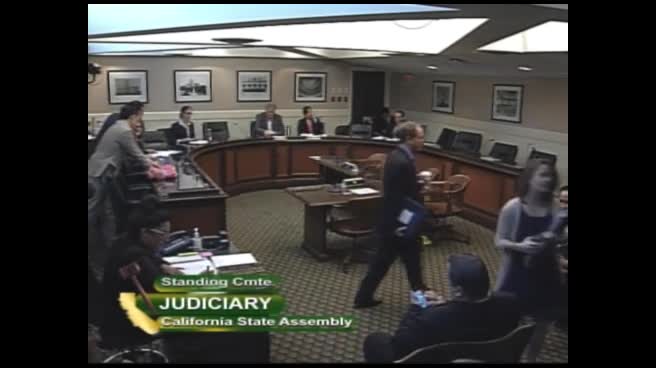
Assembly Standing Committee on Judiciary
Bill Author

Bill Co-Author(s):