AJR 8: Public social services: Social Security, Medicare, and Medicaid.
- Session Year: 2017-2018
- House: Assembly
- Latest Version Date: 2017-07-05
This measure would call on Californias Representatives in Congress to vote against cuts to, and proposals to privatize, Social Security, Medicare, and Medicaid, and would call on the President of the United States to veto any legislation to cut or privatize these programs.
This measure would call on Californias Representatives in Congress to vote against cuts to, and proposals to privatize, Social Security, Medicare, and Medicaid, and would call on the President of the United States to veto any legislation to cut or privatize these programs.
This measure would call on Californias Representatives in Congress to vote against cuts to, and proposals to privatize, Social Security, Medicare, and Medicaid, and would call on the President of the United States to veto any legislation to cut or privatize these programs.
WHEREAS, Social Security, Medicare, and Medicaid are the foundation of the income and health security of older Americans, younger Americans with permanent and severe disabilities, and American families, whose economic circumstances preclude them from purchasing health insurance in the private market; and
WHEREAS, Social Security is our nations most important source of retirement income, providing more than half the income of two-thirds of senior beneficiaries and virtually all the income of one-third of them; its most important source of disability insurance; and its most important life insurance program; and
WHEREAS, Social Security and Medicare are the foundations of income and health security for older Californians and those with severe work disabilities, providing monthly cash benefits and health insurance to over 5.5 million residents, including almost 4 million retired workers and over 700,000 disabled workers; and
WHEREAS, Social Security is the single most important source of life insurance for Californias children, which currently provides a virtually guaranteed income to over 350,000 children throughout our state; and
WHEREAS, Social Security prevents more than 1.9 million Californians from living in poverty; and
WHEREAS, Social Security is even more important to rural Californians, one in 4 of whom received benefits in 2014, than to metropolitan Californians, one in 7 of whom received benefits; and
WHEREAS, Social Security benefits annually contribute over $80 billion to our states economy; and
WHEREAS, Social Security provides benefits to over 9 million veterans nationwide, which is about 4 out of every 10 veterans; and
WHEREAS, Our nation is facing a retirement income crisis as the result of the decline of traditional pensions, the failure of 401(k) balances, and the stagnation or even decline in many areas of home equity and earnings, all of which have caused many workers to fear that they will never be able to retire and maintain their standard of living; and
WHEREAS, 47 percent of elderly Californians are struggling just to make ends meet and more than half of working Californians will not have saved enough to be able to maintain their standard of living in retirement; and
WHEREAS, Improving Social Security benefits is a solution to the retirement crisis, as well as to other serious problems such as rising income and wealth inequality; and
WHEREAS, Social Securitys funding is independent of that of the rest of the federal government, and has never contributed to, and by law can never contribute to, the federal deficit; and
WHEREAS, Social Security in fact had a surplus of $2.8 trillion at the end of 2015 that is expected to grow to $2.9 trillion by 2020; and
WHEREAS, Social Security has sufficient resources to meet all its obligations through 2034 and has dedicated revenues that would meet three-quarters of promised benefits thereafter; and
WHEREAS, Social Securitys funding shortfall after 2034 is modest: about half the cost of the Bush tax cuts of 2001 and 2003; and
WHEREAS, There are many policy options available to Congress to close Social Securitys long-term funding gap and to improve its benefits, including eliminating or increasing the cap on earnings subject to the payroll tax, or gradually increasing the contribution rate from 6.2 percent to 7.2 percent, or subjecting investment income to Social Security contributions, or treating contributions to all salary reduction plans like 401(k) plans as covered earnings for Social Security, or by dedicating revenues from progressive taxes like the estate tax or a financial transactions tax to pay part of the future cost of Social Security; and
WHEREAS, According to a multigeneration study conducted by the National Academy of Social Insurance, 77 percent of Americans (69 percent of Republicans, 84 percent of Democrats, and 76 percent of Independents) agree that it is critical to preserve Social Security for future generations even if it means increasing taxes paid by working Americans, and there is even greater multipartisan support (71 percent of Republicans, 92 percent of Democrats, and 84 percent of Independents) for preserving it by increasing taxes paid by wealthier Americans; and
WHEREAS, Medicare has provided health care in retirement since 1965 and in disability since 1972 to several generations of American workers; and
WHEREAS, Medicare now covers over 5.6 million Californians, providing over $50 billion in benefits to Californias senior and disabled beneficiaries in 2009 (22 percent of all health spending in the state); and
WHEREAS, Medicare insures these people, who represent the part of our population with the highest health care costs, at a fraction of the administrative costs of private health care plans; and
WHEREAS, Medicare has controlled its costs of care better than private insurance plans; and
WHEREAS, Other nations, which essentially have Medicare for all of their citizens, are able to provide high-quality health care at a fraction of the cost and with better health care outcomes; and
WHEREAS, Current proposals in Congress to radically reduce Medicare to a premium support or voucher program and to further privatize the system would result in increased health care insecurity and costs for seniors and disabled beneficiaries and reduce the ability of our government to contain our nations overall health care expenditures, which currently equal 17.8 percent of our gross domestic product (GDP), by far the highest relative cost of any industrialized nation (the euro areas costs are about 8 percent); and
WHEREAS, Medicaid is our nations most important source of long-term care, as well as vital insurance for our most vulnerable seniors, children, and people with disabilities, providing health coverage to over 74 million people; and
WHEREAS, Medicaid provides health coverage to over 12 million Californians whose economic circumstances preclude them from participating in the private health care insurance system, yet who need and deserve medical treatment as much as any American in better economic circumstances; and
WHEREAS, Current Congressional proposals to limit federal Medicaid funding through the use of block grants to the states threaten to severely limit Medicaids ability to provide adequate health care coverage to the most vulnerable among us; and
WHEREAS, Our Social Security, Medicare, and Medicaid systems are fundamental to protecting against risks to which all Californians are subject; and
WHEREAS, Our Social Security, Medicare, and Medicaid systems give expression to widely held values, including caring for our families, our neighbors, and ourselves, personal responsibility, hard work, and personal dignity; now, therefore, be it
Resolved by the Assembly and the Senate of the State of California, jointly, That the Legislature opposes cuts to and proposals to privatize Social Security, Medicare, and Medicaid and calls on our states Representatives in Congress to vote against cuts and proposals to privatize and to support legislation to improve and expand these systems to strengthen their protections; and be it further
Resolved, That the Legislature calls on the President of the United States to honor his campaign promise not to cut these programs, to veto any legislation to do so, and to work with Congress to expand and improve these programs; and be it further
Resolved, That the Chief Clerk of the Assembly transmit copies of this resolution to the President and Vice President of the United States, to the Speaker of the House of Representatives, to the Majority Leader of the Senate, and to each Senator and Representative from California in the Congress of the United States.
|
Date
|
Status
|
|---|---|
| Jul 5, 2017 | Chaptered by Secretary of State - Res. Chapter 96, Statutes of 2017. |
| Jul 5, 2017 | Enrolled and filed with the Secretary of State at 11 a.m. |
| Jun 29, 2017 | In Assembly. Ordered to Engrossing and Enrolling. |
| Jun 29, 2017 | Adopted and to Assembly. |
| Jun 14, 2017 | From committee: Be adopted. Ordered to Third Reading. (Ayes 3. Noes 0.) (June 13). |
| Jun 1, 2017 | Re-referred to Com. on HUMAN S. |
| May 23, 2017 | In Senate. To Com. on RLS. |
| May 22, 2017 | Coauthors revised. |
| May 10, 2017 | From committee: Be adopted. Ordered to Third Reading. (Ayes 12. Noes 0.) (May 9). |
| May 3, 2017 | From committee: Be adopted, and re-refer to Com. on HEALTH. Re-referred. (Ayes 5. Noes 0.) (May 3). Re-referred to Com. on HEALTH. |
| Apr 3, 2017 | Referred to Coms. on P.E., R., & S.S. and HEALTH. |
| Mar 24, 2017 | From printer. |
| Mar 23, 2017 | Introduced. To print. |
|
Date
|
Description
|
Location
|
Votes
|
|
|---|---|---|---|---|
| Jun 29, 2017 | Assembly 3rd Reading AJR8 Kalra et al. By Wiener | Senate Floor |
Passed |
|
| Jun 13, 2017 | Be adopted. Ordered to third reading | Senate Standing Committee on Human Services |
Passed |
|
| May 22, 2017 | AJR 8 KALRA Assembly Third Reading | Assembly Floor |
Passed |
|
| May 9, 2017 | Be adopted. To third reading. | Assembly Standing Committee on Health |
Passed |
|
| May 3, 2017 | Be adopted and re-referred to the Committee on [Health] | Assembly Standing Committee on Public Employees, Retirement, and Social Security |
Passed |
This list shows positions taken on this bill by organizations on the date displayed, which is linked to the original source.
Positions by individuals are not included.
|
Organization
|
Position
|
Date
|
|---|---|---|
| AFSCME, Local 3090 | ** Support | May 4, 2017 |
| All City Employees Association | ** Support | May 4, 2017 |
| California Alliance For Retired Americans | ** Support | Jun 14, 2017 |
| California Civil Rights Law Group | ** Support | Jun 14, 2017 |
| California Conference Board Of The Amalgamated Transit Union | ** Support | Jun 14, 2017 |
| California Conference Of Machinists | ** Support | Jun 14, 2017 |
| California Rural Legal Assistance Foundation | ** Support | Jun 14, 2017 |
| California School Employees Association | ** Support | Jun 14, 2017 |
| California Senior Legislature | ** Support | Jun 14, 2017 |
| California State Retirees | ** Support | Jun 14, 2017 |
| California Teamsters Public Affairs Council | ** Support | Jun 14, 2017 |
| Congress of California Seniors | ** Support | Jun 14, 2017 |
| Health Access | * Support | May 9, 2017 |
| Jockeys Guild | ** Support | May 5, 2017 |
| Jockeys' Guild | ** Support | May 5, 2017 |
| Older Women's League | ** Support | May 5, 2017 |
| Older Women's League of San Francisco | ** Support | Jun 14, 2017 |
| Older Womens League | ** Support | May 5, 2017 |
| Professional & Technical Engineers, IFPTE Local 21, AFL-CIO | ** Support | Jun 14, 2017 |
| SCL Tenants Association | ** Support | May 5, 2017 |
| Service Employees International Union | ** Support | May 4, 2017 |
| Social Security Works | ** Support | Jun 14, 2017 |
| southern california teamsters retirees association | ** Support | Jun 14, 2017 |
| strawberry creek lodge | ** Support | Jun 14, 2017 |
| the jockeys' guild | ** Support | Jun 14, 2017 |
| the older women's league of san francisco | ** Support | Jun 9, 2017 |
| UNITE-HERE, AFL-CIO | ** Support | Jun 14, 2017 |
| Utility Workers Union of America | ** Support | Jun 14, 2017 |
| western center on law and poverty | ** Support | Jun 14, 2017 |
Office of Senate Floor Analyses (916) 651-1520 Fax: (916) 327-4478 | AJR |
THIRD READING
Bill No: AJR 8
:
SENATE HUMAN SERVICES COMMITTEE: 3-0, 6/13/17
AYES: Weiner, Glazer, Newman
NO VOTE RECORDED: Berryhill, Nguyen
ASSEMBLY FLOOR: 56-0, 5/22/17 - See last page for vote
SOURCE: California Alliance for Retired Americans
Social Security Works
DIGEST:
This resolution calls on California’s Representatives in Congress to vote against cuts to, and proposals to privatize, Social Security, Medicare, and Medicaid, and calls on the President of the United States to veto any legislation to cut or privatize these programs.
Existing federal law:
- Establishes the federal Patient Protection and Affordable Care Act (ACA), which enacts various health care coverage market reforms including the availability of health insurance exchanges. (42 USC 18001, et seq)
- Establishes the Social Security Act, a system of federal benefits for aged and low-income people. (42 USC 7 et seq.)
- Establishes Medicare, a federal health insurance program for aged and disabled people. (42 USC 1395 et seq.)
- Establishes the Medicaid program (Medi-Cal, in California), under which health care services are provided to qualified, low-income persons. (42 USC 1396 et seq.)
This resolution:
- Calls on the state's congressional representatives to vote against cuts to, and proposals that privatize, these programs, and to support legislation that improves and expands them.
- Calls on the President of the United States to honor his campaign promise not to cut these programs, veto any legislation to do so, and work with Congress to expand and improve them.
- Authorizes the Chief Clerk of the Assembly to transmit copies of the resolution to the United States President, Vice President, Speaker of the House of Representatives, Majority Leader of the Senate, and to each Senator and the California delegation in the House of Representatives.
- Makes various findings, including the following:
- Social Security and Medicare are the foundations of income and health security for older Californians and those with severe work disabilities, providing monthly cash benefits and health insurance to over 5.5 million California residents, including almost four million retired workers and over 700,000 disabled workers.
- Social Security provides more than half the income of two-thirds of senior beneficiaries and virtually all income of one-third of them; is the single most important source of life insurance for California’s children, which currently provides a virtually guaranteed income to over 350,000 children throughout the state; and, prevents more than 1.9 million Californians from living in poverty and is even more important to rural Californians, one in four of whom received benefits in 2014, than to metropolitan Californians.
- The United States is facing a retirement income crisis due to a variety of circumstances all of which have caused many workers to fear they will never be able to retire and maintain their standard of living; 47 percent of elderly Californians are struggling just to make ends meet; and, more than half of working Californians will not have saved sufficient funds to maintain their standard of living in retirement.
- Social Security’s funding is independent of the rest of the federal government and has never contributed to, and by law can never contribute to the federal deficit; that Social Security had a surplus of $2.8 trillion at the end of 2015 that is projected to grow to $2.9 trillion by 2020; has sufficient resources to meet all its obligations through 2034; and, has dedicated revenues that would meet three-quarters of promised benefits thereafter.
- There are many policy options available to Congress to close Social Security’s long-term funding gap and to improve its benefits and according to a multigenerational study conducted by the National Academy of Social Insurance, 77 percent of Americans agree that it is critical to preserve Social Security for future generations even if it means increasing taxes paid by working Americans.
- Medicare has provided health care in retirement since 1965 and in disability since 1972 and Medicare now covers over 5.6 million Californians; and, provided over $50 billion in benefits to California’s senior and disabled beneficiaries in 2009.
- Current proposals in Congress to radically reduce Medicare to a premium support or voucher program and to further privatize the system would result in increased health care insecurity and costs for seniors and disabled beneficiaries and reduces the ability of government to contain overall health care expenditures which currently equal 17.8 percent of the gross domestic product, by far the highest relative cost of any industrialized nation.
- Medicaid is the nation’s most important source of long-term care, as well as vital insurance for the most vulnerable seniors, children, and people with disabilities and that Medicaid provides health coverage to over 12 million Californians whose economic circumstances preclude them from participating in the purchase of private health care insurance.
- Congressional proposals to limit federal Medicaid funding through the use of block grants to the states threaten to severely limit Medicaid’s ability to provide adequate health care coverage to the most vulnerable.
Background
Social Security
Social Security is a social insurance program consisting of retirement, disability, and survivors' benefits that is largely a pay-as-you-go program. This means that today's workers pay Social Security taxes into the program and that money is then distributed as a monthly benefit to individuals who previously paid into the program and have since retired. Taxes currently being collected are not contributing to an individual’s own Social Security savings; and individual’s future benefits are paid by the contributions made by a younger generation. As a pay-as-you-go system, Social Security differs from company pensions, which are “pre-funded.” About one household in four receives income from Social Security. The maximum Social Security benefit for a worker retiring in 2017 at the age of 62 is $2,153 per month. Workers retiring at the age of 70 in 2017 can receive up to $3,538.
Medicare
Medicare was established in 1965 as a federal health insurance program that guarantees access to health care for people who are 65 or older, certain younger people with disabilities, and people with End-Stage Renal Disease (permanent kidney failure requiring dialysis or a transplant), regardless of their income level.
A portion of the payroll taxes paid by workers and their employers cover most Medicare expenses. Monthly premiums, usually deducted from Social Security checks, also cover a portion of the costs. Other sources, like income taxes paid on Social Security benefits, interest earned on the trust fund investments, and Medicare Part A premiums from people who aren't eligible for premium-free Part A also support the program.
In 2013, there were 43.5 million individuals age 65 years and older and 8.8 million individuals under age 65 with disabilities who were enrolled in Medicare. Approximately 20 percent of Medicare enrollees are dually eligible for full or partial benefits under Medicaid. Medicare beneficiaries are subject to cost-sharing on certain benefits in the form of deductibles, copayments, and coinsurance. Health services that are not covered by Medicare must be paid for out-of-pocket. These include routine dental care, eyeglasses, hearing aids, and others.
Medicaid/Medi-Cal
Medicaid is a government health and long term care insurance program for persons of all ages whose income and resources are insufficient to pay for health care. Medicaid is the largest source of funding for medical and health-related services for people with low income in the United States. Enacted in 1965, Medicaid is jointly financed by states and the federal government. It is a means-tested program that is managed by the states. While participation in the programs is not required, all states have participated in Medicaid since 1982.
Each state establishes and administers its own Medicaid program and determines the type, amount, duration, and scope of services to be covered within broad federal guidelines. States must cover certain mandatory benefits and may choose to provide other optional benefits. Federal law also requires states to cover certain mandatory eligibility groups, including qualified parents, children, and pregnant women with low incomes, as well as older adults and people with disabilities with low incomes. States have the flexibility to cover other optional eligibility groups and to set eligibility criteria within the federal standards. Medicaid is funded through federal general revenues and other special financing structures that create revenue to support services and benefits.
In California, Medicaid is known as the California Medical Assistance Program (Medi-Cal). It covers a core set of health benefits, including doctor visits, hospital care, immunizations, pregnancy-related services, and nursing home care. The Governor’s Budget for fiscal year 2017-18, estimates that more than 14 million Californians will be enrolled in Medi-Cal with a combined federal and state budget of $102.6 billion ($19.1 billion in General Fund).
The federal ACA brought sweeping changes to health care coverage in this country, including establishing more generous eligibility rules and federal funding for California’s Medi-Cal program. It also provides federally funded premium and cost-sharing subsidies offered through California’s Health Benefit Exchange (known as Covered California), and imposes new requirements on health insurers that make it easier for individuals with pre-existing conditions to obtain coverage. The coverage expansions led to 20 million newly insured individuals in this country, including more than five million Californians. The number of uninsured Californians under age 65 declined from 7.3 million in 2011 to 2.9 million in 2015.
Comments
According to the author, “While the California Legislature cannot change federal policy, this resolution sends a strong message that we are committed to protecting Social Security, Medicaid and Medicare for our most vulnerable: seniors, children, and people with disabilities and that the California legislature recognizes the government made a promise to the American people about these programs, and it needs to be honored.”
Related/Prior Legislation
SB 562 (Lara, 2017), the Healthy California Act, creates the Healthy California program to provide comprehensive universal single-payer health care coverage and a health care cost control system. The bill is pending in the Assembly.
AJR 7 (Bonta, Chapter 25, Statutes of 2013) requested the President and the United States Congress to exclude Social Security, Medicare, and Medicaid from being a part of any legislation to reduce the federal deficit. The resolution also expressed the Legislature’s opposition to cuts to Social Security, Medicare, and Medicaid, and called on California’s representatives to the United States Congress to vote against cuts to Social Security, Medicare, and Medicaid and to consider improving those systems in ways that would strengthen their protections.
FISCAL EFFECT: Appropriation: No Fiscal Com.: No Local: No
California Alliance for Retired Americans (co-source)
Social Security Works (co-source)
AFSCME
California Civil Rights Law Group
California Conference Board of the Amalgamated Transit Union
California Conference of Machinists
California Rural Legal Assistance Foundation
California School Employees Association
California Senior Legislature
California State Retirees
California Teamsters Public Affairs Council
Congress of California Seniors
Engineers & Scientists of California, IFPTE Local 20, AFL-CIO
Older Women’s League of San Francisco
Professional & Technical Engineers, IFPTE Local 21, AFL-CIO
Southern California Teamsters Retirees Association
Strawberry Creek Lodge
The Jockeys’ Guild
UNITE-HERE, AFL-CIO
Utility Workers Union of America
Western Center on Law and Poverty
OPPOSITION: (Verified 6/14/17)
None received
ARGUMENTS IN SUPPORT: Social Security Works writes, “Our Social Security System provides modest but essential economic support when wages are lost as the result of severe and permanent disability, death or old age. Since its enactment in 1935, Social Security has kept millions of seniors, veterans, surviving spouses, people with disabilities and children out of poverty, and allowed many to maintain their standards of living.”
ASSEMBLY FLOOR: 56-0, 5/22/17
AYES: Aguiar-Curry, Arambula, Baker, Berman, Bloom, Bocanegra, Burke, Caballero, Calderon, Cervantes, Chau, Chiu, Chu, Cooley, Cooper, Cunningham, Dababneh, Daly, Eggman, Frazier, Friedman, Cristina Garcia, Eduardo Garcia, Gipson, Gloria, Gomez, Gonzalez Fletcher, Gray, Grayson, Holden, Irwin, Jones-Sawyer, Kalra, Levine, Limón, Low, Maienschein, McCarty, Medina, Mullin, Muratsuchi, O'Donnell, Quirk, Quirk-Silva, Reyes, Ridley-Thomas, Rodriguez, Rubio, Salas, Santiago, Mark Stone, Thurmond, Ting, Weber, Wood, Rendon
NO VOTE RECORDED: Acosta, Travis Allen, Bigelow, Bonta, Brough, Chávez, Chen, Choi, Dahle, Flora, Fong, Gallagher, Harper, Kiley, Lackey, Mathis, Mayes, Melendez, Nazarian, Obernolte, Patterson, Steinorth, Voepel, Waldron
6/14/17 16:12:26
**** END ****
SENATE COMMITTEE ON HUMAN SERVICES
Senator Wiener, Chair
2017 - 2018 Regular
Bill No: AJR 8
Author: | Kalra | ||
Version: | March 23, 2017 | Hearing Date: | June 13, 2017 |
Urgency: | No | Fiscal: | No |
Consultant: | Taryn Smith | ||
Subject: Public social services: Social Security, Medicare, and Medicaid
SUMMARY
This measure calls on California’s Representatives in Congress to vote against cuts to, and proposals to privatize, Social Security, Medicare, and Medicaid, and calls on the President of the United States to veto any legislation to cut or privatize these programs.
ABSTRACT
Existing federal law:
- Establishes the federal Patient Protection and Affordable Care Act (ACA), which enacts various health care coverage market reforms including the availability of health insurance exchanges (42 USC 18001, et seq)
- Establishes the Social Security Act, a system of federal benefits for aged and low-income people. (42 USC 7 et seq.)
- Establishes Medicare, a federal health insurance program for aged and disabled people. (42 USC 1395 et seq.)
- Establishes the Medicaid program (Medi-Cal, in California), under which health care services are provided to qualified, low-income persons. (42 USC 1396 et seq.)
This resolution:
- Calls on the state's congressional representatives to vote against cuts to, and proposals that privatize these programs, and to support legislation that improves and expands them.
- Calls on the President of the United States to honor his campaign promise not to cut these programs, veto any legislation to do so, and work with Congress to expand and improve them.
- Authorizes the Chief Clerk of the Assembly to transmit copies of the resolution to the President of the United States President, Vice President, Speaker of the House of Representatives, Majority Leader of the Senate, and to each Senator and the California delegation in the House of Representatives.
Makes various findings, including the following:
- Social Security and Medicare are the foundations of income and health security for older Californians and those with severe work disabilities, providing monthly cash benefits and health insurance to over 5.5 million California residents, including almost 4 million retired workers and over 700,000 disabled workers.
- Social Security provides more than half the income of two-thirds of senior beneficiaries and virtually all income of one-third of them; is the single most important source of life insurance for California’s children, which currently provides a virtually guaranteed income to over 350,000 children throughout the state; and, prevents more than 1.9 million Californians from living in poverty and is even more important to rural Californians, one in four of whom received benefits in 2014, than to metropolitan Californians.
- The United States is facing a retirement income crisis due to a variety of circumstances all of which have caused many workers to fear they will never be able to retire and maintain their standard of living; 47 percent of elderly Californians are struggling just to make ends meet; and, more than half of working Californians will not have saved sufficient funds to maintain their standard of living in retirement.
- Social Security’s funding is independent of the rest of the federal government and has never contributed to, and by law can never contribute to the federal deficit; that Social Security had a surplus of $2.8 trillion at the end of 2015 that is projected to grow to $2.9 trillion by 2020; has sufficient resources to meet all its obligation through 2034; and, has dedicated revenues that would meet three-quarters of promised benefits thereafter.
- There are many policy options available to Congress to close Social Security’s long-term funding gap and to improve its benefits and according to a multigenerational study conducted by the National Academy of Social Insurance, 77 percent of Americans agree that it is critical to preserve Social Security for future generations even if it means increasing taxes paid by working Americans.
- Medicare has provided health care in retirement since 1965 and in disability since 1972 and Medicare now covers over 5.6 million Californians; and, provided over $50 billion in benefits to California’s senior and disabled beneficiaries in 2009.
- Current proposals in Congress to radically reduce Medicare to a premium support or voucher program and to further privatize the system would result in increased health care insecurity and costs for seniors and disabled beneficiaries and reduces the ability of government to contain overall health care expenditures which currently equal 17.8 percent of the gross domestic product, by far the highest relative cost of any industrialized nation.
- Medicaid is the nation’s most important source of long-term care, as well as vital insurance for the most vulnerable seniors, children, and people with disabilities and that Medicaid provides health coverage to over 12 million Californians whose economic circumstances preclude them from participating in the purchase of private health care insurance.
- Congressional proposals to limit federal Medicaid funding through the use of block grants to the states threaten to severely limit Medicaid’s ability to provide adequate health care coverage to the most vulnerable.
FISCAL IMPACT
This resolution has not been analyzed by a fiscal committee.
BACKGROUND AND DISCUSSION
Purpose of the bill:
According to the author, “While the California Legislature cannot change federal policy, this resolution sends a strong message that we are committed to protecting Social Security, Medicaid and Medicare for our most vulnerable: seniors, children, and people with disabilities and that the California legislature recognizes the government made a promise to the American people about these programs, and it needs to be honored.”
Social Security
Social Security is a social insurance program consisting of retirement, disability, and survivors' benefits that is largely a pay-as-you-go program. This means that today's workers pay Social Security taxes into the program and that money is then distributed as a monthly benefit to individuals who previously paid into the program and have since retired. Taxes currently being collected are not contributing to an individual’s own Social Security savings; and individual’s future benefits are paid by the contributions made by a younger generation. As a pay-as-you-go system, Social Security differs from company pensions, which are “pre-funded.” About one household in four receives income from Social Security. The maximum Social Security benefit for a worker retiring in 2017 at the age of 62 is $2,153 per month. Workers retiring at the age of 70 in 2017 can receive up to $3,538.
Medicare
Medicare was established in 1965 as a federal health insurance program that guarantees access to health care for people who are 65 or older, certain younger people with disabilities, and people with End-Stage Renal Disease (permanent kidney failure requiring dialysis or a transplant), regardless of their income level.
A portion of the payroll taxes paid by workers and their employers cover most Medicare expenses. Monthly premiums, usually deducted from Social Security checks, also cover a portion of the costs. Other sources, like income taxes paid on Social Security benefits, interest earned on the trust fund investments, and Medicare Part A premiums from people who aren't eligible for premium-free Part A also support the program.
In 2013, there were 43.5 million individuals age 65 years and older and 8.8 million individuals under 65 with disabilities who were enrolled in Medicare. Approximately 20 percent of Medicare enrollees are dually eligible for full or partial benefits under Medicaid. Medicare beneficiaries are subject to cost-sharing on certain benefits in the form of deductibles, copayments, and coinsurance. Health services that are not covered by Medicare must be paid for out-of-pocket. These include routine dental care, eyeglasses, hearing aids, and others.
Medicaid/Medi-Cal
Medicaid is a government health and long term care insurance program for persons of all ages whose income and resources are insufficient to pay for health care. Medicaid is the largest source of funding for medical and health-related services for people with low income in the United States. Enacted in 1965, Medicaid is jointly financed by states and the federal government. It is a means-tested program that is managed by the states. While participation in the programs is not required, all states have participated in Medicaid since 1982.
Each state establishes and administers its own Medicaid program and determines the type, amount, duration, and scope of services covered within broad federal guidelines. States must cover certain mandatory benefits and may choose to provide other optional benefits. Federal law also requires states to cover certain mandatory eligibility groups, including qualified parents, children, and pregnant women with low income, as well as older adults and people with disabilities with low income. States have the flexibility to cover other optional eligibility groups and to set eligibility criteria within the federal standards. Medicaid is funded through federal general revenues and other special financing structures that create revenue to support services and benefits.
In California, Medicaid is known as the California Medical Assistance Program (Medi-Cal). It covers a core set of health benefits, including doctor visits, hospital care, immunizations, pregnancy-related services, and nursing home care. The Governor’s Budget for fiscal year 2017-18, estimates that more than 14 million Californians will be enrolled in Medi-Cal with a combined federal and state budget of $102.6 billion ($19.1 billion in General Fund).
The federal ACA brought sweeping changes to health care coverage in this country, including establishing more generous eligibility rules and federal funding for California’s Medi-Cal program. It also provides federally funded premium and cost-sharing subsidies offered through California’s Health Benefit Exchange (known as Covered California), and imposes new requirements on health insurers that made it easier for individuals with pre-existing conditions to obtain coverage. The coverage expansions led to 20 million newly insured individuals in this country, including over 5 million Californians. The number of Californians under age 65 without insurance declined from 7.3 million in 2011 to 2.9 million in 2015.
Related legislation:
SB 562 (Lara), the Healthy California Act, would create the Healthy California program to provide comprehensive universal single-payer health care coverage and a health care cost control system. The bill is pending in the Assembly.
AJR 7 (Bonta, Chapter 25, Statutes of 2013) requested the President and the United States Congress to exclude social security, Medicare, and Medicaid from being a part of any legislation to reduce the federal deficit. The measure also expressed the Legislature’s opposition to cuts to social security, Medicare, and Medicaid, and called on California’s representatives to the United States Congress to vote against cuts to social security, Medicare, and Medicaid and to consider improving those systems in ways that would strengthen their protections.
COMMENTS
There is clear congressional interest in reforming certain federal social service programs.
Proposals to reform the Social Security system are being discussed in Washington DC. Included among reforms under consideration are proposals to raise the age of full retirement to 69, reduce cost of living adjustments for higher-earning individuals, and increase benefits at a faster pace for lower-income retirees. Privatization is perhaps the most controversial of proposed Social Security reforms. Under privatization, payroll tax money that now goes into the Social Security trust funds would be invested in private investment accounts.
The House of Representatives voted recently to repeal and replace the ACA with the American Health Care Act. That bill would change the structure and financing of Medicaid and states would convert the program to a per capita allotment model or a block grant model. Under a per capita allotment model, the federal government would provide states with a capped amount per Medicaid enrollee, regardless of the actual amount of Medicaid spending. Under the block grant model, states would receive a predetermined lump sum in the form of a grant from the federal government. The bill is pending action in the Senate.
PRIOR VOTES
Assembly Floor: | 56 - 0 |
Assembly Health Committee: | 12-0 |
Assembly Public Employees, Retirement/Soc Sec Committee: | 5 - 0 |
POSITIONS
Support:
California Alliance for Retired Americans (Sponsor)
Social Security Works (Co-Sponsor)
Sothern California Teamsters Retirees Association (Sponsor)
AFSCME
California Civil Rights Law Group
California Rural Legal Assistance Foundation
California School Employees Association
California Senior Legislature
California State Retirees
California Teamsters Public Affairs Council
Congress of California Seniors
The CA Conference Board of the Amalgamated Transit Union
The CA Conference of Machinist
The Engineer & Scientist of CA, IFPTE Local 20, AFL-CIO
The Jockeys’ Guild
The Older Women’s League of San Francisco
The Professional & Technical Engineers, IFPTE Local 21, AFL-CIO
The Utility Workers Union of America
UNITE-HERE, AFL-CIO
Western Center on Law and Poverty
Oppose:
None received.
-- END --
ASSEMBLY THIRD READING
ATR Bill Id:AJR 8
Author:(Kalra)
As Introduced Ver:March 23, 2017
Majority Vote
Committee | Votes | Ayes | Noes |
Public Employees | 5-0 | Rodriguez, Cervantes, Cooley, Cooper, O'Donnell | |
Health | 12-0 | Wood, Maienschein, Bonta, Burke, Limón, McCarty, Berman, Quirk-Silva, Ridley-Thomas, Rodriguez, Santiago, Thurmond |
|
SUMMARY: Makes findings and declarations regarding federal Social Security, Medicaid, and Medicare programs, requests for certain actions by the President of the United States and California's congressional delegation related to these programs, and authorizes the Chief Clerk of the Assembly to transmit copies of the resolution. Specifically, this resolution:
- Calls on the state's congressional representatives to vote against cuts to, and proposals that privatize these programs, and to support legislation that improves and expands them.
- Calls on the President of the United States to honor his campaign promise not to cut these programs, veto any legislation to do so, and work with Congress to expand and improve them.
- Authorizes the Chief Clerk of the Assembly to transmit copies of the resolution to the President of the United States President, Vice President, Speaker of the House of Representatives, Majority Leader of the Senate, and to each Senator and the California delegation in the House of Representatives.
COMMENTS: According to the author, "[a]s detailed in the resolution, these three time-tested programs are fundamental to protecting over 15 million Californians, both adults and children, from economic and health risks which all of us face. Our Social Security, Medicare, and Medicaid systems embody widely held American values, including caring for our families, our neighbors, and ourselves; and personal responsibility, hard work, and personal dignity."
Analysis Prepared by: Michael Bolden / P.E.,R., & S.S. / (916) 319-3957 FN: 0000309
Date of Hearing: May 9, 2017
ASSEMBLY COMMITTEE ON HEALTH
Jim Wood, Chair
ABPCA Bill Id:AJR 8
Author:(Kalra) – As Introduced Ver:March 23, 2017
SUBJECT: Public social services: Social Security, Medicare, and Medicaid.
SUMMARY: Calls on California’s representatives in the United States Congress to vote against cuts to and proposals to privatize Social Security (SS), Medicare, and Medicaid and to support legislation to improve and expand these programs. Calls on the President of the United States to honor his campaign promise not to cut these programs, to veto any legislation to do so, and to work with Congress to expand and improve these programs. Specifically this resolution makes various findings, including the following:
- SS and Medicare are the foundations of income and health security for older Californians and those with severe work disabilities, providing monthly cash benefits and health insurance to over 5.5 million California residents, including almost 4 million retired workers and over 700,000 disabled workers.
- SS provides more than half the income of two-thirds of senior beneficiaries and virtually all income of one-third of them; is the single most important source of life insurance for California’s children, which currently provides a virtually guaranteed income to over 350,000 children throughout the state; and, prevents more than 1.9 million Californians from living in poverty and is even more important to rural Californians, one in four of whom received benefits in 2014, than to metropolitan Californians.
- The United States is facing a retirement income crisis due to a variety of circumstances all of which have caused many workers to fear they will never be able to retire and maintain their standard of living; 47% of elderly Californians are struggling just to make ends meet; and, more than half of working Californians will not have saved sufficient funds to maintain their standard of living in retirement.
- SS’s funding is independent of the rest of the federal government and has never contributed to, and by law can never contribute to the federal deficit; that SS in fact had a surplus of $2.8 trillion at the end of 2015 that is projected to grow to $2.9 trillion by 2020; has sufficient resources to meet all its obligation through 2034; and, has dedicated revenues that would meet three-quarters of promised benefits thereafter.
- There are many policy options available to Congress to close SS’s long-term funding gap and to improve its benefits and that according to a multigenerational study conducted by the National Academy of Social Insurance 77% of Americans agree that it is critical to preserve SS for future generations even if it means increasing taxes paid by working Americans.
- Medicare has provided health care in retirement since 1965 and in disability since 1972 and Medicare now covers over 5.6 million Californians; and, provided over $50 billion in benefits to California’s senior and disabled beneficiaries in 2009.
- Current proposals in Congress to radically reduce Medicare to a premium support or voucher program and to further privatize the system would result in increased health care insecurity and costs for seniors and disabled beneficiaries and reduces the ability of government to contain overall health care expenditures which currently equal 17.8% of the gross domestic product, by far the highest relative cost of any industrialized nation.
- Medicaid is the nation’s most important source of long-erm care, as well as vital insurance for the most vulnerable seniors, children, and people with disabilities and that Medicaid provides health coverage to over 12 million Californians whose economic circumstances preclude them from participating in the purchase of private health care insurance.
- Congressional proposals to limit federal Medicaid funding through the use of block grants to the states threaten to severely limit Medicaid’s ability to provide adequate health care coverage to the most vulnerable.
EXISTING LAW:
- Establishes the Medi-Cal program as California’s Medicaid program and administered by the Department of Health Care Services, under which health care services are provided to qualified, low-income persons.
- Establishes the federal Patient Protection and Affordable Care Act (ACA), which enacts various health care coverage market reforms including the availability of health insurance exchanges.
FISCAL EFFECT: None
COMMENTS:
- PURPOSE OF THIS BILL. According to the author, SS, Medicare, and Medicaid are the foundation of the income and health security of older Americans, younger Americans with disabilities, and American families. These three time-tested long-standing institutions provide basic income and medical care to over 15 million Californians. The author states that while the California Legislature cannot change federal policy, it can send a strong message that California is committed to protecting SS, Medicare, and Medicaid for our most vulnerable citizens.
- BACKGROUND.
- Social Security Act of 1935. SS is the term commonly used for the federal Old-Age, Survivors, and Disability Insurance program. The original SS Act was signed into law by President Franklin Roosevelt in 1935, and the current version of the SS Act, as amended, encompasses several social welfare and social insurance programs.
- SS Funding. While SS is one system, it consists of two funds that provide three forms of insurance: disability, retirement, and survivors protections. All these work together to cover many of the economic risks families face every day.
- Social Security Act of 1935. SS is the term commonly used for the federal Old-Age, Survivors, and Disability Insurance program. The original SS Act was signed into law by President Franklin Roosevelt in 1935, and the current version of the SS Act, as amended, encompasses several social welfare and social insurance programs.
Social Security’s finances operate through two trust funds: the Disability Insurance (DI) Trust Fund and the Old Age and Survivors Insurance (OASI) Trust Fund. Contributions to both funds are made through the SS payroll tax, known as the Federal Insurance Contributions Act (FICA) tax. Under the FICA tax, workers and their employers each pay 6.2% of earning up to an annual cap of $127,200 in 2017 – that is adjusted annually for wage growth. Self-employed workers pay 12.4% and can deduct the employers half as a business expenses. Currently 5.015% of the 6.2% that workers and employers each pay goes to the OASI fund and 1.185% to the DI fund. While funded by a single FICA tax, the two funds are separate entities that, by law, cannot borrow from each other.
- OASI. OASI protects against the loss of family earnings due to old age or the loss of a family breadwinner. Individuals must have worked and contributed to SS for at least 10 years. Between the ages of 62 and 70 years, workers may claim retirement benefits that pay benefits every month until death. Spouses and young children of breadwinners can claim survivors’ benefits when an individual dies. About 41 million retired workers receive benefits from OASI along with 3 million of their children and spouses. In addition, 6 million children and widow(er)s of deceased workers receive OASI benefits.
- Disability Insurance. SS DI protects a worker against loss of earnings due to a significant, work-limiting impairment. Workers earn DI protection by having worked and contributed to SS. The standard is strict. Only individuals who have a medically determinable physical or mental impairment that precludes substantial work activity and is expected to last at least a year or result in death are eligible for benefits. Cash benefits are paid only after a five-month waiting period, and most beneficiaries become eligible for Medicare through DI only after a two-year waiting period. About 8.9 million disabled workers receive DI. The average benefit is about $1,170 a month or $14,000 a year.
- Long-Term Financial Outlook for Social Security. The financial status of the SS system as a whole is stronger than perceived. The OASI fund can cover scheduled benefits through 2035, and around three-quarters of benefits through 2090. The DI fund can pay full benefits through 2023, and around four-fifths of benefits through 2090. On a combined basis, SS can provide all benefits for both programs through 2034, and around three-quarters of benefits thereafter. The implication of the projected long-term shortfall is 2.66% of taxable payroll. If SS contributions were increased by 1.4 percentage points from 6.2% to 7.6% for both workers and employers, SS could pay more than 100% of benefits for the next 75 years.
v) Social Security Reform. Citing campaign promises not to touch SS, the Trump Administration deleted potential reforms to the SS system from the budget proposal on March 16, 2017. While SS reform appears to be off the Administration’s table for the moment, other Congressional proposals on how to reform the system remain under discussion by interested parties. Key areas of reform include raising the age of full retirement to 69, reducing cost of living adjustments for higher-earning individuals, while at the same time increasing benefits at a faster pace for lower-income retirees. The most controversial aspect of SS reform centers on the concept of privatization. Some proponents want to "privatize" SS by taking payroll tax money that now goes into the SS trust funds and investing it instead in private investment accounts. Privatization diverts money out of SS into individual accounts.
- Medicare. Medicare was established in 1965 as a federal social insurance program to provide adequate, affordable health insurance for America’s elderly population regardless of income of health status. Prior to Medicare, only half of the population age 65 and older had health insurance. Among those 65 and older who were insured, premiums and other out-of-pocket costs were close to three times that of the younger population. Since inception, the program has been expanded to include people under 65 with disabilities and those with end stage renal disease. In 2013, there were 43.5 million individuals age 65 years and older and 8.8 million individuals under 65 with disabilities enrolled in Medicare. Approximately 20% of Medicare enrollees are dually eligible for full or partial benefits under Medicaid. Medicare beneficiaries are subject to cost-sharing on certain benefits in the form of deductibles, copayments, and coinsurance. Health services that are not covered by Medicare must be paid for out-of-pocket. These include routine dental care, eyeglasses, hearing aids, and others.
There are four different parts to the Medicare program and they offer coverage for specific services:
- Part A. Part A covers inpatient hospital stays, care in a skilled nursing facility, hospice care, and some home health care services. Individuals are automatically enrolled in Part A at age 65 if they (or their spouse) contributed payroll taxes for at least 10 years.
- Part B. Part B covers certain doctors’ services, outpatient care, medical supplies, and preventive services. Medicare beneficiaries who choose to participate in Part B must enroll and pay monthly premiums. Premiums are set such that the aggregate amount paid by beneficiaries will cover roughly 25% of expenditures. In 2014, beneficiaries paid a standard monthly premium of $104.90 (individuals with annual incomes greater than $85,000 and couples with annual incomes greater than $170,000 pay a higher, income-related premium that ranges from $146.90 to $335.70 per month.)
- Part C. Part C (Medicare Advantage Plans) is a type of Medicare health plan offered by private insurance companies that contract with Medicare to provide all the Part A and Part B benefits. Medicare Advantage Plans include health maintenance organizations, preferred provider organizations, private fee-for-service plans, special needs plans, and Medicare Medical Savings account plans. Most Medicare services are covered through a Medicare Advantage Plan and are not paid for under original Medicare. Most Medicare Advantage Plans offer prescription drug coverage.
- Part D. Part D added prescription drug coverage to the original Medicare plan. These plans are offered by insurance companies and other private companies approved by Medicare. Part D coverage requires a separate premium and these premiums range from $12.50 to $174.50 depending on income level.
- Medicare Funding. Medicare is funded through payroll taxes. Medicare’s financing are managed through two trust funds: the Hospital Insurance Trust Fund (HI fund) which pays Part A benefits and the Supplementary Medical Insurance Trust Fund which pays for Part B and Part D benefits. The Medicare payroll tax is 2.9% of a worker’s wage – 1.45% is deducted from the employee’s wages and the remaining 1.45% is paid by employers. Beginning in 2013, high income earners (individuals in excess of $200,000 and couples earning more than $250,000) paid an additional 0.9% payroll tax.
- Long-Term Financial Outlook for Medicare. In 2013, the HI Trust Fund received income of $251.1 billion and paid out $266.2 billion in benefits and administrative expenses, leaving a $15 billion deficit for the year. The HI Trust Fund has been running a deficit since 2008, when annual expenditures first exceeded income. The Trustees of the National Academy of Social Insurance estimate the HI fund will remain solvent through 2030 (able to cover 100% of Medicare’s costs). They project the HI fund will be able to cover 85% to hospitals and other providers from current payroll contribution and other revenue in 2030 and 75% in 2045 and thereafter.
- Medicare Reform. Current proposals to reform Medicare as crafted by House Speaker Paul Ryan in “A Better Way,” a Republican proposal involves a three-step approach. The first step involves repealing certain Medicare provisions contained in the ACA. Second, the plan would adopt several Medicare structural reforms including but not limited to Medigap reform and the combining of Medicare Parts A and B. The final step is transforming the Medicare benefit into a fully competitive market-based model, known as premium support. The proposal calls for Medicare beneficiaries beginning in 2024, to be a given a choice of private plans competing alongside the traditional fee-for-service Medicare program. The Medicare premium support payment would be paid, by Medicare, directly to the plan or the fee-for-service program to subsidize its cost.
- Medicaid. Enacted into law in 1965 alongside Medicare, Medicaid is a government insurance program for persons of all ages whose income and resources are insufficient to pay for health care. Medicaid is the largest source of funding for medical and health-related services for people with low income in the United States. It is a means-tested program that is jointly funded by the state and federal governments. Medicaid is managed by the states, with each state currently having broad leeway to determine who is eligible. While participation in the programs is not required, all states have participated in Medicaid since 1982.
In California, Medicaid is known as the California Medical Assistance Program (Medi-Cal). It covers a core set of health benefits, including doctor visits, hospital care, immunizations, pregnancy-related services, and nursing home care. The Governor’s Budget for fiscal year 2017-18, estimates that over 14 million Californians will be enrolled in Medi-Cal with a combined federal and state budget of $102.6 billion ($19.1 billion in General Fund).
On May 4, 2017, the House of Representatives voted to repeal and replace the ACA with the enactment of the American Health Care Act (AHCA). The AHCA includes a proposal to change the structure and financing of Medicaid and allow states to convert the program to a per capita allotment model or a block grant model. Under a per capita allotment model, states would receive an allotment of federal funds per Medicaid enrollee, regardless of the actual amount of Medicaid spending. Under the block grant model, the federal share of Medicaid spending would be converted to a block grant theoretically allowing each state the flexibility to tailor their program to meet their respective state’s needs.
- SUPPORT. California Alliance for Retired Americans, a cosponsor of this resolution, states that Social Security, Medicare, and Medicaid systems give expression to widely held American values, including caring for our families, our neighbors and ourselves, personal responsibility, hard work, and personal dignity. These programs enjoy extremely deep-seated and widespread bipartisan support in California and nationwide.
- DOUBLE REFERRAL. This resolution has been double referred. It passed the Assembly Committee on Public Employees, Retirement, and Social Security by a 5-0 vote on May 3, 2017.
REGISTERED SUPPORT / OPPOSITION:
Support
California Alliance for Retired Americans (cosponsor)
Social Security Works (cosponsor)
American Federation of State, County and Municipal Employees, AFL-CIO
California Conference Board of the Amalgamated Transit Union
California Conference of Machinists
California Rural Legal Assistance Foundation
California School Employees Association, AFL-CIO
California Senior Legislature
California State Retirees
California Teamsters Public Affairs Council
Congress of California Seniors
Engineers and Scientists of California, IFPTE Local 20, AFL-CIO
Jockeys’ Guild
Older Women’s League
Professional and Technical Engineers, IFPTE Local 21, AFL-CIO
SCL Tenants Association
Southern California Teamster Retirees Associations
UNITE-HERE, AFL-CIO
Utility Workers Union of America
Opposition
None on file.
Analysis Prepared by: Judith Babcock/ HEALTH / (916) 319-2097
Discussed in Hearing
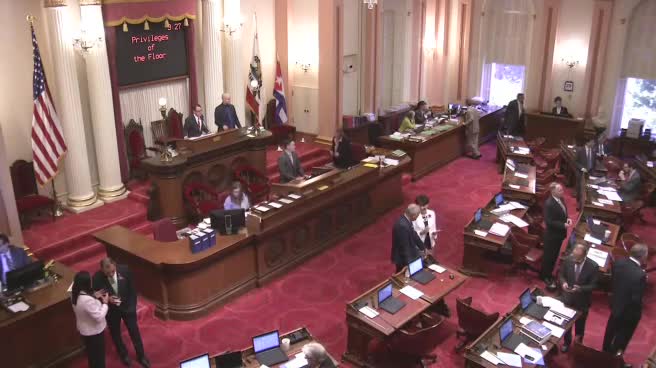 7MIN
Senate Floor
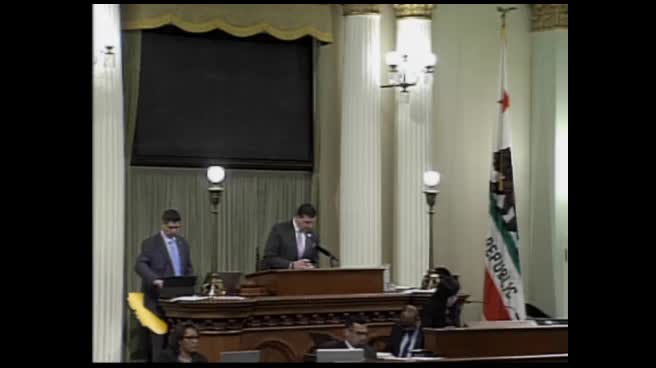 6MIN
Assembly Floor
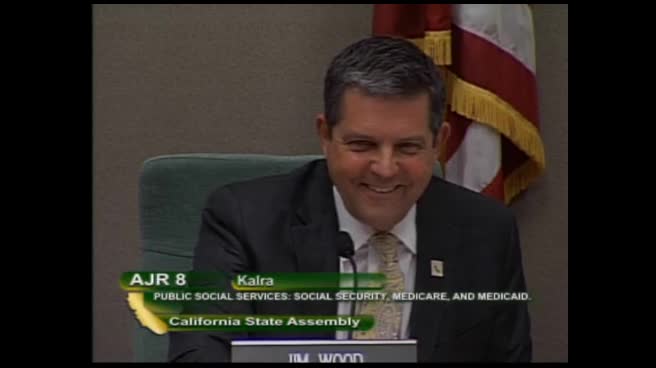 21MIN
Assembly Standing Committee on Health
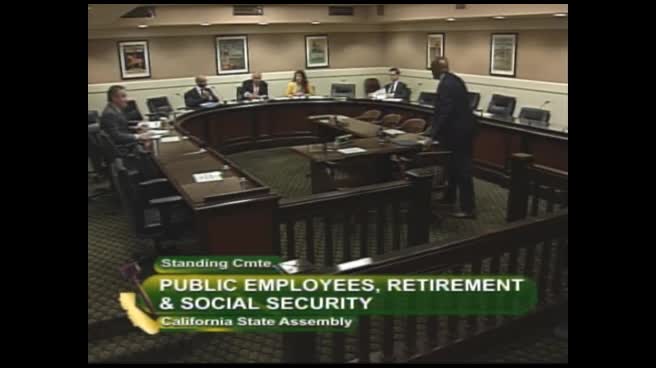 10MIN
Assembly Standing Committee on Public Employees, Retirement, and Social Security
Bill Author

Bill Co-Author(s):