AJR 9: The March for Science.
- Session Year: 2017-2018
- House: Assembly
- Latest Version Date: 2017-09-19
This measure would support the April 22, 2017, March for Science and affirm the importance of basic and applied scientific research, the scientific education of all schoolchildren, and the foundational role of independent, rigorous scientific discovery and inquiry in the policymaking process at all levels. The measure would urge the President and Congress of the United States to work together to support, encourage, and heed the truths established by scientists and scientific research in policymaking to keep the United States of America the worlds global leader in scientific research and business innovation.
This measure would support the April 22, 2017, March for Science and affirm the importance of basic and applied scientific research, the scientific education of all schoolchildren, and the foundational role of independent, rigorous scientific discovery and inquiry in the policymaking process at all levels. The measure would urge the President and Congress of the United States to work together to support, encourage, and heed the truths established by scientists and scientific research in policymaking to keep the United States of America the worlds global leader in scientific research and business innovation.
This measure would support the April 22, 2017, March for Science and affirm the importance of basic and applied scientific research, the scientific education of all school children, schoolchildren, and the foundational role of independent, rigorous scientific discovery and inquiry in the policymaking process at all levels. The measure would urge the President and Congress of the United States to work together to support, encourage, and heed the truths established by scientists and scientific research in policymaking to keep the United States of America the worlds global leader in scientific research and business innovation.
This measure would support the April 22, 2017, March for Science and affirm the importance of basic and applied scientific research, the scientific education of all school children, and the foundational role of independent, rigorous scientific discovery and inquiry in the policymaking process at all levels. The measure would urge the President and Congress of the United States to work together to support, encourage, and heed the truths established by scientists and scientific research in policymaking to keep the United States of America the worlds global leader in scientific research and business innovation.
WHEREAS, The people of this nation are driven to seek truth through rigorous, creative, and unceasing inquiry and discovery; and
WHEREAS, The scientific method is the process by which we collectively understand and add to our knowledge of the world; and
WHEREAS, Science is the endless frontier and through its methods, we cultivate the pioneer spirit that enlivens our nation and prods us toward the continued improvement of our society; and
WHEREAS, Scientific research drives Californias economy and our state attracts more than one-fifth of all United States research funding, amounting to upwards of $90 billion per year, and the Organisation for Economic Co-operation and Development (OECD) credits research and development spending with 50 to 70 percent of all productivity growth; and
WHEREAS, Basic and applied research from universities, government laboratories, and private industry contributes to our states economy by driving advancements in information technology, clean energy, communications, medical science, agricultural production, manufacturing and materials, and more; and
WHEREAS, Through medical science discoveries, our longevity and quality of life have increased and we have banished from daily life once-common diseases such as polio, measles, and typhoid. We have also constructed artificial hearts, mapped the human genome, and begun to understand the human brain. The National Institutes of Health (NIH) cites that for every $1 of research funding, $2.12 in additional economic output is generated in the broader economy within 12 months; and
WHEREAS, Science has led to a better understanding of environmental challenges, including the adverse economic and health impacts of pollution. Science is what led President Richard Nixon to found the United States Environmental Protection Agency in 1970 as well as sign the Clean Air Act of 1970 and the Clean Water Act of 1972. Science is what led President Ronald Reagan to sign the Montreal Protocol in 1989 to protect the ozone layer. These environmental and regulatory protections have cleaned our air, made our water safe to drink, and improved the overall health of all Americans; and
WHEREAS, Science demonstrates that climate change is occurring and driven primarily by anthropogenic carbon pollution. Science is what led President Barack Obama to direct the United States Environmental Protection Agency to promulgate the Clean Power Plan and join the United Nations Framework Convention on Climate Change Paris Agreement to address the impacts of climate change; and
WHEREAS, Addressing environmental justice and health equity issues is critically dependent upon unfettered scientific research that serves the common good, and not just those in power; and
WHEREAS, Science education is a cornerstone of training young people to be knowledgeable citizens and innovative contributors to our society; and
WHEREAS, Science literacy is foundational for all children to be able to think critically, analyze the world around them, and understand the decisions of policymakers, which is why it is a key component of Californias educational standards; and
WHEREAS, California is home to four national laboratoriesthe Lawrence Berkeley National Laboratory, the Lawrence Livermore National Laboratory, the Sandia National Laboratories laboratory in Livermore, and the SLAC National Accelerator Laboratoryand the greatest collection of public and private research universities in the world. These strong research institutions have a global gravitational pull that brings the best and brightest scientists to our labs, libraries, classrooms, and companies, and they depend on resources and full intellectual independence to flourish; and
WHEREAS, Scientific progress immeasurably benefits our national security, public health, economic prosperity, standard of living, and cultural progress; now, therefore, be it
Resolved by the Assembly and the Senate of the State of California, jointly, That the Legislature supports the April 22, 2017, March for Science and affirms the importance of basic and applied scientific research, the scientific education of all schoolchildren, and the foundational role of independent, rigorous scientific discovery and inquiry in the policymaking process at all levels; and be it further
Resolved, That the Legislature urges the President and the Congress of the United States to work together to support, encourage, and heed the truths established by scientists and scientific research in policymaking to keep the United States of America the worlds global leader in scientific research and business innovation; and be it further
Resolved, That the Chief Clerk of the Assembly transmit copies of this resolution to the President and the Vice President of the United States, to the Speaker of the House of Representatives, to the Majority Leader of the Senate, and to each Senator and Representative from California in the Congress of the United States.
WHEREAS, The people of this nation are driven to seek truth through rigorous, creative, and unceasing inquiry and discovery; and
WHEREAS, The scientific method is the process by which we collectively understand and add to our knowledge of the world; and
WHEREAS, Science is the endless frontier and through its methods, we cultivate the pioneer spirit that enlivens our nation and prods us toward the continued improvement of our society; and
WHEREAS, Scientific research drives Californias economy and our state attracts more than one-fifth of all United States research funding, amounting to upwards of $90 billion per year, and the Organisation for Economic Co-operation and Development (OECD) credits research and development spending with 50 to 70 percent of all productivity growth; and
WHEREAS, Basic and applied research from universities, government laboratories, and private industry contribute contributes to our states economy by driving advancements in information technology, clean energy, communications, medical science, agricultural production, manufacturing and materials, and more; and
WHEREAS, Through medical science discoveries, our longevity and quality of life have increased and we have banished from daily life once-common diseases such as polio, measles, and typhoid. We have also constructed artificial hearts, mapped the human genome, and begun to understand the human brain. The National Institutes of Health (NIH) cites that for every $1 of research funding, $2.12 in additional economic output is generated in the broader economy within 12 months; and
WHEREAS, Science has led to a better understanding of environmental challenges, including the adverse economic and health impacts of pollution. Science is what led President Richard Nixon to found the United States Environmental Protection Agency in 1970 as well as sign the Clean Air Act of 1970 and the Clean Water Act of 1972. Science is what led President Ronald Reagan to sign the Montreal Protocol in 1989 to protect the ozone layer. These environmental and regulatory protections have cleaned our air, made our water safe to drink, and improved the overall health of all Americans; and
WHEREAS, Science demonstrates that climate change is occurring and driven primarily by anthropogenic carbon pollution. Science is what led President Barack Obama to direct the United States Environmental Protection Agency to promulgate the Clean Power Plan and join the United Nations Framework Convention on Climate Change Paris Agreement to address the impacts of climate change; and
WHEREAS, Addressing environmental justice and health equity issues is critically dependent upon unfettered scientific research that serves the common good, and not just those in power; and
WHEREAS, Science education is a cornerstone of training young people to be knowledgeable citizens and innovative contributors to our society; and
WHEREAS, Science literacy is foundational for all children to be able to think critically, analyze the world around them, and understand the decisions of policymakers, which is why it is a key component of Californias educational standards; and
WHEREAS, California is home to four national laboratoriesthe Lawrence Berkeley National Laboratory, the Lawrence Livermore National Laboratory, the Sandia National Laboratories laboratory in Livermore, and the SLAC National Accelerator Laboratoryand the greatest collection of public and private research universities in the world. These strong research institutions have a global gravitational pull that brings the best and brightest scientists to our labs, libraries, classrooms, and companies, and they depend on resources and full intellectual independence to flourish; and
WHEREAS, Scientific progress immeasurably benefits our national security, public health, economic prosperity, standard of living, and cultural progress; now, therefore, be it
Resolved by the Assembly and the Senate of the State of California, jointly, That the Legislature supports the April 22, 2017, March for Science and affirms the importance of basic and applied scientific research, the scientific education of all school children, schoolchildren, and the foundational role of independent, rigorous scientific discovery and inquiry in the policymaking process at all levels; and be it further
Resolved, That the Legislature urges the President and the Congress of the United States to work together to support, encourage, and heed the truths established by scientists and scientific research in policymaking to keep the United States of America the worlds global leader in scientific research and business innovation; and be it further
Resolved, That the Chief Clerk of the Assembly transmit copies of this resolution to the President and the Vice President of the United States, to the Speaker of the House of Representatives, to the Majority Leader of the Senate, and to each Senator and Representative from California in the Congress of the United States.
WHEREAS, The people of this nation are driven to seek truth through rigorous, creative, and unceasing inquiry and discovery; and
WHEREAS, The scientific method is the process by which we collectively understand and add to our knowledge of the world; and
WHEREAS, Science is the endless frontier and through its methods, we cultivate the pioneer spirit that enlivens our nation and prods us toward the continued improvement of our society; and
WHEREAS, Scientific research drives Californias economy and our state attracts more than one-fifth of all United States research funding, amounting to upwards of $90 billion per year, and the Organisation for Economic Co-operation and Development (OECD) credits research and development spending with 50 to 70 percent of all productivity growth; and
WHEREAS, Basic and applied research from universities, government laboratories, and private industry contribute to our states economy by driving advancements in information technology, clean energy, communications, medical science, agricultural production, manufacturing and materials, and more; and
WHEREAS, Through medical science discoveries, our longevity and quality of life have increased and we have banished from daily life once-common diseases such as polio, measles, and typhoid. We have also constructed artificial hearts, mapped the human genome, and begun to understand the human brain. The National Institutes of Health (NIH) cites that for every $1 of research funding, $2.12 in additional economic output is generated in the broader economy within 12 months; and
WHEREAS, Science has led to a better understanding of environmental challenges, including the adverse economic and health impacts of pollution. Science is what led President Richard Nixon to found the United States Environmental Protection Agency in 1970 as well as sign the Clean Air Act of 1970 and the Clean Water Act of 1972. Science is what led President Ronald Reagan to sign the Montreal Protocol in 1989 to protect the ozone layer. These environmental and regulatory protections have cleaned our air, made our water safe to drink, and improved the overall health of all Americans; and
WHEREAS, Science demonstrates that climate change is occurring and driven primarily by anthropogenic carbon pollution. Science is what led President Barack Obama to direct the United States Environmental Protection Agency to promulgate the Clean Power Plan and join the United Nations Framework Convention on Climate Change Paris Agreement to address the impacts of climate change; and
WHEREAS, Addressing environmental justice and health equity issues is critically dependent upon unfettered scientific research that serves the common good, and not just those in power; and
WHEREAS, Science education is a cornerstone of training young people to be knowledgeable citizens and innovative contributors to our society; and
WHEREAS, Science literacy is foundational for all children to be able to think critically, analyze the world around them, and understand the decisions of policymakers, which is why it is a key component of Californias educational standards; and
WHEREAS, California is home to four national laboratoriesthe Lawrence Berkeley National Laboratory, the Lawrence Livermore National Laboratory, the Sandia National Laboratories laboratory in Livermore, and the SLAC National Accelerator Laboratoryand the greatest collection of public and private research universities in the world. These strong research institutions have a global gravitational pull that brings the best and brightest scientists to our labs, libraries, classrooms, and companies, and they depend on resources and full intellectual independence to flourish; and
WHEREAS, Scientific progress immeasurably benefits our national security, public health, economic prosperity, standard of living, and cultural progress; now, therefore, be it
Resolved by the Assembly and the Senate of the State of California, jointly, That the Legislature supports the April 22, 2017, March for Science and affirms the importance of basic and applied scientific research, the scientific education of all school children, and the foundational role of independent, rigorous scientific discovery and inquiry in the policymaking process at all levels; and be it further
Resolved, That the Legislature urges the President and the Congress of the United States to work together to support, encourage, and heed the truths established by scientists and scientific research in policymaking to keep the United States of America the worlds global leader in scientific research and business innovation; and be it further
Resolved, That the Chief Clerk of the Assembly transmit copies of this resolution to the President and the Vice President of the United States, to the Speaker of the House of Representatives, to the Majority Leader of the Senate, and to each Senator and Representative from California in the Congress of the United States.
|
Date
|
Status
|
|---|---|
| Sep 19, 2017 | Chaptered by Secretary of State - Res. Chapter 162, Statutes of 2017. |
| Sep 19, 2017 | Enrolled and filed with the Secretary of State at 11:30 a.m. |
| Sep 7, 2017 | Senate amendments concurred in. To Engrossing and Enrolling. |
| Sep 5, 2017 | In Assembly. Concurrence in Senate amendments pending. |
| Sep 5, 2017 | Adopted and to Assembly. |
| Jun 29, 2017 | Read second time. Ordered to third reading. |
| Jun 28, 2017 | Read third time and amended. Ordered to second reading. |
| Jun 7, 2017 | From committee: Be adopted. Ordered to Third Reading. (Ayes 5. Noes 1.) (June 7). |
| May 10, 2017 | Re-referred to Com. on EQ. |
| Apr 24, 2017 | In Senate. To Com. on RLS. |
| Apr 20, 2017 | Coauthors revised. |
| Apr 18, 2017 | From committee: Be adopted. Ordered to Third Reading. (Ayes 7. Noes 1.) (April 17). |
| Apr 6, 2017 | Referred to Com. on NAT. RES. |
| Mar 31, 2017 | From printer. |
| Mar 30, 2017 | Introduced. To print. |
|
Date
|
Description
|
Location
|
Votes
|
|
|---|---|---|---|---|
| Sep 7, 2017 | AJR 9 STONE Concurrence in Senate Amendments | Assembly Floor |
Passed |
|
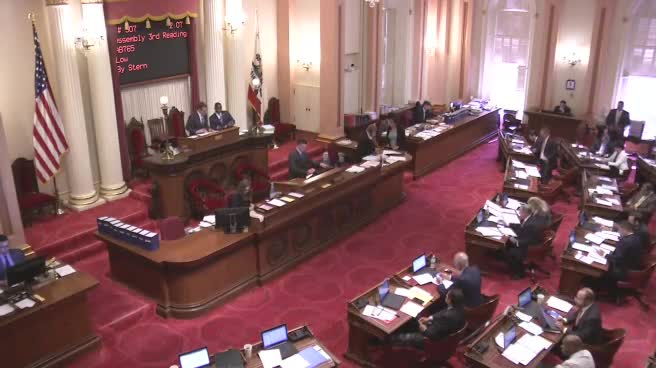
| Sep 5, 2017 | Assembly 3rd Reading AJR9 Mark Stone et al. By Stern | Senate Floor |
Passed |
|
| Jun 7, 2017 | Be adopted. Ordered to third reading | Senate Standing Committee on Environmental Quality |
Passed |
|
| Apr 20, 2017 | Favorable (Judiciary Committee) | Assembly Floor |
Passed |
|
| Apr 17, 2017 | Be adopted. To third reading. | Assembly Standing Committee on Natural Resources |
Passed |
This list shows positions taken on this bill by organizations on the date displayed, which is linked to the original source.
Positions by individuals are not included.
|
Organization
|
Position
|
Date
|
|---|---|---|
| 4 individuals | ** Support | Jun 30, 2017 |
| 500 Women Scientists | ** Support | Jun 30, 2017 |
| American Public Health Association | ** Support | Jun 30, 2017 |
| California Academy Of Sciences | ** Support | Jun 30, 2017 |
| California Association Of Professional Scientists | ** Support | Jun 30, 2017 |
| Center For Biological Diversity | ** Support | Jun 30, 2017 |
| Environmental Defense Fund | ** Support | Jun 30, 2017 |
| March for Science Los Angeles | ** Support | Apr 14, 2017 |
| march for science - los angeles | ** Support | Jun 30, 2017 |
| March for Science Silicon Valley | ** Support | Jun 30, 2017 |
| Natural Resources Defense Council | ** Support | Jun 30, 2017 |
| NextGen California | ** Support | Jun 30, 2017 |
| Orange County for Climate Action | ** Support | Jun 30, 2017 |
| Public Health Institute | ** Support | Jun 30, 2017 |
| Santa Barbara March for Science | ** Support | Jun 30, 2017 |
| Sierra Business Council | ** Support | Jun 30, 2017 |
| Ten Strands | ** Support | Jun 30, 2017 |
| Union Of Concerned Scientists | ** Support | Jun 30, 2017 |
| Voices For Progress Education Fund | ** Support | Jun 30, 2017 |
CONCURRENCE IN SENATE AMENDMENTS
CSA1 Bill Id:AJR 9
Author:(Mark Stone, et al.)
As Amended Ver:June 28, 2017
Majority vote
ASSEMBLY: | 66-1 | (April 20, 2017) | SENATE: | 34-1 | (September 05, 2017) |
Original Committee Reference: NAT. RES.
SUMMARY: This joint resolution supports the April 22, 2017, March for Science and affirms the importance of basic and applied scientific research, the scientific education of all schoolchildren, and the foundational role of independent, rigorous scientific discovery and inquiry in the policymaking process at all levels. The resolution urges the President and Congress of the United States to work together to support, encourage, and heed the truths established by scientists and scientific research in policymaking to keep the United States of America the world's global leader in scientific research and business innovation.
The Senate amendments make minor technical changes and add a coauthor.
FISCAL EFFECT: Non-fiscal
COMMENTS: According to the author, "AJR 9 supports the April 22nd March for Science and affirms the importance of scientific research, the scientific education of all schoolchildren, and the important role scientific discovery and inquiry has in policymaking. Although science and scientific research is important worldwide, science holds a special degree of importance in California. California has invested in an incredible network of public research facilities, contributing to a large portion of Californian economy, and attracting more than one fifth of all United State research funding. Science helps teach our student critical thinking skills, supports our economy, and helps us making important decisions. AJR 9 reestablishes the Legislature's commitment to the use of science in our daily lives and policy making."
Analysis Prepared by: Lawrence Lingbloom / NAT. RES. / (916) 319-2092 FN: 0001905
Office of Senate Floor Analyses (916) 651-1520 Fax: (916) 327-4478 | AJR |
THIRD READING
Bill No: AJR 9
Amended: in Senate
SENATE ENVIRONMENTAL QUALITY COMMITTEE: 5-1, 6/7/17
AYES: Wieckowski, Hill, Lara, Skinner, Stern
NOES: Stone
NO VOTE RECORDED: Gaines
ASSEMBLY FLOOR: 66-1, 4/20/17 - See last page for vote
DIGEST:
This resolution supports the April 22, 2017, March for Science and affirms the importance of basic and applied scientific research, the scientific education of all schoolchildren, and the foundational role of independent, rigorous scientific discovery and inquiry in the policymaking process at all levels. This resolution urges the President and Congress of the United States to work together to support, encourage, and heed the truths established by scientists and scientific research in policymaking to keep the United States of America the world’s global leader in scientific research and business innovation.
Senate Floor Amendments of 6/28/17 add a coauthor and make technical changes.
ANALYSIS: Existing federal and state law, over the past 50 plus years, has adopted hundreds of laws to protect public health and environmental quality, including, but not limited to the following:
Existing federal law:
- Regulates, under the Clean Air Act, air emissions from stationary and mobile sources. Among other things, this law authorizes the United States Environmental Protection Agency (US EPA) to establish National Ambient Air Quality Standards to protect public health and public welfare and to regulate emissions of hazardous air pollutants.
- Regulates, under the Clean Water Act, discharges of pollutants into the waters of the United States and regulates quality standards for surface waters.
- Regulates, under the Safe Drinking Water Act, the nation’s public drinking water supply, and requires the US EPA to establish mandatory nationwide drinking water standards and monitor public water supplies.
- Provides the US EPA, under the Resource Conservation and Recovery Act, the authority to control hazardous waste from the “cradle-to-grave;” includes the generation, transportation, treatment, storage, and disposal of hazardous waste.
- Requires the US EPA, under the Toxic Substances Control Act and the Pollution Prevention Act, to evaluate new and existing chemicals and their risks and find ways to prevent or reduce pollution before it gets into the environment.
- Provides, under the Endangered Species Act, for the conservation of species that are endangered or threatened throughout all or a significant portion of their range, and the conservation of the ecosystems on which they depend.
Existing state law:
- Establishes, pursuant to the California Global Warming Solutions Act, a comprehensive program to reduce greenhouse gas emissions from all sources throughout the state to combat climate change; the current mandate is to reduce greenhouse gas emissions to 40% below 1990 levels by 2030.
- Regulates, under the Porter-Cologne Water Quality Control Act, the discharge of pollutants into the waters of the state.
- Establishes standards, under the California Safe Drinking Water Act, for drinking water and regulates drinking water systems.
- Requires, pursuant to the California Environmental Quality Act, state and local agencies to identify the significant environmental impacts of their actions and to avoid or mitigate those impacts, if feasible.
- Establishes, under the California Beverage Container Recycling and Litter Reduction Act, a deposit program for certain beverage containers sold within the state, with the goal of reducing litter and encouraging recycling; the current program goal is an 80% or higher recycling rate.
- Requires, pursuant to the Green Chemistry Initiative, the Department of Toxic Substances Control to develop a program (Safer Consumer Product) to identify and prioritize chemicals of concern in consumer products and to evaluate safer alternatives to toxic chemicals through a science-based approach.
This resolution:
- Supports the April 22, 2017, March for Science and affirms the importance of basic and applied scientific research, the scientific education of all schoolchildren, and the foundational role of independent, rigorous scientific discovery and inquiry in the policymaking process at all levels.
- Urges the President and Congress of the United States to work together to support, encourage, and heed the truths established by scientists and scientific research in policymaking to keep the United States of America the world’s global leader in scientific research and business innovation.
Background
- Science in our society. Science is a systematic process that builds and organizes knowledge in the form of testable explanations and predictions about the universe.
Science has contributed to and is integral to almost every aspect of modern day human life. For example, science has made possible:
- The large-scale agricultural technologies essential to feeding the over seven billion people in the world today.
- The increasingly powerful and targeted medical treatments that have significantly increased our life expectancy.
- High-speed transport, including airplanes, cars, trains and boats.
- World-wide, instant communication technologies, such as cell phones, television, and the Internet.
- The energy production required to power our homes, work places, schools, hospitals, transportation modes, and communication devices.
- Our growing knowledge of the physical world, the evolution and mechanisms of life, and our place in the universe.
- A better understanding of human dependence on the environment and the effect human activity has on the environment.
- Peer-reviewed, rigorous scientific study of human impacts on the environment have led to and supported pivotal legislation, such as those listed above, to protect environmental quality and public health.
- Science in California. California has a strong history of supporting the sciences.
Several world-renown public and private research institutions in basic and applied science are located in California, including the University of California system, Stanford, California Institute of Technology, and four national laboratories (Sandia, Lawrence Berkeley, Lawrence Livermore, and SLAC Accelerator); which help to attract billions in research and development funding.
Investment in science research and education have, in turn, pushed advances in technologies that have contributed to California’s strong and innovative economy in clean energy, engineering and information technology, communications, medical sciences, biotechnology, agriculture and more.
Additionally, respect for science and a commitment to evidence-based policymaking in California has contributed to California’s current leadership role in environmental policy.
- Cause for concern. The Trump administration’s actions and rhetoric have caused concern among scientists and supporters of science and evidence-based policymaking; who view the administration as hostile toward science and its role in policy decisions.
With respect to environmental policy, President Trump has clearly stated that, in his view, environmental law and regulation jeopardizes economic growth in the United States and has committed to and taken in the first 100 days in office numerous actions to roll-back environmental protections in the United States, including, but not limited to:
- Signing executive orders and directives to: 1) undo the Waters of the United States Rule that extended federal protections to smaller rivers and streams; 2) give oil companies more opportunities to drill offshore; 3) roll back Obama-era policies to curb planet-warming greenhouse gas emissions; 4) nullify the Department of Interior’s Stream Protection Rule, which targets coal-mining industry practices to protect waterways by requiring companies to avoid mining practices that permanently pollute streams, destroy drinking water sources, increase flood risk, and threaten forests; 5) nullify a U.S. Securities and Exchange Commission disclosure rule that would require companies to disclose payments to foreign governments for the commercial development of oil, natural gas, or minerals; and 6) revoke the Bureau of Land Management’s (BLM) “Planning 2.0” rule aimed at improving how the BLM conducts its large-scale resource management plans to make the process more transparent and responsive to the public.
- Appointing Scott Pruitt US EPA Administrator. Administrator Pruitt has clearly stated that he is not in favor of maintaining the U.S. commitment to combat climate change. Additionally, since taking office, the US EPA has reversed course on regulation of a pesticide called chlorpyrifos, originally slated to be banned due to toxicity concerns under the Obama administration; and announced the reconsideration of federal limits on how much toxic metal can be discharged with power plants’ wastewater. Administrator Pruitt has also dismissed half the members of the US EPA’s key scientific advisory boards.
- Appointing Ryan Zinke Interior Secretary, who has since issued secretarial orders to: 1) lift the ban on traditional lead-based ammunition and tackle on federal lands; 2) overturn the 2016 moratorium on all new coal leases on federal lands, also ending the programmatic environmental impact statements that were set to be completed by 2019 under the moratorium; 3) review 20 years’ worth of monument designations on federal land across the country. Additionally, Interior Secretary Zinke has also suspended more than 200 advisory panels on everything from invasive species to oil drilling.
Also of note, President Trump’s budget for FY 2018 targets environmental protection, public health and research-related programs and agencies, including, but not limited to: the EPA by 31%; the Department of the Interior by 11%; the National Science Foundation by 11%; the National Institute of Health by 18%; the Centers for Disease Control and Prevention by 17%; the Food and Drug Administration by 31%; and the Department of Energy’s Office of Science by 17%.
- March for Science. Out of concern over the Trump administration’s rhetoric and policies regarding science and evidence-based policy, and inspired by the January 21, 2017 Women’s March, arose the idea for a “Scientist’s March on Washington” to defend the role of science in policy and society.
The Facebook group created to organize the march grew from 200 to 300,000 in a week; and eventually developed into the March for Science, a world-wide grassroots movement of over 800,000 members.
The March for Science was held on Earth Day, April 22, 2017, and consisted of series of rallies and marches held in more than 600 cities across the world, 44 of which were located in California.
According to a survey conducted by the University of Delaware Center for Political Communication, motivations of those who participated in the march include: support for evidence-based policymaking, opposition of political attacks on the integrity of science, encouraging the public to support science and scientists to engage the public, protesting cuts to funding for scientific research, celebrating the value of science and scientists to society, promoting science education and scientific literacy among the public and encouraging diversity and inclusion in science.
Comments
Purpose of Bill. The author states: “AJR 9 supports the April 22nd March for Science and affirms the importance of scientific research, the scientific education of all school children, and the important role scientific discovery and inquiry has in policymaking. Although science and scientific research is important worldwide, science holds a special degree of importance in California. California has invested in an incredible network of public research facilities, contributing to a large portion of Californian economy, and attracting more than one fifth of all United State research funding.
Science helps teach our student critical thinking skills, supports our economy, and helps us making important decisions. AJR 9 reestablishes the legislature’s commitment to the use of science in our daily lives and policy making.”
FISCAL EFFECT: Appropriation: No Fiscal Com.: No Local: No
NextGen California (source)
American Public Health Association
California Academy of Sciences
California Association of Professional Scientists
Center for Biological Diversity
Environmental Defense Fund
March for Science – Los Angeles
March for Science Silicon Valley
Natural Resources Defense Council
Orange County for Climate Action
Public Health Institute
Santa Barbara March for Science
Sierra Business Council
Ten Strands
Union of Concerned Scientists
Voices for Progress Education Fund
500 Women Scientists
4 Individuals
None received
ASSEMBLY FLOOR: 66-1, 4/20/17
AYES: Aguiar-Curry, Arambula, Baker, Berman, Bigelow, Bloom, Bocanegra, Bonta, Burke, Caballero, Calderon, Cervantes, Chau, Chávez, Chiu, Chu, Cooley, Cooper, Cunningham, Dababneh, Daly, Eggman, Flora, Frazier, Friedman, Cristina Garcia, Eduardo Garcia, Gipson, Gloria, Gomez, Gonzalez Fletcher, Gray, Grayson, Holden, Irwin, Jones-Sawyer, Kalra, Lackey, Levine, Limón, Low, Maienschein, Mayes, McCarty, Medina, Mullin, Muratsuchi, Nazarian, Obernolte, O'Donnell, Quirk, Quirk-Silva, Reyes, Rodriguez, Rubio, Salas, Santiago, Steinorth, Mark Stone, Thurmond, Ting, Voepel, Waldron, Weber, Wood, Rendon
NOES: Travis Allen
NO VOTE RECORDED: Acosta, Brough, Chen, Choi, Dahle, Fong, Gallagher, Harper, Kiley, Mathis, Melendez, Patterson, Ridley-Thomas
6/30/17 13:54:36
**** END ****
Office of Senate Floor Analyses (916) 651-1520 Fax: (916) 327-4478 | AJR |
THIRD READING
Bill No: AJR 9
:
SENATE ENVIRONMENTAL QUALITY COMMITTEE: 5-1, 6/7/17
AYES: Wieckowski, Hill, Lara, Skinner, Stern
NOES: Stone
NO VOTE RECORDED: Gaines
ASSEMBLY FLOOR: 66-1, 4/20/17 - See last page for vote
DIGEST:
This resolution supports the April 22, 2017, March for Science and affirms the importance of basic and applied scientific research, the scientific education of all school children, and the foundational role of independent, rigorous scientific discovery and inquiry in the policymaking process at all levels. This resolution urges the President and Congress of the United States to work together to support, encourage, and heed the truths established by scientists and scientific research in policymaking to keep the United States of America the world’s global leader in scientific research and business innovation.
ANALYSIS: Existing federal and state law, over the past 50 plus years, has adopted hundreds of laws to protect public health and environmental quality, including, but not limited to the following:
Existing federal law:
- Regulates, under the Clean Air Act, air emissions from stationary and mobile sources. Among other things, this law authorizes the United States Environmental Protection Agency (US EPA) to establish National Ambient Air Quality Standards to protect public health and public welfare and to regulate emissions of hazardous air pollutants.
- Regulates, under the Clean Water Act, discharges of pollutants into the waters of the United States and regulates quality standards for surface waters.
- Regulates, under the Safe Drinking Water Act, the nation’s public drinking water supply, and requires the US EPA to establish mandatory nationwide drinking water standards and monitor public water supplies.
- Provides the US EPA, under the Resource Conservation and Recovery Act, the authority to control hazardous waste from the “cradle-to-grave;” includes the generation, transportation, treatment, storage, and disposal of hazardous waste.
- Requires the US EPA, under the Toxic Substances Control Act and the Pollution Prevention Act, to evaluate new and existing chemicals and their risks and find ways to prevent or reduce pollution before it gets into the environment.
- Provides, under the Endangered Species Act, for the conservation of species that are endangered or threatened throughout all or a significant portion of their range, and the conservation of the ecosystems on which they depend.
Existing state law:
- Establishes, pursuant to the California Global Warming Solutions Act, a comprehensive program to reduce greenhouse gas emissions from all sources throughout the state to combat climate change; the current mandate is to reduce greenhouse gas emissions to 40% below 1990 levels by 2030.
- Regulates, under the Porter-Cologne Water Quality Control Act, the discharge of pollutants into the waters of the state.
- Establishes standards, under the California Safe Drinking Water Act, for drinking water and regulates drinking water systems.
- Requires, pursuant to the California Environmental Quality Act, state and local agencies to identify the significant environmental impacts of their actions and to avoid or mitigate those impacts, if feasible.
- Establishes, under the California Beverage Container Recycling and Litter Reduction Act, a deposit program for certain beverage containers sold within the state, with the goal of reducing litter and encouraging recycling; the current program goal is an 80% or higher recycling rate.
- Requires, pursuant to the Green Chemistry Initiative, the Department of Toxic Substances Control to develop a program (Safer Consumer Product) to identify and prioritize chemicals of concern in consumer products and to evaluate safer alternatives to toxic chemicals through a science-based approach.
This resolution:
- Supports the April 22, 2017, March for Science and affirms the importance of basic and applied scientific research, the scientific education of all school children, and the foundational role of independent, rigorous scientific discovery and inquiry in the policymaking process at all levels.
- Urges the President and Congress of the United States to work together to support, encourage, and heed the truths established by scientists and scientific research in policymaking to keep the United States of America the world’s global leader in scientific research and business innovation.
Background
- Science in our society. Science is a systematic process that builds and organizes knowledge in the form of testable explanations and predictions about the universe.
Science has contributed to and is integral to almost every aspect of modern day human life. For example, science has made possible:
- The large-scale agricultural technologies essential to feeding the over seven billion people in the world today.
- The increasingly powerful and targeted medical treatments that have significantly increased our life expectancy.
- High-speed transport, including airplanes, cars, trains and boats.
- World-wide, instant communication technologies, such as cell phones, television, and the Internet.
- The energy production required to power our homes, work places, schools, hospitals, transportation modes, and communication devices.
- Our growing knowledge of the physical world, the evolution and mechanisms of life, and our place in the universe.
- A better understanding of human dependence on the environment and the effect human activity has on the environment.
- Peer-reviewed, rigorous scientific study of human impacts on the environment have led to and supported pivotal legislation, such as those listed above, to protect environmental quality and public health.
- Science in California. California has a strong history of supporting the sciences.
Several world-renown public and private research institutions in basic and applied science are located in California, including the University of California system, Stanford, California Institute of Technology, and four national laboratories (Sandia, Lawrence Berkeley, Lawrence Livermore, and SLAC Accelerator); which help to attract billions in research and development funding.
Investment in science research and education have, in turn, pushed advances in technologies that have contributed to California’s strong and innovative economy in clean energy, engineering and information technology, communications, medical sciences, biotechnology, agriculture and more.
Additionally, respect for science and a commitment to evidence-based policymaking in California has contributed to California’s current leadership role in environmental policy.
- Cause for concern. The Trump administration’s actions and rhetoric have caused concern among scientists and supporters of science and evidence-based policymaking; who view the administration as hostile toward science and its role in policy decisions.
With respect to environmental policy, President Trump has clearly stated that, in his view, environmental law and regulation jeopardizes economic growth in the United States and has committed to and taken in the first 100 days in office numerous actions to roll-back environmental protections in the United States, including, but not limited to:
- Signing executive orders and directives to: 1) undo the Waters of the United States Rule that extended federal protections to smaller rivers and streams; 2) give oil companies more opportunities to drill offshore; 3) roll back Obama-era policies to curb planet-warming greenhouse gas emissions; 4) nullify the Department of Interior’s Stream Protection Rule, which targets coal-mining industry practices to protect waterways by requiring companies to avoid mining practices that permanently pollute streams, destroy drinking water sources, increase flood risk, and threaten forests; 5) nullify a U.S. Securities and Exchange Commission disclosure rule that would require companies to disclose payments to foreign governments for the commercial development of oil, natural gas, or minerals; and 6) revoke the Bureau of Land Management’s (BLM) “Planning 2.0” rule aimed at improving how the BLM conducts its large-scale resource management plans to make the process more transparent and responsive to the public.
- Appointing Scott Pruitt US EPA Administrator. Administrator Pruitt has clearly stated that he is not in favor of maintaining the U.S. commitment to combat climate change. Additionally, since taking office, the US EPA has reversed course on regulation of a pesticide called chlorpyrifos, originally slated to be banned due to toxicity concerns under the Obama administration; and announced the reconsideration of federal limits on how much toxic metal can be discharged with power plants’ wastewater. Administrator Pruitt has also dismissed half the members of the US EPA’s key scientific advisory boards.
- Appointing Ryan Zinke Interior Secretary, who has since issued secretarial orders to: 1) lift the ban on traditional lead-based ammunition and tackle on federal lands; 2) overturn the 2016 moratorium on all new coal leases on federal lands, also ending the programmatic environmental impact statements that were set to be completed by 2019 under the moratorium; 3) review 20 years’ worth of monument designations on federal land across the country. Additionally, Interior Secretary Zinke has also suspended more than 200 advisory panels on everything from invasive species to oil drilling.
Also of note, President Trump’s budget for FY 2018 targets environmental protection, public health and research-related programs and agencies, including, but not limited to: the EPA by 31%; the Department of the Interior by 11%; the National Science Foundation by 11%; the National Institute of Health by 18%; the Centers for Disease Control and Prevention by 17%; the Food and Drug Administration by 31%; and the Department of Energy’s Office of Science by 17%.
- March for Science. Out of concern over the Trump administration’s rhetoric and policies regarding science and evidence-based policy, and inspired by the January 21, 2017 Women’s March, arose the idea for a “Scientist’s March on Washington” to defend the role of science in policy and society.
The Facebook group created to organize the march grew from 200 to 300,000 in a week; and eventually developed into the March for Science, a world-wide grassroots movement of over 800,000 members.
The March for Science was held on Earth Day, April 22, 2017, and consisted of series of rallies and marches held in more than 600 cities across the world, 44 of which were located in California.
According to a survey conducted by the University of Delaware Center for Political Communication, motivations of those who participated in the march include: support for evidence-based policymaking, opposition of political attacks on the integrity of science, encouraging the public to support science and scientists to engage the public, protesting cuts to funding for scientific research, celebrating the value of science and scientists to society, promoting science education and scientific literacy among the public and encouraging diversity and inclusion in science.
Comments
Purpose of Bill. The author states: “AJR 9 supports the April 22nd March for Science and affirms the importance of scientific research, the scientific education of all school children, and the important role scientific discovery and inquiry has in policymaking. Although science and scientific research is important worldwide, science holds a special degree of importance in California. California has invested in an incredible network of public research facilities, contributing to a large portion of Californian economy, and attracting more than one fifth of all United State research funding.
Science helps teach our student critical thinking skills, supports our economy, and helps us making important decisions. AJR 9 reestablishes the legislature’s commitment to the use of science in our daily lives and policy making.”
FISCAL EFFECT: Appropriation: No Fiscal Com.: No Local: No
NextGen California (source)
American Public Health Association
California Academy of Sciences
California Association of Professional Scientists
Center for Biological Diversity
Environmental Defense Fund
March for Science – Los Angeles
March for Science Silicon Valley
Natural Resources Defense Council
Orange County for Climate Action
Public Health Institute
Santa Barbara March for Science
Sierra Business Council
Ten Strands
Union of Concerned Scientists
Voices for Progress Education Fund
500 Women Scientists
4 Individuals
None received
ASSEMBLY FLOOR: 66-1, 4/20/17
AYES: Aguiar-Curry, Arambula, Baker, Berman, Bigelow, Bloom, Bocanegra, Bonta, Burke, Caballero, Calderon, Cervantes, Chau, Chávez, Chiu, Chu, Cooley, Cooper, Cunningham, Dababneh, Daly, Eggman, Flora, Frazier, Friedman, Cristina Garcia, Eduardo Garcia, Gipson, Gloria, Gomez, Gonzalez Fletcher, Gray, Grayson, Holden, Irwin, Jones-Sawyer, Kalra, Lackey, Levine, Limón, Low, Maienschein, Mayes, McCarty, Medina, Mullin, Muratsuchi, Nazarian, Obernolte, O'Donnell, Quirk, Quirk-Silva, Reyes, Rodriguez, Rubio, Salas, Santiago, Steinorth, Mark Stone, Thurmond, Ting, Voepel, Waldron, Weber, Wood, Rendon
NOES: Travis Allen
NO VOTE RECORDED: Acosta, Brough, Chen, Choi, Dahle, Fong, Gallagher, Harper, Kiley, Mathis, Melendez, Patterson, Ridley-Thomas
6/7/17 13:29:34
**** END ****
SENATE COMMITTEE ON ENVIRONMENTAL QUALITY
Senator Wieckowski, Chair
2017 - 2018 Regular
Bill No: AJR 9
Author: | Mark Stone, et al. | ||
Version: | 3/30/2017 | Hearing Date: | 6/7/2017 |
Urgency: |
| Fiscal: | No |
Consultant: | Anna Reade | ||
SUBJECT: The March for Science
ANALYSIS:
Over the past 50 plus years, Congress and the Legislature have adopted hundreds of laws to protect environmental quality, including, but not limited to:
Existing federal law:
- Under the Clean Air Act regulates air emissions from stationary and mobile sources. Among other things, this law authorizes the United States Environmental Protection Agency (US EPA) to establish National Ambient Air Quality Standards to protect public health and public welfare and to regulate emissions of hazardous air pollutants.
- Under the Clean Water Act (CWA) regulates discharges of pollutants into the waters of the United States and regulates quality standards for surface waters. CWA makes it unlawful to discharge any pollutant from a point source into navigable waters, unless a permit was obtained and provides that the National Pollutant Discharge Elimination System permit program controls discharges.
- Under the Safe Drinking Water Act regulates the nation’s public drinking water supply, and requires the US EPA to establish mandatory nationwide drinking water standards. It also requires water systems to monitor public water supplies to ensure drinking water standards are met and report to consumers if the standards are not met.
- Under the Resource Conservation and Recovery Act (RCRA) provides US EPA the authority to control hazardous waste from the “cradle-to-grave;” includes the generation, transportation, treatment, storage, and disposal of hazardous waste.
- Under the Toxic Substances Control Act and the Pollution Prevention Act requires the US EPA to evaluate new and existing chemicals and their risks and find ways to prevent or reduce pollution before it gets into the environment.
- Under the Comprehensive Environmental Response, Compensation, and Liability Act (CERCLA) provides a federal “Superfund” to clean up uncontrolled or abandoned hazardous waste sites as well as accidents, spills and other emergency releases of pollutants and contaminants into the environment. Through CERCLA, US EPA was given power to seek out those parties responsible for any release and assure their cooperation in the cleanup.
- Under the Endangered Species Act provides for the conservation of species that are endangered or threatened throughout all or a significant portion of their range, and the conservation of the ecosystems on which they depend.
- The Energy Independence and Security Act establishes fuel economy standards, promotes the creation and use of biomass-based diesel fuel, regulates appliance and equipment efficiency standards, and sets a goal to reduce energy used in federal buildings by 30% by 2015 (from 2007).
- Under the Soil and Water Resources Conservation Act provides the United States Department of Agriculture broad strategic assessment and planning authority for the conservation, protection, and enhancement of soil, water, and related natural resources.
Existing California law:
- Under the Protect California Air Act prohibits air quality management districts and air pollution control districts from amending or revising their new source review rules or regulations to be less stringent than those rules or regulations that existed on December 30, 2002, except under certain circumstances.
- The California Global Warming Solutions Act establishes a comprehensive program to reduce greenhouse gas emissions from all sources throughout the state to combat climate change; the current mandate is to reduce greenhouse gas emissions to 40% below 1990 levels by 2030.
- Under the Porter-Cologne Water Quality Control Act regulates the discharge of pollutants into the waters of the state.
- Under the California Safe Drinking Water Act establishes standards for drinking water and regulates drinking water systems.
- Under the California Endangered Species Act requires the Fish and Game Commission to establish a list of endangered species and a list of threatened species and generally prohibits the taking of those species.
- The California Environmental Quality Act requires state and local agencies to identify the significant environmental impacts of their actions and to avoid or mitigate those impacts, if feasible.
- Under the California Beverage Container Recycling and Litter Reduction Act, establishes a deposit program for certain beverage containers sold within the state, with the goal of reducing litter and encouraging recycling; the current program goal is an 80% or higher recycling rate.
- The Green Chemistry Initiative requires the Department of Toxic Substances Control to develop a program (Safer Consumer Product) to identify and prioritize chemicals of concern in consumer products and to evaluate safer alternatives to toxic chemicals through a science-based approach. Also establishes an online Toxics Information Clearinghouse that provides access to information about the toxicity and hazard traits of thousands of chemicals used in California today.
- The California Green Building Standards Code is the first in the nation state-mandated green building code, with the purpose to improve public health, safety and general welfare by encouraging sustainable construction practices.
This resolution:
- Makes various findings, including:
- Scientific research drives California’s economy through attracting federal and private research funding, which in turn, drives advancements in information technology, clean energy, communications, medical science, agricultural production, manufacturing and materials, and more.
- Longevity and quality of life have increased through medical science discoveries.
- Science has led to a better understanding of environmental challenges, including the adverse economic and health impacts of pollution; which have led to environmental and regulatory protections that have cleaned our air, made our water safe to drink, and improved the overall health of all Americans.
- Science education and literacy is a cornerstone of training knowledgeable citizens and innovative contributors to our society.
- California is home to four national laboratories and the greatest collection of public and private research institutions in the world, which depend on resources and full intellectual independence to flourish.
- Scientific progress immeasurably benefits our national security, public health, economic prosperity, standard of living, and cultural progress.
- Resolves the Legislature to support the April 22, 2017, March for Science and affirms the importance of basic and applied scientific research, the scientific education of all school children, and the foundational role of independent, rigorous scientific discovery and inquiry in the policymaking process at all levels.
- Resolves the Legislature to urge the President and Congress of the United States to work together to support, encourage, and heed the truths established by scientists and scientific research in policymaking to keep the United States of America the world’s global leader in scientific research and business innovation.
Background
- Science in our society. Science is a systematic process that builds and organizes knowledge in the form of testable explanations and predictions about the universe.
Science has contributed to and is integral to almost every aspect of modern day human life. For example, science has made possible:
- The large-scale agricultural technologies essential to feeding the over 7 billion people in the world today.
- The increasingly powerful and targeted medical treatments that have significantly increased our life expectancy.
- High-speed transport, including airplanes, cars, trains and boats.
- World-wide, instant communication technologies, such as cell phones, television, and the Internet.
- The energy production required to power our homes, work places, schools, hospitals, transportation modes, and communication devices.
- Our growing knowledge of the physical world, the evolution and mechanisms of life, and our place in the universe.
- A better understanding of human dependence on the environment and the effect human activity has on the environment.
- Peer-reviewed, rigorous scientific study of human impacts on the environment have led to and supported pivotal legislation, such as those listed above, to protect environmental quality and public health.
- Science in California. California has a strong history of supporting the sciences.
Several world-renown public and private research institutions in basic and applied science are located in California, including the University of California system, Stanford, California Institute of Technology, and four national laboratories (Sandia, Lawrence Berkeley, Lawrence Livermore, and SLAC Accelerator); which help to attract billions in research and development funding.
Investment in science research and education have, in turn, pushed advances in technologies that have contributed to California’s strong and innovative economy in clean energy, engineering and information technology, communications, medical sciences, biotechnology, agriculture and more.
Additionally, respect for science and a commitment to evidence-based policymaking in California has contributed to California’s current leadership role in environmental policy.
- Cause for concern. The Trump administration actions and rhetoric have caused concern among scientists and supporters of science and evidence-based policymaking; who view the administration as hostile toward science and its role in policy decisions.
With respect to environmental policy, President Trump has clearly stated that, in his view, environmental law and regulation jeopardizes economic growth in the United States and has committed to and taken in the first 100 days in office numerous actions to roll-back environmental protections in the United States, including, but not limited to:
- Signing executive orders and directives to: 1) undo the Waters of the United States Rule that extended federal protections to smaller rivers and streams; 2) give oil companies more opportunities to drill offshore; 3) roll back Obama-era policies to curb planet-warming greenhouse gas emissions; 4) nullify the Department of Interior’s Stream Protection Rule, which targets coal-mining industry practices to protect waterways by requiring companies to avoid mining practices that permanently pollute streams, destroy drinking water sources, increase flood risk, and threaten forests; 5) nullify a U.S. Securities and Exchange Commission disclosure rule that would require companies to disclose payments to foreign governments for the commercial development of oil, natural gas, or minerals; and 6) revoke the Bureau of Land Management’s (BLM) “Planning 2.0” rule aimed at improving how the BLM conducts its large-scale resource management plans to make the process more transparent and responsive to the public.
- Appointing Scott Pruitt US EPA Administrator. Administrator Pruitt has clearly stated that he is not in favor of maintaining the US commitment to combat climate change. Additionally, since taking office, the US EPA has reversed course on regulation of a pesticide called chlorpyrifos, originally slated to be banned due to toxicity concerns under the Obama administration; and announced the reconsideration of federal limits on how much toxic metal can be discharged with power plants’ wastewater. Administrator Pruitt has also dismissed half the members of the US EPA’s key scientific advisory boards.
- Appointing Ryan Zinke Interior Secretary, who has since issued secretarial orders to: 1) lift the ban on traditional lead-based ammunition and tackle on federal lands; 2) overturn the 2016 moratorium on all new coal leases on federal lands, also ending the programmatic environmental impact statements that were set to be completed by 2019 under the moratorium; 3) review 20 years’ worth of monument designations on federal land across the country. Additionally, Interior Secretary Zinke has also suspended more than 200 advisory panels on everything from invasive species to oil drilling.
Also of note, President Trump’s budget for FY 2018 targets environmental protection, public health and research-related programs and agencies, including, but not limited to: the EPA by 31%; the Department of the Interior by 11%; the National Science Foundation by 11%; the National Institute of Health by 18%; the Centers for Disease Control and Prevention by 17%; the Food and Drug Administration by 31%; and the Department of Energy’s Office of Science by 17%.
- March for Science. Out of concern over the Trump administration’s rhetoric and policies regarding science and evidence-based policy, and inspired by the January 21, 2017 Women’s March, arose the idea for a “Scientist’s March on Washington” to defend the role of science in policy and society.
The Facebook group created to organize the march grew from 200 to 300,000 in a week; and eventually developed into the March for Science, a world-wide grassroots movement of over 800,000 members.
According to the organizers, the March for Science mission is to “champion robustly funded and publicly communicated science as a pillar of human freedom and prosperity…to unite as a diverse, nonpartisan group to call for science that upholds the common good and for political leaders and policy makers to enact evidence based policies in the public interest.”
The March for Science was held on Earth Day, April 22, 2017, and consisted of series of rallies and marches held in more than 600 cities across the world, 44 of which were located in California.
According to a survey conducted by the University of Delaware Center for Political Communication, motivations of those who participated in the march include: support for evidence-based policymaking, opposition of political attacks on the integrity of science, encouraging the public to support science and scientists to engage the public, protesting cuts to funding for scientific research, celebrating the value of science and scientists to society, promoting science education and scientific literacy among the public and encouraging diversity and inclusion in science.
Comments
Purpose of Bill. The author states:
“AJR 9 supports the April 22nd March for Science and affirms the importance of scientific research, the scientific education of all school children, and the important role scientific discovery and inquiry has in policymaking. Although science and scientific research is important worldwide, science holds a special degree of importance in California. California has invested in an incredible network of public research facilities, contributing to a large portion of Californian economy, and attracting more than one fifth of all United State research funding.
Science helps teach our student critical thinking skills, supports our economy, and helps us making important decisions. AJR 9 reestablishes the legislature’s commitment to the use of science in our daily lives and policy making.”
Related/Prior Legislation
SB 49 (de León and Stern, 2017) would make current federal clean air, climate, clean water, worker safety, and endangered species standards enforceable under state law, even if the federal government rolls back and weakens those standards and directs state environmental, public health, and worker safety agencies to take all actions within their authorities to ensure standards in effect and being enforced today continue to remain in effect. Assembly – Pending Referral.
SB 50 (Allen, 2017) would establish a new state policy to discourage conveyances of federal lands to private developers for resource extraction and directs the State Lands Commission, which oversees much of the federal lands in the state, to establish a right of first refusal by the state of any federal lands proposed for sale or conveyance to other parties. Assembly – Pending Referral.
SB 51 (Jackson, 2017) would prohibit a board from taking disciplinary action, including disbarment, suspension, loss of credential, registration, or other professional privilege against a public employee or employee of a government contractor, subcontractor, or grantee if that person reports improper governmental activity or communicates the results of, or information about, scientific or technical research in a scientific or a public forum or with the media and requires the Secretary for Environmental Protection to ensure that all scientific information and other data otherwise in the public domain is protected against censorship or destruction by the federal government. Assembly – Pending Referral.
SOURCE:
NextGen
SUPPORT:
American Public Health Association
California Academy of Sciences
California Association of Professional Scientists
Center for Biological Diversity
Environmental Defense Fund
March for Science – Los Angeles
March for Science Silicon Valley
Natural Resources Defense Council
NextGen California
Orange County for Climate Action
Public Health Institute
Santa Barbara March for Science
Sierra Business Council
Ten Strands
Union of Concerned Scientists
Voices for Progress Education Fund
500 Women Scientists
4 Individuals
OPPOSITION:
None received
ARGUMENTS IN SUPPORT:
“AJR 9 rightly notes that scientific leadership has made California a global center of innovation and discovery. Our state’s economy is driven by basic and applied research in technology, medical sciences, agriculture, clean energy, engineering, biotechnology, and more.
“In addition, our public health is protected by scientific research that serves everyone, and not just those in power. With Federal rollbacks of key environmental protections, the defense of independent science in policy-making is more important than ever.
“The truth is under attack. Funding cuts threaten research programs at the National Institutes of Health, National Science Foundation, Environmental Protection Agency, Department of Energy, National Oceanic and Atmospheric Administration, national laboratories, and many other agencies. Climate science deniers are hard at work dismantling climate policies. Scientist themselves now face intense personal scrutiny about their research, particularly if it runs counter to the messages of those in power.
“As elementary school children we learned with wide-eyed wonder about the importance and value of scientific discovery. We now much stand up for independent, rigorous scientific research and stand against those who would seek to discredit the scientific community. In doing so, we stand for the shared truths that enable our economy to flourish and our health to be protected.”
-- END --
ASSEMBLY THIRD READING
ATR Bill Id:AJR 9
Author:(Mark Stone, et al.)
As Introduced Ver:March 30, 2017
Majority vote
Committee | Votes | Ayes | Noes |
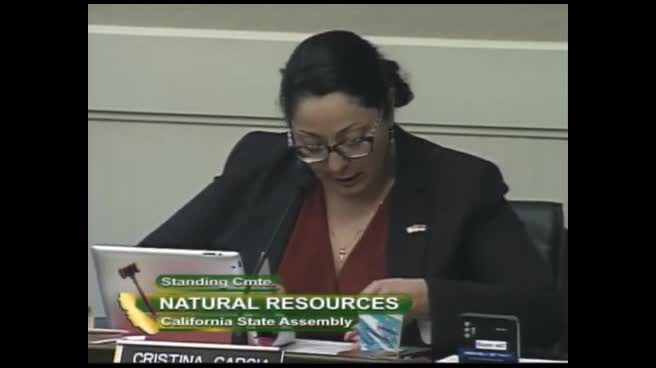
Natural Resources | 7-1 | Cristina Garcia, Chau, Eggman, Limón, McCarty, Muratsuchi, Mark Stone | Travis Allen |
SUMMARY: This joint resolution supports the April 22, 2017, March for Science and affirms the importance of basic and applied scientific research, the scientific education of all school children, and the foundational role of independent, rigorous scientific discovery and inquiry in the policymaking process at all levels. The resolution would urge the President and Congress of the United States to work together to support, encourage, and heed the truths established by scientists and scientific research in policymaking to keep the United States of America the world's global leader in scientific research and business innovation.
Analysis Prepared by: Lawrence Lingbloom / NAT. RES. / (916) 319-2092 FN: 0000136
Date of Hearing: April 17, 2017
ASSEMBLY COMMITTEE ON NATURAL RESOURCES
Cristina Garcia, Chair
ABPCA Bill Id:AJR 9 (
Author:Mark Stone) – As Introduced Ver:March 30, 2017
SUBJECT: The March for Science
SUMMARY: This joint resolution supports the April 22, 2017, March for Science and affirms the importance of basic and applied scientific research, the scientific education of all school children, and the foundational role of independent, rigorous scientific discovery and inquiry in the policymaking process at all levels. The resolution would urge the President and Congress of the United States to work together to support, encourage, and heed the truths established by scientists and scientific research in policymaking to keep the United States of America the world’s global leader in scientific research and business innovation.
FISCAL EFFECT: Non-fiscal
REGISTERED SUPPORT / OPPOSITION:
Support
American Public Health Association
California Academy of Sciences
California Association of Professional Scientists
Center for Biological Diversity
March for Science – Los Angeles
March for Science Silicon Valley
Natural Resources Defense Council
NextGen California
Orange County for Climate Action
Public Health Institute
Santa Barbara March for Science
Sierra Business Council
Ten Strands
Union of Concerned Scientists
Voices for Progress Education Fund
500 Women Scientists
4 Individuals
Opposition
None on file
Analysis Prepared by: Lawrence Lingbloom / NAT. RES. /




Bill Co-Author(s):