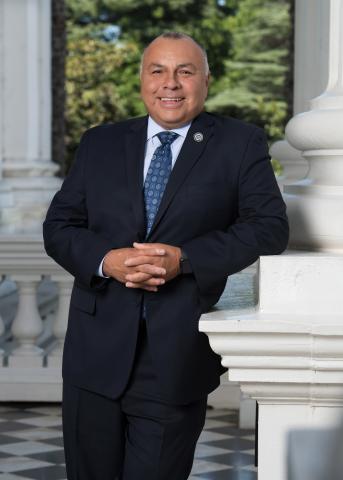
SB 1003: Respiratory therapy.
- Session Year: 2017-2018
- House: Senate
- Latest Version Date: 2018-08-20
Existing law, the Respiratory Care Practice Act, provides for the licensure and regulation of the practice of respiratory therapy by the Respiratory Care Board of California. The act defines respiratory care as a practice to mean a health care profession employed under the supervision of a medical director in the therapy, management, rehabilitation, diagnostic evaluation, and care of patients with deficiencies and abnormalities which affect the pulmonary system and associated aspects of cardiopulmonary and other systems functions. The act requires an applicant for a license as a respiratory care practitioner to complete specified education.
This bill would prohibit any state agency, as defined, except for the Respiratory Care Board of California, from defining or interpreting respiratory care for those licensed pursuant to these provisions, or from developing standardized procedures or protocols, unless authorized by these provisions or specifically required by state or federal statute. The bill would also authorize the board to adopt regulations to define, interpret, or identify basic respiratory tasks and services, intermediate respiratory tasks, services, and procedures that require formal training, and advanced respiratory tasks, services, and procedures that require supplemental training, as specified.
Existing law, the Respiratory Care Practice Act, provides for the licensure and regulation of the practice of respiratory therapy by the Respiratory Care Board of California. The act defines respiratory care as a practice to mean a health care profession employed under the supervision of a medical director in the therapy, management, rehabilitation, diagnostic evaluation, and care of patients with deficiencies and abnormalities which affect the pulmonary system and associated aspects of cardiopulmonary and other systems functions. The act requires an applicant for a license as a respiratory care practitioner to complete specified education.
This bill would prohibit any state agency, as defined, except for the Respiratory Care Board of California, from defining or interpreting respiratory care for those licensed pursuant to these provisions, or from developing standardized procedures or protocols, unless authorized by these provisions or specifically required by state or federal statute. The bill would also authorize the board to adopt regulations to define, interpret, or identify basic respiratory tasks and services, intermediate respiratory tasks, services, and procedures that require formal training, and advanced respiratory tasks, services, and procedures that require supplemental training, as specified.
Existing law, the Respiratory Care Practice Act, provides for the licensure and regulation of the practice of respiratory therapy by the Respiratory Care Board of California. The act defines respiratory care as a practice to mean a health care profession employed under the supervision of a medical director in the therapy, management, rehabilitation, diagnostic evaluation, and care of patients with deficiencies and abnormalities which affect the pulmonary system and associated aspects of cardiopulmonary and other systems functions. The act requires an applicant for a license as a respiratory care practitioner to complete specified education.
This bill would prohibit any state agency, as defined, other than except for the Respiratory Care Board of California California, from defining or interpreting respiratory care for those licensed pursuant to these provisions, or from developing standardized procedures or protocols, unless authorized by these provisions or specifically required by state or federal statute. The bill would also authorize the board to adopt regulations to define, interpret, or identify basic respiratory tasks and services, intermediate respiratory tasks, services and procedures that require formal training, and advanced respiratory tasks, services, and procedures that require advanced training, as specified.
Existing law, the Respiratory Care Practice Act, provides for the licensure and regulation of the practice of respiratory therapy by the Respiratory Care Board of California. The act defines respiratory care as a practice to mean a health care profession employed under the supervision of a medical director in the therapy, management, rehabilitation, diagnostic evaluation, and care of patients with deficiencies and abnormalities which affect the pulmonary system and associated aspects of cardiopulmonary and other systems functions. The act requires an applicant for a license as a respiratory care practitioner to complete specified education.
This bill would prohibit any state agency, as defined, other than the Respiratory Care Board of California from defining or interpreting respiratory care for those licensed pursuant to these provisions, or from developing standardized procedures or protocols, unless authorized by these provisions or specifically required by state or federal statute. The bill would also authorize the board to adopt regulations to define, interpret, or identify basic respiratory tasks and services, intermediate respiratory tasks, services and procedures that require formal training, and advanced respiratory tasks, services, and procedures that require advanced training, as specified.
Except for the board, a state agency may not define or interpret the practice of respiratory care for those licensed pursuant to this chapter, or develop standardized procedures or protocols pursuant to this chapter, unless authorized by this chapter or specifically required by state or federal statute. The board may adopt regulations to further define, interpret, or identify all of the following:
(a)Basic respiratory tasks and services that do not require a respiratory assessment and only require manual, technical skills, or data collection.
(b)Intermediate respiratory tasks, services, and procedures that require formal respiratory education and training.
(c)Advanced respiratory tasks, services, and procedures that require supplemental education, training, or additional credentialing consistent with national standards, as applicable.
SEC. 2.Section 3704 of the Business and Professions Code is amended to read:3704.As used in this chapter, these terms shall be defined as follows:
(a)Board means the Respiratory Care Board of California.
(b)Department means the Department of Consumer Affairs.
(c)Medical director means a physician and surgeon who is a member of a health care facilitys active medical staff and who is knowledgeable in respiratory care.
(d)Respiratory care includes respiratory therapy or inhalation therapy, where those terms mean respiratory care.
(e)Respiratory therapy school means a program reviewed and approved by the board.
(f)State agency includes every state office, officer, department, division, bureau, board, authority, and commission.
Except for the board, a state agency may not define or interpret the practice of respiratory care for those licensed pursuant to this chapter, or develop standardized procedures or protocols pursuant to this chapter, unless authorized by this chapter or specifically required by state or federal statute. The board may adopt regulations to further define, interpret, or identify all of the following:
(a)Basic respiratory tasks and services that do not require a respiratory assessment and only require manual, technical skills, or data collection.
(b)Intermediate respiratory tasks, services, and procedures that require formal respiratory education and training.
(c)Advanced respiratory tasks, services, and procedures that require supplemental education, training, or additional credentialing consistent with national standards, as applicable.
SEC. 2.Section 3704 of the Business and Professions Code is amended to read:3704.As used in this chapter, these terms shall be defined as follows:
(a)Board means the Respiratory Care Board of California.
(b)Department means the Department of Consumer Affairs.
(c)Medical director means a physician and surgeon who is a member of a health care facilitys active medical staff and who is knowledgeable in respiratory care.
(d)Respiratory care includes respiratory therapy or inhalation therapy, where those terms mean respiratory care.
(e)Respiratory therapy school means a program reviewed and approved by the board.
(f)State agency includes every state office, officer, department, division, bureau, board, authority, and commission.
No Except for the board, a state agency other than the board may not define or interpret the practice of respiratory care for those licensed pursuant to this chapter, or develop standardized procedures or protocols pursuant to this chapter, unless authorized by this chapter or specifically required by state or federal statute. The board may adopt regulations to further define, interpret, or identify all of the following:
(a)Basic respiratory tasks and services that do not require a respiratory assessment and only require manual, technical skills, or data collection.
(b)Intermediate respiratory tasks, services, and procedures that require formal respiratory education and training.
(c)Advanced respiratory tasks, services, and procedures that require supplemental education, training, or additional credentialing consistent with national standards, as applicable.
SEC. 2.Section 3704 of the Business and Professions Code is amended to read:3704.As used in this chapter, these terms shall be defined as follows:
(a)Board means the Respiratory Care Board of California.
(b)Department means the Department of Consumer Affairs.
(c)Medical director means a physician and surgeon who is a member of a health care facilitys active medical staff and who is knowledgeable in respiratory care.
(d)Respiratory care includes respiratory therapy or inhalation therapy, where those terms mean respiratory care.
(e)Respiratory therapy school means a program reviewed and approved by the board.
(f)State agency includes every state office, officer, department, division, bureau, board, authority, and commission.
No state agency other than the board may define or interpret the practice of respiratory care for those licensed pursuant to this chapter, or develop standardized procedures or protocols pursuant to this chapter, unless authorized by this chapter or specifically required by state or federal statute. The board may adopt regulations to further define, interpret, or identify all of the following:
(a)Basic respiratory tasks and services that do not require a respiratory assessment and only require manual, technical skills, or data collection.
(b)Intermediate respiratory tasks, services, and procedures that require formal respiratory education and training.
(c)Advanced respiratory tasks, services, and procedures that require supplemental education, training, or additional credentialing consistent with national standards, as applicable.
SEC. 2.Section 3704 of the Business and Professions Code is amended to read:3704.As used in this chapter, these terms shall be defined as follows:
(a)Board means the Respiratory Care Board of California.
(b)Department means the Department of Consumer Affairs.
(c)Medical director means a physician and surgeon who is a member of a health care facilitys active medical staff and who is knowledgeable in respiratory care.
(d)Respiratory care includes respiratory therapy or inhalation therapy, where those terms mean respiratory care.
(e)Respiratory therapy school means a program reviewed and approved by the board.
(f)State agency includes every state office, officer, department, division, bureau, board, authority, and commission.
|
Date
|
Status
|
|---|---|
| Aug 20, 2018 | Chaptered by Secretary of State. Chapter 180, Statutes of 2018. |
| Aug 20, 2018 | Approved by the Governor. |
| Aug 9, 2018 | Enrolled and presented to the Governor at 3 p.m. |
| Aug 6, 2018 | Assembly amendments concurred in. (Ayes 37. Noes 0.) Ordered to engrossing and enrolling. |
| Jul 5, 2018 | In Senate. Concurrence in Assembly amendments pending. |
| Jul 5, 2018 | Read third time. Passed. Ordered to the Senate. |
| Jun 28, 2018 | Read second time. Ordered to consent calendar. |
| Jun 27, 2018 | From committee: Do pass. Ordered to consent calendar. (Ayes 16. Noes 0.) (June 27). |
| Jun 12, 2018 | From committee: Do pass and re-refer to Com. on APPR. (Ayes 18. Noes 0.) (June 12). Re-referred to Com. on APPR. |
| May 8, 2018 | From committee with author's amendments. Read second time and amended. Re-referred to Com. on B. & P. |
| May 7, 2018 | Referred to Com. on B. & P. |
| Apr 30, 2018 | In Assembly. Read first time. Held at Desk. |
| Apr 30, 2018 | Read third time. Passed. (Ayes 37. Noes 0.) Ordered to the Assembly. |
| Apr 24, 2018 | Read second time. Ordered to third reading. |
| Apr 23, 2018 | From committee: Be ordered to second reading pursuant to Senate Rule 28.8. |
| Apr 17, 2018 | Set for hearing April 23. |
| Apr 9, 2018 | From committee: Do pass and re-refer to Com. on APPR. (Ayes 9. Noes 0.) (April 9). Re-referred to Com. on APPR. |
| Mar 28, 2018 | April 2 set for first hearing canceled at the request of author. |
| Mar 20, 2018 | Set for hearing April 2. |
| Feb 14, 2018 | Referred to Com. on B., P. & E.D. |
| Feb 7, 2018 | From printer. May be acted upon on or after March 9. |
| Feb 6, 2018 | Introduced. Read first time. To Com. on RLS. for assignment. To print. |
|
Date
|
Description
|
Location
|
Votes
|
|
|---|---|---|---|---|
| Aug 6, 2018 | Unfinished Business SB1003 Roth et al. Concurrence | Senate Floor |
Passed |
|
| Jul 5, 2018 | SB 1003 Roth Consent Calendar Second Day Regular Session | Assembly Floor |
Passed |
|
| Jun 27, 2018 | Do pass. To Consent Calendar. | Assembly Standing Committee on Appropriations |
Passed |
|
| Jun 12, 2018 | Do pass and be re-referred to the Committee on [Appropriations] | Assembly Standing Committee on Business and Professions |
Passed |
|
| Apr 30, 2018 | Senate 3rd Reading SB1003 Roth | Senate Floor |
Passed |
|
| Apr 9, 2018 | Do pass, but first be re-referred to the Committee on [Appropriations] | Senate Standing Committee on Business, Professions and Economic Development |
Passed |
This list shows positions taken on this bill by organizations on the date displayed, which is linked to the original source.
Positions by individuals are not included.
|
Organization
|
Position
|
Date
|
|---|---|---|
| California Society For Respiratory Care | ** Support | Aug 1, 2018 |
| Respiratory Care Board of California | ** Support | Aug 1, 2018 |
Office of Senate Floor Analyses (916) 651-1520 Fax: (916) 327-4478 | SB |
UNFINISHED BUSINESS
Bill No: SB 1003
:
SENATE BUS., PROF. & ECON. DEV. COMMITTEE: 9-0, 4/9/18
AYES: Hill, Fuller, Dodd, Galgiani, Glazer, Hernandez, Newman, Pan, Wilk
SENATE APPROPRIATIONS COMMITTEE: Senate Rule 28.8
SENATE FLOOR: 37-0, 4/30/18
AYES: Allen, Anderson, Atkins, Bates, Beall, Bradford, De León, Dodd, Fuller, Gaines, Galgiani, Glazer, Hernandez, Hertzberg, Hill, Hueso, Jackson, Lara, Leyva, McGuire, Mitchell, Monning, Moorlach, Morrell, Newman, Nguyen, Nielsen, Pan, Portantino, Roth, Skinner, Stern, Stone, Vidak, Wieckowski, Wiener, Wilk
NO VOTE RECORDED: Berryhill, Cannella
ASSEMBLY FLOOR: 69-0, 7/5/18 (Consent) - See last page for vote
SOURCE: Respiratory Care Board of California
DIGEST:
This bill states that only the Respiratory Care Board (Board) may define or interpret the practice of respiratory care for its licensees, and authorizes the Board to develop regulations to further define, interpret, or identify basic, intermediate, and advanced respiratory tasks.
Assembly Amendments
add Assembly Member Rodriguez as a co-author and make technical corrections.
Existing law:
- Establishes the Board within the Department of Consumer Affairs to enforce and administer the Respiratory Care Practice Act (Act). (Business and Professions Code (BPC) § 3710)
- States the intent of the Legislature to provide provide clear legal authority in the Act for functions and procedures which have common acceptance and usage. The Legislature also recognizes the existence of overlapping functions between physicians and surgeons, registered nurses, physical therapists, respiratory care practitioners (RCPs), and other licensed health care personnel, and to permit additional sharing of functions within organized health care systems.
- Prohibits any state agency other than the Board of Registered Nursing from defining or interpreting the practice of nursing for those licensed pursuant to the Nursing Practice Act, or develop standardized procedures or protocols pursuant to the Nursing Practice Act, unless so authorized by the Nursing Practice Act, or specifically required under state or federal statute. “State agency” includes every state office, officer, department, division, bureau, board, authority, and commission. (BPC §2725 (e))
- Defines the practice of respiratory care to be a health care profession employed under the supervision of a medical director in the therapy, management, rehabilitation, diagnostic evaluation, and care of patients with deficiencies and abnormalities which affect the pulmonary system and associated aspects of cardiopulmonary and other systems functions. (BPC § 3702)
- Requires the practice of respiratory care to be performed under the supervision of a medical director and in accordance with a prescription of a physician and surgeon or pursuant to respiratory care protocols. (BPC § 3703 (b))
This bill:
- Prohibits any state agency other than the Board from defining or interpreting the practice of respiratory care for those licensed pursuant to the Act, or developing standardized procedures or protocols pursuant to the Act, unless authorized by the Act or specifically required by state or federal statute.
- Authorizes the Board to adopt regulations to further define, interpret, or identify all of the following:
- Basic respiratory tasks and services that do not require a respiratory assessment and only require manual, technical skills, or data collection.
- Intermediate respiratory tasks, services, and procedures that require formal respiratory education and training.
- Advanced respiratory tasks, services, and procedures that require supplemental education, training, or additional credentialing consistent with national standards, as applicable.
- Defines a “state agency” to include every state office, officer, department, division, bureau, board, authority, and commission.
Background
The Practice of Respiratory Care. According to the Board, “RCPs work under the direction of a medical director and specialize in providing evaluation of, and treatment to patients with breathing difficulties, as a result of heart, lung, and other disorders, as well as providing diagnostic, educational, and rehabilitation services. RCPs are needed in virtually all healthcare settings. On a daily basis, RCPs provide services to patients ranging from premature infants to the elderly. RCPs provide treatments for patients who have breathing difficulties and care for those who are dependent upon life support and cannot breathe on their own. RCPs treat patients with acute and chronic diseases, including Chronic Obstructive Pulmonary Disease (COPD), trauma victims, and surgery patients.” There are currently over 23,000 active RCP licensees.
RCP Education. The education and practice of RCPs has been evolving since the Board was established in 1982. The first licensed practitioners were grandfathered in, requiring only proof of on-the-job training. A formal 10-month respiratory care educational program was mandated in 1986, increased in 1999 to be an associate’s degree (SB 1955 Figueroa, Chapter 1150, Statutes of 2002). In 2015, the Board required all applicants to pass the advanced level of the national competency exam to qualify for licensure (AB 1972, Jones, Chapter 179, Statues of 2014).
While only an associate’s degree is required for licensure, there are three baccalaureate level RCP programs in California, and many more in other states, and nearly a third of RCPs reported having a baccalaureate in a 2007 survey.
Clarity for RCP Employers. The practice of respiratory care spans several practice acts, including nursing and physician assistants. Although the Act describes the education and training necessary for RCP licensure and the RCP scope of practice, a newly licensed RCP is not necessarily capable of the full range of practice without additional education and/or on-the-job training. The Board indicates that it receives over 500 inquiries per year regarding the appropriate skill level for respiratory care practice.
According to the Board, “Most inquiries are from acute care facilities inquiring who can and cannot perform various respiratory tasks. Because the respiratory care practice does not differentiate between the skill-level needed to perform certain tasks, it is unclear to facilities if other health care personnel may perform certain respiratory care tasks and services or whether licensed RCPs can perform what are usually advanced respiratory procedures without additional training…. [T]he practice of respiratory care requires critical thinking and critical reasoning skills. These skills are necessary to incorporate evidence-based medicine into practice, especially as it pertains to advanced respiratory care procedures. It is estimated that only 50% of new respiratory care licensees possess the skills necessary to perform the far advanced level procedures.”
This bill clarifies that the Board has the exclusive authority to interpret the Act for its licensees and is authorized to divide its scope in to basic, intermediate, and advanced respiratory tasks and services. The most advanced tasks will be defined as those that require supplemental education, training, or additional credentialing consistent with national standards. The results will assist facilities in determining the best use of their workforce and pave the way to formally stratify RCPs by education and training.
FISCAL EFFECT: Appropriation: Fiscal Com.: Local:
According to the Assembly Appropriations Committee, this bill has minor and absorbable costs to the Board (Respiratory Care Fund) to issue regulations.
Respiratory Care Board of California (source)
California Society for Respiratory Care
OPPOSITION: (Verified 7/30/18)
None received
ARGUMENTS IN SUPPORT: The Respiratory Care Board of California writes, “The myriad of respiratory tasks and services provided run the gambit on the level of education and training necessary to competently perform them. It is critical that patients suffering from the most sensitive and life-threatening respiratory conditions have immediate access to the most qualified personnel: RCPs with education and training specializing in respiratory care who also possess necessary critical thinking and reasoning skills – literally making the difference between life and death. It is therefore necessary for facilities, licensees, and the public to also have access to information that define, interpret, or identify basic, intermediate, and advance levels of respiratory care and the qualifications necessary to perform at those levels.”
ASSEMBLY FLOOR: 69-0, 7/5/18
AYES: Acosta, Aguiar-Curry, Travis Allen, Baker, Berman, Bloom, Bonta, Burke, Caballero, Calderon, Carrillo, Cervantes, Chau, Chávez, Chen, Chiu, Choi, Chu, Cooper, Daly, Eggman, Flora, Fong, Frazier, Friedman, Gabriel, Gallagher, Cristina Garcia, Eduardo Garcia, Gipson, Gloria, Gonzalez Fletcher, Gray, Grayson, Harper, Holden, Irwin, Jones-Sawyer, Kalra, Kamlager-Dove, Kiley, Lackey, Levine, Limón, Low, Mathis, Mayes, Medina, Melendez, Muratsuchi, Nazarian, Obernolte, Patterson, Quirk-Silva, Reyes, Rivas, Rodriguez, Rubio, Salas, Santiago, Steinorth, Mark Stone, Thurmond, Ting, Voepel, Waldron, Weber, Wood, Rendon
NO VOTE RECORDED: Arambula, Bigelow, Brough, Cooley, Cunningham, Dahle, Maienschein, McCarty, Mullin, O'Donnell, Quirk
8/1/18 12:17:35
**** END ****
Date of Hearing: June 27, 2018
ASSEMBLY COMMITTEE ON APPROPRIATIONS
Lorena Gonzalez Fletcher, Chair
SBPCA Bill Id:SB 1003
Author:(Roth) – As Amended Ver:May 8, 2018
Policy Committee: | Business and Professions | Vote: | 18 - 0 |
Urgency: No State Mandated Local Program: No Reimbursable: No
SUMMARY:
This bill prohibits a state agency other than the Respiratory Care Board (RCB) from defining or interpreting the practice of respiratory care, and allows the board to adopt regulations to further define basic, intermediate, and advanced respiratory tasks.
FISCAL EFFECT:
Minor and absorbable costs to the RCB (Respiratory Care Fund) to issue regulations.
COMMENTS:
- Purpose. This bill is sponsored by the RCB and the California Society for Respiratory Care to clarify different levels of respiratory care provided to patients. Sponsors believe this bill supports the board's strategic plan, and that regulations issued will help facilities and licensees better understand which tasks need additional on-the-job training.
- Background. Respiratory care practitioners (also known as respiratory therapists), are involved in evaluating and monitoring heart and lung function as well as giving treatment under supervision of a medical director, generally in a hospital or nursing facility. According to the federal Occupational Outlook Handbook, respiratory care practitioners care for patients who have trouble breathing—for example, from a chronic respiratory disease, such as asthma or emphysema. Their patients range from premature infants with undeveloped lungs to elderly patients who have diseased lungs. They also provide emergency care to patients suffering from heart attacks, drowning, or shock. The RCB licenses about 23,000 respiratory care practitioners statewide.
Analysis Prepared by: Lisa Murawski / APPR. / (916) 319-2081
Date of Hearing:
ASSEMBLY COMMITTEE ON BUSINESS AND PROFESSIONS
Evan Low, Chair
SBPCA Bill Id:
Author:() – As Ver:
SENATE VOTE:
SUBJECT:
SUMMARY: Prohibits a state agency, other than the Respiratory Care Board of California, from defining or interpreting the practice of respiratory care or developing standardized procedures or protocols for licensed respiratory care practitioners, except as specified, and authorizes the board to define, interpret, or identify categories of respiratory tasks based on the needed level of skill, education, or training.
EXISTING LAW:
- Regulates the practice of respiratory care through licensure of respiratory care practitioners (RCPs) under the Respiratory Care Practice Act. (Business and Professions Code (BPC) §§ 3700-3779)
- Establishes the Respiratory Care Board of California (RCBC) within the Department of Consumer Affairs to administer and enforce the Respiratory Care Practice Act. (BPC §§ 101(x), 3704, 3710-3722)
- Defines respiratory care practice as a health care profession employed under the supervision of a medical director in the therapy, management, rehabilitation, diagnostic evaluation, and care of patients with deficiencies and abnormalities which affect the pulmonary system and associated aspects of cardiopulmonary and other systems functions, as specified. (BPC §§ 3702, 3702.7)
- Requires the practice of respiratory care to be performed under the supervision of a medical director and in accordance with a prescription from a physician and surgeon or pursuant to respiratory care protocols. (BPC § 3703(b))
- Prohibits a state agency, including every state office, officer, department, division, bureau, board, authority, and commission, except for the Board of Registered Nursing, from defining or interpreting the practice of nursing for those licensed pursuant to the Nursing Practice Act, or develop standardized procedures or protocols pursuant to the act, unless authorized by the act or specifically required under state or federal statute. (BPC § 2725(e))
THIS BILL:
- Defines “state agency” as every state office, officer, department, division, bureau, board, authority, and commission.
- Prohibits a state agency, except for the board, from defining or interpreting the practice of respiratory care for those licensed pursuant to the Respiratory Care Practice Act, or developing standardized procedures or protocols pursuant to the act, unless authorized under the act or specifically required by state or federal statute.
- Authorizes the board to adopt regulations to further define, interpret, or identify the following:
- Basic respiratory tasks and services that do not require a respiratory assessment and only require manual, technical skills, or data collection.
- Intermediate respiratory tasks, services, and procedures that require formal respiratory education and training.
- Advanced respiratory tasks, services, and procedures requiring supplemental education, training, or additional credentialing consistent with national standards, as applicable.
FISCAL EFFECT: According to the Senate Appropriations Committee, pursuant to Senate Rule 28.8, no significant fiscal impact is anticipated.
COMMENTS:
Purpose. This bill is co-sponsored by the California Society for Respiratory Care and the Respiratory Care Board of California. According to the author, “[w]ith the advances in respiratory care, it has become essential that there is greater clarification of the different levels of respiratory services provided to individual patients. [This bill] clarifies that the [RCBC] is the entity authorized to interpret the Respiratory Care Practice Act and allows the [RCBC] to develop regulations to differentiate between basic, intermediate, and advance respiratory tasks, services, and procedures.”
Background. According to the RCBC, “RCPs work under the direction of a medical director and specialize in providing evaluation of, and treatment to patients with breathing difficulties, as a result of heart, lung, and other disorders, as well as providing diagnostic, educational, and rehabilitation services." As a result, RCP patients range from premature infants to the elderly. RCPs may practice in most healthcare settings, including patient transport and emergencies. The RCBC reported 23,473 actively licensed RCPs in the Department of Consumer Affairs' 2017 Annual Report.
Clarification of RCP Scope and Education. The Respiratory Care Practice Act describes the legal scope and minimum education and training required for licensed RCPs. However, like many other types of licenses, a newly licensed RCP is not necessarily competent to perform everything authorized under the RCP scope. In addition to staying within the limits of their legal scope of practice, licensees are also required to observe the limits of their individual competence and, if unable to safely perform a procedure, seek additional education or training.
This bill authorizes the RCBC to identify through rulemaking categories of difficulty for respiratory care services and the corresponding level of education and training needed. It does not authorize the RCBC to expand or reduce the RCP scope of practice without additional statutory changes.
This bill also clarifies that the RCBC is the only licensing entity authorized to do so. The language is drawn directly from the Nursing Practice Act. Because the language specifies that this limitation only applies to RCPs under the Respiratory Care Practice Act, it would not limit or otherwise impact the authority of other licensing boards or the scope of other license types.
ARGUMENTS IN SUPPORT:
The Respiratory Care Board of California writes in support, this bill “is intended to provide a guide for facilities, educators, and licensees, while also supporting goals in the Board's most recent strategic plan (2017). Facilities and licensees will have a better understanding of the services respiratory care practitioners are authorized to provide, while understanding that additional on-the-job training/experience may be necessary for the most advanced services- depending on the level of education and experience each licensee has. Existing and prospective respiratory care education programs, especially clinical training components, will be able to tailor their programs more effectively. This measure may also open the door to on-the-job training for the most basic services and encourage the development of additional baccalaureate-level respiratory programs.”
The California Society for Respiratory Care writes in support, “[h]ealthcare environments are rapidly changing and including new technologies and strategies to best treat patients. Respiratory care can range from simple delivery of medication by aerosol to being a team provider in conscious sedation and many other highly skilled tasks. Categorizing RCP duties will help health facilities identify which tasks require additional RCP on the job training (OJT). RCPs have education from OJT to Master Degrees, and beginner and advanced credentials. Delineating what are basic, intermediate and advanced tasks and procedures creates a foundation to address any future changes to the industry.”
ARGUMENTS IN OPPOSITION:
None on file.
REGISTERED SUPPORT:
California Society for Respiratory Care (co-sponsor)
Respiratory Care Board of California (co-sponsor)
REGISTERED OPPOSITION:
None on file.
Analysis Prepared by: Vincent Chee / B. & P. / (916) 319-3301
Office of Senate Floor Analyses (916) 651-1520 Fax: (916) 327-4478 | SB |
THIRD READING
Bill No: SB 1003
:
SENATE BUS., PROF. & ECON. DEV. COMMITTEE: 9-0, 4/9/18
AYES: Hill, Fuller, Dodd, Galgiani, Glazer, Hernandez, Newman, Pan, Wilk
SENATE APPROPRIATIONS COMMITTEE: Senate Rule 28.8
SOURCE: Respiratory Care Board of California
DIGEST:
This bill states that only the Respiratory Care Board (Board) may define or interpret the practice of respiratory care for its licensees, and authorizes the Board to develop regulations to further define, interpret, or identify basic, intermediate, and advanced respiratory tasks.
Existing law:
- Establishes the Board within the Department of Consumer Affairs to enforce and administer the Respiratory Care Practice Act (Act). (Business and Professions Code (BPC) § 3710)
- States the intent of the Legislature to provide provide clear legal authority in the Act for functions and procedures which have common acceptance and usage. The Legislature also recognizes the existence of overlapping functions between physicians and surgeons, registered nurses, physical therapists, respiratory care practitioners (RCPs), and other licensed health care personnel, and to permit additional sharing of functions within organized health care systems.
- Prohibits any state agency other than the Board of Registered Nursing from defining or interpreting the practice of nursing for those licensed pursuant to the Nursing Practice Act, or develop standardized procedures or protocols pursuant to the Nursing Practice Act, unless so authorized by the Nursing Practice Act, or specifically required under state or federal statute. “State agency” includes every state office, officer, department, division, bureau, board, authority, and commission. (BPC §2725 (e))
- Defines the practice of respiratory care to be a health care profession employed under the supervision of a medical director in the therapy, management, rehabilitation, diagnostic evaluation, and care of patients with deficiencies and abnormalities which affect the pulmonary system and associated aspects of cardiopulmonary and other systems functions. (BPC § 3702)
- Requires the practice of respiratory care to be performed under the supervision of a medical director and in accordance with a prescription of a physician and surgeon or pursuant to respiratory care protocols. (BPC § 3703 (b))
This bill:
- Prohibits any state agency other than the Board from defining or interpreting the practice of respiratory care for those licensed pursuant to the Act, or developing standardized procedures or protocols pursuant to the Act, unless authorized by the Act or specifically required by state or federal statute.
- Authorizes the Board to adopt regulations to further define, interpret, or identify all of the following:
- Basic respiratory tasks and services that do not require a respiratory assessment and only require manual, technical skills, or data collection.
- Intermediate respiratory tasks, services, and procedures that require formal respiratory education and training.
- Advanced respiratory tasks, services, and procedures that require supplemental education, training, or additional credentialing consistent with national standards, as applicable.
- Defines a “state agency” to include every state office, officer, department, division, bureau, board, authority, and commission.
Background
The Practice of Respiratory Care. According to the Board, “RCPs work under the direction of a medical director and specialize in providing evaluation of, and treatment to patients with breathing difficulties, as a result of heart, lung, and other disorders, as well as providing diagnostic, educational, and rehabilitation services. RCPs are needed in virtually all healthcare settings. On a daily basis, RCPs provide services to patients ranging from premature infants to the elderly. RCPs provide treatments for patients who have breathing difficulties and care for those who are dependent upon life support and cannot breathe on their own. RCPs treat patients with acute and chronic diseases, including Chronic Obstructive Pulmonary Disease (COPD), trauma victims, and surgery patients.” There are currently over 23,000 active RCP licensees.
RCP Education. The education and practice of RCPs has been evolving since the Board was established in 1982. The first licensed practitioners were grandfathered in, requiring only proof of on-the-job training. A formal 10-month respiratory care educational program was mandated in 1986, increased in 1999 to be an associate’s degree (SB 1955 Figueroa, Chapter 1150, Statutes of 2002). In 2015, the Board required all applicants to pass the advanced level of the national competency exam to qualify for licensure (AB 1972, Jones, Chapter 179, Statues of 2014).
While only an associate’s degree is required for licensure, there are three baccalaureate level RCP programs in California, and many more in other states, and nearly a third of RCPs reported having a baccalaureate in a 2007 survey.
Clarity for RCP Employers. The practice of respiratory care spans several practice acts, including nursing and physician assistants. Although the Act describes the education and training necessary for RCP licensure and the RCP scope of practice, a newly licensed RCP is not necessarily capable of the full range of practice without additional education and/or on-the-job training. The Board indicates that it receives over 500 inquiries per year regarding the appropriate skill level for respiratory care practice.
According to the Board, “Most inquiries are from acute care facilities inquiring who can and cannot perform various respiratory tasks. Because the respiratory care practice does not differentiate between the skill-level needed to perform certain tasks, it is unclear to facilities if other health care personnel may perform certain respiratory care tasks and services or whether licensed RCPs can perform what are usually advanced respiratory procedures without additional training…. [T]he practice of respiratory care requires critical thinking and critical reasoning skills. These skills are necessary to incorporate evidence-based medicine into practice, especially as it pertains to advanced respiratory care procedures. It is estimated that only 50% of new respiratory care licensees possess the skills necessary to perform the far advanced level procedures.”
This bill clarifies that the Board has the exclusive authority to interpret the Act for its licensees and is authorized to divide its scope in to basic, intermediate, and advanced respiratory tasks and services. The most advanced tasks will be defined as those that require supplemental education, training, or additional credentialing consistent with national standards. The results will assist facilities in determining the best use of their workforce and pave the way to formally stratify RCPs by education and training.
FISCAL EFFECT: Appropriation: Fiscal Com.: Local:
Respiratory Care Board of California (source)
California Society for Respiratory Care
OPPOSITION: (Verified 4/24/18)
None received
ARGUMENTS IN SUPPORT: The Respiratory Care Board writes, “The myriad of respiratory tasks and services provided run the gambit on the level of education and training necessary to competently perform them. It is critical that patients suffering from the most sensitive and life-threatening respiratory conditions have immediate access to the most qualified personnel: RCPs with education and training specializing in respiratory care who also possess necessary critical thinking and reasoning skills – literally making the difference between life and death. It is therefore necessary for facilities, licensees, and the public to also have access to information that define, interpret, or identify basic, intermediate, and advance levels of respiratory care and the qualifications necessary to perform at those levels.”
4/25/18 13:56:55
**** END ****
SENATE COMMITTEE ON
BUSINESS, PROFESSIONS AND ECONOMIC DEVELOPMENT
Senator Jerry Hill, Chair
2017 - 2018 Regular
Bill No: SB 1003 Hearing Date: April 9, 2018
Author: | Roth | ||
Version: |
| ||
Urgency: | Fiscal: | ||
Consultant: | |||
Subject: Respiratory therapy
SUMMARY:
States that only the Respiratory Care Board (Board) may define or interpret the practice of respiratory care for its licensees, and authorizes the Board to develop regulations to further define, interpret, or identify basic, intermediate, and advanced respiratory tasks.
Existing law:
- Establishes the Respiratory Care Board (Board) of California within the Department of Consumer Affairs to enforce and administer the Respiratory Care Practice Act (Act). (Business and Professions Code (BPC) § 3710)
- States the intent of the Legislature to provide provide clear legal authority in the Act for functions and procedures which have common acceptance and usage. The Legislature also recognizes the existence of overlapping functions between physicians and surgeons, registered nurses, physical therapists, respiratory care practitioners, and other licensed health care personnel, and to permit additional sharing of functions within organized health care systems.
- Prohibits any state agency other than the Board of Registered Nursing from defining or interpreting the practice of nursing for those licensed pursuant to the Nursing Practice Act, or develop standardized procedures or protocols pursuant to Nursing Practice Act, unless so authorized by the Nursing Practice Act, or specifically required under state or federal statute. “State agency” includes every state office, officer, department, division, bureau, board, authority, and commission.
(BPC §2725 (e)) - Defines the practice of respiratory care to be a health care profession employed under the supervision of a medical director in the therapy, management, rehabilitation, diagnostic evaluation, and care of patients with deficiencies and abnormalities which affect the pulmonary system and associated aspects of cardiopulmonary and other systems functions. (BPC § 3702)
- Provides examples of respiratory care practices. (BPC §§ 3702, 3702.5)
- Requires the practice of respiratory care to be performed under the supervision of a medical director and in accordance with a prescription of a physician and surgeon or pursuant to respiratory care protocols. (BPC § 3703 (b))
This bill:
- Prohibits any state agency other than the Board from defining or interpreting the practice of respiratory care for those licensed pursuant to the Act, or developing standardized procedures or protocols pursuant to the Act, unless authorized by the Act or specifically required by state or federal statute.
- Authorizes the Board to adopt regulations to further define, interpret, or identify all of the following:
- Basic respiratory tasks and services that do not require a respiratory assessment and only require manual, technical skills, or data collection.
- Intermediate respiratory tasks, services, and procedures that require formal respiratory education and training.
- Advanced respiratory tasks, services, and procedures that require supplemental education, training, or additional credentialing consistent with national standards, as applicable.
- Defines a “state agency” to include every state office, officer, department, division, bureau, board, authority, and commission.
FISCAL EFFECT:
Unknown. This bill has been keyed “fiscal” by the Legislative Counsel.
COMMENTS:
- Purpose. This bill is sponsored by the Board. According to the Author’s office, “Given the sophistication and expansion of respiratory care services and the advancement in technology and science, there is a greater need for respiratory care practitioners (RCPs) with critical thinking and critical reasoning skills. Hence the need for and the movement toward advancing education requirements and delineating between the different respiratory skill levels.”
- The Practice of Respiratory Care. According to the Board, “RCPs work under the direction of a medical director and specialize in providing evaluation of, and treatment to patients with breathing difficulties, as a result of heart, lung, and other disorders, as well as providing diagnostic, educational, and rehabilitation services. RCPs are needed in virtually all healthcare settings. On a daily basis, RCPs provide services to patients ranging from premature infants to the elderly. RCPs provide treatments for patients who have breathing difficulties and care for those who are dependent upon life support and cannot breathe on their own. RCPs treat patients with acute and chronic diseases, including Chronic Obstructive Pulmonary Disease (COPD), trauma victims, and surgery patients.” There are currently over 23,000 active RCP licensees.
The Bureau of Labor Statistics projects that employment opportunities for RCPs will grow to 23% from 2016 to 2026, much faster than the average, primarily due to growth in the middle-aged and elderly population.
- RCP Education. The education and practice of RCPs has been evolving since the Board was established in 1982. The first licensed practitioners were grandfathered in, requiring only proof of on-the-job training. A formal 10-month respiratory care educational program was mandated in 1986, increased in 1999 to be an associate’s degree (SB 1955 Figueroa, Chapter 1150, Statutes of 2002). In 2015, the Board required all applicants to pass the advanced level of the national competency exam to qualify for licensure (AB 1972, Jones, Chapter 179, Statues of 2014).
While only an associate’s degree is required for licensure, there are three baccalaureate level RCP programs in California, and many more in other states, and nearly a third of RCPs reported having a baccalaureate in a 2007 survey.
- Clarity for RCP Employers. The practice of respiratory care spans several practice acts, including nursing and physician assistants. Although the Act describes the education and training necessary for RCP licensure and the RCP scope of practice, a newly licensed RCP is not necessarily capable of the full range of practice without additional education and/or on-the-job training. The Board indicates that it receives over 500 inquiries per year regarding the appropriate skill level for respiratory care practice.
According to the Board, “Most inquiries are from acute care facilities inquiring who can and cannot perform various respiratory tasks. Because the respiratory care practice does not differentiate between the skill-level needed to perform certain tasks, it is unclear to facilities if other health care personnel may perform certain respiratory care tasks and services or whether licensed RCPs can perform what are usually advanced respiratory procedures without additional training…. [T]he practice of respiratory care requires critical thinking and critical reasoning skills. These skills are necessary to incorporate evidence-based medicine into practice, especially as it pertains to advanced respiratory care procedures. It is estimated that only 50% of new respiratory care licensees possess the skills necessary to perform the far advanced level procedures.”
This bill clarifies that the Board has the exclusive authority to interpret the Act for its licensees and is authorized to divide its scope in to basic, intermediate, and advanced respiratory tasks and services. The most advanced tasks will be defined as those that require supplemental education, training, or additional credentialing consistent with national standards. The results will assist facilities in determining the best use of their workforce and pave the way to formally stratify RCPs by education and training.
- Respiratory Care Workforce Study. The University of California at San Francisco (UCSF) published the “California Respiratory Care Workforce Study” in 2017, a report funded by the Board which summarized the findings from UCSF’s “multifaceted research study of California’s respiratory care workforce.”
Among the findings was support for shifting respiratory therapy education to the baccalaureate degree level, which would provide additional didactic and clinical training and further encourage the development of critical thinking and clinical reasoning.
- Prior Related Legislation. SB 850 (Block, Chapter 747, Statutes of 2014) authorized the California Community Colleges Chancellor’s Office Board of Governors to establish a statewide baccalaureate degree pilot program at
15 community college districts. Skyline College and Modesto Junior College were selected to pilot respiratory care baccalaureate degree pilot programs.
AB 1972 (Jones, Chapter 179, Statues of 2014) required all applicants to pass the advanced level of the national competency exam to qualify for RCP licensure
SB 1955 (Figueroa, Chapter 1150, Statutes of 2002) Mandated a formal 10-month respiratory care educational program.
- Arguments in Support. The Board writes, “The myriad of respiratory tasks and services provided run the gambit on the level of education and training necessary to competently perform them. It is critical that patients suffering from the most sensitive and life-threatening respiratory conditions have immediate access to the most qualified personnel: RCPs with education and training specializing in respiratory care who also possess necessary critical thinking and reasoning skills – literally making the difference between life and death. It is therefore necessary for facilities, licensees, and the public to also have access to information that define, interpret, or identify basic, intermediate, and advance levels of respiratory care and the qualifications necessary to perform at those levels.”
SUPPORT AND OPPOSITION:
Support:
Respiratory Care Board of California (Sponsor)
California Society for Respiratory Care
Opposition:
None on file as of April 3, 2018.
-- END --
Discussed in Hearing
 1MIN
Senate Floor
 4MIN
Assembly Standing Committee on Business and Professions
 1MIN
Senate Floor
 6MIN
Senate Standing Committee on Business, Professions and Economic Development
Bill Author

Bill Co-Author(s):