SB 1019: Youth mental health and substance use disorder services.
- Session Year: 2017-2018
- House: Senate
- Latest Version Date: 2018-08-31
Existing law establishes the Investment in Mental Health Wellness Act of 2013. Existing law provides that funds appropriated by the Legislature to the California Health Facilities Financing Authority and the Mental Health Services Oversight and Accountability Commission for the purposes of the act be made available to selected counties or counties acting jointly, except as otherwise provided, and used to provide, among other things, a complete continuum of crisis services for children and youth 21 years of age and under regardless of where they live in the state. The act requires the commission to allocate funds to triage personnel, as specified.
This bill would require the commission, when making these funds available on and after July 1, 2021, to allocate at least 1/2 of those funds to local educational agency and mental health partnerships, as specified. The bill would require this funding to be made available to support prevention, early intervention, and direct services, as determined by the commission. The bill would require the commission, in consultation with the Superintendent of Public Instruction, to consider specified criteria when determining grant recipients. The bill would require the commission to provide a status report to the fiscal and policy committees of the Legislature, as specified, no later than March 1, 2022.
Existing law establishes the Investment in Mental Health Wellness Act of 2013. Existing law provides that funds appropriated by the Legislature to the California Health Facilities Financing Authority and the Mental Health Services Oversight and Accountability Commission for the purposes of the act be made available to selected counties or counties acting jointly, except as otherwise provided, and used to provide, among other things, a complete continuum of crisis services for children and youth 21 years of age and under regardless of where they live in the state. The act requires the commission to allocate funds to triage personnel, as specified.
This bill would require the commission, when making these funds available, available on and after July 1, 2021, to allocate at least 1/2 of those funds to local educational agency and mental health partnerships, as specified. The bill would require this funding to be made available to support prevention, early intervention, and direct services, as determined by the commission. The bill would require the commission, in consultation with the Superintendent of Public Instruction, to consider specified criteria when determining grant recipients. The bill would require the commission to provide a status report to the fiscal and policy committees of the Legislature, as specified, no later than March 1, 2020. 2022.
Existing law establishes the Investment in Mental Health Wellness Act of 2013. Existing law provides that funds appropriated by the Legislature to the California Health Facilities Financing Authority and the Mental Health Services Oversight and Accountability Commission for the purposes of the act be made available to selected counties or counties acting jointly, except as otherwise provided, and used to provide, among other things, a complete continuum of crisis services for children and youth 21 years of age and under regardless of where they live in the state. The act requires the commission to allocate funds to triage personnel, as specified.
This bill would require the commission, when making these funds available, to allocate at least 1/2 of those funds to local educational agency and mental health partnerships, as specified. The bill would require this funding to be made available to support prevention, early intervention, and direct services, as determined by the commission. The bill would require the commission, in consultation with the Superintendent of Public Instruction, to consider specified criteria when determining grant recipients. The bill would require the commission to provide a status report to the fiscal and policy committees of the Legislature, as specified, no later than March 1, 2020.
Existing law establishes the Investment in Mental Health Wellness Act of 2013. Existing law provides that funds appropriated by the Legislature to the California Health Facilities Financing Authority and the Mental Health Services Oversight and Accountability Commission for the purposes of the act be made available to selected counties or counties acting jointly, except as otherwise provided, and used to provide, among other things, a complete continuum of crisis services for children and youth 21 years of age and under regardless of where they live in the state. The act requires the commission to allocate funds to triage personnel, as specified.
This bill would require the commission, when making these funds available, to allocate at least 1/2 of those funds to local educational agency partnerships described above. local educational agency and mental health partnerships, as specified. The bill would require this funding to be made available to support prevention, early intervention, and direct services, as determined by the commission. The bill would require the commission, in consultation with the Superintendent of Public Instruction, to consider specified criteria when determining grant recipients. The bill would require the commission to provide a status report to the fiscal and policy committees of the Legislature, as specified, no later than March 1, 2020.
(1)Existing law requires school districts, county offices of education, and special education local plan areas (SELPAs) to comply with state laws that conform to the federal Individuals with Disabilities Education Act, in order that the state may qualify for federal funds available for the education of individuals with exceptional needs. Existing law requires school districts, county offices of education, and SELPAs to identify, locate, and assess individuals with exceptional needs and to provide those pupils with a free appropriate public education in the least restrictive environment, and with special education and related services, including mental health services, as reflected in an individualized education program.
Existing law contains provisions governing the operation and financing of community mental health services for the mentally disordered in every county through locally administered and locally controlled community mental health programs.
This bill would specifically authorize a county, or a qualified provider operating as part of the county mental health plan network, and a local educational agency to enter into a partnership that includes, among other things, an agreement between the county mental health plan, or the qualified provider, and the local educational agency that establishes a Medi-Cal mental health provider that is county operated or county contracted for the provision of mental health services to pupils of the local educational agency and in which there are provisions for the delivery of campus-based mental health services through qualified providers or qualified professionals to provide on-campus support to identify pupils with a specified education plan and pupils not in special education who a teacher believes may require those services and, with parental consent, to provide mental health services to those pupils. The bill would create the County and Local Educational Agency Partnership Fund in the State Treasury, which would be available, upon appropriation by the Legislature, to the State Department of Education for the purpose of funding these partnerships, as specified, and would require the State Department of Education to fund these partnerships through a competitive grant program.
The bill would require funds made available in the annual Budget Act for the purpose of providing educationally related mental health services required by an individualized education program to be used only for that purpose and would prohibit those funds from being deposited into the County and Local Educational Agency Partnership Fund.
(2)Existing law establishes the Investment in Mental Health Wellness Act of 2013. Existing law provides that funds appropriated by the Legislature to the California Health Facilities Financing Authority and the Mental Health Services Oversight and Accountability Commission for the purposes of the act be made available to selected counties or counties acting jointly, except as otherwise provided, and used to provide, among other things, a complete continuum of crisis services for children and youth 21 years of age and under regardless of where they live in the state. The act requires the commission to allocate funds to triage personnel, as specified.
This bill would require the commission, when making these funds available, to allocate at least 1/2 of those funds to local educational agency partnerships described above.
(1)Existing law establishes the Investment in Mental Health Wellness Act of 2013. Existing law provides that funds appropriated by the Legislature to the California Health Facilities Financing Authority and the Mental Health Services Oversight and Accountability Commission for the purposes of the act be made available to selected counties or counties acting jointly, except as otherwise provided, and used to provide, among other things, a complete continuum of crisis services for children and youth 21 years of age and under regardless of where they live in the state. The act requires the commission to allocate funds to triage personnel, as specified.This bill would require the commission, when making these funds available, to allocate at least one-half of those funds for services or programs targeted at children and youth 18 years of age and under.(2)Existing law requires school districts, county offices of education, and special education local plan areas (SELPAs) to comply with state laws that implement the federal Individuals with Disabilities Education Act, in order that the state may qualify for federal funds available for the education of individuals with exceptional needs. Existing law requires school districts, county offices of education, and SELPAs to identify, locate, and assess individuals with exceptional needs and to provide those pupils with a free appropriate public education in the least restrictive environment, and with special education and related services, including mental health services, as reflected in an individualized education program.This bill would authorize a county, or a qualified provider operating as part of the county mental health plan network, and a local educational agency to enter into a partnership to create a program that includes, among other things, targeted interventions for pupils with identified social-emotional, behavioral, and academic needs and an agreement that establishes a Medi-Cal mental health provider that is county-operated or county-contracted for the provision of mental health and substance use disorder services to pupils of the local educational agency and in which there are provisions for the delivery of campus-based mental health and substance use disorder services through qualified providers or qualified professionals to provide on-campus support to identify pupils with an individualized education program (IEP), and pupils who do not have an IEP, but who a teacher believes may require mental health or substance use disorder services and, with parental consent, to provide those services to those pupils.The bill would require the Mental Health Services Oversight and Accountability Commission, in consultation with the State Department of Education and the State Department of Health Care Services, to develop guidelines for the use of funds from the Mental Health Services Fund by a county for innovative programs and prevention and early intervention programs to enter into and support the above-mentioned partnerships. The bill would additionally require the commission to develop guidelines for the use of funds appropriated for the Investment in Mental Health Wellness Act of 2013 by a county to enter into and support these partnerships. The bill would create the County and Local Educational Agency Partnership Fund in the State Treasury, which would be available, upon appropriation by the Legislature, to the State Department of Education for the purpose of funding these partnerships, as specified, and would require the State Department of Education to fund these partnerships through a competitive grant program. The bill would also make related findings and declarations.(1)Existing law establishes the Investment in Mental Health Wellness Act of 2013. Existing law provides that funds appropriated by the Legislature to the California Health Facilities Financing Authority and the Mental Health Services Oversight and Accountability Commission for the purposes of the act be made available to selected counties or counties acting jointly, except as otherwise provided, and used to provide, among other things, a complete continuum of crisis services for children and youth 21 years of age and under regardless of where they live in the state. The act requires the commission to allocate funds to triage personnel, as specified.
This bill would require the commission, when making these funds available, to allocate at least one-half of those funds for services or programs targeted at children and youth 18 years of age and under.
(2)Existing law requires school districts, county offices of education, and special education local plan areas (SELPAs) to comply with state laws that implement the federal Individuals with Disabilities Education Act, in order that the state may qualify for federal funds available for the education of individuals with exceptional needs. Existing law requires school districts, county offices of education, and SELPAs to identify, locate, and assess individuals with exceptional needs and to provide those pupils with a free appropriate public education in the least restrictive environment, and with special education and related services, including mental health services, as reflected in an individualized education program.
This bill would authorize a county, or a qualified provider operating as part of the county mental health plan network, and a local educational agency to enter into a partnership to create a program that includes, among other things, targeted interventions for pupils with identified social-emotional, behavioral, and academic needs and an agreement that establishes a Medi-Cal mental health provider that is county-operated or county-contracted for the provision of mental health and substance use disorder services to pupils of the local educational agency and in which there are provisions for the delivery of campus-based mental health and substance use disorder services through qualified providers or qualified professionals to provide on-campus support to identify pupils with an individualized education program (IEP), and pupils who do not have an IEP, but who a teacher believes may require mental health or substance use disorder services and, with parental consent, to provide those services to those pupils.
The bill would require the Mental Health Services Oversight and Accountability Commission, in consultation with the State Department of Education and the State Department of Health Care Services, to develop guidelines for the use of funds from the Mental Health Services Fund by a county for innovative programs and prevention and early intervention programs to enter into and support the above-mentioned partnerships. The bill would additionally require the commission to develop guidelines for the use of funds appropriated for the Investment in Mental Health Wellness Act of 2013 by a county to enter into and support these partnerships. The bill would create the County and Local Educational Agency Partnership Fund in the State Treasury, which would be available, upon appropriation by the Legislature, to the State Department of Education for the purpose of funding these partnerships, as specified, and would require the State Department of Education to fund these partnerships through a competitive grant program. The bill would also make related findings and declarations.
(1)Existing law establishes the Investment in Mental Health Wellness Act of 2013. Existing law provides that funds appropriated by the Legislature to the California Health Facilities Financing Authority and the Mental Health Services Oversight and Accountability Commission for the purposes of the act be made available to selected counties or counties acting jointly, except as otherwise provided, and used to provide, among other things, a complete continuum of crisis services for children and youth 21 years of age and under regardless of where they live in the state. The act requires the commission to allocate funds to triage personnel, as specified.
This bill would require the commission, when making these funds available, to allocate at least one-half of those funds for services or programs targeted at children and youth 18 years of age and under.
(2)Existing law requires school districts, county offices of education, and special education local plan areas (SELPAs) to comply with state laws that implement the federal Individuals with Disabilities Education Act, in order that the state may qualify for federal funds available for the education of individuals with exceptional needs. Existing law requires school districts, county offices of education, and SELPAs to identify, locate, and assess individuals with exceptional needs and to provide those pupils with a free appropriate public education in the least restrictive environment, and with special education and related services, including mental health services, as reflected in an individualized education program.
This bill would authorize a county, or a qualified provider operating as part of the county mental health plan network, and a local educational agency to enter into a partnership to create a program that includes, among other things, targeted interventions for pupils with identified social-emotional, behavioral, and academic needs and an agreement that establishes a Medi-Cal mental health provider that is county-operated or county-contracted for the provision of mental health and substance use disorder services to pupils of the local educational agency and in which there are provisions for the delivery of campus-based mental health and substance use disorder services through qualified providers or qualified professionals to provide on-campus support to identify pupils with an individualized education program (IEP), and pupils who do not have an IEP, but who a teacher believes may require mental health or substance use disorder services and, with parental consent, to provide those services to those pupils.
The bill would require the Mental Health Services Oversight and Accountability Commission, in consultation with the State Department of Education and the State Department of Health Care Services, to develop guidelines for the use of funds from the Mental Health Services Fund by a county for innovative programs and prevention and early intervention programs to enter into and support the above-mentioned partnerships. The bill would additionally require the commission to develop guidelines for the use of funds appropriated for the Investment in Mental Health Wellness Act of 2013 by a county to enter into and support these partnerships. The bill would create the County and Local Educational Agency Partnership Fund in the State Treasury, which would be available, upon appropriation by the Legislature, to the State Department of Education for the purpose of funding these partnerships, as specified, and would require the State Department of Education to fund these partnerships through a competitive grant program. The bill would also make related findings and declarations.
(1)Existing law establishes the Investment in Mental Health Wellness Act of 2013. Existing law provides that funds appropriated by the Legislature to the California Health Facilities Financing Authority and the Mental Health Services Oversight and Accountability Commission for the purposes of the act be made available to selected counties or counties acting jointly, except as otherwise provided, and used to provide, among other things, a complete continuum of crisis services for children and youth 21 years of age and under regardless of where they live in the state. The act requires the commission to allocate funds to triage personnel, as specified.
This bill would require the commission, when making these funds available, to allocate at least onehalf one-half of those funds for services or programs targeted at children and youth 18 years of age and under.
(2)Existing law requires school districts, county offices of education, and special education local plan areas (SELPAs) to comply with state laws that implement the federal Individuals with Disabilities Education Act, in order that the state may qualify for federal funds available for the education of individuals with exceptional needs. Existing law requires school districts, county offices of education, and SELPAs to identify, locate, and assess individuals with exceptional needs and to provide those pupils with a free appropriate public education in the least restrictive environment, and with special education and related services, including mental health services, as reflected in an individualized education program.
This bill would authorize a county, or a qualified provider operating as part of the county mental health plan network, and a local educational agency to enter into a partnership to create a program that includes, among other things, targeted interventions for pupils with identified social-emotional, behavioral, and academic needs and an agreement that establishes a Medi-Cal mental health provider that is county-operated or county-contracted for the provision of mental health and substance use disorder services to pupils of the local educational agency and in which there are provisions for the delivery of campus-based mental health and substance use disorder services through qualified providers or qualified professionals to provide on-campus support to identify pupils with an individualized education program (IEP), and pupils who do not have an IEP, but who a teacher believes may require mental health or substance use disorder services and, with parental consent, to provide those services to those pupils.
The bill would require the Mental Health Services Oversight and Accountability Commission, in consultation with the State Department of Education and the State Department of Health Care Services, to develop guidelines for the use of funds from the Mental Health Services Fund by a county for innovative programs and prevention and early intervention programs to enter into and support the above-mentioned partnerships. The bill would additionally require the commission to develop guidelines for the use of funds appropriated for the Investment in Mental Health Wellness Act of 2013 by a county to enter into and support these partnerships. The bill would create the County and Local Educational Agency Partnership Fund in the State Treasury, which would be available, upon appropriation by the Legislature, to the State Department of Education for the purpose of funding these partnerships, as specified, and would require the State Department of Education to fund these partnerships through a competitive grant program. The bill would also make related findings and declarations.
(1)Existing law establishes the Investment in Mental Health Wellness Act of 2013. Existing law provides that funds appropriated by the Legislature to the California Health Facilities Financing Authority and the Mental Health Services Oversight and Accountability Commission for the purposes of the act be made available to selected counties or counties acting jointly, except as otherwise provided, and used to provide, among other things, a complete continuum of crisis services for children and youth 21 years of age and under regardless of where they live in the state. The act requires the commission to allocate funds to triage personnel, as specified.
This bill would require the commission, when making these funds available, to allocate at least onehalf of those funds for services or programs targeted at children and youth 18 years of age and under.
(2)Existing law requires school districts, county offices of education, and special education local plan areas (SELPAs) to comply with state laws that implement the federal Individuals with Disabilities Education Act, in order that the state may qualify for federal funds available for the education of individuals with exceptional needs. Existing law requires school districts, county offices of education, and SELPAs to identify, locate, and assess individuals with exceptional needs and to provide those pupils with a free appropriate public education in the least restrictive environment, and with special education and related services, including mental health services, as reflected in an individualized education program.
This bill would authorize a county, or a qualified provider operating as part of the county mental health plan network, and a local educational agency to enter into a partnership to create a program that includes, among other things, targeted interventions for pupils with identified social-emotional, behavioral, and academic needs and an agreement that establishes a Medi-Cal mental health provider that is county-operated or county-contracted for the provision of mental health and substance use disorder services to pupils of the local educational agency and in which there are provisions for the delivery of campus-based mental health and substance use disorder services through qualified providers or qualified professionals to provide on-campus support to identify pupils with an individualized education program (IEP), and pupils who do not have an IEP, but who a teacher believes may require mental health or substance use disorder services and, with parental consent, to provide those services to those pupils.
The bill would require the Mental Health Services Oversight and Accountability Commission, in consultation with the State Department of Education and the State Department of Health Care Services, to develop guidelines for the use of funds from the Mental Health Services Fund by a county for innovative programs and prevention and early intervention programs to enter into and support the above-mentioned partnerships. The bill would additionally require the commission to develop guidelines for the use of funds appropriated for the Investment in Mental Health Wellness Act of 2013 by a county to enter into and support these partnerships. The bill would create the County and Local Educational Agency Partnership Fund in the State Treasury, which would be available, upon appropriation by the Legislature, to the State Department of Education for the purpose of funding these partnerships, as specified, and would require the State Department of Education to fund these partnerships through a competitive grant program. The bill would also make related findings and declarations.
The Legislature finds and declares all of the following:
(a)Schools are the best place for early identification and alleviation of behavioral health challenges that are likely to lead to serious mental illness or substance use disorders if not addressed early in their onset.
(b)Multitiered models to improve school climate and culture and to ensure prompt referral for support for students showing any level of challenge and comprehensive integrated services for those with serious emotional disturbances or substance use disorders have been demonstrated to have the best outcomes in improving student health and academic performance.
(c)These integrated models, when able to leverage public or private health insurance funds, demonstrate that early investments pay for themselves in reduced special education costs and improved academic success with reducing school dropout rates and related problems.
(d)Initially, approximately 85 percent of triage grant funds are allocated to adult mental health services, leaving youth underserved. According to the Mental Health Services Oversight and Accountability Commission, in the first round of triage grants, only 6 of 50 applications for program funds received were specific to youth, and only three of those met or exceeded the minimum threshold for funding.
(e)Grantees with youth-centric programs received just over 15 percent of the total available triage funds. In order for Californias schoolage population to be adequately served, parity in the distribution of triage grant funds is necessary.
(f)By allocating funds for the purpose of establishing partnerships between schools and local mental health plans, the entities involved would be able to leverage school and community resources in order to provide comprehensive multitiered interventions on a sustainable basis, which can yield greater mental health outcomes for Californias youth.
SEC. 2.Section 5848.5 of the Welfare and Institutions Code is amended to read:5848.5.(a)The Legislature finds and declares all of the following:
(1)California has realigned public community mental health services to counties and it is imperative that sufficient community-based resources be available to meet the mental health needs of eligible individuals.
(2)Increasing access to effective outpatient and crisis stabilization services provides an opportunity to reduce costs associated with expensive inpatient and emergency room care and to better meet the needs of individuals with mental health disorders in the least restrictive manner possible.
(3)Almost one-fifth of people with mental health disorders visit a hospital emergency room at least once per year. If an adequate array of crisis services is not available, it leaves an individual with little choice but to access an emergency room for assistance and, potentially, an unnecessary inpatient hospitalization.
(4)Recent reports have called attention to a continuing problem of inappropriate and unnecessary utilization of hospital emergency rooms in California due to limited community-based services for individuals in psychological distress and acute psychiatric crisis. Hospitals report that 70 percent of people taken to emergency rooms for psychiatric evaluation can be stabilized and transferred to a less intensive level of crisis care. Law enforcement personnel report that their personnel need to stay with people in the emergency room waiting area until a placement is found, and that less intensive levels of care tend not to be available.
(5)Comprehensive public and private partnerships at both local and regional levels, including across physical health services, mental health, substance use disorder, law enforcement, social services, and related supports, are necessary to develop and maintain high quality, patient-centered, and cost-effective care for individuals with mental health disorders that facilitates their recovery and leads towards wellness.
(6)The recovery of individuals with mental health disorders is important for all levels of government, business, and the local community.
(b)This section shall be known, and may be cited, as the Investment in Mental Health Wellness Act of 2013. The objectives of this section are to do all of the following:
(1)Expand access to early intervention and treatment services to improve the client experience, achieve recovery and wellness, and reduce costs.
(2)Expand the continuum of services to address crisis intervention, crisis stabilization, and crisis residential treatment needs that are wellness, resiliency, and recovery oriented.
(3)Add at least 25 mobile crisis support teams and at least 2,000 crisis stabilization and crisis residential treatment beds to bolster capacity at the local level to improve access to mental health crisis services and address unmet mental health care needs.
(4)Add at least 600 triage personnel to provide intensive case management and linkage to services for individuals with mental health care disorders at various points of access, such as at designated community-based service points, homeless shelters, and clinics.
(5)Reduce unnecessary hospitalizations and inpatient days by appropriately utilizing community-based services and improving access to timely assistance.
(6)Reduce recidivism and mitigate unnecessary expenditures of local law enforcement.
(7)Provide local communities with increased financial resources to leverage additional public and private funding sources to achieve improved networks of care for individuals with mental health disorders.
(8)Provide a complete continuum of crisis services for children and youth 21 years of age and under regardless of where they live in the state. The funds included in the Budget Act of 2016 for the purpose of developing the continuum of mental health crisis services for children and youth 21 years of age and under shall be for the following objectives:
(A)Provide a continuum of crisis services for children and youth 21 years of age and under regardless of where they live in the state.
(B)Provide for early intervention and treatment services to improve the client experience, achieve recovery and wellness, and reduce costs.
(C)Expand the continuum of community-based services to address crisis intervention, crisis stabilization, and crisis residential treatment needs that are wellness-, resiliency-, and recovery-oriented.
(D)Add at least 200 mobile crisis support teams.
(E)Add at least 120 crisis stabilization services and beds and crisis residential treatment beds to increase capacity at the local level to improve access to mental health crisis services and address unmet mental health care needs.
(F)Add triage personnel to provide intensive case management and linkage to services for individuals with mental health care disorders at various points of access, such as at designated community-based service points, homeless shelters, schools, and clinics.
(G)Expand family respite care to help families and sustain caregiver health and well-being.
(H)Expand family supportive training and related services designed to help families participate in the planning process, access services, and navigate programs.
(I)Reduce unnecessary hospitalizations and inpatient days by appropriately utilizing community-based services.
(J)Reduce recidivism and mitigate unnecessary expenditures of local law enforcement.
(K)Provide local communities with increased financial resources to leverage additional public and private funding sources to achieve improved networks of care for children and youth 21 years of age and under with mental health disorders.
(c)Through appropriations provided in the annual Budget Act for this purpose, it is the intent of the Legislature to authorize the California Health Facilities Financing Authority, hereafter referred to as the authority, and the Mental Health Services Oversight and Accountability Commission, hereafter referred to as the commission, to administer competitive selection processes as provided in this section for capital capacity and program expansion to increase capacity for mobile crisis support, crisis intervention, crisis stabilization services, crisis residential treatment, and specified personnel resources.
(d)Funds appropriated by the Legislature to the authority for purposes of this section shall be made available to selected counties, or counties acting jointly. The authority may, at its discretion, also give consideration to private nonprofit corporations and public agencies in an area or region of the state if a county, or counties acting jointly, affirmatively supports this designation and collaboration in lieu of a county government directly receiving grant funds.
(1)Grant awards made by the authority shall be used to expand local resources for the development, capital, equipment acquisition, and applicable program startup or expansion costs to increase capacity for client assistance and services in the following areas:
(A)Crisis intervention, as authorized by Sections 14021.4, 14680, and 14684.
(B)Crisis stabilization, as authorized by Sections 14021.4, 14680, and 14684.
(C)Crisis residential treatment, as authorized by Sections 14021.4, 14680, and 14684 and as provided at a childrens crisis residential program, as defined in Section 1502 of the Health and Safety Code.
(D)Rehabilitative mental health services, as authorized by Sections 14021.4, 14680, and 14684.
(E)Mobile crisis support teams, including personnel and equipment, such as the purchase of vehicles.
(2)The authority shall develop selection criteria to expand local resources, including those described in paragraph (1), and processes for awarding grants after consulting with representatives and interested stakeholders from the mental health community, including, but not limited to, the County Behavioral Health Directors Association of California, service providers, consumer organizations, and other appropriate interests, such as health care providers and law enforcement, as determined by the authority. The authority shall ensure that grants result in cost-effective expansion of the number of community-based crisis resources in regions and communities selected for funding. The authority shall also take into account at least the following criteria and factors when selecting recipients of grants and determining the amount of grant awards:
(A)Description of need, including, at a minimum, a comprehensive description of the project, community need, population to be served, linkage with other public systems of health and mental health care, linkage with local law enforcement, social services, and related assistance, as applicable, and a description of the request for funding.
(B)Ability to serve the target population, which includes individuals eligible for Medi-Cal and individuals eligible for county health and mental health services.
(C)Geographic areas or regions of the state to be eligible for grant awards, which may include rural, suburban, and urban areas, and may include use of the five regional designations utilized by the County Behavioral Health Directors Association of California.
(D)Level of community engagement and commitment to project completion.
(E)Financial support that, in addition to a grant that may be awarded by the authority, will be sufficient to complete and operate the project for which the grant from the authority is awarded.
(F)Ability to provide additional funding support to the project, including public or private funding, federal tax credits and grants, foundation support, and other collaborative efforts.
(G)Memorandum of understanding among project partners, if applicable.
(H)Information regarding the legal status of the collaborating partners, if applicable.
(I)Ability to measure key outcomes, including improved access to services, health and mental health outcomes, and cost benefit of the project.
(3)The authority shall determine maximum grants awards, which shall take into consideration the number of projects awarded to the grantee, as described in paragraph (1), and shall reflect reasonable costs for the project and geographic region. The authority may allocate a grant in increments contingent upon the phases of a project.
(4)Funds awarded by the authority pursuant to this section may be used to supplement, but not to supplant, existing financial and resource commitments of the grantee or any other member of a collaborative effort that has been awarded a grant.
(5)All projects that are awarded grants by the authority shall be completed within a reasonable period of time, to be determined by the authority. Funds shall not be released by the authority until the applicant demonstrates project readiness to the authoritys satisfaction. If the authority determines that a grant recipient has failed to complete the project under the terms specified in awarding the grant, the authority may require remedies, including the return of all or a portion of the grant.
(6)A grantee that receives a grant from the authority under this section shall commit to using that capital capacity and program expansion project, such as the mobile crisis team, crisis stabilization unit, or crisis residential treatment program, for the duration of the expected life of the project.
(7)The authority may consult with a technical assistance entity, as described in paragraph (5) of subdivision (a) of Section 4061, for purposes of implementing this section.
(8)The authority may adopt emergency regulations relating to the grants for the capital capacity and program expansion projects described in this section, including emergency regulations that define eligible costs and determine minimum and maximum grant amounts.
(9)The authority shall provide reports to the fiscal and policy committees of the Legislature on or before May 1, 2014, and on or before May 1, 2015, on the progress of implementation, that include, but are not limited to, the following:
(A)A description of each project awarded funding.
(B)The amount of each grant issued.
(C)A description of other sources of funding for each project.
(D)The total amount of grants issued.
(E)A description of project operation and implementation, including who is being served.
(10)A recipient of a grant provided pursuant to paragraph (1) shall adhere to all applicable laws relating to scope of practice, licensure, certification, staffing, and building codes.
(e)Of the funds specified in paragraph (8) of subdivision (b), it is the intent of the Legislature to authorize the authority and the commission to administer competitive selection processes as provided in this section for capital capacity and program expansion to increase capacity for mobile crisis support, crisis intervention, crisis stabilization services, crisis residential treatment, family respite care, family supportive training and related services, and triage personnel resources for children and youth 21 years of age and under.
(f)Funds appropriated by the Legislature to the authority to address crisis services for children and youth 21 years of age and under for the purposes of this section shall be made available to selected counties or counties acting jointly. The authority may, at its discretion, also give consideration to private nonprofit corporations and public agencies in an area or region of the state if a county, or counties acting jointly, affirmatively support this designation and collaboration in lieu of a county government directly receiving grant funds.
(1)Grant awards made by the authority shall be used to expand local resources for the development, capital, equipment acquisition, and applicable program startup or expansion costs to increase capacity for client assistance and crisis services for children and youth 21 years of age and under in the following areas:
(A)Crisis intervention, as authorized by Sections 14021.4, 14680, and 14684.
(B)Crisis stabilization, as authorized by Sections 14021.4, 14680, and 14684.
(C)Crisis residential treatment, as authorized by Sections 14021.4, 14680, and 14684 and as provided at a childrens crisis residential program, as defined in Section 1502 of the Health and Safety Code.
(D)Mobile crisis support teams, including the purchase of equipment and vehicles.
(E)Family respite care.
(2)The authority shall develop selection criteria to expand local resources, including those described in paragraph (1), and processes for awarding grants after consulting with representatives and interested stakeholders from the mental health community, including, but not limited to, county mental health directors, service providers, consumer organizations, and other appropriate interests, such as health care providers and law enforcement, as determined by the authority. The authority shall ensure that grants result in cost-effective expansion of the number of community-based crisis resources in regions and communities selected for funding. The authority shall also take into account at least the following criteria and factors when selecting recipients of grants and determining the amount of grant awards:
(A)Description of need, including, at a minimum, a comprehensive description of the project, community need, population to be served, linkage with other public systems of health and mental health care, linkage with local law enforcement, social services, and related assistance, as applicable, and a description of the request for funding.
(B)Ability to serve the target population, which includes individuals eligible for Medi-Cal and individuals eligible for county health and mental health services.
(C)Geographic areas or regions of the state to be eligible for grant awards, which may include rural, suburban, and urban areas, and may include use of the five regional designations utilized by the County Behavioral Health Directors Association of California.
(D)Level of community engagement and commitment to project completion.
(E)Financial support that, in addition to a grant that may be awarded by the authority, will be sufficient to complete and operate the project for which the grant from the authority is awarded.
(F)Ability to provide additional funding support to the project, including public or private funding, federal tax credits and grants, foundation support, and other collaborative efforts.
(G)Memorandum of understanding among project partners, if applicable.
(H)Information regarding the legal status of the collaborating partners, if applicable.
(I)Ability to measure key outcomes, including utilization of services, health and mental health outcomes, and cost benefit of the project.
(3)The authority shall determine maximum grant awards, which shall take into consideration the number of projects awarded to the grantee, as described in paragraph (1), and shall reflect reasonable costs for the project, geographic region, and target ages. The authority may allocate a grant in increments contingent upon the phases of a project.
(4)Funds awarded by the authority pursuant to this section may be used to supplement, but not to supplant, existing financial and resource commitments of the grantee or any other member of a collaborative effort that has been awarded a grant.
(5)All projects that are awarded grants by the authority shall be completed within a reasonable period of time, to be determined by the authority. Funds shall not be released by the authority until the applicant demonstrates project readiness to the authoritys satisfaction. If the authority determines that a grant recipient has failed to complete the project under the terms specified in awarding the grant, the authority may require remedies, including the return of all, or a portion, of the grant.
(6)A grantee that receives a grant from the authority under this section shall commit to using that capital capacity and program expansion project, such as the mobile crisis team, crisis stabilization unit, family respite care, or crisis residential treatment program, for the duration of the expected life of the project.
(7)The authority may consult with a technical assistance entity, as described in paragraph (5) of subdivision (a) of Section 4061, for the purposes of implementing this section.
(8)The authority may adopt emergency regulations relating to the grants for the capital capacity and program expansion projects described in this section, including emergency regulations that define eligible costs and determine minimum and maximum grant amounts.
(9)The authority shall provide reports to the fiscal and policy committees of the Legislature on or before January 10, 2018, and annually thereafter, on the progress of implementation, that include, but are not limited to, the following:
(A)A description of each project awarded funding.
(B)The amount of each grant issued.
(C)A description of other sources of funding for each project.
(D)The total amount of grants issued.
(E)A description of project operation and implementation, including who is being served.
(10)A recipient of a grant provided pursuant to paragraph (1) shall adhere to all applicable laws relating to scope of practice, licensure, certification, staffing, and building codes.
(g)Funds appropriated by the Legislature to the commission for purposes of this section shall be allocated for triage personnel to provide intensive case management and linkage to services for individuals with mental health disorders at various points of access. These funds shall be made available to selected counties, counties acting jointly, or city mental health departments, as determined by the commission through a selection process. It is the intent of the Legislature for these funds to be allocated in an efficient manner to encourage early intervention and receipt of needed services for individuals with mental health disorders, and to assist in navigating the local service sector to improve efficiencies and the delivery of services.
(1)Triage personnel may provide targeted case management services face to face, by telephone, or by telehealth with the individual in need of assistance or his or her significant support person, and may be provided anywhere in the community. These service activities may include, but are not limited to, the following:
(A)Communication, coordination, and referral.
(B)Monitoring service delivery to ensure the individual accesses and receives services.
(C)Monitoring the individuals progress.
(D)Providing placement service assistance and service plan development.
(2)The commission shall take into account at least the following criteria and factors when selecting recipients and determining the amount of grant awards for triage personnel as follows:
(A)Description of need, including potential gaps in local service connections.
(B)Description of funding request, including personnel and use of peer support.
(C)Description of how triage personnel will be used to facilitate linkage and access to services, including objectives and anticipated outcomes.
(D)Ability to obtain federal Medicaid reimbursement, when applicable.
(E)Ability to administer an effective service program and the degree to which local agencies and service providers will support and collaborate with the triage personnel effort.
(F)Geographic areas or regions of the state to be eligible for grant awards, which shall include rural, suburban, and urban areas, and may include use of the five regional designations utilized by the County Behavioral Health Directors Association of California.
(3)The commission shall determine maximum grant awards, and shall take into consideration the level of need, population to be served, and related criteria, as described in paragraph (2), and shall reflect reasonable costs.
(4)Funds awarded by the commission for purposes of this section may be used to supplement, but not supplant, existing financial and resource commitments of the county, counties acting jointly, or city mental health department that received the grant.
(5)Notwithstanding any other law, a county, counties acting jointly, or city mental health department that receives an award of funds for the purpose of supporting triage personnel pursuant to this subdivision is not required to provide a matching contribution of local funds.
(6)Notwithstanding any other law, the commission, without taking any further regulatory action, may implement, interpret, or make specific this section by means of informational letters, bulletins, or similar instructions.
(7)The commission shall provide a status report to the fiscal and policy committees of the Legislature on the progress of implementation no later than March 1, 2014.
(h)Funds appropriated by the Legislature to the commission as described in paragraph (8) of subdivision (b) for the purposes of addressing childrens crisis services shall be allocated to support triage personnel and family supportive training and related services. These funds shall be made available to selected counties, counties acting jointly, or city mental health departments, as determined by the commission through a selection process. The commission may, at its discretion, also give consideration to private nonprofit corporations and public agencies in an area or region of the state if a county, or counties acting jointly, affirmatively supports this designation and collaboration in lieu of a county government directly receiving grant funds.
(1)These funds may provide for a range of crisis-related services for a child in need of assistance, or his or her parent, guardian, or caregiver. These service activities may include, but are not limited to, the following:
(A)Intensive coordination of care and services.
(B)Communication, coordination, and referral.
(C)Monitoring service delivery to the child or youth.
(D)Monitoring the childs progress.
(E)Providing placement service assistance and service plan development.
(F)Crisis or safety planning.
(2)The commission shall take into account at least the following criteria and factors when selecting recipients and determining the amount of grant awards for these funds, as follows:
(A)Description of need, including potential gaps in local service connections.
(B)Description of funding request, including personnel.
(C)Description of how personnel and other services will be used to facilitate linkage and access to services, including objectives and anticipated outcomes.
(D)Ability to obtain federal Medicaid reimbursement, when applicable.
(E)Ability to provide a matching contribution of local funds.
(F)Ability to administer an effective service program and the degree to which local agencies and service providers will support and collaborate with the triage personnel effort.
(G)Geographic areas or regions of the state to be eligible for grant awards, which shall include rural, suburban, and urban areas, and may include use of the five regional designations utilized by the County Behavioral Health Directors Association of California.
(3)The commission shall determine maximum grant awards, and shall take into consideration the level of need, population to be served, and related criteria, as described in paragraph (2), and shall reflect reasonable costs.
(4)Funds awarded by the commission for purposes of this section may be used to supplement, but not supplant, existing financial and resource commitments of the county, counties acting jointly, or a city mental health department that received the grant.
(5)Notwithstanding any other law, a county, counties acting jointly, or a city mental health department that receives an award of funds for the purpose of this section is not required to provide a matching contribution of local funds.
(6)Notwithstanding any other law, the commission, without taking any further regulatory action, may implement, interpret, or make specific this section by means of informational letters, bulletins, or similar instructions.
(7)The commission may waive requirements in this section for counties with a population of 100,000 or less, if the commission determines it is in the best interest of the state and meets the intent of the law.
(8)The commission shall provide a status report to the fiscal and policy committees of the Legislature on the progress of implementation no later than January 10, 2018, and annually thereafter.
(i)(1)On and after July 1, 2021, when making funds appropriated by the Legislature available pursuant to this section, the commission shall allocate at least one-half of the funds to local educational agency and mental health partnerships, as described in paragraph (2), through a competitive process.
(2)The commission, in consultation with the Superintendent of Public Instruction, shall establish criteria for the allocation of funds pursuant to this subdivision. In order to be eligible to receive funding, a partnership shall include one or more local educational agencies and one or more mental health partners. A mental health partner shall be either a county, including a county mental health plan, or a qualified mental health provider operating as part of the county mental health plan network.
(3)Funding allocated pursuant to this subdivision shall be available to support prevention, early intervention, and direct services, including, but not limited to, support for personnel, training, and other strategies that respond to the mental health needs of children and youth, as determined by the commission.
(4)These strategies may include, but are not limited to, the following:
(A)Communication, coordination, and referral.
(B)Monitoring service delivery to ensure the individual accesses and receives services.
(C)Monitoring the individuals progress.
(D)Providing placement service assistance and service plan development.
(5)Funding allocated pursuant to this subdivision shall be made available to meet the mental health needs of children and youth, including those with an individual education plan, pursuant to the federal Individuals with Disabilities Education Act, or a plan adopted pursuant to Section 504 of the federal Rehabilitation Act of 1973, as well as other children and youth in need of mental health services.
(6)In determining grant recipients, the commission, in consultation with the Superintendent of Public Instruction, shall give positive consideration to each of the following:
(A)Description of need for mental health services for children and youth, including campus-based mental health services, as well as potential gaps in local service connections.
(B)Description of the funding request, including personnel and use of peer support.
(C)Description of how the funds will be used to facilitate linkage and access to services, including objectives and anticipated outcomes.
(D)Ability to obtain federal Medicaid or other reimbursement, including Early and Periodic Screening, Diagnosis, and Treatment funds, when applicable, or to leverage other funds, where feasible.
(E)Ability of the LEA to collect information on the health insurance carrier for each child or youth, with the permission of the parent, to allow the partnership to seek reimbursement for mental health services provided to children and youth, where applicable.
(F)Ability to engage a health care service plan or a health insurer in the LEA and mental health partnership, when applicable, and to the extent mutually agreed to by the LEA and the plan or insurer.
(G)Ability to administer an effective service program and the degree to which mental health providers and local educational agencies will support and collaborate to support the goals of the effort.
(H)Geographic areas or regions of the state to be eligible for funding, which shall include rural, suburban, and urban areas, and may include use of the five regional designations utilized by the County Behavioral Health Directors Association of California.
(7)The commission, in consultation with the Superintendent of Public Instruction, shall determine maximum funding awards, and shall take into consideration the level of need, population to be served, and related criteria, as described in paragraph (6).
(8)Funds awarded by the commission for purposes of this subdivision may be used to supplement, but not supplant, existing financial and resource commitments of the county, counties acting jointly, city mental health departments, qualified mental health agencies, or local education agencies that receive funding.
(9)For the purposes of this subdivision, local educational agency or LEA means a school district, a county office of education, a nonprofit charter school participating as a member of a special education local plan area, or a special education local plan area.
(10)Notwithstanding any other law, the commission, without taking any further regulatory action, may implement, interpret, or make specific this subdivision by means of informational letters, bulletins, or similar instructions.
(11)The commission shall provide a status report to the fiscal and policy committees of the Legislature on the progress of implementation no later than March 1, 2022.
(12)Nothing in this subdivision shall require the use of funds included in the minimum funding obligation under Section 8 of Article XVI of the California Constitution for the partnerships established by this part.
The Legislature finds and declares all of the following:
(a)Schools are the best place for early identification and alleviation of behavioral health challenges that are likely to lead to serious mental illness or substance use disorders if not addressed early in their onset.
(b)Multitiered models to improve school climate and culture and to ensure prompt referral for support for students showing any level of challenge and comprehensive integrated services for those with serious emotional disturbances or substance use disorders have been demonstrated to have the best outcomes in improving student health and academic performance.
(c)These integrated models, when able to leverage public or private health insurance funds, demonstrate that early investments pay for themselves in reduced special education costs and improved academic success with reducing school dropout rates and related problems.
(d)Initially, approximately 85 percent of triage grant funds are allocated to adult mental health services, leaving youth underserved. According to the Mental Health Services Oversight and Accountability Commission, in the first round of triage grants, only 6 of 50 applications for program funds received were specific to youth, and only three of those met or exceeded the minimum threshold for funding.
(e)Grantees with youth-centric programs received just over 15 percent of the total available triage funds. In order for Californias school-age schoolage population to be adequately served, parity in the distribution of triage grant funds is necessary.
(f)By allocating funds for the purpose of establishing partnerships between schools and local mental health plans, the entities involved would be able to leverage school and community resources in order to provide comprehensive multitiered interventions on a sustainable basis, which can yield greater mental health outcomes for Californias youth.
SEC. 2.Section 5848.5 of the Welfare and Institutions Code is amended to read:5848.5.(a)The Legislature finds and declares all of the following:
(1)California has realigned public community mental health services to counties and it is imperative that sufficient community-based resources be available to meet the mental health needs of eligible individuals.
(2)Increasing access to effective outpatient and crisis stabilization services provides an opportunity to reduce costs associated with expensive inpatient and emergency room care and to better meet the needs of individuals with mental health disorders in the least restrictive manner possible.
(3)Almost one-fifth of people with mental health disorders visit a hospital emergency room at least once per year. If an adequate array of crisis services is not available, it leaves an individual with little choice but to access an emergency room for assistance and, potentially, an unnecessary inpatient hospitalization.
(4)Recent reports have called attention to a continuing problem of inappropriate and unnecessary utilization of hospital emergency rooms in California due to limited community-based services for individuals in psychological distress and acute psychiatric crisis. Hospitals report that 70 percent of people taken to emergency rooms for psychiatric evaluation can be stabilized and transferred to a less intensive level of crisis care. Law enforcement personnel report that their personnel need to stay with people in the emergency room waiting area until a placement is found, and that less intensive levels of care tend not to be available.
(5)Comprehensive public and private partnerships at both local and regional levels, including across physical health services, mental health, substance use disorder, law enforcement, social services, and related supports, are necessary to develop and maintain high quality, patient-centered, and cost-effective care for individuals with mental health disorders that facilitates their recovery and leads towards wellness.
(6)The recovery of individuals with mental health disorders is important for all levels of government, business, and the local community.
(b)This section shall be known, and may be cited, as the Investment in Mental Health Wellness Act of 2013. The objectives of this section are to do all of the following:
(1)Expand access to early intervention and treatment services to improve the client experience, achieve recovery and wellness, and reduce costs.
(2)Expand the continuum of services to address crisis intervention, crisis stabilization, and crisis residential treatment needs that are wellness, resiliency, and recovery oriented.
(3)Add at least 25 mobile crisis support teams and at least 2,000 crisis stabilization and crisis residential treatment beds to bolster capacity at the local level to improve access to mental health crisis services and address unmet mental health care needs.
(4)Add at least 600 triage personnel to provide intensive case management and linkage to services for individuals with mental health care disorders at various points of access, such as at designated community-based service points, homeless shelters, and clinics.
(5)Reduce unnecessary hospitalizations and inpatient days by appropriately utilizing community-based services and improving access to timely assistance.
(6)Reduce recidivism and mitigate unnecessary expenditures of local law enforcement.
(7)Provide local communities with increased financial resources to leverage additional public and private funding sources to achieve improved networks of care for individuals with mental health disorders.
(8)Provide a complete continuum of crisis services for children and youth 21 years of age and under regardless of where they live in the state. The funds included in the Budget Act of 2016 for the purpose of developing the continuum of mental health crisis services for children and youth 21 years of age and under shall be for the following objectives:
(A)Provide a continuum of crisis services for children and youth 21 years of age and under regardless of where they live in the state.
(B)Provide for early intervention and treatment services to improve the client experience, achieve recovery and wellness, and reduce costs.
(C)Expand the continuum of community-based services to address crisis intervention, crisis stabilization, and crisis residential treatment needs that are wellness-, resiliency-, and recovery-oriented.
(D)Add at least 200 mobile crisis support teams.
(E)Add at least 120 crisis stabilization services and beds and crisis residential treatment beds to increase capacity at the local level to improve access to mental health crisis services and address unmet mental health care needs.
(F)Add triage personnel to provide intensive case management and linkage to services for individuals with mental health care disorders at various points of access, such as at designated community-based service points, homeless shelters, schools, and clinics.
(G)Expand family respite care to help families and sustain caregiver health and well-being.
(H)Expand family supportive training and related services designed to help families participate in the planning process, access services, and navigate programs.
(I)Reduce unnecessary hospitalizations and inpatient days by appropriately utilizing community-based services.
(J)Reduce recidivism and mitigate unnecessary expenditures of local law enforcement.
(K)Provide local communities with increased financial resources to leverage additional public and private funding sources to achieve improved networks of care for children and youth 21 years of age and under with mental health disorders.
(c)Through appropriations provided in the annual Budget Act for this purpose, it is the intent of the Legislature to authorize the California Health Facilities Financing Authority, hereafter referred to as the authority, and the Mental Health Services Oversight and Accountability Commission, hereafter referred to as the commission, to administer competitive selection processes as provided in this section for capital capacity and program expansion to increase capacity for mobile crisis support, crisis intervention, crisis stabilization services, crisis residential treatment, and specified personnel resources.
(d)Funds appropriated by the Legislature to the authority for purposes of this section shall be made available to selected counties, or counties acting jointly. The authority may, at its discretion, also give consideration to private nonprofit corporations and public agencies in an area or region of the state if a county, or counties acting jointly, affirmatively supports this designation and collaboration in lieu of a county government directly receiving grant funds.
(1)Grant awards made by the authority shall be used to expand local resources for the development, capital, equipment acquisition, and applicable program startup or expansion costs to increase capacity for client assistance and services in the following areas:
(A)Crisis intervention, as authorized by Sections 14021.4, 14680, and 14684.
(B)Crisis stabilization, as authorized by Sections 14021.4, 14680, and 14684.
(C)Crisis residential treatment, as authorized by Sections 14021.4, 14680, and 14684 and as provided at a childrens crisis residential program, as defined in Section 1502 of the Health and Safety Code.
(D)Rehabilitative mental health services, as authorized by Sections 14021.4, 14680, and 14684.
(E)Mobile crisis support teams, including personnel and equipment, such as the purchase of vehicles.
(2)The authority shall develop selection criteria to expand local resources, including those described in paragraph (1), and processes for awarding grants after consulting with representatives and interested stakeholders from the mental health community, including, but not limited to, the County Behavioral Health Directors Association of California, service providers, consumer organizations, and other appropriate interests, such as health care providers and law enforcement, as determined by the authority. The authority shall ensure that grants result in cost-effective expansion of the number of community-based crisis resources in regions and communities selected for funding. The authority shall also take into account at least the following criteria and factors when selecting recipients of grants and determining the amount of grant awards:
(A)Description of need, including, at a minimum, a comprehensive description of the project, community need, population to be served, linkage with other public systems of health and mental health care, linkage with local law enforcement, social services, and related assistance, as applicable, and a description of the request for funding.
(B)Ability to serve the target population, which includes individuals eligible for Medi-Cal and individuals eligible for county health and mental health services.
(C)Geographic areas or regions of the state to be eligible for grant awards, which may include rural, suburban, and urban areas, and may include use of the five regional designations utilized by the County Behavioral Health Directors Association of California.
(D)Level of community engagement and commitment to project completion.
(E)Financial support that, in addition to a grant that may be awarded by the authority, will be sufficient to complete and operate the project for which the grant from the authority is awarded.
(F)Ability to provide additional funding support to the project, including public or private funding, federal tax credits and grants, foundation support, and other collaborative efforts.
(G)Memorandum of understanding among project partners, if applicable.
(H)Information regarding the legal status of the collaborating partners, if applicable.
(I)Ability to measure key outcomes, including improved access to services, health and mental health outcomes, and cost benefit of the project.
(3)The authority shall determine maximum grants awards, which shall take into consideration the number of projects awarded to the grantee, as described in paragraph (1), and shall reflect reasonable costs for the project and geographic region. The authority may allocate a grant in increments contingent upon the phases of a project.
(4)Funds awarded by the authority pursuant to this section may be used to supplement, but not to supplant, existing financial and resource commitments of the grantee or any other member of a collaborative effort that has been awarded a grant.
(5)All projects that are awarded grants by the authority shall be completed within a reasonable period of time, to be determined by the authority. Funds shall not be released by the authority until the applicant demonstrates project readiness to the authoritys satisfaction. If the authority determines that a grant recipient has failed to complete the project under the terms specified in awarding the grant, the authority may require remedies, including the return of all or a portion of the grant.
(6)A grantee that receives a grant from the authority under this section shall commit to using that capital capacity and program expansion project, such as the mobile crisis team, crisis stabilization unit, or crisis residential treatment program, for the duration of the expected life of the project.
(7)The authority may consult with a technical assistance entity, as described in paragraph (5) of subdivision (a) of Section 4061, for purposes of implementing this section.
(8)The authority may adopt emergency regulations relating to the grants for the capital capacity and program expansion projects described in this section, including emergency regulations that define eligible costs and determine minimum and maximum grant amounts.
(9)The authority shall provide reports to the fiscal and policy committees of the Legislature on or before May 1, 2014, and on or before May 1, 2015, on the progress of implementation, that include, but are not limited to, the following:
(A)A description of each project awarded funding.
(B)The amount of each grant issued.
(C)A description of other sources of funding for each project.
(D)The total amount of grants issued.
(E)A description of project operation and implementation, including who is being served.
(10)A recipient of a grant provided pursuant to paragraph (1) shall adhere to all applicable laws relating to scope of practice, licensure, certification, staffing, and building codes.
(e)Of the funds specified in paragraph (8) of subdivision (b), it is the intent of the Legislature to authorize the authority and the commission to administer competitive selection processes as provided in this section for capital capacity and program expansion to increase capacity for mobile crisis support, crisis intervention, crisis stabilization services, crisis residential treatment, family respite care, family supportive training and related services, and triage personnel resources for children and youth 21 years of age and under.
(f)Funds appropriated by the Legislature to the authority to address crisis services for children and youth 21 years of age and under for the purposes of this section shall be made available to selected counties or counties acting jointly. The authority may, at its discretion, also give consideration to private nonprofit corporations and public agencies in an area or region of the state if a county, or counties acting jointly, affirmatively support this designation and collaboration in lieu of a county government directly receiving grant funds.
(1)Grant awards made by the authority shall be used to expand local resources for the development, capital, equipment acquisition, and applicable program startup or expansion costs to increase capacity for client assistance and crisis services for children and youth 21 years of age and under in the following areas:
(A)Crisis intervention, as authorized by Sections 14021.4, 14680, and 14684.
(B)Crisis stabilization, as authorized by Sections 14021.4, 14680, and 14684.
(C)Crisis residential treatment, as authorized by Sections 14021.4, 14680, and 14684 and as provided at a childrens crisis residential program, as defined in Section 1502 of the Health and Safety Code.
(D)Mobile crisis support teams, including the purchase of equipment and vehicles.
(E)Family respite care.
(2)The authority shall develop selection criteria to expand local resources, including those described in paragraph (1), and processes for awarding grants after consulting with representatives and interested stakeholders from the mental health community, including, but not limited to, county mental health directors, service providers, consumer organizations, and other appropriate interests, such as health care providers and law enforcement, as determined by the authority. The authority shall ensure that grants result in cost-effective expansion of the number of community-based crisis resources in regions and communities selected for funding. The authority shall also take into account at least the following criteria and factors when selecting recipients of grants and determining the amount of grant awards:
(A)Description of need, including, at a minimum, a comprehensive description of the project, community need, population to be served, linkage with other public systems of health and mental health care, linkage with local law enforcement, social services, and related assistance, as applicable, and a description of the request for funding.
(B)Ability to serve the target population, which includes individuals eligible for Medi-Cal and individuals eligible for county health and mental health services.
(C)Geographic areas or regions of the state to be eligible for grant awards, which may include rural, suburban, and urban areas, and may include use of the five regional designations utilized by the County Behavioral Health Directors Association of California.
(D)Level of community engagement and commitment to project completion.
(E)Financial support that, in addition to a grant that may be awarded by the authority, will be sufficient to complete and operate the project for which the grant from the authority is awarded.
(F)Ability to provide additional funding support to the project, including public or private funding, federal tax credits and grants, foundation support, and other collaborative efforts.
(G)Memorandum of understanding among project partners, if applicable.
(H)Information regarding the legal status of the collaborating partners, if applicable.
(I)Ability to measure key outcomes, including utilization of services, health and mental health outcomes, and cost benefit of the project.
(3)The authority shall determine maximum grant awards, which shall take into consideration the number of projects awarded to the grantee, as described in paragraph (1), and shall reflect reasonable costs for the project, geographic region, and target ages. The authority may allocate a grant in increments contingent upon the phases of a project.
(4)Funds awarded by the authority pursuant to this section may be used to supplement, but not to supplant, existing financial and resource commitments of the grantee or any other member of a collaborative effort that has been awarded a grant.
(5)All projects that are awarded grants by the authority shall be completed within a reasonable period of time, to be determined by the authority. Funds shall not be released by the authority until the applicant demonstrates project readiness to the authoritys satisfaction. If the authority determines that a grant recipient has failed to complete the project under the terms specified in awarding the grant, the authority may require remedies, including the return of all, or a portion, of the grant.
(6)A grantee that receives a grant from the authority under this section shall commit to using that capital capacity and program expansion project, such as the mobile crisis team, crisis stabilization unit, family respite care, or crisis residential treatment program, for the duration of the expected life of the project.
(7)The authority may consult with a technical assistance entity, as described in paragraph (5) of subdivision (a) of Section 4061, for the purposes of implementing this section.
(8)The authority may adopt emergency regulations relating to the grants for the capital capacity and program expansion projects described in this section, including emergency regulations that define eligible costs and determine minimum and maximum grant amounts.
(9)The authority shall provide reports to the fiscal and policy committees of the Legislature on or before January 10, 2018, and annually thereafter, on the progress of implementation, that include, but are not limited to, the following:
(A)A description of each project awarded funding.
(B)The amount of each grant issued.
(C)A description of other sources of funding for each project.
(D)The total amount of grants issued.
(E)A description of project operation and implementation, including who is being served.
(10)A recipient of a grant provided pursuant to paragraph (1) shall adhere to all applicable laws relating to scope of practice, licensure, certification, staffing, and building codes.
(g)Funds appropriated by the Legislature to the commission for purposes of this section shall be allocated for triage personnel to provide intensive case management and linkage to services for individuals with mental health disorders at various points of access. These funds shall be made available to selected counties, counties acting jointly, or city mental health departments, as determined by the commission through a selection process. It is the intent of the Legislature for these funds to be allocated in an efficient manner to encourage early intervention and receipt of needed services for individuals with mental health disorders, and to assist in navigating the local service sector to improve efficiencies and the delivery of services.
(1)Triage personnel may provide targeted case management services face to face, by telephone, or by telehealth with the individual in need of assistance or his or her significant support person, and may be provided anywhere in the community. These service activities may include, but are not limited to, the following:
(A)Communication, coordination, and referral.
(B)Monitoring service delivery to ensure the individual accesses and receives services.
(C)Monitoring the individuals progress.
(D)Providing placement service assistance and service plan development.
(2)The commission shall take into account at least the following criteria and factors when selecting recipients and determining the amount of grant awards for triage personnel as follows:
(A)Description of need, including potential gaps in local service connections.
(B)Description of funding request, including personnel and use of peer support.
(C)Description of how triage personnel will be used to facilitate linkage and access to services, including objectives and anticipated outcomes.
(D)Ability to obtain federal Medicaid reimbursement, when applicable.
(E)Ability to administer an effective service program and the degree to which local agencies and service providers will support and collaborate with the triage personnel effort.
(F)Geographic areas or regions of the state to be eligible for grant awards, which shall include rural, suburban, and urban areas, and may include use of the five regional designations utilized by the County Behavioral Health Directors Association of California.
(3)The commission shall determine maximum grant awards, and shall take into consideration the level of need, population to be served, and related criteria, as described in paragraph (2), and shall reflect reasonable costs.
(4)Funds awarded by the commission for purposes of this section may be used to supplement, but not supplant, existing financial and resource commitments of the county, counties acting jointly, or city mental health department that received the grant.
(5)Notwithstanding any other law, a county, counties acting jointly, or city mental health department that receives an award of funds for the purpose of supporting triage personnel pursuant to this subdivision is not required to provide a matching contribution of local funds.
(6)Notwithstanding any other law, the commission, without taking any further regulatory action, may implement, interpret, or make specific this section by means of informational letters, bulletins, or similar instructions.
(7)The commission shall provide a status report to the fiscal and policy committees of the Legislature on the progress of implementation no later than March 1, 2014.
(h)Funds appropriated by the Legislature to the commission as described in paragraph (8) of subdivision (b) for the purposes of addressing childrens crisis services shall be allocated to support triage personnel and family supportive training and related services. These funds shall be made available to selected counties, counties acting jointly, or city mental health departments, as determined by the commission through a selection process. The commission may, at its discretion, also give consideration to private nonprofit corporations and public agencies in an area or region of the state if a county, or counties acting jointly, affirmatively supports this designation and collaboration in lieu of a county government directly receiving grant funds.
(1)These funds may provide for a range of crisis-related services for a child in need of assistance, or his or her parent, guardian, or caregiver. These service activities may include, but are not limited to, the following:
(A)Intensive coordination of care and services.
(B)Communication, coordination, and referral.
(C)Monitoring service delivery to the child or youth.
(D)Monitoring the childs progress.
(E)Providing placement service assistance and service plan development.
(F)Crisis or safety planning.
(2)The commission shall take into account at least the following criteria and factors when selecting recipients and determining the amount of grant awards for these funds, as follows:
(A)Description of need, including potential gaps in local service connections.
(B)Description of funding request, including personnel.
(C)Description of how personnel and other services will be used to facilitate linkage and access to services, including objectives and anticipated outcomes.
(D)Ability to obtain federal Medicaid reimbursement, when applicable.
(E)Ability to provide a matching contribution of local funds.
(F)Ability to administer an effective service program and the degree to which local agencies and service providers will support and collaborate with the triage personnel effort.
(G)Geographic areas or regions of the state to be eligible for grant awards, which shall include rural, suburban, and urban areas, and may include use of the five regional designations utilized by the County Behavioral Health Directors Association of California.
(3)The commission shall determine maximum grant awards, and shall take into consideration the level of need, population to be served, and related criteria, as described in paragraph (2), and shall reflect reasonable costs.
(4)Funds awarded by the commission for purposes of this section may be used to supplement, but not supplant, existing financial and resource commitments of the county, counties acting jointly, or a city mental health department that received the grant.
(5)Notwithstanding any other law, a county, counties acting jointly, or a city mental health department that receives an award of funds for the purpose of this section is not required to provide a matching contribution of local funds.
(6)Notwithstanding any other law, the commission, without taking any further regulatory action, may implement, interpret, or make specific this section by means of informational letters, bulletins, or similar instructions.
(7)The commission may waive requirements in this section for counties with a population of 100,000 or less, if the commission determines it is in the best interest of the state and meets the intent of the law.
(8)The commission shall provide a status report to the fiscal and policy committees of the Legislature on the progress of implementation no later than January 10, 2018, and annually thereafter.
(i)(1)When On and after July 1, 2021, when making funds appropriated by the Legislature available pursuant to this section, the commission shall allocate at least one-half of the funds to local educational agency and mental health partnerships, as described in paragraph (2), through a competitive process.
(2)The commission, in consultation with the Superintendent of Public Instruction, shall establish criteria for the allocation of funds pursuant to this subdivision. In order to be eligible to receive funding, a partnership shall include one or more local education educational agencies and one or more mental health partners. A mental health partner shall be either a county, including a county mental health plan, or a qualified mental health provider operating as part of the county mental health plan network.
(3)Funding allocated pursuant to this subdivision shall be available to support prevention, early intervention, and direct services, including, but not limited to, support for personnel, training, and other strategies that respond to the mental health needs of children and youth, as determined by the commission.
(4)These strategies may include, but are not limited to, the following:
(A)Communication, coordination, and referral.
(B)Monitoring service delivery to ensure the individual accesses and receives services.
(C)Monitoring the individuals progress.
(D)Providing placement service assistance and service plan development.
(5)Funding allocated pursuant to this subdivision shall be made available to meet the mental health needs of children and youth, including those with an individual education plan, pursuant to the federal Individuals with Disabilities Education Act, or a plan adopted pursuant to Section 504 of the federal Rehabilitation Act of 1973, as well as other children and youth in need of mental health services.
(6)In determining grant recipients, the commission, in consultation with the Superintendent of Public Instruction, shall give positive consideration to each of the following:
(A)Description of need for mental health services for children and youth, including campus-based mental health services, as well as potential gaps in local service connections.
(B)Description of the funding request, including personnel and use of peer support.
(C)Description of how the funds will be used to facilitate linkage and access to services, including objectives and anticipated outcomes.
(D)Ability to obtain federal Medicaid or other reimbursement, including Early and Periodic Screening, Diagnosis, and Treatment funds, when applicable, or to leverage other funds, where feasible.
(E)Ability of the LEA to collect information on the health insurance carrier for each child or youth, with the permission of the parent, to allow the partnership to seek reimbursement for mental health services provided to children and youth, where applicable.
(F)Ability to engage a health care service plan or a health insurer in the LEA and mental health partnership, when applicable, and to the extent mutually agreed to by the LEA and the plan or insurer.
(G)Ability to administer an effective service program and the degree to which mental health providers and local education educational agencies will support and collaborate to support the goals of the effort.
(H)Geographic areas or regions of the state to be eligible for funding, which shall include rural, suburban, and urban areas, and may include use of the five regional designations utilized by the County Behavioral Health Directors Association of California.
(7)The commission, in consultation with the Superintendent of Public Instruction, shall determine maximum funding awards, and shall take into consideration the level of need, population to be served, and related criteria, as described in paragraph (6).
(8)Funds awarded by the commission for purposes of this subdivision may be used to supplement, but not supplant, existing financial and resource commitments of the county, counties acting jointly, city mental health departments, qualified mental health agencies, or local education agencies that receive funding.
(9)For the purposes of this subdivision, local educational agency or LEA means a school district, a county office of education, a nonprofit charter school participating as a member of a special education local plan area, or a special education local plan area.
(10)Notwithstanding any other law, the commission, without taking any further regulatory action, may implement, interpret, or make specific this subdivision by means of informational letters, bulletins, or similar instructions.
(11)The commission shall provide a status report to the fiscal and policy committees of the Legislature on the progress of implementation no later than March 1, 2020. 2022.
(12)Nothing in this subdivision shall require the use of funds included in the minimum funding obligation under Section 8 of Article XVI of the California Constitution for the partnerships established by this part.
The Legislature finds and declares all of the following:
(a)Schools are the best place for early identification and alleviation of behavioral health challenges that are likely to lead to serious mental illness or substance use disorders if not addressed early in their onset.
(b)Multitiered models to improve school climate and culture and to ensure prompt referral for support for students showing any level of challenge and comprehensive integrated services for those with serious emotional disturbances or substance use disorders have been demonstrated to have the best outcomes in improving student health and academic performance.
(c)These integrated models, when able to leverage public or private health insurance funds, demonstrate that early investments pay for themselves in reduced special education costs and improved academic success with reducing school dropout rates and related problems.
(d)Initially, approximately 85 percent of triage grant funds are allocated to adult mental health services, leaving youth underserved. According to the Mental Health Services Oversight and Accountability Commission, in the first round of triage grants, only 6 of 50 applications for program funds received were specific to youth, and only three of those met or exceeded the minimum threshold for funding.
(e)Grantees with youth-centric programs received just over 15 percent of the total available triage funds. In order for Californias school-age population to be adequately served, parity in the distribution of triage grant funds is necessary.
(f)By allocating funds for the purpose of establishing partnerships between schools and local mental health plans, the entities involved would be able to leverage school and community resources in order to provide comprehensive multitiered interventions on a sustainable basis, which can yield greater mental health outcomes for Californias youth.
SEC. 2.Section 5848.5 of the Welfare and Institutions Code is amended to read:5848.5.(a)The Legislature finds and declares all of the following:
(1)California has realigned public community mental health services to counties and it is imperative that sufficient community-based resources be available to meet the mental health needs of eligible individuals.
(2)Increasing access to effective outpatient and crisis stabilization services provides an opportunity to reduce costs associated with expensive inpatient and emergency room care and to better meet the needs of individuals with mental health disorders in the least restrictive manner possible.
(3)Almost one-fifth of people with mental health disorders visit a hospital emergency room at least once per year. If an adequate array of crisis services is not available, it leaves an individual with little choice but to access an emergency room for assistance and, potentially, an unnecessary inpatient hospitalization.
(4)Recent reports have called attention to a continuing problem of inappropriate and unnecessary utilization of hospital emergency rooms in California due to limited community-based services for individuals in psychological distress and acute psychiatric crisis. Hospitals report that 70 percent of people taken to emergency rooms for psychiatric evaluation can be stabilized and transferred to a less intensive level of crisis care. Law enforcement personnel report that their personnel need to stay with people in the emergency room waiting area until a placement is found, and that less intensive levels of care tend not to be available.
(5)Comprehensive public and private partnerships at both local and regional levels, including across physical health services, mental health, substance use disorder, law enforcement, social services, and related supports, are necessary to develop and maintain high quality, patient-centered, and cost-effective care for individuals with mental health disorders that facilitates their recovery and leads towards wellness.
(6)The recovery of individuals with mental health disorders is important for all levels of government, business, and the local community.
(b)This section shall be known, and may be cited, as the Investment in Mental Health Wellness Act of 2013. The objectives of this section are to do all of the following:
(1)Expand access to early intervention and treatment services to improve the client experience, achieve recovery and wellness, and reduce costs.
(2)Expand the continuum of services to address crisis intervention, crisis stabilization, and crisis residential treatment needs that are wellness, resiliency, and recovery oriented.
(3)Add at least 25 mobile crisis support teams and at least 2,000 crisis stabilization and crisis residential treatment beds to bolster capacity at the local level to improve access to mental health crisis services and address unmet mental health care needs.
(4)Add at least 600 triage personnel to provide intensive case management and linkage to services for individuals with mental health care disorders at various points of access, such as at designated community-based service points, homeless shelters, and clinics.
(5)Reduce unnecessary hospitalizations and inpatient days by appropriately utilizing community-based services and improving access to timely assistance.
(6)Reduce recidivism and mitigate unnecessary expenditures of local law enforcement.
(7)Provide local communities with increased financial resources to leverage additional public and private funding sources to achieve improved networks of care for individuals with mental health disorders.
(8)Provide a complete continuum of crisis services for children and youth 21 years of age and under regardless of where they live in the state. The funds included in the Budget Act of 2016 for the purpose of developing the continuum of mental health crisis services for children and youth 21 years of age and under shall be for the following objectives:
(A)Provide a continuum of crisis services for children and youth 21 years of age and under regardless of where they live in the state.
(B)Provide for early intervention and treatment services to improve the client experience, achieve recovery and wellness, and reduce costs.
(C)Expand the continuum of community-based services to address crisis intervention, crisis stabilization, and crisis residential treatment needs that are wellness-, resiliency-, and recovery-oriented.
(D)Add at least 200 mobile crisis support teams.
(E)Add at least 120 crisis stabilization services and beds and crisis residential treatment beds to increase capacity at the local level to improve access to mental health crisis services and address unmet mental health care needs.
(F)Add triage personnel to provide intensive case management and linkage to services for individuals with mental health care disorders at various points of access, such as at designated community-based service points, homeless shelters, schools, and clinics.
(G)Expand family respite care to help families and sustain caregiver health and well-being.
(H)Expand family supportive training and related services designed to help families participate in the planning process, access services, and navigate programs.
(I)Reduce unnecessary hospitalizations and inpatient days by appropriately utilizing community-based services.
(J)Reduce recidivism and mitigate unnecessary expenditures of local law enforcement.
(K)Provide local communities with increased financial resources to leverage additional public and private funding sources to achieve improved networks of care for children and youth 21 years of age and under with mental health disorders.
(c)Through appropriations provided in the annual Budget Act for this purpose, it is the intent of the Legislature to authorize the California Health Facilities Financing Authority, hereafter referred to as the authority, and the Mental Health Services Oversight and Accountability Commission, hereafter referred to as the commission, to administer competitive selection processes as provided in this section for capital capacity and program expansion to increase capacity for mobile crisis support, crisis intervention, crisis stabilization services, crisis residential treatment, and specified personnel resources.
(d)Funds appropriated by the Legislature to the authority for purposes of this section shall be made available to selected counties, or counties acting jointly. The authority may, at its discretion, also give consideration to private nonprofit corporations and public agencies in an area or region of the state if a county, or counties acting jointly, affirmatively supports this designation and collaboration in lieu of a county government directly receiving grant funds.
(1)Grant awards made by the authority shall be used to expand local resources for the development, capital, equipment acquisition, and applicable program startup or expansion costs to increase capacity for client assistance and services in the following areas:
(A)Crisis intervention, as authorized by Sections 14021.4, 14680, and 14684.
(B)Crisis stabilization, as authorized by Sections 14021.4, 14680, and 14684.
(C)Crisis residential treatment, as authorized by Sections 14021.4, 14680, and 14684 and as provided at a childrens crisis residential program, as defined in Section 1502 of the Health and Safety Code.
(D)Rehabilitative mental health services, as authorized by Sections 14021.4, 14680, and 14684.
(E)Mobile crisis support teams, including personnel and equipment, such as the purchase of vehicles.
(2)The authority shall develop selection criteria to expand local resources, including those described in paragraph (1), and processes for awarding grants after consulting with representatives and interested stakeholders from the mental health community, including, but not limited to, the County Behavioral Health Directors Association of California, service providers, consumer organizations, and other appropriate interests, such as health care providers and law enforcement, as determined by the authority. The authority shall ensure that grants result in cost-effective expansion of the number of community-based crisis resources in regions and communities selected for funding. The authority shall also take into account at least the following criteria and factors when selecting recipients of grants and determining the amount of grant awards:
(A)Description of need, including, at a minimum, a comprehensive description of the project, community need, population to be served, linkage with other public systems of health and mental health care, linkage with local law enforcement, social services, and related assistance, as applicable, and a description of the request for funding.
(B)Ability to serve the target population, which includes individuals eligible for Medi-Cal and individuals eligible for county health and mental health services.
(C)Geographic areas or regions of the state to be eligible for grant awards, which may include rural, suburban, and urban areas, and may include use of the five regional designations utilized by the County Behavioral Health Directors Association of California.
(D)Level of community engagement and commitment to project completion.
(E)Financial support that, in addition to a grant that may be awarded by the authority, will be sufficient to complete and operate the project for which the grant from the authority is awarded.
(F)Ability to provide additional funding support to the project, including public or private funding, federal tax credits and grants, foundation support, and other collaborative efforts.
(G)Memorandum of understanding among project partners, if applicable.
(H)Information regarding the legal status of the collaborating partners, if applicable.
(I)Ability to measure key outcomes, including improved access to services, health and mental health outcomes, and cost benefit of the project.
(3)The authority shall determine maximum grants awards, which shall take into consideration the number of projects awarded to the grantee, as described in paragraph (1), and shall reflect reasonable costs for the project and geographic region. The authority may allocate a grant in increments contingent upon the phases of a project.
(4)Funds awarded by the authority pursuant to this section may be used to supplement, but not to supplant, existing financial and resource commitments of the grantee or any other member of a collaborative effort that has been awarded a grant.
(5)All projects that are awarded grants by the authority shall be completed within a reasonable period of time, to be determined by the authority. Funds shall not be released by the authority until the applicant demonstrates project readiness to the authoritys satisfaction. If the authority determines that a grant recipient has failed to complete the project under the terms specified in awarding the grant, the authority may require remedies, including the return of all or a portion of the grant.
(6)A grantee that receives a grant from the authority under this section shall commit to using that capital capacity and program expansion project, such as the mobile crisis team, crisis stabilization unit, or crisis residential treatment program, for the duration of the expected life of the project.
(7)The authority may consult with a technical assistance entity, as described in paragraph (5) of subdivision (a) of Section 4061, for purposes of implementing this section.
(8)The authority may adopt emergency regulations relating to the grants for the capital capacity and program expansion projects described in this section, including emergency regulations that define eligible costs and determine minimum and maximum grant amounts.
(9)The authority shall provide reports to the fiscal and policy committees of the Legislature on or before May 1, 2014, and on or before May 1, 2015, on the progress of implementation, that include, but are not limited to, the following:
(A)A description of each project awarded funding.
(B)The amount of each grant issued.
(C)A description of other sources of funding for each project.
(D)The total amount of grants issued.
(E)A description of project operation and implementation, including who is being served.
(10)A recipient of a grant provided pursuant to paragraph (1) shall adhere to all applicable laws relating to scope of practice, licensure, certification, staffing, and building codes.
(e)Of the funds specified in paragraph (8) of subdivision (b), it is the intent of the Legislature to authorize the authority and the commission to administer competitive selection processes as provided in this section for capital capacity and program expansion to increase capacity for mobile crisis support, crisis intervention, crisis stabilization services, crisis residential treatment, family respite care, family supportive training and related services, and triage personnel resources for children and youth 21 years of age and under.
(f)Funds appropriated by the Legislature to the authority to address crisis services for children and youth 21 years of age and under for the purposes of this section shall be made available to selected counties or counties acting jointly. The authority may, at its discretion, also give consideration to private nonprofit corporations and public agencies in an area or region of the state if a county, or counties acting jointly, affirmatively support this designation and collaboration in lieu of a county government directly receiving grant funds.
(1)Grant awards made by the authority shall be used to expand local resources for the development, capital, equipment acquisition, and applicable program startup or expansion costs to increase capacity for client assistance and crisis services for children and youth 21 years of age and under in the following areas:
(A)Crisis intervention, as authorized by Sections 14021.4, 14680, and 14684.
(B)Crisis stabilization, as authorized by Sections 14021.4, 14680, and 14684.
(C)Crisis residential treatment, as authorized by Sections 14021.4, 14680, and 14684 and as provided at a childrens crisis residential program, as defined in Section 1502 of the Health and Safety Code.
(D)Mobile crisis support teams, including the purchase of equipment and vehicles.
(E)Family respite care.
(2)The authority shall develop selection criteria to expand local resources, including those described in paragraph (1), and processes for awarding grants after consulting with representatives and interested stakeholders from the mental health community, including, but not limited to, county mental health directors, service providers, consumer organizations, and other appropriate interests, such as health care providers and law enforcement, as determined by the authority. The authority shall ensure that grants result in cost-effective expansion of the number of community-based crisis resources in regions and communities selected for funding. The authority shall also take into account at least the following criteria and factors when selecting recipients of grants and determining the amount of grant awards:
(A)Description of need, including, at a minimum, a comprehensive description of the project, community need, population to be served, linkage with other public systems of health and mental health care, linkage with local law enforcement, social services, and related assistance, as applicable, and a description of the request for funding.
(B)Ability to serve the target population, which includes individuals eligible for Medi-Cal and individuals eligible for county health and mental health services.
(C)Geographic areas or regions of the state to be eligible for grant awards, which may include rural, suburban, and urban areas, and may include use of the five regional designations utilized by the County Behavioral Health Directors Association of California.
(D)Level of community engagement and commitment to project completion.
(E)Financial support that, in addition to a grant that may be awarded by the authority, will be sufficient to complete and operate the project for which the grant from the authority is awarded.
(F)Ability to provide additional funding support to the project, including public or private funding, federal tax credits and grants, foundation support, and other collaborative efforts.
(G)Memorandum of understanding among project partners, if applicable.
(H)Information regarding the legal status of the collaborating partners, if applicable.
(I)Ability to measure key outcomes, including utilization of services, health and mental health outcomes, and cost benefit of the project.
(3)The authority shall determine maximum grant awards, which shall take into consideration the number of projects awarded to the grantee, as described in paragraph (1), and shall reflect reasonable costs for the project, geographic region, and target ages. The authority may allocate a grant in increments contingent upon the phases of a project.
(4)Funds awarded by the authority pursuant to this section may be used to supplement, but not to supplant, existing financial and resource commitments of the grantee or any other member of a collaborative effort that has been awarded a grant.
(5)All projects that are awarded grants by the authority shall be completed within a reasonable period of time, to be determined by the authority. Funds shall not be released by the authority until the applicant demonstrates project readiness to the authoritys satisfaction. If the authority determines that a grant recipient has failed to complete the project under the terms specified in awarding the grant, the authority may require remedies, including the return of all, or a portion, of the grant.
(6)A grantee that receives a grant from the authority under this section shall commit to using that capital capacity and program expansion project, such as the mobile crisis team, crisis stabilization unit, family respite care, or crisis residential treatment program, for the duration of the expected life of the project.
(7)The authority may consult with a technical assistance entity, as described in paragraph (5) of subdivision (a) of Section 4061, for the purposes of implementing this section.
(8)The authority may adopt emergency regulations relating to the grants for the capital capacity and program expansion projects described in this section, including emergency regulations that define eligible costs and determine minimum and maximum grant amounts.
(9)The authority shall provide reports to the fiscal and policy committees of the Legislature on or before January 10, 2018, and annually thereafter, on the progress of implementation, that include, but are not limited to, the following:
(A)A description of each project awarded funding.
(B)The amount of each grant issued.
(C)A description of other sources of funding for each project.
(D)The total amount of grants issued.
(E)A description of project operation and implementation, including who is being served.
(10)A recipient of a grant provided pursuant to paragraph (1) shall adhere to all applicable laws relating to scope of practice, licensure, certification, staffing, and building codes.
(g)Funds appropriated by the Legislature to the commission for purposes of this section shall be allocated for triage personnel to provide intensive case management and linkage to services for individuals with mental health disorders at various points of access. These funds shall be made available to selected counties, counties acting jointly, or city mental health departments, as determined by the commission through a selection process. It is the intent of the Legislature for these funds to be allocated in an efficient manner to encourage early intervention and receipt of needed services for individuals with mental health disorders, and to assist in navigating the local service sector to improve efficiencies and the delivery of services.
(1)Triage personnel may provide targeted case management services face to face, by telephone, or by telehealth with the individual in need of assistance or his or her significant support person, and may be provided anywhere in the community. These service activities may include, but are not limited to, the following:
(A)Communication, coordination, and referral.
(B)Monitoring service delivery to ensure the individual accesses and receives services.
(C)Monitoring the individuals progress.
(D)Providing placement service assistance and service plan development.
(2)The commission shall take into account at least the following criteria and factors when selecting recipients and determining the amount of grant awards for triage personnel as follows:
(A)Description of need, including potential gaps in local service connections.
(B)Description of funding request, including personnel and use of peer support.
(C)Description of how triage personnel will be used to facilitate linkage and access to services, including objectives and anticipated outcomes.
(D)Ability to obtain federal Medicaid reimbursement, when applicable.
(E)Ability to administer an effective service program and the degree to which local agencies and service providers will support and collaborate with the triage personnel effort.
(F)Geographic areas or regions of the state to be eligible for grant awards, which shall include rural, suburban, and urban areas, and may include use of the five regional designations utilized by the County Behavioral Health Directors Association of California.
(3)The commission shall determine maximum grant awards, and shall take into consideration the level of need, population to be served, and related criteria, as described in paragraph (2), and shall reflect reasonable costs.
(4)Funds awarded by the commission for purposes of this section may be used to supplement, but not supplant, existing financial and resource commitments of the county, counties acting jointly, or city mental health department that received the grant.
(5)Notwithstanding any other law, a county, counties acting jointly, or city mental health department that receives an award of funds for the purpose of supporting triage personnel pursuant to this subdivision is not required to provide a matching contribution of local funds.
(6)Notwithstanding any other law, the commission, without taking any further regulatory action, may implement, interpret, or make specific this section by means of informational letters, bulletins, or similar instructions.
(7)The commission shall provide a status report to the fiscal and policy committees of the Legislature on the progress of implementation no later than March 1, 2014.
(h)Funds appropriated by the Legislature to the commission as described in paragraph (8) of subdivision (b) for the purposes of addressing childrens crisis services shall be allocated to support triage personnel and family supportive training and related services. These funds shall be made available to selected counties, counties acting jointly, or city mental health departments, as determined by the commission through a selection process. The commission may, at its discretion, also give consideration to private nonprofit corporations and public agencies in an area or region of the state if a county, or counties acting jointly, affirmatively supports this designation and collaboration in lieu of a county government directly receiving grant funds.
(1)These funds may provide for a range of crisis-related services for a child in need of assistance, or his or her parent, guardian, or caregiver. These service activities may include, but are not limited to, the following:
(A)Intensive coordination of care and services.
(B)Communication, coordination, and referral.
(C)Monitoring service delivery to the child or youth.
(D)Monitoring the childs progress.
(E)Providing placement service assistance and service plan development.
(F)Crisis or safety planning.
(2)The commission shall take into account at least the following criteria and factors when selecting recipients and determining the amount of grant awards for these funds, as follows:
(A)Description of need, including potential gaps in local service connections.
(B)Description of funding request, including personnel.
(C)Description of how personnel and other services will be used to facilitate linkage and access to services, including objectives and anticipated outcomes.
(D)Ability to obtain federal Medicaid reimbursement, when applicable.
(E)Ability to provide a matching contribution of local funds.
(F)Ability to administer an effective service program and the degree to which local agencies and service providers will support and collaborate with the triage personnel effort.
(G)Geographic areas or regions of the state to be eligible for grant awards, which shall include rural, suburban, and urban areas, and may include use of the five regional designations utilized by the County Behavioral Health Directors Association of California.
(3)The commission shall determine maximum grant awards, and shall take into consideration the level of need, population to be served, and related criteria, as described in paragraph (2), and shall reflect reasonable costs.
(4)Funds awarded by the commission for purposes of this section may be used to supplement, but not supplant, existing financial and resource commitments of the county, counties acting jointly, or a city mental health department that received the grant.
(5)Notwithstanding any other law, a county, counties acting jointly, or a city mental health department that receives an award of funds for the purpose of this section is not required to provide a matching contribution of local funds.
(6)Notwithstanding any other law, the commission, without taking any further regulatory action, may implement, interpret, or make specific this section by means of informational letters, bulletins, or similar instructions.
(7)The commission may waive requirements in this section for counties with a population of 100,000 or less, if the commission determines it is in the best interest of the state and meets the intent of the law.
(8)The commission shall provide a status report to the fiscal and policy committees of the Legislature on the progress of implementation no later than January 10, 2018, and annually thereafter.
(i)(1)When making funds appropriated by the Legislature available pursuant to this section, the commission shall allocate at least one-half of the funds to local educational agency and mental health partnerships, as described in paragraph (2), through a competitive process.
(2)The commission, in consultation with the Superintendent of Public Instruction, shall establish criteria for the allocation of funds pursuant to this subdivision. In order to be eligible to receive funding, a partnership shall include one or more local education agencies and one or more mental health partners. A mental health partner shall be either a county county, including a county mental health plan, or a qualified mental health provider operating as part of the county mental health plan network.
(3)Funding allocated pursuant to this subdivision shall be available to support prevention, early intervention, and direct services, including, but not limited to, support for personnel, training, and other strategies that respond to the mental health needs of children and youth, as determined by the commission.
(4)These strategies may include, but are not limited to, the following:
(A)Communication, coordination, and referral.
(B)Monitoring service delivery to ensure the individual accesses and receives services.
(C)Monitoring the individuals progress.
(D)Providing placement service assistance and service plan development.
(5)Funding allocated pursuant to this subdivision shall be made available to meet the mental health needs of children and youth, including those with an individual education plan, pursuant to the Individuals with Disabilities Education Act, or a plan adopted pursuant to Section 504 of the federal Rehabilitation Act of 1973, as well as other children and youth in need of mental health services.
(6)In determining grant recipients, the commission, in consultation with the Superintendent of Public Instruction, shall give positive consideration to each of the following:
(A)Description of need for mental health services for children and youth, including campus-based mental health services, as well as potential gaps in local service connections.
(B)Description of the funding request, including personnel and use of peer support.
(C)Description of how the funds will be used to facilitate linkage and access to services, including objectives and anticipated outcomes.
(D)Ability to obtain federal Medicaid or other reimbursement, including Early and Periodic Screening, Diagnosis, and Treatment funds, when applicable, or to leverage other funds, where feasible.
(E)Ability of the LEA to collect information on the health insurance carrier for each child or youth, with the permission of the parent, to allow the partnership to seek reimbursement for mental health services provided to children and youth, where applicable.
(F)Ability to engage a health care service plan or a health insurer in the LEA mental health partnership, when applicable, and to the extent mutually agreed to by the LEA and the plan or insurer.
(G)Ability to administer an effective service program and the degree to which mental health providers and local education agencies will support and collaborate to support the goals of the effort.
(H)Geographic areas or regions of the state to be eligible for funding, which shall include rural, suburban, and urban areas, and may include use of the five regional designations utilized by the County Behavioral Health Directors Association of California.
(7)The commission, in consultation with the Superintendent of Public Instruction, shall determine maximum funding awards, and shall take into consideration the level of need, population to be served, and related criteria, as described in paragraph (6).
(8)Funds awarded by the commission for purposes of this subdivision may be used to supplement, but not supplant, existing financial and resource commitments of the county, counties acting jointly, city mental health departments, qualified mental health agencies, or local education agencies that receive funding.
(9)For the purposes of this subdivision, local educational agency or LEA means a school district, a county office of education, a nonprofit charter school participating as a member of a special education local plan area, or a special education local plan area.
(10)Notwithstanding any other law, the commission, without taking any further regulatory action, may implement, interpret, or make specific this subdivision by means of informational letters, bulletins, or similar instructions.
(11)The commission shall provide a status report to the fiscal and policy committees of the Legislature on the progress of implementation no later than March 1, 2020.
(12)Nothing in this subdivision shall require the use of funds included in the minimum funding obligation under Section 8 of Article XVI of the California Constitution for the partnerships established by this part.
The Legislature finds and declares all of the following:
(a)Schools are the best place for early identification and alleviation of behavioral health challenges that are likely to lead to serious mental illness or substance use disorders if not addressed early in their onset.
(b)Multitiered models to improve school climate and culture and to ensure prompt referral for support for students showing any level of challenge and comprehensive integrated services for those with serious emotional disturbances or substance use disorders have been demonstrated to have the best outcomes in improving student health and academic performance.
(c)These integrated models, when able to leverage public or private health insurance funds, demonstrate that early investments pay for themselves in reduced special education costs and improved academic success with reducing school dropout rates and related problems.
(d)Approximately Initially, approximately 85 percent of triage grant funds are allocated to adult mental health services, leaving youth underserved. According to the Mental Health Services Oversight and Accountability Commission, in the first round of triage grants, only 6 of 50 applications for program funds received were specific to youth, and only three of those met or exceeded the minium minimum threshold for funding.
(e)Grantees with youth-centric programs received just over 15 percent of the total available triage funds. In order for Californias school-age population to be adequately served, parity in the distribution of triage grant funds is necessary.
(f)By allocating funds for the purpose of establishing partnerships between schools and local mental health plans, the entities involved would be able to leverage school and community resources in order to provide comprehensive multitiered interventions on a sustainable basis, which yields can yield greater mental health outcomes for Californias youth.
SEC. 2.Section 5848.5 of the Welfare and Institutions Code is amended to read:5848.5.(a)The Legislature finds and declares all of the following:
(1)California has realigned public community mental health services to counties and it is imperative that sufficient community-based resources be available to meet the mental health needs of eligible individuals.
(2)Increasing access to effective outpatient and crisis stabilization services provides an opportunity to reduce costs associated with expensive inpatient and emergency room care and to better meet the needs of individuals with mental health disorders in the least restrictive manner possible.
(3)Almost one-fifth of people with mental health disorders visit a hospital emergency room at least once per year. If an adequate array of crisis services is not available, it leaves an individual with little choice but to access an emergency room for assistance and, potentially, an unnecessary inpatient hospitalization.
(4)Recent reports have called attention to a continuing problem of inappropriate and unnecessary utilization of hospital emergency rooms in California due to limited community-based services for individuals in psychological distress and acute psychiatric crisis. Hospitals report that 70 percent of people taken to emergency rooms for psychiatric evaluation can be stabilized and transferred to a less intensive level of crisis care. Law enforcement personnel report that their personnel need to stay with people in the emergency room waiting area until a placement is found, and that less intensive levels of care tend not to be available.
(5)Comprehensive public and private partnerships at both local and regional levels, including across physical health services, mental health, substance use disorder, law enforcement, social services, and related supports, are necessary to develop and maintain high quality, patient-centered, and cost-effective care for individuals with mental health disorders that facilitates their recovery and leads towards wellness.
(6)The recovery of individuals with mental health disorders is important for all levels of government, business, and the local community.
(b)This section shall be known, and may be cited, as the Investment in Mental Health Wellness Act of 2013. The objectives of this section are to do all of the following:
(1)Expand access to early intervention and treatment services to improve the client experience, achieve recovery and wellness, and reduce costs.
(2)Expand the continuum of services to address crisis intervention, crisis stabilization, and crisis residential treatment needs that are wellness, resiliency, and recovery oriented.
(3)Add at least 25 mobile crisis support teams and at least 2,000 crisis stabilization and crisis residential treatment beds to bolster capacity at the local level to improve access to mental health crisis services and address unmet mental health care needs.
(4)Add at least 600 triage personnel to provide intensive case management and linkage to services for individuals with mental health care disorders at various points of access, such as at designated community-based service points, homeless shelters, and clinics.
(5)Reduce unnecessary hospitalizations and inpatient days by appropriately utilizing community-based services and improving access to timely assistance.
(6)Reduce recidivism and mitigate unnecessary expenditures of local law enforcement.
(7)Provide local communities with increased financial resources to leverage additional public and private funding sources to achieve improved networks of care for individuals with mental health disorders.
(8)Provide a complete continuum of crisis services for children and youth 21 years of age and under regardless of where they live in the state. The funds included in the Budget Act of 2016 for the purpose of developing the continuum of mental health crisis services for children and youth 21 years of age and under shall be for the following objectives:
(A)Provide a continuum of crisis services for children and youth 21 years of age and under regardless of where they live in the state.
(B)Provide for early intervention and treatment services to improve the client experience, achieve recovery and wellness, and reduce costs.
(C)Expand the continuum of community-based services to address crisis intervention, crisis stabilization, and crisis residential treatment needs that are wellness-, resiliency-, and recovery-oriented.
(D)Add at least 200 mobile crisis support teams.
(E)Add at least 120 crisis stabilization services and beds and crisis residential treatment beds to increase capacity at the local level to improve access to mental health crisis services and address unmet mental health care needs.
(F)Add triage personnel to provide intensive case management and linkage to services for individuals with mental health care disorders at various points of access, such as at designated community-based service points, homeless shelters, schools, and clinics.
(G)Expand family respite care to help families and sustain caregiver health and well-being.
(H)Expand family supportive training and related services designed to help families participate in the planning process, access services, and navigate programs.
(I)Reduce unnecessary hospitalizations and inpatient days by appropriately utilizing community-based services.
(J)Reduce recidivism and mitigate unnecessary expenditures of local law enforcement.
(K)Provide local communities with increased financial resources to leverage additional public and private funding sources to achieve improved networks of care for children and youth 21 years of age and under with mental health disorders.
(c)Through appropriations provided in the annual Budget Act for this purpose, it is the intent of the Legislature to authorize the California Health Facilities Financing Authority, hereafter referred to as the authority, and the Mental Health Services Oversight and Accountability Commission, hereafter referred to as the commission, to administer competitive selection processes as provided in this section for capital capacity and program expansion to increase capacity for mobile crisis support, crisis intervention, crisis stabilization services, crisis residential treatment, and specified personnel resources.
(d)Funds appropriated by the Legislature to the authority for purposes of this section shall be made available to selected counties, or counties acting jointly. The authority may, at its discretion, also give consideration to private nonprofit corporations and public agencies in an area or region of the state if a county, or counties acting jointly, affirmatively supports this designation and collaboration in lieu of a county government directly receiving grant funds.
(1)Grant awards made by the authority shall be used to expand local resources for the development, capital, equipment acquisition, and applicable program startup or expansion costs to increase capacity for client assistance and services in the following areas:
(A)Crisis intervention, as authorized by Sections 14021.4, 14680, and 14684.
(B)Crisis stabilization, as authorized by Sections 14021.4, 14680, and 14684.
(C)Crisis residential treatment, as authorized by Sections 14021.4, 14680, and 14684 and as provided at a childrens crisis residential program, as defined in Section 1502 of the Health and Safety Code.
(D)Rehabilitative mental health services, as authorized by Sections 14021.4, 14680, and 14684.
(E)Mobile crisis support teams, including personnel and equipment, such as the purchase of vehicles.
(2)The authority shall develop selection criteria to expand local resources, including those described in paragraph (1), and processes for awarding grants after consulting with representatives and interested stakeholders from the mental health community, including, but not limited to, the County Behavioral Health Directors Association of California, service providers, consumer organizations, and other appropriate interests, such as health care providers and law enforcement, as determined by the authority. The authority shall ensure that grants result in cost-effective expansion of the number of community-based crisis resources in regions and communities selected for funding. The authority shall also take into account at least the following criteria and factors when selecting recipients of grants and determining the amount of grant awards:
(A)Description of need, including, at a minimum, a comprehensive description of the project, community need, population to be served, linkage with other public systems of health and mental health care, linkage with local law enforcement, social services, and related assistance, as applicable, and a description of the request for funding.
(B)Ability to serve the target population, which includes individuals eligible for Medi-Cal and individuals eligible for county health and mental health services.
(C)Geographic areas or regions of the state to be eligible for grant awards, which may include rural, suburban, and urban areas, and may include use of the five regional designations utilized by the County Behavioral Health Directors Association of California.
(D)Level of community engagement and commitment to project completion.
(E)Financial support that, in addition to a grant that may be awarded by the authority, will be sufficient to complete and operate the project for which the grant from the authority is awarded.
(F)Ability to provide additional funding support to the project, including public or private funding, federal tax credits and grants, foundation support, and other collaborative efforts.
(G)Memorandum of understanding among project partners, if applicable.
(H)Information regarding the legal status of the collaborating partners, if applicable.
(I)Ability to measure key outcomes, including improved access to services, health and mental health outcomes, and cost benefit of the project.
(3)The authority shall determine maximum grants awards, which shall take into consideration the number of projects awarded to the grantee, as described in paragraph (1), and shall reflect reasonable costs for the project and geographic region. The authority may allocate a grant in increments contingent upon the phases of a project.
(4)Funds awarded by the authority pursuant to this section may be used to supplement, but not to supplant, existing financial and resource commitments of the grantee or any other member of a collaborative effort that has been awarded a grant.
(5)All projects that are awarded grants by the authority shall be completed within a reasonable period of time, to be determined by the authority. Funds shall not be released by the authority until the applicant demonstrates project readiness to the authoritys satisfaction. If the authority determines that a grant recipient has failed to complete the project under the terms specified in awarding the grant, the authority may require remedies, including the return of all or a portion of the grant.
(6)A grantee that receives a grant from the authority under this section shall commit to using that capital capacity and program expansion project, such as the mobile crisis team, crisis stabilization unit, or crisis residential treatment program, for the duration of the expected life of the project.
(7)The authority may consult with a technical assistance entity, as described in paragraph (5) of subdivision (a) of Section 4061, for purposes of implementing this section.
(8)The authority may adopt emergency regulations relating to the grants for the capital capacity and program expansion projects described in this section, including emergency regulations that define eligible costs and determine minimum and maximum grant amounts.
(9)The authority shall provide reports to the fiscal and policy committees of the Legislature on or before May 1, 2014, and on or before May 1, 2015, on the progress of implementation, that include, but are not limited to, the following:
(A)A description of each project awarded funding.
(B)The amount of each grant issued.
(C)A description of other sources of funding for each project.
(D)The total amount of grants issued.
(E)A description of project operation and implementation, including who is being served.
(10)A recipient of a grant provided pursuant to paragraph (1) shall adhere to all applicable laws relating to scope of practice, licensure, certification, staffing, and building codes.
(e)Of the funds specified in paragraph (8) of subdivision (b), it is the intent of the Legislature to authorize the authority and the commission to administer competitive selection processes as provided in this section for capital capacity and program expansion to increase capacity for mobile crisis support, crisis intervention, crisis stabilization services, crisis residential treatment, family respite care, family supportive training and related services, and triage personnel resources for children and youth 21 years of age and under.
(f)Funds appropriated by the Legislature to the authority to address crisis services for children and youth 21 years of age and under for the purposes of this section shall be made available to selected counties or counties acting jointly. The authority may, at its discretion, also give consideration to private nonprofit corporations and public agencies in an area or region of the state if a county, or counties acting jointly, affirmatively support this designation and collaboration in lieu of a county government directly receiving grant funds.
(1)Grant awards made by the authority shall be used to expand local resources for the development, capital, equipment acquisition, and applicable program startup or expansion costs to increase capacity for client assistance and crisis services for children and youth 21 years of age and under in the following areas:
(A)Crisis intervention, as authorized by Sections 14021.4, 14680, and 14684.
(B)Crisis stabilization, as authorized by Sections 14021.4, 14680, and 14684.
(C)Crisis residential treatment, as authorized by Sections 14021.4, 14680, and 14684 and as provided at a childrens crisis residential program, as defined in Section 1502 of the Health and Safety Code.
(D)Mobile crisis support teams, including the purchase of equipment and vehicles.
(E)Family respite care.
(2)The authority shall develop selection criteria to expand local resources, including those described in paragraph (1), and processes for awarding grants after consulting with representatives and interested stakeholders from the mental health community, including, but not limited to, county mental health directors, service providers, consumer organizations, and other appropriate interests, such as health care providers and law enforcement, as determined by the authority. The authority shall ensure that grants result in cost-effective expansion of the number of community-based crisis resources in regions and communities selected for funding. The authority shall also take into account at least the following criteria and factors when selecting recipients of grants and determining the amount of grant awards:
(A)Description of need, including, at a minimum, a comprehensive description of the project, community need, population to be served, linkage with other public systems of health and mental health care, linkage with local law enforcement, social services, and related assistance, as applicable, and a description of the request for funding.
(B)Ability to serve the target population, which includes individuals eligible for Medi-Cal and individuals eligible for county health and mental health services.
(C)Geographic areas or regions of the state to be eligible for grant awards, which may include rural, suburban, and urban areas, and may include use of the five regional designations utilized by the County Behavioral Health Directors Association of California.
(D)Level of community engagement and commitment to project completion.
(E)Financial support that, in addition to a grant that may be awarded by the authority, will be sufficient to complete and operate the project for which the grant from the authority is awarded.
(F)Ability to provide additional funding support to the project, including public or private funding, federal tax credits and grants, foundation support, and other collaborative efforts.
(G)Memorandum of understanding among project partners, if applicable.
(H)Information regarding the legal status of the collaborating partners, if applicable.
(I)Ability to measure key outcomes, including utilization of services, health and mental health outcomes, and cost benefit of the project.
(3)The authority shall determine maximum grant awards, which shall take into consideration the number of projects awarded to the grantee, as described in paragraph (1), and shall reflect reasonable costs for the project, geographic region, and target ages. The authority may allocate a grant in increments contingent upon the phases of a project.
(4)Funds awarded by the authority pursuant to this section may be used to supplement, but not to supplant, existing financial and resource commitments of the grantee or any other member of a collaborative effort that has been awarded a grant.
(5)All projects that are awarded grants by the authority shall be completed within a reasonable period of time, to be determined by the authority. Funds shall not be released by the authority until the applicant demonstrates project readiness to the authoritys satisfaction. If the authority determines that a grant recipient has failed to complete the project under the terms specified in awarding the grant, the authority may require remedies, including the return of all, or a portion, of the grant.
(6)A grantee that receives a grant from the authority under this section shall commit to using that capital capacity and program expansion project, such as the mobile crisis team, crisis stabilization unit, family respite care, or crisis residential treatment program, for the duration of the expected life of the project.
(7)The authority may consult with a technical assistance entity, as described in paragraph (5) of subdivision (a) of Section 4061, for the purposes of implementing this section.
(8)The authority may adopt emergency regulations relating to the grants for the capital capacity and program expansion projects described in this section, including emergency regulations that define eligible costs and determine minimum and maximum grant amounts.
(9)The authority shall provide reports to the fiscal and policy committees of the Legislature on or before January 10, 2018, and annually thereafter, on the progress of implementation, that include, but are not limited to, the following:
(A)A description of each project awarded funding.
(B)The amount of each grant issued.
(C)A description of other sources of funding for each project.
(D)The total amount of grants issued.
(E)A description of project operation and implementation, including who is being served.
(10)A recipient of a grant provided pursuant to paragraph (1) shall adhere to all applicable laws relating to scope of practice, licensure, certification, staffing, and building codes.
(g)Funds appropriated by the Legislature to the commission for purposes of this section shall be allocated for triage personnel to provide intensive case management and linkage to services for individuals with mental health disorders at various points of access. These funds shall be made available to selected counties, counties acting jointly, or city mental health departments, as determined by the commission through a selection process. It is the intent of the Legislature for these funds to be allocated in an efficient manner to encourage early intervention and receipt of needed services for individuals with mental health disorders, and to assist in navigating the local service sector to improve efficiencies and the delivery of services.
(1)Triage personnel may provide targeted case management services face to face, by telephone, or by telehealth with the individual in need of assistance or his or her significant support person, and may be provided anywhere in the community. These service activities may include, but are not limited to, the following:
(A)Communication, coordination, and referral.
(B)Monitoring service delivery to ensure the individual accesses and receives services.
(C)Monitoring the individuals progress.
(D)Providing placement service assistance and service plan development.
(2)The commission shall take into account at least the following criteria and factors when selecting recipients and determining the amount of grant awards for triage personnel as follows:
(A)Description of need, including potential gaps in local service connections.
(B)Description of funding request, including personnel and use of peer support.
(C)Description of how triage personnel will be used to facilitate linkage and access to services, including objectives and anticipated outcomes.
(D)Ability to obtain federal Medicaid reimbursement, when applicable.
(E)Ability to administer an effective service program and the degree to which local agencies and service providers will support and collaborate with the triage personnel effort.
(F)Geographic areas or regions of the state to be eligible for grant awards, which shall include rural, suburban, and urban areas, and may include use of the five regional designations utilized by the County Behavioral Health Directors Association of California.
(3)The commission shall determine maximum grant awards, and shall take into consideration the level of need, population to be served, and related criteria, as described in paragraph (2), and shall reflect reasonable costs.
(4)Funds awarded by the commission for purposes of this section may be used to supplement, but not supplant, existing financial and resource commitments of the county, counties acting jointly, or city mental health department that received the grant.
(5)Notwithstanding any other law, a county, counties acting jointly, or city mental health department that receives an award of funds for the purpose of supporting triage personnel pursuant to this subdivision is not required to provide a matching contribution of local funds.
(6)Notwithstanding any other law, the commission, without taking any further regulatory action, may implement, interpret, or make specific this section by means of informational letters, bulletins, or similar instructions.
(7)The commission shall provide a status report to the fiscal and policy committees of the Legislature on the progress of implementation no later than March 1, 2014.
(h)Funds appropriated by the Legislature to the commission as described in paragraph (8) of subdivision (b) for the purposes of addressing childrens crisis services shall be allocated to support triage personnel and family supportive training and related services. These funds shall be made available to selected counties, counties acting jointly, or city mental health departments, as determined by the commission through a selection process. The commission may, at its discretion, also give consideration to private nonprofit corporations and public agencies in an area or region of the state if a county, or counties acting jointly, affirmatively supports this designation and collaboration in lieu of a county government directly receiving grant funds.
(1)These funds may provide for a range of crisis-related services for a child in need of assistance, or his or her parent, guardian, or caregiver. These service activities may include, but are not limited to, the following:
(A)Intensive coordination of care and services.
(B)Communication, coordination, and referral.
(C)Monitoring service delivery to the child or youth.
(D)Monitoring the childs progress.
(E)Providing placement service assistance and service plan development.
(F)Crisis or safety planning.
(2)The commission shall take into account at least the following criteria and factors when selecting recipients and determining the amount of grant awards for these funds, as follows:
(A)Description of need, including potential gaps in local service connections.
(B)Description of funding request, including personnel.
(C)Description of how personnel and other services will be used to facilitate linkage and access to services, including objectives and anticipated outcomes.
(D)Ability to obtain federal Medicaid reimbursement, when applicable.
(E)Ability to provide a matching contribution of local funds.
(F)Ability to administer an effective service program and the degree to which local agencies and service providers will support and collaborate with the triage personnel effort.
(G)Geographic areas or regions of the state to be eligible for grant awards, which shall include rural, suburban, and urban areas, and may include use of the five regional designations utilized by the County Behavioral Health Directors Association of California.
(3)The commission shall determine maximum grant awards, and shall take into consideration the level of need, population to be served, and related criteria, as described in paragraph (2), and shall reflect reasonable costs.
(4)Funds awarded by the commission for purposes of this section may be used to supplement, but not supplant, existing financial and resource commitments of the county, counties acting jointly, or a city mental health department that received the grant.
(5)Notwithstanding any other law, a county, counties acting jointly, or a city mental health department that receives an award of funds for the purpose of this section is not required to provide a matching contribution of local funds.
(6)Notwithstanding any other law, the commission, without taking any further regulatory action, may implement, interpret, or make specific this section by means of informational letters, bulletins, or similar instructions.
(7)The commission may waive requirements in this section for counties with a population of 100,000 or less, if the commission determines it is in the best interest of the state and meets the intent of the law.
(8)The commission shall provide a status report to the fiscal and policy committees of the Legislature on the progress of implementation no later than January 10, 2018, and annually thereafter.
(i)(1)When making funds appropriated by the Legislature available pursuant to this section, the commission shall allocate at least one-half of the funds to local educational agency partnerships established pursuant to Section 5920. and mental health partnerships, as described in paragraph (2), through a competitive process.
(2)The commission, in consultation with the Superintendent of Public Instruction, shall establish criteria for the allocation of funds pursuant to this subdivision. In order to be eligible to receive funding, a partnership shall include one or more local education agencies and one or more mental health partners. A mental health partner shall be either a county or a qualified mental health provider operating as part of the county mental health plan network.
(3)Funding allocated pursuant to this subdivision shall be available to support prevention, early intervention, and direct services, including, but not limited to, support for personnel, training, and other strategies that respond to the mental health needs of children and youth, as determined by the commission.
(4)These strategies may include, but are not limited to, the following:
(A)Communication, coordination, and referral.
(B)Monitoring service delivery to ensure the individual accesses and receives services.
(C)Monitoring the individuals progress.
(D)Providing placement service assistance and service plan development.
(5)Funding allocated pursuant to this subdivision shall be made available to meet the mental health needs of children and youth, including those with an individual education plan, pursuant to the Individuals with Disabilities Education Act, or a plan adopted pursuant to Section 504 of the federal Rehabilitation Act of 1973, as well as other children and youth in need of mental health services.
(6)In determining grant recipients, the commission, in consultation with the Superintendent of Public Instruction, shall give positive consideration to each of the following:
(A)Description of need for mental health services for children and youth, including campus-based mental health services, as well as potential gaps in local service connections.
(B)Description of the funding request, including personnel and use of peer support.
(C)Description of how the funds will be used to facilitate linkage and access to services, including objectives and anticipated outcomes.
(D)Ability to obtain federal Medicaid or other reimbursement, including Early and Periodic Screening, Diagnosis, and Treatment funds, when applicable, or to leverage other funds, where feasible.
(E)Ability of the LEA to collect information on the health insurance carrier for each child or youth, with the permission of the parent, to allow the partnership to seek reimbursement for mental health services provided to children and youth, where applicable.
(F)Ability to engage a health care service plan or a health insurer in the LEA mental health partnership, when applicable, and to the extent mutually agreed to by the LEA and the plan or insurer.
(G)Ability to administer an effective service program and the degree to which mental health providers and local education agencies will support and collaborate to support the goals of the effort.
(H)Geographic areas or regions of the state to be eligible for funding, which shall include rural, suburban, and urban areas, and may include use of the five regional designations utilized by the County Behavioral Health Directors Association of California.
(7)The commission, in consultation with the Superintendent of Public Instruction, shall determine maximum funding awards, and shall take into consideration the level of need, population to be served, and related criteria, as described in paragraph (6).
(8)Funds awarded by the commission for purposes of this subdivision may be used to supplement, but not supplant, existing financial and resource commitments of the county, counties acting jointly, city mental health departments, qualified mental health agencies, or local education agencies that receive funding.
(9)For the purposes of this subdivision, local educational agency or LEA means a school district, a county office of education, a nonprofit charter school participating as a member of a special education local plan area, or a special education local plan area.
(10)Notwithstanding any other law, the commission, without taking any further regulatory action, may implement, interpret, or make specific this subdivision by means of informational letters, bulletins, or similar instructions.
(11)The commission shall provide a status report to the fiscal and policy committees of the Legislature on the progress of implementation no later than March 1, 2020.
(12)Nothing in this subdivision shall require the use of funds included in the minimum funding obligation under Section 8 of Article XVI of the California Constitution for the partnerships established by this part.
SEC. 3.Part 5.5 (commencing with Section 5920) is added to Division 5 of the Welfare and Institutions Code, to read:5.5.County and Local Educational Agency Partnerships5920.(a)Notwithstanding any other law, a county, or a qualified provider operating as part of the county mental health plan network, and a local educational agency may enter into a partnership that includes all of the following:(1)The county mental health plan, or the qualified provider, and the local educational agency utilize designated governmental funds for eligible Medi-Cal Early and Periodic Screening, Diagnosis, and Treatment (EPSDT) services provided to pupils enrolled in Medi-Cal for mental health service costs, for non-Medi-Cal enrolled pupils in special education with individualized education programs (IEPs) pursuant to the federal Individuals with Disabilities Education Act (20 U.S.C. Sec. 1400 et seq.), and for pupils not part of special education if the services are provided by a provider specified in paragraph (2).(2)An agreement between the county mental health plan, or the qualified provider, and the local educational agency that establishes a Medi-Cal mental health provider that is county operated or county contracted for the provision of mental health services to pupils of the local educational agency. The agreement may include provisions for the delivery of campus-based mental health services through qualified providers or qualified professionals to provide on-campus support to identify pupils with a plan adopted pursuant to Section 504 of the federal Rehabilitation Act of 1973 (29 U.S.C. Sec. 794(a)) and pupils not in special education who a teacher believes may require those services and, with parental consent, to provide mental health services to those pupils.(3)The local educational agency, with permission of the pupils parent, provides the county mental health plan provider with the information of the health insurance carrier for each pupil.(4)The agreement between the county mental health plan, or the qualified provider, and the local educational agency addresses how to cover the costs of mental health provider services not covered by funds pursuant to paragraph (1) in the event that mental health service costs exceed the agreed-upon funding outlined in the partnership agreement between the county mental health plan, or the qualified provider, and the local educational agency following a yearend cost reconciliation process, and in the event that the local educational agency does not elect to provide the services through other means.(5)The agreement between the county mental health plan, or the qualified provider, and the local educational agency fulfills reporting and all other requirements under state and federal Individuals with Disabilities Education Act (20 U.S.C. Sec. 1400 et seq.) and Medi-Cal EPSDT provisions, and measures the effect of the mental health intervention and how that intervention meets the goals in a pupils IEP or relevant plan for non-IEP pupils.(6)The county mental health plan, or the qualified provider, and the local educational agency participate in the performance outcome system established by the State Department of Health Care Services pursuant to Section 14707.5 to measure results of services provided under the partnership agreement between the county mental health plan, or the qualified provider, and the local educational agency.(7)A plan to establish a partnership described in this section in at least one school within the local educational agency in the first year and to expand the partnership to three additional schools within three years.(b)For purposes of this section, local educational agency has the same meaning as that term is defined in Section 56026.3 of the Education Code.(c)When applicable, and to the extent mutually agreed to by a school district and a plan or insurer, it is the intent of the Legislature that a health care service plan or a health insurer be authorized to participate in the partnerships described in this part.5921.(a)The County and Local Educational Agency Partnership Fund is hereby created in the State Treasury. Moneys in the fund are available, upon appropriation by the Legislature, to the State Department of Education for the purpose of funding the partnerships described in this part. The State Department of Education shall fund partnerships described in this part through a competitive grant program.(b)(1)For the 201920 fiscal year and each fiscal year thereafter, to the extent there is an appropriation in the annual Budget Act or another measure for purposes of this part, the Superintendent of Public Instruction shall allocate funds from that appropriation to the County and Local Educational Agency Partnership Fund.(2)Other funds identified and appropriated by the Legislature may also be deposited into the County and Local Educational Agency Partnership Fund and used for the purposes specified in subdivision (a).(c)Funds made available in the annual Budget Act for the purpose of providing educationally related mental health services, including out-of-home residential services for emotionally disturbed pupils, required by an individualized education program, shall be used only for that purpose and shall not be deposited into the County and Local Educational Agency Partnership Fund. Nothing in this subdivision shall require the use of funds included in the minimum funding obligation under Section 8 of Article XVI of the California Constitution for the partnerships established by this part.The Legislature finds and declares all of the following:
(a)Student mental health and substance use problems are often manifestations of childhood trauma, such as exposure to family and community violence.(b)Included among the numerous long-term negative health, social, and educational outcomes associated with childhood trauma are special health care needs, suicide attempts and depression, alcoholism and injection drug use, learning difficulties and delays on cognitive and social-emotional indicators, low school engagement and attendance problems, repeating a grade and academic failure, bullying, dating violence, delinquent behavior, physical fighting, and weapon carrying.(c)Investing in helping students effectively cope with and overcome trauma is particularly important for addressing substance use problems given the strong link between early adversity and substance use. For example, compared to individuals with zero Adverse Childhood Experiences (ACEs), individuals with four or more ACEs are 10.3 times as likely to have ever injected drugs, 7.4 times as likely to consider themselves an alcoholic, and 4.7 times as likely to have ever used illicit drugs.(d)Mental illness and substance use disorders are so often co-occurring that a joint statement by the American Psychiatric Association and the American Society for Addiction Medicine concluded that it should be the expectation and not the exception. According to the United States Surgeon General, nearly 50 percent of people with substance use disorders have a co-occurring mental illness. The joint statement also concluded that when there is a co-occurring condition, it should be treated in an integrated program that simultaneously addresses both conditions.(e)(a)Schools are the best place for early identification and alleviation of behavioral health challenges that are likely to lead to serious mental illness or substance use disorders if not addressed early in their onset.
(f)(b)Multitiered models to improve school climate and culture and to ensure prompt referral for support for students showing any level of challenge and comprehensive integrated services for those with serious emotional disturbances or substance use disorders have been demonstrated to have the best outcomes in improving student health and academic performance.
(g)(c)These integrated models, when able to leverage public or private health insurance funds, demonstrate that early investments pay for themselves in reduced special education costs and improved academic success with reducing school dropout rates and related problems.
(d)Approximately 85 percent of triage grant funds are allocated to adult mental health services, leaving youth underserved. According to the Mental Health Services Oversight and Accountability Commission, in the first round of triage grants, only 6 of 50 applications for program funds received were specific to youth, and only three of those met or exceeded the minium threshold for funding.
(e)Grantees with youth-centric programs received just over 15 percent of the total available triage funds. In order for Californias school-age population to be adequately served, parity in the distribution of triage grant funds is necessary.
(f)By allocating funds for the purpose of establishing partnerships between schools and local mental health plans, the entities involved would be able to leverage school and community resources in order to provide comprehensive multitiered interventions on a sustainable basis, which yields greater mental health outcomes for Californias youth.
SEC. 2.Section 5848.5 of the Welfare and Institutions Code is amended to read:5848.5.(a)The Legislature finds and declares all of the following:
(1)California has realigned public community mental health services to counties and it is imperative that sufficient community-based resources be available to meet the mental health needs of eligible individuals.
(2)Increasing access to effective outpatient and crisis stabilization services provides an opportunity to reduce costs associated with expensive inpatient and emergency room care and to better meet the needs of individuals with mental health disorders in the least restrictive manner possible.
(3)Almost one-fifth of people with mental health disorders visit a hospital emergency room at least once per year. If an adequate array of crisis services is not available, it leaves an individual with little choice but to access an emergency room for assistance and, potentially, an unnecessary inpatient hospitalization.
(4)Recent reports have called attention to a continuing problem of inappropriate and unnecessary utilization of hospital emergency rooms in California due to limited community-based services for individuals in psychological distress and acute psychiatric crisis. Hospitals report that 70 percent of people taken to emergency rooms for psychiatric evaluation can be stabilized and transferred to a less intensive level of crisis care. Law enforcement personnel report that their personnel need to stay with people in the emergency room waiting area until a placement is found, and that less intensive levels of care tend not to be available.
(5)Comprehensive public and private partnerships at both local and regional levels, including across physical health services, mental health, substance use disorder, law enforcement, social services, and related supports, are necessary to develop and maintain high quality, patient-centered, and cost-effective care for individuals with mental health disorders that facilitates their recovery and leads towards wellness.
(6)The recovery of individuals with mental health disorders is important for all levels of government, business, and the local community.
(b)This section shall be known, and may be cited, as the Investment in Mental Health Wellness Act of 2013. The objectives of this section are to do all of the following:
(1)Expand access to early intervention and treatment services to improve the client experience, achieve recovery and wellness, and reduce costs.
(2)Expand the continuum of services to address crisis intervention, crisis stabilization, and crisis residential treatment needs that are wellness, resiliency, and recovery oriented.
(3)Add at least 25 mobile crisis support teams and at least 2,000 crisis stabilization and crisis residential treatment beds to bolster capacity at the local level to improve access to mental health crisis services and address unmet mental health care needs.
(4)Add at least 600 triage personnel to provide intensive case management and linkage to services for individuals with mental health care disorders at various points of access, such as at designated community-based service points, homeless shelters, and clinics.
(5)Reduce unnecessary hospitalizations and inpatient days by appropriately utilizing community-based services and improving access to timely assistance.
(6)Reduce recidivism and mitigate unnecessary expenditures of local law enforcement.
(7)Provide local communities with increased financial resources to leverage additional public and private funding sources to achieve improved networks of care for individuals with mental health disorders.
(8)Provide a complete continuum of crisis services for children and youth 21 years of age and under regardless of where they live in the state. The funds included in the Budget Act of 2016 for the purpose of developing the continuum of mental health crisis services for children and youth 21 years of age and under shall be for the following objectives:
(A)Provide a continuum of crisis services for children and youth 21 years of age and under regardless of where they live in the state.
(B)Provide for early intervention and treatment services to improve the client experience, achieve recovery and wellness, and reduce costs.
(C)Expand the continuum of community-based services to address crisis intervention, crisis stabilization, and crisis residential treatment needs that are wellness-, resiliency-, and recovery-oriented.
(D)Add at least 200 mobile crisis support teams.
(E)Add at least 120 crisis stabilization services and beds and crisis residential treatment beds to increase capacity at the local level to improve access to mental health crisis services and address unmet mental health care needs.
(F)Add triage personnel to provide intensive case management and linkage to services for individuals with mental health care disorders at various points of access, such as at designated community-based service points, homeless shelters, schools, and clinics.
(G)Expand family respite care to help families and sustain caregiver health and well-being.
(H)Expand family supportive training and related services designed to help families participate in the planning process, access services, and navigate programs.
(I)Reduce unnecessary hospitalizations and inpatient days by appropriately utilizing community-based services.
(J)Reduce recidivism and mitigate unnecessary expenditures of local law enforcement.
(K)Provide local communities with increased financial resources to leverage additional public and private funding sources to achieve improved networks of care for children and youth 21 years of age and under with mental health disorders.
(c)Through appropriations provided in the annual Budget Act for this purpose, it is the intent of the Legislature to authorize the California Health Facilities Financing Authority, hereafter referred to as the authority, and the Mental Health Services Oversight and Accountability Commission, hereafter referred to as the commission, to administer competitive selection processes as provided in this section for capital capacity and program expansion to increase capacity for mobile crisis support, crisis intervention, crisis stabilization services, crisis residential treatment, and specified personnel resources.
(d)Funds appropriated by the Legislature to the authority for purposes of this section shall be made available to selected counties, or counties acting jointly. The authority may, at its discretion, also give consideration to private nonprofit corporations and public agencies in an area or region of the state if a county, or counties acting jointly, affirmatively supports this designation and collaboration in lieu of a county government directly receiving grant funds.
(1)Grant awards made by the authority shall be used to expand local resources for the development, capital, equipment acquisition, and applicable program startup or expansion costs to increase capacity for client assistance and services in the following areas:
(A)Crisis intervention, as authorized by Sections 14021.4, 14680, and 14684.
(B)Crisis stabilization, as authorized by Sections 14021.4, 14680, and 14684.
(C)Crisis residential treatment, as authorized by Sections 14021.4, 14680, and 14684 and as provided at a childrens crisis residential program, as defined in Section 1502 of the Health and Safety Code.
(D)Rehabilitative mental health services, as authorized by Sections 14021.4, 14680, and 14684.
(E)Mobile crisis support teams, including personnel and equipment, such as the purchase of vehicles.
(2)The authority shall develop selection criteria to expand local resources, including those described in paragraph (1), and processes for awarding grants after consulting with representatives and interested stakeholders from the mental health community, including, but not limited to, the County Behavioral Health Directors Association of California, service providers, consumer organizations, and other appropriate interests, such as health care providers and law enforcement, as determined by the authority. The authority shall ensure that grants result in cost-effective expansion of the number of community-based crisis resources in regions and communities selected for funding. The authority shall also take into account at least the following criteria and factors when selecting recipients of grants and determining the amount of grant awards:
(A)Description of need, including, at a minimum, a comprehensive description of the project, community need, population to be served, linkage with other public systems of health and mental health care, linkage with local law enforcement, social services, and related assistance, as applicable, and a description of the request for funding.
(B)Ability to serve the target population, which includes individuals eligible for Medi-Cal and individuals eligible for county health and mental health services.
(C)Geographic areas or regions of the state to be eligible for grant awards, which may include rural, suburban, and urban areas, and may include use of the five regional designations utilized by the County Behavioral Health Directors Association of California.
(D)Level of community engagement and commitment to project completion.
(E)Financial support that, in addition to a grant that may be awarded by the authority, will be sufficient to complete and operate the project for which the grant from the authority is awarded.
(F)Ability to provide additional funding support to the project, including public or private funding, federal tax credits and grants, foundation support, and other collaborative efforts.
(G)Memorandum of understanding among project partners, if applicable.
(H)Information regarding the legal status of the collaborating partners, if applicable.
(I)Ability to measure key outcomes, including improved access to services, health and mental health outcomes, and cost benefit of the project.
(3)The authority shall determine maximum grants awards, which shall take into consideration the number of projects awarded to the grantee, as described in paragraph (1), and shall reflect reasonable costs for the project and geographic region. The authority may allocate a grant in increments contingent upon the phases of a project.
(4)Funds awarded by the authority pursuant to this section may be used to supplement, but not to supplant, existing financial and resource commitments of the grantee or any other member of a collaborative effort that has been awarded a grant.
(5)All projects that are awarded grants by the authority shall be completed within a reasonable period of time, to be determined by the authority. Funds shall not be released by the authority until the applicant demonstrates project readiness to the authoritys satisfaction. If the authority determines that a grant recipient has failed to complete the project under the terms specified in awarding the grant, the authority may require remedies, including the return of all or a portion of the grant.
(6)A grantee that receives a grant from the authority under this section shall commit to using that capital capacity and program expansion project, such as the mobile crisis team, crisis stabilization unit, or crisis residential treatment program, for the duration of the expected life of the project.
(7)The authority may consult with a technical assistance entity, as described in paragraph (5) of subdivision (a) of Section 4061, for purposes of implementing this section.
(8)The authority may adopt emergency regulations relating to the grants for the capital capacity and program expansion projects described in this section, including emergency regulations that define eligible costs and determine minimum and maximum grant amounts.
(9)The authority shall provide reports to the fiscal and policy committees of the Legislature on or before May 1, 2014, and on or before May 1, 2015, on the progress of implementation, that include, but are not limited to, the following:
(A)A description of each project awarded funding.
(B)The amount of each grant issued.
(C)A description of other sources of funding for each project.
(D)The total amount of grants issued.
(E)A description of project operation and implementation, including who is being served.
(10)A recipient of a grant provided pursuant to paragraph (1) shall adhere to all applicable laws relating to scope of practice, licensure, certification, staffing, and building codes.
(e)Of the funds specified in paragraph (8) of subdivision (b), it is the intent of the Legislature to authorize the authority and the commission to administer competitive selection processes as provided in this section for capital capacity and program expansion to increase capacity for mobile crisis support, crisis intervention, crisis stabilization services, crisis residential treatment, family respite care, family supportive training and related services, and triage personnel resources for children and youth 21 years of age and under.
(f)Funds appropriated by the Legislature to the authority to address crisis services for children and youth 21 years of age and under for the purposes of this section shall be made available to selected counties or counties acting jointly. The authority may, at its discretion, also give consideration to private nonprofit corporations and public agencies in an area or region of the state if a county, or counties acting jointly, affirmatively support this designation and collaboration in lieu of a county government directly receiving grant funds.
(1)Grant awards made by the authority shall be used to expand local resources for the development, capital, equipment acquisition, and applicable program startup or expansion costs to increase capacity for client assistance and crisis services for children and youth 21 years of age and under in the following areas:
(A)Crisis intervention, as authorized by Sections 14021.4, 14680, and 14684.
(B)Crisis stabilization, as authorized by Sections 14021.4, 14680, and 14684.
(C)Crisis residential treatment, as authorized by Sections 14021.4, 14680, and 14684 and as provided at a childrens crisis residential program, as defined in Section 1502 of the Health and Safety Code.
(D)Mobile crisis support teams, including the purchase of equipment and vehicles.
(E)Family respite care.
(2)The authority shall develop selection criteria to expand local resources, including those described in paragraph (1), and processes for awarding grants after consulting with representatives and interested stakeholders from the mental health community, including, but not limited to, county mental health directors, service providers, consumer organizations, and other appropriate interests, such as health care providers and law enforcement, as determined by the authority. The authority shall ensure that grants result in cost-effective expansion of the number of community-based crisis resources in regions and communities selected for funding. The authority shall also take into account at least the following criteria and factors when selecting recipients of grants and determining the amount of grant awards:
(A)Description of need, including, at a minimum, a comprehensive description of the project, community need, population to be served, linkage with other public systems of health and mental health care, linkage with local law enforcement, social services, and related assistance, as applicable, and a description of the request for funding.
(B)Ability to serve the target population, which includes individuals eligible for Medi-Cal and individuals eligible for county health and mental health services.
(C)Geographic areas or regions of the state to be eligible for grant awards, which may include rural, suburban, and urban areas, and may include use of the five regional designations utilized by the County Behavioral Health Directors Association of California.
(D)Level of community engagement and commitment to project completion.
(E)Financial support that, in addition to a grant that may be awarded by the authority, will be sufficient to complete and operate the project for which the grant from the authority is awarded.
(F)Ability to provide additional funding support to the project, including public or private funding, federal tax credits and grants, foundation support, and other collaborative efforts.
(G)Memorandum of understanding among project partners, if applicable.
(H)Information regarding the legal status of the collaborating partners, if applicable.
(I)Ability to measure key outcomes, including utilization of services, health and mental health outcomes, and cost benefit of the project.
(3)The authority shall determine maximum grant awards, which shall take into consideration the number of projects awarded to the grantee, as described in paragraph (1), and shall reflect reasonable costs for the project, geographic region, and target ages. The authority may allocate a grant in increments contingent upon the phases of a project.
(4)Funds awarded by the authority pursuant to this section may be used to supplement, but not to supplant, existing financial and resource commitments of the grantee or any other member of a collaborative effort that has been awarded a grant.
(5)All projects that are awarded grants by the authority shall be completed within a reasonable period of time, to be determined by the authority. Funds shall not be released by the authority until the applicant demonstrates project readiness to the authoritys satisfaction. If the authority determines that a grant recipient has failed to complete the project under the terms specified in awarding the grant, the authority may require remedies, including the return of all, or a portion, of the grant.
(6)A grantee that receives a grant from the authority under this section shall commit to using that capital capacity and program expansion project, such as the mobile crisis team, crisis stabilization unit, family respite care, or crisis residential treatment program, for the duration of the expected life of the project.
(7)The authority may consult with a technical assistance entity, as described in paragraph (5) of subdivision (a) of Section 4061, for the purposes of implementing this section.
(8)The authority may adopt emergency regulations relating to the grants for the capital capacity and program expansion projects described in this section, including emergency regulations that define eligible costs and determine minimum and maximum grant amounts.
(9)The authority shall provide reports to the fiscal and policy committees of the Legislature on or before January 10, 2018, and annually thereafter, on the progress of implementation, that include, but are not limited to, the following:
(A)A description of each project awarded funding.
(B)The amount of each grant issued.
(C)A description of other sources of funding for each project.
(D)The total amount of grants issued.
(E)A description of project operation and implementation, including who is being served.
(10)A recipient of a grant provided pursuant to paragraph (1) shall adhere to all applicable laws relating to scope of practice, licensure, certification, staffing, and building codes.
(g)Funds appropriated by the Legislature to the commission for purposes of this section shall be allocated for triage personnel to provide intensive case management and linkage to services for individuals with mental health disorders at various points of access. These funds shall be made available to selected counties, counties acting jointly, or city mental health departments, as determined by the commission through a selection process. It is the intent of the Legislature for these funds to be allocated in an efficient manner to encourage early intervention and receipt of needed services for individuals with mental health disorders, and to assist in navigating the local service sector to improve efficiencies and the delivery of services.
(1)Triage personnel may provide targeted case management services face to face, by telephone, or by telehealth with the individual in need of assistance or his or her significant support person, and may be provided anywhere in the community. These service activities may include, but are not limited to, the following:
(A)Communication, coordination, and referral.
(B)Monitoring service delivery to ensure the individual accesses and receives services.
(C)Monitoring the individuals progress.
(D)Providing placement service assistance and service plan development.
(2)The commission shall take into account at least the following criteria and factors when selecting recipients and determining the amount of grant awards for triage personnel as follows:
(A)Description of need, including potential gaps in local service connections.
(B)Description of funding request, including personnel and use of peer support.
(C)Description of how triage personnel will be used to facilitate linkage and access to services, including objectives and anticipated outcomes.
(D)Ability to obtain federal Medicaid reimbursement, when applicable.
(E)Ability to administer an effective service program and the degree to which local agencies and service providers will support and collaborate with the triage personnel effort.
(F)Geographic areas or regions of the state to be eligible for grant awards, which shall include rural, suburban, and urban areas, and may include use of the five regional designations utilized by the County Behavioral Health Directors Association of California.
(3)The commission shall determine maximum grant awards, and shall take into consideration the level of need, population to be served, and related criteria, as described in paragraph (2), and shall reflect reasonable costs.
(4)Funds awarded by the commission for purposes of this section may be used to supplement, but not supplant, existing financial and resource commitments of the county, counties acting jointly, or city mental health department that received the grant.
(5)Notwithstanding any other law, a county, counties acting jointly, or city mental health department that receives an award of funds for the purpose of supporting triage personnel pursuant to this subdivision is not required to provide a matching contribution of local funds.
(6)Notwithstanding any other law, the commission, without taking any further regulatory action, may implement, interpret, or make specific this section by means of informational letters, bulletins, or similar instructions.
(7)The commission shall provide a status report to the fiscal and policy committees of the Legislature on the progress of implementation no later than March 1, 2014.
(h)Funds appropriated by the Legislature to the commission as described in paragraph (8) of subdivision (b) for the purposes of addressing childrens crisis services shall be allocated to support triage personnel and family supportive training and related services. These funds shall be made available to selected counties, counties acting jointly, or city mental health departments, as determined by the commission through a selection process. The commission may, at its discretion, also give consideration to private nonprofit corporations and public agencies in an area or region of the state if a county, or counties acting jointly, affirmatively supports this designation and collaboration in lieu of a county government directly receiving grant funds.
(1)These funds may provide for a range of crisis-related services for a child in need of assistance, or his or her parent, guardian, or caregiver. These service activities may include, but are not limited to, the following:
(A)Intensive coordination of care and services.
(B)Communication, coordination, and referral.
(C)Monitoring service delivery to the child or youth.
(D)Monitoring the childs progress.
(E)Providing placement service assistance and service plan development.
(F)Crisis or safety planning.
(2)The commission shall take into account at least the following criteria and factors when selecting recipients and determining the amount of grant awards for these funds, as follows:
(A)Description of need, including potential gaps in local service connections.
(B)Description of funding request, including personnel.
(C)Description of how personnel and other services will be used to facilitate linkage and access to services, including objectives and anticipated outcomes.
(D)Ability to obtain federal Medicaid reimbursement, when applicable.
(E)Ability to provide a matching contribution of local funds.
(F)Ability to administer an effective service program and the degree to which local agencies and service providers will support and collaborate with the triage personnel effort.
(G)Geographic areas or regions of the state to be eligible for grant awards, which shall include rural, suburban, and urban areas, and may include use of the five regional designations utilized by the County Behavioral Health Directors Association of California.
(3)The commission shall determine maximum grant awards, and shall take into consideration the level of need, population to be served, and related criteria, as described in paragraph (2), and shall reflect reasonable costs.
(4)Funds awarded by the commission for purposes of this section may be used to supplement, but not supplant, existing financial and resource commitments of the county, counties acting jointly, or a city mental health department that received the grant.
(5)Notwithstanding any other law, a county, counties acting jointly, or a city mental health department that receives an award of funds for the purpose of this section is not required to provide a matching contribution of local funds.
(6)Notwithstanding any other law, the commission, without taking any further regulatory action, may implement, interpret, or make specific this section by means of informational letters, bulletins, or similar instructions.
(7)The commission may waive requirements in this section for counties with a population of 100,000 or less, if the commission determines it is in the best interest of the state and meets the intent of the law.
(8)The commission shall provide a status report to the fiscal and policy committees of the Legislature on the progress of implementation no later than January 10, 2018, and annually thereafter.
(i)When making funds appropriated by the Legislature available pursuant to this section, the commission shall allocate at least one-half of the funds for services or programs targeted at children and youth 18 years of age and under. to local educational agency partnerships established pursuant to Section 5920.
SEC. 3.Part 5.5 (commencing with Section 5920) is added to Division 5 of the Welfare and Institutions Code, to read:5.5.County and Local Educational Agency Partnerships5920.(a)Notwithstanding any other law, a county, or a qualified provider operating as part of the county mental health plan network that provides substance use disorder services, and a local educational agency may enter into a partnership to create a program that, in addition to reflecting each schools specified culture and needs, includes all of the following:(1)Leveraging of school and community resources to offer comprehensive multitiered interventions on a sustainable basis.(2)An initial school climate assessment that includes information from multiple stakeholders, including school staff, pupils, and families, that is used to inform the selection of strategies and interventions that reflect the culture and goals of the school.(3)A coordination of services team that considers referrals for services, oversees schoolwide efforts, and uses data-informed processes to identify struggling pupils who require early interventions.(4)Whole school strategies that address school climate and universal pupil well-being, such as positive behavioral interventions and supports, as well as comprehensive professional development opportunities, that build the capacity of the entire school community to recognize and respond to the unique social-emotional, behavioral, and academic needs of pupils.(5)Targeted interventions for pupils with identified social-emotional, behavioral, and academic needs, such as therapeutic group interventions, functional behavioral analysis and plan development, targeted skill groups, and eligible services specified by the School-Based Early Mental Health Intervention and Prevention Services Matching Grant Program pursuant to subdivision (h) of Section 4380.(6)Intensive services, such as wraparound, behavioral intervention, or one-on-one support, that can reduce the need for a pupils referral to special education or placement in more restrictive, isolated settings.(7)Specific strategies and practices that ensure parent engagement with the school and provide parents with access to resources that support their childrens educational success.(8)Utilization of designated governmental funds for eligible Medi-Cal Early and Periodic Screening, Diagnosis, and Treatment (EPSDT) services provided to pupils enrolled in Medi-Cal for mental health and substance use disorder service costs, for non-Medi-Cal enrolled pupils with an individualized education program (IEP) pursuant to the federal Individuals with Disabilities Education Act (20 U.S.C. Sec. 1400 et seq.), and for pupils who do not have an IEP if the services are provided by a provider specified in paragraph (9).(9)(A)An agreement between the county mental health plan, or the qualified provider, and the local educational agency that establishes a Medi-Cal mental health provider that is county-operated or county-contracted for the provision of mental health and substance use disorder services to pupils of the local educational agency. The agreement may include provisions for the delivery of campus-based mental health and substance use disorder services through qualified providers or qualified professionals to provide on-campus support to identify pupils with an IEP adopted pursuant to the federal Individuals with Disabilities Education Act (20 U.S.C. Sec. 1400 et seq.) and pupils who do not have an IEP, but who a teacher believes may require those services and, with parental consent, to provide mental health or substance use disorder services to those pupils.(B)The local educational agency, with the permission of the pupils parent, shall provide the county mental health plan provider with the information of the health insurance carrier for each pupil.(C)The agreement shall address how to cover the costs of mental health and substance use disorder provider services not covered by funds pursuant to paragraph (8) in the event that mental health and substance use disorder service costs exceed the agreed-upon funding outlined in the partnership agreement between the county mental health plan, or the qualified provider, and the local educational agency following a yearend cost reconciliation process, and in the event that the local educational agency does not elect to provide the services through other means. Nothing in this subparagraph shall hold the local educational agency liable for any costs that exceed the agreed-upon funding outlined in the partnership agreement.(D)The agreement shall fulfill reporting and all other requirements under state and federal Individuals with Disabilities Education Act (20 U.S.C. Sec. 1400 et seq.) and Medi-Cal EPSDT provisions, and measure the effect of the mental health and substance use disorder intervention and how that intervention meets the goals in a pupils IEP or relevant plan for pupils who do not have an IEP.(E)The agreement shall include a process for resolving disagreements between the local educational agency and county mental health plan network related to any of the elements of the agreement described in this paragraph.(F)The agreement shall include strategies to support the educational success of pupils who have repeated or prolonged absences from school due to mental illness or substance abuse disorders.(10)A plan to establish a program described in this section in at least one school within the local educational agency in the first year and to expand the partnership to three additional schools within three years.(b)The partnership shall participate in the performance outcome system established by the State Department of Health Care Services pursuant to Section 14707.5 to measure results of services provided under the partnership between the county mental health plan, or the qualified provider, and the local educational agency.(c)For purposes of this section, local educational agency has the same meaning as that term is defined in Section 56026.3 of the Education Code.(d)When applicable, and to the extent mutually agreed to by a school district and a plan or insurer, it is the intent of the Legislature that a health care service plan or a health insurer be authorized to participate in the partnerships described in this part.5921.(a)(1)The Mental Health Services Oversight and Accountability Commission, in consultation with the State Department of Education and the State Department of Health Care Services, shall develop guidelines for the use of funds appropriated from the Mental Health Services Fund by a county for innovative programs and prevention and early intervention programs to enter into and support the partnerships described in this part.(2)The guidelines shall include provisions for integration with funds and services supplemented with funds from the Youth Education, Prevention, Early Intervention and Treatment Account, created pursuant to subdivision (f) of Section 34019 of the Revenue and Taxation Code, to the extent that funds from that account are appropriated for purposes of this part.(b)The Mental Health Services Oversight and Accountability Commission shall develop guidelines for the use of funds appropriated by the Legislature for the purposes of Section 5848.5 by a county to enter into and support the partnerships described in this part.(c)The State Department of Education shall develop guidelines for local educational agencies on the manner in which to enter into partnerships described in this part.(d)The State Department of Health Care Services shall develop guidelines for county behavioral health departments on the manner in which to use funds from the Mental Health Services Fund and funds from the Medi-Cal program to enter into and support the partnerships described in this part.5922.(a)The County and Local Educational Agency Partnership Fund is hereby created in the State Treasury. Moneys in the fund are available, upon appropriation by the Legislature, to the State Department of Education for the purpose of funding the partnerships described in this part. The State Department of Education shall fund partnerships described in this part through a competitive grant program. Priority in funding shall be given to partnerships with local educational agencies that have demonstrated high levels of childhood adversity, including, but not limited to, high-poverty local educational agencies and schools eligible under the Community Eligibility Provision of the Healthy, Hunger-Free Kids Act of 2010 (Public Law 111-296) and local educational agencies and schools identified in the California Longitudinal Pupil Achievement Data System as having high rates of foster youth and homeless children and youth.(b)For the 201920 fiscal year and each fiscal year thereafter, to the extent there is an appropriation in the annual Budget Act or another act made for purposes of this part, the Superintendent of Public Instruction shall allocate funds from that appropriation to the County and Local Educational Agency Partnership Fund.(c)Funds made available in the annual Budget Act for the purpose of providing educationally related mental health and substance use disorder services, including out-of-home residential services for emotionally disturbed pupils, whether required or not by an individualized education program, shall be used only for that purpose and shall not be deposited into the County and Local Educational Agency Partnership Fund. Nothing in this subdivision shall require the use of funds included in the minimum funding obligation under Section 8 of Article XVI of the California Constitution for the partnerships established by this part.SEC. 3.Part 5.5 (commencing with Section 5920) is added to Division 5 of the Welfare and Institutions Code, to read:5.5.County and Local Educational Agency Partnerships5920.(a)Notwithstanding any other law, a county, or a qualified provider operating as part of the county mental health plan network, and a local educational agency may enter into a partnership that includes all of the following:
(1)The county mental health plan, or the qualified provider, and the local educational agency utilize designated governmental funds for eligible Medi-Cal Early and Periodic Screening, Diagnosis, and Treatment (EPSDT) services provided to pupils enrolled in Medi-Cal for mental health service costs, for non-Medi-Cal enrolled pupils in special education with individualized education programs (IEPs) pursuant to the federal Individuals with Disabilities Education Act (20 U.S.C. Sec. 1400 et seq.), and for pupils not part of special education if the services are provided by a provider specified in paragraph (2).
(2)An agreement between the county mental health plan, or the qualified provider, and the local educational agency that establishes a Medi-Cal mental health provider that is county operated or county contracted for the provision of mental health services to pupils of the local educational agency. The agreement may include provisions for the delivery of campus-based mental health services through qualified providers or qualified professionals to provide on-campus support to identify pupils with a plan adopted pursuant to Section 504 of the federal Rehabilitation Act of 1973 (29 U.S.C. Sec. 794(a)) and pupils not in special education who a teacher believes may require those services and, with parental consent, to provide mental health services to those pupils.
(3)The local educational agency, with permission of the pupils parent, provides the county mental health plan provider with the information of the health insurance carrier for each pupil.
(4)The agreement between the county mental health plan, or the qualified provider, and the local educational agency addresses how to cover the costs of mental health provider services not covered by funds pursuant to paragraph (1) in the event that mental health service costs exceed the agreed-upon funding outlined in the partnership agreement between the county mental health plan, or the qualified provider, and the local educational agency following a yearend cost reconciliation process, and in the event that the local educational agency does not elect to provide the services through other means.
(5)The agreement between the county mental health plan, or the qualified provider, and the local educational agency fulfills reporting and all other requirements under state and federal Individuals with Disabilities Education Act (20 U.S.C. Sec. 1400 et seq.) and Medi-Cal EPSDT provisions, and measures the effect of the mental health intervention and how that intervention meets the goals in a pupils IEP or relevant plan for non-IEP pupils.
(6)The county mental health plan, or the qualified provider, and the local educational agency participate in the performance outcome system established by the State Department of Health Care Services pursuant to Section 14707.5 to measure results of services provided under the partnership agreement between the county mental health plan, or the qualified provider, and the local educational agency.
(7)A plan to establish a partnership described in this section in at least one school within the local educational agency in the first year and to expand the partnership to three additional schools within three years.
(b)For purposes of this section, local educational agency has the same meaning as that term is defined in Section 56026.3 of the Education Code.
(c)When applicable, and to the extent mutually agreed to by a school district and a plan or insurer, it is the intent of the Legislature that a health care service plan or a health insurer be authorized to participate in the partnerships described in this part.
5921.(a)The County and Local Educational Agency Partnership Fund is hereby created in the State Treasury. Moneys in the fund are available, upon appropriation by the Legislature, to the State Department of Education for the purpose of funding the partnerships described in this part. The State Department of Education shall fund partnerships described in this part through a competitive grant program.
(b)(1)For the 201920 fiscal year and each fiscal year thereafter, to the extent there is an appropriation in the annual Budget Act or another measure for purposes of this part, the Superintendent of Public Instruction shall allocate funds from that appropriation to the County and Local Educational Agency Partnership Fund.
(2)Other funds identified and appropriated by the Legislature may also be deposited into the County and Local Educational Agency Partnership Fund and used for the purposes specified in subdivision (a).
(c)Funds made available in the annual Budget Act for the purpose of providing educationally related mental health services, including out-of-home residential services for emotionally disturbed pupils, required by an individualized education program, shall be used only for that purpose and shall not be deposited into the County and Local Educational Agency Partnership Fund. Nothing in this subdivision shall require the use of funds included in the minimum funding obligation under Section 8 of Article XVI of the California Constitution for the partnerships established by this part.
The Legislature finds and declares all of the following:
(a)Student mental health and substance use problems are often manifestations of childhood trauma, such as exposure to family and community violence.
(b)Included among the numerous long-term negative health, social, and educational outcomes associated with childhood trauma are special health care needs, suicide attempts and depression, alcoholism and injection drug use, learning difficulties and delays on cognitive and social-emotional indicators, low school engagement and attendance problems, repeating a grade and academic failure, bullying, dating violence, delinquent behavior, physical fighting, and weapon carrying.
(c)Investing in helping students effectively cope with and overcome trauma is particularly important for addressing substance use problems given the strong link between early adversity and substance use. For example, compared to individuals with zero Adverse Childhood Experiences (ACEs), individuals with four or more ACEs are 10.3 times as likely to have ever injected drugs, 7.4 times as likely to consider themselves an alcoholic, and 4.7 times as likely to have ever used illicit drugs.
(d)Mental illness and substance use disorders are so often co-occurring that a joint statement by the American Psychiatric Association and the American Society for Addiction Medicine concluded that it should be the expectation and not the exception. According to the United States Surgeon General, nearly 50 percent of people with substance use disorders have a co-occurring mental illness. The joint statement also concluded that when there is a co-occurring condition, it should be treated in an integrated program that simultaneously addresses both conditions.
(e)Schools are the best place for early identification and alleviation of behavioral health challenges that are likely to lead to serious mental illness or substance use disorders if not addressed early in their onset.
(f)Multitiered models to improve school climate and culture and to ensure prompt referral for support for students showing any level of challenge and comprehensive integrated services for those with serious emotional disturbances or substance use disorders have been demonstrated to have the best outcomes in improving student health and academic performance.
(g)These integrated models, when able to leverage public or private health insurance funds, demonstrate that early investments pay for themselves in reduced special education costs and improved academic success with reducing school dropout rates and related problems.
SEC. 2.Section 5848.5 of the Welfare and Institutions Code is amended to read:5848.5.(a)The Legislature finds and declares all of the following:
(1)California has realigned public community mental health services to counties and it is imperative that sufficient community-based resources be available to meet the mental health needs of eligible individuals.
(2)Increasing access to effective outpatient and crisis stabilization services provides an opportunity to reduce costs associated with expensive inpatient and emergency room care and to better meet the needs of individuals with mental health disorders in the least restrictive manner possible.
(3)Almost one-fifth of people with mental health disorders visit a hospital emergency room at least once per year. If an adequate array of crisis services is not available, it leaves an individual with little choice but to access an emergency room for assistance and, potentially, an unnecessary inpatient hospitalization.
(4)Recent reports have called attention to a continuing problem of inappropriate and unnecessary utilization of hospital emergency rooms in California due to limited community-based services for individuals in psychological distress and acute psychiatric crisis. Hospitals report that 70 percent of people taken to emergency rooms for psychiatric evaluation can be stabilized and transferred to a less intensive level of crisis care. Law enforcement personnel report that their personnel need to stay with people in the emergency room waiting area until a placement is found, and that less intensive levels of care tend not to be available.
(5)Comprehensive public and private partnerships at both local and regional levels, including across physical health services, mental health, substance use disorder, law enforcement, social services, and related supports, are necessary to develop and maintain high quality, patient-centered, and cost-effective care for individuals with mental health disorders that facilitates their recovery and leads towards wellness.
(6)The recovery of individuals with mental health disorders is important for all levels of government, business, and the local community.
(b)This section shall be known, and may be cited, as the Investment in Mental Health Wellness Act of 2013. The objectives of this section are to do all of the following:
(1)Expand access to early intervention and treatment services to improve the client experience, achieve recovery and wellness, and reduce costs.
(2)Expand the continuum of services to address crisis intervention, crisis stabilization, and crisis residential treatment needs that are wellness, resiliency, and recovery oriented.
(3)Add at least 25 mobile crisis support teams and at least 2,000 crisis stabilization and crisis residential treatment beds to bolster capacity at the local level to improve access to mental health crisis services and address unmet mental health care needs.
(4)Add at least 600 triage personnel to provide intensive case management and linkage to services for individuals with mental health care disorders at various points of access, such as at designated community-based service points, homeless shelters, and clinics.
(5)Reduce unnecessary hospitalizations and inpatient days by appropriately utilizing community-based services and improving access to timely assistance.
(6)Reduce recidivism and mitigate unnecessary expenditures of local law enforcement.
(7)Provide local communities with increased financial resources to leverage additional public and private funding sources to achieve improved networks of care for individuals with mental health disorders.
(8)Provide a complete continuum of crisis services for children and youth 21 years of age and under regardless of where they live in the state. The funds included in the Budget Act of 2016 for the purpose of developing the continuum of mental health crisis services for children and youth 21 years of age and under shall be for the following objectives:
(A)Provide a continuum of crisis services for children and youth 21 years of age and under regardless of where they live in the state.
(B)Provide for early intervention and treatment services to improve the client experience, achieve recovery and wellness, and reduce costs.
(C)Expand the continuum of community-based services to address crisis intervention, crisis stabilization, and crisis residential treatment needs that are wellness-, resiliency-, and recovery-oriented.
(D)Add at least 200 mobile crisis support teams.
(E)Add at least 120 crisis stabilization services and beds and crisis residential treatment beds to increase capacity at the local level to improve access to mental health crisis services and address unmet mental health care needs.
(F)Add triage personnel to provide intensive case management and linkage to services for individuals with mental health care disorders at various points of access, such as at designated community-based service points, homeless shelters, schools, and clinics.
(G)Expand family respite care to help families and sustain caregiver health and well-being.
(H)Expand family supportive training and related services designed to help families participate in the planning process, access services, and navigate programs.
(I)Reduce unnecessary hospitalizations and inpatient days by appropriately utilizing community-based services.
(J)Reduce recidivism and mitigate unnecessary expenditures of local law enforcement.
(K)Provide local communities with increased financial resources to leverage additional public and private funding sources to achieve improved networks of care for children and youth 21 years of age and under with mental health disorders.
(c)Through appropriations provided in the annual Budget Act for this purpose, it is the intent of the Legislature to authorize the California Health Facilities Financing Authority, hereafter referred to as the authority, and the Mental Health Services Oversight and Accountability Commission, hereafter referred to as the commission, to administer competitive selection processes as provided in this section for capital capacity and program expansion to increase capacity for mobile crisis support, crisis intervention, crisis stabilization services, crisis residential treatment, and specified personnel resources.
(d)Funds appropriated by the Legislature to the authority for purposes of this section shall be made available to selected counties, or counties acting jointly. The authority may, at its discretion, also give consideration to private nonprofit corporations and public agencies in an area or region of the state if a county, or counties acting jointly, affirmatively supports this designation and collaboration in lieu of a county government directly receiving grant funds.
(1)Grant awards made by the authority shall be used to expand local resources for the development, capital, equipment acquisition, and applicable program startup or expansion costs to increase capacity for client assistance and services in the following areas:
(A)Crisis intervention, as authorized by Sections 14021.4, 14680, and 14684.
(B)Crisis stabilization, as authorized by Sections 14021.4, 14680, and 14684.
(C)Crisis residential treatment, as authorized by Sections 14021.4, 14680, and 14684 and as provided at a childrens crisis residential program, as defined in Section 1502 of the Health and Safety Code.
(D)Rehabilitative mental health services, as authorized by Sections 14021.4, 14680, and 14684.
(E)Mobile crisis support teams, including personnel and equipment, such as the purchase of vehicles.
(2)The authority shall develop selection criteria to expand local resources, including those described in paragraph (1), and processes for awarding grants after consulting with representatives and interested stakeholders from the mental health community, including, but not limited to, the County Behavioral Health Directors Association of California, service providers, consumer organizations, and other appropriate interests, such as health care providers and law enforcement, as determined by the authority. The authority shall ensure that grants result in cost-effective expansion of the number of community-based crisis resources in regions and communities selected for funding. The authority shall also take into account at least the following criteria and factors when selecting recipients of grants and determining the amount of grant awards:
(A)Description of need, including, at a minimum, a comprehensive description of the project, community need, population to be served, linkage with other public systems of health and mental health care, linkage with local law enforcement, social services, and related assistance, as applicable, and a description of the request for funding.
(B)Ability to serve the target population, which includes individuals eligible for Medi-Cal and individuals eligible for county health and mental health services.
(C)Geographic areas or regions of the state to be eligible for grant awards, which may include rural, suburban, and urban areas, and may include use of the five regional designations utilized by the County Behavioral Health Directors Association of California.
(D)Level of community engagement and commitment to project completion.
(E)Financial support that, in addition to a grant that may be awarded by the authority, will be sufficient to complete and operate the project for which the grant from the authority is awarded.
(F)Ability to provide additional funding support to the project, including public or private funding, federal tax credits and grants, foundation support, and other collaborative efforts.
(G)Memorandum of understanding among project partners, if applicable.
(H)Information regarding the legal status of the collaborating partners, if applicable.
(I)Ability to measure key outcomes, including improved access to services, health and mental health outcomes, and cost benefit of the project.
(3)The authority shall determine maximum grants awards, which shall take into consideration the number of projects awarded to the grantee, as described in paragraph (1), and shall reflect reasonable costs for the project and geographic region. The authority may allocate a grant in increments contingent upon the phases of a project.
(4)Funds awarded by the authority pursuant to this section may be used to supplement, but not to supplant, existing financial and resource commitments of the grantee or any other member of a collaborative effort that has been awarded a grant.
(5)All projects that are awarded grants by the authority shall be completed within a reasonable period of time, to be determined by the authority. Funds shall not be released by the authority until the applicant demonstrates project readiness to the authoritys satisfaction. If the authority determines that a grant recipient has failed to complete the project under the terms specified in awarding the grant, the authority may require remedies, including the return of all or a portion of the grant.
(6)A grantee that receives a grant from the authority under this section shall commit to using that capital capacity and program expansion project, such as the mobile crisis team, crisis stabilization unit, or crisis residential treatment program, for the duration of the expected life of the project.
(7)The authority may consult with a technical assistance entity, as described in paragraph (5) of subdivision (a) of Section 4061, for purposes of implementing this section.
(8)The authority may adopt emergency regulations relating to the grants for the capital capacity and program expansion projects described in this section, including emergency regulations that define eligible costs and determine minimum and maximum grant amounts.
(9)The authority shall provide reports to the fiscal and policy committees of the Legislature on or before May 1, 2014, and on or before May 1, 2015, on the progress of implementation, that include, but are not limited to, the following:
(A)A description of each project awarded funding.
(B)The amount of each grant issued.
(C)A description of other sources of funding for each project.
(D)The total amount of grants issued.
(E)A description of project operation and implementation, including who is being served.
(10)A recipient of a grant provided pursuant to paragraph (1) shall adhere to all applicable laws relating to scope of practice, licensure, certification, staffing, and building codes.
(e)Of the funds specified in paragraph (8) of subdivision (b), it is the intent of the Legislature to authorize the authority and the commission to administer competitive selection processes as provided in this section for capital capacity and program expansion to increase capacity for mobile crisis support, crisis intervention, crisis stabilization services, crisis residential treatment, family respite care, family supportive training and related services, and triage personnel resources for children and youth 21 years of age and under.
(f)Funds appropriated by the Legislature to the authority to address crisis services for children and youth 21 years of age and under for the purposes of this section shall be made available to selected counties or counties acting jointly. The authority may, at its discretion, also give consideration to private nonprofit corporations and public agencies in an area or region of the state if a county, or counties acting jointly, affirmatively support this designation and collaboration in lieu of a county government directly receiving grant funds.
(1)Grant awards made by the authority shall be used to expand local resources for the development, capital, equipment acquisition, and applicable program startup or expansion costs to increase capacity for client assistance and crisis services for children and youth 21 years of age and under in the following areas:
(A)Crisis intervention, as authorized by Sections 14021.4, 14680, and 14684.
(B)Crisis stabilization, as authorized by Sections 14021.4, 14680, and 14684.
(C)Crisis residential treatment, as authorized by Sections 14021.4, 14680, and 14684 and as provided at a childrens crisis residential program, as defined in Section 1502 of the Health and Safety Code.
(D)Mobile crisis support teams, including the purchase of equipment and vehicles.
(E)Family respite care.
(2)The authority shall develop selection criteria to expand local resources, including those described in paragraph (1), and processes for awarding grants after consulting with representatives and interested stakeholders from the mental health community, including, but not limited to, county mental health directors, service providers, consumer organizations, and other appropriate interests, such as health care providers and law enforcement, as determined by the authority. The authority shall ensure that grants result in cost-effective expansion of the number of community-based crisis resources in regions and communities selected for funding. The authority shall also take into account at least the following criteria and factors when selecting recipients of grants and determining the amount of grant awards:
(A)Description of need, including, at a minimum, a comprehensive description of the project, community need, population to be served, linkage with other public systems of health and mental health care, linkage with local law enforcement, social services, and related assistance, as applicable, and a description of the request for funding.
(B)Ability to serve the target population, which includes individuals eligible for Medi-Cal and individuals eligible for county health and mental health services.
(C)Geographic areas or regions of the state to be eligible for grant awards, which may include rural, suburban, and urban areas, and may include use of the five regional designations utilized by the County Behavioral Health Directors Association of California.
(D)Level of community engagement and commitment to project completion.
(E)Financial support that, in addition to a grant that may be awarded by the authority, will be sufficient to complete and operate the project for which the grant from the authority is awarded.
(F)Ability to provide additional funding support to the project, including public or private funding, federal tax credits and grants, foundation support, and other collaborative efforts.
(G)Memorandum of understanding among project partners, if applicable.
(H)Information regarding the legal status of the collaborating partners, if applicable.
(I)Ability to measure key outcomes, including utilization of services, health and mental health outcomes, and cost benefit of the project.
(3)The authority shall determine maximum grant awards, which shall take into consideration the number of projects awarded to the grantee, as described in paragraph (1), and shall reflect reasonable costs for the project, geographic region, and target ages. The authority may allocate a grant in increments contingent upon the phases of a project.
(4)Funds awarded by the authority pursuant to this section may be used to supplement, but not to supplant, existing financial and resource commitments of the grantee or any other member of a collaborative effort that has been awarded a grant.
(5)All projects that are awarded grants by the authority shall be completed within a reasonable period of time, to be determined by the authority. Funds shall not be released by the authority until the applicant demonstrates project readiness to the authoritys satisfaction. If the authority determines that a grant recipient has failed to complete the project under the terms specified in awarding the grant, the authority may require remedies, including the return of all, or a portion, of the grant.
(6)A grantee that receives a grant from the authority under this section shall commit to using that capital capacity and program expansion project, such as the mobile crisis team, crisis stabilization unit, family respite care, or crisis residential treatment program, for the duration of the expected life of the project.
(7)The authority may consult with a technical assistance entity, as described in paragraph (5) of subdivision (a) of Section 4061, for the purposes of implementing this section.
(8)The authority may adopt emergency regulations relating to the grants for the capital capacity and program expansion projects described in this section, including emergency regulations that define eligible costs and determine minimum and maximum grant amounts.
(9)The authority shall provide reports to the fiscal and policy committees of the Legislature on or before January 10, 2018, and annually thereafter, on the progress of implementation, that include, but are not limited to, the following:
(A)A description of each project awarded funding.
(B)The amount of each grant issued.
(C)A description of other sources of funding for each project.
(D)The total amount of grants issued.
(E)A description of project operation and implementation, including who is being served.
(10)A recipient of a grant provided pursuant to paragraph (1) shall adhere to all applicable laws relating to scope of practice, licensure, certification, staffing, and building codes.
(g)Funds appropriated by the Legislature to the commission for purposes of this section shall be allocated for triage personnel to provide intensive case management and linkage to services for individuals with mental health disorders at various points of access. These funds shall be made available to selected counties, counties acting jointly, or city mental health departments, as determined by the commission through a selection process. It is the intent of the Legislature for these funds to be allocated in an efficient manner to encourage early intervention and receipt of needed services for individuals with mental health disorders, and to assist in navigating the local service sector to improve efficiencies and the delivery of services.
(1)Triage personnel may provide targeted case management services face to face, by telephone, or by telehealth with the individual in need of assistance or his or her significant support person, and may be provided anywhere in the community. These service activities may include, but are not limited to, the following:
(A)Communication, coordination, and referral.
(B)Monitoring service delivery to ensure the individual accesses and receives services.
(C)Monitoring the individuals progress.
(D)Providing placement service assistance and service plan development.
(2)The commission shall take into account at least the following criteria and factors when selecting recipients and determining the amount of grant awards for triage personnel as follows:
(A)Description of need, including potential gaps in local service connections.
(B)Description of funding request, including personnel and use of peer support.
(C)Description of how triage personnel will be used to facilitate linkage and access to services, including objectives and anticipated outcomes.
(D)Ability to obtain federal Medicaid reimbursement, when applicable.
(E)Ability to administer an effective service program and the degree to which local agencies and service providers will support and collaborate with the triage personnel effort.
(F)Geographic areas or regions of the state to be eligible for grant awards, which shall include rural, suburban, and urban areas, and may include use of the five regional designations utilized by the County Behavioral Health Directors Association of California.
(3)The commission shall determine maximum grant awards, and shall take into consideration the level of need, population to be served, and related criteria, as described in paragraph (2), and shall reflect reasonable costs.
(4)Funds awarded by the commission for purposes of this section may be used to supplement, but not supplant, existing financial and resource commitments of the county, counties acting jointly, or city mental health department that received the grant.
(5)Notwithstanding any other law, a county, counties acting jointly, or city mental health department that receives an award of funds for the purpose of supporting triage personnel pursuant to this subdivision is not required to provide a matching contribution of local funds.
(6)Notwithstanding any other law, the commission, without taking any further regulatory action, may implement, interpret, or make specific this section by means of informational letters, bulletins, or similar instructions.
(7)The commission shall provide a status report to the fiscal and policy committees of the Legislature on the progress of implementation no later than March 1, 2014.
(h)Funds appropriated by the Legislature to the commission as described in paragraph (8) of subdivision (b) for the purposes of addressing childrens crisis services shall be allocated to support triage personnel and family supportive training and related services. These funds shall be made available to selected counties, counties acting jointly, or city mental health departments, as determined by the commission through a selection process. The commission may, at its discretion, also give consideration to private nonprofit corporations and public agencies in an area or region of the state if a county, or counties acting jointly, affirmatively supports this designation and collaboration in lieu of a county government directly receiving grant funds.
(1)These funds may provide for a range of crisis-related services for a child in need of assistance, or his or her parent, guardian, or caregiver. These service activities may include, but are not limited to, the following:
(A)Intensive coordination of care and services.
(B)Communication, coordination, and referral.
(C)Monitoring service delivery to the child or youth.
(D)Monitoring the childs progress.
(E)Providing placement service assistance and service plan development.
(F)Crisis or safety planning.
(2)The commission shall take into account at least the following criteria and factors when selecting recipients and determining the amount of grant awards for these funds, as follows:
(A)Description of need, including potential gaps in local service connections.
(B)Description of funding request, including personnel.
(C)Description of how personnel and other services will be used to facilitate linkage and access to services, including objectives and anticipated outcomes.
(D)Ability to obtain federal Medicaid reimbursement, when applicable.
(E)Ability to provide a matching contribution of local funds.
(F)Ability to administer an effective service program and the degree to which local agencies and service providers will support and collaborate with the triage personnel effort.
(G)Geographic areas or regions of the state to be eligible for grant awards, which shall include rural, suburban, and urban areas, and may include use of the five regional designations utilized by the County Behavioral Health Directors Association of California.
(3)The commission shall determine maximum grant awards, and shall take into consideration the level of need, population to be served, and related criteria, as described in paragraph (2), and shall reflect reasonable costs.
(4)Funds awarded by the commission for purposes of this section may be used to supplement, but not supplant, existing financial and resource commitments of the county, counties acting jointly, or a city mental health department that received the grant.
(5)Notwithstanding any other law, a county, counties acting jointly, or a city mental health department that receives an award of funds for the purpose of this section is not required to provide a matching contribution of local funds.
(6)Notwithstanding any other law, the commission, without taking any further regulatory action, may implement, interpret, or make specific this section by means of informational letters, bulletins, or similar instructions.
(7)The commission may waive requirements in this section for counties with a population of 100,000 or less, if the commission determines it is in the best interest of the state and meets the intent of the law.
(8)The commission shall provide a status report to the fiscal and policy committees of the Legislature on the progress of implementation no later than January 10, 2018, and annually thereafter.
(i)When making funds appropriated by the Legislature available pursuant to this section, the commission shall allocate at least one-half of the funds for services or programs targeted at children and youth 18 years of age and under.
SEC. 3.Part 5.5 (commencing with Section 5920) is added to Division 5 of the Welfare and Institutions Code, to read:5.5.County and Local Educational Agency Partnerships5920.(a)Notwithstanding any other law, a county, or a qualified provider operating as part of the county mental health plan network that provides substance use disorder services, and a local educational agency may enter into a partnership to create a program that, in addition to reflecting each schools specified culture and needs, includes all of the following:
(1)Leveraging of school and community resources to offer comprehensive multitiered interventions on a sustainable basis.
(2)An initial school climate assessment that includes information from multiple stakeholders, including school staff, pupils, and families, that is used to inform the selection of strategies and interventions that reflect the culture and goals of the school.
(3)A coordination of services team that considers referrals for services, oversees schoolwide efforts, and uses data-informed processes to identify struggling pupils who require early interventions.
(4)Whole school strategies that address school climate and universal pupil well-being, such as positive behavioral interventions and supports, as well as comprehensive professional development opportunities, that build the capacity of the entire school community to recognize and respond to the unique social-emotional, behavioral, and academic needs of pupils.
(5)Targeted interventions for pupils with identified social-emotional, behavioral, and academic needs, such as therapeutic group interventions, functional behavioral analysis and plan development, targeted skill groups, and eligible services specified by the School-Based Early Mental Health Intervention and Prevention Services Matching Grant Program pursuant to subdivision (h) of Section 4380.
(6)Intensive services, such as wraparound, behavioral intervention, or one-on-one support, that can reduce the need for a pupils referral to special education or placement in more restrictive, isolated settings.
(7)Specific strategies and practices that ensure parent engagement with the school and provide parents with access to resources that support their childrens educational success.
(8)Utilization of designated governmental funds for eligible Medi-Cal Early and Periodic Screening, Diagnosis, and Treatment (EPSDT) services provided to pupils enrolled in Medi-Cal for mental health and substance use disorder service costs, for non-Medi-Cal enrolled pupils with an individualized education program (IEP) pursuant to the federal Individuals with Disabilities Education Act (20 U.S.C. Sec. 1400 et seq.), and for pupils who do not have an IEP if the services are provided by a provider specified in paragraph (9).
(9)(A)An agreement between the county mental health plan, or the qualified provider, and the local educational agency that establishes a Medi-Cal mental health provider that is county-operated or county-contracted for the provision of mental health and substance use disorder services to pupils of the local educational agency. The agreement may include provisions for the delivery of campus-based mental health and substance use disorder services through qualified providers or qualified professionals to provide on-campus support to identify pupils with an IEP adopted pursuant to the federal Individuals with Disabilities Education Act (20 U.S.C. Sec. 1400 et seq.) and pupils who do not have an IEP, but who a teacher believes may require those services and, with parental consent, to provide mental health or substance use disorder services to those pupils.
(B)The local educational agency, with the permission of the pupils parent, shall provide the county mental health plan provider with the information of the health insurance carrier for each pupil.
(C)The agreement shall address how to cover the costs of mental health and substance use disorder provider services not covered by funds pursuant to paragraph (8) in the event that mental health and substance use disorder service costs exceed the agreed-upon funding outlined in the partnership agreement between the county mental health plan, or the qualified provider, and the local educational agency following a yearend cost reconciliation process, and in the event that the local educational agency does not elect to provide the services through other means. Nothing in this subparagraph shall hold the local educational agency liable for any costs that exceed the agreed-upon funding outlined in the partnership agreement.
(D)The agreement shall fulfill reporting and all other requirements under state and federal Individuals with Disabilities Education Act (20 U.S.C. Sec. 1400 et seq.) and Medi-Cal EPSDT provisions, and measure the effect of the mental health and substance use disorder intervention and how that intervention meets the goals in a pupils IEP or relevant plan for pupils who do not have an IEP.
(E)The agreement shall include a process for resolving disagreements between the local educational agency and county mental health plan network related to any of the elements of the agreement described in this paragraph.
(F)The agreement shall include strategies to support the educational success of pupils who have repeated or prolonged absences from school due to mental illness or substance abuse disorders.
(10)A plan to establish a program described in this section in at least one school within the local educational agency in the first year and to expand the partnership to three additional schools within three years.
(b)The partnership shall participate in the performance outcome system established by the State Department of Health Care Services pursuant to Section 14707.5 to measure results of services provided under the partnership between the county mental health plan, or the qualified provider, and the local educational agency.
(c)For purposes of this section, local educational agency has the same meaning as that term is defined in Section 56026.3 of the Education Code.
(d)When applicable, and to the extent mutually agreed to by a school district and a plan or insurer, it is the intent of the Legislature that a health care service plan or a health insurer be authorized to participate in the partnerships described in this part.
5921.(a)(1)The Mental Health Services Oversight and Accountability Commission, in consultation with the State Department of Education and the State Department of Health Care Services, shall develop guidelines for the use of funds appropriated from the Mental Health Services Fund by a county for innovative programs and prevention and early intervention programs to enter into and support the partnerships described in this part.
(2)The guidelines shall include provisions for integration with funds and services supplemented with funds from the Youth Education, Prevention, Early Intervention and Treatment Account, created pursuant to subdivision (f) of Section 34019 of the Revenue and Taxation Code, to the extent that funds from that account are appropriated for purposes of this part.
(b)The Mental Health Services Oversight and Accountability Commission shall develop guidelines for the use of funds appropriated by the Legislature for the purposes of Section 5848.5 by a county to enter into and support the partnerships described in this part.
(c)The State Department of Education shall develop guidelines for local educational agencies on the manner in which to enter into partnerships described in this part.
(d)The State Department of Health Care Services shall develop guidelines for county behavioral health departments on the manner in which to use funds from the Mental Health Services Fund and funds from the Medi-Cal program to enter into and support the partnerships described in this part.
5922.(a)The County and Local Educational Agency Partnership Fund is hereby created in the State Treasury. Moneys in the fund are available, upon appropriation by the Legislature, to the State Department of Education for the purpose of funding the partnerships described in this part. The State Department of Education shall fund partnerships described in this part through a competitive grant program. Priority in funding shall be given to partnerships with local educational agencies that have demonstrated high levels of childhood adversity, including, but not limited to, high-poverty local educational agencies and schools eligible under the Community Eligibility Provision of the Healthy, Hunger-Free Kids Act of 2010 (Public Law 111-296) and local educational agencies and schools identified in the California Longitudinal Pupil Achievement Data System as having high rates of foster youth and homeless children and youth.
(b)(1)For the 201920 fiscal year and each fiscal year thereafter, to the extent there is an appropriation in the annual Budget Act or another act made for purposes of this part, the Superintendent of Public Instruction shall allocate funds from that appropriation to the County and Local Educational Agency Partnership Fund.
(2)Other funds identified and appropriated by the Legislature may also be deposited into the County and Local Educational Agency Partnership Fund and used for the purposes specified in subdivision (a).(c)Funds made available in the annual Budget Act for the purpose of providing educationally related mental health and substance use disorder services, including out-of-home residential services for emotionally disturbed pupils, whether required or not by an individualized education program, shall be used only for that purpose and shall not be deposited into the County and Local Educational Agency Partnership Fund. Nothing in this subdivision shall require the use of funds included in the minimum funding obligation under Section 8 of Article XVI of the California Constitution for the partnerships established by this part.
SEC. 4.It is the intent of the Legislature that, commencing with the 201920 fiscal year, the State Department of Health Care Services utilize funds from the Youth Education, Prevention, Early Intervention and Treatment Account created pursuant to subdivision (f) of Section 34019 of the Revenue and Taxation Code to support the partnerships created pursuant to this act, and to allocate a portion of those funds only to counties that also provide funds from the Mental Health Services Fund and Medi-Cal Early and Periodic Screening, Diagnosis, and Treatment mental health and substance use disorder funds for the purposes of this act.The Legislature finds and declares all of the following:
(a)Student mental health and substance use problems are often manifestations of childhood trauma, such as exposure to family and community violence.
(b)Included among the numerous long-term negative health, social, and educational outcomes associated with childhood trauma are special health care needs, suicide attempts and depression, alcoholism and injection drug use, learning difficulties and delays on cognitive and social-emotional indicators, low school engagement and attendance problems, repeating a grade and academic failure, bullying, dating violence, delinquent behavior, physical fighting, and weapon carrying.
(c)Investing in helping students effectively cope with and overcome trauma is particularly important for addressing substance use problems given the strong link between early adversity and substance use. For example, compared to individuals with zero Adverse Childhood Experiences (ACEs), individuals with four or more ACEs are 10.3 times as likely to have ever injected drugs, 7.4 times as likely to consider themselves an alcoholic, and 4.7 times as likely to have ever used illicit drugs.
(d)Mental illness and substance use disorders are so often cooccurring co-occurring that a joint statement by the American Psychiatric Association and the American Society for Addiction Medicine concluded that it should be the expectation and not the exception. According to the United States Surgeon General, nearly 50 percent of people with substance use disorders have a cooccurring co-occurring mental illness. The joint statement also concluded that when there is a cooccurring co-occurring condition, it should be treated in an integrated program that simultaneously addresses both conditions.
(e)Schools are the best place for early identification and alleviation of behavioral health challenges that are likely to lead to serious mental illness or substance use disorders if not addressed early in their onset.
(f)Multitiered models to improve school climate and culture and to ensure prompt referral for support for students showing any level of challenge and comprehensive integrated services for those with serious emotional disturbances or substance use disorders have been demonstrated to have the best outcomes in improving student health and academic performance.
(g)These integrated models, when able to leverage public or private health insurance funds, demonstrate that early investments pay for themselves in reduced special education costs and improved academic success with reducing school dropout rates and related problems.
SEC. 2.Section 5848.5 of the Welfare and Institutions Code is amended to read:5848.5.(a)The Legislature finds and declares all of the following:
(1)California has realigned public community mental health services to counties and it is imperative that sufficient community-based resources be available to meet the mental health needs of eligible individuals.
(2)Increasing access to effective outpatient and crisis stabilization services provides an opportunity to reduce costs associated with expensive inpatient and emergency room care and to better meet the needs of individuals with mental health disorders in the least restrictive manner possible.
(3)Almost one-fifth of people with mental health disorders visit a hospital emergency room at least once per year. If an adequate array of crisis services is not available, it leaves an individual with little choice but to access an emergency room for assistance and, potentially, an unnecessary inpatient hospitalization.
(4)Recent reports have called attention to a continuing problem of inappropriate and unnecessary utilization of hospital emergency rooms in California due to limited community-based services for individuals in psychological distress and acute psychiatric crisis. Hospitals report that 70 percent of people taken to emergency rooms for psychiatric evaluation can be stabilized and transferred to a less intensive level of crisis care. Law enforcement personnel report that their personnel need to stay with people in the emergency room waiting area until a placement is found, and that less intensive levels of care tend not to be available.
(5)Comprehensive public and private partnerships at both local and regional levels, including across physical health services, mental health, substance use disorder, law enforcement, social services, and related supports, are necessary to develop and maintain high quality, patient-centered, and cost-effective care for individuals with mental health disorders that facilitates their recovery and leads towards wellness.
(6)The recovery of individuals with mental health disorders is important for all levels of government, business, and the local community.
(b)This section shall be known, and may be cited, as the Investment in Mental Health Wellness Act of 2013. The objectives of this section are to do all of the following:
(1)Expand access to early intervention and treatment services to improve the client experience, achieve recovery and wellness, and reduce costs.
(2)Expand the continuum of services to address crisis intervention, crisis stabilization, and crisis residential treatment needs that are wellness, resiliency, and recovery oriented.
(3)Add at least 25 mobile crisis support teams and at least 2,000 crisis stabilization and crisis residential treatment beds to bolster capacity at the local level to improve access to mental health crisis services and address unmet mental health care needs.
(4)Add at least 600 triage personnel to provide intensive case management and linkage to services for individuals with mental health care disorders at various points of access, such as at designated community-based service points, homeless shelters, and clinics.
(5)Reduce unnecessary hospitalizations and inpatient days by appropriately utilizing community-based services and improving access to timely assistance.
(6)Reduce recidivism and mitigate unnecessary expenditures of local law enforcement.
(7)Provide local communities with increased financial resources to leverage additional public and private funding sources to achieve improved networks of care for individuals with mental health disorders.
(8)Provide a complete continuum of crisis services for children and youth 21 years of age and under regardless of where they live in the state. The funds included in the Budget Act of 2016 for the purpose of developing the continuum of mental health crisis services for children and youth 21 years of age and under shall be for the following objectives:
(A)Provide a continuum of crisis services for children and youth 21 years of age and under regardless of where they live in the state.
(B)Provide for early intervention and treatment services to improve the client experience, achieve recovery and wellness, and reduce costs.
(C)Expand the continuum of community-based services to address crisis intervention, crisis stabilization, and crisis residential treatment needs that are wellness-, resiliency-, and recovery-oriented.
(D)Add at least 200 mobile crisis support teams.
(E)Add at least 120 crisis stabilization services and beds and crisis residential treatment beds to increase capacity at the local level to improve access to mental health crisis services and address unmet mental health care needs.
(F)Add triage personnel to provide intensive case management and linkage to services for individuals with mental health care disorders at various points of access, such as at designated community-based service points, homeless shelters, schools, and clinics.
(G)Expand family respite care to help families and sustain caregiver health and well-being.
(H)Expand family supportive training and related services designed to help families participate in the planning process, access services, and navigate programs.
(I)Reduce unnecessary hospitalizations and inpatient days by appropriately utilizing community-based services.
(J)Reduce recidivism and mitigate unnecessary expenditures of local law enforcement.
(K)Provide local communities with increased financial resources to leverage additional public and private funding sources to achieve improved networks of care for children and youth 21 years of age and under with mental health disorders.
(c)Through appropriations provided in the annual Budget Act for this purpose, it is the intent of the Legislature to authorize the California Health Facilities Financing Authority, hereafter referred to as the authority, and the Mental Health Services Oversight and Accountability Commission, hereafter referred to as the commission, to administer competitive selection processes as provided in this section for capital capacity and program expansion to increase capacity for mobile crisis support, crisis intervention, crisis stabilization services, crisis residential treatment, and specified personnel resources.
(d)Funds appropriated by the Legislature to the authority for purposes of this section shall be made available to selected counties, or counties acting jointly. The authority may, at its discretion, also give consideration to private nonprofit corporations and public agencies in an area or region of the state if a county, or counties acting jointly, affirmatively supports this designation and collaboration in lieu of a county government directly receiving grant funds.
(1)Grant awards made by the authority shall be used to expand local resources for the development, capital, equipment acquisition, and applicable program startup or expansion costs to increase capacity for client assistance and services in the following areas:
(A)Crisis intervention, as authorized by Sections 14021.4, 14680, and 14684.
(B)Crisis stabilization, as authorized by Sections 14021.4, 14680, and 14684.
(C)Crisis residential treatment, as authorized by Sections 14021.4, 14680, and 14684 and as provided at a childrens crisis residential program, as defined in Section 1502 of the Health and Safety Code.
(D)Rehabilitative mental health services, as authorized by Sections 14021.4, 14680, and 14684.
(E)Mobile crisis support teams, including personnel and equipment, such as the purchase of vehicles.
(2)The authority shall develop selection criteria to expand local resources, including those described in paragraph (1), and processes for awarding grants after consulting with representatives and interested stakeholders from the mental health community, including, but not limited to, the County Behavioral Health Directors Association of California, service providers, consumer organizations, and other appropriate interests, such as health care providers and law enforcement, as determined by the authority. The authority shall ensure that grants result in cost-effective expansion of the number of community-based crisis resources in regions and communities selected for funding. The authority shall also take into account at least the following criteria and factors when selecting recipients of grants and determining the amount of grant awards:
(A)Description of need, including, at a minimum, a comprehensive description of the project, community need, population to be served, linkage with other public systems of health and mental health care, linkage with local law enforcement, social services, and related assistance, as applicable, and a description of the request for funding.
(B)Ability to serve the target population, which includes individuals eligible for Medi-Cal and individuals eligible for county health and mental health services.
(C)Geographic areas or regions of the state to be eligible for grant awards, which may include rural, suburban, and urban areas, and may include use of the five regional designations utilized by the County Behavioral Health Directors Association of California.
(D)Level of community engagement and commitment to project completion.
(E)Financial support that, in addition to a grant that may be awarded by the authority, will be sufficient to complete and operate the project for which the grant from the authority is awarded.
(F)Ability to provide additional funding support to the project, including public or private funding, federal tax credits and grants, foundation support, and other collaborative efforts.
(G)Memorandum of understanding among project partners, if applicable.
(H)Information regarding the legal status of the collaborating partners, if applicable.
(I)Ability to measure key outcomes, including improved access to services, health and mental health outcomes, and cost benefit of the project.
(3)The authority shall determine maximum grants awards, which shall take into consideration the number of projects awarded to the grantee, as described in paragraph (1), and shall reflect reasonable costs for the project and geographic region. The authority may allocate a grant in increments contingent upon the phases of a project.
(4)Funds awarded by the authority pursuant to this section may be used to supplement, but not to supplant, existing financial and resource commitments of the grantee or any other member of a collaborative effort that has been awarded a grant.
(5)All projects that are awarded grants by the authority shall be completed within a reasonable period of time, to be determined by the authority. Funds shall not be released by the authority until the applicant demonstrates project readiness to the authoritys satisfaction. If the authority determines that a grant recipient has failed to complete the project under the terms specified in awarding the grant, the authority may require remedies, including the return of all or a portion of the grant.
(6)A grantee that receives a grant from the authority under this section shall commit to using that capital capacity and program expansion project, such as the mobile crisis team, crisis stabilization unit, or crisis residential treatment program, for the duration of the expected life of the project.
(7)The authority may consult with a technical assistance entity, as described in paragraph (5) of subdivision (a) of Section 4061, for purposes of implementing this section.
(8)The authority may adopt emergency regulations relating to the grants for the capital capacity and program expansion projects described in this section, including emergency regulations that define eligible costs and determine minimum and maximum grant amounts.
(9)The authority shall provide reports to the fiscal and policy committees of the Legislature on or before May 1, 2014, and on or before May 1, 2015, on the progress of implementation, that include, but are not limited to, the following:
(A)A description of each project awarded funding.
(B)The amount of each grant issued.
(C)A description of other sources of funding for each project.
(D)The total amount of grants issued.
(E)A description of project operation and implementation, including who is being served.
(10)A recipient of a grant provided pursuant to paragraph (1) shall adhere to all applicable laws relating to scope of practice, licensure, certification, staffing, and building codes.
(e)Of the funds specified in paragraph (8) of subdivision (b), it is the intent of the Legislature to authorize the authority and the commission to administer competitive selection processes as provided in this section for capital capacity and program expansion to increase capacity for mobile crisis support, crisis intervention, crisis stabilization services, crisis residential treatment, family respite care, family supportive training and related services, and triage personnel resources for children and youth 21 years of age and under.
(f)Funds appropriated by the Legislature to the authority to address crisis services for children and youth 21 years of age and under for the purposes of this section shall be made available to selected counties or counties acting jointly. The authority may, at its discretion, also give consideration to private nonprofit corporations and public agencies in an area or region of the state if a county, or counties acting jointly, affirmatively support this designation and collaboration in lieu of a county government directly receiving grant funds.
(1)Grant awards made by the authority shall be used to expand local resources for the development, capital, equipment acquisition, and applicable program startup or expansion costs to increase capacity for client assistance and crisis services for children and youth 21 years of age and under in the following areas:
(A)Crisis intervention, as authorized by Sections 14021.4, 14680, and 14684.
(B)Crisis stabilization, as authorized by Sections 14021.4, 14680, and 14684.
(C)Crisis residential treatment, as authorized by Sections 14021.4, 14680, and 14684 and as provided at a childrens crisis residential program, as defined in Section 1502 of the Health and Safety Code.
(D)Mobile crisis support teams, including the purchase of equipment and vehicles.
(E)Family respite care.
(2)The authority shall develop selection criteria to expand local resources, including those described in paragraph (1), and processes for awarding grants after consulting with representatives and interested stakeholders from the mental health community, including, but not limited to, county mental health directors, service providers, consumer organizations, and other appropriate interests, such as health care providers and law enforcement, as determined by the authority. The authority shall ensure that grants result in cost-effective expansion of the number of community-based crisis resources in regions and communities selected for funding. The authority shall also take into account at least the following criteria and factors when selecting recipients of grants and determining the amount of grant awards:
(A)Description of need, including, at a minimum, a comprehensive description of the project, community need, population to be served, linkage with other public systems of health and mental health care, linkage with local law enforcement, social services, and related assistance, as applicable, and a description of the request for funding.
(B)Ability to serve the target population, which includes individuals eligible for Medi-Cal and individuals eligible for county health and mental health services.
(C)Geographic areas or regions of the state to be eligible for grant awards, which may include rural, suburban, and urban areas, and may include use of the five regional designations utilized by the California County Behavioral Health Directors Association. Association of California.
(D)Level of community engagement and commitment to project completion.
(E)Financial support that, in addition to a grant that may be awarded by the authority, will be sufficient to complete and operate the project for which the grant from the authority is awarded.
(F)Ability to provide additional funding support to the project, including public or private funding, federal tax credits and grants, foundation support, and other collaborative efforts.
(G)Memorandum of understanding among project partners, if applicable.
(H)Information regarding the legal status of the collaborating partners, if applicable.
(I)Ability to measure key outcomes, including utilization of services, health and mental health outcomes, and cost benefit of the project.
(3)The authority shall determine maximum grant awards, which shall take into consideration the number of projects awarded to the grantee, as described in paragraph (1), and shall reflect reasonable costs for the project, geographic region, and target ages. The authority may allocate a grant in increments contingent upon the phases of a project.
(4)Funds awarded by the authority pursuant to this section may be used to supplement, but not to supplant, existing financial and resource commitments of the grantee or any other member of a collaborative effort that has been awarded a grant.
(5)All projects that are awarded grants by the authority shall be completed within a reasonable period of time, to be determined by the authority. Funds shall not be released by the authority until the applicant demonstrates project readiness to the authoritys satisfaction. If the authority determines that a grant recipient has failed to complete the project under the terms specified in awarding the grant, the authority may require remedies, including the return of all, or a portion, of the grant.
(6)A grantee that receives a grant from the authority under this section shall commit to using that capital capacity and program expansion project, such as the mobile crisis team, crisis stabilization unit, family respite care, or crisis residential treatment program, for the duration of the expected life of the project.
(7)The authority may consult with a technical assistance entity, as described in paragraph (5) of subdivision (a) of Section 4061, for the purposes of implementing this section.
(8)The authority may adopt emergency regulations relating to the grants for the capital capacity and program expansion projects described in this section, including emergency regulations that define eligible costs and determine minimum and maximum grant amounts.
(9)The authority shall provide reports to the fiscal and policy committees of the Legislature on or before January 10, 2018, and annually thereafter, on the progress of implementation, that include, but are not limited to, the following:
(A)A description of each project awarded funding.
(B)The amount of each grant issued.
(C)A description of other sources of funding for each project.
(D)The total amount of grants issued.
(E)A description of project operation and implementation, including who is being served.
(10)A recipient of a grant provided pursuant to paragraph (1) shall adhere to all applicable laws relating to scope of practice, licensure, certification, staffing, and building codes.
(g)Funds appropriated by the Legislature to the commission for purposes of this section shall be allocated for triage personnel to provide intensive case management and linkage to services for individuals with mental health disorders at various points of access. These funds shall be made available to selected counties, counties acting jointly, or city mental health departments, as determined by the commission through a selection process. It is the intent of the Legislature for these funds to be allocated in an efficient manner to encourage early intervention and receipt of needed services for individuals with mental health disorders, and to assist in navigating the local service sector to improve efficiencies and the delivery of services.
(1)Triage personnel may provide targeted case management services face to face, by telephone, or by telehealth with the individual in need of assistance or his or her significant support person, and may be provided anywhere in the community. These service activities may include, but are not limited to, the following:
(A)Communication, coordination, and referral.
(B)Monitoring service delivery to ensure the individual accesses and receives services.
(C)Monitoring the individuals progress.
(D)Providing placement service assistance and service plan development.
(2)The commission shall take into account at least the following criteria and factors when selecting recipients and determining the amount of grant awards for triage personnel as follows:
(A)Description of need, including potential gaps in local service connections.
(B)Description of funding request, including personnel and use of peer support.
(C)Description of how triage personnel will be used to facilitate linkage and access to services, including objectives and anticipated outcomes.
(D)Ability to obtain federal Medicaid reimbursement, when applicable.
(E)Ability to administer an effective service program and the degree to which local agencies and service providers will support and collaborate with the triage personnel effort.
(F)Geographic areas or regions of the state to be eligible for grant awards, which shall include rural, suburban, and urban areas, and may include use of the five regional designations utilized by the County Behavioral Health Directors Association of California.
(3)The commission shall determine maximum grant awards, and shall take into consideration the level of need, population to be served, and related criteria, as described in paragraph (2), and shall reflect reasonable costs.
(4)Funds awarded by the commission for purposes of this section may be used to supplement, but not supplant, existing financial and resource commitments of the county, counties acting jointly, or city mental health department that received the grant.
(5)Notwithstanding any other law, a county, counties acting jointly, or city mental health department that receives an award of funds for the purpose of supporting triage personnel pursuant to this subdivision is not required to provide a matching contribution of local funds.
(6)Notwithstanding any other law, the commission, without taking any further regulatory action, may implement, interpret, or make specific this section by means of informational letters, bulletins, or similar instructions.
(7)The commission shall provide a status report to the fiscal and policy committees of the Legislature on the progress of implementation no later than March 1, 2014.
(h)Funds appropriated by the Legislature to the commission as described in paragraph (8) of subdivision (b) for the purposes of addressing childrens crisis services shall be allocated to support triage personnel and family supportive training and related services. These funds shall be made available to selected counties, counties acting jointly, or city mental health departments, as determined by the commission through a selection process. The commission may, at its discretion, also give consideration to private nonprofit corporations and public agencies in an area or region of the state if a county, or counties acting jointly, affirmatively supports this designation and collaboration in lieu of a county government directly receiving grant funds.
(1)These funds may provide for a range of crisis-related services for a child in need of assistance, or his or her parent, guardian, or caregiver. These service activities may include, but are not limited to, the following:
(A)Intensive coordination of care and services.
(B)Communication, coordination, and referral.
(C)Monitoring service delivery to the child or youth.
(D)Monitoring the childs progress.
(E)Providing placement service assistance and service plan development.
(F)Crisis or safety planning.
(2)The commission shall take into account at least the following criteria and factors when selecting recipients and determining the amount of grant awards for these funds, as follows:
(A)Description of need, including potential gaps in local service connections.
(B)Description of funding request, including personnel.
(C)Description of how personnel and other services will be used to facilitate linkage and access to services, including objectives and anticipated outcomes.
(D)Ability to obtain federal Medicaid reimbursement, when applicable.
(E)Ability to provide a matching contribution of local funds.
(F)Ability to administer an effective service program and the degree to which local agencies and service providers will support and collaborate with the triage personnel effort.
(G)Geographic areas or regions of the state to be eligible for grant awards, which shall include rural, suburban, and urban areas, and may include use of the five regional designations utilized by the County Behavioral Health Directors Association of California.
(3)The commission shall determine maximum grant awards, and shall take into consideration the level of need, population to be served, and related criteria, as described in paragraph (2), and shall reflect reasonable costs.
(4)Funds awarded by the commission for purposes of this section may be used to supplement, but not supplant, existing financial and resource commitments of the county, counties acting jointly, or a city mental health department that received the grant.
(5)Notwithstanding any other law, a county, counties acting jointly, or a city mental health department that receives an award of funds for the purpose of this section is not required to provide a matching contribution of local funds.
(6)Notwithstanding any other law, the commission, without taking any further regulatory action, may implement, interpret, or make specific this section by means of informational letters, bulletins, or similar instructions.
(7)The commission may waive requirements in this section for counties with a population of 100,000 or less, if the commission determines it is in the best interest of the state and meets the intent of the law.
(8)The commission shall provide a status report to the fiscal and policy committees of the Legislature on the progress of implementation no later than January 10, 2018, and annually thereafter.
(i)When making funds appropriated by the Legislature available pursuant to this section, the commission shall allocate at least one-half of the funds for services or programs targeted at children and youth 18 years of age and under.
SEC. 3.Part 5.5 (commencing with Section 5920) is added to Division 5 of the Welfare and Institutions Code, to read:5.5.County and Local Educational Agency Partnerships5920.(a)Notwithstanding any other law, a county, or a qualified provider operating as part of the county mental health plan network that provides substance use disorder services, and a local educational agency may enter into a partnership to create a program that, in addition to reflecting each schools specified culture and needs, includes all of the following:
(1)Leveraging of school and community resources to offer comprehensive multitiered interventions on a sustainable basis.
(2)An initial school climate assessment that includes information from multiple stakeholders, including school staff, pupils, and families, that is used to inform the selection of strategies and interventions that reflect the culture and goals of the school.
(3)A coordination of services team that considers referrals for services, oversees schoolwide efforts, and uses data-informed processes to identify struggling pupils who require early interventions.
(4)Whole school strategies that address school climate and universal pupil well-being, such as positive behavioral interventions and supports, as well as comprehensive professional development opportunities, that build the capacity of the entire school community to recognize and respond to the unique social-emotional, behavioral, and academic needs of pupils.
(5)Targeted interventions for pupils with identified social-emotional, behavioral, and academic needs, such as therapeutic group interventions, functional behavioral analysis and plan development, targeted skill groups, and eligible services specified by the School-Based Early Mental Health Intervention and Prevention Services Matching Grant Program pursuant to subdivision (h) of Section 4380.
(6)Intensive services, such as wraparound, behavioral intervention, or one-on-one support, that can reduce the need for a pupils referral to special education or placement in more restrictive, isolated settings.
(7)Specific strategies and practices that ensure parent engagement with the school and provide parents with access to resources that support their childrens educational success.
(8)Utilization of designated governmental funds for eligible Medi-Cal Early and Periodic Screening, Diagnosis, and Treatment (EPSDT) services provided to pupils enrolled in Medi-Cal for mental health and substance use disorder service costs, for non-Medi-Cal enrolled pupils with an individualized education program (IEP) pursuant to the federal Individuals with Disabilities Education Act (20 U.S.C. Sec. 1400 et seq.), and for pupils who do not have an IEP if the services are provided by a provider specified in paragraph (9).
(9)(A)An agreement between the county mental health plan, or the qualified provider, and the local educational agency that establishes a Medi-Cal mental health provider that is county-operated or county-contracted for the provision of mental health and substance use disorder services to pupils of the local educational agency. The agreement may include provisions for the delivery of campus-based mental health and substance use disorder services through qualified providers or qualified professionals to provide on-campus support to identify pupils with an IEP adopted pursuant to Section 504 of the federal Rehabilitation Act of 1973 (29 U.S.C. Sec. 794(a)) the federal Individuals with Disabilities Education Act (20 U.S.C. Sec. 1400 et seq.) and pupils who do not have an IEP, but who a teacher believes may require those services and, with parental consent, to provide mental health or substance use disorder services to those pupils.
(B)The local educational agency, with the permission of the pupils parent, shall provide the county mental health plan provider with the information of the health insurance carrier for each pupil.
(C)The agreement shall address how to cover the costs of mental health and substance use disorder provider services not covered by funds pursuant to paragraph (8) in the event that mental health and substance use disorder service costs exceed the agreed-upon funding outlined in the partnership agreement between the county mental health plan, or the qualified provider, and the local educational agency following a yearend cost reconciliation process, and in the event that the local educational agency does not elect to provide the services through other means. Nothing in this subparagraph shall hold the local educational agency liable for any costs that exceed the agreed-upon funding outlined in the partnership agreement.
(D)The agreement shall fulfill reporting and all other requirements under state and federal Individuals with Disabilities Education Act (20 U.S.C. Sec. 1400 et seq.) and Medi-Cal EPSDT provisions, and measure the effect of the mental health and substance use disorder intervention and how that intervention meets the goals in a pupils IEP or relevant plan for non-IEP pupils. pupils who do not have an IEP.
(E)The agreement shall include a process for resolving disagreements between the local educational agency and county mental health plan network related to any of the elements of the agreement described in this paragraph.
(F)The agreement shall include strategies to support the educational success of pupils who have repeated or prolonged absences from school due to mental illness or substance abuse disorders.
(10)A plan to establish a program described in this section in at least one school within the local educational agency in the first year and to expand the partnership to three additional schools within three years.
(b)The partnership shall participate in the performance outcome system established by the State Department of Health Care Services pursuant to Section 14707.5 to measure results of services provided under the partnership between the county mental health plan, or the qualified provider, and the local educational agency.
(c)For purposes of this section, local educational agency has the same meaning as that term is defined in Section 56026.3 of the Education Code.
(d)When applicable, and to the extent mutually agreed to by a school district and a plan or insurer, it is the intent of the Legislature that a health care service plan or a health insurer be authorized to participate in the partnerships described in this part.
5921.(a)(1)The Mental Health Services Oversight and Accountability Commission, in consultation with the State Department of Education and the State Department of Health Care Services, shall develop guidelines for the use of funds appropriated from the Mental Health Services Fund by a county for innovative programs and prevention and early intervention programs to enter into and support the partnerships described in this part.
(2)The guidelines shall include provisions for integration with funds and services supplemented with funds from the Youth Education, Prevention, Early Intervention and Treatment Account, created pursuant to subdivision (f) of Section 34019 of the Revenue and Taxation Code, to the extent that funds from that account are appropriated for purposes of this part.
(b)The Mental Health Services Oversight and Accountability Commission shall develop guidelines for the use of funds appropriated by the Legislature for the purposes of Section 5848.5 by a county to enter into and support the partnerships described in this part.
(c)The State Department of Education shall develop guidelines for local educational agencies on the manner in which to enter into partnerships described in this part.
(d)The State Department of Health Care Services shall develop guidelines for county behavioral health departments on the manner in which to use funds from the Mental Health Services Fund and funds from the Medi-Cal program to enter into and support the partnerships described in this part.
5922.(a)The County and Local Educational Agency Partnership Fund is hereby created in the State Treasury. Moneys in the fund are available, upon appropriation by the Legislature, to the State Department of Education for the purpose of funding the partnerships described in this part. The State Department of Education shall fund partnerships described in this part through a competitive grant program. Priority in funding shall be given to partnerships with local educational agencies that have demonstrated high levels of childhood adversity, including, but not limited to, high-poverty local educational agencies and schools eligible under the Community Eligibility Provision of the Healthy, Hunger-Free Kids Act of 2010 (Public Law 111-296) and local educational agencies and schools identified in the California Longitudinal Pupil Achievement Data System as having high rates of foster youth and homeless children and youth.
(b)(1)For the 201920 fiscal year and each fiscal year thereafter, to the extent there is an appropriation in the annual Budget Act or another act made for purposes of this part, the Superintendent of Public Instruction shall allocate funds from that appropriation to the County and Local Educational Agency Partnership Fund.
(2)Other funds identified and appropriated by the Legislature may also be deposited into the County and Local Educational Agency Partnership Fund and used for the purposes specified in subdivision (a).
(c)Funds made available in the annual Budget Act for the purpose of providing educationally related mental health and substance use disorder services, including out-of-home residential services for emotionally disturbed pupils, whether required or not by an individualized education program, shall be used only for that purpose and shall not be deposited into the County and Local Educational Agency Partnership Fund. Nothing in this subdivision shall require the use of funds included in the minimum funding obligation under Section 8 of Article XVI of the California Constitution for the partnerships established by this part.
SEC. 4.It is the intent of the Legislature that, commencing with the 201920 fiscal year, the State Department of Health Care Services utilize funds from the Youth Education, Prevention, Early Intervention and Treatment Account created pursuant to subdivision (f) of Section 34019 of the Revenue and Taxation Code to support the partnerships created pursuant to this act, and to allocate a portion of those funds only to counties that also provide funds from the Mental Health Services Fund and Medi-Cal Early and Periodic Screening, Diagnosis, and Treatment mental health and substance use disorder funds for the purposes of this act.
The Legislature finds and declares all of the following:
(a)Student mental health and substance use problems are often manifestations of childhood trauma, such as exposure to family and community violence.
(b)Included among the numerous long-term negative health, social, and educational outcomes associated with childhood trauma are special health care needs, suicide attempts and depression, alcoholism and injection drug use, learning difficulties and delays on cognitive and social-emotional indicators, low school engagement and attendance problems, repeating a grade and academic failure, bullying, dating violence, delinquent behavior, physical fighting, and weapon carrying.
(c)Investing in helping students effectively cope with and overcome trauma is particularly important for addressing substance use problems given the strong link between early adversity and substance use. For example, compared to individuals with zero Adverse Childhood Experiences (ACEs), individuals with four or more ACEs are 10.3 times as likely to have ever injected drugs, 7.4 times as likely to consider themselves an alcoholic, and 4.7 times as likely to have ever used illicit drugs.
(d)Mental illness and substance use disorders are so often cooccurring that a joint statement by the American Psychiatric Association and the American Society for Addiction Medicine concluded that it should be the expectation and not the exception. According to the Surgeon General, nearly 50 percent of people with substance use disorders have a cooccurring mental illness. The joint statement also concluded that when there is a cooccurring condition, it should be treated in an integrated program that simultaneously addresses both conditions.
(e)Schools are the best place for early identification and alleviation of behavioral health challenges that are likely to lead to serious mental illness or substance use disorders if not addressed early in their onset.
(f)Multitiered models to improve school climate and culture and to ensure prompt referral for support for students showing any level of challenge and comprehensive integrated services for those with serious emotional disturbances or substance use disorders have been demonstrated to have the best outcomes in improving student health and academic performance.
(g)These integrated models, when able to leverage public or private health insurance funds, demonstrate that early investments pay for themselves in reduced special education costs and improved academic success with reducing school dropout rates and related problems.
SEC. 2.Section 5848.5 of the Welfare and Institutions Code is amended to read:5848.5.(a)The Legislature finds and declares all of the following:
(1)California has realigned public community mental health services to counties and it is imperative that sufficient community-based resources be available to meet the mental health needs of eligible individuals.
(2)Increasing access to effective outpatient and crisis stabilization services provides an opportunity to reduce costs associated with expensive inpatient and emergency room care and to better meet the needs of individuals with mental health disorders in the least restrictive manner possible.
(3)Almost one-fifth of people with mental health disorders visit a hospital emergency room at least once per year. If an adequate array of crisis services is not available, it leaves an individual with little choice but to access an emergency room for assistance and, potentially, an unnecessary inpatient hospitalization.
(4)Recent reports have called attention to a continuing problem of inappropriate and unnecessary utilization of hospital emergency rooms in California due to limited community-based services for individuals in psychological distress and acute psychiatric crisis. Hospitals report that 70 percent of people taken to emergency rooms for psychiatric evaluation can be stabilized and transferred to a less intensive level of crisis care. Law enforcement personnel report that their personnel need to stay with people in the emergency room waiting area until a placement is found, and that less intensive levels of care tend not to be available.
(5)Comprehensive public and private partnerships at both local and regional levels, including across physical health services, mental health, substance use disorder, law enforcement, social services, and related supports, are necessary to develop and maintain high quality, patient-centered, and cost-effective care for individuals with mental health disorders that facilitates their recovery and leads towards wellness.
(6)The recovery of individuals with mental health disorders is important for all levels of government, business, and the local community.
(b)This section shall be known, and may be cited, as the Investment in Mental Health Wellness Act of 2013. The objectives of this section are to do all of the following:
(1)Expand access to early intervention and treatment services to improve the client experience, achieve recovery and wellness, and reduce costs.
(2)Expand the continuum of services to address crisis intervention, crisis stabilization, and crisis residential treatment needs that are wellness, resiliency, and recovery oriented.
(3)Add at least 25 mobile crisis support teams and at least 2,000 crisis stabilization and crisis residential treatment beds to bolster capacity at the local level to improve access to mental health crisis services and address unmet mental health care needs.
(4)Add at least 600 triage personnel to provide intensive case management and linkage to services for individuals with mental health care disorders at various points of access, such as at designated community-based service points, homeless shelters, and clinics.
(5)Reduce unnecessary hospitalizations and inpatient days by appropriately utilizing community-based services and improving access to timely assistance.
(6)Reduce recidivism and mitigate unnecessary expenditures of local law enforcement.
(7)Provide local communities with increased financial resources to leverage additional public and private funding sources to achieve improved networks of care for individuals with mental health disorders.
(8)Provide a complete continuum of crisis services for children and youth 21 years of age and under regardless of where they live in the state. The funds included in the 2016 Budget Act Budget Act of 2016 for the purpose of developing the continuum of mental health crisis services for children and youth 21 years of age and under shall be for the following objectives:
(A)Provide a continuum of crisis services for children and youth 21 years of age and under regardless of where they live in the state.
(B)Provide for early intervention and treatment services to improve the client experience, achieve recovery and wellness, and reduce costs.
(C)Expand the continuum of community-based services to address crisis intervention, crisis stabilization, and crisis residential treatment needs that are wellness-, resiliency-, and recovery-oriented.
(D)Add at least 200 mobile crisis support teams.
(E)Add at least 120 crisis stabilization services and beds and crisis residential treatment beds to increase capacity at the local level to improve access to mental health crisis services and address unmet mental health care needs.
(F)Add triage personnel to provide intensive case management and linkage to services for individuals with mental health care disorders at various points of access, such as at designated community-based service points, homeless shelters, schools, and clinics.
(G)Expand family respite care to help families and sustain caregiver health and well-being.
(H)Expand family supportive training and related services designed to help families participate in the planning process, access services, and navigate programs.
(I)Reduce unnecessary hospitalizations and inpatient days by appropriately utilizing community-based services.
(J)Reduce recidivism and mitigate unnecessary expenditures of local law enforcement.
(K)Provide local communities with increased financial resources to leverage additional public and private funding sources to achieve improved networks of care for children and youth 21 years of age and under with mental health disorders.
(c)Through appropriations provided in the annual Budget Act for this purpose, it is the intent of the Legislature to authorize the California Health Facilities Financing Authority, hereafter referred to as the authority, and the Mental Health Services Oversight and Accountability Commission, hereafter referred to as the commission, to administer competitive selection processes as provided in this section for capital capacity and program expansion to increase capacity for mobile crisis support, crisis intervention, crisis stabilization services, crisis residential treatment, and specified personnel resources.
(d)Funds appropriated by the Legislature to the authority for purposes of this section shall be made available to selected counties, or counties acting jointly. The authority may, at its discretion, also give consideration to private nonprofit corporations and public agencies in an area or region of the state if a county, or counties acting jointly, affirmatively supports this designation and collaboration in lieu of a county government directly receiving grant funds.
(1)Grant awards made by the authority shall be used to expand local resources for the development, capital, equipment acquisition, and applicable program startup or expansion costs to increase capacity for client assistance and services in the following areas:
(A)Crisis intervention, as authorized by Sections 14021.4, 14680, and 14684.
(B)Crisis stabilization, as authorized by Sections 14021.4, 14680, and 14684.
(C)Crisis residential treatment, as authorized by Sections 14021.4, 14680, and 14684 and as provided at a childrens crisis residential program, as defined in Section 1502 of the Health and Safety Code.
(D)Rehabilitative mental health services, as authorized by Sections 14021.4, 14680, and 14684.
(E)Mobile crisis support teams, including personnel and equipment, such as the purchase of vehicles.
(2)The authority shall develop selection criteria to expand local resources, including those described in paragraph (1), and processes for awarding grants after consulting with representatives and interested stakeholders from the mental health community, including, but not limited to, the County Behavioral Health Directors Association of California, service providers, consumer organizations, and other appropriate interests, such as health care providers and law enforcement, as determined by the authority. The authority shall ensure that grants result in cost-effective expansion of the number of community-based crisis resources in regions and communities selected for funding. The authority shall also take into account at least the following criteria and factors when selecting recipients of grants and determining the amount of grant awards:
(A)Description of need, including, at a minimum, a comprehensive description of the project, community need, population to be served, linkage with other public systems of health and mental health care, linkage with local law enforcement, social services, and related assistance, as applicable, and a description of the request for funding.
(B)Ability to serve the target population, which includes individuals eligible for Medi-Cal and individuals eligible for county health and mental health services.
(C)Geographic areas or regions of the state to be eligible for grant awards, which may include rural, suburban, and urban areas, and may include use of the five regional designations utilized by the County Behavioral Health Directors Association of California.
(D)Level of community engagement and commitment to project completion.
(E)Financial support that, in addition to a grant that may be awarded by the authority, will be sufficient to complete and operate the project for which the grant from the authority is awarded.
(F)Ability to provide additional funding support to the project, including public or private funding, federal tax credits and grants, foundation support, and other collaborative efforts.
(G)Memorandum of understanding among project partners, if applicable.
(H)Information regarding the legal status of the collaborating partners, if applicable.
(I)Ability to measure key outcomes, including improved access to services, health and mental health outcomes, and cost benefit of the project.
(3)The authority shall determine maximum grants awards, which shall take into consideration the number of projects awarded to the grantee, as described in paragraph (1), and shall reflect reasonable costs for the project and geographic region. The authority may allocate a grant in increments contingent upon the phases of a project.
(4)Funds awarded by the authority pursuant to this section may be used to supplement, but not to supplant, existing financial and resource commitments of the grantee or any other member of a collaborative effort that has been awarded a grant.
(5)All projects that are awarded grants by the authority shall be completed within a reasonable period of time, to be determined by the authority. Funds shall not be released by the authority until the applicant demonstrates project readiness to the authoritys satisfaction. If the authority determines that a grant recipient has failed to complete the project under the terms specified in awarding the grant, the authority may require remedies, including the return of all or a portion of the grant.
(6)A grantee that receives a grant from the authority under this section shall commit to using that capital capacity and program expansion project, such as the mobile crisis team, crisis stabilization unit, or crisis residential treatment program, for the duration of the expected life of the project.
(7)The authority may consult with a technical assistance entity, as described in paragraph (5) of subdivision (a) of Section 4061, for purposes of implementing this section.
(8)The authority may adopt emergency regulations relating to the grants for the capital capacity and program expansion projects described in this section, including emergency regulations that define eligible costs and determine minimum and maximum grant amounts.
(9)The authority shall provide reports to the fiscal and policy committees of the Legislature on or before May 1, 2014, and on or before May 1, 2015, on the progress of implementation, that include, but are not limited to, the following:
(A)A description of each project awarded funding.
(B)The amount of each grant issued.
(C)A description of other sources of funding for each project.
(D)The total amount of grants issued.
(E)A description of project operation and implementation, including who is being served.
(10)A recipient of a grant provided pursuant to paragraph (1) shall adhere to all applicable laws relating to scope of practice, licensure, certification, staffing, and building codes.
(e)Of the funds specified in paragraph (8) of subdivision (b), it is the intent of the Legislature to authorize the authority and the commission to administer competitive selection processes as provided in this section for capital capacity and program expansion to increase capacity for mobile crisis support, crisis intervention, crisis stabilization services, crisis residential treatment, family respite care, family supportive training and related services, and triage personnel resources for children and youth 21 years of age and under.
(f)Funds appropriated by the Legislature to the authority to address crisis services for children and youth 21 years of age and under for the purposes of this section shall be made available to selected counties or counties acting jointly. The authority may, at its discretion, also give consideration to private nonprofit corporations and public agencies in an area or region of the state if a county, or counties acting jointly, affirmatively support this designation and collaboration in lieu of a county government directly receiving grant funds.
(1)Grant awards made by the authority shall be used to expand local resources for the development, capital, equipment acquisition, and applicable program startup or expansion costs to increase capacity for client assistance and crisis services for children and youth 21 years of age and under in the following areas:
(A)Crisis intervention, as authorized by Sections 14021.4, 14680, and 14684.
(B)Crisis stabilization, as authorized by Sections 14021.4, 14680, and 14684.
(C)Crisis residential treatment, as authorized by Sections 14021.4, 14680, and 14684 and as provided at a childrens crisis residential program, as defined in Section 1502 of the Health and Safety Code.
(D)Mobile crisis support teams, including the purchase of equipment and vehicles.
(E)Family respite care.
(2)The authority shall develop selection criteria to expand local resources, including those described in paragraph (1), and processes for awarding grants after consulting with representatives and interested stakeholders from the mental health community, including, but not limited to, county mental health directors, service providers, consumer organizations, and other appropriate interests, such as health care providers and law enforcement, as determined by the authority. The authority shall ensure that grants result in cost-effective expansion of the number of community-based crisis resources in regions and communities selected for funding. The authority shall also take into account at least the following criteria and factors when selecting recipients of grants and determining the amount of grant awards:
(A)Description of need, including, at a minimum, a comprehensive description of the project, community need, population to be served, linkage with other public systems of health and mental health care, linkage with local law enforcement, social services, and related assistance, as applicable, and a description of the request for funding.
(B)Ability to serve the target population, which includes individuals eligible for Medi-Cal and individuals eligible for county health and mental health services.
(C)Geographic areas or regions of the state to be eligible for grant awards, which may include rural, suburban, and urban areas, and may include use of the five regional designations utilized by the California Behavioral Health Directors Association.
(D)Level of community engagement and commitment to project completion.
(E)Financial support that, in addition to a grant that may be awarded by the authority, will be sufficient to complete and operate the project for which the grant from the authority is awarded.
(F)Ability to provide additional funding support to the project, including public or private funding, federal tax credits and grants, foundation support, and other collaborative efforts.
(G)Memorandum of understanding among project partners, if applicable.
(H)Information regarding the legal status of the collaborating partners, if applicable.
(I)Ability to measure key outcomes, including utilization of services, health and mental health outcomes, and cost benefit of the project.
(3)The authority shall determine maximum grant awards, which shall take into consideration the number of projects awarded to the grantee, as described in paragraph (1), and shall reflect reasonable costs for the project, geographic region, and target ages. The authority may allocate a grant in increments contingent upon the phases of a project.
(4)Funds awarded by the authority pursuant to this section may be used to supplement, but not to supplant, existing financial and resource commitments of the grantee or any other member of a collaborative effort that has been awarded a grant.
(5)All projects that are awarded grants by the authority shall be completed within a reasonable period of time, to be determined by the authority. Funds shall not be released by the authority until the applicant demonstrates project readiness to the authoritys satisfaction. If the authority determines that a grant recipient has failed to complete the project under the terms specified in awarding the grant, the authority may require remedies, including the return of all, or a portion, of the grant.
(6)A grantee that receives a grant from the authority under this section shall commit to using that capital capacity and program expansion project, such as the mobile crisis team, crisis stabilization unit, family respite care, or crisis residential treatment program, for the duration of the expected life of the project.
(7)The authority may consult with a technical assistance entity, as described in paragraph (5) of subdivision (a) of Section 4061, for the purposes of implementing this section.
(8)The authority may adopt emergency regulations relating to the grants for the capital capacity and program expansion projects described in this section, including emergency regulations that define eligible costs and determine minimum and maximum grant amounts.
(9)The authority shall provide reports to the fiscal and policy committees of the Legislature on or before January 10, 2018, and annually thereafter, on the progress of implementation, that include, but are not limited to, the following:
(A)A description of each project awarded funding.
(B)The amount of each grant issued.
(C)A description of other sources of funding for each project.
(D)The total amount of grants issued.
(E)A description of project operation and implementation, including who is being served.
(10)A recipient of a grant provided pursuant to paragraph (1) shall adhere to all applicable laws relating to scope of practice, licensure, certification, staffing, and building codes.
(g)Funds appropriated by the Legislature to the commission for purposes of this section shall be allocated for triage personnel to provide intensive case management and linkage to services for individuals with mental health disorders at various points of access. These funds shall be made available to selected counties, counties acting jointly, or city mental health departments, as determined by the commission through a selection process. It is the intent of the Legislature for these funds to be allocated in an efficient manner to encourage early intervention and receipt of needed services for individuals with mental health disorders, and to assist in navigating the local service sector to improve efficiencies and the delivery of services.
(1)Triage personnel may provide targeted case management services face to face, by telephone, or by telehealth with the individual in need of assistance or his or her significant support person, and may be provided anywhere in the community. These service activities may include, but are not limited to, the following:
(A)Communication, coordination, and referral.
(B)Monitoring service delivery to ensure the individual accesses and receives services.
(C)Monitoring the individuals progress.
(D)Providing placement service assistance and service plan development.
(2)The commission shall take into account at least the following criteria and factors when selecting recipients and determining the amount of grant awards for triage personnel as follows:
(A)Description of need, including potential gaps in local service connections.
(B)Description of funding request, including personnel and use of peer support.
(C)Description of how triage personnel will be used to facilitate linkage and access to services, including objectives and anticipated outcomes.
(D)Ability to obtain federal Medicaid reimbursement, when applicable.
(E)Ability to administer an effective service program and the degree to which local agencies and service providers will support and collaborate with the triage personnel effort.
(F)Geographic areas or regions of the state to be eligible for grant awards, which shall include rural, suburban, and urban areas, and may include use of the five regional designations utilized by the County Behavioral Health Directors Association of California.
(3)The commission shall determine maximum grant awards, and shall take into consideration the level of need, population to be served, and related criteria, as described in paragraph (2), and shall reflect reasonable costs.
(4)Funds awarded by the commission for purposes of this section may be used to supplement, but not supplant, existing financial and resource commitments of the county, counties acting jointly, or city mental health department that received the grant.
(5)Notwithstanding any other law, a county, counties acting jointly, or city mental health department that receives an award of funds for the purpose of supporting triage personnel pursuant to this subdivision is not required to provide a matching contribution of local funds.
(6)Notwithstanding any other law, the commission, without taking any further regulatory action, may implement, interpret, or make specific this section by means of informational letters, bulletins, or similar instructions.
(7)The commission shall provide a status report to the fiscal and policy committees of the Legislature on the progress of implementation no later than March 1, 2014.
(h)Funds appropriated by the Legislature to the commission pursuant to as described in paragraph (8) of subdivision (b) for the purposes of addressing childrens crisis services shall be allocated to support triage personnel and family supportive training and related services. These funds shall be made available to selected counties, counties acting jointly, or city mental health departments, as determined by the commission through a selection process. The commission may, at its discretion, also give consideration to private nonprofit corporations and public agencies in an area or region of the state if a county, or counties acting jointly, affirmatively supports this designation and collaboration in lieu of a county government directly receiving grant funds.
(1)These funds may provide for a range of crisis-related services for a child in need of assistance, or his or her parent, guardian, or caregiver. These service activities may include, but are not limited to, the following:
(A)Intensive coordination of care and services.
(B)Communication, coordination, and referral.
(C)Monitoring service delivery to the child or youth.
(D)Monitoring the childs progress.
(E)Providing placement service assistance and service plan development.
(F)Crisis or safety planning.
(2)The commission shall take into account at least the following criteria and factors when selecting recipients and determining the amount of grant awards for these funds, as follows:
(A)Description of need, including potential gaps in local service connections.
(B)Description of funding request, including personnel.
(C)Description of how personnel and other services will be used to facilitate linkage and access to services, including objectives and anticipated outcomes.
(D)Ability to obtain federal Medicaid reimbursement, when applicable.
(E)Ability to provide a matching contribution of local funds.
(F)Ability to administer an effective service program and the degree to which local agencies and service providers will support and collaborate with the triage personnel effort.
(G)Geographic areas or regions of the state to be eligible for grant awards, which shall include rural, suburban, and urban areas, and may include use of the five regional designations utilized by the County Behavioral Health Directors Association of California.
(3)The commission shall determine maximum grant awards, and shall take into consideration the level of need, population to be served, and related criteria, as described in paragraph (2), and shall reflect reasonable costs.
(4)Funds awarded by the commission for purposes of this section may be used to supplement, but not supplant, existing financial and resource commitments of the county, counties acting jointly, or a city mental health department that received the grant.
(5)Notwithstanding any other law, a county, counties acting jointly, or a city mental health department that receives an award of funds for the purpose of this section is not required to provide a matching contribution of local funds.
(6)Notwithstanding any other law, the commission, without taking any further regulatory action, may implement, interpret, or make specific this section by means of informational letters, bulletins, or similar instructions.
(7)The commission may waive requirements in this section for counties with a population of 100,000 or less, if the commission determines it is in the best interest of the state and meets the intent of the law.
(8)The commission shall provide a status report to the fiscal and policy committees of the Legislature on the progress of implementation no later than January 10, 2018, and annually thereafter.
(i)When making funds appropriated by the Legislature available pursuant to this section, the commission shall allocate at least onehalf of the funds for services or programs targeted at children and youth 18 years of age and under.
SEC. 3.Part 5.5 (commencing with Section 5920) is added to Division 5 of the Welfare and Institutions Code, to read:5.5.County and Local Educational Agency Partnerships5920.(a)Notwithstanding any other law, a county, or a qualified provider operating as part of the county mental health plan network that provides substance use disorder services, and a local educational agency may enter into a partnership to create a program that, in addition to reflecting each schools specified culture and needs, includes all of the following:
(1)Leveraging of school and community resources to offer comprehensive multitiered interventions on a sustainable basis.
(2)An initial school climate assessment that includes information from multiple stakeholders, including school staff, pupils, and families, that is used to inform the selection of strategies and interventions that reflect the culture and goals of the school.
(3)A coordination of services team that considers referrals for services, oversees schoolwide efforts, and uses data-informed processes to identify struggling pupils who require early interventions.
(4)Whole school strategies that address school climate and universal pupil well-being, such as positive behavioral interventions and supports, as well as comprehensive professional development opportunities, that build the capacity of the entire school community to recognize and respond to the unique social-emotional, behavioral, and academic needs of pupils.
(5)Targeted interventions for pupils with identified social-emotional, behavioral, and academic needs, such as therapeutic group interventions, functional behavioral analysis and plan development, targeted skill groups, and eligible services specified by the School-Based Early Mental Health Intervention and Prevention Services Matching Grant Program pursuant to subdivision (h) of Section 4380.
(6)Intensive services, such as wraparound, behavioral intervention, or one-on-one support, that can reduce the need for a pupils referral to special education or placement in more restrictive, isolated settings.
(7)Specific strategies and practices that ensure parent engagement with the school and provide parents with access to resources that support their childrens educational success.
(8)Utilization of designated governmental funds for eligible Medi-Cal Early and Periodic Screening, Diagnosis, and Treatment (EPSDT) services provided to pupils enrolled in Medi-Cal for mental health and substance use disorder service costs, for non-Medi-Cal enrolled pupils with an individualized education program (IEP) pursuant to the federal Individuals with Disabilities Education Act (20 U.S.C. Sec. 1400 et seq.), and for pupils who do not have an IEP if the services are provided by a provider specified in paragraph (9).
(9)(A)An agreement between the county mental health plan, or the qualified provider, and the local educational agency that establishes a Medi-Cal mental health provider that is county-operated or county-contracted for the provision of mental health and substance use disorder services to pupils of the local educational agency. The agreement may include provisions for the delivery of campus-based mental health and substance use disorder services through qualified providers or qualified professionals to provide on-campus support to identify pupils with an IEP adopted pursuant to Section 504 of the federal Rehabilitation Act of 1973 (29 U.S.C. Sec. 794(a)) and pupils who do not have an IEP, but who a teacher believes may require those services and, with parental consent, to provide mental health or substance use disorder services to those pupils.
(B)The local educational agency, with the permission of the pupils parent, shall provide the county mental health plan provider with the information of the health insurance carrier for each pupil.
(C)The agreement shall address how to cover the costs of mental health and substance use disorder provider services not covered by funds pursuant to paragraph (8) in the event that mental health and substance use disorder service costs exceed the agreed-upon funding outlined in the partnership agreement between the county mental health plan, or the qualified provider, and the local educational agency following a yearend cost reconciliation process, and in the event that the local educational agency does not elect to provide the services through other means. Nothing in this subparagraph shall hold the local educational agency liable for any costs that exceed the agreed-upon funding outlined in the partnership agreement.
(D)The agreement shall fulfill reporting and all other requirements under state and federal Individuals with Disabilities Education Act (20 U.S.C. Sec. 1400 et seq.) and Medi-Cal EPSDT provisions, and measure the effect of the mental health and substance use disorder intervention and how that intervention meets the goals in a pupils IEP or relevant plan for non-IEP pupils.
(E)The agreement shall include a process for resolving disagreements between the local educational agency and county mental health plan network related to any of the elements of the agreement described in this paragraph.
(F)The agreement shall include strategies to support the educational success of pupils who have repeated or prolonged absences from school due to mental illness or substance abuse disorders.
(10)A plan to establish a program described in this section in at least one school within the local educational agency in the first year and to expand the partnership to three additional schools within three years.
(b)The partnership shall participate in the performance outcome system established by the State Department of Health Care Services pursuant to Section 14707.5 to measure results of services provided under the partnership between the county mental health plan, or the qualified provider, and the local educational agency.
(c)For purposes of this section, local educational agency has the same meaning as that term is defined in Section 56026.3 of the Education Code.
(d)When applicable, and to the extent mutually agreed to by a school district and a plan or insurer, it is the intent of the Legislature that a health care service plan or a health insurer be authorized to participate in the partnerships described in this part.
5921.(a)(1)The Mental Health Services Oversight and Accountability Commission, in consultation with the State Department of Education and the State Department of Health Care Services, shall develop guidelines for the use of funds appropriated from the Mental Health Services Fund by a county for innovative programs and prevention and early intervention programs to enter into and support the partnerships described in this part.
(2)The guidelines shall include provisions for integration with funds and services supplemented with funds from the Youth Education, Prevention, Early Intervention and Treatment Account, created pursuant to subdivision (f) of Section 34019 of the Revenue and Taxation Code, to the extent that funds from that account are appropriated for purposes of this part.
(b)The Mental Health Services Oversight and Accountability Commission shall develop guidelines for the use of funds appropriated by the Legislature for the purposes of Section 5848.5 by a county to enter into and support the partnerships described in this part.
(c)The State Department of Education shall develop guidelines for local educational agencies on the manner in which to enter into partnerships described in this part.
(d)The State Department of Health Care Services shall develop guidelines for county behavioral health departments on the manner in which to use funds from the Mental Health Services Fund and funds from the Medi-Cal program to enter into and support the partnerships described in this part.
5922.(a)The County and Local Educational Agency Partnership Fund is hereby created in the State Treasury. Moneys in the fund are available, upon appropriation by the Legislature, to the State Department of Education for the purpose of funding the partnerships described in this part. The State Department of Education shall fund partnerships described in this part through a competitive grant program. Priority in funding shall be given to partnerships with local educational agencies that have demonstrated high levels of childhood adversity, including, but not limited to, high-poverty local educational agencies and schools eligible under the Community Eligibility Provision of the Healthy, Hunger-Free Kids Act of 2010 (Public Law 111-296) and local educational agencies and schools identified in the California Longitudinal Pupil Achievement Data System as having high rates of foster youth and homeless children and youth.
(b)(1)For the 201920 fiscal year and each fiscal year thereafter, to the extent there is an appropriation in the annual Budget Act or another act made for purposes of this part, the Superintendent of Public Instruction shall allocate funds from that appropriation to the County and Local Educational Agency Partnership Fund.
(2)Other funds identified and appropriated by the Legislature may also be deposited into the County and Local Educational Agency Partnership Fund and used for the purposes specified in subdivision (a).
(c)Funds made available in the annual Budget Act for the purpose of providing educationally related mental health and substance use disorder services, including out-of-home residential services for emotionally disturbed pupils, whether required or not by an individualized education program, shall be used only for that purpose and shall not be deposited into the County and Local Educational Agency Partnership Fund. Nothing in this subdivision shall require the use of funds included in the minimum funding obligation under Section 8 of Article XVI of the California Constitution for the partnerships established by this part.
SEC. 4.It is the intent of the Legislature that, commencing with the 201920 fiscal year, the State Department of Health Care Services utilize funds from the Youth Education, Prevention, Early Intervention and Treatment Account created pursuant to subdivision (f) of Section 34019 of the Revenue and Taxation Code to support the partnerships created pursuant to this act, and to allocate a portion of those funds only to counties that also provide funds from the Mental Health Services Fund and Medi-Cal Early and Periodic Screening, Diagnosis, and Treatment mental health and substance use disorder funds for the purposes of this act.
The Legislature finds and declares all of the following:
(a)Student mental health and substance use problems are often manifestations of childhood trauma, such as exposure to family and community violence.
(b)Included among the numerous long-term negative health, social, and educational outcomes associated with childhood trauma are special health care needs, suicide attempts and depression, alcoholism and injection drug use, learning difficulties and delays on cognitive and social-emotional indicators, low school engagement and attendance problems, repeating a grade and academic failure, bullying, dating violence, delinquent behavior, physical fighting, and weapon carrying.
(c)Investing in helping students effectively cope with and overcome trauma is particularly important for addressing substance use problems given the strong link between early adversity and substance use. For example, compared to individuals with zero Adverse Childhood Experiences (ACEs), individuals with four or more ACEs are 10.3 times as likely to have ever injected drugs, 7.4 times as likely to consider themselves an alcoholic, and 4.7 times as likely to have ever used illicit drugs.
(d)Mental illness and substance use disorders are so often cooccurring that a joint statement by the American Psychiatric Association and the American Society for Addiction Medicine concluded that it should be the expectation and not the exception. According to the Surgeon General, nearly 50 percent of people with substance use disorders have a cooccurring mental illness. The joint statement also concluded that when there is a cooccurring condition, it should be treated in an integrated program that simultaneously addresses both conditions.
(e)Schools are the best place for early identification and alleviation of behavioral health challenges that are likely to lead to serious mental illness or substance use disorders if not addressed early in their onset.
(f)Multitiered models to improve school climate and culture and to ensure prompt referral for support for students showing any level of challenge and comprehensive integrated services for those with serious emotional disturbances or substance use disorders have been demonstrated to have the best outcomes in improving student health and academic performance.
(g)These integrated models, when able to leverage public or private health insurance funds, demonstrate that early investments pay for themselves in reduced special education costs and improved academic success with reducing school dropout rates and related problems.
SEC. 2.Section 5848.5 of the Welfare and Institutions Code is amended to read:5848.5.(a)The Legislature finds and declares all of the following:
(1)California has realigned public community mental health services to counties and it is imperative that sufficient community-based resources be available to meet the mental health needs of eligible individuals.
(2)Increasing access to effective outpatient and crisis stabilization services provides an opportunity to reduce costs associated with expensive inpatient and emergency room care and to better meet the needs of individuals with mental health disorders in the least restrictive manner possible.
(3)Almost one-fifth of people with mental health disorders visit a hospital emergency room at least once per year. If an adequate array of crisis services is not available, it leaves an individual with little choice but to access an emergency room for assistance and, potentially, an unnecessary inpatient hospitalization.
(4)Recent reports have called attention to a continuing problem of inappropriate and unnecessary utilization of hospital emergency rooms in California due to limited community-based services for individuals in psychological distress and acute psychiatric crisis. Hospitals report that 70 percent of people taken to emergency rooms for psychiatric evaluation can be stabilized and transferred to a less intensive level of crisis care. Law enforcement personnel report that their personnel need to stay with people in the emergency room waiting area until a placement is found, and that less intensive levels of care tend not to be available.
(5)Comprehensive public and private partnerships at both local and regional levels, including across physical health services, mental health, substance use disorder, law enforcement, social services, and related supports, are necessary to develop and maintain high quality, patient-centered, and cost-effective care for individuals with mental health disorders that facilitates their recovery and leads towards wellness.
(6)The recovery of individuals with mental health disorders is important for all levels of government, business, and the local community.
(b)This section shall be known, and may be cited, as the Investment in Mental Health Wellness Act of 2013. The objectives of this section are to do all of the following:
(1)Expand access to early intervention and treatment services to improve the client experience, achieve recovery and wellness, and reduce costs.
(2)Expand the continuum of services to address crisis intervention, crisis stabilization, and crisis residential treatment needs that are wellness, resiliency, and recovery oriented.
(3)Add at least 25 mobile crisis support teams and at least 2,000 crisis stabilization and crisis residential treatment beds to bolster capacity at the local level to improve access to mental health crisis services and address unmet mental health care needs.
(4)Add at least 600 triage personnel to provide intensive case management and linkage to services for individuals with mental health care disorders at various points of access, such as at designated community-based service points, homeless shelters, and clinics.
(5)Reduce unnecessary hospitalizations and inpatient days by appropriately utilizing community-based services and improving access to timely assistance.
(6)Reduce recidivism and mitigate unnecessary expenditures of local law enforcement.
(7)Provide local communities with increased financial resources to leverage additional public and private funding sources to achieve improved networks of care for individuals with mental health disorders.
(8)Provide a complete continuum of crisis services for children and youth 21 years of age and under regardless of where they live in the state. The funds included in the 2016 Budget Act for the purpose of developing the continuum of mental health crisis services for children and youth 21 years of age and under shall be for the following objectives:
(A)Provide a continuum of crisis services for children and youth 21 years of age and under regardless of where they live in the state.
(B)Provide for early intervention and treatment services to improve the client experience, achieve recovery and wellness, and reduce costs.
(C)Expand the continuum of community-based services to address crisis intervention, crisis stabilization, and crisis residential treatment needs that are wellness-, resiliency-, and recovery-oriented.
(D)Add at least 200 mobile crisis support teams.
(E)Add at least 120 crisis stabilization services and beds and crisis residential treatment beds to increase capacity at the local level to improve access to mental health crisis services and address unmet mental health care needs.
(F)Add triage personnel to provide intensive case management and linkage to services for individuals with mental health care disorders at various points of access, such as at designated community-based service points, homeless shelters, schools, and clinics.
(G)Expand family respite care to help families and sustain caregiver health and well-being.
(H)Expand family supportive training and related services designed to help families participate in the planning process, access services, and navigate programs.
(I)Reduce unnecessary hospitalizations and inpatient days by appropriately utilizing community-based services.
(J)Reduce recidivism and mitigate unnecessary expenditures of local law enforcement.
(K)Provide local communities with increased financial resources to leverage additional public and private funding sources to achieve improved networks of care for children and youth 21 years of age and under with mental health disorders.
(c)Through appropriations provided in the annual Budget Act for this purpose, it is the intent of the Legislature to authorize the California Health Facilities Financing Authority, hereafter referred to as the authority, and the Mental Health Services Oversight and Accountability Commission, hereafter referred to as the commission, to administer competitive selection processes as provided in this section for capital capacity and program expansion to increase capacity for mobile crisis support, crisis intervention, crisis stabilization services, crisis residential treatment, and specified personnel resources.
(d)Funds appropriated by the Legislature to the authority for purposes of this section shall be made available to selected counties, or counties acting jointly. The authority may, at its discretion, also give consideration to private nonprofit corporations and public agencies in an area or region of the state if a county, or counties acting jointly, affirmatively supports this designation and collaboration in lieu of a county government directly receiving grant funds.
(1)Grant awards made by the authority shall be used to expand local resources for the development, capital, equipment acquisition, and applicable program startup or expansion costs to increase capacity for client assistance and services in the following areas:
(A)Crisis intervention, as authorized by Sections 14021.4, 14680, and 14684.
(B)Crisis stabilization, as authorized by Sections 14021.4, 14680, and 14684.
(C)Crisis residential treatment, as authorized by Sections 14021.4, 14680, and 14684 and as provided at a childrens crisis residential program, as defined in Section 1502 of the Health and Safety Code.
(D)Rehabilitative mental health services, as authorized by Sections 14021.4, 14680, and 14684.
(E)Mobile crisis support teams, including personnel and equipment, such as the purchase of vehicles.
(2)The authority shall develop selection criteria to expand local resources, including those described in paragraph (1), and processes for awarding grants after consulting with representatives and interested stakeholders from the mental health community, including, but not limited to, the County Behavioral Health Directors Association of California, service providers, consumer organizations, and other appropriate interests, such as health care providers and law enforcement, as determined by the authority. The authority shall ensure that grants result in cost-effective expansion of the number of community-based crisis resources in regions and communities selected for funding. The authority shall also take into account at least the following criteria and factors when selecting recipients of grants and determining the amount of grant awards:
(A)Description of need, including, at a minimum, a comprehensive description of the project, community need, population to be served, linkage with other public systems of health and mental health care, linkage with local law enforcement, social services, and related assistance, as applicable, and a description of the request for funding.
(B)Ability to serve the target population, which includes individuals eligible for Medi-Cal and individuals eligible for county health and mental health services.
(C)Geographic areas or regions of the state to be eligible for grant awards, which may include rural, suburban, and urban areas, and may include use of the five regional designations utilized by the County Behavioral Health Directors Association of California.
(D)Level of community engagement and commitment to project completion.
(E)Financial support that, in addition to a grant that may be awarded by the authority, will be sufficient to complete and operate the project for which the grant from the authority is awarded.
(F)Ability to provide additional funding support to the project, including public or private funding, federal tax credits and grants, foundation support, and other collaborative efforts.
(G)Memorandum of understanding among project partners, if applicable.
(H)Information regarding the legal status of the collaborating partners, if applicable.
(I)Ability to measure key outcomes, including improved access to services, health and mental health outcomes, and cost benefit of the project.
(3)The authority shall determine maximum grants awards, which shall take into consideration the number of projects awarded to the grantee, as described in paragraph (1), and shall reflect reasonable costs for the project and geographic region. The authority may allocate a grant in increments contingent upon the phases of a project.
(4)Funds awarded by the authority pursuant to this section may be used to supplement, but not to supplant, existing financial and resource commitments of the grantee or any other member of a collaborative effort that has been awarded a grant.
(5)All projects that are awarded grants by the authority shall be completed within a reasonable period of time, to be determined by the authority. Funds shall not be released by the authority until the applicant demonstrates project readiness to the authoritys satisfaction. If the authority determines that a grant recipient has failed to complete the project under the terms specified in awarding the grant, the authority may require remedies, including the return of all or a portion of the grant.
(6)A grantee that receives a grant from the authority under this section shall commit to using that capital capacity and program expansion project, such as the mobile crisis team, crisis stabilization unit, or crisis residential treatment program, for the duration of the expected life of the project.
(7)The authority may consult with a technical assistance entity, as described in paragraph (5) of subdivision (a) of Section 4061, for purposes of implementing this section.
(8)The authority may adopt emergency regulations relating to the grants for the capital capacity and program expansion projects described in this section, including emergency regulations that define eligible costs and determine minimum and maximum grant amounts.
(9)The authority shall provide reports to the fiscal and policy committees of the Legislature on or before May 1, 2014, and on or before May 1, 2015, on the progress of implementation, that include, but are not limited to, the following:
(A)A description of each project awarded funding.
(B)The amount of each grant issued.
(C)A description of other sources of funding for each project.
(D)The total amount of grants issued.
(E)A description of project operation and implementation, including who is being served.
(10)A recipient of a grant provided pursuant to paragraph (1) shall adhere to all applicable laws relating to scope of practice, licensure, certification, staffing, and building codes.
(e)Of the funds specified in paragraph (8) of subdivision (b), it is the intent of the Legislature to authorize the authority and the commission to administer competitive selection processes as provided in this section for capital capacity and program expansion to increase capacity for mobile crisis support, crisis intervention, crisis stabilization services, crisis residential treatment, family respite care, family supportive training and related services, and triage personnel resources for children and youth 21 years of age and under.
(f)Funds appropriated by the Legislature to the authority to address crisis services for children and youth 21 years of age and under for the purposes of this section shall be made available to selected counties or counties acting jointly. The authority may, at its discretion, also give consideration to private nonprofit corporations and public agencies in an area or region of the state if a county, or counties acting jointly, affirmatively support this designation and collaboration in lieu of a county government directly receiving grant funds.
(1)Grant awards made by the authority shall be used to expand local resources for the development, capital, equipment acquisition, and applicable program startup or expansion costs to increase capacity for client assistance and crisis services for children and youth 21 years of age and under in the following areas:
(A)Crisis intervention, as authorized by Sections 14021.4, 14680, and 14684.
(B)Crisis stabilization, as authorized by Sections 14021.4, 14680, and 14684.
(C)Crisis residential treatment, as authorized by Sections 14021.4, 14680, and 14684 and as provided at a childrens crisis residential program, as defined in Section 1502 of the Health and Safety Code.
(D)Mobile crisis support teams, including the purchase of equipment and vehicles.
(E)Family respite care.
(2)The authority shall develop selection criteria to expand local resources, including those described in paragraph (1), and processes for awarding grants after consulting with representatives and interested stakeholders from the mental health community, including, but not limited to, county mental health directors, service providers, consumer organizations, and other appropriate interests, such as health care providers and law enforcement, as determined by the authority. The authority shall ensure that grants result in cost-effective expansion of the number of community-based crisis resources in regions and communities selected for funding. The authority shall also take into account at least the following criteria and factors when selecting recipients of grants and determining the amount of grant awards:
(A)Description of need, including, at a minimum, a comprehensive description of the project, community need, population to be served, linkage with other public systems of health and mental health care, linkage with local law enforcement, social services, and related assistance, as applicable, and a description of the request for funding.
(B)Ability to serve the target population, which includes individuals eligible for Medi-Cal and individuals eligible for county health and mental health services.
(C)Geographic areas or regions of the state to be eligible for grant awards, which may include rural, suburban, and urban areas, and may include use of the five regional designations utilized by the California Behavioral Health Directors Association.
(D)Level of community engagement and commitment to project completion.
(E)Financial support that, in addition to a grant that may be awarded by the authority, will be sufficient to complete and operate the project for which the grant from the authority is awarded.
(F)Ability to provide additional funding support to the project, including public or private funding, federal tax credits and grants, foundation support, and other collaborative efforts.
(G)Memorandum of understanding among project partners, if applicable.
(H)Information regarding the legal status of the collaborating partners, if applicable.
(I)Ability to measure key outcomes, including utilization of services, health and mental health outcomes, and cost benefit of the project.
(3)The authority shall determine maximum grant awards, which shall take into consideration the number of projects awarded to the grantee, as described in paragraph (1), and shall reflect reasonable costs for the project, geographic region, and target ages. The authority may allocate a grant in increments contingent upon the phases of a project.
(4)Funds awarded by the authority pursuant to this section may be used to supplement, but not to supplant, existing financial and resource commitments of the grantee or any other member of a collaborative effort that has been awarded a grant.
(5)All projects that are awarded grants by the authority shall be completed within a reasonable period of time, to be determined by the authority. Funds shall not be released by the authority until the applicant demonstrates project readiness to the authoritys satisfaction. If the authority determines that a grant recipient has failed to complete the project under the terms specified in awarding the grant, the authority may require remedies, including the return of all, or a portion, of the grant.
(6)A grantee that receives a grant from the authority under this section shall commit to using that capital capacity and program expansion project, such as the mobile crisis team, crisis stabilization unit, family respite care, or crisis residential treatment program, for the duration of the expected life of the project.
(7)The authority may consult with a technical assistance entity, as described in paragraph (5) of subdivision (a) of Section 4061, for the purposes of implementing this section.
(8)The authority may adopt emergency regulations relating to the grants for the capital capacity and program expansion projects described in this section, including emergency regulations that define eligible costs and determine minimum and maximum grant amounts.
(9)The authority shall provide reports to the fiscal and policy committees of the Legislature on or before January 10, 2018, and annually thereafter, on the progress of implementation, that include, but are not limited to, the following:
(A)A description of each project awarded funding.
(B)The amount of each grant issued.
(C)A description of other sources of funding for each project.
(D)The total amount of grants issued.
(E)A description of project operation and implementation, including who is being served.
(10)A recipient of a grant provided pursuant to paragraph (1) shall adhere to all applicable laws relating to scope of practice, licensure, certification, staffing, and building codes.
(g)Funds appropriated by the Legislature to the commission for purposes of this section shall be allocated for triage personnel to provide intensive case management and linkage to services for individuals with mental health disorders at various points of access. These funds shall be made available to selected counties, counties acting jointly, or city mental health departments, as determined by the commission through a selection process. It is the intent of the Legislature for these funds to be allocated in an efficient manner to encourage early intervention and receipt of needed services for individuals with mental health disorders, and to assist in navigating the local service sector to improve efficiencies and the delivery of services.
(1)Triage personnel may provide targeted case management services face to face, by telephone, or by telehealth with the individual in need of assistance or his or her significant support person, and may be provided anywhere in the community. These service activities may include, but are not limited to, the following:
(A)Communication, coordination, and referral.
(B)Monitoring service delivery to ensure the individual accesses and receives services.
(C)Monitoring the individuals progress.
(D)Providing placement service assistance and service plan development.
(2)The commission shall take into account at least the following criteria and factors when selecting recipients and determining the amount of grant awards for triage personnel as follows:
(A)Description of need, including potential gaps in local service connections.
(B)Description of funding request, including personnel and use of peer support.
(C)Description of how triage personnel will be used to facilitate linkage and access to services, including objectives and anticipated outcomes.
(D)Ability to obtain federal Medicaid reimbursement, when applicable.
(E)Ability to administer an effective service program and the degree to which local agencies and service providers will support and collaborate with the triage personnel effort.
(F)Geographic areas or regions of the state to be eligible for grant awards, which shall include rural, suburban, and urban areas, and may include use of the five regional designations utilized by the County Behavioral Health Directors Association of California.
(3)The commission shall determine maximum grant awards, and shall take into consideration the level of need, population to be served, and related criteria, as described in paragraph (2), and shall reflect reasonable costs.
(4)Funds awarded by the commission for purposes of this section may be used to supplement, but not supplant, existing financial and resource commitments of the county, counties acting jointly, or city mental health department that received the grant.
(5)Notwithstanding any other law, a county, counties acting jointly, or city mental health department that receives an award of funds for the purpose of supporting triage personnel pursuant to this subdivision is not required to provide a matching contribution of local funds.
(6)Notwithstanding any other law, the commission, without taking any further regulatory action, may implement, interpret, or make specific this section by means of informational letters, bulletins, or similar instructions.
(7)The commission shall provide a status report to the fiscal and policy committees of the Legislature on the progress of implementation no later than March 1, 2014.
(h)Funds appropriated by the Legislature to the commission pursuant to paragraph (8) of subdivision (b) for the purposes of addressing childrens crisis services shall be allocated to support triage personnel and family supportive training and related services. These funds shall be made available to selected counties, counties acting jointly, or city mental health departments, as determined by the commission through a selection process. The commission may, at its discretion, also give consideration to private nonprofit corporations and public agencies in an area or region of the state if a county, or counties acting jointly, affirmatively supports this designation and collaboration in lieu of a county government directly receiving grant funds.
(1)These funds may provide for a range of crisis-related services for a child in need of assistance, or his or her parent, guardian, or caregiver. These service activities may include, but are not limited to, the following:
(A)Intensive coordination of care and services.
(B)Communication, coordination, and referral.
(C)Monitoring service delivery to the child or youth.
(D)Monitoring the childs progress.
(E)Providing placement service assistance and service plan development.
(F)Crisis or safety planning.
(2)The commission shall take into account at least the following criteria and factors when selecting recipients and determining the amount of grant awards for these funds, as follows:
(A)Description of need, including potential gaps in local service connections.
(B)Description of funding request, including personnel.
(C)Description of how personnel and other services will be used to facilitate linkage and access to services, including objectives and anticipated outcomes.
(D)Ability to obtain federal Medicaid reimbursement, when applicable.
(E)Ability to provide a matching contribution of local funds.
(F)Ability to administer an effective service program and the degree to which local agencies and service providers will support and collaborate with the triage personnel effort.
(G)Geographic areas or regions of the state to be eligible for grant awards, which shall include rural, suburban, and urban areas, and may include use of the five regional designations utilized by the County Behavioral Health Directors Association of California.
(3)The commission shall determine maximum grant awards, and shall take into consideration the level of need, population to be served, and related criteria, as described in paragraph (2), and shall reflect reasonable costs.
(4)Funds awarded by the commission for purposes of this section may be used to supplement, but not supplant, existing financial and resource commitments of the county, counties acting jointly, or a city mental health department that received the grant.
(5)Notwithstanding any other law, a county, counties acting jointly, or a city mental health department that receives an award of funds for the purpose of this section is not required to provide a matching contribution of local funds.
(6)Notwithstanding any other law, the commission, without taking any further regulatory action, may implement, interpret, or make specific this section by means of informational letters, bulletins, or similar instructions.
(7)The commission may waive requirements in this section for counties with a population of 100,000 or less, if the commission determines it is in the best interest of the state and meets the intent of the law.
(8)The commission shall provide a status report to the fiscal and policy committees of the Legislature on the progress of implementation no later than January 10, 2018, and annually thereafter.
(i)When making funds appropriated by the Legislature available pursuant to this section, the commission shall allocate at least onehalf of the funds for services or programs targeted at children and youth 18 years of age and under.
SEC. 3.Part 5.5 (commencing with Section 5920) is added to Division 5 of the Welfare and Institutions Code, to read:5.5.County and Local Educational Agency Partnerships5920.(a)Notwithstanding any other law, a county, or a qualified provider operating as part of the county mental health plan network that provides substance use disorder services, and a local educational agency may enter into a partnership to create a program that, in addition to reflecting each schools specified culture and needs, includes all of the following:
(1)Leveraging of school and community resources to offer comprehensive multitiered interventions on a sustainable basis.
(2)An initial school climate assessment that includes information from multiple stakeholders, including school staff, pupils, and families, that is used to inform the selection of strategies and interventions that reflect the culture and goals of the school.
(3)A coordination of services team that considers referrals for services, oversees schoolwide efforts, and uses data-informed processes to identify struggling pupils who require early interventions.
(4)Whole school strategies that address school climate and universal pupil well-being, such as positive behavioral interventions and supports, as well as comprehensive professional development opportunities, that build the capacity of the entire school community to recognize and respond to the unique social-emotional, behavioral, and academic needs of pupils.
(5)Targeted interventions for pupils with identified social-emotional, behavioral, and academic needs, such as therapeutic group interventions, functional behavioral analysis and plan development, targeted skill groups, and eligible services specified by the School-Based Early Mental Health Intervention and Prevention Services Matching Grant Program pursuant to subdivision (h) of Section 4380.
(6)Intensive services, such as wraparound, behavioral intervention, or one-on-one support, that can reduce the need for a pupils referral to special education or placement in more restrictive, isolated settings.
(7)Specific strategies and practices that ensure parent engagement with the school and provide parents with access to resources that support their childrens educational success.
(8)Utilization of designated governmental funds for eligible Medi-Cal Early and Periodic Screening, Diagnosis, and Treatment (EPSDT) services provided to pupils enrolled in Medi-Cal for mental health and substance use disorder service costs, for non-Medi-Cal enrolled pupils with an individualized education program (IEP) pursuant to the federal Individuals with Disabilities Education Act (20 U.S.C. Sec. 1400 et seq.), and for pupils who do not have an IEP if the services are provided by a provider specified in paragraph (9).
(9)(A)An agreement between the county mental health plan, or the qualified provider, and the local educational agency that establishes a Medi-Cal mental health provider that is county-operated or county-contracted for the provision of mental health and substance use disorder services to pupils of the local educational agency. The agreement may include provisions for the delivery of campus-based mental health and substance use disorder services through qualified providers or qualified professionals to provide on-campus support to identify pupils with an IEP adopted pursuant to Section 504 of the federal Rehabilitation Act of 1973 (29 U.S.C. Sec. 794(a)) and pupils who do not have an IEP, but who a teacher believes may require those services and, with parental consent, to provide mental health or substance use disorder services to those pupils.
(B)The local educational agency, with the permission of the pupils parent, shall provide the county mental health plan provider with the information of the health insurance carrier for each pupil.
(C)The agreement shall address how to cover the costs of mental health and substance use disorder provider services not covered by funds pursuant to paragraph (8) in the event that mental health and substance use disorder service costs exceed the agreed-upon funding outlined in the partnership agreement between the county mental health plan, or the qualified provider, and the local educational agency following a yearend cost reconciliation process, and in the event that the local educational agency does not elect to provide the services through other means. Nothing in this subparagraph shall hold the local educational agency liable for any costs that exceed the agreed-upon funding outlined in the partnership agreement.
(D)The agreement shall fulfill reporting and all other requirements under state and federal Individuals with Disabilities Education Act (20 U.S.C. Sec. 1400 et seq.) and Medi-Cal EPSDT provisions, and measure the effect of the mental health and substance use disorder intervention and how that intervention meets the goals in a pupils IEP or relevant plan for non-IEP pupils.
(E)The agreement shall include a process for resolving disagreements between the local educational agency and county mental health plan network related to any of the elements of the agreement described in this paragraph.
(F)The agreement shall include strategies to support the educational success of pupils who have repeated or prolonged absences from school due to mental illness or substance abuse disorders.
(10)A plan to establish a program described in this section in at least one school within the local educational agency in the first year and to expand the partnership to three additional schools within three years.
(b)The partnership shall participate in the performance outcome system established by the State Department of Health Care Services pursuant to Section 14707.5 to measure results of services provided under the partnership between the county mental health plan, or the qualified provider, and the local educational agency.
(c)For purposes of this section, local educational agency has the same meaning as that term is defined in Section 56026.3 of the Education Code.
(d)When applicable, and to the extent mutually agreed to by a school district and a plan or insurer, it is the intent of the Legislature that a health care service plan or a health insurer be authorized to participate in the partnerships described in this part.
5921.(a)(1)The Mental Health Services Oversight and Accountability Commission, in consultation with the State Department of Education and the State Department of Health Care Services, shall develop guidelines for the use of funds appropriated from the Mental Health Services Fund by a county for innovative programs and prevention and early intervention programs to enter into and support the partnerships described in this part.
(2)The guidelines shall include provisions for integration with funds and services supplemented with funds from the Youth Education, Prevention, Early Intervention and Treatment Account, created pursuant to subdivision (f) of Section 34019 of the Revenue and Taxation Code, to the extent that funds from that account are appropriated for purposes of this part.
(b)The Mental Health Services Oversight and Accountability Commission shall develop guidelines for the use of funds appropriated by the Legislature for the purposes of Section 5848.5 by a county to enter into and support the partnerships described in this part.
(c)The State Department of Education shall develop guidelines for local educational agencies on the manner in which to enter into partnerships described in this part.
(d)The State Department of Health Care Services shall develop guidelines for county behavioral health departments on the manner in which to use funds from the Mental Health Services Fund and funds from the Medi-Cal program to enter into and support the partnerships described in this part.
5922.(a)The County and Local Educational Agency Partnership Fund is hereby created in the State Treasury. Moneys in the fund are available, upon appropriation by the Legislature, to the State Department of Education for the purpose of funding the partnerships described in this part. The State Department of Education shall fund partnerships described in this part through a competitive grant program. Priority in funding shall be given to partnerships with local educational agencies that have demonstrated high levels of childhood adversity, including, but not limited to, high-poverty local educational agencies and schools eligible under the Community Eligibility Provision of the Healthy, Hunger-Free Kids Act of 2010 (Public Law 111-296) and local educational agencies and schools identified in the California Longitudinal Pupil Achievement Data System as having high rates of foster youth and homeless children and youth.
(b)(1)For the 201920 fiscal year and each fiscal year thereafter, to the extent there is an appropriation in the annual Budget Act or another act made for purposes of this part, the Superintendent of Public Instruction shall allocate funds from that appropriation to the County and Local Educational Agency Partnership Fund.
(2)Other funds identified and appropriated by the Legislature may also be deposited into the County and Local Educational Agency Partnership Fund and used for the purposes specified in subdivision (a).
(c)Funds made available in the annual Budget Act for the purpose of providing educationally related mental health and substance use disorder services, including out-of-home residential services for emotionally disturbed pupils, whether required or not by an individualized education program, shall be used only for that purpose and shall not be deposited into the County and Local Educational Agency Partnership Fund. Nothing in this subdivision shall require the use of funds included in the minimum funding obligation under Section 8 of Article XVI of the California Constitution for the partnerships established by this part.
SEC. 4.It is the intent of the Legislature that, commencing with the 201920 fiscal year, the State Department of Health Care Services utilize funds from the Youth Education, Prevention, Early Intervention and Treatment Account created pursuant to subdivision (f) of Section 34019 of the Revenue and Taxation Code to support the partnerships created pursuant to this act, and to allocate a portion of those funds only to counties that also provide funds from the Mental Health Services Fund and Medi-Cal Early and Periodic Screening, Diagnosis, and Treatment mental health and substance use disorder funds for the purposes of this act.
|
Date
|
Status
|
|---|---|
| Sep 29, 2018 | In Senate. Consideration of Governor's veto pending. |
| Sep 29, 2018 | Vetoed by the Governor. |
| Sep 5, 2018 | Enrolled and presented to the Governor at 3:30 p.m. |
| Aug 28, 2018 | Assembly amendments concurred in. (Ayes 38. Noes 0.) Ordered to engrossing and enrolling. |
| Aug 28, 2018 | In Senate. Concurrence in Assembly amendments pending. |
| Aug 27, 2018 | Read third time. Passed. Ordered to the Senate. |
| Aug 23, 2018 | Read third time and amended. |
| Aug 20, 2018 | Read second time. Ordered to third reading. |
| Aug 16, 2018 | From committee: Do pass. (Ayes 17. Noes 0.) (August 16). |
| Aug 8, 2018 | August 8 set for first hearing. Placed on suspense file. |
| Aug 6, 2018 | From committee with author's amendments. Read second time and amended. Re-referred to Com. on APPR. |
| Jul 5, 2018 | Read second time and amended. Re-referred to Com. on APPR. |
| Jul 3, 2018 | From committee: Do pass as amended and re-refer to Com. on APPR. (Ayes 7. Noes 0.) (June 27). |
| Jun 20, 2018 | From committee: Do pass and re-refer to Com. on ED. (Ayes 15. Noes 0.) (June 19). Re-referred to Com. on ED. |
| Jun 12, 2018 | From committee with author's amendments. Read second time and amended. Re-referred to Com. on HEALTH. |
| Jun 7, 2018 | Referred to Coms. on HEALTH and ED. |
| May 31, 2018 | In Assembly. Read first time. Held at Desk. |
| May 30, 2018 | Read third time. Passed. (Ayes 32. Noes 0.) Ordered to the Assembly. |
| May 29, 2018 | Read second time. Ordered to third reading. |
| May 25, 2018 | From committee: Do pass as amended. (Ayes 7. Noes 0.) (May 25). |
| May 18, 2018 | Set for hearing May 25. |
| May 7, 2018 | May 7 hearing: Placed on APPR. suspense file. |
| Apr 27, 2018 | Set for hearing May 7. |
| Apr 25, 2018 | Read second time and amended. Re-referred to Com. on APPR. |
| Apr 24, 2018 | From committee: Do pass as amended and re-refer to Com. on APPR. (Ayes 6. Noes 0.) (April 18). |
| Apr 2, 2018 | From committee with author's amendments. Read second time and amended. Re-referred to Com. on ED. |
| Mar 16, 2018 | Set for hearing April 18. |
| Mar 14, 2018 | From committee: Do pass and re-refer to Com. on ED. (Ayes 9. Noes 0.) (March 14). Re-referred to Com. on ED. |
| Feb 28, 2018 | Set for hearing March 14. |
| Feb 14, 2018 | Referred to Coms. on HEALTH and ED. |
| Feb 8, 2018 | From printer. May be acted upon on or after March 10. |
| Feb 7, 2018 | Introduced. Read first time. To Com. on RLS. for assignment. To print. |
|
Date
|
Description
|
Location
|
Votes
|
|
|---|---|---|---|---|
| Aug 28, 2018 | Unfinished Business SB1019 Beall et al. Concurrence | Senate Floor |
Passed |
|
| Aug 27, 2018 | SB 1019 Beall Senate Third Reading By RUBIO | Assembly Floor |
Passed |
|
| Aug 16, 2018 | Do pass. | Assembly Standing Committee on Appropriations |
Passed |
|
| Jun 27, 2018 | Do pass as amended and be re-referred to the Committee on [Appropriations] | Assembly Standing Committee on Education |
Passed |
|
| Jun 19, 2018 | Do pass and be re-referred to the Committee on [Education] | Assembly Standing Committee on Health |
Passed |
|
| May 30, 2018 | Senate 3rd Reading SB1019 Beall et al. | Senate Floor |
Passed |
|
| May 25, 2018 | Do pass as amended | Senate Standing Committee on Appropriations |
Passed |
|
| May 7, 2018 | Placed on suspense file | Senate Standing Committee on Appropriations |
Passed |
|
| Apr 18, 2018 | Do pass as amended, but first amend, and re-refer to the Committee on [Appropriations] | Senate Standing Committee on Education |
Passed |
|
| Mar 14, 2018 | Do pass, but first be re-referred to the Committee on [Education] | Senate Standing Committee on Health |
Passed |
This list shows positions taken on this bill by organizations on the date displayed, which is linked to the original source.
Positions by individuals are not included.
|
Organization
|
Position
|
Date
|
|---|---|---|
| Alameda County Board of Education | * Support | Aug 8, 2018 |
| Alameda County Office Of Education | ** Support | Oct 2, 2018 |
| Alameda County Superintendent Of Schools L. Karen Monroe | ** Support | Oct 2, 2018 |
| Alum Rock Counseling Center | ** Against | Jun 25, 2018 |
| Amador County Unified School District | ** Support | Oct 2, 2018 |
| American Academy of Pediatrics | * Support | Jun 19, 2018 |
| Aromas-San Juan Unified School District | ** Support | Oct 2, 2018 |
| Arvin Union School District | ** Support | Oct 2, 2018 |
| Bass Lake Joint Union Elementary School District | ** Support | Oct 2, 2018 |
| Big Lagoon Union School District | ** Support | Oct 2, 2018 |
| Big Valley Joint Unified School District | ** Support | Oct 2, 2018 |
| CA State Association of Counties | * Indeterminate | Jun 19, 2018 |
| California Alliance Of Child And Family Services | ** Support | Oct 2, 2018 |
| California Council Of Community Behavioral Health Agencies | ** Support | Oct 2, 2018 |
| California Department of Education | ** Support | May 29, 2018 |
| California Disabilities Senior Community Action Network | * Support | Mar 14, 2018 |
| California School Nurses Association | * Support | Aug 8, 2018 |
| California School Nurses Organization | ** Support | Jun 15, 2018 |
| California Society Of Addiction Medicine | * Support | Jun 19, 2018 |
| California Teachers Association | ** Support | Oct 2, 2018 |
| California Welfare Directors Association | * Support | Jun 19, 2018 |
| Campbell Union School District | ** Support | Jun 25, 2018 |
| Campbell Union Unified School District | ** Support | Oct 2, 2018 |
| Children's Defense Fund California | * Support | Jun 19, 2018 |
| City Of Lincoln | * Support | Jun 19, 2018 |
| Dehesa School District | ** Support | Oct 2, 2018 |
| Desert Sands Unified School District | ** Support | Oct 2, 2018 |
| Disability Rights California | ** Support | Oct 2, 2018 |
| East Side Union High School District | ** Support | Oct 2, 2018 |
| El Monte City School District | ** Support | Oct 2, 2018 |
| El Rancho Unified School District | ** Support | Oct 2, 2018 |
| Hathaway-Sycamores | ** Support | Oct 2, 2018 |
| Hillsides | ** Support | Oct 2, 2018 |
| Hope School District | ** Support | Oct 2, 2018 |
| Humboldt County Office Of Education | ** Support | Oct 2, 2018 |
| Joan Macy School | ** Support | Oct 2, 2018 |
| Keyes Union School District | ** Support | Oct 2, 2018 |
| La Mesa-Spring Valley School District | ** Support | Oct 2, 2018 |
| Lake County Office Of Education | ** Support | Oct 2, 2018 |
| Lassen County Office of Education | ** Support | Oct 2, 2018 |
| Lemon Grove School District | ** Support | Oct 2, 2018 |
| Lincoln | * Support | Apr 18, 2018 |
| Lincoln | ** Against | Jun 25, 2018 |
| Los Angeles Trust for Children's Health | ** Support | Oct 2, 2018 |
| Madera Unified School District | ** Support | Oct 2, 2018 |
| Mental Health Services Oversight and Accountability Commission | ** Support | Oct 2, 2018 |
| Modesto City Schools | ** Support | Oct 2, 2018 |
| Montebello Unified School District | ** Support | Oct 2, 2018 |
| Monterey County Office Of Education | ** Support | Oct 2, 2018 |
| Mountain Empire Unified School District | ** Support | Oct 2, 2018 |
| Nevada County Superintendent Of Schools Scott W. Lay | ** Support | Oct 2, 2018 |
| Newman-Crows Landing Unified School District | ** Support | Oct 2, 2018 |
| NextGen California | ** Support | Oct 2, 2018 |
| North Monterey County Unified School District | ** Support | Oct 2, 2018 |
| Orland Unified School District | ** Support | Oct 2, 2018 |
| Pajaro Valley Unified School District | ** Support | Oct 2, 2018 |
| Porterville Unified School District | ** Support | Oct 2, 2018 |
| Sacramento City Unified School District | ** Support | Oct 2, 2018 |
| Salon County Behavioral Health | * Support | Mar 14, 2018 |
| San Diego County Office of Education | ** Support | Oct 2, 2018 |
| Sanger Unified School District | ** Support | Oct 2, 2018 |
| Santa Clara County Office Of Education | ** Support | Oct 2, 2018 |
| Seneca Family of Agencies | ** Support | Oct 2, 2018 |
| small school districts' association | ** Support | Oct 2, 2018 |
| Standard School District In Kern County | ** Support | Oct 2, 2018 |
| state superintendent of public instruction tom torlakson | ** Support | Oct 2, 2018 |
| Sutter County Superintendent Of Schools Dr. Baljinder Dhillon | ** Support | Oct 2, 2018 |
| Teachers for Healthy Kids | ** Support | Oct 2, 2018 |
| Torrance Unified School District | ** Support | Oct 2, 2018 |
| Two individuals | ** Support | Oct 2, 2018 |
| Uplift Family Services | ** Support | Oct 2, 2018 |
| Victor Agencies | ** Against | Jun 25, 2018 |
| Western Center And Law And Poverty | ** Support | Oct 2, 2018 |
| Wheatland Union High School District | ** Support | Oct 2, 2018 |
Office of Senate Floor Analyses (916) 651-1520 Fax: (916) 327-4478 | SB |
VETO
Bill No: SB 1019
Amended: 8/23/18
SENATE HEALTH COMMITTEE: 9-0, 3/14/18
AYES: Hernandez, Nguyen, Leyva, Mitchell, Monning, Newman, Nielsen, Pan, Roth
SENATE EDUCATION COMMITTEE: 6-0, 4/18/18
AYES: Allen, Wilk, Galgiani, Leyva, Pan, Vidak
SENATE APPROPRIATIONS COMMITTEE: 7-0, 5/25/18
AYES: Lara, Bates, Beall, Bradford, Hill, Nielsen, Wiener
SENATE FLOOR: 37-0, 5/30/18
AYES: Allen, Anderson, Atkins, Bates, Beall, Berryhill, Bradford, Dodd, Fuller, Gaines, Galgiani, Glazer, Hernandez, Hertzberg, Hill, Hueso, Jackson, Lara, Leyva, McGuire, Mitchell, Monning, Moorlach, Morrell, Newman, Nguyen, Nielsen, Pan, Portantino, Roth, Skinner, Stern, Stone, Vidak, Wieckowski, Wiener, Wilk
NO VOTE RECORDED: Cannella, De León
SENATE FLOOR: 39-0, 8/28/18
AYES: Allen, Anderson, Atkins, Bates, Beall, Bradford, Cannella, Chang, De León, Delgado, Dodd, Fuller, Gaines, Galgiani, Glazer, Hernandez, Hertzberg, Hill, Hueso, Jackson, Lara, Leyva, McGuire, Mitchell, Monning, Moorlach, Morrell, Nguyen, Nielsen, Pan, Portantino, Roth, Skinner, Stern, Stone, Vidak, Wieckowski, Wiener, Wilk
NO VOTE RECORDED: Berryhill
ASSEMBLY FLOOR: 80-0, 8/27/18 - See last page for vote
SOURCE: Mental Health Services Oversight and Accountability Commission
DIGEST:
This bill requires the Mental Health Services Oversight and Accountability Commission (MHSOAC) to allocate at least one-half of Investment in Mental Health Wellness Act (IMHWA) of 2013 triage grant program funds to local educational agency (LEA) and mental health partnerships, as specified, to support prevention, early intervention, and direct services to children and youth, as specified.
Existing law:
- Establishes the IMHWA, which requires funds appropriated by the Legislature to be made available to specified entities to be used, among other things, for a complete continuum of crisis services for children and youth 21 years of age and under. [WIC §5848.5]
- Requires the MHSOAC to allocate grant funds from the IMHWA for triage personnel, using specified criteria, to provide intensive case management and linkage to services, as specified, for individuals with mental health disorders at various access points, including schools. [WIC §5848.5]
- Establishes the Medi-Cal Early and Periodic Screening, Diagnosis, and Treatment (EPSDT) program for eligible people under 21 years of age to provide periodic screenings to determine health care needs, and based upon the identified health care need and diagnosis, treatment services are provided. Requires EPSDT services to be administered through local county mental health plans under contract with the Department of Health Care Services (DHCS). [WIC §14132]
- Defines “local educational agency” as a school district, a county office of education, a nonprofit charter school participating as a member of a special education local plan area (SELPA). [EDC §56026.3]
- Sets forth the process for the development, review, and revision of a pupil’s individualized education program (IEP). [EDC §56340, et seq.]
This bill:
- Requires the MHSOAC, beginning July 1, 2021, when issuing grants pursuant to the IMHWA, to allocate at least one-half of the funds to LEA and mental health partnerships through a competitive process.
- Requires the MHSOAC, in consultation with the Superintendent of Public Instruction, to establish criteria for the allocation of funds. Requires, in order to be eligible to receive funding, a partnership to include one or more LEA, and one or more mental health partners. Requires a mental health partner to be either a county, including a county mental health plan, or a qualified mental health provider operating as a part of the county mental health plan network.
- Requires funding allocated to be available to support prevention, early intervention, and direct services, including, but not limited to, support for personnel, training, and other strategies that respond to the mental health needs of children and youth, as determined by the MHSOAC.
- Requires funding allocated to be available to meet the mental health needs of children and youth, including those with an IEP, as specified, as well as other children and youth in need of mental health services.
- Requires the MHSOAC, in consultation with the Superintendent of Public Instruction, to give positive consideration when determining grant recipients to each of the following:
- Description of need for mental health services for children and youth, including campus-based mental health services, as well as potential gaps in local service connections;
- Description of the funding request, including personnel and use of peer support;
- Description of how the funds will be used to facilitate linkage and access to services;
- Ability to obtain federal Medicaid or other reimbursement, as specified;
- Ability of the LEA to collect information on the health insurance carrier for each child or youth, as specified;
- Ability to engage a health care service plan or health insurer in the LEA and mental health partnership, as specified;
- Ability to administer an effective service program and the degree wo which mental health providers and LEAs will support and collaborate; and,
- Geographic areas or regions of the state to be eligible for funding, including rural, suburban, and urban areas, as specified.
- Requires the MHSOAC, in consultation with Superintendent of Public Instruction, to determine maximum funding awards and to take into account the criteria in 5) above.
- Permits funds awarded by the MHSOAC to be used to supplement, but not supplant, existing financial and resource commitments, as specified.
- Requires the MHSOAC to provide a status report to the fiscal and policy committees of the Legislature on the progress of implementation no later than March 1, 2022.
- Makes findings and declarations that school settings, particularly those with multitiered models that ensure prompt support for students, demonstrate that early investments result in savings and improved academic success, and by allocating funds to establish partnerships between LEAs and mental health plans, the entities involved can help yield greater mental health outcomes for California’s youth.
Background
IMHWA triage grants. The purpose of the triage grants is to increase triage personnel in various settings, including schools, to provide intense case management and linkage to services for individuals with mental health disorders at various points of access, with a focus on children and youth. Triage personnel are authorized to provide services anywhere in the community and provide services that include monitoring service delivery to ensure individuals access and receive services, monitoring an individual’s progress, and providing placement service assistance. The MHSOAC began an information-gathering process in early 2017 to receive input from counties and stakeholders about the rollout of initial triage grants, and to explore options in improving the process of distributing future grants. The 2016 Budget Act allocated $27 million to the IMHWA, which included nearly $3 million for family respite, such as additional triage personnel. The MHSOAC found that there was confusion among counties and stakeholders. Of 50 initial applications for triage grants that the MHSOAC received, only six proposed programs were specific to youth services, and only three of the six met or exceeded the minimum threshold score for funding, resulting in only 15% of the initial triage grant funds going to youth-centric programs. The MHSOAC recommends a percentage of future triage grant funds be dedicated to mental health crisis intervention services geared toward youth. The MHSOAC states that because schools are a major access point for children to receive mental health services in their county, the triage grant funds may increase collaboration between schools and county behavioral health departments.
For more background, see the Senate Floor analysis dated August 28, 2018.
Comments
Author’s statement. According to the author, SB 1019 is a critical step in providing equity in triage grant funds for youth mental health services. The funding parity set forth in this bill will open up more resources to provide more robust mental health services in California schools. According to the MHSOAC, in the first round of the triage grants, 50 applications for program funds were received. Only six of these proposed programs were specific to youth, and only three of those met or exceeded the minimum threshold for funding. Therefore, the grantees with youth-centric programs received just over 15% of the total available triage funds. This disparity undermines the well-being of our youth and prevents critical outreach where it is needed the most.
FISCAL EFFECT: Appropriation: Fiscal Com.: Local:
According to the Assembly Appropriations Committee:
- Assuming dollars continue to be allocated for triage grants, this bill requires the reallocation of about $10 million annually in existing Mental Health Services Act (MHSA) administrative funds.
- Minor costs to the MHSOAC to develop new grant criteria (MHSA administrative funds).
- $170,000 per year in staff costs at CDE to assist in developing and monitoring the program, and to provide technical assistance to districts ongoing (MHSA administrative funds or General Fund).
Mental Health Services Oversight and Accountability Commission (source)
State Superintendent of Public Instruction Tom Torlakson
Alameda County Office of Education
Alameda County Superintendent of Schools L. Karen Monroe
Amador County Unified School District
Aromas-San Juan Unified School District
Arvin Union School District
Bass Lake Joint Union Elementary School District
Big Lagoon Union School District
Big Valley Joint Unified School District
California Alliance of Child and Family Services
California Council of Community Behavioral Health Agencies
California Teachers Association
Campbell Union Unified School District
Dehesa School District
Desert Sands Unified School District
Disability Rights California
East Side Union High School District
El Monte City School District
El Rancho Unified School District
Hathaway-Sycamores
Hillsides
Hope School District
Humboldt County Office of Education
Joan Macy School
Keyes Union School District
La Mesa-Spring Valley School District
Lake County Office of Education
Lassen County Office of Education
Lemon Grove School District
Los Angeles County Superintendent of Schools Dr. Debra Duardo
Los Angeles Trust for Children’s Health
Madera Unified School District
Modesto City Schools
Montebello Unified School District
Monterey County Office of Education
Mountain Empire Unified School District
Nevada County Superintendent of Schools Scott W. Lay
Newman-Crows Landing Unified School District
Nextgen California
North Monterey County Unified School District
Orland Unified School District
Pajaro Valley Unified School District
Porterville Unified School District
Sacramento City Unified School District
San Diego County Office of Education
Sanger Unified School District
Santa Clara County Office of Education
Seneca Family of Agencies
Small School Districts’ Association
Standard School District in Kern County
Sutter County Superintendent of Schools Dr. Baljinder Dhillon
Teachers for Healthy Kids
Torrance Unified School District
Uplift Family Services
Western Center and Law and Poverty
Wheatland Union High School District
Two individuals
OPPOSITION: (Verified 10/1/18)
None received
ARGUMENTS IN SUPPORT: MHSOAC and other supporters state that the allocation of funds from the IMHWA helps correct the underrepresentation of children and youth by providing an equitable amount of funds to youth who are experiencing a mental health crisis and their families and caregivers. MHSOAC and supporters argue that the effects of mental health crisis are evident on school campuses, and the first point of contact to reach students is in a school setting, resulting in an increase in the quality and quantity of services for children and youth. Disability Rights California agrees with the points raised by MHSOAC, and also states that this bill creates and supports shared goals of improving educational outcomes and the provision of mental health services, as well as allows for the prompt identification of mental health needs of students and coordination with mental health professionals. The Western Center on Law and Poverty (WCLP) cites information from the California Health Care Foundation, stating that approximately 700,000 students (7.5% of all school-age children in California) have a serious behavioral health disorder but only 120,000 receive services as part of an IEP. WCLP states that a lack of coordination between counties and LEAs to address student mental health and substance use disorders, despite demonstrated need for services and resulting positive outcomes, contributes to students’ needs not being met.
GOVERNOR'S VETO MESSAGE:
I am returning Senate Bill 1019 without my signature.
This bill would require the Mental Health Services Oversight and Accountability Commission to allocate at least half of its triage grant funds to local education and mental health partnerships.
The bill as written would limit the Commission's authority to exercise its judgment in the distribution of these grants. I believe the better practice would be to leave this matter to the Commission.
ASSEMBLY FLOOR: 80-0, 8/27/18
AYES: Acosta, Aguiar-Curry, Travis Allen, Arambula, Baker, Berman, Bigelow, Bloom, Bonta, Brough, Burke, Caballero, Calderon, Carrillo, Cervantes, Chau, Chávez, Chen, Chiu, Choi, Chu, Cooley, Cooper, Cunningham, Dahle, Daly, Eggman, Flora, Fong, Frazier, Friedman, Gabriel, Gallagher, Cristina Garcia, Eduardo Garcia, Gipson, Gloria, Gonzalez Fletcher, Gray, Grayson, Harper, Holden, Irwin, Jones-Sawyer, Kalra, Kamlager-Dove, Kiley, Lackey, Levine, Limón, Low, Maienschein, Mathis, Mayes, McCarty, Medina, Melendez, Mullin, Muratsuchi, Nazarian, Obernolte, O'Donnell, Patterson, Quirk, Quirk-Silva, Reyes, Rivas, Rodriguez, Rubio, Salas, Santiago, Steinorth, Mark Stone, Thurmond, Ting, Voepel, Waldron, Weber, Wood, Rendon
10/2/18 14:30:10
**** END ****
Office of Senate Floor Analyses (916) 651-1520 Fax: (916) 327-4478 | SB |
UNFINISHED BUSINESS
Bill No: SB 1019
:
SENATE HEALTH COMMITTEE: 9-0, 3/14/18
AYES: Hernandez, Nguyen, Leyva, Mitchell, Monning, Newman, Nielsen, Pan, Roth
SENATE EDUCATION COMMITTEE: 6-0, 4/18/18
AYES: Allen, Wilk, Galgiani, Leyva, Pan, Vidak
SENATE APPROPRIATIONS COMMITTEE: 7-0, 5/25/18
AYES: Lara, Bates, Beall, Bradford, Hill, Nielsen, Wiener
SENATE FLOOR: 37-0, 5/30/18
AYES: Allen, Anderson, Atkins, Bates, Beall, Berryhill, Bradford, Dodd, Fuller, Gaines, Galgiani, Glazer, Hernandez, Hertzberg, Hill, Hueso, Jackson, Lara, Leyva, McGuire, Mitchell, Monning, Moorlach, Morrell, Newman, Nguyen, Nielsen, Pan, Portantino, Roth, Skinner, Stern, Stone, Vidak, Wieckowski, Wiener, Wilk
NO VOTE RECORDED: Cannella, De León
ASSEMBLY FLOOR: 80-0, 8/27/18 - See last page for vote
SOURCE: Mental Health Services Oversight and Accountability Commission
DIGEST:
This bill requires the Mental Health Services Oversight and Accountability Commission (MHSOAC) to allocate at least one-half of Investment in Mental Health Wellness Act (IMHWA) of 2013 triage grant program funds to local educational agency (LEA) and mental health partnerships, as specified, to support prevention, early intervention, and direct services to children and youth, as specified.
Assembly Amendments narrow the focus of this bill to the IMHWA triage grant funds issued by the MHSOAC, and specify the required criteria in order for LEA and mental health partnerships to qualify for the grant funds to support children and youth in need of mental health services.
Existing law:
- Establishes the IMHWA, which requires funds appropriated by the Legislature to be made available to specified entities to be used, among other things, for a complete continuum of crisis services for children and youth 21 years of age and under. [WIC §5848.5]
- Requires the MHSOAC to allocate grant funds from the IMHWA for triage personnel, using specified criteria, to provide intensive case management and linkage to services, as specified, for individuals with mental health disorders at various access points, including schools. [WIC §5848.5]
- Establishes the Medi-Cal Early and Periodic Screening, Diagnosis, and Treatment (EPSDT) program for eligible people under 21 years of age to provide periodic screenings to determine health care needs, and based upon the identified health care need and diagnosis, treatment services are provided. Requires EPSDT services to be administered through local county mental health plans under contract with the Department of Health Care Services (DHCS). [WIC §14132]
- Defines “local educational agency” as a school district, a county office of education, a nonprofit charter school participating as a member of a special education local plan area (SELPA). [EDC §56026.3]
- Sets forth the process for the development, review, and revision of a pupil’s individualized education program (IEP). [EDC §56340, et seq.]
This bill:
- Requires the MHSOAC, beginning July 1, 2021, when issuing grants pursuant to the IMHWA, to allocate at least one-half of the funds to LEA and mental health partnerships through a competitive process.
- Requires the MHSOAC, in consultation with the Superintendent of Public Instruction, to establish criteria for the allocation of funds. Requires, in order to be eligible to receive funding, a partnership to include one or more LEA, and one or more mental health partners. Requires a mental health partner to be either a county, including a county mental health plan, or a qualified mental health provider operating as a part of the county mental health plan network.
- Requires funding allocated to be available to support prevention, early intervention, and direct services, including, but not limited to, support for personnel, training, and other strategies that respond to the mental health needs of children and youth, as determined by the MHSOAC.
- Requires funding allocated to be available to meet the mental health needs of children and youth, including those with an IEP, as specified, as well as other children and youth in need of mental health services.
- Requires the MHSOAC, in consultation with the Superintendent of Public Instruction, to give positive consideration when determining grant recipients to each of the following:
- Description of need for mental health services for children and youth, including campus-based mental health services, as well as potential gaps in local service connections;
- Description of the funding request, including personnel and use of peer support;
- Description of how the funds will be used to facilitate linkage and access to services;
- Ability to obtain federal Medicaid or other reimbursement, as specified;
- Ability of the LEA to collect information on the health insurance carrier for each child or youth, as specified;
- Ability to engage a health care service plan or health insurer in the LEA and mental health partnership, as specified;
- Ability to administer an effective service program and the degree wo which mental health providers and LEAs will support and collaborate; and,
- Geographic areas or regions of the state to be eligible for funding, including rural, suburban, and urban areas, as specified.
- Requires the MHSOAC, in consultation with Superintendent of Public Instruction, to determine maximum funding awards and to take into account the criteria in 5) above.
- Permits funds awarded by the MHSOAC to be used to supplement, but not supplant, existing financial and resource commitments, as specified.
- Requires the MHSOAC to provide a status report to the fiscal and policy committees of the Legislature on the progress of implementation no later than March 1, 2022.
- Makes findings and declarations that school settings, particularly those with multitiered models that ensure prompt support for students, demonstrate that early investments result in savings and improved academic success, and by allocating funds to establish partnerships between LEAs and mental health plans, the entities involved can help yield greater mental health outcomes for California’s youth.
Background
The federal Individuals with Disabilities Education Act (IDEA) provides that students with exceptional needs identified as having emotional disturbance may be eligible to receive mental health services, which are considered related services and include counseling, psychological services, parent counseling and training, and residential placement, among others. Prior to 2012, a student with exceptional needs, who also had mental health needs and services documented in their IEP, was referred by the LEAs to county mental health agencies for treatment, pursuant to AB 3632 (Brown, Chapter 26, Statutes of 1984). AB 114 (Committee on Budget Chapter 43, Statutes of 2011) shifted responsibility for providing and funding IDEA-related mental health services from county mental health agencies to LEAs (the Superintendent of Public Instruction is responsible for monitoring LEAs to ensure compliance). Any and all services identified in a student’s IEP must be provided, whether directly by LEA employees or through contract with outside providers, such as county mental health agencies. LEAs are required to ensure services are provided to students regardless of who provides or pays for those services.
IMHWA triage grants. The purpose of the triage grants is to increase triage personnel in various settings, including schools, to provide intense case management and linkage to services for individuals with mental health disorders at various points of access, with a focus on children and youth. Triage personnel are authorized to provide services anywhere in the community and provide services that include monitoring service delivery to ensure individuals access and receive services, monitoring an individual’s progress, and providing placement service assistance. The MHSOAC began an information-gathering process in early 2017 to receive input from counties and stakeholders about the rollout of initial triage grants, and to explore options in improving the process of distributing future grants. The 2016 Budget Act allocated $27 million to the IMHWA, which included nearly $3 million for family respite, such as additional triage personnel. The MHSOAC found that there was confusion among counties and stakeholders. Of 50 initial applications for triage grants that the MHSOAC received, only six proposed programs were specific to youth services, and only three of the six met or exceeded the minimum threshold score for funding, resulting in only 15% of the initial triage grant funds going to youth-centric programs. The MHSOAC recommends a percentage of future triage grant funds be dedicated to mental health crisis intervention services geared toward youth. The MHSOAC states that because schools are a major access point for children to receive mental health services in their county, the triage grant funds may increase collaboration between schools and county behavioral health departments.
Student mental health services audit. In January 2016, the California State Auditor released report 2015-112, which reviewed the effect of AB 114 mental health services provided to pupils through IEPs. Among the findings were: 1) the mental health services and providers did not change at the four LEAs reviewed; 2) in some cases LEAs removed mental health services from student IEPs because of AB 114 and for other students the LEAs could not explain why services were removed; 3) the California Department of Education (CDE) had not performed an analysis of the education outcomes to determine if pupil outcomes had improved; 4) CDE did not require LEAs to track total expenditures for mental health services; 5) none of the four LEAs could determine their total costs to provide mental health services; and 6) only one of the four LEAs had contracted with its county to access certain funding for mental health services through Medi-Cal. The audit, among other things, recommended the Legislature require counties to enter into agreements with SELPAs to allow SELPAs and their LEAs to access federal funding.
Comments
- Author’s statement. According to the author, SB 1019 is a critical step in providing equity in triage grant funds for youth mental health services. The funding parity set forth in this bill will open up more resources to provide more robust mental health services in California schools. According to the MHSOAC, in the first round of the triage grants, 50 applications for program funds were received. Only six of these proposed programs were specific to youth, and only three of those met or exceeded the minimum threshold for funding. Therefore, the grantees with youth-centric programs received just over 15% of the total available triage funds. This disparity undermines the well-being of our youth and prevents critical outreach where it is needed the most.
FISCAL EFFECT: Appropriation: Fiscal Com.: Local:
According to the Assembly Appropriations Committee:
- Assuming dollars continue to be allocated for triage grants, this bill requires the reallocation of about $10 million annually in existing Mental Health Services Act (MHSA) administrative funds.
- Minor costs to the MHSOAC to develop new grant criteria (MHSA administrative funds).
- $170,000 per year in staff costs at CDE to assist in developing and monitoring the program, and to provide technical assistance to districts ongoing (MHSA administrative funds or General Fund).
Mental Health Services Oversight and Accountability Commission (source)
State Superintendent of Public Instruction Tom Torlakson
Alameda County Office of Education
Alameda County Superintendent of Schools L. Karen Monroe
Amador County Unified School District
Aromas-San Juan Unified School District
Arvin Union School District
Bass Lake Joint Union Elementary School District
Big Lagoon Union School District
Big Valley Joint Unified School District
California Alliance of Child and Family Services
California Council of Community Behavioral Health Agencies
California Teachers Association
Campbell Union Unified School District
Dehesa School District
Desert Sands Unified School District
Disability Rights California
East Side Union High School District
El Monte City School District
El Rancho Unified School District
Hathaway-Sycamores
Hope School District
Humboldt County Office of Education
Keyes Union School District
La Mesa-Spring Valley School District
Lake County Office of Education
Lassen County Office of Education
Lemon Grove School District
Los Angeles County Superintendent of Schools Dr. Debra Duardo
Los Angeles Trust for Children’s Health
Madera Unified School District
Modesto City Schools
Montebello Unified School District
Monterey County Office of Education
Mountain Empire Unified School District
Nevada County Superintendent of Schools Scott W. Lay
Newman-Crows Landing Unified School District
Nextgen California
North Monterey County Unified School District
Orland Unified School District
Pajaro Valley Unified School District
Porterville Unified School District
Sacramento City Unified School District
San Diego County Office of Education
Sanger Unified School District
Santa Clara County Office of Education
Seneca Family of Agencies
Small School Districts’ Association
Standard School District in Kern County
Sutter County Superintendent of Schools Dr. Baljinder Dhillon
Teachers for Healthy Kids
Torrance Unified School District
Western Center and Law and Poverty
Wheatland Union High School District
Two individuals
OPPOSITION: (Verified 8/27/18)
None received
ARGUMENTS IN SUPPORT: MHSOAC and other supporters state that the allocation of funds from the IMHWA helps correct the underrepresentation of children and youth by providing an equitable amount of funds to youth who are experiencing a mental health crisis and their families and caregivers. MHSOAC and supporters argue that the effects of mental health crisis are evident on school campuses, and the first point of contact to reach students is in a school setting, resulting in an increase in the quality and quantity of services for children and youth. Disability Rights California agrees with the points raised by MHSOAC, and also states that this bill creates and supports shared goals of improving educational outcomes and the provision of mental health services, as well as allows for the prompt identification of mental health needs of students and coordination with mental health professionals. The Western Center on Law and Poverty (WCLP) cites information from the California Health Care Foundation, stating that approximately 700,000 students (7.5% of all school-age children in California) have a serious behavioral health disorder but only 120,000 receive services as part of an IEP. WCLP states that a lack of coordination between counties and LEAs to address student mental health and substance use disorders, despite demonstrated need for services and resulting positive outcomes, contributes to students’ needs not being met.
ASSEMBLY FLOOR: 80-0, 8/27/18
AYES: Acosta, Aguiar-Curry, Travis Allen, Arambula, Baker, Berman, Bigelow, Bloom, Bonta, Brough, Burke, Caballero, Calderon, Carrillo, Cervantes, Chau, Chávez, Chen, Chiu, Choi, Chu, Cooley, Cooper, Cunningham, Dahle, Daly, Eggman, Flora, Fong, Frazier, Friedman, Gabriel, Gallagher, Cristina Garcia, Eduardo Garcia, Gipson, Gloria, Gonzalez Fletcher, Gray, Grayson, Harper, Holden, Irwin, Jones-Sawyer, Kalra, Kamlager-Dove, Kiley, Lackey, Levine, Limón, Low, Maienschein, Mathis, Mayes, McCarty, Medina, Melendez, Mullin, Muratsuchi, Nazarian, Obernolte, O'Donnell, Patterson, Quirk, Quirk-Silva, Reyes, Rivas, Rodriguez, Rubio, Salas, Santiago, Steinorth, Mark Stone, Thurmond, Ting, Voepel, Waldron, Weber, Wood, Rendon
8/28/18 12:36:29
**** END ****
SENATE THIRD READING
STR Bill Id:SB 1019
Author:(Beall)
As Amended Ver:August 23, 2018
Majority vote
SENATE VOTE: 37-0
Committee | Votes | Ayes | Noes |
Health | 15-0 | Wood, Mayes, Aguiar-Curry, Bigelow, Bonta, Burke, Carrillo, Flora, Limón, McCarty, Nazarian, Rodriguez, Santiago, Thurmond, Waldron |
|
Education | 7-0 | O'Donnell, Kiley, Kalra, McCarty, Steinorth, Thurmond, Weber |
|
Appropriations | 17-0 | Gonzalez Fletcher, Bigelow, Bloom, Bonta, Brough, Calderon, Carrillo, Chau, Eggman, Fong, Friedman, Gallagher, Eduardo Garcia, Nazarian, Obernolte, Quirk, Reyes |
|
SUMMARY: Requires the Mental Health Services Oversight and Accountability Commission (Commission) to allocate at least one-half of existing Investment in Mental Health Wellness Act (MHWA) of 2013 triage grant program funds to the County and Local Education Agency Partnership Fund (Partnership Fund) through a competitive grant process, to support prevention, early intervention, and direct services to pupils on school campuses. Specifically, this bill:
- Establishes legislative findings and declarations related to the provision of mental health for youth.
- Requires, when making MHWA triage grants appropriated by the Legislature available, the Commission to allocate at least one-half of the funds to local educational agency and mental health partnerships through a competitive process beginning July 1, 2021.
- Requires the Commission, in consultation with the Superintendent of Public Instruction, to establish criteria for the allocation of funds and requires, in order to be eligible to receive funding, a partnership to include one or more local education agencies (LEAs) and one or more mental health partners. Specifies that a mental health partner must be either a county, including a county mental health plan, or a qualified mental health provider operating as part of the county mental health plan network.
- Requires funding allocated to the MHWA to be available to support prevention, early intervention, and direct services, including, but not limited to, support for personnel, training, and other strategies that respond to the mental health needs of children and youth, as determined by the Commission.
- Requires, in determining grant recipients, the Commission, in consultation with the Superintendent of Public Instruction, to give positive consideration to certain items as specified.
- Defines a local education agency (LEA) as a school district, a county office of education, a nonprofit charter school participating as a member of a special education local plan area, or a special education local plan area.
- Permits the Commission, without taking any further regulatory action, to implement, interpret, or make specific the provisions of this bill by means of informational letters, bulletins, or similar instructions and requires the Commission to provide a status report to the fiscal and policy committees of the Legislature on the progress of implementation no later than March 1, 2020.
EXISTING LAW:
- Establishes the MHWA, which requires funds appropriated by the Legislature to be made available to specified entities to be used, among other things, for a complete continuum of crisis services for children and youth 21 years of age and under regardless of where they live in the state.
- Establishes the Commission to oversee the implementation of the Mental Health Services Act (MHSA), enacted by voters in 2004 as Proposition 63, which provides funds to counties to expand services, and develop innovative programs and integrated service plans, for mentally ill children, adults, and seniors through a 1% income tax on personal income above $1 million.
- Requires the Commission to allocate grant funds from the MHWA for triage personnel, using specified criteria, to provide intensive case management and linkage to services, as specified, for individuals with mental health disorders at various access points, including schools.
FISCAL EFFECT: According to the Assembly Appropriations Committee:
- Assuming dollars continue to be allocated for triage grants, this bill would require the reallocation of about $10 million annually in existing MHSA administrative funds;
- Minor costs to the commission to develop new grant criteria; and,
- $170,000 per year in staff costs at the California Department of Education (CDE) to assist in developing and monitoring the program, and to provide technical assistance.
COMMENTS: According to the author, this bill ensures that children have increased mental health services by requiring at least half of triage grant dollars that are allocated by the Commission to fund youth-centric mental health services. This bill will encourage more school and county partnerships in providing mental health services and creates parity for youth mental health services with adult services.
According to the Commission, in the first round of the triage grants, 50 applications for program funds were received. Only six of these proposed programs were specific to youth, and only three of those met or exceeded the minimum threshold for funding. Therefore, the grantees with youth-centric programs received just over 15% of the total available triage funds. The author concludes that in order for California's school-age population to be adequately served, dedicating half of the triage grant fund allocation to children is a necessary first step.
The purpose of the MHWA triage grants is to increase triage personnel in various settings, including schools, to provide intense case management and linkage to services for individuals with mental health disorders at various points of access, with a focus on children and youth. Triage personnel are authorized to provide services anywhere in the community and provide services that include monitoring service delivery to ensure individuals access and receive services, monitoring an individual's progress, and providing placement service assistance. The Commission began an information-gathering process in early 2017 to receive input from counties and stakeholders about the rollout of initial triage grants, and to explore options in improving the process of distributing future grants. The 2016 Budget Act allocated $27 million to the MHWA, which included nearly $3 million for family respite, such as additional triage personnel. These personnel are authorized to provide the following services: coordination, referral, monitoring service delivery, and providing placement service assistance. The Commission found that there was confusion among counties and stakeholders. Of 50 initial applications for triage grants that the Commission received, only six proposed programs were specific to youth services, and only three of the six met or exceeded the minimum threshold score for funding, resulting in only 15% of the initial triage grant funds going to youth-centric programs. The Commission recommends a percentage of future MHWA triage grant funds be dedicated to mental health crisis intervention services geared toward youth. The Commission states that because schools are a major access point for children to receive mental health services in their county, the triage grant funds may increase collaboration between schools and county behavioral health departments.
In January 2016, the California State Auditor released report 2015-112 which reviewed the effect of AB 114 (Committee on Budge), Chapter 43, Statutes of 2011, of mental health services provided to pupils through IEPs. Among the findings were: 1) the mental health services and providers did not change at the four LEAs reviewed; 2) in some cases LEAs removed mental health services from student IEPs because of AB 114 and for other students, the LEAs could not explain why services were removed; 3) CDE had not performed an analysis of the education outcomes to determine if pupil outcomes had improved; 4) CDE did not require LEAs to track total expenditures for mental health services; 5) none of the four LEAs could determine their total costs to provide mental health services; and, 6) only one of the four LEAs had contracted with its county to access certain funding for mental health services through Medi-Cal. The audit, among other items, recommends that the Legislature require counties to enter into agreements with Special Education Local Plan Areas (SELPAs) to allow SELPAs and their LEAs to access federal funding.
Analysis Prepared by: Paula Villescaz / HEALTH / (916) 319-2097 FN: 0004515
SENATE THIRD READING
STR Bill Id:SB 1019
Author:(Beall)
As Amended Ver:August 6, 2018
Majority vote
SENATE VOTE: 37-0
Committee | Votes | Ayes | Noes |
Health | 15-0 | Wood, Mayes, Aguiar-Curry, Bigelow, Bonta, Burke, Carrillo, Flora, Limón, McCarty, Nazarian, Rodriguez, Santiago, Thurmond, Waldron | |
Education | 7-0 | O'Donnell, Kiley, Kalra, McCarty, Steinorth, Thurmond, Weber | |
Appropriations | 17-0 | Gonzalez Fletcher, Bigelow, Bloom, Bonta, Brough, Calderon, Carrillo, Chau, Eggman, Fong, Friedman, Gallagher, Eduardo Garcia, Nazarian, Obernolte, Quirk, Reyes |
|
SUMMARY: Requires the Mental Health Services Oversight and Accountability Commission (Commission) to allocate at least one-half of existing Investment in Mental Health Wellness Act (MHWA) of 2013 triage grant program funds to the County and Local Education Agency Partnership Fund (Partnership Fund) through a competitive grant process, to support prevention, early intervention, and direct services to pupils on school campuses. Specifically, this bill:
- Establishes legislative findings and declarations related to the provision of mental health for youth.
- Requires, when making MHWA triage grants appropriated by the Legislature available, the Commission to allocate at least one-half of the funds to local educational agency and mental health partnerships through a competitive process.
- Requires the Commission, in consultation with the Superintendent of Public Instruction, to establish criteria for the allocation of funds and requires, in order to be eligible to receive funding, a partnership to include one or more local education agencies (LEAs) and one or more mental health partners. Specifies that a mental health partner must be either a county, including a county mental health plan, or a qualified mental health provider operating as part of the county mental health plan network.
- Requires funding allocated to the MHWA to be available to support prevention, early intervention, and direct services, including, but not limited to, support for personnel, training, and other strategies that respond to the mental health needs of children and youth, as determined by the Commission.
- Requires, in determining grant recipients, the Commission, in consultation with the Superintendent of Public Instruction, to give positive consideration to certain items as specified.
- Defines an LEA as a school district, a county office of education, a nonprofit charter school participating as a member of a special education local plan area, or a special education local plan area.
- Permits the Commission, without taking any further regulatory action, to implement, interpret, or make specific the provisions of this bill by means of informational letters, bulletins, or similar instructions and requires the Commission to provide a status report to the fiscal and policy committees of the Legislature on the progress of implementation no later than March 1, 2020.
EXISTING LAW:
- Establishes the MHWA, which requires funds appropriated by the Legislature to be made available to specified entities to be used, among other things, for a complete continuum of crisis services for children and youth 21 years of age and under regardless of where they live in the state. States the objectives of the MHWA as expanding access to early intervention and treatment; expanding continuum of services to address such things as crisis stabilization, intervention, and residential treatment; adding at least 600 triage personnel; and providing local communities with increased financial resources to leverage additional public and private funds to improve networks for those with mental health disorders.
- Establishes the Commission to oversee the implementation of the Mental Health Services Act (MHSA), enacted by voters in 2004 as Proposition 63, which provides funds to counties to expand services, and develop innovative programs and integrated service plans, for mentally ill children, adults, and seniors through a 1% income tax on personal income above $1 million.
- Requires the Commission to allocate grant funds from the MHWA for triage personnel, using specified criteria, to provide intensive case management and linkage to services, as specified, for individuals with mental health disorders at various access points, including schools.
FISCAL EFFECT: According to the Assembly Appropriations Committee:
- Assuming dollars continue to be allocated for triage grants, this bill would require the reallocation of about $10 million annually in existing MHSA administrative funds;
- Minor costs to the commission to develop new grant criteria; and,
- $170,000 per year in staff costs at the California Department of Education (CDE) to assist in developing and monitoring the program, and to provide technical assistance to districts ongoing.
COMMENTS: According to the author, this bill ensures that children have increased mental health services by requiring at least half of triage grant dollars that are allocated by the Commission to fund youth-centric mental health services. This bill will encourage more school and county partnerships in providing mental health services and creates parity for youth mental health services with adult services.
According to the Commission, in the first round of the triage grants, 50 applications for program funds were received. Only six of these proposed programs were specific to youth, and only three of those met or exceeded the minimum threshold for funding. Therefore, the grantees with youth-centric programs received just over 15% of the total available triage funds. The author concludes that in order for California's school-age population to be adequately served, dedicating half of the triage grant fund allocation to children is a necessary first step.
The purpose of the MHWA triage grants is to increase triage personnel in various settings, including schools, to provide intense case management and linkage to services for individuals with mental health disorders at various points of access, with a focus on children and youth. Triage personnel are authorized to provide services anywhere in the community and provide services that include monitoring service delivery to ensure individuals access and receive services, monitoring an individual's progress, and providing placement service assistance. The Commission began an information-gathering process in early 2017 to receive input from counties and stakeholders about the rollout of initial triage grants, and to explore options in improving the process of distributing future grants. The 2016 Budget Act allocated $27 million to the MHWA, which included nearly $3 million for family respite, such as additional triage personnel. These personnel are authorized to provide the following services: coordination, referral, monitoring service delivery, and providing placement service assistance. The Commission found that there was confusion among counties and stakeholders. Of 50 initial applications for triage grants that the Commission received, only six proposed programs were specific to youth services, and only three of the six met or exceeded the minimum threshold score for funding, resulting in only 15% of the initial triage grant funds going to youth-centric programs. The Commission recommends a percentage of future MHWA triage grant funds be dedicated to mental health crisis intervention services geared toward youth. The Commission states that because schools are a major access point for children to receive mental health services in their county, the triage grant funds may increase collaboration between schools and county behavioral health departments.
In January 2016, the California State Auditor released report 2015-112 which reviewed the effect of AB 114 (Budget Committee), Chapter 43, Statutes of 2011, of mental health services provided to pupils through IEPs. Among the findings were: 1) the mental health services and providers did not change at the four LEAs reviewed; 2) in some cases LEAs removed mental health services from student IEPs because of AB 114 and for other students, the LEAs could not explain why services were removed; 3) CDE had not performed an analysis of the education outcomes to determine if pupil outcomes had improved; 4) CDE did not require LEAs to track total expenditures for mental health services; 5) none of the four LEAs could determine their total costs to provide mental health services; and, 6) only one of the four LEAs had contracted with its county to access certain funding for mental health services through Medi-Cal. The audit, among other items, recommends that the Legislature require counties to enter into agreements with Special Education Local Plan Areas (SELPAs) to allow SELPAs and their LEAs to access federal funding.
Analysis Prepared by: Paula Villescaz / HEALTH / (916) 319-2097 FN: 0004192
Date of Hearing: August 8, 2018
ASSEMBLY COMMITTEE ON APPROPRIATIONS
Lorena Gonzalez Fletcher, Chair
SBPCA Bill Id:SB 1019
Author:(Beall) – As Amended Ver:August 6, 2018
Policy Committee: | Health | Vote: | 15 - 0 |
Education | 7 - 0 |
Urgency: No State Mandated Local Program: No Reimbursable: No
SUMMARY:
This bill requires the Mental Health Services Oversight and Accountability Commission (commission) to allocate at least one-half of existing grant program funds to local educational agency and mental health partnerships, as described, through a competitive process, to support prevention, early intervention, and direct services.
It also establishes criteria the commission, in consultation with the state Superintendent of Public Instruction, must use to judge the grants, and requires a status report to the Legislature by March 1, 2020.
FISCAL EFFECT:
- Assuming dollars continue to be allocated for triage grants, this bill would require the reallocation of about $10 million annually in existing Mental Health Services Act (MHSA) administrative funds.
- Minor costs to the commission to develop new grant criteria (MHSA administrative funds).
- $170,000 per year in staff costs at the California Department of Education (CDE) to assist in developing and monitoring the program, and to provide technical assistance to districts ongoing (MHSA administrative funds or GF).
COMMENTS:
- Purpose. This bill is sponsored by the commission to ensure a percentage of dollars for mental health triage services are allocated to youth and to encourage or enhance partnerships between local educational areas (LEAs) and county behavioral health agencies to provide mental health to students.
- Background. The Investment in Mental Health Wellness Act of 2013 (SB 82 (Committee on Budget and Fiscal Review), Chapter 34, Statutes of 2013) allocated MHSA funds to the commission to expand mental health crisis services. The commission funded triage grant services for 24 counties, who received a total of $32 million per year over the course of the grants. The second round of crisis triage grants will be awarded in 2018. These grants are intended to increase the number of personnel to provide crisis intervention, crisis stabilization, mobile crisis support, and intensive case management and linkage to services. The commission has evaluated the last round of triage grants and concluded it is appropriate to allocate one-half of the grant funds to local education-mental health partnerships.
- Federal IDEA requirements on schools. The federal Individuals with Disabilities Education Act (IDEA) entitles all children with disabilities to a free, appropriate public education that prepares them to live and work in the community, including mental health treatment services necessary to benefit from their education. Pursuant to IDEA, LEAs define the services students with disabilities need in order to benefit from their education through an individualized education program (IEP). An IEP can include mental health services. This bill would allow grants to be spent to provide mental health services to students with an IEP as well as students without an IEP.
- Evolving Responsibility for Mental Health Services to Special Education Students. The roles and responsibilities of county mental health departments and LEAs to provide mental health services to students have changed over the years. Prior to 1984, school districts were responsible for providing all special education services to children. In 1984, the Legislature enacted AB 3632, which transferred responsibility for providing mental health services to special education pupils from school districts to county mental health departments. The intent was to build on counties’ existing expertise and provide collaboration between schools and public mental health. AB 3632 services were deemed a state-reimbursable mandate. In 2010, during the state's recent fiscal crisis, state funding for AB 3632 was vetoed and the mandate was suspended. AB 114 (Budget Committee), Chapter 43, Statutes of 2011 repealed provisions of AB 3632, and realigned responsibility for mental health services back to school districts. The federal IDEA now serves as the statutory framework for the provision of required services. CDE provides guidance to LEAs on numerous aspects of this transition, including options LEAs have for claiming federal matching funds for qualifying services provided to Medi-Cal eligible children.
- County Mental Health and EPSDT. Realignment in 2011 left counties fully responsible for providing and funding specialty mental health services for Medi-Cal-eligible individuals. Through contracts with the state DHCS, and pursuant to a specialty mental health waiver with the federal government, county MHPs are responsible for funding and providing EPSDT mental health services to Medi-Cal eligible children who meet clinical criteria. EPSDT is a broad set of services available to Medi-Cal eligible children, but the mental health portion of EPSDT is a smaller set of services, which include group therapy, family therapy, case management, crisis counseling, medication, and other medically necessary services for children with serious mental illness.
County MHPs fulfill EPSDT obligations through direct service provision and contracts. Many county MHPs contract with LEAs or Special Education Local Plan Area (SELPAs) to provide certain services. County MHPs pay 100% of the costs of services and submit reimbursement claims to the federal government, through DHCS, to claim federal financial participation (FFP). By claiming FFP, counties can be reimbursed for about 50% of their costs. Counties fund their portion of the cost of these services through a combination of 2011 realignment funding, 1991 realignment funding, and Proposition 63 funds.
- Staff Comments. By providing additional funding to encourage partnership in areas with service delivery gaps, this bill may incentivize more robust partnerships where some LEAs and counties have struggled to coordinate delivery of services. However, it may be challenging to ensure existing funding is not supplanted by this new grant, as the bill requires. For instance, it appears cost growth for existing service delivery could potentially be funded by the grants. This program also does not include an evaluation or specific goals.
Analysis Prepared by: Lisa Murawski / APPR. / (916) 319-2081
Date of Hearing: June 27, 2018
ASSEMBLY COMMITTEE ON EDUCATION
Patrick O'Donnell, Chair
SBPCA Bill Id:SB 1019
Author:(Beall) – As Amended Ver:June 12, 2018
[Note: This bill was doubled referred to the Assembly Health Committee and was heard by that Committee as it relates to issues under its jurisdiction.]
SENATE VOTE: 37-0
SUBJECT: Youth mental health and substance use disorder services
SUMMARY: Authorizes counties and local education agencies to enter into partnerships designed to provide mental health services to pupils and creates the County and Local Education Agency Partnership Fund and directs monies from this fund to the California Department of Education to provide funding to these partnerships. Specifically, this bill:
- Requires the Mental Health Services Oversight and Accountability Commission (MHSOAC), in allocating funds through the Investment in Mental Health Awareness Act of 2013, to allocate at least one-half of the funds to local education agency (LEA) partnerships established pursuant to this section.
- Authorizes, notwithstanding any other law, a county, or a qualified provider operating as part of the county mental health plan network, and an LEA to enter into a partnership that includes all of the following:
- The county mental health plan, or qualified provider, and the LEA use designated governmental funds for eligible Medi-Cal Early and Periodic Screening, Diagnosis, and Treatment (EPSDT) services provided to pupils enrolled in Medi-Cal for mental health service costs, for non-Medi-Cal enrolled pupils in special education with individualized education programs (IEPs), and for pupils not part of special education if the services are provided by a specified provider.
- An agreement between the county mental health plan, or the qualified provider, and the LEA for the provision of mental health services to pupils through qualified providers or qualified professionals to pupils with an IEP, and pupils not in special education who a teacher believes may require those services and, with parental consent, to provide mental health services to those pupils.
- The LEA, with permission of the pupil’s parent, provides the county mental health plan provider with the information of the health insurance carrier for each pupil.
- An agreement on how to cover the costs of mental health provider services not covered by funds identified in (a) above, in the event that costs exceed the agreed-upon funding outlined in the partnership agreement.
- Acknowledges that the agreement between the county mental health plan, or the qualified provider, and the LEA fulfills reporting and other requirements under IDEA and Medi-Cal EPSDT provisions, and measures the effect of the mental health intervention and how that intervention meets the goals in a pupil’s IEP or relevant plan for non-IEP pupils.
- The use of the performance outcome system established by the Department of Health Care Services (DHCS) to measure results of services provided under the partnership agreement.
- A plan to establish a partnership described in this section in at least one school within the local educational agency in the first year and to expand the partnership to three additional schools within three years.
- Defines “local education agency” for purposes of this section as having the same meaning as Section 56026.3 of the Education Code.
- Expresses the intent of the Legislature that a health care service plan or a health insurer be authorized to participate in the partnerships established to the extent mutually agreed to by a school district and a plan or insurer.
- Creates the County and Local Education Agency Partnership Fund in the State Treasury and specifies that any available monies in the fund through an appropriation by the Legislature, be made available to the California Department of Education (CDE) for the purpose of funding the partnerships through a competitive grant program, beginning in 2019-20 and every year thereafter.
- Prohibits funds made available in the annual Budget Act for the purpose of providing educationally related mental health services for emotionally disturbed pupils, required by an IEP from being deposited into the County and Local Education Agency Partnership Fund.
- Specifies that nothing in this section requires the use of Proposition 98 funds for the partnerships established.
- Expresses findings and declarations as follows:
- Schools are the best place for early identification and alleviation of behavioral health challenges that are likely to lead to serious mental illness or substance use disorders if not addressed early in their onset.
- Multi-tiered models to improve school climate and culture and to ensure prompt referral for support for students showing any level of challenge and comprehensive integrated services for those with serious emotional disturbances or substance use disorders have been demonstrated to have the best outcomes in improving student health and academic performance.
- These integrated models, when able to leverage public or private health insurance funds, demonstrate that early investments pay for themselves in reduced special education costs and improved academic success with reducing school dropout rates and related problems.
- Approximately 85 percent of triage grant funds are allocated to adult mental health services, leaving youth underserved. According to the Mental Health Services Oversight and Accountability Commission (MHSOAC), in the first round of triage grants, only 6 of 50 applications for program funds received were specific to youth, and only three of those met or exceeded the minimum threshold for funding.
- Grantees with youth-centric programs received just over 15 percent of the total available triage funds. In order for California’s school-age population to be adequately served, parity in the distribution of triage grant funds is necessary.
- By allocating funds for the purpose of establishing partnerships between schools and local mental health plans, the entities involved would be able to leverage school and community resources in order to provide comprehensive multi-tiered interventions on a sustainable basis, which yields greater mental health outcomes for California’s youth.
EXISTING LAW:
- Federal law establishes the Individuals with Disabilities Education Act (IDEA) and related regulations, which requires that students with disabilities have access to a free and appropriate public education based on their individual needs, and establishes procedures for implementing these requirements.
- State law defines “related services” to mean services, including psychological services other than assessment and development of the IEP, and counseling services, designed to enable an individual with exceptional needs to receive a free appropriate public education as described in the IEP of the child, and to benefit from special education.
- State law, by removing the responsibility for providing mental health services for students with disabilities from counties, establishes that LEAs are responsible for providing these services.
- Establishes the Medi-Cal program, administered by DHCS, under which qualified low-income persons receive health care benefits.
- Establishes the Mental Health Wellness Act (MHWA), which requires funds appropriated by the Legislature to be made available to specified entities to be used, among other things, for a complete continuum of crisis services for children and youth 21 years of age and under regardless of where they live in the state. States the objectives of the MHWA as expanding access to early intervention and treatment; expanding continuum of services to address such things as crisis stabilization, intervention, and residential treatment; adding at least 600 triage personnel; and providing local communities with increased financial resources to leverage additional public and private funds to improve networks for those with mental health disorders.
- Establishes the Mental Health Services Oversight and Accountability Commission (MHSOAC) to oversee the implementation of the Mental Health Services Act (MHSA), enacted by voters in 2004 as Proposition 63, which provides funds to counties to expand services, and develop innovative programs and integrated service plans, for mentally ill children, adults, and seniors through a 1% income tax on personal income above $1 million.
- Requires the Commission to allocate grant funds from the MHWA for triage personnel, using specified criteria, to provide intensive case management and linkage to services, as specified, for individuals with mental health disorders at various access points, including schools.
- Establishes the EPSDT program for eligible people under 21 years of age to provide periodic screenings to determine health care needs, and based upon the identified health care need and diagnosis, treatment services are provided. Requires EPSDT services to be administered through local county mental health plans under contract with the DHCS.
- Establishes the School-based Early Mental Health Intervention and Prevention Services for Children Act (EMHI) to award matching grants to LEAs to pay the state share of the costs of providing school-based early mental health intervention and prevention services to eligible students, subject to the availability of funding each year.
- Establishes the Primary Intervention Program, using EMHI funds, to provide school-based early detection and prevention of emotional, behavioral, and learning problems in students in kindergarten and grades one through three, with services provided by child aides under the supervision of a school-based mental health professional.
- Requires DHCS, in collaboration with the California Health and Human Services Agency (CHHS), and in consultation with the MHSOAC, to create a plan for a performance outcome system for EPSDT mental health services provided to eligible Medi-Cal beneficiaries under the age of 21.
FISCAL EFFECT: Unknown based upon the current version of the bill.
COMMENTS: This bill directs at least 50 percent of the Investment in Mental Health Wellness Act of 2013 triage funds, currently managed by the MHSOAC, to the County and Local Education Agency Partnership Fund, to be administered by the CDE to incentivize and fund LEA and county mental health agency partnerships authorized by this bill to provide mental health services to pupils on school campuses.
Need for the bill. According to the author:
“The Mental Health Services Accountability and Oversight Commission (MHSOAC) found that children are more likely to experience or express a mental health crisis in a school setting and thus school-based programs can effectively respond and support the shared goals of promoting mental health and achieving desired educational outcomes for youth with mental health needs.
Partnerships between schools and community mental/behavioral health professionals offer students and families an extended network of mental health programs and services that are easily accessible. When programs are able to identify and address student mental and behavioral challenges early, students are more likely to gain resiliency skills and be successful in school and life while the threat of later harm is reduced. Although youth mental health outreach has demonstrable benefits to children, only a handful of California schools have partnered with county mental health agencies and existing Triage funds are primarily utilized for adult mental health services.
According to the MHSOAC, in the first round of the Triage grants, 50 applications for program funds were received. Only 6 of these proposed programs were specific to youth, and only 3 of those met or exceeded the minimum threshold for funding. Therefore, the grantees with youth-centric programs received just over 15% of the total available triage funds. In order for California’s school-age population to be adequately served, parity in the triage grant fund allocation is a necessary first step.”
Need for mental health services. Research suggests that nearly half of all Americans will need mental health treatment some time during their lifetimes, with initial symptoms frequently occurring in childhood or adolescence. Up to 20% of children in the United States experience a mental, emotional, or behavioral health disorder every year. Nearly half of all children with emotional or behavioral health difficulties receive no mental health services. Among the few children and youth who do receive mental health services, most do so at school. One study found that 71% of California children identified with mental health needs through a statewide survey did not receive treatment.
Mental health problems that are not addressed early in life can inflict severe consequences including serious difficulties at home, with peers, and in school; a higher risk for dropping out of school; and increased risk of engaging in substance use, criminal behavior, and other risk-taking behaviors.
Because children spend more time in school than in community mental health centers, schools are well positioned to link students with mental health services. Mental health services provided in schools may include academic counseling, brief interventions to address behavior problems, assessments and referrals to other systems. Providing mental health services in a school-based setting helps address barriers to learning and provide supports so that all students can achieve in school and ultimately in life. Schools are also places where prevention and early intervention activities can occur in a non-stigmatizing environment.
Recent state audit on student mental health services. AB 114 (Chapter 43, Statutes of 2011) transferred the responsibility for providing mental health services for students with individualized education plans (IEPs) from county mental health departments to LEAs. In January, 2016, the Bureau of State Audits released a report on the effect of AB 114 on mental health services for students. Among other recommendations, the audit recommended that the Legislature require counties to enter into agreements with Special Education Local Plan Areas (SELPAs) to allow SELPAs and LEAs to access Early and Periodic Screening, Diagnostic, and Treatment (EPSDT) funding.
EPSDT is a Medi-Cal benefit for people under the age of 21 who have “full-scope” Medi-Cal eligibility. The EPSDT program provides eligible children access to a range of mental health services that include, among other things, mental health assessment, mental health services, therapy, rehabilitation, therapeutic behavioral services, crisis intervention/stabilization, day rehabilitation/day treatment, medication support and case management. EPSDT services are administered through county mental health plans under contract with the Department of Health Care Services (DHCS). LEAs may provide and bill for EPSDT mental health services only through a contract with the county mental health plan. EPSDT federal funds must be matched by county funds.
The audit noted that although LEAs cannot access funding for EPSDT services unless they contract with their respective counties, such collaborations could financially benefit both counties and LEAs and increase the provision of services to children. The audit cited the case of Desert Mountain SELPA, which contracts with San Bernardino County to provide mental health services to Medi-Cal eligible students using EPSDT funds. Under this arrangement, Desert Mountain SELPA contributes to the county’s required match of federal funds. According to the Auditor, this arrangement is mutually beneficial: San Bernardino County does not need to provide the full match, and Desert Mountain is able to access EPSDT funding to provide mental health services to Medi-Cal eligible students with and without IEPs. The audit noted that “if California’s other SELPAs established agreements with their county mental health plans, these entities in total could potentially receive millions of dollars in federal reimbursements for mental health services provided to Medi-Cal eligible children.”
Additional funding for mental health services. According to the MHSOAC, “SB 82, (Committee on Budget and Fiscal Review), Chapter 34, statutes of 2013 enacted the Investment in Mental Health Wellness Act. Through a competitive grant process, the Act afforded California the opportunity to use Mental Health Services Act (MHSA) funds to expand crisis services for individuals who were experiencing a mental health crisis. In February 2014, the Commission funded and administered contracts to implement Triage Grant services for 24 counties. These counties received a total of $32 million per year over the course of the grants. Among these 24 counties, only three counties utilized the funds for crisis services specific to the needs of children and youth.
Children’s advocates expressed concern that the perception among providers and counties was that Triage funds were specifically authorized to serve adults, even though the authorizing legislation is silent on that issue. As a result of those concerns and the underrepresentation of children and youth in the first round of triage grant programs, the Legislature modified the authorizing statute to clarify that triage funds can be used to provide services that are specific to serving children and youth in schools and other settings. Senate Bill 833 (Committee on Budget and Fiscal Review), Chapter 414, statutes of 2016 amended the Investment in Mental Health Wellness Act to specifically authorize the triage grants to provide a complete continuum of crisis intervention services and supports for children aged 21 and under and their families and caregivers.
Current efforts to fund county-school partnerships. In July 2017, the Commission dedicated 50 percent of SB 82 Triage funds to children and youth, aged 21 years and under. With the recognition that the effects of mental health crises are evident on school campuses, and the need for a coordinated community response, in November 2017 the Commission directed $30 million to strengthen school-county partnerships to provide crisis intervention services for children in grades pre-kindergarten through twelve, with an emphasis on children in grades pre-kindergarten through third. The program is administered by the MHSOAC.”
The MHSOAC issued a Request for Proposals in 2018 to allocate $30 million of the SB 82 funds for triage grants for a number of purposes, including school-county collaboratives. These four-year grants are intended to hire personnel to enhance existing county partnerships with school-based programs and to expand access on school campuses to a continuum of services and supports for children and their families. It is the intent of the Commission that the use of these funds will create a roadmap for counties and schools across the state to successfully move into an integrated school-based crisis prevention and early intervention model, which includes the county mental health department, schools, parents/caregivers, community organizations, and/or private industry. An intent to award funds $30 million was published on April 26, 2018 to the following agencies:
- Tulare County Office of Education $7,500,000
- California Association of Health and Education Linked
- Professions Joint Powers Authority $7,500,000
- Placer County $7,500,000
- Humboldt County $7,500,000
According to the MHSOAC, overall available funding for the triage grants has been reduced, so the Commission may reconsider the number or grant amounts of these allocations at an upcoming meeting. The RFP for these grants specifies reporting requirements for grantees as well as the intent of the Commission to conduct a statewide evaluation of the program.
This bill would direct 50 percent of this annual appropriation to the fund established by this bill, which would be administered by CDE to support mental health services for children and youth. As noted above, the MHSOAC, at its July 2017, meeting took this action administratively to set aside 50 percent of these funds for services for children and youth. This bill would codify that action.
This bill authorizes, but does not require LEAs and counties to form partnerships to provide mental health services to pupils on school sites, and would allow such partnerships to draw down federal EPSDT funds as well as to apply for funding through the 50 percent of MWHA triage funds to be administered by the CDE for the 2018-19 year, and 50 percent of any funds appropriated for this purpose in subsequent years. As noted previously, nothing in current law prevents schools and counties from entering into partnerships to provide mental health services to pupils on school sites, and such partnerships are operating successfully in some areas. The actions by MHSOAC to fund additional sites through the triage grant funds will further expand this effort and provide valuable data to scale up such partnerships on a statewide level.
This bill would create a new program that differs from the process already in place at the MHSOAC and specifies that any partnerships entered into voluntarily between counties, or a qualified provider operating as a part of a county mental health plan network, and a local education agency includes a number of specified elements, including all of the elements outlined below.
- The partnership uses available governmental funds to provide mental health services, including EPSDT services, to pupils who are eligible for Medi-Cal services, to pupils who are enrolled in special education and have an Individualized Education Plan (IEP) which requires mental health services, and to other pupils.
- An agreement between the county, or the designated county mental health provider to allow qualified professionals to provide on-campus support to pupils with an IEP and pupils not in special education who a teacher believes may require those services, and with parental consent, provide services to those pupils.
- The LEA, with the permission of the pupil’s parent, provides the county mental health provider with the information of the health insurance carrier for each pupil.
- An agreement between the parties on how to cover the costs of mental health provider services not covered by funds authorized pursuant to this bill.
- The partnership agreement fulfills the reporting and other requirements under Individuals with Disabilities Education Act (IDEA), and Medi-Cal EPSDT provisions, and measures the effect of the mental health services and how those services meet the pupil’s needs as specified in their IEP or other plan.
- The county and LEA partnership participate in the performance outcome system established by the State Department of Health Care Services to measure results of services provided under the partnership agreement.
- A plan to establish a partnership in at least one school within the LEA in the first year and to expand the partnership to three additional schools within three years.
Committee staff recommend the following amendments:
- Remove reference to the creation of the County and Local Education Agency Partnership Fund and the requirements to direct moneys from the fund to the California Department of Education. The author verbally made a commitment to take this amendment in the Assembly Health Committee hearing on June 19, 2018.
- Delete Section 3 of the bill.
- Require the MHSOAC to consult with the Superintendent of Public Instruction (SPI) in establishing criteria for allocating one-half of the funds to LEA/mental health partnerships through a competitive process.
- Specify that eligible partnerships are those that include one or more LEAs and one or more mental health partner, which shall include a county, or a qualified mental health provider operating as part of the county mental health plan network.
- Specify that the allowable uses of the funding be broadened to support prevention, early intervention, and direct services, including, but not limited to, support for personnel, training, and other strategies that respond to the mental health needs of children and youth. Specifies that strategies may include, but are not limited to:
- Communication, coordination, and referral.
- Monitoring service delivery.
- Monitoring the individual’s progress.
- Providing placement service assistance and service plan development.
- Specify that the MHSOAC, in consultation with the SPI, will take the following factors into consideration in determining grant recipients:
- Need for mental health services for pupils, including potential gaps in local service connections.
- Intended use of grant funds to facilitate linkage and access to services, including objectives and anticipated outcomes.
- Ability to obtain federal Medicaid or other reimbursement or to leverage other funds.
- Ability to administer an effective program and the degree of support and collaboration between the LEA(s) and the mental health partner(s).
- Geographic distribution throughout the state.
- Specify that funds awarded by the MHSOAC may only be used to supplement, not supplant, existing funding sources.
- Clarify the definition of LEA.
- Authorize MHSOAC to implement this section via informational letters, bulletins, or similar instructions.
- Specify that nothing in this section shall require the use of Proposition 98 funds.
- Require the commission to provide a status report to the Legislature by March 1, 2020.
- Other technical and clarifying amendments.
Similar and prior legislation. AB 2022 (Chu) of this Session requires the CDE to report to the Legislature on the provision of mental health care to students. This bill is pending in Senate Education.
SB 191 (Beall) of this Session authorizes LEAs to enter into partnerships with county mental health providers to create programs for the provision of mental health and substance use supports, assessments and services. This bill was held in Senate Appropriations.
SB 884 (Beall) Chapter 835, Statutes of 2016 requires LEAs and SELPAs to collect and report specific information relative to mental health services, requires the CDE to monitor and compare specific information relative to mental health services, and requires LEAs to provide specified informational materials to parents.
SB 1113 (Beall) of the 2015-16 Session authorizes LEAs to enter into partnerships with county mental health plans for the provision of EPSDT mental health services. This bill was vetoed by the Governor. The Governor’s veto message in part read: “Given the precarious balance of the state budget, establishing new programs with the expectation of funding in the future is counterproductive to the Administration's efforts to sustain a balanced budget and to fully fund the Local Control Funding Formula. Additional spending to support new programs must be considered in the annual budget process.”
AB 1644 (Bonta) of the 2015-16 Session required the Department of Public Health (DPH) to establish a four-year program to support local decisions to provide funding for early mental health support services, requires DPH to provide technical assistance to LEAs, and requires DPH to select and support schoolsites to participate in the program. AB 1644 was held in the Senate Appropriations Committee.
AB 1133 (Achadjian) of the 2015-16 Session establishes a four-year pilot program, the School-Based Early Mental Health Intervention and Prevention Services Support Program (EMHI Support Program), to provide outreach, free regional training, and technical assistance for local educational agencies in providing mental health services at school sites. This bill was held in the Assembly Appropriations Committee.
AB 1025 (Thurmond) of the 2015-16 Session required the CDE to establish a three-year pilot program in school districts to encourage inclusive practices that integrate mental health, special education, and school climate interventions following a multi-tiered framework. This bill was held in the Senate Appropriations Committee.
AB 1018 (Cooper, 2015) required the Department of Health Care Services and SDE to convene a joint taskforce to examine the delivery of mental health services to children. AB 1018 was held in the Senate Appropriations Committee.
SB 82 (Budget and Fiscal Review Committee) Chapter 34, Statutes of 2013 establishes the Investment in Mental Health Wellness Act of 2013 and authorizes the California Health Facilities Financing Authority (CHFFA) to increase capacity of counties, or other non-profit agencies, in providing mobile crisis support, crisis intervention, crisis stabilization, and crisis residential treatment services. Also authorizes the Mental Health Services Oversight and Accountability Commission (MHSOAC) to allocate funding for the deployment of triage personnel to assist individuals in gaining access to needed services, including medical, mental health, substance use disorder assistance, and other community services.
REGISTERED SUPPORT / OPPOSITION:
Support
Mental Health Services Oversight and Accountability Commission (Sponsor)
California Teachers Association
Campbell Union School District
Disability Rights California
East Side Union High School District
Los Angeles Trust for Children’s Health
NextGen California
State Superintendent of Public Instruction Tom Torlakson
Teachers for Healthy Kids
Western Center on Law and Poverty
Two individuals
Opposition
Alum Rock Counseling Center
California Council of Community Behavioral Health Agencies
Lincoln
Seneca Family of Agencies
Victor Agencies
Analysis Prepared by: Debbie Look / ED. / (916) 319-2087
Date of Hearing: June 19, 2018
ASSEMBLY COMMITTEE ON HEALTH
Jim Wood, Chair
SBPCA Bill Id:SB 1019
Author:(Beall) – As Amended Ver:June 12, 2018
SENATE VOTE: 37-0
SUBJECT: Youth mental health and substance use disorder services.
SUMMARY: Permits a county, or a qualified provider operating as part of the county mental health plan (MHP) network, and a local educational agency (LEA) to enter into a partnership for the purpose of providing pupils with mental health services at school, as specified. Specifically, this bill:
- Permits a county, or a qualified provider operating as part of the county MHP network, and a LEA to enter into a partnership that includes all of the following:
- The partnership utilize designated governmental funds for eligible Medi-Cal Early and Periodic Screening, Diagnosis, and Treatment (EPSDT) services provided to pupils enrolled in Medi-Cal for mental health service costs, for non-Medi-Cal enrolled pupils in special education with individualized education programs (IEPs) pursuant to the federal Individuals with Disabilities Education Act (20 U.S.C. Sec. 1400 et seq.) (IDEA), and for pupils not part of special education if the services are provided by a provider specified in b) below;
- An agreement between the county MHP and LEA that establishes a Medi-Cal mental health provider that is county operated or county contracted with for the provision of mental health services to pupils of the LEA. Authorizes the agreement to include provisions for the delivery of campus-based mental health services to provide on-campus support to identified pupils and pupils not in special education who a teacher believes may require those services and, with parental consent, to provide mental health services to those pupils;
- The LEA, with permission of the pupil’s parent, provides the county MHP provider with the information of the health insurance carrier for each pupil;
- The agreement between the county MHP and the LEA addresses how to cover the costs of mental health provider services not covered by other state or federal programs as specified in the event that mental health service costs exceed the agreed-upon funding outlined in the partnership agreement following a yearend cost reconciliation process, and in the event that the LEA does not elect to provide the services through other means;
- The agreement between the county MHP and LEA fulfills reporting and all other requirements under state and federal IDEA and Medi-Cal EPSDT provisions, and measures the effect of the mental health intervention and how that intervention meets the goals in a pupil’s IEP or relevant plan for non-IEP pupils;
- The county MHP and LEA participate in the performance outcome system established by the Department of Health Care Services (DHCS) to measure results of services provided under the partnership; and,
- A plan to establish a partnership in at least one school within the LEA in the first year and to expand the partnership to three additional schools within three years.
- Defines “LEA” as a school district, a county office of education, a nonprofit charter school participating as a member of a special education local plan area, or a special education local plan area.
- Requires the Mental Health Services Oversight and Accountability Commission (Commission), when making funds appropriated by the Legislature available pursuant to the Investment in Mental Health Wellness Act of 2013 (MHWA), to allocate at least one-half of the funds to county MHP and LEA partnerships.
- Establishes that it is the intent of the Legislature to authorize, when applicable, and to the extent mutually agreed to by a school district and a plan or insurer, a health care service plan or a health insurer to participate in the partnerships.
- Establishes the County and Local Educational Agency Partnership Fund (Partnership Fund) in the State Treasury, with moneys in the Partnership Fund to be made available, upon appropriation by the Legislature, to the California Department of Education (CDE) for the purpose of funding the partnerships through a competitive grant program.
- Requires the Superintendent of Public Instruction, for the 2019–20 fiscal year and each fiscal year thereafter, to the extent there is an appropriation in the annual Budget Act or another act made for purposes of this bill to allocate funds from that appropriation to the Partnership Fund;
- Permits other funds identified and appropriated by the Legislature to also be deposited into the Partnership Fund and used for funding partnerships.
- Requires that funds made available in the annual Budget Act for the purpose of providing educationally related mental health services, including out-of-home residential services for emotionally disturbed pupils, required by an IEP, be used only for that purpose. Prohibits those funds from being deposited into the Partnership Fund.
- Establishes legislative findings and declarations related to the provision of mental health for youth.
EXISTING LAW:
- Establishes the Medi-Cal program, administered by DHCS, under which qualified low-income persons receive health care benefits.
- Establishes the MHWA, which requires funds appropriated by the Legislature to be made available to specified entities to be used, among other things, for a complete continuum of crisis services for children and youth 21 years of age and under regardless of where they live in the state. States the objectives of the MHWA as expanding access to early intervention and treatment; expanding continuum of services to address such things as crisis stabilization, intervention, and residential treatment; adding at least 600 triage personnel; and providing local communities with increased financial resources to leverage additional public and private funds to improve networks for those with mental health disorders.
- Establishes the Mental Health Services Oversight and Accountability Commission (MHSOAC) to oversee the implementation of the Mental Health Services Act (MHSA), enacted by voters in 2004 as Proposition 63, which provides funds to counties to expand services, and develop innovative programs and integrated service plans, for mentally ill children, adults, and seniors through a 1% income tax on personal income above $1 million.
- Requires the Commission to allocate grant funds from the MHWA for triage personnel, using specified criteria, to provide intensive case management and linkage to services, as specified, for individuals with mental health disorders at various access points, including schools.
- Establishes the EPSDT program for eligible people under 21 years of age to provide periodic screenings to determine health care needs, and based upon the identified health care need and diagnosis, treatment services are provided. Requires EPSDT services to be administered through local county mental health plans under contract with the DHCS.
- Sets forth the process for the development, review, and revision of a pupil’s IEP.
- Establishes the School-based Early Mental Health Intervention and Prevention Services for Children Act (EMHI) to award matching grants to LEAs to pay the state share of the costs of providing school-based early mental health intervention and prevention services to eligible students, subject to the availability of funding each year.
- Establishes the Primary Intervention Program, using EMHI funds, to provide school-based early detection and prevention of emotional, behavioral, and learning problems in students in kindergarten and grades one through three, with services provided by child aides under the supervision of a school-based mental health professional.
- Requires DHCS, in collaboration with the California Health and Human Services Agency (CHHS), and in consultation with the MHSOAC, to create a plan for a performance outcome system for EPSDT mental health services provided to eligible Medi-Cal beneficiaries under the age of 21.
FISCAL EFFECT: According to the Senate Appropriations Committee:
- Unknown but significant cost pressure, potentially in the millions to low tens of millions of dollars, to provide grants to participating LEAs (Proposition 98 General Fund (GF) or another unknown fund source). This bill authorizes CDE to provide grant funding, upon appropriation of the Legislature, to provide support to LEAs that take part in the partnerships.
- One-time cost of about $283,000 for the CDE to develop guidelines for LEAs to participate in the partnerships and to develop guidelines for the competitive grant program. There would also be ongoing costs of at least $277,000 for CDE’s operation of the grant program (GF).
- One-time costs, likely about $50,000, for the Commission to develop the required guidelines for the use of Mental Health Services Fund monies by counties (MHSA.)
- One-time costs, likely between $50,000 and $100,000, for DHCS to develop guidelines for county mental health departments to participate in the partnerships (GF.)
COMMENTS:
- PURPOSE OF THIS BILL. According to the author, this bill ensures that children have increased mental health services by requiring at least half of triage grant dollars that are allocated by the Commission to fund youth-centric mental health services. This bill will encourage more school and county partnerships in providing mental health services and creates parity for youth mental health services with adult services.
According to the Commission, in the first round of the triage grants, 50 applications for program funds were received. Only six of these proposed programs were specific to youth, and only three of those met or exceeded the minimum threshold for funding. Therefore, the grantees with youth-centric programs received just over 15% of the total available triage funds. The author concludes that in order for California’s school-age population to be adequately served, dedicating half of the triage grant fund allocation to children is a necessary first step.
- BACKGROUND.
- ESPDT. EPSDT is a Medi-Cal benefit for individuals under the age of 21 who have full-scope Medi-Cal eligibility. This benefit allows for periodic screenings to determine health care needs and based upon the identified health care need and diagnosis, treatment services are provided. EPSDT services include all services otherwise covered by Medi-Cal and EPSDT beneficiaries can receive additional medically necessary services. EPSDT mental health services are Medi-Cal services that correct or improve mental health problems that have been determined by a physician, psychologist, counselor, social worker, or other health or social services provider. EPSDT provides eligible children with access to a range of mental health services that include, but are not limited to:
- Mental health assessment;
- Collateral contracts;
- Therapy;
- Rehabilitation;
- Mental health services;
- Medication support services;
- Day rehabilitation; day treatment intensive;
- Crisis intervention/stabilization;
- Targeted case management; and,
- Therapeutic behavioral services.
- ESPDT. EPSDT is a Medi-Cal benefit for individuals under the age of 21 who have full-scope Medi-Cal eligibility. This benefit allows for periodic screenings to determine health care needs and based upon the identified health care need and diagnosis, treatment services are provided. EPSDT services include all services otherwise covered by Medi-Cal and EPSDT beneficiaries can receive additional medically necessary services. EPSDT mental health services are Medi-Cal services that correct or improve mental health problems that have been determined by a physician, psychologist, counselor, social worker, or other health or social services provider. EPSDT provides eligible children with access to a range of mental health services that include, but are not limited to:
LEAs are responsible for educationally necessary mental health services that are identified in a student’s IEP, but are prohibited from directly providing or billing for EPSDT services unless the county mental health department chooses to contract with the LEA for those services (EPSDT is considered specialty mental health). LEAs are required to ensure services identified in a student’s IEP are provided, regardless of whether the county directly provides services, denies services, or reimburses the school for any costs if the LEA provides services (in cases where the LEA provides services covered under general Medi-Cal that overlap with EPSDT services).
- IEPs. Pursuant to the federal IDEA, children with disabilities are guaranteed the right to a free, appropriate public education, including necessary services for a child to benefit from his or her education. Between 1976 and 1984, to meet this federal mandate, California schools provided mental health services to special education students who needed the services pursuant to an IEP. An IEP is a legally binding document that determines what special education services a child will receive and why. IEPs include a child's classification, placement, specialized services, academic and behavioral goals, a behavior plan if needed, percentage of time in regular education, and progress reports from teachers and therapists. A child may require related services in order to benefit from special education, including, but not limited to: speech-language pathology and audiology services; early identification and assessment of disabilities in children; medical services; physical and occupational therapy; orientation and mobility services; and, psychological services. According to CDE, over 750,000, or approximately 11% of, California students received Special Education services in the 2016-17 academic year.
- MHWA triage grants. The purpose of the triage grants is to increase triage personnel in various settings, including schools, to provide intense case management and linkage to services for individuals with mental health disorders at various points of access, with a focus on children and youth. Triage personnel are authorized to provide services anywhere in the community and provide services that include monitoring service delivery to ensure individuals access and receive services, monitoring an individual’s progress, and providing placement service assistance. The MHSOAC began an information-gathering process in early 2017 to receive input from counties and stakeholders about the rollout of initial triage grants, and to explore options in improving the process of distributing future grants. The 2016 Budget Act allocated $27 million to the MHWA, which included nearly $3 million for family respite, such as additional triage personnel. These personnel are authorized to provide the following services: coordination, referral, monitoring service delivery, and providing placement service assistance. The MHSOAC found that there was confusion among counties and stakeholders. Of 50 initial applications for triage grants that the MHSOAC received, only six proposed programs were specific to youth services, and only three of the six met or exceeded the minimum threshold score for funding, resulting in only 15% of the initial triage grant funds going to youth-centric programs. The MHSOAC recommends a percentage of future triage grant funds be dedicated to mental health crisis intervention services geared toward youth. The MHSOAC states that because schools are a major access point for children to receive mental health services in their county, the triage grant funds may increase collaboration between schools and county behavioral health departments.
- Student mental health services audit. In January 2016, the California State Auditor released report 2015-112 which reviewed the effect of AB 114 (Committee on Budget), Chapter 43, Statutes of 2011, of mental health services provided to pupils through IEPs. Among the findings were: i) the mental health services and providers did not change at the four LEAs reviewed; ii) in some cases LEAs removed mental health services from student IEPs because of AB 114 and for other students, the LEAs could not explain why services were removed; iii) CDE had not performed an analysis of the education outcomes to determine if pupil outcomes had improved; iv) CDE did not require LEAs to track total expenditures for mental health services; v) none of the four LEAs could determine their total costs to provide mental health services; and, vi) only one of the four LEAs had contracted with its county to access certain funding for mental health services through Medi-Cal. The audit, among other items, recommends that the Legislature require counties to enter into agreements with Special Education Local Plan Areas (SELPAs) to allow SELPAs and their LEAs to access federal funding.
- DHCS performance outcome system. The performance outcome system for EPSDT mental health services is intended to improve outcomes at the individual, program, and system levels and inform fiscal decision-making related to the purchase of services, and is part of the reporting effort for the implementation of a performance outcome system for Medi-Cal specialty mental health services for children and youth. The performance outcome system is used to evaluate the domains of access, engagement, service appropriateness to need, service effectiveness, linkages, cost effectiveness, and satisfaction. Three reports are provided: statewide aggregate data; population-based aggregate data; and county-level aggregate data.
- SUPPORT. The Commission, sponsor of the bill, states that this bill helps correct the underrepresentation of children and youth from MHSA funded services and programs by providing an equitable allocation of these funds for children aged 18 and under who are experiencing a mental health crisis and their families and caregivers. The Commission notes that to date, the funds allocated under the MHWA have been primarily for programs serving adults. The Commission recognizes that the effects of mental health crisis are evident on school campuses and that the first point of contact to reach these students is in a school setting. The Commission believes this bill will result in an increase in the quality and quantity of services for children and youth.
The California Teachers Association (CTA) states in support that current statistics indicate that anywhere from 13% to 20% of children living in the United States experience a mental disorder in any given year, according to the federal Centers for Disease Control and Prevention. CTA notes that early intervention services delivered through a campus-based intervention program are effective delivery models in treating children. Funding partnerships between school districts and mental health providers can provide specific interventions for pupils with identified social-emotional or behavioral needs.
- RELATED LEGISLATION. SB 906 (Beall) requires DHCS to establish a program for certifying peer, parent, transition-age youth, and family support specialists who would be trained in areas of specialization, including youth services, family supports, trauma-informed care, and co-occurring mental health and substance use disorders, and work collaboratively with other providers to facilitate early intervention for mental health services.
- PREVIOUS LEGISLATION.
- SB 191 (Beall) of 2017 was substantially similar to this bill. SB 191 was held in the Senate Appropriations Committee.
- AB 1315 (Mullin), Chapter 414, Statutes of 2017, establishes an advisory committee to the MHSOAC for purposes of creating an early psychosis and mood disorder detection and intervention competitive selection process to, among other things, improve access to effective services for transition-aged youth and young adults at high risk for, or experiencing, psychotic symptoms, as specified.
- SB 1113 (Beall) of 2016 was substantially similar to this bill. SB 1113 was vetoed by the Governor, whose veto message stated that the bill created an unfunded new program, and given the precarious balance of the state budget, establishing new programs with the expectation of funding in the future is counterproductive to the Administration's efforts to sustain a balanced budget and to fully fund the Local Control Funding Formula. The Governor further stated that additional spending to support new programs must be considered in the annual budget process.
- AB 1018 (Cooper) of 2015 would have required DHCS and CDE to convene a joint taskforce to examine the delivery of mental health services to children. AB 1018 was held in the Senate Appropriations Committee.
- SB 276 (Wolk), Chapter 653, Statutes of 2015, requires DHCS to seek federal financial participation for covered services that are provided by a LEA to a child who is an eligible Medi-Cal beneficiary, regardless of whether the child has an IEP or an individualized family service plan, or whether those same services are provided at no charge to the beneficiary or to the community at large, if the LEA takes all reasonable measures to ascertain and pursue claims for payment of covered services against legally liable third parties.
- AB 1644 (Bonta) of 2016 would have required the Department of Public Health (DPH) to establish a four-year program to support local decisions to provide funding for early mental health support services, required DPH to provide technical assistance to local educational agencies, and required DPH to select and support school sites to participate in the program. AB 1644 was held in the Senate Appropriations Committee.
- AB 1025 (Thurmond) of 2015 would have required CDE to establish a three-year pilot program in school districts to encourage inclusive practices that integrate mental health, special education, and school climate interventions following a multi-tiered framework. AB 1025 was held in the Senate Appropriations Committee.
- AB 1018 (Cooper) of 2015 would have required DHCS and CDE to convene a joint taskforce to examine the delivery of mental health services to children. AB 1018 was held in the Senate Appropriations Committee.
- AB 114 shifted responsibility for MH services for students from counties to LEAs.
- DOUBLE REFERRAL. This bill is double referred; upon passage in this committee, it will be referred to the Assembly Committee on Education.
REGISTERED SUPPORT / OPPOSITION:
Support
Mental Health Services Oversight and Accountability Commission (sponsor)
California Superintendent of Public Instruction Tom Torlakson
California Council of Community Behavioral Health Agencies
California School Nurses Organization
California Teachers Association
Campbell Union School District
Disability Rights California
East Side Union High School District
Los Angeles Trust for Children's Health
Seneca Family of Agencies
Teachers for Healthy Kids
Western Center on Law and Poverty
One individual
Opposition
None on file.
Analysis Prepared by: Paula Villescaz / HEALTH / (916) 319-2097
Office of Senate Floor Analyses (916) 651-1520 Fax: (916) 327-4478 | SB |
THIRD READING
Bill No: SB 1019
: 5/25/18
SENATE HEALTH COMMITTEE: 9-0, 3/14/18
AYES: Hernandez, Nguyen, Leyva, Mitchell, Monning, Newman, Nielsen, Pan, Roth
SENATE EDUCATION COMMITTEE: 6-0, 4/18/18
AYES: Allen, Wilk, Galgiani, Leyva, Pan, Vidak
SENATE APPROPRIATIONS COMMITTEE: 7-0, 5/25/18
AYES: Lara, Bates, Beall, Bradford, Hill, Nielsen, Wiener
SOURCE: Mental Health Services Oversight and Accountability Commission
DIGEST:
This bill permits a county or a qualified provider, as specified, and a local educational agency to enter into a partnership to create a program, as specified, that targets pupils with mental health and substance use disorders, to be supported by specified funds. Requires specified entities to develop guidelines on how to enter into the described partnerships.
Existing law:
- Establishes the Medi-Cal program, administered by the Department of Health Care Services (DHCS), under which qualified low-income persons receive health care benefits. [WIC §14001.1]
- Establishes the Investment in Mental Health Wellness Act of 2013 (IMHWA), which requires funds appropriated by the Legislature to be made available to specified entities to be used, among other things, for a complete continuum of crisis services for children and youth 21 years of age and under. [WIC §5848.5]
- Requires the Mental Health Services Oversight and Accountability Commission (MHSOAC) to allocate grant funds from the IMHWA for triage personnel, using specified criteria, to provide intensive case management and linkage to services, as specified, for individuals with mental health disorders at various access points, including schools. [WIC §5848.5]
- Establishes the Medi-Cal Early and Periodic Screening, Diagnosis, and Treatment (EPSDT) program for eligible people under 21 years of age to provide periodic screenings to determine health care needs, and based upon the identified health care need and diagnosis, treatment services are provided. Requires EPSDT services to be administered through local county mental health plans under contract with the DHCS. [WIC §14132]
- Defines “local educational agency” (LEA) as a school district, a county office of education, a nonprofit charter school participating as a member of a special education local plan area (SELPA). [EDC §56026.3]
- Sets forth the process for the development, review, and revision of a pupil’s individualized education program (IEP). [EDC §56340, et seq.]
- Establishes the School-based Early Mental Health Intervention and Prevention Services for Children Act (EMHI) and authorizes the Director of the Department of Mental Health, in consultation with the Superintendent of Public Instruction, to award matching grants to LEAs to pay the state share of the costs of providing school-based early mental health intervention and prevention services to eligible students, subject to the availability of funding each year. [WIC §4370, et seq.]
- Establishes the Primary Intervention Program, using EMHI funds, to provide school-based early detection and prevention of emotional, behavioral, and learning problems in students in kindergarten and grades 1-3, with services provided by child aides under the supervision of a school-based mental health professional. [WIC §4343]
- Creates the Youth Education, Prevention, Early Intervention and Treatment Account, pursuant to the 2016 ballot initiative Proposition 64, the Control, Regulate and Tax Adult Use of Marijuana Act (AUMA), to be administered by DHCS for programs for youth that are designed to educate about and to prevent substance use disorders (SUDs) and to prevent harm from substance abuse. [Revenue and Taxation Code §34019]
This bill:
- Permits a county, or a qualified provider operating as part of the county mental health plan network that provides SUD services, and an LEA to enter into a partnership to create a program that, in addition to reflecting each school’s specified culture and needs, includes all of the following:
- Leveraging of school and community resources to offer comprehensive multitiered interventions on a sustainable basis;
- An initial school climate assessment that includes information from multiple specified stakeholders that is used to inform the selection of strategies and interventions that reflect the culture and goals of the school;
- A coordination of services team that considers referrals for services, oversees schoolwide efforts, and uses data-informed processes to identify struggling pupils who require early interventions;
- Whole school strategies that address school climate and universal pupil well-being, as specified;
- Targeted interventions for pupils with identified social-emotional, behavioral, and academic needs, as specified;
- Intensive services, as specified, that can reduce the need for a pupil’s referral to special education or placement in more restrictive, isolated settings;
- Specified strategies and practices that ensure parent engagement with the school, as specified;
- Utilization of designated governmental funds, as specified; and,
- An agreement, as specified, between the county mental health plan, or the qualified provider, and a LEA that establishes a Medi-Cal mental health provider that is county operated or county contracted for the provision of mental health and SUD services to pupils of the LEA.
- Requires an established partnership, as specified, to participate in the EPSDT performance outcome system established by DHCS to measure results of services provided through the partnership.
- Requires the MHSOAC, when issuing grants pursuant to the IMHWA, to allocate at least one-half of the funds for services or programs targeted at children and youth 18 years of age and under.
- Requires the MHSOAC, in consultation with the Department of Education (CDE) and DHCS, to develop guidelines for the use of funds from the Mental Health Services Fund by a county for innovative programs and prevention and early intervention programs to enter into and support the partnerships. Requires the guidelines to include provisions for integration with funds and services supplemented with funds from AUMA, as specified, to the extent funds from the account are appropriated for purposes described by provisions of this bill.
- Requires the MHSOAC to develop guidelines for the use of funds available for triage personnel, pursuant to the IMHWA. Requires CDE and DHCS to develop guidelines on how to enter into the described partnerships and on how to use funds from the Mental Health Services Fund and from the Medi-Cal program to enter into and support the described partnerships, as specified.
- Declares the intent of the Legislature that where applicable, and to the extent mutually agreed to by a school district and a plan or insurer, a health care service plan or a health insurer to be authorized to participate in the partnerships set forth by this bill.
- Makes findings and declarations related to student mental health and SUDs, including individuals who have experienced adverse childhood experiences, and that school settings, particularly those with multitiered models that ensure prompt support for students, demonstrate that early investments result in savings and improved academic success.
Background
The federal Individuals with Disabilities Education Act (IDEA) provides that students with exceptional needs identified as having emotional disturbance may be eligible to receive mental health services, which are considered related services and include counseling, psychological services, parent counseling and training, and residential placement, among others. Prior to 2012, a student with exceptional needs, who also had mental health needs and services documented in their IEP, was referred by the LEAs to county mental health agencies for treatment, pursuant to AB 3632 (Brown, Chapter 26, Statutes of 1984). AB 114 (Committee on Budget Chapter 43, Statutes of 2011) shifted responsibility for providing and funding IDEA-related mental health services from county mental health agencies to LEAs (the Superintendent of Public Instruction is responsible for monitoring LEAs to ensure compliance). Any and all services identified in a student’s IEP must be provided, whether directly by LEA employees or through contract with outside providers, such as county mental health agencies. LEAs are required to ensure services are provided to students regardless of who provides or pays for those services.
EPSDT. The EPSDT program is a Medi-Cal benefit for people under the age of 21 who have full-scope Medi-Cal eligibility. This benefit allows for periodic screenings to determine health care needs and, based upon the identified health care need and diagnosis, treatment services are provided. EPSDT services include all services otherwise covered by Medi-Cal, and EPSDT beneficiaries can receive additional medically necessary services. EPSDT provides eligible children access to a range of mental health services that include, among other things, mental health assessment, mental health services, therapy, rehabilitation, therapeutic behavioral services, crisis intervention/stabilization, day rehabilitation/day treatment, medication support, and case management.
IMHWA triage grants. The purpose of the triage grants is to increase triage personnel in various settings, including schools, to provide intense case management and linkage to services for individuals with mental health disorders at various points of access, with a focus on children and youth. Triage personnel are authorized to provide services anywhere in the community and provide services that include monitoring service delivery to ensure individuals access and receive services, monitoring an individual’s progress, and providing placement service assistance. The MHSOAC began an information-gathering process in early 2017 to receive input from counties and stakeholders about the rollout of initial triage grants, and to explore options in improving the process of distributing future grants. The 2016 Budget Act allocated $27 million to the IMHWA, which included nearly $3 million for family respite, such as additional triage personnel. The MHSOAC found that there was confusion among counties and stakeholders. Of 50 initial applications for triage grants that the MHSOAC received, only six proposed programs were specific to youth services, and only three of the six met or exceeded the minimum threshold score for funding, resulting in only 15% of the initial triage grant funds going to youth-centric programs. The MHSOAC recommends a percentage of future triage grant funds be dedicated to mental health crisis intervention services geared toward youth. The MHSOAC states that because schools are a major access point for children to receive mental health services in their county, the triage grant funds may increase collaboration between schools and county behavioral health departments.
Student mental health services audit. In January 2016, the California State Auditor released report 2015-112, which reviewed the effect of AB 114 of mental health services provided to pupils through IEPs. Among the findings were: 1) the mental health services and providers did not change at the four LEAs reviewed; 2) in some cases LEAs removed mental health services from student IEPs because of AB 114 and for other students the LEAs could not explain why services were removed; 3) CDE had not performed an analysis of the education outcomes to determine if pupil outcomes had improved; 4) CDE did not require LEAs to track total expenditures for mental health services; 5) none of the four LEAs could determine their total costs to provide mental health services; and 6) only one of the four LEAs had contracted with its county to access certain funding for mental health services through Medi-Cal. The audit, among other things, recommended the Legislature require counties to enter into agreements with SELPAs to allow SELPAs and their LEAs to access federal funding.
Comments
- Author’s statement. According to the author, SB 1019 is a critical step in providing equity in triage grant funds for youth mental health services. The funding parity set forth in this bill will open up more resources to provide more robust mental health services in California schools. According to the MHSOAC, in the first round of the triage grants, 50 applications for program funds were received. Only six of these proposed programs were specific to youth, and only three of those met or exceeded the minimum threshold for funding. Therefore, the grantees with youth-centric programs received just over 15% of the total available triage funds. This disparity undermines the well-being of our youth and prevents critical outreach where it is needed the most.
FISCAL EFFECT: Appropriation: Fiscal Com.: Local:
According to the Senate Appropriations Committee:
- Unknown but significant cost pressure, potentially in the millions to low tens of millions of dollars, to provide grants to participating LEAs (Proposition 98 General Fund or another unknown fund source). The bill authorizes CDE to provide grant funding, upon appropriation of the Legislature, to provide support to LEAs that take part in the partnerships.
- One-time cost of about $283,000 for CDE to develop guidelines for local agencies to participate in the partnerships authorized in the bill, and to develop guidelines for the competitive grant program. There would also be ongoing costs of at least $277,000 for CDE’s operation of the grant program. A precise amount for these administrative costs will depend on the size of the grant program. (General Fund)
- One-time costs, likely about $50,000, for MHSOAC to develop the required guidelines for the use of Mental Health Services Fund monies for the purposes of this bill by counties (Mental Health Services Act.)
- One-time costs, likely between $50,000 and $100,000, for DHCS to develop guidelines for county mental health departments to participate in the partnerships (General Fund).
Mental Health Services Oversight and Accountability Commission (source)
California Council of Community Behavioral Health Agencies
California Department of Education
California Teachers Association
Campbell Union School District
Disability Rights California
East Side Union High School District
Los Angeles Trust for Children's Health
Seneca Family of Agencies
Teachers for Healthy Kids
Western Center on Law and Poverty
OPPOSITION: (Verified 5/22/18)
None received
ARGUMENTS IN SUPPORT: The Mental Health Services Oversight and Accountability Commission (MHSOAC) states that the allocation of funds from the IMHWA helps correct the underrepresentation of children and youth by providing an equitable amount of funds to youth who are experiencing a mental health crisis and their families and caregivers. MHSOAC argues that the effects of mental health crisis are evident on school campuses, and the first point of contact to reach students is in a school setting, resulting in an increase in the quality and quantity of services for children and youth. Disability Rights California agrees with the points raised by MHSOAC, and also states that this bill creates and supports shared goals of improving educational outcomes and the provision of mental health services, as well as allows for the prompt identification of mental health needs of students and coordination with mental health professionals. The Western Center on Law and Poverty (WCLP) cites information from the California Health Care Foundation, stating that approximately 700,000 students (7.5% of all school-age children in California) have a serious behavioral health disorder but only 120,000 receive services as part of an IEP. WCLP states that a lack of coordination between counties and LEAs to address student mental health and SUDs, despite demonstrated need for services and resulting positive outcomes, contributes to students’ needs not being met.
5/29/18 11:00:40
SENATE COMMITTEE ON APPROPRIATIONS
Senator Ricardo Lara, Chair
2017 - 2018 Regular Session
SB 1019 (Beall) - Youth mental health and substance use disorder services
Version: April 25, 2018 | Policy Vote: HEALTH 9 - 0, ED. 6 - 0 |
Urgency: No | Mandate: No |
Hearing Date: May 25, 2018 | Consultant: Lenin Del Castillo |
Bill Summary:
This bill would authorize a local educational agency (LEA) to enter into a contract with a county or qualified mental health service provider to create a partnership for providing mental health services to students.
*********** ANALYSIS ADDENDUM – SUSPENSE FILE ***********
The following information is revised to reflect amendments
adopted by the committee on May 25, 2018
Fiscal Impact:
- Unknown but significant cost pressure, potentially in the millions to low tens of millions of dollars, to provide grants to participating LEAs (Proposition 98 General Fund or another unknown fund source). The bill authorizes the California Department of Education (CDE) to provide grant funding, upon appropriation of the Legislature, to provide support to LEAs that take part in the partnerships.
- One-time cost of about $283,000 for the CDE to develop guidelines for local agencies to participate in the partnerships authorized in the bill, and to develop guidelines for the competitive grant program. There would also be ongoing costs of at least $277,000 for CDE’s operation of the grant program. A precise amount for these administrative costs will depend on the size of the grant program. (General Fund)
- One-time costs, likely about $50,000, for the Mental Health Services Oversight and Accountability Commission to develop the required guidelines for the use of Mental Health Services Fund monies for the purposes of this bill by counties (Mental Health Services Act.)
- One-time costs, likely between $50,000 and $100,000, for the Department of Health Care Services to develop guidelines for county mental health departments to participate in the partnerships by the (General Fund).
Committee Amendments:
Remove the legislative intent language and make other clarifying changes.
-- END --
SENATE COMMITTEE ON APPROPRIATIONS
Senator Ricardo Lara, Chair
2017 - 2018 Regular Session
SB 1019 (Beall) - Youth mental health and substance use disorder services
Version: April 25, 2018 | Policy Vote: HEALTH 9 - 0, ED. 6 - 0 |
Urgency: No | Mandate: No |
Hearing Date: May 7, 2018 | Consultant: Lenin Del Castillo |
This bill meets the criteria for referral to the Suspense File.
Bill Summary:
This bill would authorize a local educational agency (LEA) to enter into a contract with a county or qualified mental health service provider to create a partnership for providing mental health services to students.
Fiscal Impact:
- Unknown but significant cost pressure, potentially in the millions to low tens of millions of dollars, to provide grants to participating LEAs (Proposition 98 General Fund or Proposition 64 funds). The bill authorizes the California Department of Education (CDE) to provide grant funding, upon appropriation of the Legislature, to provide support to LEAs that take part in the partnerships. Additionally, the bill states legislative intent for the Department of Health Care Services to use specified tax revenues from Proposition 64 (2016) to support the partnerships authorized in the bill.
- One-time cost of about $283,000 for the CDE to develop guidelines for local agencies to participate in the partnerships authorized in the bill, and to develop guidelines for the competitive grant program. There would also be ongoing costs of at least $277,000 for CDE’s operation of the grant program. A precise amount for these administrative costs will depend on the size of the grant program.
- One-time costs, likely about $50,000, for the Mental Health Services Oversight and Accountability Commission to develop the required guidelines for the use of Mental Health Services Fund monies for the purposes of this bill by counties (Mental Health Services Act.)
- One-time costs, likely between $50,000 and $100,000, for the Department of Health Care Services to develop guidelines for county mental health departments to participate in the partnerships by the (General Fund).
Background:
Existing law establishes the Medi-Cal Early and Periodic Screening, Diagnosis, and Treatment (EPSDT) program for eligible people under 21 years of age to provide periodic screenings to determine health care needs and based upon the identified health care need and diagnosis, treatment services are provided. Existing law provides that EPSDT services are to be administered through local county mental health plans under contract with the State Department of Health Care Services.
Existing law establishes the School-based Early Mental Health Intervention and Prevention Services for Children Act (EMHI) and authorizes the Director of the Department of Mental Health, in consultation with the Superintendent of Public Instruction, to award matching grants to LEAs to pay the state share of the costs of providing school-based early mental health intervention and prevention services to eligible students, subject to the availability of funding each year.
Under state and federal law, the Department of Health Care Services operates the Medi-Cal program, which provides health care coverage to low income individuals, families, and children. Medi-Cal provides coverage to childless adults and parents with household incomes up to 138% of the federal poverty level and to children with household incomes up to 266% of the federal poverty level. The federal government provides matching funds that vary from 50% to 90% of expenditures depending on the category of beneficiary. Under the Medi-Cal program, specialty mental health services have been realigned to the counties. County mental health plans are responsible for providing mental health services to Medi-Cal enrollees with moderate to severe mental illness. The non-federal share of funding for specialty mental health services is paid for with county funds, including realignment funding and Mental Health Services Act (Proposition 63) funds.
Under federal law, LEAs are responsible for providing mental health services for students with emotional disturbances. Such students are provided services according to the student’s individualized education program (IEP). LEAs are responsible for funding those identified services.
Prior to 2012, students with an identified need for mental health services in his or her individualized educational program were referred to the county mental health plan to receive mental health services. AB 114 (Statutes of 2011) shifted responsibility for providing required mental health services to students from county mental health plans to local educational agencies. All necessary services identified in a student’s IEP must be provided, either by the LEA directly or by contract with outside providers (including county mental health plans or their contracted providers).
Oftentimes, there is an overlap between the mental health services identified in a student’s individualized education program and mental health services that the student is entitled to under the Medi-Cal program (for those students who are Medi-Cal eligible). In such case, an LEA could use the Medi-Cal program to draw down federal matching funds for the services provided. In order to receive federal matching funds for eligible services, an LEA must either participate in the Local Educational Agency Medi-Cal Billing Option Program (under which the LEA must enroll with the state as a Medi-Cal provider and meet certain administrative requirements) or an LEA may contract with a county mental health plan (under which the county mental health plan can provide the services to students or the LEA can become a contracted provider with the county mental health plan in order).
In practice, many LEAs have not participated in either of those options to collaborate with the Medi-Cal program, and therefore many are not receiving federal matching funds for mental health services that are being provided.
Proposed Law:
This bill authorizes a county, or a qualified provider as specified, and an LEA to enter into a partnership to create a program for the provision of mental health and substance use disorder services to students.
Specific provisions of the bill would:
- Authorize a county or qualified provider to a county mental health plan and a LEA to enter into a partnership to create a program for providing specified mental health services to students;
- Specify the required components of an authorized partnership, including requirements regarding the funding of services;
- Require the Mental Health Services Oversight and Accountability Commission to develop guidelines for the use of Mental Health Services Act funding by counties for the partnerships authorized in the bill;
- Require the CDE to develop guidelines for local education agencies to participate in the partnerships authorized in the bill;
- Require the Department of Health Care Services to develop guidelines for counties to use funding from the Mental Health Services Act and Medi-Cal program funding for the partnerships authorized in the bill;
- Create a new special fund, the County and Local Educational Agency Partnership Fund, for the purpose of funding the partnerships authorized in the bill, and make any such funding subject to appropriation by the Legislature;
- Prohibit the use of funds appropriated for educationally related mental health and substance use disorder services to be used for the purposes of the bill;
- State legislative intent that the Department of Health Care Services utilize specified funding authorized in the Adult Use of Marijuana Act (Proposition 64 of 2016) to support the partnerships authorized in this bill.
Related Legislation:
SB 191 (Beall, 2017) was nearly identical to this bill and was held on the suspense file in this Committee.
SB 1113 (Beall, 2016) authorized LEAs to enter into partnerships, as specified, with county mental health plans for the provisions of EPSDT mental health services, and to expand the allowable uses of specified mental health funds. SB 1113 was vetoed by the Governor, whose veto message read, in part:
Despite significant funding increases for local educational agencies over the past few years, the Local Control Funding Formula remains only 96 percent funded. Given the precarious balance of the state budget, establishing new programs with the expectation of funding in the future is counterproductive to the Administration's efforts to sustain a balanced budget and to fully fund the Local Control Funding Formula.
Additional spending to support new programs must be considered in the annual budget process.
Staff Comments:
As noted above, there are mechanisms in law that allow LEAs to participate in the Medi-Cal program and to receive federal matching funds for covered mental health services that are provided to students who are enrolled in Medi-Cal. However, it seems that the majority of LEAs have not participated in such programs. There have been cases where productive partnerships between LEAs and county mental health plans have allowed LEAs to access federal matching funds, therefore increasing their ability to offer services to students. For example, San Bernardino County and the Desert Mountain SELPA have an agreement in place that allows existing education funding for mental health services to be used to draw down matching federal funds. This both saves the county money and allows additional services to be provided to students.
According to an audit by the Bureau of State Audits (Report 2015-112) only one of four LEAs they studied had contracted with their county mental health plan to access Medi-Cal funding for mental health services being provided by the agency. The Bureau of State Audits recommended the Legislature require counties and LEAs to enter into contracts to allow LEAs to access Medi-Cal funding.
Under the bill, the Mental Health Services Oversight and Accountability Commission, the Department of Education, and the Department of Health Care Services would be required to develop guidelines for counties and LEAs to participate in the partnerships created in the bill. Most likely, the costs for those activities would be the General Fund (for the Department of Education and the Department of health Care Services) and the Mental Health Services Fund (for the Commission).
The source of funding for the development of the grant program and the grants themselves would depend on future budget action by the Legislature. Staff notes supporters of a prior bill similar in concept to this bill indicated anticipated costs of about $500,000 per school site, per year, to fund such partnerships.
The Adult Use of Marijuana Act (Proposition 64 of 2016) requires that taxes collected on recreational marijuana be used for specified purposes – including a requirement that certain funding be allocated to the Youth Education, Prevention, Early Intervention and Treatment Account. Funds in that Account shall be allocated to the Department of Health Care Services for programs designed to educate about and prevent substance use disorders and prevent harm from substance use. The intended uses of those funds overlap with the intended purposes of the partnerships authorized in this bill, in that there is often overlapping issues relating to mental health and substance use. However, the focus on prevention of substance abuse in the Adult Use of Marijuana Act is more narrow that the focus on mental health issues envisioned in this bill. Whether the funding generated by the Adult Use of Marijuana Act can be used for the purposes of this bill is unclear. The Adult Use of Marijuana Act only allows the Legislature to amend the pertinent sections of the Act after July 1, 2028 and any such amendment must be in furtherance of the purposes of the Act.
-- END --
SENATE COMMITTEE ON EDUCATION
Senator Benjamin Allen, Chair
2017 - 2018 Regular
Bill No: SB 1019 Hearing Date: April 18, 2018
Author: | |||
Version: | April 2, 2018 | ||
Urgency: | No | Fiscal: | Yes |
Consultant: | Lynn Lorber | ||
Subject: Youth mental health and substance use disorder services
SUMMARY
This bill authorizes a county, or a qualified provider as specified, and a local educational agency (LEA) to enter into a partnership to create a program for the provision of mental health and substance use disorder services to students.
BACKGROUND
Existing law:
- Establishes the Medi-Cal Early and Periodic Screening, Diagnosis, and Treatment (EPSDT) program for eligible people under 21 years of age to provide periodic screenings to determine health care needs and based upon the identified health care need and diagnosis, treatment services are provided. Existing law provides that EPSDT services are to be administered through local county mental health plans under contract with the State Department of Health Care Services. (Welfare & Institutions Code § 14700, et seq.)
- Establishes the School-based Early Mental Health Intervention and Prevention Services for Children Act (EMHI) and authorizes the Director of the Department of Mental Health, in consultation with the Superintendent of Public Instruction, to award matching grants to LEAs to pay the state share of the costs of providing school-based early mental health intervention and prevention services to eligible students, subject to the availability of funding each year.
(WIC § 4370, et seq.)
- Establishes the Primary Intervention Program, using EMHI funds, to provide school-based early detection and prevention of emotional, behavioral, and learning problems in students in kindergarten and grades 1-3, with services provided by child aides under the supervision of a school-based mental health professional. (WIC § 4343, et seq.)
- Establishes the Investment in Mental Health Wellness Act of 2013 (MHWA), which requires funds appropriated by the Legislature to be made available to specified entities to be used, among other things, for a complete continuum of crisis services for children and youth 21 years of age and under regardless of where they live in the state. States the objectives of the MHWA as expanding access to early intervention and treatment; expanding continuum of services to address such things as crisis stabilization, intervention, and residential treatment; adding at least 600 triage personnel; and providing local communities with increased financial resources to leverage additional public and private funds to improve networks for those with mental health disorders. (WIC § 5848.5)
- Requires the Mental Health Services Oversight and Accountability Commission (MHSOAC) to allocate grant funds from the Mental Health Wellness Act for triage personnel, using specified criteria, to provide intensive case management and linkage to services, as specified, for individuals with mental health disorders at various access points, including schools. (WIC § 5848.5)
- Creates the Youth Education, Prevention, Early Intervention and Treatment Account, pursuant to the 2016 ballot initiative Proposition 64, the Control, Regulate and Tax Adult Use of Marijuana Act,” to be administered by the Department of Health Care Services for programs for youth that are designed to educate about and to prevent substance use disorders and to prevent harm from substance abuse. (Revenue and Taxation Code § 34019)
ANALYSIS
This bill authorizes a county, or a qualified provider as specified, and a local educational agency (LEA) to enter into a partnership to create a program for the provision of mental health and substance use disorder services to students. Specifically, this bill:
Partnership
- Authorizes a county, or a qualified provider operating as part of the county mental health plan network that provides substance use disorder services, and an LEA to enter into a partnership to create a program that, in addition to reflecting each school’s specified culture and needs, includes all of the following:
- Leveraging of school and community resources to offer comprehensive multi-tiered interventions on a sustainable basis.
- An initial school climate assessment that includes information from multiple stakeholders, including school staff, students, and families, that is used to inform the selection of strategies and interventions that reflect the culture and goals of the school.
- A coordination of services team that considers referrals for services, oversees schoolwide efforts, and uses data-informed processes to identify struggling student who require early interventions.
- Whole school strategies that address school climate and universal student wellbeing, such as positive behavioral interventions and supports, as well as comprehensive professional development opportunities, that build the capacity of the entire school community to recognize and respond to the unique social-emotional, behavioral, and academic needs of students.
- Targeted interventions for students with identified social-emotional, behavioral, and academic needs, such as therapeutic group interventions, functional behavioral analysis and plan development, targeted skill groups, and eligible services specified by the School-Based Early Mental Health Intervention and Prevention Services Matching Grant Program.
- Intensive services, such as wraparound, behavioral intervention, or one-on-one support, that can reduce the need for a student’s referral to special education or placement in more restrictive, isolated settings.
- Specific strategies and practices that ensure parent engagement with the school and provide parents with access to resources that support their children’s educational success.
- Utilization of designated governmental funds for eligible Medi-Cal Early and Periodic Screening, Diagnosis, and Treatment (EPSDT) services provided to students enrolled in Medi-Cal for mental health and substance use disorder service costs, for non-Medi-Cal enrolled students with an individualized education program (IEP), and for students who do not have an IEP if the services are provided by a provider specified in i) below.
- An agreement between the county mental health plan, or the qualified provider, and the local educational agency (LEA) that establishes a Medi-Cal mental health provider that is county-operated or county-contracted for the provision of mental health and substance use disorder services to students of the LEA.
- Authorizes the agreement to include provisions for the delivery of campus-based mental health and substance use disorder services through qualified providers or qualified professionals to provide on-campus support to identify students with an IEP and students who do not have an IEP but who a teacher believes may require those services, and with parental consent, to provide mental health or substance use disorder services to those students.
- Requires the LEA, with the permission of the student’s parent, to provide the county mental health plan provider with the information of the health insurance carrier for each student.
- Requires the agreement to address how to cover the costs of mental health and substance use disorder provider services not covered by funds pursuant to h) in the event that mental health and substance use disorder service costs exceed the agreed-upon funding outlined in the partnership agreement following a yearend cost reconciliation process, and in the event that the LEA does not elect to provide the services through other means. This bill provides that nothing in this paragraph shall hold the LEA liable for any costs that exceed the agreed-upon funding outlined in the agreement.
- Requires the agreement to fulfill reporting and all other requirements under state and federal Individuals with Disabilities Education Act and Medi-Cal Early and Periodic Screening, Diagnosis, and Treatment provisions, and measure the effect of the mental health and substance use disorder intervention and how that intervention meets the goals in a student’s individualized education program (IEP) or relevant plan for students who do not have an IEP.
- Requires the agreement to include a process for resolving disagreements between the local educational agency (LEA) and county mental health plan network related to any of the elements of the agreement.
- Requires the agreement to include strategies to support the educational success of students who have repeated or prolonged absences from school due to mental illness or substance abuse disorders.
- Authorizes the agreement to include provisions for the delivery of campus-based mental health and substance use disorder services through qualified providers or qualified professionals to provide on-campus support to identify students with an IEP and students who do not have an IEP but who a teacher believes may require those services, and with parental consent, to provide mental health or substance use disorder services to those students.
- A plan to establish a program in at least one school within the LEA in the first year and to expand the partnership to three additional schools within three years.
- Leveraging of school and community resources to offer comprehensive multi-tiered interventions on a sustainable basis.
Fund
- Establishes the County and Local Educational Agency Partnership Fund (Fund) within the State Treasury. Provides that moneys in the fund are available, upon appropriation by the Legislature, to the California Department of Education (CDE) for the purpose of funding the partnerships.
- Requires CDE to fund partnerships through a competitive grant program, and requires priority for funding to be given to partnerships with LEAs that have demonstrated high levels of childhood adversity, including but not limited to high-poverty LEAs and schools eligible under the Community Eligibility Provision of the federal Healthy, Hunger-Free Kids Act, and LEAs and schools identified in the California Longitudinal Pupil Achievement Data System as having high rates of foster youth and homeless children and youth.
- Requires the Superintendent of Public Instruction to allocate funds from that appropriation to the Fund for the 2019-20 fiscal year and each fiscal year thereafter, to the extent there is an appropriation in the annual Budget Act or another act.
- Authorizes other funds identified and appropriated by the Legislature to also be deposited into the Fund and used for the purposes described in #2.
- Requires funds made available in the annual Budget Act for the purpose of providing educationally related mental health and substance use disorder services, including out-of-home residential services for emotionally disturbed students, whether required or not by an IEP, to be used only for that purpose and prohibits those funds from being deposited into the Fund. This bill provides that nothing in this section requires the use of funds included in the minimum funding obligation under Section 8 of Article XVI of the California Constitution for the partnerships.
Guidelines
- Requires the Mental Health Services Oversight and Accountability Commission (MHSOAC), in consultation with the California Department of Education (CDE) and Department of Health Care Services (DHCS), to develop guidelines for the use of funds appropriated from the Mental Health Services Fund by a county for innovative programs and prevention and early intervention programs to enter into and support the partnerships.
- Requires the guidelines in #7 to include provisions for integration with funds and services supplemented with funds from the Youth Education, Prevention, Early Intervention and Treatment Account to the extent that funds from that account are appropriated for those purposes.
- Requires the MHSOAC to develop guidelines for the use of funds appropriated by the Legislature for triage personnel, pursuant to the Investment in Mental Health Wellness Act (MHWA), by a county to enter into and support the partnerships.
- Requires the CDE to develop guidelines for local educational agencies (LEAs) on the manner in which to enter into partnerships.
- Requires DHCS to develop guidelines for county behavioral health departments on the manner in which to use funds from the Mental Health Services Fund and funds from the Medi-Cal program to enter into and support partnerships.
Miscellaneous
- Requires the partnership to participate in the performance outcome system established by the DHCS to measure results of services provided under the partnership.
- Defines an LEA as a school district, county office of education, non-profit charter school participating as a member of a special education local plan area (SELPA), or a SELPA.
- Requires the MHSOAC, when issuing grants pursuant to the Investment in MHWA, to allocate at least one-half of the funds for services or programs targeted at children and youth 18 years of age and under.
- States legislative intent that, beginning with the 2019-20 fiscal year, DHCS utilize funds from the Youth Education, Prevention, Early Intervention and Treatment Account to support the partnerships, and to allocate a portion of those funds only to counties that also provide funds from the Mental Health Services Fund and Medi-Cal Early and Periodic Screening, Diagnosis, and Treatment mental health and substance use disorder funds.
- States legislative intent that, when applicable and to the extent mutually agreed to by a school district and a plan or insurer, that a health care service plan or a health insurer be authorized to participate in the partnerships.
- States legislative findings and declarations relative to multi-tiered models to ensure prompt referral for support and comprehensive integrated services having the best outcomes in improving student health and academic performance.
STAFF COMMENTS
- Need for the bill. According to the author, “Partnerships between schools and community mental/behavioral health professionals offer students and families an extended network of mental health programs and services that are easily accessible. When programs are able to identify and address student mental and behavioral challenges early, students are more likely to gain resiliency skills and be successful in school and life while the threat of later harm is reduced. Although youth mental health outreach has demonstrable benefits to children, only a handful of California schools have partnered with county mental health agencies and existing Triage funds are primarily utilized for adult mental health services.”
- Provision of mental health services. The federal Individuals with Disabilities Education Act provides that students with exceptional needs identified as having “emotional disturbance” may be eligible to receive mental health services. Mental health services are considered “related services” and include counseling, psychological services, parent counseling and training, and residential placement, among others. (United States Code, Title 20, § 1400, et seq., Code of Federation Regulations, Title 34, § 300.34, and Education Code § 56363)
AB 114 (Committee on Budget, Chapter 43, 2011) shifted responsibility for mental health services for students from counties to local educational agency (LEAs). Any and all services identified in a student’s individualized education program (IEP) must be provided, whether directly by LEA employees or through a contract with outside providers such as county mental health agencies. LEAs are required to ensure services are provided to students regardless of who provides or pays for those services. (Education Code § 56139)
- Partnerships. According to a 2016 State audit (see Comment #5), the Children’s Center at Desert Mountain special education local plan area’s (SELPA) collaboration with San Bernardino County is financially beneficial for both the SELPA and the county. The SELPA contributes a portion of San Bernardino’s match of federal reimbursements, saving the county funds that it would otherwise have to contribute as the local entity. Under the terms of its agreement with San Bernardino, Desert Mountain was able to access approximately $4 million in federal Early and Periodic Screening, Diagnosis, and Treatment funds to provide mental health services in the 2014–15fiscal year. This arrangement enables Desert Mountain to provide mental health services to Medi‑Cal‑eligible students with and without IEPs. The State audit also describes a contractual agreement between Mt. Diablo Unified School District and the county mental health department for Mt. Diablo to receive Medi‑Cal funds as a provider of Early and Periodic Screening, Diagnosis, and Treatment (EPSDT) services to Medi‑Cal‑eligible students.
This bill establishes a framework for partnerships and authorizes counties and local educational agencies (LEAs) to enter into such partnerships. The Committee may wish to consider whether such statutory authority is necessary, as the Education Code is permissive and the examples of existing partnerships described above demonstrate that such partnerships may exist without explicit language in statute. - State audit. The Bureau of State Audits released a report in January 2016, titled Student Mental Health Services: Some Students’ Services Were Affected by a New State Law, and the State Needs to Analyze Student Outcomes and Track Service Costs. The EPSDT program, which is a Medi-Cal benefit for people under the age of 21 who have “full-scope” Medi-Cal eligibility, provides eligible children access to a range of mental health services that include, among other things, mental health assessment, mental health services, therapy, rehabilitation, therapeutic behavioral services, crisis intervention/stabilization, day rehabilitation/day treatment, medication support and case management. EPSDT services are administered through county mental health plans under contract with the California Department of Health Care Services; LEAs may provide and bill for EPSDT mental health services only pursuant to a contract with the county mental health plan (either the county mental health plan provides and bills for the service, or the LEA becomes a certified provider via the county mental health plan and the LEA provides and bills for the service).
The audit noted that although LEAs cannot access funding for EPSDT services unless they contract with their respective counties, such collaborations could financially benefit both counties and local educational agencies (LEAs) and increase the provision of services to children. This audit recommended that the Legislature require counties to enter into agreements with special education local plan areas (SELPAs) to allow SELPAs and their LEAs to access Early and Periodic Screening, Diagnosis, and Treatment (EPSDT) funding through the county mental health programs by providing EPSDT mental health services. - Technical amendments. On page 17, lines 29-30:
an IEP adopted pursuant to Section 504 of the federal Rehabilitation Act of 1973 (29 U.S.C. Sec. 794(a)) the federal Individuals with Disabilities Education Act (20 U.S.C. Sec. 1400 et seq.) and pupils who
On page 18, line 14:
the goals in a pupil’s IEP or relevant plan for non-IEP pupils who do not have an IEP
- Heard by the Senate Health Committee. This bill was heard and passed by the Senate Health Committee on March 14, 2018, on a 9-0 vote.
- Previous legislation. SB 191 (Beall, 2017) was nearly identical to this bill. SB 191 passed this Committee on March 15, 2017, on a 7-0 vote, and was subsequently held in the Senate Appropriations Committee.
SB 1113 (Beall, 2016) authorized LEAs to enter into partnerships, as specified, with county mental health plans for the provisions of EPSDT mental health services, and to expand the allowable uses of specified mental health funds.
SB 1113 was vetoed by the Governor, whose veto message read:
I am returning the following four bills without my signature:
Assembly Bill 1198
Assembly Bill 1783
Assembly Bill 2182
Senate Bill 1113
Each of these bills creates unfunded new programs.
Despite significant funding increases for local educational agencies over the past few years, the Local Control Funding Formula remains only 96 percent funded. Given the precarious balance of the state budget, establishing new programs with the expectation of funding in the future is counterproductive to the Administration's efforts to sustain a balanced budget and to fully fund the Local Control Funding Formula.
Additional spending to support new programs must be considered in the annual budget process.
AB 1644 (Bonta, 2016) required the Department of Public Health (DPH) to establish a four-year program to support local decisions to provide funding for early mental health support services, requires DPH to provide technical assistance to local educational agencies, and requires DPH to select and support schoolsites to participate in the program. AB 1644 was held in the Senate Appropriations Committee.
AB 1133 (Achadjian, 2015) established a four-year pilot program, the School-Based Early Mental Health Intervention and Prevention Services Support Program (EMHI Support Program), to provide outreach, free regional training, and technical assistance for local educational agencies in providing mental health services at school sites. AB 1133 was held in the Assembly Appropriations Committee.
AB 1025 (Thurmond, 2015) required the California Department of Education (CDE) to establish a three-year pilot program in school districts to encourage inclusive practices that integrate mental health, special education, and school climate interventions following a multi-tiered framework. AB 1025 was held in the Senate Appropriations Committee.
AB 1018 (Cooper, 2015) required the Department of Health Care Services and CDE to convene a joint taskforce to examine the delivery of mental health services to children. AB 1018 was held in the Senate Appropriations Committee.
AB 580 (O’Donnell, 2015) required the CDE to develop model referral protocols for voluntary use by schools to address the appropriate and timely referral by school staff of students with mental health concerns. AB 580 was vetoed by the Governor, whose veto message read:
California does not currently have specific model referral protocols for addressing student mental health as outlined by this bill. However, the California Department of Education recently received a grant from the federal Department of Health and Human Services, Substance Abuse and Mental Health Services Administration to identify and address critical student and family mental health needs.
It's premature to impose an additional and overly prescriptive requirement until the current efforts are completed and we can strategically target resources to best address student mental health.
SUPPORT
East Side Union High School District
Seneca Family of Agencies
Western Center on Law and Poverty
OPPOSITION
None received
-- END --
SENATE COMMITTEE ON HEALTH
Senator Ed Hernandez, O.D., Chair
BILL NO: SB 1019
AUTHOR: | Beall | ||
VERSION: | February 7, 2018 | ||
HEARING DATE: | March 14, 2018 | ||
CONSULTANT: | Reyes Diaz | ||
SUBJECT: Youth mental health and substance use disorder services
SUMMARY:
Permits a county or a qualified provider, as specified, and a local educational agency to enter into a partnership to create a program, as specified, that targets pupils with mental health and substance use disorders, to be supported by specified funds. Creates the County and Local Educational Agency Partnership Fund from which moneys will be made available, as specified, to fund the partnerships. Requires specified entities to develop guidelines on how to enter into the described partnerships. Gives preference for funding to partnerships that maximize and use existing specified funds to support the partnerships.
Existing law:
- Establishes the Medi-Cal program, administered by the Department of Health Care Services (DHCS), under which qualified low-income persons receive health care benefits. [WIC §14001.1]
- Establishes the Investment in Mental Health Wellness Act of 2013 (MHWA), which requires funds appropriated by the Legislature to be made available to specified entities to be used, among other things, for a complete continuum of crisis services for children and youth 21 years of age and under regardless of where they live in the state. States the objectives of the MHWA as expanding access to early intervention and treatment; expanding continuum of services to address such things as crisis stabilization, intervention, and residential treatment; adding at least 600 triage personnel; and providing local communities with increased financial resources to leverage additional public and private funds to improve networks for those with mental health disorders. [WIC §5848.5]
- Requires the Mental Health Services Oversight and Accountability Commission (MHSOAC) to allocate grant funds from the MHWA for triage personnel, using specified criteria, to provide intensive case management and linkage to services, as specified, for individuals with mental health disorders at various access points, including schools. [WIC §5848.5]
- Establishes the Medi-Cal Early and Periodic Screening, Diagnosis, and Treatment (EPSDT) program for eligible people under 21 years of age to provide periodic screenings to determine health care needs, and based upon the identified health care need and diagnosis, treatment services are provided. Requires EPSDT services to be administered through local county mental health plans under contract with the DHCS. [WIC §14132]
- Defines “local educational agency” (LEA) as a school district, a county office of education, a nonprofit charter school participating as a member of a special education local plan area (SELPA). [EDC §56026.3]
- Sets forth the process for the development, review, and revision of a pupil’s individualized education program (IEP). [EDC §56340, et seq.]
- Establishes the School-based Early Mental Health Intervention and Prevention Services for Children Act (EMHI) and authorizes the Director of the Department of Mental Health, in consultation with the Superintendent of Public Instruction, to award matching grants to LEAs to pay the state share of the costs of providing school-based early mental health intervention and prevention services to eligible students, subject to the availability of funding each year. [WIC §4370, et seq.]
- Establishes the Primary Intervention Program, using EMHI funds, to provide school-based early detection and prevention of emotional, behavioral, and learning problems in students in kindergarten and grades 1-3, with services provided by child aides under the supervision of a school-based mental health professional. [WIC §4343]
- Establishes the MHSOAC to oversee the implementation of the Mental Health Services Act (MHSA), enacted by voters in 2004 as Proposition 63, which provides funds to counties to expand services, and develop innovative programs and integrated service plans, for mentally ill children, adults, and seniors through a 1% income tax on personal income above $1 million. [WIC §5845, et seq.]
- Requires DHCS, in collaboration with the California Health and Human Services Agency (CHHS), and in consultation with the MHSOAC, to create a plan for a performance outcome system for EPSDT mental health services provided to eligible Medi-Cal beneficiaries under the age of 21. [WIC §14707.5]
- Creates the Youth Education, Prevention, Early Intervention and Treatment Account, pursuant to the 2016 ballot initiative Proposition 64, the Control, Regulate and Tax Adult Use of Marijuana Act (AUMA),” to be administered by DHCS for programs for youth that are designed to educate about and to prevent substance use disorders (SUDs) and to prevent harm from substance abuse. [Revenue and Taxation Code §34019]
This bill:
- Permits a county, or a qualified provider operating as part of the county mental health plan network that provides SUD services, and a LEA to enter into a partnership to create a program that, in addition to reflecting each school’s specified culture and needs, includes all of the following:
- Leveraging of school and community resources to offer comprehensive multitiered interventions on a sustainable basis;
- An initial school climate assessment that includes information from multiple specified stakeholders that is used to inform the selection of strategies and interventions that reflect the culture and goals of the school;
- A coordination of services team that considers referrals for services, oversees schoolwide efforts, and uses data-informed processes to identify struggling pupils who require early interventions;
- Whole school strategies that address school climate and universal pupil well-being, as specified;
- Targeted interventions for pupils with identified social-emotional, behavioral, and academic needs, as specified;
- Intensive services, as specified, that can reduce the need for a pupil’s referral to special education or placement in more restrictive, isolated settings;
- Specified strategies and practices that ensure parent engagement with the school, as specified;
- Utilization of designated governmental funds, as specified; and,
- An agreement between the county mental health plan, or the qualified provider, and a LEA that establishes a Medi-Cal mental health provider that is county operated or county contracted for the provision of mental health and SUD services to pupils of the LEA. Permits the agreement to include the provision of campus-based services through qualified providers or qualified professionals to provide on-campus support to identify pupils with an IEP, as specified, and pupils who do not have an IEP but who a teacher believes may require such services and, with parental consent, to provide services to those pupils. Requires the agreement to:
- Address how to cover the costs of mental health and SUD provider services not covered by specified government funds in the event costs exceed the agreed-upon funding outlined in the partnership agreement, as specified. Prohibits an LEA from being held liable for any costs that exceed the agreed-upon funding in the partnership agreement;
- Fulfill reporting and all other requirements under state and federal Individuals with Disabilities Education Act (IDEA) and EPSDT provisions, and measure the effect of the mental health and SUD intervention, as specified;
- Include a process for resolving disagreements between the LEA and the county mental health plan network, as specified; and,
- Include strategies to support educational success of pupils that have repeated or prolonged absences from school due to mental illness or SUDs.
- A plan to establish a program set forth by the provisions in this bill in at least one school within the LEA in the first year and to expand the partnership to three additional schools within three years.
- Requires an LEA, with the permission of the pupil’s parent, to provide the county mental health plan provider with the information of the health insurance carrier for each pupil.
- Requires an established partnership, as specified, to participate in the EPSDT performance outcome system established by DHCS to measure results of services provided through the partnership.
- Requires the MHSOAC, when issuing grants pursuant to the MHWA, to allocate at least one-half of the funds for services or programs targeted at children and youth 18 years of age and under.
- Requires the MHSOAC, in consultation with the Department of Education (CDE) and DHCS, to develop guidelines for the use of funds from the Mental Health Services Fund by a county for innovative programs and prevention and early intervention programs to enter into and support the partnerships. Requires the guidelines to include provisions for integration with funds and services supplemented with funds from AUMA, as specified, to the extent funds from the account are appropriated for purposes described by provisions of this bill.
- Requires the MHSOAC to develop guidelines for the use of funds available for triage personnel, pursuant to the MHWA. Requires CDE to develop guidelines for LEAs on how to enter into the described partnerships. Requires DHCS to develop guidelines for county behavioral health departments on how to use funds from the Mental Health Services Fund and from the Medi-Cal program to enter into and support the described partnerships.
- Creates the County and LEA Partnership Fund in the State Treasury from which moneys will be made available, upon appropriation by the Legislature, to CDE for the purpose of funding the described partnerships through a competitive grant program. Requires priority in funding to be given to partnerships with LEAs that have demonstrated high levels of childhood adversity, as specified.
- Requires the Superintendent of Public Instruction, for Fiscal Year 2019-20 and each fiscal year thereafter, as specified, to allocate appropriated funds to the County and LEA Partnership Fund for the partnerships. Permits other funds identified and appropriated by the Legislature to also be deposited into this fund.
- Requires funds made available in the annual Budget Act for purposes of providing educationally related mental health and SUD services, as specified, whether required or not by an IEP to be used only for that purpose, and prohibits those funds from being deposited into the County and LEA Partnership Fund.
- Declares the intent of the Legislature that where applicable, and to the extent mutually agreed to by a school district and a plan or insurer, a health care service plan or a health insurer to be authorized to participate in the partnerships set forth by this bill.
- Declares the intent of the Legislature that commencing with Fiscal Year 2019-20 DHCS use funds from AUMA to support the partnerships created pursuant to this bill and to allocate a portion of those funds only to counties that also provide funds from the Mental Health Services Fund and EPSDT mental health and SUD funds.
- Makes findings and declarations related to student mental health and SUDs, including individuals who have experienced adverse childhood experiences, and that school settings, particularly those with multitiered models that ensure prompt support for students, demonstrate that early investments result in savings and improved academic success.
FISCAL EFFECT:
This bill has not been analyzed by a fiscal committee.
COMMENTS:
- Author’s statement. According to the author, SB 1019 is a critical step in providing equity in triage grant funds for youth mental health services. The funding parity set forth in this bill will open up more resources to provide more robust mental health services in California schools. According to the MHSOAC, in the first round of the triage grants, 50 applications for program funds were received. Only six of these proposed programs were specific to youth, and only three of those met or exceeded the minimum threshold for funding. Therefore, the grantees with youth-centric programs received just over 15% of the total available triage funds. This disparity undermines the well-being of our youth and prevents critical outreach where it is needed the most.
- Background. The federal IDEA provides that students with exceptional needs identified as having emotional disturbance may be eligible to receive mental health services, which are considered related services and include counseling, psychological services, parent counseling and training, and residential placement, among others. Prior to 2012, a student with exceptional needs, who also had mental health needs and services documented in their IEP, was referred by the LEAs to county mental health agencies for treatment, pursuant to AB 3632 (Brown, Chapter 26, Statutes of 1984). AB 114 (Committee on Budget Chapter 43, Statutes of 2011) shifted responsibility for providing and funding IDEA-related mental health services from county mental health agencies to LEAs (the Superintendent of Public Instruction is responsible for monitoring LEAs to ensure compliance). Any and all services identified in a student’s IEP must be provided, whether directly by LEA employees or through contract with outside providers, such as county mental health agencies. LEAs are required to ensure services are provided to students regardless of who provides or pays for those services.
- EPSDT. The EPSDT program is a Medi-Cal benefit for people under the age of 21 who have full-scope Medi-Cal eligibility. This benefit allows for periodic screenings to determine health care needs and, based upon the identified health care need and diagnosis, treatment services are provided. EPSDT services include all services otherwise covered by Medi-Cal, and EPSDT beneficiaries can receive additional medically necessary services. EPSDT provides eligible children access to a range of mental health services that include, among other things, mental health assessment, mental health services, therapy, rehabilitation, therapeutic behavioral services, crisis intervention/stabilization, day rehabilitation/day treatment, medication support, and case management.
- LEAs. LEAs are responsible for educationally necessary mental health services that are identified in a student’s IEP, but are prohibited from directly providing or billing for EPSDT services unless the county mental health department chooses to contract with the LEA for those services (EPSDT is considered specialty mental health). LEAs are required to ensure services identified in a student’s IEP are provided, regardless of whether the county directly provides services, denies services, or reimburses the school for any costs if the LEA provides services (in cases where the LEA provides services covered under general Medi-Cal that overlap with EPSDT services). LEAs may use one or more of the following options for sourcing mental health services to Medi-Cal eligible students (including EPSDT and other mental health services):
- Provide and pay for services without seeking Medi-Cal reimbursement;
- Use the LEA Medi-Cal Billing Option Program. Through this program, the LEA employs or contracts with qualified practitioners to provide the services pursuant to the IEP, pays for the services, and submits a claim for reimbursement. In order to use this option, the LEA must meet a number of administrative conditions, including enrollment as a Medi-Cal provider; and,
- For EPSDT services, collaborate with county mental health departments to secure the specialty mental health services through the county mental health plan. There are two ways an LEA can secure these services:
- Enter into a contract or Memorandum of Understanding with the mental health plan for a specialty mental health service or an array of specialty mental health services. In this case, county mental health plans provide the service and incur the cost, and bill Medi-Cal for federal reimbursement; or,
- Request to be a certified provider of Medi-Cal specialty mental health services from the county mental health plan. If the county mental health plan certifies the LEA as an organizational provider, the LEA would provide the specialty mental health service through an LEA qualified employee and submit a claim to the county mental health plan for reimbursement.
- MHWA triage grants. The purpose of the triage grants is to increase triage personnel in various settings, including schools, to provide intense case management and linkage to services for individuals with mental health disorders at various points of access, with a focus on children and youth. Triage personnel are authorized to provide services anywhere in the community and provide services that include monitoring service delivery to ensure individuals access and receive services, monitoring an individual’s progress, and providing placement service assistance. The MHSOAC began an information-gathering process in early 2017 to receive input from counties and stakeholders about the rollout of initial triage grants, and to explore options in improving the process of distributing future grants. The 2016 Budget Act allocated $27 million to the MHWA, which included nearly $3 million for family respite, such as additional triage personnel. These personnel are authorized to provide the following services: coordination, referral, monitoring service delivery, and providing placement service assistance. The MHSOAC found that there was confusion among counties and stakeholders. Of 50 initial applications for triage grants that the MHSOAC received, only six proposed programs were specific to youth services, and only three of the six met or exceeded the minimum threshold score for funding, resulting in only 15% of the initial triage grant funds going to youth-centric programs. The MHSOAC recommends a percentage of future triage grant funds be dedicated to mental health crisis intervention services geared toward youth. The MHSOAC states that because schools are a major access point for children to receive mental health services in their county, the triage grant funds may increase collaboration between schools and county behavioral health departments.
- Student mental health services audit. In January 2016, the California State Auditor released report 2015-112 which reviewed the effect of AB 114 of mental health services provided to pupils through IEPs. Among the findings were: 1) the mental health services and providers did not change at the four LEAs reviewed; 2) in some cases LEAs removed mental health services from student IEPs because of AB 114 and for other students, the LEAs could not explain why services were removed; 3) CDE had not performed an analysis of the education outcomes to determine if pupil outcomes had improved; 4) CDE did not require LEAs to track total expenditures for mental health services; 5) none of the four LEAs could determine their total costs to provide mental health services; and 6) only one of the four LEAs had contracted with its county to access certain funding for mental health services through Medi-Cal. The audit, among other things, recommended the Legislature require counties to enter into agreements with SELPAs to allow SELPAs and their LEAs to access federal funding.
- DHCS performance outcome system. The performance outcome system for EPSDT mental health services is intended to improve outcomes at the individual, program, and system levels and inform fiscal decision-making related to the purchase of services, and is part of the reporting effort for the implementation of a performance outcome system for Medi-Cal specialty mental health services for children and youth. The performance outcome system is used to evaluate the domains of access, engagement, service appropriateness to need, service effectiveness, linkages, cost effectiveness, and satisfaction. Three reports are provided: statewide aggregate data; population-based aggregate data; and county-level aggregate data.
- AUMA. In November 2016, voters passed the Control, Regulate, and Tax Adult Use of Marijuana Act, which, among other things, allocates 60% of taxes on marijuana, by July 15 of each fiscal year beginning in Fiscal Year 2018-19, to the Youth Education, Prevention, Early Intervention and Treatment Account to be administered by DHCS, as specified, for programs for youth that are designed to educate about and to prevent SUDs and to prevent harm from substance abuse. AUMA contains a provision that prohibits the Legislature, prior to July 1, 2028, from changing this allocation to DHCS for its stated purposes.
- Double referral. Should this bill pass out of this committee, it will be referred to the Senate Education Committee.
- Related legislation. SB 906 (Beall) requires DHCS to establish a program for certifying peer, parent, transition-age youth, and family support specialists who would be trained in areas of specialization, including youth services, family supports, trauma-informed care, and co-occurring mental health and SUDs, and work collaboratively with other providers to facilitate early intervention for mental health services. SB 906 is set to be heard in this committee on March 14, 2018.
- Prior legislation. SB 191 (Beall of 2017) was substantially similar to this bill. SB 191 was held in the Senate Appropriations Committee.
AB 1315 (Mullin, Chapter 414, Statutes of 2017) establishes an advisory committee to the MHSOAC for purposes of creating an early psychosis and mood disorder detection and intervention competitive selection process to, among other things, improve access to effective services for transition-aged youth and young adults at high risk for, or experiencing, psychotic symptoms, as specified.
SB 1113 (Beall of 2016) was substantially similar to this bill. SB 1113 was vetoed by the Governor, whose veto message stated that the bill created an unfunded new program, and given the precarious balance of the state budget, establishing new programs with the expectation of funding in the future is counterproductive to the Administration's efforts to sustain a balanced budget and to fully fund the Local Control Funding Formula. The Governor further stated that additional spending to support new programs must be considered in the annual budget process.
AB 1018 (Cooper of 2015) would have required DHCS and CDE to convene a joint taskforce to examine the delivery of mental health services to children. AB 1018 was held in the Senate Appropriations Committee.
SB 276 (Wolk, Chapter 653, Statutes of 2015) requires DHCS to seek federal financial participation for covered services that are provided by a LEA to a child who is an eligible Medi-Cal beneficiary, regardless of whether the child has an IEP or an individualized family service plan, or whether those same services are provided at no charge to the beneficiary or to the community at large, if the LEA takes all reasonable measures to ascertain and pursue claims for payment of covered services against legally liable third parties.
AB 1644 (Bonta of 2016) would have required the Department of Public Health (DPH) to establish a four-year program to support local decisions to provide funding for early mental health support services, required DPH to provide technical assistance to local educational agencies, and required DPH to select and support school sites to participate in the program. AB 1644 was held in the Senate Appropriations Committee.
AB 1133 (Achadjian of 2015) would have established a four-year pilot program, the School-Based Early Mental Health Intervention and Prevention Services Support Program to provide outreach, free regional training, and technical assistance for LEAs in providing mental health services at school sites. AB 1133 was held in the Assembly Appropriations Committee.
AB 1025 (Thurmond of 2015) would have required CDE to establish a three-year pilot program in school districts to encourage inclusive practices that integrate mental health, special education, and school climate interventions following a multi-tiered framework. AB 1025 was held in the Senate Appropriations Committee.
AB 1018 (Cooper of 2015) would have required DHCS and CDE to convene a joint taskforce to examine the delivery of mental health services to children. AB 1018 was held in the Senate Appropriations Committee.
AB 580 (O’Donnell of 2015) would have required CDE to develop model referral protocols for voluntary use by schools to address the appropriate and timely referral by school staff of students with mental health concerns. AB 580 was vetoed by the Governor, whose veto message stated that California does not currently have specific model referral protocols for addressing student mental health as outlined by the bill; however, the California Department of Education recently received a grant from the federal Department of Health and Human Services, Substance Abuse and Mental Health Services Administration to identify and address critical student and family mental health needs. The Governor further stated that it's premature to impose an additional and overly prescriptive requirement until the current efforts are completed and the state can strategically target resources to best address student mental health.
SB 1009 (Committee on Budget and Fiscal Review, Chapter 34, Statutes of 2012) requires DHCS, in collaboration with CHHS, and in consultation with the MHSOAC and a stakeholder advisory committee to develop a plan for a performance outcomes system for EPSDT specialty mental health services provided to eligible Medi-Cal beneficiaries under the age of 21. The purpose of the system is to improve beneficiary outcomes and inform decisions regarding the purchase of services.
AB 2608 (Bonilla, Chapter 755, Statutes of 2012) made permanent and expanded provisions relating to program improvement activities in the Medi-Cal Local Billing Option program, through which LEAs can draw down federal funding for health care services provided to Medi-Cal-eligible students. AB 2608 also expanded the scope of transportation services for which Medicaid reimbursements can be received.
AB 114 (Committee on Budget) shifted responsibility for mental health services for students from counties to LEAs.
AB 3632 (Brown) required the referral of student with exceptional needs, who also had mental health needs and services documented in their IEP, by LEAs to county mental health agencies for treatment.
- Support. MHSOAC, sponsor of this bill, states that the allocation of funds from the MHWA helps correct the underrepresentation of children and youth by providing an equitable amount of funds to youth who are experiencing a mental health crisis and their families and caregivers. MHSOAC argues that the effects of mental health crisis are evident on school campuses, and the first point of contact to reach students is in a school setting, resulting in an increase in the quality and quantity of services for children and youth. Disability Rights California agrees with the points raised by MHSOAC, and also states that this bill creates and supports shared goals of improving educational outcomes and the provision of mental health services, as well as allows for the prompt identification of mental health needs of students and coordination with mental health professionals. The Western Center on Law and Poverty (WCLP) cites information from the California Health Care Foundation, stating that approximately 700,000 students (7.5% of all school-age children in California) have a serious behavioral health disorder but only 120,000 receive services as part of an IEP. WCLP states that a lack of coordination between counties and LEAs to address student mental health and SUDs, despite demonstrated need for services and resulting positive outcomes, contributes to students’ needs not being met.
SUPPORT AND OPPOSITION:
Support: Mental Health Services Oversight and Accountability Commission (sponsor)
Disability Rights California
Western Center on Law and Poverty
Oppose: None received
-- END --
Discussed in Hearing
 1MIN
Senate Floor
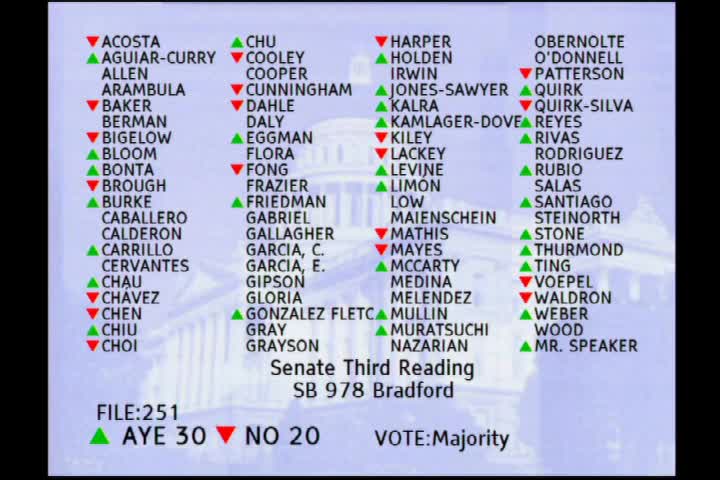 1MIN
Assembly Floor
 1H
Assembly Standing Committee on Appropriations
 3MIN
Assembly Standing Committee on Appropriations
 12MIN
Assembly Standing Committee on Health
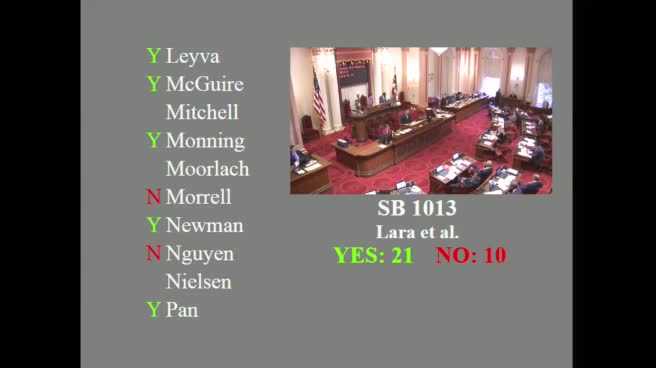 2MIN
Senate Floor
 3MIN
Senate Standing Committee on Appropriations
 15MIN
Senate Standing Committee on Education
Bill Author