SB 1076: Emergency preparedness: electrical utilities: electromagnetic pulse attacks and geomagnetic storm events.
- Session Year: 2017-2018
- House: Senate
- Latest Version Date: 2018-09-11
The California Emergency Services Act creates within the office of the Governor the Office of Emergency Services, which is responsible for the states emergency and disaster response services, as specified. Existing federal law requires a state mitigation plan as a condition for disaster assistance and authorizes the Federal Emergency Management Agency to condition mitigation grant assistance upon state, local, and Indian tribal governments undertaking coordinated disaster mitigation planning and implementation measures.
This bill would require the office to include an evaluation of risks from an electromagnetic pulse attack, a geomagnetic storm event, and from other potential causes of a long-term electrical outage in the next update of the State Hazard Mitigation Plan undertaken to comply with the federal requirements. As necessary, based on that analysis, the bill would require the plan to identify cost-effective and feasible measures to lessen risks from those hazards, including hardening the critical infrastructure of electrical utilities.
The California Emergency Services Act creates within the office of the Governor the Office of Emergency Services, which is responsible for the states emergency and disaster response services, as specified. Existing federal law requires a state mitigation plan as a condition for disaster assistance and authorizes the Federal Emergency Management Agency to condition mitigation grant assistance upon state, local, and Indian tribal governments undertaking coordinated disaster mitigation planning and implementation measures.
This bill would require the office to include an evaluation of risks from an electromagnetic pulse attack, a geomagnetic storm event, and from other potential causes of a long-term electrical outage in the next update of the State Hazard Mitigation Plan undertaken to comply with the federal requirements. The As necessary, based on that analysis, the bill would require the plan to identify cost-effective and feasible measures to lessen risks from those hazards, including hardening the critical infrastructure of electrical utilities.
The California Emergency Services Act creates within the office of the Governor the Office of Emergency Services, which is responsible for the states emergency and disaster response services, as specified. Existing law requires the office to update the State Emergency Plan on or before January 1, 2019, and every 5 years thereafter. federal law requires a state mitigation plan as a condition for disaster assistance and authorizes the Federal Emergency Management Agency to condition mitigation grant assistance upon state, local, and Indian tribal governments undertaking coordinated disaster mitigation planning and implementation measures.
This bill would require the office to update the State Emergency Plan to include cost-effective preparedness recommendations to feasibly harden the critical infrastructure of electrical utilities against include an evaluation of risks from an electromagnetic pulse attack, a geomagnetic storm event, or and from other potential cause causes of a long-term outage. electrical outage in the next update of the State Hazard Mitigation Plan undertaken to comply with the federal requirements. The bill would require the plan to identify cost-effective and feasible measures to lessen risks from those hazards, including hardening the critical infrastructure of electrical utilities.
The California Emergency Services Act creates within the office of the Governor the Office of Emergency Services, which is responsible for the states emergency and disaster response services, as specified. Existing law requires the office to update the State Emergency Plan on or before January 1, 2019, and every 5 years thereafter.
This bill would require the office to update the State Emergency Plan to include cost-effective preparedness recommendations to feasibly harden the critical infrastructure of electrical utilities against an electromagnetic pulse attack, geomagnetic storm event, or other potential cause of a long-term outage.
The California Emergency Services Act creates within the office of the Governor the Office of Emergency Services, which is responsible for the states emergency and disaster response services, as specified. Existing law requires the office to update the State Emergency Plan on or before January 1, 2019, and every 5 years thereafter.
This bill would require the office to update the State Emergency Plan to include preparedness recommendations to harden the critical infrastructure of electrical utilities against an electromagnetic pulse attack, geomagnetic storm event, or other potential cause of a long-term outage.
The California Emergency Services Act creates within the office of the Governor the Office of Emergency Services, which is responsible for the states emergency and disaster response services, as specified. Existing law requires the office to update the State Emergency Plan on or before January 1, 2019, and every 5 years thereafter.
This bill would require the office, in coordination with other relevant state entities and stakeholders, to develop preparedness recommendations to harden the critical infrastructure of electrical utilities against an electromagnetic pulse attack, geomagnetic storm event, or other long-term outage. The bill would require the preparedness recommendations to be posted on the offices Internet Web site and require the office to annually assess each electrical utilitys preparedness. office to update the State Emergency Plan to include preparedness recommendations to harden the critical infrastructure of electrical utilities against an electromagnetic pulse attack, geomagnetic storm event, or other potential cause of a long-term outage.
The California Emergency Services Act creates within the office of the Governor the Office of Emergency Services, which is responsible for the states emergency and disaster response services, as specified.
This bill would require the office, in coordination with other relevant state entities and stakeholders, to develop preparedness recommendations to harden the critical infrastructure of electrical utilities against an electromagnetic pulse attack, geomagnetic storm event, or other long-term outage. The bill would require the preparedness recommendations to be posted on the offices Internet Web site and require the office to annually assess each electrical utilitys preparedness.
Existing law declares the intent of the Legislature to provide the public additional protection through the licensing of motor carriers transporting hazardous material. Existing law authorizes the Department of the California Highway Patrol to inspect and license those motor carriers, with special attention directed to the negligent operators or repeat violators.This bill would make technical, nonsubstantive changes to those provisions.Existing law declares the intent of the Legislature to provide the public additional protection through the licensing of motor carriers transporting hazardous material. Existing law authorizes the Department of the California Highway Patrol to inspect and license those motor carriers, with special attention directed to the negligent operators or repeat violators.
This bill would make technical, nonsubstantive changes to those provisions.
The Legislature finds and declares all of the following:
(a)It is the fundamental role of government to ensure public safety and protect public investments. Modern and effective governance anticipates and defends against natural and manmade threats, including wildfires, earthquakes, terrorist attacks, floods, and cybersecurity.
(b)Years ago, a large burst of energy from the sun called the Carrington Storm struck Earth, destroying telegraph systems across Europe and North America. Telegraph operators received electric shocks and telegraph pylons sparked and failed. Because society in the late 19th century did not depend on electricity, economic consequences were small. However, the solar weather that caused these effects was not a one-off. The sun emits the same kind of energy bursts, known as coronal mass ejections or CMEs, every day. Just like regular weather, this solar weather is usually mild. But roughly once every 150 years, a very strong CME from the sun, like the Carrington Storm, strikes Earth.
(c)Other threats to the electrical system include extreme weather and fires, which are exacerbated by drought and a changing climate. The seriousness of the situation was exemplified in the fall and winter of 2017, with the fires that engulfed the Counties of Napa, Lake, Sonoma, Mendocino, Butte, and Solano in northern California and the Counties of Los Angeles and Ventura in southern California.
(d)Today, Californian society depends on a continual supply of electricity for virtually all of its most basic functions: the delivery of food and water, internet and cellular communications, the provision of basic governmental services, and more. If a long-term outage were to strike California today, as a result of Carrington-level storm or other disaster that could permanently incapacitate vital parts of the electrical grid, the damage would be catastrophic.
(e)Water would stop running, food would stop arriving at the supermarket, telephone lines and traffic lights would fail, and the blackout could last months. Businesses would shut down and cities like Los Angeles would run out of food in a matter of days.
(f)The congressional Commission to Assess the Threat to the United States from Electromagnetic Pulse Attack, which studies the effects of a sustained nationwide blackout, predicted that the loss of electrical power could lead to millions of deaths. Additionally, the National Academy of Sciences predicted a nationwide economic cost of two trillion dollars would result from such an outage.
(g)Experts agree that this threat is a matter of when, not if. The National Aeronautics and Space Administration predicts approximately a one-in-eight chance of a Carrington-level storm striking Earth within the next decade. The odds of an earthquake with a magnitude of at least 6.7 within the next 30 years is 70 percent. On January 25, 2018, the Doomsday Clock, set since 1947 by the Bulletin of the Atomic Scientists, moved to two minutes until midnight, signaling the highest threat level since the height of the arms race in the 1950s. The cost of doing nothing in the face of these looming threats would be colossal. Thankfully, preparing for this problem is technologically and financially feasible.
(h)Yet gridlock and partisanship in Washington, D.C., have prevented comprehensive national action on this issue. Over the past 10 years, Congress has failed to pass the Secure High-voltage Infrastructure for Electricity from Lethal Damage Act (SHIELD Act) and the Grid Reliability and Infrastructure Defense Act (GRID Act). The Federal Energy Regulatory Commission has issued reliability standards that ameliorate the problem, but do not solve it. Where Washington, D.C., fails to protect the American people, it falls to the states to act.
(i)Washingtons inability to act has shifted responsibility to the states. Some states, such as Maine and Virginia, have taken up this mantle and acted to harden their electrical grids. California has the opportunity to do the same, and in doing so, to lead the country and the world yet again in adopting prudent and sensible solutions to create stability for our residents.
(j)Californias innovation and technology leads the world. It is time the state take common sense precautions to protect its people, its business community, and the very fabric of its advanced electrical society from potential disaster.
(k)It is in the public interest to include defense against electromagnetic pulse attacks, geomagnetic storm events, and other disasters in the states preparedness planning because such attacks and events lie within the full range of risks, threats, and hazards confronting the state and are areas of vital concern with regard to the states energy policy and emergency and disaster preparedness.
(l)It is in the public interest to educate Californians about the threat of electromagnetic pulse attacks because an attack could cause a massive loss of electrical supply and disruption to telecommunications and other vital services, including health, safety, food, and transportation services, which depend on a reliable supply of electricity.
(m)It is in the public interest to encourage local governments and private industry to educate themselves on the consequences of electromagnetic pulse attacks, geomagnetic storms, and other disasters, to examine critical vulnerabilities in their infrastructures, and to prepare for the massive disruptions that could be caused by electromagnetic pulse attacks, geomagnetic storms, and other disasters.
SEC. 2.Section 8570.6 is added to the Government Code, to read:8570.6.(a)The Office of Emergency Services shall include in the next update of the State Hazard Mitigation Plan required pursuant to the federal Disaster Mitigation Act of 2000 (Public Law 106-390), within its hazard identification and risk analysis, an evaluation of risks from an electromagnetic pulse attack, a geomagnetic storm event, and from other potential causes of a long-term electrical outage. As necessary, based on that analysis, the plan shall identify cost-effective and feasible measures to lessen risks from those hazards, including, but not limited to, hardening the critical infrastructure of electrical utilities.
(b)Nothing in this section limits the authority or responsibilities of the Public Utilities Commission with respect to disaster and emergency preparedness plans pursuant to Section 768.6 of the Public Utilities Code.
The Legislature finds and declares all of the following:
(a)It is the fundamental role of government to ensure public safety and protect public investments. Modern and effective governance anticipates and defends against natural and manmade threats, including wildfires, earthquakes, terrorist attacks, floods, and cybersecurity.
(b)Years ago, a large burst of energy from the sun called the Carrington Storm struck Earth, destroying telegraph systems across Europe and North America. Telegraph operators received electric shocks and telegraph pylons sparked and failed. Because society in the late 19th century did not depend on electricity, economic consequences were small. However, the solar weather that caused these effects was not a one-off. The sun emits the same kind of energy bursts, known as coronal mass ejections or CMEs, every day. Just like regular weather, this solar weather is usually mild. But roughly once every 150 years, a very strong CME from the sun, like the Carrington Storm, strikes Earth.
(c)Other threats to the electrical system include extreme weather and fires, which are exacerbated by drought and a changing climate. The seriousness of the situation was exemplified in the fall and winter of 2017, with the fires that engulfed the Counties of Napa, Lake, Sonoma, Mendocino, Butte, and Solano in northern California and the Counties of Los Angeles and Ventura in southern California.
(d)Today, Californian society depends on a continual supply of electricity for virtually all of its most basic functions: the delivery of food and water, internet and cellular communications, the provision of basic governmental services, and more. If a long-term outage were to strike California today, as a result of Carrington-level storm or other disaster that could permanently incapacitate vital parts of the electrical grid, the damage would be catastrophic.
(e)Water would stop running, food would stop arriving at the supermarket, telephone lines and traffic lights would fail, and the blackout could last months. Businesses would shut down and cities like Los Angeles would run out of food in a matter of days.
(f)The congressional Commission to Assess the Threat to the United States from Electromagnetic Pulse Attack, which studies the effects of a sustained nationwide blackout, predicted that the loss of electrical power could lead to millions of deaths. Additionally, the National Academy of Sciences predicted a nationwide economic cost of two trillion dollars would result from such an outage.
(g)Experts agree that this threat is a matter of when, not if. The National Aeronautics and Space Administration predicts approximately a one-in-eight chance of a Carrington-level storm striking Earth within the next decade. The odds of an earthquake with a magnitude of at least 6.7 within the next 30 years is 70 percent. On January 25, 2018, the Doomsday Clock, set since 1947 by the Bulletin of the Atomic Scientists, moved to two minutes until midnight, signaling the highest threat level since the height of the arms race in the 1950s. The cost of doing nothing in the face of these looming threats would be colossal. Thankfully, preparing for this problem is technologically and financially feasible.
(h)Yet gridlock and partisanship in Washington Washington, D.C., have prevented comprehensive national action on this issue. Over the past 10 years, Congress has failed to pass the Secure High-Voltage High-voltage Infrastructure for Electricity from Lethal Damages Damage Act (SHIELD Act) and the Grid Reliability and Infrastructure Defense Act (GRID Act). The Federal Energy Regulatory Commission has issued reliability standards that ameliorate the problem, but do not solve it. Where Washington Washington, D.C., fails to protect the American people, it falls to the states to act.
(i)Washingtons inability to act has shifted responsibility to the states. Some states, such as Maine and Virginia, have taken up this mantle and acted to harden their electrical grids. California has the opportunity to do the same, and in doing so, to lead the country and the world yet again in adopting prudent and sensible solutions to create stability for our residents.
(j)Californias innovation and technology leads the world. It is time the state take common sense precautions to protect its people, its business community, and the very fabric of its advanced electrical society from potential disaster.
(k)It is in the public interest to include defense against electromagnetic pulse attacks, geomagnetic storm events, and other disasters in the states preparedness planning because such attacks and events lie within the full range of risks, threats, and hazards confronting the state and are areas of vital concern with regard to the states energy policy and emergency and disaster preparedness.
(l)It is in the public interest to educate Californians about the threat of electromagnetic pulse attacks because an attack could cause a massive loss of electrical supply and disruption to telecommunications and other vital services, including health, safety, food, and transportation services, which depend on a reliable supply of electricity.
(m)It is in the public interest to encourage local governments and private industry to educate themselves on the consequences of electromagnetic pulse attacks, geomagnetic storms, and other disasters, to examine critical vulnerabilities in their infrastructures, and to prepare for the massive disruptions that could be caused by electromagnetic pulse attacks, geomagnetic storms, and other disasters.
SEC. 2.Section 8570.6 is added to the Government Code, to read:8570.6.(a)The Office of Emergency Services shall include in the next update of the State Hazard Mitigation Plan required pursuant to the federal Disaster Mitigation Act of 2000 (Public Law 106-390), within its hazard identification and risk analysis, an evaluation of risks from an electromagnetic pulse attack, a geomagnetic storm event, and from other potential causes of a long-term electrical outage. Based As necessary, based on that analysis, the plan shall identify cost-effective and feasible measures to lessen risks from those hazards, including, but not limited to, hardening the critical infrastructure of electrical utilities.
(b)Nothing in this section limits the authority or responsibilities of the Public Utilities Commission with respect to disaster and emergency preparedness plans pursuant to Section 768.6 of the Public Utilities Code.
The Legislature finds and declares all of the following:
(a)It is the fundamental role of government to ensure public safety and protect public investments. Modern and effective governance anticipates and defends against natural and manmade threats, including wildfires, earthquakes, terrorist attacks, floods, and cybersecurity.
(b)Years ago, a large burst of energy from the sun called the Carrington Storm struck Earth, destroying telegraph systems across Europe and North America. Telegraph operators received electric shocks and telegraph pylons sparked and failed. Because society in the late 19th century did not depend on electricity, economic consequences were small. However, the solar weather that caused these effects was not a one-off. The sun emits the same kind of energy bursts, known as coronal mass ejections or CMEs, every day. Just like regular weather, this solar weather is usually mild. But roughly once every 150 years, a very strong CME from the sun, like the Carrington Storm, strikes Earth.
(c)Other threats to the electrical system include extreme weather and fires, which are exacerbated by drought and a changing climate. The seriousness of the situation was exemplified in the fall and winter of 2017, with the fires that engulfed the Counties of Napa, Lake, Sonoma, Mendocino, Butte, and Solano in northern California and the Counties of Los Angeles and Ventura in southern California.
(d)Today, Californian society depends on a continual supply of electricity for virtually all of its most basic functions: the delivery of food and water, internet and cellular communications, the provision of basic governmental services, and more. If a long-term outage were to strike California today, as a result of Carrington-level storm or other disaster that could permanently incapacitate vital parts of the electrical grid, the damage would be catastrophic.
(e)Water would stop running, food would stop arriving at the supermarket, telephone lines and traffic lights would fail, and the blackout could last months. Businesses would shut down and cities like Los Angeles would run out of food in a matter of days.
(f)The congressional Commission to Assess the Threat to the United States from Electromagnetic Pulse Attack, which studies the effects of a sustained nationwide blackout, predicted that the loss of electrical power could lead to millions of deaths. Additionally, the National Academy of Sciences predicted a nationwide economic cost of two trillion dollars would result from such an outage.
(g)Experts agree that this threat is a matter of when, not if. The National Aeronautics and Space Administration predicts approximately a one-in-eight chance of a Carrington-level storm striking Earth within the next decade. The odds of an earthquake with a magnitude of at least 6.7 within the next 30 years is 70 percent. On January 25, 2018, the Doomsday Clock, set since 1947 by the Bulletin of the Atomic Scientists, moved to two minutes until midnight, signaling the highest threat level since the height of the arms race in the 1950s. The cost of doing nothing in the face of these looming threats would be colossal. Thankfully, preparing for this problem is technologically and financially feasible.
(h)Yet gridlock and partisanship in Washington have prevented comprehensive national action on this issue. Over the past 10 years, Congress has failed to pass the Secure High-Voltage Infrastructure for Electricity from Lethal Damages Act (SHIELD Act) and the Grid Reliability and Infrastructure Defense Act (GRID Act). The Federal Energy Regulatory Commission has issued reliability standards that ameliorate the problem, but do not solve it. Where Washington fails to protect the American people, it falls to the states to act.
(i)Washingtons inability to act has shifted responsibility to the states. Some states, such as Maine and Virginia, have taken up this mantle and acted to harden their electrical grids. California has the opportunity to do the same, and in doing so, to lead the country and the world yet again in adopting prudent and sensible solutions to create stability for our residents.
(j)Californias innovation and technology leads the world. It is time the state take common sense precautions to protect its people, its business community, and the very fabric of its advanced electrical society from potential disaster.
(k)It is in the public interest to include defense against electromagnetic pulse attacks, geomagnetic storm events, and other disasters in the states preparedness planning because such attacks and events lie within the full range of risks, threats, and hazards confronting the state and are areas of vital concern with regard to the states energy policy and emergency and disaster preparedness.
(l)It is in the public interest to educate Californians about the threat of electromagnetic pulse attacks because an attack could cause a massive loss of electrical supply and disruption to telecommunications and other vital services, including health, safety, food, and transportation services, which depend on a reliable supply of electricity.
(m)It is in the public interest to encourage local governments and private industry to educate themselves on the consequences of electromagnetic pulse attacks, geomagnetic storms, and other disasters, to examine critical vulnerabilities in their infrastructures, and to prepare for the massive disruptions that could be caused by electromagnetic pulse attacks, geomagnetic storms, and other disasters.
SEC. 2.Section 8570.6 is added to the Government Code, to read:8570.6.(a)The Office of Emergency Services shall update the State Emergency Plan to include cost-effective preparedness recommendations to feasibly harden the critical infrastructure of electrical utilities against include in the next update of the State Hazard Mitigation Plan required pursuant to the federal Disaster Mitigation Act of 2000 (Public Law 106-390), within its hazard identification and risk analysis, an evaluation of risks from an electromagnetic pulse attack, a geomagnetic storm event, or and from other potential cause causes of a long-term electrical outage. Based on that analysis, the plan shall identify cost-effective and feasible measures to lessen risks from those hazards, including, but not limited to, hardening the critical infrastructure of electrical utilities.
(b)Nothing in this section limits the authority or responsibilities of the Public Utilities Commission with respect to disaster and emergency preparedness plans pursuant to Section 768.6 of the Public Utilities Code.
The Legislature finds and declares all of the following:
(a)It is the fundamental role of government to ensure public safety and protect public investments. Modern and effective governance anticipates and defends against natural and manmade threats, including wildfires, earthquakes, terrorist attacks, floods, and cybersecurity.
(b)Years ago, a large burst of energy from the sun called the Carrington Storm struck Earth, destroying telegraph systems across Europe and North America. Telegraph operators received electric shocks and telegraph pylons sparked and failed. Because society in the late 19th century did not depend on electricity, economic consequences were small. However, the solar weather that caused these effects was not a one-off. The sun emits the same kind of energy bursts, known as coronal mass ejections or CMEs, every day. Just like regular weather, this solar weather is usually mild. But roughly once every 150 years, a very strong CME from the sun, like the Carrington Storm, strikes Earth.
(c)Other threats to the electrical system include extreme weather and fires, which are exacerbated by drought and a changing climate. The seriousness of the situation was exemplified in the fall and winter of 2017, with the fires that engulfed the Counties of Napa, Lake, Sonoma, Mendocino, Butte, and Solano in northern California and the Counties of Los Angeles and Ventura in southern California.
(d)Today, Californian society depends on a continual supply of electricity for virtually all of its most basic functions: the delivery of food and water, internet and cellular communications, the provision of basic governmental services, and more. If a long-term outage were to strike California today, as a result of Carrington-level storm or other disaster that could permanently incapacitate vital parts of the electrical grid, the damage would be catastrophic.
(e)Water would stop running, food would stop arriving at the supermarket, telephone lines and traffic lights would fail, and the blackout could last months. Businesses would shut down and cities like Los Angeles would run out of food in a matter of days.
(f)The congressional Commission to Assess the Threat to the United States from Electromagnetic Pulse Attack, which studies the effects of a sustained nationwide blackout, predicted that the loss of electrical power could lead to millions of deaths. Additionally, the National Academy of Sciences predicted a nationwide economic cost of two trillion dollars would result from such an outage.
(g)Experts agree that this threat is a matter of when, not if. The National Aeronautics and Space Administration predicts approximately a one-in-eight chance of a Carrington-level storm striking Earth within the next decade. The odds of an earthquake with a magnitude of at least 6.7 within the next 30 years is 70 percent. On January 25, 2018, the Doomsday Clock, set since 1947 by the Bulletin of the Atomic Scientists, moved to two minutes until midnight, signaling the highest threat level since the height of the arms race in the 1950s. The cost of doing nothing in the face of these looming threats would be colossal. Thankfully, preparing for this problem is technologically and financially feasible.
(h)Yet over the past 10 years, gridlock and partisanship in Washington have stalled national action on this issue. And while Washington repeatedly fails to protect the American people from these threats, the inevitable draws ever closer.
(h)Yet gridlock and partisanship in Washington have prevented comprehensive national action on this issue. Over the past 10 years, Congress has failed to pass the Secure High-Voltage Infrastructure for Electricity from Lethal Damages Act (SHIELD Act) and the Grid Reliability and Infrastructure Defense Act (GRID Act). The Federal Energy Regulatory Commission has issued reliability standards that ameliorate the problem, but do not solve it. Where Washington fails to protect the American people, it falls to the states to act.
(i) Washingtons inability to act has shifted responsibility to the states. Some states, such as Maine and Virginia, have taken up this mantle and acted to harden their electrical grids. California has the opportunity to do the same, and in doing so, to lead the country and the world yet again in adopting prudent and sensible solutions to create stability for our residents.
(j) Californias innovation and technology leads the world. It is time the state take common sense precautions to protect its people, its business community, and the very fabric of its advanced electrical society from potential disaster.
(k) It is in the public interest to include defense against electromagnetic pulse attacks, geomagnetic storm events, and other disasters in the states preparedness planning because such attacks and events lie within the full range of risks, threats, and hazards confronting the state and are areas of vital concern with regard to the states energy policy and emergency and disaster preparedness.
(l) It is in the public interest to educate Californians about the threat of electromagnetic pulse attacks because an attack could cause a massive loss of electrical supply and disruption to telecommunications and other vital services, including health, safety, food, and transportation services, which depend on a reliable supply of electricity.
(m) It is in the public interest to encourage local governments and private industry to educate themselves on the consequences of electromagnetic pulse attacks, geomagnetic storms, and other disasters, to examine critical vulnerabilities in their infrastructures, and to prepare for the massive disruptions that could be caused by electromagnetic pulse attacks, geomagnetic storms, and other disasters.
SEC. 2.Section 8570.6 is added to the Government Code, to read:8570.6.(a)The Office of Emergency Services shall update the State Emergency Plan to include cost-effective preparedness recommendations to feasibly harden the critical infrastructure of electrical utilities against an electromagnetic pulse attack, geomagnetic storm event, or other potential cause of a long-term outage.
(b)Nothing in this section limits the authority or responsibilities of the Public Utilities Commission with respect to disaster and emergency preparedness plans pursuant to Section 768.6 of the Public Utilities Code.
The Legislature finds and declares all of the following:
(a)It is the fundamental role of government to ensure public safety and protect public investments. Modern and effective governance anticipates and defends against natural and manmade threats, including wildfires, earthquakes, terrorist attacks, floods, and cybersecurity.
(b)Years ago, a large burst of energy from the sun called the Carrington Storm struck Earth, destroying telegraph systems across Europe and North America. Telegraph operators received electric shocks and telegraph pylons sparked and failed. Because society in the late 19th century did not depend on electricity, economic consequences were small. However, the solar weather that caused these effects was not a one-off. The sun emits the same kind of energy bursts, known as coronal mass ejections or CMEs, every day. Just like regular weather, this solar weather is usually mild. But roughly once every 150 years, a very strong CME from the sun, like the Carrington Storm, strikes Earth.
(c)Other threats to the electrical system include extreme weather and fires, which are exacerbated by drought and a changing climate. The seriousness of the situation was exemplified in the fall and winter of 2017, with the fires that engulfed the Counties of Napa, Lake, Sonoma, Mendocino, Butte, and Solano in northern California and the Counties of Los Angeles and Ventura in southern California.
(d)Today, Californian society depends on a continual supply of electricity for virtually all of its most basic functions: the delivery of food and water, internet and cellular communications, the provision of basic governmental services, and more. If a long-term outage were to strike California today, as a result of Carrington-level storm or other disaster that could permanently incapacitate vital parts of the electrical grid, the damage would be catastrophic.
(e)Water would stop running, food would stop arriving at the supermarket, telephone lines and traffic lights would fail, and the blackout could last months. Businesses would shut down and cities like Los Angeles would run out of food in a matter of days.
(f)The congressional Commission to Assess the Threat to the United States from Electromagnetic Pulse Attack, which studies the effects of a sustained nationwide blackout, predicted that the loss of electrical power could lead to millions of deaths. Additionally, the National Academy of Sciences predicted a nationwide economic cost of two trillion dollars would result from such an outage.
(g)Experts agree that this threat is a matter of when, not if. The National Aeronautics and Space Administration predicts approximately a one-in-eight chance of a Carrington-level storm striking Earth within the next decade. The odds of an earthquake with a magnitude of at least 6.7 within the next 30 years is 70 percent. On January 25, 2018, the Doomsday Clock, set since 1947 by the Bulletin of the Atomic Scientists, moved to two minutes until midnight, signaling the highest threat level since the height of the arms race in the 1950s. The cost of doing nothing in the face of these looming threats would be colossal. Thankfully, preparing for this problem is technologically and financially feasible.
(h)Yet over the past 10 years, gridlock and partisanship in Washington have stalled national action on this issue. And while Washington repeatedly fails to protect the American people from these threats, the inevitable draws ever closer.
(i)Washingtons inability to act has shifted responsibility to the states. Some states, such as Maine and Virginia, have taken up this mantle and acted to harden their electrical grids. California has the opportunity to do the same, and in doing so, to lead the country and the world yet again in adopting prudent and sensible solutions to create stability for our residents.
(j)Californias innovation and technology leads the world. It is time the state take common sense precautions to protect its people, its business community, and the very fabric of its advanced electrical society from potential disaster.
(k)It is in the public interest to include defense against electromagnetic pulse attacks, geomagnetic storm events, and other disasters in the states preparedness planning because such attacks and events lie within the full range of risks, threats, and hazards confronting the state and are areas of vital concern with regard to the states energy policy and emergency and disaster preparedness.
(l)It is in the public interest to educate Californians about the threat of electromagnetic pulse attacks because an attack could cause a massive loss of electrical supply and disruption to telecommunications and other vital services, including health, safety, food, and transportation services, which depend on a reliable supply of electricity.
(m)It is in the public interest to encourage local governments and private industry to educate themselves on the consequences of electromagnetic pulse attacks, geomagnetic storms, and other disasters, to examine critical vulnerabilities in their infrastructures, and to prepare for the massive disruptions that could be caused by electromagnetic pulse attacks, geomagnetic storms, and other disasters.
SEC. 2.Section 8570.6 is added to the Government Code, to read:8570.6.(a)For purposes of this section, electrical utility means an electrical corporation, local publicly owned electric utility, or electrical cooperative, as respectively defined in Sections 218, 224.3, and 2776 of the Public Utilities Code, that serves retail end-use customers in California.(b)8570.6.(a)The Office of Emergency Services shall update the State Emergency Plan to include preparedness recommendations to harden the critical infrastructure of electrical utilities against an electromagnetic pulse attack, geomagnetic storm event, or other potential cause of a long-term outage.
(c)(b)Nothing in this section limits the authority or responsibilities of the Public Utilities Commission with respect to disaster and emergency preparedness plans pursuant to Section 768.6 of the Public Utilities Code.
The Legislature finds and declares all of the following:
(a)It is the fundamental role of government to ensure public safety and protect public investments. Modern and effective governance anticipates and defends against natural and manmade threats, including wildfires, earthquakes, terrorist attacks, floods, and cybersecurity.
(b)Years ago, a large burst of energy from the sun called the Carrington Storm struck Earth, destroying telegraph systems across Europe and North America. Telegraph operators received electric shocks and telegraph pylons sparked and failed. Because society in the late 19th century did not depend on electricity, economic consequences were small. However, the solar weather that caused these effects was not a one-off. The sun emits the same kind of energy bursts, known as coronal mass ejections or CMEs, every day. Just like regular weather, this solar weather is usually mild. But roughly once every 150 years, a very strong CME from the sun, like the Carrington Storm, strikes Earth.
(c)Other threats to the electrical system include extreme weather and fires, which are exacerbated by drought and a changing climate. The seriousness of the situation was exemplified in the fall and winter of 2017, with the fires that engulfed the Counties of Napa, Lake, Sonoma, Mendocino, Butte, and Solano in northern California and the Counties of Los Angeles and Ventura in southern California.
(d)Today, Californian society depends on a continual supply of electricity for virtually all of its most basic functions: the delivery of food and water, internet and cellular communications, the provision of basic governmental services, and more. If a long-term outage were to strike California today, as a result of Carrington-level storm or other disaster that could permanently incapacitate vital parts of the electrical grid, the damage would be catastrophic.
(e)Water would stop running, food would stop arriving at the supermarket, telephone lines and traffic lights would fail, and the blackout could last months. Businesses would shut down and cities like Los Angeles would run out of food in a matter of days.
(f)The congressional Commission to Assess the Threat to the United States from Electromagnetic Pulse Attack, which studies the effects of a sustained nationwide blackout, predicted that the loss of electrical power could lead to millions of deaths. Additionally, the National Academy of Sciences predicted a nationwide economic cost of two trillion dollars would result from such an outage.
(g)Experts agree that this threat is a matter of when, not if. The National Aeronautics and Space Administration predicts approximately a one-in-eight chance of a Carrington-level storm striking Earth within the next decade. The odds of an earthquake with a magnitude of at least 6.7 within the next 30 years is 70 percent. On January 25, 2018, the Doomsday Clock, set since 1947 by The the Bulletin of the Atomic Scientists, moved to two minutes until midnight, signaling the highest threat level since the height of the arms race in the 1950s. The cost of doing nothing in the face of these looming threats would be colossal. Thankfully, preparing for this problem is technologically and financially feasible.
(h)Yet over the past 10 years, gridlock and partisanship in Washington have stalled national action on this issue. And while Washington repeatedly fails to protect the American people from these threats, the inevitable draws ever closer.
(i)Washingtons inability to act has shifted responsibility to the states. Some states, such as Maine and Virginia, have taken up this mantle and acted to harden their electrical grids. California has the opportunity to do the same, and in doing so, to lead the country and the world yet again in adopting prudent and sensible solutions to create stability for our residents.
(j)Californias innovation and technology leads the world. It is time the state take common sense precautions to protect its people, its business community, and the very fabric of its advanced electrical society from potential disaster.
(k)It is in the public interest to include defense against electromagnetic pulse attacks, geomagnetic storm events, and other disasters in the states preparedness planning because such attacks and events lie within the full range of risks, threats, and hazards confronting the state and are areas of vital concern with regard to the states energy policy and emergency and disaster preparedness.
(l)It is in the public interest to educate Californians about the threat of electromagnetic pulse attacks because an attack could cause a massive loss of electrical supply and disruption to telecommunications and other vital services, including health, safety, food, and transportation services, which depend on a reliable supply of electricity.
(m)It is in the public interest to encourage local governments and private industry to educate themselves on the consequences of electromagnetic pulse attacks, geomagnetic storms, and other disasters, to examine critical vulnerabilities in their infrastructures, and to prepare for the massive disruptions that could be caused by electromagnetic pulse attacks, geomagnetic storms, and other disasters.
SEC. 2.Section 8586.5 8570.6 is added to the Government Code, to read:8586.5.8570.6.(a)For purposes of this section, electrical utility means an electrical corporation, local publicly owned electric utility, or electrical cooperative, as respectively defined in Sections 218, 224.3, and 2776 of the Public Utilities Code, that serves retail end-use customers in California.
(b)The office, in coordination with other relevant state entities and stakeholders, shall develop preparedness recommendations to harden electrical utilities critical infrastructure against an electromagnetic pulse attack, geomagnetic storm event, or other long-term outage. The preparedness recommendations shall be posted on the offices Internet Web site. The office shall annually assess each electrical utilitys preparedness.(b)The Office of Emergency Services shall update the State Emergency Plan to include preparedness recommendations to harden the critical infrastructure of electrical utilities against an electromagnetic pulse attack, geomagnetic storm event, or other potential cause of a long-term outage.
(c)Nothing in this section limits the authority or responsibilities of the Public Utilities Commission with respect to disaster and emergency preparedness plans pursuant to Section 768.6 of the Public Utilities Code.
The Legislature finds and declares all of the following:
(a)It is the fundamental role of government to ensure public safety and protect public investments. Modern and effective governance anticipates and defends against natural and manmade threats, including wildfires, earthquakes, terrorist attacks, floods, and cybersecurity.
(b)Years ago, a large burst of energy from the sun called the Carrington Storm struck Earth, destroying telegraph systems across Europe and North America. Telegraph operators received electric shocks and telegraph pylons sparked and failed. Because society in the late 19th century did not depend on electricity, economic consequences were small. However, the solar weather that caused these effects was not a one-off. The sun emits the same kind of energy bursts, known as coronal mass ejections or CMEs, every day. Just like regular weather, this solar weather is usually mild. But roughly once every 150 years, a very strong CME from the sun, like the Carrington Storm, strikes Earth.
(c)Other threats to the electrical system include extreme weather and fires, which are exacerbated by drought and a changing climate. The seriousness of the situation was exemplified in the fall and winter of 2017, with the fires that engulfed the Counties of Napa, Lake, Sonoma, Mendocino, Butte, and Solano in northern California and the Counties of Los Angeles and Ventura in southern California.
(d)Today, Californian society depends on a continual supply of electricity for virtually all of its most basic functions: the delivery of food and water, internet and cellular communications, the provision of basic governmental services, and more. If a long-term outage were to strike California today, as a result of Carrington-level storm or other disaster that could permanently incapacitate vital parts of the electrical grid, the damage would be catastrophic.
(e)Water would stop running, food would stop arriving at the supermarket, telephone lines and traffic lights would fail, and the blackout could last months. Businesses would shut down and cities like Los Angeles would run out of food in a matter of days.
(f)The congressional Commission to Assess the Threat to the United States from Electromagnetic Pulse Attack, which studies the effects of a sustained nationwide blackout, predicted that the loss of electrical power could lead to millions of deaths. Additionally, the National Academy of Sciences predicted a nationwide economic cost of two trillion dollars would result from such an outage.
(g)Experts agree that this threat is a matter of when, not if. The National Aeronautics and Space Administration predicts approximately a one-in-eight chance of a Carrington-level storm striking Earth within the next decade. The odds of an earthquake with a magnitude of at least 6.7 within the next 30 years is 70 percent. On January 25, 2018, the Doomsday Clock, set since 1947 by The Bulletin of the Atomic Scientists, moved to two minutes until midnight, signaling the highest threat level since the height of the arms race in the 1950s. The cost of doing nothing in the face of these looming threats would be colossal. Thankfully, preparing for this problem is technologically and financially feasible.
(h)Yet over the past 10 years, gridlock and partisanship in Washington have stalled national action on this issue. And while Washington repeatedly fails to protect the American people from these threats, the inevitable draws ever closer.
(i)Washingtons inability to act has shifted responsibility to the states. Some states, such as Maine and Virginia, have taken up this mantle and acted to harden their electrical grids. California has the opportunity to do the same, and in doing so, to lead the country and the world yet again in adopting prudent and sensible solutions to create stability for our residents.
(j)Californias innovation and technology leads the world. It is time the state take common sense precautions to protect its people, its business community, and the very fabric of its advanced electrical society from potential disaster.
(k)It is in the public interest to include defense against electromagnetic pulse attacks, geomagnetic storm events, and other disasters in the states preparedness planning because such attacks and events lie within the full range of risks, threats, and hazards confronting the state and are areas of vital concern with regard to the states energy policy and emergency and disaster preparedness.
(l)It is in the public interest to educate Californians about the threat of electromagnetic pulse attacks because an attack could cause a massive loss of electrical supply and disruption to telecommunications and other vital services, including health, safety, food, and transportation services, which depend on a reliable supply of electricity.
(m)It is in the public interest to encourage local governments and private industry to educate themselves on the consequences of electromagnetic pulse attacks, geomagnetic storms, and other disasters, to examine critical vulnerabilities in their infrastructures, and to prepare for the massive disruptions that could be caused by electromagnetic pulse attacks, geomagnetic storms, and other disasters.
SEC. 2.Section 8586.5 is added to the Government Code, to read:8586.5.(a)For purposes of this section, electrical utility means an electrical corporation, local publicly owned electric utility, or electrical cooperative, as respectively defined in Sections 218, 224.3, and 2776 of the Public Utilities Code, that serves retail end-use customers in California.
(b)The office, in coordination with other relevant state entities and stakeholders, shall develop preparedness recommendations to harden electrical utilities critical infrastructure against an electromagnetic pulse attack, geomagnetic storm event, or other long-term outage. The preparedness recommendations shall be posted on the offices Internet Web site. The office shall annually assess each electrical utilitys preparedness.
(c)Nothing in this section limits the authority or responsibilities of the Public Utilities Commission with respect to disaster and emergency preparedness plans pursuant to Section 768.6 of the Public Utilities Code.
SECTION 1.Section 32000 of the Vehicle Code is amended to read:32000.It is the intent of the Legislature, by enacting this division, to provide the public additional protection through the licensing of motor carriers transporting hazardous material. The Department of the California Highway Patrol is authorized to inspect and license those motor carriers, with special attention directed to the negligent operators or repeat violators.It is the intent of the Legislature, by enacting this division, that the public be provided to provide the public additional protection through the licensing of motor carriers transporting hazardous material. The Department of the California Highway Patrol shall be is authorized to inspect and license the motor carriers those motor carriers, with special attention directed to the negligent operators or repeat violators.
|
Date
|
Status
|
|---|---|
| Sep 11, 2018 | Chaptered by Secretary of State. Chapter 353, Statutes of 2018. |
| Sep 11, 2018 | Approved by the Governor. |
| Aug 30, 2018 | Enrolled and presented to the Governor at 5 p.m. |
| Aug 24, 2018 | Assembly amendments concurred in. (Ayes 39. Noes 0.) Ordered to engrossing and enrolling. |
| Aug 23, 2018 | In Senate. Concurrence in Assembly amendments pending. |
| Aug 23, 2018 | Read third time. Passed. Ordered to the Senate. |
| Aug 16, 2018 | Read third time and amended. |
| Aug 14, 2018 | Read second time. Ordered to third reading. |
| Aug 13, 2018 | Read second time and amended. Ordered to second reading. |
| Aug 9, 2018 | From committee: Do pass as amended. (Ayes 17. Noes 0.) (August 8). |
| Jul 5, 2018 | Read second time and amended. Re-referred to Com. on APPR. |
| Jul 3, 2018 | From committee: Do pass as amended and re-refer to Com. on APPR. (Ayes 19. Noes 0.) (June 28). |
| Jun 21, 2018 | From committee with author's amendments. Read second time and amended. Re-referred to Com. on G.O. |
| Jun 14, 2018 | Referred to Com. on G.O. |
| May 29, 2018 | In Assembly. Read first time. Held at Desk. |
| May 29, 2018 | Read third time. Passed. (Ayes 38. Noes 0.) Ordered to the Assembly. |
| May 21, 2018 | Read second time. Ordered to third reading. |
| May 17, 2018 | Read third time and amended. |
| May 15, 2018 | Read second time. Ordered to third reading. |
| May 14, 2018 | From committee: Be ordered to second reading pursuant to Senate Rule 28.8. |
| May 4, 2018 | Set for hearing May 14. |
| Apr 30, 2018 | Read second time and amended. Re-referred to Com. on APPR. |
| Apr 26, 2018 | From committee: Do pass as amended and re-refer to Com. on APPR. (Ayes 12. Noes 0.) (April 24). |
| Apr 17, 2018 | Set for hearing April 24. |
| Apr 4, 2018 | Re-referred to Com. on G.O. |
| Mar 19, 2018 | From committee with author's amendments. Read second time and amended. Re-referred to Com. on RLS. |
| Feb 22, 2018 | Referred to Com. on RLS. |
| Feb 13, 2018 | From printer. May be acted upon on or after March 15. |
| Feb 12, 2018 | Introduced. Read first time. To Com. on RLS. for assignment. To print. |
|
Date
|
Description
|
Location
|
Votes
|
|
|---|---|---|---|---|
| Aug 24, 2018 | Unfinished Business SB1076 Hertzberg et al. Concurrence | Senate Floor |
Passed |
|
| Aug 23, 2018 | SB 1076 Hertzberg Senate Third Reading By RIVAS | Assembly Floor |
Passed |
|
| Aug 8, 2018 | Do pass as amended. | Assembly Standing Committee on Appropriations |
Passed |
|
| Jun 28, 2018 | Do pass as amended and be re-referred to the Committee on [Appropriations] | Assembly Standing Committee on Governmental Organization |
Passed |
|
| May 29, 2018 | Senate 3rd Reading SB1076 Hertzberg et al. | Senate Floor |
Passed |
|
| Apr 24, 2018 | Do pass as amended, but first amend, and re-refer to the Committee on [Appropriations] | Senate Standing Committee on Governmental Organization |
Passed |
This list shows positions taken on this bill by organizations on the date displayed, which is linked to the original source.
Positions by individuals are not included.
|
Organization
|
Position
|
Date
|
|---|---|---|
| The Utility Reform Network | ** Against | May 16, 2018 |
Office of Senate Floor Analyses (916) 651-1520 Fax: (916) 327-4478 | SB |
UNFINISHED BUSINESS
Bill No: SB 1076
:
SENATE GOVERNMENTAL ORG. COMMITTEE: 12-0, 4/24/18
AYES: Dodd, Wilk, Bradford, Cannella, Gaines, Galgiani, Glazer, Hill, Hueso, Lara, Portantino, Vidak
SENATE APPROPRIATIONS COMMITTEE: Senate Rule 28.8
SENATE FLOOR: 38-0, 5/29/18
AYES: Allen, Anderson, Atkins, Bates, Beall, Bradford, Cannella, De León, Dodd, Fuller, Gaines, Galgiani, Glazer, Hernandez, Hertzberg, Hill, Hueso, Jackson, Lara, Leyva, McGuire, Mitchell, Monning, Moorlach, Morrell, Newman, Nguyen, Nielsen, Pan, Portantino, Roth, Skinner, Stern, Stone, Vidak, Wieckowski, Wiener, Wilk
NO VOTE RECORDED: Berryhill
ASSEMBLY FLOOR: 79-0, 8/23/18 - See last page for vote
DIGEST:
This bill requires the Office of Emergency Services (OES) to develop preparedness recommendations to harden the critical infrastructure of the electrical utilities against an electromagnetic pulse (EMP) attack, geomagnetic storm event, or other long-term outage.
Assembly Amendments
require OES to include the recommendations in the next update of the State Hazard Mitigation Plan, rather than in the State Emergency Plan.
Existing law:
- Establishes OES in the office of the Governor and provides that OES is responsible for the state’s emergency and disaster response services for natural, technological, or manmade disasters and emergencies.
- Specifies those events constituting a state or local emergency, and provides for specified activities in preparation for, or response to, those events.
- Requires OES to perform a variety of duties with respect to specified emergency preparedness, mitigation, and response activities in the state.
- Establishes the California Public Utilities Commission (CPUC), and requires the CPUC to establish standards for disaster and emergency preparedness plans, including, but not limited to, methods of working to control and mitigate an emergency or disaster and its aftereffects.
This bill:
- Requires OES to include in its next update of the State Hazard Mitigation Plan, within its hazard identification and risk analysis, an evaluation of risks from an EMP attack, a geomagnetic storm event, and from other potential causes of a long-term electrical outage.
- Requires OES, as necessary and based on the evaluation required pursuant to this bill, to identify cost-effective and feasible measures to lessen risks from those hazards, including, but not limited to, hardening the critical infrastructure of electrical utilities.
- Specifies that nothing in this bill limits the authority or responsibilities of the CPUC with respect to disaster and emergency preparedness plans.
- Makes legislative findings and declarations.
Background
EMP attack. An EMP is a burst of electromagnetic radiation caused by a nuclear explosion. Although the likelihood of such an attack remains low, an EMP could cause electromagnetic “shocking” of electronics and cause stressing of our electrical systems. According to the federal Commission to Assess the Threat to the United States from EMP Attack (Commission), the electromagnetic fields produced by weapons designed to produce EMP have a high likelihood of damaging our electrical power systems, electronics, and information systems upon which American society depends. Depending on the size and specifics of the attack, unprecedented failures of major infrastructure could result.
Geomagnetic storm events. A geomagnetic storm, commonly referred to as a solar storm, is a disturbance of the Earth’s magnetosphere caused by a solar wind shock wave that interacts with the Earth’s magnetic field. Like regular weather, most of these storms are mild, but occasionally an unusually strong storm can strike Earth. The biggest solar storm on record occurred in 1859, named the Carrington Event, and was strong enough that telegraph operators reported sparks leaping from their equipment – some bad enough to set fires. Scientists predict that if a similar storm were to hit Earth today, power surges caused by solar particles could blow out giant transformers, potentially leaving cities without power for weeks, months, or even a year.
According to the Commission, EMP attacks and solar storms pose a potentially serious problem for our current electrical power grid; however, it is one that can be reduced below the level of a catastrophic consequence through focused effort coordinated between industry and government. To best prepare for a possible long-term outage, the Commission recommends identifying effective and necessary modifications and additions to the current electrical system, and to conduct in-depth research development on system vulnerabilities. The author points out that California currently has no recommendation in place for how electrical utilities can prepare for such an event, and there is no current evaluation of how prepared utilities are to handle these events.
California State Hazard Mitigation Plan. The State Hazard Mitigation Plan represents the state’s primary hazard mitigation guidance document – providing an updated analysis of the state’s historical and current hazards, hazard mitigation goals and objectives, and hazard mitigation strategies and actions. The plan is required to meet the elements outlined in the Federal Emergency Management Agency’s State Mitigation Plan Review Guide (revised March 2015, effective March 2016). Upon approval, the state’s plan is then adopted by the State for implementation for the next five years.
Comments
Purpose of the bill. According to the author, “California has evolved as an economy over the last century. Going from a manufacturing economy to a services-based economy has created a crucial need for a sustainable energy source. Centuries ago, Europe and North America were struck by a large burst of energy from the Sun, known as the ‘Carrington Storm,’ which caused telegraph systems to fail. In our modern economy, we need to prioritize preparation for a similar event occurring. We need electric utilities to be prepared because long periods without electricity in California would result in billions of dollars of economic activity.”
Related/Prior Legislation
SB 901 (Dodd, 2018) requires a wildfire mitigation plan prepared by an electrical corporation, publicly owned electric utility, or electrical cooperative to include protocols to determine when it may be necessary to de-energize its electrical lines and deactivate its reclosers, as specified. (Pending in the Conference Committee)
SJR 20 (Hertzberg, Resolution Chapter 130, Statutes of 2018) urged Congress and the President of the United States to work together to implement electrical grid hardening measures and to help ensure our nation’s critical electrical infrastructure is protected from threats from EMPs and physical attacks on the infrastructure.
SB 370 (Hertzberg, 2017) would have declared the intent of the Legislature to enact legislation that would protect California ratepayers, businesses, and infrastructure from a catastrophe such as the Carrington Event. (Held in the Senate Appropriations Committee)
FISCAL EFFECT: Appropriation: Fiscal Com.: Local:
According to the Assembly Appropriations Committee, there are no additional state costs.
None received
OPPOSITION: (Verified 8/23/18)
None received
ASSEMBLY FLOOR: 79-0, 8/23/18
AYES: Acosta, Aguiar-Curry, Arambula, Baker, Berman, Bigelow, Bloom, Bonta, Brough, Burke, Caballero, Calderon, Carrillo, Cervantes, Chau, Chávez, Chen, Chiu, Choi, Chu, Cooley, Cooper, Cunningham, Dahle, Daly, Eggman, Flora, Fong, Frazier, Friedman, Gabriel, Gallagher, Cristina Garcia, Eduardo Garcia, Gipson, Gloria, Gonzalez Fletcher, Gray, Grayson, Harper, Holden, Irwin, Jones-Sawyer, Kalra, Kamlager-Dove, Kiley, Lackey, Levine, Limón, Low, Maienschein, Mathis, Mayes, McCarty, Medina, Melendez, Mullin, Muratsuchi, Nazarian, Obernolte, O'Donnell, Patterson, Quirk, Quirk-Silva, Reyes, Rivas, Rodriguez, Rubio, Salas, Santiago, Steinorth, Mark Stone, Thurmond, Ting, Voepel, Waldron, Weber, Wood, Rendon
NO VOTE RECORDED: Travis Allen
8/23/18 17:15:55
SENATE THIRD READING
STR Bill Id:SB 1076
Author:(Hertzberg)
As Amended Ver:August 13, 2018
Majority vote
SENATE VOTE: 38-0
Committee | Votes | Ayes | Noes |
Governmental Organization | 19-0 | Gray, Bigelow, Acosta, Aguiar-Curry, Bonta, Cooley, Cooper, Daly, Gallagher, Eduardo Garcia, Gipson, Jones-Sawyer, Kiley, Lackey, Levine, Low, Rubio, Salas, Waldron | |
Appropriations | 17-0 | Gonzalez Fletcher, Bigelow, Bloom, Bonta, Brough, Calderon, Carrillo, Chau, Eggman, Fong, Friedman, Gallagher, Eduardo Garcia, Nazarian, Obernolte, Quirk, Reyes |
SUMMARY: Requires the Governor's Office of Emergency Services (CalOES) to develop preparedness recommendations to harden the critical infrastructure of electrical utilities against an electromagnetic pulse (EMP) attack, geomagnetic storm event, or other long-term outage. Specifically, this bill:
- Requires CalOES to include in the next update of the State Hazard Mitigation Plan required pursuant to the federal Disaster Mitigation Act of 2000 (Public Law 106-390), within its hazard identification and risk analysis, an evaluation of risks from an electromagnetic pulse attack, a geomagnetic storm event, and from other potential causes of a long-term electrical outage. Based on that analysis, the plan shall identify cost-effective and feasible measures to lessen risks from those hazards, including, but not limited to, hardening the critical infrastructure of electrical utilities.
- Clarifies that nothing in the bill limits the authority or responsibilities of the California Utilities Commission (CPUC) with respect to its disaster and emergency preparedness plans.
- Makes legislative findings and declarations pertaining to the threat that EMP attacks, geomagnetic storms, and other disasters pose to vital parts of California's electrical grid.
EXISTING LAW:
- Establishes CalOES in the office of the Governor and provides that OES is responsible for the state's emergency and disaster response services for natural, technological, or manmade disasters and emergencies.
- Specifies those events constituting a state or local emergency, and provides for specified activities in preparation for, or response to, those events.
- Requires CalOES to perform a variety of duties with respect to specified emergency preparedness, mitigation, and response activities in the state.
- Establishes the California Public Utilities Commission (CPUC), and requires the CPUC to establish standards for disaster and emergency preparedness plans, including but not limited to methods of working to control and mitigate an emergency or disaster and its aftereffects.
FISCAL EFFECT: According to the Assembly Appropriations Committee, this bill would add no additional state costs.
COMMENTS:
Purpose of the bill: According to the author, "California has evolved as an economy over the last century. Going from a manufacturing economy to a services-based economy has created a crucial need for a sustainable energy source. Centuries ago, Europe and North America were struck by a large burst of energy from the Sun, known as the "Carrington Storm," which caused telegraph systems to fail. In our modern economy, we need to prioritize preparation for a similar event occurring. We need electric utilities to be prepared because long periods without electricity in California would result in billions of dollars of economic activity."
Background: An EMP is a burst of electromagnetic radiation caused by a nuclear explosion. Although the likelihood of such an attack remains low, if an EMP could cause electromagnetic "shocking" of electronics and cause stressing of our electrical systems. According to the federal Commission to Assess the Threat to the United States from EMP Attack (Commission), the electromagnetic fields produced by weapons designed to produce EMP have a high likelihood of damaging our electrical power systems, electronics, and information systems upon which American society depends. Depending on the size and specifics of the attack, unprecedented failures of major infrastructure could result.
A geomagnetic storm, commonly referred to as a solar storm, is a disturbance of the Earth's magnetosphere caused by a solar wind shock wave that interacts with the Earth's magnetic field. Like regular weather, most of these storms are mild, but occasionally an unusually strong storm can strike Earth. The biggest solar storm on record occurred in 1859, named the Carrington Event, and was strong enough that telegraph operators reported sparks leaping from their equipment – some bad enough to set fires. Scientists predict that if a similar storm were to hit Earth today, power surges caused by solar particles could blow out giant transformers, potentially leaving cities without power for weeks, months, or even a year.
According to the Commission, EMP attacks and solar storms pose a potentially serious problem for our current electrical power grid; however, it is one that can be reduced below the level of a catastrophic consequence through focused effort coordinated between industry and government. To best prepare for a possible long-term outage, the Commission recommends identifying effective and necessary modifications and additions to the current electrical system, and to conduct in-depth research development on system vulnerabilities. The author points out that California currently has no recommendation in place for how electrical utilities can prepare for such an event, and there is no current evaluation of how prepared utilities are to handle these events.
CalOES: The California Disaster Act was enacted by the State Legislature in 1945. The Act combined responsibility for planning and preparing for emergencies, whether natural, technological and human-caused into a single state agency. The California Emergency Services Act (CESA) was enacted in 1970 to supersede the California Disaster Act. CESA established the Governor's Office Emergency Services with a Director reporting to the Governor. The office was given responsibility to coordinate statewide emergency preparedness, post emergency recovery and mitigation efforts, and the development, review, approval, and integration of emergency plans.
In 2009, the California Legislature merged the powers, purposes, and responsibilities of the former Cal OES with those of the Office of Homeland Security (OHS) into the newly- created California Emergency Management Agency (CalEMA).On July 1, 2013, Governor Edmund G. Brown Jr.'s Reorganization Plan #2 eliminated CalEMA and restored it to the Governor's Office, renaming it the California Governor's Office of Emergency Services (CalOES), and merging it with the Office of Public Safety Communications. Today, CalOES is responsible for overseeing and coordinating emergency preparedness, response, recovery and homeland security activities within the state.
The California State Hazard Mitigation Plan (SHMP): The SHMP represents the state's primary hazard mitigation guidance document - providing an updated analysis of the state's historical and current hazards, hazard mitigation goals and objectives, and hazard mitigation strategies and actions. The plan represents the state's overall commitment to supporting a comprehensive mitigation strategy to reduce or eliminate potential risks and impacts of disasters in order to promote faster recovery after disasters and, overall, a more resilient state. SHMPs are required to meet the Elements outlined in FEMA's State Mitigation Plan Review Guide (revised March 2015, effective March 2016). Upon approval, the CA SHMP is then adopted by the State for implementation for the next five years.
Prior/Related Legislation: AB 289 (Gray), Chapter 106, Statutes of 2017. Required CalOES to update the State Emergency Plan on or before January 1, 2019, and every five years thereafter.
AB 1346 (Gray) of 2016. Would have required CalOES update the State Emergency Plan on or before January 1, 2018, and every five years thereafter, and would require the plan to be consistent with specified state climate adaptation strategies. (Died on Senate inactive file)
Analysis Prepared by: Kenton Stanhope / G.O. / (916) 319-2531 FN: 0003973
SENATE THIRD READING
STR Bill Id:SB 1076
Author:(Hertzberg)
As Amended Ver:August 16, 2018
Majority vote
SENATE VOTE: 38-0
Committee | Votes | Ayes | Noes |
Governmental Organization | 19-0 | Gray, Bigelow, Acosta, Aguiar-Curry, Bonta, Cooley, Cooper, Daly, Gallagher, Eduardo Garcia, Gipson, Jones-Sawyer, Kiley, Lackey, Levine, Low, Rubio, Salas, Waldron | |
Appropriations | 17-0 | Gonzalez Fletcher, Bigelow, Bloom, Bonta, Brough, Calderon, Carrillo, Chau, Eggman, Fong, Friedman, Gallagher, Eduardo Garcia, Nazarian, Obernolte, Quirk, Reyes |
SUMMARY: Requires the Governor's Office of Emergency Services (CalOES) to develop preparedness recommendations to harden the critical infrastructure of electrical utilities against an electromagnetic pulse (EMP) attack, geomagnetic storm event, or other long-term outage. Specifically, this bill:
- Requires CalOES to include in the next update of the State Hazard Mitigation Plan required pursuant to the federal Disaster Mitigation Act of 2000 (Public Law 106-390), within its hazard identification and risk analysis, an evaluation of risks from an electromagnetic pulse attack, a geomagnetic storm event, and from other potential causes of a long-term electrical outage. As necessary, based on that analysis, the plan shall identify cost-effective and feasible measures to lessen risks from those hazards, including, but not limited to, hardening the critical infrastructure of electrical utilities.
- Clarifies that nothing in the bill limits the authority or responsibilities of the California Utilities Commission (CPUC) with respect to its disaster and emergency preparedness plans.
- Makes legislative findings and declarations pertaining to the threat that EMP attacks, geomagnetic storms, and other disasters pose to vital parts of California's electrical grid.
EXISTING LAW:
- Establishes CalOES in the office of the Governor and provides that OES is responsible for the state's emergency and disaster response services for natural, technological, or manmade disasters and emergencies.
- Specifies those events constituting a state or local emergency, and provides for specified activities in preparation for, or response to, those events.
- Requires CalOES to perform a variety of duties with respect to specified emergency preparedness, mitigation, and response activities in the state.
- Establishes the California Public Utilities Commission (CPUC), and requires the CPUC to establish standards for disaster and emergency preparedness plans, including but not limited to methods of working to control and mitigate an emergency or disaster and its aftereffects.
FISCAL EFFECT: According to the Assembly Appropriations Committee, this bill would add no additional state costs.
COMMENTS:
Purpose of the bill: According to the author, "California has evolved as an economy over the last century. Going from a manufacturing economy to a services-based economy has created a crucial need for a sustainable energy source. Centuries ago, Europe and North America were struck by a large burst of energy from the Sun, known as the "Carrington Storm," which caused telegraph systems to fail. In our modern economy, we need to prioritize preparation for a similar event occurring. We need electric utilities to be prepared because long periods without electricity in California would result in billions of dollars of economic activity."
Background: An EMP is a burst of electromagnetic radiation caused by a nuclear explosion. Although the likelihood of such an attack remains low, if an EMP could cause electromagnetic "shocking" of electronics and cause stressing of our electrical systems. According to the federal Commission to Assess the Threat to the United States from EMP Attack (Commission), the electromagnetic fields produced by weapons designed to produce EMP have a high likelihood of damaging our electrical power systems, electronics, and information systems upon which American society depends. Depending on the size and specifics of the attack, unprecedented failures of major infrastructure could result.
A geomagnetic storm, commonly referred to as a solar storm, is a disturbance of the Earth's magnetosphere caused by a solar wind shock wave that interacts with the Earth's magnetic field. Like regular weather, most of these storms are mild, but occasionally an unusually strong storm can strike Earth. The biggest solar storm on record occurred in 1859, named the Carrington Event, and was strong enough that telegraph operators reported sparks leaping from their equipment – some bad enough to set fires. Scientists predict that if a similar storm were to hit Earth today, power surges caused by solar particles could blow out giant transformers, potentially leaving cities without power for weeks, months, or even a year.
According to the Commission, EMP attacks and solar storms pose a potentially serious problem for our current electrical power grid; however, it is one that can be reduced below the level of a catastrophic consequence through focused effort coordinated between industry and government. To best prepare for a possible long-term outage, the Commission recommends identifying effective and necessary modifications and additions to the current electrical system, and to conduct in-depth research development on system vulnerabilities. The author points out that California currently has no recommendation in place for how electrical utilities can prepare for such an event, and there is no current evaluation of how prepared utilities are to handle these events.
CalOES: The California Disaster Act was enacted by the State Legislature in 1945. The Act combined responsibility for planning and preparing for emergencies, whether natural, technological and human-caused into a single state agency. The California Emergency Services Act (CESA) was enacted in 1970 to supersede the California Disaster Act. CESA established the Governor's Office Emergency Services with a Director reporting to the Governor. The office was given responsibility to coordinate statewide emergency preparedness, post emergency recovery and mitigation efforts, and the development, review, approval, and integration of emergency plans.
In 2009, the California Legislature merged the powers, purposes, and responsibilities of the former Cal OES with those of the Office of Homeland Security (OHS) into the newly- created California Emergency Management Agency (CalEMA).On July 1, 2013, Governor Edmund G. Brown Jr.'s Reorganization Plan #2 eliminated CalEMA and restored it to the Governor's Office, renaming it the California Governor's Office of Emergency Services (CalOES), and merging it with the Office of Public Safety Communications. Today, CalOES is responsible for overseeing and coordinating emergency preparedness, response, recovery and homeland security activities within the state.
The California State Hazard Mitigation Plan (SHMP): The SHMP represents the state's primary hazard mitigation guidance document - providing an updated analysis of the state's historical and current hazards, hazard mitigation goals and objectives, and hazard mitigation strategies and actions. The plan represents the state's overall commitment to supporting a comprehensive mitigation strategy to reduce or eliminate potential risks and impacts of disasters in order to promote faster recovery after disasters and, overall, a more resilient state. SHMPs are required to meet the Elements outlined in FEMA's State Mitigation Plan Review Guide (revised March 2015, effective March 2016). Upon approval, the CA SHMP is then adopted by the State for implementation for the next five years.
Prior/Related Legislation: AB 289 (Gray), Chapter 106, Statutes of 2017. Required CalOES to update the State Emergency Plan on or before January 1, 2019, and every five years thereafter.
AB 1346 (Gray) of 2016. Would have required CalOES update the State Emergency Plan on or before January 1, 2018, and every five years thereafter, and would require the plan to be consistent with specified state climate adaptation strategies. (Died on Senate inactive file)
Analysis Prepared by: Kenton Stanhope / G.O. / (916) 319-2531 FN: 0004103
Date of Hearing: August 8, 2018
ASSEMBLY COMMITTEE ON APPROPRIATIONS
Lorena Gonzalez Fletcher, Chair
SBPCA Bill Id:SB 1076
Author:(Hertzberg) – As Amended Ver:July 5, 2018
Policy Committee: | Governmental Organization | Vote: | 19 - 0 |
|
| ||
|
|
Urgency: No State Mandated Local Program: No Reimbursable: No
SUMMARY:
This bill requires the Office of Emergency Services (CalOES) to update the State Emergency Plan (SEP) to include cost-effective preparedness recommendations to prepare critical infrastructure of electrical utilities against an electromagnetic pulse (EMP) attack, geomagnetic storm event, or other long-term outage.
FISCAL EFFECT:
No additional state costs.
COMMENTS:
- Background and purpose. According to the federal Commission to Assess the Threat to the United States from EMP Attack, EMP attacks and solar storms pose a serious problem and threat to the country’s infrastructure. An EMP is a burst of electromagnetic energy that can disrupt or damage electronic equipment, and EMP weapons can be used to damage power systems and other infrastructure. A geomagnetic storm, also called a solar storm, is a disturbance of the Earth’s magnetosphere caused by a solar wind shock. Like regular weather, most of these storms are mild, but occasionally an unusually strong storm can cause significant damage.
According to the author, SB 1076 will help California prioritize preparation for events that cause long periods without electricity. The author points to the Carrington Event of 1859, which caused telegraph systems to fail across Europe and North America, as an example of the type of solar storm that can cause significant economic and social damage.
- State Emergency Plans. The SEP is a management document that describes the methods for carrying out emergency operations, the process for rendering mutual aid, the emergency services of governmental agencies, how resources are mobilized, how the public will be informed, and the process to ensure continuity of government during an emergency or disaster.
The SEP is designed to outline the activities of all California jurisdictions within a statewide emergency management system and it embraces the capabilities and resources in the broader emergency management community that includes individuals, businesses, non-governmental organizations, tribal governments, other states, federal government, and international assistance.
- California State Hazard Mitigation Plans (SHMP). The SHMP is a collaborative effort to identify, reduce, or eliminate the long-term risks from natural, technological, and human-caused hazards in California. The SHMP guides the state in developing the capability necessary to reduce losses and provides an updated and comprehensive description of California’s hazards and mitigation strategies. Under the federal Disaster Mitigation Act of 2000, California must review and revise its SHMP and resubmit it to FEMA approval at least once every five years. The draft 2018 SHMP was released for public review in April 2018.
- Suggested amendments. SB 1076’s stated purpose is to prepare California for the long-term harm caused by extended electrical outages, and it does this through requiring the next SEP update to include recommendations on how to prepare utilities against an EMP attack or solar storm. This is a forward-looking bill with an eye towards reducing the potential negative impact of such an event, and as such its requirements are more appropriate as part of the SHMP rather than the SEP. The committee may wish to switch out the reporting requirement to apply to the next update of the SHMP.
Analysis Prepared by: Luke Reidenbach / APPR. / (916) 319-2081
Date of Hearing: June 28, 2018
ASSEMBLY COMMITTEE ON GOVERNMENTAL ORGANIZATION
Adam Gray, Chair
SBPCA Bill Id:SB 1076
Author:(Hertzberg) – As Amended Ver:June 21, 2018
SENATE VOTE: 38-0
SUBJECT: Emergency preparedness: electrical utilities: electromagnetic pulse attacks and geomagnetic storm events
SUMMARY: Requires the Governor’s Office of Emergency Services (CalOES) to develop preparedness recommendations to harden the critical infrastructure of electrical utilities against an electromagnetic pulse (EMP) attack, geomagnetic storm event, or other long-term outage. Specifically, this bill:
- Requires CalOES, to update the State Emergency Plan to include cost-effective preparedness recommendations to feasibly harden the critical infrastructure of electrical utilities against an EMP attack, geomagnetic storm event, or other potential cause of a long-term outage.
- Clarifies that nothing in the bill limits the authority or responsibilities of the California Utilities Commission (CPUC) with respect to its disaster and emergency preparedness plans.
- Makes legislative findings and declarations pertaining to the threat that EMP attacks, geomagnetic storms, and other disasters pose to vital parts of California’s electrical grid.
EXISTING LAW:
- Establishes OES in the office of the Governor and provides that OES is responsible for the state’s emergency and disaster response services for natural, technological, or manmade disasters and emergencies.
- Specifies those events constituting a state or local emergency, and provides for specified activities in preparation for, or response to, those events.
- Requires OES to perform a variety of duties with respect to specified emergency preparedness, mitigation, and response activities in the state.
- Requires the Governor to coordinate the preparation of plans and programs for the mitigation of the effects of an emergency by the political subdivisions of the State of California, such plans and programs to be integrated into and coordinated with the State Emergency Plan (SEP), and the plans and programs of the federal government and of other states to the fullest extent possible.
- Requires OES to update the SEP on or before January 1, 2019, and every five years thereafter.
- Establishes the California Public Utilities Commission (CPUC), and requires the CPUC to establish standards for disaster and emergency preparedness plans, including but not limited to methods of working to control and mitigate an emergency or disaster and its aftereffects.
FISCAL EFFECT: According to the Senate Appropriations Committee, pursuant to Senate Rule 28.8, negligible state costs.
COMMENTS:
Purpose of the bill: According to the author, “California has evolved as an economy over the last century. Going from a manufacturing economy to a services-based economy has created a crucial need for a sustainable energy source. Centuries ago, Europe and North America were struck by a large burst of energy from the Sun, known as the “Carrington Storm,” which caused telegraph systems to fail. In our modern economy, we need to prioritize preparation for a similar event occurring. We need electric utilities to be prepared because long periods without electricity in California would result in billions of dollars of economic activity.”
Background: An EMP is a burst of electromagnetic radiation caused by a nuclear explosion. Although the likelihood of such an attack remains low, if an EMP could cause electromagnetic “shocking” of electronics and cause stressing of our electrical systems. According to the federal Commission to Assess the Threat to the United States from EMP Attack (Commission), the electromagnetic fields produced by weapons designed to produce EMP have a high likelihood of damaging our electrical power systems, electronics, and information systems upon which American society depends. Depending on the size and specifics of the attack, unprecedented failures of major infrastructure could result.
A geomagnetic storm, commonly referred to as a solar storm, is a disturbance of the Earth’s magnetosphere caused by a solar wind shock wave that interacts with the Earth’s magnetic field. Like regular weather, most of these storms are mild, but occasionally an unusually strong storm can strike Earth. The biggest solar storm on record occurred in 1859, named the Carrington Event, and was strong enough that telegraph operators reported sparks leaping from their equipment – some bad enough to set fires. Scientists predict that if a similar storm were to hit Earth today, power surges caused by solar particles could blow out giant transformers, potentially leaving cities without power for weeks, months, or even a year.
According to the Commission, EMP attacks and solar storms pose a potentially serious problem for our current electrical power grid; however, it is one that can be reduced below the level of a catastrophic consequence through focused effort coordinated between industry and government. To best prepare for a possible long-term outage, the Commission recommends identifying effective and necessary modifications and additions to the current electrical system, and to conduct in-depth research development on system vulnerabilities. The author points out that California currently has no recommendation in place for how electrical utilities can prepare for such an event, and there is no current evaluation of how prepared utilities are to handle these events.
CalOES: The California Disaster Act was enacted by the State Legislature in 1945. The Act combined responsibility for planning and preparing for emergencies, whether natural, technological and human-caused into a single state agency. The California Emergency Services Act (CESA) was enacted in 1970 to supersede the California Disaster Act. CESA established the Governor's Office Emergency Services with a Director reporting to the Governor. The office was given responsibility to coordinate statewide emergency preparedness, post emergency recovery and mitigation efforts, and the development, review, approval, and integration of emergency plans.
In 2009, the California Legislature merged the powers, purposes, and responsibilities of the former Cal OES with those of the Office of Homeland Security (OHS) into the newly- created California Emergency Management Agency (CalEMA).On July 1, 2013, Governor Edmund G. Brown Jr.’s Reorganization Plan #2 eliminated CalEMA and restored it to the Governor’s Office, renaming it the California Governor’s Office of Emergency Services (Cal OES), and merging it with the Office of Public Safety Communications. Today, Cal OES is responsible for overseeing and coordinating emergency preparedness, response, recovery and homeland security activities within the state.
This bill would require CalOES to add to the SEP preparedness recommendations to feasibly harden the critical infrastructure of electrical utilities against an EMP attack, geomagnetic storm event, or other potential cause of a long-term outage.
State Emergency Plan: On June 23, 2009, Governor Arnold Schwarzenegger promulgated the 2009 edition of the State of California Emergency Plan. The plan, in accordance with the CESA, addresses the state's response to extraordinary emergency situations associated with natural disasters or human-caused emergencies. SEP is a management document intended to be read and understood before an emergency occurs. In accordance with CESA, the plan describes the methods for carrying out emergency operations, the process for rendering mutual aid, the emergency services of governmental agencies, how resources are mobilized, how the public will be informed and the process to ensure continuity of government during an emergency or disaster.
The SEP is designed to outline the activities of all California jurisdictions within a statewide emergency management system and it embraces the capabilities and resources in the broader emergency management community that includes individuals, businesses, non-governmental organizations, tribal governments, other states, federal government and international assistance.
Author Amendments: The will offer and accept the following amendments to the findings and declarations in the bill:
Section 1. The Legislature finds and declares all of the following:
(h) Yet over the past 10 years, gridlock and partisanship in Washington have stalled national action on this issue. And while Washington repeatedly fails to protect the American people from these threats, the inevitable draws ever closer.
(h) Yet gridlock and partisanship in Washington have prevented comprehensive national action on this issue. Over the past 10 years Congress has failed to pass both the SHIELD and GRID acts The Federal Energy Regulatory (FERC) has issued reliability standards that ameliorate the problem, but do not solve it. Where Washington fails to protect the American people, it falls to the States to act.
Prior/Related Legislation: AB 289 (Gray), Chapter 106, Statutes of 2017. Required CalOES to update the SEP on or before January 1, 2019, and every five years thereafter.
AB 1346 (Gray) of 2015-2016 Legislative Session. Would have required CalOES update the State Emergency Plan on or before January 1, 2018, and every 5 years thereafter, and would require the plan to be consistent with specified state climate adaptation strategies. (Died on Senate inactive file)
REGISTERED SUPPORT / OPPOSITION:
Support
None on file
Opposition
None on file
Analysis Prepared by: Kenton Stanhope / G.O. / (916) 319-2531
Office of Senate Floor Analyses (916) 651-1520 Fax: (916) 327-4478 | SB |
THIRD READING
Bill No: SB 1076
: 5
SENATE GOVERNMENTAL ORG. COMMITTEE: 12-0, 4/24/18
AYES: Dodd, Wilk, Bradford, Cannella, Gaines, Galgiani, Glazer, Hill, Hueso, Lara, Portantino, Vidak
SENATE APPROPRIATIONS COMMITTEE: Senate Rule 28.8
SUBJECT: Emergency preparedness: electrical utilities: electromagnetic pulse attacks and geomagnetic storm events
DIGEST:
This bill requires the Office of Emergency Services (OES) to develop preparedness recommendations to harden the critical infrastructure of electrical utilities against an electromagnetic pulse (EMP) attack, geomagnetic storm event, or other long-term outage.
Senate Floor Amendments of 5/17/18 remove the definition of an “electrical utility.”
Existing law:
- Establishes OES in the office of the Governor and provides that OES is responsible for the state’s emergency and disaster response services for natural, technological, or manmade disasters and emergencies.
- Specifies those events constituting a state or local emergency, and provides for specified activities in preparation for, or response to, those events.
- Requires OES to perform a variety of duties with respect to specified emergency preparedness, mitigation, and response activities in the state.
- Requires the Governor to coordinate the preparation of plans and programs for the mitigation of the effects of an emergency by the political subdivisions of the State of California, such plans and programs to be integrated into and coordinated with the State Emergency Plan (SEP), and the plans and programs of the federal government and of other states to the fullest extent possible.
- Requires OES to update the SEP on or before January 1, 2019, and every five years thereafter.
- Establishes the California Public Utilities Commission (CPUC), and requires the CPUC to establish standards for disaster and emergency preparedness plans, including, but not limited to, methods of working to control and mitigate an emergency or disaster and its aftereffects.
This bill:
- Requires OES, to update the SEP to include preparedness recommendations to harden the critical infrastructure of electrical utilities against an EMP attack, geomagnetic storm event, or other potential cause of a long-term outage.
- Clarifies that nothing in the bill limits the authority or responsibilities of the CPUC with respect to its disaster and emergency preparedness plans.
- Makes legislative findings and declarations pertaining to the threat that EMP attacks, geomagnetic storms, and other disasters pose to vital parts of California’s electrical grid.
Background
EMP attack. An EMP is a burst of electromagnetic radiation caused by a nuclear explosion. Although the likelihood of such an attack remains low, an EMP could cause electromagnetic “shocking” of electronics and cause stressing of our electrical systems. According to the federal Commission to Assess the Threat to the United States from EMP Attack (Commission), the electromagnetic fields produced by weapons designed to produce EMP have a high likelihood of damaging our electrical power systems, electronics, and information systems upon which American society depends. Depending on the size and specifics of the attack, unprecedented failures of major infrastructure could result.
Geomagnetic storm events. A geomagnetic storm, commonly referred to as a solar storm, is a disturbance of the Earth’s magnetosphere caused by a solar wind shock wave that interacts with the Earth’s magnetic field. Like regular weather, most of these storms are mild, but occasionally an unusually strong storm can strike Earth. The biggest solar storm on record occurred in 1859, named the Carrington Event, and was strong enough that telegraph operators reported sparks leaping from their equipment – some bad enough to set fires. Scientists predict that if a similar storm were to hit Earth today, power surges caused by solar particles could blow out giant transformers, potentially leaving cities without power for weeks, months, or even a year.
According to the Commission, EMP attacks and solar storms pose a potentially serious problem for our current electrical power grid; however, it is one that can be reduced below the level of a catastrophic consequence through focused effort coordinated between industry and government. To best prepare for a possible long-term outage, the Commission recommends identifying effective and necessary modifications and additions to the current electrical system, and to conduct in-depth research development on system vulnerabilities. The author points out that California currently has no recommendation in place for how electrical utilities can prepare for such an event, and there is no current evaluation of how prepared utilities are to handle these events.
SEP. The SEP addresses the state's response to extraordinary emergency situations associated with natural disasters or human-caused emergencies. In accordance with the Emergency Services Act, the SEP describes methods for carrying out emergency operations, the process for rendering mutual aid, the emergency services of governmental agencies, how resources are mobilized, how the public will be informed, and the process to ensure continuity of government during an emergency or disaster.
The SEP is a management document intended to be read and understood before an emergency occurs. It is designed to outline the activities of all California jurisdictions within a statewide emergency management system and embraces the capabilities and resources in the broader emergency management community that includes individuals, businesses, non-governmental organizations, tribal governments, other states, the federal government, and international assistance.
Comments
Purpose of the bill. According to the author, “California has evolved as an economy over the last century. Going from a manufacturing economy to a services-based economy has created a crucial need for a sustainable energy source. Centuries ago, Europe and North America were struck by a large burst of energy from the Sun, known as the ‘Carrington Storm,’ which caused telegraph systems to fail. In our modern economy, we need to prioritize preparation for a similar event occurring. We need electric utilities to be prepared because long periods without electricity in California would result in billions of dollars of economic activity.”
Related/Prior Legislation
SB 901 (Dodd, 2018) requires a wildfire mitigation plan prepared by an electrical corporation, publicly owned electric utility, or electrical cooperative to include protocols to determine when it may be necessary to de-energize its electrical lines and deactivate its reclosers. (Pending in the Senate Appropriations Committee)
SB 1088 (Dodd, 2018) requires OES to establish standards for public utilities to protect against damage from storms, floods, mudslides, wildfires, earthquakes, and other major events; and requires each electrical corporation or gas corporation to prepare and submit a safety, reliability, and resiliency plan by January 15, 2019, and every two years thereafter. (Pending in the Senate Appropriations Committee)
SJR 20 (Hertzberg, 2018) urges Congress and the President of the United States to work together to implement electrical grid hardening measures and to help ensure our nation’s critical electrical infrastructure is protected from threats from EMPs and physical attacks on the infrastructure. (Pending in the Assembly Utilities and Energy Committee)
AB 289 (Gray, Chapter 106, Statutes of 2017) required OES to update the SEP on or before January 1, 2019, and every five years thereafter.
SB 370 (Hertzberg, 2017) would have declared the intent of the Legislature to enact legislation that would protect California ratepayers, businesses, and infrastructure from a catastrophe such as the Carrington Event. (Held in the Senate Appropriations Committee)
FISCAL EFFECT: Appropriation: Fiscal Com.: Local:
None received
OPPOSITION: (Verified 5/25/18)
None received
5/25/18 10:01:08
**** END ****
Office of Senate Floor Analyses (916) 651-1520 Fax: (916) 327-4478 | SB |
THIRD READING
Bill No: SB 1076
:
SENATE GOVERNMENTAL ORG. COMMITTEE: 12-0, 4/24/18
AYES: Dodd, Wilk, Bradford, Cannella, Gaines, Galgiani, Glazer, Hill, Hueso, Lara, Portantino, Vidak
SENATE APPROPRIATIONS COMMITTEE: Senate Rule 28.8
DIGEST:
This bill requires the Office of Emergency Services (OES) to develop preparedness recommendations to harden the critical infrastructure of electrical utilities against an electromagnetic pulse (EMP) attack, geomagnetic storm event, or other long-term outage.
Existing law:
- Establishes OES in the office of the Governor and provides that OES is responsible for the state’s emergency and disaster response services for natural, technological, or manmade disasters and emergencies.
- Specifies those events constituting a state or local emergency, and provides for specified activities in preparation for, or response to, those events.
- Requires OES to perform a variety of duties with respect to specified emergency preparedness, mitigation, and response activities in the state.
- Requires the Governor to coordinate the preparation of plans and programs for the mitigation of the effects of an emergency by the political subdivisions of the State of California, such plans and programs to be integrated into and coordinated with the State Emergency Plan (SEP), and the plans and programs of the federal government and of other states to the fullest extent possible.
- Requires OES to update the SEP on or before January 1, 2019, and every five years thereafter.
- Establishes the California Public Utilities Commission (CPUC), and requires the CPUC to establish standards for disaster and emergency preparedness plans, including, but not limited to, methods of working to control and mitigate an emergency or disaster and its aftereffects.
This bill:
- Requires OES, to update the SEP to include preparedness recommendations to harden the critical infrastructure of electrical utilities against an EMP attack, geomagnetic storm event, or other potential cause of a long-term outage.
- Defines “electrical utility” to mean an electrical corporation, local publicly owned electric utility, or electrical cooperative that serves retail end-use customers in California.
- Clarifies that nothing in the bill limits the authority or responsibilities of the CPUC with respect to its disaster and emergency preparedness plans.
- Makes legislative findings and declarations pertaining to the threat that EMP attacks, geomagnetic storms, and other disasters pose to vital parts of California’s electrical grid.
Background
EMP attack. An EMP is a burst of electromagnetic radiation caused by a nuclear explosion. Although the likelihood of such an attack remains low, an EMP could cause electromagnetic “shocking” of electronics and cause stressing of our electrical systems. According to the federal Commission to Assess the Threat to the United States from EMP Attack (Commission), the electromagnetic fields produced by weapons designed to produce EMP have a high likelihood of damaging our electrical power systems, electronics, and information systems upon which American society depends. Depending on the size and specifics of the attack, unprecedented failures of major infrastructure could result.
Geomagnetic storm events. A geomagnetic storm, commonly referred to as a solar storm, is a disturbance of the Earth’s magnetosphere caused by a solar wind shock wave that interacts with the Earth’s magnetic field. Like regular weather, most of these storms are mild, but occasionally an unusually strong storm can strike Earth. The biggest solar storm on record occurred in 1859, named the Carrington Event, and was strong enough that telegraph operators reported sparks leaping from their equipment – some bad enough to set fires. Scientists predict that if a similar storm were to hit Earth today, power surges caused by solar particles could blow out giant transformers, potentially leaving cities without power for weeks, months, or even a year.
According to the Commission, EMP attacks and solar storms pose a potentially serious problem for our current electrical power grid; however, it is one that can be reduced below the level of a catastrophic consequence through focused effort coordinated between industry and government. To best prepare for a possible long-term outage, the Commission recommends identifying effective and necessary modifications and additions to the current electrical system, and to conduct in-depth research development on system vulnerabilities. The author points out that California currently has no recommendation in place for how electrical utilities can prepare for such an event, and there is no current evaluation of how prepared utilities are to handle these events.
SEP. The SEP addresses the state's response to extraordinary emergency situations associated with natural disasters or human-caused emergencies. In accordance with the Emergency Services Act, the SEP describes methods for carrying out emergency operations, the process for rendering mutual aid, the emergency services of governmental agencies, how resources are mobilized, how the public will be informed, and the process to ensure continuity of government during an emergency or disaster.
The SEP is a management document intended to be read and understood before an emergency occurs. It is designed to outline the activities of all California jurisdictions within a statewide emergency management system and embraces the capabilities and resources in the broader emergency management community that includes individuals, businesses, non-governmental organizations, tribal governments, other states, the federal government, and international assistance.
Comments
Purpose of the bill. According to the author, “California has evolved as an economy over the last century. Going from a manufacturing economy to a services-based economy has created a crucial need for a sustainable energy source. Centuries ago, Europe and North America were struck by a large burst of energy from the Sun, known as the ‘Carrington Storm,’ which caused telegraph systems to fail. In our modern economy, we need to prioritize preparation for a similar event occurring. We need electric utilities to be prepared because long periods without electricity in California would result in billions of dollars of economic activity.”
Related/Prior Legislation
SB 901 (Dodd, 2018) requires a wildfire mitigation plan prepared by an electrical corporation, publicly owned electric utility, or electrical cooperative to include protocols to determine when it may be necessary to de-energize its electrical lines and deactivate its reclosers. (Pending in the Senate Appropriations Committee)
SB 1088 (Dodd, 2018) requires OES to establish standards for public utilities to protect against damage from storms, floods, mudslides, wildfires, earthquakes, and other major events; and requires each electrical corporation or gas corporation to prepare and submit a safety, reliability, and resiliency plan by January 15, 2019, and every two years thereafter. (Pending in the Senate Appropriations Committee)
SJR 20 (Hertzberg, 2018) urges Congress and the President of the United States to work together to implement electrical grid hardening measures and to help ensure our nation’s critical electrical infrastructure is protected from threats from EMPs and physical attacks on the infrastructure. (Pending in the Assembly Utilities and Energy Committee)
AB 289 (Gray, Chapter 106, Statutes of 2017) required OES to update the SEP on or before January 1, 2019, and every five years thereafter.
SB 370 (Hertzberg, 2017) would have declared the intent of the Legislature to enact legislation that would protect California ratepayers, businesses, and infrastructure from a catastrophe such as the Carrington Event. (Held in the Senate Appropriations Committee)
FISCAL EFFECT: Appropriation: Fiscal Com.: Local:
None received
OPPOSITION: (Verified 5/15/18)
The Utility Reform Network
ARGUMENTS IN OPPOSITION: In opposition to the bill, The Utility Reform Network argues that “the ambiguity of this bill may serve as a directive to utilities to spend unnecessary additional resources to mitigate low-probability risks with the intent to recover those costs from ratepayers.”
5/16/18 10:58:23
**** END ****
SENATE COMMITTEE ON GOVERNMENTAL ORGANIZATION
Senator Bill Dodd
Chair
2017 - 2018 Regular
Bill No: 1076 Hearing Date: 4/24/2018
Author: | |||
Version: | 3/19/2018 Amended | ||
Urgency: | No | Fiscal: | Yes |
Consultant: | Brian Duke | ||
SUBJECT: Emergency preparedness: electrical utilities: electromagnetic pulse attacks and geomagnetic storm events
DIGEST: This bill requires the Office of Emergency Services (OES) to develop preparedness recommendations to harden the critical infrastructure of electrical utilities against an electromagnetic pulse attack, geomagnetic storm event, or other long-term outage.
ANALYSIS:
Existing law:
- Establishes OES in the office of the Governor and provides that OES is responsible for the state’s emergency and disaster response services for natural, technological, or manmade disasters and emergencies.
- Specifies those events constituting a state or local emergency, and provides for specified activities in preparation for, or response to, those events.
- Requires OES to perform a variety of duties with respect to specified emergency preparedness, mitigation, and response activities in the state.
- Requires the Governor to coordinate the preparation of plans and programs for the mitigation of the effects of an emergency by the political subdivisions of the State of California, such plans and programs to be integrated into and coordinated with the State Emergency Plan (SEP), and the plans and programs of the federal government and of other states to the fullest extent possible.
- Requires OES to update the SEP on or before January 1, 2019, and every five years thereafter.
- Establishes the California Public Utilities Commission (CPUC), and requires the CPUC to establish standards for disaster and emergency preparedness plans, including but not limited to methods of working to control and mitigate an emergency or disaster and its aftereffects.
This bill:
- Requires OES, in coordination with other relevant state entities and stakeholders, to develop preparedness recommendations to harden electrical utilities’ critical infrastructure against an electromagnetic pulse attack, geomagnetic storm event, or other long-term outage.
- Requires the preparedness recommendations to be posted on OES’s Internet Web Site.
- Requires OES to annually assess each electrical utility’s preparedness.
- Defines “electrical utility” to mean an electrical corporation, local publicly owned electric utility, or electrical cooperative that serves retail end-use costumers in California.
- Clarifies that nothing in the bill limits the authority or responsibilities of the CPUC with respect to its disaster and emergency preparedness plans.
- Makes legislative findings and declarations pertaining to the threat that electromagnetic pulse attacks, geomagnetic storms, and other disasters pose to vital parts of California’s electrical grid.
Background
Purpose of the bill. According to the author, “California has evolved as an economy over the last century. Going from a manufacturing economy to a services-based economy has created a crucial need for a sustainable energy source. Centuries ago, Europe and North America were struck by a large burst of energy from the Sun, known as the “Carrington Storm,” which caused telegraph systems to fail. In our modern economy, we need to prioritize preparation for a similar event occurring. We need electric utilities to be prepared because long periods without electricity in California would result in billions of dollars of economic activity.”
Electromagnetic pulse attack. An electromagnetic pulse (EMP) is a burst of electromagnetic radiation caused by a nuclear explosion. Although the likelihood of such an attack remains low, if an EMP could cause electromagnetic “shocking” of electronics and cause stressing of our electrical systems. According to the federal Commission to Assess the Threat to the United States from EMP Attack (Commission), the electromagnetic fields produced by weapons designed to produce EMP have a high likelihood of damaging our electrical power systems, electronics, and information systems upon which American society depends. Depending on the size and specifics of the attack, unprecedented failures of major infrastructure could result.
Geomagnetic storm events. A geomagnetic storm, commonly referred to as a solar storm, is a disturbance of the Earth’s magnetosphere caused by a solar wind shock wave that interacts with the Earth’s magnetic field. Like regular weather, most of these storms are mild, but occasionally an unusually strong storm can strike Earth. The biggest solar storm on record occurred in 1859, named the Carrington Event, and was strong enough that telegraph operators reported sparks leaping from their equipment – some bad enough to set fires. Scientists predict that if a similar storm were to hit Earth today, power surges caused by solar particles could blow out giant transformers, potentially leaving cities without power for weeks, months, or even a year.
According to the Commission, EMP attacks and solar storms pose a potentially serious problem for our current electrical power grid; however, it is one that can be reduced below the level of a catastrophic consequence through focused effort coordinated between industry and government. To best prepare for a possible long-term outage, the Commission recommends identifying effective and necessary modifications and additions to the current electrical system, and to conduct in-depth research development on system vulnerabilities. The author points out that California currently has no recommendation in place for how electrical utilities can prepare for such an event, and there is no current evaluation of how prepared utilities are to handle these events.
State Emergency Plan. The SEP addresses the state's response to extraordinary emergency situations associated with natural disasters or human-caused emergencies. In accordance with the Emergency Services Act, the SEP describes methods for carrying out emergency operations, the process for rendering mutual aid, the emergency services of governmental agencies, how resources are mobilized, how the public will be informed, and the process to ensure continuity of government during an emergency or disaster.
The SEP is a management document intended to be read and understood before an emergency occurs. It is designed to outline the activities of all California jurisdictions within a statewide emergency management system and embraces the capabilities and resources in the broader emergency management community that includes individuals, businesses, non-governmental organizations, tribal governments, other states, the federal government, and international assistance.
Policy considerations. Current law requires that OES update the SEP every five years, which among other things, describes hazard mitigation, as well as preparedness recommendations to for all government and non-government organizations working together as a comprehensive, statewide emergency management system. It may be more appropriate that OES incorporate the provisions of this bill in the SEP.
The author may wish to consider removing the current language of the bill, and requiring that OES include preparedness recommendations to harden electrical utilities’ critical infrastructure against an electromagnetic pulse attack, geomagnetic storm event, or other long-term outage as part of scheduled updates to the SEP.
Prior/Related Legislation
SB 901 (Dodd, 2018) requires a wildfire mitigation plan prepared by an electrical corporation, publicly owned electric utility, or electrical cooperative to include protocols to determine when it may be necessary to de-energize its electrical lines and deactivate its reclosers. (Pending in the Senate Appropriations Committee)
SB 1088 (Dodd, 2018) requires OES to establish standards for public utilities to protect against damage from storms, floods, mudslides, wildfires, earthquakes, and other major events; and requires each electrical corporation or gas corporation to prepare and submit a safety, reliability, and resiliency plan by January 15, 2019, and every two years thereafter. (Pending in the Senate Governmental Organization Committee)
SJR 20 (Hertzberg, 2018) urges Congress and the President of the United States to work together to implement electrical grid hardening measures and to help ensure our nation’s critical electrical infrastructure is protected from threats from electromagnetic pulses and physical attacks on the infrastructure. (Pending on the Senate Floor)
AB 289 (Gray, Chapter 106, Statutes of 2017) required OES to update the SEP on or before January 1, 2019, and every five years thereafter.
SB 370 (Hertzberg, 2017) would have declared the intent of the Legislature to enact legislation that would protect California ratepayers, businesses, and infrastructure from a catastrophe such as the Carrington Event. (Held in the Senate Appropriations Committee)
FISCAL EFFECT: Appropriation: Fiscal Com.: Local:
SUPPORT:
None received
OPPOSITION:
The Utility Reform Network (TURN)
ARGUMENTS IN OPPOSITION: In opposition to the bill, TURN argues that “the ambiguity of this bill may serve as a directive to utilities to spend unnecessary additional resources to mitigate low-probability risks with the intent to recover those costs from ratepayers.”
Further, TURN writes that “at a time when a much higher probability of wildfire risk threatens to make electricity more unaffordable, the Legislature should prioritize what programs they approve or otherwise support that are recovered from ratepayers. The many bills dealing with risks to utility operations should be considered altogether with priority given to those programs that mitigate those risks in the already existing California Public Utilities Commission (CPUC) proceedings. OES can and should be a party to those cases to make its recommendations, but the CPUC needs to make the final judgement about the risks that can and should be addressed in a cost-effective and affordable way.”
Discussed in Hearing
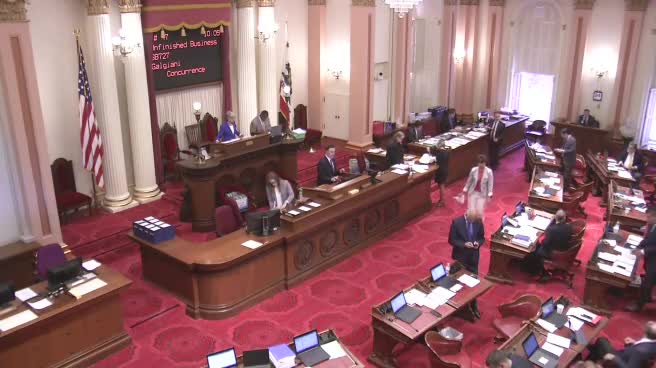 53SEC
Senate Floor
 1MIN
Assembly Floor
 1MIN
Assembly Floor
 26SEC
Assembly Standing Committee on Appropriations
 1MIN
Senate Floor
 6MIN
Senate Standing Committee on Governmental Organization
Bill Author


