SB 1107: Public social services: family home agencies.
- Session Year: 2017-2018
- House: Senate
- Latest Version Date: 2018-07-16
Existing law authorizes the State Department of Developmental Services to reimburse family home agencies that are vendored to recruit, approve, train, and monitor family home providers, provide social services and in-home support to family home providers, and assist adults with developmental disabilities in moving into approved family homes. Existing law only authorizes private not-for-profit agencies to be selected as family home agencies under these provisions.
This bill would further authorize private for-profit agencies to be selected as family home agencies under these provisions.
(a)The Legislature declares that it places a high priority on providing opportunities for adults with developmental disabilities to live with families approved by family home agencies and to receive services and supports in those settings as determined by the individual program plan. Family home agencies may offer services and supports in family homes or family teaching homes. All requirements of this section and Sections 4689.2 to 4689.6, inclusive, shall apply to a family home and a family teaching home.
(b)For purposes of this section, family home means a home that is owned, leased, or rented by, and is the family residence of, the family home provider or providers, and in which services and supports are provided to a maximum of two adults with developmental disabilities regardless of their degree of disability, and who do not require continuous skilled nursing care.
(c)For purposes of this section, family teaching home means a home that is owned, leased, or rented by the family home agency wherein the family home provider and the individual have independent residences, either contiguous or attached, and in which services and supports are provided to a maximum of three adults with developmental disabilities regardless of their degree of disability, and who do not require continuous skilled nursing care.
(d)For purposes of this section, family home agency means a private for-profit or not-for-profit agency that is vendored to do all of the following:
(1)Recruit, approve, train, and monitor family home providers.
(2)Provide social services and in-home support to family home providers.
(3)Assist adults with developmental disabilities in moving into approved family homes.
(e)For purposes of ensuring that regional centers may secure high-quality services that provide supports in natural settings and promote inclusion and meaningful participation in community life for adults with developmental disabilities, the department shall promulgate regulations for family home agencies, family teaching homes, and family homes that shall include, but not be limited to, standards and requirements related to all of the following:
(1)Selection criteria for regional centers to apply in vendoring family home agencies, including, but not limited to, all of the following:
(A)The need for service.
(B)The experience of the agency or key personnel in providing the same or comparable services.
(C)The reasonableness of the agencys overhead.
(D)The capability of the regional center to monitor and evaluate the vendor.
(2)Vendorization.
(3)Operation of family home agencies, including, but not limited to, all of the following:
(A)Recruitment.
(B)Approval of family homes.
(C)Qualifications, training, and monitoring of family home providers.
(D)Assistance to consumers in moving into approved family homes.
(E)The range of services and supports to be provided.
(F)Family home agency staffing levels, qualifications, and training.
(4)Program design.
(5)Program and consumer records.
(6)Family homes.
(7)(A)Rates of payment for family home agencies and approved family home providers. In developing the rates pursuant to regulation, the department may require family home agencies and family homes to submit program cost or other information, as determined by the department.
(B)Regional center reimbursement to family home agencies for services in a family home shall not exceed rates for similar individuals when residing in other types of out-of-home care established pursuant to Section 4681.1.
(8)The department and regional centers monitoring and evaluation of the family home agency and approved homes, which shall be designed to ensure that services do all of the following:
(A)Conform to applicable laws and regulations and provide for the consumers health and well-being.
(B)Assist the consumer in understanding and exercising his or her individual rights.
(C)Are consistent with the family home agencys program design and the consumers individual program plan.
(D)Maximize the consumers opportunities to have choices in where he or she lives, works, and socializes.
(E)Provide a supportive family home environment, available to the consumer 24 hours a day, that is clean, comfortable, and accommodating to the consumers cultural preferences, values, and lifestyle.
(F)Are satisfactory to the consumer, as indicated by the consumers quality of life as assessed by the consumer, his or her family, and if appointed, conservator, or significant others, or all of these, as well as by evaluation of outcomes relative to individual program plan objectives.
(9)Monthly monitoring visits by family home agency social service staff to approved family homes and family teaching homes.
(10)Procedures whereby the regional center and the department may enforce applicable provisions of law and regulation, investigate allegations of abuse or neglect, and impose sanctions on family home agencies and approved family homes and family teaching homes, including, but not limited to, all of the following:
(A)Requiring movement of a consumer from a family home under specified circumstances.
(B)Termination of approval of a family home or family teaching home.
(C)Termination of the family home agencys vendorization.
(11)Appeal procedures.
(f)Each adult with developmental disabilities placed in a family home or family teaching home shall have the rights specified in this division, including, but not limited to, the rights specified in Section 4503.
(g)Prior to placement in a family home of an adult with developmental disabilities who has a conservator, consent of the conservator shall be obtained.
(h)The adoption of any emergency regulations to implement this section that are filed with the Office of Administrative Law within one year of the date on which the act that added this section took effect shall be deemed to be an emergency and necessary for the immediate preservation of the public peace, health and safety, or general welfare.
(a)The Legislature declares that it places a high priority on providing opportunities for adults with developmental disabilities to live with families approved by family home agencies and to receive services and supports in those settings as determined by the individual program plan. Family home agencies may offer services and supports in family homes or family teaching homes. All requirements of this section and Sections 4689.2 to 4689.6, inclusive, shall apply to a family home and a family teaching home.
(b)For purposes of this section, family home means a home that is owned, leased, or rented by, and is the family residence of, the family home provider or providers, and in which services and supports are provided to a maximum of two adults with developmental disabilities regardless of their degree of disability, and who do not require continuous skilled nursing care.
(c)For purposes of this section, family teaching home means a home that is owned, leased, or rented by the family home agency wherein the family home provider and the individual have independent residences, either contiguous or attached, and in which services and supports are provided to a maximum of three adults with developmental disabilities regardless of their degree of disability, and who do not require continuous skilled nursing care.
(d)For purposes of this section, family home agency means a private for-profit or not-for-profit agency that is vendored to do all of the following:
(1)Recruit, approve, train, and monitor family home providers.
(2)Provide social services and in-home support to family home providers.
(3)Assist adults with developmental disabilities in moving into approved family homes.
(e)For purposes of ensuring that regional centers may secure high quality services that provide supports in natural settings and promote inclusion and meaningful participation in community life for adults with developmental disabilities, the department shall promulgate regulations for family home agencies, family teaching homes, and family homes that shall include, but not be limited to, standards and requirements related to all of the following:
(1)Selection criteria for regional centers to apply in vendoring family home agencies, including, but not limited to, all of the following:
(A)The need for service.
(B)The experience of the agency or key personnel in providing the same or comparable services.
(C)The reasonableness of the agencys overhead.
(D)The capability of the regional center to monitor and evaluate the vendor.
(2)Vendorization.
(3)Operation of family home agencies, including, but not limited to, all of the following:
(A)Recruitment.
(B)Approval of family homes.
(C)Qualifications, training, and monitoring of family home providers.
(D)Assistance to consumers in moving into approved family homes.
(E)The range of services and supports to be provided.
(F)Family home agency staffing levels, qualifications, and training.
(4)Program design.
(5)Program and consumer records.
(6)Family homes.
(7)(A)Rates of payment for family home agencies and approved family home providers. In developing the rates pursuant to regulation, the department may require family home agencies and family homes to submit program cost or other information, as determined by the department.
(B)Regional center reimbursement to family home agencies for services in a family home shall not exceed rates for similar individuals when residing in other types of out-of-home care established pursuant to Section 4681.1.
(8)The department and regional centers monitoring and evaluation of the family home agency and approved homes, which shall be designed to ensure that services do all of the following:
(A)Conform to applicable laws and regulations and provide for the consumers health and well-being.
(B)Assist the consumer in understanding and exercising his or her individual rights.
(C)Are consistent with the family home agencys program design and the consumers individual program plan.
(D)Maximize the consumers opportunities to have choices in where he or she lives, works, and socializes.
(E)Provide a supportive family home environment, available to the consumer 24 hours a day, that is clean, comfortable, and accommodating to the consumers cultural preferences, values, and lifestyle.
(F)Are satisfactory to the consumer, as indicated by the consumers quality of life as assessed by the consumer, his or her family, and if appointed, conservator, or significant others, or all of these, as well as by evaluation of outcomes relative to individual program plan objectives.
(9)Monthly monitoring visits by family home agency social service staff to approved family homes and family teaching homes.
(10)Procedures whereby the regional center and the department may enforce applicable provisions of law and regulation, investigate allegations of abuse or neglect, and impose sanctions on family home agencies and approved family homes and family teaching homes, including, but not limited to, all of the following:
(A)Requiring movement of a consumer from a family home under specified circumstances.
(B)Termination of approval of a family home or family teaching home.
(C)Termination of the family home agencys vendorization.
(11)Appeal procedures.
(f)Each adult with developmental disabilities placed in a family home or family teaching home shall have the rights specified in this division, including, but not limited to, the rights specified in Section 4503.
(g)Prior to placement in a family home of an adult with developmental disabilities who has a conservator, consent of the conservator shall be obtained.
(h)The adoption of any emergency regulations to implement this section that are filed with the Office of Administrative Law within one year of the date on which the act that added this section took effect shall be deemed to be an emergency and necessary for the immediate preservation of the public peace, health and safety, or general welfare.
|
Date
|
Status
|
|---|---|
| Jul 16, 2018 | Chaptered by Secretary of State. Chapter 112, Statutes of 2018. |
| Jul 16, 2018 | Approved by the Governor. |
| Jul 5, 2018 | Enrolled and presented to the Governor at 3:30 p.m. |
| Jun 28, 2018 | In Senate. Ordered to engrossing and enrolling. |
| Jun 28, 2018 | Read third time. Passed. Ordered to the Senate. |
| Jun 14, 2018 | Read second time. Ordered to third reading. |
| Jun 13, 2018 | From committee: Do pass. (Ayes 7. Noes 0.) (June 12). |
| May 7, 2018 | Referred to Com. on HUM. S. |
| Apr 30, 2018 | In Assembly. Read first time. Held at Desk. |
| Apr 30, 2018 | Read third time. Passed. (Ayes 36. Noes 0.) Ordered to the Assembly. |
| Apr 25, 2018 | Read second time. Ordered to consent calendar. |
| Apr 24, 2018 | From committee: Do pass. Ordered to consent calendar. (Ayes 6. Noes 0.) (April 24). |
| Feb 27, 2018 | Set for hearing April 24. |
| Feb 22, 2018 | Referred to Com. on HUMAN S. |
| Feb 14, 2018 | From printer. May be acted upon on or after March 16. |
| Feb 13, 2018 | Introduced. Read first time. To Com. on RLS. for assignment. To print. |
|
Date
|
Description
|
Location
|
Votes
|
|
|---|---|---|---|---|
| Jun 28, 2018 | SB 1107 Leyva Senate Third Reading By REYES | Assembly Floor |
Passed |
|
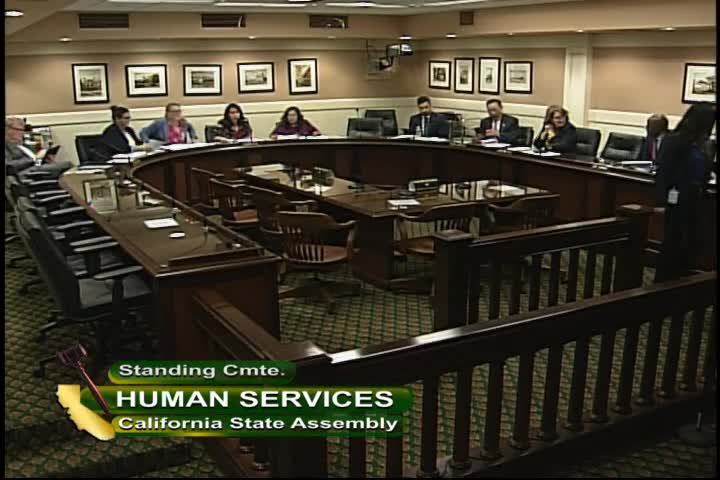
| Jun 12, 2018 | Do pass. | Assembly Standing Committee on Human Services |
Passed |
|
| Apr 30, 2018 | Consent Calendar SB1107 Leyva | Senate Floor |
Passed |
|
| Apr 24, 2018 | Do pass and be ordered to the Consent Calendar | Senate Standing Committee on Human Services |
Passed |
This list shows positions taken on this bill by organizations on the date displayed, which is linked to the original source.
Positions by individuals are not included.
|
Organization
|
Position
|
Date
|
|---|---|---|
| 8 Individuals | ** Support | Jun 8, 2018 |
| Association Of Regional Center Agencies | ** Support | Jun 8, 2018 |
| ResCare | ** Support | Apr 25, 2018 |
| Rescare, Co-Sponsor | ** Support | Jun 8, 2018 |
| Service Employees International Union | * Support | Jun 12, 2018 |
SENATE THIRD READING
STR Bill Id:SB 1107
Author:(Leyva)
As Introduced Ver:February 13, 2018
Majority vote
SENATE VOTE: 36-0
Committee | Votes | Ayes | Noes |
Human Services | 7-0 | Rubio, Choi, Arambula, Maienschein, Reyes, Mark Stone, Thurmond |
SUMMARY: Includes a private for-profit agency in the definition of "family home agency" (FHA), thereby authorizing private for-profit agencies to be selected as FHAs for purposes of the developmental services system.
EXISTING LAW:
- Establishes the Lanterman Developmental Disabilities Services Act, which declares California's responsibility for providing an array of services and supports to meet the needs of each person with developmental disabilities in the least restrictive environment, regardless of age or degree of disability, and to support their integration into the mainstream life of the community. (Welfare and Institutions Code Section (WIC) 4500, et seq.)
- Establishes the jurisdiction of the Department of Developmental Services (DDS) over state developmental centers, including Sonoma, Fairview and Porterville developmental centers and the responsibility of each facility to create bylaws and rules, as specified. (WIC 4440)
- Requires DDS to submit a detailed plan to the Legislature when it proposes closure of a developmental center no later than April 1 immediately prior to the fiscal year in which the plan is to be implemented, and as a part of the Governor's proposed budget and further, requires the Legislature to approve that plan prior to its implementation. (WIC 4474.1(a))
- Establishes a system of nonprofit regional centers to provide fixed points of contact in the community for all persons with developmental disabilities and their families, to coordinate services and supports best suited to them throughout their lifetime. (WIC 4620)
- Authorized the Department of General Services (DGS), with the consent of DDS, to permit the development of affordable housing for eligible individuals on the grounds of Fairview Developmental Center, as specified. (Government Code Section (GOV) 14670.35)
- Creates the DDS Trust Fund, into which proceeds received from affordable housing projects developed on the grounds of Fairview Developmental Center, as specified, may be deposited and further, specifies that moneys in this trust fund shall be used, upon appropriation by the Legislature, to provide housing and transitional services for people with developmental disabilities and that any funds not needed to do so shall be transferred to the General Fund. (GOV 14670.36(c))
- Defines "family home" to mean a home that is owned, leased, or rented by, and is the family residence of, the family home provider or providers, and in which services and supports are provided to a maximum of two adults with developmental disabilities regardless of their degree of disability, and who do not require continuous skilled nursing care. (WIC 4689.1(b))
- Defines "family home agency" to mean a private not-for-profit agency that is vendored to do all of the following:
- Recruit, approve, train and monitor family home providers;
- Provide social services and in-home support to family home providers; and
- Assist adults with developmental disabilities in moving into approved family homes. (WIC 4689.1(d))
- States the Legislative declaration that the Legislature places a high priority on providing opportunities for adults with developmental disabilities to live with families approved by FHAs and to receive services and supports in those settings as determined by their individual program plan (IPP). (WIC 4689.1(a))
- Requires DDS to promulgate regulations for FHAs including, but not limited to, standards and requirements related to: selection criteria for regional centers to apply in vendoring FHAs; vendorization; operation of FHAs; program design; program and consumer records; family homes; rates of payment for FHAs and family home providers; monitoring and evaluation of FHAs and approved homes; monthly monitoring visits by FHA social service staff; procedures for enforcement of applicable laws and regulations, investigation of allegations of abuse and neglect, and imposition of sanctions; and appeal procedures, as specified. (WIC 4689.1(e))
- Authorizes a regional center to, with the approval of DDS and in consultation with certain other entities, explore and implement any regional center service delivery alternative for consumers living in the community, as specified. (WIC 4669.2)
FISCAL EFFECT: This bill has been keyed non-fiscal by Legislative Counsel.
COMMENTS:
Developmental services: The Lanterman Act (Act) (Welfare and Institutions Code Section 4500 et seq.) establishes requirements regarding the provision of services and supports for Californians with developmental disabilities. Under the Act every individual (or "consumer") has a right to treatment and habilitation services and supports in the least restrictive environment. Lanterman Act services are designed to enable all consumers to live more independent and productive lives in the community.
"Developmental disability" is defined as a disability that originates before a person turns 18 years old and is expected to continue indefinitely and constitutes a substantial disability for that person. Developmental disabilities can include intellectual disabilities, cerebral palsy, epilepsy, and autism spectrum disorders (ASD). Other developmental disabilities are those disabling conditions similar to an intellectual disability that require treatment (for example, care and management) similar to that required by individuals with an intellectual disability.
DDS shares responsibility for implementation of the Lanterman Act service system with 21 regional centers; regional centers are private nonprofit entities, established pursuant to the Lanterman Act, that contract with DDS. Regional centers, in turn, "vendorize" a number of providers that offers services such as residential placements, supported living services, respite care, transportation, day treatment programs, work support programs, and various social and therapeutic activities. As of April 2018, over 334,000 consumers were served by the 21 regional centers. A small number of these consumers (542) reside, and are served at, one of California's three developmental centers – and one state-operated, specialized community facility – which provide 24-hour habilitation and medical and social treatment services.
A consumer's "individual program plan" (IPP) outlines the services provided to him or her. It is developed by the IPP team—including, among others, the consumer, his or her legally authorized representative, and one or more regional center representatives—and is based on the consumer's needs and choices. The Lanterman Act requires that the IPP promote community integration and maximize opportunities for each consumer to develop relationships, be part of community life, increase control over his or her life, and acquire increasingly positive roles in the community. The plan must give the highest preference to those services and supports that allow minors to live with their families and adults to live as independently as possible in the community.
Family home agencies: FHAs enable the provision of family home services and supports to consumers of developmental services by approving family homes that allow up to two adult consumers to live with, and operate as a part of, a family. The family, agencies, and the community provide necessary services and supports to the consumer.
FHAs are vendored by regional centers and recruit, train, approve, and monitor family homes. Additionally, they provide ongoing support to family homes and employ social service staff that regularly visit and monitor the homes. Current law stipulates that FHAs be private, nonprofit organizations; however, current law also authorizes, under certain circumstances, regional centers to explore and implement service delivery alternatives. Therefore, regional centers can submit waiver requests to DDS that, when approved, enable private, for-profit entities to operate as FHAs.
DDS reports that there are currently 27 FHAs serving 1,664 consumers in 1,288 family homes. At least seven of these FHAs are for-profit. DDS also reports that all requested waivers have been granted.
Need for this bill: According to the author, "every family has the right to choose the care and resources that best fit their needs and financial situation. For some, the Family Home model offers a less restrictive alternative to group home and intermediate care facility (ICF) settings. Currently, California limits Medi-Cal Family Home Agency services to non-profit agencies which greatly affect the flexibility that families have when choosing care and resources for their loved ones. [This bill] would allow any agency, for-profit or not-for-profit, to participate in the vendorization process through the Department of Developmental Services. This important change will increase the opportunity and flexibility for individuals with intellectual/developmental disabilities to live in a family setting by expanding Family Home Agency vendorization to for-profit agencies."
PRIOR LEGISLATION:
AB 2100 (Steinberg and Richman), Chapter 831, Statutes of 2004, established family teaching homes as a new type of living arrangement for up to three persons with developmental disabilities.
SB 1730 (Russell), Chapter 1095, Statutes of 1994, established adult family home agencies as a new residential option for adults with developmental disabilities.
Analysis Prepared by: Daphne Hunt / HUM. S. / (916) 319-2089 FN: 0003528
Date of Hearing: June 12, 2018
ASSEMBLY COMMITTEE ON HUMAN SERVICES
Blanca Rubio, Chair
SBPCA Bill Id:SB 1107
Author:(Leyva) – As Introduced Ver:February 13, 2018
SENATE VOTE: 36-0
SUBJECT: Public social services: family home agencies
SUMMARY: Includes a private for-profit agency in the definition of “family home agency” (FHA), thereby authorizing private for-profit agencies to be selected as FHAs for purposes of the developmental services system.
EXISTING LAW:
- Establishes the Lanterman Developmental Disabilities Services Act, which declares California’s responsibility for providing an array of services and supports to meet the needs of each person with developmental disabilities in the least restrictive environment, regardless of age or degree of disability, and to support their integration into the mainstream life of the community. (WIC 4500, et seq.)
- Establishes the jurisdiction of DDS over state developmental centers, including Sonoma, Fairview and Porterville developmental centers and the responsibility of each facility to create bylaws and rules, as specified. (WIC 4440)
- Requires DDS to submit a detailed plan to the Legislature when it proposes closure of a developmental center no later than April 1 immediately prior to the fiscal year in which the plan is to be implemented, and as a part of the Governor’s proposed budget and further, requires the Legislature to approve that plan prior to its implementation. (WIC 4474.1. (a))
- Establishes a system of nonprofit regional centers to provide fixed points of contact in the community for all persons with developmental disabilities and their families, to coordinate services and supports best suited to them throughout their lifetime. (WIC 4620)
- Authorized DGS, with the consent of DDS, to permit the development of affordable housing for eligible individuals on the grounds of Fairview Developmental Center, as specified. (GOV 14670.35)
- Creates the DDS Trust Fund, into which proceeds received from affordable housing projects developed on the grounds of Fairview Developmental Center, as specified, may be deposited and further, specifies that moneys in this trust fund shall be used, upon appropriation by the Legislature, to provide housing and transitional services for people with developmental disabilities and that any funds not needed to do so shall be transferred to the General Fund. (GOV 14670.36 (c))
- Defines “family home” to mean a home that is owned, leased, or rented by, and is the family residence of, the family home provider or providers, and in which services and supports are provided to a maximum of two adults with developmental disabilities regardless of their degree of disability, and who do not require continuous skilled nursing care. (WIC 4689.1 (b))
- Defines “family home agency” to mean a private not-for-profit agency that is vendored to do all of the following:
- Recruit, approve, train and monitor family home providers;
- Provide social services and in-home support to family home providers; and
- Assist adults with developmental disabilities in moving into approved family homes. (WIC 4689.1 (d))
- States the Legislative declaration that the Legislature places a high priority on providing opportunities for adults with developmental disabilities to live with families approved by FHAs and to receive services and supports in those settings as determined by their individual program plan (IPP). (WIC 4689.1 (a))
- Requires DDS to promulgate regulations for FHAs including, but not limited to, standards and requirements related to: selection criteria for regional centers to apply in vendoring FHAs; vendorization; operation of FHAs; program design; program and consumer records; family homes; rates of payment for FHAs and family home providers; monitoring and evaluation of FHAs and approved homes; monthly monitoring visits by FHA social service staff; procedures for enforcement of applicable laws and regulations, investigation of allegations of abuse and neglect, and imposition of sanctions; and appeal procedures, as specified. (WIC 4689.1 (e))
- Authorizes a regional center to, with the approval of DDS and in consultation with certain other entities, explore and implement any regional center service delivery alternative for consumers living in the community, as specified. (WIC 4669.2)
FISCAL EFFECT: This bill has been keyed non-fiscal by the Legislative Counsel.
COMMENTS:
Developmental services: The Lanterman Act (Act) (Welfare and Institutions Code Section 4500 et seq.) establishes requirements regarding the provision of services and supports for Californians with developmental disabilities. Under the Act every individual (or “consumer”) has a right to treatment and habilitation services and supports in the least restrictive environment. Lanterman Act services are designed to enable all consumers to live more independent and productive lives in the community.
“Developmental disability” is defined as a disability that originates before a person turns 18 years old and is expected to continue indefinitely and constitutes a substantial disability for that person. Developmental disabilities can include intellectual disabilities, cerebral palsy, epilepsy, and autism spectrum disorders (ASD). Other developmental disabilities are those disabling conditions similar to an intellectual disability that require treatment (for example, care and management) similar to that required by individuals with an intellectual disability.
DDS shares responsibility for implementation of the Lanterman Act service system with 21 regional centers; regional centers are private nonprofit entities, established pursuant to the Lanterman Act, that contract with DDS. Regional centers, in turn, “vendorize” a number of providers that offers services such as residential placements, supported living services, respite care, transportation, day treatment programs, work support programs, and various social and therapeutic activities. As of April 2018, over 334,000 consumers were served by the 21 regional centers. A small number of these consumers (542) reside, and are served at, one of California’s three developmental centers —and one state-operated, specialized community facility—which provide 24-hour habilitation and medical and social treatment services.
A consumer’s “individual program plan” (IPP) outlines the services provided to him or her. It is developed by the IPP team—including, among others, the consumer, his or her legally authorized representative, and one or more regional center representatives—and is based on the consumer’s needs and choices. The Lanterman Act requires that the IPP promote community integration and maximize opportunities for each consumer to develop relationships, be part of community life, increase control over his or her life, and acquire increasingly positive roles in the community. The plan must give the highest preference to those services and supports that allow minors to live with their families and adults to live as independently as possible in the community.
Family home agencies: FHAs enable the provision of family home services and supports to consumers of developmental services by approving family homes that allow up to two adult consumers to live with, and operate as a part of, a family. The family, agencies, and the community provide necessary services and supports to the consumer.
FHAs are vendored by regional centers and recruit, train, approve, and monitor family homes. Additionally, they provide ongoing support to family homes and employ social service staff that regularly visit and monitor the homes. Current law stipulates that FHAs be private, nonprofit organizations; however, current law also authorizes, under certain circumstances, regional centers to explore and implement service delivery alternatives. Therefore, regional centers can submit waiver requests to DDS that, when approved, enable private, for-profit entities to operate as FHAs.
DDS reports that there are currently 27 FHAs serving 1,664 consumers in 1,288 family homes. At least seven of these FHAs are for-profit. DDS also reports that all requested waivers have been granted.
Need for this bill: According to the author, “every family has the right to choose the care and resources that best fit their needs and financial situation. For some, the Family Home model offers a less restrictive alternative to group home and intermediate care facility (ICF) settings. Currently, California limits Medi-Cal Family Home Agency services to non-profit agencies which greatly affect the flexibility that families have when choosing care and resources for their loved ones. [This bill] would allow any agency, for-profit or not-for-profit, to participate in the vendorization process through the Department of Developmental Services. This important change will increase the opportunity and flexibility for individuals with intellectual/developmental disabilities to live in a family setting by expanding Family Home Agency vendorization to for-profit agencies.”
PRIOR LEGISLATION:
SB 2100 (Steinberg and Richman), Chapter 831, Statutes of 2004, established family teaching homes as a new type of living arrangement for up to three persons with developmental disabilities.
SB 1730 (Russell), Chapter 1095, Statutes of 1994, established adult family home agencies as a new residential option for adults with developmental disabilities.
REGISTERED SUPPORT / OPPOSITION:
Support
Association of Regional Center Agencies
ResCare, co-sponsor
Service Employees International Union, co-sponsor
8 Individuals
Opposition
None on file.
Analysis Prepared by: Daphne Hunt / HUM. S. / (916) 319-2089
Office of Senate Floor Analyses (916) 651-1520 Fax: (916) 327-4478 | SB |
CONSENT
Bill No: SB 1107
:
SENATE HUMAN SERVICES COMMITTEE: 6-0, 4/24/18
AYES: Wiener, Glazer, Leyva, McGuire, Nguyen, Portantino
NO VOTE RECORDED: Berryhill
DIGEST:
This bill authorizes private for-profit agencies to be selected as family home agencies (FHA) within the developmental disabilities system.
Existing law:
- Establishes the Lanterman Developmental Disabilities Services Act, which states that California is responsible for providing an array of services and supports sufficiently complete to meet the needs and choices of each person with developmental disabilities, regardless of age or degree of disability, and at each stage of life and to support their integration into the mainstream life of the community.
- Establishes a system of non-profit regional centers, overseen by the Department of Developmental Services (DDS), to provide fixed points of contact in the community for all persons with developmental disabilities and their families, to coordinate services and supports best suited to them throughout their lifetime.
- Establishes an Individual Program Plan (IPP) and defines that planning process as the vehicle to ensure that services and supports are customized to meet the needs of consumers who are served by regional centers. (WIC 4512)
- Requires a regional center to secure services and supports that meet the needs of the consumer, as determined in the IPP, and to give highest preference to those which would allow minors with developmental disabilities to live with their families, adult persons with developmental disabilities to live as independently as possible in the community, and that allow all consumers to interact with persons without disabilities in positive, meaningful ways.
- Establishes a process for regional centers to “vendorize” service providers to serve consumers’ IPP-identified service needs based on the vendor’s qualifications and other requirements.
- Defines a “family home” to mean a home that is owned, leased, or rented by, and is the family residence of the family home provider or providers, and in which services and supports are provided to a maximum of two adults with developmental disabilities, regardless of their degree of disability, and who do not require continuous skilled nursing care.
- Defines FHA to mean a private not-for-profit agency that is vendored to recruit, approve, train and monitor family home providers; provide social services and in-home support to family home providers; and to assist adults with developmental disabilities in moving into approved family homes.
- Permits a regional center, with the approval of DSS, and in consultation with the state council, consumer and vendor advisory committees, and local advocacy organizations, to explore and implement any regional center service delivery alternative for consumers living in the community, as specified.
This bill defines FHA to means a private for-profit or not-for-profit agency that is vendored to recruit, approve, train, and monitor family home providers; provide social services and in-home support to family home providers; and assist adults with developmental disabilities in moving into approved family homes.
Currently, California law limits FHA services to non-profit agencies, unless the FHA obtains a waiver from CDA through each regional center in which the FHA wishes to provide services. SB 1107 would allow any agency, for-profit or not-for-profit, to participate in the vendorization process. “This important change will increase the opportunity and flexibility for individuals with intellectual/developmental disabilities to live in a family setting by expanding FHA vendorization to for-profit agencies,” the author states.
According to the author, “every family has the right to choose the care and resources that best fit their needs and financial situation. For some, the family home model offers a less restrictive alternative to group home and intermediate care facility settings.”
The Lanterman Act
The Lanterman Developmental Disabilities Services Act establishes an entitlement to services and supports for Californians with developmental disabilities and sets up an extensive system to care for individuals who are living in their communities. A developmental disability is defined in statute as one that originates before the age of 18, continues, or can be expected to continue, indefinitely, and constitutes a substantial disability.
With passage of the Lanterman Act, California began shifting its model of care from one of institutional placement to community-based services. That move was reinforced by a number of federal and state legal decisions, as well as numerous administrative and legislative moves.
Today, approximately 310,000 children and adults with developmental disabilities are served in community-based programs and supported by state- and federally-funded services that are coordinated by 21 local, non-profit regional centers. There are about 580 individuals residing and being served in three state-run developmental centers and one smaller step-down facility. DDS is in the process of closing all three developmental centers by 2021, with the exception of the 211-bed forensic unit at Porterville Developmental Center.
The regional centers provide diagnosis and assessment of consumers’ eligibility for services. Regional center case managers help plan, access and coordinate consumers’ services and supports, and to monitor outcomes. Services for consumers are determined through their IPPs. Regional centers also have a role in overseeing the care of individuals residing in the state’s developmental centers and play a pivotal role in moving a consumer from a developmental center to community settings.
HCBS Waivers
The federal Centers for Medicaid and Medicare Services (CMS) put into place new regulations for federal Medicaid (Medi-Cal in California) reimbursement of home and community based services (HCBS). Among the changes are requirements for consumers to live in and receive services in the most integrated setting possible.
The final regulations provide guidance about the qualities that make a setting home and community-based. Following are some of the HCBS qualities required by the regulations:
- The setting is integrated in and supports full access of individuals receiving Medicaid HCBS to the greater community, including opportunities to seek employment and work in competitive, integrated settings, engage in community life, control personal resources, and receive services in the community, to the same degree of access as individuals not receiving Medicaid HCBS.
- The setting is selected by the individual from among setting options including nondisability- specific settings and an option for a private unit in a residential setting. The setting options are identified and documented in the person-centered service plan and are based on the individual's needs, preferences, and, for residential settings, resources available for room and board.
- The setting ensures an individual's rights of privacy, dignity and respect, and freedom from coercion and restraint
Everyone who receives or provides HCBS services may be affected by the new CMS rules, including those in the developmental disability community. Activities are happening now to help California meet these new requirements, before the implementation deadline of March 17, 2022.
Vendorization
In order to be eligible to provide services to a regional center client, a provider must become a vendor of those services in a specific regional center’s catchment area. According to the DDS website, vendorization is the process for identification, selection, and utilization of service providers based on the qualifications and other requirements necessary in order to provide the services. The vendorization process allows regional centers to verify that an applicant meets requirements and standards specified in regulations prior to a vendor providing services to a consumer. Vendorization does not obligate a regional center to purchase service from that vendor. Currently, more than 45,000 vendors provide services paid for by regional centers in California.
Family Home Agencies (FHA)
FHAs approve family homes to allow for up to two adult individuals with developmental disabilities to reside with a family and share in the interaction and responsibilities of being part of a family. Under this program, the individuals with developmental disabilities receive the necessary service and supports from the family, FHAs and the community to enable the individual to be a participating member of the family and the community where the family resides. The family home arrangement allows the sharing of food, shelter, experience, responsibilities and personal relationships.
FHAs are private organization under contract to, and vendored by, regional centers. FHAs are responsible for recruiting, training, approving and monitoring family homes, as well as providing ongoing support to family homes. Social service staff employed by the FHA makes regular visits to the family home to ensure that necessary services and supports are in place, and that the match between the family and the new family member is viable, and continues to be viable.
FHA and family home services and supports are an option that enables adults with developmental disabilities to live in the least restrictive setting and partner with families that promote self-determination and interdependence. There are currently 1,664 individuals with developmental disabilities living in 1,288 certified family homes.
Current law requires that FHAs must be a non-profit entity. However, the law also permits DDS to waive that non-profit requirement upon request of a regional center that is vendorizing an FHA. According to DSS if, during an FHA review, DDS determines that a vendor is operating as for-profit without the necessary waiver, it would be considered a violation and the regional center would be required to submit a for-profit waiver request to address that finding.
According to DDS, every for-profit waiver request has been approved since 1995. Currently, seven of the 27 approved FHAs are for-profit entities.
Related/Prior Legislation
AB 2100 (Steinberg, Chapter 831, Statutes of 2004) defined and established Family Teaching Homes as homes owned or leased by an FHA wherein a family home provider provides services and supports to up to three adults with developmental disabilities who do not need continuous skilled nursing care, in an independent residence that is either contiguous or attached to the residence of the family home provider.
SB 1730 (Russell, Chapter 1095, Statutes of 1994) established adult FHAs as a new residential option for adults with developmental disabilities, as specified.
FISCAL EFFECT: Appropriation: No Fiscal Com.: No Local: No
SEIU California (co-source)
ResCare (co-source)
OPPOSITION: (Verified 4/24/18)
None received
Prepared by: Taryn Smith / HUMAN S. /
4/25/18 14:42:54
**** END ****
SENATE COMMITTEE ON HUMAN SERVICES
Senator Wiener, Chair
2017 - 2018 Regular
Bill No: SB 1107
Author: | Leyva | ||
Version: | February 13, 2018 | Hearing Date: | April 24, 2018 |
Urgency: | No | Fiscal: | No |
Consultant: | Taryn Smith | ||
Subject: Public social services: family home agencies
SUMMARY
This bill authorizes private for-profit agencies to be selected as family home agencies (FHA) within the developmental disabilities system.
ABSTRACT
Existing law:
- Establishes the Lanterman Developmental Disabilities Services Act, which states that California is responsible for providing an array of services and supports sufficiently complete to meet the needs and choices of each person with developmental disabilities, regardless of age or degree of disability, and at each stage of life and to support their integration into the mainstream life of the community. (WIC 4500, et al)
- Establishes a system of non-profit regional centers, overseen by the Department of Developmental Services (DDS), to provide fixed points of contact in the community for all persons with developmental disabilities and their families, to coordinate services and supports best suited to them throughout their lifetime. (WIC 4620)
- Establishes an Individual Program Plan (IPP) and defines that planning process as the vehicle to ensure that services and supports are customized to meet the needs of consumers who are served by regional centers. (WIC 4512)
- Requires a regional center to secure services and supports that meet the needs of the consumer, as determined in the IPP, and to give highest preference to those which would allow minors with developmental disabilities to live with their families, adult persons with developmental disabilities to live as independently as possible in the community, and that allow all consumers to interact with persons without disabilities in positive, meaningful ways. (WIC 4648)
- Establishes a process for regional centers to “vendorize” service providers to serve consumers’ IPP-identified service needs based on the vendor’s qualifications and other requirements. (WIC 4648 (3) (a))
- Defines a “family home” to mean a home that is owned, leased, or rented by, and is the family residence of the family home provider or providers, and in which services and supports are provided to a maximum of two adults with developmental disabilities, regardless of their degree of disability, and who do not require continuous skilled nursing care. (WIC 4689.1)
- Defines FHA to mean a private not-for-profit agency that is vendored to recruit, approve, train and monitor family home providers; provide social services and in-home support to family home providers; and to assist adults with developmental disabilities in moving into approved family homes. (WIC 4689.1 (d))
- Permits a regional center, with the approval of DSS, and in consultation with the state council, consumer and vendor advisory committees, and local advocacy organizations, to explore and implement any regional center service delivery alternative for consumers living in the community, as specified. (WIC 4669.2).
This bill:
- Defines family home agency to means a private for-profit or not-for-profit agency that is vendored to recruit, approve, train, and monitor family home providers; provide social services and in-home support to family home providers; and assist adults with developmental disabilities in moving into approved family homes.
FISCAL IMPACT
This bill has not been analyzed by a fiscal committee.
BACKGROUND AND DISCUSSION
Purpose of the bill:
Currently, California law limits FHA services to non-profit agencies, unless the FHA obtains a waiver from CDA through each regional center in which the FHA wishes to provide services.
SB 1107 would allow any agency, for-profit or not-for-profit, to participate in the vendorization process. “This important change will increase the opportunity and flexibility for individuals with intellectual/developmental disabilities to live in a family setting by expanding FHA vendorization to for-profit agencies,” the author states.
According to the author, “every family has the right to choose the care and resources that best fit their needs and financial situation. For some, the family home model offers a less restrictive alternative to group home and intermediate care facility settings.”
The Lanterman Act
The Lanterman Developmental Disabilities Services Act establishes an entitlement to services and supports for Californians with developmental disabilities and sets up an extensive system to care for individuals who are living in their communities. A developmental disability is defined in statute as one that originates before the age of 18, continues, or can be expected to continue, indefinitely, and constitutes a substantial disability.
With passage of the Lanterman Act, California began shifting its model of care from one of institutional placement to community-based services. That move was reinforced by a number of federal and state legal decisions, as well as numerous administrative and legislative moves.
Today, approximately 310,000 children and adults with developmental disabilities are served in community-based programs and supported by state- and federally-funded services that are coordinated by 21 local, non-profit regional centers. There are about 580 individuals residing and being served in three state-run developmental centers and one smaller step-down facility. DDS is in the process of closing all three developmental centers by 2021, with the exception of the 211-bed forensic unit at Porterville Developmental Center.
The regional centers provide diagnosis and assessment of consumers’ eligibility for services. Regional center case managers help plan, access and coordinate consumers’ services and supports, and to monitor outcomes. Services for consumers are determined through their IPPs. Regional centers also have a role in overseeing the care of individuals residing in the state’s developmental centers and play a pivotal role in moving a consumer from a developmental center to community settings.
HCBS Waivers
The federal Centers for Medicaid and Medicare Services (CMS) put into place new regulations for federal Medicaid (Medi-Cal in California) reimbursement of home and community based services (HCBS). Among the changes are requirements for consumers to live in and receive services in the most integrated setting possible.
The final regulations provide guidance about the qualities that make a setting home and community-based. Following are some of the HCBS qualities required by the regulations:
- The setting is integrated in and supports full access of individuals receiving Medicaid HCBS to the greater community, including opportunities to seek employment and work in competitive, integrated settings, engage in community life, control personal resources, and receive services in the community, to the same degree of access as individuals not receiving Medicaid HCBS.
- The setting is selected by the individual from among setting options including nondisability- specific settings and an option for a private unit in a residential setting. The setting options are identified and documented in the person-centered service plan and are based on the individual's needs, preferences, and, for residential settings, resources available for room and board.
- The setting ensures an individual's rights of privacy, dignity and respect, and freedom from coercion and restraint
Everyone who receives or provides HCBS services may be affected by the new CMS rules, including those in the developmental disability community. Activities are happening now to help California meet these new requirements, before the implementation deadline of March 17, 2022.
Vendorization
In order to be eligible to provide services to a regional center client, a provider must become a vendor of those services in a specific regional center’s catchment area. According to the DDS website, vendorization is the process for identification, selection, and utilization of service providers based on the qualifications and other requirements necessary in order to provide the services. The vendorization process allows regional centers to verify that an applicant meets requirements and standards specified in regulations prior to a vendor providing services to a consumer. Vendorization does not obligate a regional center to purchase service from that vendor. Currently, more than 45,000 vendors provide services paid for by regional centers in California.
Family Home Agencies (FHA)
FHAs approve family homes to allow for up to two adult individuals with developmental disabilities to reside with a family and share in the interaction and responsibilities of being part of a family. Under this program, the individuals with developmental disabilities receive the necessary service and supports from the family, FHAs and the community to enable the individual to be a participating member of the family and the community where the family resides. The family home arrangement allows the sharing of food, shelter, experience, responsibilities and personal relationships.
FHAs are private organization under contract to, and vendored by, regional centers. FHAs are responsible for recruiting, training, approving and monitoring family homes, as well as providing ongoing support to family homes. Social service staff employed by the FHA makes regular visits to the family home to ensure that necessary services and supports are in place, and that the match between the family and the new family member is viable, and continues to be viable.
FHA and family home services and supports are an option that enables adults with developmental disabilities to live in the least restrictive setting and partner with families that promote self-determination and interdependence. There are currently 1,664 individuals with developmental disabilities living in 1,288 certified family homes.
Current law requires that FHAs must be a non-profit entity. However, the law also permits DDS to waive that non-profit requirement upon request of a regional center that is vendorizing an FHA. According to DSS if, during an FHA review, DDS determines that a vendor is operating as for-profit without the necessary waiver, it would be considered a violation and the regional center would be required to submit a for-profit waiver request to address that finding.
According to DDS, every for-profit waiver request has been approved since 1995. Currently, seven of the 27 approved FHAs are for-profit entities.
Related legislation:
SB 1730 (Russell, Chapter 1095, Statutes of 1994) established adult FHAs as a new residential option for adults with developmental disabilities, as specified.
AB 2100 (Steinberg, Chapter 831, Statutes of 2004) defines and establishes Family Teaching Homes as homes owned or leased by an FHA wherein a family home provider provides services and supports to up to three adults with developmental disabilities who do not need continuous skilled nursing care, in an independent residence that is either contiguous or attached to the residence of the family home provider.
POSITIONS
Support:
SEIU California (Co-sponsor)
ResCare Inc. (Co-sponsor)
Oppose:
None received
-- END --
Discussed in Hearing
 15MIN
Assembly Standing Committee on Human Services
Bill Author

Bill Co-Author(s):