SB 1124: Public Employees’ Retirement System: collective bargaining agreements: disallowed compensation.
- Session Year: 2017-2018
- House: Senate
- Latest Version Date: 2018-08-31
Existing law, the Public Employees Retirement Law (PERL), establishes the Public Employees Retirement System (PERS), which provides a defined benefit to members of the system, based on final compensation, credited service, and age at retirement, subject to certain variations. PERL authorizes a public agency to contract to make its employees members of PERS and prescribes a process for this. PERS is administered by its board of administration, which is responsible for correcting errors and omissions in the administration of the system and the payment of benefits. Existing law requires the board to correct all actions taken as a result of errors or omissions of the state or a contracting agency, in accordance with certain procedures.
The California Public Employees Pension Reform Act of 2013 (PEPRA) generally requires a public retirement system, as defined, to modify its plan or plans to comply with the act. PEPRA, among other things, establishes new defined benefit formulas and caps on pensionable compensation.
This bill would establish new procedures under PERL for cases in which a members benefits are erroneously calculated by the state or a contracting agency. The bill would require the system, upon determining on or after January 1, 2019, or on or after January 1, 2017, if an appeal has been filed and the employee member, survivor, or beneficiary has not exhausted his or her administrative or legal remedies, that compensation for an employee member reported by the state or a contracting agency conflicts with specified law, to discontinue the reporting of the disallowed compensation. The bill would require the contributions made on the disallowed compensation, for active members, to be credited against future contributions on behalf of the state or contracting agency that reported the disallowed compensation and would require that state or contracting agency to return to the member any contributions paid by the member.
The bill would require PERS, with respect to retired members, survivors, or beneficiaries whose final compensation at retirement was predicated upon disallowed compensation, to permanently adjust the benefit to reflect the exclusion of the disallowed compensation, and would require the contributions made on the disallowed compensation to be credited against future contributions on behalf of the state or contracting agency that reported the disallowed compensation. If, among other things, the member was unaware the compensation was disallowed when reported, the bill would require the state or contracting agency that reported the disallowed compensation to pay the system the full cost of any overpayment, as specified, and to pay the retired member, survivor, or beneficiary the difference between the monthly allowance that was based on the disallowed compensation and the adjusted monthly allowance calculated without the disallowed compensation, as provided.
The bill would also authorize the state or a contracting agency, for any memorandum of understanding entered into on or after January 1, 2019, to submit any compensation proposal intended to form the basis of a pension benefit calculation to the system to determine compliance with specified provisions governing compensation. The bill would make related legislative findings and declarations.
Existing law, the Public Employees Retirement Law (PERL), establishes the Public Employees Retirement System (PERS), which provides a defined benefit to members of the system, based on final compensation, credited service, and age at retirement, subject to certain variations. PERL authorizes a public agency to contract to make its employees members of PERS and prescribes a process for this. PERS is administered by its board of administration, which is responsible for correcting errors and omissions in the administration of the system and the payment of benefits. Existing law requires the board to correct all actions taken as a result of errors or omissions of the state or a contracting agency, in accordance with certain procedures.
The California Public Employees Pension Reform Act of 2013 (PEPRA) generally requires a public retirement system, as defined, to modify its plan or plans to comply with the act. PEPRA, among other things, establishes new defined benefit formulas and caps on pensionable compensation.
This bill would establish new procedures under PERL for cases in which a members benefits are erroneously calculated by the state or a contracting agency. The bill would require the system, upon determining on or after January 1, 2013, 2019, or on or after January 1, 2017, if an appeal has been filed and the employee member, survivor, or beneficiary has not exhausted his or her administrative or legal remedies, that compensation for an employee member reported by the state or a contracting agency conflicts with specified law, to discontinue the reporting of the disallowed compensation. The bill would require the contributions made on the disallowed compensation, for active members, to be credited against future contributions on behalf of the state or contracting agency that reported the disallowed compensation and would require that state or contracting agency to return to the member any contributions paid by the member.
The bill would require PERS, with respect to retired members, survivors, or beneficiaries whose final compensation at retirement was predicated upon disallowed compensation, to permanently adjust the benefit to reflect the exclusion of the disallowed compensation, and would require the contributions made on the disallowed compensation to be credited against future contributions on behalf of the state or contracting agency that reported the disallowed compensation. If, among other things, the member was unaware the compensation was disallowed when reported, the bill would require the state or contracting agency that reported the disallowed compensation to pay the system the full cost of any overpayment, as specified, and to pay the retired member, survivor, or beneficiary the difference between the monthly allowance that was based on the disallowed compensation and the adjusted monthly allowance calculated without the disallowed compensation, as provided.
The bill would also authorize the state or a contracting agency, for any memorandum of understanding entered into on or after January 1, 2019, to submit any compensation proposal intended to form the basis of a pension benefit calculation to the system to determine compliance with specified provisions governing compensation. The bill would make related legislative findings and declarations.
Existing law, the Public Employees Retirement Law (PERL), establishes the Public Employees Retirement System (PERS), which provides a defined benefit to members of the system, based on final compensation, credited service, and age at retirement, subject to certain variations. PERL authorizes a public agency to contract to make its employees members of PERS and prescribes a process for this. PERS is administered by its board of administration, which is responsible for correcting errors and omissions in the administration of the system and the payment of benefits. Existing law requires the board to correct all actions taken as a result of errors or omissions of the state or a contracting agency, in accordance with certain procedures.
The California Public Employees Pension Reform Act of 2013 (PEPRA) generally requires a public retirement system, as defined, to modify its plan or plans to comply with the act. PEPRA, among other things, establishes new defined benefit formulas and caps on pensionable compensation.
This bill would establish new procedures under PERL for cases in which a members benefits are erroneously calculated by the state or a contracting agency. The bill, with respect to a memorandum of understanding (MOU) entered into before January 1, 2019, bill would require the system, upon determining on or after January 1, 2013, that compensation for an employee member covered by that MOU reported by the state or a contracting agency conflicts with specified law, to discontinue the reporting of the disallowed compensation and not to pay benefits based on the disallowed compensation, except as provided. compensation. The bill would require the contributions made on the disallowed compensation, for active members, to be credited against future contributions on behalf of the member. The state or contracting agency that reported the disallowed compensation and would require that state or contracting agency to return to the member any contributions paid by the member.
The bill would require PERS, with respect to retired members members, survivors, or beneficiaries whose final compensation at retirement was predicated upon disallowed compensation, to permanently adjust the benefit to reflect the inclusion exclusion of the disallowed compensation. The bill would also require that the retired member or beneficiary be permitted to retain the benefit level and not be required to repay that benefit, if, compensation, and would require the contributions made on the disallowed compensation to be credited against future contributions on behalf of the state or contracting agency that reported the disallowed compensation. If, among other things, the member was unaware the compensation was disallowed when reported. The bill would require the applicable state or contracting agency to pay the cost associated with the new entitlement, as specified. reported, the bill would require the state or contracting agency that reported the disallowed compensation to pay the system the full cost of any overpayment, as specified, and to pay the retired member, survivor, or beneficiary the difference between the monthly allowance that was based on the disallowed compensation and the adjusted monthly allowance calculated without the disallowed compensation, as provided.
The bill would also authorize the state or a contracting agency, for any MOU memorandum of understanding entered into on or after January 1, 2019, to submit any compensation proposal intended to form the basis of a pension benefit calculation to the system to determine compliance with specified provisions governing compensation. The bill would make related legislative findings and declarations.
Existing law, the Public Employees Retirement Law (PERL), establishes the Public Employees Retirement System (PERS), which provides a defined benefit to members of the system, based on final compensation, credited service, and age at retirement, subject to certain variations. PERL authorizes a public agency to contract to make its employees members of PERS and prescribes a process for this. PERS is administered by its board of administration, which is responsible for correcting errors and omissions in the administration of the system and the payment of benefits. Existing law requires the board to correct all actions taken as a result of errors or omissions of the state or a contracting agency, in accordance with certain procedures.
The California Public EmployeesPension Employees Pension Reform Act of 2013 (PEPRA) generally requires a public retirement system, as defined defined, to modify its plan or plans to comply with the act. PEPRA, among other things, establishes new defined benefit formulas and caps on pensionable compensation.
This bill would establish new procedures under PERL for cases in which a members benefits are erroneously calculated by the state or a contracting agency. The bill, with respect to a memorandum of understanding (MOU) entered into before January 1, 2019, would require the system, upon determining that compensation for an employee member covered by that MOU reported by the state or a contracting agency conflicts with specified law, to discontinue the reporting of the disallowed compensation and not to pay benefits based on the disallowed compensation, except as provided. The bill would require the contributions made on the disallowed compensation, for active members, to be credited against future contributions on behalf of the member. The bill would require PERS, with respect to retired members or beneficiaries whose final compensation at retirement was predicated upon disallowed compensation, to permanently adjust the benefit to reflect the inclusion of the disallowed compensation. The bill would also require that the retired member or beneficiary to be permitted to retain the benefit level and not be required to repay that benefit, if, among other things, the member was unaware the compensation was disallowed when reported. The bill would require the applicable state or contracting agency to pay the cost associated with the new entitlement, as specified.
The bill would also require authorize the state or a contracting agency, for any MOU entered into on or after January 1, 2019, to submit any compensation proposal intended to form the basis of a pension benefit calculation to the system to determine compliance with specified provisions governing compensation and, upon approval by the system, would make those benefits earned subject to the above provisions of the bill governing benefit adjustments. compensation. The bill would make related legislative findings and declarations.
Existing law, the Public Employees Retirement Law (PERL), establishes the Public Employees Retirement System (PERS), which provides a defined benefit to members of the system, based on final compensation, credited service, and age at retirement, subject to certain variations. PERL authorizes a public agency to contract to make its employees members of PERS and prescribes a process for this. PERS is administered by its board of administration, which is responsible for correcting errors and omissions in the administration of the system and the payment of benefits. Existing law requires the board to correct all actions taken as a result of errors or omissions of the state or a contracting agency, in accordance with certain procedures.
The California Public EmployeesPension Reform Act of 2013 (PEPRA) generally requires a public retirement system, as defined to modify its plan or plans to comply with the act. PEPRA, among other things, establishes new defined benefit formulas and caps on pensionable compensation.
This bill would establish new procedures under PERL for cases in which a members benefits are erroneously calculated by the state or a contracting agency. The bill, with respect to a memorandum of understanding (MOU) entered into before January 1, 2019, would require the system, upon determining that compensation for an employee member covered by that MOU reported by the state or a contracting agency conflicts with specified law, to discontinue the reporting of the disallowed compensation and not to pay benefits based on the disallowed compensation, except as provided. The bill would require the contributions made on the disallowed compensation, for active members, to be credited against future contributions on behalf of the member. The bill would require PERS, with respect to retired members or beneficiaries whose final compensation at retirement was predicated upon disallowed compensation, to permanently adjust the benefit to reflect the inclusion of the disallowed compensation. The bill would also require the retired member or beneficiary to be permitted to retain the benefit level and not be required to repay that benefit, if, among other things, the member was unaware the compensation was disallowed when reported.
The bill would also require the state or a contracting agency, for any MOU entered into on or after January 1, 2019, to submit any compensation proposal intended to form the basis of a pension benefit calculation to the system to determine compliance with specified provisions governing compensation and, upon approval by the system, would make those benefits earned subject to the above provisions of the bill governing benefit adjustments. The bill would make related legislative findings and declarations.
Existing law creates state and local public pension and retirement systems that provide pension benefits based on age at retirement, service credit, and final compensation. Existing law provides that each retirement system that covers positions of police officers or firefighters, or both, and other positions shall constitute a separate retirement system with respect to the positions of police officers or firefighters, or both, covered by the system. Existing law also provides that if the federal system of Old-Age, Survivors, and Disability Insurance is extended to any firefighters or police officers position, it shall be extended to them as a unit without division of their separate retirement systems.This bill would make nonsubstantive changes to that provision.Existing law creates state and local public pension and retirement systems that provide pension benefits based on age at retirement, service credit, and final compensation. Existing law provides that each retirement system that covers positions of police officers or firefighters, or both, and other positions shall constitute a separate retirement system with respect to the positions of police officers or firefighters, or both, covered by the system. Existing law also provides that if the federal system of Old-Age, Survivors, and Disability Insurance is extended to any firefighters or police officers position, it shall be extended to them as a unit without division of their separate retirement systems.
This bill would make nonsubstantive changes to that provision.
The Legislature finds and declares as follows:
(a)The California Public Employees Retirement System (CalPERS) administers defined benefit retirement plans for Californias public employees, including state and local government firefighters.
(b)California firefighters selflessly endure physically, mentally, and emotionally grueling careers, responding to everything from structure fires, automobile accidents, airplane crashes, earthquakes, mudslides, and more, in anticipation of a reasonably secure retirement.
(c)A firefighters pension is based on collectively bargained compensation that takes the form of base pay and special compensation for additional skills, extraordinary assignments, or education.
(d)CalPERS has indicated that it is the employers responsibility to ensure that employee information is reported accurately and on a timely basis in order for CalPERS to correctly calculate an employees service credit and final compensation for retirement purposes.
(e)In 2012, after serving the public for nearly 30 years, a firefighter employed by a contracting agency of CalPERS made the decision to retire. Before retiring, the firefighter requested an official retirement estimate from CalPERS, which provided a projection of retirement benefits as of the firefighters estimated retirement date. The firefighter made the decision to retire based on that estimate.
(f)In 2017, five years after officially retiring, CalPERS notified the firefighter retiree that the retirees former employer had erroneously reported and remitted contributions on certain compensation, which CalPERS later determined in an audit was not pensionable compensation. CalPERS sought repayment of the purported overpayment directly from the retired firefighter totaling thousands of dollars, as well as imposing a substantial future reduction to the retirees monthly allowance. Unfortunately, this scenario is not isolated to just this one retiree. A handful of firefighter retirees have reported similar stories across multiple CalPERS contracting employers.
(g)For over eight decades, CalPERS has proven its ability to fairly administer the retirement system to uphold the promises made by its contracting employers for those members who invest their lifes work in public service. However, this kind of clawback has the potential to take a major toll on the finances of retirees, including firefighters who, unlike private sector employees, do not receive social security benefits and instead rely on their fixed monthly pension as their sole source of retirement income.
(h)In enacting this bill, it is the intent of the Legislature to ensure that a retired member is protected when alleged misapplication or calculation of compensation occurs as a result of an employers error, and that this protection be provided to retirees whose appeal of CalPERS determination, and subsequent reduction of the retirees allowance, is not final. It is further the intent of the Legislature that errors made on the part of the employer, with respect to a promise to a retiree, be borne by the employer rather than through a retroactive clawback and permanent reduction in the retired members pension.
SEC. 2.Section 20164.5 is added to the Government Code, to read:20164.5.(a)If the system determines, on or after January 1, 2019, that the compensation reported for a member by the state or a contracting agency conflicts with the California Public Employees Pension Reform Act of 2013 (Article 4 (commencing with Section 7522) of Chapter 21 of Division 7 of Title 1), Section 20636, or the administrative regulations of the system, the system shall require the state or contracting agency to discontinue reporting the disallowed compensation. This section shall also apply to determinations made on or after January 1, 2017, if an appeal has been filed and the member, survivor, or beneficiary has not exhausted his or her administrative or legal remedies.
(1)In the case of an active member, all contributions made on the disallowed compensation shall be credited to the benefit of the state or contracting agency that reported the disallowed compensation against future contributions, and any contribution paid by, or on behalf of, the member, including contributions under Section 20691, shall be returned to the member by the state or contracting agency that reported the disallowed compensation.
(2)In the case of a retired member, survivor, or beneficiary whose final compensation at the time of retirement was predicated upon the disallowed compensation, the contributions made on the disallowed compensation shall be credited to the benefit of the state or contracting agency that reported the disallowed compensation against future contributions, and the system shall permanently adjust the benefit of the effected retired member, survivor, or beneficiary to reflect the exclusion of the disallowed compensation.
(3)(A)In addition to paragraph (2), in the case of a retired member, survivor, or beneficiary whose final compensation at the time of retirement was predicated upon the disallowed compensation, this paragraph shall apply if all of the following conditions are met:
(i)The compensation was reported to the system and contributions were made on that compensation while the member was actively employed.
(ii)The compensation was provided for in a memorandum of understanding as compensation for pension purposes.
(iii)The determination by the system that compensation was disallowed was made after the date of retirement.
(iv)The member was not aware that the compensation was disallowed at the time it was reported.
(B)If the conditions of subparagraph (A) are met, the state or contracting agency that reported contributions on the disallowed compensation shall pay to the system, as a direct payment, the full cost of any overpayment of the prior paid benefit made to an effected retired member, survivor, or beneficiary resulting from the disallowed compensation.
(C)The state or contracting agency that reported contributions on the disallowed compensation shall pay to the retired member, survivor, or beneficiary, as a lump sum or as an annuity based on that amount, the actuarial equivalent present value representing the difference between the monthly allowance that was based on the disallowed compensation and the adjusted monthly allowance calculated pursuant to paragraph (2) for the duration that allowance is projected to be paid by the system to the retired member, survivor, or beneficiary. The payment, or payments, shall be made by the state or contracting agency that reported contributions on the disallowed compensation in the option selected by the retired member, survivor, or beneficiary pursuant to a settlement or agreement between the parties.
(4)The system shall provide a notice to the state or contracting agency that reported contributions on the disallowed compensation and to the effected retired member, survivor, or beneficiary, including, at a minimum, all of the following:
(A)The amount of the overpayment to be paid by the state or contracting agency to the system as described in subparagraph (B) of paragraph (3).
(B)The actuarial equivalent present value owed to the retired member, survivor, or beneficiary as described in subparagraph (C) of paragraph (3), if applicable.
(C)Written disclosure of the state or contracting agencys obligations to the retired member pursuant to this section.
(b)In the case of any memorandum of understanding entered into on or after January 1, 2019, the state or the contracting agency, as applicable, may submit any compensation proposal, intended to form the basis of a pension benefit calculation, to the system to determine compliance with the California Public Employees Pension Reform Act of 2013 (Article 4 (commencing with Section 7522) of Chapter 21 of Division 7 of Title 1), Section 20636, and the administrative regulations of the system.
(c)This section does not alter or abrogate any responsibility of the state or a contracting agency to meet and confer in good faith with the employee organization regarding the impact of the disallowed compensation or the effect of any disallowed compensation on the rights of the employees and the obligations of the employer to its employees, including any employees who, due to the passage of time and promotion, may have become exempt from inclusion in a bargaining unit but whose benefit was the product of collective bargaining.
The Legislature finds and declares as follows:
(a)The California Public Employees Retirement System (CalPERS) administers defined benefit retirement plans for Californias public employees, including state and local government firefighters.
(b)California firefighters selflessly endure physically, mentally, and emotionally grueling careers, responding to everything from structure fires, automobile accidents, airplane crashes, earthquakes, mudslides, and more, in anticipation of a reasonably secure retirement.
(c)A firefighters pension is based on collectively bargained compensation that takes the form of base pay and special compensation for additional skills, extraordinary assignments, or education.
(d)CalPERS has indicated that it is the employers responsibility to ensure that employee information is reported accurately and on a timely basis in order for CalPERS to correctly calculate an employees service credit and final compensation for retirement purposes.
(e)In 2012, after serving the public for nearly 30 years, a firefighter employed by a contracting agency of CalPERS made the decision to retire. Before retiring, the firefighter requested an official retirement estimate from CalPERS, which provided a projection of retirement benefits as of the firefighters estimated retirement date. The firefighter made the decision to retire based on that estimate.
(f)In 2017, five years after officially retiring, CalPERS notified the firefighter retiree that the retirees former employer had erroneously reported and remitted contributions on certain compensation, which CalPERS later determined in an audit was not pensionable compensation. CalPERS sought repayment of the purported overpayment directly from the retired firefighter totaling thousands of dollars, as well as imposing a substantial future reduction to the retirees monthly allowance. Unfortunately, this scenario is not isolated to just this one retiree. A handful of firefighter retirees have reported similar stories across multiple CalPERS contracting employers.
(g)For over eight decades, CalPERS has proven its ability to fairly administer the retirement system to uphold the promises made by its contracting employers for those members who invest their lifes work in public service. However, this kind of clawback has the potential to take a major toll on the finances of retirees, including firefighters who, unlike private sector employees, do not receive social security benefits and instead rely on their fixed monthly pension as their sole source of retirement income.
(h)In enacting this bill, it is the intent of the Legislature to ensure that a retired member is protected when alleged misapplication or calculation of compensation occurs as a result of an employers error. error, and that this protection be provided to retirees whose appeal of CalPERSdetermination, and subsequent reduction of the retirees allowance, is not final. It is further the intent of the Legislature that errors made on the part of the employer, with respect to a promise to a retiree, be borne by the employer rather than through a retroactive clawback and permanent reduction in the retired members pension.
SEC. 2.Section 20164.5 is added to the Government Code, to read:20164.5.(a)If the system determines, on or after January 1, 2013, 2019, that the compensation reported for a member by the state or a contracting agency conflicts with the California Public Employees Pension Reform Act of 2013 (Article 4 (commencing with Section 7522) of Chapter 21 of Division 7 of Title 1), Section 20636, or the administrative regulations of the system, the system shall require the state or contracting agency to discontinue reporting the disallowed compensation. This section shall also apply to determinations made on or after January 1, 2017, if an appeal has been filed and the member, survivor, or beneficiary has not exhausted his or her administrative or legal remedies.
(1)In the case of an active member, all contributions made on the disallowed compensation shall be credited to the benefit of the state or contracting agency that reported the disallowed compensation against future contributions, and any contribution paid by, or on behalf of, the member, including contributions under Section 20691, shall be returned to the member by the state or contracting agency that reported the disallowed compensation.
(2)In the case of a retired member, survivor, or beneficiary whose final compensation at the time of retirement was predicated upon the disallowed compensation, the contributions made on the disallowed compensation shall be credited to the benefit of the state or contracting agency that reported the disallowed compensation against future contributions, and the system shall permanently adjust the benefit of the effected retired member, survivor, or beneficiary to reflect the exclusion of the disallowed compensation.
(3)(A)In addition to paragraph (2), in the case of a retired member, survivor, or beneficiary whose final compensation at the time of retirement was predicated upon the disallowed compensation, this paragraph shall apply if all of the following conditions are met:
(i)The compensation was reported to the system and contributions were made on that compensation while the member was actively employed.
(ii)The compensation was provided for in a memorandum of understanding as compensation for pension purposes.
(iii)The determination by the system that compensation was disallowed was made after the date of retirement.
(iv)The member was not aware that the compensation was disallowed at the time it was reported.
(B)If the conditions of subparagraph (A) are met, the state or contracting agency that reported contributions on the disallowed compensation shall pay to the system, as a direct payment, the full cost of any overpayment of the prior paid benefit made to an effected retired member, survivor, or beneficiary resulting from the disallowed compensation.
(C)The state or contracting agency that reported contributions on the disallowed compensation shall pay to the retired member, survivor, or beneficiary, as a lump sum or as an annuity based on that amount, the actuarial equivalent present value representing the difference between the monthly allowance that was based on the disallowed compensation, compensation and the adjusted monthly allowance calculated pursuant to paragraph (2) for the duration that allowance is projected to be paid by the system to the retired member, survivor, or beneficiary. The payment, or payments, shall be made by the state or contracting agency that reported contributions on the disallowed compensation in the option selected by the retired member, survivor, or beneficiary pursuant to a settlement or agreement between the parties.
(4)The system shall provide a notice to the state or contracting agency that reported contributions on the disallowed compensation and to the effected retired member, survivor, or beneficiary, including, at a minimum, all of the following:
(A)The amount of the overpayment to be paid by the state or contracting agency to the system as described in subparagraph (B) of paragraph (3).
(B)The actuarial equivalent present value owed to the retired member, survivor, or beneficiary as described in subparagraph (C) of paragraph (3), if applicable.
(C)Written disclosure of the state or contracting agencys obligations to the retired member pursuant to this section.
(b)In the case of any memorandum of understanding entered into on or after January 1, 2019, the state or the contracting agency, as applicable, may submit any compensation proposal, intended to form the basis of a pension benefit calculation, to the system to determine compliance with the California Public Employees Pension Reform Act of 2013 (Article 4 (commencing with Section 7522) of Chapter 21 of Division 7 of Title 1), Section 20636, and the administrative regulations of the system.
(c)This section does not alter or abrogate any responsibility of the state or a contracting agency to meet and confer in good faith with the employee organization regarding the impact of the disallowed compensation or the effect of any disallowed compensation on the rights of the employees and the obligations of the employer to its employees, including any employees who, due to the passage of time and promotion, may have become exempt from inclusion in a bargaining unit but whose benefit was the product of collective bargaining.
The Legislature finds and declares as follows:
(a)The California Public Employees Retirement System (CalPERS) administers defined benefit retirement plans for Californias public employees, including state and local government firefighters.
(b)California firefighters selflessly endure physically, mentally, and emotionally grueling careers, responding to everything from structure fires, automobile accidents, airplane crashes, earthquakes, mudslides, and more, in anticipation of a reasonably secure retirement.
(c)A firefighters pension is based on collectively bargained compensation that takes the form of base pay and special compensation for additional skills, extraordinary assignments, or education.
(d)CalPERS has indicated that it is the employers responsibility to ensure that employee information is reported accurately and on a timely basis in order for CalPERS to correctly calculate an employees service credit and final compensation for retirement purposes.
(e)In 2012, after serving the public for nearly 30 years, a firefighter employed by a contracting agency of CalPERS made the decision to retire. Before retiring, the firefighter requested an official retirement estimate from CalPERS, which provided a projection of retirement benefits as of the firefighters estimated retirement date. The firefighter made the decision to retire based on that estimate.
(f)In 2017, five years after officially retiring, CalPERS notified the firefighter retiree that the retirees former employer had erroneously reported and remitted contributions on certain compensation, which CalPERS later determined in an audit was not pensionable compensation. CalPERS sought repayment of the purported overpayment directly from the retired firefighter totaling thousands of dollars, as well as imposing a substantial future reduction to the retirees monthly allowance. Unfortunately, this scenario is not isolated to just this one retiree. A handful of firefighter retirees have reported similar stories across multiple CalPERS contracting employers.
(g)For over eight decades, CalPERS has proven its ability to fairly administer the retirement system to uphold the promises made by its contracting employers for those members who invest their lifes work in public service. However, this kind of clawback has the potential to take a major toll on the finances of retirees, including firefighters who, unlike private sector employees, do not receive social security benefits and instead rely on their fixed monthly pension as their sole source of retirement income.
(h)In enacting this bill, it is the intent of the Legislature to ensure that a retired member is protected when alleged misapplication or calculation of compensation occurs as a result of an employers error. It is further the intent of the Legislature that errors made on the part of the employer, with respect to a promise to a retiree, be borne by the employer rather than through a retroactive clawback and permanent reduction in the retired members pension.
SEC. 2.Section 20164.5 is added to the Government Code, to read:20164.5.(a)In the case of an employee covered by a memorandum of understanding entered into before January 1, 2019, if If the system determines determines, on or after January 1, 2013, that the compensation reported for that employee a member by the state or a contracting agency conflicts with the California Public Employees Pension Reform Act of 2013 (Article 4 (commencing with Section 7522) of Chapter 21 of Division 7 of Title 1), Section 20636, or the administrative regulations of the system, the system shall require the state or contracting agency to discontinue reporting the disallowed compensation. Benefits shall not be paid based upon that disallowed compensation except as provided in this section.
(1)In the case of an active member, the all contributions made on the disallowed compensation shall be credited to the benefit of the state or contracting agency that reported the disallowed compensation against future contributions, and any contribution paid by by, or on behalf of of, the member, including contributions under Section 20691, shall be credited returned to the member. member by the state or contracting agency that reported the disallowed compensation.
(2)In the case of a retired member member, survivor, or beneficiary whose final compensation at the time of retirement was predicated upon the disallowed compensation, the contributions made on the disallowed compensation shall be credited to the benefit of the state or contracting agency that reported the disallowed compensation against future contributions, and the system shall permanently adjust the benefit of the effected retired member, survivor, or beneficiary to reflect the inclusion exclusion of the disallowed compensation and the retired member or beneficiary shall be permitted to retain the benefit level and shall not be required to repay that benefit, subject to all of the following conditions: compensation.
(3)(A)In addition to paragraph (2), in the case of a retired member, survivor, or beneficiary whose final compensation at the time of retirement was predicated upon the disallowed compensation, this paragraph shall apply if all of the following conditions are met:
(A)(i)The compensation was reported to the system and contributions were made on that compensation while the member was actively employed.
(B)(ii)The compensation was provided for in a memorandum of understanding as compensation for pension purposes.
(C)(iii)The determination by the system that compensation was disallowed was made after the date of retirement.
(D)(iv)The member was not aware that the compensation was disallowed at the time it was reported.
(3)The applicable state or contracting agency shall pay to the system the full cost of the prior paid benefit as a direct payment and pay to the system the projected future benefit payments calculated using the permanently adjusted benefit for the affected retired member and beneficiaries as determined by the system consistent with paragraph (2).(B)If the conditions of subparagraph (A) are met, the state or contracting agency that reported contributions on the disallowed compensation shall pay to the system, as a direct payment, the full cost of any overpayment of the prior paid benefit made to an effected retired member, survivor, or beneficiary resulting from the disallowed compensation.
(C)The state or contracting agency that reported contributions on the disallowed compensation shall pay to the retired member, survivor, or beneficiary, as a lump sum or as an annuity based on that amount, the actuarial equivalent present value representing the difference between the monthly allowance that was based on the disallowed compensation, and the adjusted monthly allowance calculated pursuant to paragraph (2) for the duration that allowance is projected to be paid by the system to the retired member, survivor, or beneficiary. The payment, or payments, shall be made by the state or contracting agency that reported contributions on the disallowed compensation in the option selected by the retired member, survivor, or beneficiary pursuant to a settlement or agreement between the parties.
(4)The system shall provide a notice to the state or contracting agency that reported contributions on the disallowed compensation and to the effected retired member, survivor, or beneficiary, including, at a minimum, all of the following:
(A)The amount of the overpayment to be paid by the state or contracting agency to the system as described in subparagraph (B) of paragraph (3).
(B)The actuarial equivalent present value owed to the retired member, survivor, or beneficiary as described in subparagraph (C) of paragraph (3), if applicable.
(C)Written disclosure of the state or contracting agencys obligations to the retired member pursuant to this section.
(b)In the case of any memorandum of understanding entered into on or after January 1, 2019, the state or the contracting agency, as applicable, may submit any compensation proposal, intended to form the basis of a pension benefit calculation, to the system to determine compliance with the California Public Employees Pension Reform Act of 2013 (Article 4 (commencing with Section 7522) of Chapter 21 of Division 7 of Title 1), Section 20636, and the administrative regulations of the system.
(c)This section does not alter or abrogate any responsibility of the state or a contracting agency to meet and confer in good faith with the employee organization regarding the impact of the disallowed compensation or the effect of any disallowed compensation on the rights of the employees and the obligations of the employer to its employees, including any employees who, due to the passage of time and promotion, may have become exempt from inclusion in a bargaining unit but whose benefit was the product of collective bargaining.
The Legislature finds and declares as follows:
(a)The California Public Employees Retirement System (CalPERS) administers defined benefit retirement plans for Californias public employees, including state and local government firefighters.
(b)California firefighters selflessly endure physically, mentally, and emotionally grueling careers, responding to everything from structure fires, automobile accidents, airplane crashes, earthquakes, mudslides, and more, in anticipation of a reasonably secure retirement.
(c)A firefighters pension is based on collectively bargained compensation that takes the form of base pay and special compensation for additional skills, extraordinary assignments, or education.
(d)CalPERS has indicated that it is the employers responsibility to ensure that employee information is reported accurately and on a timely basis in order for CalPERS to correctly calculate an employees service credit and final compensation for retirement purposes.
(e)In 2012, after serving the public for nearly 30 years, a firefighter employed by a contracting agency of CalPERS made the decision to retire. Before retiring, the firefighter requested an official retirement estimate from CalPERS, which provided a projection of retirement benefits as of the firefighters estimated retirement date. The firefighter made the decision to retire based on that estimate.
(f)In 2017, five years after officially retiring, CalPERS notified the firefighter retiree that the retirees former employer had erroneously reported and remitted contributions on certain compensation, which CalPERS later determined in an audit was not pensionable compensation. CalPERS sought repayment of the purported overpayment directly from the retired firefighter totaling thousands of dollars, as well as imposing a substantial future reduction to the retirees monthly allowance. Unfortunately, this scenario is not isolated to just this one retiree. A handful of firefighter retirees have reported similar stories across multiple CalPERS contracting employers.
(g)For over eight decades, CalPERS has proven its ability to fairly administer the retirement system to uphold the promises made by its contracting employers for those members who invest their lifes work in public service. However, this kind of clawback has the potential to take a major toll on the finances of retirees, including firefighters who, unlike private sector employees, do not receive social security benefits and instead rely on their fixed monthly pension as their sole source of retirement income.
(h)In enacting this bill, it is the intent of the Legislature to ensure that a retired member is protected when alleged misapplication or calculation of compensation occurs as a result of an employers error. It is further the intent of the Legislature that errors made on the part of the employer, with respect to a promise to a retiree, be borne by the employer rather than through a retroactive clawback and permanent reduction in the retired members pension.
SEC. 2.Section 20164.5 is added to the Government Code, to read:20164.5.(a)In the case of an employee covered by a memorandum of understanding entered into before January 1, 2019, if the system determines that the compensation reported for that employee member by the state or a contracting agency conflicts with the California Public Employees Pension Reform Act of 2013 (Article 4 (commencing with Section 7522) of Chapter 21 of Division 7 of Title 1), Section 20636, or the administrative regulations of the system, the system shall require the state or contracting agency to discontinue reporting the disallowed compensation. Benefits shall not be paid based upon that disallowed compensation except as provided in this section.
(1)In the case of an active member, the contributions made on the disallowed compensation shall be credited to the benefit of the state or contracting agency against future contributions, and any contribution paid by or on behalf of the member, including contributions under Section 20691, shall be credited to the member.
(2)In the case of a retired member or beneficiary whose final compensation at the time of retirement was predicated upon the disallowed compensation, the system shall permanently adjust the benefit to reflect the inclusion of the disallowed compensation and the retired member or beneficiary shall be permitted to retain the benefit level and shall not be required to repay that benefit, subject to all of the following conditions:
(A)The compensation was reported to the system and contributions were made on that compensation while the member was actively employed.
(B)The compensation was provided for in a memorandum of understanding as compensation for pension purposes.
(C)The determination by the system that compensation was disallowed was made after the date of retirement.
(D)The member was not aware that the compensation was disallowed at the time it was reported.
(3)The applicable state or contracting agency shall pay to the system the full actuarial cost of the prior paid benefit as a direct payment and pay to the system the projected future benefit payments calculated using the disallowed compensation permanently adjusted benefit for the affected retired member and beneficiaries as determined by the system. system consistent with paragraph (2).
(b)In the case of any memorandum of understanding entered into on or after January 1, 2019, the state or the contracting agency, as applicable, shall may submit any compensation proposal, intended to form the basis of a pension benefit calculation, to the system to determine compliance with the California Public Employees Pension Reform Act of 2013 (Article 4 (commencing with Section 7522) of Chapter 21 of Division 7 of Title 1), Section 20636, and the administrative regulations of the system. Upon approval by the system, any benefits earned shall be subject to subdivision (a).
(c)This section does not alter or abrogate any responsibility of the state or a contracting agency to meet and confer in good faith with the employee organization regarding the impact of the disallowed compensation or the effect of any disallowed compensation on the rights of the employees and the obligations of the employer to its employees, including any employees who, due to the passage of time and promotion, may have become exempt from inclusion in a bargaining unit but whose benefit was the product of collective bargaining.
The Legislature finds and declares as follows:
(a)The California Public Employees Retirement System (CalPERS) administers defined benefit retirement plans for Californias public employees, including state and local government firefighters.
(b)California firefighters selflessly endure physically, mentally, and emotionally grueling careers, responding to everything from structure fires, automobile accidents, airplane crashes, earthquakes, mudslides, and more, in anticipation of a reasonably secure retirement.
(c)A firefighters pension is based on collectively bargained compensation that takes the form of base pay and special compensation for additional skills, extraordinary assignments, or education.
(d)CalPERS has indicated that it is the employers responsibility to ensure that employee information is reported accurately and on a timely basis in order for CalPERS to correctly calculate an employees service credit and final compensation for retirement purposes.
(e)In 2012, after serving the public for nearly 30 years, a firefighter employed by a contracting agency of CalPERS made the decision to retire. Before retiring, the firefighter requested an official retirement estimate from CalPERS, which provided a projection of retirement benefits as of the firefighters estimated retirement date. The firefighter made the decision to retire based on that estimate.
(f)In 2017, five years after officially retiring, CalPERS notified the firefighter retiree that the retirees former employer had erroneously reported and remitted contributions on certain compensation, which CalPERS later determined in an audit was not pensionable compensation. CalPERS sought repayment of the purported overpayment directly from the retired firefighter totaling thousands of dollars, as well as imposing a substantial future reduction to the retirees monthly allowance. Unfortunately, this scenario is not isolated to just this one retiree. A handful of firefighter retirees have reported similar stories across multiple CalPERS contracting employers.
(g)For over eight decades, CalPERS has proven its ability to fairly administer the retirement system to uphold the promises made by its contracting employers for those members who invest their lifes work in public service. However, this kind of clawback has the potential to take a major toll on the finances of retirees, including firefighters who, unlike private sector employees, do not receive social security benefits and instead rely on their fixed monthly pension as their sole source of retirement income.
(h)In enacting this bill, it is the intent of the Legislature to ensure that a retired member is protected when alleged misapplication or calculation of compensation occurs as a result of an employers error. It is further the intent of the Legislature that errors made on the part of the employer, with respect to a promise to a retiree, be borne by the employer rather than through a retroactive clawback and permanent reduction in the retired members pension.
SEC. 2.Section 20164.5 is added to the Government Code, to read:20164.5.(a)In the case of an employee covered by a memorandum of understanding entered into before January 1, 2019, if the system determines that the compensation reported for that employee member by the state or a contracting agency conflicts with the California Public Employees Pension Reform Act of 2013 (Article 4 (commencing with Section 7522) of Chapter 21 of Division 7 of Title 1), Section 20636, or the administrative regulations of the system, the system shall require the state or contracting agency to discontinue reporting the disallowed compensation. Benefits shall not be paid based upon that disallowed compensation except as provided in this section.
(1)In the case of an active member, the contributions made on the disallowed compensation shall be credited to the benefit of the state or contracting agency against future contributions, and any contribution paid by or on behalf of the member, including contributions under Section 20691, shall be credited to the member.
(2)In the case of a retired member or beneficiary whose final compensation at the time of retirement was predicated upon the disallowed compensation, the system shall permanently adjust the benefit to reflect the inclusion of the disallowed compensation and the retired member or beneficiary shall be permitted to retain the benefit level and shall not be required to repay that benefit, subject to all of the following conditions:
(A)The compensation was reported to the system and contributions were made on that compensation while the member was actively employed.
(B)The compensation was provided for in a memorandum of understanding as compensation for pension purposes.
(C)The determination by the system that compensation was disallowed was made after the date of retirement.
(D)The member was not aware that the compensation was disallowed at the time it was reported.
(3)The applicable state or contracting agency shall pay to the system the full actuarial cost of the prior paid benefit and projected future benefit payments calculated using the disallowed compensation for the affected retired member and beneficiaries as determined by the system.
(b)In the case of any memorandum of understanding entered into on or after January 1, 2019, the state or the contracting agency, as applicable, shall submit any compensation proposal, intended to form the basis of a pension benefit calculation, to the system to determine compliance with the California Public Employees Pension Reform Act of 2013 (Article 4 (commencing with Section 7522) of Chapter 21 of Division 7 of Title 1), Section 20636, and the administrative regulations of the system. Upon approval by the system, any benefits earned shall be subject to subdivision (a).
(c)This section does not alter or abrogate any responsibility of the state or a contracting agency to meet and confer in good faith with the employee organization regarding the impact of the disallowed compensation or the effect of any disallowed compensation on the rights of the employees and the obligations of the employer to its employees, including any employees who, due to the passage of time and promotion, may have become exempt from inclusion in a bargaining unit but whose benefit was the product of collective bargaining.
SECTION 1.Section 22126 of the Government Code is amended to read:22126.Notwithstanding Section 22009.1, each retirement system that covers positions of police officers or firefighters, or both, and other positions shall constitute a separate retirement system with respect to the positions of police officers or firefighters, or both, covered by the system. Police officers and firefighters shall vote separately from the other members of the system.If the federal system is extended to any firefighters or police officers position, it shall be extended to them as a unit without any division of their separate retirement systems.Notwithstanding Section 22009.1, each retirement system which that covers positions of policemen police officers or firemen, firefighters, or both, and other positions shall constitute a separate retirement system with respect to the positions of policemen police officers or firemen, firefighters, or both, covered by the system. Policemen and firemen Police officers and firefighters shall vote separately from the other members of the system.
If the federal system is extended to any firemans or policemans position firefighters or police officers position, it shall be extended to them as a unit without any division of their separate retirement systems.
|
Date
|
Status
|
|---|---|
| Sep 30, 2018 | In Senate. Consideration of Governor's veto pending. |
| Sep 30, 2018 | Vetoed by the Governor. |
| Sep 5, 2018 | Enrolled and presented to the Governor at 3:30 p.m. |
| Aug 28, 2018 | Assembly amendments concurred in. (Ayes 39. Noes 0.) Ordered to engrossing and enrolling. |
| Aug 28, 2018 | In Senate. Concurrence in Assembly amendments pending. |
| Aug 27, 2018 | Read third time. Passed. Ordered to the Senate. |
| Aug 23, 2018 | Read third time and amended. |
| Aug 20, 2018 | Read second time. Ordered to third reading. |
| Aug 16, 2018 | From committee: Do pass. (Ayes 17. Noes 0.) (August 16). |
| Aug 16, 2018 | Joint Rule 62(a) suspended. |
| Aug 15, 2018 | August 15 set for first hearing. Placed on suspense file. |
| Aug 7, 2018 | From committee with author's amendments. Read second time and amended. Re-referred to Com. on APPR. |
| Jun 20, 2018 | From committee: Do pass and re-refer to Com. on APPR. (Ayes 6. Noes 0.) (June 20). Re-referred to Com. on APPR. |
| Jun 7, 2018 | Referred to Com. on P.E., R., & S.S. |
| May 31, 2018 | In Assembly. Read first time. Held at Desk. |
| May 30, 2018 | Read third time. Passed. (Ayes 33. Noes 0.) Ordered to the Assembly. |
| May 29, 2018 | Read second time. Ordered to third reading. |
| May 25, 2018 | From committee: Do pass as amended. (Ayes 7. Noes 0.) (May 25). |
| May 18, 2018 | Set for hearing May 25. |
| May 7, 2018 | May 7 hearing: Placed on APPR. suspense file. |
| Apr 27, 2018 | Set for hearing May 7. |
| Apr 24, 2018 | From committee: Do pass and re-refer to Com. on APPR. (Ayes 4. Noes 0. Page 4789.) (April 23). Re-referred to Com. on APPR. |
| Apr 23, 2018 | From committee: Do pass and re-refer to Com. on APPR. (Ayes 4. Noes 0.) (April 23). Re-referred to Com. on APPR. |
| Apr 11, 2018 | Set for hearing April 23. |
| Apr 4, 2018 | Re-referred to Com. on P.E. & R. |
| Mar 22, 2018 | From committee with author's amendments. Read second time and amended. Re-referred to Com. on RLS. |
| Feb 22, 2018 | Referred to Com. on RLS. |
| Feb 14, 2018 | From printer. May be acted upon on or after March 16. |
| Feb 13, 2018 | Introduced. Read first time. To Com. on RLS. for assignment. To print. |
|
Date
|
Description
|
Location
|
Votes
|
|
|---|---|---|---|---|
| Aug 28, 2018 | Unfinished Business SB1124 Leyva Concurrence | Senate Floor |
Passed |
|
| Aug 27, 2018 | SB 1124 Leyva Senate Third Reading By CERVANTES | Assembly Floor |
Passed |
|
| Aug 16, 2018 | Do pass. | Assembly Standing Committee on Appropriations |
Passed |
|
| Jun 20, 2018 | Do pass and be re-referred to the Committee on [Appropriations] | Assembly Standing Committee on Public Employees, Retirement, and Social Security |
Passed |
|
| May 30, 2018 | Senate 3rd Reading SB1124 Leyva | Senate Floor |
Passed |
|
| May 25, 2018 | Do pass as amended | Senate Standing Committee on Appropriations |
Passed |
|
| May 7, 2018 | Placed on suspense file | Senate Standing Committee on Appropriations |
Passed |
|
| Apr 23, 2018 | Do pass, but first be re-referred to the Committee on [Appropriations] | Senate Standing Committee on Public Employment and Retirement |
Passed |
This list shows positions taken on this bill by organizations on the date displayed, which is linked to the original source.
Positions by individuals are not included.
|
Organization
|
Position
|
Date
|
|---|---|---|
| California Professional Firefighters | ** Support | Oct 9, 2018 |
| California State Retirees | ** Support | Jun 19, 2018 |
| Laborers' International Union Of North America, Local 792 | ** Support | Oct 9, 2018 |
| Peace Officers Research Association Of California | ** Support | Oct 9, 2018 |
| Riverside Sheriffs' Association | ** Support | Oct 9, 2018 |
Office of Senate Floor Analyses (916) 651-1520 Fax: (916) 327-4478 | SB |
VETO
Bill No: SB 1124
:
SENATE PUBLIC EMP. & RET. COMMITTEE: 4-0, 4/23/18
AYES: Pan, Leyva, Moorlach, Portantino
NO VOTE RECORDED: Morrell
SENATE APPROPRIATIONS COMMITTEE: 7-0, 5/25/18
AYES: Lara, Bates, Beall, Bradford, Hill, Nielsen, Wiener
SENATE FLOOR: 35-0, 5/30/18
AYES: Allen, Anderson, Atkins, Bates, Beall, Bradford, Cannella, Dodd, Fuller, Galgiani, Glazer, Hernandez, Hertzberg, Hill, Hueso, Jackson, Lara, Leyva, McGuire, Mitchell, Monning, Moorlach, Morrell, Newman, Nguyen, Nielsen, Pan, Portantino, Roth, Skinner, Stone, Vidak, Wieckowski, Wiener, Wilk
NO VOTE RECORDED: Berryhill, De León, Gaines, Stern
SENATE FLOOR: 39-0, 8/28/18
AYES: Allen, Anderson, Atkins, Bates, Beall, Bradford, Cannella, Chang, De León, Delgado, Dodd, Fuller, Gaines, Galgiani, Glazer, Hernandez, Hertzberg, Hill, Hueso, Jackson, Lara, Leyva, McGuire, Mitchell, Monning, Moorlach, Morrell, Nguyen, Nielsen, Pan, Portantino, Roth, Skinner, Stern, Stone, Vidak, Wieckowski, Wiener, Wilk
NO VOTE RECORDED: Berryhill
ASSEMBLY FLOOR: 80-0, 8/27/18 - See last page for vote
SOURCE: California Professional Firefighters
DIGEST:
This bill establishes new procedures for all California Public Employees’ Retirement System (CalPERS) covered employees in cases where their pensionable benefits are erroneously calculated and reported to CalPERS by their employer.
ANALYSIS:
Existing law:
- Provides a defined benefit retirement plan for state and public school employees administered through CalPERS and provides that local public employers can contract, as specified, with CalPERS to provide retirement benefits for their local public employees.
- Establishes the Public Employees’ Pension Reform Act of 2013 (PEPRA) which made substantial changes to public retirement benefits provided to new members, including defining the categories of pensionable compensation that can be used to calculate a retirement allowance.
- States that the obligation of CalPERS to its members continues throughout their respective memberships, into retirement, and afterwards until all obligations to the member’s beneficiaries have been discharged.
- Stipulates that CalPERS shall determine the applicability of the period of limitations in any case of payments into or out of the retirement fund for the adjustment of errors or omissions, and said determination shall be conclusive and binding for purposes of correcting the error or omission.
This bill:
- Provides that if CalPERS determines on or after January, 2019, that reported compensation for a member conflicts with PEPRA, as specified, or the administrative regulations of CalPERS, CalPERS shall require the state or CalPERS-contracted agency shall discontinue reporting the disallowed compensation. This shall also apply to determinations made on or after January 1, 2017, if an appeal has been filed and the member, survivor, or beneficiary has not exhausted their administrative or legal remedies.
- Provides that contributions made on disallowed compensation for active members shall be credited to the benefit of the state or contracting agency that reported the disallowed compensation against future contributions, and any contribution paid by or on behalf of the member, as specified, shall be returned to the member by the state or contracting agency that reported the disallowed compensation.
- Stipulates that for retired members, survivors, or beneficiaries whose final compensation at the time of retirement was predicated upon the disallowed compensation, the contributions made on the disallowed compensation shall be credited to the benefit of the state or contracting agency that reported the disallowed compensation against future contributions, and CalPERS shall permanently adjust the benefit of the affected member, survivor, or beneficiary to reflect the exclusion of the disallowed compensation.
- States that retired members, survivors, or beneficiaries whose final compensation at the time of retirement was predicated upon the disallowed compensation, the following shall apply if all conditions are met:
- The compensation was reported to CalPERS and contributions were made on that compensation while the member was actively employed.
- A memorandum of understanding provided that the compensation was for pension purposes.
- CalPERS determines that the compensation was disallowed after the member’s date of retirement.
- The member was unaware the compensation was disallowed at the time it was reported to CalPERS.
- Establishes that the state or contracting agency that reported contributions on the disallowed compensation shall pay to CalPERS, as a direct payment, the full cost of any overpayment of the prior paid benefit made to an effected retired member, survivor, or beneficiary resulting from the disallowed compensation.
- Requires the state or contracting agency that reported contributions on the disallowed compensation to pay to the retired member, survivor, or beneficiary, as a lump sum or as an annuity based on that amount, the actuarial equivalent present value representing the difference between the monthly allowance that was based on the disallowed compensation and the adjusted monthly allowance calculated, as specified, for the duration that allowance is projected to be paid by CalPERS to the retired member, survivor, or beneficiary.
- Specifies that the payment, or payments, to the retired member, survivor, or beneficiary shall be made by the state or contracting agency that reported contributions on the disallowed compensation in the option selected by the retired member, survivor, or beneficiary pursuant to a settlement or agreement between the parties.
- States that CalPERS shall provide a notice to the state or contracting agency that reported contributions on the disallowed compensation and to the effected retired member, survivor, or beneficiary, including, at a minimum, all of the following:
- The amount of the overpayment to be paid by the state or contracting agency to the system, as specified.
- The actuarial equivalent present value owed to the retired member, survivor, or beneficiary, as specified.
- Written disclosure of the state or contracting agency’s obligations to the retied member, as specified.
- Provides, in the case of any memorandum of understanding entered into on or after January 1, 2019, the state or contracting agency, as applicable, may submit any compensation proposal intended to form the basis of a pension benefits calculator to CalPERS to determine compliance with PEPRA, as specified, and the administrative regulations of CalPERS.
- Stipulates that these provisions do not alter or abrogate any responsibility of the state or contracting agency to meet and confer in good faith with the employee organization regarding the impact of disallowed compensation, or the effect of any disallowed compensation on the rights of the employees and obligations of the employer to its employees, as specified.
- Includes legislative findings and declarations regarding the careers of state and local government firefighters; CalPERS’ administration of defined benefit plans for public employees; states legislative intent that this bill is to protect a retired member of CalPERS when an alleged misapplication or calculation of compensation occurs as a result of an employer’s error, and that protection shall be provided to retirees whose appeal of CalPERS determination, and subsequent reduction of the retiree’s allowance, is not final; that responsibility for that error should be borne by the employer rather than the employee.
Background
CalPERS requires contracting employers to provide accurate and timely payroll information in order to correctly calculate employees’ service credit and final compensation for retirement. These payroll reports contain information on the employee’s earnings and contributions, as well as other information, including: pay rate, work schedule, and special compensation.
According to the author’s office, employers have in the past incorrectly reported employees’ pensionable compensation to CalPERS, which has resulted in the retired member having to pay back the amount overpaid to the retirement system, and sustain a reduction in their future retirement allowances.
The author’s office notes that in one instance, a firefighter who had worked nearly 30 years for a CalPERS contracted agency requested prior to her retirement an official estimate of her projected retirement allowance. However, five years into her retirement CalPERS notified the firefighter that her employer had incorrectly reported certain categories of compensation as pensionable, and sought reimbursement from the firefighter.
To prevent similar instances the author states that it is necessary to ensure future collectively bargained compensation can be approved by CalPERS, and protect current retirees whose pensionable compensation has been erroneously reported.
FISCAL EFFECT: Appropriation: Fiscal Com.: Local:
According to the Assembly Appropriations Committee:
- Significant administrative costs, likely in excess of $150,000 to CalPERS as a result of the bill’s retroactive provisions. This bill presents administrative complications for CalPERS in instances where CalPERS already collected repayment from the retiree. As a result there will be significant staffing costs.
- Possibly significant increase in costs for state employers in cases where compensation was improperly reported and the employee has since retired. In these cases, the employer must pay CalPERS the full cost of overpayment of benefits and must pay the retiree (or their survivor or beneficiary) the actuarial equivalent present value of the difference between the monthly allowance and the adjusted monthly allowance.
SUPPORT: (Verified 10/1/18)
California Professional Firefighters (source)
Laborers’ International Union of North America, Local 792
Peace Officers Research Association of California
Riverside Sheriffs’ Association
OPPOSITION: (Verified 10/1/18)
None received
ARGUMENTS IN SUPPORT: The author’s office states:
SB 1124 would protect the retirement security of CalPERS members by ensuring that any collectively-bargained compensation agreed to by their employer cannot be subsequently and retroactively sought from the retired member’s pension allowance.
California Professional Firefighters writes:
Like many retirees, when a firefighter retires, they rely on a fixed monthly pension to meet their day-to-day needs. Moreover, unlike private sector employees, many public employees, including a sizeable percentage of firefighters, do not receive Social Security…if the employer promises and pays for a benefit that is disallowed after the fact, the retiree on a fixed income should not have to pay the price for that broken promise. And employers and CalPERS should partner to make sure that taxpayers don’t have to pay the cost of such mistakes to future retirees.
GOVERNOR'S VETO MESSAGE:
I am returning Senate Bill 1124 without my signature.
This bill would establish a retiree's permanent right to incorrectly calculated pension benefits in cases where an error resulted in paying the retiree higher pension benefits than allowed by law.
I share the author's view that a pension must be correctly calculated according to the law in the first instance so that retirees never find themselves on the hook for overpayments. Clearly, remedies are needed to correct such situations.
But I'm concerned that this bill's broad provisions could be easily abused to circumvent limitations in law intended to protect the government-and ultimately taxpayers-from pension spiking. Indeed, in the case of an error, this bill would effectively perpetuate that error for the rest of a member's life, at substantial taxpayer expense.
Before changing the law in the way that this bill does, I encourage the Legislature to develop policies to prevent such errors in the first place. Such policies might include requiring CalPERS to review and approve any proposals for pensionable compensation in a memorandum of understanding before the memorandum is finalized. Then, if errors still occurred after CalPERS's review, the penalties and ongoing costs in this bill might be warranted.
ASSEMBLY FLOOR: 80-0, 8/27/18
AYES: Acosta, Aguiar-Curry, Travis Allen, Arambula, Baker, Berman, Bigelow, Bloom, Bonta, Brough, Burke, Caballero, Calderon, Carrillo, Cervantes, Chau, Chávez, Chen, Chiu, Choi, Chu, Cooley, Cooper, Cunningham, Dahle, Daly, Eggman, Flora, Fong, Frazier, Friedman, Gabriel, Gallagher, Cristina Garcia, Eduardo Garcia, Gipson, Gloria, Gonzalez Fletcher, Gray, Grayson, Harper, Holden, Irwin, Jones-Sawyer, Kalra, Kamlager-Dove, Kiley, Lackey, Levine, Limón, Low, Maienschein, Mathis, Mayes, McCarty, Medina, Melendez, Mullin, Muratsuchi, Nazarian, Obernolte, O'Donnell, Patterson, Quirk, Quirk-Silva, Reyes, Rivas, Rodriguez, Rubio, Salas, Santiago, Steinorth, Mark Stone, Thurmond, Ting, Voepel, Waldron, Weber, Wood, Rendon
10/9/18 10:57:26
**** END ****
Office of Senate Floor Analyses (916) 651-1520 Fax: (916) 327-4478 | SB |
UNFINISHED BUSINESS
Bill No: SB 1124
:
SENATE PUBLIC EMP. & RET. COMMITTEE: 4-0, 4/23/18
AYES: Pan, Leyva, Moorlach, Portantino
NO VOTE RECORDED: Morrell
SENATE APPROPRIATIONS COMMITTEE: 7-0, 5/25/18
AYES: Lara, Bates, Beall, Bradford, Hill, Nielsen, Wiener
SENATE FLOOR: 35-0, 5/30/18
AYES: Allen, Anderson, Atkins, Bates, Beall, Bradford, Cannella, Dodd, Fuller, Galgiani, Glazer, Hernandez, Hertzberg, Hill, Hueso, Jackson, Lara, Leyva, McGuire, Mitchell, Monning, Moorlach, Morrell, Newman, Nguyen, Nielsen, Pan, Portantino, Roth, Skinner, Stone, Vidak, Wieckowski, Wiener, Wilk
NO VOTE RECORDED: Berryhill, De León, Gaines, Stern
ASSEMBLY FLOOR: 80-0, 8/27/18 - See last page for vote
SOURCE: California Professional Firefighters
DIGEST:
This bill establishes new procedures for all California Public Employees’ Retirement System (CalPERS) covered employees in cases where their pensionable benefits are erroneously calculated and reported to CalPERS by their employer.
Assembly Amendments
clarify Legislative intent; state that the procedures established by the bill will apply to determinations made by CalPERS on or after January 1, 2019; specify that this bill’s procedures shall also apply to specified cases of determinations made on or after January 1, 2017; clarify the responsibilities, including payment responsibilities, of the state, contracting agency, and CalPERS concerning the contributions made on the disallowed compensation of an active or retired member, survivor, or beneficiary; detail CalPERS notice requirements to the state or contracting agency that reported contributions on disallowed compensation; and correct drafting errors.
Existing law:
- Provides a defined benefit retirement plan for state and public school employees administered through CalPERS and provides that local public employers can contract, as specified, with CalPERS to provide retirement benefits for their local public employees.
- Establishes the Public Employees’ Pension Reform Act of 2013 (PEPRA) which made substantial changes to public retirement benefits provided to new members, including defining the categories of pensionable compensation that can be used to calculate a retirement allowance.
- States that the obligation of CalPERS to its members continues throughout their respective memberships, into retirement, and afterwards until all obligations to the member’s beneficiaries have been discharged.
- Stipulates that CalPERS shall determine the applicability of the period of limitations in any case of payments into or out of the retirement fund for the adjustment of errors or omissions, and said determination shall be conclusive and binding for purposes of correcting the error or omission.
This bill:
- Provides that if CalPERS determines on or after January, 2019, that reported compensation for a member conflicts with PEPRA, as specified, or the administrative regulations of CalPERS, CalPERS shall require the state or CalPERS-contracted agency shall discontinue reporting the disallowed compensation. This shall also apply to determinations made on or after January 1, 2017, if an appeal has been filed and the member, survivor, or beneficiary has not exhausted their administrative or legal remedies.
- Provides that contributions made on disallowed compensation for active members shall be credited to the benefit of the state or contracting agency that reported the disallowed compensation against future contributions, and any contribution paid by or on behalf of the member, as specified, shall be returned to the member by the state or contracting agency that reported the disallowed compensation.
- Stipulates that for retired members, survivors, or beneficiaries whose final compensation at the time of retirement was predicated upon the disallowed compensation, the contributions made on the disallowed compensation shall be credited to the benefit of the state or contracting agency that reported the disallowed compensation against future contributions, and CalPERS shall permanently adjust the benefit of the affected member, survivor, or beneficiary to reflect the exclusion of the disallowed compensation.
- States that retired members, survivors, or beneficiaries whose final compensation at the time of retirement was predicated upon the disallowed compensation, the following shall apply if all conditions are met:
- The compensation was reported to CalPERS and contributions were made on that compensation while the member was actively employed.
- A memorandum of understanding provided that the compensation was for pension purposes.
- CalPERS determines that the compensation was disallowed after the member’s date of retirement.
- The member was unaware the compensation was disallowed at the time it was reported to CalPERS.
- Establishes that the state or contracting agency that reported contributions on the disallowed compensation shall pay to CalPERS, as a direct payment, the full cost of any overpayment of the prior paid benefit made to an effected retired member, survivor, or beneficiary resulting from the disallowed compensation.
- Requires the state or contracting agency that reported contributions on the disallowed compensation to pay to the retired member, survivor, or beneficiary, as a lump sum or as an annuity based on that amount, the actuarial equivalent present value representing the difference between the monthly allowance that was based on the disallowed compensation and the adjusted monthly allowance calculated, as specified, for the duration that allowance is projected to be paid by CalPERS to the retired member, survivor, or beneficiary.
- Specifies that the payment, or payments, to the retired member, survivor, or beneficiary shall be made by the state or contracting agency that reported contributions on the disallowed compensation in the option selected by the retired member, survivor, or beneficiary pursuant to a settlement or agreement between the parties.
- States that CalPERS shall provide a notice to the state or contracting agency that reported contributions on the disallowed compensation and to the effected retired member, survivor, or beneficiary, including, at a minimum, all of the following:
- The amount of the overpayment to be paid by the state or contracting agency to the system, as specified.
- The actuarial equivalent present value owed to the retired member, survivor, or beneficiary, as specified.
- Written disclosure of the state or contracting agency’s obligations to the retied member, as specified.
- In the case of any memorandum of understanding entered into on or after January 1, 2019, the state or contracting agency, as applicable, may submit any compensation proposal intended to form the basis of a pension benefits calculator to CalPERS to determine compliance with PEPRA, as specified, and the administrative regulations of CalPERS.
- Stipulates that these provisions do not alter or abrogate any responsibility of the state or contracting agency to meet and confer in good faith with the employee organization regarding the impact of disallowed compensation, or the effect of any disallowed compensation on the rights of the employees and obligations of the employer to its employees, as specified.
- Includes legislative findings and declarations regarding the careers of state and local government firefighters; CalPERS’ administration of defined benefit plans for public employees; states legislative intent that this bill is to protect a retired member of CalPERS when an alleged misapplication or calculation of compensation occurs as a result of an employer’s error, and that protection shall be provided to retirees whose appeal of CalPERS determination, and subsequent reduction of the retiree’s allowance, is not final; that responsibility for that error should be borne by the employer rather than the employee.
Background
CalPERS requires contracting employers to provide accurate and timely payroll information in order to correctly calculate employees’ service credit and final compensation for retirement. These payroll reports contain information on the employee’s earnings and contributions, as well as other information, including: pay rate, work schedule, and special compensation.
According to the author’s office, employers have in the past incorrectly reported employees’ pensionable compensation to CalPERS, which has resulted in the retired member having to pay back the amount overpaid to the retirement system, and sustain a reduction in their future retirement allowances.
The author’s office notes that in one instance, a firefighter who had worked nearly 30 years for a CalPERS contracted agency requested prior to her retirement an official estimate of her projected retirement allowance. However, five years into her retirement CalPERS notified the firefighter that her employer had incorrectly reported certain categories of compensation as pensionable, and sought reimbursement from the firefighter.
To prevent similar instances the author states that it is necessary to ensure future collectively bargained compensation can be approved by CalPERS, and protect current retirees whose pensionable compensation has been erroneously reported.
FISCAL EFFECT: Appropriation: Fiscal Com.: Local:
According to the Assembly Appropriations Committee, for the prior version of the bill:
- Significant administrative costs, likely in excess of $150,000 to CalPERS as a result of the bill’s retroactive provisions. This bill presents administrative complications for CalPERS in instances where CalPERS already collected repayment from the retiree. As a result there will be significant staffing costs.
- Possibly significant increase in costs for state employers in cases where compensation was improperly reported and the employee has since retired. In these cases, the employer must pay CalPERS the full cost of overpayment of benefits and must pay the retiree (or their survivor or beneficiary) the actuarial equivalent present value of the difference between the monthly allowance and the adjusted monthly allowance.
California Professional Firefighters (source)
Laborers’ International Union of North America, Local 792
Peace Officers Research Association of California
Riverside Sheriffs’ Association
OPPOSITION: (Verified 8/27/18)
None received
ARGUMENTS IN SUPPORT: The author’s office states:
SB 1124 would protect the retirement security of CalPERS members by ensuring that any collectively-bargained compensation agreed to by their employer cannot be subsequently and retroactively sought from the retired member’s pension allowance.
California Professional Firefighters writes:
Like many retirees, when a firefighter retires, they rely on a fixed monthly pension to meet their day-to-day needs. Moreover, unlike private sector employees, many public employees, including a sizeable percentage of firefighters, do not receive Social Security…if the employer promises and pays for a benefit that is disallowed after the fact, the retiree on a fixed income should not have to pay the price for that broken promise. And employers and CalPERS should partner to make sure that taxpayers don’t have to pay the cost of such mistakes to future retirees.
ASSEMBLY FLOOR: 80-0, 8/27/18
AYES: Acosta, Aguiar-Curry, Travis Allen, Arambula, Baker, Berman, Bigelow, Bloom, Bonta, Brough, Burke, Caballero, Calderon, Carrillo, Cervantes, Chau, Chávez, Chen, Chiu, Choi, Chu, Cooley, Cooper, Cunningham, Dahle, Daly, Eggman, Flora, Fong, Frazier, Friedman, Gabriel, Gallagher, Cristina Garcia, Eduardo Garcia, Gipson, Gloria, Gonzalez Fletcher, Gray, Grayson, Harper, Holden, Irwin, Jones-Sawyer, Kalra, Kamlager-Dove, Kiley, Lackey, Levine, Limón, Low, Maienschein, Mathis, Mayes, McCarty, Medina, Melendez, Mullin, Muratsuchi, Nazarian, Obernolte, O'Donnell, Patterson, Quirk, Quirk-
Silva, Reyes, Rivas, Rodriguez, Rubio, Salas, Santiago, Steinorth, Mark Stone, Thurmond, Ting, Voepel, Waldron, Weber, Wood, Rendon
8/28/18 9:36:25
**** END ****
SENATE THIRD READING
STR Bill Id:SB 1124
Author:(Leyva)
As Amended Ver:August 23, 2018
Majority vote
SENATE VOTE: 35-0
Committee | Votes | Ayes | Noes |
Public Employees | 6-0 | Rodriguez, Brough, Cervantes, Cooley, Cooper, O'Donnell |
|
Appropriations | 17-0 | Gonzalez Fletcher, Bigelow, Bloom, Bonta, Brough, Calderon, Carrillo, Chau, Eggman, Fong, Friedman, Gallagher, Eduardo Garcia, Nazarian, Obernolte, Quirk, Reyes |
|
SUMMARY: Establishes new procedures for all California Public Employees' Retirement System (CalPERS)-covered employees in cases where pensionable benefits are erroneously calculated and reported to CalPERS by the employer. Specifically, this bill:
- Includes legislative findings and declarations, and states legislative intent.
- Provides that if CalPERS determines on or after January 1, 2019, that the compensation reported for a member by the state or contracting agency employer conflicts with the Public Employees' Pension Reform Act of 2013 (PEPRA), or CalPERS' administrative regulations, CalPERS must require the state or contracted agency employer to discontinue reporting the disallowed compensation.
Also specifies that these provisions apply to determinations made on or after January 1, 2017, if an appeal has been filed and the member, survivor, or beneficiary has not exhausted his or administrative or legal remedies,
- Provides that all contributions made on disallowed compensation for active members must be credited to the benefit of the state or contracting agency employer that reported the disallowed compensation against future contributions, and any contribution paid by, or on behalf of, the member, must be returned to the member by the state or contracting agency employer that reported the disallowed compensation.
- Provides that for retired members, survivors or beneficiaries whose final compensation at the time of retirement was predicated upon the disallowed compensation, the contributions made on the disallowed compensation must be credited to the benefit of the state or contracting agency employer that reported the compensation against future contributions, and CalPERS must permanently adjust the benefit of the retired member, survivor or beneficiary to reflect the exclusion of the disallowed compensation.
In addition, a permanent adjustment of the retirement benefit of the retired member, survivor or beneficiary that reflects the exclusion of the disallowed compensation, the following must apply if: a) The compensation was reported to CalPERS and contributions were made on that compensation while the member was actively employed; b) the compensation was provided for in a MOU as compensation while the member was actively employed; c) the determination by CalPERS that compensation was disallowed was made after the date of retirement; and, d) the member was unaware the compensation was disallowed at the time it was reported to CalPERS:
a) The state or contracting agency employer must pay to CalPERS the full cost of any overpayment of the prior paid benefit, as a direct payment, to an effected retired member, survivor or beneficiary resulting from the disallowed compensation.
b) The state or contracting agency employer that reported the disallowed compensation must pay a lump sum or an annuity based amount to the retired member, survivor or beneficiary. The amount to be paid will be the actuarial equivalent present value of representing the difference between the monthly allowance that was based on the disallowed compensation, and the adjusted monthly allowance calculated for the duration that the allowance is projected to be paid by CalPERS.
The payment or payments must be made by the state or contracting agency employer that reported the contributions on the disallowed compensation in the option selected by the retired member, survivor or beneficiary pursuant to a settlement agreement between the parties.
5) Provides that CalPERS must provide notice to the state or contracting agency employer that reported the disallowed compensation to the effected member, survivor or beneficiary, including at minimum, the amount of the overpayment to be paid by the state or contracting agency employer; the actuarial equivalent present value owed to the retired member, survivor or beneficiary; and, written disclosure of the state or contracting agency employer's obligations to the retired member.
6) Permits, in the case of a memorandum of understanding, the state or contracting agency employer to submit any compensation proposal intended to form the basis of a pension benefit calculation to CalPERS to determine compliance with the PEPRA and CalPERS' administrative regulations.
7) Establishes that these provisions do not alter or abrogate any responsibility of the state or contracting agency employer to meet and confer in good faith with the employee organization regarding the impact of disallowed compensation, or the effect of any disallowed compensation on the rights of the employees and obligations of the employer to its employees.
EXISTING LAW:
- Provides a defined benefit retirement plan for state and public school employees administered through CalPERS and provides that local public employers can contract with CalPERS to provide retirement benefits for their local public employees.
- Establishes the PEPRA which made substantial changes to public retirement benefits provided to new members, including defining the categories of pensionable compensation that can be used to calculate a retirement allowance.
- Provides that the obligation of CalPERS to its members continues throughout their respective memberships, into retirement, and afterwards until all obligations to the member's beneficiaries have been discharged.
- Provides that CalPERS must determine the applicability of the period of limitations in any case of payments into or out of the retirement fund for the adjustment of errors or omissions, and said determination shall be conclusive and binding for purposes of correcting the error or omission.
FISCAL EFFECT: According to the Assembly Appropriations Committee, this bill would result in the following:
- Significant one-time administrative costs to CalPERS in the range of $5 million as a result of the bill's retroactive provisions. This bill presents administrative complications for CalPERS in instances where CalPERS already collected repayment from the retiree.
2) Possibly significant increase in costs for state employers in cases where compensation was improperly reported and the employee has since retired.
COMMENTS: According to the author, "[e]mployers have in the past incorrectly reported employees' pensionable compensation to CalPERS, which has resulted in the retired member having to pay back the amount overpaid to the retirement system, and sustain a reduction in their future retirement allowances."
The author notes that, in one instance, a firefighter who had worked nearly 30 years for a CalPERS-contracted agency requested prior to retirement an official estimate of the projected retirement allowance. However, five years into retirement, CalPERS notified the firefighter that the employer had incorrectly reported certain categories of compensation as pensionable, and sought reimbursement from the firefighter.
Analysis Prepared by: Michael Bolden / P.E.,R., & S.S. / (916) 319-3957 FN: 0004598
SENATE THIRD READING
STR Bill Id:SB 1124
Author:(Leyva)
As Amended Ver:August 7, 2018
Majority vote
SENATE VOTE: 35-0
Committee | Votes | Ayes | Noes |
Public Employees | 6-0 | Rodriguez, Brough, Cervantes, Cooley, Cooper, O'Donnell | |
Appropriations | 17-0 | Gonzalez Fletcher, Bigelow, Bloom, Bonta, Brough, Calderon, Carrillo, Chau, Eggman, Fong, Friedman, Gallagher, Eduardo Garcia, Nazarian, Obernolte, Quirk, Reyes |
|
SUMMARY: Establishes new procedures for all California Public Employees' Retirement System (CalPERS)-covered employees in cases where pensionable benefits are erroneously calculated and reported to CalPERS by the employer. Specifically, this bill:
- Includes legislative findings and declarations, and states legislative intent.
- Provides that if CalPERS determines on or after January 1, 2013, that the compensation reported for a member by the state or contracting agency employer conflicts with the Public Employees' Pension Reform Act of 2013 (PEPRA), or CalPERS' administrative regulations, CalPERS must require the state or contracted agency employer to discontinue reporting the disallowed compensation.
- Provides that all contributions made on disallowed compensation for active members must be credited to the benefit of the state or contracting agency employer that reported the disallowed compensation against future contributions, and any contribution paid by, or on behalf of, the member, must be returned to the member by the state or contracting agency employer that reported the disallowed compensation.
- Provides that for retired members, survivors or beneficiaries whose final compensation at the time of retirement was predicated upon the disallowed compensation, the contributions made on the disallowed compensation must be credited to the benefit of the state or contracting agency employer that reported the compensation against future contributions, and CalPERS must permanently adjust the benefit of the retired member, survivor or beneficiary to reflect the exclusion of the disallowed compensation.
In addition, a permanent adjustment of the retirement benefit of the retired member, survivor or beneficiary that reflects the exclusion of the disallowed compensation, the following must apply if: a) The compensation was reported to CalPERS and contributions were made on that compensation while the member was actively employed; b) the compensation was provided for in a MOU as compensation while the member was actively employed; c) the determination by CalPERS that compensation was disallowed was made after the date of retirement; and, d) the member was unaware the compensation was disallowed at the time it was reported to CalPERS:
a) The state or contracting agency employer must pay to CalPERS the full cost of any overpayment of the prior paid benefit, as a direct payment, to an effected retired member, survivor or beneficiary resulting from the disallowed compensation.
b) The state or contracting agency employer that reported the disallowed compensation must pay a lump sum or an annuity based amount to the retired member, survivor or beneficiary. The amount to be paid will be the actuarial equivalent present value of representing the difference between the monthly allowance that was based on the disallowed compensation, and the adjusted monthly allowance calculated for the duration that the allowance is projected to be paid by CalPERS.
The payment or payments must be made by the state or contracting agency employer that reported the contributions on the disallowed compensation in the option selected by the retired member, survivor or beneficiary pursuant to a settlement agreement between the parties.
- Provides that CalPERS must provide notice to the state or contracting agency employer that reported the disallowed compensation to the effected member, survivor or beneficiary, including at minimum, the amount of the overpayment to be paid by the state or contracting agency employer; the actuarial equivalent present value owed to the retired member, survivor or beneficiary; and, written disclosure of the state or contracting agency employer's obligations to the retired member.
- Permits, in the case of a memorandum of understanding, the state or contracting agency employer to submit any compensation proposal intended to form the basis of a pension benefit calculation to CalPERS to determine compliance with the PEPRA and CalPERS' administrative regulations.
- Establishes that these provisions do not alter or abrogate any responsibility of the state or contracting agency employer to meet and confer in good faith with the employee organization regarding the impact of disallowed compensation, or the effect of any disallowed compensation on the rights of the employees and obligations of the employer to its employees.
EXISTING LAW:
- Provides a defined benefit retirement plan for state and public school employees administered through CalPERS and provides that local public employers can contract with CalPERS to provide retirement benefits for their local public employees.
- Establishes the PEPRA which made substantial changes to public retirement benefits provided to new members, including defining the categories of pensionable compensation that can be used to calculate a retirement allowance.
- Provides that the obligation of CalPERS to its members continues throughout their respective memberships, into retirement, and afterwards until all obligations to the member's beneficiaries have been discharged.
- Provides that CalPERS must determine the applicability of the period of limitations in any case of payments into or out of the retirement fund for the adjustment of errors or omissions, and said determination shall be conclusive and binding for purposes of correcting the error or omission.
FISCAL EFFECT: According to the Assembly Appropriations Committee, this bill would result in the following:
- Significant one-time administrative costs to CalPERS in the range of $5 million as a result of the bill's retroactive provisions. This bill presents administrative complications for CalPERS in instances where CalPERS already collected repayment from the retiree.
- Possibly significant increase in costs for state employers in cases where compensation was improperly reported and the employee has since retired.
COMMENTS: According to the author, "[e]mployers have in the past incorrectly reported employees' pensionable compensation to CalPERS, which has resulted in the retired member having to pay back the amount overpaid to the retirement system, and sustain a reduction in their future retirement allowances."
The author notes that, in one instance, a firefighter who had worked nearly 30 years for a CalPERS-contracted agency requested prior to retirement an official estimate of the projected retirement allowance. However, five years into retirement, CalPERS notified the firefighter that the employer had incorrectly reported certain categories of compensation as pensionable, and sought reimbursement from the firefighter.
Analysis Prepared by: Michael Bolden / P.E.,R., & S.S. / (916) 319-3957 FN: 0004088
Date of Hearing: August 15, 2018
ASSEMBLY COMMITTEE ON APPROPRIATIONS
Lorena Gonzalez Fletcher, Chair
SBPCA Bill Id:SB 1124
Author:(Leyva) – As Amended Ver:August 7, 2018
Policy Committee: | Public Employees, Retirement, and Social Security | Vote: | 6 - 0 |
Urgency: No State Mandated Local Program: No Reimbursable: No
SUMMARY:
This bill establishes new procedures for all California Public Employees’ Retirement System (CalPERS)-covered employees in cases where pensionable benefits are erroneously calculated and reported to CalPERS by their employers. Specifically, this bill:
- Provides that if CalPERS determined, on or after January 1, 2013, that reported compensation conflicts with the California Public Employees’ Pension Reform Act of 2013 (PEPRA) or administrative regulations, then CalPERS will require the state or contracting agency to discontinue reporting the disallowed compensation.
- Requires contributions made on the disallowed compensation for an active member to be credited to the state or contracting agency that reported the disallowed compensation against future contributions, and requires the state or contracting agency to return to the member any contributions paid by, or on behalf of, that member.
- Provides that for retired members or beneficiaries, whose final compensation at the time of retirement was based upon the disallowed compensation, CalPERS must permanently adjust the benefit to reflect the inclusion of the disallowed compensation, and the retired member or beneficiary must be permitted to retain the benefit level.
- Requires a state or contracting agency that reported contributions to pay to CalPERS the full cost of any overpayment of the prior paid benefit made to an effected retired member, survivor, or beneficiary, and requires that agency to pay, as a lump sum or as an annuity, the actuarial equivalent present value representing the difference between the monthly allowance that was based on the disallowed compensation and the adjusted monthly allowance.
FISCAL EFFECT:
- Significant administrative costs, likely in excess of $150,000 to CalPERS as a result of the bill’s retroactive provisions. This bill presents administrative complications for CalPERS in instances where CalPERS already collected repayment from the retiree. As a result there will be significant staffing costs.
- Possibly significant increase in costs for state employers in cases where compensation was improperly reported and the employee has since retired. In these cases, the employer must pay CalPERS the full cost of overpayment of benefits and must pay the retiree (or their survivor or beneficiary) the actuarial equivalent present value of the difference between the original monthly allowance and the adjusted monthly allowance.
COMMENTS:
- Background and purpose. CalPERS requires contracting employers to provide accurate and timely payroll information in order to correctly calculate employees’ service credit and final compensation for retirement. These payroll reports contain information on the employee’s earnings and contributions, as well as other information, such as work schedule and special compensation.
According to SB 1124’s findings and declarations, a firefighters with nearly 30 years of service requested an official retirement estimate from CalPERS. However, in 2017, CalPERS notified the firefighter retiree that their former employer had erroneously reported and remitted contributions, which CalPERS later determined in an audit was not pensionable compensation. CalPERS sought repayment of the overpayment directly from the retired firefighters totaling thousands of dollars and imposed a future reduction to the retiree’s monthly allowance.
According to the bill’s sponsor, the California Professional Firefighters, SB 1124 will protect the retirement security of CalPERS members by ensuring any collectively bargained compensation promised by the employer and reported to CalPERS cannot be subsequently and retroactively taken back at the retired member’s expense.
- Recent amendments. Recent author amendments clarify the process by which a contracting agency pays back both CalPERS and a retiree for any overpayment of benefits that is the result of erroneous contributions. These amendments specify that the contracting agency must pay to the retired member (or survivor or beneficiary), as a lump sum or as an annuity, the actuarial equivalent present value that represents the difference between the monthly allowance that was originally provided and the new monthly allowance for the duration that allowance is projected to be paid by the system.
Analysis Prepared by: Luke Reidenbach / APPR. / (916) 319-2081
Date of Hearing: June 20, 2018
ASSEMBLY COMMITTEE ON PUBLIC EMPLOYEES, RETIREMENT, AND SOCIAL SECURITY
Freddie Rodriguez, Chair
SBPCA Bill Id:SB 1124
Author:(Leyva) – As Amended Ver:May 25, 2018
SENATE VOTE: 35-0
SUBJECT: Public Employees’ Retirement System: collective bargaining agreements: disallowed compensation
SUMMARY: Establishes new procedures for all California Public Employees’ Retirement System (CalPERS)-covered employees in cases where pensionable benefits are erroneously calculated and reported to CalPERS by their employer. Specifically, this bill:
- Includes legislative findings and declarations regarding the career of state and local government firefighters, CalPERS’ administration of defined benefit plans for public employees, and states legislative intent that this bill is to protect a retired member of CalPERS when an alleged misapplication or calculation of compensation occurs as a result of an employer’s error, and that responsibility for the error be borne by the employer.
- Provides that in the case of an employee covered by a memorandum of understanding (MOU) entered into before January 1, 2019, if CalPERS determines that reported compensation for an employee conflicts with the Public Employees’ Pension Reform Act of 2013 (PEPRA), as specified, or CalPERS’ administrative regulations, CalPERS must require the state or CalPERS-contracted agency to discontinue reporting the disallowed compensation. In addition, benefits must not be paid based upon that disallowed compensation, except as otherwise provided.
- Provides that contributions made on disallowed compensation for active members must be credited to the benefit of the state or contracting agency against future contributions, and any contribution, including other contributions, as specified, paid by or on behalf of the member must be credited to the member.
- Provides that for retired members or beneficiaries, whose final compensation at the time of retirement was based upon the disallowed compensation, CalPERS must permanently adjust the benefit to reflect the inclusion of the disallowed compensation, and the retired member or beneficiary must be permitted to retain the benefit level.
- States that retired members or beneficiaries will not be required to repay that benefit, provided that:
- The compensation was reported to CalPERS and contributions were made on that compensation while the member was actively employed.
- The compensation was provided for in a memorandum of understanding (MOU) as compensation while the member was actively employed.
- The determination by CalPERS that compensation was disallowed was made after the date of retirement.
- The member was unaware the compensation was disallowed at the time it was reported to CalPERS.
- Establishes that the state or contracting agency must pay to CalPERS the full cost of the prior paid benefit as a direct payment, and pay to CalPERS the projected future benefit payments, as calculated using the permanently adjusted benefit for the affected retired member and their beneficiaries as determined by CalPERS.
- States that in the case of an employee covered by a MOU entered into after January 1, 2019, the state or contracting agency, as applicable, may submit any compensation proposal intended to form the basis of a pension benefits calculation to CalPERS to determine compliance with PEPRA, as specified, and CalPERS’ administrative regulations.
- Establishes that these provisions do not alter or abrogate any responsibility of the state or contracting agency to meet and confer in good faith with the employee organization regarding the impact of disallowed compensation, or the effect of any disallowed compensation on the rights of the employees and obligations of the employer to its employees, as specified.
EXISTING LAW:
- Provides a defined benefit retirement plan for state and public school employees administered through CalPERS and provides that local public employers can contract, as specified, with CalPERS to provide retirement benefits for their local public employees.
- Establishes the PEPRA which made substantial changes to public retirement benefits provided to new members, including defining the categories of pensionable compensation that can be used to calculate a retirement allowance.
- Provides that the obligation of CalPERS to its members continues throughout their respective memberships, into retirement, and afterwards until all obligations to the member’s beneficiaries have been discharged.
- Provides that CalPERS must determine the applicability of the period of limitations in any case of payments into or out of the retirement fund for the adjustment of errors or omissions, and said determination shall be conclusive and binding for purposes of correcting the error or omission.
FISCAL EFFECT: According to the Senate Appropriations Committee, , for the prior version of the bill, CalPERS indicated that it would require $4 million annually to review memorandums of understanding (MOUs), beginning in 2019 (General Fund and special funds); the vast majority of this amount would reflect review of contracted agency MOUs, not those related to state employment. However, under the bill, CalPERS would not be reimbursed for review of contracting agency MOUs. In addition, CalPERS indicated that the bill would result in a one-time expenditure of $130,000, related to five enhancements to its information technology capabilities (General Fund and special funds). Recent Senate Appropriations Committee amendments would reduce the fiscal impact of the bill by an amount that has yet to be determined.
COMMENTS: According to the author, “[e]mployers have in the past incorrectly reported employees’ pensionable compensation to CalPERS, which has resulted in the retired member having to pay back the amount overpaid to the retirement system, and sustain a reduction in their future retirement allowances.”
The author notes that in one instance, a firefighter who had worked nearly 30 years for a CalPERS contracted agency requested prior to retirement an official estimate of the projected retirement allowance. However, five years into retirement, CalPERS notified the firefighter that the employer had incorrectly reported certain categories of compensation as pensionable, and sought reimbursement from the firefighter.
1) Background
CalPERS requires contracting employers to provide accurate and timely payroll information in order to correctly calculate employees’ service credit and final compensation for retirement. These payroll reports contain information on the employee’s earnings and contributions, as well as other information, including: pay rate, work schedule and special compensation.
2) Comments by Supporters
According to the California Professional Firefighters, “[t]his bill protects the retirement security of CalPERS members by ensuring that any collectively bargained compensation promised by the employer and reported to CalPERS, for which contributions were made by an employer to CalPERS, cannot be subsequently and retroactively taken back at the retired member’s expense.
‘This bill protects a retiree’s already-promised and paid-for collectively bargained benefits in cases where the benefit is disallowed by CalPERS after the member has already retired.”
REGISTERED SUPPORT / OPPOSITION:
Support
California Professional Firefighters (Sponsor)
California State Retirees
Peace Officer Research Association of California
Opposition
None on file.
Analysis Prepared by: Michael Bolden / P.E.,R., & S.S. / (916) 319-3957
Office of Senate Floor Analyses (916) 651-1520 Fax: (916) 327-4478 | SB |
THIRD READING
Bill No: SB 1124
Amended: 5/25/18
SENATE PUBLIC EMP. & RET. COMMITTEE: 4-0, 4/23/18
AYES: Pan, Leyva, Moorlach, Portantino
NO VOTE RECORDED: Morrell
SENATE APPROPRIATIONS COMMITTEE: 7-0, 5/25/18
AYES: Lara, Bates, Beall, Bradford, Hill, Nielsen, Wiener
SOURCE: California Professional Firefighters
DIGEST:
This bill establishes new procedures for all California Public Employees’ Retirement System (CalPERS) covered employees in cases where their pensionable benefits are erroneously calculated and reported to CalPERS by their employer.
ANALYSIS:
Existing law:
- Provides a defined benefit retirement plan for state and public school employees administered through CalPERS and provides that local public employers can contract, as specified, with CalPERS to provide retirement benefits for their local public employees.
- Establishes the Public Employees’ Pension Reform Act of 2013 (PEPRA) which made substantial changes to public retirement benefits provided to new members, including defining the categories of pensionable compensation that can be used to calculate a retirement allowance.
- States that the obligation of CalPERS to its members continues throughout their respective memberships, into retirement, and afterwards until all obligations to the member’s beneficiaries have been discharged.
- Stipulates that CalPERS shall determine the applicability of the period of limitations in any case of payments into or out of the retirement fund for the adjustment of errors or omissions, and said determination shall be conclusive and binding for purposes of correcting the error or omission.
This bill:
- States that in the case of an employee covered by a memorandum of understanding (MOU) entered into before January 1, 2019, if CalPERS determines that reported compensation conflicts with PEPRA, as specified, the state or CalPERS-contracted agency shall discontinue reporting the disallowed compensation.
- Provides that contributions made on disallowed compensation for active members shall be credited to the benefit of the state or contracting agency against future contributions, and any contribution paid by or on behalf of the member shall be credited to the member.
- Stipulates that for retired members or beneficiaries, whose final compensation at the time of retirement was based upon the disallowed compensation, CalPERS shall permanently adjust the benefit to reflect the inclusion of the disallowed compensation, and the retired member or beneficiary will be permitted to retain the benefit level.
- States that retired members or beneficiaries will not be required to repay that benefit, provided that:
- The compensation was reported to CalPERS and contributions were made on that compensation while the member was actively employed.
- A memorandum of understanding provided that the compensation was for pension purposes.
- CalPERS determines that the compensation was disallowed after the member’s date of retirement.
- The member was unaware the compensation was disallowed at the time it was reported to CalPERS.
- Establishes that the state or contracting agency shall pay to the system the full cost of the prior paid benefit as a direct payment, and pay to CalPERS the projected future benefit payments, as calculated using the permanently adjusted benefit for the affected retired member and their beneficiaries as determined by CalPERS.
- States that in the case of an employee covered by a memorandum of understanding entered into after January 1, 2019, the state or contracting agency, as applicable, may submit any compensation proposal intended to form the basis of a pension benefits calculator to CalPERS to determine compliance with PEPRA, as specified.
- Stipulates that these provisions do not alter or abrogate any responsibility of the state or contracting agency to meet and confer in good faith with the employee organization regarding the impact of disallowed compensation, or the effect of any disallowed compensation on the rights of the employees and obligations of the employer to its employees, as specified.
Background
CalPERS requires contracting employers to provide accurate and timely payroll information in order to correctly calculate employees’ service credit and final compensation for retirement. These payroll reports contain information on the employee’s earnings and contributions, as well as other information, including: pay rate, work schedule, and special compensation.
According to the author’s office, employers have in the past incorrectly reported employees’ pensionable compensation to CalPERS, which has resulted in the retired member having to pay back the amount overpaid to the retirement system, and sustain a reduction in their future retirement allowances.
The author’s office notes that in one instance, a firefighter who had worked nearly 30 years for a CalPERS contracted agency requested prior to her retirement an official estimate of her projected retirement allowance. However, five years into her retirement CalPERS notified the firefighter that her employer had incorrectly reported certain categories of compensation as pensionable, and sought reimbursement from the firefighter.
To prevent similar instances the author states that it is necessary to ensure future collectively bargained compensation can be approved by CalPERS, and protect current retirees whose pensionable compensation has been erroneously reported.
FISCAL EFFECT: Appropriation: Fiscal Com.: Local:
According to Senate Appropriations Committee, for the prior version of the bill, CalPERS indicated that it would require $4 million annually to review memorandums of understanding (MOUs), beginning in 2019 (General Fund and special funds); the vast majority of this amount would reflect review of contracted agency MOUs, not those related to state employment. However, under the bill, CalPERS would not be reimbursed for review of contracting agency MOUs. In addition, CalPERS indicated that the bill would result in a one-time expenditure of $130,000, related to five enhancements to its information technology capabilities (General Fund and special funds). Recent Senate Appropriations Committee amendments would reduce the fiscal impact of the bill by an amount that has yet to be determined.
California Professional Firefighters (source)
Laborers’ International Union of North America, Local 792
Peace Officers Research Association of California
Riverside Sheriffs’ Association
OPPOSITION: (Verified 5/25/18)
None received
ARGUMENTS IN SUPPORT: The author’s office states,
SB 1124 would protect the retirement security of CalPERS members by ensuring that any collectively-bargained compensation agreed to by their employer cannot be subsequently and retroactively sought from the retired member’s pension allowance.
California Professional Firefighters writes:
Like many retirees, when a firefighter retires, they rely on a fixed monthly pension to meet their day-to-day needs. Moreover, unlike private sector employees, many public employees, including a sizeable percentage of firefighters, do not receive Social Security…if the employer promises and pays for a benefit that is disallowed after the fact, the retiree on a fixed income should not have to pay the price for that broken promise. And employers and CalPERS should partner to make sure that taxpayers don’t have to pay the cost of such mistakes to future retirees.
5/28/18 9:19:13
**** END ****
SENATE COMMITTEE ON APPROPRIATIONS
Senator Ricardo Lara, Chair
2017 - 2018 Regular Session
SB 1124 (Leyva) - Public Employees’ Retirement System: collective bargaining agreements: disallowed compensation
Version: March 22, 2018 | Policy Vote: P.E. & R. 4 - 0 |
Urgency: No | Mandate: No |
Hearing Date: May 25, 2018 | Consultant: Robert Ingenito |
Bill Summary:
SB 1124 would establish new procedures for all employees covered by the California Public Employees Retirement System (CalPERS) in cases where their pensionable benefits are erroneously calculated and reported to CalPERS by their employer.
*********** ANALYSIS ADDENDUM – SUSPENSE FILE ***********
The following information is revised to reflect amendments
adopted by the committee on May 25, 2018
Fiscal Impact:
For the prior version of the bill, CalPERS indicated that it would require $4 million annually to review memorandums of understanding (MOUs), beginning in 2019 (General Fund and special funds); the vast majority of this amount would reflect review of contracted agency MOUs, not those related to state employment. However, under the bill, CalPERS would not be reimbursed for review of contracting agency MOUs. In addition, CalPERS indicated that the bill would result in a one-time expenditure of $130,000, related to five enhancements to its information technology capabilities (General Fund and special funds). These amendments would reduce the fiscal impact of the bill by an amount that has yet to be determined.
Author Amendments:
Make CalPERS review of MOUs permissive and require the applicable state or contracting agency to pay the cost associated with the new entitlement.
-- END --
SENATE COMMITTEE ON
Senator Ricardo Lara, Chair
2017 - 2018 Regular Session
SB 1124 (Leyva) - Public Employees’ Retirement System: collective bargaining agreements: disallowed compensation
Version: | Policy Vote: |
Urgency: | Mandate: |
Hearing Date: | Consultant: |
This bill meets the criteria for referral to the Suspense File.
Bill Summary:
SB 1124 would establish new procedures for all employees covered by the California Public Employees Retirement System (CalPERS) in cases where their pensionable benefits are erroneously calculated and reported to CalPERS by their employer.
Fiscal Impact:
CalPERS indicates that it would require $4 million annually to review memorandums of understanding (MOUs), beginning in 2019 (General Fund and special funds); the vast majority of this amount would reflect review of contracted agency MOUs, not those related to state employment. However, under the bill, CalPERS would not be reimbursed for review of contracting agency MOUs (see Staff Comments). In addition, CalPERS indicates that the bill would result in a one-time expenditure of $130,000, related to five enhancements to its information technology capabilities (General Fund and special funds).
Background:
Current law provides (1) a defined benefit retirement plan for state and public school employees administered through CalPERS, and (2) that local public employers can contract, as specified, with CalPERS to provide retirement benefits for their local public employees. The Public Employees’ Pension Reform Act of 2013 (PEPRA) made substantial changes to public retirement benefits provided to new members, including defining the categories of pensionable compensation that can be used to calculate a retirement allowance.
CalPERS requires contracting employers to provide accurate and timely payroll information in order to correctly calculate their employees’ service credit and final compensation for retirement. These payroll reports contain information on the employee’s earnings and contributions, as well as other information, including pay rate, work schedule, and special compensation.
Instances have occurred where employers incorrectly reported employees’ pensionable compensation to CalPERS. This has resulted in the retired member (1) having to pay back to CalPERS the overpayment amount, and (2) sustaining a reduction in their future retirement allowances.
Proposed Law:
This bill would, among other things, do the following.
- State that in the case of an employee covered by an MOU entered into before January 1, 2019, if CalPERS determines that reported compensation conflicts with PEPRA, as specified, the state or CalPERS-contracted agency shall discontinue reporting the disallowed compensation.
- Provide that contributions made on disallowed compensation for active members shall be credited to the benefit of the State or contracting agency against future contributions, and any contribution paid by or on behalf of the member shall be credited to the member.
- Stipulate that for retired members or beneficiaries, whose final compensation at the time of retirement was based upon the disallowed compensation, CalPERS shall permanently adjust the benefit to reflect the inclusion of the disallowed compensation, and the retired member or beneficiary will be permitted to retain the benefit level.
- State that retired members or beneficiaries will not be required to repay that benefit, provided that (1) the compensation was reported to CalPERS and contributions were made on that compensation while the member was actively employed, (2) an MOU provided that the compensation was for pension purposes, (3) CalPERS determines that the compensation was disallowed after the member’s date of retirement, and (4) the member was unaware the compensation was disallowed at the time it was reported to CalPERS.
- Establish that the State or contracting agency shall pay to the system the full actuarial cost of the prior paid benefit and projected future benefit payments, as calculated using the disallowed compensation for the affected retired member and the beneficiaries as determined by CalPERS.
- State that in the case of an employee covered by an MOU entered into after January 1, 2019, the state or contracting agency, as applicable, shall submit any compensation proposal intended to form the basis of a pension benefits calculator to CalPERS to determine compliance with PEPRA, as specified.
- Provide that upon CalPERS approval of any submitted compensation proposal after January 1, 2019, benefits earned shall be subject to the same provisions as those applicable to a MOU entered into before January 1, 2019, as specified.
- Stipulate that these provisions do not alter or abrogate any responsibility of the state or contracting agency to meet and confer in good faith with the employee organization regarding the impact of disallowed compensation, or the effect of any disallowed compensation on the rights of the employees and obligations of the employer to its employees, as specified.
Staff Comments:
This bill would require CalPERS to approve future collectively bargained compensation. CalPERS indicates that it would require eight hours to review a State Bargaining Unit MOU, and 12 hours for an MOU of a contracting agency. CalPERS estimates a total annual need of 38 positions and $4 million to perform the additional workload. One position (roughly $150,000 annually in salary and operating expenses) would be dedicated to reviewing State Bargaining Unit MOUs; the remaining positions would review contracting agency MOUs. Other implementation costs to CalPERS have yet to be determined.
-- END --
SENATE COMMITTEE ON
PUBLIC EMPLOYMENT AND RETIREMENT
Dr. Richard Pan, Chair
2017 - 2018 Regular
Bill No: SB 1124 Hearing Date: 4/23/18
Author: | Leyva | ||
Version: | 3/22/18 As amended | ||
Urgency: | No | Fiscal: | Yes |
Consultant: | Korinne Sugasawara | ||
Subject: Public Employees’ Retirement System: collective bargaining agreements: disallowed compensation.
SOURCE: California Professional Firefighters
DIGEST: This bill establishes new procedures for all CalPERS-covered employees in cases where their pensionable benefits are erroneously calculated and reported to CalPERS by their employer.
ANALYSIS:
Existing law:
- Provides a defined benefit retirement plan for state and public school employees administered through the California Public Employees’ Retirement System (CalPERS) and provides that local public employers can contract, as specified, with CalPERS to provide retirement benefits for their local public employees.
- Establishes the Public Employees’ Pension Reform Act of 2013 (PEPRA) which made substantial changes to public retirement benefits provided to new members, including defining the categories of pensionable compensation that can be used to calculate a retirement allowance.
- States that the obligation of CalPERS to its members continues throughout their respective memberships, into retirement, and afterwards until all obligations to the member’s beneficiaries have been discharged.
- Stipulates that CalPERS shall determine the applicability of the period of limitations in any case of payments into or out of the retirement fund for the adjustment of errors or omissions, and said determination shall be conclusive and binding for purposes of correcting the error or omission.
This bill:
- States that in the case of an employee covered by a memorandum of understanding (MOU) entered into before January 1, 2019, if CalPERS determines that reported compensation conflicts with PEPRA, as specified, the state or CalPERS-contracted agency shall discontinue reporting the disallowed compensation.
- Provides that contributions made on disallowed compensation for active members shall be credited to the benefit of the state or contracting agency against future contributions, and any contribution paid by or on behalf of the member shall be credited to the member.
- Stipulates that for retired members or beneficiaries, whose final compensation at the time of retirement was based upon the disallowed compensation, CalPERS shall permanently adjust the benefit to reflect the inclusion of the disallowed compensation, and the retired member or beneficiary will be permitted to retain the benefit level.
- States that retired members or beneficiaries will not be required to repay that benefit, provided that:
- The compensation was reported to CalPERS and contributions were made on that compensation while the member was actively employed.
- A memorandum of understanding provided that the compensation was for pension purposes.
- CalPERS determines that the compensation was disallowed after the member’s date of retirement.
- The member was unaware the compensation was disallowed at the time it was reported to CalPERS.
- Establishes that the state or contracting agency shall pay to the system the full actuarial cost of the prior paid benefit and projected future benefit payments, as calculated using the disallowed compensation for the affected retired member and the beneficiaries as determined by CalPERS.
- States that in the case of an employee covered by a memorandum of understanding entered into after January 1, 2019, the state or contracting agency, as applicable, shall submit any compensation proposal intended to form the basis of a pension benefits calculator to CalPERS to determine compliance with PEPRA, as specified.
- Provides that upon CalPERS approval of any submitted compensation proposal after January 1, 2019, benefits earned shall be subject to the same provisions as those applicable to a MOU entered into before January 1, 2019, as specified.
- Stipulates that these provisions do not alter or abrogate any responsibility of the state or contracting agency to meet and confer in good faith with the employee organization regarding the impact of disallowed compensation, or the effect of any disallowed compensation on the rights of the employees and obligations of the employer to its employees, as specified.
Background
CalPERS requires contracting employers to provide accurate and timely payroll information in order to correctly calculate employees’ service credit and final compensation for retirement. These payroll reports contain information on the employee’s earnings and contributions, as well as other information, including: pay rate, work schedule, and special compensation.
According to the author’s office, employers have in the past incorrectly reported employees’ pensionable compensation to CalPERS, which has resulted in the retired member having to pay back the amount overpaid to the retirement system, and sustain a reduction in their future retirement allowances.
The author’s office notes that in one instance, a firefighter who had worked nearly 30 years for a CalPERS contracted agency requested prior to her retirement an official estimate of her projected retirement allowance. However, five years into her retirement CalPERS notified the firefighter that her employer had incorrectly reported certain categories of compensation as pensionable, and sought reimbursement from the firefighter.
To prevent similar instances the author states that it is necessary to ensure any future collectively bargained compensation be approved by CalPERS, and protect current retirees whose pensionable compensation has been erroneously reported.
Related/Prior Legislation
None found.
FISCAL EFFECT: Appropriation: No Fiscal Com.: Yes Local: No
SUPPORT:
California Professional Firefighters (source)
Peace Officers Research Association of California
OPPOSITION:
None received.
ARGUMENTS IN SUPPORT:
The author’s office states,
SB 1124 would protect the retirement security of CalPERS members by ensuring that any collectively-bargained compensation agreed to by their employer cannot be subsequently and retroactively sought from the retired member’s pension allowance.
To prevent similar retroactive action against retired employees in the future, SB 1124 requires that a CalPERS contracting employer submit any compensation proposal intended to form the basis of a pension calculation to CalPERS to determine compliance.
California Professional Firefighters writes, “Like many retirees, when a firefighter retires, they rely on a fixed monthly pension to meet their day-to-day needs. Moreover, unlike private sector employees, many public employees, including a sizeable percentage of firefighters, do not receive Social Security…if the employer promises and pays for a benefit that is disallowed after the fact, the retiree on a fixed income should not have to pay the price for that broken promise. And employers and CalPERS should partner to make sure that taxpayers don’t have to pay the cost of such mistakes to future retirees.”
Discussed in Hearing
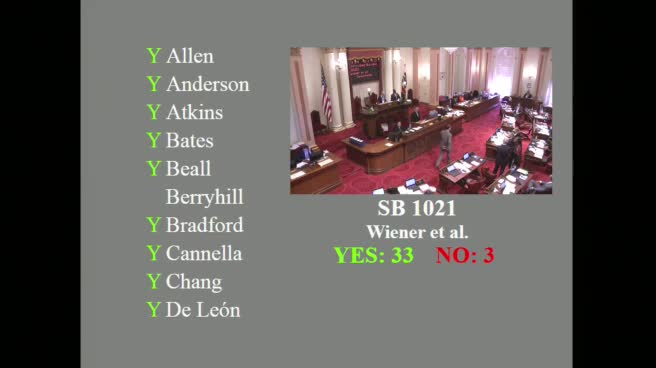 1MIN
Senate Floor
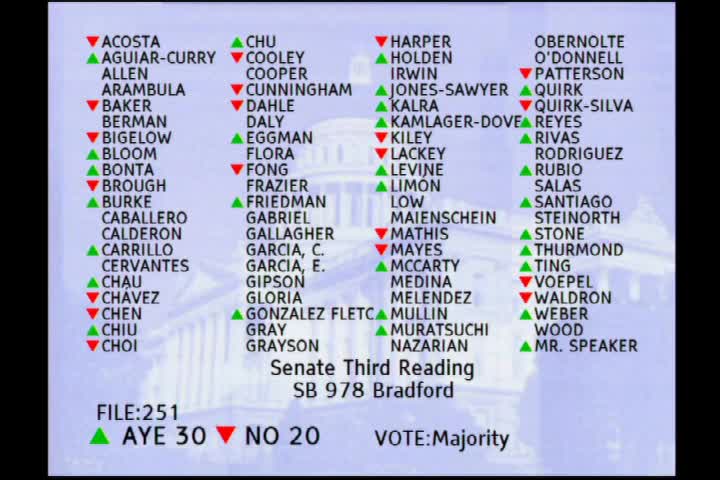 1MIN
Assembly Floor
 1H
Assembly Standing Committee on Appropriations
 3MIN
Assembly Standing Committee on Public Employees, Retirement, and Social Security
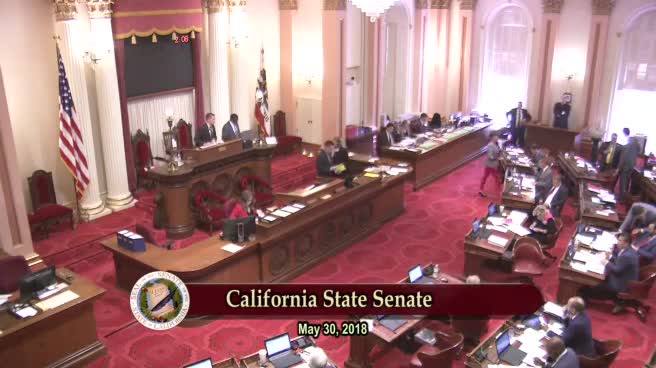 2MIN
Senate Floor
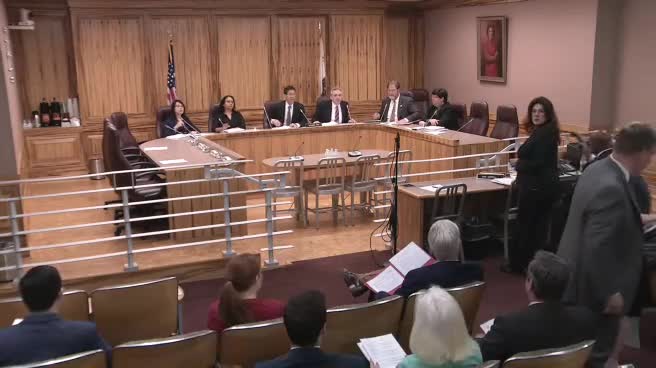 9MIN
Senate Standing Committee on Public Employment and Retirement
Bill Author

Bill Co-Author(s):