SB 1135: Electric service: rates: Family Electric Rate Assistance program.
- Session Year: 2017-2018
- House: Senate
- Latest Version Date: 2018-09-14
Under existing law, the Public Utilities Commission has regulatory authority over public utilities, including electrical corporations and gas corporations. Existing law authorizes the commission to fix the rates and charges for every public utility and requires that those rates and charges be just and reasonable. Existing law requires the commission to ensure that low-income ratepayers are not jeopardized or overburdened by monthly energy expenditures and authorizes the commission to reduce energy expenditures through the establishment of different rates for low-income ratepayers, different levels of rate assistance, and energy efficiency programs. Existing law requires the commission to establish a program of assistance to low-income electric and gas customers, referred to as the California Alternate Rates for Energy or CARE program. Eligibility for the CARE program is for those electric and gas customers with annual household incomes that are no greater than 200% of the federal poverty guideline levels. Existing decisions of the commission establish the Family Electric Rate Assistance or FERA program for the states 3 largest electrical corporations to provide specified discounts to residential customers that are families of 3 or more persons with total household annual gross income levels between 200% and 250% of the federal poverty guideline level.
This bill would require the commission to continue the FERA program for the states 3 largest electrical corporations and would require that the program discount be an 18% line-item discount applied to an eligible customers bill calculated at the applicable rate for a monthly or other billing period. The bill would authorize the states 3 largest electrical corporations to increase or expand marketing and outreach efforts regarding the FERA program beyond those in effect as of December 31, 2018.
Under existing law, a violation of the Public Utilities Act or any order, decision, rule, direction, demand, or requirement of the commission is a crime.
By amending the act, this bill would impose a state-mandated local program by creating a new crime.
The California Constitution requires the state to reimburse local agencies and school districts for certain costs mandated by the state. Statutory provisions establish procedures for making that reimbursement.
This bill would provide that no reimbursement is required by this act for a specified reason.
Under existing law, the Public Utilities Commission has regulatory authority over public utilities, including electrical corporations and gas corporations. Existing law authorizes the commission to fix the rates and charges for every public utility and requires that those rates and charges be just and reasonable. Existing law requires the commission to ensure that low-income ratepayers are not jeopardized or overburdened by monthly energy expenditures and authorizes the commission to reduce energy expenditures through the establishment of different rates for low-income ratepayers, different levels of rate assistance, and energy efficiency programs. Existing law requires the commission to establish a program of assistance to low-income electric and gas customers, referred to as the California Alternate Rates for Energy or CARE program. Eligibility for the CARE program is for those electric and gas customers with annual household incomes that are no greater than 200% of the federal poverty guideline levels. Existing decisions of the commission establish the Family Electric Rate Assistance or FERA program for the states 3 largest electrical corporations to provide specified discounts to residential customers that are families of 3 or more persons with total household annual gross income levels between 200% and 250% of the federal poverty guideline level.
This bill would require the commission to continue the FERA program for the states 3 largest electrical corporations and would require that the program discount be an 18% line-item discount applied to an eligible customers bill calculated at the applicable rate for a monthly or other billing period. The bill would authorize the states 3 largest electrical corporations to increase or expand marketing and outreach efforts regarding the FERA program beyond those in effect as of December 31, 2018, and would require the commission to authorize those electrical corporations to recover all costs reasonably incurred in implementing the FERA program on a nonbypassable basis. 2018.
Under existing law, a violation of the Public Utilities Act or any order, decision, rule, direction, demand, or requirement of the commission is a crime.
By amending the act, this bill would impose a state-mandated local program by creating a new crime.
The California Constitution requires the state to reimburse local agencies and school districts for certain costs mandated by the state. Statutory provisions establish procedures for making that reimbursement.
This bill would provide that no reimbursement is required by this act for a specified reason.
Under existing law, the Public Utilities Commission has regulatory authority over public utilities, including electrical corporations and gas corporations. Existing law authorizes the commission to fix the rates and charges for every public utility and requires that those rates and charges be just and reasonable. Existing law requires the commission to ensure that low-income ratepayers are not jeopardized or overburdened by monthly energy expenditures and authorizes the commission to reduce energy expenditures through the establishment of different rates for low-income ratepayers, different levels of rate assistance, and energy efficiency programs. Existing law requires the Public Utilities Commission commission to establish a program of assistance to low-income electric and gas customers, referred to as the California Alternate Rates for Energy or CARE program. Eligibility for the CARE program is for those electric and gas customers with annual household incomes that are no greater than 200% of the federal poverty guideline levels. Existing decisions of the commission establish the Family Electric Rate Assistance or FERA program for the states 3 largest electrical corporations to provide specified discounts to residential customers that are families of 3 or more persons with total household annual gross income levels between 200% and 250% of the federal poverty guideline level.
This bill would require the commission to continue the FERA program for the states 3 largest electrical corporations and would require that the program discount be an 18% line-item discount applied to an eligible customers bill calculated at the applicable rate for a monthly or other billing period. The bill would authorize the states 3 largest electrical corporations to increase or expand marketing and outreach efforts regarding the FERA program beyond those in effect as of December 31, 2018, and would require the commission to authorize those electrical corporations to recover all costs reasonably incurred in implementing the FERA program on a nonbypassable basis.
Under existing law, a violation of the Public Utilities Act or any order, decision, rule, direction, demand, or requirement of the commission is a crime.
By amending the act, this bill would impose a state-mandated local program by creating a new crime.
The California Constitution requires the state to reimburse local agencies and school districts for certain costs mandated by the state. Statutory provisions establish procedures for making that reimbursement.
This bill would provide that no reimbursement is required by this act for a specified reason.
This bill would make electric and gas customers with annual household incomes that are no greater than 250% of the federal poverty guideline levels eligible for the CARE program.Under existing law, the Public Utilities Commission has regulatory authority over public utilities, including electrical corporations and gas corporations. Existing law authorizes the commission to fix the rates and charges for every public utility and requires that those rates and charges be just and reasonable. Existing law requires the Public Utilities Commission to establish a program of assistance to low-income electric and gas customers, referred to as the California Alternate Rates for Energy or CARE program. Eligibility for the CARE program is for those electric and gas customers with annual household incomes that are no greater than 200% of the federal poverty guideline levels.
This bill would require the commission to allow electric and gas customers whose incomes are greater than 200% of the federal poverty guideline levels to participate in the CARE program if the commission finds that the cost of living in the geographical area where those consumers reside is disproportionately high relative to other geographic regions served by an electrical or gas corporation and finds that expanding eligibility for electric and gas customers in that high-cost geographic region is needed in order to maintain health, safety, or quality of life. make electric and gas customers with annual household incomes that are no greater than 250% of the federal poverty guideline levels eligible for the CARE program.
Under existing law, the Public Utilities Commission has regulatory authority over public utilities, including electrical corporations and gas corporations. Existing law authorizes the commission to fix the rates and charges for every public utility and requires that those rates and charges be just and reasonable. Existing law requires the Public Utilities Commission to establish a program of assistance to low-income electric and gas customers, referred to as the California Alternate Rates for Energy or CARE program. Eligibility for the CARE program is for those electric and gas customers with annual household incomes that are no greater than 200% of the federal poverty guideline levels.
This bill would require the commission to allow electric and gas customers whose incomes are greater than 200% of the federal poverty guideline levels to participate in the CARE program if the commission finds that the cost of living in the geographical area where those consumers reside is disproportionately high relative to other geographic regions served by an electrical or gas corporation and finds that expanding eligibility for electric and gas customers in that high-cost geographic region is needed in order to maintain health, safety, or quality of life.
The Legislature finds and declares all of the following:
(a)Many of Californias working families earn enough income to exceed the eligibility limits for the states low-income programs, yet still struggle to afford daily necessities, including electricity.
(b)Pursuant to subdivision (b) of Section 382 of the Public Utilities Code, the Public Utilities Commission is required to ensure that low-income customers are not jeopardized or overburdened by monthly energy expenditures, which may be reduced through the establishment of different levels of rate assistance.
(c)In Decision 04-02-057 (February 26, 2004) Final Opinion on Phase 2 Issues, the Public Utilities Commission ordered the states three largest electrical corporations to provide for tier-exempted rate relief for customers in large households with income levels between 175 percent and 250 percent of the federal poverty guideline level. The decision acknowledged that the average electricity usage of households with three or more occupants is higher than the average usage of smaller households that are similar in other respects, with usage typically exceeding 130 percent of baseline quantities year-round and with higher usage in peak summer months. The decision also acknowledged that large households are unlikely to be able to conserve as much as other households as a means of maintaining affordable energy bills.
(d)In Decision 05-10-044 (October 27, 2005), Interim Opinion Approving Various Emergency Program Changes In Light of Anticipated High Natural Gas Prices in the Winter of 200506, the Public Utilities Commission required electrical corporations to expand the Family Electric Rate Assistance program to residential customers that are families of three or more persons with total household annual gross income levels between 200 percent and 250 percent of the federal poverty guideline level.
(e)In Decision 15-07-001 (July 3, 2015), Decision on Residential Rate Reform for Pacific Gas and Electric Company, Southern California Edison Company, and San Diego Gas & Electric Company and Transition to Time-of-Use Rates, the Public Utilities Commission revised the Family Electric Rate Assistance program to provide qualified households with a 12 percent line-item discount.
(f)Electrical corporations can assist Californias working families by increasing the Family Electric Rate Assistance program benefits and expanding outreach to increase participation by eligible customers.
SEC. 2.Section 739.12 is added to the Public Utilities Code, to read:739.12.(a)The commission shall continue a program of assistance to residential customers of the states three largest electrical corporations consisting of households of three or more persons with total household annual gross income levels between 200 percent and 250 percent of the federal poverty guideline level. The program shall continue to be referred to as the Family Electric Rate Assistance or FERA program.
(b)The FERA program discount shall be an 18 percent line-item discount applied to an eligible customers bill calculated at the applicable rate for the billing period.
(c)The commission shall authorize the states three largest electrical corporations to increase or expand marketing and outreach efforts beyond those in effect as of December 31, 2018, to increase eligible customer participation in the FERA program.
SEC. 3.No reimbursement is required by this act pursuant to Section 6 of Article XIIIB of the California Constitution because the only costs that may be incurred by a local agency or school district will be incurred because this act creates a new crime or infraction, eliminates a crime or infraction, or changes the penalty for a crime or infraction, within the meaning of Section 17556 of the Government Code, or changes the definition of a crime within the meaning of Section 6 of Article XIIIB of the California Constitution.
The Legislature finds and declares all of the following:
(a)Many of Californias working families earn enough income to exceed the eligibility limits for the states low-income programs, yet still struggle to afford daily necessities, including electricity.
(b)Pursuant to subdivision (b) of Section 382 of the Public Utilities Code, the Public Utilities Commission is required to ensure that low-income customers are not jeopardized or overburdened by monthly energy expenditures, which may be reduced through the establishment of different levels of rate assistance.
(c)In Decision 04-02-057 (February 26, 2004) Final Opinion on Phase 2 Issues, the Public Utilities Commission ordered the states three largest electrical corporations to provide for tier-exempted rate relief for customers in large households with income levels between 175 percent and 250 percent of the federal poverty guideline level. The decision acknowledged that the average electricity usage of households with three or more occupants is higher than the average usage of smaller households that are similar in other respects, with usage typically exceeding 130 percent of baseline quantities year-round and with higher usage in peak summer months. The decision also acknowledged that large households are unlikely to be able to conserve as much as other households as a means of maintaining affordable energy bills.
(d)In Decision 05-10-044 (October 27, 2005), Interim Opinion Approving Various Emergency Program Changes In Light of Anticipated High Natural Gas Prices in the Winter of 2005-06, the Public Utilities Commission required electrical corporations to expand the Family Electric Rate Assistance program to residential customers that are families of three or more persons with total household annual gross income levels between 200 percent and 250 percent of the federal poverty guideline level.
(e)In Decision 15-07-001 (July 3, 2015), Decision on Residential Rate Reform for Pacific Gas and Electric Company, Southern California Edison Company, and San Diego Gas & Electric Company and Transition to Time-of-Use Rates, the Public Utilities Commission revised the Family Electric Rate Assistance program to provide qualified households with a 12 percent line-item discount.
(f)Electrical corporations can assist Californias working families by increasing the Family Electric Rate Assistance program benefits and expanding outreach to increase participation by eligible customers.
(g)All administrative and other costs associated with the implementation of the Family Electric Rate Assistance program shall be recoverable in rates on a nonbypassable basis.SEC. 2.Section 739.12 is added to the Public Utilities Code, to read:739.12.(a)The commission shall continue a program of assistance to residential customers of the states three largest electrical corporations consisting of households of three or more persons with total household annual gross income levels between 200 percent and 250 percent of the federal poverty guideline level. The program shall continue to be referred to as the Family Electric Rate Assistance or FERA program.
(b)The FERA program discount shall be an 18 percent line-item discount applied to an eligible customers bill calculated at the applicable rate for the billing period.
(c)The commission shall authorize the states three largest electrical corporations to increase or expand marketing and outreach efforts beyond those in effect as of December 31, 2018, to increase eligible customer participation in the FERA program.
(d)The commission shall authorize recovery of all costs reasonably incurred in implementing the FERA program, including, but not limited to, FERA discount costs, costs incurred in program implementation, outreach, marketing, regulatory compliance, certification and verification, billing, measurement and evaluation, and capital improvements and upgrades to communications and processing equipment, on a nonbypassable basis through the recovery mechanism established for each electrical corporation for recovery of income-qualified assistance program costs prior to January 1, 2019.SEC. 3.No reimbursement is required by this act pursuant to Section 6 of Article XIIIB of the California Constitution because the only costs that may be incurred by a local agency or school district will be incurred because this act creates a new crime or infraction, eliminates a crime or infraction, or changes the penalty for a crime or infraction, within the meaning of Section 17556 of the Government Code, or changes the definition of a crime within the meaning of Section 6 of Article XIIIB of the California Constitution.
The Legislature finds and declares all of the following:
(a)Many of Californias working families earn enough income to exceed the eligibility limits for the states low-income programs, yet still struggle to afford daily necessities, including electricity.
(b)Pursuant to subdivision (b) of Section 382 of the Public Utilities Code, the Public Utilities Commission is required to ensure that low-income customers are not jeopardized or overburdened by monthly energy expenditures, which may be reduced through the establishment of different levels of rate assistance.
(c)In Decision 04-02-057 (February 26, 2004) Final Opinion on Phase 2 Issues, the Public Utilities Commission ordered the states three largest electrical corporations to provide for tier-exempted rate relief for customers in large households with income levels between 175 percent and 250 percent of the federal poverty guideline level. The decision acknowledged that the average electricity usage of households with three or more occupants is higher than the average usage of smaller households that are similar in other respects, with usage typically exceeding 130 percent of baseline quantities year-round and with higher usage in peak summer months. The decision also acknowledged that large households are unlikely to be able to conserve as much as other households as a means of maintaining affordable energy bills.
(d)In Decision 05-10-044 (October 27, 2005), Interim Opinion Approving Various Emergency Program Changes In Light of Anticipated High Natural Gas Prices in the Winter of 2005-06, the Public Utilities Commission required electrical corporations to expand the Family Electric Rate Assistance program to residential customers that are families of three or more persons with total household annual gross income levels between 200 percent and 250 percent of the federal poverty guideline level.
(e)In Decision 15-07-001 (July 3, 2015), Decision on Residential Rate Reform for Pacific Gas and Electric Company, Southern California Edison Company, and San Diego Gas & Electric Company and Transition to Time-of-Use Rates, the Public Utilities Commission revised the Family Electric Rate Assistance program to provide qualified households with a 12 percent line-item discount.
(f)Electrical corporations can assist Californias working families by increasing the Family Electric Rate Assistance program benefits and expanding outreach to increase participation by eligible customers.
(g)All administrative and other costs associated with the implementation of the Family Electric Rate Assistance program shall be recoverable in rates on a nonbypassable basis.
SEC. 2.Section 739.12 is added to the Public Utilities Code, to read:739.12.(a)The commission shall continue a program of assistance to residential customers of the states three largest electrical corporations consisting of households of three or more persons with total household annual gross income levels between 200 percent and 250 percent of the federal poverty guideline level. The program shall continue to be referred to as the Family Electric Rate Assistance or FERA program.
(b)The FERA program discount shall be an 18 percent line-item discount applied to an eligible customers bill calculated at the applicable rate for the billing period.
(c)The commission shall authorize the states three largest electrical corporations to increase or expand marketing and outreach efforts beyond those in effect as of December 31, 2018, to increase eligible customer participation in the FERA program.
(d)The commission shall authorize recovery of all costs reasonably incurred in implementing the FERA program, including, but not limited to, FERA discount costs, costs incurred in program implementation, outreach, marketing, regulatory compliance, certification and verification, billing, measurement and evaluation, and capital improvements and upgrades to communications and processing equipment, on a nonbypassable basis through the recovery mechanism established for each electrical corporation for recovery of income-qualified assistance program costs prior to January 1, 2019.
SEC. 3.No reimbursement is required by this act pursuant to Section 6 of Article XIIIB of the California Constitution because the only costs that may be incurred by a local agency or school district will be incurred because this act creates a new crime or infraction, eliminates a crime or infraction, or changes the penalty for a crime or infraction, within the meaning of Section 17556 of the Government Code, or changes the definition of a crime within the meaning of Section 6 of Article XIIIB of the California Constitution.
SECTION 1.Section 739.1 of the Public Utilities Code is amended to read:739.1.(a)The commission shall continue a program of assistance to low-income electric and gas customers with annual household incomes that are no greater than 250 percent of the federal poverty guideline levels, the cost of which shall not be borne solely by any single class of customer. For one-person households, program eligibility shall be based on two-person household guideline levels. The program shall be referred to as the California Alternate Rates for Energy or CARE program. The commission shall ensure that the level of discount for low-income electric and gas customers correctly reflects the level of need.(b)The commission shall establish rates for CARE program participants, subject to both of the following:(1)That the commission ensure that low-income ratepayers are not jeopardized or overburdened by monthly energy expenditures, pursuant to subdivision (b) of Section 382.(2)That the level of the discount for low-income electricity and gas ratepayers correctly reflects the level of need as determined by the needs assessment conducted pursuant to subdivision (d) of Section 382.(c)In establishing CARE discounts for an electrical corporation with 100,000 or more customer accounts in California, the commission shall ensure all of the following:(1)The average effective CARE discount shall not be less than 30 percent or more than 35 percent of the revenues that would have been produced for the same billed usage by non-CARE customers. The average effective discount determined by the commission shall reflect any charges not paid by CARE customers, including payments for the California Solar Initiative, payments for the self-generation incentive program made pursuant to Section 379.6, payment of the separate rate component to fund the CARE program made pursuant to subdivision (a) of Section 381, payments made to the Department of Water Resources pursuant to Division 27 (commencing with Section 80000) of the Water Code, and any discount in a fixed charge. The average effective CARE discount shall be calculated as a weighted average of the CARE discounts provided to individual customers.(2)If an electrical corporation provides an average effective CARE discount in excess of the maximum percentage specified in paragraph (1), the electrical corporation shall not reduce, on an annual basis, the average effective CARE discount by more than a reasonable percentage decrease below the discount in effect on January 1, 2013, or that the electrical corporation had been authorized to place in effect by that date.(3)The entire discount shall be provided in the form of a reduction in the overall bill for the eligible CARE customer.(d)The commission shall work with electrical and gas corporations to establish penetration goals. The commission shall authorize recovery of all administrative costs associated with the implementation of the CARE program that the commission determines to be reasonable, through a balancing account mechanism. Administrative costs shall include, but are not limited to, outreach, marketing, regulatory compliance, certification and verification, billing, measurement and evaluation, and capital improvements and upgrades to communications and processing equipment.(e)The commission shall examine methods to improve CARE enrollment and participation. This examination shall include, but need not be limited to, comparing information from CARE and the Universal Lifeline Telephone Service (ULTS) to determine the most effective means of utilizing that information to increase CARE enrollment, automatic enrollment of ULTS customers who are eligible for the CARE program, customer privacy issues, and alternative mechanisms for outreach to potential enrollees. The commission shall ensure that a customer consents prior to enrollment. The commission shall consult with interested parties, including ULTS providers, to develop the best methods of informing ULTS customers about other available low-income programs, as well as the best mechanism for telephone providers to recover reasonable costs incurred pursuant to this section.(f)(1)The commission shall improve the CARE application process by cooperating with other entities and representatives of California government, including the California Health and Human Services Agency and the Secretary of California Health and Human Services, to ensure that all gas and electric customers eligible for public assistance programs in California that reside within the service territory of an electrical corporation or gas corporation, are enrolled in the CARE program. The commission may determine that gas and electric customers are categorically eligible for CARE assistance if they are enrolled in other public assistance programs with substantially the same income eligibility requirements as the CARE program. To the extent practicable, the commission shall develop a CARE application process using the existing ULTS application process as a model. The commission shall work with electrical and gas corporations and the Low-Income Oversight Board established in Section 382.1 to meet the low-income objectives in this section.(2)The commission shall ensure that an electrical corporation or gas corporation with a commission-approved program to provide discounts based upon economic need in addition to the CARE program, including a Family Electric Rate Assistance program, utilize a single application form, to enable an applicant to alternatively apply for any assistance program for which the applicant may be eligible. It is the intent of the Legislature to allow applicants under one program, that may not be eligible under that program, but that may be eligible under an alternative assistance program based upon economic need, to complete a single application for any commission-approved assistance program offered by the public utility.(g)It is the intent of the Legislature that the commission ensure CARE program participants receive affordable electric and gas service that does not impose an unfair economic burden on those participants.(h)The commissions program of assistance to low-income electric and gas customers shall, as soon as practicable, include nonprofit group living facilities specified by the commission, if the commission finds that the residents in these facilities substantially meet the commissions low-income eligibility requirements and there is a feasible process for certifying that the assistance shall be used for the direct benefit, such as improved quality of care or improved food service, of the low-income residents in the facilities. The commission shall authorize utilities to offer discounts to eligible facilities licensed or permitted by appropriate state or local agencies, and to facilities, including womens shelters, hospices, and homeless shelters, that may not have a license or permit but provide other proof satisfactory to the utility that they are eligible to participate in the program.(i)(1)In addition to existing assessments of eligibility, an electrical corporation may require proof of income eligibility for those CARE program participants whose electricity usage, in any monthly or other billing period, exceeds 400 percent of baseline usage. The authority of an electrical corporation to require proof of income eligibility is not limited by the means by which the CARE program participant enrolled in the program, including if the participant was automatically enrolled in the CARE program because of participation in a governmental assistance program. If a CARE program participants electricity usage exceeds 400 percent of baseline usage, the electrical corporation may require the CARE program participant to participate in the Energy Savings Assistance Program (ESAP), which includes a residential energy assessment, in order to provide the CARE program participant with information and assistance in reducing his or her energy usage. Continued participation in the CARE program may be conditioned upon the CARE program participant agreeing to participate in ESAP within 45 days of notice being given by the electrical corporation pursuant to this paragraph. The electrical corporation may require the CARE program participant to notify the utility of whether the residence is rented, and if so, a means by which to contact the landlord, and the electrical corporation may share any evaluation and recommendation relative to the residential structure that is made as part of an energy assessment, with the landlord of the CARE program participant. Requirements imposed pursuant to this paragraph shall be consistent with procedures adopted by the commission.(2)If a CARE program participants electricity usage exceeds 600 percent of baseline usage, the electrical corporation shall require the CARE program participant to participate in ESAP, which includes a residential energy assessment, in order to provide the CARE program participant with information and assistance in reducing his or her energy usage. Continued participation in the CARE program shall be conditioned upon the CARE program participant agreeing to participate in ESAP within 45 days of a notice made by the electrical corporation pursuant to this paragraph. The electrical corporation may require the CARE program participant to notify the utility of whether the residence is rented, and if so, a means by which to contact the landlord, and the electrical corporation may share any evaluation and recommendation relative to the residential structure that is made as part of an energy assessment, with the landlord of the CARE program participant. Following the completion of the energy assessment, if the CARE program participants electricity usage continues to exceed 600 percent of baseline usage, the electrical corporation may remove the CARE program participant from the program if the removal is consistent with procedures adopted by the commission. Nothing in this paragraph shall prevent a CARE program participant with electricity usage exceeding 600 percent of baseline usage from participating in an appeals process with the electrical corporation to determine whether the participants usage levels are legitimate.(3)A CARE program participant in a rental residence shall not be removed from the program in situations where the landlord is nonresponsive when contacted by the electrical corporation or does not provide for ESAP participation.(a)The commission shall continue a program of assistance to low-income electric and gas customers with annual household incomes that are no greater than 200 250 percent of the federal poverty guideline levels, the cost of which shall not be borne solely by any single class of customer. For one-person households, program eligibility shall be based on two-person household guideline levels. The program shall be referred to as the California Alternate Rates for Energy or CARE program. The commission shall ensure that the level of discount for low-income electric and gas customers correctly reflects the level of need. The commission shall allow electric and gas customers whose incomes are greater than 200 percent of the federal poverty guideline levels to participate in the CARE program if the commission finds that the cost of living in the geographical area where those consumers reside is disproportionately high relative to other geographic regions served by an electrical or gas corporation and finds that expanding eligibility for electric and gas customers in that high-cost geographic region is needed in order to maintain health, safety, or quality of life.
(b)The commission shall establish rates for CARE program participants, subject to both of the following:
(1)That the commission ensure that low-income ratepayers are not jeopardized or overburdened by monthly energy expenditures, pursuant to subdivision (b) of Section 382.
(2)That the level of the discount for low-income electricity and gas ratepayers correctly reflects the level of need as determined by the needs assessment conducted pursuant to subdivision (d) of Section 382.
(c)In establishing CARE discounts for an electrical corporation with 100,000 or more customer accounts in California, the commission shall ensure all of the following:
(1)The average effective CARE discount shall not be less than 30 percent or more than 35 percent of the revenues that would have been produced for the same billed usage by non-CARE customers. The average effective discount determined by the commission shall reflect any charges not paid by CARE customers, including payments for the California Solar Initiative, payments for the self-generation incentive program made pursuant to Section 379.6, payment of the separate rate component to fund the CARE program made pursuant to subdivision (a) of Section 381, payments made to the Department of Water Resources pursuant to Division 27 (commencing with Section 80000) of the Water Code, and any discount in a fixed charge. The average effective CARE discount shall be calculated as a weighted average of the CARE discounts provided to individual customers.
(2)If an electrical corporation provides an average effective CARE discount in excess of the maximum percentage specified in paragraph (1), the electrical corporation shall not reduce, on an annual basis, the average effective CARE discount by more than a reasonable percentage decrease below the discount in effect on January 1, 2013, or that the electrical corporation had been authorized to place in effect by that date.
(3)The entire discount shall be provided in the form of a reduction in the overall bill for the eligible CARE customer.
(d)The commission shall work with electrical and gas corporations to establish penetration goals. The commission shall authorize recovery of all administrative costs associated with the implementation of the CARE program that the commission determines to be reasonable, through a balancing account mechanism. Administrative costs shall include, but are not limited to, outreach, marketing, regulatory compliance, certification and verification, billing, measurement and evaluation, and capital improvements and upgrades to communications and processing equipment.
(e)The commission shall examine methods to improve CARE enrollment and participation. This examination shall include, but need not be limited to, comparing information from CARE and the Universal Lifeline Telephone Service (ULTS) to determine the most effective means of utilizing that information to increase CARE enrollment, automatic enrollment of ULTS customers who are eligible for the CARE program, customer privacy issues, and alternative mechanisms for outreach to potential enrollees. The commission shall ensure that a customer consents prior to enrollment. The commission shall consult with interested parties, including ULTS providers, to develop the best methods of informing ULTS customers about other available low-income programs, as well as the best mechanism for telephone providers to recover reasonable costs incurred pursuant to this section.
(f)(1)The commission shall improve the CARE application process by cooperating with other entities and representatives of California government, including the California Health and Human Services Agency and the Secretary of California Health and Human Services, to ensure that all gas and electric customers eligible for public assistance programs in California that reside within the service territory of an electrical corporation or gas corporation, are enrolled in the CARE program. The commission may determine that gas and electric customers are categorically eligible for CARE assistance if they are enrolled in other public assistance programs with substantially the same income eligibility requirements as the CARE program. To the extent practicable, the commission shall develop a CARE application process using the existing ULTS application process as a model. The commission shall work with electrical and gas corporations and the Low-Income Oversight Board established in Section 382.1 to meet the low-income objectives in this section.
(2)The commission shall ensure that an electrical corporation or gas corporation with a commission-approved program to provide discounts based upon economic need in addition to the CARE program, including a Family Electric Rate Assistance program, utilize a single application form, to enable an applicant to alternatively apply for any assistance program for which the applicant may be eligible. It is the intent of the Legislature to allow applicants under one program, that may not be eligible under that program, but that may be eligible under an alternative assistance program based upon economic need, to complete a single application for any commission-approved assistance program offered by the public utility.
(g)It is the intent of the Legislature that the commission ensure CARE program participants receive affordable electric and gas service that does not impose an unfair economic burden on those participants.
(h)The commissions program of assistance to low-income electric and gas customers shall, as soon as practicable, include nonprofit group living facilities specified by the commission, if the commission finds that the residents in these facilities substantially meet the commissions low-income eligibility requirements and there is a feasible process for certifying that the assistance shall be used for the direct benefit, such as improved quality of care or improved food service, of the low-income residents in the facilities. The commission shall authorize utilities to offer discounts to eligible facilities licensed or permitted by appropriate state or local agencies, and to facilities, including womens shelters, hospices, and homeless shelters, that may not have a license or permit but provide other proof satisfactory to the utility that they are eligible to participate in the program.
(i)(1)In addition to existing assessments of eligibility, an electrical corporation may require proof of income eligibility for those CARE program participants whose electricity usage, in any monthly or other billing period, exceeds 400 percent of baseline usage. The authority of an electrical corporation to require proof of income eligibility is not limited by the means by which the CARE program participant enrolled in the program, including if the participant was automatically enrolled in the CARE program because of participation in a governmental assistance program. If a CARE program participants electricity usage exceeds 400 percent of baseline usage, the electrical corporation may require the CARE program participant to participate in the Energy Savings Assistance Program (ESAP), which includes a residential energy assessment, in order to provide the CARE program participant with information and assistance in reducing his or her energy usage. Continued participation in the CARE program may be conditioned upon the CARE program participant agreeing to participate in ESAP within 45 days of notice being given by the electrical corporation pursuant to this paragraph. The electrical corporation may require the CARE program participant to notify the utility of whether the residence is rented, and if so, a means by which to contact the landlord, and the electrical corporation may share any evaluation and recommendation relative to the residential structure that is made as part of an energy assessment, with the landlord of the CARE program participant. Requirements imposed pursuant to this paragraph shall be consistent with procedures adopted by the commission.
(2)If a CARE program participants electricity usage exceeds 600 percent of baseline usage, the electrical corporation shall require the CARE program participant to participate in ESAP, which includes a residential energy assessment, in order to provide the CARE program participant with information and assistance in reducing his or her energy usage. Continued participation in the CARE program shall be conditioned upon the CARE program participant agreeing to participate in ESAP within 45 days of a notice made by the electrical corporation pursuant to this paragraph. The electrical corporation may require the CARE program participant to notify the utility of whether the residence is rented, and if so, a means by which to contact the landlord, and the electrical corporation may share any evaluation and recommendation relative to the residential structure that is made as part of an energy assessment, with the landlord of the CARE program participant. Following the completion of the energy assessment, if the CARE program participants electricity usage continues to exceed 600 percent of baseline usage, the electrical corporation may remove the CARE program participant from the program if the removal is consistent with procedures adopted by the commission. Nothing in this paragraph shall prevent a CARE program participant with electricity usage exceeding 600 percent of baseline usage from participating in an appeals process with the electrical corporation to determine whether the participants usage levels are legitimate.
(3)A CARE program participant in a rental residence shall not be removed from the program in situations where the landlord is nonresponsive when contacted by the electrical corporation or does not provide for ESAP participation.
(a)The commission shall continue a program of assistance to low-income electric and gas customers with annual household incomes that are no greater than 200 percent of the federal poverty guideline levels, the cost of which shall not be borne solely by any single class of customer. For one-person households, program eligibility shall be based on two-person household guideline levels. The program shall be referred to as the California Alternate Rates for Energy or CARE program. The commission shall ensure that the level of discount for low-income electric and gas customers correctly reflects the level of need. The commission shall allow electric and gas customers whose incomes are greater than 200 percent of the federal poverty guideline levels to participate in the CARE program if the commission finds that the cost of living in the geographical area where those consumers reside is disproportionately high relative to other geographic regions served by an electrical or gas corporation and finds that expanding eligibility for electric and gas customers in that high-cost geographic region is needed in order to maintain health, safety, or quality of life.
(b)The commission shall establish rates for CARE program participants, subject to both of the following:
(1)That the commission ensure that low-income ratepayers are not jeopardized or overburdened by monthly energy expenditures, pursuant to subdivision (b) of Section 382.
(2)That the level of the discount for low-income electricity and gas ratepayers correctly reflects the level of need as determined by the needs assessment conducted pursuant to subdivision (d) of Section 382.
(c)In establishing CARE discounts for an electrical corporation with 100,000 or more customer accounts in California, the commission shall ensure all of the following:
(1)The average effective CARE discount shall not be less than 30 percent or more than 35 percent of the revenues that would have been produced for the same billed usage by non-CARE customers. The average effective discount determined by the commission shall reflect any charges not paid by CARE customers, including payments for the California Solar Initiative, payments for the self-generation incentive program made pursuant to Section 379.6, payment of the separate rate component to fund the CARE program made pursuant to subdivision (a) of Section 381, payments made to the Department of Water Resources pursuant to Division 27 (commencing with Section 80000) of the Water Code, and any discount in a fixed charge. The average effective CARE discount shall be calculated as a weighted average of the CARE discounts provided to individual customers.
(2)If an electrical corporation provides an average effective CARE discount in excess of the maximum percentage specified in paragraph (1), the electrical corporation shall not reduce, on an annual basis, the average effective CARE discount by more than a reasonable percentage decrease below the discount in effect on January 1, 2013, or that the electrical corporation had been authorized to place in effect by that date.
(3)The entire discount shall be provided in the form of a reduction in the overall bill for the eligible CARE customer.
(d)The commission shall work with electrical and gas corporations to establish penetration goals. The commission shall authorize recovery of all administrative costs associated with the implementation of the CARE program that the commission determines to be reasonable, through a balancing account mechanism. Administrative costs shall include, but are not limited to, outreach, marketing, regulatory compliance, certification and verification, billing, measurement and evaluation, and capital improvements and upgrades to communications and processing equipment.
(e)The commission shall examine methods to improve CARE enrollment and participation. This examination shall include, but need not be limited to, comparing information from CARE and the Universal Lifeline Telephone Service (ULTS) to determine the most effective means of utilizing that information to increase CARE enrollment, automatic enrollment of ULTS customers who are eligible for the CARE program, customer privacy issues, and alternative mechanisms for outreach to potential enrollees. The commission shall ensure that a customer consents prior to enrollment. The commission shall consult with interested parties, including ULTS providers, to develop the best methods of informing ULTS customers about other available low-income programs, as well as the best mechanism for telephone providers to recover reasonable costs incurred pursuant to this section.
(f)(1)The commission shall improve the CARE application process by cooperating with other entities and representatives of California government, including the California Health and Human Services Agency and the Secretary of California Health and Human Services, to ensure that all gas and electric customers eligible for public assistance programs in California that reside within the service territory of an electrical corporation or gas corporation, are enrolled in the CARE program. The commission may determine that gas and electric customers are categorically eligible for CARE assistance if they are enrolled in other public assistance programs with substantially the same income eligibility requirements as the CARE program. To the extent practicable, the commission shall develop a CARE application process using the existing ULTS application process as a model. The commission shall work with electrical and gas corporations and the Low-Income Oversight Board established in Section 382.1 to meet the low-income objectives in this section.
(2)The commission shall ensure that an electrical corporation or gas corporation with a commission-approved program to provide discounts based upon economic need in addition to the CARE program, including a Family Electric Rate Assistance program, utilize a single application form, to enable an applicant to alternatively apply for any assistance program for which the applicant may be eligible. It is the intent of the Legislature to allow applicants under one program, that may not be eligible under that program, but that may be eligible under an alternative assistance program based upon economic need, to complete a single application for any commission-approved assistance program offered by the public utility.
(g)It is the intent of the Legislature that the commission ensure CARE program participants receive affordable electric and gas service that does not impose an unfair economic burden on those participants.
(h)The commissions program of assistance to low-income electric and gas customers shall, as soon as practicable, include nonprofit group living facilities specified by the commission, if the commission finds that the residents in these facilities substantially meet the commissions low-income eligibility requirements and there is a feasible process for certifying that the assistance shall be used for the direct benefit, such as improved quality of care or improved food service, of the low-income residents in the facilities. The commission shall authorize utilities to offer discounts to eligible facilities licensed or permitted by appropriate state or local agencies, and to facilities, including womens shelters, hospices, and homeless shelters, that may not have a license or permit but provide other proof satisfactory to the utility that they are eligible to participate in the program.
(i)(1)In addition to existing assessments of eligibility, an electrical corporation may require proof of income eligibility for those CARE program participants whose electricity usage, in any monthly or other billing period, exceeds 400 percent of baseline usage. The authority of an electrical corporation to require proof of income eligibility is not limited by the means by which the CARE program participant enrolled in the program, including if the participant was automatically enrolled in the CARE program because of participation in a governmental assistance program. If a CARE program participants electricity usage exceeds 400 percent of baseline usage, the electrical corporation may require the CARE program participant to participate in the Energy Savings Assistance Program (ESAP), which includes a residential energy assessment, in order to provide the CARE program participant with information and assistance in reducing his or her energy usage. Continued participation in the CARE program may be conditioned upon the CARE program participant agreeing to participate in ESAP within 45 days of notice being given by the electrical corporation pursuant to this paragraph. The electrical corporation may require the CARE program participant to notify the utility of whether the residence is rented, and if so, a means by which to contact the landlord, and the electrical corporation may share any evaluation and recommendation relative to the residential structure that is made as part of an energy assessment, with the landlord of the CARE program participant. Requirements imposed pursuant to this paragraph shall be consistent with procedures adopted by the commission.
(2)If a CARE program participants electricity usage exceeds 600 percent of baseline usage, the electrical corporation shall require the CARE program participant to participate in ESAP, which includes a residential energy assessment, in order to provide the CARE program participant with information and assistance in reducing his or her energy usage. Continued participation in the CARE program shall be conditioned upon the CARE program participant agreeing to participate in ESAP within 45 days of a notice made by the electrical corporation pursuant to this paragraph. The electrical corporation may require the CARE program participant to notify the utility of whether the residence is rented, and if so, a means by which to contact the landlord, and the electrical corporation may share any evaluation and recommendation relative to the residential structure that is made as part of an energy assessment, with the landlord of the CARE program participant. Following the completion of the energy assessment, if the CARE program participants electricity usage continues to exceed 600 percent of baseline usage, the electrical corporation may remove the CARE program participant from the program if the removal is consistent with procedures adopted by the commission. Nothing in this paragraph shall prevent a CARE program participant with electricity usage exceeding 600 percent of baseline usage from participating in an appeals process with the electrical corporation to determine whether the participants usage levels are legitimate.
(3)A CARE program participant in a rental residence shall not be removed from the program in situations where the landlord is nonresponsive when contacted by the electrical corporation or does not provide for ESAP participation.
|
Date
|
Status
|
|---|---|
| Sep 14, 2018 | Chaptered by Secretary of State. Chapter 413, Statutes of 2018. |
| Sep 14, 2018 | Approved by the Governor. |
| Aug 31, 2018 | Enrolled and presented to the Governor at 6 p.m. |
| Aug 23, 2018 | Assembly amendments concurred in. (Ayes 29. Noes 6.) Ordered to engrossing and enrolling. |
| Aug 22, 2018 | From committee: That the Assembly amendments be concurred in. (Ayes 10. Noes 1.) |
| Aug 22, 2018 | Set for hearing August 22. |
| Aug 21, 2018 | From committee: Be re-referred to Com. on E., U. & C. pursuant to Senate Rule 29.10(d). (Ayes 5. Noes 0.) Re-referred to Com. on E., U. & C. |
| Aug 21, 2018 | Re-referred to Com. on RLS. pursuant to Senate Rule 29.10(d). |
| Aug 21, 2018 | In Senate. Concurrence in Assembly amendments pending. |
| Aug 20, 2018 | Read third time. Passed. Ordered to the Senate. |
| Aug 9, 2018 | Read second time. Ordered to third reading. |
| Aug 8, 2018 | From committee: Do pass. (Ayes 12. Noes 4.) (August 8). |
| Jul 3, 2018 | Read second time and amended. Re-referred to Com. on APPR. |
| Jul 2, 2018 | From committee: Do pass as amended and re-refer to Com. on APPR. (Ayes 10. Noes 0.) (June 27). |
| Jun 20, 2018 | From committee with author's amendments. Read second time and amended. Re-referred to Com. on U. & E. |
| Jun 11, 2018 | Referred to Com. on U. & E. |
| May 29, 2018 | In Assembly. Read first time. Held at Desk. |
| May 29, 2018 | Read third time. Passed. (Ayes 32. Noes 4.) Ordered to the Assembly. |
| May 25, 2018 | From committee: Do pass. (Ayes 6. Noes 0.) (May 25). |
| May 23, 2018 | Set for hearing May 25. |
| May 22, 2018 | May 22 hearing: Placed on APPR. suspense file. |
| May 15, 2018 | Set for hearing May 22. |
| May 14, 2018 | May 14 hearing postponed by committee. |
| May 4, 2018 | Set for hearing May 14. |
| May 1, 2018 | Read second time and amended. Re-referred to Com. on APPR. |
| Apr 30, 2018 | From committee: Do pass as amended and re-refer to Com. on APPR. (Ayes 10. Noes 0.) (April 25). |
| Apr 12, 2018 | Set for hearing April 25. |
| Apr 11, 2018 | April 17 hearing postponed by committee. |
| Mar 23, 2018 | Set for hearing April 17. |
| Feb 22, 2018 | Referred to Com. on E., U. & C. |
| Feb 14, 2018 | From printer. May be acted upon on or after March 16. |
| Feb 13, 2018 | Introduced. Read first time. To Com. on RLS. for assignment. To print. |
|
Date
|
Description
|
Location
|
Votes
|
|
|---|---|---|---|---|
| Aug 23, 2018 | Unfinished Business SB1135 Bradford Concurrence | Senate Floor |
Passed |
|
| Aug 22, 2018 | That the Assembly amendments be concurred in | Senate Standing Committee on Energy, Utilities and Communications |
Passed |
|
| Aug 20, 2018 | SB 1135 Bradford Senate Third Reading By QUIRK | Assembly Floor |
Passed |
|
| Aug 8, 2018 | Do pass. | Assembly Standing Committee on Appropriations |
Passed |
|
| Jun 27, 2018 | Do pass as amended and be re-referred to the Committee on [Appropriations] | Assembly Standing Committee on Utilities and Energy |
Passed |
|
| May 29, 2018 | Senate 3rd Reading SB1135 Bradford | Senate Floor |
Passed |
|
| May 25, 2018 | Do pass | Senate Standing Committee on Appropriations |
Passed |
|
| May 22, 2018 | Placed on suspense file | Senate Standing Committee on Appropriations |
Passed |
|
| Apr 25, 2018 | Do pass as amended, but first amend, and re-refer to the Committee on [Appropriations] | Senate Standing Committee on Energy, Utilities and Communications |
Passed |
This list shows positions taken on this bill by organizations on the date displayed, which is linked to the original source.
Positions by individuals are not included.
|
Organization
|
Position
|
Date
|
|---|---|---|
| Brightline Defense Project | ** Support | Aug 22, 2018 |
| National Association Of Social Workers, California Chapter | ** Support | Aug 22, 2018 |
| Natural Resources Defense Council | ** Support | Aug 22, 2018 |
| The Greenlining Institute | ** Support | Aug 22, 2018 |
| western center on law and poverty | ** Support | Aug 22, 2018 |
Office of Senate Floor Analyses (916) 651-1520 Fax: (916) 327-4478 | SB 1135 |
UNFINISHED BUSINESS
Bill No: SB 1135
Amended: 7/3/18
SENATE ENERGY, U. & C. COMMITTEE: 10-0, 4/25/18
AYES: Hueso, Bradford, Cannella, Hertzberg, Hill, McGuire, Skinner, Stern, Vidak, Wiener
NO VOTE RECORDED: Morrell
SENATE APPROPRIATIONS COMMITTEE: 6-0, 5/25/18
AYES: Lara, Beall, Bradford, Hill, Nielsen, Wiener
NO VOTE RECORDED: Bates
SENATE FLOOR: 32-4, 5/29/18
AYES: Allen, Atkins, Beall, Bradford, Cannella, De León, Dodd, Gaines, Galgiani, Glazer, Hernandez, Hertzberg, Hill, Hueso, Jackson, Lara, Leyva, McGuire, Monning, Newman, Nguyen, Nielsen, Pan, Portantino, Roth, Skinner, Stern, Stone, Vidak, Wieckowski, Wiener, Wilk
NOES: Anderson, Bates, Moorlach, Morrell
NO VOTE RECORDED: Berryhill, Fuller, Mitchell
SENATE ENERGY, U. & C. COMMITTEE: 10-1, 8/22/18 (Pursuant to Senate Rule 29.10)
AYES: Hueso, Bradford, Cannella, Hertzberg, Hill, McGuire, Skinner, Stern, Vidak, Wiener
NOES: Morrell
ASSEMBLY FLOOR: 59-17, 8/20/18 - See last page for vote
SUBJECT: Electric service: rates: Family Electric Rate Assistance program
DIGEST:
This bill codifies the requirements of an existing low-income electric rate discount program, known as the Family Electric Rate Assistance (FERA) program, for the state’s three largest electrical corporations and increase the program discount from 12 percent to18 percent line-item discount on a customer’s electric utility bill.
Assembly Amendments
remove the language previously in the bill which proposed to expand eligibility for the California Alternate Rates for Energy (CARE) program and replaces it with language to codify the FERA program and increase the amount of the discount.
Existing law:
- Authorizes the California Public Utilities Commission (CPUC) to fix the rates and charges for every public utility and requires the CPUC to ensure that low-income ratepayers are not jeopardized or overburdened by monthly energy expenditures. (Public Utilities Code § 382)
- Establishes the CARE program for assistance to low-income electric and gas customers with annual household incomes that are no greater than 200 percent of the federal poverty guideline levels to ensure low-income ratepayers are not jeopardized or overburdened by monthly energy expenditures. Requires the CARE discount for electrical corporations with 100,000 or more customer accounts in California is not less than 30 percent or more than 35 percent of the revenues that would have been produced for the same billed usage by non-CARE customers and requires the entire discount to be provided in the form of a reduction in the overall bill for the eligible CARE customer. (Public Utilities Code § 739.1)
This bill:
- Makes several findings and declarations concerning the challenges for California’s working families whose incomes exceed the eligibility limits for the state’s low-income programs, yet may struggle to afford daily necessities, including electricity, and references CPUC decisions and actions concerning existing programs to support those populations.
- Requires the CPUC to continue the FERA program to provide assistance to residential customers of the state’s three largest electrical corporations for households of three or more persons with total household annual gross income levels between 200 percent and 250 percent of the federal poverty guideline level.
- Requires the FERA program discount to be an 18 percent line-item discount applied to an eligible customer’s bill calculated at the applicable rate for the billing period.
- Requires the CPUC to authorize the state’s three largest electrical corporations to increase or expand marketing and outreach efforts beyond those in effect as of December 31, 2018, to increase eligible customer participation in the FERA program.
Background
Utility Customer Rate Assistance Programs. California customers of investor-owned energy utilities with qualifying incomes can receive energy utility bill assistance, most notably under two key programs, CARE and FERA.
CARE. Existing law requires the CPUC to establish the CARE program, which provides assistance to low-income electric and gas customers with annual household incomes less than 200 percent of federal poverty guideline levels. The cost of this program is spread across multiple classes of customers. AB 327 (Perea, Chapter 611, Statutes of 2013) restructured the rate design for residential electric customers, including directing the CPUC to establish rates for the CARE program customers of the large investor-owned utilities (IOUs). The set rates must effectively give a discount between 30 percent and 35 percent to eligible customers of electrical corporations with 100,000 or more customer accounts. Electrical corporations with fewer than 100,000 customer accounts offer a 20 percent discount. Customers may also be eligible for CARE if they are enrolled in public assistance programs, such as: Medicaid/Medi-Cal, Women, Infant, Children Program (WIC), Healthy Families A&B, National School Lunch’s Free Lunch Program, Food Stamps/SNAP, Low Income Home Energy Assistance Program, Head Start Income Eligible, Supplemental Security Income, Bureau of Indian Affairs General Assistance, and Temporary Assistance for Needy Families (TANF). CARE enrollment participation rates are generally in the 80 percent or more of the eligible population for most of the energy utilities. CARE customers also qualify for energy savings assistance program which provides subsidized weatherization and other energy efficiency upgrades to help reduce a CARE customer’s overall energy load.
CARE Income Guidelines (effective June 1, 2017 to May 31, 2018) | |
Household Size | Income Eligibility Upper Limit |
1-2 | $32,480 |
3 | $40,840 |
4 | $49,200 |
5 | $57,560 |
6 | $65,920 |
7 | $74,280 |
8 | $82,640 |
Each additional person | $8,360 |
FERA. Families whose household income slightly exceeds the CARE allowance (up to 250 percent of federal poverty) qualify to receive FERA discounts. Unlike CARE, FERA applies a 12 percent discount to customers of the state’s three largest electric utilities – Southern California Edison (SCE), San Diego Gas and Electric Company (SDG&E), and Pacific Gas & Electric Company (PG&E). FERA was established through a CPUC decision, involving the IOUs and ratepayer organizations. FERA is an effort to help families which might have incomes that are just above the income eligibility for CARE, but which likely still experience hardships paying their utility bills. However, unlike CARE customers, FERA customers are not eligible for the energy savings assistance program to provide subsidized weatherization and other energy efficiency upgrades to help reduce the customer’s energy load. Additionally, unlike CARE, FERA enrollment participation rates are low across the board for all three utilities.
FERA Income Limits (effective June 1, 2017 to May 31, 2018) | |
Household | 250% of Federal Poverty Guidelines |
3 | $51, 050 |
4 | $61,500 |
5 | $71,950 |
6 | $82,400 |
7 | $92,850 |
8 | $103,300 |
Each additional person | $10,450 |
Enrollment in FERA (as of 03/2018) | |||
Utility | Total Enrollments FERA | Total Eligible for FERA | Penetration rate |
PG&E | 26,938 | 169,219 | 16.00% |
SCE | 19,367 | 220,081 | 8.80% |
SDG&E | 7,932 | 44,204 | 18.00% |
Totals | 54,237 | 433,504 | |
SB 1135. This bill proposes to codify the FERA program and increase the discount from 12 percent to 18 percent for households with qualifying incomes. While there is little information to justify the 18 percent discount, the Office of Ratepayer Advocates advocated for a 20 percent FERA discount in the CPUC proceeding implementing AB 327 rate reform (Perea, Chapter 611, Statutes of 2013). Therefore, the 18 percent discount proposed in this bill is within the realm of what was considered during that proceeding. The increase in the FERA discount may result in cost shifts to non-CARE and non-FERA customers depending on enrollment participation in the program, as these discounts are paid for by fees on non-participating customers. Unfortunately, the current FERA enrollment participation rates are woefully low. This bill appropriately includes provisions to encourage IOUs to conduct more outreach and marketing of the program, which will contribute to any increase in the costs of the program.
Related/Prior Legislation
AB 327 (Perea, Chapter 611, Statutes of 2013) restructured the rate design for residential electric customers, including directing the CPUC to establish rates for the CARE program customers of the large IOUs. The set rates must effectively give a discount between 30 percent and 35 percent to eligible customers.
FISCAL EFFECT: Appropriation: No Fiscal Com.: Yes Local: Yes
According to the Assembly Appropriations Committee, minor costs to the CPUC to adjust the program to accommodate the increased discount the program will provide.
(This bill will increase the costs of IOU ratepayers who do not participate in the program. According to the CPUC, the average cost of the increase per customer would be no more than a few cents monthly. The State of California, through its many, disparate metered accounts, is a customer of the IOUs that will pay those increased rates. It is impractical to estimate this bill’s cost to the state as a ratepayer.)
Brightline Defense Project
National Association of Social Workers, California Chapter
Natural Resources Defense Council
The Greenlining Institute
Western Center on Law and Poverty
OPPOSITION: (Verified 8/21/18)
None received
ARGUMENTS IN SUPPORT: According to the author, “SB 1135 moves the Family Electric Rate Assistance Program (FERA) into statute and increases the discount granted to participating families. Unfortunately, despite the important assistance that FERA can deliver to families and multi-tenant households, it is not currently a permanent program. Unlike its sister program, CARE, the California Alternate Rates for Energy program, which exists in California law, the FERA program could be modified or halted at any point by merely three members of the California Public Utilities Commission. SB 1135 will give valuable attention to FERA by making it a permanent regulatory program and increasing the discount low-income, working families receive from 12% to 18%.”
ASSEMBLY FLOOR: 59-17, 8/20/18
AYES: Acosta, Aguiar-Curry, Arambula, Berman, Bloom, Bonta, Burke, Caballero, Calderon, Carrillo, Cervantes, Chau, Chiu, Chu, Cooley, Cooper, Cunningham, Daly, Eggman, Frazier, Friedman, Gabriel, Cristina Garcia, Eduardo Garcia, Gipson, Gloria, Gonzalez Fletcher, Gray, Grayson, Holden, Irwin, Jones-Sawyer, Kalra, Kamlager-Dove, Lackey, Levine, Limón, Low, Maienschein, McCarty, Medina, Mullin, Muratsuchi, Nazarian, O'Donnell, Quirk, Quirk-Silva, Reyes, Rivas, Rodriguez, Rubio, Salas, Santiago, Mark Stone, Thurmond, Ting, Weber, Wood, Rendon
NOES: Travis Allen, Baker, Bigelow, Brough, Chávez, Chen, Dahle, Fong, Gallagher, Harper, Kiley, Mayes, Melendez, Obernolte, Patterson, Voepel, Waldron
NO VOTE RECORDED: Choi, Flora, Mathis, Steinorth
Prepared by: Nidia Bautista / E., U., & C. / (916) 651-4107
8/22/18 18:12:16
**** END ****
SENATE COMMITTEE ON ENERGY, UTILITIES AND COMMUNICATIONS
Senator Ben Hueso, Chair
2017 - 2018 Regular
Bill No: Hearing Date: 8/22/2018
Author: | |||
Version: | As Amended | ||
Urgency: | Fiscal: | ||
Consultant: | |||
SUBJECT:
PURSUANT TO SENATE RULE 29.10 (d)
DIGEST: This bill would codify the requirements of an existing low-income electric rate discount program, known as the Family Electric Rate Assistance (FERA) program, for the state’s three largest electrical corporations and increase the program discount from 12 percent to18 percent line-item discount on a customer’s electric utility bill.
ANALYSIS:
Existing law:
- Authorizes the California Public Utilities Commission (CPUC) to fix the rates and charges for every public utility and requires the CPUC to ensure that low-income ratepayers are not jeopardized or overburdened by monthly energy expenditures. (Public Utilities Code §382)
- Establishes the California Alternate Rates for Energy (CARE) program for assistance to low-income electric and gas customers with annual household incomes that are no greater than 200 percent of the federal poverty guideline levels to ensure low-income ratepayers are not jeopardized or overburdened by monthly energy expenditures. Requires the CARE discount for electrical corporations with 100,000 or more customer accounts in California is not less than 30 percent or more than 35 percent of the revenues that would have been produced for the same billed usage by non-CARE customers and requires the entire discount to be provided in the form of a reduction in the overall bill for the eligible CARE customer.
(Public Utilities Code § 739.1)
This bill:
- Makes several findings and declarations concerning the challenges for California’s working families whose incomes exceed the eligibility limits for the state’s low-income programs, yet may struggle to afford daily necessities, including electricity, and references CPUC decisions and actions concerning existing programs to support those populations.
- Requires the CPUC to continue the FERA program to provide assistance to residential customers of the state’s three largest electrical corporations for households of three or more persons with total household annual gross income levels between 200 percent and 250 percent of the federal poverty guideline level.
- Requires the FERA program discount to be an 18 percent line-item discount applied to an eligible customer’s bill calculated at the applicable rate for the billing period.
- Requires the CPUC to authorize the state’s three largest electrical corporations to increase or expand marketing and outreach efforts beyond those in effect as of December 31, 2018, to increase eligible customer participation in the FERA program.
Background
Utility Customer Rate Assistance Programs. California customers of investor-owned energy utilities with qualifying incomes can receive energy utility bill assistance, most notably under two key programs, CARE and FERA.
CARE. Existing law requires the CPUC to establish the CARE program, which provides assistance to low-income electric and gas customers with annual household incomes less than 200 percent of federal poverty guideline levels. The cost of this program is spread across multiple classes of customers. AB 327 (Perea, Chapter 611, Statutes of 2013) restructured the rate design for residential electric customers, including directing the CPUC to establish rates for the CARE program customers of the large investor-owned utilities (IOUs). The set rates must effectively give a discount between 30 percent and 35 percent to eligible customers of electrical corporations with 100,000 or more customer accounts. Electrical corporations with fewer than 100,000 customer accounts offer a 20 percent discount. Customers may also be eligible for CARE if they are enrolled in public assistance programs, such as: Medicaid/Medi-Cal, Women, Infant, Children Program (WIC), Healthy Families A&B, National School Lunch’s Free Lunch Program, Food Stamps/SNAP, Low Income Home Energy Assistance Program, Head Start Income Eligible, Supplemental Security Income, Bureau of Indian Affairs General Assistance, and Temporary Assistance for Needy Families (TANF). CARE enrollment participation rates are generally in the 80 percent or more of the eligible population for most of the energy utilities. CARE customers also qualify for energy savings assistance program which provides subsidized weatherization and other energy efficiency upgrades to help reduce a CARE customer’s overall energy load.
CARE Income Guidelines (effective June 1, 2017 to May 31, 2018) | |
Household Size | Income Eligibility Upper Limit |
1-2 | $32,480 |
3 | $40,840 |
4 | $49,200 |
5 | $57,560 |
6 | $65,920 |
7 | $74,280 |
8 | $82,640 |
Each additional person | $8,360 |
FERA. Families whose household income slightly exceeds the CARE allowance (up to 250 percent of federal poverty) qualify to receive FERA discounts. Unlike CARE, FERA applies a 12 percent discount to customers of the state’s three largest electric utilities – Southern California Edison (SCE), San Diego Gas and Electric Company (SDG&E), and Pacific Gas & Electric Company (PG&E). FERA was established through a CPUC decision, involving the IOUs and ratepayer organizations. FERA is an effort to help families which might have incomes that are just above the income eligibility for CARE, but which likely still experience hardships paying their utility bills. However, unlike CARE customers, FERA customers are not eligible for the energy savings assistance program to provide subsidized weatherization and other energy efficiency upgrades to help reduce the customer’s energy load. Additionally, unlike CARE, FERA enrollment participation rates are low across the board for all three utilities.
FERA Income Limits (effective June 1, 2017 to May 31, 2018) | |||||
Household | 250% of Federal Poverty Guidelines | ||||
3 | $51, 050 | ||||
4 | $61,500 | ||||
5 | $71,950 | ||||
6 | $82,400 | ||||
7 | $92,850 | ||||
8 | $103,300 | ||||
Each additional person | $10,450 | ||||
Enrollment in FERA (as of 03/2018) | |||||
Utility | Total Enrollments FERA | Total Eligible for FERA | Penetration rate | ||
PG&E | 26,938 | 169,219 | 16.00% | ||
SCE | 19,367 | 220,081 | 8.80% | ||
SDG&E | 7,932 | 44,204 | 18.00% | ||
Totals | 54,237 | 433,504 | |||
This bill. This bill proposes to codify the FERA program and increase the discount from 12 percent to 18 percent for households with qualifying incomes. While there is little information to justify the 18 percent discount, the Office of Ratepayer Advocates (ORA) advocated for a 20 percent FERA discount in the CPUC proceeding implementing AB 327 rate reform. Therefore, the 18 percent discount proposed in this bill is within the realm of what was considered during that proceeding. The increase in the FERA discount may result in cost shifts to non-CARE and non-FERA customers depending on enrollment participation in the program, as these discounts are paid for by fees on non-participating customers. Unfortunately, the current FERA enrollment participation rates are woefully low. This bill appropriately includes provisions to encourage IOUs to conduct more outreach and marketing of the program, which will contribute to any increase in the costs of the program.
Prior/Related Legislation
AB 327 (Perea, Chapter 611, Statutes of 2013) restructured the rate design for residential electric customers, including directing the CPUC to establish rates for the CARE program customers of the large IOUs. The set rates must effectively give a discount between 30 percent and 35 percent to eligible customers.
FISCAL EFFECT: Appropriation: Fiscal Com.: Local:
SUPPORT:
Brightline Defense Project
National Association of Social Workers – California Chapter
Natural Resources Defense Council
The Greenlining Institute
Western Center on Law and Poverty
OPPOSITION:
None received
ARGUMENTS IN SUPPORT: According to the author:
“SB 1135 moves the Family Electric Rate Assistance Program (FERA) into statute and increases the discount granted to participating families. Unfortunately, despite the important assistance that FERA can deliver to families and multi-tenant households, it is not currently a permanent program. Unlike its sister program, CARE, the California Alternate Rates for Energy program, which exists in California law, the FERA program could be modified or halted at any point by merely three members of the California Public Utilities Commission. SB 1135 will give valuable attention to FERA by making it a permanent regulatory program and increasing the discount low-income, working families receive from 12% to 18%.”
-- END --
SENATE THIRD READING
STR Bill Id:SB 1135
Author:(Bradford)
As Amended Ver:July 3, 2018
Majority vote
SENATE VOTE: 32-4
Committee | Votes | Ayes | Noes |
Utilities | 10-0 | Holden, Burke, Eggman, Eduardo Garcia, Muratsuchi, Quirk, Reyes, Santiago, Ting, Friedman | |
Appropriations | 12-4 | Gonzalez Fletcher, Bloom, Bonta, Calderon, Carrillo, Chau, Eggman, Friedman, Eduardo Garcia, Nazarian, Quirk, Reyes | Bigelow, Brough, Fong, Obernolte |
SUMMARY: This bill would codify and increase the Family Electric Rate Assistance (FERA) program, administered through the three largest electrical corporations (IOUs), from a 12% discount on electricity bills to an 18% line item discount on electricity bills. Specifically, this bill:
- Defines FERA eligibility as households of three or more people with a total household annual gross income level between 200 and 250% of the federal poverty guideline level.
- Requires the California Public Utilities Commission (CPUC) to authorize the IOUs to increase marketing and outreach efforts beyond those in effect as of December 31, 2018 to increase eligible customer participation in the FERA program.
FISCAL EFFECT:
According to the Assembly Appropriations Committee, minor costs to the CPUC to adjust the program to accommodate the increased discount the program will provide.
(The bill will increase the costs of IOU ratepayers who do not participate in the program. According to the CPUC, the average cost of the increase per customer would be no more than a few cents monthly. The State of California, through its many, disparate metered accounts, is a customer of the IOUs that will pay those increased rates. It is impractical to estimate this bill’s cost to the state as a ratepayer.)
COMMENTS:
Utility Customer Assistance Programs. In 2004, the CPUC initiated a proceeding to consider steps to make it easier for residential customers to afford their basic energy needs. The CPUC established the California Alternative Rates for Energy (CARE) program, for low-income customers. The program provides a discount of 30-35% on their electric bill and a 20% discount on their natural gas bill. CARE eligibility is based on public assistance program participation or the number of individuals in a household and total gross household income.
A second program for families whose household income slightly exceeds the CARE allowances – the FERA program – which bills applies a 12% discount on electricity bills. Lower-middle income households with a gross income level between 175% and 250% of the federal poverty threshold are eligible. This bill expands the discount on electricity service to 18%. Enrollment in the FERA program is extremely low compared with the customers estimated to be eligible for the discount. Consequently, this bill also mandates an increase in marketing and outreach efforts to increase customer participation in the program.
Analysis Prepared by: Kellie Smith / U. & E. / (916) 319-2083 FN: 0003937
Date of Hearing: August 8, 2018
ASSEMBLY COMMITTEE ON APPROPRIATIONS
Lorena Gonzalez Fletcher, Chair
SBPCA Bill Id:SB 1135
Author:(Bradford) – As Amended Ver:July 3, 2018
Policy Committee: | Utilities and Energy | Vote: | 10 - 0 |
|
| ||
|
|
Urgency: No State Mandated Local Program: Yes Reimbursable: No
SUMMARY:
This bill places in statute the existing California Public Utilities Commission (CPUC) program, known as the Family Electric Rate Assistance (FERA) program and increases, from 12% to 18%, the discount applied to an eligible customer’s electric bill. The bill also directs the CPUC to allow the state’s largest investor-owned utilities (IOUs) to increase or expand marketing and outreach to increase eligible customer participation in FERA.
FISCAL EFFECT:
Minor costs to the CPUC to adjust the program to accommodate the increased discount the program will provide.
(The bill will increase the costs of IOU ratepayers who do not participate in the program. According to the CPUC, the average cost of the increase per customer would be no more than a few cents monthly. The State of California, through its many, disparate metered accounts, is a customer of the IOUs that will pay those increased rates. It is impractical to estimate this bill’s cost to the state as a ratepayer.)
COMMENTS:
- Purpose. The author intends this bill to make more affordable the electric bills of Californians living in the territories of the state’s IOUs who may have incomes greater than the federally designated threshold for poverty but who nonetheless struggle financially.
- Background. Two programs provide discounts to low-income Californians to help them pay their energy bills. The first is the statutorily required CARE program (California Alternate Rates for Energy), which provides a discount of 30% to 35% on electric bills, and of 20% to natural gas bills, to California households whose income does not exceed 200% of federal poverty guidelines. The CPUC reports about 80% of California households eligible for CARE participate in the program.
In addition, in 2004, the CPUC initiated a program, known as FERA, to provide electric bill discounts to households with incomes that exceed federal poverty guidelines but that may still struggle with energy costs. According to CPUC program guidelines, FERA provides a 12% line-item discount to the electric bills of eligible customers, who are those with incomes between 200% and 250% of federal poverty guidelines.
It is unclear why the FERA program needs to be placed in statute. Nor is it clear the rationale behind the specific increase in the FERA discount, from 12% to 18%. It is very clear, however, that the IOUs need to do more to market FERA to eligible customers: according to the CPUC, no more than 18% of eligible customers in any IOU service territory participate in the program.
Analysis Prepared by: Jay Dickenson / APPR. / (916) 319-2081
Date of Hearing: June 27, 2018
ASSEMBLY COMMITTEE ON UTILITIES AND ENERGY
Chris Holden, Chair
SBPCA Bill Id:SB 1135
Author:(Bradford) – As Amended Ver:June 20, 2018
SENATE VOTE: 32-4
SUBJECT: Electric service: rates: Family Electric Rate Assistance program
SUMMARY: This bill would codify and increase the Family Electric Rate Assistance (FERA) program, administered through the three largest electrical corporations (IOUs), from a 12 percent discount on electricity bills to an 18 percent line item discount on electricity bills. Specifically, this bill:
- Defines FERA eligibility as households of three or more people with a total household annual gross income level between 200 and 250 percent of the federal poverty guideline level.
- Requires the California Public Utilities Commission (CPUC) to authorize the IOUs to increase marketing and outreach efforts beyond those in effect as of December 31, 2018 to increase eligible customer participation in the FERA program.
- Mandates IOU cost recovery for the costs reasonably incurred by implementing FERA through rates on a nonbypassable basis.
EXISTING LAW:
- Establishes the California Alternate Rates for Energy (CARE) program for assistance to low-income electric and gas customers with annual household incomes that are no greater than 200 percent of the federal poverty guideline levels to ensure low-income ratepayers are not jeopardized or overburdened by monthly energy expenditures. (Public Utilities Code§ 739.1)
FISCAL EFFECT: Unknown
BACKGROUND:
CPUC – In 2004, the CPUC initiated a proceeding to consider steps to make it easier for residential customers to afford their basic energy needs. The CPUC determined that a 20% discount on total energy bills and exemption from electric surcharges provided an appropriate level of assistance, through the California Alternative Rates for Energy (CARE) program, for low-income customers to reflect their level of need. In Phase 2, the CPUC evaluated the affordability of basic energy needs for other customers. The CPUC adopted a program for lower middle income households who are just above the CARE limit. Lower-middle income households were defined as households with a gross income level between 175% and 250% of the federal poverty threshold. The CPUC adopted this program for Pacific Gas and Electric Company (PG&E), Southern California Edison Company (SCE), and San Diego Gas & Electric Company (SDG&E). The CPUC did not extend it to customers of the smaller electric utilities, since upper tier rates are not as high and therefore customers do not appear to have a comparable need for rate relief.
CARE – Existing law requires the CPUC to establish the CARE program, which provides assistance to low-income electric and gas customers with annual household incomes less than 200 percent of federal poverty guideline levels.
Family Electric Rate Assistance (FERA) – Families whose household income exceeds the CARE allowance (up to 250 percent of federal poverty) will qualify to receive FERA discounts. Currently, FERA applies a 12 percent discount to customers of Southern California Edison (SCE), San Diego Gas and Electric Company (SDG&E), and Pacific Gas & Electric Company (PG&E). This bill would increase the FERA program discount for eligible customers to 18 percent of their electricity bill.
FERA Income Limits | |
Household | 250% of Federal Poverty Guidelines |
3 | $51, 050 |
4 | $61,500 |
5 | $71,950 |
6 | $82,400 |
7 | $92,850 |
8 | $103,300 |
Each additional person | $10,450 |
COMMENTS:
- Author’s Statement: According to the author’s office, “SB 1135 moves the Family Electric Rate Assistance Program (FERA) into statute and increases the discount granted to participating families. Unfortunately, despite the important assistance that FERA can deliver to families and multi-tenant households, it is not a permanent program. Unlike its sister program, CARE, the California Alternate Rates for Energy program, which exists in California law, the FERA program could be modified or halted at any point by merely three members of the California Public Utilities Commission. SB 1135 will give valuable attention to FERA by making it a permanent regulatory program and increasing the discount low-income, working families receive from 12% to 18%.”
- Enrollment. Enrollment in the FERA program is extremely low compared with the amount of customers estimated to be eligible for the discount. This explains the author’s desire to see an increase in marketing and outreach efforts to increase customer participation in the program.
Enrollment in FERA (as of 03/2018) | |||
Utility | Total Enrollments FERA | Total Eligible for FERA | Penetration rate |
PG&E | 26,938 | 169,219 | 16.00% |
SCE | 19,367 | 220,081 | 8.80% |
SDG&E | 7,932 | 44,204 | 18.00% |
Totals | 54,237 | 433,504 | |
- Ratepayer Impacts. The FERA Program is paid for by a surcharge placed on non-CARE/FERA customers’ bills. Therefore any increase in participation or increase in discount will increase non CARE/FERA customer bills.
- Cost Recovery of Expenses. CPUC-regulated utilities routinely submit requests for cost recovery related to their operations, including expanding their infrastructure, paying for operation expenses, etc. Under current law the CPUC may only approve an IOU’s request for cost recovery that is deemed just and reasonable. Review of utility expenses to ensure they are just and reasonable is the principle purpose of the CPUC’s existence and the main task of the agency as an economic regulator. It is not necessary, nor is it recommended that legislation include mandatory cost recovery since the CPUC has full authority to approve just and reasonable expenses. Therefore the committee might consider striking the provisions related to mandated cost recovery.
- Previous Legislation.
AB 327 (Perea, Chapter 611, Statutes of 2013) restructured the rate design for residential electric customers, including directing the CPUC to establish rates for the CARE program customers of the large IOUs. The set rates must effectively give a discount between 30 percent and 35 percent to eligible customers.
AB 2576 (De La Torre, Chapter 787, Statutes of 2006) required any electrical or natural gas corporation that provides discounts based on economic need to allow customers to apply for all such discounts on a single application form.
REGISTERED SUPPORT / OPPOSITION:
Support
None on file
Opposition
None on file
Analysis Prepared by: Elle Hoxworth / U. & E. /
Office of Senate Floor Analyses (916) 651-1520 Fax: (916) 327-4478 | SB |
THIRD READING
Bill No: SB 1135
:
SENATE ENERGY, U. & C. COMMITTEE: 10-0, 4/25/18
AYES: Hueso, Bradford, Cannella, Hertzberg, Hill, McGuire, Skinner, Stern, Vidak, Wiener
NO VOTE RECORDED: Morrell
SENATE APPROPRIATIONS COMMITTEE: 6-0, 5/25/18
AYES: Lara, Beall, Bradford, Hill, Nielsen, Wiener
NO VOTE RECORDED: Bates
DIGEST:
This bill changes the income eligibility for electric and gas customers to participate in the California Alternate Rates for Energy (CARE) program from 200 percent to 250 percent of the federal poverty guidelines levels.
Existing law:
- Establishes the CARE program for assistance to low-income electric and gas customers with annual household incomes that are no greater than 200 percent of the federal poverty guideline levels to ensure low-income ratepayers are not jeopardized or overburdened by monthly energy expenditures.
- Requires the CARE discount for electrical corporations with 100,000 or more customer accounts in California is not less than 30 percent or more than 35 percent of the revenues that would have been produced for the same billed usage by non-CARE customers and requires the entire discount to be provided in the form of a reduction in the overall bill for the eligible CARE customer. (Public Utilities Code §§382 and 739.1)
This bill changes the income eligibility for electric and gas customers to participate in the CARE program from 200 percent to 250 percent of the federal poverty guidelines levels.
Background
CARE. CARE is funded by electric and gas customers who are non-participating CARE customers. Specifically, CARE funding is collected via a “public purpose program surcharge” that appears on monthly utility bills. Existing law requires the California Public Utilities Commission (CPUC) to establish the CARE program, which provides assistance to low-income electric and gas customers with annual household incomes no greater than 200 percent of federal poverty guideline levels. The cost of this program is spread across multiple classes of customers. AB 327 (Perea, Chapter 611, Statutes of 2013) restructured the rate design for residential electric customers, including directing the CPUC to establish rates for the CARE program customers of the large investor-owned utilities (IOUs). The set rates must effectively give a discount between 30 percent and 35 percent to eligible customers of electrical corporations with 100,000 or more customer accounts. Electrical corporations with fewer than 100,000 customer accounts offer a 20 percent discount. CARE also provides a 20 percent discount for customers of gas corporations. Customers may also be eligible for CARE if they are enrolled in public assistance programs, such as: Medicaid/Medi-Cal, WIC [Women, Infant, Children] Program, Healthy Families A&B, National School Lunch’s Free Lunch Program, Food Stamps/SNAP, Low Income Home Energy Assistance Program, Head Start Income Eligible, Supplemental Security Income, Bureau of Indian Affairs General Assistance, and Temporary Assistance for Needy Families.
Family Electric Rate Assistance (FERA). Families (households with three or persons) whose household income slightly exceeds the CARE allowance (up to 250 percent of federal poverty) qualify to receive FERA discounts. FERA applies a 12 percent discount exclusively to customers of Southern California Edison (SCE), San Diego Gas and Electric Company (SDG&E), and Pacific Gas & Electric Company (PG&E). The FERA program discounts are not codified in statute. Instead, the FERA discount is established by the CPUC in the rate design proceeding(s). Like CARE, FERA is also funded by non-participating customers.
CARE 200 Percent Income Limits (effective June 1, 2017 to May 31, 2018) | |
Household Size | 200% of Federal Poverty Guidelines |
1-2 | $32, 480 |
3 | $40, 840 |
4 | $49,200 |
5 | $57,560 |
6 | $65,920 |
7 | $74,280 |
8 | $82,640 |
Each additional person | $8,360 |
FERA 250 Percent Income Limits (effective June 1, 2017 to May 31, 2018) | |
Household | 250% of Federal Poverty Guidelines |
3 | $51, 050 |
4 | $61,500 |
5 | $71,950 |
6 | $82,400 |
7 | $92,850 |
8 | $103,300 |
Each additional person | $10,450 |
CARE Participation (Source: CPUC CARE Fact Sheet, March 2018) | ||||||
Utility | CARE Program | Customer Benefit | Customer Subsidy | Admin Costs | Avg Monthly Discount | Customers Served |
PG&E | Electric | 37% | $489,890,983 | $9,918,297 | $32.72 | 1,423,324 |
Gas | 20% | $97,825,083 | $2,297,890 | $7.11 | ||
SCE | Electric | 32.50% | $348,951,329 | $6,012,799 | $23.99 | 1,235,755 |
SDG&E | Electric | 39% | $93,041,550 | $4,350,624 | $20.45 | 270,620 |
Gas | 20% | $10,075,898 | $504,853 | $3.05 | ||
SoCalGas | Gas | 20% | $107,303,947 | $6,662,775 | $6.17 | 1,570,566 |
Statewide | $1,147,088,790 | $29,747,238 | ||||
SB 1135. This bill authorizes the CPUC to expand the income eligibility for the CARE program from 200 percent of the federal poverty guidelines to 250 percent of the federal poverty guidelines. This bill makes moot the existing FERA program since households that are currently eligible for the 12 percent FERA discount would now be eligible for the much larger 30 to 35 percent CARE discount. The expanded eligibility proposed in this bill will likely result in an increase to the surcharge collected from non-participating customers and, therefore, result in a larger ratepayer cost-shift to these households. However, it is unclear exactly how large the cost shift would be to other ratepayers of a given utility. In the case of PG&E, preliminary numbers suggest a potential increase of nearly $200 million annually to provide CARE discounts to an additional roughly 370,000 customers who were previously not eligible for CARE. In the case of SCE, preliminary numbers suggest a potential increase of roughly $116 million annually to provide CARE discounts to an additional 357,000 households. In the case of both utilities, there would be roughly a 30 to 33 percent increase in the costs to cover the subsidized discount, not including additional costs related to administration and marketing.
Alternative approaches. As an alternative to expanding CARE which is likely to result in significant cost shifts to nonparticipating customers, the author may consider expanding eligibility for the Energy Savings Assistance Program (ESA) and/or the FERA program. The ESA program provides weatherization and energy efficiency measures at no cost to income eligible households. The ESA program’s goal is to reduce energy consumption, resulting in bill savings, while also increasing the health, comfort, and/or safety of the household. Currently, the income eligibility for ESA participation is set at 200 percent of federal poverty guidelines, the same as CARE. However, the author may wish to expand eligibility for ESA to also encompass FERA-eligible households – therefore, increase eligibility to 250 percent of federal poverty guidelines. While such an approach will not increase direct utility bill reductions as proposed by this bill, increasing eligibility for ESA would have the benefits of helping more residents reduce their energy consumption, increase health and comfort, provide the economic benefits of the weatherization work, and help homeowners with limited incomes make home upgrades. Another alternative approach to expanding CARE, could be codifying the FERA program and increasing the discount from 12 percent to 20 percent. In fact, such a discount for FERA was supported by the Office of Ratepayer Advocates in the CPUC proceeding implementing AB 327 rate design.
Related/Prior Legislation
AB 327 (Perea, Chapter 611, Statutes of 2013) restructured the rate design for residential electric customers, including directing the CPUC to establish rates for the CARE program customers of the large IOUs. The set rates must effectively give a discount between 30 percent and 35 percent to eligible customers.
FISCAL EFFECT: Appropriation: Fiscal Com.: Local:
According to the Senate Appropriations Committee:
- Approximately $150,000 annually for two years for a limited-term staff position to manage and oversee guidance phase and implementation efforts associated with this initiative. (Utilities Reimbursement Account)
- Increased costs of between $3 million to $4 million annually to non-CARE-eligible ratepayers.
Brightline Defense Project
National Association of Social Workers, California Chapter
The Greenlining Institute
Western Center on Law and Poverty
OPPOSITION: (Verified 5/25/18)
None received
ARGUMENTS IN SUPPORT: According to the author, “SB 1135 will expand the income eligibility for the California Alternate Rates for Energy (CARE) program, which offers assistance with electric and natural gas bills for low-income customers. While the CARE program has been extremely helpful for individuals and families struggling to pay their utility bills, the current income eligibility requirements are too rigid for those living in high-cost regions of our state or whose job does not provide them enough financial stability to meet their most basic needs. SB 1135 will address this problem by directing the PUC to update the income cut-off for CARE eligibility to 250 percent of the Federal Poverty Level, up from 200 percent. This will ensure our State’s valuable CARE program will support the most disadvantaged Californians truly in need.”
5/26/18 15:26:21
**** END ****
SENATE COMMITTEE ON APPROPRIATIONS
Senator Ricardo Lara, Chair
2017 - 2018 Regular Session
SB 1135 (Bradford) - Electric and gas service: rates: California Alternate Rates for Energy program
Version: May 1, 2018 | Policy Vote: E., U., & C. 10 - 0 |
Urgency: No | Mandate: No |
Hearing Date: May 22, 2018 | Consultant: Narisha Bonakdar |
This bill meets the criteria for referral to the Suspense File.
Bill Summary:
SB 1135 increases income thresholds, from 200 to 250 percent of federal poverty level (FPL), for participation in the California Alternate Rates for Energy Program (CARE).
Fiscal Impact:
- Approximately $150,000 annually for two years for a limited-term staff position to manage and oversee guidance phase and implementation efforts associated with this initiative. (Utilities Reimbursement Account)
- Increased costs of between $3 million to $4 million annually to non-CARE-eligible ratepayers.
Background:
Existing law requires the CPUC to establish CARE, which provides assistance to low-income electric and gas customers with annual household incomes less than 200 percent of federal poverty guideline levels. The cost of this program is spread across multiple classes of customers through a state-mandated line item charge on utility bills known as the public benefit charge (PBC). In addition to funding certain programs available to low-income customers, like CARE, the PBC funds energy efficiency and conservation; investment in renewable energy resources; and research, development, and demonstration projects.
According to the “CPUC Low Income Energy Programs California Alternate Rates for Energy Fact Sheet” the state’s three largest IOUs provided subsidies to low-income ratepayers equaling nearly $1.15 million of ratepayer funds (a 20 to 37% reduction on each the customers gas or electric utility bill) to 4.5 million low-income ratepayers throughout the state. Approximately 5.4 million California residents are eligible to participate in CARE at the 200 FPL threshold.
The Family Electric Rate Assistance Program (FERA) is available to families whose household income slightly exceeds the CARE allowances. Customers of Southern California Edison, San Diego Gas & Electric Company, and Pacific Gas and Electric Company whose households earn up to 250 percent of FPL can receive a 12 percent discount on their electricity bill. According to the CPUC’s website, the average annual budget for the FERA program is $12.1 million (with the administrative costs making up approximately 1% of the total). As of December 2016, approximately 56,000 households were enrolled in FERA.
Families who face higher energy burdens experience many negative long-term effects on their health and well-being. These families are at greater risk for respiratory diseases and increased stress, and they can experience increased economic hardship and difficulty in moving out of poverty. Research has shown that the overwhelming majority of single-family and multifamily low-income households (those with income at or below 80% of area median income), minority households, low-income households residing in multifamily buildings, and renting households experienced higher energy burdens than the average household in the same city. For example, the median US energy burden across all cities in one sample was 3.5 percent. The median low-income household’s energy burden was more than twice as high at 7.2 percent, and three times greater than higher income households (2.3%). Overall, low-income households experienced the highest median energy burden (7.2%), followed by African-American households (5.4%), low-income households living in multifamily buildings (5.0%), Latino households (4.1%), and renting households (4.0%).
The current and proposed income guidelines for CARE are outlined in the chart below.
Current and Proposed Income Guidelines Effective June 1, 2017 | ||
Household Size | Current Income Eligibility Upper Limit | Proposed Income* Eligibility Upper Limit |
1 | $24,120 | $30,150 |
2 | $32,480 | $40,600 |
3 | $40,840 | $51,050 |
4 | $49,200 | $61,500 |
5 | $57,560 | $71,950 |
6 | $65,920 | $82,400 |
7 | $74,280 | $92,850 |
8 | $82,640 | $103,300 |
Each additional person | $8,360 | $10,450 |
Proposed Law: This bill
increases the income threshold, from 200 to 250 percent of federal poverty level, for participation in CARE.
Related Legislation:
AB 327 (Perea, Chapter 611, Statutes of 2013) restructured the rate design for residential electric customers, including directing the CPUC to establish rates for the CARE program customers of the large IOUs. The set rates must effectively give a discount between 30 percent and 35 percent to eligible customers.
Staff comments: By raising the income threshold for participation eligibility in CARE, this bill would lead to increased electricity costs for consumers who are not eligible for the program. This rate increase to non-eligible consumers cumulatively would be between $300 million and $400 million.
SENATE COMMITTEE ON ENERGY, UTILITIES AND COMMUNICATIONS
Senator Ben Hueso, Chair
2017 - 2018 Regular
Bill No: SB 1135 Hearing Date: 4/25/2018
Author: | Bradford | ||
Version: | 2/13/2018 As Introduced | ||
Urgency: | No | Fiscal: | Yes |
Consultant: | Nidia Bautista | ||
SUBJECT: Electric and gas service: rates: California Alternate Rates for Energy program
DIGEST: This bill would require the CPUC to allow electric and gas customers whose incomes are greater than 200 percent of the federal poverty guideline levels to participate in the CARE program if the CPUC finds that the cost of living in the geographical area where those consumers reside is disproportionately high relative to other geographic regions served by an electrical or gas corporation and finds that expanding eligibility for electric and gas customers in that high-cost geographic region is needed in order to maintain health, safety, or quality of life.
ANALYSIS:
Existing law:
- Establishes the California Alternate Rates for Energy (CARE) program for assistance to low-income electric and gas customers with annual household incomes that are no greater than 200 percent of the federal poverty guideline levels to ensure low-income ratepayers are not jeopardized or overburdened by monthly energy expenditures.
- Requires the CARE discount for electrical corporations with 100,000 or more customer accounts in California is not less than 30 percent or more than 35 percent of the revenues that would have been produced for the same billed usage by non-CARE customers and requires the entire discount to be provided in the form of a reduction in the overall bill for the eligible CARE customer.
(Public Utilities Code §§382 and 739.1)
This bill requires the CPUC to allow electric and gas customers whose incomes are greater than 200 percent of the federal poverty guideline levels to participate in the CARE program if the CPUC finds that the cost of living in the geographical area where those consumers reside is disproportionately high relative to other geographic regions serviced by an electrical or gas corporation and finds that expanding eligibility for electric and gas customers in that high-cost geographic region is needed in order to maintain health, safety, or quality of life.
Background
CARE. Existing law requires the CPUC to establish the CARE program, which provides assistance to low-income electric and gas customers with annual household incomes less than 200 percent of federal poverty guideline levels. The cost of this program is spread across multiple classes of customers. AB 327 (Perea, Chapter 611, Statutes of 2013) restructured the rate design for residential electric customers, including directing the CPUC to establish rates for the CARE program customers of the large investor-owned utilities (IOUs). The set rates must effectively give a discount between 30 percent and 35 percent to eligible customers of electrical corporations with 100,000 or more customer accounts. Electrical corporations with fewer than 100,000 customer accounts offer a 20 percent discount. Customers may also be eligible for CARE if they are enrolled in public assistance programs, such as: Medicaid/Medi-Cal, Women, Infant, Children Program (WIC), Healthy Families A&B, National School Lunch’s Free Lunch Program, Food Stamps/SNAP, Low Income Home Energy Assistance Program, Head Start Income Eligible, Supplemental Security Income, Bureau of Indian Affairs General Assistance, and Temporary Assistance for Needy Families (TANF).
CARE Income Guidelines (effective June 1, 2017 to May 31, 2018) | |
Household Size | Income Eligibility Upper Limit |
1-2 | $32, 480 |
3 | $40, 840 |
4 | $49,200 |
5 | $57,560 |
6 | $65,920 |
7 | $74,280 |
8 | $82,640 |
Each additional person | $8,360 |
Family Electric Rate Assistance (FERA). Families whose household income slightly exceeds the CARE allowance (up to 250 percent of federal poverty) will qualify to receive FERA discounts. FERA applies a 12 percent discount to customers of Southern California Edison (SCE), San Diego Gas and Electric Company (SDG&E), and Pacific Gas & Electric Company (PG&E).
FERA Income Limits (effective June 1, 2017 to May 31, 2018) | |
Household | 250% of Federal Poverty Guidelines |
3 | $51, 050 |
4 | $61,500 |
5 | $71,950 |
6 | $82,400 |
7 | $92,850 |
8 | $103,300 |
Each additional person | $10,450 |
This bill. This bill proposes to authorize the CPUC to expand the income eligibility for the CARE program for areas that are high-cost relative to other areas. Though well-intentioned as an effort to help residents who are not eligible for CARE, unfortunately, the lack of clear direction for how the CPUC should implement this bill may result in many unintended outcomes. Furthermore, the absence of a proposed ceiling on the increased eligibility and lack of clear definition of high-cost area relative to others may result in the CARE program applying to most ratepayers. As the author’s office has expressed, there is no an interest to expand CARE eligibility to the point of rendering the program useless. Instead, the author and committee may wish to abandon the effort to adjust CARE eligibility, and as an alternative expand eligibility for the Energy Savings Assistance Program (ESA). The ESA programs provide weatherization and energy efficiency measures at no cost to income eligible households. The ESA program’s goal is to reduce energy consumption, resulting in bill savings, while also increasing the health, comfort, and/or safety of the household. Currently, the income eligibility for ESA participation is set at 200 percent of federal poverty guidelines, the same as CARE. However, the author and committee may wish to expand eligibility for ESA to also encompass FERA-eligible households – therefore, increase eligibility to 250 percent of federal poverty guidelines. While such an approach will not increase direct utility bill reduction as proposed by this bill, increasing eligibility for ESA would have the benefits of helping more residents reduce their energy consumption, increase health and comfort, provide the economic benefits of the weatherization work, and help homeowners with limited incomes make home upgrades.
Prior/Related Legislation
AB 327 (Perea, Chapter 611, Statutes of 2013) restructured the rate design for residential electric customers, including directing the CPUC to establish rates for the CARE program customers of the large IOUs. The set rates must effectively give a discount between 30 percent and 35 percent to eligible customers.
FISCAL EFFECT: Appropriation: Fiscal Com.: Yes Local: No
SUPPORT:
Brightline Defense Project
National Association of Social Workers, California Chapter
The Greenlining Institute
Western Center on Law and Poverty
OPPOSITION:
None received
ARGUMENTS IN SUPPORT: According to the author:
“SB 1135 will assist those who are poor or living in poverty, by having the CPUC consider not only their income, but also the cost of living of their geographical region. While the CARE program has been extremely helpful for individuals and families struggling to pay their utility bills, the current income eligibility requirements are too rigid for those living in high-cost regions of our state. California is a large, economically diverse state. With no difference in income, a family living comfortably in one county would be living in extreme poverty if they were living in another — such is the case for many residents of Los Angeles and the bay area. This measure will ensure that more factors are taken into account than just household income when determining their eligibility for the CARE program.”
-- END --
Discussed in Hearing
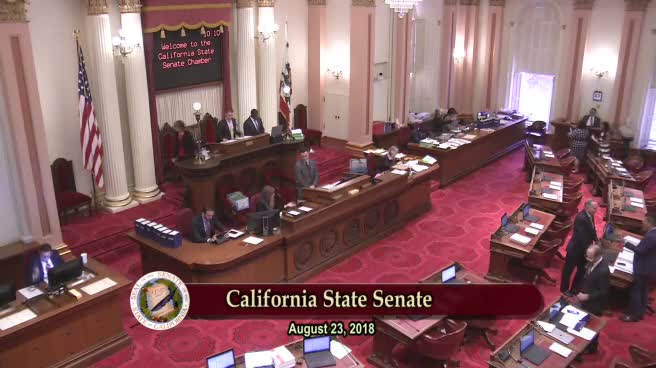 2MIN
Senate Floor
 6MIN
Senate Standing Committee on Energy, Utilities and Communications
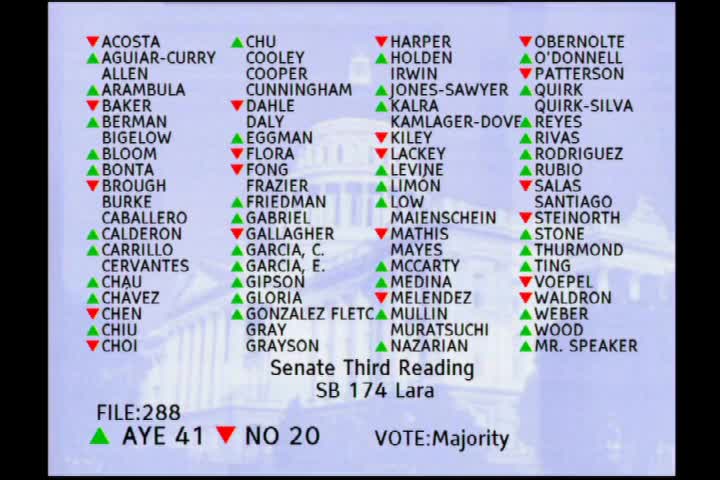 1MIN
Assembly Floor
 59SEC
Assembly Standing Committee on Appropriations
 2MIN
Senate Floor
 2MIN
Senate Standing Committee on Energy, Utilities and Communications
Bill Author

Bill Co-Author(s):