SB 1145: Enhanced infrastructure financing districts: maintenance.
- Session Year: 2017-2018
- House: Senate
- Latest Version Date: 2018-09-19
Existing law authorizes the legislative body of a city or a county to establish an enhanced infrastructure financing district to finance public capital facilities or other specified projects of community significance. Existing law authorizes a district to finance, among other things, the purchase, construction, expansion, or rehabilitation of property and related planning and design work. Existing law prohibits a district from financing routine maintenance and repair work. Existing law authorizes the issuance of bonds for the funding of these purposes if approved by 55% of the voters voting on a proposal to issue the bonds.
This bill, instead, would authorize a district to finance the ongoing or capitalized costs to maintain public capital facilities financed in whole or in part by the district, but would prohibit the use of proceeds of bonds issued to finance maintenance of any kind.
This bill would incorporate additional changes to Section 53398.52 of the Government Code proposed by AB 1999 and SB 1078 to be operative only if this bill and either or both AB 1999 and SB 1078 are enacted and this bill is enacted last.
Existing law authorizes the legislative body of a city or a county to establish an enhanced infrastructure financing district to finance public capital facilities or other specified projects of community significance. Existing law authorizes a district to finance, among other things, the purchase, construction, expansion, or rehabilitation of property and related planning and design work. Existing law prohibits a district from financing routine maintenance and repair work. Existing law authorizes the issuance of bonds for the funding of these purposes if approved by 55% of the voters voting on a proposal to issue the bonds.
This bill, instead, would authorize a district to finance the ongoing or capitalized costs to maintain public capital facilities financed in whole or in part by the district. district, but would prohibit the use of proceeds of bonds issued to finance maintenance of any kind.
Existing law authorizes the legislative body of a city or a county to establish an enhanced infrastructure financing district to finance public capital facilities or other specified projects of community significance. Existing law authorizes a district to finance, among other things, the purchase, construction, expansion, or rehabilitation of property and related planning and design work. Existing law prohibits a district from financing routine maintenance and repair work.
This bill, instead, would authorize a district to finance the ongoing or capitalized costs to maintain public capital facilities financed in whole or in part by the district.
Existing law authorizes the legislative body of a city or a county to establish an enhanced infrastructure financing district to finance public capital facilities or other specified projects of community significance. Existing law authorizes a district to finance, among other things, the purchase, construction, expansion, or rehabilitation of property and related planning and design work. Existing law prohibits a district from financing routine maintenance and repair work.
This bill, instead, would authorize a district to finance the ongoing or capitalized costs to maintain public capital facilities financed by the district.
(a)(1)A district may finance any of the following:
(A)The purchase, construction, expansion, improvement, seismic retrofit, or rehabilitation of any real or other tangible property with an estimated useful life of 15 years or longer that satisfies the requirements of subdivision (b).
(B)The planning and design work that is directly related to the purchase, construction, expansion, or rehabilitation of property.
(C)The costs described in Sections 53398.56 and 53398.57.
(D)(i)The ongoing or capitalized costs to maintain public capital facilities financed in whole or in part by the district.
(ii)Notwithstanding clause (i), a district shall not use the proceeds of bonds issued pursuant to the authority in Article 4 (commencing with Section 53398.77) to finance maintenance of any kind.
(2)The facilities are not required to be physically located within the boundaries of the district. However, any facilities financed outside of a district shall have a tangible connection to the work of the district, as detailed in the infrastructure financing plan adopted pursuant to Section 53398.69.
(3)A district shall not finance the costs of an ongoing operation or providing services of any kind.
(b)The district shall finance only public capital facilities or other specified projects of communitywide significance that provide significant benefits to the district or the surrounding community, including, but not limited to, all of the following:
(1)Highways, interchanges, ramps and bridges, arterial streets, parking facilities, and transit facilities.
(2)Sewage treatment and water reclamation plants and interceptor pipes.
(3)Facilities for the collection and treatment of water for urban uses.
(4)Flood control levees and dams, retention basins, and drainage channels.
(5)Child care facilities.
(6)Libraries.
(7)Parks, recreational facilities, and open space.
(8)Facilities for the transfer and disposal of solid waste, including transfer stations and vehicles.
(9)Brownfield restoration and other environmental mitigation.
(10)The development of projects on a former military base, provided that the projects are consistent with the military base authority reuse plan and are approved by the military base reuse authority, if applicable.
(11)The repayment of the transfer of funds to a military base reuse authority pursuant to Section 67851 that occurred on or after the creation of the district.
(12)The acquisition, construction, or rehabilitation of housing for persons of very low, low, and moderate income, as defined in Sections 50105 and 50093 of the Health and Safety Code, for rent or purchase.
(13)Acquisition, construction, or repair of industrial structures for private use.
(14)Transit priority projects, as defined in Section 21155 of the Public Resources Code, that are located within a transit priority project area. For purposes of this paragraph, a transit priority project area may include a military base reuse plan that meets the definition of a transit priority project area and it may include a contaminated site within a transit priority project area.
(15)Projects that implement a sustainable communities strategy, when the State Air Resources Board, pursuant to Chapter 2.5 (commencing with Section 65080) of Division 1 of Title 7, has accepted a metropolitan planning organizations determination that the sustainable communities strategy or the alternative planning strategy would, if implemented, achieve the greenhouse gas emission reduction targets.
(16)Projects that enable communities to adapt to the impacts of climate change, including, but not limited to, higher average temperatures, decreased air and water quality, the spread of infectious and vector-borne diseases, other public health impacts, extreme weather events, sea level rise, flooding, heat waves, wildfires, and drought.
(17)Port or harbor infrastructure, as defined by Section 1698 of the Harbors and Navigation Code.
(c)The district shall require, by recorded covenants or restrictions, that housing units built pursuant to this section shall remain available at affordable housing costs to, and occupied by, persons and families of very low, low-, or moderate-income households for the longest feasible time, but for not less than 55 years for rental units and 45 years for owner-occupied units.
(d)The district may finance mixed-income housing developments, but may finance only those units in such a development that are restricted to occupancy by persons of very low, low, or moderate incomes as defined in Sections 50105 and 50093 of the Health and Safety Code, and those onsite facilities for child care, after school care, and social services that are integrally linked to the tenants of the restricted units.
(e)A district may utilize any powers under either the Polanco Redevelopment Act (Article 12.5 (commencing with Section 33459) of Chapter 4 of Part 1 of Division 24 of the Health and Safety Code) or Chapter 6.10 (commencing with Section 25403) of Division 20 of the Health and Safety Code, and finance any action necessary to implement that act.
SEC. 1.1.Section 53398.52 of the Government Code is amended to read:53398.52.(a)(1)A district may finance any of the following:
(A)The purchase, construction, expansion, improvement, seismic retrofit, or rehabilitation of any real or other tangible property with an estimated useful life of 15 years or longer that satisfies the requirements of subdivision (b).
(B)The planning and design work that is directly related to the purchase, construction, expansion, or rehabilitation of property.
(C)The costs described in Sections 53398.56 and 53398.57.
(D)(i)The ongoing or capitalized costs to maintain public capital facilities financed in whole or in part by the district.
(ii)Notwithstanding clause (i), a district shall not use the proceeds of bonds issued pursuant to the authority in Article 4 (commencing with Section 53398.77) to finance maintenance of any kind.
(2)The facilities are not required to be physically located within the boundaries of the district. However, any facilities financed outside of a district shall have a tangible connection to the work of the district, as detailed in the infrastructure financing plan adopted pursuant to Section 53398.69.
(3)A district shall not finance the costs of an ongoing operation or providing services of any kind.
(b)The district shall finance only public capital facilities or other specified projects of communitywide significance that provide significant benefits to the district or the surrounding community, including, but not limited to, all of the following:
(1)Highways, interchanges, ramps and bridges, arterial streets, parking facilities, and transit facilities.
(2)Sewage treatment and water reclamation plants and interceptor pipes.
(3)Facilities for the collection and treatment of water for urban uses.
(4)Flood control levees and dams, retention basins, and drainage channels.
(5)Child care facilities.
(6)Libraries.
(7)Parks, recreational facilities, and open space.
(8)Facilities for the transfer and disposal of solid waste, including transfer stations and vehicles.
(9)Brownfield restoration and other environmental mitigation.
(10)The development of projects on a former military base, provided that the projects are consistent with the military base authority reuse plan and are approved by the military base reuse authority, if applicable.
(11)The repayment of the transfer of funds to a military base reuse authority pursuant to Section 67851 that occurred on or after the creation of the district.
(12)The acquisition, construction, or rehabilitation of housing for persons of very low, low, and moderate income, as defined in Sections 50105 and 50093 of the Health and Safety Code, for rent or purchase.
(13)Acquisition, construction, or repair of industrial structures for private use.
(14)Transit priority projects, as defined in Section 21155 of the Public Resources Code, that are located within a transit priority project area. For purposes of this paragraph, a transit priority project area may include a military base reuse plan that meets the definition of a transit priority project area and it may include a contaminated site within a transit priority project area.
(15)Projects that implement a sustainable communities strategy, when the State Air Resources Board, pursuant to Chapter 2.5 (commencing with Section 65080) of Division 1 of Title 7, has accepted a metropolitan planning organizations determination that the sustainable communities strategy or the alternative planning strategy would, if implemented, achieve the greenhouse gas emission reduction targets.
(16)Projects that enable communities to adapt to the impacts of climate change, including, but not limited to, higher average temperatures, decreased air and water quality, the spread of infectious and vector-borne diseases, other public health impacts, extreme weather events, sea level rise, flooding, heat waves, wildfires, and drought.
(17)Port or harbor infrastructure, as defined by Section 1698 of the Harbors and Navigation Code.
(18)The acquisition, construction, or improvement of broadband Internet access service. For purposes of this section, broadband Internet access services has the same meaning as defined in Section 53167. A district that acquires, constructs, or improves broadband Internet access service may transfer the management and control of those facilities to a local agency that is authorized to provide broadband Internet access service, and that local agency when providing that service shall comply with the requirements of Article 12 (commencing with Section 53167) of Chapter 1 of Part 1 of Division 2 of Title 5.
(c)The district shall require, by recorded covenants or restrictions, that housing units built pursuant to this section shall remain available at affordable housing costs to, and occupied by, persons and families of very low, low-, or moderate-income households for the longest feasible time, but for not less than 55 years for rental units and 45 years for owner-occupied units.
(d)The district may finance mixed-income housing developments, but may finance only those units in such a development that are restricted to occupancy by persons of very low, low, or moderate incomes as defined in Sections 50105 and 50093 of the Health and Safety Code, and those onsite facilities for child care, after school care, and social services that are integrally linked to the tenants of the restricted units.
(e)A district may utilize any powers under either the Polanco Redevelopment Act (Article 12.5 (commencing with Section 33459) of Chapter 4 of Part 1 of Division 24 of the Health and Safety Code) or Chapter 6.10 (commencing with Section 25403) of Division 20 of the Health and Safety Code, and finance any action necessary to implement that act.
SEC. 1.2.Section 53398.52 of the Government Code is amended to read:53398.52.(a)(1)A district may finance any of the following:
(A)The purchase, construction, expansion, improvement, seismic retrofit, or rehabilitation of any real or other tangible property with an estimated useful life of 15 years or longer that satisfies the requirements of subdivision (b).
(B)The planning and design work that is directly related to the purchase, construction, expansion, or rehabilitation of property.
(C)The costs described in Sections 53398.56 and 53398.57.
(D)(i)The ongoing or capitalized costs to maintain public capital facilities financed in whole or in part by the district.
(ii)Notwithstanding clause (i), a district shall not use the proceeds of bonds issued pursuant to the authority in Article 4 (commencing with Section 53398.77) to finance maintenance of any kind.
(2)The facilities are not required to be physically located within the boundaries of the district. However, any facilities financed outside of a district shall have a tangible connection to the work of the district, as detailed in the infrastructure financing plan adopted pursuant to Section 53398.69.
(3)A district shall not finance the costs of an ongoing operation or providing services of any kind.
(b)The district shall finance only public capital facilities or other specified projects of communitywide significance that provide significant benefits to the district or the surrounding community, including, but not limited to, all of the following:
(1)Highways, interchanges, ramps and bridges, arterial streets, parking facilities, and transit facilities.
(2)Sewage treatment and water reclamation plants and interceptor pipes.
(3)Facilities for the collection and treatment of water for urban uses.
(4)Flood control levees and dams, retention basins, and drainage channels.
(5)Child care facilities.
(6)Libraries.
(7)Parks, recreational facilities, and open space.
(8)Facilities for the transfer and disposal of solid waste, including transfer stations and vehicles.
(9)Brownfield restoration and other environmental mitigation.
(10)The development of projects on a former military base, provided that the projects are consistent with the military base authority reuse plan and are approved by the military base reuse authority, if applicable.
(11)The repayment of the transfer of funds to a military base reuse authority pursuant to Section 67851 that occurred on or after the creation of the district.
(12)The acquisition, construction, or rehabilitation of housing for persons of very low, low, and moderate income, as defined in Sections 50105 and 50093 of the Health and Safety Code, for rent or purchase.
(13)Acquisition, construction, or repair of industrial structures for private use.
(14)Transit priority projects, as defined in Section 21155 of the Public Resources Code, that are located within a transit priority project area. For purposes of this paragraph, a transit priority project area may include a military base reuse plan that meets the definition of a transit priority project area and it may include a contaminated site within a transit priority project area.
(15)Projects that implement a sustainable communities strategy, when the State Air Resources Board, pursuant to Chapter 2.5 (commencing with Section 65080) of Division 1 of Title 7, has accepted a metropolitan planning organizations determination that the sustainable communities strategy or the alternative planning strategy would, if implemented, achieve the greenhouse gas emission reduction targets.
(16)Projects that enable communities to adapt to the impacts of climate change, including, but not limited to, higher average temperatures, decreased air and water quality, the spread of infectious and vector-borne diseases, other public health impacts, extreme weather events, sea level rise, flooding, heat waves, wildfires, and drought.
(17)Port or harbor infrastructure, as defined by Section 1698 of the Harbors and Navigation Code.
(c)The district shall require, by recorded covenants or restrictions, that housing units built pursuant to this section shall remain available at affordable housing costs to, and occupied by, persons and families of very low, low, or moderate income for the longest feasible time, but for not less than 55 years for rental units and 45 years for owner-occupied units.
(d)The district may finance mixed-income housing developments, but may finance only those units in such a development that are restricted to occupancy by persons of very low, low, or moderate incomes as defined in Sections 50105 and 50093 of the Health and Safety Code, and those onsite facilities for child care, after school care, and social services that are integrally linked to the tenants of the restricted units.
(e)A district may utilize any powers under either the Polanco Redevelopment Act (Article 12.5 (commencing with Section 33459) of Chapter 4 of Part 1 of Division 24 of the Health and Safety Code) or Chapter 6.10 (commencing with Section 25403) of Division 20 of the Health and Safety Code, and finance any action necessary to implement that act.
SEC. 1.3.Section 53398.52 of the Government Code is amended to read:53398.52.(a)(1)A district may finance any of the following:
(A)The purchase, construction, expansion, improvement, seismic retrofit, or rehabilitation of any real or other tangible property with an estimated useful life of 15 years or longer that satisfies the requirements of subdivision (b).
(B)The planning and design work that is directly related to the purchase, construction, expansion, or rehabilitation of property.
(C)The costs described in Sections 53398.56 and 53398.57.
(D)(i)The ongoing or capitalized costs to maintain public capital facilities financed in whole or in part by the district.
(ii)Notwithstanding clause (i), a district shall not use the proceeds of bonds issued pursuant to the authority in Article 4 (commencing with Section 53398.77) to finance maintenance of any kind.
(2)The facilities are not required to be physically located within the boundaries of the district. However, any facilities financed outside of a district shall have a tangible connection to the work of the district, as detailed in the infrastructure financing plan adopted pursuant to Section 53398.69.
(3)A district shall not finance the costs of an ongoing operation or providing services of any kind.
(b)The district shall finance only public capital facilities or other specified projects of communitywide significance that provide significant benefits to the district or the surrounding community, including, but not limited to, all of the following:
(1)Highways, interchanges, ramps and bridges, arterial streets, parking facilities, and transit facilities.
(2)Sewage treatment and water reclamation plants and interceptor pipes.
(3)Facilities for the collection and treatment of water for urban uses.
(4)Flood control levees and dams, retention basins, and drainage channels.
(5)Child care facilities.
(6)Libraries.
(7)Parks, recreational facilities, and open space.
(8)Facilities for the transfer and disposal of solid waste, including transfer stations and vehicles.
(9)Brownfield restoration and other environmental mitigation.
(10)The development of projects on a former military base, provided that the projects are consistent with the military base authority reuse plan and are approved by the military base reuse authority, if applicable.
(11)The repayment of the transfer of funds to a military base reuse authority pursuant to Section 67851 that occurred on or after the creation of the district.
(12)The acquisition, construction, or rehabilitation of housing for persons of very low, low, and moderate income, as defined in Sections 50105 and 50093 of the Health and Safety Code, for rent or purchase.
(13)Acquisition, construction, or repair of industrial structures for private use.
(14)Transit priority projects, as defined in Section 21155 of the Public Resources Code, that are located within a transit priority project area. For purposes of this paragraph, a transit priority project area may include a military base reuse plan that meets the definition of a transit priority project area and it may include a contaminated site within a transit priority project area.
(15)Projects that implement a sustainable communities strategy, when the State Air Resources Board, pursuant to Chapter 2.5 (commencing with Section 65080) of Division 1 of Title 7, has accepted a metropolitan planning organizations determination that the sustainable communities strategy or the alternative planning strategy would, if implemented, achieve the greenhouse gas emission reduction targets.
(16)Projects that enable communities to adapt to the impacts of climate change, including, but not limited to, higher average temperatures, decreased air and water quality, the spread of infectious and vector-borne diseases, other public health impacts, extreme weather events, sea level rise, flooding, heat waves, wildfires, and drought.
(17)Port or harbor infrastructure, as defined by Section 1698 of the Harbors and Navigation Code.
(18)The acquisition, construction, or improvement of broadband Internet access service. For purposes of this section, broadband Internet access services has the same meaning as defined in Section 53167. A district that acquires, constructs, or improves broadband Internet access service may transfer the management and control of those facilities to a local agency that is authorized to provide broadband Internet access service, and that local agency when providing that service shall comply with the requirements of Article 12 (commencing with Section 53167) of Chapter 1 of Part 1 of Division 2 of Title 5.
(c)The district shall require, by recorded covenants or restrictions, that housing units built pursuant to this section shall remain available at affordable housing costs to, and occupied by, persons and families of very low, low, or moderate income for the longest feasible time, but for not less than 55 years for rental units and 45 years for owner-occupied units.
(d)The district may finance mixed-income housing developments, but may finance only those units in such a development that are restricted to occupancy by persons of very low, low, or moderate incomes as defined in Sections 50105 and 50093 of the Health and Safety Code, and those onsite facilities for child care, after school care, and social services that are integrally linked to the tenants of the restricted units.
(e)A district may utilize any powers under either the Polanco Redevelopment Act (Article 12.5 (commencing with Section 33459) of Chapter 4 of Part 1 of Division 24 of the Health and Safety Code) or Chapter 6.10 (commencing with Section 25403) of Division 20 of the Health and Safety Code, and finance any action necessary to implement that act.
SEC. 2.(a)Section 1.1 of this bill incorporates amendments to Section 53398.52 of the Government Code proposed by both this bill and Assembly Bill 1999. That section shall only become operative if (1) both bills are enacted and become effective on or before January 1, 2019, (2) each bill amends Section 53398.52 of the Government Code, and (3) Senate Bill 1078 is not enacted or as enacted does not amend that section, and (4) this bill is enacted after Assembly Bill 1999, in which case Sections 1, 1.2, and 1.3 of this bill shall not become operative.
(b)Section 1.2 of this bill incorporates amendments to Section 53398.52 of the Government Code proposed by both this bill and Senate Bill 1078. That section shall only become operative if (1) both bills are enacted and become effective on or before January 1, 2019, (2) each bill amends Section 53398.52 of the Government Code, (3) Assembly Bill 1999 is not enacted or as enacted does not amend that section, and (4) this bill is enacted after Senate Bill 1078, in which case Sections 1, 1.1, and 1.3 of this bill shall not become operative.
(c)Section 1.3 of this bill incorporates amendments to Section 53398.52 of the Government Code proposed by this bill, Assembly Bill 1999, and Senate Bill 1078. That section shall only become operative if (1) all three bills are enacted and become effective on or before January 1, 2019, (2) all three bills amend Section 53398.52 of the Government Code, and (3) this bill is enacted after Assembly Bill 1999 and Senate Bill 1078, in which case Sections 1, 1.1, and 1.2 of this bill shall not become operative.
(a)(1)A district may finance any of the following:
(A)The purchase, construction, expansion, improvement, seismic retrofit, or rehabilitation of any real or other tangible property with an estimated useful life of 15 years or longer that satisfies the requirements of subdivision (b).
(B)The planning and design work that is directly related to the purchase, construction, expansion, or rehabilitation of property.
(C)The costs described in Sections 53398.56 and 53398.57.
(D)(i)The ongoing or capitalized costs to maintain public capital facilities financed in whole or in part by the district.
(ii)Notwithstanding clause (i), a district shall not use the proceeds of bonds issued pursuant to the authority in Article 4 (commencing with Section 53398.77) to finance maintenance of any kind.
(2)The facilities are not required to be physically located within the boundaries of the district. However, any facilities financed outside of a district shall have a tangible connection to the work of the district, as detailed in the infrastructure financing plan adopted pursuant to Section 53398.69.
(3)A district shall not finance the costs of an ongoing operation or providing services of any kind.
(b)The district shall finance only public capital facilities or other specified projects of communitywide significance that provide significant benefits to the district or the surrounding community, including, but not limited to, all of the following:
(1)Highways, interchanges, ramps and bridges, arterial streets, parking facilities, and transit facilities.
(2)Sewage treatment and water reclamation plants and interceptor pipes.
(3)Facilities for the collection and treatment of water for urban uses.
(4)Flood control levees and dams, retention basins, and drainage channels.
(5)Child care facilities.
(6)Libraries.
(7)Parks, recreational facilities, and open space.
(8)Facilities for the transfer and disposal of solid waste, including transfer stations and vehicles.
(9)Brownfield restoration and other environmental mitigation.
(10)The development of projects on a former military base, provided that the projects are consistent with the military base authority reuse plan and are approved by the military base reuse authority, if applicable.
(11)The repayment of the transfer of funds to a military base reuse authority pursuant to Section 67851 that occurred on or after the creation of the district.
(12)The acquisition, construction, or rehabilitation of housing for persons of very low, low, and moderate income, as defined in Sections 50105 and 50093 of the Health and Safety Code, for rent or purchase.
(13)Acquisition, construction, or repair of industrial structures for private use.
(14)Transit priority projects, as defined in Section 21155 of the Public Resources Code, that are located within a transit priority project area. For purposes of this paragraph, a transit priority project area may include a military base reuse plan that meets the definition of a transit priority project area and it may include a contaminated site within a transit priority project area.
(15)Projects that implement a sustainable communities strategy, when the State Air Resources Board, pursuant to Chapter 2.5 (commencing with Section 65080) of Division 1 of Title 7, has accepted a metropolitan planning organizations determination that the sustainable communities strategy or the alternative planning strategy would, if implemented, achieve the greenhouse gas emission reduction targets.
(16)Projects that enable communities to adapt to the impacts of climate change, including, but not limited to, higher average temperatures, decreased air and water quality, the spread of infectious and vector-borne diseases, other public health impacts, extreme weather events, sea level rise, flooding, heat waves, wildfires, and drought.
(17)Port or harbor infrastructure, as defined by Section 1698 of the Harbors and Navigation Code.
(c)The district shall require, by recorded covenants or restrictions, that housing units built pursuant to this section shall remain available at affordable housing costs to, and occupied by, persons and families of very low, low-, or moderate-income households for the longest feasible time, but for not less than 55 years for rental units and 45 years for owner-occupied units.
(d)The district may finance mixed-income housing developments, but may finance only those units in such a development that are restricted to occupancy by persons of very low, low, or moderate incomes as defined in Sections 50105 and 50093 of the Health and Safety Code, and those onsite facilities for child care, after school care, and social services that are integrally linked to the tenants of the restricted units.
(e)A district may utilize any powers under either the Polanco Redevelopment Act (Article 12.5 (commencing with Section 33459) of Chapter 4 of Part 1 of Division 24 of the Health and Safety Code) or Chapter 6.10 (commencing with Section 25403) of Division 20 of the Health and Safety Code, and finance any action necessary to implement that act.
SEC. 1.1.Section 53398.52 of the Government Code is amended to read:53398.52.(a)(1)A district may finance any of the following:
(A)The purchase, construction, expansion, improvement, seismic retrofit, or rehabilitation of any real or other tangible property with an estimated useful life of 15 years or longer that satisfies the requirements of subdivision (b).
(B)The planning and design work that is directly related to the purchase, construction, expansion, or rehabilitation of property.
(C)The costs described in Sections 53398.56 and 53398.57.
(D)(i)The ongoing or capitalized costs to maintain public capital facilities financed in whole or in part by the district.
(ii)Notwithstanding clause (i), a district shall not use the proceeds of bonds issued pursuant to the authority in Article 4 (commencing with Section 53398.77) to finance maintenance of any kind.
(2)The facilities are not required to be physically located within the boundaries of the district. However, any facilities financed outside of a district shall have a tangible connection to the work of the district, as detailed in the infrastructure financing plan adopted pursuant to Section 53398.69.
(3)A district shall not finance routine maintenance, repair work, or the costs of an ongoing operation or providing services of any kind.
(b)The district shall finance only public capital facilities or other specified projects of communitywide significance that provide significant benefits to the district or the surrounding community, including, but not limited to, all of the following:
(1)Highways, interchanges, ramps and bridges, arterial streets, parking facilities, and transit facilities.
(2)Sewage treatment and water reclamation plants and interceptor pipes.
(3)Facilities for the collection and treatment of water for urban uses.
(4)Flood control levees and dams, retention basins, and drainage channels.
(5)Child care facilities.
(6)Libraries.
(7)Parks, recreational facilities, and open space.
(8)Facilities for the transfer and disposal of solid waste, including transfer stations and vehicles.
(9)Brownfield restoration and other environmental mitigation.
(10)The development of projects on a former military base, provided that the projects are consistent with the military base authority reuse plan and are approved by the military base reuse authority, if applicable.
(11)The repayment of the transfer of funds to a military base reuse authority pursuant to Section 67851 that occurred on or after the creation of the district.
(12)The acquisition, construction, or rehabilitation of housing for persons of very low, low, and moderate income, as defined in Sections 50105 and 50093 of the Health and Safety Code, for rent or purchase.
(13)Acquisition, construction, or repair of industrial structures for private use.
(14)Transit priority projects, as defined in Section 21155 of the Public Resources Code, that are located within a transit priority project area. For purposes of this paragraph, a transit priority project area may include a military base reuse plan that meets the definition of a transit priority project area and it may include a contaminated site within a transit priority project area.
(15)Projects that implement a sustainable communities strategy, when the State Air Resources Board, pursuant to Chapter 2.5 (commencing with Section 65080) of Division 1 of Title 7, has accepted a metropolitan planning organizations determination that the sustainable communities strategy or the alternative planning strategy would, if implemented, achieve the greenhouse gas emission reduction targets.
(16)Projects that enable communities to adapt to the impacts of climate change, including, but not limited to, higher average temperatures, decreased air and water quality, the spread of infectious and vector-borne diseases, other public health impacts, extreme weather events, sea level rise, flooding, heat waves, wildfires, and drought.
(17)Port or harbor infrastructure, as defined by Section 1698 of the Harbors and Navigation Code.
(18)The acquisition, construction, or improvement of broadband Internet access service. For purposes of this section, broadband Internet access services has the same meaning as defined in Section 53167. A district that acquires, constructs, or improves broadband Internet access service may transfer the management and control of those facilities to a local agency that is authorized to provide broadband Internet access service, and that local agency when providing that service shall comply with the requirements of Article 12 (commencing with Section 53167) of Chapter 1 of Part 1 of Division 2 of Title 5.
(c)The district shall require, by recorded covenants or restrictions, that housing units built pursuant to this section shall remain available at affordable housing costs to, and occupied by, persons and families of very low, low-, or moderate-income households for the longest feasible time, but for not less than 55 years for rental units and 45 years for owner-occupied units.
(d)The district may finance mixed-income housing developments, but may finance only those units in such a development that are restricted to occupancy by persons of very low, low, or moderate incomes as defined in Sections 50105 and 50093 of the Health and Safety Code, and those onsite facilities for child care, after school care, and social services that are integrally linked to the tenants of the restricted units.
(e)A district may utilize any powers under either the Polanco Redevelopment Act (Article 12.5 (commencing with Section 33459) of Chapter 4 of Part 1 of Division 24 of the Health and Safety Code) or Chapter 6.10 (commencing with Section 25403) of Division 20 of the Health and Safety Code, and finance any action necessary to implement that act.
SEC. 1.2.Section 53398.52 of the Government Code is amended to read:53398.52.(a)(1)A district may finance any of the following:
(A)The purchase, construction, expansion, improvement, seismic retrofit, or rehabilitation of any real or other tangible property with an estimated useful life of 15 years or longer that satisfies the requirements of subdivision (b).
(B)The planning and design work that is directly related to the purchase, construction, expansion, or rehabilitation of property.
(C)The costs described in Sections 53398.56 and 53398.57.
(D)(i)The ongoing or capitalized costs to maintain public capital facilities financed in whole or in part by the district.
(ii)Notwithstanding clause (i), a district shall not use the proceeds of bonds issued pursuant to the authority in Article 4 (commencing with Section 53398.77) to finance maintenance of any kind.
(2)The facilities are not required to be physically located within the boundaries of the district. However, any facilities financed outside of a district shall have a tangible connection to the work of the district, as detailed in the infrastructure financing plan adopted pursuant to Section 53398.69.
(3)A district shall not finance routine maintenance, repair work, or the costs of an ongoing operation or providing services of any kind.
(b)The district shall finance only public capital facilities or other specified projects of communitywide significance that provide significant benefits to the district or the surrounding community, including, but not limited to, all of the following:
(1)Highways, interchanges, ramps and bridges, arterial streets, parking facilities, and transit facilities.
(2)Sewage treatment and water reclamation plants and interceptor pipes.
(3)Facilities for the collection and treatment of water for urban uses.
(4)Flood control levees and dams, retention basins, and drainage channels.
(5)Child care facilities.
(6)Libraries.
(7)Parks, recreational facilities, and open space.
(8)Facilities for the transfer and disposal of solid waste, including transfer stations and vehicles.
(9)Brownfield restoration and other environmental mitigation.
(10)The development of projects on a former military base, provided that the projects are consistent with the military base authority reuse plan and are approved by the military base reuse authority, if applicable.
(11)The repayment of the transfer of funds to a military base reuse authority pursuant to Section 67851 that occurred on or after the creation of the district.
(12)The acquisition, construction, or rehabilitation of housing for persons of very low, low, and moderate income, as defined in Sections 50105 and 50093 of the Health and Safety Code, for rent or purchase.
(13)Acquisition, construction, or repair of industrial structures for private use.
(14)Transit priority projects, as defined in Section 21155 of the Public Resources Code, that are located within a transit priority project area. For purposes of this paragraph, a transit priority project area may include a military base reuse plan that meets the definition of a transit priority project area and it may include a contaminated site within a transit priority project area.
(15)Projects that implement a sustainable communities strategy, when the State Air Resources Board, pursuant to Chapter 2.5 (commencing with Section 65080) of Division 1 of Title 7, has accepted a metropolitan planning organizations determination that the sustainable communities strategy or the alternative planning strategy would, if implemented, achieve the greenhouse gas emission reduction targets.
(16)Projects that enable communities to adapt to the impacts of climate change, including, but not limited to, higher average temperatures, decreased air and water quality, the spread of infectious and vector-borne diseases, other public health impacts, extreme weather events, sea level rise, flooding, heat waves, wildfires, and drought.
(17)Port or harbor infrastructure, as defined by Section 1698 of the Harbors and Navigation Code.
(c)The district shall require, by recorded covenants or restrictions, that housing units built pursuant to this section shall remain available at affordable housing costs to, and occupied by, persons and families of very low, low-, or moderate-income households low, or moderate income for the longest feasible time, but for not less than 55 years for rental units and 45 years for owner-occupied units.
(d)The district may finance mixed-income housing developments, but may finance only those units in such a development that are restricted to occupancy by persons of very low, low, or moderate incomes as defined in Sections 50105 and 50093 of the Health and Safety Code, and those onsite facilities for child care, after school care, and social services that are integrally linked to the tenants of the restricted units.
(e)A district may utilize any powers under either the Polanco Redevelopment Act (Article 12.5 (commencing with Section 33459) of Chapter 4 of Part 1 of Division 24 of the Health and Safety Code) or Chapter 6.10 (commencing with Section 25403) of Division 20 of the Health and Safety Code, and finance any action necessary to implement that act.
SEC. 1.3.Section 53398.52 of the Government Code is amended to read:53398.52.(a)(1)A district may finance any of the following:
(A)The purchase, construction, expansion, improvement, seismic retrofit, or rehabilitation of any real or other tangible property with an estimated useful life of 15 years or longer that satisfies the requirements of subdivision (b).
(B)The planning and design work that is directly related to the purchase, construction, expansion, or rehabilitation of property.
(C)The costs described in Sections 53398.56 and 53398.57.
(D)(i)The ongoing or capitalized costs to maintain public capital facilities financed in whole or in part by the district.
(ii)Notwithstanding clause (i), a district shall not use the proceeds of bonds issued pursuant to the authority in Article 4 (commencing with Section 53398.77) to finance maintenance of any kind.
(2)The facilities are not required to be physically located within the boundaries of the district. However, any facilities financed outside of a district shall have a tangible connection to the work of the district, as detailed in the infrastructure financing plan adopted pursuant to Section 53398.69.
(3)A district shall not finance routine maintenance, repair work, or the costs of an ongoing operation or providing services of any kind.
(b)The district shall finance only public capital facilities or other specified projects of communitywide significance that provide significant benefits to the district or the surrounding community, including, but not limited to, all of the following:
(1)Highways, interchanges, ramps and bridges, arterial streets, parking facilities, and transit facilities.
(2)Sewage treatment and water reclamation plants and interceptor pipes.
(3)Facilities for the collection and treatment of water for urban uses.
(4)Flood control levees and dams, retention basins, and drainage channels.
(5)Child care facilities.
(6)Libraries.
(7)Parks, recreational facilities, and open space.
(8)Facilities for the transfer and disposal of solid waste, including transfer stations and vehicles.
(9)Brownfield restoration and other environmental mitigation.
(10)The development of projects on a former military base, provided that the projects are consistent with the military base authority reuse plan and are approved by the military base reuse authority, if applicable.
(11)The repayment of the transfer of funds to a military base reuse authority pursuant to Section 67851 that occurred on or after the creation of the district.
(12)The acquisition, construction, or rehabilitation of housing for persons of very low, low, and moderate income, as defined in Sections 50105 and 50093 of the Health and Safety Code, for rent or purchase.
(13)Acquisition, construction, or repair of industrial structures for private use.
(14)Transit priority projects, as defined in Section 21155 of the Public Resources Code, that are located within a transit priority project area. For purposes of this paragraph, a transit priority project area may include a military base reuse plan that meets the definition of a transit priority project area and it may include a contaminated site within a transit priority project area.
(15)Projects that implement a sustainable communities strategy, when the State Air Resources Board, pursuant to Chapter 2.5 (commencing with Section 65080) of Division 1 of Title 7, has accepted a metropolitan planning organizations determination that the sustainable communities strategy or the alternative planning strategy would, if implemented, achieve the greenhouse gas emission reduction targets.
(16)Projects that enable communities to adapt to the impacts of climate change, including, but not limited to, higher average temperatures, decreased air and water quality, the spread of infectious and vector-borne diseases, other public health impacts, extreme weather events, sea level rise, flooding, heat waves, wildfires, and drought.
(17)Port or harbor infrastructure, as defined by Section 1698 of the Harbors and Navigation Code.
(18)The acquisition, construction, or improvement of broadband Internet access service. For purposes of this section, broadband Internet access services has the same meaning as defined in Section 53167. A district that acquires, constructs, or improves broadband Internet access service may transfer the management and control of those facilities to a local agency that is authorized to provide broadband Internet access service, and that local agency when providing that service shall comply with the requirements of Article 12 (commencing with Section 53167) of Chapter 1 of Part 1 of Division 2 of Title 5.
(c)The district shall require, by recorded covenants or restrictions, that housing units built pursuant to this section shall remain available at affordable housing costs to, and occupied by, persons and families of very low, low-, or moderate-income households low, or moderate income for the longest feasible time, but for not less than 55 years for rental units and 45 years for owner-occupied units.
(d)The district may finance mixed-income housing developments, but may finance only those units in such a development that are restricted to occupancy by persons of very low, low, or moderate incomes as defined in Sections 50105 and 50093 of the Health and Safety Code, and those onsite facilities for child care, after school care, and social services that are integrally linked to the tenants of the restricted units.
(e)A district may utilize any powers under either the Polanco Redevelopment Act (Article 12.5 (commencing with Section 33459) of Chapter 4 of Part 1 of Division 24 of the Health and Safety Code) or Chapter 6.10 (commencing with Section 25403) of Division 20 of the Health and Safety Code, and finance any action necessary to implement that act.
SEC. 2.(a)Section 1.1 of this bill incorporates amendments to Section 53398.52 of the Government Code proposed by both this bill and Assembly Bill 1999. That section shall only become operative if (1) both bills are enacted and become effective on or before January 1, 2019, (2) each bill amends Section 53398.52 of the Government Code, and (3) Senate Bill 1078 is not enacted or as enacted does not amend that section, and (4) this bill is enacted after Assembly Bill 1999, in which case Sections 1, 1.2, and 1.3 of this bill shall not become operative.
(b)Section 1.2 of this bill incorporates amendments to Section 53398.52 of the Government Code proposed by both this bill and Senate Bill 1078. That section shall only become operative if (1) both bills are enacted and become effective on or before January 1, 2019, (2) each bill amends Section 53398.52 of the Government Code, (3) Assembly Bill 1999 is not enacted or as enacted does not amend that section, and (4) this bill is enacted after Senate Bill 1078, in which case Sections 1, 1.1, and 1.3 of this bill shall not become operative.
(c)Section 1.3 of this bill incorporates amendments to Section 53398.52 of the Government Code proposed by this bill, Assembly Bill 1999, and Senate Bill 1078. That section shall only become operative if (1) all three bills are enacted and become effective on or before January 1, 2019, (2) all three bills amend Section 53398.52 of the Government Code, and (3) this bill is enacted after Assembly Bill 1999 and Senate Bill 1078, in which case Sections 1, 1.1, and 1.2 of this bill shall not become operative.
(a)(1)A district may finance any of the following:
(A)The purchase, construction, expansion, improvement, seismic retrofit, or rehabilitation of any real or other tangible property with an estimated useful life of 15 years or longer that satisfies the requirements of subdivision (b).
(B)The planning and design work that is directly related to the purchase, construction, expansion, or rehabilitation of property.
(C)The costs described in Sections 53398.56 and 53398.57.
(D)(i)The ongoing or capitalized costs to maintain public capital facilities financed in whole or in part by the district.
(ii)Notwithstanding clause (i), a district shall not use the proceeds of bonds issued pursuant to the authority in Article 4 (commencing with Section 53398.77) to finance maintenance of any kind.
(2)The facilities are not required to be physically located within the boundaries of the district. However, any facilities financed outside of a district shall have a tangible connection to the work of the district, as detailed in the infrastructure financing plan adopted pursuant to Section 53398.69.
(3)A district shall not finance the costs of an ongoing operation or providing services of any kind.
(b)The district shall finance only public capital facilities or other specified projects of communitywide significance that provide significant benefits to the district or the surrounding community, including, but not limited to, all of the following:
(1)Highways, interchanges, ramps and bridges, arterial streets, parking facilities, and transit facilities.
(2)Sewage treatment and water reclamation plants and interceptor pipes.
(3)Facilities for the collection and treatment of water for urban uses.
(4)Flood control levees and dams, retention basins, and drainage channels.
(5)Child care facilities.
(6)Libraries.
(7)Parks, recreational facilities, and open space.
(8)Facilities for the transfer and disposal of solid waste, including transfer stations and vehicles.
(9)Brownfield restoration and other environmental mitigation.
(10)The development of projects on a former military base, provided that the projects are consistent with the military base authority reuse plan and are approved by the military base reuse authority, if applicable.
(11)The repayment of the transfer of funds to a military base reuse authority pursuant to Section 67851 that occurred on or after the creation of the district.
(12)The acquisition, construction, or rehabilitation of housing for persons of very low, low, and moderate income, as defined in Sections 50105 and 50093 of the Health and Safety Code, for rent or purchase.
(13)Acquisition, construction, or repair of industrial structures for private use.
(14)Transit priority projects, as defined in Section 21155 of the Public Resources Code, that are located within a transit priority project area. For purposes of this paragraph, a transit priority project area may include a military base reuse plan that meets the definition of a transit priority project area and it may include a contaminated site within a transit priority project area.
(15)Projects that implement a sustainable communities strategy, when the State Air Resources Board, pursuant to Chapter 2.5 (commencing with Section 65080) of Division 1 of Title 7, has accepted a metropolitan planning organizations determination that the sustainable communities strategy or the alternative planning strategy would, if implemented, achieve the greenhouse gas emission reduction targets.
(16)Projects that enable communities to adapt to the impacts of climate change, including, but not limited to, higher average temperatures, decreased air and water quality, the spread of infectious and vector-borne diseases, other public health impacts, extreme weather events, sea level rise, flooding, heat waves, wildfires, and drought.
(17)Port or harbor infrastructure, as defined by Section 1698 of the Harbors and Navigation Code.
(c)The district shall require, by recorded covenants or restrictions, that housing units built pursuant to this section shall remain available at affordable housing costs to, and occupied by, persons and families of very low, low-, or moderate-income households for the longest feasible time, but for not less than 55 years for rental units and 45 years for owner-occupied units.
(d)The district may finance mixed-income housing developments, but may finance only those units in such a development that are restricted to occupancy by persons of very low, low, or moderate incomes as defined in Sections 50105 and 50093 of the Health and Safety Code, and those onsite facilities for child care, after school care, and social services that are integrally linked to the tenants of the restricted units.
(e)A district may utilize any powers under either the Polanco Redevelopment Act (Article 12.5 (commencing with Section 33459) of Chapter 4 of Part 1 of Division 24 of the Health and Safety Code) or Chapter 6.10 (commencing with Section 25403) of Division 20 of the Health and Safety Code, and finance any action necessary to implement that act.
(a)(1)A district may finance any of the following:
(A)The purchase, construction, expansion, improvement, seismic retrofit, or rehabilitation of any real or other tangible property with an estimated useful life of 15 years or longer that satisfies the requirements of subdivision (b).
(B)The planning and design work that is directly related to the purchase, construction, expansion, or rehabilitation of property.
(C)The costs described in Sections 53398.56 and 53398.57.
(D)The ongoing or capitalized costs to maintain public capital facilities financed in whole or in part by the district.
(2)The facilities are not required to be physically located within the boundaries of the district. However, any facilities financed outside of a district shall have a tangible connection to the work of the district, as detailed in the infrastructure financing plan adopted pursuant to Section 53398.69.
(3)A district shall not finance the costs of an ongoing operation or providing services of any kind.
(b)The district shall finance only public capital facilities or other specified projects of communitywide significance that provide significant benefits to the district or the surrounding community, including, but not limited to, all of the following:
(1)Highways, interchanges, ramps and bridges, arterial streets, parking facilities, and transit facilities.
(2)Sewage treatment and water reclamation plants and interceptor pipes.
(3)Facilities for the collection and treatment of water for urban uses.
(4)Flood control levees and dams, retention basins, and drainage channels.
(5)Child care facilities.
(6)Libraries.
(7)Parks, recreational facilities, and open space.
(8)Facilities for the transfer and disposal of solid waste, including transfer stations and vehicles.
(9)Brownfield restoration and other environmental mitigation.
(10)The development of projects on a former military base, provided that the projects are consistent with the military base authority reuse plan and are approved by the military base reuse authority, if applicable.
(11)The repayment of the transfer of funds to a military base reuse authority pursuant to Section 67851 that occurred on or after the creation of the district.
(12)The acquisition, construction, or rehabilitation of housing for persons of very low, low, and moderate income, as defined in Sections 50105 and 50093 of the Health and Safety Code, for rent or purchase.
(13)Acquisition, construction, or repair of industrial structures for private use.
(14)Transit priority projects, as defined in Section 21155 of the Public Resources Code, that are located within a transit priority project area. For purposes of this paragraph, a transit priority project area may include a military base reuse plan that meets the definition of a transit priority project area and it may include a contaminated site within a transit priority project area.
(15)Projects that implement a sustainable communities strategy, when the State Air Resources Board, pursuant to Chapter 2.5 (commencing with Section 65080) of Division 1 of Title 7, has accepted a metropolitan planning organizations determination that the sustainable communities strategy or the alternative planning strategy would, if implemented, achieve the greenhouse gas emission reduction targets.
(16)Projects that enable communities to adapt to the impacts of climate change, including, but not limited to, higher average temperatures, decreased air and water quality, the spread of infectious and vector-borne diseases, other public health impacts, extreme weather events, sea level rise, flooding, heat waves, wildfires, and drought.
(17)Port or harbor infrastructure, as defined by Section 1698 of the Harbors and Navigation Code.
(c)The district shall require, by recorded covenants or restrictions, that housing units built pursuant to this section shall remain available at affordable housing costs to, and occupied by, persons and families of very low, low-, or moderate-income households for the longest feasible time, but for not less than 55 years for rental units and 45 years for owner-occupied units.
(d)The district may finance mixed-income housing developments, but may finance only those units in such a development that are restricted to occupancy by persons of very low, low, or moderate incomes as defined in Sections 50105 and 50093 of the Health and Safety Code, and those onsite facilities for child care, after school care, and social services that are integrally linked to the tenants of the restricted units.
(e)A district may utilize any powers under either the Polanco Redevelopment Act (Article 12.5 (commencing with Section 33459) of Chapter 4 of Part 1 of Division 24 of the Health and Safety Code) or Chapter 6.10 (commencing with Section 25403) of Division 20 of the Health and Safety Code, and finance any action necessary to implement that act.
(a)(1)A district may finance any of the following:
(A)The purchase, construction, expansion, improvement, seismic retrofit, or rehabilitation of any real or other tangible property with an estimated useful life of 15 years or longer that satisfies the requirements of subdivision (b).
(B)The planning and design work that is directly related to the purchase, construction, expansion, or rehabilitation of property.
(C)The costs described in Sections 53398.56 and 53398.57.
(D)The ongoing or capitalized costs to maintain public capital facilities financed by the district.
(2)The facilities are not required to be physically located within the boundaries of the district. However, any facilities financed outside of a district shall have a tangible connection to the work of the district, as detailed in the infrastructure financing plan adopted pursuant to Section 53398.69.
(3)A district shall not finance routine maintenance, repair work, or the costs of an ongoing operation or providing services of any kind.
(b)The district shall finance only public capital facilities or other specified projects of communitywide significance that provide significant benefits to the district or the surrounding community, including, but not limited to, all of the following:
(1)Highways, interchanges, ramps and bridges, arterial streets, parking facilities, and transit facilities.
(2)Sewage treatment and water reclamation plants and interceptor pipes.
(3)Facilities for the collection and treatment of water for urban uses.
(4)Flood control levees and dams, retention basins, and drainage channels.
(5)Child care facilities.
(6)Libraries.
(7)Parks, recreational facilities, and open space.
(8)Facilities for the transfer and disposal of solid waste, including transfer stations and vehicles.
(9)Brownfield restoration and other environmental mitigation.
(10)The development of projects on a former military base, provided that the projects are consistent with the military base authority reuse plan and are approved by the military base reuse authority, if applicable.
(11)The repayment of the transfer of funds to a military base reuse authority pursuant to Section 67851 that occurred on or after the creation of the district.
(12)The acquisition, construction, or rehabilitation of housing for persons of very low, low, and moderate income, as defined in Sections 50105 and 50093 of the Health and Safety Code, for rent or purchase.
(13)Acquisition, construction, or repair of industrial structures for private use.
(14)Transit priority projects, as defined in Section 21155 of the Public Resources Code, that are located within a transit priority project area. For purposes of this paragraph, a transit priority project area may include a military base reuse plan that meets the definition of a transit priority project area and it may include a contaminated site within a transit priority project area.
(15)Projects that implement a sustainable communities strategy, when the State Air Resources Board, pursuant to Chapter 2.5 (commencing with Section 65080) of Division 1 of Title 7, has accepted a metropolitan planning organizations determination that the sustainable communities strategy or the alternative planning strategy would, if implemented, achieve the greenhouse gas emission reduction targets.
(16)Projects that enable communities to adapt to the impacts of climate change, including, but not limited to, higher average temperatures, decreased air and water quality, the spread of infectious and vector-borne diseases, other public health impacts, extreme weather events, sea level rise, flooding, heat waves, wildfires, and drought.
(17)Port or harbor infrastructure, as defined by Section 1698 of the Harbors and Navigation Code.
(c)The district shall require, by recorded covenants or restrictions, that housing units built pursuant to this section shall remain available at affordable housing costs to, and occupied by, persons and families of very low, low-, or moderate-income households for the longest feasible time, but for not less than 55 years for rental units and 45 years for owner-occupied units.
(d)The district may finance mixed-income housing developments, but may finance only those units in such a development that are restricted to occupancy by persons of very low, low, or moderate incomes as defined in Sections 50105 and 50093 of the Health and Safety Code, and those onsite facilities for child care, after school care, and social services that are integrally linked to the tenants of the restricted units.
(e)A district may utilize any powers under either the Polanco Redevelopment Act (Article 12.5 (commencing with Section 33459) of Chapter 4 of Part 1 of Division 24 of the Health and Safety Code) or Chapter 6.10 (commencing with Section 25403) of Division 20 of the Health and Safety Code, and finance any action necessary to implement that act.
|
Date
|
Status
|
|---|---|
| Sep 19, 2018 | Chaptered by Secretary of State. Chapter 563, Statutes of 2018. |
| Sep 19, 2018 | Approved by the Governor. |
| Sep 5, 2018 | Enrolled and presented to the Governor at 3:30 p.m. |
| Aug 28, 2018 | Assembly amendments concurred in. (Ayes 34. Noes 3.) Ordered to engrossing and enrolling. |
| Aug 28, 2018 | In Senate. Concurrence in Assembly amendments pending. |
| Aug 27, 2018 | Read third time. Passed. Ordered to the Senate. |
| Aug 13, 2018 | Read third time and amended. |
| Jun 14, 2018 | Read second time. Ordered to third reading. |
| Jun 13, 2018 | From committee: Do pass. (Ayes 5. Noes 2.) (June 13). |
| May 7, 2018 | Referred to Com. on L. GOV. |
| Apr 30, 2018 | In Assembly. Read first time. Held at Desk. |
| Apr 30, 2018 | Read third time. Passed. (Ayes 37. Noes 0.) Ordered to the Assembly. |
| Apr 16, 2018 | Read second time and amended. Ordered to third reading. |
| Apr 12, 2018 | From committee: Do pass as amended. (Ayes 6. Noes 0.) (April 11). |
| Apr 3, 2018 | Set for hearing April 11. |
| Apr 2, 2018 | From committee with author's amendments. Read second time and amended. Re-referred to Com. on GOV. & F. |
| Feb 22, 2018 | Referred to Com. on GOV. & F. |
| Feb 15, 2018 | From printer. May be acted upon on or after March 17. |
| Feb 14, 2018 | Introduced. Read first time. To Com. on RLS. for assignment. To print. |
|
Date
|
Description
|
Location
|
Votes
|
|
|---|---|---|---|---|
| Aug 28, 2018 | Unfinished Business SB1145 Leyva Concurrence | Senate Floor |
Passed |
|
| Aug 27, 2018 | SB 1145 Leyva Senate Third Reading By RODRIGUEZ | Assembly Floor |
Passed |
|
| Jun 13, 2018 | Do pass. | Assembly Standing Committee on Local Government |
Passed |
|
| Apr 30, 2018 | Senate 3rd Reading SB1145 Leyva | Senate Floor |
Passed |
|
| Apr 11, 2018 | Do pass as amended | Senate Standing Committee on Governance and Finance |
Passed |
This list shows positions taken on this bill by organizations on the date displayed, which is linked to the original source.
Positions by individuals are not included.
|
Organization
|
Position
|
Date
|
|---|---|---|
| American Planning Association | ** Support | Aug 28, 2018 |
| California Association For Local Economic Development | ** Support | Aug 28, 2018 |
| California Association For Local Economic Development [Sponsor] | ** Support | Jun 12, 2018 |
| California Association of Local Economic Development | * Support | Jun 13, 2018 |
| California Business Properties Association | * Support | Jun 13, 2018 |
| city of west sacramento | * Support | Jun 13, 2018 |
| Howard Jarvis Taxpayers Association | * Against | Jun 13, 2018 |
| League Of California Cities | ** Support | Aug 28, 2018 |
| Unknown. | ** Against | Apr 6, 2018 |
Office of Senate Floor Analyses (916) 651-1520 Fax: (916) 327-4478 | SB |
UNFINISHED BUSINESS
Bill No: SB 1145
:
SENATE GOVERNANCE & FIN. COMMITTEE: 6-0, 4/11/18
AYES: McGuire, Nguyen, Beall, Hernandez, Hertzberg, Moorlach
NO VOTE RECORDED: Lara
SENATE FLOOR: 37-0, 4/30/18
AYES: Allen, Anderson, Atkins, Bates, Beall, Bradford, De León, Dodd, Fuller, Gaines, Galgiani, Glazer, Hernandez, Hertzberg, Hill, Hueso, Jackson, Lara, Leyva, McGuire, Mitchell, Monning, Moorlach, Morrell, Newman, Nguyen, Nielsen, Pan, Portantino, Roth, Skinner, Stern, Stone, Vidak, Wieckowski, Wiener, Wilk
NO VOTE RECORDED: Berryhill, Cannella
ASSEMBLY FLOOR: 58-18, 8/27/18 - See last page for vote
SOURCE: California Association for Local Economic Development
DIGEST:
This bill authorizes enhanced infrastructure financing districts to fund maintenance of public capital facilities on a pay-as-you-go basis.
Assembly Amendments
add language to avoid chaptering out AB 1999 (Chau) and SB 1078 (Committee on Transportation and Housing).
Existing law:
- Allows a city or county to form an enhanced infrastructure financing district (EIFD) to pay for community scale public works, including: highways, transit, water systems, sewer projects, flood control, child care facilities, libraries, parks, and solid waste facilities.
- Allows EIFDs to divert property tax revenues and, in some cases, sales taxes from consenting local governments to directly pay for those projects or to issue bonds to fund those projects.
- Prohibits EIFDs from funding maintenance and operations.
This bill:
- Authorizes an EIFD to finance the ongoing or capitalized costs to maintain public capital facilities financed, in whole or in part, by the EIFD.
- Prohibits the EIFD from using bonds to finance maintenance.
Background
RDAs. Until 2011, the Community Redevelopment Law allowed local officials to set up redevelopment agencies (RDAs), prepare and adopt redevelopment plans, and finance redevelopment activities. Citing a significant State General Fund deficit, Governor Brown’s 2011-12 budget proposed eliminating RDAs and returning billions of dollars of property tax revenues to schools, cities, and counties to fund core services. Among the statutory changes that the Legislature adopted to implement the 2011-12 Budget, AB X1 26 (Blumenfield, Chapter 5, Statutes of 2011 First Extraordinary Session) dissolved all RDAs. The California Supreme Court's 2011 ruling in California Redevelopment Association v. Matosantos upheld AB X1 26, but invalidated AB X1 27 (Blumenfield, Chapter 6, Statutes of 2011 First Extraordinary Session) which would have allowed most RDAs to avoid dissolution.
RDAs used property tax revenues generated by growth in the assessed value of properties in a project area – commonly known as tax increment revenues – to finance their redevelopment activities. The fundamental premise behind property tax increment under Redevelopment Law was that investment in a blighted area would increase property values, and thus the “increment” of that increase would go to the RDA while other jurisdictions continue to get the same property tax amount (or “base”), over the life of the RDA. RDAs issued long-term bonds backed by this increment to obtain upfront capital to construct infrastructure and invest the property tax dollars at a much quicker rate. However, RDAs’ dissolution deprived many local governments of the primary tool they used to eliminate physical and economic blight, finance new construction, improve public infrastructure, rehabilitate existing buildings, and increase the supply of affordable housing.
EIFDs. Cities and counties can create infrastructure financing districts (IFDs) and issue bonds to pay for community scale public works: highways, transit, water systems, sewer projects, flood control, child care facilities, libraries, parks, and solid waste facilities. To repay the bonds, IFDs can divert property tax increment revenues. However, IFDs can’t divert property tax increment revenues from schools (SB 308, Seymour, 1990). In response to RDAs’ dissolution, legislators enacted SB 628 (Beall, Chapter 785, Statutes of 2014) to allow local officials to create EIFDs, which augment the tax increment financing powers that are available to local government under the IFD statutes. City or county officials can create an EIFD, which is governed by a public finance authority, to finance public capital facilities or other specified projects of communitywide significance that provide significant benefits to the district or the surrounding community.
Currently, EIFDs are limited to financing the planning, design, purchase, construction, expansion, improvement, seismic retrofit, or rehabilitation of real or tangible property with an estimated useful life of 15 years or longer. However, financing the routine maintenance or ongoing operation of the property is expressly prohibited. Seeking to ensure that facilities constructed by EIFDs remain in good condition, the California Association for Local Economic Development wants to allow EIFDs to fund maintenance of capital facilities.
Comments
Purpose of the bill. According to the author, “A number of different types of infrastructure districts have recently been approved by the California Legislature, the most prominent of which was the ‘Enhanced Infrastructure Financing District’ (EIFD) authorized by Senate Bill 628 signed into law in 2014. EIFDs are an important economic development finance tool for local jurisdictions (i.e. cities, counties) to move economic development projects forward that would otherwise remain inactive or cost prohibitive, given the dissolution of redevelopment. Long-term maintenance costs are oftentimes overlooked in infrastructure development. While costs currently eligible for EIFD financing include construction, acquisition and rehabilitation, as well as planning and design expenses, they exclude maintenance costs. This situation is problematic since many communities will need funds from these districts to maintain the structures they have built in whole or in part using this economic development tool. SB 1145 makes a minor adjustment to state law to allow EIFD’s to finance ongoing or capitalized maintenance costs for public facilities financed in whole or in part by the EIFD.”
FISCAL EFFECT: Appropriation: Fiscal Com.: Local:
California Association for Local Economic Development (source)
American Planning Association
League of California Cities
OPPOSITION: (Verified 8/27/18)
None received
ASSEMBLY FLOOR: 58-18, 8/27/18
AYES: Acosta, Aguiar-Curry, Arambula, Berman, Bloom, Bonta, Burke, Caballero, Calderon, Carrillo, Cervantes, Chau, Chiu, Chu, Cooley, Cooper, Daly, Eggman, Frazier, Friedman, Gabriel, Cristina Garcia, Eduardo Garcia, Gipson, Gloria, Gonzalez Fletcher, Gray, Grayson, Holden, Irwin, Jones-Sawyer, Kalra, Kamlager-Dove, Levine, Limón, Low, Maienschein, Mayes, McCarty, Medina, Mullin, Muratsuchi, Nazarian, O'Donnell, Quirk, Reyes, Rivas, Rodriguez, Rubio, Salas, Santiago, Mark Stone, Thurmond, Ting, Waldron, Weber, Wood, Rendon
NOES: Travis Allen, Baker, Bigelow, Brough, Chávez, Chen, Cunningham, Flora, Harper, Kiley, Lackey, Mathis, Melendez, Obernolte, Patterson, Quirk-Silva, Steinorth, Voepel
NO VOTE RECORDED: Choi, Dahle, Fong, Gallagher
8/28/18 9:36:24
**** END ****
SENATE THIRD READING
STR Bill Id:SB 1145
Author:(Leyva)
As Amended Ver:August 13, 2018
Majority vote
SENATE VOTE: 37-0
Committee | Votes | Ayes | Noes |
Local Government | 5-2 | Aguiar-Curry, Bloom, Gabriel, Grayson, Rivas | Lackey, Voepel |
SUMMARY: Authorizes enhanced infrastructure financing districts (EIFDs) to fund maintenance of public capital facilities, excluding revenue from bond proceeds.
EXISTING LAW:
- Allows a legislative body of a city or county to designate one or more proposed EIFDs pursuant to EIFD law, and requires the establishment of a district to be instituted by the adoption of a resolution of intention to establish the proposed district, and include the following:
- State that an EIFD is proposed and describe the boundaries of the proposed district, as specified;
- State the type of public facilities and development proposed to be financed or assisted by the EIFD in accordance with existing EIFD law;
- State the need for the EIFD and the goals the district proposes to achieve;
- State the incremental property tax revenue from the city or county and some or all affected taxing entities within the EIFD, if approved by resolution of the affected agencies, may be used to finance these activities; and,
- Fix a time and place for a public hearing on the proposal.
- Requires, after the resolution of intention to establish a district, the designated official to prepare a proposed infrastructure financing plan, which shall be consistent with the general plan of the city or county within which the district is located. Requires the plan to include a financing section, containing the following information:
- A specification of the maximum portion of the incremental tax revenue of the city or county and of each affected taxing entity proposed to be committed to the district for each year during which the district will receive incremental tax revenue, as specified;
- A projection of the amount of tax revenues expected to be received by the district for each year during which the district will receive incremental tax revenues, including an estimate of the amount of tax revenues attributable to each affected taxing entity for each year;
- A plan for financing the public facilities to be assisted by the district, including a detailed description of any intention to incur debt;
- A limit on the total number of tax dollars that may be allocated in the district pursuant to the plan; and,
- A date on which the district will cease to exist, by which time all tax allocation to the district will end. Requires the date to not be more than 45 years from the date on which the issuance of bonds is approved or the issuance of a loan is approved by the governing board of a local agency.
- Requires the infrastructure financing plan to be sent to each owner of land within the proposed district and to each affected taxing entity together with any report required by the California Environmental Quality Act (CEQA).
- Allows the legislative body of the city or county forming the district to choose to dedicate any portion of its net available revenue to the district through the financing plan.
- Prohibits EIFDs from funding maintenance and operations.
- Provides, in EIFD law, that provisions shall not be construed to prevent a district from utilizing revenues from the following sources to support its activities that the applicable voter approval has been obtained, and the infrastructure financing plan has been approved, as specified:
- The Improvement Act of 1911 (Street and Highways Code (SHC) Division 7 (commencing with Section 5000));
- The Municipal Improvement Act of 1913 (SHC Division 12 (commencing with Section 10000));
- The Improvement Bond Act of 1915 (SHC Division 10 (commencing with Section 8500));
- The Landscaping and Lighting Act of 1972 (SHC Division 15, Part 2 (commencing with Section 22500));
- The Vehicle Parking District Law of 1943 (SHC Division 18, Part 1 (commencing with Section 31500));
- The Parking District Law of 1951 (SHC Division 18, Part 4 (commencing with Section 35100));
- The Park and Playground Act of 1909 (Government Code (GOV) Title 4, Division 3, Part 2, Chapter 7 (commencing with Section 38000));
- The Mello-Roos Community Facilities Act of 1982 (GOV Division 2, Part 1, Chapter 2.5 (commencing with Section 53311));
- The Benefit Assessment Act of 1982 (GOV Division 2, Part 1, Chapter 6.4 (commencing with Section 54703)); and,
- The so-called facilities benefit assessment levied by the charter city of San Diego or any substantially similar assessment levied for the same purpose by any other charter city pursuant to any ordinance or charter provision.
FISCAL EFFECT: None
COMMENTS:
- RDAs. Until 2011, the Community Redevelopment Law allowed local officials to set up redevelopment agencies (RDAs), prepare and adopt redevelopment plans, and finance redevelopment activities. Citing a significant State General Fund deficit, Governor Brown's 2011-12 budget proposed eliminating RDAs and returning billions of dollars of property tax revenues to schools, cities, and counties to fund core services. Among the statutory changes that the Legislature adopted to implement the 2011-12 budget, AB 26 (Blumenfield) Chapter 5, Statutes of 2011-12 First Extraordinary Session, dissolved all RDAs. The California Supreme Court's 2011 ruling in California Redevelopment Association v. Matosantos upheld AB 26, but invalidated AB 27 (Blumenfield) Chapter 6, Statutes of 2011-12 First Extraordinary Session, which would have allowed most RDAs to avoid dissolution.
RDAs used property tax revenues generated by growth in the assessed value of properties in a project area – commonly known as tax increment revenues – to finance their redevelopment activities. The fundamental premise behind property tax increment under Redevelopment Law was that investment in a blighted area would increase property values, and thus the "increment" of that increase would go to the RDA while other jurisdictions continue to get the same property tax amount (or "base"), over the life of the RDA. RDAs issued long-term bonds backed by this increment to obtain upfront capital to construct infrastructure and invest the property tax dollars at a much quicker rate. However, RDAs' dissolution deprived many local governments of the primary tool they used to eliminate physical and economic blight, finance new construction, improve public infrastructure, rehabilitate existing buildings, and increase the supply of affordable housing.
- Background on EIFDs. After the dissolution of redevelopment agencies in 2011, the Legislature worked on the creation of several new tools to help cities and counties finance infrastructure improvements, including the creation of EIFDs. SB 628 (Beall), Chapter 785, Statutes of 2014, authorizes the legislative body of a city or county to establish an EIFD to capture property tax increment, adopt an infrastructure financing plan, and issue bonds upon approval by 55% of the voters, in order to finance public capital facilities or other specified projects of communitywide significance, including, but not limited to, brownfield restoration and other environmental mitigation, the development of projects on a former military base, transit priority projects, and projects to implement a sustainable communities strategy.
SB 628 also allowed other affected taxing entities to participate in the EIFD by contributing their property tax increment revenues to the EIFD, and provided the method for this division and allocation of taxes. Provisions in SB 628 specify that the allocation of tax increment revenues to an EIFD must not be construed to prevent an EIFD from using revenues authorized by other specified statutes, subject to applicable voter approval requirements.
- Bill Summary. Currently, EIFDs are limited to financing the planning, design, purchase, construction, expansion, improvement, seismic retrofit, or rehabilitation of real or tangible property with an estimated useful life of 15 years or longer. However, financing the routine maintenance or ongoing operation of the property is expressly prohibited. This bill authorizes EIFDs to utilize funding, excluding bond funding, to perform ongoing maintenance of capital facilities. The California Association for Local Economic Development is the sponsor of this bill.
- Author's Statement. According to the author, "A number of different types of infrastructure districts have recently been approved by the California Legislature, the most prominent of which was the 'Enhanced Infrastructure Financing District' (EIFD) authorized by Senate Bill 628 signed into law in 2014. EIFDs are an important economic development finance tool for local jurisdictions (i.e. cities, counties) to move economic development projects forward that would otherwise remain inactive or cost prohibitive, given the dissolution of redevelopment. Long-term maintenance costs are oftentimes overlooked in infrastructure development. While costs currently eligible for EIFD financing include construction, acquisition and rehabilitation, as well as planning and design expenses, they exclude maintenance costs. This situation is problematic since many communities will need funds from these districts to maintain the structures they have built in whole or in part using this economic development tool. SB 1145 makes a minor adjustment to state law to allow EIFD's to finance ongoing or capitalized maintenance costs for public facilities financed in whole or in part by the EIFD."
- How will Maintenance be Funded? Similar to RDAs, EIFDs can receive property tax increment from the participating agencies and use it to issue long-term debt to create upfront capital. However, long-term bonds are typically not issued for operations or maintenance of public facilities. A primary consideration in a financing plan is the relationship between the term of the financing and the life of the asset being financed. For example, short-term operating and maintenance needs are usually paid for out of general revenues, while capital assets are typically financed with debt instruments having longer maturities – such as general obligation bonds, certificates of participation, lease revenue bonds, or revenue bonds — that are repaid over the useful life of the asset. Amendments to this bill were previously taken to prohibit the use of bond proceeds to fund maintenance of any kind.
- Prior Legislation. Last year, AB 1568 (Bloom), Chapter 562, Statutes of 2017, expanded the authority of EIFDs to collect and use the Bradley-Burns local sales tax to fund infrastructure development. That same year, AB 1598 (Mullin), Chapter 764, Statutes of 2017, allowed cities and counties to establish new affordable housing authorities that are similar to EIFDs to collect and utilize sales and use taxes, as well as transaction and use taxes to fund affordable housing projects.
- Arguments in Support. The League of California Cities argues that, "Long-term maintenance costs are often overlooked, which is problematic in that many communities will need funds from these districts to maintain the structures they have already built. Furthermore, allowing EIFDs to perform routine maintenance and repairs during the life of the district and associated revenues provides security to local general funds and allows budgets to reflect the true cost of building and maintaining infrastructure."
- Arguments in Opposition. None on file.
Analysis Prepared by: Jimmy MacDonald / L. GOV. / (916) 319-3958 FN: 0003917
SENATE THIRD READING
STR Bill Id:SB 1145
Author:(Leyva)
As Amended Ver:April 16, 2018
Majority vote
SENATE VOTE: 37-0
Committee | Votes | Ayes | Noes |
Local Government | 5-2 | Aguiar-Curry, Bloom, Gabriel, Grayson, Rivas | Lackey, Voepel |
SUMMARY: Authorizes enhanced infrastructure financing districts (EIFDs) to fund maintenance of public capital facilities, excluding revenue from bond proceeds.
EXISTING LAW:
- Allows a legislative body of a city or county to designate one or more proposed EIFDs pursuant to EIFD law, and requires the establishment of a district to be instituted by the adoption of a resolution of intention to establish the proposed district, and include the following:
- State that an EIFD is proposed and describe the boundaries of the proposed district, as specified;
- State the type of public facilities and development proposed to be financed or assisted by the EIFD in accordance with existing EIFD law;
- State the need for the EIFD and the goals the district proposes to achieve;
- State the incremental property tax revenue from the city or county and some or all affected taxing entities within the EIFD, if approved by resolution of the affected agencies, may be used to finance these activities; and,
- Fix a time and place for a public hearing on the proposal.
- Requires, after the resolution of intention to establish a district, the designated official to prepare a proposed infrastructure financing plan, which shall be consistent with the general plan of the city or county within which the district is located. Requires the plan to include a financing section, containing the following information:
- A specification of the maximum portion of the incremental tax revenue of the city or county and of each affected taxing entity proposed to be committed to the district for each year during which the district will receive incremental tax revenue, as specified;
- A projection of the amount of tax revenues expected to be received by the district for each year during which the district will receive incremental tax revenues, including an estimate of the amount of tax revenues attributable to each affected taxing entity for each year;
- A plan for financing the public facilities to be assisted by the district, including a detailed description of any intention to incur debt;
- A limit on the total number of tax dollars that may be allocated in the district pursuant to the plan; and,
- A date on which the district will cease to exist, by which time all tax allocation to the district will end. Requires the date to not be more than 45 years from the date on which the issuance of bonds is approved or the issuance of a loan is approved by the governing board of a local agency.
- Requires the infrastructure financing plan to be sent to each owner of land within the proposed district and to each affected taxing entity together with any report required by the California Environmental Quality Act (CEQA).
- Allows the legislative body of the city or county forming the district to choose to dedicate any portion of its net available revenue to the district through the financing plan.
- Prohibits EIFDs from funding maintenance and operations.
- Provides, in EIFD law, that provisions shall not be construed to prevent a district from utilizing revenues from the following sources to support its activities that the applicable voter approval has been obtained, and the infrastructure financing plan has been approved, as specified:
- The Improvement Act of 1911 (Division 7 (commencing with Section 5000) of the Streets and Highways Code);
- The Municipal Improvement Act of 1913 (Division 12 (commencing with Section 10000) of the Streets and Highways Code);
- The Improvement Bond Act of 1915 (Division 10 (commencing with Section 8500) of the Streets and Highways Code);
- The Landscaping and Lighting Act of 1972 (Part 2 (commencing with Section 22500) of Division 15 of the Streets and Highways Code);
- The Vehicle Parking District Law of 1943 (Part 1 (commencing with Section 31500) of Division 18 of the Streets and Highways Code);
- The Parking District Law of 1951 (Part 4 (commencing with Section 35100) of Division 18 of the Streets and Highways Code);
- The Park and Playground Act of 1909 (Chapter 7 (commencing with Section 38000) of Part 2 of Division 3 of Title 4 of the Government Code);
- The Mello-Roos Community Facilities Act of 1982 (Chapter 2.5 (commencing with Section 53311) of Part 1 of Division 2 of the Government Code);
- The Benefit Assessment Act of 1982 (Chapter 6.4 (commencing with Section 54703) of Part 1 of Division 2 of the Government Code); and,
- The so-called facilities benefit assessment levied by the charter city of San Diego or any substantially similar assessment levied for the same purpose by any other charter city pursuant to any ordinance or charter provision.
FISCAL EFFECT: None
COMMENTS:
- RDAs. Until 2011, the Community Redevelopment Law allowed local officials to set up redevelopment agencies (RDAs), prepare and adopt redevelopment plans, and finance redevelopment activities. Citing a significant State General Fund deficit, Governor Brown's 2011-12 budget proposed eliminating RDAs and returning billions of dollars of property tax revenues to schools, cities, and counties to fund core services. Among the statutory changes that the Legislature adopted to implement the 2011-12 budget, AB 26 (Blumenfield) Chapter 5, Statutes of 2011-12 First Extraordinary Session, dissolved all RDAs. The California Supreme Court's 2011 ruling in California Redevelopment Association v. Matosantos upheld AB 26, but invalidated AB 27 (Blumenfield) Chapter 6, Statutes of 2011-12 First Extraordinary Session, which would have allowed most RDAs to avoid dissolution.
RDAs used property tax revenues generated by growth in the assessed value of properties in a project area – commonly known as tax increment revenues – to finance their redevelopment activities. The fundamental premise behind property tax increment under Redevelopment Law was that investment in a blighted area would increase property values, and thus the "increment" of that increase would go to the RDA while other jurisdictions continue to get the same property tax amount (or "base"), over the life of the RDA. RDAs issued long-term bonds backed by this increment to obtain upfront capital to construct infrastructure and invest the property tax dollars at a much quicker rate. However, RDAs' dissolution deprived many local governments of the primary tool they used to eliminate physical and economic blight, finance new construction, improve public infrastructure, rehabilitate existing buildings, and increase the supply of affordable housing.
- Background on EIFDs. After the dissolution of redevelopment agencies in 2011, the Legislature worked on the creation of several new tools to help cities and counties finance infrastructure improvements, including the creation of EIFDs. SB 628 (Beall), Chapter 785, Statutes of 2014, authorizes the legislative body of a city or county to establish an EIFD to capture property tax increment, adopt an infrastructure financing plan, and issue bonds upon approval by 55% of the voters, in order to finance public capital facilities or other specified projects of communitywide significance, including, but not limited to, brownfield restoration and other environmental mitigation, the development of projects on a former military base, transit priority projects, and projects to implement a sustainable communities strategy.
SB 628 also allowed other affected taxing entities to participate in the EIFD by contributing their property tax increment revenues to the EIFD, and provided the method for this division and allocation of taxes. Provisions in SB 628 specify that the allocation of tax increment revenues to an EIFD must not be construed to prevent an EIFD from using revenues authorized by other specified statutes, subject to applicable voter approval requirements.
- Bill Summary. Currently, EIFDs are limited to financing the planning, design, purchase, construction, expansion, improvement, seismic retrofit, or rehabilitation of real or tangible property with an estimated useful life of 15 years or longer. However, financing the routine maintenance or ongoing operation of the property is expressly prohibited. This bill authorizes EIFDs to utilize funding, excluding bond funding, to perform ongoing maintenance of capital facilities. The California Association for Local Economic Development is the sponsor of this bill.
- Author's Statement. According to the author, "A number of different types of infrastructure districts have recently been approved by the California Legislature, the most prominent of which was the 'Enhanced Infrastructure Financing District' (EIFD) authorized by Senate Bill 628 signed into law in 2014. EIFDs are an important economic development finance tool for local jurisdictions (i.e. cities, counties) to move economic development projects forward that would otherwise remain inactive or cost prohibitive, given the dissolution of redevelopment. Long-term maintenance costs are oftentimes overlooked in infrastructure development. While costs currently eligible for EIFD financing include construction, acquisition and rehabilitation, as well as planning and design expenses, they exclude maintenance costs. This situation is problematic since many communities will need funds from these districts to maintain the structures they have built in whole or in part using this economic development tool. SB 1145 makes a minor adjustment to state law to allow EIFD's to finance ongoing or capitalized maintenance costs for public facilities financed in whole or in part by the EIFD."
- How will Maintenance be Funded? Similar to RDAs, EIFDs can receive property tax increment from the participating agencies and use it to issue long-term debt to create upfront capital. However, long-term bonds are typically not issued for operations or maintenance of public facilities. A primary consideration in a financing plan is the relationship between the term of the financing and the life of the asset being financed. For example, short-term operating and maintenance needs are usually paid for out of general revenues, while capital assets are typically financed with debt instruments having longer maturities – such as general obligation bonds, certificates of participation, lease revenue bonds, or revenue bonds — that are repaid over the useful life of the asset. Amendments to this bill were previously taken to prohibit the use of bond proceeds to fund maintenance of any kind.
- Prior Legislation. Last year, AB 1568 (Bloom), Chapter 562, Statutes of 2017, expanded the authority of EIFDs to collect and use the Bradley-Burns local sales tax to fund infrastructure development. That same year, AB 1598 (Mullin), Chapter 764, Statutes of 2017, allowed cities and counties to establish new affordable housing authorities that are similar to EIFDs to collect and utilize sales and use taxes, as well as transaction and use taxes to fund affordable housing projects.
- Arguments in Support. The League of California Cities argues that, "Long-term maintenance costs are often overlooked, which is problematic in that many communities will need funds from these districts to maintain the structures they have already built. Furthermore, allowing EIFDs to perform routine maintenance and repairs during the life of the district and associated revenues provides security to local general funds and allows budgets to reflect the true cost of building and maintaining infrastructure."
- Arguments in Opposition. None on file.
Analysis Prepared by: Jimmy MacDonald / L. GOV. / (916) 319-3958 FN: 0003490
Date of Hearing: June 13, 2018
ASSEMBLY COMMITTEE ON LOCAL GOVERNMENT
Cecilia Aguiar-Curry, Chair
SBPCA Bill Id:SB 1145
Author:(Leyva) – As Amended Ver:April 16, 2018
SENATE VOTE: 37-0
SUBJECT: Enhanced infrastructure financing districts: maintenance.
SUMMARY: Authorizes enhanced infrastructure financing districts (EIFDs) to fund maintenance of public capital facilities, excluding revenue from bond proceeds.
EXISTING LAW:
- Allows a legislative body of a city or county to designate one or more proposed EIFDs pursuant to EIFD law, and requires the establishment of a district to be instituted by the adoption of a resolution of intention to establish the proposed district, and include the following:
- State that an EIFD is proposed and describe the boundaries of the proposed district, as specified;
- State the type of public facilities and development proposed to be financed or assisted by the EIFD in accordance with existing EIFD law;
- State the need for the EIFD and the goals the district proposes to achieve;
- State the incremental property tax revenue from the city or county and some or all affected taxing entities within the EIFD, if approved by resolution of the affected agencies, may be used to finance these activities; and,
- Fix a time and place for a public hearing on the proposal.
- Requires, after the resolution of intention to establish a district, the designated official to prepare a proposed infrastructure financing plan, which shall be consistent with the general plan of the city or county within which the district is located. Requires the plan to include a financing section, containing the following information:
- A specification of the maximum portion of the incremental tax revenue of the city or county and of each affected taxing entity proposed to be committed to the district for each year during which the district will receive incremental tax revenue, as specified;
- A projection of the amount of tax revenues expected to be received by the district for each year during which the district will receive incremental tax revenues, including an estimate of the amount of tax revenues attributable to each affected taxing entity for each year;
- A plan for financing the public facilities to be assisted by the district, including a detailed description of any intention to incur debt;
- A limit on the total number of tax dollars that may be allocated in the district pursuant to the plan; and,
- A date on which the district will cease to exist, by which time all tax allocation to the district will end. Requires the date to not be more than 45 years from the date on which the issuance of bonds is approved or the issuance of a loan is approved by the governing board of a local agency.
- Requires the infrastructure financing plan to be sent to each owner of land within the proposed district and to each affected taxing entity together with any report required by the California Environmental Quality Act (CEQA).
- Allows the legislative body of the city or county forming the district to choose to dedicate any portion of its net available revenue to the district through the financing plan.
- Prohibits EIFDs from funding maintenance and operations.
- Provides, in EIFD law, that provisions shall not be construed to prevent a district from utilizing revenues from the following sources to support its activities that the applicable voter approval has been obtained, and the infrastructure financing plan has been approved, as specified:
- The Improvement Act of 1911 (Division 7 (commencing with Section 5000) of the Streets and Highways Code);
- The Municipal Improvement Act of 1913 (Division 12 (commencing with Section 10000) of the Streets and Highways Code);
- The Improvement Bond Act of 1915 (Division 10 (commencing with Section 8500) of the Streets and Highways Code);
- The Landscaping and Lighting Act of 1972 (Part 2 (commencing with Section 22500) of Division 15 of the Streets and Highways Code);
- The Vehicle Parking District Law of 1943 (Part 1 (commencing with Section 31500) of Division 18 of the Streets and Highways Code);
- The Parking District Law of 1951 (Part 4 (commencing with Section 35100) of Division 18 of the Streets and Highways Code);
- The Park and Playground Act of 1909 (Chapter 7 (commencing with Section 38000) of Part 2 of Division 3 of Title 4 of this code);
- The Mello-Roos Community Facilities Act of 1982 (Chapter 2.5 (commencing with Section 53311) of Part 1 of Division 2 of this title);
- The Benefit Assessment Act of 1982 (Chapter 6.4 (commencing with Section 54703) of Part 1 of Division 2 of this title); and,
- The so-called facilities benefit assessment levied by the charter city of San Diego or any substantially similar assessment levied for the same purpose by any other charter city pursuant to any ordinance or charter provision.
FISCAL EFFECT: None
COMMENTS:
- RDAs. Until 2011, the Community Redevelopment Law allowed local officials to set up redevelopment agencies (RDAs), prepare and adopt redevelopment plans, and finance redevelopment activities. Citing a significant State General Fund deficit, Governor Brown’s 2011-12 budget proposed eliminating RDAs and returning billions of dollars of property tax revenues to schools, cities, and counties to fund core services. Among the statutory changes that the Legislature adopted to implement the 2011-12 budget, AB X1 26 (Blumenfield) Chapter 5, Statutes of 2011, dissolved all RDAs. The California Supreme Court's 2011 ruling in California Redevelopment Association v. Matosantos upheld AB X1 26, but invalidated AB X1 27 (Blumenfield) Chapter 6, Statutes of 2011,which would have allowed most RDAs to avoid dissolution.
RDAs used property tax revenues generated by growth in the assessed value of properties in a project area – commonly known as tax increment revenues – to finance their redevelopment activities. The fundamental premise behind property tax increment under Redevelopment Law was that investment in a blighted area would increase property values, and thus the “increment” of that increase would go to the RDA while other jurisdictions continue to get the same property tax amount (or “base”), over the life of the RDA. RDAs issued long-term bonds backed by this increment to obtain upfront capital to construct infrastructure and invest the property tax dollars at a much quicker rate. However, RDAs’ dissolution deprived many local governments of the primary tool they used to eliminate physical and economic blight, finance new construction, improve public infrastructure, rehabilitate existing buildings, and increase the supply of affordable housing.
- Background on EIFDs. After the dissolution of redevelopment agencies in 2011, the Legislature worked on the creation of several new tools to help cities and counties finance infrastructure improvements, including the creation of EIFDs. SB 628 (Beall), Chapter 785, Statutes of 2014, authorizes the legislative body of a city or county to establish an EIFD to capture property tax increment, adopt an infrastructure financing plan, and issue bonds upon approval by 55% of the voters, in order to finance public capital facilities or other specified projects of communitywide significance, including, but not limited to, brownfield restoration and other environmental mitigation, the development of projects on a former military base, transit priority projects, and projects to implement a sustainable communities strategy.
SB 628 also allowed other affected taxing entities to participate in the EIFD by contributing their property tax increment revenues to the EIFD, and provided the method for this division and allocation of taxes. Provisions in SB 628 specify that the allocation of tax increment revenues to an EIFD must not be construed to prevent an EIFD from using revenues authorized by other specified statutes, subject to applicable voter approval requirements.
- Bill Summary. Currently, EIFDs are limited to financing the planning, design, purchase, construction, expansion, improvement, seismic retrofit, or rehabilitation of real or tangible property with an estimated useful life of 15 years or longer. However, financing the routine maintenance or ongoing operation of the property is expressly prohibited. This bill authorizes EIFDs to utilize funding, excluding bond funding, to perform ongoing maintenance of capital facilities. The California Association for Local Economic Development is the sponsor of this bill.
- Author’s Statement. According to the author, “A number of different types of infrastructure districts have recently been approved by the California Legislature, the most prominent of which was the ‘Enhanced Infrastructure Financing District’ (EIFD) authorized by Senate Bill 628 signed into law in 2014. EIFDs are an important economic development finance tool for local jurisdictions (i.e. cities, counties) to move economic development projects forward that would otherwise remain inactive or cost prohibitive, given the dissolution of redevelopment. Long-term maintenance costs are oftentimes overlooked in infrastructure development. While costs currently eligible for EIFD financing include construction, acquisition and rehabilitation, as well as planning and design expenses, they exclude maintenance costs. This situation is problematic since many communities will need funds from these districts to maintain the structures they have built in whole or in part using this economic development tool. SB 1145 makes a minor adjustment to state law to allow EIFD’s to finance ongoing or capitalized maintenance costs for public facilities financed in whole or in part by the EIFD.”
- How will Maintenance be Funded? Similar to RDAs, EIFDs can receive property tax increment from the participating agencies and use it to issue long-term debt to create upfront capital. However, long-term bonds are typically not issued for operations or maintenance of public facilities. A primary consideration in a financing plan is the relationship between the term of the financing and the life of the asset being financed. For example, short-term operating and maintenance needs are usually paid for out of general revenues, while capital assets are typically financed with debt instruments having longer maturities—such as general obligation bonds, certificates of participation, lease revenue bonds, or revenue bonds—that are repaid over the useful life of the asset. Amendments to this bill were previously taken to prohibit the use of bond proceeds to fund maintenance of any kind.
- Prior Legislation. Last year, AB 1568 (Bloom), Chapter 562, Statutes of 2017, expanded the authority of EIFDs to collect and use the Bradley-Burns local sales tax to fund infrastructure development. That same year, AB 1598 (Mullin), Chapter 764, Statutes of 2017, allowed cities and counties to establish new affordable housing authorities that are similar to EIFDs to collect and utilize sales and use taxes, as well as transaction and use taxes to fund affordable housing projects.
- Arguments in Support. The League of California Cities argues that, “Long-term maintenance costs are often overlooked, which is problematic in that many communities will need funds from these districts to maintain the structures they have already built. Furthermore, allowing EIFDs to perform routine maintenance and repairs during the life
of the district and associated revenues provides security to local general funds and allows budgets to reflect the true cost of building and maintaining infrastructure.” - Arguments in Opposition. None on file.
REGISTERED SUPPORT / OPPOSITION:
Support
California Association for Local Economic Development [SPONSOR]
American Planning Association
California Business Properties Association
League of California Cities
Opposition
None on file
Analysis Prepared by: Jimmy MacDonald / L. GOV. / (916) 319-3958
Office of Senate Floor Analyses (916) 651-1520 Fax: (916) 327-4478 | SB |
THIRD READING
Bill No: SB 1145
:
SENATE GOVERNANCE & FIN. COMMITTEE: 6-0, 4/11/18
AYES: McGuire, Nguyen, Beall, Hernandez, Hertzberg, Moorlach
NO VOTE RECORDED: Lara
SOURCE: California Association for Local Economic Development
DIGEST:
This bill authorizes enhanced infrastructure financing districts to fund maintenance of public capital facilities on a pay-as-you-go basis.
Existing law:
- Allows a city or county to form an enhanced infrastructure financing district (EIFD) to pay for community scale public works, including: highways, transit, water systems, sewer projects, flood control, child care facilities, libraries, parks, and solid waste facilities.
- Allows EIFDs to divert property tax revenues and, in some cases, sales taxes from consenting local governments to directly pay for those projects or to issue bonds to fund those projects.
- Prohibits EIFDs from funding maintenance and operations.
This bill:
- Authorizes an EIFD to finance the ongoing or capitalized costs to maintain public capital facilities financed, in whole or in part, by the EIFD.
- Prohibits the EIFD from using bonds to finance maintenance.
Background
RDAs. Until 2011, the Community Redevelopment Law allowed local officials to set up redevelopment agencies (RDAs), prepare and adopt redevelopment plans, and finance redevelopment activities. Citing a significant State General Fund deficit, Governor Brown’s 2011-12 budget proposed eliminating RDAs and returning billions of dollars of property tax revenues to schools, cities, and counties to fund core services. Among the statutory changes that the Legislature adopted to implement the 2011-12 Budget, AB X1 26 (Blumenfield, Chapter 5, Statutes of 2011 First Extraordinary Session) dissolved all RDAs. The California Supreme Court's 2011 ruling in California Redevelopment Association v. Matosantos upheld AB X1 26, but invalidated AB X1 27 (Blumenfield, Chapter 6, Statutes of 2011 First Extraordinary Session) which would have allowed most RDAs to avoid dissolution.
RDAs used property tax revenues generated by growth in the assessed value of properties in a project area – commonly known as tax increment revenues – to finance their redevelopment activities. The fundamental premise behind property tax increment under Redevelopment Law was that investment in a blighted area would increase property values, and thus the “increment” of that increase would go to the RDA while other jurisdictions continue to get the same property tax amount (or “base”), over the life of the RDA. RDAs issued long-term bonds backed by this increment to obtain upfront capital to construct infrastructure and invest the property tax dollars at a much quicker rate. However, RDAs’ dissolution deprived many local governments of the primary tool they used to eliminate physical and economic blight, finance new construction, improve public infrastructure, rehabilitate existing buildings, and increase the supply of affordable housing.
EIFDs. Cities and counties can create infrastructure financing districts (IFDs) and issue bonds to pay for community scale public works: highways, transit, water systems, sewer projects, flood control, child care facilities, libraries, parks, and solid waste facilities. To repay the bonds, IFDs can divert property tax increment revenues. However, IFDs can’t divert property tax increment revenues from schools (SB 308, Seymour, 1990). In response to RDAs’ dissolution, legislators enacted SB 628 (Beall, Chapter 785, Statutes of 2014) to allow local officials to create EIFDs, which augment the tax increment financing powers that are available to local government under the IFD statutes. City or county officials can create an EIFD, which is governed by a public finance authority, to finance public capital facilities or other specified projects of communitywide significance that provide significant benefits to the district or the surrounding community.
Currently, EIFDs are limited to financing the planning, design, purchase, construction, expansion, improvement, seismic retrofit, or rehabilitation of real or tangible property with an estimated useful life of 15 years or longer. However, financing the routine maintenance or ongoing operation of the property is expressly prohibited. Seeking to ensure that facilities constructed by EIFDs remain in good condition, the California Association for Local Economic Development wants to allow EIFDs to fund maintenance of capital facilities.
Comments
Purpose of the bill. According to the author, “A number of different types of infrastructure districts have recently been approved by the California Legislature, the most prominent of which was the ‘Enhanced Infrastructure Financing District’ (EIFD) authorized by Senate Bill 628 signed into law in 2014. EIFDs are an important economic development finance tool for local jurisdictions (i.e. cities, counties) to move economic development projects forward that would otherwise remain inactive or cost prohibitive, given the dissolution of redevelopment. Long-term maintenance costs are oftentimes overlooked in infrastructure development. While costs currently eligible for EIFD financing include construction, acquisition and rehabilitation, as well as planning and design expenses, they exclude maintenance costs. This situation is problematic since many communities will need funds from these districts to maintain the structures they have built in whole or in part using this economic development tool. SB 1145 makes a minor adjustment to state law to allow EIFD’s to finance ongoing or capitalized maintenance costs for public facilities financed in whole or in part by the EIFD.”
FISCAL EFFECT: Appropriation: Fiscal Com.: Local:
California Association for Local Economic Development (source)
American Planning Association
League of California Cities
OPPOSITION: (Verified 4/17/18)
None received
4/18/18 11:38:35
**** END ****
SENATE COMMITTEE ON GOVERNANCE AND FINANCE
Senator Mike McGuire, Chair
2017 - 2018 Regular
Bill No: | SB 1145 | Hearing Date: | 4/11/18 |
Author: | Leyva | Tax Levy: | No |
Version: | 4/2/18 | Fiscal: | No |
Consultant: | Favorini-Csorba | ||
Enhanced infrastructure financing districts: maintenance
Authorizes enhanced infrastructure financing districts to fund maintenance of public capital facilities.
Background
RDAs. Until 2011, the Community Redevelopment Law allowed local officials to set up redevelopment agencies (RDAs), prepare and adopt redevelopment plans, and finance redevelopment activities. Citing a significant State General Fund deficit, Governor Brown’s 2011-12 budget proposed eliminating RDAs and returning billions of dollars of property tax revenues to schools, cities, and counties to fund core services. Among the statutory changes that the Legislature adopted to implement the 2011-12 budget, AB X1 26 (Blumenfield, 2011) dissolved all RDAs. The California Supreme Court's 2011 ruling in California Redevelopment Association v. Matosantos upheld AB X1 26, but invalidated AB X1 27 (Blumenfield, 2011), which would have allowed most RDAs to avoid dissolution.
RDAs used property tax revenues generated by growth in the assessed value of properties in a project area – commonly known as tax increment revenues – to finance their redevelopment activities. The fundamental premise behind property tax increment under Redevelopment Law was that investment in a blighted area would increase property values, and thus the “increment” of that increase would go to the RDA while other jurisdictions continue to get the same property tax amount (or “base”), over the life of the RDA. RDAs issued long-term bonds backed by this increment to obtain upfront capital to construct infrastructure and invest the property tax dollars at a much quicker rate. However, RDAs’ dissolution deprived many local governments of the primary tool they used to eliminate physical and economic blight, finance new construction, improve public infrastructure, rehabilitate existing buildings, and increase the supply of affordable housing.
EIFDs. Cities and counties can create infrastructure financing districts (IFDs) and issue bonds to pay for community scale public works: highways, transit, water systems, sewer projects, flood control, child care facilities, libraries, parks, and solid waste facilities. To repay the bonds, IFDs can divert property tax increment revenues. However, IFDs can’t divert property tax increment revenues from schools (SB 308, Seymour, 1990). In response to RDAs’ dissolution, legislators enacted SB 628 (Beall, 2014) to allow local officials to create Enhanced Infrastructure Financing Districts (EIFDs), which augment the tax increment financing powers that are available to local government under the IFD statutes. City or county officials can create an EIFD, which is governed by a public finance authority, to finance public capital facilities or other specified projects of communitywide significance that provide significant benefits to the district or the surrounding community.
Currently, EIFDs are limited to financing the planning, design, purchase, construction, expansion, improvement, seismic retrofit, or rehabilitation of real or tangible property with an estimated useful life of 15 years or longer. However, financing the routine maintenance or ongoing operation of the property is expressly prohibited. Seeking to ensure that facilities constructed by EIFDs remain in good condition, the California Association for Local Economic Development wants to allow EIFDs to fund maintenance of capital facilities.
Proposed Law
Senate Bill 1145 authorizes EIFDs to finance the ongoing or capitalized costs to maintain public capital facilities financed, in whole or in part, by the EIFD.
State Revenue Impact
No estimate.
Comments
- Purpose of the bill. According to the author, “A number of different types of infrastructure districts have recently been approved by the California Legislature, the most prominent of which was the ‘Enhanced Infrastructure Financing District’ (EIFD) authorized by Senate Bill 628 signed into law in 2014. EIFDs are an important economic development finance tool for local jurisdictions (i.e. cities, counties) to move economic development projects forward that would otherwise remain inactive or cost prohibitive, given the dissolution of redevelopment. Long-term maintenance costs are oftentimes overlooked in infrastructure development. While costs currently eligible for EIFD financing include construction, acquisition and rehabilitation, as well as planning and design expenses, they exclude maintenance costs. This situation is problematic since many communities will need funds from these districts to maintain the structures they have built in whole or in part using this economic development tool. SB 1145 makes a minor adjustment to state law to allow EIFD’s to finance ongoing or capitalized maintenance costs for public facilities financed in whole or in part by the EIFD.”
- How will maintenance be funded? Similar to RDAs, EIFDs can receive property tax increment from the participating agencies and use it to issue long-term debt to create upfront capital. However, long-term bonds are typically not issued for operations or maintenance of public facilities. A primary consideration in a financing plan is the relationship between the term of the financing and the life of the asset being financed. For example, short-term operating and maintenance needs are usually paid for out of general revenues, while capital assets are typically financed with debt instruments having longer maturities—such as general obligation bonds, certificates of participation, lease revenue bonds, or revenue bonds—that are repaid over the useful life of the asset. There is no guarantee that the EIFD will be able to have additional bond issuance approved by the voters, potentially leaving the EIFD unable to fund said maintenance. Further, if an agency can’t fund maintenance activities out of its operating revenues, it may be unwise to allow it to issue debt to do so. The Committee may wish to consider amending SB 1145 to prohibit bond funds from being dedicated for maintenance purposes.
3. Prior legislation. Last year, AB 1568 (Bloom) expanded the authority of EIFDs to collect and use the Bradley-Burns local sales tax to fund infrastructure development. The Senate Governance and Finance Committee approved AB 1568 on a vote of five to one. That same year, AB 1598 (Mullin) allowed cities and counties to establish new affordable housing authorities that are similar to EIFDs to collect and utilize sales and use taxes, as well as transaction and use taxes to fund affordable housing projects. The Senate Governance and Finance Committee approved AB 1598 on a vote of four to one.
Support and Opposition
(4/4/18)
Support: California Association for Local Economic Development (sponsor); American Planning Association.
Opposition: Unknown.
-- END --
Discussed in Hearing
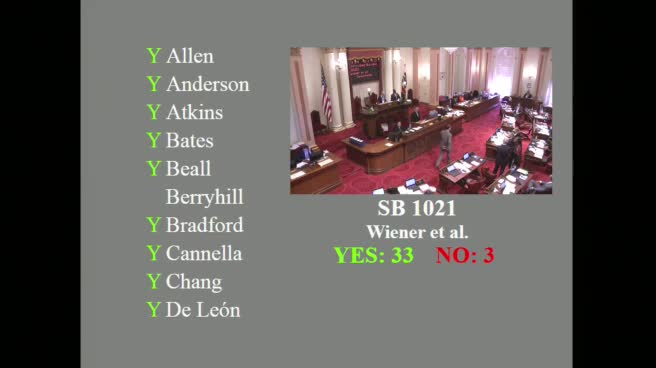 2MIN
Senate Floor
 2MIN
Assembly Floor
 48SEC
Assembly Floor
 7MIN
Assembly Standing Committee on Local Government
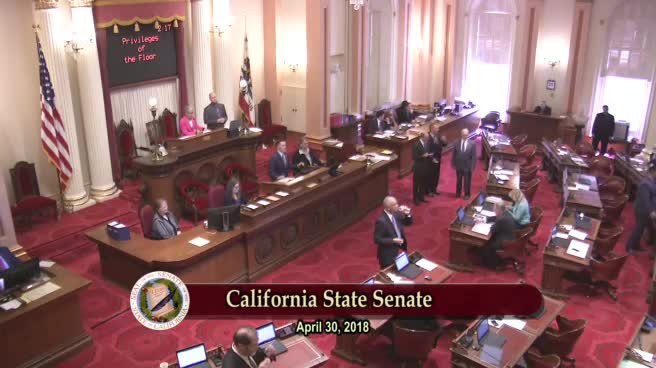 2MIN
Senate Floor
 7MIN
Senate Standing Committee on Governance and Finance
Bill Author

Bill Co-Author(s):