SB 1147: Offshore oil and gas wells.
- Session Year: 2017-2018
- House: Senate
- Latest Version Date: 2018-09-20
(1)Existing law requires a person engaging in the drilling, redrilling, or deepening, or in any operation permanently altering the casing, of one or more wells located in submerged lands under ocean waters within the jurisdiction of the state to file with the State Oil and Gas Supervisor a blanket indemnity bond for a specified amount to cover all of the operators operations in any of those wells. Existing law requires a person who operates one or more of those wells to provide an additional amount of security acceptable to the supervisor covering the full costs of plugging and abandoning all of the operators wells. Existing law requires the supervisor to determine the additional amount of the security required of each operator based on his or her determination of the reasonable costs of that plugging and abandonment.
This bill would require the supervisor to provide the operator with an opportunity to submit a cost estimate for his or her consideration before he or she determines the requisite additional amount of the security.
This bill would require the supervisor, before July 1, 2020, to evaluate and estimate the costs associated with the decommissioning of offshore oil and gas wells under its jurisdiction and, if necessary, to develop a schedule to increase the bond amounts or other financial surety provided by an operator of an offshore oil or gas well to ensure sufficient moneys are available to the state to decommission the well if no other entity is responsible for those decommissioning costs.
(2)Existing law vests with the State Lands Commission control over certain public lands. Existing law requires certain executed oil and gas leases to include specified provisions, including terms, conditions, and provisions that will protect the interests of the state with reference to securing the payment to the state of the proper amount or value of production. Existing law authorizes, with respect to oil, gas, and mineral leases, the assignment, transfer, or sublet as to all or any part of certain leased or permitted lands, as prescribed, subject to approval by the commission, to any person, association of persons, or corporation, who at the time of the proposed assignment, transfer, or sublease, possesses certain qualifications.
This bill would require those assigned, transferred, or sublet oil and gas leases to also include the specified provisions included in those executed oil and gas leases. The bill would require the commission to seek additional infrastructure bonding or other financial assurance, as feasible, under its jurisdiction when lease terms are negotiated or renegotiated for offshore oil and gas leases.
(1)Existing law requires a person engaging in the drilling, redrilling, or deepening, or in any operation permanently altering the casing, of one or more wells located in submerged lands under ocean waters within the jurisdiction of the state to file with the State Oil and Gas Supervisor a blanket indemnity bond for a specified amount to cover all of the operators operations in any of those wells. Existing law requires a person who operates one or more of those wells to provide an additional amount of security acceptable to the supervisor covering the full costs of plugging and abandoning all of the operators wells. Existing law requires the supervisor to determine the additional amount of the security required of each operator based on his or her determination of the reasonable costs of that plugging and abandonment.
This bill would require the supervisor to provide the operator with an opportunity to submit a cost estimate for his or her consideration before he or she determines the requisite additional amount of the security.
This bill would require the supervisor, before July 1, 2020, to evaluate and estimate the costs associated with the decommissioning of offshore oil and gas wells under its jurisdiction and, if necessary, to develop a schedule to increase the bond amounts or other financial surety provided by an operator of an offshore oil or gas well to ensure sufficient moneys are available to the state to decommission the well if no other entity is responsible for those decommissioning costs.
(2)Existing law vests with the State Lands Commission control over certain public lands. Existing law requires certain executed oil and gas leases to include specified provisions, including terms, conditions, and provisions that will protect the interests of the state with reference to securing the payment to the state of the proper amount or value of production. Existing law authorizes, with respect to oil, gas, and mineral leases, the assignment, transfer, or sublet as to all or any part of certain leased or permitted lands, as prescribed, subject to approval by the commission, to any person, association of persons, or corporation, who at the time of the proposed assignment, transfer, or sublease, possesses certain qualifications.
This bill would require those assigned, transferred, or sublet oil and gas leases to also include the specified provisions included in those executed oil and gas leases. The bill would require the commission to seek additional infrastructure bonding, bonding or other financial assurance, as feasible, under its jurisdiction when lease terms are negotiated or renegotiated for offshore oil and gas leases.
(1)Existing law requires a person engaging in the drilling, redrilling, or deepening, or in any operation permanently altering the casing, of one or more wells located in submerged lands under ocean waters within the jurisdiction of the state to file with the State Oil and Gas Supervisor a blanket indemnity bond for a specified amount to cover all of the operators operations in any of those wells. Existing law requires a person who operates one or more of those wells to provide an additional amount of security acceptable to the supervisor covering the full costs of plugging and abandoning all of the operators wells. Existing law requires the supervisor to determine the additional amount of the security required of each operator based on his or her determination of the reasonable costs of that plugging and abandonment.
This bill would require the supervisor to provide the operator with an opportunity to submit a cost estimate for his or her consideration before he or she determines the requisite additional amount of the security.
This bill would require the supervisor, before January July 1, 2020, to evaluate and estimate the costs associated with the decommissioning of offshore oil and gas wells under its jurisdiction and, if necessary, to develop a schedule to increase the bond amounts or other financial surety provided by an operator of an offshore oil or gas well to ensure sufficient moneys are available to the state to decommission the well if no other entity is responsible for those decommissioning costs.
(2)Existing law establishes the Oil Trust Fund in the State Treasury and appropriates the money in the fund to the State Lands Commission commencing when specified requirements are met. Existing law requires the Controller to transfer certain oil-revenue-related moneys to the fund. Existing law requires the commission to expend the money in the fund to finance the costs of well abandonment, pipeline removal, facility removal, remediation, and other costs associated with removal of oil and gas facilities from specified tidelands. vests with the State Lands Commission control over certain public lands. Existing law requires certain executed oil and gas leases to include specified provisions, including terms, conditions, and provisions that will protect the interests of the state with reference to securing the payment to the state of the proper amount or value of production. Existing law authorizes, with respect to oil, gas, and mineral leases, the assignment, transfer, or sublet as to all or any part of certain leased or permitted lands, as prescribed, subject to approval by the commission, to any person, association of persons, or corporation, who at the time of the proposed assignment, transfer, or sublease, possesses certain qualifications.
This bill would establish the Offshore Infrastructure Decommissioning Fund and would require that the commission, upon appropriation by the Legislature, expend moneys in the fund to finance only the costs of well plugging and abandonment, pipeline removal, facility removal, remediation, decommissioning, or other costs associated with the removal of oil or gas facilities that are not the responsibility of another entity from Californias tidelands. The bill would provide that both (A) oil and gas interests and operations subject to the provisions establishing the Oil Trust Fund and (B) contingent on specified conditions being met, the lessee of other specified leases are exempt from contributing to the Offshore Infrastructure Decommissioning Fund. require those assigned, transferred, or sublet oil and gas leases to also include the specified provisions included in those executed oil and gas leases. The bill would require the commission to seek additional infrastructure bonding, as feasible, under its jurisdiction when lease terms are negotiated or renegotiated for offshore oil and gas leases.
(1)Existing law requires a person engaging in the drilling, redrilling, deepening, or in any operation permanently altering the casing, of one or more wells located in submerged lands under ocean waters within the jurisdiction of the state to file with the State Oil and Gas Supervisor a blanket indemnity bond for a specified amount to cover all of the operators operations in any of those wells. Existing law requires a person who operates one or more of those wells to provide an additional amount of security acceptable to the supervisor covering the full costs of plugging and abandoning all of the operators wells.
This bill would require the supervisor, before January 1, 2020, to evaluate and estimate the costs associated with the decommissioning of offshore oil and gas wells under its jurisdiction and, if necessary, to develop a schedule to increase the bond amounts or other financial surety provided by an operator of an offshore oil or gas well to ensure sufficient moneys are available to the state to decommission the well if no other entity is responsible for those decommissioning costs.
(2)Existing law establishes the Oil Trust Fund in the State Treasury and appropriates the money in the fund to the State Lands Commission commencing when specified requirements are met. Existing law requires the Controller to transfer certain oil-revenue-related moneys to the fund. Existing law requires the commission to expend the money in the fund to finance the costs of well abandonment, pipeline removal, facility removal, remediation, and other costs associated with removal of oil and gas facilities from specified tidelands.
This bill would establish the Offshore Infrastructure Decommissioning Fund and would require that the commission, upon appropriation by the Legislature, expend moneys in the fund only to finance only the costs of well plugging and abandonment, pipeline removal, facility removal, remediation, decommissioning, or other costs associated with the removal of oil or gas facilities that are not the responsibility of another entity from Californias tidelands. The bill would provide that both (A) oil and gas interests and operations subject to the provisions establishing the Oil Trust Fund and (B) contingent on specified conditions being met, the lessee of other specified leases are exempt from contributing to the Offshore Infrastructure Decommissioning Fund. The bill would require the commission to seek additional infrastructure bonding, as feasible, under its jurisdiction when lease terms are negotiated or renegotiated for offshore oil and gas leases.
(1)Existing law requires a person engaging in the drilling, redrilling, deepening, or in any operation permanently altering the casing, of one or more wells located in submerged lands under ocean waters within the jurisdiction of the state to file with the State Oil and Gas Supervisor a blanket indemnity bond for a specified amount to cover all of the operators operations in any of those wells. Existing law requires a person who operates one or more of those wells to provide an additional amount of security acceptable to the supervisor covering the full costs of plugging and abandoning all of the operators wells.
This bill would require the supervisor, before January 1, 2020, to evaluate and estimate the costs associated with the decommissioning of offshore oil and gas wells under its jurisdiction and, if necessary, to develop a schedule to increase the bond amounts or other financial surety provided by an operator of an offshore oil or gas well to ensure sufficient moneys are available to the state to decommission the well if no other entity is responsible for those decommissioning costs.
(2)Existing law establishes the Oil Trust Fund in the State Treasury and appropriates the money in the fund to the State Lands Commission commencing when specified requirements are met. Existing law requires the Controller to transfer certain oil-revenue-related moneys to the fund. Existing law requires the commission to expend the money in the fund to finance the costs of well abandonment, pipeline removal, facility removal, remediation, and other costs associated with removal of oil and gas facilities from specified tidelands.
This bill would establish the Offshore Infrastructure Decommissioning Fund and would require that the commission, upon appropriation by the Legislature, expend moneys in the fund only to finance the costs of well plugging and abandonment, pipeline removal, facility removal, remediation, decommissioning, or other costs associated with the removal of oil or gas facilities that are not the responsibility of another entity from Californias tidelands. The bill would require the commission to seek additional infrastructure bonding, as feasible, under its jurisdiction when lease terms are negotiated or renegotiated for offshore oil and gas leases.
Existing law requires the Natural Resources Agency to develop and maintain a database of lands and easements that have been acquired by the departments and boards within the agency.This bill would require the Natural Resources Agency to maintain an interactive statewide map of those lands and easements that would be made available, as feasible, to the public on the agencys Internet Web site. The bill would additionally make nonsubstantive changes.Existing law requires the Natural Resources Agency to develop and maintain a database of lands and easements that have been acquired by the departments and boards within the agency.
This bill would require the Natural Resources Agency to maintain an interactive statewide map of those lands and easements that would be made available, as feasible, to the public on the agencys Internet Web site. The bill would additionally make nonsubstantive changes.
The Legislature finds and declares all of the following:
(a)Due to the recent bankruptcies of two independent oil companies, the state faces costs of at least $100,000,000 to prepare to remove and decommission offshore oil and gas wells and associated infrastructure.
(b)The existing bonding for Platform Holly and Rincon Island is inadequate to meet the related necessary decommissioning costs, and efforts to obtain additional moneys under lease transfer terms will be subject to negotiation and possible litigation and are unlikely to fully cover all of the states costs.
(c)Given their inclusion in the California Coastal Sanctuary, and the age of the associated oil and gas fields and infrastructure, additional nonwell infrastructure bonding may not be readily available.
(d)Additional actions are needed to ensure the state is not financially responsible for the decommissioning of private oil and gas infrastructure.
SEC. 2.Section 3205.1 of the Public Resources Code is amended to read:3205.1.(a)Notwithstanding Sections 3204 and 3205, a person who engages in the drilling, redrilling, or deepening, or in any operation permanently altering the casing, of one or more wells located on submerged lands under ocean waters within the jurisdiction of this state, shall file with the supervisor a blanket indemnity bond for one million dollars ($1,000,000) to cover all his or her operations in drilling, redrilling, deepening, or permanently altering the casing in any of his or her wells located on those submerged lands. The bond shall be executed by the person, as principal, and by an authorized surety company, as surety, and the conditions of the bond shall be the same as the conditions stated in Section 3204, except for the difference in the amount.
(b)In addition to providing the bond required by subdivision (a), a person who operates one or more wells that are located on tide or submerged lands within the jurisdiction of this state shall provide an additional amount of security acceptable to the supervisor, covering the full costs of plugging and abandoning all of the operators wells. The supervisor shall determine the amount of the security required of each operator, based on his or her determination of the reasonable costs of that plugging and abandonment, after providing the operator with an opportunity to submit a cost estimate for consideration by the supervisor. The supervisor may not adjust the amount of security required of each operator more frequently than once every three years, to reflect changes in those costs. An operator may self-insure this security obligation if the supervisor, at his or her discretion, determines that the operator has sufficient financial resources to plug and abandon the wells for which the operator is responsible. The security shall remain in effect until all wells are plugged and abandoned in accordance with Section 3208, but the supervisor shall reduce the amount of the security required of an operator to reflect reduced obligations as wells are plugged and abandoned.
(c)If the state lease or other agreement that sets forth obligations or performance requirements under the lease provides security that is equal to, or greater than, the total of the additional security required pursuant to subdivision (b), plus all other liabilities under the lease or other agreement, the supervisor shall not require the additional security.
SEC. 3.Section 3205.6 is added to the Public Resources Code, to read:3205.6.Before July 1, 2020, the supervisor shall do all of the following:
(a)Evaluate and estimate the costs associated with the decommissioning, including plugging and abandonment pursuant to Section 3208, of the offshore oil and gas wells under its jurisdiction.
(b)If necessary, based on the estimates made pursuant to subdivision (a), develop a schedule to increase the bond amounts or other financial surety provided by an operator of an offshore oil or gas well to ensure sufficient moneys are available to the state to decommission the well if no other entity is responsible for those decommissioning costs.
(c)Coordinate with the State Lands Commission to ensure the actions taken pursuant to this section and Section 6829.3 are not duplicative and are consistent with Section 3205.1.
SEC. 4.Section 6829 of the Public Resources Code is amended to read:6829.Every oil and gas lease executed under this chapter, and any oil and gas lease assigned, transferred, or sublet, pursuant to Section 6804, shall include all of the following:
(a)Terms, conditions, and provisions that will protect the interests of the state with reference to securing the payment to the state of the proper amount or value of production.
(b)Terms, conditions, and provisions that will protect the interests of the state with reference to the spacing of wells for the purpose of properly offsetting the drainage of oil and gas from state lands by wells drilled and operated on and within privately owned lands; diligence on the part of the lessee in drilling wells to the oil sands and requirements as to depth of those wells for the purpose of reaching the oil sands and producing oil and gas therefrom in commercial quantities.
(c)Provisions specifying methods of operation and standard requirements for carrying on operations in a proper and professional manner, the prevention of waste, the protection of the safety and health of workers, and the liability of the lessee for personal injuries and property damage.
(d)Security, or other financial assurance, for faithful performance by the lessee, including provisions for the forfeiture of the lease, as set forth in Section 6805, and the requirement that the lessee shall, at the time of execution of the lease, including any amendments thereof, furnish and thereafter maintain a good and sufficient bond in such sum as may be specified by the commission, in favor of the state, guaranteeing faithful performance by the lessee of the terms, covenants, and conditions of the lease and of the provisions of this chapter, including for the costs of plugging and abandoning wells and decommissioning all associated production facilities.
(e)Other covenants, conditions, requirements, and reservations as may be deemed advisable by the commission in effecting the purpose of this chapter and not inconsistent with any of its provisions, provided that any provision of an oil and gas lease executed under this chapter that purports to deprive the state or a lessee of any right or benefit secured by law, or is otherwise inconsistent with the provisions of this chapter, shall be void and shall be deemed separable from and without effect upon the valid provisions of the lease.
SEC. 5.Section 6829.3 is added to the Public Resources Code, to read:6829.3.(a)The commission shall seek additional infrastructure bonding or other financial assurance, as feasible, under its jurisdiction when a lease term is negotiated or renegotiated for an offshore oil or gas lease.
(b)The commission shall coordinate with the State Oil and Gas Supervisor to ensure the actions taken pursuant to this section and Section 3205.6 are not duplicative.
The Legislature finds and declares all of the following:
(a)Due to the recent bankruptcies of two independent oil companies, the state faces costs of at least $100,000,000 to prepare to remove and decommission offshore oil and gas wells and associated infrastructure.
(b)The existing bonding for Platform Holly and Rincon Island is inadequate to meet the related necessary decommissioning costs, and efforts to obtain additional moneys under lease transfer terms will be subject to negotiation and possible litigation and are unlikely to fully cover all of the states costs.
(c)Given their inclusion in the California Coastal Sanctuary, and the age of the associated oil and gas fields and infrastructure, additional nonwell infrastructure bonding may not be readily available.
(d)Additional actions are needed to ensure the state is not financially responsible for the decommissioning of private oil and gas infrastructure.
SEC. 2.Section 3205.1 of the Public Resources Code is amended to read:3205.1.(a)Notwithstanding Sections 3204 and 3205, a person who engages in the drilling, redrilling, or deepening, or in any operation permanently altering the casing, of one or more wells located on submerged lands under ocean waters within the jurisdiction of this state, shall file with the supervisor a blanket indemnity bond for one million dollars ($1,000,000) to cover all his or her operations in drilling, redrilling, deepening, or permanently altering the casing in any of his or her wells located on those submerged lands. The bond shall be executed by the person, as principal, and by an authorized surety company, as surety, and the conditions of the bond shall be the same as the conditions stated in Section 3204, except for the difference in the amount.
(b)In addition to providing the bond required by subdivision (a), a person who operates one or more wells that are located on tide or submerged lands within the jurisdiction of this state shall provide an additional amount of security acceptable to the supervisor, covering the full costs of plugging and abandoning all of the operators wells. The supervisor shall determine the amount of the security required of each operator, based on his or her determination of the reasonable costs of that plugging and abandonment, after providing the operator with an opportunity to submit a cost estimate for consideration by the supervisor. The supervisor may not adjust the amount of security required of each operator more frequently than once every three years, to reflect changes in those costs. An operator may self-insure this security obligation if the supervisor, at his or her discretion, determines that the operator has sufficient financial resources to plug and abandon the wells for which the operator is responsible. The security shall remain in effect until all wells are plugged and abandoned in accordance with Section 3208, but the supervisor shall reduce the amount of the security required of an operator to reflect reduced obligations as wells are plugged and abandoned.
(c)If the state lease or other agreement that sets forth obligations or performance requirements under the lease provides security that is equal to, or greater than, the total of the additional security required pursuant to subdivision (b), plus all other liabilities under the lease or other agreement, the supervisor shall not require the additional security.
SEC. 3.Section 3205.6 is added to the Public Resources Code, to read:3205.6.Before July 1, 2020, the supervisor shall do all of the following:
(a)Evaluate and estimate the costs associated with the decommissioning, including plugging and abandonment pursuant to Section 3208, of the offshore oil and gas wells under its jurisdiction.
(b)If necessary, based on the estimates made pursuant to subdivision (a), develop a schedule to increase the bond amounts or other financial surety provided by an operator of an offshore oil or gas well to ensure sufficient moneys are available to the state to decommission the well if no other entity is responsible for those decommissioning costs.
(c)Coordinate with the State Lands Commission to ensure the actions taken pursuant to this section and Section 6829.3 are not duplicative and are consistent with Section 3205.1.
SEC. 4.Section 6829 of the Public Resources Code is amended to read:6829.Every oil and gas lease executed under this chapter, and any oil and gas lease assigned, transferred, or sublet, pursuant to Section 6804, shall include all of the following:
(a)Terms, conditions, and provisions that will protect the interests of the state with reference to securing the payment to the state of the proper amount or value of production.
(b)Terms, conditions, and provisions that will protect the interests of the state with reference to the spacing of wells for the purpose of properly offsetting the drainage of oil and gas from state lands by wells drilled and operated on and within privately owned lands; diligence on the part of the lessee in drilling wells to the oil sands and requirements as to depth of those wells for the purpose of reaching the oil sands and producing oil and gas therefrom in commercial quantities.
(c)Provisions specifying methods of operation and standard requirements for carrying on operations in a proper and professional manner, the prevention of waste, the protection of the safety and health of workers, and the liability of the lessee for personal injuries and property damage.
(d)Security, or other financial assurance, for faithful performance by the lessee, including provisions for the forfeiture of the lease, as set forth in Section 6805, and the requirement that the lessee shall, at the time of execution of the lease, including any amendments thereof, furnish and thereafter maintain a good and sufficient bond in such sum as may be specified by the commission, in favor of the state, guaranteeing faithful performance by the lessee of the terms, covenants, and conditions of the lease and of the provisions of this chapter, including for the costs of plugging and abandoning wells and decommissioning all associated production facilities.
(e)Other covenants, conditions, requirements, and reservations as may be deemed advisable by the commission in effecting the purpose of this chapter and not inconsistent with any of its provisions, provided that any provision of an oil and gas lease executed under this chapter that purports to deprive the state or a lessee of any right or benefit secured by law, or is otherwise inconsistent with the provisions of this chapter, shall be void and shall be deemed separable from and without effect upon the valid provisions of the lease.
SEC. 5.Section 6829.3 is added to the Public Resources Code, to read:6829.3.(a)The commission shall seek additional infrastructure bonding, bonding or other financial assurance, as feasible, under its jurisdiction when a lease term is negotiated or renegotiated for an offshore oil or gas lease.
(b)The commission shall coordinate with the State Oil and Gas Supervisor to ensure the actions taken pursuant to this section and Section 3205.6 are not duplicative.
The Legislature finds and declares all of the following:
(a)Due to the recent bankruptcies of two independent oil companies, the state faces costs of at least $100,000,000 to prepare to remove and decommission offshore oil and gas wells and associated infrastructure.
(b)The existing bonding for Platform Holly and Rincon Island is inadequate to meet the related necessary decommissioning costs, and efforts to obtain additional moneys under lease transfer terms will be subject to negotiation and possible litigation and are unlikely to fully cover all of the states costs.
(c)Given their inclusion in the California Coastal Sanctuary, and the age of the associated oil and gas fields and infrastructure, additional nonwell infrastructure bonding may not be readily available.
(d)Additional actions are needed to ensure the state is not financially responsible for the decommissioning of private oil and gas infrastructure.
SEC. 2.Section 3205.1 of the Public Resources Code is amended to read:3205.1.(a)Notwithstanding Sections 3204 and 3205, a person who engages in the drilling, redrilling, or deepening, or in any operation permanently altering the casing, of one or more wells located on submerged lands under ocean waters within the jurisdiction of this state, shall file with the supervisor a blanket indemnity bond for one million dollars ($1,000,000) to cover all his or her operations in drilling, redrilling, deepening, or permanently altering the casing in any of his or her wells located on those submerged lands. The bond shall be executed by the person, as principal, and by an authorized surety company, as surety, and the conditions of the bond shall be the same as the conditions stated in Section 3204, except for the difference in the amount.
(b)In addition to providing the bond required by subdivision (a), a person who operates one or more wells that are located on tide or submerged lands within the jurisdiction of this state shall provide an additional amount of security acceptable to the supervisor, covering the full costs of plugging and abandoning all of the operators wells. The supervisor shall determine the amount of the security required of each operator, based on his or her determination of the reasonable costs of that plugging and abandonment. abandonment, after providing the operator with an opportunity to submit a cost estimate for consideration by the supervisor. The supervisor may not adjust the amount of security required of each operator more frequently than once every three years, to reflect changes in those costs. An operator may self-insure this security obligation if the supervisor, at his or her discretion, determines that the operator has sufficient financial resources to plug and abandon the wells for which the operator is responsible. The security shall remain in effect until all wells are plugged and abandoned in accordance with Section 3208, but the supervisor shall reduce the amount of the security required of an operator to reflect reduced obligations as wells are plugged and abandoned.
(c)If the state lease or other agreement that sets forth obligations or performance requirements under the lease provides security that is equal to, or greater than, the total of the additional security required pursuant to subdivision (b), plus all other liabilities under the lease or other agreement, the supervisor shall not require the additional security.
SEC. 2.SEC. 3.Section 3205.6 is added to the Public Resources Code, to read:3205.6.(a)Before January3205.6.Before July 1, 2020, the supervisor shall do both all of the following:
(1)(a)Evaluate and estimate the costs associated with the decommissioning, including plugging and abandonment pursuant to Section 3208, of the offshore oil and gas wells under its jurisdiction.
(2)(b)If necessary, based on the estimates made pursuant to paragraph (1), subdivision (a), develop a schedule to increase the bond amounts or other financial surety provided by an operator of an offshore oil or gas well to ensure sufficient moneys are available to the state to decommission the well if no other entity is responsible for those decommissioning costs.
(b)The supervisor shall coordinate(c)Coordinate with the State Lands Commission to ensure the actions taken pursuant to this section and Section 6829.3 are not duplicative and are consistent with Section 3205.1.
SEC. 3.Section 6217.9 is added to the Public Resources Code, to read:6217.9.(a)The Offshore Infrastructure Decommissioning Fund is hereby established in the State Treasury.(b)Upon appropriation by the Legislature, the commission shall use the moneys in the fund to finance only the costs of well plugging and abandonment, pipeline removal, facility removal, remediation, decommissioning, or other costs associated with the removal of an oil or gas facility that is not the responsibility of another entity from Californias tidelands.(c)(1)Oil and gas interests and operations subject to Section 6217.8 are exempt from contributing to the fund established pursuant to subdivision (a).(2)Provided State Oil and Gas Lease Nos. PRC 91, PRC 163, PRC 425, PRC 426, and PRC E-392 remain in full force and effect and the lessee is in good standing, the lessee of State Oil and Gas Lease Nos. PRC 91, PRC 163, PRC 425, PRC 426, and PRC E-392 is exempt from contributing to the fund established pursuant to subdivision (a) while the lease terms and conditions in effect on January 1, 2018, remain in effect.SEC. 4.Section 6829 of the Public Resources Code is amended to read:6829.Every oil and gas lease executed under this chapter chapter, and any oil and gas lease assigned, transferred, or sublet, pursuant to Section 6804, shall include all of the following:
(a)Such terms, Terms, conditions, and provisions as that will protect the interests of the State state with reference to securing the payment to the State state of the proper amount or value of production.
(b)Such terms, conditions Terms, conditions, and provisions as that will protect the interests of the State state with reference to the spacing of wells for the purpose of properly offsetting the drainage of oil and gas from state lands by wells drilled and operated on and within privately owned lands; diligence on the part of the lessee in drilling wells to the oil sands and requirements as to depth of such those wells for the purpose of reaching the oil sands and producing oil and gas therefrom in commercial quantities.
(c)Provisions specifying methods of operation and standard requirements for carrying on operations in a proper and workmanlike manner; professional manner, the prevention of waste; waste, the protection of the safety and health of workmen; workers, and the liability of the lessee for personal injuries and property damage.
(d)Security Security, or other financial assurance, for faithful performance by the lessee, including provisions for the forfeiture of the lease, as set forth in Section 6805, and the requirement that the lessee shall, at the time of execution of the lease, including any amendments thereof, furnish and thereafter maintain a good and sufficient bond in such sum as may be specified by the commission, in favor of the State, state, guaranteeing faithful performance by the lessee of the terms, covenants, and conditions of the lease and of the provisions of this chapter. chapter, including for the costs of plugging and abandoning wells and decommissioning all associated production facilities.
(e)Such other Other covenants, conditions, requirements, and reservations as may be deemed advisable by the commission in effecting the purpose of this chapter and not inconsistent with any of its provisions; provided, provisions, provided that any provision of an oil and gas lease executed under this chapter which that purports to deprive the State state or a lessee of any right or benefit secured by law, or is otherwise inconsistent with the provisions of this chapter, shall be void, void and shall be deemed separable from and without effect upon the valid provisions of such the lease.
SEC. 4.SEC. 5.Section 6829.3 is added to the Public Resources Code, to read:6829.3.(a)The commission shall seek additional infrastructure bonding, as feasible, under its jurisdiction when a lease term is negotiated or renegotiated for an offshore oil or gas lease.
(b)The commission shall coordinate with the State Oil and Gas Supervisor to ensure the actions taken pursuant to this section and Section 3205.6 are not duplicative.
The Legislature finds and declares all of the following:
(a)Due to the recent bankruptcies of two independent oil companies, the state faces costs of at least $100,000,000 to prepare to remove and decommission offshore oil and gas wells and associated infrastructure.
(b)The existing bonding for Platform Holly and Rincon Island is inadequate to meet the related necessary decommissioning costs, and efforts to obtain additional moneys under lease transfer terms will be subject to negotiation and possible litigation and are unlikely to fully cover all of the states costs.
(c)Given their inclusion in the California Coastal Sanctuary, and the age of the associated oil and gas fields and infrastructure, additional nonwell infrastructure bonding may not be readily available.
(d)Additional actions are needed to ensure the state is not financially responsible for the decommissioning of private oil and gas infrastructure.
SEC. 2.Section 3205.6 is added to the Public Resources Code, to read:3205.6.(a)Before January 1, 2020, the supervisor shall do both of the following:
(1)Evaluate and estimate the costs associated with the decommissioning, including plugging and abandonment pursuant to Section 3208, of the offshore oil and gas wells under its jurisdiction.
(2)If necessary, based on the estimates made pursuant to paragraph (1), develop a schedule to increase the bond amounts or other financial surety provided by an operator of an offshore oil or gas well to ensure sufficient moneys are available to the state to decommission the well if no other entity is responsible for those decommissioning costs.
(b)The supervisor shall coordinate with the State Lands Commission to ensure the actions taken pursuant to this section and Section 6829.3 are not duplicative. duplicative and are consistent with Section 3205.1.
SEC. 3.Section 6217.9 is added to the Public Resources Code, to read:6217.9.(a)The Offshore Infrastructure Decommissioning Fund is hereby established in the State Treasury.
(b)Upon appropriation by the Legislature, the commission shall use the moneys in the fund only to finance only the costs of well plugging and abandonment, pipeline removal, facility removal, remediation, decommissioning, or other costs associated with the removal of an oil or gas facility that is not the responsibility of another entity from Californias tidelands.
(c)(1)Oil and gas interests and operations subject to Section 6217.8 are exempt from contributing to the fund established pursuant to subdivision (a).
(2)Provided State Oil and Gas Lease Nos. PRC 91, PRC 163, PRC 425, PRC 426, and PRC E-392 remain in full force and effect and the lessee is in good standing, the lessee of State Oil and Gas Lease Nos. PRC 91, PRC 163, PRC 425, PRC 426, and PRC E-392 is exempt from contributing to the fund established pursuant to subdivision (a) while the lease terms and conditions in effect on January 1, 2018, remain in effect.
SEC. 4.Section 6829.3 is added to the Public Resources Code, to read:6829.3.(a)The commission shall seek additional infrastructure bonding, as feasible, under its jurisdiction when a lease term is negotiated or renegotiated for an offshore oil or gas lease.
(b)The commission shall coordinate with the State Oil and Gas Supervisor to ensure the actions taken pursuant to this section and Section 3205.6 are not duplicative.
The Legislature finds and declares all of the following:
(a)Due to the recent bankruptcies of two independent oil companies, the state faces costs of at least $100,000,000 to prepare to remove and decommission offshore oil and gas wells and associated infrastructure.
(b)The existing bonding for Platform Holly and Rincon Island is inadequate to meet the related necessary decommissioning costs, and efforts to obtain additional moneys under lease transfer terms will be subject to negotiation and possible litigation and are unlikely to fully cover all of the states costs.
(c)Given their inclusion in the California Coastal Sanctuary, and the age of the associated oil and gas fields and infrastructure, additional nonwell infrastructure bonding may not be readily available.
(d)Additional actions are needed to ensure the state is not financially responsible for the decommissioning of private oil and gas infrastructure.
SEC. 2.Section 3205.6 is added to the Public Resources Code, to read:3205.6.(a)Before January 1, 2020, the supervisor shall do both of the following:
(1)Evaluate and estimate the costs associated with the decommissioning, including plugging and abandonment pursuant to Section 3208, of the offshore oil and gas wells under its jurisdiction.
(2)If necessary, based on the estimates made pursuant to paragraph (1), develop a schedule to increase the bond amounts or other financial surety provided by an operator of an offshore oil or gas well to ensure sufficient moneys are available to the state to decommission the well if no other entity is responsible for those decommissioning costs.
(b)The supervisor shall coordinate with the State Lands Commission to ensure the actions taken pursuant to this section and Section 6829.3 are not duplicative.
SEC. 3.Section 6217.9 is added to the Public Resources Code, to read:6217.9.(a)The Offshore Infrastructure Decommissioning Fund is hereby established in the State Treasury.
(b)Upon appropriation by the Legislature, the commission shall use the moneys in the fund only to finance the costs of well plugging and abandonment, pipeline removal, facility removal, remediation, decommissioning, or other costs associated with the removal of an oil or gas facility that is not the responsibility of another entity from Californias tidelands.
SEC. 4.Section 6829.3 is added to the Public Resources Code, to read:6829.3.(a)The commission shall seek additional infrastructure bonding, as feasible, under its jurisdiction when a lease term is negotiated or renegotiated for an offshore oil or gas lease.
(b)The commission shall coordinate with the State Oil and Gas Supervisor to ensure the actions taken pursuant to this section and Section 3205.6 are not duplicative.
SECTION 1.Section 12805.2 of the Government Code is amended to read:12805.2.(a)The Natural Resources Agency, in consultation with each department, board, conservancy, and commission within the agency, shall develop and maintain a database of lands and easements that have been acquired by the departments and boards within the Natural Resources Agency. The database shall include, but need not be limited to, all of the following:(1)The name of the owner of the land or easement.(2)The location of the land or easement.(3)The statutory authority for the acquisition of the land or easement.(b)In conjunction with the database described in subdivision (a), the Natural Resources Agency shall do all of the following:(1)On or before September 1, 2002, and each year thereafter, request that all departments, boards, commissions, and conservancies within the Natural Resources Agency provide the Secretary of the Natural Resources Agency with information on any acquisitions of land or funding that was directed to the acquisition of land, undertaken by the department, board, commission, or conservancy.(2)To the extent that the information is available, on or before January 10, 2003, and each year thereafter, require that all departments, boards, commissions, and conservancies within the Natural Resources Agency provide the Secretary of the Natural Resources Agency with general information, including a general geographic description of land acquisition priorities and potential funding sources during the next fiscal year.(3)To the extent feasible, review and evaluate any available information from federal agencies pertaining to its land acquisition activities to coordinate and better understand the impact on California state proposals.(4)Provide a report to the Governor and the Legislature on or before December 31, 2003, and each year thereafter, that does both of the following:(A)Describes the amount of land acquired by each department, board, commission, and conservancy within the Natural Resources Agency during the past year and the amount of money spent for the acquisition.(B)Projects the approximate amount of land that will be acquired by the Natural Resources Agency during the following year.(5)Provide the report described in paragraph (4) to the Secretary of Food and Agriculture and the Director of Conservation.(6)Establish a uniform open process to ensure that information is readily available to the general public, local, state, and federal agencies, adjacent landowners, and other interested parties of record regarding any state hearings to approve proposed state land acquisitions.(7)Develop strategies with local, state, and federal agencies so that a revenue stream is established to ensure management plans are adequately funded for all new acquisitions.(c)An interactive statewide map of the lands and easements described in subdivision (a) shall be maintained by the Natural Resources Agency and made available, as feasible, to the public on the Natural Resources Agencys Internet Web site.(d)This section shall be implemented only during those fiscal years for which funding is provided for the purposes of this section in the annual Budget Act or in another measure.(a)The Natural Resources Agency, in consultation with each department, board, conservancy, and commission within the agency, shall develop and maintain a database of lands and easements that have been acquired by the departments and boards within the Natural Resources Agency. The database shall include, but need not be limited to, all of the following:
(1)The name of the owner of the land or easement.
(2)The location of the land or easement.
(3)The statutory authority for the acquisition of the land or easement.
(b)In conjunction with the database described in subdivision (a), the Natural Resources Agency shall do all of the following:
(1)On or before September 1, 2002, and each year thereafter, request that all departments, boards, commissions, and conservancies within the Natural Resources Agency provide the Secretary of the Natural Resources Agency with information on any acquisitions of land or funding that was directed to the acquisition of land, undertaken by the department, board, commission, or conservancy.
(2)To the extent that the information is available, on or before January 10, 2003, and each year thereafter, require that all departments, boards, commissions, and conservancies within the Natural Resources Agency provide the Secretary of the Natural Resources Agency with general information, including a general geographic description of land acquisition priorities and potential funding sources during the next fiscal year.
(3)To the extent feasible, review and evaluate any available information from federal agencies pertaining to its land acquisition activities to coordinate and better understand the impact on California state proposals.
(4)Provide a report to the Governor and the Legislature on or before December 31, 2003, and each year thereafter, that does both of the following:
(A)Describes the amount of land acquired by each department, board, commission, and conservancy within the Natural Resources Agency during the past year and the amount of money spent for the acquisition.
(B)Projects the approximate amount of land that will be acquired by the Natural Resources Agency during the following year.
(5)Provide the report described in paragraph (4) to the Secretary of Food and Agriculture and the Director of Conservation.
(6)Establish a uniform open process to ensure that information is readily available to the general public, local, state, and federal agencies, adjacent landowners, and other interested parties of record regarding any state hearings to approve proposed state land acquisitions.
(7)Develop strategies with local, state, and federal agencies so that a revenue stream is established to ensure management plans are adequately funded for all new acquisitions.
(c)An interactive statewide map of the lands and easements described in subdivision (a) shall be maintained by the Natural Resources Agency and made available, as feasible, to the public on the Natural Resources Agencys Internet Web site.
(c)(d)This section shall be implemented only during those fiscal years for which funding is provided for the purposes of this section in the annual Budget Act or in another measure.
|
Date
|
Status
|
|---|---|
| Sep 20, 2018 | Chaptered by Secretary of State. Chapter 607, Statutes of 2018. |
| Sep 20, 2018 | Approved by the Governor. |
| Sep 6, 2018 | Enrolled and presented to the Governor at 4 p.m. |
| Aug 30, 2018 | Assembly amendments concurred in. (Ayes 39. Noes 0.) Ordered to engrossing and enrolling. |
| Aug 29, 2018 | In Senate. Concurrence in Assembly amendments pending. |
| Aug 29, 2018 | Read third time. Passed. Ordered to the Senate. |
| Aug 21, 2018 | Read second time. Ordered to third reading. |
| Aug 20, 2018 | Read second time and amended. Ordered to second reading. |
| Aug 16, 2018 | From committee: Do pass as amended. (Ayes 12. Noes 0.) (August 16). |
| Aug 16, 2018 | Joint Rule 62(a) suspended. |
| Aug 15, 2018 | August 15 set for first hearing. Placed on suspense file. |
| Aug 9, 2018 | From committee with author's amendments. Read second time and amended. Re-referred to Com. on APPR. |
| Jun 26, 2018 | From committee: Do pass and re-refer to Com. on APPR. (Ayes 8. Noes 1.) (June 25). Re-referred to Com. on APPR. |
| Jun 7, 2018 | Referred to Com. on NAT. RES. |
| May 31, 2018 | In Assembly. Read first time. Held at Desk. |
| May 30, 2018 | Read third time. Passed. (Ayes 26. Noes 2.) Ordered to the Assembly. |
| May 29, 2018 | Read second time. Ordered to third reading. |
| May 25, 2018 | Read second time and amended. Ordered to second reading. |
| May 18, 2018 | Set for hearing May 25. |
| May 7, 2018 | May 7 hearing: Placed on APPR. suspense file. |
| Apr 27, 2018 | Set for hearing May 7. |
| Apr 26, 2018 | April 30 hearing postponed by committee. |
| Apr 20, 2018 | Set for hearing April 30. |
| Apr 17, 2018 | From committee: Do pass and re-refer to Com. on APPR. (Ayes 7. Noes 0.) (April 16). Re-referred to Com. on APPR. |
| Apr 9, 2018 | From committee with author's amendments. Read second time and amended. Re-referred to Com. on N.R. & W. |
| Mar 14, 2018 | Set for hearing April 16. |
| Feb 22, 2018 | Referred to Com. on N.R. & W. |
| Feb 15, 2018 | From printer. May be acted upon on or after March 17. |
| Feb 14, 2018 | Introduced. Read first time. To Com. on RLS. for assignment. To print. |
|
Date
|
Description
|
Location
|
Votes
|
|
|---|---|---|---|---|
| Aug 30, 2018 | Unfinished Business SB1147 Hertzberg Concurrence | Senate Floor |
Passed |
|
| Aug 29, 2018 | SB 1147 Hertzberg Senate Third Reading By STONE | Assembly Floor |
Passed |
|
| Aug 16, 2018 | Do pass as amended. | Assembly Standing Committee on Appropriations |
Passed |
|
| Jun 25, 2018 | Do pass and be re-referred to the Committee on [Appropriations] | Assembly Standing Committee on Natural Resources |
Passed |
|
| May 30, 2018 | Senate 3rd Reading SB1147 Hertzberg | Senate Floor |
Passed |
|
| May 25, 2018 | Do pass as amended | Senate Standing Committee on Appropriations |
Passed |
|
| May 7, 2018 | Placed on suspense file | Senate Standing Committee on Appropriations |
Passed |
|
| Apr 16, 2018 | Do pass, but first be re-referred to the Committee on [Appropriations] | Senate Standing Committee on Natural Resources and Water |
Passed |
This list shows positions taken on this bill by organizations on the date displayed, which is linked to the original source.
Positions by individuals are not included.
|
Organization
|
Position
|
Date
|
|---|---|---|
| California League Of Conservation Voters | ** Support | Aug 30, 2018 |
| Clean Water Action | ** Support | Aug 30, 2018 |
| Western State Patrol Association | * Against | Jun 25, 2018 |
| Western States Petroleum Association | ** Against | Jun 22, 2018 |
Office of Senate Floor Analyses (916) 651-1520 Fax: (916) 327-4478 | SB |
UNFINISHED BUSINESS
Bill No: SB 1147
:
SENATE NATURAL RES. & WATER COMMITTEE: 7-0, 4/16/18
AYES: Hertzberg, Allen, Hueso, Jackson, McGuire, Monning, Stern
NO VOTE RECORDED: Stone, Vidak
SENATE APPROPRIATIONS COMMITTEE: 5-1, 5/25/18
AYES: Lara, Beall, Bradford, Hill, Wiener
NOES: Nielsen
NO VOTE RECORDED: Bates
SENATE FLOOR: 30-3, 5/30/18
AYES: Allen, Atkins, Bates, Beall, Bradford, Dodd, Gaines, Galgiani, Glazer, Hernandez, Hertzberg, Hill, Hueso, Lara, Leyva, McGuire, Mitchell, Monning, Moorlach, Newman, Nguyen, Pan, Portantino, Roth, Skinner, Stern, Vidak, Wieckowski, Wiener, Wilk
NOES: Anderson, Morrell, Nielsen
NO VOTE RECORDED: Berryhill, Cannella, De León, Fuller, Jackson, Stone
ASSEMBLY FLOOR: 77-0, 8/29/18 - See last page for vote
DIGEST:
This bill directs the State Oil and Gas Supervisor and the State Lands Commission working in coordination to take certain actions to help pay for offshore oil and gas well and associated infrastructure decommissioning in the event of operator bankruptcy.
Assembly Amendments
remove the creation of a sinking fund, allow an oil and gas operator to provide certain cost estimate information to the supervisor, extend the due date of a report by the Division of Oil, Gas, and Geothermal Resources to July 1, 2019, and make additional technical and clarifying changes.
Existing law:
- Establishes the State Lands Commission (commission) in the Natural Resources Agency.
- The commission manages the state’s four million acres of tidelands and submerged lands and the beds of navigable rivers, streams, lakes, bays, estuaries, inlets, and straits. In the marine context, the commission has broad authority over sovereign lands, including rivers and sloughs, lakes, tidelands, and submerged lands. It also, among other things, manages tideland energy and mineral resource development through leases, and removes coastal hazards when funding is available.
- Establishes the Division of Oil, Gas, and Geothermal Resources (division) in the Department of Conservation. The division is the state’s oil and gas regulator, and its leader is the State Oil and Gas Supervisor (supervisor).
- Requires an oil and gas well operator engaging in the drilling, redrilling, deepening, or in any operation permanently altering the casing of one or more wells located in submerged lands under ocean waters within the jurisdiction of the state to file with the supervisor a blanket indemnity bond for $1 million to cover all of the operator’s operations in any of those wells.
- Additionally, a person who operates one or more of those wells is required to provide an additional amount of security acceptable to the supervisor covering the full costs of plugging and abandoning all of the operator’s wells. The supervisor may allow the operator to self-insure.
- The supervisor cannot require any additional security if lease requirements or obligations or other agreements already provide for sufficient security to cover all liabilities.
This bill seeks to address the state’s costs associated with two recent bankruptcies that resulted in Platform Holly and Rincon Island becoming largely the responsibility of the state to decommission. Specifically, this bill:
- Requires the supervisor, before July 1, 2020, to both evaluate and estimate the costs, as specified, with decommissioning offshore oil and gas wells, and, if necessary, develop a schedule to increase the bond amounts or other financial surety provided by an operator of those wells to ensure sufficient moneys are available to the state to decommission those wells if no other entity is, subject to existing law that limits the total amount of surety requirements to the total liability, as specified. The operator may provide cost estimate information to the supervisor, as specified.
- Requires the commission to seek additional infrastructure bonding or other financial assurance, as feasible, when a lease term is negotiated or renegotiated for an offshore oil or gas lease.
- Requires the commission and the supervisor to coordinate to ensure that actions taken to increase bonding are not duplicative.
- Makes appropriate and relevant legislative findings, and additional technical and clarifying changes.
Background
There is a long history of oil and gas development in the state’s coastal waters and tidelands. In fact, the earliest efforts predate both the division and the commission. Following the 1969 Santa Barbara oil spill, efforts to limit oil and gas development in the state’s coastal waters and tidelands led eventually to the California Coastal Sanctuary Act of 1994.
In general, oil and gas fields subject to tidelands oil and gas leases that pre-date the act have been under production for decades. Oil and gas production typically becomes more expensive as reservoirs become depleted. According to the commission, there are five offshore oil and gas facilities in state waters. In addition, there is attendant oil and gas-related infrastructure in the state’s tidelands that serve these facilities and other facilities including, among other things, pipelines and further onshore infrastructure.
Two of the existing offshore oil and gas facilities in state waters recently were involved in bankruptcy proceedings that resulted in six existing oil and gas leases being quitclaimed back to the state.
Platform Holly. In 1964 and 1965, the commission issued two state oil and gas leases to the Atlantic Richfield Company (ARCO) for the development of the South Ellwood Field. Production began from Platform Holly and associated pipelines and onshore facilities in 1966. Platform Holly is a drilling and production platform located 1.8 miles offshore from the city of Goleta. Mobil Exploration and Producing, Incorporated (Mobil) subsequently acquired these leases from ARCO, and in 1997 assigned the two leases and a third lease for the Ellwood Beach Pier to Venoco which continued operations. On May 19, 2015, Line 901 – the primary transportation pipeline for oil and gas products along the southern central coast of California – ruptured causing the Refugio Oil spill. The pipeline has not yet returned to service, and Venoco was forced to shut down oil and gas production operations on Pipeline Holly as a result. According to the commission, the prolonged period of nonoperation and the steep decline in oil prices caused Venoco to declare bankruptcy in early 2017. Venoco quitclaimed its leases back to the commission and rejected its obligation to decommission and remove its facilities on state lands, which includes 32 oil and gas wells, pipelines, onshore facilities and Platform Holly itself.
Rincon Island. In August 2016, after a long history of regulatory compliance concerns regarding oil and gas operations on Rincon Island, an artificial island located off Mussel Shoals in Ventura County, the owners – Rincon Island Limited Partnership (RILP) – sought bankruptcy protection the day before the commission was to consider terminating its leases at a hearing. The appointed bankruptcy trustee subsequently sought an operator to take over the operations and leases, but failed. Eventually in early December 2017, RILP quitclaimed its three leases back to the commission.
Insufficient bonding requirements leave the state to pay for decommissioning. Existing bonding requirements, additional funds from Venoco and RILP or their successor entities, and other moneys from previous lessees potentially available to the state will not cover all of the state’s costs for maintaining safe operations at Platform Holly and Rincon Island prior to oil and gas well plugging and abandonment, and facility decommissioning. The commission sought and received General Fund monies in the last fiscal year and has a $108.5 million budget change proposal for the next three years pending for the FY 2018/2019 budget. In three years, the commission projects that additional funds, potentially on the order of tens of millions of dollars, will be required to complete decommissioning. [See the Senate Natural Resources and Water Committee policy analysis for additional information.]
FISCAL EFFECT: Appropriation: Fiscal Com.: Local:
According to the Assembly Appropriations Committee:
- One-time costs of up to $250,000 for the division to contract for the evaluation of the cost of decommissioning (special fund).
- Commission costs are absorbable within existing resources.
California League of Conservation Voters
Clean Water Action
OPPOSITION: (Verified 8/29/18)
None received
ARGUMENTS IN SUPPORT: According to the author, “recent bankruptcies have largely left the public to pay for the decommissioning and removal of two offshore oil and gas sites. SB 1147 institutes leasing and permitting reforms to help ensure future decommissioning and removal costs are borne by the oil companies, not the public.
“It is wrong that the state’s taxpayers will likely have to foot most of the bill to decommission, remove and restore these offshore oil and gas facilities after these facilities have been the source of private gain for decades.”
ASSEMBLY FLOOR: 77-0, 8/29/18
AYES: Acosta, Aguiar-Curry, Arambula, Baker, Berman, Bigelow, Bloom, Bonta, Brough, Burke, Caballero, Calderon, Carrillo, Cervantes, Chau, Chávez, Chen, Chiu, Choi, Chu, Cooley, Cooper, Cunningham, Dahle, Daly, Eggman, Flora, Frazier, Friedman, Gabriel, Gallagher, Cristina Garcia, Eduardo Garcia, Gipson, Gloria, Gonzalez Fletcher, Gray, Grayson, Harper, Holden, Irwin, Jones-Sawyer, Kalra, Kamlager-Dove, Lackey, Levine, Limón, Low, Maienschein, Mathis, Mayes, McCarty, Medina, Melendez, Mullin, Muratsuchi, Nazarian, Obernolte, O'Donnell, Patterson, Quirk, Quirk-Silva, Reyes, Rivas, Rodriguez, Rubio, Salas, Santiago, Steinorth, Mark Stone, Thurmond, Ting, Voepel, Waldron, Weber, Wood, Rendon
NO VOTE RECORDED: Travis Allen, Fong, Kiley
8/30/18 9:25:29
**** END ****
SENATE THIRD READING
STR Bill Id:SB 1147
Author:(Hertzberg)
As Amended Ver:August 20, 2018
Majority vote
SENATE VOTE: 30-3
Committee | Votes | Ayes | Noes |
Natural Resources | 8-1 | Muratsuchi, Chau, Eggman, Flora, Limón, McCarty, Mark Stone, Reyes | Melendez |
Appropriations | 12-0 | Gonzalez Fletcher, Bloom, Bonta, Calderon, Carrillo, Chau, Eggman, Friedman, Eduardo Garcia, Nazarian, Quirk, Reyes |
SUMMARY: Requires the Division of Oil, Gas, and Geothermal Resources (DOGGR) and the State Lands Commission (SLC) to seek additional bonds, securities, or other financial assurance, to the extent allowed by existing law, to cover the cost of decommission of offshore wells.
EXISTING LAW:
- Requires SLC to be the steward and manager of the state's public trust lands. SLC has direct administrative control over the state's public trust lands and oversight authority over public trust lands granted by the Legislature to local governments.
- Grants, in trust, public trust lands to over 80 local public agencies to be managed for the benefit of all the people of the state and pursuant to the Public Trust Doctrine and terms of the applicable granting statutes.
- Authorizes lands owned by the state and under the jurisdiction of SLC to be leased by SLC for grazing, commercial, industrial, and recreational purposes.
- Establishes the Oil Trust Fund in the State Treasury to fund the removal of oil and gas facilities, remediation, and plugging and abandonment of wells when the City of Long Beach oil operations cease.
- Requires the Supervisor of DOGGR to supervise the drilling, operation, maintenance, and abandonment of wells and the operation, maintenance, and removal or abandonment of tanks and facilities attendant to oil and gas production.
- Requires an operator of one or more wells located on submerged lands under ocean waters within the jurisdiction of this state to file with the Supervisor a blanket indemnity bond for $1 million to cover all his or her operations in drilling, redrilling, deepening, or permanently altering the casing in any of his or her wells located on those submerged lands.
- Requires, in addition to the bond mentioned above, an operator of one or more wells that are located on tide or submerged lands within the jurisdiction of this state to provide an additional amount of security covering the full costs of plugging and abandoning all of the operator’s wells.
- Requires the Supervisor to determine the amount of the security required of each operator, based on his or her determination of the reasonable costs of that plugging and abandonment.
- Prohibits the Supervisor from adjusting the amount of security required of each operator more frequently than once every three years, to reflect changes in those costs.
THIS BILL:
- Provides the operator with an opportunity to submit a cost estimate for decommissioning for consideration by the supervisor
- Requires, on or before January 1, 2020, the Supervisor to do both of the following:
- Evaluate and estimate the costs associated with the decommissioning, including plugging and abandonment of the offshore oil and gas wells under its jurisdiction.
- If necessary develop a schedule to increase the bond amounts or other financial surety provided by an operator of an offshore oil or gas well to ensure sufficient moneys are available to the state to decommission the well if no other entity is responsible for those decommissioning costs.
- Coordinate with SLC to ensure the actions required by this bill are not duplicative and consistent with the current process of setting and adjusting bonds and securities.
- Requires SLC to seek additional infrastructure bonding or other financial assurance, as feasible, under its jurisdiction when a lease term is negotiated or renegotiated for an offshore oil or gas lease.
FISCAL EFFECT: According to the Assembly Appropriations Committee:
- One-time costs of up to $250,000 for DOGGR to contract for the evaluation of the cost of decommissioning (special fund).
- SLC costs are absorbable within existing resources.
COMMENTS: There are 19 offshore oil and gas agreements in California waters, which are what remains of the more than 60 originally issued. These leases were issued prior to the catastrophic 1969 oil spill from Platform A in federal waters off Santa Barbara County, and some predate the formation of the SLC. There are 27 oil and gas platforms offshore California. Four of these platforms are in state waters at relatively shallow depths. The remaining 23 platforms are over 3 miles from shore in federal waters known as the Outer Continental Shelf (OCS), at depths ranging to nearly 1,200 feet. Additionally, there are five more offshore "islands" (which are also platforms) in state waters. Platforms are located off the coasts of Los Angeles, Ventura, and Santa Barbara counties. The oldest of the offshore platforms was installed in the early 1960s and the newest in the late 1980s.
At least five offshore platforms, including one island, off the coast of California have been decommissioned and removed. Between 2010 and 2014, the bulk of the approximately $300 million generated annually for the state's General Fund from oil and gas agreements was from these offshore leases. Two of the existing offshore oil and gas facilities, known as Platform Holly and Rincon Island, recently were involved in bankruptcy proceedings that resulted in six existing oil and gas leases being quitclaimed back to the state.
In 1964 and 1965, the SLC issued two state oil and gas leases to the Atlantic Richfield Company (ARCO) for the development of the South Ellwood Field. Production began from Platform Holly and associated pipelines and onshore facilities in 1966. Mobil Exploration and Producing, Incorporated (Exxon Mobil) subsequently acquired these leases from ARCO, and in 1997 assigned the two leases and a third lease for the Ellwood Beach Pier to Venoco which continued operations. On May 19, 2015, Line 901 – the primary transportation pipeline for oil and gas products along the southern central coast of California – ruptured causing the Refugio Oil spill. The pipeline has not yet returned to service, and Venoco, was forced to shut down oil and gas production operations on Pipeline Holly as a result. According to the SLC, the prolonged period of nonoperation and the steep decline in oil prices caused Venoco to declare bankruptcy in early 2017. Venoco quitclaimed its leases back to the SLC and rejected its obligation to decommission and remove its facilities on state lands, which includes 32 oil and gas wells, pipelines, onshore facilities and Platform Holly itself.
In August 2016, after a long history of regulatory compliance concerns regarding oil and gas operations on Rincon Island, an artificial island located off Mussel Shoals in Ventura County, the owners – Rincon Island Limited Partnership (RILP) – sought bankruptcy protection the day before the commission was to consider terminating its leases at a hearing. The appointed bankruptcy trustee subsequently sought an operator to take over the operations and leases, but failed. Eventually in early December 2017, RILP quitclaimed its three leases back to the commission.
SB 840 (Mitchell), Chapter 29, Statutes of 2018, appropriates $108,500,000 from the General Fund over three years to cover a portion of the costs to permanently secure, plug and abandon, and decommission both RILP and Platform Holly. SLC is negotiating with Exxon Mobil on what level they will be responsible for the decommissioning costs for Platform Holly. However, the state will not be reimbursed for a portion of the appropriation, and existing bonds and securities are insufficient to cover the costs. This bill prompts DOGGR and SLC to update their bonding or security requirements when leases and existing law allows them to. This direction could help reduce the state’s future liability for decommissioning costs.
Analysis Prepared by: Michael Jarred / NAT. RES. / (916) 319-2092 FN: 0004358
Date of Hearing: August 15, 2018
ASSEMBLY COMMITTEE ON APPROPRIATIONS
Lorena Gonzalez Fletcher, Chair
SBPCA Bill Id:SB 1147
Author:(Hertzberg) – As Amended Ver:August 9, 2018
Policy Committee: | Natural Resources | Vote: | 8 - 1 |
|
| ||
|
|
Urgency: No State Mandated Local Program: No Reimbursable: No
SUMMARY:
This bill requires the Division of Oil, Gas, and Geothermal Resources (DOGGR) and the State Lands Commission (SLC) to seek, if warranted, additional bonds and securities, to the extent allowed by existing law, to cover the cost of decommissioning offshore wells and related infrastructure. Specifically, this bill:
- Requires, on or before July 1, 2020, the DOGGR supervisor to do the following:
- Evaluate and estimate the costs associated with the decommissioning, including plugging and abandonment of the offshore oil and gas wells under its jurisdiction.
- If necessary, based on estimates made after providing the operator an opportunity to submit a cost estimate for consideration by the supervisor, develop a schedule to increase the bond amounts or other financial surety provided by an operator of an offshore oil or gas well to ensure sufficient moneys are available to the state to decommission the well if no other entity is responsible for those decommissioning costs.
- Coordinate with SLC to ensure the actions required by this bill are not duplicative and consistent with the current process of setting and adjusting bonds and securities.
- Evaluate and estimate the costs associated with the decommissioning, including plugging and abandonment of the offshore oil and gas wells under its jurisdiction.
- Requires SLC to seek additional infrastructure bonding, as feasible, under its jurisdiction when a lease term is negotiated or renegotiated for an offshore oil or gas lease.
- Provides various technical clarifications.
FISCAL EFFECT:
- One-time costs of up to $250,000 for DOGGR to contract for the evaluation of the cost of decommissioning (special fund).
- SLC costs are absorbable within existing resources.
COMMENTS:
- Background and Purpose. In 1964 and 1965, the SLC issued two state oil and gas leases to the Atlantic Richfield Company (ARCO) for the development of the South Ellwood Field. Production began from Platform Holly and associated pipelines and onshore facilities in 1966. Mobil Exploration and Producing, Incorporated (Exxon Mobil) subsequently acquired these leases from ARCO, and in 1997 assigned the two leases and a third lease for the Ellwood Beach Pier to Venoco which continued operations. On May 19, 2015, Line 901 – the primary transportation pipeline for oil and gas products along the southern central coast of California – ruptured causing the Refugio Oil spill. The pipeline has not yet returned to service, and Venoco was forced to shut down oil and gas production operations on Pipeline Holly as a result.
According to the SLC, the prolonged period of nonoperation and the steep decline in oil prices caused Venoco to declare bankruptcy in early 2017. Venoco quitclaimed its leases back to the SLC and rejected its obligation to decommission and remove its facilities on state lands, which includes 32 oil and gas wells, pipelines, onshore facilities, and Platform Holly itself.
In August 2016, after a long history of regulatory compliance concerns regarding oil and gas operations on Rincon Island, an artificial island located off Mussel Shoals in Ventura County, the owners – Rincon Island Limited Partnership (RILP) – sought bankruptcy protection the day before the commission was to consider terminating the owner’s leases at a hearing. The appointed bankruptcy trustee subsequently sought an operator to take over the operations and leases, but failed. Eventually in early December 2017, RILP quitclaimed its three leases back to the commission.
SB 840 (Mitchell, 2018) appropriates $108,500,000 from the General Fund over three years to cover a portion of the costs to permanently secure, plug and abandon, and decommission both RILP and Platform Holly. SLC is negotiating with Exxon Mobil on the of its responsibility for the decommissioning costs for Platform Holly. However, the state will not be reimbursed for a portion of the appropriation, and existing bonds and securities are insufficient to cover the costs.
This bill prompts DOGGR and SLC to update their bonding or security requirements when leases and existing law allows them to. This direction could help reduce the state’s future liability for decommissioning costs.
- Related Legislation. SB 44 (Jackson), Chapter 645, Statutes of 2017, requires, upon appropriation of funding by the Legislature, SLC to administer a coastal hazard removal and remediation program.
AB 2404 (O’Donnell) eliminates the cap of $300 million on the Oil Trust Fund and specifies the amount of money to be deposited into the Oil Trust Fund each month beginning on January 31, 2019. This bill is pending in the Senate Appropriations Committee.
Analysis Prepared by: Jennifer Galehouse / APPR. / (916) 319-2081
Date of Hearing: June 25, 2018
ASSEMBLY COMMITTEE ON NATURAL RESOURCES
Al Muratsuchi, Acting Chair
SBPCA Bill Id:SB 1147
Author:(Hertzberg) – As Amended Ver:May 25, 2018
SENATE VOTE: 30-3
SUBJECT: Offshore oil and gas wells
SUMMARY: Requires the Division of Oil, Gas, and Geothermal Resources (DOGGR) and the State Lands Commission (SLC) to seek additional bonds and securities, to the extent allowed by existing law, to cover the cost of decommission of offshore wells. Establishes the Offshore Infrastructure Decommissioning Fund (fund) in the State Treasury.
EXISTING LAW:
- Requires SLC to be the steward and manager of the state's public trust lands. SLC has direct administrative control over the state's public trust lands and oversight authority over public trust lands granted by the Legislature to local governments.
- Grants, in trust, public trust lands to over 80 local public agencies to be managed for the benefit of all the people of the state and pursuant to the Public Trust Doctrine and terms of the applicable granting statutes.
- Authorizes lands owned by the state and under the jurisdiction of SLC to be leased by SLC for grazing, commercial, industrial, and recreational purposes.
- Establishes the Oil Trust Fund in the State Treasury to fund the removal of oil and gas facilities, remediation, and plugging and abandonment of wells when the City of Long Beach oil operations cease.
- Requires the Supervisor of DOGGR to supervise the drilling, operation, maintenance, and abandonment of wells and the operation, maintenance, and removal or abandonment of tanks and facilities attendant to oil and gas production.
- Requires an operator of one or more wells located on submerged lands under ocean waters within the jurisdiction of this state to file with the Supervisor a blanket indemnity bond for $1,000,000 to cover all his or her operations in drilling, redrilling, deepening, or permanently altering the casing in any of his or her wells located on those submerged lands.
- Requires, in addition to the bond mentioned above, an operator of one or more wells that are located on tide or submerged lands within the jurisdiction of this state to provide an additional amount of security covering the full costs of plugging and abandoning all of the operator’s wells.
- Requires the Supervisor to determine the amount of the security required of each operator, based on his or her determination of the reasonable costs of that plugging and abandonment.
- Prohibits the Supervisor from adjusting the amount of security required of each operator more frequently than once every three years, to reflect changes in those costs.
THIS BILL:
- Requires, on or before January 1, 2020, the Supervisor to do both of the following:
- Evaluate and estimate the costs associated with the decommissioning, including plugging and abandonment of the offshore oil and gas wells under its jurisdiction.
- If necessary develop a schedule to increase the bond amounts or other financial surety provided by an operator of an offshore oil or gas well to ensure sufficient moneys are available to the state to decommission the well if no other entity is responsible for those decommissioning costs.
- Evaluate and estimate the costs associated with the decommissioning, including plugging and abandonment of the offshore oil and gas wells under its jurisdiction.
- Requires the Supervisor to coordinate with SLC to ensure the actions required by this bill are not duplicative and consistent with the current process of setting and adjusting bonds and securities.
- Establishes the fund in the State Treasury.
- Requires SLC to use moneys in the fund to finance only the costs of well plugging and abandonment, pipeline removal, facility removal, remediation, decommissioning, or other costs associated with the removal of an oil or gas facility that is not the responsibility of another entity from California tidelines.
- Exempts various lessees and operators from contributing to the fund.
- Requires SLC to seek additional infrastructure bonding, as feasible, under its jurisdiction when a lease term is negotiated or renegotiated for an offshore oil or gas lease.
FISCAL EFFECT: According to the Senate Appropriations Committee, approximately $500,000 to the Department of Conservation (Oil and Gas Administrative Fund) to estimate the costs associated with decommissioning the offshore oil and gas wells under its jurisdiction.
COMMENTS:
- Author’s statement:
Bankruptcies in the last two years have left the State responsible for the decommissioning, removal, and restoration of offshore oil and gas development sites in state waters and tidelands. Leases for Platform Holly, located in state waters in the Santa Barbara Channel, Rincon Island, an artificial island with an uneven maintenance history off the coast of Ventura County, and related oil and gas fields were quitclaimed back to the State Lands Commission with numerous unfulfilled lease terms and conditions. As a result the State Lands Commission sought and received $22 million in emergency funding in the Fiscal Year 2017-2018 budget, and is currently asking for an additional $108.5 million for the next three fiscal years to continue – but not complete – the decommissioning and restoration process. Some of these costs have and will be reimbursed from existing bonds or other financial securities required for the facilities. However, the total amount likely to be collected will not pay for all of the necessary costs. These facilities were originally built and the tidelands leases issued to major oil companies. While the subsequent transfer of the leases to firms with fewer financial resources was contingent upon the oil major retaining some liability if lease terms were unfulfilled, the scope of responsibility and any additional funding remain subject to negotiation, and, in all likelihood, litigation.
It is wrong that the state’s taxpayers will likely have to foot most of the bill to decommission, remove, and restore these offshore oil and gas facilities after these facilities have been the source of private gain for decades.
- Decommissioning. There are 19 offshore oil and gas agreements in California waters, which are what remains of the more than 60 originally issued. These leases were issued prior to the catastrophic 1969 oil spill from Platform A in federal waters off Santa Barbara County, and some predate the formation of the SLC. There are 27 oil and gas platforms offshore California. Four of these platforms are in state waters at relatively shallow depths. The remaining 23 platforms are over 3 miles from shore in federal waters known as the Outer Continental Shelf (OCS), at depths ranging to nearly 1,200 feet. Additionally, there are five more offshore “islands” (which are also platforms) in state waters. Platforms are located off the coasts of Los Angeles, Ventura, and Santa Barbara counties. The oldest of the offshore platforms was installed in the early 1960s and the newest in the late 1980s.
At least five offshore platforms, including one island, off the coast of California have been decommissioned and removed. Between 2010 and 2014, the bulk of the approximately $300 million generated annually for the state's General Fund from oil and gas agreements was from these offshore leases. Two of the existing offshore oil and gas facilities, known as Platform Holly and Rincon Island, recently were involved in bankruptcy proceedings that resulted in six existing oil and gas leases being quitclaimed back to the state.
In 1964 and 1965, the SLC issued two state oil and gas leases to the Atlantic Richfield Company (ARCO) for the development of the South Ellwood Field. Production began from Platform Holly and associated pipelines and onshore facilities in 1966. Mobil Exploration and Producing, Incorporated (Exxon Mobil) subsequently acquired these leases from ARCO, and in 1997 assigned the two leases and a third lease for the Ellwood Beach Pier to Venoco which continued operations. On May 19, 2015, Line 901 – the primary transportation pipeline for oil and gas products along the southern central coast of California – ruptured causing the Refugio Oil spill. The pipeline has not yet returned to service, and Venoco, was forced to shut down oil and gas production operations on Pipeline Holly as a result. According to the SLC, the prolonged period of nonoperation and the steep decline in oil prices caused Venoco to declare bankruptcy in early 2017. Venoco quitclaimed its leases back to the SLC and rejected its obligation to decommission and remove its facilities on state lands, which includes 32 oil and gas wells, pipelines, onshore facilities and Platform Holly itself.
In August 2016, after a long history of regulatory compliance concerns regarding oil and gas operations on Rincon Island, an artificial island located off Mussel Shoals in Ventura County, the owners – Rincon Island Limited Partnership (RILP) – sought bankruptcy protection the day before the commission was to consider terminating its leases at a hearing. The appointed bankruptcy trustee subsequently sought an operator to take over the operations and leases, but failed. Eventually in early December 2017, RILP quitclaimed its three leases back to the commission.
SB 840 (Mitchell, 2018) appropriates $108,500,000 from the General Fund over three years to cover a portion of the costs to permanently secure, plug and abandon, and decommission both RILP and Platform Holly. SLC is negotiating with Exxon Mobil on what level they will be responsible for the decommissioning costs for Platform Holly. However, the state will not be reimbursed for a portion of the appropriation, and existing bonds and securities are insufficient to cover the costs. This bill prompts DOGGR and SLC to update their bonding or security requirements when leases and existing law allows them to. This direction could help reduce the state’s future liability for decommissioning costs. This bill also creates a fund to cover decommissioning shortfalls. However, the bill does not provide a mechanism for providing money to that fund. One possible option would be to direct a portion of tideland oil and gas revenues that would go to the General Fund to the fund each year. This would create a sinking fund similar to the Oil Trust Fund, which is set up for the City of Long Beach’s oil and gas leases, but could be for any decommissioning cost the state might incur. This would reduce the impact on the General Fund in any given year from decommissioning costs.
- Related/Prior Legislation.
SB 44 (Jackson), Chapter 645, Statutes of 2017, requires, upon appropriation of funding by the Legislature, that the SLC administer a coastal hazard removal and remediation program.
AB 2404 (O’Donnell) eliminates the cap of $300 million on the Oil Trust Fund and specifies the amount of money to be deposited into the Oil Trust Fund each month beginning on January 31, 2019. This bill will be heard on June 26 in the Senate Natural Resources and Water Committee.
REGISTERED SUPPORT / OPPOSITION:
Support
California League of Conservation Voters
Clean Water Action
Opposition
Western States Petroleum Association
Analysis Prepared by: Michael Jarred / NAT. RES. /
Office of Senate Floor Analyses (916) 651-1520 Fax: (916) 327-4478 | SB |
THIRD READING
Bill No: SB 1147
:
SENATE NATURAL RES. & WATER COMMITTEE: 7-0, 4/16/18
AYES: Hertzberg, Allen, Hueso, Jackson, McGuire, Monning, Stern
NO VOTE RECORDED: Stone, Vidak
SENATE APPROPRIATIONS COMMITTEE: 5-1, 5/25/18
AYES: Lara, Beall, Bradford, Hill, Wiener
NOES: Nielsen
NO VOTE RECORDED: Bates
DIGEST:
This bill directs the State Oil and Gas Supervisor and the State Lands Commission working in coordination to take certain actions, including the creation of an offshore infrastructure decommissioning fund, to help pay for offshore oil and gas well and associated infrastructure decommissioning in the event of operator bankruptcy.
Existing law:
- Establishes the State Lands Commission (commission) in the Natural Resources Agency.
- The commission manages the state’s four million acres of tidelands and submerged lands and the beds of navigable rivers, streams, lakes, bays, estuaries, inlets, and straits. In the marine context, the commission has broad authority over sovereign lands, including rivers and sloughs, lakes, tidelands, and submerged lands. It also, among other things, manages tideland energy and mineral resource development through leases, and removes coastal hazards when funding is available.
- Establishes the Division of Oil, Gas, and Geothermal Resources (division) in the Department of Conservation. The division is the state’s oil and gas regulator, and its leader is the State Oil and Gas Supervisor (supervisor).
- Requires an oil and gas well operator engaging in the drilling, redrilling, deepening, or in any operation permanently altering the casing of one or more wells located in submerged lands under ocean waters within the jurisdiction of the state to file with the supervisor a blanket indemnity bond for $1 million to cover all of the operator’s operations in any of those wells.
- Additionally, a person who operates one or more of those wells is required to provide an additional amount of security acceptable to the supervisor covering the full costs of plugging and abandoning all of the operator’s wells. The supervisor may allow the operator to self-insure.
- The supervisor cannot require any additional security if lease requirements or obligations or other agreements already provide for sufficient security to cover all liabilities.
- Establishes the Oil Trust Fund in the State Treasury and appropriates the money in the fund to the commission commencing when specified requirements are met.
- The Oil Trust Fund are moneys set aside for the commission to spend to finance the costs of well abandonment, pipeline removal, facility removal, remediation and other costs associated with the removal of oil and gas facilities when the City of Long Beach’s oil and gas operations cease. The State Controller is required to transfer certain oil-revenue-related moneys to the Oil Trust Fund.
- Establishes the California Coastal Sanctuary Act of 1994 (act) (Public Resources Code § 6240 et seq.).
- The act, among other things, bars further leasing of the state’s coastal waters and tidelands, as specified, for oil and gas development except in limited circumstances, grandfathers in existing oil and gas development leases already in coastal waters and tidelands, and requires that tidelands covered by an existing oil and gas development lease that is quitclaimed back to the state become part of the sanctuary and cannot be re-leased for oil and gas development.
This bill seeks to address the state’s costs associated with two recent bankruptcies that resulted in Platform Holly and Rincon Island becoming largely the responsibility of the state to decommission. Specifically, this bill:
- Requires the supervisor, before January 1, 2020, to both evaluate and estimate the costs, as specified, with decommissioning offshore oil and gas wells, and, if necessary, develop a schedule to increase the bond amounts or other financial surety provided by an operator of those wells to ensure sufficient moneys are available to the state to decommission those wells if no other entity is, subject to existing law that limits the total amount of surety requirements to the total liability, as specified.
- Establishes the Offshore Infrastructure Decommissioning Fund (fund) in the State Treasury.
- Upon appropriation by the Legislature, the commission shall use the money in the fund only to finance the costs of well plugging and abandonment, pipeline removal, facility removal, remediation, decommissioning, or other costs associated with the removal of an oil or gas facility that is not the responsibility of another entity from California’s tidelands.
- Interests operating in the Long Beach tidelands and operating certain existing leases for the Huntington Beach Oil Field are exempted from contributing to the fund, as specified.
- Requires the commission to seek additional infrastructure bonding, as feasible, when a lease term is negotiated or renegotiated for an offshore oil or gas lease.
- Requires the commission and the supervisor to coordinate to ensure that actions taken to increase bonding are not duplicative.
- Makes appropriate and relevant legislative findings.
Background
There is a long history of oil and gas development in the state’s coastal waters and tidelands. In fact, the earliest efforts predate both the division and the commission. Following the 1969 Santa Barbara oil spill, efforts to limit oil and gas development in the state’s coastal waters and tidelands led eventually to the California Coastal Sanctuary Act of 1994.
In general, oil and gas fields subject to tidelands oil and gas leases that pre-date the act have been under production for decades. Oil and gas production typically becomes more expensive as reservoirs become depleted. According to the commission, there are five offshore oil and gas facilities in state waters. In addition, there is attendant oil and gas-related infrastructure in the state’s tidelands that serve these facilities and other facilities including, among other things, pipelines and further onshore infrastructure.
Two of the existing offshore oil and gas facilities in state waters recently were involved in bankruptcy proceedings that resulted in six existing oil and gas leases being quitclaimed back to the state.
Platform Holly. In 1964 and 1965, the commission issued two state oil and gas leases to the Atlantic Richfield Company (ARCO) for the development of the South Ellwood Field. Production began from Platform Holly and associated pipelines and onshore facilities in 1966. Platform Holly is a drilling and production platform located 1.8 miles offshore from the city of Goleta. Mobil Exploration and Producing, Incorporated (Mobil) subsequently acquired these leases from ARCO, and in 1997 assigned the two leases and a third lease for the Ellwood Beach Pier to Venoco which continued operations. On May 19, 2015, Line 901 – the primary transportation pipeline for oil and gas products along the southern central coast of California – ruptured causing the Refugio Oil spill. The pipeline has not yet returned to service, and Venoco was forced to shut down oil and gas production operations on Pipeline Holly as a result. According to the commission, the prolonged period of nonoperation and the steep decline in oil prices caused Venoco to declare bankruptcy in early 2017. Venoco quitclaimed its leases back to the commission and rejected its obligation to decommission and remove its facilities on state lands, which includes 32 oil and gas wells, pipelines, onshore facilities and Platform Holly itself.
Rincon Island. In August 2016, after a long history of regulatory compliance concerns regarding oil and gas operations on Rincon Island, an artificial island located off Mussel Shoals in Ventura County, the owners – Rincon Island Limited Partnership (RILP) – sought bankruptcy protection the day before the commission was to consider terminating its leases at a hearing. The appointed bankruptcy trustee subsequently sought an operator to take over the operations and leases, but failed. Eventually in early December 2017, RILP quitclaimed its three leases back to the commission.
Insufficient bonding requirements leave the state to pay for decommissioning. Existing bonding requirements, additional funds from Venoco and RILP or their successor entities, and other moneys from previous lessees potentially available to the state will not cover all of the state’s costs for maintaining safe operations at Platform Holly and Rincon Island prior to oil and gas well plugging and abandonment, and facility decommissioning. The commission sought and received General Fund monies in the last fiscal year and has a $108.5 million budget change proposal for the next three years pending for the FY 2018/2019 budget. In three years, the commission projects that additional funds, potentially on the order of tens of millions of dollars, will be required to complete decommissioning. [See the Senate Natural Resources and Water Committee policy analysis for additional information.]
Sinking funds exist for the City of Long Beach and the Huntington Beach Oil Field. The Oil Trust Fund, described above, is a sinking fund dedicated to the decommissioning of the Long Beach tidelands. Additionally, at its October 19, 2017 hearing, the commission approved five lease amendments for the Huntington Beach Oil Field with its operator (SoCal Holdings, LLC) that, among other things, establishes a sinking fund for those leases (see item #93 on the commission agenda).
Related/Prior Legislation
AB 2404 (O’Donnell, 2018) removes the $300 million cap on the Oil Trust Fund. The bill is on the Assembly floor.
SB 44 (Jackson, Chapter 645, Statutes of 2017) established a limited term coastal hazard clean-up program for legacy oil and gas wells, as defined, funded by tidelands oil and gas revenues.
AB 1472 (Limon, 2017) would have authorized the commission to consider specific factors when considering whether to approve an assignment, transfer or sublease of a lease. The bill was vetoed by Governor Brown.
FISCAL EFFECT: Appropriation: Fiscal Com.: Local:
According to the Senate Appropriations Committee:
- Approximately $500,000 to the Department of Conservation (Oil and Gas Administrative Fund) to estimate the costs associated with the decommissioning the offshore oil and gas wells under its jurisdiction.
California League of Conservation Voters
Clean Water Action
OPPOSITION: (Verified 5/25/18)
None received
ARGUMENTS IN SUPPORT: According to the author, “recent bankruptcies have largely left the public to pay for the decommissioning and removal of two offshore oil and gas sites. SB 1147 institutes leasing and permitting reforms and creates a new fund to help ensure future decommissioning and removal costs are borne by the oil companies, not the public.
“It is wrong that the state’s taxpayers will likely have to foot most of the bill to decommission, remove and restore these offshore oil and gas facilities after these facilities have been the source of private gain for decades.”
5/29/18 11:05:04
**** END ****
SENATE COMMITTEE ON APPROPRIATIONS
Senator Ricardo Lara, Chair
2017 - 2018 Regular Session
SB 1147 (Hertzberg) - Offshore oil and gas wells
Version: April 9, 2018 | Policy Vote: N.R. & W. 7 - 0 |
Urgency: No | Mandate: No |
Hearing Date: May 25, 2018 | Consultant: Mike Peterson |
Bill Summary:
SB 1147 requires the State Oil and Gas Supervisor, in coordination with State Lands Commission (Commission) to estimate the costs associated with the decommissioning the offshore oil and gas wells under its jurisdiction, and establish an offshore oil infrastructure decommissioning fund. This bill would seek to address the state’s costs associated with the bankruptcies that resulted in Platform Holly and Rincon Island becoming largely the responsibility of the state to decommission.
*********** ANALYSIS ADDENDUM – SUSPENSE FILE ***********
The following information is revised to reflect amendments
adopted by the committee on May 25, 2018
Fiscal Impact:
- Approximately $500,000 to the Department of Conservation (Oil and Gas Administrative Fund) to estimate the costs associated with the decommissioning the offshore oil and gas wells under its jurisdiction.
Committee Amendments:
Amendments specify that certain entities with existing sinking funds may not be required to participate in the sinking fund established by this bill.
-- END --
SENATE COMMITTEE ON
Senator Ricardo Lara, Chair
2017 - 2018 Regular Session
SB 1147 (Hertzberg) - Offshore oil and gas wells
Version: | Policy Vote: |
Urgency: | Mandate: |
Hearing Date: May 7, 2018 | Consultant: |
This bill meets the criteria for referral to the Suspense File.
Bill Summary:
SB 1147 requires the State Oil and Gas Supervisor (Supervisor ), in coordination with State Lands Commission (Commission) to estimate the costs associated with the decommissioning the offshore oil and gas wells under its jurisdiction, and if necessary based on the estimates made develop a schedule
Fiscal Impact:
- Approximately $500,000 to the Department of Conservation (Oil and Gas Administrative Fund) to estimate the costs associated with the decommissioning the offshore oil and gas wells under its jurisdiction.
- Minor costs to (General Fund) State Lands Commission.
Background:
State Lands Commission. Established in 1938 in the Natural Resources Agency, the commission manages the state’s 4 million acres of tidelands and submerged lands and the beds of navigable rivers, streams, lakes, bays, estuaries, inlets, and straits. In the marine context, the commission has broad authority over sovereign lands, including rivers and sloughs, lakes, tidelands, and submerged lands. It also, among other things, manages tideland energy and mineral resource development through leases, and removes coastal hazards when funding is available.
The Division of Oil, Gas and Geothermal Resources (division). Existing law establishes the division in the Department of Conservation. The division is the state’s oil and gas regulator, and its leader is the State Oil and Gas Supervisor (supervisor). In California, an oil and gas well operator engaging in the drilling, redrilling, deepening, or in any operation permanently altering the casing of one or more wells located in submerged lands under ocean waters within the jurisdiction of the state to file with the supervisor a blanket indemnity bond for $1 million to cover all of the operator’s operations in any of those wells. Additionally, a person who operates one or more of those wells is required to provide an additional amount of security acceptable to the supervisor covering the full costs of plugging and abandoning all of the operator’s wells. The supervisor may allow the operator to self-insure.
Existing law establishes the Oil Trust Fund in the State Treasury and appropriates the money in the fund to the commission commencing when specified requirements are met.
Two offshore oil and gas facilities were involved in bankruptcy proceedings. Two of the existing offshore oil and gas facilities in state waters recently were involved in bankruptcy proceedings that resulted in six existing oil and gas leases being quitclaimed back to the state.
In 1964 and 1965, the commission issued two state oil and gas leases to the Atlantic Richfield Company (ARCO) for the development of the South Ellwood Field. Production began from Platform Holly and associated pipelines and onshore facilities in 1966. Platform Holly is a drilling and production platform located 1.8 miles offshore from the city of Goleta. Mobil Exploration and Producing, Incorporated (Mobil) subsequently acquired these leases from ARCO, and in 1997 assigned the two leases and a third lease for the Ellwood Beach Pier to Venoco which continued operations. On May 19, 2015, Line 901 – the primary transportation pipeline for oil and gas products along the southern central coast of California – ruptured causing the Refugio Oil spill. The pipeline has not yet returned to service, and Venoco was forced to shut down oil and gas production operations on Pipeline Holly as a result. According to the commission, the prolonged period of nonoperation and the steep decline in oil prices caused Venoco to declare bankruptcy in early 2017. Venoco quitclaimed its leases back to the commission and rejected its obligation to decommission and remove its facilities on state lands, which includes 32 oil and gas wells, pipelines, onshore facilities and Platform Holly itself.
In August 2016, after a long history of regulatory compliance concerns regarding oil and gas operations on Rincon Island, an artificial island located off Mussel Shoals in Ventura County, the owners – Rincon Island Limited Partnership (RILP) – sought bankruptcy protection the day before the commission was to consider terminating its leases at a hearing. The appointed bankruptcy trustee subsequently sought an operator to take over the operations and leases, but failed. Eventually in early December 2017, RILP quitclaimed its three leases back to the commission.
Existing bonding requirements, additional funds from Venoco and RILP or their successor entities, and other moneys from previous lessees potentially available to the state will not cover all of the state’s costs for maintaining safe operations at Platform Holly and Rincon Island prior to oil and gas well plugging and abandonment, and facility decommissioning. The commission sought and received General Fund monies in the last fiscal year and has a $108.5 million budget change proposal for the next three years pending before legislative budget committees currently.
Proposed Law: This bill would:
- Address the state’s costs associated with the bankruptcies that resulted in Platform Holly and Rincon Island becoming largely the responsibility of the state to decommission. Specifically the bill would:
- Require the supervisor, before January 1, 2020, to both evaluate and estimate the costs, as specified, with decommissioning offshore oil and gas wells, and, if necessary, develop a schedule to increase the bond amounts or other financial surety provided by an operator of those wells to ensure sufficient moneys are available to the state to decommission those wells if no other entity is.
- Establish the Offshore Infrastructure Decommissioning Fund in the State Treasury.
- Upon appropriation by the Legislature, the commission shall use the money in the fund only to finance the costs of well plugging and abandonment, pipeline removal, facility removal, remediation, decommissioning, or other costs associated with the removal of an oil or gas facility that is not the responsibility of another entity from California’s tidelands.
- Require the commission to seek additional infrastructure bonding, as feasible, when a lease term is negotiated or renegotiated for an offshore oil or gas lease.
- Require the commission and the supervisor to coordinate to ensure that actions taken to increase bonding are not duplicative.
- Make appropriate and relevant legislative findings.
Staff Comments:
Concurrence with policy analysis. Staff notes and concurs with the comments from the policy analysis:
This bill is a work-in-progress. While the author’s intent is clear, the Committee may wish to direct staff to continue working with the author’s office to further refine the bill’s provisions should the bill be voted off Suspense
Estimated state costs associated with the two bankruptcies. After the Venoco quitclaim, the commission sought and received $13 million in funding up through the Fiscal Year (FY) 2017-2018 budget to maintain operations at Platform Holly and begin preparations for well plugging and abandonment, and decommissioning. The commission also received authorization to seek an additional $9 million, if needed, for a potential total of $22 million. Current estimates, detailed in a pending FY 2018-2019 budget change proposal (BCP), are that $80 million will be required for ongoing operations and plugging and abandonment work for the 32 wells on Platform Holly and at the Ellwood Beach Piers. Monthly maintenance costs at Platform Holly are just over $1 million which is expected to slightly increase when well plugging and abandonment operations start in the next year before declining. The division holds two bonds totaling $1.25 million to pay for the plugging and abandonment of these wells, although estimated costs are on the order of just over $1 million per well.
Forty-nine wells and related infrastructure at Rincon Island need to be addressed. Current estimates are that these activities will cost $50 million over the next three years.
The pending BCP includes both the $80 million (Platform Holly) and $50 million (Rincon Island) estimates, and deducts the $22 million already obtained to reach the $108.5 million amount requested. Additional costs to the state beyond the current BCP include the decommissioning and removal of both Platform Holly and Rincon Island. These costs are likely to be on the order of tens of millions of dollars.
The commission has received the entire amount of Venoco’s performance bond ($22 million) for Platform Holly. Exxon/Mobil has agreed to participate in the well plugging and abandonment on Platform Holly, but the total amount of its obligations remains in dispute. The commission has also reached an agreement with ARCO to pay $8 million to remove the causeway connecting Rincon Island to the mainland and continues to seek RILP’s $10 million performance bond (expected by May 2018). As noted above, the commission continues to seek additional moneys from the successor entities for Venoco and RILP. Any moneys received have been and will be used to reimburse the state.
It is worth noting that as recently as 2013, the Venoco surety bond was even less ($10 million). Through the settlement of litigation with Venoco, the commission negotiated an increase in bonding amounts of $4 million annually to reach a maximum of $30 million in November 2018. Even if the $30 million bonding level had been achieved, it would have been insufficient to cover the costs of well plugging and abandonment, and decommissioning the platform and attendant facilities. In at least some newer leases, the commission retains the right to increase bonding amounts, and to increase rents prior to lease termination. To staff’s knowledge, the division’s authority to obtain additional bonding or other guarantees for offshore wells has not been exercised.
Examples of oil and gas-related revenue. Tidelands leases generally include an annual rental amount as well as a negotiated oil and gas royalty. Rents appear to be due annually and royalty payments are made monthly, as applicable. Some leases also appear to include “management fees” to cover the commission’s costs in monitoring the lease. Except as specified, tidelands oil and gas royalty revenue is placed in the state’s General Fund. The principal sources of funding to the division are fees assessed per barrel of oil or specified amount of natural gas.
-- END --
SENATE COMMITTEE ON NATURAL RESOURCES AND WATER
Senator Robert Hertzberg, Chair
2017 - 2018 Regular
Bill No: SB 1147 Hearing Date: April 16, 2018
Author: | |||
Version: |
| ||
Urgency: | Fiscal: | ||
Consultant: | |||
Subject: Offshore oil and gas wells
BACKGROUND AND EXISTING LAW
- Existing law establishes the State Lands Commission (commission) in the Natural Resources Agency. Established in 1938, the commission manages the state’s 4 million acres of tidelands and submerged lands and the beds of navigable rivers, streams, lakes, bays, estuaries, inlets, and straits. In the marine context, the commission has broad authority over sovereign lands, including rivers and sloughs, lakes, tidelands, and submerged lands. It also, among other things, manages tideland energy and mineral resource development through leases, and removes coastal hazards when funding is available.
- Existing law establishes the Division of Oil, Gas, and Geothermal Resources (division) in the Department of Conservation. The division is the state’s oil and gas regulator, and its leader is the State Oil and Gas Supervisor (supervisor).
- Existing law requires an oil and gas well operator engaging in the drilling, redrilling, deepening, or in any operation permanently altering the casing of one or more wells located in submerged lands under ocean waters within the jurisdiction of the state to file with the supervisor a blanket indemnity bond for $1 million to cover all of the operator’s operations in any of those wells.
- Additionally, a person who operates one or more of those wells is required to provide an additional amount of security acceptable to the supervisor covering the full costs of plugging and abandoning all of the operator’s wells. The supervisor may allow the operator to self-insure.
- Existing law establishes the Oil Trust Fund in the State Treasury and appropriates the money in the fund to the commission commencing when specified requirements are met.
- The Oil Trust Fund are moneys set aside for the commission to spend to finance the costs of well abandonment, pipeline removal, facility removal, remediation and other costs associated with the removal of oil and gas facilities when the City of Long Beach’s oil and gas operations cease. The State Controller is required to transfer certain oil-revenue-related moneys to the Oil Trust Fund.
- There is a long history of oil and gas development in the state’s coastal waters and tidelands. In fact, the earliest efforts predate both the division and the commission. Following the 1969 Santa Barbara oil spill, efforts to limit oil and gas development in the state’s coastal waters and tidelands led eventually to the California Coastal Sanctuary Act of 1994 (Public Resources Code § 6240 et seq.)(act). The act, among other things, barred further leasing of the state’s coastal waters and tidelands, as specified, for oil and gas development except in limited circumstances, grandfathered in existing oil and gas development leases already in coastal waters and tidelands, and required that tidelands covered by an existing oil and gas development lease that is quitclaimed back to the state become part of the sanctuary and cannot be re-leased for oil and gas development.
- In general, oil and gas fields subject to tidelands oil and gas leases that pre-date the act have been under production for decades. Oil and gas production typically becomes more expensive as reservoirs become depleted.
- Until 1969 the commission issued leases for the construction and operation of offshore oil and gas drilling and production platforms. According to the commission, there are five offshore oil and gas facilities in state waters. In addition, there is attendant oil and gas-related infrastructure in the state’s tidelands that serve these facilities and other facilities including, among other things, pipelines and further onshore infrastructure.
- Two of the existing offshore oil and gas facilities in state waters recently were involved in bankruptcy proceedings that resulted in six existing oil and gas leases being quitclaimed back to the state.
- In 1964 and 1965, the commission issued two state oil and gas leases to the Atlantic Richfield Company (ARCO) for the development of the South Ellwood Field. Production began from Platform Holly and associated pipelines and onshore facilities in 1966. Platform Holly is a drilling and production platform located 1.8 miles offshore from the city of Goleta. Mobil Exploration and Producing, Incorporated (Mobil) subsequently acquired these leases from ARCO, and in 1997 assigned the two leases and a third lease for the Ellwood Beach Pier to Venoco which continued operations. On May 19, 2015, Line 901 – the primary transportation pipeline for oil and gas products along the southern central coast of California – ruptured causing the Refugio Oil spill. The pipeline has not yet returned to service, and Venoco was forced to shut down oil and gas production operations on Pipeline Holly as a result. According to the commission, the prolonged period of nonoperation and the steep decline in oil prices caused Venoco to declare bankruptcy in early 2017. Venoco quitclaimed its leases back to the commission and rejected its obligation to decommission and remove its facilities on state lands, which includes 32 oil and gas wells, pipelines, onshore facilities and Platform Holly itself.
- In August 2016, after a long history of regulatory compliance concerns regarding oil and gas operations on Rincon Island, an artificial island located off Mussel Shoals in Ventura County, the owners – Rincon Island Limited Partnership (RILP) – sought bankruptcy protection the day before the commission was to consider terminating its leases at a hearing. The appointed bankruptcy trustee subsequently sought an operator to take over the operations and leases, but failed. Eventually in early December 2017, RILP quitclaimed its three leases back to the commission.
- Existing bonding requirements, additional funds from Venoco and RILP or their successor entities, and other moneys from previous lessees potentially available to the state will not cover all of the state’s costs for maintaining safe operations at Platform Holly and Rincon Island prior to oil and gas well plugging and abandonment, and facility decommissioning. The commission sought and received General Fund monies in the last fiscal year and has a $108.5 million budget change proposal for the next three years pending before legislative budget committees currently. (Details provided below.)
PROPOSED LAW
This bill would seek to address the state’s costs associated with the bankruptcies that resulted in Platform Holly and Rincon Island becoming largely the responsibility of the state to decommission. Specifically the bill would:
- Require the supervisor, before January 1, 2020, to both evaluate and estimate the costs, as specified, with decommissioning offshore oil and gas wells, and, if necessary, develop a schedule to increase the bond amounts or other financial surety provided by an operator of those wells to ensure sufficient moneys are available to the state to decommission those wells if no other entity is.
- Establish the Offshore Infrastructure Decommissioning Fund in the State Treasury.
- Upon appropriation by the Legislature, the commission shall use the money in the fund only to finance the costs of well plugging and abandonment, pipeline removal, facility removal, remediation, decommissioning, or other costs associated with the removal of an oil or gas facility that is not the responsibility of another entity from California’s tidelands.
- Require the commission to seek additional infrastructure bonding, as feasible, when a lease term is negotiated or renegotiated for an offshore oil or gas lease.
- Require the commission and the supervisor to coordinate to ensure that actions taken to increase bonding are not duplicative.
- Make appropriate and relevant legislative findings.
ARGUMENTS IN SUPPORT
According to the author, “recent bankruptcies have largely left the public to pay for the decommissioning and removal of two offshore oil and gas sites. SB 1147 institutes leasing and permitting reforms and creates a new fund to help ensure future decommissioning and removal costs are borne by the oil companies, not the public.”
“It is wrong that the state’s taxpayers will likely have to foot most of the bill to decommission, remove and restore these offshore oil and gas facilities after these facilities have been the source of private gain for decades.”
ARGUMENTS IN OPPOSITION
None received
COMMENTS
This bill is a work-in-progress. While the author’s intent is clear, the Committee may wish to direct staff to continue working with the author’s office to further refine the bill’s provisions should the bill pass the Committee today. These include, but are not limited to:
- The identification of an appropriate funding source for the Offshore Infrastructure Decommissioning Fund (OIDF).
- Scope of activities to be undertaken by the OIDF (i.e. are attendant onshore facilities included?).
- The identification of all relevant potential liability to determine an appropriate scale for the OIDF, including the identification of an appropriate entity (or entities) to do this evaluation.
- Potential changes to the terms and conditions of commission leases.
- Appropriate interaction, if any, with the Oil Trust Fund.
Estimated state costs associated with the two bankruptcies. After the Venoco quitclaim, the commission sought and received $13 million in funding up through the Fiscal Year (FY) 2017-2018 budget to maintain operations at Platform Holly and begin preparations for well plugging and abandonment, and decommissioning. The commission also received authorization to seek an additional $9 million, if needed, for a potential total of $22 million. Current estimates, detailed in a pending FY 2018-2019 budget change proposal (BCP), are that $80 million will be required for ongoing operations and plugging and abandonment work for the 32 wells on Platform Holly and at the Ellwood Beach Piers. Monthly maintenance costs at Platform Holly are just over $1 million which is expected to slightly increase when well plugging and abandonment operations start in the next year before declining. The division holds two bonds totaling $1.25 million to pay for the plugging and abandonment of these wells, although estimated costs are on the order of just over $1 million per well.
Forty-nine wells and related infrastructure at Rincon Island need to be addressed. Current estimates are that these activities will cost $50 million over the next three years.
The pending BCP includes both the $80 million (Platform Holly) and $50 million (Rincon Island) estimates, and deducts the $22 million already obtained to reach the $108.5 million amount requested. Additional costs to the state beyond the current BCP include the decommissioning and removal of both Platform Holly and Rincon Island. These costs are likely to be on the order of tens of millions of dollars.
The commission has received the entire amount of Venoco’s performance bond ($22 million) for Platform Holly. Exxon/Mobil has agreed to participate in the well plugging and abandonment on Platform Holly, but the total amount of its obligations remains in dispute. The commission has also reached an agreement with ARCO to pay $8 million to remove the causeway connecting Rincon Island to the mainland and continues to seek RILP’s $10 million performance bond (expected by May 2018). As noted above, the commission continues to seek additional moneys from the successor entities for Venoco and RILP. Any moneys received have been and will be used to reimburse the state.
It is worth noting that as recently as 2013, the Venoco surety bond was even less ($10 million). Through the settlement of litigation with Venoco, the commission negotiated an increase in bonding amounts of $4 million annually to reach a maximum of $30 million in November 2018. Even if the $30 million bonding level had been achieved, it would have been insufficient to cover the costs of well plugging and abandonment, and decommissioning the platform and attendant facilities. In at least some newer leases, the commission retains the right to increase bonding amounts, and to increase rents prior to lease termination. To staff’s knowledge, the division’s authority to obtain additional bonding or other guarantees for offshore wells has not been exercised.
Examples of oil and gas-related revenue. Tidelands leases generally include an annual rental amount as well as a negotiated oil and gas royalty. Rents appear to be due annually and royalty payments are made monthly, as applicable. Some leases also appear to include “management fees” to cover the commission’s costs in monitoring the lease. Except as specified, tidelands oil and gas royalty revenue is placed in the state’s General Fund. The principal sources of funding to the division are fees assessed per barrel of oil or specified amount of natural gas.
Recent related legislation
AB 2404 (O’Donnell, 2018) would remove the $300 million cap on the Oil Trust Fund. (This bill is pending before the Assembly Natural Resources Committee.)
SB 44 (Jackson, Chapter 645, Statutes of 2017) establishes a limited term coastal hazard clean-up program for legacy oil and gas wells, as defined, funded by tidelands oil and gas revenues.
AB 1472 (Limon, 2017) would authorize the Commission to consider specific factors when considering whether to approve an assignment, transfer or sublease of a lease. (This bill was vetoed by Governor Brown.)
SUPPORT
California League of Conservation Voters
Clean Water Action
OPPOSITION
None Received
-- END --
Discussed in Hearing
 4MIN
Senate Floor
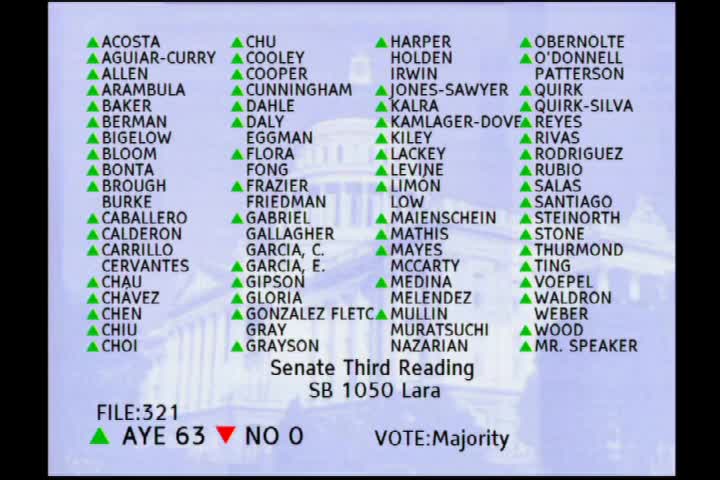 1MIN
Assembly Floor
 1H
Assembly Standing Committee on Appropriations
 5MIN
Assembly Standing Committee on Natural Resources
 7MIN
Senate Floor
 10MIN
Senate Standing Committee on Natural Resources and Water
Bill Author

Bill Co-Author(s):